JUNE 2026
STORIES FROM NEW TERRITORY

SANDY COOMBS SANDY COOMBS The teacher who couldn’t stop teaching


JUNE 2026
STORIES FROM NEW TERRITORY
SANDY COOMBS SANDY COOMBS The teacher who couldn’t stop teaching
For more than 13 years, I have been a soccer mom. When I stop and think about it, it is remarkable how many decisions our family has made around this game. Some have been small, while others have been life-changing.
In fact, moving to the United States nearly four years ago and choosing a soccer club for our oldest son played a part in bringing us to New
Territory Looking back, it is strange to think that a sport helped shape where we would eventually call home
Over the years, soccer has been at the center of some of our family's greatest joys and, at times, some of our toughest challenges While I often joke that I learned to appreciate the sport because I had no choice, the truth is that I have come to admire it. Beyond the wins and losses, I have seen firsthand how it teaches resilience, discipline, teamwork, and friendship.

In 2021, during a staycation on La Digue in Seychelles, my son chased down Manchester City defender Nathan Aké on his bike for a photo. Aké will be in Houston this month with the Netherlands national team.
This is perhaps ironic for someone who watched her first soccer match during the 2002 World Cup. Most of my friends were supporting Argentina, so I joined them and have spent the last two decades claiming to be an Argentina fan. Whether that loyalty runs particularly deep is still up for debate
What I do know is that soccer has a unique ability to bring people together. It transcends language, culture, age, and background For ninety minutes, differences seem a little less important Neighbors gather Families cheer Strangers celebrate together.
This month, as the world's biggest sporting event begins its journey toward Houston, we explore the role soccer plays in the lives of one local family whose story has been shaped by the game for generations. Their story reminded me that while soccer may be about goals and trophies, it is also about memories, relationships, and the moments that stay with us long after the final whistle.
With matches filling our screens and excitement building across the city, I hope June gives each of us a reason to gather, celebrate, and create a few memories of our own.
Thank you for reading.
— Marie-France Watson






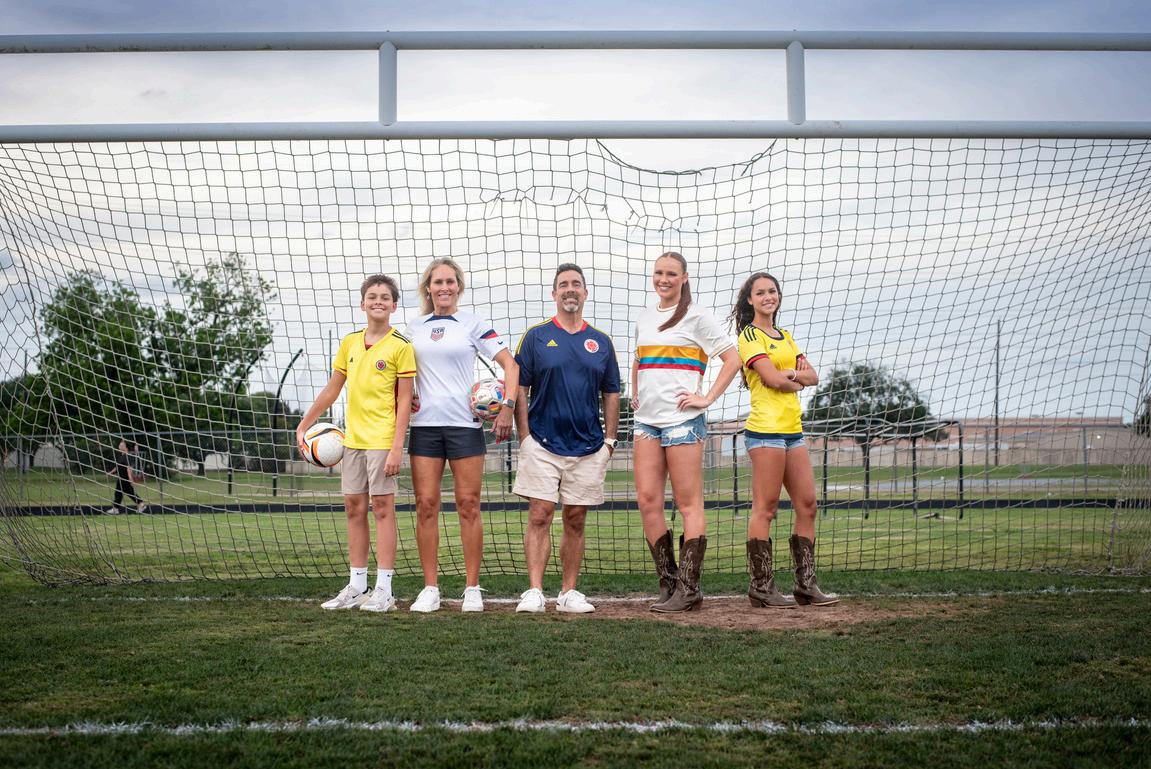





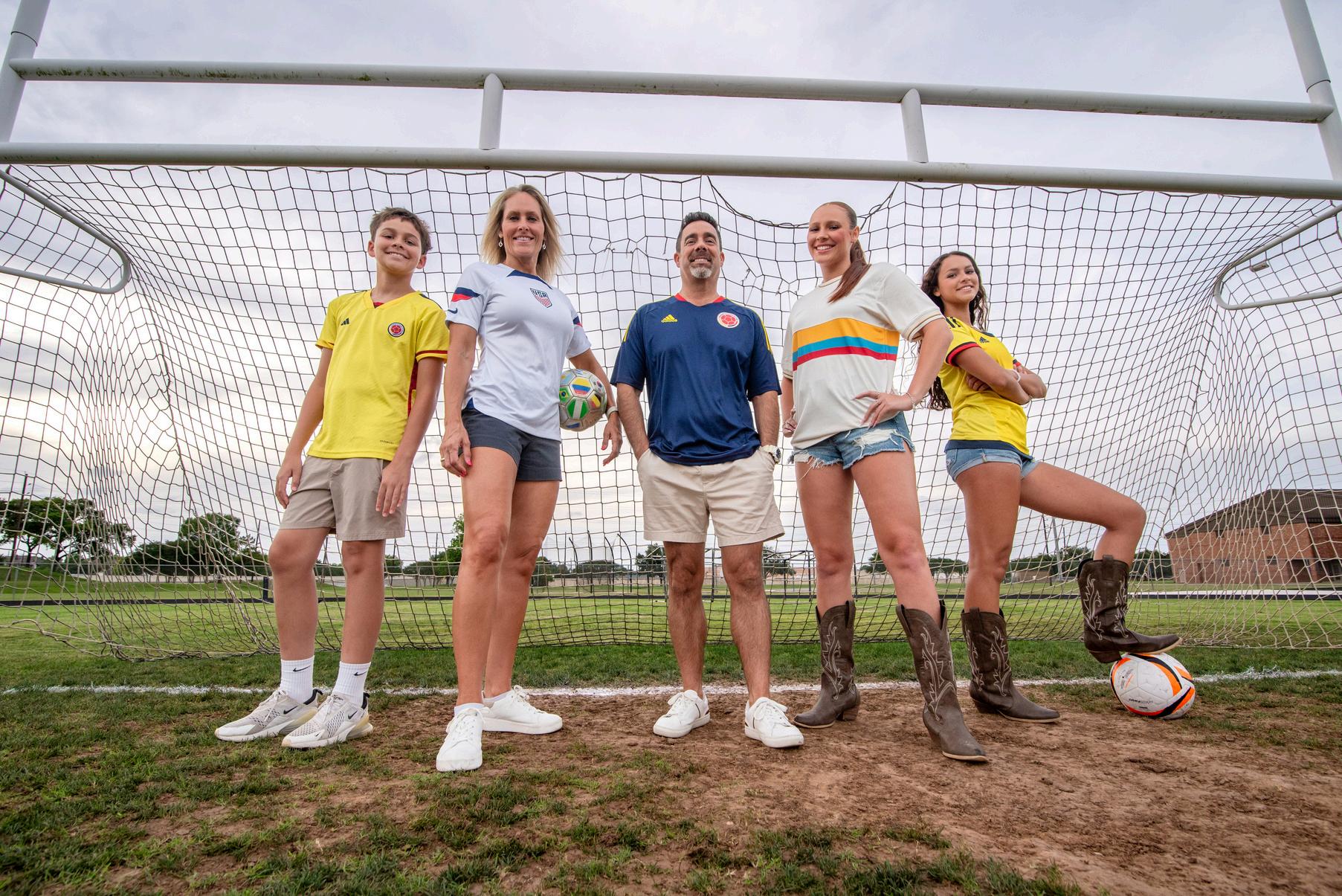
As Houston prepares for the FIFA World Cup, the Hamlin-Segura family reflects on the game that has shaped much of their lives.
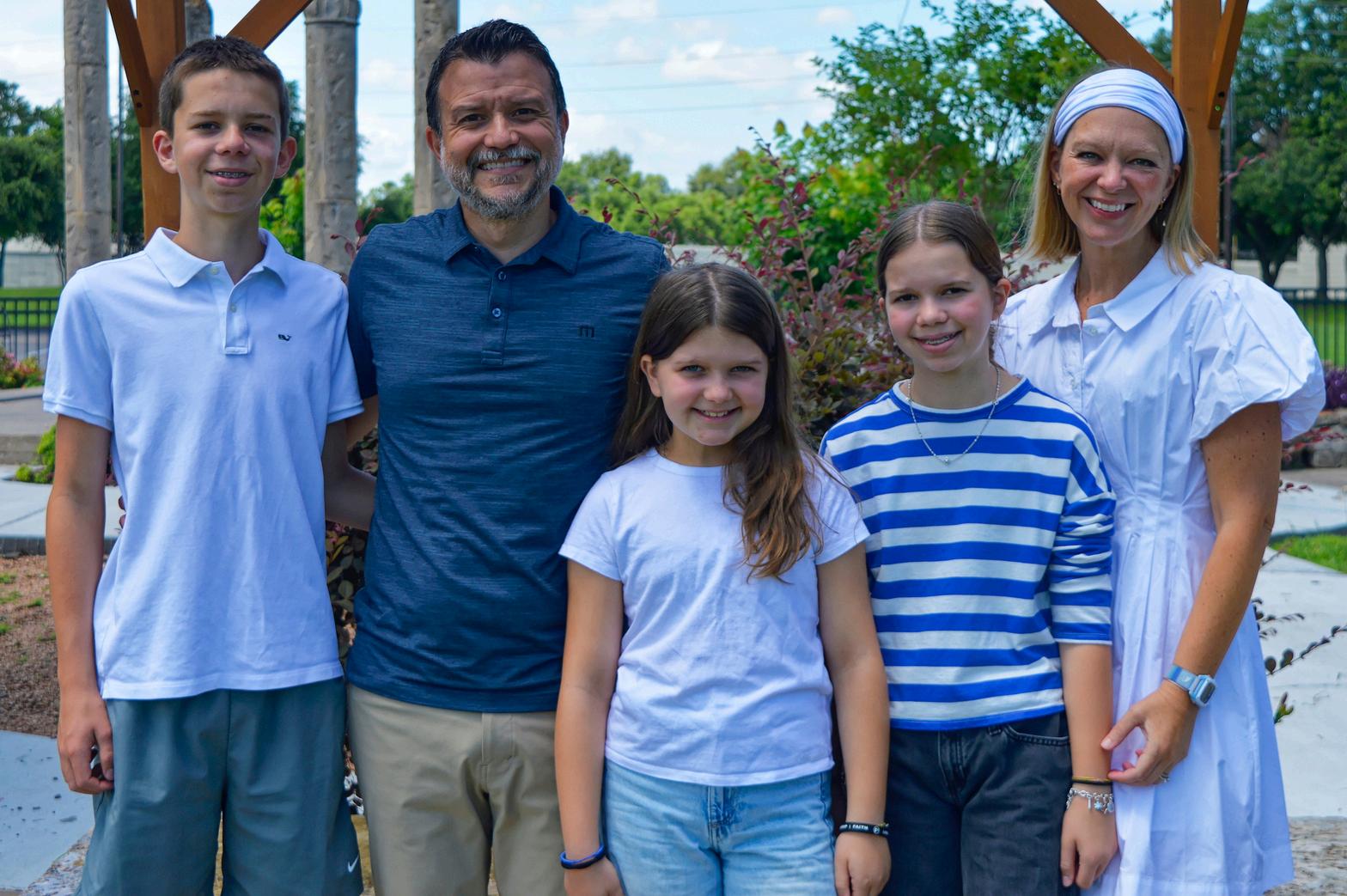
All photos in this feature: Danielle West Photography
As Houston prepares to welcome the world for the FIFA World Cup this month, soccer is stepping further into the spotlight across the United States, a country where the sport has long competed for attention alongside football, baseball and basketball In neighborhoods like New Territory, that growing popularity is already reflected in the routines, weekends and family life many have built around the game.
For the Hamlin-Segura family, soccer has been part of that rhythm for years.
Long before Houston became a World Cup host city, the game had already become part of daily life inside their home, shaping schedules, family traditions, shared experiences and countless hours spent driving to practices and tournaments across Texas.
Eduardo and Alice Hamlin-Segura have spent years balancing the chaos that comes with raising three high-level athletes: eldest daughter Catalina (Cata), now in college; Isabella (Isa), a high school junior; and youngest son Eduardo Jr , their middle schooler who recently returned to competitive soccer after briefly stepping away from the game.
“We’re chaotic, fun and loving,” Alice says with a laugh.
And somewhere between early morning games, overlapping practice schedules, tournament weekends and post-game car rides, soccer became more than a sport. It became part of the family’s language, routines and the bond they built with one another over the years.
Long before practices, tournaments and packed weekend schedules took over family life, both Eduardo and Alice already had strong connections to the sport.
For Eduardo, soccer began long before he became a parent. Both of his parents are from Colombia, and although he and his brother were born in the United States, Colombian culture remained deeply rooted in their upbringing
“Soccer was deeply tied to my Colombian upbringing,” he says “It was always present in our household growing

up ”
That connection carried into adulthood and eventually into his own family life. Anytime Colombia plays, the household gathers around the television, often dressed in jerseys and fully invested in the match unfolding on screen.
Alice also played soccer growing up, making the sport a natural fit for their family
“Of all the sports he could’ve been gung-ho about, I’m glad it was that one because I understood it too,” she says, reflecting on when they first met.
Eduardo laughs when describing how all three children eventually ended up deeply involved in the game.
“I basically kind of brainwashed them to love the sport,” he says jokingly.
What began as childhood recreation eventually evolved into years of competitive soccer at regional and national levels
Cata played soccer at a high competitive level while also balancing volleyball, basketball and track throughout high school. She even tried convincing Isa to follow her into volleyball, though soccer remained Isa’s main focus. Meanwhile, Eduardo Jr carved out his own role within the family’s soccer culture, spending years as a goalkeeper before recently returning to the game as a field player
As the children grew older and competition levels increased, soccer gradually became less of an activity and more of a way of life for the family.
At one point, all three children were playing competitive soccer at the same time.
That meant practices several nights a week, tournaments on weekends, overlapping schedules and near-constant driving.
“That’s where the chaotic part comes in,” Eduardo says, referencing Alice’s earlier description of the family as “chaotic, fun and loving ”
The family spent years traveling to practices on Campbell Road, coordinating rides and figuring out who would attend which game.
“There were only two of us driving,” Alice recalls. “So it was always, ‘Who’s taking who?’” Practices rarely lined up neatly. One child might train Monday through Wednesday, another Tuesday through Thursday, while many weekends revolved around tournaments and travel
“It was wild for many, many years,” Alice says.
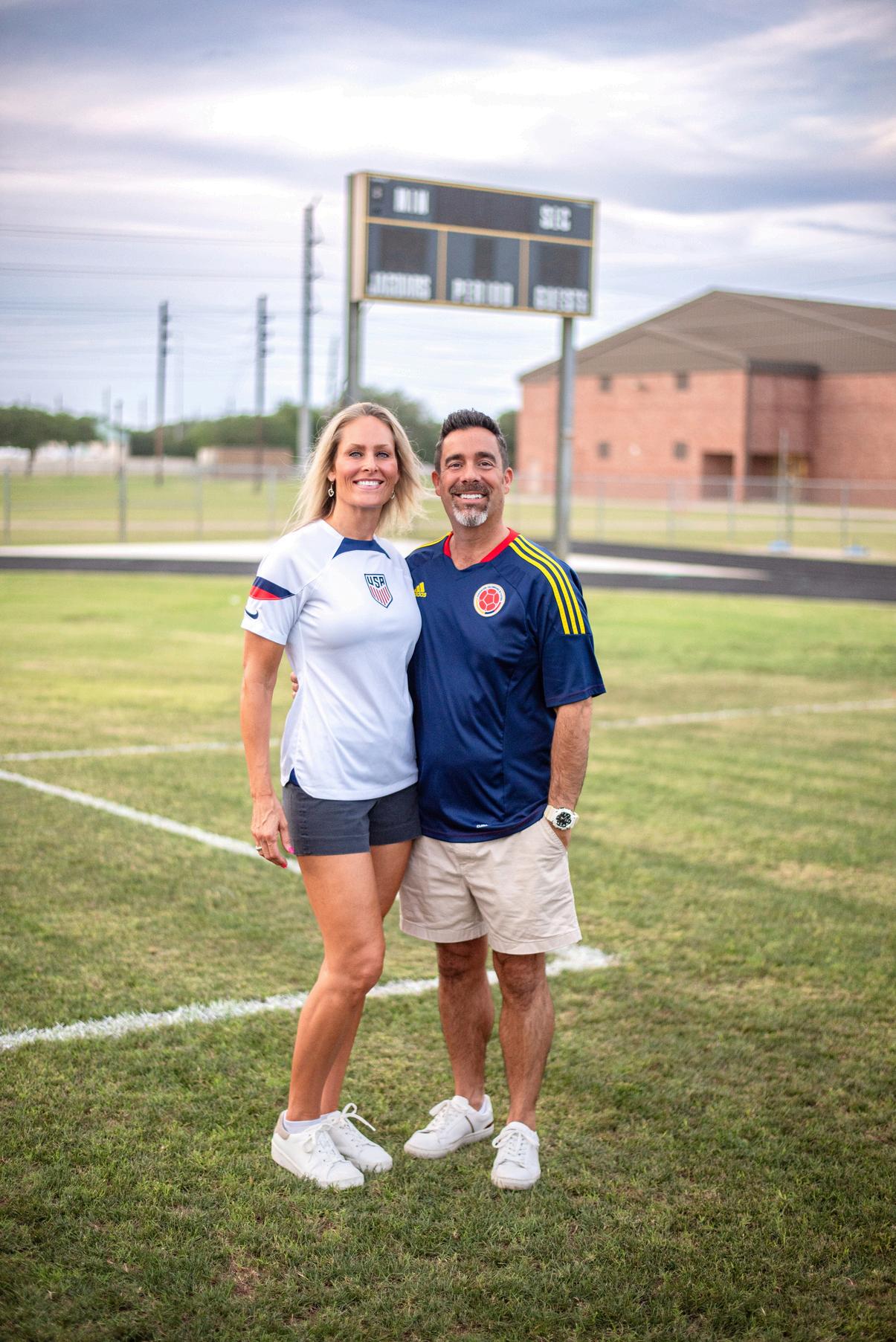
But like many families deeply invested in competitive sports, the Hamlin-Seguras have also faced moments that forced them to rethink their relationship with the game.
Over the years, the family says soccer taught them how to better support their children through the highs and lows of competition. There were fewer heated post-game critiques over time and more quiet car rides home “We’ve learned to gauge the moment,” Alice says With years of competitive sports behind them, both parents say they gradually learned that each child processed games differently and that not every ride home needed to turn into a coaching session.
Eduardo Jr., in particular, often preferred space after games and rarely wanted to talk immediately afterward, something the family says they eventually learned to respect “Sometimes he just wanted quiet,” Alice says Instead of immediately breaking down every play or mistake, the family says they learned to better recognize what each child needed in those moments.

But even with years of experience navigating competitive sports as a family, some moments proved harder than others.
For a family so deeply connected to the sport, one of the hardest moments came when Eduardo Jr. decided he wanted to step away from soccer altogether.
After years of playing goalkeeper at a high competitive level, the pressure and environment surrounding the position began to wear on him.
Eduardo admits it was difficult to accept at first.
“He told me, ‘Dad, I don’t want to play soccer anymore,’” he says. “I was shocked.”
For a year, Eduardo Jr. focused more heavily on basketball before eventually deciding on his own that he wanted to return to soccer
Recently, he tried out for a new team and made the roster, this time as a field player instead of a goalkeeper.
“He retired his goalie gloves,” Alice says. The experience, both parents say, taught them the importance of letting their children shape their own relationship with the sport.
Experiences like that, changed the way they approached competition, pressure and many of the decisions that came with high-level sports.
As the children got older and competition levels increased, so did the sacrifices
Birthday parties, social events and even downtime often had to take a backseat to practices, travel and tournaments.
“For example, some of my best friends are having grad parties,” Isa says “But we have a showcase in North Carolina, and I can’t miss that ”
Cata says balancing athletics and academics was often one of the biggest challenges.
“If I didn’t do sports, I probably would’ve been super focused on grades,” she says. “But I don’t regret doing sports ”

For their mother, Alice, the lessons extend far beyond the field.
“You’re always going to have hard decisions and pass up things that you want to do,” she says “It doesn’t get any better as an adult ”
That perspective has become one of the family’s recurring “life lessons,” a phrase the children jokingly reference throughout the conversation.
But beneath the humor is a clear understanding that sports have taught them discipline, resilience and commitment in ways that reach far beyond soccer itself.
Over time, those values became deeply woven into the culture and routines of the household.
Both parents say sports naturally fit the lifestyle they had already built before having children. They exercised regularly, prioritized healthy eating and encouraged structure and discipline at home.
“We know what they have to eat,” Eduardo says.
“We don’t eat fast food Alice is very conscious about vegetables, protein, the right carbs ”
Still, Alice admits there are moments when she wonders about the paths not taken.
“Are there some true loves or talents that we’ll never know about because we pushed sports so much?” she says
The family laughs while discussing abandoned attempts at introducing band, theater and other activities into the mix.
Yet even outside of soccer, competition seems woven into the household.
These days, pickleball has become the family’s newest obsession
“You should see the competition,” Eduardo says.
And with Houston preparing to host the FIFA World Cup this summer, excitement around the sport inside the household has only grown.
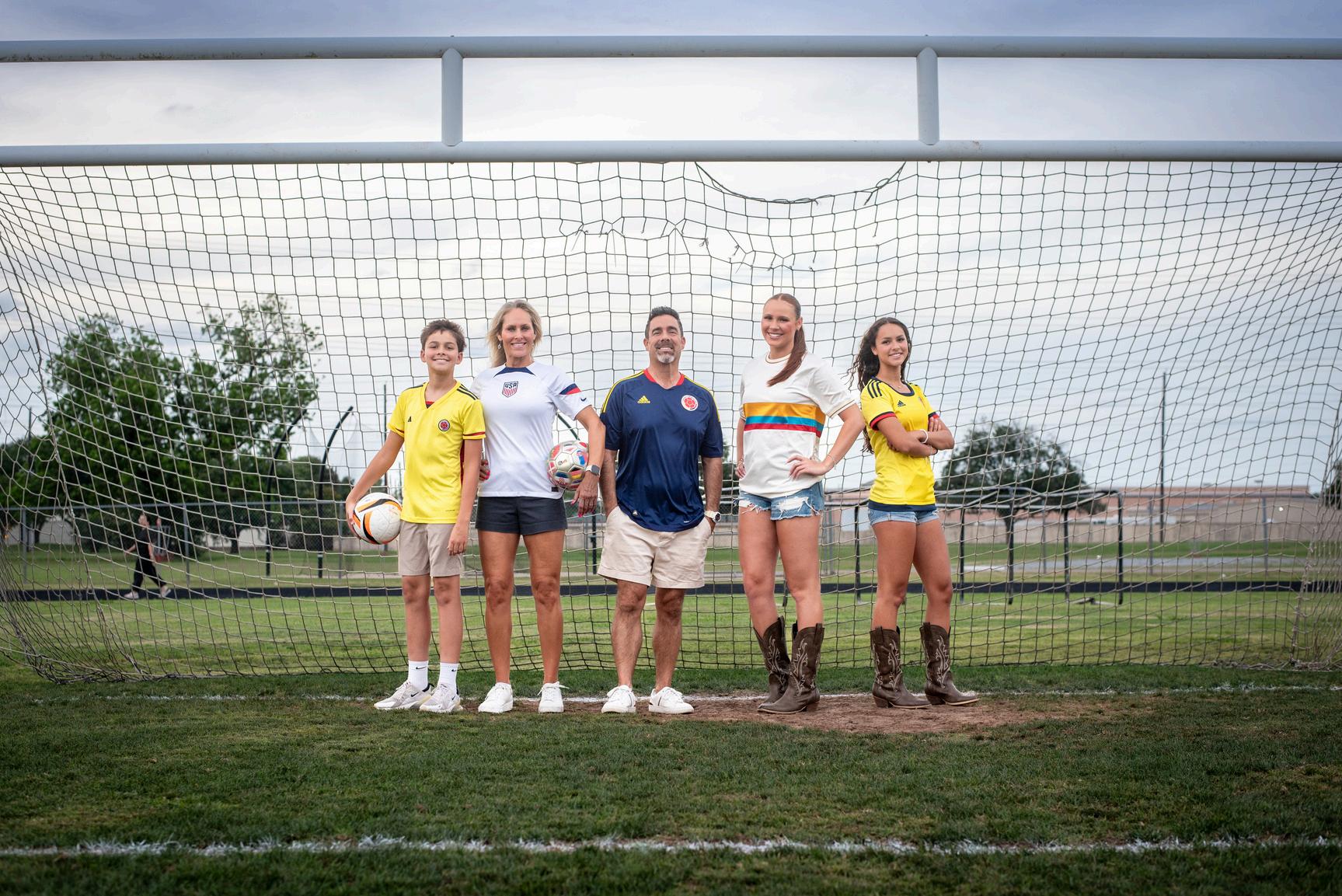
With the FIFA World Cup arriving in Houston this summer, excitement inside the Hamlin-Segura home is already building.
But like many things in the household, even team loyalties are divided.
Eduardo proudly supports Colombia. Eduardo Jr. is firmly behind Portugal and longtime favorite player, Cristiano Ronaldo. For the rest of the family, Colombia remains the emotional favorite and a strong connection to their heritage, though the United States also has plenty of support inside the household
The family has never attended a World Cup match before, but that will soon change.
The boys are planning a trip to Mexico City to watch Colombia play during the tournament
“The sisters are not happy,” Eduardo says, laughing Back home, the family expects the tournament to temporarily take over daily life.
“When Colombia plays, it’s a party in here,” Alice says.The family regularly gathers with relatives and friends to watch games, often heading to Houston soccer bars packed with supporters from different countries.
“You know which tables to sit at and which jerseys not to wear,” Alice jokes
And while loyalties may differ, one thing is consistent: when soccer is on, the household stops to watch.



Cata describes herself as a vocal leader on the field, something teammates often leaned on during high-pressure moments A former team captain, she says communication and leadership are two of the biggest lessons soccer has carried into everyday life.
“Being able to communicate with people and take initiative is something soccer really taught me,” she says.

Isa says her teammates would probably describe her as outgoing, encouraging and energetic.
“I definitely bring life to the team,” she says with a laugh
For Isa, soccer has helped shape the way she communicates and works with others, both on and off the field. Going through the college recruiting process has also helped build confidence when speaking with coaches and adults.
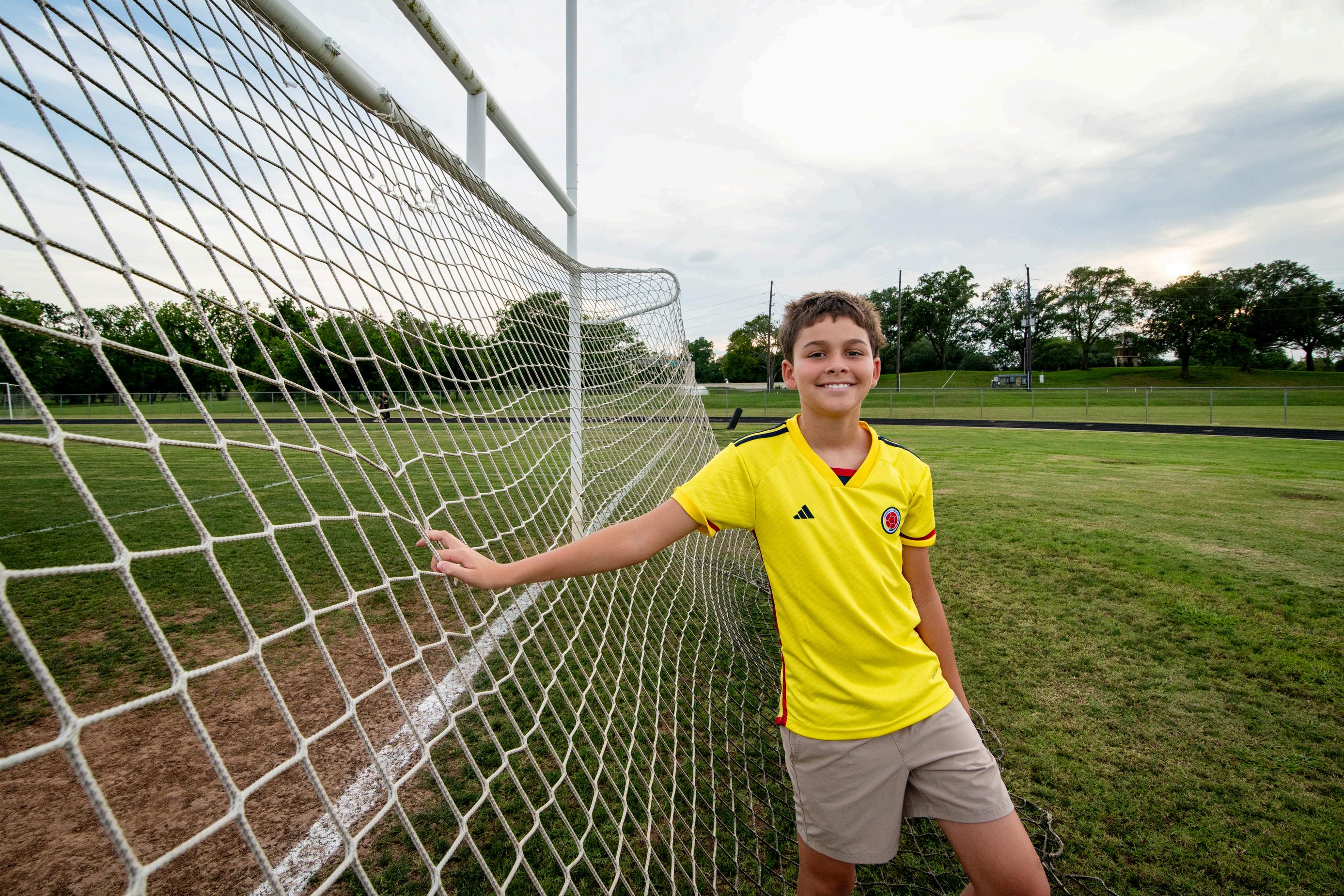
POSITION: DEFENSE
(formerly goalkeeper)
Eduardo Jr is still figuring out exactly who he wants to be on the field, something both his parents and sisters say is part of his growth as a player. While quieter than his sisters, the family says he brings calmness and competitiveness to the game, especially in high-pressure moments
His sisters agree that one of his biggest strengths is his composure



A quick guide to the biggest sport event in the world
This month, Houston joins the global stage as the FIFA World Cup arrives in North America. Fans from around the world are traveling to the city for one of the biggest (global) sporting events ever held in the United States. Whether you are a lifelong soccer fan or simply curious about the excitement, here are some things to know about the tournament.




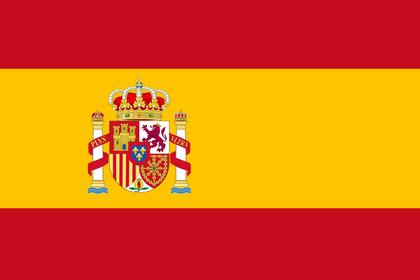






S. KOREA/JAPAN






The drama that fans still talk about...

1. THE HAND OF GOD (1986)
Diego Maradona scored a controversial goal against England using his hand - though referees missed it.
Argentina went on to win the tournament
Photo: Bob Thomas/Getty Images
2. GERMANY 7 - 1 BRAZIL (2014)
One of the most shocking games in soccer history saw Germany defeat Brazil 7-1 in one of the semi final games
Photo: Reuters


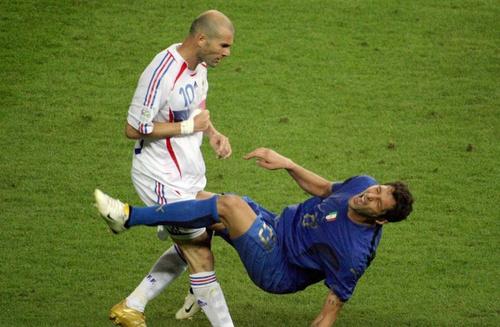
3. ZIDANNE’S HEADBUTT (2006)
In his final, professional match, France’s Zinedine Zidanne was sent off after headbutting Italy’s Marco Materazzi in the World Cup Final
Photo: Agence France-Presse
4. SUAREZ BITES AGAIN (2014)
Luis Suárez (currently a striker for Inter Miami CF) was suspended after biting Italy defender Giorgio Chiellini during a match
Photo: Raidió Teilifís Éireann

Could this be the last World Cup for Messi and Ronaldo?


38 years old
910+ professional goals
410+ career assists
(the highest in football history)
World Cup winner 2022
8 Ballon d’Or winner

Globally recognized for his ability to keep the ball glued to his left foot

41 years old
970+ official goals
(top goalscorer of all time)
260+ career assists
No World Cup title (yet!)
5 Ballon d’Or winner
Known for speed, aerial ability, two-footed finishing, and elite off-ball movement
They have broken world records, thrilled millions of fans and defined an entire generation of soccer. Their performance in this World Cup is being referred to as ‘One Last Dance’.

VIEWERS watched the 2022 final between Argentina and France.
From billion-viewer finals to record breaking goals, here are some amazing record setting numbers behind the world’s biggest sporting event.

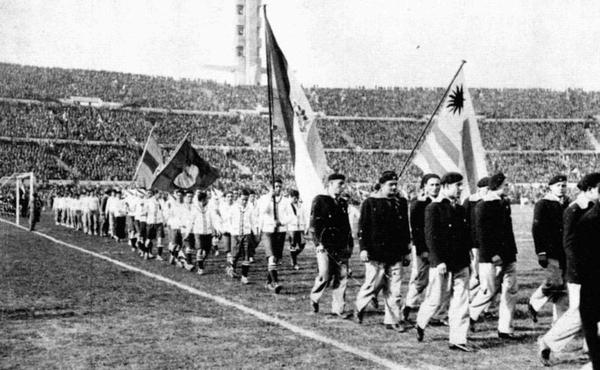
TEAMS competed in the first World Cup in 1930.
TEAMS

WORLD CUP TOURNAMENTS have been held since 1930
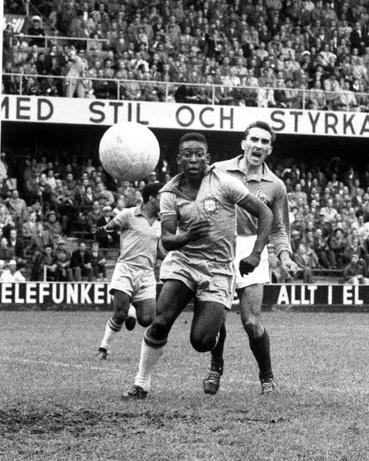
YEAR

MILLION PEOPLE attended matches during the 1994 World Cup in the USA.
SECONDSfastest goal by Hakan Şükür from Turkey (2022)
GOALS scored by France’s Just Fontaine in the 1958 World Cup tournament. .
SECONDS - fastest red card. Jose Batista (Uruguay) in 1986.

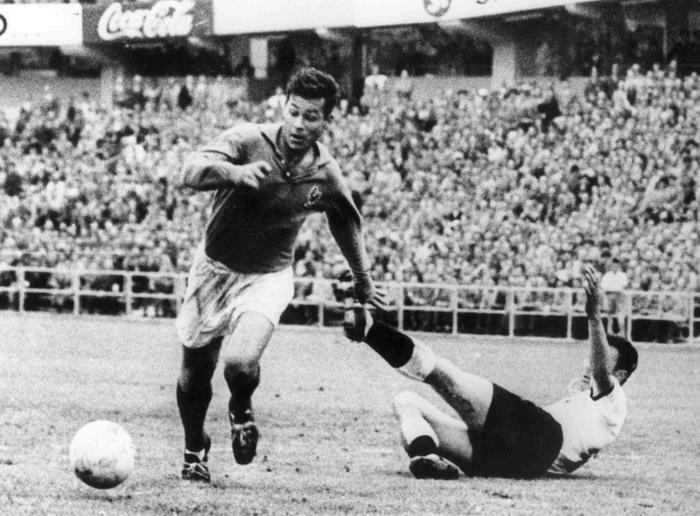
GOALS scored by Germany’s Miroslav Klose in 24 World Cup matches.



MATCHES will be played in the 2026 World Cup.

How the founder of Coombs Tutoring Hub turned retirement into a new chapter of helping students succeed.
During the pandemic, as companies across the country began offering retirement packages to longtime employees, Sandy Coombs and her husband found themselves having conversations about slowing down for the first time in years.
Her husband accepted his package and together, they bought a vacation cabin in Colorado, imagining summers filled with cooler weather, mountain air, wildlife, and watching the landscape slowly shift from deep summer greens to the golds and amber tones of fall
But while her husband often stayed behind long enough to witness that seasonal transformation, Coombs always found herself returning to Texas in August for the start of another school year
Then, he would start sending pictures.
While she prepared classrooms, lesson plans, and students for another academic year, her phone would fill with reminders of everything unfolding back in Colorado.
Eventually, she made the decision to retire as well “After I saw the beauty of Colorado in the fall, I knew I made the right decision,” she says “It’s magical.”
But retirement, she quickly discovered, came with something unexpected
“You miss the kids,” she says. It is a simple sentence, but one that explains almost everything about Sandy Coombs
Long before she founded Coombs Test Prep & Tutoring Hub, Coombs had already spent nearly two decades building relationships with students and families in the Fort Bend area.
Over more than 20 years in education, she spent a decade teaching within Fort Bend ISD before continuing her work with students and families across the Sugar Land area for another eight years in private education

Along the way, including recognition as Campus Teacher of the Year, Coombs became known not only for helping students succeed academically, but for genuinely investing in them as people
She attended soccer games, dance recitals, basketball games, and school performances Former students still invite her to graduation parties years later. Even now, she lights up when
speaking about them
“When students realize you’re not there just for a paycheck, and that you genuinely care about them, they remember that,” she says
Teaching, for Coombs, was never confined to classroom walls.
While still working full-time as an educator, she quietly began helping struggling students during lunch breaks Often, she says, the problem was not a lack of intelligence, but missing foundations
“They may have missed a small piece of the puzzle,” she explains “If you don’t understand algebra, PreCal becomes difficult If you struggle with writing, reading comprehension becomes harder too. Everything builds on something else.”
The lunch sessions gradually grew into afterschool tutoring, with more and more families beginning to reach out
At first, she did much of it for free.
“What I noticed was that these were bright kids,” she says. “But teachers have large classrooms and limited time. Sometimes students get pushed through without fully understanding something.”
Even after retiring, Coombs could not fully let go of that work.
Retirement, she says, felt “cold turkey.”
Her husband suggested she try tutoring online through Zoom She hesitated at first, uncertain whether meaningful connections with children could really happen through a screen
Then, slowly, families began finding their way to her
Today, Coombs works with families from across Texas and beyond, including young athletes, performers, and teenagers balancing demanding schedules Some log in after soccer training
Others after theater rehearsals or academic competitions.
Perhaps unsurprisingly, many of the students who

now seek out her tutoring services are balancing the same demanding schedules she once watched her students juggle years ago.
Her evenings are now filled once again with homework questions, assignments, conversations, and familiar moments of encouragement.
“What excites me is getting to know them,” she says. “Every child is different.”

Even while discussing sched assessments, and online pla refers to students in busines simply, “the kids.”
That philosophy now shapes tutoring business.
Unlike many large tutoring s her program around certified
individualized learning plans Every student begins with an assessment designed to identify gaps before instruction even begins
“We diagnose before we teach,” she says “You don’t want to spend time reteaching something they already know You want to identify exactly where the struggle is ”
But while academics matter, Coombs repeatedly returns to another word during conversation: confidence “A lot of students decide they’re just bad at a subject,” she says. “That becomes the real obstacle.”
Her approach is rooted in helping children believe they are capable again

“I always tell them, ‘You can’t do it now, but you’re going to do it I promise I’ll get you there ’” She pauses often to talk not about grades, but about trust, encouragement, and students feeling seen
“When a child knows you believe in them, they rise to that expectation,” she says The academic growth, she says, often follows once confidence begins to return.
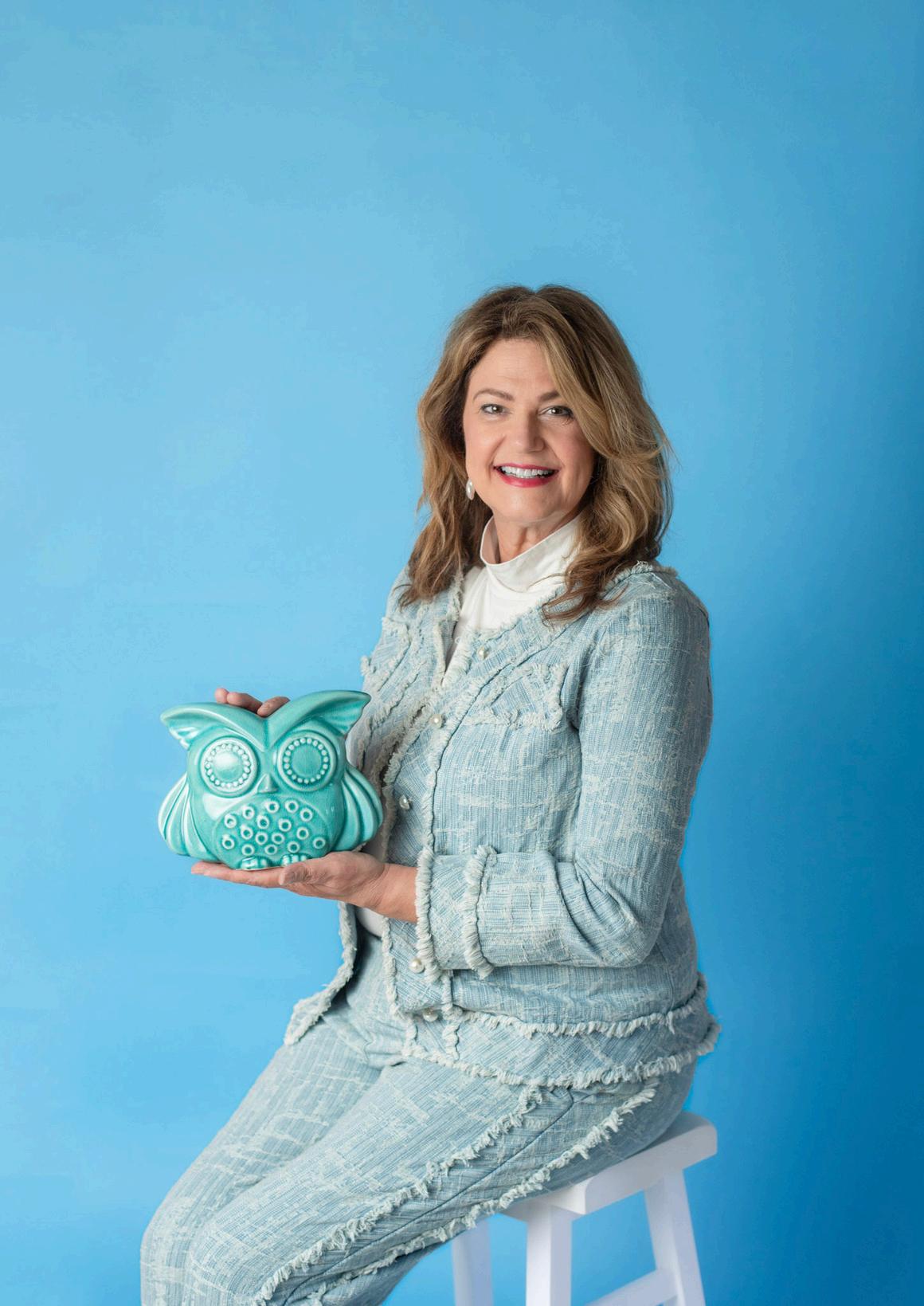
There is even a deeper symbolism behind the owl imagery connected to her tutoring business, something Coombs says became more meaningful as the company grew
“I have always loved owls,” she says. “There’s something mesmerizing about them.”
Over time, however, that fascination evolved into something deeper
For Coombs, the owl represents far more than an academic mascot. Historically associated with wisdom and learning, she says the animal’s calm focus and ability to see clearly through darkness mirrors the role she hopes tutoring can play in a child’s life.
“Often when students come to us, they feel overwhelmed or lost,” she says.
“Our job is to help them cut through that fog and recognize their own potential ”
It is, in many ways, another reflection of the philosophy that runs quietly through nearly every part of her work: patience, guidance, and helping children move forward with confidence

*In one recent case, a student improved his overall ELA performance by more than 250 points in roughly three and a half months of tutoring, with particularly dramatic gains in reading comprehension and informational text analysis
Over the same period, his recommended coursework advanced from middle-school-level material to ninth- and tenth-grade work.
For Coombs, however, the numbers themselves are only part of the story
“What matters most is when a child starts believing they can do it,” she says.
That same sense of care extends beyond her relationships with students
Throughout the conversation, Coombs frequently shifts attention away from herself and toward the educators who help make the program work She speaks about her team with genuine admiration, praising not only their qualifications, but the patience and commitment they bring to families.
“I’m very protective of the people who work with me,” she says “They’re valuable I couldn’t do this without them.”
Rather than hiring broadly, Coombs built her team slowly through trusted professional relationships, bringing in educators and specialists she already knew and respected.
“These are children,” she says simply “You have to
know who you’re bringing in ”
She smiles while speaking about the tutors who now work alongside her, in awe not only of their expertise, but of the connections they build with the children they teach
“I want families to feel supported by all of us,” she says. “We’re a team.”
Recently, Coombs also began the process of becoming an approved provider through Texas’ education assistance program, which helps some families access funding for additional academic support services.
For her, the decision was less about expansion and more about accessibility.
“A lot of students just need extra help,” she says. “And that’s okay We’re not all the same ”
Over the years, she has worked with children with dyslexia, ADHD, attention challenges, and other learning differences, many of whom simply benefit from individualized instruction and extra time
“A lot of these children are incredibly capable,” she says. “Sometimes they just need someone willing to slow down and work with them differently ”
After roughly three and a half months of tutoring, one student’s overall ELA score climbed from 695 to 970 a 275-point increase His strongest improvements came in Informational Text and Reading, which rose by 450 and 390 points respectively.
His Writing and Language scores also surpassed the 1000 mark after starting at 840 and 810 in January, reflecting progress so substantial that the IXL scale could no longer fully measure his performance.
It is another extension of the philosophy that has quietly shaped her work for decades: meet students where they are, strengthen the foundations they missed, and help them move forward with confidence
The business side of things, however, has not come naturally to her
“The invoicing, the taxes, asking people for money,” she says with a laugh. “I’m a teacher first.” Again and again throughout the conversation, Coombs returns to people before processes, flexibility before policy, and trust before strategy.
She still struggles with charging families for late schedule changes. She starts sessions early simply to talk with students. Even now, she offers assessments that many business-minded professionals would insist should come with a fee.
“If it helps a child, I don’t mind doing it,” she says.
It is perhaps the clearest indication that, despite the growth of the business around her, Sandy Coombs still approaches the work with the instincts of a classroom teacher.
And while Colorado may have first represented rest and retirement, life unfolded differently.
Somewhere between mountain summers and evening Zoom sessions, Sandy Coombs found her way back to what she missed most: teaching.
Kunaal, 10
Recently completed 5th grade

What tutoring with Mrs Coombs feels like: Tutoring with Mrs. Coombs is always fun and exciting. She helps me edit my writing and make it better by explaining my mistakes.
How he describes her teaching style: She challenges me and breaks things down so I can understand easily.
What feels different from school: Learning with her is super fun. It feels more caring and understanding.
What has changed for him: I have learned how to edit my essays and improve my writing.


Inside the creative world of an artist shaped by movement, memory and light, where originality begins in the moments most people pass by.
Before a storm arrives in Sugar Land, the sky changes character. Clouds thicken, light bends differently, and colors sharpen for only a few fleeting moments before disappearing again. Those moments are hard to miss if you are Allan Chow.
One evening, while struggling to finish a painting, the artist, who calls New Territory home, stepped away from the canvas and went for a drive. At a gas station near Ellis Creek, he looked up at a sky on the verge of a storm. Above him, clouds folded into one another, dramatic and fast-moving, glowing against the fading evening light.
He took a photo.
Later, the scene found its way onto canvas, transformed through layers of oil paint, palette knife textures and the perspective of an artist who has spent decades studying atmosphere, movement and light.
What many people in Sugar Land may not realize is that one of the community’s most accomplished artists has been quietly creating from a home studio just around the corner
Originally from Kuala Lumpur, Malaysia, Allan moved to the United States with his family in the 1990s, eventually settling in Texas before studying illustration at the Kansas City Art Institute
But painting, he admits, was not originally the plan. While illustration offered a more practical and commercial career path, Allan says he found himself increasingly drawn toward painting during his final years in college. He would stay up late experimenting with color, texture and composition, studying the works of impressionist artists whose books still line the shelves of his small home studio today
Among them are American Impressionist Childe
Hassam and celebrated illustrator N C Wyeth, artists Allan credits as early influences as he began developing his own visual language.

Over time, what began as experimentation evolved into something more personal Painting offered him a freedom illustration did not Instead of creating images to serve a story or client, he could create more intuitively, drawing from personal experiences and observation.
That freedom deepened during the years he spent in Kansas City, where the vast Flint Hills prairies became a recurring source of inspiration. Allan described being struck not only by the dramatic landscapes, but by the stillness they offered after the noise and pace of city life.
Driving out into the prairie, he said, felt almost transformative. Wide-open horizons, shifting light and distant storms became more than scenery. They became places of reflection that would later find their way into his paintings.
Many of his best-known works draw from those
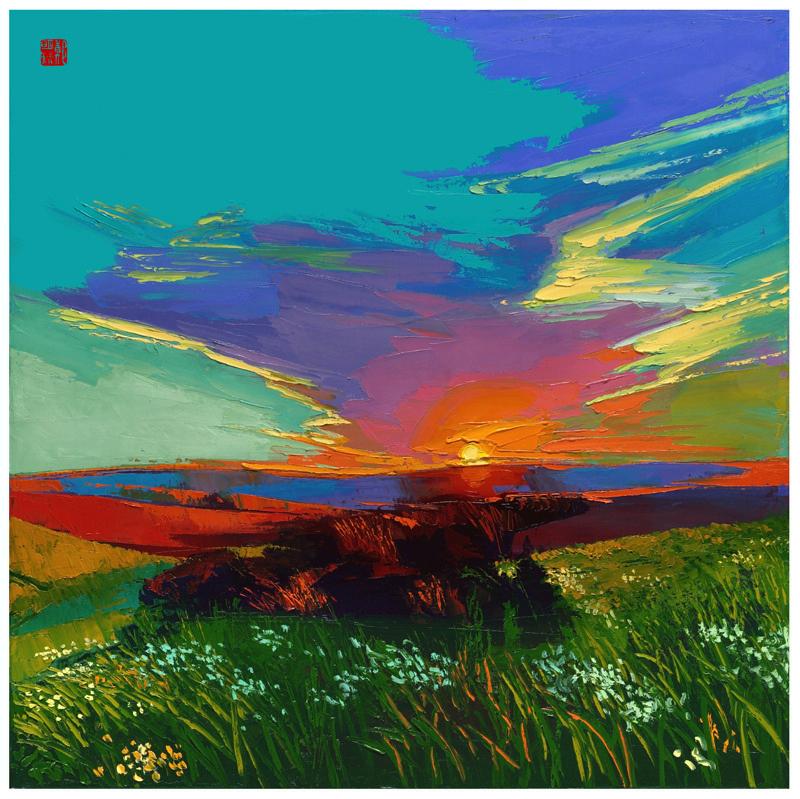
While working on Crimson in My Eyes, Allan Chow had yet to decide how the sky would take shape. The answer arrived unexpectedly at a gas station near Ellis Creek, where he photographed dramatic storm clouds gathering overhead. Back in the studio, the fleeting scene found new life through bold color, texture and atmosphere.
experiences, blending atmosphere and emotion rather than strict realism. Even now, Allan says he often sees something beyond the landscape itself.
Today, Allan’s textured landscapes and cityscapes can be found in galleries, corporate collections and private homes across the United States. His work has been collected by organizations including the Kansas City Chiefs and the Kansas City Royals. Large-scale commissions of his paintings appear in public spaces and healthcare settings, while other works continue to find homes through exhibitions, longtime collectors and private commissions.
At the time of the interview, Allan’s home studio was filled with paintings waiting to be packed and shipped for an upcoming June exhibition in Kansas, where he typically stages a major show every one to two years.
Despite the recognition, Allan speaks less about success and more about observation.
Inside his New Territory home, canvases line the walls Some are dramatic prairie landscapes inspired by years spent in Kansas. Others explore atmosphere, movement and abstraction. There are paintings inspired by Kansas prairies, memories of Malaysia and rivers cutting through city skylines, alongside more experimental works influenced by solar eclipses and shifting light.
Many begin with photographs he takes himself during long drives or travels with his family. But Allan does not simply recreate what he sees. Instead, he builds compositions from instinct, atmosphere and lived experience
“There’s so much value in human experiences,” he said during the interview, briefly reflecting on the growing conversation surrounding artificial intelligence and art
For Allan, art is not simply about producing something beautiful, but about translating a lived moment into something tangible A storm cloud
over a gas station The silence of the Kansas prairie A memory of vendors on the streets in Malaysia The feeling of standing beneath a sky that suddenly demands your attention.


That deeply personal connection to place is part of what makes his work feel distinctive.
His paintings are also recognizable for another recurring detail: a bold red stamp that appears throughout his work. While Allan says its presence was never entirely deliberate, he acknowledges that the color carries echoes of his Chinese heritage, where red traditionally symbolizes prosperity, celebration and good fortune
Although Allan spent more than two decades building his career in Kansas City, traces of Texas are beginning to emerge more visibly in his work and daily life He speaks enthusiastically about Houston skies, dramatic weather patterns and the creative possibilities of entering the Texas art scene.
He also hopes to become more connected to the local community in Sugar Land
Despite his accomplishments, Allan carries himself
with remarkable humility, and much of the conversation drifted beyond painting itself into philosophy, creativity, identity and the challenge of building an original artistic voice.
At one point, while discussing the influence of famous artists he admired, Allan explained that one of the greatest challenges for any artist is learning from others without becoming consumed by their influence.
“I never wanted to paint like them,” he said. “I wanted my own path.”
That pursuit of originality also shapes the way Allan approaches each new canvas Even when collectors request versions of older works, he says recreating a painting exactly as it once existed feels almost impossible.
For Allan, paintings are tied to specific moments, emotions and creative instincts that cannot simply be reproduced on command.

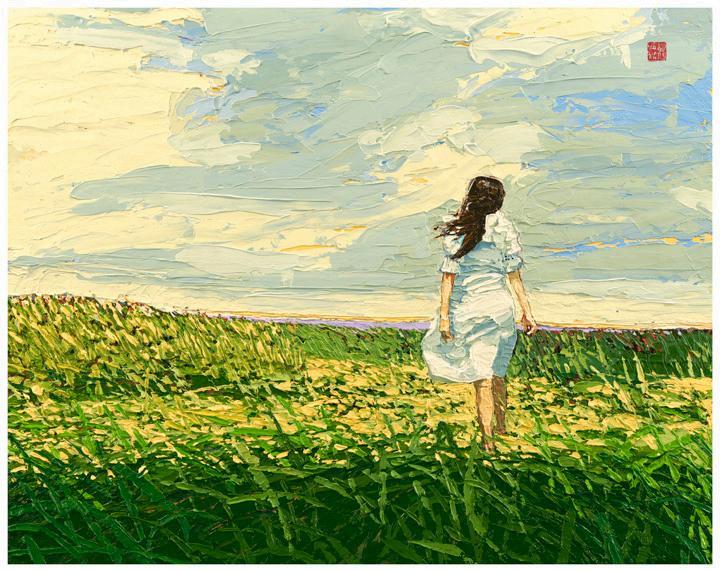
Allan Chow’s Faith (below) captures a quiet moment of reflection and resilience as a young girl walks alone through the sweeping prairie landscape.The painting evokes a sense of hope, perseverance, and spiritual calm, inviting viewers to pause and consider the journey we each travel through life. Through luminous light, subtle movement, and the vast openness of the prairie, Chow creates a poetic meditation on faith, solitude, and the enduring beauty of the natural world.


“The first one was based on spontaneity,” he explained during the interview while discussing the challenge of revisiting older works. “I cannot duplicate that experience.”
Instead, he approaches each painting as its own journey, one shaped as much by uncertainty and experimentation as by technique itself.
That independent path has not always been easy
After graduating from college, Allan spent years navigating immigration uncertainty while trying to establish himself creatively in the United States
During the years he spent away from Malaysia, painting became more than a creative pursuit. It became a way of holding onto memory, identity and the places he missed most
Some of his earlier works were inspired directly by scenes from his childhood, including quiet streets, shopfronts and everyday moments from Kuala Lumpur recreated through impressionistic color and texture
As the son of Malaysian parents of Chinese descent, Allan says identity has always existed in layers throughout his life and work Sometimes it appears directly Other times, it surfaces more subtly through symbolism, memory and color.
Toward the end of the interview, Allan shared paintings inspired by his children and spoke thoughtfully about legacy, culture and the hope of passing both creativity and heritage on to the next generation.
Even now, decades later, themes of identity, movement and belonging continue to quietly shape his work
Perhaps that is why Allan notices things many people overlook
Not just storm clouds gathering over Sugar Land, but the emotions attached to them. The atmosphere before rain. The stillness before change. The feeling hidden inside an ordinary moment
And then, somehow, he turns those things into paintings.
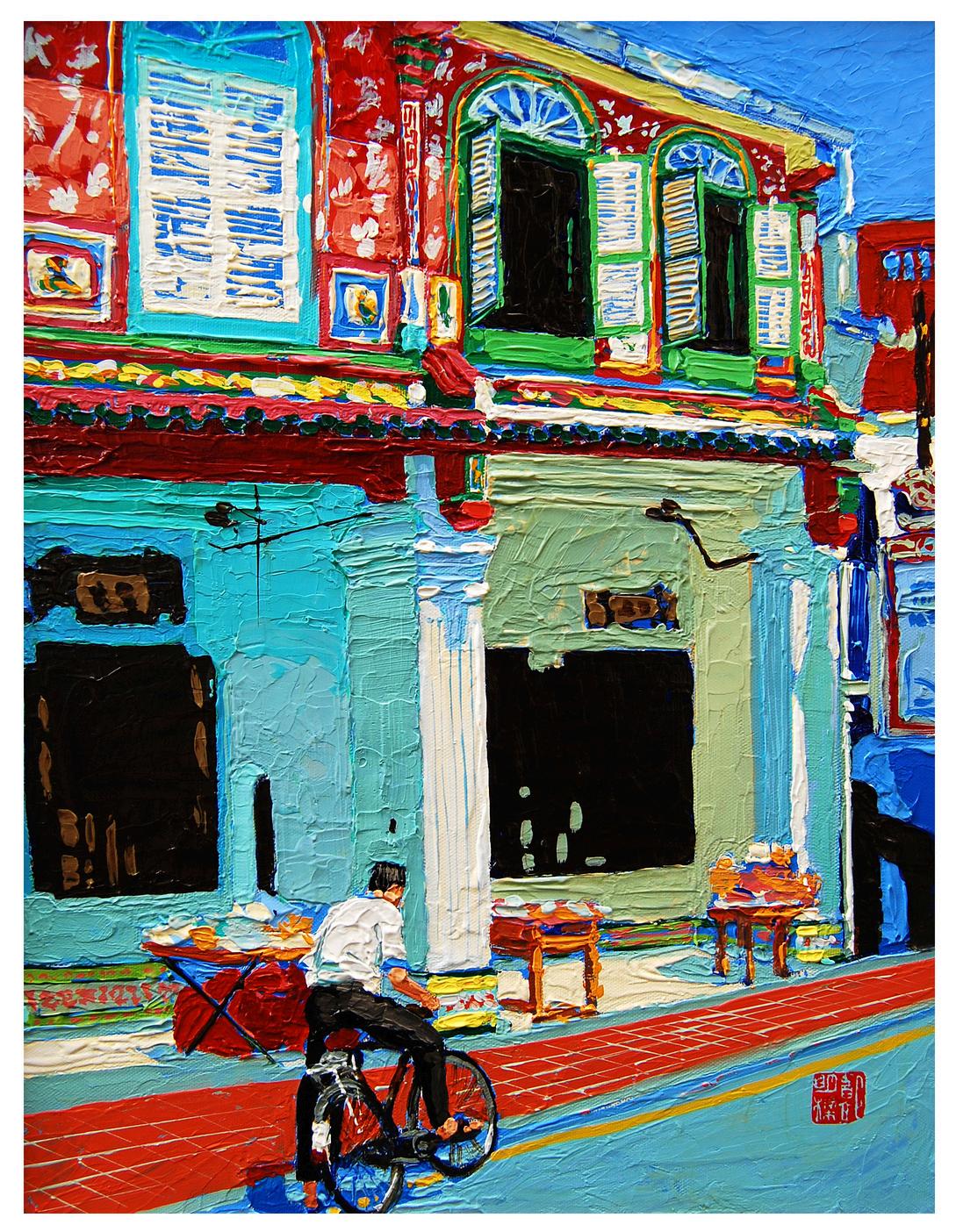
Malaysia - considered the birthplace of Malaysia
Established by the United Nations in 2009

The Ocean is full of wonders - from tiny plankton to huge whales. It gives us food, air and fun! Coral reefs are like rainbows underwater. By taking care of the Ocean, we protect a magical part of our planet.
Talk to your teacher about organizing an ocean-themed competition.
Taskmaster Planner introduces kids (7-10 years) to meaningful days each month. What they are, why they matter, and how the kids can participate. Click above to download yours!

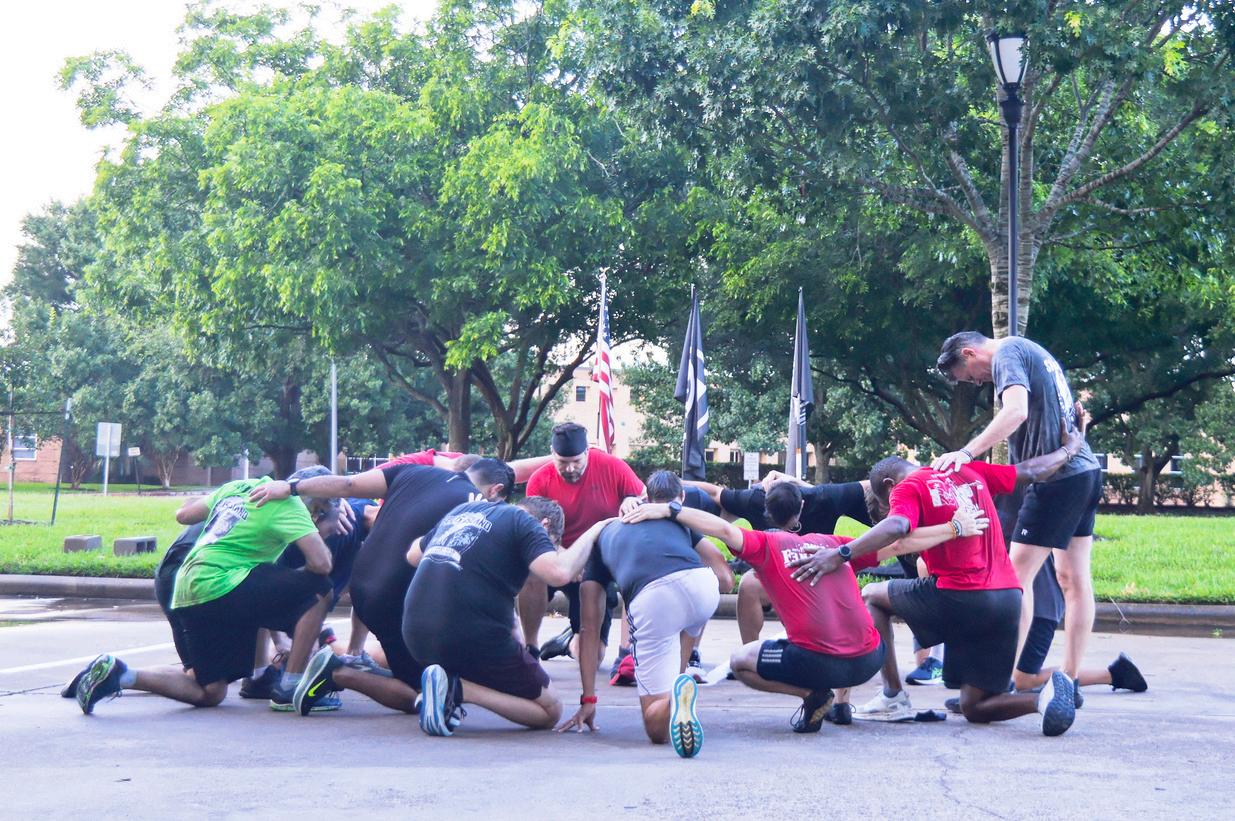
Before sunrise at New Territory Sports Complex and Ellis Creek, men gather for workouts, coffee, camaraderie and the kind of community that keeps them coming back.
Dante Peduzzi became “Inferno” within seconds.
At an early Houston-area F3 workout back in 2016, 17 first-timers were introducing themselves when someone heard “Dante” and immediately connected it to Dante’s Inferno.
The name stuck immediately
“That was it,” Peduzzi laughed “They were ready to move on ”
At F3, the nicknames are often intentionally ridiculous, playful or mildly irritating, part joke and part rite of passage. In many cases, the less a man likes the name, the more likely it is to stick. Peduzzi, however, ended up liking Inferno.
The nicknames are only part of the culture
Locations have names too So do traditions, rituals and leadership roles. There is a “Circle of Trust,” a “Friendly New Guy,” and an “AO,” short for Area of Operation.
“It builds this tribalism in a positive way,” Peduzzi said “Once you’re in the community, having our own language only solidifies the culture a little stronger.”
That culture now stretches far beyond its beginnings in the Carolinas in 2011
Today, F3, which stands for Fitness, Fellowship and Faith, has spread across the country and internationally through free, peer-led outdoor workouts for men In Sugar Land and New Territory, it has quietly built a consistent following before most residents are even awake.
The free aspect is intentional There are no memberships or fees, and men can simply show up “Zero excuses,” Peduzzi said. “No barriers to entry for anyone.”
Three mornings a week, men gather at “The Trench” at New Territory Sports Complex Another group meets nearby at Ellis Creek, known within F3 as
“Ellis Island.” On Saturdays, workouts are followed by coffee, breakfast tacos and long conversations that often stretch well beyond the exercise itself.
Some mornings bring 12 men. Other mornings bring 20. During anniversaries or special events, close to 100 men sometimes show up.

The Trench itself carries local meaning The name comes from the bluff credited with helping protect nearby homes during Hurricane Harvey.
“We said this saved our homes and a lot of people’s lives,” Peduzzi said “So we honored The Trench ”
The Sugar Land chapter began in 2018 at Sugar Land Memorial Park, where Peduzzi’s son helped inspire the nickname for the group’s first location, “The Rocket,” after pointing out that a structure at the park looked like one
The Trench launched in February 2020, just before the pandemic brought much of the world to a halt Ellis Island followed in May 2024 and recently celebrated its second anniversary as part of the growing Sugar Land F3 community
Despite the growth, Peduzzi insists F3 is not really just about workouts.
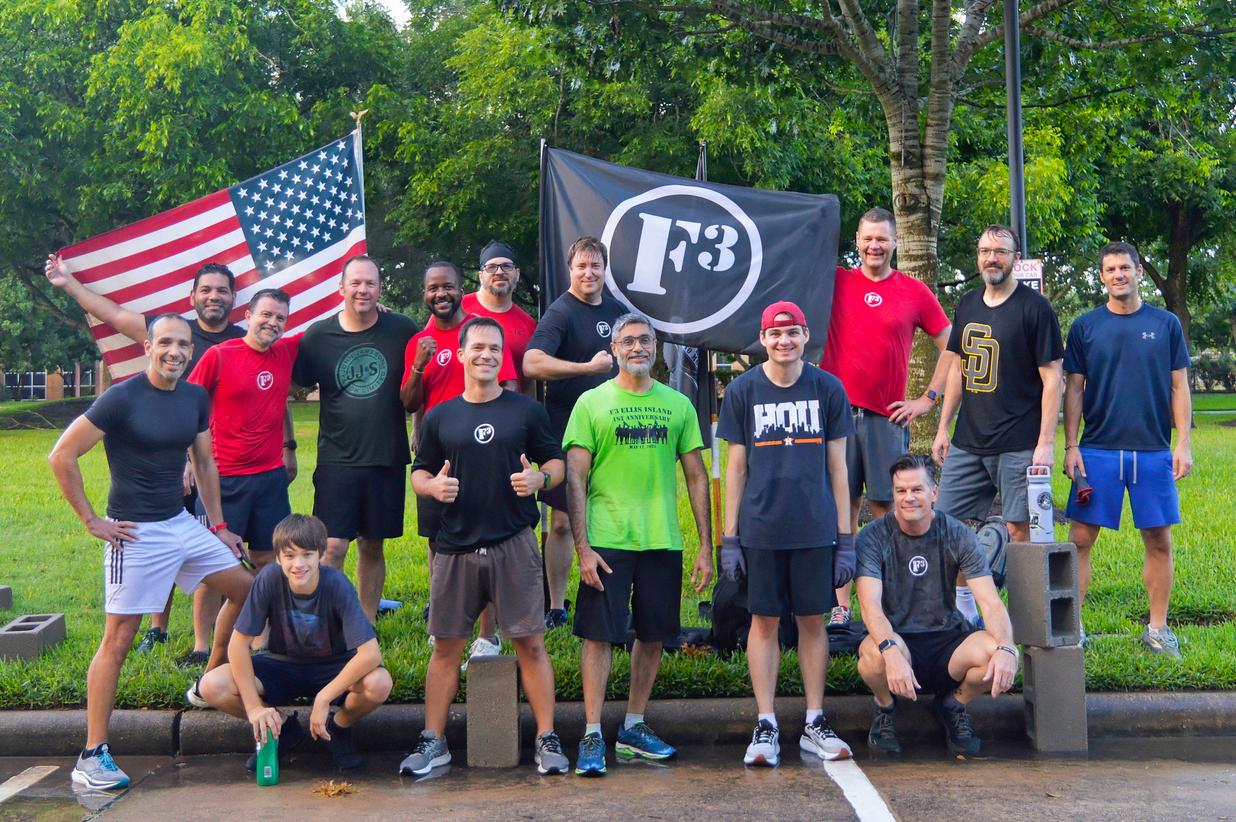
Fitness, he explained, is simply the “magnet” that brings men in the first place.
“The glue is the fellowship,” he said.
The third F, faith, is what he calls “the dynamite ”
F3 describes itself as nondenominational, with faith centered broadly around belief in something bigger than oneself Sometimes that means helping a family after surgery, organizing meal trains, supporting someone through a difficult season or showing up after disasters like Harvey to help gut flooded homes
Peduzzi recently experienced that support firsthand after his wife, Jodi, underwent surgery Months later, meals organized through the F3 community and broader New Territory network were still arriving at their home.
“It’s more than we need at this point,” he said, laughing. “But it’s just the love people want to show us ”
Other times, support simply means checking in.
Every workout ends with the Circle of Trust, where
SUGARSIDE


men share celebrations, struggles, prayer requests or whatever is weighing on them that week.
“It’s sort of the pulse check,” Peduzzi said “We just laughed We just sweated But now, how are you really doing?”
Still, what makes F3 work in Sugar Land seems less connected to any formal structure and more connected to the kind of community New Territory naturally creates
The conversations drift easily from workouts to Walker Station Elementary, Austin High School, youth sports schedules and seeing familiar faces at H-E-B
Dante and Jodi Peduzzi moved to Sugar Land from Houston 14 years ago and have raised their three children in the community ever since.
“What I hate most about the suburbs is that the longer I lived in Sugar Land, the more I loved it here,” he said. “Every year we like it more.”
That growing sense of connection eventually pushed him toward greater involvement in the community itself. Through F3, Peduzzi became active in the Dads’ group at Walker Station Elementary and later served as PTO president, something he admits is still relatively unusual for fathers
“It was because of F3 and everybody else around me that saw the benefit of what men do in a community once we all take leadership opportunities,” he said
Leadership, within F3, does not necessarily mean titles or authority More often, it simply means stepping forward
spotting parks, trails and open spaces and imagining them as future F3 locations But over time, he says, the excitement around expansion became tied less to the locations themselves and more to the men they might reach.
“The real excitement is thinking about who might benefit from it,” he said.
That may be why the group resists the idea that there is a specific type of person F3 is designed for
There are men in their 70s who attend regularly. Others are lifelong athletes Some have never worked out outdoors before Some arrive because they want to get back into shape Others are simply
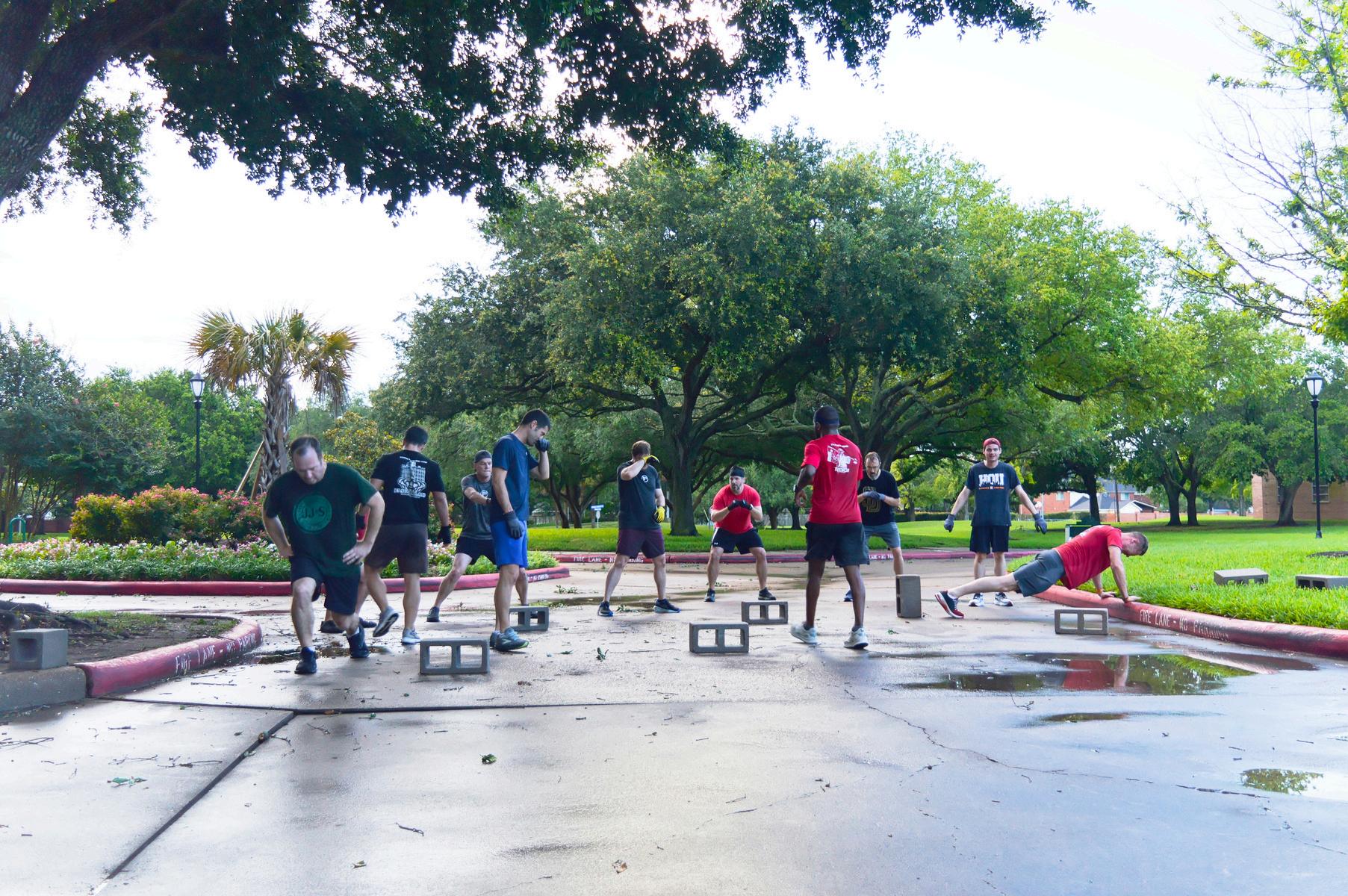
Rain earlier that morning left puddles across Ellis Creek, but the workout went ahead as planned F3 workouts are held outdoors year-round
The workouts themselves rotate between volunteer leaders. One morning a man may arrive just to try a workout. Months later, he may decide to lead the session himself.
Peduzzi describes it as “free to lead,” the idea that leadership often begins simply by stepping forward.
Even now, Peduzzi says he still catches himself
curious
“There is not one mold,” Peduzzi said. Peduzzi said F3 often talks about what it calls “sad clown syndrome,” the idea that many men move through life appearing perfectly fine while quietly feeling disconnected, stuck in routine or unsure of what comes next.
“You realize there are gaps in your life you didn’t
even know were there,” he said
For some men, he said, F3 becomes less about fitness itself and more about reconnecting with friendship, consistency, purpose and community.
What tends to unite the men who stay, he says, is not fitness level or personality, but a willingness to engage
“You get out what you put in,” he said.
For many, what begins as an early-morning workout slowly expands into something else: friendships, accountability, service and a deeper connection to the community around them.
On Saturdays, after the exercises end and the coffee starts pouring, the atmosphere shifts completely
Someone brings breakfast tacos. Someone else makes chili. Men linger around picnic tables long after sunrise while conversations move between family life, schools, careers and whatever else happens to come up that morning.
In a community built around schools, sports schedules and busy family life, the men at The Trench have quietly created a space to keep showing up for themselves and for each other.

The College Chapter checks in with New Territory college students as they navigate life beyond home. In this issue, we hear from Max at Penn State and Savanna at the University of Alabama.
Are you an NT student studying in the U.S. or abroad? We’d love for you to share a bit of your story.


vities in vities in
ajor because both of which dition, my in college computer ed spark my en's ing both
home home
college
hough it gets e winters are ois n to getting it is trying w people Do gives you kes your
Emma Martin is a first-year student at Nebraska Wesleyan University, where she is studying criminology and plans to graduate in 2029
She says her interest in criminology began through Sugar Land’s MYAC program, where she had the opportunity to visit the police department. The experience left a lasting impression and helped solidify her decision to pursue a career where she could help her community in a meaningful, non-medical way
One of Emma’s favorite things about college is the independence that comes with learning life lessons on her own while being far from home. She also values the friendships she has built and
“She also values “She also values the friendships she the friendships she has built and the has built and the support system she support system she has found among has found her peers.” her peers.”
the support system she has found among her
peers.
On campus, Emma is involved in the track and field team as a pole vaulter, as well as campus ministries through Navigators and the university’s water polo club.
While she enjoys college life, she says she misses being close to her family and friends back home, as well as the warmth during the winter months.

Her advice to students preparing for college? “Don’t be afraid to step out of your comfort zone, because you never know where it might lead you.”
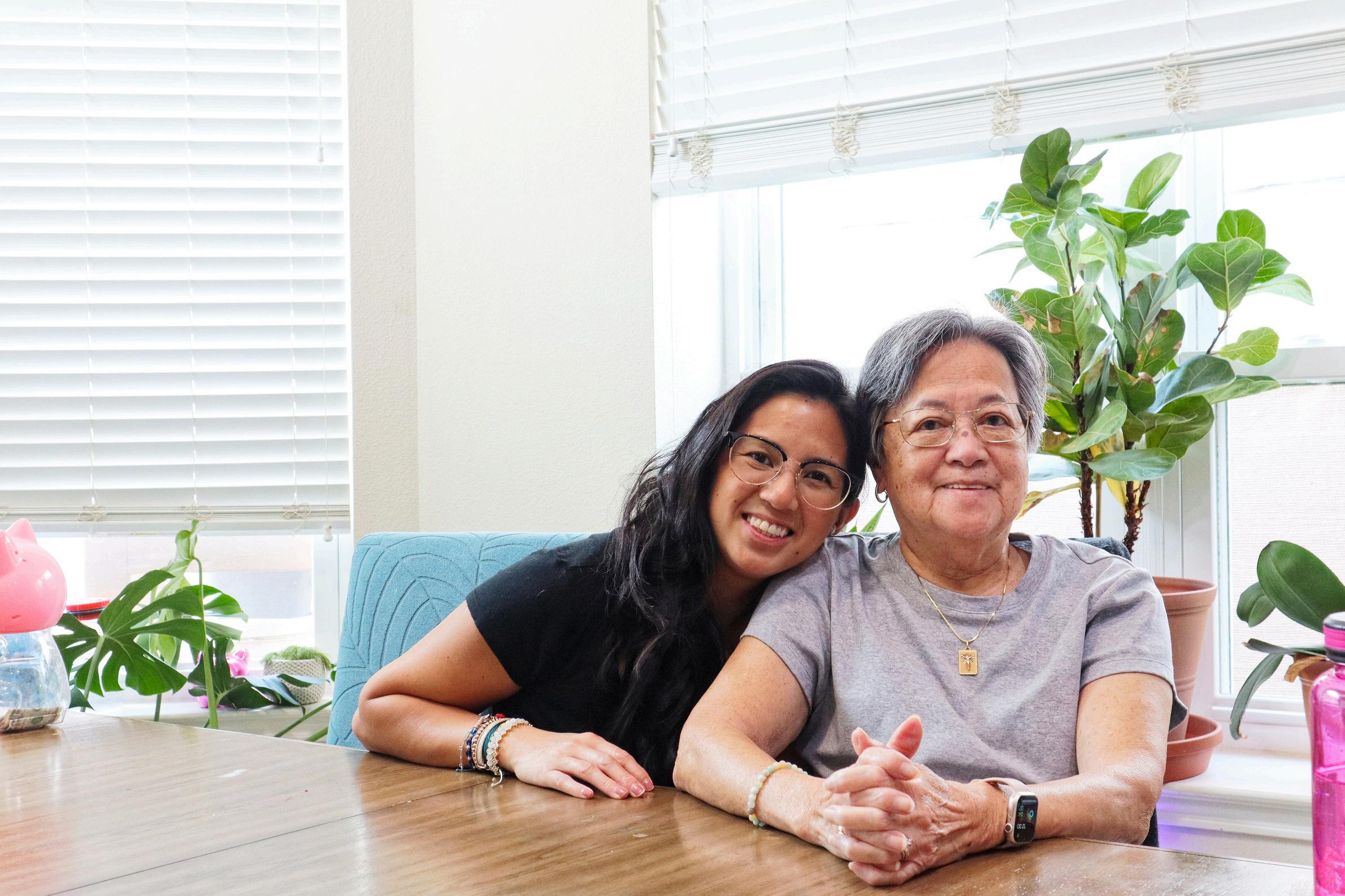
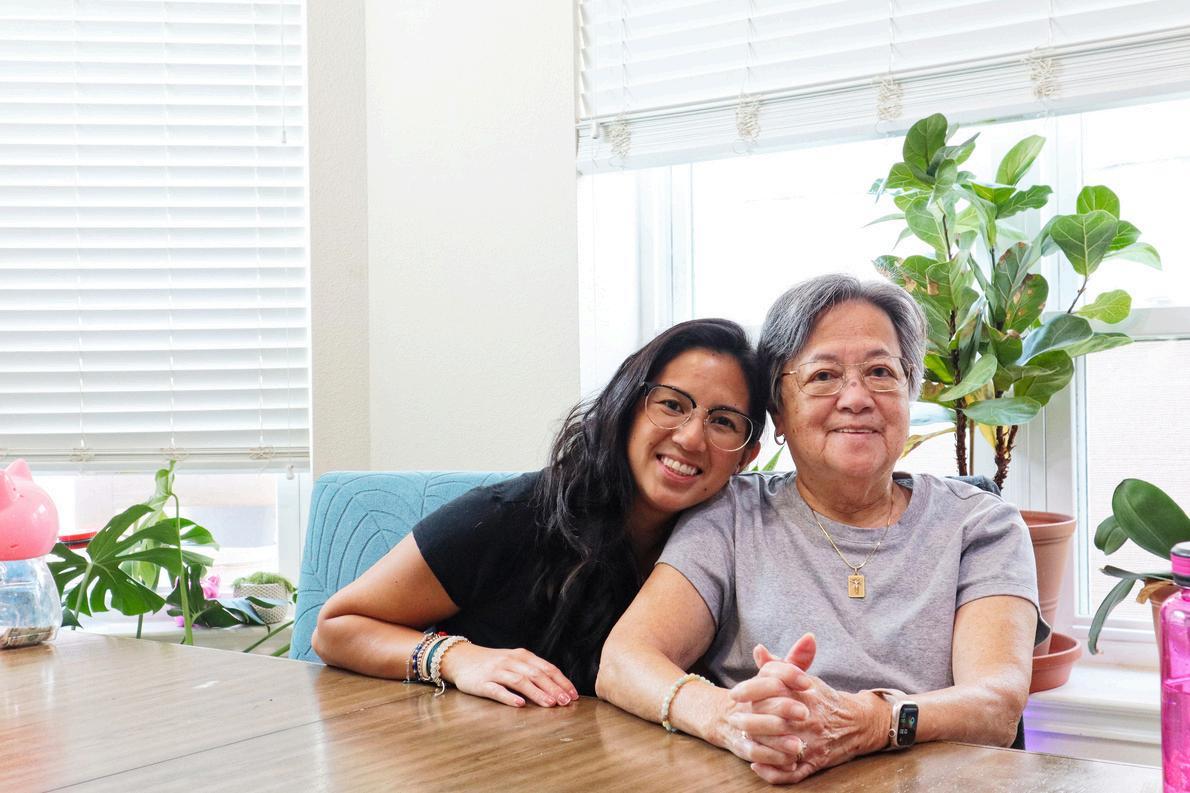
For the past five and a half years, Eleanor Felonia and her daughter, Jo Anne Castillo, have proudly called New Territory home
Originally from Mariveles, Bataan in the Philippines, Eleanor brought with her the traditions and flavors that continue to shape family life today. Jo Anne, meanwhile, grew up just outside Sugar Land in Stafford and has built her own life and family in the community she now calls home.
Jo Anne has been married to her husband, Bryan, for nearly eight years, and together they are raising their two energetic children, Bryan Jr. and Jeylani, who keep their household filled with laughter and activity.
Professionally, she has spent the past 11 years working in the Tax Department at WM, where she says she has grown both personally and professionally. Outside of work, Jo Anne describes herself as a modern-day “mami,” striving each day to balance faith, family, fitness, and fellowship
To Eleanor and Jo Anne, food is a universal language one of the most powerful ways to bring people together, regardless of background or where someone comes from In Filipino culture, they say, food is deeply tied to the idea of home. It is how families show care, celebrate milestones, and remain connected across generations
Cooking, in particular, is viewed as a love language a quiet but meaningful way of saying “I care about you” through every dish prepared and every plate shared Jo Anne admits she may be a little biased, but she believes her mother is one of the best Filipina cooks around. Family members and

friends, she says, would likely agree, many having enjoyed Eleanor’s cooking over the years
For them, food and cooking are about far more than nourishment. They are about memory, connection, tradition, and love shared around the table
Pancit, a beloved Filipino noodle dish, is traditionally served during special occasions, particularly birthdays and family celebrations. For Eleanor, the dish carries deep personal meaning, with the recipe tracing back to her late Lola, or grandmother, before being passed down through generations of the family.
Now, Eleanor says, it is her turn to share the tradition with her daughters, with the hope that they will one day pass it on to their own children. More than just a meal, pancit has become woven into the family’s memories over the years. From birthdays to gatherings large and small, the dish has remained a constant presence at the table, connecting generations through food, tradition, and shared moments together
TIME: 15 - 20 MINS (PREP) + 15 - 20 MINS (COOK) | DIFFICULTY: MODERATE
1 lb of rice noodle/bihon (soaked in water for five minutes)
1/2 lb. pork belly (cut thinly)
1/2 lb of shredded cooked chicken
1/4 lb of shrimp (deveined and shelled)
5 cups of chicken broth (you can use water from boiled chicken)
1 cup julienned carrots
1 cup chopped celery
1 cup chopped cabbage
1 cup of snow peas
1 small onion (chopped)
3 cloves of garlic (minced)
5 tablespoons of cooking oil
3 tablespoons of sesame oil
5 tablespoons of dark soy sauce

1 tablespoon of fish sauce
2 teaspoons of chicken bouillon
1 teaspoon of fine black pepper
4 cups of water
Chopped green onions (optional)
1 Calamansi or lemon (optional)
Heat oil in a large wok. Stir fry the pork, chicken, and shrimp until browned and set aside.
In the same pan, sauté the vegetables, garlic, and onions. Add carrots, celery, cabbage, and snow peas. Cook for 1-2 minutes (half-cooked) and set aside.
Create the broth Pour at least four cups of water in the same pan. Add the chicken broth, dark soy sauce, light soy sauce and fine black pepper. Bring to a boil, add the soaked and drained rice noodles to the broth. Stir until the noodles completely absorb the broth.
Return the cooked meat and vegetables to the pan and mix well with all ingredients in the pan.
Garnish with fresh green onions and serve with calamansi or lemon wedges (optional)
Traditional pairings: fish sauce and lemon are great condiments; a tasty pairing would be lumpia - (another Filipino favorite we will cover in a future issue!)
Drinks: A good and refreshing calamansi juice during the hot summer days
Insider tips: All ingredients can be found at a local H-E-B. But if you're interested in finding authentic ingredients, check out Seafood City, a Filipino Grocery Store right here in Sugar Land.
Substitutes: Any rice noodle will work
Final tip: Refridgerate for no more than 3-4 days.



6 y e a r s o l d
Peggy, a rescue from the Houston Animal Shelter, joined the Bordt family shortly after they moved to New Territory. Adopted around Christmas, she quickly became Mia's constant companion




SS: What would be your ideal job?
Peggy: Squirrel Patrol (in action in photo)
SS: What is your favorite thing to do?
Peggy: Play with balloons
SS: Your biggest oops moment.
Peggy: Destroying the wall with my head.
S: Do you have a favorite snack?
Peggy: Meatballs and marinara sauce
SS: What does your ideal day look like?
Peggy: One filled with at least one walk, one game of “balloonsies”, one game of tug a war, and table scraps… preferably on spaghetti night.
SS: What do your humans have to say about you?
Peggy: An angel sent from heaven
SS: Is there something they do not know about you?
Peggy: I feel bad when Shadow gets in trouble and even if I had nothing to do with it.
SS: If you had a catchphrase it would be?
Peggy: I’m a good girl