

STACY ZWERNEMAN’S JOURNEY THROUGH DIAGNOSIS AND HOPE STACY ZWERNEMAN’S JOURNEY THROUGH DIAGNOSIS AND HOPE





STACY ZWERNEMAN’S JOURNEY THROUGH DIAGNOSIS AND HOPE STACY ZWERNEMAN’S JOURNEY THROUGH DIAGNOSIS AND HOPE
Nearly four years ago, my family and I arrived in New Territory and quickly realized
something special about this place The tree-lined streets and basketball hoops in most driveways are certainly part of the charm But the people - it is the people who make this neighborhood what it is.
I have always been curious about people’s stories. Before moving to Texas, I spent five years publishing a magazine in the Seychelles Islands. What stayed with me most was how often a simple conversation or a social media post would leave me thinking: that is a story worth sharing SugarSide grew from that same feeling
moments, and by the sense that there are so many stories here worth telling.
A neighborhood is made up of hundreds of them: the families who have lived here for years, the businesses that serve the community, the students growing up here, and the neighbors whose paths cross every day
This first issue is a beginning A way to introduce the idea and start building something for this community - one story at a time. Inside, you will find a little bit of everything: families, businesses, summer plans, and the people who make New Territory what it is.
For now, we are starting digitally while we explore the possibility of printing future editions. The goal is simple: to learn more about this community and help neighbors learn more about each other It also feels fitting that our first issue arrives in May. As a mother raising two boys here, a Mother’s Day edition makes this beginning especially meaningful.
There is more to come. For now, I am simply glad you are here. —


Summer Kids’ Camps

Understanding Autoimmune Encephalitis

Student Services Board

May’s upcoming events










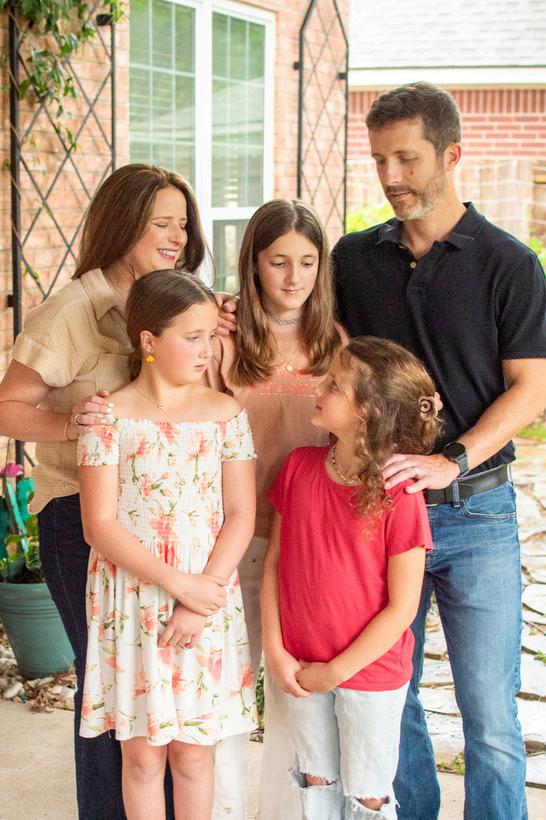
Stacy Zwerneman’s journey through uncertainty, advocacy, and hope in the face of a rare diagnosis.
On the surface, life in New Territory for Stacy and Craig Zwerneman looked much like it does for many families Three daughters School runs Activities The steady rhythm of everyday life.
Stacy never imagined she would build her life here. After moving frequently as a child, she spent her high school years in Sugar Land and was certain life would take her somewhere else, a different city, a different ZIP code.
“And here we are,” she says with a smile “I love it now ”
Her eldest daughter, Lela who turns 13 this year, has always stood out.
“She’s something very special,” Stacy says. “She’s brilliant, super creative… she has this musical talent that doesn’t come from me.”
Lela could hear a song once and figure it out on her own Piano came naturally So did reading and writing, both far beyond her years
But alongside that brilliance, there were early signs that something wasn’t quite right.
When things didn’t add up
It started with very subtle signs.
Around kindergarten, Lela began to struggle in ways that were hard to explain At the time, it

was easy to attribute the changes to life transitions, including a new sibling, growing
pains, and the natural adjustments of childhood.
But something felt different
“She would go from zero to 100,” Stacy recalls,
“just like that And you’d think, what just happened?”
There were moments that were confusing, even frightening. Behaviors that didn’t quite make sense. Emotions that seemed to overwhelm her. When the pandemic hit, something unexpected happened. Removed from everyday exposure to illness, Lela improved Looking back, it would become an important clue At the time, it felt like relief, as if a rough phase had simply passed.
“We thought she had just grown out of it,” Stacy says.
When life returned to normal, the improvements faded, and the changes came back This time, they were impossible to ignore
By third grade, the shift was dramatic
A child who once devoured books began to struggle with basic spelling. Her handwriting changed, letters uneven where they had once been steady. Simple math, once easy, became difficult.
At Brazos Bend Elementary, Lela’s teacher worked tirelessly to support her, finding creative ways to help her feel safe and continue learning But even with that support, something deeper was unfolding
At home, the family watched as Lela struggled to contain emotions that seemed to take over without warning.
“It was like she wasn’t herself,” Stacy quietly recalls. “You could see it… it just wasn’t her.”
What followed was a long and complicated journey through appointments, tests, and uncertainty
At first, the focus leaned toward behavioral or psychological explanations. But as symptoms

intensified, and as physical changes began to appear, it became clear that something more was at play
“We knew it was medical,” Stacy says “We just didn’t know what ”
Eventually, a neurologist began to connect the dots, identifying patterns and possible triggers: infections, immune responses, a body reacting in ways it shouldn’t.
When the words finally came Autoimmune Encephalitis they did not come gently Stacy already knew what it meant.
A close family member had lived through it.
“I remember seeing the words and just feeling sick,” she says. “I knew how serious it was.”
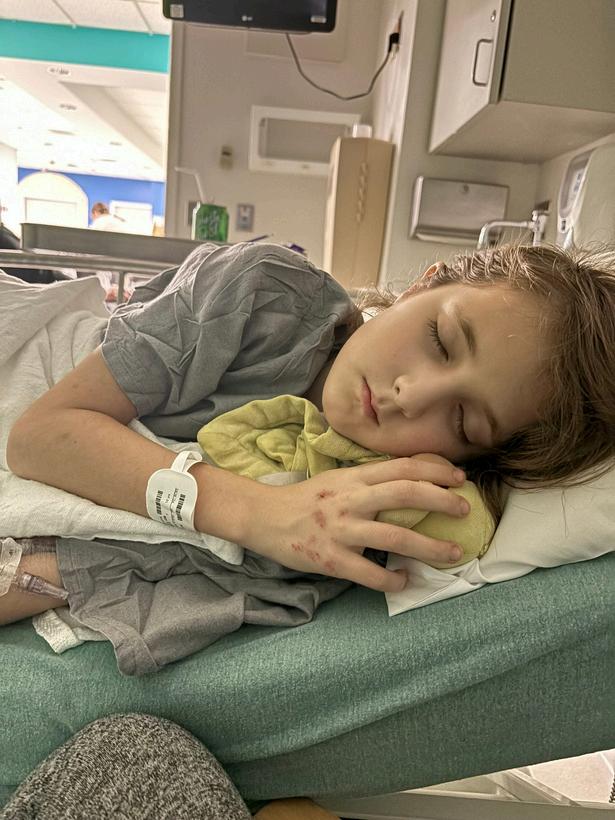
Autoimmune Encephalitis, (AE) is a condition where the body’s immune system mistakenly attacks the brain. It can affect behavior, memory, cognition, and emotional regulation, often in ways that are sudden and severe.
For Stacy, the diagnosis was both an answer and the beginning of an entirely new battle.
Treatment was not straightforward
The care Lela needed was complex, and expensive. One of the key therapies, IVIG (intravenous immunoglobulin), involves infusions made from the plasma of thousands of donors, designed to help regulate the immune system.
But accessing it meant navigating a system built on checklists, and Lela’s condition did not fit neatly into those boxes
“You’re fighting for your child, and at the same time you’re fighting insurance,” Stacy says. “It’s constant.”
Despite medical recommendations, approvals were delayed or denied. Each step required persistence, documentation, and, often, escalation.
Eventually, Lela received her first treatment in the hospital, before insurance approval was secured
“Her father and I just said yes We’ll figure the rest out later,” Stacy remembers.
Because when it comes to your child, what is the alternative?
The impact extended beyond medical care
There were younger siblings at home to support A household to hold together A child who needed constant care, attention, and understanding. And through it all, uncertainty.
“You don’t have the luxury of stopping,” Stacy says.
“You just keep going.”
Stacy had to step away from her tutoring business to focus fully on Lela’s needs and adjusting life as necessary to meet the demands of a journey she had never anticipated

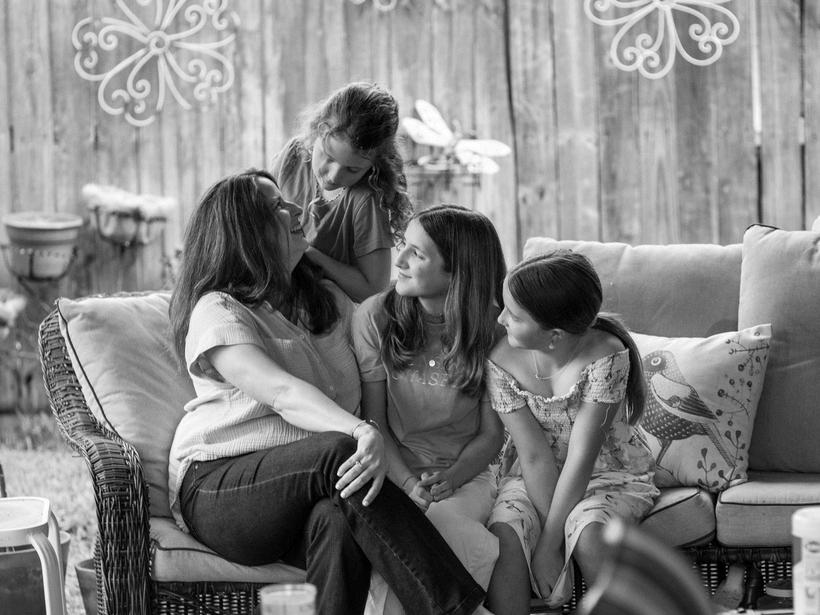
Through it all, Stacy and Craig have not carried this alone
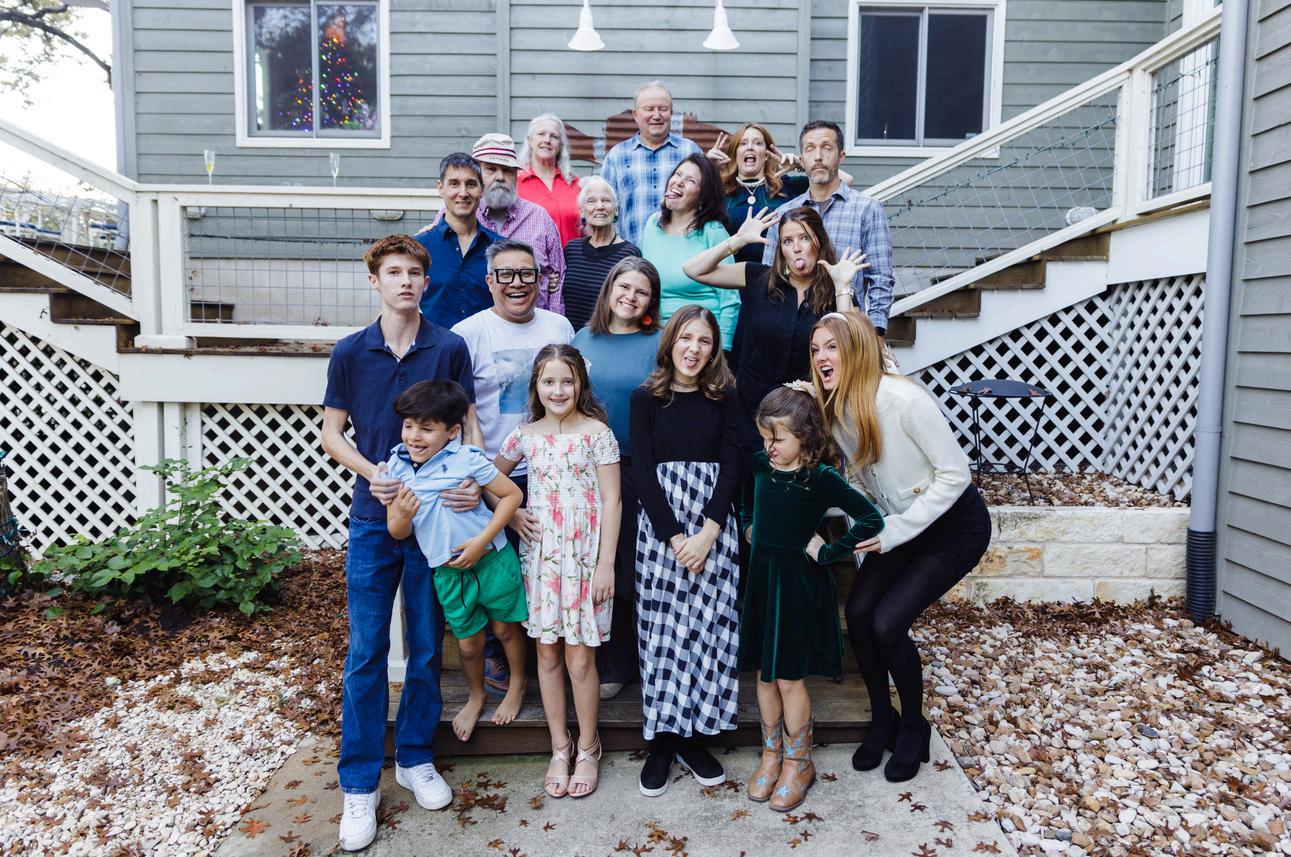
Her family, based in Austin, have been a constant source of strength They have created a space where she can exhale, where she can process what she is going through without needing to explain it.
“They just show up,” she says. “Sometimes before I even ask.”
Closer to home, friends have done the same. A phone call is often all it takes before someone is at her door, ready to sit with her, or simply to lighten the weight of the day
That circle of support has extended into the wider community.
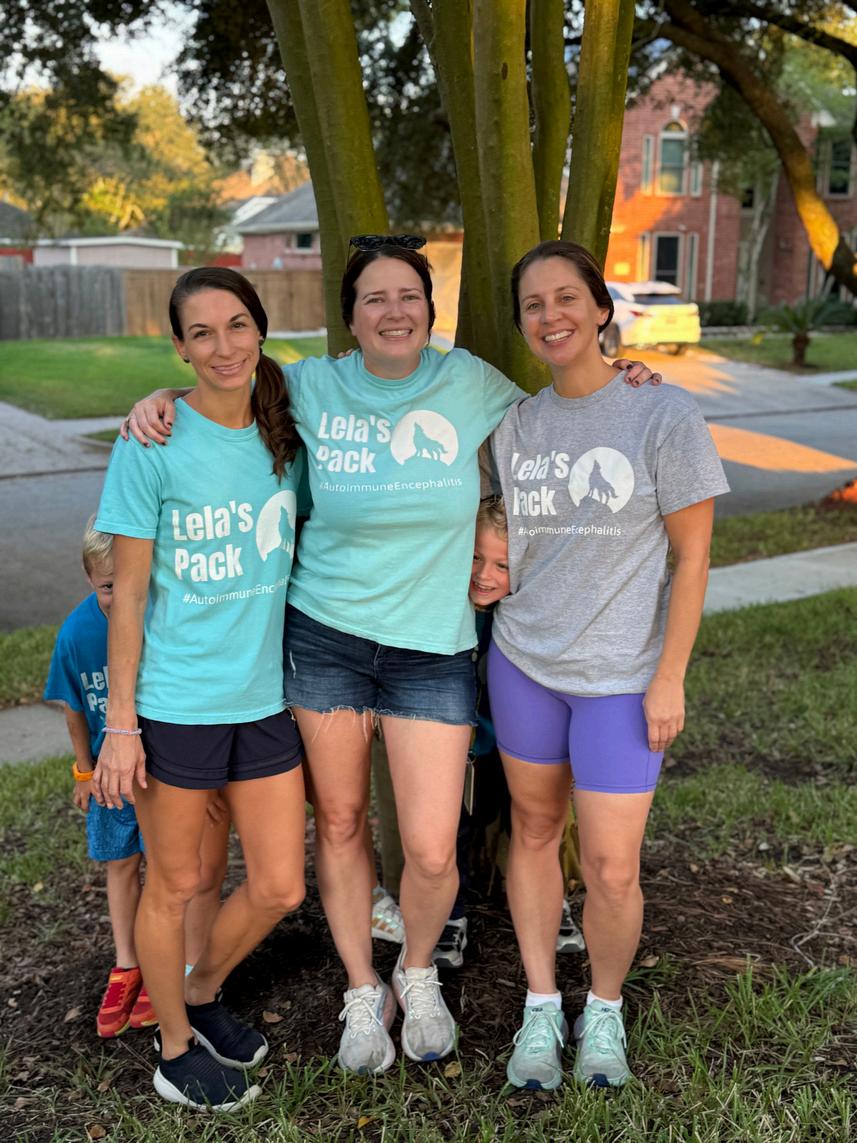
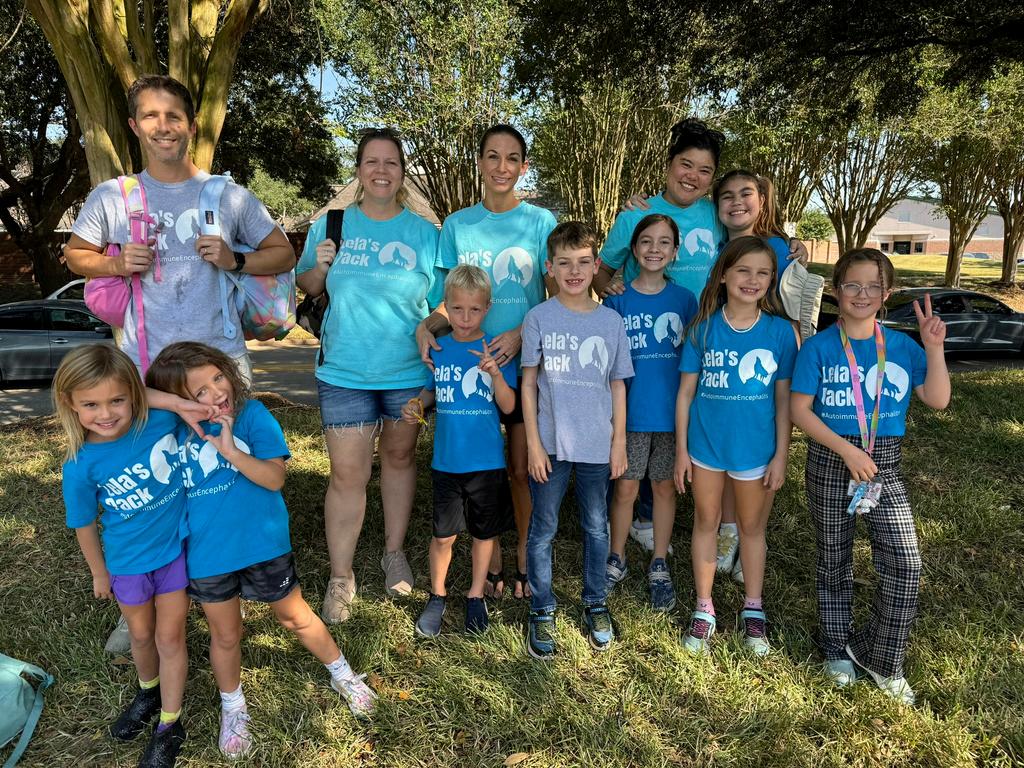
Through an effort known as Lela’s Pack, friends came together in a show of support and awareness. T-shirts were worn across the community, a visible reminder that Lela was not facing this alone
“I didn’t realize how much it would mean,” Stacy shares “Seeing those shirts around the neighborhood it meant everything to her, and to me.”
In the middle of everything, these moments have mattered.
They have provided not just help, but a reminder that even in the hardest seasons, no family stands entirely on its own

intensified, and as physical changes began to
Today, there is progress.
Treatment is ongoing. It is not immediate, and it is not simple But there are moments, real, meaningful moments where Lela thrives
“She’ll say to me, ‘I don’t want to do this, (take her medication) but I know I need it,’” Stacy shares.
“She understands now.”
That understanding, from both mother and daughter, has clearly become part of the healing process.
With the right support system in place, from doctors to therapists to school, life has begun to find a new rhythm
At WIDE School, which Lela currently attends, that support has made a meaningful difference. The school understands what Lela is going through and works with her, adapting when needed and creating a space where she can continue learning.

For Stacy, this journey has become more than a personal fight
It has opened her eyes to a wider reality, one where families navigate complex systems, advocate tirelessly, and often do so without the fraction of support they need.
“I realized I’m only able to speak up because I
have support,” she says. “There are so many families who don’t.”
That realization has led to something more A growing commitment to advocacy, awareness, and change for families affected by Autoimmune Encephalitis.
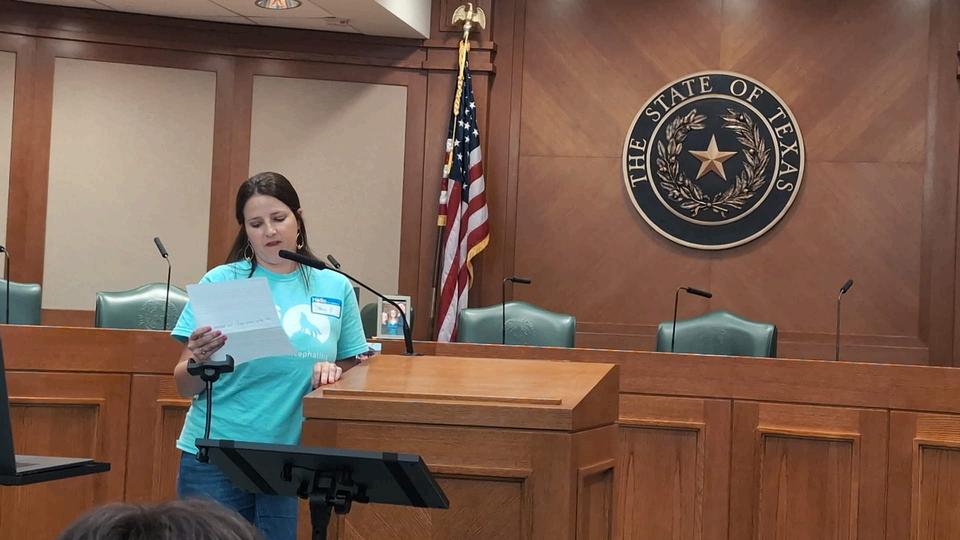
Stacy is now working alongside her father to help shape potential Texas state legislation aimed at addressing gaps in access to treatment.

It is a complex and unfamiliar process, but one she has stepped into with determination. She welcomes the support of those with legal expertise who can help move this work forward
For now, the focus is on progress. Treatment continues, with good weeks, hard weeks and everything in-between. The goal is remission, a point where Lela will no longer need ongoing treatment and can move forward without it
It is not a straight path, but it is one they are walking with more understanding and hope than before.
At its heart, this is a story about a mother who has learned to navigate uncertainty, advocate fiercely, and show up, every single day. And through it all, Stacy holds on to what she has always known about her daughter “She’s gonna do big things in life ”



Lela shares a few words for Stacy
Dear Mommy,
You are the best mom I could hope for, and no one can take your place. There is only one you! Your kindness, gratefulness, al the things that make you the wonderful mom you are, can never be duplicated by anyone else.
Happy Mother’s Day!!
Your favorite daughter, Lela
What makes your mom special?
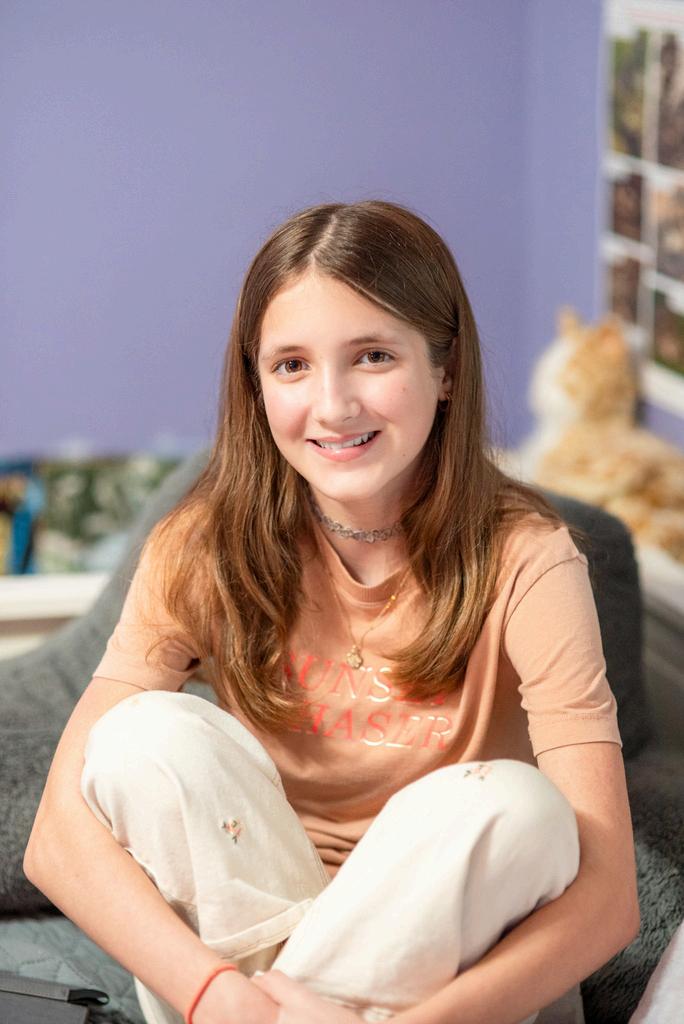
What makes my mom special is that she works so hard to make sure I am free of my chronic i lness Every time I turn around, she is usualy working on something to help me My mom is the best mom I could ever wish for!
What do you love doing together?
Me and my mom love to garden together. Well, at least I love to help her. I go to the garden store and pick out so many beautiful flowers! I recently got my mom into audio books. We listen to them every day on the way to school
If your mom was your age, do you think you would be friends?
Yes, we definitely would become friends My mom told me she liked the same animals as I did when she was younger!! We both played with our stuffed animals too. We wouldn’t just become friends, we would be best friends.
FROM ETSY
blue/green edition
pink/purple edition
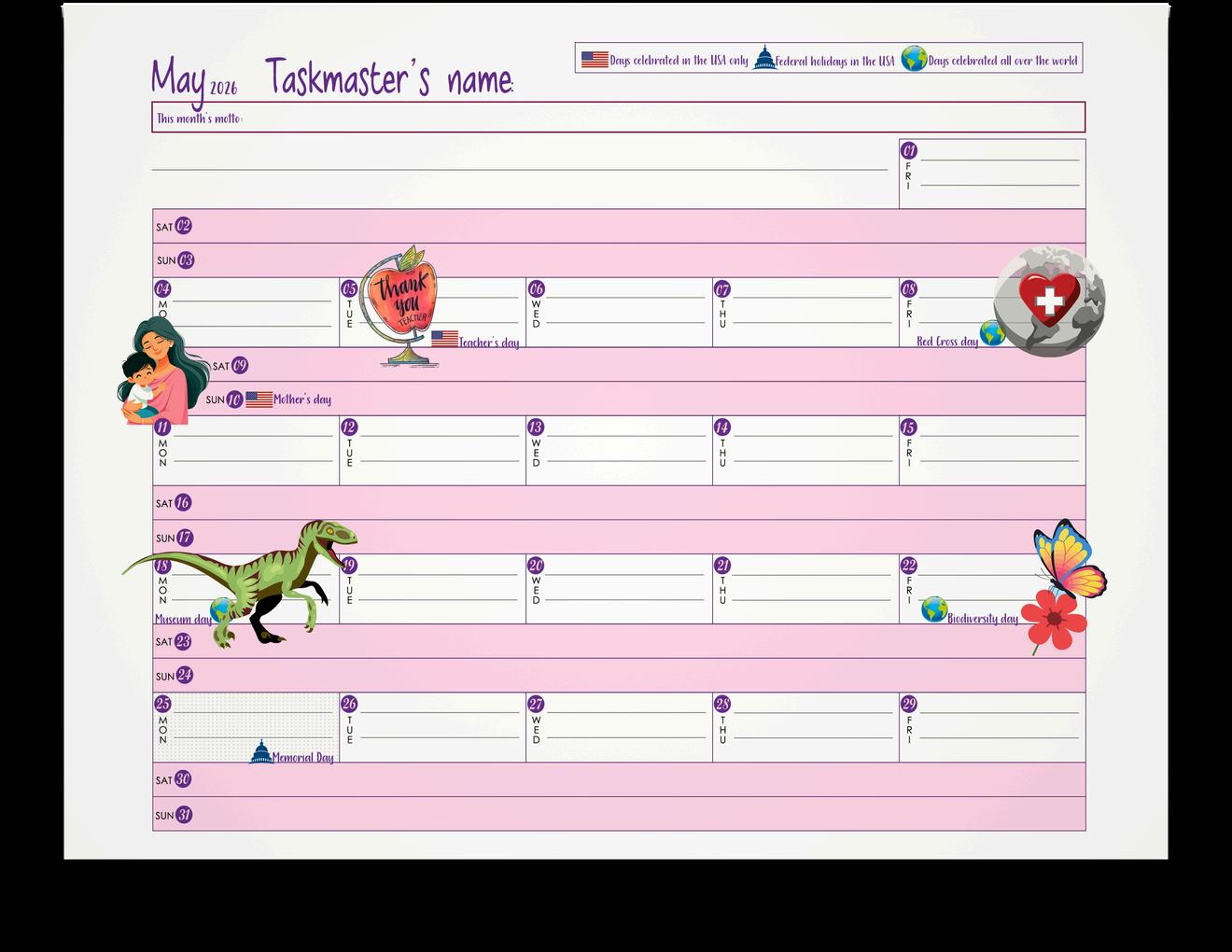
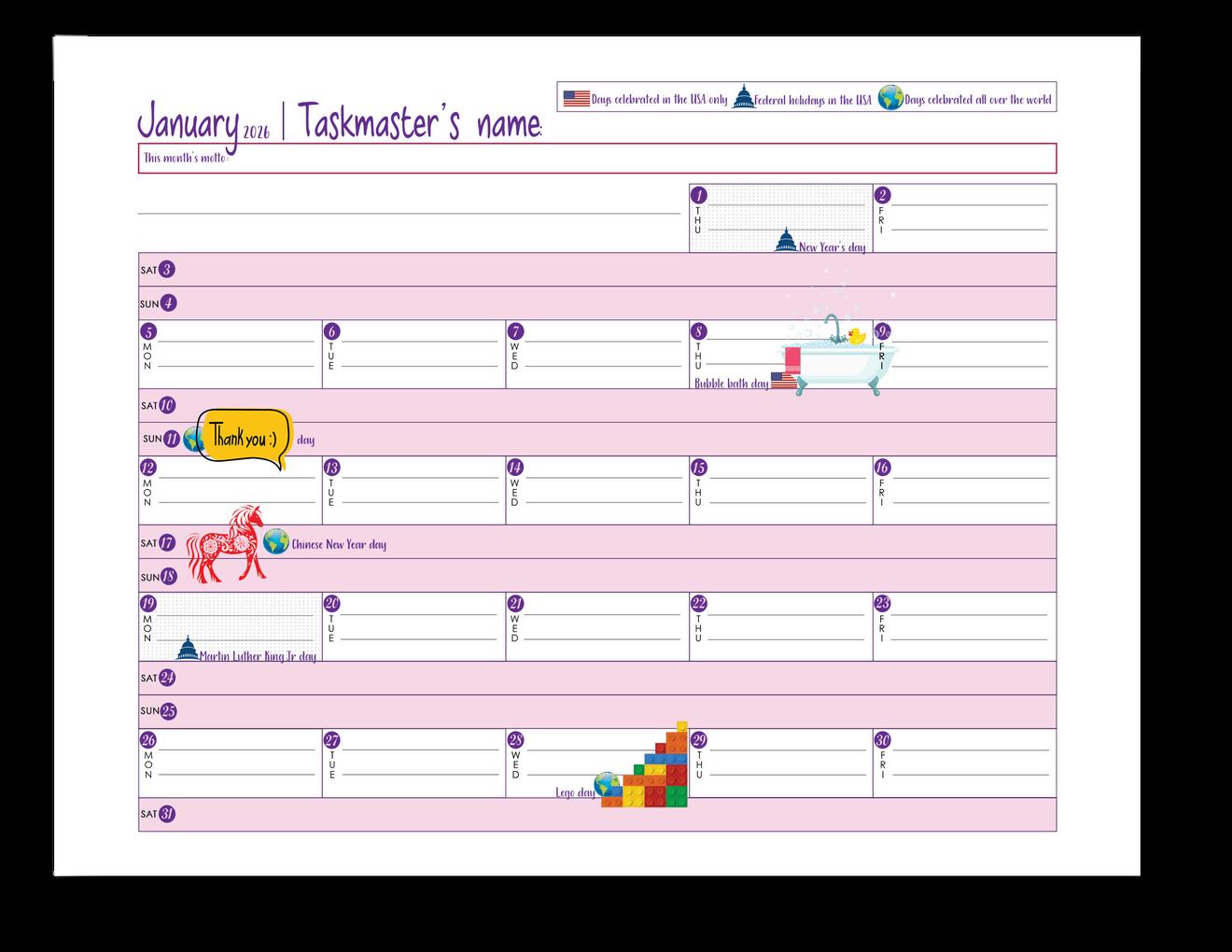
Taskmaster Planner introduces kids (7-10 years) to meaningful days each month what they are, why they matter, and how they can take part
Along the way, they learn to plan their own time.
– Simple monthly layout – 5 observance days, clearly explained – Designed for kids to use independently Print it. Hand it over. Let them lead.
Summer is just around the corner, bringing with it a
fresh opportunity for kids to explore new interests, build confidence, and make lasting friendships. Whether they are trying something for the first time or building on a passion, summer camps offer the perfect space to learn, create, and grow.
Browse through our selection of camps below to find the right fit for your child. Simply click on each photo to access more details, including flyers and registration information.




Summer Soccer Camps
Age range: 6-16
Dates: from June 1 / 8 /15 /22 st th th nd
Duration: week-long/ 9am - 12pm
Location: Sandhill Field
Led by a UEFA A licensed coach, this summer camp delivers a structured, professional training experience inspired by top European football methodologies Players develop technical skills, tactical awareness, and game confidence through highlevel drills, small-sided games, and competitive match scenarios.
Lead Through Athletics
Age range: K-9 grade th
Dates: from June 1 - August 7 st th
Duration: daily to full summer
Location: 4 Quarters Gym, 1646 Blaisdale Rd Ste 1100
High-energy basketball training combines skill development, team challenges, and competitive play in a dynamic camp environment Beyond the court, campers engage in leadership activities, hands-on STEM projects, and a full schedule of diverse summer experiences.
Ninja-Kid Warrior
Age range: 4-13
Dates: from June 1 - August 10 st th
Duration: daily or weekly/ 9am to 3pm
Location: 2595 Cordes Drive, Sugar Land
Campers tackle obstacle courses and warped walls while enjoying a high-energy, action-packed environment Each day blends structured activities with free play, including engaging classes, games, skill-building sessions, and team-based challenges.




Dance Du Coeur
Age range: 3-11
Dates: from June 8 - August 8 th th
Duration: Mondays-Thursdays/ 9am - 12pm and 1 - 4 pm
Location: 19875 Southwest Freeway
High-energy dance camps featuring themes like K-Pop Demon Hunters, Moving with Bluey, and jazz and hip hop in a fun, engaging environment. Each camp blends movement, games, and creativity while building confidence and performance skills, ending with a showcase for family and friends.
Inspiration Stage
Age range: 4-16
Dates: June and July
Duration: week-long camps/ 8am - 12pm and 1-5pm
Location: Sugar Land Town Square
Choose from 20 exciting theatre camps where creativity, confidence, and performance skills come to life through full musical productions. Campers build acting, singing, and teamwork skills in a fun, high-energy environment where imagination thrives and every performer shines.
iWRITE
Age range: 9-12
Dates: from June 15 - 18 th th
Duration: week-long/ 9am - 3pm
Location: SheSpace – 2799 Katy Freeway
Campers learn to create compelling characters and craft dynamic storylines, building strong plots with engaging conflicts and resolutions Through sensory writing, editing, and creative activities, they develop storytelling skills while bringing their ideas to life through words and art.


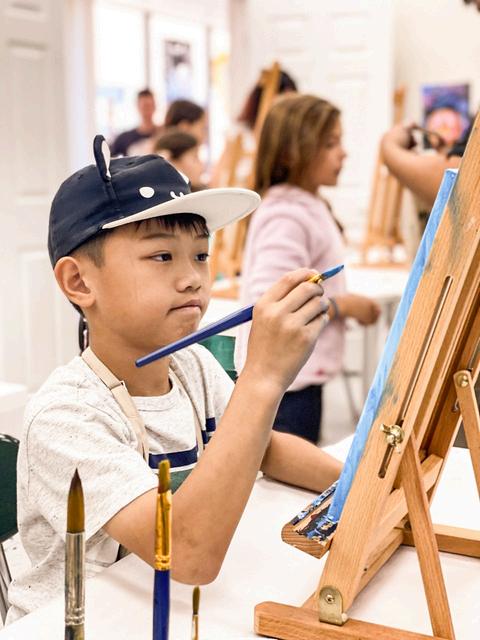
Cordovan Art School
Age range: 5-16
Dates: from June 1 - August 11 st th
Duration: Full Day or 1/2 Day / extended care available
Location: 3219 Hwy 6, Sugar Land
Award-winning art camps where creativity comes to life through a wide range of mediums, from painting and drawing to clay and mixed media. Campers explore fun, themed projects in an engaging environment, building artistic skills while expressing their imagination and creating unique works.
Gordon Education
Age range: 9-17
Dates: June 8 through to July 17 th th
Duration: week-long camps/ 8am - 3pm
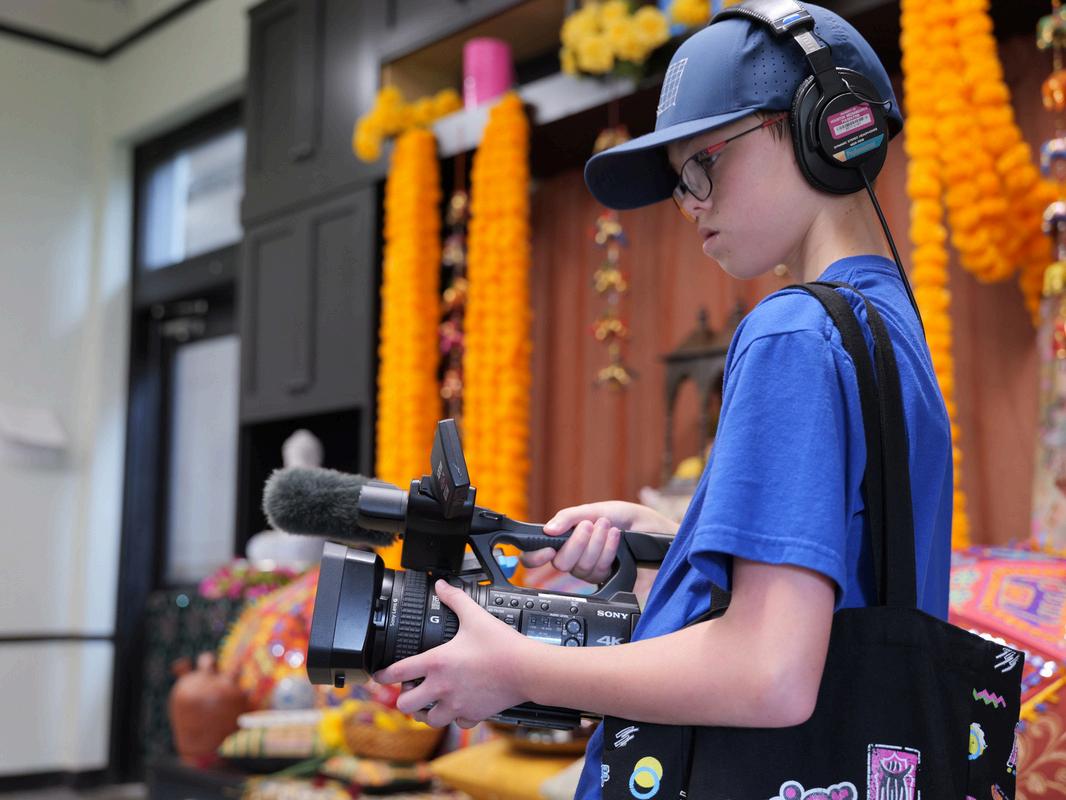
Location: Various locations in Houston
Hands-on filmmaking camps where campers create historical, narrative, and documentary films while exploring storytelling and real-world themes Participants write, direct, and collaborate on original projects, developing creative, technical, and storytelling skills from concept to screen
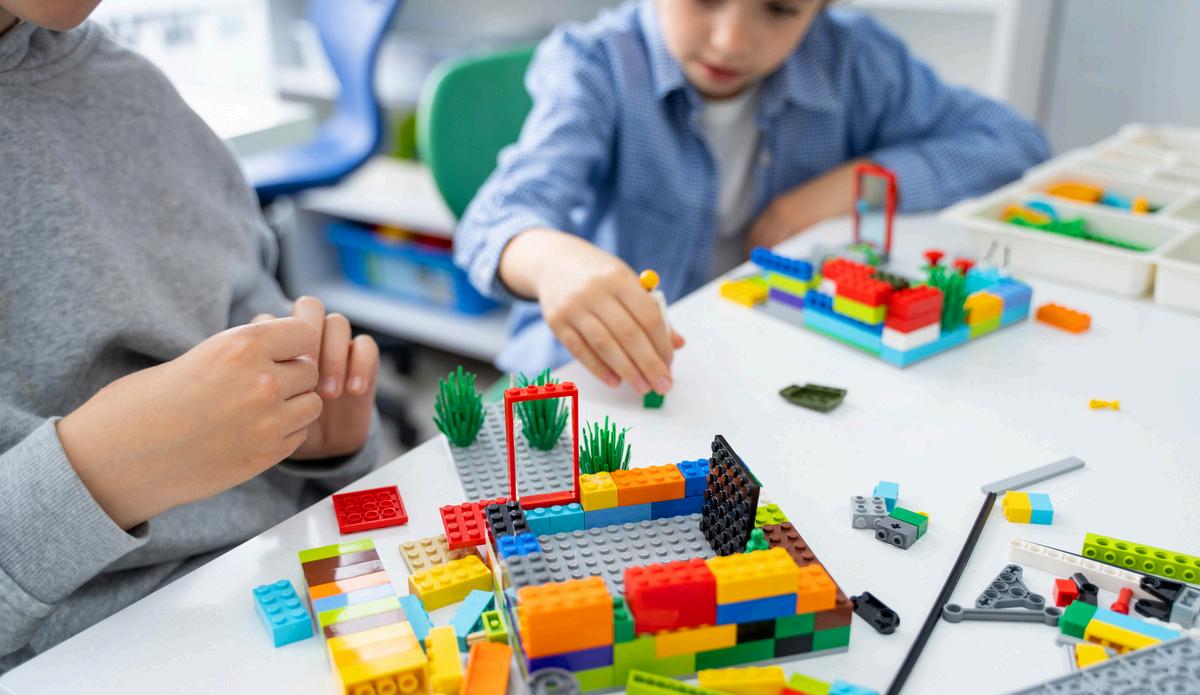
ar Land Art Centre range: 5-14
s: from June 1 - August 6 st th
tion: half or full days/ 9am to 12pm or 1 to 4pm
ation: Sugar Land Art Center, 104 Industrial Blvd. Suite Q
tive camps combining art and LEGO-based activities, ring a fun and engaging environment The art camp has erent themes every week and campers get to use paints, watercolor and more to experience many mediums!


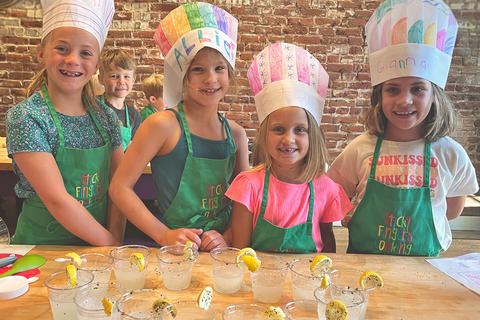

Sticky Fingers Cooking
Age range: 4 and up
Dates: from June 1 - 4 and 8 - 11 st th th th
Duration: Four-day camps/ 3 -4pm
Location: The Seth Building, 6920 Brisbane Ct, Sugar Land
Hands-on cooking camps where campers explore globally inspired recipes while building confidence and essential kitchen skills. With a dash of S.T.E.A.M. and a pinch of culture, they learn to cook through engaging, hands-on experiences using plant-forward, 100% nut-free recipes
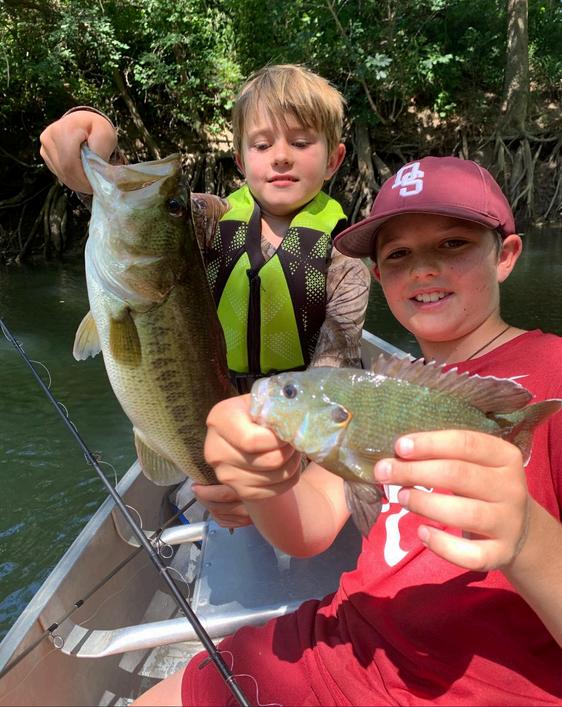
Hill Country Fishing
Age range: 7-15 (boys and girls)
Dates: June 2 through to August 01 nd st
Duration: Monday to Thursday/ 9am - 1pm
Location: Austin, Georgetown, New Braunfels, (+2 more)
Hands-on outdoor camps where young anglers learn fishing fundamentals, water safety, and environmental awareness Guided by expert instructors, campers build skills from knottying to casting techniques in a fun, supportive environment that encourages confidence and connection with nature.

Age range: 5-17
Dates: from May 25 - August 7 th th
Duration: week-long/ 9am to 4pm
Location: 4899 Highway 6, Suite 113C, Missouri City
Technology-focused camps where students build digital skills while learning to navigate the online world safely and responsibly. Through guided projects and collaborative activities, they develop creativity, teamwork, and problemsolving skills while creating and exploring with modern tools.


It took more than three weeks to get Buster Brown off the streets.
During that time, he was seen running across New Territory and beyond, through neighborhood streets, near busy roads, and even as far as Telfair and the area around Aliana. He was constantly on the move. While most people saw a dog on the run, Charlene Avery-Turek saw a situation that wasn’t going to resolve itself.
She began reaching out, connecting with residents, tracking sightings, and piecing together his route Feeding stations were set up where he returned most often. Trust had to be built slowly.
Morning after morning, before sunrise, she showed up with food, slip leads, and a plan. Then, one cold morning, along with Carol Hill, another new Territory resident and with the help of an experienced volunteer trapper, Buster Brown finally went into the trap
“I’ve never been so relieved to get that dog off the street,” she tells SugarSide, in tears. That moment says a great deal about the kind of person she is.
Because in New Territory, when an animal is in trouble, Charlene is one of the people who shows up.
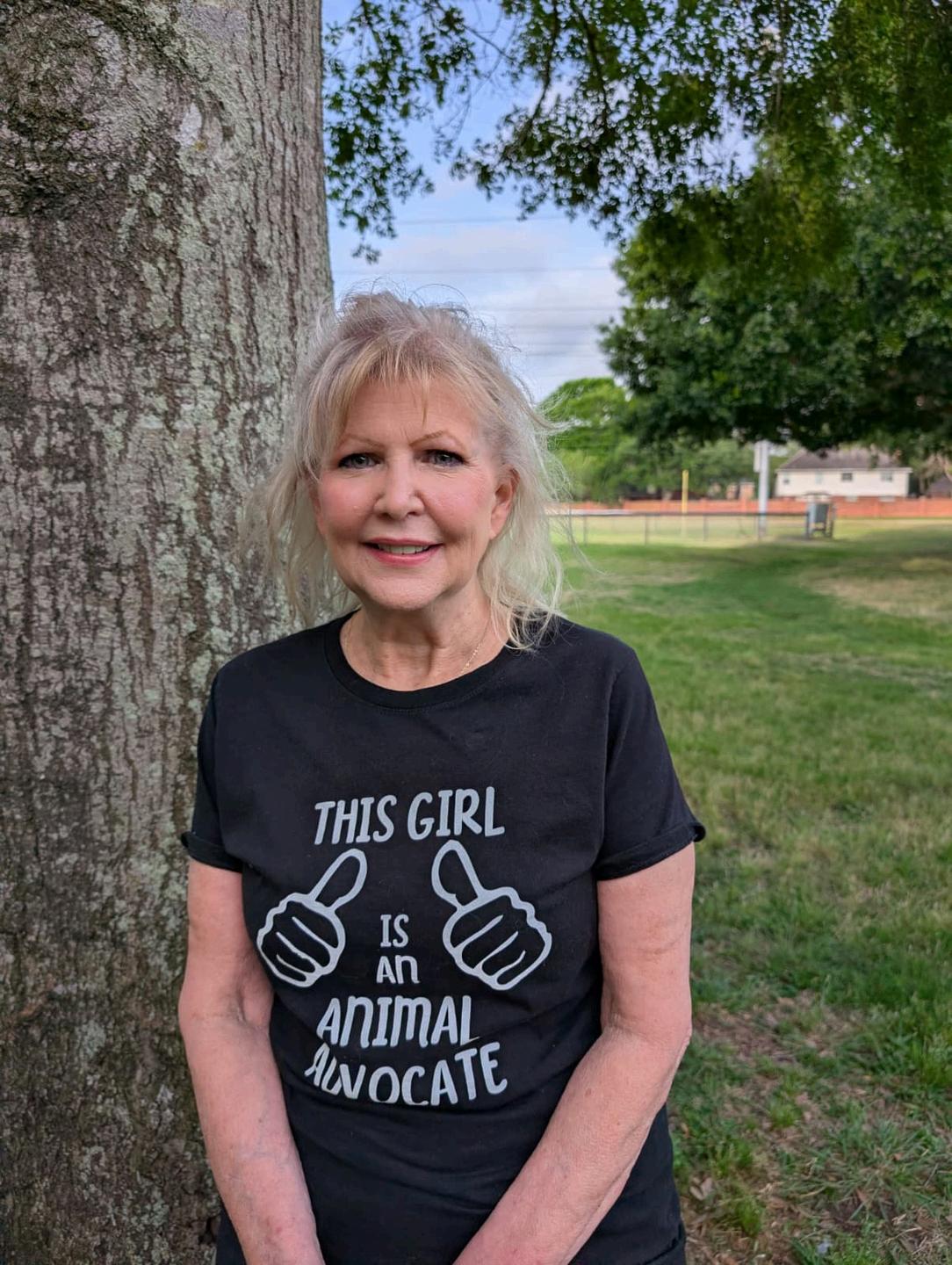
Nearly 20 years ago, not long after moving to New Territory, the first stray animal found its way to her home. Then another. And another.
“I’ve always been a magnet for animals,” she says.

What started with feeding an injured cat and helping a small kitten quickly became something more Through neighbors and early
community groups, she was introduced to others doing the same kind of work, quietly helping, organizing, and learning as they went That is how it began.
What many people do not see is what this work really involves. It is not a single act of kindness, but an ongoing system of care built on time, coordination, and trust. Traps are set late at night or before sunrise and checked early in the morning Animals are transported to veterinary clinics, sometimes across long distances, then brought back to recover in spare rooms, garages, or wherever space is available.
“It takes neighbors coming together,” she
explains. “This is not a one-person job.” That effort has grown into something more connected, though still entirely volunteer-led Today, New Territory has its own informal network of residents who help reunite lost pets, care for community animals, and support one another in the process.

Some of that work traces back years Early community members like Betty Lozada helped introduce trap and neuter practices in the neighborhood. Others, including the late Gail Cooper-Evans and Laurie Angert Walker, built the early communication channels that allowed neighbors to connect, share information, and respond quickly when animals were in need. Today, that network continues through people like Amanda Dailing and Janie Hollywood, who help coordinate efforts, scan found pets, and respond when animals are spotted. It is not formal, but it is effective. Through local social media groups, neighbors share sightings and coordinate in real time. A found dog might be scanned for a microchip within minutes. A missing pet can be back home within hours
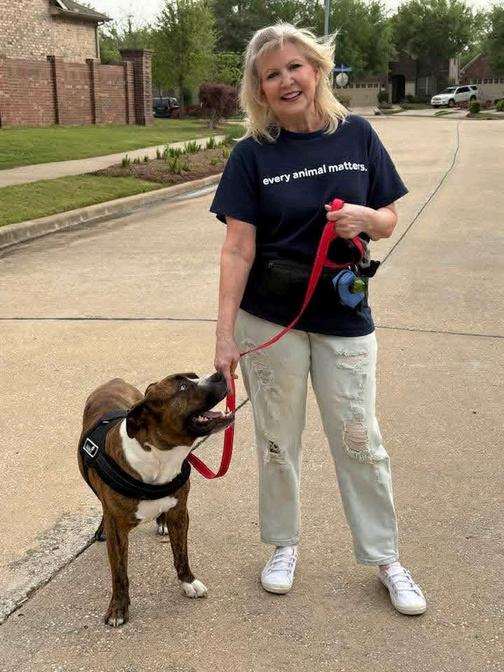
“We have our own little network,” she says “And we do it every day ” Helping does not end with a single rescue. It becomes part of everyday life. Much of her time is spent caring for community cats, animals that are not owned but still rely on someone to ensure they are fed, monitored, and protected.
Through trap, neuter, vaccinate, return, she helps prevent overpopulation while allowing these animals to remain in the areas they know It is steady, ongoing work that requires patience, resources, and consistency
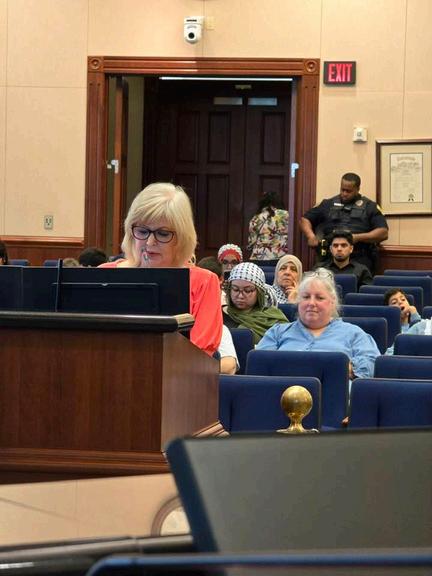
As her work deepened, it extended beyond individual rescues into advocacy. What began at the neighborhood level has grown into something much broader. Today, she follows and engages with decisions made at both the city and state level, understanding that policies around animal welfare directly shape what happens on the ground.
That shift came when it became clear that many of the challenges she faced were not just about individual animals, but about systems. One example of that work came when she began advocating for changes to how the city approached community cats At the time, trap, neuter, return practices were not permitted under city ordinance Rather than accept that, she began speaking up. She attended meetings, worked with others, and brought forward data and real experiences from the community.
“I went to every meeting that I could,” she says. Those efforts became more structured. She met

with city and shelter officials, built relationships, and contributed directly to the language that would shape local policy She worked closely with local leaders, including her city council representative, Sanjay Singhal, to ensure community concerns were heard and understood.
“I personally helped write parts of the ordinance,” she explains.
After two years of persistence, the change was adopted Trap, neuter, return is now permitted Often referred to as TNVR, the approach is simple in concept but powerful in impact. Cats are humanely trapped, spayed or neutered, vaccinated, and then returned to the area where they were found. Instead of contributing to overpopulation, they help stabilize it, preventing new litters and reducing the number of animals entering already overwhelmed shelters
“That was one of my most shining moments,” she says. “It was a fight, but it mattered.”
This is not just policy on paper. It shapes the work she does every day. It allows her to care for community cats in a way that is both humane and sustainable, and it gives others in the community a practical way to respond when
animals are in need.
Her work with city and shelter officials continues Advocacy is simply part of what she does What happens in meeting rooms ultimately shapes what happens on the streets
Her message to the community is simple but important. Responsible pet ownership can prevent many of the situations she encounters every day. Microchipping pets, keeping collars on, securing fences, and bringing animals inside during extreme weather are small actions that make a significant difference
Taking the time to understand a pet’s needs before bringing it home matters just as much.
“These small things,” she says, “they matter more than people realize.”
And yet, she does not dwell on what has gone wrong She focuses on what can be done In New Territory, stories like Buster Brown’s do not happen by chance They happen when a community comes together and refuses to look away.
If you would like to support animal welfare efforts in New Territory, start small. Share a post Check a gate Help a neighbor Stay informed
It all adds up And sometimes, like it did for Buster Brown, it means bringing them safely back home.
Editor’s note: Charlene mentioned many individuals across the community and city levels who contribute to this work. While we are not able to name them all here, one thing is clear: it takes a collective effort to ensure animals are cared for and protected

After building a career in law in Canada, Danielle West is now a photographer bringing a thoughtful, deeply human approach to capturing family life, one moment at a time.
SS: What brought you from Canada to Sugar Land?
DW: My husband works in pediatric cancer research and was recruited by Texas Children’s Hospital. It’s not the kind of work you say no to, so we go where it takes us
In Canada, I was actually a lawyer for about 17 years I loved it, but starting over in the U S legal system would have meant going back to the beginning, and that’s a long road. Photography had always been something I did on the side, so I decided to take the leap and build something of my own.
SS: That’s quite a shift. How has the transition been for you and your family?
DW: It’s been really good Americans are incredibly welcoming, which makes a big difference. And when you have kids, it’s easier to build connections through schools and activities.
Of course, there are adjustments. Cultural differences, the climate We definitely traded skiing winters for something very different But you learn to adapt You find new ways to enjoy where you are.
SS: You mentioned photography was always part of your life. What drew you to it?
DW: I’ve always been creative. In high school, I painted and drew, and I even considered art school at one point I ended up studying psychology and then law, but I never left that creative side behind Photography became that outlet. I’ve been doing it for over a decade now. I love the creative process, but I also love working with people. That’s why I focus on families, kids, babies, even pets.
SS: Your work focuses on family, maternity, and newborn photography. Why those moments?
DW: Because those are the moments that matter most I’m really interested in connection, the relationships between people. Photography gives you a way to capture that in a very real, very lasting way.
SS: You’re a mother yourself. Does that influence the way you capture families?
DW: It shapes everything I create the kind of images I would want my own children to have of us, moments they can return to I want them to

have images of me looking at them with love and of the small, everyday moments that might otherwise go unnoticed.
I think as a mother, you become very aware of how quickly time moves You start to understand just how important those moments are.
So when I’m working with families, I’m not just thinking about how the photo looks. I’m thinking about what it will mean to them years from now.
SS: On your website, you say you’re “not big on trends.” What does timeless photography mean to you?
DW: There are always trends. Stylized setups, props, themes that come and go. They can be
fun, but they don’t always last. For me, it’s about connection. It’s about capturing those small, authentic moments between people
I’ll guide families through little prompts or games, something that makes them laugh or interact naturally. That’s where the magic is. A parent whispering something kind to their child. A shared joke. A look. Those are the images people will care about years from now.
SS: Family photoshoots can sometimes feel stressful. How do you navigate that experience?
DW: Preparation is a big part of it. I ask families questions beforehand, what their kids like, their personalities, the dynamics.
During the session, I adapt. A five-year-old who loves Paw Patrol is going to get a very different approach than a teenager
It’s also about reading the room Sometimes I take pressure off the parents by stepping in and directing things. Sometimes it’s about making a child feel like they’re the star of the show.

“Those small, “Those small, everyday everyday moments are moments are the ones that the ones that matter matter most.” most. ”

The goal is to create an environment where people can relax, because that’s when the real moments happen
SS: You’re often behind the camera capturing very intimate family moments. What is that like for you?
DW: It’s incredibly rewarding. I love building relationships with clients. They often become friends. And one of my favorite parts is seeing their reaction when they view their photos for the first time
When you see someone tear up because of an image, because it means something to them, that’s everything. Those photos become part of their daily lives. They’re on their walls, on their phones. They become part of how they remember their lives.

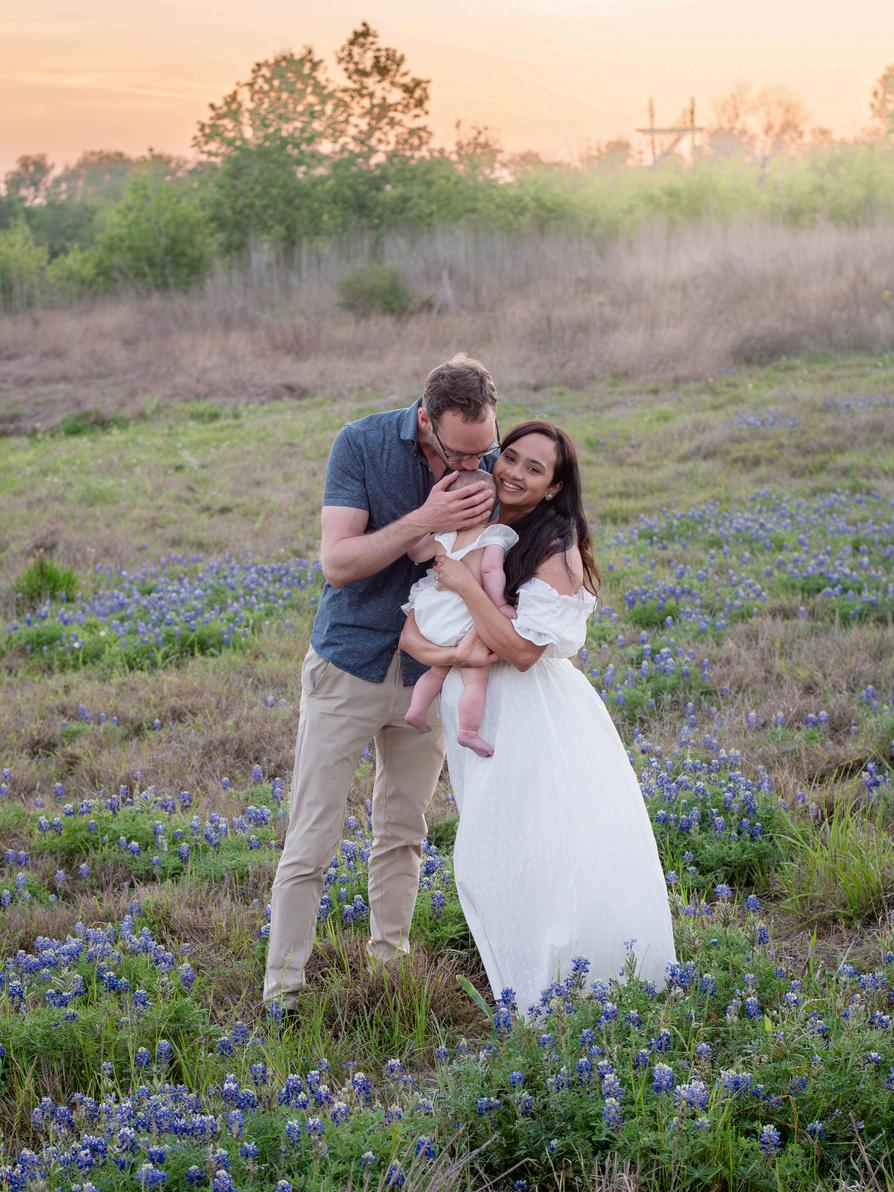
(left and bottom photos) daniellewesthoustonphotography.com daniellewesthoustonphotography.com
SS: Is there a particular experience that has stayed with you?
DW: I volunteer with The Heart Gallery, that photographs children in foster care who are waiting to be adopted and tells their stories
It’s incredibly meaningful work, but also very emotional These kids just want to be seen, to be chosen, to be loved. If a photograph can help create that connection, if it helps a family see a child and say, “That’s the one,” then that’s something really special to be part of.
SS: What do you hope families feel when they look back at your photos years from now?
DW: The connection, the love, the little moments that made up their everyday lives Because those are the things that stay.
To see more of Danielle’s work, visit:

The College Chapter checks in with New Territory college students as they navigate life beyond home. In this issue, we hear from Max at Penn State and Savanna at the University of Alabama.
Are you an NT student studying in the U.S. or abroad? We’d love for you to share a bit of your story.
I've always been interested in people and what motivates them, who is what obstacles they've to where they are, etc put me in a position to stories with others, wh others hope and inspir
I have a few favorite m it to the college footba season It was such an be part of and to share This past season, we p Yankee Stadium, which getting to play in such Overall, my favorite pa opportunity to be aroun age. My teammates are really nice being aroun work ethic and goals G athletes and students h
I love the freedom of s door and always havin out with or talk to. I re in a situation like this
what he misses whathemisses
I miss my dog Bob and the warm weather in th fun at first, but I'm not to how long it stays co
tip for getting r tipforgettingr
I would say my biggest clean up after yourself without a parent const because in college no and the mess can quic


College: University of Alabama, Tuscaloosa, AL
Year: Sophomore
Major: General Business, going into entrepreneurship or marketing why journalism why journalism
I chose my major because I started taking business classes in high school and quickly realized I loved it.
favourite thing about favourite thing about college college
My favorite thing about college has been meeting new people and learning more about who I am.
are you involved in any are you involved in any activities? activities?
I’m involved in Greek life as a member of Delta Gamma
what does she miss most what does she miss most
about home about home
I miss my family, friends, and pets the most.
tip for getting ready for for getting ready for
college college
Don’t be afraid of rejection because it’s just redirection.
I’d love to give a shoutout to my mom, Kim Lenardson, and to my Delta Gamma sister/grandma, Barbra Grassan, wishing them a Happy Mother’s Day!


A


Imagine your child suddenly waking up one day not knowing who you are, refusing to eat out of fear of being poisoned, going into a rage at the suggestion of getting dressed, failing math and spelling tests for the first time, reading only picture books, and when you ask him/her to draw a clock, this is what he/she drew:


Your child’s brain is on fire.
Autoimmune Encephalitis (AE) is a condition where the body's immune system, meant to fight infections, mistakenly attacks the brain (encephalitis). (autoimmune), causing it to become inflamed
The immune system is made up of three major components: B-Cells, T-Cells, and antibodies When an invader like an infection enters the body, B-Cells identify the invader as “bad” or “good” and call in the T-Cells to destroy anything labeled “bad.’ All of us are aware of what this destruction process feels like - fevers, sore throat, runny nose, or feeling crummy when we are sick. This is inflammation the body creates to make a hostile environment for the invader When the invader is successfully destroyed, the B-cells call off the attack and then make an antibody identifying the invader as “bad” so it is immediately destroyed the next time it invades the body. In autoimmune conditions, this process is scrambled: B-cells erroneously label the body’s own healthy tissue as "bad" and constantly call for a T-cell attack In AE, this attack happens in the brain, causing continuous inflammation that disconnects neural pathways and blocks signals responsible for communication. These disrupted signals manifest in ways that impact nearly every part of a child’s life altering their behavior, personality, sleep, coordination, cognition, sensory processing, memory, movement, and autonomic functions like blood pressure control and sugar regulation
AE is a rare condition affecting 1 out of ever 100,000 individuals. AE affects people of all ages but the most common forms primarily impact children and young adults. Females are affected four times more often than males AE occurs across all racial and ethnic groups, with a slight increase in African Americans

child to the next, which is part of what makes it so difficult to recognize. The hallmark is AE symptoms come on suddenly with no warning and usually no triggers Common symptoms include sudden onset of:
AE can look dramatically different from one
·Personality or behavior changes including aggression, irritability, or emotional outbursts
·OCD-like behavior such as paranoia, obsessions, food aversions, or need for routine Developmental regression, school/cognitive difficulties, speech impediments
·Seizures or involuntary jerking movements, writhi or tics
·Sleep disturbances or insomnia
Hallucinations, delusions suicidal thoughts/behavio (a life threatening emerge
AE can also cause cataton or coma in severe cases.


Young children are more likely to present with seizures, uncharac have psyc mistaken
While som herpes, c identifiab AE is diag tests incl EEGs, bra inflamma presence
Because A illnesses, children a delaying t to a psych

as oppositional before a medical cause is considered This is why parents need to be aware
that sudden onset of symptoms could point to a omplete hat can et which dren do not AE? ed ause t E are: tation to g., West set, hlighted or ten d with an eizures, ystemic ody like oblems bipolar E is the hile e early. and gh-dose VIG), and Rituximab. These are given as IV infusions, typically monthly or twice a year When
diagnosis is delayed and AE is not caught early, it can take years to treat and becomes difficult to send into remission AE can relapse While most children recover, there is a subset whose AE becomes a life-long chronic illness
Because AE impacts so many different parts of the brain, a multitude of support medications are also needed including antiseizure medications, antipsychotics, sleep aids, migraine meds, and other medications specific to a child’s deficits.
Children with AE also require therapy services to relearn lost skills, including physical therapy, occupational therapy, speech therapy, brain biofeedback, and counseling. Peer support groups and camp programs can also be life impacting for kids living with chronic illnesses.
A major obstacle contributing to treatment delays are insurance denials. Because AE is rare, pediatric treatment protocols are often not included in

insurance company formularies and treatments that are included are extremely expensive. Both of these reasons lead to high denial rates. The Texas Legislature and Sugar Land’s own Dr. Suleman Lalani are working hard to change laws to protect


Sudden, dramatic personality changes or emotional instability
Sudden onset of OCD-like behaviors
New onset seizures
Sudden onset of involuntary movements or loss of motor skills
Rapid decline in school performance
Confusion, memory loss, or altered consciousness following an infection
kids with rare autoimmune illnesses from unethical insurance denials denials
Delaying treatment by even 30 days is associated with significantly worse outcomes. Early treatment reduces long term brain damage, shortens hospital stays, and improves chances for a full recovery.
Even after clinical recovery, AE can result in lasting deficits. Research shows 45% of children have cognitive impairment, 70% experience academic difficulties, and 92% require ongoing rehabilitation services. About one-third will continue to experience
psychiatric symptoms like anxiety and depression years later.


Most children with AE develop neurosensory processing deficits.They are continuously bombarded with sensory input they cannot regulate This leads to overstimulation, exhaustion, and is a major contributor for outbursts. Kids with AE thrive more in quiet, calm environments.
How can you support families affected by AE?
Offer concrete help like meals, house/yardwork, watching siblings, etc
Show up for the family or the child, just acknowledging what they’re going through is huge. Offer emotional support to parents and siblings
Explain the impact of chronic illness and AE to your children. Plan activities in an environment the child can handle. Learn their triggers and limits. Participate in AE advocacy
AE can be devastating for families. The unpredictability of the illness, severity of symptoms, and frequency behavior outbursts make it extremely hard on parents and sibling Siblings often bear the brunt of the outbursts and do not understand what is going on. Counseling services for the entire family can be highly beneficial.
In school, children often need individualized education plans, reduced course loads, and ongoing neuropsychological support Families with AE need a lot of community support The most important thing you can do is to acknowledge the struggle and impact AE has on the family. Offer concrete help, check in on the family often, and support the siblings. Plan outings/playdates including the child in an environment they can handle. Learn their triggers and limits. Explain AE and the impact it has on the child to your children Kids with AE worry about losing their friends You can also learn about AE and participate in local advocacy. These small steps will mean the world to families affected by AE.
With treatment and support, children living with AE like Lela can experience normal lives and become independent happy adults.
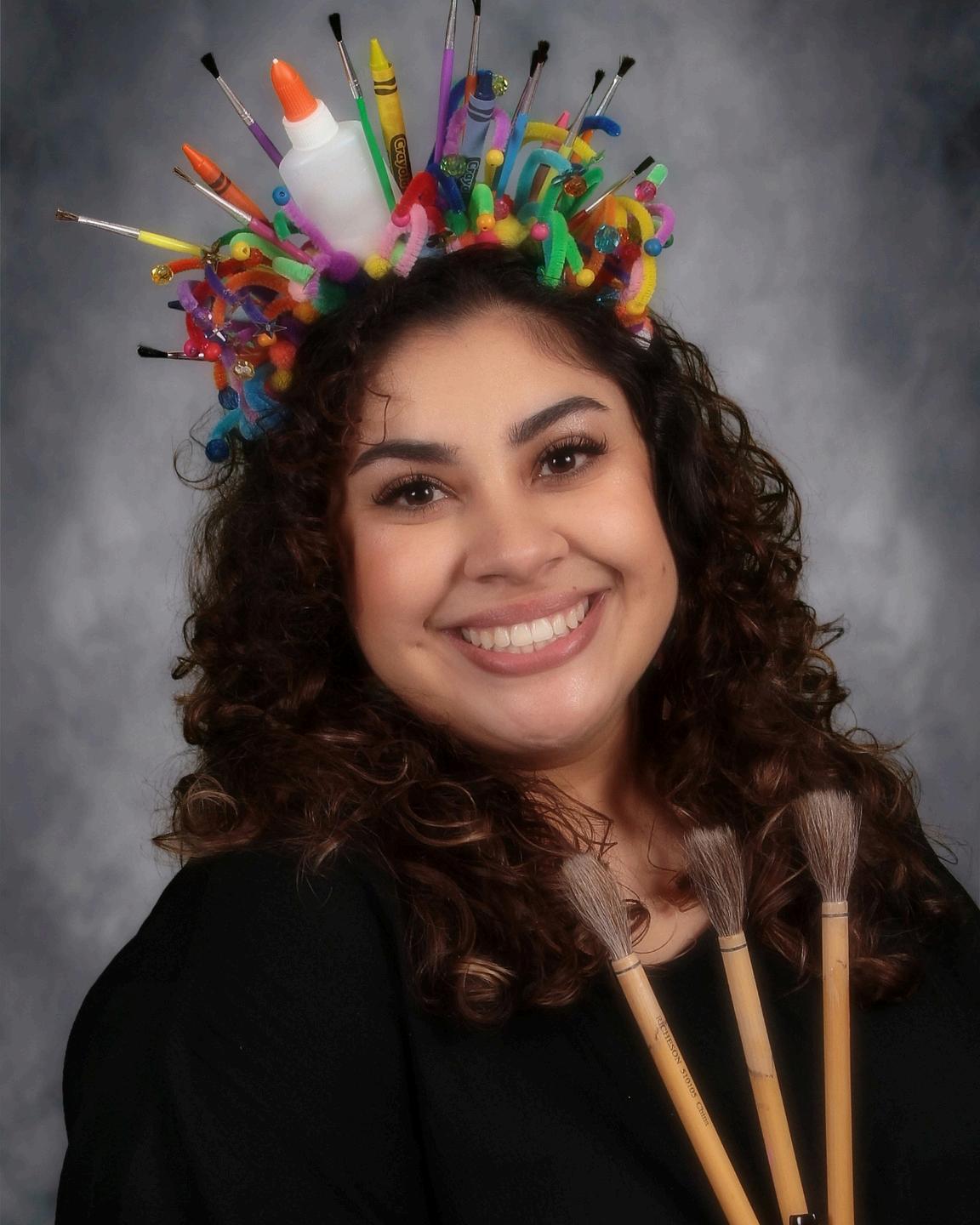
Zamora helps her students find confidence through art
Eight hundred students pass through her classroom. Over the course of a week, every
child at Brazos Bend Elementary (BBE) will sit at one of Maya Zamora’s tables, pick up a pencil, a brush, or a marker, and be given something different in a structured school day: space to create.
It is a quiet kind of responsibility and, in its own way, one that carries weight.
For many of those students, those 45 minutes are where the rules loosen, where there is no single right answer, and where the pressure to get it right gives way to expression and curiosity.
As the school’s only art teacher, she carries all of it: the energy of the youngest learners discovering creativity, the hesitation of older students who have already decided they are not good at art, and the delicate task of reminding them otherwise

Ms Zamora, as many students and parents know her, grew up in Brownsville, Texas, a city along the border, before moving to attend the University of Houston What began as a college move became something more permanent, as she built her life in Houston and, three years ago, stepped into the BBE art room.
But that is not where her art journey began.
“I started creating art when I was in elementary, and I had a great elementary art teacher,” she recalls. “Then in middle school, I shifted more toward dance and theater I was very into fine arts in general ”
For a time, it was dance that took center stage
It was serious, competitive, and something she planned to pursue beyond high school, until it wasn’t.
“I completely broke the top part of my foot. I was in a wheelchair. I had to relearn how to walk,” she says “So I just shifted toward visual arts I took AP art, and my teacher told me, you just need to continue this ”
It was not a dramatic shift, but a natural transition from one form of expression to another.
Teaching, too, was always part of the picture.
Both of her parents were educators. Her life, as she puts it, had always been shaped by classrooms, by guidance, and by people who showed up and made an impact
Now, she does the same in her own classroom, where the approach is intentional, with no pressure to replicate, no insistence on perfect outcomes, and encouragement to explore.
“It’s a calming space,” she says. “There’s no sense of someone telling you this is the right way to do it ”
That philosophy is not accidental It is a response to what she sees happening as children grow.
“You’ll realize kids are really creative,” she explains. “Usually around third grade is when they start limiting themselves, because there’s
a right and wrong way to do a lot of things.”
In her classroom, she challenges that.
“I never want to put their artwork into a bubble and say this is what it’s supposed to look like,” she says “I want to teach them how to be an artist instead of copying my example.”
If a flower is meant to be blue but a student chooses purple, that choice is respected on her watch. If a drawing does not match expectation, it is not seen as failure, but as a different perspective.
In that space, she continues to encourage her students, reminding them that creativity is not something reserved for a few, but something that belongs to all of them.
The contrast between her classroom and the rest of the school day is not lost on her.
Students move from subject to subject, often with clear answers, clear expectations, and constant evaluation By the time they arrive at art, many are carrying that weight “When they come to us, it’s only 45 minutes,” she says. “But that’s their time to be a kid.” It is a simple statement, but it carries meaning. In that time, they draw aliens, astronauts, princesses, and patterns. They experiment. They try without knowing if it will work. And that matters
Outside of the classroom, her own creative practice is quieter, but still present. She sketches in notebooks, designs digitally, takes photographs, and visits museums when she can, often taking advantage of the city’s free museum days on Thursdays. She stays connected to other artists, sharing ideas and gathering inspiration
For now, in this final month of the school year, her focus remains where it has always been: on her students. On those 800 children who rotate through her classroom each week, each one carrying a different level of confidence, curiosity, or doubt. But change is around the corner.


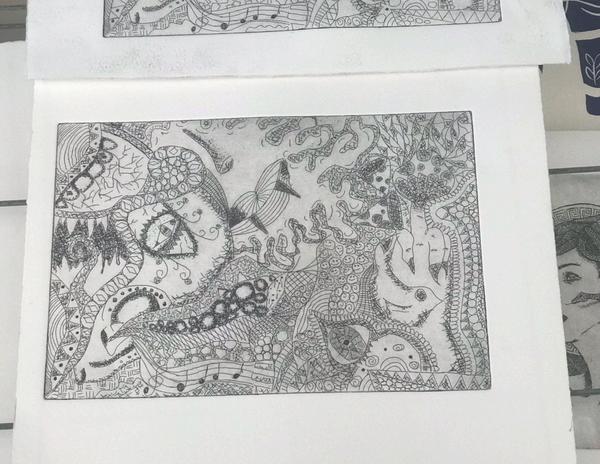
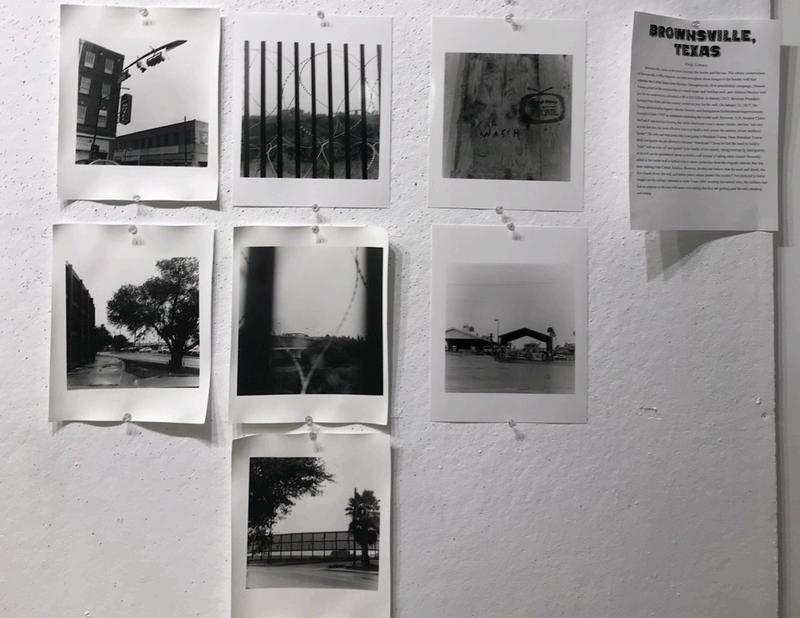


This summer, she is moving to Tyler, Texas, where she will begin a new chapter teaching middle school digital art. It is a shift she is both excited about and ready for. “I’m really pushing myself to try something different,” she says There will be fewer students, a new age group, a new medium, and a new challenge But the core of what she brings will remain the same: the belief that creativity is not about getting it right, the understanding that expression matters, and the commitment to making sure every child leaves the classroom believing they are capable of creating something of their own.
And for the hundreds of students who have passed through her classroom, that lesson will last far longer than 45 minutes.


This space is dedicated to the teens and college students in our community who are building skills, taking initiative, and offering their services right here in New Territory, and nearby neighborhoods. From babysitting and tutoring to pet care and coaching, these small (free) ads connect local families with reliable, familiar faces all with parent-approved listings.
*only serves NT residents and homes



ReeceWatson AHFCECNL/RL|AHSVarsity|SeychellesU17NationalTeam
30 minute technical training sessions for 4 -12 year olds New Territory | weekends only
Have a student-run service to share?
We’d love to hear from you. Ask a parent or guardian to reach out for submission information sugarsidemagazine@gmail com
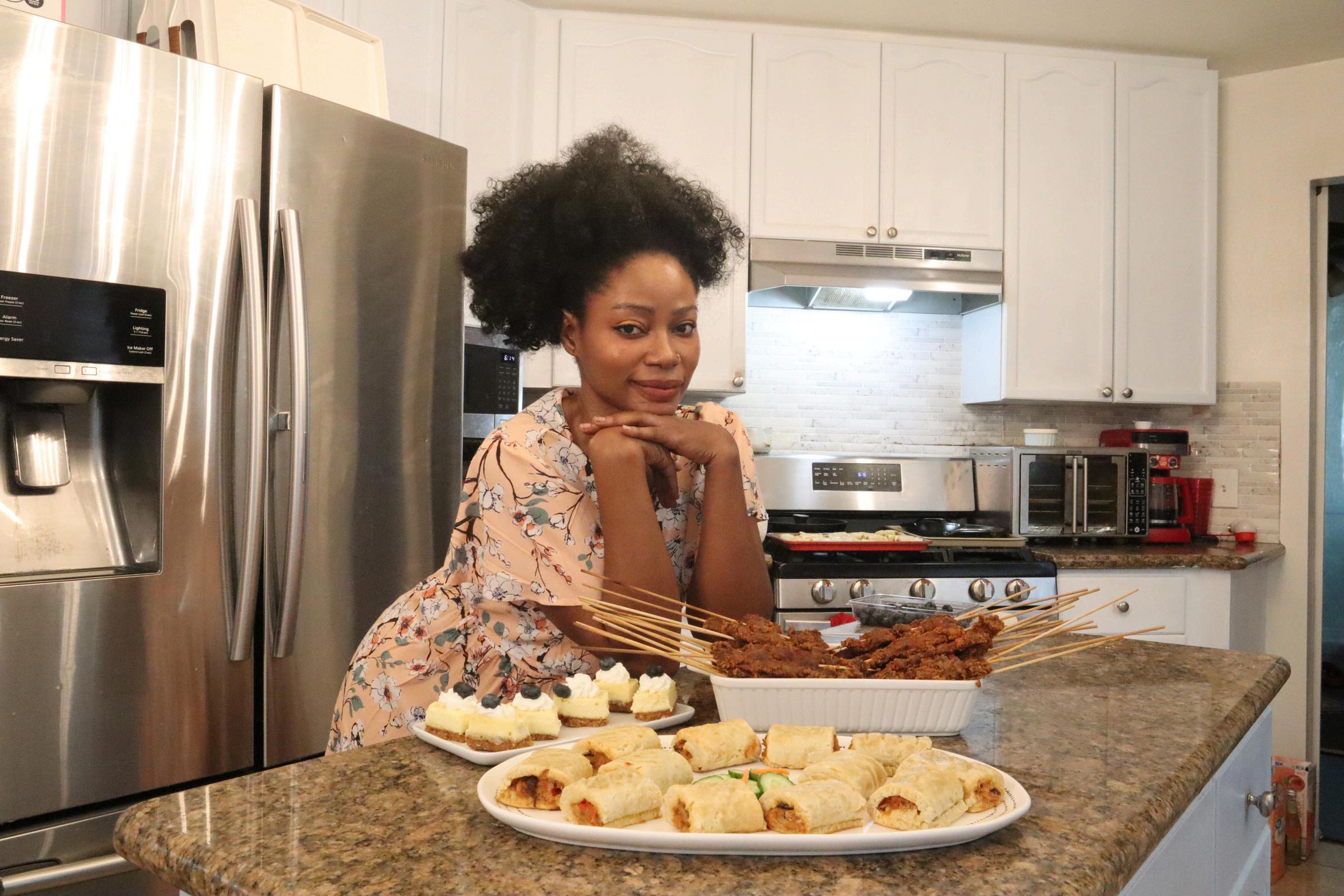

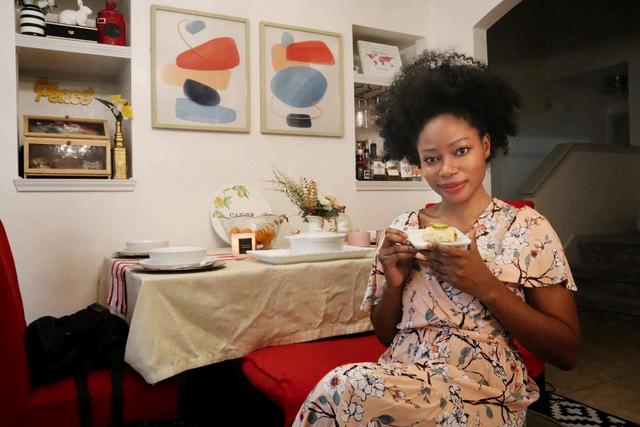
Tari Osaisai has called New Territory home for the past 10 years, bringing with her a rich mix of cultural experiences from Nigeria, New York, Canada, and Texas. Originally from Nigeria, she came to the U.S. as a child and spent much of her life in the Bronx before eventually moving to Texas after living in Canada.
Today, Tari works in category management within supply chain for a healthcare hospitalist system She is happily married with children, and she and her husband recently celebrated their wedding anniversary. Outside of work and family life, Tari enjoys gardening and reading, especially historical Chinese novels.
“Food is life. Food is family. Food brings us together,” Tari says. “For me, cooking is therapy and a huge source of joy I love the excitement of trying a new meal or the
satisfaction you get after a good meal Food is comfort Food is our relationship with the earth and the earth to us ”
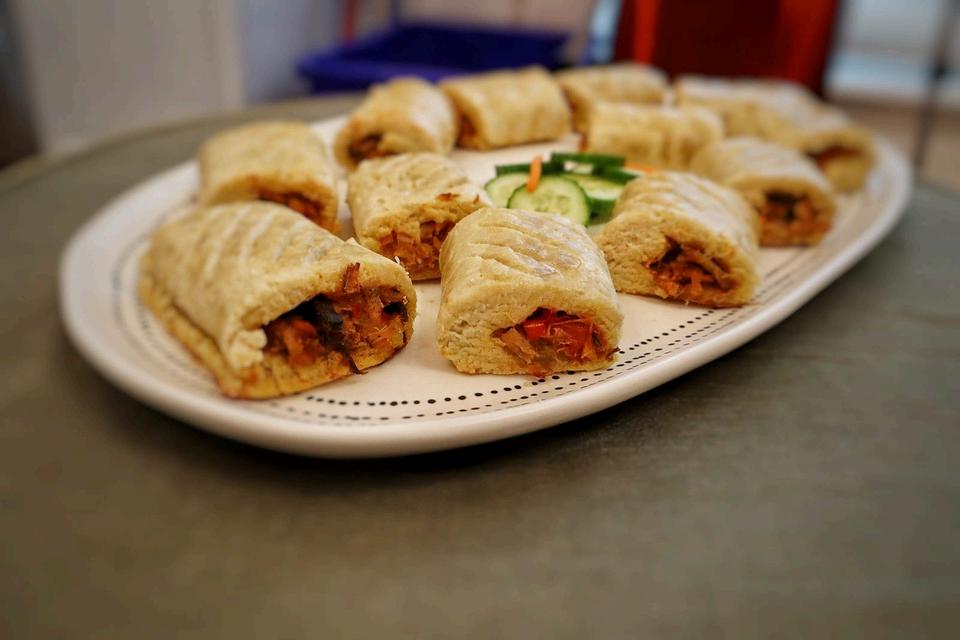
The dish Tari shares is Nigerian Fish Roll, a savory pastry that comes in both fried and baked versions. For this recipe, Tari chose the baked variety. Fish roll is the kind of snack that fits almost any moment it can be enjoyed anytime, though it’s especially known as a street snack and a favorite at parties and fast food eateries
For Tari, the dish also carries a sweet childhood memory. She remembers looking forward to Fridays in elementary school because fish roll was served for lunch. That simple tradition made the dish feel special and memorable, and it remains a comforting taste from her past
For the dough
-4 cups flour
-2 sticks butter
-1 egg
-1/4 cup water
-Salt, optional if using salted butter
Make the filling fore the main meal
Wash the fish, then fillet and debone it.
Season it with your preferred spices Tari likes paprika, salt, and onion powder. Chop the onions, tomatoes, and garlic. Bake the fish with the tomatoes, onions, and chopped garlic at 400°F until fully cooked Once baked, sauté the onions and bell peppers in a pan Add the baked fish and tomatoes, then stir in seasoning, spices, and pepper to taste.
Make the dough
In a mixing bowl, combine the flour, butter, egg, and water. Mix until the ingredients come together to form
If you have time, chill refrigerator for about the dough makes it ea
Assemble the rolls
On a flat surface, roll o with the fish mixture. cut into your desired s
Place the rolls on a ba and bake at 350°F for 30 minutes.
For the filling
-1 small onion
-2 tomatoes
-Multicolored bell peppers
-Garlic
-1 filleted mackerel fish
-1 Knorr seasoning cube
-Olive oil
-Pepper, optional
Nigerian fish roll is typically eaten as a snack or appetizer before the main meal It is delicious on its own, but it also pairs well with tea, juice, or a cold drink.
For a Texas-style twist, Tari suggests serving it with iced tea, lemonade, or even a simple side salad.
Tari says the ingredients can be found at any grocery store in Texas, making this dish easy to recreate at home If you can’t find one

texture.
1 . 5 y e a r s o l d


SS: What would be your ideal job?
Ruby: I would be the top neighborhood security guard in defense against all flying and crawling creatures Not a single insect or lizard makes in past my swift skills!
SS: What is your favorite thing to do?
Ruby: I fancy chasing ice cubes that fall from the freezer and meowing until my humans put my leash on and let me sit outside in the backyard in the sun, keeping close eye out for sneaky bugs of course
SS: Your biggest oops moment.
Ruby: My humans seem to not like when I knock over the potted plant next to one of the windows and dirt goes everywhere. But clearly it’s one of my backyard viewing hideouts (remember, enemy critters) so they really should find a new spot for the dumb plant
SS: Do you have a favorite snack?
Ruby: I’m quite particular, but I will lick a Delectables Squeeze Up the second it is opened for me ”
SS: What does your ideal day look like?
Ruby: I like to start my day off by running full speed into my big humans’ bedroom and jumping on top of the dresser to loudly meow about how my food bowl urgently needs to be refilled. Once that is done, I spend my time following my humans all around the house and watching their every move I sit at windows to patrol the outside and am always waiting for doors to open so I too can enter every new space. I need my daily outside yard time. I love playing with my 3-year-old human’s toys; they’re quite fun to hit and watch skitter loudly across the floor and underneath the couches Of course, I’ll take the occasional nap on the dining room chairs, but not for too long My environment really needs to be under my control Once evening comes, I just want to cuddle my humans, and I watch over them when they sleep. They seem to like to do that when it gets dark. Strange.

SS: What do your humans have to say about you?
Ruby: Cute but mischievous; obviously one of the best things that’s ever happened to them
SS: Is there something they do not know about you?
Ruby: Despite my sweet looks and admitted lack of experience, I know I have what it takes to be a true street cat, a legend, a leader of the block But alas they underestimate me and do their best to keep me securely leashed or indoors It’s a shame, I could make a real reputation for myself. Put some respect on my name!”
SS: If you had a catchphrase it would be?
Ruby: Pet me and tell me I’m pretty.
https://www.inspirationstage.com/
experiencethehilariousandacclaimedcultclassic(musical)at InspirationStage(ticketsonsale)
kidsexploreinternationalfoodstations,createtheirownsmoothies, enjoyfungames,crafts&giveaways(freeevent,mustregister)
https://wwwsugarlandtownsquarecom/
https://wwwsugarlandtownsquarecom/
Editor’s Note: Are you organizing or do you know of an event in New Territory happening in June? Let us know! Email sugarsidemagazine@gmail com