2025 grower survey reveals shifting sentiment and clear research priorities 32 DPI funds valuable research for the sugarcane industry
34 Electronic cane bin tracking system kicking goals
35 New technology will give sugarcane growers on the spot nutrient analysis 36 New guidelines aim to boost herbicide performance for mill mud users
A MESSAGE from CEO, Mick Bartlett
As we move into what is shaping up to be a defining period for our industry, I want to speak directly to growers and millers.
Across our regions, Sugar Research Australia is embarking on a comprehensive strategic planning consultation process. This is not a desktop exercise. It is genuine consultation. Growers, millers, productivity services, industry representative bodies, Australian and Queensland governments, and our own people are vital to identify the prioritised strategic initiatives that will have the most immediate and significant impact on the profitability of the sugar industry.
Our intention is to have a draft plan finalised by June, with implementation commencing in the new financial year. The next five years will require clarity of purpose, disciplined investment and a shared commitment to lift performance across the board. Your input through this consultation phase is critical. A strategy only works if it is owned by the industry it serves.
The strategic plan SRA is developing is about sharpening our priorities, ensuring accountability, and delivering measurable returns to industry. It will focus on practical solutions that work at farm scale and increase profitability for growers and millers.
A key part of the strategic development process is the prioritisation of initiatives and investment. SRA can do anything, just not everything. It is paramount that our stakeholders feed into this process so that SRA is strategically aligned with the most pressing needs of our industry partners.
Success depends on partnerships. Growers, millers, productivity services and SRA must work as one system. Variety adoption decisions affect milling performance. Farming practice influences regional disease pressure. Research uptake determines return on investment. None of us operate in isolation. Coordination and cooperation are key.
To facilitate a more integrated approach, SRA has invested in employing a new General Manager of Adoption. Professor Graeme Doole has over two decades of experience in translating research outputs into actual positive impacts in a multitude of agricultural industries. Graeme is a highly educated and experienced operator and is himself a farmer. He has been given a blank canvas to re-engineer SRA’S research for economic development program. Understanding that strategy without execution is an illusion, the revised portfolio will concentrate on outcomes not outputs.
SRA acknowledges that the feedback from our growers and millers on SRA performance is below what is acceptable.
The new strategy is an opportunity for SRA to demonstrate how we will respond to the grower and miller survey feedback and, through an integrated approach, make a difference to the lives of our farming and manufacturing partners. This is through actions not words.
SRA will be completely transparent. The strategy will be communicated and agreed to by industry. The initiatives and investments that fall out of the strategy will have specific deliverables and milestones. SRA will be accountable to see these are delivered.
Over the coming five years, you will see continued emphasis on integrated disease management, improved agronomy packages for new varieties, soil health and research that connects breeding outcomes directly to farming performance. The aim is to identify and quantify, through science, the impediments to profitability and attack the same. We are focused on assisting growers to harvest more tonnes of sugar per hectare whilst continuing to protect the sugar industry from the potentially devastating effects of endemic and exotic pest and disease threats.
SRA has invested significantly in the people and infrastructure to revolutionise the way sugarcane breeding is conducted. Through genomic selection and potentially genetic editing and GMOs, SRA’s variety development process is undertaking a step change. Whilst the benefits will not be seen overnight, the potential is real.
As CEO, my commitment is to transparency, consultation and delivery. We encourage you to challenge us constructively and help shape the direction of our industry’s research agenda.
The next five years matter.
If we embrace improved genetics, strengthen farming systems, and approach change with confidence rather than hesitation, we will position the Australian sugarcane industry for greater resilience and competitiveness.
I look forward to working with you as we shape and implement this next chapter together.
STRATEGIC PLAN CONSULTATIONS HELD ACROSS ALL CANE‑GROWING REGIONS
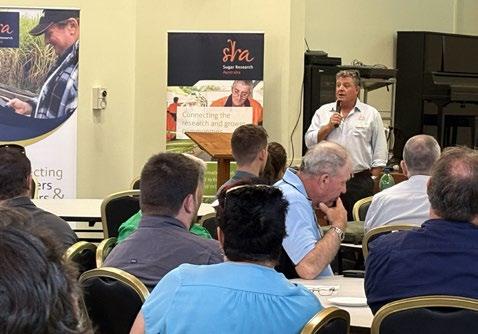
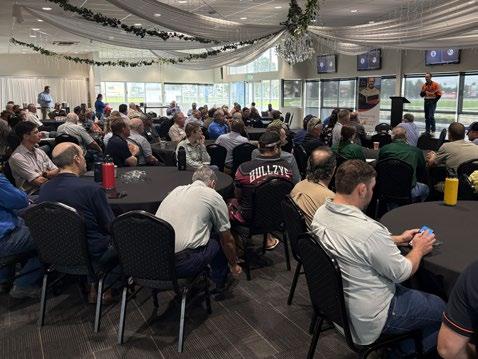
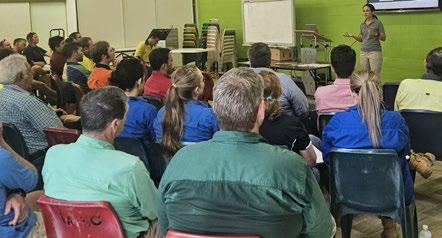
SRA rolled out a series of strategic consultation events over the past month across every cane-growing district, giving growers, millers and industry partners a direct say in shaping the SRA Strategic Plan 2026–2031. These sessions were one of the most important opportunities for the industry to influence SRA’s future investment direction and research priorities.
The consultations come at a time when productivity pressures, rising input costs, environmental expectations and global market volatility are influencing decisions across the industry.
Throughout March, the roadshows, hosted by SRA’s management team and attended by Board members, gathered local insights, regional priorities and emerging challenges from across the value chain.
The workshops were designed to be interactive, practical and future-focused, encouraging participants to contribute ideas and highlight the issues that matter most in their region.
Feedback gathered during the roadshows will be used to develop a draft Strategic Plan, which will be presented at an industry summit in Brisbane in May to representatives from across the sugarcane sector, including peak bodies.
Australian sugarcane growers and millers, and industry partners can share their feedback here to help shape the new Strategic Plan.
BECOME A MEMBER OF SRA – IT’S FREE!
As a cane grower, you’re already investing in research through your levy. You can maximise its value through your membership – it’s your right as a levy payer and offers you:
• A voice in your industry – vote in Board elections and help shape SRA’s direction
• Access to research and resources – the latest insights direct from researchers, tools, and best practices to improve on farm productivity and profitability
• Priority opportunities – involvement in trials, projects, and workshops tailored to grower needs
Mick Bartlett Chief Executive Officer Sugar Research Australia
• Direc t support – from district staff who work with you to turn research into on-farm results.
Joining is simple – for more information, visit sugarresearch.com.au/join
SRA32P CUTTING ITS OWN PATH
SRA32P is rapidly living up to its early promise, positioning itself as the high-tonnage benchmark across every region it’s been released in since 2021.
Data from Final Assessment Trials (FATs), commercial harvests and strip trials show it is quickly becoming one of the industry’s most consistent and productive new varieties.
First identified by SRA’s variety development team as “having the potential to be a significant new variety”, SRA32P is typically a lower-to-average CCS variety (depending on where it’s grown) that performed strongly in Burdekin FATs (2016–2020), where it delivered cane yields above the average of the standards in 13 of 20 harvests across plant cane, first and second ratoons. Overall, it out yielded standard varieties (KQ228P , Q240P, Q208 and Q183) by an average of 16 tonnes of cane per hectare (TCH), across all FATs’ series.
In coastal Far North Queensland, SRA32P has demonstrated an 11% better cane yield than Q208 however lower CCS resulted in an 8% improvement in tonnes of sugar per hectare When compared to SRA26 in this region, SRA32 maintained a 5% TCH advantage, but fell behind in tonnes sugar per hectare by about 2%. On the Tablelands, its had moderately improved tonnes of cane, but slightly less tonnes of sugar per hectare than KQ228P
The Central Regional Variety Committee (RVC) approved SRA32P for release in 2024, and initial data showed great promise with up to 16% better tonnes of cane over both Q208 and Q240, with near equal CCS levels. Although this is encouraging, SRA will be keen to get grower feedback to see if this high yield potential shows up consistently in this region.
In the Southern District, where SRA32 was fast-tracked for early release in 2025, it is also considered a reliable, high-yielding option that may help reduce the region’s heavy reliance on Q240.
Early indications also suggest it may achieve moderate CCS in the Southern region.
This variety was also fast-tracked in the Herbert, after being tested in one FAT series in 2021 and planted for a second series in 2024. Approved for release in 2025, SRA32P has shown a significant improvement in tonnes of cane per hectare whilst maintaining CCS levels when compared to the main varieties in this region of Q208 and Q253. This is a limited dataset for the Herbert but initial results are very encouraging.
SRA General Manager Variety Development, Dr Garry Rosewarne, said SRA32P was quickly establishing itself as a new high-yield benchmark variety, across industry.
“Right from the get-go, SRA32P showed great promise, even as an experimental clone going into its first FAT series in the Burdekin in 2015. And, it has continued to deliver ever since,” Dr Rosewarne said.
“Its strong, consistent performance across so many growing regions—and its ability to surpass our standards—signals a very bright future.
“While commercial adoption is still in its early stages, the industry response has been extremely positive. And, it will be interesting to watch how SRA32P tracks through ratoons, particularly in regions where it has only recently been released.”
High-yielding cane Resistant to leaf scald and mosaic
Intermediate resistance to smut and Pachymetra – most suitable for growers with a low Pachymetra and smut risk
Has shown variable CCS performance across growing districts, ranging from lower than, to on par, with standard varieties (depending on the region). Has a moderate propensity to arrow and sucker
Reliable germinator, with early vigorous growth –best harvested mid to late season
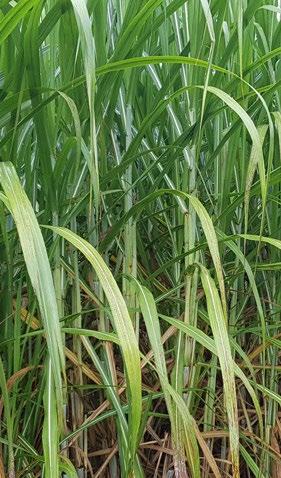
Open stool of moderate to thick stalks at maturity, some lodging can be experienced in larger crops
Has large eyes and tendency to side shoot
SRA32P: GOOD MANAGEMENT IS KEY
While SRA32 P brings significant yield advantages, it also has some management considerations. It’s not suitable for all growers or all conditions.
It grows vigorously after canopy coverage and appears to grow well in most soil types, particularly marginal soils. However, it needs to be managed well to maximise profitability.
It has a moderate propensity to arrowing and suckering. SRA32 P has shown variable CCS performance across growing districts, ranging from lower than, to on par, with standard varieties, depending on the region.
Early maturity sampling suggests SRA32 P is best harvested from mid to late season. Its intermediate resistance rating to smut and Pachymetra mean it should not be planted in high disease pressure areas.
The variety features large eyes and a tendency to side shoot, traits that growers should factor into their planting and management strategies.
SRA District Manager Burdekin, Terry Granshaw, says despite these considerations, SRA32 P continues to generate strong interest.
“Grower sentiment from shed meetings has been mostly positive saying that by managing SRA32 P’s nutrition, harvest time and using crop ripeners, productivity results are very optimistic,” Mr Granshaw said.
“Seeing how it performs in second and third ratoon, will be very interesting to watch. But it’s so far been one of the most consistent, high tonne varieties we have seen in some time. And it’s showing immense promise.
“However, growers do need to be aware of its bulged and shooting eyes when using as a plant source, especially where sun can get into the crop or lodging occurs. Reducing the amount of irrigation water events helps keep the crop erect when growing a seed source.”
If you are interested in planting SRA32 P, contact your local Productivity Services Organisation (PSO) for whole stalk or billet availability, or to order as tissue culture.
SRA32 P versus standards across the regions.
SRA32 P has had mixed CCS results across Final Assessment Trials (FATs) when compared with the averaged performance of standard varieties.
In the Burdekin and Northern region FATs, SRA32 P’s CCS results were generally below average, while in the Central, Herbert and Southern region FATs, CCS was generally on par with the average of the standards.
Despite a lower CCS rating in the Burdekin in FATs, District Manager Terry Granshaw said growers, were, at a commercial level, reporting better than anticipated CCS.
“We’re seeing better CCS than expected, and for many growers it’s becoming another tool in the toolbox—especially on marginal soils where KQ228 P and Q240 P don’t always perform,” Mr Granshaw.
“Every shed meeting we went to earlier this year, there were at least two or three growers that are growing it and growing it really well. One of the growers said he put a growth regulator on it, as we had recommended, and it out-yielded Q240 P by 20 tonnes per hectare, and CCS was the same if not better.”
For more detailed information about SRA32 P in your growing district, please refer to your SRA Variety Guides that can be found here
Seeing how it performs in second and third ratoon, will be very interesting to watch. But, it’s so far been one of the most consistent, high tonne varieties we have seen in some time. and, it’s showing immense promise,”
SRA District Manager Burdekin, Terry Granshaw
EARLY DATA, SHOWING PROMISE
SRA32P gains commercial momentum in the Burdekin
Fourth generation Burdekin cane growers Ben and Dave Neilsen have been gathering some of the earliest commercial-scale performance data on SRA32P, with promising results.
The brothers farm around 300ha of cane on their family-run properties, east of Ayr, with 40ha now planted with SRA32P across multiple blocks. All originated from tissue culture, and some have moved into second ratoon.
Across all plantings, they’ve observed consistency in productivity and unexpectedly strong CCS results, including blocks prone to waterlogging, where other standard varieties generally underperform.
In one such block, SRA32P was harvested as first ratoon, with CCS particularly pleasing, despite the clone’s typically lower CCS performance in Burdekin Final Assessment Trials (FATs).
“CCS was good in that block for SRA32P better than the mill average. The average CCS was 14.1. It averaged 177 tonnes to the hectare, so 25 tonnes of sugar per hectare. There’s nothing wrong with those numbers at all,” Ben said.
“In another block, we had it alongside KQ228P SRA32P cut 141 tonnes per hectare and KQ228P went 143 tonnes/ha. The KQ228P recorded 19.94 tonnes of sugar per hectare (TSH) and the SRA32P went 19.79 (TSH). So, they were pretty much on par.”
Ben said he was particularly interested to see how SRA32P performs in third ratoon.
“The first plot we put in was from tissue-culture. I didn't event water it the first year and it just kept growing,” Ben said.
“It seems to stay in the ground. It ratoons well. It gets to a point where it just takes off. It strikes well, a little bit slower than Q240P and KQ228P, but it strikes well. It definitely looks very promising.”
The Neilsen’s findings are reinforcing a growing body of field observations that SRA32P responds strongly to tailored crop management, including ripener application and strategic harvesting timing.
And while the variety shows traits such as slender stalks and side shooting, Ben believes it’s proving to be competitive with Burdekin’s standards Q240P and KQ228P with the right management.
“You don’t treat it like Q240P or KQ228P. You’re probably best to be a bit harsher on it, particularly in your plant source.
“We use a plant ripener on it. I think everyone understands now that it has to be managed well. It’s definitely another tool in the toolbox and I’ll keep planting it.”
As more Burdekin growers begin to trial the variety in both light and marginal country, the emerging data suggest SRA32P could become an important addition to the district’s variety portfolio — particularly in environments where traditional standards struggle.
SRA32P EARNS ITS PLACE AFTER STRIP
TRIAL EARLY PERFORMANCE
Burdekin cane grower Christian Lago says promising early results from two years of strip trialling SRA32 P , are enough to convince him to add the variety to his commercial rotation.
A third-generation farmer with 27 years in the cane industry, Mr Lago put his hand up to be a grower partner in Burdekin Productivity Services’ Variety strip trials that are evaluating the performance of SRA32 P alongside standards Q240 P Q183, WSRA17P and newcomer SRAW46, over plant cane and first ratoon.
Across two harvests, he said the variety consistently delivered impressive tonnes of cane per hectare (TCH), and importantly, demonstrated stronger than expected sugar content (CCS), in first ratoon.
“Tonnes of cane per hectare – it definitely rates high on that scale. And tonnes of sugar per hectare (TSH), it came out on top in both plant and first ratoon,” Mr Lago said.
“The CCS in plant cane was down a bit. But in first ratoon, it was the second highest CCS in the trial. So, we were very happy with that.”
“In our good black soil (where the trials are planted), you always expect good TCH, but to get that high CCS yield as well, it was good to see. So, I’m looking forward to getting another year’s worth of data and seeing what the results are in second ratoon.”
Mr Lago described the variety as having good canopy cover and accelerated growth pattern, once established after planting.
Harvesting has also been straightforward, with no machinery or milling issues.
“It seemed to flow through the harvester well. The harvesting contractor was pretty happy, with the way it fed through the machine. The mill doesn’t have any issues with it either. It seems to be processed fine.
“The only thing I’d say is – with your planting - you probably have to be a bit careful with the eyes. (SRA32 P has large eyes) If the eyes bulge or strike there is a higher risk of them being removed or knocked off when harvesting as a plant source. I wouldn’t want to plant it too late.”
All nutrient inputs are kept consistent across all varieties in the random replicated strip trials, however Mr Lago believes SRA32 P may respond particularly well to ripeners and could offer greater flexibility in irrigation management. Despite some variability in CCS, he says the variety has shown enough potential to justify planting it commercially next season.
“It’s a trial, so everything has been treated the same in terms of management practices, but I think SRA32 P might be a variety that doesn’t require as much water—you could stress it a little more,” he said.
“ We’ll plant it across a few different soil types and see how it performs, but I think it’s definitely going to have a place.”
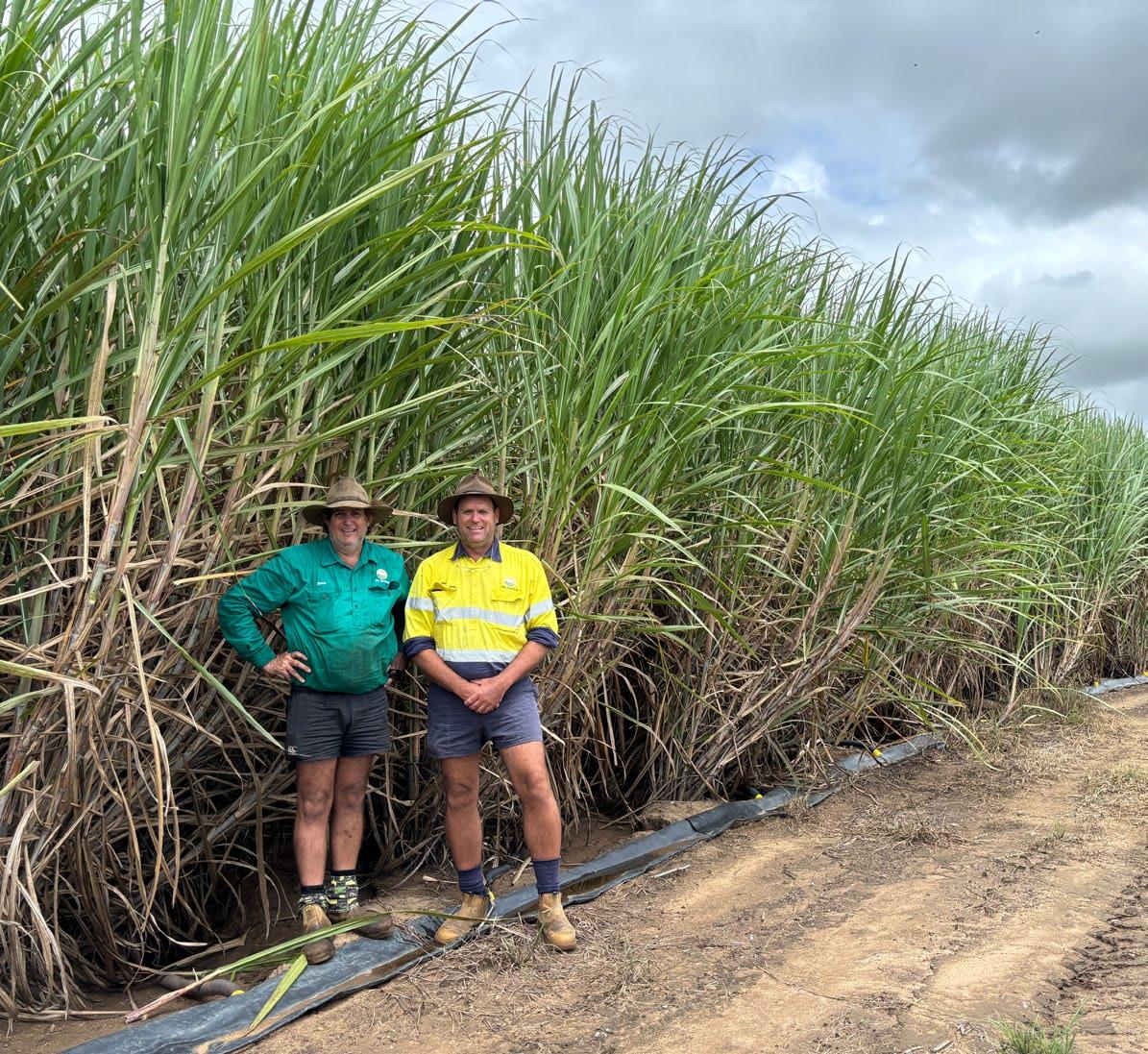
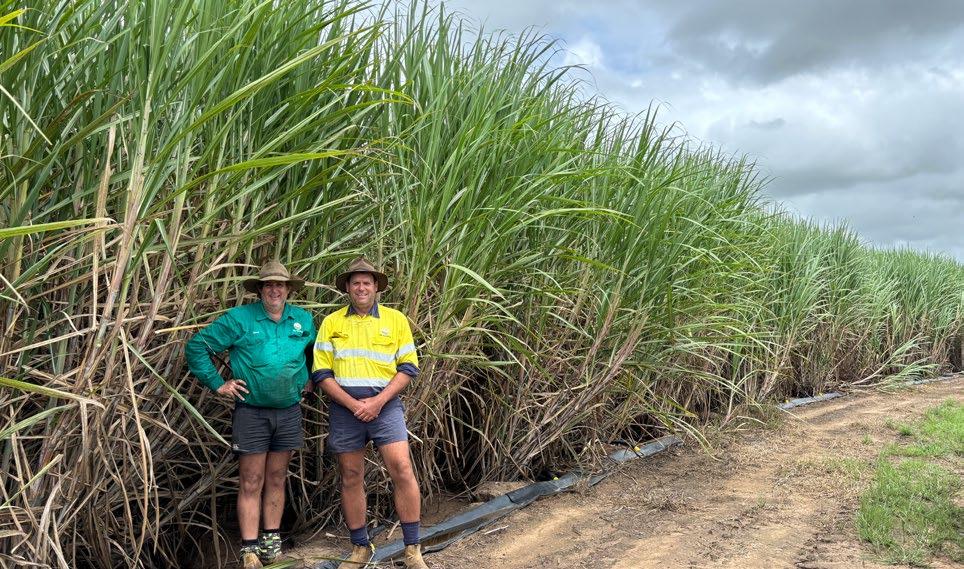
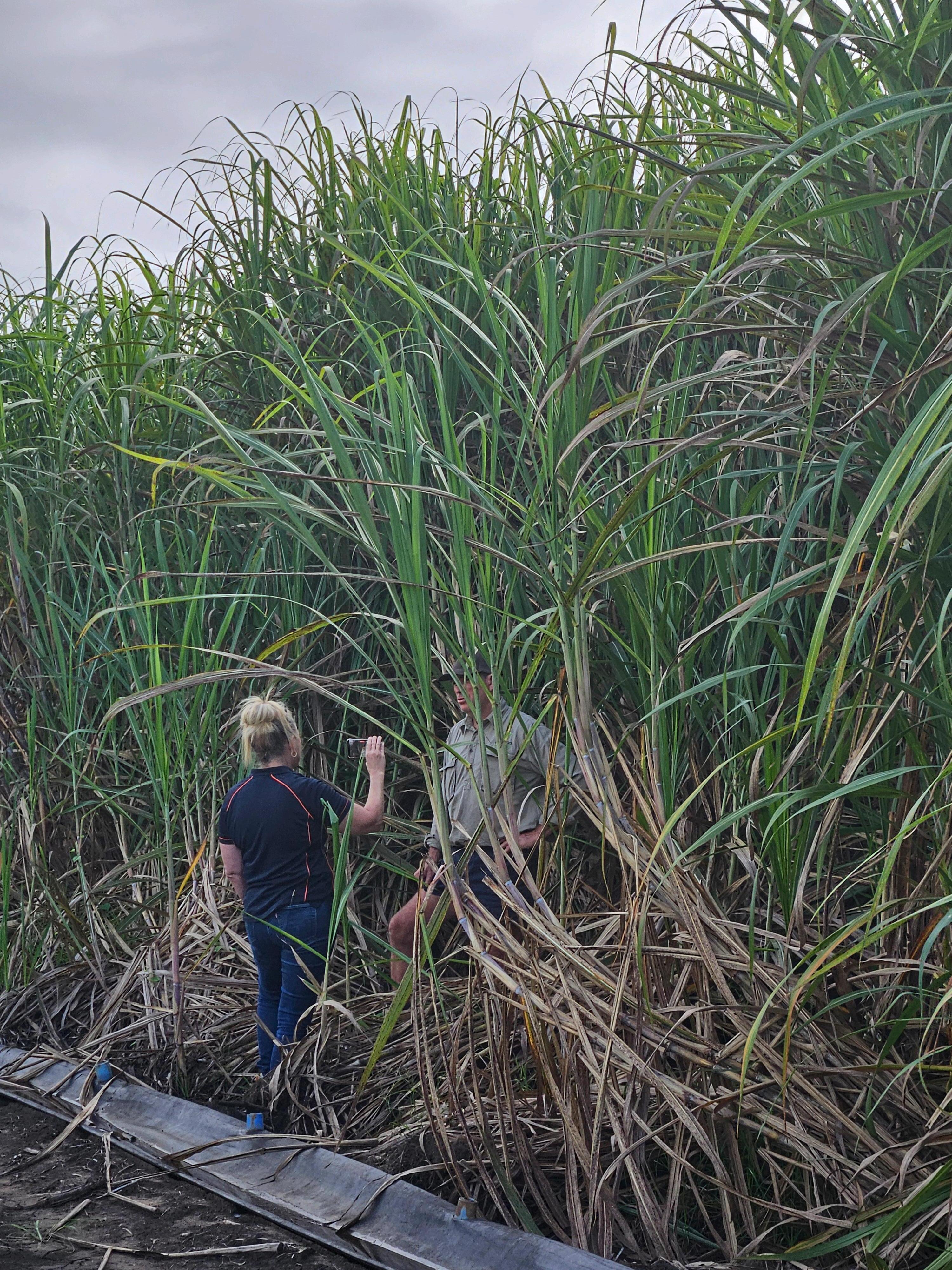
Burdekin farming brothers Dave Neilsen (left) and Ben Neilson of JHL Farming with a crop of SRA32 P
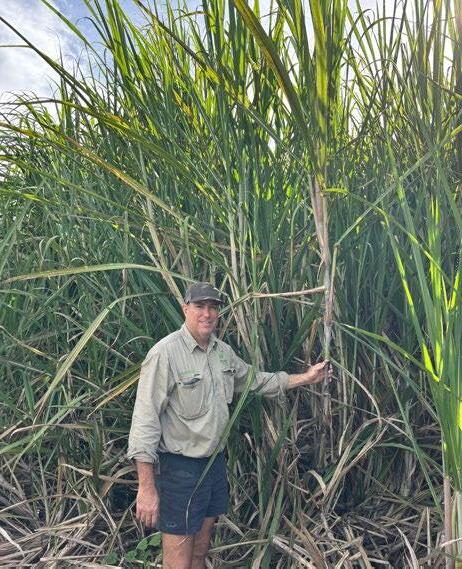
Christian Lago with SRA32P in a second ratoon strip trial on his Burdekin farm.
SRA32P TOP PERFORMING CLONE IN SOUTHERN FATs
SOUTHERN REGION FATS AND OBSERVATION TRIAL RESULTS
Top‑rated clone in 2022 and 2024 Final Assessment Trials (FATs)
Top TSH in 9 of 12 assessed observation trials
CCS on par (in FATs) with the average of the 6 standards (Q208, Q240P KQ228P, SRA29P, Q238, Q252)
Top TCH in many plant and ratoon crops in PSO plots
Strong performance in Bundaberg, Hervey Bay and Isis (PSO plots)
Moderate performance in Rocky Point, where Q232P continues to dominate for TSH in plant and first ratoon (PSO plots).
SRA32 P is quickly cutting ahead of the pack in the Southern District, emerging as the top-rated clone in 2022 and 2024 Final Assessment Trials (FATs).
The promising results were recorded in plant cane, and first and second ratoon crops in 2022 FATs, and in plant cane in 2024 series, driving a fast-tracked early release in the region in 2025.
Across both series, SRA32 P demonstrated a tonnes of cane per hectare (TCH) and tonnes of sugar per hectare (TSH) advantage over the average of standards, highlighting its vigorous plant growth and high stalk populations.
Significantly, early data indicates that the variety can achieve moderate CCS in the Southern region.
PSO observation trials back FAT data
Planted alongside FATs, local productivity boards and the SRA variety development team ran observation trials across Isis, Maryborough, Bundaberg and Rocky Point between 2022 and 2025, giving local industry additional early insight into SRA32 P’s performance.
Maryborough Cane Productivity Services, Productivity Officer, Tony McDermott, said a 2025 assessment of all six observation plots demonstrated consistent high sugar yields from SRA32 P across a diverse range of conditions, management systems, and crop ages.
While several other varieties performed well in specific plots or crop cycles, SRA32P remained the most consistent top performer, achieving the highest total sugar per hectare in 9 of the 12 plot crops assessed, across plant, first and second ratoons.
“We originally planned to push SRA32P into a fasttracked release for Maryborough back in 2024, but we held back until we had solid ratoon yield data. Once the 2025 numbers came through, it confirmed we had something special,” Mr McDermott said.
“SRA32P first went into a Hervey Bay observation trial in Spring 2022, and it didn’t take long to stand out. Across plant cane, first ratoon and second ratoon, it was the top yielding variety every single year. And we’re expecting further strong yield results when that block comes off as third ratoon in 2026.
“In a 2024 series Maryborough trial harvest, SRA32P had mid-range results, and was similar to Q240P yield results.”
Mr McDermott said with its combination of strong plant growth and high total sugar potential, SRA32 P was well positioned to become a significant variety for the Southern district.
“One thing that has surprised us is how often SRA32P comes in with mill average CCS and high fibre levels. It really is shaping up to be the ideal millers’ cane,” Mr McDermott said.
“And, as more growers bring it into commercial production and milling data becomes available, the full picture of its capability will begin to emerge.
“This variety appears best suited to medium-to-good soil nutrition— it responds well when you feed it properly. It’s been described as a bit of a ‘mongrel looking’ cane — untidy and often sprawled in appearance. But, the yields speak for themselves.”
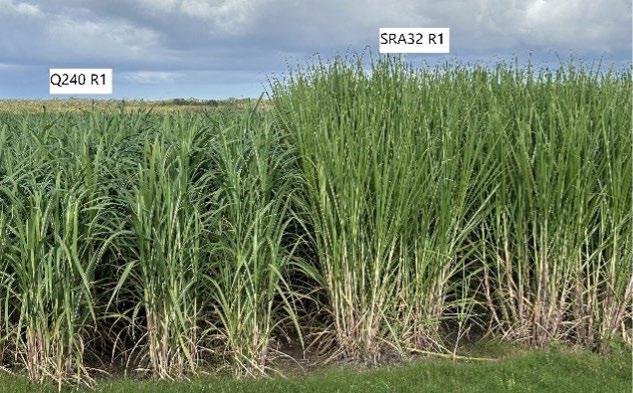
Pictured: A first ratoon crop of SRA32 P compared to Q240 P in a Maryborough observation trial.
IMIDACLOPRID PROJECT REACHES NEW MILESTONE
Grub digs are set to begin across all 12 field trial sites established under the Beyond Imidacloprid Project, marking an important phase in the search for effective new canegrub control options for growers.
The digs aim to confirm two key factors;
1. If grub populations are present in each trial plot; and 2. How well each ag chemical treatment is performing in real-world commercial conditions.
SRA’s Entomology Leader, Dr Kevin Powell, who heads the high-priority mission to identify alternatives to imidacloprid, said the grub digs would be conducted from late March to May.
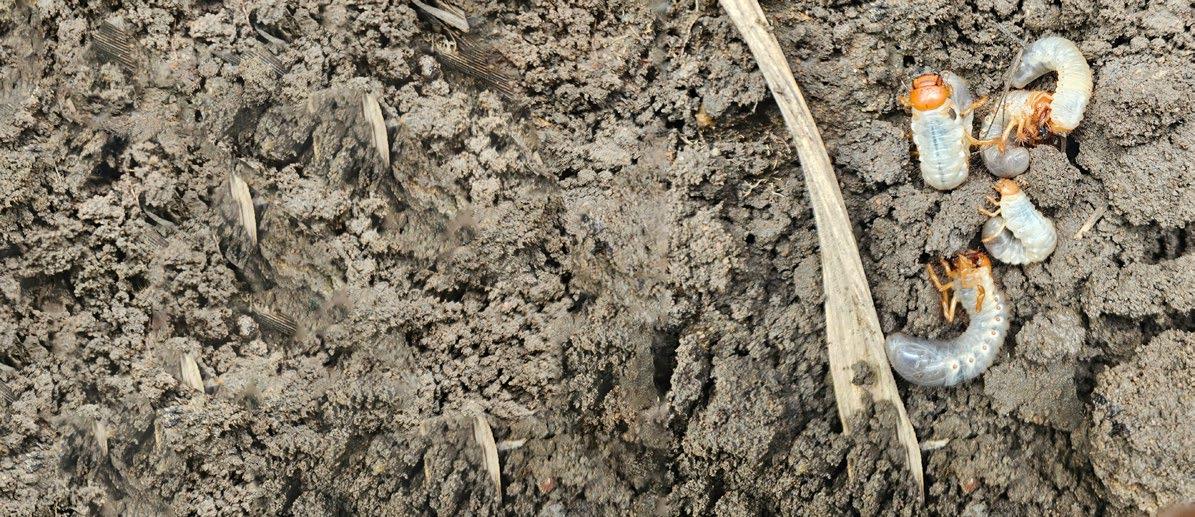
Earlier this year, Dr Powell and SRA District Manager Burdekin, Terry Granshaw, conducted a preliminary dig in a ratoon crop at a Burdekin trial site, where large numbers of grubs were found in the untreated (control) plots. An encouraging early indication for future assessment of treatment performance.
“When we did the preliminary dig, it was too early to determine the impact of the chemical treatments at that stage, but the full digs we conduct later this month will give us a much clearer picture,” Dr Powell said.
“But the fact that we found good grub numbers in the untreated plots, means we’ll be able to properly assess whether any of the treatments are working.
“As with all field trials, you can’t guarantee you’ll get good grub numbers because canegrubs are impacted by high rainfall events. But, when we do the digs across all trial sites, we will see how the rainfall has impacted numbers by examining the control plots.
“It’s part of the reason we spread the trials across multiple regions, as a bit of an insurance policy, to insure we get enough data to show how well products are working.”
While revisiting all trial sites since the project began, Dr Powell hasn’t observed “obvious” cane grub damage in some sites, though he emphasised that impacts vary by region and seasonal rainfall events.
New insecticides on the way
Dr Powell also confirmed that some new novel insecticides were progressing through laboratory testing, where their performance is being compared directly with imidacloprid. Products showing strong promise will be added to the second year of the field trials, which will start in late 2026.
“These lab trials will continue until May, but so far the products are looking very effective,” Dr Powell said.
All field trial treatments were applied late last year following research partnerships established by SRA with the chemical companies involved. Data from the trials will support any future product registration applications.
KEEPING IMIDACLOPRID IN USE TODAY
HOW GROWERS CAN ACHIEVE BEST PRACTICE APPLICATION
While work is continuing to identify a suitable alternative to imidacloprid, there are important application practices growers can adopt now to help ensure its continued use in sugarcane.
A key factor influencing the industry’s ability to retain imidacloprid is the amount of chemical leaving paddocks and entering local waterways. Regulators set guidelines for acceptable pesticide concentrations in waterways, and these are closely monitored.
When imidacloprid exceeds its guideline value, it raises significant concerns and increases the risk of tighter restrictions.
Our goal is to remain below the acceptable concentration limits. The most effective way to achieve this is by applying imidacloprid strictly according to the product label – using the correct rates, placing it accurately, and following all recommended practices to minimise off-target
movement. Following the product label will also maximise effectiveness of the product.
Most will apply imidacloprid using a stool splitter or side dresser - additional notes:
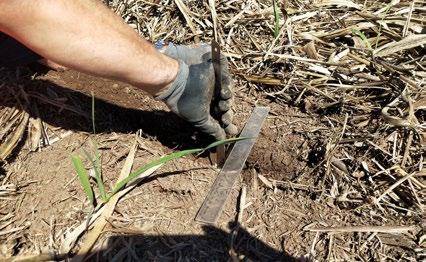
• Check depth of placement 100 mm -125 mm below soil surface – not below the top of the trash blanket, that is the measure from soil surface.
• Use a covering device e.g. press wheels or rotating fingers to ensure the applied imidacloprid is covered by a layer of 100 mm –125 mm of soil.
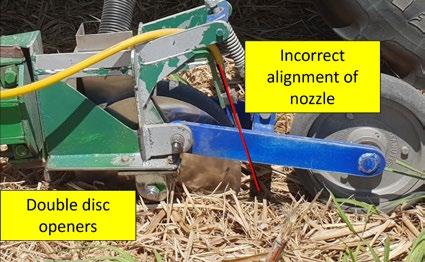
• Ensure liquid imidacloprid is applied via a narrow jet directed at the bottom of the slot created by the double discs. Do not angle the nozzle toward the soil returning around the double discs, or towards the double discs as in both these cases the imidacloprid will return to the surface, thereby greatly increasing runoff losses.
Project 2025-001 – Beyond imidacloprid
Ensuring effective and sustainable canegrub control for the future is funded by Sugar Research Australia (SRA).
A good sign - Canegrubs found on a control plot on a trial site in the Burdekin in February this year.
Incorrect nozzle alignment
Example of incorrect application nozzle alignment where the nozzle is directed toward the soil returning around the double discs.
Measurements from top of soil surface
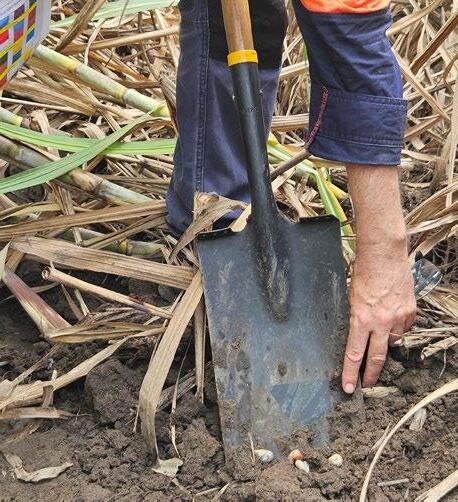
To check the depth of placement of imidacloprid by stool splitters or side dressers important to measure from the top of the soil surface.
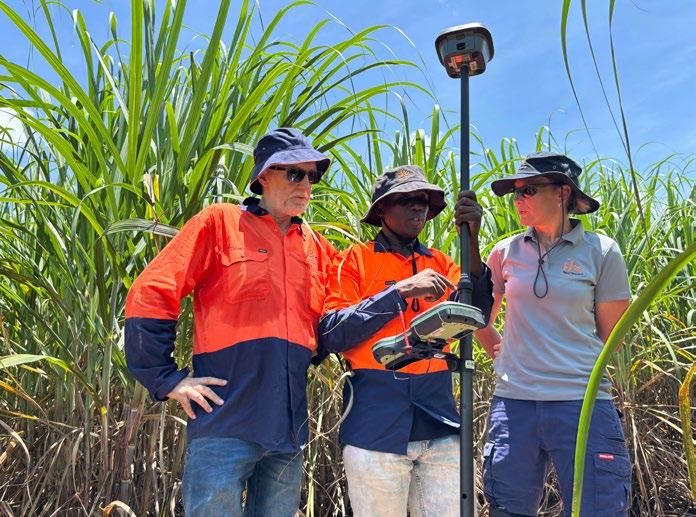
A GPS tracking device has been used on each trial site to accurately pinpoint and record the location of each chemical application. Pictured (L R) wi th the device, SRA Lead Entomologist, Dr Kevin Powell, Entomology Research Scientist, Dr Samuel Bawa, and SRA District Manager North, Jessica Portch, on a trial site south of Tully in February 2026.
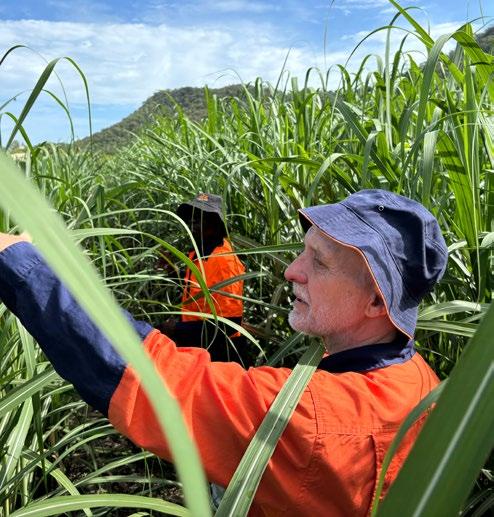
SRA Lead Entomologist, Dr Kevin Powell (right) and Entomology Research Scientist, Dr Samuel Bawa, conduct a visual inspection of a trial site at Gordonvale in January.
PARAQUATALTERNATIVES, WEED CONTROL OPTIONS MAY NEED TO CHANGE
As industry faces the potential phase-out of paraquat – growers’ mainstay for knockdown grass control –SRA’s Weed Science Leader Emilie Fillols says there’s one stark reality.
While Ms Fillols is confident an effective and affordable alternative to the widely relied-upon herbicide will be found, she also believes growers need to prepare for a potentially significant reset to their on-farm weed management regimes, if paraquat is withdrawn from use.
“For a long time, paraquat has been a go-to product for growers for many reasons; it’s effective and very easy to use, it’s safe on cane, it’s very cheap and it does not harm the Reef,” Ms Fillols explained.
“However, when you rely on something that works every time, you can become complacent about your ongoing weed management.
“While I do remain confident that we will find alternative strategies to control weeds without paraquat, it’s going to be challenging to find a product with the same characteristics, that has good control on grass, doesn’t damage cane and even ‘protects’ the cane foliage from otherwise phytotoxic pre-emergent herbicides.
“If effective alternatives are more toxic to cane, we will need to be more technical with our weed management. That means fine-tuning directed spray techniques, timing of applications, use of pre-emergents, and follow up applications, and we might even need a bit more strategical shallow tillage.”
Project 2025/002 - Paraquat alternatives
Re-develop Integrated Weed Management in Australian Sugarcane without Paraquat is funded by Sugar Research Australia (SRA).
Search for paraquat alternative goes global
Ms Fillols is leading SRA’s high-priority project to identify suitable replacement strategies for paraquat, if it’s withdrawn from use by the Australian Pesticides and Veterinary Medicines Authority (APVMA).
The APVMA is expected to make a final regulatory decision on the agrichemical’s future use in the sugarcane industry by mid-2026.
Ms Fillols started glasshouse trials in October 2025 and will soon be looking for 12 commercial sites in the Far North and the Burdekin regions to carry out field trials and demonstrations.
She will revisit the effectiveness of existing chemicals, and investigate potential new actives entering the market, trialling them alone and in combinations.
“We will test up to 20 actives. Some are already registered for use in sugarcane in Australia, some products are not currently used in Australia but are registered for use in other crops abroad, and some are registered for use in other crops in Australia.
“These have been selected not only based on the chances of them working, but also on their environmental assessment, whether they are deemed safe for sugarcane crops, and after discussion with the chemical companies, owners of the products who are responsible for product registration with the APVMA.”
As soon as enough data has been collected in pot trials, trial work will move to the field. Data from the trials will be provided to collaborating agrichemical companies, to support new product registration applications or to support specific-use permits.
A core component of the work will be conducted at SRA’s Brandon Station in the Burdekin, where unregistered products can be tested. Crops treated in the trials with non-registered actives cannot be sent for crushing to the mill.
PROJECT SNAPSHOT
High priority project to identify alternatives to paraquat
Up to 20 chemicals being trialled from Australia and overseas
Project includes glasshouse trials and commercial field trials
Workshops planned across industry to share any new chemical options for growers across all regions, sharing new techniques, application timings, and emerging chemical options to ensure industry readiness if paraquat is withdrawn by the APVMA (decision expected mid 2026)
Growers may need to prepare for significant weed management practice changes if paraquat is withdrawn.
Growers to stay informed
As suitable alternative control methods are identified, workshops will be held across all sugarcane growing regions to communicate any new findings, including spray techniques, application rates and timings, so that industry is prepared in the event paraquat is withdrawn by the APVMA.
Workshops will be tailored depending on final decisions by the APVMA and potential new product registrations, to share the latest knowledge of the chemicals trialed, at the time.
“If paraquat is withdrawn, we will have to reinvent our weed management strategies. And, it may be confusing for a while, as new herbicides become registered and integrated into our strategies.”
Ms Fillols said.
Leader Emilie Fillols (pictured above front) will hold workshops across all sugarcane growing regions to communicate any new findings, including spray techniques, application rates and timings, so that industry is prepared in the event paraquat is withdrawn by the APVMA.
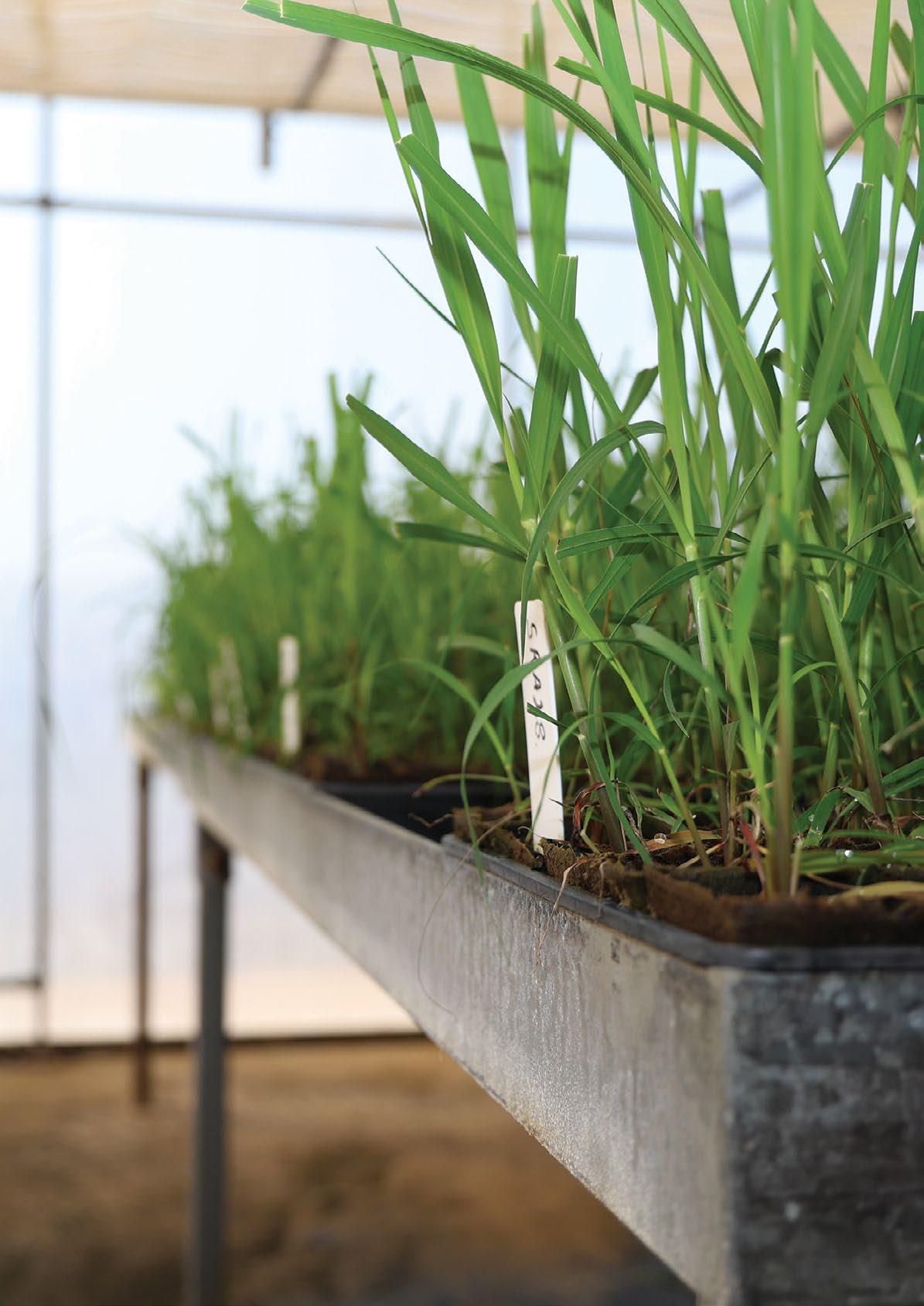
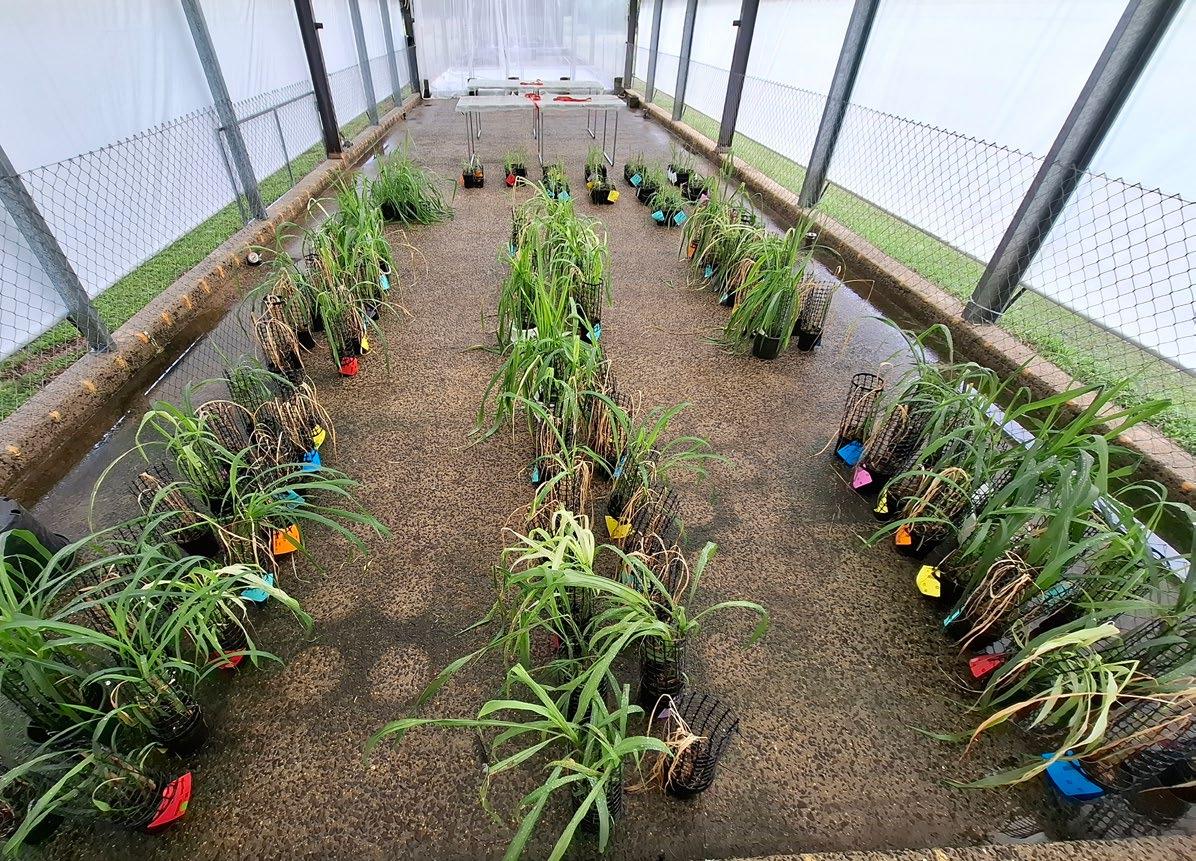
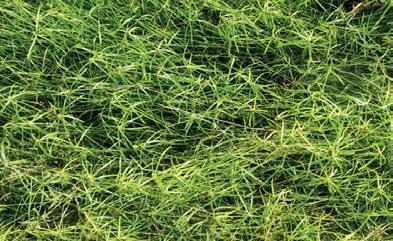
Potted guinea grass at SRA’s Meringa Station where pot trials began in October 2025 to find an effective alternative to paraquat.
A PENICILLIN MOMENT FOR NAVUA SEDGE CONTROL
An effective control strategy for Navua sedge was identified in three successive field trials conducted by SRA Weed Science Leader, Emilie Fillols, and it all happened by chance.
The purpose of the trials conducted on commercial cane farms was to identify strategies for long-term control of Navua sedge. The first was to eliminate parent plants and their underground tuber and root systems in the fallow period. Then, to control new germinating seedlings in the following cane crop.
However, like Alexander Fleming’s accidental discovery of penicillin, Ms Fillols’ breakthrough findings began after completion of the first replicated trial, which explored several treatments applied in fallow.
Navua Sedge (Cyperus aromaticus) is an aggressive perennial sedge native to tropical Africa. It is a clump-forming sedge, 30 to 70cm tall (occasionally growing up to 2m) with creeping underground stems (or rhizomes) producing shoots at regular intervals and has an extensive shallow fibrous root system.
In Northern Queensland Navua sedge invades many natural ecosystems and agrosystems such as pastures and sugarcane paddocks. Presently, in Queensland, it is not a prohibited or restricted invasive plant under the Biosecurity Act 2014, nor in any other states or territory.
Download Navua Sedge information sheet here
TRIAL 1
The treatments were applied in November, which is the usual time growers would start spraying their fallow, to clean out the cane and weeds. This was followed by glyphosate treatments (Crucial®) during and after the wet season (February and May).
All treatments achieved mixed results of between 2040% Navua sedge coverage remaining on the ground. A control plot (untreated) achieved 100% coverage, with plant growth up to 0.8m tall.
However, at completion of the trial in May, the grower wanted to prepare the site to plant cane, and on the advice of Ms Fillols applied 3.6 L/ha of Crucial® to the field, including the untreated control plots and other non-treated ‘guard’ areas around the trial.
“Three weeks after the application of glyphosate by the grower, all plots, including the untreated controls recorded the strongest knockdown of Navua sedge compared to all other treatments (up to 94% kill rate). This was likely due to the period of the spraying coinciding with active growth of Navua sedge after the wet season and optimum conditions for herbicide transport to the plant’s underground system,”
Ms Fillols said.
An observation in July showed that the Navua sedge in the control plot and guard areas that had only been sprayed once in May, was the most damaged at the fastest kill rate, compared to other tested treatments.
“So then I thought, hold on a minute, this is much better and cost-effective than anything else we had done, so maybe we need to spray only once after the wet season, instead of before and during,” Ms Fillols said.
“It was a theory we tested and confirmed in two followup trials. And the application rate of 3.6l of Crucial® was only a moderate rate.”
Ms Fillols said the discovery not only came as a surprise to her, but also to the grower involved in the trial. But it was one that they were both more than happy to stumble upon.
“As researchers we put so much work into a trial, which can be complicated in design, and in this case, the thing we did not factor in worked,” she said.
“We short-circuited the whole scientific protocol. So instead of doing years of work to get a result, we found something by chance.”
WHAT THE RESULTS MEAN FOR GROWERS ‑ TRIAL SUMMARY
The three field trials – conducted from 2021-2025 -revealed that Navua sedge can be strategically controlled in fallow and plant cane to maintain productive sugarcane fields.
The effective control strategy identified involves no spray before or during the wet season, but a single glyphosate spray after the wet season (April- May).
A ratoon spray out carried out as soon as possible after last harvest should not reduce the efficacy of this strategy, SRA’s Weed Scientist Emilie Fillols who led the infield trials concluded.
Control of Navua sedge seed production during the fallow period should be achieved by slashing before seed set.
TRIALS 2 AND 3
Backing the breakthrough
Two follow up trials were conducted to confirm the original findings, exploring if the timing of glyphosate applications (before, during and after the wet season) had an impact on its efficacy to control Navua sedge.
For the plots that did not get sprayed until after the wet season, slashing was introduced to prevent seed production and not increase the seed bank.
The results of both Trial 2 and 3 confirmed that a timely single application of glyphosate in May, after the wet season, when the plant is actively growing, had a far greater impact on reducing Navua sedge ground coverage and underground tubers, compared to multiple glyphosate applications, pre and post-wet season.
“Growers don’t usually wait that late (after the wet season) to spray, as the fallow is the opportunity to “clean” their block from troublesome weeds before planting cane. Several sprays before and during the wet season are usually necessary to achieve this goal, but that doesn’t work for Navua sedge,” Ms Fillols recommends.
A follow up strategy is necessary in plant cane and can include:
• Imazapic after planting in a no tillage situation (planting in beds) followed by halosulfuron methyl (Sempra®) if necessary to control new Navua sedge seedlings.
• T illing operations to prevent the new Navua sedge plants to establish and produce tubers followed by :
- Imazapic after hill-up to prevent Navua sedge seeds emerging and thriving, and/or;
- Halosulfuron-methyl to control any new germinated Navua sedge seedlings before they produce tubers and set seeds.
Further follow up with halosulfuron-methyl or imazapic in the following ratoons may be necessary.
“So leave the Navua sedge alone, let it grow before and during the wet. Just slash it to avoid seed production, when necessary. You may need to spray out the cane but then do not spray again throughout the wet. Wait for your first opportunity after the wet, say April-May and just apply one spray of glyphosate (Crucial®) at a rate 3.6 L/ha, when the Navua sedge is vigorous and 50 to 100 cm high.
“This strategy will get rid of the parent plants and their tubers, which are the hardest to kill. I’m not saying it will get rid of the seed bank, but plants growing from seeds are more manageable to control with preemergent and selective post-emergent herbicides in the cane cycle. If you stay on top of it, you will control the new Navua sedge seedlings before they produce tubers and become very hard to kill.”
Navua Sedge
TRIAL 1
Trial 1 compared five herbicidal strategies for fallow consisting of three herbicide applications. Five different treatments were compared for the first application, whereas glyphosate was used in all treatments for the two following applications. Spark® Warrant ® and Sempra ® are not currently registered for use in fallow.
Trial 1 - Treatments: The five treatments are described in Table 1.
Table 1: Herbicide treatment details
*CanDo was added to all treatments, except Crucial ®
Measurements: Herbicide toxicity (EWRC score) and percentage cover of Navua sedge was assessed fortnightly, then monthly, using visual ratings.
Trial 1 Results: Three weeks after the third application, Navua sedge coverage was below 6% for two of the tested strategies: Sempra-Crucial-Crucial and Warrant-Crucial-Crucial. Spark-Crucial-Crucial and Crucial-Crucial-Crucial resulted in around 20% Navua sedge coverage.
Control plots were also sprayed in May with Crucial® and an observation in July (after trial completion) indicated that this single application was likely to be more effective than other tested fallow strategies.
TRIAL 2
Trial 2 compared seven fallow strategies to control Navua sedge consisting of sequences of glyphosate applications and slashing.
Table 2: Trial 2 Slash and spray details
9/09/2022
*Last spray was scheduled for March 2023 but flooding prevented access until May 2023
Measurements: Percentage Navua sedge coverage was assessed monthly using visual ratings. Tuber biomass and tuber viability were recorded in August 2023 at the end of the trial, prioritising areas where Navua sedge plants were present.
Results: All strategies including glyphosate at the exception of “3 slash / 3 spray” had significant reductions (more than 82%) on the quantity of viable tubers. The single May glyphosate application seemed to have impacted tubers viability further (zero viable tubers) than multiple glyphosate applications. It is likely that earlier glyphosate applications reduced plant fitness and impeded glyphosate translocation of the May application. It seems that a timely single application of glyphosate when the plant is actively growing (i.e. at the end of the wet season when there is no water logging nor drought) is ideal to impact on tubers viability.
TRIAL 3
Trial 3 compared herbicide programs in plant cane following a single application of Crucial® in fallow in May.
Table 4: Strategy treatments and timeline
Table 5: Trial 3 herbicide rates
Measurements: Percentage Navua sedge coverage was assessed monthly using visual ratings. Tuber biomass and tuber viability were recorded.
Results: Strategies in plant cane involving tillage or tillage and imazapic are the most effective at preventing the establishment of new Navua sedge seedlings.
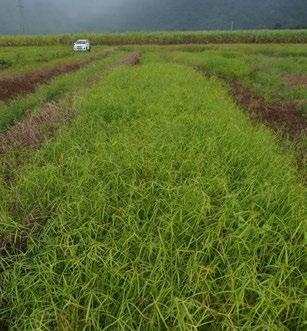
Photo taken 27 days after the first treatment in Trial 1.
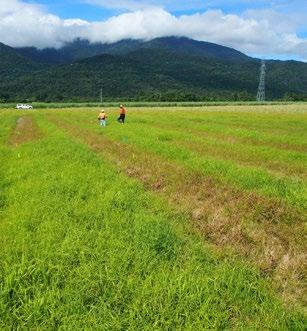
Picture taken the 19 May 2022 in an untreated control, before Crucial ® application across the block.
Photo taken on 7 June 2022, 3 weeks after the last application of Crucial ® across the trial. The brown areas between plots are the untreated guard rows which were only sprayed only once in May by the grower to ‘clean up’ the block.
Figure 2 Effect of herbicide treatments on the
Navua sedge. The red arrows show the timing of the herbicide applications.
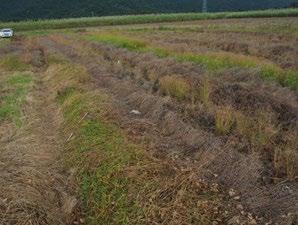
Photo taken on 8 December 2022 of trial 2, 2 months after the first glyphosate application and 3 weeks after the second slashing.
Photo of tubers dug out in Trial 2, after washing and trimming.
Viable tuber dry weight in February 2025 (four months after the last treatment application) in Trial 3. Treatments with the same letter are not significantly different.
Viable tuber dry weight in August 2023 in Trial 2. Treatments with the same letter are not significantly different.
TRIAL 2
TRIAL 3
SOIL HEALTH TRIALS CHALLENGE LONG‑STANDING TRASH MANAGEMENT SYSTEMS
TRASH BLANKETS ARE BENEFICIAL, BUT CAN WE GET MORE OUT OF THEM?
Work is progressing on long-term soil health trials that examine whether changes to trash blanket practices can improve soil carbon levels in cane crops.
One trial on the SRA station at Mackay started in 1992 and has sections that have been trash blanketed for that entire period, while there are also sections where the trash has been burnt.
In a recently-completed project, SRA Principal Agronomist and Manager Translation Research Dr Barry Salter reported that a significant amount of soil sampling in that old trial site found that soil carbon had not increased with trash blanketing.
“So, there was no real difference between the burnt system and the trash blanketing system after 30 years of implementing those practices - which was a bit of a surprise,” Dr Salter said.
Armed with this new knowledge, which challenges long-held beliefs that trash blankets increased soil carbon, the new ‘Long-term soil health trials’ Project will assess new residue management practices, and monitor changes to soils and crop performance over time.
But, Dr Salter said there was already a theory behind the most recent findings.
“A trash blanket has an enormous amount of residue that’s returned to the soil every season. However, trash blankets have a very high carbon to nitrogen ratio, and in order for microbes to break that trash blanket down, they need to find nutrients like nitrogen, phosphorus and sulphur to do so,” he said.
“One of the things that’s possibly happening is that the microbes are acquiring those other nutrients from the organic matter that’s already in the soil, so
they mine that component to break down the new trash that’s incorporated. Potentially this results in no overall change.”
A fresh look at an old practice
Project 2024/010 is being conducted across multiple trial sites by Dr Salter in collaboration with the University of Southern Queensland, James Cook University and Wilmar Sugar.
Dr Salter said the project was investigating whether small changes to the way trash is managed could help increase soil carbon rates and overall soil health.
“But we need to make sure that any practice change is actually worth it, and growers see a benefit from it,” he said.
“What the new project is saying is that we know the trash blanket is a significant resource in the sugarcane farming system. It definitely has a yield benefit. But, can we manage that trash slightly differently to get more out of it in terms of increasing things like soil carbon?”
If you’d like to hear more about Project 2024/010 including the practice change techniques that are being trialed by Dr Salter, and how the trials will navigate existing reef regulations, tune in to Episode 9 of SRA’s Cane Matters podcast, where Dr Salter details the project in greater depth. Listen to podcast
Talk to your SRA District Manager for more information about trash management on your farm.
Project 2024/010 - Long-term soil health trials
To assess farming system opportunities and impacts is fully funded by SRA through the 10th Anniversary Fund.
TRACKING CROP
ACROSS THE CENTRAL DISTRICT
Over the past nine months, District Delivery Officer, Hayley Keats has been busy collecting crop development data from across the Central District. It’s work that has paved the way for six commercial-scale demonstration sites, all designed to gain valuable insights into how new and emerging varieties perform in challenging soil types.
Why These Demonstrations Matter
KEY TAKE AWAYS
Based on the soil health trials investigating trash blanket management:
Rethink assumptions about trash blankets and soil carbon
Don’t assume current trash practices automatically build soil carbon
Understand why soil carbon may not be increasing trash has a very high carbon to nitrogen ratio
Soil microbes need extra nitrogen, phosphorus and sulphur to break it down Be open to adjusting trash management practices.
Pictured above and top: Sections of the long term Mackay trial site, established in 1992, that continues to reveal new insights into how long term trash and burn practices influence soil carbon in cane systems.
During Productivity Board shed meetings in early 2025, growers highlighted variety selection for difficult soils as a key concern. In response, SRA established six demonstration sites - three on heavy cracking clays and three on sodic soils - to directly address this knowledge gap.
In 2025, two of these sites were commercially billet planted with the promising new clone QC11-915 P, grown alongside Q240 P for comparison. The remaining four sites are being established using propagation material planted on farm in 2025, ready for billet planting in 2026. These sites will showcase a broader set of varieties, including QC11-915 P SRA29 P WSRA17P and Q240 P
What the Trials Aim to Deliver
The demonstration sites are deliberately positioned on heavy cracking clay and sodic soils to help growers understand how each variety performs under the challenging conditions. The goal: clear, practical insights to support better variety choices for difficult paddocks.
What Data Is Being Collected?
Data collection began at early germination and will continue through to harvest. Key measurements include:
• Germination counts and early establishment
• Stalk population changes over the season
• Disease observations, verified by SRA pathology experts
• Early CCS estimates in a non-destructive way using handheld Micro NIR technology on representative stalks
• Final mill rake data from commercial harvest.
What the Results Are Showing So Far
The graph below captures shoot numbers per m² throughout the season at three demonstration sites:
• Orkabie and Leathebrooke – whole stick planted on sodic soils
• Gargett – commercially billet planted on heavy cracking clay.
Monitoring began four weeks after planting, tracking the establishment of QC11-915 P and SRA29 P out to 28 weeks. These early results are already helping build a clearer picture of how these varieties take off under tough soil conditions.
A BOLD NEW ERA OF OPPORTUNITY FOR VARIETY DEVELOPMENT
Some growers argue that only when SRA’s sugarcane varieties are planted out on farms with different soils, microclimates, and varying water and nutrition, can a variety’s true potential be proven.
General Manager Variety Development, Dr Garry Rosewarne, agrees. He plans to introduce Regional Assessment Trials (RATs) following Final Assessment Trials (FATs). These will be elite clones grown in diverse soil types and harvested under commercial conditions. Trials will also be grown out to four ratoons to obtain robust commercial performance data before the variety is released.
Plans are also in place to improve efficiency, and in an exciting development, SRA has begun deploying genomics techniques as a huge step forward in designing new sugarcane crosses.
Important traits such as TCH, CCS, fibre, and resistance to smut and Pachymetra are controlled by thousands of genes due to sugarcane’s complex genome. Over the past seven years, research has proven that genomic scans of clones can be used to predict several important traits of sugarcane early in breeding, when seeds first form.
“We currently make 100,000 lines a year at SRA,” Dr Rosewarne said. “One day we might be able to genotype all those lines at the earliest stage, before the seedlings even get planted in the glasshouse. We will be able to predict how they will perform in the field in terms of TCH, CCS, fibre content and disease resistance.
“We could eventually be testing for 10 to 15 traits including resistance to other diseases, plant height, the tiller number, maturity… the list goes on. Again, these can be determined from when we first generate a new seed, rather than testing for these 10 or 12 years later in the field.”
SRA will eventually ramp up genotyping* to 10,000 clones per year using a new DNA extraction robot at IRIS Laboratories, which will speed up the process of identifying superior varieties and increase the number of DNA extractions each year.
“Done manually, the total number of plants that can be analysed is around 1,000 in a fortnight,” Dr Rosewarne said. “However, with a DNA extraction robot that figure can be increased to 10,000 in two to three weeks while the technicians can be employed in more strategic tasks. The collected genotypic data will be added to SRA’s database that already has the data established from 8,000 clones, including all the parents in the crossing plot at Meringa, and all the FAT clones for the past 10 or 13 years.
KEY TAKE AWAYS
SRA is scaling up genotyping to rapidly identify superior clones
Big Data and AI are now central tools for selecting the best parents and progeny
These advances will deliver better performing varieties to growers sooner Genomics will speed up breeding by predicting key traits from seed before field testing
“This ‘training population’ has been grown in the field to establish the strength of the traits in the field compared with the data we have collected in the laboratory. The result is the development of ‘prediction equations’ for each sugarcane trait which can then be used for analysing new seed that has just been crossed at Meringa.
“The genotypic platform has already been set up and we can get 54,000 data points from the genome of every plant that we genotype. The number relates to the design of the computer chip. The 54k chips have specific DNA sequences imprinted on them and the DNA from a single clone we are testing is compared to them. Complex chemistry allows us to record the presence or absence of each marker.
“Our library already has genotype data stored from 8,000 FAT clones going back to 2011. This was the original dataset used to develop the first predictions. With new genotypes coming through each year, we will have better predictions coming through.
“We can now go to brand new germplasm straight out of the crossing block, new seeds with new genetic combinations. We started genotyping FATs as a proof
of concept and will now be using the technology to genotype CATs and ultimately move onto new clones.”
A team of seven, led by Data Analytics Lead Dr Sijesh Natarajan, has brought together genotyping, genomics, phenomics, statistics and database management under one program.
“We are entering the era of Big Data*,” Dr Rosewarne said.
“The datasets generated by SRA are now so large it is impossible to deal with them manually, no matter how highly skilled a plant breeder is. Genomics is ideally suited to deal with this challenge. It can be applied at a much larger scale and is robust and transferable.
“This is not genetic modification or transformation. We are working out how to recombine existing genes through crossing programs as we have always done, but now we will be able to better select parents and progeny. The benefit of Artificial Intelligence in dealing with big data cannot be overstated. We’ve got the state - of-t he -art tools to do data - driven breeding, which is conventional breeding on steroids.”
*View the full glossary of terms and the full article at sugarresearch.com.au/news
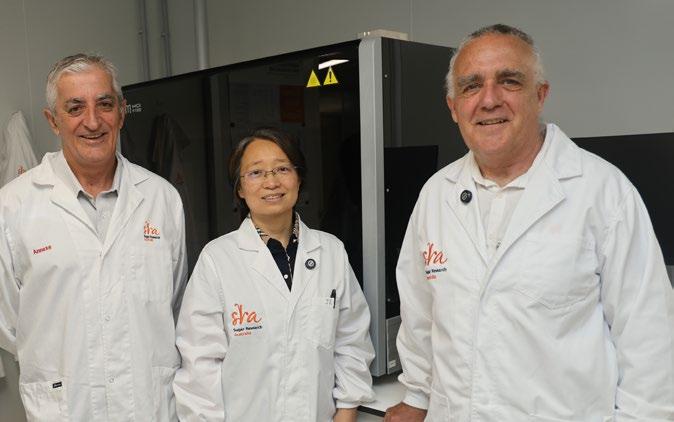
Genomics Scientist Jenny Sun with Senior Variety Development Manager, George Piperidis (left), and General Manager Variety Development, Dr Garry Rosewarne.
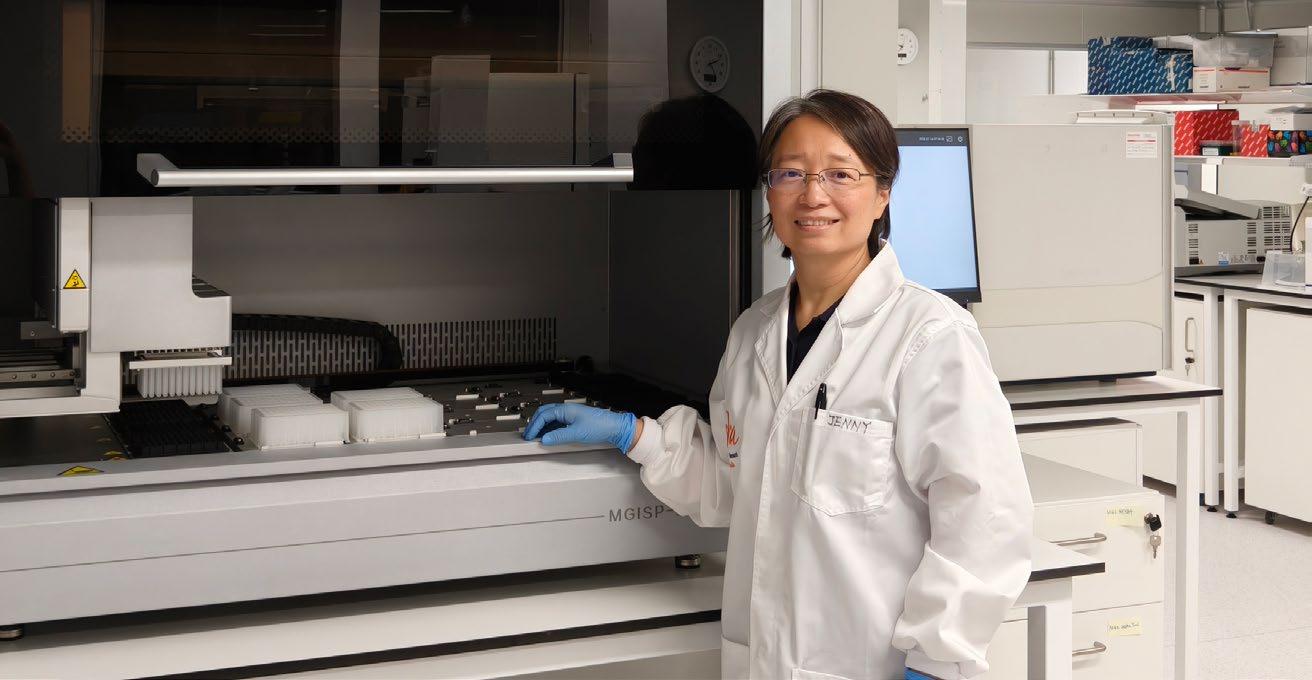
Genomics Scientist in Variety Development at IRIS Laboratories, Dr Jenny Sun is working with the new DNA extraction robot at IRIS Laboratories, which will speed up the process of identifying superior varieties in the breeding program each year.
A new DNA extraction robot, based at SRA’s IRIS labs in Acacia Ridge, will see the number of plants analysed previously go from 1,000 to 10,000 per fortnight, transforming SRA’s breeding capabilities for the industry.
WHO’S
WILLING TO GET ON BOARD TO BEAT THE SUGAR INDUSTRY’S BIGGEST CHALLENGES?
Sugarcane growers who have adopted new varieties, practices, or technologies over the years, consistently say they are only motivated to act when they can clearly see immediate, substantial gains in profitability and labour efficiency.
That message has been coming through strongly to SRA’s new Adoption General Manager, Dr Graeme Doole, particularly from the ‘early adopters’ who have been willing to trial new approaches and share what works.
Dr Doole has spent that the past few months getting to know sugarcane growers and millers and the challenges and opportunities they see for the industry.
Graeme recently visited the Burdekin and Far North districts, speaking with growers, SRA Board members and millers.
“We discussed what we want to achieve at SRA in terms of adoption, and I was very interested in hearing what some farmers are already doing in this area,” Dr Doole said.
“I hear growers’ concerns about stationary productivity and the low prices forecast for the next several years.
"Land has been lost from our sector, and it’s had an impact on the mills. Growers are passionate and proud of the legacy of generations of their family and others in building up a major industry.
“They don’t want to see it go backwards and they recognise that simple solutions are hard to find.
“I recognise SRA’s responsibility in prioritising actions that will shift the dial for the industry. We can’t do anything about the world sugar price, but in the past it has been a lot lower (US3c/lb in the mid-1980s due to oversupply) and growers have got through because of their ingenuity and resilience.
“Growers and SRA must work more closely together to bring about adoption of the things that will bring them success regardless of the economic climate. Sugar prices have always been volatile and business must adjust.
“There is a need for more data and commonsense application on farm. Growers have energy, commitment and skill which we can match with expertise based on accurate data.”
Dr Graeme Doole, General Manager Adoption
“Several things are front of mind right now. Firstly, I am keen to work with those who have the courage, curiosity, and commitment required to take what is a challenging task, head-on.
“I see some fractured relationships in the industry, but also a lot of people who say ‘I am here for the industry and let’s have a crack’ and I find that motivating because we need to move at pace.
“Secondly, I have had the pleasure of meeting a lot of experienced and knowledgeable people that know a great deal about cane and the industry. Sugarcane is a very special plant and one of the most productive in the world. Its agronomy is challenging, as is its genetic improvement.
Dr Doole believes there are passionate people who are fully invested in the sector, both emotionally and financially, and that a step change is needed in productivity to safeguard and elevate margins.
“The big play here is focusing on getting our agronomy right and harnessing the rich output of the significant investment that BSES before us and now SRA have put into R & D,” he said.
“Crop protection is going to be an important focus for
“Lastly, one of my biggest areas of focus is how to enhance the impact that our SRA District teams are having. They are among our most important staff and it is my job to enable them to be at their best and focus on delivery to the industry.”
If you have not had a chance to catch up with Graeme, or you have thoughts for Graeme on the way ahead, he invites you to make contact: phone 0447 615 637 email gdoole@sugarresearch.com.au
us, as well as ensuring we can get good varieties in the ground and making sure they get the best start they can. It is going to be challenging, but our growers and millers have been through this before.
“I have never worked with more skilled and passionate District delivery teams in my career; SRA has done well to get the foundation right. I am excited about what we can do as a team to help achieve a step change for the sector.”
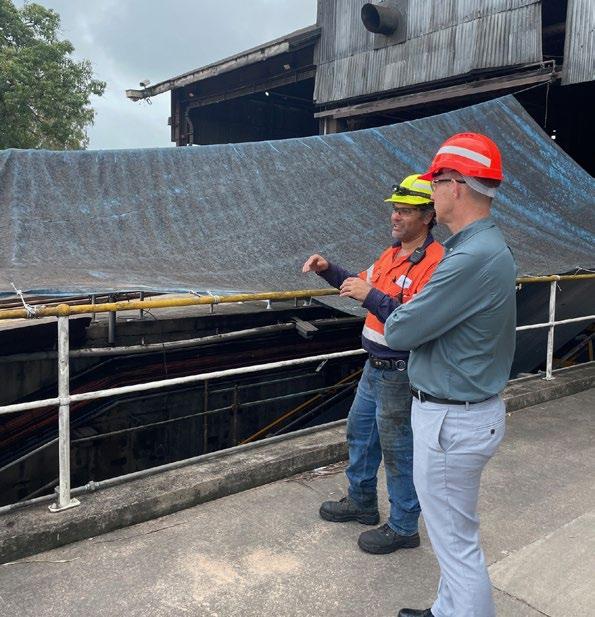
To understand the challenges in the milling sector from the factory floor, Dr Doole visited Pioneer Mill where he met Dimitrios Vouyioukas, Production Supervisor.
Dr Graeme Doole has a Bachelor of Applied Science (Natural Resource Management), and a Master of Applied Economics. He was awarded a PhD in Agricultural and Resource Economics, with Distinction, from the University of Western Australia.
Graeme Doole recently visited the Burdekin to meet and chat with growers, including Aaron Linton.
SRA PODCAST SERIES
HAVE YOU TUNED IN YET?
The Cane Matters podcast with Sonia Campbell, was launched by SRA so that listeners can hear from SRA experts, including specialists in plant breeding, pathology, entomology, and more - the driving forces behind research, development, and adoption in the Australian sugarcane industry.
The podcast features strategic research, development and adoption projects, ensuring the sugarcane industry remains productive, sustainable and profitable.
HAVE YOU SEEN ORANGE RUST ON YOUR SUGARCANE?
ON‑THE‑ GO ON THE SRA PODCAST
New episodes now playing about plant breeding, harvesting, disease prevention, weeds and more on all your favourite podcast platforms.
sugarresearch.com.au/podcast
the QR code to listen
SRA’s Lead Field Pathologist, Dr Seona Casonato, based at SRA’s Tully Station, is asking growers, productivity services staff and agronomists across the sugar industry for samples of orange rust found on sugarcane leaves on their farms.
These samples are for an ARC Training Centre in Plant Biosecurity research project which aims to find out the differences in the type of rust species within and between biosecurity regions, which is being undertaken by PhD student, Samantha Whitling.
• Make sure the specimen is dry and place into a paper bag (not plastic)
• Place samples in a refrigerator until ready to send by post
• Provide details of where the sample was found (GPS coordinates or a good description of location), and the date and time of collection
• Enclose the paper bag in a post bag with a label indicating where the rust was found (preferably GPS coordinates or a good description of location), and the date and time of collection.
Orange rust (Puccinia. kuehnii) is estimated to cause sugarcane yield losses of up to 40%. An orange rust epidemic had a devastating impact on sugarcane in 2000 when the pathogen changed from rare to very common, completely altering the population dynamics.
Dr Casonato showed industry participants how to tell the difference between orange and brown rust at the recent Disease Identification Workshop at Woodford. She showed orange rust under the microscope where it displays a distinctive bulbous end, (i.e. a thickened apical end of the spore), compared with the slim brown rust.
Express post or courier without delay to:
Samantha Whitling Research School of Biology (Bldg 46) The Australian National University 46 Sullivans Creek Road, ACTON ACT 2601
Please email Samantha to let her know the sample is coming: samantha.whitling@anu.edu.au
Project PBTC15 Molecular Characterisation of sugarcane rust pathogens
Project will conclude by 2028.
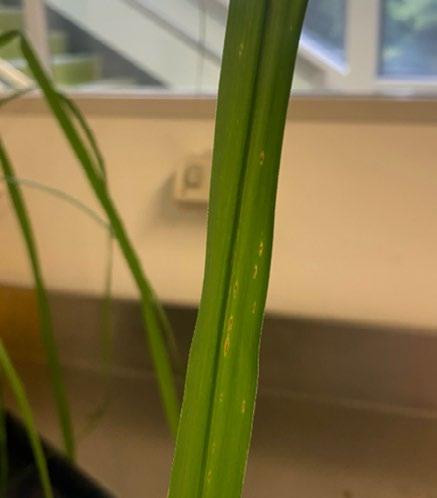
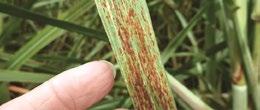
Orange rust on a sugarcane leaf.
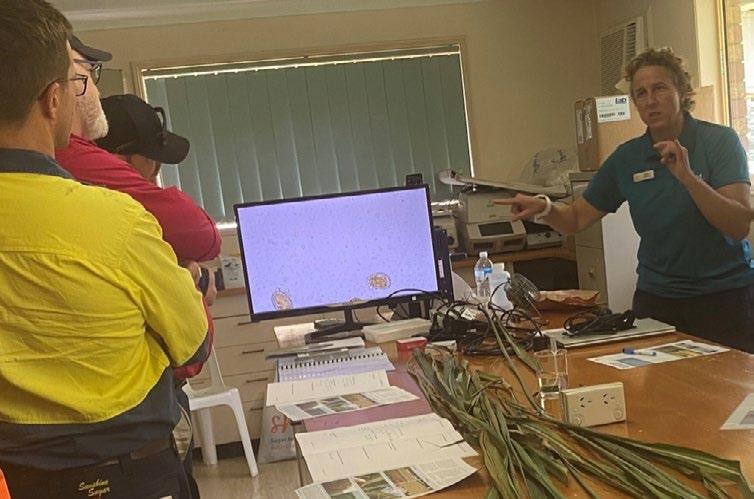
Dr Seona Casonato (pictured right) shows participants at the recent Disease Identification Workshop at SRA Woodford the orange rust as it appears under the microscope, revealing its bulbous end.
FIGHTING PESTS ON THEIR HOME GROUND
KEEPING SCSMV AND WHITE LEAF DISEASE OUT OF THE INDUSTRY
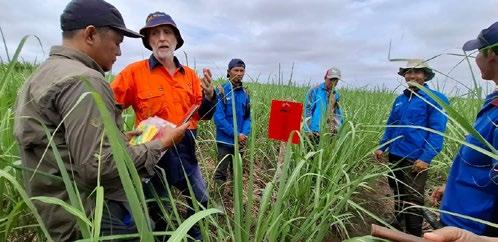
Field trial sites have been set up for two projects of significant biosecurity importance for the Australian sugarcane industry, led by SRA Entomology Leader, Dr Kevin Powell.
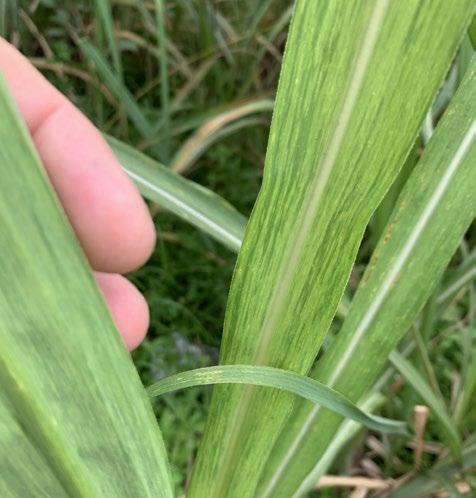
Sugarcane streak mosaic virus (SCSMV) is a disease caused by a virus which gives the leaves a papery look, decorated with long light green streaks. It directly affects photosynthesis and growth leading to a significant decrease in cane yield and sucrose content, and therefore serious economic losses. The vector of transmission is unknown but suspected to be an insect.
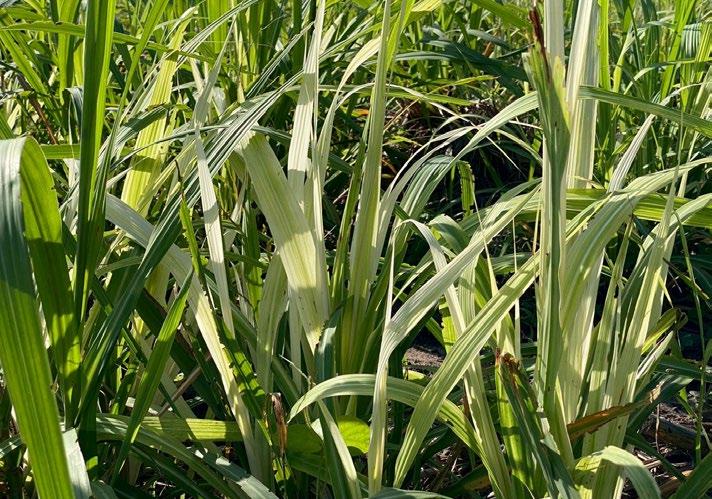
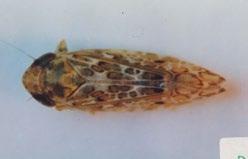
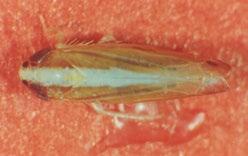
White leaf disease is another devastating disease caused by a phytoplasma which is a type of bacteria that leads to leaf whitening, reduced chlorophyll, and excessive tillering, resulting in lower sugar yield. It is transmitted by insects called leafhoppers.
Neither disease is yet known in Australia but are known to occur in neighbouring sugarcane producing countries.
Dr Powell recently returned from inspecting the sites where monitoring has begun, and his team are analysing insect trap samples from previous trials in the area. The initial report of the work analysing samples is expected early next year.
With more knowledge about the insect vectors, Australia will be better prepared for a potential incursion through more targeted surveillance and detection and management options.
BOOSTING BIOSECURITY IN PNG AND AUSTRALIA
WORKING TO PREVENT EXOTIC PESTS
Entomologist Lawrencia Kikitam of Ramu AgriIndustries in Papua New Guinea, is being mentored by Dr Kevin Powell under a Crawford Fund Program aimed at enhancing biosecurity planning, awareness and capability between PNG and Australia.
Ms Kikitam said that she was grateful for the opportunity to enhance her knowledge and skills in biosecurity.
“As a young entomologist at Ramu Agri-Industries, I have worked mostly to combat local sugarcane pests which have become much more challenging with changing weather conditions,” Ms Kikitam said.
“Dr Kevin Powell is the most experienced person in this field of entomology and it is a great privilege for me to work alongside him to learn more from his expertise. His mentorship and guidance will help fill some of my knowledge gaps. I hope to gain more skills and knowledge in pest monitoring, insect identification, trial design, data analysis and writing skills.
“Working with Dr Powell will also help me build confidence professionally in my ability to make decisions in pest management. It will also help me to make better decisions, plans and preparation for any incursion of new pests and diseases in the future which threaten biosecurity in both Papua New Guinea and Australian sugar industries.
Project 2024/511 - Rapid field-based sugarcane tissue measurement using an integrated smartphone and lab-on-a-chip system
“I am also grateful that Ramu Agri Industries Limited is supporting this opportunity for my growth and development in the area of biosecurity.”
Earlier this year, Ms Kikitam spent a fortnight with the Entomology Team at SRA Meringa.
Lawrencia had training in:
• Microscopy training in identification of potential insect vectors of white leaf disease and Sugar Cane Streak Mosaic Virus
• Research field trial application of chemical insecticides for potential cane grub control.
This opportunity will help me better prepare for future pest and disease threats.”
Entomologist, Lawrencia Kikitam
It was an intensive whirlwind two weeks for Lawrencia which included visits to Maryborough and Hervey Bay sugarcane regions as part of the Entomology Team’s busy work program.
This was the first of three planned visits to SRA under a Crawford-in-Queensland International Engagement Award. It was an important opportunity to build on SRA’s existing relationship with PNG collaborators in biosecurity. Dr Powell will also be working with staff at the University of Technology in Lae.
These leaf hoppers transmit the phytoplasma causing white leaf disease.
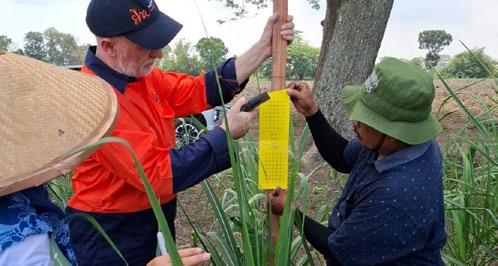
Setting up insect trapping sites for potential vectors of SCSMV.
Sugar Cane Streak Mosaic Virus (SCSMV) symptoms seen in Indonesia (left). The effects of mothborer and White Leaf disease in combination on a sugarcane crop in Thailand (right).
The effects of mothborer and White Leaf disease on a sugarcane crop in Thailand.
PNG Entomologist Lawrencia Kikitam (pictured 3rd from left) with members of the SRA Entomology Team (L R) : casual Entomology Technicians Rebecca Kelso, Jacinta Torrici, Entomologists Dr Emtia Chandrima and Dr Samuel Bawa, and Weed Management Technician, Craig Gower.
2025 GROWER SURVEY REVEALS SHIFTING SENTIMENT AND CLEAR RESEARCH PRIORITIES
SRA HAS RELEASED THE FINDINGS OF ITS 2025 GROWER SURVEY, PROVIDING A COMPREHENSIVE SNAPSHOT OF GROWER SENTIMENT, RESEARCH NEEDS AND FARM BUSINESS CONDITIONS ACROSS THE INDUSTRY
The survey was conducted by independent survey company, Intuitive Solutions, through 400 telephone interviews with SRA members* between November and December 2025. It offers valuable insights to guide future research, development and adoption investment, and strengthen engagement with growers and millers.
Understanding grower and milling needs is central to SRA’s work, and the 2025 survey expands on previous years by capturing feedback from a broader cross-section of SRA’s members.
Industry sentiment softens amid global and local pressures
The survey results reflect a challenging operating environment. Global sugar prices have fallen due to high production in Brazil and India. Locally, wet conditions and planting delays have pushed Australian production forecasts to their lowest levels since 2011–12.
Grower sentiment has shifted sharply, with a net score of –13 compared with +54 in 2024. Far North Queensland and the Burdekin reported the most negative outlooks, while NSW growers were comparatively positive. Many growers expressed concern about margins, rising costs and the performance of new varieties.
Satisfaction with R&D levy investment averaged 5.4/10 – the lowest since 2022. External factors such as global prices, variety performance and visibility of SRA’s people all influenced perceptions.
Varieties remain the top priority
Across all districts and farm sizes, growers identified varieties and plant breeding as the most important research priority. Seventy - nine per cent of respondents said variety performance is the biggest constraint to productivity, and 69% want SRA to focus more on developing high -sug ar, disease - resistant, locally adapted varieties.
Growers also called for longer, more rigorous trials, better data on variety longevity and improved performance on heavy soils. Satisfaction with plant breeding fell to 5.5/10, with variety quality the weakest component.
Other key research priorities include pest, weed and disease management, soil health, yield improvement and practical on -farm trials.
Adoption patterns show caution and risk sensitivity
The survey highlights mixed adoption of new practices. While overall 59% of growers plant a fallow or cover crop on most blocks between cycles, adoption varies significantly by district with 95% in New South Wales compared with 45% and 47% in the Burdekin and Herbert regions. Variety performance issues strongly influence planting decisions, with two -thirds of growers saying variety quality affects their willingness to plant new material.
Growers continue to rely heavily on personal experience, observations and local networks when making decisions, though SRA guides remain an important information source.
Communication and engagement: opportunities for improvement
Growers value face -to -face engagement, workshops and practical information. While 52% are satisfied with SRA’s communication, many want more region -specific data, trial results and direct interaction with SRA staff.
A clear direction for future investment
The 2025 Grower Survey provides a strong evidence base for SRA’s future RD&A priorities and new strategy. Growers are calling for improved varieties, stronger pest and disease solutions, practical research and deeper local engagement. These insights will help shape SRA’s ongoing work to support a productive, resilient and profitable sugarcane industry.
*SRA members are levy payers who have formally registered as SRA members to receive voting rights, direct communications, and access to member- only engagement. As of June 2025, SRA had 2,378 registered members.
If you are unsure whether you are a current member, or would like to register (it’s free) or update your details, please email members@sugarresearch.com.au
400
growers surveyed
across all cane-growing regions in Nov/Dec 2025
FAST FACTS:
2025 SRA GROWER SURVEY
400 growers surveyed
Industry net sentiment: 13 down from +54 in 2024
79% say varieties are the biggest productivity constraint
R&D levy satisfaction: 5.4/10, lowest since 2022
63% plant using cane from approved seed plot every year or almost every year
Key influences on planting new varieties: personal experience (89%), observations (89%), local growers (74%)
Communication preference: face‑to‑face, workshops, region -specific trial results
Farm snapshot: 257 ha average size, 73% under cane, 87 t/ha average yield, average CCS 13.3.
DPI FUNDS VALUABLE RESEARCH FOR THE SUGARCANE INDUSTRY
The Queensland Government has been a strong supporter of the sugarcane industry for more than 120 years, playing a key role in its success.
This support is continuing, with the Department of Primary Industries (DPI) currently contributing $2.85 million a year to Sugar Research Australia’s research, development and extension work.
In line with Primary Industries Prosper 2050 – a 25 year blueprint to boost Queensland’s primary production to $30 billion by 2030 – DPI’s funding is being invested into innovative research projects to help the sugarcane industry thrive and remain profitable, productive and sustainable for future generations.
The following are some key projects being funded by the DPI. Each project will be managed by SRA.
PRE‑BREEDING TECHNOLOGIES TO ASSIST VARIETY DEVELOPMENT
Project 2024/508
Translating gene networks for physiological traits from sorghum to improve breeding efficiency in sugarcane
Led by the University of Queensland’s Prof. Emma Mace, Professorial Research Fellow, Queensland Alliance for Agriculture and Food Innovation (QAAFI).
Project 2024/510
Genetic analysis of lignocellulosic composition and biomass in sugarcane to maximise biofuel production
Led by The University of Queensland’s Dr Karen Aitken, Senior Principal Research Fellow, QAAFI.
Project 2024/513
Advanced genomics and spatial RNA-seq to identify resistance genes in sugarcane against soil-borne pathogens
Led by SRA’s Dr Nathalie Piperidis, Cytogeneticist.
AGRONOMY AND FARMING SYSTEMS
Project 2024/504
Revisiting the role of soil organic matter in delivering the essential nutrients within the sugarcane cultivation regions in Australia –a landscape perspective
Led by CSIRO’s Dr Uta Stockman, Agricultural Soil Scientist.
Project 2024/505
Enhancing Australian sugarcane nitrogen use efficiency: quantifying loss pathways and evaluating novel dual inhibitor effectiveness
Led by the University of Melbourne’s Prof. Deli Chen, Soil Scientist.
Project 2024/511
Rapid field-based sugarcane tissue measurement using an integrated smartphone and lab-on-a-chip system
Led by the CRC for High Performance Soils’ Dr Lian Wang, Senior Research Fellow, School of Science, University of Newcastle. (See story page 35)
DPI’s funding is being invested into innovative research projects to help the sugarcane industry thrive and remain profitable, productive and sustainable for future generations.
Project 2024/512
Sugarcane subsoil management for improvement of carbon and nitrogen use efficiency
Led by Griffith University’s Dr Mehran Rashti, Senior Lecturer (Soil Biogeochemistry) at Griffith School of Environment and Science and Australian Rivers Institute.
Project 2024/514
Using AI to optimise sugarcane planting practices
Led by Griffith University’s Rudi Bartels, Research Fellow.
CROP PROTECTION
Project 2024/507
Weed management guidelines for mill mud users
Led by SRA’s Emilie Fillols, Weed Scientist. (See story page 36)
MILLING AND PROCESSING
Project 2024/509
Cane bin tracking and electronic consignment of cane
Led by QUT’s Assoc. Prof. Geoff Kent, Principal Research Fellow. (See story page 34)
ELECTRONIC CANE BIN TRACKING SYSTEM KICKING GOALS
A prototype electronic cane bin tracking system, BinSights, has been developed by the Queensland University of Technology (QUT) and partner, landscape technology developers, iScape, in the past year. The project is funded by the Department of Primary Industries and managed by SRA, with in-kind contributions from several mills.
The prototype electronic cane bin tracking system known as BinSights has begun kicking goals with the successful development and testing during the 2025 season of:
• A harvester app to consign cane
• A loco app to identify cane bins being dropped off and collected; and
• A bin number reader.
Three companies wish to adopt electronic consignment within two years while the others have prioritised adoption in their five-year plans.
The project is now working on developing and testing a mill computer portal for the management of the system.
“Mills have shown a lot of interest in the system and this year we are working with MSF Sugar (Tableland Mill), Bundaberg Sugar (Millaquin Mill) and Tully Sugar (Tully Mill) to test the system within their own environments,” Chief Investigator, QUT’s Associate Professor Geoff Kent said.
Isis Mill Cane Supply Field Officer Troy Manderson said: “Isis facilitated the project so that systems can be trialled and it’s great to hear a positive outcome. Electronic consignment has an important place in our supply chain.”
FAST FACTS
Mills operating road based cane transport have already largely automated their consignment systems including cane consignment in the field and road transport scheduling
Five remaining milling companies owning 15 factories and operating rail based cane transport systems are seeking the benefits of electronic consignment
Isis Mill has implemented an electronic consignment system for its rail based transport system and is sharing the experience with other millers
A prototype electronic cane bin tracking system, BinSights, has been developed
Three companies wish to adopt electronic consignment within two years.
Professor Kent commented that growers would benefit, too, from an electronic consignment note allocating a cane bin to a grower, reducing human errors by doing away with paper consignment notes where there is a risk of data being incorrectly transcribed or the notes being lost completely.
The project is focusing on accurate bin number reading and using bin number readers, loco crews and harvester crews to provide data to the system electronically, eliminating the use of paper records and data double-handling.
The system aims to provide real time tracking of all cane bins in a cane railway network, providing their location and whether they are empty or full.
Full bins will also contain consignment information identifying the block from which the cane was harvested and the time of harvest.
This will provide:
• the traffic office with better information for scheduling decisions and more time to focus on the safe operation of the cane railway
• better information for harvesters about upcoming cane bin deliveries for improved planning
• advanced notice on the cane supply to the mill
• earlier information for growers about the status of their harvest for the day.
Greater visibility is also expected to bring greater accuracy of cane consignment.
Project 2024/509 - Cane bin tracking and electronic consignment of cane
NEW TECHNOLOGY WILL GIVE SUGARCANE GROWERS ON‑THE‑SPOT NUTRIENT ANALYSIS
A new technology which aims to revolutionise nutrient measurement on farms across Australia is currently being adapted for the sugarcane industry, in a project wholly funded by the Queensland Department of Primary Industries (QDPI) and managed by SRA.
Known as the ‘lab-on-a-chip’ (LOC), the technology consists of an in-field testing kit that works with a smartphone app to deliver real-time nutrient analysis and recording. The LOC is the brainchild of a team of researchers from the Soil CRC – Australia’s largest collaborative soil research effort – and was initially developed to measure nutrient levels in soil.
The Soil CRC was established in 2017 under the Australian Government’s Cooperative Research Centres Program to find practical solutions for Australia’s underperforming soils. It has 39 partners across Australia including Herbert Cane Productivity Services Limited (HCPSL) and Burdekin Productivity Services (BPS).
Under the new QDPI-funded project, Soil CRC researchers from the University of Newcastle (UON) and the University of Tasmania (UTAS) are working with BPS and HCPSL to deliver instant estimates to the grower of nitrates and phosphates in sugarcane tissues.
The LOC system features a compact plastic device containing chemical reagents tailored to specific nutrients. With built-in calibration standards for quality assurance, the technology provides accurate, realtime data, offering a faster and more cost-effective alternative to traditional laboratory analyses.
Progress to date has included an extraction method for determining nitrate concentrations in sugarcane tissues, with phosphates currently on the way.
By providing on -the -spot analysis at critical plant growth stages, growers can be confident they are using appropriate nutrient- management practices for improved crop productivity and reduced environmental impact. The smartphone integration also allows data to be recorded immediately and tracked over time.
“Because soil nutrient levels vary significantly within a field (due to texture, organic matter, moisture, and microbial activity), the technology has been developed to measure readings in plant tissues such as sugarcane’s mature leaves, stalks and juice samples,
decisions, improve crop performance, and reduce nutrient losses to the environment. Early results show strong potential for fast, accurate nitrate and phosphate testing in sugarcane tissues.
“The portable LOC device aims to provide a userfriendly and economical way for growers to increase and accelerate nutrient testing to enhance the effectiveness of their fertiliser application. When the tool is released, it will set a new standard for precision agriculture in the sugarcane industry.”
BPS Manager and Extension Agronomist, Rob Milla, said that it was exciting to see the possibilities for growers with new tools such as LOC designed to give the grower knowledge directly from the paddock to reinforce their farm management practices.
HCPS Manager and Extension Agronomist, Adam Royle, added that details of the project to date had been received with great interest from growers in the Herbert and Burdekin districts.
Project 2024/511- Rapid field-based sugarcane tissue measurement using an integrated smartphone and lab-on-a-chip system
during key growth stages,” Chief Investigator, Dr Liang Wang at UON, said.
HCPSL staff and growers were introduced to the Soil CRC lab on a chip project three years ago when Dr Reuben Mah gave a face to face demonstration of the technology. PHOTO CREDIT: SOIL CRC.
A new handheld testing tool is being developed to give cane growers instant nutrient readings from leaf, stalk, or juice samples, right in the paddock. The ‘lab - on- a- chip’ system links to a smartphone and aims to help growers fine-tune fertiliser
NEW GUIDELINES AIM TO BOOST HERBICIDE PERFORMANCE FOR MILL MUD USERS
RESEARCH TARGETS BETTER WEED CONTROL, REDUCED RUNOFF, AND MORE SUSTAINABLE MILL MUD MANAGEMENT
New weed management guidelines for mill mud users, designed to improve the effectiveness of preemergent herbicides through better chemical choice, timing, and application methods, are the focus of a project led by SRA Weed Scientist, Emilie Fillols.
The project is wholly funded by the Department of Primary Industries and managed by SRA with research collaborators at James Cook University (JCU).
Positive results have already been achieved from pot trials which have compared the efficacy of 14 preemergent herbicides currently registered for use in sugarcane when applied over mill mud which was supplied by Tully Mill.
“The industry relies on mill mud, a sugar mill byproduct that is applied to cane paddocks. Mill mud is a very valuable product providing good sugarcane nutrition and growth. However, previous studies have found that mill mud applications can increase weed pressure and herbicides can be lost through runoff,” Ms Fillols said.
“These studies showed that up to 60 per cent of preemergent herbicides can run off a paddock where mill mud is used. As a result, mill mud users have often used several knockdown herbicides at a high cost to make up for pre-emergent failures.
“Growers are heavily reliant on herbicides to control weeds because they are the most cost-effective solution. Our aim is to produce an optimised weed management program that will concentrate on herbicides that have proved to be effective in the presence of mill by-products and that will reduce pressure on the environment.
“With most sugarcane growing regions located in Great Barrier Reef catchments, good industry stewardship in using agricultural chemicals such as pre-emergent herbicides is essential to minimise harm to aquatic species. This project seeks to improve water quality
through more productive and sustainable applications. It also focuses on improving our understanding of the interaction between mill mud, weeds, herbicides and herbicide mobility in water.
“The weed management guidelines for mill mud users provided at the end of this project will advise on herbicide options, timing of applications and/or application methods.”
The project will use the following methods to identify integrated weed management strategies in sugarcane where mill mud has been applied in the field:
• S creening all registered pre-emergent herbicidal actives in the presence of mill mud
• S creening mill mud and mill mud-ash from different sources
• Formulating solutions to optimise the use of mill mud with limited loss of herbicide to the environment via run-off
• Comparing the efficacy of pre-emergent herbicides on weed control in the presence of mill by-products in pot trials then in the field
• Measuring the impact of mill by-products on weed emergence, growth and vitality of the crop.
“In our pot trials to date we found that the mill mud can increase the weed biomass of untreated plants by up to 1.9 times, highlighting the importance of an effective pre-emergent herbicide when mill mud is added to the
paddock. Mill mud is good for all plant growth, not just sugarcane,” Ms Fillols said.
“We have found that in our controlled conditions where no runoff and leaching occur, pendimethalin and ametryn have reduced efficacy when sprayed over mill mud, compared to being sprayed directly on the soil. The soil type did not make much of a difference.”
At SRA’s IRIS Laboratories, trials on herbicide mobility are also underway to compare the 13 active ingredients registered for pre-emergence control of weeds in sugarcane.
“Leachate samples are still being analysed for their mobility through different types of soil. We need to understand about herbicide mobility both from an environmental but also from an efficacy perspective. When a large portion of herbicide is carried away from the soil into the runoff water, there is not enough herbicide left for weed control,” Ms Fillols said.
“We are now testing different mill mud sources and mill mud and mill ash mixes for their impact on herbicide efficacy and mobility.”
A program of workshops and demonstrations in several sugarcane districts will provide the outcomes of the project to growers and roll out new application rates, strategies and timings contained in the new guidelines.
Project 2024/507 - Weed management guidelines for mill mud users
Leaching columns used in the project
Mill mud project
Mill mud trial lab work
Weed Scientist, Emilie Fillols at work in the Meringa lab on the DPI funded project.