A REVIEW OF NEW AND INTERESTING MOTHS SEEN IN SUFFOLK DURING 2023
NEIL SHERMAN
This article aims to review the new county records and other selected moth species of interest seen during the 2023 season. Species are listed in checklist order, with notes on the observation as well as the location and recorder(s). Any additional determination of the record will also be given. All records are from light traps unless otherwise mentioned.
The number for each species is the one assigned using the Checklist of the Lepidoptera of the British Isles by Agassiz, D. J. L., Bevan, S. D. and Heckford, R. J., 2016.
In 2023, the second edition of the Field Guide to the Micro-moths of Great Britain and Ireland by Sterling, P., Parsons, M. and illustrated by Lewington, R., was published. In this guide vernacular names for all the micro-moth species have been added, some new, but also many that have always been in use. The subject of English names for micro-moths has been controversial among moth recorders for many years. With the introduction of the names in this new and very popular guide I have decided to list them with the scientific name for each micro-moth covered in this report to make it more user friendly to non-moth people.
Following the record year for moth recording in the county in 2022, 2023 turned out to be a bit more of an average year, but still with some good records noted. 127,117 records of 1419 species were sent in. This is the second-best species count, the highest being in 2022 with 1439 noted. The weather, as always, affected moth numbers and recording effort. It was an awful start to the year, being quite cool and often damp (apart from February which was almost completely dry) right through late winter and into spring. Even when there were slightly milder conditions there seemed to be fewer moths than expected around, perhaps due to the previous years’ drought conditions. However, this all changed in mid-June when there was a good warm spell that resulted in some big catches of moths and some migration waves from the continent. However, this was fairly short-lived and throughout July and August it was fairly unsettled and again catches of moths were not as good as the previous year. Another heatwave in September was welcome as catches of moths increased and even though the rest of the autumn was unsettled and quite wet at times catches of moths were good, mainly because the winds were from the south. This warm weather bringing in immigrant moth waves to the UK in the autumn is becoming much more regular than in the past, probably due to our changing climate. The rest of the year was very wet and despite some mild nights moth numbers were very poor. All the flooding from the named storms may well have an impact on moth numbers in 2024. Many pupae could have drowned in the standing water and the wet, mild conditions promote fungal growth which is a major killer of overwintering stages.
However, the wet weather during the summer in 2023 wasn’t all bad as it enabled many habitats damaged in the 2022 drought to recover and the warm conditions are certainly helping to increase the numbers of newly colonizing species and have even allowed a few more southern British species to spread into the county, as listed in the report below.
SPECIES NEW TO SUFFOLK IN 2023
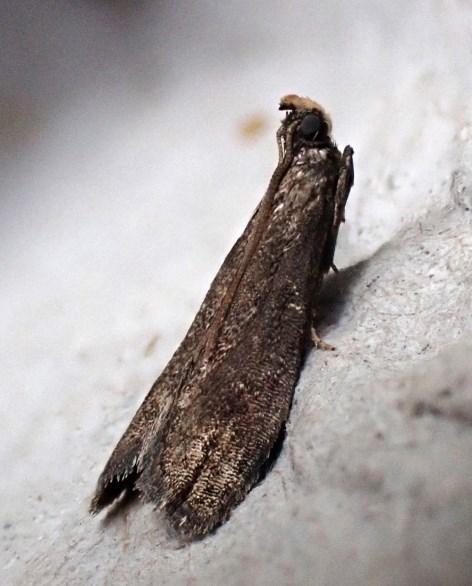
12.042 Raptor nest moth Monopis fenestratella (Heyden, 1863) - 28/06/2023Easton VC25 (MP, det. RW).
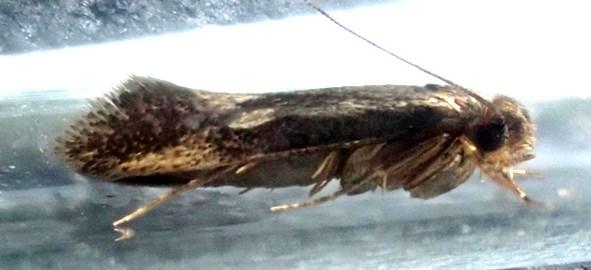
A very rare species in Britain with only a few recent records some of which are from neighbouring Norfolk. The larvae are thought to be associated with bird nests especially those of raptors, where they feed on keratin in discarded feathers. Also noted from Chicken houses. It is a dull greyish-brown moth with a few ochreous patches. The moth was dissected by R. Watson and was confirmed as a female.
15.0201 Echium stilt Dialectica scalariella (Zeller, 1850) VC25 (MD).
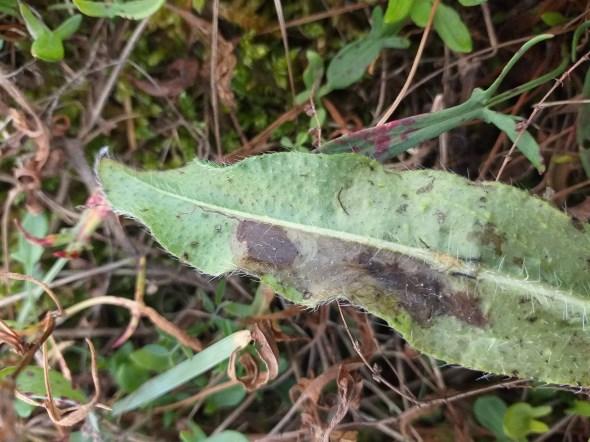
A small ‘Caloptilia’ type moth with an upright resting posture. It has a white head, with a white streak down the back with an irregular edge. The rest of the wing is black. Formerly only a very scarce migrant species to the UK, it was discovered to be breeding in Kent in 2022. In 2023, more breeding records were discovered in other south coast counties along with records at light. Following the record of the adult at light at Bawdsey, searches by NS at Shingle Street (VC25) on 05/11/2023 resulted in the discovery of a single vacated mine on the underside of a leaf of Viper’s bugloss Echium vulgare No other mines were found despite checking numerous other plants. Just possible this species has begun colonization of the county, and more records are expected in future years.
35.030 Scarce Zebra moth Helcystogramma lutatella 10/08/2023 - Purdis Farm, Ipswich VC25 (NS).
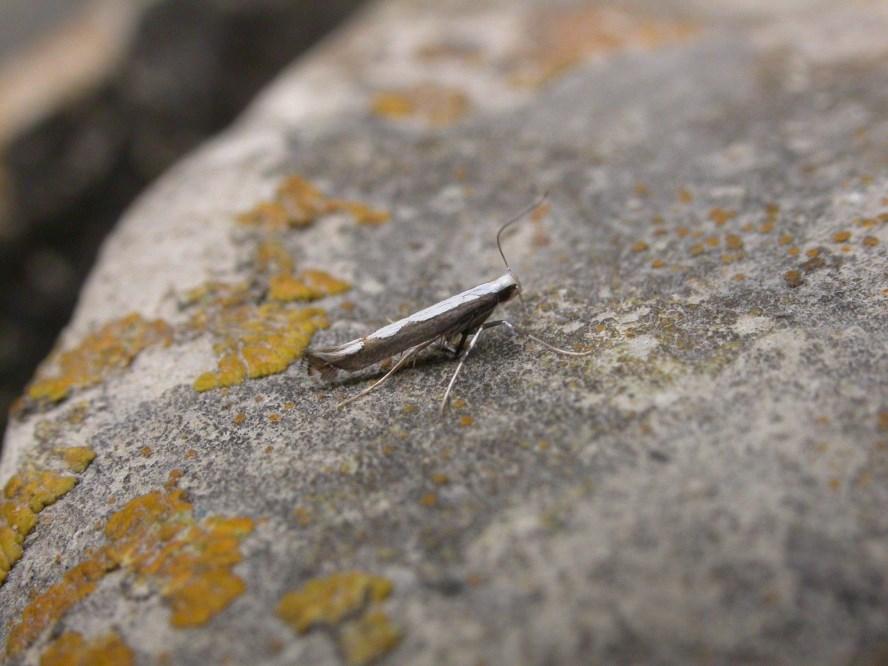
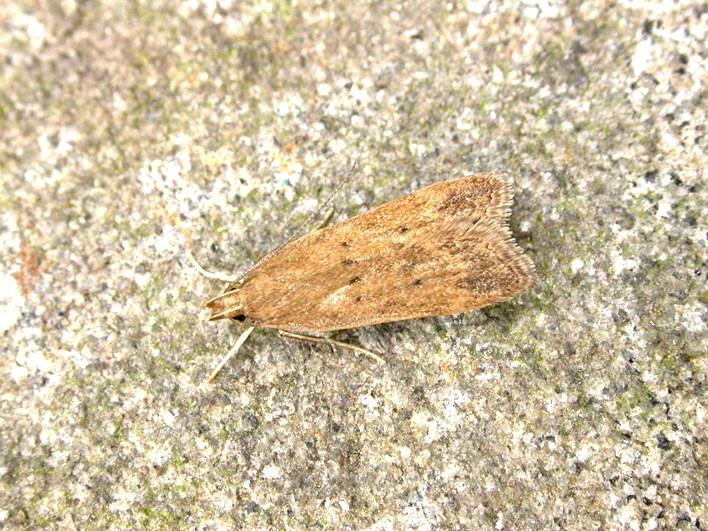
A very similar species to the very common Helcystogramma rufescens (Common Zebra moth), but brown-ochre in colour rather than reddish. The vernacular name relates to the larvae, which are black and white striped in both the species mentioned. A very rare resident species in the UK, found only in a small area of Dorset. More widespread in Europe. Further records have been noted in 2024 suggesting this moth is now breeding in the county.
35.0531 Anthemis flower moth Isophrictis anthemidella - Westleton VC25 (JC + JS).
This moth, a female, was dissected to confirm the record. A narrow-winged species, greyish brown in colour with silver streaks. It is a very recent arrival to the UK, with the first British record in Kent in 2020.
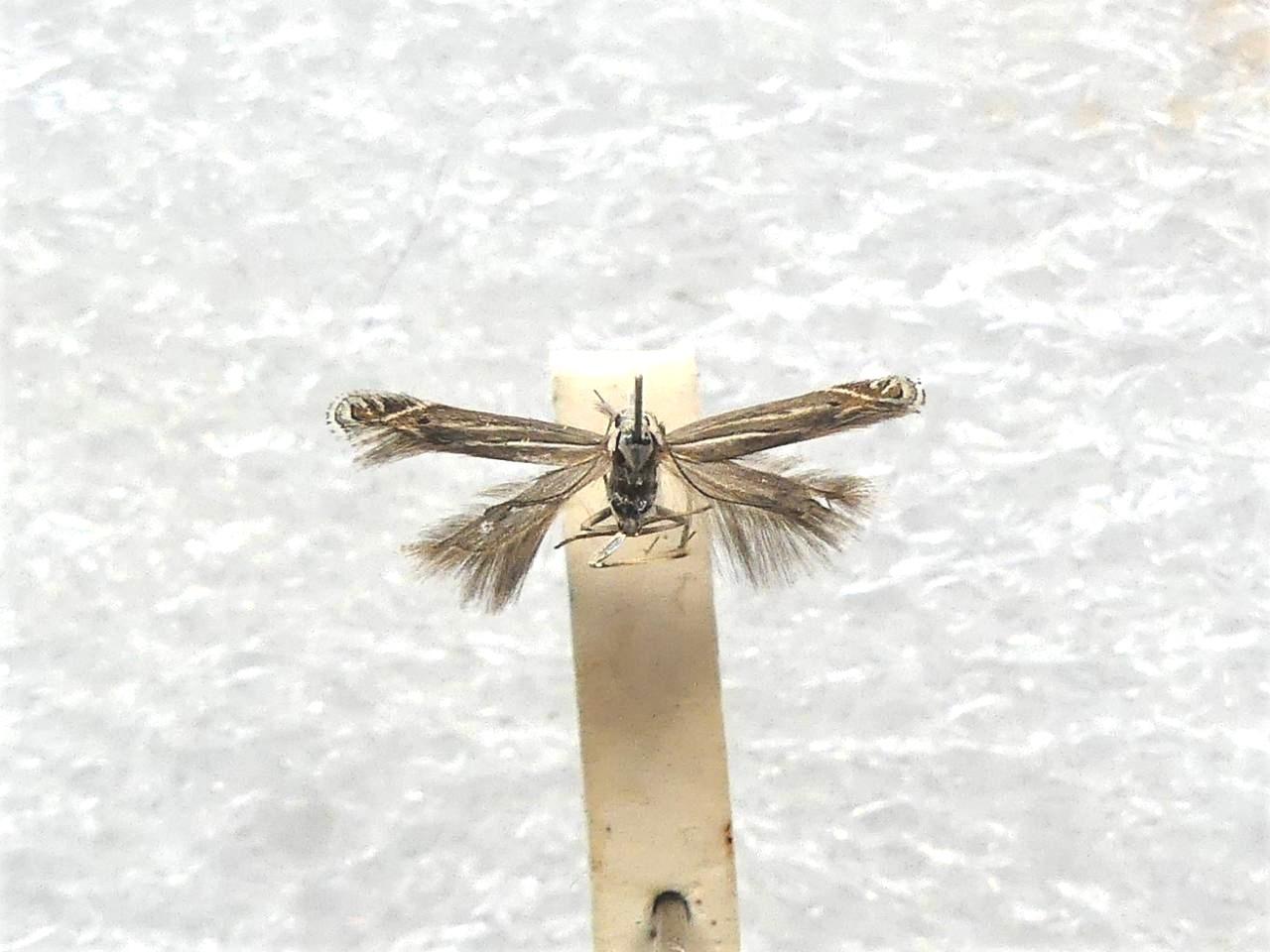
This Suffolk record is the second for the UK. Very similar to Isophrictis striatella (Tansy stem borer) which is a scarce resident species in the county. Now both species have been found to occur, dissection is necessary for any record of either. Just possible that anthemidella could be resident on the Suffolk coast and overlooked. The moth arrived during the very warm spell in June so could also be a migrant from Europe. If there are further records in the future this will help to understand its status.
37.019 Scarce thorn case-bearer Coleophora trigeminella (Fuchs, 1881) - 22/06/2023
- Brandon VC26 (GG + ZG).
Also seen on 24/06 and 28/06 at the same site. All records were confirmed by dissection as the Coleophora group of moths are nearly all inseparable on external characteristics. The adults are sandy brown in colour with a pale leading edge to the forewing. As a larva, they live in a silken case and feed by windowing patches in leaves on Hawthorn, Apple, Cherry and Rowan. Probably a rare, overlooked resident as few recorders in Suffolk dissect adult moths to determine identifications.
37.0567 Coleophora coronillae (Zeller, 1849) - 11/06/2023 - Hollesley VC25 (RW, det Leo Vähätalo).
This record was also new to Britain and is definitely a migrant from Europe, arriving in the very warm spell in June with other immigrant species of moth. Feeds as a larva in a case on Crown vetch Securigera varia, a plant which is an introduced species to the UK and very scarce in the county, although it is planted in gardens. The adult moth is one of the larger Coleophora species and is orangey in colour with small white streaks. The Suffolk specimen was dissected and was a male.
52.004 Dusky clearwing Paranthrene tabaniformis
- Barton Mills VC26 (PB).
The most interesting moth find of the year in the county. This species has always been quite elusive in the UK and was thought to be extinct, with the last record in 1924 in Oxfordshire. In 2021, a female was found by chance in Warwickshire, suggesting it may still be present as a breeding species in Britain. There is a specific artificial pheromone lure for the moth so recorders across the UK started searching to see if more sites could be found. In 2023, the moth was discovered not far from the Suffolk border in Cambridgeshire, so PB decided to try some sites in the north-west on 18 June. The first site tried was Barton Mills where there are extensive areas of Poplar trees (Populus sp.) and he had instant success! Dusky clearwing has never been known to occur in Suffolk, so this
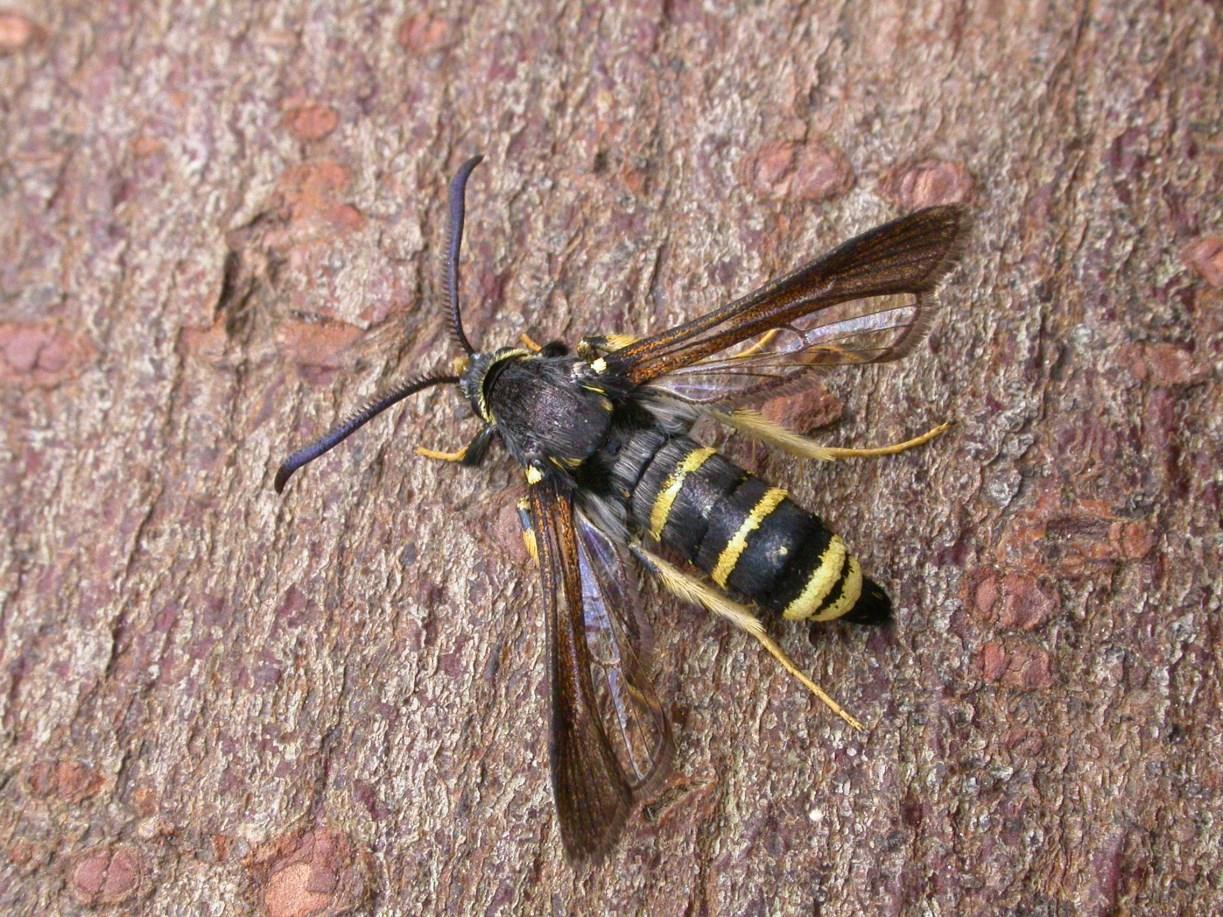
was a complete surprise. The following weekend, further survey work in that part of Suffolk (PB, NS, MD, JC & JS) found the moth again at another location in the Barton Mills area as well as at Lakenheath Fen RSPB reserve. They come into the lure midlate afternoon and this may be a reason why the moth has been overlooked by pheromone recorders in recent years, as most other clearwings species respond in the middle part of the day. The moth was also noted at another site, Brandon, in early July by GG & ZG. Quite likely more sites will be found in future years, although other sites in south-east Suffolk with the food-plant trees, Poplar and Aspen (Populus tremula) were tried with no success. The Dusky clearwing is quite a large member of the family with a black and yellow striped body and distinctive dusky-coloured forewings, unlike any other member of that group of moths. It looks like a wasp which is its defensive strategy against predators.
52.016 Thrift clearwing Pyropteron muscaeformis (Esper, 1783) - 14/07/2023Lowestoft VC25 (AW).
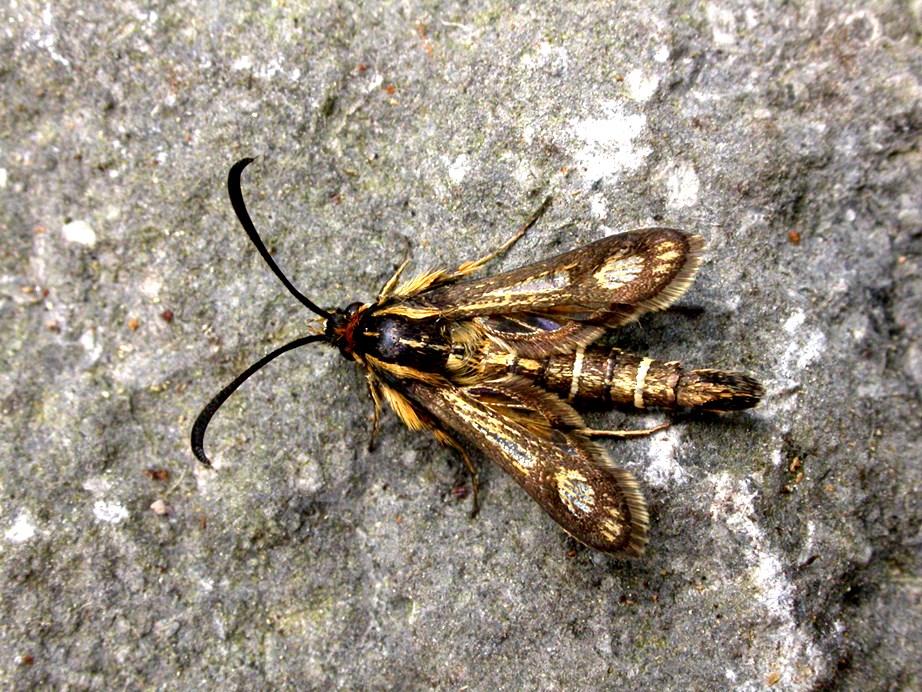
The record of this clearwing was another complete surprise. This species has a primarily western distribution in the UK and can be found using pheromone lures close to patches of the foodplant, Thrift (Armeria maritima growing at rocky coastal sites. The Suffolk record was of a moth found at rest on the recorder’s moth trap in the daytime in his garden in Lowestoft. Where this moth came from is a complete mystery. No more moths were seen despite the recorder trying the pheromone lure at the site. Thrift is known to occur at coastal sites in Suffolk so are undiscovered populations out there? Another possibility could be the moth was imported with nursery stock from elsewhere in the UK. Further survey work may shed light on whether it is an overlooked resident. It is one of the smaller species of clearwing and has a black body with thin yellow bands, a yellow striped thorax and clear wings edged in black.
62.046 Royal knot-horn Eccopisa effractella (Zeller, 1848) - 11/06/2023 - Hollesley VC25 (RW).
First recorded in the UK in 1995. There was a second record of this species in the county on 28/06/2023, at Kessingland (AE). Both seen during the warm spell in June when other immigrant species were arriving. A moth that is increasing in Europe where it can be a pest on fruit trees. Larvae have also been found in the old larval webs of Ermine moths (Yponomeuta species), feeding on the detritus within. It is a dark grey species with yellowish palps, with a very distinctive notch along the upper edge of the hindwing which is unique to this moth.
63.042 Palm tabby Diplopseustis perieresalis (Walker, 1859) - 01/10/2023 - Oulton Broad VC25 (RS).
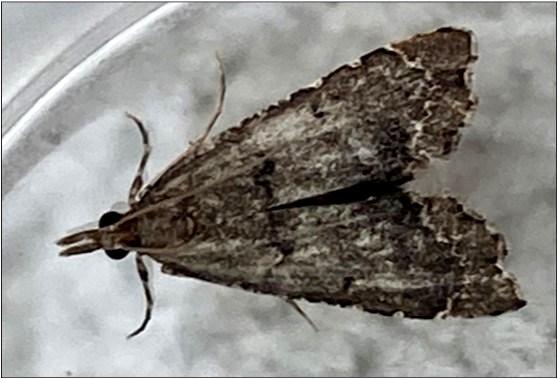
This species’ native range is the far east and Australia. It arrived in Europe as an adventive, with UK records either migrants from there or new imports. First found in the UK in 2001 on the Isles of Scilly. The Suffolk record arrived at a time when other immigrant species were being recorded so it could possibly be a migrant, although an adventive origin cannot be ruled out totally. Feeds as a larva on Sedges Carex and possibly Palms. It is a small, darkly coloured, triangular moth with a scalloped edge to the forewing quite unlike any other species.
70.017 Portland ribbon wave Idaea degeneraria (Hubner, 1799) 20/08/2023 Sizewell VC25 (DM) + Hollesley VC25 (RW). Noted at both coastal locations on the same night.
A local resident on the south coast which has been increasing and spreading in recent years. Was expected to turn up in the county as it had been found in both Norfolk and Essex before. Found mainly at coastal scrubby sites with a warm microclimate. The foodplant is unknown in the wild. More records are expected in future years as it spreads further north due to climate warming. It is sandy brown in colour, with a dark brown shaded band across the centre of the wing and is very glossy.
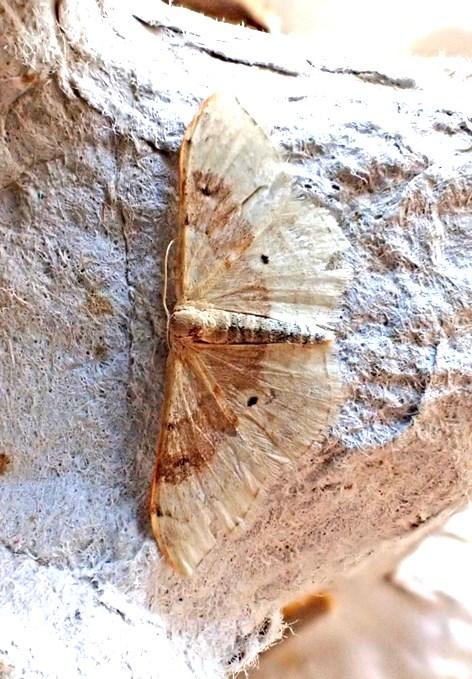
70.304 Sussex emerald Thalera fimbrialis (Scopoli, 1763) - 01/08/2023 - Hollesley VC25 (RW).
This moth is protected under the Wildlife and Countryside Act and is a UK BAP species. The small number of UK populations of this species are mainly found on the Kent coast. Seems to prefer very open habitats with stands of the larval foodplant, Wild carrot Daucus carota, suggesting a warm climate is needed. Showing some signs of increasing in recent years in Kent with new populations discovered including an inland site. Has also been noted on the Essex coast recently as well. Currently unknown whether this Suffolk specimen was an immigrant individual or perhaps a wanderer from Kent. Suitable habitat does occur on the Suffolk coast so further searches are planned to see if it may have colonized.
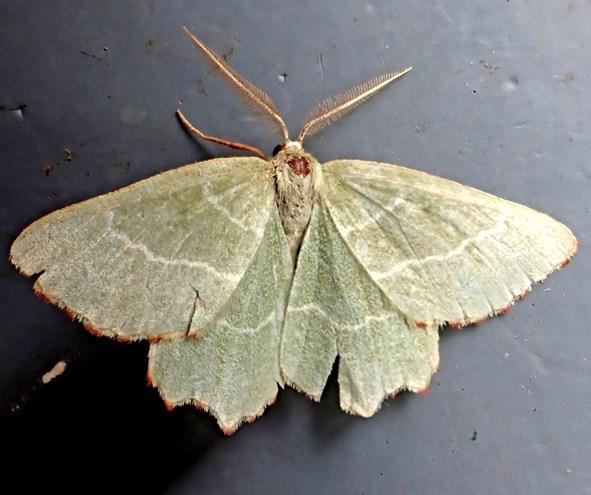
It is a beautiful green moth with two white lines across the wings and a distinctive red and white chequered fringe to all the wings. The hindwings have a very obvious indent in them.
73.088 Dark mottled willow Spodoptera cilium Landguard, Felixstowe VC25 (NO).
Not only a first for Suffolk but also the first for the eastern side of the UK. Arrived on a night when there was a warm air flow over the county from north Africa/southern Europe. Previous records have mainly been on the south and south-west coasts. A scarce immigrant species with 37 British records which has been recorded more regularly in recent years. It is mainly found in Africa, where it is continuously brooded. The larvae can be a pest as they feed on short grasses, especially where mown. Currently unable to survive our winters. It is a rather drab brown moth, with darker cross lines and a blackish kidney mark.
OTHER SELECTED SPECIES OF NOTE SEEN IN 2023
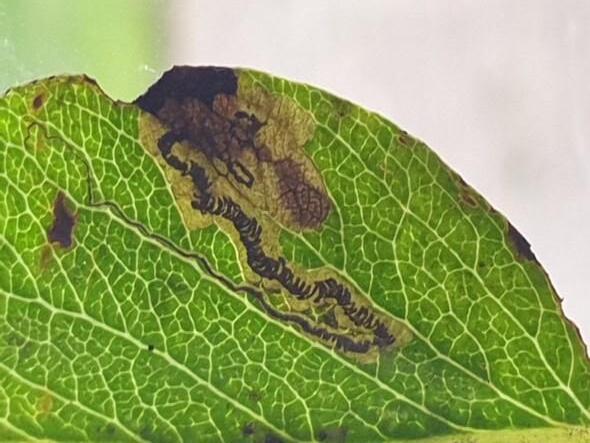
04.027 Pear tree dot Stigmella pyri (Glitz, 1865)27/09/2023 - Rushmere heath VC25 (PC).
Recorded as a vacated leaf mine on a Pear tree (Pyrus sp.). Just one previous record, again as a leaf mine at Sudbourne in 1988 (J. Langmaid, M. Emmett, G.C. Pelham-Clinton). There has been an increase in the recording of leaf-mining species of moths in the county in recent years, but no other populations have been found so it must be genuinely rare.
The tiny adult moths are mainly dark golden in colour with the tips of the wings purplish and they have an orange head.
16.005 Willow ermine Yponomeuta rorrella (Hübner, 1796) recorders in both vice counties. This ermine moth is fairly common in Suffolk as a migrant species and a (possibly temporary) resident. Prone to big immigrations, but this year there was an exceptional arrival across the east of the UK with huge numbers noted on the night of 8 July. Many recorders stated ‘too many to count’ but those that did record a number saw hundreds with a few people reporting thousands. Moth traps and the surrounding vegetation were covered in them! The moths quickly moved on with much smaller numbers noted the following night and on subsequent nights through the summer. There were no breeding reports so quite possible the moths just dispersed inland.
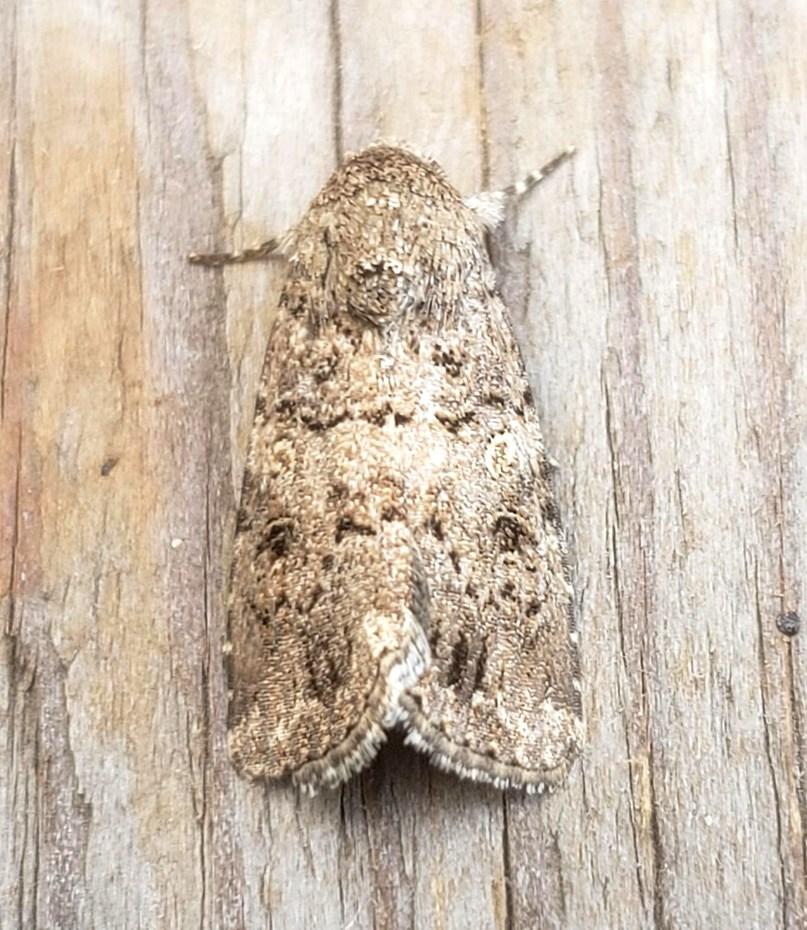
35.034 Angoumois grain moth Sitotroga cerealella (Olivier, 1789) - 28/06/2023Gorleston VC25 (BJ, det. RW).
This moth was dissected to confirm the identity. It is an adventive species to the UK, normally turning up in warehouses where grain is stored. This individual is thought to have originated from bird seed. Only the second county record, the first being way back in 1898 (Pyett). The moth is a rather drab sandy brown colour with no real distinguishing marks.
49.075 Dark-streaked tortrix Acleris umbrana (Hubner, 1799) - 16/03/2023Hollesley VC25 (RW).
The second county record, with the first being noted at the same location in 2018. Once quite a rare species, it seems to be expanding its range in the UK and may just be showing signs it is colonizing the county. It is a very distinctive moth with bands of dark colouration down the wings. The larvae feed on various trees including Blackthorn (Prunus spinosa).
49.093 Gold cloak Phtheochroa schreibersiana (Frölich, 1828) – 28/05/2023 –Lackford (NS et al.).
The second county record of this very attractively marked nationally rare tortrix moth. The first was noted at Icklingham by A. H. Wratislaw in 1870. Has the moth been hiding in this part of the county, undiscovered for all of that time perhaps? Feeds as a larva under the bark of Elm sp. (Ulmus), Poplar (Populus sp.) and Prunus sp. This sighting was of an adult moth found at rest in the daytime on the leaf of a small Elm tree growing in a hedgerow.
49.296 Scarce Rose shoot moth Notocelia incarnatana records noted along the coast (various recorders).
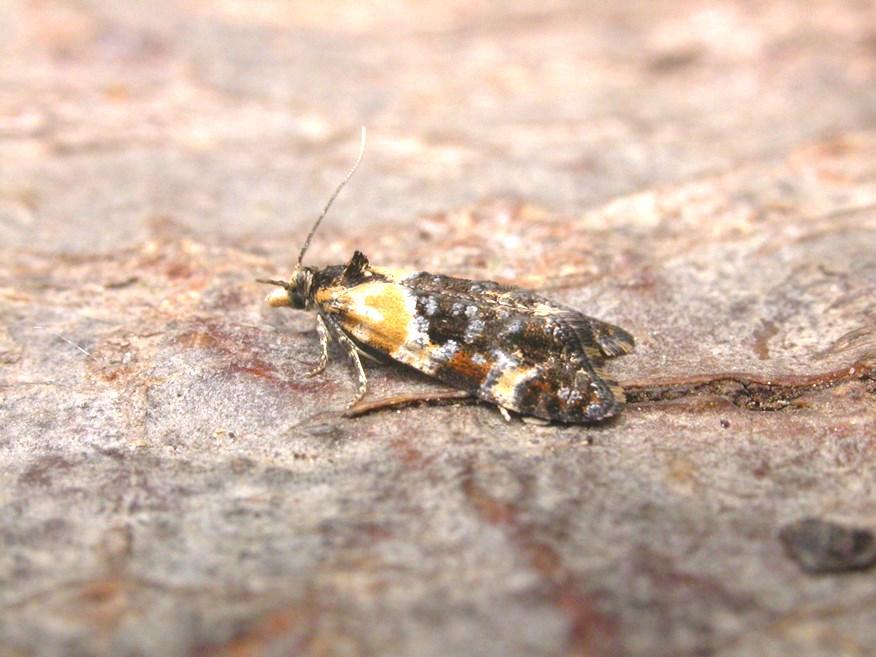
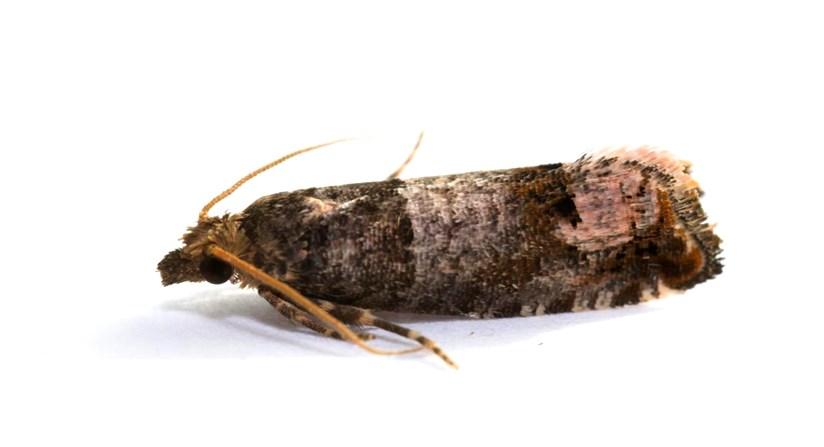
Only two county records up to 2023. In early September, there was an arrival of a number of this moth along the coast. Sites where it was recorded were: Kessingland (AE), Lowestoft (RWr, AW), Oulton Broad (ME) and Landguard (NO). Most records were of singletons but three were recorded on 02/09 at Kessingland. There was also a record at Great Yarmouth in Norfolk at the same time as the Suffolk records. Given the arrival on the coast, these moths were almost certainly migrants. A few did show the characteristic pink flush this species is known to have, but others did not, so careful checking of sightings was required as there are similar species. The larvae feed on Burnet rose (Rosa pimpinellifolia).
63.061 Old world webworm Hellula undalis (Fabricius, 1781) - 30/09/2023 - Easton VC25 (MP).
There was a fairly big arrival of this species into the south and south-west of the UK in 2023. Very few were found away from those areas and this Suffolk record was quite a surprise, turning up at an inland location rather than at one of the coastal recording stations. The 3rd county record of this scarce immigrant to the UK, with the previous records in 2006 (Landguard) and in 2018 (Hollesley).
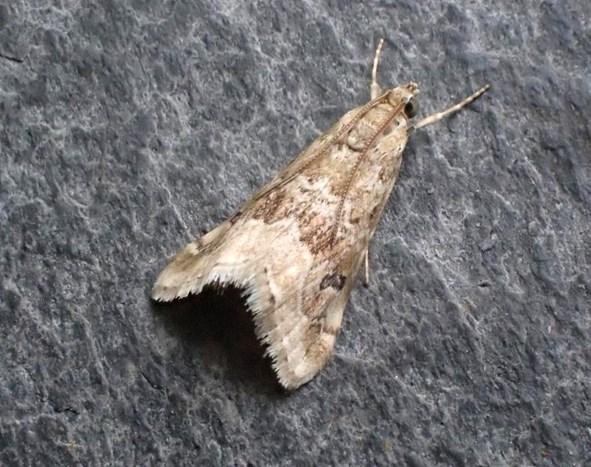
A moth normally found in the tropics, where it feeds on various Brassicas. Has become a more regular migrant to the UK in recent years. It is a slim triangular moth, mottled in brown, buff and white with a dark spot on the wing.
63.072 Pied grey Eudonia delunella (Stainton, 1849) sites in 2023, all in VC25.
Previous to 2023, there had been four records of this species in the county, in 1902, 2019, 2020 and 2022. The warm weather in June in 2023 prompted an arrival of this species, possibly from the continent. First noted on 11 June at Boyton (2, JP), Bawdsey (MD) and Hollesley (RW). There were then regular reports until the last on 6 July, again at Hollesley (RW). In total there were 16 sightings of the species. The furthest inland records were in Ipswich (DP) and Purdis Farm, Ipswich (NS).
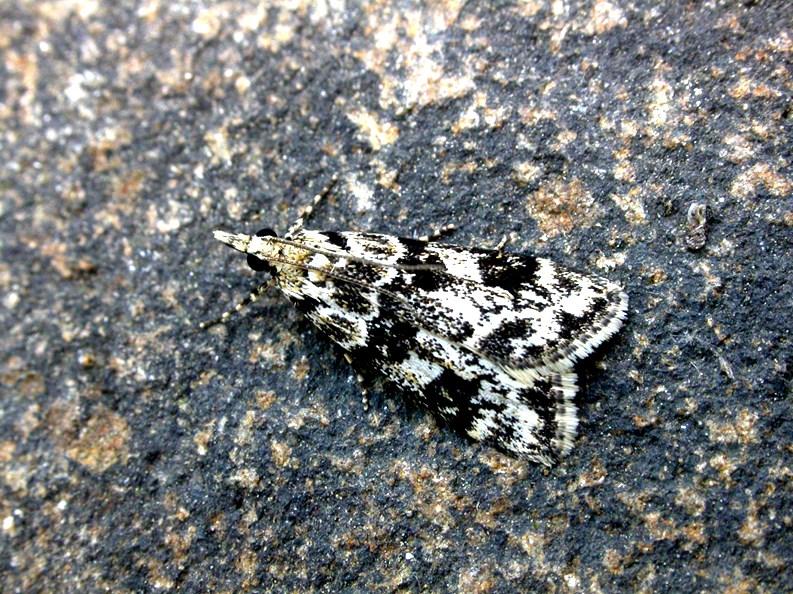
Whether this arrival leads to colonization remains to be seen. The moth is mainly a resident in the west of the UK, where the larvae feed on mosses and lichens. The increase in the growth of lichen on trees in this part of the UK has boosted numbers of the footmen moths so this may yet happen with other species like this one. It is a quite distinctive member of the genus, being mainly very pale grey with black markings.
63.085 Scarce grass moth Crambus pratella (Linnaeus, 1758) - 10/06/2023 Hollesley VC25 (RW).
Always a rare member of the grass moth family and not recorded every year in the county. Unknown at present whether it is a very scarce resident or an immigrant species. This record was during the warm spell so could well have been a migrant. It is orangey -brown in colour with a large white streak across the wing and is similar to other species so care is needed to identify it.
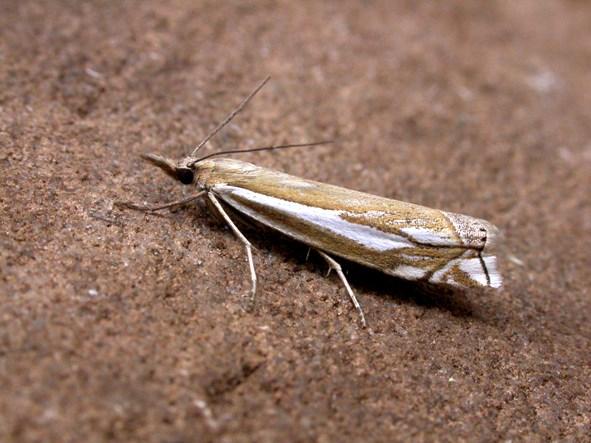
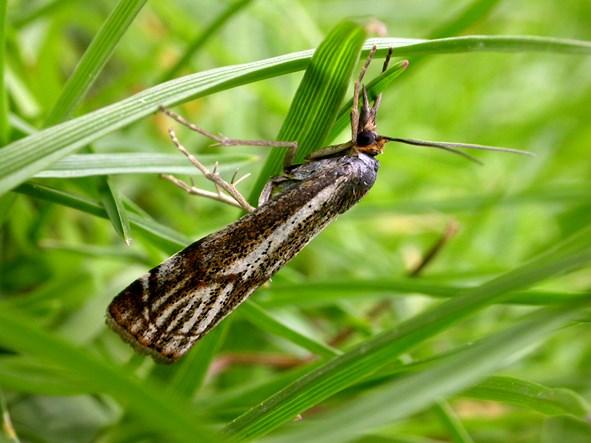
63.107 Powdered grass moth Thisanotia chrysoneuchella (Scopoli, 1763)11/06/2023 Boyton VC25 (JP).
Yet another scarce moth recorded during the warm spell in June. This grass moth has long been known as a resident in the Brecks, where it is regularly seen every year.
There has only been one other record in VC25 East Suffolk and that was way back in 1896 in Ipswich (Pyett). Almost certainly an immigrant, arriving with the other rarities at the time. It is a fairly distinctive grass moth, with a creamy white forewing with brown bands running down the veins of the wings and a speckling of black scales.
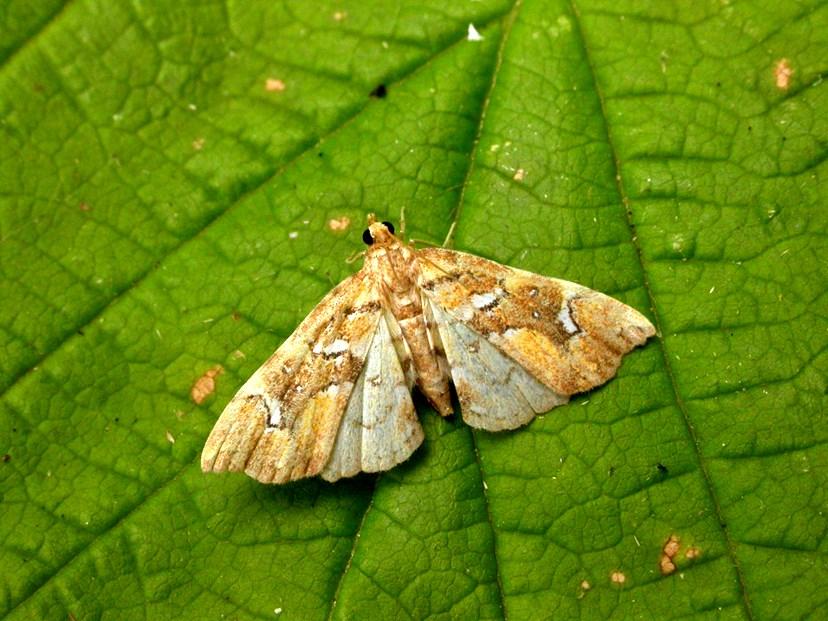
63.119 Marbled fern Musotima nitidalis (Walker, 1866) vice counties in 2023.
This moth is native to Australia and New Zealand and was probably imported into the UK with tree ferns (Dicksonia spp).
First found in Suffolk in 2019 at Landguard (NO). This species was last covered in my reports in 2021, when there were nine records.
In 2023, the population exploded with many recorders seeing the species for the first time. There were 52 reports of both adults and larvae. Moths were noted from May right through until mid-December. As well as the usual light-trap records, there were observations of moths disturbed in numbers from stands of Bracken (Pteridium aquilinum) growing under pine trees in the daytime, on flowers after dark in gardens and flying at dawn. Searches of areas of Bracken and other ferns showing feeding damage revealed larvae and empty pupal cases showing the moth is now wellestablished as part of our fauna. Hopefully, as this moth feeds mainly on Bracken, it will not be a troublesome pest like the Box-tree moth Cydalima perspectalis.
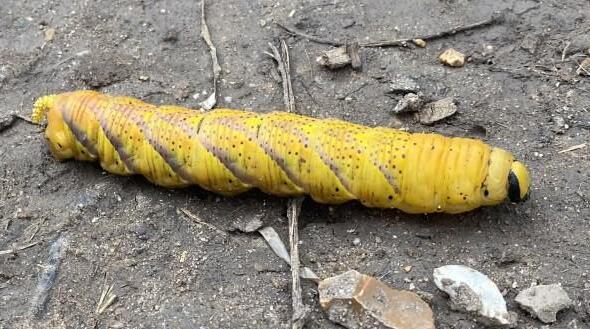
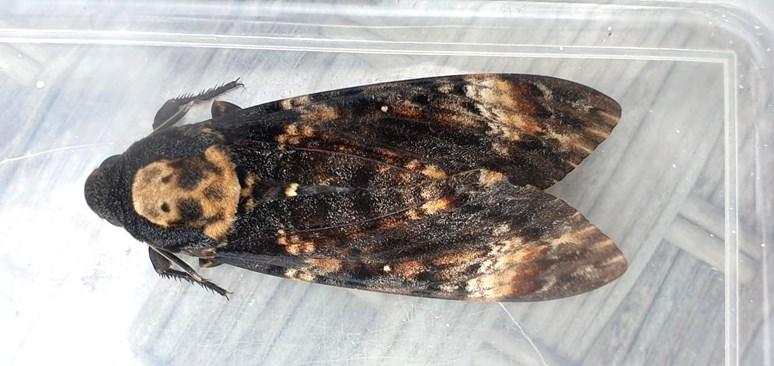
69.005 Death’s-head Hawk-moth Acherontia atropos (Linnaeus, 1758) - 4 records in 2023.
The first county records since 2020 of this much desired species - the one all moth trappers would love to catch! Of the four records, two were adults which were both in VC25 with the other two being larvae and both were in VC26. The larvae were at Long Melford country park on 20/09 (AH) and Hessett on 24/09 (LC). Both appear to be fully grown in the photographs sent in with the records so were wandering off the foodplant looking for a pupation site. The adult records were one at light at Bawdsey Hall on 24/09 (MD), the second site record and one found during the day on 01/10 in Beccles (MA). This last record was the most interesting as the moth was discovered in the pocket of a pair of shorts out on a washing line. The shorts were moving with a strange squeaking noise emanating from them and when placed on the ground the moth crawled out!
70.003 Bright wave Idaea ochrata (Prout, 1913) - 28/07/2023 Buckles Wood, Elmsett VC25 (MG).
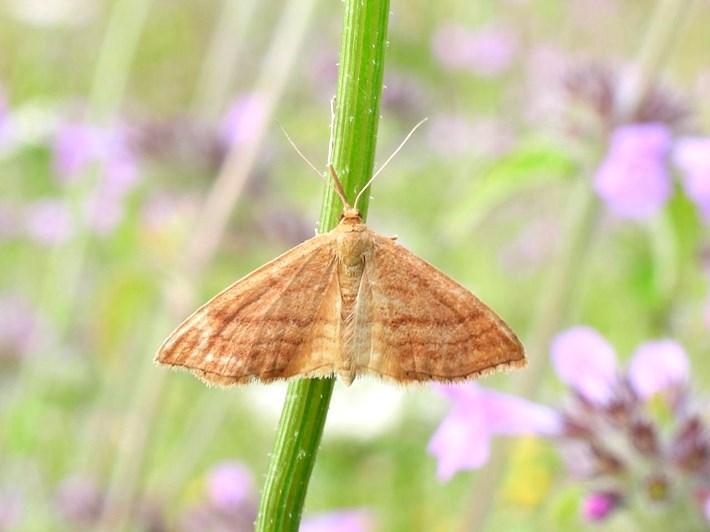
This nationally rare BAP moth was formerly a resident species found locally on the Suffolk coast between Aldeburgh and Thorpeness but was thought to have died out in the mid1980s. All more recent records are thought to be migrants from Europe or wanderers from the populations on the Kent coast. It is a moth normally found in coastal grassland with lots of mixed wildflowers. In 2023, there were three records - two at a typical coastal location, Hollesley on 10 and 27 July (RW), fitting the normal pattern. However, there was an intriguing record on 28 July at Buckles Wood, Elmsett. The moth was photographed so there is no doubt in the identification. Buckles Wood is a relatively recent, planted wood by a local school but it does have a good network of flower-rich rides. Whether this moth was another wanderer or whether there is a local population at the site will require more survey work to resolve. The moth has been expanding in Kent in recent years so it may be that it could return to Suffolk as a breeding species.
70.152 Channel Islands pug Eupithecia ultimaria (Boisduval, 1840) - A number recorded on the coast plus a VC26 record.
As expected after the first county records in 2022, it looks like this moth has established breeding populations on the coast as there were a whole series of records from Landguard (NO) from June through to September. Larval searches on the foodplant, Tamarisk (Tamarix gallica), are planned to confirm this. More unusually, there was a record from VC26, at Wattisfield (CB) on 24/06. This was during the warm spell in June so was possibly a migrant or wandering individual.
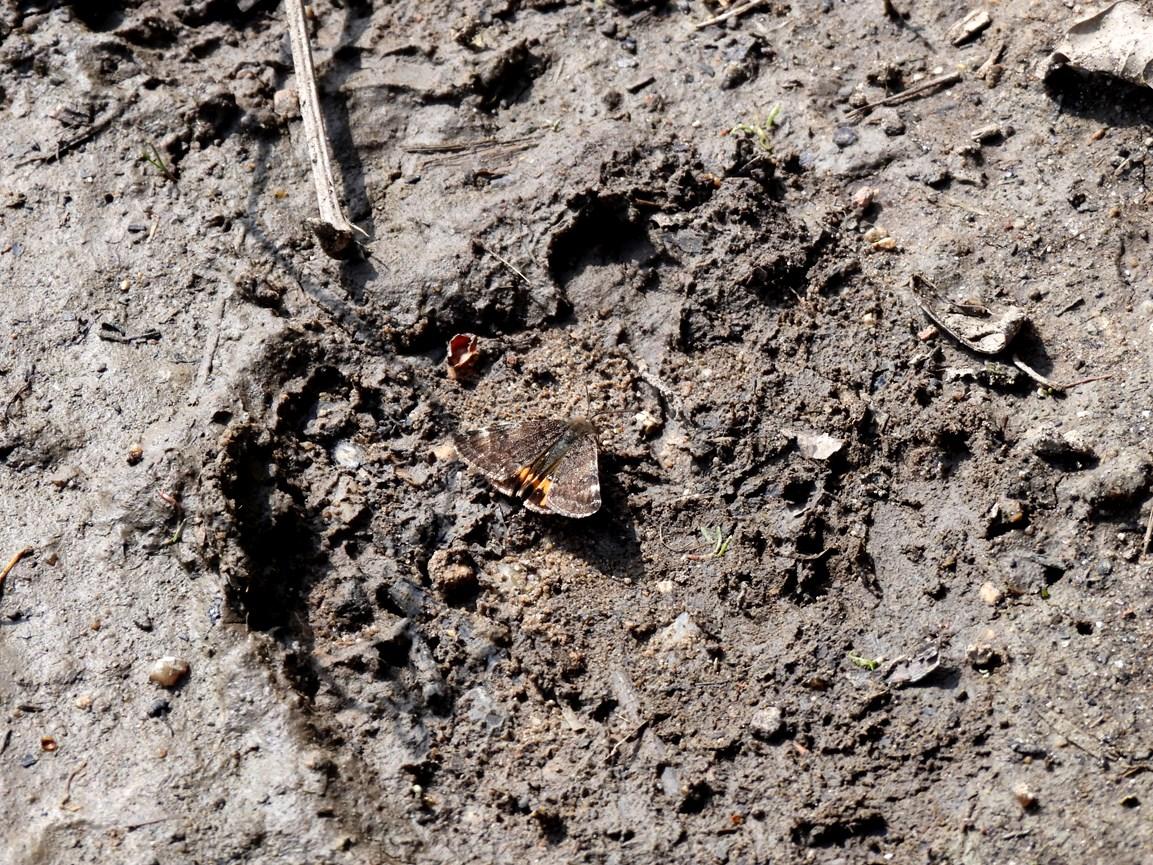
70.204 Light Orange underwing Archiearis notha Bonny Wood, Barking Tye VC25 (NS).
A new site for this species was discovered in 2023. Following the observation that there were a number of large Aspen trees ( tremula) present at Bonny wood, a search for the species was undertaken on a sunny day in early April. None were seen flying around the tops of the Aspen, but a search of puddles on a track running close to the wood discovered a single moth coming down for moisture, something this species is known to do. Photographs were taken which confirmed the record. There are three known sites for the moth in the county: Wolves Wood, Raydon Great Wood, and now Bonny Wood. May well be present at other woods where the foodplant trees occur and further searches are planned once suitable sites are identified.
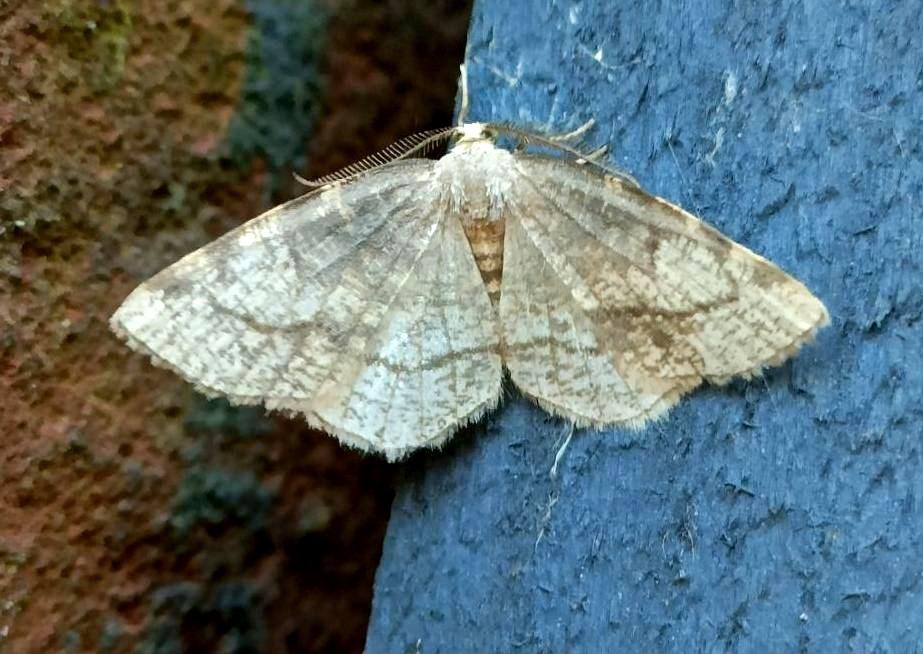
70.210 Dorset cream wave Stegania trimaculata (Villers, 1789) - 15/06/2023 Frostenden VC25 (JG).
The second county record of this rare immigrant species to the UK. The first was in 2020, at Gorleston. Both Suffolk records have been of the form cognata which is darker in colour than the typical white form of the moth. This record was identified using the Obsidentify app and recorded on there. As Obsidentify is not linked to any biological recording systems in the UK currently (it is Dutch) this record wasn’t picked up on until another individual was recorded in Britain when discussions online as to how many had been noted in the UK picked up that there was another record from 2023 from Suffolk. The recorder of this moth was contacted, and the record verified. This example shows that moth records need to be sent in through the correct channels to make it into the county database (online recorder on the website, spreadsheets of data sent directly to NS or iRecord) to avoid being lost.
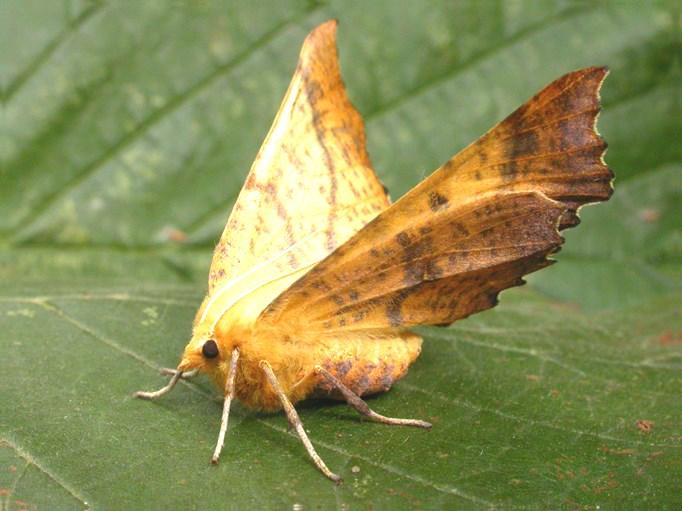
70.232 Large thorn Ennomos autumnaria (Werneburg, 1859) - 16/09/2023 Purdis Farm, Ipswich VC25 (NS).
The largest member of the thorn moth group, orangey-brown in colour and heavily speckled with brown scales. Once fairly regularly recorded both as a resident and an immigrant, it seems to have become much scarcer in recent years, with just single records in 2019, 2020 and 2023. No longer suspected that it is breeding in the county. Currently unknown why this decline has occurred as a number of other species that prefer warmer temperatures are doing well.
72.047 Hoary footman Eilema caniola (Hübner, 1808) - A large number of records in 2023 from both vice counties.
This moth had a very good year in the county. In June and into July, there were numerous records from nine sites along the coast. These were thought to be migrants coming in with the warm weather at that time, as June is fairly early in the season for the resident population to be on the wing. From late July, there were even more records with the moths noted at 26 sites, some of these being new to recorder’s site lists. The last sighting for 2023 was on 10/10, at Framsden (DC). These later season records were probably from the expanding resident population. This moth has quite rapidly become a regularly recorded part of our county fauna and, like other footmen species, is probably benefitting from the increase in growth of lichens following the reduction in air pollution and also from the warming climate. Care is needed to separate it from the very similar Scarce footman, but that species has a yellowish hindwing unlike Hoary footman which has a white hindwing.
72.082 Light crimson underwing Catocala promissa (Denis & Schiffermüller, 1775)two records in 2023, both in VC25.
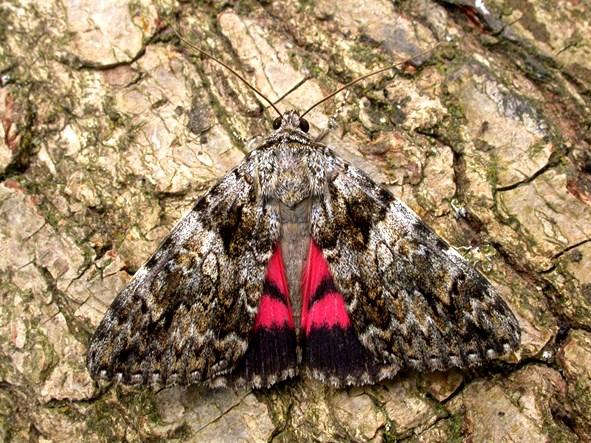
Historically, a former resident species in Suffolk which died out in the 1800s. Mainly known from the New Forest since then, in recent years the moth seems to be arriving as an immigrant from Europe more regularly and also establishing new resident populations, most notably in Kent where it is now seen in numbers at some sites. This could be the source of our recent Suffolk records. In 2023, the moth was noted at Purdis Farm, Ipswich on 21/07 (NS) and Homersfield on 27/07 (MT). Hopefully, this species will become a resident in the county like its congener, Dark crimson underwing has in recent years. The larvae feed on Oak (Quercus sp.) so there is no shortage of foodplant. Quite similar to Dark crimson underwing and care is needed to identify the species. Light crimson underwing has a less wavy dark band on the red hindwing and is smaller and greyer than Dark crimson underwing.
73.135 Blair’s wainscot Sedina buettneri (Hering, 1858)
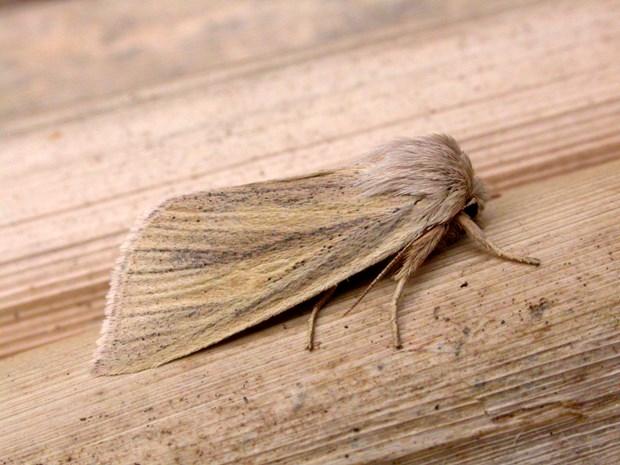
A good year for this species in the county, with five records from four sites, all not far from suitable breeding habitat suggesting residency. It has been noted at the same Stowmarket site for three years running now (KS). All Suffolk records so far have been of adults at light traps. Can be noted flying rapidly over its sedge bed habitat just after dusk, so perhaps searches of suitable patches of the foodplant near the light trapped records may discover where they are breeding. It is a small member of the group, with a more pointed forewing and a smoky grey hindwing which distinguishes it from other species flying late in the year.
73.164 Reddish light arches Apamea sublustris (Esper, 1788) - Noted at three sites in VC25 in 2023.
This species is recorded in the Brecks every year, where it is resident. Sightings outside that region are thought to be wanderers or immigrants and do not occur every year. The last record in VC25 was in 2014, at Bawdsey (MD). In 2023, there were three observations in VC25 - 10/06 Purdis Farm, Ipswich (NS), 12/06 Bawdsey Hall (MD) and 02/07 Landguard, Felixstowe (NO). Quite similar to the very common Light arches, but differs in being darker in colour with a dark brown bar mark in the centre of the forewing. Light arches is much paler and has a scythe shaped mark in the centre of the wing.
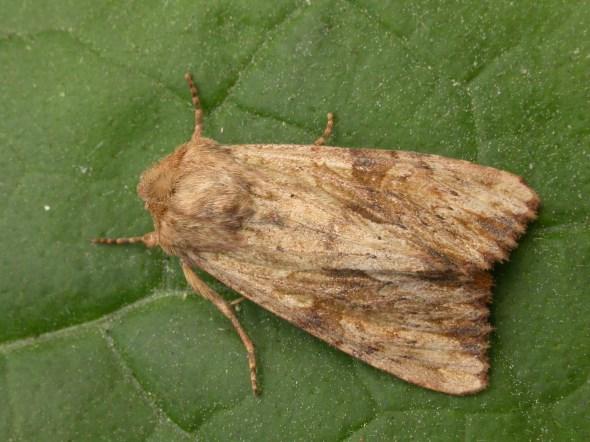
73.214 White-Spotted Pinion Cosmia diffinis (Linnaeus, 1767) - 04/09/2023 Barrow VC26 (MEl).
A much-declined BAP species in the UK, suffering badly with the loss of Elm due to Dutch Elm disease. Perhaps showing signs of recovery with an increase in records in recent years.
Larval searches in 2023 failed to find any. However, there was another record of an adult, at Barrow. This continues to give hope that there are small populations in the west of the county. More survey work will take place in 2024 to try and find a resident population.
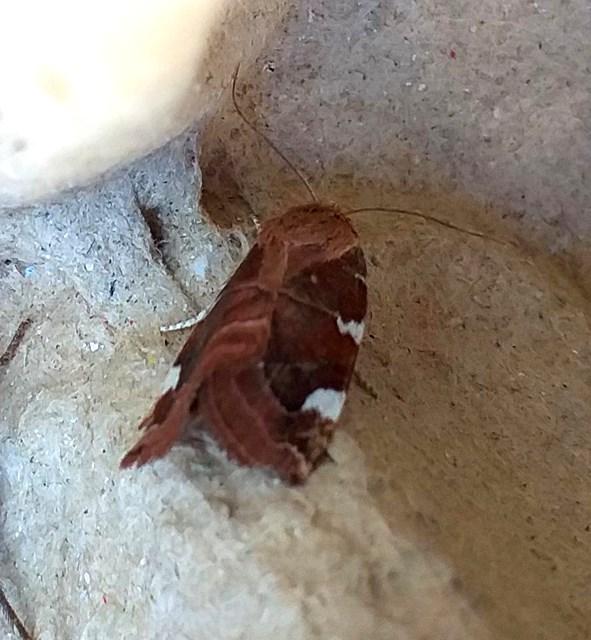
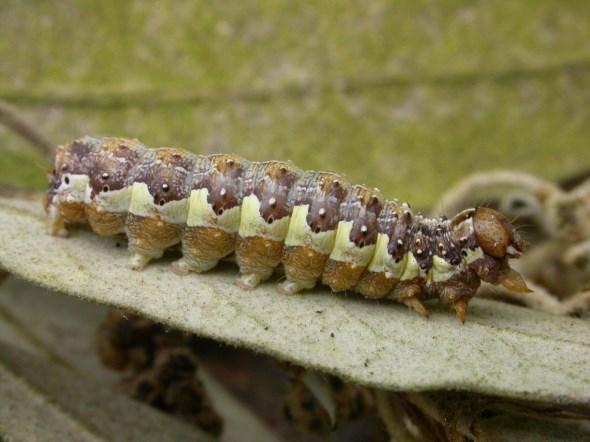
73.223 Oak rustic Dryobota labecula (Esper,1788) - Breeding now proven. Now a very regularly recorded moth in the county following the first record back in 2018, although still rare in VC26. Breeding has been suspected for a few years now and was finally proven in 2023 with the discovery of two larvae which were tapped from a flowering Holm oak (Quercus ilex) at Bawdsey Quay on 29/05 (NS). It is a very colourful and distinctive caterpillar, with an orange underside, bold irregular yellow stripe along the side and a reddish-brown upperside.
73.243 Blossom underwing Orthosia miniosa (Denis & Schiffermüller, 1775)Breeding now proven.
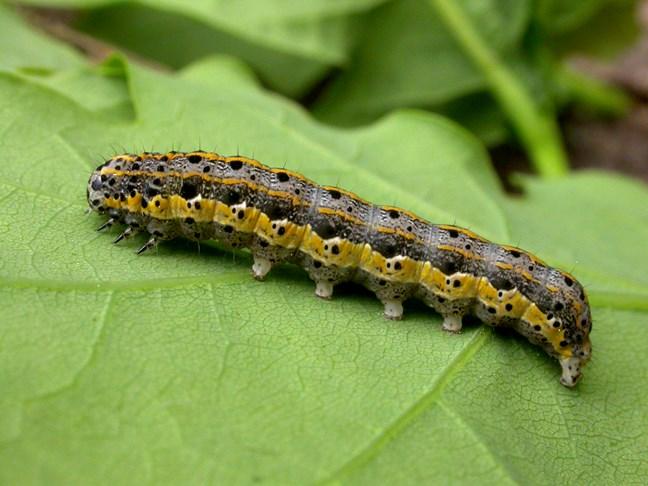
Fairly regularly recorded in small numbers every year now in Suffolk, but not known if these were migrant individuals or from local resident colonies. Certainly, most coastal records away from woodland habitat will still be migrants. Breeding in the county was proven in 2023 with the record of a larva tapped from Oak (Quercus robur) at Lackford on 28/05. This may just be a local colony - further survey work will be undertaken to try and find other breeding sites. It is a very colourful caterpillar, being greyish with orange-yellow stripes down the body and is unlike any other larva on that foodplant.
73.295 Delicate Mythimna vitellina (Hübner, 1808) - Recorded widely across the county in 2023.
Formerly a scarce migrant to the county, with records mainly from the coast. In 2023, there was a massive increase in records not only from coastal sites but also inland. Records stretched from 28/05 right through to 22/11. As an example of the increase in records, in 2022 Landguard recorded 20 moths. In 2023, 187 were noted. It is strongly suspected that the moth has established breeding populations in Suffolk as,
even early in the season, good numbers were being seen at inland locations whilst numbers on the coast were low. These early moths were darker in colour with darker lines, often a sign of local breeding as moths from hotter climates tend to be paler. Whether this is a temporary establishment or not, only time will tell.
OTHER SPECIES OF NOTE SEEN IN 2023 NOT IN THE MAIN ACCOUNTS
15.057 Goat willow leaf-miner Phyllonorycter dubitella - 09/11/2023 - Stanstead Great wood VC26 (DU, confirmed NS). Second record for VC26.
62.013 Marjoram knot-horn Uncinus obductella - 03/08/2023 - Boyton VC25 (JP). The 3rd county record following on from the first two in 2022.
63.011 Yellow-underwing pearl Uresiphita gilvata - 24/09/2023 - Wattisfield VC26 (CB), 25/09/2023 - Carlton Colville VC26 (PF), 26/09/2023 - Bawdsey Hall VC25 (MD) and 01/10/2023 - Kessingland VC25 (AE). Another year with a few records of this rare migrant.
63.044 Migrant sable Diasemiopsis ramburialis - 27/09/2023 - Westleton VC25 (SS), 01/10/2023 - Kessingland VC25 (AE), 02/10/2023 + 26/10/2023 - Bawdsey Hall (MD). Further records of this scarce migrant following ones seen last year.
63.051 Toadflax pearl Antigastra catalaunalis - 11/09/2023 - Bawdsey Hall VC25 (MD), 01/10/2023 - Kessingland VC25 (AE), 21/10/2023 - Framsden VC25 (DC). First records of this scarce migrant since 2018.
70.050 Balsam carpet Xanthorhoe biriviata - 07/08/2023 Sudbury VC26 (GC) - new to VC26, probably a migrant individual.
72.062 White-line snout Schrankia taenialis - 08/07/2023 Ipswich VC25 (EP). Recorded at outside light. The 3rd county record following on quickly from the 2nd last year.
73.028 Pale Shoulder Acontia lucida - 10/07/2023 Hollesley VC25 (RW). The 4th county record.
73.031 Four spotted Tyta luctuosa - 23/07/2023 Sudbury VC26 (GC) - possibly a wanderer from populations in Essex or Cambridgeshire.
73.268 Splendid brocade Lacanobia splendens - 19/06/2023 Purdis Farm, Ipswich VC25 (NS). 8th county record and 3rd record for this site.
73.330 Radford’s Flame shoulder Ochropleura leucogaster - 28/09/2023 - Bawdsey Hall VC25 (MD), 23/05/2023 + 09/10/2023, both Landguard, Felixstowe VC25 (NO). The May record is the first of the first brood in Suffolk.
74.005 Scarce black arches Nola aerugula - 08/07/2023 Kessingland VC25 (AE). First record since 2018.
Thanks to all the above mentioned recorders for supplying their records for this report: Alan Eaton (AE), Anne Hickley (AH), Antony Wren (AW), Brian Jones (BJ), Chris Bishop (CB), Darren Underwood (DU), Dave Morton (DM), Dave Pearsons (DP), David Crawshaw (DC), Eric Patrick (EP), Graeme Cavey (GC), Graham & Zoe Geen (GG+ZG), Jake Gearty (JG), Jenny Spence (JS), John Chainey (JC), John Pilgrim (JP), Keith Scarff (KS), Louise Chapman (LC), Mark Allen (MA), Mark Ellis (ME), Mark Timms (MT), Martin Elsey (MEl), Matt Granham (MG), Matthew Deans (MD), Mike Prentice (MP), Nigel Odin (NO), Neil Sherman (NS), Patrick Cook (PC), Paul Bryant (PB), Peter Follett (PF), Raymond Watson (RW), Rhianna Wren (RWr), Richard Smith (RS) and Stewart Sexton (SS).
Please send all future moth records in to me at moth@sns.org.uk, or use the online recorder at www.suffolkmoths.co.uk, or iRecord. Note records are not collected from social media sites nor Obsidentify so observers are encouraged to use the above ways to make sure your sightings get into the county database and into reports such as this.
References
Agassiz, D. J. L., Bevan, S. D. & Heckford, R. J. (2016). Checklist of the Lepidoptera of the British Isles.
Morley, C. (1937). Final Catalogue of the Lepidoptera of Suffolk. Ipswich: Suffolk Naturalists’ Society.
Sterling, P., Parsons, M., Lewington, R. (2023). A Field Guide to the Micro-moths of Great Britain and Ireland Second edition. Bloomsbury.
Sherman, N. (2022). A Review of new and interesting moth species seen in Suffolk during 2021. Trans. Suffolk Nat. Soc. 58: 71-86.
Sherman, N. (2023). A Review of new and interesting moth species seen in Suffolk during 2022 plus an addition to the county list from 2009 not yet reported. Trans. Suffolk Nat. Soc 59: 117-135.
Neil Sherman (Suffolk Moth Recorder)
2 Golf Cottages
Bucklesham Road
Ipswich
Suffolk IP3 8UG moth@sns.org.uk