JAMES CORTON
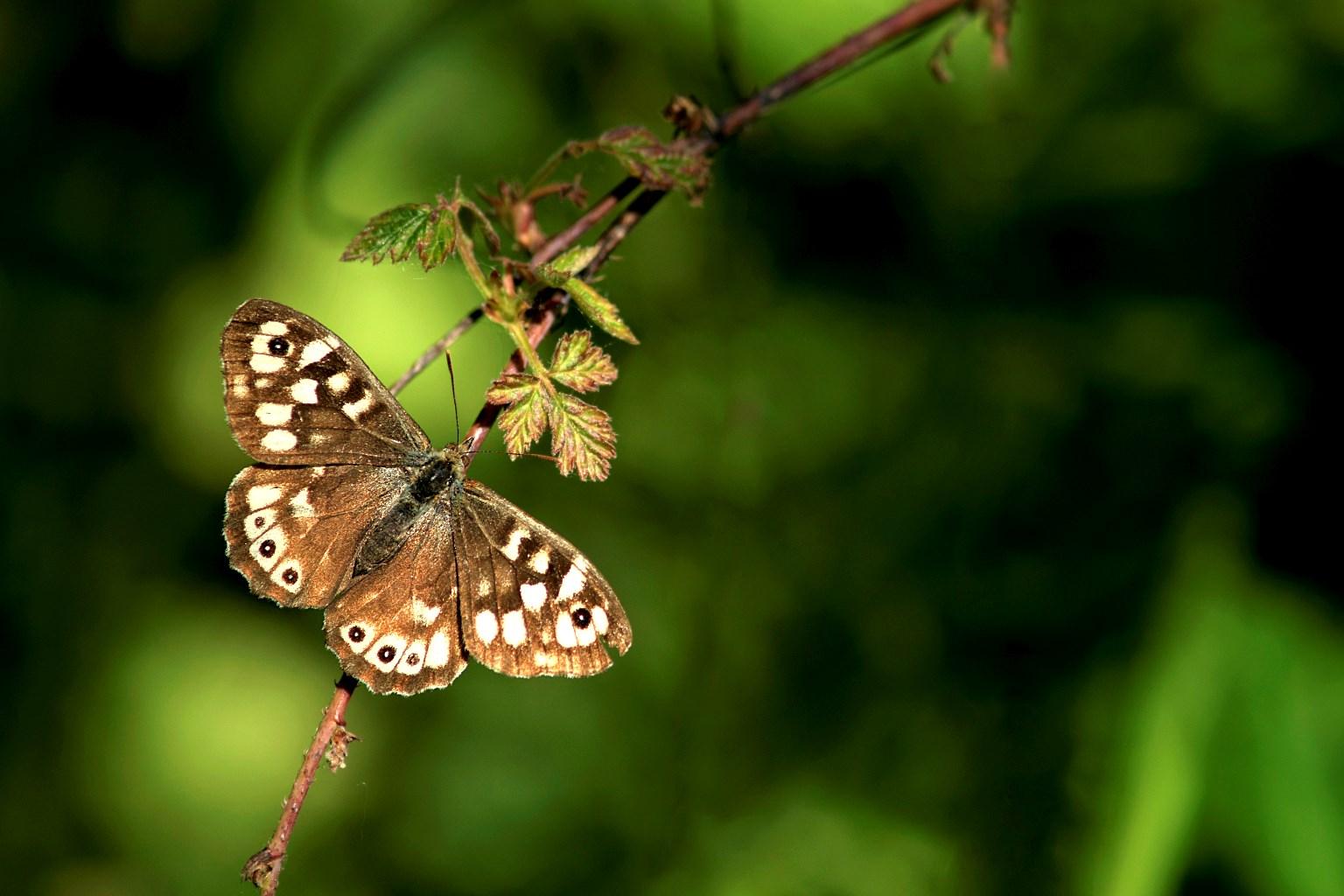
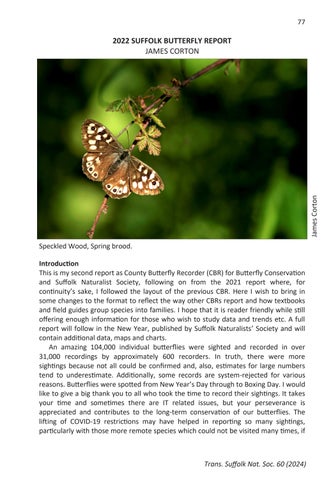
Speckled Wood, Spring brood.
Introduction
This is my second report as County Butterfly Recorder (CBR) for Butterfly Conservation and Suffolk Naturalist Society, following on from the 2021 report where, for continuity’s sake, I followed the layout of the previous CBR. Here I wish to bring in some changes to the format to reflect the way other CBRs report and how textbooks and field guides group species into families. I hope that it is reader friendly while still offering enough information for those who wish to study data and trends etc. A full report will follow in the New Year, published by Suffolk Naturalists’ Society and will contain additional data, maps and charts.
An amazing 104,000 individual butterflies were sighted and recorded in over 31,000 recordings by approximately 600 recorders. In truth, there were more sightings because not all could be confirmed and, also, estimates for large numbers tend to underestimate. Additionally, some records are system-rejected for various reasons. Butterflies were spotted from New Year’s Day through to Boxing Day. I would like to give a big thank you to all who took the time to record their sightings. It takes your time and sometimes there are IT related issues, but your perseverance is appreciated and contributes to the long-term conservation of our butterflies. The lifting of COVID-19 restrictions may have helped in reporting so many sightings, particularly with those more remote species which could not be visited many times, if
James Corton
at all, during pandemic lockdowns. Life has not returned to normal in a complete sense, with fewer people venturing as far as they used to. I am not sure of the reasons for this, but it will have had an effect upon butterfly recording.
Now I would like to explain a little about how the verification process works. Records accompanied by photographs can be verified as ‘correct’ or redetermined to the correct species. Records without photographs can be accepted as ‘considered to be correct’ on the basis of location and flight period. In some instances, e.g., similar species, I will request further evidence such as photographs and/or expert witness. This doesn’t mean that I doubt anyone but is intended to be a standardised data check to maintain accuracy regarding species range, population size and flight period. This report and all such reports use data from species level identification for accuracy i.e., doesn’t use generalised identification e.g., Small/Essex Skipper, although these can still be used elsewhere.
Special thanks go to the photographers who supplied pictures for this report; Sarah Chamberlain, Julie Durrant, Allan King and Roy Richardson. Thanks also to Butterfly Conservation (Suffolk Branch) Committee, Trevor Goodfellow (BC Suffolk Argus), Zoe Randle (Senior Survey Officer, Butterfly Conservation) and Suffolk Naturalists’ Society for their support and, of course, to all those who contributed butterfly records. Records are fed through a complicated gateway of systems to a national database which is used to map long-term trends and is important for conservation, lobbying and funding.
Further reading is recommended. Butterfly Conservation has published, ‘The State of Britain’s Butterflies’ and ‘The Red List Of Butterflies in Great Britain’. Both of these can be viewed via the BC website at: https://www.butterfly-conservation.org/butterflies
Weather Patterns and Extreme Events
2022 was a year of records being set. Nationally, it was the hottest year on record, reaching a maximum of 40.3°C in Lincolnshire. It was also the warmest year for average temperatures and the second warmest for average minimum temperature. It was stormier than average (Storm Eunice in February was the worst of many) but also sunnier and drier than average. The mean temperature for the whole year was 10.0° C, the first time an annual mean has reached double figures.
Looking briefly at the seasons individually, I will compare the long-term averages (which cover the years 1991-2020) with each season.
Winter (December, January and February) was a little drier, sunnier and warmer than average. January was the sunniest since 1919 and New Year was unusually warm, producing several butterfly sightings including a Red Admiral in Dunwich Forest on my New Year’s Day walk. Spring (March, April and May) was about 1°C warmer than average with March being especially sunny and May having warmer nights and fewer frosts than usual. Summer (June, July and August) was almost 2°C warmer than average with lots of sunny weather during which the county recorded a new record 38.2°C maximum temperature at Santon Downham. The summer months were all drier than average with as little as half the average rainfall, much of which came
suddenly with thunderstorms. Butterflies are ectothermic (cold-blooded) and it comes as no surprise that climate is an important factor in their life cycles (along with habitat requirements). Weather patterns have at least a short-term effect on butterfly populations. It is estimated that following the drought of 1976 several grassland species of butterflies took two or three years to recover. It is also one of the reasons suggested for the extinction of the Chequered Skipper from England in 1976 and a fear that the re-introduced colony in Fineshade Wood, Northamptonshire may suffer the same fate. Autumn (September, October and November) continued the theme of being warmer than average, in fact it was the third warmest on record. Unlike summer, it was unsettled and despite the warmth it was wetter than average.
Unusual Sightings
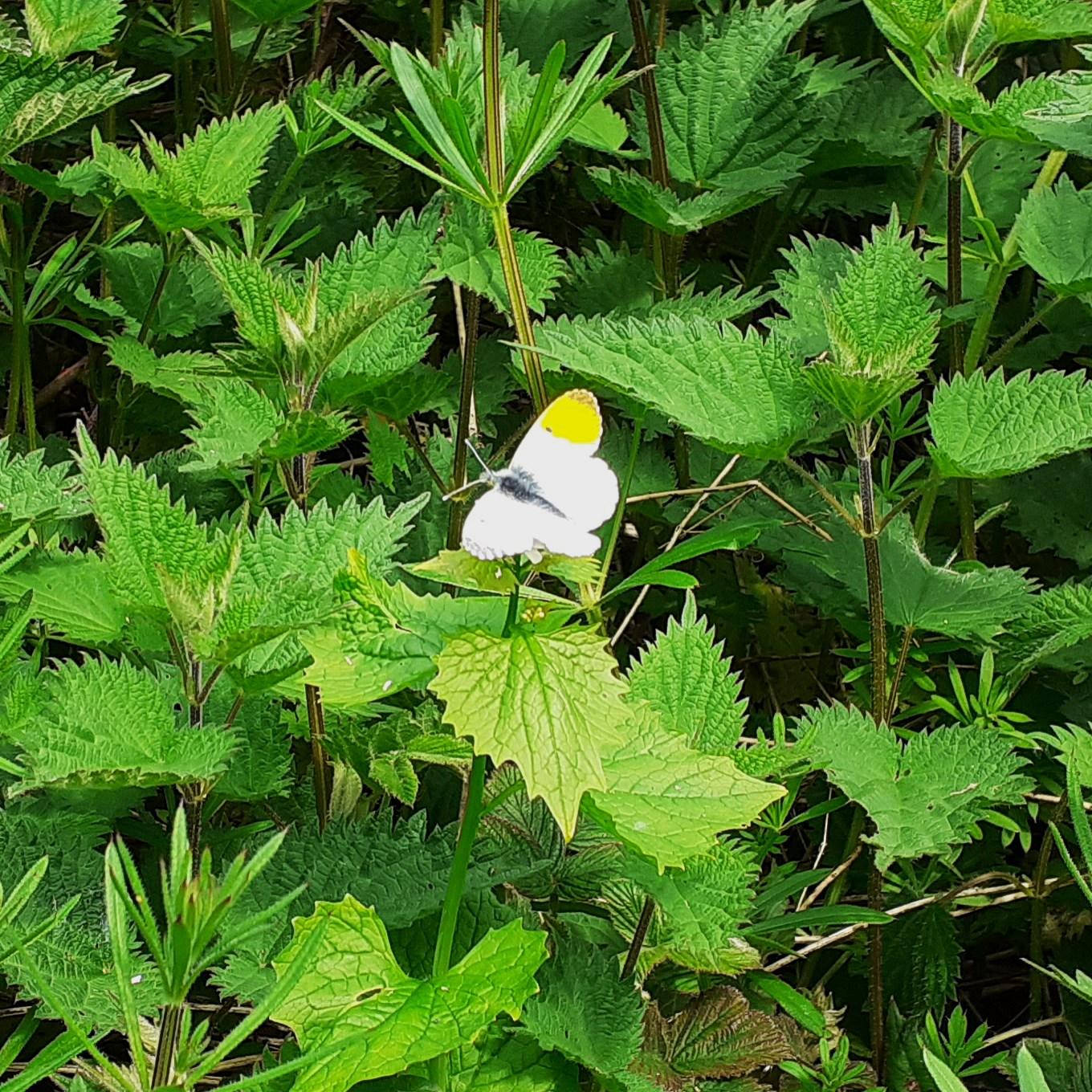
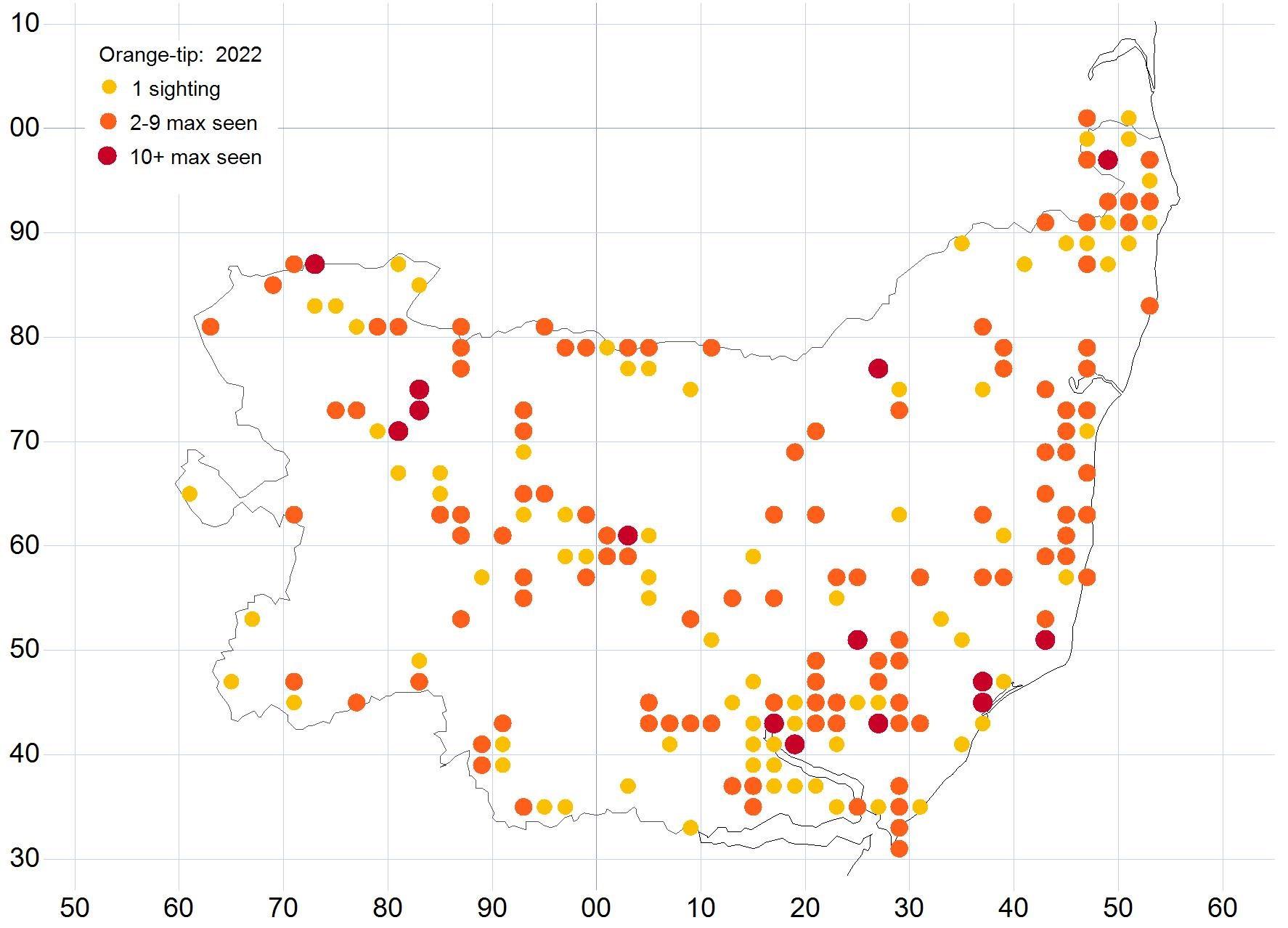
One of the most remarkable sightings of the year came in the Spring when an Orangetip bilateral gynandromorph was sighted in Somerleyton (photograph later in this report). A bilateral gynandromorph is a specimen which is male on one side of its body and female on the opposite. Not all animals can produce this type of intersex variation, but butterflies can, and it is estimated to occur in 1 in 5,000 to 20,000 individuals depending on species. Often it is overlooked when species have similarly marked males and females, but the Orange-tip is very sexually dimorphic.
A small population of Marsh Fritillary have been observed at Market Weston Fen (a Suffolk Wildlife Trust reserve) from 2021 and I paid a visit to this site in 2022. Up to half a dozen individuals were seen on visits over a four-week flight period. The foodplant Devil’s-bit Scabious is present in plentiful amounts and larval webs were also reported. It remains to be seen whether this introduced colony is self-supporting or will go the way of most introductions and fade out. Any information regarding this release will be appreciated, anonymous or otherwise.
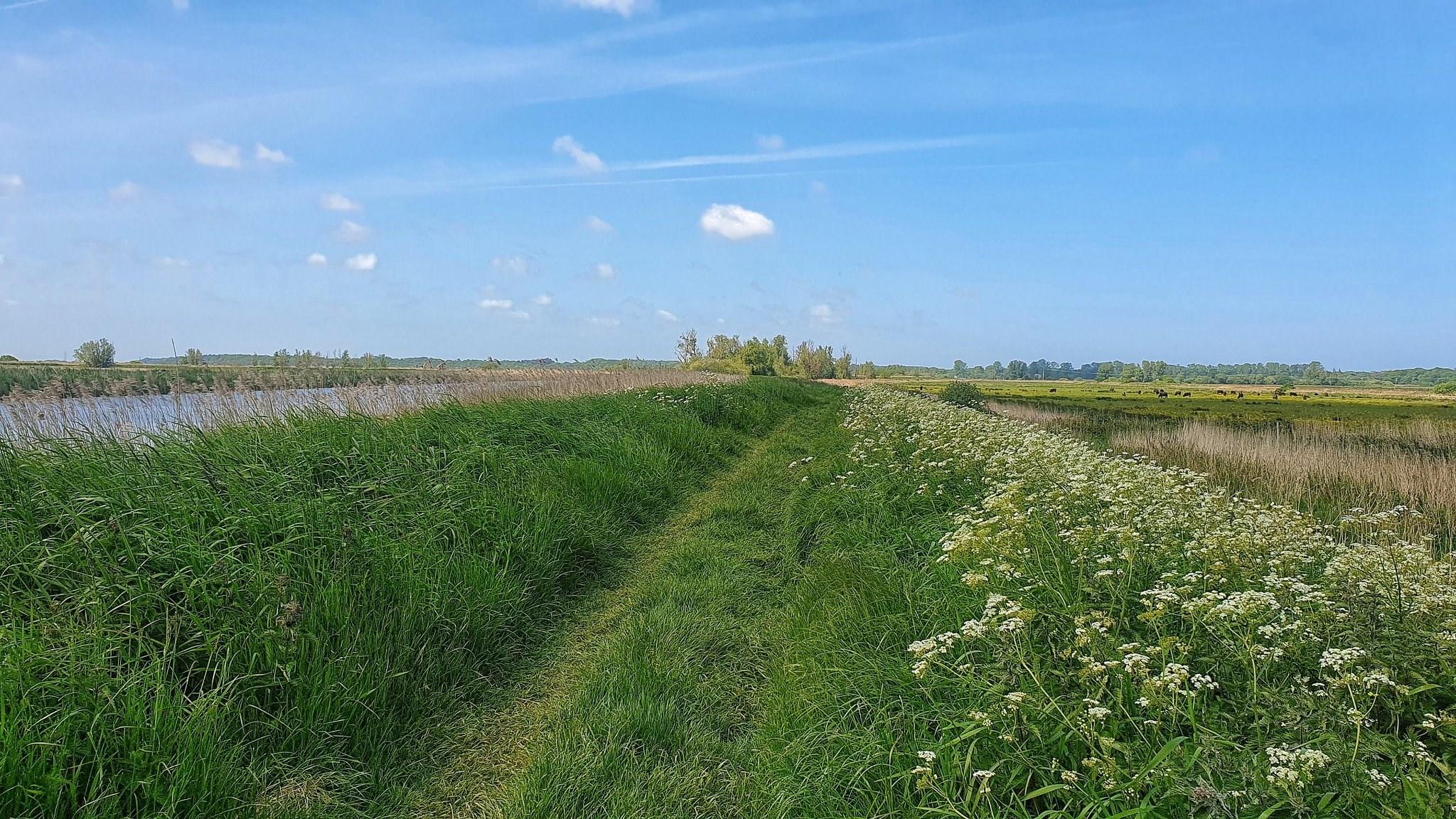
A fine day in Wall Brown territory at Oulton Marsh.
Julie Durrant
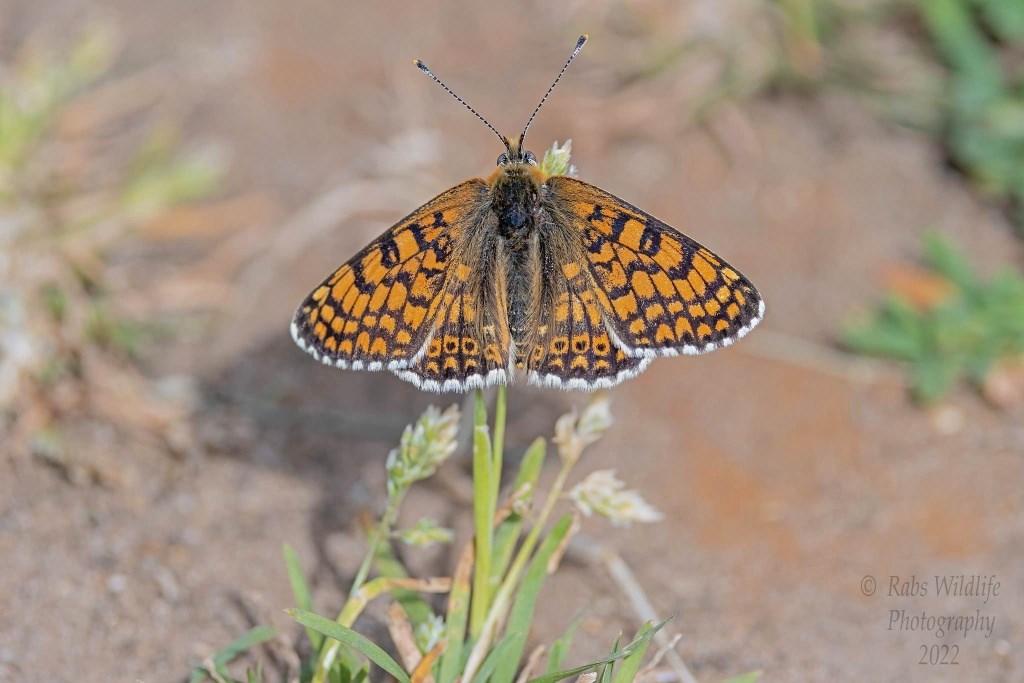
2020. This could well be offspring from that release or, perhaps, a top up.
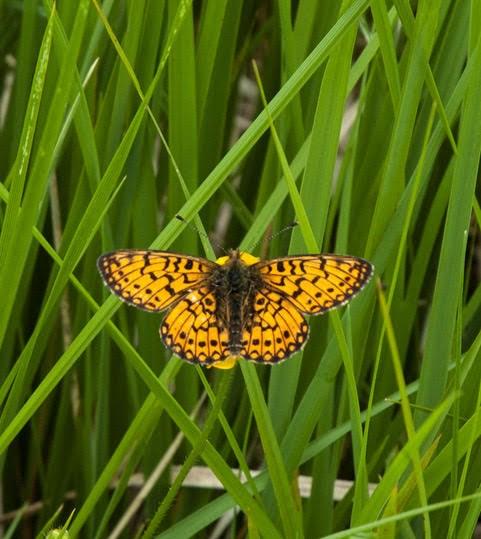
Another big surprise of the year was an unexpected and undoubtedly released Small Pearl-bordered Fritillary close to the Norfolk border. This was discovered by Roy Richardson and identified by Andrew Easton, both members of the SWT Warden and Volunteer Team at Lound Lakes. A Dingy Skipper in Nowton Park, Bury St Edmunds in mid-June, some 5 or 6 miles from any known colonies was also probably a release.
Allan King
Small Pearl-bordered Fritillary
East coast migrant specialties, Camberwell Beauty and Large Tortoiseshell are eagerly anticipated each year, but no Camberwell Beauty were recorded in 2022. Large Tortoiseshell were reported in both Spring and Summer broods in March and then June, north of Stowmarket and also near Bury St Edmunds in June. Sadly, no pictures are available. There was one final surprise in the year in the form of a Long-tailed Blue reported in October at Felixstowe Ferry. Again, no photographs to show but this is quite a distinctive species and, despite its diminutive size, is capable of long migrations.
Swallowtail (Papilionidae)
Britain only has one endemic species from the Papilionidae family, the Swallowtail, and that is confined solely to the Norfolk Broads but the situation for us is not altogether straightforward. Papilionid butterflies are quite large and capable of flying some distance. European Swallowtail species do sometimes disperse and find their way to Suffolk. Some are noted for their long-distance flights, although the Apollo has not been recorded since 1928, at Thorpe. Invariably, any Papilionid found in Suffolk is the Swallowtail itself (P. machaon) which occurs as two subspecies. Our endemic subspecies britannicus is found nearby in the Norfolk Broads in fenland habitat, but its sedentary nature means it is usually the continental subspecies gorganus which arrives in Suffolk, and most often from the summer brood. On average these are paler, stronger flying and found in drier habitat than britannicus. 2022 was a good year for migrant Swallowtail. It was reported from the south coast and as far north as Yorkshire at Bempton cliffs. Suffolk enjoyed at least two individuals arriving along the coast, including one in a garden at Shottisham in July. Incidentally, our native subspecies is found only on 16 sites in Norfolk and news of a fatal fungal infection affecting its sole foodplant, Milk Parsley, in 2022 led to concerns about its future. Voluntary quarantine conditions seem to have defeated this threat and the butterfly,
John and Jane Burton
The Brimstone is our only native Yellow and, while single brooded, the adults are so long-lived that they can still be on the wing when their offspring take their maiden flight. This means there is a continuity of sightings throughout the warmer months but with a maximum in the spring months. The benefits of the Buckthorn Project may slowly be materialising, with a few extra sightings in the east of the county. No Pale Clouded Yellow were reported. These would be rarities even in south coast counties and even more so further north and east. The usual number of Clouded Yellow were reported, initially on the coast but the speed at which these individuals sometimes vanished would suggest that their migratory instincts were still strong and that they continued inland. Quite a few sightings came from the west of the county where they found suitable habitat to nectar and breed in. Some stayed on in coastal locations for several days.
Browns, Fritillaries and Aristocrats (Nymphalidae)
If the drought affected many species, then it is the Brown butterflies which were affected most. Many grasslands were devoid of butterflies during the heatwave, as observed by those of us eccentrics who ventured out in it. Some would aestivate during the heat of the day, but others were found in woodland habitats flying and even breeding in shaded glades alongside the regular Speckled Wood. The lack of green grassland was a concern for many Brown butterflies. Larval survival rates could be very low for those species which need to feed before the onset of winter, either in parched grassland or in less suitable habitat. The presence of marshland, wet woodland and riverside habitat in our county did provide some good breeding sites and a base from which to expand from should there be a population decline. One species which appears to have at least survived the drought, if not thrived, is the Wall Brown. This is a Suffolk BAP species and nationally listed as Endangered with a 70% decrease in distribution 2010-2019. It emerged early in 2022 in its strongholds around Somerleyton, Carlton Colville and also Lound and Sudbourne, then went on to produce a very strong second generation. Some of its success may be due to the fact that these low-lying marshland areas did not dry out completely. Additionally, the third generation was very small, and offspring from this generation have been found to have much higher mortality rates than those of the first and second generations, so the short-term future of this species is encouraging. The species is being closely monitored by Robert Quadling, one of our Species Champions (Wall) and he has provided high quality data on a regular basis for this species.
Wall Brown dates and frequency compared (2021 and 2022)
Grayling is another of our BAP species and nationally listed as Endangered. It emerged very early and appeared in good numbers before crashing once the heatwave reached a peak. In reality it was seen moving from exposed heathland and coastal habitat into nearby woodland e.g., at Minsmere. There may well have been an
increased mortality rate as well. A second, smaller, peak built up after the extreme heat had subsided.
Grayling emergence and flight period compared (2021 and 2022)
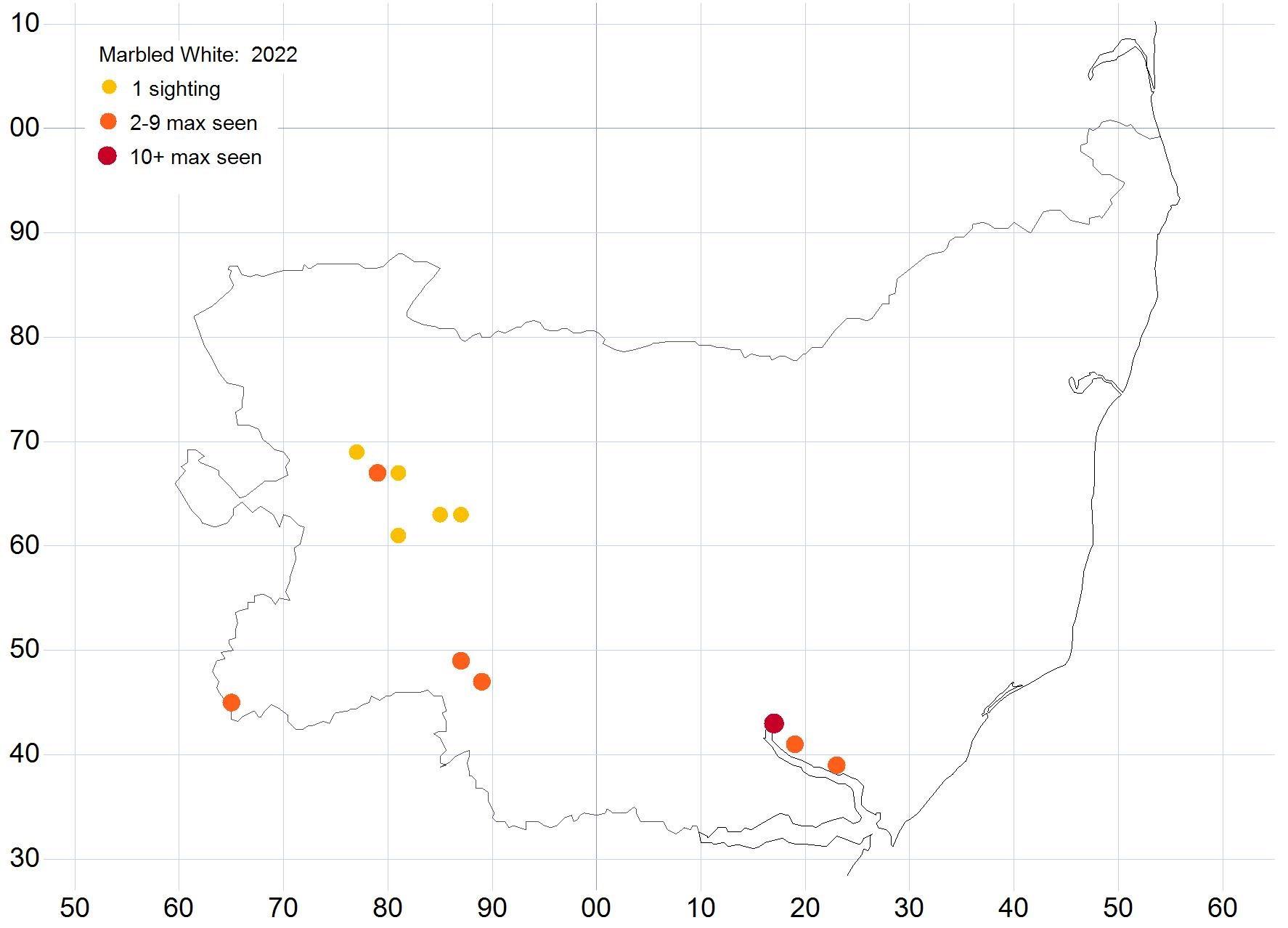
Marbled White continued their northward and eastward expansion and have crossed the Stour from Essex into Suffolk near Sudbury with several reported around Long Melford. There were sightings from the west of the county too, between Newmarket and Bury St Edmunds, which also appears to be natural colonisation by range expansion. These colonies are small, and the rate of expansion is slow, so I am not expecting the whole of Suffolk to be populated anytime soon. It is one of the species which may have been less affected by the summer drought with larvae hatching out and immediately preparing a hibernaculum to spend the winter in. They will feed during mild spells in winter, by which time the grass is green and nutritious again. The long-established introduced population at Landseer Park, Ipswich, seemed to have a good year and there is some evidence that it has dispersed along the Orwell estuary south-east of Ipswich.
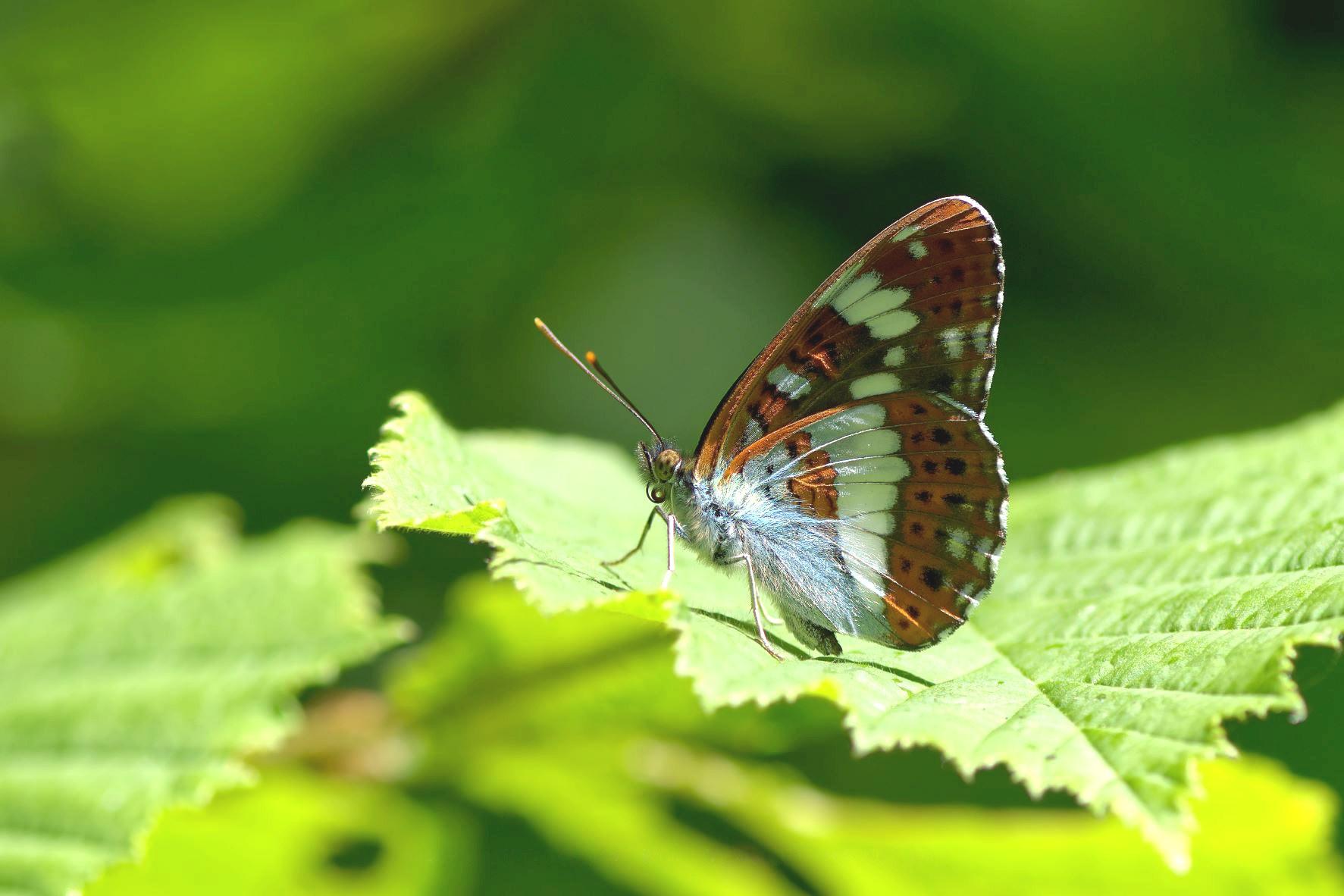
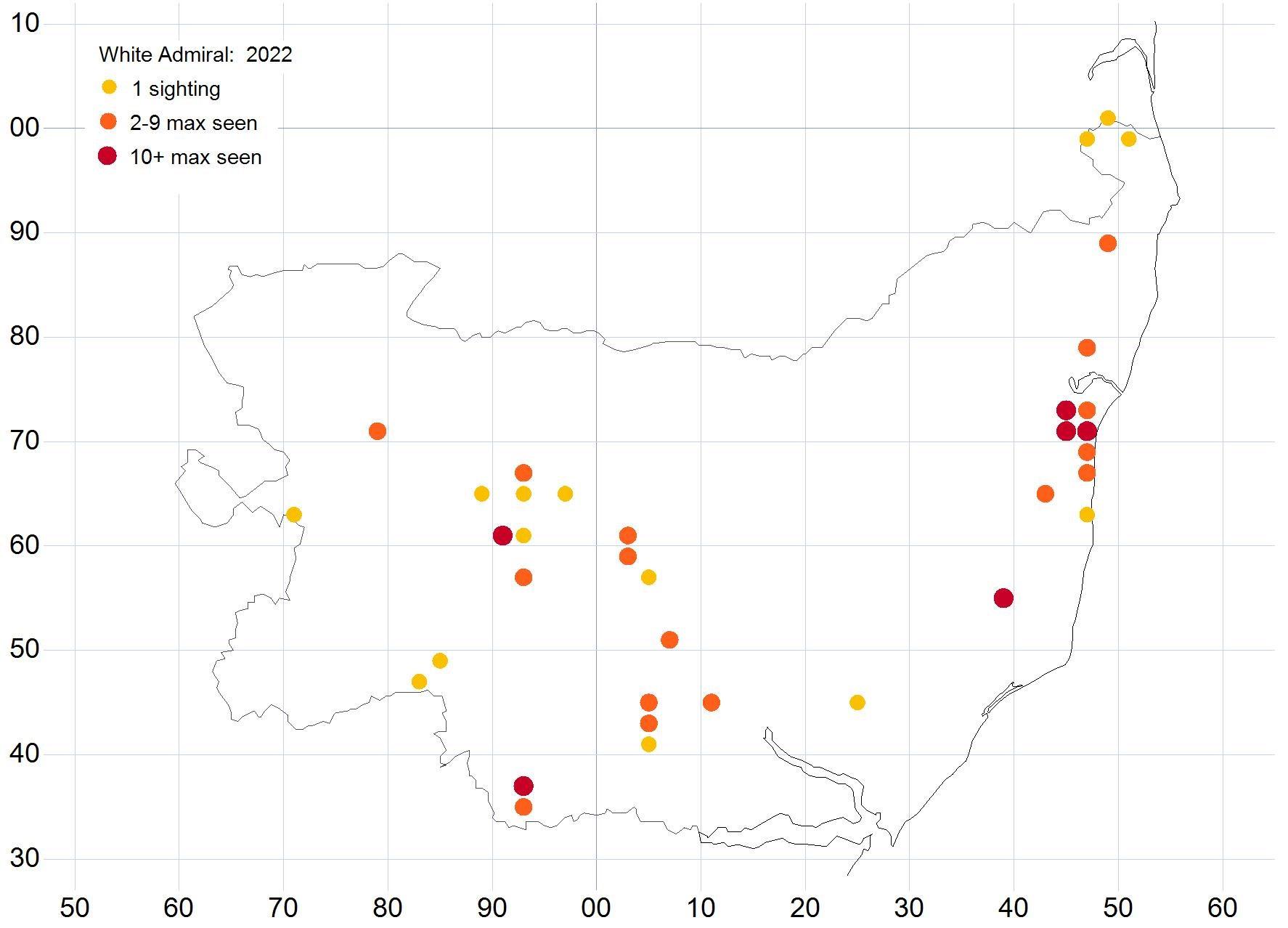
Silver-washed Fritillary had one of their best years with dozens of adults seen flying along transect routes in Minsmere and it was a similar scenario in many of our larger and more mature woods. White Admiral also had a good season and often came down to nectar on bramble and other flowers in glades. During the hottest spells, adults were observed aestivating in hazel and other trees, occasionally joined by Grayling. White Admiral is another species which may suffer from the drought. It hibernates as a third instar larva, but many honeysuckle plants were withered and dead-looking until late summer or even autumn far from perfect for a small caterpillar. This is a Biodiversity Action Plan (BAP) species for Suffolk, and I wait with cautious optimism to see if the 2023 season is a good one (historically it has been cold winter and spring weather which has been linked to low numbers).
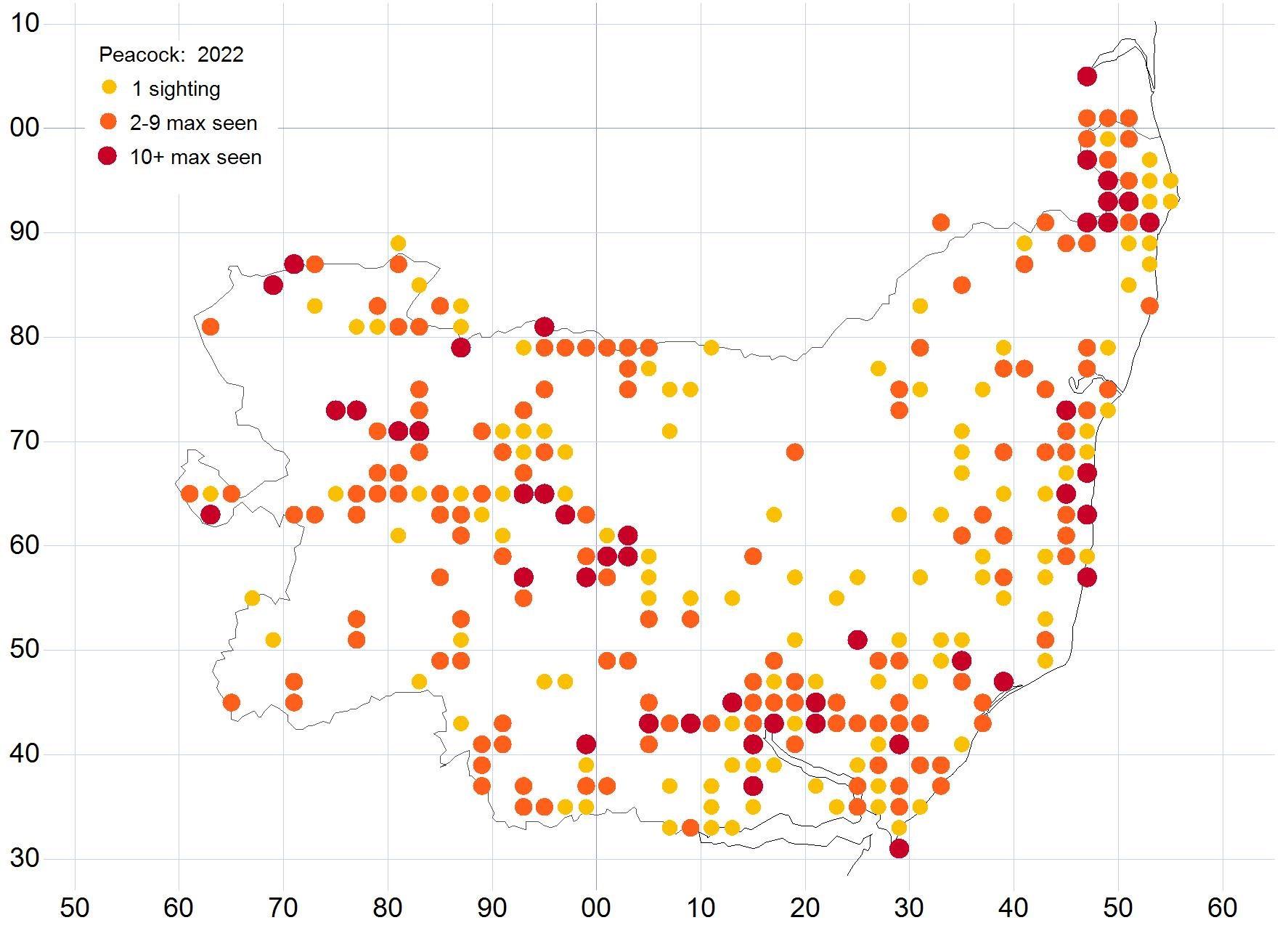
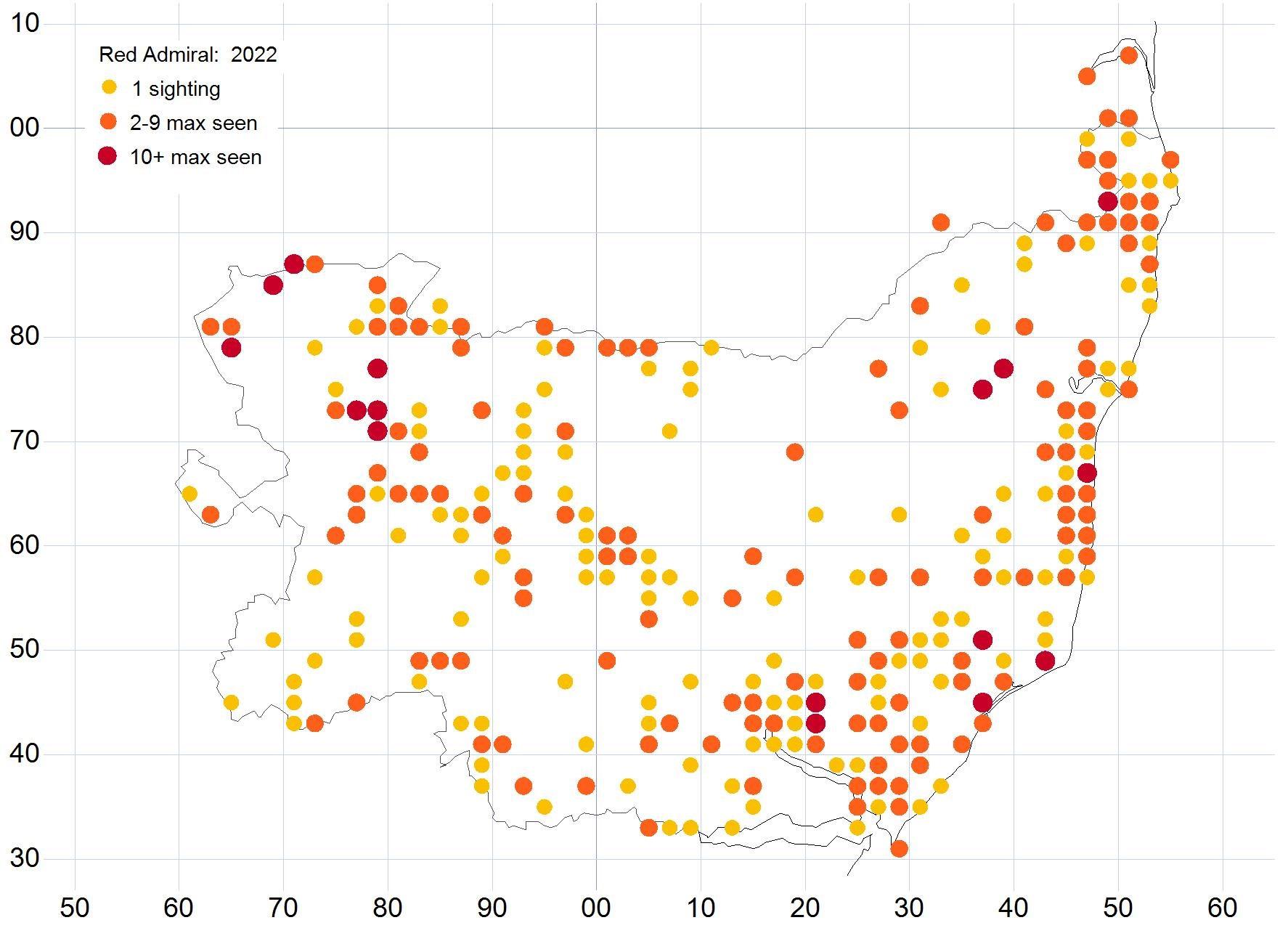
Painted Lady were seen in reasonable numbers but it was nowhere near a ‘Painted Lady year’ as 2019 was. A wave of migrants arrived and were seen on 17 May, mainly on the coast but further inland too within a few days. Red Admiral were also seen in reasonable numbers and, like Painted Lady and Clouded Yellow, these warm weather butterflies would have been very much at home in our hot summer. The Small Tortoiseshell displayed some unusual behaviour which may well be climate related. The spring was milder than 2021 and this led to more early overwintered sightings and an earlier first brood. Expectations of a second and possible third brood disappeared along with the adult butterflies. It is quite feasible that many went into early hibernation, much like Peacock butterflies, to avoid the heat and possibly because their foodplants (Common and Small Nettle) were not sufficiently healthy enough to tempt them to breed. There is also growing evidence that the species is moving towards a single brood due to the effects of parasitism on summer broods.
Gossamer-winged Butterflies – Coppers, Hairstreaks and Blues (Lycaenidae)
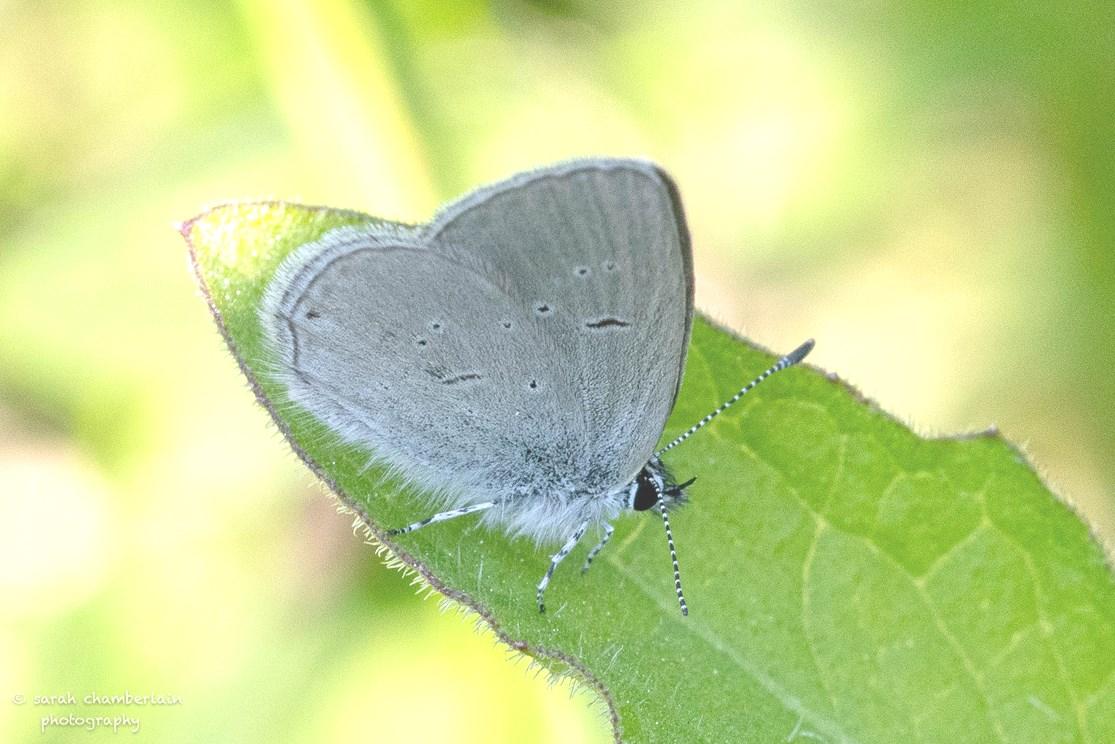
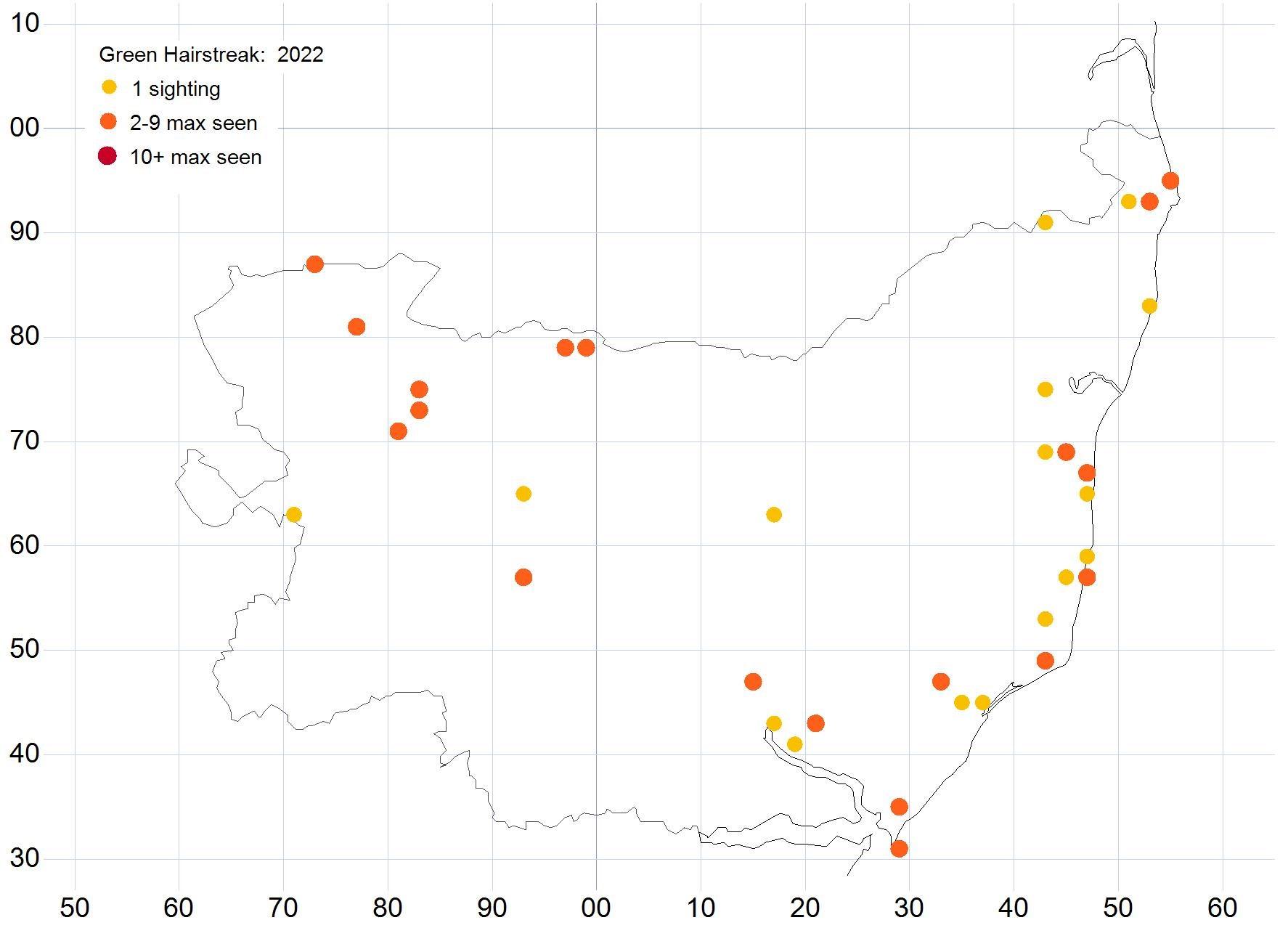
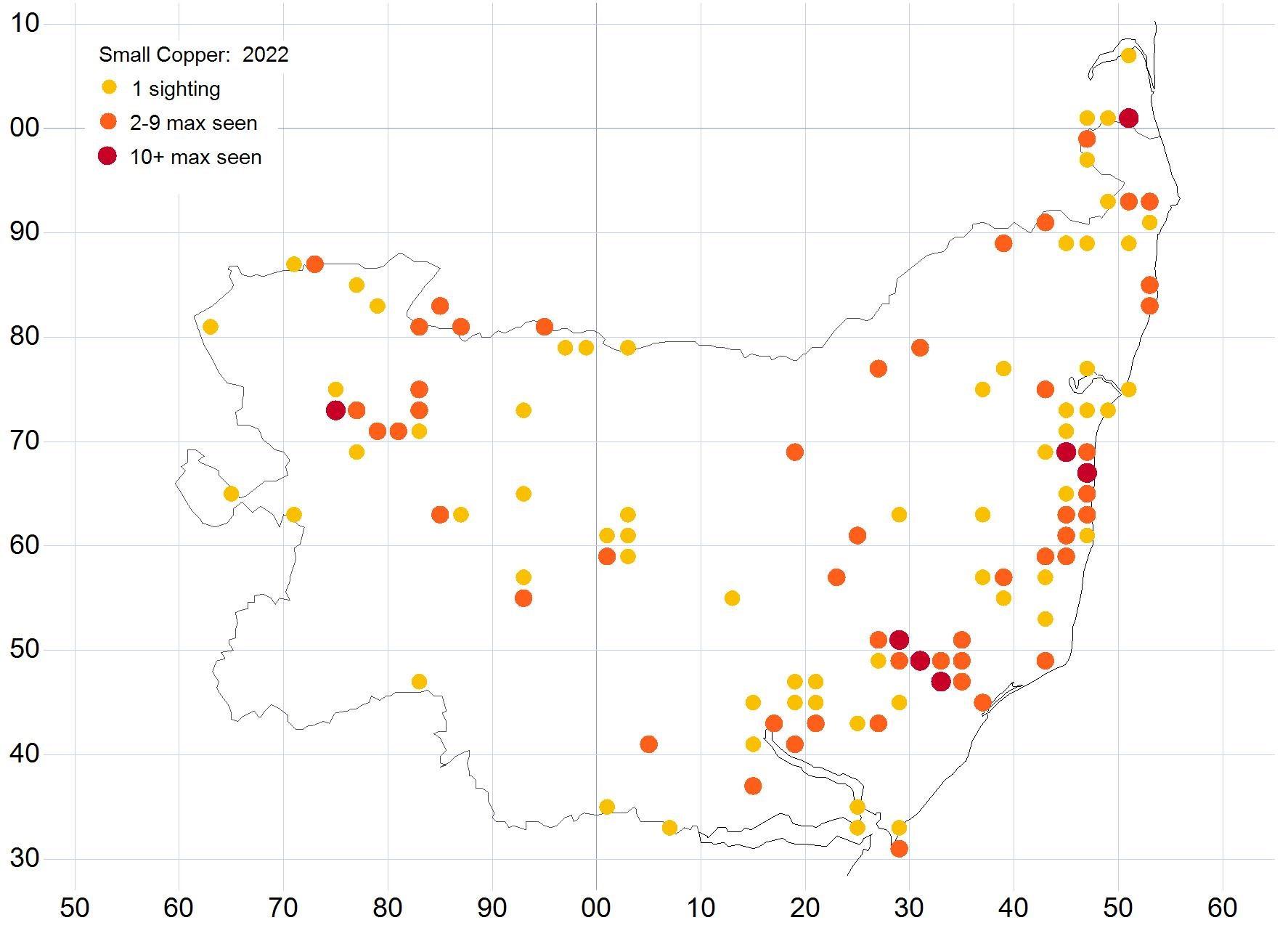
Many species of this family are multi-brooded, and it was a surprise for many of us to witness a first generation decline on the previous year with nothing to indicate this would happen. The nadir was so dire that in many locations no Blues or Coppers were recorded. Brown Argus, Common Blue and Small Copper were those appearing to be most strongly affected. Thankfully, a partial recovery was heralded by the arrival of the next generation. Single brooded species, such as Hairstreaks did not seem to be as affected, particularly the Spring flying Green Hairstreak. Many Purple Hairstreak were seen at ground level, possibly because their flight period was during the drought and there was little nectar in flowers as they conserved their own moisture with ever greater parsimony. Hairstreaks are also known to obtain nutrients from the ground for successful breeding. Both Purple and White-letter Hairstreak were seen far away from breeding areas, suggesting a heat driven dispersal. The only known Brown Hairstreak sightings came from the introduction site at Piper’s Vale, Ipswich, with a couple of individuals being reported. This may have been due to a lack of observers rather than a shortage of butterflies.
White Admiral
James Corton
Skippers (Hesperiidae)
Suffolk’s four species can be split into grassland Skippers and Woodland/Downland Skippers. The Dingy Skipper is our only representative of this second group and in Suffolk is a woodland specialist. It is a BAP Priority species but appears to be stabilising nationally. Locally, it is at great risk of extinction due to being restricted to only a couple of tetrads in the King’s Forest. The exact locations vary over time due to Forestry England works and cleared areas are often colonised within a year or two. In 2022 a survey was carried out and 71 were counted by Trevor Goodfellow on 14 May. This suggests the species is holding on, but the situation is always precarious due to the shortage of breeding areas.
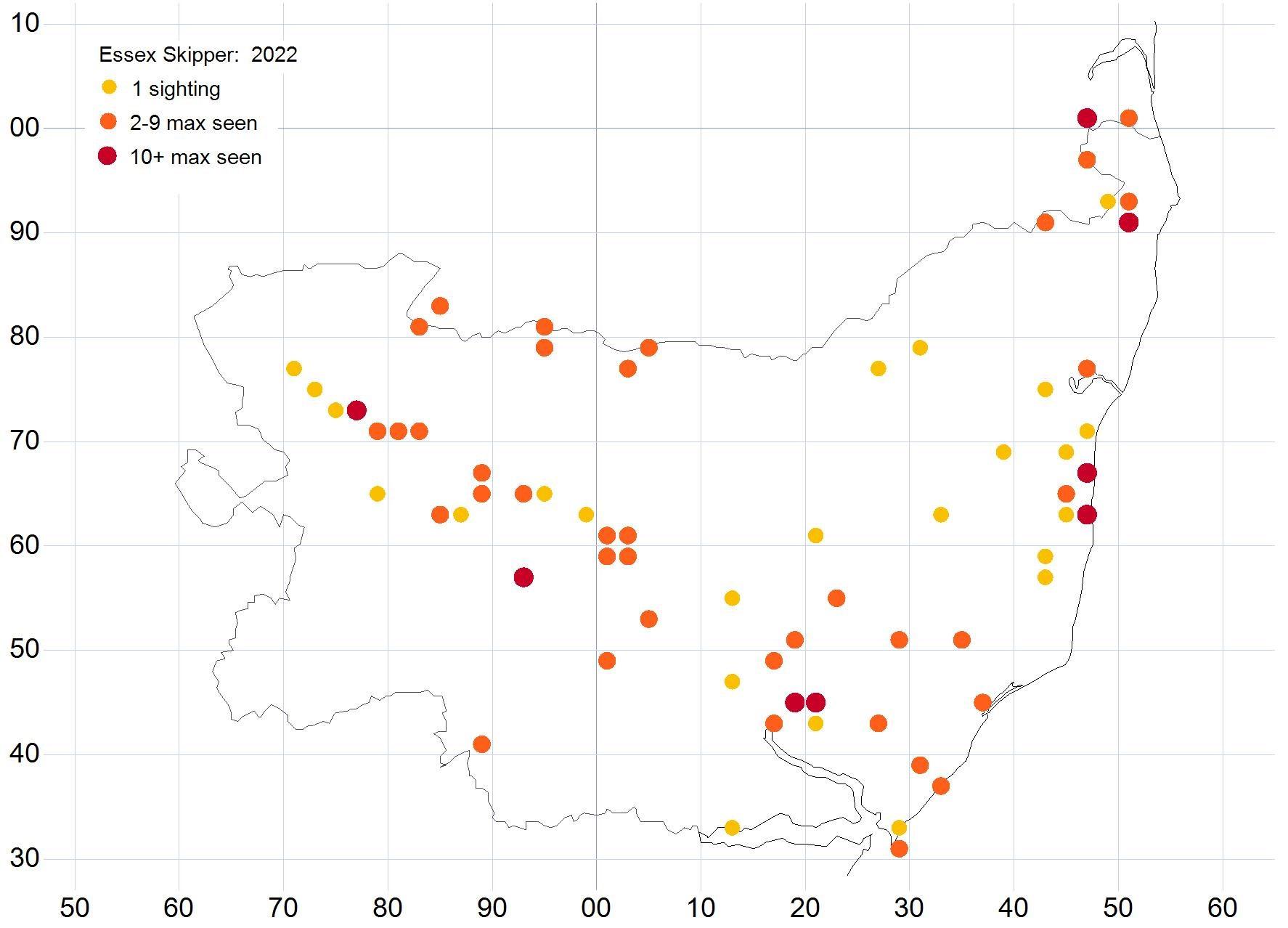
Our grassland Skippers are undoubtedly under-recorded due to the difficulty in separating Essex and Small Skipper in the field. Both seem to be county-wide and have stable populations. The no-mow theme is beneficial to these species and the Large Skipper as long as some grass is left standing year long. Where grass is cut e.g, with an end of summer cut, Skipper eggs (Essex Skipper) and larvae (Large and Small Skipper) which are higher up the grass stem perish. Skippers are then noticeably less abundant than Brown butterfly species whose larvae will be at the base of grass plants and less at risk of mowing.
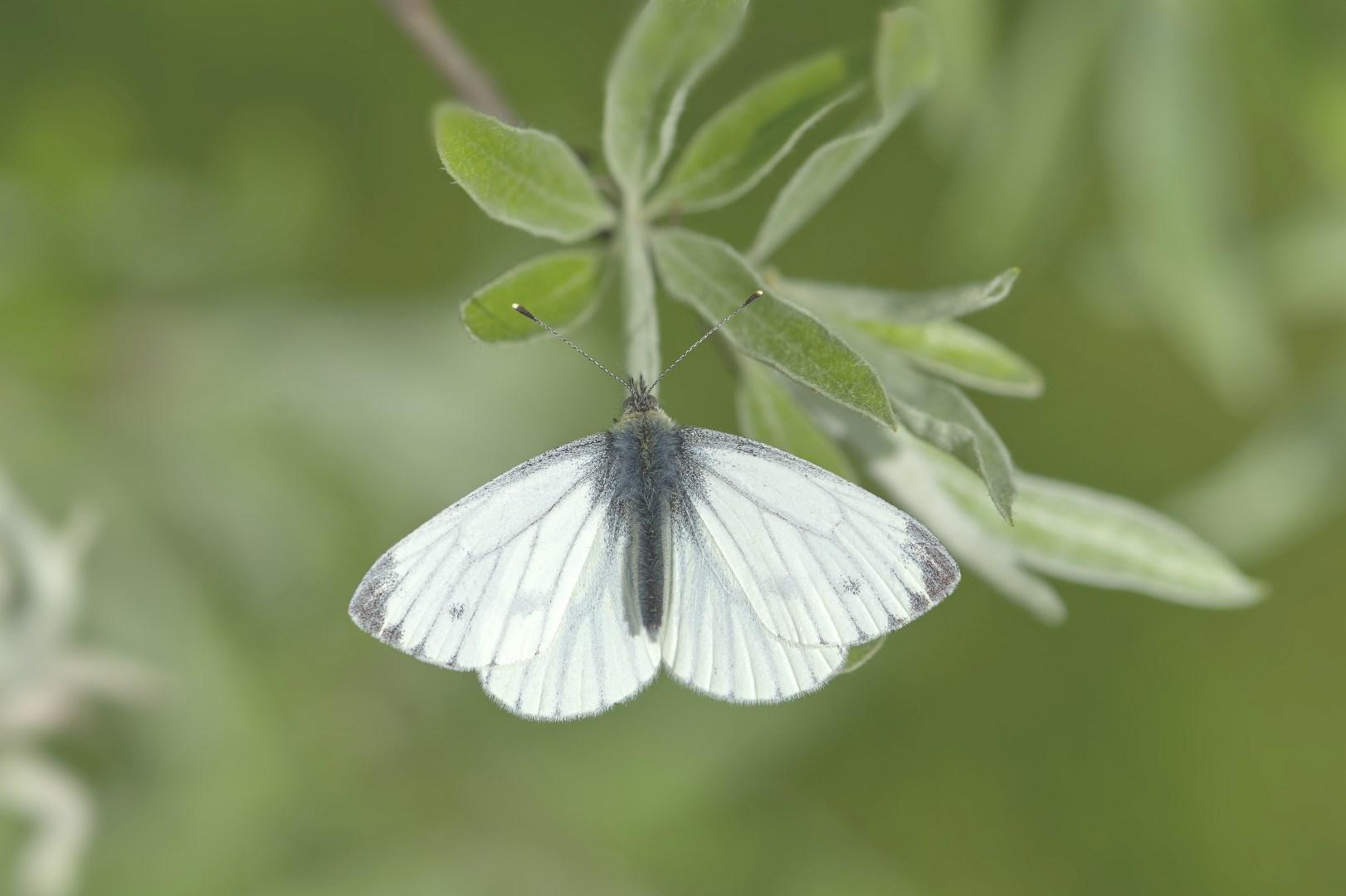
Green-veined White, Spring brood.
James Corton
Number of visits: 2022
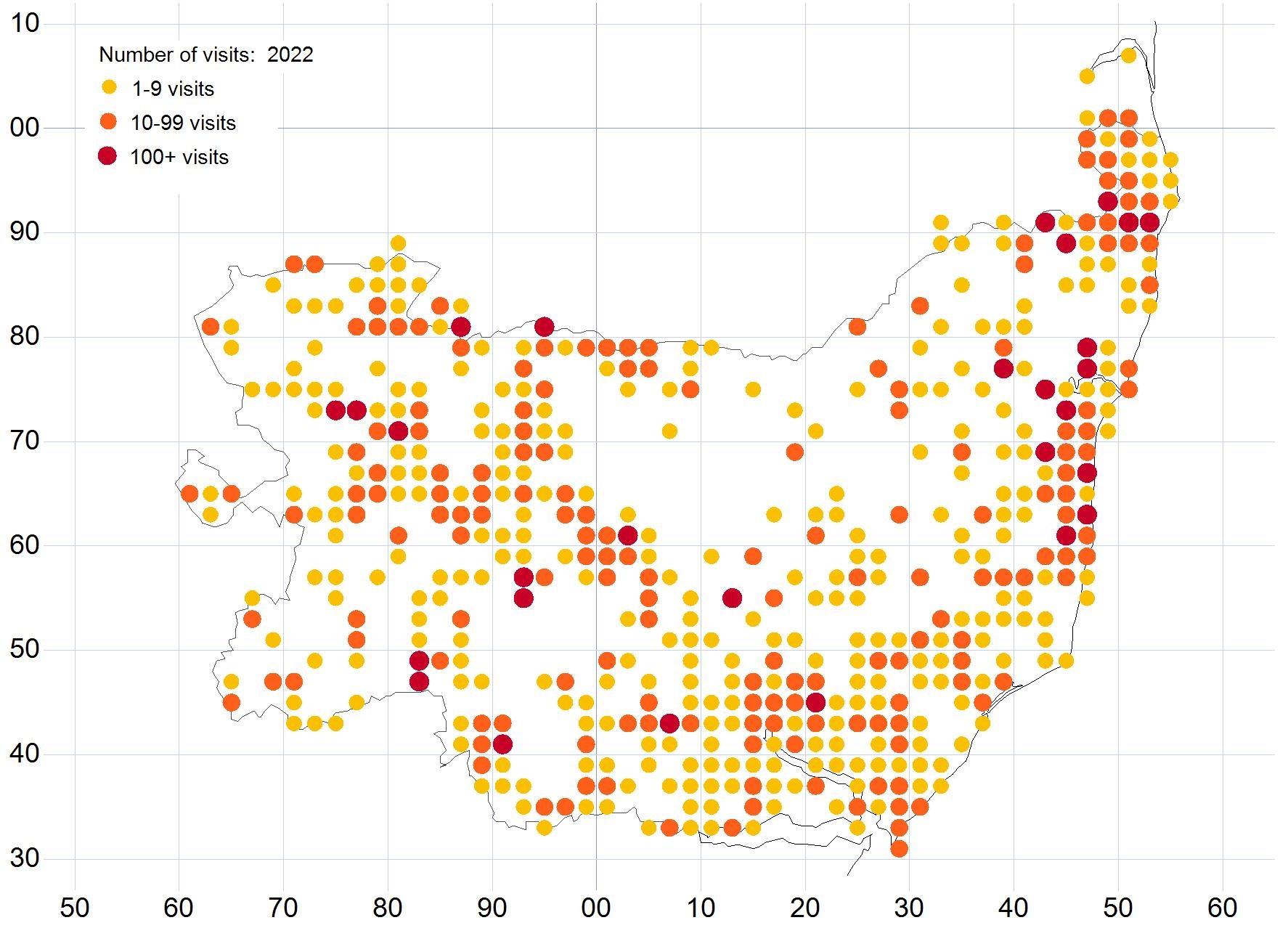
Coverage
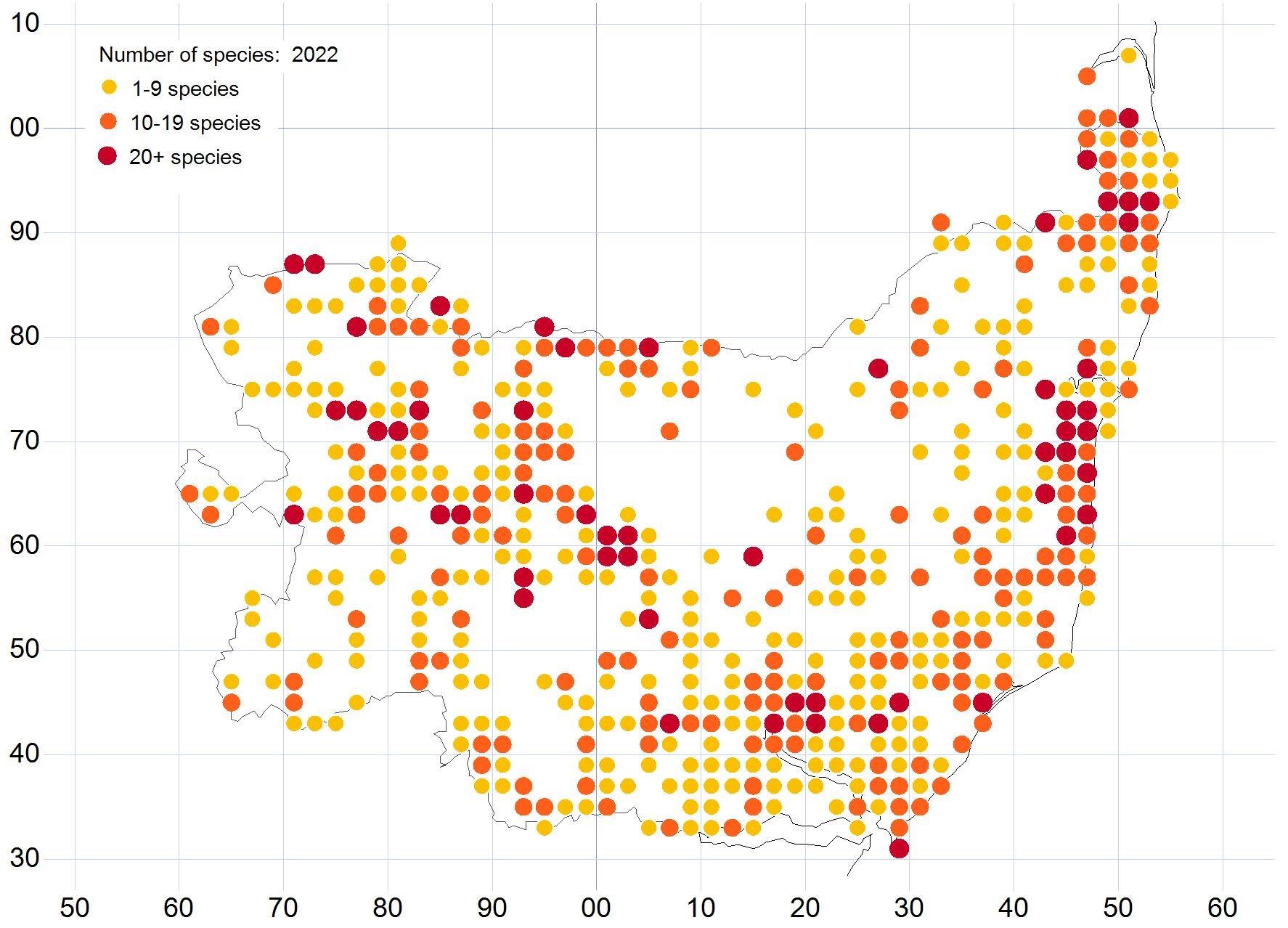
Number of species: 2022
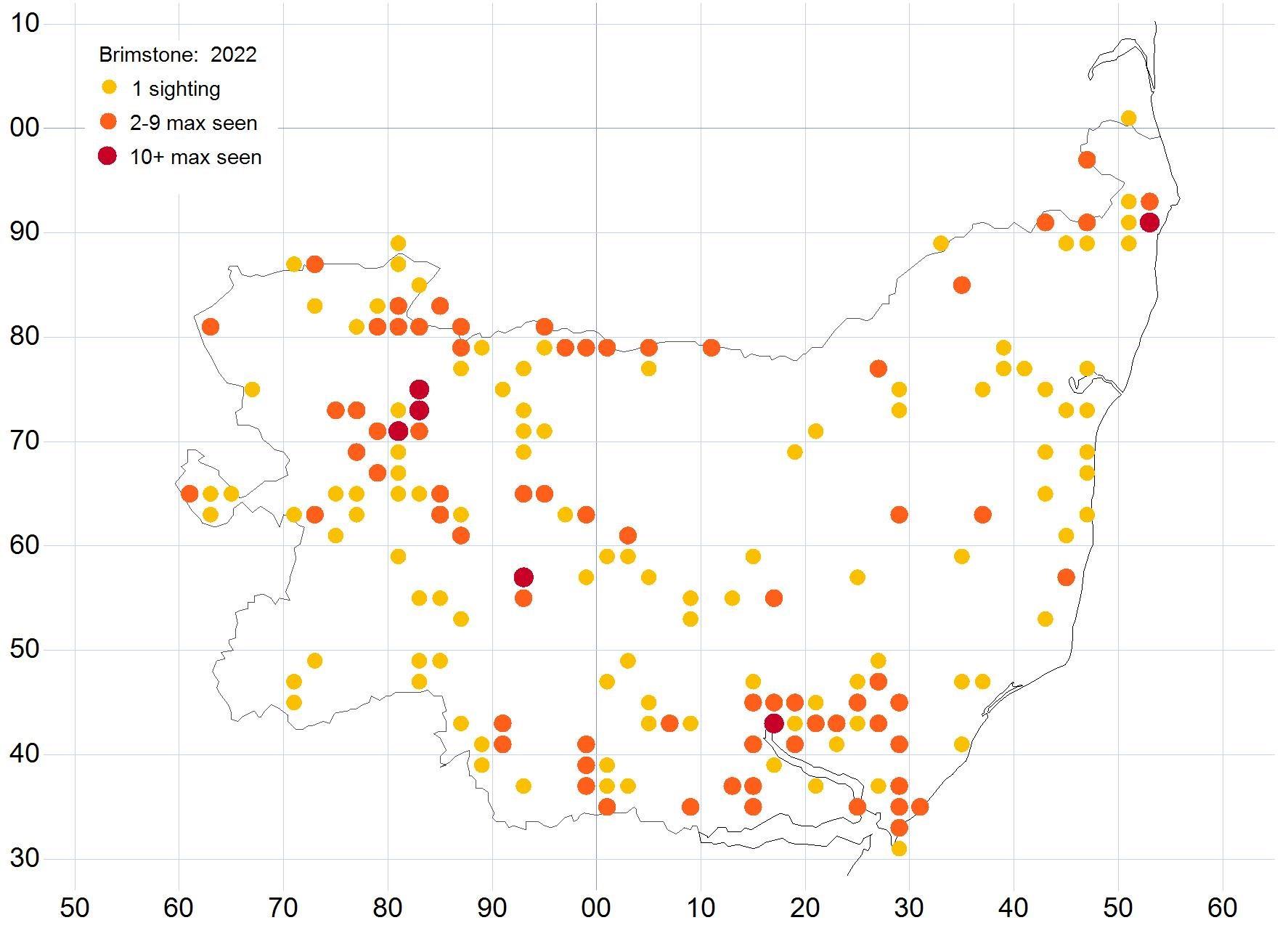
Brimstone: 2022
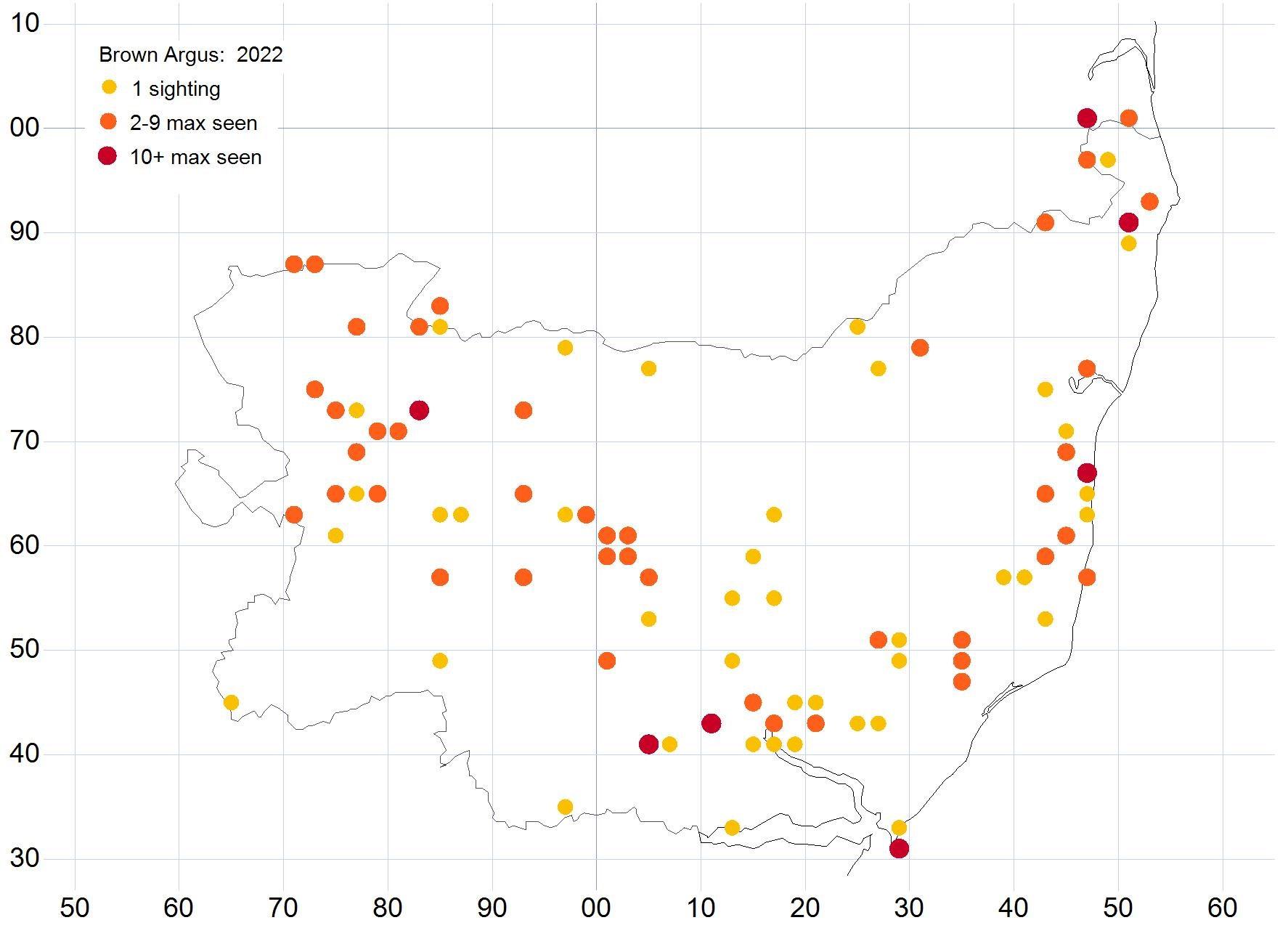
Brown Argus: 2022
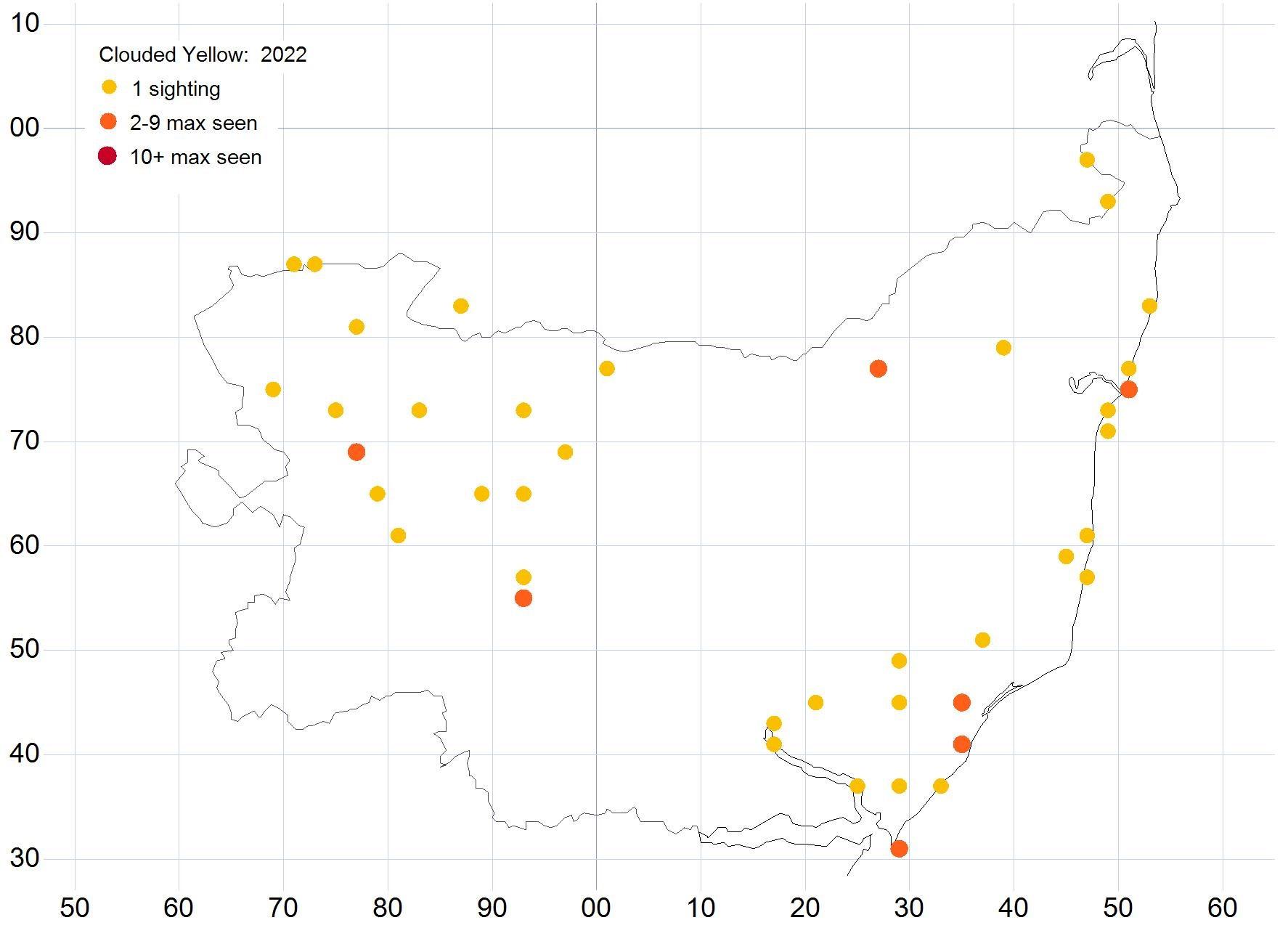
Clouded Yellow: 2022
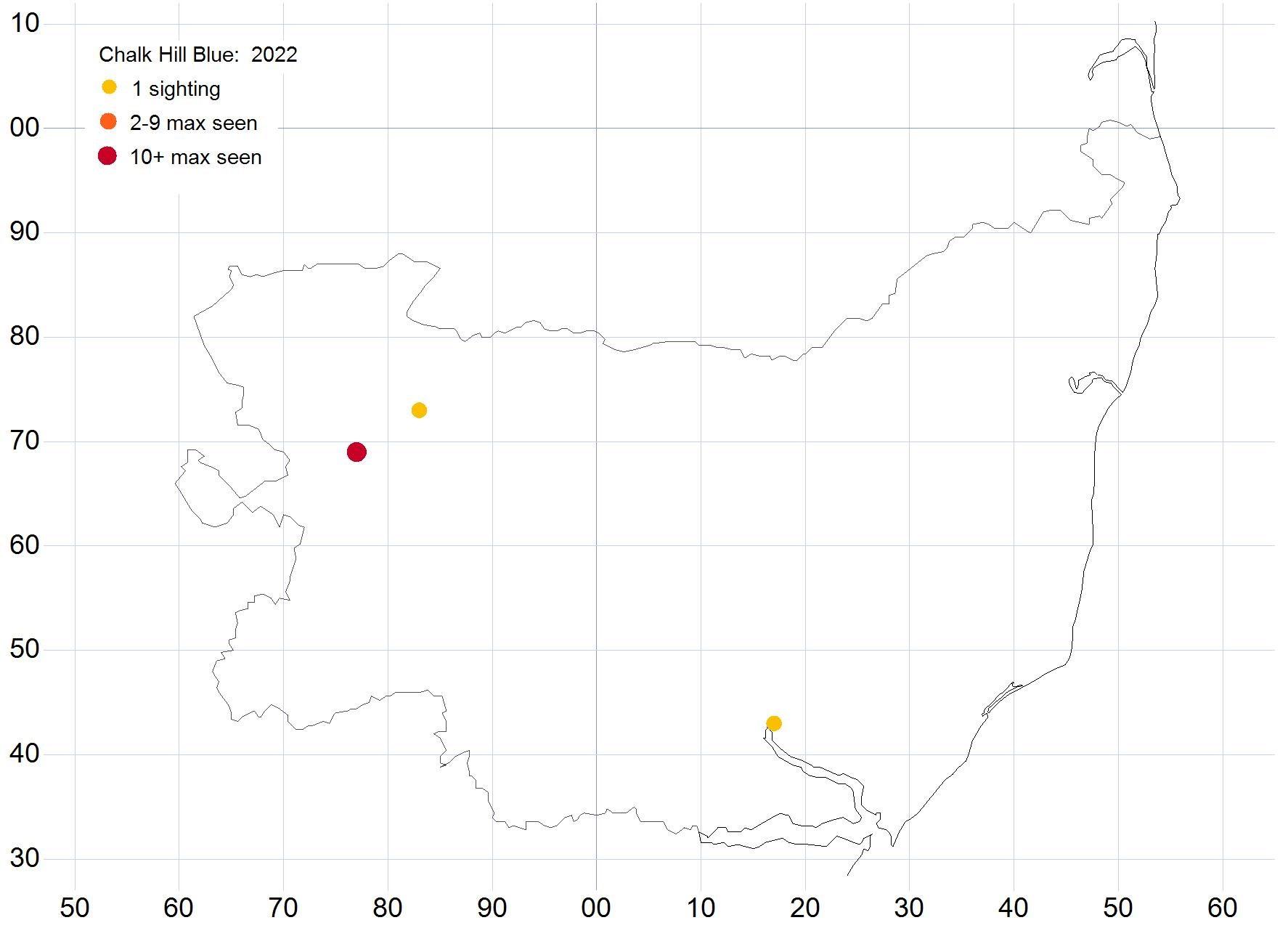
Chalk Hill Blue: 2022
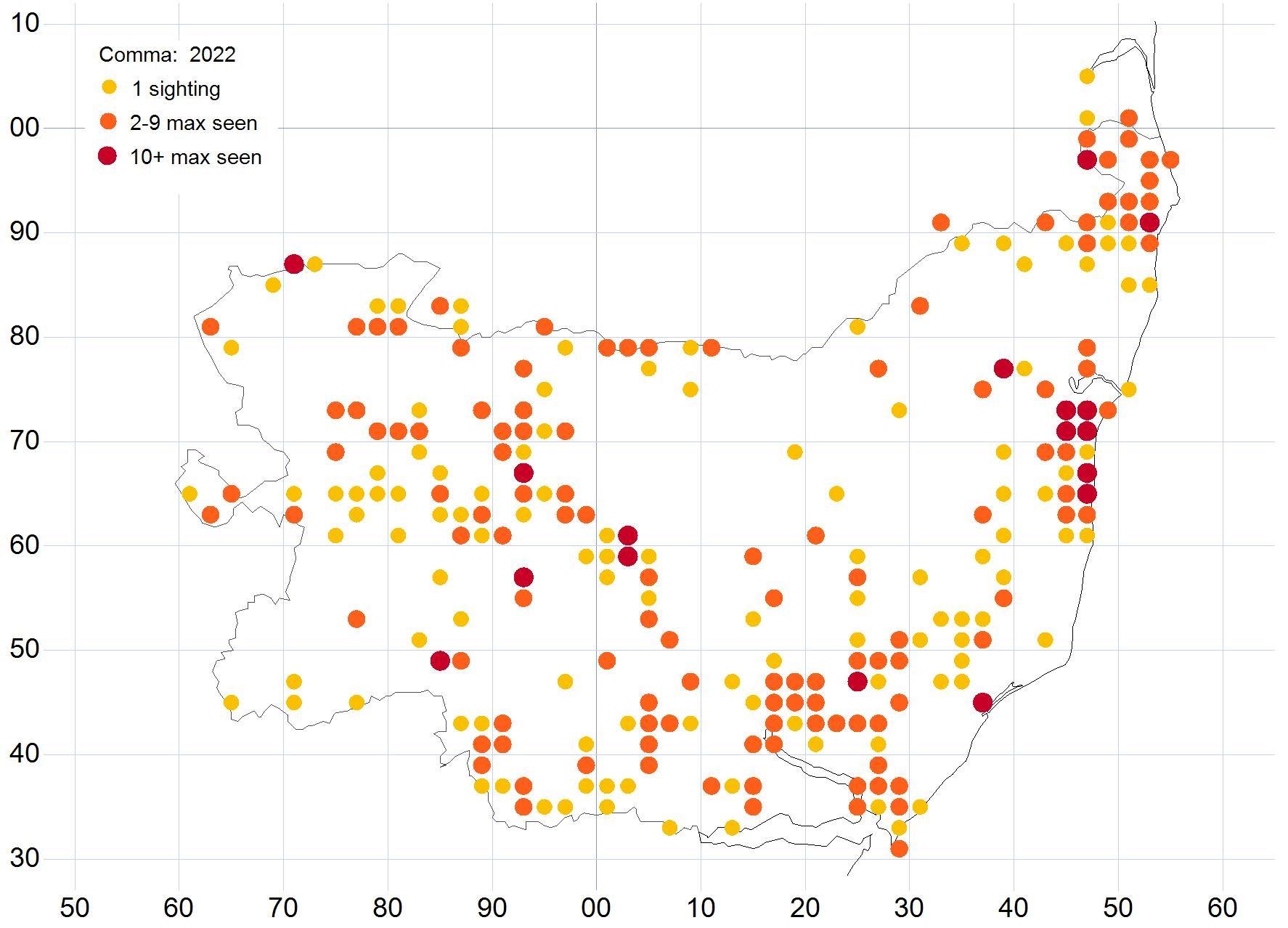
Comma: 2022
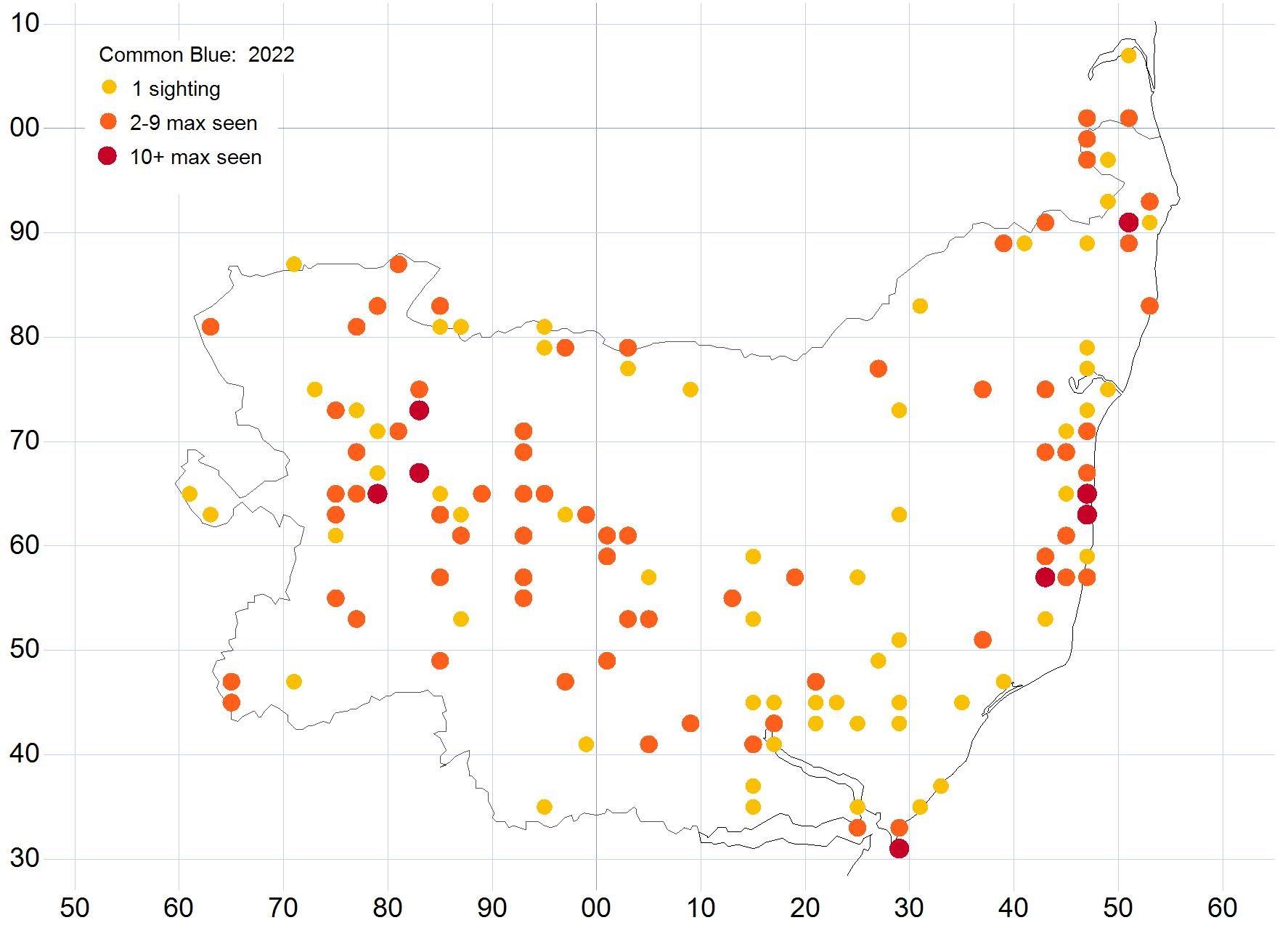
Common Blue: 2022
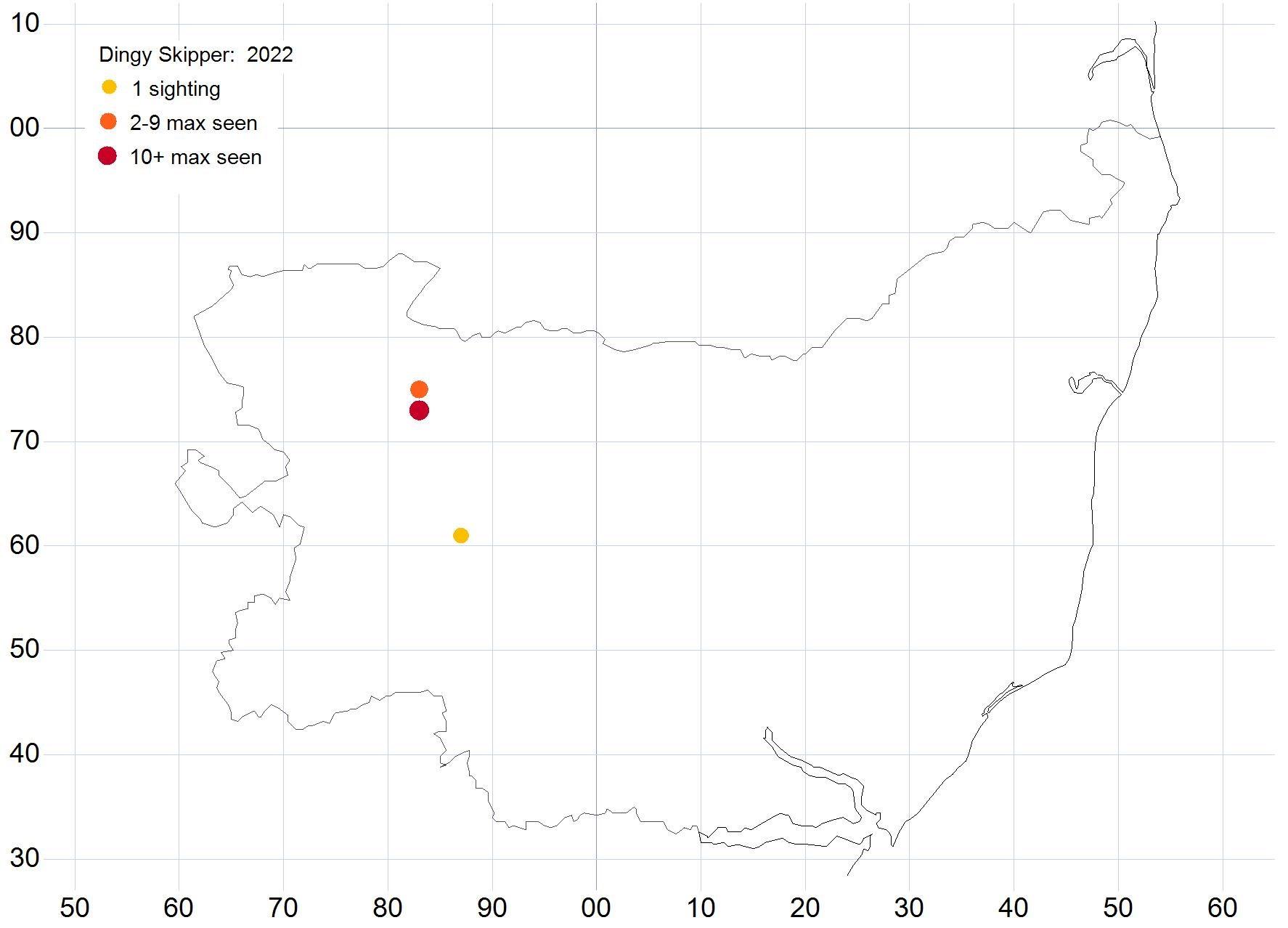
Dingy Skipper: 2022
Essex Skipper: 2022
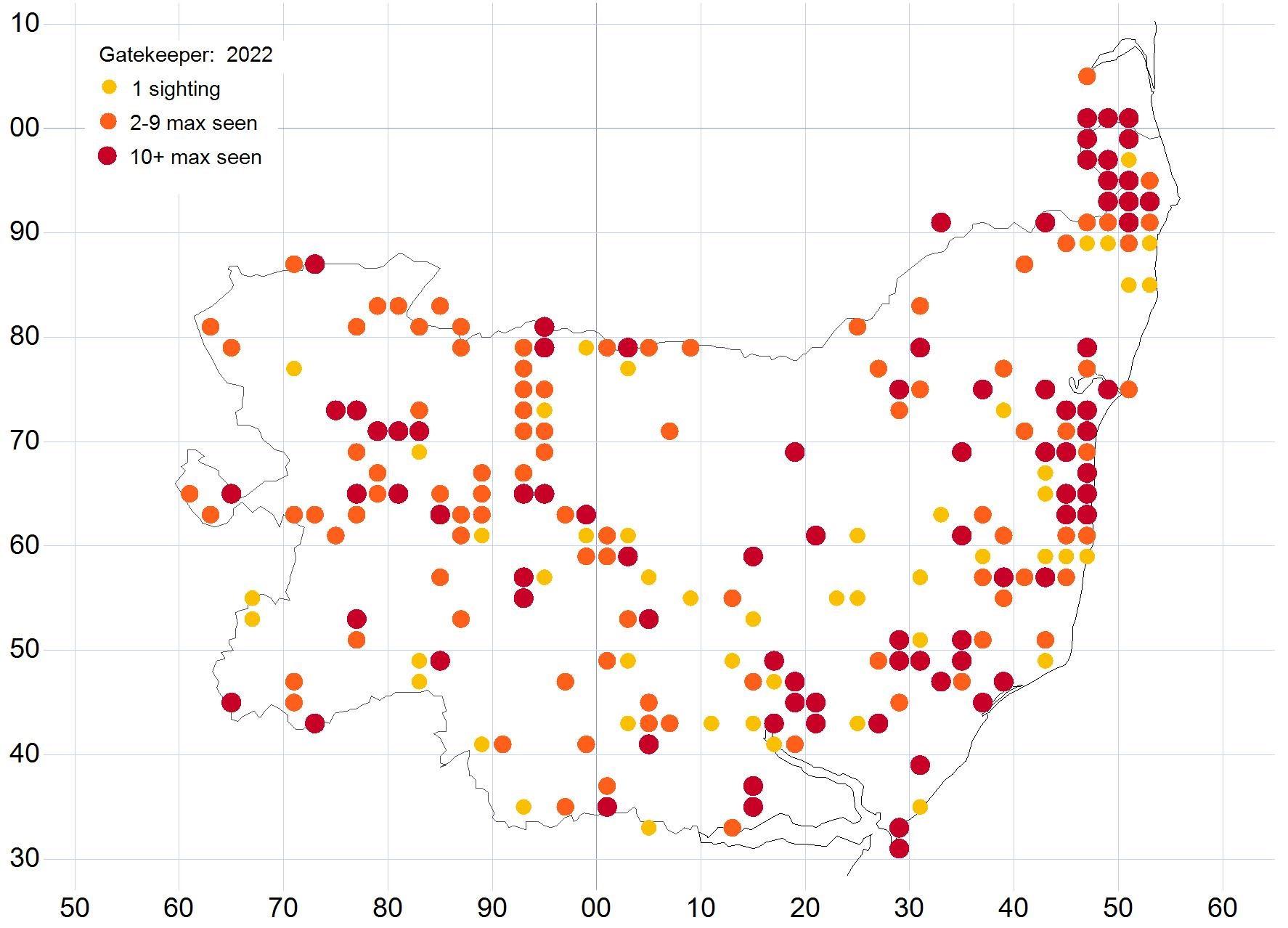
Gatekeeper: 2022
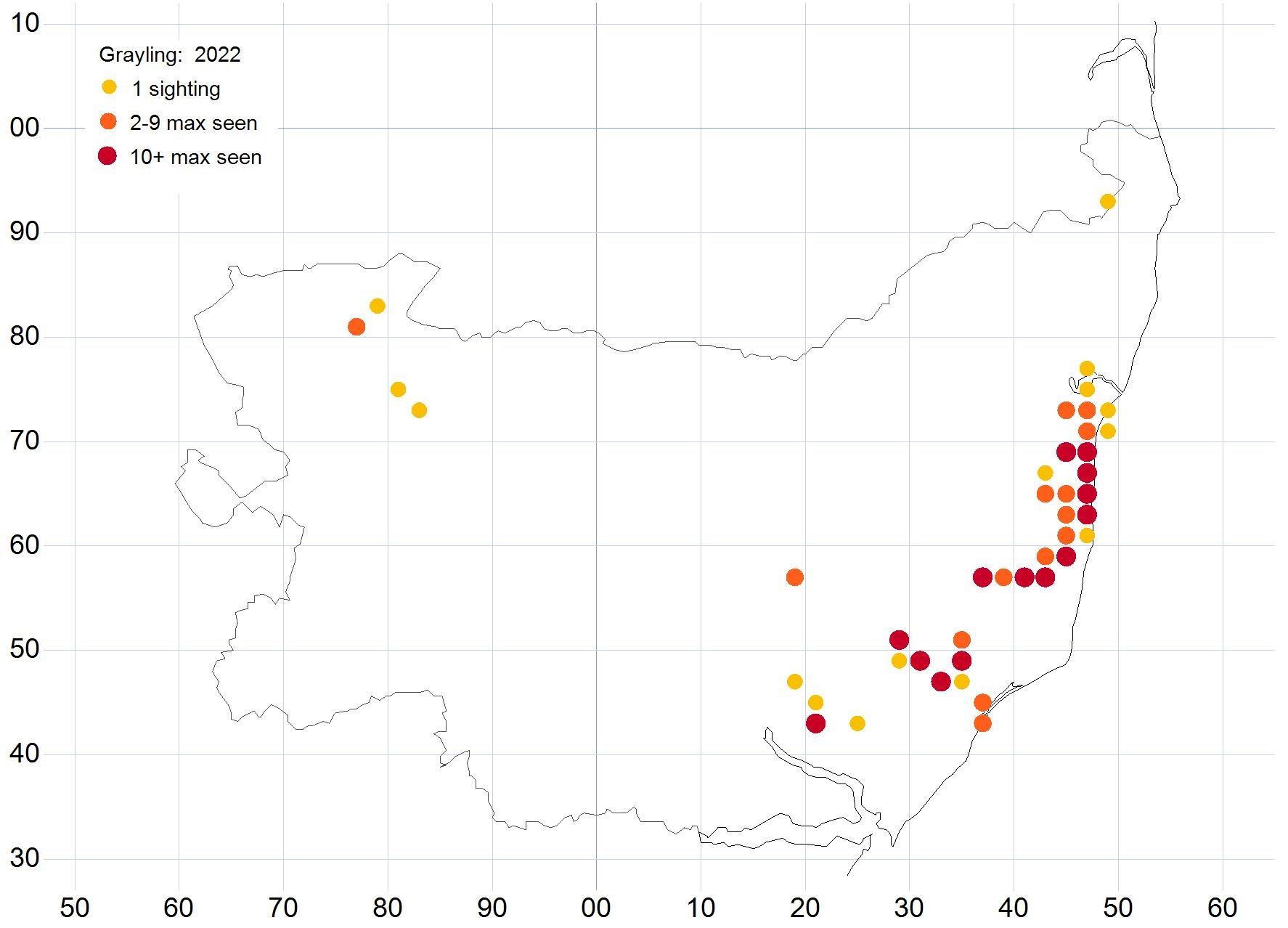
Grayling: 2022
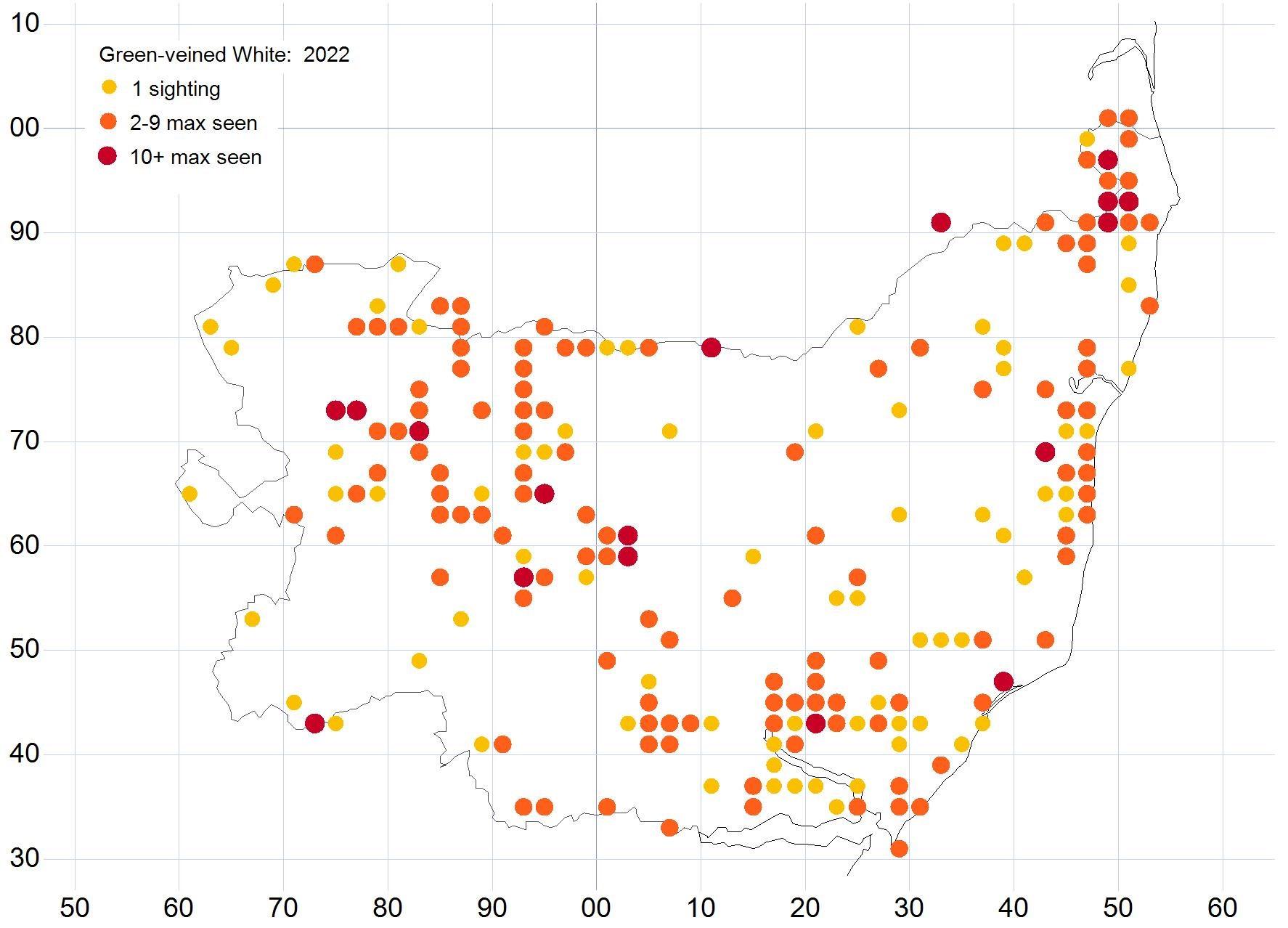
Green-veined White: 2022
Green Hairstreak: 2022
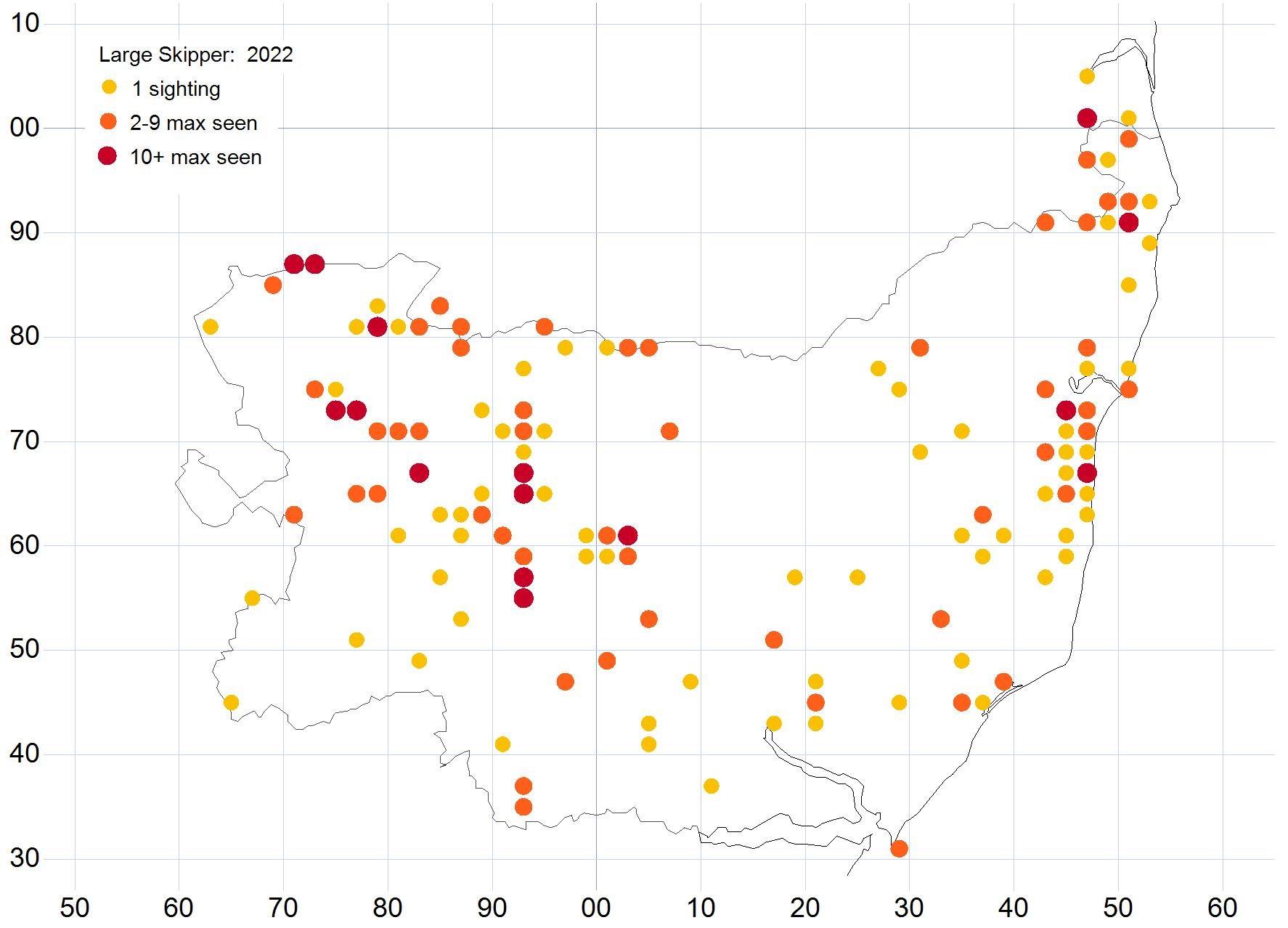
Large Skipper: 2022
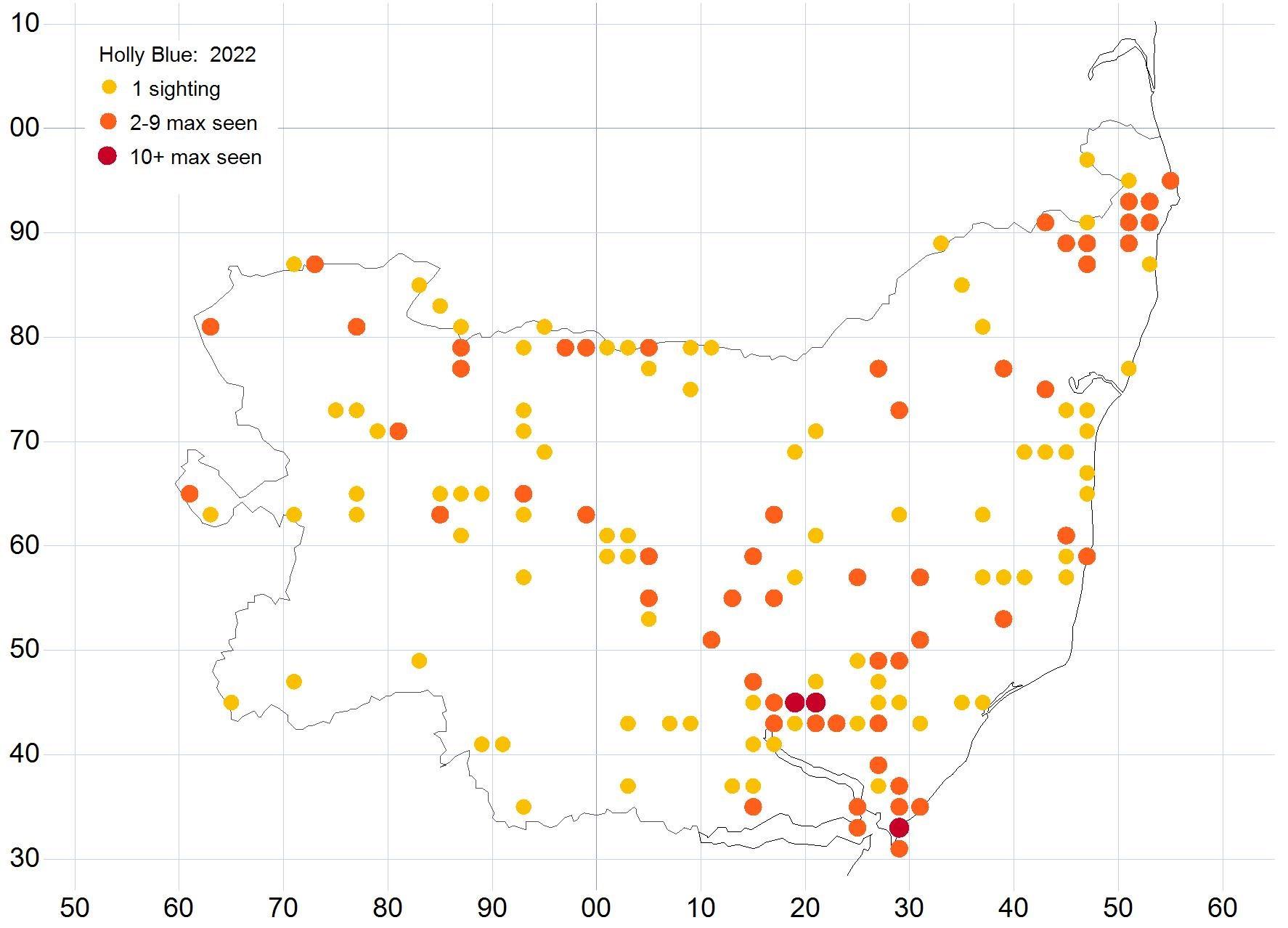
Holly Blue: 2022
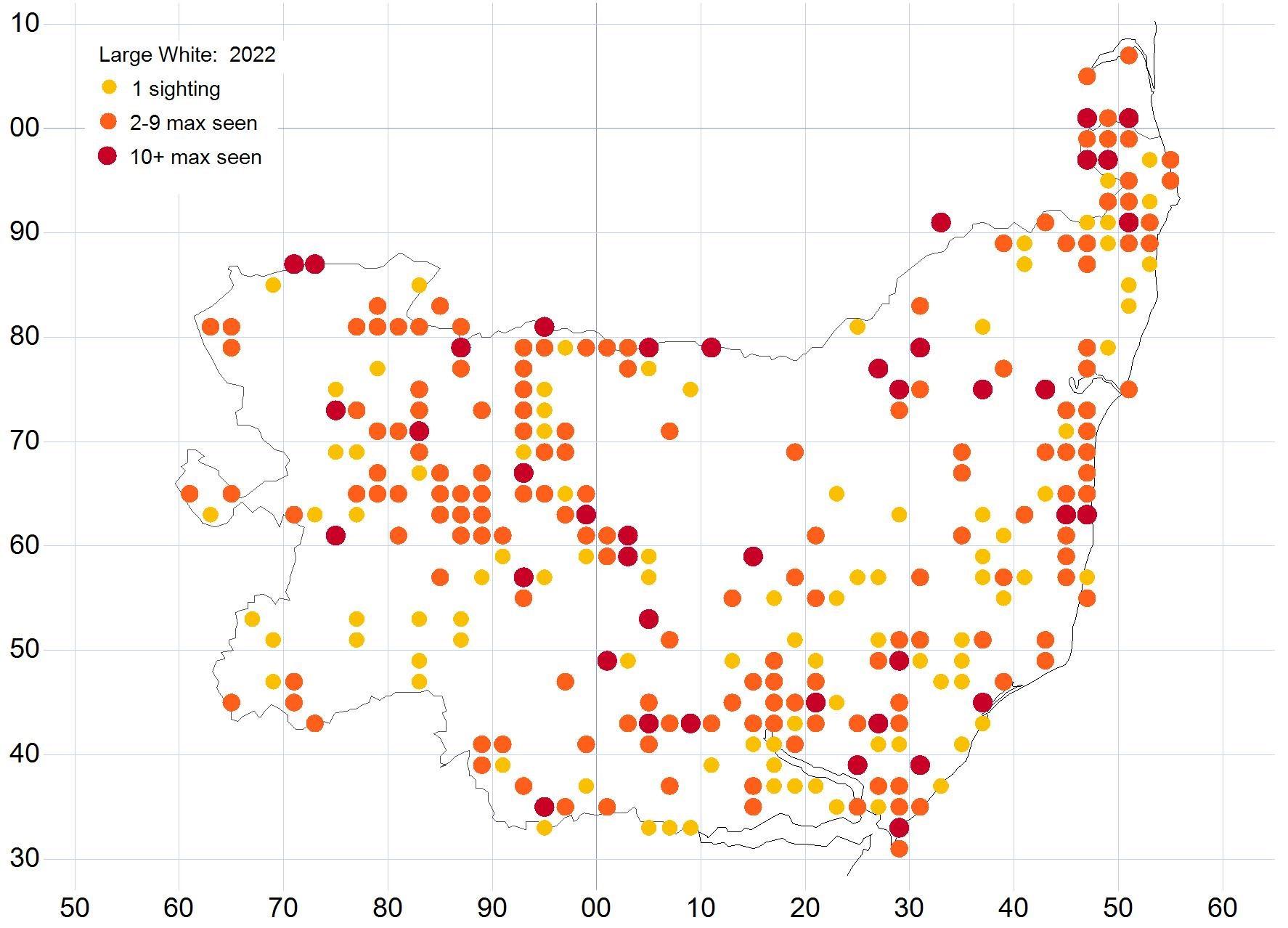
Large White: 2022
Marbled White: 2022
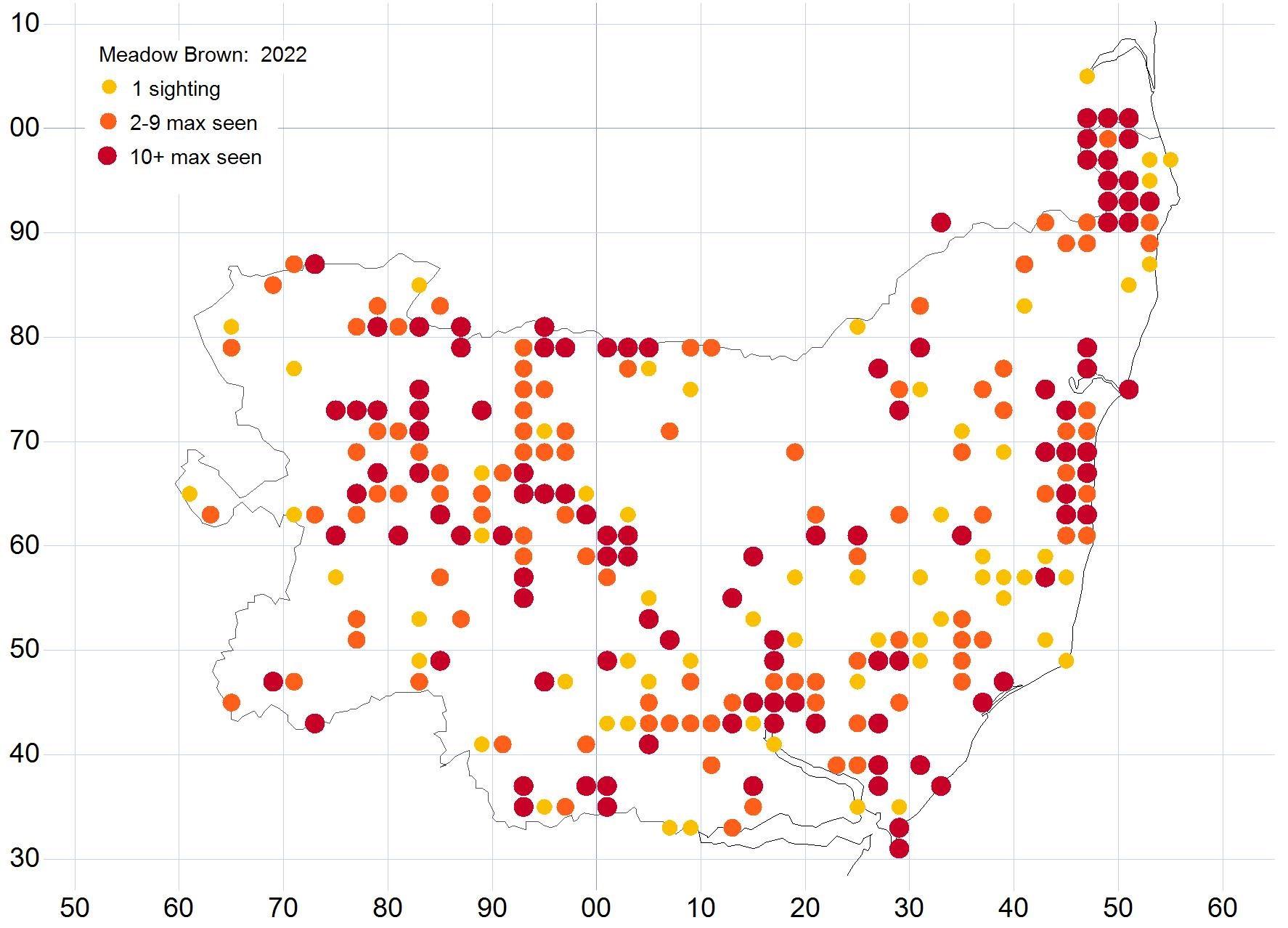
Meadow Brown: 2022
Orange-tip: 2022
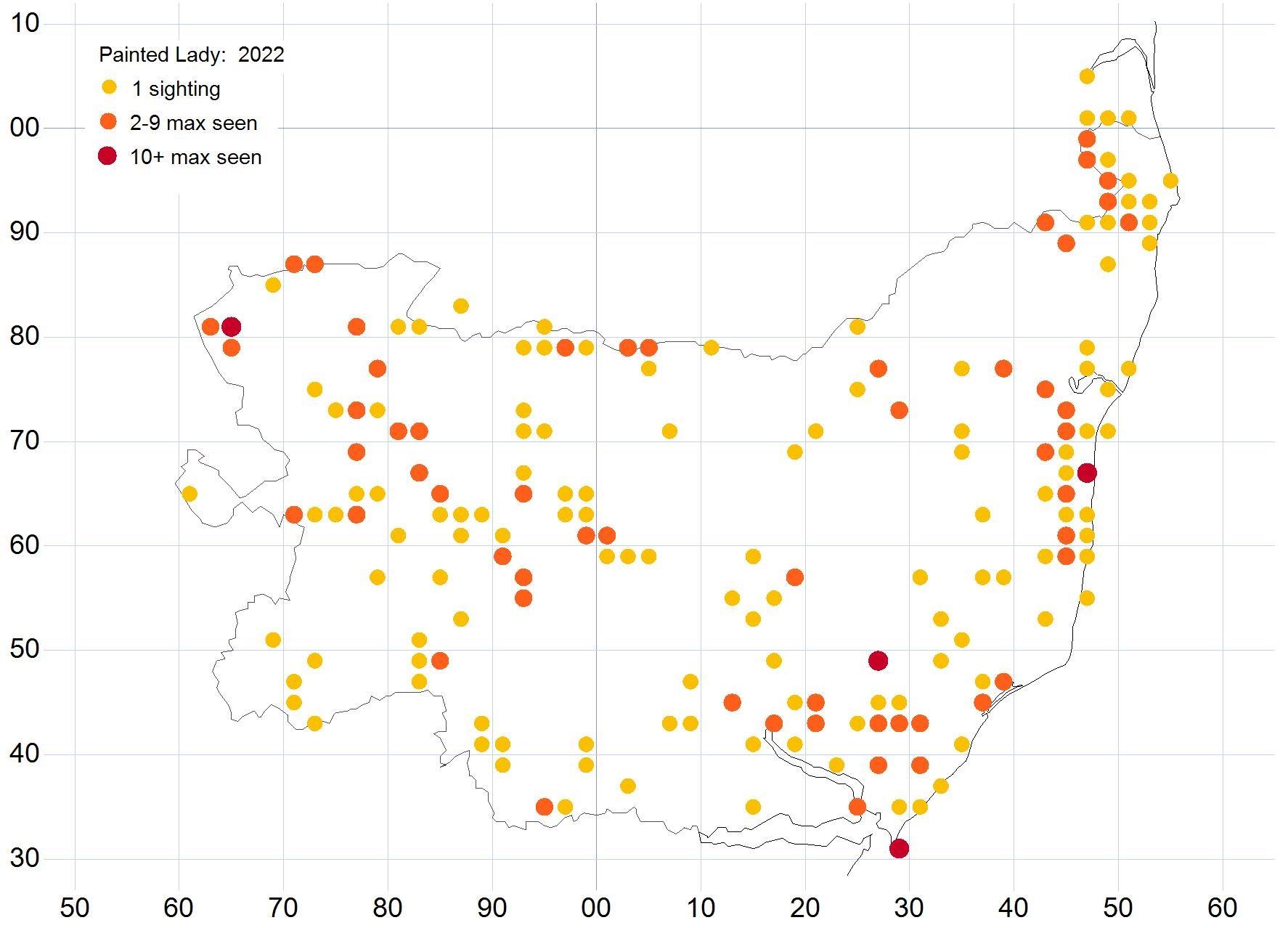
Painted Lady: 2022
Peacock: 2022
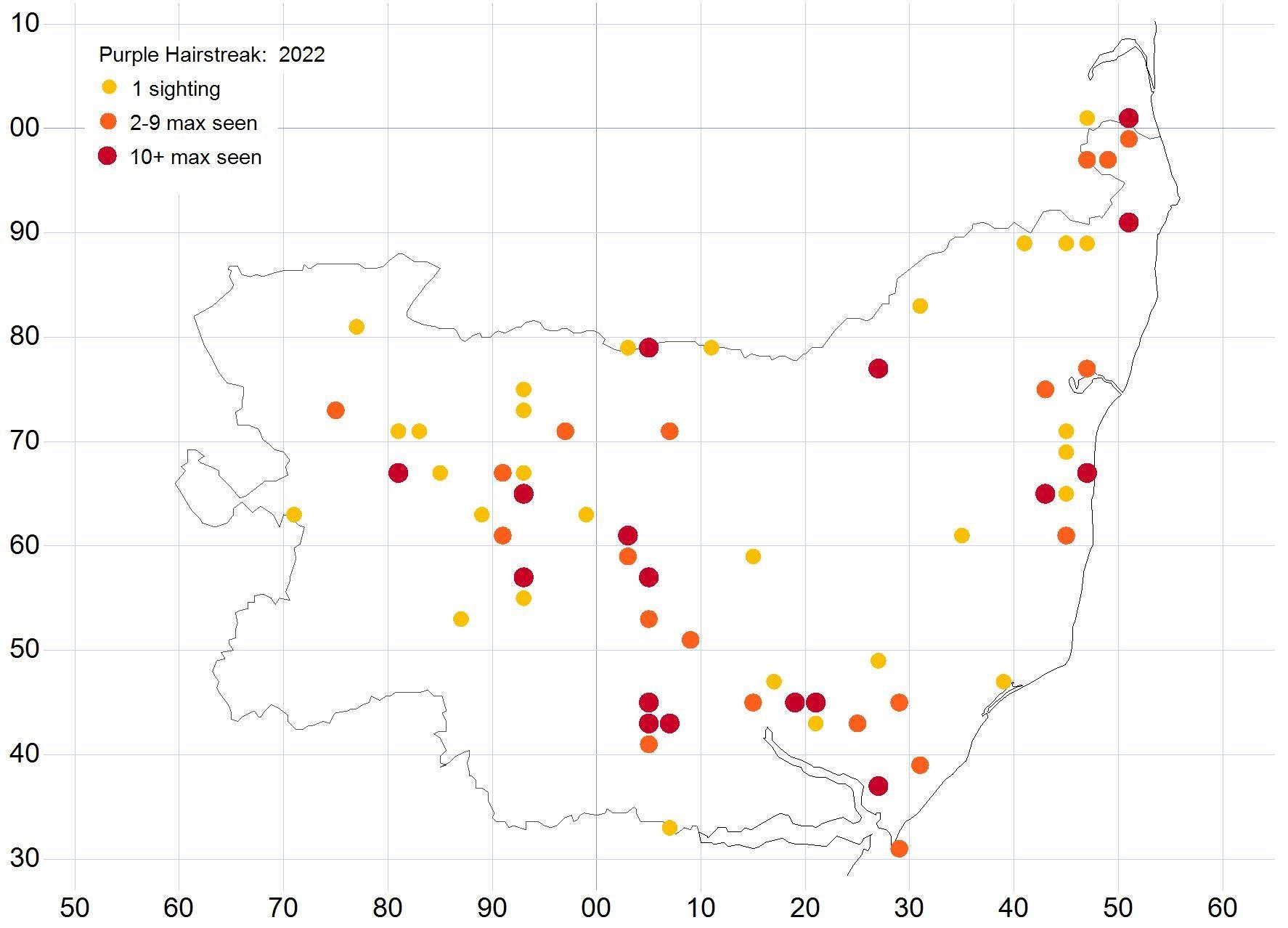
Purple Hairstreak: 2022
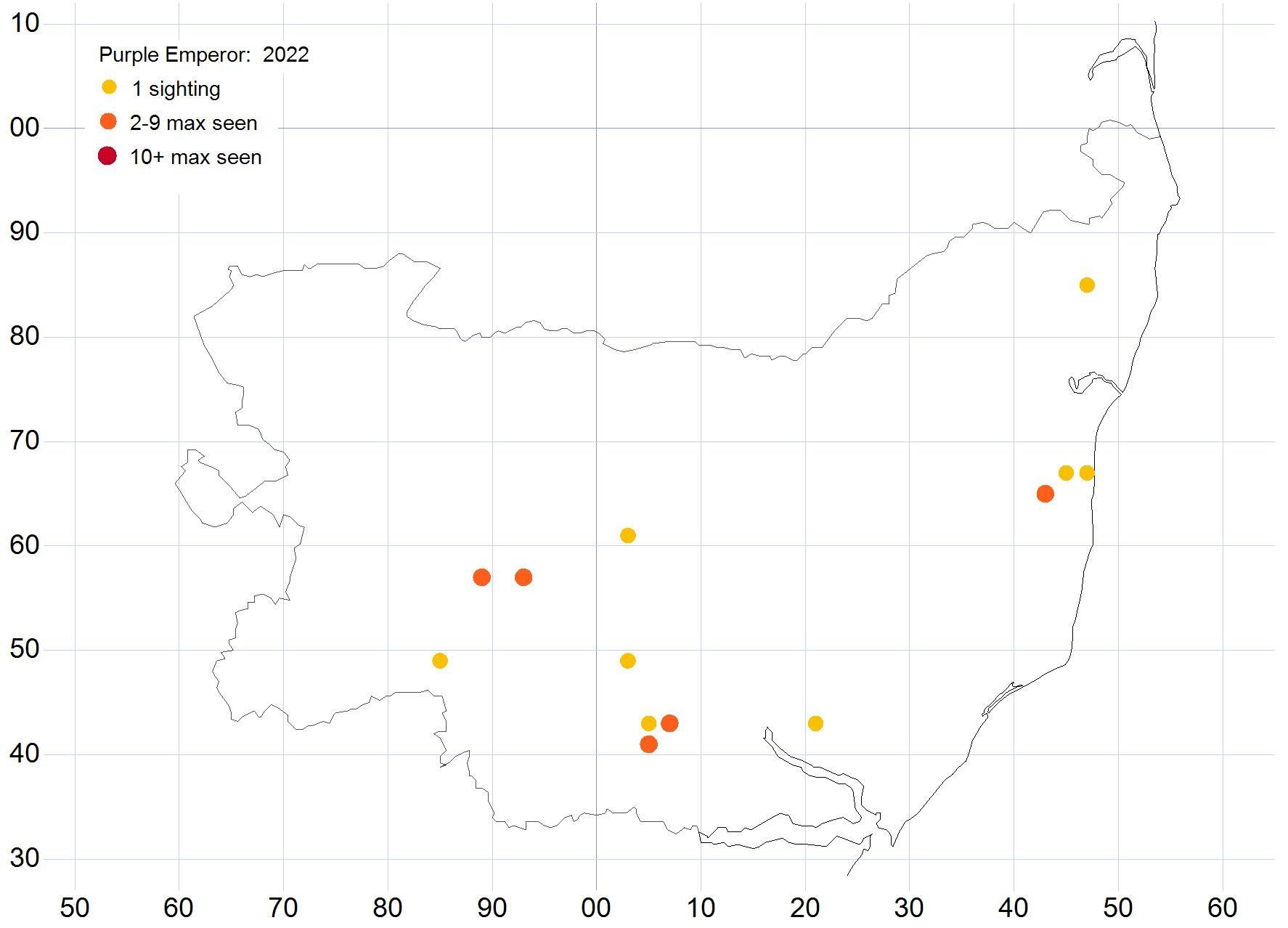
Purple Emperor: 2022
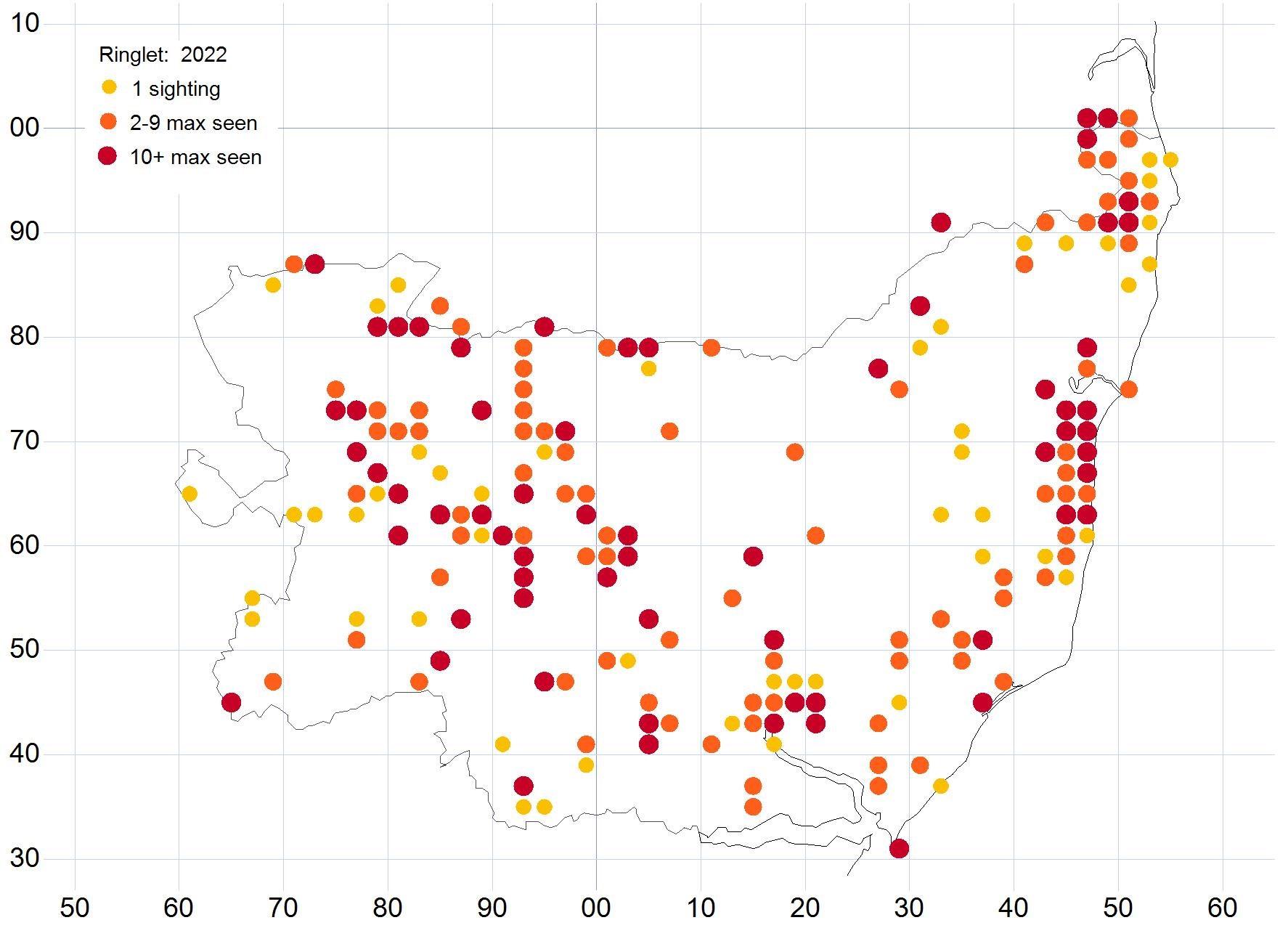
Ringlet: 2022
Red Admiral: 2022
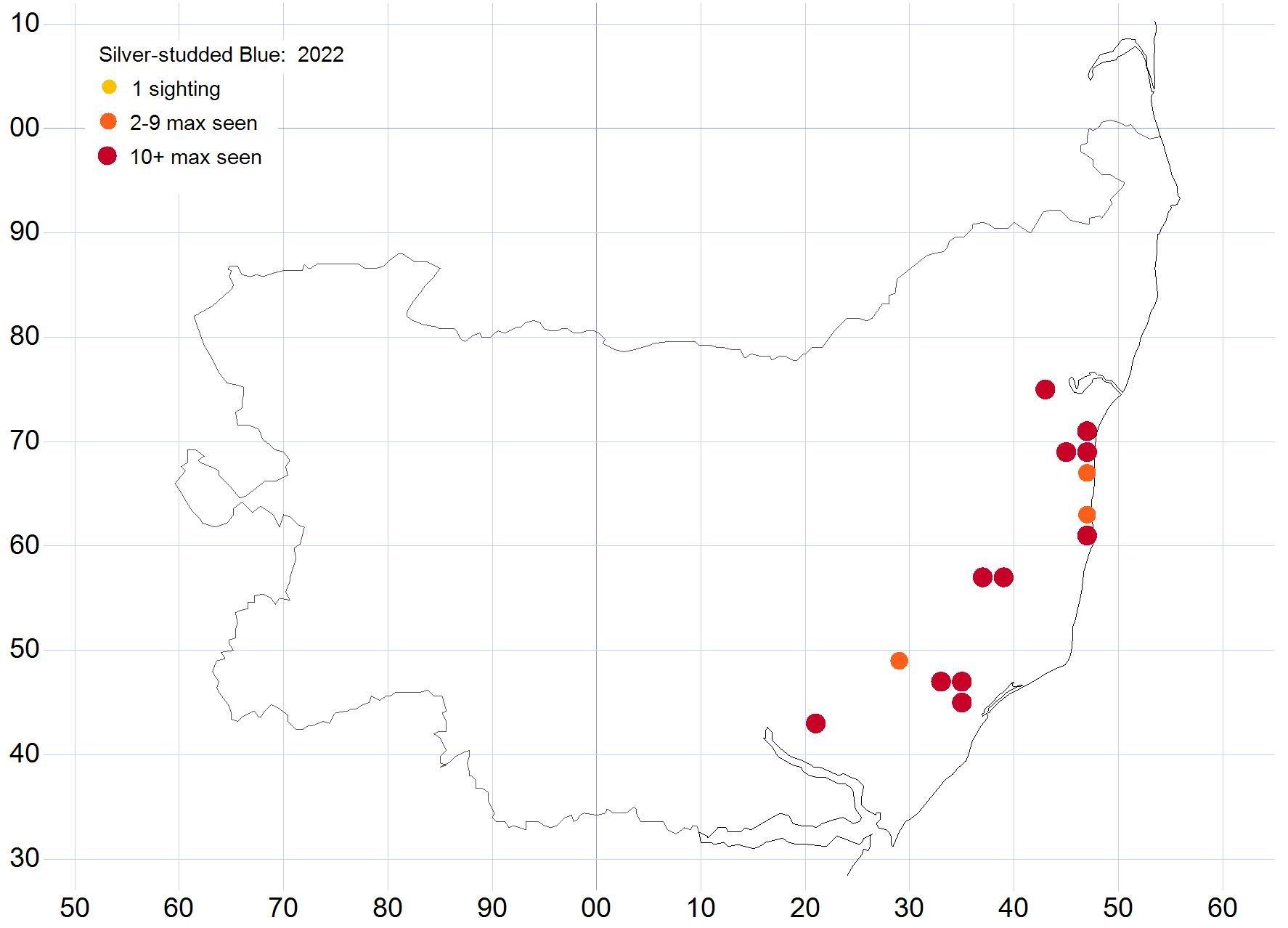
Silver-studded Blue: 2022
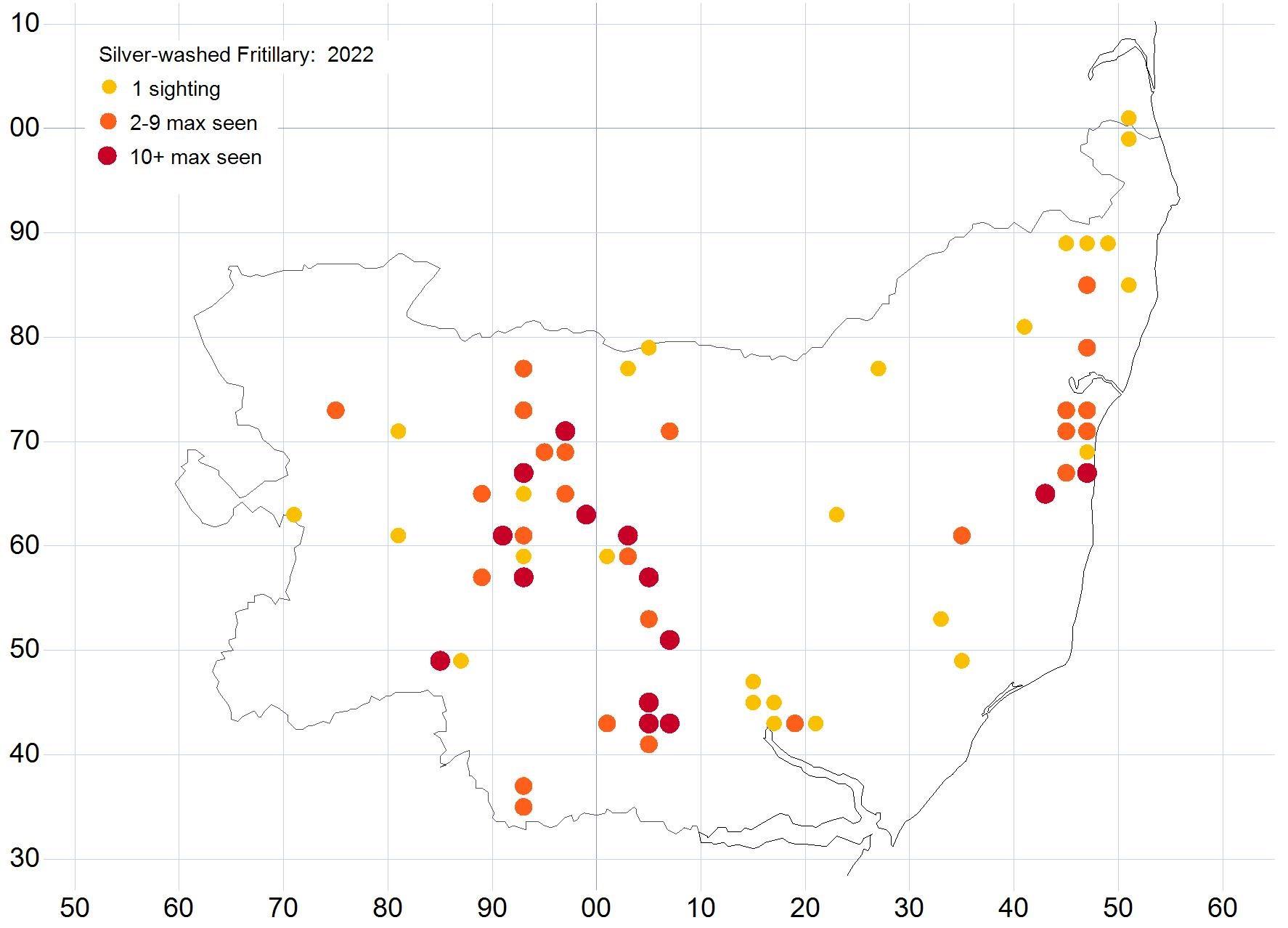
Silver-washed Fritillary: 2022
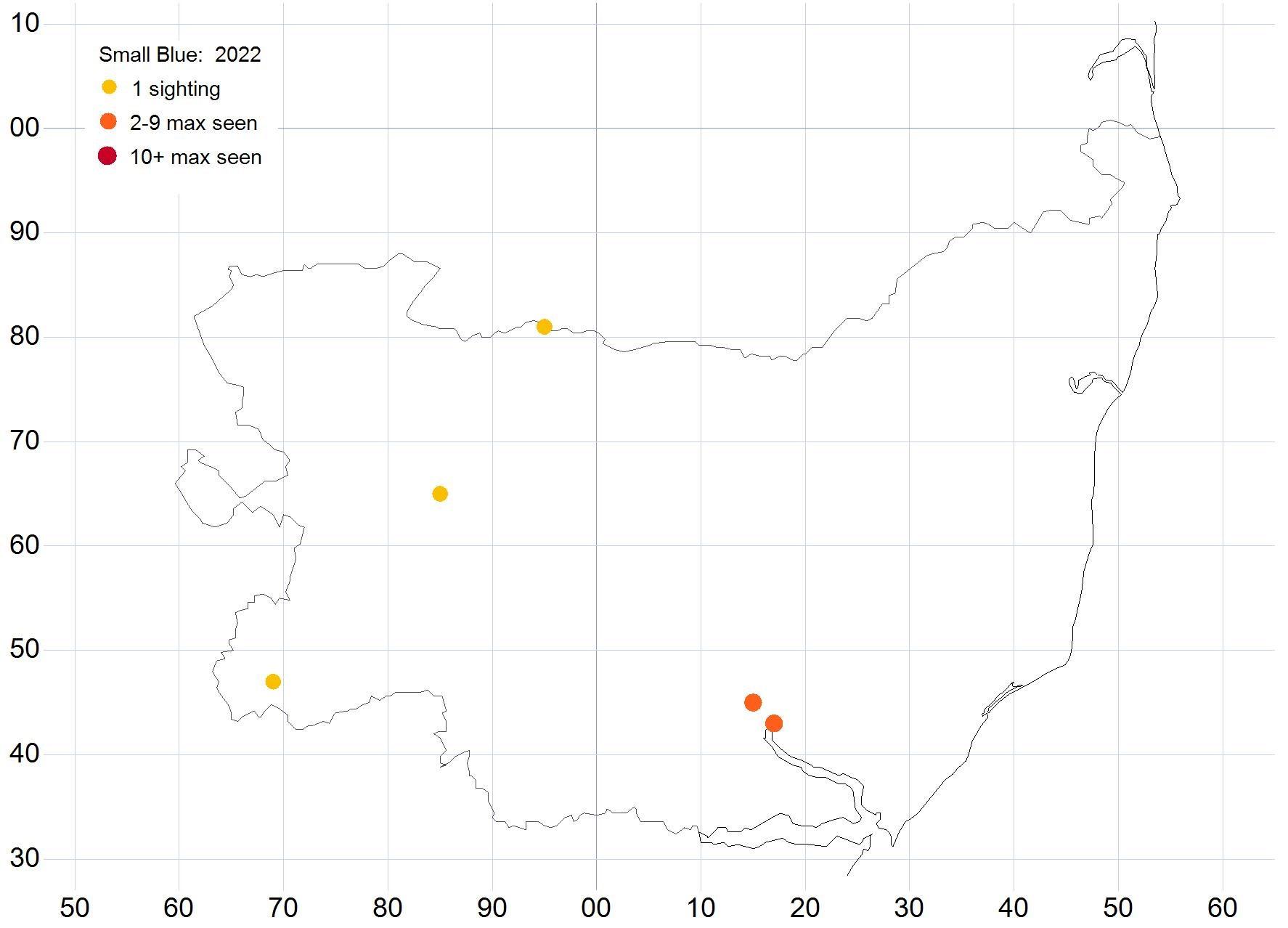
Small Blue: 2022
Small Copper: 2022
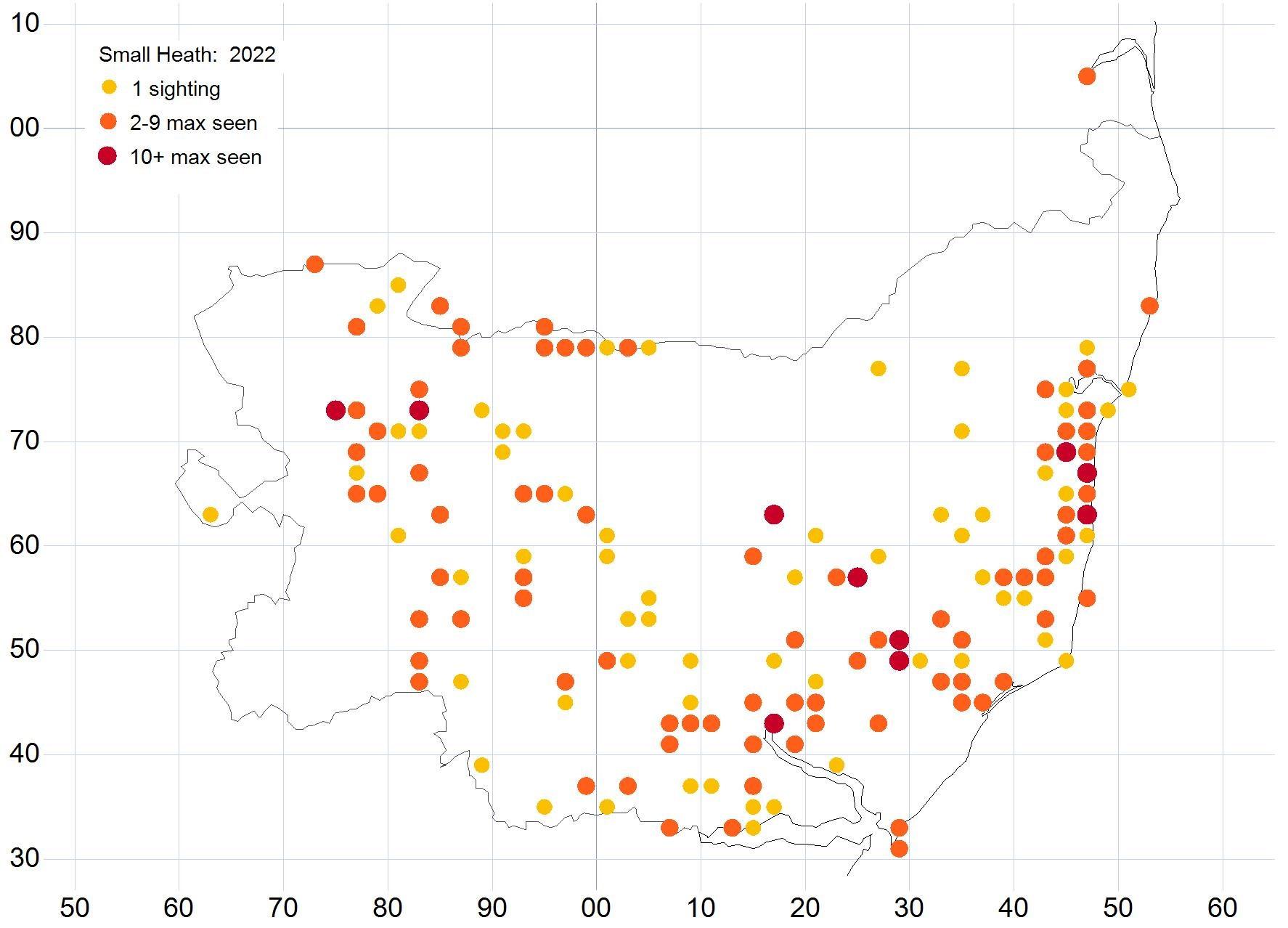
Small Heath: 2022
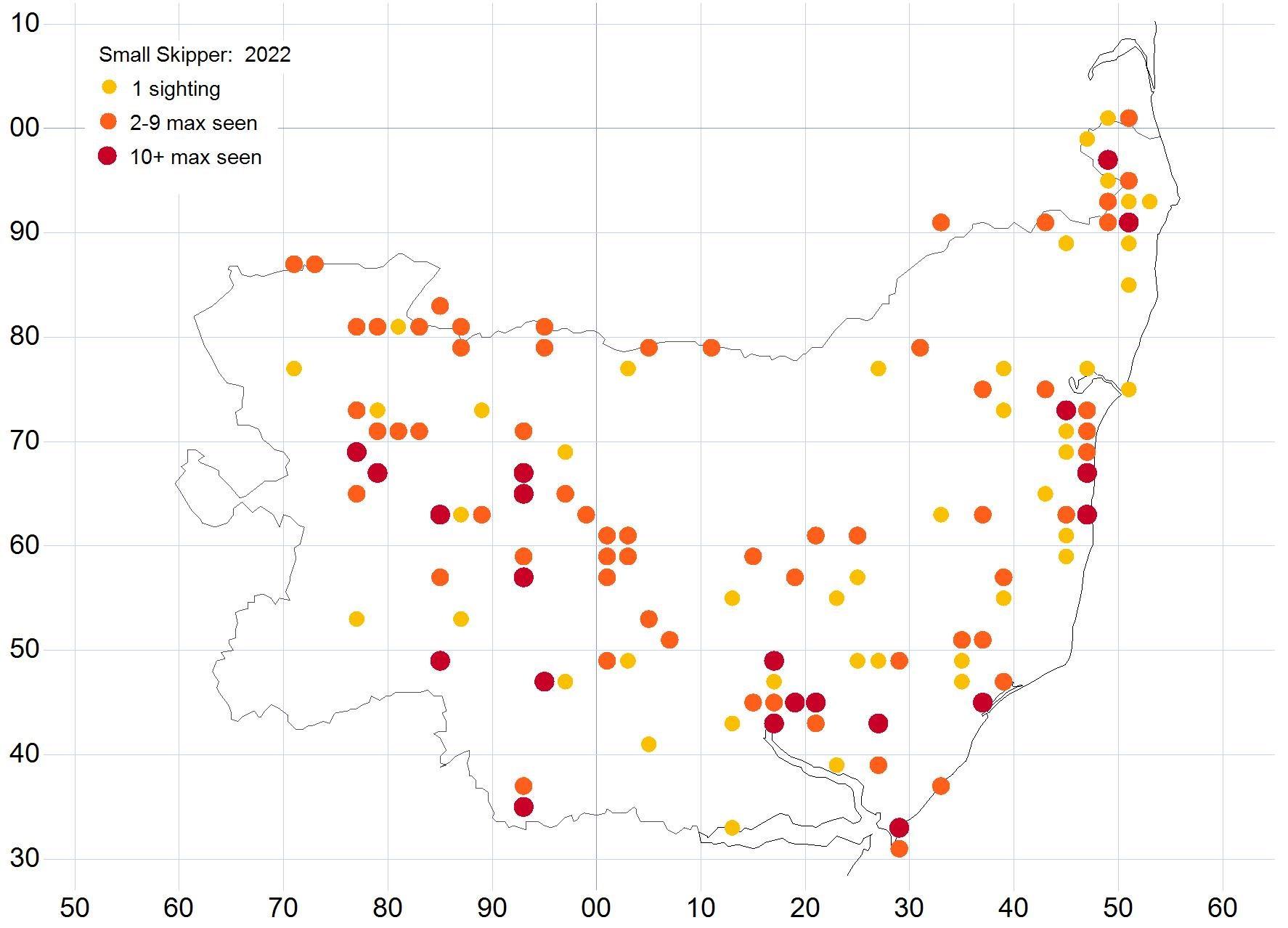
Small Skipper: 2022
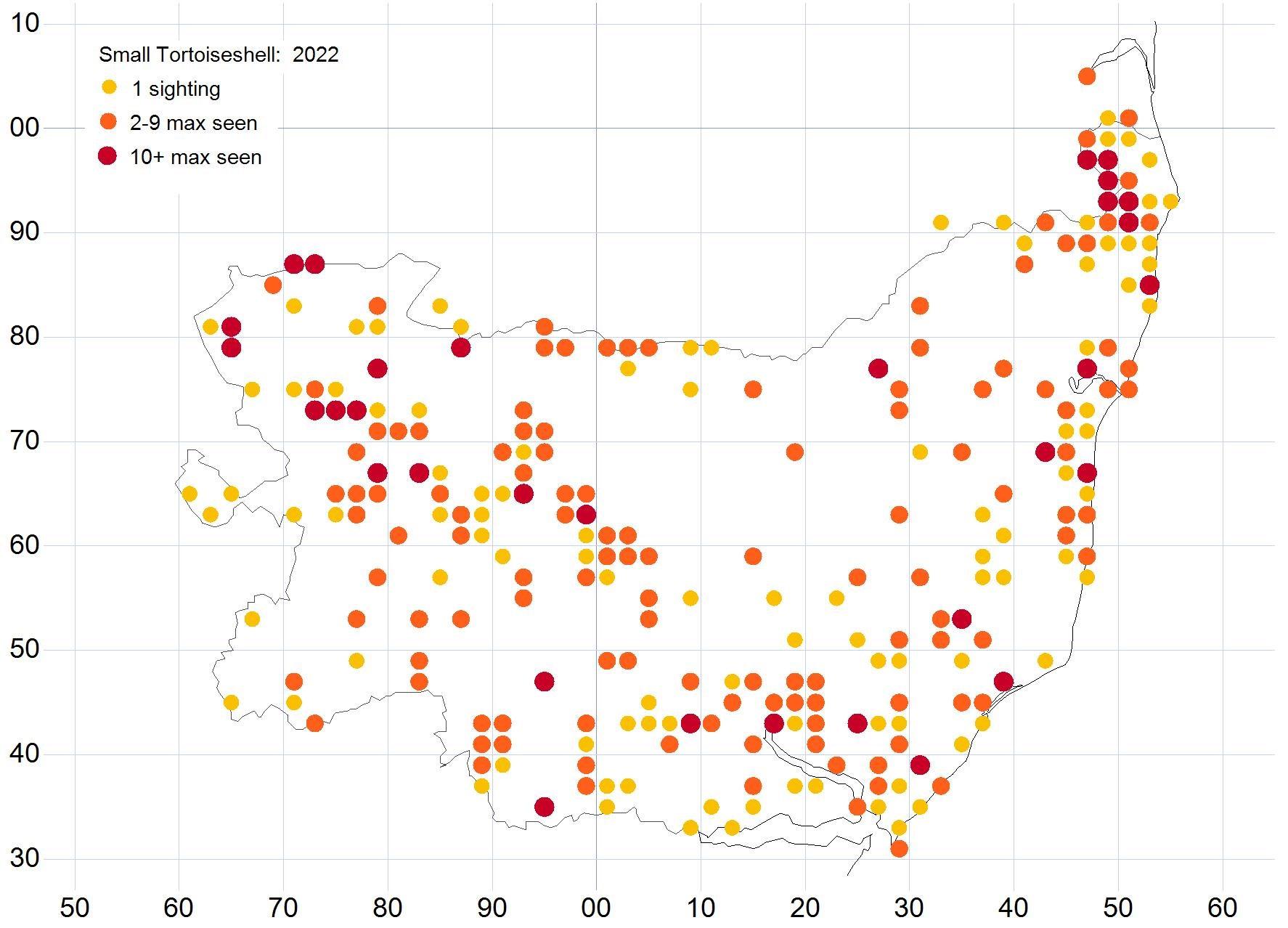
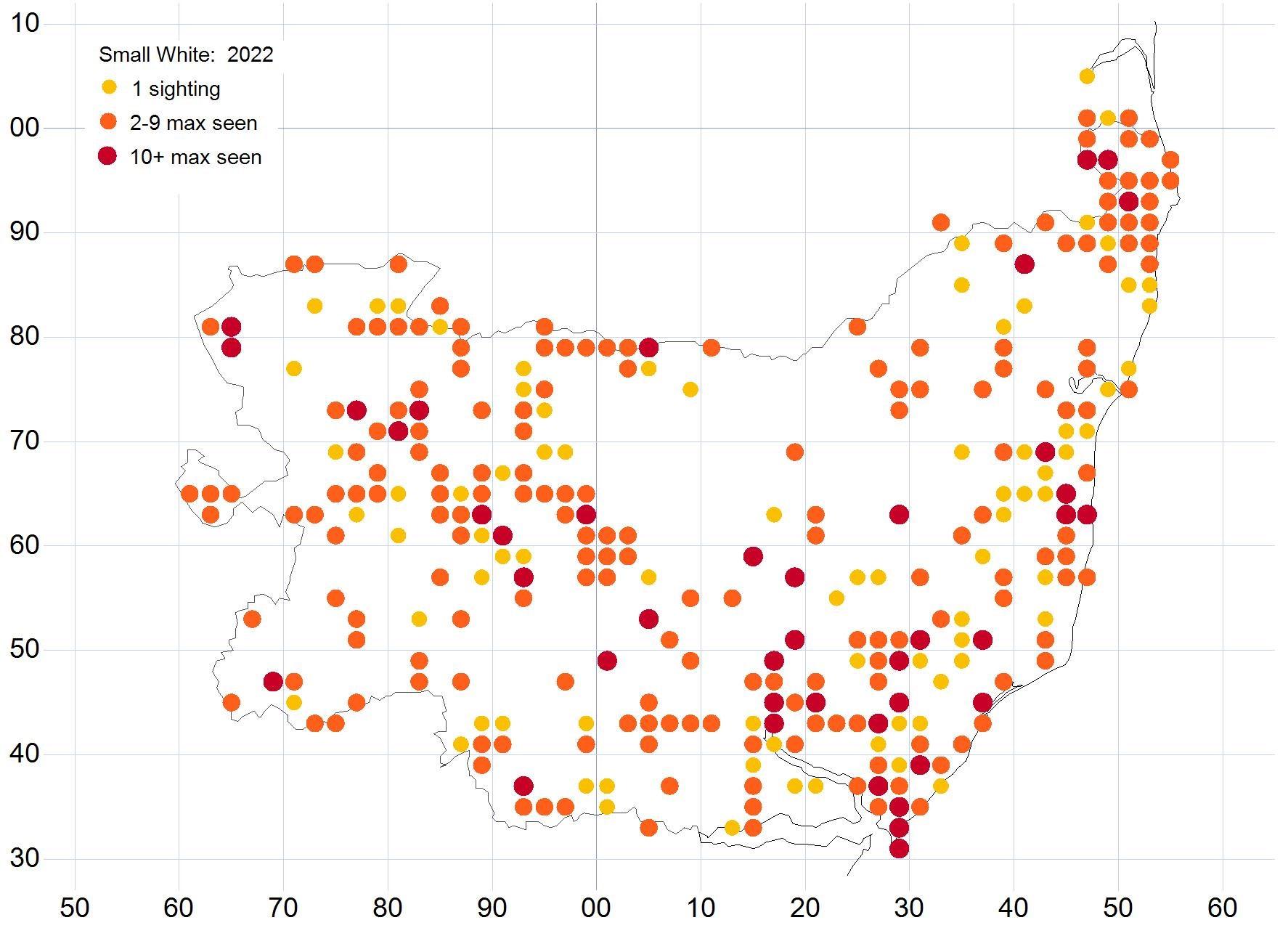
Small White: 2022
Small Tortoiseshell: 2022
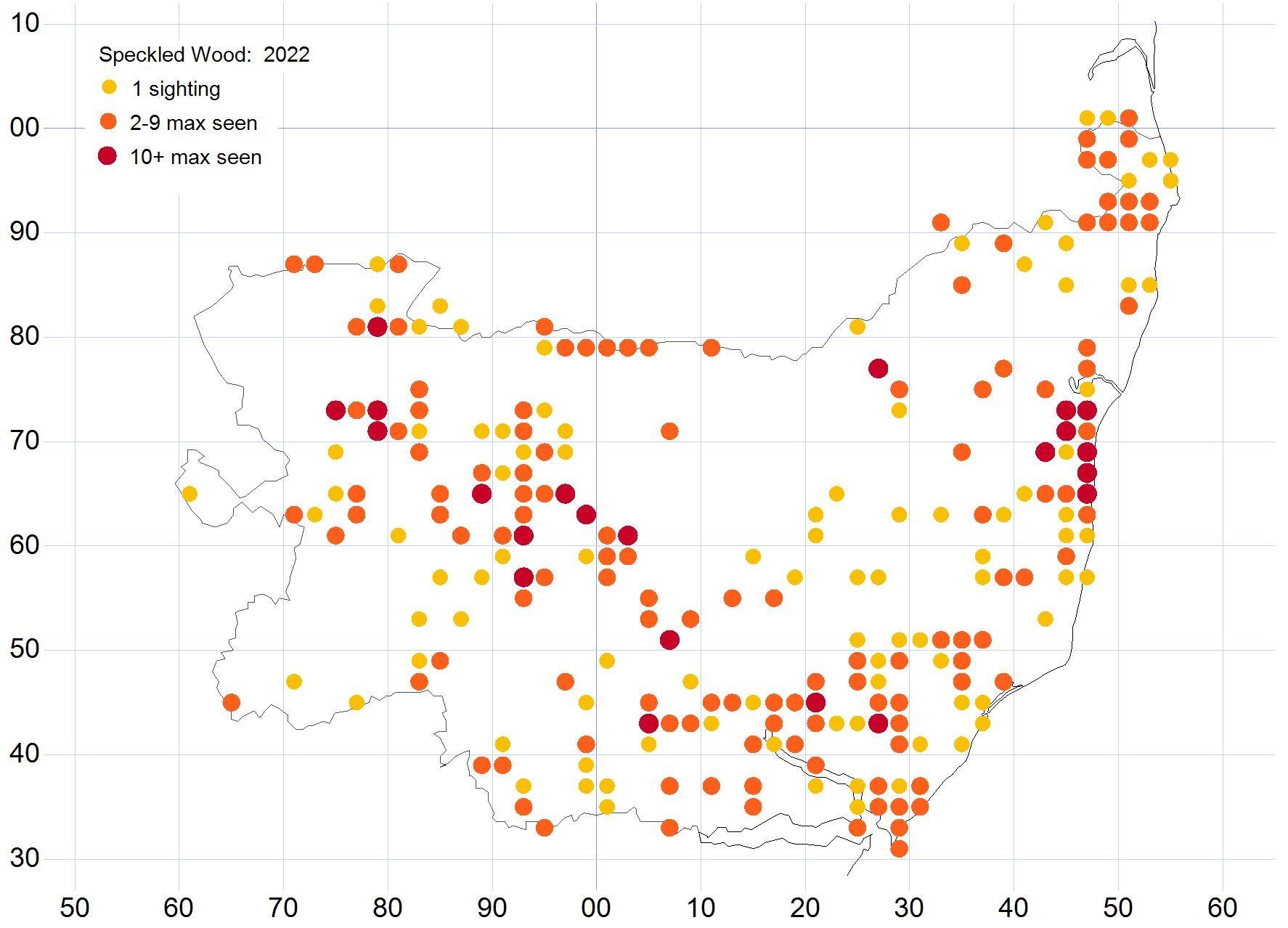
Speckled Wood: 2022
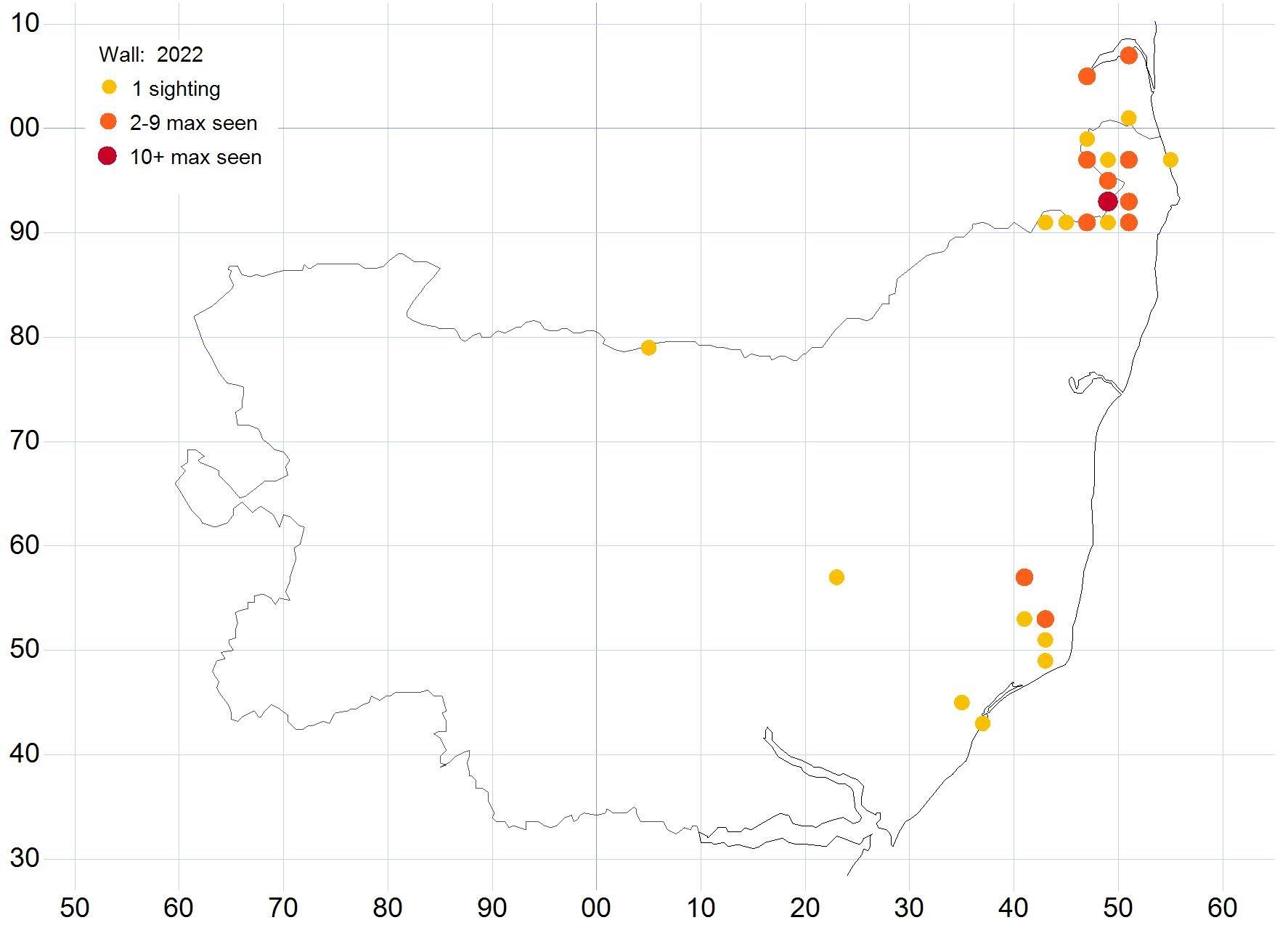
Wall: 2022
White Admiral: 2022
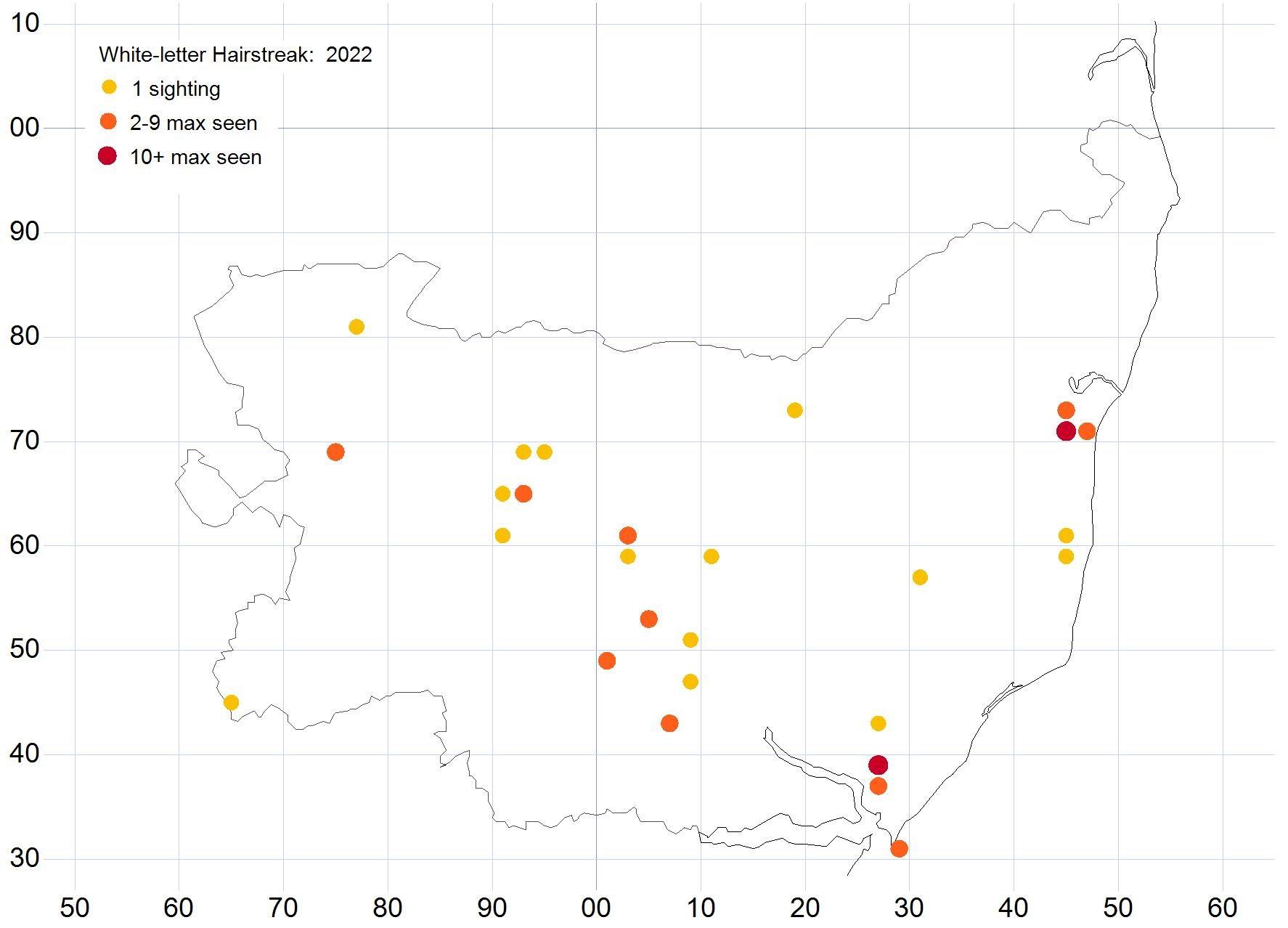
White-letter Hairstreak: 2022