GALL RECORDER’S REPORT FOR 2024 INCLUDING A FIRST SUFFOLK RECORD OF CONTARINIA ANTHOBIA (LÖW) (DIPTERA: CECIDOMYIIDAE)
JERRY BOWDREY
The consensus amongst various invertebrate specialists seems to be that 2024 has been a poor year for many species. In Suffolk, this is definitely the case for those that induce galls. As a consequence, one of the wettest winters on record has meant that only one new species was added to the Suffolk list of gall inducers.
Diptera: Cecidomyiidae (gall midges)
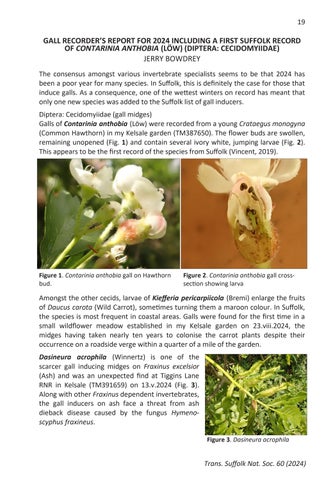
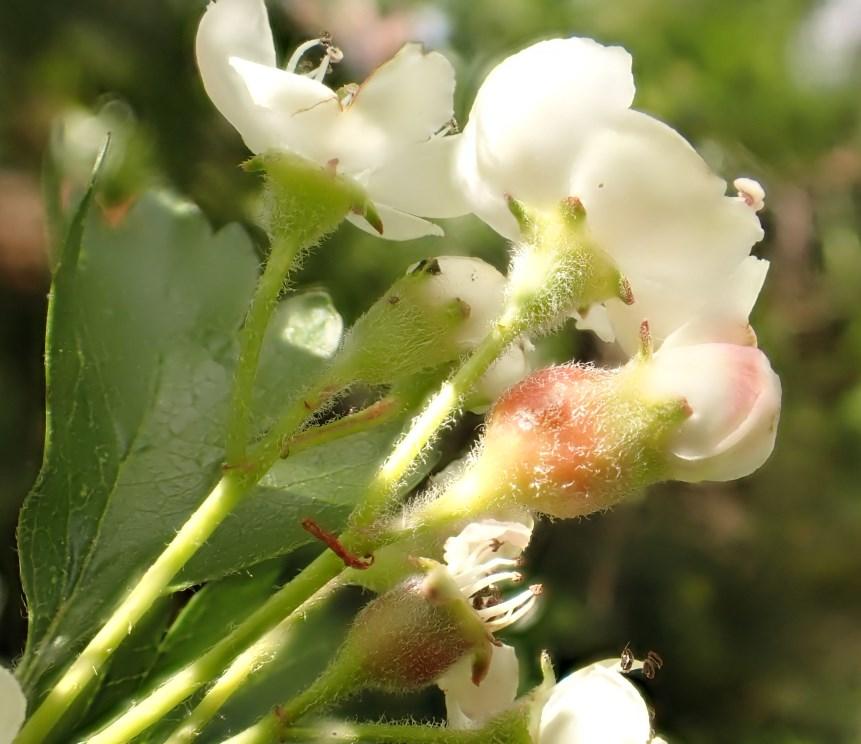
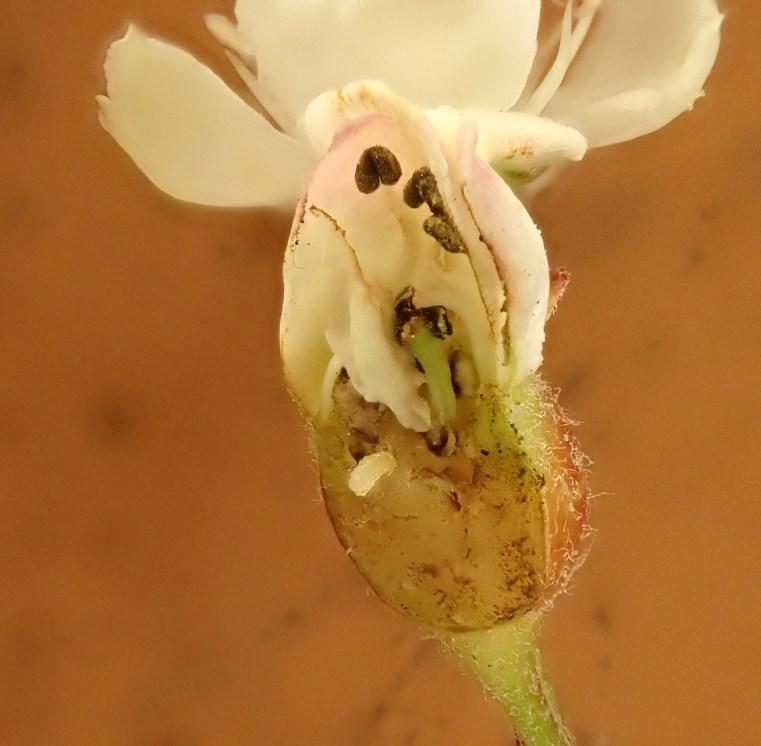
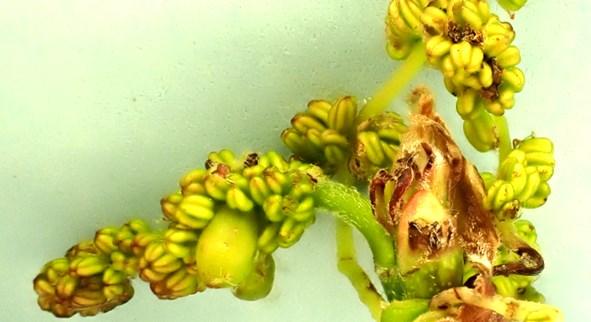
Galls of Contarinia anthobia (Löw) were recorded from a young Crataegus monogyna (Common Hawthorn) in my Kelsale garden (TM387650). The flower buds are swollen, remaining unopened (Fig. 1) and contain several ivory white, jumping larvae (Fig. 2). This appears to be the first record of the species from Suffolk (Vincent, 2019).
Amongst the other cecids, larvae of Kiefferia pericarpiicola (Bremi) enlarge the fruits of Daucus carota (Wild Carrot), sometimes turning them a maroon colour. In Suffolk, the species is most frequent in coastal areas. Galls were found for the first time in a small wildflower meadow established in my Kelsale garden on 23.viii.2024, the midges having taken nearly ten years to colonise the carrot plants despite their occurrence on a roadside verge within a quarter of a mile of the garden.
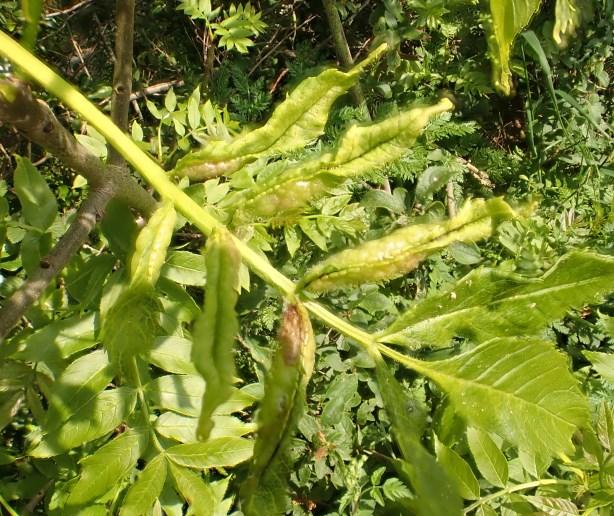
Dasineura acrophila (Winnertz) is one of the scarcer gall inducing midges on Fraxinus excelsior (Ash) and was an unexpected find at Tiggins Lane RNR in Kelsale (TM391659) on 13.v.2024 (Fig. 3).
Along with other Fraxinus dependent invertebrates, the gall inducers on ash face a threat from ash dieback disease caused by the fungus Hymenoscyphus fraxineus.
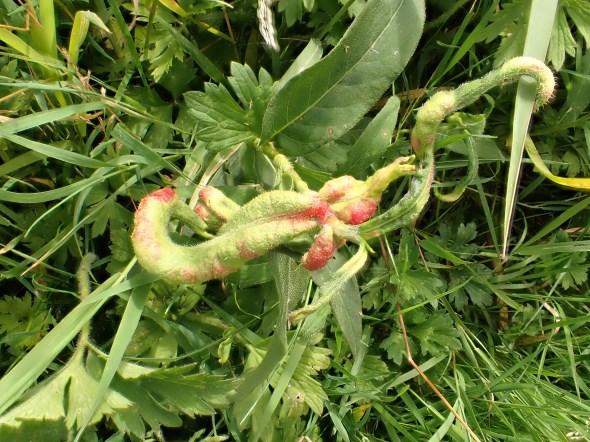
The Bioblitz at Halesworth Millenium Green (TM3877) on 20.vii.2024 produced some fine galls of Wachtliella persicariae (L.) (Fig. 4) on a Polygonum sp. growing in marshy ground. Also found was Rhopalomyia tanaceticola (Karsch) galling flowers of Tanacetum vulgare (Tansy).
Hymenoptera: Cynipidae (gall wasps)
As noted above, the wet winter had a severe effect on gall abundance, especially noticeable was the shortage of galls of the spring sexual generations of oak cynipids, with the exception of Biorhiza pallida (Olivier) (oak apple) which was again frequent. By late summer this decline had been reversed with asexual generations of the commoner spangle galls (Neuroterus spp.) being especially numerous.
The cryptic sexual generation gall of Andricus quadrilineatus Hartig is much more difficult to locate than that of its asexual generation, both occurring on the catkins of Quercus robur (Pedunculate Oak). In addition, galls of the asexual generation may also occasionally be found on leaf veins. The two generations often overlap, with galls of both generations being found together at the same time. On 28.iv.2024 both galls were found together at Kelsale (TM386654) (Fig. 5).
5. Andricus quadrilineatus sexual and asexual galls on oak.
Galls induced by cynipids of the genus Cynips have been very scarce in the eastern counties for the past ten or so years. This is probably a normal fluctuation in numbers, also noted by early workers such as Niblett (1940) (as Diplolepis) and may be the result of high levels of parasitism.
It is pleasing to record that galls of the asexual generation of Cynips quercusfolii (L.) are showing signs of a comeback in Suffolk with good numbers of cherry galls of the asexual generation being recorded at coastal sites. Adrian Parr also had several records from the west of Suffolk. Other Cynips species remain elusive, although C. longiventris Hartig is showing a slight increase.
As always, I am pleased to receive records of Suffolk galls, or specimens for identification.
Acknowledgements
Once again, I am indebted to Adrian Parr for his comprehensive list of Suffolk cynipid galls recorded in 2023. Thanks also, to Nicky Rowbottom for organising the invertebrate bioblitz at Halesworth.
References
Niblett, M. (1940). Some notes on the cynipid GenusDiplolepis. Entomologist 73: 145-149. Vincent, P. (2019). The Diptera of Suffolk. Part 2. Trans. Suffolk Nat. Soc. 55: 1-27.
Jerry Bowdrey
10, Dennys Lane, Kelsale, Suffolk IP17 2PD jeremybowdrey@btinternet.com