
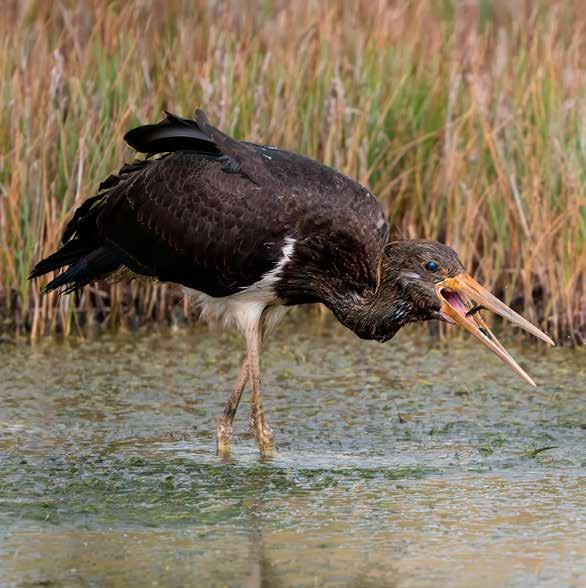


John Kornjaca
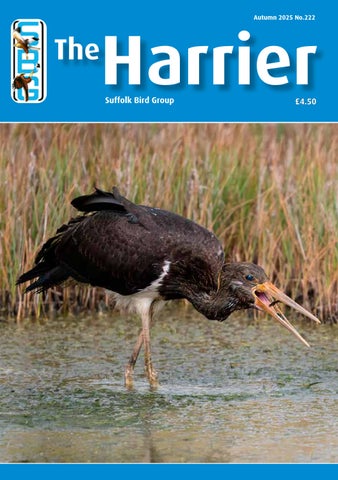
John Kornjaca
The long, dry summer is slowly coming to a close and our autumn passage migrants are making their way south. An exciting time of the year for birders, I hope that you are able to enjoy your walks and may add to your lists with the increased variety of species that, for a short period of time, shall be available in the county.
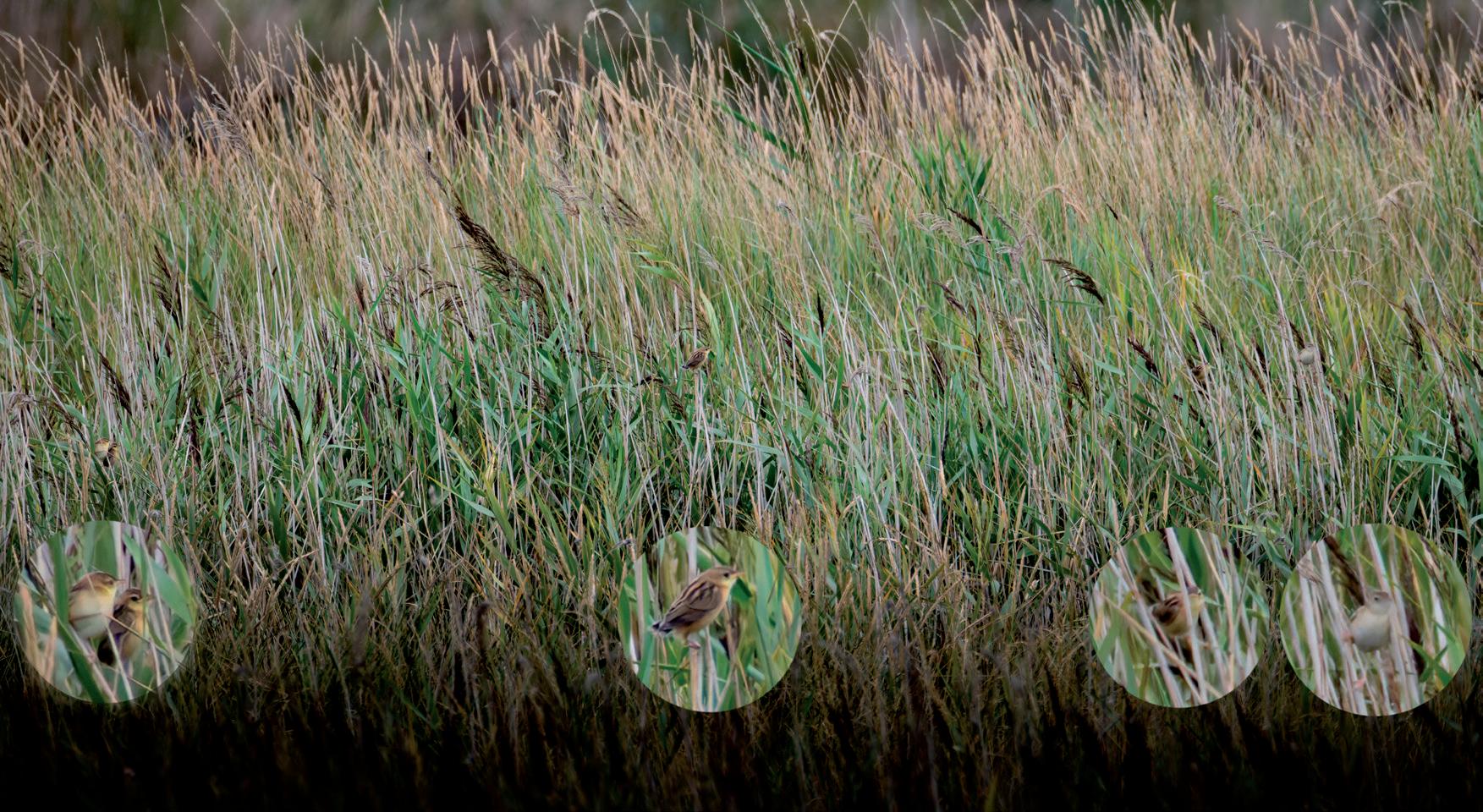
Exciting news received in early August was the discovery of the first ever ZITTING CISTICOLA (Cisticola Juncidis) for Suffolk at the Walberswick NNR by Matthew Denny – an account of its discovery is contained within these pages. Having viewed the ‘ZC’ myself in early August I was surprised to see that aside of regularly sitting atop a clump of buckthorn or the nearby low fence, the bird often disappeared into the same patch of sedge some 100 metres to the north. Suspicions aroused. A couple of weeks later and the sighting of up to four fledglings confirmed the first ever breeding record of the species on the UK mainland.
Playing second fiddle to the ZC, the immature BLACK STORK (Ciconia Nigra) that had appeared south of RSPB Boyton Marshes has attracted birders from across the region. Another rarity for Suffolk with only a dozen sightings of this species in Suffolk in the last 25 years, this strangely confiding bird has now been observed feeding in pools at Boyton for several weeks.
More good news was the recent announcement from the RSPB of the successful breeding of MONTAGU’S HARRIER (Circus Pygargus) in a wheat field in neighbouring Essex. Four youngsters have fledged – the first successful breeding of the species in the UK since 2019.
Here in Suffolk, SBG have continued with the published outdoor programme and a half dozen trip reports are contained in this latest edition of The Harrier. If you are able to attend any of the future excursions and have photographs taken on the day, perhaps you would be willing to share them by sending a selection in to The Harrier? All you have to do is email them in, showing the location, date and species name. Thanks.
Happy birding to you all.
An early riser, I have been heading out to Benacre on most mornings as was the case on Sunday 3rd August. As usual I was sifting through the waders and terns at about 0655h. One of the features of being in the remote wilderness that is Benacre Broad, is the intermittent mobile telephone signal and so it was while on my walk back toward Covehithe that I picked up a message.
The message was from Matthew Denny and was relayed to me via Pat Lancaster, who lives in Walberswick. The message read:
‘Just had what might be a Fan-tailed Warbler on the Walberswick marshes’.
A second message pinged in to my mobile providing details of the location:
‘…the large Buckthorn patch south of the beach huts.’
(an area that I know well as I have often dreamt of finding something in it!).
It was still early and so I decided to head down to Walberswick, although I have to admit to feeling more than a little scepticism. I did not know Matthew and the ZITTING CISTICOLA (as ‘Fan-tailed Warbler’ is now known) would be a ‘first’ for Suffolk and only the 10th ever sighting for the UK.
Driving down to Walberswick, I received a further message from Pat containing an audio recording. Although I could not hear it very well in the car, excitedly I thought that it did sound like the call of ZITTING CISTICOLA. I forwarded the message to David Walsh and Peter Kennerley. Both responded positively stating that it sounded ‘promising’. As I arrived at Blythburgh I listened to the audio
recording more intently and I too could hear what was indeed a regular ‘zitting’ call.
Pat was also heading down to the marshes for a look and we met up briefly near the black beach huts. I apologised to her, after all there was little time to chat as I wanted to push on to the site some 800 metres down the beach to ascertain if the bird was still present.
Upon reaching the Buckthorn patch I put my head up above the shingle ridge looking in to what is known as Corporation Marshes. Instantly I heard three ‘zips’ (zit-zit-zit) that sounded like the bird. The calling stopped. I noted several young Reed Bunting calling from the bushes (tseep-tseep-tseep) and, a Meadow Pipit called out too. I needed to be sure.
Prior to alerting the birding community, I waited. I had to see the bird and, to try and get an audio recording myself. Pat arrived and the bird suddenly picked up out of the reeds and performed its jinking flight song, calling ‘zit-zit-zit’ as it went. While basically a dot in the sky, I knew it to be a ZITTING CISTICOLA!
Since both Pat and I had now seen it and had established its location, I messaged Lee Woods of BINS and waited.
I again watched it in flight a couple of times as it moved from the Buckthorn patch to the grasses c.100m north and back.
As other birders arrived it continued to show, often in the taller reeds along the old footpath at 90m distance, but sometimes closer.
As more and more Suffolk birders began to arrive it flew 300m away towards Walberswick. However, it returned and performed for all of those that were patient enough to wait. Many were able to pick out its song above the sound of the crashing waves on the beach and, the strong breeze blowing in from the east rustling the reeds and grasses.
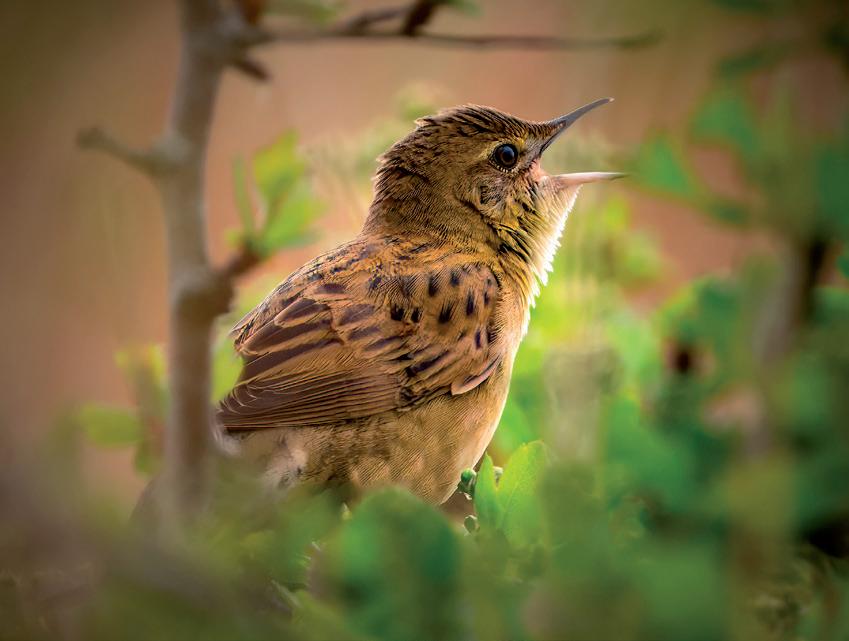
I managed a few photos of the bird in flight, the images showing more detail than I had seen in the field. A few more were taken the following day where I observed it perched for the first time. It was typically small, about the same size as the juvenile Sedge Warblers it sometimes chased about the reeds, with rounded wings and dark streaked crown and mantle. When perched, a relatively plain face with a pale eye ring was apparent, with orange hues to the neck and rump and white tips to the tail feathers that were often fanned as it flew or hovered above the grasses.
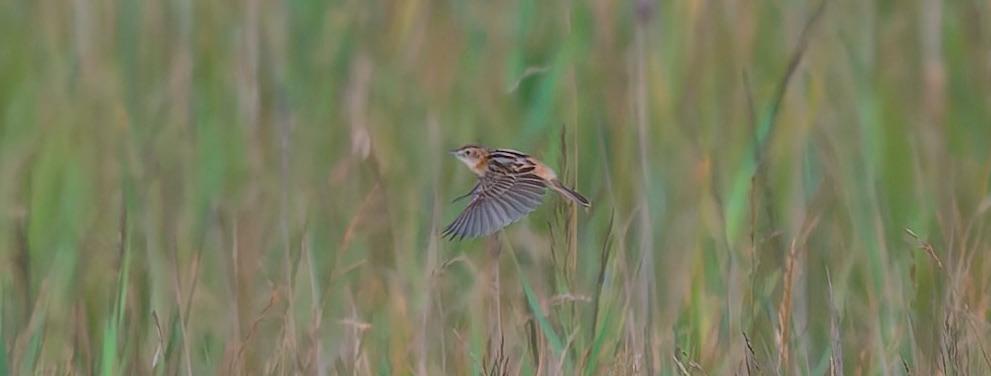
Footnote: On 17th August 2025, a family of four fledglings and two adults were seen and photographed on the site. This confirmed the first ever breeding of Zitting Cisticola on the mainland of UK.
Jeremy Evans
My boat is moored at Ramsholt on the river Deben on the south-eastern side of the fairway and I sail almost every week. Through the early spring, I noticed a small bird hanging around the bow of the boat, but not being a birder didn’t think much of it. I assumed that it was taking a rest on board the boat.
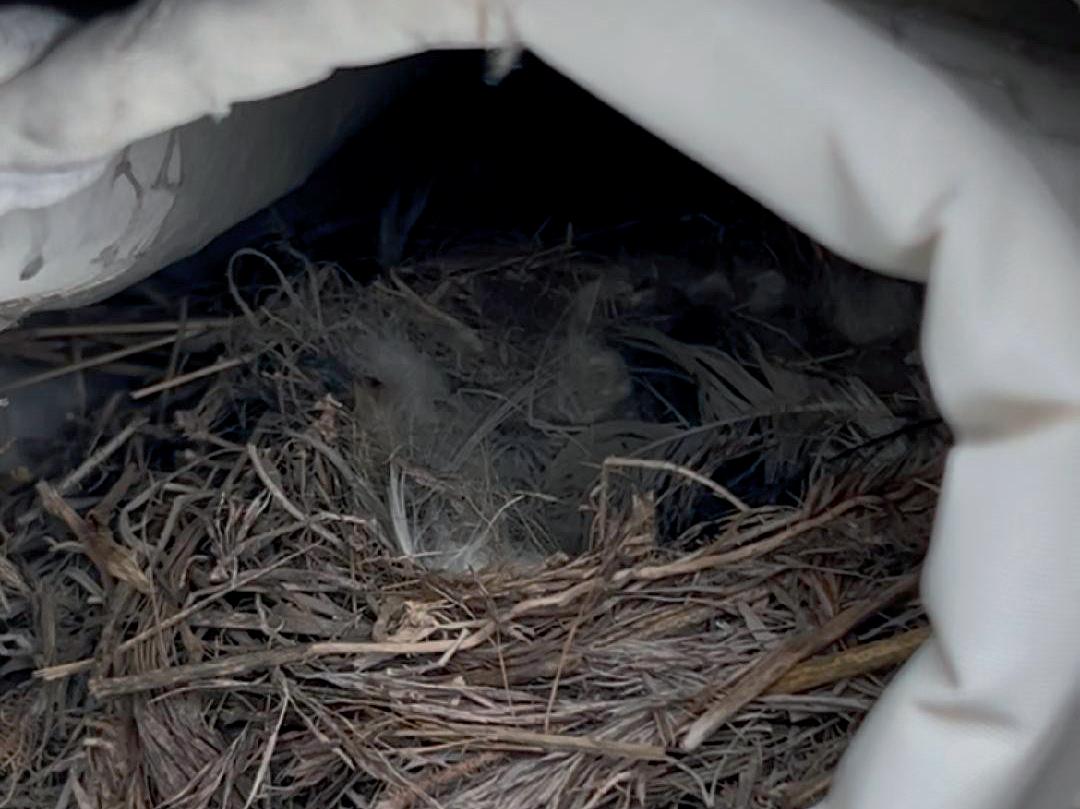
On the 8th May I went out sailing and after about three hours turned and headed back to the mooring, under engine. While tidying up the mainsail at the mast, I noticed something inside the rolled folds of the sail where it sits on the boom. Peering inside, I could see a birds nest!
There were no eggs inside as far as could be seen, but not wishing to disturb it, decided to leave the nest alone. Back on the mooring, I tidied up and left. As I did, a Pied Wagtail appeared and landed on the bowsprit.
The next opportunity that I had to sail was Thursday 22nd May and when I arrived at the mooring the adult bird was again on board. I set off under sail. I used only a reefed sail and thank goodness I did so since the nest was inside the roll of the bottom of the mainsail. Had I unfurled it, the nest and contents would have been swept overboard.
Still not exactly appreciating the situation, I continued sailing for a couple of hours before heading back to the mooring. As I approached the mooring my sister, who was at the mast, said she could hear a tweeting noise. Just then a Wagtail (mother?) came darting around the boat calling out.
We stowed everything and walked up and took a video into the rolled mainsail. Only then could we see two little chicks, one with closed eyes that looking younger and,
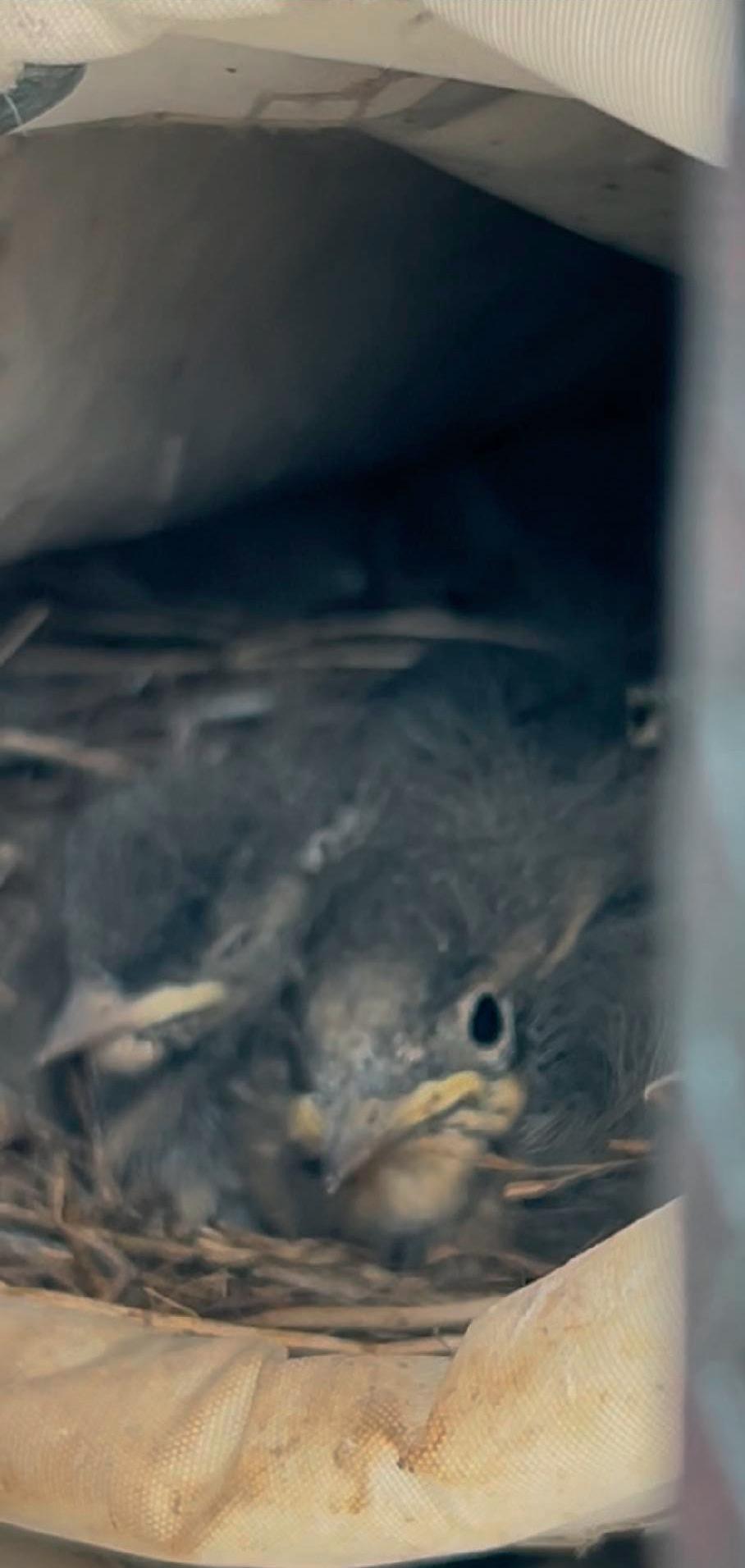
another that was wide-eyed and nearer the camera lens.
As luck would have it, we were unable to sail for the next three weeks because of half-term holidays. I hoped that the birds would fledge in that time and asked around the sailing community about the likely impact on the sails. I was assured that there would be little or no damage other than perhaps a little discolouration.
I had planned a weekend solo cruise for 14th June and was frustrated to discover the ‘gang’ had not gone but, in fact, had doubled in size. Now there were four little faces looking up as I prepped the sails. And so, instead of heading off on an adventure cruise, I stayed and took very short trips of an hour and a half or so, before returning to the mooring. Even so, I was worried about causing disturbance to the family of Wagtails on board - and I had. A little juvenile Wagtail suddenly appeared on the deck. I went below and hid for two hours but when back on deck could see that he was still there. Perhaps he had fallen from the nest and was unable to fly? Deciding to take it some food I got within about three feet of the bird, and then discovered that it could fly very well and it darted away to the next boat about one hundred yards away.
The following week there was no sign of them and we were rather worried that perhaps we may have scared the parents away. The next week (3rd July) peering into the roll of mainsail I could see nothing. Steeling myself for the sight of three dead chicks, I carefully unrolled the full mainsail. There was the nest and it was clearly free of any of the occupants. Thankfully there were no bird remains.
Relieved, I happily washed down the sail, it had browned slightly, and disposed of the empty nest. It fell apart as I picked it up and I was pleased to note that there were no man-made fibres or plastics in the nest. Our four little Pied Wagtails had successfully fledged on my boat.
Hurray!
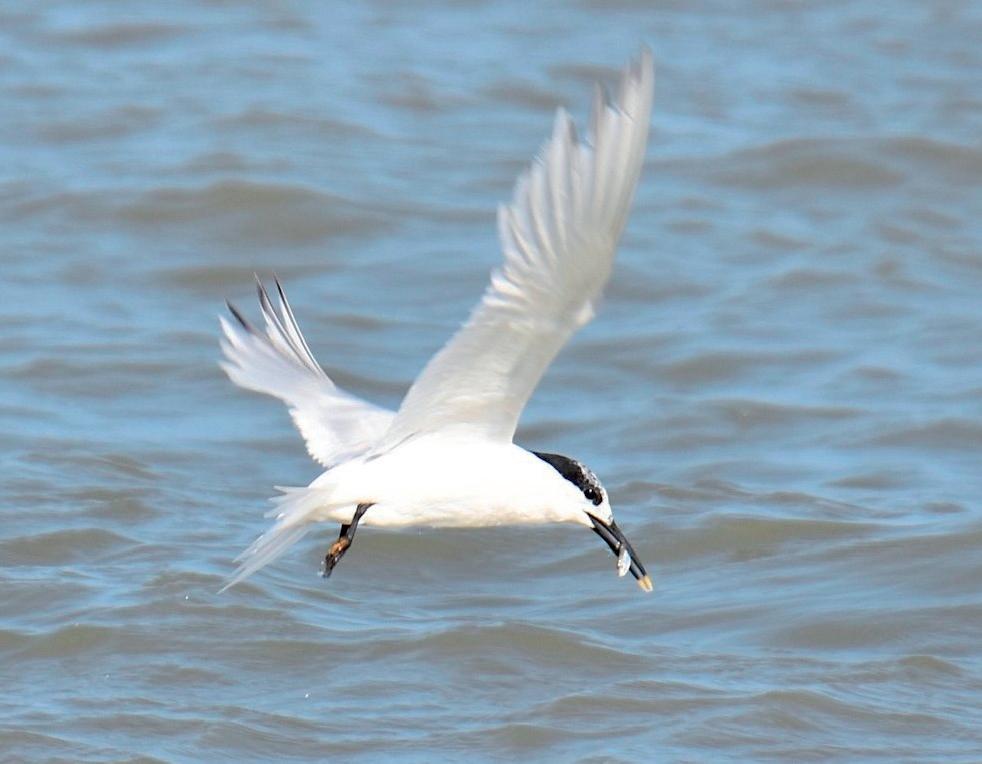
RSPB Minsmere has recorded its largest number of fledglings of SANDWICH TERN, a threatened bird species, in half a century. At least 205 chicks were counted this summer - the most at the site since 1974. At one point, there were over 800 birds counted on the scrape and 296 pairs nested. Sandwich terns were close to extinction in the 19th Century due to hunting for the hat trade and the collection of their eggs for food.
Sandwich Terns are classed as a vulnerable species in the UK due to declines in population numbers and because they breed at only a few sites.
The RSPB have worked hard to attain this significant result at RSPB Minsmere, with the erection of anti-predatory fences around parts of the scrape to keep out foxes and badgers and, they have re-profiled some of the artificial islands while resurfacing others. In 2024 a similar number of adult birds nested on site but not one chick fledged due mainly to predation.
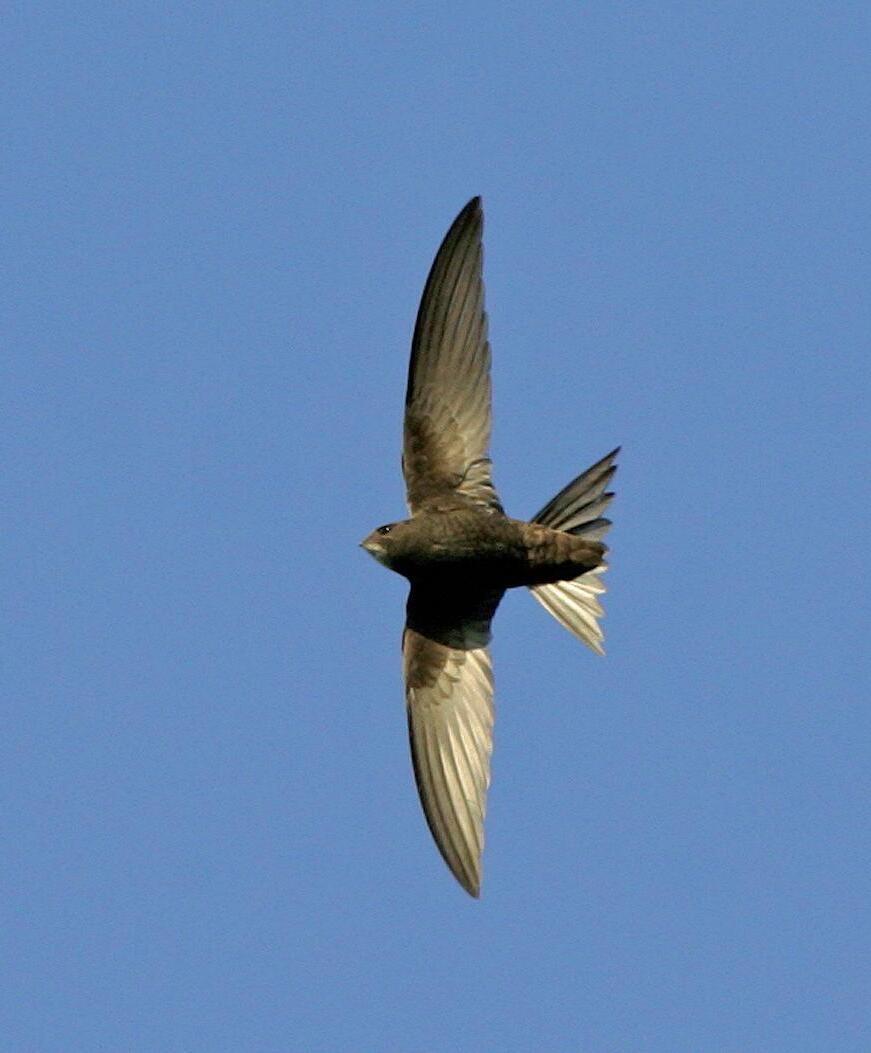
It has been super to hear of so many successes around the county this summer. Several locations where nest boxes were installed a few years ago, with the aid of audio playback of Swift calls, have seen increased activity.
The Occold Primary School, Suffolk Food Museum plus many private homes have reported nesting activity. We shall be emailing all participants for a census update later this month in order to obtain an accurate picture of the 2025 breeding season.
It has been a busy summer for SOSSwifts. Thanks to the receipt of generous donations we have ‘Swift Community Sets’ available (for no charge) for prominent elevations of public buildings. The Northgate High School is the latest recipient.
SOSSwifts have also been able to offer free nest boxes to locations where Swifts have previously colonised. Felixstowe Library is a great example of this. Just one box was used in 2024 and now for 2025, with six boxes installed, four have been occupied. More nest boxes are to be donated by Felixstowe Swifts in the hope that a significant Swift colony shall develop.
House builders shall be aware of a campaign to include universal nest bricks (to BS42021:2022) when issuing planning permissions. The campaign is gaining some traction at last. We are helping developers plot these bricks onto their building layouts in groups, high up where nesting space will be available for the lifetime of the building.
It is not all good news though. We are aware of a number of locations where natural Swift nesting sites have been lost during renovation works. Modern building

standards simply do not permit Swift nest accesses to be maintained. However, SOSSwifts are able to offer free advice where building refurbishment is planned – to enable the Swifts to remain.
Thanks to quick action by the Felixstowe Swifts group, a substantial colony was saved when a building with multiple nest sites was recently renovated. The developer thankfully listened and altered scaffolding and left access holes open so Swifts could nest.
Remember, free surveys and advice are available to those wanting to help our
Sally Nelson
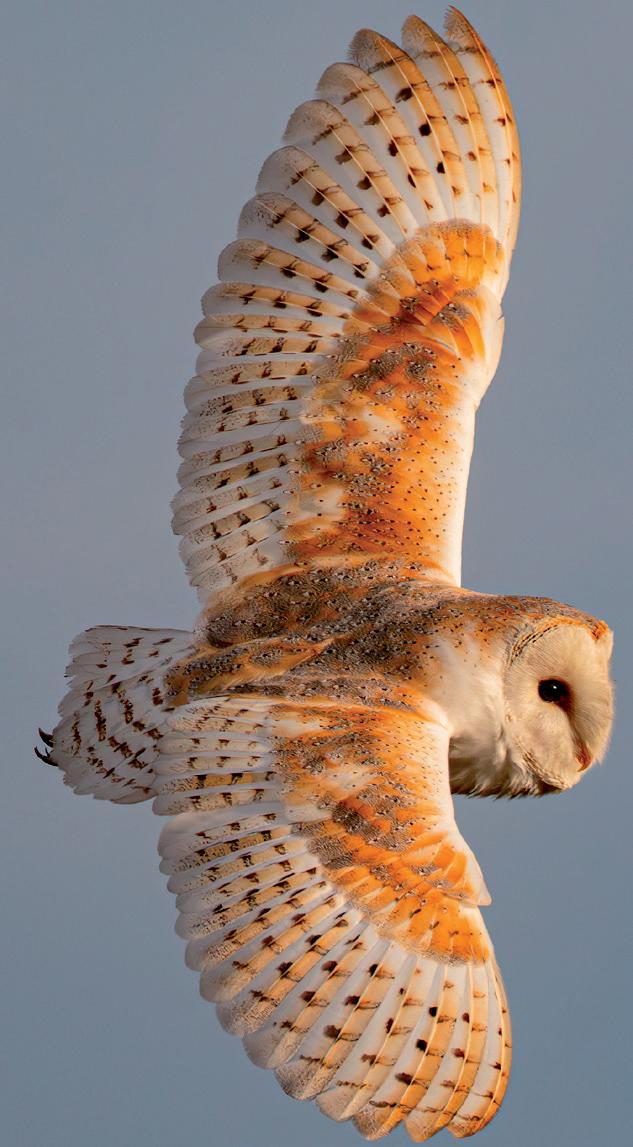
This year has been one of the most difficult that we can remember for our breeding Barn Owls. Many of the nest boxes that we have regularly checked have not shown any evidence of successful breeding. The story emerging from across the county has been hugely disappointing. Breeding success has been very poor with numbers of fledging chicks very, very low.
It is of course important for us not to lose sight of the positives. Our Barn Owls are still here and they will need us for next year.
Over the summer the BOSS team has been out nearly every week, putting up new boxes and checking existing ones. It has been encouraging to see a number of new projects come together allowing the Barn Owls every possible chance for the future.
The BOSS team have been out and about at local wildlife days and village fêtes, flying the flag for Barn Owls and raising awareness of what is required for them to thrive. The public response has been really positive with plenty of interest and support for the work that we are doing. Awareness is such a key part of the picture – the more that people understand about our iconic Barn Owls and
the challenges that they have to face, the better their long-term prospects.
Looking ahead to the autumn and winter, our focus will shift slightly. As well as making sure that safe, dry boxes are in place, we need to keep highlighting the importance of appropriate habitat for Barn Owls. Rough grassland, field margins and hunting areas are as critical as the nest boxes themselves. Increasing the awareness of Barn Owl habitat shall be a big part of our messaging over the coming months, and we are already booked to attend a number of talks and events in 2026, as well as some school visits later in the year.
Finally, I shall mention the new volunteers that have joined us this season. Their energy and enthusiasm have made a huge difference and it’s been fantastic to have more hands (and eyes) out in the field. BOSS is very much a team effort and the more people that are involved, the more we can achieve together – so thank you!
In conclusion, 2025 has been a tough breeding season for Barn Owls. It has emphasized to us just how important this project is. More nest boxes shall go up, increasing the awareness of the public shall continue and with more people stepping forward to help underlines our determination to provide these birds the very best chance for the years ahead.
If you would like any help or advice, then please do contact us at: barnowls@suffolkbirdgroup.org
Sally Nelson (M. 07708 141276)
Follow us on:

Instagram and/or Bluesky

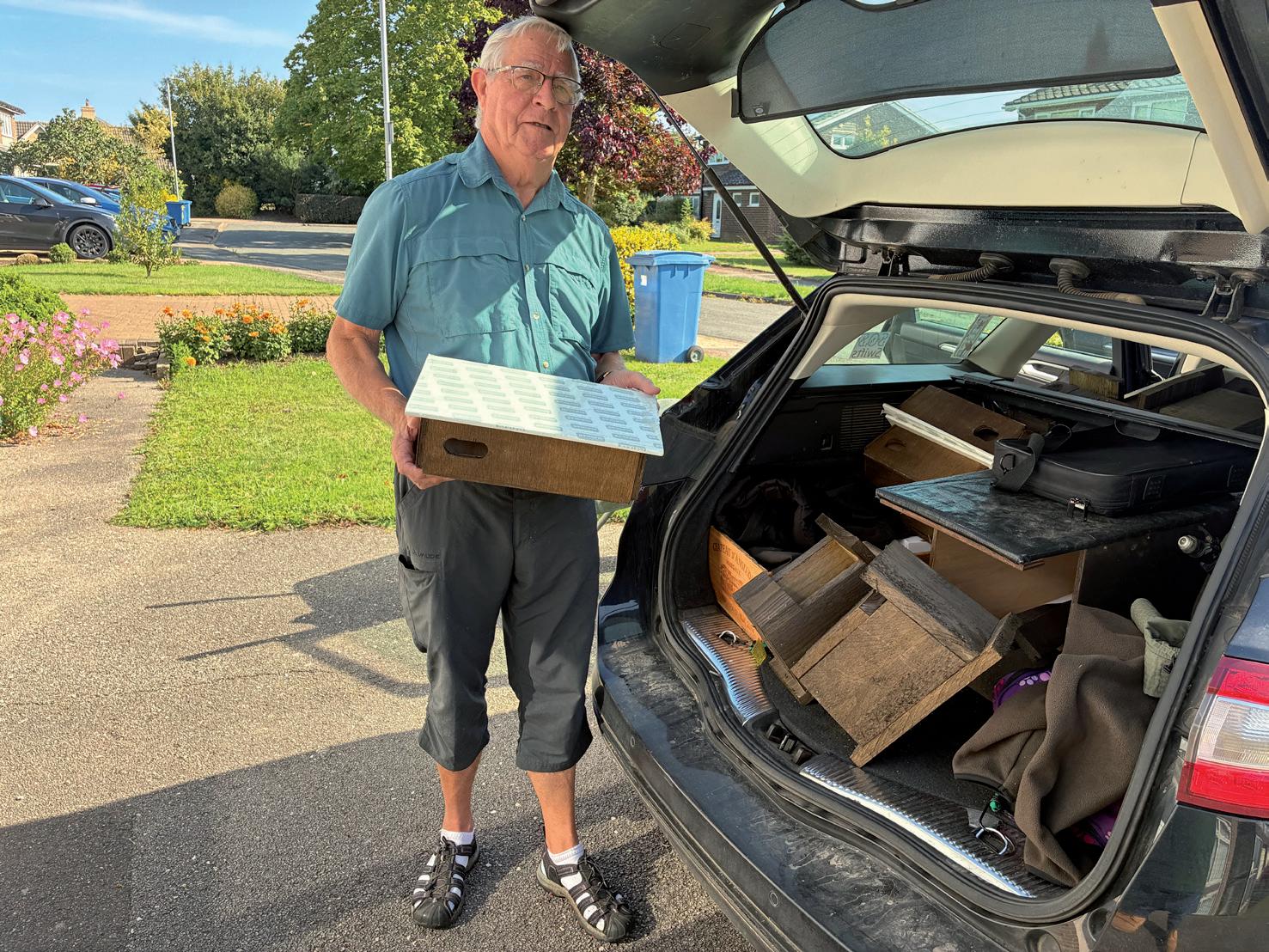
The well-received and generous grant from Suffolk and Essex Coast and Heath National Landscape has been put to good use as we have been busy arranging for the distribution of nest boxes that are made by our volunteer John Turner.
John has now made over 700 nest boxes. What a fantastic effort!
He has, innovatively, designed a Common Redstart nest box that has a removable front panel which allows the box to be converted for use by the Spotted Flycatcher.
Our nest boxes are available for any suitable public habitat in or adjacent to the National Landscape boundary which stretches from Kessingland in the north to Felixstowe and
Shotley in the south and inland towards the A12.
Common Redstart and Spotted Flycatcher boxes have already gone to locations in Tunstall, Sutton and Hollesley while Grey Wagtail boxes have been placed along the Deben. Further locations around Martlesham, Waldringfield, Woodbridge and Southwold are currently being investigated in readiness for the 2026 breeding season.
We have many more nest boxes to place and so please do get in contact if you know of suitable parks, cemeteries, heaths and woodlands where a box may be placed as we are attempting to distribute all of the nest boxes this year.
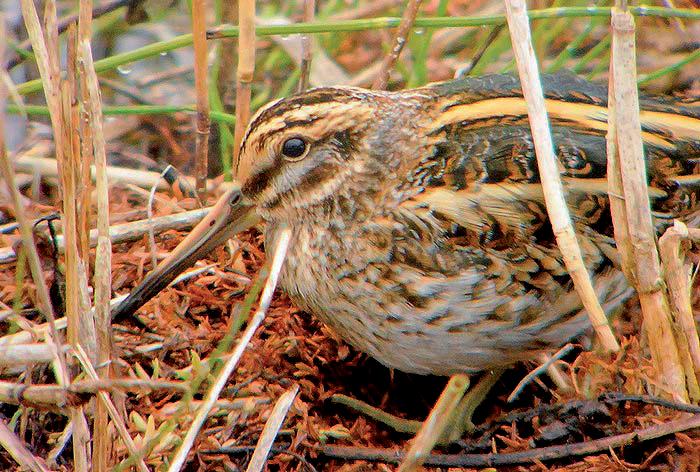
Will you be interested in contributing to the Jack Snipe Research Group’s study?
Two PhD students, Jolene Orlowski & Kevin Clements, are investigating the species’ over-wintering and migratory behaviours. The project is to be overseen by their PhD supervisors: Dr Claire Cresswell, Dr Andrew Hoodless and Dr Francoise Cabada-Blanco. The group are based at University Centre Sparsholt (UCS) which is accredited by University of Portsmouth.
To expand on our knowledge and bring together anyone that has an interest in Jack Snipe (Lymnocryptes minimus), we are releasing a citizen science questionnaire that will aid our investigations into:
1. Day roost and feeding locations
2. Population numbers
3. Habitat usage
4. Detection/survey methods
So, if you are interested in contributing and taking part in this study, or, if you would like more information, please contact us at: jacksnipestudy@gmail.com

Editors note: More information/background is available on the UK Government/ Natural England website – search: Tracking Jack Snipe.
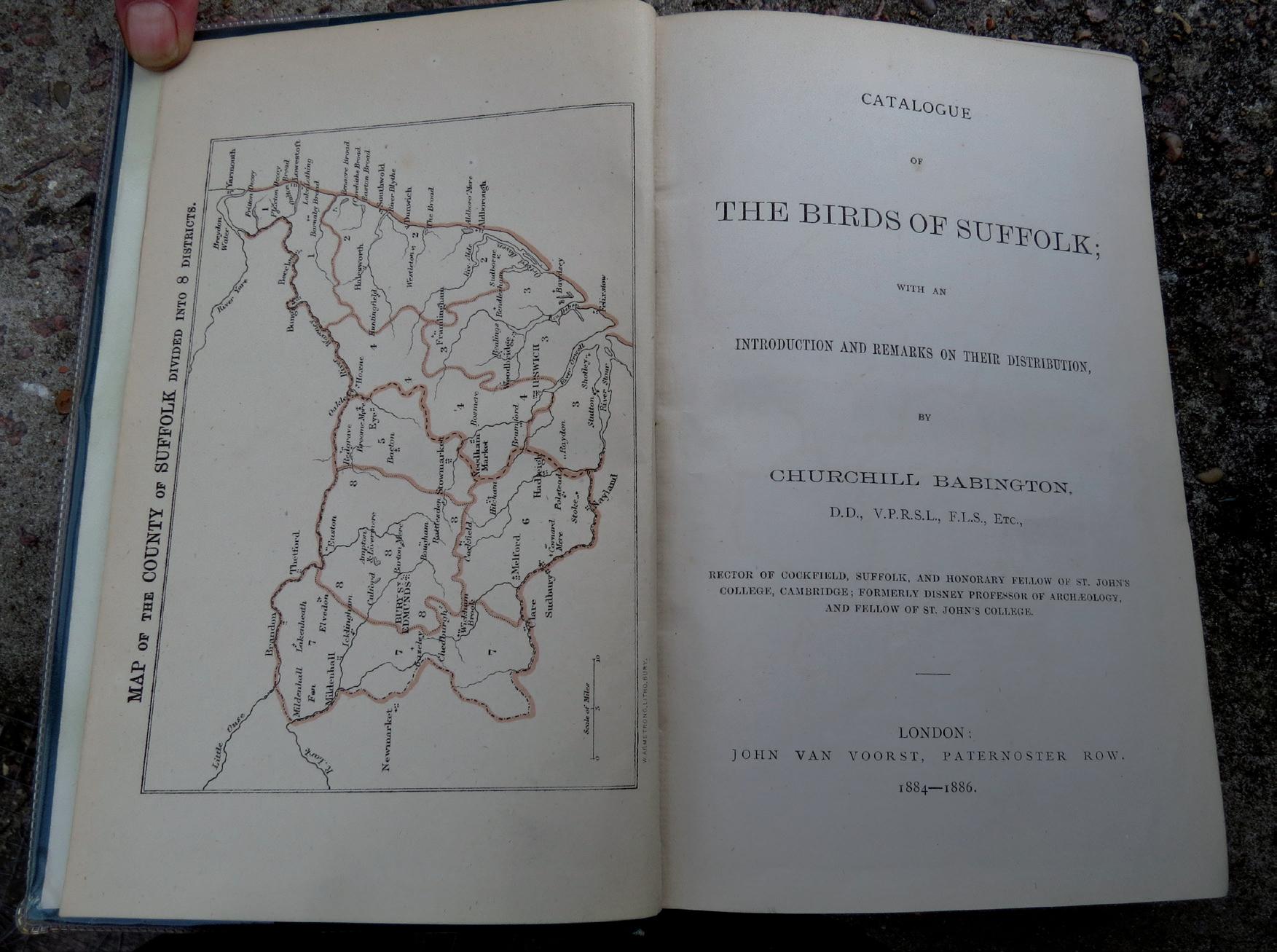
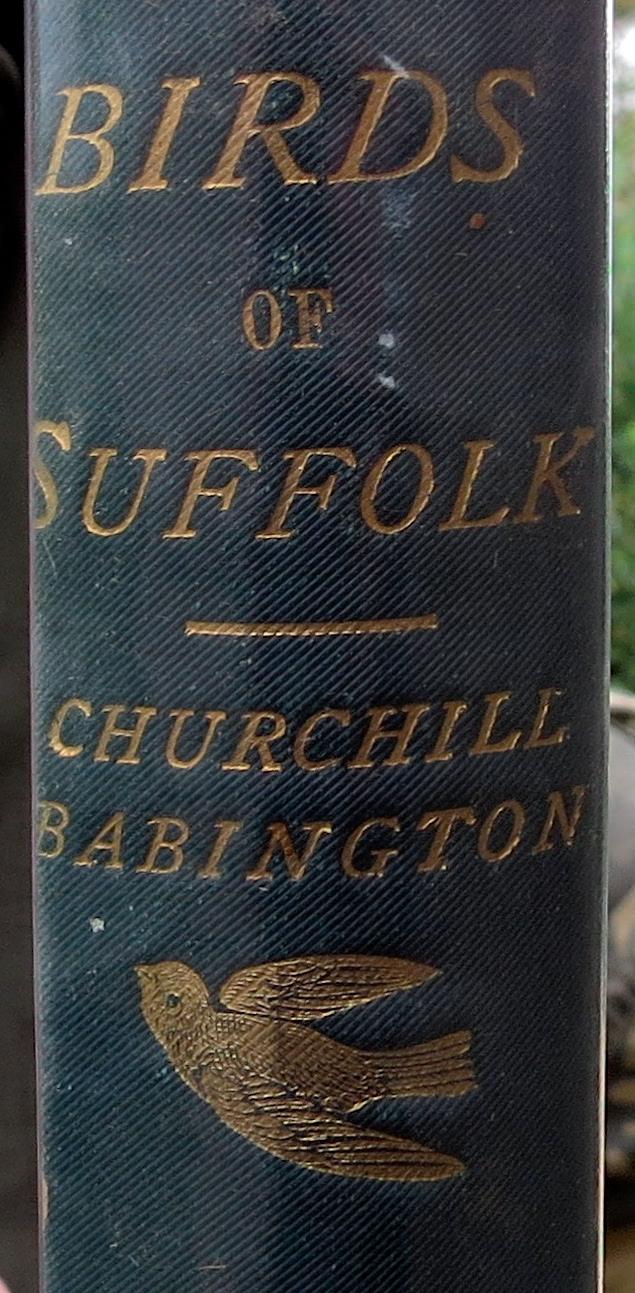
Landguard Bird Observatory has been donated a fine copy of the ‘Catalogue of THE BIRDS OF SUFFOLK’ by CHURCHILL BABINGTON (1884-1886).
This original author's presentation copy was given to a H. Parker & despite being nearly 140 years old it remains in very good condition (see photographs)
In an effort to raise funds for LBO, we are pleased to offer the book to LBO and SBG members - an antiquarian masterpiece of its time.
The book has a reserve price of £100.00. The highest bid/offer of a donation to LBO that is in excess of £100 and is received no later than 30th September 2025 will secure the book for the bidder who shall become the proud owner & custodian of this book.
Please email offers (in confidentiality) marked Babington to landguardbo@yahoo.co.uk
Ashley Gooding
Saturday 26 April 2025
Leader: Ashley Gooding
A wonderful bright clear morning greeted the group of 22 as we met in the car park of this beautiful reserve run by the Essex Wildlife Trust. As I have said before this is one of my favourite reserves in Essex and although not being that large you may often wander around hardly seeing another soul and feeling as though you have the site to yourself.
A health and safety talk and plan for the day was introduced and we quickly moved off. The reserve was going to be quite busy as two children’s parties were booked in and, two coach parties from other bird groups were to visit.
The first hour was spent just a short distance from the visit centre, walking around the dense scrub and trees listening for newly arrived migrants and especially Common Nightingale. We were not to
be disappointed as the reserve was alive with the various songs and calls seemingly coming from every piece of greenery.
Our first bird of note was a female Marsh Harrier just over the centre and there were a few Tufted Duck and Little Grebe on the lake. We quietly made our way around stopping, as and when, to identify the varied bird song since most of the birds could not be seen because of the amount of foliage. Male Blackcap, Whitethroat and Chiffchaff were seen and heard but the many Nightingale, although very vocal, remained out of sight. I believe that by the time that we had left the reserve we had heard at least twenty individuals.
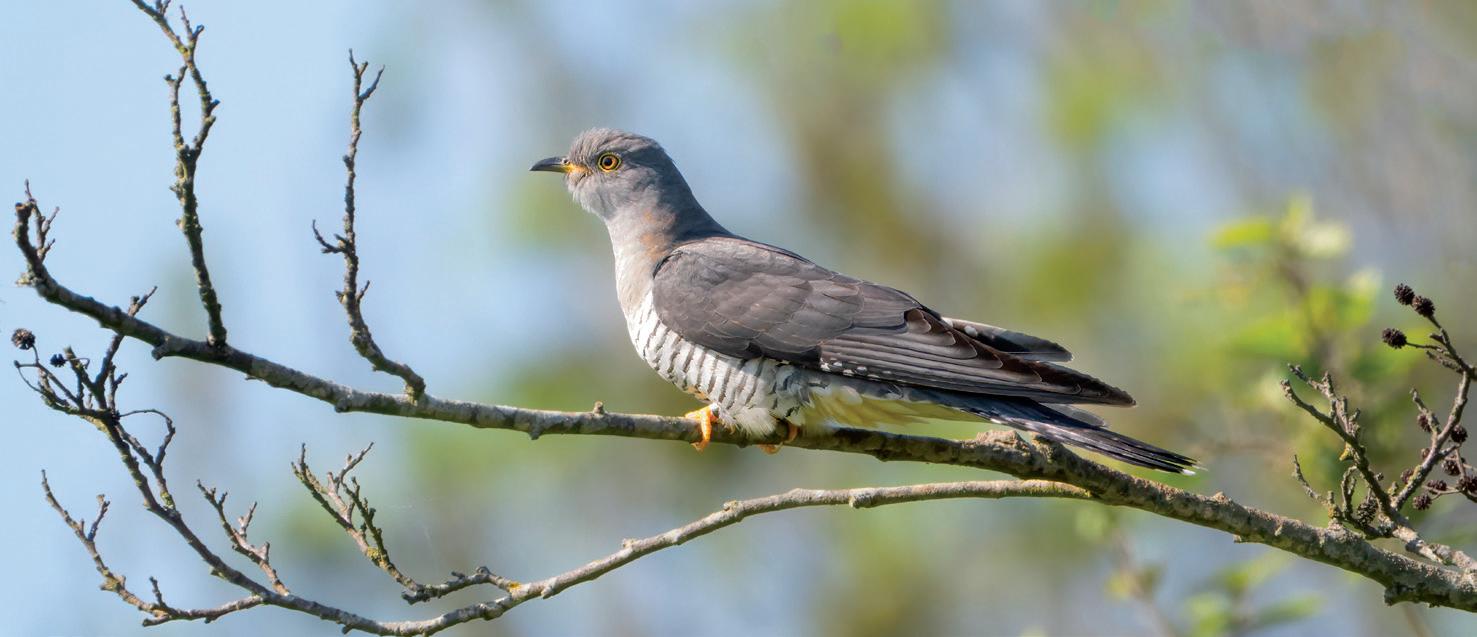
A very distant Cuckoo could be heard, and a while later two birds could be heard calling against each other.
When we had had our fill of the scrub and hedges, we made our way back to the visit centre which was now open, in order to make use of the facilities and pay our entrance fee.
The plan was to now explore some of the other rides and eventually make our way to the hide overlooking the estuary thereafter arriving back at the car park having completed a big loop without retracing our steps.
The walk up the ride was again full of bird song with some of the birds being easier to see and in addition we heard a distant Stock Dove. As we were about to head down the next footpath we stopped to watch a distant Common Buzzard soaring on a thermal while a Red Kite also flew over quite low. At this point a Nightingale was picked up singing out in the open. Thankfully it stayed out long enough for all to enjoy it even noting it’s russet coloured tail, phew!
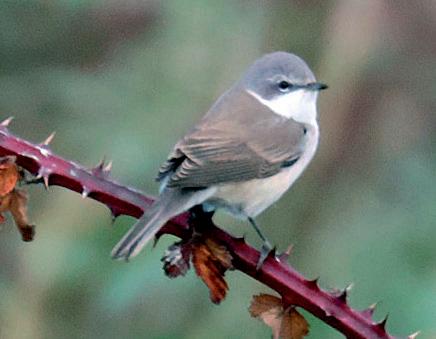
Our luck was in and we had not gone far before another was picked out although on this occasion, far from easy to see. A Garden Warbler was briefly heard by some and as we came out of the scrubby area to the footpath for the hide the first of four Lesser Whitethroat was heard and a Cetti’s Warbler.
The tide was higher than expected as we walked up the hill towards the hide overlooking the breached area.
In fact, there were two Oystercatchers perched high up in a dead tree! There was not as much about as one might expect at this time of year and with the tide so high we did manage two Whimbrel, Great Crested Grebe, Common Shelduck, Grey Heron, five Common Tern and a lone Brent Goose.
Making our way back to the car park we had Reed Warbler and Kestrel, and some of the group saw some interaction between a male and female Cuckoo.
Lunch was taken at the Abberton Reservoir visitor centre car park and once we were all refreshed we made or way to the Layer de la Haye causeway. On the way we again heard Whitethroat, Nightingale and saw another Kestrel. As usual, it was quite windy over the water but there were still a few duck species about, with Eurasian Teal, Gadwall, Shoveler, Mallard, and plenty of Tufted Duck to hold our interest. There were also many pairs of Great Crested Grebe some of which were still displaying.
A few Common Tern were also noticeable amongst the Black-headed Gull that were feeding on insects over the water. Several Black-headed Gulls were already paired up on the Tern nesting platform, so again this year the Common Terns will be hard pushed to nest or produce young as has been the case over the last couple of years.
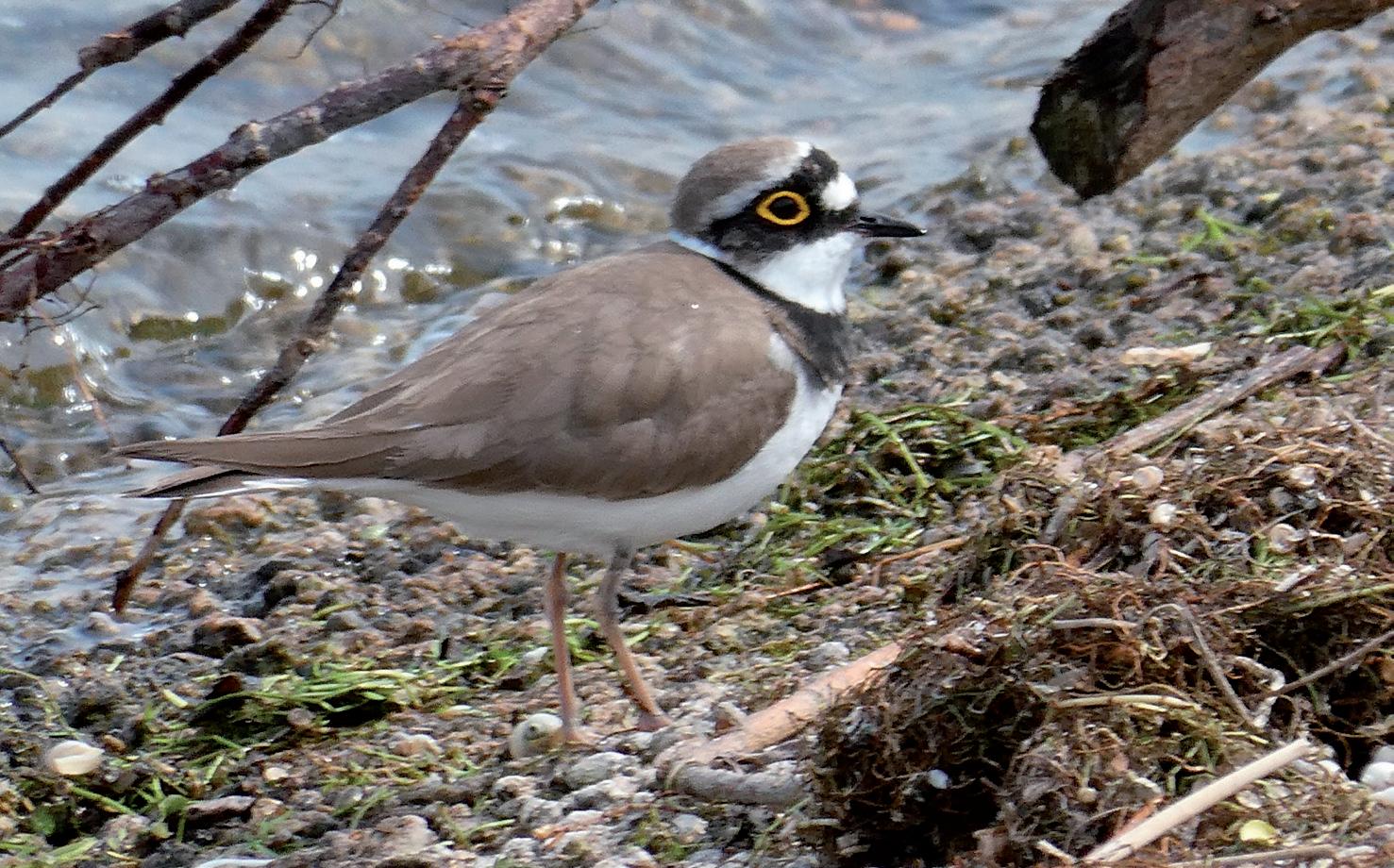
We were very surprised to find a pair of Common Goldeneye taking shelter in one corner of the reservoir as it was the end of April, surely they should have been well on their way to their Scandinavian breeding grounds by now? Two Little Ringed Plover were at the usual nesting site so we did not linger as they were in a very exposed position. As we were leaving the causeway
a pair of Mediterranean Gull were picked up on call as they flew high over the group. The walk to Billets Farm was uneventful and so was the area surrounding the farm buildings. The week before, I had counted 30+ Yellow Wagtail here, and so we settled into the viewing screen and started scanning the large area of water in front of us. Many of the duck species that we had already seen were dotted around only adding Pochard to the list but I was determined to find the pair of super rare duck that had been present for a while and were last seen a few days ago. As far away as they could be, I finally picked up the male Lesser Scaup in amongst a large raft of Tufted Duck. The birds were feeding, diving frequently, which made getting the rest of the group onto them very difficult. But, with a lot of perseverance and a break in feeding we all managed to see the pair as the female was now resting and preening with the male. This was a ‘lifer’ for many and lots of smiling faces were evident as we made our way back to the car park.
Layer Breton causeway was our final stop for today, and again it was very windy. This part of the reservoir has a large Heronry which is becoming quite a draw for birders wanting to catch up with the rarer nesting species. As well as the Grey Herons that nest here in quite good numbers we now have breeding Spoonbill, Cattle Egret and Little Egret. I wonder how long it will be before Great White Egret joins the list?
There were two pairs of nesting Spoonbill with five birds present, at least two pairs of Cattle Egret nesting, although I am sure that this figure shall increase as more Little Egret nests become available after they have bred. We also saw a couple of Yellow Wagtail some Common Tern and a very late Whooper Swan was seen flying with some Mute Swan as they made their way to feed in a nearby field.
Many thanks to all those who attended and made for such an enjoyable day out.
Addendum: Having recently returned to Abberton reservoir to check out the Heronry, I observed the following: 11 Spoonbills with 3 nests containing 4 unfledged young and 7 adults. A minimum of 8 pairs of Cattle Egret on their nests.
Saturday 31 May 2025
Leader: Steve Fryett
Following the dreadful weather encountered on this event last year I decided to move the date a few weeks back for this year in the hope of avoiding a repeat scenario and, to provide an opportunity to record some of the other species that inhabit Pound Farm Woodland.
Today the weather was excellent and a turnout of 25 members was considerably more than last year. Our usual Health and Safety talk was completed and we headed off to complete a circular walk.
It was pleasing to see a few new faces in the group and some experts in the field of birds, insects, dragonflies, moths and butterflies. There was an abundance of singing Chiffchaff and Blackcap with a good number of Song Thrush and Nightingale also present. The Nightingale have been increasing at this site in recent years as the changing habitat becomes more to their liking. The total number of territories held this year is about 25!
At least five Garden Warbler, four Whitethroat and a single Willow Warbler were noted although we failed to record Lesser Whitethroat. There are several ponds at Pound Farm including two new ones which already show signs of attracting insect species and birds. This was evident with a new site record of a Reed Warbler holding territory having arrived during the previous week. We recorded three House Martin at one of the ponds. It was clear to us that the ponds were providing insects and mud (for nest building). House Martin were rarely recorded on the site in previous years.
On the raptor front we recorded Kestrel, Sparrowhawk, Common Buzzard and a male Marsh Harrier. Other bird species of note were several calling Bullfinch, Stock Dove, Great Spotted Woodpecker and Swallow.
Out thanks go to the Woodland Trust warden Duncan Ford for guiding us around Pound Farm, providing an informative insight into the woodland and new developments, and,
for arranging the additional car parking that was needed on the day.
Below is a list of the key species of birds recorded as holding territory, butterflies and other interesting species noted.
Birds (Territories)
Chiffchaff - 11, Blackcap - 19, Nightingale –11, Song Thrush – 7, Whitethroat – 4, Garden Warbler – 5, Willow Warbler – 1 & Reed Warbler – 1
Butterflies
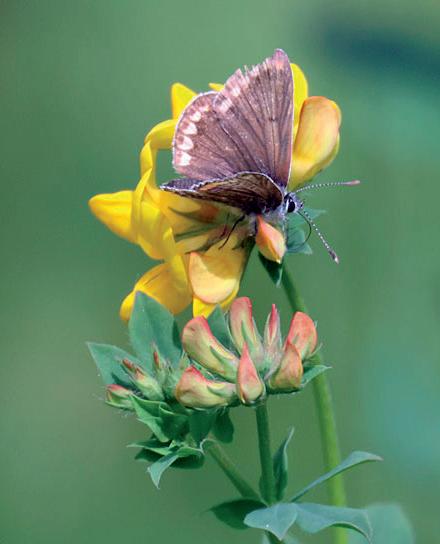
Green-veined White -1, Common Blue – 3, Small Heath – 4, Comma – 1, Small Tortoiseshell – 1, Red Admiral – 1, Small Copper – 1, Large Skipper – 1, Painted Lady –1, Brown Argus – 1, &, Speckled Wood – 6+
Moths/other insects
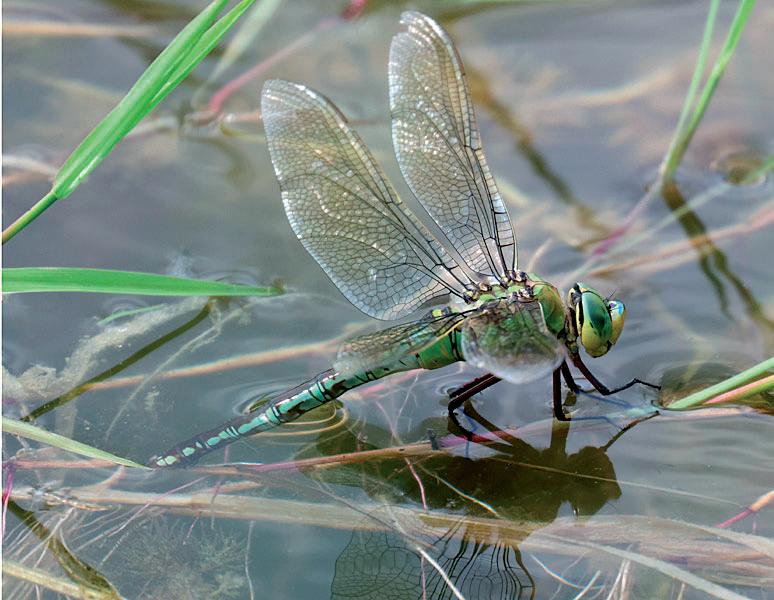
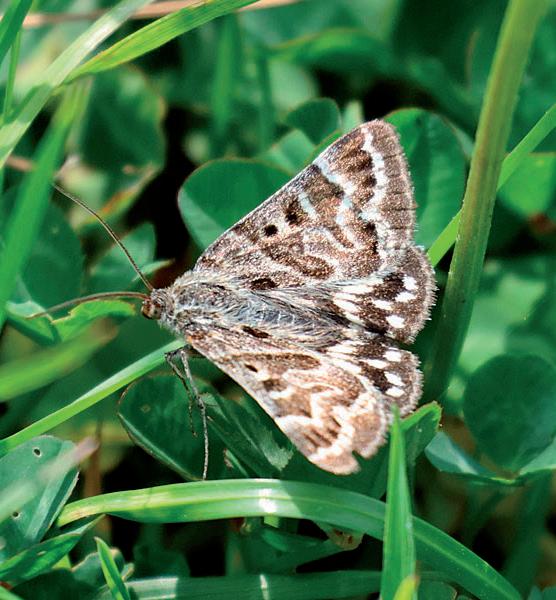
Burnet Companion Moth, Mother Shipton, Latticed Heath Moth, Straw Dot Moth, Yellow-tail Moth (caterpillar), Wasp Beetle, Blue Emperor Dragonfly & Tortrix larvae sp. (unidentified).
Leader: Dave Pearsons
Oh dear, we needed reasonable weather for our annual evening field trip meeting at Upper Hollesley Common and things certainly did not look good. A hot dry summer we have enjoyed but, the morning was cold and very wet. Things did not improve much through the course of the afternoon. However, 21 people turned out and were greeted with a surprisingly cloudy and cold evening. I feared that most birds would remain well hidden.
We were joined by a guest from the Republic of Ireland, the niece of an SBG member, and Danny Thorrington of Wildlife Wise whose brief, amongst other things, is to advise people of the importance of keeping dogs on leads at public spaces such as Upper Hollesley Common.
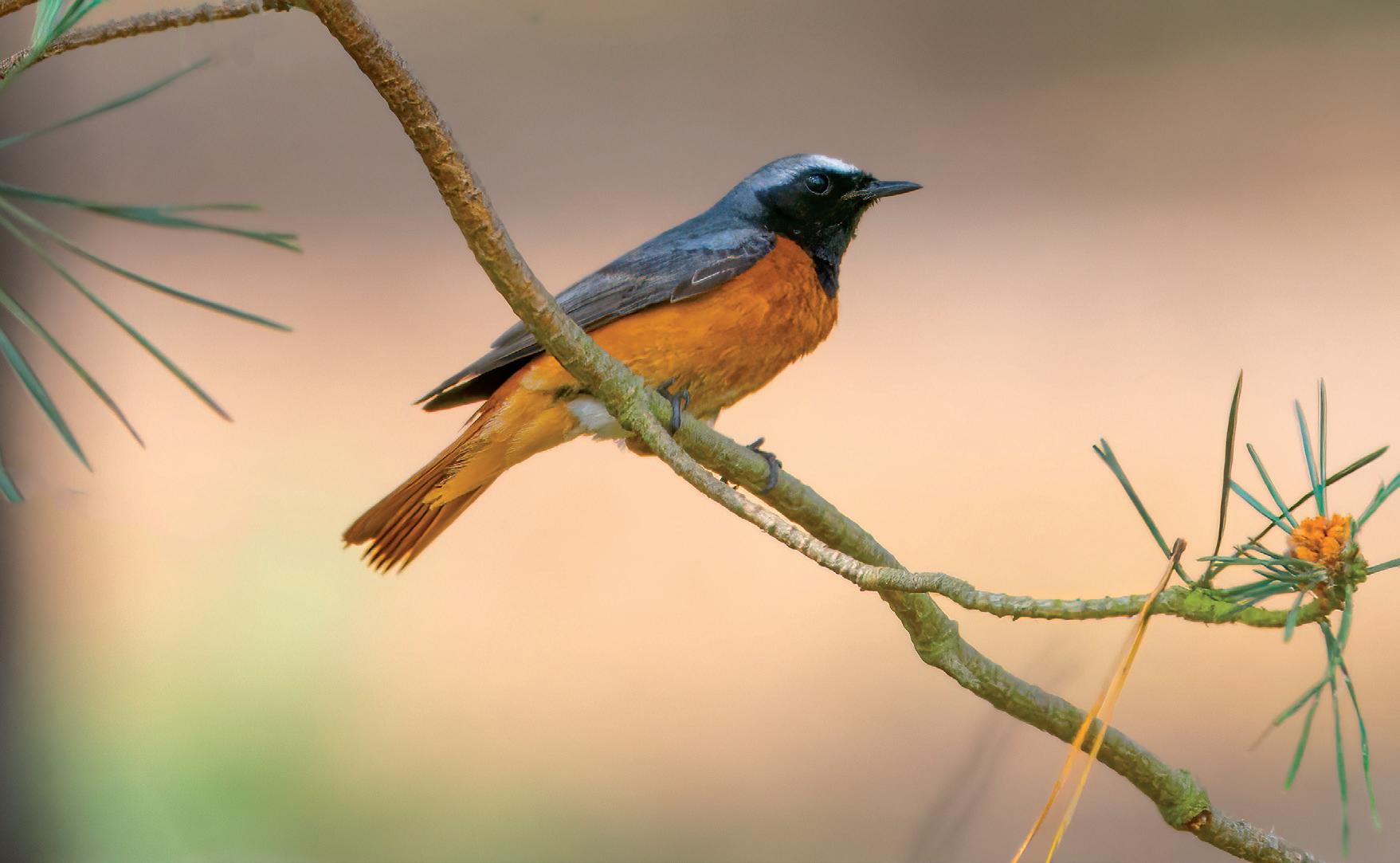
We set off and those with a good ear soon picked up a singing Goldcrest but it remained well hidden. One of our target birds a Common Redstart was heard. It was ahead of us on the path and then it perched on a fallen dead branch near to us. Thankfully everyone had good views of the bird. As it was carrying food, we quickly moved on.
A bird perched high up in a conifer gave us some hope of a Tree Pipit but no, it was instead a Woodlark. It flew to the ground just ahead of us, again providing excellent views. A Yellowhammer was singing nearby.
So far, so good. The Dartford Warbler was our next target. We had heard five singing
males at different spots on the Common, with a lucky few having a short 2-second view of one before it quickly went into hiding – in common with all of the others that we had heard.
Rain had been forecast for 2100hrs and it did not disappoint, arriving on time, but fortunately it was a very light shower and stopped as we reached the nominated location for our next target bird speciesNightjar.
At 2115hrs in reasonable light, we saw our first bird after hearing the unmistakeable ‘churring’ song a few minutes earlier.
Steve Fryett
We were not expecting too much but an excellent view of the bird gained was a real bonus. In all, a total of three birds were seen but, the birds were very quiet. The wet conditions had supressed the biting insects that we were accustomed to on such an evening stroll, but of course, no insects in flight meant there was little food available for our crepuscular hunting Nightjar
And so we called it a day and moved back to the car park. All present enjoyed the evening, saying what a good night it was and, our new friend from Ireland obtained three ‘lifers’.
Thursday 12 June 2025
Leader: Steve Fryett
On a lovely warm June evening 20 members met at 6.30pm for our walk beside Woodbridge Kingston Meadows, up to Broomheath Bridge and then back along the River Deben.
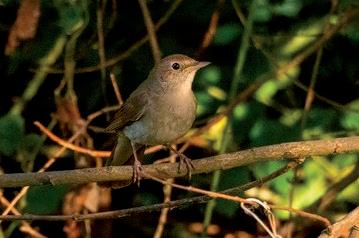
We headed off alongside Kingston Meadows, known locally as the ‘Cow path’ encountering a few Long-tailed Tit, Chiffchaff and Goldfinch with a very loud singing Blackbird. In nearby Porters Wood a male Cuckoo called a couple of times, a species that loves this area and habitat. A Nightingale flitted around in the undergrowth in front of us allowing good views of its rufous back, grey underparts and characteristic beady black eye. It was noted that the bird was carrying food and encouraging to record that nesting was taking place. One of our members stayed behind to successfully photograph the Nightingale from a safe distance on the footpath. A Cetti’s Warbler gave a brief
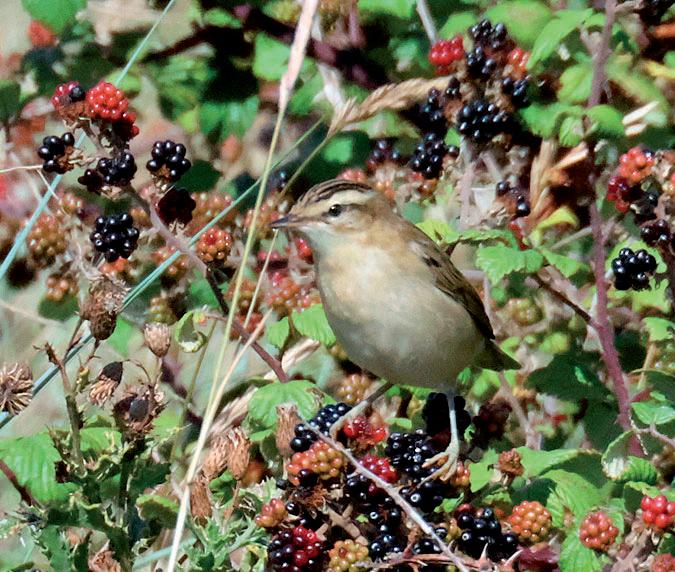
burst of song at Kyson Hill at the end of the ‘Cow path’ as we turned up towards Broomheath railway bridge. Here we discussed the importance of this railway cutting in providing a good habitat for several species but in particular Nightingale and Spotted Flycatcher - neither of which were noted in the location. Heading back down to the river three Jay were recorded with a couple more singing Chiffchaff On the River Deben things were quiet as expected although a distant Egyptian Goose disappeared quickly before most of the group could find it but two Curlew did provide excellent views, these may well be early autumn passage birds. The reeds that fringe Kingston Meadows provided some good close views of both Sedge Warbler and Reed Warbler as they were busily catching insects with an occasional burst of song. There were several Oystercatcher and some 50 Canada Goose loafing around on
the far bank. At the Deben Yacht Club plenty of Swallow were noted - there is a thriving breeding colony underneath the club house. Before we closed the meeting, we took a final look around the boating pond which produced some rather fleeting views of
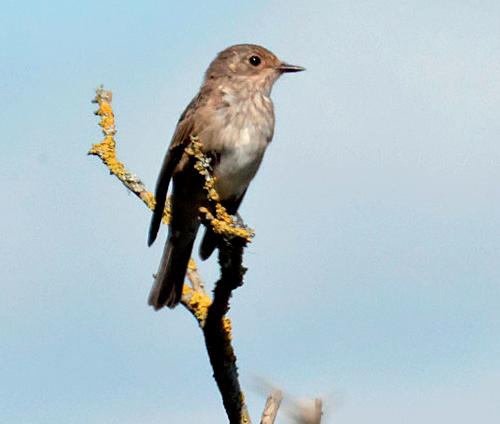
two Spotted Flycatcher high up in the large willows, hopefully they are nesting in the area. Also noted on the evening were Comma and several Red Admiral butterflies.
David Walsh
Leader: David
Walsh
There were 26 Suffolk Bird Group members in the car park at Redgrave and Lopham Fen at 0830h on Saturday 5 July. After last year’s rain we were hoping for better weather; the forecast today was for mainly dry, overcast conditions but as it turned out we also had a fair bit of sunshine.
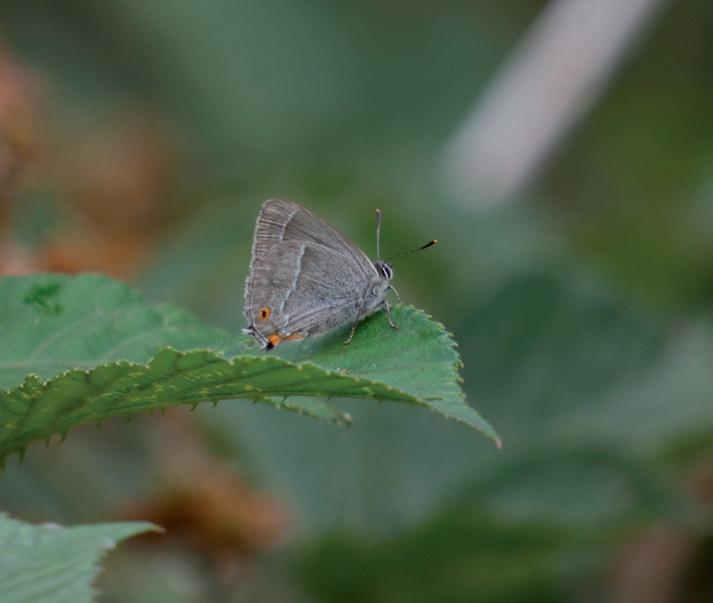
We headed west on the Waveney Trail and soon located Purple Hairstreak around the tops of the oaks. Somewhat miraculously, at least three of them descended to eye level and we had cracking views first through the scopes and then with binoculars. Many photos were taken!
Having reached Middle Fen, we diverted onto the Spider Trail but, given the drought,
unsurprisingly the pools were very dry. Our chances of finding a Fen Raft Spider seemed minimal so we soon declared and moved on.
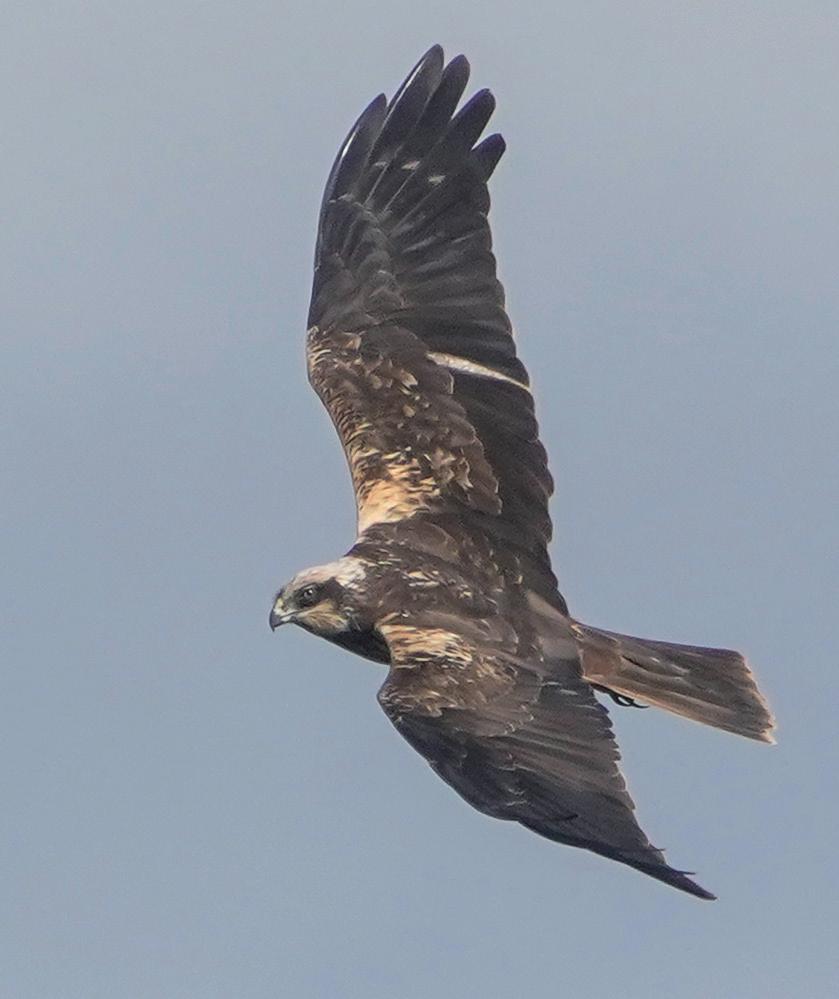
Little Fen proved relatively birdy. We watched a pair of Marsh Harrier for a while which allowed everyone to see the different plumage features of the male and the female. Several Reed Warbler and Reed Bunting were in song, a smart male Linnet showed well but briefly and the first of several Little Egret flew over.
A little further on we spotted a Norfolk Hawker patrolling the path. It caught some prey and, as anticipated, perched up to eat it which meant we got excellent views despite
it being high up. We also found Common Darter and Ruddy Darter and had several chances to practise our identification skills.
Those keen on plants had a productive day, not least in the wet heathland at the west end where we found a white form of Common Milkwort, Common Lousewort (which isn’t common) and Lesser Stitchwort.
We continued on our anticlockwise loop and into Suffolk. Unfortunately, the dry weather meant that there was no water at all in the centre of ‘The Sink’ and so we drew a blank on Scarce Emerald Damselflies this year.
The nearby woodland produced a family party of Treecreeper and we watched a Hobby hunting to our left; I explained why there would have been multiple birds here in May but just the local breeders remaining into July.
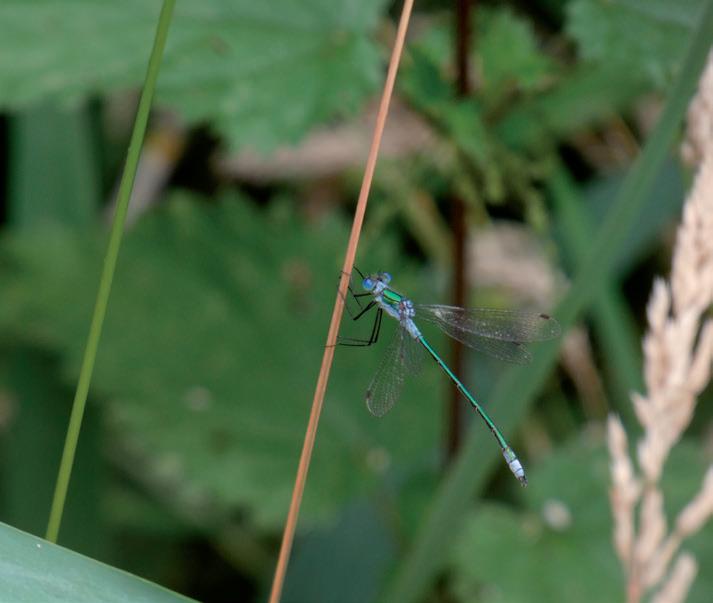
We crossed the bridge back into Norfolk and turned east, with Middle Fen to our left and Redgrave Fen proper to our right. This section of the walk proved quiet although we heard a Sedge Warbler and found several more Large Skippers. It seemed likely that we would not add anything further to our lists, but at the eleventh hour those still on red alert found first Willow Emerald Damselfly and then Common Emerald Damselfly
We arrived back at base a little before 1230h having walked around five kilometres. Between us we had found 37 different bird species while the butterfly and dragonfly tallies were 15 and 11 respectively.
Thanks to everyone for coming and for sharing the knowledge so readily. Redgrave certainly has something for everyone in midsummer.
Saturday 2 August 2025
Leader: David Walsh
We had 25 SBG members meeting in the car park at 0800h on the morning of Saturday 2 August.
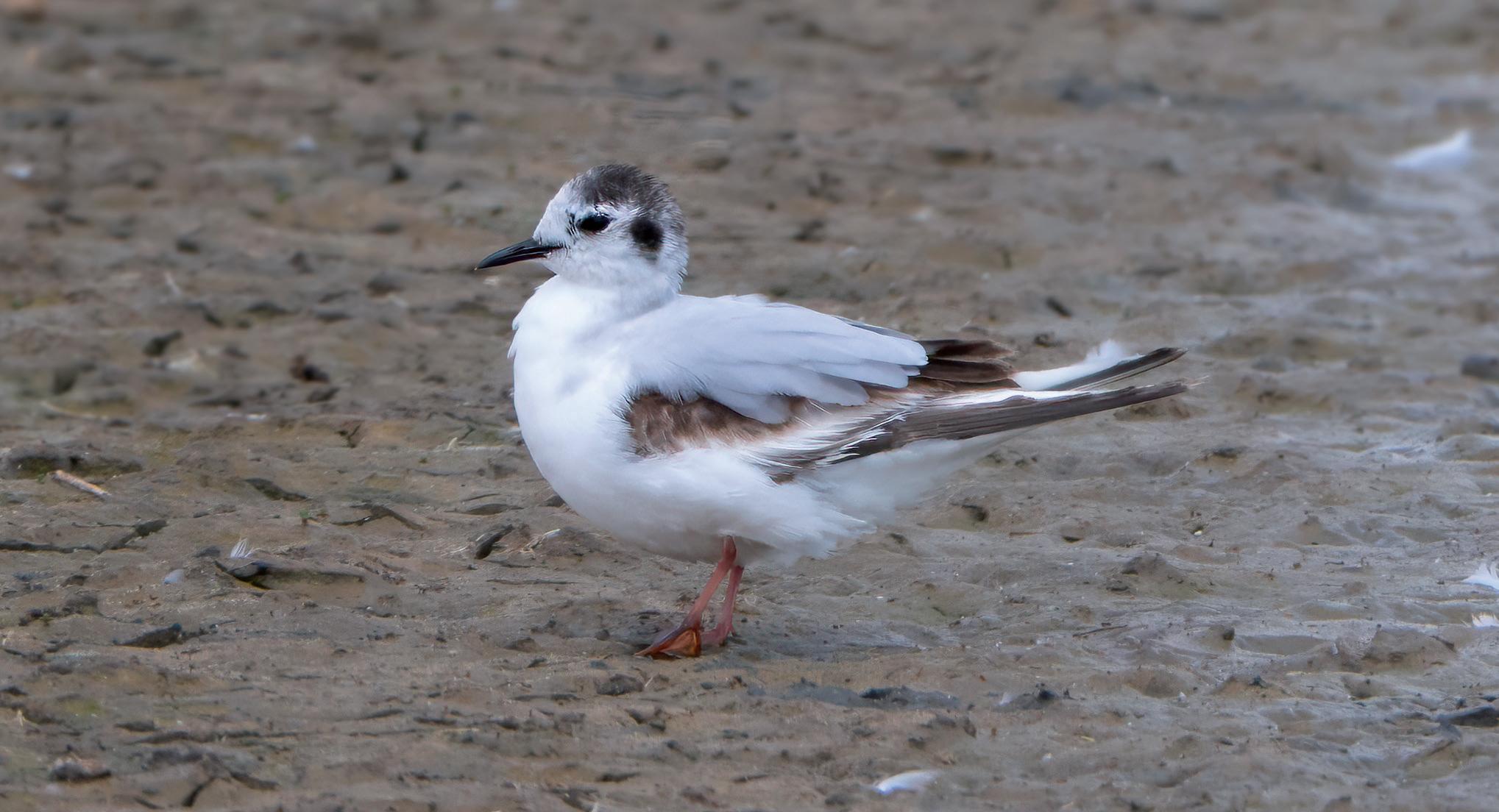
After the usual formalities and our health and safety briefing, we made haste along north wall to the beach and started our birding with a sea watch. Those with scopes on maximum zoom picked out a few Gannet in the distance, and some even managed to spot an Arctic Skua, but for most it was rather underwhelming, and so we headed on to east hide. Here there was plenty on offer for everyone. The highlight was a party of 13 Little Gull, briefly joined by a small number of Common Tern and Sandwich Tern. Patient scanning produced Green Sandpiper and Common Sandpiper, Ruff and 3 Spotted Redshank; the latter were all adults, with one of the three birds being in summer plumage. There was so much
expertise in the group that we were able to split and occupy all four corners of the hide!
Strolling down the dunes towards the sluice we found Ringed Plover on the shingle, Stonechat in the bushes and Yellow Horned-poppy all along the way.
We viewed south scrape first from the public platform then from south hide and enjoyed comparing adult and juvenile Dunlin amongst a flock of a dozen birds: very instructive! A significant number of Avocet remained but, compared with a fortnight ago, it was eerily quiet with the cacophony of sound from the nesting colony of Black-headed Gull and Sandwich Tern no longer a feature.
We continued our clockwise loop, some finding Treecreeper and Marsh Tit in the woods.
Shortly before 11am we arrived back at the visitor centre for a well-deserved pit stop. A little later we met up again; the weather seemed to be brightening up so I thought it would be worth looking for butterflies along the woodland trail, but by the time we had arrived there it was grey and gloomy: so frustrating! Undeterred, we carried on to the bridleway and turned left. It took a while, but eventually we located the resident pair of Stone Curlew with their three day old chicks; this pair had already fledged one young, and we hoped for success with brood number two.
We strolled down Vault Hill, through the wet woodland and onto Island Mere. Here we found Great Crested Grebe as well as distant Pochard and Tufted Duck; the early arrivals got lucky and saw a perched Kingfisher from the boardwalk.
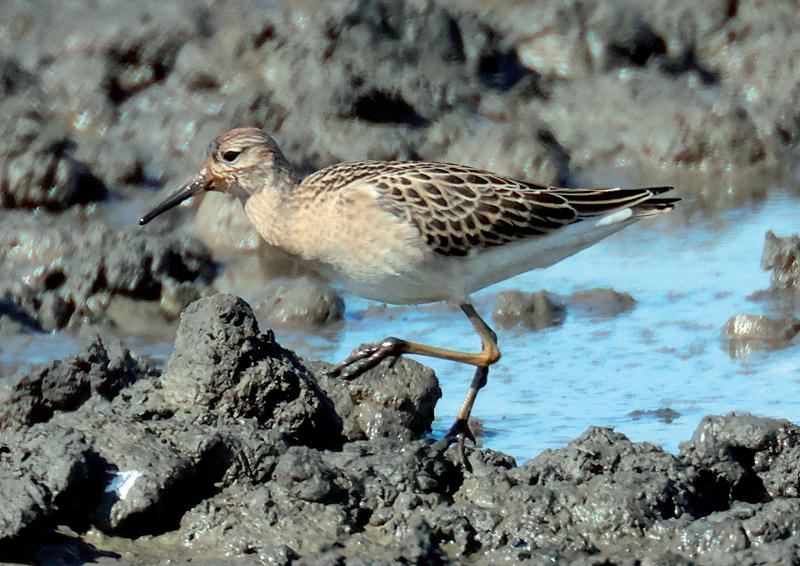
Most of us were getting peckish so around 1.15pm we declared and drifted back to base for lunch. The official walk was done, but the report of a newly arrived Curlew Sandpiper on south scrape meant that over half the group decided to stay and potter in that direction. We were not only rewarded with the Curlew Sandpiper, but also with two juvenile islandica Black-tailed Godwit then three pristine juvenile Spotted Redshank.
A brief visit to Bittern hide was worthwhile with a very close Great White Egret on the pool and a couple of juvenile Marsh Harrier learning to hunt over the reedbeds.
The weather meant we didn’t find the insects that I was hoping for, but the bird tally was over 70 species. There is always so much to see at Minsmere in summer. Thanks to the group for your enthusiasm and willingness to walk around seven miles during the day.
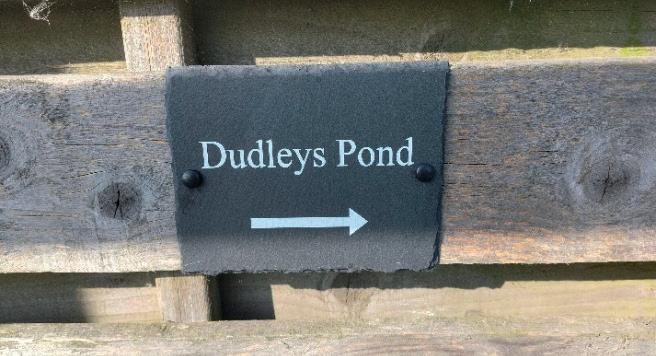
Regular visitors to the viewing platform at RSPB Hollesley Marshes shall have noticed the recent addition of a slate plaque at the entrance.
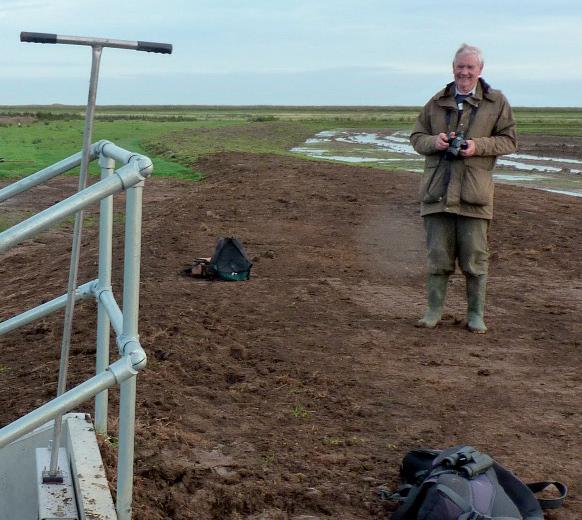
The RSPB Hollesley Marshes ‘makeover' and the construction of the scrape there came along at just the right time for retired builder Dudley Sheppard. Dudley, a keen bird watcher, lover of nature and a volunteer for the RSPB found himself with lots of time on his hands and so volunteering to help the RSPB with the ‘makeover' at Hollesley was a great opportunity for him.
Following its completion, Dudley was delighted to become a volunteer warden and he spent many happy hours watching and recording the wildlife on the marshes. He took great pride in observing the development and maturation of the scrape
and the whole reserve as it turned into the fantastic and varied site that is enjoyed by so many today.
At home Dudley enjoyed his time in the garden watching the birds and the wildlife in and around the garden pond and so, the naming of the pond at RSPB Hollesley Marshes seemed a fitting tribute to Dudley and his love of nature.
A winner of the ‘RSPB Puffin Award’ for long service as a volunteer (10 years plus), Dudley was, in 2014, awarded the High Sheriff (of Suffolk) Volunteer of the Year Award for his work in the community.
Dudley passed away in 2021, he had suffered with two forms of cancer for about a decade and, his wife Jenny tells me that the work undertaken at RSPB Hollesley Marshes was his saviour. Jenny has passed on her thanks to reserve manager Aaron Howe of the RSPB for facilitating the erection of the plaque.
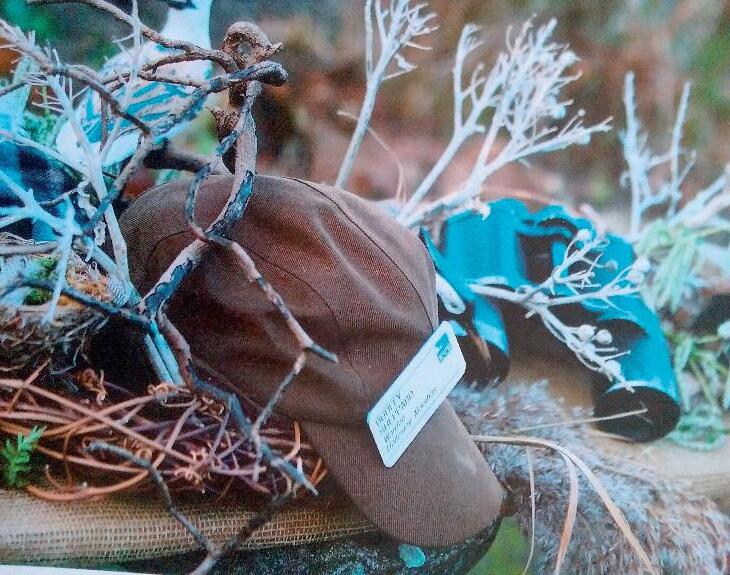
Dudley Sheppard was born at RAF Ruislip on 25th September 1942 and passed away on 26th December 2021 – he was 79 years old. His wife Jenny made the touching floral tribute that accompanied Dudley on his final journey, ‘for a special man’.
Photographs supplied by Jenny Sheppard
John Kornjaca
UK WEATHER
April was the UK’s third warmest April on record, and the third warmest for all four nations as well. A temperature of 24°C was recorded in Northolt on 12th April – the warmest day of the year. It was also a very dry month, although not record breaking, with the UK recording just over half of the normal April rainfall. This was the sunniest April on record for the UK with 228.9 hours of sunshine recorded, 147% of the long-term average. England also saw its sunniest April, while Wales, Scotland and Northern Ireland all recorded their second sunniest April, after 2021. The UK Government registered its concerns for future potential water shortages and the risk of wildfires.
EAST ANGLIA WEATHER
Less than 15mm of rainfall was recorded in Suffolk for the whole of the month (about 35% of average) while average temperatures remained higher than normal for the whole region. As the month ended, temperatures across the region climbed to 22-23°C inland, while cooler on the coastal margins because of cooling north –northeasterly breezes.
Notable April sightings: (Eurasian) Greater White-fronted Goose –There were four at RSPB Hollesley Marshes (1st – 6th) and then just two (7th). The last report of the month was of a single bird at RSPB Lakenheath Fen (18th).
Garganey – The first of the year, a pair, were at RSPB Minsmere (3rd). Reports of long-staying birds at SWT Hen Reedbeds, Benacre Broad and RSPB Lakenheath were received.
Greater Scaup – The long-staying pair at Covehithe Broad remained (3rd) although
only a single bird was present later (6th).
Goosander (Common Merganser) – A single bird seen over Kessingland Beach heading north-west (5th) is the only report.
Common Swift – The first sightings were of single birds seen at SWT Trimley Marshes and at Livermere Lake (21st).
Common Cuckoo – The first of the spring was a bird at RSPB Lakenheath Fen (3rd).
European Turtle Dove - The first of the year was seen at RSPB North Warren (25th).
Common Crane – A pair were at RSPB Minsmere and surrounding area for much of the month. Others were seen at SWT Carlton Marshes (12th & 28th) and Thorpeness Meare (22nd). There were three in flight over RSPB Boyton Marshes (24th).
Little Ringed Plover – Two birds were at SWT Lackford Lakes (1st). There were two more at RSPB Minsmere (28th) with a single bird on the same day at RSPB Hollesley Marshes.
Eurasian Whimbrel – There were 28 at Aldeburgh Town Marshes including a flock of 21 (29th).
Little Stint – There were two at RSPB Boyton Marshes and a single bird seen at RSPB Minsmere (30th).
Jack Snipe – There was a single bird at RSPB Boyton Marshes (13th) and two in the flooded meadow at RSPB Hollesley Marshes (14th).
Wood Sandpiper – A single bird was found on Giffords Flash (20thto 23rd) with others following at coastal sites. There was a group of nine at RSPB Hollesley Marshes (29th) and four (30th).
Little Gull – There were a handful of reports with birds seen at Giffords Flash, RSPB Hollesley Marshes and RSPB Minsmere. Three at Livermere Lake being the highlight (12th).
Glaucous Gull – An immature (1W) bird was tracked along the coast heading north, early on at RSPB Minsmere and later Ness Point, Lowestoft (6th).
Caspian Gull – There were four found at RSPB Minsmere (3rd) and a single bird seen SWT Carlton Marshes (13th) the only reports.
Little Tern – There were three on the south scrape at RSPB Minsmere (15th) the first reported for the spring.
Black Tern – A single bird was found in the lagoon at Pipps Ford (21st) - the only recorded sighting.
Arctic Skua – One was seen offshore from Covehithe Beach (6th), another from the beach at RSPB Minsmere (7th). Palephase individuals were seen offshore from Thorpeness (24th) and another from RSPB Minsmere (29th).
Great Northern Diver – A single bird was seen offshore from RSPB Minsmere (7th).
Northern Fulmar – A single bird on the scrape at RSPB Hollesley Marshes (29th).
Eurasian Spoonbill – Singles and pairs were reported regularly along coastal sites. Three birds at RSPB Hollesley Marshes (2nd) and three at RSPB Boyton Marshes (30th) the highlights.
Cattle Egret – There were four at SWT Carlton Marshes for several days and four at RSPB Lakenheath Fen (18th). A confiding bird remained at RSPB Boyton Marshes/Banters Barn for the whole of the month – usually near a handsome Hereford bull.
Western Osprey – Just three sightings reported in the month with birds passing through - Redgrave Lake (3rd), Breydon Water (20th) and SWT Hazlewood Marshes (21st).
Hen Harrier – A male was at North Cove (4th) and another male flew north-west over Westleton (5th). A female was seen at Black Heath, Wenhaston (9th).
Short-eared Owl – There were three reports provided, each of single birds. One at Tinkers Marsh, Southwold and another at RSPB Minsmere (11th) and a final report was of a bird at Felixstowe Ferry (13th).
Great Grey Shrike – A single report, that of a bird in the field with the Konik ponies at RSPB North Warren (11th).
Northern Raven – A handful of reports were received with birds moving through the county. Three were seen heading north-west over RAF Woodbridge (14th).
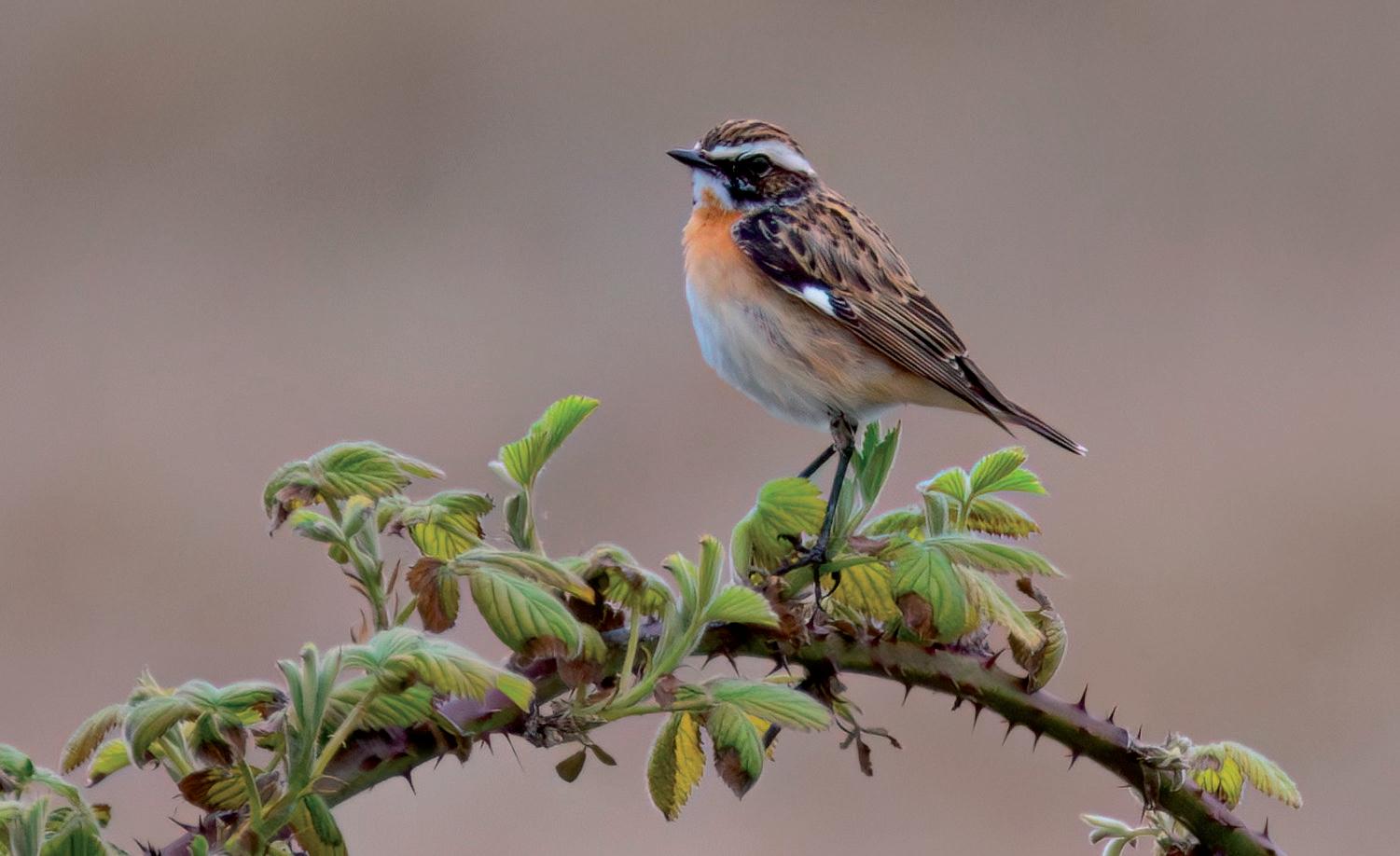
Wood Warbler – A sighting of a bird at Benacre (13th).
Yellow-browed Warbler – Just the one report, that of a bird near the Bidfood site at Stowmarket (19th).
Common Grasshopper Warbler – The first of the year was found near the wind pump on Walberswick Marshes NNR (11th).
Garden Warbler – The first of the year was seen in the region of the Alde Estuary (5th).
Common (Greater) Whitethroat – The first of the year was at Orford (4th).
Common Firecrest – One at the Alde Estuary (14th) and another seen at SWT Combs Wood, Stowmarket (26th).
Ring Ouzel – The first report in the month was of a bird on farmland at Carlton Colville (4th). There were four at Mount Pleasant, Dunwich (12th & 13th). Sightings were reported throughout the month.
Common Nightingale – The first of the year was reported at Old Fen Bridge, Flatford (5th).
Black Redstart – Birds were seen along the coast throughout the month. There were six at Kessingland and three on Landguard Nature Reserve (10th).
Common Redstart – The first of the year was at Benacre Sluice (19th).
Whinchat – The first of the spring was located at RSPB North Warren (19th) with others seen at coastal sites throughout the tail-end of the month.
Yellow Wagtail – The first of the year was at SWT Trimley Marshes (2nd).
Blue-headed Wagtail – A single bird found at SWT Carlton Marshes stayed for much of the month (4th – 21st).
Tree Pipit – The first of the year was at Orford (4th). Another was seen at the Alde Estuary (21st).
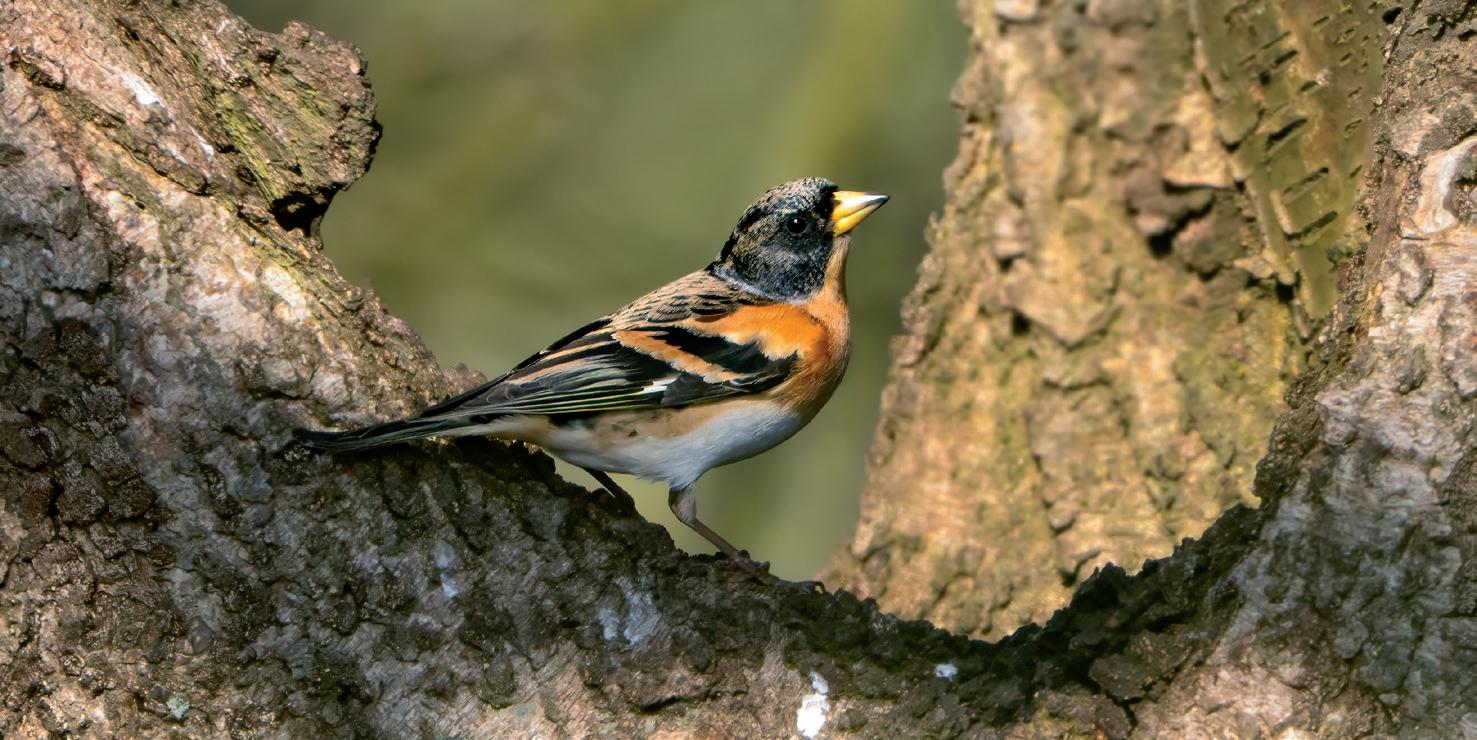
Brambling – A pair were seen on Upper Hollesley Common (6th).
Snow Bunting – A single bird remained at Ness Point, Lowestoft (until the 10th).
Scarce sightings:
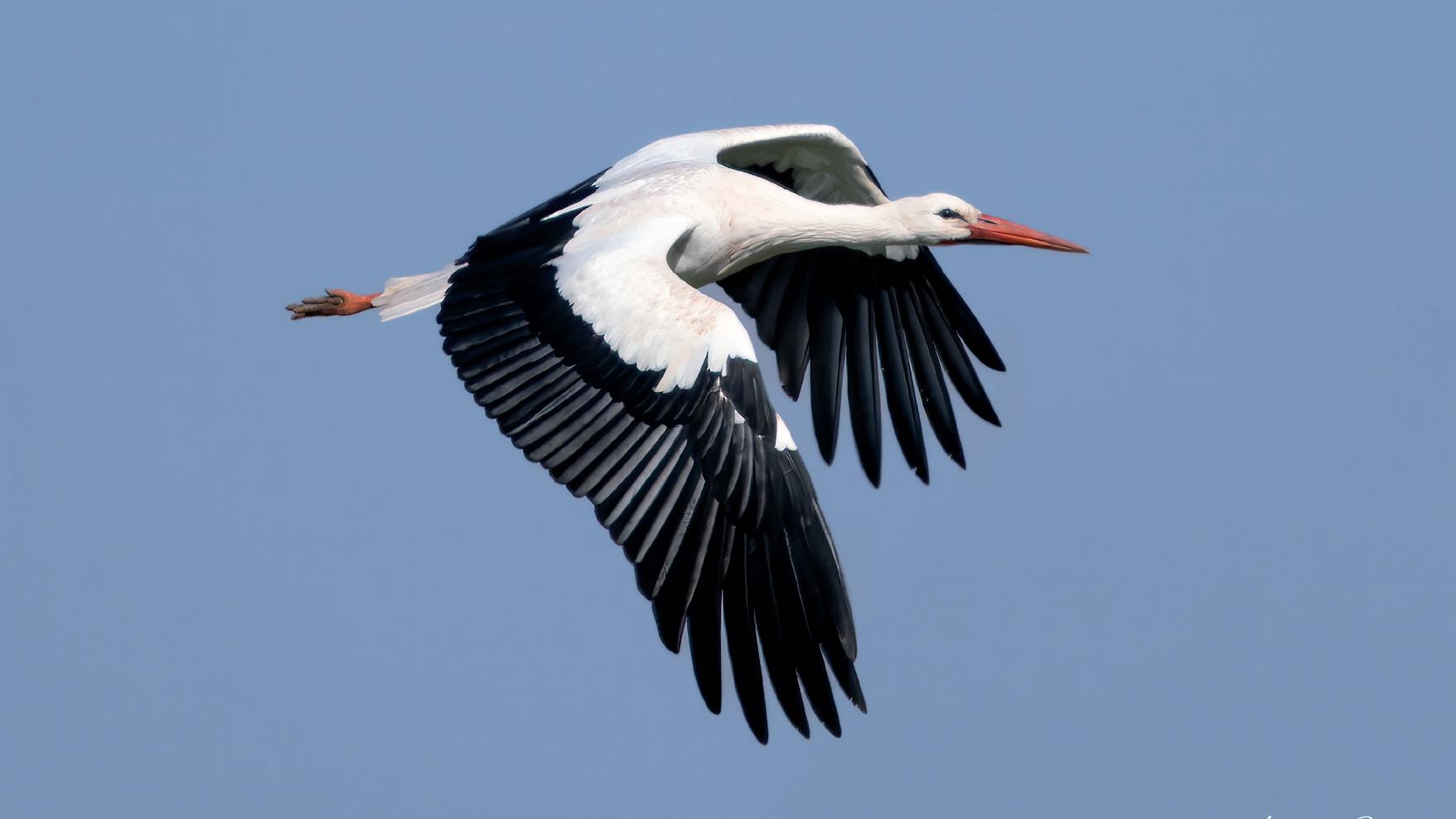
White Stork – A bird was seen at Micklemere (1st) and another was seen at Melton and then in the reedbed at RSPB Minsmere (7th). Another was reported in Bawdsey, then Shottisham and Shingle Street before flying inland (12th). A final report was of a bird seen flying north in Mutford (28th).
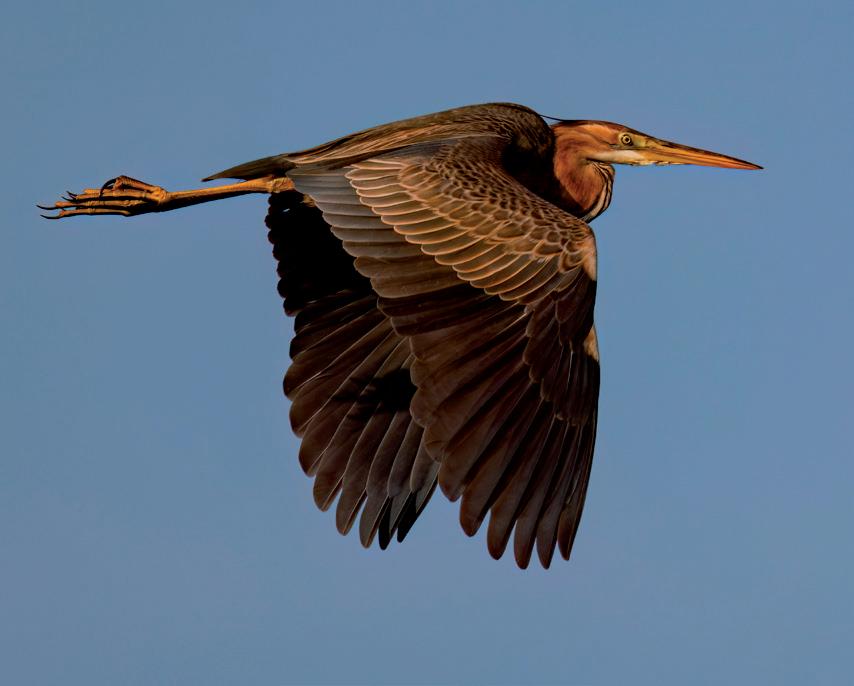

Purple Heron – One was at SWT Carlton Marshes in and around Peto’s Marsh (24th –28th).
Pallid Harrier – An immature (3CY) bird was found at Corton (17th).
Black Kite – A bird was seen in the Westleton/RSPB Minsmere area (14th) and again at Benacre (15th). Likely the same bird was seen at Aldeburgh (17th).
White-tailed Eagle – A bird was seen in flight north of Glemsford (13th).
Eurasian Hoopoe – The first report was of a bird found in the late morning, at Chippenhall Green (10th) with another seen in a private garden at Barrow (13th & 14th). One was close to the church in Corton (15th to 18th).
Hooded Crow – Three reports in the month. A single was spotted at Benacre Broad (3rd & 22nd) and another was found and photographed at Aldeburgh (18th).
European Serin – A single bird close to Benacre Broad (13th) the only record for the month.
Overall, a sunny, warm and dry month with high pressure dominating for most of the month.
A low-pressure system to the southwest of the UK brought some heavy rain and thunderstorms to southwestern England, Wales and Northern Ireland on the 11th and 12th, before the high pressure returned once again.
The second week of May saw temperatures slightly below average for most areas, before temperatures increased into the third week.
Clear skies at night led to some cooler nights, with some frost conditions in northern and rural areas. High pressure persisted through mid-month, with some scattered showers in places but otherwise fine weather for most of the UK.
The weather turned more unsettled from the 23rd onwards as lower pressure pushed towards the UK and frontal systems brought rain to much of the country. Some showers were heavy with hail and thunder in northern areas on the 25th, but there were still many areas that saw dry weather. Scattered showers persisted for the next few days, in an unsettled end to May.
As for the UK the region was mostly sunny, warm and dry although quite humid at times. Temperatures peaked at around 25°C early in the month with hazy conditions and a cooling north/north-easterly breeze keeping temperatures down for much of the first three weeks of the month. The final week of the month saw winds shift to south/south-westerly bringing warmer, moist air and some showers.
Notable May sightings:
Garganey – Two drakes and a duck at RSPB Hollesley Marshes (8th) and the two drakes were seen regularly (9th – 14th). Others were seen at various coastal sites and there was one at RSPB Lakenheath Fen (4th).
Red-crested Pochard – A female was seen at RSPB Hollesley Marshes (21st).
Goosander (Common Merganser) – A single bird was seen on the shore pool at Kessingland (20th).
Grey Partridge – Two birds were seen in fields alongside the central path at SWT Carlton Marshes (4th).
Common Quail – A bird was heard singing in Mildenhall Fen (17th).
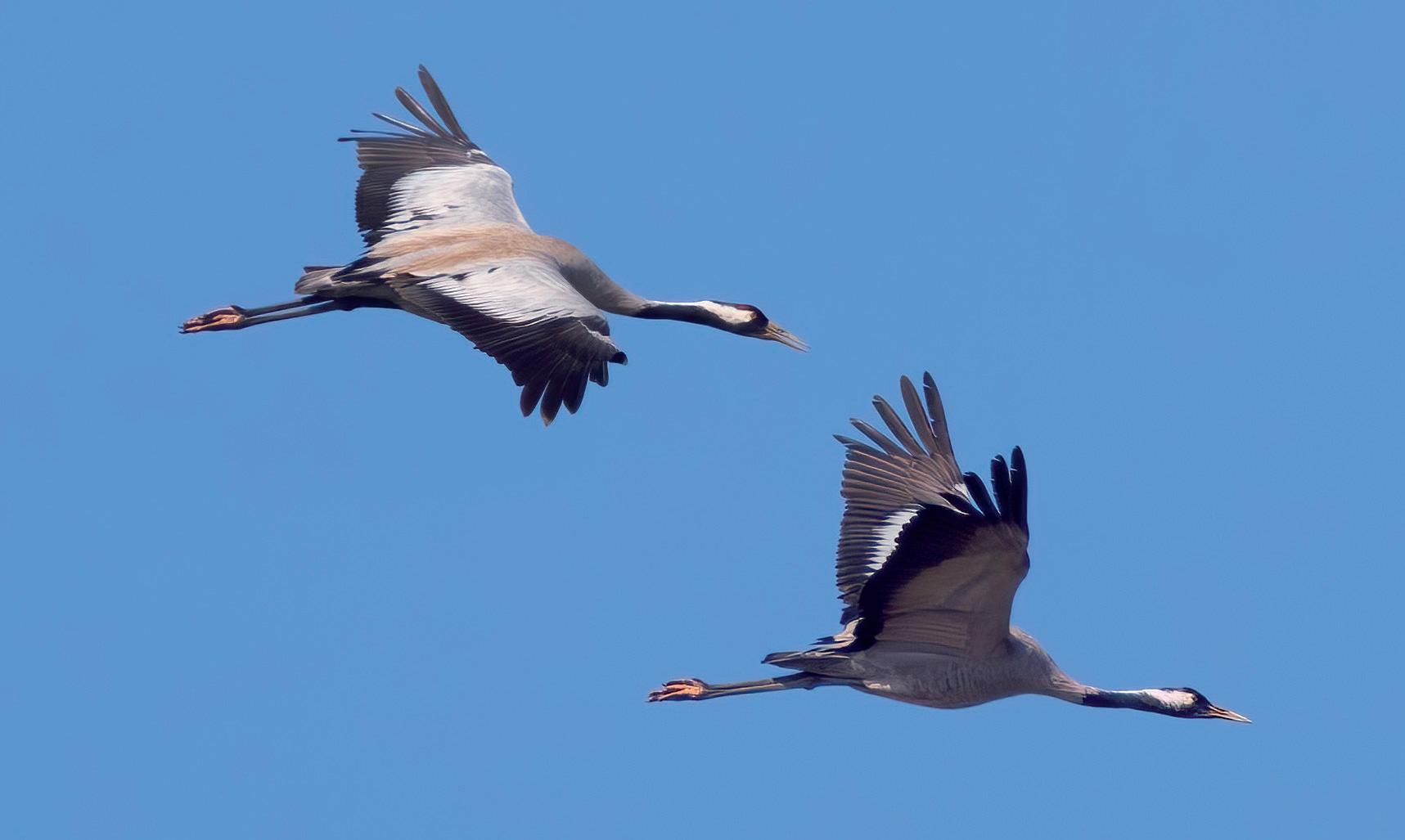
Common Crane – There were three possibly four at SWT Carlton Marshes (4th), and others reported as follows, one at Eastbridge, two at Aldeburgh, two at RSPB Hollesley Marshes (all on 14th). Notably, there were three in flight over Eastbridge and Westleton Heath (17th).
Little Ringed Plover – A single bird was seen at RSPB Minsmere (8th and 30th) a second was found at RSPB Hollesley Marshes (8th and 9th).
Little Stint – There were four at RSPB Hollesley Marshes (1st) and others were seen at SWT Trimley Marshes (10th – 13th), SWT Hazlewood Marshes (2 on 11th) and Benacre Broad (19th).
Jack Snipe – A single bird was spotted at RSPB Hollesley Marshes (2nd).
Wood Sandpiper – There were six at SWT Carlton Marshes (1st) with others seen along various coastal sites and marshes throughout the month. Further west a single bird was seen at Hockwold Marsh, RSPB Lakenheath Fen (9th – 11th).
Little Gull – There were four reports of single birds seen around the county.
RSPB Minsmere (5th and 31st), SWT Carlton Marshes (9th) and another at RSPB Lakenheath Fen (13th).
Arctic Tern – There were 10 at Hockwold Washes, RSPB Lakenheath Fen (4th) and five at Eastbridge (14th).
Black Tern – There were eight at Livermere Lake (12th) and nine present the following day. There were six at RSPB Lakenheath Fen (13th) and a single bird at RSPB Minsmere (20th).
Arctic Skua – A single bird was seen offshore from Southwold (5th).
Atlantic Puffin – A bird was seen from Southwold, at sea and flying north (16th).
Manx Shearwater – Occasionally seen out at sea, the highlight was the count of 13 off Thorpeness (28th).
Glossy Ibis – A bird was found at RSPB Minsmere (13th and 14th) with another at Joist Fen, RSPB Lakenheath (20th).
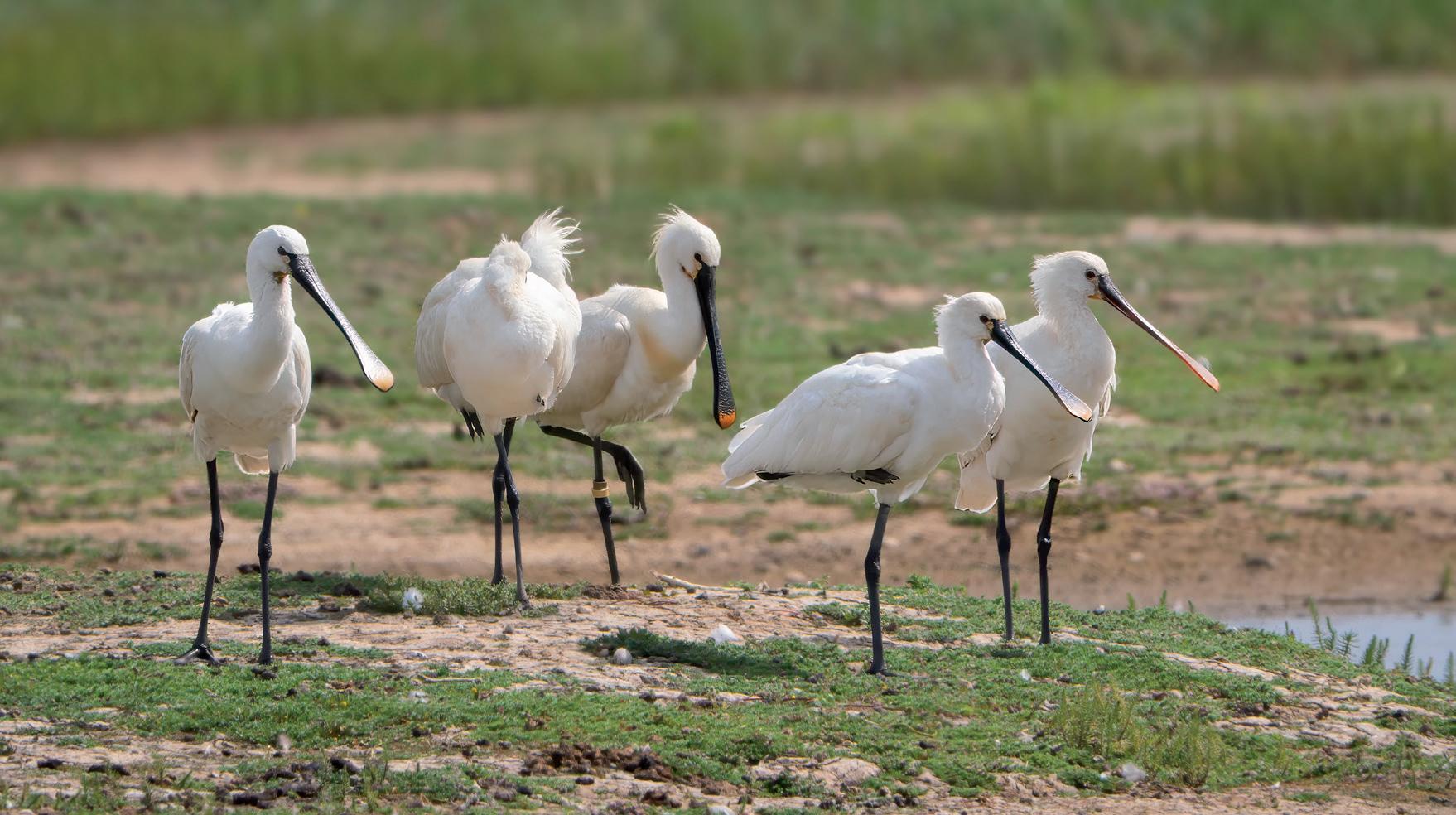
Eurasian Spoonbill – Frequently reported along the coast, the highlight was of 12 birds at RSPB Hollesley Marshes (22nd).
Cattle Egret – Just three sightings of single birds in the month. RSPB Boyton Marshes (1st and 16th) and RSPB Hollesley Marshes (21st).
Western Osprey – There was one seen at Cavenham Heath (3rd) with others reported at Pipps Ford (16th) and one over Barham (20th).
Eurasian Goshawk – One was seen over Woodbridge (17th).
Short-eared Owl – A single report was that of a bird seen hunting near the chapel ruins at RSPB Minsmere (4th).
Merlin – An immature bird was seen at RSPB Hollesley (4th).
Red-backed Shrike – A female was found at Shingle Street (17th).
Golden Oriole – One was found on Westleton Heath (23rd) and another appeared at RSPB Minsmere (28th). A third report was that of a bird at RSPB Lakenheath Fen (31st).
Northern Raven – One was seen in flight over Woodbridge (14th) and another was spotted at Kessingland (20th).
Ring Ouzel – A long staying bird was at the Landguard Nature Reserve (1st – 17th).
Black Redstart – A bird reported at Landguard Nature Reserve (12th).
Whinchat – Just the two reports for the month. One at Shingle Street (11th) and another at Landguard Nature Reserve (12th).
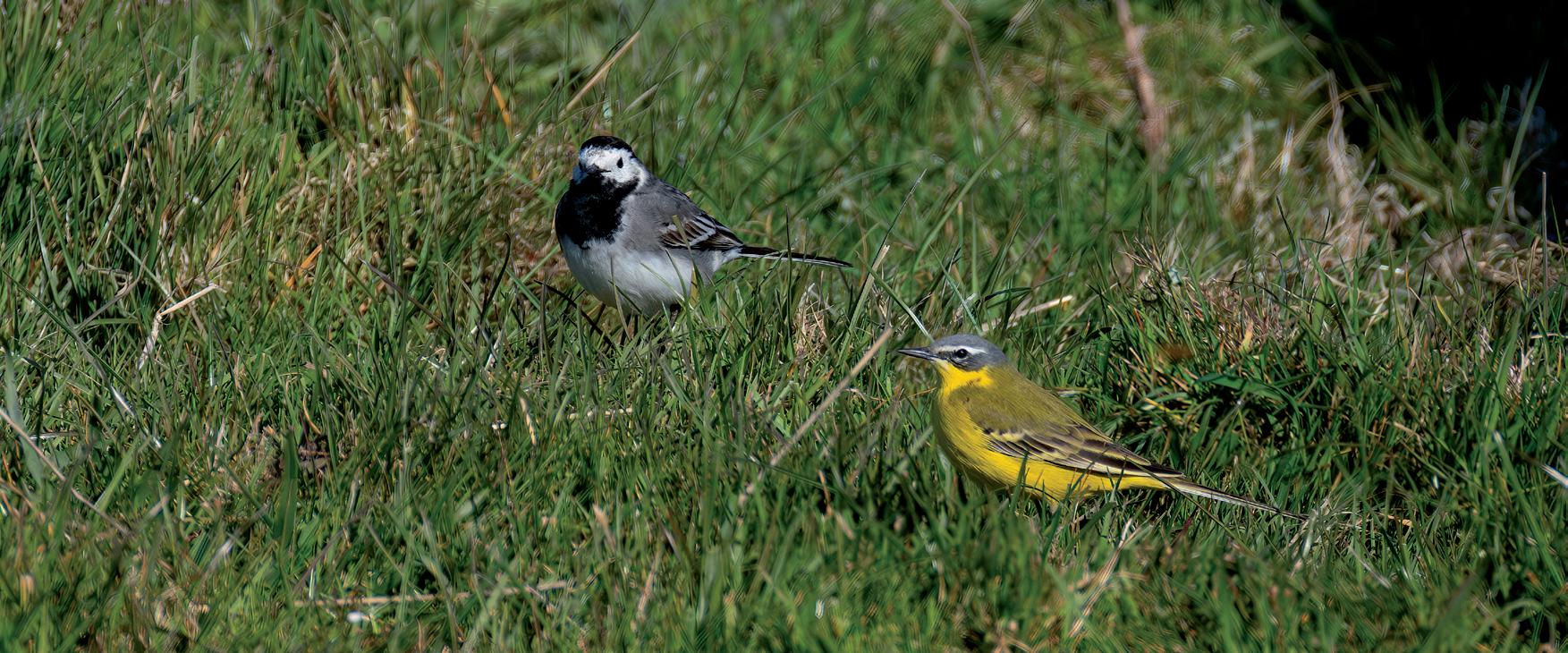
Channel Yellow Wagtail – A single report was of a bird at RSPB Hollesley Marshes (1st).
Blue-headed Wagtail – There were two seen at Beach Farm, Benacre (3rd) with just a single reported the following day.
Corn Bunting – A bird was seen between East Lane and Shingle Street (11th & 16th).
Scarce sightings:
Black-winged Stilt – A single bird arrived at RSPB North Warren staying for a short period (2nd – 4th).
Temminck’s Stint – One was found at Tinkers Marsh (1st) with up to four seen at SWT Trimley Marshes (12th). A single bird was at RSPB Minsmere (14th) and there were two at RSPB Hollesley Marshes (19th).
Red-necked Phalarope – A female was on East Scrape, RSPB Minsmere and was seen regularly (1st – 3rd).
Night Heron – One was seen flying east over the sewage works at Kessingland (3rd).
Purple Heron – The immature bird at SWT Carlton Marshes remained for the whole month. There were two at RSPB North Warren (3rd) and one was seen regularly (4th - 11th). Three were reported at RSPB Minsmere (17th). Other occasional sightings were recorded at SWT Trimley Marshes (23rd - 26th), Aldringham Walks (29th) and RSPB Minsmere once again (30th & 31st).
Montagu’s Harrier – A single bird seen flying north at Huntingfield (15th) the only record.
Black Kite – One was seen over Capel St Mary (4th).
Booted Eagle – One was seen at SWT Carlton Marshes (7th, 11th and 13th) with a pale- phase at RAF Lakenheath (21st).
Eurasian Hoopoe – There were three sightings reported. One was at Great Finborough (17th), another report was of a bird seen at Westleton Heath (23rd) and a third report was of a bird seen in a garden at Rickinghall (24th).
European Bee-eater – A group of four were seen flying south and tracked over several sites (3rd) and a single bird was found at Gunton flying north (23rd).
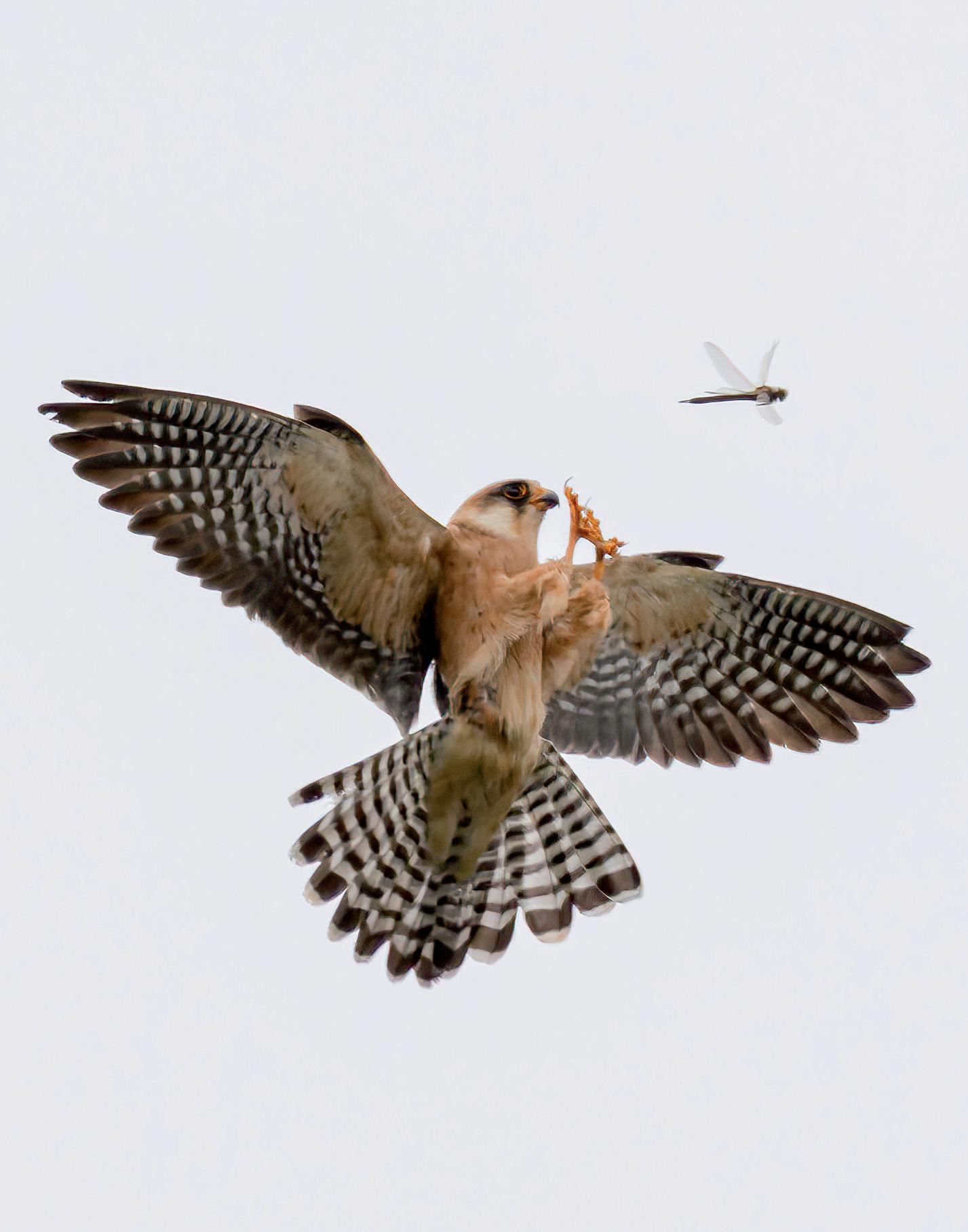
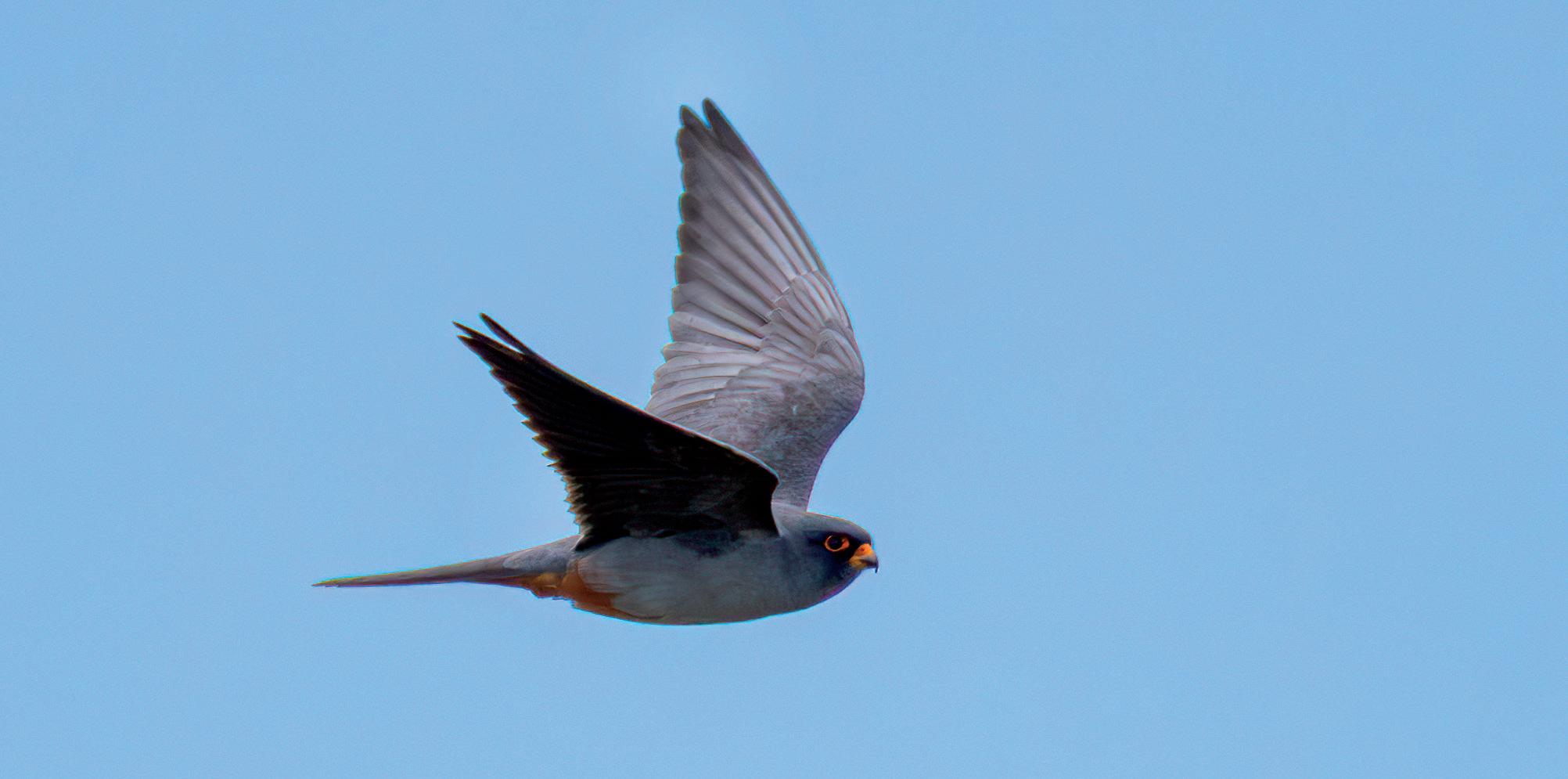
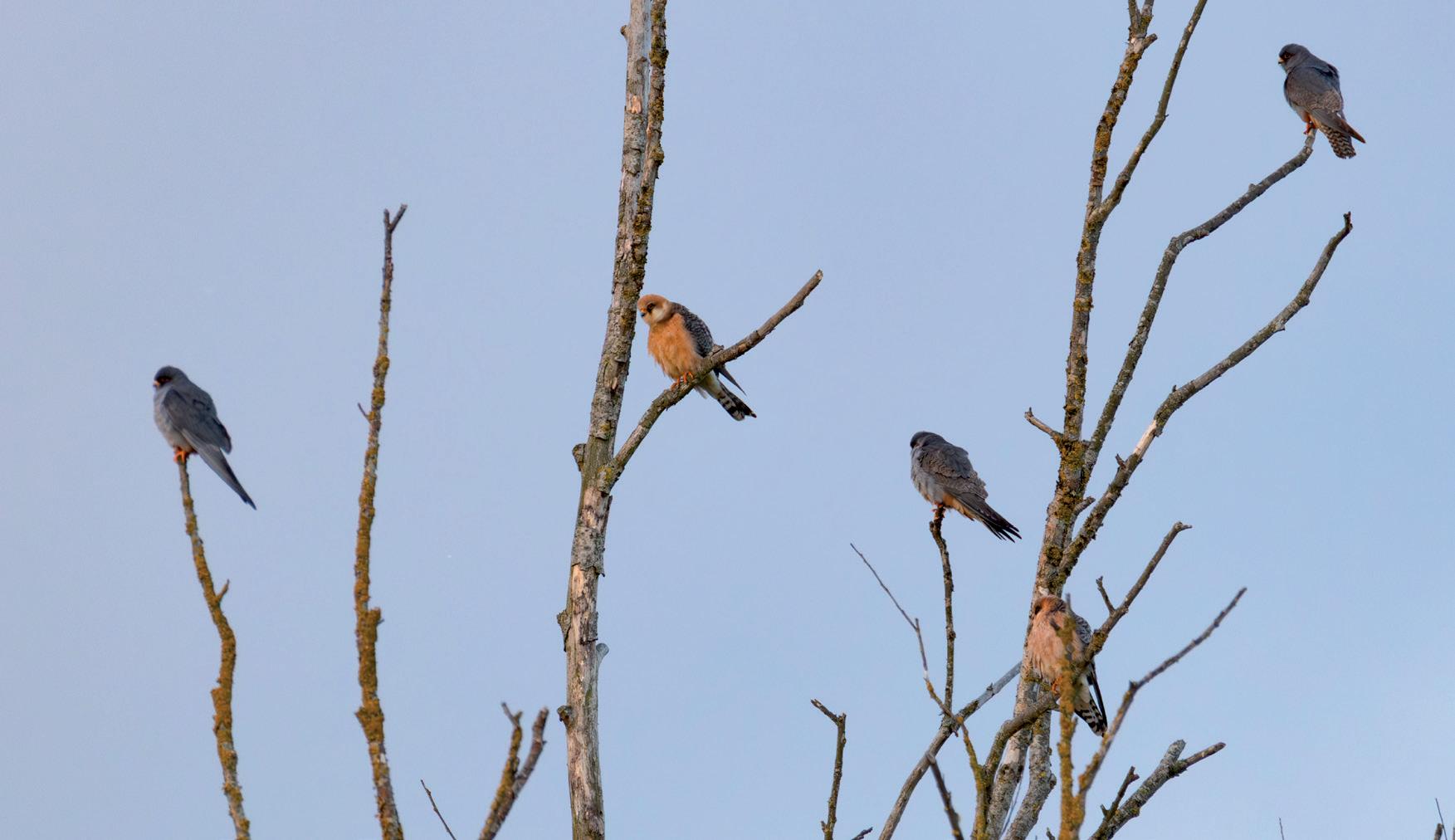
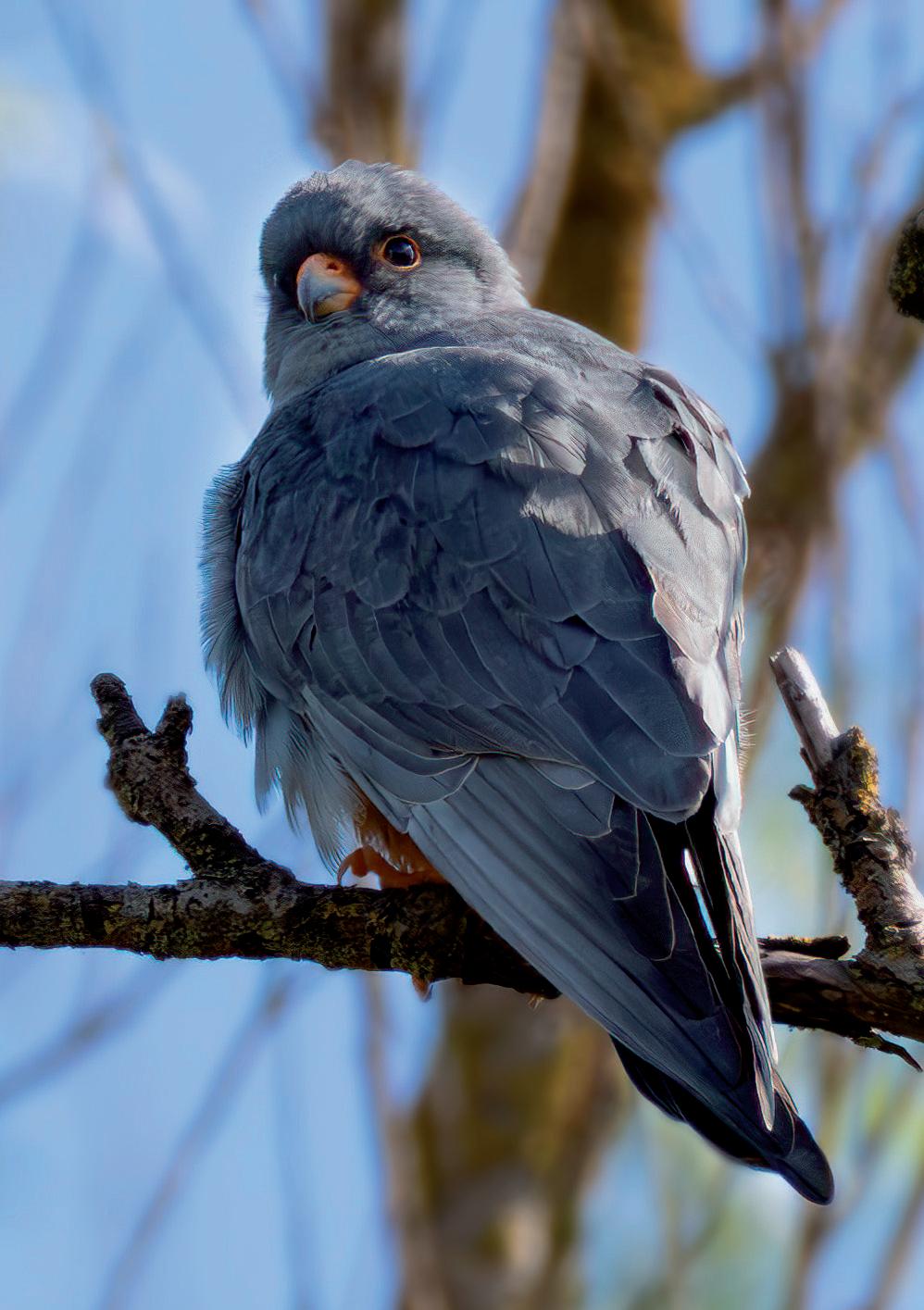
Red-footed Falcon – An amazing month for this rare visitor with sightings reported around the county reflecting what was quite a sizeable influx. There were five (2nd) and as many as seven birds (4th) at SWT Carlton Marshes seen hunting over Peto’s Marsh with several accompanying Hobby. The number had fallen to just three birds when last reported (15th).
Hooded Crow – One was reported over Bramford (19th) and another was seen in Lowestoft (21st).
Wood Warbler – A singing bird was located at Sutton Hoo (4th).
This was provisionally England’s warmest June on record, with a mean temperature of 16.9°C (2.5°C above the long-term average) and the second warmest for the UK. The month started on a cool note, with low pressure dominant and unsettled weather, bringing in heavy showers for some.
Temperatures began to increase in the second week, and high pressure returned to bring more settled conditions, although there were still some showers and isolated thunderstorms, especially mid-month.
The high temperatures reached heatwave thresholds for many across England and Wales between the 16th and 21st before breaking with more thunderstorms and showers.
Temperatures again rose towards the end of the month, resulting in another heatwave for some parts of central and eastern England.
Rainfall for the UK was slightly above average, with the UK provisionally
recording 79.5 mm of rainfall (103% of the long-term average) although some counties experienced less than half of their average rainfall.
Areas of southeastern England saw provisional mean temperatures over 3°C above average, and many counties including Essex recorded their warmest June on record. Winds were predominantly from the south/southwest and with the mainland of Europe also experiencing warm, dry conditions, temperatures across East Anglia remained high for most of the month. Occasional thunderstorms brought temporary, localised flooding in some areas before dry and warm weather returned.
Notable June sightings:
Ruddy Shelduck – A bird was on Livermere Lake (14th).
Garganey – There were three at SWT Carlton Marshes for the first week of the month with one at RSPB North Warren (7th and 8th) and another at Ramsholt (9th).
Greater Scaup – There were two on Benacre Broad (2nd to 8th).
Common Crane – Three sightings in the month. One over Dunwich Heath (16th), another near Island Mere, RSPB Minsmere (22nd) and a bird flew low over the Marsh Barn Café at RSPB Hollesley Marshes (22nd).
Little Ringed Plover – A bird seen on the west scrape at RSPB Minsmere (17th).
Wood Sandpiper – A single bird was found on the scrape at RSPB Minsmere (18th), there were two on the flood at Ramsholt (19th) and another was reported at RSPB Minsmere (20th & 29th).
Little Gull – Birds were often seen on the scrape at RSPB Minsmere throughout the month and, a single bird was also located at Ramsholt (24th).
Caspian Gull – A single report of a bird (3CY) at SWT Hazlewood Marsh (13th).
Eurasian Spoonbill – Regularly seen along the coast throughout the month. A group of 18 were seen at the favoured RSPB Hollesley Marshes (19th to 22nd).
Western Osprey – One was sighted at Shingle Street (2nd) and a bird seen heading north over RSPB North Warren later flew north over RSPB Minsmere (21st).
Hen Harrier – A female was seen flying south over Holmhill, Felixstowe (4th).
Black Redstart – One on the Landguard Nature Reserve (15th).
Hawfinch – A single bird was seen at Searson’s Farm, Trimley St Mary (16th). Scarce sightings:
Caspian Tern – One was found at SWT Hen Reedbeds/Blyth Estuary (13th) and another was at RSPB Lakenheath Fen (14th to 17th).
Bridled Tern – A single bird was seen briefly on the scrape at RSPB Minsmere before flying south (14th).
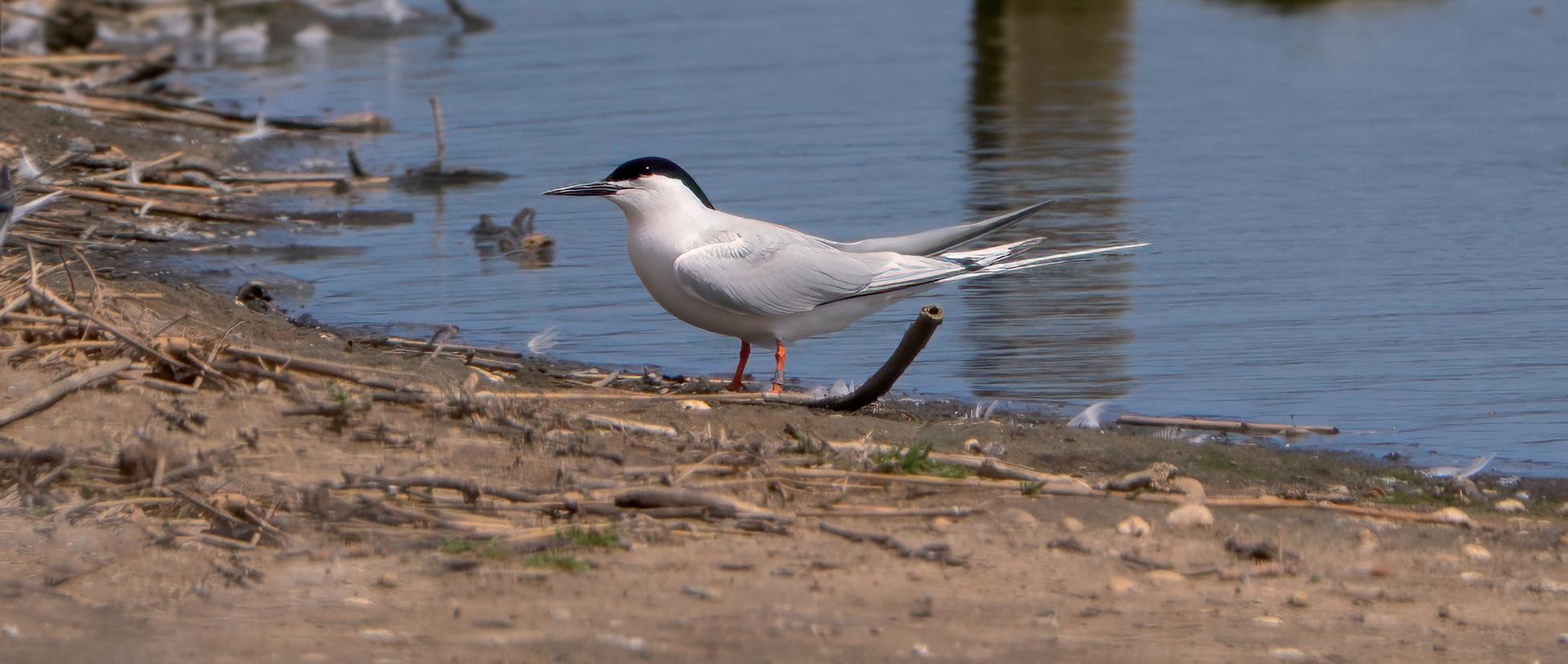
Roseate Tern – There was a single bird at RSPB Minsmere for much of the month and three present (19th).
Red-necked Phalarope – One at RSPB Boyton Marshes the only sighting (5th).
White Stork – A bird was seen at Sizewell and then RSPB Minsmere (22nd & 23rd).
Purple Heron – The bird seen at RSPB Minsmere in May remained until the 6th.
Black Kite – One was seen over Beccles (14th) and another drifted north over Benacre (27th).
European Bee-eater – One flew over Kessingland (12th).
Eurasian Golden Oriole – The bird found at RSPB Lakenheath Fen was again present (1st). Another sighting was in woodland at RSPB Minsmere (5th). Other sightings were of birds at Banters Barn, RSPB Boyton Marshes (14th) and Benacre (16th).
Council for 2025
Officers
Chair: Eddie Bathgate
Vice-chair: Chris Keeling
President: Ed Keeble
Secretary: Katya Bathgate
Treasurer: Alex Rafinski
Communications Officer: Adam Faiers
Projects Officer: Chris Keeling
Editor of Suffolk Bird Report: Nick Mason
Editor of The Harrier: John Kornjaca
Outdoor Events Coordinator: Anne Wright
Indoor Events Coordinator: Adam Gretton
Link to Suffolk Wildlife Trust: Jenny Rawson
Link to Suffolk Naturalists Society: Anne Wright
Link to Suffolk Ornithological Records Committee: Gi Grieco
House Martin Support Suffolk (Lead) - Jenny Rawson
Barn Owl Support Suffolk (Lead): Sally Nelson
Save Our Suffolk Swifts (Lead): Eddie Bathgate
Nest Box Support Suffolk (Lead): Eddie Bathgate
Members
Sarah Glyde
John Kornjaca
Peter Merchant
Sally Nelson
Jenny Rawson
Alex Rafinski
Honorary Vice-Presidents
Andrew Green
Adam Gretton
Colin Jakes
Mike Jeanes
Mike Marsh
Roy Marsh
Philip Murphy
Reg Snook
Bird Recorders
North-east Area Recorder: Richard Walden Email: bird-ne@sns.org.uk
South-east Area Recorders: Gi Grieco Tel: 07951 482547 and Steve Fryett Tel: 07593 382082
4, The Street, Melton, Woodbridge, IP12 1PW. Email: bird-se@sns.org.uk
West Area Recorder: Chris Gregory Email: bird-w@sns.org.uk Memberships
c/o SNS, The Hold, 131 Fore Street, Ipswich, Suffolk, IP4 1LR
Founded in 1973 by a group of Suffolk birdwatchers
Associated with the Suffolk Naturalists’ Society
SBG remains an independent birding group and is a registered charity
A voice for Suffolk birdwatchers
With established links to many naturalist and conservation organisations
Media
Actively lobbies to protect key Suffolk habitats
Provides a county-wide field force of bird surveyors
Promotes BTO bird surveys and organises special SBG surveys

Strong web presence - www.suffolkbirdgroup.org
Active X feed - @SuffolkBirdGrp
Quarterly magazine - The Harrier
Instagram: suffolkbirdgroup
BlueSky: @suffolkbirdgroup.bsky.social
Annual review - Suffolk Birds report produced by SNS
Trips and talks

Annually (20+) field trips - ideal for novices or experts and young or old alike
Opportunities to visit hot spots and receive practical ID tips in the field
Programme of talks and presentations - variety of topics (county, national, or international) with quality speakers
Assists with conservation projects to improve breeding success
- Swifts
- Barn Owls
- House Martins
- Peregrines
- Waders
Partners with Suffolk Wildlife Trust and other bird groups
Assists with funding for bird hides and other birding amenities
Contributes to community events, including dawn chorus walks
Provides bursaries for special projects
SBG Registered Charity No. 801446