
John Kornjaca
John Kornjaca
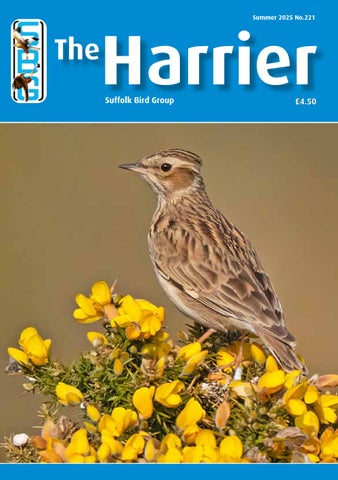
Welcome to the latest edition of the Harrier.
This edition contains an account of the Annual General Meeting that was held at the Hintlesham and Chattisham Community Hall in February. A highlight of the evening is always the presentation of the Annual Awards and this year, there was an additional Award to honour the life and work of the late Steve Piotrowski.
SBG have been quite busy appearing at various events through the spring and our outdoor excursions have continued to be very popular.
The spring migration of 2025 has proved to be very interesting. Like many of you, I travelled to SWT Carlton Marshes recently, to view some of the Red-footed Falcon that have arrived in the UK. On the day of my visit, there were five birds seen hunting over the reedbed along with perhaps six or seven Hobby. Magic!
Also in this edition, there is an item from Karen Langley, a Ranger on the National Trust – Orford Ness NNR, which provides a little insight into how the weather impacts wildlife on the Ness.
As we move into June, a reminder that the SBG are seeking information from members about the location and numbers of any breeding House Martins that have been observed – our HMSS team await your data (refer to page 20).
Our BOSS team too, have continued to promote the work that they have undertaken and many youngsters will have visited the team at Trinity Park recently learning about the feeding habits of our Barn Owls.
TV star, Gi Grieco, appeared on ITV News on 11 April, ‘live’ from a park bench in Holywells Park, Ipswich where he was to discuss the results of recent garden bird surveys. SBG were present at the Bury St Edmunds Wildlife Day and attended the Suffolk Show at Trinity Park (28-29 May 2025).
The pleasant, very dry weather remains kind to us – although the cold North/Northeasterly breeze experienced in coastal areas recently has been a bit of a surprise. I note
Chris Keeling
that there are concerns that the prolonged, very dry weather may yet lead to drought conditions later in the summer.
Finally, and with much sadness, we have also recorded within these pages the passing of one of our founders, Mr Robin Hopper, one of the small group that founded the Suffolk Ornithologists Group back in 1973. And, a friend of SBG, renowned wildlife artist, Mr Peter Partington, has recently passed away.
John Grant (outgoing president of the SBG) opened the 2025 AGM, held at the Hintlesham and Chattisham Community Hall on Thursday 27th February, with a warm welcome for the attending members and guests.
He went on to state that since he was now at the end of his second four-year term as president, and in line with the constitution of the Group, he was compelled to stand down from the role.
He went on, saying that, “…it had been an immense and huge personal honor to serve two four-year terms as the president of the Group”.
Prior to handing over to the Chair (Eddie Bathgate), John had special praise for the friendship and support of the SBG membership and the hard work of the SBG council. He mentioned the high quality of the annual report ‘Suffolk Birds’, superbly edited by Nick Mason, and, the significance of the projects currently undertaken (namely
SOS Swifts, BOSS and HMSS), In conclusion, John made reference to the “heroic work of Gi Grieco”, who, for seven years and thirty editions, has been the editor of SBG’s excellent quarterly magazine, ‘The Harrier’.
Triumphs, change, sadness and moving forward
It was an especially poignant evening for John, and following the announcement that he would be stepping down as president, he paid an emotional and heartfelt tribute to his great friend Steve Piotrowski who passed away on the 17th June (aged 72) following a period of illness. The passing of Steve was an immense loss to Suffolk ornithology and has been widely felt by the birding community.
Chair, Eddie Bathgate, thanked John for his work and also added a personal tribute to Steve Piotrowski, pausing briefly to allow time for reflection before moving on to the main business of the evening.
Eddie began by offering his gratitude to Adam Gretton (indoor events coordinator), for ensuring that the many indoor meetings hosted by the SBG continue to be held in a welcoming and comfortable environmentnoting that the Hintlesham and Chattisham Community Hall has proved to be a great success as a venue.
Eddie went on to thank Adam, for securing a range of interesting speakers and subject matter, Anne Wright (outdoor events coordinator), for ensuring that refreshments were available on each evening event, and, Adam Faiers (communications officer) for the warm welcome provided to guests and members upon arrival.
Eddie thanked all who helped with the technical aspects of hosting the AGM, operating the laptop and printer, the microphone and pointer and, importantly, everyone that contributed to the ‘clear up’ at the end of the meeting.
Continuing, he thanked the Suffolk Wildlife Trust and staff at SWT Foxburrow Farm for providing their facilities for SBG council meetings.
He went on to welcome new council members Jenny Rawson, Sally Nelson and Sarah Glyde. Jenny, Sally and Sarah have been working incredibly hard to promote a new SBG project promoting awareness and conservation of the House Martin in Suffolk (House Martin Support Suffolk/HMSS) with Jenny taking the lead. Sally has taken on the role of project lead for the rejuvenated Barn Owl project (Barn Owl Support Suffolk/BOSS) providing important advice to landowners in Suffolk that are interested in conserving the iconic species.
The SBG outdoor walks proved to be popular and extremely well attended in 2024. Excellent and knowledgeable leaders have all worked hard to ensure that attendees have an opportunity to see the birds and
other wildlife discovered on the many excursions.
Eddie thanked Gi Grieco for his efforts in organizing the outdoor walks in 2024. He went on the offer thanks to Anne Wright and Adam Faiers for helping to arrange accommodation on the few occasions when the Group ventures to terra incognita, beyond the borders of Suffolk.
Eddie paid special tribute to the outgoing treasurer Anne Wright, who reported that 2024 had been a good year for SBG. Membership is on the up and fees are paid promptly. Additionally, with 438 Gift Aid claims, a further £1,000 has been added to SBG funds. SBG funds and membership are on a stable footing as Anne hands the responsibility for the SBG accounts to our new treasurer - Alex Rafinski.
The financial accounts of SBG continue to be audited by Terry Lock - thanked in his absence – by both Eddie and Anne.
Gi Grieco is to take a step back from successfully coordinating our many outdoor meetings (after 12 years) and hands the baton (and walkie-talkies) to Anne, who will reach for her walking boots instead of her spreadsheets in 2025 and beyond.
Adam Faiers gave an entertaining and informative review of the 2024 birding year supported by photographs provided by many SBG members. He was also thanked for organizing a valuable raffle on the evening.
Eddie also thanked Nick Mason the editor of the annual report ‘Suffolk Birds’ report, the ever vigilant SBG membership for submitting sighting records and, the county recorders – Steve Fryett, Richard Walden and Chris Gregory - with the support of Suffolk Ornithological Records Committee, Gi Grieco (Chair) plus James Brown, Rob Holmes, Tim Humpage, Rachel Harvey, Ben Moyes, Stuart Read and Brian Small.
The work of David Walsh in chasing down records of rare breeding birds and Mick Wright for publicizing BTO surveys were also commended. Finally, John Richardson, Ed Keeble and other contributors were thanked for their supporting photography and artwork.
Moving in to 2025, the communication age presents new opportunities for publicising and raising awareness of the aims and aspirations of the SBG. Eddie thanked all who ensure that the Group keeps pace with new communication technologies: Adam Faiers - emails, John Kornjaca – publicity and articles, Ben Moyes – ‘X’ feed, Gi Grieco – Bluesky and the daily records of rare and scarce birds sightings page on the SBG website (which is updated from BINS virtually every night) and Sarah Glyde – SBG Bluesky account.
John Grant (outgoing president) invited presidential nominee Ed Keeble to stand in his stead as president of the Suffolk Bird Group. Ed accepted the role remarking that it was a great honour to be elected.
Handing over to the chair, Eddie Bathgate again praised the sound advice and suggestions from John in support of Suffolk’s birds and birders. In announcing the closing of the formal business of the AGM, Eddie then went on to invite new president Ed Keeble to present the 2024 awards.
The Garrod Award
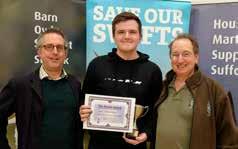
The Garrod Award was created in the memory of Ken Garrod, by his wife Jean. It is designed to recognize the work of our young birders.
The Garrord Award winner is Tom Porter - in recognition of his skills as a birder and as an all-round naturalist, acknowledging his diligent record keeping and commitment to nature conservation in Suffolk.
The Denis Ockleton Trophy
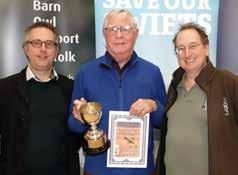
The award of the Denis Ockelton Trophy recognizes a level of outstanding service to Suffolk birding and the conservation of Suffolk birds and habitats.
The Denis Ockelton Trophy was awarded to John Turner. John builds nest boxes for SBG projects with an incredible 600 nest boxes for SOS Swifts in 2024. Recently he has constructed specialist nest boxes for Little and Tawny Owls, Spotted Flycatcher, Redstart, Nuthatch and Treecreeper. John has been carrying out and, for a time, coordinating annual high tide roost and low water WeBs counts on the River Stour since the late 1960’s. He has conducted a Heronry census at Stutton from the 1980’s onwards. In 1985, John was instrumental in initiating and organising wildfowl and wader counts at Alton Water. Alongside all of these activities, John still finds time to volunteer for weekly work parties with the SWT on various reserves around the county.
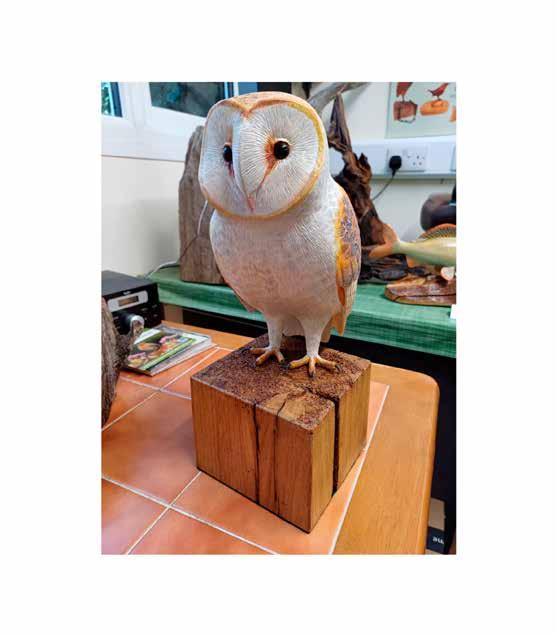
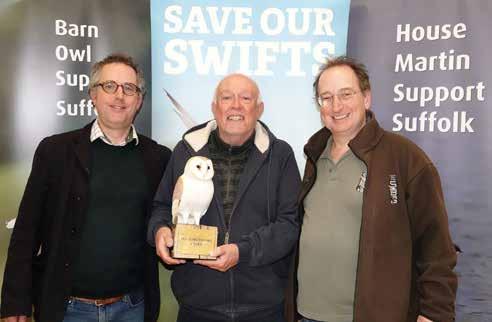
The Award itself, is a beautifully sculpted Barn Owl that has been carved from a single piece of kiln dried Lime wood by artist Brian Heath at ‘Wildlife Creations in Wood’. Working from his studio workshop at Stonham Barns, Brian modeled his carving on a photograph of a Barn Owl provided by the SBG. The Barn Owl held a special place in the heart of Steve Piotrowski.
The award went to a visibly moved John Grant, who paid a further heartfelt tribute to his friend Steve Piotrowski and expressed his tremendous gratitude for being made the inaugural recipient of the award. A huge round of applause gave voice to the
The presentation of the awards was followed by the traditional ‘fun quiz’ that had been prepared by Nick Mason and presented by Adam Faiers. Gi Grieco and Ashley Gooding were joint winners.
It remained for Eddie Bathgate to close the meeting and he again thanked everyone for attending and for supporting the SBG in its many worthwhile ventures.
Karen Langley, Ranger, National Trust Orford Ness NNR
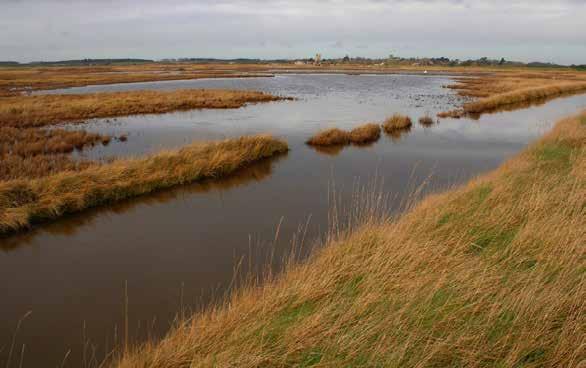
The British are traditionally obsessed with the weather, but as climate change takes hold, recording the impact of it on our National Trust sites has become an increasingly important part of our work. While many are interested in the impact of flooding upon historic properties, around the Suffolk, Norfolk and Essex Coast, our focus is very much on its effect on nature.
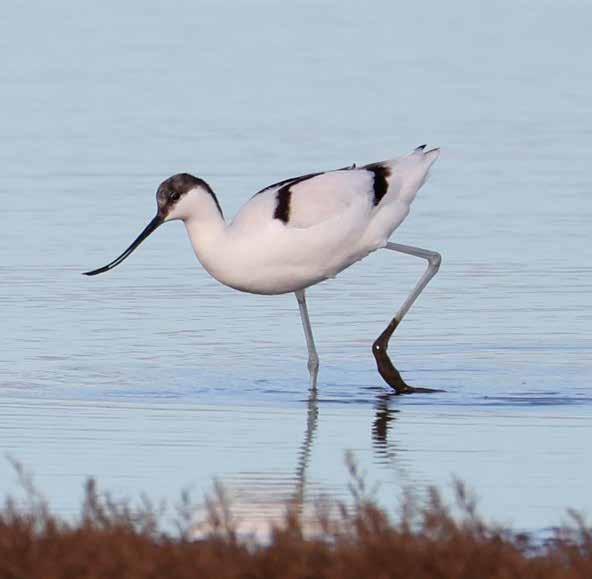
To provide readers with some background to our concerns, back in 2022 Orford Ness saw record breeding numbers of Lapwing, Redshank and Avocet.These are our three key species and we monitor breeding success in conjunction with partners in the Suffolk Wader Strategy group. It was a significant year for us with Orford Ness hosting 62 pairs of Avocet (second highest record), 43 pairs of Lapwing and 51 pairs of Redshank (very much a record!).
Although numbers dropped back to more familiar totals in 2023, it was our 2024 counts that provided us with an eye opener into just how a very wet winter may impact our ability to carry out important groundworks on the site - to prepare habitat for the next breeding season.
From September 2023 we found ourselves with a grazing marsh that kept getting wetter and wetter as the rain set in across the county. At the time it did not feel too significant (rain-gauge wise), but the pools on the site have a tendency to dry out and then fill up at the first hint of rain.
We managed just a half day of mowing in one small section of the airfields grazing marsh, before the ground was considered too soft for the tractor.
While the sheep did a decent job in the second Airfields section, the increase in rainfall during October, and then November (did we have a dry day?) meant that they were unable to be moved into the other areas, and, found themselves back in the first bit of grazing marsh (King’s Marsh) that they had started the season in.
As a result, we spent most of the winter and well into March, trying to reduce water levels across these marshes. This challenging situation was further hindered by our power generator failing thus preventing us from pumping water off of the marshes. We had to rely upon the gravity-fed sluices.
Although we managed to reduce the water levels, our inability to reduce grass and reed levels across the main breeding site had a negative impact on the availability of suitable breeding areas for our three key species.
The very mixed weather between April and June further hindered the birds with chicks.
In 2024 we counted a disappointing 11 Lapwing nests, 24 Avocet nests and just 9 Redshank nests (hard to find with the tall grass height). Fledging rates were poor with Redshank benefitting from the longer grass, but our resident Avocets drew a blank.
It is important to note that the negative effect of the wet weather upon our wading birds was not felt across all of our priority bird species.
Alongside our general habitat management and monitoring, Orford Ness has been undertaking a Lesser Black-backed Gull (LBBG) project over the last three years. The project, which is funded by the developer of the Galloper Offshore Wind Farm, seeks to determine the pressures that face the LBBG in their coastal breeding areas and aims to identify strategies to increase the colony size and breeding success.
Orford Ness has witnessed a huge fall in the LBBG population with numbers crashing from a record high of 20,000 pairs in 2000/2001 to under 2,000 by 2007. In 2021 we recorded just 210 pairs.
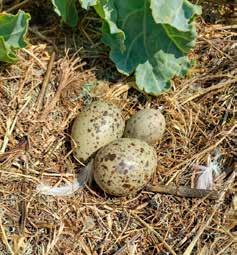
During this project it has become apparent that a decline in habitat conditions in one section of the Ness, and human disturbance in another area of the Ness are the two leading causes of this decline.
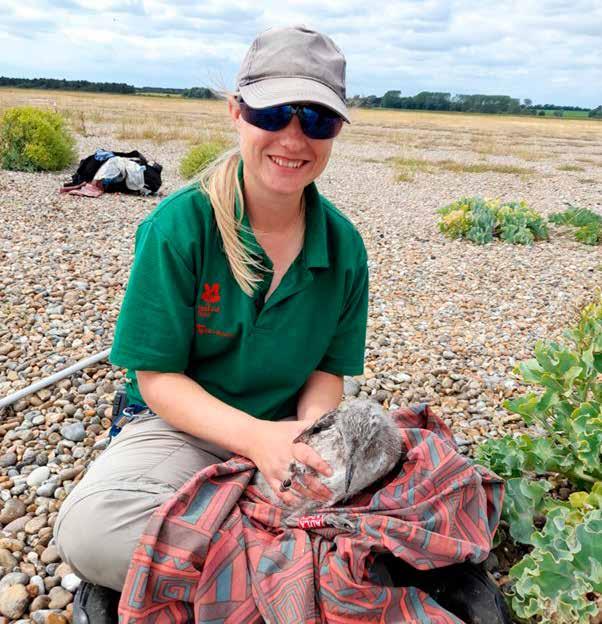
The annual work carried out by the project team has focused on erecting rope fences, cordoning off colonies in order to direct the public along routes that may reduce disturbance. We have undertaken regular boat patrols along the river with the aim of talking to those members of the public that continue to land boats on the southern end of Orford Ness.The purpose is to educate the public about the potential for wildlife disturbance and damage to the rare vegetated shingle habitat.
Since the project commenced the team has seen an increase in nesting and an improvement of fledging rates for LBBG (and Herring Gull) primarily on the southern shingle spit. This has coincided with the educational aspect and regular patrols along the river plus the monitoring/recording of disturbance events.
However, during the 2024 season it became apparent to us that the sustained inclement weather between April and June was beneficial for the gull colonies along that area of Orford Ness. In spite of 2024 being one of the warmest years on record Orford
Ness recorded a greater number of “high wind” days. The upside of this was that it made the river unsuitable for leisure users significantly reducing the number of people landing on the southern spit during the main breeding season of May to July.
So, despite the poor weather having a negative effect elsewhere, this reduction in human disturbance was reflected in the numbers of breeding LBBG. Overall we had 344 breeding pairs, with around 234 young fledging. This number may in fact have been higher, as our ringing of the chicks seemed to be a week late, with many other flying young observed.
As we look ahead to the 2025 breeding season, the drier winter has enabled us to revisit areas we could not access last year and mow larger areas of the grazing marsh. The managed water levels across the scrapes, lagoons and marshes are currently looking favourable for us to host a larger number of nesting birds.
The sustained dry period is now running into the breeding period of April to July and it shall be interesting to assess if more favourable weather for waders means a negative impact on the LBBG colony.
Eddie Bathgate

Suffolk Bird Group have received a generous grant from The Suffolk and Essex Coast and Heaths National Landscape Community and Conservation Fund to help raise awareness of migrant woodland and waterside bird species and, to install nest boxes to provide spaces for these to breed.
The grant will be used to fund two projects. Firstly, it will enable SBG to produce leaflets for placing in car park dispensers at various sites explaining the perils of disturbance to ground-nesting birds. Secondly, the SBG will purchase materials to construct nest boxes for vulnerable species such as Common Redstart, Spotted Flycatcher and Grey Wagtail - with our nest box construction champion John Turner making them.
Common Redstart nest boxes will be placed on heathlands and adjacent woodland areas; Spotted Flycatcher boxes will be for woodland, churchyards, parks, riverside and lakeside locations; while Grey Wagtail nest boxes will be for riverside locations.
SBG need your help both with identifying suitable locations for the nest boxes and in the actual installation of the boxes. If you, or your local wildlife group is in, or adjacent to, the Coast & Heaths National Landscapes boundary, or, if you have an idea for a project that targets these species and would like nest boxes, please get in touch with us. We can distribute nest boxes for you to install in suitable locations.
More information is available here: www.national-landscapes.org.uk/ national-landscapes/ suffolk-coast-and-heaths or, contact SBG at: info@SuffolkBirdGroup.org
Nelson

Barn Owl Support Suffolk (BOSS) was delighted to be invited by the BTO (Suffolk) to join with them on their stand at the Suffolk School Farm and Country Fair held at Trinity Park, Ipswich in late April.
This fantastic event welcomed over four thousand pupils aged between seven and nine years of age from across the region and offered a brilliant opportunity for us to engage young minds with the wonders of the natural world.
One of the highlights of the day was the Barn Owl pellet display which captured the curiosity and fascination of many children, eager to learn more about what owls eat and how pellets tell the story of their diet and hunting habits.
It was heartening to see so many young people genuinely interested in wildlife — and especially in Barn Owls.
Events like this are a vital part of encouraging a lifelong love of nature and conservation and it was a privilege for BOSS to be part of inspiring the future generation of our wildlife champions.


Follow us on Instagram and Bluesky
Email: barnowls@suffolkbirdgroup.org
Mobile: Sally Nelson: 07708 141276 Sarah Glyde: 07539 634545
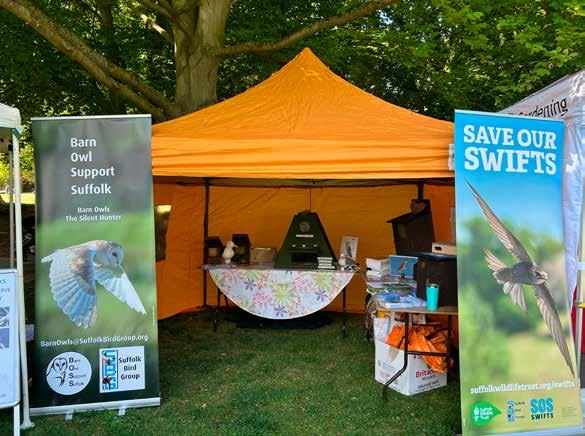
Suffolk Bird Group was delighted to be invited to take part in the Bury St Edmunds Wildlife Day, organised by the Bury Water Meadows Group on Saturday 17 May 2025. It was a really successful and enjoyable event, with a great atmosphere and plenty of interest in local wildlife.
Sally Nelson and Sarah Glyde led a well-attended bird walk along the River Lark and into the Bury Water Meadows, where they pointed out a variety of birds with an enthusiastic group.
After the walk, SBG Chair, Eddie Bathgate gave a talk to the assembled about Suffolk Bird Group, highlighting some of our current projects, including our work with House Martins, Swifts and Barn Owls.
Throughout the day, we were based in our little tent with displays about our ongoing projects. It was a brilliant opportunity to chat to all sorts of lovely people, answer questions, share ideas, and to make some really good new contacts. A big thank you to the Bury Water Meadows Group for having us – we thoroughly enjoyed being part of such a positive and inspiring day!
Eddie Bathgate
As I write this item it is the end of April and there are reports of Common Swift (Apus Apus) having returned to the area. It is encouraging to hear of a nest box in Haughley being used by Swifts for the first time - the first such report of 2025. We hope that there shall be many more to follow. We know that our efforts in regard to Swift conservation are part of a long and slow process. It may take several years for Swifts to find a new nesting location - even if Swift calls (audio) are being played. Once a nest box is installed it may take a further year before breeding occurs in that box. The good news is that Swifts do eventually find nest boxes and so, if more nest boxes are added at a site then a Swift colony may well expand.
Sadly, we do not know or record how many Swift nest sites, in the roofs of buildings, are being lost. As an example, two buildings close to my own home were lost to roofing works that took place in early 2024. The

work that was carried out took place outside of the breeding season and was therefore, a perfectly legal activity. Unfortunately, neither of the property owners took advantage of our offer of a donation of nest boxes that may have offered the birds an alternative nesting location. Is this attitude the primary cause of the reported 60% decline of the Swift population here in Suffolk over the last 30 years? I note that in the Netherlands, where Swift nest sites are protected all of the year-round, Swift nest bricks or nest boxes must be added in mitigation should a breeding site be at risk of loss because of construction, renovation or refurbishment. Comparably the Dutch population of Common Swift is down just 4% over a similar time-frame.
Looking at the data from 2024 and comparing it to previous years we can see that Swift colonies can be both created and expanded with the use of nest boxes.
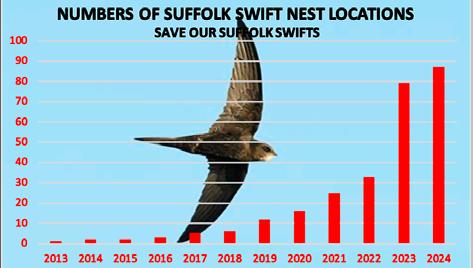
Graph 1: The number of Swift nest box locations in Suffolk - reported by year
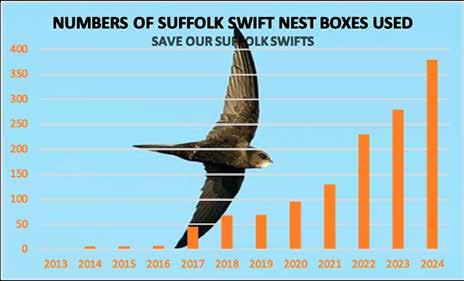
Graph 2: The number of Swift nest boxes used – reported by year
In 2024, you will read that 379 nest boxes were used in 85 locations (revised from 334 in Harrier 220) around the county. Some of these nest boxes will have been taken up by adults displaced by renovation works, access to their previous nest site inadvertently blocked by modern building methods.
Some early colonies were saved by installing nest boxes close by, after buildings were reroofed. Pleasingly, locations in Stonham and Worlington had significant early successes in this way.
Many nest boxes will have been taken up by younger Swifts looking to breed for the first time – potentially new breeding pairs for Suffolk. These new colonies may take several years to develop from first occupancy to multiple usage, however, the colonies may grow if left and remain undisturbed.
We have great hopes for the new breeding season. Many locations where nest boxes are now being used have had more nest boxes added. Suffolk Food Museum, Waldringfield Primary School and Felixstowe Library have all received more, new nest boxes that are added in the hope that existing new colonies shall thrive and grow.
Many of the 130 Swift nest boxes kindly donated by BUNZL last year have now gone to locations where Swifts are already nesting, providing further opportunity for those colonies to expand.
Our hope is that these new additions, coupled with the ‘owners’ playing Swift calls (audio) through the early summer, may result in a further increase in the number of locations hosting Swifts in nest boxes and, the total number of nest boxes used.
If you have nest boxes close by, please keep an eye on them as dusk approaches. Are there Swifts flying around them? Have you heard Swifts screaming in the skies above them? Are the birds going in to the nest boxes to roost?
A short burst of a Swift call (audio) from a mobile phone may elicit a response from a roosting bird inside a nest box. Why not try it either in the early morning or early/ late evening – just another way of learning of nest box occupancy. Play those calls and enjoy your Swifts!
We look forward to learning of the numbers recorded this year.
Gi Grieco
Sunday 16th March 2025
Leader: Gi Grieco
This is always a keenly anticipated field trip and, as in previous years, a good turnout of members was evident. In total, 26 members congregated at the Forestry Commission car park at Santon Downham and it was pleasing to note that the improvement works on the car park had been completed. Santon Downham is incorporated in to the Brecks excursion as a start location since the area usually holds lots of birds, including a couple of species that are traditionally extremely difficult to see. Willow Tit has not been seen on our trips for several years and is basically all but extinct as a breeding species in Suffolk - maybe in Norfolk too. Lesser Spotted Woodpecker was often encountered in previous years but, with numbers diminishing (it is one of the fastest declining populations in the UK), the species has not been sighted for a couple of years and it does seem that it too has gone from the area also.
The footpath along the Little Ouse is narrow, and so, given the numbers present the group was split into two each heading off in different directions on a circular route. The ‘walkie-talkies’ that we have, allow each group to communicate sightings and locations as they proceed. We walked along the road to the bridge, noting Siskin and Lesser Redpoll, a singing Song Thrush and a Nuthatch. Adam volunteered to lead group 1, and they headed off along the river footpath. I led group 2, we moved further along the road towards the railway line.
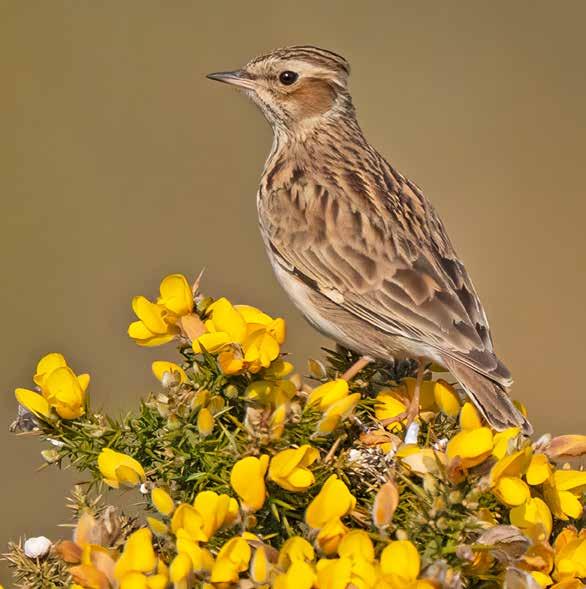
A Chiffchaff sang briefly and we had good views of a Great Spotted Woodpecker Once over the railway line we headed left through the heath area adjacent to the wood. We noted that this had been cut short by way of heathland management. Last year we had a lovely Woodlark but, there was no sign of the bird this year. A Kestrel flew over and landed in a distant tree. We did manage to find a Stonechat that was working along the bramble and scrub by the railway line. We cut under the railway and in the trees ahead were a number of Reed Bunting and one or two Lesser Redpoll. The area was noticeably drier than in previous years, and especially so, when compared to last year when it was flooded. We heard Woodlark in the distance, across the river, and contact from the other group confirmed the same – they were much closer to the bird.
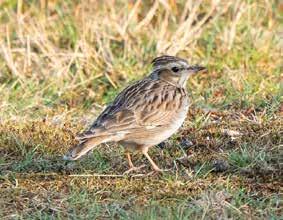
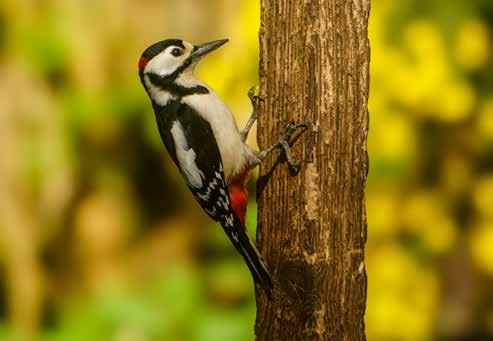
Our two groups met where the footpath joins the river path and we exchanged notes. We decided to make a further short walk in the hope of locating Lesser Spotted Woodpecker. We received news that there had been a sighting earlier in the day. Sadly, we drew a blank, but did have fantastic views of displaying Marsh Tit, a small group of Redwing and further Great Spotted Woodpecker. We headed back toward the car park following the river this time and saw more Siskin, a Water Rail briefly and then found a smart Lesser Redpoll showing extremely well on the edge of the river, allowing the group to study it well.
Our next stop was to be the forest. As we assembled some of the group were talking to a birder who had just left the area. He gave directions for a Goshawk that he had seen and so we headed down the trail as one this time. We had the occasional forest bird, such as Coal Tit, before coming to an open area. We set up scopes to scan and close by we had Yellowhammer and Stonechat. It was not too long before the shout went up of a Goshawk that was
flying through. A short while later, two birds were watched displaying and showing well although distant. It was great to admire this raptor species, a bird that is increasing in numbers in the county. While scanning the skies we also had Common Buzzard and a Sparrowhawk
An opportune moment for some of the group to leave while the remainder carried on. We had not gone too far when a pair of Woodlark flew up. They sat in a conifer above the ride and everyone had great views through their spotting scopes.
We noted a few beetles by the path – Black Oil Beetle – which is classified as nationally scarce and a UK Biodiversity Action Plan (UKBAP) species. As with other Oil Beetles they have an interesting life cycle which includes being a nest parasite of solitary mining bees (well worth looking up!).
We reached a further open area, again scanning the skies and again found a Goshawk although this time the bird was further away. We decided to walk back and make one final stop of the day. Several members took the opportunity to
head off and so there was just a handful of us that headed to Cavenham Heath. We saw many Rook, from the rookery on Icklingham Plain, and then we crossed over Temple Bridge. We had hoped to see Grey Wagtail which are often seen here, but again had no sighting. We viewed the ‘flash’ and sighted a Green Sandpiper and Snipe and some then, at last, got to see Grey Wagtail. Further up the trail we scanned the heathland - the keen eyes of one of the group picked out a very well hidden Stone-curlew. We had a pair of Stonechat and then noted a Red Kite that had landed in a tree. Looking through the ‘scope at the bird, we noted it had got some food and was slightly blood-stained. We noted another Red Kite in the distance, along with a couple of Common Buzzard.
Steve Fryett
The trip to the Brecks never disappoints and, although there are a couple of species that we no longer encounter, we did see two raptor species that, encouragingly, are increasing across Suffolk.
Saturday 12 April 2025
A fine sunny spring day greeted the 23 attendees for this excursion starting at the Coastguard Cottages of Shingle Street. Most of April has (so far) seen cold East/Northeasterly winds and so an overnight shift to south-easterly origins was welcome but, would it produce any spring migrants?
The tennis court held several pairs of Linnet, notably one seen with nesting material and the flowering gorse provided a typical setting for a male Stonechat. Over on Oxley Marsh several Meadow Pipit were now displaying, as were a pair of Carrion Crow.
The house gardens provided the first notable passage migrant of the day with a singing Willow Warbler. Moving on, Chiffchaff and Blackcap were added to the list as we passed through the allotments. A Common Buzzard drifted over the marsh pursued
by local corvids and a white Common Pheasant caused a bit of a stir ‘popping up’ now and again in an arable field.
We scanned the horizon toward Hollesley village since a White Stork, reported earlier in the morning at Bawdsey, had departed East Lane and was seen heading north. Sure enough, it was found at a distance, continuing on its northward flight over Hollesley (thanks to BINS for the alert).
Aware that White Stork are on occasions known to escape from their captive confines - this record will need the approval of the Suffolk Ornithological Records Committee (SORC) if it is to be accepted.
A male Reed Bunting and a couple of Barn Swallow passed by as two adult Mediterranean Gull were heard calling and located as they headed north.
Another male Stonechat was located as we headed back to the hamlet, a calling Eurasian Whimbrel passed overhead and, at this point of the morning, we had heard at least 10 singing Skylark in the area.
As we passed on the seaward side of the houses, our butterfly enthusiasts noted several Peacock, Small White and a single Small Copper.
The second part of the excursion took place at Upper Hollesley Common close to Red Lodge. From the upper car park Yellowhammer, Woodlark and Sparrowhawk were noted.
Proceeding along the bridleway, we had excellent views of a Dartford Warbler that was singing from the top of a small pine tree. Two more singing Yellowhammer, a few singing Woodlark and, several sightings
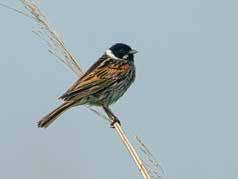
of Stonechat were noted as we tried (in vain) to find a Common Redstart While enthusiastically searching in a specific area, a small bird located in a tree generated some excitement. While difficult to see, it was eventually confirmed to be a very late male Brambling.
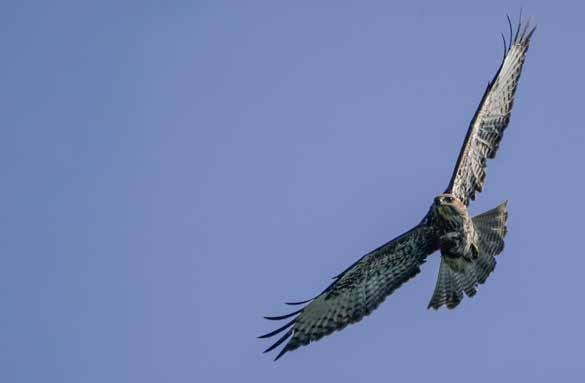
Scanning the sky over the treetops produced another Sparrowhawk, two Common Buzzard and two Red Kite.
As we headed back toward the car park, we noted that an area of the common had been completely cleared of scrub, gorse, bracken and heather - presumably to regenerate the heather. There was no sign of birdlife observed in the area although a Common Lizard was easily seen as we ended our walk.
Robert Kitchen
On a glorious spring morning, 22 group members assembled at the SWT Carlton Marshes visitor centre. A showy Whitethroat greeted us, calling and parachuting from a bush at the edge of the car park. A number of rare Red-footed Falcon had been on the reserve for a few days and, with great anticipation, we set off in an anticlockwise direction in order to reach the marsh where they had regularly been roosting. The path around the reserve is quite narrow and so the group was often in single file. Those at the front of the group saw the first Wall Brown of the day, while those at the back had a view of a Cuckoo flying through. We stopped in a couple of places to listen for warblers and other song birds and saw our first Marsh Harrier and a Great White
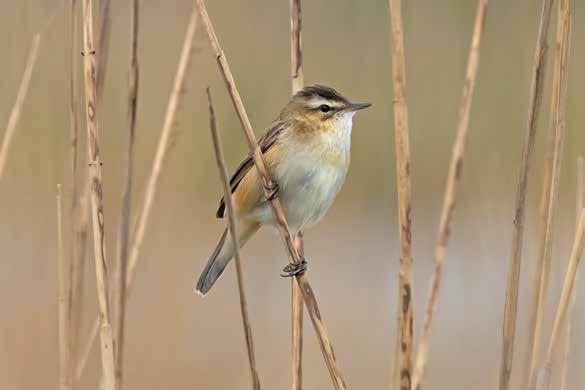
Egret. As we neared the Red-footed Falcon roost it became apparent that our birds had flown and so we struck out on to the bund overlooking Peto’s Marsh, fanning right to scan the reedbeds for other action. Flying herons attracted a good level of interest although we were not able to connect with the occasionally reported Purple Heron this time. Falcons could be seen hunting over the marsh, quite distant from this vantage point, they appeared to be closer to the Turnpike Hide which would be our destination for lunch. The reedbeds were busy with Reed Warbler and Sedge Warbler as well as Reed Bunting. A Chinese Water Deer or two loafed through giving us good views.
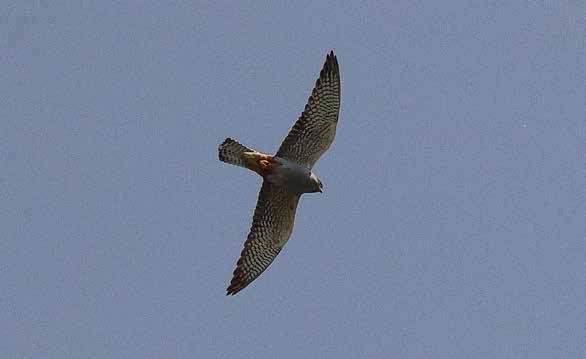
Doubling back on ourselves and taking the path that connects to the other side of Peto’s Marsh news of a Booted Eagle was received – it had just been spotted on the reserve although high above the Visitor Centre. All eyes turned skywards, but to no avail - a couple of distant raptors were found but discounted. Moving on towards the Turnpike Hide we scanned the marsh to our right and found a Wood Sandpiper picking about at the back of a pool. As we turned right onto the final stretch to the Turnpike Hide it became clear that the perspective had not deceived us and the star birds – Red-Footed Falcon - were now hunting much closer to us, on both sides of the River Waveney. It was now quite warm and several Hobby had joined them making it more challenging to pick out the Redfooted Falcon (especially for photographs!).
The occasional foolhardy Swift was also spotted in the melee. As we took our lunch, a Common Snipe was spotted feeding in the channel in front of the hide.
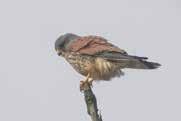
A dwindling band of birders now headed for home along the eastern edge of Share Marsh. There were no new birds to be added to our day list, although we had good views of a confiding Kestrel sat in a tree close to the Visitor Centre. A Brown Argus was also seen on a day which had been good for Lepidoptera, with around half a dozen Wall Brown seen during the walk - Carlton Marshes now being one of the best sites in the county to see this declining butterfly species.
All in all, an excellent day out enjoying good birds, weather and company with 56 species either seen or heard.
Gi Grieco
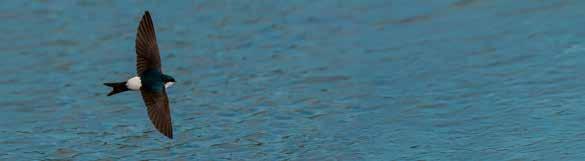
Last year SBG launched a new project – House Martin Support Suffolk (HMSS). The HMSS project team started a House Martin survey requesting breeding records. Several records were submitted by members.
This year the team are aiming to collect more data for 2025 and shall try and cover records from across the whole of the county of Suffolk.
The decline in House Martin numbers has led to the species being added to the UK Red List in 2020. The decline has been most severe in the south and east of Britain and so it shall be very useful for us to gauge what exactly the current population in Suffolk now looks like. Thanks go to Suffolk Biodiversity Information Service (SBIS) who have set up a dedicated survey page on their website.
The link is: https://www.suffolkbis.org.uk/record/suffolk-house-martin-survey.
We are asking everyone to make a special effort in the next few weeks to go out and record as much as you are able. Primarily we are seeking information pertaining to the number of breeding pairs (nests) that are seen - but any information is useful including feeding birds and areas where they collect mud for nest building. It is useful to note that you may also add records of breeding birds that may have been noted in 2024.
Thank you for your assistance, Gi Grieco.
March 1937 – 5 May 2025)
We are saddened to report that Robin Hopper, one of the pioneering team that founded what was then Suffolk Ornithologists Group (SOG) in 1973 has died – he was 88 years of age.
Robin was born on 23 March 1937 in Wheatcroft, part of Scarborough in North Yorkshire. He and his family moved to Coney Weston in West Suffolk in 1969. At that time Robin was the Area Sales Manager for Weddell’s, a company of meat traders.
Robin and his family moved back to Scarborough in 1979.
Reg Snook, another of the group's founders commented, "Robin was always to the forefront of the initial SOG team - affable and completely dedicated to the cause. He shall always remain as an inspiration to those who followed him in SOG/SBG, a group which, thanks to his pioneering efforts, has continued to flourish for over 50 years".
All at SBG extend our sincerest condolences to Charles and Sirpa, Robin's son and daughter.
May he rest in peace.
(29 September 1941 - May 2025)

All of us at Suffolk Bird Group were saddened to hear of the passing of artist and natural historian Peter Partington at the age of 83 years. Peter Norman Marquis Partington was born at Cambridge on 29 September 1941. As a youngster he and his family lived by Poole Harbour and he started sketching at an early age. Escaping from school he sat watching the shoreline, with holidays and weekends often spent bird watching and exploring its inlets and unspoilt reaches, where sea and marsh intermingle with woodland and meadow.
Peter was regarded as one of Britain's top wildlife artists and elected to the Society of Wildlife Artists with several pieces of his work in the collection of the International Museum of Wildlife Art.
Peter lived in Kettlebaston and his funeral was held at the local church.
One of his sons, Jerome, (now living in New Zealand) said of the funeral:
‘The church was beautifully decorated with flowers and paintings and his casket was covered in paintings of daffodils, primroses
and bird sketches from his many friends. There was also a cardboard Hare. There was wonderful singing and many shared stories.
The fine weather offered spring warmth with a breeze and sunlight on all that attended. A Mallard sat on the roof of the church’.
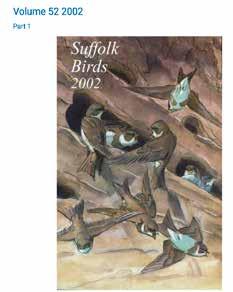
Peter kindly gave the SBG a talk and demonstration on sketching birds several years ago and he also provided a lovely cover for the Suffolk Bird Report (2002) featuring Sand Martins.
Common Swifts nest in the roof of Kettlebaston Church and SBG have donated nest boxes in his memory, which, it is hoped shall enable the colony to expand.
We at the SBG feel sure that he will be missed not only by his family, but also by the natural history community of Suffolk and, more widely.
The Society of Wildlife Artists remembers Peter here: https://swla.co.uk/members/ peter-partington
John Kornjaca
The quarterly review section gives a snapshot of birds seen within the county during the period, predominantly from data received by Suffolk BINS. All scarce and rare birds are subject to submission and acceptance by either SORC or BBRC. Updated lists of Accepted and Outstanding Records for previous years can be found on the SBG websitehttp://www.suffolkbirdgroup.org/bird-recording
UK WEATHER
January 2025 was the fifth sunniest on record for the UK, though temperatures were subdued compared to average, according to provisional Met Office statistics.
The month had a typical mix of UK winter weather conditions, with rain, snow and a named storm, but also some clear, crisp winter sunshine, especially for those in the north.
With an average of 61.8 hours of sunshine in January 2025, the UK saw 30% more sunshine than the long-term average for the month. This was enough to put it as the fifth sunniest January on record in a series which dates to 1910.
Thanks largely to an early month cold period, the UK’s January average mean temperature was 3°C, which is 0.9°C lower than the current long-term average.
Rainfall amounts across the UK varied significantly in the month, with those in the south of England seeing 25% more rain than average, while those further north saw significantly less than average.
Storm Éowyn arrived on 24th January bringing winds of 100mph to N. Ireland, N. England and Scotland.
EAST ANGLIA WEATHER
Cold and sunny but drier than average. Wet towards the end of the month. Some snow
in parts during the first week of the month as temperatures struggled to climb due to northerly winds blowing in over a cold sea. Unsettled conditions over the last week of the month as winds came in from the southwest bringing high winds of up to 80 mph on the 24th as Storm Éowyn passed through.
Notable January sightings:
Pink-footed Goose – A flock of c.120 flew over RSPB Boyton Marshes (2nd) and possibly the same flock passed over Oulton Broad the following day. Smaller groups were seen around the county throughout the month with 22 at Hen Reedbeds (19th). A long staying bird at Loompit Lake (12th – 30th).
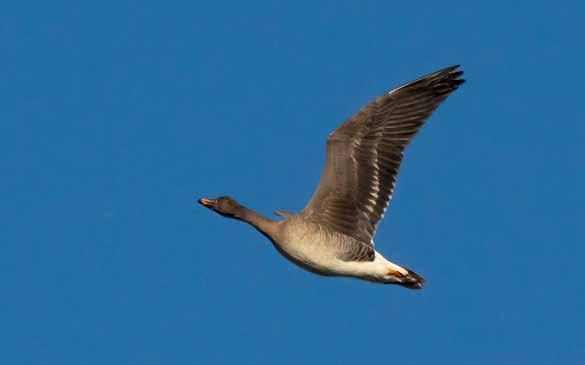
Tundra Bean Goose – Two birds in fields near Thorpeness remained until the 6th. A single bird was found at Kirton Lodge Reservoir (4th) and another was found on Loompit Lake in the company of a Pinkfooted Goose (12th – 30th).
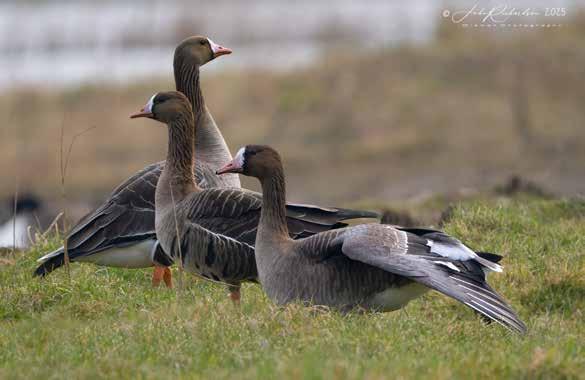
(Eurasian) Greater White-fronted Goose – Regularly seen on the coastal marshes a flock of 274 gathered at RSPB North Warren – the highest number recorded (27th). Another significant group of 196 were seen at RSPB Boyton Marshes (25th). Inland, there were 40+ feeding near Long Melford & Glemsford (6th - 21st).
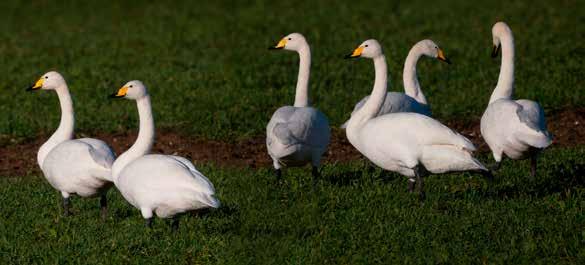
Tundra (Bewick’s) Swan – Two birds found at RSPB Minsmere (5th) were seen to depart on the 7th. There were four present on the reserve (25th – 31st). A single bird with a yellow neck collar was reported flying west over RSPB Boyton Marshes (11th).
Whooper Swan – There were between two and seven at Benacre Broad seen regularly through the month. Others were regularly seen at RSPB Minsmere. There were six in fields at Blaxhall (18th - 31st).
Red-crested Pochard – There were five on Alton Water (3 drakes) the only record (13th).
Greater Scaup - Two were on Covehithe Broad for much of the month. Another bird was seen regularly on a lagoon south of Shingle Street – relocating to East Lane (30th). There were two on Benacre Broad (27th).
Velvet Scoter – A group of up to seven birds were regularly seen off Thorpeness throughout the month. Others were seen off Landguard (two on 9th) and from Hopton (two on 26th and 27th).
Long-tailed Duck – A female was seen from Thorpeness and Aldeburgh (14th – 16th). A second bird was observed on the sea from RSPB Minsmere (29th & 30th).
Goosander – Seen regularly at Thorpeness Meare there were 12 present (6th). Others were seen at RSPB Minsmere with eight on the sea (13th) with two on East Scrape (30th).
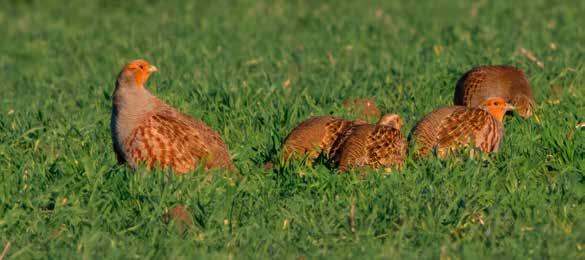
Grey Partridge – There was a small group of between five and seven birds seen frequently in fields at Ellough (4th to 20th).
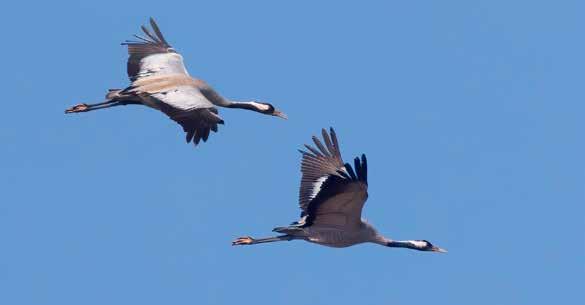
Common Crane – Three birds were seen in flight over RSPB North Warren (3rd) and may have remained in the area until the 12th They may have been the same birds seen occasionally at nearby Snape (15th – 19th). Two birds were seen at Iken (12th).
Slavonian Grebe – A single bird was seen on the River Stour (2nd – 18th) and another record was of a bird on the River Orwell from Levington Creek (30th).
Black-necked Grebe – Two birds were seen flying along the River Stour - the only record (1st).
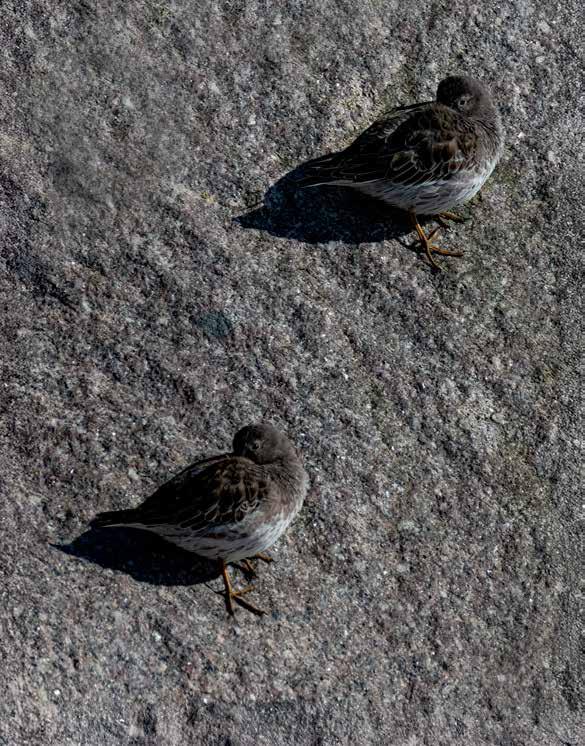
Purple Sandpiper – A single bird was on the scrape at RSPB Minsmere throughout the
month. Others seen at ‘usual’ sites along the coast (Ness Point, East Lane and Landguard Point) throughout the month. There were seven at Ness Point (4th).
Woodcock – Three were seen at SWT Carlton Marshes (3rd) and another was found at Gedgrave (13th).
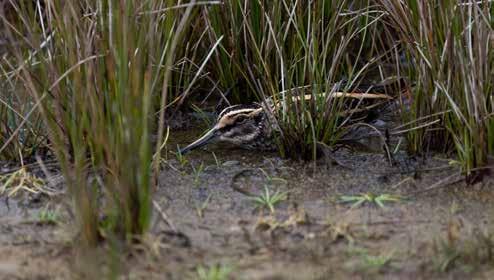
Jack Snipe – Rarely seen, there were records of two at Falkenham (3rd), one at Shingle Street (6th), one at Gedgrave (13th) and three at Pipps Ford (28th).
Glaucous Gull – A single record was that of a bird off Lowestoft Harbour (5th).
Iceland Gull – An immature bird (2W) was seen in Gunton and then at Oulton Broad (4th – 9th).
Caspian Gull – Recorded at two sites there were six on the East Scrape at RSPB Minsmere (16th) with other immature birds seen occasionally. There were two (1W) at RSPB Hollesley Marshes (1st).
Atlantic Puffin – A juvenile was seen to fly upriver from Bawdsey Quay (3rd) and another was at sea from RSPB Minsmere (13th).
Black-throated Diver – A single bird was found on the River Orwell near the Strand (1st – 3rd).
Great Northern Diver – A single bird was found on Benacre Broad (11th) another was on the Alde Estuary (22nd). A third record was of a bird at Sizewell (29th) and a final record was of a bird on the River Orwell from Loompit Lake (29th).
European Shag – A single record of a bird on the River Orwell (2nd).
Glossy Ibis – There were two at Breydon South Wall on New Year’s Day. A single bird was seen at Burgh Castle (7th – 15th).
Eurasian Spoonbill – There were two at Havergate Island (8th) and three flew along the Butley River (12th).
Western Cattle Egret – Frequently seen around the coastal margins. The five birds in the field at the Henham Quarry entrance were seen throughout the month. Other regular sightings were made at RSPB Hollesley Marshes, RSPB Boyton Marshes, Somerleyton and Blundeston.
Northern Goshawk – A single record was that of a bird over Hockwold Washes at Lakenheath Fen (3rd).
Hen Harrier – A handful of sightings along the coastal fringes. A ringtail at RSPB North Warren (2nd) the first sighting and, an immature male at Hen Reedbeds (20th) the last seen.
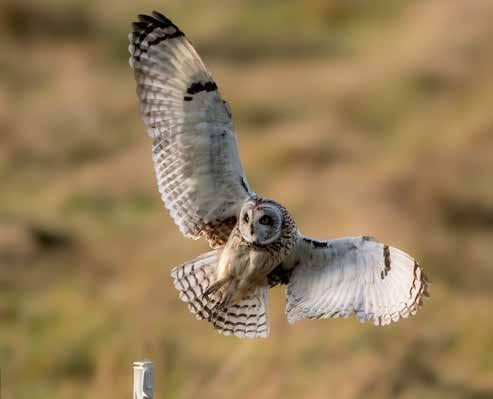
Short-eared Owl – Birds were regularly seen along the coastal marshes at usual sites throughout the month.
Merlin – Occasionally seen along the coastal marshes. The first was found at Landguard
Common on New Year’s Day and a female at Hazlewood Marshes (27th) the final record.
Northern Raven – There were two birds seen at Witnesham (3rd) and another at Sotterley church (15th).
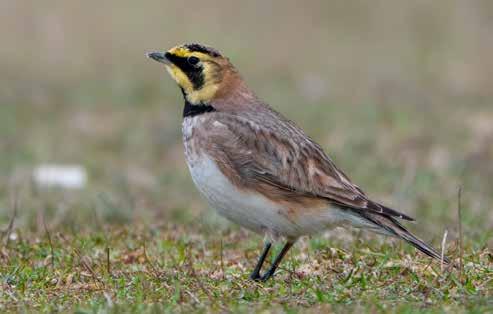
Horned (Shore) Lark – The Kessingland bird stayed on the beach and was last recorded on 27th.
Common Firecrest – A handful of sightings in the month. One was at the Grove, Felixstowe (10th) with four recorded there (29th). A single bird was found at Westleton (15th), another at RSPB North Warren (26th) and a final record was of a bird at Dunwich (31st).
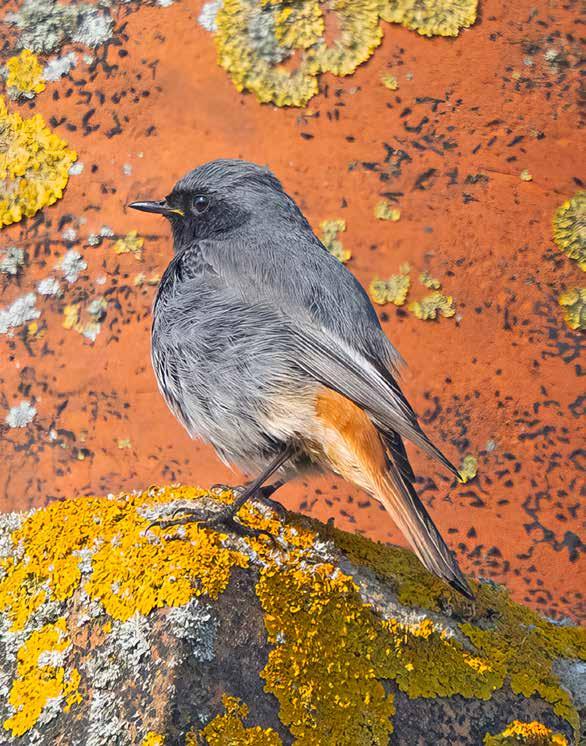
Black Redstart – There was a bird seen regularly in the month at Lowestoft in the vicinity of the wind turbine and adjacent yards. There were two females at RSPB Boyton Marshes (10th) and one remained for several days. Others were recorded at Thorpeness (9th) and Reydon (21st).
Water Pipit – There were two birds seen regularly at RSPB Minsmere through the month. Another was seen at RSPB North Warren (18th – 25th).
Brambling – A single bird was seen at Falkenham (3rd) and a flock of 25+ were seen at Tattingstone (14th – 19th).
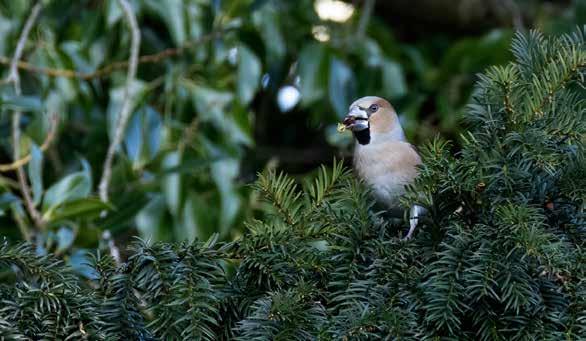
Hawfinch – The flock at Sotterley church increased in size with a peak of 37 birds recorded (18th). Other singles were recorded at Ipswich cemetery (19th) and Bedfield church (23rd).
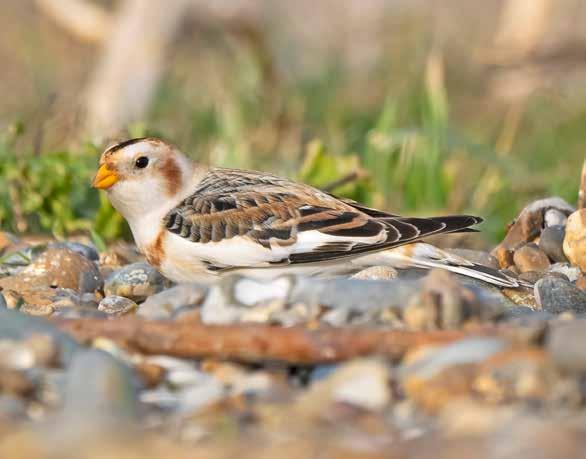
Snow Bunting – The highlights were the two flocks that were regularly seen in the month. The flock at Walberswick and Dunwich reached a maximum of 60+ birds (possibly joined by the Orford Ness birds). The flock of c.35 birds on the southern tip of Orford Ness remained for the first half of the month - last seen on 17th.
Corn Bunting – There were two at Lings Lane, Chelmondiston (8th), four at Kingsfleet (15th) and eleven present on the same site (28th).
Scarce sightings
Ring-necked Duck – The drake remained on
February began with rain across western Scotland and Northern Ireland, before the weather turned more settled. A blocking high pressure system to the east of the UK led to overcast but settled conditions for the next few weeks, with below average temperatures and some scattered showers.
Occasional frontal systems brought rain, sometimes wintry over high ground.
A gloomy and cold first half of the month. Temperatures rose as a result of more sunshine over the second half of the month.
The weather turned more unsettled as a low-pressure system to the west of the UK moved towards Iceland. This led to heavy
Thorpeness Meare until 5th. Another sighting of a drake was at RSPB North Warren (15th – 18th).
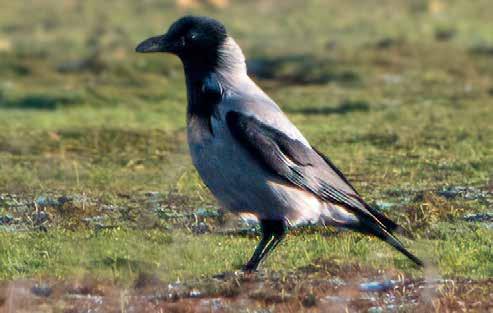
Hooded Crow – The single bird seen at Botany Marsh remained – last recorded on 29th.
rain to much of the country, and coastal gales in northern areas. Temperatures rose to above average as the cold easterly weather regime shifted to milder westerly conditions. Wales experienced heavy rain and western parts.
The end of the month saw building high pressure, resulting in more settled conditions as well as widespread frost and some foggy conditions.
February temperatures and rainfall were very close to average for the time of year.
Temperatures climbed on the 19th for a week or so to provide a pleasant end to the month although prevailing cold north-easterly winds were a factor throughout the month.
Notable February sightings:
Pale-bellied Brent Goose – A single sighting was of a bird at RSPB Boyton Marshes (22nd).
Pink-footed Goose – The single bird in the company of the Tundra Bean Goose at Loompit Lake remained until 12th. Another was found in fields with Greylag Geese at RSPB Hollesley Marshes (5th).
Tundra Bean Goose – A single bird at Loompit Lake remained until the 12th. There was a group of eight at Felixstowe Ferry (6th).
(Eurasian) Greater White-fronted Goose – Numbers continued to build through the month at three preferred sites. There were flocks of c.350 at Aldeburgh Marshes (16th), 287 at RSPB Boyton Marshes (17th) and 130 at RSPB North Warren (22nd).
Tundra (Bewick’s) Swan – There was a group of up to six birds at RSPB Minsmere for the month and others were seen at Covehithe (three) on 2nd and 3rd, and four were briefly at RSPB Hollesley Marshes (13th & 20th).
Whooper Swan – As for January, the birds at Blaxhall (six), RSPB Minsmere (four) Benacre Broad (six) and Covehithe Broad (seven) were seen throughout the month. Additionally, there were two at Kirton (4th).
Greater Scaup – There were three birds at Covehithe Broad (2nd & 3rd) and three at Benacre Broad (11th) – with two remaining (17th & 18th).
Long-tailed Duck – A single bird was seen drifting on the sea off the Dunwich beach (1st).
Goosander – A small group remained on Thorpeness Meare – there were eight birds present including four drakes (19th). Others were seen at RSPB Minsmere (one on the 1st), RSPB North Warren (two on 22nd) and Pipps Ford (two on 28th).
Common Crane – There were up to five birds seen frequently at RSPB Minsmere throughout the month.
Red-necked Grebe – A single bird was on Peto’s Marsh at SWT Carlton Marshes (13th & 14th).
Slavonian Grebe – A pair were found on the River Stour off Lower Holbrook (7th – 17th) and two more were on the River Deben near Melton (8th).
Purple Sandpiper – The single bird on the scrape at RSPB Minsmere was seen just once (1st). There were nine at Ness Point (9th) and eight at the same site (23rd).
Jack Snipe – There was a record of a bird at Felixstowe Ferry (6th). There were two in the reedbed at Kessingland beach (14th). A bird was flushed on Aldringham Walks (16th).
Common Gull (heinei sp) – A sighting of ‘Russian Common Gull’ – an immature (1W) bird - in pig fields near Sizewell (4th).
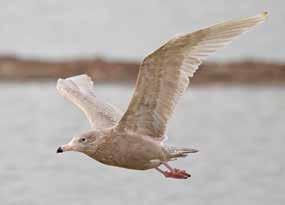
Glaucous Gull – An immature bird was seen between RSPB Minsmere and Sizewell beach (7th – 17th).
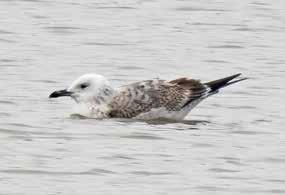
Caspian Gull – Three sites hosted birds with regular sightings of birds on the scrape at RSPB Minsmere - the highlight being 20+ birds (7th). Others were seen at RSPB Hollesley (4th, 13th and 20th) and Thorpeness Meare (16th).
Black-throated Diver – A bird was on the River Orwell between Wherstead and Chelmondiston (3rd until 23rd).
Great Northern Diver – There was a longstaying immature bird at Aldeburgh and another on the River Orwell between Chelmondiston and Trimley.
Sooty Shearwater – A sighting of a bird heading north off of Southwold (7th) – the only record.
European Shag – A bird was found on the River Stour just off Harwich International Port (7th).
Glossy Ibis – There was a single bird found at Burgh Castle Marshes (22nd – 28th)
Eurasian Spoonbill – Regularly seen around the coastal marshes, there were six in the flooded meadow at RSPB Hollesley Marshes prior to flying inland (28th).
Western Cattle Egret – Regularly seen throughout the month, the highlight was a group of seven seen at SWT Carlton Marshes (1st) and seven at Burgh Castle Marsh (22nd). There were four, with sheep, on the Shotley peninsula (1st) and six at Somerleyton
(5th). Others remained at Wangford while a single bird remained in the field below HMP Warren Hill, Hollesley, for much of the month.
Northern Goshawk – A bird was seen heading south over RSPB Minsmere and then RSPB North Warren (28th).
Hen Harrier – There were two males seen at Erwarton (1st) and a pair entered Suffolk from Haddiscoe (2nd). A single male was seen from Burgh Castle (4th).
Short-eared Owl – There were several sightings. A pair were seen occasionally at RSPB Hollesley Marshes (5th) and Sudbourne Marshes (17th) with other sightings at RSPB Boyton Marshes and Shingle Street throughout the month. There were two at Burgh Castle Marsh (22nd).
Merlin – A bird was at Aldeburgh Town Marshes between 5th and 14th. Another was in the RSPB Boyton Marshes/RSPB Hollesley Marshes area (19th – 28th). There was a bird at RSPB Minsmere (16th) and yet another record from Benacre (18th).
Rose-ringed Parakeet – A single was seen at Corton Woods, there were nine in Hengrave and up to 20 were seen in Bury St. Edmunds (5th).
Northern Raven – A handful of sightings. There were two at Offton (17th), two at RSPB Minsmere (21st) and two at Witnesham (22nd).
Horned (Shore) Lark – The solitary bird on Kessingland beach remained.
Common Firecrest – A bird was seen at Kyson Point (2nd and again on 27th) and two were in Corton Woods (5th – 6th).
Water Pipit – There were frequent sightings in the month the highlight being five at Aldeburgh Town Marshes (9th) and five at RSPB North Warren (16th). There were
regular sightings at RSPB Minsmere of up to two birds and singles at RSPB Hollesley and Cattawade.
Hawfinch – A group of up to five birds were in the trees around All Saints church in Holbrook for the whole of the month. There were up to nine south west of Judas Gap at Flatford and regularly seen throughout the month.
Snow Bunting – The flock of c.50 birds at Walberswick remained.
Corn Bunting – The small flock at Kingsfleet remained with eight seen on the 4th and five on the 5th.
Scarce sightings:
Ring-necked Duck – The drake on Thorpeness Meare was rediscovered (16th) but thereafter was thought to have moved to RSPB North Warren where it stayed until the month end.
Hooded Crow – The single bird seen at Botany Marsh remained - last seen on 22nd.
Provisional Met Office statistics show that England enjoyed its sunniest March since records began in 1910, with many individual counties also topping their sunshine duration records. It was also the UK’s third sunniest March on record, and Wales’s second.
It was also a very dry month, with only Scotland recording more than half of its meteorological average rainfall. England recorded only 43% of average rainfall.
Temperatures across the UK were up with records indicating average temperatures of + 1.3°C. A temperature of 21.3 °C was recorded in Chertsey and Northolt in the south on 20th.
The sunniest March on record for East Anglia with over 150% of average sunshine.
Possibly the driest March for the whole region with Norfolk and Suffolk experiencing
their lowest rainfall totals since 1836.
Temperatures were higher than average throughout the month.
As a result of high pressure sitting over the region, the prevailing winds were dry, north/north-easterly and especially cooling on coastal areas.
Notable March Sightings: Pink-footed Goose – A single bird stayed on Loompit Lake (22nd).
Tundra Bean Goose – A single bird on Loompit Lake remained (24th).
(Eurasian) Greater White-fronted Goose – The flocks at RSPB North Warren, RSPB Boyton and Aldeburgh Town Marshes were still present but numbers dwindled as the month passed. The peak was a flock of 364 birds at RSPB Boyton (20th), there were 116 at RSPB North Warren (22nd). Just a pair remained at RSPB Hollesley Marshes (30th).
Tundra (Bewick’s) Swan – A single record was of a pair seen at Benacre Broad (2nd).
Garganey – The first record of the spring was that of a bird at RSPB Minsmere (18th).
Greater Scaup – There were two on Covehithe Broad (25th & 26th) and later, just the one (28th).
Goosander – There were two at RSPB North Warren (6th and 22nd) and a single on Thorpeness Meare (23rd).
Common Crane – There were two birds seen at RSPB Minsmere (6th & 27th). Single birds were spotted in flight over Woodbridge (8th) and Kessingland (22nd).
Little Ringed Plover – A bird was seen at RSPB Hollesley Marshes and later RSPB Boyton Marshes (22nd). Another was at RSPB Minsmere (27th) and then three on the scrape (28th). A single was seen on the scrape at RSPB Hollesley Marshes (29th).
Eurasian Whimbrel – An early arrival was found in the flooded meadow in front of the Marsh Barn Café at RSPB Hollesley Marshes (10th).
Purple Sandpiper – Seen at usual sites, there were 12 at Ness Point (9th) and 11 present (18th). Others were seen regularly at East Lane, Bawdsey including a group of six (9th) and there were two at Corton (26th).
Jack Snipe – A single record of a bird at the Island Mere, RSPB Minsmere (14th).
Little Gull – Four birds were recorded at Orford, and another four at SWT Lackford Lakes (20th). A pair at RSPB Minsmere and a single at Giffords Flash (21st) reported. A single was at SWT Lackford Lakes (22nd).
Caspian Gull – There were seven present on the scrape at RSPB Minsmere (15th) and four in pig fields near Sizewell on the same day. An immature (1W) bird was at RSPB North Warren (22nd) and another (1W) was seen at RSPB Boyton Marshes (30th).
Yellow-legged Gull – A single was found on Covehithe Broad (25th).
Sandwich Tern – A single bird was discovered on the South Scrape at RSPB Minsmere as dusk fell (22nd).
Great Northern Diver – A bird was found in the Alde Estuary (12th – 15th).
Eurasian Spoonbill – Frequently seen along the coastal marshes in small groups throughout the month. There were 13 birds on RSPB Havergate Island (1st).
Western Cattle Egret – The bird seen in front of HMP Warren Hill was last reported on the 14th. There were others at RSPB Lakenheath Fen (two on 9th) with four at SWT Carlton Marshes and six at Henham Quarry entrance (31st).
Hen Harrier – There were two reports, the first was of a bird at SWT Hen Reedbeds (8th) and a male was on Share Marsh, SWT Carlton Marshes (30th).
Hobby – A pair of birds seen at RSPB North Warren (24th) the first of the year.
Northern Raven – The first sighting of the month was of a single bird seen over Loompit Lake (1st). There were several sightings around the county the highlight was of a pair at RSPB North Warren (11th).
Horned (Shore) Lark – The single bird at Kessingland beach was last recorded on the 5th
Sand Martin – The first spring arrivals were recorded at Island Mere, RSPB Minsmere (11th).
Barn Swallow – The first of the year was found at Giffords Flash (21st).
Willow Warbler – The first of the year, a single was found at Hinton (21st).
Sedge Warbler – The first arrival was found at RSPB Minsmere (24th).
Common Firecrest – There were several sightings through the month. The bird at the Grove, Felixstowe was again present (6th), as was the bird at RSPB North Warren (9th). Others were found at Bawdsey (9th and 26th), There were two in bushes at the Landguard Observatory (25th) and a single was found in bushes at East Hide, RSPB Minsmere (29th).
Ring Ouzel – The first of the year found in Corton Woods (22nd).
Black Redstart – A large influx of birds reported. The highlight was seven birds seen at Southwold (25th). Others were seen along many coastal sites throughout the month.
Common Redstart – The first bird of the year was seen at Dunwich Cliffs (28th).
Northern Wheatear – The first record of the year was of a bird north of Ness Point, Lowestoft (20th).
Blue-headed Wagtail – A pair were found near to the Lucky Pool at RSPB Minsmere (31st).
White Wagtail – The first arrival of these passage migrants was a pair recorded at Southwold (21st). There was a single at RSPB Boyton Marshes and three on Landguard Common (22nd - 24th). There were three at Corton, and a single at Kessingland (23rd). Two were found at RSPB Hollesley (24th). A further arrival of birds saw 10 at Southwold and seven at Covehithe (25th).
Water Pipit – A bird was seen at Cattawade (8th). Another at RSPB Minsmere was seen occasionally during the month. There were two on the site (15th).
Brambling – Two birds were found in conifers on the north-eastern edge of Upper Hollesley Common (12th).
Hawfinch – The group at All Saints church, Holbrook remained until 14th. The birds at Judas Gap, Flatford remained with nine seen (5th). A group at Flatford Mill NT peaked at nine birds (15th). The St Margaret’s church flock at Sotterley, peaked at 25+ (17th).
Snow Bunting – The flock at Walberswick beach remained although numbers were reduced. A maximum of 26 birds were recorded on the 2nd. The final sighting in the area was of six birds (16th). The final record of the month was of two birds at Kessingland beach (23rd).
Scarce sightings:
White-tailed Eagle – There were several sightings over the course of the month. One at Shingle Street (1st) was identified as an immature bird from the Isle of Wight reintroduction scheme. A bird tracked at a few locations (12th) was seen at Westleton (1045h), RSPB Minsmere (1254h), north over Reydon (1311h) and north over Reydon Smear (1318h).
Hooded Crow – The bird at Botany Marsh, Snape was again reported (8th). Other reports were of birds seen at RSPB Minsmere and Sizewell (19th) and Walberswick NNR (20th).
Council for 2025
Officers
Chair: Eddie Bathgate
Vice-chair: Chris Keeling
President: Ed Keeble
Secretary: Katya Bathgate
Treasurer: Alex Rafinski
Communications Officer: Adam Faiers
Projects Officer: Chris Keeling
Editor of Suffolk Bird Report: Nick Mason
Editor of The Harrier: John Kornjaca
Outdoor Events Coordinator: Anne Wright
Indoor Events Coordinator: Adam Gretton
Link to Suffolk Wildlife Trust: Jenny Rawson
Link to Suffolk Naturalists Society: Anne Wright
Link to Suffolk Ornithological Records Committee: Gi Grieco
House Martin Support Suffolk (Lead) - Jenny Rawson
Barn Owl Support Suffolk (Lead): Sally Nelson
Save Our Suffolk Swifts (Lead): Eddie Bathgate
Nest Box Support Suffolk (Lead): Eddie Bathgate
Members
Sarah Glyde
John Kornjaca
Peter Merchant
Sally Nelson
Jenny Rawson
Alex Rafinski
Honorary Vice-Presidents
Andrew Green
Adam Gretton
Colin Jakes
Mike Jeanes
Mike Marsh
Roy Marsh
Philip Murphy
Reg Snook
Bird Recorders
North-east Area Recorder: Richard Walden Email: bird-ne@sns.org.uk
South-east Area Recorders: Gi Grieco Tel: 07951 482547 and Steve Fryett Tel: 07593 382082
4, The Street, Melton, Woodbridge, IP12 1PW. Email: bird-se@sns.org.uk
West Area Recorder: Chris Gregory Email: bird-w@sns.org.uk Memberships
c/o SNS, The Hold, 131 Fore Street, Ipswich, Suffolk, IP4 1LR
Founded in 1973 by a group of Suffolk birdwatchers
Associated with the Suffolk Naturalists’ Society
SBG remains an independent birding group and is a registered charity
A voice for Suffolk birdwatchers
With established links to many naturalist and conservation organisations
Media
Actively lobbies to protect key Suffolk habitats
Provides a county-wide field force of bird surveyors
Promotes BTO bird surveys and organises special SBG surveys

Strong web presence - www.suffolkbirdgroup.org
Active Twitter feed - @SuffolkBirdGrp
Quarterly magazine - The Harrier
Annual review - Suffolk Birds report
Annually (20+) field trips - ideal for novices or experts and young or old alike
Opportunities to visit hot spots and receive practical ID tips in the field
Programme of talks and presentations - variety of topics (county, national, or international) with quality speakers
Assists with conservation projects to improve breeding success
- Swifts
- Barn Owls
- House Martins
- Peregrines
- Waders
Partners with Suffolk Wildlife Trust and other bird groups
Assists with funding for bird hides and other birding amenities
Contributes to community events, including dawn chorus walks
Provides bursaries for special projects