TESSA JAMES
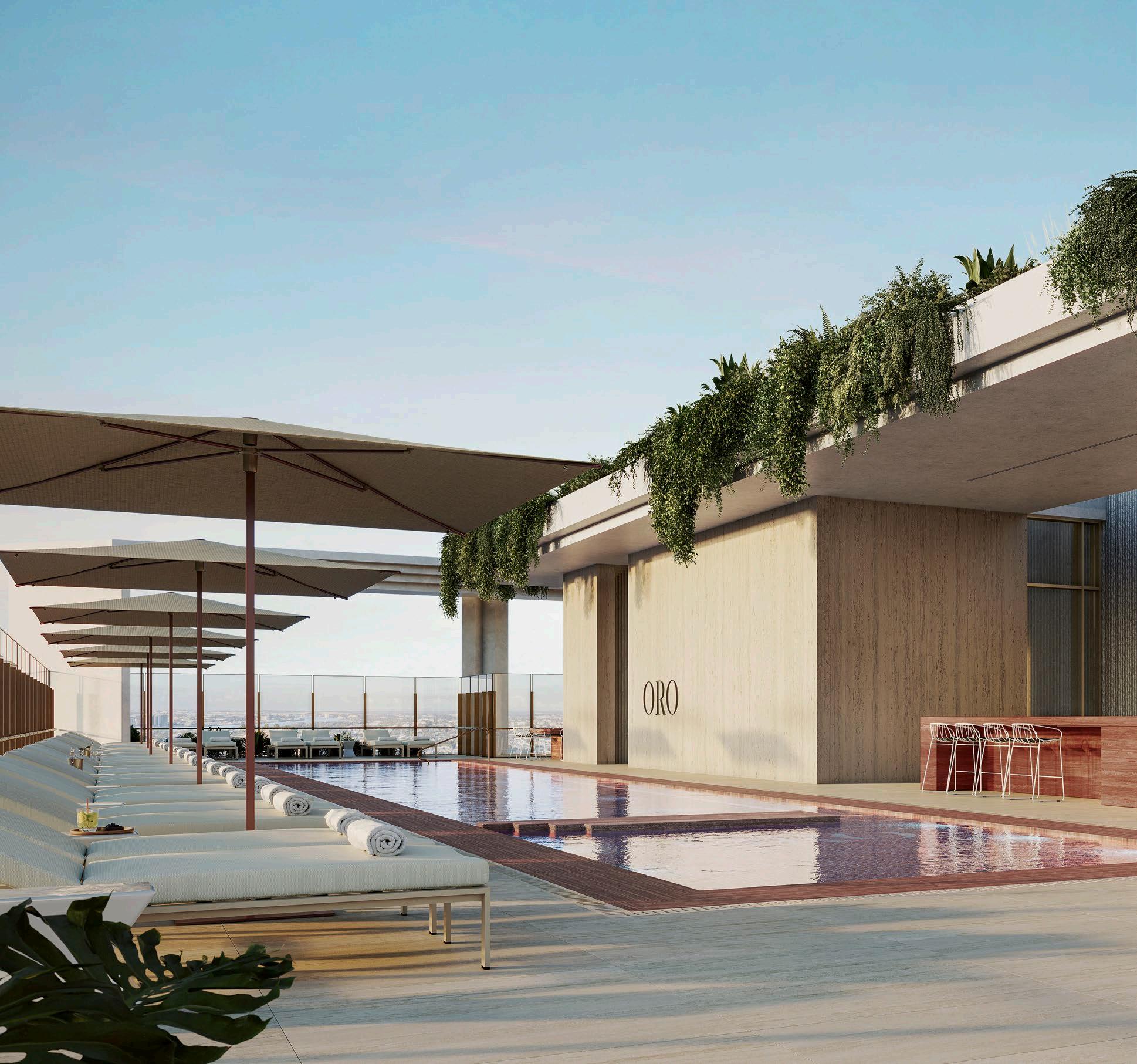
Designed for enduring innercity living, ORO is a considered collection of expansive residences, complemented by private wellness amenities and defined by architectural clarity, scale and restraint.
1-5 bedroom residences from $1.070M

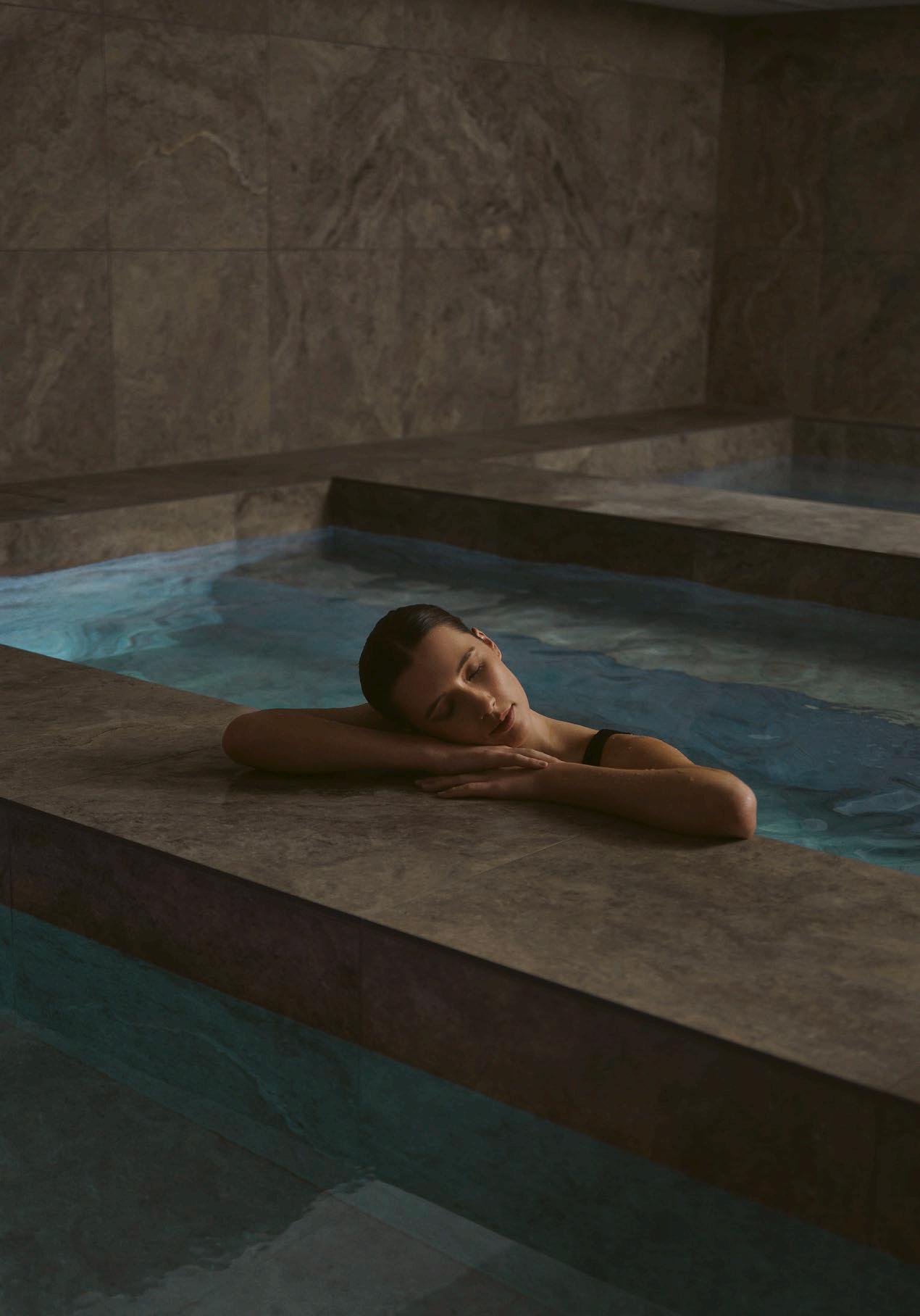
Designed for enduring innercity living, ORO is a considered collection of expansive residences, complemented by private wellness amenities and defined by architectural clarity, scale and restraint.
1-5 bedroom residences from $1.070M
TESSA JAMES
On finding her rhythm, reinvention, and life on the Gold Coast
WILD AT HEART
Romance and grit converge in Jana Sascha’s Ibiza-born label
Dominique Nurtsch takes the guess work out of getting dressed
BUSINESS OF INFLUENCE
The woman who built a business on reach, strategy, and content
DINING
Inside Shannon Bennett’s boundary-pushing new restaurant
Mermaid
GRAYA’s
An
$2,000, CAMARGUE
Toteme Capri Trouser
$560, EREDE x Gabriella
Khalil Trace Silver
Collar
$2,250, EREDE x Gabriella Khalil Trace Ring Stack $850
Two Australian heritage stays, reimagined

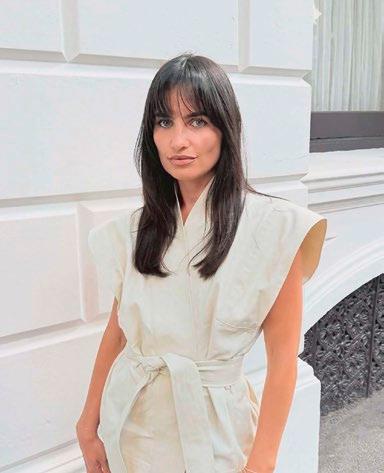
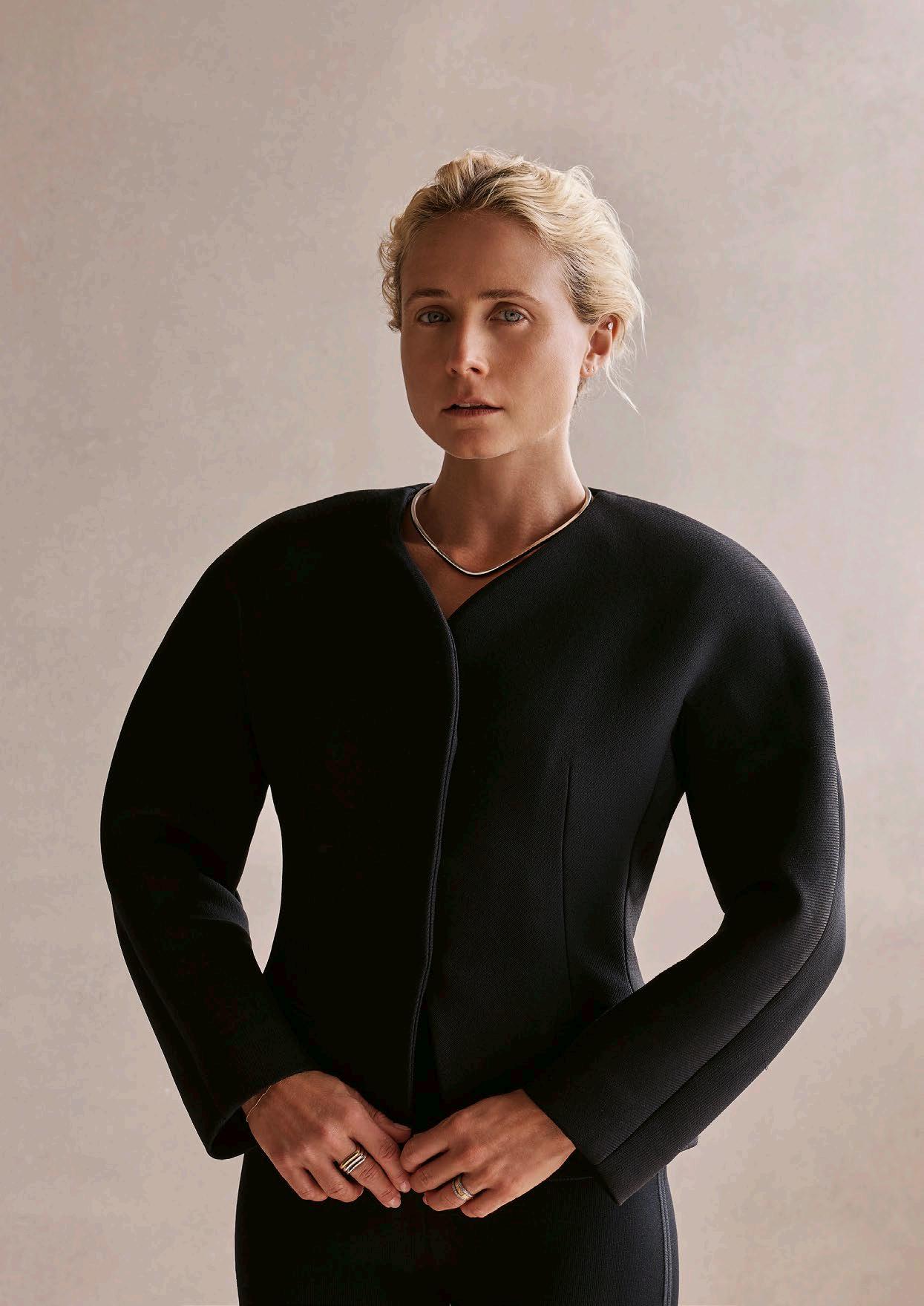
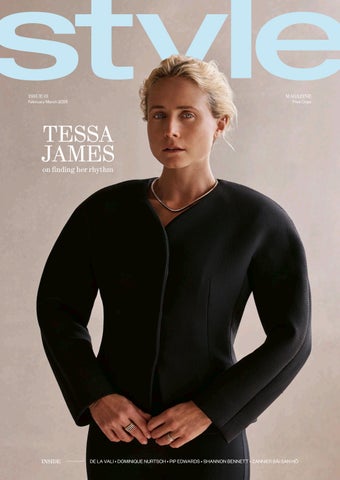
There’s something admirable about people who back themselves, who move with purpose and see change as a natural next step. That’s exactly what our cover muse, Tessa James, does. Her move to the Gold Coast was a considered decision for her family, embracing a new chapter in a new city.
Across these pages, we’ve spent time with people carving their own paths, creating, evolving and shaping modern culture in real time. They’re bold, decisive and unafraid to take risks.
Melbourne restaurateur Shannon Bennett brings his perspective to Byron Bay with The Belongil, while talent manager Zubie Brown offers a sharp look at the creator economy, revealing what sits behind the gloss of the grid.
Fashion threads its way throughout the issue, including an introduction to Dominique Nurtsch, a German-born, Gold Coast-based creative equally at home between Miami Beach and Paris. Ash D’Amico takes us inside her designer vintage sourcing trip to Japan, while De La Vali founder Jana Sascha continues to channel her Ibizan spirit through her London-based label.
Our travel pages span near and far, down the coast, over the border, across the continent and beyond. Enjoy.

KIRI JOHNSTON Editor + Creative Director

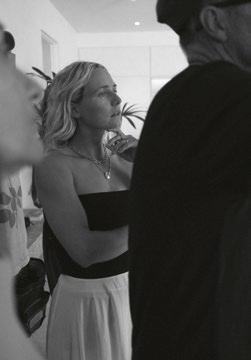
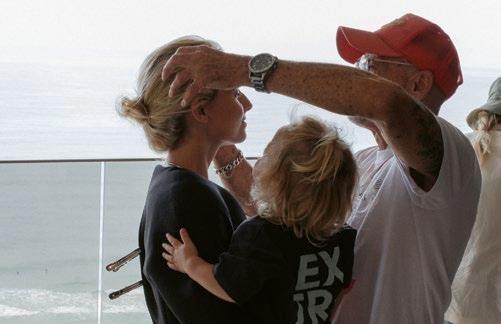
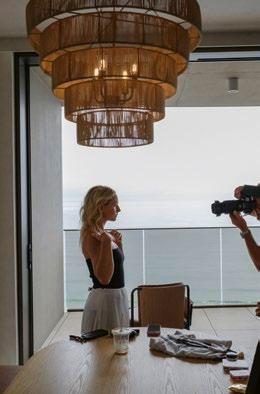
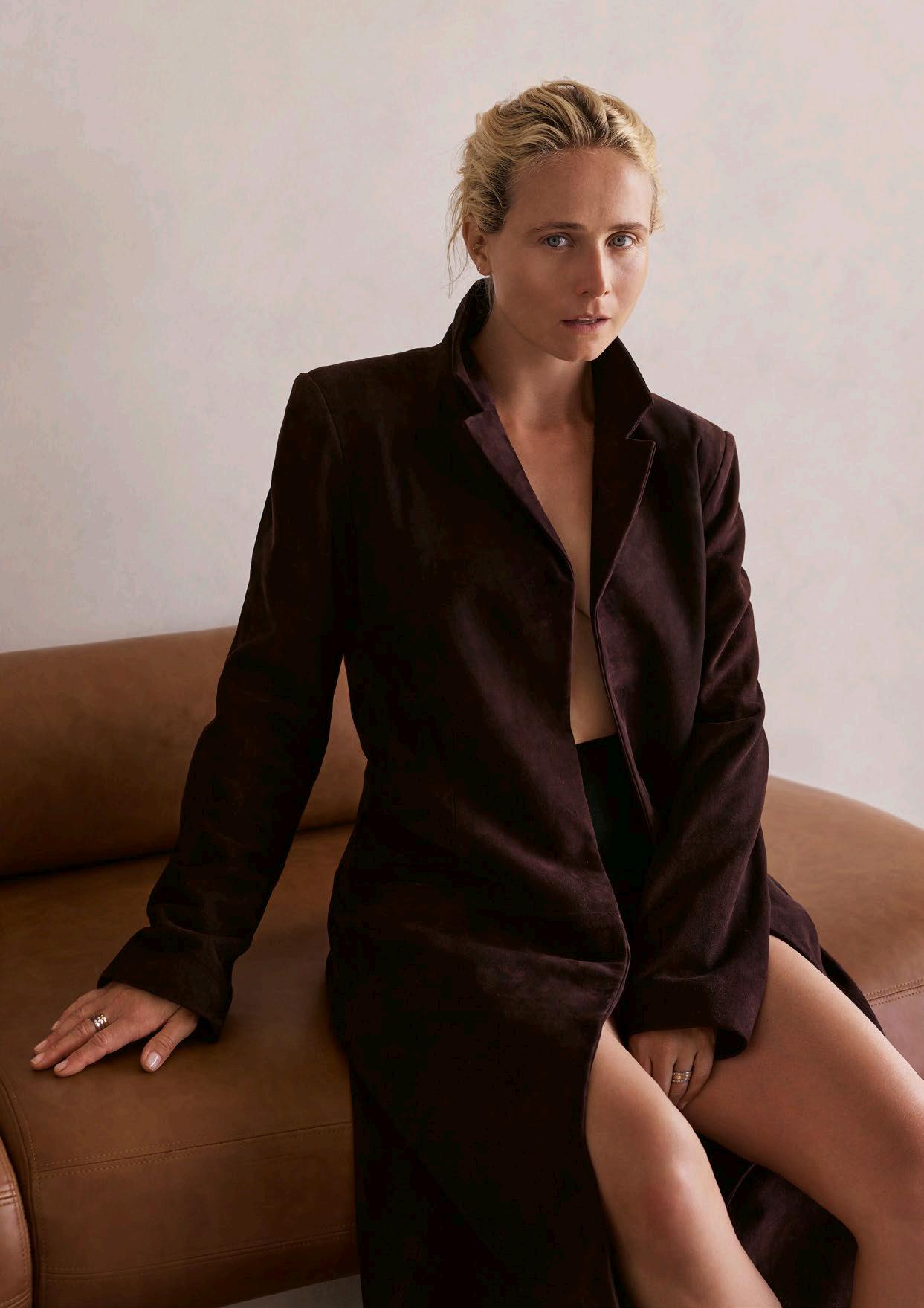
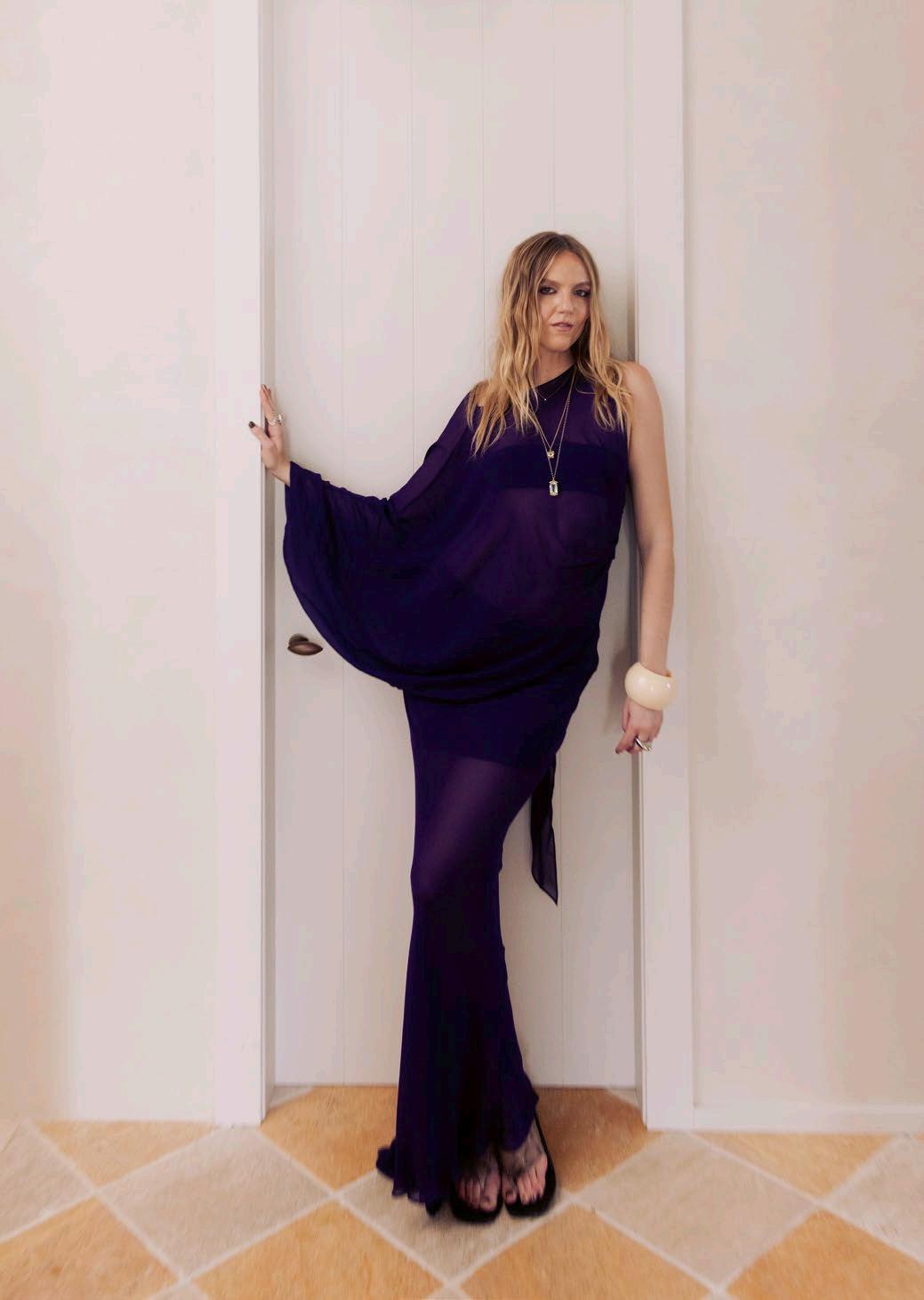
Shot at Mondrian Gold Coast, our cover shoot with Tessa James unfolded above Burleigh Heads. In a sweet off-camera moment, her husband Nate and their baby girl stopped by to say hello between frames.
PHOTOGRAPHY
Katie Fergus
TALENT Tessa James
AGENT Morgan Hill
DIRECTION Kiri Johnston
PHOTOGRAPHY Chris Ferguson
STYLING Tessa Law
HAIR Chris Coonrod
MAKEUP Satya Schmitz


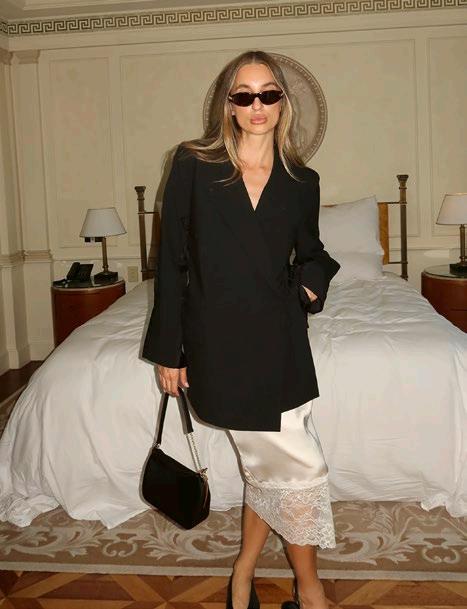
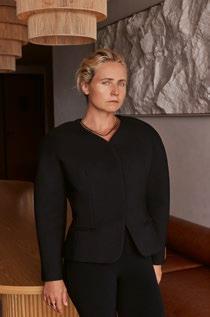
Dominique Nurtsch (also known by her social media handle, @dom.overseas) splits her time between the Gold Coast and Paris. With over 15 years’ experience in fashion content creation, her refined, signature style has built a globally engaged audience and is regularly featured by leading Australian and international brands. Working across fashion, beauty, and travel, Dominique has collaborated with global fashion houses, jewellery maisons, and beauty brands including Cartier, Louis Vuitton, Dior, Chopard, Chanel Beauty, Hermès Beauty, and Tory Burch. A regular presence at Paris Fashion Week, her work is defined by considered styling, editorial restraint, and a distinctly modern approach to luxury. Through her creative studio, Ottilie Studios, Dominique produces high-end editorial imagery, digital campaigns, and destination-led storytelling that resonate across Australia, Europe and the United States – bringing a global, fashion-first perspective to style’s coverage.
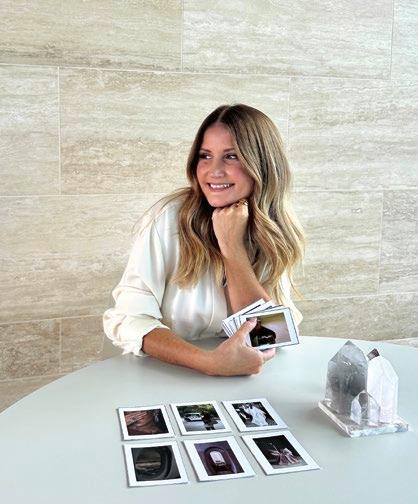
Hailing from Brisbane, Juli Grbac spent 25 years as an internationally acclaimed fashion designer, best known for winning season one of Project Runway Australia, in which Kelly Rowland wore one of her designs, and designing Virgin Australia’s iconic uniforms. When chronic health challenges led her to reconnect with her mystical side and pick up her oracle cards for the first time in 15 years, it inspired a career change. Now, through her energy readings and self-made fashioninspired oracle cards, she blends style with spirit, helping her clients remember their true selves in a way that is approachable, intuitive, and powerful.

Mathilde Bouby is a Gold Coast–based photographer specialising in interiors, lifestyle, fashion, and weddings. Guided by a refined eye and an instinct for visual storytelling, her minimalist aesthetic is attuned to detail, texture, and human connection, captured across both digital and film. Travelling frequently between Australia and the South of France, her portfolio spans collaborations with respected brands including Modalita Vacanza, Norté Restaurant, and Rick Shores, as well as a style cover shoot in 2025, solidifying her reputation for creating imagery that feels at once elevated and nuanced.

Elevating every day rituals

Tracy Sinclair Director
Paul Johnston Director
Kiri Johnston Editor + Creative Director
Natalie McGowan Editorial Lead
Kelly Beasley Senior Account Manager
Valentina Trifunov Senior Account Manager
Charlie Coleman Digital Marketing Manager
Grace De Luna Senior Graphic Designer
Jackson Gregory Account Manager
Tahlia Leathart Journalist + Content Producer
Victoria Lewis Digital Content Creator
Caitlin Finucan Junior Graphic Designer
Cali Westmoreland Creative Assistant
Special thanks to Jackson Alexander
Deadline: Issue 02 Thursday, 19 March 2026 partnerships@stylemedia.com.au stylemagazines.com.au @stylemagazines
Acknowledgement of traditional owners: We acknowledge the Turrbal and Jagera/Yuggera Peoples, the traditional custodians of the land on which we live and work today. We pay respect to the Elders both past, present, and emerging and stand together with the Aboriginal and Torres Strait Islander leaders of today and tomorrow.
Publisher’s Indemnity: those who make advertising placement and/or supply copy material or editorial submissions to Style Magazines undertake to ensure that all such material does not infringe any copyright, trademark, defamation, libel, slander, or title, breach of confidence, does not contain anything obscene or indecent, or does not infringe the Trade Practices Act or other laws, regulations or statutes. Further to the above mentioned, these persons agree to indemnify the publisher and/or its agents against any investigations, claims or judgements. All material appearing in Style Magazines is copyright. While every effort is made to ensure information is correct at time of publication, no responsibility is accepted by Style Magazines for the accuracy of any information contained in the text or advertisements.
Creative Agency + Publisher
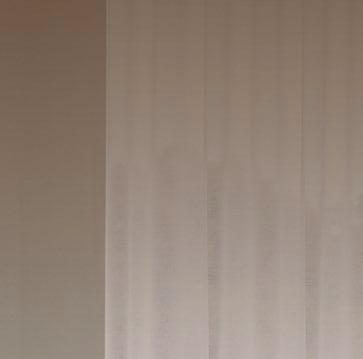





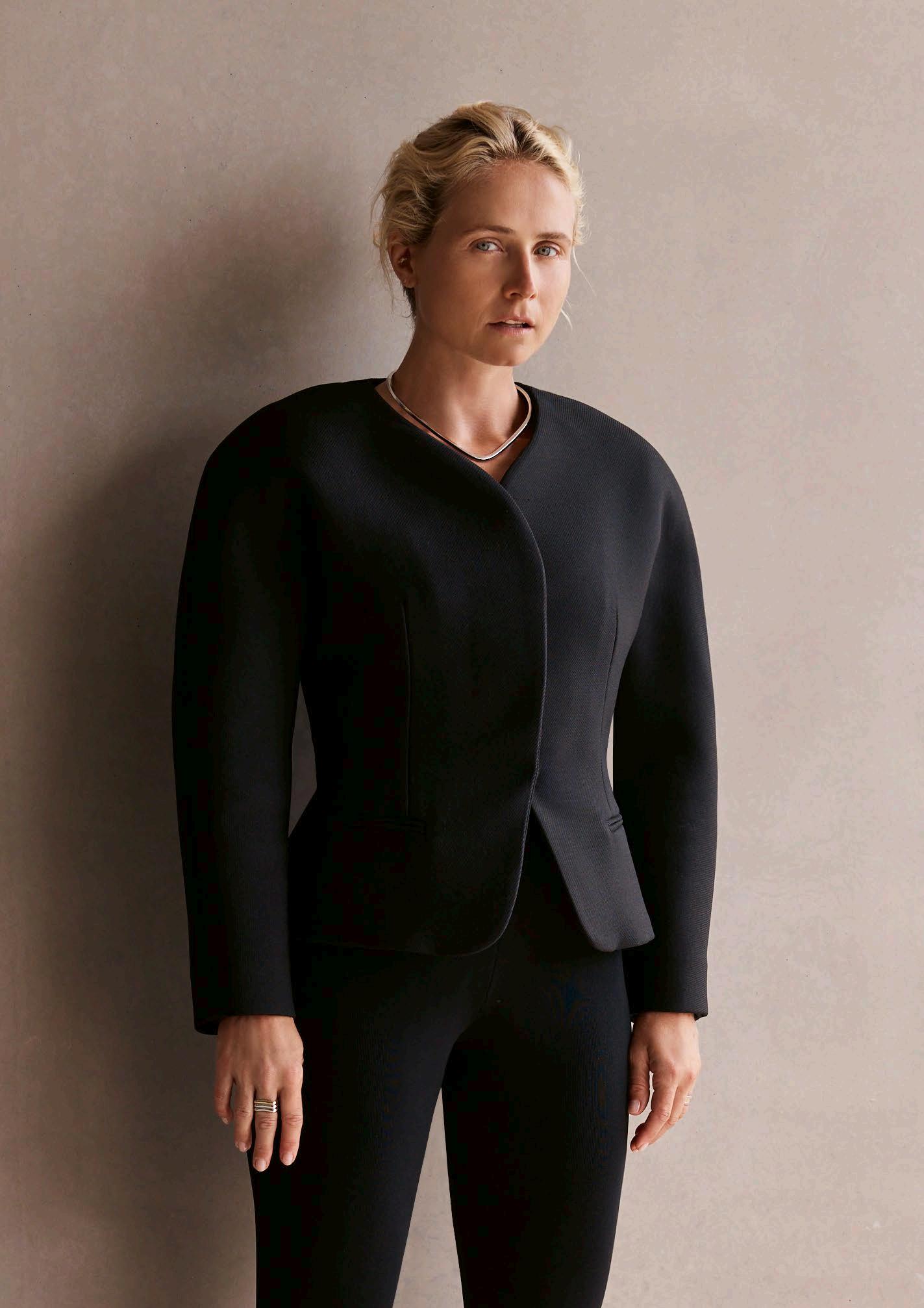
Actress, creative, mum of four, cancer survivor, now having moved to the Gold Coast, Tessa James has never shied away from starting over.
A week after finishing chemotherapy, Tessa James checked herself into Gwinganna Lifestyle Retreat. After months of survival mode, she was seeking stillness. “I just wanted to sit in my thoughts and eat really beautiful food and do whatever I wanted to,” Tessa recalls.
In the quiet of Tallebudgera Valley, she had space to process what she’d been through, comb through the mountain of advice she’d received, and consider what she wanted for her future. “Where am I going now? How do I look after myself properly? How do I be kinder to myself?” she remembers thinking. “The type of person I am, I had to be careful that I wasn’t going to go all in, 110% again.”
Slowing down was a foreign concept for Tessa. Even as a child growing up in the semi-rural Melbourne suburb of Park Orchards, she was perpetually on the move, remembering a childhood packed with extracurriculars like sport and dance – really anything that would keep her busy. But it was drama that ignited a fire in her belly. “I was always very clear that I wanted to be a performer,” she says, and at just five years old, she had already set a formidable bar for herself, looking up to the likes of Reese Witherspoon, Julia Roberts, and Kylie Minogue.
Fuelled by a rare level of ambition and determination for a 13-year-old, Tessa’s parents flew her to Los Angeles to take part in a week-long intensive acting course at Sherman Oaks, learning from casting directors and industry professionals. She returned to Melbourne equipped with a VHS showreel and a mission. That drive and VHS tape would soon land her a role on Neighbours, followed by a series-regular role on Home and Away in 2008, playing fan-favourite Nicole Franklin. By 16, she had moved to Sydney alone to begin working on the iconic show. “I was so excited,” she remembers. “I couldn’t believe my parents let me go.”
Sydney would become one of the most transformational times of her life. There was, of course, the professional triumph of Home and Away – which Tessa still regards as “one of the best jobs [she’s] ever done.” – but there was also Nate Myles, who was then playing for the Sydney Roosters. The pair, who met through mutual friends, were living together within six months of meeting, and by 20, she was married. On how she knew he was “the one” at such a young age, she laughs: “I just knew. I know that’s an annoying answer.”
When Home and Away wrapped, Tessa followed the trajectory of most young actors and uprooted herself to Los Angeles. She threw herself into auditions, began learning the ropes of Hollywood – opportunities and disappointments and all – until a world-shattering diagnosis upended her life, forcing her to return to Australia to begin treatment and be close to family. At 23, after finding a lump on her neck, Tessa was diagnosed with Hodgkin lymphoma.
The diagnosis was a shock, but Tessa found an unexpected source of hope in a situation that had previously been the cause of anguish. Her father, former AFL player Stephen James, had recently undergone treatment for non-Hodgkin lymphoma himself, and Tessa found a profound sense of kinship in their shared experience. “He had gotten through it, and that was really inspiring to me,” Tessa says. “My dad and I navigated that together, which was amazing”.
Approaching her recovery with the same grit she applied to her career, Tessa viewed the treatment as “a job” that she simply had to get through. After six gruelling months of chemotherapy, she finally reached remission – a moment that was met with an overwhelming feeling of relief. “I had so many things I wanted to do,” she recalls. “I was ready to get my life back.” But as she transitioned from the sanctuary of Gwinganna back into her routine, the physical and emotional fallout hit harder than she expected, leaving her struggling to re-find her identity.
She spent a year “trying to feel herself again,” leaning into alternative medicine, clean eating, and self-care – daily rituals that were born out of the desire for stability, but remain central to how she lives today. She laughs now, remembering one particularly extreme wellness phase, hunting down a stranger on the Gold Coast who had an infrared sauna in his spare bedroom – a rarity 10 years ago.
“I’VE ALWAYS LOVED CHANGE. I EMBRACE IT.”
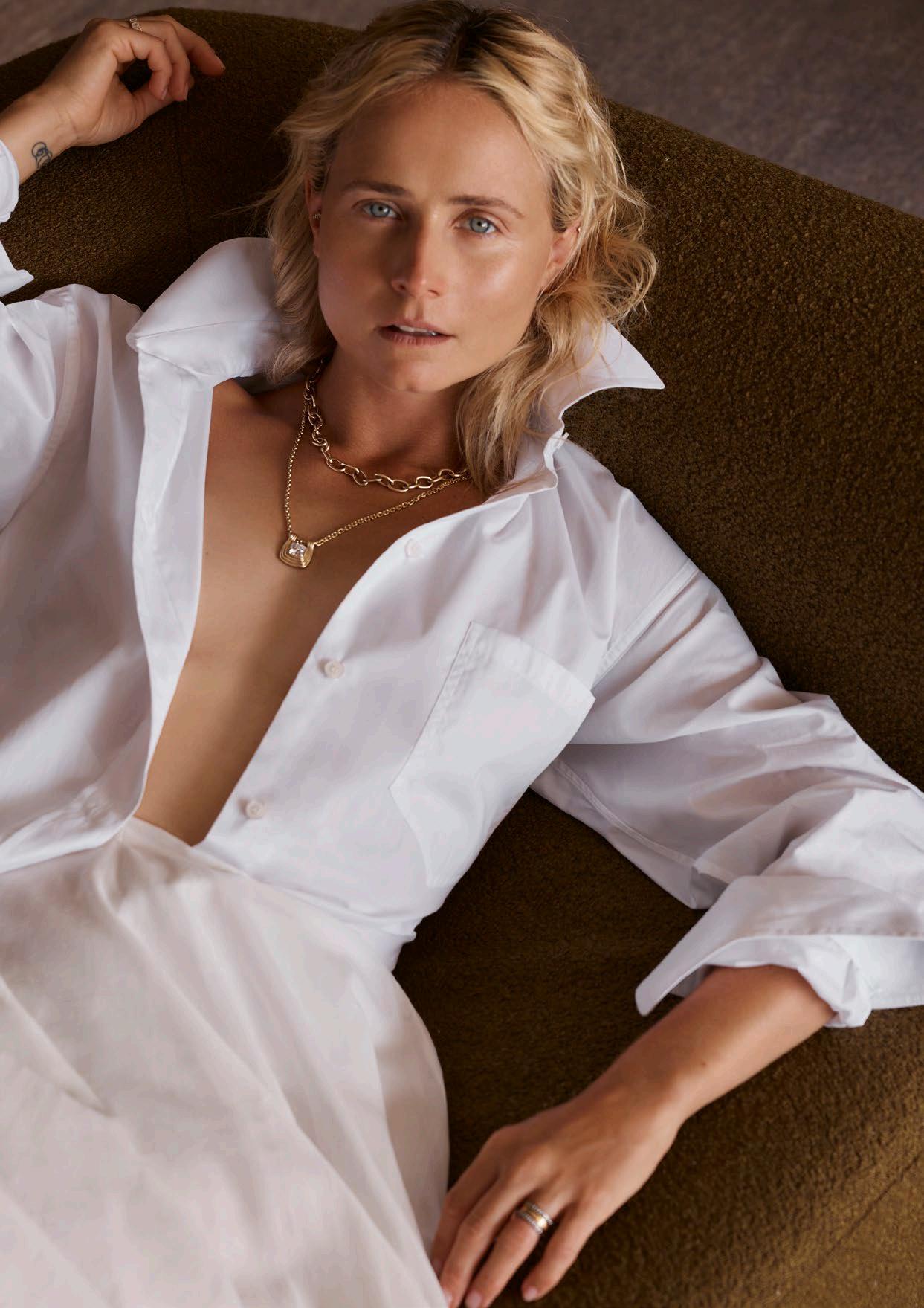
Through this slow process of rebuilding, and with the benefit of hindsight, her perspective on that time has shifted. “I have so much grace for that girl now,” she says. “She taught me that you can’t give 110% all the time. Instead, I’m trying to be 50% – to know when to go in hard, then know when to pull back and look after myself. You need to find the rhythm of life.”
Eventually, that lesson was put to the test when Tessa, alongside her family, returned to LA to further pursue her acting career, only to face a hard truth: she was doing what she’d dreamed of since she was five, but she wasn’t happy. A lot had changed since she was last there: now, she was a mother and a cancer survivor. While Nate stayed home to care for their first son, Saynt, Tessa found herself back in the cycle of auditions. “I had to ask myself, ‘Is this really what I want to do still?’” she says. “I’d been doing it for so long, and I think I was after another creative outlet that was satisfying to me. And maybe, ultimately, I just wanted to be a mum”.
It took nearly two years to come to terms with that choice, but that decision shaped the Tessa I’m speaking with today: creatively inclined, endlessly busy, but grounded and fulfilled. Now, she pours her energy into a multi-hyphenate career as a creative consultant, working across industries spanning wellness, fashion, and interior design. Though the medium has changed, at the heart of it all, her passion remains storytelling. “When I was acting, I had a character and I would study that character. It’s not too dissimilar to what I do now.”
Her current creative energy is also channelled into Next Level League, a youth NRL development camp she runs with Nate. While she oversees the creative direction, Nate, alongside peers like Todd Carney and Jarrod Croker, mentors the next generation of athletes.
Working alongside her husband in this capacity feels like a natural extension of their nearly 15-year marriage – a partnership Tessa credits to a shared history of growth and the art of compromise. “That series of compromise can become quite a nice dance,” she reflects. “You find this really nice rhythm of being each other’s support system and only wanting the best for each other.”
Off the back of a recent return to the Gold Coast, the family of six is settling into a new season. It’s a homecoming to a place Tessa and Nate have circled back to a few times before, but this time, with four children in tow, it feels entirely different. “For us, at this time in our lives, it’s a really great place to be,” she says.
This chapter is anchored by her family – her “little tribe,” as she calls them – and by the changed perspective motherhood has provided her with. For the actor, it’s been the most formative role yet. “They’ve really allowed me to live life a second time,” she says.
If her story has been marked by change and reinvention, adversity and resilience, it seems her greatest strength lies in her ability to pivot without losing her way. Tessa describes it best herself: “I’ve always loved change. I embrace it. Does it always work out the way you expect? No. But somehow, it always works out exactly the way it’s meant to.”
DIRECTION
STYLING
HAIR
Chris Coonrod
MAKEUP
Satya Schmitz
LOCATION
Mondrian Gold Coast
Where Ashleigh D’Amico shops for pre-loved luxury
De La Vali’s founder on the Ibiza-born, London-based label
GOOD SKIN DAYS
Discover the new sports-inspired skincare brand
DISRUPTIVE DINING
Shannon Bennett’s boundary-pushing restaurant
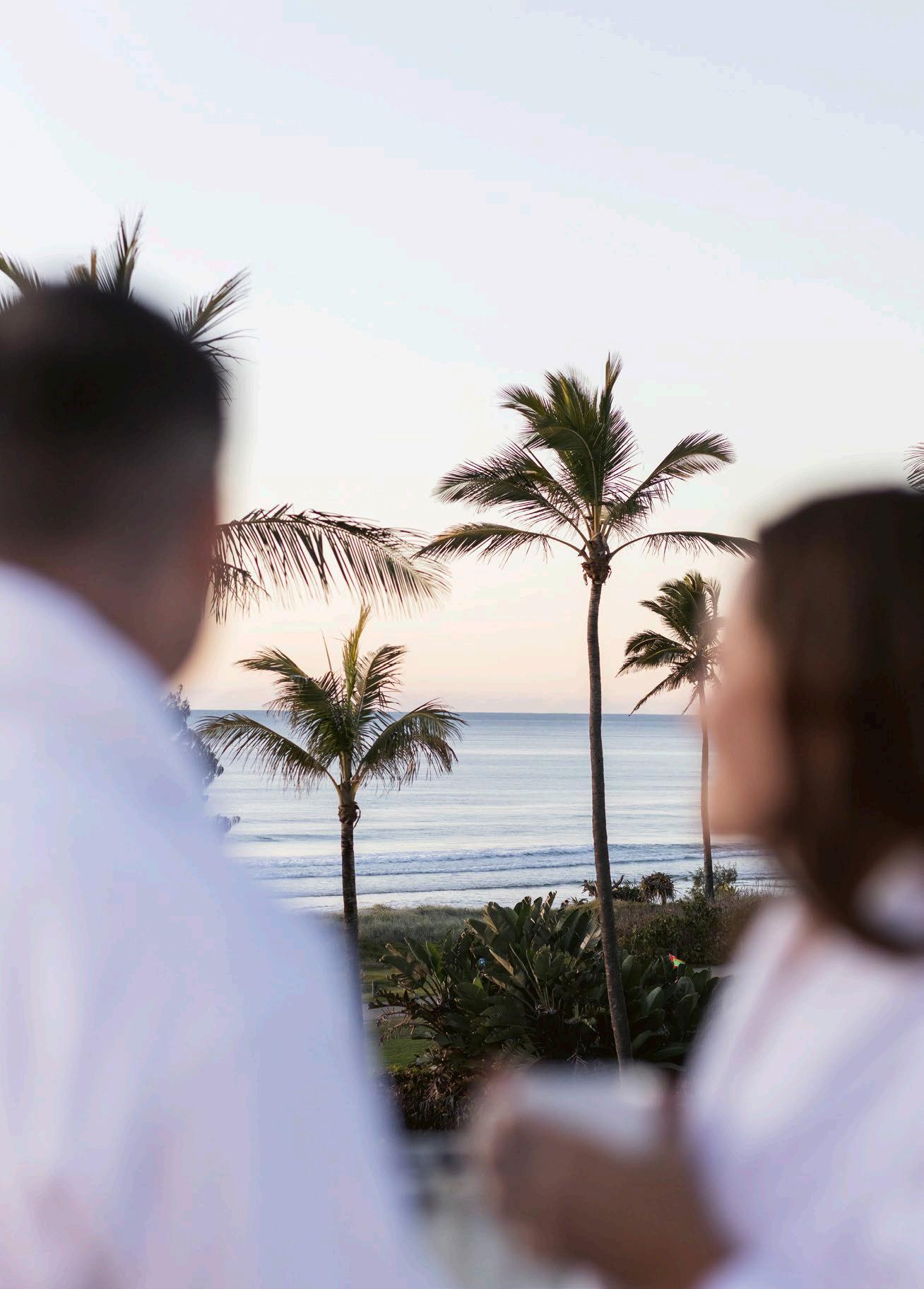
Discover Gold Coast’s Only Beachfront Resort
INTERVIEW
You grew up on the magical island of Ibiza. What was it actually like growing up there, and how did it shape you?
It shaped me entirely. I feel so fortunate to have experienced such an abundance of uninhibited freedom, pure nature, and wildness as a child. Ibiza truly is a magical place. Many people know it for its hedonistic party scene, but the island has so much more to offer. My parents were free thinkers, and they raised me among a very liberal crowd of interesting, eccentric people. I think my childhood in Ibiza hasn’t only shaped me as a person, but also deeply influenced me as a designer.
How did fashion come into your life?
Fashion was something that always captivated me and surrounded me. My aunt who lived in Berlin was the coolest fashion designer, she made these oneof-a-kind leather pieces that had so much attitude to them, I still wear and adore them today. My mum was always impeccably dressed. She embodied that laid-back island aesthetic, but with an effortless sense of glamour. From as young as I can remember, my afternoons were best spent playing dress up in my mother’s wardrobe.
When I was about 11, my family took me on a trip to Goa, India. I discovered the most incredible fabrics there and decided to design a few pieces of my own. Even at 11, I couldn’t quite find the exact micro mini skirt I had in mind.
In my early 20s, I returned to Goa to design my first collection. I brought it back to Ibiza, where it quickly began gaining momentum. I’ve been following that impulse ever since.
There’s such a strong sense of femininity and sensual confidence in your designs. How does your Spanish heritage feed into that?
Spanish culture is an endless source of inspiration to me. Traditional Spain, places like Seville, hold such an incredibly beautiful aesthetic. There’s a richness, a depth, and a timeless femininity that I’m always drawn to.
There’s a certain drama and passion to the Spanish soul, it’s deeply romantic and I think that sensuality and confidence inevitably find their way into my designs. When I’m designing, I do trust my instincts. It’s often less about a specific woman or moment, and more about capturing a feeling.
De La Vali sits between Ibiza and London. How do those two worlds influence your collections? By the time I was 16, I was desperate to leave Ibiza. I had read and researched everything – Biba in the sixties, the punk movement, the underground club scene, Galliano, McQueen. Everything I loved seemed to originate from London. When
I finally got there, it felt like the city was overflowing with culture. Ibiza, on the other hand, offers something completely different – this serene frequency and untamed bohemianism. Both places bring very different elements to my work. London is electric, gritty, realism. Ibiza is serene, idealistic, escapism. London is my pulse. Ibiza is my breathing.
Australians have really embraced your brand. Why does it resonate so strongly here?
I love how open and free-spirited Australian women are. They really know how to dress up and embrace glamour, but always in an effortless, laid-back way, which is the very essence of De La Vali. Our muse is Vali Myers, who was Australian. She embodied that wild, artistic, untamed spirit that inspires the brand so deeply.
How did the partnership with The New Trend come about?
Vanessa has such an incredible eye, her curation is impeccable. She first spotted our AW24 collection in our Paris showroom. Last year, our Ravenna dress went viral. We simply couldn’t keep it in stock. We’re genuinely so excited about the partnership.
The ‘LUNA’ collection is confident, sensual, and very De La Vali. Tell us about it.
The collection was inspired by Donyale LUNA. She was mysterious, confident, and unapologetic in her individuality. With LUNA, I wanted to capture that quiet strength and magnetism. The pieces are confident and feminine, but effortless.
You’re coming up to almost 10 years of De La Vali. What are you most proud of?
I’m honestly so proud of everything we’ve achieved. Building a brand takes time and resilience. The brand has grown up alongside me, but the spirit and the soul have remained the same.
What’s next for you and for De La Vali? We’ve seen incredible growth. Opening our first store in London was a huge milestone. We’re launching outerwear and knitwear and expanding categories including bridal. Ultimately, the dream is to bring the world of De La Vali around the globe.
Finally, what does dressing for yourself mean to you today?
It’s about dressing for your own pleasure, your own expression. There’s something incredibly powerful about a woman who knows who she is. If what I design allows her to step more deeply into her own identity, then I’ve done my job.
So, what’s on the cards for De La Vali in 2026? Find out at stylemagazines.com.au.
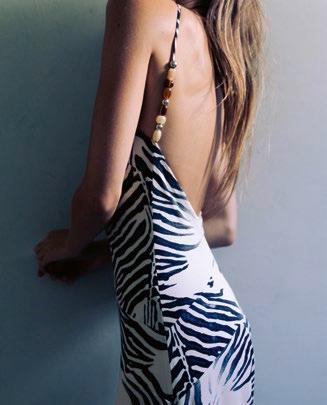
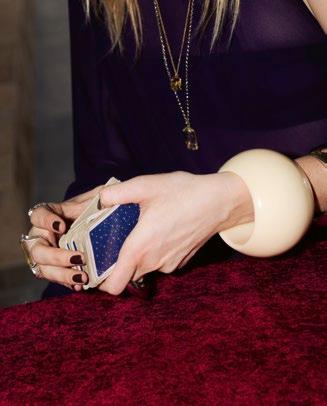
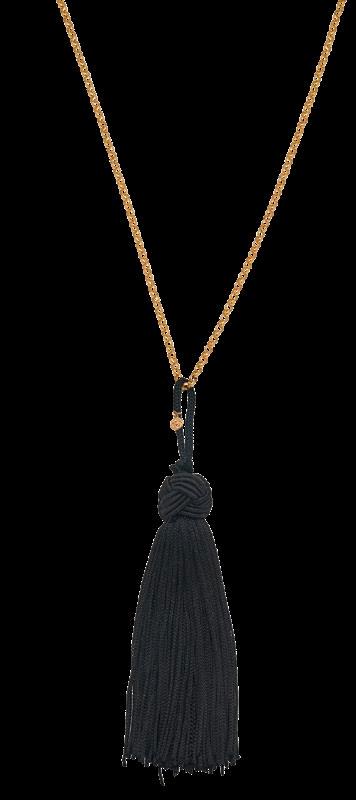
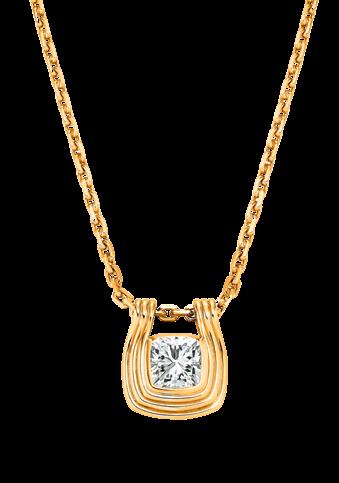
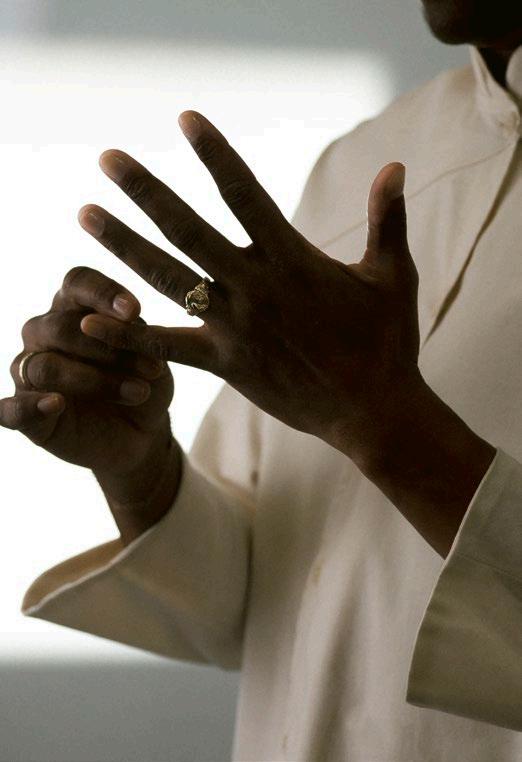
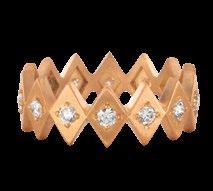
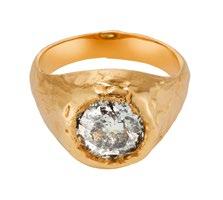
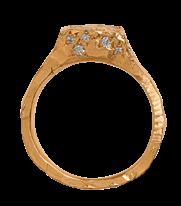
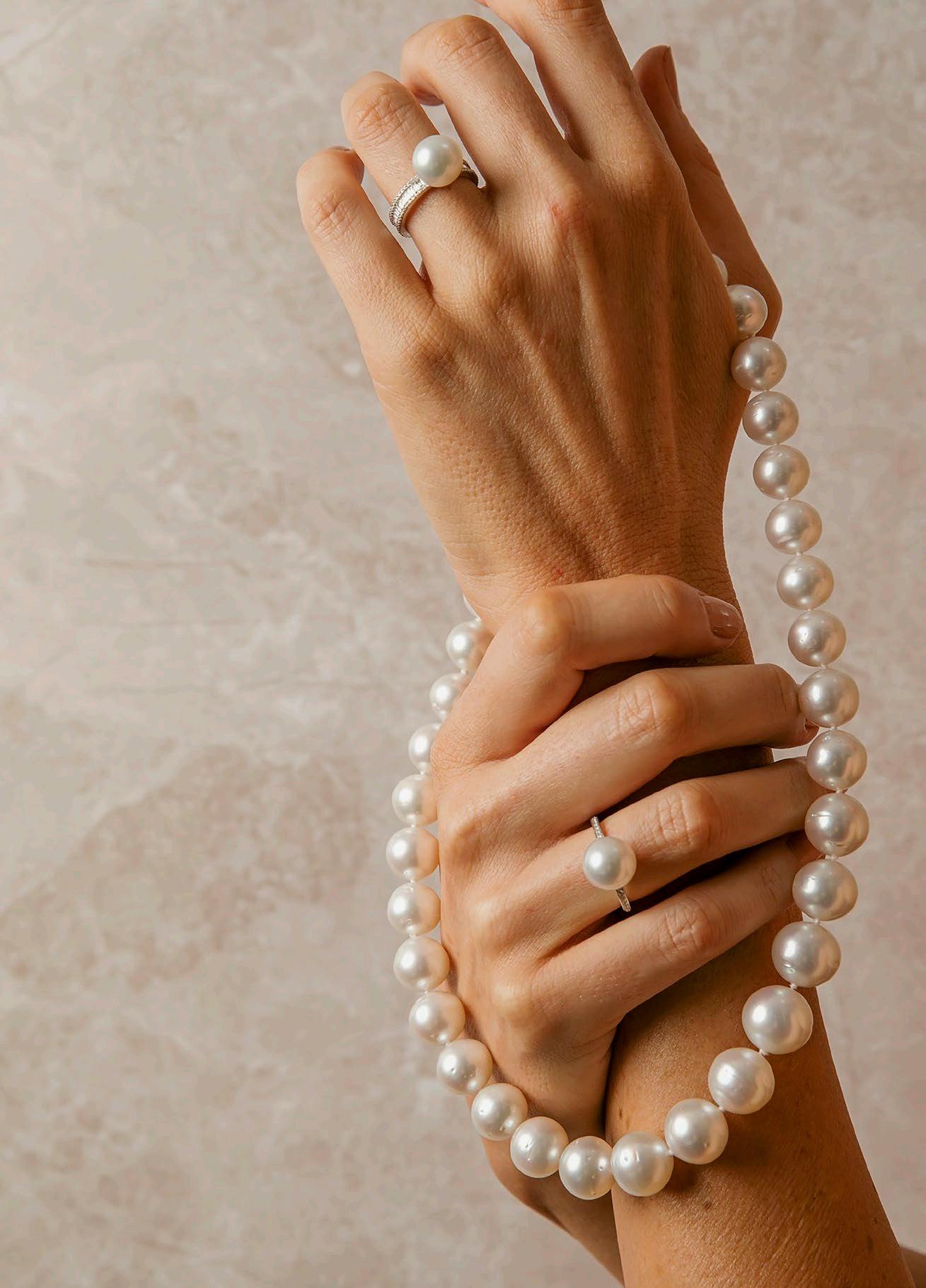
Jewellery here reads as quiet authority: rough-hewn gold rings and weighty necklaces that feel unearthed rather than made. Gold catches the light with sovereign warmth. The effect is elemental and assured. Ornament not as excess, but as intention.
brisbanearcade.com.au
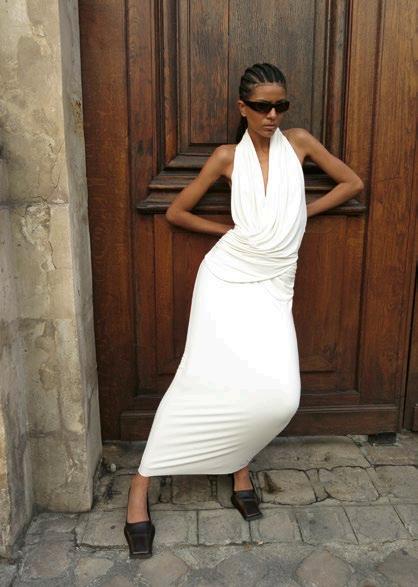
You can stop looking: the perfect white
has entered your closet.

An investment pair of sunglasses elevates any look instantly, I haven’t taken off this Bottega Veneta pair.


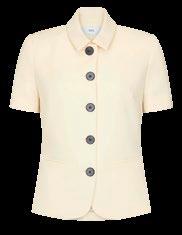
A statement piece that works effortlessly within your wardrobe. Dress it down with denim or up with black trousers.
Nothing says effortless chic more than a
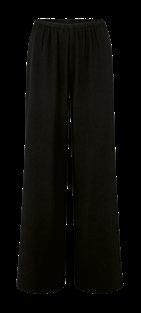
To say I have been living in these would be an understatement. Made from the softest lightweight suit material and crease-free.
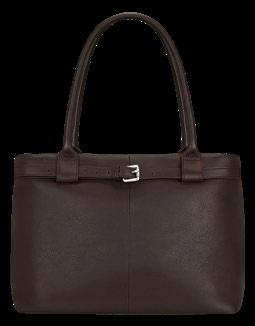
I might be biased because I designed this bag in collaboration with Wolff Studios, but you have found your perfect everyday work and travel bag.
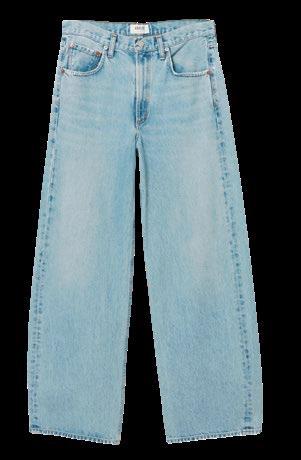
Say it with me: I don’t need ten pairs of jeans, I just need the perfect one. And here it is!
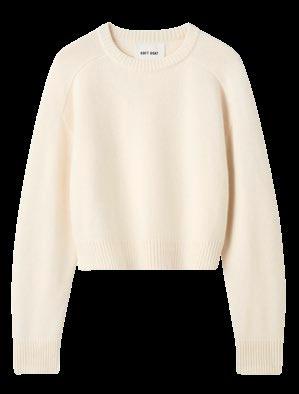
A true forever piece, tied around your waist or slung around your shoulder.
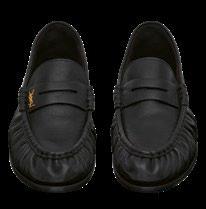
My sneakers haven’t seen the light of day since owning the most comfortable pair of loafers to exist.
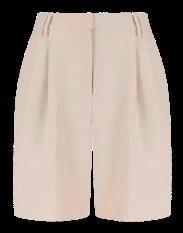
The core pillar of an effortless chic wardrobe: a pair of Bermuda shorts.
Time is a finite resource and is much better spent on a coffee date with your loved one than running aimlessly from your closet to the mirror, and returning, only to end up wearing an outfit you are not feeling yourself in. Cue my ten ‘wardrobe heroes’: a selection of carefully curated investment pieces that take the guesswork out of getting dressed every morning. Not only do they work season after season, they also create seemingly endless combinations of effortless, chic looks.
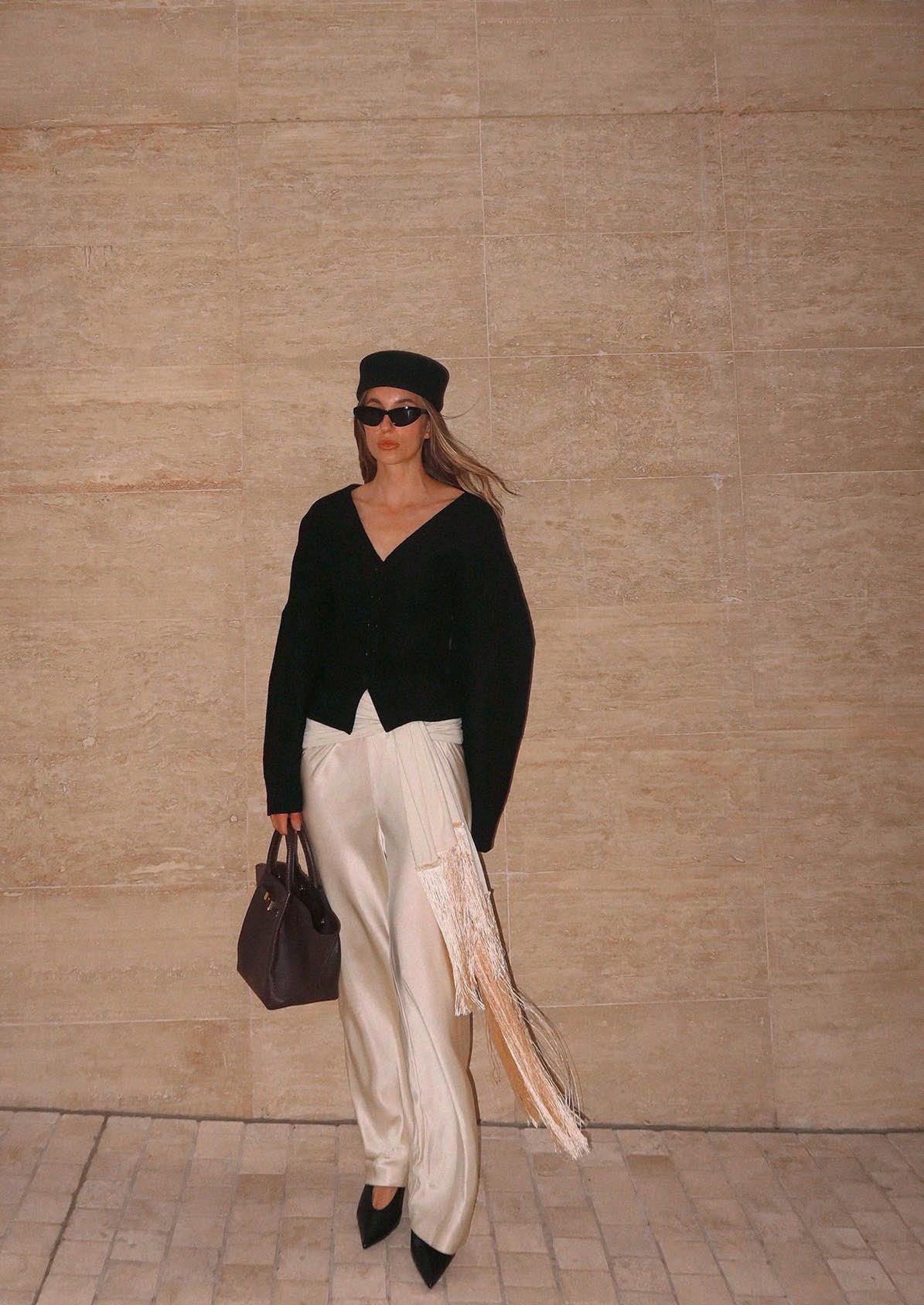
Dominique Nurtsch, our official fashion contributor for the issue, also known as @dom.overseas, curates her wardrobe heroes with us — a considered edit designed to make looking well put together feel effortless.

Japan sets the global standard for vintage fashion sourcing. On a recent buying trip, Green Wardrobe founder Ashleigh D’Amico uncovered rare designer pieces now arriving at the brand’s newly opened Fortitude Valley showroom.
BUT MAKE IT LUXE
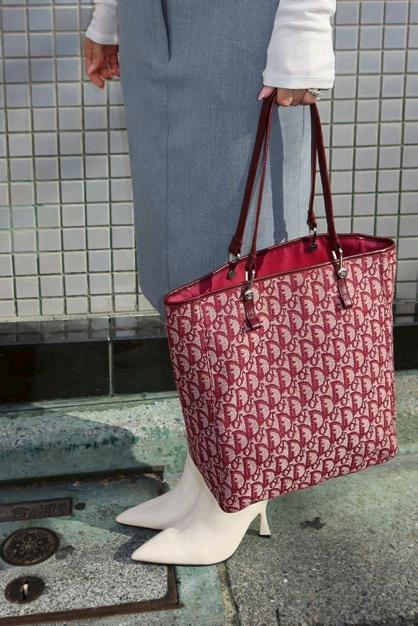
“I spent hours digging through a seemingly endless array of tubs and cardboard boxes filled with Gucci, Louis Vuitton, and Dior.”
Ashleigh D’Amico
Japan sits at the centre of the global vintage market. Luxury brands have long been embraced, and there’s a culture of buying well, taking care of pieces, and circulating them back into the resale market. Coming from the Australian luxury resale space, I wanted to experience that first hand.
Ten days in Tokyo gave me a clear sense of just how intense the city’s vintage scene is. Some boutiques were perfectly merchandised, with walls, rooms, and entire levels devoted to specific brands. Vintage Qoo is famous for its heavenly Chanelonly basement overflowing with rare collector’s pieces, classic flap bags, and logo-heavy jewels. Other stores felt more like working stockrooms. Hive Preloved was a standout, with an incredible selection of Fendi baguettes. I spent hours digging through a seemingly endless array of tubs and cardboard boxes filled with Gucci, Louis Vuitton, and Dior.
Osaka offered a different kind of thrill. Unlike the vast spread of Tokyo, stores in the Shinsaibashi area are densely packed. You can visit dozens of vintage boutiques in a single day, which is dizzying in the most fabulous way. Even after researching the must-visits, some of my best finds came from hidden gems I hadn’t heard of, including Golden House Vintage and Rizz, a reminder of just how deep the resale scene runs.
This boom may be connected to the global resurgence of Y2K fashion. As demand has grown for early-2000s logo pieces and archival styles, more buyers are travelling to source. Australian buyers are part of that shift, increasingly looking to Japan for variety and volume that’s difficult to replicate elsewhere. This increased attention has pushed prices up, especially for the most soughtafter items. You can still find great deals, but it’s become more of an intentional treasure hunt.
With a strong reputation for authenticity and an industry that takes counterfeits seriously, buyers can invest with confidence knowing the groundwork has already been done. Even for those who wouldn’t consider themselves hardcore vintage lovers, Japan’s resale scene is worth experiencing. The sheer abundance and dedication to preservation and presentation is a spectacle in its own right – one that’s impressive to witness, whether you leave with a purchase or not.
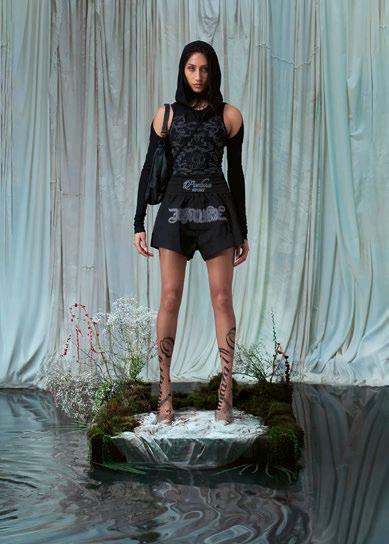
A slow-fashion label built on values of worldbuilding and storytelling, contemporary design house Posture Studios was born in a period of quiet. Amid the 2020 lockdowns, while Melbourne stood still in uncertainty, co-founders Dylan Negrine and Liam Holmes took a risk, moving into an empty shopfront on Johnson Street, and began shaping what would become the Posture Studio identity.
During a period where, for the most part, society had ground to a halt, and nobody was doing much of anything let alone exercising, Dylan and Liam began designing pieces that struck a balance between high-performance activewear and contemporary fashion. Those early days in the Johnson Street studio were defined by process, experimentation, and a daily presence centred around health and movement through an avant-garde lens. “As culture was rebirthing, we established ourselves as a reflection of emerging values such as health, performance, and lifestyle,” says Dylan.
They didn’t have a name yet, though that would later come from an Ayuverdic yoga book Dylan was reading at the time, where posture was highlighted as a foundational principle of the practice. “It felt like the perfect way to capture both intention and presence in a single word,” he explains. “Posture reflects our core values – something you can both embody and identify with.”
The pair, who met over a decade ago while collaborating on creative projects and events, both came from creative backgrounds: Liam was honing his skills through commissioned work and personal projects, while Dylan’s background in printmaking and architecture informed his approach to form and structure in design. Today, they remain equally hands-on across every aspect of the business – from design and development to sourcing and brand direction – in a collaborative process between friends where “nothing feels off-limits,” says Dylan.
Now, in a post-pandemic world, the label has naturally evolved into an extension of the duo’s lifestyle, “grounded in optimism and physical expression, focusing on innovation, quality, and sustainability,” says Liam.
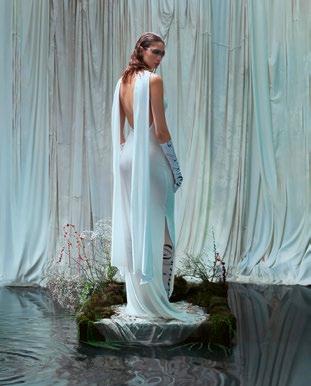
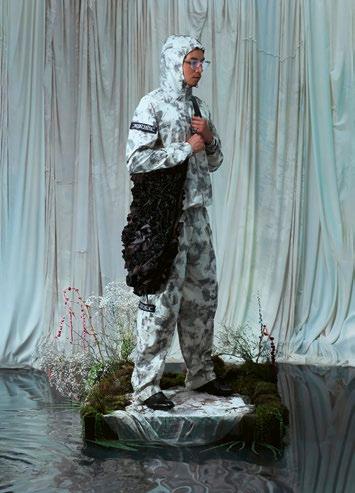
Inspired by coastal twilight, MISHA SS ’26 balances fluidity and form. Sheer jerseys sculpt the body, signature plunges return with modern structure, and elevated separates deliver a quieter, sculptural confidence.

ART DIRECTION
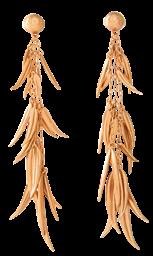
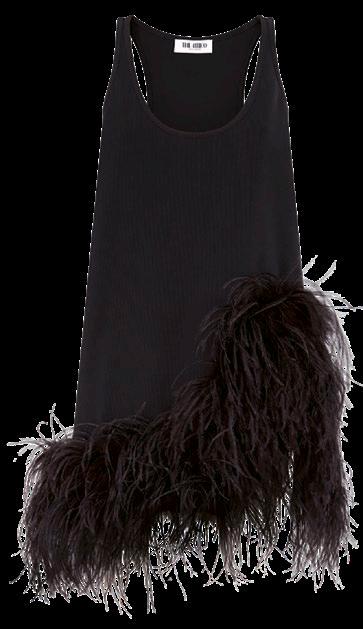
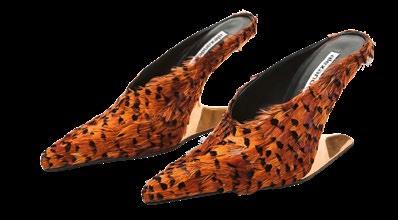
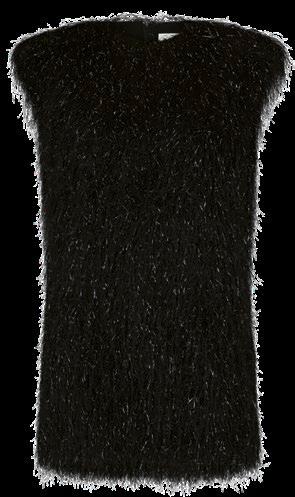
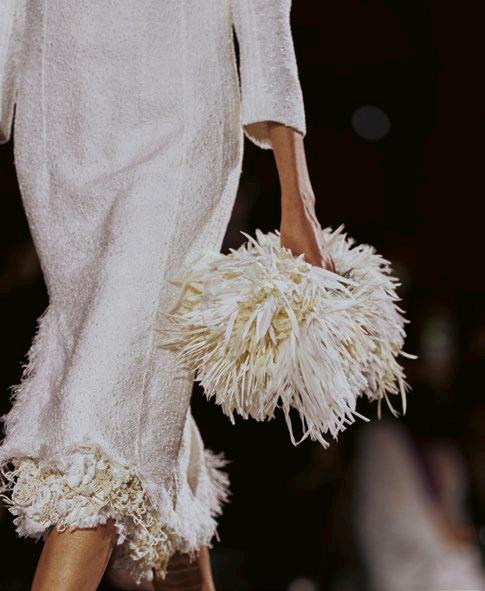
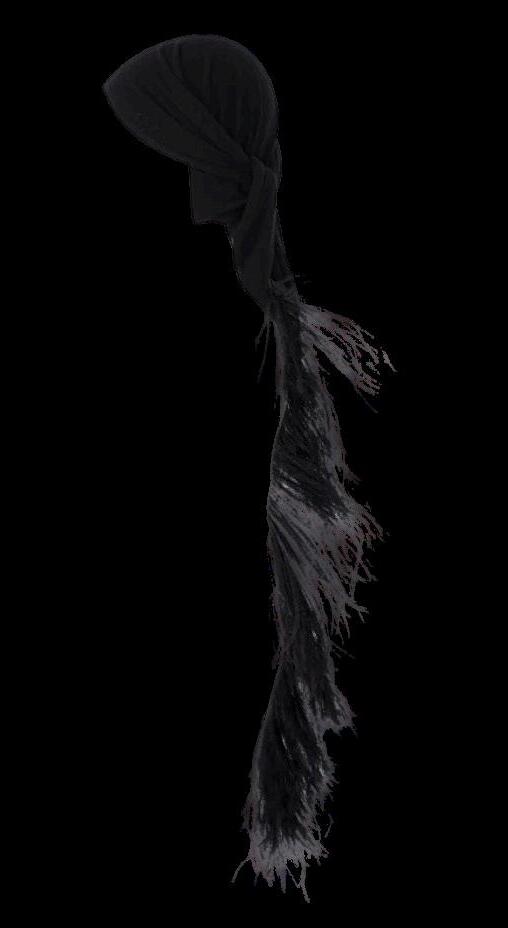
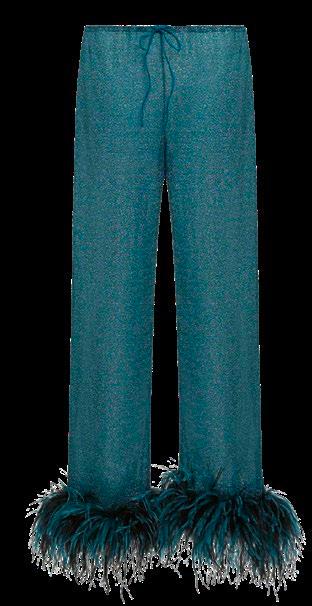
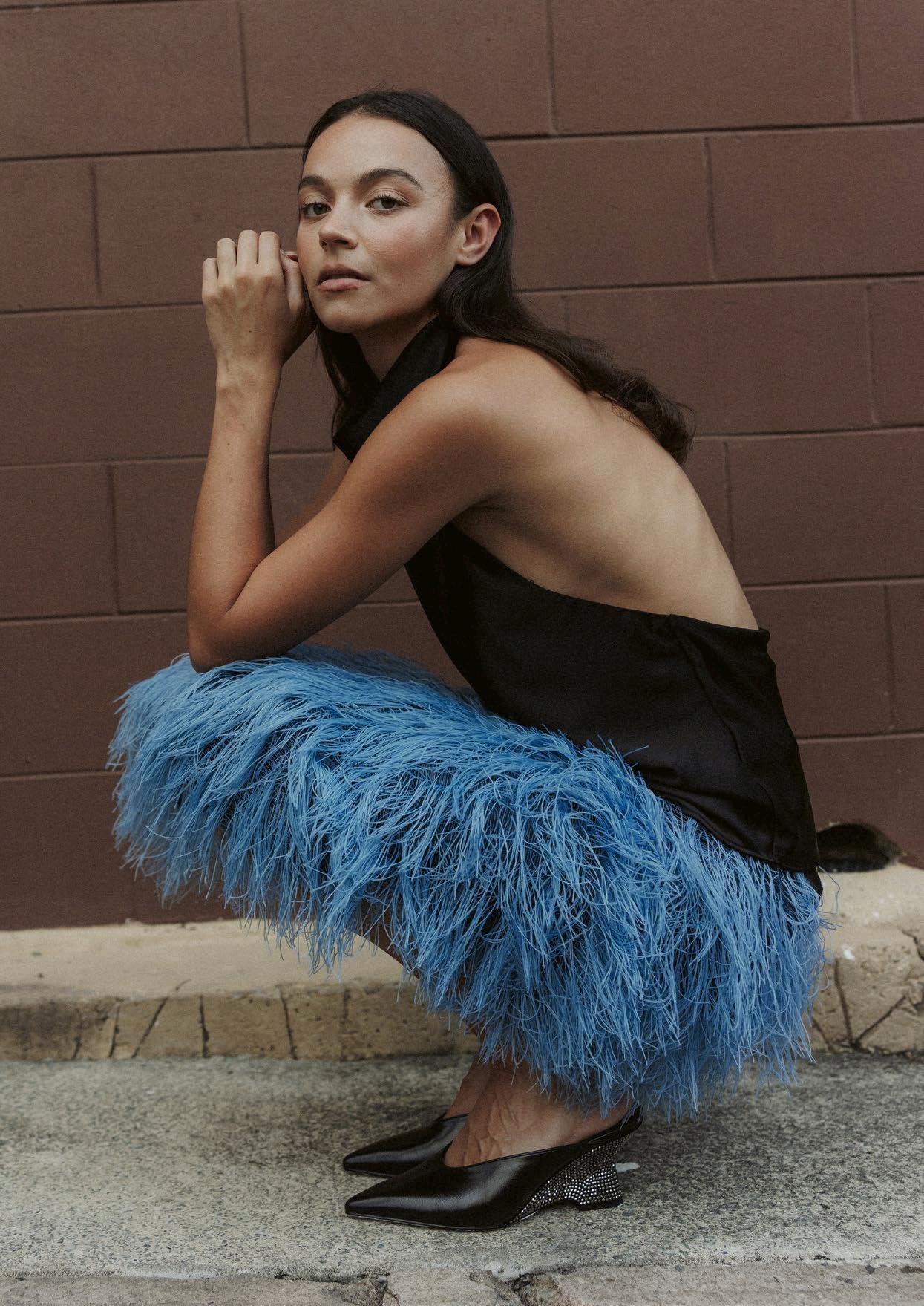
Feathers have been taking flight this season, from red carpets to SS26 runways. As one of the hottest fashion fixations of the year thus far, here’s how to incorporate a little feathery fun into your wardrobe.
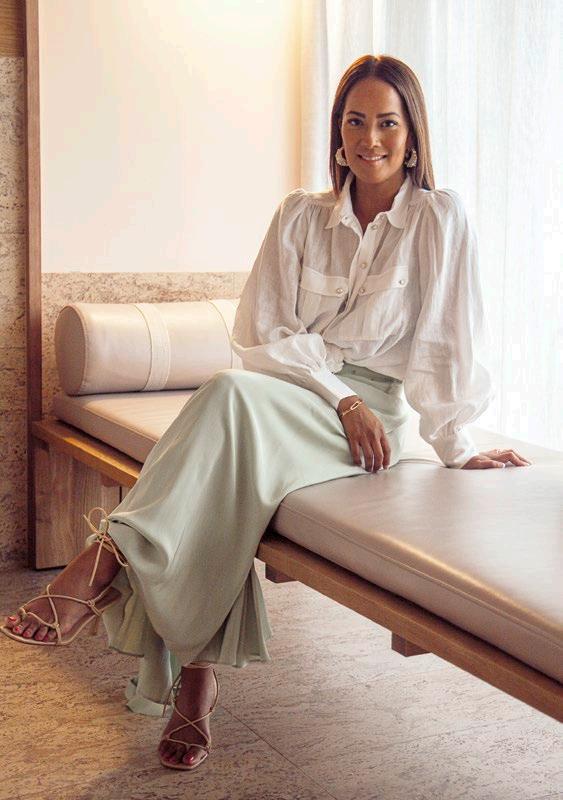
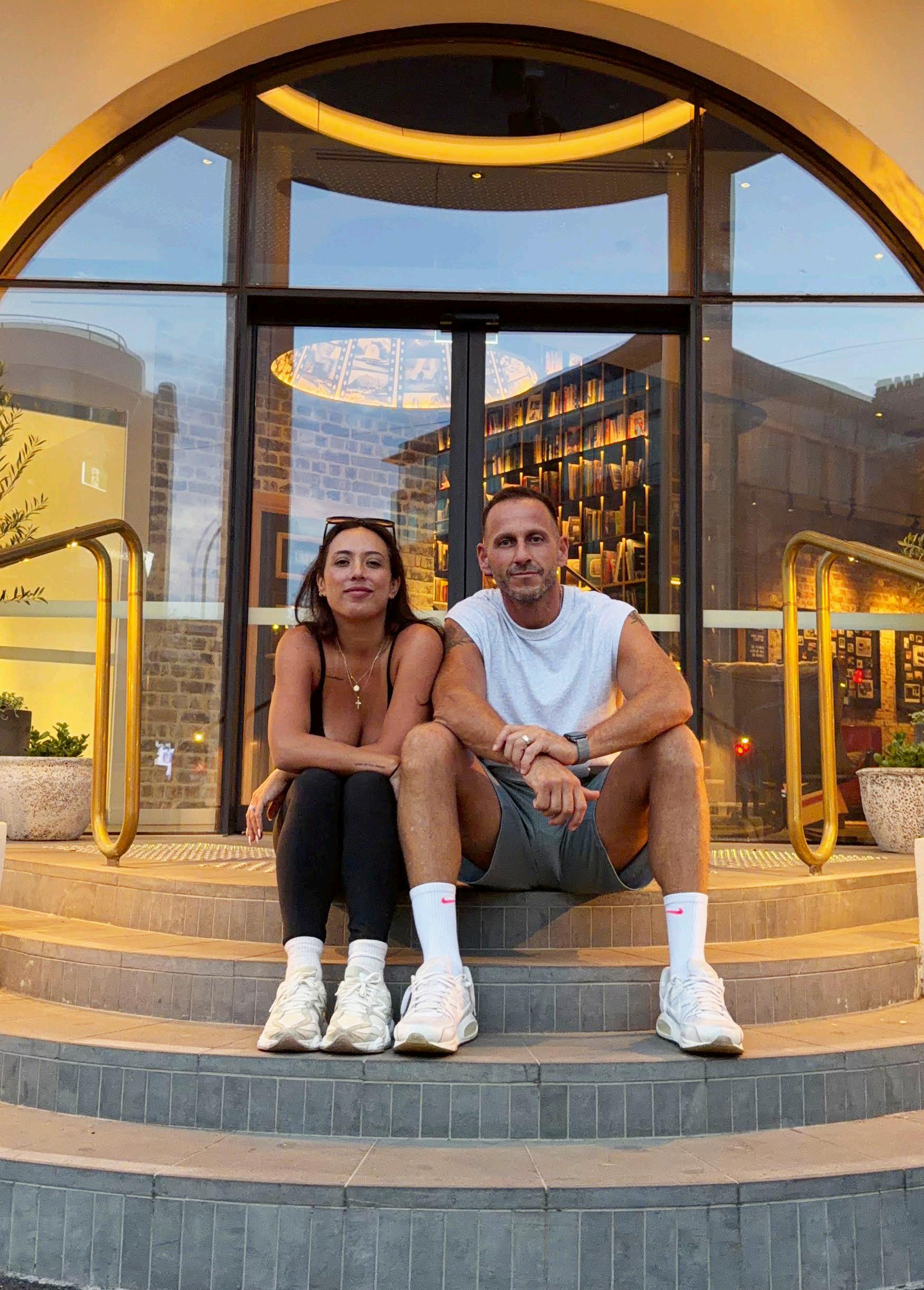
You know the faces and you follow the feeds, but behind some of Australia’s biggest influencers like Lily May Mac and Sarah Magusara is someone working quietly behind the scenes. Meet Zubie Brown, founder of influencer marketing agency ZB Studios.
INTERVIEW
Natalie McGowan
How did you get into PR and fashion, and launch an influencer management agency?
My first company, Moda Creative, began as a fashion event platform, which allowed me to build strong relationships with models, designers, and creatives early on. At the same time, Instagram was starting to become a commercial platform, and the models I worked with were being approached by brands to post, but there were very few agents or managers within the social media sphere back then. In 2014, influencer marketing was still very new in Australia and not always taken seriously. But I could see what was coming – creators were building loyal communities and influencing culture in a way traditional advertising couldn’t. I believed that creators would become their own brand and I wanted to build an agency that treated them that way. So, I helped negotiate deals and guide them commercially, and that quickly evolved into a formal agency model.
By 2023, you decided to launch ZB Creator Studios. Tell us about that decision. By then, I’d built very close relationships with a portfolio of creators and brands and realised I wanted to focus on nurturing those connections more deeply. The company I was working for at the time was shifting toward a much larger roster, which wasn’t aligned with how I wanted to operate. I’ve always believed in quality over quantity, really investing in each client and helping them build long-term careers. ZB Studios was my way of creating a boutique model that reflected that philosophy.
How has the industry changed since 2014, and what trends are you noticing now?
The creator economy is on track to hit $500 billion by 2027. Today, creators are basically CEOs of their own businesses. It’s not just about promoting a brand or product anymore; you can’t rely on that old model. Audiences are way savvier now, so it’s really about building personal brands, credibility, and long-term trust. Communities want consistency and transparency, and the creators who think strategically about their positioning are the ones actually winning.
What does earning potential look like for talent when it comes to brand partnerships these days? I won’t name names, but one campaign paid a creator one hundred thousand for a three-month campaign. It really depends on the deliverables, usage of the content, where and how the content is shot, but there is definitely big earning potential.
“People often only see the finished Instagram post, but behind that is weeks of negotiation, creative direction, legal work, and strategy”
Tell me about your decision to represent mostly Asian creators.
It wasn’t a deliberate strategy; it just happened very organically. My first company, Moda Creative, was acquired by global influencer agency Gushcloud International, which is headquartered in Singapore, and I later led their Australian division. Through that experience, I worked closely with creators and brands across Asia-Pacific and developed a strong understanding of those markets. When I launched my next ventures, those relationships naturally carried over and helped shape the roster.
What does a typical day look like behind the scenes?
It usually involves negotiating brand deals, reviewing contracts, shaping campaign concepts, briefing creators, jumping on strategy calls with global brands, overseeing content production, and mentoring talent. People often only see the finished Instagram post, but behind that is weeks of negotiation, creative direction, legal work, and strategy.
Can you give an example of a campaign you managed from end-to-end?
I’ve had a long-term relationship with Charles and Keith. They’ve been working with quite a few different Aussie influencers – one in particular is Lily [May Mac]. They sent through a lot of their different campaign briefs well ahead of time, so we have time to plan out her trips. The next one coming up is Coachella, so we’ve got to look at all the different products they’re going to send through, and I’ll work with Lily to help her figure out locations, concepts, and styling. I’ll also help with getting her a photographer. She likes to do her own makeup, but all the backend stuff for creating the content, I help her with, like booking flights. Then, I’ve got to manage the comms with the client as well. It’s about open communication and managing expectations and finding a common ground.
What were the biggest challenges and rewards along the way?
One of the biggest challenges early on was convincing people to take a chance on a new agency, particularly brands and talent. I really had to earn my stripes and prove that I could deliver results before people were willing to give me their time. Building trust and credibility took years of nurturing relationships, showing up consistently, and backing our creators properly. On top of that, the industry moves incredibly fast, so adapting to new platforms and trends has always been part of the job. The most rewarding part has been watching talent grow, seeing creators evolve from early-stage content into major campaigns, launching their own brands, and building long-term careers. That’s what makes all the hard work worth it.
Natalie McGowan
The early 2020s marked a season of transformation for Paul and Bernadette Borg: a newborn baby, a new business, and a move to a new city. Lifelong Sydneysiders, they launched their skincare brand, THE SKILLS, in the midst of a global pandemic, before uprooting their lives and relocating to Brisbane with their three young children.
Quitting their decades-long careers to launch THE SKILLS as a bootstrapped Australian start-up was a high-risk move: entering a category dominated by established international brands like Aesop and Grown Alchemist, without the marketing budgets or teams to match. What Paul and Bernadette did have, however, was tenacity. “Nothing has come without us creating the opportunity ourselves,” Paul says, recalling how a casual pitch to a single Anytime Fitness franchisee grew into a national rollout of Anytime Fitness x THE SKILLS The SkinZone – an in-gym beauty bar designed for post-workout skin recovery.
The early months were unglamorous, defined by 5am international Zoom calls, relentless cold calling, and pitching buyers across time zones in between school drop-offs, bottle-feeding, and fine-tuning every detail of the brand. Then, just two weeks after launch, THE ICONIC called. Within 18 months, THE SKILLS was stocked not only by THE ICONIC, but also by Adore Beauty, Saks Fifth Avenue, Harvey Nichols Doha, Above The Collar, Nutrition Warehouse, and David Jones – the youngest brand ever to launch at the national department store. “That was how we knew we had a brand,” Bernadette reflects. “We didn’t have traction in the market yet, but we had execution. For all these places to back us at that stage says a lot.”
It’s this idea of ‘brand’ that has always remained central to the vision. Sports lovers at heart (Paul a basketballer, Bernadette a two-time Australian Open Juniors competitor) the couple set out to create
“Nothing has come without us creating the opportunity ourselves”
- PAUL BORG, co-founder
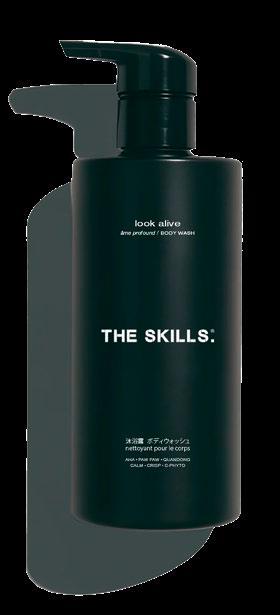
something that felt authentic to them. “Built for me, designed for her,” Paul explains. “Like that oversized hoodie you steal from your partner in winter – that’s the feeling we wanted to create.” Gender-neutral and rooted in wellness rather than beauty, THE SKILLS is skincare for “fans of sweat”, designed for bodies on the move.
Drawing on their combined years of experience, Paul and Bernadette executed every element of the brand rollout, everything except the formulation itself. Bernadette credits much of her understanding of brand to mentorship from industry icons like Edwina McCann and Christine Centenera, who she worked closely with during her time working at Vogue Australia. “They taught me that without brand, nothing else matters,” she says.
The couple – who met at a now-defunct Sydney nightclub, got engaged two weeks later, and are now approaching 19 years together – came full circle when in October, they launched THE SKILLS as the amenities partner at 25hours Hotel Sydney The Olympia, a boutique hotel located right on the site of the nightclub where their story started.
It was a serendipitous moment that perfectly reflected what THE SKILLS has always been about: a brand that’s authentically Paul and Bernadette, grounded in their values, their passion for sport and wellness, and the way they genuinely live their lives.
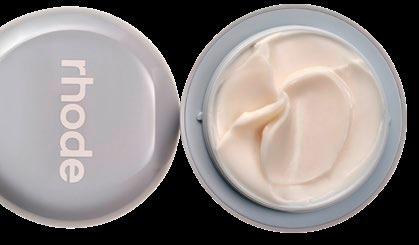
brings something new to the scene. Strong aesthetics, done properly.
Freshly landed down under, rhode’s Caffeine Reset mask is first on my list.

NZ-brand Sans [ceuticals] is a brand worth knowing. These daily oils work for face, hair and body.
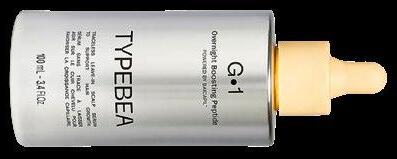
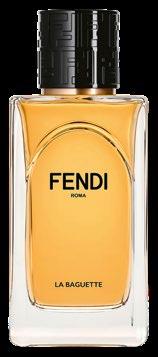
FENDI’s La Baguette is a whiff of freshly baked bread straight out of the oven. Enough said.
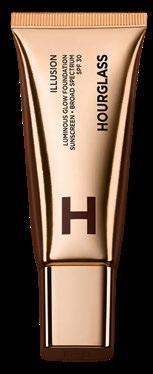

Full, softly contoured lips are the goal. This peptide lip treatment gets it right.
The beauty products living in my makeup bag, on my bathroom shelf, or sitting in my shopping cart.
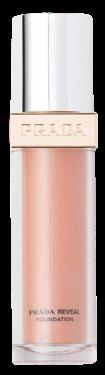
I’m newly converted to Prada Beauty, the foundation is skin-like, buildable and easy.
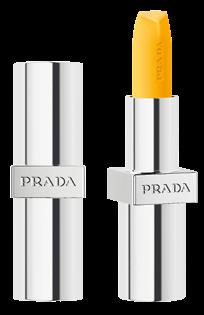
A subtle frost with a juicy banana finish. Easy and wearable, Prada Beauty. A MECCA MAX brow pencil with a spoolie are my bag essentials. Sculpt and go.

Augustinus Bader’s Vitamin C serum is perfect postsummer. Bright, clean, effective.
Kiri Johnston
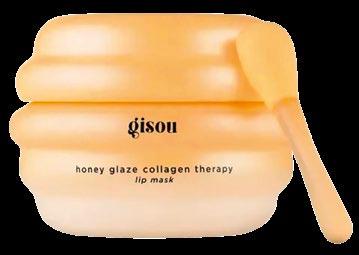
Gisou’s Honey Glaze lip mask keeps lips juicy and sweet. A daily habit.
A pocket blush is a nonnegotiable. Nose, cheeks, lips, done.

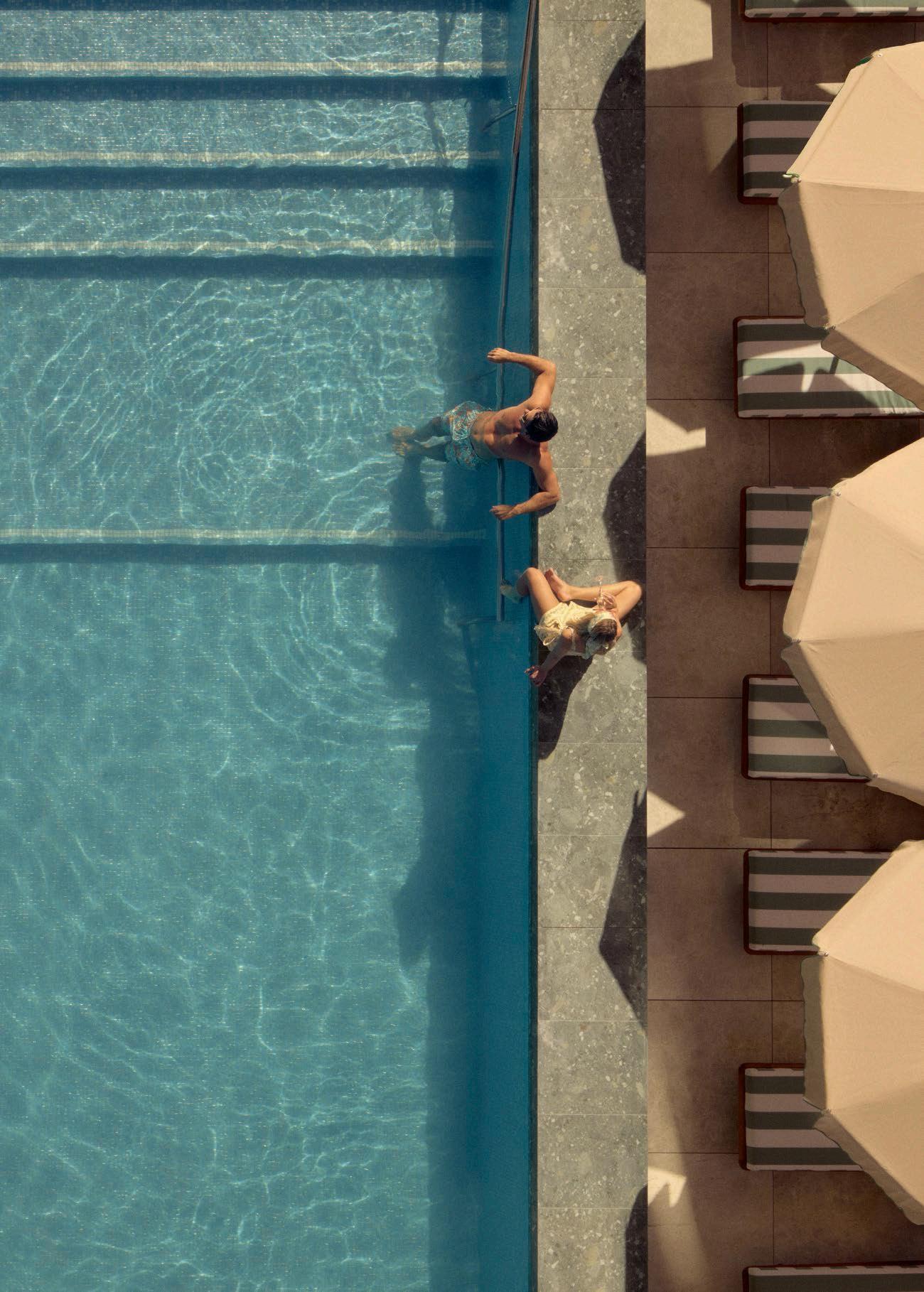

mondrianhotels.com/gold-coast
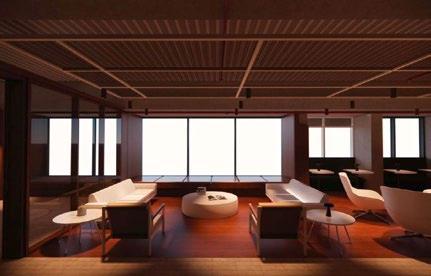
What if your gym didn’t just push you physically, but was also designed to optimise your wellbeing and enhance your social life under one roof? That’s the thinking behind Function Well that now continues to their new West End flagship.
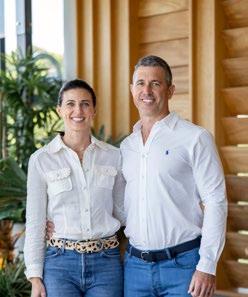
When Darren Bain founded Function Well in 2009, he wasn’t setting out to open just another gym. He was building the kind of science-backed, results-based, holistic wellness-meets-fitness hub that he so desired himself after facing his own health challenges.
From the beginning, Function Well was built differently. Grounded in four key pillars of mindset, nutrition, movement, and restoration, it positioned itself as a holistic health hub long before “wellness” became a buzzword. While much of the industry at the time focused solely on workouts, Darren’s model prioritised long-term performance, community, and recovery in equal measure.
Now, more than 17 years on, Function Well’s newest West End facility marks the most complete expression of that philosophy yet.
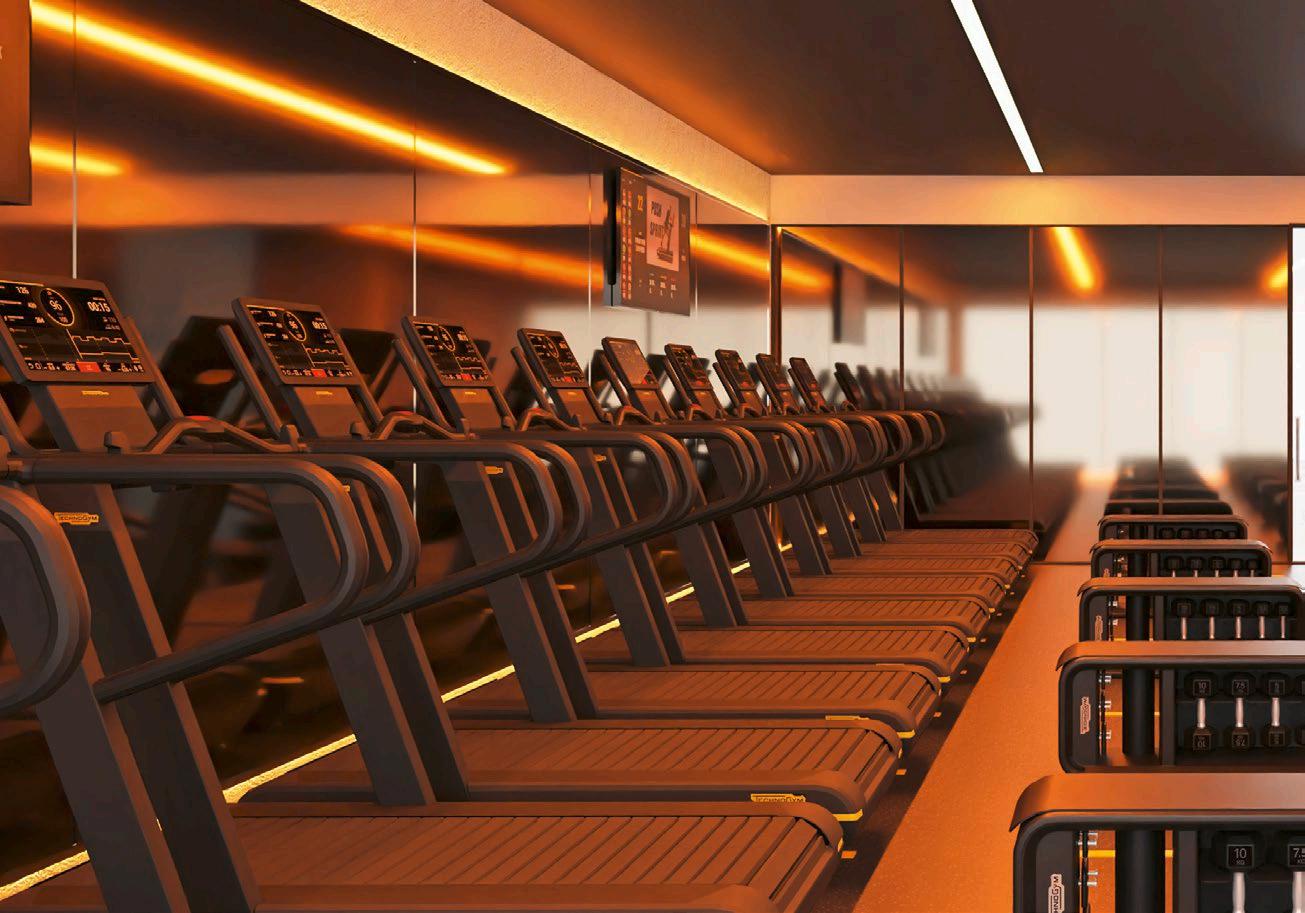
Designed as the brand’s flagship, the four-level West End hub has been meticulously planned to allow members to optimise their health and wellbeing under one roof. Central to the Function Well concept is the Chinese concept of yin and yang – an ancient philosophy that has underpinned the business since its inception. Not just the way they operate behind the scenes, it’s also how the West End hub is laid out.
On the Yang side, five dedicated boutique studios deliver structured, progressive programming led by expert coaches. There’s RunFit and high-intensity interval training, alongside Hybrid Strength & Conditioning – a structured weekly program combining strength-focused sessions with Hyrox capacity training in one of Brisbane’s largest dedicated Hyrox training spaces. Here, the focus lies in long-term results, with the programming
being deliberate and progressive, led by expert coaches who know how to push you while encouraging a safe and welcoming environment.
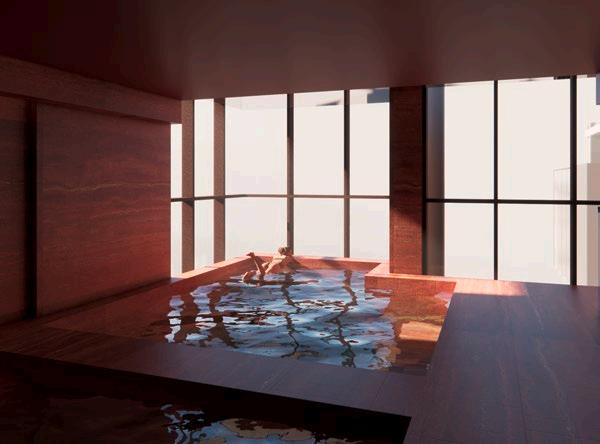
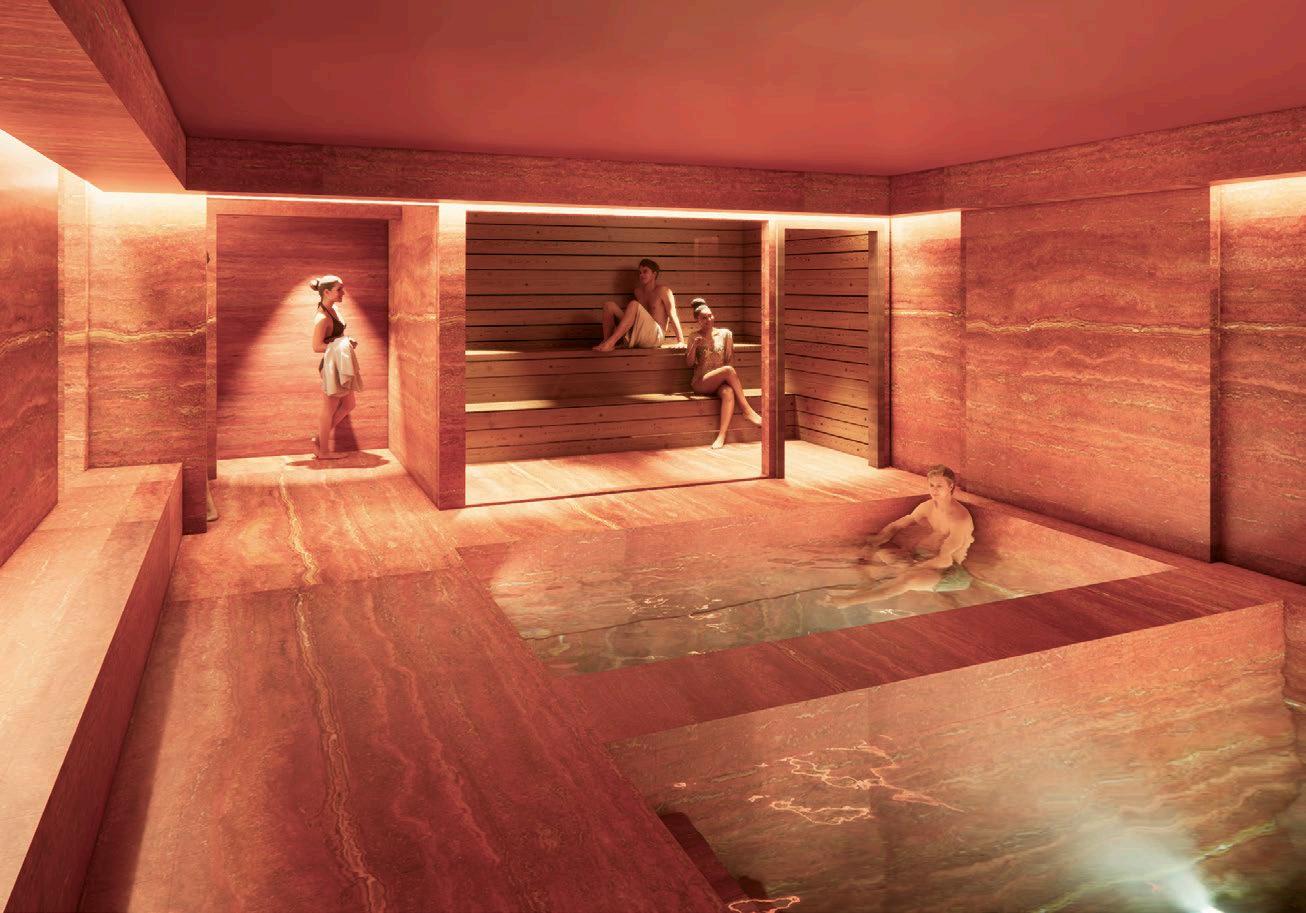
On the Yin side is where recovery takes centre stage. The expansive Restoration Zone features a contrast therapy circuit designed to regulate the nervous system and the body, including traditional, infrared, and Finnish saunas, a steam room, a magnesium hot tub, an ice shower, and a cold plunge pool. The newly introduced Recovery Cave offers private suites combining compression therapy, massage beds, and red-light therapy in a single session, shifting recovery from a luxury to a necessity.
Because community sits at the heart of wellbeing, Function Well West End places as much emphasis on connection as it does on movement. Between sessions, members can hang out, network, and co-work in the Business and Social Lounge or get a post-workout pick-me-up with a gym buddy at the nutrient-dense café – two spaces designed to encourage members to stay and engage, not just train and leave.
Round it out with a dedicated Mind & Body studio for breathwork, sound healing, mat Pilates, and yoga – enhanced by immersive projection technology that shifts the space into rainforest or coastal scenes – alongside the new Kaizen Lab Program, a performance and longevity initiative centred on comprehensive physiological assessments, and the result is a fully realised flagship health and wellness hub, bringing Darren’s dream to the southside.
The philosophy remains simple: you can’t have one without the other – performance without the restoration; recovery without the challenge; yin without the yang.
Coming to West Village, April 2026
FOUNDATION MEMBERSHIPS NOW AVAILABLE

POT, 2023
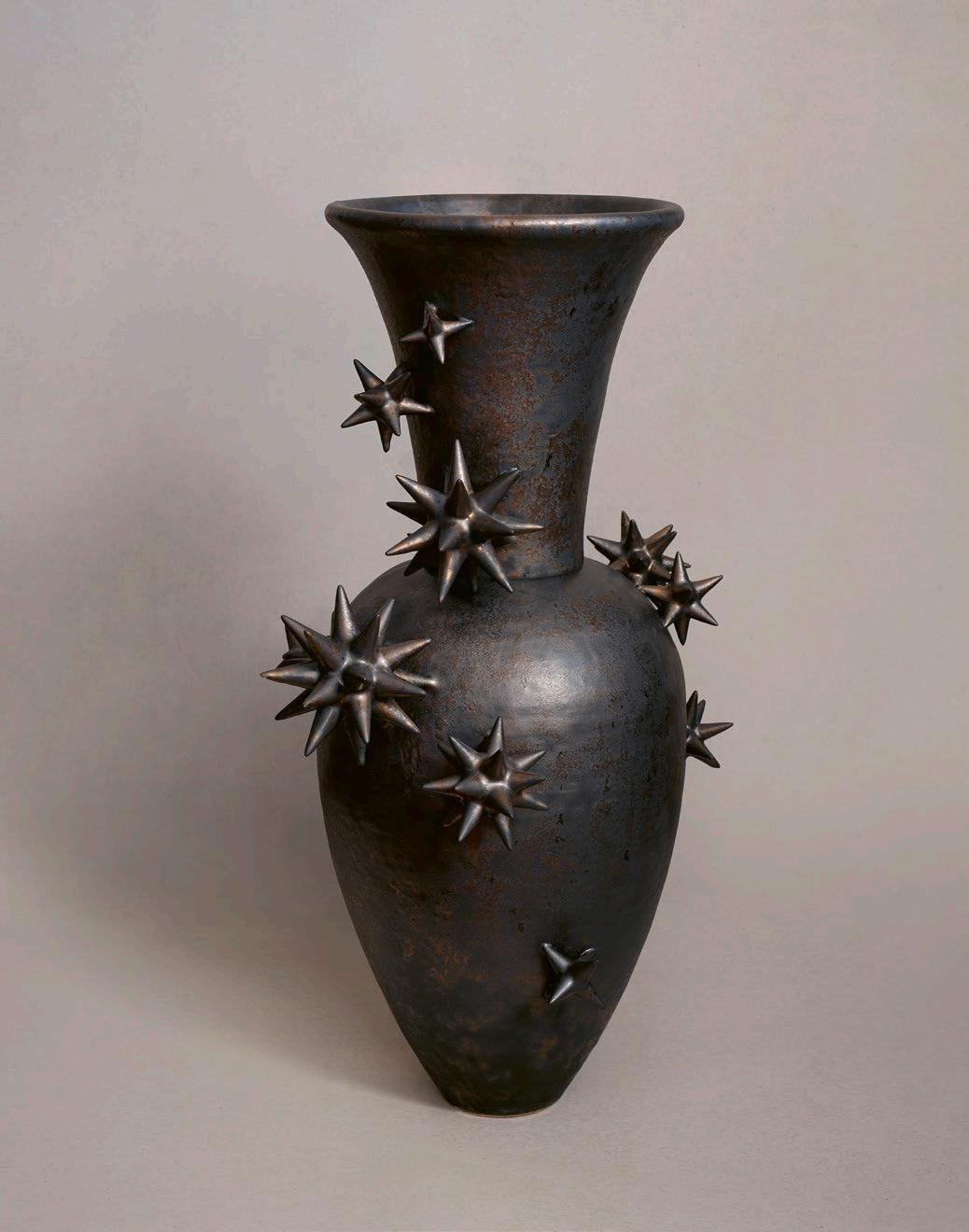
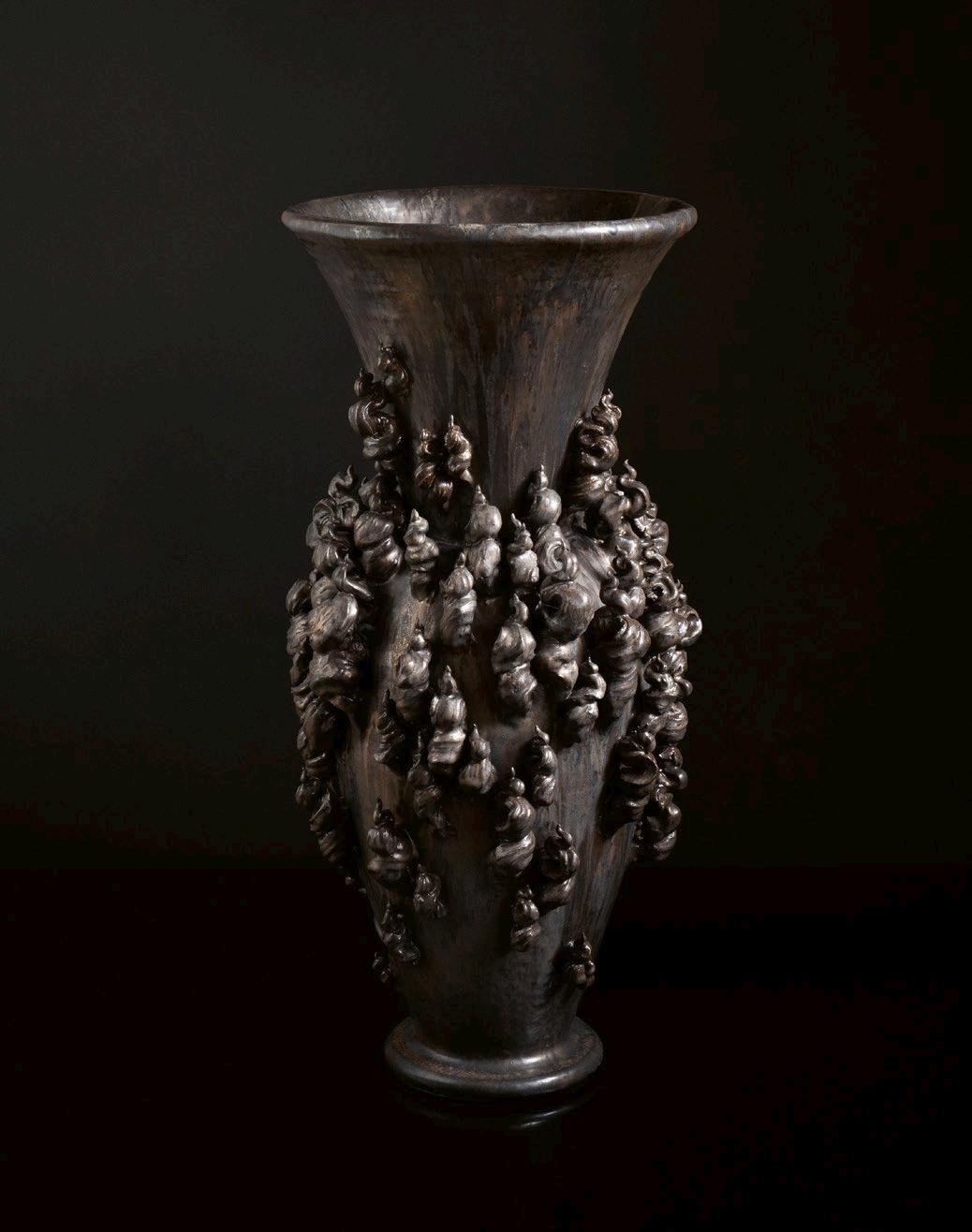
London-born and Texas-raised, Nicolette Johnson fell in love with ceramics a decade ago after signing up for a weekly pottery class in West End. Soon after, she had bought her own wheel and kiln. Inspired by objects that evoke mystery and a sense of preciousness, she creates striking, otherworldly pieces that invite viewers into her mind.
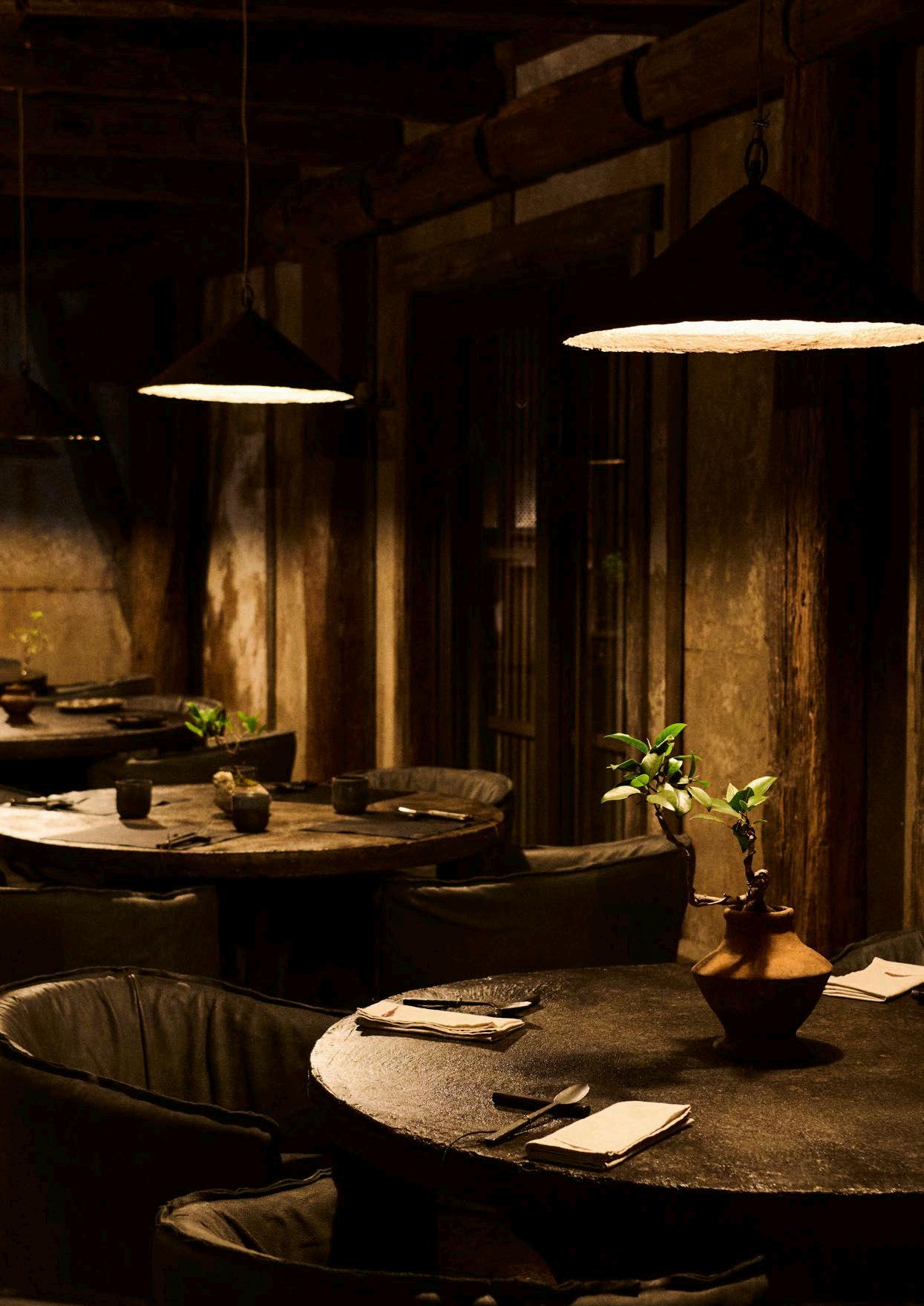
In an era of Australian dining that’s expanding by the minute, it takes something truly special to feel one-of-a-kind. In Byron Bay’s Belongil, renowned Australian chef and restaurateur Shannon Bennett has created exactly that: a multi-layered destination where art, food, and design converge.
Natalie McGowan
The Belongil precinct unfolds across four distinct venues. There’s FEU, a choose-your-own adventure fine-dining experience that Chris Hemsworth dubbed his “new favourite restaurant”, which reimagines the traditional set menu. Guests are presented with a box of hand-crafted porcelain artworks, each representing a seasonal ingredient. You choose your pieces, arrange them in the order you’d like to experience them, note any dietary requirements, and the kitchen crafts something entirely unique in response.
Elsewhere, Belongil Bistro is a barefoot-friendly 80-seat eatery designed for long lunches and relaxed dinners, while the Belongil Kiosk offers coffee and grab-and-go options just steps from the sand. Then there’s Blind Tiger: a hidden, invitationonly bar accessed discreetly and built on community rather than exclusivity – a place for regulars, friends, and those who’ve travelled specifically to dine there.
Even the finer details – right down to the so-called “uniforms” (for lack of a better word; Shannon has officially banned the term) – speak to the project’s creativity and ambition. Staff are dressed in seasonal capsules by Australian label Song for the Mute, with each team member styled individually and invited to keep their pieces at the end of the season.
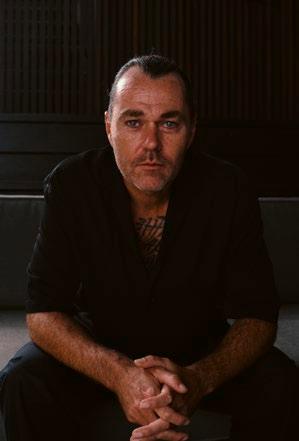
We spoke with Shannon Bennett about the thinking behind the project, the power of cooking with fire, and why Byron Bay felt like the right choice.
Can you talk us through some of the details of The Belongil that are especially meaningful to you?
That’s a tough question because it’s a bit like choosing your favourite child. Everything here has meaning to me. When I started shaping the concept, it was about doing something for every part of the community, because I feel like I’ve got a foot in all of it here in Belongil. The dog beach, the dog walkers, the morning coffee crowd – I wanted to look after them. I also loved the idea that you could walk straight off the beach, barefoot, and sit down to a really great meal using exceptional produce. And if something isn’t local,
PHOTOGRAPHY
the only reason is because it’s simply the best of its kind. Australia has some of the best produce in the world, there’s no doubt about that... They’re all special to me, but I do love the intensity of the service in FEU. It’s full-on, and I’ve really missed that. There’s an energy to it that I’m enjoying again – being back in that environment, cooking at that level, with that focus and pressure.
At its core, what story were you trying to tell with this project?
At its core, it’s the story of a group of good mates coming together: Cory Campbell, Lee Brennan, Nik Karalis, and Glen Norman. Glen in particular has been incredibly trusting. He’s my next-door neighbour, and we went into partnership on this, and we’ve just had a ball. I’ve honestly never enjoyed a project as much as this one. Each room transforms you in its own way. I don’t want you to walk in and feel anything other than a sense of transformation. That’s what great restaurants do – they take you away from the noise and the stress of everyday life for a couple of hours. That was the intention behind every detail, from the artwork by Jack Bailey and Otis Hope Carey to the drinks program.
Why Byron Bay? What made you choose this location?
IIt’s my home. It’s been my home for the last ten years, and Belongil is my neighbourhood. I felt it deserved a really strong destination restaurant – somewhere people could actually fly in and spend a proper gourmet weekend. I’ve got huge admiration for what the guys at The Hut are doing, but I wanted to add something that gave this part of Byron another layer –somewhere special, right here in the neighbourhood.
You’ve described FEU as a “total work of art,” where architecture, cuisine, and emotion blur. What was the starting point for this concept?
The starting point was the timber. We bought this incredible old timber a few years ago from Adrian Pizzi, and he’d been storing it
“Each room transforms you in its own way. That’s what great restaurants do.”
for a while. At some point, Lee and I just looked at it and thought, “Let’s use this.” It’s 300-plus-year-old timber from a temple in northern Japan, and it’s like a work of art in itself. Everything was built around that wood. Local craftsmen and tradespeople came in and gave it a new purpose. The space used to feel quite sterile and lifeless, and now it has this dark, moody edge. The timber and the lighting draw you toward the kitchen. You’re only a hundred metres from the beach, but you’re not thinking about that – you’re fully transported into this space. You know you’re in Byron, but you could also be anywhere in the world. I love that idea. It makes you present. It makes you focus on the experience in front of you. Spiritually, it just brings you into the moment, and that’s what I love most about it.
You’ve spoken about moving away from fixed set menus and passive dining. What kind of relationship do you want guests to have with the food and the kitchen at FEU?
I want guests to feel in control, but I also want them to have fun. There’s nothing worse than having a great conversation and suddenly you have to stop everything to read a long, rigid menu. I don’t like that. At the same time, I’m not a big fan of kitchens that only serve fixed set menus. A lot of them feel painful and overly controlled. I think the dining room should be relaxed, and the kitchen should be the one under pressure. I love the romance of a kitchen on edge, still producing clean, precise, beautiful food. So, you might have a table of four where each person orders a fivecourse menu, but every one of those menus is different because they’ve chosen it themselves. Or they might just have three courses, all the same. It’s completely up to them. The tactile menu – those porcelain objects representing ingredients – lets guests be part of the process. They’re in control, they’re engaged, and they’re having fun. That’s what it’s all about: fun, seasonality, and celebrating the producers.
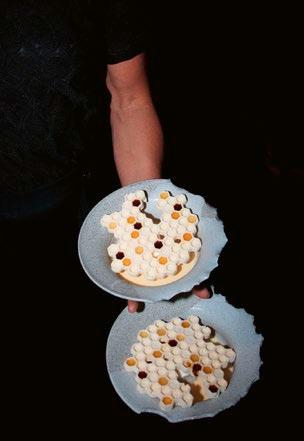
What does fire bring to the food that is so special?
At its core, fire brings simplicity and history. It’s the thing that transformed food thousands of years ago, and I love the idea that we’re going back to that, but using it in a very controlled and refined way. Heat and smoke transform everything – they give food another dimension. It’s a bit like playing a musical instrument. You learn how to control the flame, the coal, the timber, the heat. We combine that with modern technology – induction, precision cooking – but the fire is still at the heart of it. We’re very focused on whole, free-range animals that we butcher ourselves, so charcoal, coal, and timber are central to the process. It’s also something you don’t really see at home. You don’t usually cook over charcoal inside your house, so it creates a special atmosphere. There’s a rawness to it.
Blind Tiger is as intriguing as it is private, and completely phone-free. Can you elaborate on what inspired the concept? Blind Tiger came about because there wasn’t a consistent place in the area for really good, unique cocktails with a sense of privacy. It’s not about exclusivity – it’s about control and values. The members are really just locals. And if you’re from out of town, there are a few simple rules: no phones, enjoy your drink, and enjoy the conversation. On some nights, there are artists performing, and it just becomes this really special, intimate space. I wanted somewhere I could go that felt private, and a lot of my friends felt the same way. It’s not about being VIP or exclusive – it’s about creating a place where you’re not judged, where you can relax, talk, and have fun. Byron Bay has a lot of incredibly creative and successful people living here, and sometimes they just want somewhere they can have a quiet drink and a proper conversation. That’s what Blind Tiger is for. It’s about community and connection.
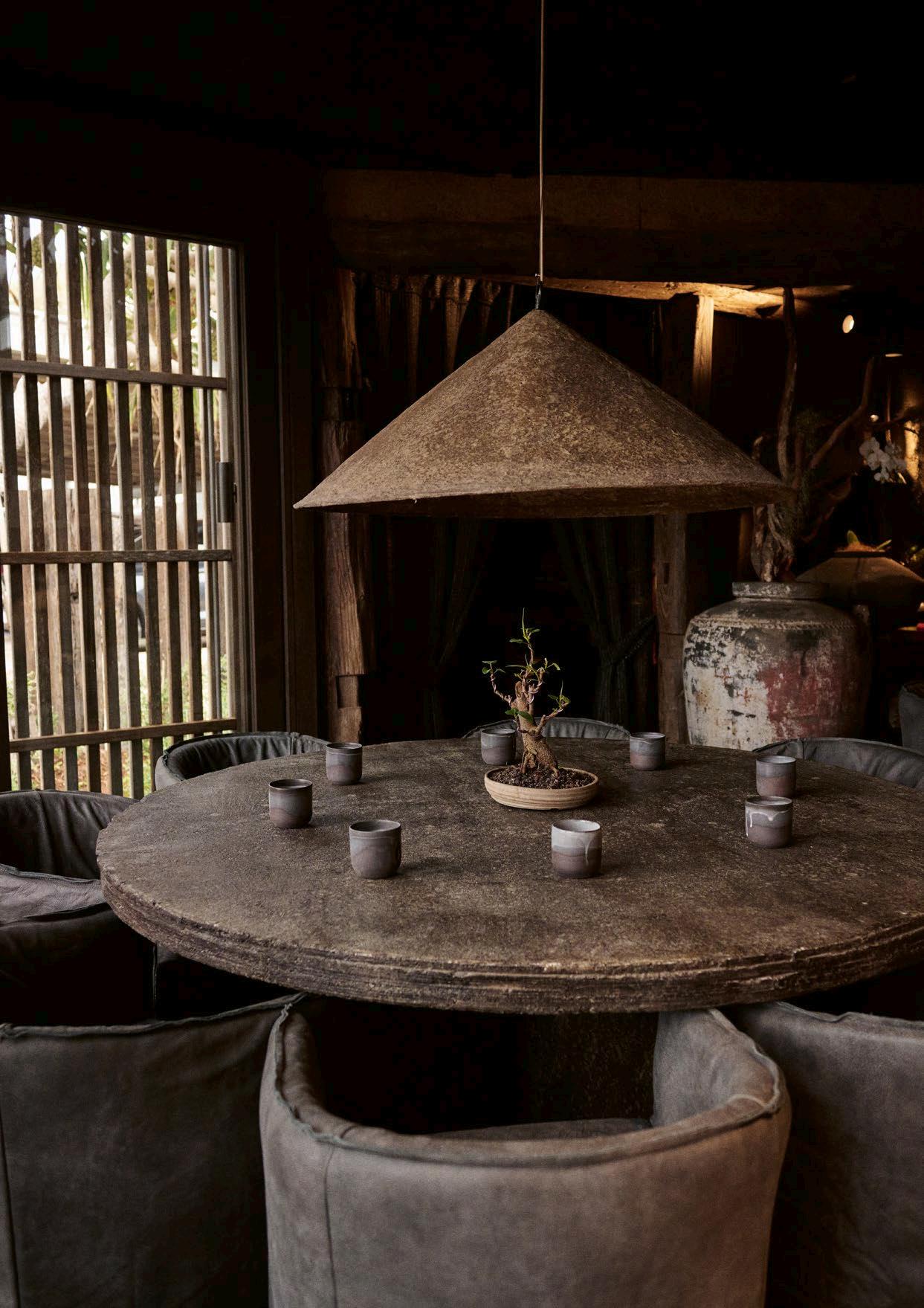
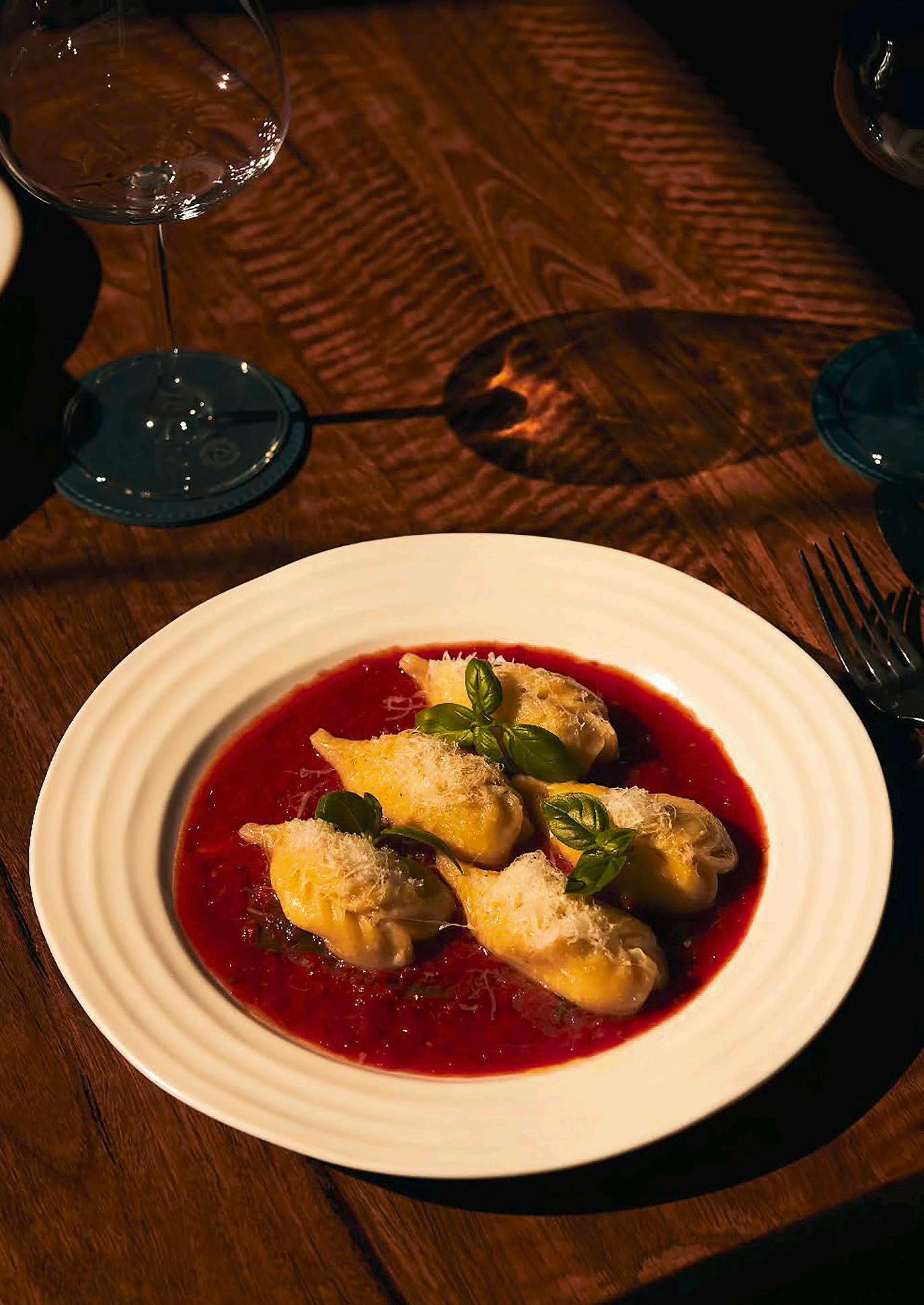

When business partners Valentina Vigni and Andrea Contin opened Sardinian restaurant Pilloni in early 2023, they had a simple goal: to show Brisbane real Italian food. It was the pair’s second venture, following the Roman-inspired pizzeria La Lupa, where Valentina led the kitchen (despite having no formal hospitality experience, only a love of cooking) and Andrea curated the wine list. Pilloni, however, represented a deeper, more personal expression of their heritage.
“As Italians, we’re very passionate, we have to do things traditionally,” says Andrea. “Everything needs authenticity, otherwise, you lose the character and soul of the place.” That belief sent the duo on a research trip in mid-2022, immersing themselves in Sardinia’s cuisine and culture to faithfully translate it back in West End.
For Sardinian-born Andrea, who still has family on the island, the trip was also a homecoming. Recalling early memories of his uncle’s restaurant in Cagliari, bustling fish markets, days spent on his uncle’s boat, trying Sardinian oysters for the first time, and the woodfired, farm-to-table ethos he grew up with, he says: “Sardinia is untouched in so many ways. People still make their own wine, their own cheese. It’s a culture that preserves tradition, and that’s what we wanted to bring to Brisbane.”
Basing themselves at Su Gologone Experience Hotel in the heart of Sardinia’s Barbagia region, the pair were on the hunt for inspiration, from recipes to design. They met with winemakers, sourced Sardinian bottles for the list, then headed to the coast to expand their seafood knowledge directly from the locals.
As for souvenirs, it was not your typical fridge magnet. Mamuthones – black, hand-carved wooden masks central to a 2,000-year-old Sardinian Carnival tradition – were made by renowned artisan Franco Sale and now line the walls of
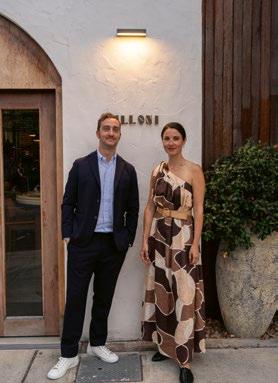
Co-founders Andrea Contin and Valentina Vigni
the restaurant. In the corridor between private rooms hang century-old drapes gifted by elderly village women who once used them to bake bread. “You can still see the holes and burn marks,” says Valentina. The result of the trip is a kind of microSardinia within Pilloni. “Each room has a different vibe, just like the island,” says Andrea. “Pilloni represents Sardinia.”
It’s this unwavering refusal to adapt to Australian tastes that has cemented the restaurant as a cornerstone of Brisbane’s dining scene, with Pilloni recently earning a coveted Chef Hat from the Australian Good Food Guide, alongside a string of awards and accolades.
For Valentina – who Andrea calls “the strict one” when it comes to preserving Italian tradition – it’s a dream realised. “Even as a kid, I had two dreams,” she laughs. “One was to become a supermodel, which didn’t happen… although there’s still time. The other was to open my own restaurant. I’m very happy at least one came true.”
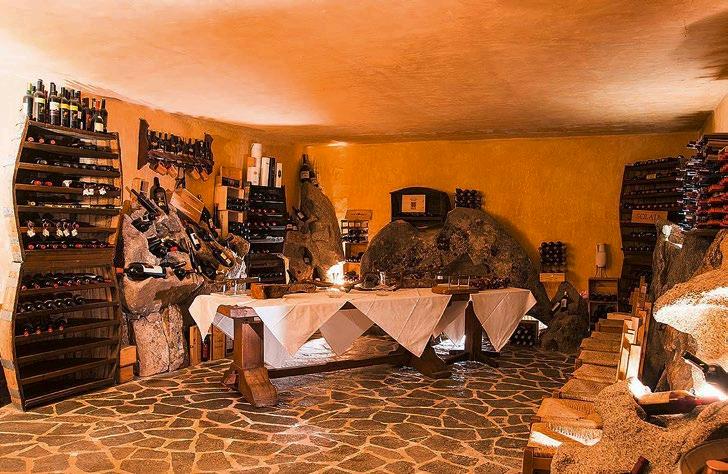
Ristorante Pizzeria La Vecchia Costa Sardinia
“I worked in Sardinia for two years, and that place is very special to me. Being young, working hard in hospitality, then heading out after a shift for a pizza and a beer with your workmates. Those were great times, and honestly, the pizza there is still the best I’ve ever had.”
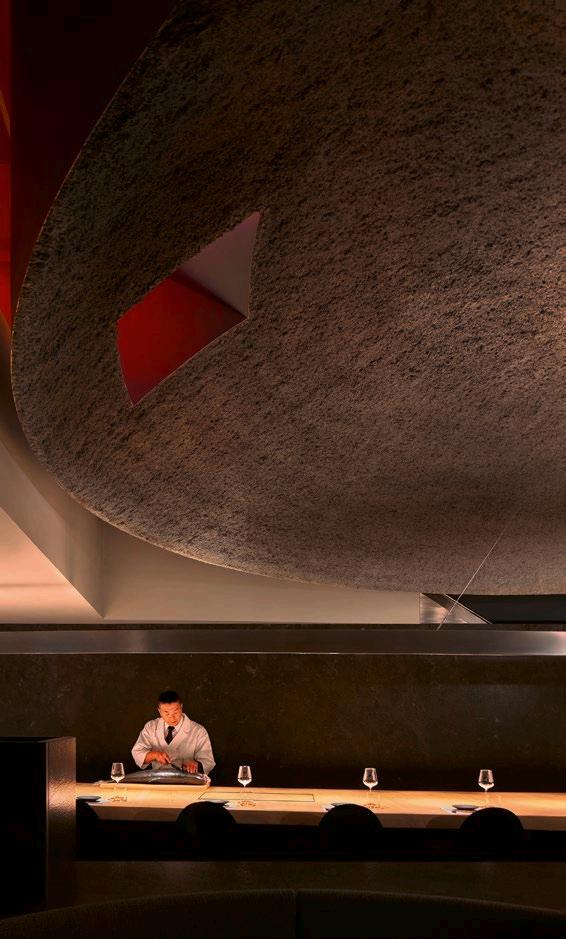
Sushi Room Fortitude Valley
“I love clean food made with fresh ingredients, especially raw fish. Their crispy rice tuna is incredible – it’s simple, fresh, and perfectly balanced.”
Where do chefs dine when they’re off duty? The restaurateurs behind Lars Bar & Grill and Joy Restaurant share their favourites.
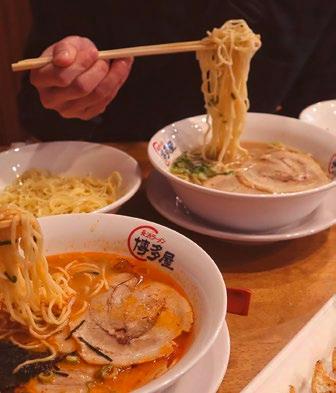
Hakataya Ramen Pacific Fair
“On my days off, I almost always go for ramen. Hakataya Ramen at Pacific Fair is my go-to. It’s comforting, clean, and simple – not too rich. It’s the kind of food I can eat every week, and I do.”
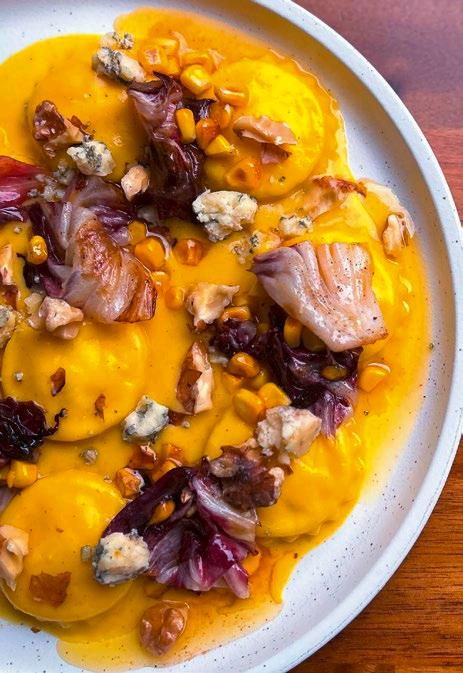
“Ben’s food at NUG. is my favourite. He gave me a little ravioli with corn, blue cheese, and radicchio the other day and it was to die for! Other than that, his bread or his arancini are my favourites.”
Franquette
Tamborine Mountain
“I always get the ‘Le Classic’ Baguette, which is thick, salty butter, ham and cheddar cheese, on a fresh chewy baguette. Delicious.”
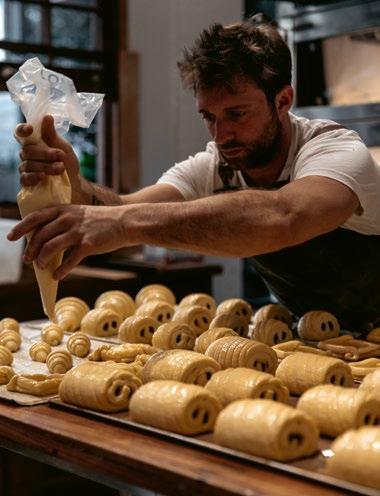
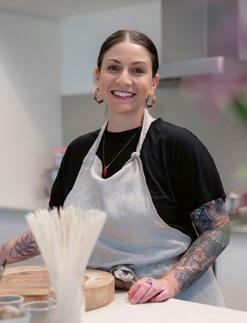
Joy Restaurant, Fortitude Valley
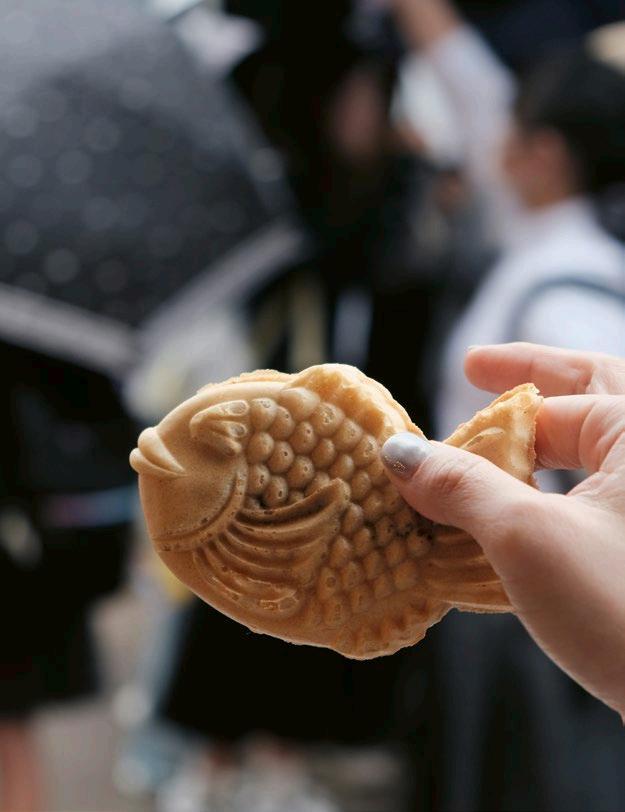
Naruto Taiyaki Honpo Tokyo
“In Asakusa, Tokyo there is a little shop that makes taiyaki called Naruto Taiyaki Honpo and I always get the deluxe custard flavour. My rule when I visit Tokyo is that I’m allowed one taiyaki every time I go past the shop… so I always book a hotel where it is on my walking path.”
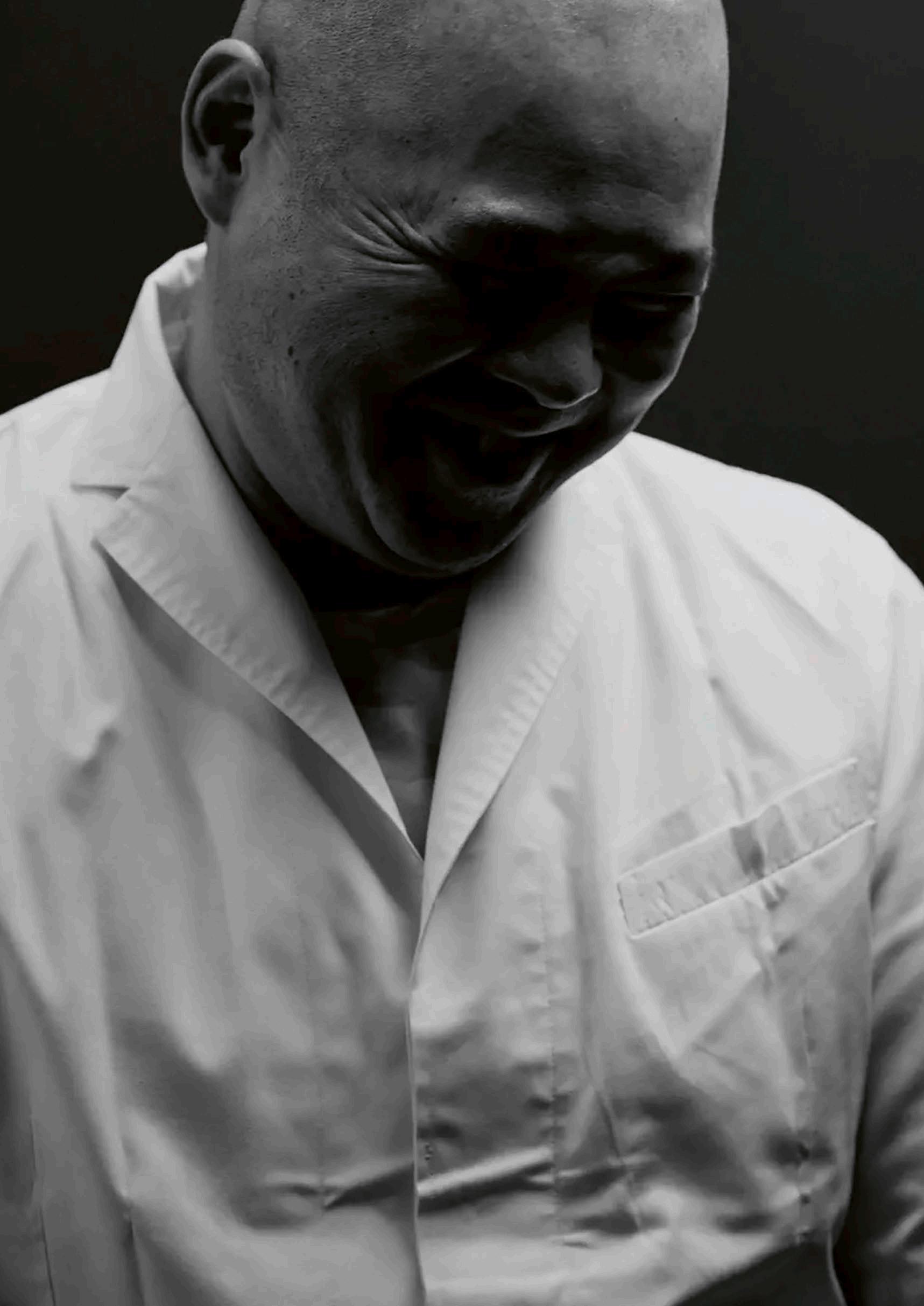

Chef Kobayashi’s signature charcoal sushi shari
Welcome to Brisbane. How have you been settling in?
Brisbane has been very comfortable to settle into. In some ways, the lifestyle and pace feel quite similar to Japan, which has made the transition easier. The people have also been very welcoming, and I’m enjoying getting to know the city little by little.
What initially drew you to the world of cooking?
My mother worked as a chef in a hotel, and growing up, I was able to see her dedication to cooking every day. Watching her inspired me deeply, and from a young age, I knew I wanted to become a chef as well.
Sushi looks simple but is very technically challenging. What part of the process takes the longest to master, in your opinion?
For me, nigiri – especially the folding and shaping of the sushi – is the most difficult. Even now, I don’t think I am perfect. It’s something I continue to practice and improve every single day.
You’ve worked alongside some of the most respected sushi masters in Japan. Was there a particular lesson or philosophy from that time that continues to guide you today?
This philosophy is written clearly in our concept: listening to the voice of the ingredient. The ingredients are the true stars, not the chef. Our role is simply to understand them deeply and help them express their best qualities.
Refined and restrained.
That’s +81 Sushi Kappo: a 12-seat omakase on West End’s Montague Road, helmed by Michelin-trained Tokyo chef Ikuo Kobayashi. Unfolding at the counter before you, every detail is considered – even the placement of nigiri on the plate, subtly adjusted for whether you are right or left-handed. We asked Chef Kobayashi to walk us through the details.
Natalie McGowan
At +81, how do you approach sourcing ingredients? Are there ingredients you feel must come from Japan, and what do you prefer to source locally?
We source some ingredients, such as tuna, through trusted suppliers like Ishii-san in Sydney. However, Japanese ingredients are not a requirement to make Japanese food. We use both Australian and Japanese ingredients, without fixed preconceptions. What matters most is quality, balance, and how the ingredient wants to be used.
Can you describe the experience of cooking in a kappo setting, where the process is fully visible and you have a direct relationship with diners?
In Tokyo, this style is standard, so I don’t feel any stress about it. For some chefs, exposing everything to the diners may feel difficult, as there is nowhere to hide. However, I believe that when guests can clearly see that no shortcuts are being taken, it makes things easier for me. I also enjoy the opportunity for diners to experience in more detail the craftmanship and intentional care that goes into each dish.
When it comes to +81, is your focus on introducing innovation, preserving tradition, or finding a balance? It is very much about balance. Our approach reflects the idea of 温故創新 (onko-sōshin) – studying the past, respecting tradition, and learning from our ancestors, while also adapting that knowledge for the future. We honour tradition, but we also look forward with a more health-conscious and contemporary perspective.
As we shed the Year of the Snake and gallop full steam into the Year of the Fire Horse, we turn to feng shui master Mina Zheng to find out what the coming months have in store and how to take the reins.
If the Year of the Wood Snake was all about rebirth and resilience, the Year of the Fire Horse is all about momentum: bold, fast-moving, and full of opportunity.
The Chinese zodiac operates on a 60-year cycle, pairing 12 animal signs with five elements: wood, fire, earth, metal, and water. Classical feng shui divides time into 20-year energetic periods. In 2024, we entered Period 9, a fire-ruled cycle that will run until 2044. Unlike the grounding earth energy of the previous two decades, fire is dynamic and transformative, associated with passion, intensity, and change.
The last Fire Horse year, 1966, saw major global events and technological breakthroughs. However, 2026’s energy is particularly powerful due to the overlap of the Fire Horse with Period 9, meaning fire energy is amplified. So, what can we expect from the year ahead?
MINDFULNESS IS KEY
Movement is a defining theme, symbolised by the horse. Expect forward motion, whether you actively chase it or not. This could mean a bold life change, a new routine, or simply reconnecting with your body through regular exercise. Fire energy can feel intense (read: chaotic), but it’s also rooted in creativity, momentum, warmth, love, and passion. Mina encourages turning inward amidst this energy: “Because the energy around us is changing so quickly, it’s important to focus on personal growth,” she says.
Practices like meditation, time in nature, grounding rituals, and spiritual reflection can help anchor you this year. “Practice gratitude and happiness, and happiness will come,” she adds.
It’s also an ideal time to focus on your ambitions, relationships, and self, and to declutter physically, mentally, and emotionally, in order to create space for new ideas and opportunities.
Some signs are likely to feel the heat more than others. Horses, rats, monkeys, and rabbits are advised to move through this year with intention, as periods of unpredictability could prompt sudden change. Tigers, dogs, dragons, sheep, and oxen are likely to experience a smoother ride this year, attracting more abundance and favourable energy.
Regardless of your sign, Mina notes that awareness, adaptability, and courage are essential this year for riding the Year of the Fire Horse like a pro. June and December, she says, are particularly potent, fiery months requiring extra mindfulness.
In 2026, the centre and south-east areas of your home are especially auspicious. Keep these spaces open, light-filled, and occupy them regularly. The north and south may feel unsettled, so soften them with white and gold tones, green plants, and touches of blue to restore balance, Mina recommends.
In terms of clothing, while red is traditionally lucky, Mina suggests wearing it sparingly after Chinese New Year itself – “there’s already a lot of fire in the air,” she explains. Those born in the first half of the year (February onward) may benefit from wearing white and gold, while Mina recommends pink and green for those born in the second half of the year.
With all of this in mind, you’re ready to welcome luck, joy, and prosperity into the year ahead. Gong xi fa cai!
Indulgence awaits at Jewels of the Sea, an intimate evening hosted by Fosh and Imperial Jewellery on 27 March at 6pm. For one night only, enjoy a seven-course premium seafood menu, thoughtfully paired with exceptional wines, and the exclusive opportunity to win a bespoke jewel valued at over $70,000.
Register at info@foshportside.com.au.


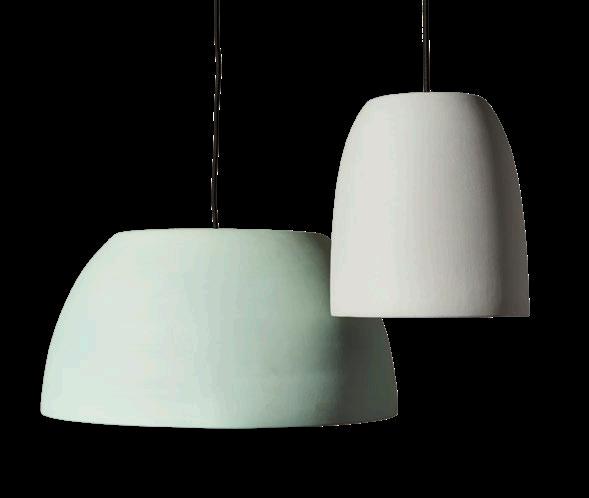
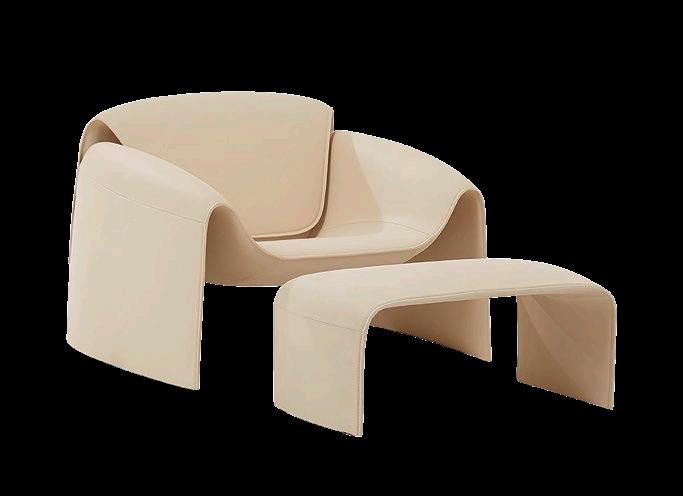
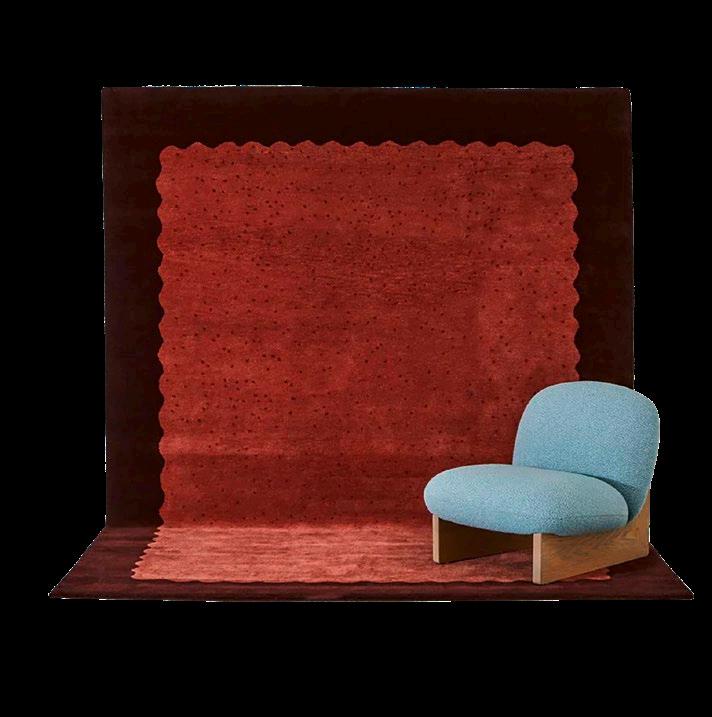
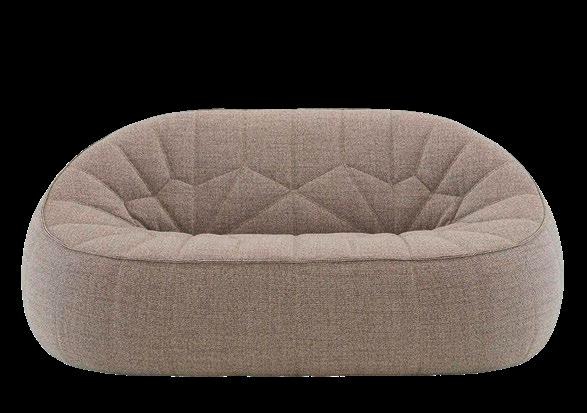
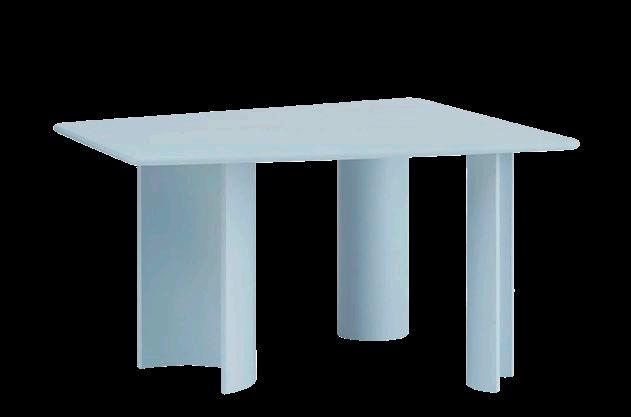

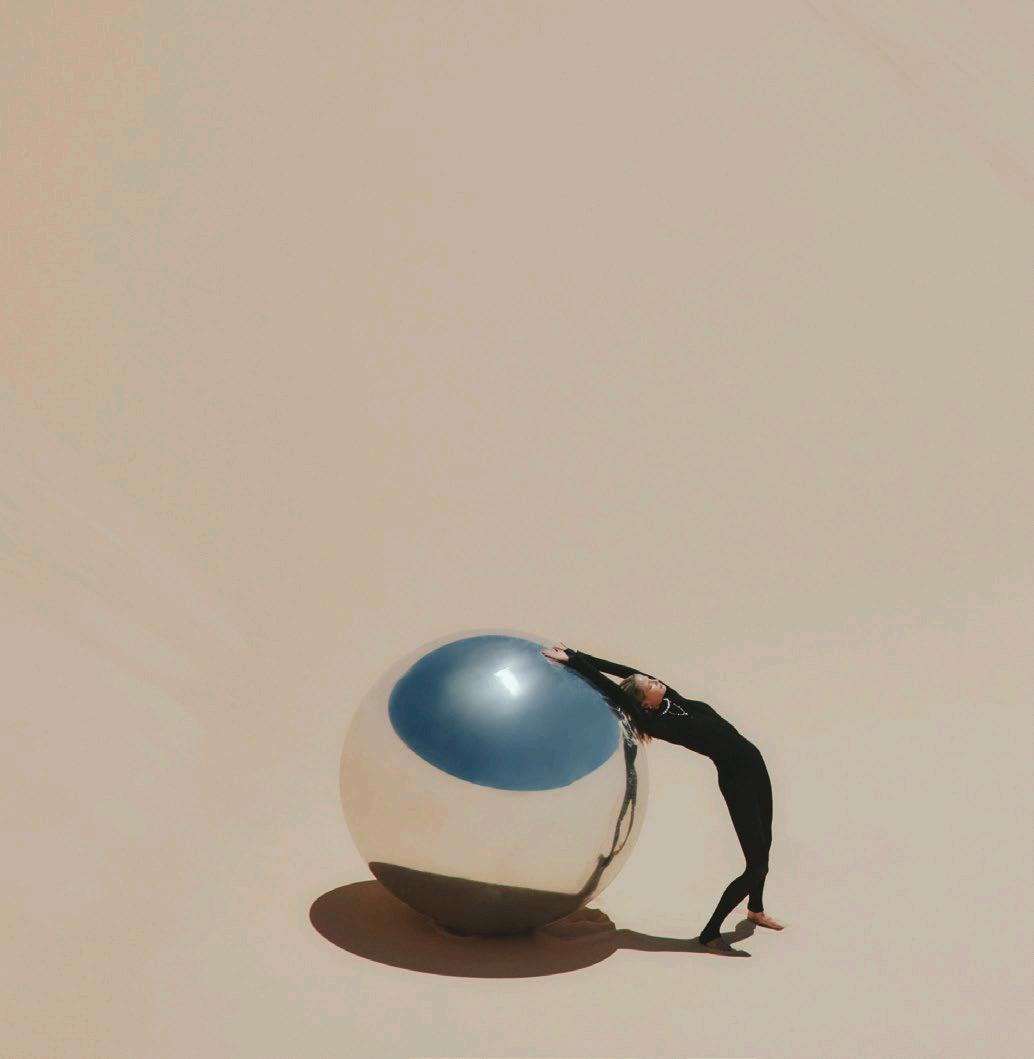
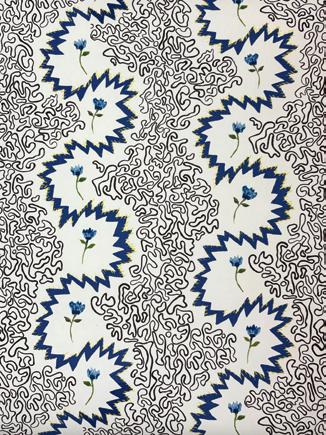
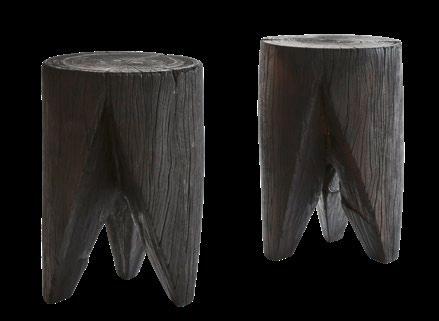
Sculptural form and tactile beauty brings an artful edge to modern living. From richly-toned rugs to softly-curved armchairs, each piece strikes a balance between shape and texture, creating spaces that feel considered and refined. It’s a gentle interplay of softness and structure – design to be appreciated daily and admired from every angle.

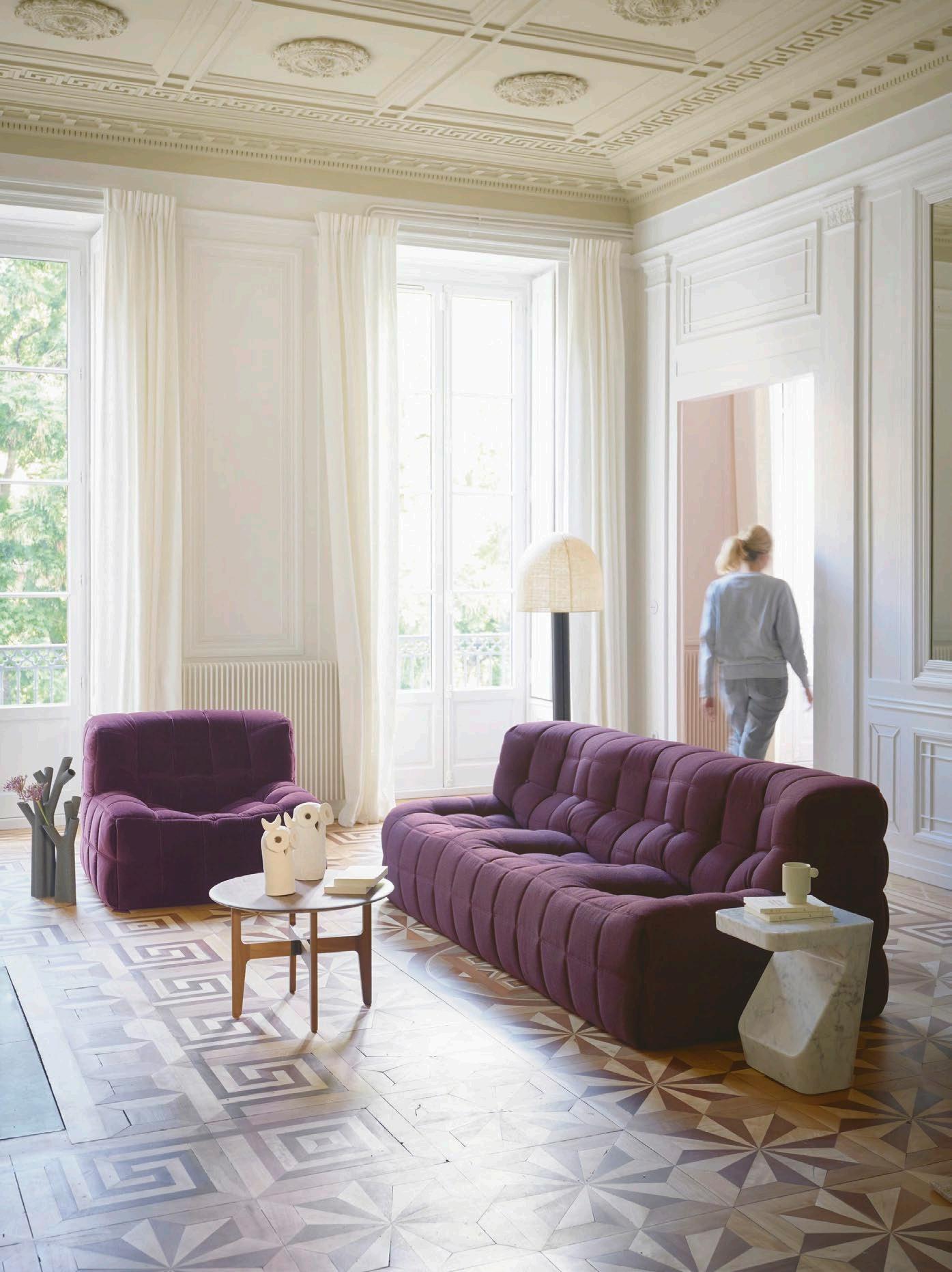
Originally designed in 1976 by Michel Ducaroy, Kashima is an iconic modular sofa system with a softly architectural form. Reissued by Ligne Roset for today.
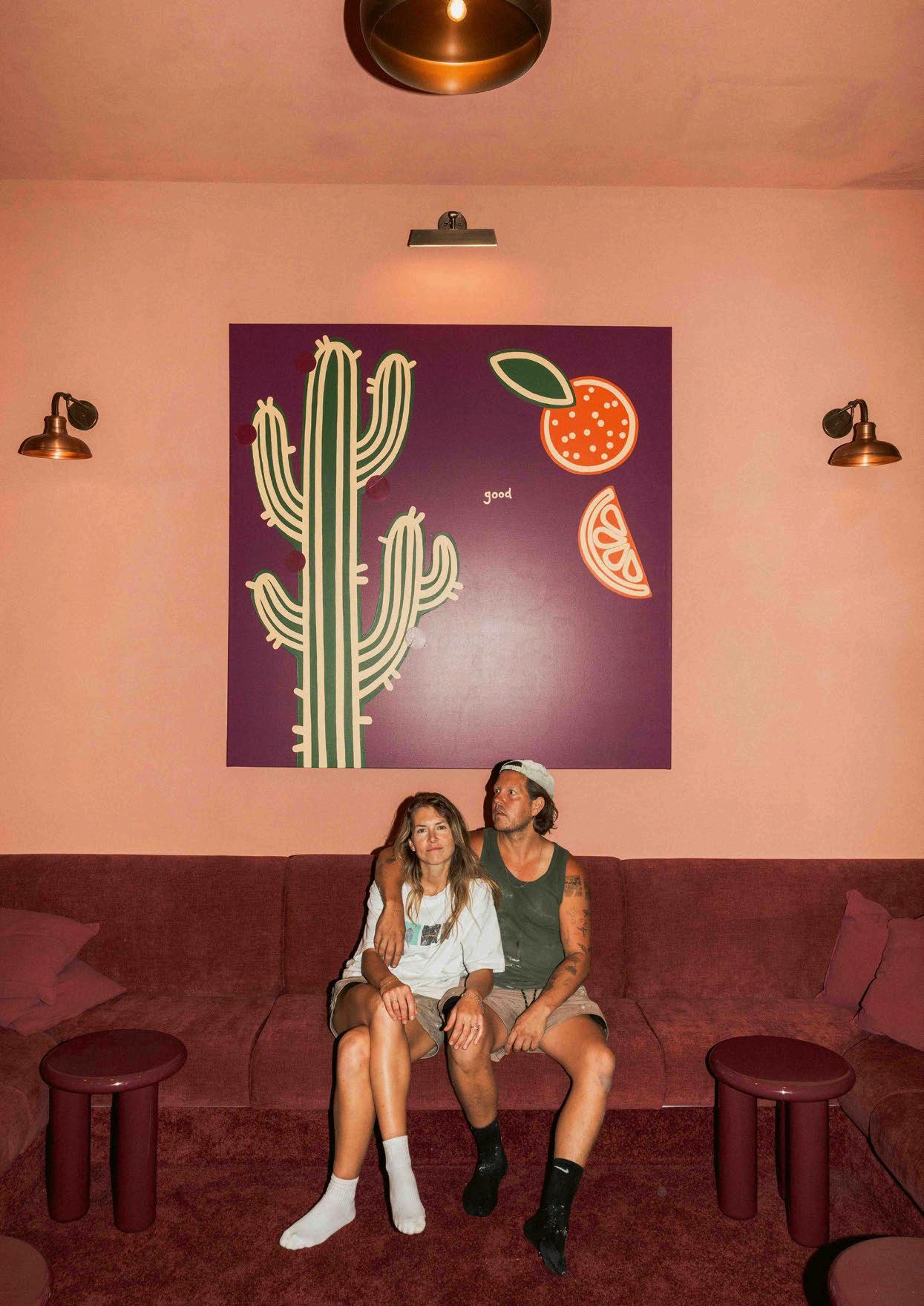
A love letter to LA, Mermaid Beach’s House of Hälsa pairs California-cool design with a feel-good menu.
WORDS
Natalie McGowan
Equal parts creative playground and nourishing oasis, Mermaid Beach’s new wellness café, House of Hälsa, is an ode to co-founders and fiancés Coco Loberg and Gareth Fletcher’s wanderlust. Hälsa – the Swedish word for “health” – nods to Coco’s heritage (her father is Swedish) and encapsulates the café’s ethos of making clean eating expressive and approachable.
The space is a living diary of their travels, drawing heavily on California’s sun-soaked aesthetic – a place very close to the couple’s hearts. For Coco, it’s long been a source of inspiration, ever since she lived there as a child and developed a love for hotel design. “I’ve always had an affinity for it,” says creative polymath, Coco. “Everything we create kind of feels like a hotel lobby.” Looking at The Raspberry Room – the couple’s quirky, eclectic tattoo studio, which could be plucked straight from a Wes Anderson set – their signature flair for playful and immersive spaces is clear.
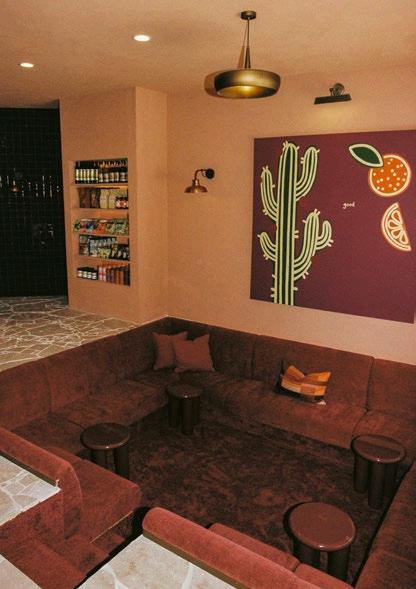
Inside House of Hälsa, terracotta-hued limewashed walls, potted olive trees, and glossy burgundy tiles create a perfectly Instagrammable backdrop, and Coco’s artistic fingerprints are everywhere: her paintings hang on the walls, while a plush, sunken conversation pit nods to her love of the ‘70s. But the pit didn’t come without its challenges. During the build, when they removed the concrete slab that would become the spot for the lounge, they discovered sand underneath, which Gareth and a friend spent two weeks digging out by hand. It was worth it in the end: “I wanted a space where you can throw your phone aside and truly engage with the people you’re with,” Coco explains.
A whimsical, interactive feature inspired by one of their favourite cities is set to open soon. Putting a healthconscious spin on the famous wine windows of Florence, a secret side door will serve organic ice creams and coldpressed slushies. Ring a bell, the door opens, and a treat is handed through – a nutritious, Gold Coast twist on a classic Italian experience.
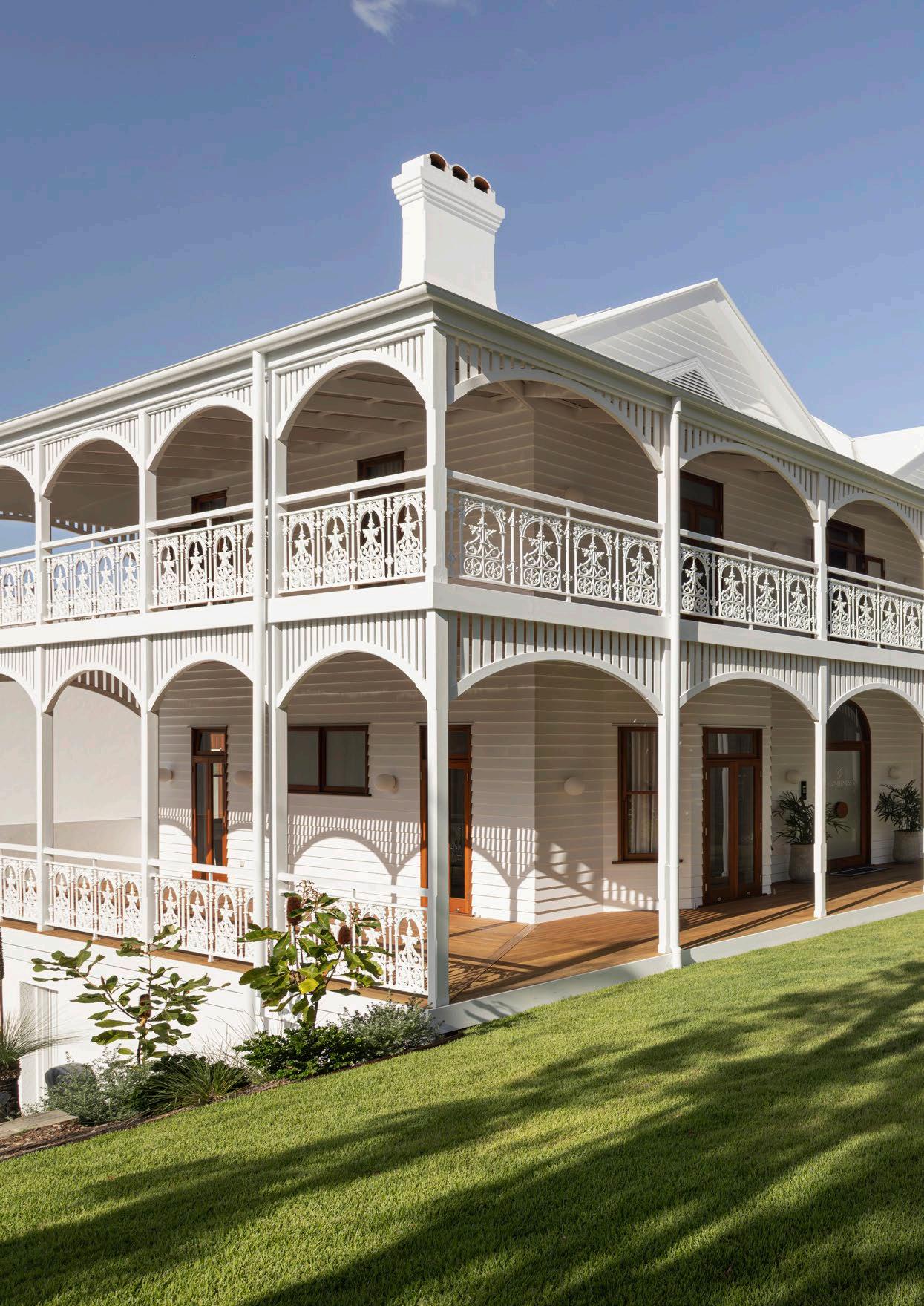
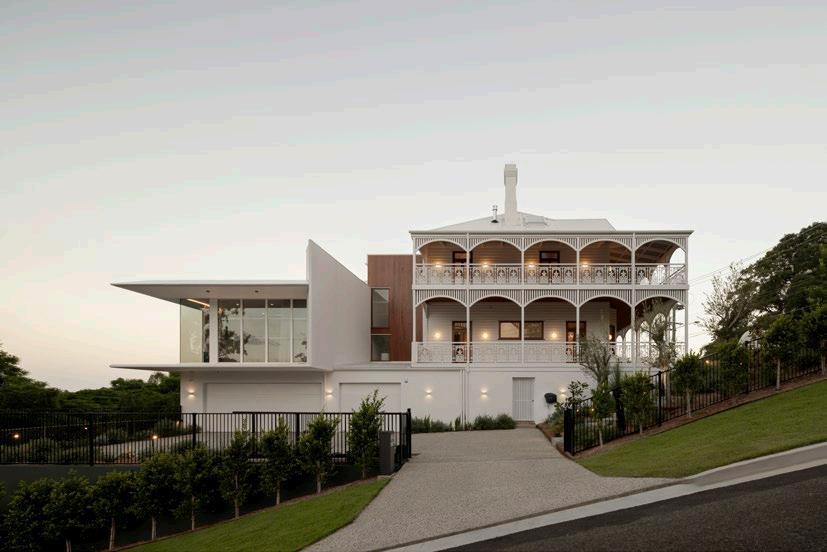
Honouring its traditional heritage, the meticulously restored home from its iconic 1860s era is situated on the sought-after corner of Reading St and Fernberg Rd in Paddington.
Positioned on a grand 1,634m² allotment, GOVERNESS by GRAYA is a one-of-a-kind Queenslander residence, redefined with precision and contemporary mastery while honouring its storied heritage, complete with city and ridgeline views.
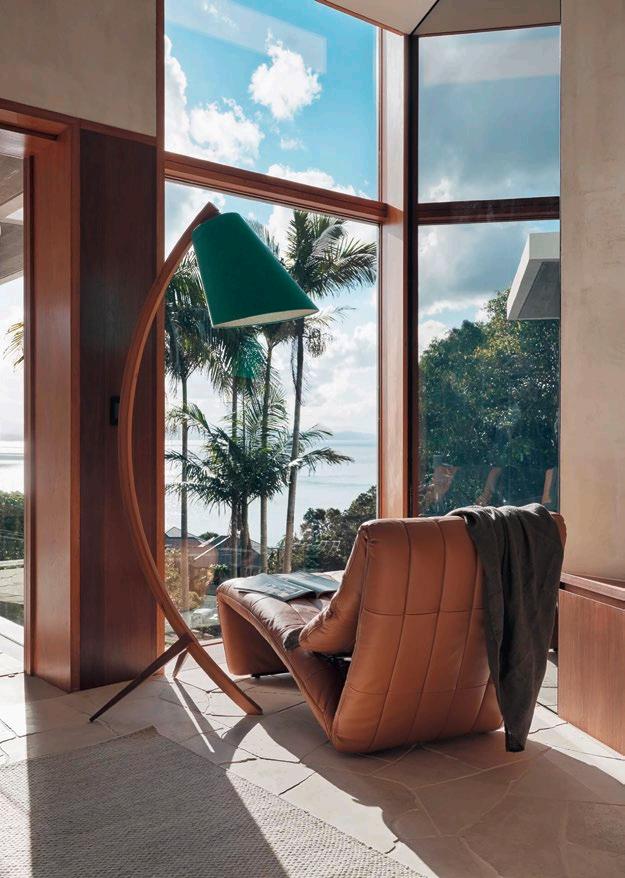
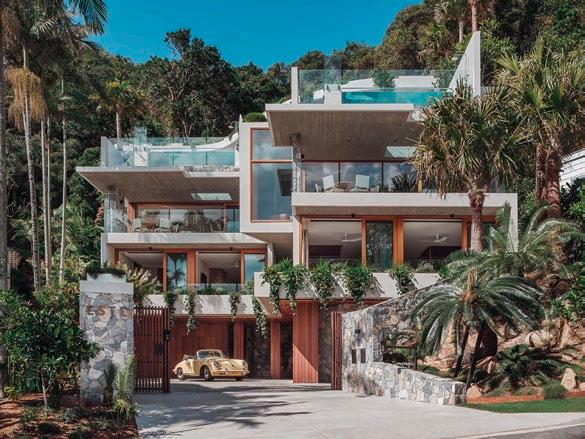
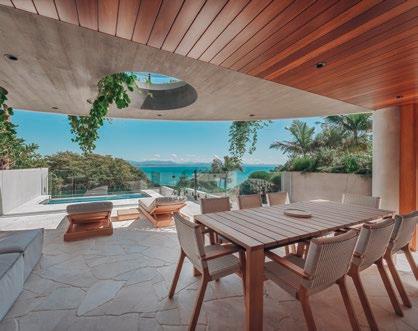
Located on the shores of Byron Bay’s Wategos Beach, ESTE Wategos is where world-class architecture meets nature-led wellbeing.
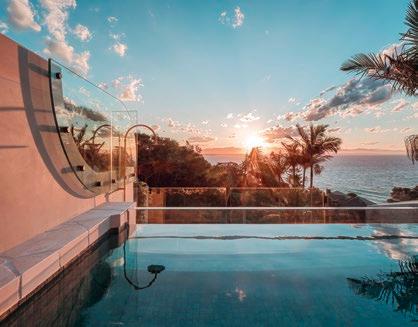
Nestled beneath the Byron Bay Lighthouse and overlooking the coastline, ESTE Wategos is designed as a private coastal residence built for slow living.
Comprising two architecturally designed, three-storey villas – North and South, or The Estate when combined – the architecture favours verticality over sprawl, preserving privacy while opening each level to ocean and rainforest outlooks.
Guided by the philosophy of “prescribing nature,” every element is intentionally considered to harness the restorative qualities of its biophilic setting. Drawing on blue-green space theory, the design integrates water, vegetation, and light to create a seamless flow between indoor and outdoor spaces. Mornings unfold quietly within the lower levels, while afternoons naturally migrate upwards – rooftop terraces and glass-bottom pools becoming the social centre as the light softens.
Brought to life by Shaun Lockyer Architects, with interiors by Fiona Dunin of FMD Architects and custom furnishings by Mark Tuckey and Jardan, ESTE Wategos is a study in thoughtful design and considered luxury. From material selection to spatial flow, every detail reflects a commitment to restraint, quality and calm.
PIECES REBECCA LOVES

I’ve always been drawn to hotels. Not simply as a place to stay, but somewhere to fully immerse myself in. Equal parts refuge and adventure. A third space between home and destination. A place to let my guard down and slip into a different mode of existence.
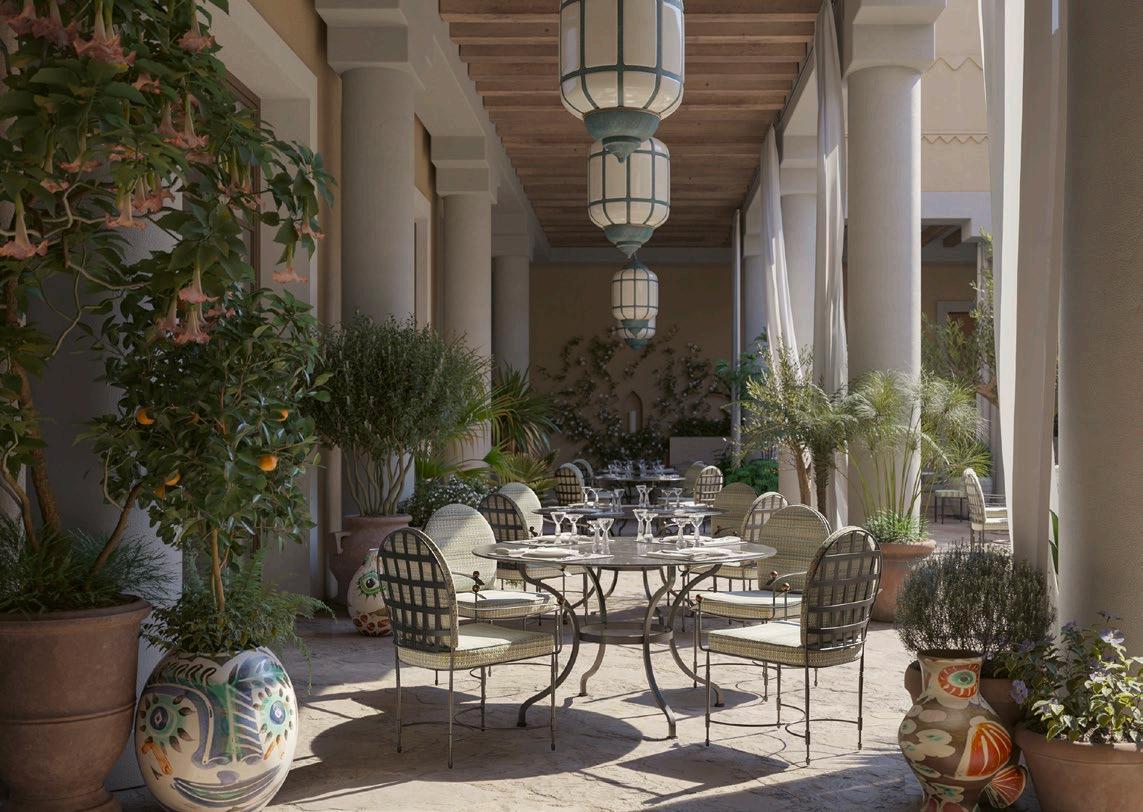
Hotel design should be so much more than aesthetics. It’s about building a world that feels slightly unreal in the best way – immersive, escapist, and full of quiet magic. Creating an experience that stimulates the senses and unfolds through spaces, textures, scents, and sounds. The best hotels transport you, inviting you into a new way of living, even if only for a weekend.
For more than a decade, I’ve been fortunate to work on hotels around the world, from New York and London to Dubai, Miami, Riyadh, and Rome. I spent many formative years with Soho House, where an effortlessly cool style helped set the tone for a new era of hospitality design. Those spaces were never about being perfect or precious, but about creating an atmosphere that felt fun, comfortable, and yet totally aspirational.
Later, as Vice President of Design for Starwood Hotels, I had the opportunity to help bring 1 Hotels to Australia – a brand grounded in nature, with sustainability at its core. Those
projects allowed me to express what I have always believed: that the most memorable hotels don’t just look beautiful, they’re built from rich, soulful materials that carry stories of their own.
After 15 years living and working abroad, I recently returned to my home city of Brisbane. Coming back has been something of an epiphany, and I’ve found myself seeing my hometown through new eyes. Brisbane has its own quiet warmth, a subtropical ease, and an understated confidence and sophistication. Returning has made me even more passionate about designing hotels that feel rooted in their surroundings, rather than superimposed on top of them. It feels like an exciting moment for Brisbane to embrace a more boutique, personal kind of hospitality – something I feel deeply inspired to help shape.
This philosophy sits at the heart of Antica Projects, my interior design studio. We create hospitality spaces with soul, texture, and a strong connection to place. I’m always drawn to honest materials, local stories, and the sense that design elements have been collected over time rather than styled all at once. The details matter: the timber under your hand, the scent in the lobby, the
way the lighting shifts from day to evening. Hotels are immersive worlds, and the best ones are designed to encourage an emotional response.
And perhaps because I’ve spent so much of my life designing hotels for others, I’ve become quite particular about what I look for when I travel. I’m rarely drawn to commercial, cookie-cutter hotels – the kind that could be anywhere and therefore feel like nowhere. What I love most are places slightly off the beaten path. Hotels with personality, that create a sense of joy when you discover them. I’m always drawn to spaces that reflect local culture through materials, architecture, and thoughtful detail – design that feels collected and layered, never overly staged.
But above all, I look for true hospitality. That warmth you cannot manufacture. The feeling of being genuinely welcomed, like a fantastical home-awayfrom-home. Ultimately, the hotels that stay with us aren’t always the flashiest or most talked about, they’re the ones with heart, that leave a mark not just visually, but emotionally.
That, to me, is the art of hotel design. And it’s what I continue to seek, wherever I go.
Sydney’s old Olympia theatre enters a new era
Wellness tourism is on the rise: here’s where to unplug
The coast-to-country stays redefining luxury

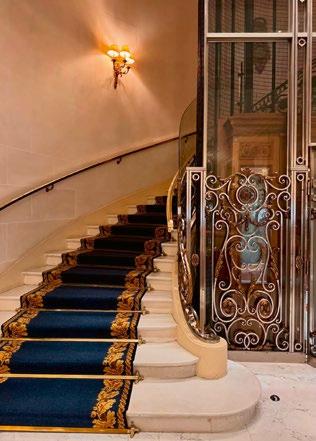
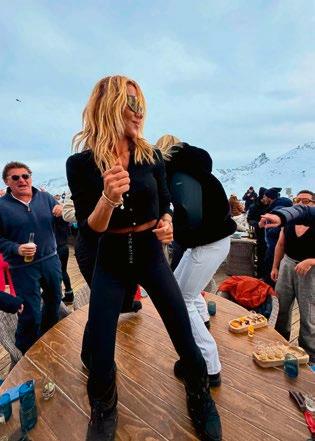
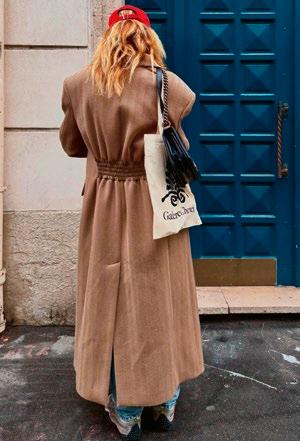
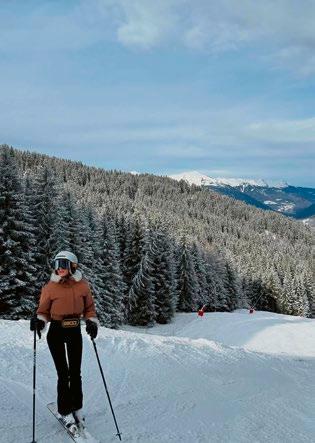
WITH PIP EDWARDS
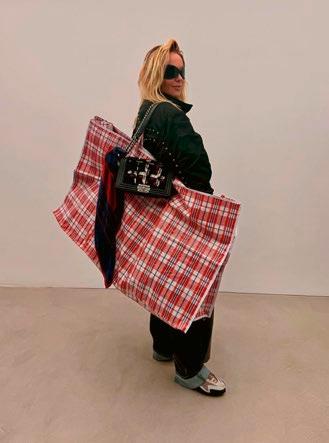
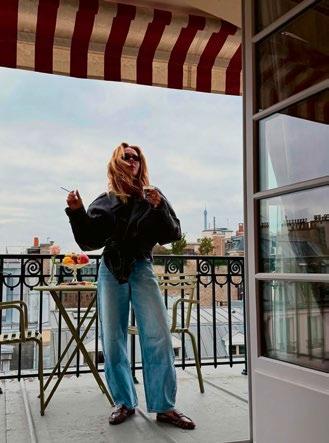
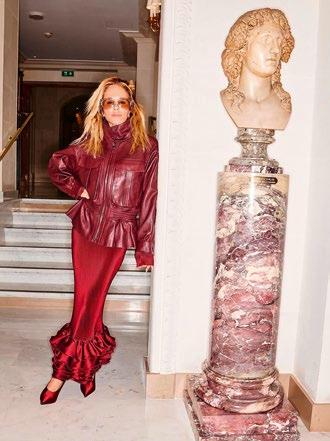
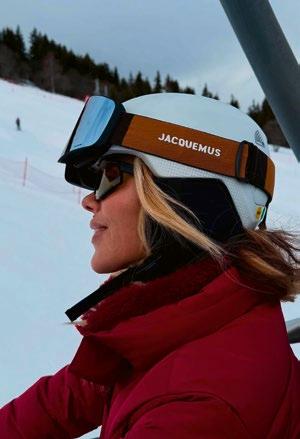
Founder, creative director, mother, Pip Edwards, took on a European winter escape that had a bit of everything. From ski days and chopper rides in Courchevel 1850 to Cotswolds country air, London stop-ins and Paris nights spent between balconies, power suits and rouge lips, it was adventure, fashion, party and pause all rolled into one. Lifegiving, eye-opening and deeply soul-nourishing, the trip was a reminder of how good it feels to step out of routine, shift your rhythm and see the world a little differently.
“Travel really does inspire from within and refreshes the lens. It’s a big wide world out there to be seen and felt.”
ITINERARY
Courchevel – Paris – London – Cotwolds
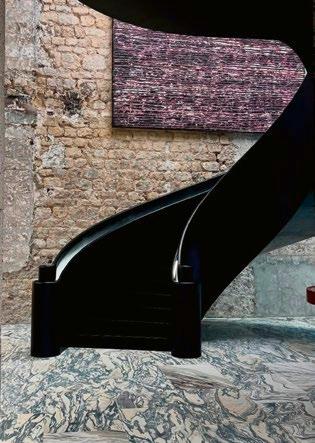


The old Olympia theatre finds its rhythm again on Oxford Street.
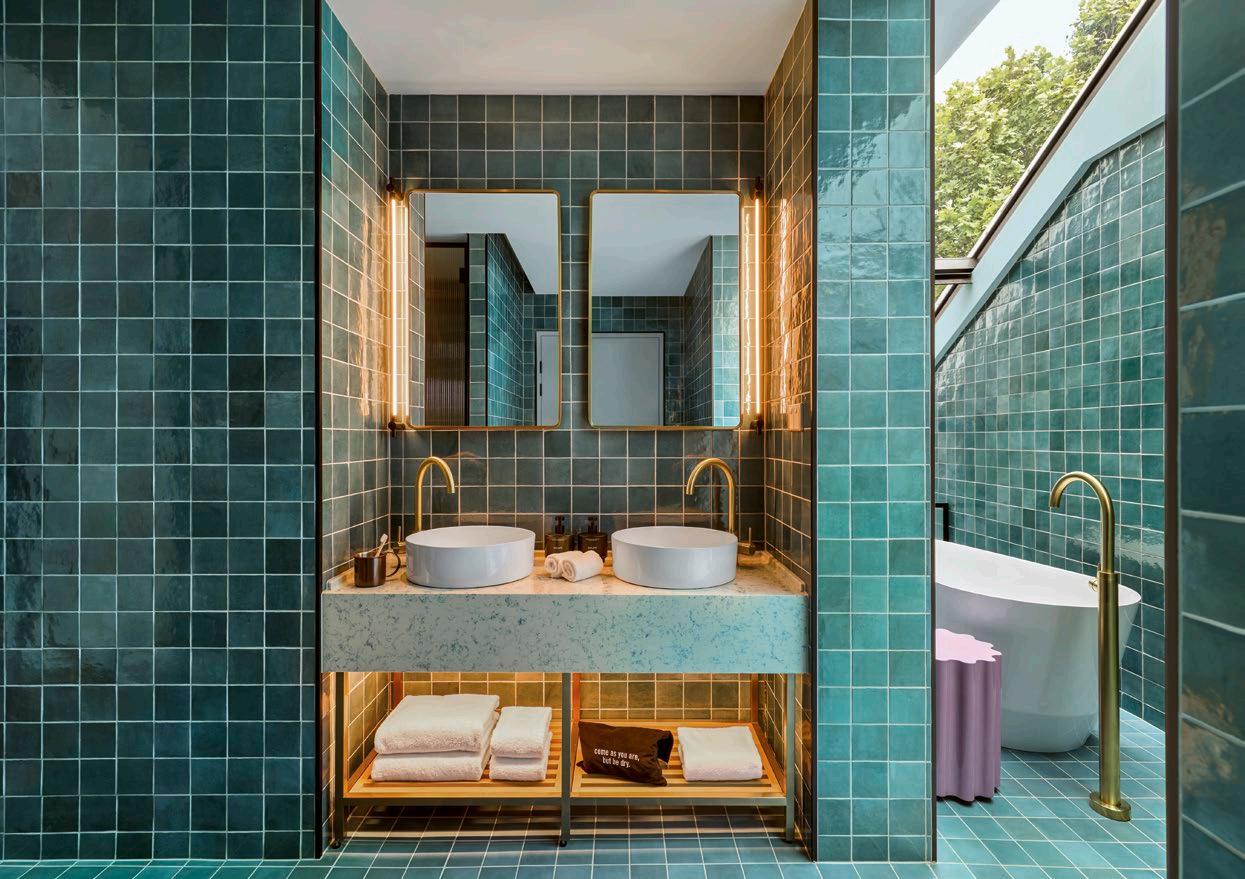
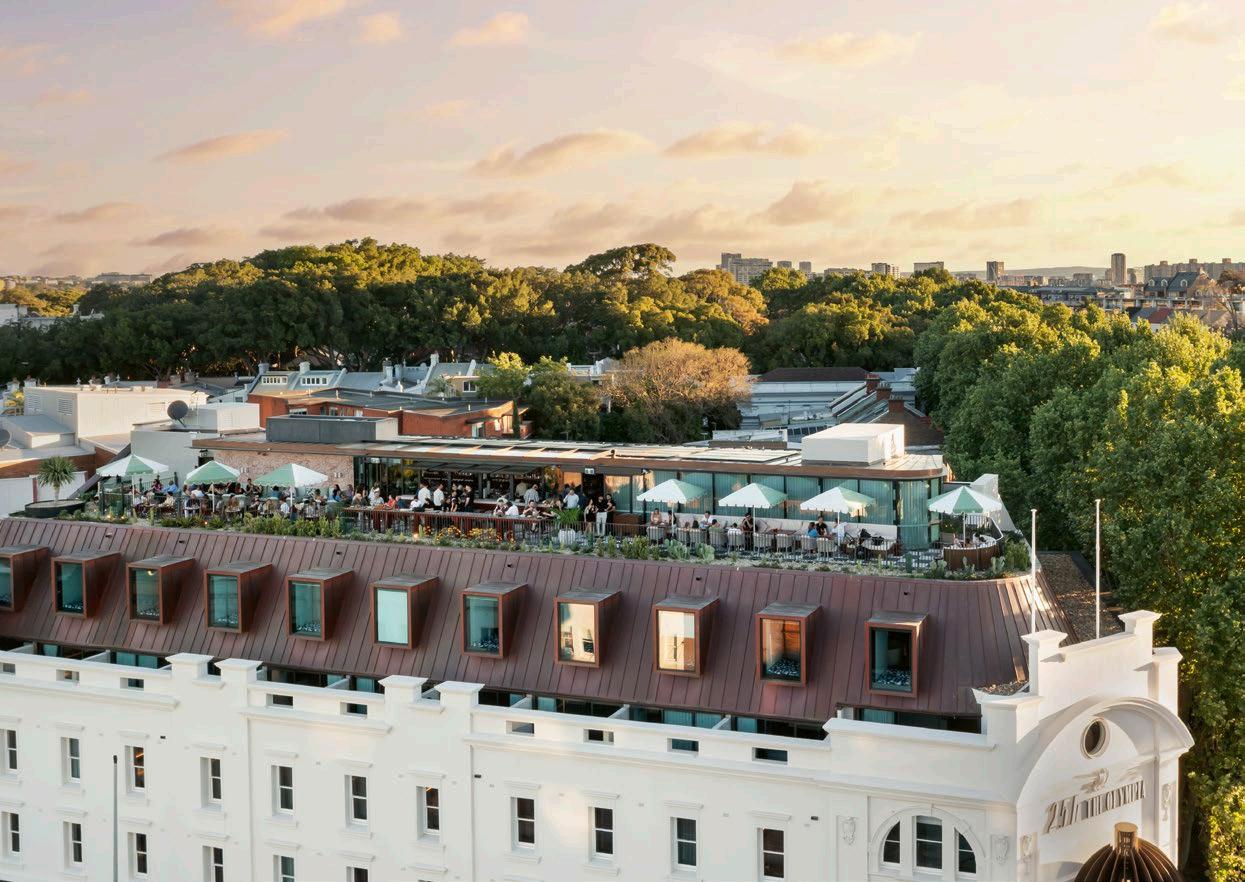
From the Edwardian façade, you can tell the building has seen many lives, but the latest, 25hours Hotel The Olympia, might be its most interesting yet. The recently-opened hotel, primely located in Paddington, is the first opening down under by the German brand.
The restored building was a collaborative design project led by architects Tonkin Zulaikha Greer, Indyk Architects, and Woods Bagot who breathed an entirely new life into its original cinematic history. They transformed the former Olympia hotel and cinema site, keeping its original bones, the iconic ticket box and its sweeping staircase, while keeping it fresh, modern, and playful with a strong focus on creating a character-rich experience.
You’ll be assigned either type of room: the Dreamer, light and airy, or the Renegade, the dark and moody, playing on the characteristics of typical superheroes. The bathrooms are filled with The Skills Skincare, tiled and stone finishes for a refined sense of luxury.
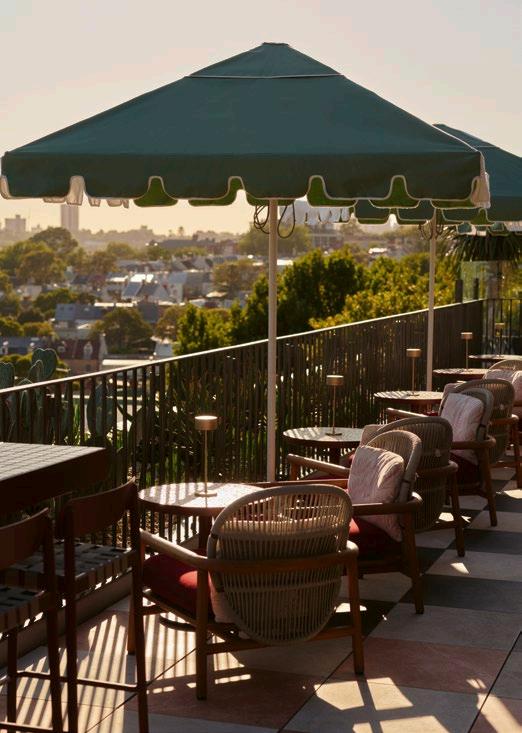
The entire hotel’s design has been well executed, from the lobby to the rooftop, you’ll feel as though you’ve stepped into a cinema.
Then there’s the dining scene. Without needing to leave the building, start with breakfast at Jacob The Angel for a quick avo toast, iced coffee, and juice to start the day. For lunch, The Palomar has Mediterranean-style share plates to enjoy, then head up to the eclectic Monica Rooftop for cocktails taking in the Sydney skyline.
The hotel honours the building’s past with industrial concrete meets nostalgic detailing, and feels perfectly at home on Oxford Street, a place famously known for its sense of reinvention and self-expression.
From the lobby to the rooftop, you’ll feel as though you’ve stepped into a cinema.
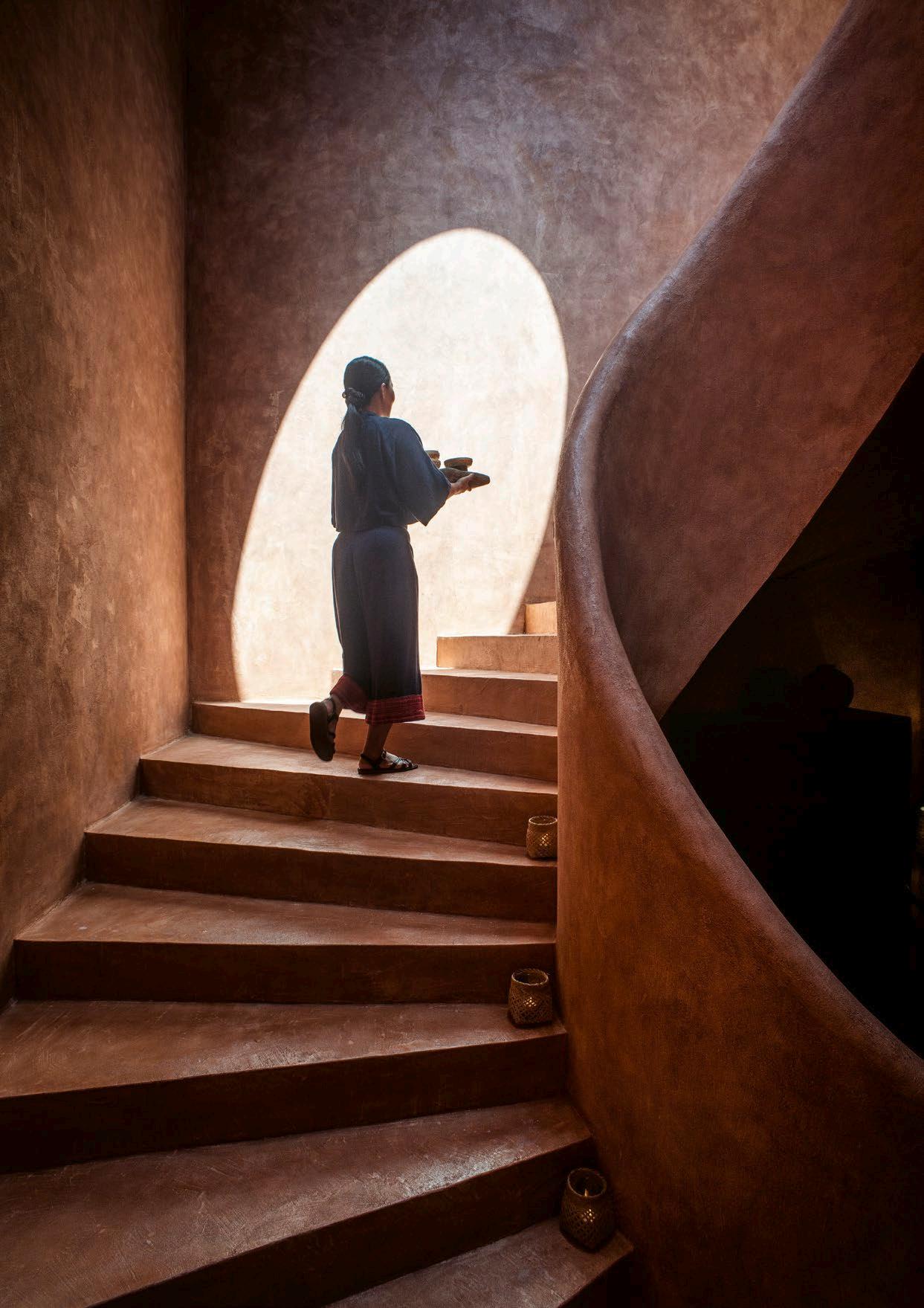
In an increasingly digital world, it’s little wonder more travellers are seeking experiences that bring them back to basics; less scrolling, more stillness.
With the global wellness tourism industry projected to surpass $1.4 trillion USD by 2028 according to Statista, it reflects a collective desire to recalibrate and truly switch off. At the forefront of this movement are thoughtfully designed retreats and hotels that prioritise calm, restoration, and intentional living.
On the homefront, destinations such as Victoria’s Peninsula Hot Springs and the Gold Coast’s Eden Health Retreat offer short, impactful resets grounded in health and wellbeing. Yet for those willing to travel further, a more immersive kind of escape awaits.
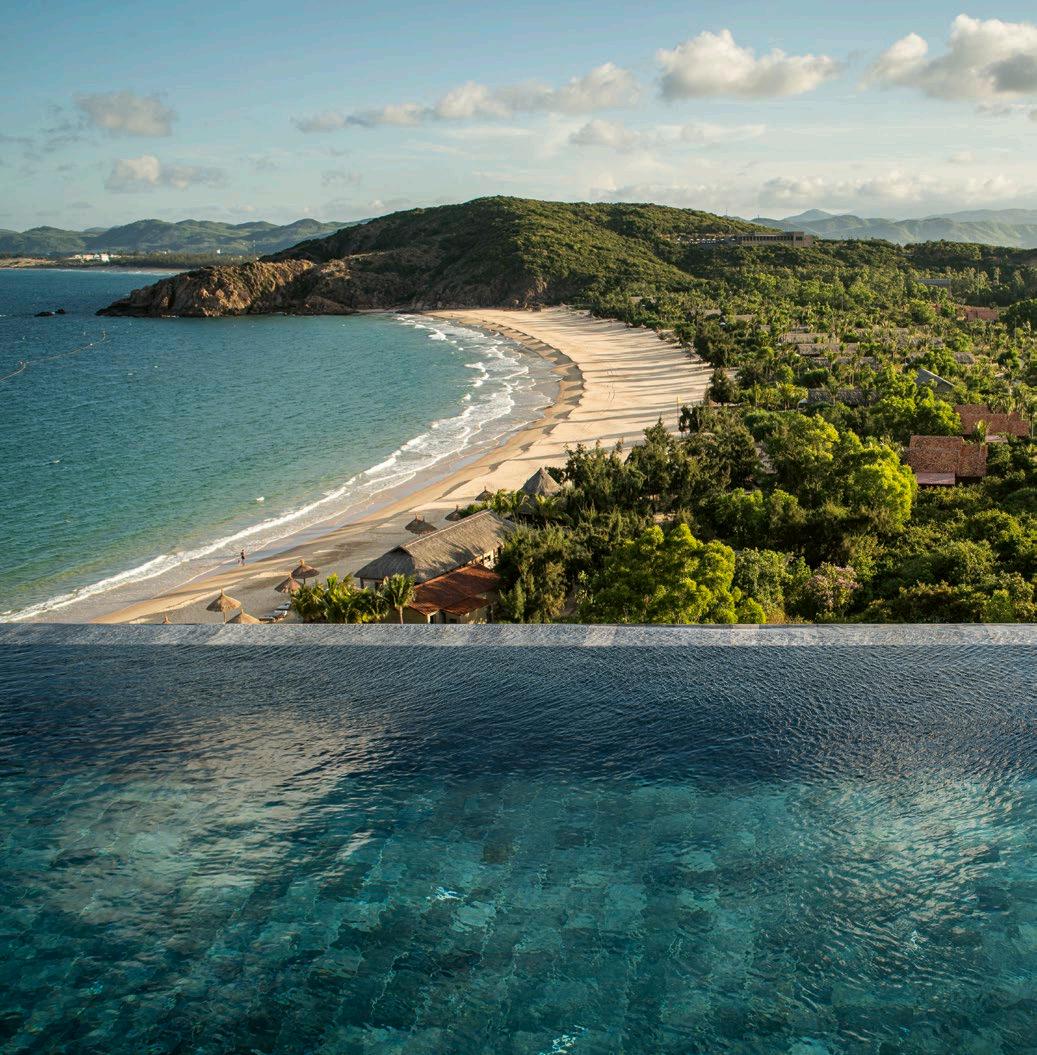
On a private peninsula along Vietnam’s south-central coast, Zannier Hotels Bãi San Hô offers a vision of wellness led by nature. Located in Phu Yen province – a region known for its biodiverse landscapes, ancient Da Dia Reef (“Sea of Cliffs”), and some of the country’s most breathtaking sunrises – the 245-hectare resort remains largely untouched by mass tourism.
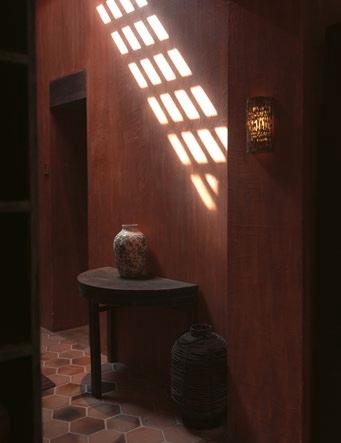
Rice paddies, lush hills, and white-sand beaches surround 73 standalone villas, designed to reflect traditional Vietnamese architecture and village life.
At the heart of the resort sits Hoa Sen Spa (which translates to “Lotus Flower”), a 372-square-metre sanctuary built on Buddhist philosophy and the alchemy of the five elements: (earth, water, fire, air, and spirit). Wellness is approached holistically, with treatments inspired by ancient Vietnamese healing knowledge and the power of native plants. Seven treatment cabins, steam rooms, saunas, therapeutic baths, traditional massages, beauty rituals, yoga, meditation sessions, and tranquil relaxation spaces create an environment designed for full sensory immersion.
Sustainability and cultural preservation underpin the experience. From architecture that honours traditional design to cuisine moulded by the surrounding land and sea, with fresh seafood delivered daily from nearby fishing villages, the resort celebrates its location rather than imposing upon it.
It’s in rare places like this that disconnection becomes a privilege and presence feels profound.
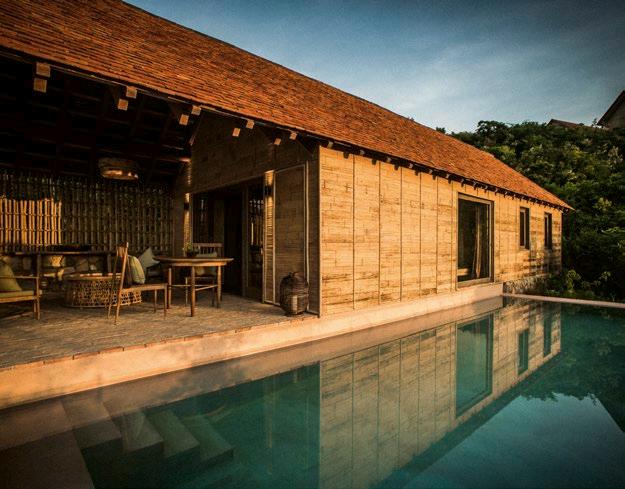
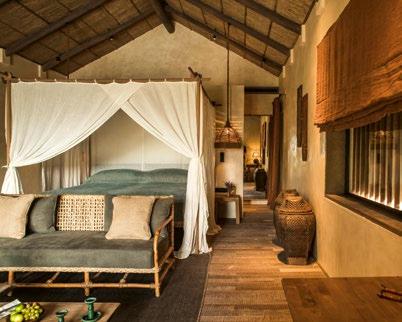
Two destinations, one shared intent: escapism. From New South Wales’ sun-soaked coastline to the serene highlands, these two design-led heritage hotels may feel worlds apart, yet both have mastered the art of the great Australian getaway – proof that some of the most memorable stays are right in our own backyard.
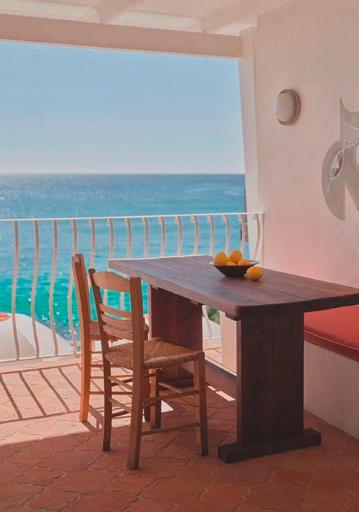
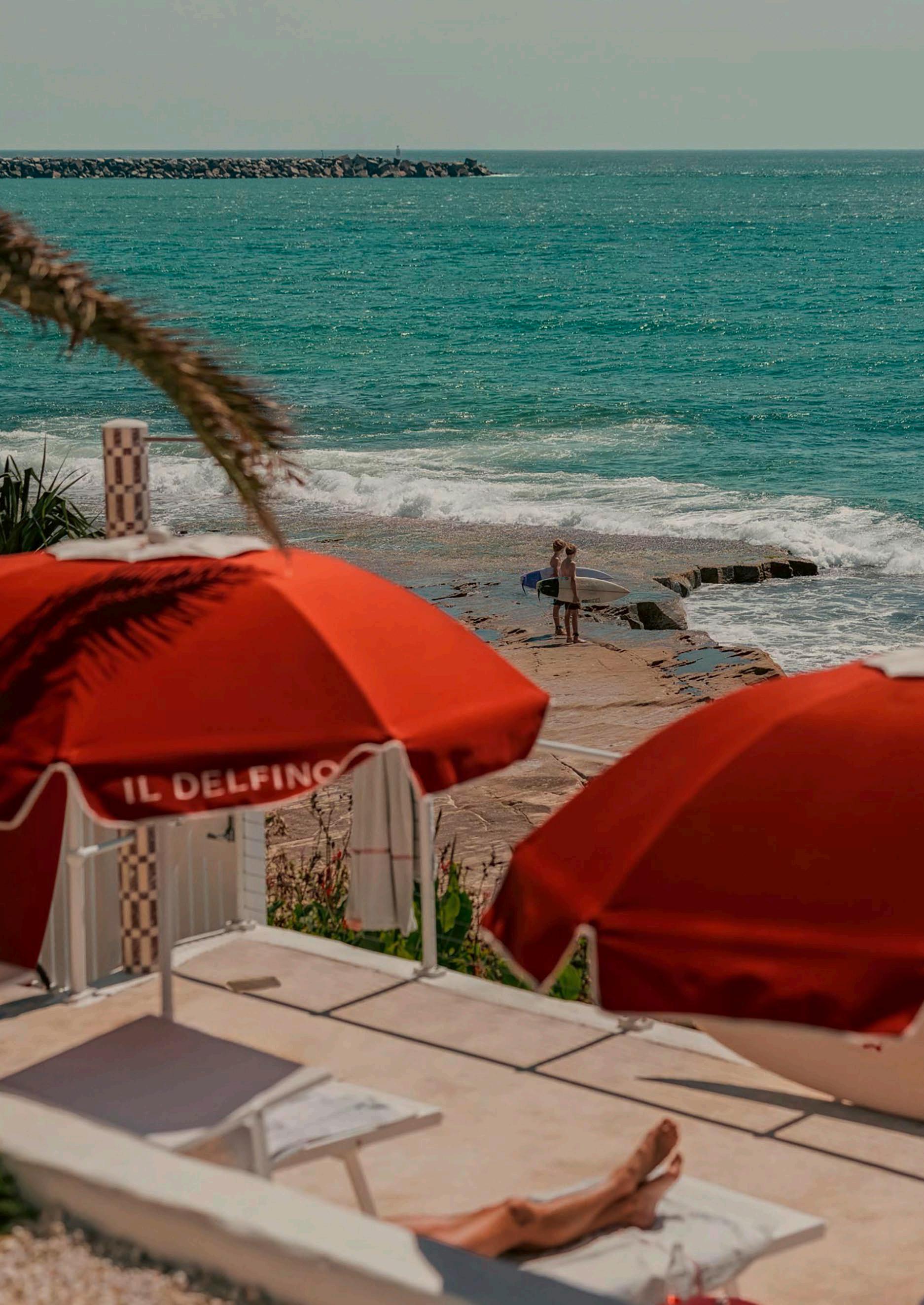
In the sleepy coastal town of Yamba, where the Clarence River meets the Pacific Ocean, Il Delfino Seaside Inn is proof that you don’t need to hop on a 24-hour flight to experience the Mediterranean.
Originally a 1948 oceanfront inn, the retreat has been restored into an embodiment of laid-back Australian surf culture, mixed with Italian Riviera charm. Owned and designed by former stylist and fashion designer Sheree Commerford, the concept draws on her childhood spent on the beaches of Yamba and her love of ramshackle European cottages.
The family-run inn – which would look at home in a Slim Aarons picture – features four main suites, along with a private bungalow, all of which have been designed to feel like a home away from home. Murals by artist-in-residence and close friend of Sheree’s, Heidi Middleton (of ARTCLUB and Sass & Bide fame) feature in each room.
Supporting local makers, and friends, is central to Il Delfino’s ethos. Bringing an artisanal touch to the interiors are handmade tiles, wall plates, utensils, and suite numbers by ceramicist Elise Eales of Di Lunedi, alongside tumblers and bespoke wall sconces created in collaboration with artist Lisa Lapointe and object designer Monique Robinson. Sheree’s curatorial eye extends to objects sourced from her travels, op shops, and vintage stores, creating a character-filled stay that retains the soul of the original property.
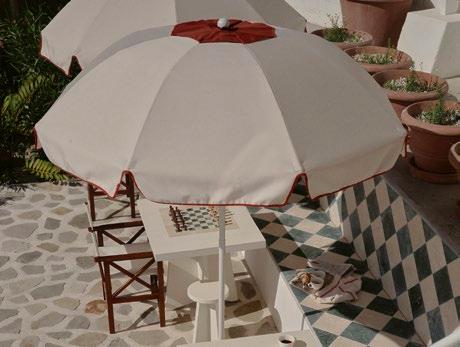
The Lido Terrace is its sun-drenched centrepiece. Wandering through the red-arched gate marked Alla Spiaggia, guests will find themselves at an alfresco oceanfront patio. Whether settling in for a game on the dedicated chess terrace or lingering over drinks as the sun sets over the horizon, it’s an invitation to embrace dolce far niente – the sweetness of doing nothing at all.
Recently awarded one Michelin Key in 2025 – a distinction recognising excellence in architecture, character, and experience –Il Delfino stands as a testament to understated prestige. Here, salt, sun, and a hint of nostalgia merge, capturing the carefree spirit and international language of summer.
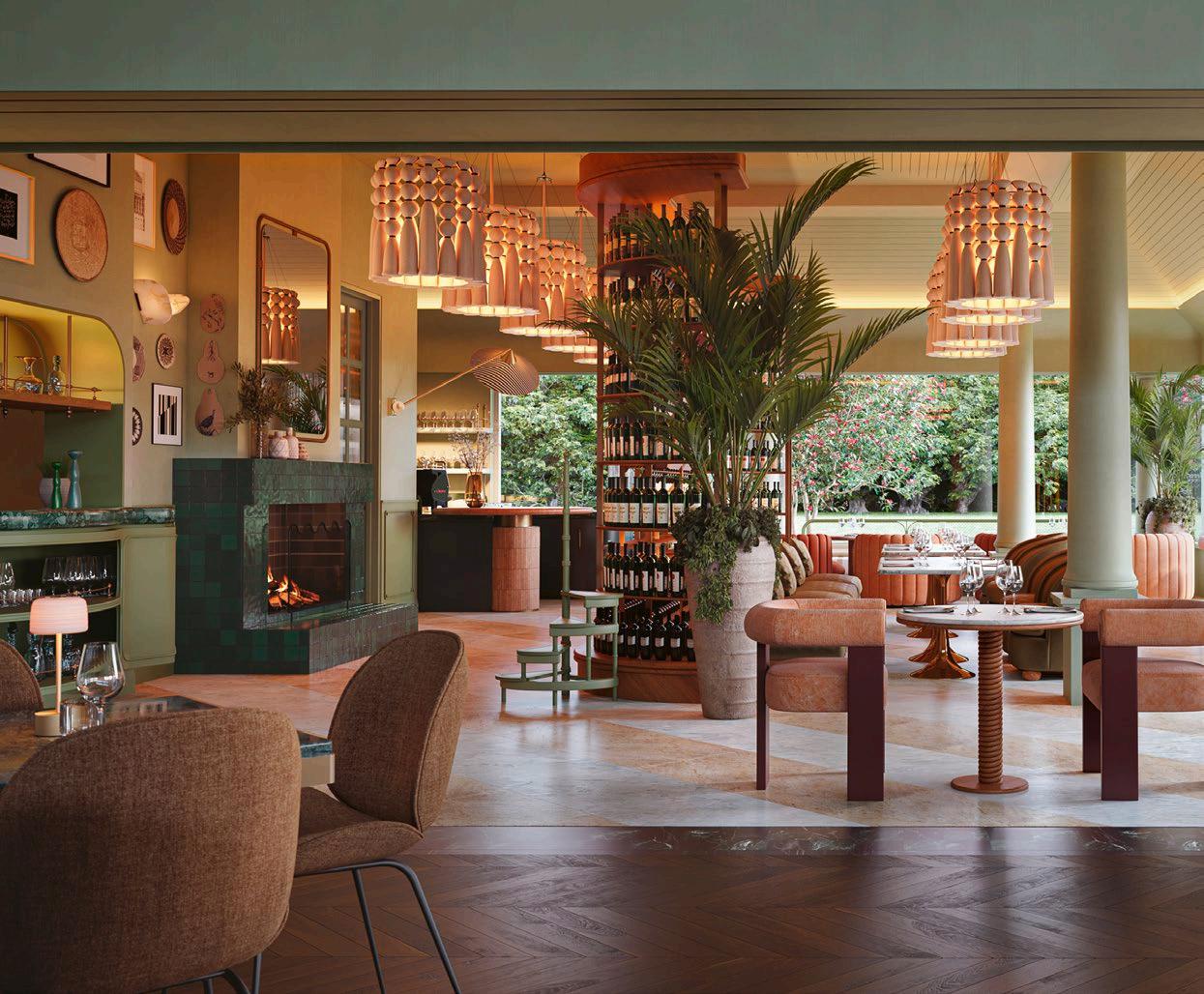
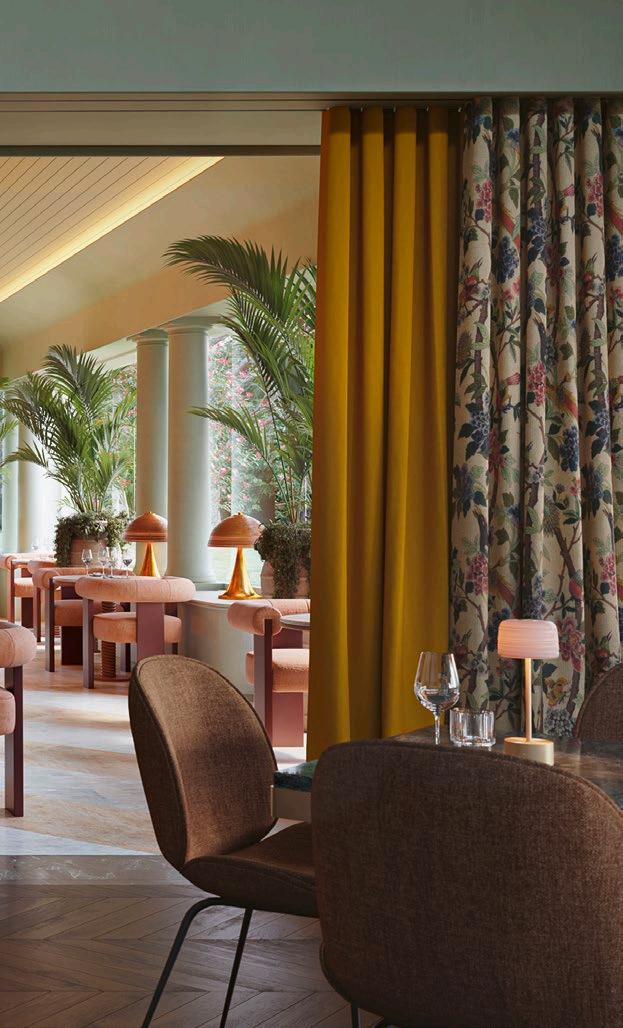
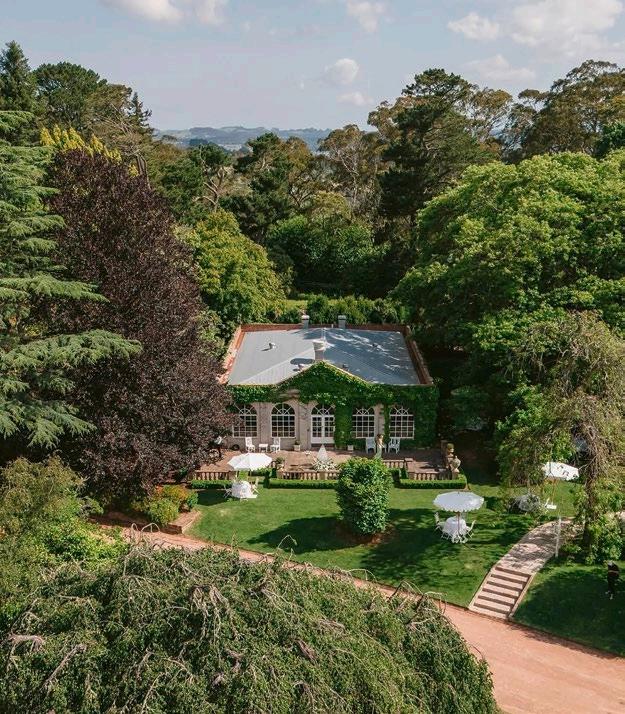
Meanwhile, set high above the rolling green hills, the grand estate of Ardour Milton Park Bowral in the quaint Southern Highlands town of Bowral offers a different kind of sojourn: one steeped in old-world romanticism.
Unfolding across manicured lawns, Europeaninspired gardens, and sweeping countryside views, the storied 1910 country-estate mansion (once belonging to the Hordern family) has been reimagined for a new era of hospitality with a renewed sense of purpose.
Following a multi-million-dollar transformation, the former Milton Park Country House Hotel & Spa has relaunched as the founding property of the new luxury brand Ardour Hotel & Estates, which is building a curated portfolio of retreats across regional Australia. Reworked by Sydney’s MAC Design Studio, the manor’s history has been carefully preserved while subtly modernising the experience for a new generation of holidaymakers.
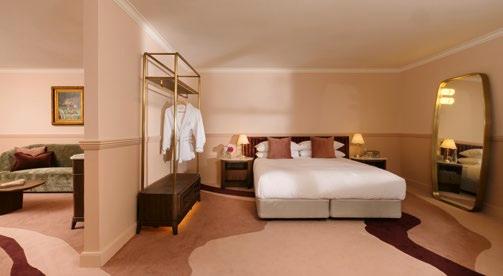
The 44 expansive guest rooms have been redesigned in palettes of sage, blush, and cobalt, layered with vintage furnishings and thoughtful details
that make it difficult to want to leave. Should you venture beyond your room, you’ll be rewarded with signature venues: Horderns, an homage to the original family serving panEuropean fare in a light-filled space overlooking the gardens, and The Polo Bar, soon to unveil a dreamy charcuterie room, alongside the forthcoming Èliva Bowral spa.
Even the surrounding landscape tells a story here. Heritage-listed trees anchor the gardens, while inside, murals in each room pay tribute to the estate’s storied weeping beech.
A playground of sophistication straight from your Bridgerton-inspired dreams, days here begin with slow mornings and end with unhurried nightcaps – a delightfully transportive stay from start to finish.

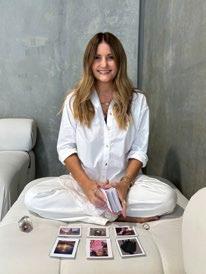
Juli Grbac
Here’s a look at the collective energy for February and March, pulled from my fashion and lifestyle oracle cards. For each month, I’ve drawn three cards to get a sense of the underlying mood – not predictions necessarily, but themes, patterns, and what to expect to ripple through work, relationships, and day-today life.
If January felt like a slow re-entry into the year, February is where things begin to move. The first card points to a lift in professional and personal momentum, with things clicking into place naturally, without forcing them. This month, we mean business and energetically, it feels like we’ve found our North Star again, with hope and clarity in the air. By the second card, the energy feels active and outward-facing. February is going to move fast, doors will swing open, and golden opportunities are going to appear everywhere. This is an ideal time to dream bigger and back yourself.
The third card suggests organisation: putting structures around ideas, tying up loose ends, getting practical about plans that have been sitting in the background – getting our ducks in a row.
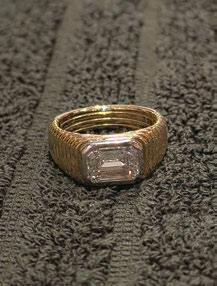
Then comes March. The cards shift from preparation into embodiment, and it’s time to step into the self you’ve been building towards for a while, with the cards telling you to put your crown back on. The last five years have been shaping us for what comes next, and we’re stronger than we realise, which is fortunate, because March has some fire in its belly, according to card number five. March is coming in full-force, with an unexpected twist written into the script. Like a volcano beneath the surface, something stirs… and when it erupts, so do you.
Now, this energy will land differently for everyone. For some, it’s expansion: a glow-up, long overdue recognition, or finally getting into the spotlight. For others, it’s a blow-up: a necessary course correction, clearing out what you’ve outgrown.
Either way, things are about to change. We’re walking straight into 2026 with our heads held high, as card six suggests, and we’re getting ready for whatever is thrown our way.
Buckle up, Brisbane. It’s going to be a spectacular ride.


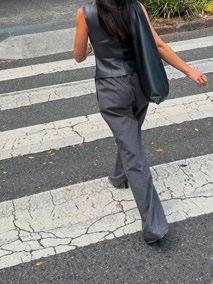
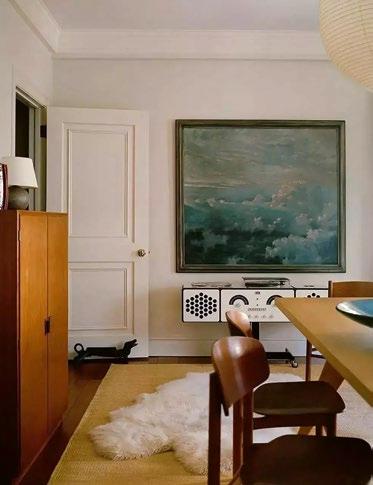
Founded in Brisbane by Michelle Hildebrand, Marketday reimagines the everyday shopping trolley through a lens of thoughtful design and durability. Its signature three-tier cart features insulated, washable baskets and a lightweight foldable frame – making market runs, picnics and city errands feel effortless. Practical, refined, and built to last, it’s a modern solution for slower, more considered living. Learn more at marketday.life.
The businesses we’re watching and admiring right now.
A destination for design lovers with discerning taste, Living Edge brings together the interior world’s most coveted furniture, lighting, and homewares. Its curated edit spans timeless classics and progressive designs from leading global brands. Among the collection is the iconic Radiofonografo by Brionvega Italy, a sculptural vinyl record player designed by Achille and Pier Giacomo Castiglioni in 1965. Designed to be heard, the iconic piece can be discovered in their Fortitude Valley showroom. Learn more at livingedge.com.au.

Forty-Love is Queensland-designed performance wear created by players, for players. Founded by lifelong tennis devotee Dee Ridge, the premium label launches Tournament 1.0 in step with the Australian Open and our Summer of Tennis. Inspired by ’90s court icons, each limited drop blends technical precision with café-ready polish, thoughtfully engineered for tennis, padel, pickleball and beyond. Learn more at fortylove.com.au.
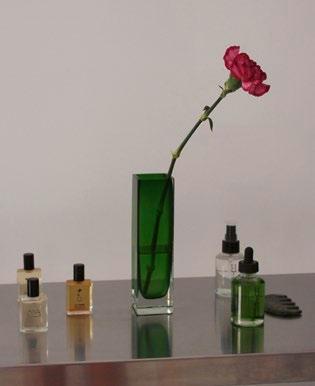
Tucked in Annerley’s village pocket, Array Store is a quietly cool ode to independent design. A considered edit of clothing, jewellery, objects, and art from emerging Australian and international makers, it champions small-scale production and thoughtful craft. Regular pop-ups including Japanese women-run label Apathy, turn the space into a living conversation around slow fashion. Learn more at arraystore.net.
In 2026, Jules Neale is focused on building a life that feels full in all the right ways.
Her vision board says it all: 11:11, good things are coming, slow mornings, champagne toasts and positive affirmations layered with intention.
The year ahead centres on time with her children and loved ones, creating a warm home, keeping her cup full and prioritising clear energy, health, stillness and backing herself.
And honestly, that’s something we can all get around.
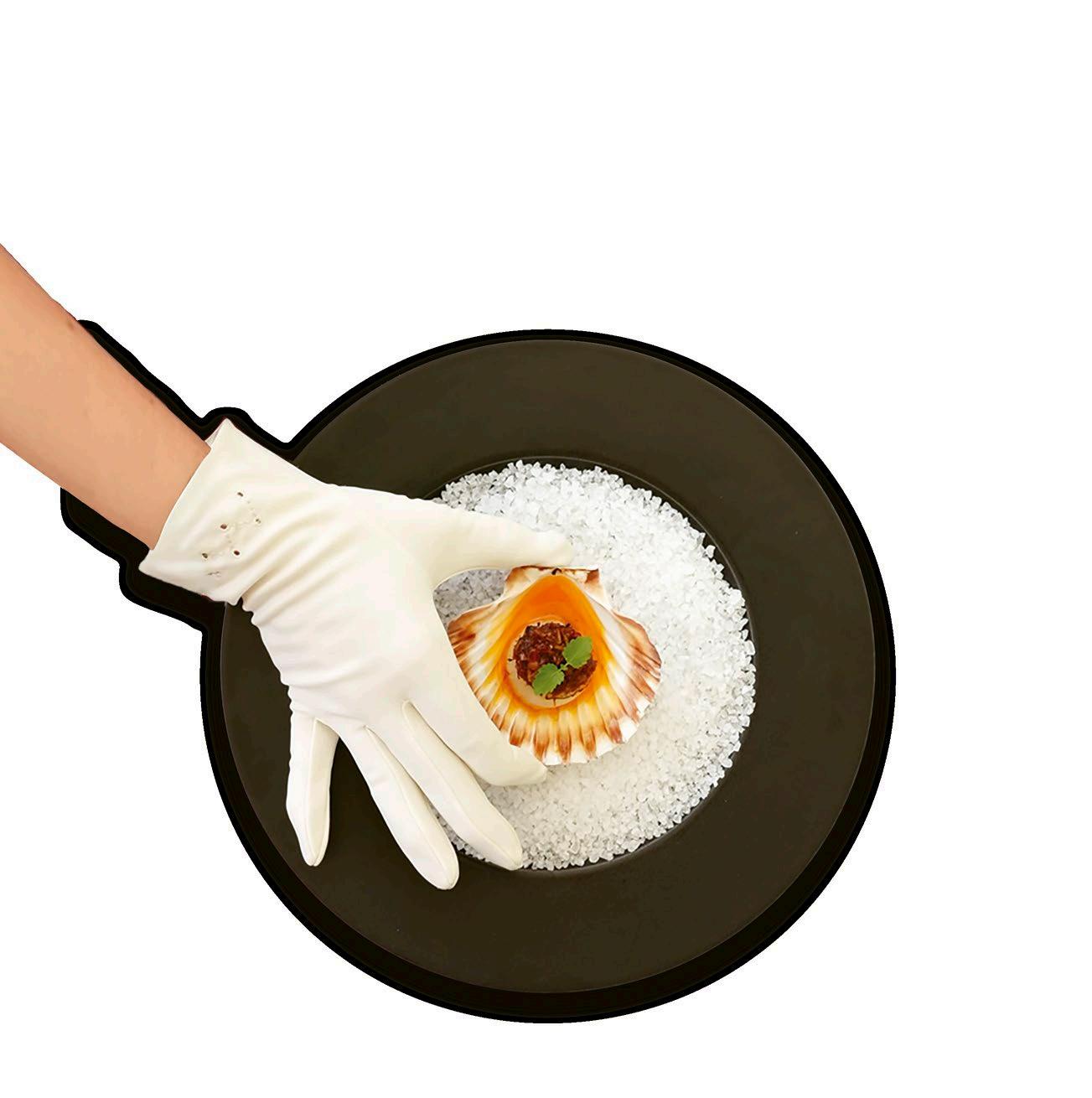
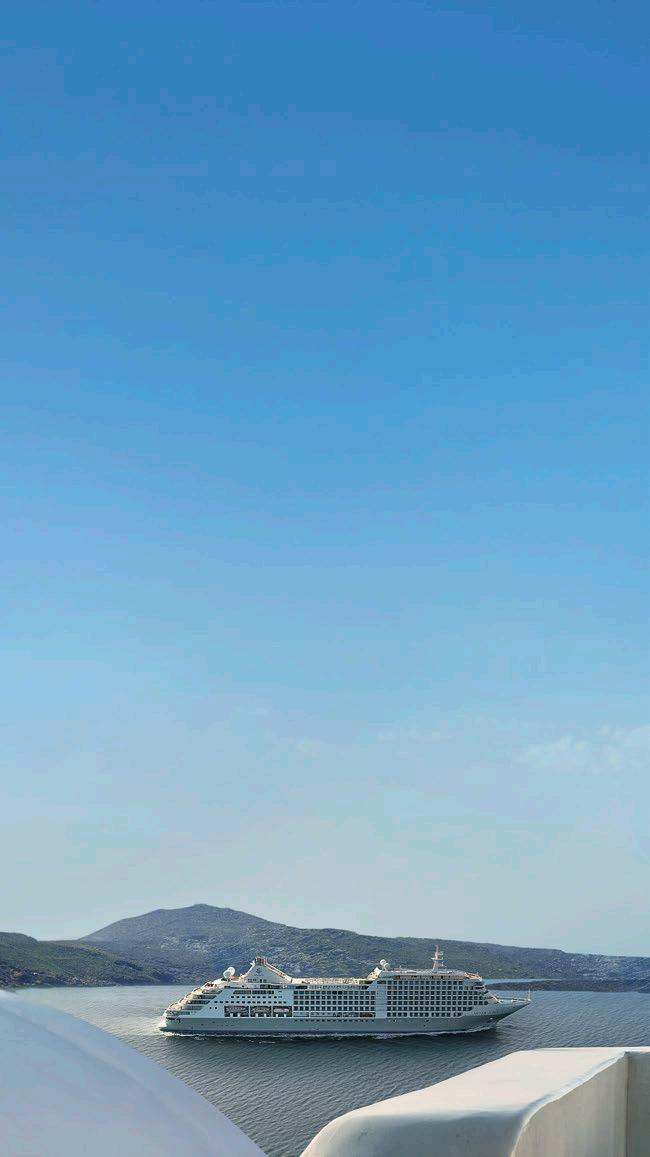






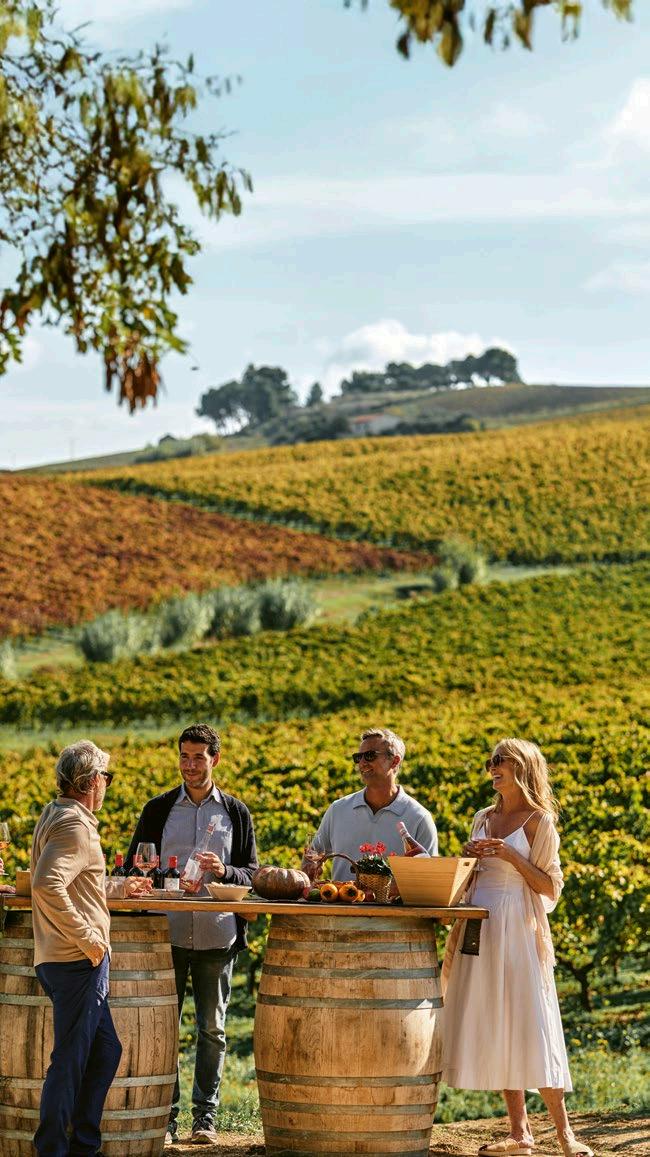
















Here’s to wandering cobblestone streets and rolling cliffside vineyards. Roaming the catacombs of the Eternal City. Uncovering the Pearl of the Adriatic. Falling in love with the City of Light. Tracing the footsteps of Medieval knights. From the Amalfi Coast to the Grecian Isles, delve into the infinite wonders of this storied region. Here’s to unlocking doors to the past. To taking the untrodden path. To Finding More.