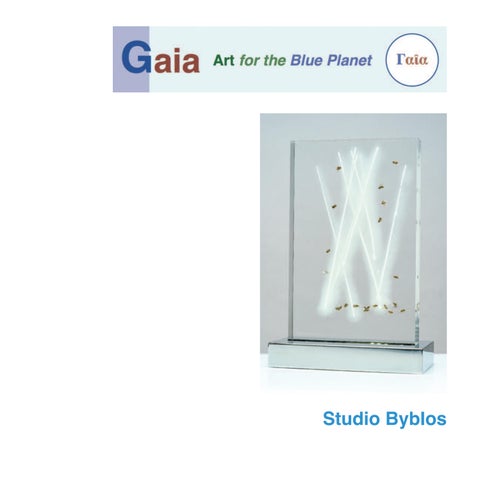
In copertina: Toxic Air 12 on-off, scultura luminosa autoportante, base in acciaio inossidabile, struttura in plexiglas, led, cm 49x32x15,5 (hxlxp)
Con questa scultura si vuole porre l'attenzione sull'inquinamento atmosferico. Si è utilizzato il plexiglass per rendere la trasparenza dell'aria. Con frustate di colore si rompono metaforicamente le nanoparticelle tossiche invisibili, i cosiddetti killer dell'aria. Le api, primo indicatore di inquinamento, sono state raccolte morte nei campi trattati da pesticidi tossici e inserite nella scultura per dare loro una nuova vita Il punto su cui l'artista pone l'attenzione è il peso dell'invisibile e quanto esso in realtà ci sfugga; non si tratta di un invisibile astratto, bensì di un invisibile concreto, materiale, che, sfuggendo alla nostra vista, non percepiamo e sottovalutiamo, eppure esiste. E' un invisibile che ha un peso, ma che, soprattutto, ha la forza di penetrarci impercettibilmente, e peggio, di ucciderci pian piano ...ad ogni respiro. Le invisibili nanoparticelle tossiche che inquinano l'aria e che contaminano le nostre cellule e il nostro DNA il "peso dell'invisibile”
On cover: Toxic Air 12 on-off, freestanding light sculpture, stainless steel base, plexiglass frame, LEDs, 49 x 32 x 15.5 cm (H x W x D)
This sculpture draws attention to air pollution. Plexiglass was used to make the air transparent. Flashes of color metaphorically shatter invisible toxic nanoparticles, the so-called air killers. Bees, the first indicator of pollution, were collected dead from fields treated with toxic pesticides and inserted into the sculpture to give them new life The artist focuses on the weight of the invisible and how much it actually eludes us; it is not an abstract invisible, but a concrete, material invisible, which, escaping our sight, we do not perceive and underestimate, yet it exists. It's an invisible thing that has weight, but above all, it has the power to penetrate us imperceptibly, and worse, to kill us slowly...with every breath we take. The invisible, toxic nanoparticles that pollute the air and contaminate our cells and our DNA the "weight of the invisible "
Allosio Claudette, 16
Becchino Paola, 32
Camoirano Cristina, 33
Campiglio Guia “Cartiglio”, 26
Collu Rosalina, 34
Contarino Jose, 2
Crudeli Laura, 28
Di Loreto Stefano, I
Fabbri Pier Luigi, 23
Lanata Etra, 35
Marchesi Vittorio, 13
Meloni Isabella, 3
Milan Marisa, 18
Ragni Ferdinando, 14
Reiki Rita, 22
Righetti Umberta, 36
Sergi Antonino “Il Sognatore”, 19
Somale Laura (Laurì), 37
Spalla Pizzorno Elettra, 30
Stangalini Barbara, 38
Tagliati Franco, 9
Temín Josefina, 39
Toledano Corinne, 20
Ursillo Domenico, 21
Vera Giuseppe, 12
Visentini Bernarda, 8
STEFANO DI LORETO
Particolari/Particulars: ToxicAir 12 on-off
www.diloreto.art WouTube: Stefano Di Loreto Art
Instagram: @diloretoart official Facebook Di Loreto Art
STEFANO DI LORETO
Digital pollution 04, 2022, acrilico e resina su tela, cm 100x120x3,5 (hxlxp)
Digital pollution 04, 2022, acrylic and resin on canvas, 100x120x3.5 cm (hxwxd)
www.diloreto.art WouTube: Stefano Di Loreto Art
Instagram: @diloretoart official Facebook Di Loreto Art
STEFANO DI LORETO
Digital pollution 03, 2022, acrilico e resina su tela, cm 100x120x3,5 (hxlxp)
Digital pollution 03, 2022, acrylic and resin on canvas, 100x120x3.5 cm (hxwxd)
www.diloreto.art WouTube: Stefano Di Loreto Art
Instagram: @diloretoart official Facebook Di Loreto Art
STEFANO DI LORETO
Depression 02, 2019, acrilico e oggetti su tela, cm 150x100x3,5 (hxlxp)
Depression 02, 2019, acrylic and objects on canvas, 150x100x3.5 cm (hxwxd)
www.diloreto.art WouTube: Stefano Di Loreto Art
Instagram: @diloretoart official Facebook Di Loreto Art
JOSE CONTARINO
Fiori di campo, acquerello, cm 30x42
Wildflowers, watercolor, 30x42 cm
Via Giovanni Verga, 23 H 95016 - Mascali (CT) Mobile: 340 4726263
MELONI ISABELLA
Mar Rosso, 2011, acrilico e sabbia del Mar Rosso, su cartone pressato e legno, cm 70x50
Red Sea, 2011, acrylic and Red Sea sand, on pressed cardboard and wood, 70x50 cm
MELONI ISABELLA
L’incanto della Natura
Nel deserto petroso e roccioso del Sinai, ai piedi dell’altura Sacra, risplende come una gemma verde, racchiusa fra le alte mura color sabbia, il Monastero di Santa Caterina.
I monaci ortodossi si prendono cura degli orti, dei piccoli frutteti e della sorgente d’acqua, traendone il loro completo sostentamento. Il roveto di Mosè sembra ancora ardere, quasi nascosto tra le foglie dello spinoso cespuglio che si abbarbica sulle pareti di un piccolo cortile interno. Fuori le mura, la sottile atmosfera spirituale si dilata sulle rocce del deserto e sulle greggi che, testardamente, cercano minuscole bacche da brucare.
“Lode al Santo Creatore dell’anima, che ha gratificato dell’anima la vile terra, che ha posato sulle acque il Suo trono e che ha fatto vivere nelle arie le creature viventi”
Riemergono nella mia memoria i concetto di archè, l’Armonia di cui parlava Pitagora e del Logos, intrecciati alla figura della Dea Maat degli antichi Egizi e del Tao.
Uno splendido esempio di amore e rispetto per la Natura ci giunge da tempi e luoghi lontani dalla nostra frenesia moderna, profondamente diversi dal modo caotico di concepire, oggi, il nostro “vivere”, in cui la tensione verso un futuro tecnologico è seguita dalla politica dello “scarto” .
Ciro II “il Grande”, fondatore della dinastia Achemenide, nel 538 a.C. promulgò un editto: il “Cilindro di Ciro”, dove, in caratteri cuneiformi venne inciso ciò
che da molti è considerato il primo documento sui diritti dell’uomo.
Il suo amore, quasi una venerazione per la terra di Persia si manifesta pienamente in quella parte dell’editto dove dispose che tutte le case dei Persiani, anche le più povere, dovevano avere un quadrato di terra dove piantare un piccolo cipresso e cespugli fioriti.
I re persiani, dovunque soggiornassero, facevano creare un giardino e un parco con animali e alberi da frutto, piantati secondo schemi geometrici, una metafora del Paradiso, come si deduce bene dal vocabolo persiano pairidaeza.
Questi giardini sono sparsi in tutto il dar-al-Islam, il mondo islamico enfatizza le meraviglie della natura chiusa fra quattro mura, curata dall’uomo; dopo il nulla, “al sahara”, ecco il Paradiso: luogo ombroso con torrenti gorgoglianti, frutti freschi e canti melodiosi.
Come non pensare al concetto occidentale di hortus conclusus, in tutti i suoi significati pratici, simbolici e religioso.
È incontestabile che un afflato mistico accomuni tutti i popoli, di tutti i tempi, un desiderio conscio o inconscio di raggiungere l’”Amor che move il Sole e le altre stelle” ; quell’Energia che muove l’Universo intero e ogni stelo d’erba e rende noi tutti esseri umani fratelli, nonostante la diversità delle religioni e tradizioni.
MELONI ISABELLA
The Enchantment of Nature
In the stony and rocky desert of Sinai, at the foot of the Sacred Hill, the Monastery of Saint Catherine rises like a green gem, enclosed within high, sand-colored walls.
The Orthodox monks take care the vegetable gardens, small orchards, and the water spring, taking their entire sustenance from them. Moses's Bush still seems to burn, almost hidden among the leaves of the thorny bush that clings to the walls of a small internal courtyard. Outside the walls, the subtle spiritual atmosphere spreads over the desert rocks and the flocks stubbornly are searching for tiny berries to graze on.
“Praise be to the Holy Creator of the soul, who has blessed the vile earth with its soul, who has placed His throne upon the waters, and who has caused living creatures to dwell in the air.”
The concepts of the archè, the Harmony of which Pythagoras spoke, and the Logos resurface in my memory, intertwined with the figure of the goddess Maat of the ancient Egyptians and the Tao.
A splendid example of love and respect for Nature comes to us from times and places far from our modern frenzy, profoundly different from the chaotic way we conceive of our “life” today, in which the tension toward a technological future is followed by the politics of "waste."
Cyrus II “the Great”, founder of the Achaemenid dynasty, issued an edict in 538 BC: the “Cyrus Cylinder”,on which, in cuneiform characters, it was engra-
ved what many consider to be the first document on human rights.
His love, almost a veneration, for the land of Persia is fully manifested in the part of the edict where he ordered that all Persian homes, even the poorest, must have a square of land on which to plant a small cypress tree and flowering shrubs.
The Persian kings, wherever they sojourned, make crreated a garden and a park, with animals and fruit trees, planted according to geometric patterns a metaphor for Paradise, as can be deduced from the Persian word pairidaeza.
These gardens are scattered throughout the dar alIslam; the Islamic world emphasizes the wonders of nature enclosed within four walls, wonders cared by man; after nothingness, “al Sahara”, it comes Paradise: a shady place with babbling streams, fresh fruit, and melodious songs.
How can we not think to the Western concept of hortus conclusus, in all its practical, symbolic, and religious meanings?
It is undeniable that a mystical inspiration unites all peoples, of all times, a conscious or unconscious desire to reach the “Love that moves the Sun and the other stars”; that Energy that moves the entire Universe and every blade of grass and makes us all human beings brothers, despite the diversity of religions and traditions.
MELONI ISABELLA
Vento del Sahara, 2005, acrilico crete e sabbia del Sahara, su tela, cm 100x80 Sahara Wind, 2005, acrylic, clay and Sahara sand, on canvas, 100x80 cm
MELONI ISABELLA
“E lo san forse cos'è il mare, i pesci?”, 2015, acrilico e foglia d'oro su legno compensato, cm 60 x 40 “And do fishes know what the sea is?”, 2015, acrylic and gold leaf on plywood, 60 x 40 cm
Mob: 3332492623
E-mail: hathor.maggio@gmail.com
BERNARDA VISENTINI
Seme, 2011, cm 60x30x24
Seed, 2011, 60x30x24 cm
FRANCO TAGLIATI
L’uomo del 2000 sognera il paesaggio, 1997, tecnica mista su compensato, cm 50x70
The man of 2000 will dream the landscape, 1997, mixed media on plywood, 50x70 cm
Terra Madre
FRANCO TAGLIATI
Amata terra canto il sole delle zolle l’afa le zanzare il canto delle cicale gli odori i sapori le stelle sulle vigne i colori delle foglie cadute il profumo del mosto i campi arati i misteri nella nebbia e la neve quando ricopre le tue mani dispensando sogni d’antiche magie. Il canto di un pettirosso che trasforma lo spazio nel rifugio dell’anima ove tutto rinasce sotto il tocco della primavera. Madre generosa che con voce antica asciugando lacrime
sai far germogliare il chicco di grano del conforto.
Inquinamento
Noi
vittime e carnefici nell’inquinato paesaggio assassini distratti di noi stessi quando i pesci moriranno nei fiumi sterili berremo il veleno dalla caraffa sulla tavola Noi Giuda
traditori della terra che vendiamo per trenta denari la foresta che bruciamo alberi e distruggiamo l’ape uccidiamo l’ultima speranza dei fiori del futuro.
Mother Earth
Beloved Earth
I sing the sun of the clods the heat the mosquitoes the song of the cicadas the smells the flavors the stars over the vineyards the colors of fallen leaves the scent of must the plowed fields the mysteries in the fog and the snow when it covers your hands dispensing dreams of ancient magic. The song of a robin that transforms space into the refuge of the soul where everything is reborn under the touch of spring.
Generous Mother who with an ancient voice drying tears
know how to make the grain of wheat of comfort sprout.
Pollution We victims and executioners in the polluted landscape absent-minded murderers of ourselves when the fish die in the sterile rivers we will drink poison from the jug on the table We Judases traitors of the earth who sell for thirty pieces of silver the forest who burn trees and destroy the bee we kill the last hope of the flowers of the future.
FRANCO TAGLIATI
La terra brucia per sostenere tavole imbandite, 2008, pastello su cartoncino, cm 50x35
The earth burns to support laid tables, 2008, pastel on cardboard, 50x35 cm
Via Selna Prima 11 - 42016 Guastalla (RE)
Tel. 0522-826221 E-mail: francotagliati@gmail.com
GIuSEPPE VERA
I SOPRAVVISSuTI
Quanti volti ha il Padreterno? Tantissimi. C’è quello che ti dà una carezza e sorride, quello che ti guarda serio e appena sgarri ti punisce, l’altro che ti obbliga ad indossare il thawb e a rispettare il nono mese della luna. In Uruguay lo trovi steso sotto una palma a fumare, a Sydney nella foresta a meditare, a Helsinki nel bicchiere di whisky, a Stoccolma nelle banche. Il più diffuso ha la forma d’un omino con i pantaloni rossi, la giacca senza maniche e il cappellino in testa. Ma non dovrebbe essere uno? Così diceva Aristotele. Dove sono finiti i sogni?
Mi sveglio all’improvviso con la testa che mi duole e le gocce di morfina sul comodino: la terra gira più del solito, si è dilatato l’equatore, mi aspetto che a breve scoppi il pianeta.
Piovono pezzi di navicelle inviate cinquant’anni fa nello spazio. La conquista è il sogno, scardinare Dio è togliergli potere, non basta svuotare il mondo per creare spazio, bisogna coltivare la memoria.
La mamma di Yuri è incazzata, perché il figlio vuole farsi prete.
- Studia la storia prima di decidere!
E lui, senza farsi prendere dal panico:
- Che ci faccio? Sono tutti morti gli eroi.
Giuseppe Vera
THE SuRVIVORS
How many faces does the Eternal Father have? They are so many. One gives you a caress and smiles, one looks at you seriously and punishes you as soon as you break a rule, another forces you to wear the thawb and to respect the ninth month of the moon. In Uruguay you find him lying and smoking under a palm tree, in Sydney in the forest meditating, in Helsinki in a glass of whiskey, in Stockholm in the banks. The most common one is in the shape of a little man with red pants, a sleeveless jacket and a cap on his head. But shouldn’t be one? That’sAristotle said. Where have the dreams gone? I wake up suddenly with a sore head and morphine drops on the nightstand: the earth is spinning more than usual, the equator has dilated, I expect the planet to explode soon. Pieces of spaceships sent into space fifty years ago are raining down. Conquest is the dream, to undermine God is to take away his power, it is not enough to empty the world to create space, you have to cultivate memory
Yuri’s mother is pissed off, because her son wants to become a priest.
- Study history before deciding! And he, without panicking:
- What do I do with history? All the heroes are dead.
E-mail: veragiose1947@libero.it
Giuseppe Vera
FERDINANDO RAGNI
Un sentiero nel bosco, 2019, cm 70x44 - Euro 750,00 A Path in the Woods, 2019, 70x44 cm - €750.00
Paesaggio sonoro, 2025, acrilico e inchiostro di china su tela, cm 150x110 Soundscape, 2025, acrylic and Indian ink on canvas, 150x110 cm
Vibrazioni emotive attraverso colori esplosivi e forme oniriche. Un panorama astratto che invita alla riflessione interiore, un viaggio nel profondo della psiche. Questo dipinto esprime l'energia e la trasformazione. Ogni osservatore può vedere qualcosa di unico, un riflesso delle proprie espe-
rienze e desideri nascosti. L’ambiente acustico naturale consiste nei suoni delle forze della natura degli animali inclusi gli uomini. I suoni trasmettono emozioni incluse le informazioni evocando emozioni e creano una sensazione di luogo.... il nostro luogo interiore.
Emotional vibrations through explosive colors and dreamlike forms. An abstract panorama that invites to inner reflexion, a journey into the depths of the psyche. This painting expresses energy and transformation. Each observer can see something unique, a reflexion of his experiences and of his hidden desires. The natural acoustic environment consists of the sounds of the forces of nature of animals including humans. The sounds convey emotions including information evoking emotions and creating a sense of place.... our inner place.
l'ipotesi Gaia, si basa sull'assunto che gli oceani, i mari, l'atmosfera, la crosta terrestre e tutte le altre componenti geofisiche del pianeta Terra si mantengano in condizioni idonee alla presenza della vita proprio grazie al comportamento e all'azione degli organismi viventi, vegetali e animali. Ad esempio la temperatura, lo stato d'ossidazione, l'acidità, la salinità e altri parametri chimico-fisici fondamentali per la presenza della vita sulla Terra presentano valori costanti. Questa omeostasi è l'effetto dei processi di feedback attivo svolto in maniera autonoma dal biota. Inoltre tutte queste variabili non mantengono un equilibrio costante nel tempo, ma si evolvono in sincronia con il biota. Quindi i fenomeni evoluzionistici non riguardano solo gli organismi o l'ambiente naturale, ma l'intera Gaia. Purtroppo l’essere umano ci mette lo zampino a far si che i fenomeni evoluzionistici naturali vengano compromessi per i facili guadagni.
Antonino Sergi
ABOuT
the Gaia hypothesis it’s based on the assumption that the oceans, seas, atmosphere, Earth’s crust, and all other geophysical components of planet Earth must maintain conditions suitable for the presence of life thanks to the behavior and actions of living organisms, both plant and animal. For example, temperature, oxidation state, acidity, salinity, and other chemical-physical parameters essential for the presence of life on Earth maintain constant values. This homeostasis is the result of active feedback processes carried out autonomously by the biota. Furthermore, all these variables do not maintain a constant equilibrium over time, but evolve in sync with the biota. Therefore, evolutionary phenomena do not concern only organisms or the natural environment, but the entire Gaia. Unfortunately, humans are actively compromising natural evolutionary phenomena for easy money gain.
o m o n i m a i n i z i a t i v a dell’Unesco (Orange the world) che dedica la giornata mondiale del 25 novembre di ogni anno alla prev e n z i o n e d e l l a v i olenza di Genere, in-
t e s a c o m e g e n e r a l -
m e n t e e s e rc i t a t a d a u o m o n e i c o n f ro n t i di donna e/o di bambino/a in ambito familiare. Per i reati c.d. codici-rosso, il colore di rappresentazione tradizionale (il rosso
a p p u n t o , e s . d e l l e s c a r p e e d e l l e p a nchine) è stato investito di luce mutan-
LAuRA CRuDELI
dosi nell’arancione di cui si colorano i palazzi di varie sedi istituzionali pubbliche e private in tutta Europa dal 2008. Si tratta di una galleria d’arte personale virtualizzata su Facebook, ma prima ancora di una firma d’autore per opere pittoriche uniche ad olio (su tela o altri materiali naturali, anche di recupero) scaturite da una immedesimazione dell’artista (donna e madre) in una dolorosissima vicenda personale e familiare di impatto sociale, sfociata nell'utilizzo pittorico di forma e colore come espressione reale delle emozioni più profonde.
The initiative "Orange my world" stems from the almost homonymous initiative of UNESCO (Orange the world), which dedicates the global day on November 25 of each year to the prevention of gender-based violence, as generally perpetrated by men against women and/or children within the family context. For the so-called "red code" crimes, the traditional color representation (red, e.g., of shoes and benches) has been transformed into orange, which colors the buildings of various public and private institutional venues across Europe since 2008. Orange my world is also a virtual personal art gallery on Facebook, thorough its author ’ s signature of unique oil paintings (on canvas or other natural materials, even recycled) arising from Laura (woman and mother) deep empathizing with a highly painful personal story of social impact, culminating in the pictorial use of form and color as a true expression of emotions.
L’opera è dipinta interamente a mano (senza l’utilizzo di pennelli). Con il tocco dei polpastrelli l’artista, donna, madre e risk analyst di professione, prova a restituire su tela il dinamismo del nostro pianeta blu, inserito nell’orbita del nostro Sole, dove il colore acquisisce un significato simbolico: il drago bianco porta in orbita amore attraverso la luce, a terra resta il rosso del dolore di un pianeta forte ma, ahinoi grazie all’essere umano, ferito, inquinato e con poco verde e giallo. Aria surriscaldata, microplastiche in mare, disordine nei campi elettromagnetici e fame, possono infatti allontanare la gioia da noi e dagli altri esseri viventi. In questo crogiolo di colori ed emozioni, si distingue un piccolo giardino segreto blu, pronto a rigenerarsi rigoglioso, ma solo con l’aiuto del cervello umano, e pensando a questo organo biologico vitale si distinguono profili umani nelle nuvole che avvolgono Gaia, e forse il volto dell’Amore in Gaia stessa.
The artwork is entirely hand-painted, without the use of brushes. With the touch of her fingertips, the artist, one woman, mother, and risk analyst by profession, attempts to render on
canvas the dynamism of our blue planet, placed in the orbit of our Sun, where col o u r a c q u i r e s a s y m b o l i c meaning: the white dragon b r i n g s l o v e i n t o o r b i t through light, while on the ground we can still perceive the red of pain of a strong planet but, alas thanks to h u m a n b e i n g s , w o u n d e d , polluted, and with little green and yellow. Warm air, microplastics in the sea, dis o rd e r i n e l e c t ro m a g n e t i c fields, and hunger can indeed take joy away from us and from other living beings In this melting pot of colours and emotions, a small secret blue garden stands out, ready to regenerate lushly, but only with the help of the human brain, and thinking of this vital biological organ, human profiles can be seen in the clouds that envelop Gaia, and perhaps the face of Love in Gaia herself.
Galleria personale Facebook alla pagina - (Search) “Orange my world” si invita a visitare la galleria d’arte virtuale nata nell’estate del 2023.
Gaia ed il drago bianco, 2025, olio su tela, cm 47,5x41,5 Gaia and the White Dragon, 2025, oil on canvas, 47 5x41 5 cm
ELETTRA SPALLA PIZZORNO
Danza di meduse tra i saraghi, 2016, olio su tela, cm 100x70
Jellyfish Dance Among the Sea Breams, 2016, oil on canvas, 100x70 cm
ELETTRA SPALLA PIZZORNO
Caleidoscopio di vita e di colori - Pesci San Pietro e polpi tra le gorgonie e i coralli nelle acque del promontorio di Portofino, 2010, cm 100x70 - Kaleidoscope of Life and Color - John Dory and Octopuses Among Gorgonians and Corals in the Waters of the Portofino Promontory, 2010, 100x70 cm