Sydney Love Cush, BA | Symone Taylor | Tayloneei Jackson, BS | Tony Jha | Vhenyse Encarnacion
Ximena Barrua, MBS | Yingxi Chen | Yukiko Yano
INQUIRES publications@snma.org
DISTRIBUTION
The Journal of the Student National Medical Association is published biannually by the SNMA. It is available online, digitally, and in print. For subscription information, please visit our website, www.snma.org, or send an e-mail to publications@snma.org.
REPRINTING
No articles, illustrations, photographs, and any other editorial matter herein may be reproduced without written permission of the JSNMA. To reprint articles appearing in this issue, reference the article using the following text: “This article was re-printed from the 2025 Spring Issue of the Journal of the Student National Medical Association, first published May 2025 by [AUTHOR].
The Student National Medical Association (SNMA) is committed to supporting current and future underrepresented minority medical students, addressing the needs of underserved communities, and increasing the number of clinically excellent, culturally competent and socially conscious physicians.
JOURNAL OF THE STUDENT NATIONAL MEDICAL ASSOCIATION 5113 Georgia Avenue, NW | Washington, DC 2001 T: 202-882-2881 | F: 202-882-2886 | www.SNMA.org | publications@snma.org
MEET THE TEAM
Hans Owuor
Hans K. Owuor currently serves as the chair of the Publications Committee for SNMA as well as the Editor in Chief of JSNMA. Born in Kampala, Uganda, he was raised in Nairobi, Kenya, before moving to the United States in 2015. He earned a B.S. in Biomedical Sciences from The City College of New York in 2022. Presently, he is a third-year medical student at the CUNY School of Medicine in New York, NY.
Brianna Murray
Brianna Murray serves as the Vice Chair of the Publications Committee for SNMA and as a Residency Program Coordinator for the Department of Cardiothoracic Surgery at Montefiore Einstein. Brianna earned an Honors Bachelor of Science in Neuroscience at the University of Toronto and later received a Master of Education in Educational Leadership and Administration. Brianna is passionate about advancing health equity and pursuing a career in medicine that focuses on neurology, public health, and education.
Jody Adeyemo
Jody Adeyemo serves as a Publications Co-Liaison for the SNMA MAPS Committee. She is originally from Osun, Nigeria, but has lived in various states like Louisiana, Texas, and New York since 2007. In May 2025, she earned a B.S. in Human Biology from Cornell University. She is currently a Master of Public Health Student at the UNC Gillings School of Global Public Health in Chapel Hill, NC.
Christina Twiggs
Christina Twiggs serves as one of the Publications Liaisons for the SNMA MAPS Committee. Originally from Corning, New York, she is currently an undergraduate student at Howard University in Washington, D.C., pursuing an Honors Bachelor of Science in Biological Sciences. She is passionate about the intersection of scientific discovery and medicine and aspires to earn an MD-PhD, allowing her to both practice medicine and lead her own research laboratory.
MEET THE TEAM
Abena Prempeh
Abena Prempeh is one of the editors for the JSNMA. Originally from the Bronx, New York, she is currently a third-year medical student at Meharry Medical College. Abena is passionate about advancing health equity and hopes to pursue a career in oncology, where she aims to contribute to improving cancer outcomes in underserved communities.
Keren-Happuch Ikechi-Konkwo
Keren-happuch Ikechi-Konkwo serves as an editor in the Publications Committee for SNMA. She is a proud firstgeneration immigrant from Nigeria, being Kaduna-born and Owerri raised while there. While stateside, she has resided in Virginia, Florida, New York, Delaware, Texas, Tennessee, and Illinois. She is not yet sick of pulling roots as she aspires to be a Global Health physician. Keren is a fourth-year medical student at the American University of the Caribbean SOM and hopes to apply OB/GYN or EM in the next match.
Evelyn C. Thomas
Evelyn C. Thomas is one of the editors for the JSNMA. She is originally from Cleveland, OH, and is currently a third-year medical student at the University of Vermont at Larner College of Medicine. Her current research interests include social epidemiology, and she is passionate about health equity and medical humanities. She is still exploring career options in either internal medicine or surgery.
Megan Bourque-Stith
Since 2020, Megan Stith has shaped SNMA’s digital presence as its website and graphic designer. A marketing professional with 15 years of experience supporting associations and nonprofits, she specializes in creative storytelling and visual strategy. Megan earned her B.S. in Merchandising and Marketing from Kent State University.
CHAIR’S LETTER
Greetings SNMA Family,
Welcome to the Fall Edition of the Journal of the Student National Medical Association (JSNMA), centered on the exciting theme “Innovation in Action: Shaping the Future of Healthcare.” This edition highlights the visionaries within our community — the students, researchers, and leaders who are bringing creativity and courage to the front lines of medicine.
We are training in a time of incredible transformation. From emerging technologies to evolving policies and learning environments, the pace of change in healthcare has never been greater. The pieces in this issue explore how these shifts are shaping our education and redefining our opportunities. Whether it is through artificial intelligence, health equity innovation, or new approaches to teaching and care delivery, this issue captures how innovation is both a challenge and an invitation to lead.
This edition is not just a reflection of what is changing in medicine. It is a reminder that we, as medical students, are active participants in building what comes next. The stories and scholarship shared here encourage us to ask hard questions, push boundaries, and imagine what healthcare can become when equity and innovation move hand in hand.
Thank you to every author, editor, and contributor who helped bring this issue to life. May it inspire each of us to lead with intention and to boldly shape the future of healthcare.
Yours in SNMA,
Mychael T. Spencer, M.Ed.
Student National Medical Association
Chairperson of the Board of Directors 2025-2026
Indiana University School of Medicine
Doctor of Medicine Candidate Class of 2026
Mychael T. Spencer
EDITOR’S LETTER
Dear SNMA Community,
Welcome to the Fall Edition of the Journal of the Student National Medical Association. It is a privilege to share this issue with you in my role as Publications Committee Chair and Editor in Chief. I am grateful for the opportunity to help steward a platform that uplifts student scholarship and the collective voice of our organization.
This edition centers on “Innovation in Action: Shaping the Future of Healthcare.” The theme reflects both the current moment in medicine and the responsibility we hold as future healthcare professionals. Within these pages, you will encounter thoughtful reflections, research, creative writing, and commentary that examine how innovation influences our learning, our communities, and the care we hope to provide. Each piece offers a perspective on what it means to study and practice medicine during a time of meaningful change.
We are training in an environment that continues to evolve. New technologies, shifting health policy, and changes in medical education are altering the landscape in which we learn and serve. These developments bring new challenges and new possibilities. Innovation is not limited to scientific discovery. It is also seen in how we advocate for equity, how we redesign systems that are not working, and how we work together to create solutions that honor the needs of our communities. The JSNMA remains a space where students can lead the conversation. It provides room for inquiry, for critique, and for imagining what a more just and accessible healthcare system can look like. I encourage you to engage fully with what you read here. Use it to inspire discussion within your chapters and among your peers.
I want to acknowledge and thank every author, editor, reviewer, and member of the Publications Committee who invested their time and care into this issue. The work you have done strengthens the tradition of student-driven scholarship that defines the JSNMA. Your efforts ensure that this journal continues to grow and serve as a meaningful resource for our members. As you move through this edition, I hope it encourages you to lead with clarity, with curiosity, and with purpose. May it remind you that the future of healthcare is shaped not only by the systems we inherit but also by the choices we make and the voices we uplift.
Yours in SNMA,
Hans K. Owuor
Student National Medical Association
2025-26 Publications Committee Chair
Editor in Chief, JSNMA
CUNY School of Medicine, New York, NY
Doctor of Medicine Candidate 2027
Hans K. Owuor
Editorial Board
Meet the Team
Chair’s Letter
Editors’s Letter
Hearing the Difference: Comparative Analysis of Newborn Hearing Screening (NHS) Programs in Lower & Middle-income Countries (LMICs) vs. the United States
From Stigma to Solutions: Addressing Barriers to Health Access for Leprosy in Sub-Saharan Africa
On the Basis of Trust and Pain: A Call to Action for More CommunityBased Projects for Gynecologic Management
Racial, Ethnic, and Language Disparities in Cesarean Section Deliveries among Latina and White Populations
The Critical Intersection of Race, Football, and Brain Injury: Understanding the Disproportionate Risk of CTE in Black Male Athletes
Impact of Language-Concordant Care on Pain Management Utilization
Structural Barriers to Cervical Cancer Screenings: Comparing Access and Outcomes in Honduras and the United States
Wilbert C. Jordan Research Forum Winners
• Examination of Multivitamin and Folic Acid Intake Among Recently Pregnant Women Experiencing Homelessness: A Convergent Parallel Mixed-Methods Study
• Does Place Hold Weight? Assessing Low Birth Weight among US- and African-born Black Birthing People
• Addressing Hygiene Gaps Among the Unhoused: A Study of Behaviors and Barriers in Springfield, IL
• The Impact of the Center for Haitian Studies DOCS Clinic on the Growing Haitian Community in South Florida (University of Miami)
• Promoting Healthy Eating and Activity Through Recreation and Teaching (Project HEART) of San Antonio Third Graders
• Exploring The Impact of Providing Interpersonal Capital and Material Capital on the Academic, Athletic, and Social Self-Efficacy Among Youth in Low SES Communities: A Randomized Controlled Study
• Serologic gastric atrophy is associated with increased risk of esophageal squamous cell carcinoma: UNC Project Malawi casecontrol study
• Elevated Adverse Outcomes in Black Pediatric Burn Patients
• The Role of Transnational Families and the Asylum Process: Qualitative Findings from U.S. Asylum Seekers
Hearing the Difference:
Comparative Analysis of Newborn Hearing Screening (NHS) Programs in Lower & Middle-income Countries (LMICs) vs. the United States
Hearing loss is the most common sensory condition at birth, affecting 1 to 2 per 1,000 newborns globally. Early detection through newborn hearing screening (NBHS), followed by timely intervention, is essential for supporting language development and cognitive growth. While the United States has achieved broad NBHS coverage thanks to national mandates and strong healthcare infrastructure, many low- and middleincome countries (LMICs) still face systemic challenges that limit access to screening. This project compares the implementation, outcomes, and barriers of NBHS programs in the U.S. and select LMICs, while also highlighting innovative strategies used in resource-limited settings.
Methods:
We conducted a literature review using PubMed, ScienceDirect, and Google Scholar, with keywords
including “NBHS,” “LMIC,” and “congenital hearing loss,” and reviewed cohort studies, program evaluations, and public health reports published from 1998 to 2025. Using the PICO (Population, Intervention, Comparison, Outcome) evidencebased framework, we compared NBHS implementation based on policies, funding, workforce capacity, screening tools, coverage, referral, and follow-up outcomes.
Results:
NBHS coverage in the U.S. exceeds 98%, supported by the Early Hearing Detection and Intervention (EHDI) Act. However, nearly a quarter of infants referred for further testing do not receive timely follow-up, particularly in rural areas. In LMICs, Malaysia has achieved over 90% hospital-based coverage through government funding. Nigeria’s use of community health workers during TB immunization clinics has led to
88% screening coverage. Uganda has implemented a three-stage screening model (OAE, repeat OAE, AABR) to improve accuracy. India’s development of the mobile SRESHT screener represents a promising step toward expanding access in rural communities. In contrast, countries like Zambia still report coverage below 50%, largely due to shortages in trained personnel, equipment, and tracking systems.
Conclusion:
Our review shows that LMICs can make significant strides toward universal NBHS through tailored, communitydriven strategies. Programs in Malaysia, Nigeria, Uganda, and India offer practical models for scaling coverage and improving followup care. Moving forward, national mandates, sustainable funding, caregiver education, and integration into existing maternal and child health services will be critical for closing gaps in newborn hearing care.
¹ The Johns Hopkins University, Balmore, MD, USA
² Florida State University, Tallahassee, FL, USA
³ Duke University, Durham, NC, USA
From Stigma to Solutions: Addressing Barriers to Health Access for Leprosy in Sub-Saharan Africa
1 University of Nevada, Reno School of Medicine, Reno, NV, USA 2 University of Houston, Houston, TX, USA 3 Howard University College of Medicine, Washington, DC, USA 4 The Noorda College of Osteopathic Medicine, Provo, UT, USA 5 The Ohio State University College of Medicine, Columbus, OH, USA
ABSTRACT
BACKGROUND
Neglected Tropical Diseases (NTDs) disproportionately affect low-income communities in Sub-Saharan Africa, with leprosy being a leading example. Despite general advancements in treatment options, barriers such as stigma, inadequate healthcare infrastructure, and economic constraints hinder access to timely diagnosis and care. These challenges exacerbate the disease’s impact, contributing to disability, social exclusion, and further transmission.
METHODS
This study involves a comprehensive literature review and analysis of case studies from low-income regions in Sub-Saharan Africa with high leprosy prevalence. Key factors such
as stigma, variation in healthcare systems, socioeconomic barriers, and cultural influences are examined. Insights are synthesized to identify recurring themes and systemic shortcomings in healthcare access for leprosy patients.
RESULTS
Preliminary findings indicate that barriers to care stem from multifactorial issues, including insufficient public health outreach, limited availability of trained healthcare providers, and pervasive social stigma. Economic instability in the region and lack of affordable treatment options further exacerbate these health inequities. Programs that integrate communitybased education and intentionally invest in creating supportive
environments show promise in overcoming these barriers but remain underutilized.
CONCLUSIONS
Addressing leprosy in SubSaharan African communities requires systemic interventions that prioritize equitable healthcare access. Strengthening healthcare infrastructure, implementing stigmareduction initiatives, and ensuring affordable treatment options are critical to reducing the disease’s burden. Findings from this study aim to inform policy and program development, advancing the global fight against leprosy and other NTDs.
Keywords: leprosy, neglected tropical diseases, global health
Impact of Language-Concordant Care on Pain Management Utilization During Pregnancy and Labor
Effective communication is essential for infonned decision-making during pregnancy and labor. However, patients with limited English proficiency, particularly Spanish-speaking individuals, face significant barriers in accessing and utilizing pain management options. These disparities-such as lower rates of epidural analgesia often result from miscommunication, cultural misconceptions, and a lack of language-concordant care. Despite growing recognition of these inequities, limited evidence exists examining how language-concordant strategies may mitigate them. This review explores the impact of language-concordant care on peripartum pain management utilization, hypothesizing that it enhances patient understanding, satisfaction, and intervention use compared to non-language-concordant care.
Methods:
A structured literature review was conducted using PubMed and Google Scholar to identify U.S.-based studies examining the relationship between language-concordant care and pain management among Spanish-speaking obstetric patients. Search terms included “language barriers,” “interpreter services,” “cultural competency,” “pain management,” and “obstetric care.” Inclusion criteria focused on studies reporting outcomes related to pain management use or labor education. A total of 22 studies published between 2004 and 2023 met the criteria and were analyzed for key trends and disparities.
Results:
The review revealed that language-concordant care-including interpreter services, bilingual providers, Spanish-language pain scales, and culturally adapted education-was consistently associated with improved patient understanding, increased epidural utilization, and greater satisfaction with labor pain management. One study reported a 33% increase in epidural use following a language-concordant education program. In contrast, passive materials, such as pamphlets, were less effective. Cultural beliefs and fears about epidural safety, compounded by language barriers, influenced pain management decisions. Studies also highlighted the importance of provider empathy, respect, and culturally competent communication in fostering trust and informed consent.
Conclusion:
Language-concordant care plays a vital role in reducing disparities in labor pain management among Spanishspeaking patients in the U.S. By promoting understanding, correcting misinformation, and supporting shared decision-making, these strategies can enhance patient experiences and outcomes. To advance equitable maternal care, healthcare systems must prioritize accessible interpreter services, bilingual education, and culturally competent provider training. Future research should evaluate scalable language-concordant models and their long-term impact on maternal and neonatal health.
REFERENCES
1. Togioka BM, Seligman KM, Werntz MK, Yanez ND, Noles LM, Treggiari MM. Education Program Regarding Labor Epidurals Increases Utilization by Hispanic Medicaid Beneficiaries: A Randomized Controlled Trial. Anesthesiology. 2019;131(4):840-849. PMID: 31299658.
2. Gonzalez B, Gonzalez SR, Rojo M, Mhyre J. Neuraxial Analgesia in Pregnant Hispanic Women: An Assessment of Their Beliefs and Expectations. Int J Womens Health. 2021;13:87-94. doi: I0.2147/IJWH.S2707 l l. PMID: 33488125.
3. Caballero JA, Butwick AJ, Carvalho B, Riley ET. Preferred spoken language mediates differences in neuraxial labor analgesia utilization among racial and ethnic groups. Int J Obstet Anesth. 20 l 4;23(2):161-167. doi:I0.1016/j.ijoa.2013.09.001. PMID: 24703871.
4. Gregory KD, Korst LM, Saeb S, McCulloch J, Greene N, Fink A, Fridman M. Childbirth-specific patient-reported outcomes as predictors of hospital satisfaction. Am J Obstet Gynecol. 2019;220(2):201.el-201.el9. doi:10.1016/j.ajog.2018.10.093. PMID: 30403975.
5. Mitchell A, Gutmann-Gonzalez A, Brindis CD, Decker MJ. Contraceptive access experiences and perspectives of Mexican-origin youth: a binational qualitative study. Sex Reprod Health Matters. 2023;3 l (I ):2216527. doi:10.1080/26410397.2023.2216527. PMID: 37335382.
7. Jimenez N, Moreno G, Leng M, Buchwald D, Morales LS. Patient-reported quality of pain treatment and use of interpreters in Spanish-speaking patients hospitalized for obstetric and gynecological care. J Gen Intern Med. 2012;27(12):1602-1608. doi: I 0.1007/s11606-012-2154-x. PMID: 22782281.
8. Liu R, Chao MT, Jostad-Laswell A, Duncan LG. Does CenteringPregnancy Group Prenatal Care Affect the Birth Experience ofUnderserved Women? A Mixed Methods Analysis. J Immigr Minor Health. 2017;19(2):415-422. doi:10.1007/sl0903-016-0371-9. PMID: 26942939.
9. Engle PL, Scrimshaw SC, Zambrana RE, Dunkel-Schetter C. Prenatal and postnatal anxiety in Mexican women giving birth in Los Angeles. Health Psycho!. 1990;9(3):285-299. doi:10.1037//0278-6133.9.3.285. PMID: 2340819.
10. Nehme EK, Patel DA, Cortez D, Morse SM, Schuessler K, Gulbas LE. Health Care Use, Coverage, and Experiences During the Year Prior to Pregnancy in a Primarily Hispanic Population with Low Income: A Descriptive Qualitative Study. J Midwifery Womens Health. 2023;68(5):619-626. doi:IO.llll/jmwh.13510. PMID: 37283280.
11. Marin-Morales D, Carmona-Monge FJ, Pefiacoba-Puente C, Olmos Albacete R, Toro Molina S. Factor structure, validity, and reliability of the Spanish version of the Women’s Views of Birth Labour Satisfaction Questionnaire. Midwifery. 2013;29(12):1339-1345. doi:10.1016/j.midw.2012.12.015. PMID: 23415364.
12. Valdez JJ, Jackson AV, Marshall C. Association between primary Spanish language and quality of intrapartum care among Latina women: a secondary analysis of the Listening to Mothers in California survey. Int J Womens Health. 2023. PMID: 36978018. PMCID: PMCI0045194.
13. Cooper C, Green S, Hartstein A, Fergus A. The impact of pain neuroscience education in a Hispanic-American population: A mixed-methods exploratory study. Pain Res Manag. 2022. PMID: 35383528. doi:10.1080/09593985.2022.2060884.
14. Hansen DA, Measom RJ, Scott B. Epidural Analgesia in Hispanic Parturients: A Single-Blinded Prospective Cohort Study on the Effects of an Educational Intervention on Epidural Analgesia Utilization. J Obstet Anaesth Crit Care. 2017;7(2):90-94. doi:10.4103/joacc.JOACC_22_17.
15. Navarro-Prado S, Sanchez-Ojeda MA, Marmolejo-Martin J, Kapravelou G, Fernandez-Gomez E, Martin-Salvador A. Cultural influence on the expression of labourassociated pain. BMC Pregnancy Childbirth. 2023. PMID: 36376827. PMCID: PMC9664611.
16. Thiel de Bocanegra H, Rostovtseva D, Cetinkaya M, Runde) C, Lewis C. Quality of reproductive health services to limited English proficient (LEP) patients. J Health Popul Nutr. 2011. PMID: 22080701. doi:10.1353/hpu.20I1.0120.
17. Rust G, Nembhard WN, Nichols M, Omole F, Minor P, Barosso G, Mayberry R. Racial and ethnic disparities in the provision of epidural analgesia to Georgia Medicaid beneficiaries during labor and delivery. J Racial Ethn Health Disparities. 2012.
18. Schaefer K, Modest AM, Chie L, Connor Y, Golen T, Molina RL. Risk of Primary Cesarean Delivery: Role of Language Preference and Language-Concordant Labor Support. Can J Anesth. 2023.
19. Lee W, Martins MS, Fernandez A. Racial and ethnic disparities in obstetric anesthesia: a scoping review. Can J Anesth. 2023.
20. Miele K, Kirn SY, Jones R, Rembert JH, Wachman EM, Maxwell JR. Medication for Opioid Use Disorder During Pregnancy- MAT-LINK, 2014-2021. MMWR Surveill Summ. 2023;72(3):1-14. PMlD: 37130060.
21. Grismer M, Duval-Couetil N, Yi S, Dukes A. Insights from a COVID-era health needs assessment of rural Midwestern Latinos. Ethn Health. 2024;29(7):828-845. PMID: 39097863.
22. Exploring Factors Influencing Patient Request for Epidural Analgesia on Admission to Labor and Delivery in a Predominantly Latino Population. Am J Obstet Gynecol. 2011.
On the Basis of
Trust and Pain: A Call to Action for More Community-Based Projects for Gynecologic Management
Sydney Love Cush, BA
Feinberg Northwestern School of Medicine, Chicago, IL, USA
ABSTRACT
BACKGROUND:
Historical injustices in reproductive healthcare—such as the forced sterilization of Black and Puerto Rican women—have contributed to deep-rooted medical mistrust among women of color. This mistrust persists today and significantly impacts care for complex conditions like Female Chronic Pelvic Pain (CPP), which affects 1 in 4 women globally. Women of color experience disproportionate delays in diagnosis, are more likely to receive invasive interventions, and are underrepresented in CPP research and holistic management programs.
METHODS:
To address this gap, I developed
a community-based, culturally sensitive educational intervention as a Schweitzer Fellow in collaboration with Cook County Hospital’s Gynecology Clinic. Educational brochures covering Pelvic Floor Physical Therapy, the distinction between chronic and acute pain, and mindfulness techniques were created in both English and Spanish. Patients with refractory CPP were identified via chart review and invited to participate in brief one-on-one educational sessions.
RESULTS:
Post-intervention surveys assessed enjoyment, perceived utility, and willingness to continue the strategies discussed. Despite a limited sample size, average ratings
across all modules exceeded 7.5/10, indicating strong receptiveness to the intervention.
DISCUSSION:
While limited in scale and not a formal research study, these findings suggest that accessible, patientcentered education may empower underserved patients in managing CPP and help rebuild trust in a historically exclusionary healthcare system. Future work should focus on expanding these efforts through sustained funding and structured research to further evaluate outcomes and promote equity in gynecologic care.
Keywords: pelvic pain, health equity, gynecology
Introduction/Background
In 1961, Civil Rights Activist Fannie Lou Hamer went to a white gynecologist for a procedure to remove a uterine tumor. Afterwards, she discovered that the care team had performed a hysterectomy without her knowledge. This was so common in the population of poor Black women that Hamer coined the term “Mississippi Appendectomy” to describe forced sterilization via removal of a patient’s reproductive organs without their consent1. Unfortunately, this is not the only instance in which the healthcare system has imposed harm upon Black and brown women. For much of the 20th century, Puerto Rican doctors engaged in eugenics practices and coercion to conduct sterilization operations that affected about 1/3 of Puerto Rican women at the time2,3. It is these historical practices that have severed the relationship between healthcare and Black and brown women as we know it today. Today, medical mistrust correlated with perceived racial discrimination is likely to be reported 73% more in Black adults and 49% more in Hispanic adults compared to their white counterparts4. The history of harm, as well as experienced and perceived discrimination, all contribute to the belief that Black and brown women do not trust their doctors to have their best gynecologic interests at heart.
This is especially an issue when thinking within the context of Female Chronic Pelvic Pain (CPP). CPP is extremely common, affecting about 1 in 4 women globally, and has a complex
symptomatology, making it difficult to treat5,6. Further, general chronic pain is already known to be a significant source of emotional distress and can lead to feelings of loss of control and helplessness7. Further, disparities exist in the management of pain for both women and racial minorities8,9 As a result of intersectionality, women of color experience the brunt of these inequities. For example, women of color face increased delays in diagnosis of pain compared to their white counterparts, and Black women in particular are more likely to undergo invasive management10,11.
As a solution to combat the medical complexities of pelvic pain. Educational programs have been developed that employ a holistic approach to CPP care12,13 Management strategies came from interdisciplinary teams including psychologists, pelvic floor physical therapists, doctors, dieticians, social workers, etc. in a longitudinal class style lasting over the course of several months. The data demonstrated a clinically significant alleviation in CPP by targeting its mental, social, and emotional effects, ultimately improving the patients’ quality of life. However, the demographics were overwhelmingly women who were white, college-educated, and insured. Once again, women of color were not included in these holistic programs, despite being likely to benefit from this programming as well. With the desire to increase exposure and access to holistic CPP care, I set out to develop holistic CPP programming via the Chicago Area
Schweitzer Fellowship program. As a Fellow, I worked with the help of Cook County Hospital Gynecology Clinic to bring holistic CPP care to their population, which predominantly includes women of color, under-/uninsured patients, and undocumented migrants. The goal of the project was to educate women about their reproductive health and CPP as a mechanism to empower underserved women to engage in their pain management and to rebuild trust between the healthcare providers and communities of color.
Methods
A literature review was performed to find clinically significant holistic techniques for chronic pain 12,13. Ultimately, 3 major areas were chosen: Pelvic Floor Physical Therapy, Chronic vs Acute Pain, and Mindfulness and Meditation. Brochures were developed in both English and Spanish that reviewed those topics written in clear, patientfriendly language. With each visit, a thorough chart review was conducted to identify the best candidates for the intervention based on history of symptoms and contiuned CPP despite medical or surgical therapies. After each 10–15-minute intervention, each patient filled out a survey where they ranked their level of enjoyment on a scale of 1-10 (Enjoyment), their probability of using the strategy discussed outside of the doctor’s office (Utility), and how likely they would continue these interventions in the future in a group setting (Continuation).
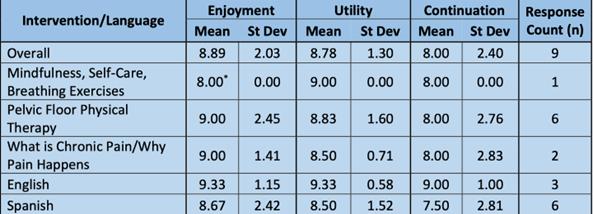
Table 1. Participant ratings of enjoyment, utility, and continuation interest for each intervention module and language. Scores (1–10 scale) indicate high overall satisfaction. English modules had slightly higher ratings. *Only one response for the Mindfulness module.
Results & Discussion
Although the number of patients reached was minimal, the results were overwhelmingly positive, demonstrating at least a 7.5/10 in all three categories for both English and Spanish speakers (Table 1). From this, it is clear that underserved patients and patients of color could benefit from this type of intervention in the long term, regarding both literal pain relief strategies, as well as avenues for stronger, longitudinal care relationships.
This project did have some limitations. First, it must be emphasized that this was not a formal research study; it lacked dedicated funding, protected time, and a multidisciplinary research team. As shown above, the chart review only revealed a small population of patients undergoing refractory CPP over the course of about 6 months. This small cohort demonstrates data that is not necessarily statistically significant or generalizable to the entirety of the Cook County Gyn Clinic. Nevertheless, the observed patient attitudes and feedback are encouraging. Financial resources and a structured research format must be employed to further these findings, especially considering patient education efficacy in other populations
Conclusion
Although small, this and other community-focused interventions can have huge ramifications in regards to the way in which providers engage with underserved patients who have been excluded from or harmed by the healthcare system in the past13. This service project demonstrates the power of an education intervention, when made accessible, and patient- and community-centered. As mentioned, women of color have collectively been at the brunt of harm in the health care system. And in the context of CPP, these overtly negative experiences continue in the present. Patients experiencing CPP have had their concerns dismissed and normalized, and have been stigmatized and labelled as dramatic, exaggerating, and changuería, or lazy14,15.
When given all options, patients can decide what works and what doesn’t work for them, while also being informed enough to speak up in the doctor’s office. This establishes a shared decision-making model that can hopefully restore the relationship between that patient and the healthcare system. Further, connecting with the community of women of color and prioritizing their needs in the long term has also been known to establish trust and ensure equitable care practices that align with the goals of the community.
References:
1. Michals, Edited by Debra. “Biography: Fannie Lou Hamer.” National Women’s History Museum, www.womenshistory.org/educationresources/biographies/fannie-lou-hamer. Accessed 5 Apr. 2025.
2. Walker, DeArbea. “Between 1930 and 1970, around One Third of All Women in Puerto Rico Were Sterilized to Address Concerns of ‘Surplus Population.’” Business Insider, Business Insider, www.businessinsider.com/women-puerto-rico-sterilized-birth-control-historyoperation-bootstrap-2023-12#:~:text=A%201982%20survey%20found%20that,Perspectives%20study%20released% 20in%201992. Accessed 5 Apr. 2025.
3. Admin, Webtrax. “35% of Puerto Rican Women Sterilized.” CWLU HERSTORY, CWLU HERSTORY, 19 Sept. 2016, www.cwluherstory.org/ health/35-of-puerto-rican-women-sterilized?rq=Puerto+rico.
4. Bazargan M, Cobb S, Assari S. Discrimination and Medical Mistrust in a Racially and Ethnically Diverse Sample of California Adults. Ann Fam Med. 2021 Jan-Feb;19(1):4-15. doi: 10.1370/afm.2632. PMID: 33431385; PMCID: PMC7800756.
5. Lamvu, G., Carrillo, J., Ouyang, C. & Rapkin, A. Chronic Pelvic Pain in Women: A Review. JAMA 325, 2381 (2021).
6. Juganavar, A. & Joshi, K. S. Chronic Pelvic Pain: A Comprehensive Review. Cureus (2022) doi:10.7759/cureus.30691.
7. Turk, D. C., Fillingim, R. B., Ohrbach, R. & Patel, K. V. Assessment of Psychosocial and Functional Impact of Chronic Pain. J. Pain 17, T21–T49 (2016).
8. Guzikevits, Mika, et al. “Sex Bias in Pain Management Decisions.” Proceedings of the National Academy of Sciences, vol. 121, no. 33, Aug. 2024, p. e2401331121, https://doi.org/10.1073/pnas.2401331121.
9. Hoffman, Kelly M., et al. “Racial Bias in Pain Assessment and Treatment Recommendations, and False Beliefs about Biological Differences between Blacks and Whites.” Proceedings of the National Academy of Sciences, vol. 113, no. 16, Apr. 2016, pp. 4296–301, https://doi. org/10.1073/pnas.1516047113.
10. Scharff DP, Mathews KJ, Jackson P, Hoffsuemmer J, Martin E, Edwards D. More than Tuskegee: understanding mistrust about research participation. J Health Care Poor Underserved. 2010 Aug;21(3):879-97. doi: 10.1353/hpu.0.0323. PMID: 20693733; PMCID: PMC4354806.
11. Averbach S, Ha D, Meadows A, Brubaker L, Gyamfi-Bannerman C. Failure to progress: structural racism in women’s healthcare. EClinicalMedicine. 2023 Feb 16;57:101861. doi: 10.1016/j.eclinm.2023.101861. PMID: 36864981; PMCID: PMC9971514.
12. Katz L, Fransson A, Patterson L. The development and efficacy of an interdisciplinary chronic pelvic pain program. Can Urol Assoc J. 2021 Jun;15(6):E323-E328. doi: 10.5489/cuaj.6842. PMID: 33212006; PMCID: PMC8195579.rf
13. Twiddy H, Lane N, Chawla R, Johnson S, Bradshaw A, Aleem S, Mawdsley L. The development and delivery of a female chronic pelvic pain management programme: a specialised interdisciplinary approach. Br J Pain. 2015 Nov;9(4):233-40. doi: 10.1177/2049463715584408. PMID: 26526186; PMCID: PMC4616979.
14. Moreno, Gerardo et al. “Eight years of building community partnerships and trust: the UCLA family medicine community-based participatory research experience.” Academic medicine : journal of the Association of American Medical Colleges vol. 84,10 (2009): 1426-33. doi:10.1097/ ACM.0b013e3181b6c16a
15. Cush, Sydney Love et al. “Black Women’s response to the dismissal and normalization of their Chronic Pelvic Pain.” Under Review
16. Matías-González, Yatzmeli et al. ““Es que tú eres una changa”: stigma experiences among Latina women living with endometriosis.” Journal of psychosomatic obstetrics and gynaecology vol. 42,1 (2021): 67-74. doi:10.1080/0167482X.2020.1822807
Racial, Ethnic, and Language Disparities in Cesarean Section Deliveries among Latina and White Populations
1
Introduction/Background
One of the Healthy People 2030 goals for maternal health includes reducing rates of low-risk c-sections in nulligravid women (target 23.6%). As of 2022, the rates have increased to 26.3%. Of note, C-section rates are not the same for various subpopulations of nulliparous women in the United States. Rates of primary C-sections in White women are lower than that of their Non-White counterparts. Recent research suggests that the rate of primary cesareans in foreign-born Hispanic women is higher in both nulligravid and multigravid women compared to US-born Hispanic women.[1] In a prospective cohort study which analyzed data from ethnically, geographically and racially diverse primigravidas, research suggested that though unplanned cesarean birth occurred in 19.6% of
labors, rates were significantly higher among Black- (24.1%) and Hispanic women (24.7%) compared to Whitepresenting (17.4%).[3] There is much evidence to suggest racial and ethnic disparities in cesarean deliveries and indications as they pertain to our Latino and Hispanic population. This poster serves to shed light on how these disparities impact care and underscore the drivers for these observed trends and differences.
Methods
A systematic review was completed using the following P.I.C.O. EvidenceBased Framework Method. We gathered a total of 112 articles of which six articles gave us sufficient information, and 106 were disregarded. The process of generating articles that did not support our question included
filtering out articles that focused on pre-existing complications leading to c-sections, nulliparous women and situations where language did not influence decision-making.
• Population: Pregnant women in Latin and White population
• Intervention: Cesarean section deliveries
• Comparison: English speaking VS. Non English Speaking
• Outcome: Determining delivery methods based on Race, Ethnic & Language Disparities
Results
Significant racial, ethnic, and language disparities were observed in cesarean delivery rates and indications. Black women had the highest cesarean rate (28.2%), followed by Asian (27.73%)
Avani Modha* B.S, Kelaiah Awoyemi* B.S. (MS3), Shaitia Martin (MS3), Nicolas Quijano Franco B.A.
University at Buffalo Jacobs School of Medicine and Biomedical Sciences, Buffalo, NY, 2 University of North Carolina at Chapel Hill, Chapel Hill, NC, 3 Carleton College, Northfield, MN, 4 Ross University School of Medicine, Miramar, FL
and Hispanic (22.1%) women, while White women had the lowest (19.2%) [4]. After adjusting for clinical factors, Black women had 73% higher odds of cesarean compared to White women, followed by Asian women (59%) and Hispanic women (43%) [3].Language preference also played a role, though findings were mixed. Spanish- and other-languagespeaking women had a 75% increased likelihood of cesarean compared to English speakers, with odds nearly tripling when an interpreter was used [1]. However, another study found non-English speakers had a slightly lower risk of cesarean delivery [2]. The reasons for cesarean also varied by race and ethnicity. Black women were over twice as likely as White women to have a cesarean due to fetal heart tracing concerns [5], while Hispanic and Asian women had a 25–46% higher likelihood of cesarean due to failure to progress. Among unplanned cesarean deliveries, Black women had a 69% higher likelihood, followed by Asian women (23%) and single Hispanic women (65%) (6). Fetal intolerance was the leading indication for Cesarean among Black women (63%), compared to White (39%) and Hispanic (49%) women [6]. These disparities highlight the need for further research to address systemic and clinical factors influencing unequal maternal healthcare outcomes
Discussion
The focus of our research pertained to the presumed higher rates of Cesarean section (C-section) deliveries in the Hispanic/Latina women population versus White women population. One research study showed that nulliparous women who preferred another language besides English, including Spanish, were at higher odds of delivering via C-section [3]. In regard to racial/ethnic groups, one study found that Hispanic/Latina, Asian, Black, and Multiracial women had significantly higher odds of Cesarean deliveries. However, Black women had the highest incidence of C-section deliveries compared to Asian and Hispanic/Latina women [5]. In addition, Black, Hispanic/Latina, and Asian women were more likely to have failure of the laboring progress and were not able to reach full dilation of 10 cm compared to White Women [5]. In another study, racial/ethnic factors did not necessarily contribute to the increased Cesarean delivery rates in Black women. However, nonreassuring fetal status contributed substantially to this disparity of Black women having increased Cesarean delivery rates versus White women [4]. In the final study, Black and Asian women had higher rates of cesarean delivery compared to White or Hispanic women, even after adjusting for factors such as maternal age and BMI. Sociodemographic factors, including marital status, location, and income, were also associated with variations in Cesarean rates [6].
Conclusion
This systematic review highlights the significant impact of language barriers on cesarean section (C-section) rates, particularly among non-English speaking Hispanic/Latina women. Our findings suggest that language preference plays a crucial role in delivery outcomes, with non-English speakers facing higher odds of undergoing C-sections.[3] These disparities may stem from challenges in patient-provider communication, differences in informed consent processes, and potential biases in clinical decision-making. While racial and ethnic disparities persist, language barriers further compound inequities in maternal healthcare. [2] Addressing these issues requires targeted interventions, such as increasing access to professional medical interpreters, enhancing culturally competent care, and improving healthcare provider training in cross-linguistic communication. By tackling language-based disparities, we can work toward reducing unnecessary C-sections and promoting equitable maternal health outcomes for all women, regardless of their primary language.
Reference
1. Comfort L, Jain M, Wu H, Nathan L. Rate of Primary Cesarean Delivery by Language Preference among Nulliparas. Am J Perinatol. 2024 May;41(S 01):e1241-e1247. doi: 10.1055/a-2008-8540. Epub 2023 Jan 6. PMID: 36608699.
2. Okwandu IC, Anderson M, Postlethwaite D, Shirazi A, Torrente S. Racial and Ethnic Disparities in Cesarean Delivery and Indications Among Nulliparous, Term, Singleton, Vertex Women. J Racial Ethn Health Disparities. 2022 Aug;9(4):1161-1171. doi: 10.1007/s40615-02101057-w. Epub 2021 Jul 12. PMID: 34254270; PMCID: PMC9249704.
3. Stark EL, Grobman WA, Miller ES. The Association between Maternal Race and Ethnicity and Risk Factors for Primary Cesarean Delivery in Nulliparous Women. Am J Perinatol. 2021 Mar;38(4):350-356. doi: 10.1055/s-0039-1697587. Epub 2019 Sep 28. PMID: 31563136.
4. Schaefer KM, Modest AM, Hacker MR, Chie L, Connor Y, Golen T, Molina RL. Language Preference and Risk of Primary Cesarean Delivery: A Retrospective Cohort Study. Matern Child Health J. 2021 Jul;25(7):1110-1117. doi: 10.1007/s10995-021-03129-z. Epub 2021 Apr 27. PMID: 33904024.
5. Washington S, Caughey AB, Cheng YW, Bryant AS. Racial and ethnic differences in indication for primary cesarean delivery at term: experience at one U.S. Institution. Birth. 2012 Jun;39(2):128-34. doi: 10.1111/j.1523-536X.2012.00530.x. Epub 2012 May 17. PMID: 23281861; PMCID: PMC4885599.
6. Williams A, Little SE, Bryant AS, Smith NA. Mode of Delivery and Unplanned Cesarean: Differences in Rates and Indication by Race, Ethnicity, and Sociodemographic Characteristics. Am J Perinatol. 2024 May;41(7):834-841. doi: 10.1055/a-1785-8843. Epub 2022 Mar 2. PMID: 35235955
The Critical Intersection of Race, Football, and Brain Injury: Understanding the Disproportionate Risk of CTE in Black Male Athletes
Abstract
Chronic Traumatic Encephalopathy (CTE) is a progressive neurodegenerative disease associated with repeated head trauma, and it is increasingly prevalent in high-contact sports such as American football. Despite their significant representation and influence in the sport, African American (Black) male athletes have been historically underrepresented in CTE and brain safety research. This underrepresentation contributes to underdiagnosis and inadequate management of their symptoms. This study examines how race, socioeconomic status, and healthcare access intersect to increase CTE risks for Black male athletes. Findings suggest that athletes from lower socioeconomic backgrounds are disproportionately exposed to repeated head trauma yet are less likely to receive appropriate education, diagnosis, or healthcare regarding
CTE. These results underscore the urgent need for improved awareness, research inclusion, and targeted interventions to mitigate CTE risks in this population.
Keywords: Chronic Traumatic Encephalopathy (CTE), Concussion, Traumatic Brain Injury (TBI), Football, Black Male Athletes, Health Disparities, Socioeconomic Status, Healthcare Access, Athlete Safety
Introduction
Chronic Traumatic Encephalopathy (CTE) is a neurodegenerative condition associated with repetitive head injuries sustained over time. It often manifests through behavioral and psychological symptoms such as impulsivity, aggression, mood instability, and suicidality. These effects are particularly concerning in contact sports like American football, where repeated head trauma is common.
Although research on CTE has expanded in recent years, Black male athletes remain underrepresented in this body of work. This lack of representation contributes to disparities in awareness, diagnosis, and treatment. The present study explores how race, socioeconomic status, and healthcare inequities intersect to heighten the risk of CTE in Black male athletes. Specifically, it investigates (1) the role of socioeconomic challenges in increasing exposure to repeated head trauma, (2) the impact of limited healthcare access on diagnosis and management, and (3) the influence of race and ethnicity on outcomes related to football-related brain injuries.
Materials and Methods
STUDY DESIGN:
A cross-sectional survey design was employed to assess CTE-related risk factors among Black and non-Black
Alexis “Lexi” J.Alston, Dr. M. Walker, PhD, James Madison University
male athletes.
PARTICIPANTS:
A total of 263 athletes were recruited from 30 academic institutions (10 Division I, 12 Division II, and 8 Division III) and 4 high schools. Participants included both Black and non-Black male athletes, representing a range of socioeconomic backgrounds classified according to the 2024 United States Federal Poverty Guidelines (ranging from poverty to upper middle class).
Eligibility was based on participation in organized football during the 2023–2024 academic year.
SURVEY INSTRUMENT:
A17-item questionnaire was developed to collect data on concussion history, CTE awareness, athletic experience, and demographic variables including race, socioeconomic status, and first-generation college student status. Items consisted of multiple-
choice and Likert-scale questions addressing athletes’ knowledge of CTE, pressures to return to play, and perceived racial influences on injury management.
PROCEDURE:
The survey was administered electronically. Informed consent was obtained from all participants prior to survey completion. The study was conducted in accordance with ethical standards and was approved by the Institutional Review Board (IRB) at James Madison University.
DATA ANALYSIS:
Data were analyzed using IBM SPSS Statistics, version 29 (IBM Corp., Armonk, NY, USA). Descriptive statistics were generated to summarize demographic and clinical variables.
Chi-square tests and independentsample t-tests were used to evaluate differences between Black and nonBlack athletes’ responses. Statistical significance was set at p < 0.05.
Results
Of the participants, 73% of Black athletes were first-generation college students, many attending on academic scholarships, compared to 27% of non-Black athletes. Regarding CTE awareness, 47% of Black athletes reported learning about CTE independently, whereas 54% of nonBlack athletes received education from healthcare providers.
In terms of concussion history, 63% of Black athletes reported 1–2 concussions, 35% reported 3–4, and 2% reported five or more. Among non-Black athletes, 33% had 1–2 concussions, 12% had 3–4, and 0.3% had five or more. Additionally, 63% of Black athletes reported feeling pressured to return to play before fully recovering, compared to 37% of nonBlack athletes.
Regarding perceived racial influence on injury management, 41% of Black athletes believed race affected their care, while 46% of all athletes felt race had no impact. No significant differences were observed based on age or athletic division.
Discussion
These findings reveal substantial
disparities between Black and non-Black athletes, with important implications for athletes, their families, and the broader sport of American football. Given that 53.5% of National Football League (NFL) players are Black, these disparities have widereaching consequences. Many young Black athletes, beginning in middle and high school, are funneled into football as one of the few perceived avenues to success, often with limited emphasis on alternative academic or athletic opportunities. Participation is frequently driven by necessity rather than enjoyment, serving as a path toward financial stability, higher education, and improved life circumstances. Decisions made during these formative years often occur without full awareness of potential long-term health risks.
The results underscore the importance of raising awareness among scientists, physicians, and healthcare providers regarding the unique challenges faced by Black athletes in relation to CTE. The intersection of head injuries, race, and socioeconomic factors disproportionately affects Black male athletes in the United States. Football is often perceived as a primary route to upward mobility, creating societal pressures to continue participating despite health risks.
This study also highlights disparities in CTE awareness, concussion history, and perceived racial influence on injury management. Black athletes were more likely to be first-generation college students, learn about CTE independently, report multiple concussions, and feel pressured to return to play before fully recovering. These findings suggest that social, cultural, and economic factors may amplify CTE risk in this population and contribute to inequities in healthcare access and education regarding brain injuries.
Conclusion
The goal of this study is not to discourage participation in football, a sport that provides significant benefits, but to promote education and expand understanding in concussion medicine. By illustrating how race, socioeconomic status, and athletic culture intersect to increase CTE risks, this research empowers athletes, families, and stakeholders to make informed decisions about
participation and head injury management. It also encourages environments in which Black athletes feel supported in seeking medical care or taking necessary breaks, ultimately reducing the prevalence of post-mortem CTE diagnoses. Furthermore, this study addresses a critical gap in CTE research by focusing on a historically overlooked demographic. Through education, advocacy, and dialogue, stakeholders can balance the enjoyment and benefits of football with longterm health protection for Black athletes, fostering safer participation and improved health outcomes.
ACKNOWLEDGMENTS
I am deeply grateful to God for guidance and strength throughout this journey. I thank Dr. M. Walker, Dr. C. Kraus, Mr. M. Pietrykowski, and the entire neuroscience department for their mentorship and support. I also appreciate The Mac Parkman Foundation, all student-athletes who participated in my survey, and the collaborating football programs. Finally, I am grateful to my family, friends, and colleagues for their encouragement and contributions.
REFERENCES
AUTHOR BIOGRAPHY
Alexis “Lexi” Alston is a current student at the Xavier University of Louisiana, studying Public Health and Neuroscience. She is an aspiring physician and researcher specializing in chronic traumatic encephalopathy (CTE) and concussion-related neurodegenerative disorders. Lexi engages in community outreach and raises awareness about CTE through her professional social media platform, @almostdoctoralston.
1. Alosco ML, Tripodis Y, Koerte IK, et al. Interactive effects of racial identity and repetitive head impacts on cognitive function, structural MRI-derived volumetric measures, and cerebrospinal fluid tau and Aβ. Front Hum Neurosci. 2019;13:440. doi:10.3389/fnhum.2019.00440
2. Canada T, Carter CR. Weathering anti-Blackness: Injury, brain trauma, and neurodegeneration in American sport. Curr Anthropol. Published 2024. doi:10.1086/731253
3. Clark K. Boston University’s CTE breakthrough could forever change football. The Ringer. Published September 27, 2017. Accessed January 14, 2025. www.theringer.com/2017/09/26/nfl/boston-university-cte-test-for-the-livingfootball-imp act
4. MacEachern T, John-Baptiste A, Christie A. The prevalence of Black/African American individuals in concussion literature: A systematic review and meta-analysis. Front Public Health. Published 2024. doi:10.3389/ fpubh.2024.1430428
5. Now, Democracy. Dr. Harry Edwards on the injustice of brain injuries & as rosters become predominantly Black. Democracy Now! Published September 25, 2017. Accessed January 14, 2025.www.democracynow.org/2017/9/25/ dr_harry_edwards_on_the_injustice?autostart=true
6. Smith MD. For Black boys, the NFL—and traumatic brain injury—can be lottery tickets. The Nation. Published January 28, 2013. www.thenation.com/article/archive/black-boys-nfl-and-traumatic-brain-injury-can-be-lott erytickets/
7. Tang AR, Wallace J, Grusky AZ, et al. Investigation of factors contributing to racial differences in sport-related concussion outcomes. World Neurosurg. 2023;173:e755–e765. doi:10.1016/j.wneu.2023.03.009
8. Wallace J, Bretzin A, Beidler E, et al. The underreporting of concussion: Differences between Black and White high school athletes likely stemming from inequities. J Racial Ethn Health Disparities. 2021;8:1079–1088. doi:10.1007/ s40615-020-00864-x
9. Wing S, Caiquo J, Butler C, Giza C, Babikian T. Framing racial disparities within
10. sports-related concussion (SRC): An ecological framework for understanding biases and disparities in concussion care for Black athletes. Int Rev Psychiatry. 2024;36(3):254–271. doi:10.1080/09540261.2024.238718.
Structural Barriers to Cervical Cancer Screenings: Comparing Access and Outcomes in Honduras and the United States
INTRODUCTION:
Human Papillomavirus (HPV) is a group of over 200 related viruses that infect cutaneous, mucosal, and anogenital regions, causing warts and cancers, particularly cervical cancer, which is the fourth leading cause of cancer in women worldwide. HPV is primarily transmitted through sexual contact, with early exposure and multiple partners increasing risk. Prevention includes a two-dose childhood HPV vaccine series, catchup doses if needed, and secondary screening through Pap smears starting at age 21, followed by HPV DNA testing after 30 to detect highrisk strains like HPV 16 and 18. While
there is no cure, treatments such as cryotherapy, chemotherapy, surgery, and palliative care manage symptoms and abnormal cells. In Honduras, cervical cancer ranks as the second leading cause of death among women due to limited vaccination, screening, and healthcare access, exacerbated by physician shortages, financial constraints, and rural infrastructure challenges. The country’s dual healthcare system further deepens disparities, with only a small fraction of the population covered by social security or private insurance. While the U.S. has greater healthcare access, structural barriers such as underinsurance, lack of medical translators, and medical
mistrust continue to contribute to lower screening rates and delayed diagnoses among marginalized populations.
METHODS:
A systematic review was completed using the P.I.C.O. Evidence-Based Framework Method.
• Population: Childbearing populations in Honduras, a lowand middle-income country.
• Intervention/Exposure: Observe various barriers to routine reproductive health, including gynecological cancer screenings, regular doctor visits, and access to medical data and test results.
1 Graduated University of California, Los Angeles (UCLA) with a Bachelor of Science 2 New York Institute of Technology College of Osteopathic Medicine (NYITCOM) 3 Pacific Northwest University of Health Sciences 4 Charles R. Drew University of Medicine and Science 5 Howard University College of Medicine 6 Graduated Penn State University with a Bachelor of Science 7 Touro College of Osteopathic Medicine
• Comparison: Childbearing populations in the United States, an upper-middle-income country.
• Outcome: Measuring health outcomes, including percentages of people screened, cervical cancer incidence, complications, and mortality.
RESULTS:
Cervical cancer screening rates in Honduras are lower than in the United States due to disparities in healthcare infrastructure and access. In 2020, 67% of Honduran women aged 25-65 had been screened at least once in their lifetime, compared to approximately 75.2% of U.S. women aged 21 to 65 who were up-to-date with cervical cancer screening. Rural Honduran women face even lower screening rates, with only 26% receiving annual Pap smears. Followup after abnormal HPV tests is also a challenge, with rates as low as 26%. In resource-limited areas, Visual Inspection with Acetic Acid (VIA) is used as an alternative screening method, though it has a higher falsepositive rate. Since the introduction of the HPV vaccination program in 2016, initial vaccine uptake in Honduras has been comparable to the U.S., but
REFERENCES
completion rates for the second dose remain low in both countries. Cervical cancer incidence in Honduras (17.3 per 100,000) is more than twice that of the U.S. (7 per 100,000), with access barriers such as long travel times and healthcare limitations further contributing to poor screening and treatment outcomes.
DISCUSSION:
The lack of healthcare infrastructure in rural Honduras forces residents to travel long distances for medical services, limiting cervical cancer screening and likely underestimating its true incidence. Government funding for HPV screening clinics, supplies, and personnel remains insufficient, highlighting the need for alternative methods such as selfguided HPV test kits and Visual Inspection with Acetic Acid (VIA), which are cost-effective and viable in low-resource settings. Increased advocacy is needed for funding cervical cancer screening, reducing costs, and implementing mobile screening units (MSUs) to reach at-risk communities. A geospatial approach can identify high-risk areas linked to poverty and healthcare inaccessibility, while expanding the
free HPV vaccination program to both genders would enhance prevention. Public awareness campaigns and support from non-governmental organizations and mobile clinics are essential to bridging gaps in cervical cancer prevention and care.
CONCLUSION:
This study reveals substantial disparities in cervical cancer screening and outcomes between Honduras and the United States, largely due to limited healthcare infrastructure, funding constraints, and geographic inaccessibility. In Honduras, inadequate government support and rural healthcare challenges contribute to low screening rates and high cancer incidence, while in the U.S., marginalized populations face obstacles like underinsurance and medical mistrust. Enhancing HPV vaccination programs, expanding screening initiatives through mobile units and alternative methods such as VIA, and utilizing geospatial mapping to target high-risk areas are essential steps toward reducing these disparities.
1. Benavidez GA, Zahnd WE, James AS, et al. Disparities in meeting USPSTF breast, cervical, and colorectal cancer screening guidelines among women in the United States. Prev Chronic Dis. 2021;18:E33. doi:10.5888/pcd18.200315
2. Fernández-Deaza G, Serrano B, Roura E, et al. Cervical cancer screening coverage in the Americas region: a synthetic analysis. Lancet Reg Health Am. 2024;30:100689. doi:10.1016/j.lana.2024.100689
3. Guo F, Cofie LE, Berenson AB. Human papillomavirus vaccination and Pap smear uptake among young women in the United States: role of provider and patient. J Womens Health (Larchmt). 2017;26(10):1114-1122. doi:10.1089/jwh.2017.6424
4. Honduras Poverty Assessment. June 30, 2006. Accessed February 27, 2025. https://documents1.worldbank.org/curated/ en/443701468031594535/pdf/356220v10HN0gr101OFFICIAL0U SE0ONLY1.pdf
5. LaVigne AW, Triedman SA, Randall TC, Trimble EL, Viswanathan AN. Cervical cancer in low and middle income countries: addressing barriers to radiotherapy delivery. Gynecol Oncol Rep. 2017;22:16-20. doi:10.1016/j.gore.2017.08.004
6. Luciani S, Bruni L, Agurto I, et al. HPV vaccine implementation and monitoring in Latin America. Salud Publica Mex. 2018;60(6):683-692. doi:10.21149/9090. Accessed January 28, 2025.
7. Murillo R, Almonte M, Pereira A, et al. Cervical cancer in Central and South America: burden of disease and status of disease control. Cancer Epidemiol. 2016;44(Suppl 1):S121-S130. doi:10.1016/j.canep.2016.07.015. Accessed March 5, 2025.
8. PAHO (Pan American Health Organization). Health System Profile Honduras, Central America: Monitoring and Analysis of Health Systems Change/Reform. Washington, D.C.; 2009.
9. Perkins RB, Langrish SM, Stern LJ, Simon CJ. A community-based education program about cervical cancer improves knowledge and screening behavior in Honduran women. Rev Panam Salud Publica. 2007;22(3):187-193.
10. Perkins RB, Langrish SM, Stern LJ, Burgess JF, Simon CJ. Impact of patient adherence and test performance on the cost-effectiveness of cervical cancer screening in developing countries. Womens Health Issues. 2010;20(1):35-42. doi:10.1016/j.whi.2009.09.001
11. Secretary of Health (Signal). Salud inaugurates Maria Hospital. Rev Saludhn. 2014;14:10-11.
12. Singh D, Vignat J, Lorenzoni V, et al. Global estimates of incidence and mortality of cervical cancer in 2020: a baseline analysis of the WHO Global Cervical Cancer Elimination Initiative. Lancet Glob Health. 2022;11(2):e82-e93. doi:10.1016/S2214-109X(22)00501-0
13. Small W Jr, Bacon MA, Bajaj A, et al. Cervical cancer: a global health crisis. Cancer. 2017;123(13):2404-2412. doi:10.1002/cncr.30667
14. World Health Organization. Honduras. Key country indicators. 2016. Accessed March 7, 2025. http://apps.who.int/gho/data/node.cco.kiHND?lang=en
WCJRF WINNERS 2025
Premedical Student Award - Best Poster Presentation
Abstract Title: Examination of Multivitamin and Folic Acid Intake Among Recently Pregnant Women Experiencing Homelessness: A Convergent Parallel MixedMethods Study
Perinatal multivitamin intake (before, during, and after pregnancy) can supplement nutritional needs and prevent adverse birth outcomes such as neural tube defects related to insufficient folic acid or anemia related to low iron intake. Despite the increased risks among Women Experiencing Homelessness (WEH), less is known about their perinatal multivitamin use. This study aims to examine multivitamin use among recently pregnant WEH. This convergent parallel mixed-methods study included data from quantitative surveys and qualitative interviews collected simultaneously from WEH during their perinatal period in the greater Houston area in 2024. In this ongoing pilot study, preliminary descriptive statistics on multivitamin intake survey data (n=8) were integrated with themes from exploratory thematic analysis to provide a contextually precise examination of multivitamin intake. The average participant was 24.4 years old (SD 5.7, range 18-35), with half of the participants having some college education (50%). Only 38% received prenatal care in the first trimester, while 25% did not receive any prenatal care with their most recent pregnancy. Of the 63% of participants who reported perinatal multivitamin use, all reported prenatal vitamin intake. Only 50% confirmed folic acid intake prenatally. Participants reported obtaining their vitamin supplements at grocery stores (38%), clinics (38%), and shelters (13%). Qualitative themes revealed general awareness that vitamins are important for “baby’s health” but a lack of understanding of specific health benefits or risks of non-compliance. Many were unsure about the presence of folic acid or iron in their multivitamins and the amount needed. However, they were open to learning the importance of vitamins and the strategies for easier and more consistent vitamin intake.
Preliminary findings suggest knowledge gaps and access disparities. As data collection continues, associated findings will be triangulated with pregnancy outcomes (e.g., premature birth, low birth weight) to clarify the impact of multivitamin intake. These findings lay the groundwork for future public health initiatives that encourage daily multivitamin intake, emphasizing adequate folic acid and iron supplementation for WEH. Such initiatives could help reduce anemia and risks for neural tube defects and improve maternal and infant health outcomes among WEH.
Premedical Student Award - Best Poster Presentation
Abstract Title: Does Place Hold Weight? Assessing Low Birth Weight among USand African-born Black Birthing People
Authors: Sheila W. Mungai*, Kierra S. Barnett, Deena J. Chisolm
School: North Carolina Agricultural & Technical State University
ABSTRACT
Low birth weight (LBW) is an adverse birthing outcome that increases the risk of infant morbidity and mortality. Both nationally and locally in Central Ohio, Black infants have the highest rates of LBW compared to other racial and ethnic groups. Differences in birth outcomes, however, are understudied within the Black population and some research suggests that differences based on nativity may exist. This study aims to examine the effects of nativity on LBW within Black/ African American birthing people in Franklin County, Ohio. Birth record data between 2006 and 2021 for all singleton births from birthing people who self-identified as Black/African American (N=53,555) in Franklin County,, Ohio were assessed. Based on the birth record, birthing people were categorized into two groups: (1) those born in the US and (2) those born in an African country. Maternal characteristics including maternal education, insurance, prenatal care, marital status, parity, and maternal age, were also assessed. Chi Square tests were used to test for significant differences in LBW based on nativity. Findings indicate that the odds of LBW are 1.7 times higher among US-born versus African-born Black birthing people. Similar associations were observed when examining the relationship between LBW and nativity at the intersection of the different maternal characteristics. All observed differences based on nativity were statistically significant (p-value <0.05). Though the underlying causes of the differences remain unknown, our results are similar to previous research findings. The Healthy Immigrant Effect, a theory that states that recent immigrants tend to have a health advantage over the native-born population, may explain our findings. Future research is needed to understand the pathways by which nativity influences birth outcomes and the generational effects of nativity over time.
Medical Student Award - Basic Science Winner
Abstract Title: Neutropphil infiltration, migration, and activity following a traumatic muscle injury is affected by estradiol deficiency
Authors: Elise Toussaint, Shawna McMillin, Brian Sullivan, Zachery Roloff, and Dawn Lowe
School: University of Minnesota Medical School Twin Cities
ABSTRACT
The female sex hormone estradiol (E2) decreases naturally with menopause and is associated with declines in skeletal muscle mass and strength and an increase in systemic inflammation. Earlier research shows that when ovariectomized mice, a model of E2 deficiency, are treated with E2 they have an improved functional recovery compared to ovariectomized mice treated with a placebo following a traumatic skeletal muscle freeze injury. How E2 deficiency compared to natural circulating E2 levels alters neutrophil infiltration, migration, and activity following an acute skeletal muscle inflammatory response is still unclear. To investigate this, female C57BL/6J mice underwent a sham or ovariectomy (OVX) surgery and 21-28 d later tibialis anterior (TA) muscles were exposed to a traumatic freeze injury on the anterior superficial aspect of the muscle. TA muscles were collected 24 h post injury. To determine if muscle neutrophil infiltration differs between Sham and OVX mice, western blot analysis and immunofluorescence (IF) staining for the neutrophil marker Ly6G were performed. Previous research demonstrates that E2 impairs neutrophil chemotaxis. To determine if the presence/absence of E2 alters neutrophil chemotaxis within skeletal muscle, total Ly6G labeled cells were quantified ~1.5 mm from the site of freeze injury to determine neutrophil migration. To determine if the activity of neutrophils in the muscle is altered in OVX compared to Sham mice, western blot analysis and IF staining of myeloperoxidase (MPO) and neutrophil elastase were done. MPO and elastase activity can lead to the formation of neutrophil extracellular traps (NET) and tissue damage. To determine if E2 deficiency increased NET formation IF staining for histone citrulline a hallmark of NETs, was quantified. OVX mice exhibited higher levels of total Ly6G protein expression via immunoblot and IF indicating an increase in neutrophil infiltration (P= 0.022) compared to Sham mice. The total area of Ly6G cells ~1.5 mm from the site of injury was ~120% greater in OVX compared to Sham muscle, suggesting an increase in neutrophil migration in the OVX mice (P= 0.046). OVX mice showed an increase in MPO (P =0.013) and elastase (P= 0.007) demonstrating an increase in neutrophil activities. Area positive for histone citrulline stain was 183% greater in OVX vs Sham muscle (P= 0.004), indicating an increase in NET formation. Taken together, these results demonstrate that the systemic loss of E2 increases neutrophil infiltration, migration, and activity in traumaticallyinjured skeletal muscle. While neutrophils ultimately help repair damaged tissues, inappropriate inflammation, and NET formation in OVX muscle can contribute to exacerbating tissue damage and delayed recovery of injured muscle.
WCJRF Community Service Award 1st Place
Abstract Title: Addressing Hygiene Gaps Among the Unhoused: A Study of Behaviors and Barriers in Springfield, IL
School: Southern Illinois University School of Medicine
ABSTRACT
Springfield & Sangamon County’s 2022-2028 Strategic Plan to Address Homelessness reported that approximately 260 individuals experience homelessness at any given time, with over 1100 served by local programs in Springfield, IL, in 2022. Housing insecurity creates barriers to hygiene, exacerbating health issues like communicable diseases, respiratory illnesses, and dermatological conditions. This study aimed to assess hygiene behaviors, barriers, and the anticipated use of hygiene kits among the unhoused population in Springfield, IL, in collaboration with a local shelter. Unhoused individuals at Helping Hands in Springfield, IL, were invited to participate. Participants completed a 30-question baseline questionnaire assessing their attitudes, knowledge, beliefs, and practices related to hygiene. This was followed by a 15-minute hygiene education session led by SIUSOM medical students. Afterward, participants completed a post-education questionnaire to evaluate changes in understanding. Each received a hygiene kit containing items for dental care, body hygiene, nail care, skin care, first aid, and basic clothing. After kit distribution, participants completed a survey on demographics, current hygiene practices, and anticipated kit utilization. Among the 33 participants, 85% were male, 66% were between 30 and 65 years old, and 55% identified as white. Most stayed in shelters (67%) and bathed there (88%). Half showered 3-6 times per week, using shelter facilities. Barriers to hygiene included limited access to soap and water (34%), long wait times, and privacy concerns. Foot care (30%), oral health (24%), and mental health (30%) were the top concerns. 77% planned to use the kits, with soap (39%), deodorant (16%), and toothpaste (12%) expected to be used most frequently. Sunscreen and first aid items were anticipated to be used less. Following the hygiene education session, 60% strongly agreed that having a kit motivated them to engage in better hygiene practices. Identified barriers included accessibility, privacy concerns, and the lack of consistent facilities. Significant gaps in hygiene access persist among the unhoused in Springfield, IL, particularly in accessing soap, water, and essential items. Foot care, oral health, and mental health challenges highlight how homelessness contributes to unique health needs requiring specialized care. Hygiene kits were well-received, with high anticipated usage and motivation reported, suggesting their potential as a practical intervention to promote health among this population. Future efforts should focus on addressing identified barriers, such as accessibility and privacy concerns, while expanding education on lesser-utilized items like sunscreen and first aid supplies.
WCJRF Community Service Award 2nd Place
Abstract Title: The Impact of the Center for Haitian Studies DOCS Clinic on the Growing Haitian Community in South Florida (University of Miami)
School: University of Miami Miller School of Medicine
ABSTRACT
As of 2012, within Miami-Dade County, the Haitian born population represents 11% of the total reported HIV cases within the county although they only represent 4.4% of the population. As of 2018, the Haitian population has an increased risk of almost four times more of developing cervical cancer as compared to the overall Floridian population. The number of Haitian born residents living in south Florida has significantly increased since the addition of the Biden immigration program called Humanitarian Parole Program. This program allows people in foreign countries experiencing political instability and humanitarian crises to come to America. Recent immigrants from Haiti struggle socioeconomically, have low literacy rates, language barriers, and differing cultural beliefs. These factors contribute to many patients delaying their care of treatable diseases, resulting in poor outcomes. As a result, we have reached out to this new patient population to make them aware of how our clinic, CHS, can help them as new immigrants to receive the healthcare they deserve. Center for Haitian Studies (CHS) offers weekly primary care, cardiology, and women’s health nights for no cost to residents of Little Haiti and surrounding areas who lack insurance and live at ≤ 200% of the federal poverty line. Services include physical exams, ECGs, Pap smears, STI/STD testing, specialist referrals, vitamin injections, prescription medications, and more. We also provide tailored financial and social resources to meet individual needs. Each week at CHS, medical students collect histories, perform physical exams, and present to attending physicians who can then perform further testing, form diagnoses, and prescribe medications as needed. From July 24th, 2023 to October 16th, 2024, the clinic successfully completed over 247 visits over 47 clinic nights. Some of these with follow-up patients, and several being with new patients seeking care. The clinic averaged 5 visits per night with higher numbers being seen on women’s health night. Originally, we began with only primary care physicians but once we assessed the needs of our patients, we added cardiology and OB/GYN specialists. In the past year, out of our 247 visits we had, 79 of them were OB/GYN related visits and 48 were cardiology related visits. In total 51% of our visits were for specialized care, 32% being OB/GYN related and 19% being cardiology related. CHS serves as one of the only sources of continuous low-income care in the community, as evidenced by high patient return rates. Looking to the future, we are working on implementing a new assessment to give to our patients to better understand their needs. Once we have a better understanding of the needs they have, we will work to increase access to resources in order to improve overall health outcomes.
WCJRF Community Service Award 3rd Place - Tie
Abstract Title: Promoting Healthy Eating and Activity Through Recreation and Teaching (Project HEART) of San Antonio Third Graders
Authors: Symone Taylor*, Suchit Chidurala, Alexander Hymes, Tony Jha, Joshua Fuller, Ibrahim Hasan, Avery Darilek, Nadav Rosenberg, Megan Mosiman, Ayodeji Osidele, Rory Williams, Bruce Mang, Azophi Moffat, Ruchi Sehgal, Nadia Selod, Joshua Thomas, Jason Phillips, MD
School: University of Texas Health Science Center San Antonio
ABSTRACT
Project HEART is a Community Engaged Learning project founded by the Cardiology Student Interest Group at The University of Texas Health Science Center at San Antonio. Because cardiovascular disease is the leading cause of death in the United States with many contributing modifiable risk factors, the project aimed to teach young students at Bob Hope Elementary School, which is located in an underserved area, about the heart, nutrition options, and the importance of exercise to begin creating a lifestyle of sustainable heart-healthy choices to prevent cardiovascular disease in the future. Medical student volunteers taught lessons and participated in interactive activities with third-grade students for six weeks, divided into two-week blocks focused on heart anatomy, nutrition, and exercise. The lesson plans were created by previous medical students involved with the project based on third-grade Texas Education Knowledge and Skills objectives and lesson plans by UTeach Outreach at The University of Texas at Austin and The Texas Heart Institute. A pre- and post-assessment was administered for each block, and the answers were logged using REDCap. Unpaired t-tests were conducted to compare third-grade pre- and post-assessment scores and to analyze fourth-grade scores against last year’s pre- and post-assessment scores for each topic. Third graders showed significant improvement in their anatomy (pre: n=64, post: n=63), nutrition (pre: n=60, post: n=64), and exercise (pre: n=62, post: n=64) assessments after participating in the program, with average scores increasing from 1.55 to 3.11 (p<0.0001), 2.37 to 3.69 (p<0.0001), and 2.5 to 3.14 (p=0.0035), respectively. Fourth graders who completed the curriculum the previous year (n=40) did not score significantly differently compared to the prior year’s third-grade post-assessment scores in anatomy (n=63, p=0.06), nutrition (n=61, p=0.55), and exercise (n=51, p=0.40). However, they performed significantly better than last year’s preassessment scores in nutrition (n=71, p=0.007) but not anatomy (n=66, p=0.09) and exercise (n=59, p=0.07). The increase in average scores for the pre- and post-assessments indicates that the volunteers effectively taught students about heart anatomy, nutrition, and exercise. Although interacting with students proved successful, adding a parent or guardian component to the project is needed since they are tasked with making nutritional and exercise choices for their household. The fourth-grade results indicate that additional time outside the six-week duration of the project should be considered to keep students engaged with learning about the heart and making hearthealthy choices. Additionally, some fourth graders scored high on the cumulative assessment but could not recall completing Project Heart, potentially affecting the significance of comparisons with last year’s pre-assessment scores.
WCJRF Community Service Award 3rd Place - Tie
Abstract Title: Exploring The Impact of Providing Interpersonal Capital and Material Capital on the Academic, Athletic, and Social Self-Efficacy Among Youth in Low SES Communities: A Randomized Controlled Study
School: Texas Christian University Anne Burnett Marion School of Medicine
ABSTRACT
The primary objective of this study was to evaluate and compare the effects of material capital (MC) in the form of name-brand shoes versus MC plus interpersonal capital (IC) through mentorship (provided by medical students) on academic, athletic, and social self-efficacy among youth in low socioeconomic communities. The secondary objective was to assess if participating in the mentoring program improves medical students’ attitudes and future behaviors towards addressing health disparities in underserved communities. Research shows that children’s behaviors are influenced by social constructs and context. Understanding how social influences shape behavior is essential for enhancing public health in low socioeconomic communities. Cultural competency is a challenge for most medical students, particularly those from higher socioeconomic backgrounds with limited exposure to diversity. Despite increased emphasis on cultural competence in medical curricula, a Harvard study found that first-year students felt unprepared to care for individuals from different cultures. Early exposure to diverse communities in non-medical settings may improve cultural understanding. This study used a parallel group randomized control design, where youth were randomly assigned to receive either MC or MC + IC. The MC group received name-brand shoes, while the MC + IC group received shoes plus mentoring for one hour per week for three weeks from medical students at the TCU Burnett School of Medicine. Both groups showed significant improvements in academic, athletic, and social self-efficacy. In the MC + IC group, academic self-efficacy increased from 3.03 at baseline (max 5.0) to 3.87, while the MConly group saw an increase to 3.68. Athletic self-efficacy rose from 3.06 (max 4.0) to 3.9 in the MC + IC group and 3.85 in the MC-only group. Social self-efficacy improved from 3.3 (max 5.0) to 4.93 in the MC + IC group and 4.8 in the MC-only group. Medical students also showed improved cultural competency. Their attitudes increased from 3.92 (max 5.0) to 4.68, preparedness rose from 2.56 to 3.41, and skillfulness increased from 2.68 to 3.67. The study demonstrated that childhood self-efficacy significantly impacts academic achievement, sports engagement, and social interactions. The findings suggest that interventions can enhance self-efficacy, improving academic perseverance, learning ability, and life aspirations. Additionally, the study emphasizes the importance of early exposure to diverse cultural contexts in medical education, as such interventions improve medical students’ cultural competency, preparedness, and skills to care for patients from diverse backgrounds. These insights highlight the need for ongoing efforts to foster self-efficacy and cultural competence, ultimately contributing to more equitable educational and healthcare outcomes
AMEC Thesis Pitch Award
Winner
Abstract Title: Serologic gastric atrophy is associated with increased risk of esophageal squamous cell carcinoma: UNC Project Malawi case-control study
Authors: Kadiatou Traore*, Yukiko Yano, Yingxi Chen, Paul S. Albert, Sung Duk Kim, Sanford M. Dawsey, Gift Mulima, Shiraz Khan, Christian C. Abnet
School: University of Rochester School of Medicine and Dentistry
ABSTRACT
Background: Gastric atrophy, a potential sequela of Helicobacter pylori (H. pylori) infection, is associated with an increased risk of esophageal squamous cell carcinoma (ESCC) in several populations, though some studies report null effects. The role of H. pylori in ESCC remains unclear, with adverse, null, and protective effects reported across different populations. Limited data, particularly from East African populations where ESCC is common, leaves a significant gap in understanding these associations. Objective: To conduct a case-control study of the associations between H. pylori status, serologic gastric atrophy, and ESCC risk in Malawi. Design: We enrolled 300 ESCC cases and 300 controls, frequency-matched by age, sex, and region. We assessed H. pylori seropositivity and serologic gastric atrophy with pepsinogen I (PGI), pepsinogen II (PGII), and PGI:PGII ratio (PGR) at multiple cut-offs. We imputed missing values for key variables and estimated associations using logistic regression models adjusted for design variables and potential confounders. Results: H. pylori seropositivity was associated with significantly lower ESCC risk (aOR 0.47; 95% CI 0.28-0.79), though HIV-related assay interference may have affected these results. Serum PGI at both <30 and <50 μg/L cutoff was significantly associated with higher ESCC risk (aOR 4.41; 95% CI 1.93-10.08 and aOR 3.79; 95% CI 2.14-6.73, respectively). Serum PGR was not associated with ESCC risk. Conclusion: Serologic gastric atrophy measured by PGI was associated with strongly increased ESCC risk. Surprisingly, H. pylori seropositivity was associated with lower ESCC risk, but HIV infection and/or treatment may have interfered with the assay results.
Future Researchers in Medicine Winner (FRIM)
Abstract Title: Elevated
Adverse Outcomes in Black Pediatric Burn Patients
Authors: Jordan Kankam, BS*; Joshua E. Lewis, BS; Adannaya Ihediwa, BS; Culter Cannon, MSc; Danielle Miller, BA; Krish Patel, BS; Nikitha Adari,MPH; Ernst Nicarnord, MD
School: Texas Tech University Health Sciences Center School of Medicine
ABSTRACT
Pediatric burn patients suffer from various adverse outcomes following burn injuries. Recently, disparities affecting African American pediatric burn patients within U.S. hospitals have emerged. These disparities contribute to elevated adverse outcomes such as increased mortality, prolonged pain, severe complications, and higher susceptibility to infections posing significant health risks. This retrospective cohort study utilized the TriNetX Research Database. Pediatric burn patients who were 3 months, 6 months, and 1-year post-burn injury were included. Patients were divided into three cohorts: Cohort A who were African American, Cohort B who were White, and Cohort C who were Asian. Propensity score matching was used to create comparable cohorts based on age, gender, ethnicity, and burn severity. The primary outcomes included mortality, pain, hypertrophic scarring, inhalation injury, infection, and graft failure. Significant differences were found between the cohorts. African American burn patients had elevated risk of mortality (RR = 1.218, p = 0.0057), hypertrophic scarring (RR = 1.139, p < 0.0001), inhalation injury (RR = 2.201, p= 0.0338), infection (RR = 1.330, p = 0.0065), graft failure (RR = 2.090, p = 0.0003), and were less likely to report pain (RR = 0.662, p, 0.0001). African American patients in the pediatric population are associated with elevated rates of adverse post-burn injury outcomes. These findings highlight the need for enhanced burn injury treatment to minimize risks and improve patient outcomes.
Future Researchers in Medicine Winner (FRIM)
Abstract Title: The Role of Transnational Families and the Asylum Process: Qualitative Findings from U.S. Asylum Seekers
Authors: Marine Nimblette*, Sofia Fauza (coauthor), Margarita Velasco (coauthor), Altaf Saadi (research mentor)
School: Boston University
ABSTRACT
People seeking asylum in the United States experience unique challenges when they are part of a family unit, with families within and across borders. Existing literature has shown that familial relationships can buffer migration-related stress or deteriorate after migration. However, most research does not distinguish forcibly displaced persons (FDPs) like refugees and asylum seekers from immigrants more broadly. Within research on FDPs, the literature has focused on asylum applicants outside of the U.S. or resettled refugees within the U.S. Less is known about U.S. asylum applicants’ experiences, despite their status being more precarious than refugees. Our study fills this gap by seeking to understand how familial relationships impact and change during the asylum adjudication process. This qualitative study derives data from a prospective, longitudinal, mixed-methods pilot study exploring immigration-related factors that influence memory, mood, and quality of life among asylum applicants in the US. Interviews took place between August 2022 and October 2023. We used a hybrid inductive-deductive thematic approach to analyze the interviews (n=18 at T1, n=14 at T2). Our analysis revealed three themes: 1) Challenges relating to separation of families, 2) Development of a transnational family identity, and 3) Motivation and coping mechanisms. Within Theme 1, subthemes included a) Straining of social ties, often due to stress from financial burdens, guilt of leaving family behind, and decreased transparency with family abroad about the asylum process, and b) Severing of social ties, due to distance and extended periods of separation, exacerbated by poor technological literacy. Within Theme 2, subthemes included a) Gaps in family cohesion, where participants discussed challenges with acculturation, misunderstandings between parents and children, and evolving concepts of intimacy and family, and b) Worry about children, where participants discussed worry about the well-being of their children both in the host country and home countries e.g., their children being raised by other family members. Within Theme 3, subthemes included a) Faith and religion used to cope with emotional challenges, b) Technology facilitating connection with family abroad, c) Emotional support from local and distant family members, and d) Motivation by their role as a provider parent or family member. The challenges of the asylum application process extend to the household, with asylum applicants navigating the loss of familial relationships or seeking to form new familial identities across borders. Changes in familial relationships represent an area that may benefit from increased support from health professionals. Policymakers and practitioners seeking to mitigate asylum-related stressors should consider family-level challenges.
Mitigating Bias in AI-Driven Healthcare Implementation
Purpose
This policy aims to establish a standardized process for identifying, mitigating, and monitoring bias in artificial intelligence (AI) tools used in healthcare. The goal of this policy is to ensure that these technologies support equitable healthcare delivery and foster patient trust while enhancing clinical decision-making.
Background
The adoption of AI in healthcare is accelerating, offering benefits in diagnostics, predictive analytics, imaging, and workflow optimization. Despite its potential, AI also poses serious risks when bias is introduced whether that be intentionally or unintentionally. This bias introduction can happen through any time in the AI life cycle such as data collection, model training, or clinical application.
Skewed datasets, lack of transparency, and underrepresentation of marginalized populations can perpetuate health inequities. To recognize these risks, institutions must implement policies that prioritize ethical AI development and usage at any timepoint during the development of AI.
Scope
This policy applies to healthcare providers, students, software companies, clinical informaticians, data scientists, administrators, and AI developers involved in evaluating, selecting, developing, or deploying AI-based healthcare tools. It is relevant in clinical, academic, and public health settings.
Definitions
• Artificial Intelligence (AI): Computer systems simulating human cognitive processes.
• Bias: Systematic errors or prejudices in data or algorithms that result in unfair treatment.
• Equity Framework: Guidelines ensuring inclusive and fair AI practices.
• Transparency: Openness about AI system operations, including data sources and decision logic.
Processes & Procedures
1. Evaluation of AI Tools: AI tools must undergo equity impact assessments and confirm that datasets used are demographically representative.
2. Monitoring and Reporting: Develop real-time monitoring systems for demographic based performance analysis. Implement feedback mechanisms for clinicians and patients.
3. Training and Education: Offer mandatory bias and AI literacy training for staff using these tools. This training can look different depending on the AI tool and who is using it, but educational efforts are necessary to ensure proper use. Adjustments should be made dependent on factors such as how many people would need to be trained.
4. Regulatory Alignment: Ensure all AI applications adhere to current regulatory frameworks that are being developed such the Coalition for Health AI Blueprint for Trustworthy AI Implementation in Healthcare; the Equity, Diversity, and Inclusion (EDAI) Framework for Integrating Equity Throughout the AI Lifecycle, and the National Academy of Medicine’s Artificial Intelligence Code of Conduct Commentary (AICC). As these guidelines are updated, AI tools should undergo quarterly updates to ensure they are in alignment with regulatory frameworks.
5. Stakeholder Engagement: Encourage input from and actively involve individuals from underrepresented and historically marginalized communities in every stage of the AI development lifecycle. They should have a place in data collection and algorithm design to implementation and evaluation. This means not only consulting these groups but empowering them as co-creators and decision-makers. The voices of those most affected by AI tools must be included to ensure the technologies being deployed reflect their lived experiences, needs, concerns, and has all the information needed to best help their health care. Stakeholders such as patients, community advocates, and grassroots organizations in these conversations enhances accountability, fosters trust, and helps prevent the replication of systemic inequities in digital health systems.
Materials & Methods
• Conducted a review of 30 peer-reviewed papers from PubMed between 2019–2024, focusing on bias in AI healthcare tools.
• Analyzed three key frameworks Coalition for Health AI Blueprint for Trustworthy AI Implementation in Healthcare: the Equity, Diversity, and Inclusion (EDAI) Framework for Integrating Equity Throughout the AI Lifecycle, and the National Academy of Medicine’s Artificial Intelligence Code of Conduct Commentary (AICC).
• Identified recurring themes: inadequate data representativeness, lack of regulation, and ethical concerns.
Quality Assessment & Quality Assurance
• Perform quarterly audits on AI tools focusing on demographic disparities in outcomes.
• Evaluate tools pre- and post-deployment with equity metrics.
• Ensure interdisciplinary review including ethicists, clinicians, and affected community members
• Develop a quality dashboard that displays model performance transparently.
Appendix A
Figure 2. Three Core Recommendations.
Figure 1. Lifecycle of Bias in AI Systems – Illustrates how bias enters through data sourcing, algorithm development, and clinical application.
CLINICAL POLICY BRIEF
Sustainable Strategies for Improving Indoor Air Quality in U.S. Urban Spaces to Reduce COVID-19 Transmission
Chloe Holifield
Purpose:
To assess the status of indoor air quality in urban spaces following the COVID-19 pandemic and identify the most effective public health policy interventions to improve overall indoor air quality, and reduce the transmission of COVID-19 indoors.
Background:
The COVID-19 pandemic, officially began on March 11, 2020,27 when the World Health Organization (WHO) declared that the “international public health emergency” caused by an outbreak of a novel coronavirus, had spread across multiple regions and continents, forever changing the lives of every citizen on the planet. Cases of the novel virus were initially detected in Wuhan, China, as early as December 2019, and the first laboratory-confirmed case appeared in the U.S. on January 20, 2020.6 The city of Wuhan went into a full
lockdown on January 23 to prevent further spread. However, over the following months, the world watched as the case counts and death tolls rapidly increased.
On March 13, a nationwide emergency was declared in the U.S, and a travel ban was implemented to restrict movement from Europe. By March 15, various U.S. states began to implement shutdowns of schools, bars, and restaurants along with “stay at home orders” limiting movement to essential workers and businesses.
On March 31, Drs. Fauci and Brix from the White House Coronavirus Task Force stated that up to 240,000 deaths from COVID-19 were expected in the U.S., even if the implementation of public health measures, such as social distancing, were enacted with perfection.6
Since the pandemic began in 2020, the United States has had nearly 103 million cases of COVID-19 infections, and over 1.2 million deaths,25 almost
five times as many deaths as were initially predicted. Additionally, many of the pre-pandemic health inequities that have persisted in our country were also brought to the forefront as infections skyrocketed. At the beginning of the pandemic, Black Americans had death rates nearly twice that of White Americans21, likely due to various reasons including higher prevalence of co-morbidities considered risk factors for severe disease and mortality, poor access to testing, having hourly wage essential worker jobs, and structural racism.4,20
Ultimately, COVID-19 has continued to have lasting impact on all of us. Some who experienced acute infections have never fully recovered. Long COVID, where symptoms are present during acute infection and persist for at least one month after, has been observed in an estimated 8-12% of vaccinated individuals.12 Long term consequences of COVID-19 infections also include increased risk of myocardial infarction
and stroke.15 This potential for persistent, unrelenting symptoms and complications after the acute infection, demonstrate the complex nature of COVID-19, and following precautions to prevent repeat infections is essential.
COVID-19 transmission occurs via respiratory droplets, contact with infected surfaces and aerosols present within our shared air. The airborne modality is particularly concerning because the risk of transmission is increased in enclosed, poorly ventilated spaces.3 Indoor air spaces are affected by what is present in the outdoor environment.11 There are many toxins present within outdoor spaces, including NO2 and PM2.5, very small particulate matter capable of being inhaled into the lungs, which are correlated with increased risk of respiratory infections and disease such as asthma, even after short periods of exposure1 This likely has a disproportionate impact on urban populations and
ethnic minorities, living in areas that experience a higher burden of toxic exposure.22 During the COVID-19 pandemic, research showed that increased outdoor levels of NO2 (nitrous oxide) and PM2.5 (inhalable particulate matter of smaller than 2.5 micrometers), were associated with increased COVID-19 cases, hospital admissions and death8. Additionally, indoor transmission of COVID-19 is typically higher than outdoor transmission, likely due to long range airborne transmission of the virus,17 that is more permissible in enclosed poorly ventilated spaces 17,28. The same toxins of PM2.5. and NO2, also pose increased health risks when present in the indoor space, leading to increased COVID-19 transmission and infectivity rates.5,19 Thus, it is very important to address ways to reduce indoor air pollution and the presence of viral particles, leading to an overall reduction in COVID-19 transmission, and potentially provide some protections against future emerging pandemics that will also have respiratory and airborne spread.
Scope:
The intended audience for this policy statement would be those particularly interested in methods of reducing indoor air pollution and decreasing COVID-19 viral load, including, U.S. residents living in highly populated urban spaces, and/or regions with poor indoor and outdoor air quality.
Materials/Methods:
There are several interventions that would be beneficial in reducing the overall burden of COVID-19 transmission, by promoting improvement of indoor air space. To effectively reduce toxins, particulate matter, and viral load within indoor air spaces, first it is critical to know what toxins are present and the severity of the toxic load. This can be accomplished using regulatory indoor air monitors that evaluate quality of air, ventilation rates, and pollutant loads14. Adequately monitoring indoor air could also potentially highlight areas of high transmission such as schools and religious spaces, where people interact multiple times a week, and airports---which have high amounts of foot traffic and people from various international locations sharing air for extended periods of time. This is truly an important initial step to understanding the severity
of toxic load and disease burden. Potential challenges to this begin with governmental support. Under the previous United States administration, the public health emergency was ended, and the current administration has replaced a White House website dedicated to giving citizens access to free COVID-19 tests, with a theory on the “lab leak origins of the virus.”16 It would be unlikely that widespread financial support of air monitors would be funded from the federal level, and much more likely through private organizations and non-profits dedicated to public health interventions.
Another potential intervention to reduce indoor air transmission of COVID-19 is through improved ventilation and sanitation of the air. HEPA (high-efficiency particulate air) filters are effective at capturing viral particles and releasing filtered air indoors. These devices remove particles larger than 0.3 micrometers with an efficiency rate of 99.97%, leading to a reduction in indoor air toxins including PM2.5.2 Studies have shown that use of HEPA filters leads to a continuous reduction of viral particles that cause COVID-19 infection.24 In the ICU ward of a Cambridge, U.K. hospital, SARSCOV-2 viral levels were measured before and after utilizing HEPA filters with UV sterilization and resulted in a reduced viral particles, demonstrating the effectiveness of the device in clearing the air of pathogenic matter18. Although effective in viral reduction, widespread governmental and public support and financial backing for the use of HEPA filters in public spaces would likely be severely lacking in our current political environment, and as the public’s concern about the seriousness of COVID has waned.23
There is also evidence that utilizing indoor plants can aid in reducing air pollution. Plants carry out a process known as phytoremediation and are considered natural air filters. They intake Co2 and release O2 via photosynthesis and respiration and purify the air of a number of pollutants including Volatile Organic Compounds (VOCs) and particulate matter.9 Several types of plants have been tested for their ability to reduce pathogens and toxins including very common house plants such as snake plants.8 However, more research is needed to determine the quantity of plants required to provide an adequate reduction of viral particles. Plants
have also been shown to improve indoor air humidity to optimal levels for reducing viral transmission, which is important because high indoor air humidity is correlated with a reduction in COVID-19 transmission.26 A very potential area of research could further explore the indoor plant environment at the Singapore Changi Airport, which has extensive indoor gardens, and as of 2021, added upgrades to the ventilation systems including HEPA filtration and UV sanitation to reduce COVID-19 transmission.7 There is not currently any publicly available research regarding this airport, and future studies to compare COVID-19 transmission rates during the pandemic and after the public health upgrades could provide further evidence that both the use of plants and HEPA filtration are efficient for reducing viral load. Overall, utilizing plants would likely be cost effective, due to the affordability of indoor plants especially on an individual level, when used in personal homes. This intervention could also potentially be scaled up to larger public spaces such as schools and shopping malls.
Lastly, the policies around masking became controversial during the pandemic in the United States. People were initially encouraged to avoid wearing masks to save protective personal equipment for healthcare professionals and first responders. In time, public health messaging switched to mandatory masking in public spaces, coupled with social distancing. Masking became a highly politicized issue, with some people resisting wear due to various reasons, including lack of belief in the seriousness of COVID-19. Others have continued to wear masks long after state-wide mandates were ended. Though there has been some controversy over effectiveness of masking, research has shown that it works. Facemasks reduce infection risk for healthcare workers,13 which is critical for preventing viral transmission both in and outside of the hospital, especially during times of high COVID-19 transmission. Thus, periods of mandatory masking in hospitals areas with lots of traffic and seeing patients with unknown COVID-19 status, such as the Emergency Department (ED), could lead to a significant reduction in
disease burden. Patients in the ED are in close proximity and if in a tightly packed, poorly ventilated space, it would be very easy for a single COVID-19 positive patient to spread the infection to others. Having patients mask when entering this mixed environment can reduce the potential spread. Some of the challenges to this potential intervention include that the need for well fit masks. Additionally, masks are extremely affected by external factors such ventilation rates in the environment, which also improve the effectiveness.10
Overall, improved ventilation seems to be a key component of reducing COVID-19 transmission. Longer term goals include ventilation measuring devices as well as HEPA filtration present in public spaces. However, this would likely require lots of funding and time to overhaul ventilation and filtration systems across the country. A
short-term goal could be the addition of indoor plants in these large public spaces as they do have the ability to purify, are relatively low maintenance and are cost effective. Essentially, purifying the air should be a major public health concern and goal. In the same way that most people in the majority of the country do not have to think twice about the cleanliness of the water that is coming out of the faucet, every inhabitant of the U.S. should be able to walk into a public space and be assured that there are systems in place monitoring our shared air, assessing it for harmful toxins and pathogens, and purifying it, taking the bulk of direct responsibility off the individual, instead placing it rightfully on the shoulders of the public health system that has vowed to keep us all safe.
Appendix:
“Overview of Implementation Measures”
REFERENCES:
1. Agache, Ioana et al. “The Impact of Outdoor Pollution and Extreme Temperatures on Asthma-Related Outcomes: A Systematic Review for the EAACI Guidelines on Environmental Science for Allergic Diseases and Asthma.” Allergy, 4 Feb. 2024, https://doi.org/10.1111/all.16041.
2. Agarwal, Nehul, et al. “Indoor Air Quality Improvement in COVID-19 Pandemic: Review.” Sustainable Cities and Society, vol. 70, July 2021, p. 102942, https://doi.org/10.1016/j.scs.2021.102942.
3. Alizon, Samuel, and Mircea T. Sofonea. “SARS-CoV-2 Epidemiology, Kinetics, and Evolution: A Narrative Review.” Virulence, vol. 16, no. 1, 8 Apr. 2025, https://doi.org/10.1080/21505594.2025.2480633.
4. Ashktorab, Hassan, et al. African Americans Possessed High Prevalence of Comorbidities and Frequent Abdominal Symptoms, and Comprised a Disproportionate Share of Covid-19 Mortality among 9,873 Us-Hospitalized Patients Early in the Pandemic. www.fortunejournals.com/articles/africanamericans-possessed-high-prevalence-of-comorbidities-and-frequent-abdominal-symptoms-and-comprised-a-disproportionate-shar.pdf, https://doi. org/10.26502/aimr.0163.
5. Borro, Marina, et al. “Evidence-Based Considerations Exploring Relations between SARS-CoV-2 Pandemic and Air Pollution: Involvement of PM2.5Mediated Up-Regulation of the Viral Receptor ACE-2.” International Journal of Environmental Research and Public Health, vol. 17, no. 15, 1 Jan. 2020, p. 5573, www.mdpi.com/1660-4601/17/15/5573, https://doi.org/10.3390/ijerph17155573
6. CDC. “COVID-19 Timeline.” Centers for Disease Control and Prevention, CDC, 8 July 2024, www.cdc.gov/museum/timeline/covid19.html.
7. “Changi Airport Deploys New Technology for Cleaner Air in Terminals.” International Airport Review, www.internationalairportreview.com/news/164418/ changi-airport-technologies-air-quality/.
8. Cole, Matthew A., et al. “Air Pollution Exposure and Covid-19 in Dutch Municipalities.” Environmental and Resource Economics, vol. 76, no. 4, Aug. 2020, pp. 581–610, ftp.iza.org/dp13367.pdf,https://pubmed.ncbi.nlm.nih.gov/32836849/
9. El-Tanbouly, Rania, et al. “The Role of Indoor Plants in Air Purification and Human Health in the Context of COVID-19 Pandemic: A Proposal for a Novel Line of Inquiry.” Frontiers in Molecular Biosciences, vol. 8, 30 June 2021, p. 709395, www.ncbi.nlm.nih.gov/pmc/articles/PMC8279815/, https://doi. org/10.3389/fmolb.2021.709395.
10. Enright, Chloe, et al. “Efficacy of Facemasks in Preventing Transmission of COVID-19 in Non-Healthcare Settings: A Scoping Review.” Journal of Infection Prevention, vol. 25, no. 1-2, 6 Nov. 2023, pp. 24–32, https://doi.org/10.1177/17571774231203387.
11. Fu, Nuodi, et al. “Experimental and Numerical Analysis of Indoor Air Quality Affected by Outdoor Air Particulate Levels (PM1.0, PM2.5 and PM10), Room Infiltration Rate, and Occupants’ Behaviour.” Science of the Total Environment, vol. 851, Dec. 2022, p. 158026, https://doi.org/10.1016/j. scitotenv.2022.158026.
12. Greenhalgh, Trisha, et al. “Long COVID: A Clinical Update.” The Lancet, vol. 404, no. 10453, 1 July 2024, https://doi.org/10.1016/s0140-6736(24)01136-x.
13. Gurbaxani, Brian M, et al. “Unpacking Cochrane’s Update on Masks and COVID-19.” American Journal of Public Health, vol. 113, no. 10, 1 Oct. 2023, pp. 1074–1078, https://doi.org/10.2105/ajph.2023.307377.
14. Haverinen-Shaughnessy, Ulla, et al. “Towards Equitable and Sustainable Indoor Air Quality Guidelines - a Perspective on Mandating Indoor Air Quality for Public Buildings.” Indoor Environments, 1 Dec. 2024, pp. 100070–100070, Li https://pubmed.ncbi.nlm.nih.gov/34704625/
15. Hilser, JR, et al. “COVID-19 Is a Coronary Artery Disease Risk Equivalent and Exhibits a Genetic Interaction with ABO Blood Type.” Arteriosclerosis, Thrombosis, and Vascular Biology, vol. 44, no. 11, 2024, pubmed.ncbi.nlm.nih.gov/39381876/, https://doi.org/10.1161/ATVBAHA.124.321001.
16. “Lab Leak: The True Origins of Covid-19.” The White House, 18 Apr. 2025, www.whitehouse.gov/lab-leak-true-origins-of-covid-19/.
18. Morris, Andrew, et al. “The Removal of Airborne Severe Acute Respiratory Syndrome Coronavirus 2 (SARS-CoV-2) and Other Microbial Bioaerosols by Air Filtration on Coronavirus Disease 2019 (COVID-19) Surge Units.” Clinical Infectious Diseases, 30 Oct. 2021, https://doi.org/10.1093/cid/ciab933. , Yaron. “Assessing Nitrogen Dioxide (NO2 Levels as a Contributing Factor to Coronavirus (COVID-19) Fatality.” Science of the Total Environment, vol. 726, July 2020, p. 138605, https://doi.org/10.1016/j.scitotenv.2020.138605.
19. Ogen, Yaron. “Assessing Nitrogen Dioxide (NO2) Levels as a Contributing Factor to Coronavirus (COVID-19) Fatality.” Science of the Total Environment, vol. 726, July 2020, p. 138605, https://doi.org/10.1016/j.scitotenv.2020.138605.
20. Patterson, Evelyn J., and Lallen T. Johnson. “Structural Inequality and COVID-19 Mortality in Chicago: An Ecological Analysis.” Journal of Racial and Ethnic Health Disparities, 8 Nov. 2022, https://doi.org/10.1007/s40615-022-01440-1. Accessed 9 Nov. 2022., Hua, et al. “Indoor Transmission of SARSCoV-2.” Indoor Air, 20 Nov. 2020, https://doi.org/10.1111/ina.12766.
21. Reyes, Maritza Vasquez. “The Disproportional Impact of COVID-19 on African Americans.” Health and Human Rights, vol. 22, no. 2, Dec. 2020, p. 299, pmc.ncbi.nlm.nih.gov/articles/PMC7762908/.
22. Tabuchi, Hiroko, and Nadja Popovich. “People of Color Breathe More Hazardous Air. The Sources Are Everywhere.” The New York Times, 28 Apr. 2021, www.nytimes.com/2021/04/28/climate/air-pollution-minorities.html.
23. Tyson, Alec, et al. “5 Years Later: America Looks Back at the Impact of COVID-19.” Pew Research Center, 12 Feb. 2025, www.pewresearch.org/ politics/2025/02/12/5-years-later-america-looks-back-at-the-impact-of-covid-19/.
24. Ueki, Hiroshi, et al. “Effectiveness of HEPA Filters at Removing Infectious SARS-CoV-2 from the Air.” MSphere, vol. 7, no. 4, 31 Aug. 2022, https://doi. org/10.1128/msphere.00086-22.
25. US Centers for Disease Control and Prevention. “Provisional Death Counts for Coronavirus Disease (COVID-19).” .gov, 13 Apr. 2020, www.cdc.gov/nchs/ nvss/vsrr/COVID19/.
26. Wang J, Tang K, Feng K, et al. Impact of temperature and relative humidity on the transmission of COVID-19: a modelling study in China and the United States. BMJ Open 2021;11:e043863. doi:10.1136/ bmjopen-2020-043863
27. World Health Organization. “Coronavirus Disease (COVID-19) Pandemic.” World Health Organization, 2025, www.who.int/europe/emergencies/situations/ covid-19.
28. Qian, Hua, et al. “Indoor Transmission of SARS-CoV-2.” Indoor Air, 20 Nov. 2020, https://doi.org/10.1111/ina.12766.