














Majorcon











Majorcon
Elevating Zimbabwe’s Construction Industry for World Class Excellence It is with great pride and optimism that I welcome you to the second issue of the ZBCA Construction Magazine, 2026. This publication continues to serve as a vital platform for knowledge sharing, industry reflection and celebration of the achievements of Zimbabwe’s contraction sector.
Our annual theme, “Elevating Zimbabwe’s Construction Industry for World Class Excellence,” captures the spirit of transformation that defines our business. As an Association, we are committed to ensuring that our members build infrastructure inculcating the principles of excellence in innovation and sustainability.
This issue highlights the strides we are making in strengthening partnerships, advancing skills development through the ZBCA Academy and aligning our practices with international benchmarks. It also reflects our collective determination to modernise regulatory frameworks, embrace new technologies and position Zimbabwe’s construction sector as a driver of economic growth and regional integration.
The ZBCA Construction Magazine is a mirror of our industry’s resilience and vision. Each article, feature and insight is designed to inspire contractors to rise above challenges, seize opportunities and contribute meaningfully to national development. As we journey through the last part of 2026, let us remain united in purpose, innovative in approach and steadfast in our pursuit of excellence. Together, we can elevate Zimbabwe’s construction industry to world class standards and leave a lasting legacy for generations to come.
Our annual theme, “Elevating Zimbabwe’s Construction Industry for World Class Excellence,” captures the spirit of transformation that defines our business. As an Association, we are committed to ensuring that our members build infrastructure that embodies the principles of excellence, innovation and sustainability.

Dr. Tinashe Manzungu President
The Zimbabwe Building Contractors Association (ZBCA)’s mandate involves being a custodian of construction value chain interests as well as being a strategic driver of national development.
Our direction is anchored on the following four pillars namely:
i. Skills and Professional Development
Through the ZBCA Academy, we are investing in the future of contractors by equipping them with advanced technical skills, leadership capacity, and compliance knowledge. This ensures that Zimbabwe’s construction workforce is globally competitive and future ready.
ii. Regulatory Modernisation and Advocacy
We continue to participate and contribute in sector transformative reform processes such as the Contractors’ Bill,proposed Review and Amendments of the Model Building By Laws of 1977, improved procurement frameworks and alignment of the industry with international standards. These efforts are designed to create a transparent, fair and enabling environment for the construction industry to thrive.
iii. Innovation and Technology Adoption
ZBCA is actively promoting the integration of digital construction technologies including Building Information Modelling (BIM), smart project controls and green building practices. This positions our sector at the forefront of climate resilient and technologically advanced infrastructure delivery.
iv. Partnerships and Regional Integration
By strengthening collaborations with government, academia and international institutions, we are embedding Zimbabwe’s construction industry into the broader regional and global value chain. This enhances competitiveness and opens new opportunities for cross-border projects.
This issue of the Magazine highlights the strides we are making in strengthening partnerships, advancing skills development and aligning our practices with international benchmarks. It reflects our collective determination to modernise regulatory frameworks, embrace new technologies and position Zimbabwe’s construction sector as a driver of economic growth and regional integration.
Each article, feature and insight is designed to inspire participants within the construction sector to rise above challenges, seize opportunities and contribute meaningfully to national development. The Magazine serves as a strategic compass, guiding our industry toward excellence.
As we journey through the last part of 2026, let us remain united in purpose, innovative in approach and steadfast in our pursuit of excellence. Together, we can elevate Zimbabwe’s construction industry to world class standards and leave a lasting legacy for generations to come.
The ZBCA stands ready to lead this transformation through empowering contractors, contribute to policy reviews and build a sector that is competitive within the global environment.





The establishment of the Zimbabwe Building Contractors Association in 1985 was crystallization of a vision.
The aim was to unite contractors and construction value chain players under one banner, safeguard professional integrity and also champion the growth of a sector that would become the backbone of the country’s development.
From those early days, ZBCA has stood as a beacon of advocacy and empowerment, ensuring that contractors are equipped to thrive in an increasingly competitive and complex operating environment.
Four decades later, our mandate remains as compelling as ever to build an industry that competes with the best in the region. For the year 2026 theme, “Elevating Zimbabwe’s Construction Industry for World Class Excellence,” is the lens through which we examine every policy, training programme, and every partnership we pursue. It is the measure by which we hold ourselves accountable and the inspiration that drives us to re-imagine the future of construction in Zimbabwe.
At the heart of this journey lies our commitment to being a listening Association. We recognise that the strength of ZBCA is in the voices of its members and stakeholders. Every challenge raised, every recommendation shared and every insight offered by contractors informs our strategic direction. Through being a listening association ,we ensure that our growth is member driven, reflecting the aspirations and realities of the sector.
This listening stance has already shaped transformative initiatives. In 2025, we launched the ZBCA Academy in Nyanga, a flagship platform for accredited training designed to respond to the realities of tighter regulations, higher client expectations, and rapid digital change. Through this Academy, we will equip our members to work with modern materials, adopt digital project management tools and integrate green building practices.
Furthermore we continue to advocate for mandatory partnerships between local contractors and international firms, for stronger institutional support through PublicPrivate Partnerships.


Joyline R Zindanga ZBCA Chief Executive Officer
These efforts empower our members to become more agile and create jobs in a more resourceefficient framework while positioning Zimbabwe as a leader in sustainable infrastructure. Equally important is our quest for collaboration beyond our geographical boarders.
We understand that no contractor and no Association, can thrive in isolation.
ZBCA is deepening its partnerships with government, regulators, academia and communities to align construction with national priorities while simultaneously engaging with peer associations and institutions across Africa.
This dual collaboration ensures that Zimbabwean contractors become more competitive across borders, contributing to regional infrastructural development.
As we journey through the remainder of 2026, let us remain united in purpose, innovative in approach and steadfast in our pursuit of excellence. Elevating the requires consistent investment in people, policy engagement and work process flow professionalism.
ZBCA will continue to push for a sector that is competitive, compliant and capable of delivering the country’s infrastructure goals.
Our members are the backbone of that vision and with the right skills, partnerships and the right standards, the construction industry will develop to the future desired trajectory. ZBCA is, and will remain a listening and a learning Association.


• Civil Works: Road & Dam Construction, Storm Water Drainage
• Building & Infrastructure: Brickwork, Roofing, Painting, Tiling & Ceilings, Renovations


• Specialized Installations: Electrical, Plumbing, Borehole Drilling & Installation, Shop Fitting

• Materials & Fabrication: Driveway Construction, Metal Fabrication, Building Materials Supply

• Heavy Services: Plant & Scaffolding Hiring, Earthmovers Training


















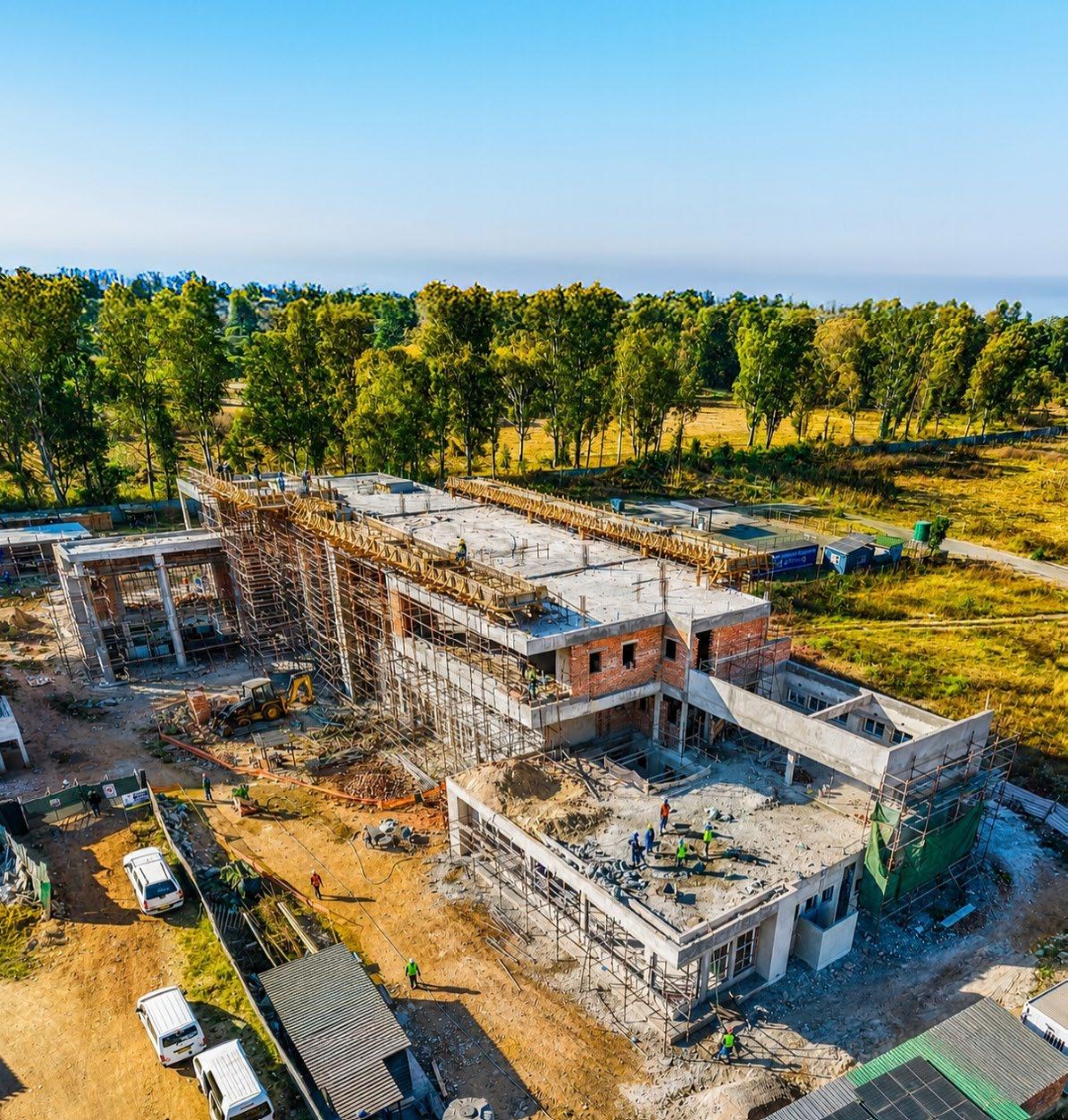
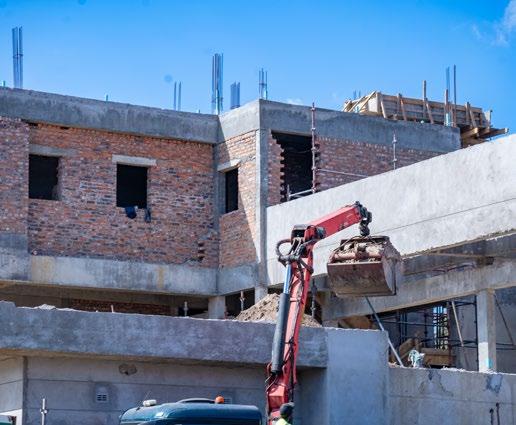
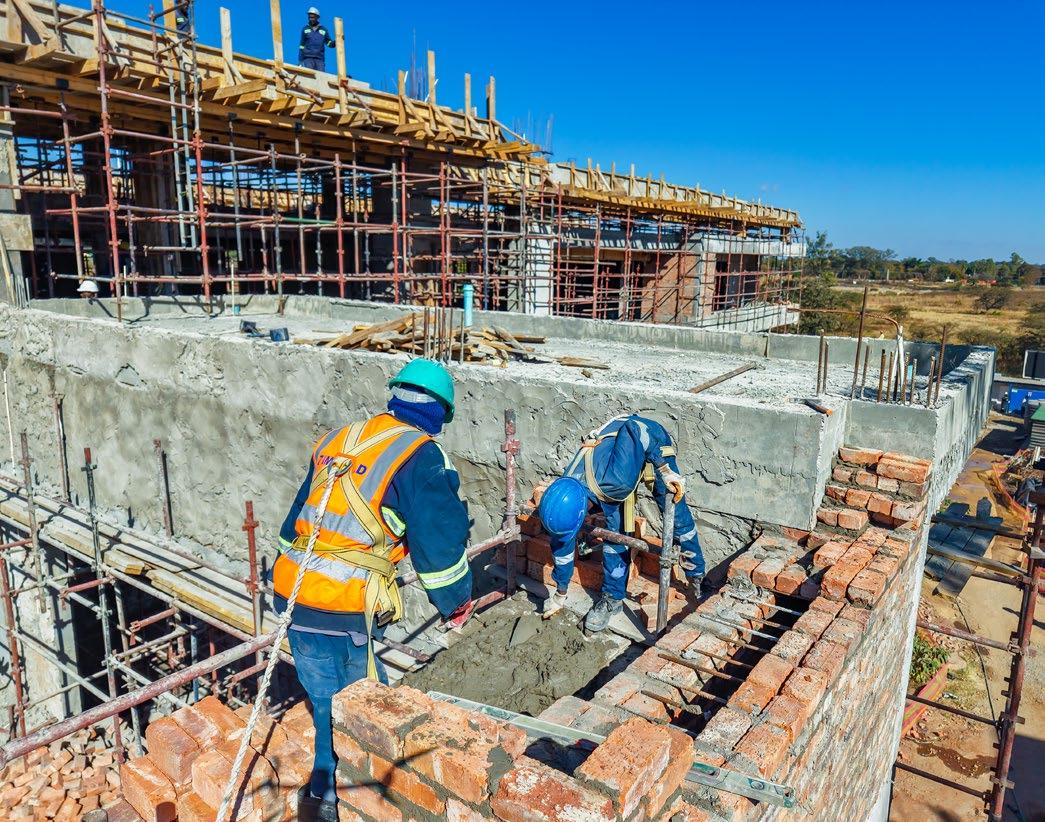
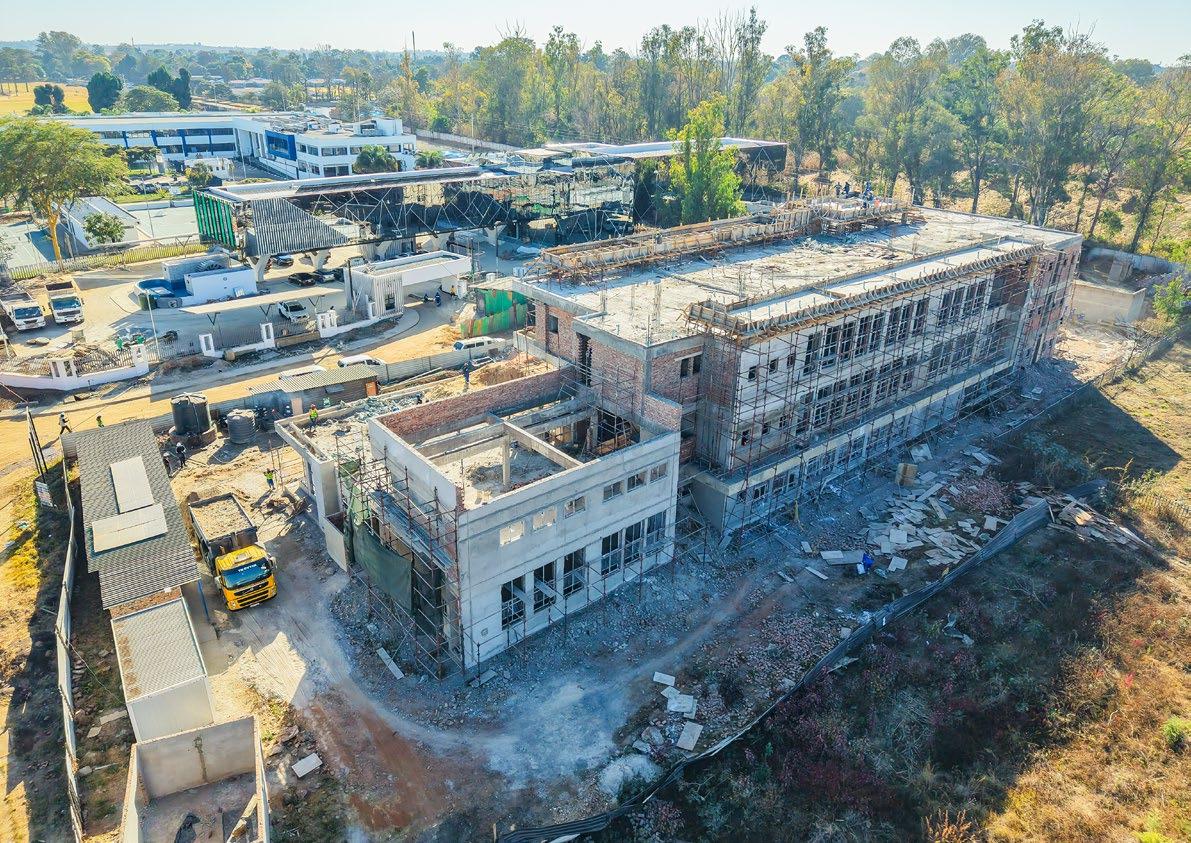
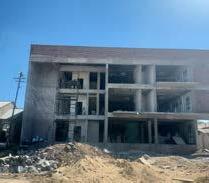
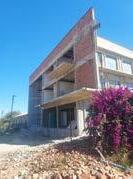
Zimbuild Contracting, a Harare-based construction firm, is making steady progress on the proposed new head office for the Procurement Regulatory Authority of Zimbabwe (PRAZ), a project that has emerged as one of the company’s flagship undertakings in the capital’s evolving skyline.
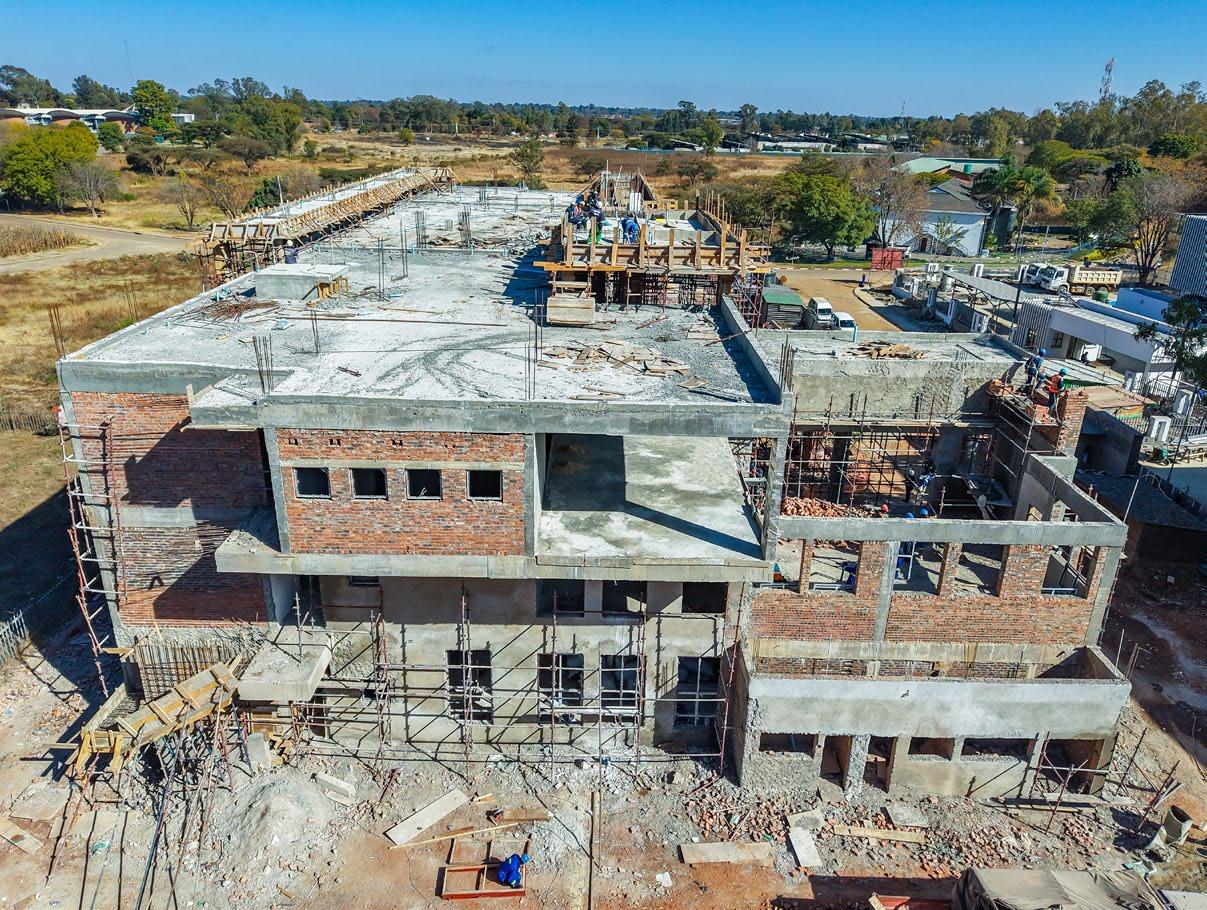
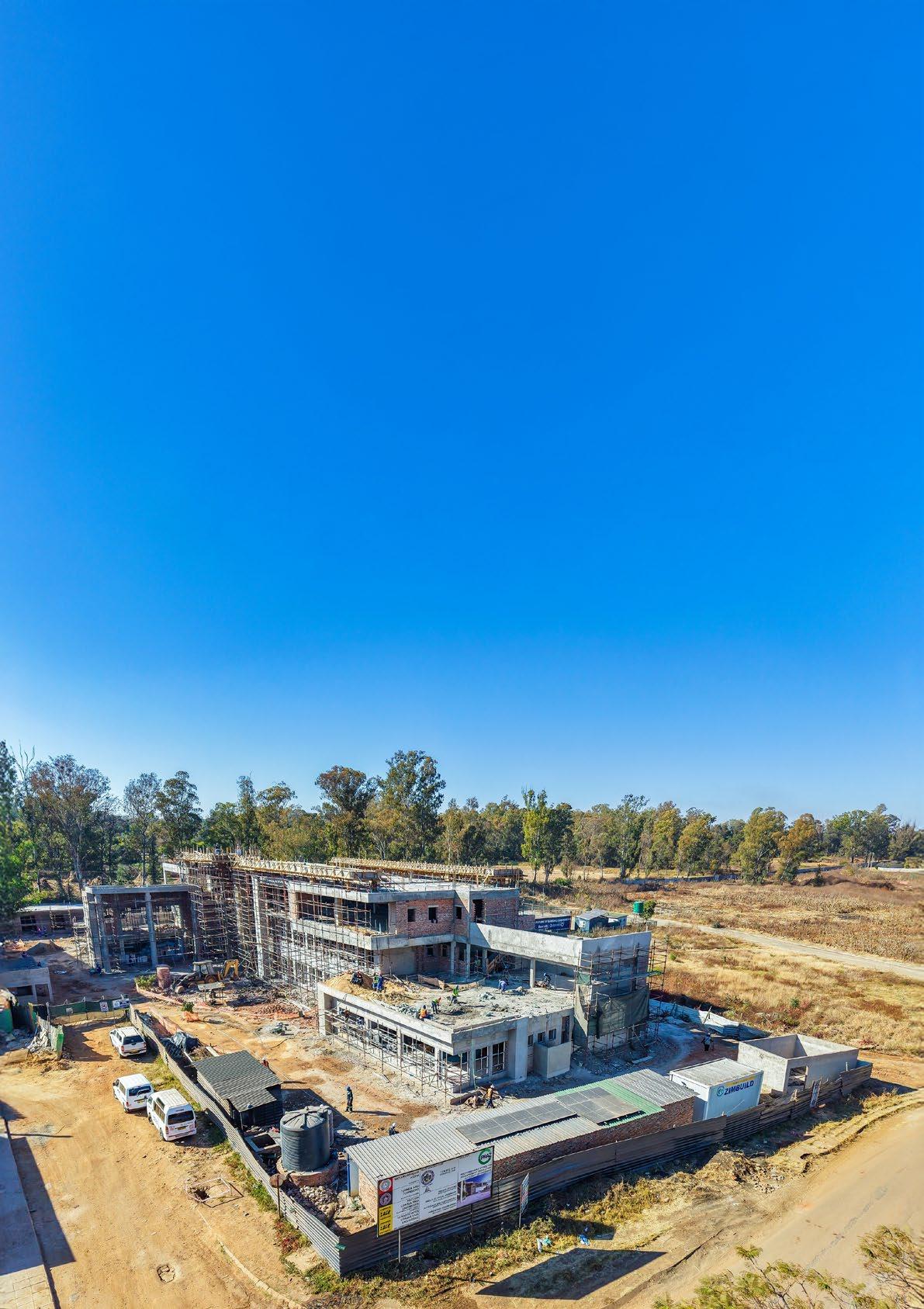
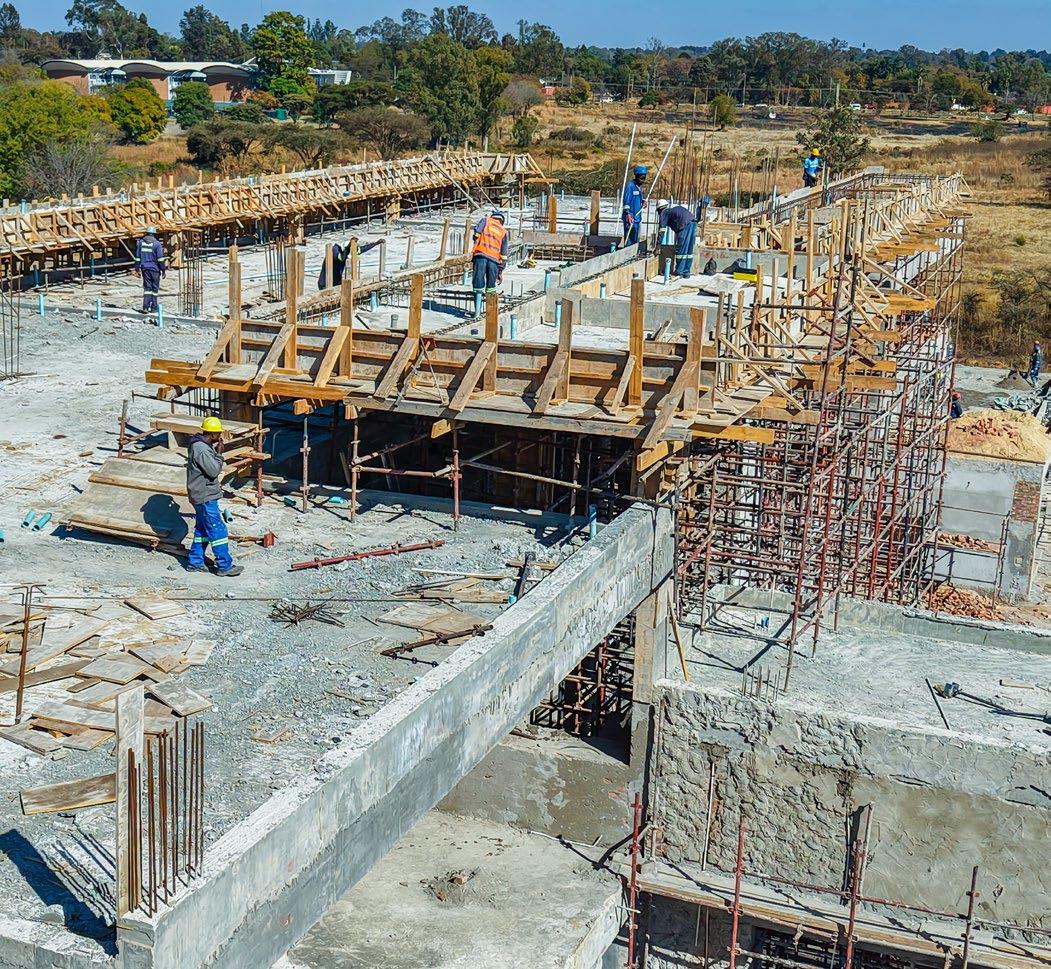
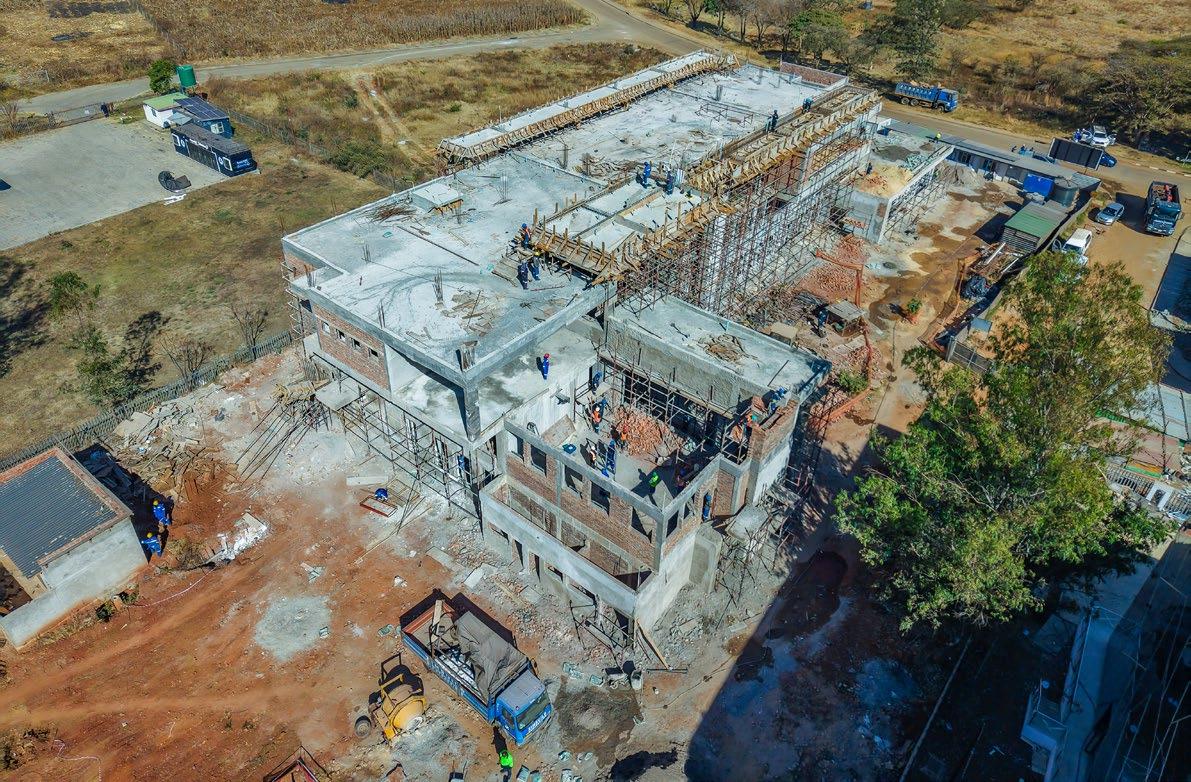
The multi-storey structure is taking shape, with brickwork, reinforced concrete framing, and scaffolding visible across several sections of the building as construction advances through its structural phases. When the Structure & Design Magazine team visited the site on Thursday 9 July, scores of workers were observed carrying out concrete pours, formwork installation, and brickwork on upper floors, while heavy machinery, including a hydraulic crane-mounted grab loader, had been used to move materials into position across the multi-level site.
The project’s site signage confirmed a broad professional team behind the development, with Metamorphosis
AIDPM serving as architects, Turner and Townsend as quantity surveyors, and Reclon Consulting Engineers and TJ Associates Consulting Engineers, both members of the Zimbabwe Association of Consulting Engineers, handling electrical, mechanical, civil and structural engineering work.
Zimbuild Contracting was the main contractor, supported by a range of specialist sub-contractors including Tensor Systems on piling, Onel Electrical Engineers on electrical works, Astro-Ace and GAP Company on shopfitting, and Hardmonds Engineering on mechanical installation.


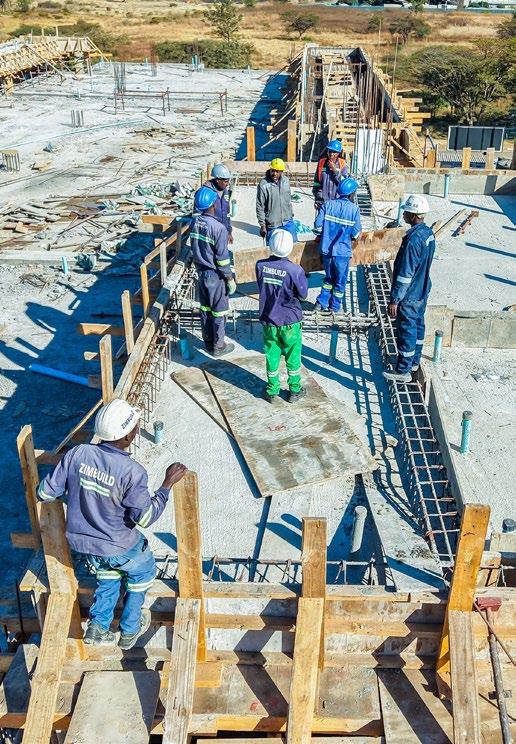

The scale of the coordinated professional team assembled for the project reflects the complexity typically associated with modern institutional head office developments, which require careful sequencing between structural, electrical, mechanical and finishing trades. Aerial site images show the building’s footprint extending across a substantial plot, with concrete slabs, columns, and brick infill walls forming the emerging structure across multiple floors, alongside ongoing site logistics including material storage, water tanks, and vehicle access points.
As one of the most visible institutional projects currently under construction in Harare, the PRAZ head office adds to Zimbuild Contracting’s growing portfolio of formal, professionally supervised developments, reinforcing the company’s position within Zimbabwe’s competitive commercial and institutional construction segment. Beyond this project, Zimbuild Contracting has built a broader reputation as one of Zimbabwe’s prominent construction firms, delivering a range of residential, commercial, and institutional developments across the country.
The company has increasingly positioned itself at the intersection of local delivery and international engagement, with its leadership actively participating in regional and global construction industry platforms aimed at fostering partnerships, technology transfer, and investment in Zimbabwe’s built environment sector.

Central to this positioning is Zimbuild co-founder and Chief Executive Officer, Dr Tinashe Manzungu, an entrepreneur with a background spanning construction, financial services, and insurance. Dr Manzungu holds a Doctorate and a Master’s degree in Business Leadership, alongside an Honours degree in Environmental Science, and has built a career profile that extends well beyond Zimbuild itself, including a former presidency of the Zimbabwe National Chamber of Commerce and current directorship on the Africa Business Council board.

Dr Manzungu also currently serves as President of the Zimbabwe Building Contractors Association (ZBCA), having been re-elected to lead the organisation into the 2026-2027 term following a vote held during the association’s National Annual General Meeting. Under his leadership, the ZBCA, a non-profit body established in 1985 representing over 400 member contractors nationally, has placed increasing emphasis on capacity building for local contractors, the promotion of sustainable building practices, and advocacy for policy reforms aligned with Zimbabwe’s broader Vision 2030 development goals.
Zimbuild has confirmed that Dr Manzungu has been invited as a Guest of Honour to the 20th Africa International Housing Show, scheduled to take place in Abuja, Nigeria, from 13 to 18 July 2026. Marking the show’s anniversary legacy edition, the event stands as one of Africa’s premier platforms for the housing, construction, and real estate sector. The show is expected to see Dr Manzungu, in his capacity as ZBCA president, share Zimbabwe’s construction sector experiences while engaging with fellow industry leaders on collaborative solutions for sustainable growth across the continent.

This international engagement follows a similarly positive reception for the company at Big 5 Construct South Africa, where Zimbuild Contracting reported receiving invitations to explore partnerships, joint ventures and marketplace breakthrough opportunities—developments the company has described as significant for its continued expansion. Together, these engagements reflect Zimbuild’s deliberate strategy of pairing strong domestic project delivery (exemplified by developments such as the PRAZ head office) with active participation in regional and continental industry platforms. These efforts are positioning the company and its leadership as increasingly influential voices within Africa’s broader construction and infrastructure development landscape.
Inside Majorcon Precast — the Norton facility redefining Zimbabwe's precast concrete industry

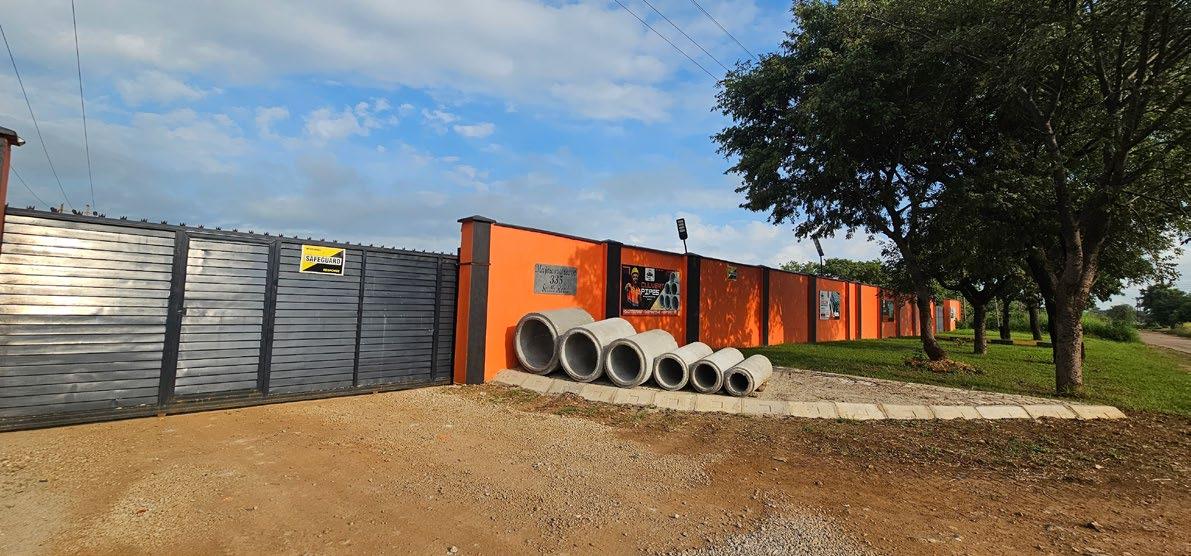
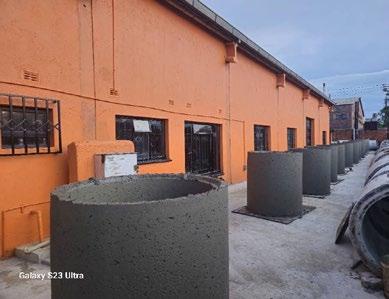
There is a stretch of road in Norton, Zimbabwe, that construction professionals across the country have come to know well. At 335 South Road, behind an unmistakable orange facade, sits what is fast becoming one of Zimbabwe's most important infrastructure manufacturing operations — Majorcon Precast.
In a sector where unreliable supply chains, inconsistent quality and unpredictable delivery have long been accepted as the cost of doing business, Majorcon has built something different. Not just a factory but a system. Disciplined, data driven and capable of meeting the scale of demand that Zimbabwe's infrastructure boom is generating right now.


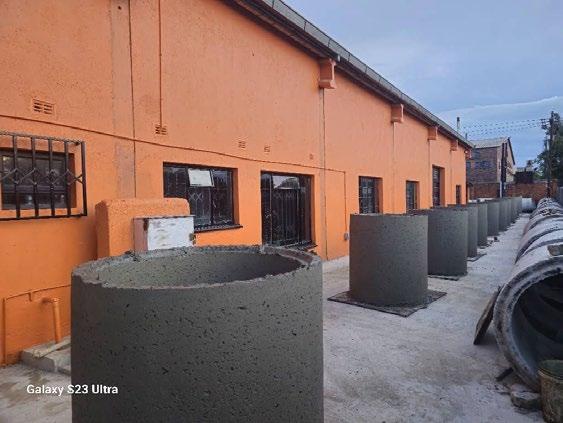
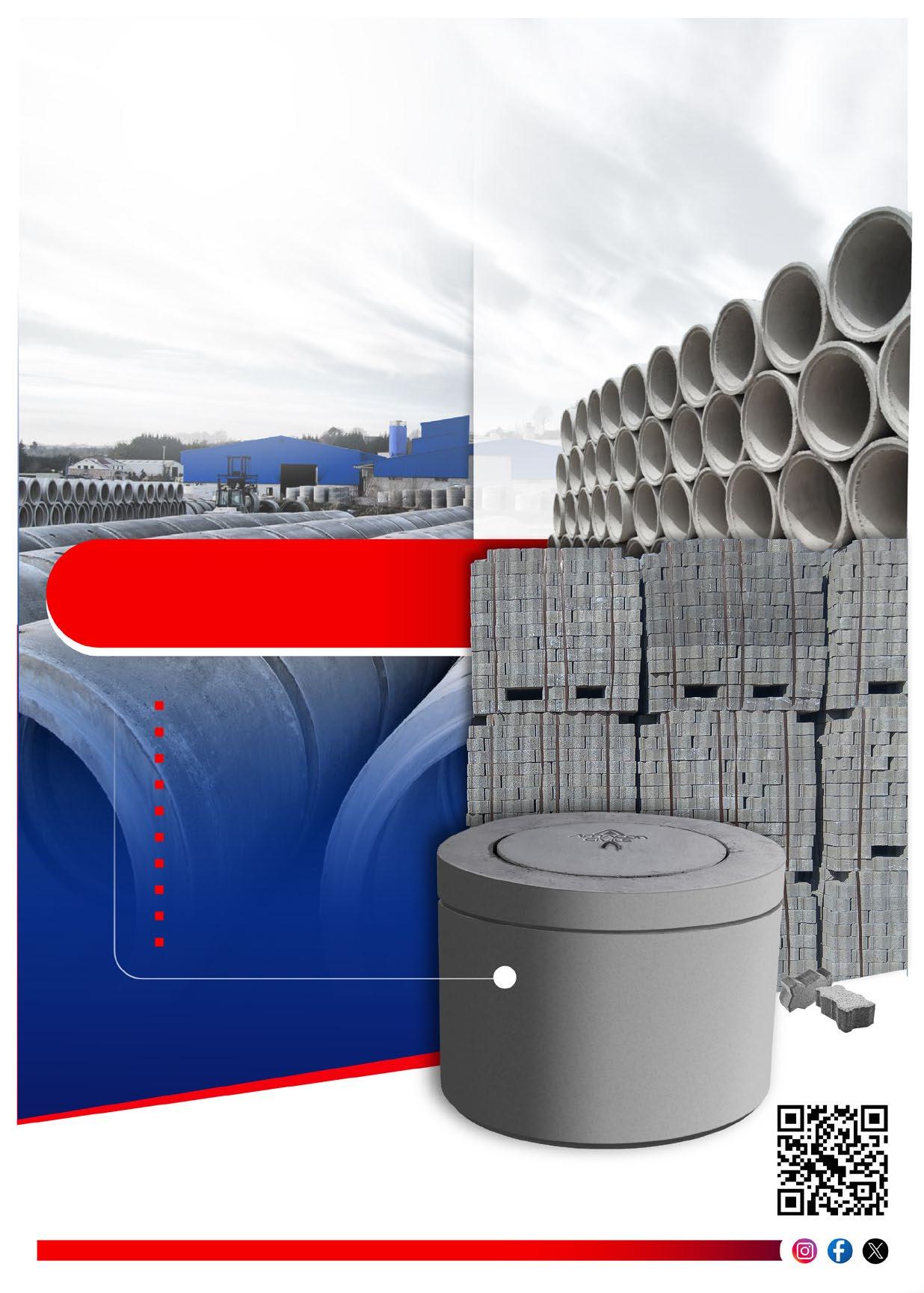
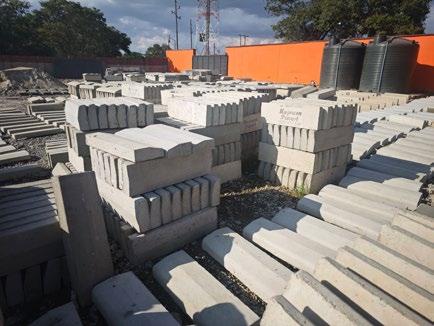
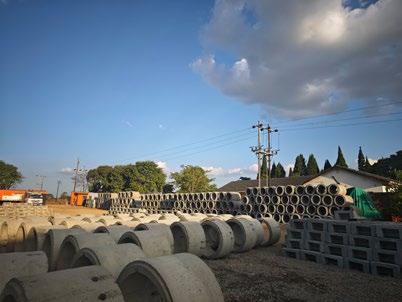
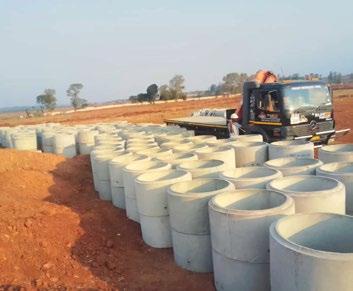
The Majorcon production yard tells the story before a word is spoken. Stacked in precise rows are culvert pipes from 300mm to 1200mm in diameter, kerbstones of multiple profiles, manhole rings, lintels, wall copings and paving slabs all bearing the consistent finish of standardized mixing ratios and disciplined curing.
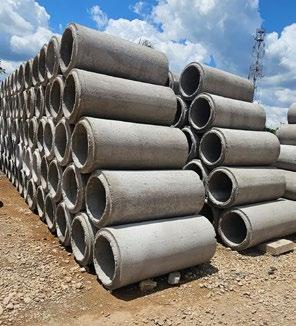
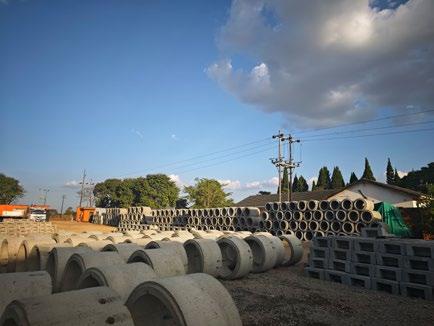
Multiple dedicated production lines run simultaneously across our two sites the Main Plant and head office in Norton plant and a one stop facility at Rera giving Majorcon the flexibility to manage demand spikes and maintain supply continuity.
The production management methodology is drawn from the Theory of Constraints a manufacturing discipline that identifies the binding bottleneck and focuses improvement effort there. Cement and aggregate consumption per unit is tracked as a key performance indicator, ensuring both material cost control and product consistency simultaneously.
Majorcon manufactures across the complete precast concrete spectrum that Zimbabwe's construction sector demands:

Culvert Pipes — 300mm, 375mm, 450mm, 600mm, 750mm, 900mmand 1200mm
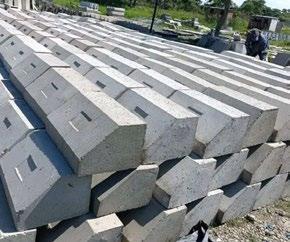
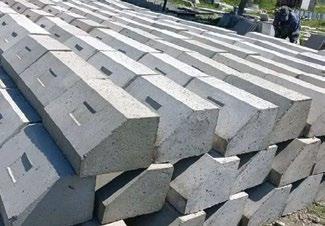
Kerbstones — Municipal, Light Duty, Heavy Duty and Hollow Mountable.
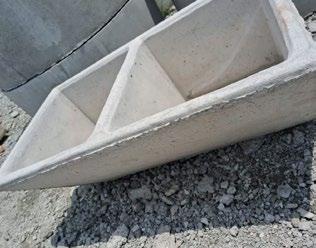
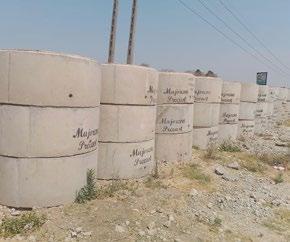
Manhole Rings and Lids — for water and sewer reticulation

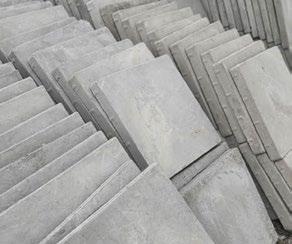

Wall Copings, Pillar Copings, Lintels, Paving Slabs

One supplier. One relationship. Your entire precast concrete requirement covered.
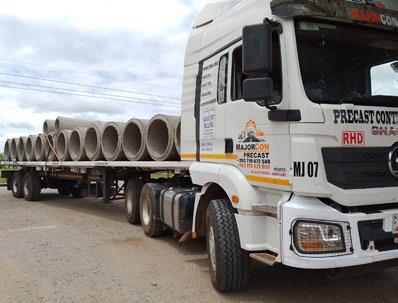
Combining Quality Products with Dependable Transport Logistics.
Majorcon Precast simplifies construction through quality precast products backed by reliable and affordable transport logistics.
With a dedicated fleet and machine-assisted loading and offloading systems, we ensure safe handling, timely nationwide deliveries, and professional service from production to project site.


Backed by a large scale production plant, in Norton and driven by the mission to provide durable precast solutions, our vision to become an industry leader renowned for excellency, quality, performance and reliability in service provision, Majorcon Precast has the capacity to efficiently meet the demands of projects of all sizes while maintaining high product standards and timely delivery.
Quality, reliability, customer satisfication drives Majorcon’ success and to remain a trusted leader in civils and structural engineering works

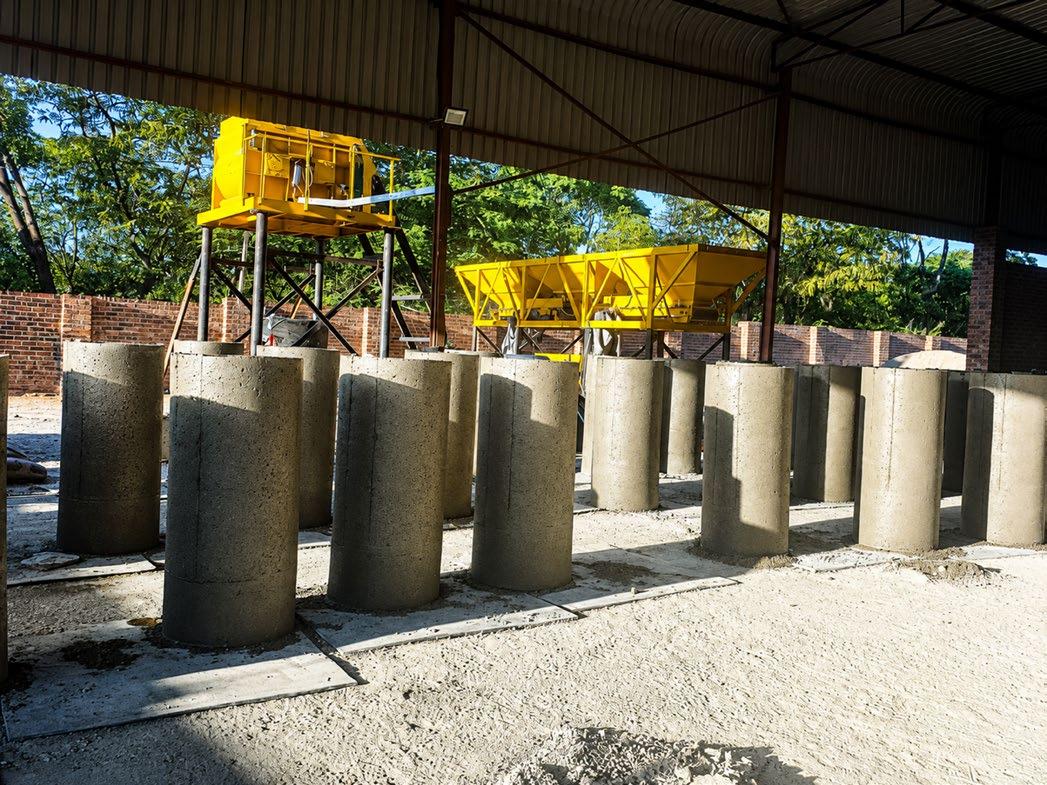

A standardized cement mixing ratio is maintained across all production lines with quality testing certificates being availed to clients. Majorcon embarks on a proactive investment in consistency that most manufacturers make only after complaints.
"Zimbabwe is building. Every road, every drainage system, every estate needs precast concrete. Majorcon is ready to supply it."


Majorcon's dedicated SHEQ function conducts daily inspections across both sites.
In Q1 2026, zero Lost Time Injuries were recorded — an outcome that reflects a genuine safety culture, not a compliance checkbox. A statutory Pneumoconiosis health screening programme, daily PPE compliance monitoring and structured toolbox talks protect the workforce behind every product that leaves the yard.
Norton product yard — culverts and kerbstones in stock, available for immediate collection or delivery.
Road construction contractors specify the Majorcon culvert range for stormwater drainage on projects across Zimbabwe's rapidly developing peri urban corridors. Residential developers specify kerbstones, copings and paving for estate infrastructure.
Local authorities, schools, churches and institutions order drainage and civil products for site development. Hardware retailers supply retail buyers from our smaller volume lines.
Majorcon is actively building its institutional supply pipeline engaging with Government Institutions, private players, local authority procurement offices, to partake in government and private infrastructure programmes.
This puts the organization in a position of being Zimbabwe's preferred precast concrete supplier at scale.

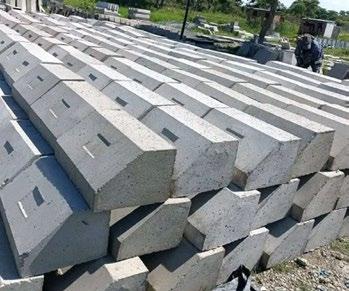

1. Full product range from 300mm culverts to paving slabs
2. Consistent quality standardised ratios and mould maintenance
3. Two site production Norton and Rera for supply continuity
4. Sameday quotes followed up within 48 hours
5. Delivery to your site Harare and surrounding areas
6. PRE AND Post purchase supply facility.



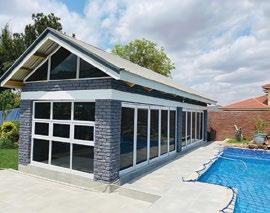
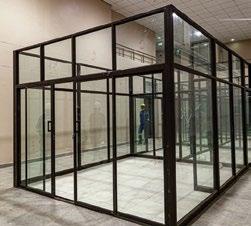
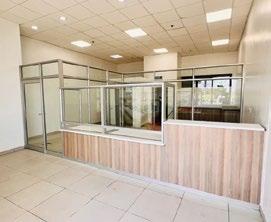
Alu-men Shopfitters is a premier shopfitting company specialising in aluminium fabrication and bespoke joinery.






info@alumenshopfitters.co.zw
Specialists in Aluminium Windows, Aluminium Sliding doors, Fitted Kitchens, Suspending Ceilings and all your Glazing requirements. Alu-men Shopfitters
0772 272 091/ 0772 460 615/ 0772 925 154

www.alumenshopfitters.co.zw alumen.shopfitters alumen.shopfitters

In the vibrant landscape of Zimbabwe's burgeoning construction and infrastructure development, every tender offer holds the promise of progress. From new schools in rural communities to urban housing projects and critical road networks, our nation is building.
But what happens when that promise turns into a costly setback?
For project developers and procuring entities across Zimbabwe, the risk of a contractor winning a bid but then failing to deliver can lead to significant delays, financial losses, and a dent in public trust. This is precisely where a Bid Bond steps in as your essential financial safeguard.
Think of it as the ultimate prequalification stamp for contractors. A Bid Bond, typically ranging from 2% to 5% of the total contract value, is a commitment from a reputable

Text by Patrice Chiremba
surety, like Credsure Insurance Limited (Credsure), that the contractor is financially capable and serious about undertaking the project if awarded. Without it, the door is open for "chancers" – those who might bid without the necessary resources, only to leave you in the lurch. Imagine a scenario where a local authority floats a tender for a new clinic.
Multiple contractors submit bids. If the winning bidder, without a Bid Bond, decides they cannot complete the project, the entire tender process grinds to a halt. Time is wasted, resources are diverted, and the community's access to vital healthcare is delayed.

However, with a Bid Bond from Credsure in place, that risk is mitigated. If the awarded contractor fails to proceed, the bond value is paid out to the project developer as a penalty.



























The local construction landscape is increasingly being associated with dynamism, where cranes rise and roads stretch toward progress. The rhythmic hissing of cranes can only be sustained by submitting and delivering according to expectations. A winning tender is not just a price tag and a timeline; it is a strategic pitch that assures excellent delivery to clients.
As contractors, we should prove that we are indispensable with quality execution of projects.
The sector is targeting over US$100 million in active projects by end of 2026 and companies that master the tendering process are securing more than contracts; are building reputations, relationships, and repeat business. The energy, innovation, and ambition potential is an essential panacea for upcoming contractors entering the industry. The opportunities are real, the market is growing and the association is here to support your rise in the construction future.
The success of a construction project begins with idea generation when crafting and submitting bid documents. Just by crafting a clear, compelling proposal with accurate costing, the success and quality of workmanship are predictable before the commencement of work.



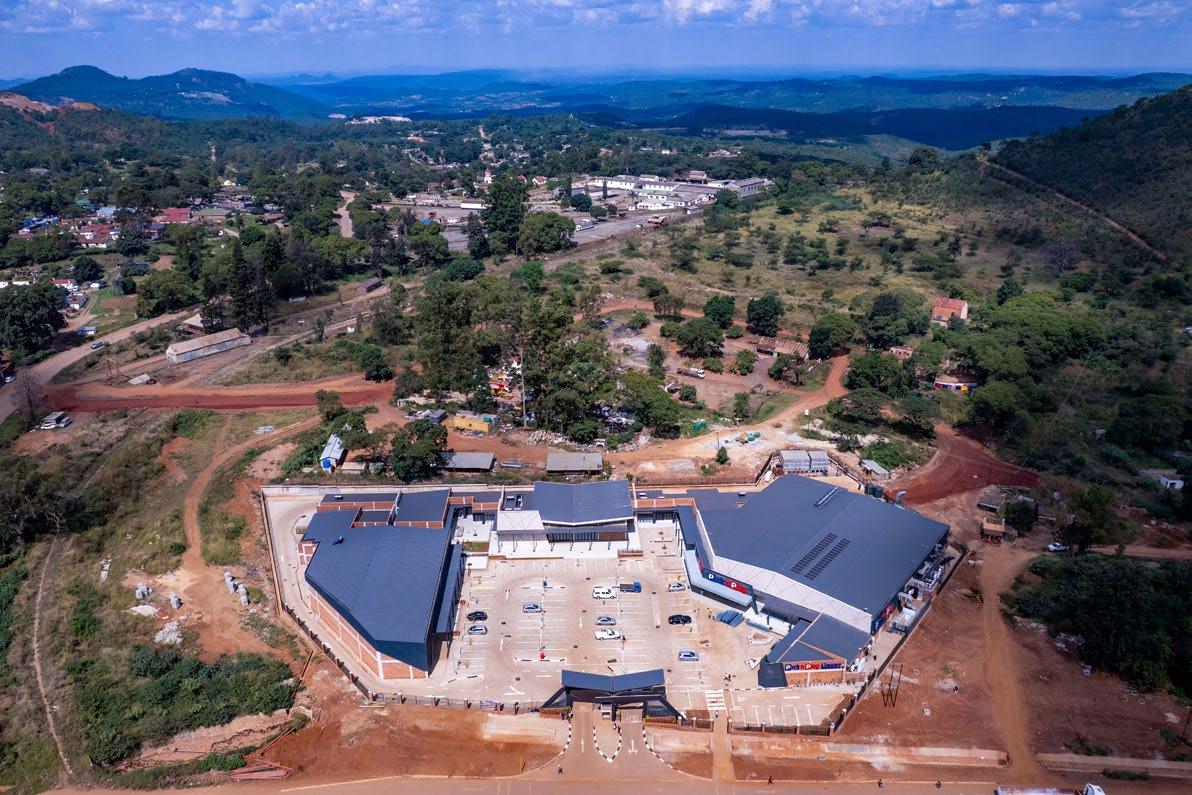

The quality of the bid submitted is your handshake; the best-built future starts with the best-written bid.
Smart tendering amplifies contractors’ opportunities to lead the transformation process towards the desired level of construction excellence. Smart tendering refers to the use of digital platforms and technologies by procurement regulators to streamline public procurement processes, enhance transparency and improve efficiency.
The government managed to adopt an Electronic Government Procurement (eGP) System, which is being managed by the Procurement Regulatory Authority of Zimbabwe (PRAZ).
This system allows government ministries and agencies to publish tenders, receive bids and manage procurement activities online. The enhancement of the adoption of smart tendering tools and practices allows contractors to become architects of a more transparent and accountable construction industry. These smart solutions are built to improve procurement process efficiencies, streamlining tendering and bid evaluations. Whether you are scaling operations or optimizing costs, smart sourcing is the modern answer.
As ZBCA, we are pleased to note that most of our members who embrace innovation are better equipped to meet international standards and have increased impetus to attract investors. This ultimately increases the country’s construction competitive edge in the region.
We implore upcoming contractors to be proactive in embracing the changing industry requirements and to become part of the future industry leaders. Smart tendering empowers contractors to build not only trust and resilience but also helps companies determine the future narrative of the construction sector.


Every resource in the economic framework has a scarcity cap. This includes the financial resources available for housing delivery. It is thus an opportune moment for the industry to focus on the adoption of “innovative financing models for Affordable Housing Delivery.”
Our visionary framework should be poised to catalyse housing development across Zimbabwe and the region, which inculcate inclusive access and financial innovation as priority. This calls for cross sectional collaboration to ensure we achieve the desired housing for our citizenry. The available housing mortgage facility conditions are generally skewed toward the income-stable population segment rather than low-income earners.


Low-income earners also have a strategic foresight of improving their shelter but are let down by the stringent mortgage system requirements, which negates the national vision of creating an Upper Middle Income Status Economy by 2030.
Shelter remains a critical asset class for household capital accumulation, with even low-income demographics allocating disproportionate expenditure toward incremental housing upgrades. The base-of-pyramid market in Africa channels over $330 billion annually into shelter-related outlays, yet structural financing deficit still persists.
In Sub-Saharan Africa, the absence of formal credit intermediation mechanisms has precipitated reliance on high-cost, informal financial instruments, exacerbating vulnerability thereby limiting scalability.
The need to adopt innovative financing models for affordable housing cannot be overemphasized in our quest to achieve affordable housing for all. Furthermore, the increasing costs related to land acquisition and construction materials has increased the financial challenge making affordable housing difficult to deliver.
Housing is not a luxury but a foundation for dignity, asset building and resilience. Several financial models can be leveraged by the construction sector, which include blended financial models, pay-for-success bonds, tax incentives for investment, housing trust funds and fintech credit innovations.
For the desired industry growth trajectory to be realised, we should continue to foster increased collaboration with Government and the Reserve Bank of Zimbabwe (RBZ) especially on finding solutions to sustainable increased tax
credits for developers, lobby for enhanced strategic PublicPrivate Partnerships (PPPs) opportunities and the need for the revision of mortgage accessibility frameworks to benefit the populace.
The RBZ wields significant influence over housing finance ecosystems through interest rate modulation and macroprudential oversight. Fintech platforms leveraging alternative credit scoring models such as mobile usage analytics can expand access to non-collateralized populace.
Policy instruments like tax-increment financing, developer tax credits and Opportunity Zone frameworks can incentivise capital flows to under-served markets.
Innovative vehicles such as pay-for-success bonds align investor returns with social impact metrics, while blended finance structures reduces default risk by layering concessional capital with commercial investment.
Establishing multi-tiered housing trust funds and enabling regulatory sandboxes for pilot financing models will further enhance capital mobilization. Ultimately the construction sector will leverage from unlocked scalable, risk-adjusted financing solutions which are imperative in bridging the affordability gap and deliver inclusive urban growth.
The Association recognises that affordable housing is a cornerstone of national development and social stability. In a challenging fiscal context, innovation is needed to stretch limited public funding and increase private sector contributions to help deliver affordable housing.






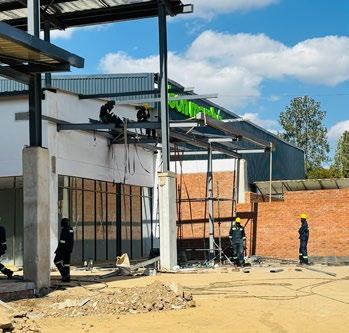


The construction industry extends beyond bricks and mortar as the human component transforms the brick and mortar into structures and projects. Engineers, surveyors, procurement officers, bricklayers, assistants and administrators form the backbone of the sector. Their health and well-being is the true pillars of progress.
There has been global rise of chronic diseases and weather driven conditions like common colds and flue in winter. High blood pressure, sugar diabetes and cancers among other diseases affect both male and female employees which can significantly affect production if not monitored .
Late diagnosis often leads to prolonged absence from work, mental health distress and project delays. Male breast cancer approximately 1% of global cases yet that small percentage translates into thousands of lives affected. For Zimbabwe, the National Cancer Registry reported in 2022 that breast cancer accounted for 21% of female cancer cases, with 1,807 new diagnoses and 915 deaths.
The World Health Organisation (WHO) further warns that by 2050, annual global cases could rise to 3.2 million, disproportionately affecting lowincome countries. WHO reminds us that “approximately 80% of breast cancers occur in women with no specific risk factors other than sex and age,” underscoring the need for universal awareness.
The Ministry of Health and Child Care has emphasized that noncommunicable diseases (NCDs) are now a leading cause of deaths in Zimbabwe, accounting for 39% of all fatalities. The World Health Organisation’s 2023 research confirms that cardiovascular disease, diabetes and chronic respiratory illnesses are rising sharply in Africa.
Contractors must therefore broaden their vigilance beyond chronic diseases and also take seasonal illnesses seriously.
The winter season of 2026 brought heightened risks of influenza, pneumonia and respiratory infections, which compounds absenteeism and productivity losses. Healthy workers mean fewer delays, stronger morale and consistent delivery of projects within set timelines.
We are strongly encouraged to conduct regular screening, partner with health organisations, provide flexible schedules for affected workers and create conducive work-stations for health education.
Let us build with compassion, safeguarding the lives of those who shape the future narrative of the industry. By integrating health awareness into our sectoral strategy, we secure the resilience of our industry.
The construction sector must be the industry that constructs Zimbabwe’s future while protecting the very people who lay its bricks.






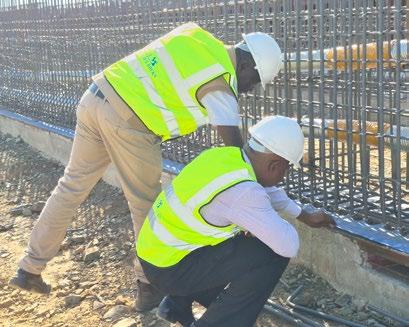
The construction industry embraces and celebrates a new era of opportunity, resilience and growth due to the transformative impact of the Zimbabwe Industrial Reconstruction and Growth Plan (ZIRGP). The strategic blueprint, launched in 2024, has become a cornerstone for the revitalisation of the construction sector.
ZIRGP was designed to address post Covid-19 economic challenges and realign industrial development with the national vision of achieving an Upper-Middle Income society by 2030.
The growth plan’s emphasis on formalizing the economy, streamlining registration and reducing licensing barriers is yielding transformative results as it opened doors for small and medium contractors to participate in national projects with greater ease.
Under ZIRGP, government-led infrastructure initiatives ranging from road rehabilitation, residential schemes and industrial infrastructure development have surged. This has caused a ripple effect across the construction value chain, increasing contractors’ access to tenders, improved procurement systems and more predictable project pipelines.
The plan encouraged the use of local materials and suppliers thus reducing reliance on imports. Downstream, it lowered costs involved in international procurement and fostered strategic integration between contractors and manufacturers.
The blueprint enabled private sector to actively engage with government in shaping and implementing strategic construction interventions.
As the country moves towards the next phase of its industrial journey, the construction sector is poised to play a leading role in shaping the nation’s future.
With bricks laid by local hands and blueprints forged in the nation’s vision, Zimbabwe’s construction renaissance is more than a policy, it is a movement.
The ZIRGP is not just scaffolding, it is the backbone of a bold new era. As cranes rise and skylines shift, the country is building confidence, capacity and a future rooted in selfreliance.
The foundations are set, the momentum is real and the skyline of tomorrow is unmistakably Zimbabwean.


















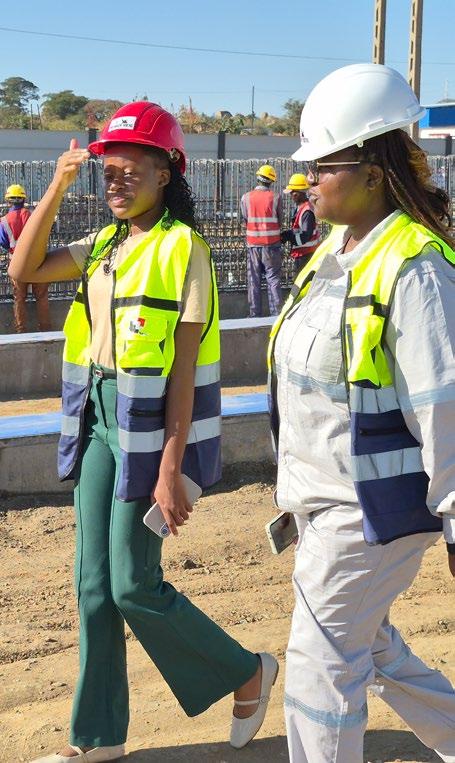


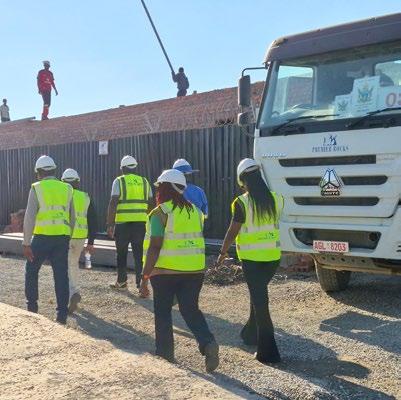



The construction industry in Zimbabwe is experiencing a powerful transformation. An era marked by the rise of women who are breaking barriers and reshaping the future of the built environment. Once seen as a male dominated sector, construction is now being energized by women whose resilience, innovation and leadership is driving sustainability and inclusivity across projects and enterprises.
The growing presence of women in the sector is strengthening the industry’s capacity to deliver climate resilient housing, modern infrastructure and urban renewal solutions. This revolution is being propelled by national efforts to empower women entrepreneurs. Government interventions through agencies and ministries such as the Ministry of Women’s Affairs and Community Development, the Women’s Bank of Zimbabwe and other support organisations. The increased support has opened pathways for women to access finance, own businesses and compete for opportunities in major national projects.

These initiatives are unlocking the potential of women contractors to stand at the forefront of economic transformation. For ZBCA, championing women in construction is both a strategic and moral imperative. Through the Women’s Desk, the Association has committed to mentoring, capacity building and advocacy, ensuring that women contractors gain the knowledge, support and recognition they deserve.
This platform is nurturing a new generation of leaders who will thrive in shaping Zimbabwe’s construction future. Our engagement at the Women in Construction Conference and Awards in 2025 reaffirmed this vision, positioning ZBCA as a progressive and responsive association aligned with national and regional efforts to promote gender inclusive growth


Empowering women in construction is a catalyst for innovation, competitiveness and sustainable development.
As Zimbabwe advances towards uplifting its infrastructure, women contractors will be pivotal in building an inclusive and a prosperous nation.
The Association calls upon all stakeholders to continue breaking barriers and building futures, ensuring that women are recognized as equal partners in building Zimbabwe’s future.

































































































































Eng Joy Makumbe Permanent Secretary in the Ministry of Transport and Infrastructural Development
When PASSION meets DETERMINATION, you get the MOMENTUM.
I am Chihera by birth and an Engineer by choice. I am passionate about making positive impact in the communities around me. Changing their lifestyles for the better; safe drinking water, a functioning sewer system, accessibility to areas of business and health centres.
When you are passionate about something, you have the why, the fire, the meaning, and reason that keeps you pushing even when it is difficult. Determination gives you the how, the discipline, the persistence and the refusal to quit.
These two together will turn your dreams into practice and your practice into results. In real life, you don’t just feel motivated, you actually show up.
You don’t just hope things work, you work until they do. Setbacks don’t stop you but they teach you and fuel your next attempt.
Passion starts the journey but determination is what helps you reach the destination.
I have experienced setbacks on my tech journey where you feel throwing in the towel is the most logical thing to do, but determination has kept me in the ring.
Knowing that the community needs me and I owe them at least some effort, having supported a young girl from Seke, who started off by making toy cars from scraps of wire, to be the Engineer she is today.
What are you passionate about?
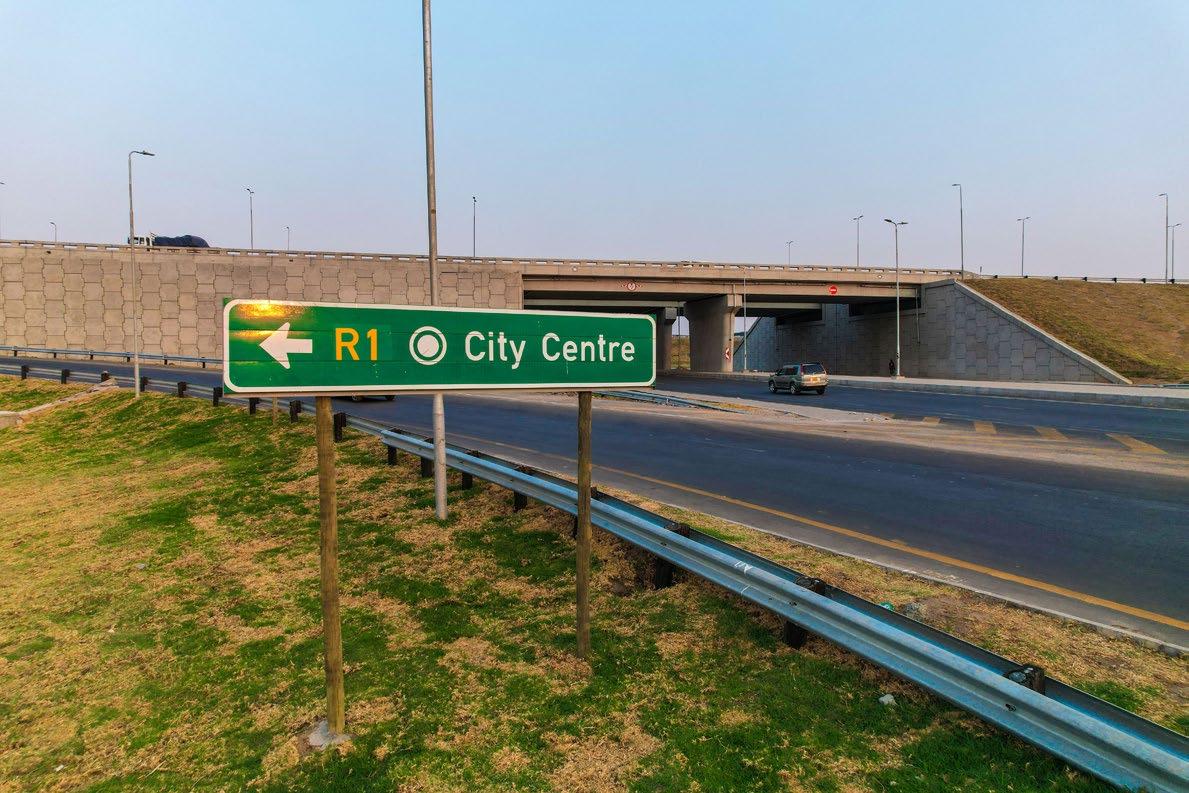









The Zimbabwe Building Contractors Association (ZBCA) has set a new benchmark in the nation’s built environment with the official launch of the ZBCA Academy and the Construction Magazine. First unveiled at the 2025 Annual Conference in Nyanga, these platforms are already redefining the industry narrative. The publication of this magazine is a proud celebration of the release of Issue 2 of the Construction Magazine. This testaments to ZBCA’s agility and commitment to innovation.

In a dynamic business environment where innovation is the lifeblood of success, the Academy and the Magazine stand as strategic pillars for contractor empowerment. The Academy is designed to professionalize the sector, elevate standards of quality, integrity and compliance. It further embeds competitiveness and technology into everyday practice.
The academy offers structured, continuous learning opportunities that will equip contractors to build a stronger and safer construction future. Courses will be delivered in collaboration with universities, polytechnic colleges and vocational institutes, ensuring that knowledge dissemination is credible, diversified and practical. Importantly, the training vehicle is open to partnerships with institutions and industry players, creating space to diversify expertise and improve the quality of training offered to contractors.
Complementing this vision is the Construction Magazine, which has quickly established itself as the official voice of the sector. It serves as a communication and advocacy tool that strengthens the voice of contractors that promotes networking among stakeholders.
Emphasis is also reinforced as it positions construction as a driver of national and regional development. With Issue 2 now in circulation, the Magazine continues to provide timely updates on regulatory adjustments, industry achievements and emerging trends. It is a platform for cross pollination of expert ideas, enabling technocrats to dissect and debate critical issues such as green building, digital construction technologies and sustainable infrastructure.
The Academy and the Magazine belong to all of us. They are platforms to learn, to share and to grow. They serve as instruments of transformation that will professionalize the sector and ensure contractors are equipped to thrive in a rapidly changing environment.
Let us invest in ourselves, in our people and in the future of Zimbabwe’s construction industry.


As Zimbabwe charts its path toward climate resilience, the construction industry stands at a defining crossroad. The upcoming Climate Change Management Bill (H.B. 5 of 2025) is a blueprint for transformation, reshaping how infrastructure, housing and industrial projects are executed.
For contractors and stakeholders in the built environment, this Bill signals a decisive shift from business as usual to building with a purpose. Those who help shape the narrative today will be the ones constructing tomorrow’s resilient Zimbabwe.
The Bill introduces new expectations that will redefine project design, tender eligibility and access to climate finance. Contractors who engage early in the legislative process will gain a competitive edge in a market increasingly driven by environmental stewardship.

Once enacted, compliance with emission standards, carbon levies and green building codes will become prerequisites for securing both public and private projects. Importantly, the creation of the National Climate Fund offers contractors who embrace low carbon and climate resilient practices a golden opportunity to access financing for innovative projects.
Beyond compliance, the Bill positions construction as a key driver of sustainable transformation.
A carbon trading and emissions accountability system will elevate environmental performance into a central metric of operational planning. Contractors must therefore invest in climate smart designs, energy efficient technologies and water conserving techniques, as future government, private sector and donor funded projects will prioritize sustainability.
Those who embed these competencies into their operations will secure a competitive advantage in tendering.
At present, the Bill is undergoing Parliamentary Public Hearings, offering contractors an auspicious opportunity to shape its implementation. By actively engaging in consultations, offering feedback and advocating for practical strategies, the industry can ensure that the legislation is both visionary and workable.
The Climate Change Bill is a business imperative. In this era of green mandates, the opportunities are golden: to lead, to innovate and to elevate the construction industry into a beacon of sustainability and excellence.



Stop roofing twice. Roof once with Harvey.

Sabelo Pride Ncube Architect - Director BTI, SIRDC

Harare and Bulawayo are cities alive with ambition, yet weighed down by the realities of overcrowded housing, crumbling infrastructure and a parking crisis that has turned every trip into a test of patience. For many residents, the daily grind of circling for a parking bay or enduring hours in traffic has become a symbol of urban frustration. But what if these struggles could be turned into opportunities? What if our cities could think, breathe and respond in real time?

The pandemonium amplifies the need for a Digital Twin Technology. This is an innovation that creates living and virtual replicas of our urban systems. Imagine a city mirrored in data, where every building, road and parking lot has a digital counterpart. Planners ought to be ahead of time and should simulate the impact of new housing before a single brick is laid, predict parking demand before congestion builds and engage citizens in shaping developments they can see and understand.
The narrative behind is to ensure cities evolve in tandem with regional and global trends .
In housing, digital twinning offer a way out of chaos. Cluster developments that once strained water, power and waste systems could be tested in advance against infrastructure capacity .
Energy and resource flows could be monitored continuously, lowering costs and improve quality of life. In mobility, the transformation is equally important as up to forty percent of traffic in Harare’s CBD is caused by drivers scouting for parking.
Businesses are abandoning downtown for suburban malls, leaving the heart of the city hollow. Real time parking guidance would slash wasted search time, dynamic pricing would balance demand and predictive analytics would ensure new facilities are built where they are factually needed. International studies show search times cut by a quarter, congestion reduced by thirty percent and energy use improved by nearly twenty percent.
The journey will not be instant. It must begin with pilot projects in housing clusters and parking facilities, gradually
expanding to neighborhoods and ultimately integrating into full urban management systems. This phased approach ensures ambition is matched with feasibility and that resource constraints do not stifle innovation.
Yes, barriers exist, fragmented data governance, infrastructural deficits and low digital literacy. But enablers are fast increasing which include affordable sensor technologies, supportive national policy, growing awareness and lessons from best practice for example in reference to Addis Ababa, Cape Town and Tshwane among other cities. Zimbabwe can learn, adapt and lead.
Indeed digital twinning is a paradigm shift. It is the chance to build cities that are smarter, greener and more humane. By embracing this innovation, our cities can become living breathing ecosystems where housing is dignified, mobility is seamless and governance is research based.
If we fail to adapt we die. Digital twins are the blueprint of the future which transform data into decisions and decisions into sustainable cities.


Bietar Civil Contractors is a premier provider of mechanized and technological structural and civil engineering solutions. We prioritize safety, efficiency, and sustainability to deliver client-driven results across Africa Road Construction: Gravel, concrete, paving blocks, bitumen roads, and drainage systems.



and high-rise commercial, residential, and institutional buildings.








• Proud member of ZBCA and fully compliant with ZIMRA, PRAZ, and NSSA.






• Equipped with a robust in-house fleet including HOWO Tipper Trucks, CAT Graders, Excavators, and Dozers.
• Trusted by major clients for massive projects like the Mabvazuva Housing Estate and Feckenham Arcturus Road constructions.



The nexus was a grand convergence of stakeholders in the build environment value chain, all united by the shared vision of shaping Zimbabwe’s construction future.



On 15 May 2026, the manicured greens of The Country Club in Newlands became the stage for one of the most highly subscribed and talked-about industry gatherings of the year, the ZBCA Golf Day. What unfolded was far more than a sporting event. opportunities and potential partnerships.









The Golf Day embodied ZBCA’s reputation as a built environment powerhouse that blends leisure with legacy. From the early morning tee-offs to the vibrant networking lunch and the glamorous prizegiving ceremony, the event was a masterclass in how sport can be transformed into a strategic platform for collaboration, fundraising and strategic brand visibility.

The relaxed environment fostered authentic conversations that boardrooms often fail to ignite, while the scenic setting reinforced ZBCA’s forward-looking image as an association that values professional excellence and strategic net-weaved social relationships.

The prize-giving ceremony crowned the day with prestige, celebrating excellence in precision and sportsmanship.
Winners walked away with prizes that blended utility with recognition. The applause echoed the spirit of camaraderie and
Beyond the trophies and laughter, the true victory lay in the strengthened industry relationships and enhanced visibility of brands. As the sun dipped over The Country Club, the event left an indelible mark.
The ZBCA Golf Day 2026 inculcated swinging beyond boundaries, laying foundations for a stronger, more connected and globally competitive construction sector.





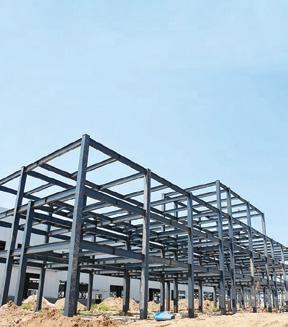

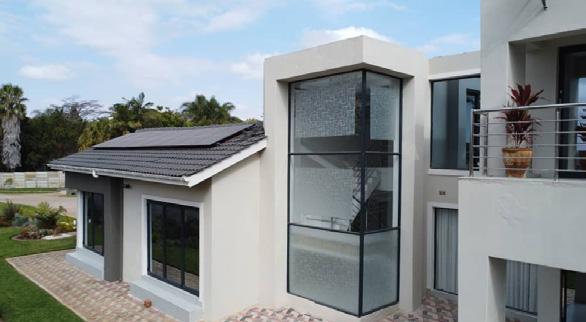
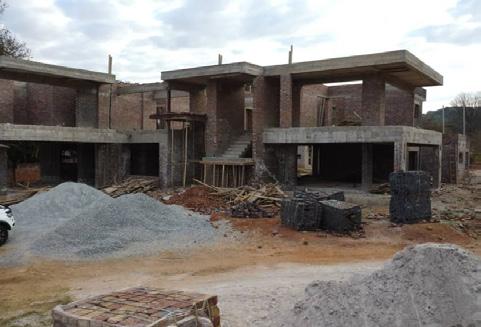
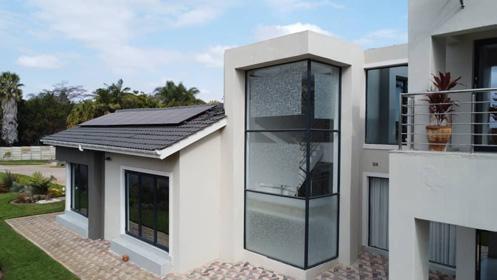




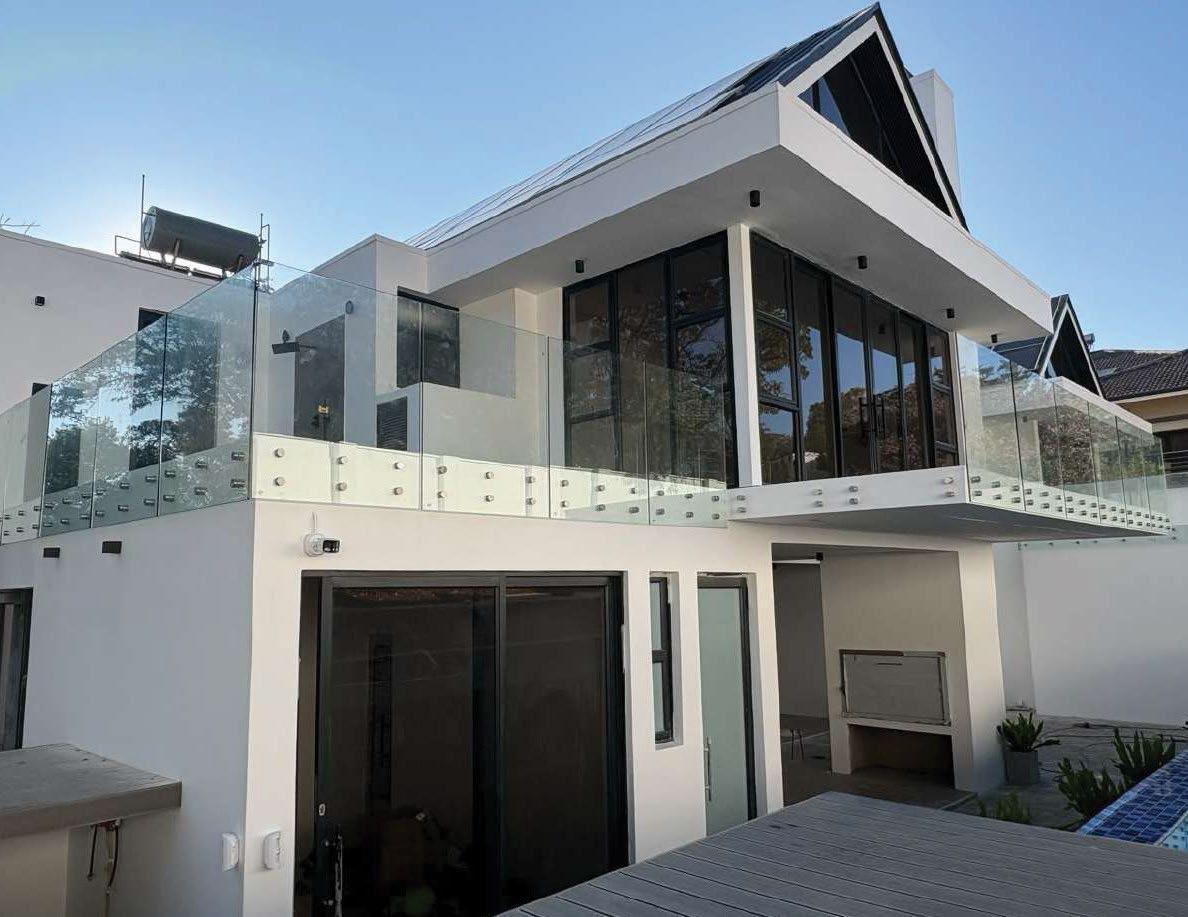
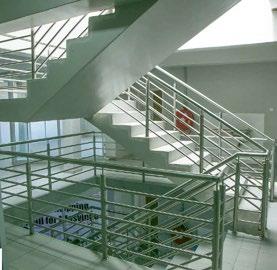
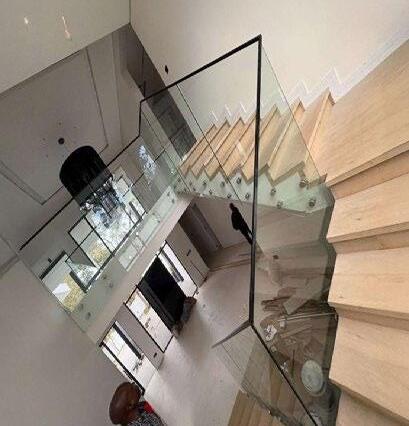
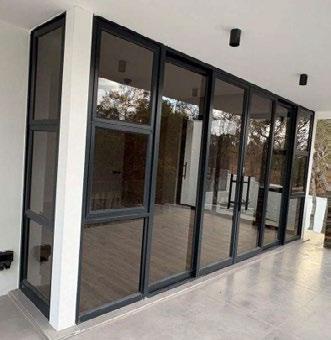


Our Services
Aluminium Windows
Aluminium Galaxy Doors
Aluminium Folding Doors
Curtain walling
Flash Glazing
Stainless Steel Balustrades
Suspended Ceilings
Office Partitions
Aluminium Shower Cubicles
Frameless Shower Cubicles
Mantrap Doors


The Young Contractors’ Desk marks a defining moment in the nation’s journey towards empowerment and prosperity. It re-ignites confidence to the youth of Zimbabwe to rise, claim their place in the construction industry and become architects of transformation .
Construction involves shaping communities, creating livelihoods and laying the foundations of the Built Environment’s future. For young people, becoming contractors is an act of ownership and a declaration that the destiny of Zimbabwe rests in their hands. It is a pathway to economic empowerment, innovation and leadership.

Through the Young Contractors’ Desk, opportunities are abound. The oppotunities cascade from rehabilitating sewer and water systems to restoring irrigation schemes, and building work-spaces for businesses.
The Desk is a platform where youthful ambition meets national aspirations and where every project undertaken becomes a binocular that the desired infrastructure ecosystem is certain. The call is clear; Zimbabwe’s youth must see construction as a noble, rewarding and a transformative business path.
The Young Contractors’ Desk is the stage and the youth are the protagonists of a new chapter in infrastructural development.
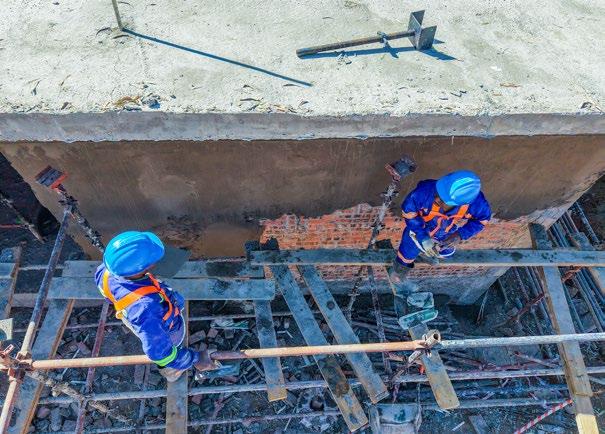




In the architecture of Zimbabwe’s construction industry, the Zimbabwe Building Contractors Association (ZBCA) stands as the premier custodian of professionalism, influence and opportunity. Belonging to the ZBCA ushers an organisation to be woven into the fabric of national development, to stand among the vanguard shaping the country’s infrastructural destiny. ZBCA offers three distinct yet complementary pathways of membership: Contractor Membership, Associate and Student Membership. Contractor Members are stratified into Category A through to Category H, reflecting their operational capacity and contract thresholds. At the apex, Category A contractors are entrusted with projects of a minimum value of US$6 million, symbolizing mastery of scale and complexity.
At the foundation, Category H contractors engage contracts capped at US$250,000, representing the agile, emerging enterprises that form the lifeblood of grassroots development. This tiered system ensures that every contractor, regardless of size, finds a place within the Association’s ecosystem of growth, mentorship and recognition. Associate Membership, on the other hand, opens the doors of collaboration to suppliers, service providers, and other Built Environment Value



The year 2026 started with a strategic jump-shot for the construction sector. On 26 January 2026, the Minister of Transport and Infrastructural Development Honourable Felix Mhona called for an urgent meeting to discuss the state of the country’s roads. The Agenda focus was on the state of the nation’s road infrastructure which had been affected by the incessant rains during the 2025-2026 Agricultural season.
community and national prosperity must flow. The slow pace of development in the Matebeleland Provinces was spotlighted as a matter of urgency, while bus routes and transport corridors were elevated as sacred conduits of national connectivity that demanded immediate attention.
crystallized a strengthened partnership with ZINARA to accelerate rehabilitation, the commissioning of asphalt plants across four provinces to ease access of materials.
The Whole of Government Approach was heralded as indispensable, encouraging local authorities to shoulder a continuous role in road maintenance to ensure sustainability.

every bridge reinforced is a testament to resilience, every feeder road restored is a promise of empowerment to communities.
The highways we lay today are corridors of hope, avenues of renewal and symbols of a nation determined to develope.




Industry leaders and government represented gathered during the genesis period of the year to craft a visionary road-map to collectively address the challenge. The discussions were charged with resolve, as highways and rural feeder roads were recognized as the very arteries through which the lifeblood of commerce,
Contractors through their representation spoke with conviction, demanding the dismantling of bureaucratic bottlenecks notably in the payment of projects, taming of roadside vegetation and the enforcement of engineering standards. Their voices carried the determination of a sector ready to lead. The Honourable Minister responded with pledges of transformative redress. Strategic commitments


In a gesture of empowerment, the Ministry signaled readiness to champion contractors through liaison with relevant ministries for tax holidays on imported equipment and consumables during the emergency road rehabilitation period. This engagement was a trumpet blast announcing a new era for Zimbabwe’s construction industry.
With vision, resolve and unwavering commitment, contractors are driving road rehabilitation forward, shaping Zimbabwe’s tomorrow with grandeur of purpose and majesty of transformation.
It re-emphasized the position contractors as architects of transformation and custodians of national destiny.


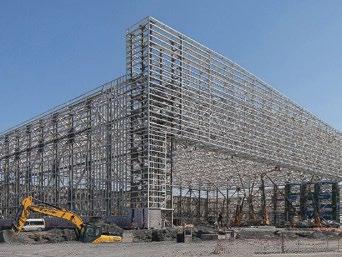




Every kilometre rehabilitated is a stride toward prosperity,













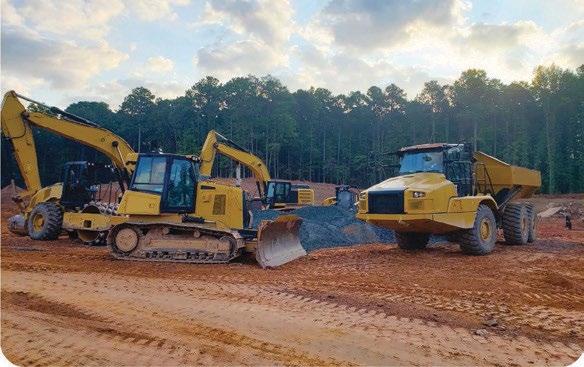



Zimbabwe’s construction sector stands at the threshold of a new era defined by reform, innovation and collaboration. The Ministry of National Housing and Social Amenities has reaffirmed its commitment to making housing delivery affordable and accessible, tackling challenges such as high mortgage interest rates and outdated legislation.
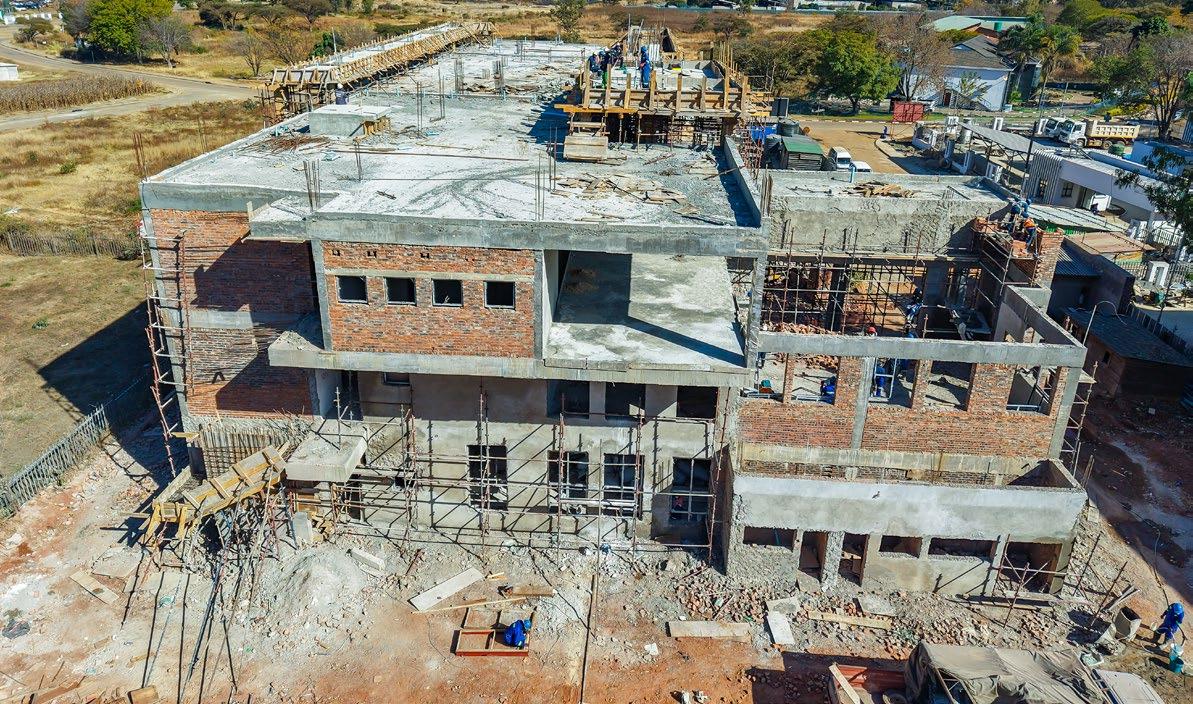
It is now a vital necessity that we emphasize the importance of planning housing developments right the first time, advocating for integrated systems such as centralized housing gas networks.
Furthermore, we should ensure that projects are completed within set timelines and meet desired standards. Contractor empowerment remains our cornerstone, positioning members as architects of resilient communities.
The upcoming 2026 National Housing Investments Conference to be hosted by the Ministry of National Housing and Social Amenities will deepen collaboration, unlock innovative financing models and strengthen accountability.
the housing target underscores a vital truth that housing delivery is not about numbers alone. It further entails dignity, inclusivity and creation of decent shelter for all citizens in urban, rural, farming and communal communities
This renewed era of collaboration is a clarion call. We stand ready as a strategic partner in national development, ensuring that contractors rise as custodians of excellence and transformation. Indeed every brick laid is a promise kept to families, communities and the nation.
Let us build with vision, integrity and purpose.






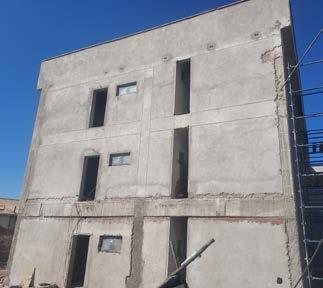





Hazvinei Sakupwanya Principal Architect - Saku Design Studio Registrar - Architects Council of Zimbabwe
In Zimbabwe, before you start building, whether for commercial or residential purposes, you must carefully evaluate the land legality, zoning, financing and compliance with local authority regulations. Skipping due diligence often leads to costly disputes, delays or even demolition orders.
You have found a piece of land you want to purchase, what’s next? Some of the questions you should be able to answer are whether the stand is in the right area, is it serviced and are there basic social amenities nearby which include shops, clinics or hospitals and schools?
Before you put in an offer, due diligence must be done first. If you are working with a real estate agent, are they registered with the Real Estate Agents Council? Do they have the seller’s mandate to sell the property they have advertised? Does the land have a title deed or lease arrangement in the case of land owned by a Municipality or Rural District Council?
Verification with the Deeds Office will help you confirm the ownership status of the property and if there are any caveats (these are legal instruments that prevent transactions on that specific property), any mortgage issues or pending unsettled loans where the property was used as security or collateral.
This will go a long way in protecting you against fraudulent land sales or transactions that can be disputed in future. For new developments, sub-division applications must be approved by the local authority and the layout submitted to the Surveyor-General’s office. A certificate of compliance must be issued by the local authority. This will certify that the developer met all the requirements laid out in the development permit.

You have a dream that you would want to realise in bricks and mortar. A house, a warehouse or residential flats? The question is, where do you start? What expertise do you require?
Where are they found? In this article, we are going to help you navigate all these questions.
These requirements include the construction of roads, stormwater drainage, water reticulation, sewer reticulation and power supply. It safeguards you from demolition emanating from illegal construction, which has been rampant around the country. Sub-divisions have different categories meant for different land uses.
This affirms the notion that not every stand is meant for housing. There is space allocated for schools, churches, shopping centres, industries, markets, medical facilities, filling stations and other amenities required by communities. Ensure that you purchase a stand that is zoned for the development you intend to undertake.
For example, not every residential stand is suitable for flats or cluster houses. Each local authority has a map that indicates the land use zones for the district or area of responsibility. This is usually displayed in each planning office so that you can confirm relevant information related to land use zoning and location before you purchase where the stand .
The local authority will then furnish you with information such as building control lines, access roads, sewer and water reticulation and power lines. Data relating to height control and coverage areas (the percentage of the property you are allowed to build) is key as it will be required by your architect.
Land use planning is governed by the Regional, Town and Country Planning Act, which local authorities implement through master plans and local development plans.
Many people rush to identify a builder but the first step before you start a project is to engage with the correct design professional. These professionals are known as Architects and their conduct is governed by the Architects Act. The Architects Council of Zimbabwe registers these professionals and ensures that their conduct is ethical and in accordance with the law.
The promulgation of SI56 of 2025 recognises other design professionals such as technologists, technicians and draughtspersons. You can engage these for residential projects and smaller cluster housing complexes. For commercial, industrial and multi-unit residential complexes like flats and gated communities, you need the services of a registered architect. The list of registered architects and architectural professionals is available from the Institute of Architects of Zimbabwe. You can select an architect based on their experience and their capabilities to deliver the project that you want. A registered architectural professional safeguards the interests of the client and ensures that the design meets the Client’s requirements, complies with development controls as well as the building by-laws. The ultimate goal is to ensure that the structure can be constructed safely, without becoming a hazard to people’s lives.
When you engage your architect, you can explain the specifications of what you hope to achieve on your property. The Architect will then design a brief from your “wish list”. For larger projects, they can conduct a feasibility study. This looks at how the project will be executed, the investment required and the value that the design will unlock to the community. It takes into consideration the available services, accessibility, opportunities and drawbacks of the site and how these can be optimised. The feasibility report will assist the client in making a decision based on an objective feasibility study. Architects take into account the client’s requirements and the visual appeal of the building.
The initial design is then presented to the client for their feedback and comments. If there any adjustments that are required, the architect works on these changes until the client is satisfied. This is a vital process and may take some time. It is important for both parties to be patient. Once the client has approved and signs off on the final design, the architect then proceeds to the construction information known as working drawings. In the working drawings, the architect specifies the materials that are going to be used, door and window schedules as well as the finishes.
It is important to note that an architect does not work in isolation as he or she collaborates with the client, structural engineers especially in instances where the building has more than one story and a quantity surveyor who measures and develops a Bill of Quantities which informs the construction budget.
The working drawings once completed, are submitted to the local authority for approval. It is advisable to ensure that plans are approved prior to construction. The local authority will scrutinise the drawings and ensure they comply with
sound construction requirements, ventilation and fire safety codes. The construction code that is used as the benchmark by many local authorities is the Model Building By-Laws.
If there are elements that the local authority is not satisfied with, they will require the architectural professional to make the necessary corrections. Once all the departments are satisfied, the local authority will issue a building approval form which must be completed by the contractor when commencing construction works. On large projects, the tendering process can run concurrently to the building plans approval process. Tendering is a process used to select a building contractor. Tenders come in various forms which can be open or closed tenders. Closed tenders consist of a selected number of contractors who are invited to bid to undertake the work.
Open tenders are usually government projects which are open to anyone who meets the requirements and are then adjudicated by the procuring entity. In private practise, the Quantity Surveyor carries out the adjudication of the tenders based on the price competency and methodology that the contractor will have outlined in their documentation. After an adjudication is done, the tender is awarded to the best contractor. Normally, an adjudication committee awards the contractor who is best fit for the job and not merely on the lowest price. Contracts are then signed before the contractor mobilises onto the site and takes possession of the site. On projects where contractors are appointed through the tendering process, contracts are usually fix and supply where the contractor provides all the building materials.
For smaller projects such as private residential development, the client may opt to self-purchase materials and supply as and when the contractor requires them. This may take a bit longer though it appears more convenient to most small clients as it enables them to manage cash flows. For the Greenfield development where the land was never been developed before, an Environmental Impact Assessment (EIA) is required. EIA are also required for facilities that handle hazardous substances such as fuel service stations and pharmaceutical manufacturing plants. Approval can take approximately 3–6 months.
The EIA process includes stakeholder engagement with residents that live within the proximity of the proposed facility and will be requested to give their input and view on the impacts of the project. It is important that the client or developer responds to the concerns that may be raised during this consultative process to ensure that the project does not disturb the way of life of the community.
The developer or client will also need to adhere to the mitigation plan. This is a template of how the developer will respond to any environmental issues that may arise during construction or operation of the facility after completion. As you can see, construction is more than just bricks and mortar. It is an entire ecosystem with various professionals that work together as a team to ensure that you, the Client realise your dreams or investment. From purchasing your land to holding the keys, there is a professional to get you there.



Why "building" is both a verb and a noun—and how sustainable practices are transforming Zimbabwe's infrastructure landscape.
In the vocabulary of modern development, "building" is a unique word. It is both an active verb representing the relentless act of design, sourcing, and physical assembly—and a permanent noun, representing the solid, enduring structures where Zimbabweans live, work, and dream.

As we steer our sector to understand the urgency of sustainability, we must realize that how we build (the verb) directly dictates the legacy of what we leave behind as a building (the noun). With 80% of the buildings expected to stand in Africa by 2050 yet to be constructed, the choices we make today represent our greatest leverage point in the fight against climate change. Embracing green building is no longer a luxury; it is a profound economic, environmental and developmental necessity.
The built environment is globally responsible for nearly 40% of energy-related carbon emissions and 30% of solid waste. By transitioning to green standards, Zimbabwe targets a substantial portion of its 40% per-capita greenhouse gas emissions reduction goal under its revised Nationally Determined Contributions (NDCs).
Aligning with National and Global Mandates
Green building is the bridge connecting local industry to global progress. It serves as a vehicle for Zimbabwe's Vision 2030, promoting resilient, sustainable infrastructure that leaves no one behind. By embedding green practices, we directly ad vance UN Sustainable Development Goal (SDG) 11(Sustainable Cities and Communities), SDG 12 (Responsible Consumption and Production), and SDG13 (Climate Action).
Moreover, these initiatives directly support the Paris Agreement. Under Zimbabwe's National Climate Change Policy and national building codes, establishing domestic Green Building Standards ensures that Zimbabwean developers are global players in climate mitigation.

Sustainable building is a multifaceted discipline. Energy efficiency forms the bedrock, calling for passive solar design, natural ventilation, and integrated renewable systems. In a nation where energy supply remains a critical bottleneck, smart buildings relieve the national grid. Water efficiency is equally urgent; with recurrent droughts, integrating greywater recycling and rainwater harvesting reduces municipal load by up to 40%.
Furthermore, materials and design must pivot toward local, low-carbon alternatives, minimizing transport emissions and maximizing thermal mass. This seamlessly integrates with waste management. Transitioning from linear "takemake-waste" models to circular principles allows progressive contractors to repurpose demolition waste and recycle structural steel, dramatically reducing the burden on municipal landfills.
"Building green is not a sacrifice of profitability; it is the ultimate optimization of capital. From lower utility costs to higher occupancy rates, the business case is ironclad." The Ironclad Business Case While some argue that green construction carries higher upfront capital expenditures, the long-term operational savings tell a different story. Green buildings yield utility savings of 20% to 50%, generating immediate payback. More importantly, financial markets are shifting: domestic and international banks are increasingly demanding strict environmental, social, and governance (ESG) standards.
Today, incorporating green components is rapidly becoming a mandatory prerequisite for infrastructure project financing and bank loans. For forward-thinking industry players, building green is not just about compliance—it is about securing access to capital, protecting asset values, and building a climate-resilient Zimbabwe. Let us change how we build, so that the buildings we inherit are built to last.




Joyline R. Zindaga (Colour Bae)
Choosing an interior wall paint colour does more than just make a room look “pretty.” It actually affects how one feels, thinks, and behaves in that space. It changes mood, light and even how big a room feels.
Mood & Emotions
Colour is psychology. Colour affects your moods and your emotions. The psychological and practical benefits of these colours depend on the specific shade and area you are painting.
a)Blues & Greens are calm, relaxing, lowers stress. The individual colours or a blend of the two like are ideal for spaces where you want to promote relaxation, focus or intimacy. Green is calming, relieves anxiety and is universally associated with nature. They work best in bedrooms and bathrooms for a calming atmosphere or home offices study rooms to help with concentration. Ideal Spaces for Reds and Greens

• Bedrooms and Bathrooms: Soft, baby blues are suitable for bedrooms to create a calming and inviting atmosphere. Similarly, green acts as a natural stressreliever. Using these colours helps create a serene retreat for restorative rest.
• Home Office and Study: Cool colours are celebrated for their ability to promote productivity and focus. A blue-green blend is often chosen for professional spaces such as counselling or therapy rooms because it feels refreshing without being overstimulating.
Hospitals
Green is ideal for hospitals because its psychological and physiological benefits promote patient recovery. Since green is diagonally opposite red on the colour wheel, it comes the complementary colour to red. Green counteracts the visual strain and optical after-images surgeons experience when focusing on blood during long operations. Looking at green surfaces "resets" the surgeon’s vision and neutralizes distracting green after-images that appear against white walls after hours of operating.



b)Yellows are cheerful, energetic, optimistic.
Ideal Spaces for Yellows
Yellow is excellent for spaces that need an energy boost. It also brightens up dark, windowless passages or bathrooms by adding a "sunny" glow. The effect of yellow varies greatly by its shade and the room's function:
• Kitchens & Dining Rooms: Bright, energetic yellows like lemon or a buttery yellow, stimulate the appetite and create a lively, sociable atmosphere.
• Passages & Entryways: Light or soft yellow acts like virtual sunlight, making small, cramped, or poorly lit passageways feel instantly welcoming to guests.
• Offices & Playrooms: Because yellow is linked to mental activity and optimism, it’s highly effective for study areas, creative workspaces and children’s playrooms.
• Bedrooms: Softer, more muted yellows, such as buttery cream or pastel, work best in bedrooms. They offer warmth and relaxation without the high-energy stimulation of bright, saturated yellows.
• Statement Accent Walls: Instead of painting an entire room with a rich or deep yellow, paint just one wall and create a stunning and warm accent wall that pair well with navy blue, white or a dark wood.
To avoid a space feeling overwhelming or too intense, you can introduce pale yellows through accessories like cushions, rug or artwork.
c)Reds & Oranges are stimulating, warm, boosts appetite and conversation.
Good for dining/sitting rooms and restaurants. They make you feel grounded and make a space feel bigger, increase energy and creativity. Reds and oranges are highly energetic, warm, and stimulating colours. They are typically not ideal for bedrooms or home offices, where the primary goal is rest and intense focus, as these fiery hues can cause overstimulation.
• Dining Rooms & Kitchens: Red is renowned for its ability to stimulate appetite and increase energy. Orange promotes sociability and creativity, making it a natural choice for gathering spaces sparking enthusiasm, sociability and creativity.

• Sitting Rooms: Because these colours radiate warmth and encourage conversation, creating an inviting atmosphere.
• Entryways & Hallways: Using red or orange in your foyer creates a dramatic, warm and welcoming feel as soon as someone steps into the house.
• Balancing with Neutrals: To prevent these bold colours from dominating a space, pair them with pale neutrals or cooling complementary tones like grey, navy or sage green Orange pairs ideally with complementary colours like blue, pink, red, olive or sage green.
1. Light in the room
Natural light: If natural light is in abundance, use warm colours like cream, peach, terracotta, sand. If natural light is low, use cool colours like blues, greens, greys.
When considering artificial light, here are points to note:
Warm bulbs make colours look yellow. Cool/white LEDs make them look sharper and bluer.
Before painting the whole room, test a sample patch on 2 walls and watch it morning,
2. Size and function of the room
For small rooms. light colours like off-white, soft grey, pastels are ideal as they make it feel bigger and airy. Large rooms need deeper colours like navy, forest green, charcoal to add warmth and give a cozy feel.
Ideal functional colours:
Bedrooms- calming blues, greens, neutrals (Neutral colours are muted, de-saturated shades that lack strong colour hues)
• Sitting room- welcoming neutrals, warm greys, soft greens like sage, reds and oranges
• Office/study- focused blues, muted greens, yellows
• Kitchen: crisp whites, light greys, cheerful yellows, bold reds

3. The preferred mood

Warm colours: Red, orange, yellow → energy, cozy, social Cool colours: Blue, green, purple → calm, relaxed, spacious Neutrals: White, beige, grey, taupe → timeless, flexible, lets furniture/decor pop
4. Existing elements
Match or complement what you already have:
• Floors, tiles, sofas, curtains → pull 1 or 2 accent colours from them
• Art, rugs, decor → use wall colour as the backdrop so they stand out
• Avoid fighting with big permanent items like kitchen counters or fixed tiles
5. Colour scheme approach
a)Monochromatic: Different shades of one colour → calm, cohesive e.g dark blue and light blue
b)Complementary: Opposites on colour wheel, e.g. blue + orange → bold statement
c)Analogous: Colours next to each other, e.g. blue + green + teal → harmonious
Adopt a 60-30-10 rule: 60% of the main wall colour, 30% secondary colour (hues created by mixing two primary colours in equal proportion- eg. green, purple, orange), 10% accent colour (is a bold, contrasting, or complementary shade used sparingly in design, fashion, or interiors to add visual interest and break the monotony of a main colour scheme)
6. The Finish matters
Matte finishes hides wall imperfections and gives a cozy feel. Satin finish which gives a slight sheen, which is washable or wipeable.
• Gloss/Semi-gloss is tough, moisture resistant and best for kitchens, bathrooms, trims



unsuspecting buyers. Experts say many of these losses could be avoided if buyers conducted thorough due diligence before committing to any transaction.
One of the first steps is verifying that the person selling the property is the legitimate owner. Buyers should never rely solely on verbal assurances or photocopies of documents. Instead, they should insist on seeing original title deeds or valid ownership documents and confirm that these match the seller’s identity.
Where title deeds are available, a Deeds Office search can help establish ownership and reveal whether the property has any caveats, mortgages or legal disputes. If the property is being sold through an estate agent, buyers should also ensure the agent is properly registered and authorised to facilitate the transaction.
Prospective buyers are also encouraged to physically inspect the property before making any payment. In many reported cases, victims have paid deposits for land they never visited, only to discover later that the property either does not exist or belongs to someone else. Visiting the site also helps buyers verify boundaries, assess accessibility and identify any occupants or developments that may affect ownership.
Another common mistake is making payments before signing a legally binding agreement. Property experts advise that all transactions should be supported by a properly drafted Agreement of Sale prepared or reviewed by a qualified legal practitioner. The agreement should clearly state the purchase price, payment terms, responsibilities of both parties and the conditions under which ownership will be transferred.
Buyers should also be cautious of deals that appear too good to be true. Fraudsters often lure victims with properties priced significantly below prevailing market rates, claiming they need urgent cash or are relocating. While genuine bargains do exist, unusually cheap properties should immediately prompt additional verification.
It is equally important to establish whether the property has outstanding obligations such as unpaid rates, taxes or service charges. Buyers who fail to investigate these issues may inherit debts that significantly increase the overall cost of acquisition.
For land purchases, prospective owners should confirm that the stand has been properly surveyed
and approved by the relevant local authority. They should also verify that the land is designated for residential or commercial use as advertised and is not earmarked for public infrastructure or subject to ownership disputes.
Experts further advise against making cash payments directly to individuals without proper documentation. Payments should ideally be traceable and accompanied by official receipts, while all records of communication, agreements and transfers should be safely kept.
Legal professionals also recommend engaging conveyancing lawyers early in the buying process. Although some buyers attempt to save money by avoiding professional legal services, the cost of correcting a fraudulent or defective property transaction is often far greater than the legal fees that could have prevented it.
As Zimbabwe’s property market continues to grow, due diligence remains the buyer’s strongest defence against fraud. Taking time to verify documents, inspect properties, engage qualified professionals and follow legal procedures may delay a purchase by a few days or weeks, but it can save buyers from devastating financial losses.
In property acquisition, patience is not merely a virtue, it is an investment in security. Buyers who ask the right questions, verify every detail and resist pressure to rush transactions stand a far better chance of securing legitimate ownership and protecting one of life’s most valuable investments.
Leonita Mhishi, HSP REALTY, 0772 329 569, leonita@hsp.co.zw


The built environment is often viewed simply as the construction of buildings, roads that connect cities and infrastructure that supports economic activity. In reality, it encompasses a much broader range of physical assets, including homes, schools, hospitals, water and sanitation systems, transportation networks, public spaces such as parks, industrial facilities, and commercial developments. These assets shape the way people live, work, and interact, while also influencing economic growth, environmental sustainability, social well-being, and institutional resilience.
As Zimbabwe advances its commitment to the global Sustainable Development Agenda, Environmental, Social, and Governance (ESG) principles have emerged as a critical framework for planning, developing, and managing the built environment. ESG enables organisations to balance economic performance with environmental stewardship, social responsibility, and sound governance throughout the lifecycle of built assets. Despite its growing importance, ESG remains widely misunderstood. Many organisations continue to associate it primarily with sustainability reporting
or investor disclosure. In practice, however, ESG is much more than a reporting requirement. It is a practical decision-making framework that guides organisations in identifying risks, creating long-term value, improving resilience, and delivering sustainable outcomes across every stage of the built environment—from planning and design to construction, operation, maintenance, and eventual redevelopment or decommissioning.
Unlike most industries, decisions made in the built environment have long-term implications. This implies that poor decisions made today may result in environmental harm, operational inefficiencies and social injustices for generations to come. The ESG approach challenges decision makers to look at projects from a life cycle perspective. Instead of being concerned only with the implementation of the infrastructure, it also has to look at its implications on the environment, its sustainability, and whether it is socially beneficial and well governed.
The built environment has a considerable amount of energy use, carbon emissions, water consumption, material extraction, and waste generation. For this reason, improving the environmental performance of the built environment is critical in achieving sustainability objectives at
international and national levels. Some of the key elements of ESG include resource efficiency, renewable energy integration, sustainable material use, waste reduction, water management, biodiversity protection, and climate change resilience. For example, according to the Sustainability Accounting Standard Board (SASB) Engineering & Construction Services standard, an organisation in the built environment sector should report on environmental impacts of project development.
This covers the number of incidents of non-compliance with environmental permits, standards, and regulations, as well as the processes for assessing and managing environmental risks associated with project design, siting, and construction. In addition, the report should include the climate impacts of the business mix, namely the backlog for hydrocarbon-related projects and renewable energy projects; the amount of backlog cancellations associated with hydrocarbon-related projects; and the backlog for non-energy projects associated with climate change mitigation.
Businesses in the built environment sector should also account for lifecycle impacts of buildings and infrastructure. Lifecycle impacts cover the number of commissioned projects certified to a multi-attribute sustainability standard and active projects seeking such certification
and the description of the process to incorporate operational phase energy and water efficiency considerations into project planning and design.
This shows that there has been increased emphasis on tracking the environmental impacts associated with the extraction, production, transport, construction, maintenance, and demolition in the built environment sector. In essence, this approach requires professionals to take into consideration the entire life cycle of assets within the built environment and not just their operational performance. Environmental considerations within the built environment are not only aimed towards minimising negative impacts, but also creating infrastructure resilient to climate change.
The Social Role of ESG Infrastructure serves the people. No matter how modern or architecturally stunning the infrastructure or facility can be, its true value lies in its ability to contribute to the improvement of human wellbeing. The social aspect of ESG ensures affordable housing, safe and healthy indoor environments, accessibility for all, occupational safety and health, community involvement, and access to public facilities. Most importantly, ESG recognises the need for infrastructure to build stronger communities, not just take up space.
According to the Sustainability Accounting Standard Board (SASB) Engineering & Construction Services standard, an organisation in the built environment sector should report on structural integrity & safety. Reporting on structural integrity and safety
covers the amount of defect and safety related rework expenses and the amount of legal and regulatory fines and settlements associated with defect and safety related incidents. In addition, the reporting should include workforce health & safety covering the total recordable injury rate (TRIR) and fatality rate for direct and contract employees. Thus, prioritising human wellbeing is critical in infrastructure planning to achieve sustainable development.
The Governance role of ESG Governance is also one of the key aspects of ESG, which makes sustainability complete. Governance ensures that organisations in the built environment sector act in an ethical, transparent, and accountable manner. Good governance means that there are good practices related to procurement, compliance, risk management, corruption prevention, anti-bribery and institutional leadership. According to the Sustainability Accounting Standard Board (SASB) Engineering & Construction Services standard, an organisation in the built environment sector should report on business ethics.
This covers the number of active projects and backlog in countries that have the 20 lowest rankings in Transparency International’s Corruption Perception Index. In addition, the reporting covers the amount of legal and regulatory fines and settlements associated with charges of bribery or corruption and anti-competitive practices. Moreover, an organisation in the built environment sector shall describe policies and practices for prevention
of corruption and bribery and anti-competitive behaviour in the project bidding processes. Hence, sustainability goals are hard to reach without good governance.
Despite ESG becoming a requirement, one of the most significant challenges in implementing ESG is the lack of knowledge and skills. Short ESG courses present an effective tool to overcome the knowledge and skills gap. Short courses offer flexible, practical, and accessible learning options that allow professionals to enhance their knowledge about ESG. In contrast to long-term educational programs, short courses will be focused on the ESG subject matter. These will also encourage cross-disciplinary cooperation and discussions between professionals in the built environment. Therefore, ESG implementation requires a joint understanding of such issues among professionals involved.
The future of the built environment will rely on the quality of decisionmaking processes during the lifecycle of buildings and infrastructure. ESG serves as a tool to ensure that decision-making processes are environmentally responsible, socially sustainable, and ethical to derive long-term value creation. Successful implementation of ESG in an organisation depends on the availability of knowledge and skills, management commitment, proper data management and selecting relevant standards for the sector.

Dr Farai Matawa is the Director of the Environmental Science Institute and the Leader of the Water and Environment Cluster at the Scientific and Industrial Research and Development Centre (SIRDC). For further information, contact pr@sirdc.ac.zw/ fmatawa@ sirdc.ac.zw/ esi@sirdc.ac.zw or call +263 8677009663 / +263 8677009671 /


Public procurement, the process by which government entities procure goods, and services using public funds, is vital for national development, public service delivery, and economic growth. To evaluate the strengths and areas for improvement in Zimbabwe's public procurement system, the Methodology for Assessing Procurement Systems (MAPS) framework was utilized. The resulting assessment highlights significant progress, particularly in digital modernisation, while identifying key operational and structural areas requiring ongoing reform.
1. Strong Legal Foundations with Opportunities for Alignment Zimbabwe’s primary legal framework, centred on the Public Procurement and Disposal of Public Assets (PPDPA) Act and overseen by the Procurement Regulatory Authority of Zimbabwe (PRAZ), provides a structured foundation based on fairness, transparency, and competition. Clear Rules and Categorisation: The legal framework comprehensively
covers goods, works, and services across government ministries, local authorities, and state-owned enterprises.
Transitioning to Digital Standards: While the law mandates public advertising and competitive bidding as default practices, regulations are currently being updated to explicitly support and mandate exclusive online processes via the electronic Government Procurement (eGP) portal. Managing Non-Competitive Procurement: The assessment noted a heavy reliance on direct procurement and restricted bidding. Tightening definitions around "extreme urgency" and exceptional conditions will ensure competitive bidding remains the standard practice.
2. Digital Transformation: The eGP Miles tone
The rollout of the eGP system represents a major milestone in improving transparency, streamlining administrative workflows, and widening access to tender opportunities across Zimbabwe.

Access and Vendor Fees: Recent Statutory Instrument (SI) 9 of 2026 reduced annual supplier registration fees for domestic micro, small, and medium-sized enterprises (MSMEs), lowering barriers to market participation. However, entry costs for international bidders remain comparatively high.
System Interoperability: To maximize efficiency, full integration between the eGP portal and the government’s core Public Finance Management System (PFMS) is needed to sync procurement planning directly with live treasury budgets.
3. Budget Integration and Payment Reliability
A critical challenge highlighted in the assessment involves the alignment between procurement awards and actual cash availability: While Annual Procurement Plans (APPs) are mandatory and uploaded via the eGP system, practical cash-flow constraints within entities can create delays in payments. Enhancing commitment controls and expenditure tracking will improve budget predictability and contractor confidence.
4. The Path Forward: Sustainability and Strategic Reform
Zimbabwe is actively moving towards incorporating broader socio-economic and environmental goals into its procurement practices: Sustainable Public Procurement (SPP): Draft guidelines and consultative frameworks are underway to incorporate environmental, social, and economic sustainability criteria into tender evaluations.
Harmonized Standards: Updating
Standard Bidding Documents (SBDs) and standardizing dispute resolution mechanisms across all contract types will provide greater legal certainty for businesses and government entities alike. Through targeted legislative updates, system integration, and sustained commitment control, Zimbabwe's public procurement system is well-positioned to deliver enhanced value for public expenditure.


On 18 July 2026, the Harare International Conference Centre (HICC) transformed into the epicenter of Zimbabwe’s construction renaissance as the prestigious Construction Industry Recognition Awards unfolded. With over 400 delegates gathered under one roof, the evening became a historic proclamation that Zimbabwe’s builders, engineers, architects, financiers and institutions shaping legacies and defining the nation’s future narrative.
The Guest of Honour, Minister of National Housing and Social Amenities, Hon. Professor Paul Mavima, was joined by Hon. Monica Mutsvangwa, Minister of Women Affairs, Community, Small and Medium Enterprises Development and Ambassador Christopher Mutsvangwa. Their presence underscored the strategic importance of the construction sector in driving national transformation and positioning Zimbabwe as a continental leader in infrastructure development.
The Recognition Night was conceived as a platform to honour organizations, institutions and professionals whose work has strengthened the construction sector through project delivery, infrastructure development, technical excellence, training, public service and sector support. It sought to recognize outstanding organizations and professionals that promote quality workmanship, safety and compliance with required industry standards.
Celebrating Excellence Across the Spectrum
The awards spanned across five grand categories, each illuminating a different pillar of the industry. These include;
1.Core Industry Recognition:

Honouring construction excellence through awards such as the Golden Trowel, Builder’s Crest, Solid Ground, Skyline Crest and The Structural Seal. The category focused on champions of reliability, landmark execution and quality compliance.
2.Professional and Technical Recognition: This Category celebrated the brilliance of engineers, architects, surveyors and project leaders. Awards such as The Precision Edge, The Blueprint Crest, The Chain and Compass and The Project Anchor spotlighted professionals in the built environment. The Safety Shield honoured workplace safety leaders, while The Blueprint Pen saluted industry publications.
3.Partner and Affiliate Recognition: Focus was on acknowledging the ecosystem that sustains construction. The Risk Guardian highlighted insurance partners, The Capital Pillar celebrated banking giants while The Supply Link honoured material suppliers . The Equipment Crest recognised machinery providers and The Green Build Mark spotlighted environmental responsibility champions .
4.Strategic and Institutional Recognition: The Recognition Night also honoured ministries, councils and public institutions driving infrastructure development in the country. The Nation Builder saluted government ministries, Civic Crest further recognised performing urban and rural district councils. The Public Honour acknowledged performing parastatal institutions. Universities and polytechnics were recognised under The Built Future Award and The Skills Forge award categories.
5.Special Recognition: Spotlighting emerging contractors, community contributors, lifetime achievers and women leaders. The Rising
Pillar celebrated firms who were among the organisations honoured under the Community Hand section. The Industry Torch paid tribute to construction industry renowned individuals. Women in Built Leadership in Construction Award recognised female trailblazers who have contributed towards the transformation of the industry. Every award presented was a beacon of ingenuity, professionalism and visionary leadership. Each award was anchored in rigorous evaluation against key performance indicators such as project completion, compliance with standards, safety records, innovation, leadership effectiveness and community impact.
In his keynote address, Minister Mavima urged stakeholders to complement Government’s infrastructure drive and embrace reforms such as the Contractors’ Bill. His message was a clarion call for unity and innovation, urging the industry to elevate infrastructure delivery to international benchmark standards.
The event reaffirmed that construction is the cornerstone of Zimbabwe’s modernization. Contractors are the nation’s vision-bearers, translating the National Development Strategy 2 target of 1 million houses by 2030 into a reality.
The evening unfolded with red carpet arrivals, sponsor acknowledgments, dinner service, entertainment and the grand award presentations.
Each moment reinforced the central truth: construction is the cornerstone of Zimbabwe’s modernization.
Indeed the 2026 Recognition Night crowned excellence, ignited strategic conversations and reaffirmed the construction sector’s strategic role as a cornerstone of Zimbabwe’s transformation.














































•