No part of this magazine may be reproduced or transmitted in any form or by any means electronic including photocopying or recording.
While every effort has been made to ensure the accuracy of its content, neither editor nor publisher can be held responsible for any omissions or errors: or for any misfortune, injury, or damages which may arise thereof.
The Airports Of Tomorrow
Airport, Airline Operations Perspectives
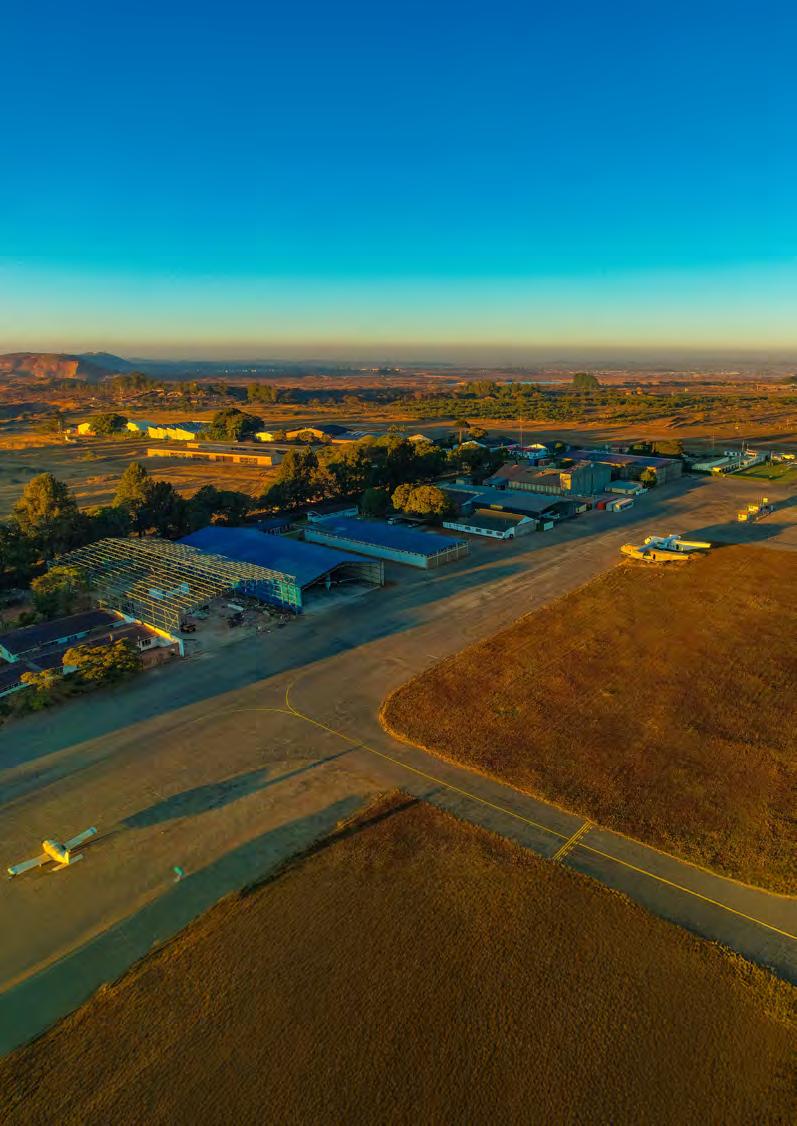
Charles Prince Airport
Minister’ s FOREWORD
It gives me great pleasure to present the Foreword to this inaugural publication of the Airports Company of Zimbabwe (ACZ), a landmark initiative that showcases the opportunities, remarkable progress and strategic direction of Zimbabwe’s airports administration in general, and the aviation sector in particular.
A modern, safe and efficient airports administration is an indispensable pillar of the aviation sector and national development alike. It facilitates trade, tourism, investment and regional integration, while enabling the seamless movement of people and goods that underpin economic growth and social progress. As Zimbabwe continues to position itself as a competitive investment and tourism destination, aviation remains a critical enabler of this transformation.
Under the Second Republic, led by His Excellency, the President of the Republic of Zimbabwe, Cde. Dr. Emmerson Dambudzo Mnangagwa, Government remains firmly committed to the attainment of Vision 2030, which seeks to transform Zimbabwe into an empowered upper middle-income economy by that date. Guided by the National Development Strategy 2 (NDS2), the Ministry of Transport and Infrastructural Development continues to prioritise the modernisation and expansion of the country’s aviation infrastructure, strengthening regulatory systems, enhancing operational efficiency and promoting safety and security in accordance with international best practices.
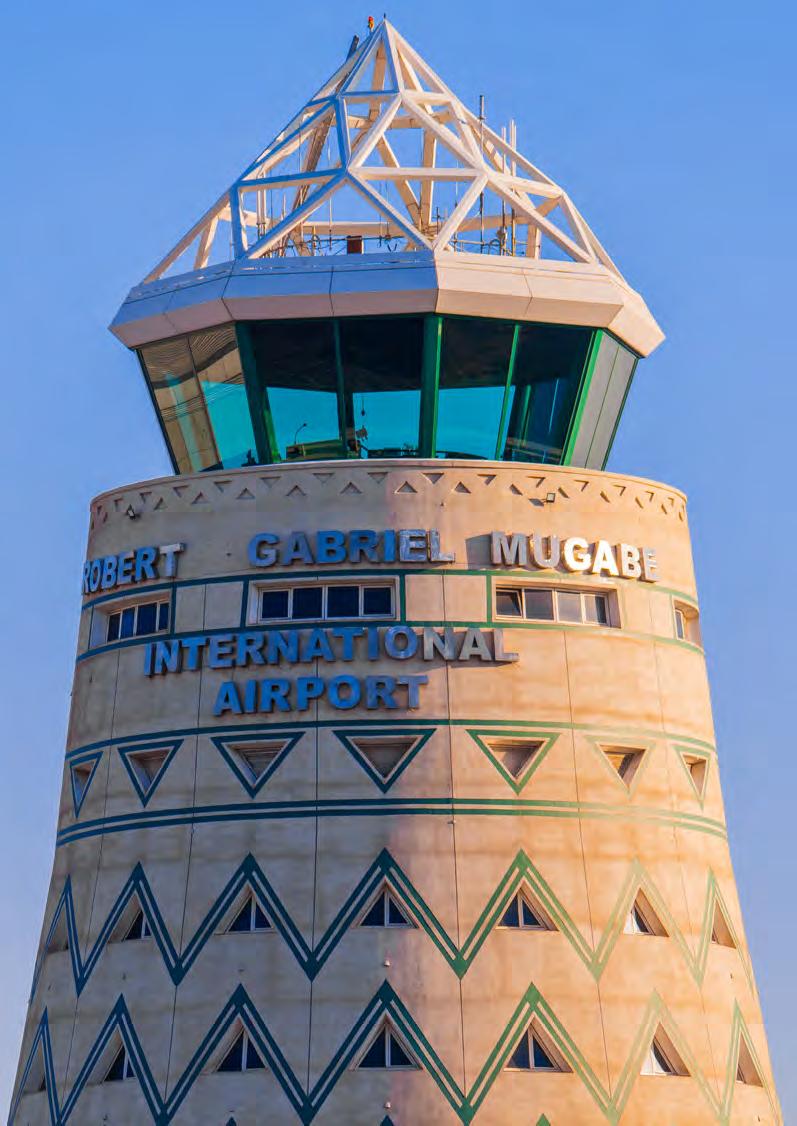
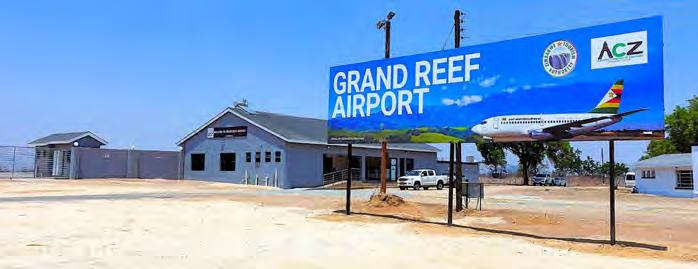
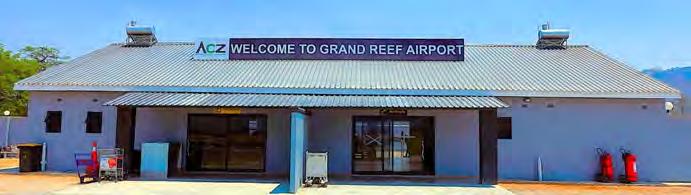
Government has undertaken significant investments aimed at upgrading airport infrastructure across the country, including the refurbishment of critical safety facilities at the Joshua Mqabuko Nkomo International Airport, continued works at the Robert Gabriel Mugabe International Airport, and the operationalisation of Grand Reef Airport in Manicaland Province. Focus has also been shifted towards the Masvingo Airport which is anticipated to commence operations soon. These investments are enhancing domestic and international connectivity, improving passenger experience, facilitating cargo movement and creating an enabling environment for increased domestic, regional and international air traffic. Airports are being transformed into strategic gateways that stimulate commerce, tourism and industrial development while supporting Zimbabwe’s broader socio-economic transformation agenda.
Furthermore, Zimbabwe remains committed to the implementation of regional and global aviation frameworks that promote seamless air transport, environmental sustainability, technological innovation and enhanced aviation safety. The successful hosting of the International Civil Aviation Organization’s Africa-Indian Ocean Aviation Week in May of 2025 reaffirmed Zimbabwe’s standing as a key regional aviation hub, while the signing of reviewed Bilateral Air Service Agreements with more than 15 countries since the launch of the Robert Gabriel Mugabe International Airport. The launch of new local airlines continue to enhance connectivity and open fresh economic corridors. Through close collaboration with industry stakeholders, development partners and investors, we continue to build a resilient aviation sector capable of meeting the demands of a rapidly evolving global economy.
This inaugural publication provides valuable insights into the achievements, milestones, investment opportunities and future aspirations of the Airports Company of Zimbabwe. It reflects the dedication and professionalism of the organisation in delivering world-class airport infrastructure and services that support national development.
I commend the Airports Company of Zimbabwe Board and management for producing this important publication, which not only documents the growth of our aviation sector but also serves as an informative reference for policymakers, investors, industry players, development partners and the travelling public.
As we continue to unlock the full potential of Zimbabwe’s aviation industry, I call upon all stakeholders to strengthen partnerships that will drive innovation, investment and sustainable growth. Together, we will build an aviation sector that connects Zimbabwe to the world, accelerates economic prosperity and contributes meaningfully to the realisation of Vision 2030.
It is therefore my honour to endorse this inaugural edition, and I trust that it will inspire confidence in Zimbabwe’s aviation sector and showcase the immense opportunities that lie ahead.
Hon. Adv. Felix T. Mhona. Minister of Transport and Infrastructural Development
CEO’ s REMARKS
The Airports Company of Zimbabwe (Private) Limited (ACZ) continues to advance its transformation agenda through strategic infrastructure development, operational excellence, and enhanced connectivity. Guided by its Vision 2030 of becoming the regional hub of airport services, the organisation is translating long-term strategic objectives into projects that are strengthening Zimbabwe’s aviation sector and contributing to national economic development.
This inaugural edition of Muchadenga highlights key milestones in that transformation, with particular emphasis on infrastructure expansion and route development—two strategic priorities that continue to reinforce Zimbabwe’s position as a competitive aviation gateway in Southern Africa.
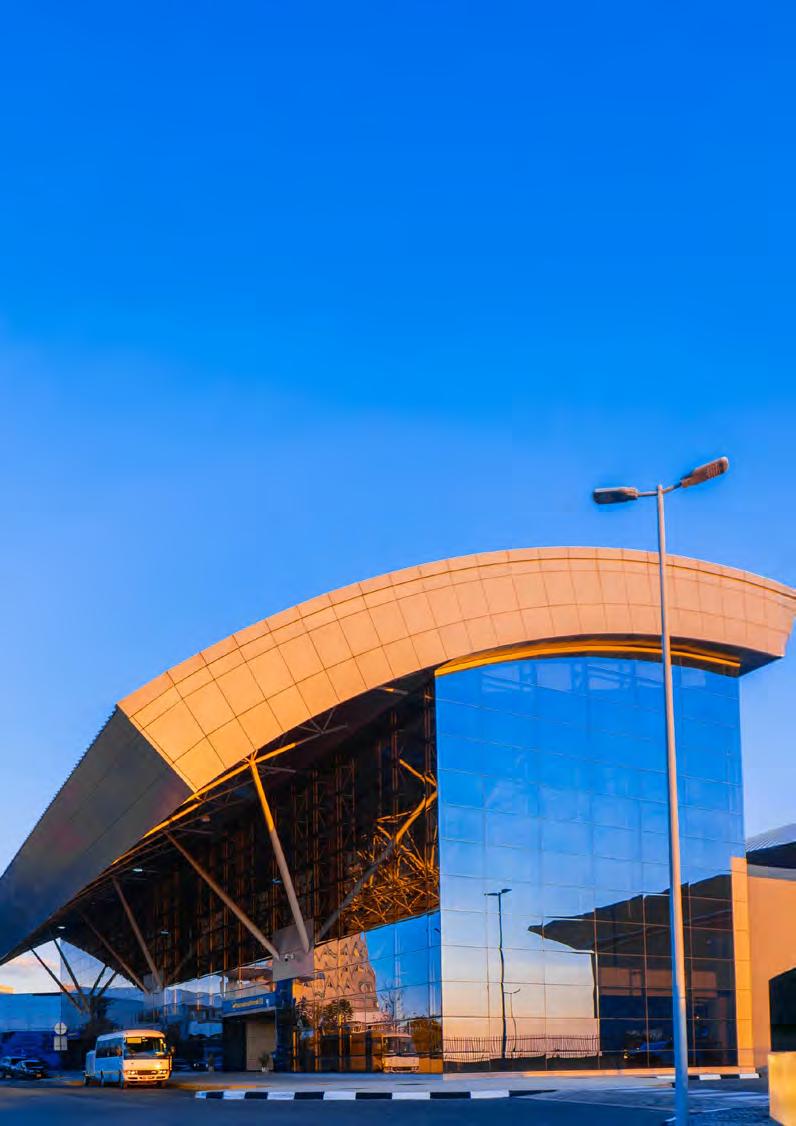
The past five years have been characterised by sustained growth in passenger traffic, supported by significant investment in airport infrastructure. A notable achievement has been the expansion of Robert Gabriel Mugabe International Airport, which increased its annual passenger handling capacity from 2.5 million to 6 million. This investment provides the capacity required to accommodate future growth while enhancing passenger comfort, operational efficiency, and service delivery.
Building on this progress, the development of the Robert Gabriel Mugabe International Airport Cargo Village, in partnership with Transvaal Africa, marks another significant milestone. Designed as a modern, centralised logistics hub, the Cargo Village will strengthen Zimbabwe’s air freight capabilities through streamlined customs, cargo handling, and logistics operations. With infrastructure capable of accommodating the world’s largest freighter aircraft, the facility will improve supply chain efficiency, enhance export competitiveness, and position Zimbabwe as a strategic regional gateway for air cargo.
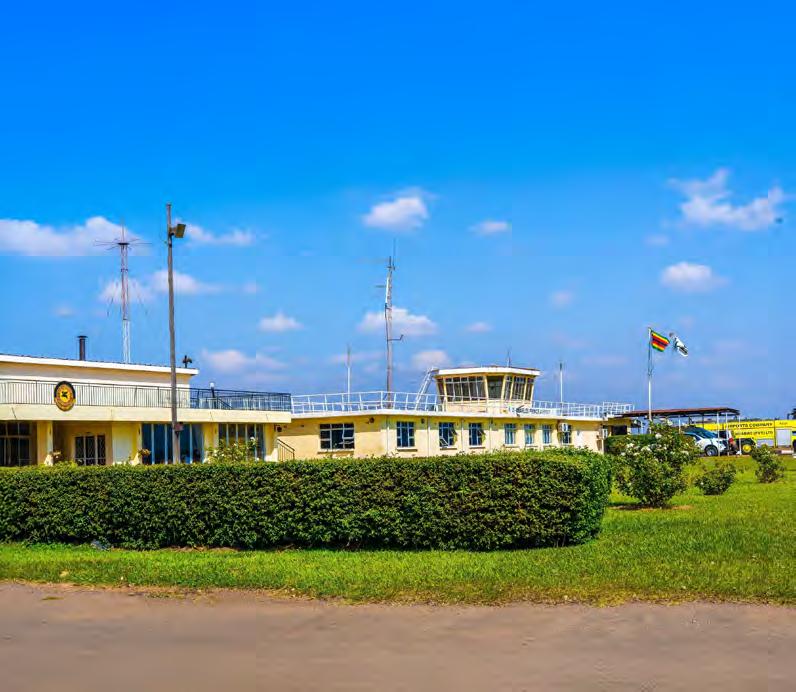
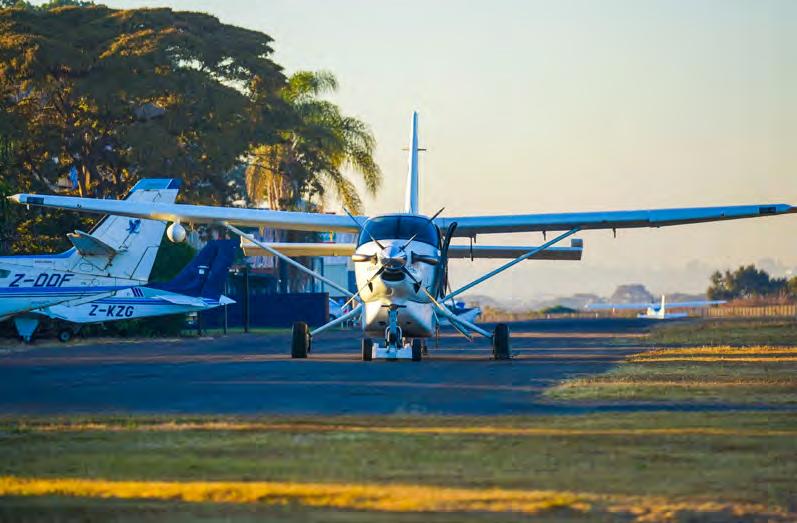
Further strengthening the country’s aviation infrastructure are plans to expand Charles Prince Airport into a modern centre for general and business aviation. Long recognised for its role in flight training, private aviation, and charter services, the airport is being developed to support specialised aviation operations while relieving operational pressure on the country’s primary international gateway.
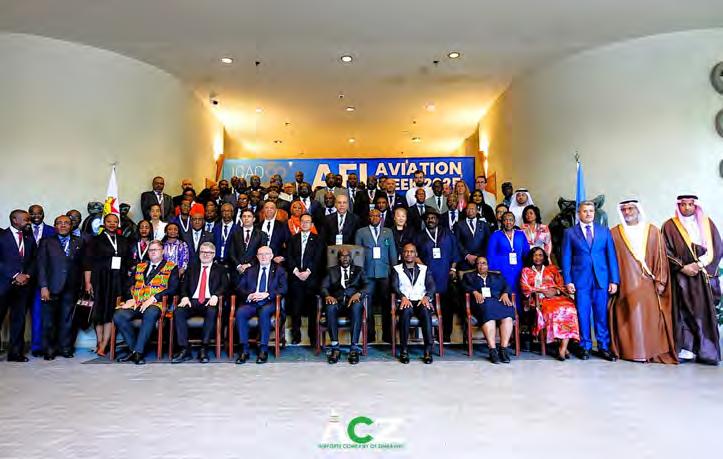
These infrastructure investments are complemented by continued progress in aviation safety, regulatory compliance, human capital development, and international collaboration. Milestones such as the international recognition of ACZ’s training programmes and the successful hosting of the 10th AFI Aviation Week continue to reinforce Zimbabwe’s standing within the African aviation community. Equally important is the organisation’s commitment to the implementation of Open Skies policies, recognising enhanced air connectivity as a catalyst for tourism, trade, investment, and regional economic integration.
These achievements reflect the collective efforts of ACZ employees, government, airline partners, industry stakeholders, and development partners whose collaboration continues to drive the sustainable growth of Zimbabwe’s aviation sector. Together, these partnerships are delivering modern, safe, efficient, and customer-focused airport infrastructure while supporting Zimbabwe’s national development aspirations and its journey towards an empowered upper-middle-income economy.
Thank you for supporting ACZ.
Tawanda Gusha Chief Executive Officer
Airports Company of Zimbabwe (Private) Limited
SMARTER RISK. STRONGER FUTURE
Editor'sREMARKS
The Inaugural Edition
Welcome to the inaugural edition of Muchadenga, the official magazine of the Airports Company of Zimbabwe (Private) Limited (ACZ).
Across much of Africa, aviation remains a fascinating yet often misunderstood industry, particularly within rural and underserved communities where air travel can appear distant from everyday life. Muchadenga was conceived to help bridge that gap by demystifying aviation and highlighting its transformative role in economic development, tourism, trade, investment, and social connectivity.
While aviation is often associated with aircraft, airports, and airlines, its impact extends far beyond the runway. Every passenger journey, tourism experience, cargo movement, and business connection facilitated through air transport contributes to national development and strengthens Zimbabwe’s linkages with regional and global markets. Aviation is not merely a mode of transport; it is an enabler of opportunity, growth, and progress.
As the aviation industry continues to evolve, so too must the conversations around it. Through Muchadenga, the aim is to bring the industry closer to the public by presenting informative, engaging, and accessible content that showcases aviation’s relevance to everyday life. Whether for aviation professionals, business leaders, policymakers, investors, students, travellers, or the general public, this publication seeks to provide valuable insights into the sector and its contribution to national development.
This inaugural edition comes at an exciting time for Zimbabwe’s aviation sector. Continued investment in airport infrastructure, increasing passenger traffic, expanding tourism opportunities, and strengthened partnerships with airlines are laying a firm foundation for sustained growth and enhanced regional competitiveness. These milestones deserve to be documented, celebrated, and shared as Zimbabwe positions itself for greater participation in the global aviation ecosystem.
Special appreciation is extended to CAAST Media Group, the production team behind this publication, as well as the organisations, advertisers, contributors, and industry stakeholders whose support made this inaugural edition possible. Their commitment, expertise, and collaboration reflect the collective effort required to advance aviation and effectively tell the story of the sector.
As Muchadenga takes flight, readers are invited to embark on a journey of discovery through the opportunities, achievements, challenges, and aspirations that define Zimbabwean aviation and its enduring contribution to national development. In doing so, the publication also celebrates the Airports Company of Zimbabwe’s vision of positioning Zimbabwe as the regional hub of airport services by 2030—a vision anchored on connectivity, excellence, innovation, and sustainable growth.
Thank you for reading, and welcome aboard.
Tonderai Mangombe
Editor – Muchadenga Magazine
Airports Company of Zimbabwe (Private) Limited
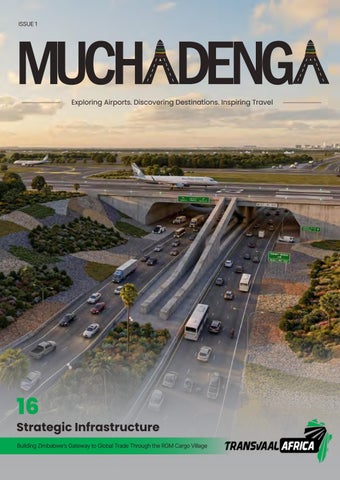
Transvaal Africa: Building Zimbabwe’s Gateway to Global Trade Through the RGM Cargo Village
By Martin Chemhere
For years, Zimbabwean exporters have absorbed costs that never appear on an invoice. A truckload of horticultural produce bound for Europe can spend hours idling at a fragmented cargo terminal before it even reaches an aircraft. Perishables lose value in the absence of climate-controlled storage. Farmers in Gokwe and Murewa for example, have at times, been left stranded with ripe produce they could not move to market fast enough, unable to plan production around export demand because the logistics chain linking them to international buyers has never been fully joined up. For a landlocked country whose farmers, miners and manufacturers depend on efficient routes to the coast and the sky, these frictions translate directly into lost income, missed contracts and produce that never leaves the country at all.
It is this gap that Transvaal Africa (Pvt) Ltd, operating from the First Floor of the Western Wing of the Domestic Terminal at Robert Gabriel Mugabe International Airport in Harare, has set out to close. Founded in 2022 by Engineer Patson Moyo and Ms Nomvuyo Dube, the company began as a small aviation venture before expanding into property and logistics. Its tagline, “Rooted in Africa. Delivered to the world,” now anchors a far larger ambition: the Robert Gabriel Mugabe International Airport Cargo Village, a logistics and air freight facility being developed in partnership with the Airports Company of Zimbabwe (Private) Limited (ACZ).
The numbers behind the project are substantial. Transvaal Africa has confirmed the total cost of the development at US$1.05 billion, funded through a combination of international and local financial partners. Once complete, the Cargo Village is expected to house 151 light industrial warehouse facilities, offering scalable, climatecontrolled storage for goods ranging from general cargo to temperature-sensitive agricultural exports, with the site designed to handle an estimated 700,000 tonnes of cargo throughput annually. ACZ has indicated that the development is expected to increase the airport’s current cargo handling capacity by three to five times.
PROPOSED DEVELOPMENT
PROPOSED
PROPOSED DEVELOPMENT
Employment projections attached to the project are similarly large in scale. Eng Moyo has stated that the airport facility itself is expected to create 40,000 jobs, while the company’s linked Village Business Unit (VBU) network, aimed at connecting rural farmers to export markets, is projected to support as many as 3.5 million direct jobs in primary production nationwide, plus a further 100,000 in logistics and supporting industries. Roughly 40 percent of construction work has been reserved for local contractors, with specialised works such as runway construction handled by experienced international firms. Groundbreaking is expected in the first quarter of 2026, with construction rolling out in phases over approximately 36 months and full operation targeted by 2030.
Speaking on the vision behind the project, Eng Moyo has been direct about what he believes is at stake. “What I see is a new great grand picture for our country,” he said. “It will be a modern, state-of-the-art space that gives confidence to Zimbabwe. It will be a smart city within a city.” He has also framed the project’s significance beyond its balance sheet: “This is the gateway for everyone coming into Zimbabwe. When construction is complete, it will give confidence to the country. It will be a smart city that signals a new era.” On the agricultural side of the business, he has pointed to the practical problem the company is trying to solve: “The Government has supported farming initiatives, but some farmers have been left stranded with ripe produce. With Village Business Units, we’re creating synergies between farmers and global markets, making sure they plant and produce according to export demand.”
The Cargo Village’s operations are structured across three core divisions. The Cargo Village division itself handles warehousing, inventory management and fulfilment, supported by climate-controlled storage, security systems and realtime tracking. Transvaal Agro applies an integrated supply chain approach to agricultural logistics, working to reduce costs and transit times for exporters, an offering with direct relevance given agriculture’s role as an economic pillar for the country. The third division, Transvaal Africa Airline, is moving into passenger and cargo aviation; having secured an air services permit in January 2025, the airline is expected to launch flights using leased Boeing aircraft on routes linking Harare with Johannesburg and Dar es Salaam, with longer-term plans for Dubai, London, Lagos and Shanghai. A fourth strand, Transvaal Energy, focuses on sustainable aviation energy solutions.
The facility will be designated a Special Economic Zone, granting it tax and customs incentives designed to attract investment, and ACZ has indicated that the project will also draw complementary light industrial activity to the airport precinct. The development is expected to include supporting amenities such as a hotel, shopping centre, fire station and aviation fuel facility, alongside the warehousing at its core.
As with any infrastructure project of this scale, the Cargo Village’s eventual impact will be determined by execution: the pace of construction, the reliability of the technology deployed, and whether Zimbabwean exporters and importers are able to access and afford space within the facility once it opens. For now, Transvaal Africa has set out a specific, numbers-backed plan: to turn the frictions that have long slowed Zimbabwean trade into a single, integrated gateway linking local producers to the world.
Transvaal Africa
Unveils Bold Vision for “Flygate” at Robert Gabriel Mugabe International Airport
By Martin Chemhere
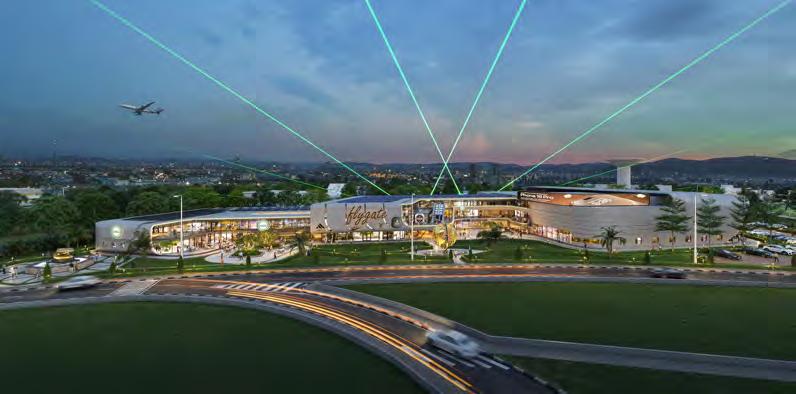
Trade infrastructure alone does not create a world-class airport. Passenger experience matters too. That thinking has given rise to Flygate, a proposed retail and lifestyle precinct set to rise at Robert Gabriel Mugabe International Airport, in a development poised to redefine the gateway experience for travellers and residents alike while reinforcing the company’s broader vision for Africa’s economic transformation.
Designed by Architrave Design Group, a firm of chartered architects and project managers, the proposed Flygate development is envisioned as a striking, modern retail destination strategically positioned at one of Zimbabwe’s most prominent transport nodes. Concept renderings released by Transvaal Africa depict a sleek, contemporary structure characterised by sweeping architectural lines, extensive glazing, and a rooftop fitted with solar panels, reflecting a strong emphasis on sustainable design. The renderings show a multi-level complex anchored by a curved façade bearing the Flygate name, surrounded by landscaped gardens, water features, and a sculptural globe installation that speaks to the site’s aspirations as a hub for international commerce and connectivity.
Aerial and front-view perspectives shared by the developers illustrate a precinct designed to integrate seamlessly with the surrounding road network, including a prominent roundabout approach that would serve as a key access point for motorists. The concept imagery shows generous parking provision, pedestrian-friendly landscaping, and outdoor seating areas intended to create an inviting environment for both departing and arriving travellers, as well as members of the public visiting the precinct independently of air travel.
Interior perspectives point to a retail environment designed around multi-storey shopping galleries, food and beverage offerings, and communal seating areas beneath a striking domed ceiling feature, suggesting an ambition to position Flygate as a premier shopping and leisure destination rather than a purely transactional airport retail strip. The design language throughout emphasises natural light, high-end finishes, and open, walkable circulation spaces intended to encourage extended visitor dwell time.
The development forms part of a broader strategic push by Transvaal Africa, a company that has positioned itself as committed to propelling the continent to new heights through bold innovation, sustainable practices, and transformative collaborations. The company is also spearheading the Robert Mugabe International Cargo Village, a parallel development at the same airport designed to facilitate trade, unite international communities, and bolster Africa’s economic potential. Together, the two projects reflect an integrated vision for the airport precinct, combining passenger-facing retail infrastructure with cargo and logistics capacity aimed at strengthening Zimbabwe’s position as a regional hub for trade and travel.
Airport-adjacent retail developments of this nature have become increasingly common internationally, with major aviation hubs around the world leveraging passenger and visitor footfall to support large-scale mixed-use precincts. Should Flygate proceed as envisioned, it would represent a significant addition to Harare’s retail and commercial landscape, offering both international travellers and local residents, access to a modern shopping and dining destination in immediate proximity to the airport.
While the project remains at the proposal and concept design stage, the scale of ambition reflected in the renderings, spanning a substantial site footprint, sustainable building features, and a diverse retail and hospitality offering, signals Transvaal Africa’s intent to deliver a landmark development for the airport precinct. Further details regarding construction timelines, investment partners, and regulatory approvals are expected to emerge as the project moves from concept to implementation.
PROPOSED DEVELOPMENT
PROPOSED DEVELOPMENT
For now, Flygate stands as a bold statement of intent from Transvaal Africa, one that aligns closely with the company’s stated mission of driving transformative, sustainable development across the African continent, beginning at one of Zimbabwe’s most strategically significant gateways.
PROPOSED DEVELOPMENT
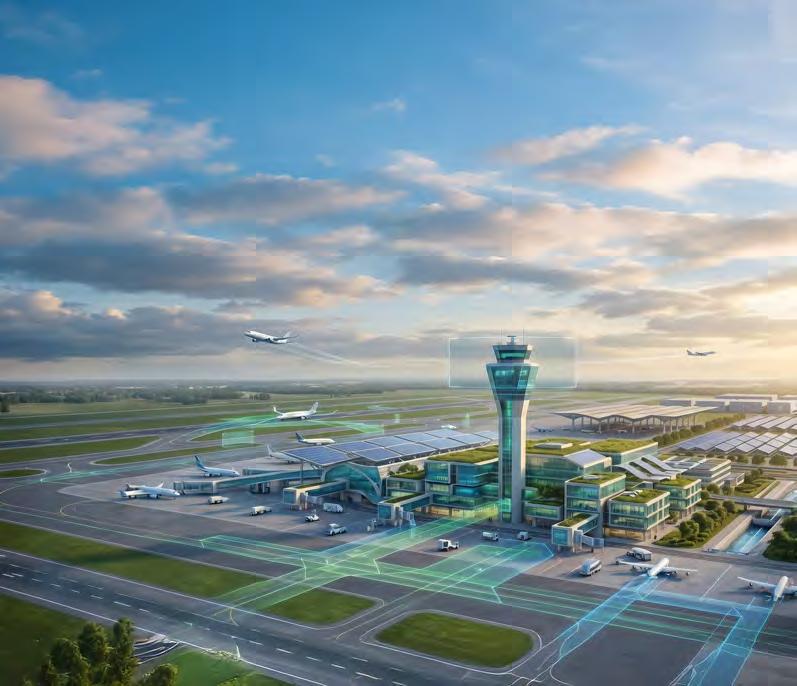
THE AIRPORTS OF TOMORROW: RESILIENCE
AS THE FOUNDATION OF SUSTAINABLE AERODROME DEVELOPMENT
Dr. Igor Štimac, PhD, IAP, EMBA, FRAeS
VP of Infrastructure, Technology, and Operations for Concession Supervision, Business Consulting, and Education Zagreb Airport Ltd., Croatia
Airports today operate within one of the most complex and fast-evolving environments in the global transport system. Driven by rising traffic demand, technological transformation, climate pressures, regulatory evolution and shifting socio-economic expectations, modern airports face a spectrum of challenges that require anticipatory, integrated and evidence-based management. According to ICAO’s global frameworks and technical documentations like the provisions of Annex 14—airports are critical nodes of international connectivity whose development and operations must be grounded in safety, security, efficiency and sustainability. ACI’s Policy Agenda further emphasises that capacity constraints, climate adaptation, digitalisation and resilience have become defining strategic issues for airports worldwide. This article examines the principal challenges shaping contemporary airport development and operations and demonstrates how these challenges are incorporated into airport resilience planning in line with ICAO, ACI, IATA, EUROCONTROL and EASA guidance.
Airport resilience planning provides a comprehensive framework for managing risks, uncertainties and long term challenges. ICAO and ACI define resilience as the ability of an airport to anticipate, absorb, adapt to and recover from disruptions. Resilience is multidimensional, encompassing operational, infrastructural, financial, climatic and organisational components.
Capacity Pressures and Infrastructure Constraints
ICAO projects 12.4 billion passengers by 2050, creating significant pressure on airport infrastructure and operational systems. Many major hubs already operate at or near their declared capacity, while smaller airports often face financial limitations that slow modernisation. Capacity is not defined solely by physical infrastructure such as runways, taxiways, aprons and terminals; it also includes operational capability, including slot allocation, optimisation of passenger and baggage flows, airside-landside integration and coordination with air traffic management.
ICAO highlights the importance of holistic aerodrome planning, capacity assessments, operational-flow simulations and long-term forecasting. When capacity becomes constrained, airports experience increased delays, reduced operational predictability, higher pressure on safety and security margins and limited flexibility in managing irregular operations. These impacts directly influence competitiveness and service quality, which are increasingly important as passengers become more demanding and better informed. In resilience planning, capacity challenges are addressed through infrastructure optimisation, modular expansion, digital flow-management tools and flexible operational procedures designed to absorb peak loads. Master planning aligned with ICAO
Annex 14 and ACI/IATA guidance (such as ADRM) ensures that capacity development supports long-term resilience rather than short-term relief. With today’s wide range of available technologies, airports are strongly encouraged firstly to optimise existing infrastructure as quick wins, while simultaneously preparing future development projects, including apron and terminal expansions that often require years to complete.
Safety Challenges in an Increasingly Complex Operational Environment
Safety remains the foundational pillar of aviation. ICAO defines safety as the management of operational risks within a dynamic system, and airports are the main actors in implementing Safety Management Systems (SMS). The growth of traffic, introduction of new technologies, continuous construction works and the integration of emerging operations such as UAV/RPAS increase system complexity and risk exposure. Key safety challenges include higher traffic density, reduced margins for error, runway incursions and excursions, complex work-in-progress environments, the need for advanced monitoring systems and, following COVID-19, a significant shortage of skilled workforce. Airports must maintain a robust safety culture, ensure continuous training and apply predictive analytics to identify hazards before they escalate. Within resilience planning, safety is enhanced through advanced surveillance systems such as A-SMGCS, digital towers, real-time data analytics increasingly supported by AI integration, and proactive risk assessments embedded in infrastructure and operational decision-making. Strengthened safety resilience ensures that airports can sustain safe operations even under stress, disruption or rapid change.
Security Threats and the Evolution of Risk
Security, as defined in ICAO Annex 17, focuses on protecting civil aviation from acts of unlawful interference. Modern airports face a rapidly evolving threat landscape: cyberattacks targeting critical systems, hybrid and geopolitical risks (including conflicts such as those in Ukraine or the Middle East), increasingly sophisticated smuggling methods and threats posed by UAV systems. ACI advocates a risk-based, outcome-oriented security framework that balances robust protection with operational efficiency.
Airports must continuously update threat assessments, strengthen coordination with national security agencies and integrate advanced detection and surveillance technologies. Security resilience involves cyber protection of critical infrastructure, redundancy of essential systems, incident-response planning and continuous testing of security protocols. By embedding security considerations into resilience planning, airports reinforce their ability to withstand and recover from both physical and cyber disruptions.
Climate Risks and Environmental Sustainability
Climate change has become a strategic risk for airports worldwide. Extreme temperatures, flooding, storms, wildfires and sea-level rise increasingly affect infrastructure integrity and operational continuity. ICAO, ACI and UN frameworks emphasise that climate adaptation and resilience must be embedded in airport planning. Traditional master-planning approaches are no longer sufficient; airports should use not only current meteorological data but also forecasting models to predict long-term temperature trends and assess their impact on aircraft performance and key infrastructure parameters, such as required runway length 30 years into the future. This enables evaluation of operational impacts including reduced aircraft performance during heatwaves, damage to pavements and drainage systems, disruptions to energy supply and rising maintenance costs. Airports must conduct climate-risk assessments, adapt infrastructure to withstand extreme events and integrate sustainable energy solutions. Climate resilience includes infrastructure adaptation, improved drainage and flood protection, heat-resistant pavement design, business-continuity planning for extreme weather and long-term decarbonisation strategies aligned with global aviation sustainability goals.
Financial Challenges
Financial resilience has become a critical pillar of airport sustainability in an environment marked by market volatility, fluctuating demand and rising investment pressures. Airports must diversify revenue streams, optimise expenditure and secure stable financing mechanisms to maintain both operational and infrastructural continuity.
It is essential to follow the global trend in the ratio between aeronautical and non-aeronautical revenues, while also identifying secondary revenue streams that can sustain the airport if core aviation activities are disrupted, as occurred during COVID-19, ensuring that workforce retention is not jeopardised. In line with ICAO and ACI guidance, financial resilience requires structured risk assessment, long-term capital planning and flexible business models capable of absorbing economic shocks. The post-pandemic recovery demonstrated that airports with strong financial foundations restore capacity more rapidly and retain strategic autonomy. Financial stability therefore forms the backbone of overall airport resilience and a prerequisite for sustainable development.
Digitalisation and Cybersecurity
Digital transformation is reshaping airport operations. Automated passenger processing, advanced surveillance systems, digital towers, integrated platforms such as Airport Operations Plans (AOP) and Airport Operations Centres (APOC), and predictive analytics are becoming standard elements of modern airport management. ACI’s Strategic Plan identifies digitalisation as a key driver of future airport performance. Digital Twin models, which integrate infrastructure, documentation, maintenance, real-time status monitoring and planning functions, enable virtual testing and optimisation, reducing the risk of costly errors during real development or technology implementation. However, digitalisation also introduces new vulnerabilities. Cyberattacks on operational systems, data-management challenges, interoperability issues and dependence on digital infrastructure pose significant risks. Airports must comply with cybersecurity guidance, implement strong protection measures and ensure redundancy of critical systems. Digital resilience requires continuous monitoring, incident-response capability, secure data governance and regular testing of cyber defences. Integrating digital risks into resilience planning ensures operational continuity even during technological disruptions..
Workforce Challenges and Organisational Resilience
The post-pandemic recovery highlighted the central role of the airport workforce. Shortages of skilled personnel, high turnover, increased operational demands and the need for new digital competencies create significant organisational challenges. Workforce resilience is essential for maintaining safe, efficient and reliable operations. Organisational resilience includes competency development, continuous training, flexible staffing models, knowledge management and strengthening safety and resilience culture. In line with this, and linked to airport infrastructure master planning, an increasing number of airports are developing HR Master Plans directly connected to future capacity demand, outlining long-term requirements for workforce numbers, certifications and training pathways. Business-continuity planning must also account for workforce disruptions, ensuring that critical functions remain operational during crises.
Airports are not only transport hubs but also major socio economic actors within their communities. Noise, emissions, land use planning, surface transport integration and local economic impacts shape public perception and influence airport development. ACI emphasises the importance of transparent communication, community engagement and sustainable development practices. Social resilience involves participatory planning, clear communication about projects and risks, noise management programmes, and development of sustainable access and mobility solutions. Strong community relations enhance the airport’s ability to implement long term development plans and respond effectively to disruptions.
Future Strategy for Resilient Airports
For airports, resilience is no longer an optional capability but a defining strategic imperative. The future operating environment will be shaped by increasing traffic volatility, accelerating climate pressures, rapid technological change and rising expectations from regulators, partners and communities. Airports that invest in resilience today—across operations, infrastructure, finance, climate adaptation and organisational capability—will be the ones able to anticipate disruption, maintain stability under stress and recover faster than their peers. Building futureready resilience means integrating capacity constraints, safety and security risks, digital vulnerabilities, workforce challenges and environmental pressures into a single, forwardlooking planning framework. Airports operate at the crossroads of global mobility and societal responsibility.
Strengthening resilience ensures not only operational continuity but also sustainable growth, community trust and longterm strategic autonomy. The airports that embrace resilience as a core principle will be the ones capable of meeting future demands with confidence, safeguarding their role as essential, stable and futureproof nodes of the global aviation network.
Community Relations and Socio Economic Impacts
Unpacking The Impacts Of Liberalisation: A Case Study Of South Africa And Zimbabwe
For decades, the case for liberalising Africa’s skies has been argued in principle. We now have a case study that illustrates the transformative impact this change can make and how Zimbabwe is benefitting.
In 2024, South Africa and Zimbabwe fully liberalised their air service agreement.
Under the agreement, designated airlines from either side can now fly as often as they like, carrying as many passengers and as much cargo as the market will bear. In effect, the two markets have been domesticated.
Let’s unpack how this move has affected the market.
Rather than rely on qualitative impressions, let the numbers tell the story. Between 2023 and 2024, passenger traffic across all city pairs rose 43%, reaching 838,000 passengers. Over the same period, the average fare fell 14% to around $100. That is the open-skies virtuous circle in real time: lower fares unlock latent demand, fuller aircraft and better utilisation drive down the cost per seat, and competitive pricing sustains itself.
It is worth being precise about why this particular market responded so dramatically. As aviation consultant Sean Mendis points out, this was a rare case: a market artificially constrained for years, then opened at a mature stage with no single dominant carrier to soak up the gains.
Suppressed demand, organic growth, COVID recovery and fresh stimulation combined into what he called a “perfect storm.” We are unlikely to see another 43% jump when the 2025 numbers are in, but with most barriers to entry removed, double-digit growth can continue for some time, because airlines are now free to experiment, innovate and compete for the passenger’s benefit.
That last point matters more than any single statistic. The real prize of open skies is not one good year of traffic; it is a structure that rewards efficiency and punishes complacency. And, as in any free market, there are winners and losers, and the gains are not always equitable.
Jon Howell, Founder and CEO of AviaDev Africa and Visiting Professor in aviation management at Coventry University.
Those carriers operating larger-gauge aircraft, with a business model built around keeping costs as low as possible, have added a large number of seats to the market, particularly on the Harare–Johannesburg route.
This has meant that some of the carriers operating smaller aircraft, with a much higher cost per seat, have had to pivot away from the main trunk routes. However, they have found opportunity elsewhere — and this is the beauty of route development: for a commercially focused airline, the aircraft is a tool that must be deployed on the best route possible in the current market. Strong airlines sense the tide changing and adapt early to maximise the value of each aircraft they operate.
Put simply, liberalisation creates the opportunity; it does not guarantee who seizes it. For Zimbabwean carriers, this is an invitation to grow, but only if they are prepared to compete.
The charges levied by civil aviation authorities, airports and air navigation service providers can still throttle ambition, as they heavily affect the cost of operation and, therefore, the cost of entry. Added to this are the fluctuating aviation fuel costs, and many other costs that are higher in Africa than other parts of the globe. In order to maintain the momentum, the cost of doing business has to be part of the conversation.
Encouragingly, the appetite is there at the top. When I posted this research on LinkedIn, Tawanda Gusha, CEO of the Airports Company of Zimbabwe, was unequivocal, commenting that “full SAATM implementation is the way to go for aviation in Africa.” When the operators of the infrastructure are this committed, the policy has a genuine chance of working, and ACZ continues to make great strides in attracting new carriers and expanding services to and from Zimbabwe.
And that is the wider point. The Single African Air Transport Market has spent years as an aspiration in search of proof. Liberalisation has been on the table for African leaders since 1988, and full implementation still eludes us. But strides have been made. Perhaps the secret is to start on a bilateral basis and move ahead with a coalition of the willing?
South Africa and Zimbabwe have provided the empirical, unequivocal evidence for liberalisation. This single decision shows what happens when governments stop protecting carriers from competition and start trusting the market: more flights, lower fares, and more people moving between two neighbouring countries than ever before.
SAATM does not need more research. It needs replication and brave leadership.
One liberalised corridor has delivered.
A continent full of corridors is waiting to do the same, and Africa could be aviation’s next growth frontier.
Beyond the Runway: Four Years in Aviation and the Lifelong Journey of Learning
By Daniel Muchuchuti
When I joined the aviation industry four years ago, I believed I understood technology, given my 2 decades of experience. Having spent many years leading ICT teams, implementing enterprise systems, driving cybersecurity initiatives, and steering digital transformation, I thought aviation would be another sector in which technology supports business operations.
I quickly discovered I was wrong.
Aviation did not merely teach me new technologies; it fundamentally changed the way I think, lead, and learn.
Perhaps the greatest lesson aviation has taught me is that no one succeeds alone. Every airport is a living ecosystem where every function depends on another. ICT cannot succeed without Airport Operations. Airport Operations relies on Aviation Security. Aviation Security works alongside Air Traffic Management, Airlines, Customs, Immigration, Meteorology, Fire Services, Ground Handling, Airport Development, Business Development, Finance, Human Resources, and many other stakeholders. Every department contributes to one common objective: the safe, secure, and efficient movement of people and goods.
Unlike many industries where departments can work independently, aviation constantly shows that every action affects the wider system. A baggage system that is delayed weakens the customer experience. A network outage slows passenger processing. A communication failure can compromise safety.
A single operational decision can affect airlines, regulators, passengers, and service providers simultaneously.
That interconnectedness taught me something that extends far beyond airports: regardless of your profession, understand the business around you.
An ICT professional should understand aircraft turnaround processes. A finance officer should appreciate cybersecurity risks. Someone in Business Development should understand airport operations. Airport Development teams should appreciate how infrastructure influences operational efficiency. Likewise, every employee, regardless of department, should have a basic appreciation of Aviation Security because security is everyone’s responsibility.
The professionals who create the greatest value are not necessarily those who know the most about their own jobs, but those who are curious enough to understand how their work fits into the bigger picture.
“Leadership begins when we become students of the entire business, not just experts in our own departments.”
The second lesson aviation has reinforced is that learning never stops.
Few industries place such emphasis on continuous improvement. Pilots undergo recurrent training throughout their careers. Engineers continually update their certifications. Aviation Security officers participate in regular drills and competency assessments. Air Traffic Controllers continuously sharpen their skills. Airport professionals constantly adapt to new technologies, regulations, and international standards.
No one reaches a point where learning becomes optional.
The pace of technological advancement makes this even more important. Artificial Intelligence, predictive analytics, biometrics, automation, robotics, and digital identity are transforming airports around the world. Tomorrow’s airport professionals will not simply operate systems; they will interpret information, make data-driven decisions, and adapt to technologies that did not exist only a few years ago.
This realization transformed my own approach to professional growth. Today, I intentionally read beyond technology. I study aviation, leadership, behavioral science, economics, cybersecurity, digital transformation, strategy, and artificial intelligence because innovation often happens when ideas from different disciplines intersect.
Learning is no longer about collecting certificates; it is about expanding perspective.
“The day we stop learning is the day we begin falling behind.”
One of the most profound lessons aviation has taught me is that it is truly a global industry. Airports may be located within national borders, but aviation itself has no borders. Every departure and arrival forms part of a worldwide network connecting economies, businesses, and families. In aviation, timing is not simply a matter of punctuality; it is a commitment.
A delayed departure in Harare may affect connecting passengers in Johannesburg, Dubai, London, Nairobi, or New York. A systems outage at one airport can disrupt airline schedules across continents. Missing timelines not only inconvenience one organization; they also interrupt the rhythm of global commerce and international travel.
POWERING EVERY JOURNEY. FUELING AVIATION EXCELLENCE.
Aircraft Refueling Services
Jet A-1 Fuel Storage and Distribution
Fuel Quality Control and Monitoring
Airport Fuel Infrastructure Management
Safe and Efficient Fuel
Handling Operations
Compliance with International Aviation Safety Standards CONTACT US
Africa Does Not Need More Airports, It Needs Better Aviation Strategy
Across Africa, cranes are rising above airport skylines. New terminals are opening, runways are being extended and governments are investing billions of dollars in aviation infrastructure. These investments are both welcome and necessary. Safe airports, efficient air navigation services and modern facilities are fundamental to any successful aviation system.
Yet there is a fundamental question that deserves far more attention. Will better infrastructure alone deliver better connectivity? History suggests otherwise. An airport does not create prosperity simply because it is built. A runway does not attract tourists on its own, nor does a modern terminal persuade an airline to launch a new route. Infrastructure is essential, but it is only one part of a much larger equation.
The countries that will lead African aviation over the next twenty years will not necessarily be those with the largest airports. They will be those with the clearest aviation strategies. That distinction matters because aviation is too often viewed as an infrastructure sector, when it should be understood as an instrument of national competitiveness.
Infrastructure is not strategy
For decades, aviation development has frequently been measured by kilometers of runway, terminal capacity or the value of construction projects. These investments are important, but they are means rather than ends. The real objective is not to build airports. It is to improve connectivity, strengthen competitiveness and support economic development.
Too often, airports are planned before markets are fully understood, infrastructure is delivered before a long-term commercial strategy has been developed, and success is measured by what has been built rather than by the value it creates. A modern airport with limited connectivity remains an underused asset, whereas a well-connected airport, even if modest in size, can become a powerful engine of regional development.
The difference lies not in the infrastructure itself, but in the strategy behind it. Every airport project should begin with a simple question: what economic problem is this investment intended to solve? Only then can infrastructure become a catalyst for growth rather than an objective in itself.
Connectivity creates value
Aviation is frequently described as a transport sector. In reality, it is an economic multiplier. Every new route strengthens links between producers and consumers, businesses and investors, universities and research centers, families and communities. Tourism depends on connectivity, but so do exports, foreign direct investment and access to international markets.
This is why aviation policy should never be developed in isolation. It should be designed alongside tourism, trade, industrial development and investment promotion. Countries do not become more competitive because they build airports. They become more competitive because aviation enables the rest of the economy to grow.
Institutions are Africa’s hidden infrastructure
When discussing aviation investment, attention naturally focuses on visible assets such as runways, terminals, control towers and surveillance systems. Yet the most valuable infrastructure is often invisible. Strong regulators, financially sustainable air navigation service providers, commercially minded airport operators, transparent governance and predictable policies create the confidence that attracts airlines, investors and development partners.
Experience from around the world consistently demonstrates that institutional quality matters as much as physical infrastructure. An efficient regulator may generate more long-term value than an additional terminal, while a financially sustainable civil aviation authority can contribute more to future growth than another infrastructure project that lacks a clear commercial purpose. Institutional capacity is not simply an administrative issue; it is a competitive advantage.
Trust is aviation’s invisible currency
Every flight begins with trust. Passengers trust the aircraft, airlines trust the regulatory system, investors trust the legal framework and development finance institutions trust the governance of the projects they support. Communities also need confidence that aviation development will create opportunities rather than simply inconvenience or disruption.
Trust cannot be built through communication alone. It is earned through competent institutions, transparent decisionmaking, consistent regulation and predictable policies. Countries that inspire confidence attract investment more easily, negotiate from a stronger position and build partnerships that survive political cycles. Trust may be intangible, but its economic value is very real.
The next competitive advantage is execution
Africa enters the coming decades with remarkable opportunities. The African Continental Free Trade Area, the gradual implementation of the Single African Air Transport Market, rapid urbanization and a growing middle class all point towards increasing demand for connectivity. Few regions possess such favorable long-term fundamentals.
The challenge is no longer convincing policymakers that aviation matters. That debate has largely been won. The challenge now is execution. Execution means aligning aviation policy with national development priorities, strengthening institutions alongside infrastructure and ensuring that every investment is supported by sound economics, realistic traffic forecasts and a credible commercial strategy.
Jean-Marc Bourreau CEO Concorde AIR
Africa does not need fewer airport projects. It needs more integrated aviation strategies—strategies that connect infrastructure with tourism, regulation with investment, airlines with economic development and aviation with national competitiveness.
The countries that succeed will not necessarily build the biggest airports. They will build the strongest aviation ecosystems. In the end, aviation is not about aircraft. It is about connecting people, businesses and opportunities, and helping African economies reach their full potential.
THE VIEW FROM THE BOARD
A non-executive director reflects on the highs, the lows and the long horizon of Zimbabwe’s aviation sector.
By Ms Faith Chiwungwe, Non-Executive Director, Airports Company of Zimbabwe
When most people picture aviation, they picture the visible things. The aircraft lifting off the runway. The terminal filling with travellers. The pilot, the cabin crew, the controller in the tower. Very few people picture a boardroom. Yet a great deal of what makes an airport safe, solvent and trusted is settled long before a passenger reaches the check-in counter, around a table where directors weigh risk, cost and public duty.
I write from that table. As a non-executive director of the Airports Company of Zimbabwe, my vantage point is neither the cockpit nor the departure lounge. It is the seat of oversight. The board’s task is to steward public assets, hold management to account, and keep the long horizon in view when the pressures of the day pull attention elsewhere. It is a quieter role than flying an aircraft, but it carries its own weight.
Aviation is an unforgiving industry. It is capital intensive, safety critical and fiercely competitive. A runway costs a great deal to build and even more to maintain. A single lapse in safety can undo years of careful work. Every airport in the region competes for the same airlines, the same cargo and the same travellers. These realities do not soften because a country is still developing. If anything, they press harder.
The highs are real, and they are worth naming.
In recent years Zimbabwe has modernised its flagship gateway, Robert Gabriel Mugabe International Airport, with a new terminal and expanded facilities that have lifted both capacity and the traveller’s experience. New carriers have entered the market and flight frequencies have grown, widening the country’s connections to the region and beyond. Victoria Falls continues to draw the world to one of its great natural wonders. Behind each of these milestones sits an ambition the board takes seriously, which is to position Zimbabwe as the regional hub for airport services by 2030. From where I sit, the most encouraging sign is not any single building. It is the calibre and commitment of the aviation professionals who keep the system running, often out of public view.
The lows are just as real, and honesty about them is part of good governance.
Aviation infrastructure ages, and modernisation is expensive at a time when foreign currency and funding are constrained. Reliable power remains a challenge, which is why the drive toward solar generation at our airports matters as more than an environmental gesture. Skills are mobile, and the same professionals we train are sought after across the globe,
so retaining them demands more than we sometimes have to offer. Cargo operations have historically been fragmented, and consolidating them into efficient facilities under one roof is work still in progress. Each of these problems demands patient investment, difficult trade-offs and a tolerance for progress that is measured in years rather than quarters.
Then there is the challenge that never sleeps, which is safety and security. In this industry there is no acceptable margin of complacency. The board’s responsibility here is absolute. We are the custodians of public trust, and that trust is earned quietly over many uneventful journeys and can be lost in a single moment. Much of the board’s most important work is therefore invisible to the travelling public. It is the question asked in a meeting, the assumption challenged, the shortcut refused.
Safety also depends on people, not only on systems. The controller, the engineer, the ground handler and the security officer must be alert, supported and well if the system is to hold. My own work in workplace health and wellness has taught me that staff wellbeing is not a soft benefit sitting to one side of operations. It is a safety input in its own right, and a board does well to treat it as one.
Governance is the quiet infrastructure beneath the visible infrastructure.
Runways, terminals and radar systems are what people see. Underneath them sits a less glamorous structure of oversight, accountability and stewardship, and without it the visible things cannot hold. The board’s job is not to fly the aircraft or run the terminal but to make sure the institution that does those things is sound, solvent and honest, today and for the travellers who are still children now.
A board is only as strong as the range of experience around its table, and each director brings a discipline of their own. Mine is monitoring and evaluation, which has taught me to press one unforgiving question on every decision we take. A resolution passed is not a resolution delivered. It is one thing to record a decision in the minutes and another to confirm, several meetings later, that it was carried out and that it achieved what we intended. Holding that distinction steady is part of how a board keeps its resolutions alive between one meeting and the next.
Public private partnerships have become an important part of this story, and they too must be governed with care. Private capital can move faster and reach further than the public purse, and the cargo and airport city developments now taking shape around our flagship airport show what that partnership can unlock. The board’s duty is to welcome that energy while protecting the public interest, ensuring that the deals we sign serve the nation and not only the balance sheet of a single season.
The aviation sector will keep changing. Technology, climate pressure, shifting travel patterns and regional competition will see to that. What should not change is the discipline with which we govern it. Aviation rewards institutions that think in decades and punishes those that think only in headlines. If Zimbabwe is to earn its place as a regional hub, the work will be done not only on the runway but in rooms most travellers will never see, by people prepared to ask hard questions and to keep asking them.
That is the view from the board. It is a privilege to hold it, and a responsibility that must not be taken lightly.
Your Car in Safe Hands
Carsafe offers a 24 hour stress-free and affordable parking at Robert Mugabe International Airport. We aim to make airport parking an enjoyable experience, eliminating the frustrating delays associated with public transport, allowing customers to travel in the comfort of their cars. We believed that we could shape the start and end of a customer’s travels on a positive note and continue to strive to do so.
STATE OF THE ART BAR CORDED COMPUTERIZED PARKING SYSTEM
LONG TERM PARKING SOLUTIONS
SHADES
BEWARE OF THE LEAVEN: GETTING RID OF RIGID ORGANISATIONAL CULTURE
By Daniel Muchuchuti (ACZ ICT Director)
“Then Jesus said to them, ‘Take heed and beware of the leaven of the Pharisees and the Sadducees.’” (Matthew 16:6, NKJV)
In this passage, Jesus warns His disciples about the corrupting influence of the religious leaders of His time. The Pharisees and Sadducees were rigid, resistant to change, and more focused on maintaining control than on genuine transformation. Their traditions, though once meaningful, became a stumbling block to progress. This same warning applies to organizational leadership today; leaders must be wary of a culture that stifles growth, innovation, and adaptability.
A Personal Reflection: Over 20 Years of Learning and Adapting
With over two decades of implementing technology across industries, working as a consultant, and serving as a technology evangelist, I have seen firsthand how the warning of Jesus serves as a powerful metaphor for organizational and personal agility.
I have witnessed organizations rise and fall not because of external challenges alone but because of an unwillingness to dance with the rhythm of change. Businesses that thrived embraced flexibility, innovation, and continuous learning. Those who clung to outdated structures eventually struggled, just like the Pharisees, whose rigid traditions rendered them ineffective in a changing world.
Through my journey, I have learned that heeding Jesus’ warning means cultivating an environment where transformation is not feared but embraced. Just as technology evolves, so must organizations and their leaders.
The Dangers of a Stagnant Organizational Culture
In many organizations, leaders cling to outdated processes and bureaucratic rigidity, believing that what worked in the past will continue to work indefinitely. This mindset is the “leaven” that slowly spreads and hinders progress. Some of the symptoms of a rigid, outdated culture include:
· Resistance to Change: Employees and leadership resist new ideas, processes, and technologies.
· Overemphasis on Policies Over Purpose: Bureaucratic hurdles precede agility and efficiency.
· Fear of Innovation: A risk-averse culture discourages creative thinking and experimentation.
· Slow Decision-Making: Layers of approval processes lead to missed opportunities.
Just as the Pharisees were fixated on religious formalities rather than the spirit of God’s work, organizations that focus too much on structure and control often fail to move with the pace of change.
Dancing to the Rhythm of Change
The corporate environment is dynamic, much like a dance. A dancer who refuses to move with the rhythm of the drum looks out of place and ultimately fails. Organizations must be nimble-footed and embrace agility to remain relevant.
Key Principles for an Agile Organization:
Cultivate a Culture of Flexibility: Organizations should encourage adaptability at all levels. Leaders must empower employees to propose and implement new ideas without fear of punishment for failure.
Shift from Rigid Policies to Responsive Frameworks: Policies should guide, not suffocate. An organization that allows room for adjustments in response to external factors is more likely to thrive.
Encourage a Learning Mindset: Just as Jesus constantly challenged His disciples to see beyond tradition, leaders should promote continuous learning and unlearning. Invest in training, knowledge-sharing, and exposure to emerging trends.
Make Decisions Fast and Smart: Agility is about making quick and informed decisions. Leaders should develop frameworks that allow swift responses to market shifts.
Foster Innovation: The most successful organizations innovate relentlessly. Create an environment where employees can experiment, iterate, and improve processes.
The Consequences of Ignoring This Warning
An organization that refuses to change will become obsolete. Just as the religious elite of Jesus’ time lost relevance because of their rigid traditions, businesses that do not adapt will eventually lose market share, talented employees, and customer trust.
Jesus’ warning about the leaven of the Pharisees and Sadducees is a call to vigilance. Leaders must continually examine their organizational culture and eliminate any elements that slow down progress. Instead of clinging to outdated ways, organizations must be flexible, innovative, and willing to move with the times—just as a dancer moves gracefully with the beat of the drum.
Final Thought
Reflecting on my journey in technology implementation, I have learned that staying relevant requires more than technical expertise, it requires the willingness to evolve.
The choice is clear: either adaptable like a dancer flowing with the rhythm or left behind like the Pharisees’ rigid, outdated, and irrelevant. Leaders must be aware of the “leaven” that corrupts organizational culture.
AVIATION MATTERS: RESOURCE-BASED VIEW
APPROACH TO ELEVATE AIRPORT OPERATIONS
By Douglas Nyekete (ACZ A/Manager Management Accounting & Financial Planning)
The growing interconnectedness of the global aviation industry is placing increasing pressure on airport operations to meet elevated service-level expectations.vAccording to Airports Council International (ACI), global passenger numbers reached 9.5 billion in 2024.
In response to this growing demand, airport operators are turning to several strategic approaches to meet the International Civil Aviation Organization (ICAO) Standards and Recommended Practices (SARPs). These include riskbased, market-based, value-based, airport service quality, and resource-based view (RBV) approaches.
Of these, the Resource-Based View is proving particularly relevant as it compels airport leaders to evaluate what lies within their control. RBV emphasizes that sustained competitive advantage comes not only from responding to external forces, but more importantly, from strategically managing internal resources. This article explores how airports can adopt the RBV framework to drive operational excellence and long-term competitiveness.
What Is the Resource-Based View?
The Resource-Based View (RBV) is a management concept that suggests a company’s competitive edge comes from the unique resources and capabilities it owns including how well it uses them. The resource-based view is an internal business capability analysis, it is also a strategic tool that clarifies the role of resources, core competencies and distinctive capabilities. These resources must be:
1. Valuable – Help the organization exploit opportunities or neutralize threats
2. Rare – Not widely possessed by competitors
3. Inimitable – Difficult or costly to copy
4. Non-substitutable – No equivalent resource can replace them
In airport operations, these resources might be tangible (like runways or baggage systems), intangible (like brand reputation or airport design), or human (like experienced staff or strategic leadership). Airports are among the most complex operational environments in the world. They involve hundreds of moving equipment, thousands of people, and tight operational timelines, all under strict regulatory oversight. Applying the resource-based view (RBV) lens allows airport managers to identify what they do best, and how to do it even better.
A resource-based approach to implementing ICAO Annexes, and regulations at airports emphasizes the need for strategic management and optimal allocation of an airport’s internal resources (tangible and intangible) to achieve compliance, enhance performance, and gain a competitive advantage.
In today’s fast-paced aviation environment, airports face immense pressure to operate more efficiently, reduce aircraft and passenger delays, enhance safety, and deliver exceptional customer experiences.
With air traffic continuing to grow globally, operational effectiveness is no longer a nice-to-have, it’s a strategic necessity. But how can airport operators build lasting effectiveness in such a dynamic and competitive space? One powerful answer lies in the Resource-Based View (RBV), a business strategy framework that shifts the focus from external pressures to internal strengths.
The concept of managing resources explains why organizations in the same industry experience different levels of performance. This paper focuses on how airports can leverage a resourcebased framework to create airport operations efficiency and competitive advantage.
Airports operations emphasize security and safety. Globally Safety Index average rate is 67.50 percent. The safety and security standards are achieved when the resources of the organization are maintained and put to good use to create value proposition. IATA notes that in Africa:
“The Global Aviation Safety Plan (GASP) as well as AFI Regional Aviation Safety Plan for effective Implementation (EI) of ICAO ISARPs have increased the minimum SARPs implementation threshold to 75% or greater (from 60%).
How a resourse-based view (RBV) can drive effective airport operations
1. Maximizing Infrastructure Potential and Sustainable Value Creation
Infrastructure is one of the most significant and expensive resource an airport possesses. Resource Based View is a critical tool to implement business strategy. The firm can use innovative approaches to maximize the value from existing infrastructure through cost saving using disruptive market models, smart management, and technology. Resources alone cannot generate organizational sustainable value, rather it is how these resources are put to productive use.
1. a) Manage Infrastructure Capacity Constraints
Infrastructure capacity must be constantly measured and monitored. The success of the overall airport system depends on the correct capacity balance of all processors. The critical infrastructure capacity constraints elements are the airfield system capacity, the apron occupancy capacity, and the terminal building capacity as well as the landside capacity levels. These broad infrastructure areas are further broken into capacity category areas such as the runway capacity, apron occupancy capacity, terminal holding areas capacity, gate capacity, check-in area capacity and many other critical areas that drive the overall airport operational efficiency. Capacity constraints management is a subject that requires a detailed paper for publication on its own, however when the airport is using RBV to manage its operations, it is crucial that the resource capacities be analyzed and coordinated.
Safety is the cornerstone of the aviation sector. Airport safety management culture and systems can be strengthened by the Resource Based View approach. Africa’s aviation future depends on creating a safety culture where all stakeholders are actively engaged. In 2021, Africa saw a significant reduction in accident rates, attributed to better regulation, stricter oversight, and increased investment in aviation safety technology. Airports are investing billions into way-finding technologies, static and interactive digital kiosks, to provide passengers with information.
1. b) Invest in infrastructure Planning
Airports that invest in flexible, scalable designs and smart systems for managing airside and landside traffic can extract far more value from their physical footprint. The infrastructure capacity planning, measurement and monitoring is directly linked to airport processing capacity (passenger processing time, aircraft turnaround processing time) hence this determines the quality of facilitation processes such as queuing time, baggage claim processing time, and aircraft turnaround time. Furthermore, the airport customers measure the airport business standards against the global airport standards.
1. c) Critical Safety Infrastructure
The airport category is determined by the length of the longest aircraft operating at the airport. The category ranges from category 1 to 9, and the airport category nine (9) must have three (3) fire tenders, must have capacity to handle Aeroplan with overall length of 61meters up to but not including than 76 meters, with a maximum fuselage length of seven (7) meters. The airport emergency response is expected to be within 2 minutes but not more than 3 minutes response to any angle of the runway. Safety levels are achieved through resource availability and use.
2. Human Capital Investment
Technology may be evolving fast, but skilled people remain at the heart of effective operations. The airport knowledge management strategy must be adequately supported financially, from planning to implementation. Airports that do not value trained and skilled staff need to measure the value of training against the cost of human factors along the whole business value chain. Airport operations involve staff from ground handlers, terminal and airside management, customer service teams, air traffic control (ATC) hence human capital is a critical (and often under-leveraged) resource. Training programs, strong leadership, and a culture of accountability and innovation can turn staff into a long-term competitive asset. The innovation index according to Gallup research is currently at 30%, hence if companies do not prioritize training the level of innovation will remain subdued, and in the long term the businesses suffer. The safety index in African airports has been commented by ICAO as one of the best where some countries have moved from level of 30% to more than 75%. Without training in fire and rescue staff, security, maintenance staff, and administration staff all this achievement cannot be made.
3. Technology as a Differentiator
Managing the complexities of an airport requires numerous daily business decisions, financial and operational, as well as proactive business planning and problem solving or problem prevention. Decisions from senior managers need accurate, timely information. Key drivers of airport transformation are improvements in passenger experience, improvements in airport operations, and non-aeronautical revenue growth.
Many airports have access to technology, but few turn it into a true advantage. According to SITA (2018) 35% of airports had digitalization or digital strategy in place. Under the RBV framework, digital tools like predictive analytics, AI-based security systems, and personalized passenger services can become inimitable assets when customized and deeply embedded into airport operations. For example, automated queue management systems can reduce waiting times and improve satisfaction, if they are uniquely integrated with airport data and processes.
a) Align the technology improvements to ICAO goals
Airport technological advancements designed to improve airport operations must be aligned to ICAO’s goals for efficiency and safety. Airports must leverage technology to improve operational efficiency, reduce environmental impact, and enhance the passenger experience, thereby indirectly or directly contributing to consumer protection. The major areas that are being implemented by most airports include cybersecurity, cloud Services, interactive, navigation/5G Innovation, business intelligence and analytics solutions, greening of information technology, solutions, data exchange. Business intelligence initiatives pursued and level of implementation by airports in 2022 according to SITA include 45% implemented baggage processing, 39% implemented aircraft turnaround, 43% implemented by 39% A-CDM Total Airport Management, implemented by 43% of the airports and 60% implemented asset management that included check-in, parking stands, gate and many others.
b) Implement smart airport solutions
Smart Airport Technologies improve passenger facilitation and customer experience. Airports Resource Based view approach entails implementing sustainable smart solutions for energy management (e.g., smart lighting, Heating Ventilation and Air Conditioning (HVAC) systems), waste management (e.g., smart bins, recycling programs), and water conservation. These contribute to sustainability and improve the comfort and convenience of the airport environment for consumers. The technological approach to airport operations also provides real-time Information Systems. Energy efficiency system measures align with ICAO Annex 16 (Environmental Protection). Technologies that improve passenger flow and information dissemination contribute to the facilitation aspects covered by ICAO Annex 9, related to passengers’ facilitation, cargo, and aircraft.
c) Design Airport IT Master Plan
The airport needs IT Master plan, which is earmarked to provide the baseline for the development of the complete IT infrastructure for the airport campus including the key elements of technology, processes and people. The IT Master plan should also provide the key device to map business needs to IT infrastructure and IT spending as well as to act as the core business case for both CAPEX and OPEX projects The airport operational strategy must be support by IT strategy, which is encouraged to have an IT master plan that spans beyond five years of the airport life cycle.
4.Streamlining Operational Processes
Some of the strongest resources are hidden in how an airport gets things done. Efficient turnaround procedures, coordinated ground handling, and proactive maintenance are all part of a well-oiled operational machine. When these processes are honed over time and embedded across the organization, they form a capability that’s very difficult for competitors to copy. The airport service level agreement with all critical stakeholders, automation of process assist in the streamlining of the operational processes. The integrated airport of the future will use technology to bring information from separate systems together to provide a single, cohesive view of the data (Viciana, 2025).
The aircraft turnaround services are offered by several handling companies that are involved in passenger disembarkation and boarding, refueling, cleaning, waste and potable water servicing, catering, baggage unload and load, cargo unload and load, and other technical issues such as energy and air conditioning. The design of the resource-based approach to managing the aircraft turn around creates a competitive advantage for an airport. The airport management should ensure the operations are organized to keep them as fast and safe as possible.
Passengers require accurate and timely information on flight schedules, delays, gate changes, and baggage status through Flight Information Display Systems (FIDS), mobile apps, and other communication channels. Automated Self-Service Options: Offer self-check-in kiosks, automated baggage drops, and biometric boarding to streamline processes, reduce queues, and improve efficiency, leading to better passenger experience. According to SITA, 43% of airports have implemented A-CDM by 2025, while 32% have plans to implement and 25% have no plans. The airport has got many stakeholders and business partners that support the aircraft and airport operations. Airport CDM (A-CDM) is about partners working together and making decisions based on more accurate and higher quality information, where every bit of information has the exact same meaning for every partner involved.
The equipment and processes designed to handle passenger facilitation at check-in, security control, passport control for international passengers, and boarding pass check control area determine the quality of service at the airport. According to Annex 9 departure or arrival passenger facilitation formalities must be completed within 60 minutes. The provision and management of the necessary resources to support the standard is required.
5. Building Strong Partnerships and Collaboration
Airports don’t operate in isolation. Relationships with airlines, government agencies, service providers, and local communities are powerful intangible resources. Long-term partnerships based on trust, performance, and shared goals can help airports adapt quickly, share risks, and innovate collaboratively.
Collaborating with global aviation organizations and leveraging their expertise and resources can accelerate improvements in safety. This increases scrutiny and regulations that make it mandatory for operators to be audited on their safety procedures and practices on a periodic basis. These audits will give rise to clear implementable steps that will address gaps observed and instill a safer manner of doing things going forward.
Benchmarking with Changi Airport Real-World Inspiration: Singapore’s Changi Airport is often cited as one of the best in the world—not just for its design, but for its operational excellence. Behind the scenes, Changi has built a unique blend of resources: a committed workforce, a forward-thinking culture, and advanced operational systems. Singapore’s Changi Airport has reclaimed its top spot as the World’s Best Airport in Skytrax’s 2025 World Airport Awards. Its consistent performance is no accident; it is the result of carefully cultivating internal strengths over time.
Conclusion
In essence, a resource-based approach views ICAO Annexes and documents not just as a set of rules to be followed by airports, but as a framework that guides how an airport strategically deploys its unique bundle of resources to build sustainable capabilities, achieve operational excellence, and secure its long-term success in a competitive global aviation market. In a world where airports are judged by how well they operate; internal resources matter more than ever. For airport leaders, the message is clear: look inward. Your most valuable assets might already be within your control.
AFI AVIATION WEEK 2025: A RESOUNDING SUCCESS IN THE HEART OF AFRICA!
By Stewart Mupaya (ACZ Public Relations & Communications Specialist)
Victoria Falls, Zimbabwe – The Engines have been powered down, the delegates have departed, and the resounding success of the 10th Edition of the African Indian Ocean (AFI) Aviation Week 2025 continues to echo through the aviation corridors. From May 26th to 30th, the Airports Company of Zimbabwe (Private) Limited (ACZ) proudly co-piloted this landmark event, hosted by the Ministry of Transport & Infrastructural Development at the stunning Elephant Hills Resort in Victoria Falls.
Victoria Falls International Airport (VFAP): Your Gateway to Aviation Excellence and Natural Wonders
As the official arrival port for this prestigious gathering, Victoria Falls International Airport (VFAP) proved to be more than just a runway, it was the very threshold to an unforgettable experience. Nestled in the embrace of one of the Seven Natural Wonders of the World, “The Majestic Victoria Falls,” VFAP showcased its strategic importance as a regional aviation hub. Delegates experienced firsthand the seamless connectivity offered, with direct flight paths enabling access to any of the eight Southern African nations within a mere two-hour flight time. This operational efficiency accentuated the airport’s pivotal role in facilitating air transport across the continent.
Converging for a Clearer Horizon: Safety, Security, Efficiency & Growth
The 2025 AFI Aviation Week served as a critical forum where key aviation stakeholders from across the AFI region converged to strategise on the vital pillars of safety, security, efficiency, and growth within the airspace. The comprehensive program, spanning five intensive days, saw 639 participants engage in insightful dialogues and collaborative efforts, fostering a shared vision for the future of African aviation.
Beyond the Terminal: An Unforgettable Fusion of Professionalism and Natural Grandeur
While the intellectual discourse was paramount, the journey for our esteemed delegates extended far beyond the refreshing terminal. They were enveloped in the supreme charm and immersed in the natural grandeur of Victoria Falls, Zimbabwe’s tourism capital. Imagine the unique confluence: discussing the future of African aviation while elephants roamed nearby or witnessing a spectacular sunset over the mighty Zambezi River, a truly unparalleled blend of aviation excellence and breathtaking natural beauty that unequivocally set this 10th Edition apart.
The esteemed presence of the President of the ICAO Council, Mr. Salvatore Sciacchitano, and ICAO Secretary General, Mr. Juan Carlos Salazar, alongside ministers from member states and other high government officials and dignitaries, italicised the global significance of this gathering.
Charting a Course for Progress: Minister Mhona’s Vision for Zimbabwean Aviation
In his address, Hon. F.T. Mhona (MP) provided a comprehensive overview of Zimbabwe’s advancements in the aviation sector. He highlighted significant enhancements in air navigation and safety through the strategic installation of advanced navigation systems and the modernisation of Aeronautical Information Services, ensuring the integrity and reliability of our airspace.
A High-Powered Take-Off: Opening Ceremony Highlights
The event officially commenced with a resounding success, marked by a power-packed lineup of speakers who set the tone for a productive week. We were honoured to receive insightful remarks by the African Civil Aviation Commission (AFCAC), followed by a compelling opening address from the Minister of Transport and Infrastructural Development, Hon. Adv. F. T. Mhona (MP). The proceedings culminated with a powerful and inspiring speech delivered by our distinguished Guest Speaker, The Vice President of the Republic of Zimbabwe, Hon. Colonel (Retired) Cde. K.C.D. Mohadi.
A monumental achievement in human capital development was proudly announced with the launch of the Aviation Training Academy of Zimbabwe (ATAZ), which has already received prestigious ICAO accreditation, signifying its adherence to international standards.
The Minister further hammered on Zimbabwe’s unwavering commitment to international cooperation and recognition, evidenced by its active participation as a member of the ICAO Council. A crucial milestone in air transport facilitation was also shared: Zimbabwe’s successful accession to the ICAO Public Key Directory (PKD) on September 14, 2022, becoming the 84th state to leverage this platform for the secure verification and authentication of electronic travel documents, bolstering aviation security and efficiency.
A Grand Finale: Celebrating Connections and Culture
The packed event concluded with an invigorating exhibition tour, allowing delegates to explore cutting-edge aviation technologies and services. A heartwarming group family photograph captured the camaraderie and shared spirit of the attendees. The farewell dinner at Chipala was a vibrant spectacle, with delegates dazzling in their African-themed attires, bringing a truly effervescent energy to the evening. The air thrummed with the incredible sounds of Mokoomba, the internationally acclaimed band from Victoria Falls who truly set the stage on fire with their electrifying performance.
Our taste buds embarked on a culinary journey with a spectacular Zimbabwean cuisine spread, from delectable snacks and appetisers to a lavish traditional buffet and mouthwatering desserts. The night culminated in joyous dancing and profound African stories shared around a crackling bonfire, forging memories that will undoubtedly last a lifetime.
A Sunset Symphony on the Zambezi: A Fitting End for VIPs
The AFI Aviation Week’s VIP and VVIP delegates capped off their insightful symposiums with an evening that truly took flight, a breathtaking sunset boat cruise on the Mighty Zambezi River! Imagine the scene, gliding past the dramatic channel that feeds the thundering, smoky Victoria Falls, bathed in the golden hues of twilight. Our official cruise photographer captured every spectacular moment, a testament to the magic of this unique Zimbabwean experience. Zambezi River, the fourth longest river in Africa, stretching approximately 2,574 kilometers from Zambia, flowing through Angola, Namibia, Botswana, Zambia again and Zimbabwe, before emptying into the Indian Ocean in Mozambique, boasts an impressive drainage basin covering about 1.39 million square kilometers. This majestic waterway provided a serene and inspiring backdrop for reflection and continued networking.
Curtains Down, but the Journey Continues!
05 Days, 120 Hours, 639 Participants, 22 Exhibitions and representatives from 54 member states, alongside countless laughs and applauses, marked the resounding success of the 10th Edition of the AFI Aviation Week 2025. Zimbabwe was immensely proud to host this high-profile aviation event, which undoubtedly signifies the beginning of new and great things for the nation and the African aviation landscape.
The Airports Company of Zimbabwe extends its heartfelt appreciation to all delegates, organisers, sponsors and partners for making this event an unparalleled success. We look forward to continuing our collaborative efforts in fostering a safer, more secure, efficient and growth-oriented aviation future for Africa and the Indian Ocean region. We invite you to fly into Victoria Falls International Airport and unlock the gateway to one of the Seven Natural Wonders of the World, a destination where aviation excellence meets unparalleled natural beauty.
Aviation Passenger Rights As Consumers Of Airport And Airline Services
By Douglas Nyekete (ACZ A/Manager Management Accounting and Financial Planning)
According to the International Civil Aviation Organization (ICAO), as global air transport regulations continue to liberalize, the importance of protecting and enhancing airline passenger rights has increased significantly. In response, many countries have implemented regulations addressing various aspects of passenger experiences—particularly for individuals with reduced mobility, the transparency of airfare pricing, and airline obligations in cases of flight disruptions such as cancellations, delays, or denied boarding.
Some airlines have taken voluntary steps to improve customer service policies in response to mounting public pressure and to avoid stricter regulations. These measures include policies on fare offers, ticket refunds, denied boarding, delayed and cancelled flights, baggage handling, responses to complaints, and special assistance needs. It is critical for airports and airline operators to understand and comply with the rights of passengers, especially as these relate to their own operations.
In Zimbabwe, however, there is a notable regulatory gap. While general consumer rights are covered under the Consumer Protection Act (Chapter 14:14), there are no aviation-specific regulations directly addressing the rights of air transport consumers. This contrasts with other jurisdictions where dedicated legal frameworks have been established to protect air passengers. Recognizing this global trend, ICAO conducted a study in 2012 on the effectiveness of such consumer protection regulations and emphasized the need for a harmonized, coordinated international approach. ICAO subsequently developed the Core Principles on Consumer Protection, a non-binding framework intended to guide states and industry stakeholders in dealing with passenger rights.
Below are key passenger rights that should be upheld by airlines, airports, ground handlers, and their agents:
Right to Information and Price Transparency
Passengers are entitled to timely and accurate information about their travel. This includes flight schedules, delays, cancellations, and details of the operating carrier, especially in code-sharing situations. Additionally, passengers must be informed of their rights in the event of flight disruptions.
Airports play a crucial role in disseminating this information through Flight Information Display Systems (FIDS), customer service desks, and online communication channels. Effective coordination between airlines and airport operators throughout the passenger journey is vital in ensuring clear and consistent communication. Price transparency is another important dimension. Airlines and travel agents must display the total ticket price upfront—including all applicable taxes, fees, and surcharges. Optional extras must also be clearly disclosed.
In the European Union, Regulation 1008/2008 mandates that advertised airfares include all unavoidable and foreseeable costs, and itemized details of each price component (fare, taxes, airport charges, etc.) must be provided. EU directives also require increased transparency when passengers purchase tickets online.
Right to Non-Discrimination
Passengers with disabilities or reduced mobility must not be discriminated against and are entitled to assistance at no additional cost. According to IATA, the United Nations Convention on the Rights of Persons with Disabilities (CRPD) requires member states to ensure equal access to transportation, information, and public services for people with disabilities.
The World Health Organization (WHO) estimates that over 1.3 billion people—approximately 16% of the global population— live with some form of disability. As global travel hubs, airports must be equipped to serve this significant market segment.
Notably, the demand for wheelchair assistance has surged, particularly at major airports. An IATA survey revealed a 30% year-on-year increase in such requests at large airports. To meet this growing need, IATA recommends that airports:
· Share passenger mobility information promptly with airlines and ground handlers.
Implement best practices for handling mobility aids.
Train and deploy specialized ramp personnel to assist passengers with reduced mobility.
Rights in Cases of Flight Disruption
This category includes several critical passenger protections:
Denied Boarding: If a passenger with a confirmed reservation is denied boarding due to overbooking, they are generally entitled to compensation, rerouting, or a refund.
Flight Cancellations: In the event of a flight cancellation, passengers have the right to choose between:
o A full refund,
o Rerouting to their destination at the earliest opportunity,
o Or rerouting at a later date of their choosing.
Compensation may also be due unless the cancellation stems from extraordinary circumstances, such as extreme weather or air traffic control strikes.
In the European Union in 2009, of the 35,198 passenger complaints received, 41% were due to cancellations, 25% due to delays, and 3% led to sanctions.
Flight Delays: For long delays, passengers are typically entitled to care and assistance, including:
o Meals and refreshments,
o Communication services (e.g., phone or email),
o Accommodation for overnight delays.
The threshold for triggering these rights depends on the length and distance of the flight.
According to France’s DGAC, airlines were responsible for 36% to 44% of primary delays in 2005, the year EU Regulation 261/2004 came into effect.
Downgrading of Travel Class: Passengers who are involuntarily placed in a lower class than the one they paid for are entitled to a partial refund.
Rights Concerning Baggage
Passengers have the right to claim compensation for lost, delayed, or damaged baggage. The Montreal Convention establishes a clear legal framework:
Claims must be filed within 7 days (for damaged baggage), 21 days (for delayed baggage), and are subject to a 2-year statute of limitation.
Airlines are liable for mishandled checked baggage within specified monetary limits.
Baggage policies, including size, weight limits, and applicable fees, must be clearly communicated to passengers at the time of booking.
Right to Lodge Complaints
Passengers are encouraged to first resolve issues directly with the airline or airport. If unsatisfied, they may escalate the matter to the appropriate national aviation authority or consumer protection agency.
Benchmarking Passenger Rights Regulations
ICAO and IATA emphasize the importance of harmonized, well-designed consumer protection frameworks that balance passenger rights with operational realities. Zimbabwe, as a recent signatory to the Montreal Convention, can look to best practices in more mature regulatory environments:
European Union: Regulation (EC) No 261/2004 is among the most comprehensive passenger rights frameworks, covering denied boarding, delays, cancellations, and baggage handling.
United States: The Department of Transportation (DOT) enforces consumer protections in areas such as overbooking, tarmac delays, disability access, and baggage.
Canada: The Air Passenger Protection Regulations (APPR) detail airline responsibilities in cases of delays, cancellations, and baggage issues.
Passenger rights in air transport are a fundamental aspect of sustainable aviation operations. As countries like Zimbabwe align with international standards such as the Montreal Convention, it is essential to review and update national legislation to adequately protect passenger interests. Ensuring that passengers are informed, respected, and treated fairly is not only a regulatory requirement—it is a business imperative in today’s competitive aviation market.
Air Zimbabwe Returns To London After 14 Years As UK Grants Operating Permit
Air Zimbabwe is set to resume direct scheduled flights between Harare and London effective 22 July 2026 after securing a Foreign Operator Permit (FOP) from the United Kingdom Civil Aviation Authority, ending a 14-year absence from the route.
The permit, which became effective on 1 July 2026, authorises the national airline to operate scheduled services into the United Kingdom and follows the airline’s compliance with the UK’s stringent operational, safety and governance requirements.
The Harare-London service will operate three times a week, departing Harare on Sundays, Wednesdays and Fridays, with return flights from London Gatwick on Mondays, Thursdays and Saturdays. The airline will operate from London Gatwick Airport’s South Terminal.
The restoration of the route is expected to boost tourism, trade, investment, education and business links between Zimbabwe and the United Kingdom, while providing improved connectivity for the Zimbabwean diaspora.
The direct service also reconnects families and offers travellers a faster, more convenient journey between the two countries.
Air Zimbabwe Board Chairperson Dr. Silvanos Gwarinda described the issuance of the FOP permit as a significant milestone for the airline and Zimbabwe’s aviation sector.
“The granting of the Foreign Operator Permit is more than a regulatory approval. It represents international recognition that Air Zimbabwe has met the rigorous standards required to operate in one of the world’s most highly regulated aviation markets,” he said.
He added that the approval reflects renewed international confidence in the national carrier and highlights Zimbabwe’s progress in strengthening aviation safety, regulatory compliance and institutional governance.
Dr. Gwarinda said the London service will be operated using an Airbus A330-300 under an Aircraft, Crew, Maintenance and Insurance (ACMI) wet lease agreement with Spanish carrier Plus Ultra Líneas Aéreas. Under the arrangement, Plus Ultra is set to provide the airline with aircraft, flight crew, maintenance and insurance, while Air Zimbabwe will manage ticket sales and the commercial management of the route. To mark the relaunch, Air Zimbabwes introduced promotional return fares starting from US$900.
Tickets are available through the Air Zimbabwe website www.airzimbabwe.aero, Air Zimbabwe sales offices and travel agents.Air Zimbabwe last operated scheduled flights to London in 2012.
The resumption of the route marks the airline’s return to one of its most significant international destinations and signals a renewed effort to reconnect Zimbabwe with key global markets.
Charles Prince Airport An Indispensable Node in Zimbabwe’s Aviation Ecosystem
By Martin Chemhere
Located in Mt Hampden, 23 kilometres from the Harare Main Post Office, Charles Prince Airport has spent more than eight decades quietly powering the practical, working side of Zimbabwean aviation. While passenger terminals and scheduled flights tend to dominate public perception of what an airport is, Charles Prince Airport tells a different story — one where general aviation, training, agriculture and logistics form the true core of its business, with passenger movement existing as little more than an offshoot of a far broader and more essential mandate.
The airport’s roots trace to the early 1940s, when it served as a training base for Royal Air Force and Southern Rhodesian Air Force pilots during the Second World War, before closing around 1948 and being revived in 1957 when the Mashonaland Flying Club relocated from Marlborough. It was Charles Hilton Prince, arriving in 1958 as Air Traffic Controller and Airport Manager, who shaped the airfield into a serious aviation institution during his fifteen-year tenure, work honoured when the Rhodesian government renamed the airfield after him in 1978.
That training legacy remains very much alive today. Charles Prince Airport continues to function as the primary home for flight training organisations in Zimbabwe, producing the pilots who go on to crew the country’s commercial, charter and agricultural aircraft fleets. It is a pipeline that feeds the entire national aviation industry, and one that rarely receives the recognition it deserves.Alongside training, the airport hosts a cluster of activity that defines its true character.
These include charter services by operators such as Grand Air, which provide on-demand air transport for business, tourism and private clients across Zimbabwe and the wider region; agricultural aviation services, encompassing both crop spraying.
There is also cloud seeding operations that directly support the country’s farming sector and water security efforts; aircraft maintenance organisations, which keep the national light-aircraft fleet airworthy; and storage hangars that provide secure parking for the growing number of aircraft based at or visiting the facility.
The airport is also closely associated with Buffalo Air Rescue Airlines, whose presence underscores Charles Prince’s role in emergency and rescue aviation services — a function increasingly vital in a country where remote regions depend on rapid air access.
This combination of training, charter, agriculture, maintenance and rescue services is what truly defines Charles Prince Airport’s identity. Passengers and scheduled movements are, in the words of those who understand the facility best, simply an offshoot of a much larger operation.
Scan to Watch Video
The real business of the airport is aircraft docking, servicing, training and dispatch — the unglamorous but indispensable work that keeps Zimbabwean aviation functioning day to day. Buffalo Range Airport, in the Lowveld, mirrors this model, reinforcing the pattern of Zimbabwean regional airports built around general aviation activity rather than passenger throughput alone.
What makes Charles Prince Airport uniquely positioned, however, is its geography. It stands as the only airport in Zimbabwe linked to all three principal modes of transport: rail, with the Bindura line within reach and onward connections toward Zambia; road, via its proximity to the Harare–Chinhoyi corridor, the country’s main northern artery; and air, through its own runways and apron infrastructure.
This convergence creates an opportunity that few facilities on the continent can claim — the ability to build an integrated cargo network linking air freight directly with rail and road logistics, positioning Charles Prince as a potential hub for cargo movement rather than simply an aviation curiosity on Harare’s outskirts.
It is this potential that underpins the airport’s transformative expansion project. ACZ’s 2025–2030 strategic plan earmarks approximately US$1 billion to upgrade Charles Prince Airport into a major secondary international gateway. Approximately, 300 hectares of additional land has been set aside for development and China Jiangsu International engaged to lead the construction.
FLY ABOVE THE ORDINARY
FALCON AIR
Experience a higher standard of air travel with Falcon Air. Whether you're flying for business, leisure, or a special occasion, we deliver safe, efficient, and personalized charter services designed around your schedule.
SERVICES OFFERED
Charter flights local and regional
Seat rate flights along destinations along the Zambezi river and Beitbridge
Uplifting 1800kg cargo
Cloud seeding
Pest control
Scenic flights
Plane viewing
Aerodrome /airstrip landing and parking throughout Zimbabwe
+263 772 697 182
+263 773 994 414
New cargo and passenger terminals are planned, alongside expanded facilities purpose-built for the general aviation activity that has always defined the site. The project’s significance is amplified by its location within the emerging Mt Hampden metropolitan zone, alongside the new Parliament building and the proposed Cyber City — placing Charles Prince at the centre of Zimbabwe’s next major urban and economic development corridor.
Charles Prince Airport, then, is not simply an airport awaiting modernisation. It is the working backbone of Zimbabwean aviation — training, agriculture, charter, rescue and cargo all rolled into one site — now positioned, through scale, geography and ambition, to become Zimbabwe’s most strategically connected transport hub. This is who Charles Prince Airport has always been, and this is where it is going.
Safety, Security, Quality & Efficiency
Guarding the Skies: Safety, Modernisation, and Sustainability Driving Zimbabwe’s Aviation Future
Zimbabwe’s aviation sector is steadily gaining momentum. Passenger numbers are rising, new routes are opening, and investor confidence continues to grow. This progress reflects not only the recovery of the aviation industry but also Zimbabwe’s broader national development agenda. Under the National Development Strategy 2 (NDS2), priorities such as infrastructure development, economic growth, regional integration, and environmental sustainability position aviation as a key driver of national transformation.
Behind every take-off and landing, however, is the invisible but essential work of regulation, oversight, and innovation. At the centre of this is the Civil Aviation Authority of Zimbabwe (CAAZ), whose mandate is to ensure that aviation growth remains safe, efficient, secure, and sustainable.
A major milestone in this journey has been the modernisation of Zimbabwe’s airspace. Through its Air Navigation Service Provider (ANSP), CAAZ has completed a significant upgrade of navigation and surveillance systems, including the installation of co-located DVOR/DME navigation aids, upgraded air traffic control communication systems, and Secondary Surveillance Radar (SSR) covering upper airspace and terminal control areas at Zimbabwe’s three major airports. This has been strengthened by ADS-B technology, enhancing aircraft visibility and situational awareness. Building on this, CAAZ is implementing Performance-Based Navigation (PBN), with several routes already published, making flights safer, more efficient, and more predictable.
Safety oversight remains at the heart of CAAZ’s work. In line with efforts to improve efficiency and strengthen regulatory processes, the Authority has digitised aviation licence examinations, enabling candidates to write their exams electronically. This transition from paper-based systems to computer-based testing improves accessibility, enhances integrity, and allows for more efficient administration and processing of results—an important step in modernising aviation oversight.
Further strengthening regulatory clarity, CAAZ recently migrated non-type-certified aircraft registration marks from “Z” to “Z2”. While technical in nature, this change creates a clear distinction between aircraft categories, simplifies oversight, and aligns Zimbabwe’s aircraft register with international best practice.
But aviation is not only about systems and technology—it is about people. Recognising that training is essential to sustaining growth, the Aviation Training Academy of Zimbabwe (ATAZ) recently attained ICAO Trainair Plus Programme (TPP) Partner status. This milestone places ATAZ within a globally recognised network of aviation training institutions, opening access to ICAO-standardised courses and international recognition of certificates. From pilots and engineers to ground handlers and aviation managers, ATAZ is helping shape the skilled workforce needed to carry Zimbabwe’s aviation ambitions forward.
CAAZ is also embracing innovation through the safe integration of drone technology. Unmanned Aerial Vehicles (UAVs) are transforming sectors such as agriculture, mining, infrastructure inspection, and emergency response. By putting in place robust safety and security frameworks, CAAZ is ensuring that innovation can thrive while protecting public safety.
Sustainability is becoming an equally important focus. CAAZ has begun implementing Environmental, Social and Governance (ESG) principles within its operations, recognising that the future of aviation must balance growth with environmental responsibility. At national level, Zimbabwe’s State Action Plan on CO2 reduction identifies CORSIA and Sustainable Aviation Fuels (SAF) as important pathways to decarbonisation, with studies underway to explore the potential for local SAF production.
At CAAZ, we believe progress is built through people. That is why stakeholder engagement sits at the heart of everything we do ,and one of our most valued partnership is with the Airports Company of Zimbabwe (ACZ). While ACZ builds and manages the physical spaces where journeys begin and end, we work alongside them, shoulder to shoulder, to ensure that every aircraft, every pilot, and every system operating within those spaces meets the highest standards of safety, efficiency, and sustainability. It is a shared mission, grounded in mutual respect and a common goal: moving Zimbabwe forward, together.
As Zimbabwe’s aviation sector continues to grow, CAAZ remains committed to its mission of providing safe, secure, efficient, and environmentally responsible aviation services. Guided by its mandate and anchored in values of integrity, transparency, professionalism, and innovation, the Authority’s promise to the travelling public is clear: to continue safeguarding the skies while enabling progress—ensuring that Zimbabwe’s aviation future remains safe, connected, and sustainable for generations to come.
ZIMBABWE AVIATION ACADEMY
ACHIEVES GLOBAL ACCREDITATION
By Sunwait Yandikani (ACZ PR & Communications Specialist)
The Aviation Training Academy of Zimbabwe recently celebrated a significant milestone by earning the TRAINAIRPLUS Bronze membership during the Global Implementation of Support Symposium (GISS) held in Abu Dhabi from February 10-12, 2025. This prestigious recognition, awarded by the International Civil Aviation Organization (ICAO), shows the academy’s commitment to excellence in aviation training. The Permanent Secretary of the Ministry of Transport and Infrastructural Development, Engineer J.P. Makumbe, represented Zimbabwe at the event, where the award was presented by ICAO Secretary General Mr. Juan Carlos Salazar. This achievement not only highlights the academy’s adherence to international standards but also positions Zimbabwe as a key player in the global aviation training landscape.
The certification process for TRAINAIRPLUS is known for its rigor, requiring institutions to meet stringent ICAO standards for aviation training. The Ministry of Transport and Infrastructural Development emphasized that the accreditation reflects the academy’s dedication to providing high-quality training that meets global benchmarks. This recognition is a testament to the hard work and commitment of the academy’s staff and management, who have worked tirelessly to ensure that their training programs are not only compliant but also competitive on an international scale. The achievement of TRAINAIRPLUS certification is a clear indication that the Aviation Training Academy of Zimbabwe is wellequipped to cultivate the next generation of aviation professionals, thereby contributing to the overall growth and development of the aviation sector in Zimbabwe and beyond.
In addition to the accreditation, the Ministry announced the establishment of the Air Transport Association of Zimbabwe (ATAZ) in 2023, which has quickly gained recognition as an ICAO Approved Training Organization. ATAZ aims to implement the 2019 ICAO Assembly Resolutions on Qualified and Competent Aviation Personnel, focusing on maintaining a high level of competency among aviation professionals. This initiative is crucial for ensuring that Zimbabwean aviation personnel are well-prepared to meet the demands of a rapidly evolving industry. The parent Ministry’s commitment to fostering a robust aviation training environment is evident in the rapid growth and international recognition of ATAZ, which is now positioned to offer ICAO TRAINAIRPLUS courses, further enhancing the training opportunities available to aspiring aviation professionals in the region.
The Ministry of Transport and Infrastructural Development expressed its gratitude to The President of Zimbabwe for his leadership and vision, which have paved the way for such remarkable achievements in the aviation sector. They also highlighted that the accreditation of the Aviation Training Academy of Zimbabwe is not just a milestone for the institution but a reflection of the broader commitment to aligning local aviation practices with international standards. This alignment is essential for enhancing aviation security and safety, ultimately benefiting the entire aviation community in Zimbabwe. The Ministry’s acknowledgment of the collaborative efforts of various stakeholders, including the CAAZ Board, ATAZ and aviation operators, underscores the collective dedication to advancing the aviation sector and ensuring its continued growth and success on the global stage.
Zimbabwe Joins IATA’s Alliance to Expand CORSIA Carbon Credit Supply
By Wallace Mawire
Zimbabwe has joined the International Air Transport Association (IATA) states and supporting partners alliance to expand the Carbon Offsetting and Reduction Scheme for International Aviation (CORSIA).
The country has joined other countries like Zambia, Madagascar, United Kingdom and Guyana who have signed the Aviation Carbon Market Compact to enable emissions trading.
The countries which signed the compact incuding Zimbabwe have commited to put in place the mechanisms to supply carbon emissions units that are eligible for trading as part of the global aviation carbon market to underpin the worldwide Carbon Offsetting and Reduction Scheme for International Aviation (CORSIA).
CORSIA is a global programme of the United Nations’ International Civil Aviation Organisation (ICAO) and participation in it becomes mandatory for most countries from 2027.
However, there is currently a shortage of available eligible emissions units (EEUs) which airlines must be able to buy and sell as credits to offset the carbon emissions generated by international flights.
At its Annual General Meeting (AGM) and the World Air Transport Summit held in Rio de Janeiro, Brazil earlier in June 2026, IATA launched an industry alliance to lobby and remind governments of their obligations to ensure the provision of sufficient EEUs and to put in place the mechanisms to accelerate them.
By 2028, airlines will need to purchase around 200 million EEUs worth as much as US$ 5 billion. With demand for air travel reflecting population expansion and GDP performance, the annual EEU requirement is expected to rise to over 2 billion over the next decade.
IATA estimates that Africa has the potential to supply up to 57.6 million EEUs, signalling the monetary and economic benefit governments stand to forego if they are not ready for CORSIA.
The International Air Transport Association (IATA) announced that the number of entities participating in the Supporting Alliance for CORSIA Eligible Emissions Unit (EEU) Supply has reached 50, with two important developments.
The Governments of Guyana, Madagascar, the United Kingdom, Zambia, and Zimbabwe, signed the Aviation Carbon Market Compact and joined the Supporting Alliance.
Several other national governments have expressed their interest in joining the initiative, including Peru. The International Emissions Trading Association (IETA) and the Verified Carbon Market Collaborative, data partner Sylvera, and Airbus have also joined and are providing technical and financial support to the Alliance’s activities.
The Alliance aims to raise awareness of the need for market action, and to help scale the supply of highquality emissions units for the Carbon Offsetting and Reduction Scheme for International Aviation (CORSIA) to meet expected demand of 225-250 million CORSIA EEUs by spring 2027.
This is expected to be achieved by pooling resources and expertise in a targeted way, with practical support and implementation assistance to boost the supply of EEUs as rapidly as possible.
The initiatives will also see the facilitation and enabling of countries’ management of the interface between their Nationally Determined Contributions (NDCs) under the United Nationas Framework Convention on Climate Change (UNFCCC) and the process required to make carbon credits available for use under CORSIA.
Also signatory countries will see have access to carbon markets and related resources improved, including carbon finance.
The Supporting Alliance will remain engaged, share information on progress and continually seek opportunities to drive participation in the broad-based collaborative effort. “The engagement of the governments of Guyana, Madagascar, the United Kingdom, Zambia, and Zimbabwe, as well as the support provided by our partners from across the entire carbon market value chain, shows strong and shared commitment to strengthening the link between market demand and the policy frameworks. These frameworks remain critical to unlocking the full potential of CORSIA EEUs. The CORSIA Supporting Alliance demonstrates tremendous determination across the full spectrum of market participants to work together. We need to ensure that EEUs can be brought to market with the speed and scale required,” said Marie Owens Thomsen, IATA’s Senior Vice President Sustainability and Chief Economist.
“With CORSIA now coming into force, the global community has an unprecedented opportunity to channel capital toward impactful climate action. This new framework for increasing the supply of high-integrity compliance carbon credits for international aviation reflects years of progress in improving carbon market integrity, transparency, and governance, while helping establish the trusted infrastructure the aviation sector needs to make essential climate progress. The Supporting Alliance’s plan to provide targeted, coordinated assistance for host countries to authorize credits and open access to carbon markets is timely and essential and High Tide is delighted to support efforts to make sure we don’t miss this moment,” said Alexia Kelly, Director, The Carbon Policy and Markets Initiative at High Tide Foundation, representing the Verified Carbon Market Collaborative.
“IETA is supporting the CORSIA Supporting Alliance and the Aviation Market Compact to bring together airlines, governments, and carbon market leaders around a shared objective, delivering a CORSIA market to support global aviation decarbonization.
The success of CORSIA will depend on collaboration across the entire value chain and IETA said it is proud to support the effort and to work with host countries and partners to unlock the full potential of Article 6 and CORSIA,” said Dirk Forrister, President and CEO, IETA. The Compact signatories and Supporting Alliance members include Governments: Guyana, Madagascar, the United Kingdom, Zambia, Zimbabwe.
Carbon market stakeholders include Acelen, Aither Group, Artio, CFC, Climate Action Reserve, Climate Impact X, Ecoeye, Econetix GmbH, Gold Standard, Guangzhou Iceberg, Gunvor, ICE, IETA, Kita, Korea Carbon Management Ltd, Mitsubishi Research Institute, Oka, Planethos, Project Developer Forum, Resilient LLP, South Pole, Sylvera, UpEnergy, Verified Carbon Market Collaborative, Vitol, Xpansiv, and WeAct.
Airlines and other aviation stakeholders: Air Asia, Air France-KLM, All Nippon Airways (ANA), Austrian Airlines, China Airlines, Corsair, Egyptair, IAG, Japan Airlines, KM Malta Airlines, Lufthansa Group, Pegasus Airlines, Qatar Airways, Scoot, Singapore Airlines, SWISS, along with the Arab Air Carriers’ Organization and Airbus.
Implementation Assistance Sponsors include Airbus, IETA and the Verified Carbon Market Collaborative and the Data Partner is Sylvera.
Governments and stakeholders are expected to join the initiative as momentum builds, strengthening its role in accelerating the availability of CORSIA EEUs.
Organizations and governments have been invited to participate to support the effective implementation of the scheme.
Signatories of the Aviation Carbon Market Compact constitute the Alliance and commit to pursuing the aim of increasing the supply of CORSIA EEUs to 225–250 million emissions units by spring 2027, based on their role in the market for CORSIA EEUs.
The Alliance is said to be open to any organizations and national governments that significantly contribute to the development of CORSIA EEU supply and the robust implementation of CORSIA and the Article 6.2 guidance of the Paris Agreement.IATA (International Air Transport Association) represents over 370 airlines accounting for some 85% of global air traffic.
The International Emissions Trading Association (IETA) since 1999 has been the leading voice of business on ambitious market-based climate change solutions and driving net zero.
IETA advocates for trading systems for emissions reductions and removals that are environmentally robust, fair, open, efficient, accountable, and consistent across national boundaries.
Representing around 300 leading international organizations, IETA is a trusted partner in developing international policies and market frameworks to reduce greenhouse gas emissions at the lowest cost while building a credible path to net zero emissions.
The Verified Carbon Market Collaborative (VCM+) is a global initiative uniting leaders across science, policy, finance, and practice to build the next-generation Verified Carbon Market,a market that is trusted, equitable, and capable of delivering 5 billion tons of high-integrity climate outcomes and mobilizing $100 billion in finance between 2026 and 2035.
Carbon markets operate across a distributed system of international rules, national policies, standards bodies, registries, and regulatory frameworks.
No single institution governs the system end-to-end.
Rather than replace or duplicate the work of existing institutions, the collaborative acts as a central coordinator, aligning efforts, mobilizing resources, and amplifying progress across the fragmented landscape.
It supports scaled implementation and resources for both compliance and voluntary markets and actors.
Grand Reef Airport Opens
With Stewart Mupaya (ACZ Public Relations & Communications Specialist)
Mutare, Zimbabwe - “Mutare iri kufara! IMutare ithabile! Mutare is happy!”
The unveiling of the newly established Grand Reef Airport in Mutare marked a critical milestone in Airports Company of Zimbabwe Private Limited’s growth under the National Development Strategy (NDS1) and its forward-looking trajectory towards NDS2. This strategic infrastructure investment is set to transform the Eastern Highlands’ economic landscape, targeting a significant increase in annual passenger movement by providing a direct gateway to key tourism destinations like Nyanga and Vumba; contributing to a further increase in total annual passenger movement from the current 9.73% increase compared to last year.
The airport is poised to capture a substantial share of international tourism traffic, boosting foreign currency inflows and regional access. This development aligns with ACZ’s Master Plan to exponentially grow airport capacity, as exemplified by the R.G. Mugabe Int. Airport’s recent upgrade from 2.5 million to 6 million passengers per year. We are committed to achieving the national vision of a modernised, high capacity air transport network that powers economic growth across all provinces.The Air Zimbabwe Flight UM145 from Harare to Mutare officially landed at Grand Reef Airport as the first official scheduled flight on 06 September 2025. The 48 Seater ATR42-500 aircraft received the majestic water cannon salute, a symbol of welcome and celebration.
It was a spectacular and joyous sight as The Minister of Transport and Infrastructural Development, Hon. Adv. F.T. Mhona (MP), Minister of Tourism & Hospitality Industry, Hon. B. Rwodzi and Deputy Minister Hon. T. Mnangagwa (MP) stepped off the aircraft. Ululations, shouts and claps were in the air as locals could not express their joy enough. For some, it is a dream come true to witness landing of the bird of steel. Now with an annual passenger capacity of 400 000 from the refurbishment, Grand Reef Airport has a 1.2km long runway which can accommodate Code B aircraft type. The Airports Company of Zimbabwe (Private) Limited (ACZ) is in the business of creating timeless airport experiences; whether it is your first time or you are a frequent traveller. On this particular day, we witnessed one such experience with Mr. Shaddie Nyambuya; a senior citizen who was the very first person to check-in for a Fly Air Zimbabwe flight from Mutare to Harare. This is a story of convenience, of development and of history making.
ACZ, the company that develops, manages and operates all the airports in Zimbabwe, was moved at the sight. We have witnessed many tears, tight hugs and joyful screams at all our airports, but September 6th was filled with a lot of aviation emotion. Others have only seen an aeroplane as a fly-past dot in the sky, but many aviation dreams were born, as the Wasu saw the 30-minute flight landing and taking off several times.Grand Reef Airport is the premier airport serving Zimbabwe’s stunning Manicaland province. Upon landing, you can swiftly access some of Manicaland’s most captivating tourist destinations. A short 30-minute flight path from Harare will put you in close proximity to attractions such as the lush landscapes of Vumba, the majestic Chimanimani Mountains and the cascading Mutarazi Falls. Airports Company of Zimbabwe Private Limited stands firm and remains committed to it’s vision of becoming a regional choice of airport services by 2030.
Robert Gabriel Mugabe Int Airport. Harare
Spa & Wellness Treatments
Food & Beverage Service (Buffet, à la carte, premium drinks)
Entertainment Zones (TV, magazines, newspapers)
Private Suites or Nap Pods
EXPERIENCE THE PULSE OF AFRICAN HOSPITALITY
The Rainbow Tourism Group Journey
Welcome to Zimbabwe! Whether you have just touched down in our vibrant country, are catching a connecting flight to our majestic natural wonders, or are winding down your journey, your gateway to an extraordinary travel experience begins with the nation’s leading hospitality company: The Rainbow Tourism Group (RTG).
Listed on the Zimbabwe Stock Exchange (ZSE) and certified under ZWS ISO 9001:2015 Quality Management Systems as well as ISO/IEC 27001:2022 Information Security Management System and ISO 22301: 2019 Business Continuity Management System, RTG is Zimbabwe’s largest hospitality company. Providing exceptional guest experience lies at the heart of RTG’s service culture. To consistently elevate the guest experience and anchor Zimbabwe as a premier global destination, RTG has executed an aggressive capital investment program, deploying USD 32 million in upgrading its properties over the past six years. From world-class business hotels to breathtaking holiday resorts, heritage centred tour operations, and cuttingedge digital ecosystems, RTG is the ultimate of hospitality destination in the region.
Strategically located City hotels across Zimbabwe: Absolute Convenience for the Modern Traveler
For the corporate executive, diplomat, or transit traveler, RTG’s strategically positioned city hotels offer an unmatched blend of accessibility, proximity, and efficiency. Situated directly along the nation’s major highway arteries, these premier properties ensure a seamless transition from transit to toptier comfort.
The Rainbow Towers Hotel & Conference Centre & The HICC: Harare’s Five-Star Golden Icon
Dominating the capital city’s skyline, RTG’s flagship property stands tall as the ultimate business and conferencing destination in Zimbabwe. Boasting a massive capacity of 293 beautifully appointed rooms, this five-star masterpiece is nestled within a large, secured estate, providing a tranquil oasis away from the central business district. In 2024 RTG invested a substantial USD 5.2 million into a holistic “refashioning” of the hotel, modernizing its guest rooms with a sleek contemporary aesthetic.
The extensive upgrade has transformed Rainbow Towers Hotel into a symbol of modern elegance and sophistication. As part of the refurbishment, three floors were redesigned to create six premium suites – bringing to ten suites in total, each tailored for high-profile delegations and executive guests, transforming
existing layouts into six new ultraluxurious, double-bedroom presidential and executive suites designed for highprofile dignitaries.
Each suite includes two en-suite bedrooms, a plush lounge, a private dining area, a sleek kitchenette, and a guest bathroom, offering the exclusivity and privacy required by discerning clientele. Attention to detail reigns throughout, with ambient lighting, rich textures, smart amenities, and sustainable materials combining to deliver a seamless, high-end experience.
The highlight of the food experience at the Rainbow Towers Hotel & Conference Centre is the live - cooking experience in the Kombahari restaurant. Guests can enjoy the taste of Zimbabwean cuisine in the Harvest Garden buffet restaurant which serves authentic traditional cuisine on selected days and western meals daily. La Patisserie coffee shop located in the main lobby specialises in light fare, hot bites, sweet dishes from the popular Rainbow Delights menu, and a wide range of cakes served in a relaxed and elegant atmosphere with a beautiful view of The Rainbow Towers gardens. For unwinding after a busy day the Aviators bar is the go to place to finish off the day or the Sahwira Bar - a place of lounging for all. Outdoor pool bar serving light snacks. The Sahwira Bar is ideal for poolside braais because of its outdoor location with palm trees.
The Rainbow Towers Hotel is redefining what a stay in the capital can mean for the body as much as the mind. Guests looking to protect their routine — or start a new one — will find a 1.6km running track winding through the grounds, a gym, and a tennis court for those who prefer their cardio with a competitive edge.
For recovery, the hotel’s sauna and spa offer a wind-down experience, from muscle-easing heat therapy to treatments designed to ease the wear of travel. It’s a rare combination in a citycentre property: the energy of business travel, paired with the infrastructure of a genuine wellness retreat.
Directly integrated within this prestigious estate is the world-renowned Harare International Conference Centre (HICC). Celebrated as Zimbabwe’s gateway to global events, the HICC features a unique, monumental amphitheatre design with a single seating capacity of 4,500 delegates, comfortably surpassing major regional convention spaces. This colosseum-style facility has been comprehensively upgraded with ergonomic seating featuring integrated charging ports, state-of-the-art acoustic systems, and advanced digital conferencing technology, reinforcing its position as the premier venue for regional summits and high-level State engagements.
While enjoying the estate’s private running track and manicured gardens, guests are also perfectly positioned to explore Harare’s top attractions, including the national art gallery, the Epworth balancing rocks, the lush Mukuvisi Woodlands, and the vibrant city center.
New Ambassador Hotel: The Heart of Capital Convenience
Right in the center of Harare’s Central Business District lies an urban retreat offering 72 cozy, en-suite rooms. Following comprehensive rooms upgrade in 2025, this hotel perfectly captures modern city convenience, placing business travelers just a short walk away from historic landmarks, government offices, corporate headquarters, and high-end city shopping. It is the ideal city base for travelers who want to remain completely connected to the pulse of the capital.
Kadoma Hotel and Conference Centre: The Gateway to the Midlands
There is only one hotel in Zimbabwe where you enjoy your tea break sandwiches and pastries whilst strikingly colourful and graceful peacocks drop in to dazzle and indeed ‘refresh’ your senses as you enjoy your eats!
Kadoma Hotel & Conference Centre is situated just 140km from Harare, positioned directly along the primary Harare-Bulawayo corridor, it serves as an excellent transit stop and a premier venue for high-impact national corporate retreats and is at the heart of Zimbabwe. This makes it the perfect conferencing destination for national conferences and meeting that draw their participants from all the 10 provinces of Zimbabwe.
Set in a unique Mediterranean architectural design of single, double and block- single story units, KHCC gives a ‘home away from home’ experience. The rooms are aptly named villas and casitas and lodges.
Casita is a Spanish word meaning “small house or apartment” the hotel rooms are spread out in the hotel’s vast green gardens. This means almost all the guests have a small garden outside their doorstep and can take in the beautiful greenery as they walk to the restaurant located next to the reception, or to the conference rooms located across from guest rooms.
Over the years KHCC has mastered the art of hosting conferences. Attention to detail has made this hotel the preferred conferencing destination. The hotel can cater for larger conferences, banquets events and groups of up to 500 in a tent arranged through the hotel ideal for banquets and can be set up for conferencing as well.
Beyond its extensive conference offering, guests looking to experience local attractions can enjoy nearby activities such as fishing at Claw Dam, golf or exploring scenic local nature walks.
Bulawayo Rainbow Hotel: Largest hotel in the “City of Kings”
Continuing down the highway brings you to the historic “City of Kings” and another premier RTG property – the Bulawayo Rainbow Hotel. Featuring 181 modern rooms, this hotel holds the largest indoor conferencing and banqueting capacity in Bulawayo. Only 15 minutes’ drive from the Joshua Mqabuko Nkomo International Airport and within reach to express coaches connecting Harare and Victoria falls, the hotel is easily accessible by both business and leisure visitors.
The hotel boasts of having the only Presidential suite and the largest hotel conferencing facilities in Bulawayo making it the prime venue for high profile conferencing and events. The Loziba restaurant offers buffet and a la carte meals. Le Rendezvous Coffee Shop situated on the Mezzanine Floor, offers a wide range of coffees and teas along with a selection of light meals, cakes and pastries. To unwind guests can relax in the Sethule cocktail & sports bar which opens daily between 1130hrs - 2230hrs.
This hotel is perfectly positioned for travelers, wishing to add some activities in between their meetings and conferences to immerse themselves in local heritage, located a short distance from the stunning Matobo National Park— famous for its ancient rock formations and bushmen paintings—as well as the historic Khami Ruins and the Natural History Museum of Zimbabwe.
The World-Class Resort Portfolio: Pure Serenity in Prime Destinations
When it is time to transition from business to pure leisure, RTG’s resort properties found in prime locations welcome you to Zimbabwe’s worldfamous tourism destinations, including the thundering wonder of Victoria Falls and the serene, misty peaks of the Eastern Highlands.
A’Zambezi River Lodge: Exclusive Luxury on the Riverbanks
In the vibrant town of Victoria Falls, this four-star lodge stands as an exclusive riverside retreat, set along the lush banks of the mighty Zambezi River. Nestled on the edge of the Zambezi National Park, the hotel features 87 beautifully refurbished rooms, offering guests a seamless blend of comfort, nature, and understated luxury. The hotel has consistently earned the Tripadvisor Certificate of Excellence and Hall of Fame Award for service excellence — an accolade reserved for only 10% of businesses listed on Tripadvisor, awarded to those that consistently receive outstanding guest reviews.
Its Amulonga open-air restaurant is an award-winning restaurant with a wrap around deck a stone’s throw away from the Zambezi River. It seats 120 diners and offers a unique dining experience combining modern and African cuisines, impeccable hospitality and traditional entertainment performance during dinner. The Zambezi Bar is the main hotel bar with its stunning deck offering magnificent views of the mighty Zambezi River. A second bar - Sebastian is a Zimbabwean styled rondavel bar, which is the perfect place to relax after a long day of exploring the Victoria Falls area and the perfect prelude to dinner in the Amulonga restaurant.
Victoria Falls Rainbow Hotel: Walkway to the Wonder
Centrally located in the resort town of Victoria Falls, the Victoria Falls Rainbow Hotel is snuggled in an amphitheatre of virgin rainforest. It is within walking distance of the town centre (0.5km),
only 2km from the mighty Victoria FaIIs and very close to all the adventure activities in the resort town. The Panorama Deck located on the rooftop of the hotel is a unique vantage point that allows you to view the Victoria Falls spray, the Zambezi River, the National Park area and the lovely views of Livingstone city in Zambia. Its unique Moorish design immediately suggests that guests, whether on business or holiday, will absorb memories of a lifetime!
Guests can enjoy multiple interactions with wildlife that include elephants, warthogs, vervet monkeys, baboons and mongoose in the hotel’s well-manicured grounds. For the bird enthusiasts, the hadeba ibis is a regular at the hotel.
Montclair Resort and Conference Hotel: The Jewel of the Misty Mountains
Tucked away in the cool, rolling mist of Nyanga is RTG’s newest resort acquisition. As the largest hospitality asset in the Eastern Highlands, the property’s capacity was recently optimized and expanded from 85 to 110 premium guest rooms. RTG has invested state-of-the-art USD 2 million refurbishment into the property, introducing sophisticated pastel-blue and rich deep-velvet interiors designed to echo the mystical mountains and expansive blue skies outside.
Newly certified under ISO 9001:2015, the resort serves as an exceptional retreat for family vacations, destination weddings, and high-level corporate functions, hosting up to 200 indoor delegates and 800 guests in an outdoor marquee on its pristine estate. Guests can enjoy delectable buffet and a-la-carte meals from the Salmontrata restaurant. A speciality is the locally grown trout fish which is a must try house special.
The Eastern Highlands are a paradise for adventure seekers and nature lovers. Guests can enjoy a round of golf at the beautifully maintained 9-hole Clairmont Golf Club, go horseback riding along peaceful mountain trails, or visit the spectacular Mutarazi Falls—the highest waterfall in Zimbabwe and secondhighest in Africa.
There, adrenaline lovers can test their courage on the famous Skywalk or soar across the valleys on Africa’s longest zipline. The region also boasts the hiking challenges of Mount Inyangani, the serene waters of Nyangombe Falls, and scenic game drives through the Nyanga National Park.
Strategic Business Units (SBUs): Your End-to-End Travel Ecosystem
To tie your entire journey together seamlessly, RTG provides a brilliant travel ecosystem that extends far beyond traditional hotel walls, managing every facet of your travel experience.
Heritage Expeditions Africa (HExA): Your Gateway to Adventure and Logistics
The Group’s tour operations arm serves as your personal guide to the region. Operating a brand-new, luxury fleet of private sedans and large coaches, HExA coordinates full-spectrum ground logistics, airport transfers, and expert-led activities across Zimbabwe. With HExA, you can easily book custom aroundZimbabwe heritage tours, thrilling wildlife game drives, tranquil Zambezi boat cruises, panoramic helicopter rides, and high-octane quad biking safaris.
Gateway Stream: The Ultimate OneStop Digital Super-App
Gateway Stream is RTG’s groundbreaking digital marketplace. This powerful digital super-app places absolute control of your itinerary in the palm of your hand, allowing you to instantly browse and book accommodations, purchase event tickets, arrange transfers and activities as well as access unique retail services with a simple tap.
Plan Your Rainbow Experience Today
Whether your journey brings you to Zimbabwe for an international convention, a transit business trip, or a bucket-list holiday into the wild, your experience is entirely covered by the nation’s hospitality giant. To discover the country or book your next stay while passing through, log on to www.rtgafrica. com; email - reservations@rtg.co.zw download the Gateway Stream app today, or dial +263 242 772633-9
Your authentic African adventure under the Rainbow awaits!
Bringing the RTG Kitchen to You: Catering Without Borders
Great hospitality is no longer confined to hotel dining rooms. Today, clients expect exceptional food and professional service wherever their events take place—from corporate boardrooms and conference centres to private gardens, exhibition grounds and outdoor venues. Responding to this growing demand, Rainbow Tourism Group (RTG) has extended its renowned hospitality beyond its hotels through RTG Mobile, the Group’s specialised out-catering division. RTG Mobile is redefining off-site catering by bringing hotel-quality culinary experiences directly to corporate, government and private events across Zimbabwe. RTG has hotels in all of Zimbabwe’s strategic business and tourism destinations – Harare, Bulawayo, Victoria Falls, Kadoma and Nyanga in the Eastern Highlands. This ensures a seamless service delivery from any of its hotels in the region of activity. Backed by RTG’s nationwide network of hotels, experienced culinary teams and decades of hospitality expertise, the division delivers seamless catering solutions for events of every size and occasion. Whether it is a basic three course menu or a five star fine dining food experience RTG has the skills and expertise to deliver.
Whether hosting an executive board meeting, a government function, a corporate conference, an exhibition, a wedding reception or a gala dinner, clients can expect the same quality, professionalism and attention to detail that have become synonymous with the RTG brand. The service also caters for sporting events, private celebrations, product launches and outdoor functions, ensuring that exceptional hospitality is available wherever people choose to gather. What sets RTG Mobile apart is its commitment to maintaining the highest culinary standards, regardless of location. All RTG hotels are certified to the international ISO 9001:2015 standard which is a risk – based approach, ensuring the upholding of the highest food safety protocols. The food preparation takes place within RTG’s hotel kitchens, where experienced chefs work in carefully controlled environments that adhere to international food safety standards. Meals are then transported using strict temperature-control and food-handling procedures before being expertly plated and served on site by professional catering teams. This approach guarantees consistency, freshness and presentation, allowing guests to enjoy the same dining experience they would expect at any RTG property.
The division’s ability to execute events of varying scale has already been demonstrated through a number of high-profile assignments. One of its most notable achievements was supporting catering operations during the 44th Ordinary SADC Summit of Heads of State and Government, where RTG Mobile successfully delivered high-volume catering while maintaining the quality, efficiency and professional service expected of an event of continental significance. Flexibility is another hallmark of the service. Clients may choose from a range of convenient corporate catering packages, including the popular Rainbow Delights selection, or work closely with RTG’s culinary professionals to create bespoke menus tailored to specific event themes, dietary requirements and guest preferences. This personalised approach ensures that every event receives a catering solution that reflects its unique character and objectives.
As organisations and individuals continue to embrace alternative event venues beyond traditional hotel spaces, the demand for reliable, professional mobile catering continues to grow. RTG Mobile is well positioned to meet this need, combining operational flexibility with the culinary excellence, infrastructure and service standards that have earned Rainbow Tourism Group its reputation as Zimbabwe’s leading hospitality brand. From intimate executive lunches to national conferences, elegant weddings and large public gatherings, RTG Mobile brings the RTG kitchen directly to clients—delivering exceptional cuisine, impeccable service and memorable dining experiences without borders.
To book RTG Mobile’s catering services, call +263 (0) 242 772871, contact the team via Call or WhatsApp on +263 (0) 774 387 609, or email reservations@rtg.co.zw.
Contact: Rainbow Tourism Group Corporate Affairs & Quality Manager – Pride Khumbula
Cellphone: 0772 145 208
Email: Pride.Khumbula@rtg.co.zw
Trauma Centre Borrowdale Airport Clinic: World-Class Emergency Care at Robert Gabriel Mugabe International Airport
By Martin Chemhere
Travelling can be unpredictable, and when a medical emergency occurs, every second counts. Recognising the need for immediate, high-quality healthcare at one of Zimbabwe’s busiest transport hubs, Trauma Centre Borrowdale has established a fully equipped Airport Clinic at Robert Gabriel Mugabe International Airport. Designed to provide rapid emergency response and comprehensive travel health services, the clinic offers peace of mind to travelers, airport staff, airline crews, and visitors alike.
The Airport Clinic delivers hospital-grade emergency medical care without patients having to leave the airport. Whether responding to sudden illness, traumatic injuries, cardiac emergencies, respiratory distress, allergic reactions, or dehydration, the experienced emergency team is available around the clock to provide immediate assessment, advanced life support, stabilisation, and treatment. The facility is also equipped to manage medical emergencies onboard stationary aircraft before patients are safely transferred for further care if required.
Beyond emergency medicine, the clinic provides a wide range of healthcare services tailored specifically to the needs of travelers. These include travel consultations, travel vaccinations including Yellow Fever, malaria prevention advice, fitness-to-fly assessments and certificates, preflight pregnancy clearances, wound care and dressing changes, medication administration, over-the-counter medications for common travel-related illnesses, and follow-up treatment for travelers with chronic medical conditions. Patients also have access to real-time telemedicine consultations, allowing them to speak directly with an experienced doctor through secure live video, ensuring specialist medical advice is always readily available.
For passengers looking to recover from the effects of long journeys, dehydration, or fatigue, the onsite Jet Fuel Drip Bar offers revitalising vitamin and mineral IV therapies designed to restore hydration and improve wellbeing. A dedicated mobile team can even provide these treatments within airport lounges, allowing travelers to relax while preparing for their next flight.
The clinic’s advanced medical technology enables healthcare professionals to make rapid and accurate clinical decisions. Equipment includes portable ECG machines, automated external defibrillators (AEDs), oxygen therapy systems, point-of-care diagnostic testing, patient monitoring equipment, ultrasound technology, and a modern telemedicine platform that connects patients with experienced emergency physicians in real time. This combination of advanced equipment and digital healthcare ensures rapid diagnosis, immediate treatment, and informed clinical decision-making.
One of the clinic’s greatest advantages is speed. Unlike many traditional healthcare facilities, patients are assessed within minutes of arrival through an efficient triage system supported by experienced emergency paramedics, nurses, and doctors. Electronic patient records further streamline care, reducing delays and ensuring patients receive prompt treatment when time matters most.
Patient comfort has also been carefully considered. The clinic features modern, air-conditioned consultation rooms, private treatment areas, clean contemporary facilities, and a welcoming environment that reflects Trauma Centre Borrowdale’s commitment to delivering compassionate, patient-centred healthcare. Staff are trained not only in emergency medicine but also in customer service, ensuring every patient receives clear communication, empathy, and personalised attention throughout their visit.
The Airport Clinic caters for both adults and children, with appropriately sized medical equipment and staff trained in pediatric emergency care. This family-friendly approach helps create a reassuring environment for younger patients while maintaining the highest standards of clinical care.
Working closely with airport authorities, airline personnel, and airport security, the clinic forms an essential part of the airport’s emergency preparedness strategy. Regular emergency drills, direct communication systems, and established working relationships ensure coordinated responses during medical incidents, helping minimise disruptions while protecting the health and safety of everyone at the airport.
Should a patient require more specialised treatment, fully equipped ambulances stationed at the airport operate 24 hours a day, providing seamless transfers to Trauma Centre Borrowdale or another hospital of the patient’s choice. Medical records are transmitted electronically before arrival, ensuring continuity of care without unnecessary delays.
The Airport Clinic also plays an important role in supporting international medical tourism. Patients travelling to Zimbabwe for specialised treatment can be met upon arrival, transferred safely to Trauma Centre Borrowdale, accommodated during their recovery, and returned to the airport following final medical clearance for their journey home.
As Trauma Centre Borrowdale & Critical Care Hospital continues to expand its services, future plans include increasing the clinic’s capacity, enhancing traveler wellness programmes, strengthening emergency training for airport personnel, and ultimately extending this successful model to other international airports across Zimbabwe. The Airport Clinic stands as a benchmark for aviation medicine and emergency healthcare, ensuring that world-class medical care is always within reach when it matters most.
Understanding Individual Shaming: Faces, Effects, and Coping Strategies
By Tonderai Mangombe (ACZ Public Relations & Communications Manager)
It’s common for people to make casual jokes or comments among friends, family, and colleagues that criticize, mock, or humiliate others based on their physical appearance, societal status, or life choices. This pervasive behaviour is known as Individual Shaming. While often dismissed as harmless, its effects can be long-lasting and severe.
The Many Faces of Individual Shaming
Individual shaming manifests in various forms, each targeting specific aspects of a person’s life or identity:
· Body Shaming: This encompasses a range of harmful behaviors where individuals are criticized or ridiculed based on their physical appearance. This includes fat-shaming, skinny-shaming, appearance-shaming (e.g., facial features, skin conditions, body hair), health-shaming (making assumptions about health based on looks), and food-shaming (criticizing dietary choices). Ultimately, body shaming in its various forms undermines self-esteem and promotes negative self-perception.
· Poverty Shaming: This directs blame and contempt towards those experiencing financial hardship. It perpetuates harmful stereotypes of laziness or moral failing, ignoring systemic factors like unemployment and lack of opportunity. This type of shaming can hinder individuals from seeking help or fully participating in community life due to fear and embarrassment.
· Mental Health Stigma: This is a powerful form of shaming that frames mental health conditions as character flaws, weaknesses, or something to be hidden. The fear of being labeled “unstable” or “crazy” prevents many from seeking essential care, leading to isolation, worsening symptoms, and a profound sense of alienation. This stigma is a significant barrier to wellness globally.
· Slut-Shaming: This almost exclusively targets women and girls, using derogatory language to condemn their real or perceived sexual behavior, choices, or even their style of dress. It enforces rigid, often hypocritical, societal standards of sexual conduct.
· Shaming of Single Mothers: Particularly prevalent in societies with strong traditional or religious family structures, this form of shaming stigmatizes women who raise children outside of marriage. It can lead to social exclusion and judgment, despite the resilience and strength often demonstrated by single mothers.
· Shaming Based on Identity: This can target a wide range of personal identities, including religious beliefs or ethnic background. It seeks to marginalize and invalidate those who do not belong to the dominant group, fostering discrimination and a sense of “otherness.”
Harmful Questions and Comments
Understanding the impact of our words is crucial. Many seemingly innocent questions or comments are, in fact, forms of individual shaming that can cause significant distress: The questions are often personal:
1. “Why are you still single? There are many singles out there.” (Implies something is wrong with being single)
2. “Why are you still not working, or starting your company?” (Pressures individuals about career status)
3. “You need to control your weight (eat more or go to the gym, you need to get tested).” (Body shaming and unsolicited health advice)
4. “Are you bleaching? Why is your skin developing so many breakouts?” (Appearance shaming, intrusive personal questions)
5. “You continue to fail in your education – that’s not normal.” (Demeaning and judgmental about academic progress) It’s important to remember that individuals often strive for what they perceive as the “best” in terms of appearance, career, and relationships, yet many are silently battling insecurities. Although such inquiries are often cultural, they are more harmful than we realize, regardless of the relationship. This pervasive issue can target anyone for any perceived imperfection, and its effects can be long-lasting and severe.
Strategies for Cultivating Self-Worth and Well-Being
To foster a strong sense of self-worth and enhance your well-being in the face of shaming, focus on these core principles:
· Manage Your Surroundings and Connections: Protect your mental peace by limiting exposure to triggers, whether from social media or your immediate company. Curate your environment to be more supportive and uplifting.
· Embrace Yourself and Your Strengths: Focus on your inherent value and acknowledge your unique strengths and character. Your worth is not defined by external validation or societal standards.
· Practice Gratitude: Always be grateful for the things you have, focusing on non-material blessings like health, supportive relationships, and simple joys. This shifts your perspective from what you lack to what you possess.
· Maintain a Balanced Outlook: While self-love is vital, remain open to constructive feedback from well-meaning loved ones. Reflect on their concerns and align your actions with your personal health and happiness goals, rather than yielding to societal pressures.
Coping with Shaming and Reclaiming Your Dignity
In conclusion, individual shaming is a deep-seated societal issue that causes significant psychological and physical harm. You do not owe anyone an explanation for your life. If you face a direct, shaming comment, a simple, dignified response can be effective:
“That’s a very personal thing to say.”
“We all face different challenges in life.”
“I prefer not to discuss my finances.”
Or simply changing the subject.
Your journey is your own, and your resilience in the face of hardships is a testament to your strength. By focusing on your inner worth and taking practical, small steps, you can reclaim your dignity and refuse to let shaming define you.
TRUSTED FREIGHT SOLUTIONS
At Multi-Link Cargo, we have built a solid reputation in freight forwarding across Zimbabwe and the globe. With presence at Beitbridge, Forbes, Nyamapanda, Chirundu, and Plumtree, we make cross-border trade easier for you.
Freight Forwarding (Air, Sea, Rail & Road)
Behind the Checkpoint: Understanding Aviation Security
By Lucky Maganda
For many travelers, aviation security is synonymous with passenger screening. However, the security checkpoint is only one part of a comprehensive system designed to protect passengers, crew, aircraft and airport infrastructure from acts of unlawful interference, including terrorism, sabotage and hijacking. Imagine yourself cruising at 38000 feet and you hear that the plane has been hijacked or someone has a ticking time bomb! Scary, isn’t? This has happened not once, not twice but many times. Remember 9/11? Story for another day. But why Aviation Security? Welcome on board, kindly fasten your belts and allow the plane to gain ALTITUDE!
Aviation security combines trained personnel, advanced technology and internationally recognised procedures to ensure the safety of civil aviation. These measures are guided by global standards and are continuously reviewed to address emerging threats while facilitating efficient passenger movement.
Security begins long before passengers arrive at the airport. Access to restricted areas is strictly controlled, airport personnel undergo security vetting, surveillance systems operate around the clock, and security officers remain vigilant to detect and respond to potential threats.
Passenger screening is one of the most visible security measures. Although some procedures may seem inconvenient boring and unnecessary, they are based on international risk assessments and are designed to prevent prohibited items from being carried onto aircraft. Even everyday objects like baseball rackets, batteries, needles and others can become security risks in the aviation environment.
Beyond protecting aircraft and passengers from catastrophic incidents like the unfortunate 9/11, aviation security plays a vital role in supporting tourism and national economic development. A secure airport inspires confidence among international travelers, airlines and tourism stakeholders. Visitors are more likely to choose destinations where they feel safe, making effective aviation security an important contributor to Zimbabwe’s tourism industry, investment and international reputation.
Technology plays an important role in detecting threats, but effective aviation security ultimately depends on the professionalism, judgement and vigilance of trained security personnel. Equally important is the role of passengers. By arriving early, complying with security screening procedures, packing bags responsibly and reporting suspicious activity, every traveler contributes to a safer airport environment. In aviation, security is everyone’s responsibility.
Did You Know?
Aviation security starts long before passengers enter the terminal.
· Every checked bag is screened before it is loaded onto an aircraft.
Aviation security standards are harmonised internationally, making many procedures similar across airports worldwide.
· Strong aviation security supports tourism, trade and investment by building traveler confidence.
Safe and secure air travel is a shared responsibility between airport authorities, airlines, government agencies and passengers.
At the Airports Company of Zimbabwe, aviation security is more than a checkpoint—it is a shared commitment to protecting lives, facilitating tourism, safeguarding critical infrastructure and maintaining public confidence in air travel. Every security measure helps create an environment where visitors can travel with confidence and experience Zimbabwe as a safe and welcoming destination.
A safe journey begins with secure aviation. Lucky Maganda is an Aviation Security Supervisor with vast experience in Aviation security.
ONE AFRICAN SKY: SAATM AS THE COMPETITIVE DRIVE FOR AFRICAN AVIATION
By Douglas Nyekete
1. Introduction
The Single African Air Transport Market (SAATM) is one of the twelve flagship projects of the African Union’s Agenda 2063. It is meant to operationalize the 1999 Yamoussoukro Decision (YD), and SAATM seeks to establish a fully liberalized single aviation market across Africa. It ensures aviation plays a major role in connecting Africa to help support its social, economic and political integration and boost intra Africa trade and tourism. The fully liberalized African skies providing business opportunities for airlines to fly across the continent without restrictive bilateral agreements. The African Civil Aviation Commission (AFCAC) heavily emphasizes that “The AfCFTA creates the market, but SAATM connects it.” While the political will is historic, a gap remains between policy commitments and operational reality. Transforming this political commitment into an operational competitive drive requires distinct, coordinated actions from state governments, regional economic blocs, and industry stakeholders.
2. What States and Stakeholders Must Focus on and Why
To unleash the competitive advantages of an Open Skies Policy, African states and aviation stakeholders must pivot from protectionism to collaborative integration. Historically, African aviation has suffered from closed domestic markets, restrictive Bilateral Air Service Agreements (BASAs), and defensive national carrier models. Stakeholders must refocus their strategies on the following critical pillars:
2.1 Elimination of Operational Barriers and Protectionism
Airlines cannot compete efficiently when subjected to artificial market restrictions. Under SAATM, states must grant unrestricted Fifth Freedom traffic rights. Fifth freedom rights allow an aircraft’s capacity to be spread across multiple international destinations on a single marketed flight path. This approach lowers risk, optimizes aircraft utilization, and enables connectivity between secondary cities not just political capitals. Studies indicate that full
liberalization across just 12 key African nations would add USD 1.3 billion to their collective GDP annually and create over 155,000 new jobs.
2.2 Rationalization of Excessive Taxes, Fees, and User Charges
African flight tickets are heavily weighed down by a proliferation of regulatory levies with extreme African Regional imbalances. High user charges artificially suppress passenger demand and render intra-African travel unaffordable for the general population. Africa is home to over 16.75% of the world’s people but accounts for between 2%-4% of the global air service market. Regardless of this, only 10% of the 1.4 billion population currently flies Simplifying and harmonizing tariffs ensures compliance with International Civil Aviation Organization (ICAO) principles, which dictate that charges should be applied to defray the actual cost of civil aviation facilities, with reasonable rate of return.
2.3 Visa Openness and Facilitation
Even with open skies, closed borders halt progress. Currently, 47% of intra-African travel still requires passengers to obtain a visa prior to departure. Restrictive visa policies break the multi-modal travel chain. Opening borders creates a compounding feedback loop that drives airline profitability, intra-African trade (which sits at just 18%), and tourism.
3. A Research Based Analysis of African Aviation Constraints
While safety outcomes have improved dramatically with zero fatalities recorded across Africa in 2024 despite 10 reported accidents the financial foundations remain fragile. High-cost structures mean that even when load factors are strong, airlines struggle to survive without state subsidies. SAATM aims to address these baseline metrics by boosting traffic by an estimated 51%, introducing 15.9 million additional passengers into the market, and dropping fare costs by 25–35%.
A strategic path toward a competitive African airspace requires a data-driven look at the continent’s structural bottlenecks:
Table1: Airspace Africa Research Findings
4. Strategic Style Framework for SAATM Adoption
4.1 Create Aviation Corridors
To execute SAATM sustainably, Africa cannot rely solely on legacy infrastructure models. The continent should marry the African Civil Aviation Policy (AFCAP) framework with modern, technology-driven ecosystems like the Aerotropolis 4.0 model. Leveraging the Aerotropolis 4.0 Integration Model, airports must morph from simple transit points into advanced economic engines. State strategies should map out aviation-oriented corridors preferably up to 30 kilometres from air gateways. These zones should feature, fully automated passenger terminals utilizing biometric authentication and big data computer vision to expedite security checks. The corridor should be designated Special Economic Zone and should also have dedicated logistics parks, cold-storage, e-fulfilment facilities interconnected with the African Continental Free Trade Area (AfCFTA).
4.2 SAATM Operational Alignment via Plurilateral Agreements
States must utilize the AFCAC Yamoussoukro Decision Compliant Air Service Agreement framework. Instead of slow, fragmented bilateral negotiations, clusters of willing nations should execute plurilateral agreements via the SAATM Pilot Implementation Project (PIP). This establishes unified regulatory baselines for competition rules, consumer protection, and uniform dispute resolution mechanisms overseen by AFCAC as the Executing Agency. Backed by institutional support grants, AFCAC has finalized regulatory frameworks covering consumer protection, fair competition, and dispute settlement. These rules prevent anti-competitive state subsidies that protect legacy national carriers while penalizing private operators.
4.3 Economic Regulation and Stakeholder Consultation
In line with Chapter 5 of the revised AFCAP, Member States must institute strict Economic Regulations. Air Navigation Service Providers (ANSPs), civil aviation authorities, and airport operators must co-develop tariffs in mandatory consultation with the airlines and users. Any proposed rate hikes must be filed transparently to protect against antitrust behaviours and consumer exploitation. In Africa, air transport currently supports 6.8 million jobs & $72.5 billion of GDP (IATA, 2026).
5. Conclusion
SAATM is not merely an aviation initiative; it is the physical conveyor belt for the AfCFTA and the African airspace liberalisation. The future competitiveness of African aviation hinges on whether states convert their signatures into operational reality. By eliminating protectionist policies, reducing ticket taxation, establishing robust dispute frameworks, and designing smart aerotropolis hubs, Africa can claim its rightful share of the global aviation market.
Fuelled by Passion: My Journey Through the Skies
Growing up in the rural heartland of Mhondoro, I would lie on the grass and watch aeroplanes trace white lines across the blue sky. That distant drone overhead became a familiar part of life, and I dreamt of one day having my own aerodrome right there in the village. I imagined landing an aircraft on our dusty soil and taking my granny on an adventure she would never forget.
How I went from that dream to actually sitting in the cockpit is a story for another day. But what I can tell you is this: if a child from Mhondoro who once watched planes pass by can become a pilot and an instructor, then so can you. The journey is not easy, but it is possible.
By Tinotenda Adonai Matura
The Fire That Never Died
Passion is a strange thing. It does not announce itself with trumpets or grand gestures. It begins quietly—a whisper, a curiosity, a fleeting thought that refuses to leave. For me, that whisper came from the sky.
There is something about flying that gets into your blood. Once you have felt the freedom of the skies, once you have experienced that moment when the wheels leave the ground and the world falls away beneath you, you are changed forever. The passion becomes a fire that no amount of hardship can extinguish.
Yet passion alone is not enough. Looking back, I realise that it has been God’s grace that has truly carried me this far. Through every challenge, every closed door, and every moment of doubt, His hand has been upon my journey. When the path seemed uncertain and the obstacles too great, His grace made a way where there seemed to be none. It is by His grace that I stand today—not just as a pilot, but as someone who has the privilege of shaping the next generation of aviators.
A Word of Caution
As you begin your journey, please remember this: always contact the Civil Aviation Authority of Zimbabwe (CAAZ) directly for proper guidance on licensing and training requirements. Be very careful of anyone offering to act as a middleman—unscrupulous individuals may try to charge you for information or services that are available for free from the official source. Trust only the official source to protect yourself and your hard-earned money.
The Joy of Giving Back
Today, I not only fly but also have the privilege of passing on my knowledge to others as an instructor. There is a special joy in watching a student take the controls for the first time—that moment of wonder when they realise they are actually flying the plane. I see the same fire in their eyes that once burned in mine.
As an instructor, I get to witness that moment again and again. I get to be the one who says, “You can do this.” I get to be the one who helps young Zimbabweans find their wings.
Why Passion Matters
Passion is what gets you through the difficult days. It is what makes you get up at 4 AM for an early flight. It is what keeps you studying when the material seems impossible. It is what makes you believe, even when everyone else doubts.
Resilience and passion go hand in hand.
A Final Word of Encouragement
If you are reading this and dreaming of the skies, do not give up. The road may seem long, the costs may seem high, and the challenges may seem overwhelming. But remember this: every pilot who flies above Zimbabwe today started exactly where you are now—looking up and wondering.
I have sat where you are now. I have worried about the money. I have wondered if it was all worth it. And now, as I look back from the cockpit and from the instructor’s seat, I can tell you with absolute certainty—it was worth every struggle, every sacrifice, and every sleepless night.
Stay true to your life’s purpose and pick something you will enjoy as a career, because this choice will significantly affect all other aspects of your life. Always look at things from other people’s perspectives and keep learning and evolving.
You have what it takes. You have the passion. You have the determination. All you need is the courage to take that first step.
Reach out to the right people. Explore every opportunity. Work hard, stay focused, and never let go of your dream.