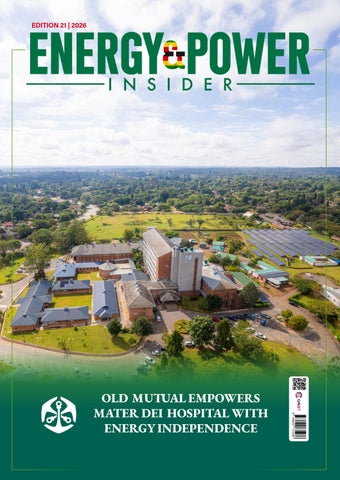
OLD MUTUAL EMPOWERS MATER DEI HOSPITAL WITH ENERGY INDEPENDENCE
As we move through the first half of 2026, Zimbabwe’s energy landscape is witnessing a profound shift toward decentralized, sustainable, and specialized solutions.
In this edition, we celebrate a historic turning point in healthcare: the commissioning of a landmark solar energy plant at Mater Dei Hospital in Bulawayo.
Unveiled on March 10, this project ends the era of life-threatening power disruptions at one of our most critical facilities, proving that when the private sector and international agencies align with government vision, the results are literally life-saving.
Industrial excellence remains a core theme in this issue. We highlight Solar Energy Projects (SEP) for their successful commissioning of a 1MVA system for Proton Bakers, ensuring the nation’s bread supply is powered by the sun. Similarly, Hydro Utilities has set a “gold standard” in environmental stewardship with a US$1.2 million wastewater treatment plant at Padenga’s Kariba Crocodile Farm.
EDITOR’S LETTER
As Zimbabwe accelerates this transition toward sustainable energy, the demand for dependable solar solutions and skilled technical expertise continues to grow. Meeting this demand requires more than just quality products—it calls for strong partnerships built on innovation, trust, and a shared vision for the future. This is precisely where the collaboration between Aurora Energy and GoodWe stands out, providing the technological backbone necessary for largescale energy independence.
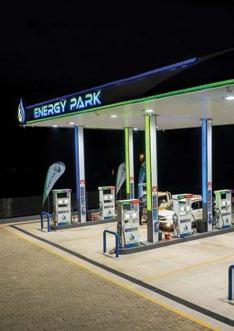
Infrastructure development is also reaching the grassroots. The new Puma Energy service station at Mhandamabwe in Chivi North signals the modernization of rural hubs, bringing global corporate standards to the heart of Masvingo Province.
Finally, we salute Nick’s Motors as they celebrate 40 years of excellence this June. Since 1986, their commitment to mechanical integrity has made them a regional powerhouse in fuel transportation. Across every sector, the message is clear: Zimbabwe is no longer just dreaming of energy security; we are building it.
The pulse of Zimbabwe’s energy transition continues to quicken with significant updates across the petroleum and renewable sectors.
Most notably, the government is nearing the finish line for a definitive Petroleum Production Sharing Agreement (PPSA).
Invictus Energy has confirmed that this deal, central to the Cabora Bassa project, is in its final stages.
This agreement will provide the legal and fiscal framework necessary to transform Zimbabwe into a bona fide fuel and gas producer, fundamentally altering the national macroeconomic trajectory.
In the realm of sustainability and social impact, the Zimbabwe Energy Regulatory Authority (ZERA) recently demonstrated its commitment to conservation by commissioning an LED retrofitting project at Victoria Chitepo Provincial Hospital.
This initiative highlights a shift toward “efficiency first” in public infrastructure. Simultaneously, the Renewable Energy Conference in Esigodini served as a rallying cry, with the government reaffirming its ambitious target of generating 2,100 megawatts of renewable energy by 2030.
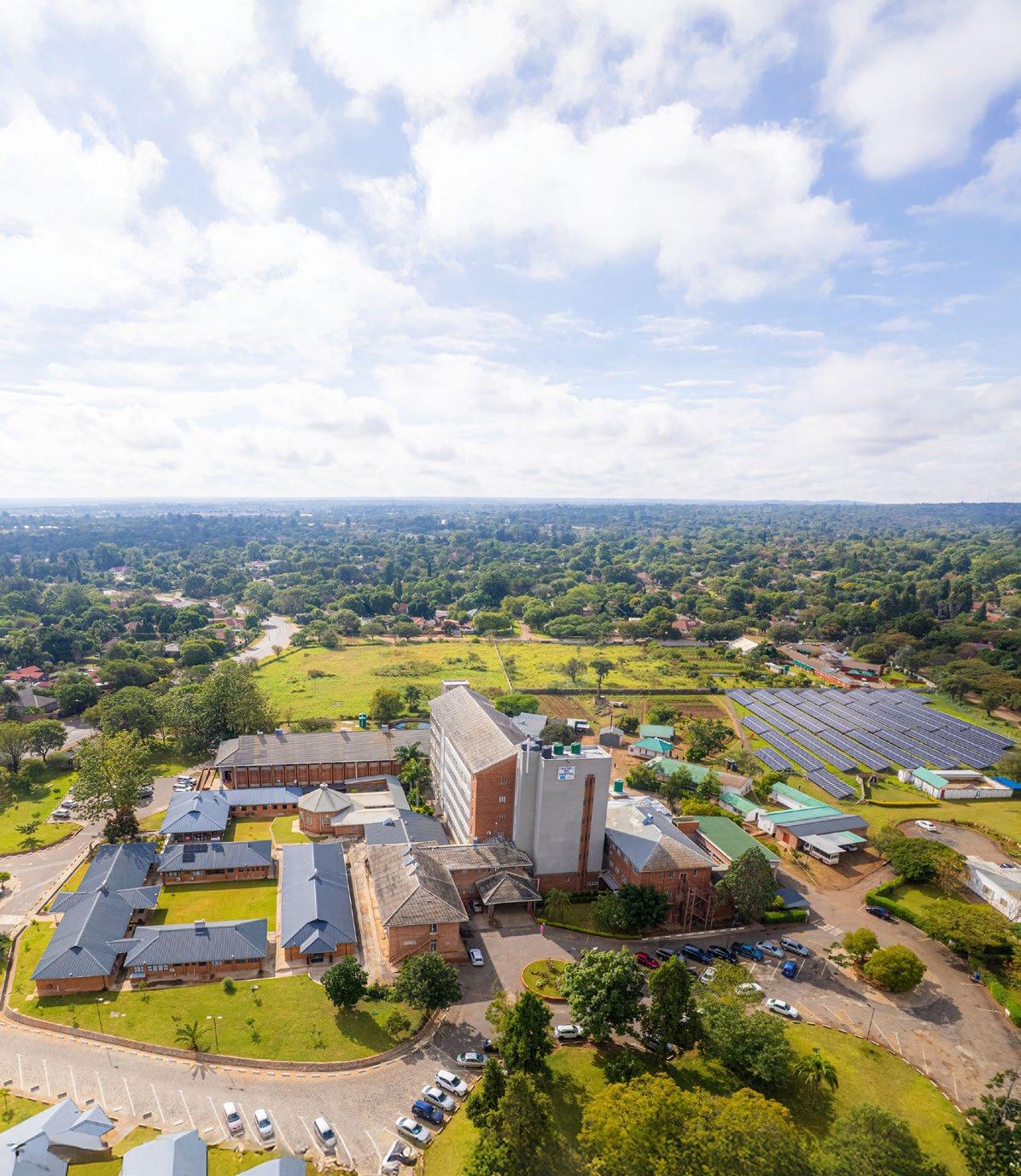
OLD MUTUAL EMPOWERS MATER DEI HOSPITAL WITH ENERGY INDEPENDENCE
Text by Martin Chemhere
Images by Caast media Group
This renewable energy initiative was made possible through the Old Mutual Renewable Energy Fund. The fund is a strategic partnership involving the United Nations Sustainable Development Goal Fund, various UN agencies, the Government of Zimbabwe and Old Mutual Zimbabwe.
The physical installation was carried out by Belmont Electrical, a firm based in Bulawayo. The project is a demonstration of what can be achieved when local expertise meets international capital and national policy
For years, Mater Dei Hospital, like many institutions across the country, has grappled with the challenges of inconsistent power supply, which forced the hospital to rely heavily on expensive diesel generators in order to sustain operations and critical care.
The new solar plant effectively eliminates these risks by providing a stable, independent power source.
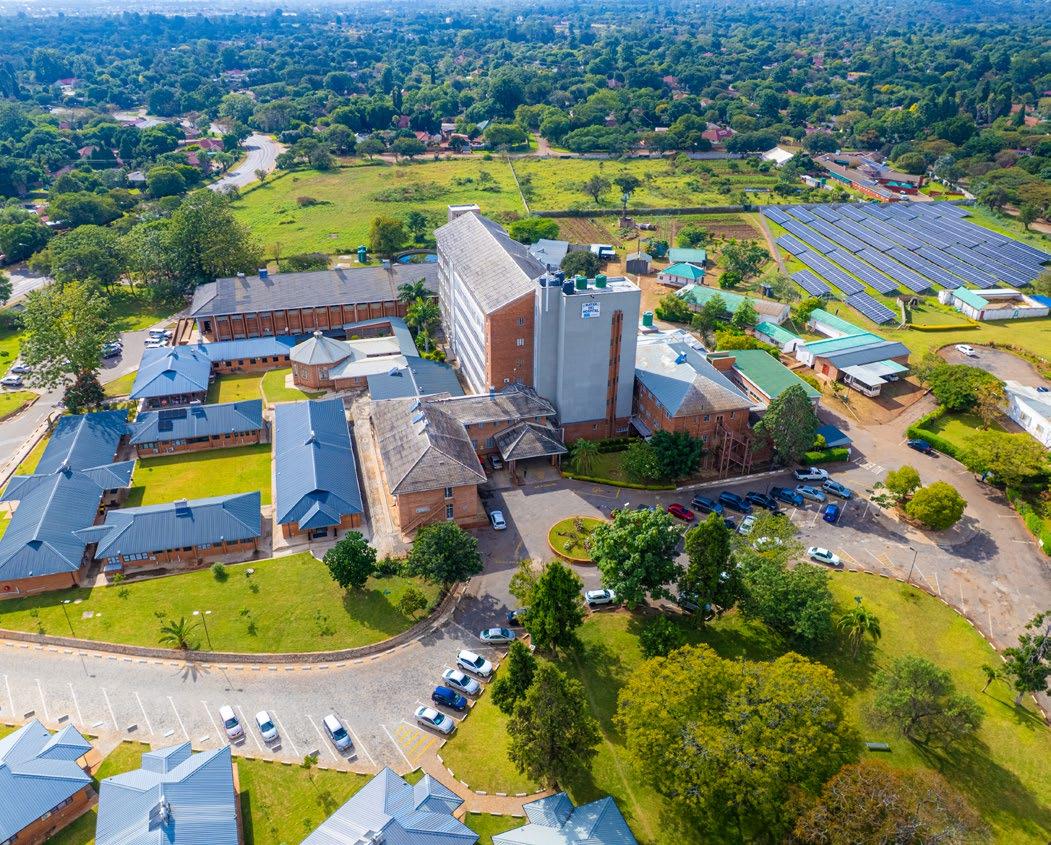
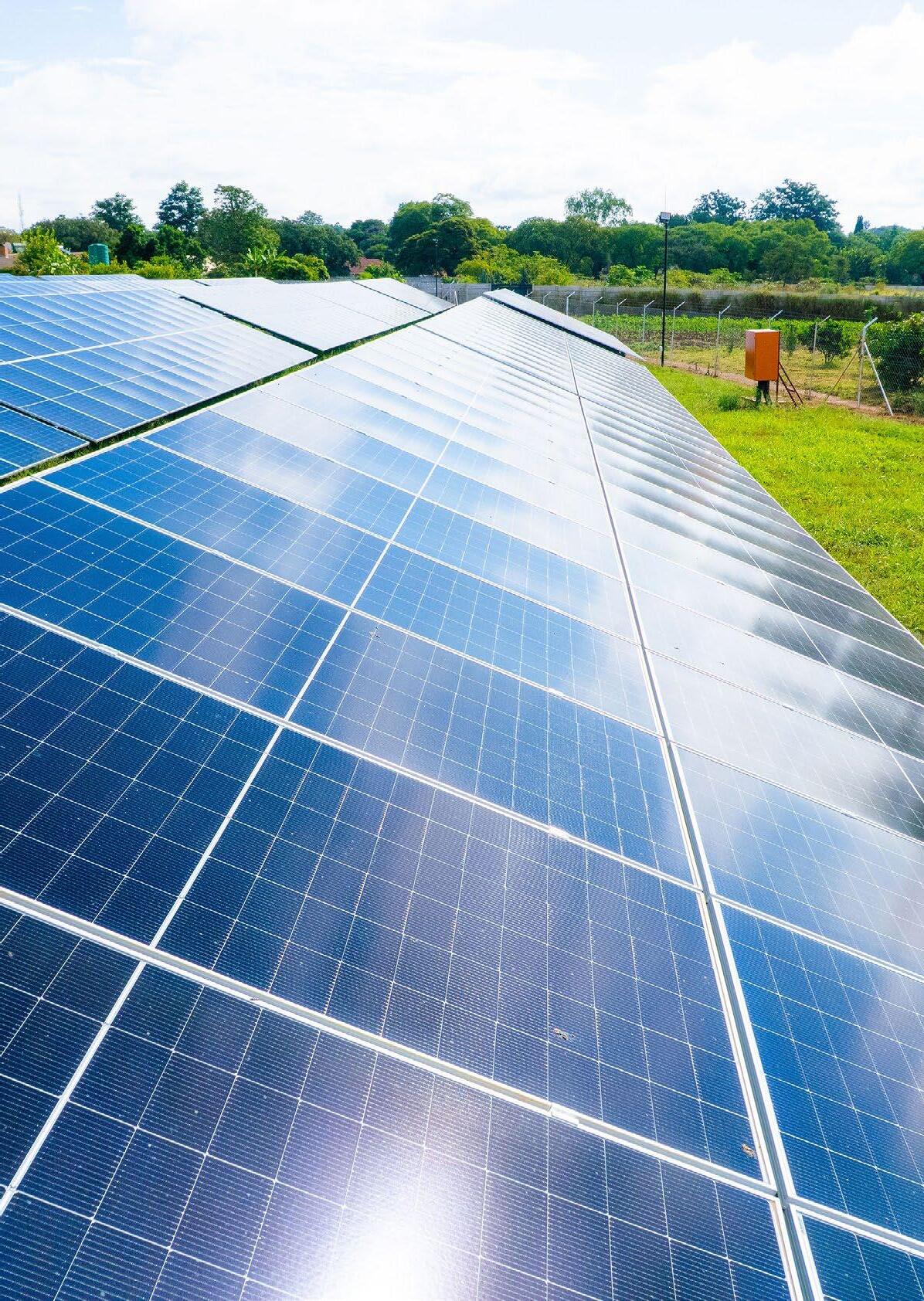
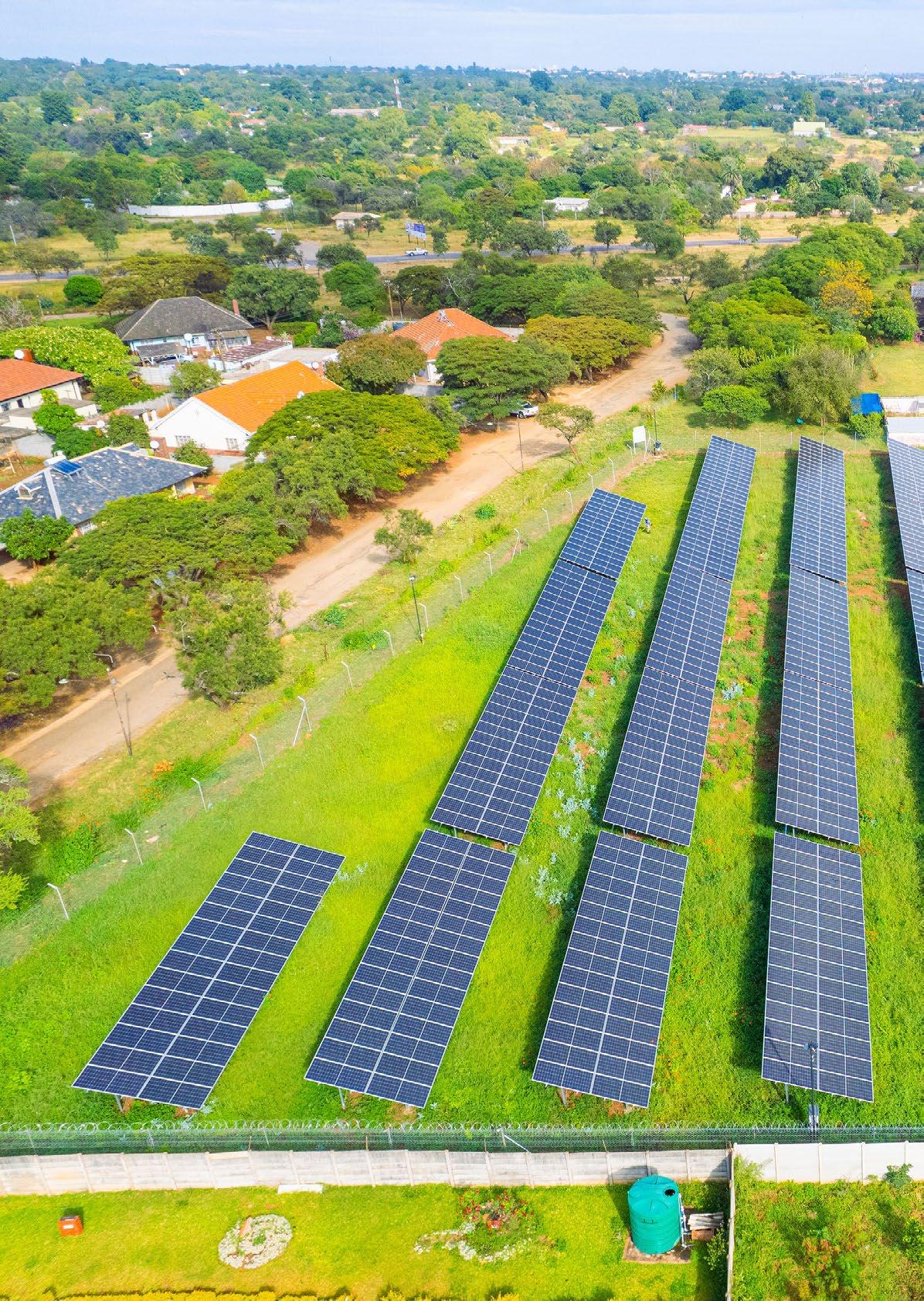
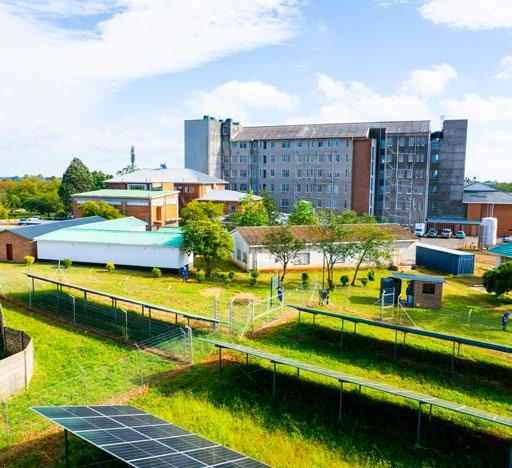
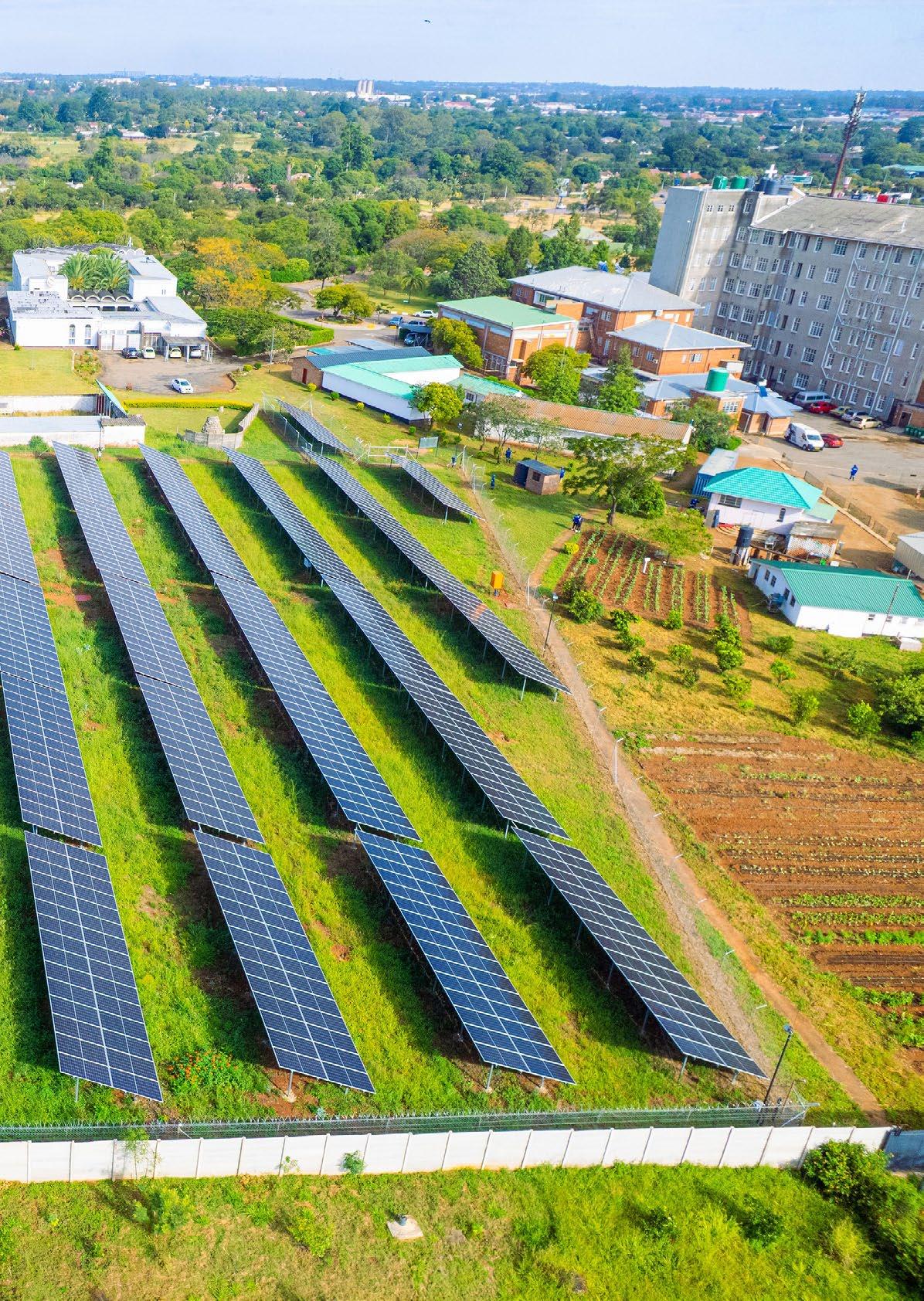
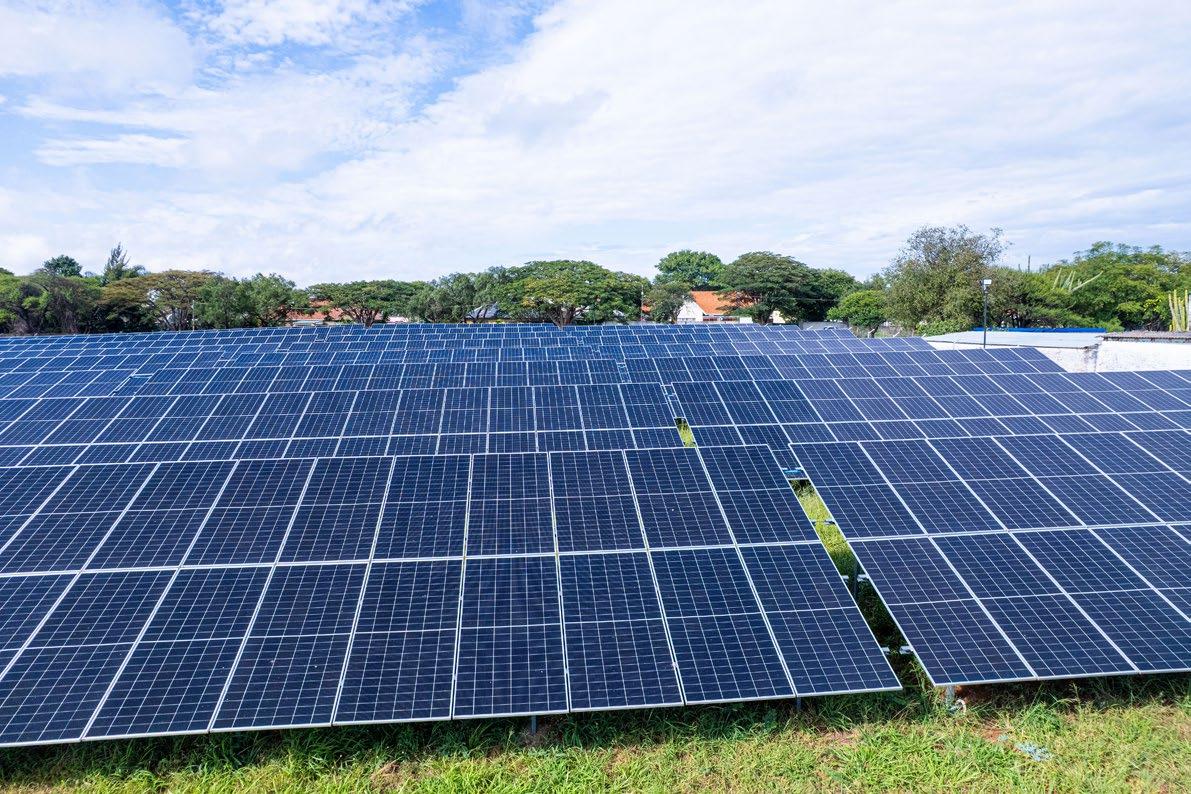
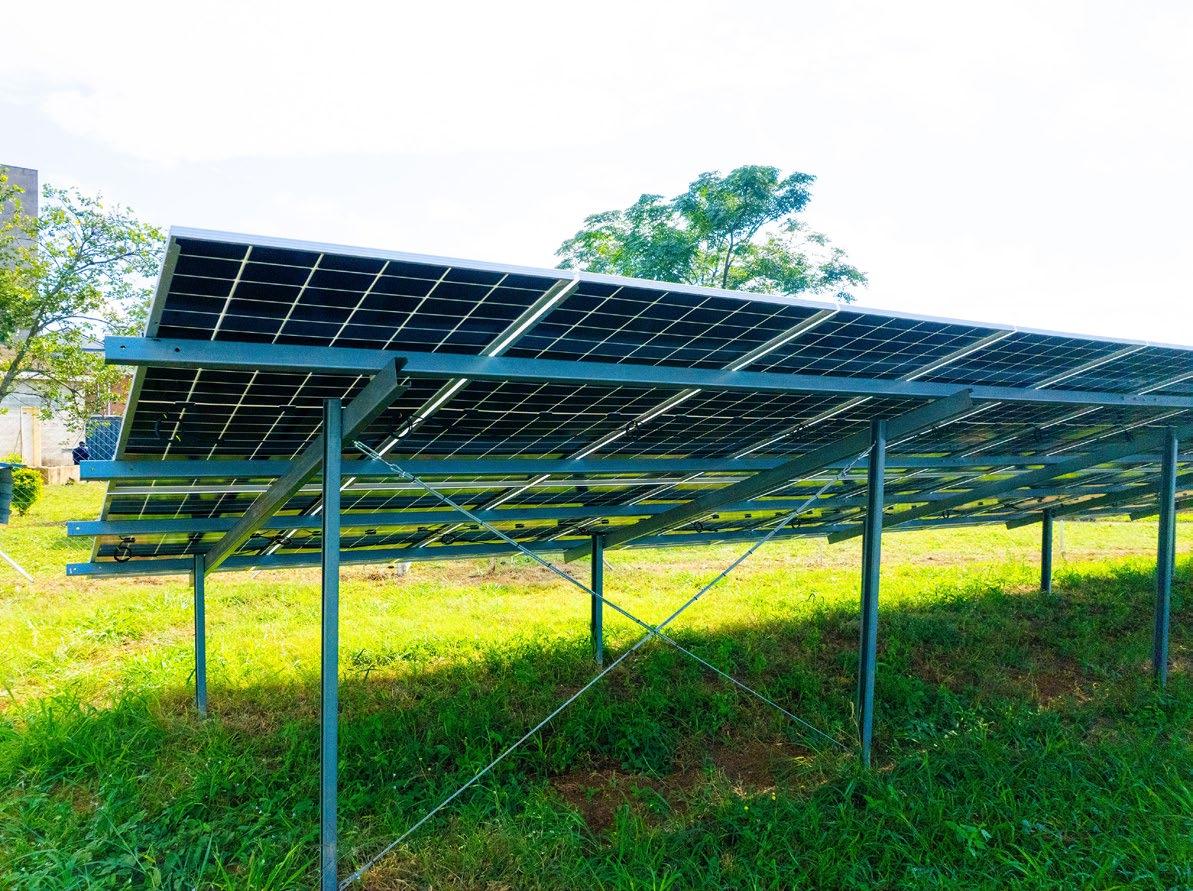
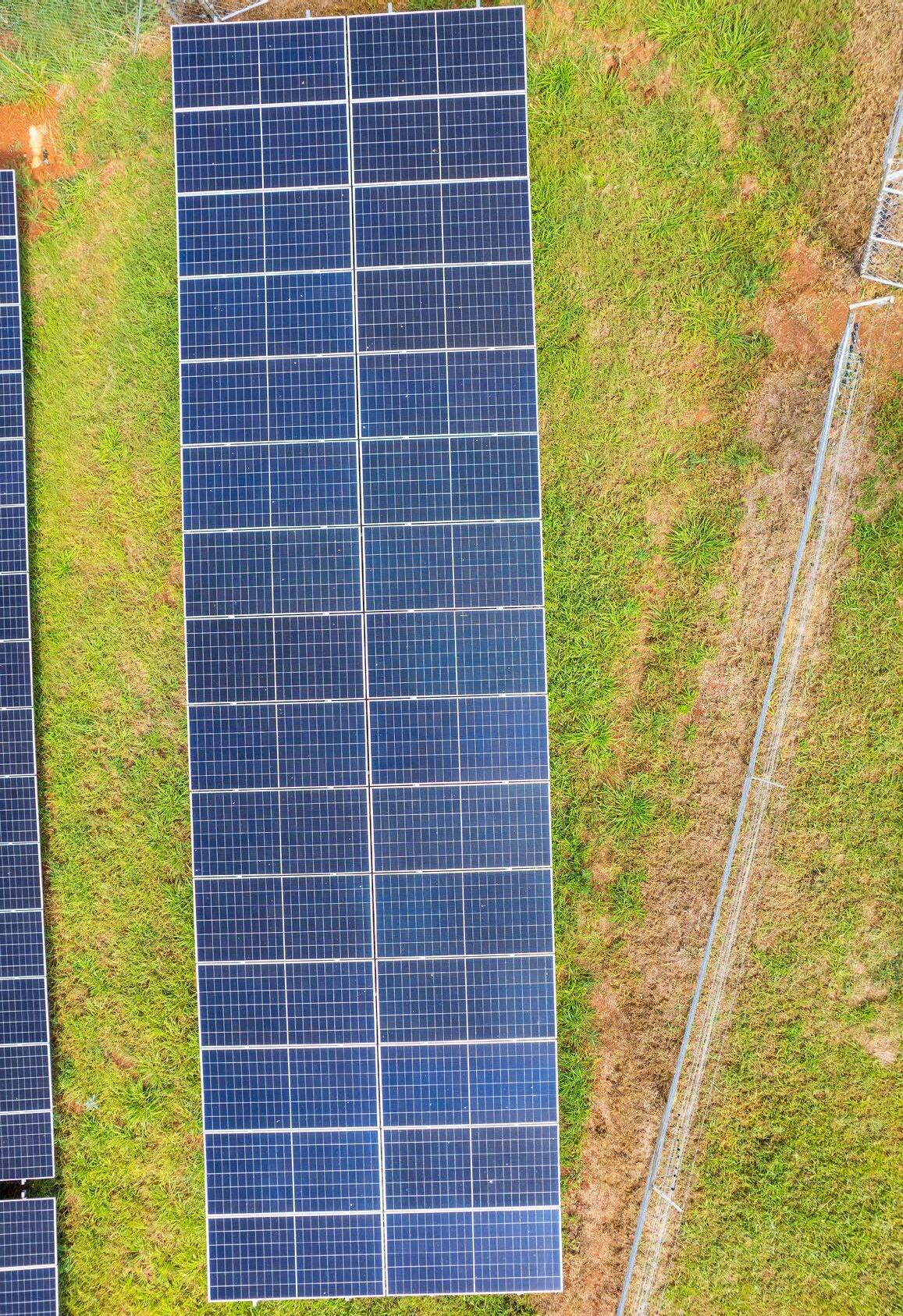
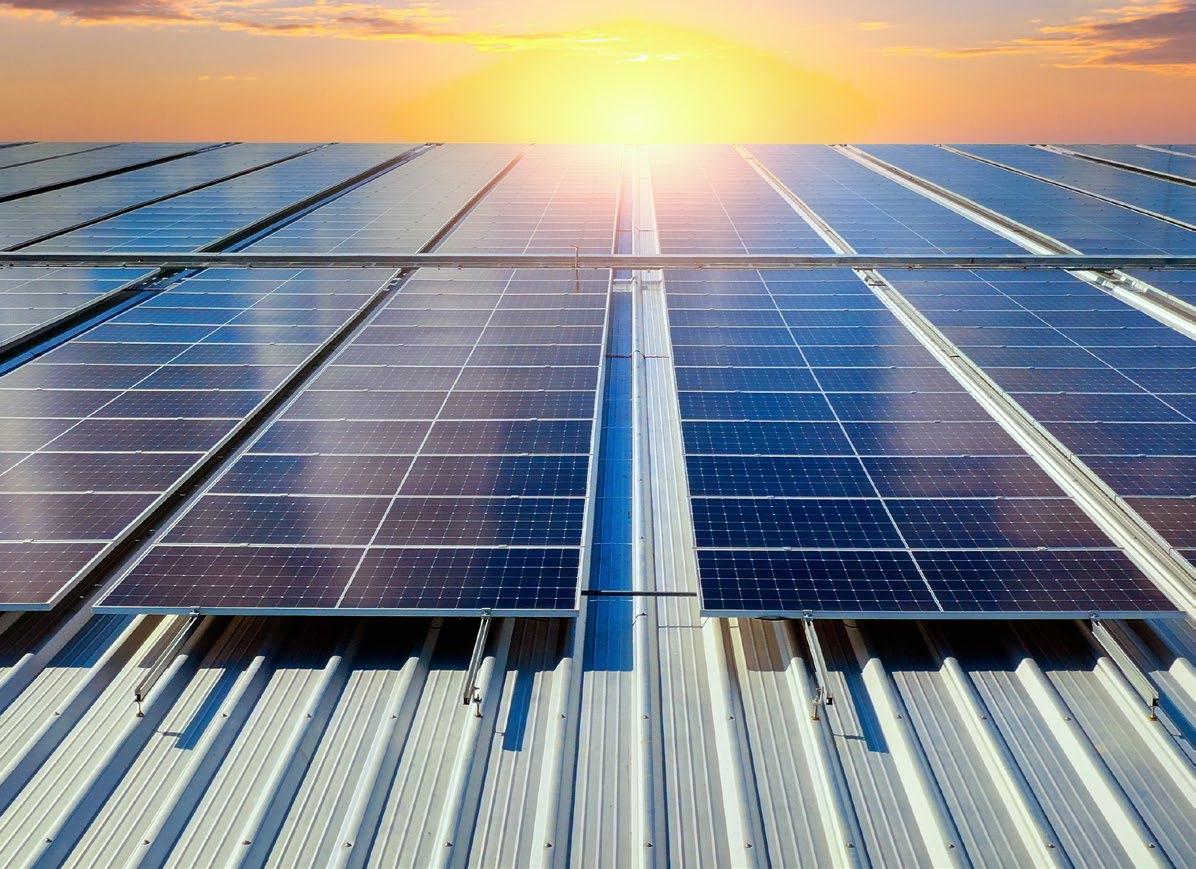
The infrastructure itself is a marvel of modern engineering. Belmont Electrical installed a 750 kWp solar photovoltaic system complemented by a 1 MWh battery energy storage system.
This setup includes approximately 1,200 solar panels and has enough storage capacity to power 100 average homes for an entire day. It is designed to generate 1.3 million kWh annually, ensuring that critical departments such as the neonatal unit and renal dialysis centre never go dark.
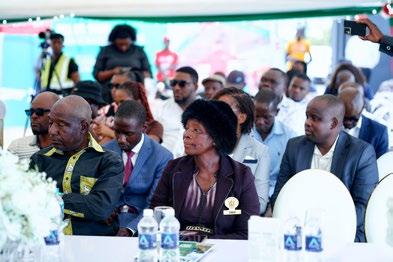
During the commissioning ceremony, Mr. Sam Matsekete, the CEO of Old Mutual Group, emphasized the broader economic and social significance of the investment. He noted that the project is a prime example of how institutional capital can be used to solve real-world problems.
"Through channelling resources into the Mater Dei solar project, Old Mutual Zimbabwe is demonstrating that commercial investment can go hand-in-hand with profound social impact, creating a sustainable model for infrastructure development that strengthens our national healthcare system," said Mr. Matsekete.
The financial benefits for the hospital are expected to be immediate and substantial.
Mater Dei Hospital has displaced the need for thousands of litres of diesel, reduced reliance on the national grid, and potentially stabilized its operating budget.
These savings are intended to be reinvested into patient care and the procurement of advanced medical equipment, further improving the quality of service for the Matabeleland region.
Government officials at the event praised the project as a vital contribution to Zimbabwe’s National Development Strategy.
The Deputy Minister of Energy and Power Development, Honourable Yeukai Simbanegavi, highlighted how this project aligns with the National Energy Compact, which aims for universal electricity access by 2030.
"The Mater Dei Solar Plant stands as a powerful symbol of our energy transition in action, proving that through public-private partnerships, we can modernize our infrastructure and ensure our hospitals remain resilient centres of healing," remarked Deputy Minister Simbanegavi.
The United Nations played a central role in catalysing the finance required for this project. The UN Joint SDG Fund provided US$8 million in initial capital, which was then matched by Old Mutual.
This "blended finance" approach is designed to significantly derisk renewable energy projects, making them more attractive to private investors.
The ultimate goal of the fund is to reach a capitalization of $100 million to support similar projects across Zimbabwe.
Mr. Edward Kallon, the UN Resident and Humanitarian Coordinator, spoke passionately about the human element of the project.
He reminded the audience that while the technology is impressive, the true value lies in the lives that will be saved and the dignity restored to healthcare workers.
"We are not only switching on a new power source; we are switching on possibilities for patients whose lives depend on uninterrupted power and for health workers who must deliver quality care under any conditions," stated Mr. Kallon.
The social impact of the solar plant extends beyond the hospital walls. Mater Dei is a major employer in Bulawayo, with a workforce of over 400 professionals, the majority of whom are women. A stable work environment with reliable lighting and functioning equipment reduces the immense stress that medical staff face during blackouts.
Furthermore, the surrounding community benefits from having a reliable referral hospital that can remain fully operational even during climate-related shocks or national grid failures.
Environmental sustainability is another key pillar of the project. It is estimated that the solar plant will prevent approximately 22,000 tons of carbon dioxide emissions annually.
This contributes directly to Zimbabwe’s climate commitments under the Paris Agreement. The partners’ contribution to the reduction in "carbon footprint" of a major medical facility shows that healthcare and environmental protection are deeply linked.
The successful completion of the Mater Dei project serves as a blueprint for other referral hospitals across the country. It proves that renewable energy is not just a "green" luxury but a practical necessity for modern medicine. As the Renewable Energy Fund continues to grow, other critical institutions are expected to follow in Mater Dei’s footsteps.
While the sun set over Bulawayo on the day of the commissioning, the rows of silicon panels at Mater Dei continued to harvest energy. They stand as a silent, powerful guard over the patients inside, ensuring that the hospital’s mission of "healing with love" is never interrupted by a flicker of the lights. This project is a both a source of great pride for Old Mutual Zimbabwe and a clear signal that Zimbabwe is ready to embrace a cleaner, brighter, and more resilient future for all its citizens.
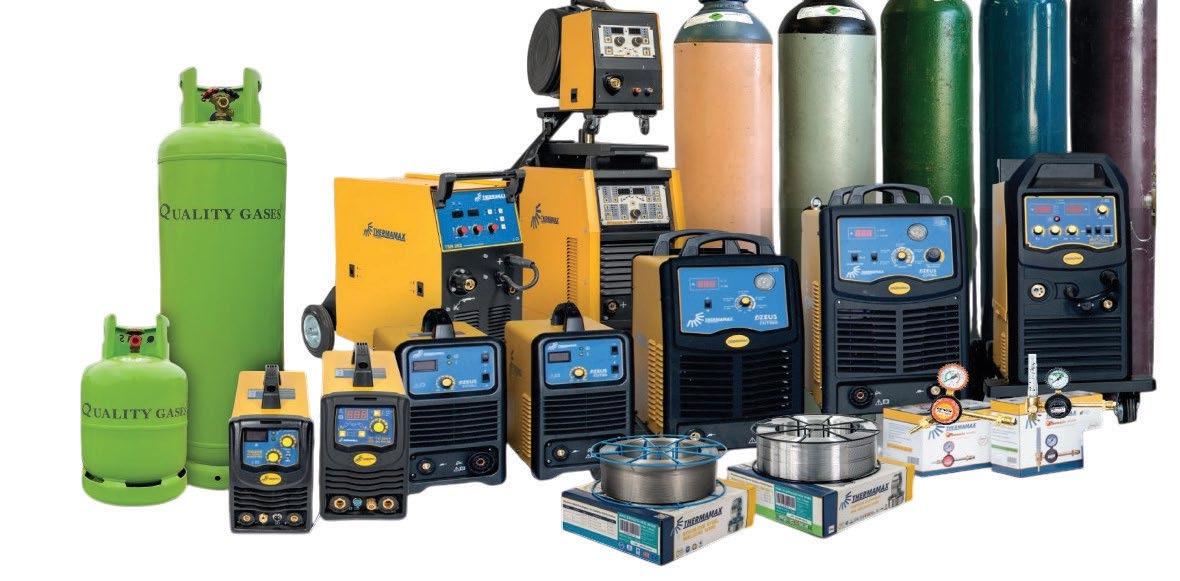
UALITY GASES
CARBON DIOXIDE
OXYGEN
MEDICAL OXYGEN
MIG WIRES
CUTTING
AGROSHIELD
ARGON
ACETYLENE
NITROGEN
HELIUM
HYDROGEN
GRINDING DISCS
CUTTING TORCHES
THERMAMAX MACHINE
VITEMAX ELECTRODES
PLASMA CUTTER
FRESHLINE GASES
WHOLESALE DIVISION
POWERS ZIMBABWE’S SUSTAINABLE FUTURE
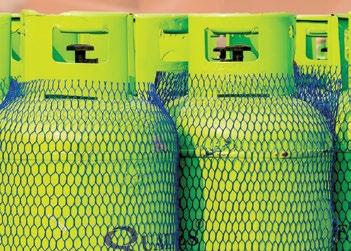
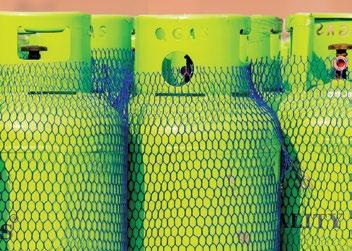
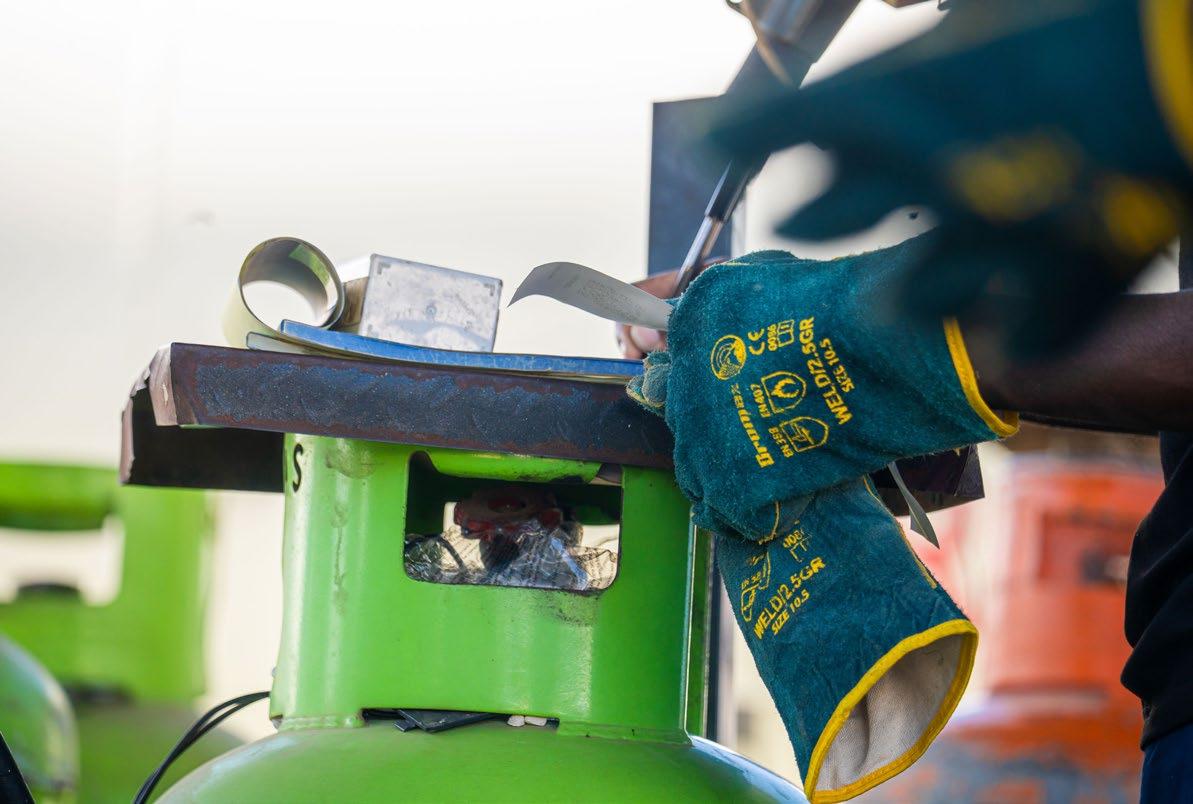
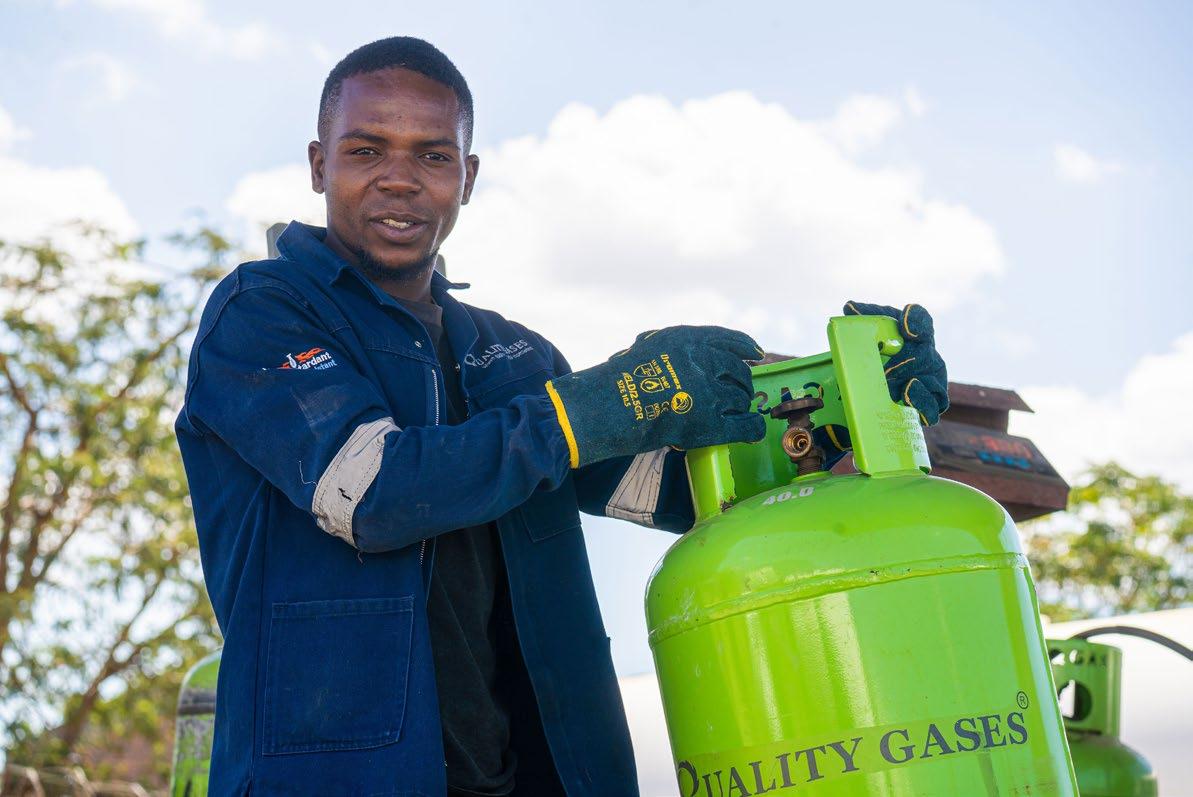
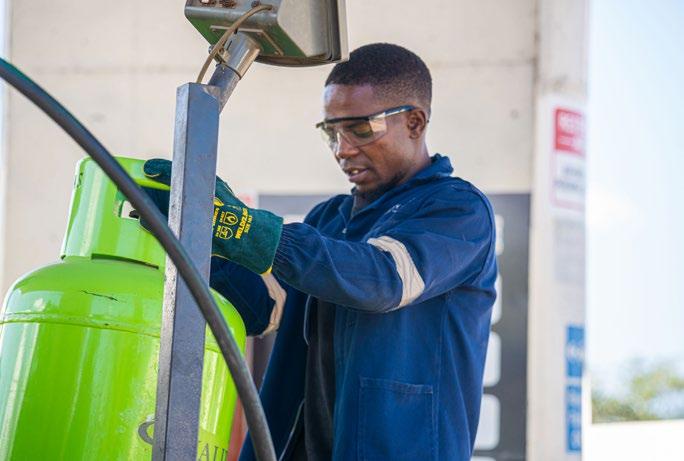
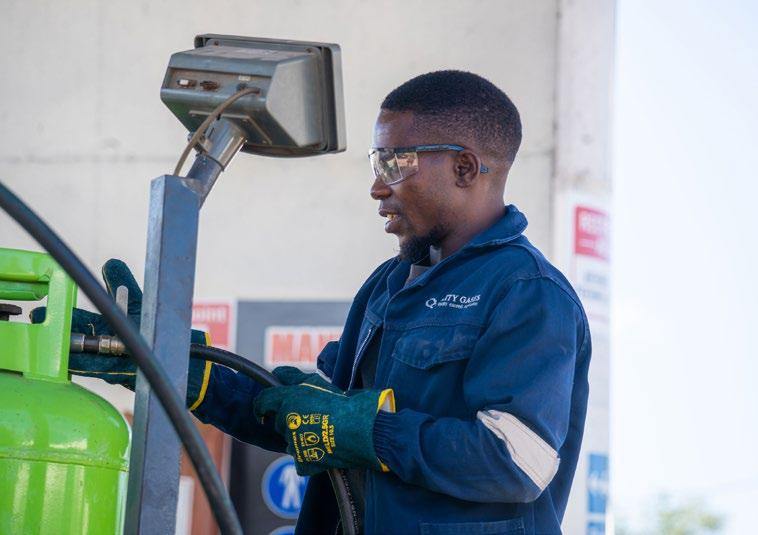
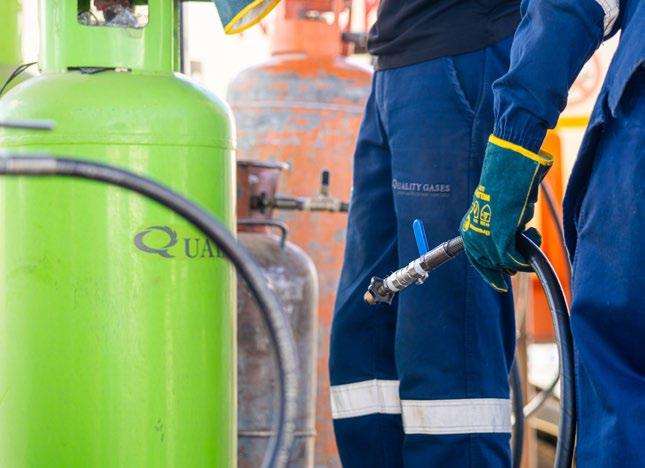
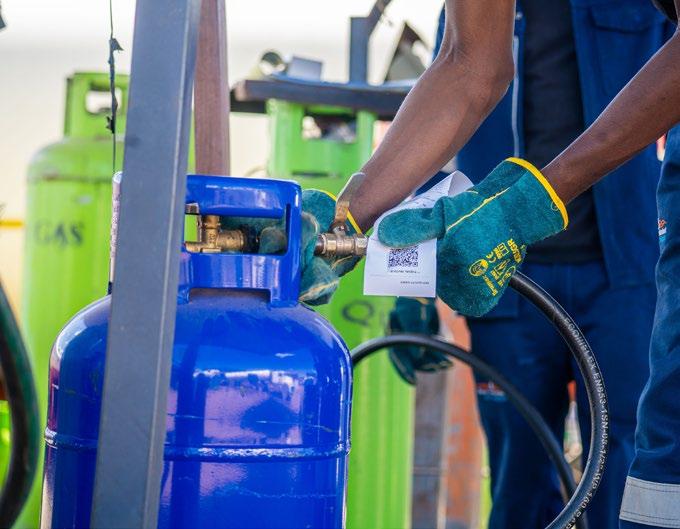
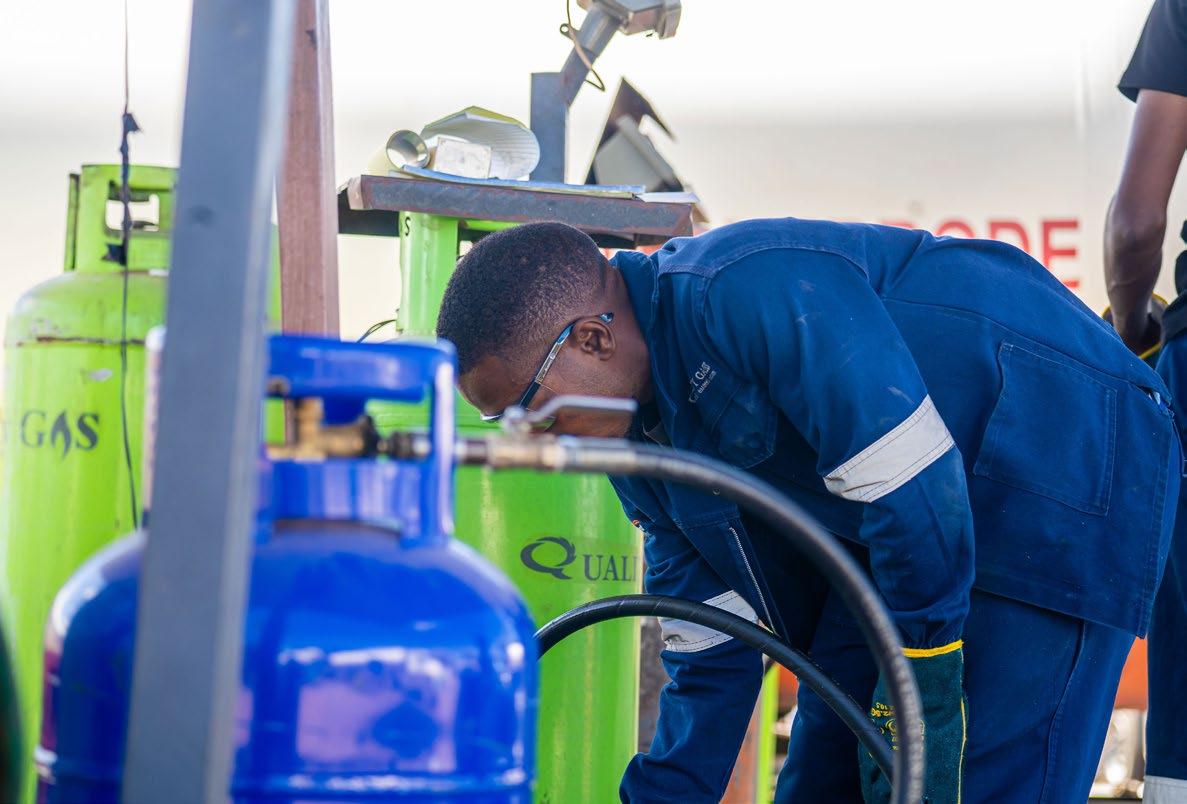
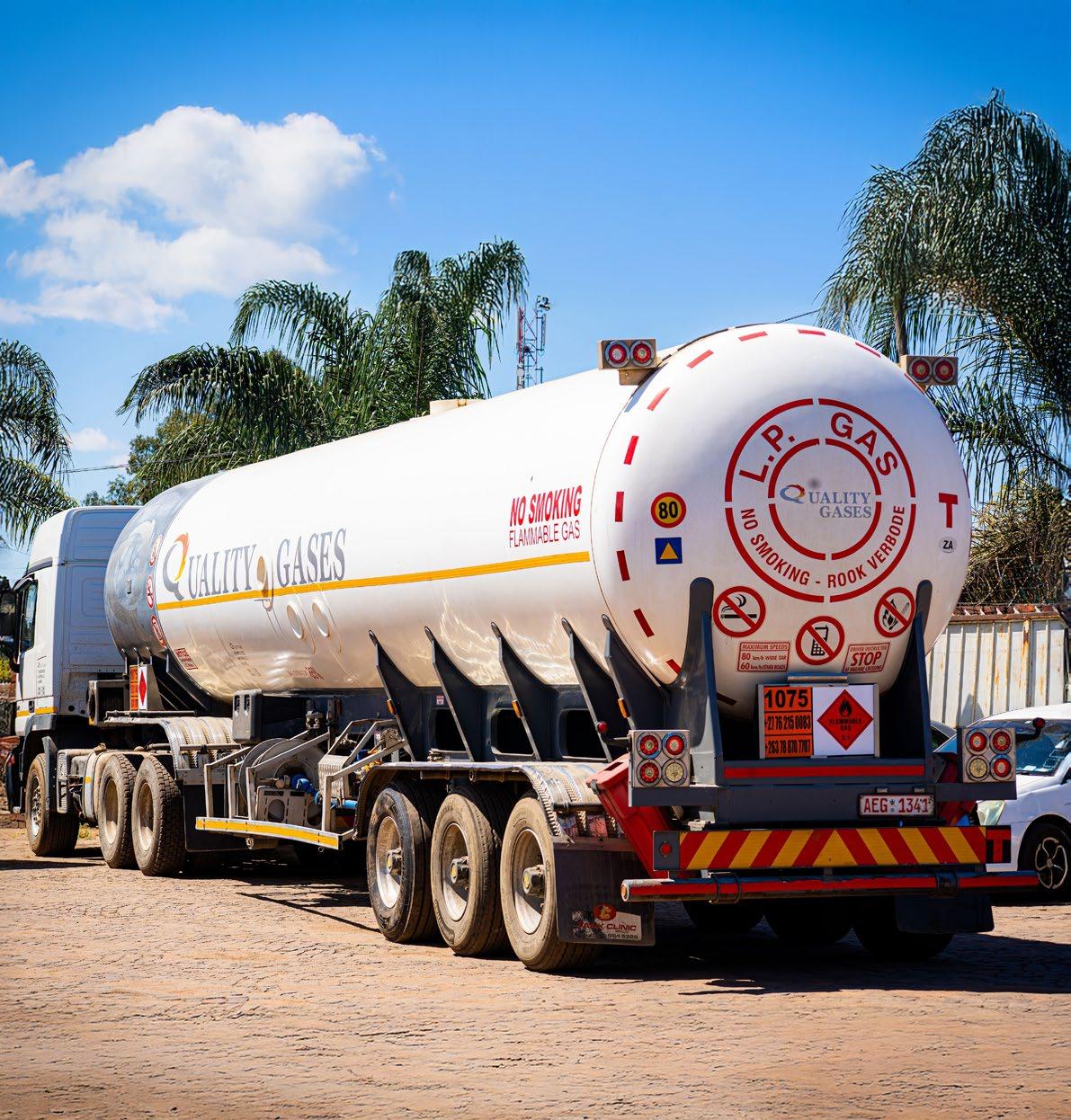
As Zimbabwe accelerates its transition toward cleaner energy solutions, the role of liquefied petroleum gas (LPG) has shifted from a peripheral fuel source to a central pillar of national energy security. At the heart of this rapid change is Quality Gases, an organization whose wholesale division has become a critical engine for industrial growth and environmental stewardship. Through bridging the gap between international procurement and local accessibility, the company is not only securing market dominance but also redefining the standards of the regional energy sector.
Ttext by Martin Chemhere
Images by Caast Media Group
Backbone for national energy
The Quality Gases LPG wholesale division is far more than a logistics hub, acting as a vital link that integrates procurement, storage, and distribution into a unified corporate strategy. The division is anchored on the principle of maintaining high standards of performance and service delivery, enabling the company to scale its operations while ensuring that gas remains consistently available across its retail sites and the broader market.
Kuda Brain Gaka, the Managing Director at Quality Gases, emphasizes the deliberate nature of this integration. "The LPG wholesale division is a central component of Quality Gases’ corporate structure, underpinning the organization’s ability to attain and maintain market dominance in the supply of gases," Gaka explains. "It serves as the critical link between procurement, storage, and distribution, ensuring efficient and reliable gas availability."
Infrastructure and technological superiority
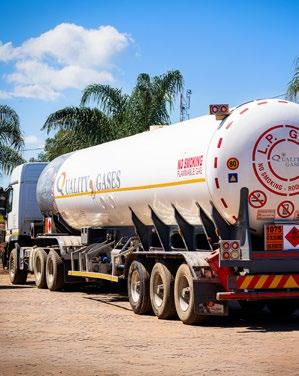
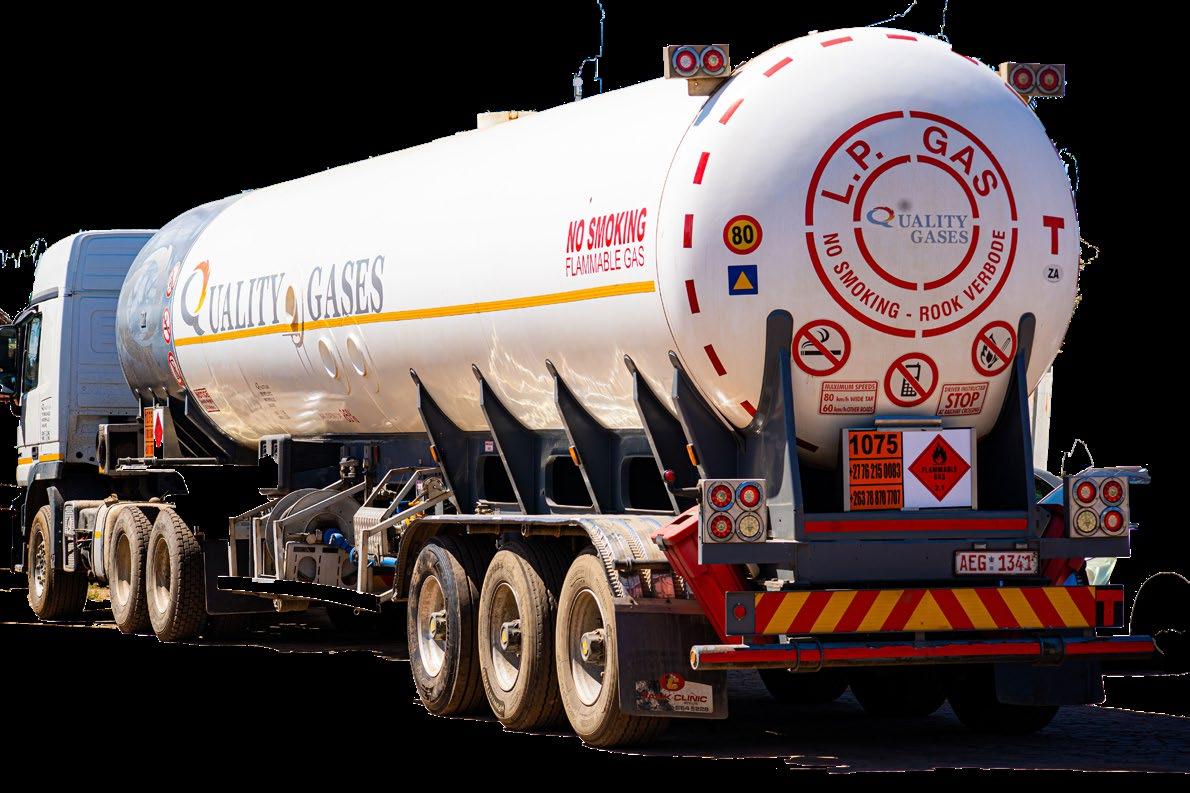
What distinguishes Quality Gases from regional competitors is a formidable infrastructure backbone. The company operates a proficient fleet of DEKRAapproved cross-border tankers, complemented by local trucks and strategically positioned storage facilities in Harare, Masvingo, and Bulawayo. This network is managed through modern Transportation Management Systems (TMS) and IoT-enabled tracking, which optimize routes to reduce fuel consumption and provide real-time visibility of shipments.
This commitment to modernization extends to the company’s environmental footprint. Through the utilization of solar energy as a primary power source at retail sites and a reliable backup for key facilities, the company is walking the talk on sustainability. These innovations ensure operational continuity during power outages while significantly lowering the carbon emissions associated with large-scale gas logistics.
Empowering the SME ecosystem
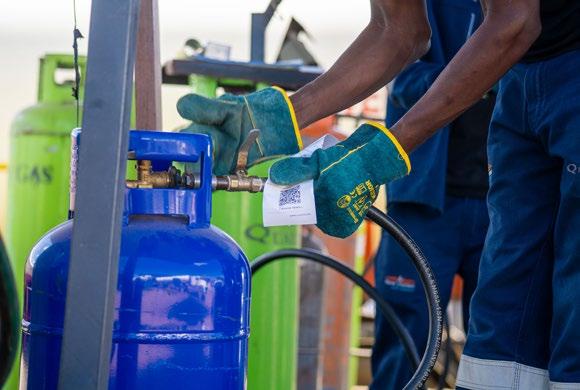
Quality Gases has also taken a proactive role in fostering an inclusive retail sector. Recognizing that small-to-medium enterprises (SMEs) are the lifeblood of the Zimbabwean economy, the wholesale division provides specifically tailored discounted pricing and logistical support to smaller distribution depots.
"The wholesale division of Quality Gases plays a crucial role in empowering SMEs entering the gas retail space," Gaka notes. "Through offering discounted prices tailored specifically for retailers, the company lowers the financial barriers for SMEs, enabling them to remain competitive within the market." This support helps emerging businesses overcome the operational hurdles of limited resources, effectively decentralizing energy access across the country.
Meeting safety and regulatory requirements
In an industry where safety is paramount, Quality Gases operates under a "zero-compromise" culture.
The company’s operations align with ZERA regulations, Environmental Management Agency (EMA) standards, and international benchmarks like NFPA 58 and ISO 14001. This rigorous approach extends beyond the company’s own facilities; wholesale partners are required to maintain compliant storage infrastructure and undergo mandatory safety training.
The company also employs strategic procurement to protect local partners from the volatility of global markets. The company secures bulk purchasing agreements when international prices are favourable, acting as a buffer, allowing for gradual local price adjustments rather than sharp, reactionary spikes.
Driving the macro-economic transition
On a macro-economic level, the company is a key player in Zimbabwe’s journey toward environmental sustainability. Its ability to provide a reliable alternative to biomass fuels like firewood and charcoal, results in the direct mitigation of the rates of deforestation and indoor air pollution.
Gaka highlights the broader impact of this shift: "Quality Gases is instrumental in broadening access to cleaner energy for both households and industrial consumers, thereby accelerating national development." Through its combination of infrastructure investment, SME empowerment, and environmental stewardship, Quality Gases is not just distributing fuel—it is fuelling the sustainable evolution of the Zimbabwean economy.
STABILITY REPUTATION EXCELLENCE
• MINING INFRASTRUCTURE DESIGN CIVIL ENGINEERING STRUCTURAL ENGINEERING WATER TREATMENT WASTEWATER DESIGN DRONE SURVEYS FIELD INVESTIGATIONS STORMWATER MANAGEMENT SERVICES
For over 35 years, Hydro Utilities Consulting Engineers have consistently provided engineering consultancy services in the country and beyond the borders, supporting the mining industry in civil and structural infrastructure development.
Hydro Utilities Consulting Engineers is a private firm of registered engineers established in 1991. Hydro Utilities prides itself in its long established track record of engineering design and technical advisory services and unparalleled focus on delivery.
“We are mindful of the significant contribution to national development that mining brings, and as such, we endeavor to match this by providing modern, yet sustainable engineering solutions. Our continued support to industry thus far, is testament of our sound and consistent management structure over the years and strong desire to demonstrate excellence” Eng. Thami Mpala (CEO – Hydro Utilities Consulting Engineering Group).
“Supporting the Mining Industry through innovative, sustainable water and wastewater engineering solutions”
Text by Martin Chemhere
AT PADENGA KARIBA
The shimmering expanse of Lake Kariba is more than just a tourist attraction; it showcases itself as a delicate ecosystem and a vital lifeline for Zimbabwe’s northern region.
For Padenga Agribusiness, the world’s leading producer of premium crocodile skins, protecting this water body is both an ethical mandate and a business necessity.
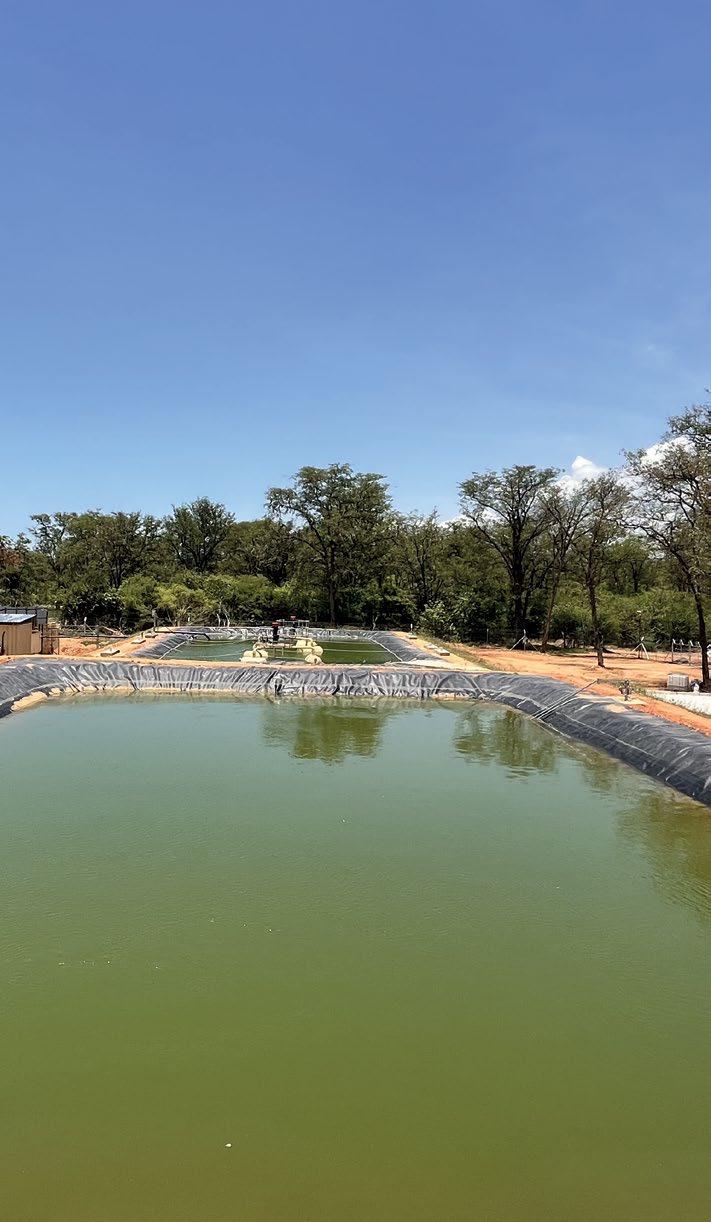
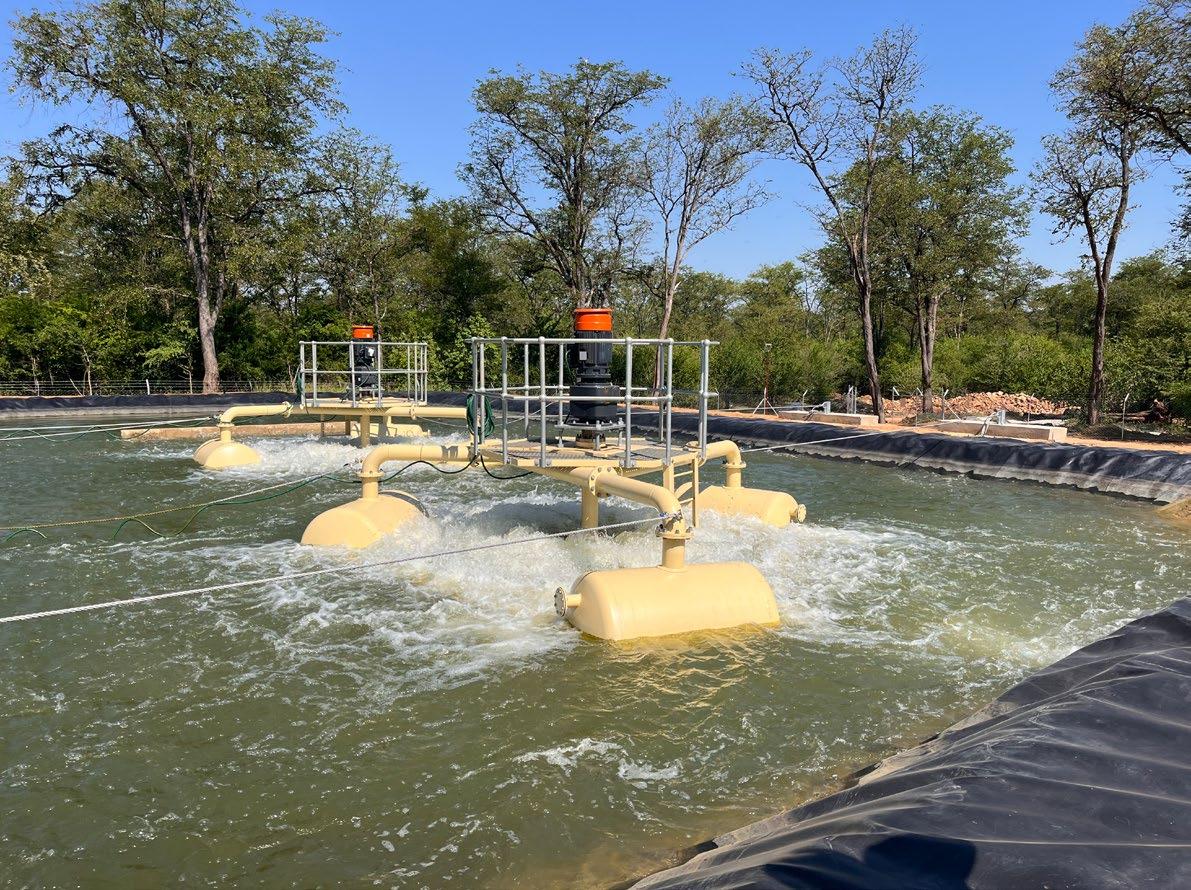
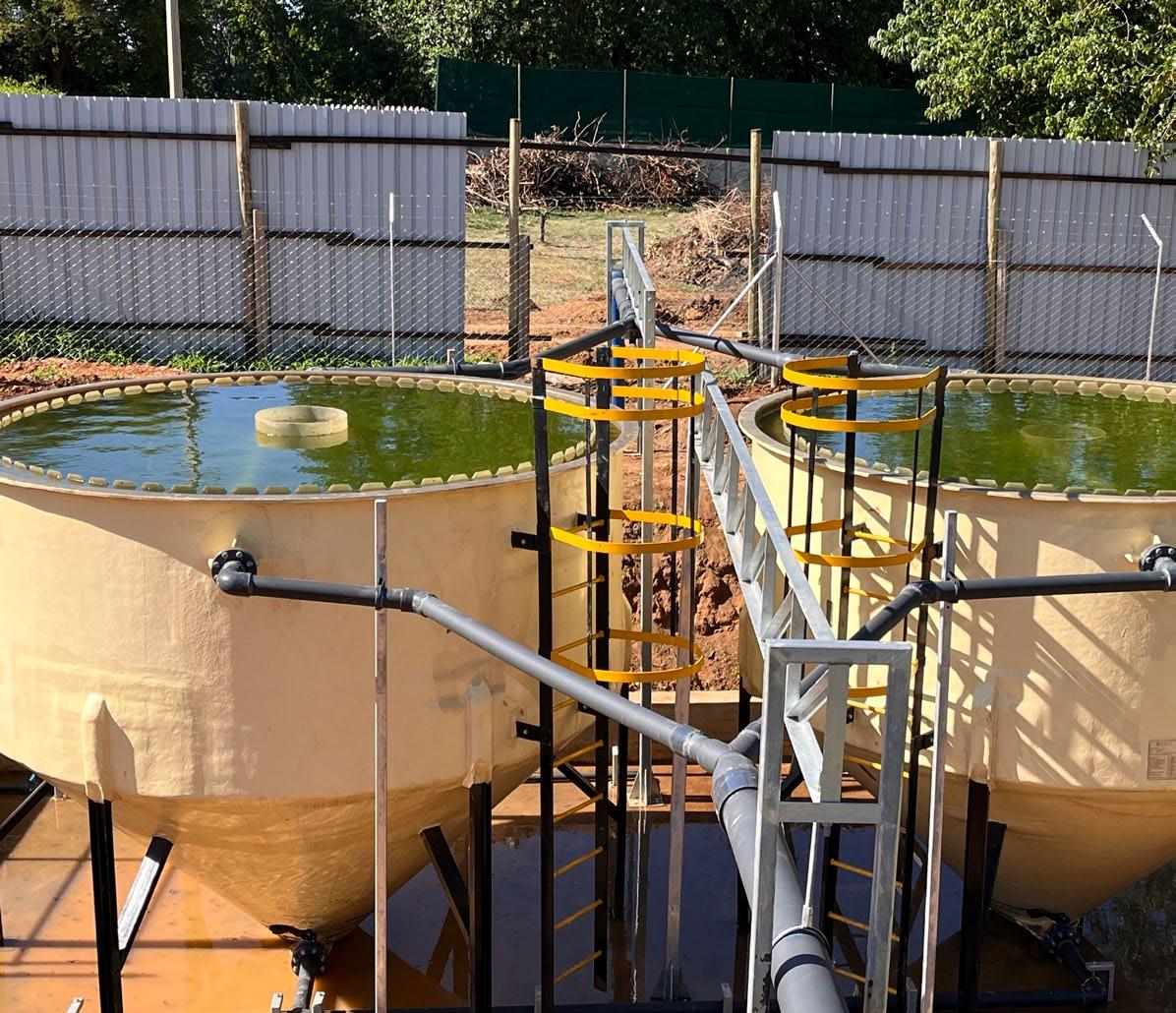
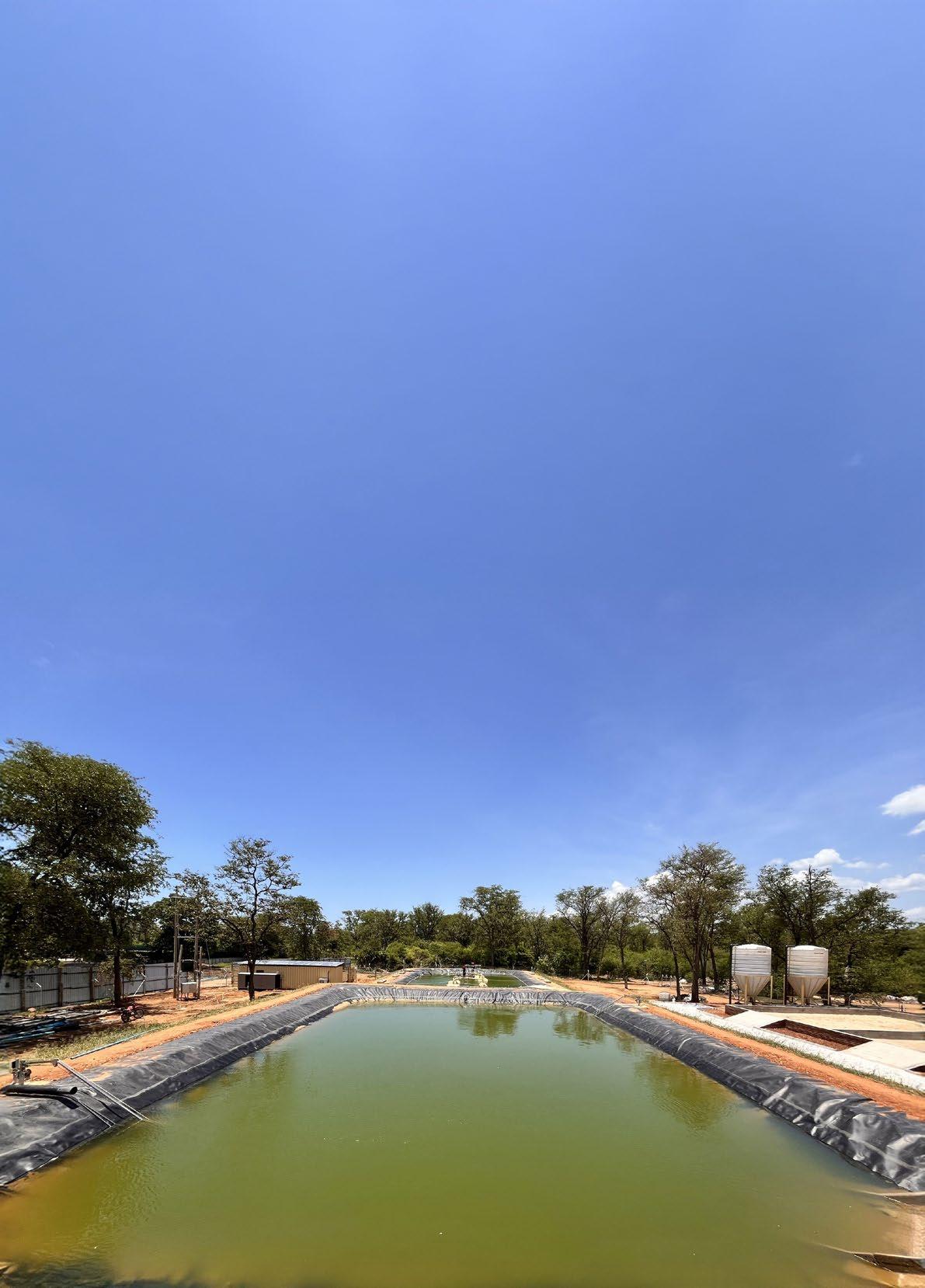
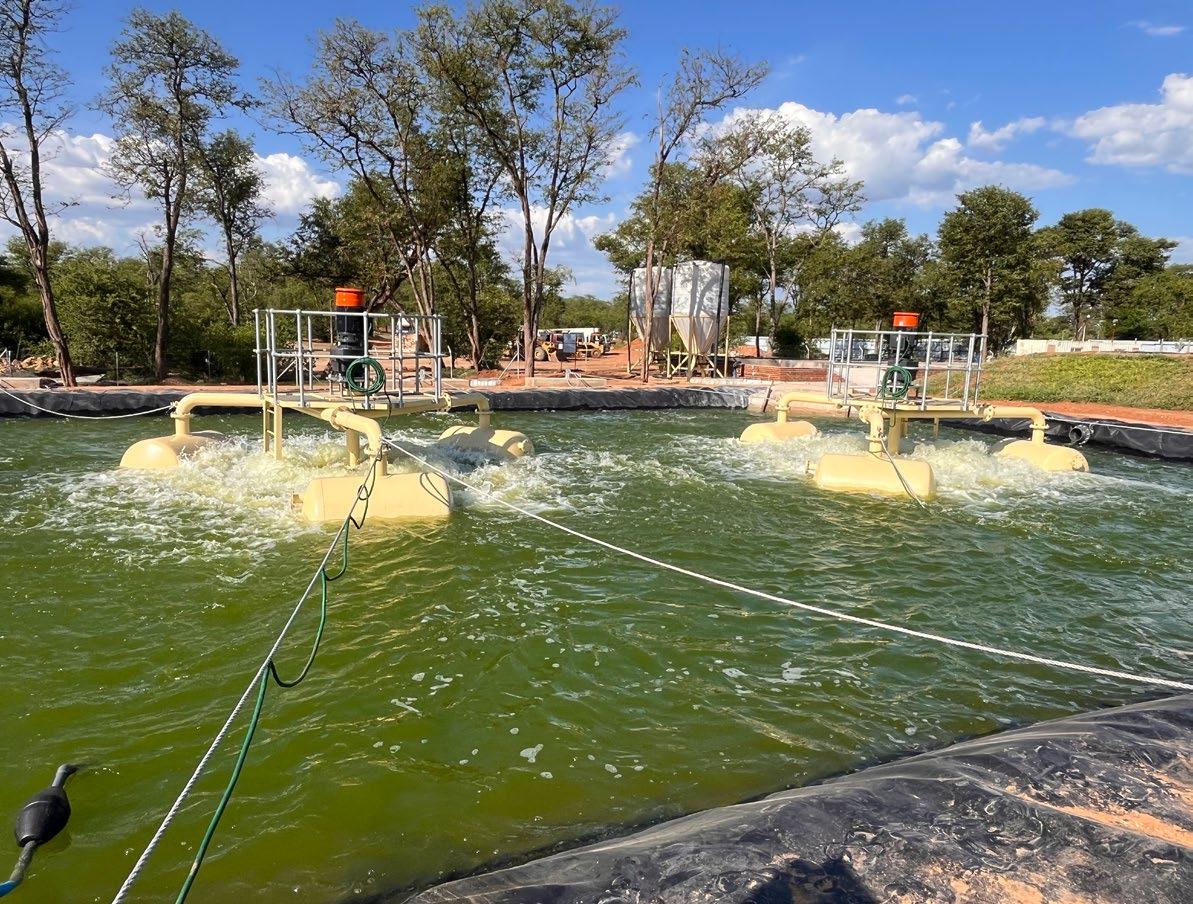
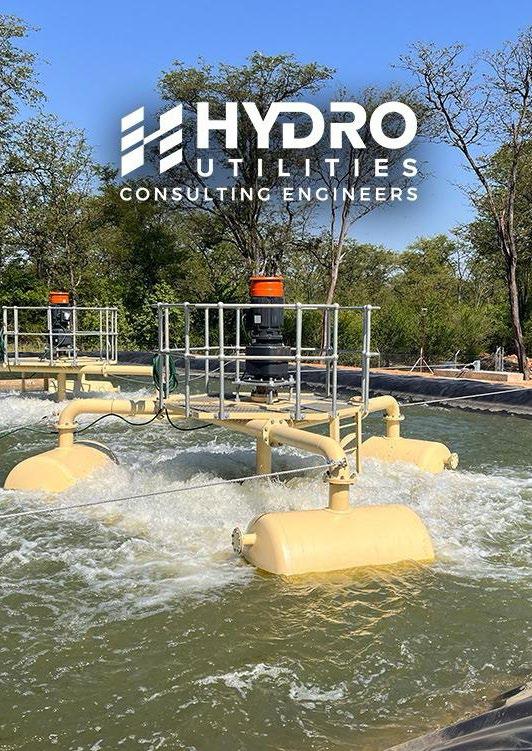
Realising this and in a landmark achievement for Zimbabwean engineering, Hydro Utilities has recently completed a state-of-the-art US$1.5 million wastewater treatment plant at Padenga’s Kariba Crocodile Farm.
The project has since been recognized as a gold standard in industrial environmental stewardship.
A visionary collaboration
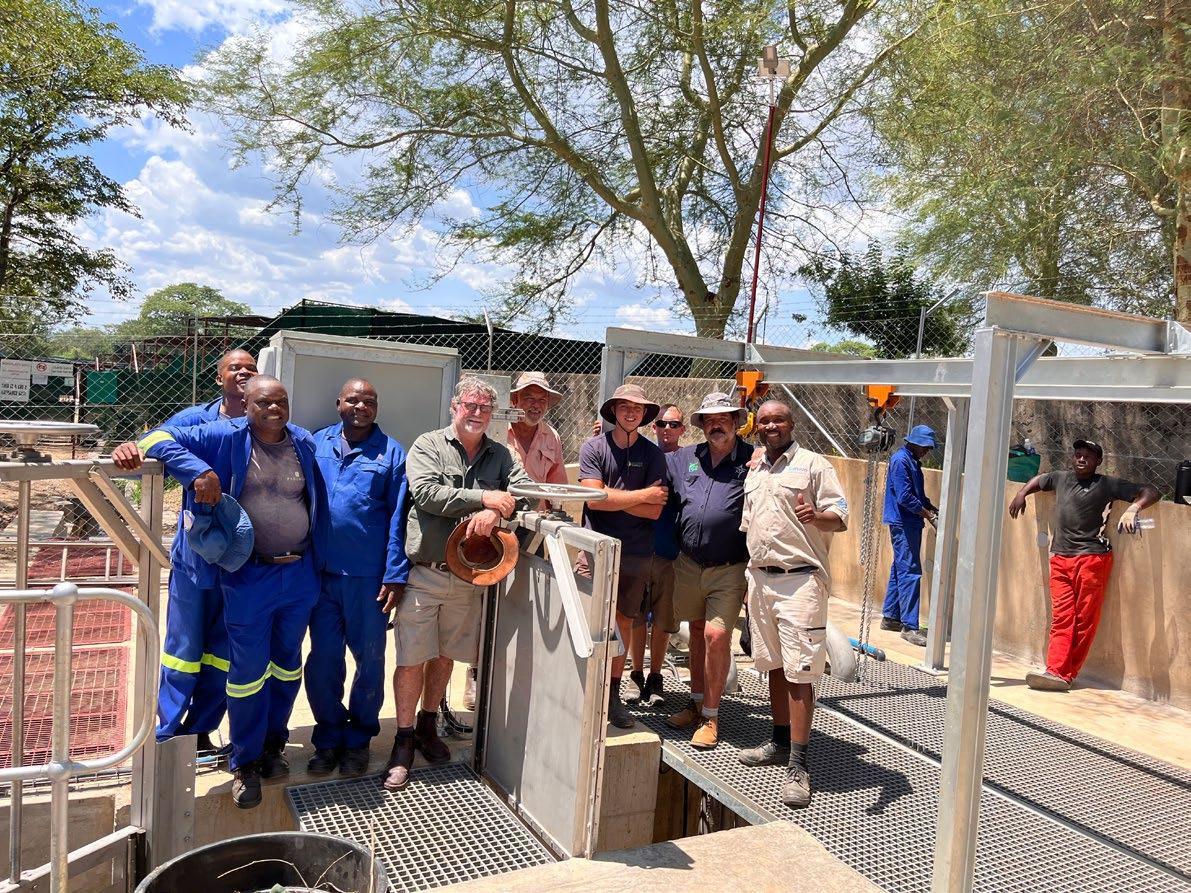
The project’s success is anchored in the technical leadership of Engineer Thami Mpala, Chief Executive Officer of Hydro Utilities Consulting Engineers.
Entrusted with the design and supervision of the facility, Hydro Utilities set out to solve a complex challenge: how to treat the high-volume, high-solid effluent typical of crocodile farming before it returns to the lake.
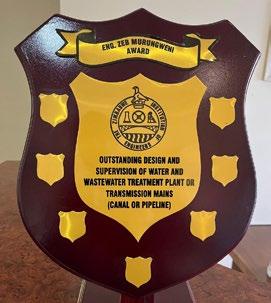
The result was a masterpiece of modern engineering that recently earned the prestigious Engineer Zeb Murungweni Award from The Zimbabwe Institution of Engineers (ZIE).
This honour, named after one of the country's engineering luminaries, celebrates innovation that harmonizes industrial functionality with environmental protection. For Hydro Utilities, the award validates a precision-led approach to water management that balances the rigorous demands of a world-class agricultural operation with the stringent requirements of international conservation bodies.
Technical excellence and the circular economy
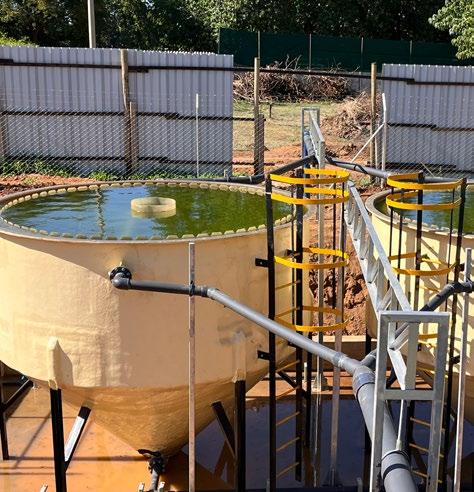
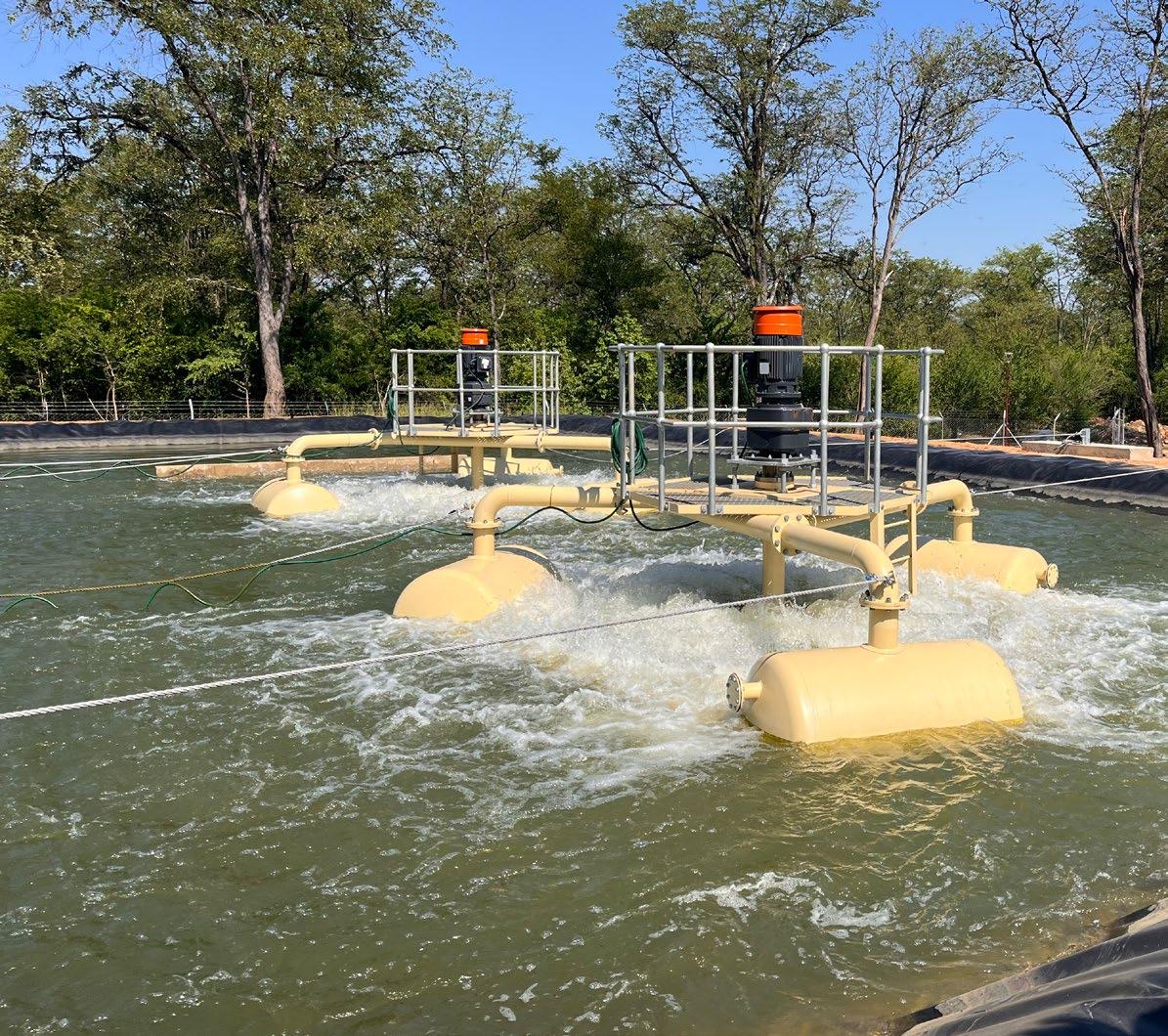
Hydro Utilities designed the plant with a robust treatment capacity of 400 m³/day (approximately 0.5 million litres per day at peak flow). Treated wastewater is discharged continuously over 24 hours at a rate of 16.7 cubic metre per hour.
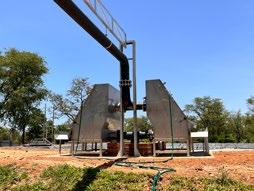
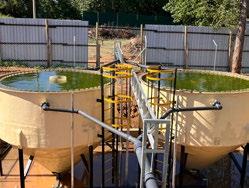
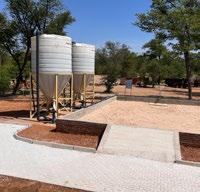
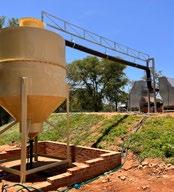
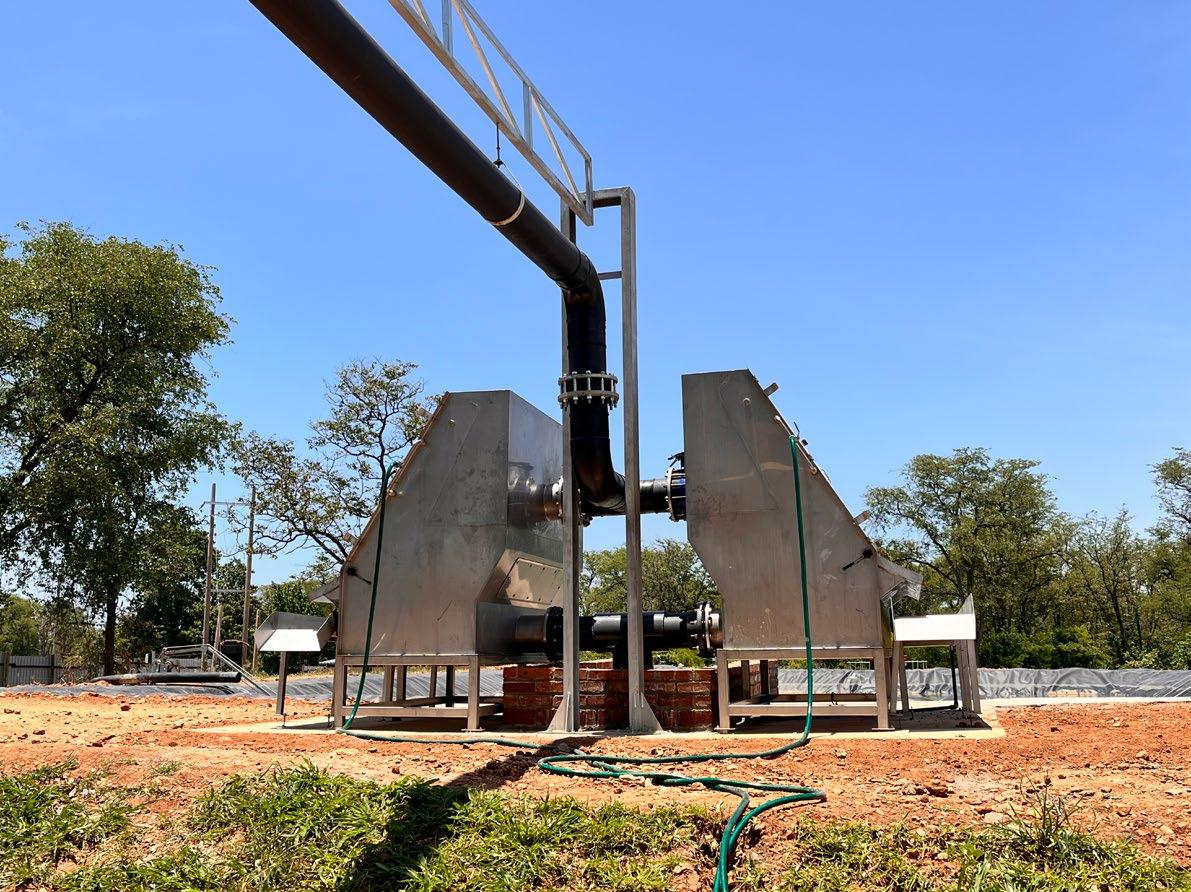
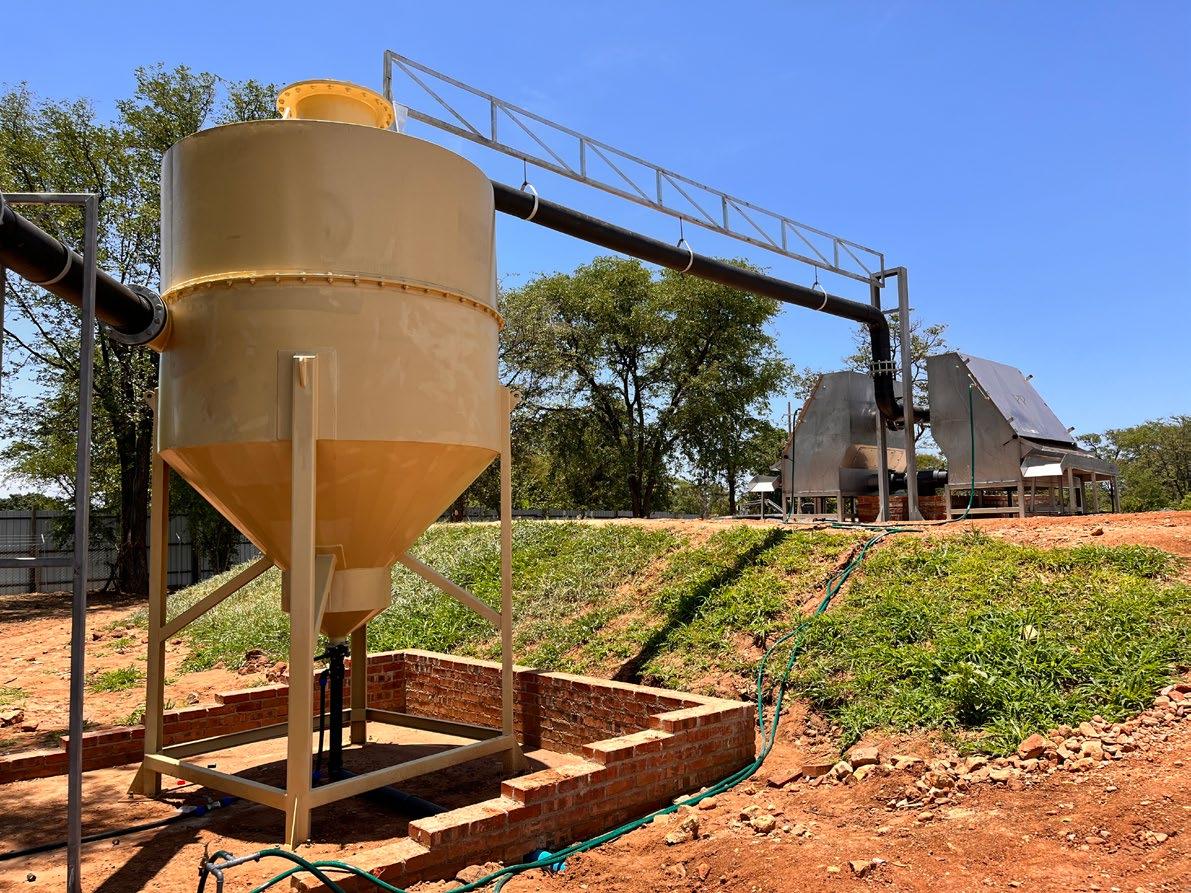
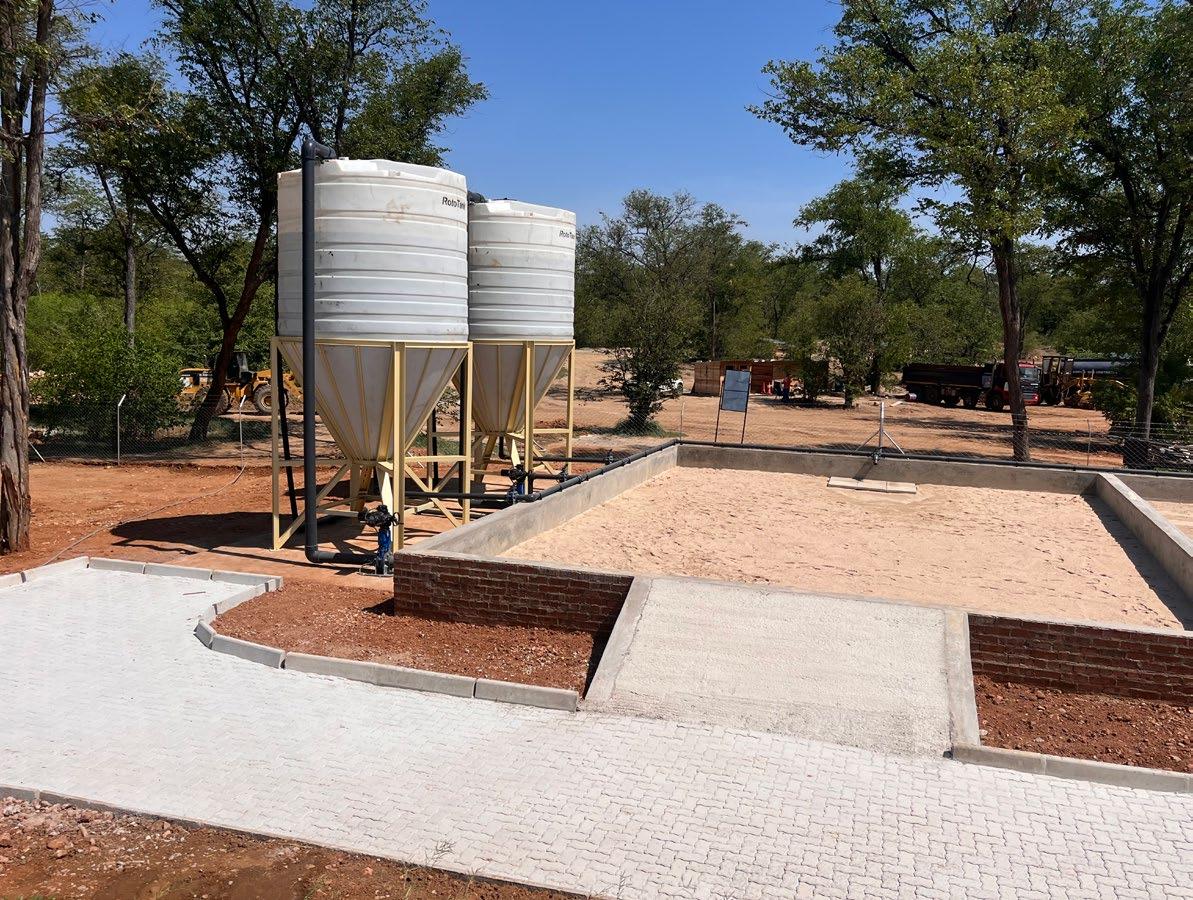
The infrastructure consists of a complex network including an effluent pump station, a rising main, and a conventional Activated Sludge (CAS) Wastewater Treatment Plant, complemented by an advanced sludge drying facility. The design is based on a typical membrane bioreactor (MBR) design.
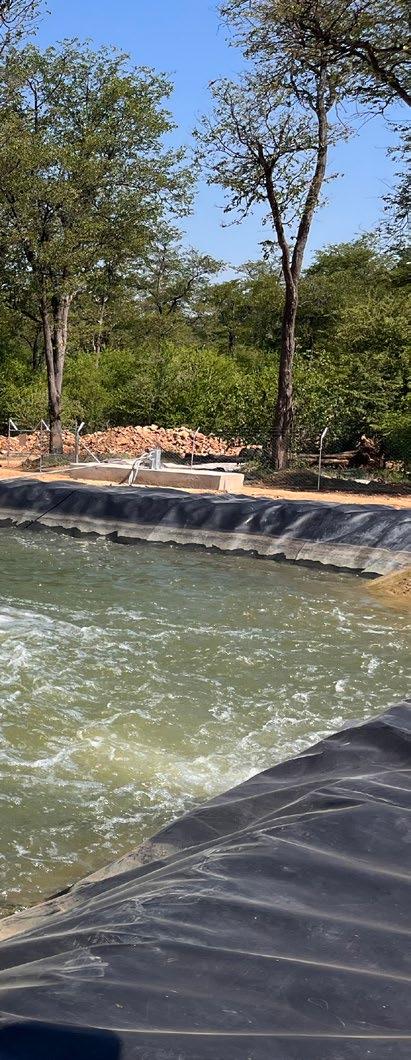
The "Hydro Utilities touch" is evident in the plant's ability to turn waste into a resource—a core tenet of the circular economy. They employed cutting-edge technology to remove pollutants and suspended solids, ensuring the facility discharges purified water into Lake Kariba to meet both Environmental Management Agency (EMA) and international standards.
Protecting the Zambezi Basin
The environmental impact of this Hydro Utilities project cannot be overstated. As the oldest of Padenga’s three operations, the Kariba Farm serves as the company’s technical hub. Without professional intervention, the discharge from such a massive operation could pose a significant threat to local biodiversity.
The Environmental Management Agency (EMA) and the Zambezi River Authority (ZRA) have both lauded the project. Engineer Bonface Mfula of the ZRA highlighted that as the custodian of Lake Kariba, the authority views this initiative as a critical move in reducing water pollution and enhancing regional integration in environmental conservation.
By preventing the discharge of untreated effluent, Hydro Utilities has helped Padenga secure its sustainability license to operate while protecting the lake for future generations of wildlife and local communities.
New industry benchmark
The construction of the plant was completed in an impressive eight-month window, a demonstration of Hydro Utilities' project management capabilities. It stands as a beacon for other agribusinesses in the region.
Padenga CEO Gary Sharp emphasized at the plant's unveiling that the investment was driven by a dual obligation: to protect Zimbabwe’s natural resources for the future and to demonstrate to global luxury markets that their products are sourced under the highest sustainability standards. Hydro Utilities provided the technical bridge to meet these lofty goals.
A commitment to innovation
The wastewater treatment plant is just one piece of a broader sustainability puzzle that Hydro Utilities is proud to support. It complements Padenga's other "green" initiatives, such as the 1.2MW solar plant at the nearby Nyanyana farm. The Padenga-Hydro Utilities partnership stands as a prime example of Zimbabwean firms taking a proactive lead in climate resilience and pollution mitigation.
For Hydro Utilities, the project represents more than just a successful contract; it is a demonstration of how home-grown engineering expertise can solve global environmental challenges. The marrying of innovative design with practical, scalable solutions, has not only seen Hydro Utilities protecting a UNESCOrecognized landscape but has also set a new high-water mark for wastewater engineering excellence in Southern Africa.
As the agribusiness sector continues to evolve under stricter environmental legislation, the blueprint created by Hydro Utilities at Kariba serves as a definitive guide for the future: one where industry thrives because it protects the environment that sustains it.
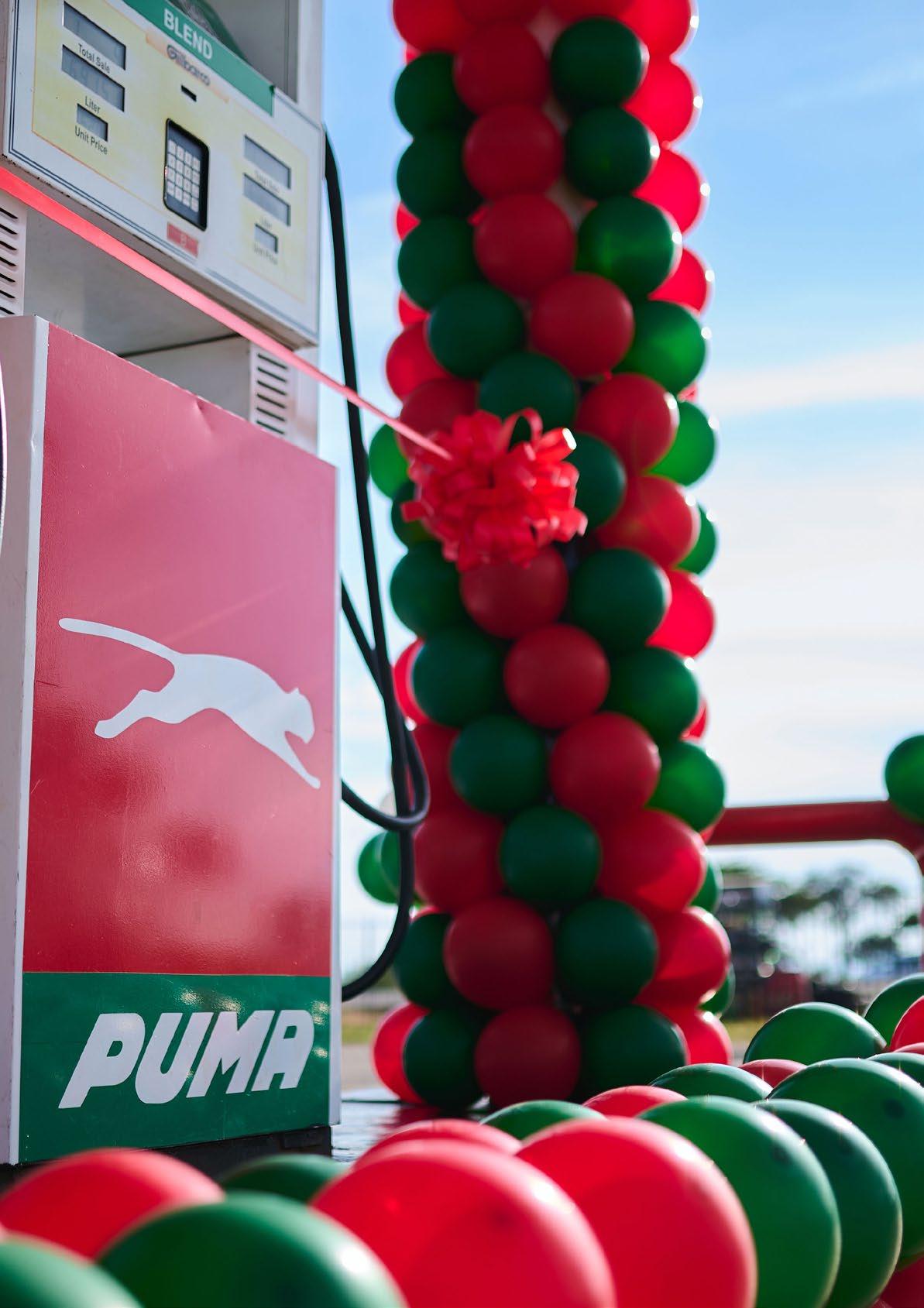
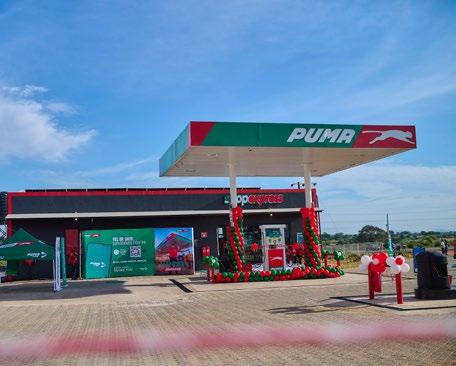
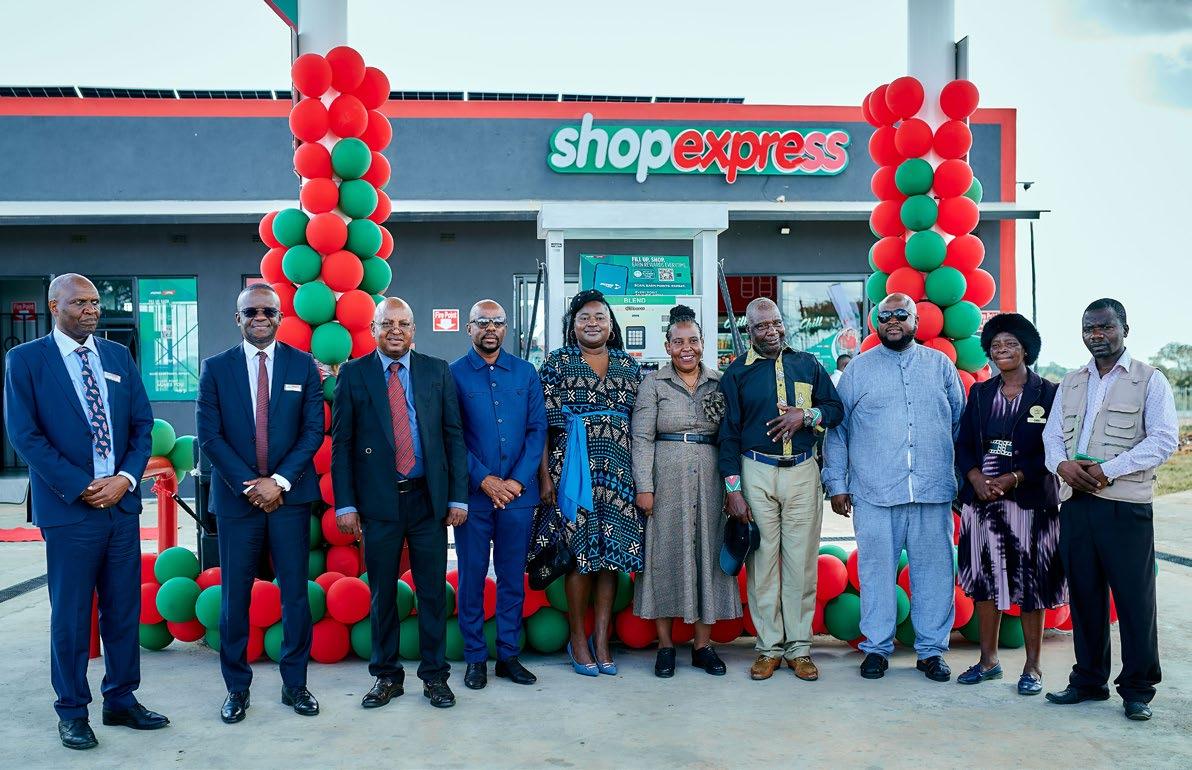
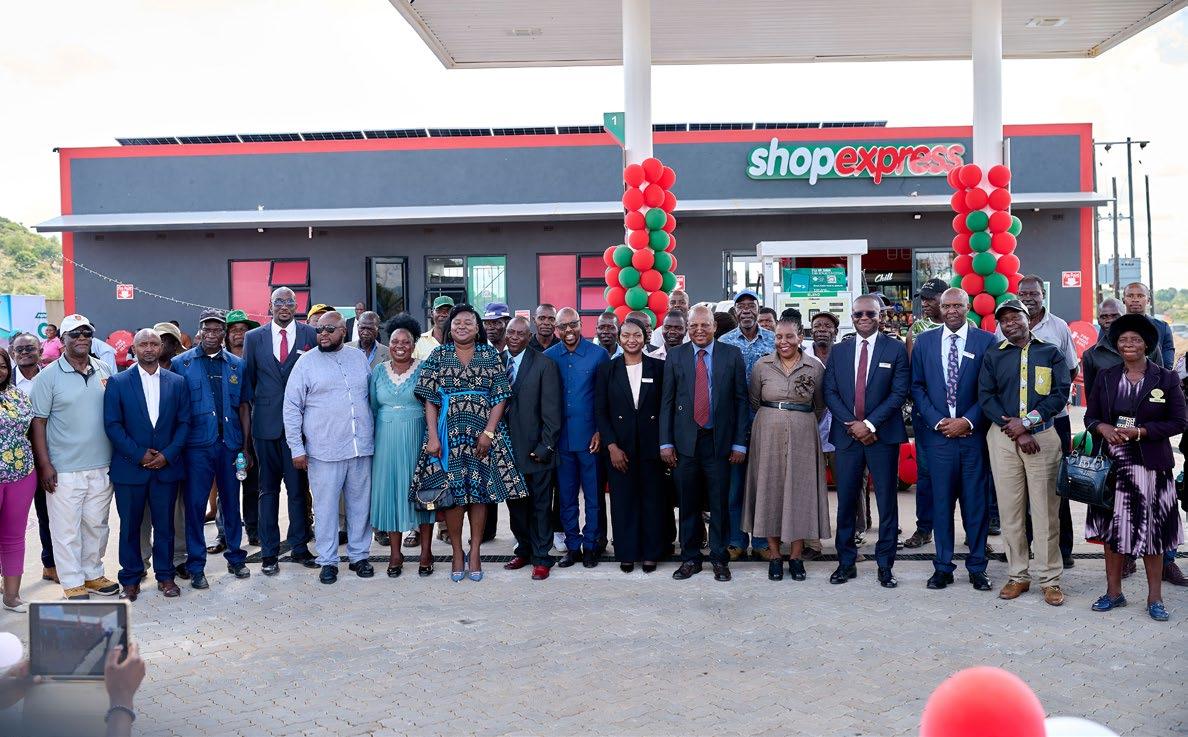
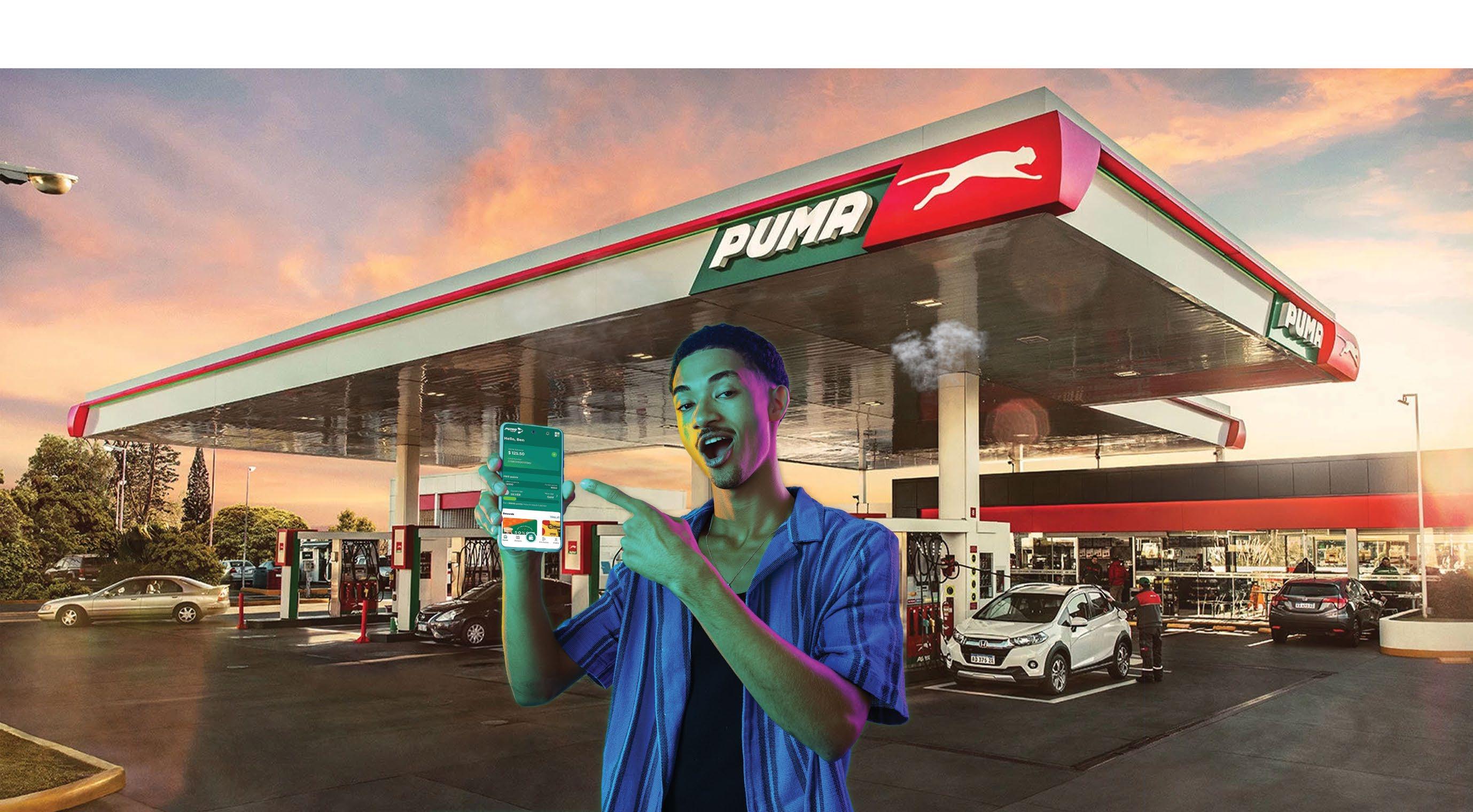
Puma Energy Expands Footprint with Opening of Mhandamabwe Rural Fuel Retail Station
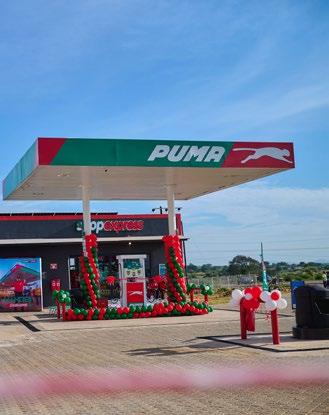
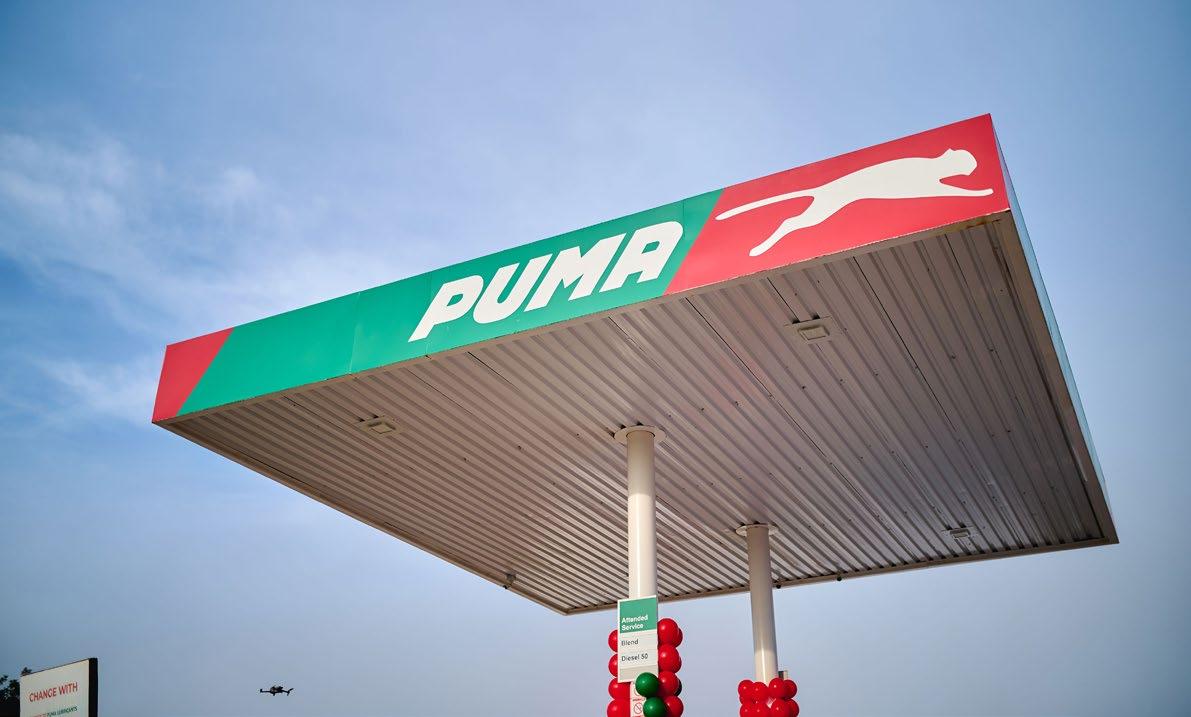
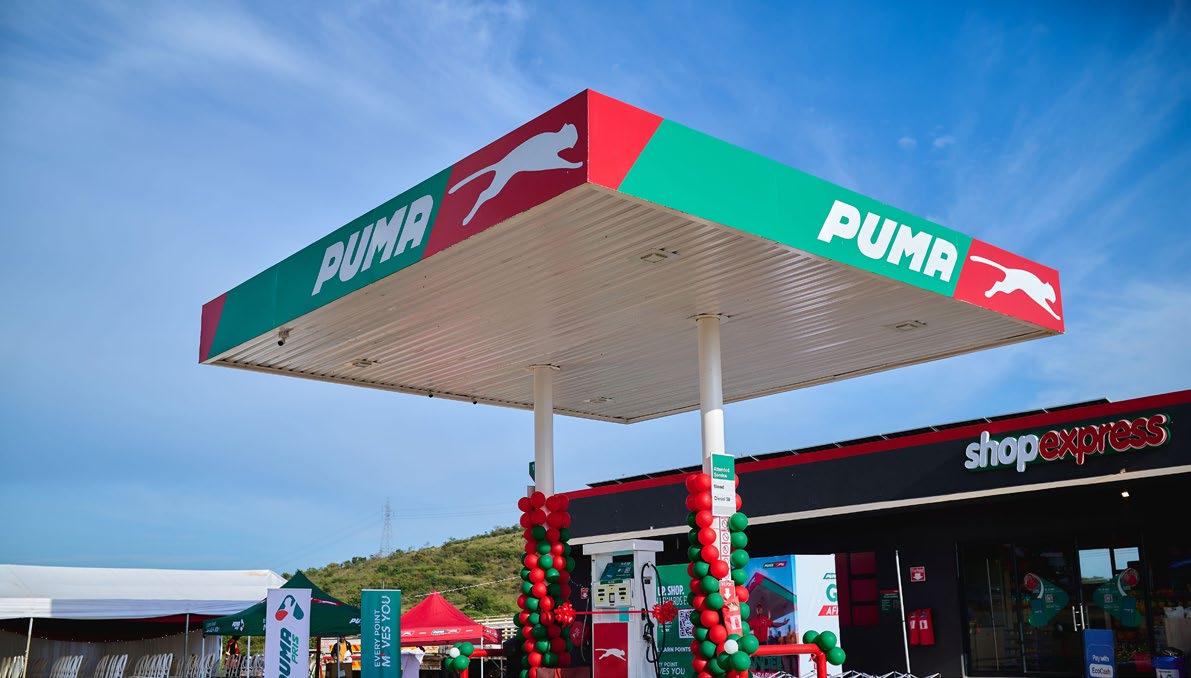
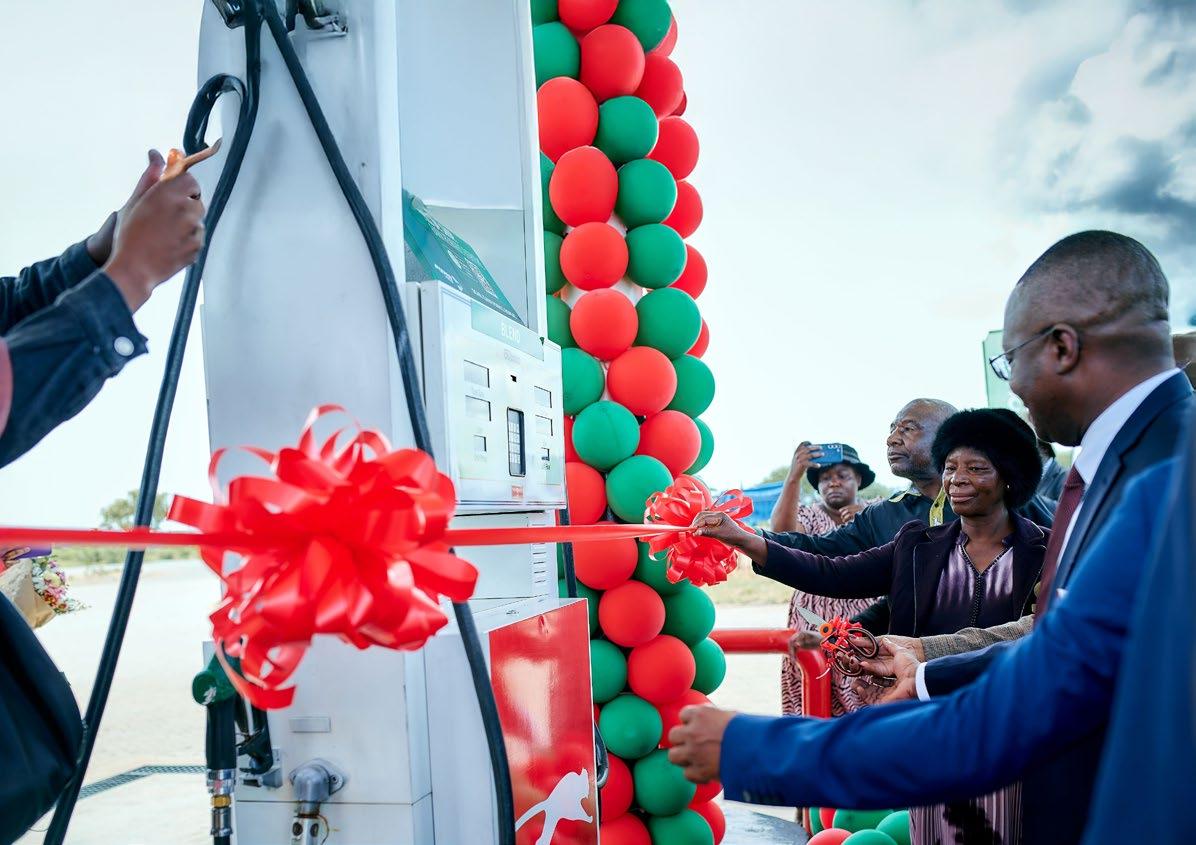
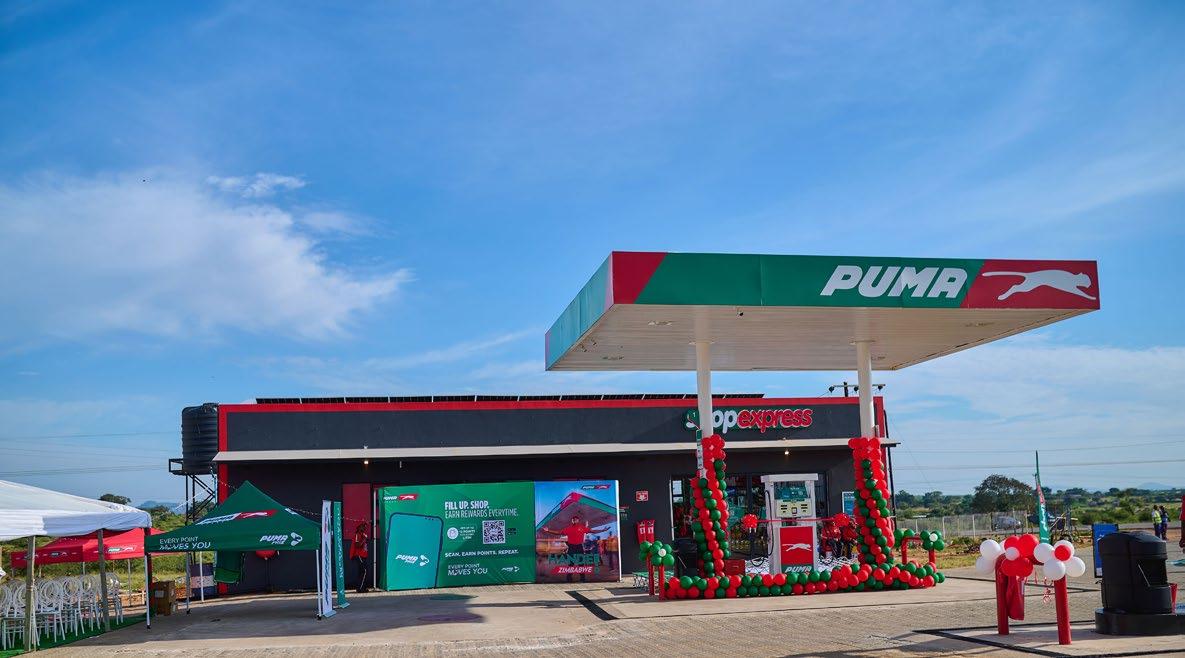
Mhandamabwe, Zimbabwe – April 15, 2026 — Puma Energy Zimbabwe, a leading global energy company, today officially opened its new retail service station in Mhandamabwe, marking a significant milestone in expanding access to energy in rural Zimbabwe.
At the launch event, Mr Clever Chingwara, Masvingo Province Director of Economic Affairs and Investment Promotion, speaking on behalf of the Minister of State for Masvingo Provincial Affairs & Devolution, Honourable Ezra Chadzamira, said, “This is the ‘Zimbabwe is Open for Business’ mantra in action – transforming local landscapes into modern commercial centers in the heart of this rural community. We commend Puma Energy for bringing high-quality standards to Mhandamambwe. Beyond fuel, the convenience services and lubricants on offer here will raise the bar for service delivery in Chivi District.”
Strategically located at the intersection of the Bulawayo – Masvingo, and Beitbridge –Gweru highways, the Mhandamabwe retail station sits along a critical transport route connecting Zimbabwe to regional markets in the Southern African Development Community (SADC). This positioning enhances its role as a key enabler of trade, mobility, and economic activity across the southern corridor.
Deputy Minister of Energy and Power Development, Honourable Yeukai Simbanegavi, reaffirmed Government’s commitment, under National Development Strategy 2 (NDS2), to strengthening energy security through a diversified energy mix, enhanced availability and efficiency, and the decentralisation of power generation.
She said, “Our Ministry is proud to partner with Puma Energy and other private sector stakeholders who continue to invest in infrastructure that drives national growth and development. We remain fully supportive of such initiatives as we work together towards Vision 2030.
For too long, rural areas have been viewed as places to leave in search of opportunity elsewhere. Developments such as this are changing the narrative. We affirm a new reality, rural communities must not be left behind, but positioned as centres of growth, investment, and innovation.”
Reaffirming Puma Energy’s commitment to Zimbabwe, Head of Africa, Ben Ouattara said the Mhandamabwe retail station reflects the company’s vision of inclusive development, enabling rural communities to participate in national and regional growth, while bridging the energy gap through reliable supply.
He said, “The Mhandamabwe retail station stands as a symbol of opportunity. It speaks to improved access to energy, greater mobility, and the unlocking of local economic potential for the communities it serves.”
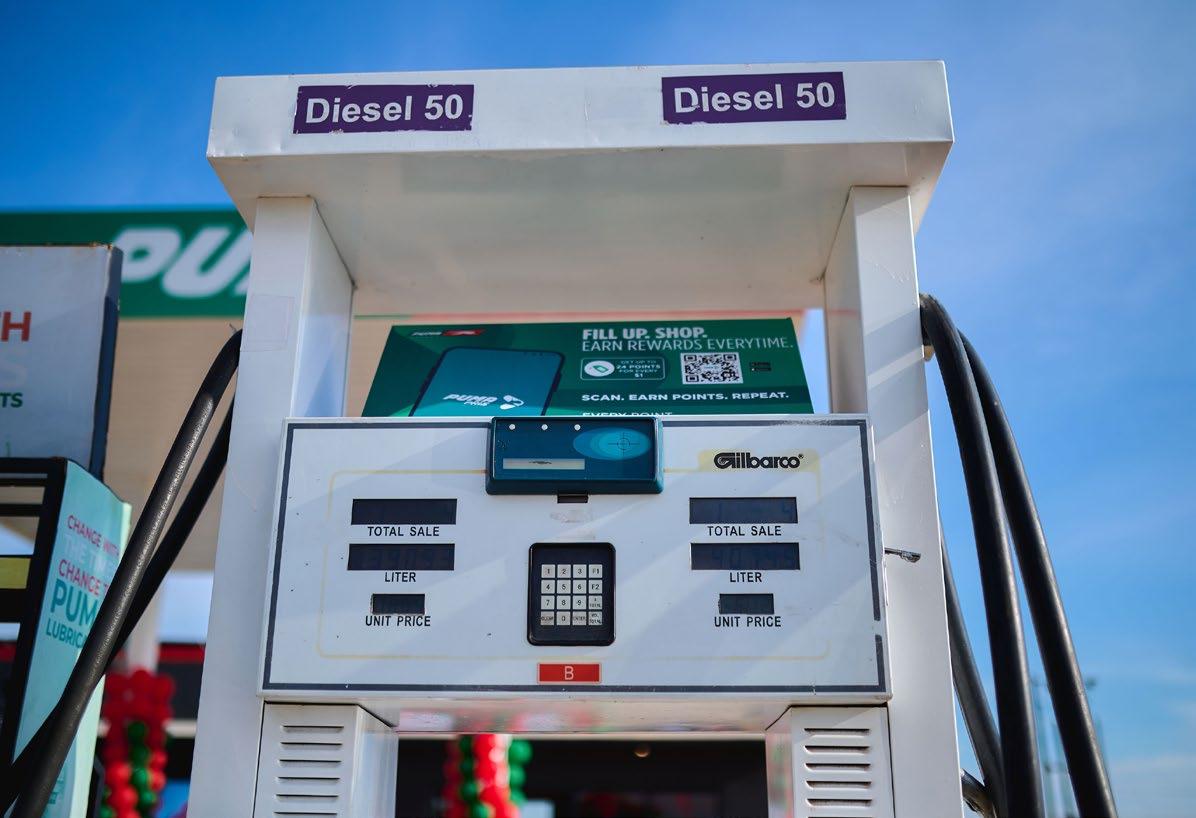
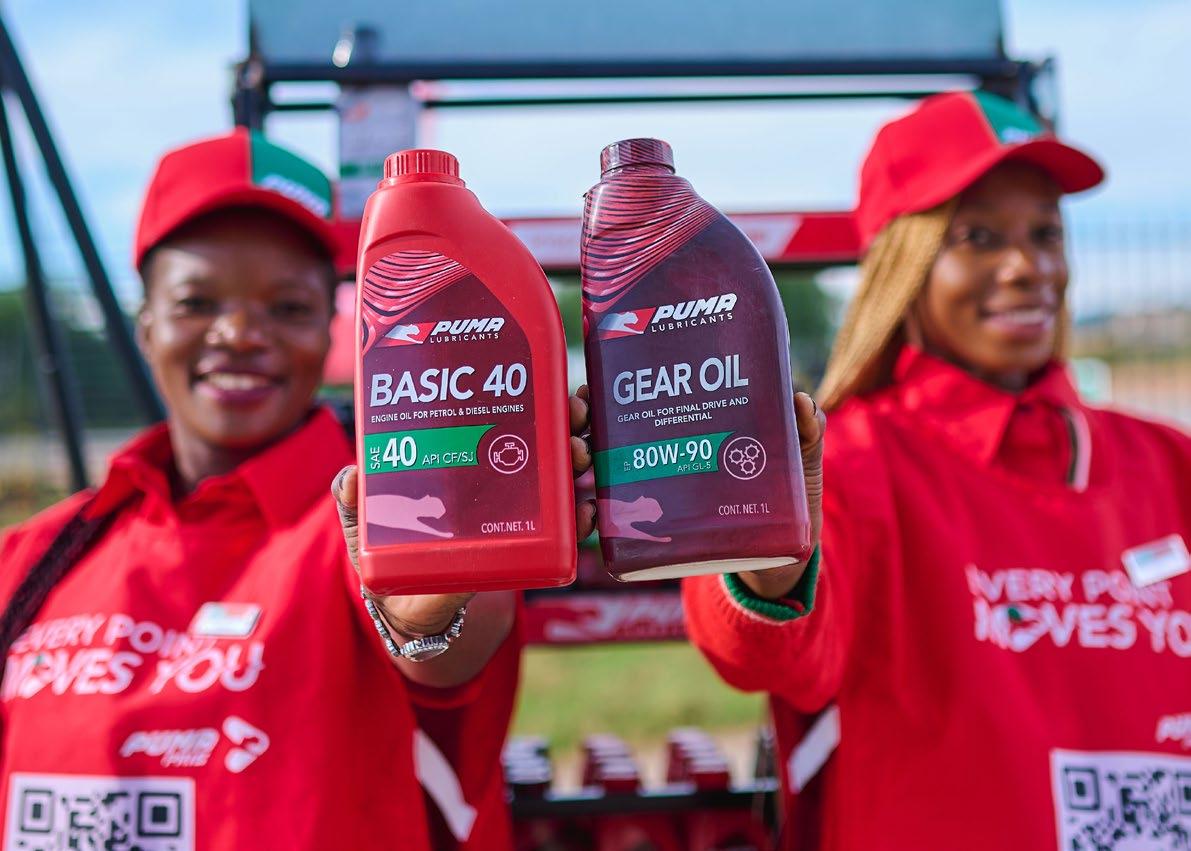
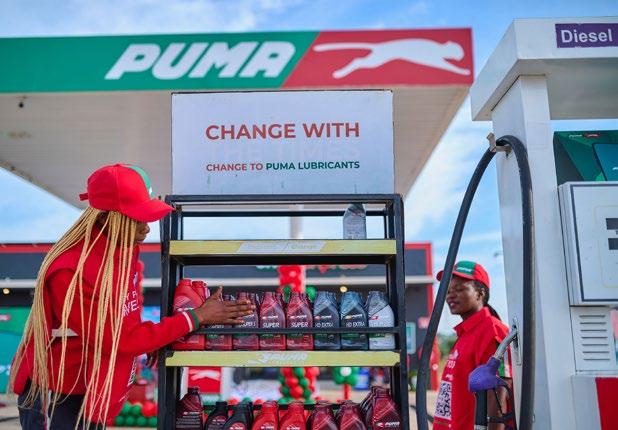
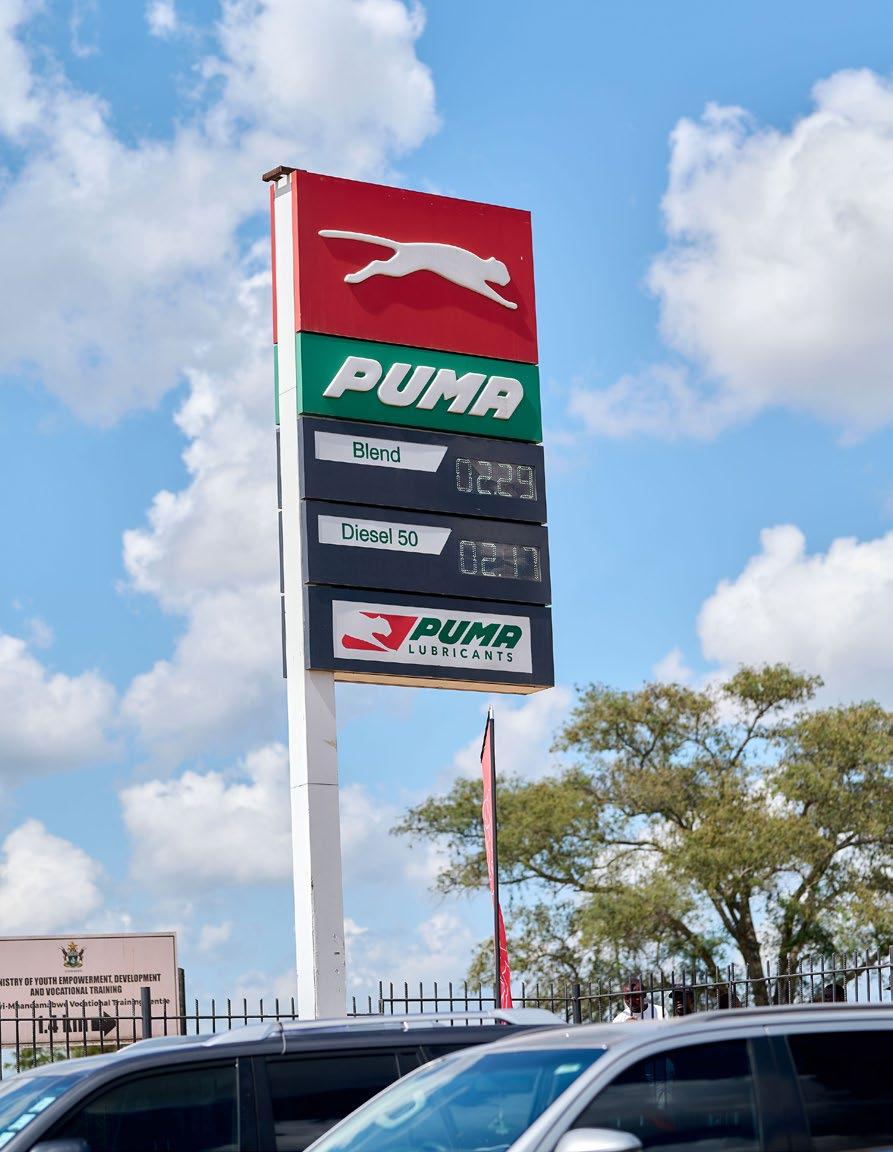
The Mhandamabwe station offers diesel, petrol, lubricants, and a Shop Express convenience store offering essential goods, alongside mobile money services, with LPG for cooking set to be introduced soon. It is the second rural service station in Zimbabwe, following the establishment of the first in the Vungu (Lower Gwelo) area of Midlands Province, located in Gweru District.
Reinforcing its commitment to energising communities, Puma Energy General Manager, Patrick Ngugi, said: “This retail station is already making a tangible difference—creating jobs during construction and sustaining livelihoods today. But its real impact goes further, unlocking opportunities for local businesses, suppliers, and entrepreneurs who will grow alongside it. For the Mhandamabwe community, this station is yours—built to serve you, support you, and grow with you. We are proud to be part of that journey.
In addition to making fuel available to the surrounding community and businesses, we are making everyday transactions easier by offering mobile money services. This allows farmers, traders, transport operators, and families to access financial services locally, without travelling long distances.”
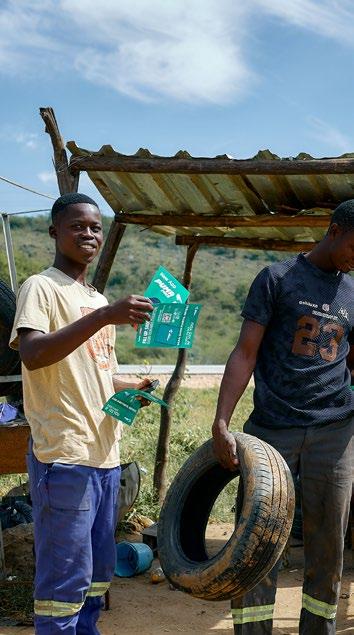
The recently introduced PRIS loyalty programme, now available in Mhandamabwe, enables customers to redeem fuel and other products through accumulated points.
The system also promotes cashless and secure transactions, supporting wider adoption of digital payments. This helps families and small businesses get more value from every transaction, making everyday life easier. The retail site, which has created permanent jobs and opportunities for local suppliers, is expected to support mining, agriculture, logistics, and export industries.
Looking ahead, Puma Energy plans to further strengthen its investment in Zimbabwe’s rural energy landscape. To date Puma Energy has solarised 50% of its retail network in Zimbabwe, including the Mhandamabwe retail station, reducing reliance on the grid and improving operational reliability.
In the coming years, the company is focused on expanding rural retail access, increasing LPG availability, and diversifying its non-fuel and convenience store services across the network. The new site forms part of Puma Energy’s growing African footprint, where the company operates in over 16 countries, with more than 700 retail sites and supplies over 90 airports and airfields.
About Puma Energy
Puma Energy is a leading global downstream energy business, safely providing energy in more than 35 countries. Our downstream business segments include fuels, aviation, lubricants, and bitumen. Our purpose is energizing communities to help drive growth and prosperity by sustainably serving our customers’ needs in high-potential countries around the world. In Zimbabwe, Puma Energy is a leading fuel supplier with a network of over 60 stations across the community and is also supporting the country’s growing aviation sector through the supply of jet fuel across five airports. For further information visit: www. Pumaenergy.com
POWERING PROGRESS TOGETHER:
AURORA ENERGY AND GOODWE
DRIVING SOLAR EXCELLENCE IN ZIMBABWE
Article written by: Rumbidzayi Masiyambiri
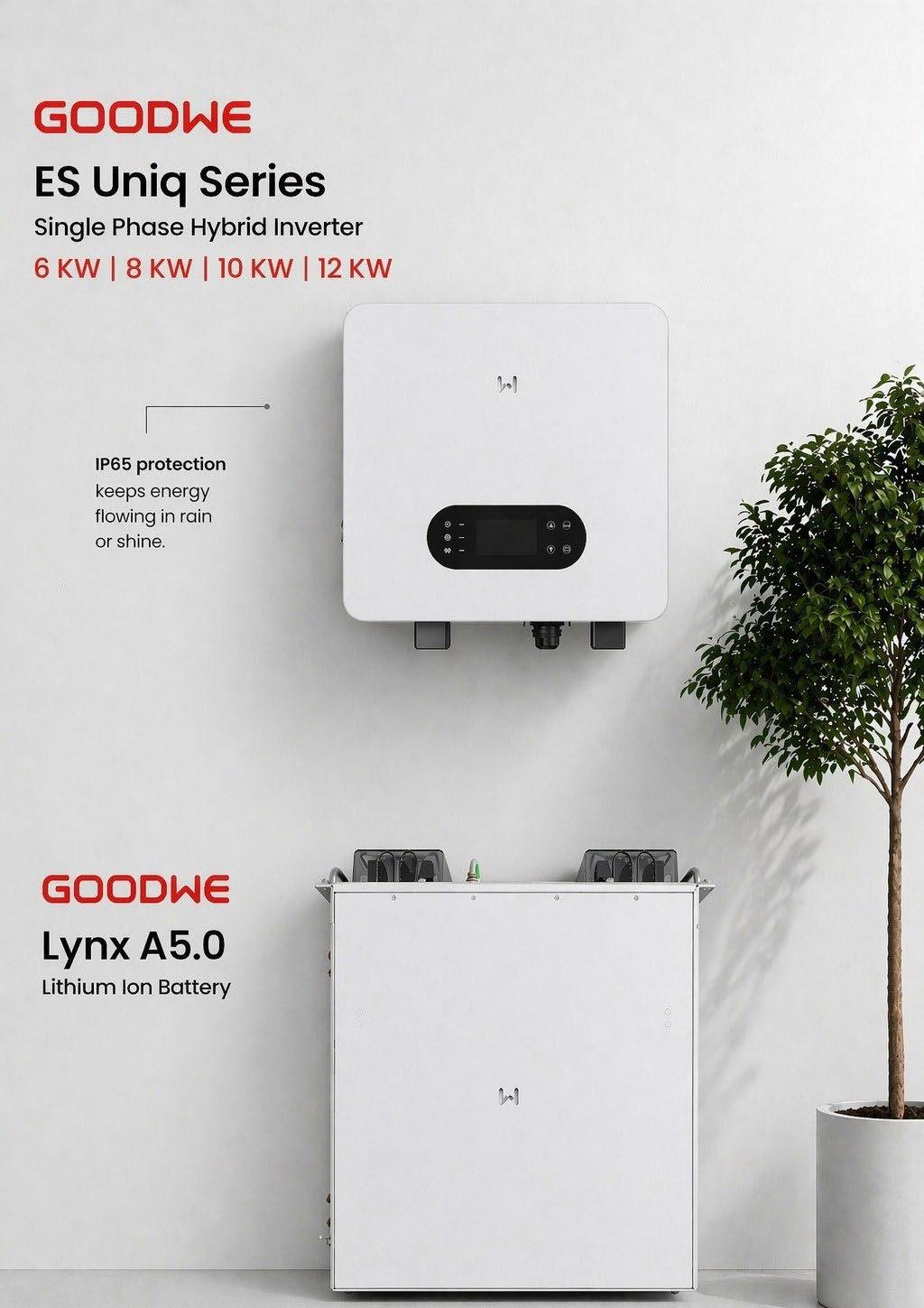
As Zimbabwe accelerates its transition toward sustainable energy, the demand for dependable solar solutions and skilled technical expertise continues to grow. Meeting this demand requires more than just quality products—it calls for strong partnerships built on innovation, trust, and a shared vision for the future. This is where the collaboration between Aurora Energy and GoodWe stands out.
Aurora Energy, a leading distributor of solar solutions in Zimbabwe, has built its reputation on delivering reliable products and unmatched support to installers, EPCs, and wholesale customers. Through its strategic partnership with GoodWe—a globally recognized manufacturer of inverters and energy storage systems—Aurora Energy is bringing worldclass technology closer to the local market while strengthening the technical capacity of the industry.
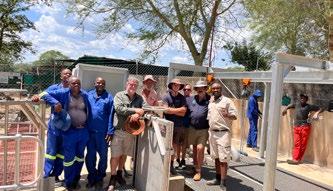
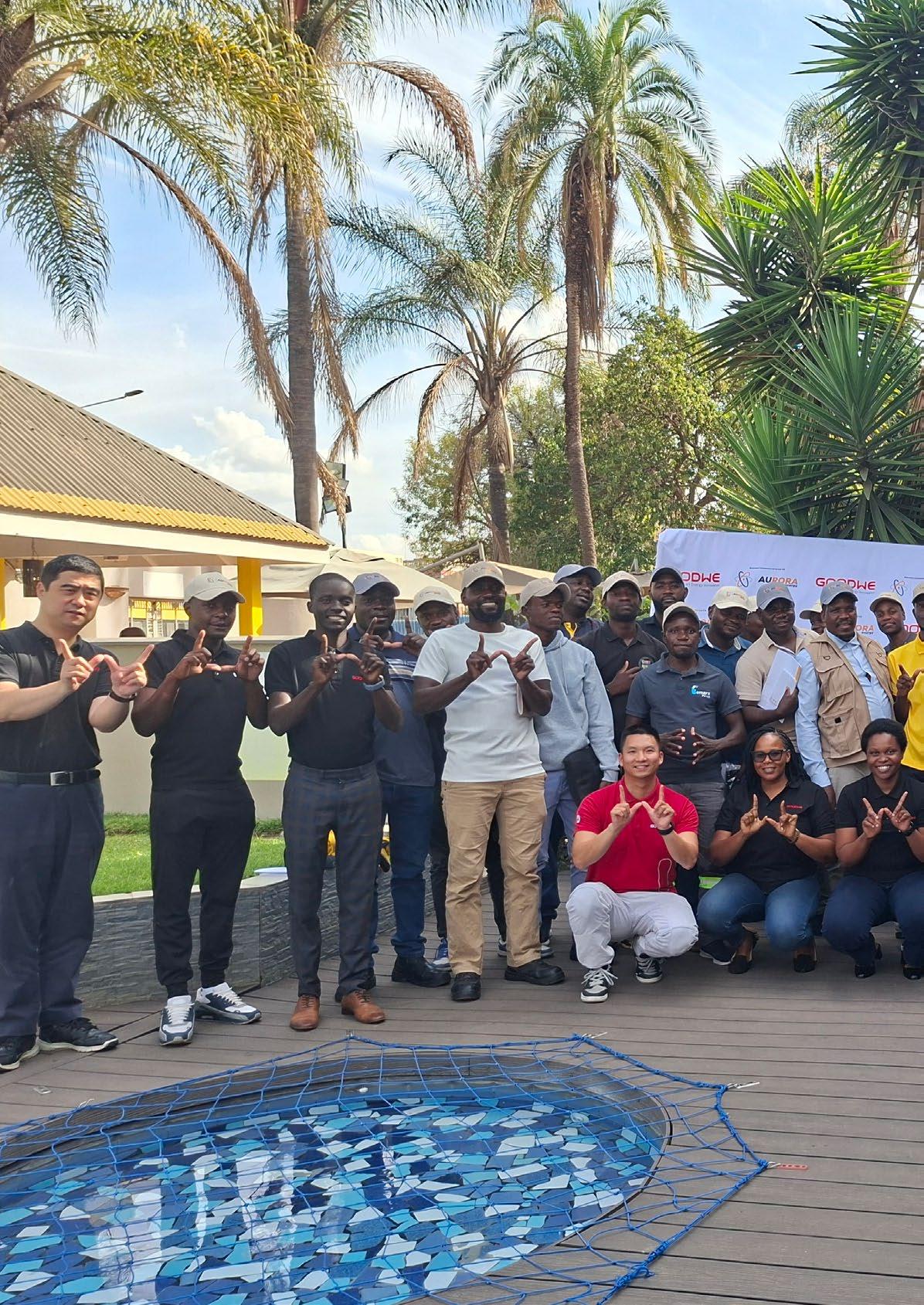
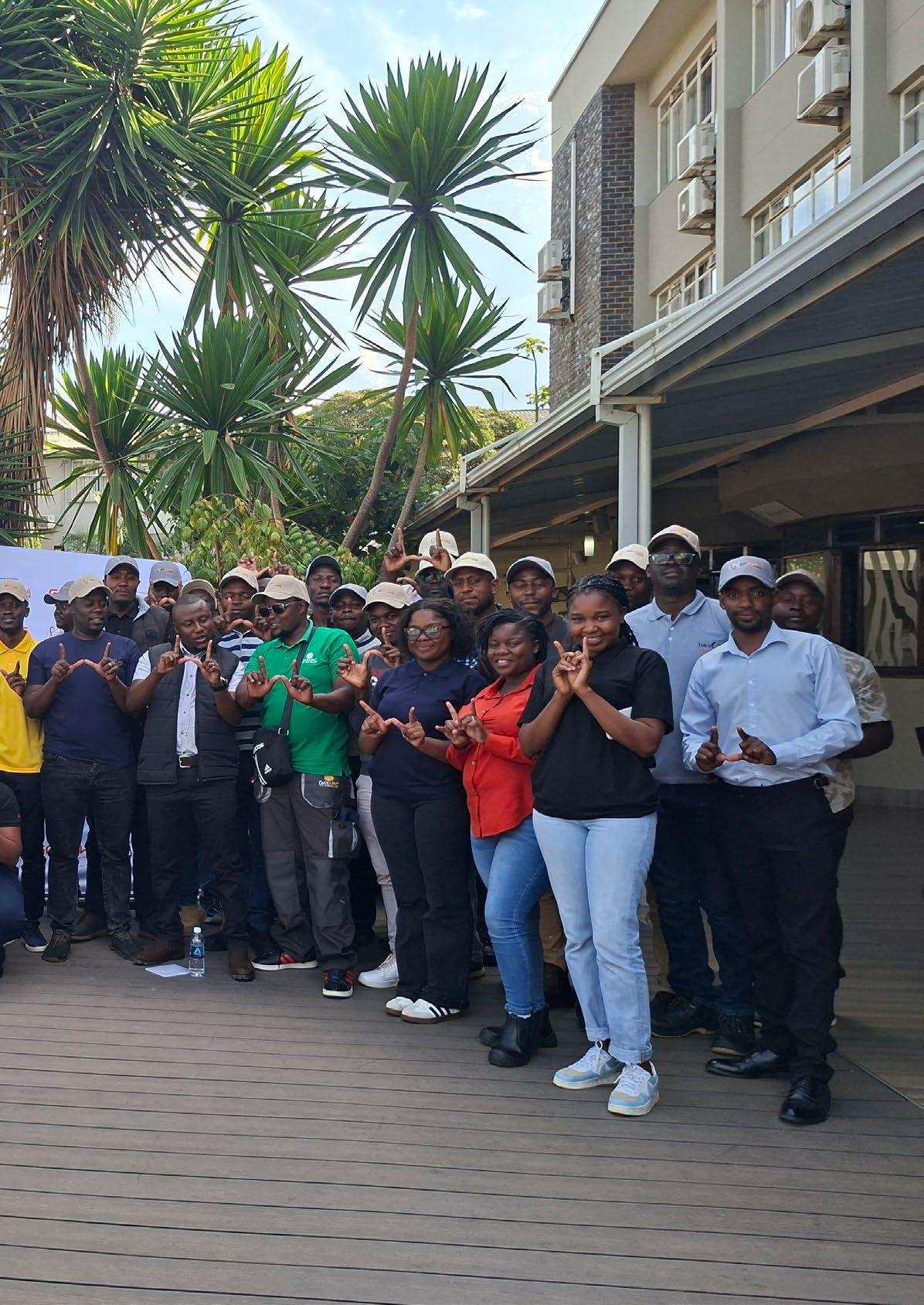
At the heart of this partnership is a commitment not only to product excellence but also to people. The GoodWe training programs, facilitated in collaboration with Aurora Energy, are designed to empower solar professionals with practical, hands-on knowledge. These sessions cover system design, installation best practices, commissioning, and advanced troubleshooting, ensuring that installers are fully equipped to deliver high-performing and reliable solar solutions.
This focus on skills development is key to raising industry standards and building long-term confidence in solar adoption.
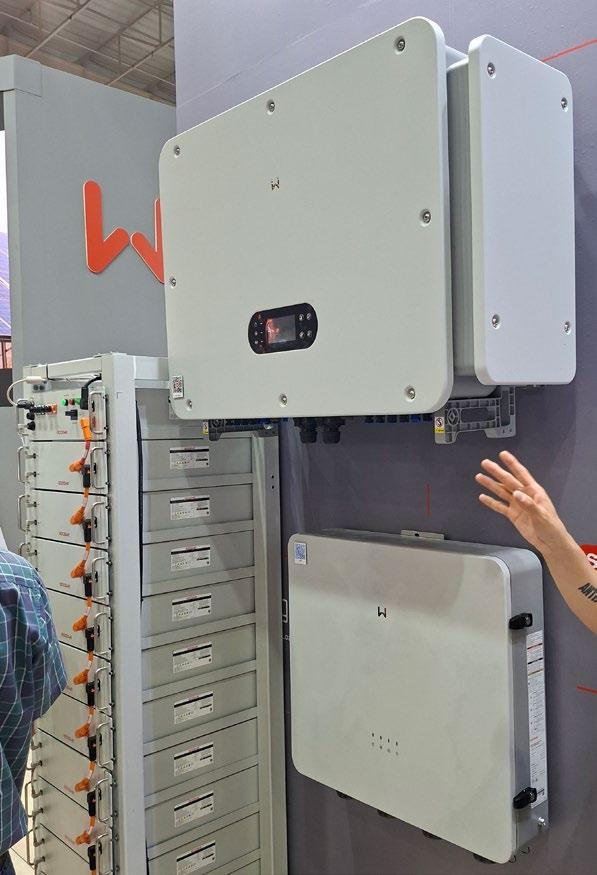
GoodWe’s global reputation is rooted in innovation, quality, and reliability. Its range of hybrid inverters and battery storage solutions is engineered to meet the diverse needs of residential, commercial, and industrial users. A major advantage for customers is the automatic 10-year warranty that comes with GoodWe inverters and batteries, offering peace of mind and reinforcing the brand’s confidence in its technology.
For Aurora Energy, the partnership goes beyond distribution. It is about creating a seamless customer experience—from product selection and technical support to after-sales service. By combining GoodWe’s advanced technology with Aurora Energy’s local expertise and market understanding, customers benefit from solutions that are both globally trusted and locally supported.
As the partnership continues to grow, the shared vision between Aurora Energy and GoodWe is clear: to make life easier through smarter, more accessible energy solutions. Whether it’s simplifying installations for technicians, ensuring system reliability for businesses, or enabling energy independence for households, both organizations are aligned in delivering practical solutions that improve everyday life.
Together, Aurora Energy and GoodWe are shaping the future of solar energy in Zimbabwe—driving innovation, empowering professionals, and delivering solutions that stand the test of time.
NICK’S MOTORS CELEBRATES
40 YEARS OF ENGINEERING INTEGRITY
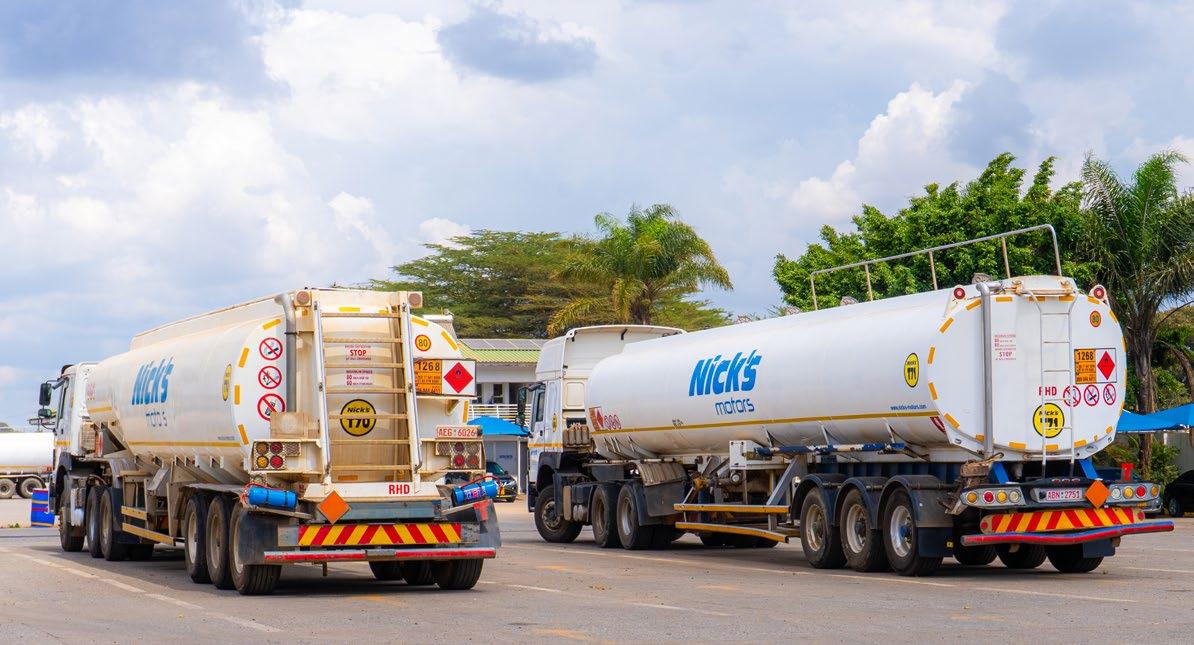
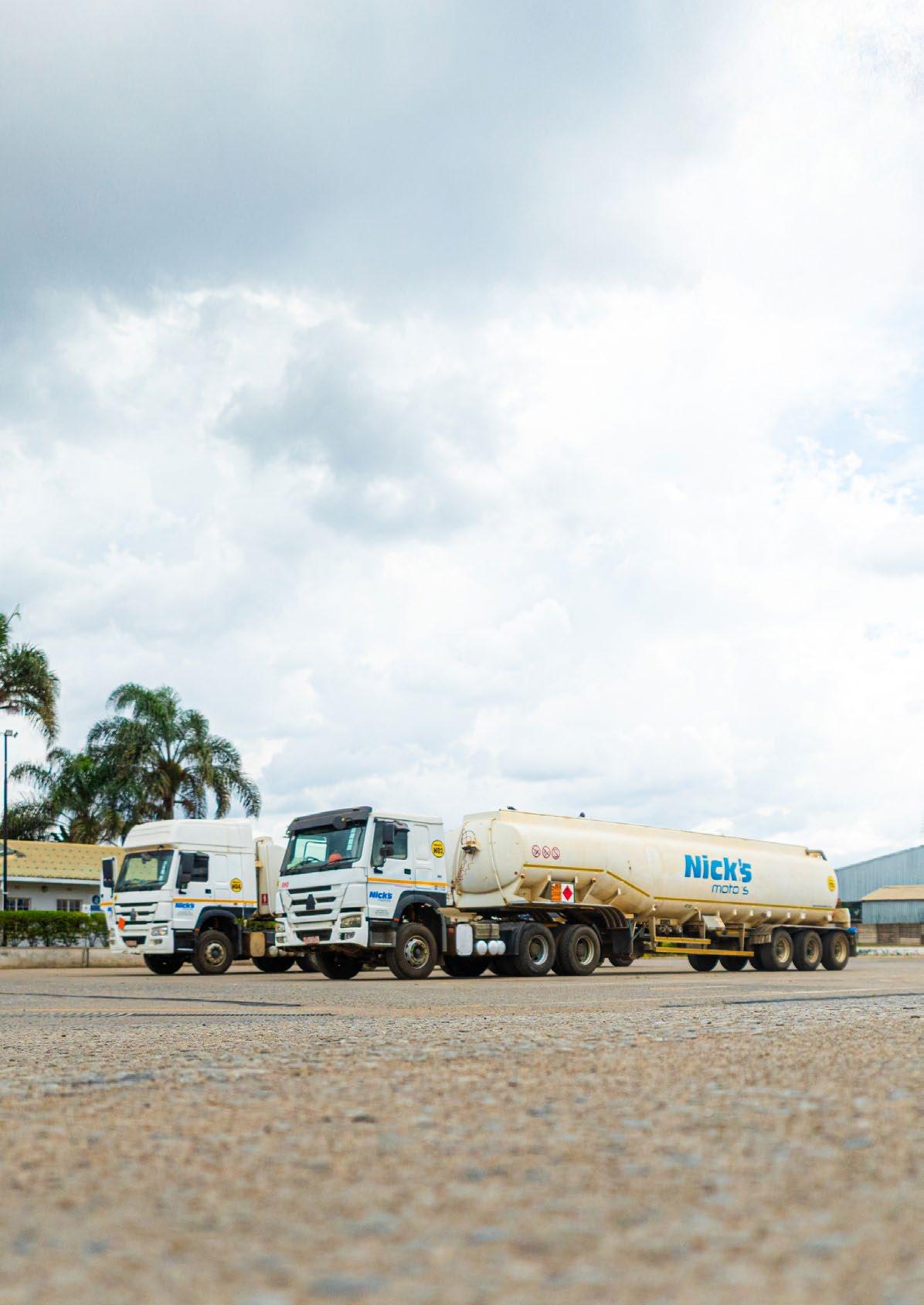
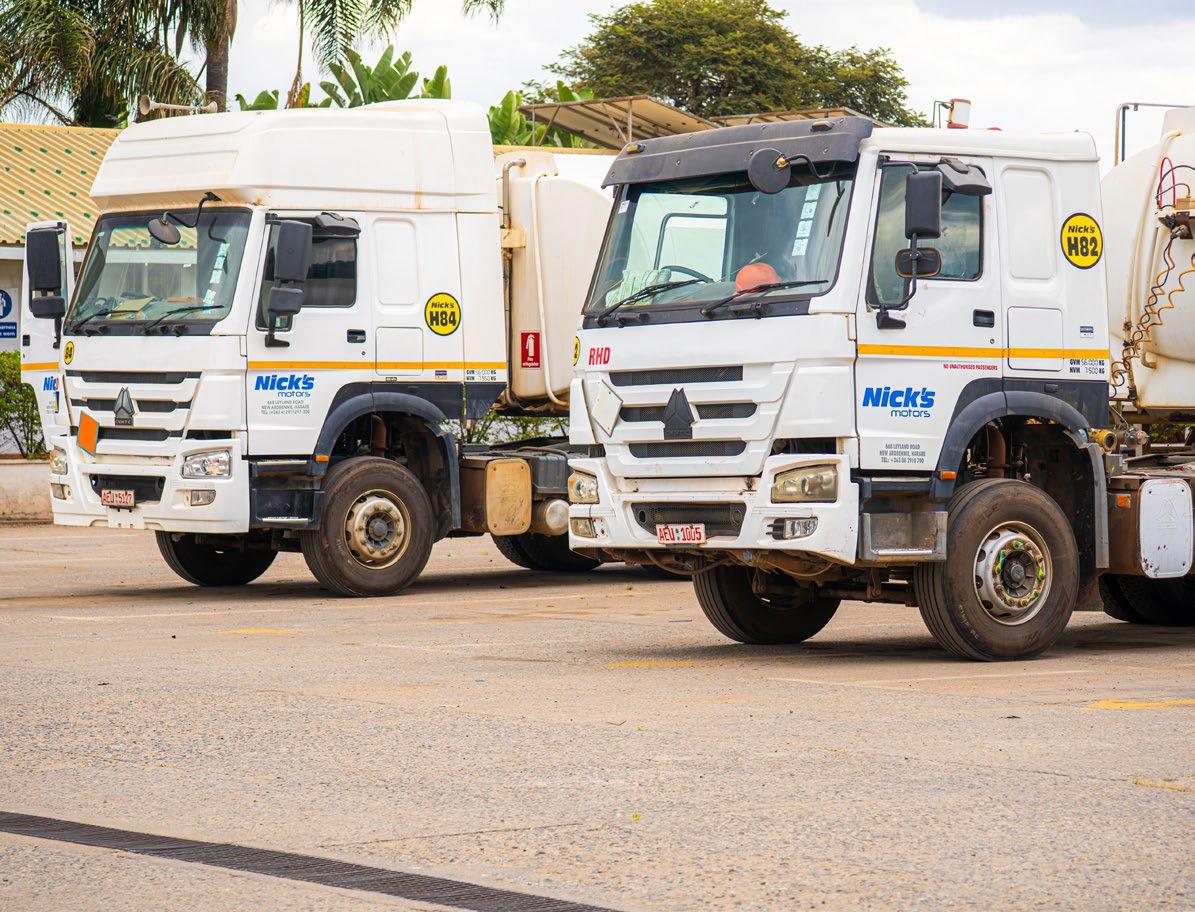
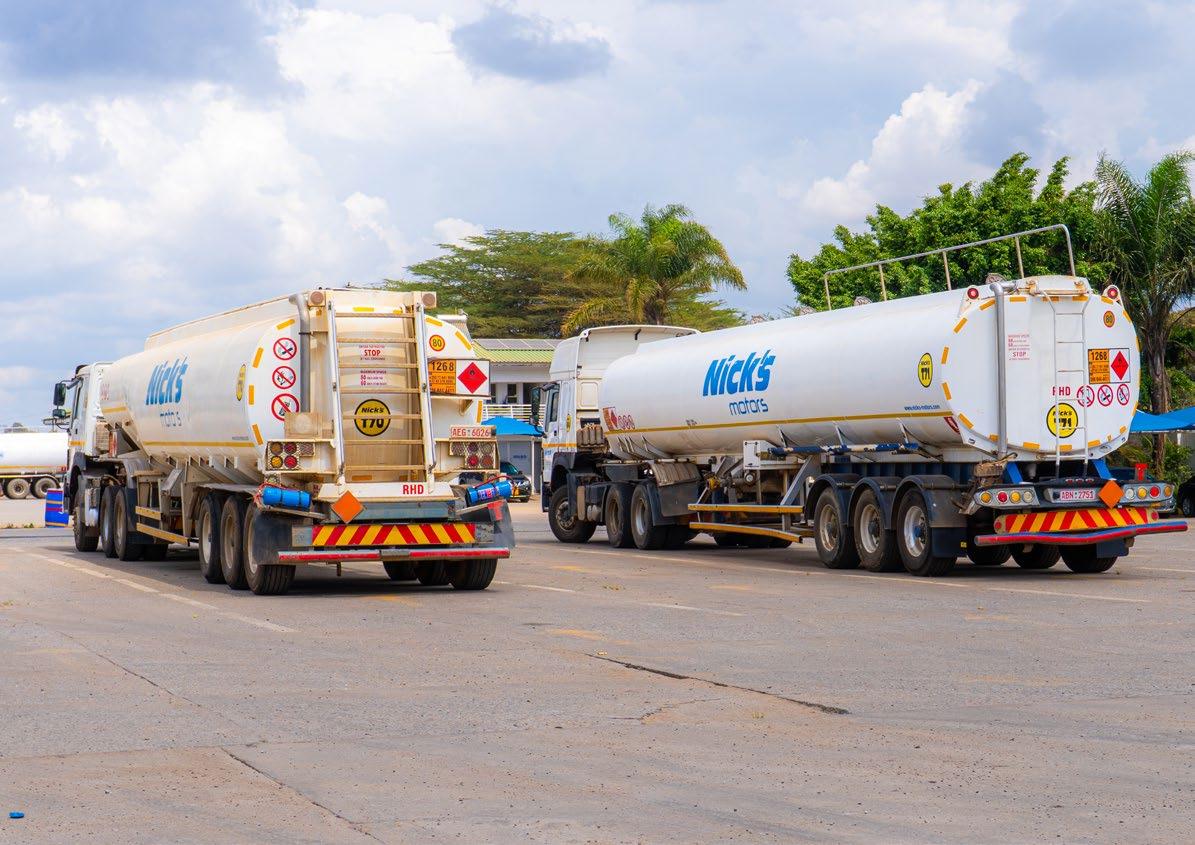
Longevity is the ultimate certificate of competence in the high-stakes arena of fuel transportation, where the margin for error is non-existent. This June, Nick’s Motors officially marks its 40th anniversary, celebrating four decades of operations since its founding in 1986. What began as a specialized workshop under the visionary leadership of the late Nicolas Pilakoutas has evolved into a regional powerhouse, underpinned by a philosophy that remains unchanged: if the vehicle is not right, nothing else is.
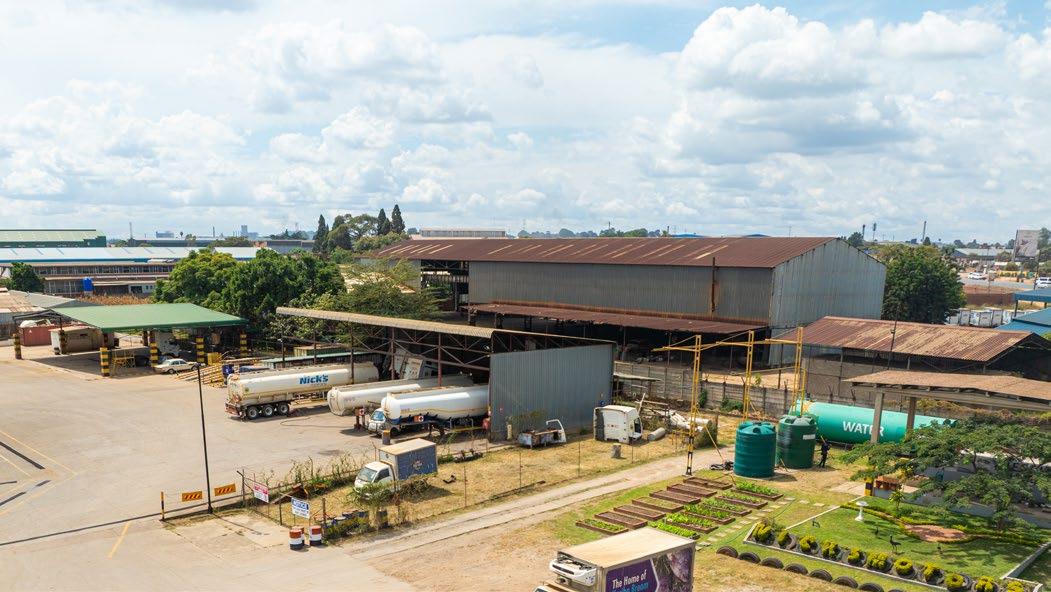
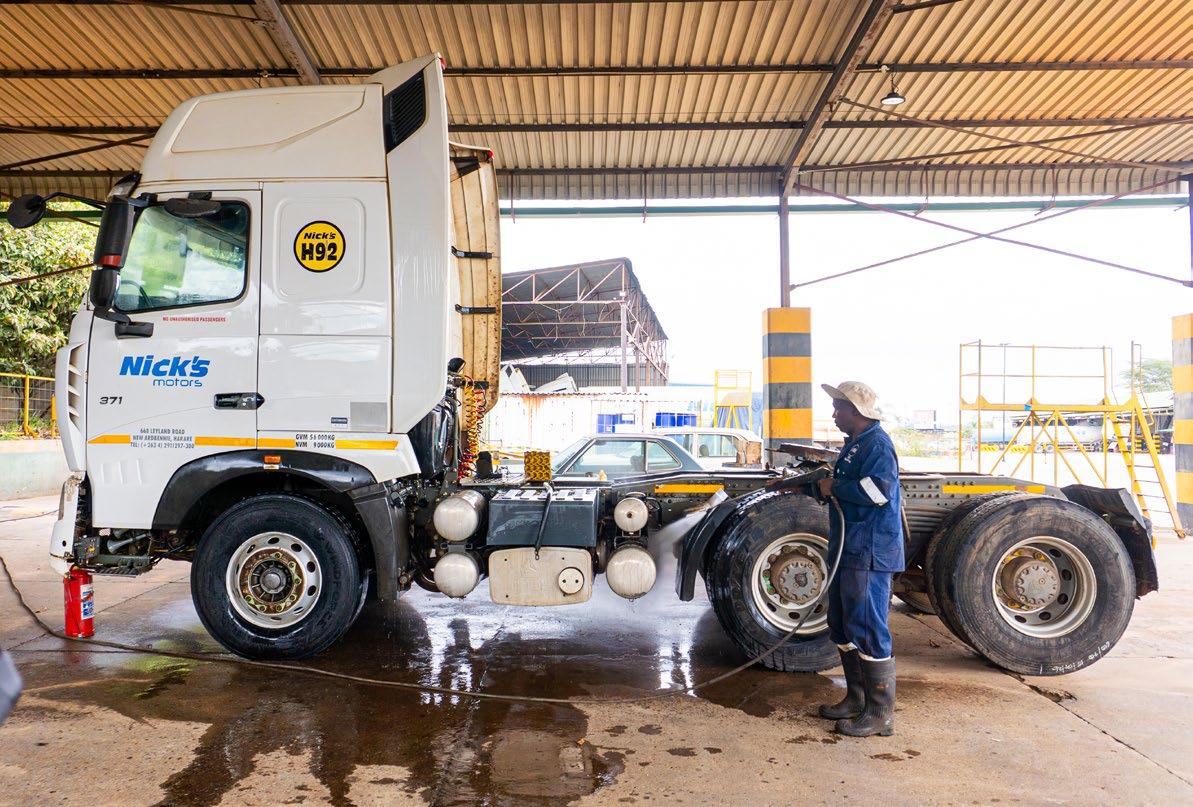
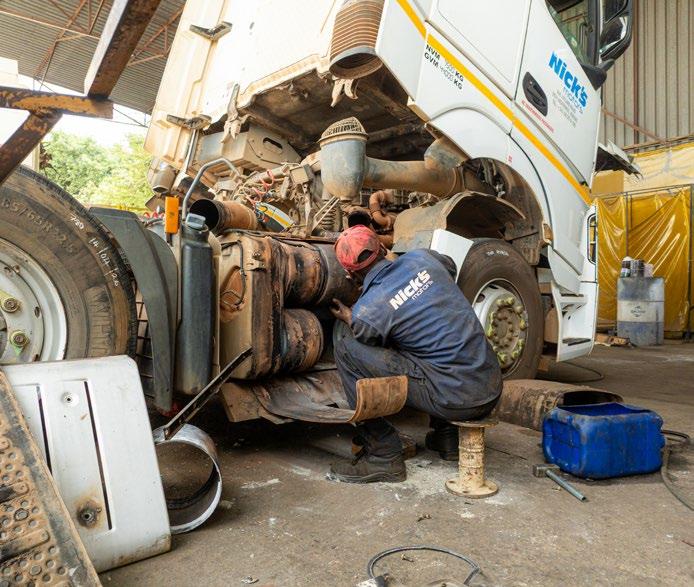
As the company commemorates this milestone under the banner #Celebrating40Years, the focus remains firmly on the “backbone” of the operation—the workshop. Unlike many transport firms that view maintenance as a secondary support function, Nick’s Motors treats it as the birthplace of its corporate DNA.
A Legacy Built on the Tools
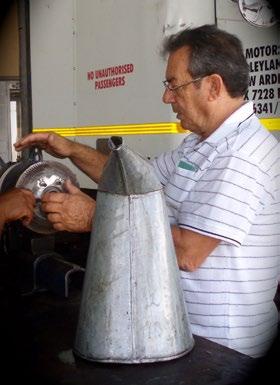
The late Nick Pilakoutas was, first and foremost, a mechanic. This technical pedigree ensured that the company was never built on abstract theory, but on the practical, disciplined standards of the workshop floor.
“Founded on the workshop floor in 1986, Nick’s Motors has carried that same discipline forward for 40 years,” says Mr. Matthew Rowley, General Manager. “We are building not just a fleet, but a system that ensures every vehicle, and every load, meets the standard required to operate safely across borders. Our founder’s emphasis on workshop standards is a legacy we hope has done him proud.”
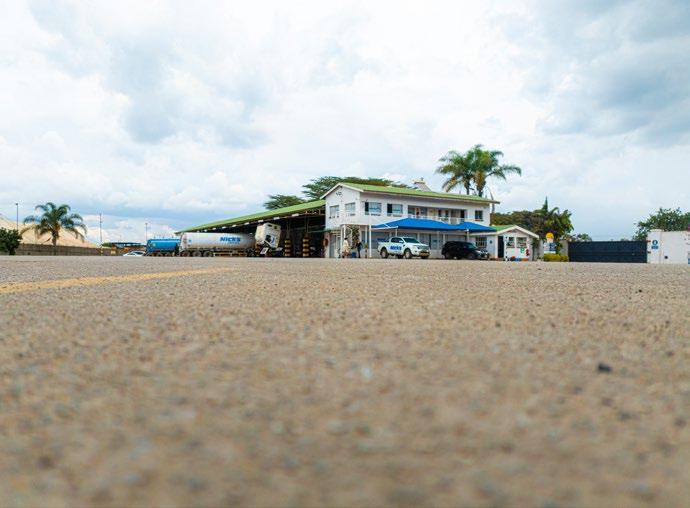
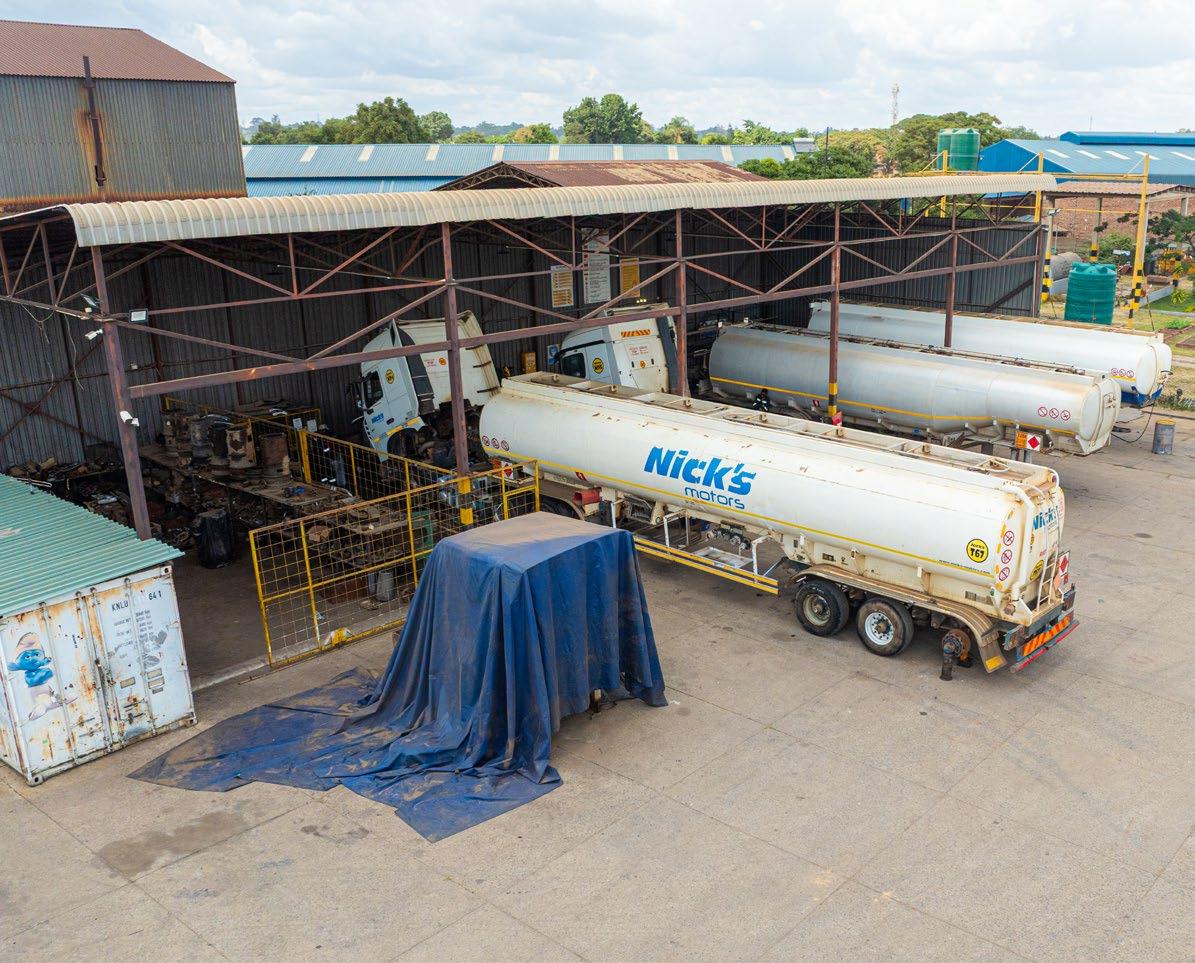
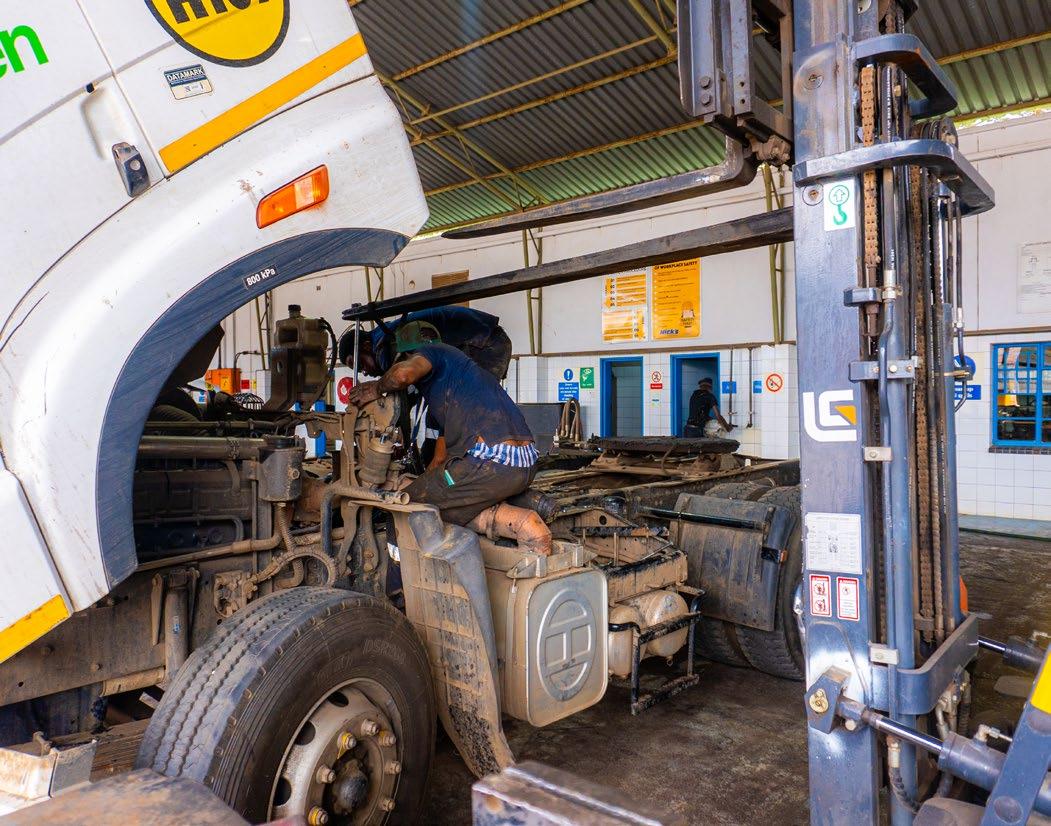
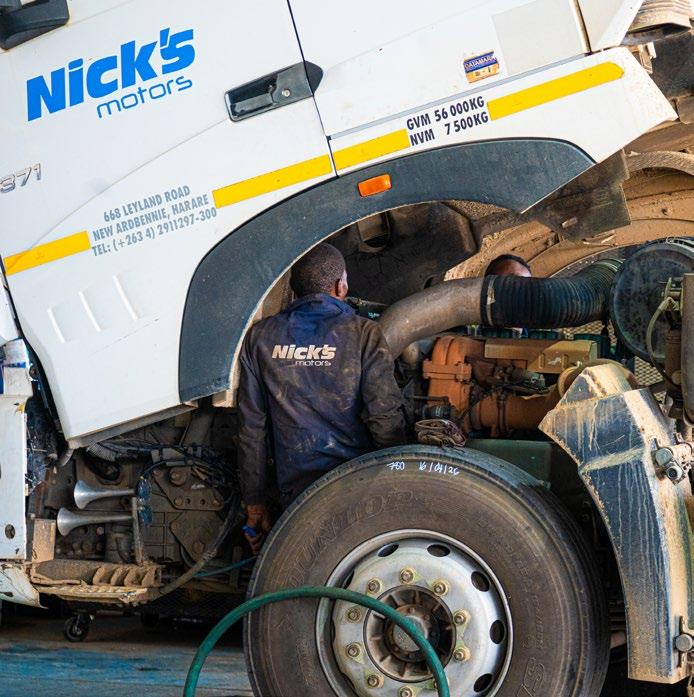
This commitment to fleet integrity is evident in the workshop’s structured flow. It is a zoned, controlled environment designed to manage risk. From specialized Mechanical Repair Bays and TankerSpecific Zones to Safety-Critical Work Zones and an independent Quality Assurance Bay, every movement is accounted for. This layout eliminates cross-contamination of work and reduces human error, ensuring no vehicle leaves the floor simply on a mechanic’s word.
Specialization in Hazardous Logistics
While many aspects of heavy-duty maintenance are universal, the transport of fuel requires a heightened level of specialization. Nick’s Motors
distinguishes itself through its expertise in pneumatics and aluminium welding. Fuel tankers rely on complex pneumatic systems for valve actuation and overfill protection—systems that require precision diagnostics not found in standard break-bulk environments.
Furthermore, with most regional tankers constructed from aluminium, the workshop utilizes specialized TIG (Tungsten Inert Gas) welding and alternating current (AC) protocols. This ensures that repairs are sensitive to the structural integrity and leak-prevention requirements of hazardous goods environments.
To verify this integrity, the company conducts rigorous on-site pressure testing. This includes Barrel Testing, where compartments are pressurized with clean water to detect weld defects, and Bottom Line Testing, which verifies the pipelines and valves critical for loading operations. “Both testing processes are carried out under strict safety controls,” notes Ms. Anna Tariro Zvinokwazvo, HSEQ Officer. “The tanker must be fully flushed and degassed, and a Safe to Work Permit is formally signed off before any testing begins. We maintain a zero-compromise safety culture that aligns with international best practices.”
Safety,
Environment, and the “Zero Today” Philosophy
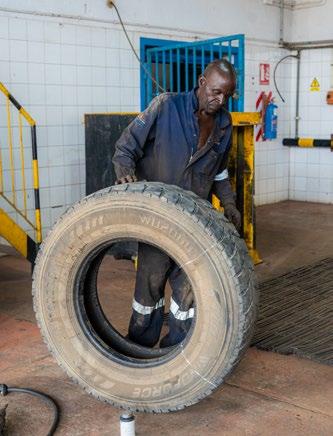
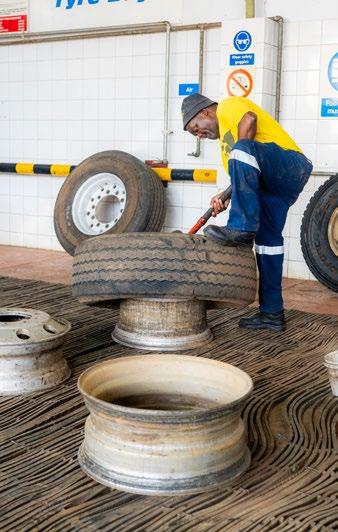
Safety at Nick’s Motors extends beyond the mechanical. The facility is equipped with a robust emergency infrastructure, including three fixed fire alarms, hose reels, and physically separated hot work zones. Every activity—from tyre handling in specialized inflation cages to the movement of heavy gearboxes via extended-fork lifters—is treated as a high-risk task requiring formal procedures.
Environmental stewardship is equally prioritized. In compliance with EMA SI 268 of 2018, the company manages hazardous waste through accredited contractors. Used oil is repurposed or sold for industrial furnaces, while contaminated residues are stored in secure, fire-protected areas before being sent to registered hazardous waste landfills.
“Maintenance is best understood not as a standalone workshop activity, but as part of a controlled operational system,” explains Ms. Zvinokwazvo. “Our HSEQ performance is tracked through KPI dashboards and trend analysis, ensuring that unsafe conditions are corrected and fed back into our training programs.”
Investing in the Future: People and Progress
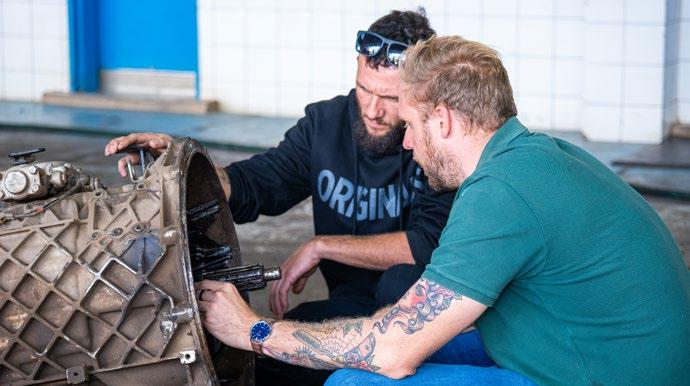
At the heart of this 40-year success story is a structured team of 28 professionals, ranging from Journeymen and Quality Control Supervisors to Wash Bay Attendants. Recognizing the need for a sustainable skills pipeline, Nick’s Motors operates an active Student Attachment Programme. The 2026 intake includes an auto electrician and five motor mechanics who are embedded directly into technical teams.
“The programme is not observational; it is practical and role-aligned,” says Mr. Peter Chareka, Human Resources Administrator. “Students gain handson exposure to tanker-specific maintenance and the discipline of our structured workflows. It supports our succession planning and ensures the next generation of technicians carries forward the standards established by Mr. Pilakoutas four decades ago.”
Compliance as a Continuous Journey
As an operator aligned with SABS, ISO, and SQAS-Africa standards, Nick’s Motors approaches audit preparation as a daily habit rather than a periodic hurdle. The company maintains a “live” legal register and a fully documented SHEQ management system.
“SQAS is not purely administrative for us,” Mr. Chareka adds. “The audit includes interviews and practical verification, which means staff behaviour and risk understanding must be embedded in our daily operations.”
As Nick’s Motors looks toward the next decade, the anniversary serves as a reminder that in the transport industry, reputation is built on the road but earned in the workshop. From the first spark of a TIG welder to the final signature on a quality assurance job card, the company remains an example of the power of discipline, specialized expertise, and an unwavering commitment to safety. For 40 years, Nick’s Motors has kept the region moving—and by the looks of its meticulously managed workshop, it is just getting started.
SEP ASSISTS PROTON BAKERS TO
GO GREEN WITH NEW SOLAR PLANT
Text by Martin Chemhere
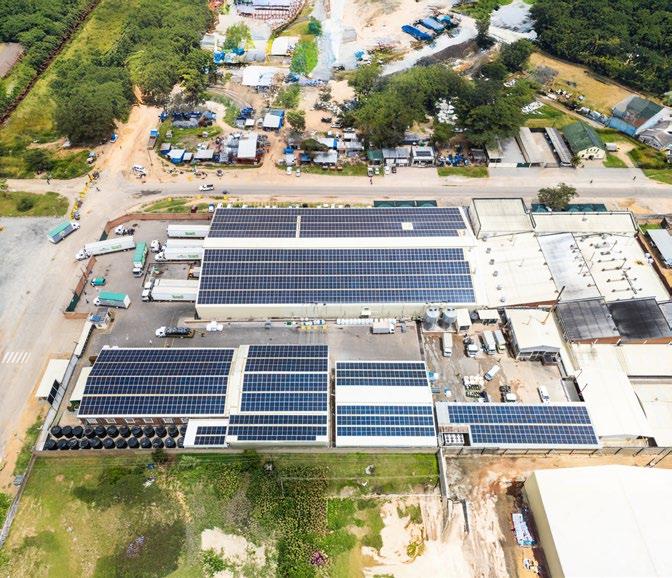
Solar Energy Projects (SEP) has successfully commissioned a 1MVA solar energy system for Proton Bakers, the nation’s leading bread and confectionery manufacturer. This project not only secures the energy future of one of Zimbabwe’s most vital food producers but also reinforces SEP’s status as the regional leader in high-impact industrial renewable energy solutions.
The success of the Proton Bakers project is rooted in SEP’s recent strategic expansion. The solar energy company recently established a dedicated branch at Number 25 Longlands Road in Marondera, positioning itself at the very heart of Mashonaland East’s industrial hub.
This local presence allowed for seamless execution and ensures that Proton Bakers, along with other regional manufacturers, has access to rapid-response technical support and long-term maintenance. SEP’s reputation as the "clean energy company of choice" is built on this foundation of in-house technical expertise and world-class technology partnerships.
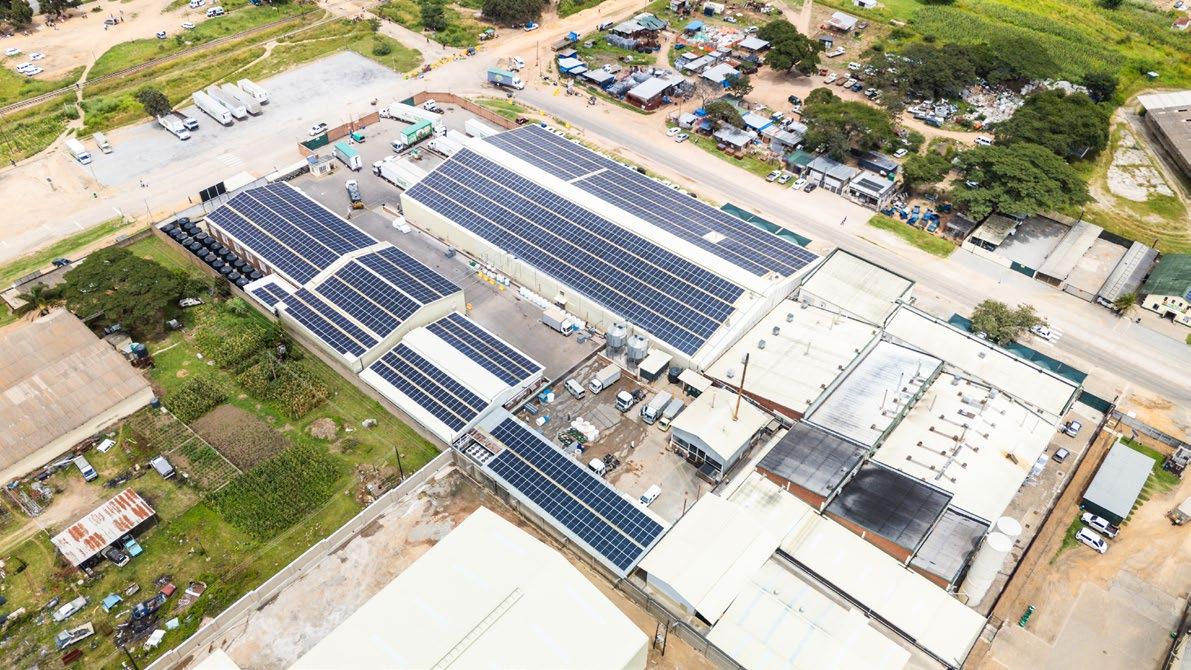
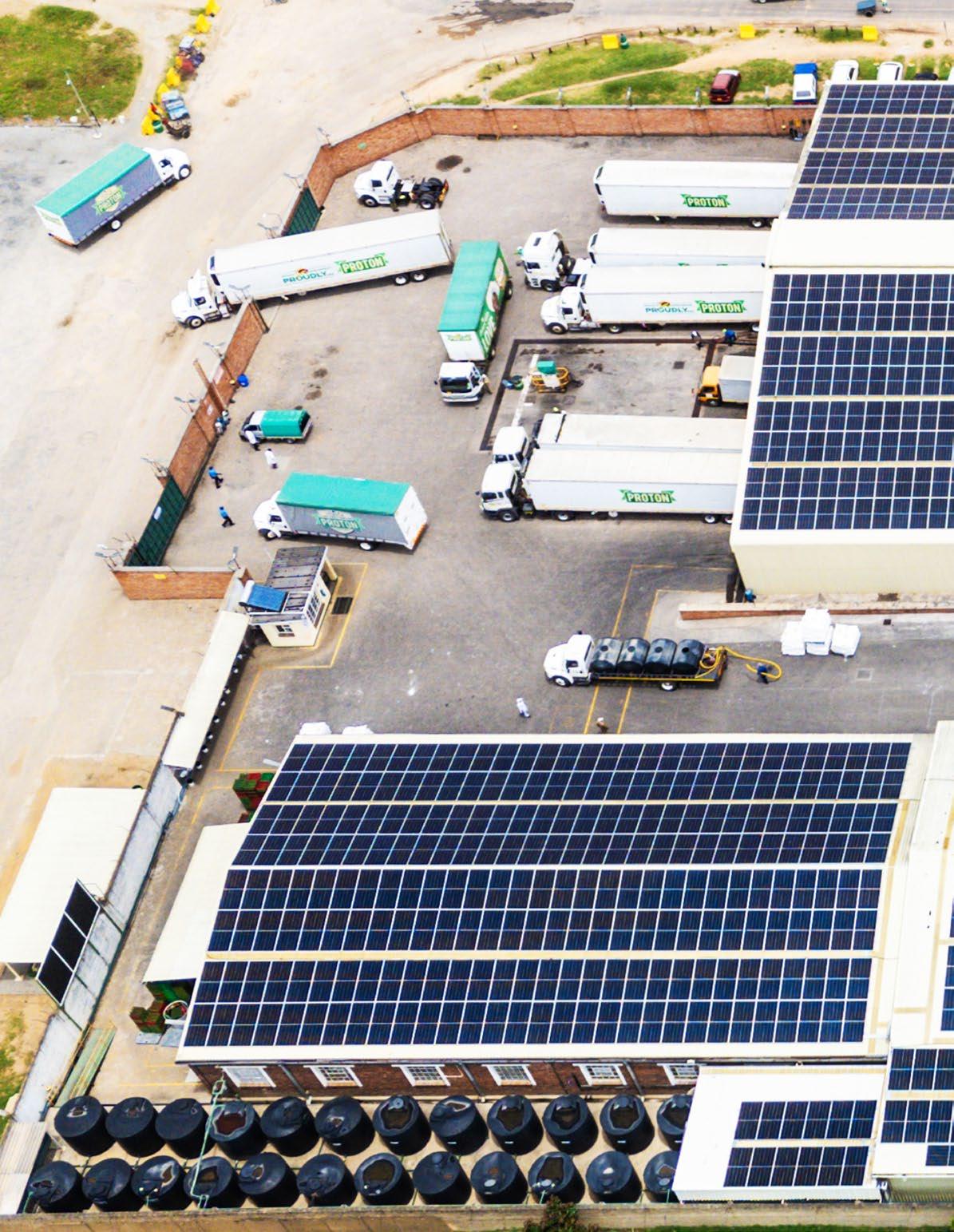
The scale of the installation at the Proton Bakers headquarters is immediately apparent from the air.
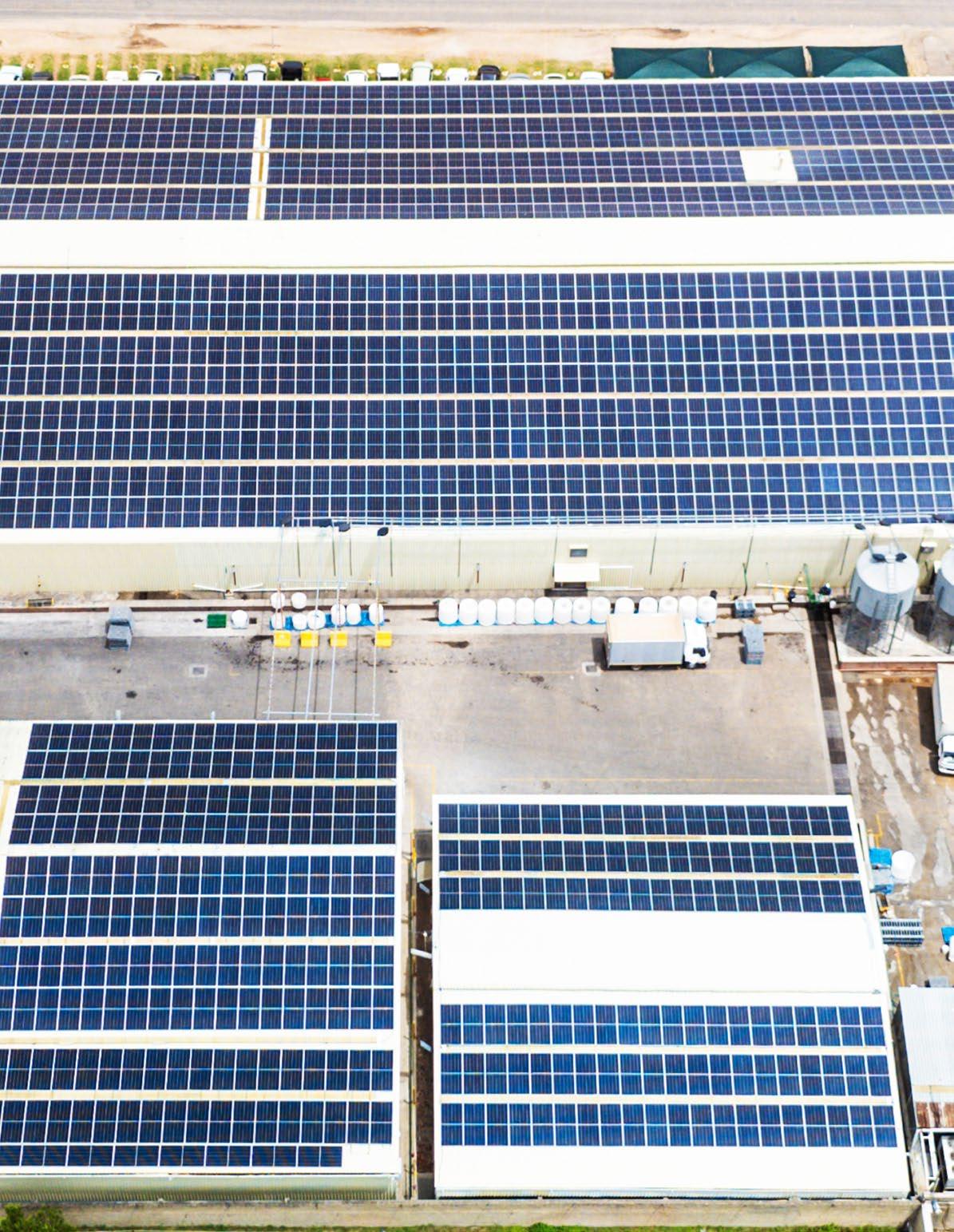
High-angle aerial photographs reveal a sprawling industrial complex where the rooftops have been transformed into a high-tech harvesting field.
extensive array of
Direct overhead views emphasize the sheer magnitude of the installation. While the logistical yard remains a hive of activity—busy with the iconic white Proton delivery trucks—the facility now operates under a silent, green canopy. This 1 MVA plant provides the stable and consistent power source critical for high-volume production, insulating the bakery from energy fluctuations and the escalating costs of fossil-fuel-based backups.
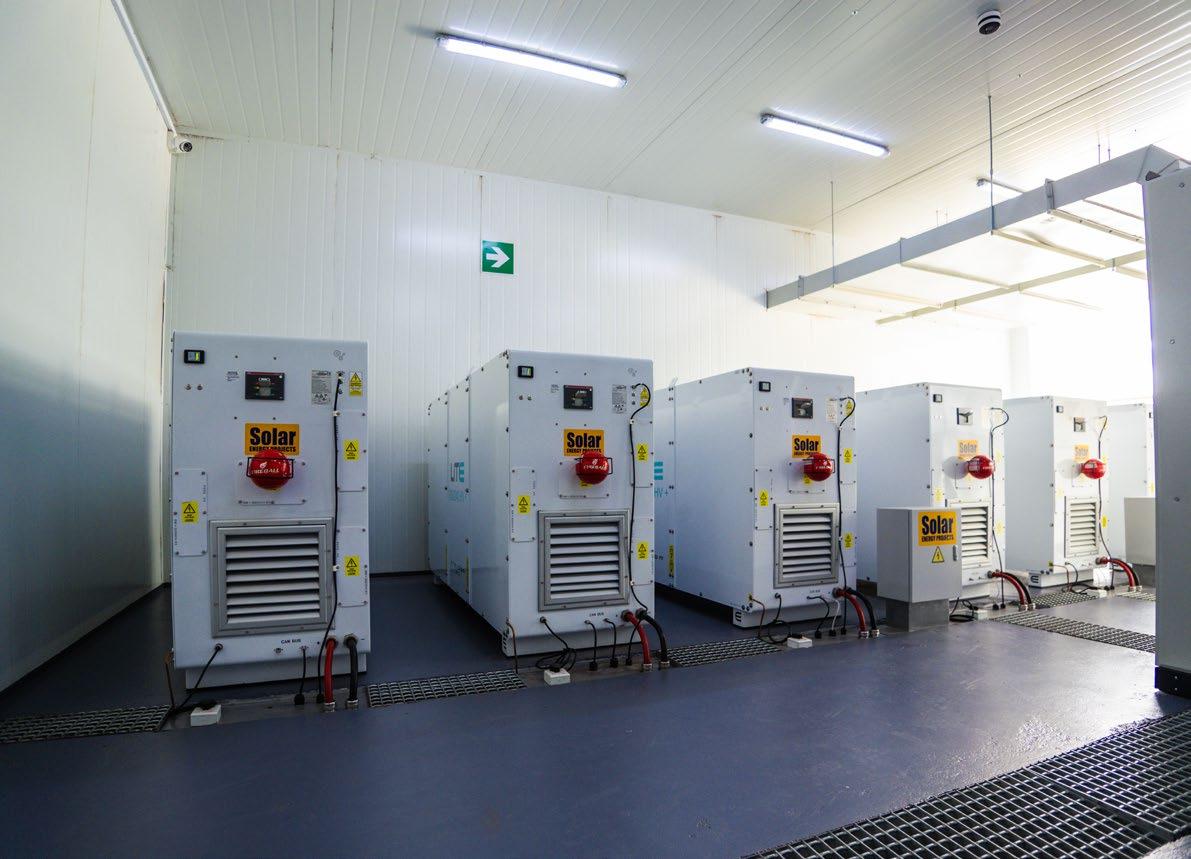
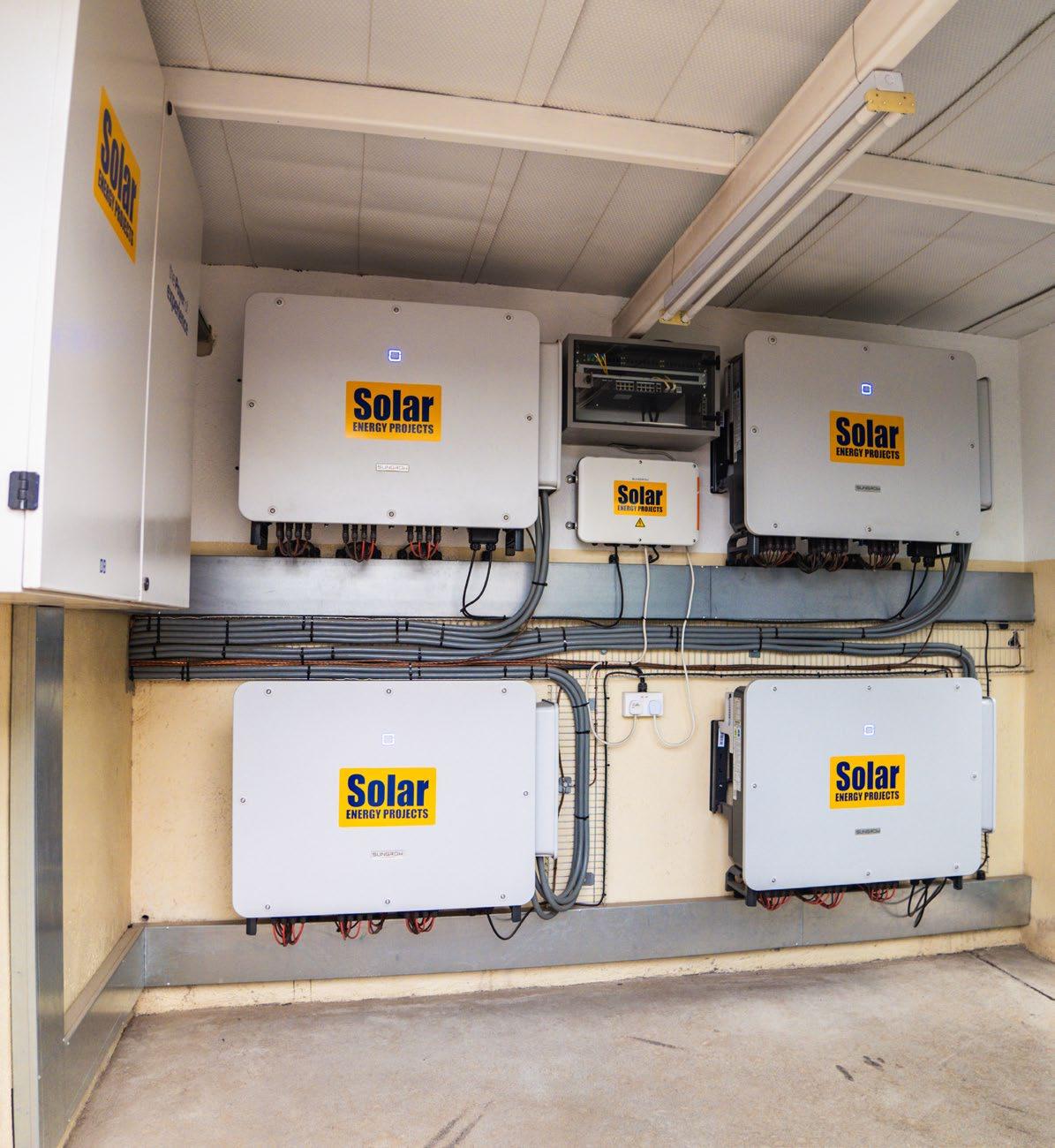
Inside the facility, the engineering excellence continues. The power room houses a sophisticated bank of four large, white Sungrow solar inverters. These units, mounted with precision on light-coloured walls, are supported by a smaller central control unit and housed within a secure, ventilated enclosure.
An
1,788 dark blue, high-efficiency solar panels covers the majority of the warehouse rooftops, capturing the abundant Zimbabwean sunlight to power the precision-timed baking processes below.
The professional nature of the installation is evident in the neatly organized industrial conduits and metal trunking that manage the system’s complex wiring.
To ensure resilience during periods of low sun or grid instability, the project features a cutting-edge battery storage solution.
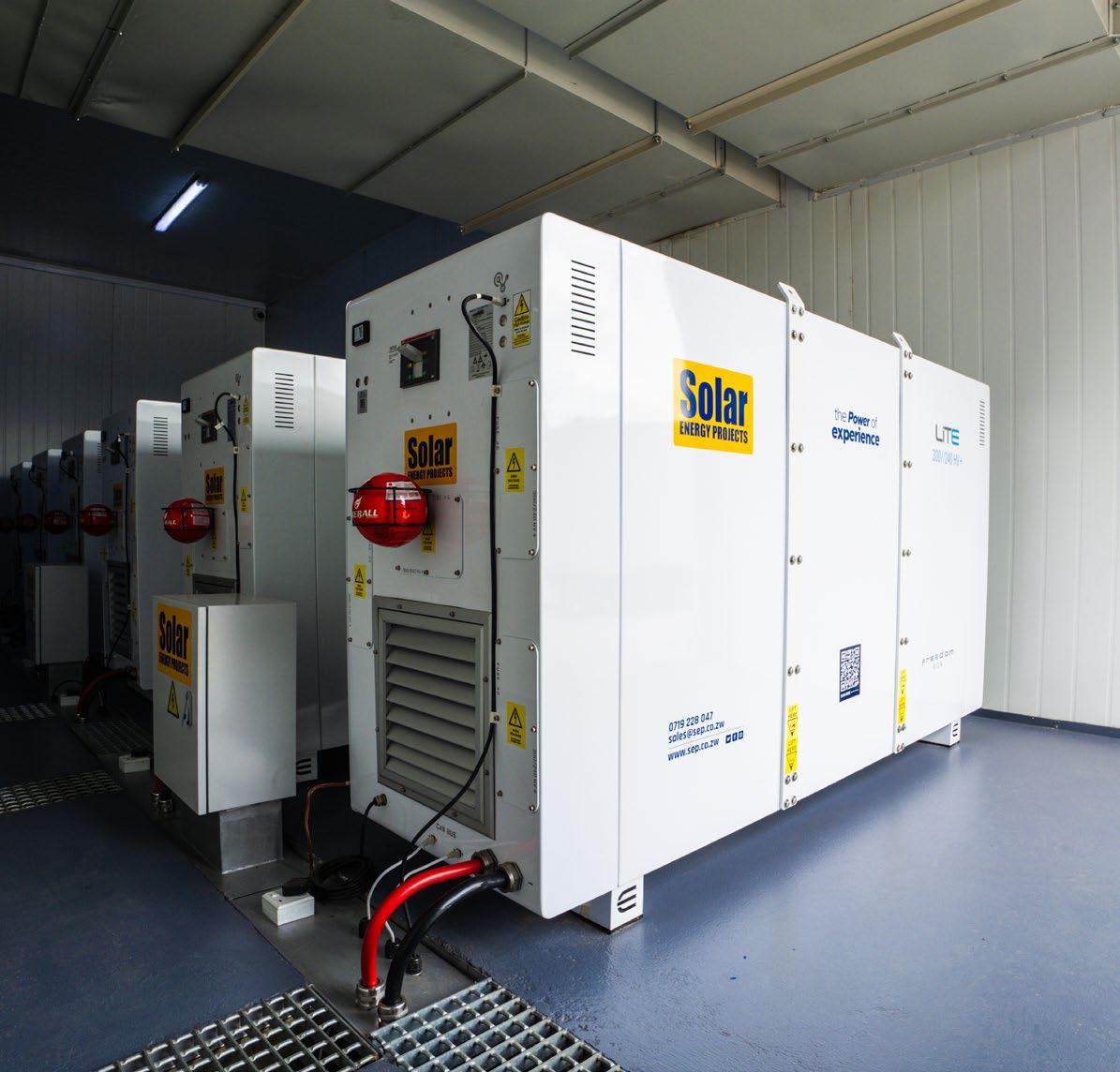
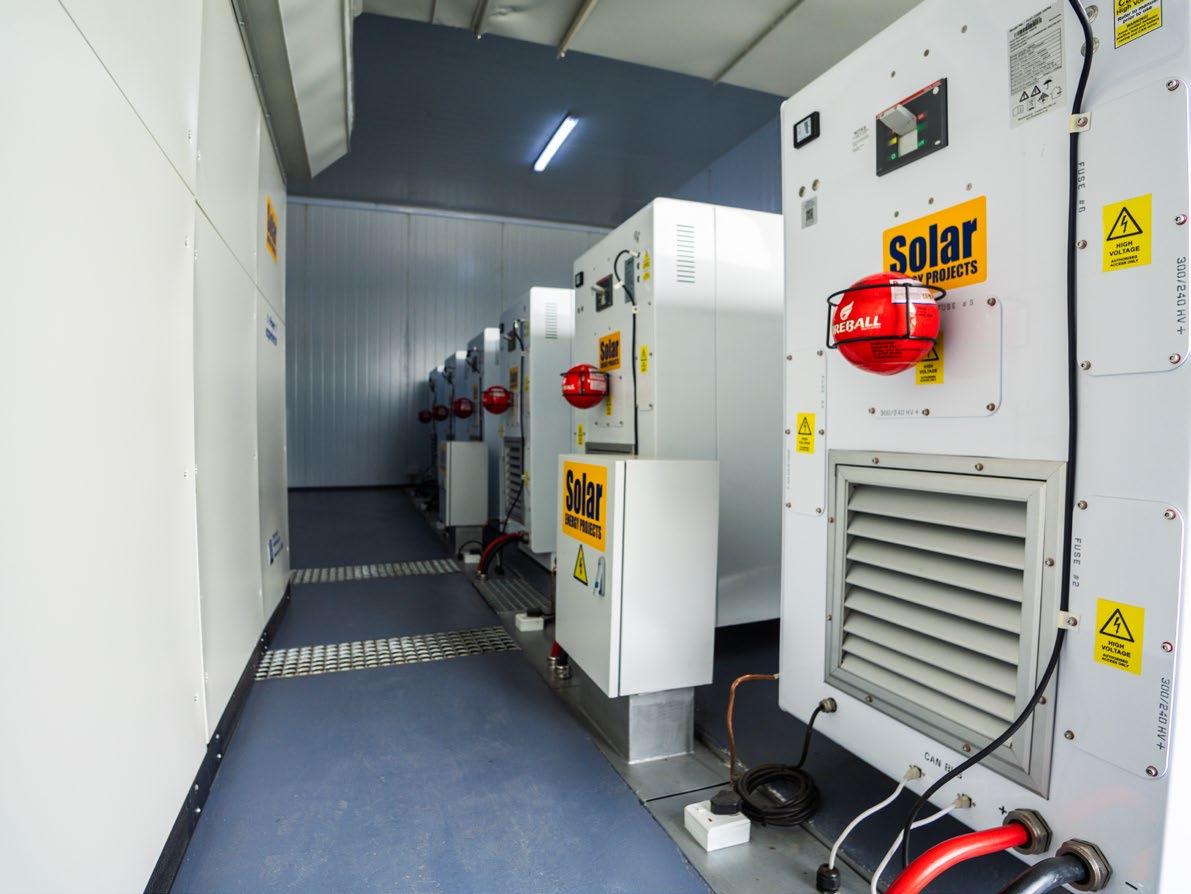
A clean, modern battery room contains a row of high-capacity Freedom Won "LiTE" lithium battery cabinets. These large white units, prominently branded with the "Solar Energy Projects" logo, represent the pinnacle of energy storage technology.
Safety is paramount; each unit is equipped with a red "Fireball" automatic fire extinguisher. The room itself maintains a clinical, high-tech appearance with anti-static flooring and bright fluorescent lighting, emphasizing the sophisticated scale of the heavy-duty cabling and power management system.
What sets this project apart is its integration with the national power utility. Through a net-metering agreement with the Zimbabwe Electricity Transmission and Distribution Company (ZETDC), the system is optimized for national efficiency.
During peak sunlight hours, any excess power generated by the 1,788 panels is fed back into the national grid. This transforms Proton Bakers from a traditional consumer into a proactive contributor to Zimbabwe’s clean energy supply, directly supporting the government's call for private sector participation in stabilizing the national grid.
Beyond the technical and financial benefits, the shift to solar represents a major win for environmental stewardship. The bread and confectionary maker has significantly reduced its reliance on diesel generators, lowered its carbon footprint and minimized noise pollution in Marondera.
As more industrial giants look to follow this lead, the partnership between SEP and Proton Bakers stands as a benchmark for the Zimbabwean manufacturing sector. It proves that with the right expertise and technology, the sun can indeed power the future of local industry, ensuring that as Proton continues to "feed the nation," it does so with a clear environmental conscience.
LANDMARK LEGAL FRAMEWORK SET TO UNLOCK ZIMBABWE’S
OIL AND GAS POTENTIAL
Z
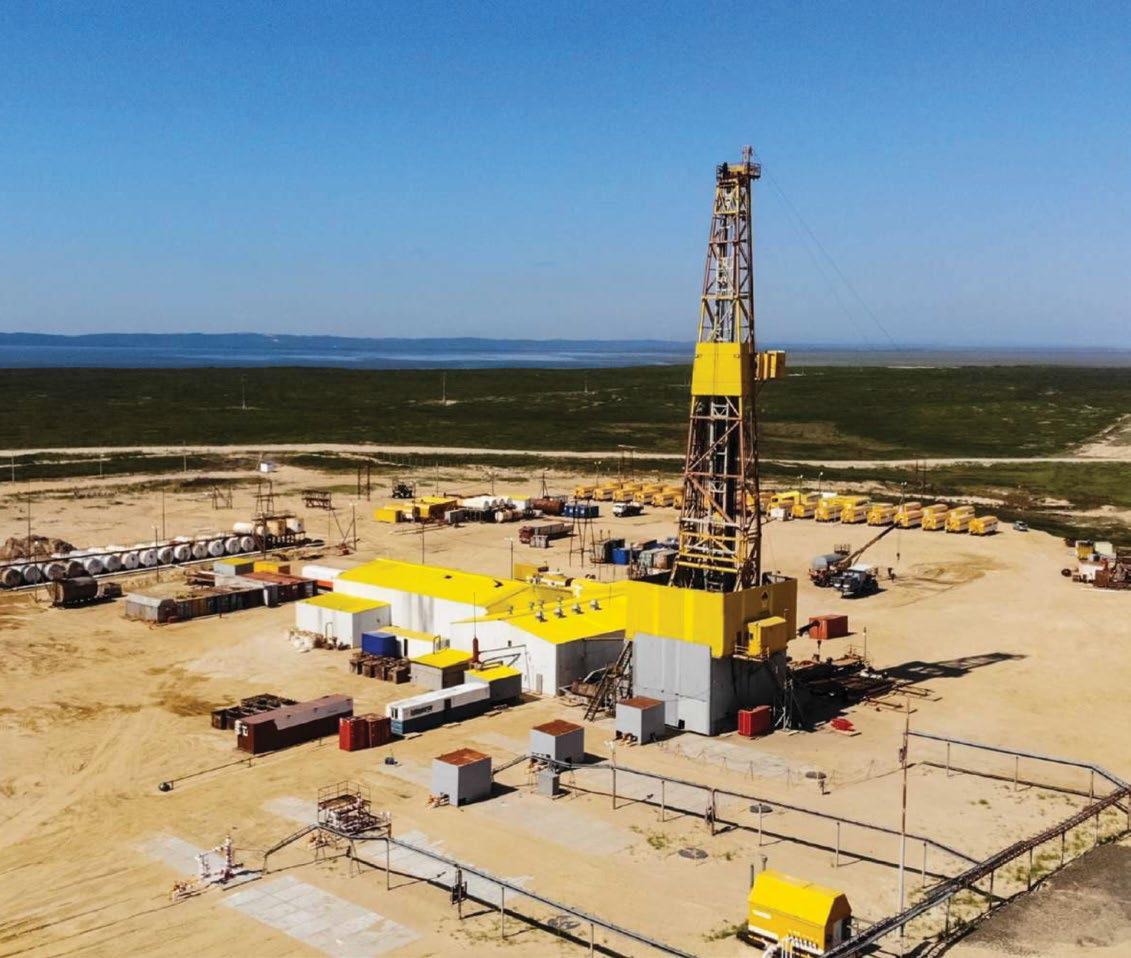
imbabwe is on the verge of a historic shift in its energy landscape as the government prepares to formalize the emerging petroleum sector through a definitive Petroleum Production Sharing Agreement. Invictus Energy, the Australia-listed firm spearheading the Cabora Bassa project, has confirmed that the deal is currently in its final stages. With the comprehensive review process complete, the signing of this agreement is expected to occur within the current month, establishing a robust foundation for the country's oil and gas industry.
This forthcoming agreement serves as a vital legal and fiscal roadmap for petroleum operations. By defining the sharing of production and profits between the state and the explorer, it provides a stable and internationally competitive environment for investors. Beyond the immediate needs of the Mukuyu gas field, this contract is intended to function as a blueprint for all future petroleum ventures in the nation, ensuring transparency and long-term economic security.
The execution of this document will grant Invictus Energy the necessary clarity to accelerate its exploration and appraisal activities across the 360,000 hectares it holds under various licenses. This progression is particularly significant following the high-impact gas-condensate discoveries at the Mukuyu-1 and Mukuyu-2 wells. The signing will also facilitate the potential rollout of an early gas-to-power pilot project, which could offer an immediate boost to the national electricity grid and reduce dependency on energy imports.
In a parallel boost to the project’s momentum, the Environmental Management Agency has officially renewed the environmental impact assessment license for the basin until March 2027. This regulatory approval ensures that Geo Associates, the local subsidiary, can continue with high-impact seismic surveys, well testing, and drilling. Specifically, it clears the path for the upcoming Musuma-1 exploration well, which aims to test a new geological play in the eastern portion of the Cabora Bassa basin.
The environmental permitting process has been exhaustive, building on extensive studies conducted by the Scientific and Industrial Research and Development Centre. These studies covered a wide array of factors, including local hydrology, ecology, and archaeology, while ensuring deep consultation with traditional leaders and surrounding communities. The renewal of this license, combined with the imminent signing of the production agreement, effectively satisfies the primary regulatory requirements for the current phase of exploration.
Government officials have highlighted that the duration of these negotiations reflects a careful effort to align the agreement with international best practices while safeguarding the national interest. The Cabora Bassa project is viewed as a transformative element for the broader economy, capable of sparking industrialization and creating significant employment opportunities. With the administrative hurdles nearly cleared, the project is now positioned for rapid commercialization. As a company listed on both the Australian Securities Exchange and the Victoria Falls Stock Exchange, Invictus Energy continues to bridge global capital with Zimbabwe’s untapped natural resources, moving closer to a future of energy self-sufficiency.
SOLAR-POWERED LABORATORIES REDEFINE
SCIENCE EDUCATION ACROSS MATABELELAND SOUTH
The educational landscape in Matabeleland South is undergoing a profound transformation as the Government intensifies the rollout of solar-powered science laboratories designed to bridge the long-standing divide between rural and urban schools. This ambitious infrastructure programme targets learning centres that have historically operated without adequate facilities, providing them with the necessary tools to offer high-level practical learning.
Through the prioritization of the development of these specialized centres, the government is making a decisive move to ensure that every student, regardless of their geographical location, has a fair opportunity to excel in a global economy that is increasingly defined by technological proficiency.
The initiative focuses heavily on enhancing the teaching of science, technology, engineering, and mathematics, collectively known as the STEM subjects. In previous years, students in remote parts of the province often relied on theoretical instruction for complex scientific concepts due to the absence of functional laboratories. This lack of practical exposure frequently resulted in a performance gap when compared to urban counterparts who had access to well-equipped facilities. The new laboratories are specifically designed to reverse this trend, offering modern equipment and a conducive environment for experiments and hands-on research that bring scientific theory to life.
One of the most innovative aspects of this project is the integration of renewable energy to sustain the facilities. Several laboratories are currently at advanced stages of completion across the province, with each unit featuring an independent solar power system. This strategic choice addresses the challenge of unreliable electricity supply or the total absence of a connection to the national grid in remote areas. As schools harness the abundant sunlight of the region, they are achieving energy independence, ensuring that advanced learning equipment such as microscopes, digital sensors, and computing devices remain functional throughout the day without the risk of power outages.
During a recent tour of the beneficiary schools, the Permanent Secretary in the Ministry of Primary and Secondary Education, Mr. Moses Mhike, highlighted the importance of this project as part of a broader national effort to improve learning conditions. He described the solar-powered laboratories as a true game-changer for the education sector, particularly for districts that have felt left behind by the digital and scientific revolutions. The Permanent Secretary emphasized that the focus is on inclusivity and the removal of barriers that have historically disadvantaged the rural learner. The government is providing these modern facilities, to ensure that students in Matabeleland South are no longer restricted to the sidelines of scientific advancement.
The adoption of solar energy within these schools does more than just power light bulbs; it guarantees an uninterrupted cycle of learning. In a traditional setting, a power failure could derail a critical science experiment or a scheduled digital lesson, leading to fragmented understanding and lost instructional time.
With solar-powered systems, the laboratories remain operational at all times, which is essential for the effective delivery of the curriculum. This reliability allows teachers to plan complex, longterm experiments with the confidence that the necessary climate-controlled storage or electronic monitoring will not be compromised.
Ultimately, the transformation of science education in Matabeleland South serves as a blueprint for sustainable development in the social sector. As these laboratories become fully operational, they are expected to inspire a new generation of scientists, engineers, and researchers from the heart of the province.
The project reflects a modern approach to governance where infrastructure, technology, and education intersect to create lasting social impact. By investing in the human capital of rural communities through modern science facilities, the country is strengthening its foundation for a future driven by innovation and industrialization.
ZIMBABWE LAUNCHES
DECISIVE FINAL PHASE FOR UNIVERSAL RURAL ELECTRIFICATION
The Zimbabwean government has initiated the final, high-intensity phase of its national electrification strategy, with the Rural Electrification Fund (REF) dedicating the vast majority of its 2026 resources to achieving universal power access for all public institutions. This accelerated program is designed to permanently close the infrastructure divide between urban centres and rural communities, focusing specifically on the thousands of schools and healthcare facilities that still lack a reliable energy connection. By prioritizing these critical service points, authorities aim to revitalize rural development and ensure that modern services reach the most remote corners of the country before the close of the year.
To facilitate this massive logistical undertaking, the Rural Electrification Agency (REA) has secured a substantial budget of ZiG7 billion for the 2026 fiscal year. In a clear signal of the project's transition from administrative planning to direct field execution, nearly eighty percent of these funds— exceeding ZiG5.6 billion—has been earmarked strictly for project implementation. This capital injection is being utilized to clear the remaining backlog of 2,390 institutions that have yet to be commissioned. The agency is employing a dual-track strategy to reach these locations, utilizing traditional grid extensions where feasible and deploying advanced standalone solarpowered solutions for more geographically isolated areas.
The impact of this energy drive is already reshaping the daily operations of rural public services. In the education sector, the arrival of electricity has moved learning beyond the limitations of daylight and textbook theory. Schools are now able to integrate digital tools, maintain computer laboratories, and power essential laboratory equipment for science subjects, thereby levelling the playing field for rural students. Similarly, the health sector has seen a drastic improvement in clinical outcomes. Electrified clinics can now offer extended operating hours, maintain cold-chain storage for life-saving vaccines, and utilize modern diagnostic machinery, significantly reducing the need for patients to travel to distant urban hospitals for basic care.
This 2026 budgetary commitment is a key pillar of the National Development Strategy 2, which envisions a modern, industrialized nation where no citizen is left behind due to a lack of basic infrastructure. Out of the nearly 11,000 public institutions originally identified for the program, over 8,300 have already been successfully electrified and commissioned. As the Rural Electrification Agency mobilizes its technical teams for this final push, the focus remains on ensuring that every remaining school and clinic is brought online, creating a sustainable foundation for long-term socioeconomic growth across rural Zimbabwe.
ZIMBABWE’S GREEN DRIVE: BYD
AND
LOCAL AUTO GIANTS POISED TO FLOOD MARKET WITH ELECTRIC VEHICLES
As global fuel prices soar following recent international energy shocks, Zimbabwe is positioning itself as a strategic frontier for the electric vehicle (EV) revolution. While Chinese automakers like BYD and Geely intensify their push into overseas markets—marked by an 82.4% surge in passenger car exports in March 2026—local companies like BYD Zimbabwe and established automotive dealerships are preparing for a massive influx of new energy vehicles. This shift is being catalysed by a favourable local regulatory environment and the country’s vast lithium reserves, which have transformed Zimbabwe into a pivotal hub for the regional EV supply chain.
To accelerate local adoption, the Zimbabwean government has introduced significant fiscal incentives, including a reduction in customs duty for fully electric vehicles from 40% to 25%, effective since January 2025. Furthermore, Statutory Instrument 35 of 2025 now allows ZERA-approved operators to import solar-powered EV charging infrastructure duty-free.
These measures are designed to lower the high entry costs that previously saw models like the BYD Atto 3 priced significantly higher in Harare than in regional neighbours. Local firms are increasingly looking to leverage these rebates to build out a decentralized charging network, reducing the "range anxiety" that has historically hampered EV sales in the country.
The market is also witnessing a shift toward localized value addition. Beyond merely importing finished units, there is growing potential for local assembly through 0% duty incentives on semi-knocked-down (SKD) vehicle kits.
This policy encourages companies to move from being mere distributors to becoming integrated participants in the manufacturing process. With global demand for lithium-ion batteries surging, Zimbabwe’s mineral wealth provides a unique "mineral-to-mobility" advantage, potentially allowing local assemblers to source battery components within the Southern African Development Community (SADC) region.
Market analysts predict that the combination of high traditional fuel costs and improved energy reliability through solar integration will trigger a 20% growth in local EV registrations this year. As BYD Zimbabwe expands its dealership footprint and diversifies its portfolio with more affordable models like the "Dolphin Surf" and the high-performance "Seal" sedan, the competitive landscape is set to broaden. This surge in supply, backed by government-led "green" procurement and tax reliefs, signals that Zimbabwe is no longer just a spectator in the global energy transition but an active participant in the future of sustainable transport.
ESIGODINI HOSTS SUCCESSFUL RENEWABLE ENERGY CONFERENCE
The drive toward a sustainable and climate-resilient energy future for Zimbabwe reached a significant milestone during the Renewable Energy Conference held recently in Esigodini Matebeleland South.
The high-level gathering served as a strategic platform for the government to reaffirm its ambitious goal of generating 2,100 megawatts of renewable energy by 2030.
This target specifically excludes large-scale hydropower and aims to ensure that clean energy sources constitute more than 25 percent of the national energy mix, bringing the country in close alignment with global sustainability benchmarks.
The event facilitated critical dialogue among a diverse range of key stakeholders, including the Zimbabwe Energy Regulatory Authority, the Zimbabwe Electricity Supply Authority, and the Rural Electrification Agency.
They were joined by representatives from local authorities and academic institutions to discuss the practicalities of shifting the national grid away from a heavy reliance on coal.
The consensus at the conference was that transitioning to renewable sources is no longer optional but essential for improving power reliability and diversifying energy sources to withstand the increasing shocks of climate change.
At the heart of this transition are robust policy frameworks such as the National Renewable Energy Policy and the National Energy Efficiency Policy.
These documents are designed to catalyse the adoption of clean technologies across the most energy-intensive sectors, including mining, agriculture, industry, and transport.
To accelerate this move, the government has introduced a series of aggressive incentives to lure both local and international investors.
These include the significant reduction of licensing fees for large renewable ventures and the total removal of fees for any projects generating less than 10 megawatts.
Investment confidence is further being bolstered through Government Project Support Agreements, which have already been secured by seven independent power producers.
Furthermore, the state has implemented tax exemptions on imported renewable energy equipment and opened avenues for pension funds to provide local financing for these projects.
This multi-pronged financial strategy is intended to improve project bankability and lower the barriers for new entrants into the energy market.
Progress on the ground is already visible, particularly within the realm of rural development. Official data presented at the conference indicates that over 6,700 rural public institutions, such as clinics and schools, have been successfully electrified using a combination of grid extensions and standalone solar systems. This effort ensures that the benefits of the energy transition reach the most remote areas of the country, supporting the broader mission of universal energy access.
The government also highlighted the role of academic innovation in sustaining this momentum.
Through a partnership with the International Solar Alliance, Zimbabwe is establishing a specialized Solar Technology Application Resource Centre at Chinhoyi University of Technology.
This centre will serve as a hub for research and capacity building, ensuring that the country has the technical expertise to manage its modernizing grid. As global pressure to decarbonize intensifies, the Esigodini conference made it clear that a deepened collaboration between the public and private sectors will be the primary engine driving Zimbabwe toward its Vision 2030 targets.
The Zimbabwe Energy Regulatory Authority (ZERA) has taken a significant step beyond its traditional mandate of oversight and regulation to demonstrate its commitment to corporate social responsibility. In a high-profile event held at the Victoria Chitepo Provincial Hospital—formerly known as Mutare General—the Authority officially commissioned a comprehensive LED light retrofitting project aimed at modernizing the facility’s lighting infrastructure while promoting national energy conservation goals.
The commissioning ceremony was presided over by the Minister of State for Provincial Affairs and Devolution for Manicaland, Advocate Misheck Mugadza. During the proceedings, the Minister lauded ZERA for its proactive approach to social investment, noting that such initiatives are vital for the development of provincial infrastructure.
The project, which was fully funded by the Authority at a total cost of USD 65,000, involved the systematic replacement of inefficient, traditional lighting systems with modern, energy-saving LED technology throughout the provincial referral hospital.
This investment is a strategic move that aligns with ZERA’s broader mission to encourage energy efficiency across all sectors of the Zimbabwean economy.
By targeting a major healthcare institution, the Authority has ensured that the benefits of this project are twofold.
Firstly, the transition to LED lighting significantly reduces the hospital’s monthly electricity expenditure, allowing the institution to redirect much-needed financial resources toward patient care and essential medical supplies. Secondly, the project serves as a practical demonstration of how energy-efficient technologies can be implemented at scale to reduce the overall load on the national power grid.
The choice of Victoria Chitepo Provincial Hospital as the beneficiary of this retrofitting project highlights ZERA’s focus on high-impact social investment.
As a primary healthcare hub for the Manicaland region, the hospital operates twenty-four hours a day, requiring consistent and reliable lighting to ensure the safety and comfort of patients and staff. The new LED systems provide superior illumination and have a much longer lifespan than conventional bulbs, thereby reducing maintenance costs and operational disruptions for the hospital management.
Beyond the immediate technical benefits, ZERA’s initiative sends a powerful message about the role of statutory bodies in national development.
By championing energy efficiency through direct funding and implementation, the Authority is leading by example and encouraging other corporate entities to adopt similar sustainable practices. As the country continues to navigate energy supply challenges, such retrofitting projects offer a sustainable