Esca pe .
E xpl o re .
E xpe rie n c e
2 631914 470863 EDITION
27
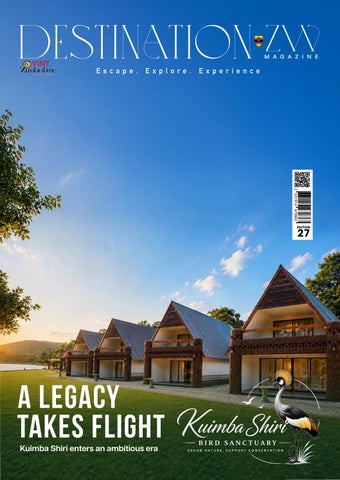
A LEGACY TAKES FLIGHT Kuimba Shiri enters an ambitious era
@FBCHoldings
Wine and Dine in Elite Style! Elevate your lifestyle and enjoy a luxurious experience with special rewards through the new Premium FBC Credit Mastercard.
…And all this for you! Complimentary airport lounge access Discounts at selected Hotels and Resorts Discounts on selected accommodation booking sites Discounts at selected car rentals, retail stores and restaurants Travel Insurance And so much more. Terms and Conditions Apply
Contact any FBC Bank branch and instantly get your card today.
INSURE
TRAVELLING OUTSIDE THE COUNTRY? GET TRAVEL INSURANCE FOR YOUR TRIP Whether it is a business or personal trip we will cover unforeseen incidents while you are abroad. Cover includes: • • • • •
Medical expenses including hospitalisation Luggage incidents Flight cancellations or curtailments Baggage losses and delays Repatriation expenses
Dial *227# or WhatsApp “hi” to 0777 227 227 to sign up on MyOldMutual, contact your broker, agent or get in touch on toll free 433, email contactus@oldmutual.co.zw or visit any of our offices.
MARKETING Newton Musara Prayer Murambiwa +263 789 532 918 +263 781 134 519 DESIGN AND LAYOUT Shumirai Shammar John Saul Chidakwa Kudiwanashe Venge Rumbidzai Ruwende JOURNALISTS Martin Chemhere PHOTOGRAPHY Caast Media Group ADMINSTRATOR Chipo Mubazangi DISTRIBUTION Gift Sepi EMAIL newton@destinationzw.biz admin@destinationzw.biz
DESTINATION ZW MAGAZINE: No part of this magazine may be reproduced or transmitted in any form or by any means electronic including photocopying or recording. While every effort has been made to ensure the accuracy of its content, neither editor nor publisher can be held responsible for any omissions or errors: or for any misfortune, injury, or damages which may arise thereof. All Rights Reserved. CAST MEDIA GROUP Copyright 2026
Follow, Like, Share, Retweet, read& Enjoy!!!
Welcome to this issue of Destination Zimbabwe, where the thread running through our stories is one of quiet work behind familiar attractions and steady growth behind familiar names. We begin at Kuimba Shiri, where the lakeside setting and flying bird display are only part of the picture. Behind them lies decades of rescue and rehabilitation, told through birds like Bigfoot, Mushe, Maka and Twiggy, and now carried forward by a new generation of the Stafford family alongside four new lakeside chalets. Further afield, Matusadona reminds us that conservation is often invisible work, measured patiently in patrol hours and research rather than headlines, as the park’s wilderness slowly returns to life on Lake Kariba’s southern shores. Closer to Harare, York Lodge continues to offer something increasingly rare in a growing city: quiet, spacious grounds just minutes from the centre and the airport. Nearby, The Lion Park Harare, formerly the Lion and Cheetah Park, remains a dependable day out across its 500 acres of bush along the Bulawayo Road. Outside Bulawayo, Free To Be Wild shows what responsible wildlife tourism can look like when rescue work and education, reaching over 14,000 schoolchildren a year, are placed ahead of the voluntourism trends that too often shape the sector.
Issue 27 Contents
FIND US AT 31 Alexander Rd, Highlands, Harare
Editor's Note
Page 08
For those planning longer stays, Musangano Lodge brings together chalets, lodges and tented camping for up to 52 guests. Victoria Falls features too, with N1 Hotel offering a comfortable base for travellers drawn by the Falls’ pull towards adventure. And as travel picks up across the region, Old Mutual makes the case for treating travel insurance as standard planning rather than an afterthought, while Boundless Journeys continues to simplify travel logistics for individuals, families and corporate groups alike. In Masvingo, the Urban Lifestyles Group of Hotels illustrates how far local entrepreneurship can carry a hospitality business, growing into a destination where business, tourism and investment now meet. Zebra Hilltop Lodge, meanwhile, is building a second identity for itself as southern Zimbabwe's leading venue for meetings, incentives, conferences and exhibitions. Together, these stories reflect a tourism sector built on patient work: conservationists rehabilitating birds and orphaned wildlife, families running lodges for decades, and developers reshaping small towns into destinations in their own right. It is a reminder that behind every good visitor experience sits a great deal of unseen effort. We hope this issue gives you both new places to visit and a fuller appreciation of the stories behind them.
Page 26
Page 36
Page 32 Page 22
Page 28
Retail therapy sorted.
Travel, shop and pay instantly with a POSB Prepaid Mastercard, wherever you are. Get yours today at your nearest POSB Service Centre. A member of the Deposit Protection Scheme
+263 242 252595/6 | +263 8677009200 |
223(ECONET), 08004271(TELONE)
The People’s Bank, Since 1904
Where a Zimbabwean Legacy Takes Flight On the shores of Lake Chivero, just 30 kilometres from Harare, a sanctuary born from an extraordinary passion for birds has survived, rebuilt and begun to soar again. More than three decades after Gary Stafford founded Kuimba Shiri, his son Joshua is carrying that legacy into an ambitious new era—one that brings conservation, hospitality and the beauty of the lake together to create one of Zimbabwe’s most distinctive destinations. 8
Kuimba Shiri has the rare quality of feeling like a world entirely its own. Remarkably, it lies barely 30 kilometres from Harare. The city begins to fall away and the landscape opens towards Lake Chivero. Traffic gives way to trees. Buildings disappear behind open country. And then there is the lake— wide, luminous and alive with birds. On its shores, beneath great Zimbabwean skies, lies Kuimba Shiri. Its name means “singing birds” in Shona, and it is difficult to imagine a name more perfectly suited to the place. African Fish Eagles call across the water. Horses graze beneath the trees. Families linger over lunch beside the lake. Boats move away from the shore. Children race towards the swimming pool and playground. Guests wander between aviaries before gathering in the late afternoon to watch some of Africa’s most magnificent birds take to the sky.
And increasingly, when evening comes, there is no need to leave. Four striking, newly-built chalets now face Lake Chivero, their balconies catching the changing light over the water. They are among the first unmistakable signs of a new Kuimba Shiri emerging—more polished, more ambitious and increasingly capable of becoming not simply somewhere Harare visits, but Harare’s great lakeside escape. Yet to understand where Kuimba Shiri is going, you first have to understand where it came from. Because beneath the beauty of this place lies an extraordinary story of passion, loss, resilience and renewal. And it began with one man and his birds.
9
A DREAM BUILT ON WINGS When conservationist and falconer Gary Stafford founded Kuimba Shiri in 1994, he was creating something Zimbabwe had never quite seen before. His world revolved around birds—particularly raptors—and the sanctuary that grew on Lake Chivero became an expression of that lifelong fascination. Kuimba Shiri expanded rapidly. Its collection of indigenous birds became exceptional, and by 2002, the sanctuary's own historical records describe it as the largest collection of indigenous birds in Africa. But perhaps the greatest indication of the expertise developing quietly on the shores of Lake Chivero came from much further afield. Birds trained at Kuimba Shiri were used in major BBC wildlife productions, including Eagles and Sir David Attenborough’s celebrated The Life of Birds. For a sanctuary in Zimbabwe, it was an extraordinary chapter.
But the collection was never simply about spectacle. Kuimba Shiri became a refuge for injured, orphaned and displaced birds. Some arrived temporarily, requiring care before they could return to the wild. Others had suffered injuries or circumstances that made release impossible. The philosophy was straightforward: where rehabilitation and release were possible, the wild remained the ultimate destination. Where they were not, the birds could find permanent sanctuary and become ambassadors for their species. Education naturally followed. Children who might otherwise know an eagle only as a distant silhouette could stand metres away from one. Students could encounter Zimbabwe’s extraordinary avian biodiversity not as an illustration on a classroom page, but alive in front of them. And visitors began coming. They came for the birds. They came for the lake. They came to watch raptors fly. Something remarkable was taking shape on the shores of Lake Chivero. 10
Then, in 2002, everything changed.
THE YEAR KUIMBA SHIRI ALMOST DISAPPEARED Zimbabwe was entering a period of profound uncertainty. For the Stafford family, the question was no longer how Kuimba Shiri would grow. It was how it would survive. Amidst the political turmoil of the 2000s, approximately a thousand birds were relocated to South Africa for safekeeping. Pause for a moment on the scale of that undertaking. A sanctuary built bird by bird, aviary by aviary and year by year had to be dismantled. Hundreds upon hundreds of living animals had to be safely transported across an international border. The collection that had taken years to build was gone from Lake Chivero. Kuimba Shiri entered its wilderness years. For many stories, that would have been the ending. But Kuimba Shiri had never been built around an easy dream, and the Staffords were not giving up. By 2011, the decision had been made. They would stay, and rebuild. Slowly, life returned to Kuimba Shiri. The sanctuary was restored. Birds returned. Visitors returned. The restaurant re-opened. The grounds began to fill again with families and schoolchildren. The sound of wings returned to Lake Chivero. And from those difficult years emerged something perhaps more powerful than the original sanctuary. A legacy.
11
The sanctuary sits within a wetland landscape internationally recognised under the Ramsar Convention, an ecosystem supporting more than 400 species of birds. The cry of a wild African Fish Eagle Perhaps the greatest surprise about Kuimba Shiri is how little effort carries across the water; game can sometimes be seen along the it takes to leave the city behind. Harare is only around 30 kilometres opposite shore of the Lake Chivero National Park. Back on land, lunch is away. Close enough for a spontaneous lunch, an afternoon with the children or an unplanned night away. Yet somewhere between the city waiting. and the shores of Lake Chivero, the pace changes. There are horses beneath the trees, cold drinks beside the lake and lawns made for long afternoons. And then, as four o'clock approaches The road opens into the landscape. The noise recedes. The lake on weekends and public holidays, people begin drifting towards the appears. And suddenly, there is nowhere else you particularly need to be. This is the Kuimba Shiri that many visitors are only beginning to flying display. Some have travelled specifically to see it. Others arrived knowing very little about it. Almost everyone looks up. discover. A bird launches. The birds may be its heart, but around them has grown an experience For a few seconds, conversation disappears beneath the rush of wings. that can easily consume an entire day. A morning wander through A raptor passes overhead with Lake Chivero behind it, and suddenly the the sanctuary might become lunch beneath the trees. Lunch might birds encountered earlier in the sanctuary are no longer exhibits to be become an afternoon beside the pool, a horse ride through the observed. They are athletes of the sky. grounds or a boat disappearing across Lake Chivero. WHERE CONSERVATION AND TOURISM MEET
Children find their own adventures while adults rediscover the rare pleasure of having nowhere to rush to. There is something wonderfully unstructured about it. You can come with a plan. Or you can simply arrive. On the water, the sanctuary takes on another perspective. From a boat, the shoreline recedes and Lake Chivero becomes enormous. 12
It is theatre, education and wild instinct meeting in one extraordinary moment. For generations of Zimbabweans, the flying display has been Kuimba Shiri's signature. But these days, four o'clock is no longer the culmination of the entire experience. It can simply be the beginning of the evening.
STAY A LITTLE LONGER When the last bird has flown and the afternoon visitors begin the journey back towards Harare, Lake Chivero changes character. The bustle softens.
Time. Time to watch the sun disappear across Lake Chivero without thinking about the drive home. Time for dinner and another drink. Time to sit outside after dark and listen to a sanctuary that sounds very different once its visitors have gone.
The light turns golden across the water. And the guests staying overnight don't have to go anywhere. Along the lakeshore, four newly built modern chalets rise above the lawns—the most visible expression yet of Kuimba Shiri's new chapter.
And then, in the morning, to open the doors and find the lake still there. It transforms Kuimba Shiri from a place that can fill a day into somewhere that can hold an entire weekend. Although calling it simply a "weekend getaway" almost undersells its greatest advantage. You don't need a weekend.
Each looks towards the lake, with a master bedroom opening onto an upstairs balcony and enough space for families and small groups to settle in for more than a fleeting visit. They replaced Kuimba Shiri's older accommodation as part of the redevelopment that began under Joshua Stafford in 2024. But their real luxury may be something much simpler.
That is the beauty of being only around 30 kilometres from Harare. Kuimba Shiri can be the holiday you planned weeks ago—or the escape you decided you needed this morning. A long lunch can become an afternoon on the lake. An afternoon can become dinner. And sometimes the best decision of the day is simply not to drive home.
13
THE NEXT CHAPTER For Gary’s son, Joshua Stafford, scenes like these offer a glimpse of what Kuimba Shiri can become. He grew up inside a place shaped by his father's extraordinary relationship with the natural world. He watched Kuimba Shiri flourish, lived through the upheaval of the 2000’s, and helped the family with the slow, patient work of rebuilding. Now the second generation is beginning to leave its own mark on the shoreline. And Josh’s vision reaches far beyond restoring what was once here. He sees a Kuimba Shiri that takes its place among Zimbabwe's great destination experiences: a wildlife sanctuary at its heart, surrounded by a beautiful lakeside resort that gives people more reasons to come, more ways to experience it and more reasons to stay. The beginnings of that future are already appearing.
14
The new chalets now face the lake from the ground where the old thatched rooms once stood, carrying a familiar part of Kuimba Shiri into a new era. Below them, the marina has been expanded and transformed, with a new harbour built far larger and deeper than its predecessors. The work has brought year-round water back to the shoreline in front of Hippo Creek, while a substantial new pier wall creates a sheltered haven where boats can retreat from the wind and waves. Nearby, a newly built A-frame campsite opens another way to experience the sanctuary, giving school groups the chance to turn a day visit into nights around the campfire and mornings of team-building by the water. And the transformation is not finished. Beyond what stands today are plans for larger spaces where groups, events and conferences will eventually find their place—part of a wider vision for Kuimba Shiri that is steadily taking shape. Yet the most exciting part of the vision is not any single building. It is what the whole place will become.
A LEGACY THAT FUNDS ITS OWN FUTURE There is another reason the future of Kuimba Shiri matters. Every new guest who discovers the destination becomes, perhaps without realising it, part of the story that began here in 1994. Kuimba Shiri's conservation and rehabilitation work is self-funded. There is no separation between the experience visitors enjoy and the sanctuary they have come to see. The lunch overlooking the lake, the night in a chalet, the boat leaving the marina and the family spending a Sunday beneath the trees all help sustain the work behind the scenes.
It gives every new development a deeper significance. A fuller restaurant means more than a good Sunday. A chalet occupied for the weekend means more than another guest. As the destination flourishes, so too does the sanctuary at its heart. And so Josh's vision does not pull Kuimba Shiri away from the legacy his father created. It brings that legacy with it. The birds remain. The rehabilitation continues. The sanctuary grows stronger. Only now, the world around it is growing too.
15
“My father founded Kuimba Shiri around his love of birds and conservation. My responsibility is to make sure the sanctuary has a secure and vibrant future, and to build it into a destination that people are proud to have here in Zimbabwe. On a sunny afternoon, you can look across the lawn and see people from every creed, colour and background gathered together. To me, that is a testament to the way nature unites us. Whatever our differences, creation has the power to inspire awe in all of us.” And perhaps that is what makes this new chapter so compelling
WHERE THE STORY TAKES FLIGHT Thirty-two years after Gary first brought his vision to the shores of Lake Chivero, Kuimba Shiri feels as though it is standing at another beginning. The scars of its history are still part of it. So are the birds. But look beyond them and there are signs everywhere of what comes next.
What is compelling about the next phase of Kuimba Shiri is precisely that it does not require the destination to abandon its past. It requires the opposite. Its history is part of what makes Kuimba Shiri unlike anywhere else. There are newer lodges, larger resorts and more conventional wildlife destinations. But there is only one Kuimba Shiri. For Josh, the future is therefore not simply about building more. It is about making Kuimba Shiri matter more: more to Zimbabwean families, more to conservation education, more to travellers discovering our beautiful country, more to schools and the generations of children who will encounter its birds for the first time and more to Zimbabwe’s tourism story. It is a story about the relationship between people and wildlife; about the memories made beside Lake Chivero; and about one family’s determination to keep that relationship alive. Thirty-two years after Gary Stafford founded a sanctuary for Zimbabwe's "singing birds", the next chapter is already taking flight. 16
And this time, the world is invited to come and see it.
The new chalets are less a simple accommodation upgrade than a marker of how far the rebuild has come — a sanctuary that once had to release its entire flock to survive now has enough confidence in its future to invest in bricks, mortar and solar panels for overnight guests. For travellers plotting a weekend outside Harare, it offers something increasingly rare: a stay with a story attached.
17
Step into our world of comfort
PREMIUM QUALITY LASTING COMFORT SUSTAINABLE CHOICES
{+263} 08677 212318
sales@restapedic.co.zw
1 Sleep Street, 249 Sunway City Industrial Park, Harare
Where your story unfolds Our hotelier range is loved by leading establishments In partnership with
Sustainable
Responsible
For a better tomorrow
{+263} 08677 212318
sales@restapedic.co.zw
1 Sleep Street, 249 Sunway City Industrial Park, Harare
Experience luxury on the banks of the mighty Zambezi River.
reservations@palmriverhotel.com
|
+263 (0) 832 844 737/8/9
|
www.palmriverhotel.com
Only an 8-minute walk from the majestic Victoria Falls.
reservations@ilalalodge.co.zw
|
+263 (0) 832 844 737/8/9
|
www.ilalalodge.com
Zambezi River Deck Dining Experience
At The Palm River Hotel
22
The Palm River Hotel’s multi-level riverside deck, set on the banks of the Zambezi River, offers guests a fresh vantage point from which to take in one of Victoria Falls' most iconic settings. It has been designed to make the most of the surrounding scenery, from the slow-moving expanse of the Zambezi to the birdlife overhead and the occasional splash and grunt of a passing hippo. The deck has been designed using materials that allow it to be relocated in the future, an approach that reflects the hotel’s commitment to the surrounding riverside environment and a deep respect for the natural landscape and unique character of the area. The beautifully designed structure places the river at the heart of the experience, offering unobstructed views and an atmospheric outdoor setting that evolves from the tranquillity of the afternoon into the atmosphere of the evening. As the sun sets and the evening cools, open coal fires are lit on the deck, filling the air with the aromas of traditional Zimbabwean cooking. On arrival traditional entertainment and a welcome drink is provided. Dinner is served as a three-course meal, with a menu that includes local specialities such as crocodile and kudu steaks alongside fresh salads, side dishes and a selection of wines and other beverages. The Zambezi River Deck is open to all visitors to Vic Falls, whether staying at the Palm River Hotel or elsewhere in the destination. Advance reservations are essential.
BOOK NOW Email: zambezideck@palmriverhotel.com
23
BOOK NOW
YORK LODGE Nestled in the heart of Harare, York Lodge offers a peaceful and elegant retreat just minutes from the city centre and airport. With 21 beautifully appointed rooms, personalised service, and a warm family atmosphere, it’s the perfect choice for business and leisure travellers. Experience comfort, tranquillity, and genuine Zimbabwean hospitality at York Lodge.
1 York Avenue, Newlands, Harare, Zimbabwe
+ 263 (24 277 6239, 277 62751 +263 (0) 712 411 541
admin@yorklodge.co.zw
York Lodge Marks Decades of Family-Run Hospitality in Harare's Newlands Text by Martin Chemhere
York Lodge, a 21-room bed and breakfast in the quiet Harare suburb of Newlands, has built its reputation over more than two decades on a simple formula: spacious rooms, private gardens, and a level of quiet that has become harder to find in a growing city. The lodge sits five minutes from Harare's city centre and about fifteen minutes from Harare International Airport, making it a practical base for both business and leisure travellers. Despite that proximity to the city, the property is set apart by its grounds. Rooms are spread out across the site rather than stacked close together, and each one opens onto a veranda that looks out over the gardens. Owners describe the result as private-andquiet; a place people choose specifically because it does not feel like a typical city hotel. The building that houses the lodge stretches back to the 1950s, when the original building was first planned.. It remained a modest guesthouse for decades until the Wild family took it on in 1998, gradually expanding both the number of rooms and the character of the property.
26
By 2008, York Lodge had grown to 12 rooms. That number rose again over the following years, reaching 21 rooms by 2023, with each addition designed to keep the feel of a family home rather than a standard hotel wing. That growth is visible in the way the rooms themselves are laid out. The oldest wing, rooms one through eight, retains features from the lodge's original character, including pressed ceilings and Oregon pine flooring, giving those rooms a cottage-like feel that regular guests often ask for by name. Room eight, in particular, is the original bedroom from the 1950s property, predating the rest of the lodge by decades. A second wing, rooms nine through twelve, introduced larger and brighter spaces, with freestanding baths facing the flower gardens, four-poster beds, and wide private verandas.
The newest wing, rooms thirteen through eighteen, makes use of indigenous timber including jacaranda, teak, mahogany, pine, and cedrilla, giving those rooms a distinctly local material palette. Room nineteen, the most recent addition, is a suite built with families or longer-staying guests in mind, combining a double and single bed with a small lounge and kitchenette. Beyond the rooms, York Lodge has become a popular choice for business guests, who stay at the lodge and hold their conferences on site. Its proximity to Highlands Park, and its dining room, which seats up to 22 guests, make it a workable option for business meetings that call for a quieter setting than a conference hotel.
The property also maintains two swimming pools, an outdoor gym area, a communal library and living room, and round-theclock security, alongside backup power through solar panels and generators and its own borehole water supply, features that have become increasingly relevant for guests concerned about reliability during a stay. Meals remain a central part of the York Lodge experience. Breakfast is served each morning between 6:30 and 9:30 on the veranda, with guests able to eat outdoors while the gardens wake up around them. A tea and coffee bar in the main house runs around the clock, free for guests to use whenever they like. In the evening, the lodge offers a three-course dinner buffet prepared by its kitchen team, with a fillet steak dish that has become something of a signature request among returning guests.
An honesty bar, stocked with wine and spirits, opens from late morning for guests who want a drink without needing table service. Much of what keeps guests returning, according to the lodge, comes down to its staff. Several members of the team have worked at York Lodge for more than a decade, a level of continuity the family says shapes the atmosphere of the property as much as the gardens or the rooms themselves.
27
Matusadona:
A Wilderness Returning On the southern shores of Lake Kariba, one of Zimbabwe’s great wilderness landscapes is coming back to life – for wildlife, for the communities that live alongside it and for those fortunate enough to experience it. There are places where conservation is largely invisible. It happens quietly in the background, measured in data, patrol hours, research and plans whose results may take years to see. And then there are the moments when all that work suddenly becomes wonderfully tangible.
28
In Matusadona National Park, 2026 has brought two of them. In February, 20 African wild dogs were brought back into a landscape from which they had disappeared for decades. And just four months later, 17 critically endangered black rhino arrived on the shores of Lake Kariba, returning a species that had been absent from Matusadona for more than ten years. Two extraordinary homecomings and perhaps the clearest signs yet of what has been happening quietly, determinedly and largely behind the scenes in this beautiful part of Zimbabwe.
Marcus Westberg
A Wild Place Finding its Feet Again
Stretching across 1,470 square kilometres between Lake Kariba and the rugged Matusadona hills and flanked by the perennial Ume and Sanyati rivers, Matusadona is a landscape of remarkable contrasts. Drive through it and the scenery can change surprisingly quickly. Woodland gives way to river systems and springs, escarpment to open grassland and, eventually, it all comes down to that vast, shimmering lakeshore. It is this diversity that makes Matusadona not only an important ecosystem, but an intriguing place to explore. In 2019, the Zimbabwe Parks and Wildlife Management Authority entered into a 20-year partnership with African Parks to restore Matusadona.
It became African Parks’ first mandate in Zimbabwe and today the park is managed jointly through the Matusadona Conservation Trust (MCT). The work extends beyond the national park itself into the adjacent Lake Kariba Recreational Park and wider Nyaminyami landscape, nearly 6,000km² in total. Wildlife, after all, takes no notice of boundaries drawn on maps. The ambition is equally extensive – healthy habitats and wildlife populations, stronger protection, opportunities for neighbouring communities and, ultimately, a landscape in which people and nature can thrive together. Almost seven years on, you can increasingly see what that means on the ground.
Melanie Van Zyl
29
The Dogs Are Back
Marcus Westberg Few animals announce the return of a functioning wild landscape quite like African wild dogs. Once part of Matusadona’s predator guild, they had been locally extinct from the park for decades. Then, in February 2026, two established packs – one of 14 dogs, the other six – were released. Their return matters far beyond the thrill of seeing these charismatic animals racing through the bush once more. As endangered apex predators, wild dogs play their part in the complex relationships that keep an ecosystem functioning. Today the packs are being closely monitored as they settle into their new surroundings, with researchers following their movements, social dynamics and adaptation to the park ecology.
In July 2025, 74 buffalo, eland and sable were introduced, building on earlier translocations designed to restore wildlife populations. Pangolin are being researched, rescued and monitored in partnership with the Tikki Hywood Foundation, while collared elephants, buffalo and sable are providing conservationists with important data about how animals are moving through the wider landscape. Encouragingly, historic wildlife corridors beyond Matusadona are still being used. The story, increasingly, is not just about restoring a national park, but reconnecting a much larger wild landscape across the entire Sebungwe region.
And Then Came the Rhino
Marcus Westberg 30
For all these milestones, one return carries particular emotional weight. Matusadona was once one of Zimbabwe’s great black rhino strongholds. During the devastating poaching crisis of the 1980s and 1990s, surviving rhino were moved into more secure areas and Intensive Protection Zones established around the country. For a while, Matusadona’s population recovered, reaching approximately 45 animals by 2000. But renewed pressure came and the park’s last confirmed black rhino was recorded on a camera trap in 2016. For the first time in millennia, there were no rhino left in Matusadona. So when 17 black rhinos arrived in June 2026, this was a homecoming decades in the making. Bringing them back was never going to be as simple as transporting rhino into a park, though. Matusadona itself first had to be ready. Roads, bridges, communications and staff housing were improved. Park ranger numbers grew from just 27 to 110, supported by a further 25 community scouts operating around the park perimeter. Ecological assessments confirmed that the habitat was still exceptionally well suited to rhino, with abundant browse and more than 70 perennial springs.
Today, each animal carries a tracking device and is closely monitored by dedicated research and field teams. Together, they represent the first phase of a founder population that, it is hoped, will ultimately contribute to Zimbabwe’s wider black rhino metapopulation. A further 25 black rhinos are due to be reintroduced in 2027, bringing the founder population to its intended total of 42. There are statistics that tell a conservation story. And then there is the sight of a black rhino walking through Matusadona again. For John Stevens, safari guide and former Warden of Matusadona National Park, coming across rhino tracks in the sand once again was emotional enough. Following them, and then watching from a respectful distance as a black rhino mother and calf quietly went about their day, was something else altogether. After so many years without them, it was an unforgettable moment and a deeply personal reminder of just how much their return means.
Meet the New Recruits
Marcus Westberg Of course, bringing wildlife back is only half the story. Keeping it safe is the other. Matusadona’s law enforcement teams operate across formidable terrain, from mountains and woodland to rivers and a considerable aquatic boundary on Lake Kariba. Many rangers are recruited from neighbouring communities and undergo continued training to meet the demands of protecting this enormous landscape.
A second chance for the dogs themselves and a new line of defence for the wildlife they will help protect.
Recently, the team gained two rather energetic new recruits. Vega and Kuda are Belgian Malinois and the founding members of Matusadona’s new K9 Unit, established in partnership with Dogs4Wildlife.
One consequence is worth highlighting – tigerfish were able to spawn in the gorge, unhindered by illegal nets, for the first time in more than 25 years.
Working alongside six dedicated handlers, the dogs have been learning to track across Matusadona’s rugged terrain and will be stationed within the Intensive Protection Zone, adding speed, scent and 2 x 4 very capable legs to the park’s anti-poaching efforts. They will soon be joined by another unlikely trio – three rescue dogs from the Friends Animal Foundation, being trained in specialised cold-scent tracking.
Elsewhere, the results of protection can sometimes appear in unexpected ways. A Forward Operating Base established by MCT in the Sanyati Gorge helped secure the park’s vulnerable eastern boundary.
Out on Lake Kariba, expanded patrols now cover more than 30% of the lake’s area and illegal fishing incidents have fallen by more than a third in two years. But enforcement alone is not the answer. Alongside it has come another equally important question – how can conservation also work for the people who live in and depend on this landscape?
31
Beyond the Park Boundary The future of Matusadona will never be secured by what happens inside the national park alone. Since 2020, MCT has worked alongside Nyaminyami Rural District Council, traditional leaders and neighbouring communities on initiatives ranging from education and human-wildlife conflict to land-use planning and livelihoods. Some interventions are pleasingly practical. Community monitors help respond to human-wildlife conflict.
And on Lake Kariba, an interesting model is emerging around sustainable fishing. Legal fishing camps give communities access to protected commercial fishing grounds, while stronger enforcement means less competition from illegal operators. In 2025 alone, 86 permitted fishers at Kings and Msampa Camps harvested more than 300,000 kgs of fish, generating over US$515,000 in combined income.
Electric-fenced nutrition gardens help keep elephants out of people’s crops, while solar-powered boreholes provide greater resilience in times of drought. Schools receive literacy resources and bursary support, while wildlife clubs, environmental education programmes and visits to the park are helping children discover the value and excitement of the natural heritage on their doorstep. There are honey, sewing and chicken-production projects, too.
Aquaculture at Msampa is now providing another source of food and income while reducing pressure on wild fish stocks, while solar-powered cold storage at Kings Camp means fishers can preserve their catch for longer and achieve better prices for it. These may not be the conservation stories that make thrilling headlines. But they are certainly the ones on which long-term conservation depends.
Wiki West
Want to See What Restoration Looks Like? Perhaps one of the best ways to understand what is happening in Matusadona is simply to come and see it all for yourself. The park has always had the ingredients of an exceptional safari in the rugged mountains rising above an enormous lake, the dry river beds, floodplains and forests, elephant, lion, leopard and buffalo, almost 400 recorded bird species and the unusual experience of combining days exploring on land with boating and fishing activities. What is exciting, now, is the opportunity to experience all of it and even to get behind the scenes of the conservation story. At Tashinga, set on a scenic peninsula overlooking the lake, visitors can stay at traditional, well serviced campsites, in Matusadona’s tented camp or in self-catering cottages, with wildlife moving freely through the unfenced surroundings.
32
Days can be spent exploring by vehicle, heading out onto the lake, fishing or birdwatching, while those looking for something more active can embark on a physically rewarding multi-day hiking expedition through the park’s rugged escarpment. There’s also the chance to join a “conservation insights” experience, shaped around whatever is happening in the park at the time. This might mean meeting members of the research team, looking through recent camera-trap images, visiting the rhino and wild dog bomas, or sitting with conservationists as they watch live thermal aerial tracking feeds and follow the newly reintroduced rhino from afar. For those who prefer their wilderness with even fewer neighbours, there are also eight remote wilderness campsites. And then there is Jenje.
Melanie Van Zyl
Into the Wild at Jenje From May to October, Jenje Bush Camp is set inland at the confluence of the Jenje and Biriwiri rivers, beneath the shady canopy of a great Natal mahogany. There are just five en-suite tents here, solar-powered lighting and deliberately no Wi-Fi or cellular signal. In front of camp, a dry riverbed and nearby spring draw wildlife through the landscape. Elephants are regular visitors. So, too, is the resident Jenje lion pride, often seeking refuge in the dense bush.
It is intimate, simple and unapologetically wild and is designed for exclusive use – upon entering the camp under a beautifully arched fallen tree, you understand that it’s less about being removed from the landscape than simply feeling a part of it all. There is an important distinction when it comes to tourism in Matusadona. The Tashinga and Jenje camps are operated directly by the park. Staying here, therefore, does more than offer access to Matusadona’s wilderness, as all revenue stays in the park and directly funds conservation, employment and community programmes that are securing its future.
Wiki West A Wilderness Returning Perhaps the most exciting thing about Matusadona today is that there is no tidy ending to this story. It is all unfolding right now, right before our very eyes, in its own inimitable way. Wildlife populations are rebuilding. Researchers are discovering more about the movements of elephants, predators, pangolin and other species through the wider ecosystem. Rangers are securing landscapes and waterways. Technology is informing anti-poaching methodology and enhancing security.
Communities are finding new ways to benefit from conservation. Visitor numbers are increasing, too.And, somewhere in this very special part of Zimbabwe, black rhino are roaming once again. Wild dogs are hunting here again, too. The park is finding its balance. For visitors, that makes Matusadona more than simply another extraordinary safari destination. It is a chance to experience a wilderness in the process of becoming whole again – and, simply by coming here to see it all for yourself, you can become part of this incredible story.
CONTACT US Kelly Landry
reservations.matusadona@africanparks.org +263 78 677 4616 www.visitmatusadona.org 33
© Wiki West
Your Front Row Seat to a Landscape in Transformation
Matusadona is a landscape being rediscovered. Go beyond the familiar into some of its wildest, most diverse terrain, where every game drive, walk, boat trip or quiet moment birding, fishing or behind a camera shows another surprising layer of this remarkable place. Stay close to the heart of it all at Jenje Bush Camp, Albida Camp, Mahogany or Mopane Cottages or Tashinga Campsite and take the opportunity to learn more about the conservation work helping to restore Matusadona. With black rhino and wild dogs recently reintroduced, there has never been a more exciting time to explore an area that asks a little more of you – and gives back so much in return.
For more details or bookings contact: reservations.matusadona@africanparks.org visitmatusadona.org +263 78 677 4616
© Marcus Westberg © Marcus Westberg
© Melanie van Zyl
Lion Park
36
OFFERS A MEMORABLE DAY OUT NEAR HARARE
Just 40 minutes from Harare's city centre and 50 minutes from Harare International Airport sits one of the country's better-known private wildlife parks. Formerly known as The Lion and Cheetah Park, the site has been renamed The Lion Park Harare and still draws local families, school groups, and visiting tourists to its 500 acres of bush along the Bulawayo Road. The park is open daily from 9am to 5pm at the 23km peg on the A5, in Somerby. Visitors can drive their own cars through open areas where zebra, giraffe, wildebeest, blesbok, nyala, impala, eland, warthogs, and monkeys roam. The park says the antelope are genuinely wild and can be hard to spot, so it's worth taking your time on the drive. The roads are said to suit all vehicle types, so most visitors won't need a 4x4. The main attraction is the lion enclosures, including a drive-through section where cars pass close to a resident pride. The park asks visitors to keep windows up and hands inside the car at all times, which is standard practice at any drive-through lion enclosure. Beyond the drive-through, guided walking tours take visitors past enclosures with jackal, warthogs, monkeys, crocodiles, and camels. A local favourite is Tommy the Aldabra tortoise, said to be over a hundred years old.
SCAN ME
37
37
Other activities include animal feeding, guided quad bike tours, and horse riding for beginners and experienced riders alike, with a groom joining guests in the bush. There's also a "Creature Corner" area, a one on-one lion encounter, and a children's playground. The on-site Shumba Cafe serves food and drinks under shaded trees near the lion enclosures, and the gift shop sells souvenirs like soft toys and t-shirts.
38
Text by Martin Chemhere
Images by Caast Media Group
For families planning a day trip from Harare, the park is an easy way to see a range of wildlife without the long drive to one of the country's bigger national parks or reserves. For visitors who want to get even closer to these magnificent animals, close-up lion viewing and hands-on encounters offer a rare chance to appreciate them up close, something few other outings near Harare can match. Many visitors find these encounters to be a highlight of their trip, and a memorable way to connect with one of Africa's most iconic animals in a controlled, safe setting.
The Lion Park Harare's mix of self-drive game viewing, guided tours, and hands-on encounters gives visitors plenty of ways to experience the park, whatever kind of day out they're after. It's a great option for anyone curious to learn more and see Zimbabwe's wildlife for themselves. The park remains a popular choice for Harare residents wanting an easy half-day or full-day outing — combining a self-drive safari with more guided activities for children and first-time visitors to Zimbabwe's wildlife.
39
4:9ª ,=6 ,=,=0
Q D F 6 H 0 ·{yz sot{zky lxus gxgxk ¹out ½gxq gxgxk ullkxy gt {tluxmkzzghrk kyigvk otzu Çoshgh}k©y }orjrolkf ºkkz sgpkyzoi routy }ur|ky xkvzorky gtj Áuss u{x iktz{x urj rjghxg zuxzuoykf tpu znk ¹out xo|k Ánx{ ykrl jxo|k mgsk |ok}otm gtosgr ktiu{tzkxy w{gj hoqotm nuxyk xojky gtj lkkjotm k~vkxoktikyf usvrkzk u{x |oyoz }ozn xklxkynsktzy gz Àn{shg gl= i{xou ynuvvotm ux g xkrg~kj lgsor hxggof
qs vkm Àuskxh routvgxqngxgxkfius routvgxqngxgxk msgorfius
Providing
a chance for wild animals to return to freedom
freetobewildsanctuary.org
Wildlife rescue, rehabilitation, and release.
Contact Us: 0775 545 546 | info@freetobewildsanctuary.org 242 Arnold Way Burnside, Bulawayo, Zimbabwe
Free To Be Wild
Rethinks Voluntourism And Puts Ecotourism Ethics First Outside Bulawayo, a wildlife sanctuary that began with a single orphaned baboon in 2014 has grown into one of Zimbabwe's more expansive conservation operations, caring for a wide range of native species while running education programmes that reach more than 14,000 schoolchildren a year. But as much as it is a rescue and rehabilitation centre, Free To Be Wild has also become a case study in how voluntourism and ecotourism can be done responsibly — or badly — in the wildlife sector. Founder Baye Pigors says the organisation has never strayed from the principle that shaped its earliest days: that an animal harmed by human actions still deserves a chance at a wild future. That question of responsible engagement sits at the centre of how the sanctuary operates. Voluntourism has drawn sharp criticism across the conservation industry in recent years, particularly where animal contact is shaped more by visitor expectations than genuine welfare considerations. Pigors is blunt about where she stands on that debate: wildlife should never function as a prop for a photograph or an experience engineered for human enjoyment. At Free To Be Wild, she says, the sanctuary works to invert that relationship so that the visitor experience grows out of understanding wildlife, rather than manipulating it for entertainment.
42
Text by Martin Chemhere
That responsibility looms particularly large given the scale of the education programme, which brings thousands of Zimbabwean schoolchildren through its gates annually. The goal, she says, is for children to leave fascinated and connected, while also understanding boundaries and the importance of protecting animals in their natural habitats. That same caution shapes the sanctuary's approach to volunteers, the other pillar of its ecotourism model. The programme draws people from a range of backgrounds and skill sets rather than requiring prior wildlife experience. Volunteers might spend a day preparing food, cleaning enclosures, assisting with enrichment activities, undertaking habitat maintenance, supporting education sessions, or contributing skills in photography, fundraising or administration. Pigors is emphatic that the programme is not built around guaranteed animal contact, since the animals' welfare takes precedence over the visitor experience. What matters most in a prospective volunteer, she says, is a willingness to learn, a strong work ethic, humility and genuine commitment to conservation — qualities she believes matter more than formal qualifications.
Screening and preparation form a significant part of how the sanctuary guards against the pitfalls associated with poorly managed voluntourism. Before any involvement in animal-related activities, volunteers are briefed on procedures, boundaries and the specific needs of individual animals. Staff also monitor the animals closely during interactions, and Pigors says any sign of stress or overstimulation prompts an immediate change in approach, regardless of what a volunteer might have hoped to experience. Respecting an animal's boundaries, she argues, is among the most valuable lessons a volunteer can take away — and a marker of the difference between ethical ecotourism and its more exploitative alternatives.What started as a modest primate rehabilitation project has evolved organically into that broader model, Pigors explains, because wildlife rarely exists in isolation.
Today the sanctuary cares for animals that arrive orphaned, injured, confiscated or surrendered, spanning far beyond primates even as they remain, in her words, at the heart of the organisation's work. "Rehabilitation should always be about the animal, not about us," Pigors says of the principle that has guided that growth. That philosophy is embedded in the sanctuary's name. "Free To Be Wild" describes an approach in which human involvement — whether from staff, volunteers or visitors — is treated as a temporary necessity rather than a long-term relationship. Animals being prepared for release are gradually weaned off human contact, encouraged to develop natural behaviours and social bonds, and ultimately taught to regard humans with caution rather than familiarity. Pigors describes the clearest marker of success not as an animal that becomes attached to its caregivers, but one that no longer needs them at all. "The greatest success is not an animal that loves us. It is an animal that no longer needs us," she says. Not every animal that arrives at the sanctuary is a candidate for release. Some have been imprinted by earlier human contact, sustained injuries, missed critical developmental windows, or lost access to a viable habitat or social group. Pigors is careful to frame release not as the ultimate reward for rehabilitation, but as one of several legitimate outcomes. A sanctuary's success, she argues, should be measured by whether the right decision is made for each individual animal — whether that means eventual return to the wild or a safe, enriched life in permanent care.
Ecotourism's role extends beyond the sanctuary's fences, too. Working near Bulawayo, Free To Be Wild engages with communities that live alongside wildlife and often face genuine tensions involving livestock, crops and safety. Pigors says long-term conservation cannot succeed if it disregards those realities, and the sanctuary aims to build practical understanding and a sense of shared ownership rather than dictating behaviour from outside — treating community relationships as part of the same ethical framework that governs its volunteer and visitor programmes. Revenue from that model is now underpinning the sanctuary's next major goal: raising funds to purchase its land outright by the end of 2026. Pigors says securing ownership would provide long-term stability, enabling investment in rehabilitation facilities, veterinary infrastructure and expanded conservation programmes, while ensuring the animals in care no longer depend on the uncertainty of a temporary home. "We are not simply raising money to buy land. We are trying to secure the future of everything we have built," she says. Volunteer fees and ecotourism revenue currently support day-to-day operations, she notes, while donations and grants underpin larger projects, including the land campaign itself. For Pigors, the sanctuary's mission extends well beyond the animals currently in its care. Its deeper measure of success, she suggests, lies in the people who pass through its voluntourism and ecotourism programmes and carry a changed understanding of wildlife back into their communities — a form of release, she says, that involves knowledge rather than animals, but one she considers just as vital to Zimbabwe's conservation future.
43
The place where people meet
• • • • • •
Superb accommodation with stunnig views and a camping site. Ideal location for exploring the Eastern Highlands. Join us at PaMuchakata Restaurant for soulful, locally inspired dishes. A big conference venue perfect for workshops and events. Intriguing insights into the lives of ordinary Zimbabweans. Marked hiking and walking trails.
From Nyanga
From Harare
236 km peg
Voip: +263 (0) 861 200 2263 Cell: +263 (0) 712 320 327 / +263 (0) 772 119 447 Email: reservations@musangano.com Website: www.musangano.com
Off Champion Mine Road, Odzi
Mutare
From Beira
Musangano Lodge offers accommodation tailored to diverse tastes, with space for up to 52 guests across chalets, lodges, hotel-style rooms, and tented stays. The thatched chalets and self-catering lodges, named after indigenous trees, feature porches, seating areas, kitchenettes, and fireplaces—perfect for quiet retreats or family escapes. With two or three bedrooms and sweeping views, the lodges combine ethnicinspired interiors with homely comfort, while the tented Cuckoo Campground balances rustic charm with modern essentials like Wi-Fi. For those seeking refined comfort, the Shiri Collection delivers eco-friendly sophistication. Inspired by local birdlife, these rooms offer flatscreen TVs, minibars, tea and coffee stations, sleek en-suites, and private balconies overlooking the bush. Whether you’re after romance, family bonding, or modern convenience, Musangano ensures every guest finds a space that feels tailor-made for their journey.
45
For outdoor enthusiasts, the rustic campsite provides an authentic bush experience, with solar-powered thatched ablution blocks and two comfortable tented units. Cuckoo Campground also serves as a convenient stopover for those travelling to Mozambique, Masvingo, Gonarezhou, or the Save Conservancy.
46
Set on 140 hectares of pristine miombo woodland, Musangano invites you to explore scenic trails and guided hikes on site, while day trips open up the spectacular landscapes of Nyanga, the Vumba and Honde Valley. With its picturesque mountain ranges the eastern part of Zimbabwe offers breathtaking scenery, stunning hikes, excellent birdwatching opportunities and thrilling adventures. Dining at PaMuchakata Restaurant, named after a culturally significant local tree, is a highlight. The menu combines Southern African and Central European flavours, with rotating specials, weekend buffets, and traditional Zimbabwean dishes like sadza, leafy greens, and mopane worms, all made with fresh, locally sourced ingredients. Musangano’s signature initiative, Zimbabwe Up Close, offers guests a rare opportunity to experience Zimbabwe beyond wildlife and traditional tourism. Through authentic, curated encounters with local Zimbabweans, guests are welcomed into their homes, workplaces and communities, creating meaningful opportunities to connect, exchange and gain first-hand insight into everyday life. Under the guiding principle Nurturing Communities. Shaping Lives, these personal encounters create lasting memories while generating income for local hosts. At the same time, Musangano Lodge actively supports neighbouring communities and ensures that local people benefit directly from tourism in the region. At Musangano Lodge, every stay is more than accommodation—it’s an immersion into beauty, adventure, and genuine Zimbabwean hospitality. Whether you’re celebrating, exploring, or simply unwinding, Musangano transforms moments into memories.
Experience Zimbabwe the Musangano way! Your journey begins here
47
is a place to reconnect with nature, with yourself, and with those who matter most.
BOOK NOW +263 (0) 861 200 2263 +263 (0) 772 119 447 +263 (0) 712 320 327
info@musangano.com reservations@musangano.com
P.0.Box 1036, Mutare Champion Mine Road, Odzi
VICTORIA FALLS
YOUR COMFORT OUR PROMISE
Comfort & Adventure Awaits
in the Heart of Victoria Falls with N1 Hotel There is something exhilarating about Victoria Falls. The mighty Falls seem to have a heartbeat of their own —a deep, mesmerizing presence that fills the air and awakens a sense of awe and wonder. Everywhere you turn, there is something to discover, something to experience, something that calls you a little further into adventure.
50
And after a day of chasing waterfalls, exploring, sightseeing and embracing the many experiences that make Victoria Falls so unforgettable, there is something wonderfully reassuring about having a place to return to.And that’s why N1 Hotel Victoria Falls feels just right.
Warm, friendly and welcoming, N1 offers the kind of comfortable, uncomplicated stay that allows you to make the most of your time in Victoria Falls. It is a place to rest, refresh and recharge after a day well spent —without taking away from the adventure that brought you here in the first place. Fresh, clean and thoughtfully presented rooms offer all the essentials a well-travelled guest could wish for. Standard double and twin rooms are equipped with air conditioning, en-suite bathrooms, satellite television and WiFi, while superior and family room options provide additional space for those travelling together. For travellers looking for something more communal, N1 also offers dormitory accommodation and a campsite —bringing a wonderfully outdoorsy spirit to the experience. With braai facilities, power points, WiFi and on-site security, campers and overlanders can enjoy the freedom of sleeping under African skies while still having the comforts and conveniences that make a stay feel easy.
51
And then there is the swimming pool. After the heat, excitement and exhilaration of a day exploring Victoria Falls, there is something particularly inviting about slipping into sparkling blue water, cooling off and simply taking a moment to relax. The pool and surrounding outdoor spaces provide the perfect place to unwind, perhaps with a little time in the sun before heading out again to discover what the evening has in store.
52
Convenience is another part of N1’s appeal. Located on Adam Stander Drive, the hotel is within easy reach of the Falls and many of Victoria Falls’ popular attractions. Soper’s Curios and Art Africa Sculpture Park are close by. The Snake Park has since closed and is now part of The Crocodile Farm. There is no bus service in the area; instead, taxis are constantly parked outside the hotel, offering guests safe and secure transportation.
And when it comes to dining, guests don’t have to go far. Nam Took restaurant and River Brewery have both closed down. Restaurants in close proximity include Three Monkeys and Lookout Café, while Smokehouse now occupies what was previously River Brewery, just across the road from the hotel — making it wonderfully easy to find something to eat or enjoy a drink without having to venture far after a long day of adventure.
For those wanting to experience even more of what the region has to offer, activities such as game drives, hiking, canoeing and fishing can also be arranged through the hotel. There is also reassurance in knowing that comfort comes with care. With 24-hour security, security cameras in shared and exterior areas, key-card access and a reception desk staffed around the clock, guests can settle in knowing that their stay has been thoughtfully considered. Perhaps that is what makes N1 such a natural fit for Victoria Falls. You don't come here simply to stay in a hotel. You come to experience the Falls. To feel the spray on your face. To hear the roar of the Zambezi. To discover, explore, wander, laugh, photograph, adventure —and perhaps get a little tired along the way.N1 gives you a comfortable place to come home to. A place to cool off, put your feet up, share the day's stories, sleep well and wake up ready to do it all again. Because sometimes the best way to experience an extraordinary destination is to have somewhere comfortable, welcoming and affordable waiting for you at the end of the day. N1 Hotel Victoria Falls —your comfortable base for adventure.
53
Wherever you’re going, Boundless Journeys makes getting there simple. At Boundless Journeys, we believe that travel should be seamless, convenient, and tailored to your individual needs. As a fullservice travel management company, we provide comprehensive travel solutions for individuals, families, corporate organisations, and groups seeking reliable and professional travel services. Our services include airline ticketing, accommodation reservations, airport transfers, travel insurance, business travel management, and customised travel packages designed to meet the unique requirements of every traveller. Beyond traditional travel services, Boundless Journeys has expanded into Medical Tourism, connecting clients with world-class healthcare facilities in leading international destinations.
We provide end-to-end coordination for medical travel, including hospital bookings, visa processing, flight arrangements, accommodation, local transportation, and dedicated travel support throughout the patient's journey. Whether you're travelling for business, leisure, education, or specialised medical treatment, our experienced team is committed to delivering personalised services that allow you to focus on your destination while we take care of every detail. Boundless Journeys — connecting people, opportunities, and destinations without limits.
OLD MUTUAL’S TRAVEL INSURANCE SHOULDN'T BE AN AFTERTHOUGHT As international travel picks up again, insurers across the region are drawing attention to a product many travellers still overlook until it's too late: travel insurance. Old Mutual, one of the largest financial services groups operating across Southern and East Africa, is among the companies encouraging travellers to buy cover as a standard part of trip planning, not as an optional extra. According to Old Mutual Zimbabwe, the years since the pandemic have brought a rise in the number of people travelling abroad for business, leisure, or recreation, with China, Dubai, South Africa, Mozambique and the United Kingdom among the most common destinations for Zimbabweans. More trips mean more exposure to the everyday risks of being far from home — missed connections, delayed luggage, and sometimes medical emergencies. Old Mutual's travel insurance is built to cover these situations. The company describes its policy as one that covers lost luggage, cancelled flights, and unexpected medical expenses, whether the trip is for business or leisure and whether the traveller is heading overseas or elsewhere in Africa. Businesses sending staff abroad can take out similar cover for corporate travel. Medical costs abroad are usually the main reason people buy travel insurance in the first place, and Old Mutual's policy documents reflect that. Under its travel assistance benefits, the insurer covers the usual, necessary, and reasonable costs of hospitalisation, surgery, medical fees, and prescribed medication when an insured person falls ill or is injured outside their home country, for trips of up to 92 consecutive days. In more serious cases, cover also extends to emergency medical evacuation and emergency dental care — benefits that can matter a great deal to a family with no other support abroad. The case for travel insurance generally comes down to how bad things can get if something goes wrong, not how likely it is to happen. A lost bag or a delayed flight is a nuisance. A medical emergency in a country where the traveller has no local insurance, no regular doctor, and unfamiliar hospital billing can turn into a serious financial problem fast. That's the basic argument insurers make for buying cover at all, regardless of which company a traveller chooses.
Text by Martin Chemhere
56
Still, travel insurance has limits worth knowing about. Policies usually come with exclusions, waiting periods, and claim procedures that travellers should read before they leave — pre-existing medical conditions, high-risk activities, and certain destinations are common areas where cover can be reduced or excluded altogether. It's worth comparing providers, checking claim limits against real medical costs at the destination, and confirming what proof is needed to file a claim, since these details differ between insurers and policy types. Old Mutual has also made its product easier to buy, with the option to purchase travel insurance online and receive the policy right after payment. Whether travellers choose Old Mutual or another insurer, the message from the industry is the same: the cost of a policy is usually small next to the cost of travelling without one.
EASY TO GET. EASY TO TRAVEL.
Urban Lifestyles Group Of Hotels Luxury Redefined
A New Chapter in ZimbabweanHospitality Urban Lifestyles Group of Hotels stands as a compelling expression of Zimbabwean entrepreneurship, innovation and purposeful leadership. Based in Masvingo, Zimbabwe’s oldest town, the Group has grown beyond the conventional definition of a hotel to become a destination where hospitality, business, tourism, investment and opportunity converge. At its foundation is a simple but powerful belief: exceptional hospitality must create value not only for guests, but also for employees, business partners, local enterprises and the communities in which it operates. Urban Lifestyles Hotel & Conferencing Centre offers 47 rooms, comprising two Presidential Suites alongside Executive, Deluxe and Standard rooms, complemented by the 17-room Urban Lifestyles Guest House. Together, these properties provide a comprehensive accommodation portfolio designed to serve a diverse clientele, including business executives, corporate travelers, diplomats, government delegations, families and leisure visitors. The Presidential Suites provide an elevated experience with spacious living areas, separate lounges and king-size accommodation. Executive and Diplomatic accommodation caters for guests who require both comfort and an environment conducive to private meetings, extended stays and executive engagements. Deluxe and Standard rooms provide stylish, comfortable and accessible accommodation for a broad range of travelers. Yet, Urban Lifestyles is deliberately more than an accommodation provider. 58
A Strategic Business and Events Destination The Group has established itself as a trusted host for conferences, corporate functions, government engagements, premium weddings, institutional gatherings and social events. Its six conference halls, including the iconic Glass Arena Hall, provide professionally managed and adaptable venues capable of accommodating gatherings of varying scale. This positioning enables organizations to conduct meetings, workshops, conferences and executive engagements within an integrated hospitality environment, supported by accommodation, dining and event services. The Group’s restaurant and leisure facilities further enhance the guest experience, offering an environment where local flavors and international culinary influences meet. The outdoor swimming pool provides an additional dimension of relaxation, while the hotel’s location places visitors within convenient reach of some of Masvingo Province’s most significant tourism assets, including Great Zimbabwe and Lake Mutirikwi. Urban Lifestyles therefore occupies an important intersection between business and tourism: a place where a delegation can meet, an investor can engage, a family can relax, and a visitor can experience the historical and cultural richness of Masvingo.
Innovation Driven by Local Ingenuity A defining feature of the Group’s journey has been its commitment to innovation. Urban Lifestyles developed its own Property Management System (PMS) to support the management of its properties, including Urban Lifestyles Hotel and Urban Lifestyles Guest House. This locally developed solution reflects more than technological advancement. It demonstrates a willingness to identify challenges, develop local solutions and continuously improve operational efficiency. In an industry increasingly shaped by technology, such initiatives demonstrate that Zimbabwean hospitality enterprises can innovate from within and build solutions responsive to their own operational realities.
Leadership with Purpose At the center of this story is CEO Shanna Mazorodze, whose leadership combines entrepreneurial ambition with a strong sense of responsibility towards people and community.Her vision extends beyond growing a successful hospitality enterprise. It is anchored in the conviction that business can become a vehicle for empowerment—creating employment, developing skills, nurturing talent, supporting local suppliers and enterprises, and broadening opportunities for Zimbabweans to participate meaningfully in economic development. What distinguishes her leadership is the understanding that exceptional hospitality begins with exceptional people. For Shanna Mazorodze, building a strong service culture requires investing in people, cultivating professionalism, encouraging accountability and creating a team capable of leaving a lasting impression on every guest.
59
Her leadership has received notable recognition, including the Platinum Woman of Substance Integrity & Professionalism of the Year Award, Best Woman in Hospitality and Event Planning, Outstanding Woman in Event Management of the Year, and the 2026 Diamond Businesswoman of the Year – Masvingo Region. Urban Lifestyles Hotel has likewise received recognition as Best Business in Hospitality Accommodation. These honors are regarded not as destinations, but as encouragement to pursue greater standards of excellence and to deepen the Group’s contribution to Zimbabwe’s hospitality and tourism sector.
Contributing to Masvingo’s Economic Transformation Urban Lifestyles’ growth comes at an important moment in the development of Masvingo Province. The province possesses immense potential across tourism, agriculture, mining and other sectors. Growing activity around mineral resources, including lithium and gold, alongside expanding commercial and tourism opportunities, is attracting investors, professionals, companies and business delegations. Against this backdrop, Masvingo is increasingly evolving from a traditional stopover for travelers heading towards Great Zimbabwe and the Lowveld into a destination where business is conducted, partnerships are forged, investment opportunities are explored and economic relationships are established. Urban Lifestyles is positioned to support this transformation by providing the hospitality infrastructure required by an increasingly sophisticated business and investment community. Its executive and diplomatic accommodation, conferencing facilities, corporate support and integrated hospitality services respond directly to the needs of visitors who require more than a room—they require a professional environment in which they can work, meet, engage and build relationships.
Creating Opportunity beyond the Hotel The Group’s contribution to Masvingo cannot be measured solely by the number of rooms, conference halls or facilities it provides. Its broader impact is reflected through employment, skills development, local procurement, business partnerships, event activity, tourism support and the opportunities created around its operations. Every conference hosted, every delegation accommodated, every event delivered and every partnership established contributes to the circulation of economic activity within the local community. This is the essence of responsible enterprise: building a business that is commercially sustainable while simultaneously creating value beyond its own walls.
A Vision Aligned with Zimbabwe’s Future Urban Lifestyles Group of Hotels represents a story of growth, resilience, innovation, service and purposeful leadership. It is a story of a Zimbabwean enterprise responding to a changing economy, recognizing the potential of Masvingo and positioning itself to serve the people, businesses and visitors who will shape the province’s next chapter. As Zimbabwe continues to pursue investment, tourism development, enterprise growth and inclusive economic participation, institutions such as Urban Lifestyles demonstrate the vital role that indigenous businesses can play in translating opportunity into tangible economic value.
60
Urban Lifestyles is not merely preparing for Masvingo’s future it is actively participating in its creation. A hospitality brand rooted in Masvingo, driven by Zimbabwean ingenuity, and committed to creating a future where excellence, opportunity and economic progress converge.
Beautifully Crafted. At Olive grove we offer a wide range of products including teak furniture, doors, windows, flooring and decking.
Made for Memories
MADE TO LAST GENERATIONS.
+263 77 306 4884 / +263 71 263 1126 12 Harare Drive, Borrowdale, Harare, Zimbabwe
sales@olivegrove.co.zw
MAZVIKADEI RESORT BANKET “Arguably the Best conference Centre“
Conference Packages • •
Full board conference rates Day conference packages
Accommodation and Dining •
Affordable dinner bed and Breakfast rates
•
Al a carte lunches
•
Cash bar
FREE ACTIVITIES Swimming | Tennis | Volley ball | Putt-putt | Fishing | Childrens play ground
Extra Activities •
Boat Cruise USD$10 per Adult | USD$5 per Child
•
Quad bikes $5 per person
•
Horse riding $5 per person
Contact Us
0782 300 967 0774 256 738
ZEBRA HILLTOP LODGE Perched atop the scenic Royal Cooper Farm, just 48km from Beitbridge, Zebra Hilltop Lodge offers a luxurious escape surrounded by Zimbabwe’s natural beauty. Enjoy breathtaking panoramic views, world-class amenities, and authentic African hospitality. With zebras, giraffes, and antelope often roaming nearby, every stay promises a truly unforgettable experience.
Royal Cooper Farm, 48km from Beitbridge, Zimbabwe
078 146 6801-4
info@zebrahilltoplodge.co.zw
Zebra Hilltop Lodge Positions Itself as
Southern Zimbabwe's MICE Destination
While Zebra Hilltop Lodge has, in recent years, built its reputation on wildlifedotted terraces and golden-hour photography tours, a quieter ambition has been taking shape at the Royal Cooper Farm property since construction first began. There has been a strong bid to become southern Zimbabwe's leading venue for meetings, incentives, conferences and exhibitions. The lodge has a stated capacity to host up to 700 delegates, positioning itself not merely as a leisure escape but as serious infrastructure for the country's corporate and government events calendar, a dimension of the property that has so far received little attention. Perched roughly 48 kilometres from Beitbridge town along the Beitbridge– Bulawayo road, the lodge's location places it within reach of one of the busiest inland border crossings in the region, through which an estimated eight to twenty thousand people pass daily. For organisations seeking a venue that combines proximity to a major trade corridor with a setting removed from urban distraction, Zebra Hilltop's positioning is deliberate. Delegates travelling between Harare, Bulawayo and South Africa's Gauteng and Limpopo provinces can reach the property without the detour that more remote safari lodges typically demand, a logistical advantage that matters considerably to event planners working with tight itineraries and cross-border delegations.
64
The lodge's development has, from the outset, been geared toward accommodating large gatherings alongside individual guests. When construction was first reported in 2022, the owner’s indicated that the facility was designed with weddings, conventions and conferences explicitly in mind, with the ability to host up to 700 delegates forming part of the original planning brief rather than a later addition. The lodge's roomed accommodation, now expanded from its initial forty units, provides the overnight capacity that residential conferencing typically requires, while planned additions such as a nine-hole golf course and an Olympic-sized swimming pool speak to an ambition to offer delegates recreational downtime alongside formal proceedings, a combination increasingly sought after in corporate retreat and incentive travel planning. For government departments and parastatals, many of which are headquartered or active in the surrounding Matabeleland South and Masvingo corridor, the venue offers an alternative to Harare or Bulawayo hotel conferencing, particularly for engagements tied to border management, trade facilitation, or regional development initiatives centred on the Beitbridge corridor itself. Given the concentration of infrastructure, customs and logistics activity around the border post, a venue within easy reach of Beitbridge carries practical relevance for departmental workshops and stakeholder engagements that would otherwise require delegates to travel considerably further inland.
The lodge's broader development plans, including a proposed harbour on the nearby Zhovhe Dam intended to support boat cruises, also point toward an events offering that extends beyond conference rooms into experiential programming, an increasingly important consideration for organisations seeking to combine formal business sessions with team-building or incentive components. Whether these ancillary facilities have been completed as originally envisaged remains to be confirmed, but the intent to position the property as a full-service events destination, rather than a single-purpose conferencing hall, is evident in the scale of the original planning. As Zimbabwe's conferencing and events sector continues to compete for regional business against established venues in South Africa and Zambia, properties offering both delegate capacity and a distinctive setting stand to benefit from growing interest in incentive and retreat-style corporate travel. For corporate and government planners assessing options along the southern border corridor, Zebra Hilltop's stated capacity suggests a venue worth closer examination, one whose conferencing credentials have, until now, sat somewhat in the shadow of its safari appeal. Text by Martin Chemhere
65
We have the business loans you are looking for!
Working capital, asset, order, mortgage, agribusiness & trade finance... all tailored to help your business thrive.
and USD •ZWG •Businesses of any size are eligible Contact Us Today. A member of the Deposit Protection Scheme
223
+263732200889
The People’s Bank, Since 1904
In a world where quality, hygiene, convenience, and elegance matter - Huletts SunSweet brown sugar sachets make all the difference.