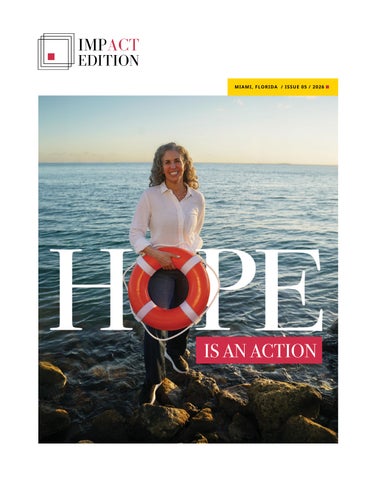
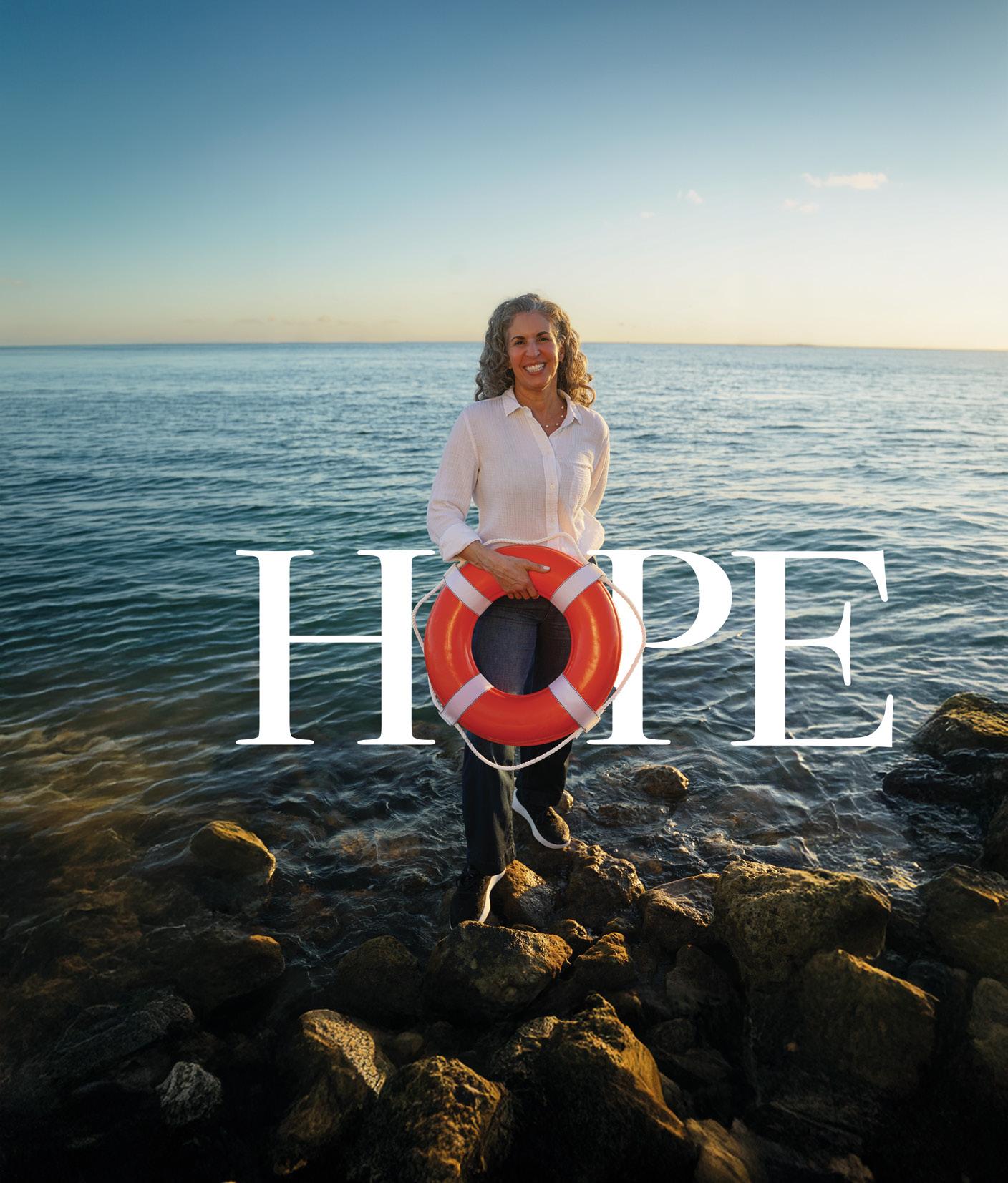
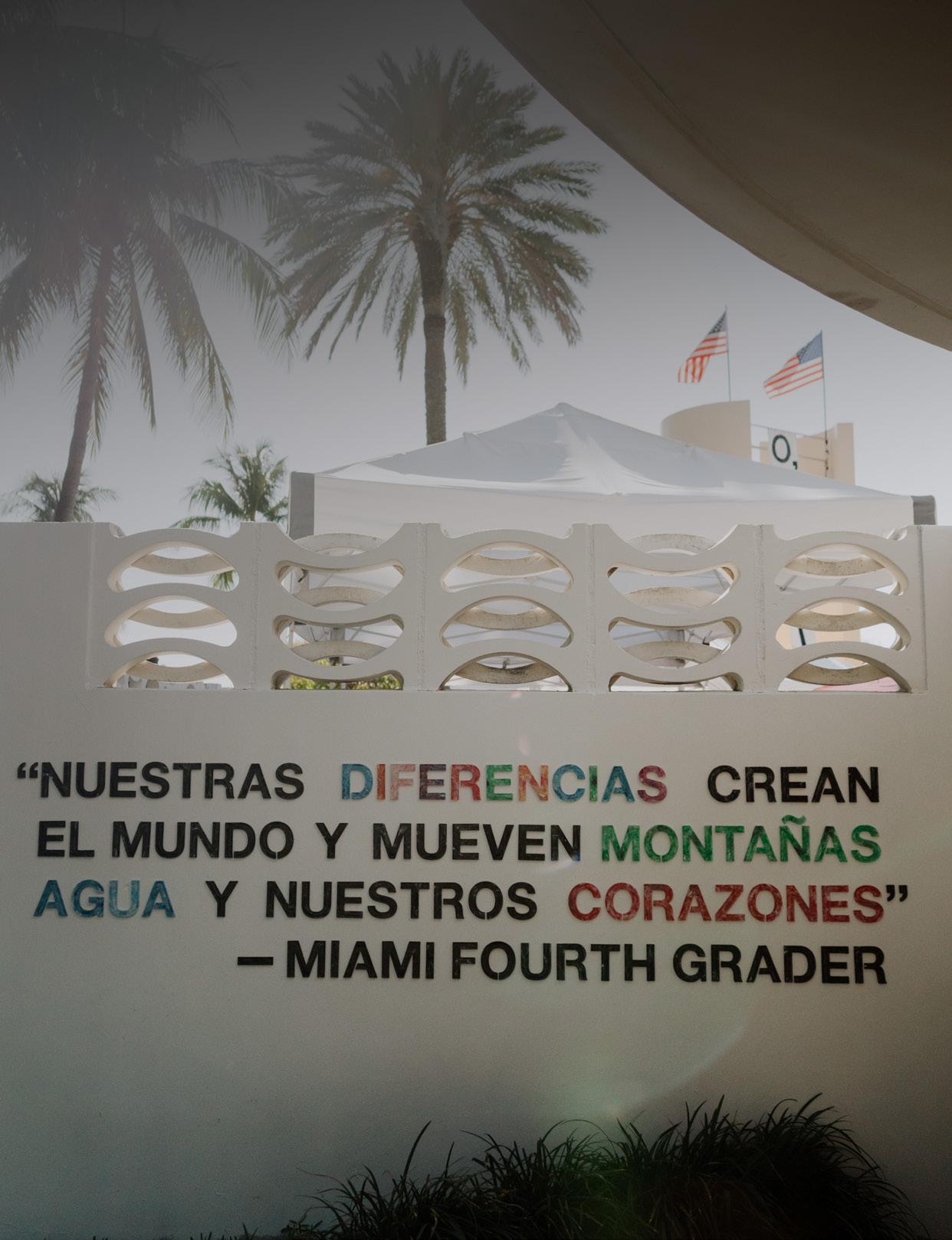
I don’t mean it as a dramatic statement. I mean it in the quiet, heavy way that can settle in after too much bad news, too many unanswered emails and calls, too many systems that feel stuck, too many rejections and too many people carrying more than they should have to carry.
Hopelessness can be deeply personal, something you feel in your own body, in your own life, in the corners of your own thoughts. But it can also be shared across communities and generations when systems fail and so many things seem to be moving in the wrong direction.
And yet, hope keeps finding a way in. And not just as passive wishful thinking.
Real hope arrives with those who show up, care, pay attention, find the courage to tell the truth, offer solutions and take action — even when it seems small — to make life around them better.
These are the everyday heroes whose stories shape this edition, and we feel deeply privileged to share them with you, dear reader.
Hours of in-depth interviews, writing, editing and photographing have been transformed into something tangible. It is my sincere hope that these stories inspire more people to keep going, to make ethical choices and to believe in something bigger than themselves.
Inside these pages, you’ll meet people moving fearlessly forward, building their own paths even when the road is uncertain. You’ll find spaces where the door is always open, where belonging is not conditional and community is not transactional. You’ll meet individuals who practice resilience and refuse to accept things as they are. You’ll see business leaders who lead with heart and purpose to build movements and scale community impact. You’ll meet youth who play the new game and reimagine what’s possible.
Hope is contagious. Hope doesn’t mean we’re sure everything will work out. Hope means we choose to act anyway. It means protecting what protects us. It means amplifying voices that deserve to be heard. It means staying kind. It means staying awake.
Thank you for reading Impact.Edition and for being part of a growing community of people who believe that solutions are worth pursuing and that stories can shift what we accept, what we imagine and what we strive for.
May these Stories of Hope meet you where you are and move you toward where we can go, collectively.
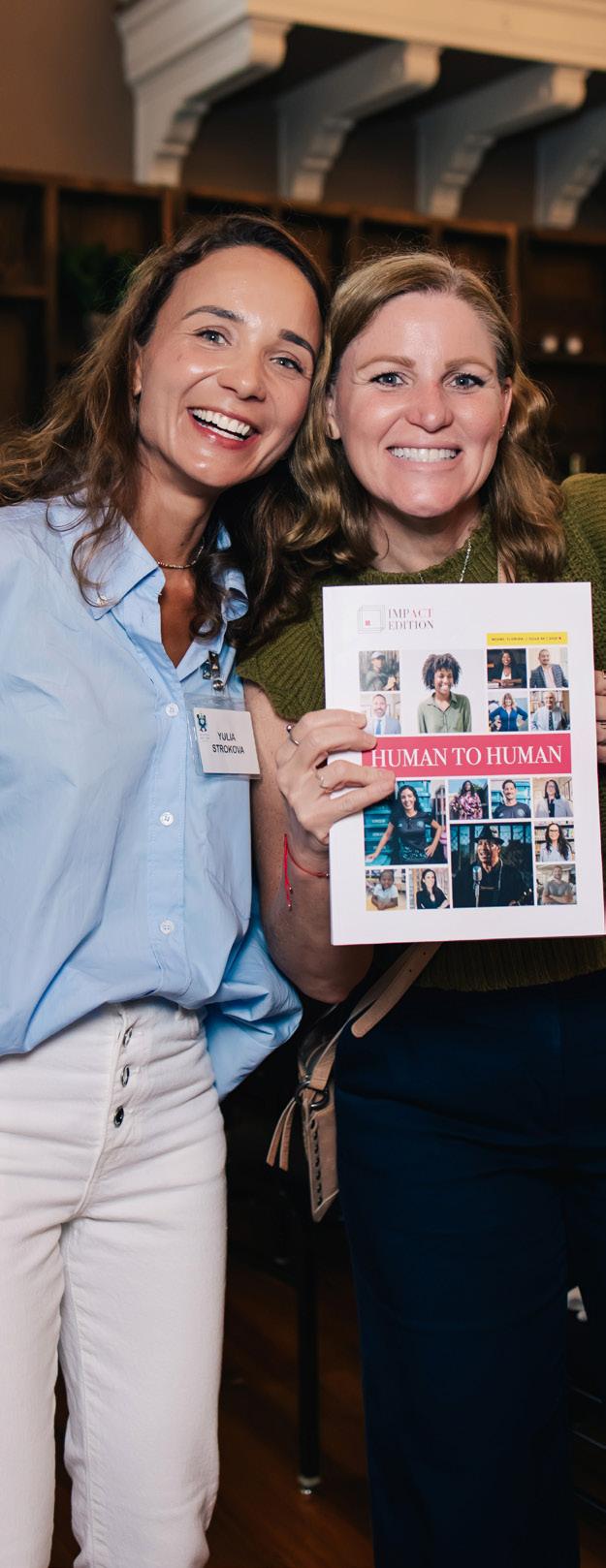
With hope and gratitude, Yulia Strokova Founder & Publisher, Impact.Edition
INDEPENDENT. COMMUNITY-DRIVEN
. SOLUTIONS-FOCUSED.
Impact.Edition (ISSN 2832-4706) is a Miami-based 501(c)(3) nonprofit publication devoted to sustainable development and collective impact. Its mission is to elevate the voices of local changemakers who prove their efforts toward positive lasting change — from addressing social inequality to saving the planet from environmental ruin.
Nadia Kiyatkina, Global Partnerships & Impact Lead
Yadira Diaz, Media Producer, Business For Good
ART DESIGN GROUP
Augusto Jaramillo, CEO, Reinvent Publicidad
Laura Polo, Project Manager, Reinvent Publicidad
Luisa Márquez, Graphic Designer
BOARD OF DIRECTORS
Greg Clark, CEO, RiseWorks
Andy Chabassol, Founder & Executive Director, The Ikigai Partnership
Jocelyn R. Mahone, Climate Communications Leader, The CLEO Institute
Dr. Ayleen Cabas-Mijares, Assistant Professor of Journalism, University of Miami
Yulia Strokova, CEO, Impact.Edition
For article proposals, advertising, and reprint inquiries, please contact us at hi@impactedition.org.
WHAT'S IN SIDE
MEET ME AT THE BANDSHELL 8 22 38 52 60 70 82 88 102 114
FEARLESSLY FORWARD
THIS DOOR IS ALWAYS OPEN
ALL EYES ON THE WATER
ABOVE WATER
ROOTED IN RESISTANCE
HOPE IS AN ACTION A NEW WAY TO PLAY
FREEDOM TALKS THE POWER OF 100+
We acknowledge that the territory now known as "South Florida" has been the traditional homeland of Native nations, including the Calusa, the Tequesta, and today the Miccosukee and the Seminole. We pay our respects to the traditional custodians of this land and their Elders, both past and present.
Photo by Leslie Ramos
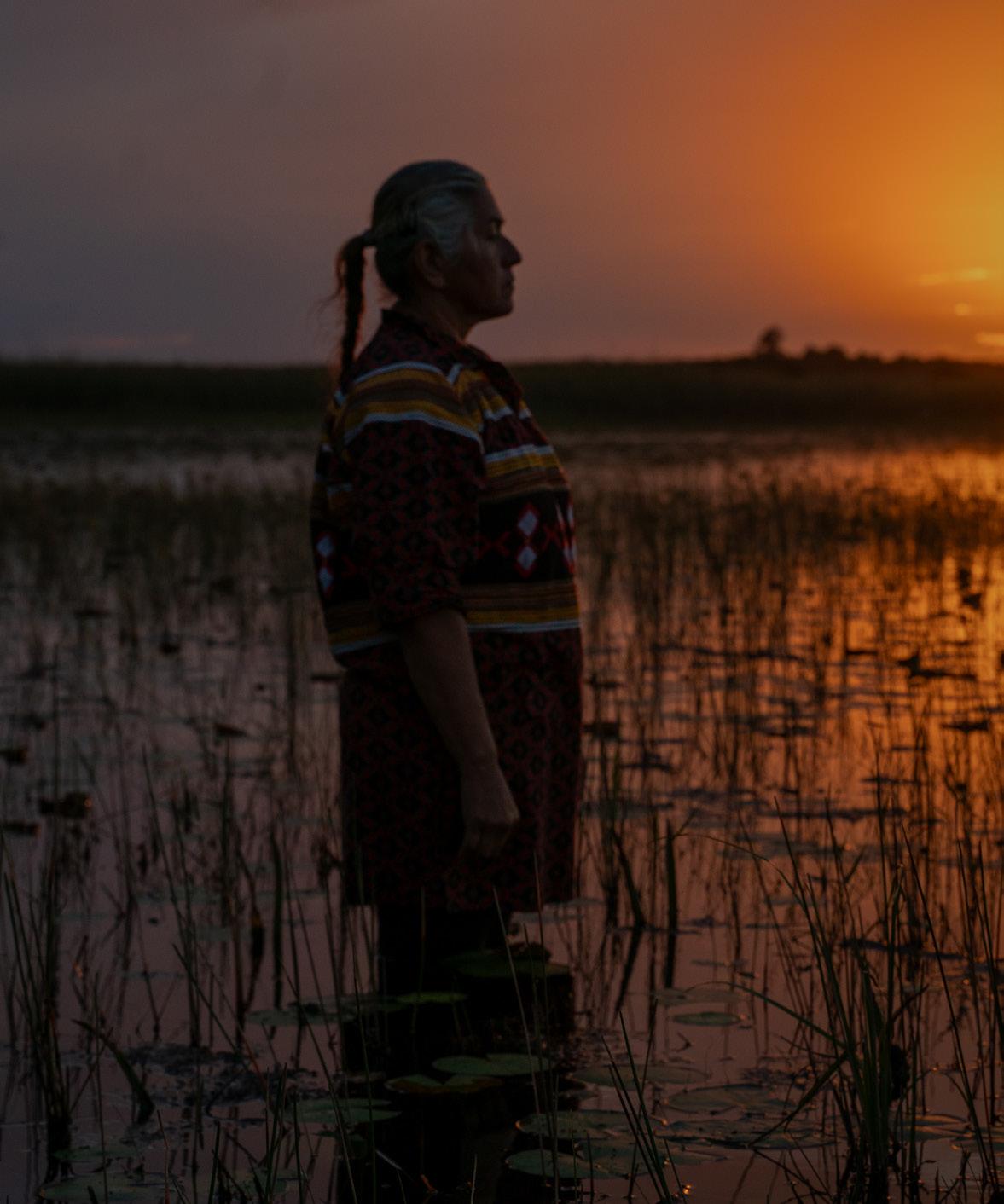
Creator, Father, Grandfather, I have not forgotten.
Creator, our people have not forgotten.
We, as your children, remember we are part of this ecosystem— a part of the Everglades.
I ask that you bring healing to these lands, to this water, to the air.
Creator, I ask you to envelop this place, Mother Earth, in an embrace of love.
Creator, the trees are worried. Creator, your children have lost their way. Creator, your people are worried about tomorrow.
As your daughter, as your granddaughter, Creator, I’m here to help you.
I ask that you guide me. I ask that you send the wind to dust off the path you want us to walk.
Creator, I ask that you continue to bring your children together— to bring back these landscapes as you had intended.
I ask, as we walk on this journey, that the footsteps we leave behind are good footsteps,
so that when our future generations come and cross those footsteps, they too will remember.
Prayer by Betty Osceola Miccosukee tribal elder, Everglades educator, and environmental advocate
FEARLESSLY FORWARD
Marking 15 years, the CLEO Institute honors its past and launches a fearless new chapter in the climate movement.
By Yulia Strokova
Photo by Greg Clark
Photo by Greg Clark
In 2018, Yoca Arditi-Rocha had just returned to Miami after years of climate advocacy across Latin America. She had founded No Planeta B, a consultancy that focuses on reducing the carbon footprint, led youth initiatives during COP20 in Lima and stood with thousands supporting the Paris Climate Agreement.
Back in the United States, the future of that deal was uncertain after the Trump administration announced plans to withdraw from the Paris Agreement, making her next step feel all the more urgent.
"Do I start from scratch with my own organization here in Miami,” Yoca recalls thinking, “or join an established institution and continue the work where it mattered most?"
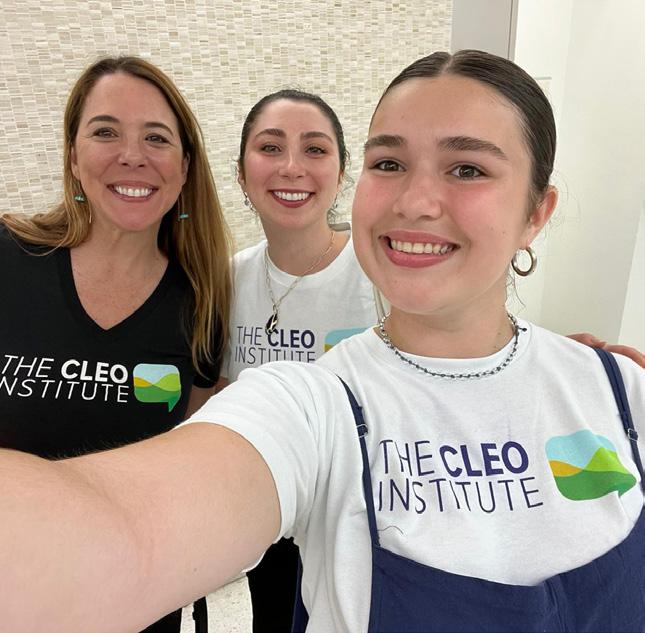
That dilemma led her to The CLEO Institute. What began as a consulting role quickly became a defining chapter of her life when Yoca joined the women-led organization rooted in science, education, community engagement and resilience building — particularly in vulnerable communities on the frontlines of the climate crisis.
Since then, CLEO (Climate Leadership Engagement Opportunities) has expanded from a four-person operation into a statewide force of 35, with programs reaching tens of thousands.
Its budget has grown sixfold, creative campaigns like Melting Florida and State of Emergency have earned global recognition, and their youth advocacy and leadership arm genCLEO is now 13 chapters strong with more than 9,000 members.
Yoca believes CLEO’s unique power lies in working both bottom-up and top-down. From grassroots workshops in climate-stressed neighborhoods to meetings with policymakers at the local, state, and federal level, CLEO attempts to bridge the divide between those experiencing climate impacts and those shaping climate policy.
AT OUR CORE, WE GIVE PEOPLE INFORMATION, INSPIRATION, SOLUTIONS, AND COMMUNITY. WE MAKE SURE THEY’RE NOT ONLY EDUCATED, BUT ENGAGED. FOR US, THE ANTIDOTE TO DESPAIR IS ACTION.
Yoca Arditi-Rocha The CLEO Institute
by
Photo
Greg Clark
CLEO’s story began in 2010, when Caroline Lewis, a science teacher and high school principal, answered a call from Miami scientists to raise climate literacy, promote action, and build leadership. The scientific evidence was urgent, but the public was disengaged. Leveraging her skills as an educator, she founded CLEO with the goal of closing that gap. From the start, the organization was built to engage everyone from concerned residents to elected officials.
By 2017, Caroline recognized that CLEO was ready for its next stage of growth. The mission needed fresh leadership to expand its reach and deepen its impact. When she decided to step back, Yoca stepped forward, becoming executive director the following year.
“It was an easy yes,” Yoca says. “CLEO’s mission aligned perfectly with my values and my urgency. Acting on climate is time-bound. We don’t have a lifetime to solve it.”
Under Yoca’s leadership, CLEO has raised much more than just awareness. In 2023 alone, their advocacy helped secure $550 million in federal climate resilience and clean energy funding for Florida, some of which was terminated by or reverted back to the federal government by the Trump administration in 2025.
Their advocacy has also had real-life political influence. In March 2025, hundreds of youth activists from genCLEO rallied and met with state lawmakers in Tallahassee to protect Florida’s state parks from commercial development. The effort helped propel HB 209, which the House passed unanimously and the Senate amended, toward final approval.
A BOLD INVESTMENT IN CLIMATE LEADERSHIP
Now, as it celebrates its 15th anniversary, CLEO is entering a new chapter under the theme “Fearless.” For Yoca, the slogan serves as both a rallying cry and a promise.
Caroline Lewis | Photo courtesy of The CLEO Institute
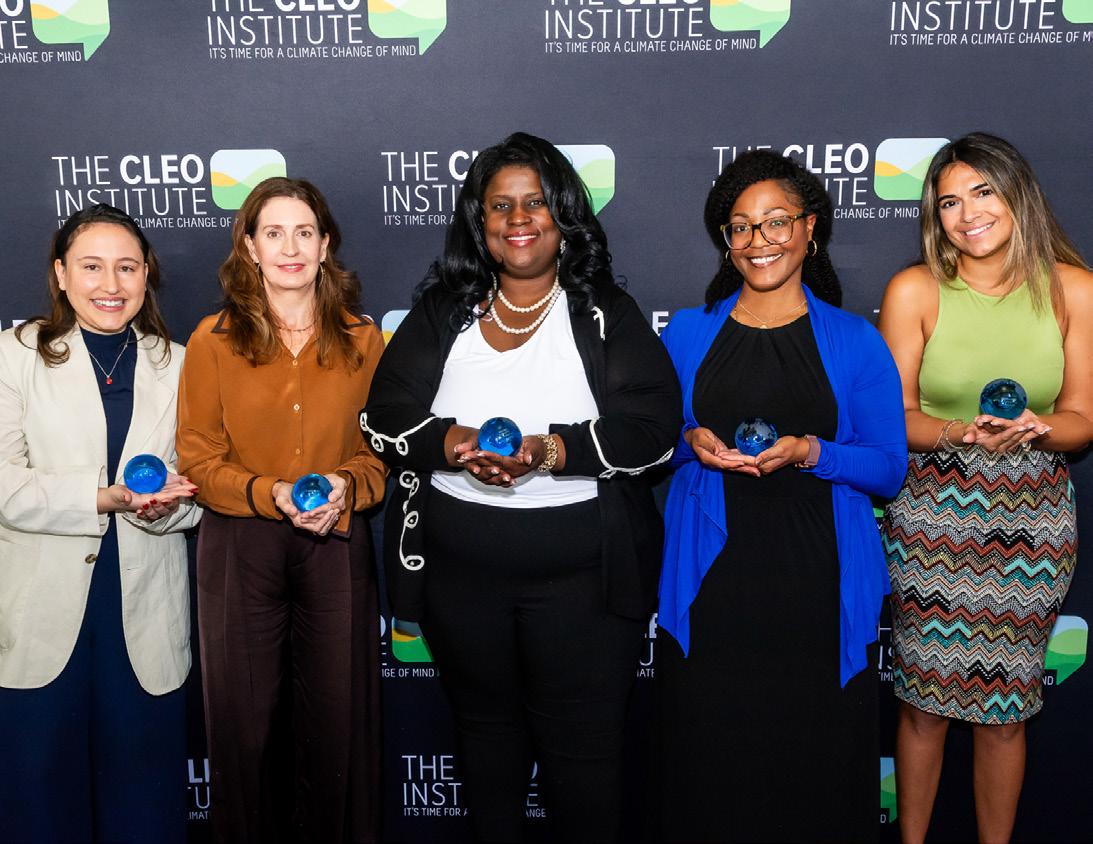
2025 CLEO Leadership Circle Inductees: Karly Pulido, Catherine Toms, Melissa Laratte, Dr. Valamere Mikler, and Yadira Diaz
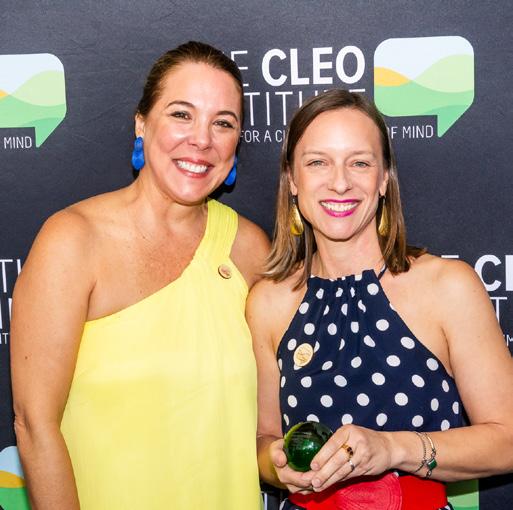
Yoca Arditi-Rocha & Olivia Collins
Photo courtesy of The CLEO Institute
Lindsey Wolfson Goldsmith, Mayor of Miami-Dade County Daniella Levine Cava, Yoca Arditi-Rocha, and City of Miami Mayor Eileen Higgins
COURAGE MUST LIVE IN EVERY MOMENT. WE WILL NOT DILUTE OUR WORK OR SOFTEN OUR MESSAGE. THE
TIME TO BE LASER-FOCUSED ON OUR PRIORITIES IS NOW. IF NOT US, THEN WHO?
Yoca Arditi-Rocha The CLEO Institute
Yoca insists this vision, rooted in courage, cannot succeed without allies.
Partnerships are crucial, and we’re very thankful for the strong partners that we have. This is the reason why we are celebrating our 15th anniversary by celebrating others, because we know that we don’t do this work alone, and we’re only as strong as our partners.
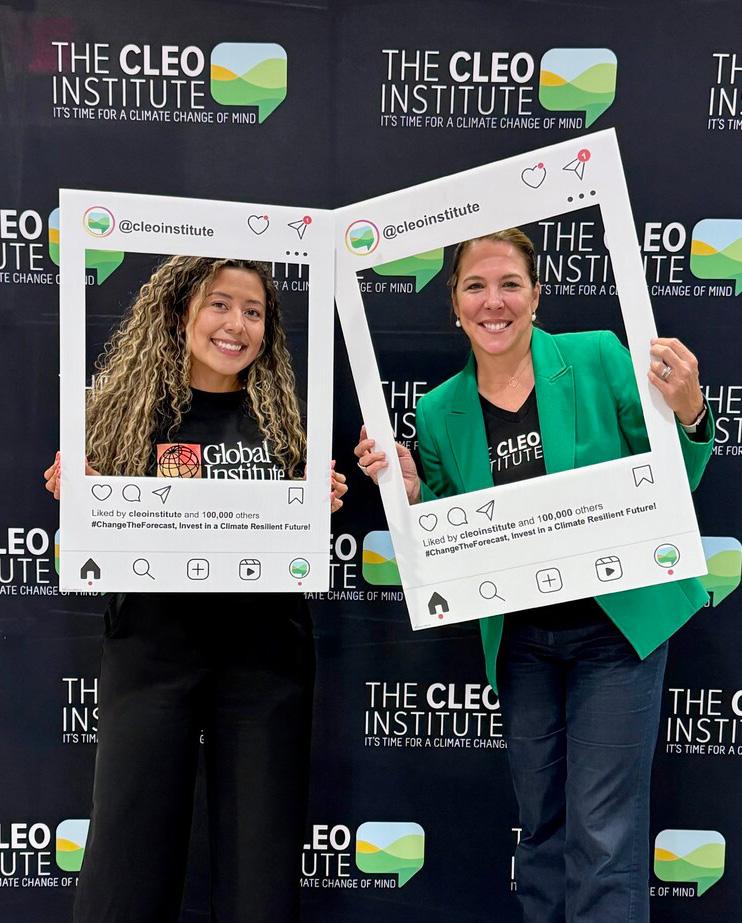
Among those partners, VoLo Foundation has played a transformative role. In 2025, VoLo announced a landmark threeyear, $6 million grant to the CLEO Institute to advance climate leadership and systems change. At a time when only 2% of the world’s philanthropic dollars go to climate-focused organizations, and even less to women-led organizations like CLEO VoLo’s investment sets a powerful precedent.
For Thais Lopez Vogel, co-founder and Trustee of the VoLo Foundation, the partnership is about more than funding — it’s about amplifying impact across all sectors of society:
When you invest in climate, you’re investing in everything: education, health, the economy. The climate crisis is the umbrella, and until we act together as communities, nothing will change. CLEO delivers impact year after year
because they empower everyday people to lead with courage, data and heart.
WOMEN ON THE FRONTLINES OF A CHANGING CLIMATE
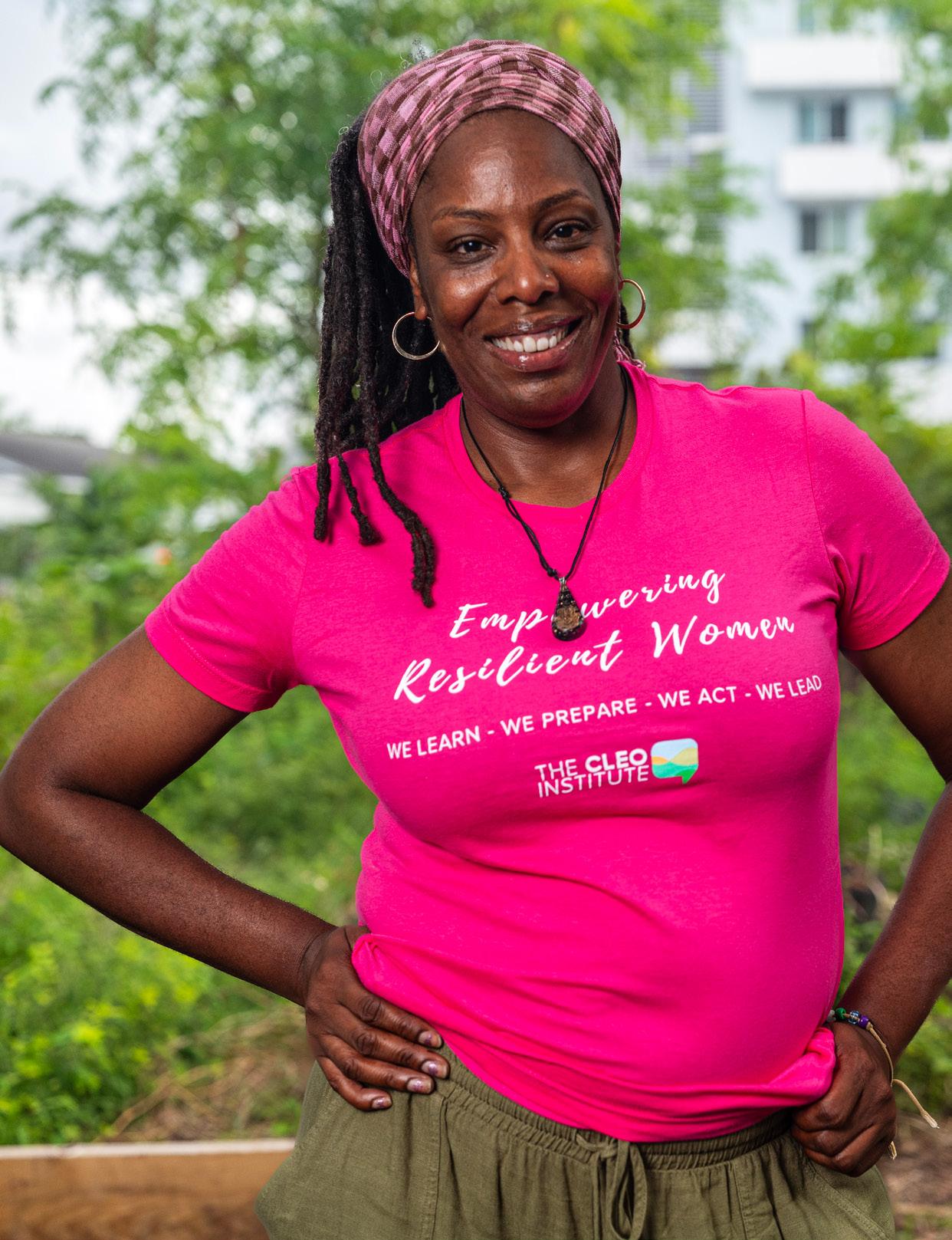
Elyzabeth Estrada joined CLEO’s Empowering Resilient Women (ERW) fellowship program in 2022, seeking new connection after the pandemic and a broader view of climate solutions beyond emergency preparedness.
An Assistant Director of Disaster Management at the University of Miami’s Global Institute for Community Health and Development, Elyzabeth says ERW deepened her knowledge and expanded her preparedness toolkit amid extreme heat, worsening storms and housing pressures.
The program also opened doors to new dimensions of resilience, from urban gardening and composting to food security and advocacy.
“It gave me a new passion for caring for plants and for nourishing myself organically. That small garden became a lasting reminder of how personal and transformative climate action can be.”
ERW sessions were held in the evenings at the Miami Workers Center. Vegan meals from local caterers were provided, stipends for childcare and transportation were made available, and realtime interpretation in Spanish and Haitian Creole ensured inclusivity.
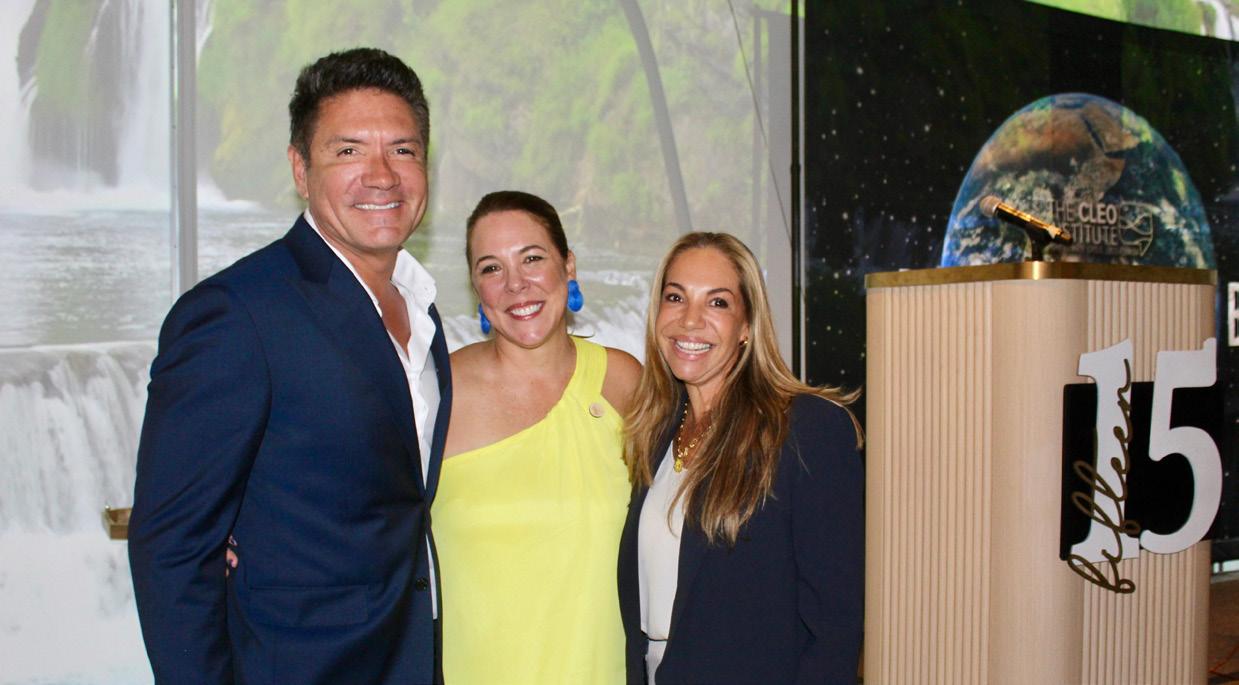
Louis Aguirre, Yoca Arditi-Rocha & Thais Lopez Vogel
Photo courtesy of The CLEO Institute
Photo by Greg Clark
WHEN WOMEN GAIN KNOWLEDGE, WE DON’T JUST CHANGE OUR OWN HOMES. WE SHARE THOSE LESSONS WITHIN OUR COMMUNITIES. WE INFLUENCE WHAT’S ON THE DINNER TABLE. WE DECIDE THE CONVERSATIONS HAPPENING AT HOME WITH OUR CHILDREN. SUPPORTING WOMEN CREATES A MULTIPLIER EFFECT.
Elyzabeth Estrada CLEO’s Empowering Resilient Women Fellow
For Elyzabeth, the impact extended far beyond the program’s six-month fellowship structure. It reshaped how she approaches her professional role in disaster management and strengthened her identity as a trusted source of knowledge in her community.
"CLEO truly walks the talk,” she adds. “Since participating, I’ve become someone people turn to for reliable guidance. And that comes with responsibility, to keep that lifeline strong and to empower others to carry the baton forward. That’s the beautiful thing about community, it’s not just about protecting ourselves, but about building capacity together."
TAKE YOUR CLIMATE CLASS
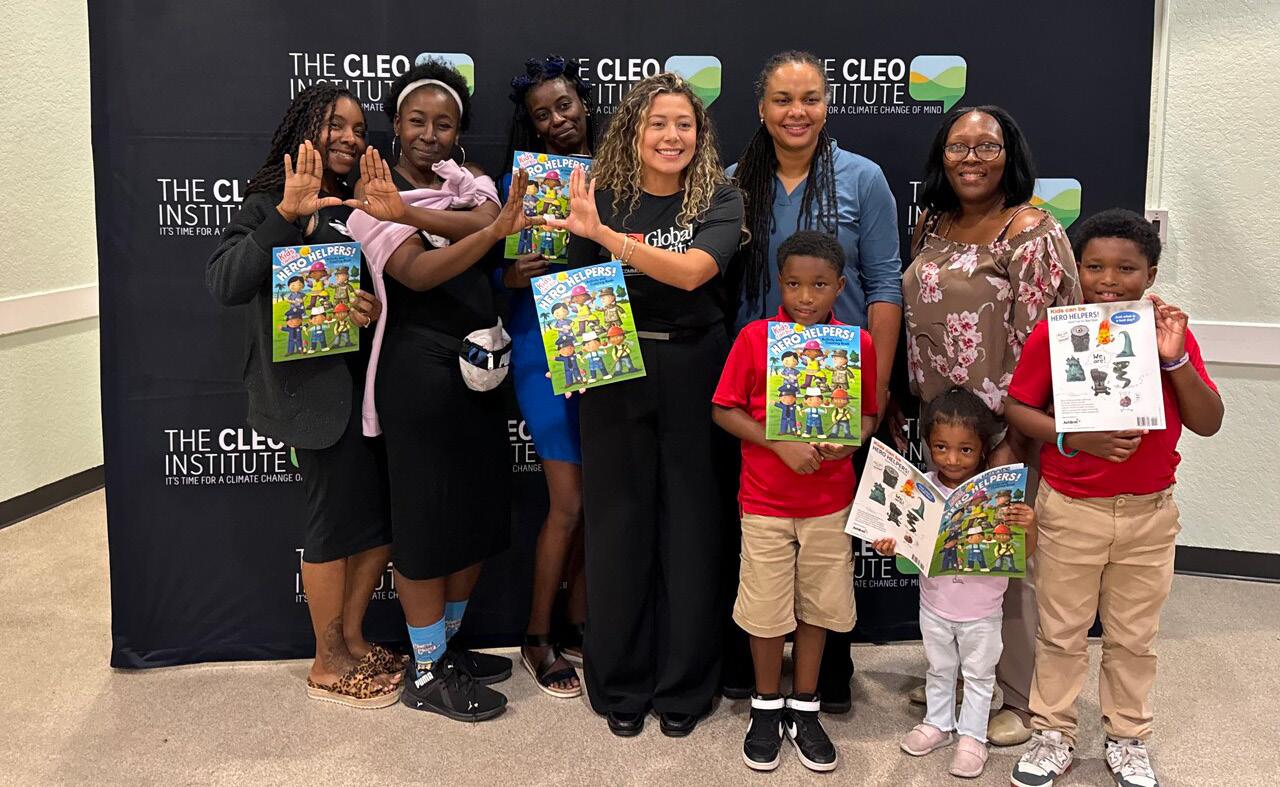
CLEO’s youth program, genCLEO, extends the institute’s philosophy of empowerment to the next generation. The program equips students with climate science education, leadership training, and opportunities to advocate directly with decision makers.
For Gabriela McGrath Moreira, now a sophomore at Smith College studying environmental science and policy, genCLEO was the spark that launched her climate journey back in eighth grade.
“CLEO was the first organization that really got me into the climate movement,” she says. “Through genCLEO I became a certified climate speaker, testified at commission meetings, lobbied in Tallahassee, and even worked on the environmental curriculum for Miami-Dade schools. They taught me to be firm in my stance, but also to approach advocacy with empathy and respect.”
Her story underscores a deeper systemic gap, the lack of climate education in Florida’s public schools.
I went to public school my whole life in Miami, and there was almost no climate education, maybe two pages in a textbook at most. CLEO provided me with the foundation I
needed to understand the science and the urgency. Without them, I wouldn’t have had the knowledge or confidence to speak up at commission meetings or pursue environmental policy as my career path.
Gabriela’s experience highlights what research confirms. Florida’s climate education standards are weak, earning a “D” for failing to adequately explain the causes, impacts, and solutions of climate change. Despite overwhelming public support — 67% of Floridians say schools should teach climate science, according to a survey conducted by Florida Atlantic University — state officials have directed that climate change references be stripped from textbooks. As a result, most students graduate without the knowledge or tools to understand a crisis that will define their future.
Meanwhile, Florida is heating up faster than the global average. Since 1950, its annual temperature has risen by 3.5°F, and urban heat islands now push classroom conditions in cities like Miami as much as 8°F hotter than surrounding areas. More than half of Miami’s public school students attend schools in these high-risk zones, often without sufficient air conditioning. For students, this means not only health risks but also compromised learning conditions during prolonged heat waves.
Photo courtesy of The CLEO Institute
Elyzabeth Estrada & Yoca Arditi-Rocha
FEARLESS TRUTH-TELLING & HOPEFUL SOLUTIONS
Alex Harris, an award-winning climate reporter for the Miami Herald, puts it bluntly: “Despite Miami being a major American city, we have a pretty small footprint of climate activists compared to other places like Chicago D.C, or New York.”
Alex’s reporting, from exposing special-interest influence on Miami’s climate plans to documenting missed resilience funding, shows how small policy choices stack up “like Legos in a wall” and why stories grounded in people and action can ignite the collective will to change.
That may be part of the reason why in 2024 The CLEO Institute honored Alex, alongside journalists Louis Aguirre and Mario Ariza, with a special Leadership Circle award, part of the institute’s annual tradition of recognizing community members who exemplify climate advocacy and leadership in their communities.
“The CLEO Institute fills an important void,” she says. “They’ve always been a leading voice on climate action, and they’ve really shaped the conversation, from youth activism to Tallahassee advocacy to their creative campaigns.”
And on why the work matters, Alex adds:
The best climate journalism reminds people of their own agency. Climate change is scary, but hope is not lost. There are solutions, and there are actions we can take.
CLEO’s Vision 2030: Fearlessly Forward is a bold call to action. Over the next decade, the institute aims to mobilize millions through education, civic engagement, and community resilience; influence policies that accelerate a clean-energy transition; and scale solutions that center women, youth, and frontline communities.
FEARLESS LEADERSHIP ISN’T ABOUT WEATHERING THE CRISIS AHEAD. IT’S ABOUT MEETING THIS MOMENT WITH INTENTION AND CLARITY. COURAGE IS CONTAGIOUS. OUR AMAZING TEAM, PARTNERS, YOUTH AND COMMUNITY LEADERS SHOW ME EVERY DAY THAT PROGRESS DOESN’T COME FROM COMFORT — IT COMES FROM CONVICTION. FEARLESS LEADERSHIP ISN’T THE ABSENCE OF FEAR. IT’S ACTION ROOTED IN PURPOSE.
Yoca Arditi-Rocha
The CLEO Institute
Photo courtesy of Elyzabeth Estrada, CLEO’s Empowering Resilient Women Fellow
Photo by Greg Clark
THIS DOOR IS ALWAYS OPEN
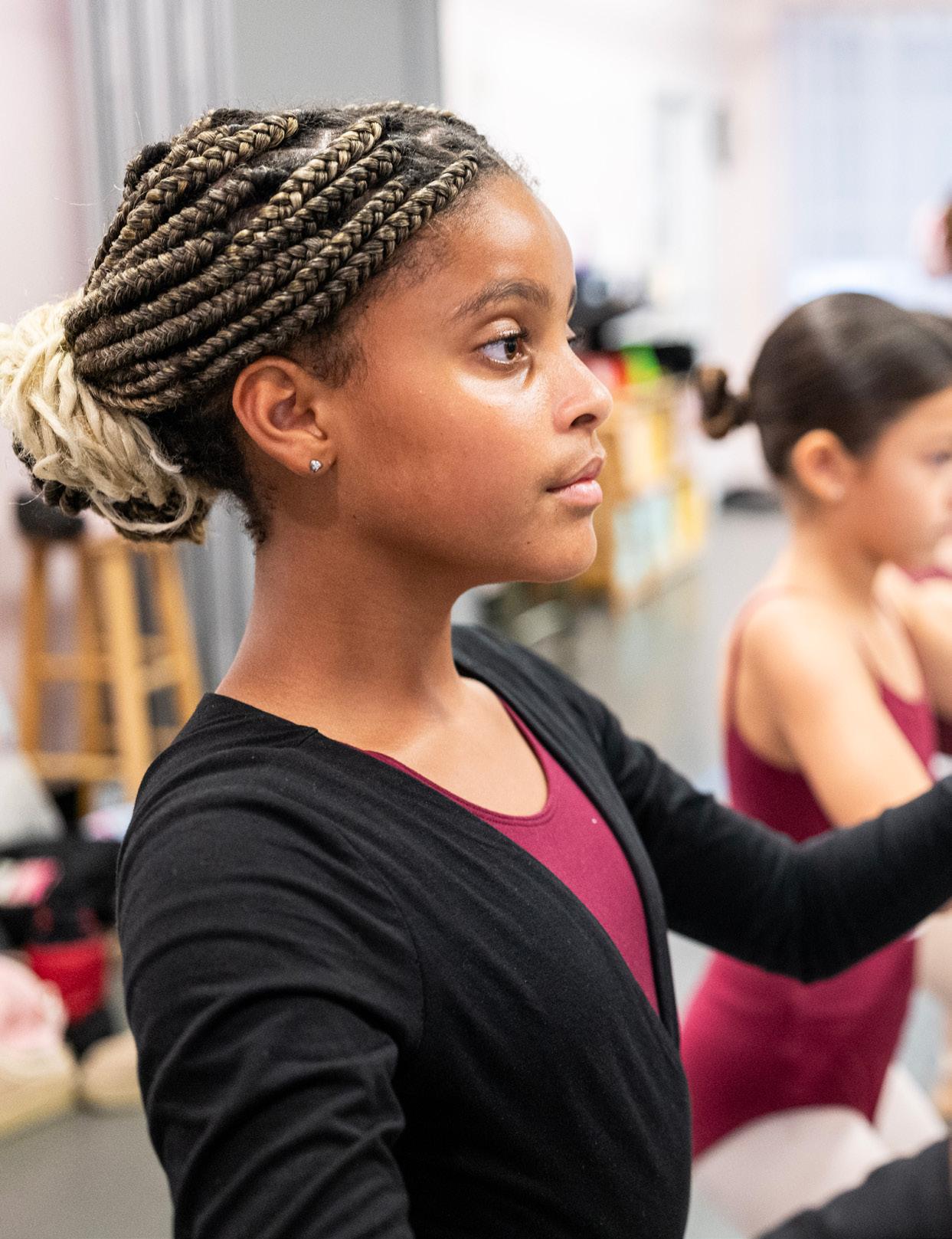
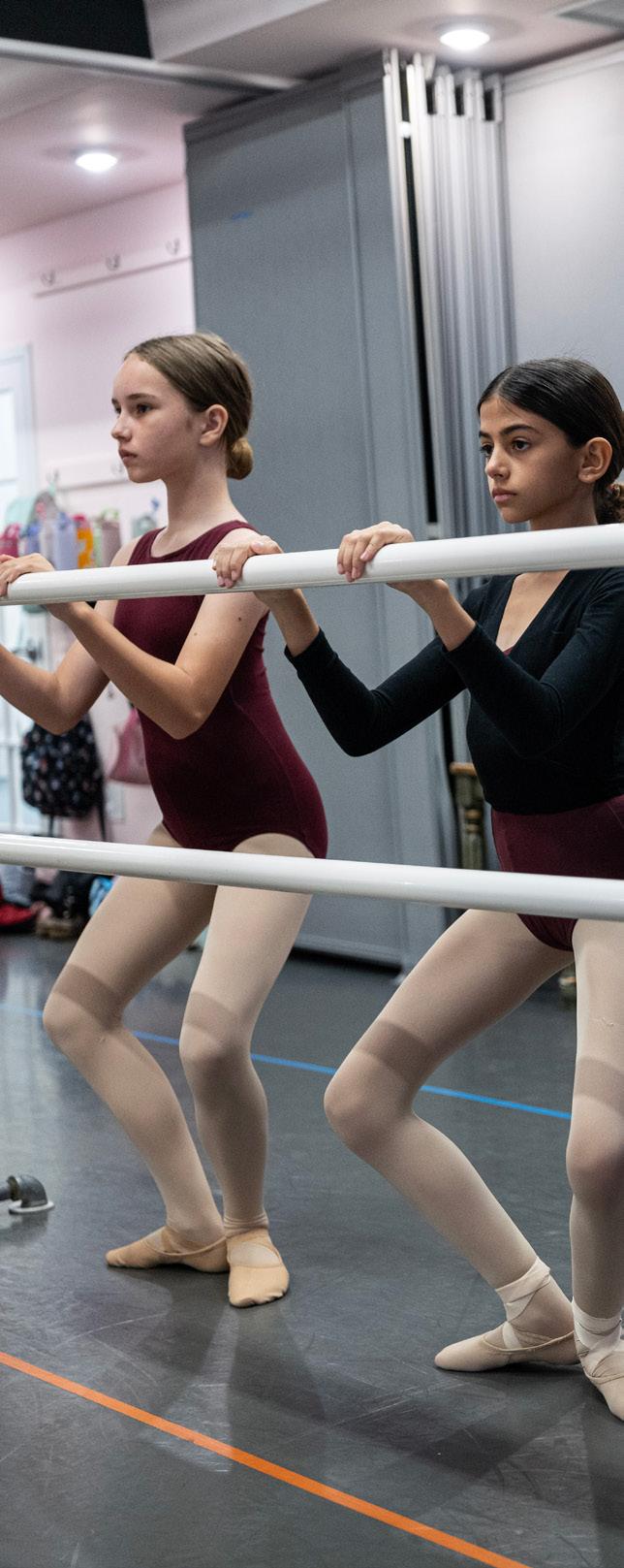
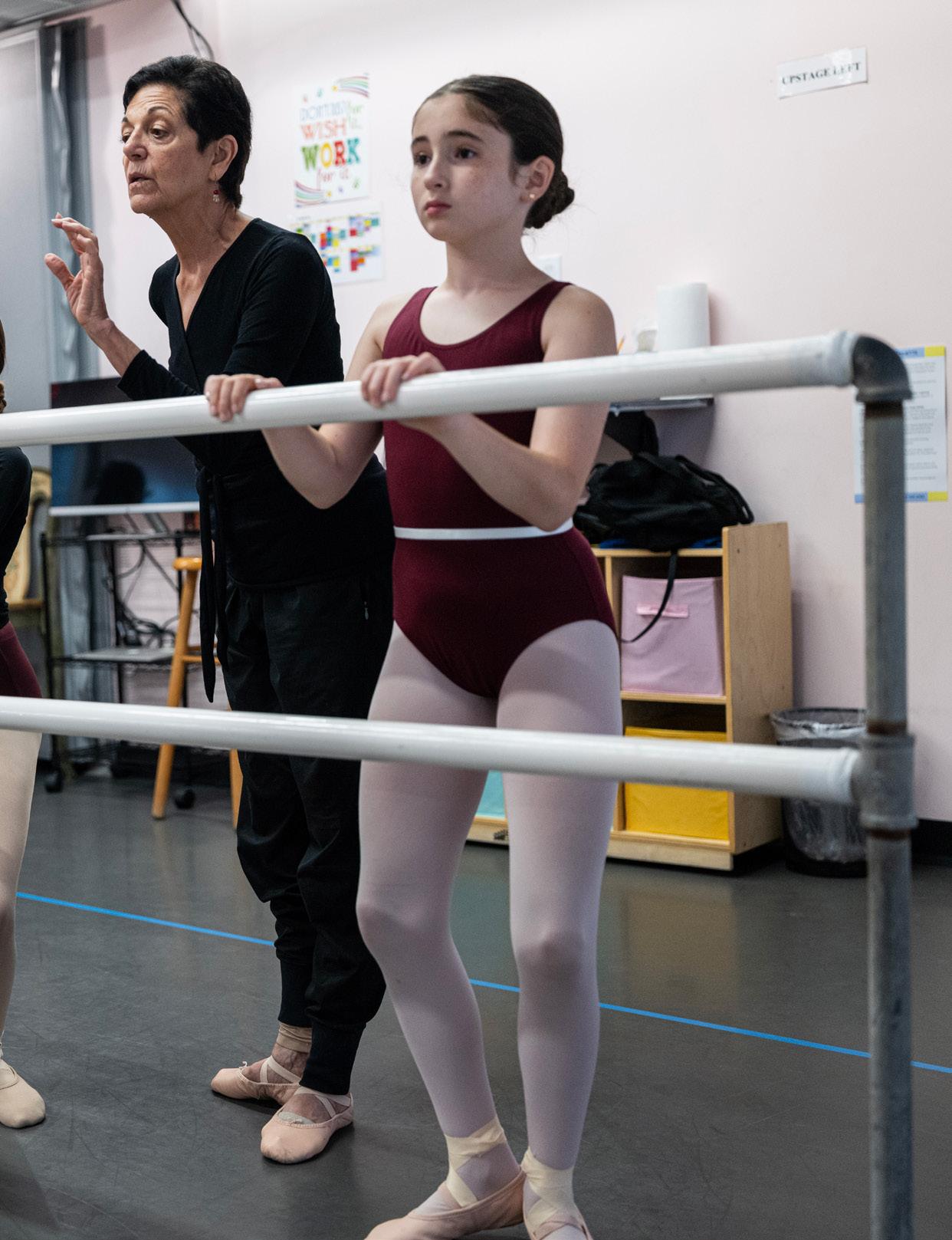
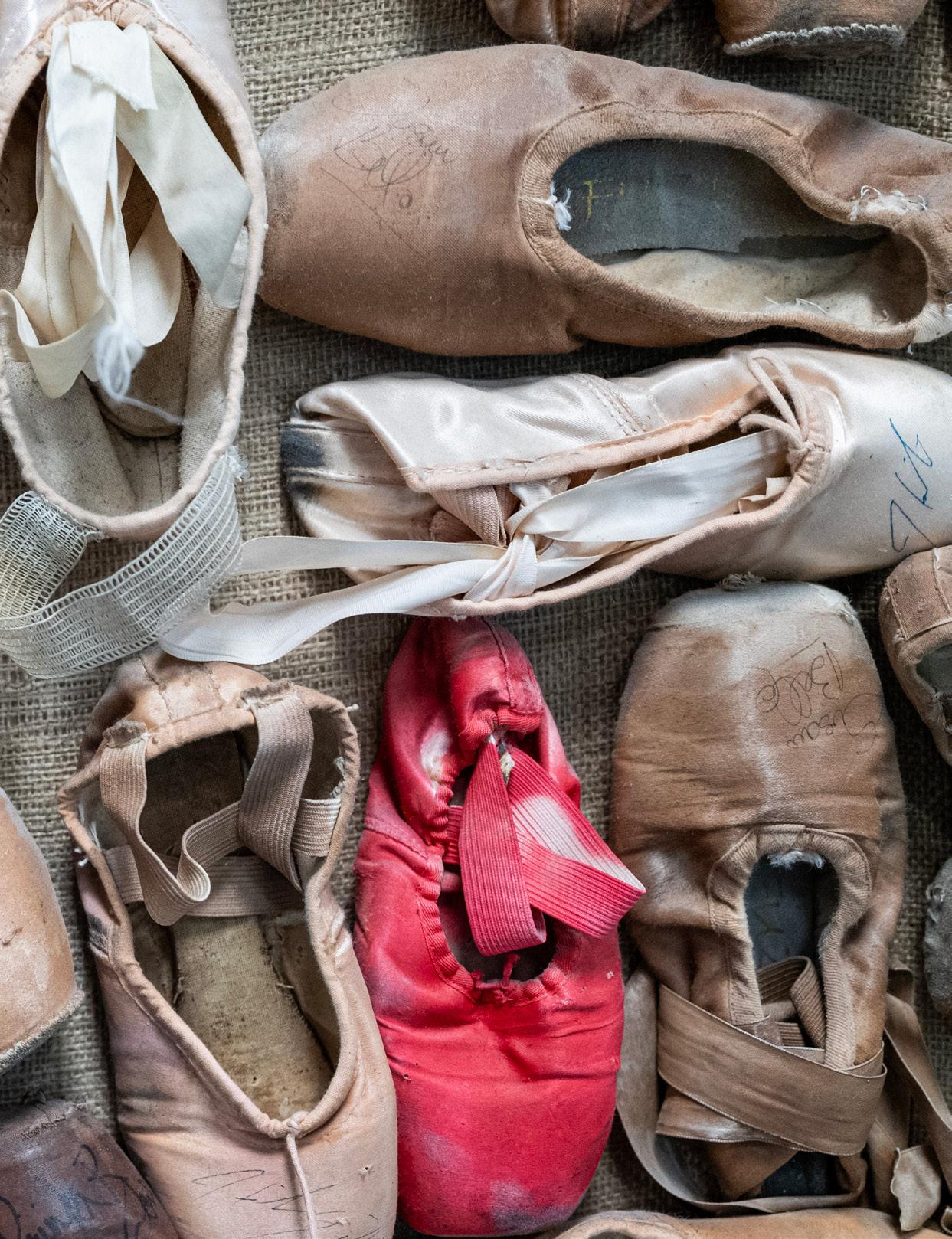
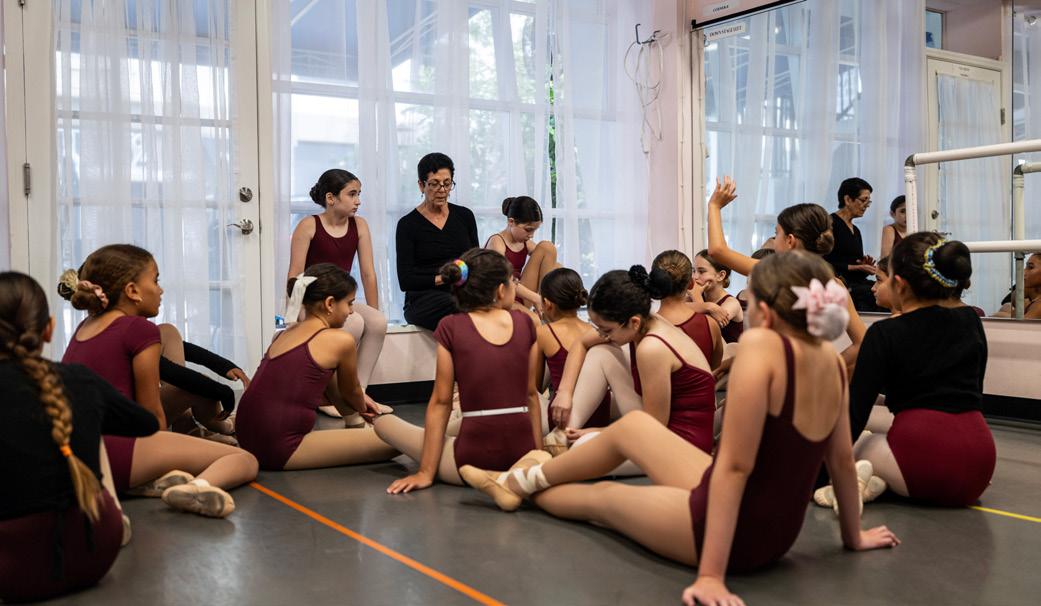
At Armour Dance, the rhythmic pulse of ballet slippers and tap shoes on polished floors tells a story far greater than the dance itself
By Yulia Strokova
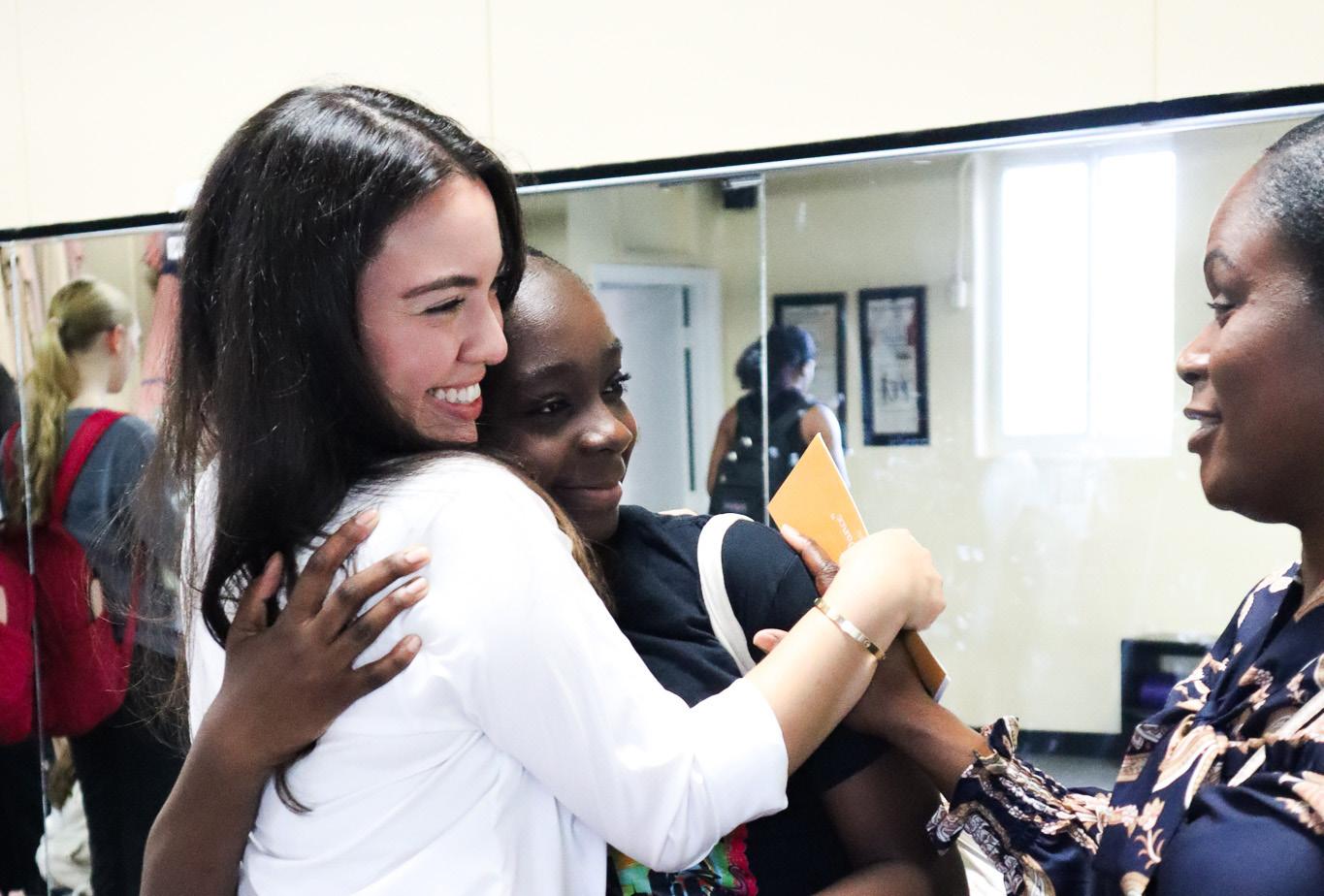
For Kristie Laplante, who first walked through the doors of the Miami Gardens Community Program Site at nine years old, dance quickly grew into more than a pastime. It shaped her identity, instilled discipline, and sparked transformation.
“When I started, I was taller than everybody else, bigger than everybody else. But it’s not about how you look physically. It’s about how hard you’re willing to work to get to where you want to be,” she says.
Today, at 22, Kristie is back in the studio, this time as a tap instructor at Armour, guiding the next generation while also pursuing a degree in biopharmaceuticals. For her, that dual path feels like a natural extension of her personality: disciplined, curious, and unwilling to give up.
Her students, ages five to 17, hear her mantra often: stop giving yourself excuses. Kristie laughs, remembering how her own sense of discipline was forged on the dance floor. “Don’t say ‘I can’t’ because you’re a child. You’ll grow into a person incapable of doing the things you want to do.”
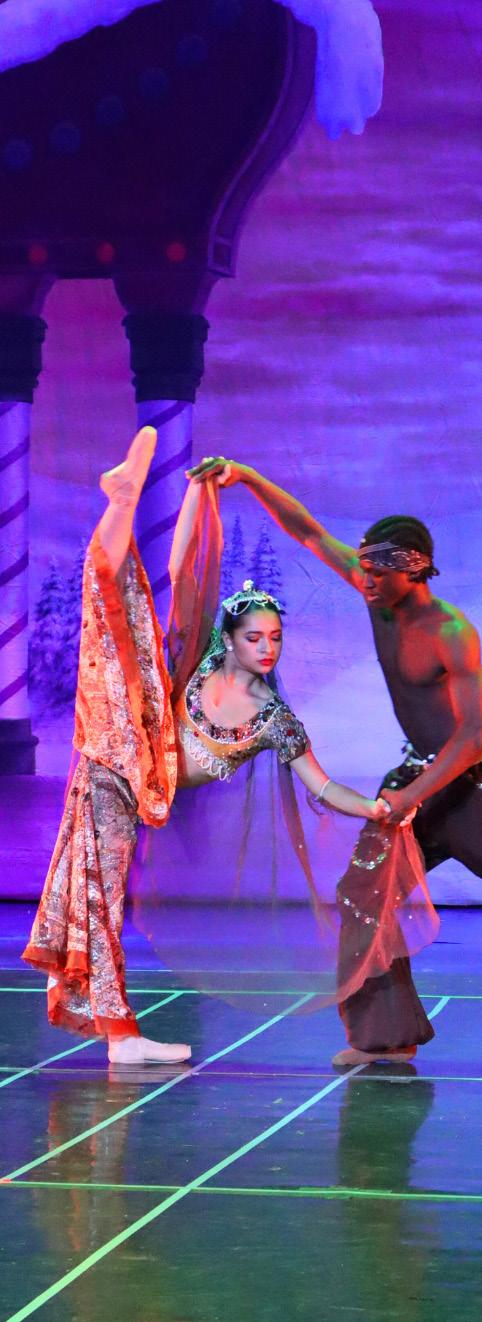
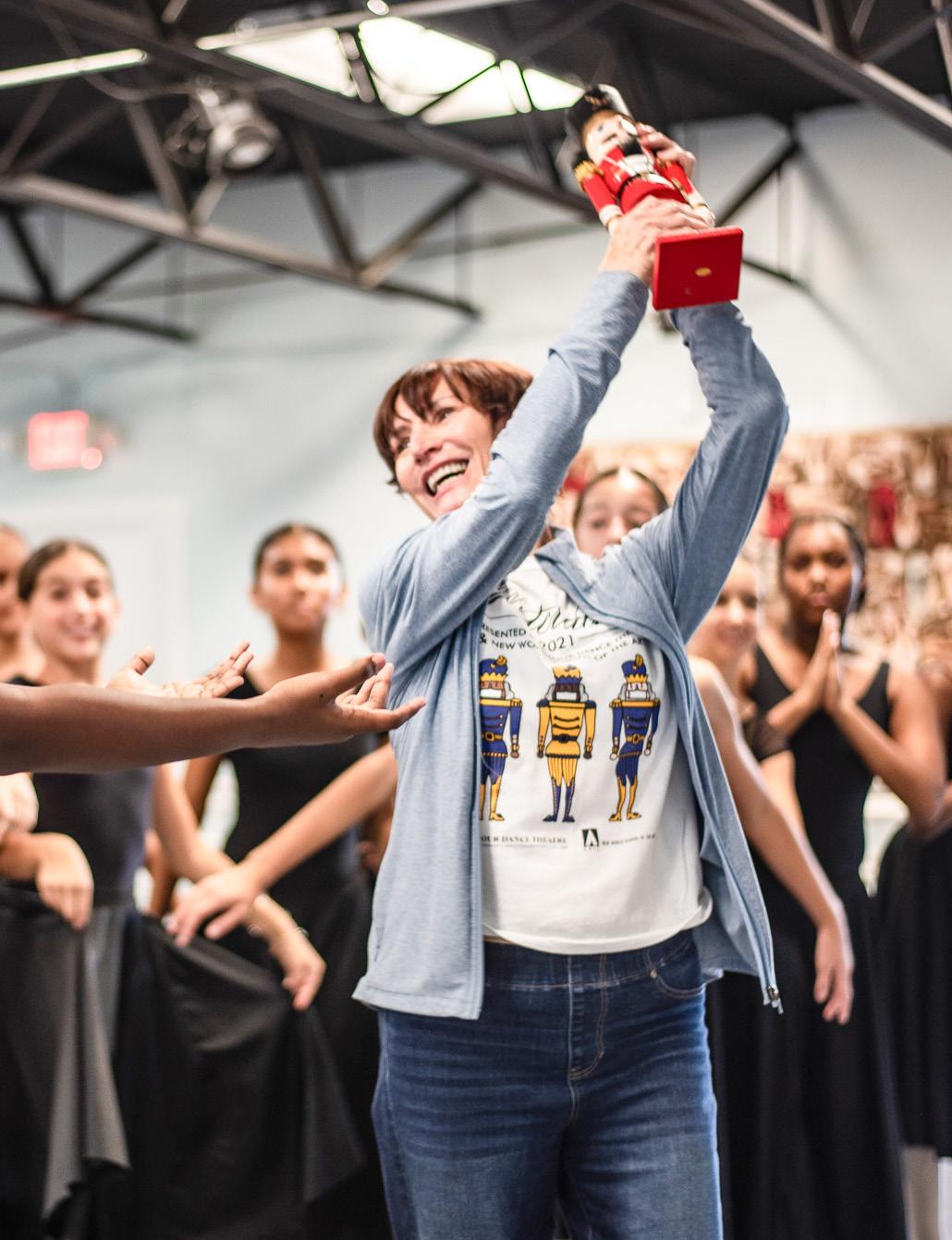
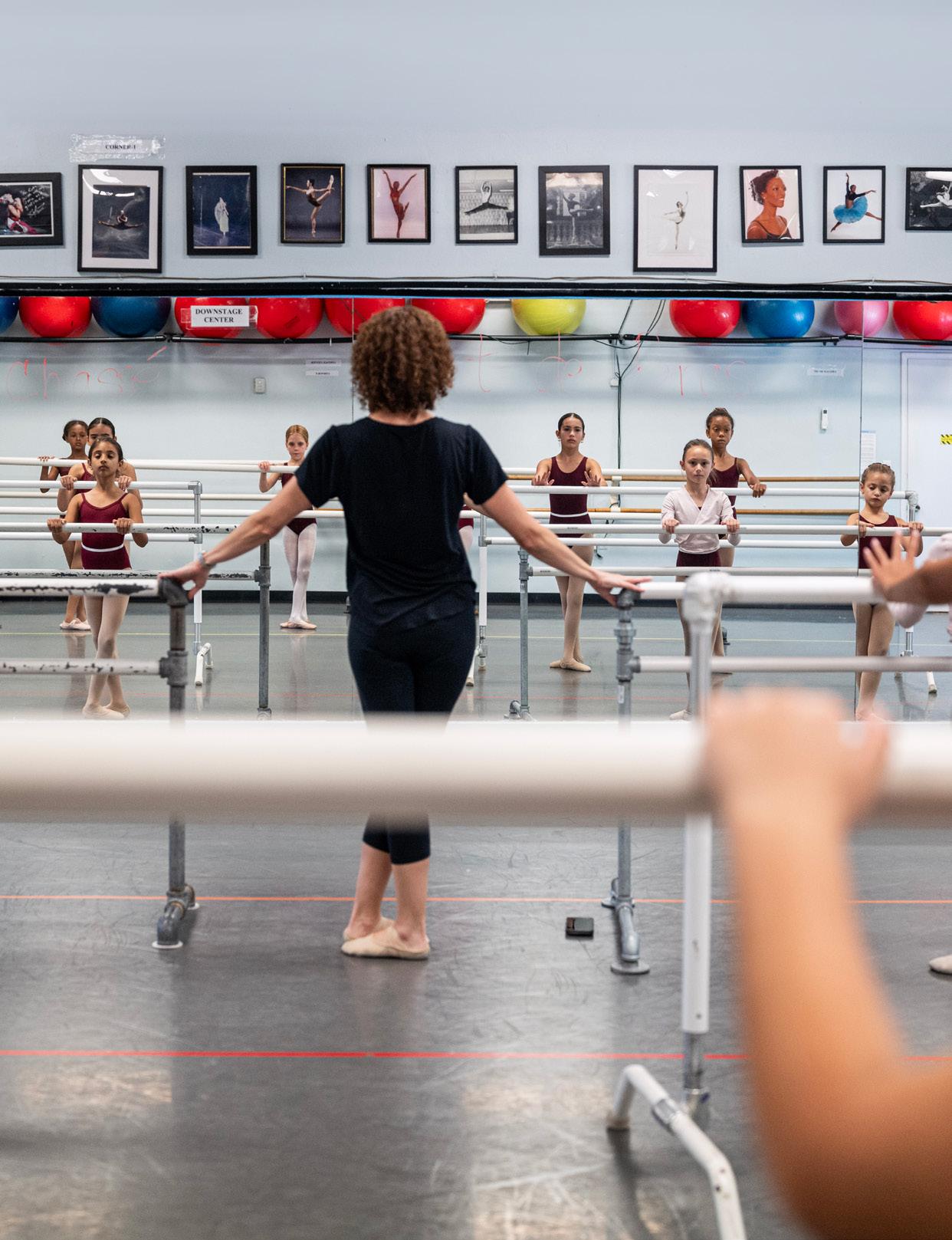
Her eyes light up as she recalls "The Nutcracker," Armour Dance Theatre’s annual production that brings together more than 180 performers, including students from six Armour locations, advanced dancers from New World School of the Arts, and professional guest artists. Behind the curtain, a staff of more than 75, including nearly 20 professional-level teachers, ensures every child receives training of the highest caliber.
Photo by Greg Clark
Photos courtesy of Armour Dance
Our Nutcracker is the most diverse in Miami. We have children from across the community and all sorts of backgrounds. We also do sensory-friendly performances so children with sensitivities to light and sound, as well as those on the autism spectrum, can feel comfortable and enjoy the experience of a dance performance.
Camila Gil Armour Dance
They’ve shed the petite all-white casts, the formality, and the expensive tickets, opting instead for something more inclusive, engaging, and accessible: a performance that leaves young audience members thinking "I can do ballet."
For Kristie, the 2019 season remains unforgettable.
“All my friends were there. We all had the same roles. We got ready in the same dressing room, doing shenanigans backstage. The energy was just so fun.”
In those moments, she began to understand what it meant to shine.
One thing that was prevalent when I was dancing was, I have to stand out. How am I going to differentiate my movement from the person next to me? In turn, it became a mission for me to be the best performer I can — and that meant showing my personality.
That belief in possibility ties directly to Armour’s mission of inclusivity, something Kristie has felt firsthand.
Kristie Laplante & Camila Gil | Photo courtesy of Armour Dance
WHEN I WAS YOUNGER, EVERYONE WORE PINK TIGHTS — THAT WAS THE TRADITION. BUT PINK WAS SUPPOSED TO ‘MATCH’ THE SKIN TONE, AND OF COURSE, PINK ISN’T EVERYBODY’S SKIN TONE. NOW YOU SEE A FULL RANGE — BROWN TIGHTS, DIFFERENT SHADES, ALONGSIDE PINK — AND I THINK THAT’S BEAUTIFUL.
Kristie Laplante
Her gratitude extends to her teachers, who shaped both her dancing and her life. Natasha Williams, she recalls with warmth, “wasn’t only my dance teacher. She taught me life skills — not to take things too seriously, to let loose, have fun. She introduced me to music I grew up to love.”
And then there was Miss Rosario, whose rigorous ballet conditioning Kristie will never forget. “The first time I had her class, it was insane. I was in pain for weeks, but she really helped us become better dancers. She cared about us beyond dance — it felt personal.”
Armour Dance Fellow
by
Photo
Greg Clark
YOU BELONG HERE
Tyann Cleare, a graduate of the Little Haiti Community Program Site and now a student at Armour’s South Miami Academy, echoes that same sense of belonging and inclusion.
Her journey with Armour began in fourth grade through an outreach program at the Community Program Site.
“After fifth grade, Miss Ruth asked me and my mom to come downtown the main site academy to see if I’d take regular ballet classes. She gave me a scholarship, and I could take classes for free,” Tyann recalls.
Yet for Tyann, the most profound impact has been something more personal: feeling seen and valued.
Miss Ruth Wiesen always made it clear she wanted all of us to have a chance. She would even hire drivers to get us to class. She made us feel like we mattered. And at the outreach sites, she made sure we had books that made us feel included — African-American books on the shelves. She recommended titles and made sure we all felt like we belonged.
LAYING THE LEGACY
As Armour Dance marks 25 years of its artistic programs, its story stretches back more than 75 years.
Its founder, Thomas Armour, was a celebrated ballet dancer whose career was cut short when he left the stage to serve in World War II. After the war, he returned to South Florida and opened a small ballet school. At its inception, the school, then called the Miami Conservatory, immersed aspiring dancers in full-scale productions, giving them the rare opportunity to experience the rigor and grandeur of classical ballet.
But it was Ruth Wiesen, a ballet student and trained nurse, who transformed Armour into the inclusive, community-focused powerhouse it is today after she began teaching at the school.
Photo by Greg Clark
Ruth Wiesen | Photo courtesy of Armour Dance
“I came to take some classes at what was then the Miami Conservatory, and Mr. Armour asked if I could teach because someone had dropped out,” Ruth recalls. “I was very pregnant, but I said, ‘Let me just try this.’”
Her arrival in Miami was almost accidental. When her husband transferred to the University of Miami for law school, she followed. “I never intended to stay in Miami, but somehow, the universe put me here. I do believe in blooming where you are planted.”
By the late 1980s, Ruth noticed a troubling gap in access to arts education. The New World School of the Arts had just opened, and while the students gaining admission were talented, many came from more advantaged backgrounds. “They weren’t necessarily more talented,” she explains, “just better prepared.” She approached Thomas Armour with a simple idea: fill the empty spots in classes with students on scholarship.
“He said yes. The next year, the ninth-grade class reflected the entire community. That’s how easy it was to create accessibility. It wasn’t some brilliant plan. I just realized kids weren’t getting in because they didn’t have money. Small actions can make a difference, but they carry big consequences.”
That commitment to access became the heartbeat of Armour’s evolution. With support from government cultural grants and local foundations, the school expanded beyond the studio, building wraparound programs that offered tutoring in reading and math, social-emotional learning, nutrition, and parent engagement.
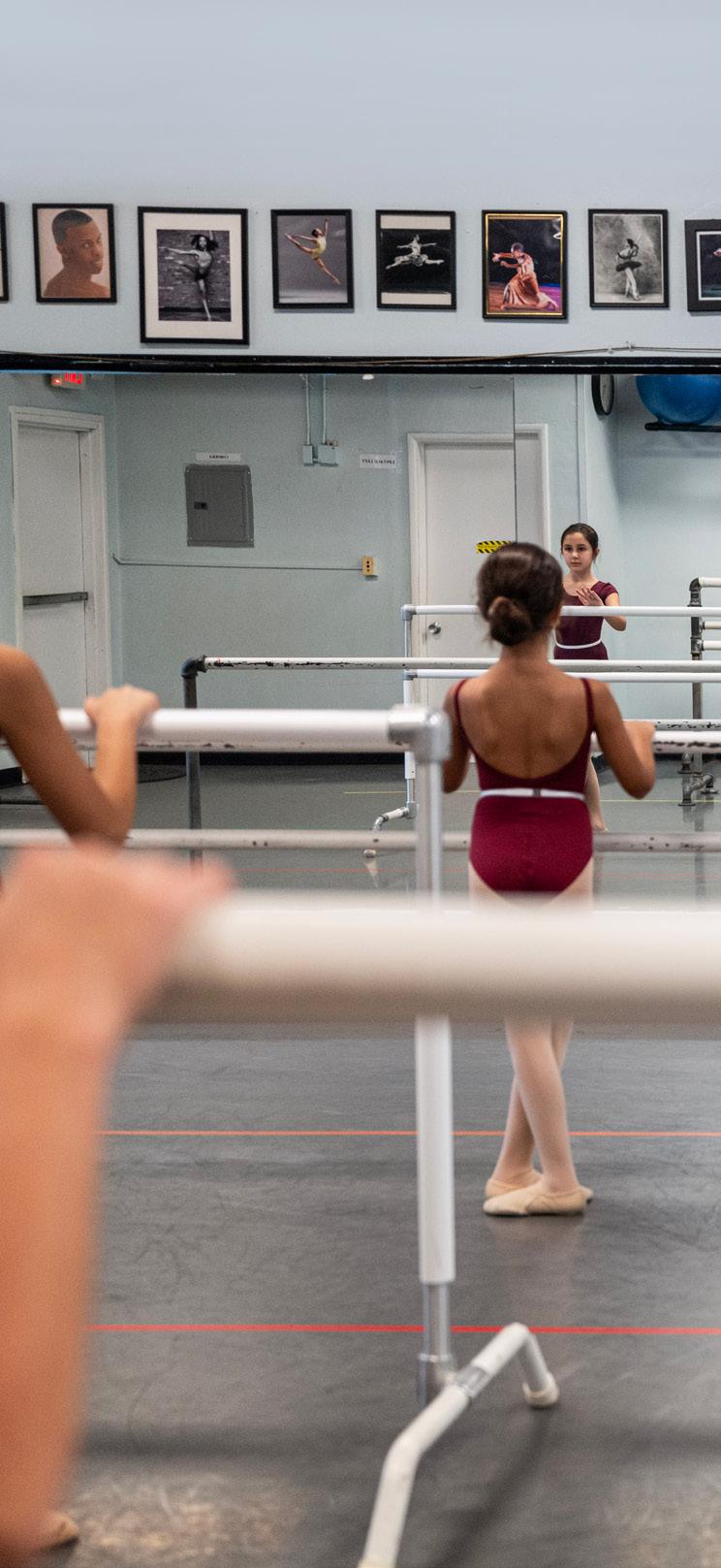
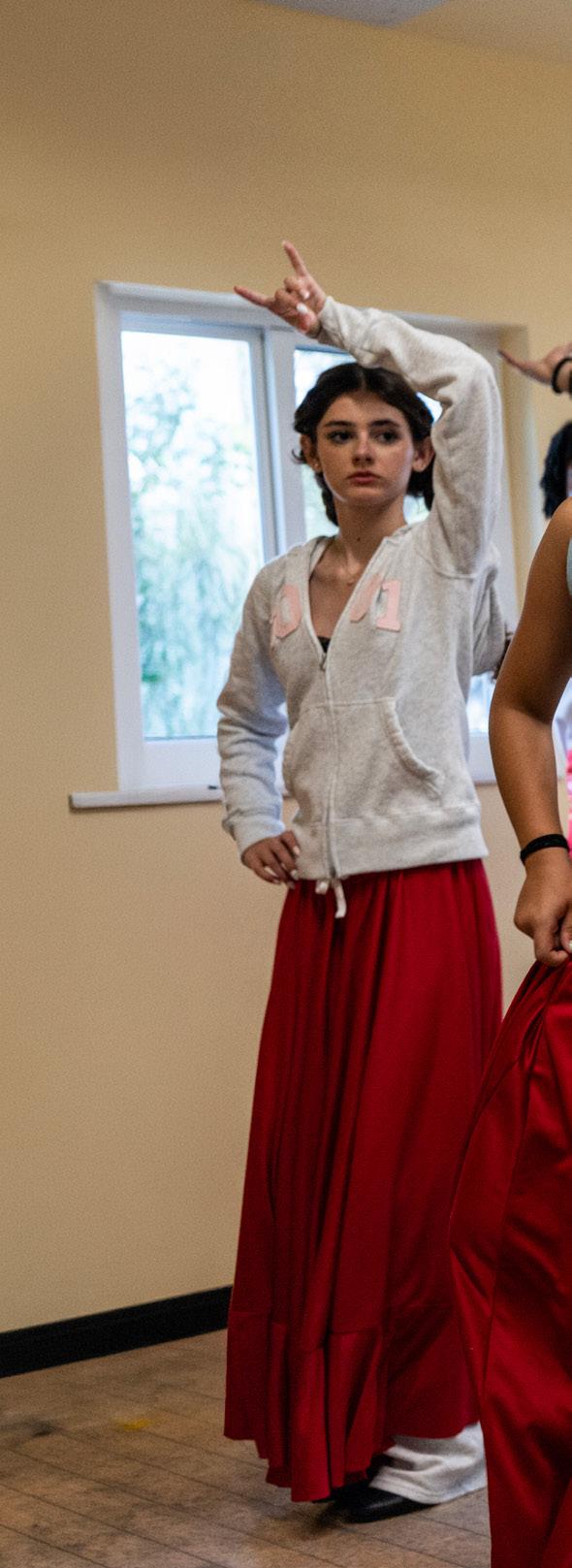
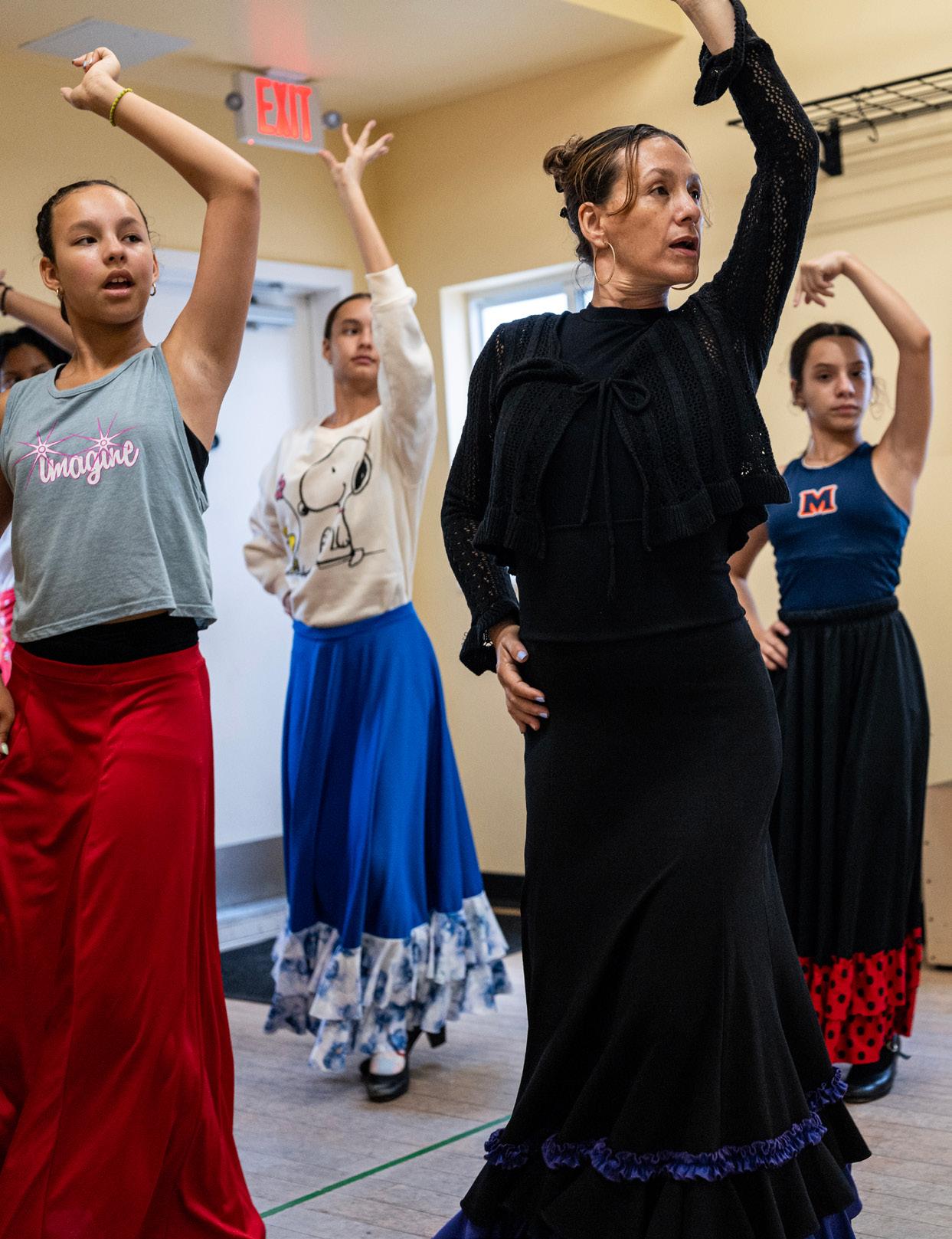
Today, Armour Dance encompasses five community sites and a main campus. Ballet remains at its core, but classes also include flamenco, hip-hop, tap, contemporary, and musical theater. The impact ripples through generations.
We have alumni now in their 40s: artists, doctors, attorneys, professors, entrepreneurs. Current students see what’s possible. Someone from their own street is now a Yale professor.
While financial challenges persist and arts budgets tighten at every level, Ruth remains hopeful and deeply grateful to all who have supported these programs, from major foundations to private donors.
Photo by Greg Clark
“These programs cost millions each year. Families face immigration issues, language barriers, and economic obstacles. But the community embraces us. They know our track record and wait for their children to turn five so they can join the program.”
Armour’s reputation has grown into that of an institution that not only cultivates artistry but also advances access, equity, and opportunity for all children.
“When children engage with the arts, they gain the confidence to express themselves and the courage to dream big. The Children’s Trust is proud to have partnered with Armour Dance Theatre, marking 25 years of enriching young lives through dance,” says James R. Haj, president and CEO of The Children’s Trust.
In 2026, Armour Dance Theatre enters a new chapter as the company welcomes Kelly Robotham as its third artistic director. Ruth Wiesen will assume the title of artistic director emeritus and continue in her role as academy director, extending a legacy that has shaped countless young lives through the power of dance and belonging.
For Ruth, the heart of Armour’s mission has never changed.
ONCE YOU WALK THROUGH THE DOORS, YOU’RE PART OF A FAMILY. WE HAVE YOUR BACK, AND WE DON’T LET GO — NO MATTER WHAT. EVEN IF YOU MAKE A MISTAKE, EVEN IF YOU WALK AWAY. WHEN YOU COME BACK, THE DOOR IS ALWAYS OPEN.
Ruth Wiesen Armour Dance
by
Photo
Greg Clark
Photo courtesy of The Children’s Trust
ALL EYES ON THE WATER
In Miami-Dade County, drowning is the leading cause of accidental death for children ages 1 to 14. A powerful local coalition is embracing collective responsibility, uniting schools, families and community partners in a bold effort to bring that number down to zero.
By Kacie Brown
When Olga Londoño lost her 15-month-old son Eduardo to a drowning accident in August 2021, her world shattered. What began as a deeply personal healing journey has since transformed into a lifesaving mission. She was shocked to learn that, as the mother of a drowning victim, she was far from alone.
So, in the painful aftermath of unimaginable loss, Olga and her family launched The Edu Foundation, a swimming education nonprofit. Named for Eduardo, the foundation teaches underserved children in Florida, Colombia, and Nicaragua about swimming and water safety. When Olga heard about the Zero Drownings Miami-Dade Initiative, she joined without hesitation.
“We would never want another family to have to go through what we went through,” she says.
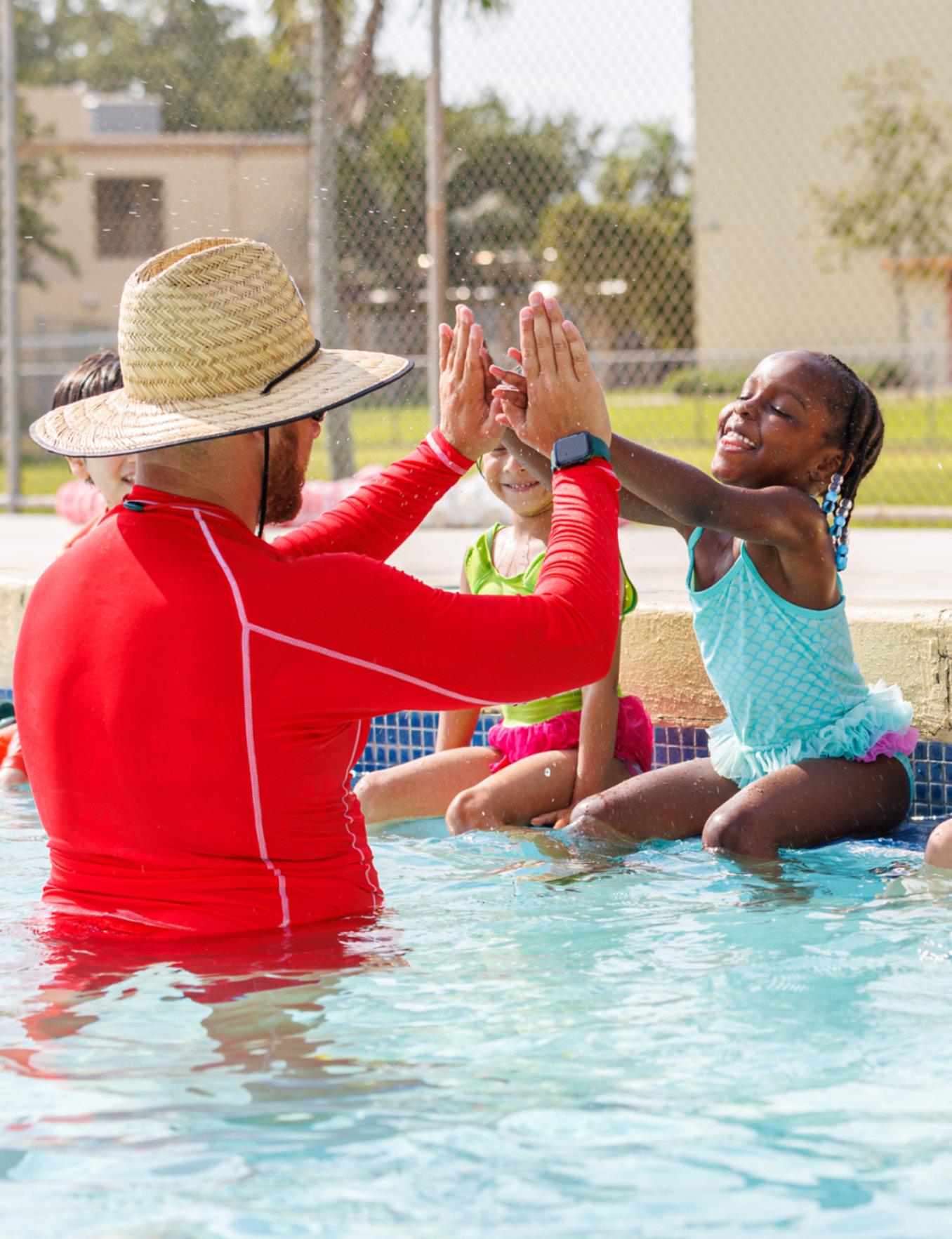
The statistics are as alarming as they are overlooked: Drowning is the leading cause of death for children ages 1 to 14 in Miami-Dade County. But participation in formal swim lessons can reduce drowning risk by 88%.
It’s incredible that, before this project, Miami-Dade County, where there are more than 1.5 million pools and beaches all over, had never had a large-scale drowning prevention program.
Photo courtesy of The Children’s
A UNITED FRONT FOR WATER SAFETY
Zero Drownings Miami-Dade launched with a small pilot in April of the 2023–24 school year, and has one main goal: to expand over the next two years so that by the 2026–27 school year and every year after, 20,000 children ages 4 and 5 receive essential drowning prevention lessons.
The Edu Foundation became a founding partner alongside MiamiDade County, The Children’s Trust, The Miami Foundation, United Way Miami, the Templeton Family Foundation, the Florida Blue Foundation, the Peacock Foundation, Miami-Dade County Public Schools and the American Red Cross.
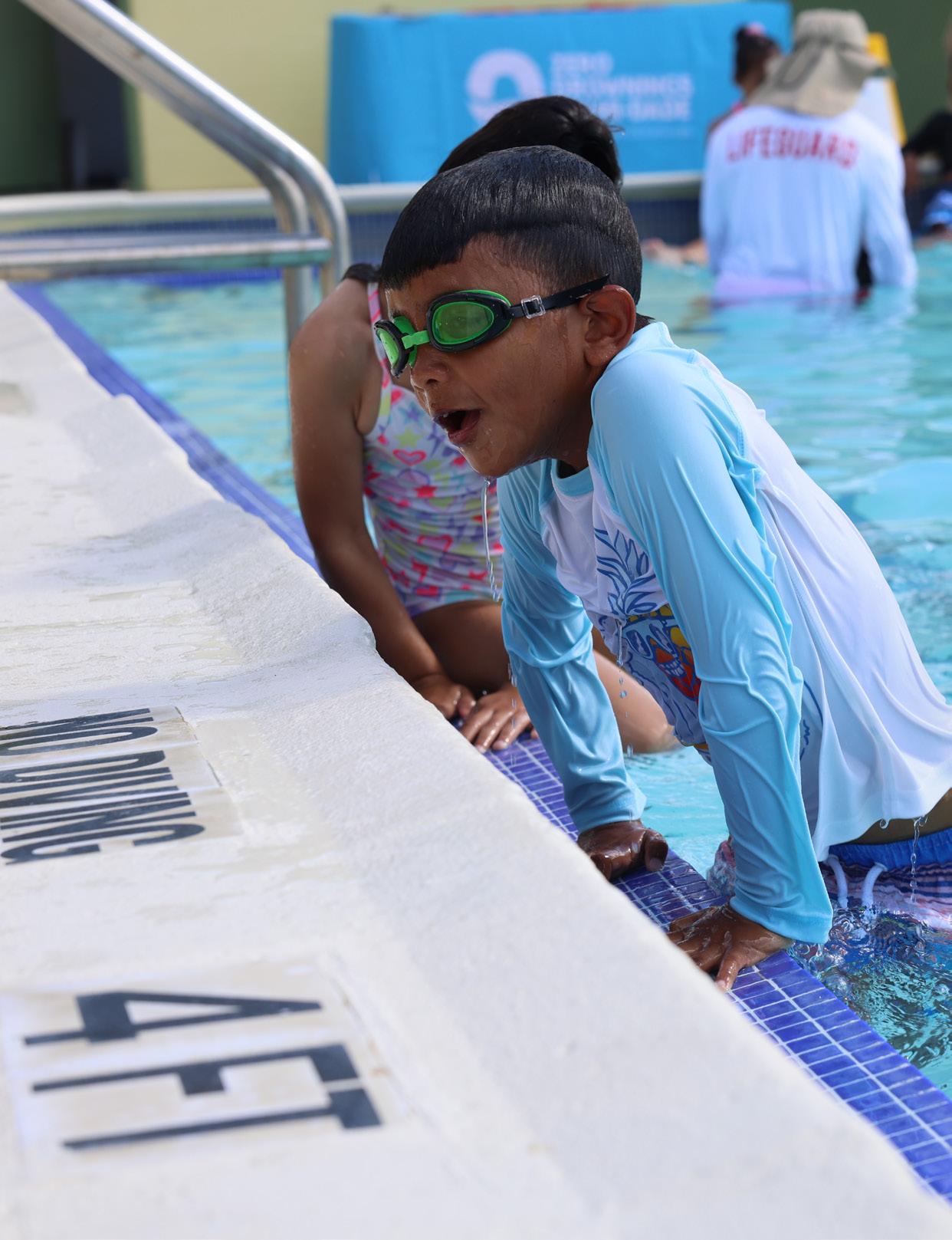
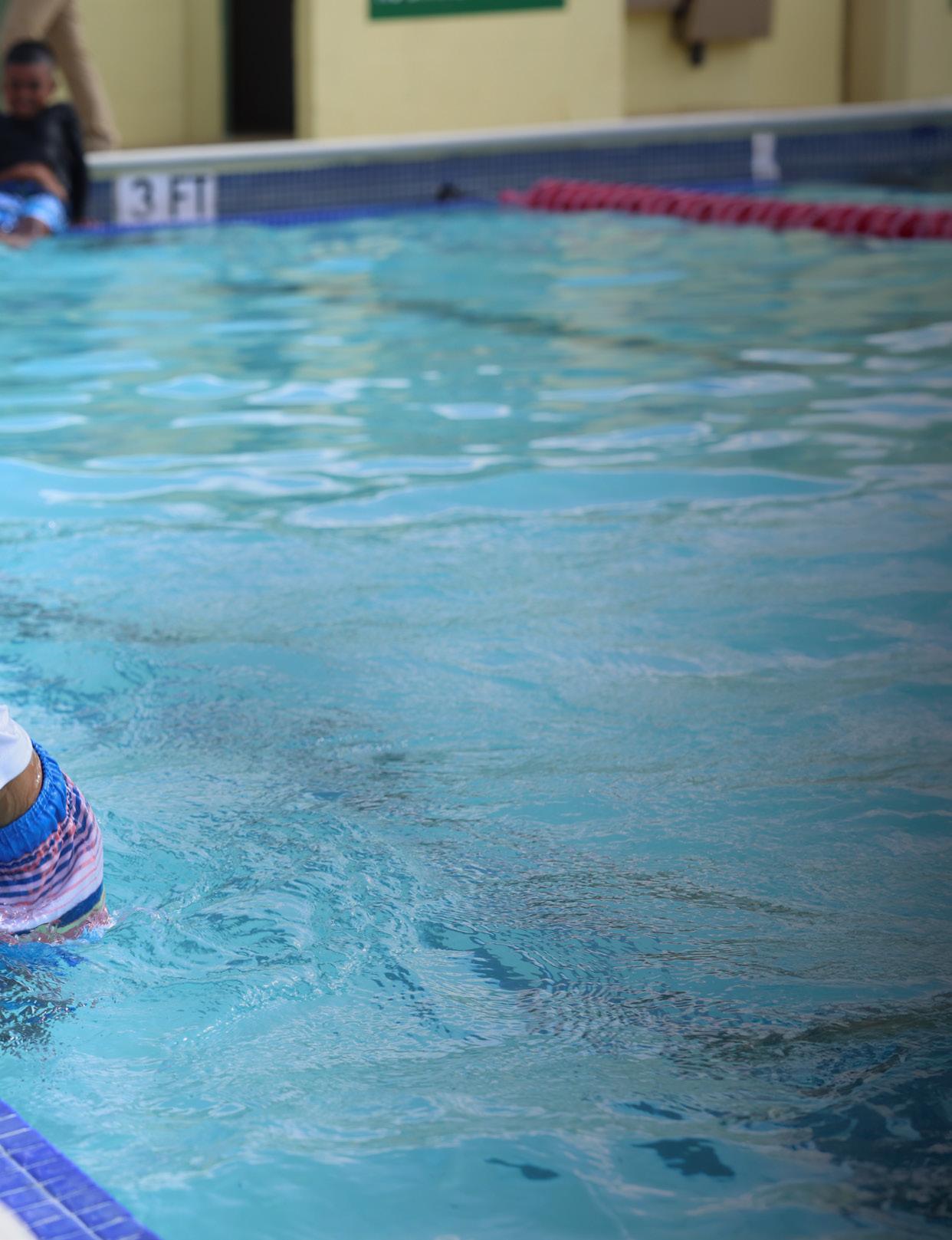
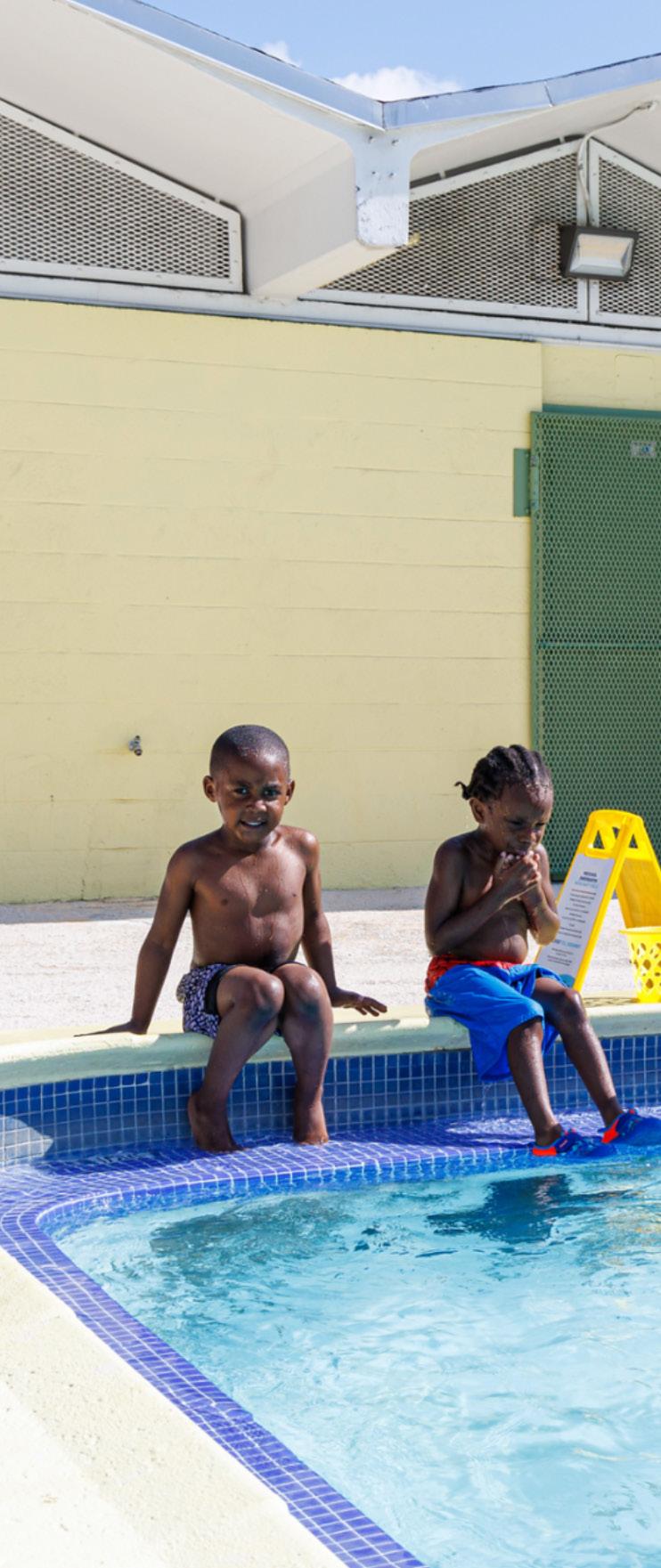
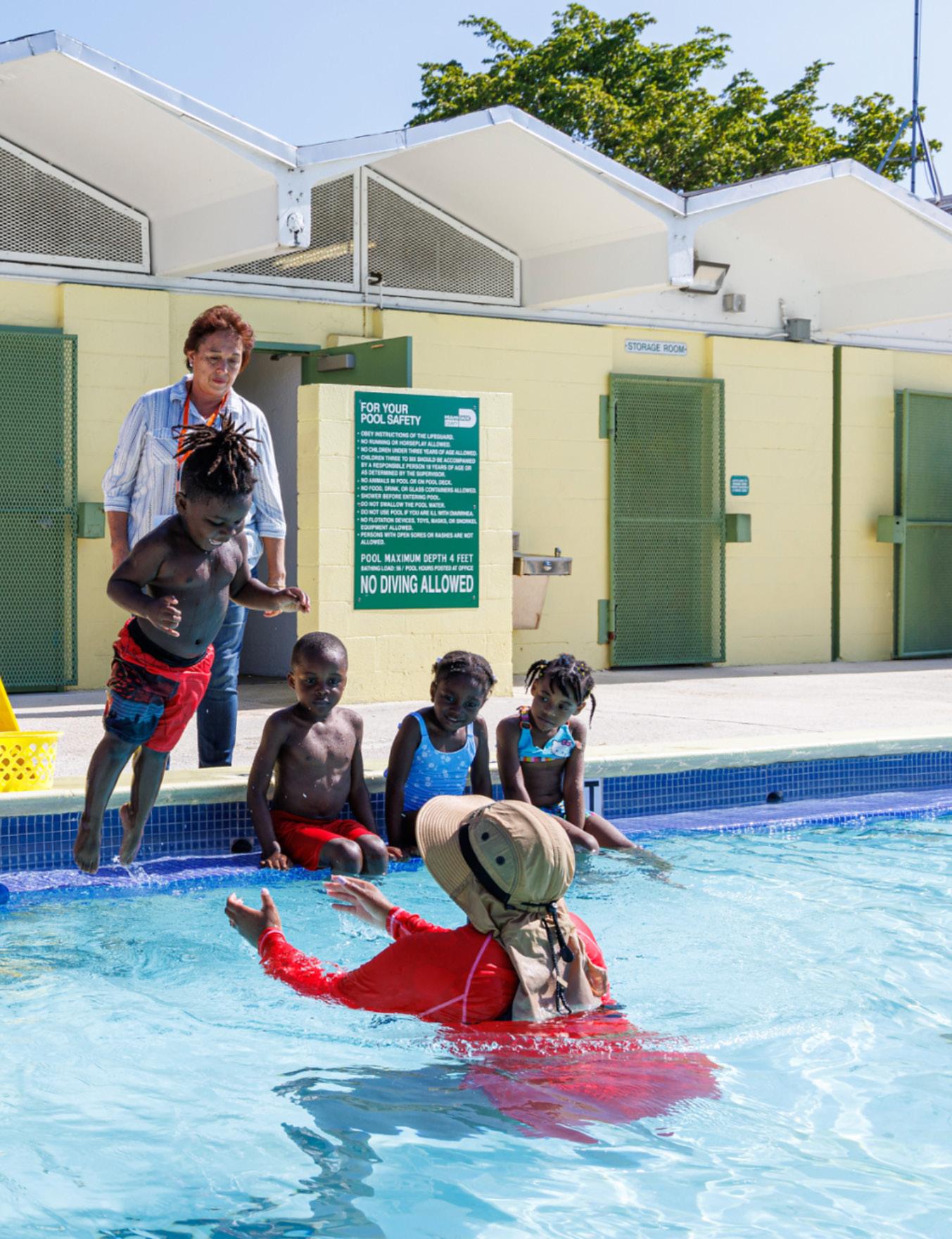
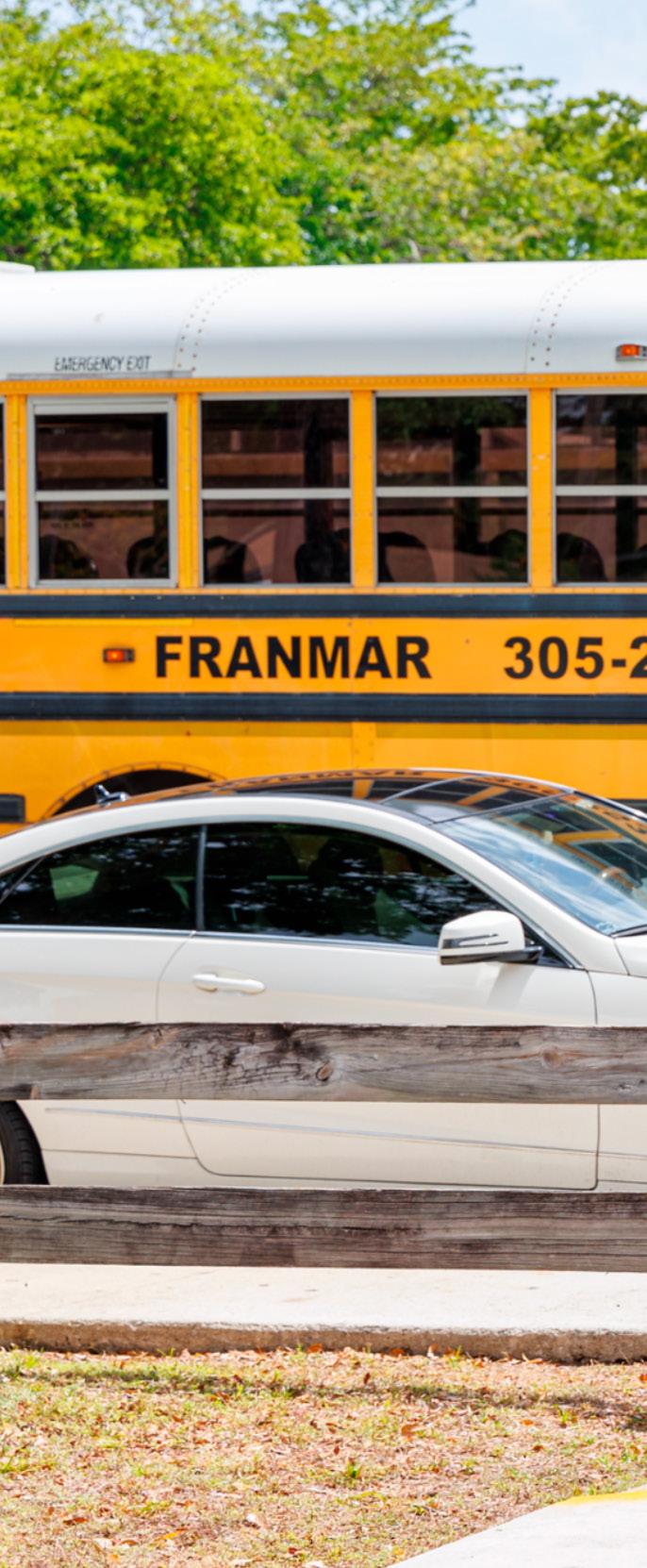
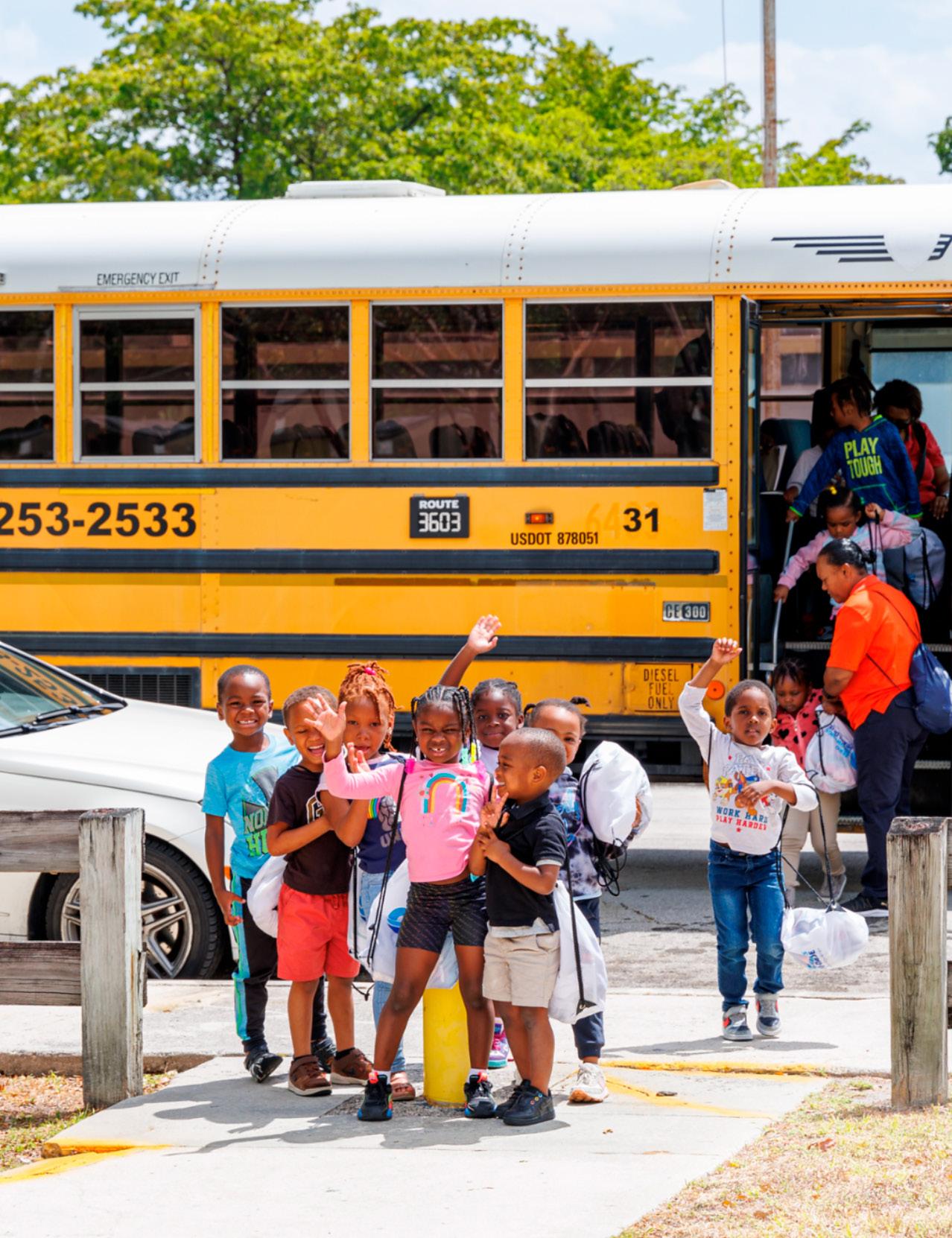
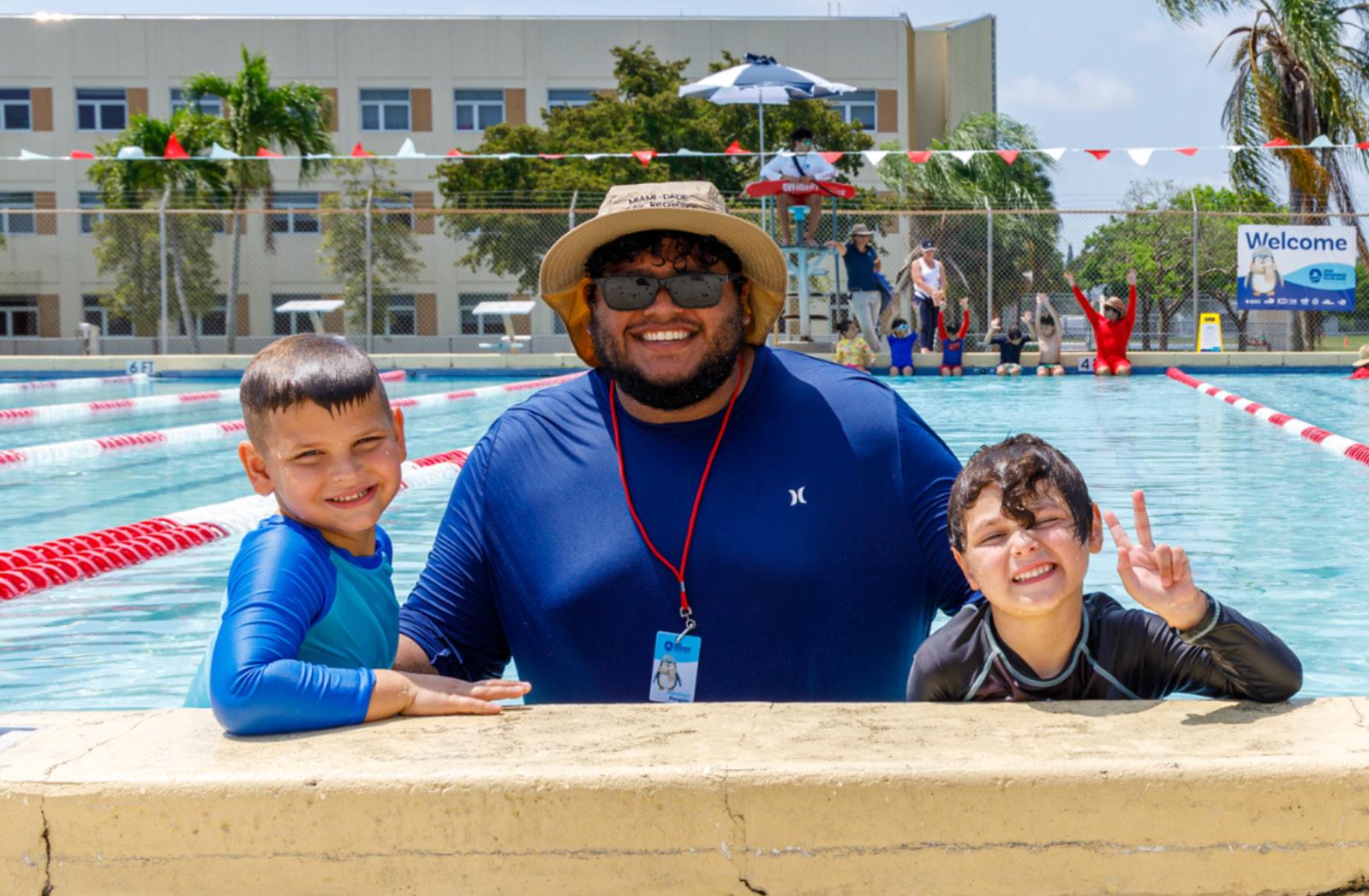
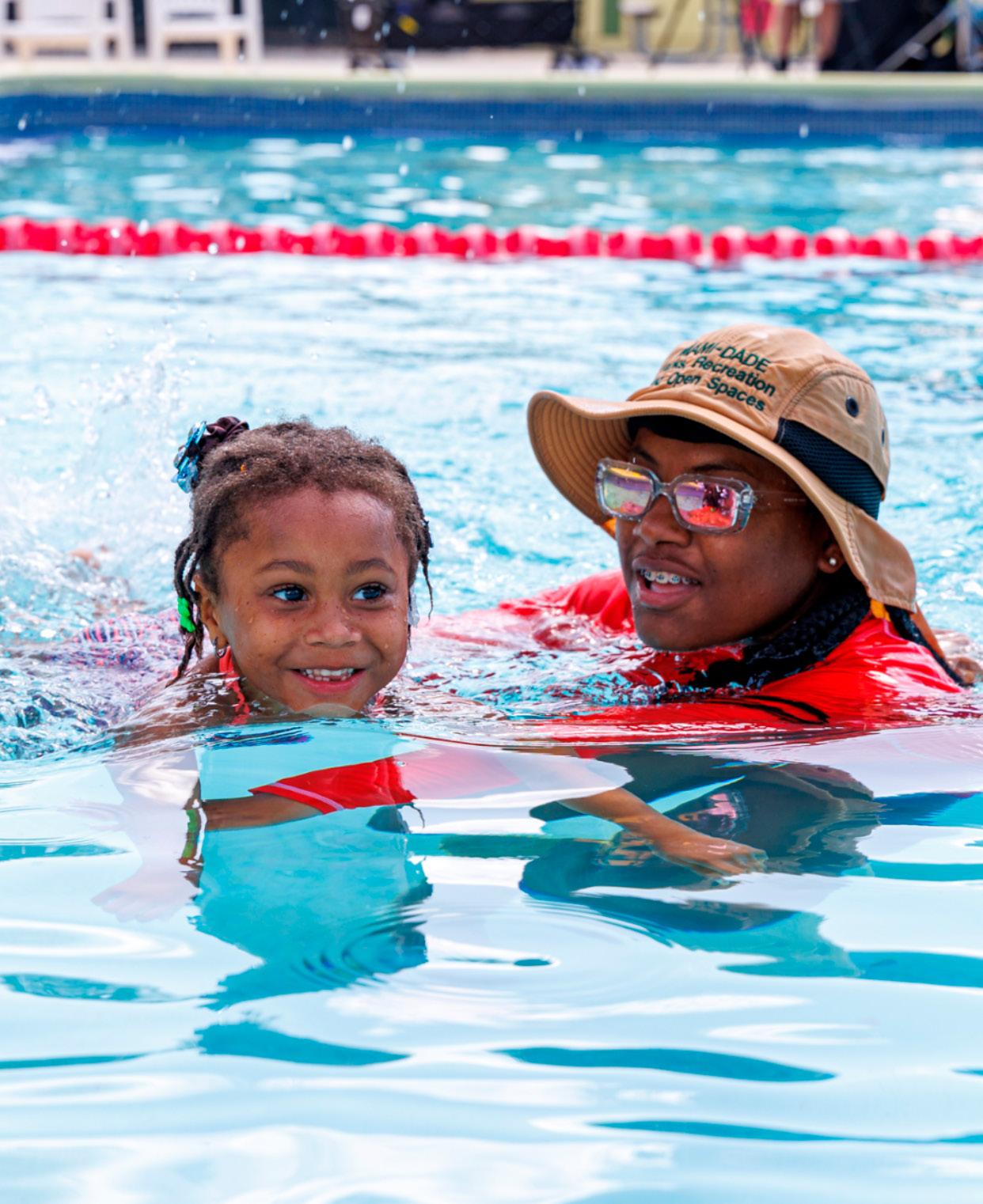
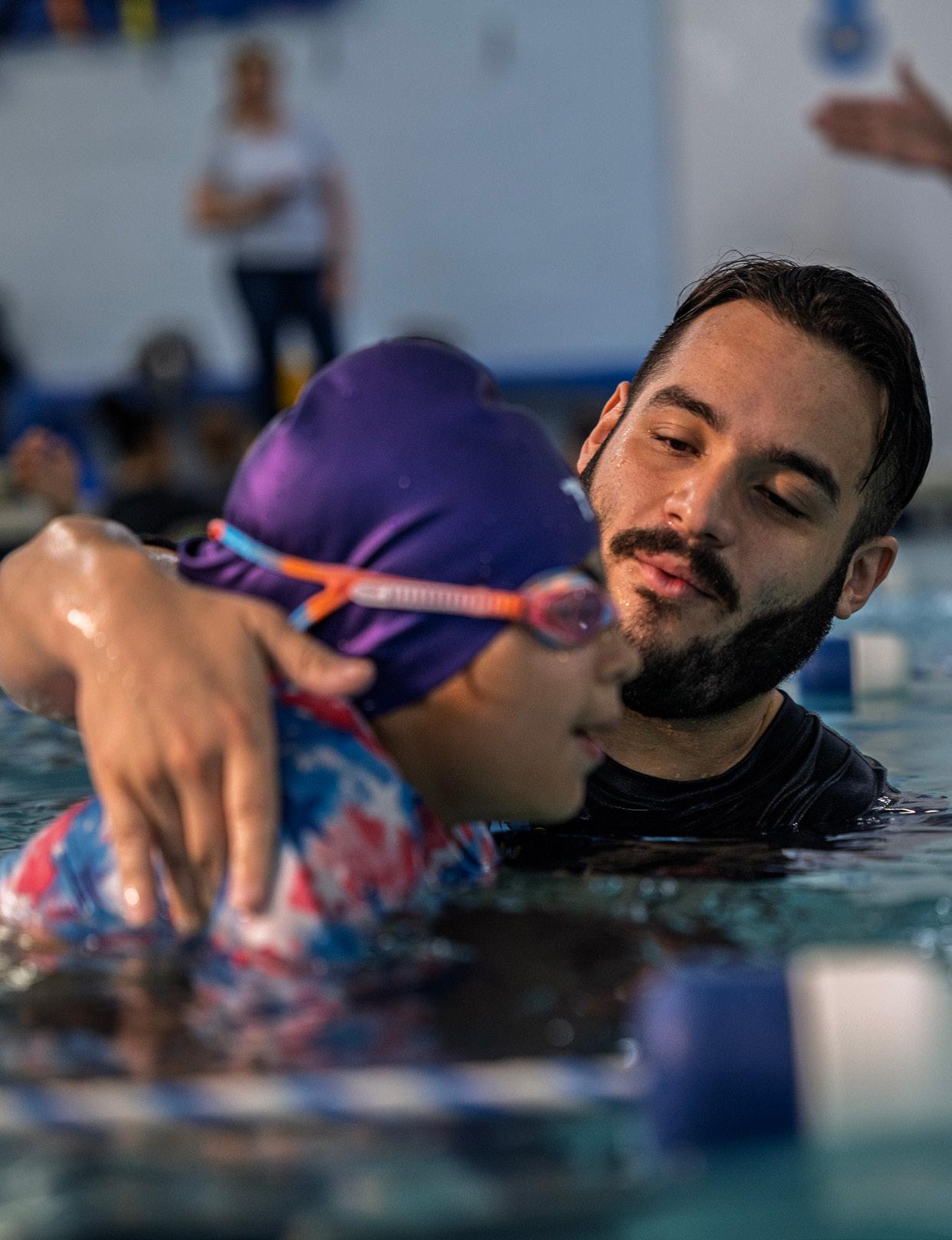
For a child to be included in the program’s ten 30-minute group swimming lessons, online registration by a parent or guardian is required, but other than that, it’s completely free of cost, and transportation is taken care of. Children take their swim lessons within the school day, during field trips.
Olga wants more adults to understand that swimming lessons are a necessity, and she describes how, conveniently, for many students they aren’t a chore.
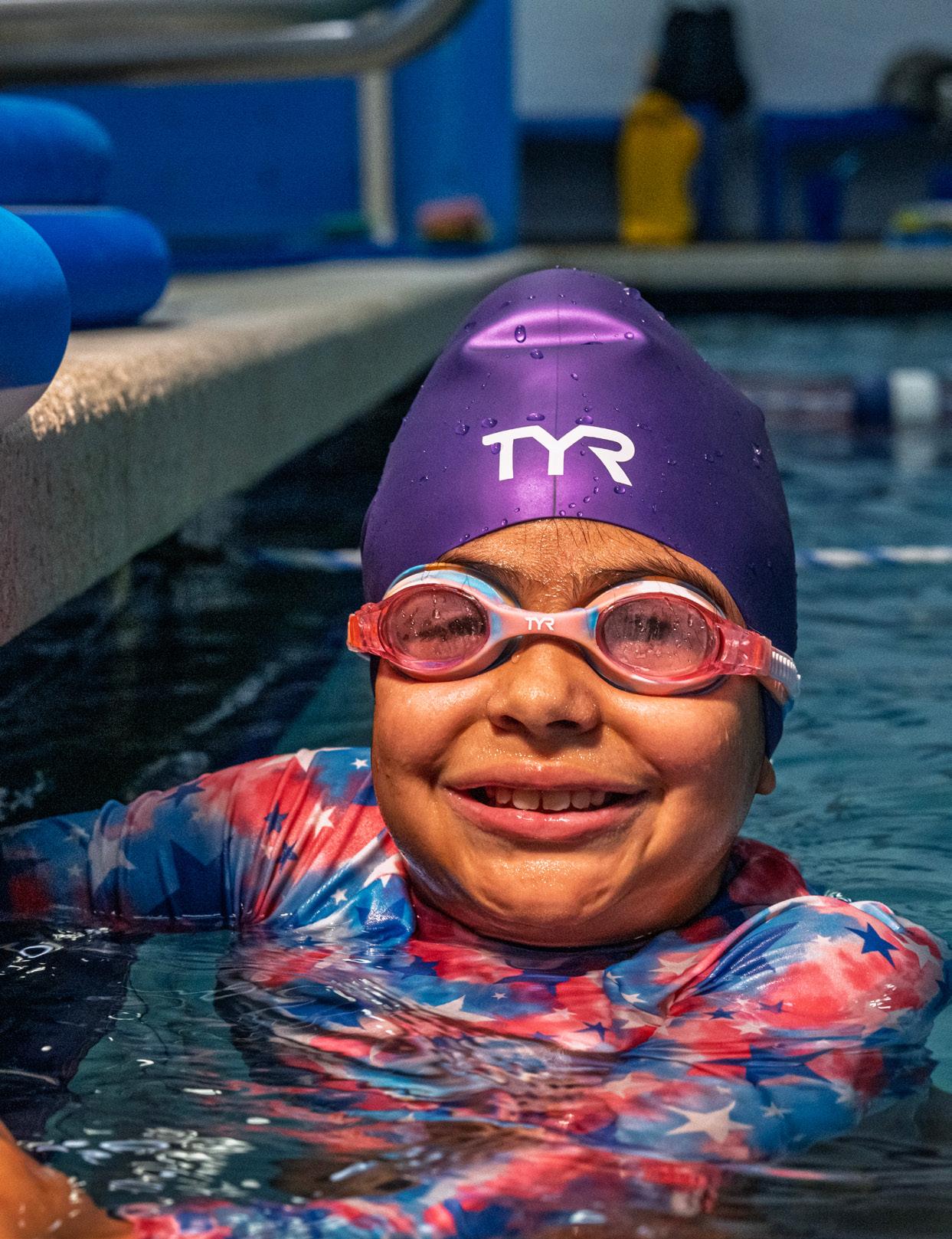
Whenever we go to the pools and see the kids receiving their swimming lessons, they come out smiling and thankful for the classes. For me, it's incredibly rewarding to know that because of my son, other children are gaining life, this life-saving skill of learning how to swim.
Olga Londoño
The Edu Foundation
Photo courtesy of The Children’s Trust
COLLECTIVE RESPONSIBILITY
Behind the scenes, The Children’s Trust, an organization that funds programs for Miami-Dade kids and families through property tax revenue, played a pivotal role in catalyzing the initiative. The spark originated with a simple but urgent question: What are we doing on a large scale to prevent childhood drownings in our community?
Drawing on lessons from Broward County’s successful Swim Central model, the team began customizing a version suited to Miami-Dade. The focus on younger children, including those with special needs, required smaller student-to-instructor ratios, as well as American Red Cross curriculum and staff certifications.
“There are many logistical challenges related to including pre-K children in this program, and it is not commonly done around the country,” says Natalia Zea, chief public policy & engagement officer for The Children's Trust. “But we made it a priority because the need is urgent, and as the younger children learn water safety, the safer they will be as they grow.”
The program is coordinated through the Miami-Dade County Office of Drowning Prevention, formed by Mayor Daniella Levine Cava and the Board of County Commissioners to support the initiative. The participating swim providers include Miami-Dade County Parks, Recreation and Open Spaces as well as vetted partner providers from the City of Miami, City of Miami Springs and various other municipalities currently in the process of joining the collaborative.
On the private side, Ocaquatics Swim School, the largest swim provider in Miami-Dade, has also joined, reducing its fees to fit the standardized program model.
“Ocaquatics is choosing purpose over profit by partnering with us because they truly believe in the impact of this program,” Natalia explains. “We hope their leadership inspires other private swim schools to join this important mission.”
WATER ACCESS FOR ALL
Inclusivity is paramount for Zero Drownings. Children with disabilities, especially those on the autism spectrum who may be more drawn to water than non-neurodivergent children are actively prioritized. A disabilities committee, formed with county experts and those from Florida International University and the Advocacy Network on Disabilities, ensures instruction is adaptive, class sizes are small, and appropriate accommodations are made.
We don’t separate children with disabilities. Those attending general pre-K and kindergarten programs are included with their classrooms. We simply make the support available to ensure their safety and success. We are also working to partner with school programs that exclusively serve children with disabilities to ensure expanded reach to these populations of kids.
Because parental trust and partnership is central to the program’s success, resources are also extended to parents and caregivers. Through Zero Drownings Miami-Dade, they gain access to a free American Red Cross water safety course, offered in English, Spanish and — for the first time nationwide, thanks to the initiative — in Haitian Creole.
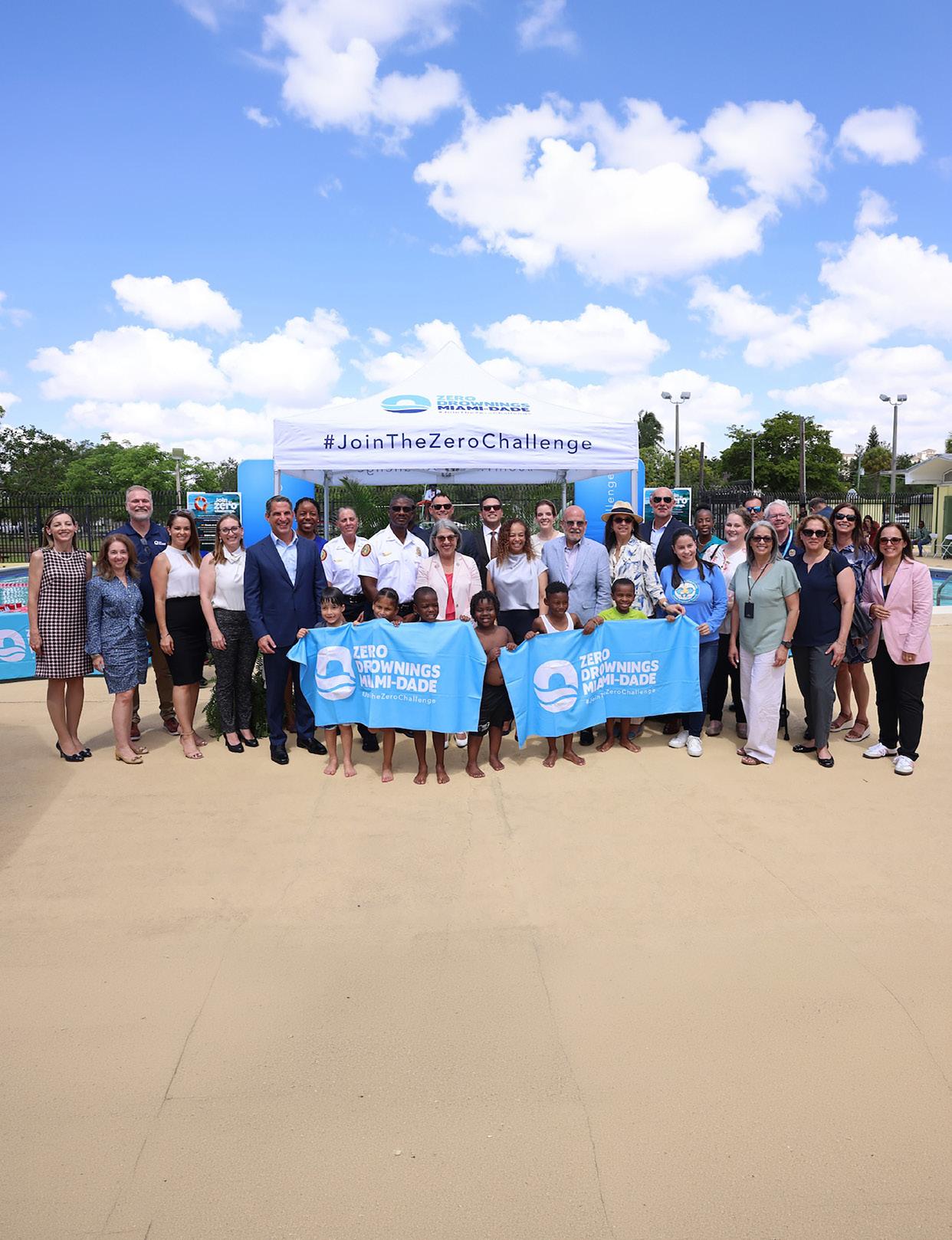
With its rallying cry, "Join the Zero Challenge," this program seeks to inspire collective vigilance from school systems to city officials and parents to neighbors.
Photo courtesy of The Children’s Trust
Photo courtesy of The Children’s Trust
WE UNDERSTAND THIS HAS TO BE A COMMUNITY-WIDE EFFORT. WATER SAFETY ISN’T JUST ABOUT THE KIDS IN THE POOL. IT’S ABOUT THE VIGILANCE OF THE ENTIRE COMMUNITY, AND WE CAN ALL PLAY A PART IN THAT.
Natalia Zea The Children's Trust
A LAYER OF PROTECTION
Ocaquatics founder Miren Oca believes swimming lessons are the best way to prepare for water’s inherent risks.
A parent recently shared that while they were doing yard work, their child accidentally fell into the pool, but thanks to swim lessons at Ocaquatics, he knew exactly what to do and safely swam back to the wall. They were incredibly grateful for our program and said it made all the difference.
Miren didn’t set out to open a swim school. At 22, she was a young mother raising her toddler alone, and she planned to attend medical school when her child was older. What began as a temporary business turned into a lifelong mission.
Today, more than 30 years later, she leads Ocaquatics Swim School, an employee-owned, certified B Corporation with five indoor, warm-water pools serving families across Miami-Dade. To date, they have taught over 3 million swimming lessons.
She’s especially passionate about the Zero Drownings MiamiDade Initiative and its commitment to including neurodivergent children and children with disabilities in water safety programs.
"When children with autism get in the water, it can be incredibly calming. It’s quieter and can be less overwhelming for them,” Miren explains. “But if they don’t know what to do in that environment, it can be dangerous. That’s why our lessons are designed to be both joyful and highly structured. We teach every child, if you fall in, you turn around and swim back to the wall or you roll onto your back to float."
Photo courtesy of The Children’s Trust
Photo courtesy of The Children’s
IT’S ABOUT HELPING KIDS FEEL SAFE AND CONFIDENT IN THE WATER BEFORE ANY FEARS EVEN SET IN, AND HOPEFULLY BEGINNING A LIFELONG CONNECTION WITH THE WATER.
Adam Steckley Blue Scholars Initiative
A LIFELONG LOVE FOR THE WATER
Adam Steckley knows the impact of learning to swim as a young child — he started at 3 years old. By age 5, he was already swimming competitively.
“I think it helps develop confidence at an early age, not only as a competitive swimmer, but simply as someone who now has a skill that can save your life,” Adam says.
His passion has taken him far from neighborhood pools. Today, he competes in open-water races, including a recent one in St. John, U.S. Virgin Islands, which inspired him to reflect on the lifelong impact of swimming.
The fact that throughout my life I have gravitated to coastal cities is probably a direct result of learning to swim at a young age. I absolutely love the ocean.
His love for water also led him to co-found Blue Scholars Initiative, a nonprofit that connects students from underserved communities with conservation and marine biology-focused experiences on the water. Students don't pay for the trips. Instead they're asked to complete the Ocean Hero Challenge service project in exchange, creating and presenting a public service announcement about how to be a hero for the ocean.
Adam says limited access to swimming lessons not only increases drowning risk but breeds "what he calls a culture of fear" surrounding water, limiting children’s ability to experience the ocean.
He recognizes that not every child has the same access or encouragement: “If my parents had a fear of water or didn’t know how to swim, that would have been passed down to me. It really starts with the family.”
Adam points to cultural fears, economic barriers, and lack of access as major hurdles:
“Transportation and money, in many communities those are deal breakers. Community pools need to be accessible. They need to be either free or low cost.”
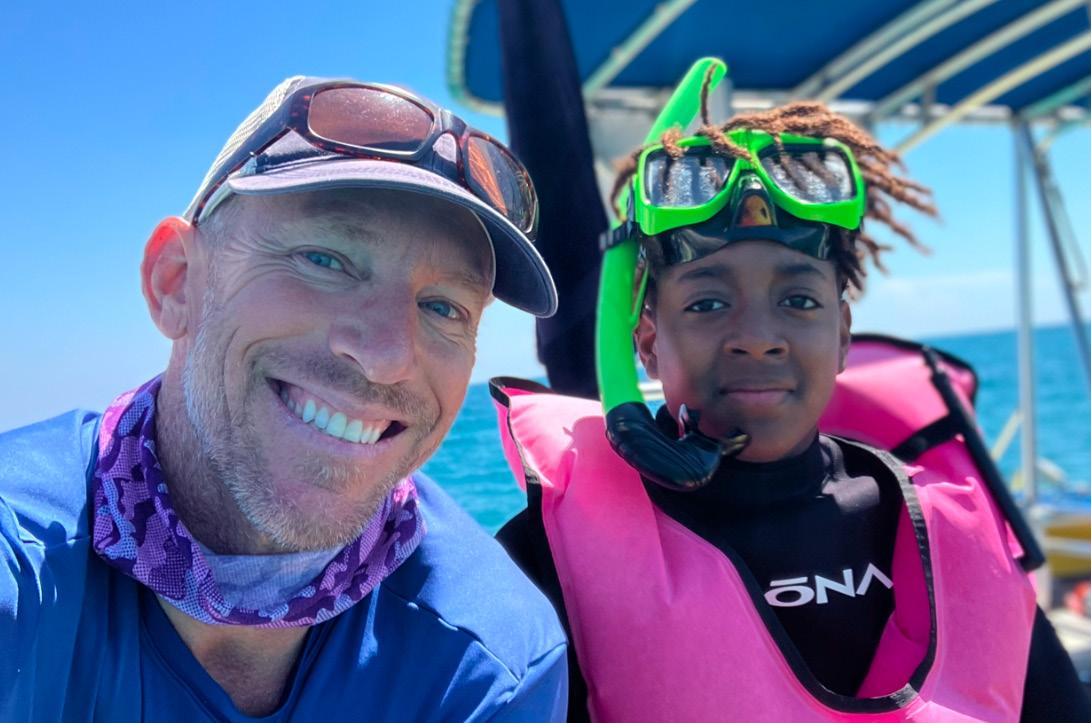
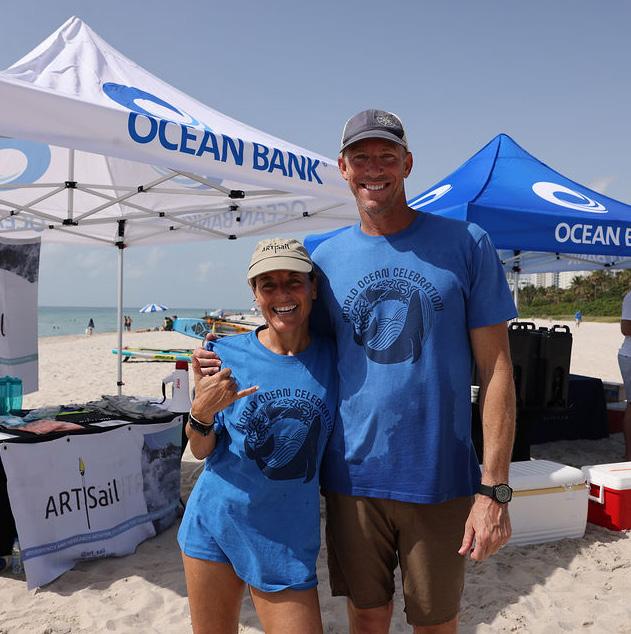
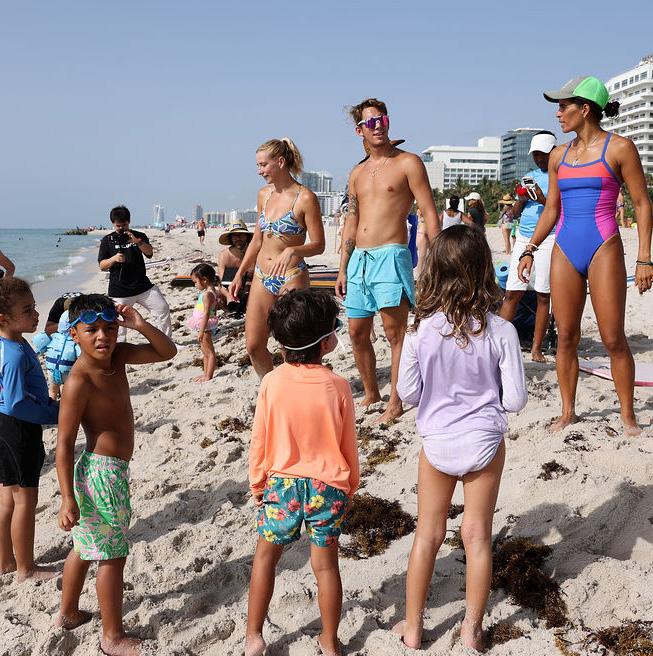
As part of their commitment to expanding safe access to water, Blue Scholars Initiative co-hosts Miami’s World Ocean Celebration with ARTSail. The event features a range of activities including reef snorkeling, a ceremonial paddle-out, beach cleanups, art installations and film screenings, and also offers young participants instruction to safely swim in the ocean.
“It’s a way for us to invite families who maybe aren’t as familiar with the ocean to experience, with an instructor, the skills needed to go into a large body of water like the ocean,” Adam says.
World Ocean Day Celebration 2025 | Adam Steckley, Blue Scholars Initiative & Ombretta Agró Andruff, ARTSail
Photo courtesy of Blue Scholars Initiative & ARTSail
ABOVE WATER
How one woman’s unexpected path created a ripple effect of safety, business sustainability and lasting social impact.
By Kacie Brown
Photo by Greg Clark
As a teenager, Miren Oca thought she would become a doctor. More than three decades later, though she hasn't set foot in medical school, she's still saving lives every day.
“My son turned 34 years old, and I still haven’t gone to medical school. The business has grown and grown and grown,” Miren says, smiling. “An unexpected detour put me on a better path to something far more fulfilling and satisfying. But I had to own it.”
Born to a Cuban mother and a Spanish father, Miren spent her early years near the water in Louisiana in the 1970s where her parents ran a restaurant close to the bayou. She swam competitively in high school and started teaching children swimming at 14. With her sights on a career as an orthopedic surgeon, she studied biochemistry on scholarship at Tulane University, continuing to teach to cover leftover expenses. College life was as busy as it was fulfilling.
But her path was completely upended when, at 19, she discovered she was pregnant.
Forced to shift gears, she decided to move closer to family in Miami and lean on her background in swimming. “I thought, let me open this little business until he's older, and I'll go to medical school later. And so I opened Ocaquatics and just started teaching swimming lessons,” she recalls.
I had to take advantage of this opportunity and do something with it, because it was hard. It was really hard when I found out I was pregnant.
Since then, Miren has built her company Ocaquatics into a team focused on more than just swimming. The idea of responsibility — for water safety, for community contribution, and for environmental change — guides its operations.
“We have a twofold mission statement. The first part is to teach families to love swimming and to become safer, more comfortable and more responsible around the water. But the second part of that mission is to our team members. We want to grow them under this framework of social and
environmental responsibility so that we can grow the business in a sustainable way and make a bigger impact in the world.”
Ocaquatics began as a one-woman business in backyards and rented pools. Now, it’s an employee-owned, certified B Corporation that runs five indoor, warm-water pools in Miami. The company teaches swimming and water safety starting at six months old and became the first private swimming instruction provider to join the Miami-Dade County Zero Drownings Initiative in fall 2024.
“Drowning can happen to good families. It’s not about bad parenting. It can happen to anyone,” she says. “A lot of people love the water, but they never learn respect for the water.”
Florida leads the country in drownings, which are the numberone cause of death in Florida for children ages 1 to 4, according to the state’s Department of Health. This statistic is at the forefront of Ocaquatics’ advocacy work. The company’s in-house nonprofit Ripples of Impact provides children with up to $500 in swimming lesson scholarships and hosts community water and environmental education events with a portable, repurposed shipping container from the Rockefeller Foundation.
Ocaquatics’ partnerships with organizations like Every Child a Swimmer and Stop Drowning Now also increase access to lessons and provide kids and families with water safety education essential for everyone, especially those who live in Florida’s water-filled communities.
In Miren’s view, all families need to be prepared for the risk of drowning, and swimming lessons are the best way to prepare for the inherent risks of life near the water.
SWIMMING LESSONS SHOULD BE AS IMPORTANT AS SEAT BELTS. THEY DON’T DROWN-PROOF CHILDREN, BUT THEY ADD A LAYER OF PROTECTION AND THEY BUY YOU TIME IF A CHILD ENDS UP IN THE WATER.
Oca Ocaquatics
Miren
Photo by Greg Clark
Photo by Greg Clark
Beyond the water, Ocaquatics has also invested in its surrounding communities. The company regularly hosts food and school supply drives along with beach and community cleanups. Miren has also cultivated a supportive workplace: Ocaquatics employees receive mental health care, English and Spanish classes, legal services, and other benefits.
Going further, the company has also recognized the need for a solution to Miami’s high cost of living as frontline team members struggle to make ends meet. Ocaquatics began providing personal financial literacy education, moved to open-book management and, in 2024, Miren completed the company’s transition to an employee ownership model, welcoming her staff members as fellow owners.
Miren says the shift to 100% employee ownership has strengthened what the company calls its “ownership culture.” The business has thrived as team members have invested in their peers and their students.
We are growing people, not just running a business. Involving our team, especially with social issues, has made them much happier to work at Ocaquatics. So they stay longer. That means our customers stay longer. And then when our customers stay longer, our bottom line is much happier and healthier because our profit is better. So it's a win, win, win.
She applies the same sense of responsibility to the environment. Maintaining five indoor pools requires a heavy environmental footprint. With tech like solar power, UV sanitation, LED lighting, low-flow water, variable frequency drives, and more, Ocaquatics has lessened its environmental impact and saved money.
DOING THE RIGHT THING FOR THE ENVIRONMENT AND THE COMMUNITY ISN'T A SACRIFICE. IT MAKES YOUR BUSINESS STRONGER.
Miren Oca Ocaquatics
Now, I want to focus on helping other businesses realize that this is the better way to do business. My journey has not been a trade-off. I’ve done very well in my life, while building a business rooted in purpose.
In 2016, Ocaquatics decided to take its sustainability and social responsibility efforts a step further by beginning work towards a B Corporation certification, earned by proving rigorous standards of social and environmental responsibility and business transparency.
“Some people think that the work you’re doing is just greenwashing or marketing. We wanted to show the world that, no, we really mean this," Miren says. The company achieved its goal in 2022, becoming the first swim school in the world to earn B Corp status.
From starting a business as a young mother to building five indoor pools in an oceanside city, Miren hasn’t backed away from risks.
But her advice to others is simple:
ALWAYS CHOOSE WHAT'S RIGHT OVER WHAT'S EASY.
Photo by Greg Clark
Photo by Leslie Ramos
ROOTED IN RESISTANCE
Sandy Moise, a dedicated educator and passionate environmental advocate, speaks for the trees — and Miami listens.
By Leslie Ramos
On a festive Sunday morning in Coconut Grove, a crowd gathers at a hyperlocal art show. Booths displaying everything from botanical illustrations to photos of art deco facades are tucked between the rows of sprawling oaks that drape Gifford Lane in a cool, inviting shade.
Between a key lime pie cart and paintings of lush tropical landscapes stands Sandy Moise, dressed head-to-toe in green, wrapped in vines, and holding a sign that reads, “Miami’s Trees Matter Most.” Her presence is unmistakable.
Just weeks earlier, Sandy stood before cameras at a press conference in front of Miami City Hall, calling on commissioners to withdraw the proposed Tree Preservation and Protection Ordinance that would relax tree canopy protections.
Since October 2024, Sandy has led the fight against the ordinance, which would allow private landowners to remove non-native and smaller tree species without a permit, among other potentially harmful concessions. Among the immediate wave of backlash from residents, Sandy took the helm, strategically directing a united response from a coalition of environmental groups and concerned residents.
Her creative community-organizing tactics have ranged from running a WhatsApp group of more than 250 advocates to holding press conferences and making appearances at local events like the King Mango Strut. At this quirky Coconut Grove parade, Sandy’s group dressed as developers wielding chainsaws, chasing runaway “trees” who passed out flyers about the proposed changes.
While her advocacy might suggest a full-time role, Moise is also an assistant principal at Sunset Elementary. From her deployment in Dominica as a Peace Corps volunteer to her vibrant home garden, refuge to a bounty of native plants, birds, and pollinators, Sandy’s life is a testament to her deep appreciation for the restorative connection between people and planet. She says,
No amount of money can give you what you get from our connection to nature.
A STAKE IN THE GROUND
Most developers beg to differ, however, as there's plenty of money to be made in nature's removal. The name of the game is property value and the goal is to get as much money out of your plot of land as possible. When it comes down to choosing between more square footage or preserving a tree, the tree is coming down.
Let’s say you buy a plot of land and there’s a giant gumbo limbo tree right where you’d like to build an expansion, like a new bedroom. To remove it legally, you’d have to apply for a permit. If it’s approved, you can remove the tree, but you must either plant new trees elsewhere on the property or pay a fine, which is invested into a “Tree Trust,” funds used for planting trees within Miami-Dade County. City of Miami District 1 Commissioner Miguel Angel Gabela brought the Tree Protection Ordinance to the table in an effort to “simplify permitting processes for residents and businesses.”
Former City of Miami Commissioner Ken Russell says of the ordinance, “They’re using a chainsaw for something that needs a scalpel. Address the systematic problem, don’t eliminate permitting. That would decimate our canopy.”
Aaron DeMayo, an architectural designer and urban planner who serves as chair of the City of Miami Climate Resilience Committee, also thinks the proposed changes to the ordinance don’t address the root of the problem:
“I’ve been told that the current ordinance can be confusing and the process lengthy, which sometimes leads landowners and builders to bypass it, whether intentionally or not, and pay fines if they’re caught. But paying a fine doesn’t restore that lost canopy.”
Sandy herself had to ask an arborist to translate the proposed ordinance into comprehensible terms. Aaron argues that what’s needed is a streamlined process that accounts for the variety of scenarios landowners face, all while incentivizing tree canopy conservation.
Photo by Leslie Ramos
In 2025, Aaron’s team introduced FLORA (Floor Area Transfer Legislation for Open Space and Reforestation Advancement), a proposed city code adjustment designed to give developers and designers greater flexibility to preserve Miami’s existing tree canopy. As an incentive, projects that build around large trees would qualify for a modest increase in allowable square footage on second or third floor additions, creating a win-win for both urban growth and environmental stewardship. Aaron explains:
We made up these arbitrary rules. We can change them to incite the outcomes we’re striving for as a City.
There seems to be a gap in accounting. While developers seek to squeeze every square foot out of their parcels, properties in communities with denser tree canopies are valued much higher. The exact same house is worth nearly double in shady Schenley Park than it is in barren Westchester just a few blocks over. There’s no real reason for this phenomenon, except for the fact that humans are hardwired with an affinity for nature, a studied psychological trend coined “biophilia” by influential biologist Edward O. Wilson.
Exposure to forested spaces has profound effects on the human psyche and physical well-being. From lower cortisol levels to improved mental health, we are simply healthier when among other living things. Humans weren’t evolved to live as an isolated species on an island of concrete.
“Communion with other species is such a gift. We don’t even know that we crave it,” Sandy says.
by Leslie Ramos
Photo
WHAT HAPPENS AT THE FEDERAL LEVEL MAKES US FEEL POWERLESS, BUT WE ARE SO POWERFUL. CHANGE STARTS IN OUR BACKYARD.
Sandy Moise
GREEN HEALTHCARE
Sandy’s team of volunteers from Urban Paradise Guild spoke to residents in Allapattah, who unanimously voiced their desire for increased tree canopy in their heat-plagued neighborhoods. Allapattah has some of the lowest tree canopy density in all of Miami, under 5% coverage. In contrast, Pinecrest and Coral Gables boast an average canopy density of around 42%. There's a direct correlation between Miami's concrete islands and income inequality, and communities of color often pay the price.
Research shows trees help reduce cardiac and respiratory diseases. They’re not just nice to have: trees are critical infrastructure. With leaves that act like a network of magical filters, trees clean out pollutants from the air. As 16-year-old Little Haiti resident Jamal Victor reflects:
I’ve got asthma, and when I’m walking around my neighborhood with all the cars and fumes it’s so much worse. When I’m in places with a lot of trees I can actually breathe and not feel weighed down by the air.
Trees give much more than they take, releasing oxygen, absorbing floodwater, and protecting against extreme heat. This nature-based climate change mitigation tool is becoming more crucial with every scorching summer.
According to the Miami Herald data analysis, the average surface temperature was 5 degrees hotter in lower-income communities of color compared to higher-income areas at the same exact time and on the same day.
INVESTING IN COMMUNITY ROOTS
In 2006, Miami-Dade County set a goal of reaching 30% tree canopy coverage. Satellite imagery proves there's still a long way to go. Private landowners still carry a great amount of influence over canopy density in the Miami area. Still, cross-sectoral collaborations empowered by local government and grassroots organizations make it more feasible to reach that desired goal.
In March 2025, the county rolled out a new Urban Forestry Plan that facilitates greater collaboration with residents and stronger public engagement in a number of ways. Legacy programs like Adopt-a-Tree and Million Trees Miami are getting a refreshed promo campaign to boost participation.
Photo by Leslie Ramos
Programs like T.R.E.E. Leaders, a partnership between Citizens for a Better South Florida and Miami-Dade County, recruit residents from low-canopy neighborhoods to educate their neighbors about tree benefits, maintenance, and even the removal permitting process.
At the community level, matching grants leverage the county's Tree Trust Fund by encouraging investments on public land. This annual program supports tree plantings in municipalities like Hialeah, which has received $100,000 in recent years to combat its low canopy levels.
The county government is also partnering with Miami-Dade County Public Schools and faith-based organizations, which collectively own more land in canopy-poor neighborhoods than the county itself. Plantings and community events at schools, churches, temples and mosques have not only brought new trees to the ground — they’ve sparked vital local engagement.
Even with growing local efforts, city and county government policies are the gatekeepers of investment, engagement and results.
RETHINKING “NON-NATIVE"
Although the proposed tree ordinance removes protections on non-native trees based on perceived environmental harm, new science is challenging that logic.
Dr. Kenneth Feeley, a biology professor at the University of Miami, and his research team conducted a groundbreaking study showing that non-native trees are more resilient to heat than native trees. According to their findings, warming over the coming decades could put the majority of Miami's native tree species, including live oak, cabbage palm, and many others, at risk of overheating. Exotic tree species, which generally come to Miami from more tropical areas with even hotter climates, are predicted to fare better as temperatures rise. As Dr. Feeley explains:
Being ‘non-native’ does not negate the services the tree provides our community, in fact they may become even more useful to us over time as they continue to survive or
thrive even under hotter temperatures. City guidelines are very broad. The goal should be to protect the canopy, not individual tree species.
CHANGE STARTS IN OUR BACKYARD
Trees are a foundation for biodiversity. They're a sanctuary for squirrels, a perch for songbirds, a foothold for carpets of moss and air plants. Each one is an entire micro-ecosystem that together shapes our modern habitat.
“I dream of a Miami with a connected urban forest where you can walk or bike down shady corridors alive with birds,” says Little Havana resident Raissa Fernandez.
Residents and advocates like Raissa have been tirelessly contacting their commissioners with a unified demand to withdraw the proposed tree ordinance.
Sandy orchestrates the process like a conductor, drafting messages to commissioners and disseminating the drafts, along with commissioners’ contact information, among her WhatsApp groups. After countless emails and phone calls, their voices were heard. In April 2025 Commissioner Gabela, who originally sponsored the proposal, formally withdrew it entirely.
Amid a political season marked by innumerable executive orders, when many feel powerless in protecting the environment from exploitation and fighting for climate justice, Sandy’s method of community organizing is one to be studied. On the ground, she spread a network of roots to engage fellow residents and advocates from the local community, all of which came together at the trunk, united by a singular message. Then, they branched out to carry that message far and wide, showing up to city meetings, contacting the press, participating in community outreach and making sure they were heard by representatives in every pocket of Miami.
Photo by Leslie Ramos
Photo courtesy of Chapman Partnership
HOPE IS AN ACTION
For 30 years, Chapman Partnership has been addressing homelessness in Miami. Its latest venture with The Underline and Lennar Foundation transforms second chances into lasting, self-sufficient change.
By Yulia Strokova
Photo courtesy of Chapman Partnership
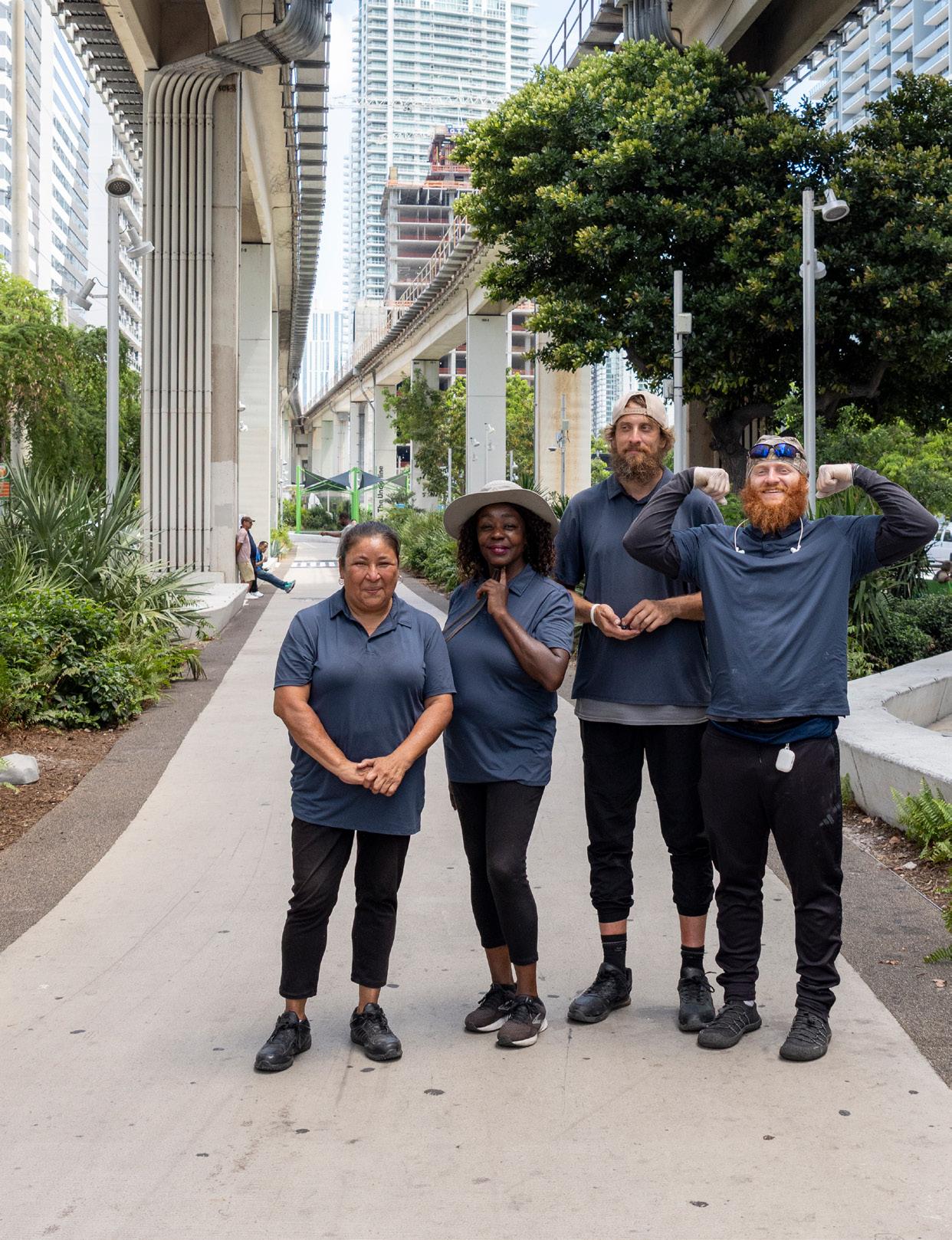
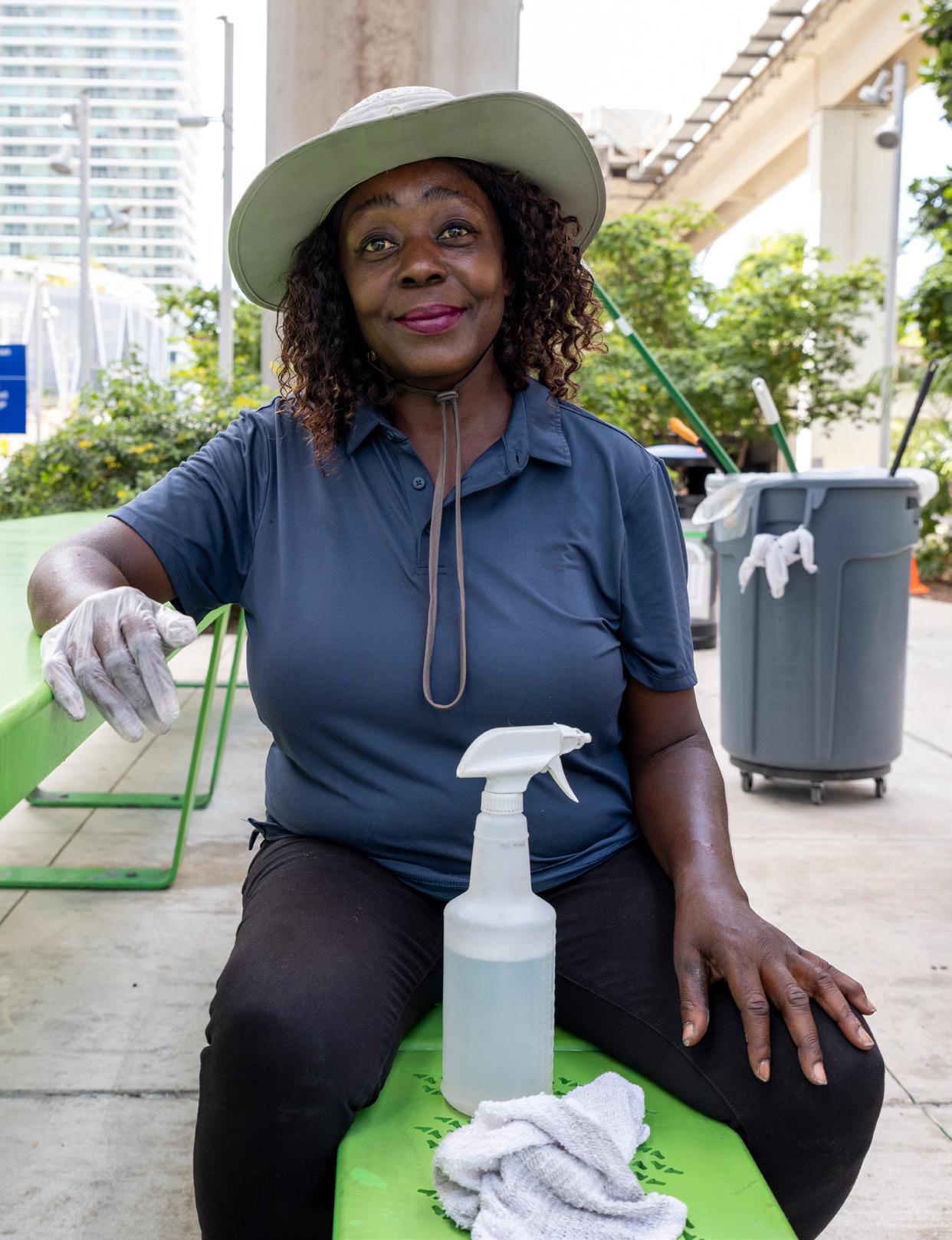
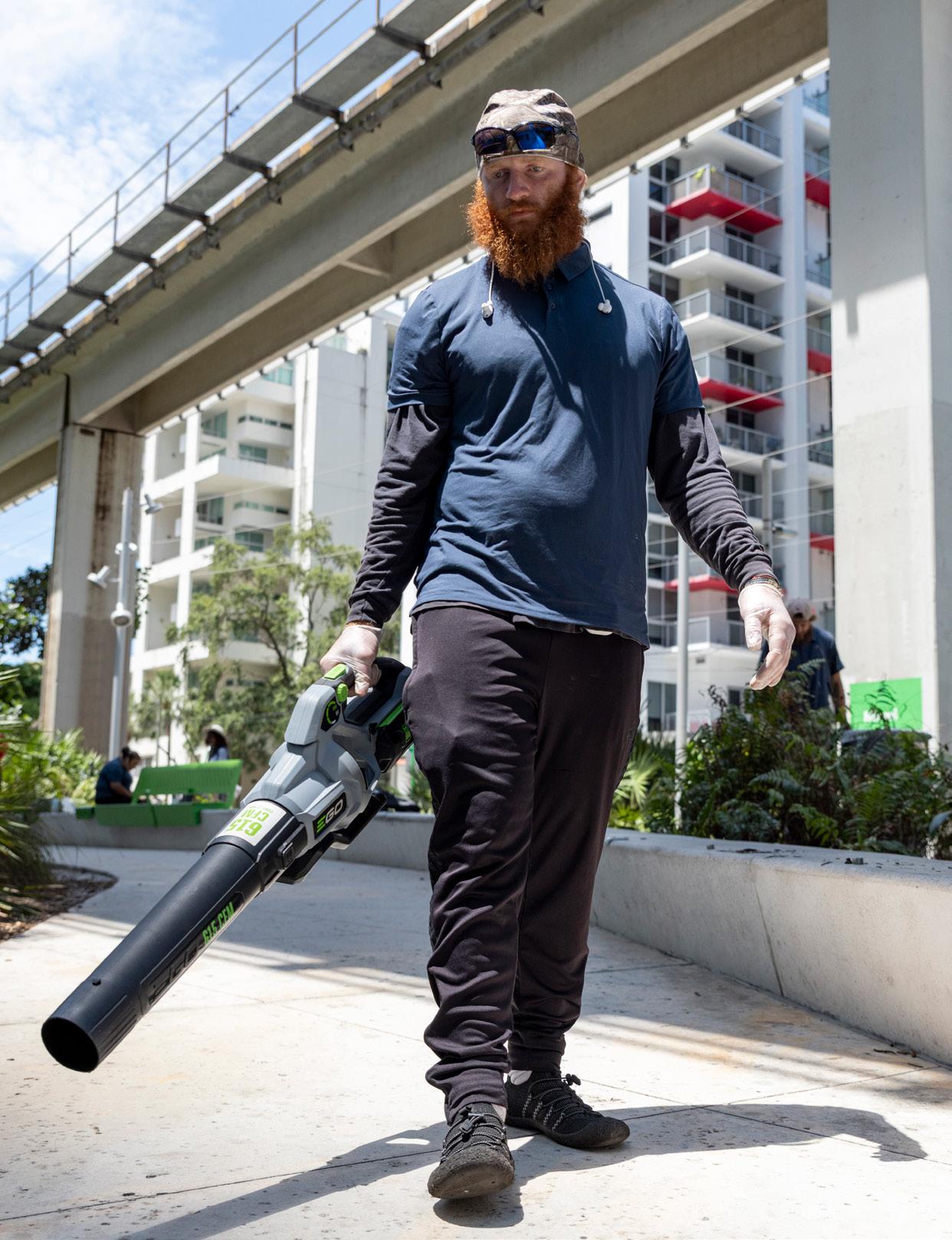
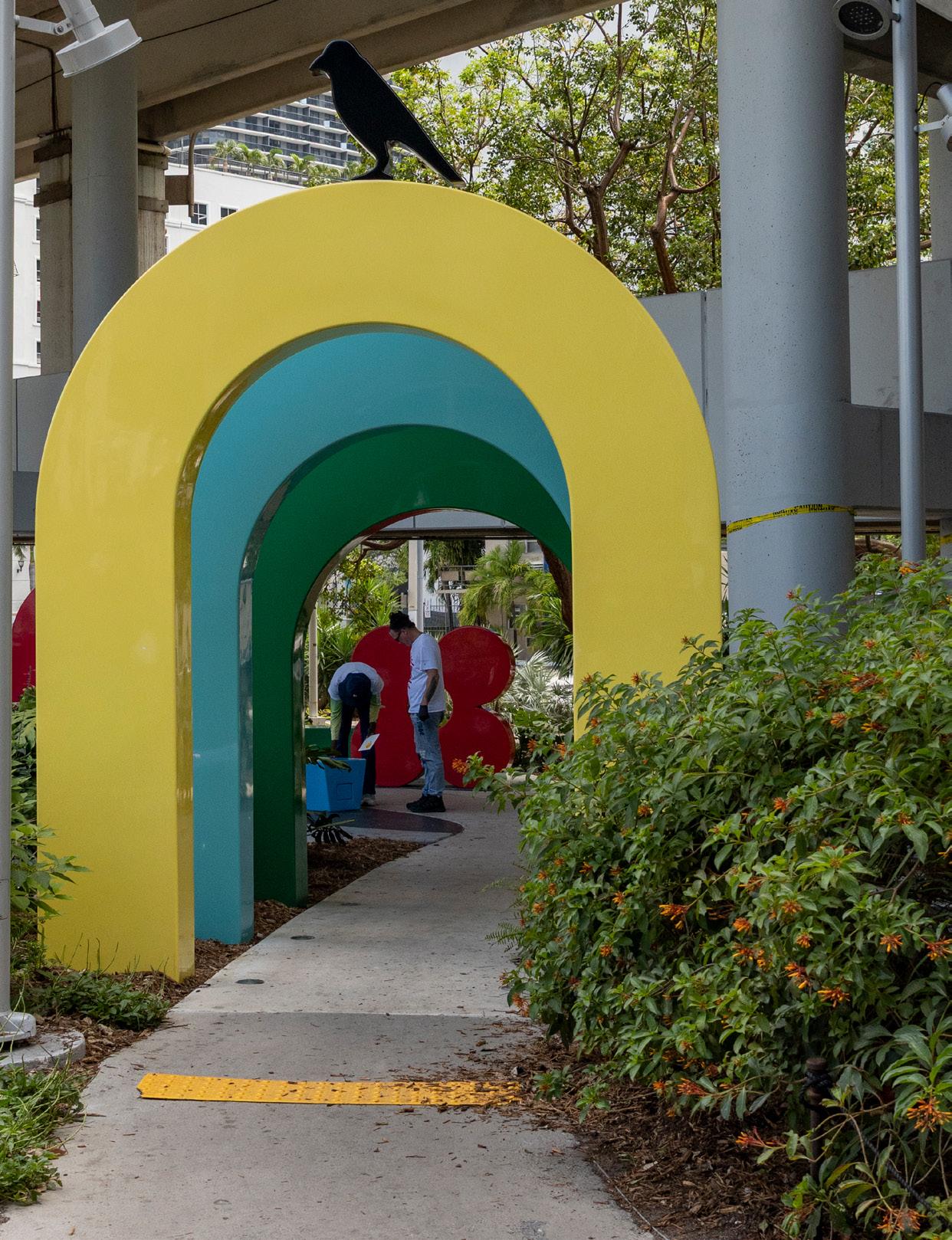
Under the shaded paths of The Underline, Miami’s linear park that runs beneath the Metrorail, a quiet transformation is taking place. Seven individuals, once unhoused and now employed as park stewards, start their mornings clearing litter, tending to native plants and caring for one of the city’s most ambitious urban green spaces.
Their work is more than maintenance. It’s restoration not just of the park but of lives once uprooted.
“Working here has helped me learn new things and feel more confident,” says Levi Adams-Parker. “Seeing people smile or thank us makes me happy about the work I do.”
Nearby, Marie Rockemore moves with purpose, checking benches and planters to ensure the park looks just right. “I help with the daily operations that keep the park clean, organized and welcoming,” she says. “I’ve learned to communicate better, work with different people and take pride in what I do.”
Both Levi and Marie are part of CP Works, a new park stewards program created by Chapman Partnership in collaboration with The Underline and supported by the Lennar Foundation.
The CP Works program prepares participants with certifications through Miami Dade College and handson skill development. Graduates now earn real wages maintaining four miles of The Underline’s trails and green corridors, with plans to expand to 28 stewards as the park grows to its full 10-mile stretch.
THE UNDERLINE IS FOR EVERYONE. WE REALIZED WE COULD DO MORE THAN JUST WELCOME PEOPLE WHO ARE STRUGGLING WITH HOMELESSNESS, WE COULD PROVIDE THEM WITH OPPORTUNITIES. THIS PROGRAM ALLOWS THEM TO REBUILD THEIR LIVES THROUGH STEADY, DIGNIFIED WORK.
Patrice Gillespie Smith President and Chief Operating Officer, The Underline
For Marshall Ames, chairman of the Lennar Foundation, this partnership symbolizes not only workforce training, but a blueprint for civic responsibility.
“We have a philosophy: If you give a person a fish, you feed them a meal. If you teach them to fish, you feed them for a lifetime,” says Marshall Ames.
“The mission of the Lennar Foundation isn’t to build parks, but to help people build independent, self-sufficient lives. The need for maintenance, repair and care on The Underline will last for years, and we are happy to be partners with Chapman Partnership in providing skilled workers for that.”
ENDING HOMELESSNESS: THIRTY YEARS STRONG
For more than three decades, Chapman Partnership has been at the heart of Miami’s advocacy against homelessness, offering not only shelter but also pathways to education, healthcare and employment.
As the private sector partner of the Miami-Dade County Homeless Trust, Chapman Partnership manages two homeless assistance centers in Miami and Homestead, serving individuals impacted by domestic violence, veterans, people with disabilities, and unaccompanied youth, among others. Ron Book, chairman of the Miami-Dade County Homeless Trust, reflects:
For 30 years, the Miami-Dade County Homeless Trust and Chapman Partnership have worked hand in hand to prove that homelessness is a solvable issue. Our progress shows what happens when compassion meets accountability and the public and private sectors truly work together in true partnership fashion.
Residents begin their journey by “stabilizing,” receiving healthcare, counseling and essential services like internet access, daycare and nutritious meals. From there, they move into education and employment. More than 100 community and government partners collectively guide residents toward independence.
“We’re changing everything we do in a trauma-informed way to reflect a more positive, empathetic approach, what I call empathetic accountability,” says Alex Paz, vice president of education and workforce development at Chapman Partnership.
“Everyone still needs to be responsible for their goals, whether it’s education, parenting, employment or housing, but we can guide them with compassion. There’s a way to hold people accountable while also understanding their journey, and our team does a great job of that.”
“
NO ONE SLEEPS ON THE STREETS”
When Alvah Chapman Jr., then-publisher of the Miami Herald, helped establish the Homeless Trust and Chapman Partnership three decades ago, an estimated 10,000 people were living on the streets of Miami. His leadership, alongside a coalition of civic and business figures, created a model that still defines Miami’s approach to homelessness: prevention, rehabilitation and reintegration.
Today, fewer than 1,000 individuals live unsheltered in MiamiDade County, a testament to the endurance of that vision.
By comparison, Los Angeles counts more than 50,000.
“Mr. Chapman always said he wanted Chapman Partnership to be the hub of community economic advancement, education and resources, ultimately helping people find permanent housing,” Alex says.
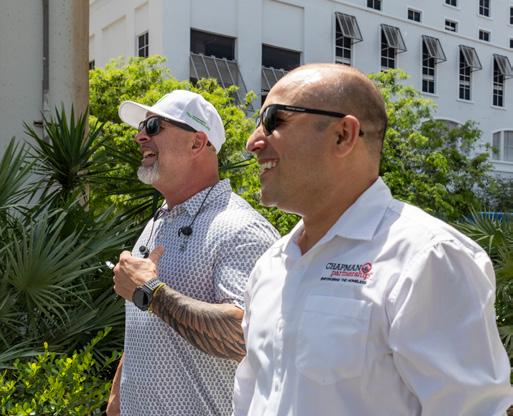
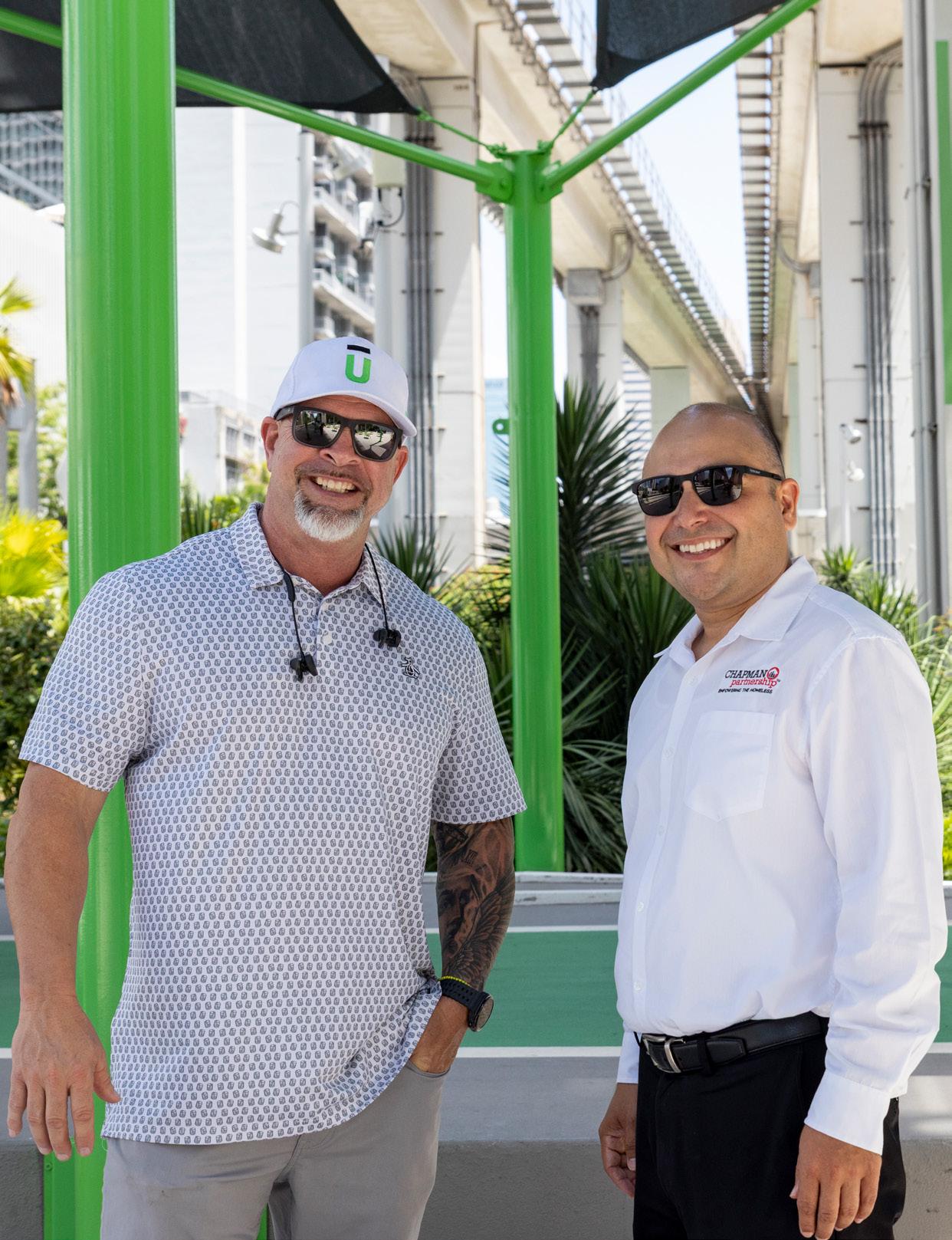
From left to right: Miguel Claro, maintenance services supervisor of the Underline & Alex Paz, Vice President of Education and Workforce Development of Chapman Partnership.
Photo courtesy of Chapman Partnership
Photo courtesy of Chapman Partnership
IT’S MUCH MORE THAN THREE MEALS AND A PLACE TO SLEEP. IT’S A THUNDEROUS DEFENSE OF THE LEAST, THE LAST AND THE LOST. ‘NO ONE SLEEPS ON THE STREETS’ – THAT’S OUR MANTRA.
Alex Paz Chapman Partnership
From Alvah Chapman’s vision in the 1990s to today’s publicprivate collaborations, Chapman Partnership remains a cornerstone of Miami’s social fabric. Each year, it helps more than 2,300 people transition into permanent housing, supported by a team of 170 professionals and a network of care grounded in both empathy and accountability.
TOWARD ECONOMIC MOBILITY
Scott Hansel, CEO and president of Chapman Partnership, states:
Our 30-year milestone isn’t just a celebration. It’s proof that long-term community investment works. The park stewards program is an extension of that legacy, a living example of how innovation and collaboration keep our model evolving.
Scott sees enormous potential in transforming initiatives like CP Works into a staffing and training agency, not only for Chapman’s clients but for others across Miami-Dade’s homelessness continuum of care.
Rather than relying solely on traditional grants, the organization is exploring partnerships with municipalities, real estate developers, hotels and hospitals for landscaping and maintenance contracts.
Looking further ahead, Scott envisions a future where Chapman also owns and operates transitional workforce housing, affordable units linked directly to employment and education opportunities. This model would allow residents to move seamlessly from shelter to stability and, ultimately, to self-sufficiency.
“Housing in Miami is out of reach for too many people. If a two-bedroom apartment costs $2,500 a month, maybe we can offer it for half that, giving people more runway to rebuild their lives. We want to create what I call a bridge to self-determined success, combining workforce housing with employment programs like CP Works.”
Scott emphasizes that realizing this vision depends on strong cross-sector partnerships and new ways to sustain funding.
WE SEE OURSELVES AS A VITAL PART OF MIAMI’S ECONOMIC ECOSYSTEM, NOT JUST A CHARITY. YES, WE’RE HELPING PEOPLE ON THE MARGINS OF SOCIETY FIND HOPE AND REESTABLISH THEMSELVES, AND THAT’S A SOCIAL AND MORAL DUTY. BUT THERE’S ALSO TREMENDOUS ECONOMIC VALUE IN WHAT WE DO. THAT’S THE MESSAGE I SHARE WITH THE BUSINESS COMMUNITY: THIS ISN’T JUST OUR ISSUE, IT’S EVERYONE’S.
Scott Hansel Chapman Partnership
Photo courtesy of Chapman Partnership
A NEW WAY TO PLAY
What if building climate resilience starts not with policy but with a soccer ball? This grassroots movement is showing how sport can reshape conservation and community identity.
By Kacie Brown
Photo courtesy of Play for the Mangroves
Photo courtesy of Play for the Mangroves
Filling the coasts of the Caribbean and stretching across the world’s warm-weather regions, mangroves project fortitude through thick, interlaced roots anchored in saltwater. Their waxy green leaves catch the sun as they stabilize shorelines, shelter biodiversity and quietly absorb carbon from the atmosphere. Yet these living coastal defenses are increasingly under extreme risk against pollutants, rising sea levels and deforestation.
In 2024, the International Union for Conservation of Nature categorized half of the world’s mangroves as vulnerable, endangered or critically endangered. The organization also credits mangroves with protecting 15.4 million people and $65 billion in property each year by buffering coastlines from storms, flooding and erosion.
From his home in the Dominican Republic, Ismael DíazTolentino has seen mangrove loss firsthand. Along with environmental changes, real estate and tourism developments threaten the trees that fortify local villages and wildlife.
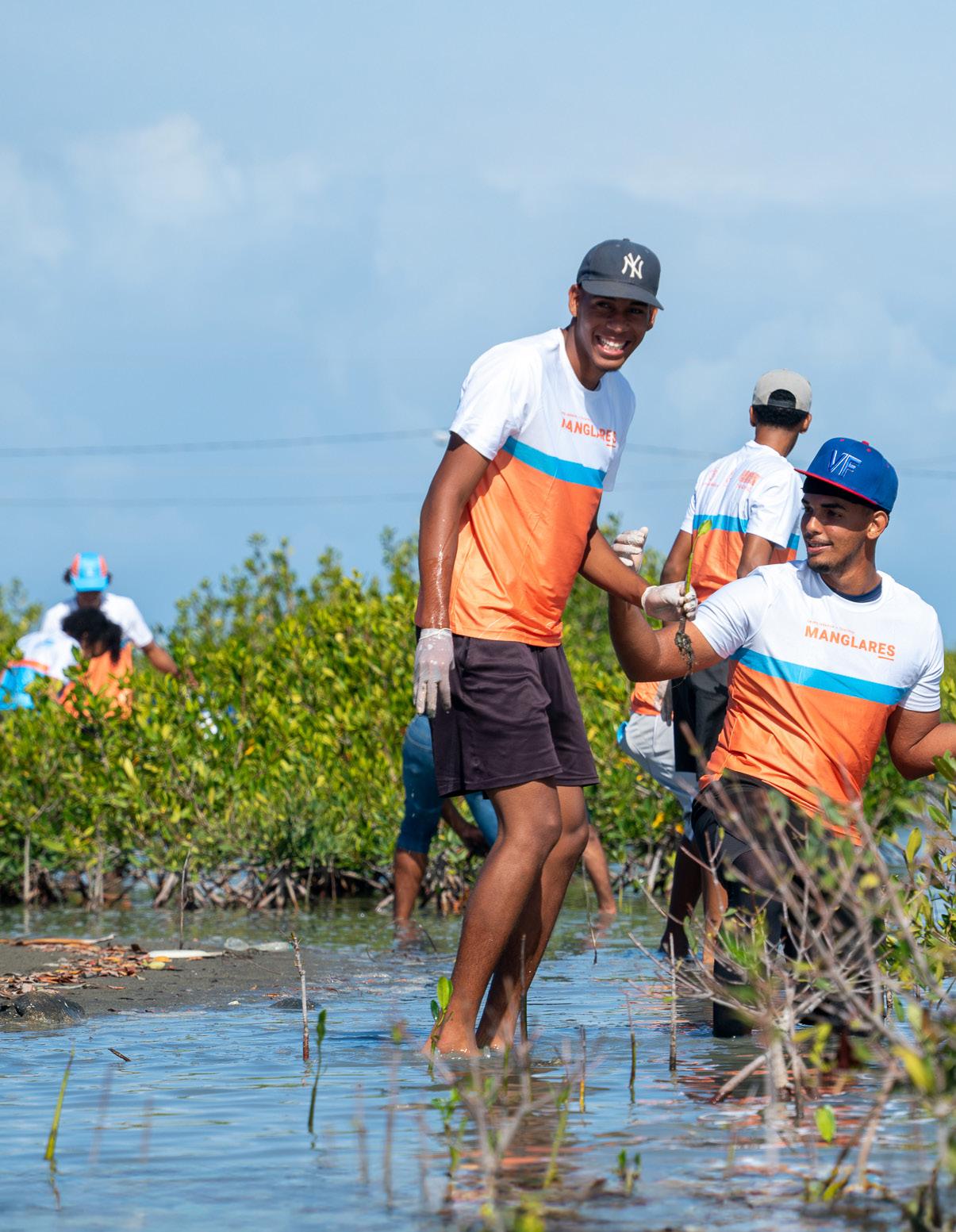
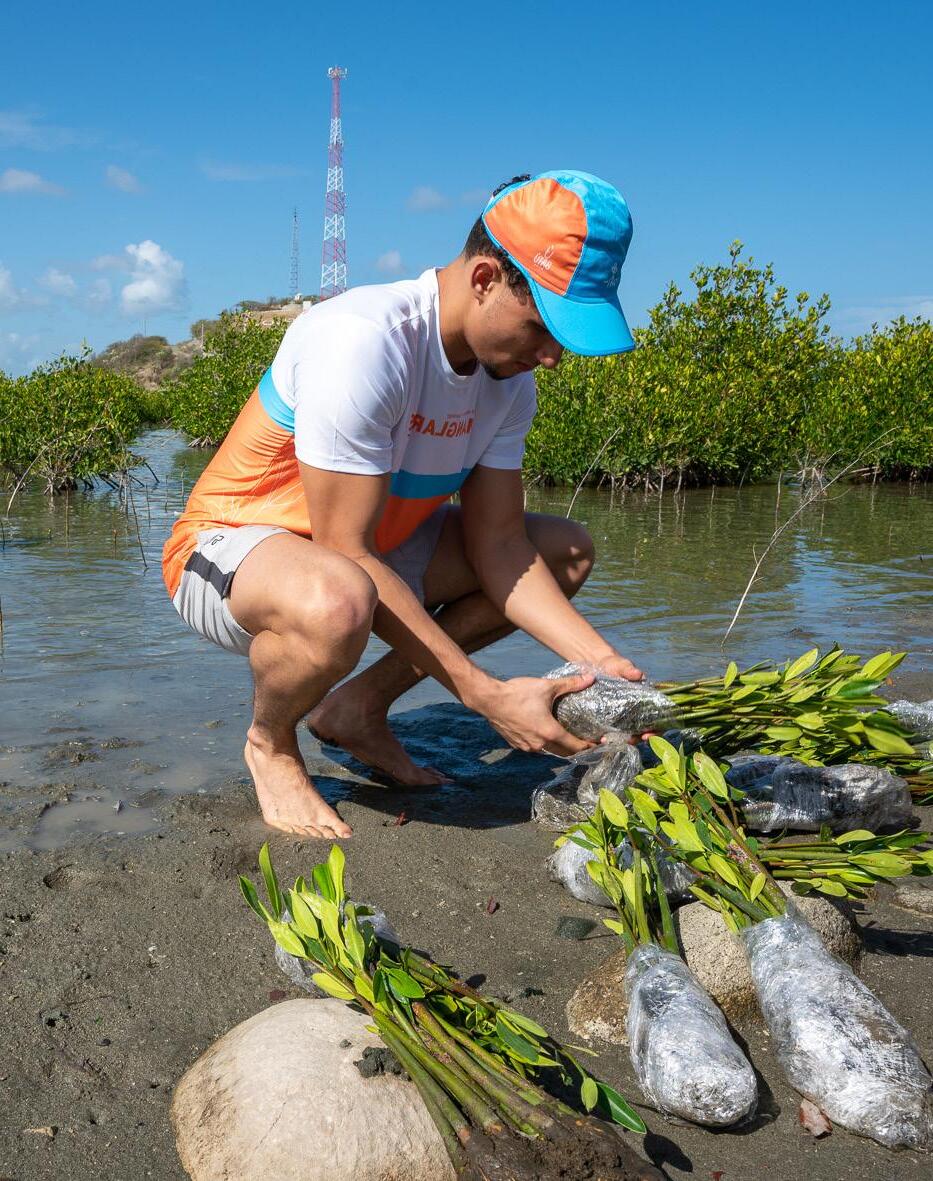
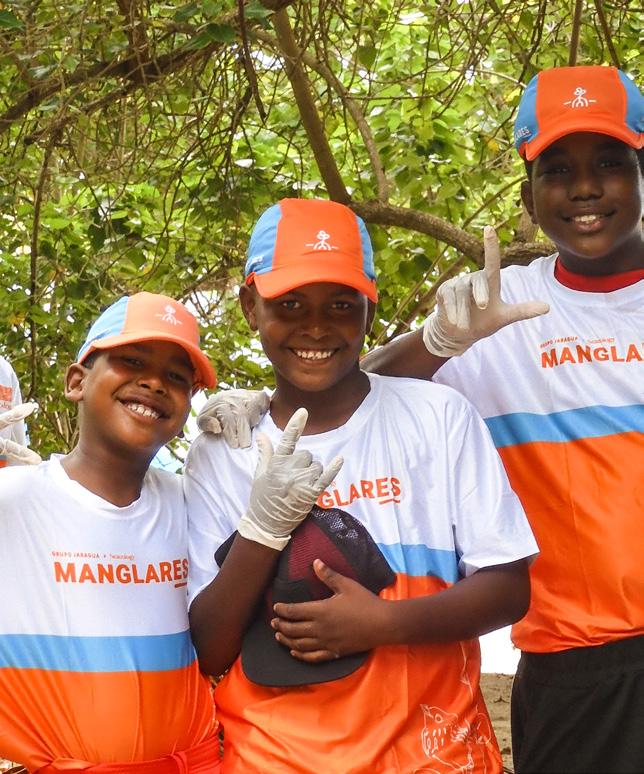
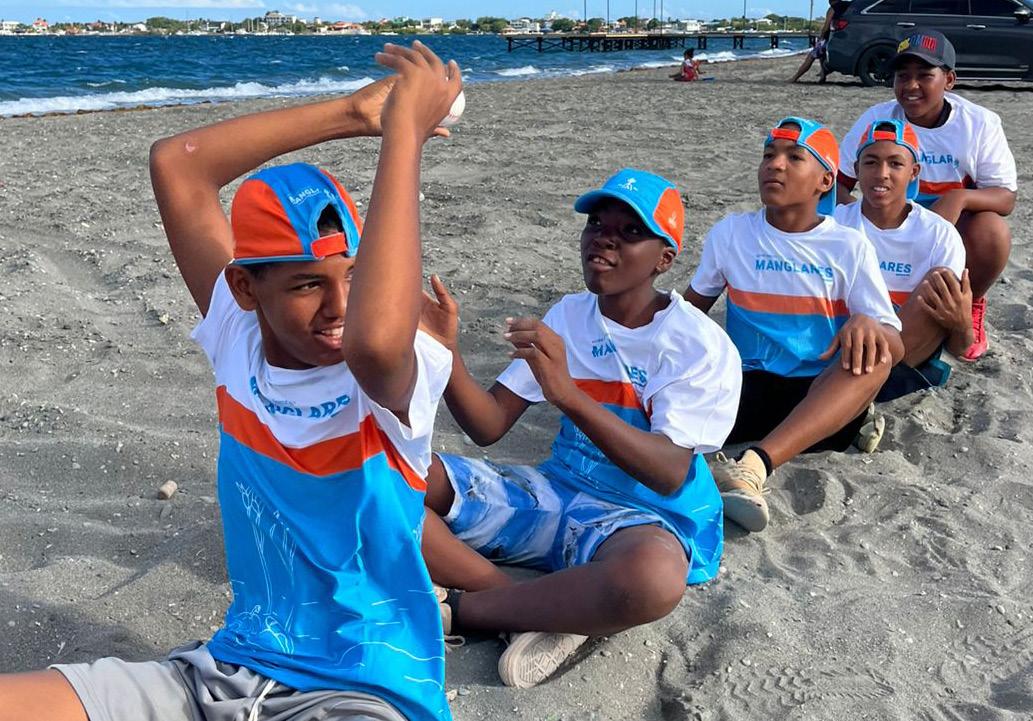
Growing up in the beachside town of Baní, Ismael had two passions: sports and ecology. When a friend from the environmental conservation nonprofit Seacology approached him about developing an initiative that combined the two, Ismael was ready. He and Seacology founded Play for the Mangroves, a program that gives schools in coastal communities sports equipment, uniforms and coaching. The only cost is participation in a mangrove restoration project.
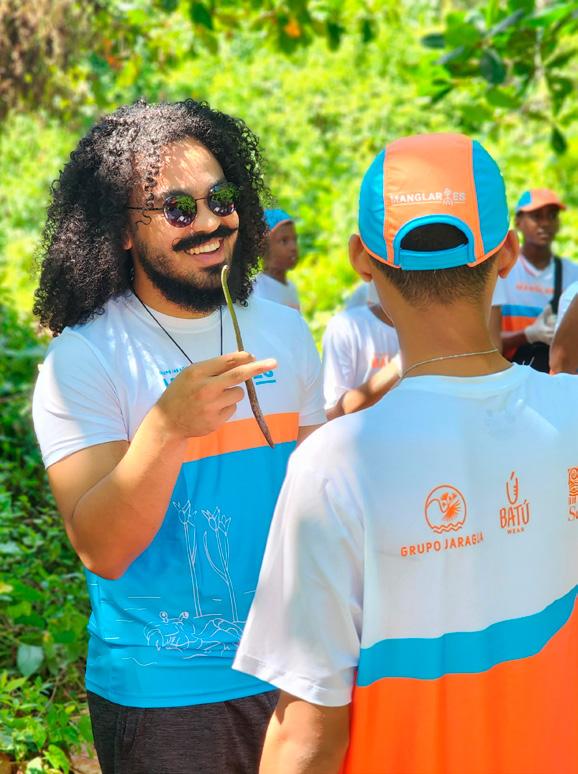
Play for the Mangroves asks participating schools to pledge to be guardians of their local mangrove forest. The organization involves students in cleanup projects, mangrove planting and reforestation efforts, and environmental data collection. But they also just get students outside.
WE GO BIRD WATCHING. WE WALK AROUND THE MANGROVES. WE DISCUSS DIFFERENT TOPICS. WE EVEN TALK ABOUT SCHOOL, GRADES AND STUFF LIKE THAT. WE JUST WANT TO BE IN THE MANGROVES AND ENJOY THAT ENVIRONMENT.
Ismael Díaz-Tolentino Play for the Mangroves
Ismael says one of the biggest social challenges behind mangrove conservation is local attitudes toward the forests. He describes students in one Dominican Republic community’s first interactions with the mangroves.
About 75% of them had never been in the mangroves, even though they were just 10 minutes from their school. They thought it was stinky, dangerous, and full of mosquitoes. Just by inviting them over, walking them through the mangroves, talking to them about how important they were and the species they saw, the little birds, all of their faces lit up.
The program has spread beyond students as well. In 2025 the nonprofit hosted a community 5K run in one Dominican Republic town that became unexpectedly popular.
"We were expecting about 50 people to show up. At the end of the day about 200 showed up. The kids’ parents, their friends, their cousins, uncles, everyone just came out,” Ismael recalls.
“The mayor of the town also showed up, and he was so moved by the movement, the environment and the people in the mangroves that he declared that town a mangrove town with its own protected area. That was a moment that we felt like, ‘This is actually making change, and we can feel it."
Play for the Mangroves has also seen change beyond the trees. The organization has programs in place on two islands in the Philippines where administrators have described the shifting attitudes they’ve seen in students.
“School attendance is rising because of this program. Kids want to go to school because they want to be part of it, play table tennis, get their uniforms and go on field trips. That’s powerful,” Ismael notes.
As Ismael described at the 2025 Green Sports Alliance Summit in Miami, where Play for the Mangroves received the alliance’s Community Impact Award, he sees replication possibilities for the program in any ecosystem. He says the dual benefits that come from uniting a community in play and care for its environment are profound.
Photo courtesy of Play for the Mangroves
SPORTS HAVE THE POWER TO MOVE PEOPLE, TO UNITE COMMUNITIES AND INSPIRE ACTION. AND WHEN WE CHANNEL THAT POWER TOWARD PROTECTING OUR PLANET, WE UNLOCK SOMETHING EVEN GREATER.
Ismael Díaz-Tolentino Play for the Mangroves
Photo courtesy of Museum of Art and Design, Miami Dade College
FREEDOM TALKS
By Yulia Strokova
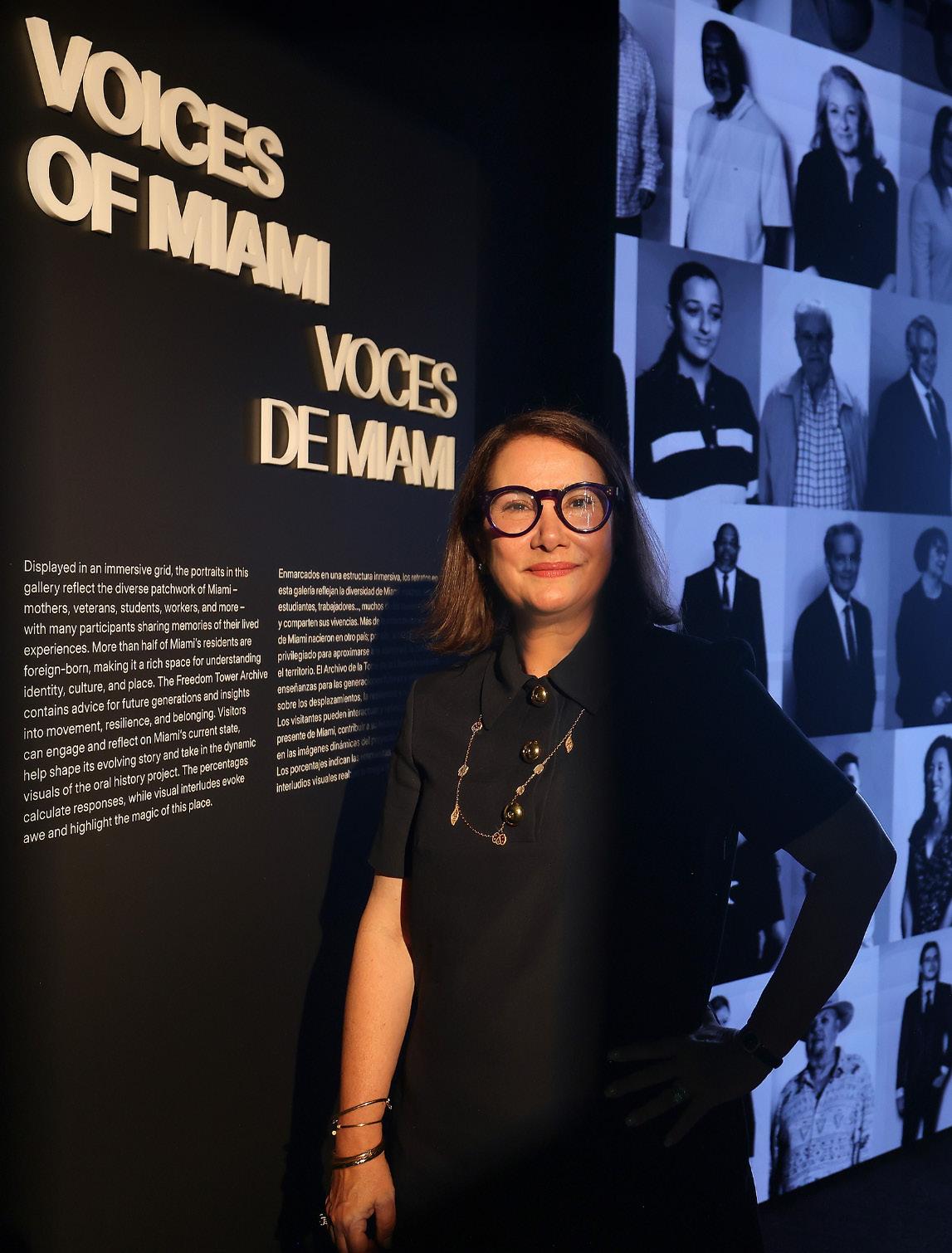
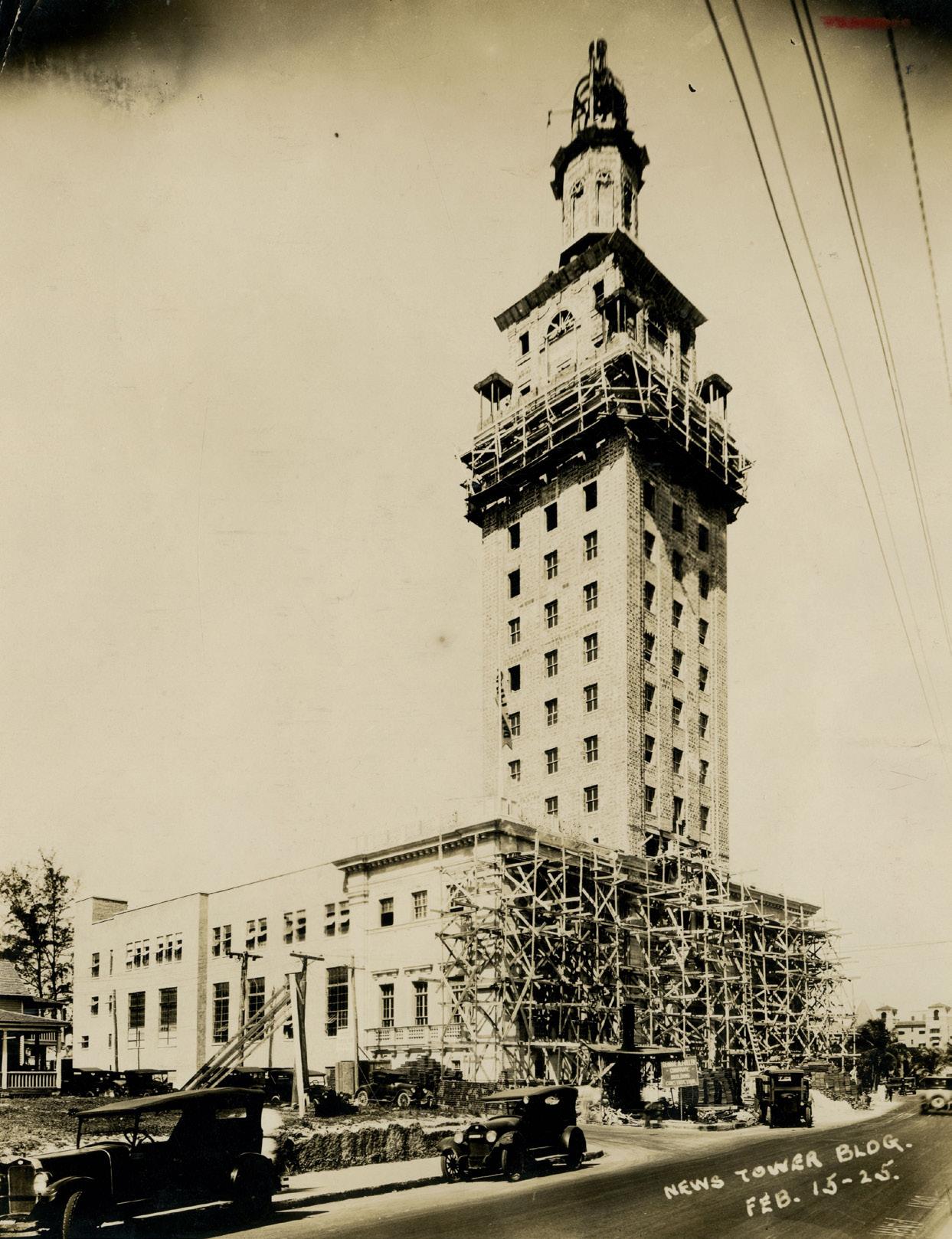
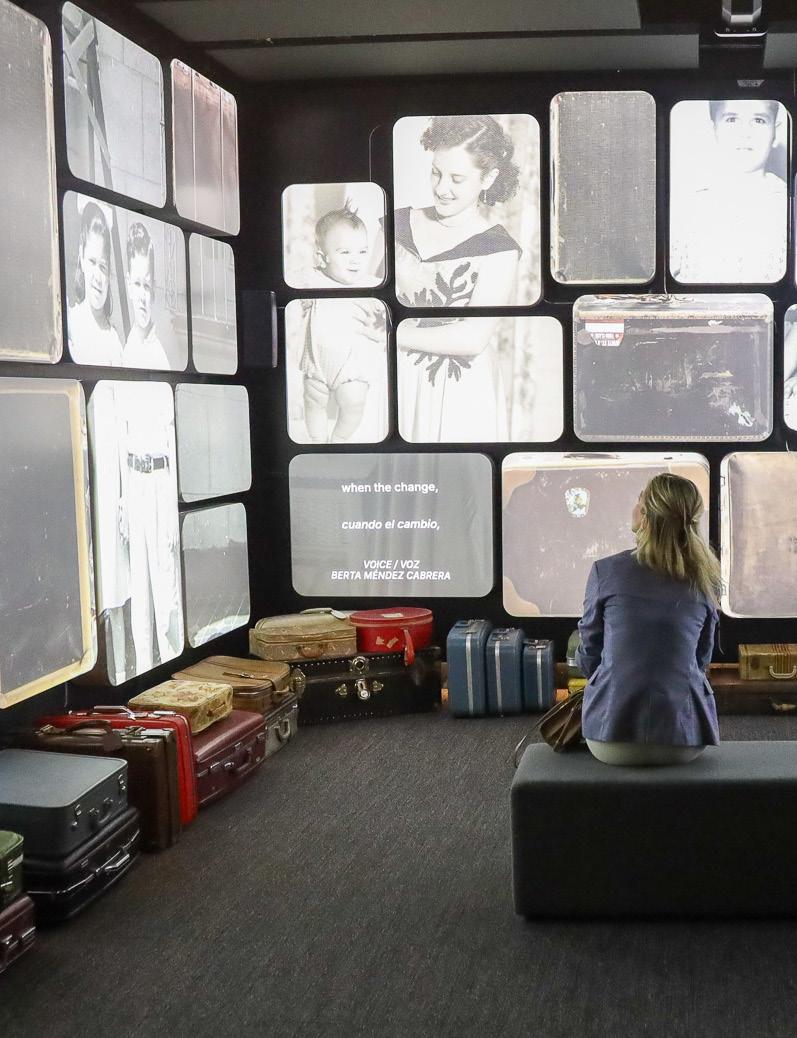
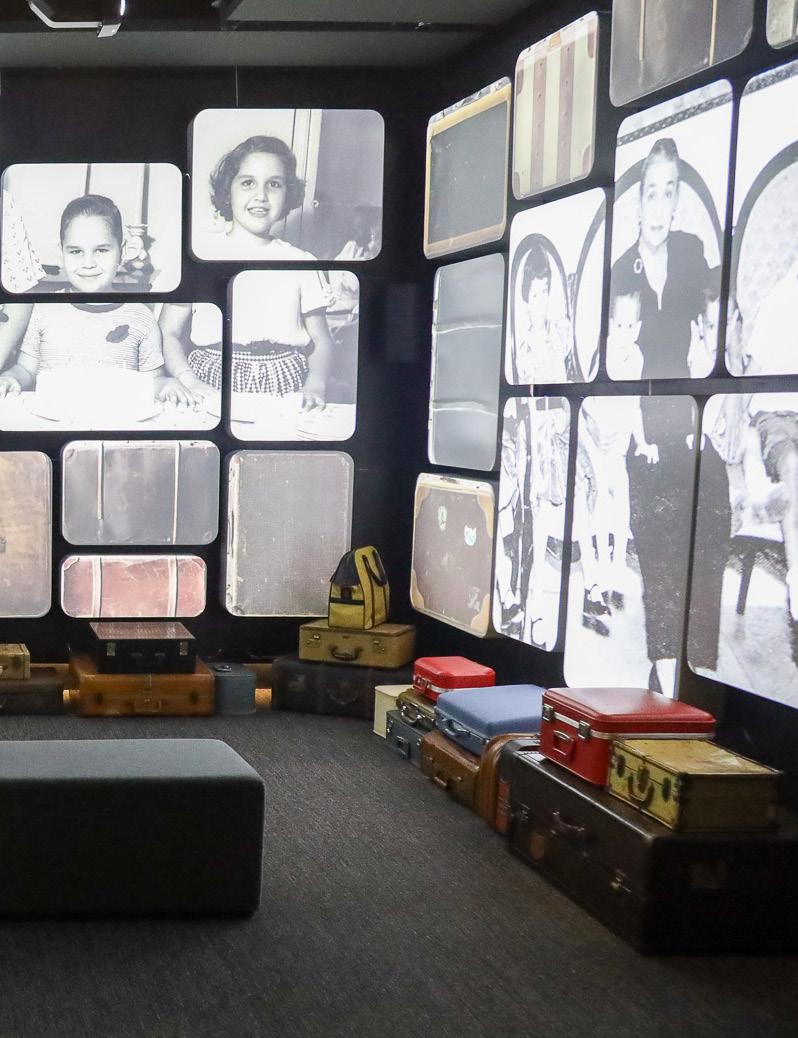
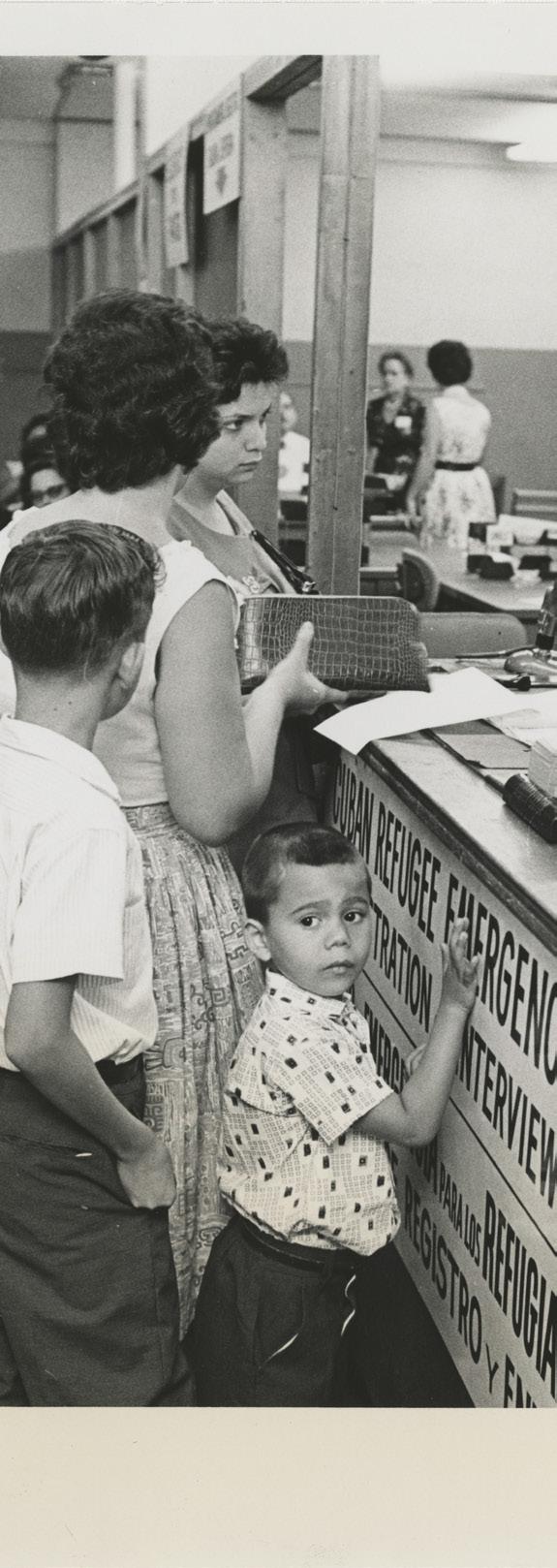
s visitors to Miami’s Freedom Tower move through a dim corridor leading into "Voices of Miami," illuminated historical vignettes line the passage. They trace the Tower’s origins as the home of The Miami News before revealing its later role as the Cuban Assistance Center, also known as “El Refugio,” where around 400,000 Cuban exiles received food, medical care and counsel upon arrival in the United States.
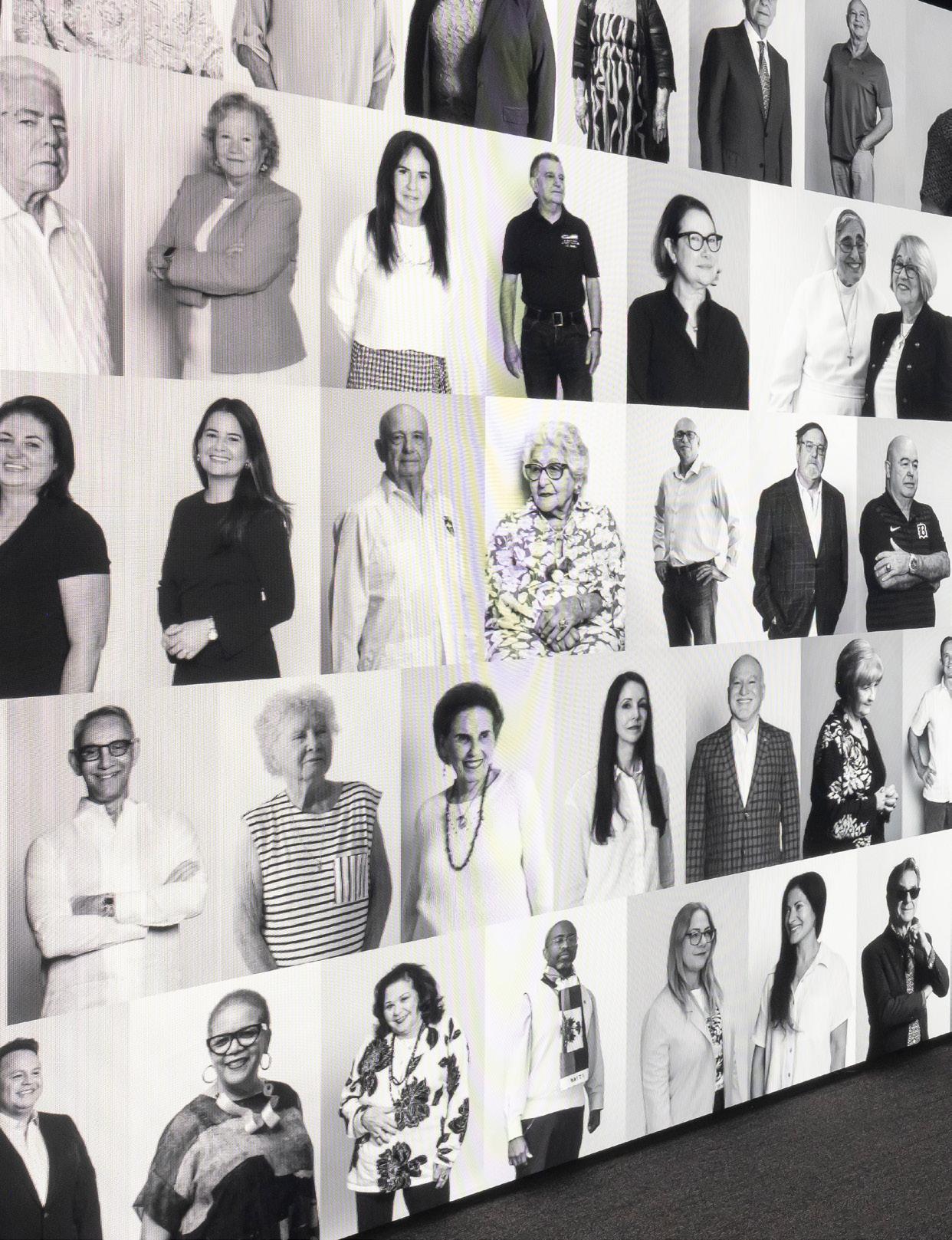
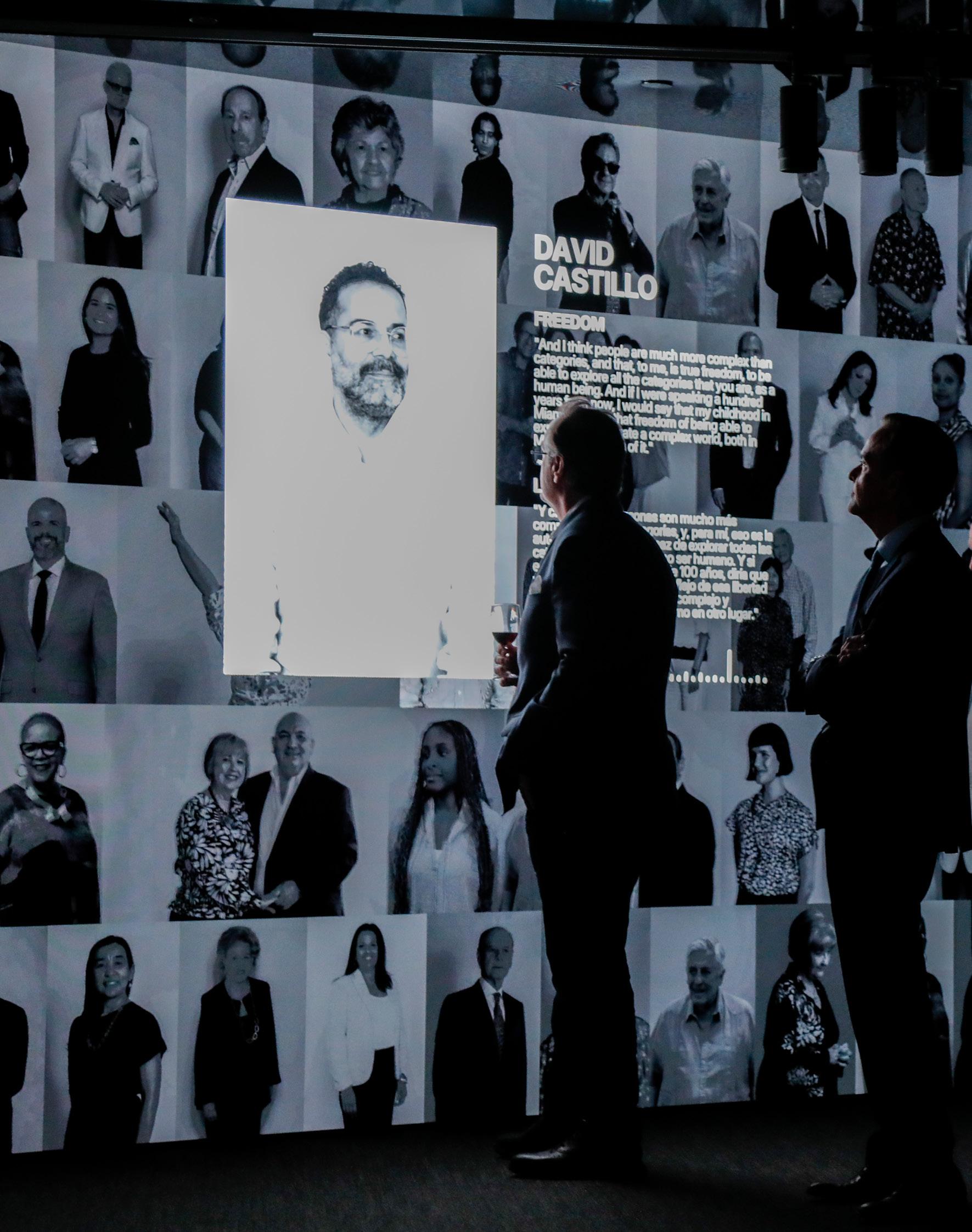
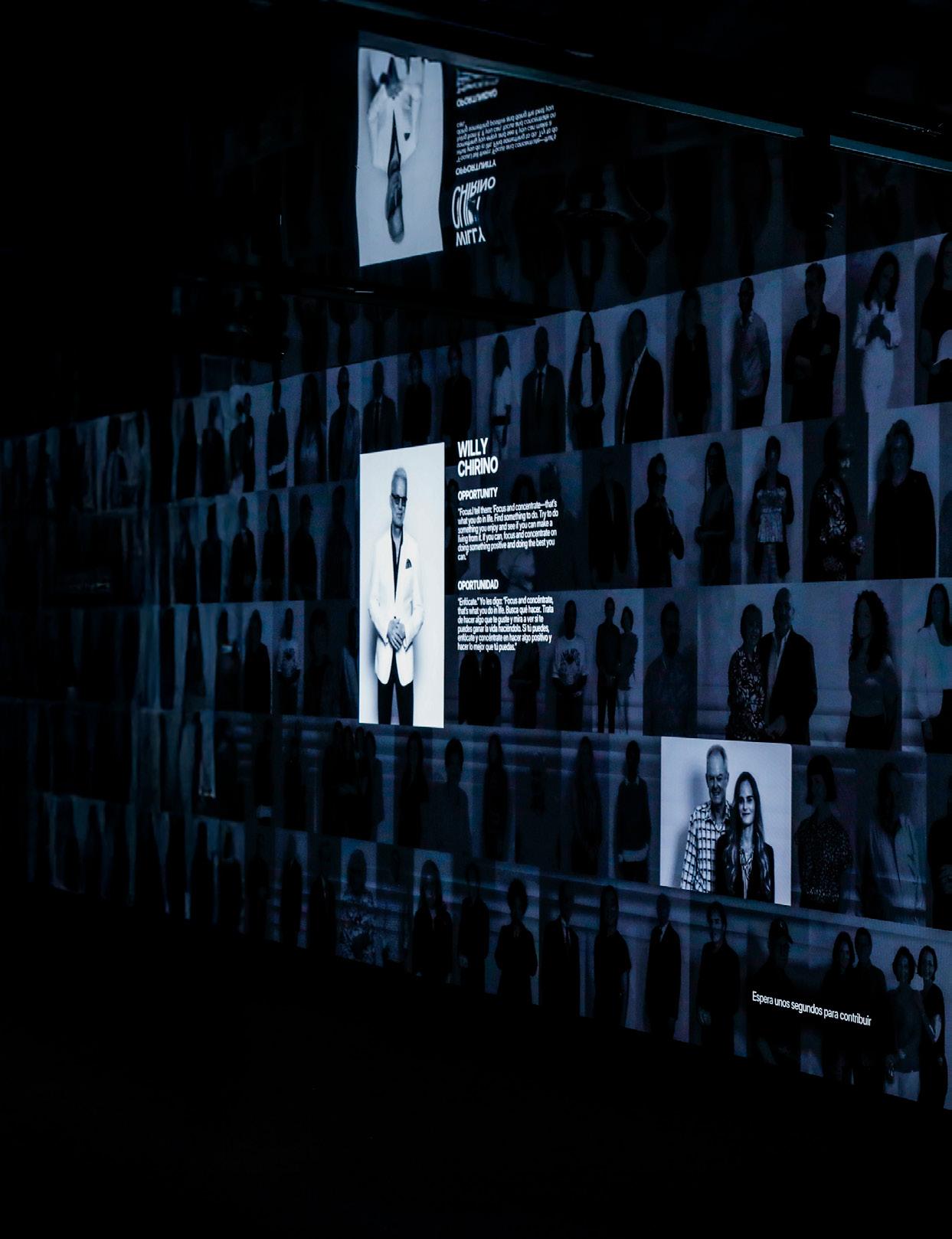
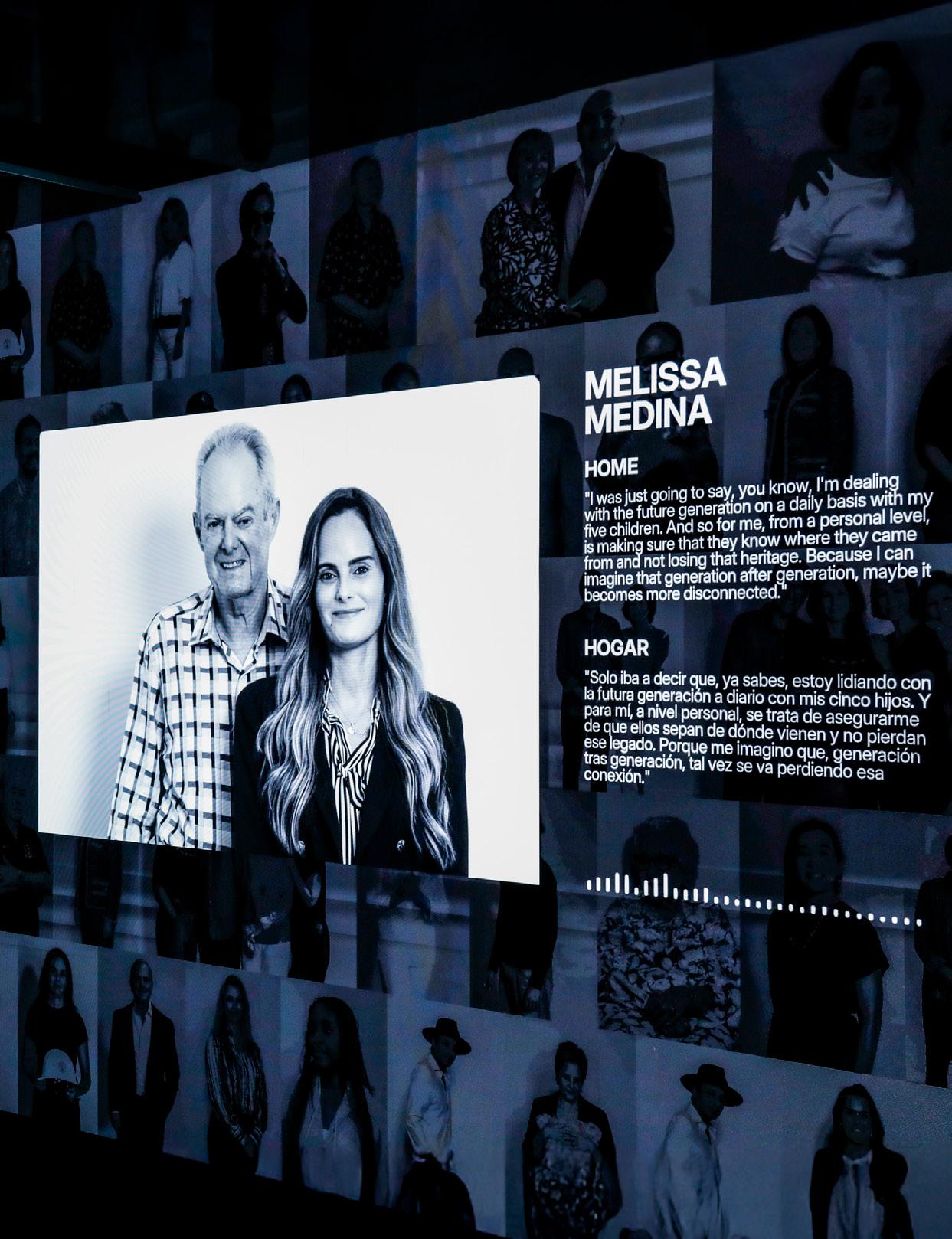
At the top, the exhibition opens into an immersive encounter. A grid of 400 black-and-white portraits fills a touch-activated wall, inviting visitors to pause, listen and meet the person behind each image as they tell their own story.
Artists, community leaders, entrepreneurs, parents, veterans and ordinary people return the viewer’s gaze. Each portrait carries a quiet dignity, each voice holds a story waiting to be heard. Together they form a living archive of Miami — diverse, layered and continually unfolding.
Across rotating digital screens, four words appear in Spanish and English: "Oportunidad, Libertad, Hogar, Amor. Opportunity, Freedom, Home, Love." They reflect both the immigrant experience and the deeply personal journeys that have shaped this city.
A I AM DEEPLY INSPIRED BY THE STUDENTS FROM THE NEW WORLD SCHOOL OF THE ARTS AND MIAMI DADE COLLEGE WHO VISIT THE EXHIBITION. I LEARN FROM THEIR QUESTIONS, THEIR PERSPECTIVES AND THEIR REACTIONS. THIS WORK IS ABOUT HONORING THOSE WHO LIVED THESE EXPERIENCES WHILE ENSURING THEIR STORIES REACH THOSE WHO COME NEXT.
The "Voices of Miami" project began not with images, but with words spoken aloud. Its foundation lies in oral history interviews collected from Cuban, Haitian, Nicaraguan and Bahamian immigrant families and many others who once passed through the Freedom Tower seeking assistance during moments of profound transition.
“From the beginning, the idea was to record oral histories and let the community guide us,” says Amy Galpin, executive director and chief curator of the Museum of Art and Design (MOAD) at Miami Dade College. “We wanted to let the community tell its own story.”
As the interviews grew, so did the project’s purpose. These were not just testimonies of arrival but reflections on belonging, resilience and identity, stories that demanded to be preserved and shared across generations.
Amy Galpin Museum of Art and Design Miami Dade College
Photo courtesy of Museum of Art and Design, Miami Dade College
Today, the Freedom Tower Oral History Archive brings together a rich range of voices. Visitors encounter firsthand refugee accounts from cultural icons such as Emilio Estefan and Willy Chirino. They hear personal recollections from Rafael Peñalver, whose father Dr. Rafael A. Peñalver served as a physician at El Refugio and helped pave the way for thousands of Cuban exile physicians and health professionals to practice in the United States. And they listen to generational stories shared by Miami Dade College President Madeline Pumariega, whose family history is deeply intertwined with the building itself. Pumariega’s parents, immigrants from Cuba, arrived in Miami and were processed through the historic Freedom Tower, now shepherded by Miami Dade College.
As the archive expanded, one realization became unavoidable: Voice alone was not enough. These stories needed faces. That insight brought photographer Clara Toro into the project.
Born in Colombia and based in Miami for more than three decades, Clara has spent her career documenting lives often overlooked by photographing people in their homes, workplaces and neighborhoods. For "Voices of Miami," she traveled across the city, from Miami Dade College campuses to Coral Gables, Miami Beach, West Kendall and Aventura, taking monochromatic portraits of both well-known figures and those rarely seen.
"When you are a documentary photographer, the hardest part of the job is gaining access and trust,” Clara says. “Here, people were ready to share. They trusted the process."
The choice to work in black and white was deliberate as well.
"When you move to this country as an immigrant, you always have a black-and-white photo taken of you,” she explains.
“For your passport. Your ID. Your new identity. The white background becomes a blank slate."
In "Voices of Miami," the absence of color does not erase difference, it expands it. Each face stands on equal ground. Time collapses. The archive remains alive, continuing to grow and welcoming new participants into its unfolding story.
Today, more than half of Miami’s residents are foreign-born.
Over the past forty years alone, migration has accounted for more than 70 percent of Miami-Dade County’s population growth. Here, migration is not an abstraction but a daily reality woven into language, food, neighborhoods and memories.
IN "VOICES OF MIAMI," THESE LIVED REALITIES TAKE FORM THROUGH FACES AND VOICES THAT INVITE REFLECTION. EVERY JOURNEY ASKS THE SAME QUESTIONS: WHAT IS LEFT BEHIND? WHAT IS GAINED?
WHAT DOES IT TAKE TO BEGIN AGAIN?
Photo courtesy of Museum of Art and Design, Miami Dade College
THIS PROJECT IS A BEAUTIFUL WAY TO REMIND PEOPLE OF THE VALUE, STRENGTH, JOY AND HARD WORK
IMMIGRANTS BRING,
AND HOW
THEY
MADE MIAMI THE CITY IT IS TODAY.
Clara Toro Photographer
Photo courtesy of the artist
FREEDOM TOWER TURNS 100
In 2025 Freedom Tower, Miami’s first skyscraper, marked its 100th anniversary. Rising at the heart of downtown, the Tower’s centennial celebrates a collective legacy shaped by hope and courage.
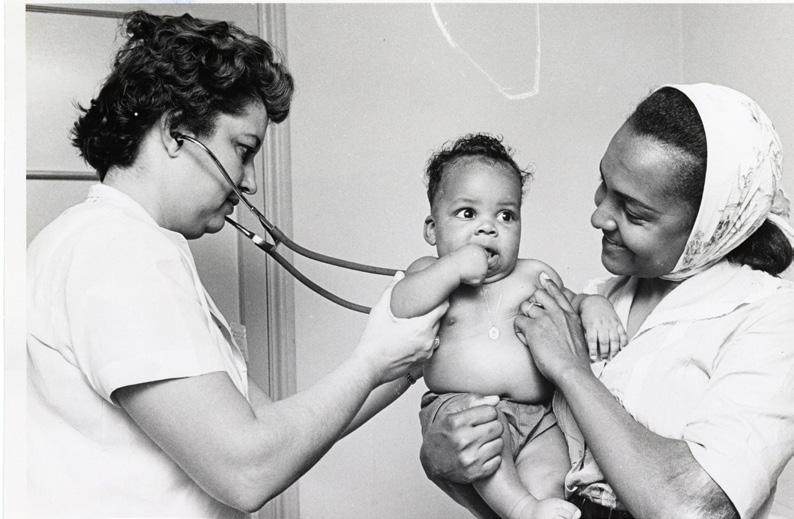
Originally built as the headquarters of the Miami Daily News, the tower later became “El Refugio,” the Cuban Refugee Center, where between 1962 and 1974 approximately 400,000 Cuban exiles received food, medical care, legal assistance and their first welcome to the United States.
After decades of disrepair, the Freedom Tower was rescued by Cuban American community leaders, led by Jorge Mas Canosa and the Mas family, who restored the building and donated it to Miami Dade College in 2005.
Reopened for its centennial following a major restoration, Freedom Tower now features newly reimagined galleries, tracing its layered history through immersive multimedia experiences.
At 100 years old, the tower remains not only a keeper of collective memory but a living space where history continues to unfold, honoring the generations of immigrants who shaped Miami while inviting new ones to reflect on identity, belonging and the meaning of freedom.
IN COLLECTING THESE STORIES, WE ARE PRESERVING THE VOICES, MEMORIES AND EMOTIONS THAT DEFINE OUR COMMUNITY. EACH STORY REMINDS US THAT HISTORY IS HUMAN, AND THAT THE FREEDOM TOWER HAS LONG STOOD AS A PLACE WHERE HUMANITY AND HERITAGE MEET.
Madeline Pumariega Miami Dade College President
Cuban Refugee family at the registration counter, 1962. Cuban Refugee Center Records. Image courtesy of the Cuban Heritage Collection, University of Miami Libraries, Coral Gables, Florida.
Miami Daily News production room, July 26, 1936. Miami News Photograph Collection. HistoryMiami Museum. https://historymiami.org/collections/ research-the-collection/ or archives@historymiami.org
Cuban Refugee Program Medical Services Nurse listening to baby’s back, circa 1968. Cuban Refugee Center Records. Image courtesy of the Cuban Heritage Collection, University of Miami Libraries, Coral Gables, Florida.
Antoinette Gorrin, El Refugio employee, interviewing Cuban Family, 1969, Courtesy of the Gorrin Family
THE POWER OF
By Yulia Strokova
Photo by Michael Dubrovin, Image Miami
Dara Schoenwald | Photo by Michael Dubrovin, Image Miami
f you had $100 to help make your community a little better, where would you choose to give it?
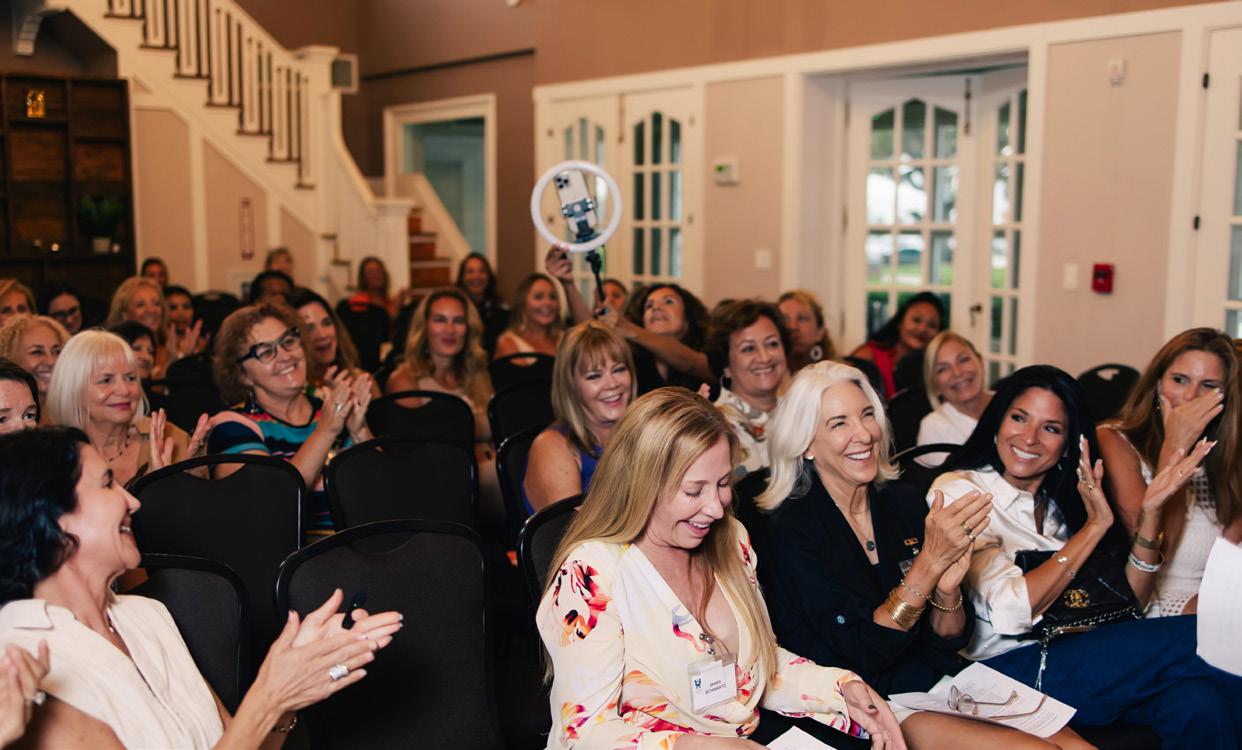
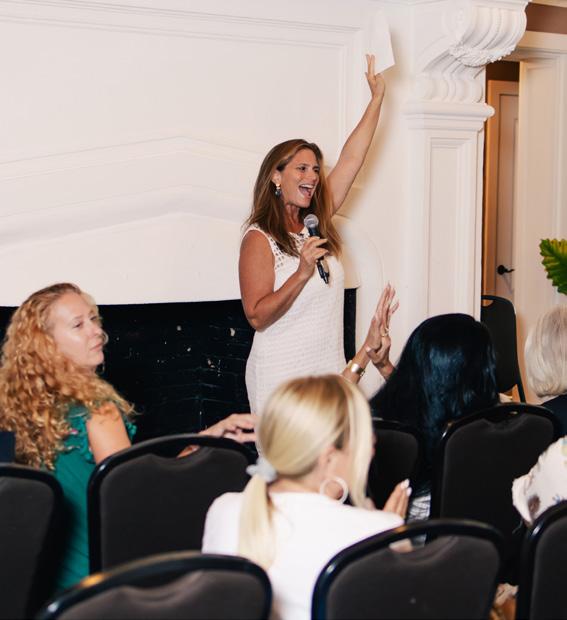
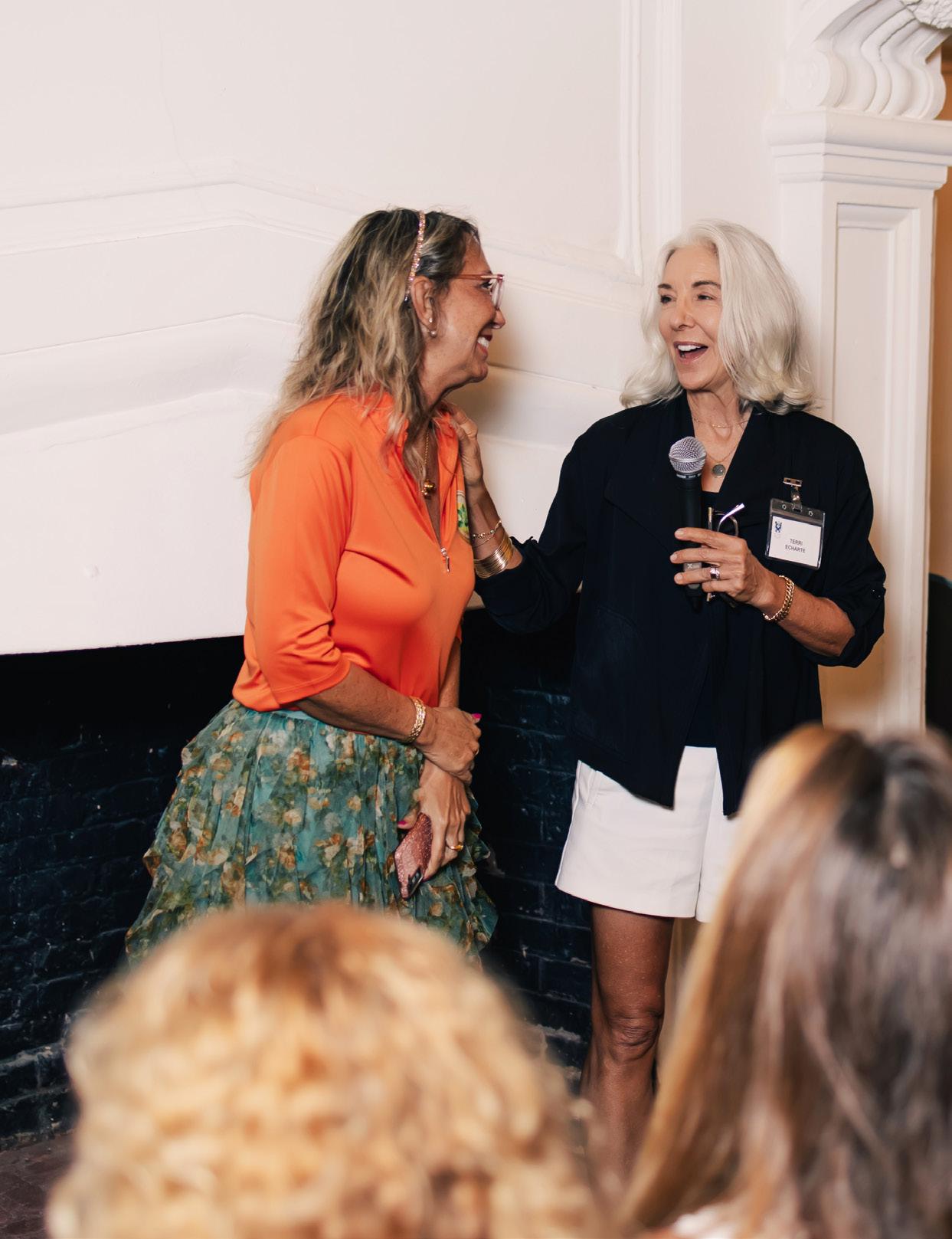
Sometimes, the most meaningful change does not begin with billion-dollar checks or large institutions but with a room full of people asking the same question and choosing to act together.
Dara Schoenwald, ocean activist and co-founder of the nonprofit organization Volunteer Cleanup, says:
ONE PERSON CAN GIVE $100. BUT 150 PEOPLE GIVING TOGETHER? THAT’S REAL CHANGE.
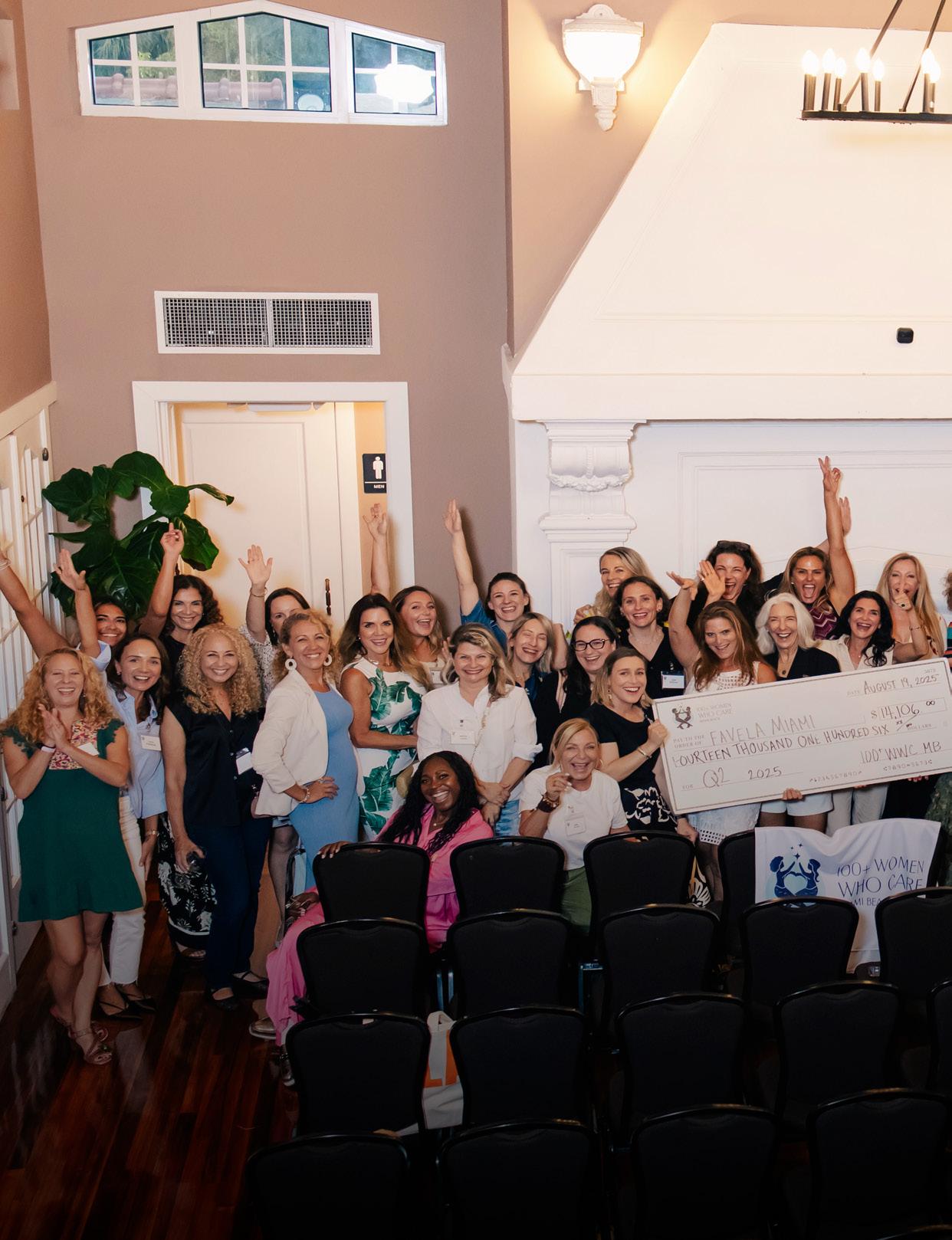
In early 2020, just as the world shut down, Dara stepped in to help build the Miami Beach chapter of 100+ Women Who Care.
"Everything was virtual, and yet we still managed to reach critical mass," she says.
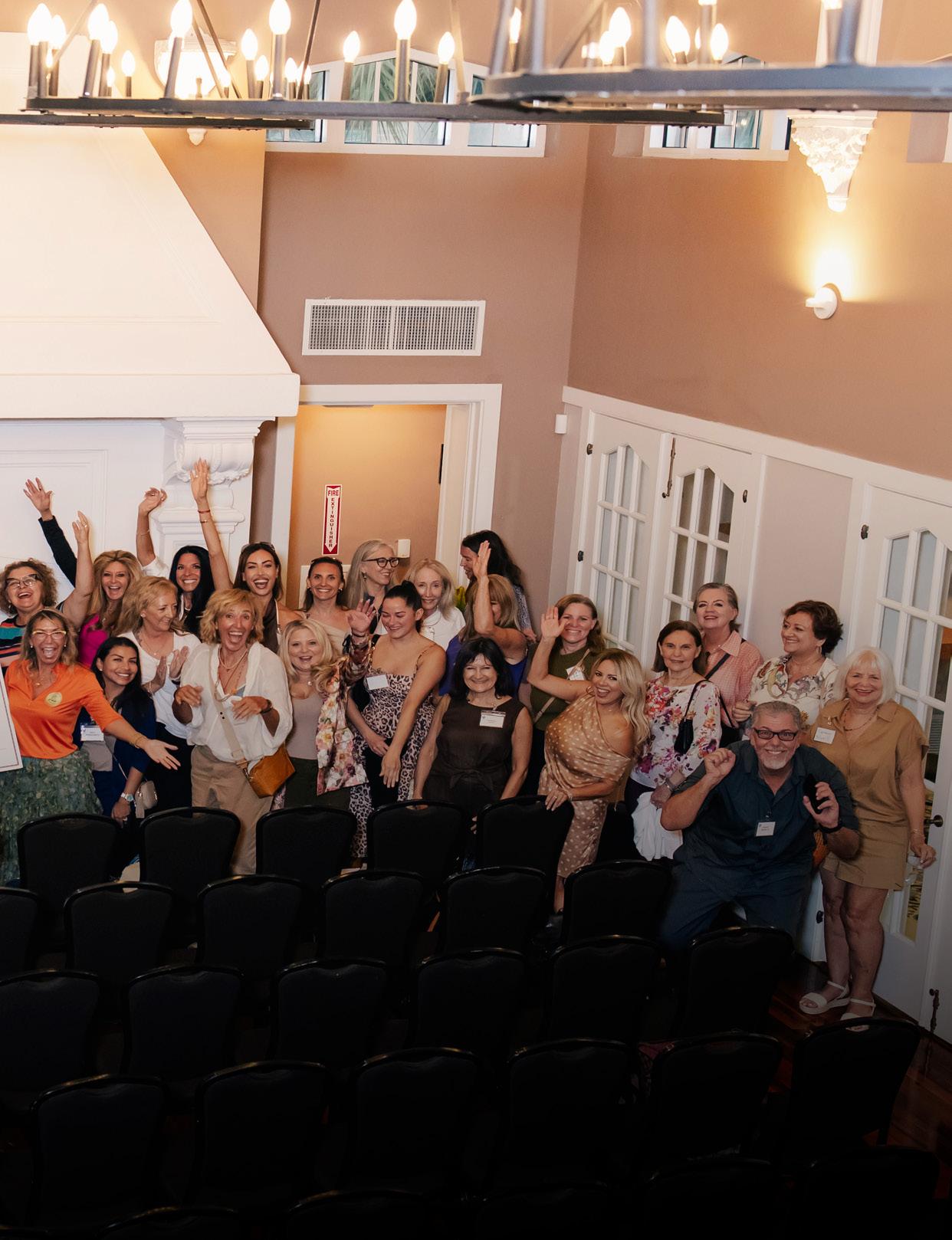
The idea behind the movement is simple yet powerful. When 100 women come together, each contributing $100, they can raise $10,000 for a local nonprofit in just one hour. Often that impact grows even further through matching grants from partner foundations.
Today, with nearly 150 members, the Miami Beach chapter distributes around $15,000 every quarter. For nonprofits operating on small or restricted budgets, a single grant can fund a program, expand services or stabilize operations during a critical moment. Dara continues:
"We’re not trying to fund organizations that already have access to millions. Our focus is grassroots nonprofits where $15,000 can truly change everything."
WHERE THE STORY BEGAN
The idea itself took root years earlier with Kim Rodstein, a real estate professional whose relationship with philanthropy shifted by chance while serving on the board of a South Florida horse rescue. One day her organization received an unexpected $10,000 donation from a giving circle.
The experience planted a seed. Years later Kim came forward with a plan to co-found the Miami Beach chapter. The hyperlocal model resonated immediately.
IT’S COLLABORATIVE, TRANSPARENT AND DEEPLY RESPECTFUL OF THE WORK ORGANIZATIONS ARE DOING ON THE GROUND. YOU DON’T JUST GIVE MONEY. YOU SEE WHERE IT GOES. YOU HEAR THE STORIES. YOU CAN VISIT THE ORGANIZATIONS. THAT BUILDS TRUST.
Kim Rodstein
Photo by Michael Dubrovin, Image Miami
Kim Rodstein | Photo by Michael Dubrovin, Image Miami
The work of 100+ Women Who Care shows that meaningful impact does not require enormous wealth, only intention, consistency and community.
Over time the chapter has supported a range of grassroots organizations, including Embrace Girls Foundation, which empowers girls through mentorship and education; ICU Baby, providing critical support to NICU families; and No More Tears, assisting survivors of human trafficking and domestic violence.
It has also backed Favela Miami, helping individuals exit homelessness through job training and pathways to stable housing, as well as 305 Pink Pack, which provides transportation, child care and other essential services at no cost for adults undergoing cancer treatment, so that they can focus on healing and spend time with their families.
With more than 3,000 local nonprofits across Miami-Dade County, the giving circle opens members’ eyes to needs they may never have known existed.
COLLECTIVE GIVING
The idea of collective giving has deep roots in mutual aid and community-based philanthropy, but the modern giving circle movement in the United States began gaining traction in the late 1990s and early 2000s as donors sought more participatory alternatives to traditional giving. Over the past two decades the giving circle movement has expanded to more than 2,000 circles, engaging approximately 150,000 people and directing nearly $1.3 billion to charitable causes.
Each quarter members are introduced to three organizations. Nonprofits are selected months in advance, giving them time to prepare thoughtful, story-driven presentations. Only members can nominate organizations, creating a peer-to-peer system rooted in lived connection.
For Mirielle Enlow, a co-founding member with more than 30 years of experience in real estate, discovery lies at the heart of the experience. Mirielle meets with nonprofit leaders ahead of their presentations.
Those five minutes matter. In the past, people sometimes used their five minutes like they were writing a grant: lots of data, lots of numbers, sometimes boring information. We wanted them to tell stories, because that’s what really helps our members understand the work.
One moment has stayed with her. When Kathie Klarreich, founder of Exchange for Change, came forward to pitch her organization, which supports people impacted by incarceration through education and literacy, Mirielle helped her prepare.
"She said to me, ‘I really appreciate you taking the time, but nobody ever votes for convicts," Mirielle recalls. "I almost started crying."
Mirielle encouraged her to shift that mindset and walk in believing that her work was just as worthy as anyone else’s. Kathie did, and she won.
"I’ve never seen anyone cry like that after winning. She couldn’t believe people chose her. And I think it changed how she sees her own work. Now she knows: People will vote for you."
Moments like these reveal the deeper power of collective giving, not only to fund organizations but to affirm their value and amplify their voices.
Photos by Michael Dubrovin, Image Miami
ROOM TO GROW
For many women, participation becomes a gateway to volunteering, board service, or long-term advocacy.
Susan Askew, a seasoned entrepreneur and a co-founding member of the chapter, describes the group as both intimate and expansive.
"We’re a group of dynamic women who share a passion for Miami Beach and for contributing both our time and our money."
Susan sees particular opportunity in deeper partnerships.
"We already have a matching grant from one foundation. It would be exciting to develop more relationships like that."
Terri Echarte, drawing on more than 30 years in real estate finance and banking, highlights the model’s flexibility:
"We’re not asking members to do anything beyond the commitment to give."
Meetings are uplifting but optional. No additional fundraising is required beyond the quarterly commitment. Digital platforms like Grapevine streamline donations, ensuring funds go directly to nonprofits.
Photos by Michael Dubrovin, Image Miami
Valerie Navarrete & Terri Echarte
Photo by Michael Dubrovin, Image Miami
IT’S IMPORTANT TO GIVE BACK. MOST OF US ARE GRATEFUL FOR THE LIVES WE HAVE. THIS IS ABOUT DOING SOMETHING TANGIBLE FOR PEOPLE IN OUR COMMUNITY WHO NEED THESE PROGRAMS AND SERVICES AND KNOWING THAT 100% OF THE MONEY GOES DIRECTLY TO THE NONPROFITS THAT NEED IT MOST.
Terri Echarte 100+ Women Who Care Miami Beach
MEET ME AT THE BANDSHELL
Music, community and ocean breezes come together at a beloved Miami Beach venue.
By Kacie Brown
Photo by OS Photography Studio
The Miami Beach Bandshell has been a cornerstone of the North Beach neighborhood for decades. Visible from both Collins Avenue and the beach, the round, gleaming white, Miami Modern-style building is hard to miss, especially on nights where concertgoers flock toward the place like shorebirds.
The venue, included in the National Register of Historic Places, is not only a recognizable landmark but a pillar of Miami's music scene. The Rhythm Foundation became the Bandshell’s first management company in 2015 and since then the organization has transformed the space from a multipurpose rental venue into a community center of sorts. The Bandshell’s season of concerts and events draws tens of thousands of people each year. It’s a place for salsa and poetry nights, Nu Deco Ensemble's classical fusion performances, family-friendly cultural festivals, up-and-coming artists, Pulitzer Prize winners and more.
THERE IS THIS KIND OF PALPABLE SENSE OF COMMUNITY WHEN YOU ENTER OUR SPACE. I THINK PART OF IT IS ARCHITECTURAL. THE SHAPE OF THE BUILDING ITSELF FEELS LIKE A NICE, BIG, WARM HUG. AND THE PALM TREES AND THE OCEAN BREEZE, IT ALL KIND OF PUTS PEOPLE IN A DIFFERENT FRAME OF MIND WHERE THEY'RE A LITTLE BIT MORE OPEN TO EACH OTHER AND TO NEW EXPERIENCES.
Adam Ganuza
The Miami Beach Bandshell
Photo courtesy of The Miami Beach Bandshell
The foundation's work has drawn people and money to the area. The organization estimates the 2024 season generated $6.5 million in local revenue and nearly 80,000 attendees in a neighborhood of fewer than 45,000 people. But Adam says the organization's most powerful effects are subtle.
IT'S VERY DIFFICULT TO ATTRIBUTE METRICS TO THE CHANGING OF HEARTS AND MINDS.
Adam is the son of Cuban immigrants and a Brown Universitytrained materials engineer turned entertainment executive. He describes the Rhythm Foundation’s team members as “community builders” in a place of both remarkable diversity and social stratification. He sees the Rhythm Foundation as an intentional facilitator, albeit a laid-back one, of shared understanding and intercultural exchange. The foundation gives cultural organizations and ensembles of all sizes access to a large, highly visible performance space and simply invites people to attend.
by
Photo
Greg Clark
Where Mangos Drop: O, Miami Variety Show brought youth arts and poetry in all forms, including Carol City Marching Chiefs
Photos by OS Photography Studio
I THINK THE TWO
MOST EFFECTIVE WAYS FOR PEOPLE TO LEARN ABOUT OTHER CULTURES ARE THROUGH FOOD AND MUSIC.
Adam and his team consider themselves stewards not only of Bandshell’s historic space, arts experiences or neighborhood but also the land it sits on and the water just beyond its perimeter. The facility prohibits single-use plastics, and recycles more than the Miami Beach Convention Center at a fraction of its size.
The foundation also leads beach cleanups along with local homeowners associations. In June, the group partnered with the Blue Scholars Initiative to host the 2025 World Ocean Celebration in an event designed to raise awareness about ocean conservation. But largely the Rhythm Foundation has chosen a lane free of overt advocacy or political involvement.
Adam explains:
"We're not a university or an organization that is expressly committed to hosting those conversations and engaging in that kind of educational work. Instead, I think that our role is to show rather than tell."
To the Rhythm Foundation, “showing” means a lineup of extraordinarily diverse artists: more than 100 each year, representing countries from all over the world, including 24 in the last season alone. It means free events for families and community members. It means artist commissions and partnerships with small community arts organizations and other local nonprofits.
The foundation’s Arts in the Parks series, for example, gives audiences access to five free performances from local ensembles each year. The series, in partnership with the City of Miami Beach, has hosted a meditative experience with the South Beach Sound Healing Orchestra, a night of self-choreographed works from Miami City Ballet dancers, and a collaboration between the Florida Grand Opera and local reggae artists.
The Bandshell’s lineup is also curated with inclusion in mind. Adam mentions a surf cowboy rock show followed by an opera for seniors event the next day. He says the Rhythm Foundation wants people of all backgrounds to have a reason to visit the oceanside venue.
Photo by OS Photography Studio
Photo by OS Photography Studio
WE'RE GOING TO SHOW FOLKS THAT IT ACTUALLY DOES FEEL BETTER WHEN YOU'RE IN A PLACE, IN A SPACE AND FRAME OF MIND WHERE YOU FEEL CONNECTED TO YOUR NEIGHBORS OR TO OTHER PEOPLE OR TO THE WORLD.
Adam Ganuza
The Miami Beach Bandshell
This installation is a collaboration between O, Miami, Free Plastic and Soy de Todas Partes, a civic publishing project celebrating the immigrant experience through 100 resident poems across Miami-Dade County. Presented as part of the 2025 O, Miami Poetry Festival on April 1, 2025.
KEEP GOOD STORIES ALIVE
Impact.Edition is a true labor of love, shaped by the dedication, generosity, and care of an extraordinary community. Our contributors and collaborators dedicate their time, creativity, and expertise to bring thoughtful visual and written stories to life, grounded in place and purpose.
When we say community-driven publication, we truly mean it. This print collection exists because of the collective efforts of many: the unwavering support of family and friends, the generosity of our donors, the trust of our community partners, and the curiosity and commitment of our readers.
Your support allows us to amplify the voices of local changemakers, illuminate urgent social and environmental issues, and inspire meaningful, collective action.
Give Impact.Edition To Your Community
Our print collection is ideal for offices, hotels, coffee shops, libraries, community organizations, and other spaces where ideas spark dialogue and hope takes root. Order additional copies and help these stories travel further.
Media & Storytelling Partnerships
Interested in collaborating to scale impact through meaningful storytelling? Reach out to us at hi@impactedition.org