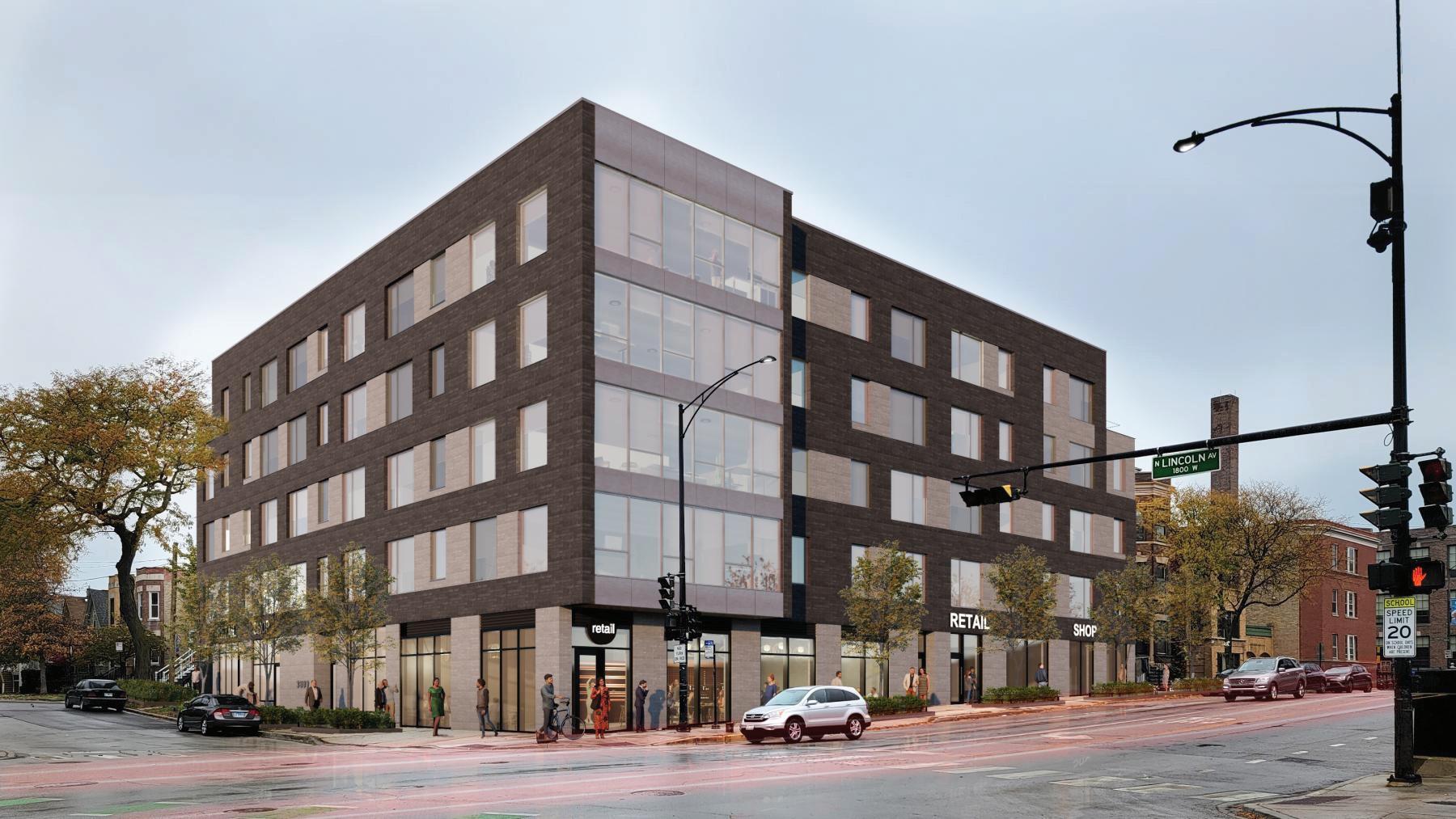
Seven two-bedroom two baths and a one bed one bath below market-rate rental units available at Five Points Lakeview, 3605 N Ravenswood!
Five Points Lakeview is a new construction rental building that features 52 residential units; a rooftop patio, gym, bike storage, and outdoor parking is available. Trader Joes, Loba Cafe, and the CTA Brown Line are within blocks of the property! The property is located within the Hamilton CPS School District
Affordable rents range from $849.00 to $1,659.00 a month. Must be income eligible. Households must earn no more than the maximum income levels below:
Unit 508, One Bedroom One Bath, 80% of Area Median Income: One person - $67,150; 2 persons -$76,750
Units 403 + 407, Two Bedrooms Two Baths, 70% of Area Median Income: 2 persons -$67,200; 3 persons - $75,600; 4 persons - $83,930
Units 303 + 307, Two Bedrooms Two Baths, 60% of Area Median Income: 2 persons -$57,600; 3 persons - $64,800; 4 persons - $71,940
Units 202 + 207, Two Bedrooms Two Baths, 50% of Area Median Income: 2 persons -$48,000; 3 persons - $54000; 4 persons - $59,950
Unit 203, Two Bedrooms Two Baths, 40% of Area Median Income: 2 persons -$38,400; 3 persons - $43,200; 4 persons - $47,960
Please contact the Five Points Lakeview for an application and more information at 773-308-6806 or info@fivepointslakeview.com or https://fivepointslakeview.com/
Applicants with vouchers or other third-party subsidies are welcome to apply. These units are subject to monitoring, compliance, and other restrictions by the City of Chicago’s Department of Housing. For more information visit https://www.chicago.gov/city/en/sites/affordable-requirements-ordinance/home.html
ADVERTISEMENTS
4 6 8 14
Arts & Entertainment
Event highlights of the week!
SportsWise
The SportsWise team heads to the United Center for the Chciago Bulls vs. Oklahoma City Thunder game.
Cover Story: working & Homeless & Hidden
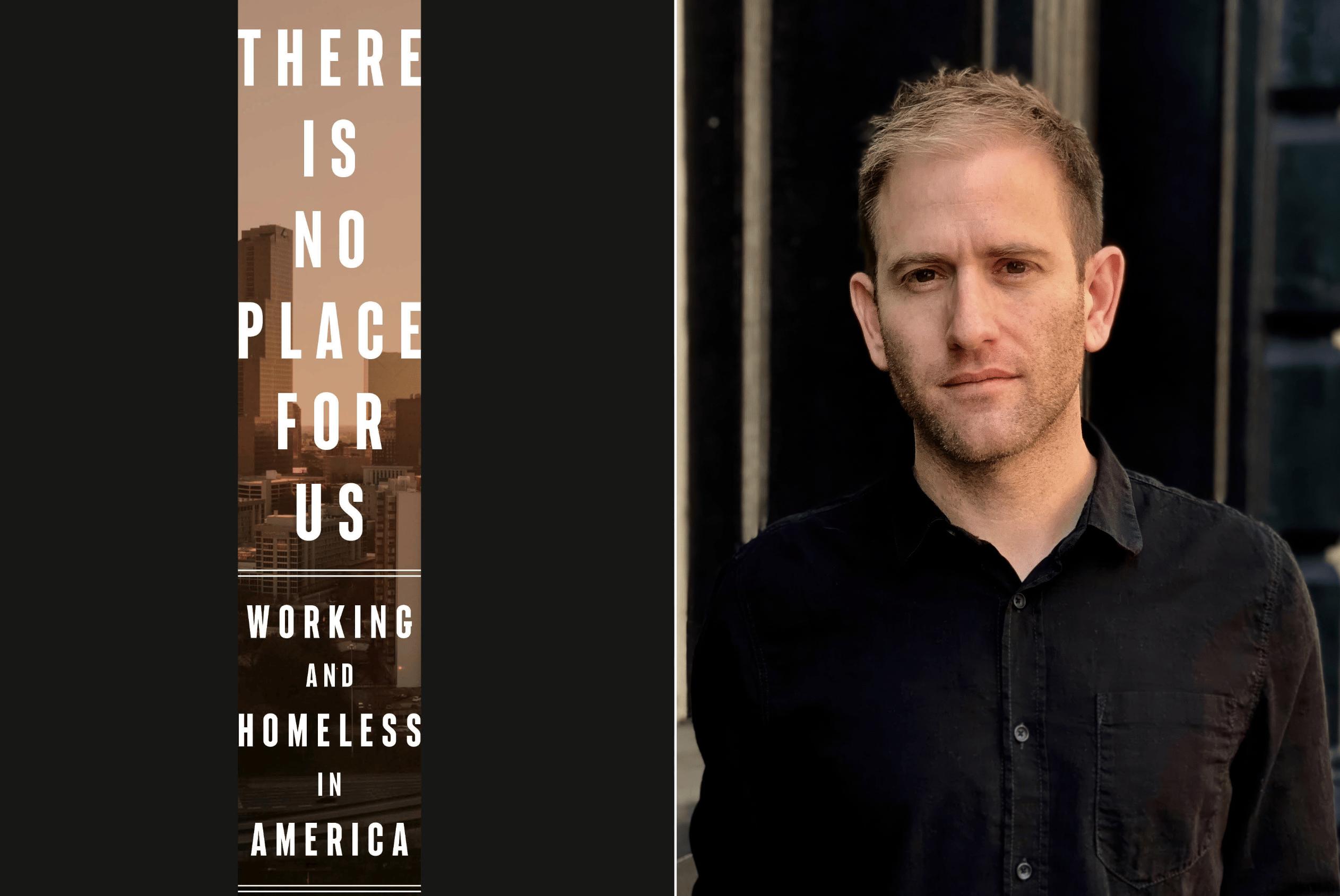
Thousands of Americans have full-time jobs and still can’t pay rent. They live in shelters, with their families, and in extended stay hotels that profit from their instability. Many are not included in the count of people experiencing homelessness because they do not fit the official definition. But they are a significant and revealing part of America’s homelessness crisis, journalist Brian Goldstone argues in his new book, "There Is No Place for Us: Working and Homeless in America."
Plus, An economist proposes a new method of estimating the scope of poverty in different countries.
The Playground
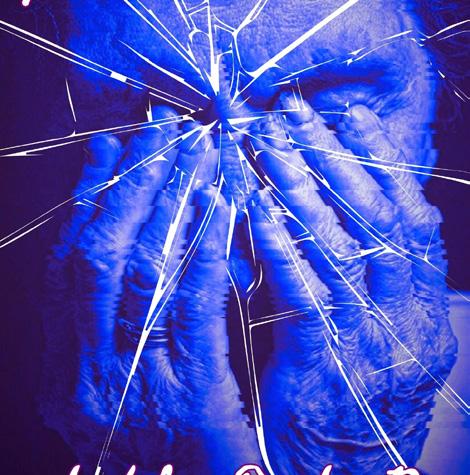
ON THE COVER & THIS PAGE: Illustrations of "hidden homeless working people" by Dave Hamilton. DISCLAIMER: The views, opinions, positions or strategies expressed by the authors and those providing comments are theirs alone, and do not necessarily reflect the views, opinions, or positions of StreetWise.
Dave Hamilton, Creative Director/Publisher dhamilton@streetwise.org
Julie Youngquist, Executive director jyoungquist@streetwise.org
Ph: 773-334-6600 Office: 2009 S. State St., Chicago, IL, 60616
ARTS & ENTERTAINMENT RECOMMENDATIONS
Compiled by Dave Hamilton
Two Collections!
New exhibits at the Smart Museum of Art
“Composing Color: Paintings by Alma Thomas from the Smithsonian American Art Museum” and “Beyond Boundaries: Three Decades of Contemporary Chinese Art at the Smart” are on display through July 5 at the Smart Museum of Art, 5550 S. Greenwood Ave. Alma Thomas (1891–1978) is a singular figure of 20th cen tury American art. She developed her form of abstraction – characterized by the dazzling interplay of pattern and hue – late in life, after retiring from a long career as a schoolteacher. Her vibrant and rhythmic art transcended established genres, incorporating elements of gestural abstraction and color field painting and creating a style distinctly her own. “Beyond Boundaries" foregrounds the University of Chicago’s pivotal role in studying and exhibiting contemporary Chinese art since the mid-1990s. In February 1999, Wu Hung, Harrie A. Vanderstappen Distinguished Service Professor of Chinese Art History at the university, opened his first exhibition at the Smart Museum of Art. Entitled “Transience: Chinese Experimental Art at the End of the Twentieth Century (1999),” the exhibition – and many more Wu curated in the ensuing years – was field-defining and forged new avenues for situating Chinese art within a broader global contemporary framework.
The Mother of Blues!
‘Ma Rainey’s Black Bottom’
Nearly 30 years after its box-office-record-setting 1997 Chicago premiere production, August Wilson’s ”Ma Rainey‘s Black Bottom” returns to The Goodman, 170 N. Dearborn St., through April 26, helmed by Chicago legends Chuck Smith (Director) and Harry J. Lennix (Music Director/Associate Director). It’s 1927 Chicago, and “The Mother of the Blues,” Ma Rainey, takes her time getting ready to record. Tensions and temperatures rise as the musicians recount tales of rage, joy, betrayal and faith in astonishing stories and a heart-stopping climax. Tickets start at $34 at GoodmanTheatre.org/MaRaineys
Women in Classical!
Njioma Grevious plays Saint Saëns
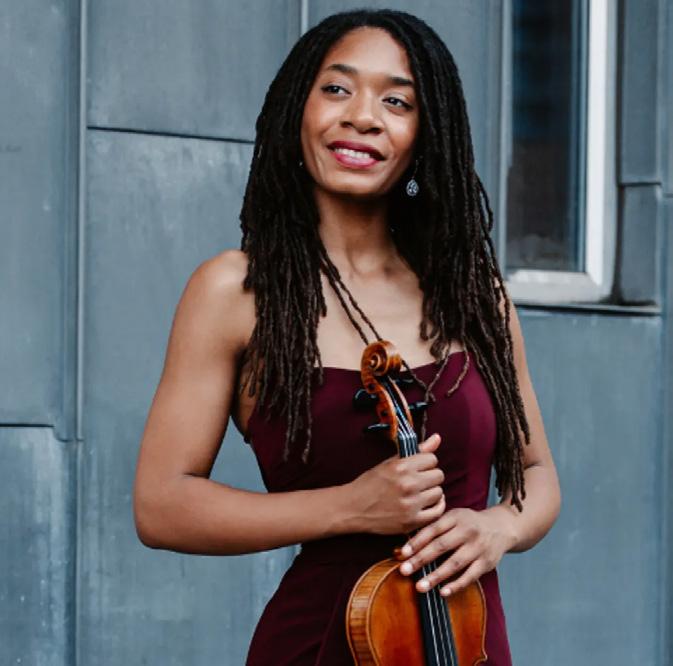
The Chicago Philharmonic spotlights Artist in Residence Njioma Chinyere Grevious, one of classical music’s most electrifying young stars. Celebrated for her passionate artistry and virtuosic command, Grevious has already earned the Robert F. Smith First Prize at the Sphinx Competition, a 2024 Avery Fisher Career Grant, and recognition as one of Classic FM’s 2024 Rising Stars. Grevious joins the Chicago Philharmonic under Artistic Director Scott Speck to perform Saint-Saëns’ Violin Concerto No. 3. The program also highlights the voices of women in classical music today. Audiences will experience the Chicago Premiere of “Liquid Air” by Elżbieta Sikora, a distinguished living composer whose pioneering work bridges tradition and bold innovation. Together with Grevious’ radiant artistry, the evening celebrates the creativity and talent of women shaping the future of music. April 1, 6 p.m., at the Studebaker Theater, Fine Arts Building, 410 S. Michigan Ave. FREE, registration required at https://givebutter.com/Tpu9lF
An Unlikely Bond!
‘The Official Biography’
Her Story Theatre presents the world premiere of Kurt McGinnis Brown’s “The Official Biography,” playing through April 19 at The Den Theatre, 1331 N. Milwaukee Ave. W hen young black journalist Xan Smith is assigned to interview the once successful, now aging white novelist, Henry Percival, the two form an unlikely bond during their contentious meetings. After Henry reveals something unexpected about his past, the two writers must consider the uncertain relationship of truth to storytelling in general, and specifically to the story of Henry’s life. “The Official Biography” will keep audiences guessing as they follow its plot twists, surprises, and suspect decisions. Tickets are $40 at TheDenTheatre.com
Immersive Art!
‘Alison Ruttan: The Paradox of Inaction’
Hyde Park Art Center, 5020 S. Cornell Ave., presents a major solo exhibition by interdisciplinary artist Alison Ruttan. Visualizing the catastrophic impact of global warming on coastal communities, the immersive installation places visitors at the center of a submerged suburban neighborhood to invite reflections on the climate crisis. On view from April 4-July 12, the expansive exhibition takes up 2300 square feet of gallery space with over 160 cast ceramic forms. FREE. in addition, a free public opening reception with the artist will take place on Saturday, April 4, from 1-4 p.m.
Music to Your Ears
The Music Institute of Chicago’s Academy concert
Recognized for excellence, a respected coaching faculty, and top awards and medals at regional and national competitions, the program trains students who have already placed among the top musicians in the 2026 YoungArts Competition, the Music Teachers National Association Illinois Competition, the 2025 Sejong Cultural Society Music Competition, the Illinois State Music Teachers Association Piano Competition, the Chicago Chamber Music Festival Concerto Competition 2025, and more. FREE! April 4, 7:30 p.m., at Nichols Concert Hall, 1490 Chicago Ave., Evanston
Hair Tight, Nails Right!
‘The Beauty Project’
“The Beauty Project” is an immersive theatrical experience that blends live performance and beauty demonstrations in a spa atmosphere. The project explores ways to disentangle our ideas of beauty and self-care from “the industry.” These seemingly small issues of outward beauty speak to the big issues of our identities, belonging, and quality of life. Playing Saturday, April 4, 6:30 p.m. at Fourtune House, 4410 S. Cottage Grove Ave. Learn more at second-site.org
All for One, & One for All!
‘The Three Musketeers’
Idle Muse Theatre Company celebrates 20 years of productions with "The Three Musketeers."
Based on Alexander Dumas’s celebrated 1844 novel, the Jeff Award-winning Robert Kauzlaric adapts the French tale of swashbuckling intrigue, adventure and fellowship as newly-minted musketeer D’Artagnan and the famous “three inseparables,” Athos, Porthos and Aramis take on the machinations of a scheming cardinal and his minions. Playing through April 25 at The Edge Off-Broadway Theater, 1133 W. Catalpa Ave. Tickets are $30 at IdelMuse.org
Hyde Park Art Center ‘Center Days’
Art for Everyone!
Hyde Park Art Center, 5020 S. Cornell Ave., will host the spring installment of its quarterly series “Center Days,” an allages program offering free public access to art viewing and artmaking on Saturday, April 4 from 1-4 p.m. It features free exhibitions, all-age artmaking, and the first open studios from the Art Center’s 2026 roster of resident artists. The event is free and open to the public; pre-registration is encouraged at hydeparkart.org
The Darkest Hour
‘ 'night Mother’
Life has been difficult for Jessie and her hope for the future has faded. Spiraling between a failed marriage and caretaker fatigue due to her criminal son and aging mother, Jessie is determined to take control of her life in the only way left to her. Jessie digs up her father’s old pistol with the intention to end her life. Marsha Norman’s Pulitzer Prize-winning play launches audiences through a mother and daughter’s darkest night together. Playing April 2 - May 10 at Redtwist Theatre, 1044 W. Bryn Mawr Ave. Tickets start at $10 at RedtwistTheatre.org
The Bulls vs. OKC game live
Allen : Russell and I attended the March 3 game between the Chicago Bulls and the Oklahoma Thunder. I made it to the seats first and looked up to the bleachers and they were empty. I like to be with a positive crowd when I am at a game in person. It doesn’t matter when I am at home because I am used to being by myself. I lived with myself for a long time.
Russell came and really cheered up my night, to know I didn’t have to root for the Bulls by myself. It was an excellent experience, watching the game, not only the the cheerleaders, but all the activities, even though Russell got the T-shirt. The Tshirts were coming out of the sky with parachutes. Me and Russell were reaching for the same one and he got it. It was more so his size than mine. I really enjoyed the game, and I was glad Russell was there to enjoy it with me.
Russell : I was glad to see Allen too. I had problems getting in because I didn’t have
my copy of my ticket. I was afraid they were going to tell me to go up there in the nosebleed section, but no, I was down here. I called Allen; he responded right away. The best part was half-time, to go eat: Polish sausage, pops, beers. Kinda expensive, but that’s how it’s supposed to be. Once in a lifetime.
The fans were electric: you felt like you was part of the team. The cheerleaders was looking good, the half-time show. It was a whole lot better than being at home. I really enjoyed myself.
: I did too. Russell mentioned the Polishes were $9, but they were really good.
Russell : One beer and a Polish cost me $24. The money they gave me to spend, I spent it. Right on time. The Bulls played good against OKC, the 2025 world champions. They was playing really good ball. They fought until the end, only lost by eight points.
Allen : They had the lead a couple times.
Russell : It’s a nice, young team. They’re going to be OK in the future.
Russell : Thanks to Pat Quinn for the tickets.
Allen : Yeah!
Russell : You’re the man!
Any comments, suggestions or topic ideas for the SportsWise team? Email StreetWise Editor Suzanne Hanney at suzannestreetwise@yahoo.com
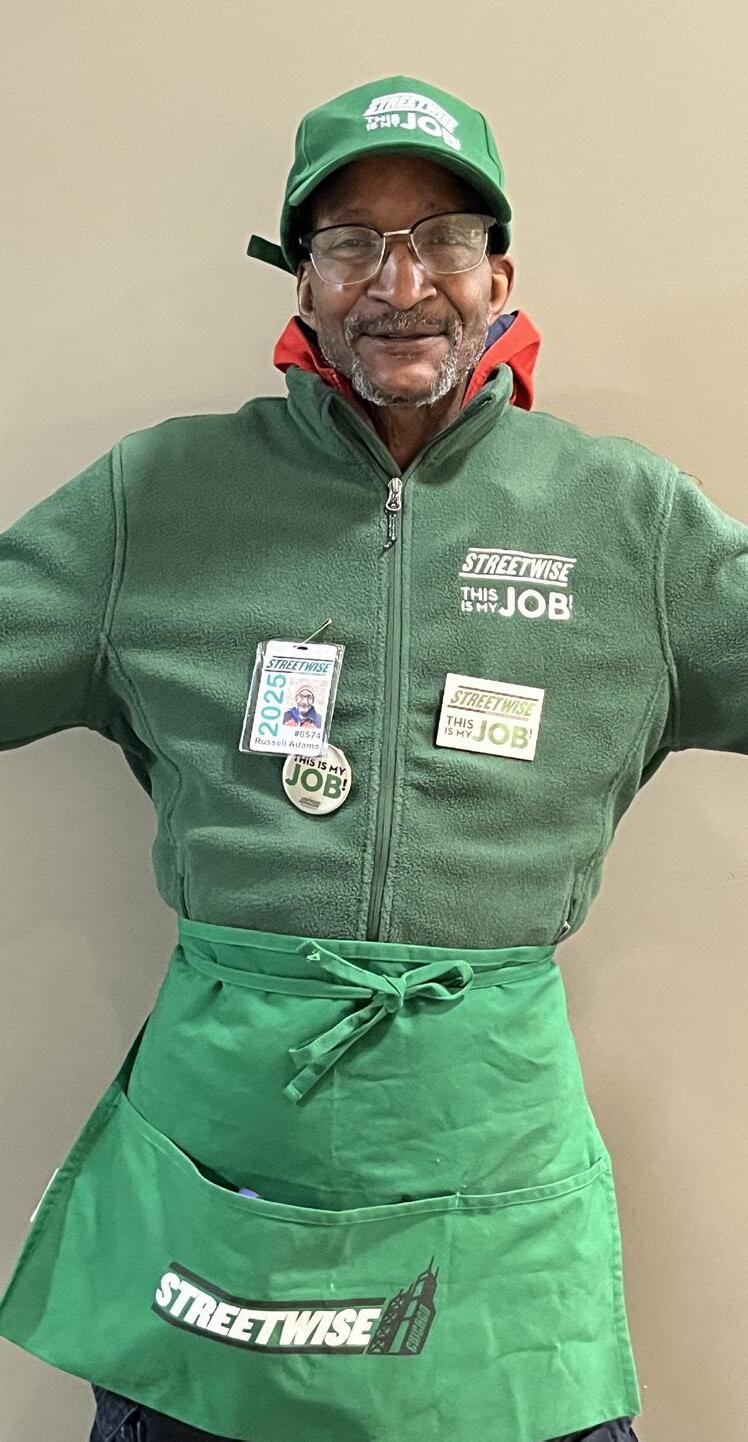
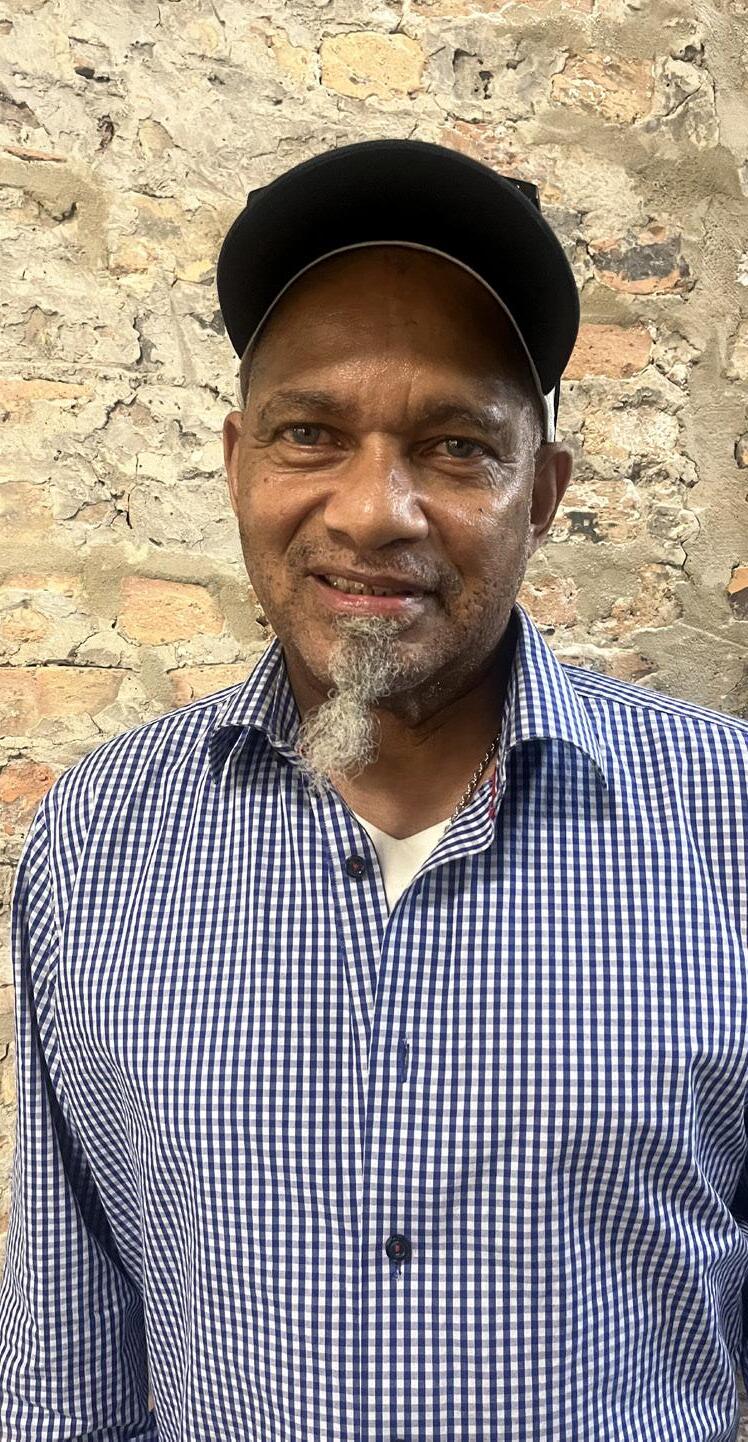
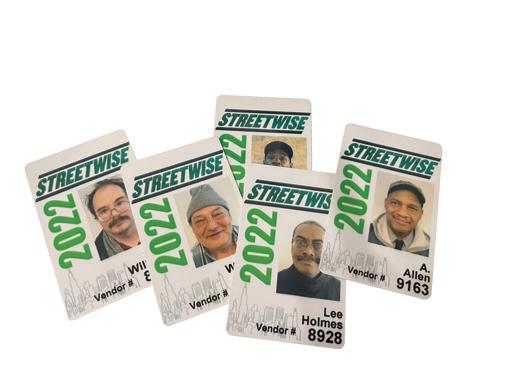
Vendors Russell Adams and A. Allen chat about the world of sports.
Allen
Allen : Yeah, looking forward to a Bulls moment.
Working, Homeless, & Hidden: A Conversation with Brian Goldstone
by Annemarie Cuccia
Thousands of Americans have full-time jobs and still can’t pay rent. They live in shelters, with their families, and in extended stay hotels that profit from their instability. Many are not included in the count of people experiencing homelessness because they do not fit the official definition. But they are a significant and revealing part of America’s homelessness crisis, journalist Brian Goldstone argues in his new book, "There Is No Place for Us: Working and Homeless in America."
Goldstone follows five Atlanta families, detailing their journeys through housing instability. Through intimate portraits, he argues homelessness is not a personal failing or the result of joblessness, but of high housing prices, widespread gentrification, and an unwillingness to face the reality of the “hidden homeless.” He told fellow street paper Street Sense more.
Street Sense: Your book focuses on a form of homelessness that we often don't see in our daily lives. Tell us about how you came to see this hidden homelessness and why you decided to write a book about it.
Brian Goldstone: I came to this project through my wife. She was working at a community health center in Atlanta. She started telling me about this trend where one patient after another was working at an Amazon warehouse, driving for Uber and Lyft, or working as daycare workers or home health aides. When they finished work, they weren’t going home. They were going to a shelter, if there were any shelter beds available, they were crowding into apartments with others. They were sleeping in their cars with their kids, or increasingly, they were going to these extended stay hotels.
I was shocked. I had never heard about this hidden universe of homelessness she was describing, where it was largely not on the street. That was the initial spark of curiosity for me. I was stunned to discover, as I then began to report, not only that the patients my wife was seeing
were not some bizarre anomaly, but that they were representative of a staggering trend across the country. Anywhere I went, it was the same: people who were working not just one job, but sometimes multiple jobs, working and working and working some more, and it wasn’t enough to secure this most basic necessity.
To pour salt on the wound, they were also invisible. Not just invisible in the sense that they didn't necessarily want people to know that they were experiencing homelessness, but they were rendered invisible. They were actively written out of the story that we as a nation have told ourselves about homelessness, about who becomes homeless and why.
They were also locked out of crucial housing assistance because the way that the US Department of Housing and Urban Development defines “literally homeless” is either those who are in a shelter or on the street. They didn’t fit that definition. So they were triply invisible, and I began to see that this was not accidental. This was not just some oversight; it was a kind of engineered neglect.
When you narrow the lens on homelessness so that it’s only getting a tiny little slice of the total population, you can tell yourself this comforting narrative about homelessness, that it’s about addiction, mental health issues. But when you widen the lens, then homelessness begins to look very different. Work also begins to look very different. America begins to look very different.
You follow five families in the book. Can you walk us through the story of one of them, so that we can understand some of both the structural issues and the personal issues that these people are facing?
I think Celeste captures a key argument in the book, which is that many of us will sometimes say, “Oh, so and so fell into homelessness,” and a big argument in the book is that people are not falling into homelessness; they’re being pushed.
For Celeste, it begins in a really traumatic way when she’s driving home from her warehouse job, and her neighbor calls and says that her rental home is on fire. By the time she gets there, her house has been completely destroyed, and the only possessions that she and her kids have are a few loads of dirty laundry that she threw in the car that morning.
She thought that she would have this relatively quick housing search. But the ground had shifted under her feet in the time she was renting, and neighborhoods in Atlanta that were once affordable had become unaffordable. So it turned into this protracted nightmare of a housing search, and she was sleeping with her kids in her car. And those nights were awful for her, because not only was she having to sleep in this Walmart parking lot and get her kids ready for school in the bathroom, but she was also terrified that the police would knock on her window, because in Georgia, over a quarter of kids put into the foster system are the direct result of what is categorized as inadequate housing.
Finally, finally, she found a landlord. She applied. She prayed with the leasing agent. Then a few days later, she got a call. The leasing agent was no longer friendly. They
were like, “Why didn’t you tell me about the eviction on your record?” And she’s like, “What are you talking about? There is no eviction.” Come to find out, when her house burned down, the landlord’s representative said to break the lease, you will have to pay not only the current month’s rent, but an additional month, and you will lose your security deposit. Celeste hung up in disgust.
She thought that was the end of it. They filed an eviction against her, which she didn’t find out about until that call with the leasing agent. When Celeste drove to that house months later, in the mailbox, she found an eviction notice. She drove to the courthouse and found out that in her absence, a default judgment had been handed down, and her credit score had been tanked.
And at that point, Celeste did what countless other families in her situation are doing, especially in places where there are no family shelters. She went to an extended stay hotel where she ended up in this tiny little room, paying more than double what she had been paying for her twobedroom rental home, and she thus became imprisoned in what people call the "hotel trap."
All the families end up at some point staying in these extended stay hotels, where they’re paying far more than they would if they were paying monthly rent somewhere. Talk a little bit about that industry.
Before I started this, I heard “extended stay hotel,” and I would imagine places where business travelers might stay. The kind of extended stay hotels we’re talking about are at the very, very bottom end of the hotel spectrum. These are what I’ve come to refer to as extremely profitable homeless shelters with slum conditions.
These hotels, they’re not cheap. They’re double, sometimes triple, what an apartment would cost. But they are filled with families, with working families, who have been pushed out of the formal housing market because they belong to this credit underclass from which it’s virtually impossible to climb out.
I was stunned to discover that the same Wall Street investors, the same private equity firms that are buying up growing swaths of America’s rental housing, are also buying up the very places where people go once they lose their housing. It’s sort of flipping the James Baldwin line on its head about how, in America, it’s extremely expensive to be poor. Their stories demonstrate the flip side, which is how extremely lucrative all this insecurity has become for some. Homelessness has become big business.
Can you talk about the process of getting to know the families? A lot of people have these ideas about what it means for someone to be homeless. How did you ensure that the portrayals of the people you were talking to were honest, without playing into those stereotypes?
My goal was to immerse myself as much as humanly possible in the day-to-day lives of the people I was writing about, and instead approach them like, “I’m doing a story about homelessness, and I’m wondering if I can talk to you.” It was this very long process. Consent was really important, because they had never worked with a journalist before. I checked in with them constantly, reminding them, “This is going to be read one day.” I told them from the beginning that at the end of this, we’re going to sit down and go through whatever I end up writing, and you’re going to tell me if you’re comfortable with this. And we did that at the end, and there were a lot of tears. It was heart-wrenching.
I became convinced that it is just as dehumanizing to people to present them as these angelic, flawless creatures who can do no wrong, who are just getting up in the morning
and going to work, and they have grit. Like, it can be just as dehumanizing to do that as it is to pathologize people and blame them. It felt really important to show people in the fullness of who they are, stepping back and saying, "here’s the larger system or whatever force that is giving this person the choice in front of them to begin with."
These are systemic problems. You write a lot about gentrification and housing affordability. How do we create a system where people like Celeste can rent an apartment again?
There are all kinds of immediate solutions: keeping people in the homes they already have. Policy, you know, from what’s sometimes called "just cause" eviction laws that say that you can’t lose your apartment because your landlord decided that it’s the perfect time to sell. And then, of course, getting people into homes that they don’t yet have; building new, truly affordable housing that is safe and dignified and permanently affordable.
But the foundation upon which any real way of tackling this crisis has to be built is to understand in our society, in the richest nation on the planet, how the hell has this happened? How have we allowed this essential thing that people need, like food, like medicine, just to be auctioned off to the highest bidder?
We have millions and millions of people in this country who are extremely low-income, who are part of the labor force, and who are at imminent risk of homelessness. And we’ve flung all those people into what a case manager in the book refers to as the "Housing Hunger Games."
Housing has become this thing that is so unattainable for so many and where so much money is being made, and people don't even have a home to go back to at the end of the night with their kids, and that is the shock that I’m hoping this book will initiate.
Courtesy of Street Sense Media / INSP.ngo
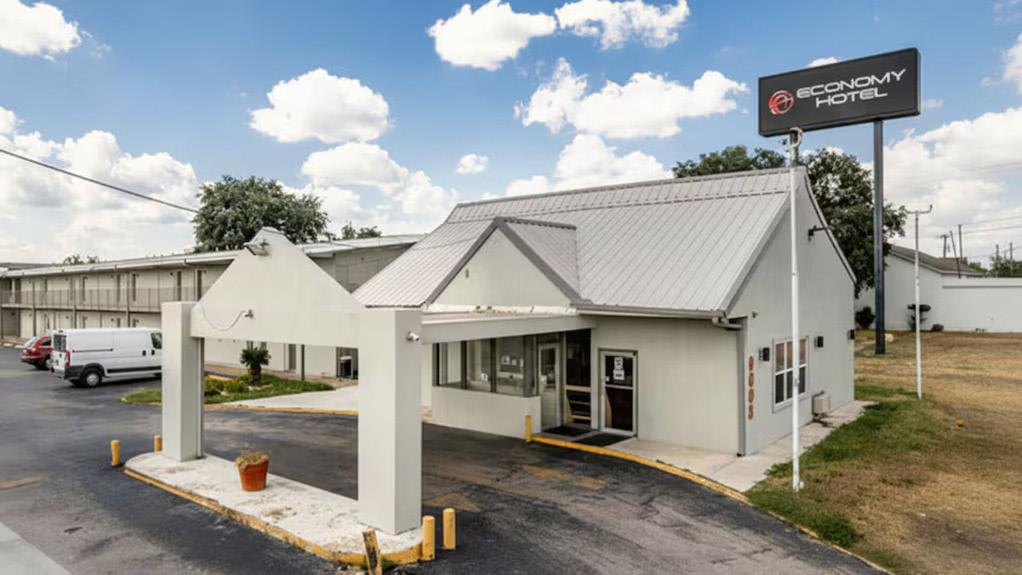
Economy Hotel San Antonio currently books for $48 a night (Hotels.com photo).
Measuring poverty on a spectrum conveys an accurate picture of inequality
by Oliver Sterck
Michael W. Green, a Wall Street investor, created a buzz in late 2025 by arguing that the U.S. poverty line should be jacked up to US$140,000 for a family of four. Currently, a family of that size has to be eking by on $33,000 a year to qualify as poor in the federal government’s eyes.
His critique builds on a broader debate about how to measure poverty in the United States. The U.S. government has made few changes to how it officially calculates the poverty rate since President Lyndon B. Johnson launched the “war on poverty” in the 1960s.
Outlets such as The Washington Post, Fortune and Fox News covered Green’s assertions, sparking a flurry of public debate over a topic usually relegated to economists like me.
Having spent more than 15 years researching poverty as an economist, I believe that whether the government ought to draw this line at $33,000, $100,000 or $140,000 is not the real issue. Instead, I’ve been arguing that there is no magic threshold below which you are poor and above which you’re doing fine. Instead, poverty should be understood as a spectrum that can be measured without relying on arbitrary lines.
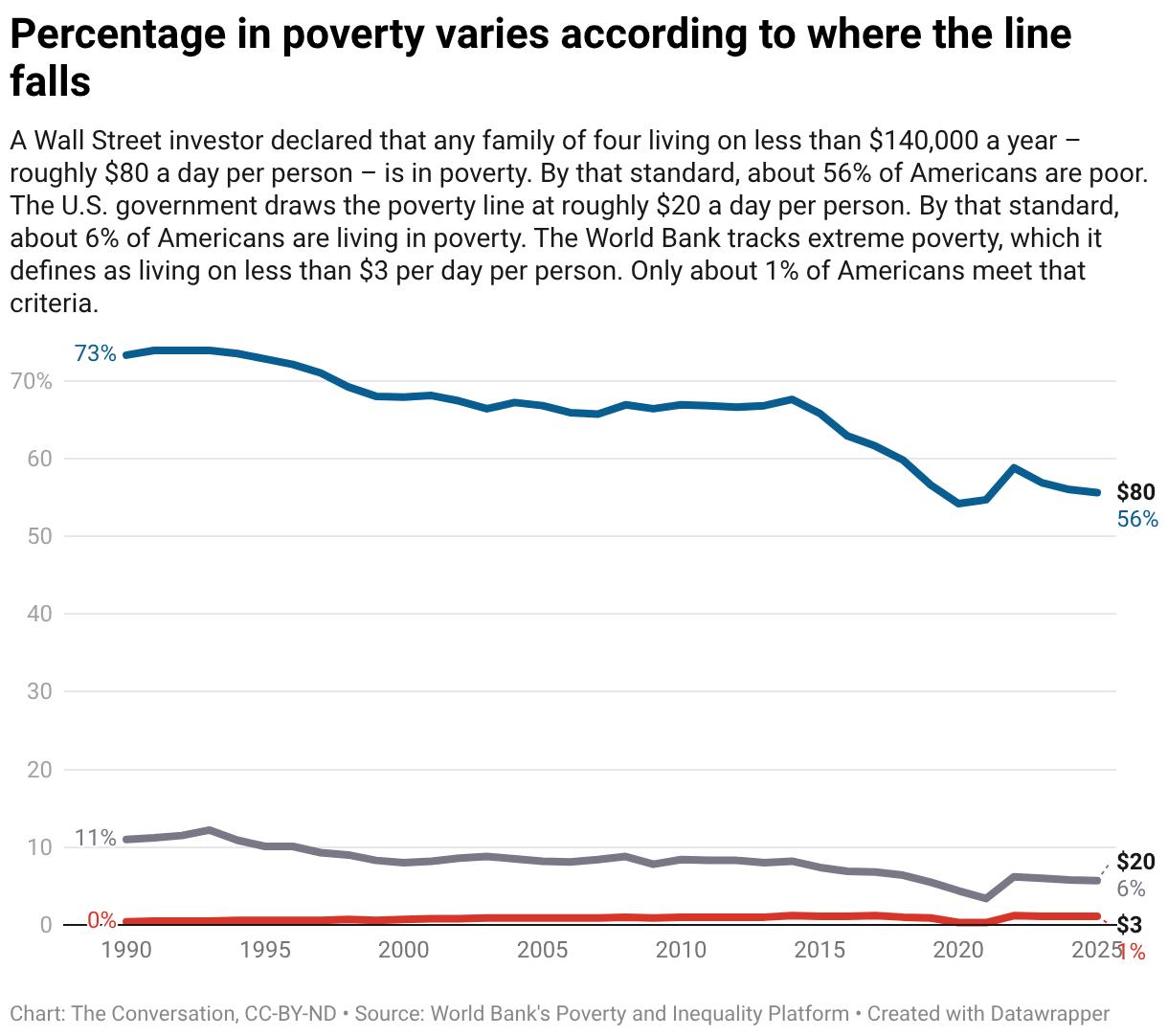
3 different poverty lines
Think about it: Living on $100 a day is better than $75 a day, which is better than $50, which is better than $25. Nothing magical happens when you cross some arbitrary line. People don’t suddenly escape the constraints and vulnerabilities of having low incomes when they make one dollar more than they used to.
And yet almost all public debates, research and policy treat poverty lines as legitimate – as if this threshold really exists.
Consider three very different poverty lines:
Moving the poverty line to $80 per person per day, which today amounts to roughly $140,000 for a family of four per year, as Green proposes, then 56% of Americans are poor according to World Bank data. So are most people in other high-income countries.
Drawing the poverty line at about $20 per person per day – approximately equivalent to the official U.S. poverty threshold for a family of four – the share of Americans who are below that line plunges to 6%, according to the World Bank data I analyzed.
The World Bank also has a definition of extreme poverty: $3 per person per day. If you put the line there, only 1% of Americans would be officially experiencing poverty.
Even among experts, there is little agreement on where the poverty line should fall. As a result, debates about poverty lines often reveal more about the choice of threshold than about poverty itself.
Measuring poverty without lines
Based on my research, I have proposed letting go of poverty lines to get a more meaningful view of how poverty evolved over time and in different countries.
Instead, I propose a new way to measure poverty, through what I call “average poverty,” which reflects the fact that having less income is always worse than having more.
Average poverty builds on a simple intuition. If someone I’ll call Alex earns half as much as someone else I’ll call Barbara, then Barbara is twice as rich as Alex and Alex is twice as poor as Barbara.
Similar inverse relationships are widespread in other fields: Pace is the reciprocal of speed in running as resistance and conductance are in electricity.
This means that poverty can be defined as the inverse of income, and its unit is simply inverted. If incomes are measured in dollars per day, poverty is measured in days per dollar.
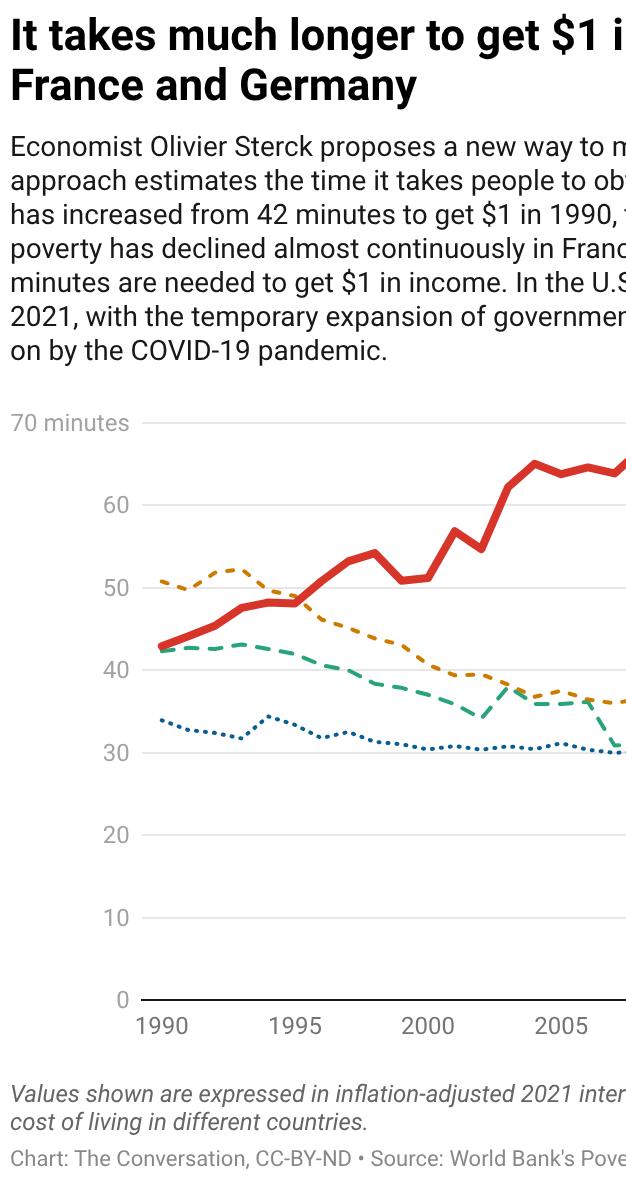
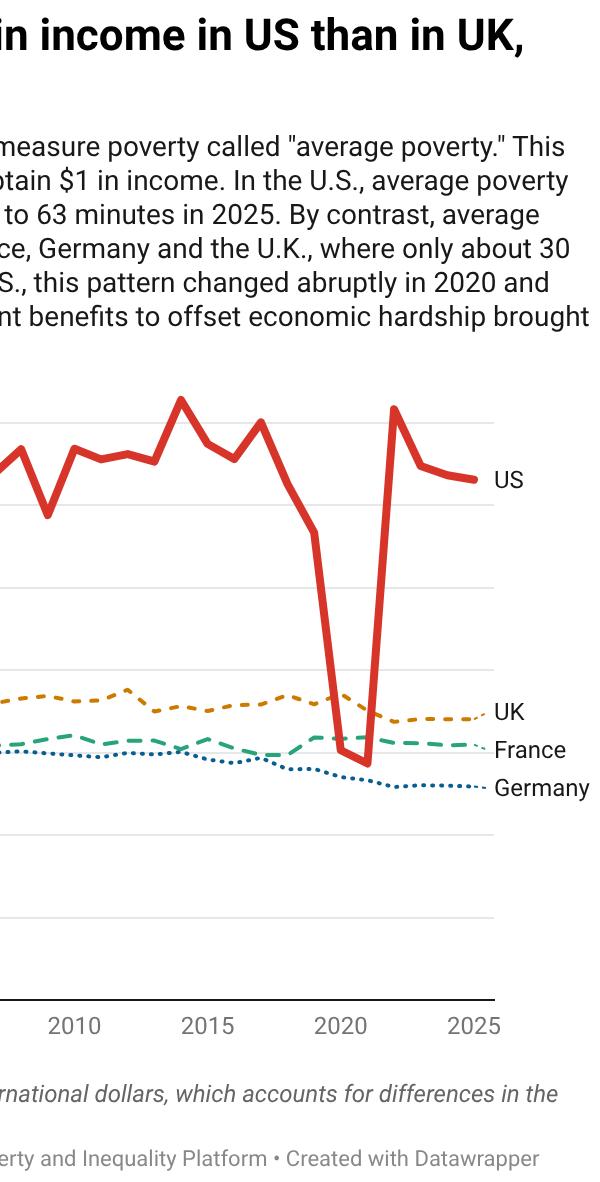
Average poverty therefore captures something very concrete: the average number of minutes, hours or days that it takes to get $1 in income.
For these purposes, income includes earnings from work, government benefits and other sources of money, and it is averaged among all family members. It is expressed in international dollars, which account for inflation and global price differences. The time to get $1 refers to a day of life for anyone at any age and in any circumstance, not just the hours worked by someone with a job.
My proposed measure casts the U.S. in a strikingly different light from traditional poverty statistics. In the U.S., I’ve calculated that it takes 63 minutes on average to get $1 in income. That’s much slower than in many other highincome countries:
• United Kingdom: 34 minutes
• France: less than 31 minutes
• Germany: about 26 minutes
This indicates that average poverty is substantially higher in the U.S., even though U.S. average incomes are higher than in most Western European countries. While average poverty declined over time in most other high-income countries, it has increased almost continuously in the U.S. since 1990 despite swift growth in average incomes.
There is one exception to this trend: during the COVID-19
pandemic, when the U.S. adopted several short-term antipoverty measures.
The price of inequality
At first glance, this seems paradoxical. How can a rich country’s economy grow and yet get poorer?
The answer is simple: inequality.
Seeing poverty as a spectrum rather than a switch that’s on or off casts light on what traditional measures hide: Inequality matters no matter where you are on the povertyprosperity continuum. Under this approach, poverty can change for two reasons: either incomes rise or fall on average, or the distribution of income may become more or less unequal.
And the U.S. has one of the most unequal economies in the world, and by far the most unequal among rich coun-
tries. Across all 50 states, inequality has risen sharply since 1990, regardless of political orientation, demographic composition or economic structure.
When inequality rises faster than incomes grow, average poverty increases even in a growing economy. This is why the U.S. appears poorer under a continuous measure than when there’s a simple line drawn at the $20-per-day mark: Its income distribution has been getting more unequal even as the average income has risen.
Seeing poverty as a spectrum changes the conversation. It reveals what poverty lines miss and why inequality matters so much.
Oliver Sterck is Associate Professor of Economics at the University of Oxford. Courtesy of The Conversation. theconversation.org
Eric Allix Rogers
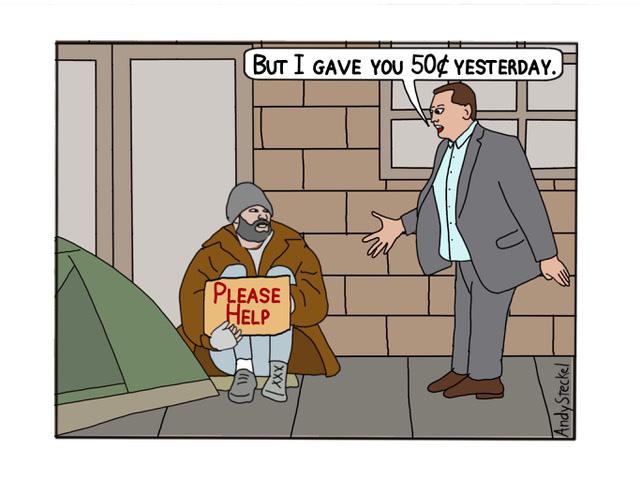
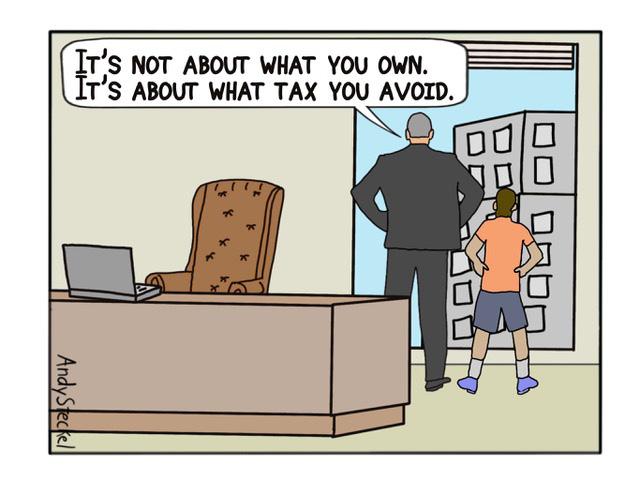
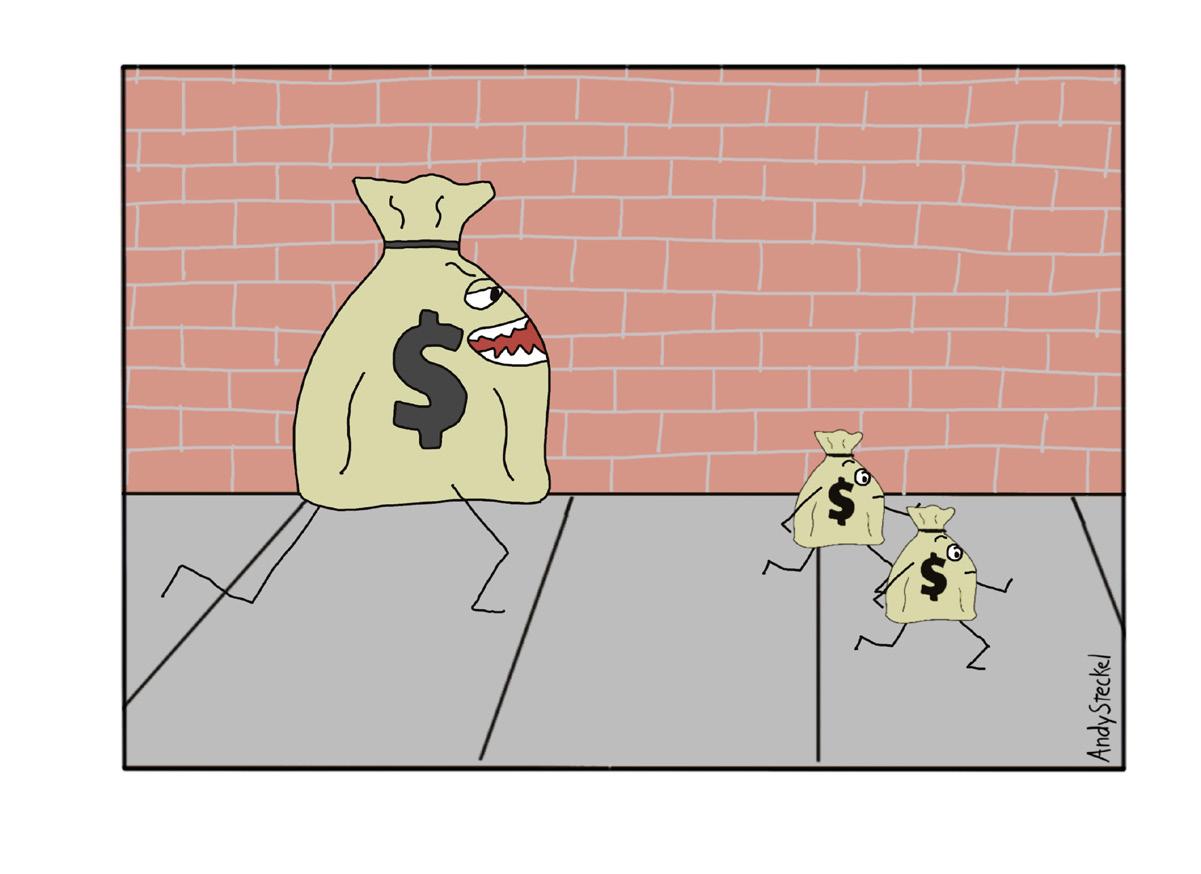
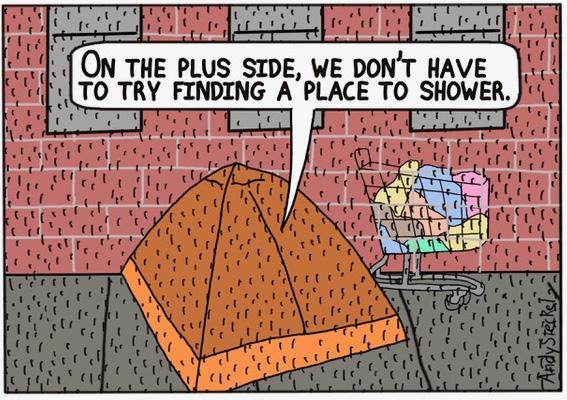
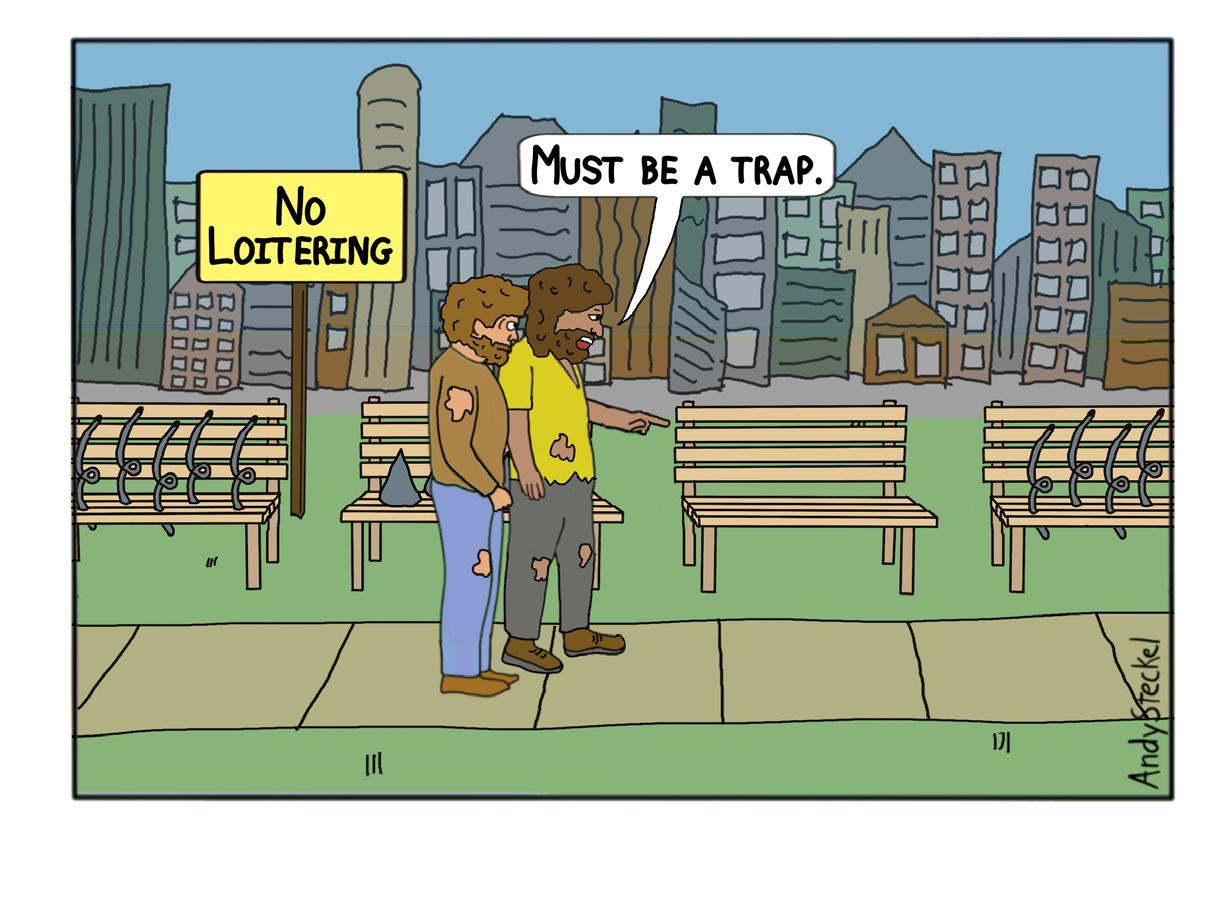
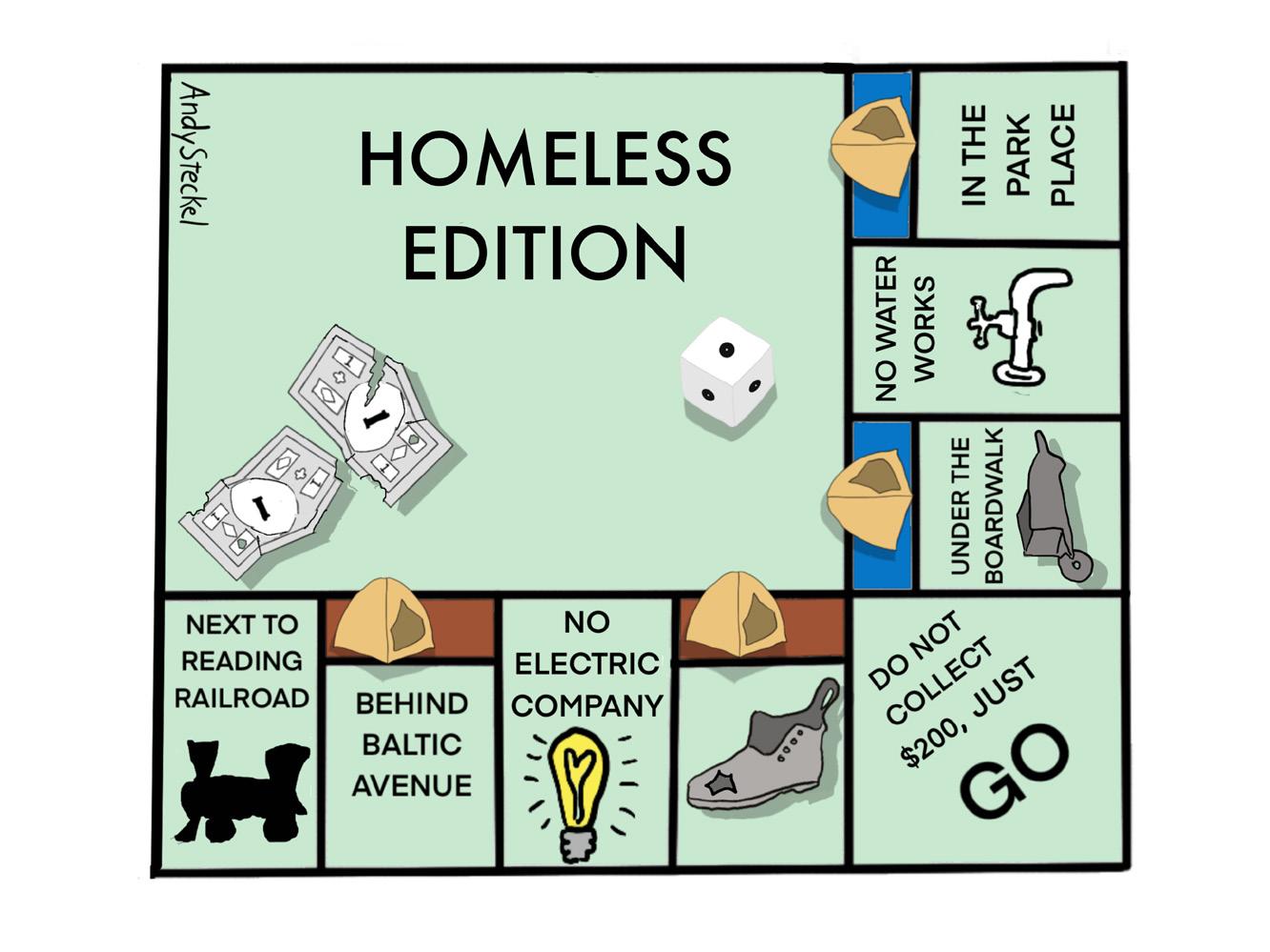
Cartoons by Andrew Steckel
StreetWise exists to
How StreetWise Works
Anyone who wants to work has the opportunity to move themselves out of
StreetWise provides “a hand up, not a handout.” Vendors