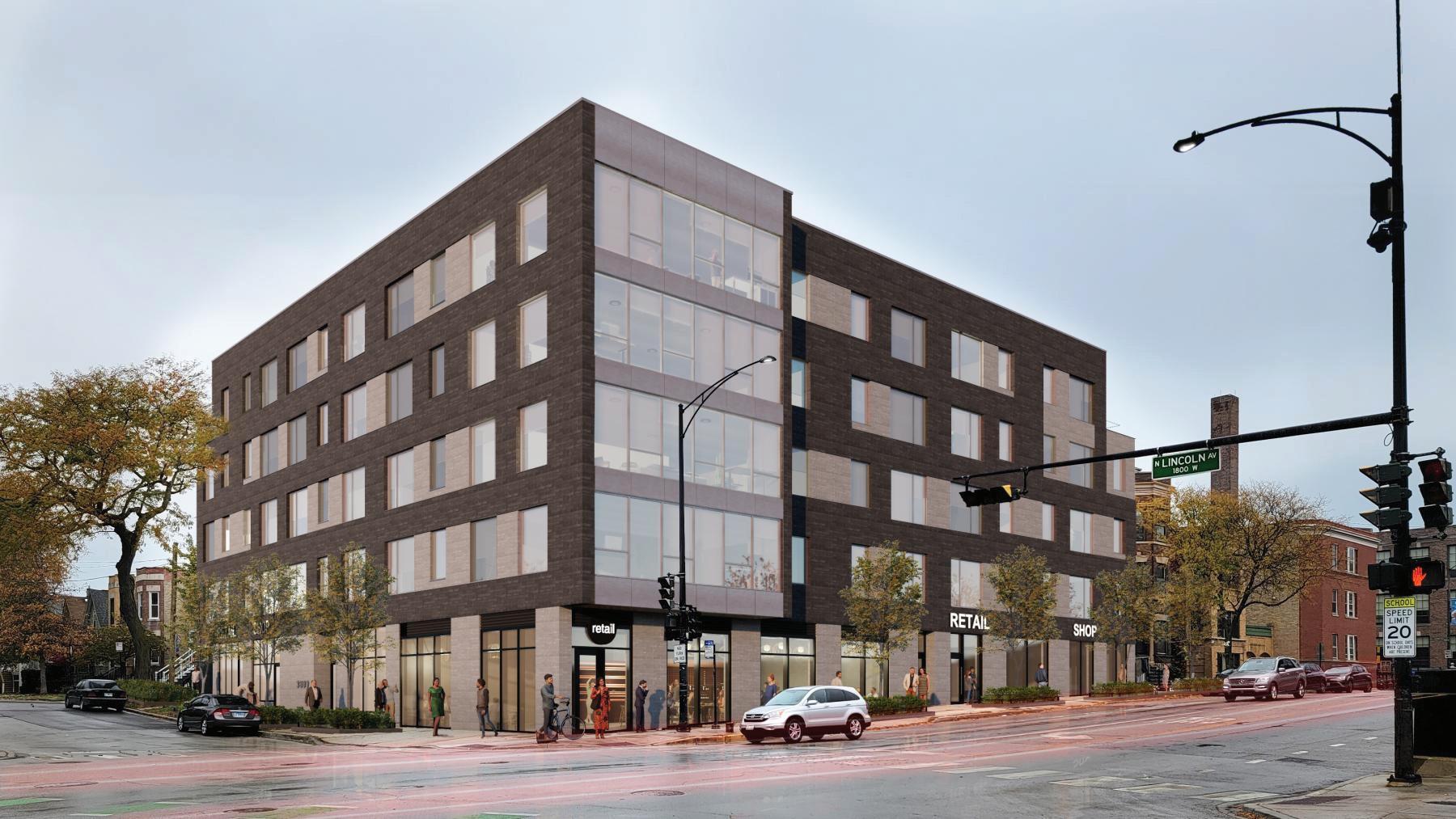
Seven two-bedroom two baths and a one bed one bath below market-rate rental units available at Five Points Lakeview, 3605 N Ravenswood!
Five Points Lakeview is a new construction rental building that features 52 residential units; a rooftop patio, gym, bike storage, and outdoor parking is available. Trader Joes, Loba Cafe, and the CTA Brown Line are within blocks of the property! The property is located within the Hamilton CPS School District
Affordable rents range from $849.00 to $1,659.00 a month. Must be income eligible. Households must earn no more than the maximum income levels below:
Unit 508, One Bedroom One Bath, 80% of Area Median Income: One person - $67,150; 2 persons -$76,750
Units 403 + 407, Two Bedrooms Two Baths, 70% of Area Median Income: 2 persons -$67,200; 3 persons - $75,600; 4 persons - $83,930
Units 303 + 307, Two Bedrooms Two Baths, 60% of Area Median Income: 2 persons -$57,600; 3 persons - $64,800; 4 persons - $71,940
Units 202 + 207, Two Bedrooms Two Baths, 50% of Area Median Income: 2 persons -$48,000; 3 persons - $54000; 4 persons - $59,950
Unit 203, Two Bedrooms Two Baths, 40% of Area Median Income: 2 persons -$38,400; 3 persons - $43,200; 4 persons - $47,960
Please contact the Five Points Lakeview for an application and more information at 773-308-6806 or info@fivepointslakeview.com or https://fivepointslakeview.com/
Applicants with vouchers or other third-party subsidies are welcome to apply. These units are subject to monitoring, compliance, and other restrictions by the City of Chicago’s Department of Housing. For more information visit https://www.chicago.gov/city/en/sites/affordable-requirements-ordinance/home.html
ADVERTISEMENTS
4 6 7 12 15
Arts & Entertainment
Event highlights of the week!
SportsWise
The SportsWise team predicts the NBA draft.
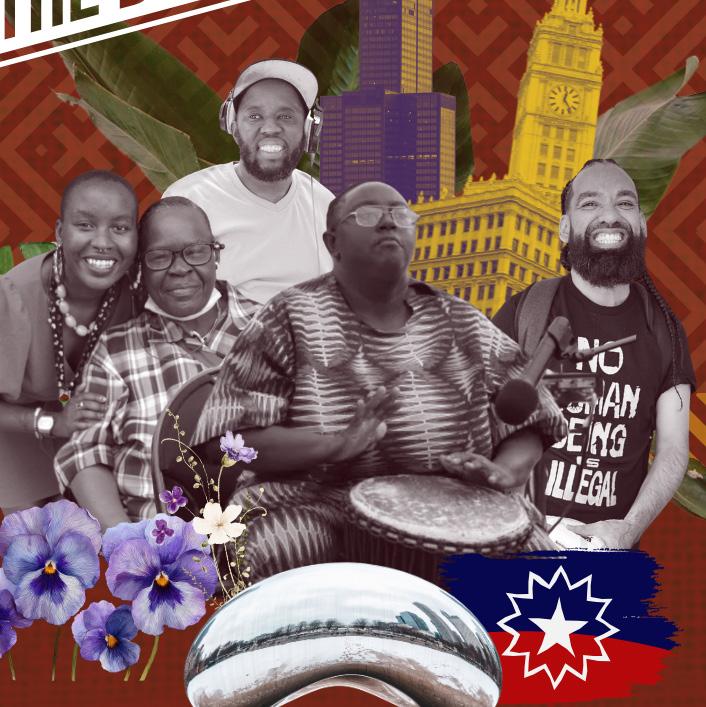
Cover Story: reparations & juneteenth
The lived experience of Black Chicagoans is crucial to the slavery reparations framework first announced by Mayor Brandon Johnson during Juneteenth 2023.
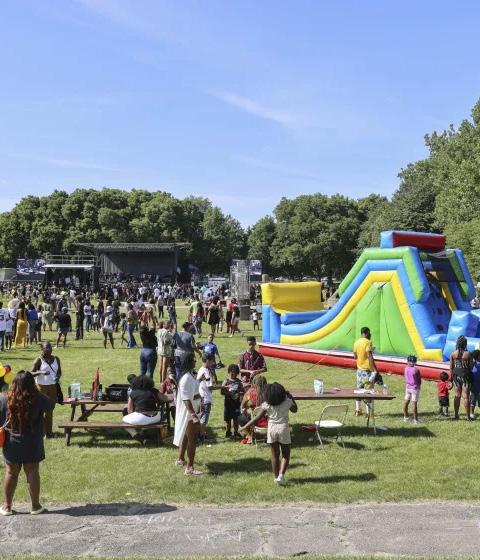
Plus, discover the Juneteenth festivities citywide!
From the Streets
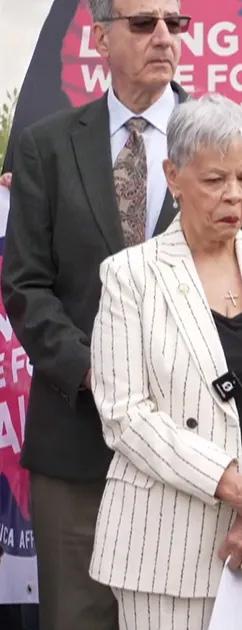
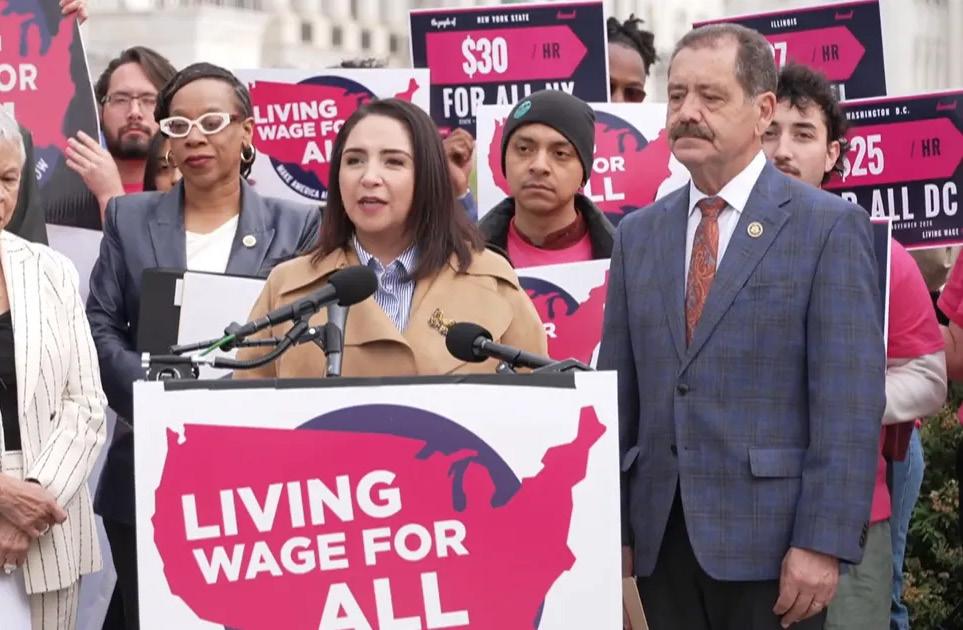
U.S. Reps. Delia C. Ramirez and Jesus “Chuy” Garcia (both D-IL), Lateefah Simon (D-CA) and Analilia Mejia (DNJ) stood with workers, civil rights and economic justice leaders from across the country April 28 to introduce the Living Wage for All Act in Congress.
The Playground
DISCLAIMER: StreetWise publishes perspectives from vendors and contributors to reflect a range of lived experiences and viewpoints. These opinions do not necessarily reflect the views of StreetWise. We are committed to fostering dialogue grounded in dignity and respect, and we do not endorse language or perspectives that harm or dehumanize others.
Dave Hamilton, Creative Director/Publisher dhamilton@streetwise.org
Julie Youngquist, Executive director jyoungquist@streetwise.org
Ph: 773-334-6600 Office: 2009 S. State St., Chicago, IL, 60616
ARTS & ENTERTAINMENT RECOMMENDATIONS
Compiled by Dave Hamilton
Craft in America!
‘Cutting and Pasting a World: The Paper Craft of Henry Darger’
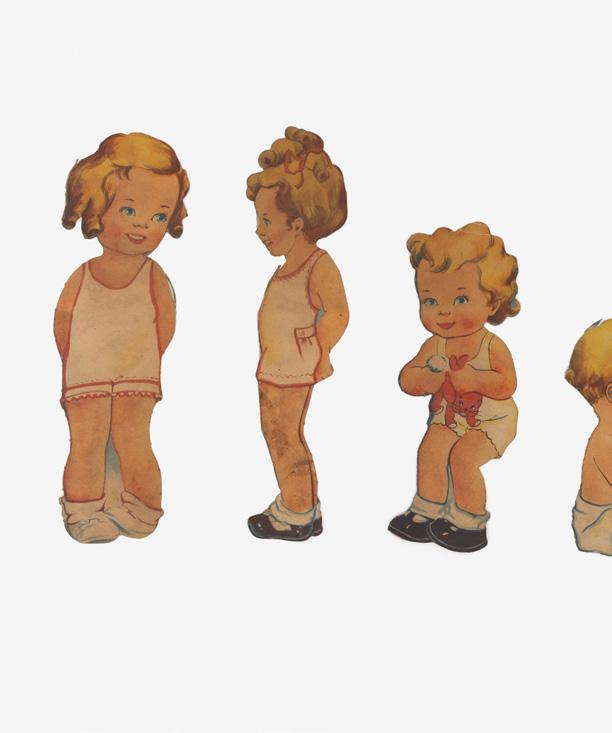
The Intuit Art Museum, 756 N. Milwaukee Ave., joins in the 250th anniversary celebration of American craft, “Handwork 2026,” organized by Craft in America, with an exhibition exploring the connection between Henry Darger’s art and traditional American paper crafts. The exhibition illustrates how the turn-of-the-century practices of making paper dolls and paper dollhouse scrapbooks may have influenced Darger’s evolution as an artist and maker. By showcasing both finished artworks and original source materials, the exhibition demonstrates how Darger adapted these humble pastimes into sophisticated methods for constructing large-scale, mixed-media narratives. The exhibition provides context for these crafts within the early 20th-century movement to instill middle-class American "taste" in a burgeoning immigrant population. Likely exposed to these practices within social welfare institutions as a child, Darger ultimately subverted them—transforming decorative domestic crafts into a profound and complex commentary on the vulnerabilities of marginalized children. On display June 18 - Jan. 31, 2027.
A Broadway Sensation!
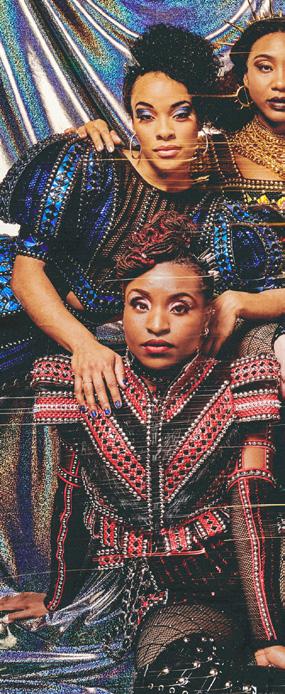
‘The Royal Reunion: Celebrating Six Years of ‘Six’’ Illinois Conservatory for the Arts (ICA), a non-profit arts education institution in the Western suburbs, hosts a one-night-only benefit concert celebrating the music, legacy, and original stars of the Broadway phenomenon “Six.” Marking the six-year anniversary of the show’s transfer to Broadway in 2020 “The Royal Reunion: Celebrating Six Years of “Six”” will reunite the original queens and the original band for an evening of powerhouse performances in an intimate Chicago venue. Proceeds from the event will support ICA’s mission of providing high-level arts education to Chicagoland youth. “The Royal Reunion” is Monday, June 22 at 7:30 p.m. at The Fairlie, 339 N. Bell Ave. Ticket levels include livestream only ($100), standard ($200), and VIP priority ($300) and are available at ilconservatory.org/concert
In and Out of Love!
‘The Last Five Years’
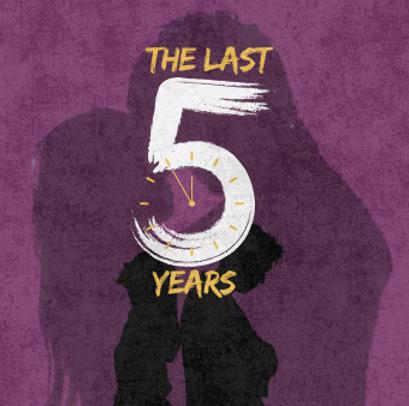
“The Last Five Years” debuted at Northlight Theatre in 2001 and returns to the Oil Lamp Theater, 1723 Glenview Road, Glenview, after runs on Broadway, Off-Broadway, the West End and, most recently, a concert version at Radio City Music Hall with Tony, Grammy and Emmy Award winner Ben Platt and Golden Globe and NBR winner Rachel Zegler. Jason Robert Brown’s musical masterpiece “The Last Five Years” is a widely beloved show, and Drama Desk Award-winner for Outstanding Music, taking audiences on the romantic rollercoaster of Jamie and Cathy as they fall in and out of love over the last five years. Told from both perspectives – one chronologically and one backwards – audiences will be swept into the unique storytelling and find an anti-love story full of humor and heart. Playing now through July 5. Tickets are $55 at OilLampTheater.org
Classical Music for All!
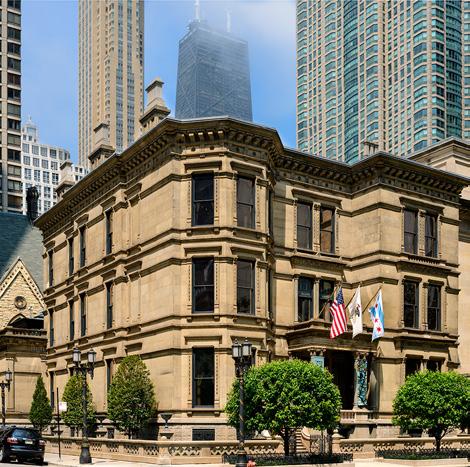
playOUT! Chicago presents ‘Spilling the Tea’ playOUT! is a Chicago-based non-profit organization amplifying queer voices in classical music. Their vibrant chamber music experience, “Spilling the Tea,” celebrates the intersection of LGBTQ+ Pride and Black musical traditions, both honored in June. This program brings these parallel celebrations into an artistic dialogue, centering the work of Black queer composers who are shaping a new classical canon. Featuring contemporary string quartet works by Damien Geter and Shelley Washington alongside a newly crafted medley of beloved anthems from both traditions, "Spilling the Tea" explores themes of identity, protest, spiritual grounding, visibility, and joy. FREE. Wednesday, June 17, 6-7 p.m. at the Murphy Auditorium in the Driehaus Museum, 50 E. Erie St.
Cheap Shopping!
Jarvis Square Community Rummage
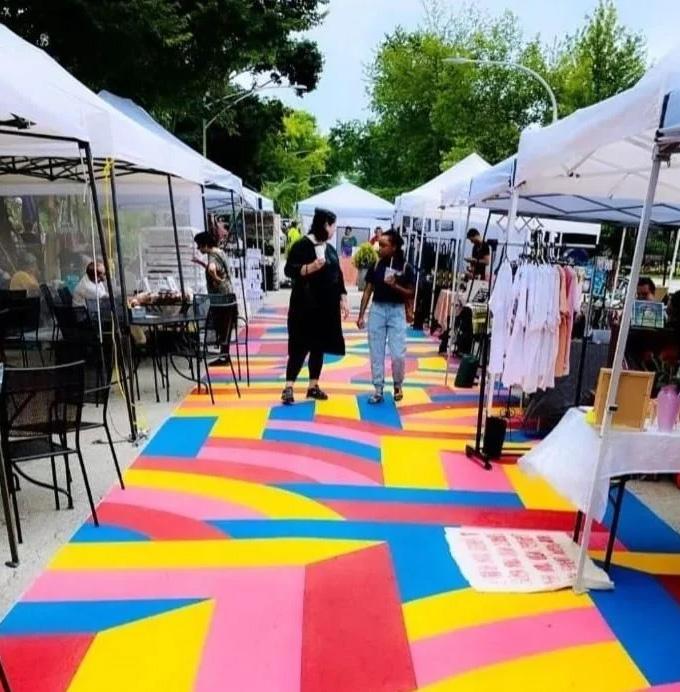
Residents and visitors alike are invited to participate in the Jarvis Square Alfresco Rummage Sale, a vibrant community event that transforms the square into an open-air marketplace. Participants are encouraged to clean out their closets and reserve a space to sell their goods or browse and discover one-of-a-kind treasures. This event will feature 10 individual rummage sales set up throughout Jarvis Square, in the 1500 block of Jarvis Ave., with additional sales taking place across the surrounding neighborhood. June 20 and September 26, 9 a.m.-2 p.m. FREE. www.jarvissquarechicago.org
Comedy Icons in Chicago!
‘Iceboy! Or The Completely Untrue Story of How Eugene O’Neill Came to Write ‘The Iceman Cometh’’ Broadway’s brightest star of 1938, Vera Vimm (Megan Mullally), is at the top of her game. But when she adopts a 40,000-year-old Neanderthal discovered frozen in the Arctic, the spotlight begins to shift. As Iceboy (Grey Henson) thaws, he unexpectedly becomes a theatrical sensation, inspiring the “father of the American drama” Eugene O’Neill (Nick Offerman) and challenging his legendary mother for center stage. It’s “All About Eve”...If only Eve were a caveman. “Iceboy!” appears at The Goodman Theatre, 170 N. Dearborn St., June 20 – July 26. For tickets ($44 - $189, subject to change) call 312443-3800 or purchase online at GoodmanTheatre.org/Iceboy
Lessons from Social Media!
‘Funny Slut’: A Solo Show by Deanna Ortiz
Deanna Ortiz used to think her job was just posting thirst traps for porn stars. Turns out, it was also therapy… with a 401(k). In “Funny Slut,” Deanna tells the hilarious and unexpectedly heartfelt story of working in social media for the adult entertainment industry, where she learned to embrace chaos, confidence and her inner hot girl. June 20 & 21, 7:30 p.m. at Steppenwolf, 1650 N. Halsted St. Tickets are $25 at steppenwolf.org/lookout
The Life of the Party!
Jillian Ebanks: ‘Who All Gone Be There?’ Life for Jillian in her 30s has been one big, weird party, and all she has wanted to know is “Who All Gone Be There?” Join Jillian for this live taping of new material as she explores the guest list of her life through comedy. Thursday , June 18, 7:30 p.m. at Steppenwolf, 1650 N. Halsted St. Tickets are $23 at steppenwolf.org/lookout
Making Music Together!
Chicago Philharmonic Presents ‘Side by Side’
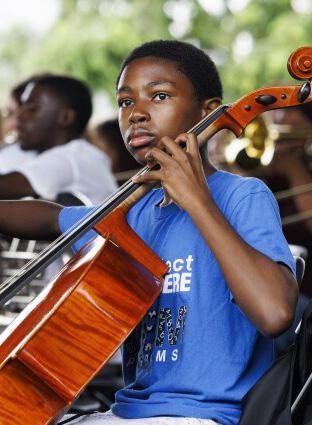
Community musicians are invited to bring their instruments for a free rehearsal and performance, led by Artistic Director and Principal Conductor Scott Speck. Participants rehearse and then perform a summer-evening concert side by side with the musicians of the Chicago Philharmonic. Created in the spirit of connection, creativity, and Chicago’s vibrant neighborhoods. FREE. June 20, 1:30 p.m. rehearsal; 4:30 p.m. performance at Clarendon Community Center Park Fieldhouse, 4501 N. Clarendon Ave.
A Chicago Institution!
The Driehaus Museum’s 18th Birthday
The Driehaus Museum, 50 E. Erie St., invites visitors to celebrate its 18th birthday as an institution and the 100th anniversary of the construction of its 1926 Murphy Memorial Auditorium. Travel back in time to enjoy this free day filled with family-friendly treats and amusements, craft-making inspired by the Gilded Age, voting (the Museum is 18 now, after all!) on the object you’d most like to see in the Museum, having early access to new Driehaus Museum merchandise and entering to win special treats. June 20, 11 a.m. - 5 p.m. FREE.
2026 nba draft predictions
John : We are previewing the 2026 NBA draft, which is going to be June 23 and 24. Who do you think the Chicago Bulls should pick: Caleb Wilson of North Carolina, Cameron Boozer of Duke or Darryn Peterson of Kansas?
Russell: The Bulls have the 4th and 15th picks – both in the first round, unless they trade them. If they don’t, Memphis, Utah and Washington pick first, so who’s going to be left? I say forward Caleb Wilson.
John : It would be a risk because he hurt his hand in February.
Russell: I don’t think so, but he might be gone. He’s 6-feet9-inches, a good shooter with a 7-foot wingspan. They could dominate with small forward Matas Buzelis.
John : Who do you like for No. 15?
Russell: Michigan’s Aday Mara, a 7-foot-3 center.
Percy : I go with Cameron Boozer. He’s a consistent double/doubler. His stats look great, so maybe he would be a great addition. Caleb Wilson does sound like a good pick too.
Allen : The Number One pick will probably be A.J. Dy-
bantsa, a BYU forward who will go to the Washington Wizards. Peterson is a guard, so he might go to the Utah Jazz. Boozer is a forward, so he might go to the Memphis Grizzlies. So that’s going to leave us with Caleb Wilson as the fourth pick and hopefully he will come to Chicago. He’s not as developed as Michael Jordan was, but he will fit in with the big guys, like Patrick Williams. We’ll have two Calebs: one in football and one in basketball.
John : I think Cameron Boozer is more polished, but Caleb is the one who can actually carry a team. I gotta flip a coin. The Bulls might trade up. But I think the ideal player to build a franchise around is Caleb, who should have recovered from his fractured hand that he suffered Febru-
ary 10 against Miami. If they want someone more established like a father-son, Cameron’s dad Carlos played for the Bulls back in the day.
Percy : I was thinking about that when I heard the name.
John : Instead of DePaul’s Joey and Ray Meyer, it would be Cameron and Carlos Boozer.
Russell: Come on Bulls, don’t blow it this time, like with Patrick Williams – a complete bust. Rumors have it that the Bulls have tried to trade up with the Washington Wizards for the No. 1 draft pick.
Percy : Just keep them and try not to trade so fast. You have to give a team time to build. Let them develop, give everything time to work itself
out. Making trades so fast is why we’re in this position.
Allen : This is the first time the Bulls have had a top five pick since 2020, when they picked Patrick Williams, who turned out to be one of the worst contracts. I didn’t know Chicago was that far down that we pick fourth, so we have to make the draft work for us. Caleb Wilson might be the missing link to help us win championships.
John : There won’t be another Michael Jordan, let’s hope we can get someone at least on the second tier, to help us attract free agents to Chicago.
Any comments, suggestions or topic ideas for the SportsWise team? Email StreetWise Editor Suzanne Hanney at suzannestreetwise@yahoo.com
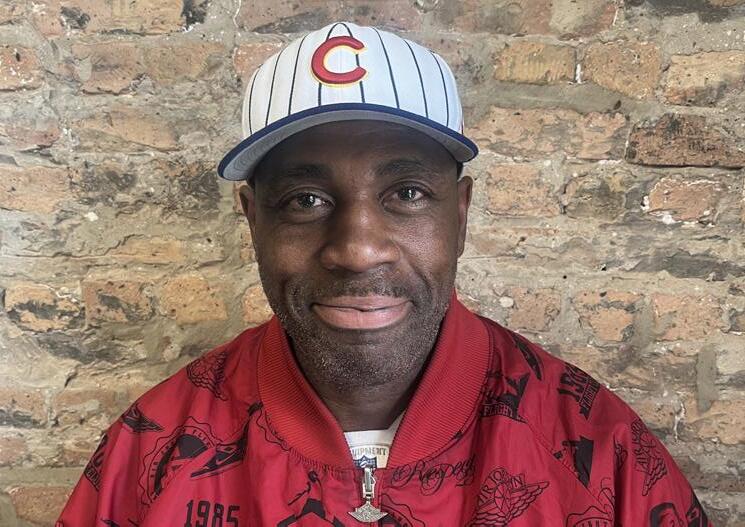
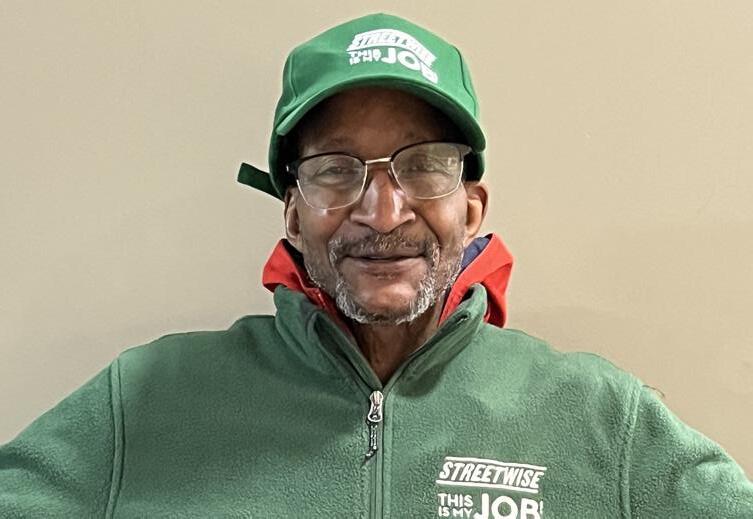
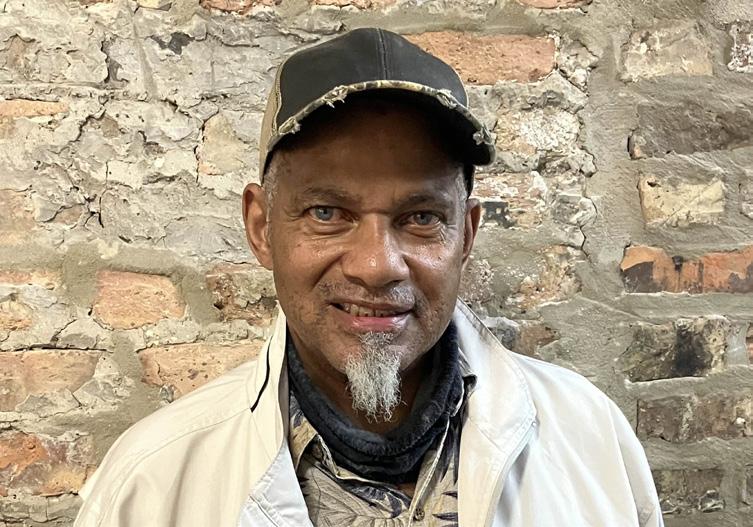
Vendors (clockwise from top left) John Hagan, Russell Adams, A. Allen, and Percy Butler chat about the world of sports.
Mayor johnson pushes a black reparations agenda
by Suzanne Hanney
The lived experience of Black Chicagoans is crucial to the slavery reparations framework first announced by Mayor Brandon Johnson during Juneteenth 2023. In addition to bus tours, town halls and a survey that closed May 31, there will be two Repair Chicago public hearings, Monday, June 22 and Tuesday, June 23, from 9 a.m. to 3 p.m. in the 2nd floor City Council Chambers at 121 N. La Salle St.
Although the 13 colonies that became the United States “upheld and sanctioned the enslavement of approximately four million African Americans” between 1619 and 1865, Chicago was only incorporated as a city in 1837.
Nevertheless, the city “perpetuated, condoned, profited,
and benefitted from the system of chattel slavery in both direct and indirect ways,” according to Johnson’s Executive Order No. 2024-1, which established the Black Reparations Agenda.
Chicago was not even a legal entity until nearly emancipation in 1865, but a Slavery Era Disclosure Report filed last year by one local business shows the pervasive, national roots of slavery.
Due to mergers and acquisitions of numerous smaller banks, there are 547 U.S. Bank National Association predecessors – 34 of which were founded before the abolition of slavery in 1865. Thirteen of these predecessors were established in southern slave-holding states, including
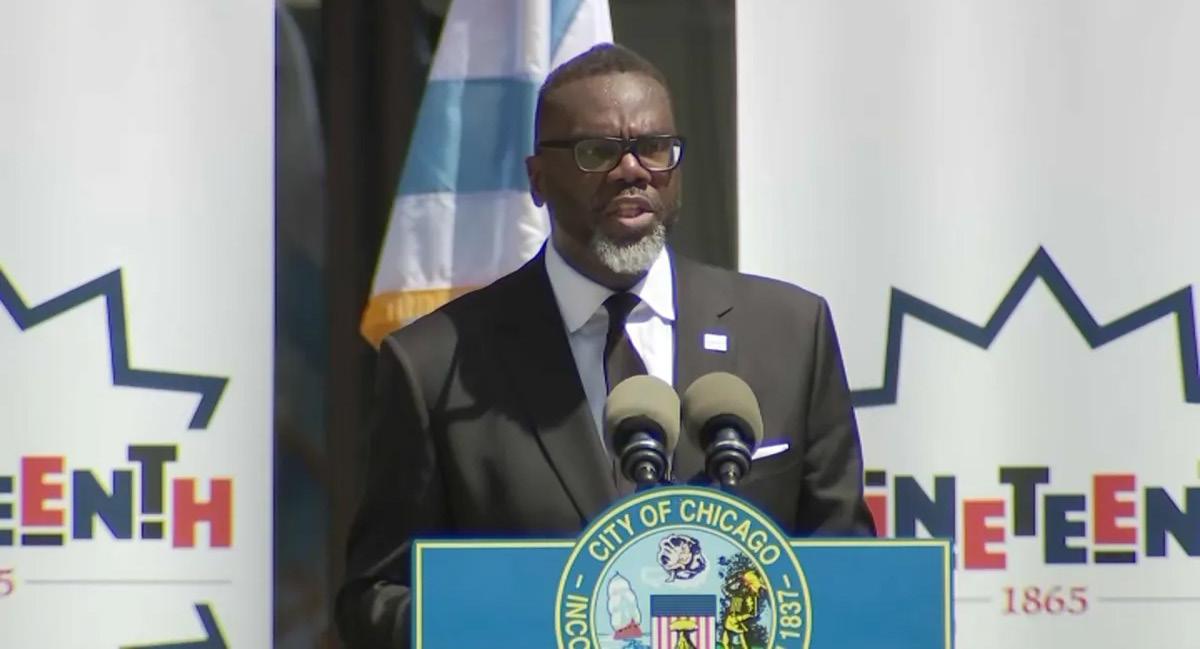
Chicago Mayor Brandon Johnson has announced the formation of a new taskforce aimed at considering reparations for Black Chicagoans. (AP photo).
Vendor a . allen: "repair the educational systems. let the schools teach the history of black heritage, beginning with black ci V ilization from egypt through slavery up until the present. rectify blacks' Misperceptions of themselves and Misunderstanding others May haVe of blacks."
Kansas, Kentucky, Missouri and Tennessee.
In 2005, the bank reviewed historical records dating to the 1850s that showed no direct holding by the bank of enslaved individuals. However, individual bank founders and directors themselves were slaveholders – and in one case, an enslaved individual was used as the collateral for a loan.
The City of Chicago is mandated to publish its own Slavery Era Disclosure Report each year and companies that do business with the City are also required to do so, although “the process is not being fully upheld,” according to the Conrad Worrill Community Reparations Commission (CWCRC). In 2024, the CWCRC requested that the disclosure reports be easily searchable on the City’s website.
Chicago’s Black Reparations Agenda as established in Johnson’s executive order focuses on laws and cultural practices of the Jim Crow era (1877-1963) that perpetuated racial segregation and discrimination. Examples include: construction of Interstates 55, 57, 90, 94 and 294 that cut through Black neighborhoods; urban renewal of the 1950s and 60s that incentivized the demolition of slums; public housing detached from the street grid and deferred in maintenance. Redlining from the 1940s
to 1970s prevented would-be buyers in Black neighborhoods from securing federally-backed loans for mortgages on homes. Contract sales in the 1950s and ’60s robbed Black families of an estimated $3 billion to $4 billion due to inflated prices they paid and a lack of equity, according to a 2019 Duke University analysis.
The legacy of these policies has resulted in “generational systemic inequities in education, employment, wealth, housing, health, safety, and more,” according to the executive order. Examples include:
• A life expectancy gap of 11.4 years between Black and non-Black Chicagoans
• A home ownership gap between Black (35%) and non-Black Chicagoans (54%). Meanwhile, the average value of a Black home is $145,000 and for a white home, $275,000.
• Black people comprise 14% of the Illinois population, yet 55% of the prison population and are convicted at nearly twice the rate as whites for low-level possession, according to the ACLU.
• Black unemployment is four times that of whites, despite the addition of 170,000 jobs to the Chicago economy between 2011 and 2019.
“Reparations is complete repair of harm done to Blacks in the city of Chicago,” said Vetress Boyce, president of the CWCRC and community co-chair of the City of Chicago Reparations Task Force. Ald. Desmon Yancy (5th ward) is the city co-chair.
“I am 62 and I’ve lived through all the harm, and am still living through the racial components of it today,” Boyce said. “We need outcomes to lessen the wealth gap, remove a lot of racially profiled practices that exist today in government. Start with redlining, blockbusting, predatory lending, denial of access to resources, barriers to entries when it comes to contracts, percentages of blacks employed in government. If we plan on making a city healthy and whole, we have to start with the people that are there. Black people are considered the permanent underclass: the lowest on the totem pole when it comes to income, value of our homes, the education system. Clearly, redlining is racial. We have to repair that.”
Boyce said that Chicago started the national movement toward local reparations in 2019 with a resolution by Ald. Roderick Sawyer (6th ward) that called for the City Council Committee on Health and Human Relations to create a City of Chicago Citizens of African Descent Reparations Commission.
“Where are we going to get the money to pay for this?” Ald. Nick Sposato (38th ward) asked at the time, according to WTTW. “It’s not necessarily a bad idea. I shouldn’t
say I’m 100% against it. I’m against it if we have to take taxpayer dollars to pay for it.” Sposato also questioned if people new to the U.S. or to Chicago would be eligible.
Sawyer’s proposal was scaled down from a 16-member, 20-year commission to a City Council subcommittee. The intention was to hold hearings to “ensure equity, equality and parity for citizens of African descent in Chicago who are mired in poverty.”
Sawyer told the Sun-Times in 2022 that former Mayor Lori Lightfoot “was not as supportive as I would have hoped. A lot of us are willing to go further. But there’s been some recalcitrance by an administration that does not think this is the way to go.”
Sawyer also scrapped an “over the top” earlier version of the resolution. Backed by former mayoral candidate Willie Wilson, its remedies were costly to the cash-strapped city, the Sun-Times noted, including free rides on the CTA, free tuition at City Colleges and a bigger share of city contracts.
When Johnson was in a runoff with Paul Vallas in 2023, he met with Boyce and others and committed to support reparations if he were elected.
“He won and did exactly what he said.” Boyce said Johnson’s executive order funded $500,000 from the FY24 budget to start a task force, hire consultants, do the framework, make sure there was legal support and to work with Chief Equity Officer Carla Kupe.
“What sets this initiative apart is government’s commitment to working with the community to build a transformative plan of action,” the city’s website says of Johnson’s executive order.
In addition to defining and framing reparations, Chicago’s Reparations Study expected this summer will examine the policies and practices that have driven racial inequities for Black Chicagoans. It will include testimony from experts and residents most affected, along with recommendations for remedies. The study will draw on archival research, public education, and community engagement, including town halls and the online survey that closed May 31.
The task force must first define reparations and then the framework for delivering them, Chief Equity Officer Kupe said at an April 22 town hall at Malcolm X College. Aimed at Black Chicagoans who are descendants of Africans harmed by chattel slavery, the current definition of reparations is “an ongoing commitment to redressing historic and ongoing system and structural harms that are human rights violations unjustly inflicted upon Black residents and communities due to their shared racial and ethnic identity.”
James Hammons, at the town hall, said he found the definition confusing. “How do we prove we were harmed by chattel slavery? There were harms of those who migrated to Chicago: redlining, putting us in boxes so we couldn’t have jobs, rather than vague human rights violations.”
Zoe Ma also referenced redlining, and instead advocated “greenlining.” If the owners of the Bulls and the Blackhawks can get $50 million to redevelop the area around the United Center, a $75 million community benefits agreement should provide Black residents with home ownership and job training. “It’s not going to be another Cabrini Green story with Black residents displaced with no recourse.”
Kupe said reparative measures could entail acknowledgement and cultural restoration; direct financial repair and restitution; transformation of systems and policies that caused harm; investments in community well-being and sustained investments to support community economic development.
The task force has identified five areas for reparative action: education, housing, health, economic development and the justice system, she said.
“What we really need is a leg up,” Hammons said. “We’ve been here a long time. The Irish people and others got a leg up. We have to make certain we’re not getting charity. We need the same opportunity everyone else has always gotten that we’ve been denied. The money should be given to the community so as James Brown said, ‘I can get it myself if you give me the opportunity.’”
Vendor k iMberly brown: "i hope everyone gets a fair chance at reparations if they are eligible."
Juneteenth events
June 16 the 6th annual juneteenth freedoM Market
The Salt Shed, 1357 N. Elston Ave. 5-10 pm
Kick off your Juneteenth celebration at the 6th Annual Juneteenth Freedom Market – Enjoy a marketplace of 50+ local Black-owned businesses and creators, selling everything from homegoods and beauty products to one-of-akind fashions and more. The event will also include curated sounds, including DJ sets from Slot A and DJ Ca$h Era, performances by the iconic 40+ Double Dutch Club, and the Black Onyx All Stars and special pop-up surprises. If you’re able, a $10 donation to Gray Matter Experience is encouraged, to support their important work in cultivating the next generation of Black entrepreneurs in Chicago.
June 18 accessible juneteenth
Access Living, 115 W. Chicago Ave. 4 - 7:30 pm
Join the UIC Disability Cultural Center, the Chicagoland Disabled People of Color Coalition (supported by UIC’s Institute on Disability and Human Development), and the Center for Racial and Disability Justice for the sixth annual Accessible Juneteenth, celebrating the Black disability community. Juneteenth is a fun and accessible experience for everyone, including disabled, neurodivergent, and deaf people in the African Diaspora. This year, DJ Matt returns with performances from Double AA, Cherlnell Lane, Jada Thompson, Victoria Djembe, and Miss Mamas; food from Cook It Mama Café, and booths from Black-owned businesses. FREE.
June 18
Millennium park suMmer Music series
Jay Pritzker Pavillion, 201 E. Randolph St. 6:30 - 9 pm
A Jubilant Celebration of Juneteenth with D-Composed and Kahil El’Zabar‘s Ethnic Heritage Ensemble with special guests Nona Hendryx and David Murray. FREE.
June 18 emancipation ball 2026
CineCity Studios Chicago, 2429 W. 14th St. 7 pm - midnight
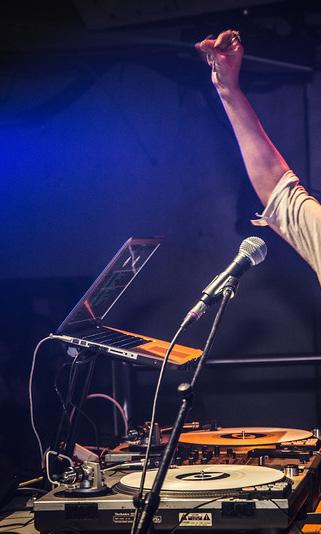
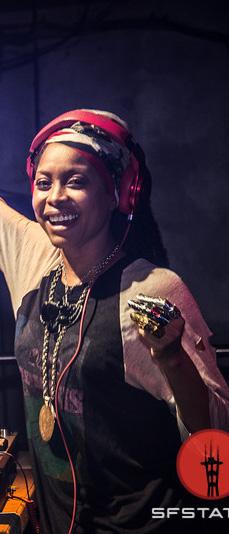
Annual Juneteenth dance party, this year featuring a DJ set by Lo Down Loretta Brown (AKA Erykah Badu). Tickets start at $162 at Eventbrite.com
June 19
uneteenth elebration 2026 at he dusable Museum
DuSable Black History Museum, 740 E. 56th Place
10 am - 5 pm
The DuSable Black History Museum and Education Center’s annual Juneteenth celebration is the museum’s largest community event of the year! This all-day gathering honors freedom, cul ture, and Black history through programming rooted in celebration, education, and community connection. Enjoy a full day of festivities and excitement for families and people of all ages. FREE.
June 20 suMmer concert series
June 20 pullMan coMmunity ecoMmitMent elebration second line arade
Gately Stadium Park, 810 E. 103rd St. am line-up; 10 am step-off
Start the day with a New Orleans-style second line parade featuring the Live The Spirit brass band and dance through the streets of Pullman celebrating the holiday. In addition, the Pullman area will be hosting the Juneteenth Youth Olympics later in the day throughout the neighborhood. FREE.
June 20
bronzeV ille’s 6th annual juneteenth coMmunity celebration
10 am-3 pm
Absolutely Anything Essential, 3521 S. King Drive
Chicago’s Bronzeville community invites all of Chicago to gather for one of the South Side’s most vibrant and meaningful Juneteenth celebrations to commemorate freedom, resilience, culture, and the joy of living life in community. Guests can enjoy creative performances, art, and an uplifting atmosphere that sets the tone for the weekend. FREE.
Hyde Park Union Church, 5600 S. Woodlawn Ave. 5-7 pm
A powerful live choral experience featuring a rich blend of Ghanaian choral works, classical selections, and contemporary gospel music, performed by talented young African and diasporic musicians from across the United States. FREE.
June 20 the juneteenth coMedy festival: a celebration of black coMedians
iO Theater, 1501 N. Kingsbury St. 7-10 pm
You’re Invited To "The Juneteenth Comedy Festival: A Celebration of Black Comedians." This vibrant comedy variety show spotlights some of the most exciting Black comedic talent in Chicago. From stand-up and improv to musical comedy and a whole lot of cuttin’ up, this festival serves up a full plate of laughter, culture, and community. Tickets are $28.66 at ioimprov.com
June 20
r&b Music experience: a juneteenth celebration
Wintrust Arena, 200 E. Cermak Road
8 pm
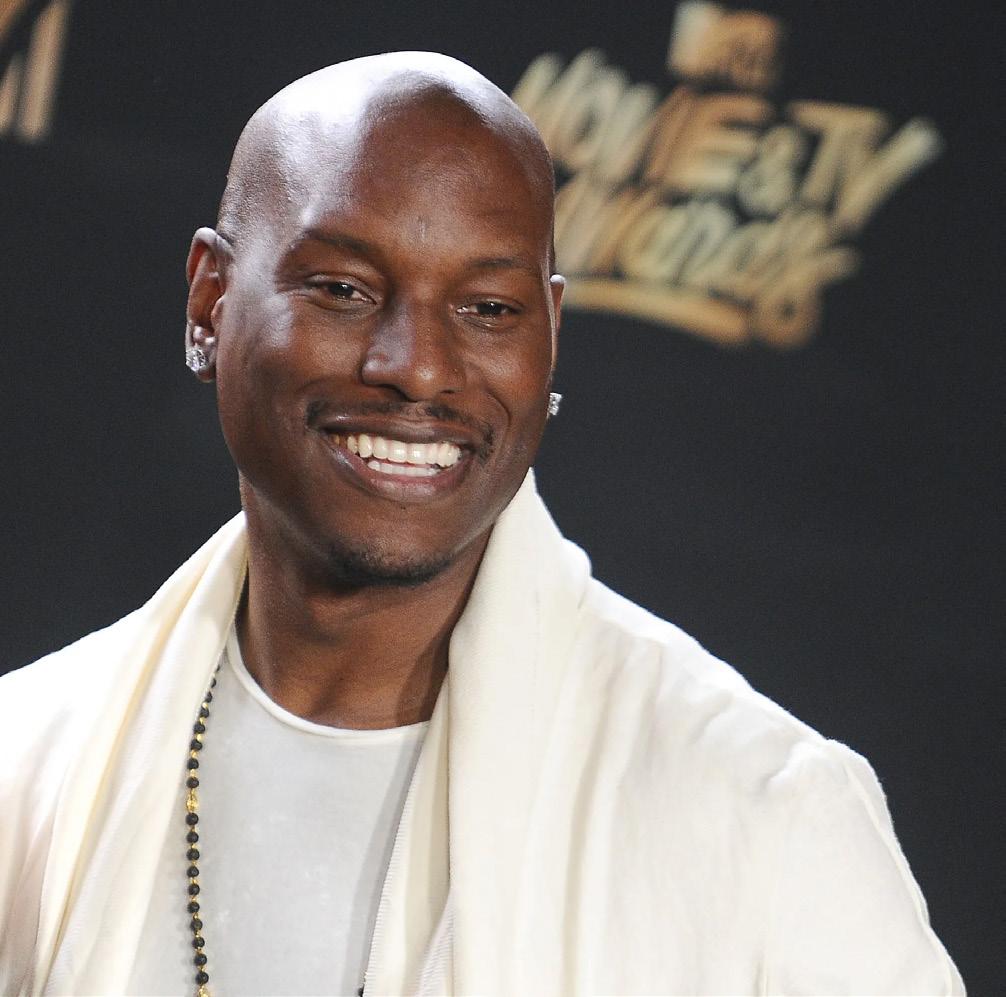
Featuring Tyrese, Tank, Tamar Braxton, Silk, and HTown. Tickets start at $86.20 at WintrustArena.com
-Compiled by Dave Hamilton
minimum wage. living wage 2026 an issue and a critical need
by Judi Strauss-Lipkin
U.S. Reps. Delia C. Ramirez and Jesus “Chuy” Garcia (both D-IL), Lateefah Simon (D-CA) and Analilia Mejia (DNJ) stood with workers, civil rights and economic justice leaders from across the country April 28 to introduce the Living Wage for All Act in Congress. This legislation proposes to raise the federal minimum wage to $25/hour –a minimum that they believe would help working families meet the real cost of living and raising a family in America today.
The rise to $25/hour from the current $17.05 minimum wage in Chicago and $15 in Illinois and only $7.25/hour federally would be done through a phased approach. Large employers would be required to reach $25 by 2031 and smaller employers more gradually, by 2038.
The Living Wage for All Act also reasons that as the economy grows and wages rise, the minimum wage would rise with it. The legislation would eliminate all subminimum wages, including for tipped workers, youth workers, and workers with disabilities — ensuring that every worker is guaranteed a full wage from their employer, with no exceptions.
“Growing up I saw my immigrant parents and my neighbors working multiple minimum wage jobs just to survive,” Ramirez said. “Today, companies are reporting record high earnings while working people struggle to survive. Minimum wage is not a living wage. That’s not right. If we want to address the affordability crisis, we must address the wage crisis. I am proud to stand with Congress members Garcia, Simon and Mejia and the Living Wage for All Coalition to ensure that working people have everything they need to survive and thrive.”
“The need for a living wage couldn’t be clearer. The gap between the wealthy and everyone else keeps widening,” Garcia said. “Corporate profits are at a record high and bosses are actively cutting their workforces, undermining organizing efforts, and trying to replace labor entirely.
Meanwhile, working families are struggling to pay their rent, buy groceries, and go to the doctor. It’s past time that workers are paid what they deserve.”
The need for the legislation was underscored by a Business Insider survey released May 26 that showed the annual median wage (half above/half below) paid by the nation’s top 28 retailers. The retail sector employs 1 in 10 Americans.
The median annual wage ranged from $10,059 for Ross Stores to $49,186 for Costco, with mostly part-time workers at the low-end of the scale.
Among those in between: Restaurant Brands International (Burger King) $11,075; Dick’s Sporting Goods $11,259; TJX (TJ Maxx and Marshall’s) $14,994; Yum Brands (Taco Bell) $15,346; Dollar Tree $16,214; Starbucks $17,376; McDonalds $19,020; Target $27,506; Walmart $30,570; Amazon $40,206. The information was gained from proxy statements required by the U.S. Securities and Exchange Commission for publicly traded companies.
Meanwhile, a New York Federal Reserve study released May 27 showed the need for minimum wage legislation could not be stronger. Since June 2020, the percentage of households that did not have enough food to eat more than doubled, from 4% to over 10%.
Households relying on SNAP Federal assistance to survive surged from 10.6% to 17.9%.
• The share of respondents forced to dip directly into personal savings accounts to cover basic living expenses (food, gas and medical and housing costs)
U.S Reps Lateefah Simon (white glasses), Delia C. Ramirez (at podium) and Jesus "Chuy" Garcia (right, in suit) introduce the Living Wage for All Act on April 28 in Washington, DC (photo provided by the House of Representatives).
skyrocketed from 21.8% to 36.8%.
• Individuals needing to supplement their groceries with charitable food donations rose from 10.6 to 15.8%.
According to the New York Fed survey, this issue is compounded by what economists call the “K-Shaped” economy:
• Households on the upper half of the “K” have seen their net worth bolstered by a booming stock market, surging home equity and a pandemic era refinancing wave that locked in low mortgage payments.
• Meanwhile, those on the bottom half of the “K” (lower and even middle-income families) have faced relentless financial strain. Lower-income and often lower educated households just cannot keep up with the ever-rising costs of daily living and raising a family.
The need is likely more severe, CNN.com noted. The New York Fed survey was finalized before the recent military strikes in the Middle East, which triggered a spike in retail gas and heating oil prices, further stretching the budgets of households already forced to skip meals just to get by.
The Greater Chicago Food Depository (GCFD) is already dealing with a surge in demand, because Congress
passed a bill that cut Supplemental Nutrition Assistance Program (SNAP) benefits by $200 million. Over two million people in Illinois rely on SNAP to help pay for food and groceries when times are tough, but the benefits of 250,000 people were endangered by new requirements imposed in February. In the past, work requirements went only to age 54, with exceptions for people whose children were under 18. Now, people age 54-64 with dependents over 14 must work, volunteer or be in a training program at least 20 hours a week or lose their SNAP benefits after three months.
However, the GCFD and the Save Our SNAP Coalition of 90 organizations were celebrating a victory that came with passage of the Illinois budget as the General Assembly went into overtime June 1. The FRESH (Families Receiving Emergency Support for Hunger) program will provide $400 in one-time assistance to 175,000 Illinoisans who have lost benefits due to the work requirements. The $70 million temporary program will also help grocers and the emergency food system recover from the largest drop in SNAP participation in state history.
Judi Strauss-Lipkin, PhD is an enrolled IRS agent and was a professor of management at Benedictine University and George Williams College. She is president emeritus of the Phi Beta Kappa Association of Chicago.