A Chicagoan Artist!
‘On Wonder, Mind & Magic: Jeanette Andrews’
Raised in Wheaton, Illinois, and based in New York, Jeanette Andrews bridges the worlds of illusion, installa tion, and conceptual art, creating interactive vignettes and surreal, multisensory experiences that investigate perception, cognition, and the seemingly impossible. Andrews applies sensory illusion techniques and her interest in the bounds of perception to create artworks that explore magic, multiple realities, and the human psyche, often inviting audiences in as co-creators in her illusory performances. Her first solo museum exhibition, “On Wonder, Mind, & Magic” will present interactive and site-specific works including installation, sculpture, video, sound, and performance, alongside new work developed while Artist in Residence at MIT’s Center for Art, Science, and Technology in 2024-25. On display through August 23 at the Elmhurst Art Museum, 150 S. Cottage Hill Ave., Elmhurst. Museum admission is $18 for adults (ages 18+), $15 for seniors, $10 for students, and $5 for children. Also on display in Wilder Park, “Near Immortality” by Jeremiah Hulsebos-Spofford, FREE surrounding the Museum. elmhurstartmuseum.org

Films for All!
Black & Brown Femme Film Festival
The Black & Brown Femme Film Festival (BBFF) is a nonprofit, two-day celebration of independent film, showcasing 43 films by Black, Brown, women-identifying, nonbinary, and gender-expansive filmmakers from around the world. Held at the University of Chicago’s Logan Center for the Arts, 915 E. 60th St., the festival features film screenings, filmmaker Q&As, panels, a smartphone filmmaking workshop, and free snacks between blocks. With affordable Full Festival, Day, Block, and Student/Senior passes, BBFF is committed to making powerful storytelling accessible to all. Screenings are July 24 & 25, with 2-day passes, one-day passes, and timed block tickets available starting at $17.25. For a full schedule, visit bbffilms.org
Defining 250 Years!
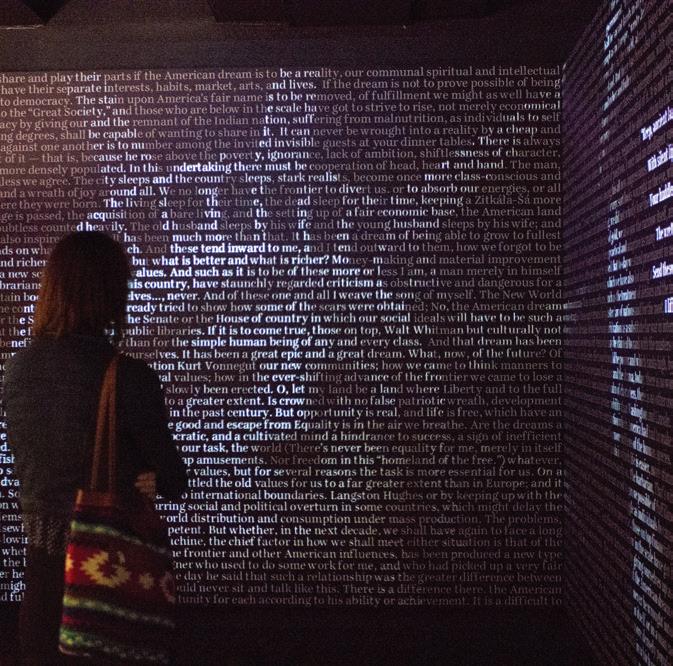
‘Declarations: 250 Years of Writing toward Independence’ New pop-up exhibit "Declarations: 250 Years of Writing Toward Independence," is open at American Writers Museum, 180 N. Michigan Ave., now through Monday, September 7 (Labor Day). Visitors can explore an 1823 William Stone print of the Declaration of Independence, as commissioned by then-Secretary of State John Quincy Adams, as well as colonial-era legal documents signed by John Adams, Benjamin Franklin, Thomas Jefferson, Philip Livingston and Roger Sherman. At an interactive erasure poetry station, guests can edit the founding document into their own words, inspired by an erasure poem from Pulitzer Prizewinning poet Tracy K. Smith. Tickets to the museum are $16 for adults, $10 for seniors, students, and teachers. Free for members and children ages 12 and under.
More Than Dance!
‘expo/sd’
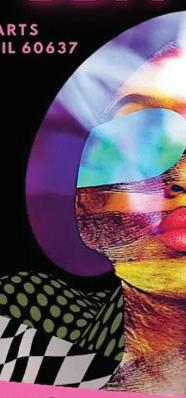
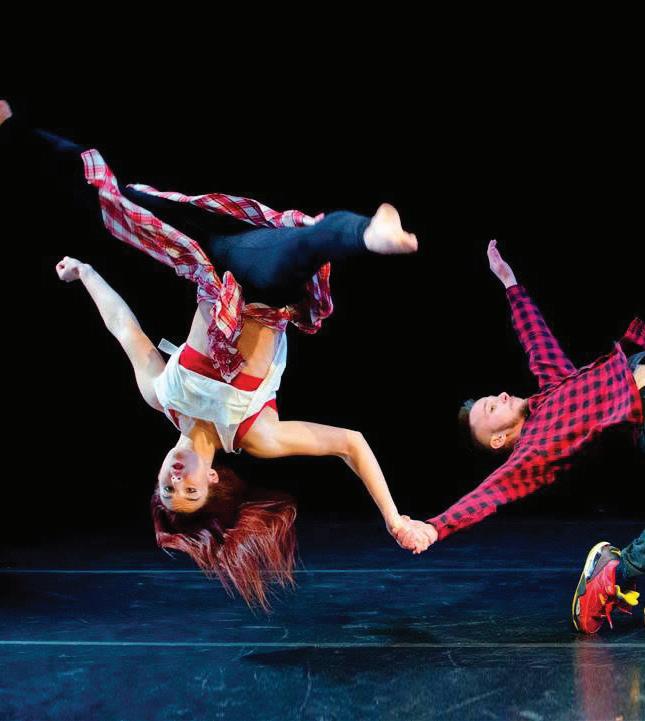
Chicago Dance Crash presents “expo/sd," a world premiere , street dance theater concert at the Ruth Page Center for the Arts, 1016 N. Dearborn St., July 24 & 25 at 7 p.m. It will feature a new work that investigates how traditional street and contemporary dance forms can exist in conversation with one another while pushing dancers to embrace the visceral, the intimate, and the imperfect in performance—work that is unsettling, raw, and emotionally charged rather than conventionally beautiful. The concert will also feature “A 4 Bar Loop,” a dynamic piece that explores identity. And finally, a new duet “Fall From Grace,” rooted in hyperphysicality, exploring how the body can be pushed to (and beyond) its limits, and how that physical threshold becomes a gateway to raw honesty. Seating will be very limited for this weekend-only showing and, as with all freestyle-driven productions, both performances will be entirely different. Join Chicago Dance Crash in July as it celebrate three world-premiere works in "expo/sd." Tickets are $28.52 at eventbrite.com
World Cup Excitement!
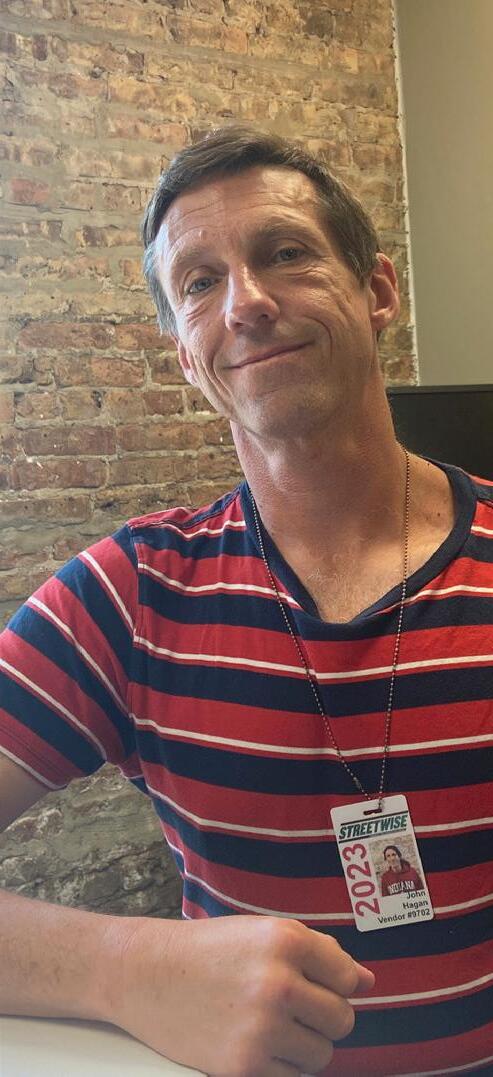
John: The 2026 FIFA World Cup was going on until July 19 on two di erent networks: Fox and Telemundo. We recorded this podcast June 25, but we updated it during our layout process.
Where did you watch it and which do you enjoy more?
Russell: I watched it on both stations. They did pretty good. Sometimes while they’re talking, I turn the volume down if they’re speaking in Spanish. They got down to business, showed the replays, the shots that could have been. They made it interesting. It was a lot like watching hockey.
John: Allen, if you were to watch it, where would you watch it?
Allen: I would probably watch it on Fox because Telemundo is in Spanish. I am trying to understand the game now and think I would understand it a little bit more in English. The FIFA World Cup is becoming very popular because of how the United States moved through what we would call the playo s. It’s good to know I can watch it on two channels at least.
The odds on a US win were originally 60-1, but going into the Bosnia-Herzegovina game July 1, they were 30-1. The New York Times called it “the most-bet World Cup game ever.” After they beat Bosnia, the odds were 23-1 on Draft Kings, going into the July 6 game against Belgium in Seattle. That gave them home field advantage, which got me interested. The odds were still not good, but we were still in, although we lost on July 6.
John: I can’t really watch a whole soccer game like you can football. I do watch 10 minutes a time. I can’t watch the whole game at a time because it’s like watching hockey, all you see is people kicking the ball. I actually enjoy Telemundo more, because the excitement and the feel for soccer is a lot
closer to home on Telemundo, compared to Fox where it’s like watching a golf tournament. When you watch golf, it makes you want to fall asleep, like on the CTA Red Line, except maybe safer on your couch.
Allen: I notice it’s bringing money into the USA, because they will be playing in Inglewood, CA. and have become real contenders.
Russell: I stayed up to watch them play Turkiye (Turkey) June 25. They lost 3-2 after Turkiye scored in stoppagetime. However, the United States had already clinched fi rst place in Group D by beating Paraguay 4-1 June 12 in their opening match in Los Angeles and then Australia June 19.
The U.S.A. beat Bosnia-Her-
zegovina July 1 to emerge from the Round of 32. The Belgium game on July 6 was the Round of 16. The quarterfi nals (Round of 8) were July 11 and the semifi nals were July 14-15. The thirdplace match was July 18 in Miami Gardens, FL and the World Cup fi nal was July 19 in East Rutherford, N.J.
John: If they had won the Cup, I wanted them to parade all over: not just Michigan Avenue or State Street, but Vine in Hollywood and Broadway in New York City. It would be fitting if the United States won the World Cup this year, since it’s the 250th anniversary of the U.S.
Any comments, suggestions or topic ideas for the SportsWise team? Email StreetWise Editor Suzanne Hanney at suzannestreetwise@yahoo.com
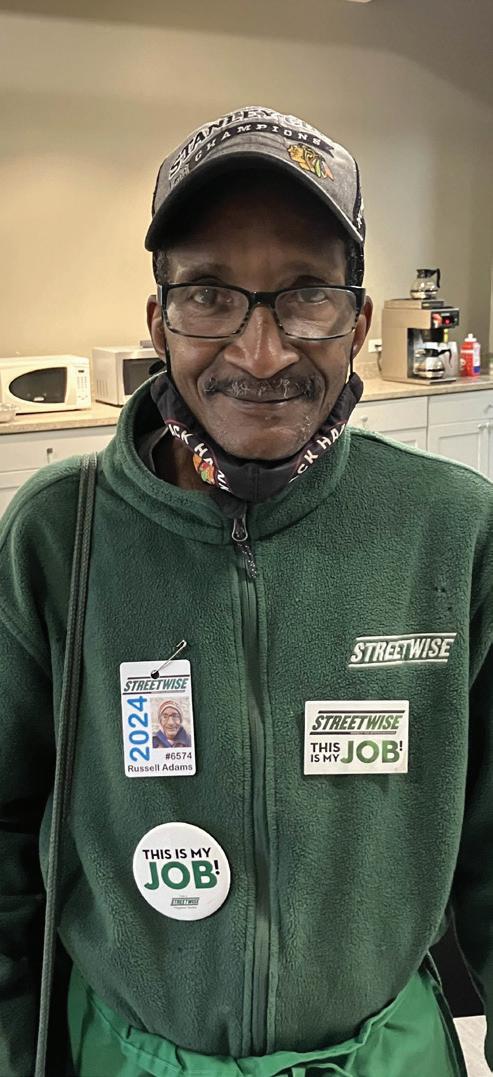
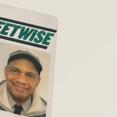
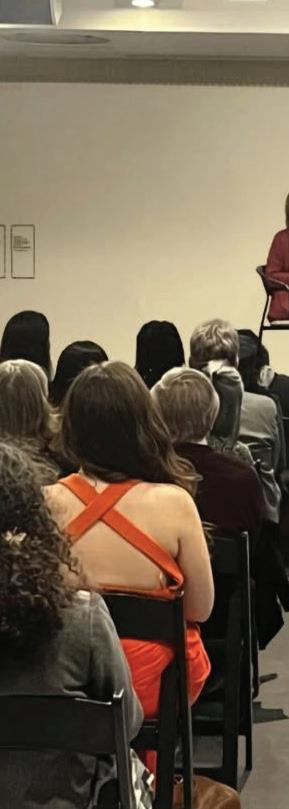
Vendors John Hagan, Russell Adams, and A. Allen chat about the world of sports.
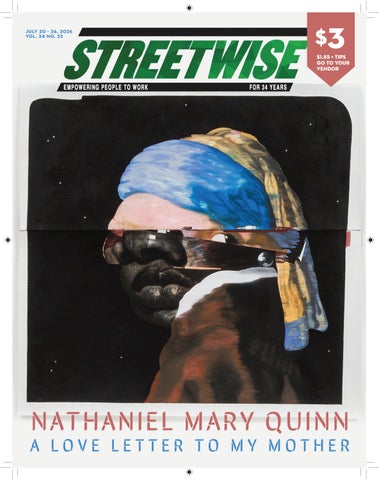
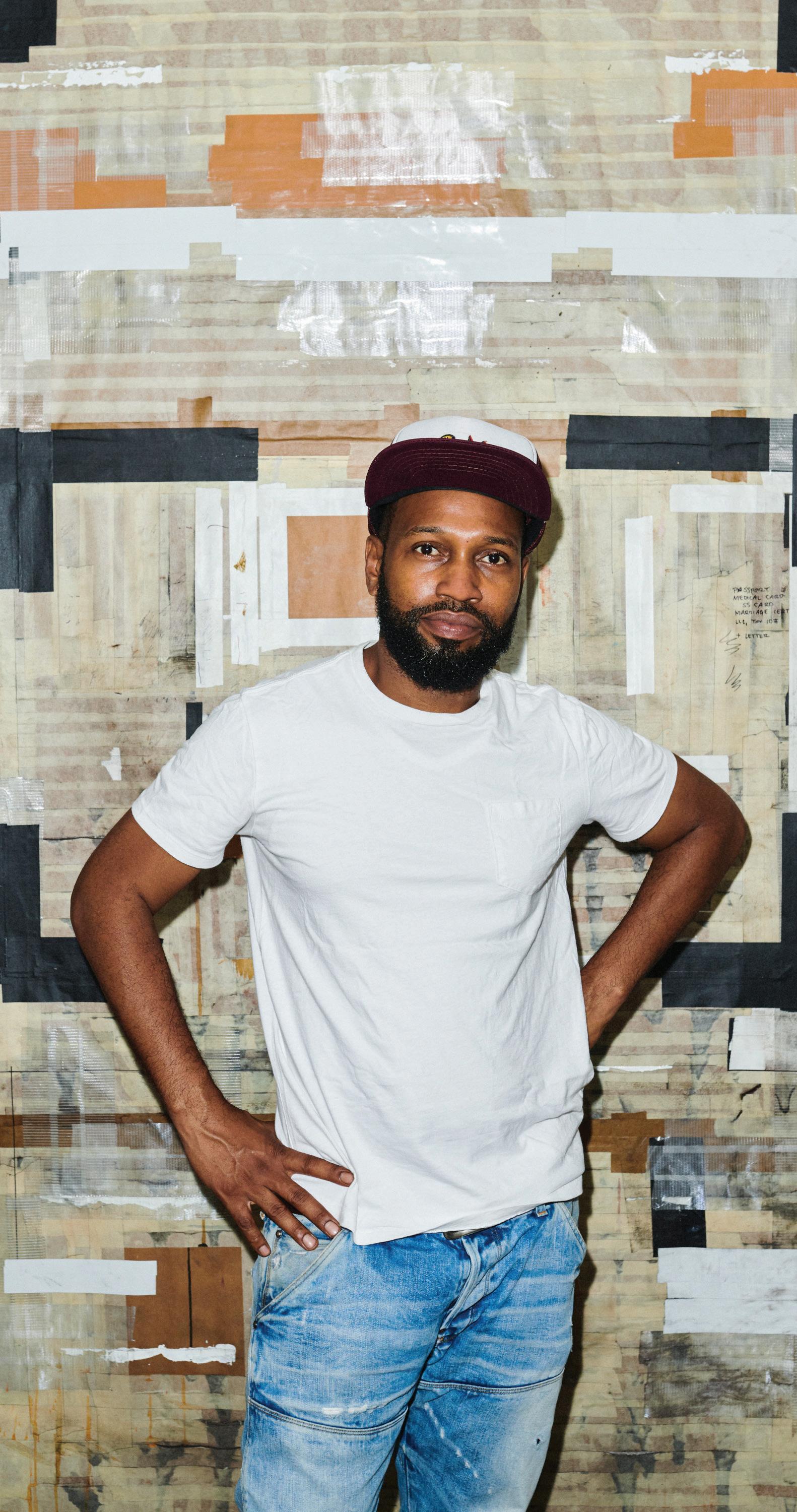
NATHANIEL MARY QUINN
NOW SHOWING AT THE NATIONAL PUBLIC HOUSING MUSEUM
by
Nathaniel Mary Quinn’s first canvases were the walls of his family’s Robert Taylor Homes apartment, which his mother would wash away so that he could begin again.
“Everything I make begins in that room – with my mother, with those walls, with the quiet insistence that I could imagine something beyond them, and, one day, empathize deeply enough to see another person fully – beyond what we think we know,” Quinn said in prepared material by the National Public Housing Museum (NPHM), which is hosting his first museum exhibition in Chicago, “Nathaniel Mary Quinn: A Love Letter to My Mother.”
“In this sense, the work is not about where I come from, but about the mercy and grace of God, who carried me beyond the far reaches of my imagination,” Quinn said. “What began in a small living room has become an endless space – one I am still learning to navigate through my art practice and my relationship with the Most High.”
Quinn, born in 1977, was in seventh grade at the nowclosed Zenos Colman School when his teachers identified him as someone with the potential to attend college. They recommended that he take the entrance exam for the elite Culver Academy boarding school in Indiana. He did so well on the test that, two weeks later, he won a congratulatory note and a full, four-year scholarship that enabled him to attend, despite his parents’ poverty.
“I knew this could be my escape from the projects,” he said in an interview at the NPHM exhibit opening. “It changed the trajectory of my life. I feel confident if that school had not admitted me, I would probably have been dead by the time I was 16 years old, because of the violence of the Robert Taylor Homes, and it is not even breaking news to say it.”
Quinn received a Master of Fine Arts degree from New York University in 2002 and an honorary doctorate from Wabash College in 2023. His work is held in the Brooklyn Museum, the Whitney Museum of American Art, the Art Institute of Chicago, the Hammer Museum, the Museo Jumex and the Centre Pompidou.
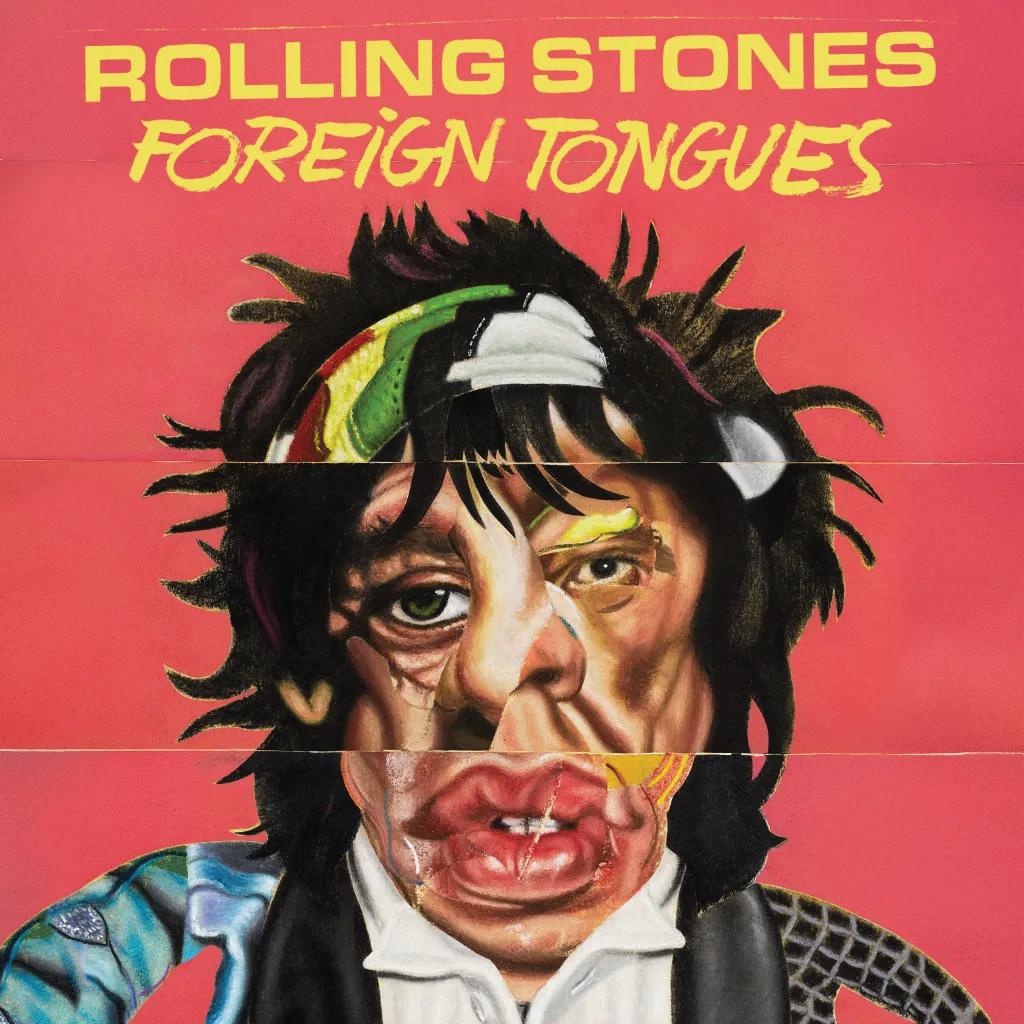
Just over two weeks before his exhibit’s May 21 opening at NPHM, the Rolling Stones announced their 25th album, Foreign Tongues, to be released July 10. Quinn did the cover, entitled “Stones Trinity,” a Surrealistic collage
A NECESSARY CIVIC CONVERSATION
As NPHM’s first single-artist show in a rotating gallery space for both contemporary and historic exhibits, Quinn’s work starts a necessary civic conversation about public housing, said NPHM Executive Director and Chief Curator Dr. Lisa Yun Lee. Besides 10 of his works on canvas and paper, the exhibit includes a replica of his family’s living room in 1984 at the Robert Taylor Homes and a reading room with historical materials related to that former Chicago Housing Authority development. During special office hours, visitors will be able to meet with public housing residents and scholars for civic conversations.
Located on State Street between 39th and 54th Streets, the Robert Taylor Homes were named for the first Black CHA chairman, who resigned when the Chicago City Council refused to approve CHA units in white neighborhoods. Completed in 1962, the development’s 28 16-story buildings housed 27,000 people in 4,300 apartments. It was demolished between 1998 and 2007.
hybrid of the faces of Mick Jagger, Keith Richards and Ronnie Wood.
Suzanne Hanney
Courtesy of Capital Records.
“All of our work at the National Public Housing Museum is about challenging people to open up their minds about people and the history of housing and challenge mainstream stereotypes about public housing,” Dr. Lee said. “Normally, if you say ‘Robert Taylor’ or ‘Cabrini Green,’ there are stereotypes, mostly racialized, that mostly blame the failure on residents themselves, without a deeper understanding of the history of policing, the defunding of upkeep, definitely never telling the stories of collective joy, of resilience, of wonder, of communities coming together. [Quinn’s] work helps to do the work of great public history: to open up the space for more diverse stories and for us to have a deeper and capacious understanding of more diverse people.”
Quinn’s mother died while he was at Culver and he came home shortly afterward for Thanksgiving to find the family apartment deserted, his father and his four older brothers gone. He learned bits and pieces of the story from neighbors. Only 21 years later did his brother Charles phone him at the number on a now-defunct website Quinn maintained.
But at the time, early in high school, Culver became his only home. Towards the end of his senior year, he received his class ring, with just his initials “NQ” inside, not the typical three initials of his classmates. It was then that he got the idea of making his mother’s name, Mary, his middle
name, so that it would be on his high school diploma. In a sense, it would give her the honor she was never able to achieve.
“Culver” became an unusual connection for Quinn and me, because my father had also found a home there – for an opposite reason – and I shared it with him at the outset of the interview. My Irish immigrant grandfather and Scottish immigrant grandmother had “issues” and my father looked like his father, which activated my grandmother’s wrath and led my father to act out with school authorities.
He was sent to Culver, which was then a military school, for discipline. Yet I remembered his tone of voice when he used to say, “When I was at Culver…” And over the years, as I wrote about young Black men in similar matriarchal families joining gangs as an all-male refuge, I wondered: “Was Culver my father’s ‘gang’”?
Simultaneously, over the years I had noted the achievements of men I had written about whose mothers loved them unconditionally: Ronald Reagan, Pope Leo and now, Nathaniel Mary Quinn.
To look at the two of us, you’d never guess any commonality, but there it was in an animated conversation that spun from the Robert Taylor Homes (and my own upbringing just east of Cabrini-Green) to 17th century Dutch genre paint-
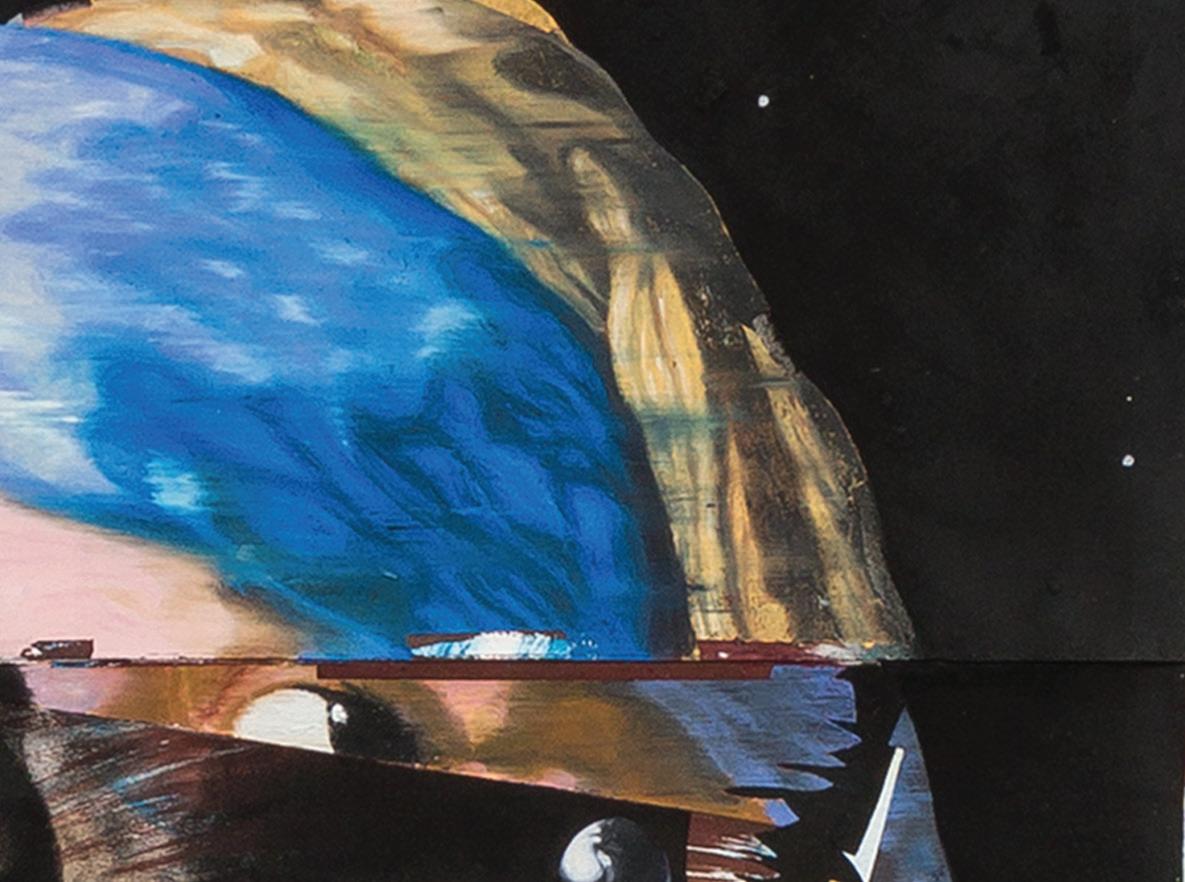
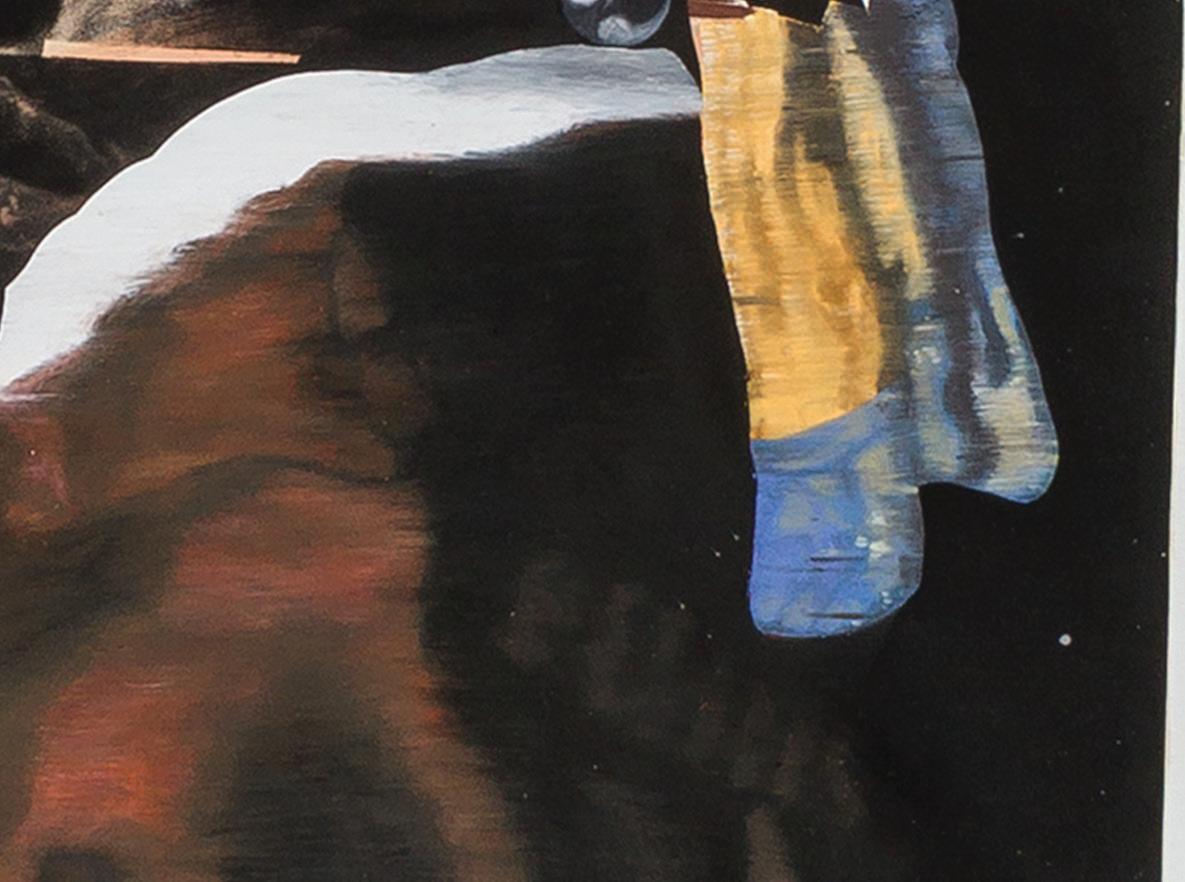
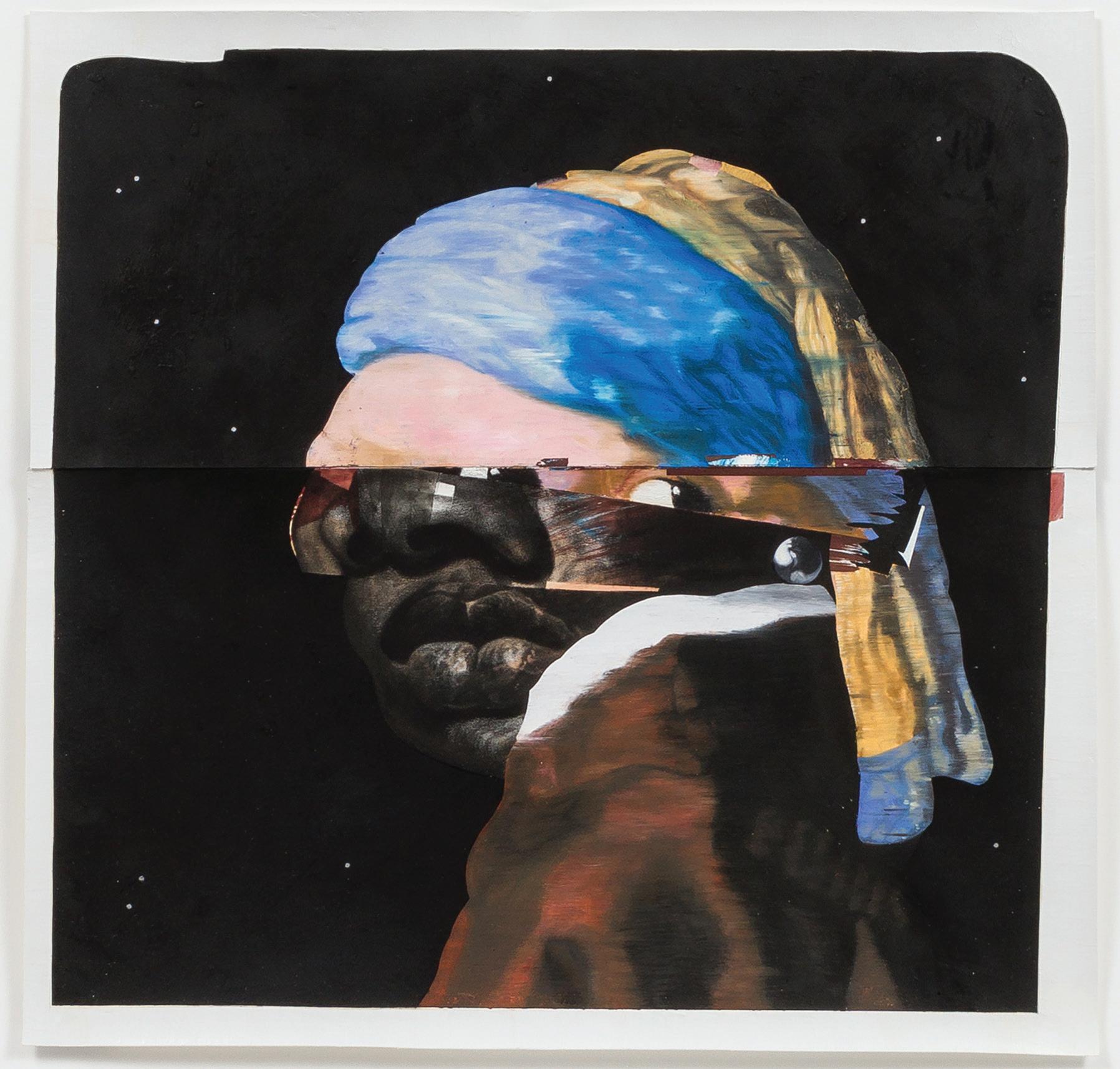
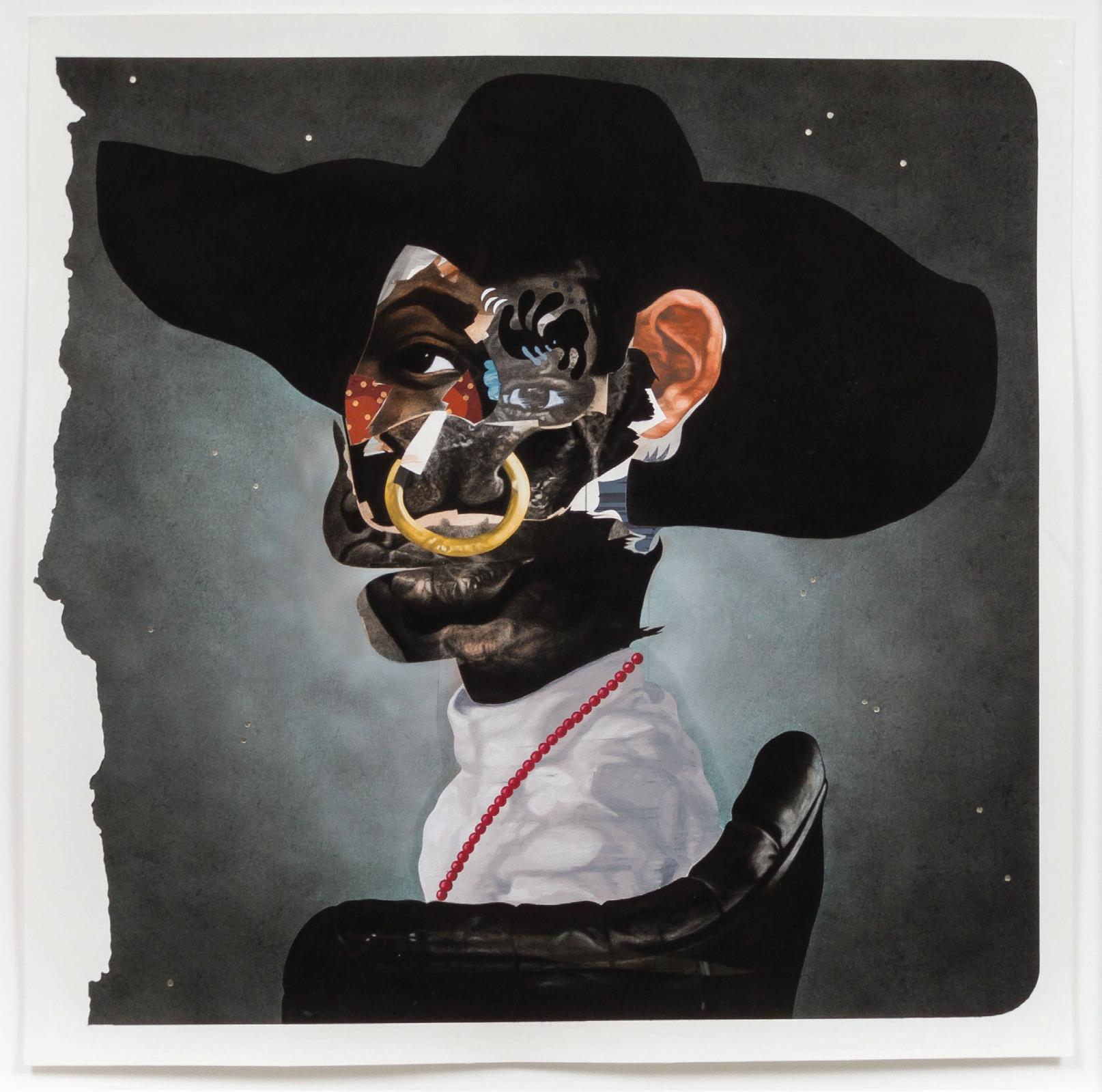
Left: Nathaniel Mary Quinn "Erica with the Pearl Earring," 2015. Black charcoal, gouache, soft pastel, oil pastel, oil paint, paint stick, and silver oil pastel on Coventry Vellum Paper. 25 1/2 x 25 1/2 inches (64.8 x 64.6 cm). (© Nathaniel Mary Quinn. Courtesy the artist and Gagosian).
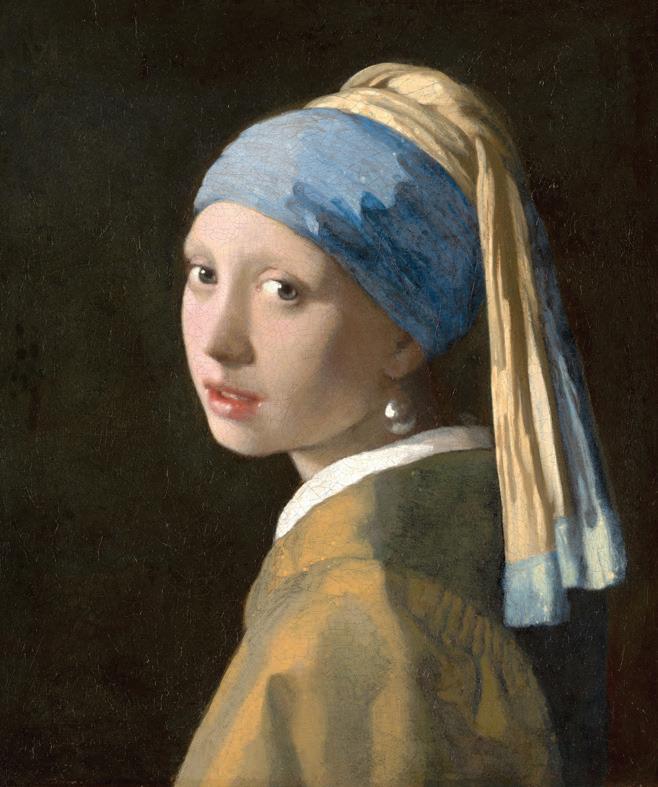
Below: Johannes Vermeer "Girl with a Pearl Earring," 1665. Oil on canvas. This painting served as inspiration for Quinn's "Erica with the Pearl Earring."
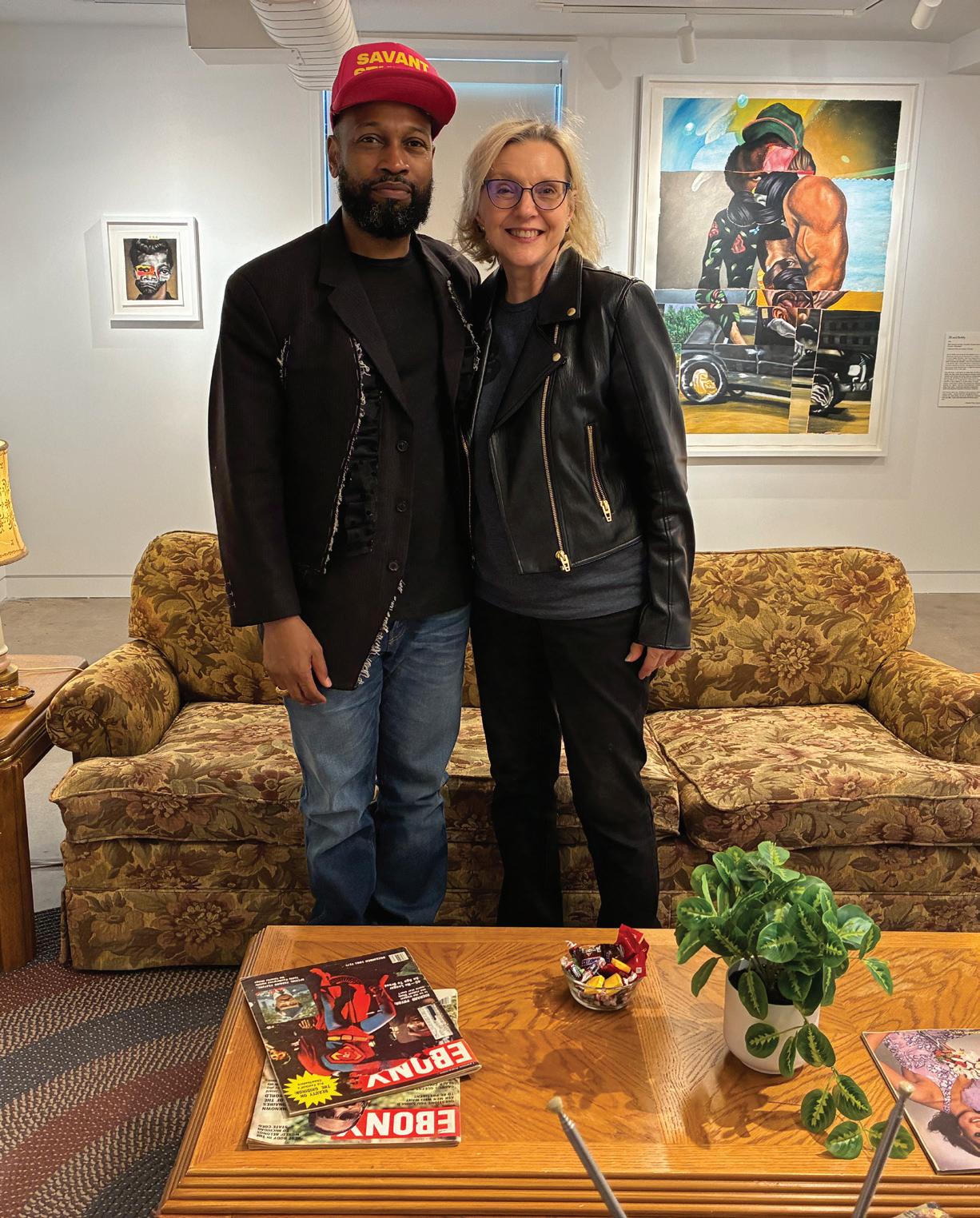
Right: Artist Nathaniel Mary Quinn and StreetWise editior Suzanne Hanney gather at the National Public Housing Museum, in a room reconstructed to look like the interior of his family's apartment in the Robert Taylor Homes.
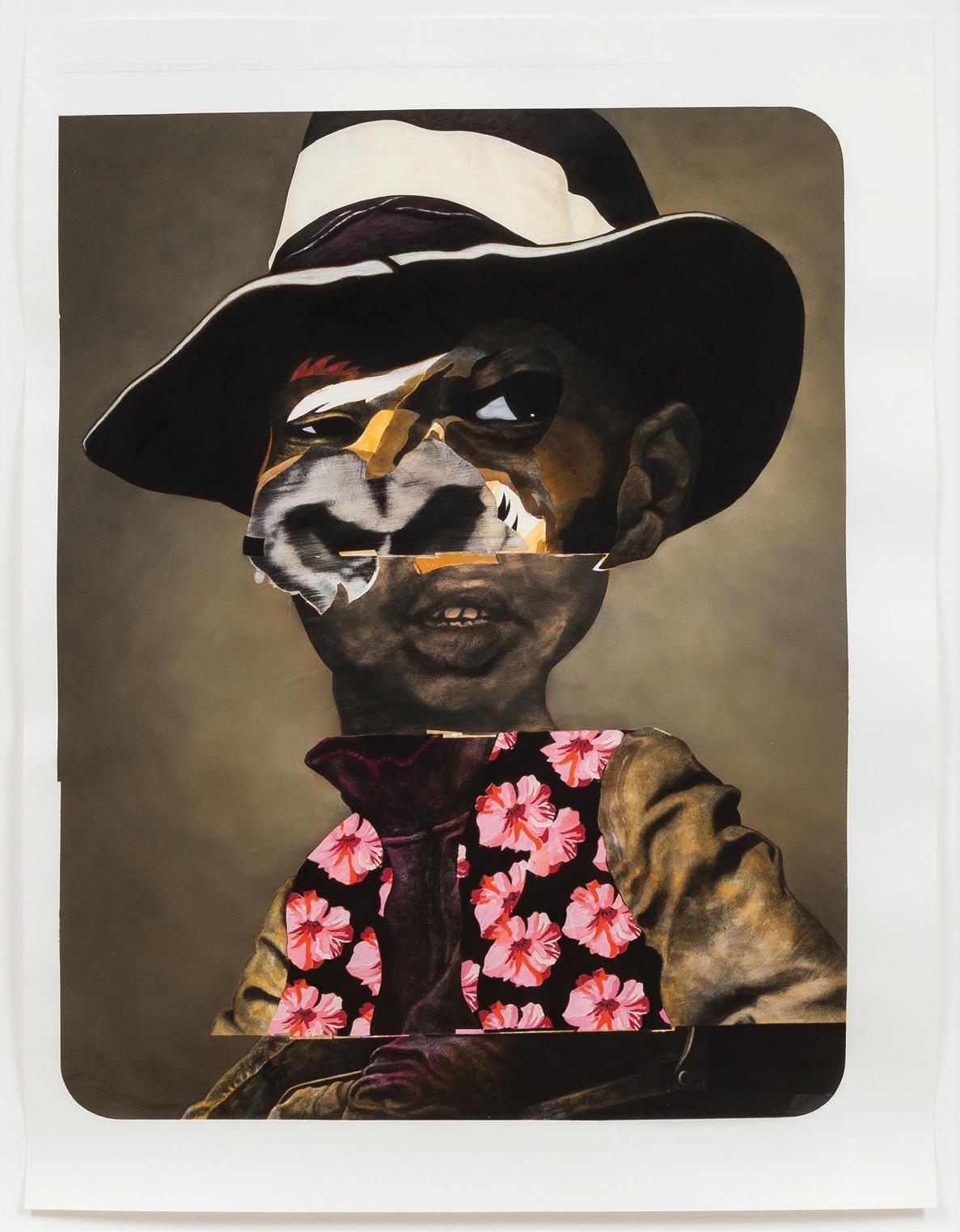
Far right: Nathaniel Mary Quinn "Charles: Re-visited," 2015. Black charcoal, gouache, soft pastel, oil pastel, and paint stick on Coventry Vellum Paper. 50 x 38 inches (127 x 96.5 cm). (© Nathaniel Mary Quinn. Photo: RCH. Courtesy the artist and Gagosian).
ing, 16th century Italian painting, and back. How much of us was inner city Chicago of 40 to 50 years ago? How much was all the work we had done since?
THE HORATIO ALGER STORY?
“There’s a ‘freedom dream’ we all have that we are not defined by our circumstance: the Horatio Alger ‘pull yourself up and be something different,’” Dr. Lee said. “Ultimately, you realize you are not yourself ‘in spite of where you come from’ but ‘because of it,’ that sort of reckoning. It doesn’t define you, but it is your history. That’s not just for public housing residents. All of us are defined by the razing of the Robert Taylor Homes. That is our landscape. All of us need to have a moral conscience about this history.”
Meanwhile, artistically and psychologically, Quinn’s works encompass both exterior features (like Mick Jagger’s lips) with interior introspection, “about who you want to be, your hopes and dreams,” Dr. Lee said.
The exhibit catalog discussed that Quinn “tangles together the old masters, contemporary Black portraiture, Black comedy and the cartoons and characters of popular culture…in an unlikely marriage of extremes.” He treats 17th century Dutch painting – the painters Rembrandt van Rijn, Johannes Vermeer and Frans Hals “with freedom and hu-
mor,” after a visit to the Riksmuseum in Amsterdam and other museums in the Netherlands.
Three works in the exhibit that jumped out at me were “Erica with a Pearl Earring," a shoutout to Vermeer’s “Girl with a Pearl Earring;” “Fixin’ to Eat” and “Junebug,” all with the calm, neutral Dutch backgrounds that made their subjects pop.
Regarding “Erica,” Quinn called Vermeer “a master of light” in the exhibit catalog, known for his quiet luminous depictions of the lives of an emerging middle class.
“I was close to the Easton family, particularly Ruby, the oldest sister,” he said in the exhibit wall tag. “Her younger sister, Erica, remained distinct in my memory—marked by a quiet innocence, seemingly untouched by the dangers that surrounded her. Years later, that memory returned with clarity. Erica’s presence carried the same quiet magnitude I had come to recognize in Vermeer’s figure. My work is an ode: an effort to elevate a girl from the margins of society into the space of reverence historically reserved for subjects of European painting. Unlike Vermeer’s figure – often understood as imagined although sometimes linked to his daughter – Erica was real. She lived next door on the sixth floor of the Robert Taylor Homes.”
“Erica” was loaned by Rhona Hoffman, the 50-year gallery
owner in Chicago who moved the art scene toward more contemporary, cutting edge works and who discovered Quinn in 2015. She also helped assemble works in the NPHM exhibit, Dr. Lee said.
“Fixin’ to Eat” touched me with the poignancy of a father feeding his son his favorite meal of fried chicken, cornbread and greens. Quinn’s parents were illiterate and his mother disabled, so his father carried his role as sole provider “with quiet dignity,” Quinn noted in the exhibit wall tag. He worked as a cook for modest wages and supplemented his income at the pool hall, sometimes also with leftovers from the kitchen.
“C’mo’ boy, we fixin to eat,” he would call out. “I sat at the small, unsteady table – propped, it seemed, by milk crates, although the table probably had legs. – on a worn wooden chair with a torn, plastic-covered floral cushion. He placed the plate before me and watched me eat, his face lit with profound pride – satisfaction in the simple, hard-won act of feeding his son.”
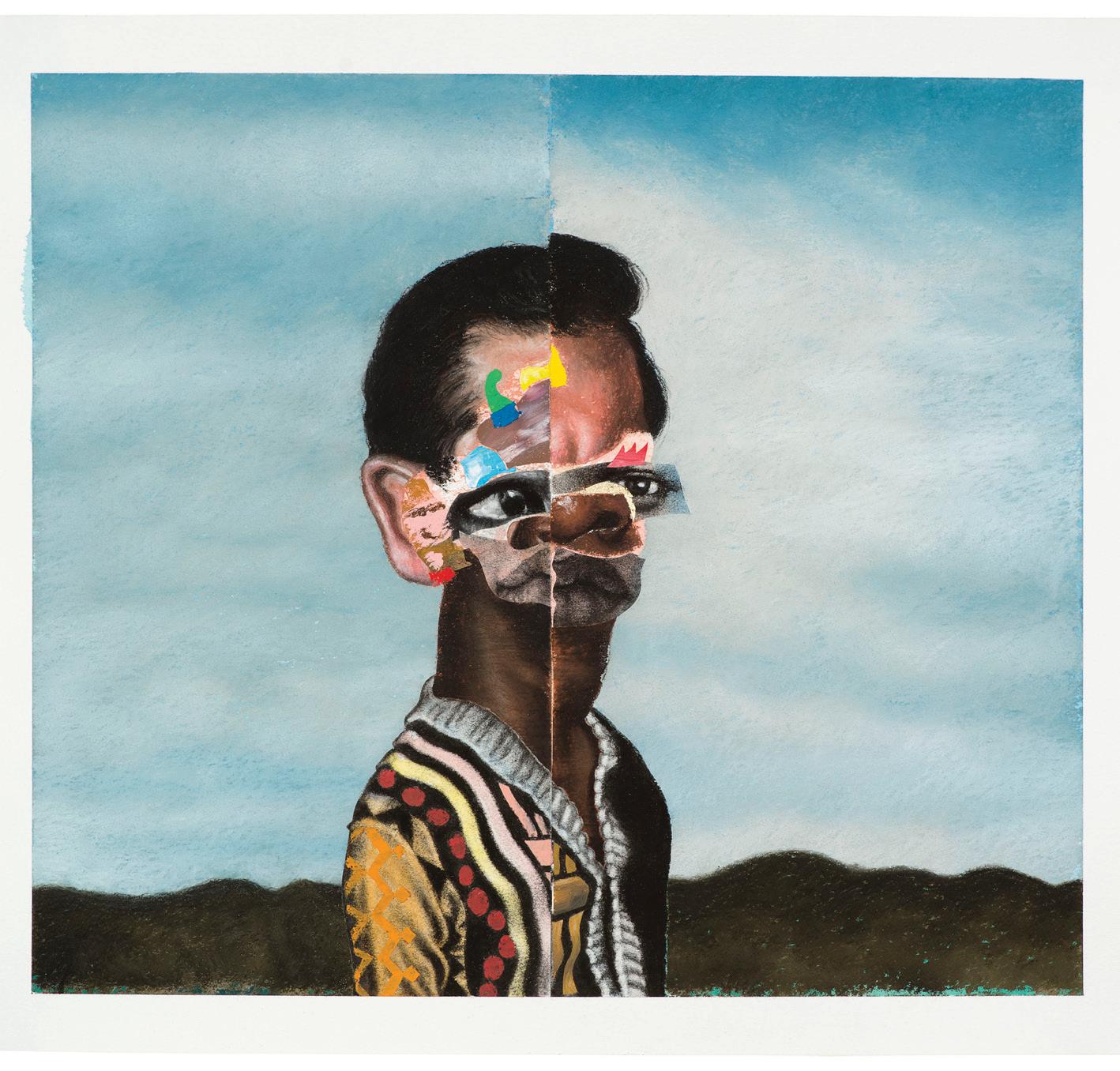
I was particularly struck by “Junebug.” The black charcoal, gouache, soft pastel, oil pastel, oil paint, paint stick, acrylic silver leaf on Coventry vellum paper depicted a childhood visit to an aunt and a house full of cousins. Junebug was an imposing figure, like the captain of a ship.
“He bore, almost to the point of caricature, the look of a street hustler – deliberate, composed, and alert to attention – dressed in a gleaming black leather jacket over a crisp white collared shirt, sharply pressed trousers, polished shoes, a brimmed hat and resting at his chest, a thin gold chain. By all appearances, he had money,” according to the exhibit wall tag.
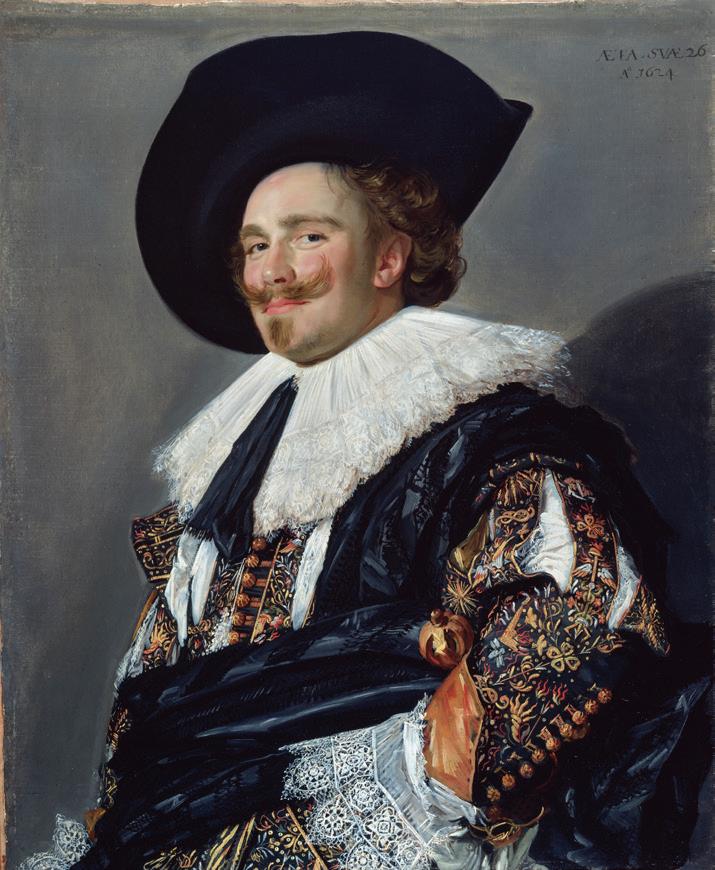
“Junebug” immediately reminded me of Frans Hals’ “The Laughing Cavalier.” Both of them wore large, black, brimmed hats and carefully appointed clothing. They were masculine and confident to the point of swagger, each “fabulous” in his era, with corresponding attitude.
NO, IT’S ABOUT THE PAINT
Quinn laughed. He said he could see what I was feeling, but he was concerned here about the way the 17th century artists laid down paint on a canvas.
“American painters -- that New York School of Paint -they paint hard, boom, boom, boom,” he said, banging with his hands. “But the Europeans, the way they lay down strokes of paint on a canvas, it’s like with a feather. It has this quiet harmony.”
Left: Nathaniel Mary Quinn "Junebug," 2015 Black charcoal, gouache, soft pastel, oil pastel, oil paint, paint stick, and acrylic silver leaf on Coventry Vellum paper 41 x 44 inches (104.1 x 111.8 cm). (© Nathaniel Mary Quinn Photo: RCH Courtesy the artist and Gagosian)
Below: Frans Hals "The Laughing Cavalier," 1624. Oil on Canvas. This painting served as inspiration for Quinn's "Junebug."
Opposite Page: Nathaniel Mary Quinn "Ahhhhh," 2017 Black charcoal, gouache, soft pastel, oil pastel, and acrylic gold powder on Coventry Vellum paper 17 3/4 x 20 1/4 inches (45.1 x 51.4 cm). (© Nathaniel Mary Quinn Courtesy the artist and Gagosian).
“I feel like they are capturing the likeness - almost like a photograph, but softer,” I responded.
Whereas the zeitgeist in today’s age of social media is to be an overnight celebrity, there was no media in the 17th century, he said. “There was a collective acceptance of their relationship, their reverence for God. They were making these works for some other purpose.”
Quinn then segued to a 16th century Italian portrait of Gian Lodovico Madruzzo by Giovanni Battista Moroni that he had just seen at the Art Institute of Chicago. The full-length, nearly life-size portrait was painted in 1551-52 during the Council of Trent, a meeting to address challenges to the Catholic Church posed by the Protestant Reformation. Madruzzo eventually succeeded his uncle as prince-bishop, ruler of the city of Trent, in 1567.
“I stood in front of that painting for 20 minutes. The way he was able to articulate the terrain of the black coat from neck to ankle that this particular figure was wearing. You see the shadow cast onto the dog [which Quinn and I agreed represented fidelity] and it is gorgeous. I am standing in front of the painting and my eyes are watering. It is so good. It’s sublime. When you have paintings like that in the world, it’s humbling. So I want to learn from the best, I want to learn.”
I viewed the Moroni online later and noted the excellent treatment of the black satin collar. As I reviewed the interview video, I realized Quinn was wearing a similar palette: black T-shirt with black-and-brown pinstripe jacket, deconstructed with black ruffles to add shadow variations of the color.
BACK TO BLACK AMERICA
But Quinn is a modern Black American who grew up on the South Side of Chicago, so he also claims Motown music and James Brown.
“I wanted to understand, if I am to carry a torch in contemporary art, who held that torch before me, what were the works they were making. You look at the Impressionists, Francis Bacon, Kerry James Marshall –one of the greatest figurative painters in the world, he’s going back into history too, looking at those masters. But he’s trying to filter their language through his tongue as a man of his hour. He tells histories of people.”
We concluded the interview by giving the NPHM one last play.
What was good about public housing and what needs to be done to make America better?
“Housing in and of itself is not a bad thing, but those who are in charge of the maintenance, if they do not have a sanctity for life and compassion for those inhabitants in said public housing -- that’s a problem.
“There’s a lot of money that’s required to put these buildings together, but you have to maintain housing too and you can’t expect residents to fix their own plumbing. These people are not plumbers, they are not roofers. When the plumbing goes bad, then the city has the responsibility to deal with it. Why don’t you deal with it? Do you not care about their lives? Do you think they are subhuman, they don’t deserve good plumbing? They’re precious human beings. You’re charging rent and they’re paying it, making ends meet as best they can. I don’t understand what’s the problem. Fix the problem. People who live in good communities pay high taxes. They put their garbage out and when they don’t pick it up, those affluent people complain to the city, because they don’t want to feel less than human. So, the residents of public housing are also human beings, they feel the same.”
“Nathaniel Mary Quinn: A Love Letter to My Mother” runs through August 23 at the National Public Housing Museum, 919 S. Ada St., open Wed-Sun 10 a.m.-5 p.m. nphm.org/exhibition/nathaniel-mary-quinn-a-love-letterto-my-mother
Race riot marker installation nearly complete
by Destiny Marinkovic
The Chicago Race Riot of 1919 Commemoration Project (CRR19) is down to installing its last two markers preserving the “bloodiest episode of racial violence in the city’s history.” During the week of mass violence, 38 people were killed, 537 injured and over 1,000 left homeless. Inspired by Stolpersteine, the ongoing German project commemorating Holocaust victims, CRR19 aims to ignite conversation about past & present racism in Chicago & the US while also honoring the “resilience of the Black community and its bold resistance to racism and racial violence.”
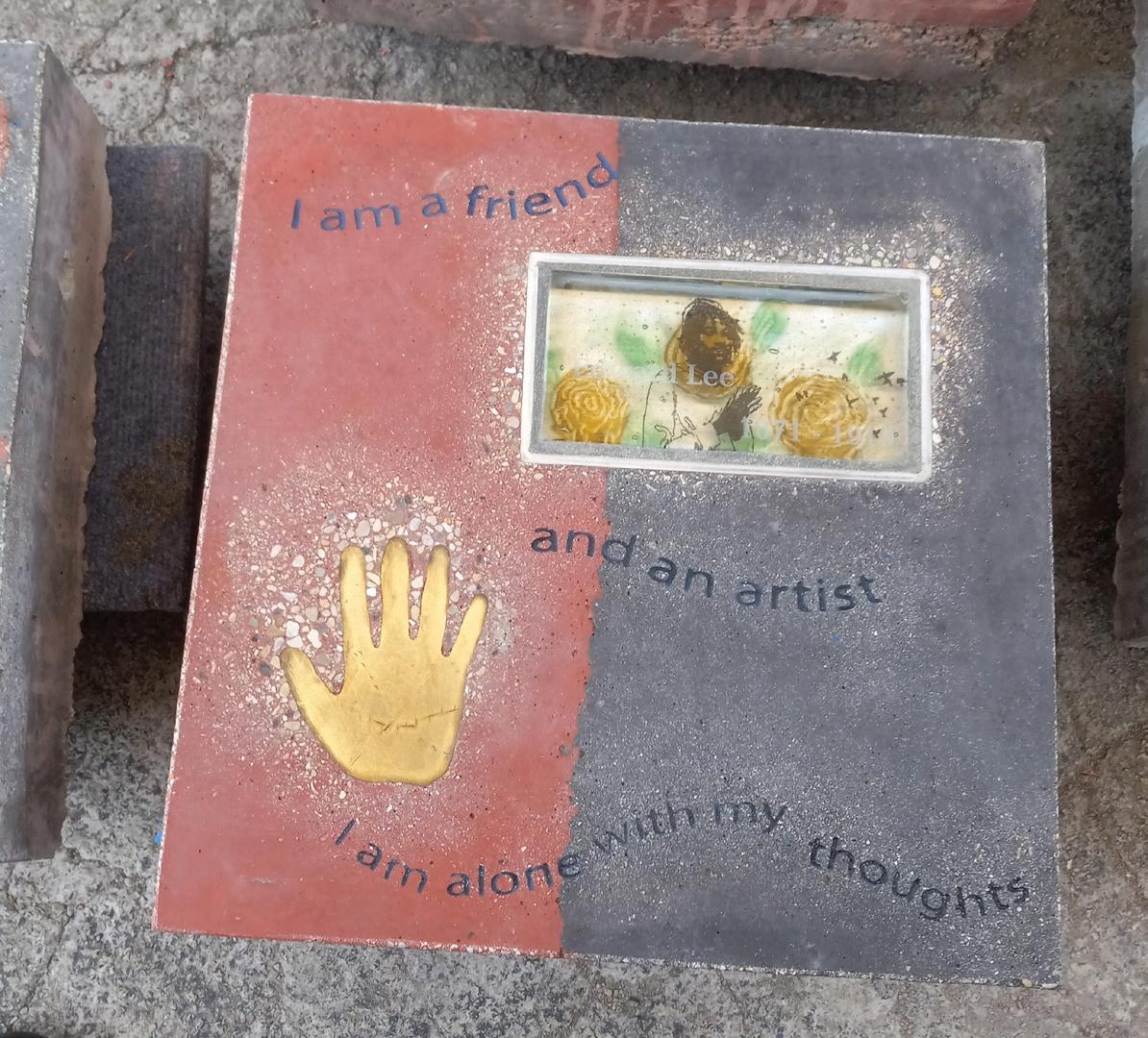
The organization partnered with Firebird Community Arts, establishing Project FIRE where youth lead the creation of 38 durable glass blown structures embedded in Chicago’s sidewalks as a gift to the city – one for each victim.
CRR19’s 8th Annual Historic Bike Tour, starting July 25 at 9:45 a.m. and lasting 2.5 hours, will celebrate the completion of all 38 glass pieces, highlighting “several markers, historical sites & institutions” in Bronzeville & Bridgeport. The celebration will begin once the last 2 – and most vital –markers are installed: Eugene Williams & James Crawford.
On Sunday, July 27, 1919, 17-year-old Eugene Williams was relaxing on a raft in the water at 26th Street Beach, spending the hot summer day with four friends. Unknowingly, the boys’ raft crossed a de facto line – an invisible boundary segregating 29th Street Beach as whites-only. A 24-year-old white male noticed their proximity and began hurling stones at them. One of the stones struck Williams on the left side of his forehead, whacking him off the raft. By the time a lifeguard reached him, Williams drowned.
Williams’s killer was immediately identified, and 37-year-old James Crawford was one of the 1,000 African Americans who congregated on 29th Street & Cottage Grove Avenue. When an officer refused to arrest the 24-year-old for Williams’s murder, tensions escalated. Police attempted to disperse the crowd, and Crawford fired a gun at a group of officers. While his bullet didn’t hit anyone, an African American policeman chased after Crawford, firing multiple shots, some of which hit Crawford. He was taken to the hospital, where he died of his wounds on July 29.
Both markers will be installed along the lakefront near 29th Street Beach. Other notable marker locations include the Back of the Yards, Bronzeville & the “Vortex of Violence.”
Joseph Schoff was a 33-year-old millwright. On July 30, he spotted Jose Blanco – a 22-year-old Mexican. Schoff continuously harassed Blanco asking if he was a “Negro” before attempting to strike him. Blanco stabbed Schoff in the abdomen and was then arrested. Blanco pled selfdefense, the jury could not come to a consensus on manslaughter charges, and Blanco was later released. Schoff did not survive. His marker is located on South Ashland Avenue & West 44th Street.
Henry Goodman was a 36-year-old Stockyards laborer newly returned from serving in the US Army. On July 28, 1919, Goodman’s streetcar home from work was forcefully stopped by a stalled truck. A white mob exited and began beating Black passengers, who ran to police for safety. Goodman was chased down and beaten. The Chicago Commissions Report stated, “the chief weapon was the iron lever used for opening the front of the streetcar.” Goodman died soon after from tetanus complications. His marker is located at 39th & Lowe Avenue.
Edward Lee, like Goodman, was a Stockyards laborer. On July 28, Lee was near the Angelus Riot – named the “Vortex of Violence” because it was the “epicenter of the violence during that ‘Red Summer.’” The Angelus apartment building was an all-white complex located on 35th and Wabash. A rumor spread that one of the tenants shot a Black child. Once word got out, hundreds of upset Black Chicagoans gathered outside the building with over 100 police following suit. Unsure of how the fighting started, the Chicago Commission Report said a policeman, after searching the building and finding no sign of a gun, was hit by a brick. Other newspapers said shots were fired by white tenants or bricks were thrown. Regardless, the police began firing
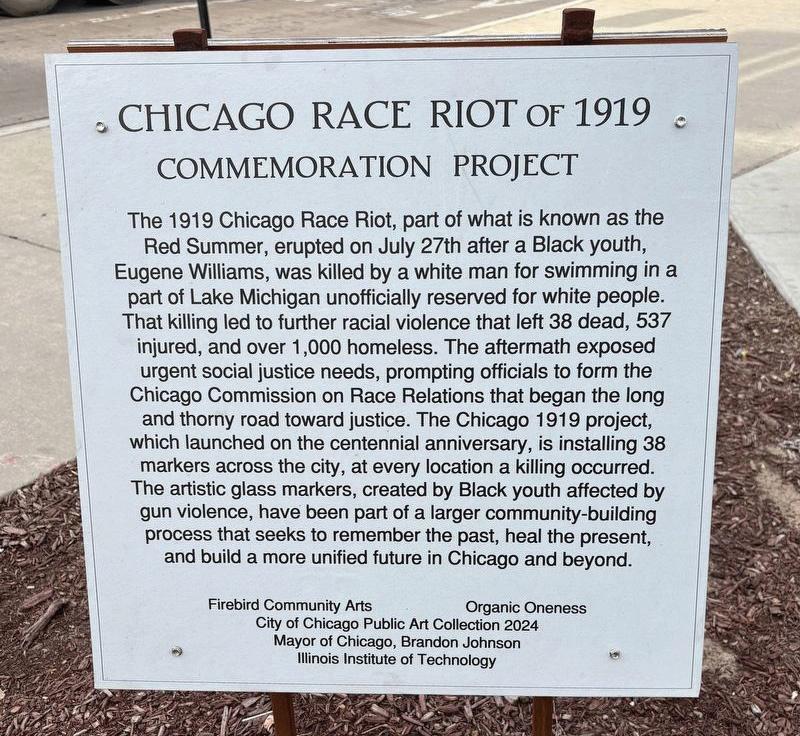
Left: The Commemorative Plaque for the project (S. P. Flynn photo). Right: An example of a yet-to-be marker (Firebird Community Art / Mike Slattery photo).
aimlessly into the crowd. The Angelus Riot held the greatest death toll with 5 victims killed that evening.
Edward Lee was one of the 5. Feeling ill, the 48-year-old was headed to Walgreens on 35th and State for medicine. Unfortunately, Lee got caught in the crossfire of the riot. The jury didn’t investigate his death until they completed Joseph Schoff’s case. Lee’s brother claimed he was shot by a police officer. However, the officer argued that Lee was struck by unseen assailants. The coroner’s jury cleared the officer, believing Lee was shot by a bullet aimed at the officer. His marker is at 35th & State.
The rioting spanned 7 days, finally ending on August 3 when the city called in the National Guard, desperate to control the violence. The weather also brought a steady rain for the next few days, effectively subsiding most of the violence. A thousand Black families were left homeless and numerous properties in working-class neighborhoods on the South Side were destroyed. Due to the lack of funding, only 5 people were convicted of their crimes: 3 black and 2 white. The 38 Chicagoans who lost their lives represent one of the bloodiest events in Chicago’s history, and their glass brick installations serve as a reminder of striving to be a stronger, more unified city.
Registration and additional information for the upcoming 2026 Bike Tour can be found on 26CRR19.eventbrite. com or the organization’s official website. The event is free, but donations are appreciated.
Destiny Marinkovic is an English BA graduate with a lit minor. Completing a novelette while drafting a novel, her works won the Lively Memorial Award and are published in The Prairie Light Review & Middlewestern Voice magazines. Destiny aids the literary community, gaining greater experience while working on graduate applications.