






















































97,856 papers in 2025
VENDORS
Abel Putu, Abraham Aly, Archie Thomas, Aida Peery, Akindele Akerejah, Alia Huag, Amia Walker, Andre Brinson, Andre Baltimore, Andrew Anderson, Angie Whitehurst, Angela Morris, Anthony Carney, Apollos Robinson, Beverly Sutton, Brian Holsten, Brianna Butler, Cameé Lee, Carlos Carolina, Carlton Johnson, Charles Armstrong, Chris Cole, Chon

Gotti, Conrad Cheek, Craig Thompson, Cynthia Herrion, Daniel Ball, Darrel Stone, Darlesha Joyner, David Snyder, Debora Brantley, Degnon Dovonou, Dominique Anthony, Don Gardner, Drake Brensul, El-O-Him, Elizabeth Bowes, Elynora Houston, Eric Glover, Eric Thompson-Bey, Evelyn Nnam, Faith Winkler, Flegette Rippy, Frederic John, Frederick Walker, Gerald Anderson, Gloria Prinz, Gracias Garcias,
Greta Christian, Henrieese Roberts, Henry Johnson, Invisible Prophet, Ivory Wilson, Jacqueline Gale, Jacqueline Turner, James Davis, James Hughes, James Lyles III, Jay B. Williams, Jeanette Richardson, Jeff Taylor, Jeffery McNeil, Jeffrey Carter, Jemel Fleming, Jenkins Dalton, Jennifer McLaughlin, Jewel Lewis, John Littlejohn, Josie Brown, Julienne Kengnie, Kenneth Middleton, Kannon Brown,
e provide people experiencing homelessness and poverty in D.C. with a low barrier economic opportunity to earn an income. Each one of our vendors functions as an independent contractor for Street Sense Media, managing their own business to earn an income and increase stability in their lives.
Kendarius Tucker, Kym Parker, L.Q. Peterson, Lawrence Autry, Leo Hughes Jr, Levester Green, Lillie Thomas II, Marc Grier, Marcus McCall, Mars, Maurice Carter, Melody Byrd, Melveon Harp, Milan Stevenson, Nikila Smith, Patricia Donaldson, Patty Smith, Paul Martin, Phillip Black, Qaadir El-Amin, Queenie Featherstone, Rachelle Ellison, Randall Smith, Rashawn Bowser, Reginald Black, Denny,
Reneece Brinkley, Ricardo Meriedy, Richard Mooney, Rita Sauls, Robert Vaughn, Robert Warren, Rochelle Walker, Ron Dudley, Ronnell Wilson, S. Smith, Sasha Williams, Saul Presa, Shawn Fenwick, Sheila White, Shuhratjon Ahmadjonov, Starchild BLK, Susan Wilshasen, Sybil Taylor, Tasha Savoy, Tim Holt, Tonya Williams, Tony Morris, Vincent Watts, Warning Label, Warren Stevens, Wayne Hall, Wendell
Wendy Brown, William
BOARD OF DIRECTORS
Ashley
Cherubin,
The D.C. Office of the Chief Medical Examiner (OCME) is investigating the possible hypothermia deaths of four individuals believed to be part of D.C.’s unhoused population. The four died in the days after the January winter storm.
Chief Medical Examiner Francisco Diaz told Street Sense the cause of the four deaths will officially be determined once OCME receives the final toxicology report results. The sub-freezing temperatures in late January also led to three deaths in Fairfax County, including one man found inside a tent, according to D.C. News Now.
In D.C., the deaths included a 40-year-old Hispanic man found in the 5300 block of Georgia Avenue NW, a 68-year-old Black woman found in the 1700 block of Columbia Road NW, and a 61-year-old Black man found in an alley off the 1100 block of 9th Street NW, according to the OCME.
A fourth person, a 73-year-old Black man, was transported to Cedar Hill Regional Medical Center by Emergency Medical Services and pronounced dead later that day. OCME did not provide the names of those who died.
Hypothermia occurs when the body loses heat faster than it can produce it, causing an individual’s core body temperature to fall below 95 degrees Fahrenheit, according to the American Red Cross. The approximately 750 people who sleep outside in the city each night are more susceptible to hypothermia due to their prolonged exposure to the cold.
“Hypothermia is an extremely painful death,” said Rachelle Ellison, the executive director of The People for Fairness Coalition and advocate on the D.C. Interagency Council on Homelessness. “People think you just go to sleep and don’t wake up. That’s not it.”
D.C. experienced its longest stretch of freezing temperatures since 1989 after the Jan. 25 snowstorm unloaded several inches of snow and ice on the District and the surrounding area. While these freezing temperatures persisted, shelters throughout D.C. increased capacity and extended operating hours — a standard part of the District’s winter plan — to accommodate more individuals experiencing homelessness seeking shelter.
Hypothermia is a concern every year, but four deaths in less than a week would be more than in recent winters. Despite snowfall and freezing temperatures, D.C. recorded zero deaths from hypothermia or cold exposure in the winter of fiscal year 2025, the first time since 2020. In 2021 through 2024, between two and three people died of hypothermia each year.
CHIEF EXECUTIVE
OFFICER
Brian Carome
DIRECTOR OF PROGRAMS
Darick Brown
DIRECTOR OF VENDOR
EMPLOYMENT
Thomas Ratliff
EMPLOYMENT SPECIALIST Esmat Amin
VENDOR PROGRAM
ASSOCIATES
Aida Peery, Chon Gotti, Nikila Smith
VENDOR PROGRAM
VOLUNTEERS
Ann Herzog, Aiden
Eisenschenk, Beverly Brown, Roberta Haber
EDITOR-IN-CHIEF
Annemarie Cuccia
DEPUTY EDITOR Donte Kirby
EDITORIAL INTERNS
Aubrey Butterfield,
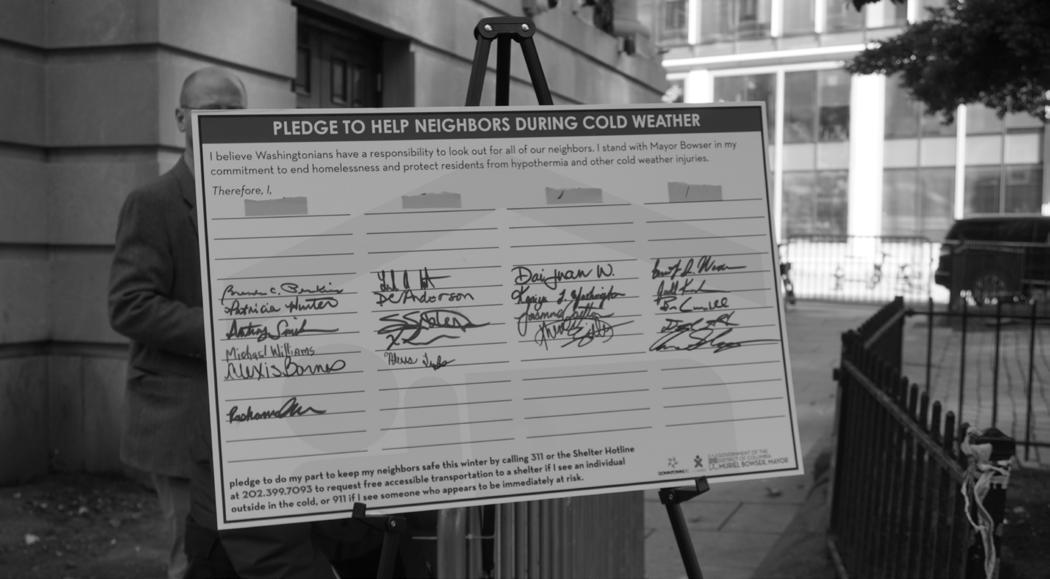
Still, in meetings, local homeless services leaders praised D.C. government agencies and other local groups that serve unhoused individuals for their collaboration during this year’s historic cold spell. Ellison was in contact with an individual who was refusing to go into a shelter despite temperatures being well below freezing, and when she alerted other agencies, such as the Department of Human Services (DHS) and Pathways to Housing, they were quick to jump in and help.
“I’m really grateful for that collaboration and the fast pace that they’re moving at DHS to try to open beds as much as possible in this extreme cold weather,” Ellison said.
While the response from the city was swift, Ellison said she ran into problems with the city’s FD-12 process, which can be used to involuntarily take people into hospitals when they pose a danger to themselves, including sleeping outside in freezing weather. Ellison said when she tried to get a couple of individuals taken off the streets, it took too long. She reached out to FD-12 one man, and said he did not get taken to a hospital for about 48 hours.
“It just took a little bit longer than I had liked, because at a certain point you say, okay, this person is not going to accept any help and they have a nice, warm bed, where they can be fed three meals a day,” Ellison said.
She thinks there was more collaboration this winter because the city is taking threats to its unhoused population more seriously.
“The National Guard being here, ICE going around, people are more protective of the most vulnerable population,” Ellison said.
Editor’s note: Rachelle Ellison is also a Street Sense vendor/artist.
Elizabeth Short, Grace Copps, Katie Doran, Kordell Martin, Natalie Note
WEB INTERN Zachi Elias
GRAPHIC DESIGN INTERNS
Arisha Shumael, Kevin Akakpo
SOCIAL MEDIA INTERN
Harmony Jones
ARTISTS-INRESIDENCE
□ The February vendor meeting is Friday, Feb. 27, 2:00 p.m. - 3:00 p.m. Come for pizza, business, and fellowship!
□ New workshop! Yoga (in a chair). Every Thursday from 11:30 a.m. - 1:00 p.m. No need to bring anything but yourself.
□ Come build that sales muscle at Workplace Workshop every Thursday at 10:30 a.m. Talk shop and earn 10 papers while you’re at it.
□ Applications for the vendor journalism fellowship close Friday, Feb. 27. Email donte@streetsensemedia. org for more info.

Chris Cole
March 8
ARTIST/VENDOR
Read this democratically elected code of conduct, by vendors, for vendors!
1. I will support Street Sense Media’s mission statement and in so doing will work to support the Street Sense Media community and uphold its values of honesty, respect, support, and opportunity.
2. I will treat all others, including customers, staff, volunteers, and fellow vendors, respectfully at all times. I will refrain from threatening others, pressuring customers into making donations, or engaging in behavior that condones racism, sexism, classism, or other prejudices.
3. I understand that I am not an employee of Street Sense Media but an independent contractor.
4. While distributing the Street Sense newspaper, I will not ask for more than $3 per issue or solicit donations by any other means.
5. I will only purchase the newspaper from Street Sense Media staff and volunteers and will not distribute newspapers to other vendors.
EDITORIAL VOLUNTEERS
Abigail Chang, Chelsea Cirruzzo, David Fucillo, Kathryn Owens, Nina Elkadi, Nora Scully, Priya Christensen
Alexandra Silverthorne (Photography), Bonnie Naradzay (Poetry), David Serota (Illustration), Willie Schatz (Writing), Molly Pauker (Watercolor), Debbie Menke (Watercolor), JM Ascienzo (Yoga)
6. I will not distribute copies of “Street Sense” on metro trains and buses or on private property.
7. I will abide by the Street Sense Media Vendor Territory Policy at all times and will resolve any related disputes with other vendors in a professional manner.
8. I will not sell additional goods or products while distributing “Street Sense.”
9. I will not distribute “Street Sense” under the influence of drugs or alcohol.
10. I understand that my badge and vest are property of Street Sense Media and will not deface them. I will present my badge when purchasing “Street Sense” and will always display my badge when distributing “Street Sense.”
KORDELL MARTIN Editorial Intern
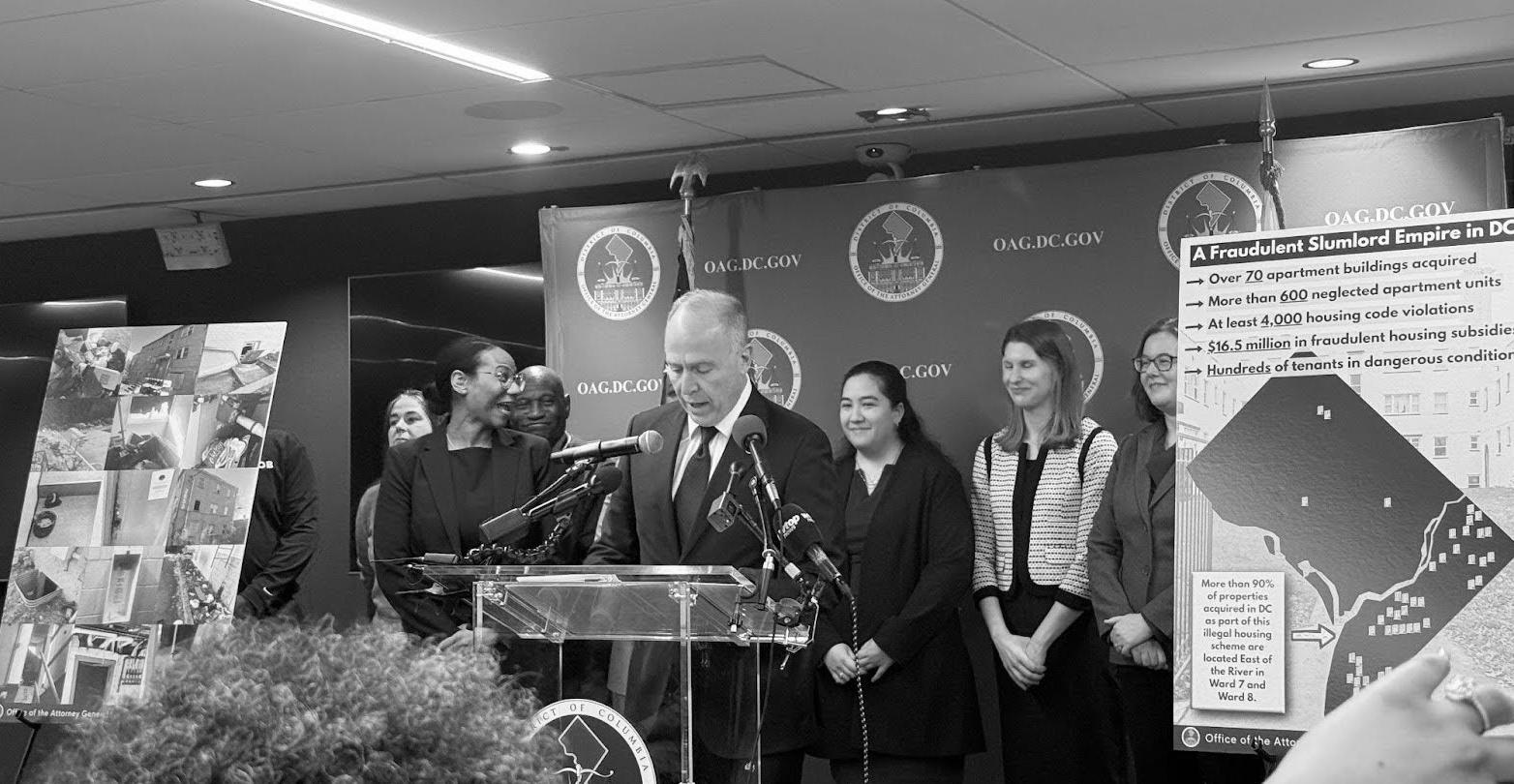
C. Attorney General Brian Schwalb announced a lawsuit against a landlord family empire his office says purposefully left properties damaged and tenants homeless.
At a Feb. 12 press conference, Schwalb announced his office is suing members of the Razjooyan family enterprise under the Racketeer Influenced and Corrupt Organizations (RICO) Act. The lawsuit seeks to ban the family, which has been the subject of years of reporting, from owning residential properties in the District, while relocating and securing restitution for harmed tenants.
D.C. landlord Ali “Sam” Razjooyan is alleged to have led a 10-year scheme of pocketing renovation funds received from banks and private investors while letting over 70 buildings become uninhabitable. Sam, along with his brother, Eimon Razjooyan, and their mother, Houri Razjooyan, used the funds to acquire new buildings and settle previous property loans, according to a press release from the Office of the Attorney General of the District of Columbia (OAG).
Schwalb said the Razjooyans also abused the District’s housing subsidy programs, defrauding the city of $16 million. Residents enter the program to access affordable housing; without it, many risk homelessness. Tenants were left to experience gas leaks, rodent and insect infestations, electrical hazards, trash buildup, and flooding, among other “heartbreaking” conditions, Schwalb said.
“Despite being one of the wealthiest cities in our country, our abundant resources are not shared by everyone who lives here,” Schwalb said.
More than 90% of rental properties controlled by the Razjooyans are located in Wards 7 and 8, according to the OAG. East of the Anacostia River, low-income Black tenants lived in moldy, mice-infested units without heat during freezing winters, according to Megan Browder, legal director of the systemic advocacy and law reform program Legal Aid DC.
“There are some where the property is so unsafe that the [Department of Buildings] has condemned the property, and they’re no longer able to live there,” Browder said.
At-large Councilmember Robert White said property owners should be providing safe housing for low-income families who receive assistance instead of having them reside in unsafe units.
Razjooyan is just one of the landlords the city has accused of exploiting the voucher program, illegally renting mainly to voucher recipients, who they can charge above the building’s rent-controlled rate.
“This lawsuit sends a clear message: exploiting tenants while missing public resources meant to preserve affordable housing will not be tolerated in the District of Columbia,” White said.
The RICO Act is designed to combat criminal enterprise operations. This is the first time a civil lawsuit under the RICO Act has been used to take on a slumlord enterprise in the District, Schwalb said. The lawsuit also includes D.C. statutes, including the False Claims Act and the Consumer Protection Act.
Schwalb said he is committed to using civil enforcement to hold the Razjooyans accountable since the District lacks jurisdiction to criminally charge adults because it is not a state. The only entity in the District that has the capacity to federally prosecute adults is the D.C. Office of the U.S. Attorney.
Despite most properties facing abandonment and condemnation, the Razjooyan family still controls at least six properties in the District as of February.
The condemned properties remain untouched because it’s difficult for the District to find new buyers to repair them in such poor condition, meaning fewer affordable housing units for all residents, according to Browder.
“This is their home,” Browder said. “They’ve had to fight often for years to have what we’re all entitled to — a clean place to live that’s up to the housing quota.”
of
KATIE DORAN Editorial Intern
Afew times a month, Foundry United Methodist Church runs a unique kind of ministry, one that begins with paperwork: the ID Ministry.
There, volunteers help people experiencing homelessness obtain vital documents, like birth certificates and IDs. While the question of how to get an ID can seem bureaucratic, volunteers and participants say it’s an important step out of homelessness: you need an ID to get work, open a bank account, rent an apartment, get food stamps, or access a myriad of city benefits and services in D.C.
“I always tell myself, ‘I can’t be homeless. I have a lot of goals,’” one person who came to Foundry’s ID Ministry this month told Street Sense. He asked to be unnamed due to privacy concerns. “Dealing with homelessness, it’s made me feel like I really gotta do more for myself.” To him, that starts with getting an ID, so he can get a new job and apply for an apartment.
In D.C., someone experiencing homelessness can get a free non-driver ID if they fill out a “social service proof of residency form,” which certifies they are homeless and reside in D.C. They can then bring the form, along with their Social Security number and proof of identity, like a birth certificate, to the Department of Motor Vehicles (DMV) to get their free ID.
That proof of residency form is a key piece of the process. But in the last year, the D.C. Department of Human Services (DHS) has decreased the number of locations where people can get the form and tightened other identification requirements. Advocates say these changes and unclear guidance from the city have made getting an ID unnecessarily confusing and difficult for people experiencing homelessness.
“We’ve made the process hardest for those who need the help the most,” Jackie Wright, the social justice programs manager at Foundry, said at a DMV oversight hearing on Feb. 12.
In response to advocacy from Wright and others, DHS is “evaluating” the process and will be making changes in the coming months, according to a DHS spokesperson.
Previously, more than 30 nonprofit centers could distribute the proof of residency form, which acts as a voucher for a no-fee ID. Beginning last spring, DHS cut the list to only three drop-in centers where adults experiencing homelessness can get the form, a move an agency spokesperson wrote in an email was meant to “improve quality control over eligibility determination.”
Now, adults can only get the proof of residency form at Adams Place Day Services Center, the Downtown Day Services Center, and 801 East Men’s Day Services Center. Youth can access the form at the SAMU Youth Drop-in Center, the Latin American Youth Center, and Zoe’s Doors Youth Drop-In Center. Going to one of these locations adds an extra step to the ID process. People experiencing homelessness may already be receiving case management through one of the city’s dozens of homeless services organizations. A year ago, many of these organizations could have provided the form themselves, but now they can’t.
“You can’t get your proof of residency from the agency where you’re already receiving service. You have to go to another agency. It’s cumbersome, it takes time that a lot of people don’t have, and sometimes folks just give up,” Wright told Street Sense.
advocates say
Sometimes, people may go to multiple addresses listed on the DHS webpage, only to find those locations don’t have any left that day.
According to the DHS spokesperson, the agency usually issues 100 forms at a time to each location, with additional forms available on request. Still, advocates and outreach workers said locations will sometimes run out, creating gaps in availability as they wait for their request for more forms to be processed.
“I personally met with a guest who had already been to all the places in D.C. that offered the form, and he wasn’t able to get one because they had run out,” Catherine Stallsmith, a volunteer at Foundry’s ID Ministry, said in testimony at the DMV oversight hearing. “He came to Foundry to see what else we could do for him, and all I could tell him was that he had to go back and try again, try to be one of the first people in line.”
The limited options for places to get the proof of residency form can be especially burdensome for women experiencing homelessness. Adams Place Day Services Center and the 801 East Men’s Day Services Center are part of men-only shelters. While women can still go to get the form, some may not feel comfortable being in those spaces, leaving only the Downtown Day Services Center as an option.
“There’s a problem with going into an environment that is dedicated to serving male clientele only. There are a number of women who are unhoused or couch surfing or otherwise housing insecure who do not want to go to a men’s facility,” Micah Haskell-Hoehl, an organizer with the Washington Interfaith Network (WIN), said.
The policy of only offering the proof of residency forms at three drop-in locations began in April, DHS told Street Sense over the summer. However, there was little public acknowledgement of this change, and, as recently as August, a now-archived DHS webpage advised people experiencing homelessness that there were still 31 locations where they could get the form.
Advocates and outreach workers say they’ve heard inconsistent information and faced a lack of clarity around the changes to proof of residency and ID requirements. One ongoing source of confusion is the role of four additional outreach organizations — Miriam’s Kitchen, The READY Center, Pathways to Housing, and Community Connections — whose outreach teams can connect people with a proof of residency form, according to a DHS webpage.
However, advocates — including an outreach worker from one of the listed organizations — told Street Sense people can’t just go to the addresses DHS lists for these four organizations. The worker, who asked to remain unnamed to protect his organization’s relationship with DHS, said the on-site staff for his organization are not able to provide the form. Instead, people seeking the form through one of these organizations need to connect with outreach workers, who are often out in the field, not stationed at a consistent physical address.
“The outreach workers have [the forms], so they have to find you. You can’t find them,” Wright said.
Sorting through information on where and how to get a proof of residency form is part of what makes the process frustrating for many seeking IDs. This makes the process “a big circle of confusion,” according to the outreach worker.
This confusion extends to other parts of the ID process, like getting replacement IDs. People experiencing homelessness are only eligible for a free ID once every eight years, but they often need to replace lost or stolen IDs more frequently than that.
“People who are living on the street have their belongings ransacked, thrown in the back of a DPW [Department of Public Works] vehicle or garbage truck, have something stolen, everything gets wet and they accidentally throw something away — they may otherwise lose or get their ID stolen,” Haskell-Hoehl, from WIN, said.
Organizations like Foundry are willing to pay the $20 fee to help people experiencing homelessness replace their IDs when they’re not eligible for another free one. However, the proof of residency form makes replacing IDs more complicated than simply getting a $20 check.
If people need replacements, DHS told Street Sense it can issue “as many forms as an individual would like,” as long as they pay for their new ID. However, the agency also said that they “monitor form usage in an effort to mitigate repeat issuances.”
Outreach workers and advocates who spoke to Street Sense said that in practice, they have not always been able to get proof of residency forms for people who need replacement IDs. Some advocates told Street Sense they thought people could only get the form once. The outreach worker from one of the organizations authorized to distribute the form, meanwhile, said he had been told an individual could only get the form twice in eight years. “But you might talk to someone else, and they might have been told something different,” the worker said.
To complete the proof of residency form, applicants need to provide two forms of identification, such as a birth certificate, passport, or Social Security card, which DHS told Street Sense was always the case. But outreach workers say until recently, they were instructed people only needed one form of identification. Some said they’ve been told to have applicants verify their Social Security number — something that, among the primary accepted documents, can only be done with a Social Security card. Most people filling out the proof of residency form have a birth certificate or can get one from the state they were born in or D.C.’s no-fee birth certificate program. Getting a second form of identification is harder: passports are costly and slow to obtain, and while Social Security cards are free, the process can involve long delays and wait times.
Following testimony from Wright and Foundry volunteers at the DMV hearing on Feb. 12, DHS agreed to lower the requirement to just one form of identification for the proof of residency form. The DHS spokesperson told Street Sense the agency hopes to implement the change in the next month. “It gives me hope that councilmembers and agencies do sometimes listen when the public has concerns,” Wright said of the news.
DHS suggested that more changes to the ID process are coming soon: “[DHS] will be making further improvements in the coming months based on provider and community feedback,” the spokesperson wrote in an email.
Meanwhile, people experiencing homelessness who need IDs continue working through the bureaucracy.
Sean, who introduced himself by his first name, came to Foundry’s ID Ministry this month. He’s working toward a GED and wants to get an ID so he can get a job. He hopes these steps will help him regain stability after being released from incarceration. Sean said he’s determined to stick through the ID process, even when it seems complicated.
“Everything comes with a process, like they say, it don’t happen overnight,” Sean said. “All of this right here, place to place, I’m just gonna do what I can do so I can get the documents I need.”
The D.C. Commission on Poverty released a report earlier this month outlining how D.C. could cut poverty in half by this year, despite commissioners’ concerns the report is outdated and not reflective of all commission members’ views. The commission, which was created in 2021, was originally supposed to release the report by January 2025, according to the body’s bylaws. In its founding legislation, the commission was tasked with cutting poverty in D.C. in half by 2026 and ending poverty entirely by 2036. D.C. Council Chair Phil Mendelson released the policy report to the public on Feb. 2, about eight months after the commission submitted its report to the mayor’s office. Commission members said at a public meeting in July they approved the report because they were “obligated by law,” but it did not necessarily say what the commission would have written themselves. The report was drafted by Medici Road, a contracting service hired by the Department of Employment Services (DOES), which houses the commission, in tandem with commission members. The report cost $1.18 million to create, according to At-Large Poverty Commission Member Robert Warren. The report outlines 10 policy suggestions that, if implemented, could remove up to 50,457 individuals from poverty. Some suggestions fall on the low end of impact, such as requiring implicit bias and cultural competency training for health care workers in D.C., which the report estimates could remove about 60 individuals from poverty. Other suggestions are more sweeping, like providing a universal basic income for all residents ages 18 and up for three years, which could remove 33,000 individuals from poverty.
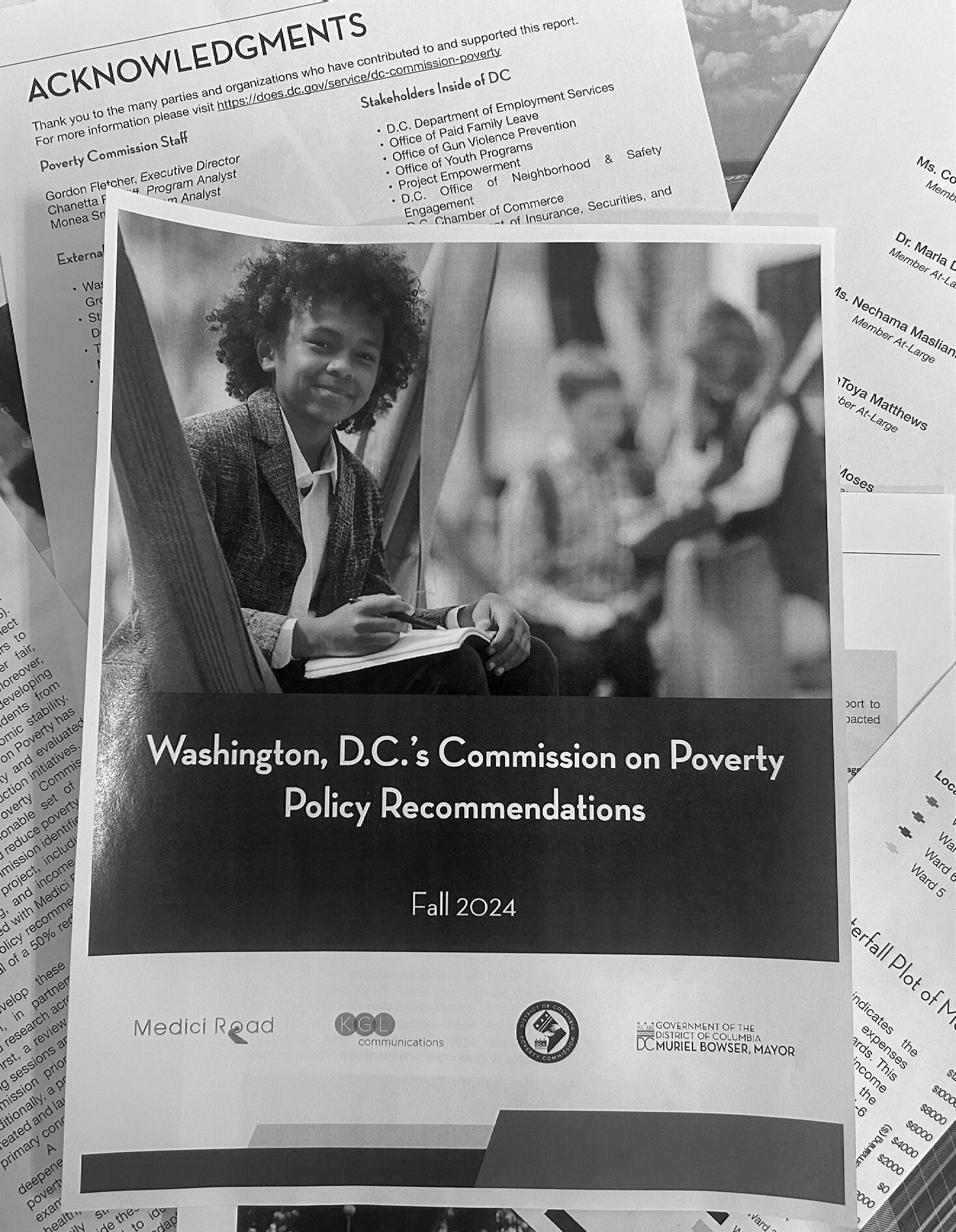
The report went into little detail about what would be needed to implement each suggestion. For example, one suggestion recommended the creation of a 3-year pilot program to remove barriers stopping individuals from opening small home-based daycare businesses. The report estimates it would cost about $1.13 million to implement this policy in the first year, but does not specify which D.C. agency or office would be responsible for this pilot program or identify funding for the program.
The report’s most sweeping recommendation, the creation of a universal basic income, would cost more than $400.5 million in its first year, according to the report.
That funding may be hard to come by this year. As the District prepares to draft a new budget for fiscal year 2027, the mayor has already warned the city will have to make tough cuts. For one, officials are considering reductions to the D.C. child care subsidy program, which helps low-to-moderate-income families afford child care.
In public meetings, commissioners also raised concerns some of the report is based on outdated information. More than 116,000 D.C. residents were in poverty in 2024, according to the D.C. Fiscal Policy Institute. That year, while the report was being drafted, the poverty rate in D.C. actually rose to 17.3%, a three percentage point increase. The report, meanwhile, uses data from 2010 to 2022. In 2022, D.C.’s poverty rate sat at around 13.3%.
Since the report was drafted, there have also been several changes in the District to the social services landscape. City officials did not fund individual housing vouchers in their most recent budget, for example, and federal changes to public benefits are expected to impact thousands in the city. These developments are not captured in the report.
Warren said in addition to being outdated, the report did not go into enough depth on issues he cares about, like the health of people experiencing poverty and the D.C. housing crisis.
“That initial report addresses some of that, but it’s not addressing with the focus that I would like to see,” Warren said.
While the next steps for the proposals highlighted in the report are unclear, the commission itself is creating a work plan amidst membership challenges.
According to the commission’s bylaws, the body should consist of 19 members appointed by the mayor, with eight ward representatives and 11 at-large representatives. Since it began meeting in late 2022, the commission has struggled to meet the requirement to have eight ward representatives and generally to connect with individuals who are currently experiencing poverty.
Chairman Elijah Moses said at a June meeting that fewer than 20 people “actively living in poverty” contributed to an interview or input on the report. Moses declined to comment further on the report or the commission’s activity.
Warren is concerned the commission’s leadership and the Mayor’s Office of Talent and Appointments have not done enough to find and confirm ward representatives to the commission.
The commission currently does not have any ward representatives, according to its website, and has faced turnover, at one point not having enough members to officially meet while they were drafting the report.
“To have spent $1.18 million and not have the whole poverty commission seated as a commission is a failure,” Warren said.
At the commission’s October meeting, Moses said the body was now creating a work plan intended to guide its work in fiscal year 2026. Commission members have been meeting to discuss the work plan and go through the commission’s founding legislation and bylaws line by line.
In addition to producing the report, the commission was created to advise District agencies, boards, and commissions on poverty reduction policies. The commission is also authorized to comment on the proceedings of the D.C. Council. Moses said in a December meeting that he plans on meeting with more agency directors because, about three years after the commission began meeting, some agency directors are not aware it exists and that their agency is connected to it.
“We’re hoping to do this year, to be more engaged with the city council now that they have the recommendations report, and then trying to go in and have conversations about how we can implement some of those things that’s listed in the report, and then how we can enhance it,” Warren said.
At the commission’s most recent meeting, in December, Moses said that while the report explicitly says it aims to cut poverty in half in D.C. by 2026, the commission needs to stop using language that is “ambitious but not practical.” Eliminating poverty entirely would mean changing how economics works, he said, which is not something he believes the commission should be tasked with.
“Although I do believe in shooting for the stars, landing on the moon type of ideology, there is no functional way that we are going to eliminate poverty by 2026, and we all should be cognizant of that,” Moses said.
Editor’s note: Robert Warren is also an artist/vendor with Street Sense.
DONTE KIRBY Deputy Editor
How much notice should you receive that you may have to move out of an apartment? Three months, one month, fifteen days? And what about when the timeline changes from one week to the next, from the first of the month, to an indefinite date, back to the first again?
If this sounds confusing, even anxiety-inducing, add a 3-year-old into the mix, or three kids you’re the head of household for. Maybe there’s also mold on the walls, rodents in the kitchen, and uncertainty over whether you’ll get an extension for the government subsidy that’s helping pay your rent, knowing that if you don’t receive it, it’s likely back to a shelter with a new eviction on your record.
This is the reality for many leaving D.C.’s Rapid Rehousing (RRH) program, a short-term subsidy that pays a portion of a family’s or individual’s rent for a market-rate apartment for 12 months while the participant works on education, job training, or finding employment. While the program brings families out of homelessness, it can also perpetuate the cycle of going from a shelter to temporary housing and then back into the homeless services system. Most people exit the program having made little to no progress toward being able to afford market-rate rent; according to a D.C. auditor report, 79% of families exit RRH without increasing their income.
The program had swelled to support more than 2,000 families since the start of the pandemic, when the city enacted a moratorium on evictions, which protected any families in RRH who were unable to take on the full rent for their apartments. In the years following, hundreds of families have exited, and many have been in a push and pull of rental assistance, going through multiple notices of termination as the city tries to right-size the program.
Street Sense spoke to two participants about their experiences. Dionje Lebby, the mother of a 3-year-old, entered RRH in November of 2024 and said she faced confusion, and, ultimately, abandonment by her case workers. Tamara Davis, a mother of three, also joined RRH in October of 2024 and said she dealt with unsafe housing conditions and ineffective case management services.
In terms of income, neither made the financial gains RRH aims for. Lebby said she hasn’t been able to work because she is unable to secure childcare; since she doesn’t have her daughter’s birth certificate, no reputable daycare would care for her child. Although it would take just a few hours at an office in North Carolina, where her daughter was born, to get the birth certificate, having it mailed and ordered online can take between 110 and 115 days due to REAL ID requirements, and Lebby said she’s still waiting.
Davis, meanwhile, was employed with the Metro Transit Police when she began RRH, until she broke her ankle and couldn’t continue working. She’s currently rehabbing her ankle, she said, but tackling the housing issues along with health challenges has been difficult.
At the end of their time in the program, both families were near returning to homelessness.
To even enter the RRH program, families experiencing homelessness face a catch-22: asking for help and telling a caseworker the details of their situation, and the challenges in remaining housed, could open them up to repercussions from Child Protective Services (CPS). Though the city does not remove children from families just because they are homeless, inadequate housing is one factor CPS can consider.
Lebby encountered this when she tried to get help at a family resource center to enter a shelter. “I was telling them that sometimes I wasn’t even able to sleep inside of a home with my child. And then the lady told me, ‘Do you know I can call CPS on you for reporting this?’” Lebby said. “So I got discouraged. Because I’m just like, I’m coming to you guys for help. It’s not like I’m neglecting my child. My child is with me. I’m telling you guys that I’m experiencing homelessness.”
After Lebby entered RRH, her issues stemmed from her case managers. Eventually, she requested a different person to assist her, but as she moved up the chain of command at the service provider, she said she received fewer and fewer answers. Once she was finally placed with a new case manager, she said they were worse than the first one and made her feel like “scum of the earth” for the challenges in her life. She said it felt like retaliation for complaining, and her worries fell on deaf ears, adding, “Who gets held accountable for these things?”
“I’m asking them, What am I to do from the beginning? I’m asking them, Is there any more resources that you guys have for me outside of Rapid Rehousing?” Lebby said. “Because what do I do once Rapid is over? And I’m telling you guys these problems.”
When Davis got into RRH, meanwhile, her immediate issue was the quality of her rental unit, which failed the first housing inspection. She eventually moved in, but the housing issues began piling up, including mold in the home, no heat in the winter or AC in the summer, and insect and rodent infestation. Situations like hers recently led D.C. Attorney General Brian Schwalb
to sue a notorious landlord for subjecting low-income residents and voucher holders to these kinds of hazardous housing conditions.
Although Lebby and Davis had very different issues during their time in RRH, a common thread was the lack of adequate resources they received when they were in need, including poor communication with their caseworkers. In Davis’ case, when she made her case manager aware of the building quality issues, she received responses, but said that rarely was any further action taken.
“My case manager came to my house, out of the whole time I was there, the 12 or 13 months I was there, three times, and every time she came, she wanted me to sign paper,” Davis said. “I was not signing nothing. You ain’t do nothing for me, so I’m not signing no paperwork.”
The U.S. Department of Housing and Urban Development rules in federal RRH programs require a social worker to meet with participants at least once a month. D.C.’s Department of Human Services (DHS), which oversees the program locally, requires clients and case managers to meet at least once a month in the city’s Permanent Supportive Housing (PSH) program, DHS officials said during a round a Nov. 6 roundtable discussion. DHS did not respond to a request for comment by the time of publication.
Eventually, Davis was able to navigate her unlivable housing conditions with the help of a lawyer through the D.C. Children’s Law Center (CLC). As Davis was exiting the program, her lawyer also advocated for her to receive a Service Prioritization Decision Assistance Tool (SPDAT) test. Widely used by outreach workers to gather information about people experiencing homelessness and determine who needs the most urgent assistance, this test isperiodically given to RRH participants to see if they qualify for more service, according to CLC. Because of the test, Davis found she was eligible for a PSH voucher, helping her afford housing long-term. If there was no CLC, however, she thinks it would have been a different ending for her.
“I would be homeless,” Davis said. “Even at the end, I didn’t know where I was going. The only thing I can do is pray and just kept on praying. That’s all I can do, because I knew I was gonna be homeless again with my kid.”
Lebby, on the other hand, was not so fortunate. By the end of her time in RRH, she had been told three different exit dates within the span of a month. The first date was Nov. 1, but when the government shut down in October, she was told her exit was on hold until further notice. Eight days later, she was told her exit would proceed as originally scheduled, on Nov. 1. An exit from the RRH program doesn’t mean someone has to move out of where they are living, just that the city is no longer paying a portion of their rent. But if participants can’t afford marketrate rent, the exit date is effectively a move-out date unless they choose to stay and have rent accrue until the landlord files for eviction.
Lebby’s not sure if it was because of the shutdown or the short time between the move-out and termination notice, but she was eventually informed by her caseworker that her November and December would be covered, but she would no longer receive case management services. According to Lebby, her case manager advised that once her subsidy ended in January, she should “stay in her unit if they don’t have anywhere to go, until they get an eviction notice, and then take the eviction notice to Virginia Williams.”
“Why would I stay in a unit until eviction people come to my home?” Lebby said.
In December, while trying to navigate her exit from RRH, Lebby was connected with Jewel Stroman, a formerly homeless advocate for people experiencing homelessness. Stroman joined with the constituent services of D.C. At-large Councilmember Robert White, and together they advocated for Lebby to be granted an extension until she could obtain a birth certificate for her daughter and begin work. The emails eventually made it to DHS Director Rachel Pierre, who, through the FY25 and FY26 Budget Support Acts, has sole discretion over RRH program extensions.
In the emails, obtained by Street Sense, Pierre responded that “due to a lack of available funding for extensions, the Department of Human Services (DHS) is unable to provide program extensions for families enrolled in the Family Re-Housing and Stabilization Program (FRSP) who have reached or exceeded 12 months in the program.”
D.C. has decreased funds for some programs like RRH, as Mayor Muriel Bowser has said these social service programs grew too large during the pandemic and need to be “right-sized.”
In the most recent budget, city leaders cut nearly $17 million from RRH for families.
This left Lebby with the options her case manager had given her the last time they spoke.
“Once the eviction people come, and I go to Virginia Williams, the only thing they may do is put me in a shelter again, and then I’m just going to be sitting in the shelter for further notice because they don’t have any more resources, or the resources are not being funded anymore. That’s all she left me with, and that’s all she said,” Lebby said.
KATIE DORAN Editorial Intern
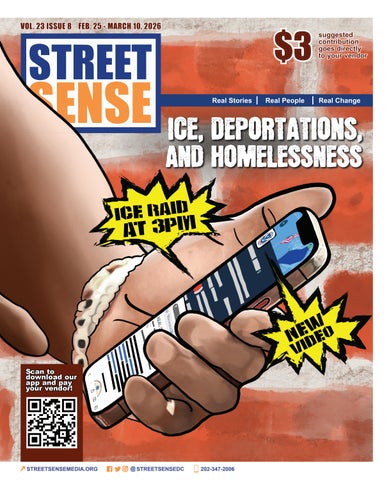
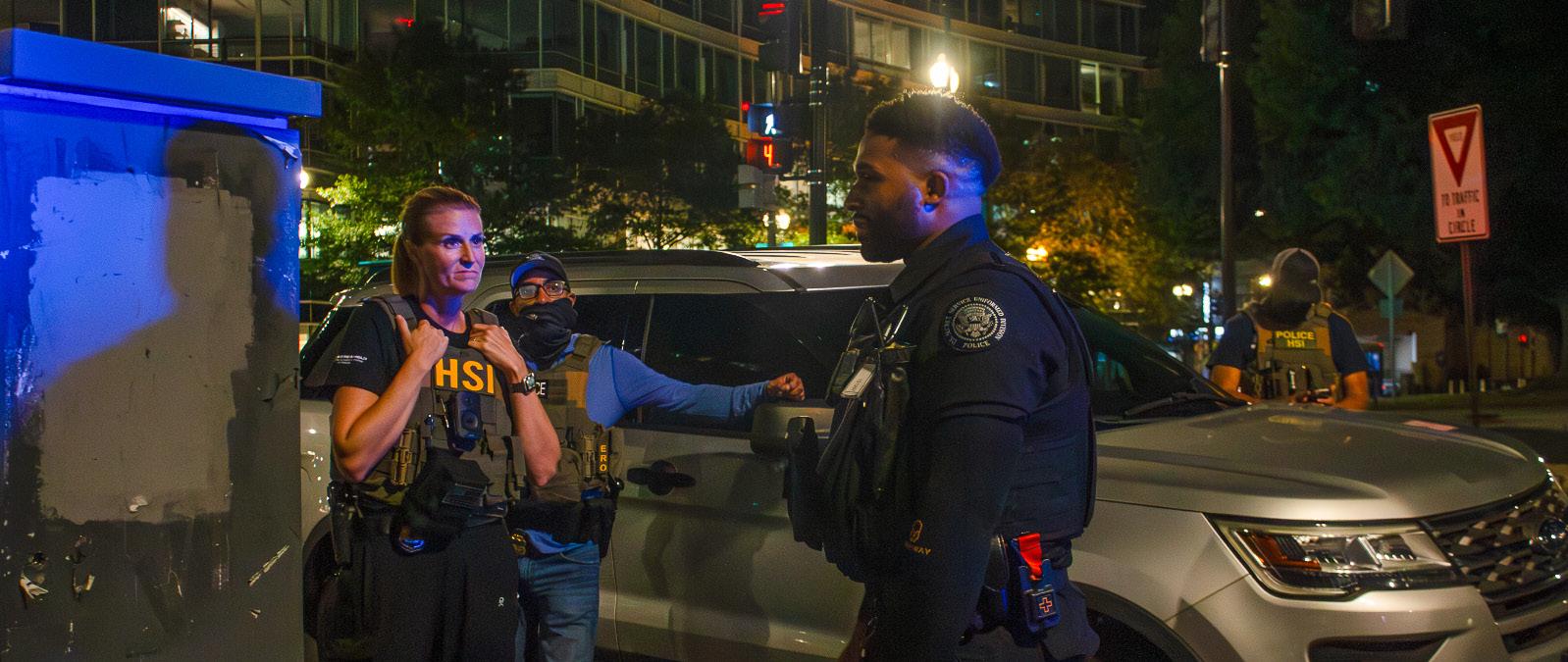
Last summer, a D.C. resident was looking for apartments to rent with his newlyreceived housing voucher. The man, who Street Sense is not identifying to protect his family’s privacy and the outreach organization he worked with, was born in El Salvador. His parents brought him to the U.S. more than 20 years ago, when he was eight. After years in the homelessness services system, the man was just a few weeks away from having permanent housing, according to a homeless services outreach director who worked with him. Then came the federal takeover of D.C.
In August, Immigration and Customs Enforcement (ICE) deported the man, the outreach director said.
Last month, someone murdered him in El Salvador.
“The deportation and the murder are both, obviously, very shocking,” the outreach director said. “It goes to show the very real human and life costs that deportations — that ICE — are having on all these individuals and all these communities.”
The director asked not to be named to protect her organization and its clients from retaliation from ICE. Her client who was killed in El Salvador is only one of dozens of people experiencing homelessness or housing insecurity in the District who have been impacted by ICE deportations since the summer. ICE arrests in D.C. spiked at about 30 per day during the federal takeover in August, and remained high through the following weeks. The data, taken from the Deportation Data Project, is only available through mid-October. The group gets its numbers through Freedom of Information Act requests to ICE, which has not updated its public dashboard on deportations since Trump took office. There is no comprehensive list of people experiencing homelessness who have been deported or targeted by ICE. But since the takeover, deportations and ICE presence around D.C., especially near places that provide services, have deepened fear among people experiencing homelessness and housing insecurity, and disrupted access to outreach services.
Chewy, an undocumented immigrant in D.C., recently moved into housing through a housing voucher. (While federal housing programs often require people to be citizens, locally-funded programs offer vouchers to D.C. residents who are non-citizens.) Chewy said many of his friends who he experienced homelessness with were deported.
“Most of them, people I used to hang with when I was homeless, most of them got deported already,” Chewy, who asked not to be identified by his real name to protect himself from being targeted by ICE, said. “My reaction is just like, wow, you know? These are people. These were close friends.”
It’s not clear that ICE has intentionally targeted people experiencing homelessness in the city. In January, Ward 1 Councilmember Brianne Nadeau issued a report about the impact of the federal takeover, arguing D.C. police lost trust by collaborating with ICE. The report, which came after a public roundtable last fall, did not identify impacts of ICE on people experiencing homelessness.
“We did not hear at the hearing, and I’ve not heard reports from others — that immigration enforcement has been targeting people who are homeless,” Nadeau wrote to Street Sense in an email.
But due to time spent in public spaces, people experiencing homelessness can be especially at risk of being detained by ICE, according to Deepa Bijpuria, a supervising attorney at Legal Aid DC.
“ICE has arrested people based solely on their race, language, or other perceived sign of immigration status. When simply being visible is a risk, people who spend much of their time on the streets are extremely vulnerable,” Bijpuria wrote in an email to Street Sense.
And homelessness outreach workers told Street Sense that they’ve seen clients in various living situations — from sleeping outside to receiving permanent housing — be deported.
The homeless outreach director said at least six clients at her organization were deported after going through the process to receive permanent, government-sponsored housing in D.C., which typically takes at least two years. That process is “not easy, regardless of documentation status,” she said. “It’s heartbreaking. A lot of these folks have fought tirelessly to get through the system and everything the ‘right way,’ and then are still being deported.”
Sometimes, a person’s loved ones only find out that ICE has arrested or deported them through social media posts, community group chats, or news posts. One outreach worker said he found out a client had been deported because ICE posted a Facebook video of the person being handcuffed and put in a car.
“For the community at large, for people’s friends and families to find out about these deportations through online videos that circulate — it’s just really awful,” the homeless outreach director said. When someone is deported, their loved ones and communities in the U.S. often have to live with the uncertainty of not knowing what happened to them. In some cases, the director has been able to connect with people who have been deported or their families to “confirm that they’re alive, at the very least,” she said. “But for just as many others, I have no idea what happened to them, if they’re okay, if they’re alive, anything.”
In Chicago, New York City, and other cities, ICE has targeted people experiencing homelessness by patrolling outside of or entering shelters. In D.C., some outreach workers and shelter residents told Street Sense they noticed heightened ICE or National Guard presence near shelters and homelessness service providers, especially during the federal takeover.
“When the operation was first rolling out, [ICE and other federal officers] weren’t going inside, but they were definitely hanging out outside of places that they knew people were frequenting,” the outreach director said.
This fall, ICE also detained several people living in the New York Avenue Men’s Shelter in the blocks around the shelter, residents told Street Sense. Some were detained when they went to look for work at the nearby Home Depot, residents said, which was a hotspot for immigration agents.
“These guys were working, you know what I mean?” Gerald, a New York Avenue shelter resident, said about those who were detained. Gerald and other shelter residents estimated that between August and November, dozens of residents — upwards of 40 — were detained by ICE or did not return to the shelter after immigration enforcement activity in the area.
While a few New York Avenue residents claimed they’d seen ICE agents enter the shelter itself, others said agents did not go inside, but were sometimes around the building, or in the alley behind it. D.C.’s Department of Human Services (DHS), which oversees shelters, and the mayor’s office both declined to comment on this story, including on questions about whether ICE has entered shelters or been stationed near them.
Nationally, ICE agents may not enter private spaces, including private or restricted areas in shelters or service centers, without a search warrant or consent to enter.
In D.C., DHS guidance that was available online until this month instructed workers to ask for warrants if ICE came to a shelter or service center. If an ICE agent entered the facility without a warrant, workers were told to document the incident. The guidance directed workers to “never confront or stop an ICE agent.”
This guidance was publicly available from at least 2022 to mid-February; when asked to confirm whether the document was still up to date, a DHS spokesperson declined to comment. The guidance document has since been taken down.
ICE activity has created an “environment of fear” in the District, Bijpuria from Legal Aid DC wrote in her email. “People are having to make impossible calculations about whether to seek benefits and potentially become a target.”
Fear of being targeted by ICE affects not only those who are undocumented, but also many Latino people and immigrants with legal status. The homeless outreach director said she has clients — including two experiencing homelessness — who are legally in the U.S. but have been detained by ICE multiple times, sometimes for up to a few days.
The anxiety around ICE presence in the District can discourage immigrants and Latino people experiencing homelessness or housing insecurity from seeking resources and services.
“Folks are scared, even to go to service centers, to access housing, to access health insurance, because they fear that this puts them at risk,” Sierra Barnedo, the program manager of rapid rehousing and Latinx street outreach at SMYAL, a youth homelessness service provider, short for Supporting and Mentoring Youth Advocates and Leaders, said. “Services that we had were already hard to navigate for people who didn’t speak English.”
Those without housing may fear being targeted by ICE while living in shelters or outside, but also face similar fears about encountering ICE during the lengthy process of trying to access housing. That process involves meeting with case managers or, sometimes, reporting to different government offices.
Those with housing, like Chewy, can feel discouraged from accessing other essential services.
“I really don’t go out much if I don’t have to, but sometimes I have to go to a doctor’s appointment, I have to watch out for ICE and stuff, or I have to go to the store. And it’s scary,” he said.
Outreach workers told Street Sense ICE activity has forced their organizations to be much less public about the work they do, particularly around gatherings and events that could put their clients at risk.
“[ICE] has altered the way that we work, maybe even permanently,” one outreach worker said, adding that his organization no longer publicly shares information about its events, including those that may provide food, cold weather gear, or other essentials “We don’t publish anything… to the general public anymore at all.”
Barnedo said SMYAL has increased efforts to offer transportation assistance to events to help clients feel safer attending. She also emphasized the importance of outreach organizations having Spanish-speaking staff.
“Now more than ever, we need Spanish-speaking case managers,” Barnedo said. “The type of case management and cultural competency that’s required to work with these populations is not something that, honestly, most folks have, who work in the system.”
While outreach workers agreed on the need for more bilingual services, they also said outreach organizations can only do so much to mitigate the impact of ICE and the fear surrounding it.
“This is just completely an operation that’s meant to harm and scare people,” the homeless outreach director said. “The impact on not only my clients, but the community at large, is unfathomable.”
Annemarie Cuccia contributed reporting.
GRACE COPPS Editorial Intern
This month, Congress passed a disapproval resolution that locks D.C. into tax policies from the One Big Beautiful Bill Act, a blow to the home rule doctrine that allows the District to govern itself and to the city’s revenue. The potential loss, ahead of what’s expected to be a tight budget year, could mean coming cuts in funding for social services.
President Donald Trump signed the disapproval resolution into law on Feb. 18. It blocks the D.C. Council’s legislation separating the District’s tax laws from those enacted by the Republican tax bill last summer, which raised the Child Tax Credit to $2,200 for each child under the age of 17, while shrinking eligibility for the Earned Income Tax Credit (EITC). Additionally, it raised standard individual tax deductions, eliminated taxes on tips and overtime, and added tax breaks for businesses.
D.C.’s Chief Financial Officer Glen Lee estimated in a late 2025 memo that decoupling D.C.’s tax laws from the federal changes would increase the District’s tax revenue for the 2026 fiscal year by nearly $179 million. But with Congress’s reversal, D.C. may lose $658 million in tax revenue over the next five years.
In November, the council passed the D.C. Income and Franchise Tax Conformity and Revision Temporary Amendment Act in response to the federal legislation. The Temporary Amendment Act would have separated D.C.’s tax laws from the new policies, preventing massive revenue losses and putting a portion of the saved revenue towards the creation of D.C.’s own Earned Income Tax Credit (EITC) and Child Tax Credit (CTC). The pair of tax credits was projected to reduce child poverty by 20%, according to the D.C. Fiscal Policy Institute, a research center focused on the impact of the city budget and taxes on its communities. Without them, middleand low-income families could be at risk of losing new financial support systems at a time when many D.C. residents are still coping with mass federal layoffs and the cost-of-living crisis.
As D.C. is a federal district, not a state, all bills passed by the council are technically subject to congressional review.
In a letter to congressional leaders dated Feb. 2, Mayor Muriel Bowser and D.C. Council Chairman Phil Mendelson wrote the resolution was “an intrusion on the District’s Home Rule authority” and would disrupt D.C.’s tax collection, which has already begun, by requiring D.C. residents to re-file their taxes in accordance with federal provisions. On Feb. 24, D.C. Attorney General Brian Schwalb argued in a legal opinion Congress could not overturn the law, saying lawmakers had missed the deadline to do so.
The D.C. Fiscal Policy Institute said in a statement that “If DC were a state, this kind of federal interference wouldn’t happen,” citing “at least ten other states” that were allowed to decouple from the tax reforms and 18 others that have laws requiring “full state legislative approval before any federal tax changes are adopted.” The institute raised concerns about how the loss of tax revenue might affect the portions of the city’s budget that had been dedicated to social services, particularly those combating child poverty.
The unexpected revenue loss, the second in a year after the 2025 fight over $1 billion Congress prevented the city from spending, means D.C.’s funding for various social services programs is now facing an uncertain future. Last fiscal year, the District collected around $200 million more in tax revenue than expected, $51.5 million of which the council had designated for a list of priorities. The list included the Childcare Subsidy Program, which covers part or all of the cost of childcare for families accepted into the program; the Housing Production Trust Fund, which finances affordable housing; and the Emergency Rental Assistance Program. In light of the mandated changes to D.C.’s tax policy and a growing budget, Bowser is not authorizing this allocation of the excess funds, according to WAMU.
The District’s upcoming budget was already projected to be tight. In a meeting with the council earlier this month, Bowser told council members that health care and child subsidy programs might need stricter eligibility restrictions. According to City Administrator Kevin Donahue, maintaining the current operations of D.C.’s programs and services would cost up to $1.1 billion more in revenue than the District can afford.
In a letter to the mayor, Councilmembers Brianne Nadeau, Christina Henderson, Charles Allen, and Janeese Lewis George wrote about their concerns that budget cuts “present clear threats” to the “humane and dignified safety net” on which “tens of thousands of residents” rely. They stated, “The safety net is at risk of being dismantled and in desperate need of corrective action.”
WAYNE HALL
lright, let me speak with minimal emotion for a minute. I’m for universal income. I’m for it because working people are hurting, and pretending everything’s fine doesn’t put food on the table. Many Americans are working full-time, sometimes two jobs, and still can’t get ahead. That’s not a personal failure; that’s a systemic problem. But let me be clear about something else, too. I’m not for any one-world government or one-world currency. Helping our people should not mean handing our country over to somebody we didn’t vote for.
AEverybody is aware of the reality we face these days. Rent is up. Food is up. Gas is up. Paychecks aren’t moving. You miss one check, one shift, one week, and everything starts falling apart. Car note behind. Lights at risk. Credit shot. And once you’re down, it’s hard to get back up. That’s not because people are lazy. It’s because the rules changed and nobody told us. Jobs move overseas. Machines replace people. Companies make record profits while telling workers to tighten their belts. Meanwhile, regular folks are expected to just figure it out. Universal income ain’t some free ride. It’s a baseline. A floor. Something solid to stand on. It’s a regular check that helps cover the basics, food, rent, and utilities, so one bad month doesn’t wreck your whole life. For those who need it. That money doesn’t disappear. It goes straight back into the neighborhood. Groceries. Local shops. Rent. Repairs. That’s not waste, that’s circulation. People don’t stop wanting to work just because they’re not panicking anymore. They work better when they’re not drowning.
Now here’s where I draw the line. Universal income should be American-run, American-controlled, and paid in American dollars. Period. I don’t want some global system deciding how much my family gets or what rules we gotta follow. I don’t want decisions made halfway around the world by people who’ve never set foot in my neighborhood. You shouldn’t have to give up your country just to survive in it.
Let me talk about something I didn’t always understand: tariffs. Tariffs are just a way to protect American jobs. When companies bring in cheap stuff made somewhere else because labor is cheaper, American workers lose. Factories shut down. Towns dry up. That ain’t free trade for working people. That’s getting undercut. If we’re gonna talk about helping people with universal income, we also gotta talk about protecting jobs. You can’t support workers with one hand and sell them out with the other.
People act like guaranteed income is some crazy new idea. It’s not. America has always had debates about how to make sure working people can live with dignity. Leaders in the past understood freedom doesn’t mean much if you’re broke, stressed, and one step from losing everything.
This is a general statement, and I don’t know how true this is these days. But most people don’t want to sit at home doing nothing. They want pride. They want purpose. They want to provide. What they don’t want is to be trapped in a system where no matter how hard they work, they still fall behind. Universal income gives people options. It lets you leave a bad job, take care of your kids, learn a skill, or survive a layoff without everything crashing down. That doesn’t weaken work ethic; it gives people room to stand up straight.
Once you hand over control of money and laws, you don’t get it back easily. Working people already feel ignored enough by folks in power. The last thing we need is decisions being made even farther away.
You want to fix the country? Start with the people holding it up. When working folks are stable, families are stronger. Communities are safer. Small businesses survive. Everything works better. Universal income helps people stay afloat. Protecting jobs helps people stay employed. Keeping control here at home keeps power where it belongs. This ain’t left or right. This is common sense.
So yeah, I’m for universal income. I’m for working people having a safety net. I’m for dignity. I’m for stability. But I’m also for keeping America ours. We can help our people without giving away control. We can protect workers without selling out jobs. We can move forward without losing who we are. That’s the conversation we should be having. Not how I’m happy with nothing to my name but perseverance to continue to suffer no matter what America, the world, or this planet has to offer.
Wayne Hall is an artist/vendor with Street Sense.
INVISIBLE PROPHET
Writer’s note: Third person point of view.
It is often assumed partners create coercive control. However, work environments, family, schools, housing, judicial systems, civil servant jobs, hospitals, clinics, political and military environments can also create this control. This is what I am experiencing now while my privacy and safety are being violated.
In 2025, The Marshall Project spoke to Joan Meier, director of the National Family Violence Law Center at the George Washington University Law School, who said “coercive control is often more dangerous and pervasive than physical violence.” Coercive control “takes into account nonphysical tactics abusers use to trap their partners,” according to the article.
But this article does not fully comprehend the multitude of experiences in the judicial system created to mislead communities. There are a wide range of abusers who know how to create harm and are not emotionally regulated, while the judicial system supports coercive control.
Enduring coercive control is universally criminalized in the United Kingdom, primarily through Section 76 of the Serious Crime Act 2015 (effective December 2015 in England and Wales), which criminalizes coercive and controlling behavior in intimate or family relationships, possibly with the use of jail time.
Here in D.C., I researched Law 23-275, the “Intrafamily Offenses and Anti-Stalking Orders Amendment Act of 2020.” It was introduced in 2019 and adopted on first and second readings on Dec. 1, 2020, and Dec. 15, 2020, respectively. D.C. Law 23-275 became effective April 27, 2021. It allows the “Metropolitan Police Department to serve process in civil protection order cases, and to create procedures by which victims of stalking may petition for an anti-stalking order; and to make conforming amendments.”
Even though this legislation exists, how does one file court documents? Because I have done so, I know the coercive control in the court system is the same as when a partner or family member creates harm. Is there an opportunity to make a decision for one’s well-being?
Many experiences are left unheard and have gone through dramatic transformations. To what length can one stand fighting while others turn a blind eye? These laws against coercive control are a big step toward assisting victims and survivors with their freedoms because their mental health is stable. Adjusting a life for an abuser is a societal acceptance throughout history. At this time, with current events, families have become worse with rage and overbearing religious or political beliefs. These situations could fall under the “Intrafamily Offenses and Anti-Stalking Orders Amendment Act of 2020.”
These laws protect victims and survivors and state they are of sound mind and body. They are not a diagnosis created by a harmful intent that states we are a threat to ourselves or others. My experience with another form of coercive control is when the mental health system is weaponized to claim people’s instability. When I was 20, the system was weaponized against me.
I’ve read many articles about similar experiences universally, and individuals fought for these laws because of the increased violence and deaths relating to coercive control. Every victim and survivor is present in their healing journey, especially the ones who have family and friends in government. If I ever become silent because of coercive control, please know it was not of my will. I’ve done so much to be greater than the trauma enforced in my life. And always acknowledge even the ones who stand alone fighting against coercive control don’t need groups of individuals to stand with them.
Their fight is justified as self-defense using these laws and as a response to the abuser’s coercive control. We stand on our own without anyone readjusting our dignity and integrity. We don’t ask for assistance or power for revenge. As victims and survivors, we have asked to be healthy and of sound mind and body. We never ask for assistance because we acknowledge the dangers of inherited debts. We don’t speak in codes with hidden meanings. We don’t think about romanticizing violence or build false relations through intentional abuse.
Sense.

There couldn’t have been anyone more upset than a Moor minding his two cents worth… land, property, business, then hit harshly with an abrupt sense of danger being considered a slave on the loose! In 1855, William Dungey was accused by Joseph Spencer of being a Negro in their community. He was called “Black Bill,” another name used in attempts by Spencer to mark Dungey, his neighbor, as a slave, ignorant of the origin of his ethnic identity. Also, the hateful act might have been because Dungey was married to Spencer's sister.
The Moor was put in a dangerous situation. He was not a "Black" anything, or Negro. Every individual ignorant of self in the family nations of earth, lost identity by force and being deprived of information strategically, and/or refusing to be and seek their true identity are the Blacks. It wasn’t about skin color; Dungey had almost the same hue as the average pale-skinned neighbors. Just one drop of melanin and rights are questionable unless made clear. Negros have had property and basic human rights stripped by waiving natural birthrights to earthly and divine salvation, including Dungey’s natural rights to live in Illinois. Dungey fully acknowledged his Portuguese ancestral origins by his works, actions, and deeds. He inherited practices passed down through his blood lineage, culture, religion, and self-governing laws of love, truth, peace, freedom, and justice in honor of his ancestors and protected by the Constitution and Barbary Treaties that provided civil and religious protections for those originating from North Africa.
Dungey retained a lawyer, Abraham Lincoln, who filed and won the case with a simple argument ending in commonsensical closure, as recorded at the time: “‘My client is not a Negro, though it is no crime to be a Negro — no crime to be born with a black skin. But my client is not a Negro. His skin may not be as white as ours, but I say he is not a Negro, though he may be a Moore.’ Mr. Lincoln interrupted Judge Davis, scarcely able to restrain a smile, ‘You mean a Moor, not Moore.’ ‘Well, your Honor, Moor, not C.H. Moore,’ replied Mr. Lincoln, with a sweep of his long arm toward the table where Moore and I sat. ‘I say my client may be a Moor, but he is not a Negro.’” The distinction between the legislated class of people recognized as Negro and those who received legislative protection from being identified as Negro was lost to a long history of fictional race pride in complete ignorance, never having witnessed equality as a social norm.
In 2026, people with Middle Eastern and North African roots are by federal law considered White, but many of them do not see themselves as white, according to NPR. The Census Bureau defines "White" as a person having origins in any of the original peoples of Europe, the Middle East, or North Africa. If the appearance was the obvious requirement to be considered white or Black, how is it possible “many of them” do not see themselves as white? Neither Black nor white is a nationality, and white has nothing to do with appearance but social status as constructed for first-class citizenship.
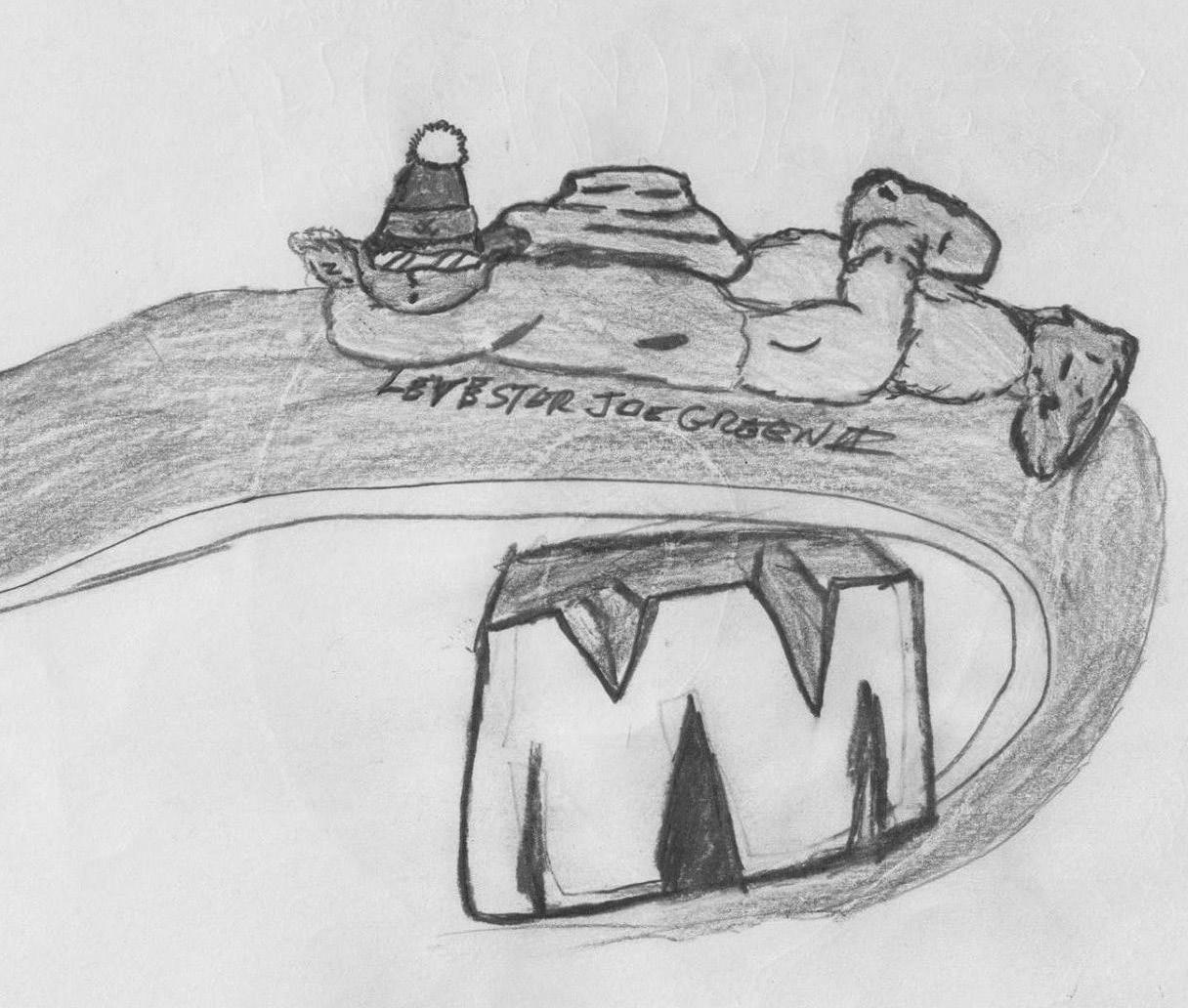
LEVESTER GREEN
Artist/Vendor
Casting systems, like in Hinduism, the most ancient of religions, used what is known as Varna, meaning color, form, or class, creating a well-developed classification of the Hindu society into distinct functional, social, and occupational groups based on skin colour, origin, and occupation. In India, Aryans had lighter skin tones, whereas the Indigenous people were dark-skinned. Aryan or Iranian were the lowest of the low, made up of people who had violated the rules of the varnas and become ritually unclean, along with their families.
Through history, many similar ideas have been adopted or modified in attempts for greater government practices.
Like the term civiliter mortuus, “dead in the eyes of the law,” the loss of all or almost all civil rights by a person due to a conviction for a felony or due to an act by the government of a country that results in the loss of civil rights. Indigenous Americans were relegated to the status of second-class citizens after decades of countless fatalities, torture, and harassment for knowledge and identity of their true selves. After forcing the Black and Negro label amongst the original inhabitants of earth, Jim Crow represented the legitimization of anti-Black racism. Not to eliminate the label Black, but to design a thought process that had massive participation to create oppression. Many Christian ministers and theologians taught that “white” people were the chosen people, Black people were cursed to be servants, and God supported racial segregation. craniologists, eugenicists, and phrenologists, at every educational level, concreted the belief that “Black” people were innately intellectually and culturally inferior to white people. Particularly because to self-proclaim being Black ultimately is a confession knowingly or unknowingly one is really ignorant of their true identity or truly has given up family history, belonging to a nation with responsibility to uphold a divine creed and principles of love, truth, peace, freedom, and justice. Living and being the continuation of family history from birth and blood rights in honor of mother and father.
Natural birthrights as the spirit is in the flesh with the mind of infinite possibilities in creation, in honor of mother and father rooting and branching from the ancient family tree of life to Indigenous knowledge and wisdom through the study of self. Practicing love, truth, peace, freedom, and justice, a nation continues to thrive with the culture, religion, and purpose to sustain a nation alive in posterity. The key elements are having freedom to create in peace and trust to govern one’s own creation.
Red, yellow, and blue create black; like any color in existence, it had to be named for descriptive purposes in expression. If wheresoever “Black” is a sign and has any symbolic meaning, it is according to man’s ideal nature of reflection. Black, according to science, means death, would be a current example. Dark has been synonymously used for Black. A being placed, forced, or left in the dark can only come out in the light.
El-O-Him is an artist/vendor with Street Sense Media.
I’m up early in the a.m., giving my thanks, then I’m up off the top of escalators in search of the bathroom open! Whether its Dunkin Donuts or the metro station, I’m getting that in, since I was banned from Starbucks and Panera back then. Just an ingredient needed in order for my day to properly begin, as it began by letting folks into my living room as they passed through on their way down the escalators, off to work. But sometimes, on a new paper day, I stop to acquire the new edition or donate some socks with well wishes from atop the city, as well as the day, then I’m off to complete my next play. Thanks, Pepper, my greeter and patron who stopped once in a while to help sure me up proper for me to stay on top of my moves, making money for hygiene, highjinks, and other such, like walking down Massachusetts Avenue to the YMCA to chill, lounge, and unwind in the men’s lounge with the comforts of TV and a massaging chair that was of great relief. A great regimen to begin with the elongated walking. Also complemented by the many activities within these facilities, with plenty more bathrooms to be relieved in, courtesy of Street Sense Media and me! Up until then, it wasn’t easy coordinating, and it was timely! Choice and picky to the privy since I preferred no one sitting next to me. I found it distinctly as well as disgusting. No discussion! Concentration busting, or whatever it was, that you were focusing on hard enough to formulate a laser beam in pursuit of your dreams, thus taking to higher ground, which would eventually seem like a helicopter rescuing, say maybe a movie scene based on the real thing of warring! Oh, the joy and peace it must bring, like April showers. I shine like I turned on the powers! Sunshine showing signs of knowing! Glowing like the last of them or maybe a passing of the torch which would be, per se, a beginning...
ABEL PUTU
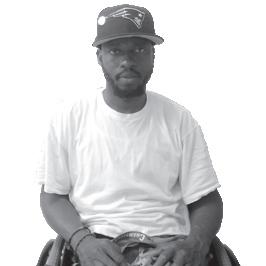
Things are falling apart that we never expected to. And things will never be the same. A lot of things are going to close down, and it’s going to be the new world order. So, people cannot figure out what is going on, but I think the world is going to change, and everything is going to switch sides. Like overseas will be the United States, and here will be Africa, but it will be called Acabala.
So, we do what we can to make the world better, but it is not going to be the same. I hope we can bring people together and bring wheelchair basketball back to life and bring everything back to life. We have family all over, and we need to come together. Food prices and rent are going to get higher. And then, people will have jobs, but will have to work with AI.
Life continues, and we all come together to make it better. I feel for the kids and single parents who have to work 24 hours to feed the kids; if food stamps are cut off, how will people be able to survive? People are struggling with the resources they got. How can we come together and make it better? Life is strong when life is better. Mamba mentality all day.
NIKILA SMITH
Artist/Vendor
When people walk around in the streets and fall, they’re usually embarrassed.
But I make a joke out of it to ease their embarrassment and make them laugh.
Walking down the street
When I see people trip,
I tell them they are falling for me
“Don’t trip!”
This makes them laugh
I have others try to still my joy
What brings happiness
Are those teeth I see
When others smile
Or that smile that goes up And makes cheeks get round
Don’t trip, I’m good at my job
And this is the best volunteer job
I ever had
I struggle with my smile sometimes Then someone lends me theirs

Don’t trip, I won’t let a succubus steal my smile
I’m sipping on a sober life
That is quenching my thirst
I can’t go back in time to fix your broken smile
If I could, I would fix mines
Don’t power-trip on me
You’re not perfect either
Don’t trip, all smiles are not good
There is something devious lurking
So I will trip to get away
And someone else will think I’m falling for them
Don’t trip
This may be true
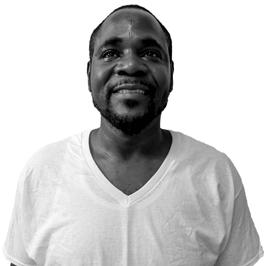
That’s that
RONNELL WILSON Artist/Vendor
I’m not a victim, I’m a survivor Even through walls of tear showers Deep within our souls lies the power Facing your fears, never to cower
Those battles, yes, God took them. Especially, the biggest ones that you thought that He wouldn’t Never again do we have to be scared
Just remember, Jesus Christ will always be there!
Carrying us all through the hardest test
Why wouldn’t Our Saviour know exactly what’s next? Yes, God is the best, yeah buddy, that’s that!

I knew it takes time, and I realized that not only is the journey long, but it is worthy
A piece of bread that makes the bread of peace helped me to change Days passing, weeks passing, months lying, and years overlaying, I learned some new ways during that pathway to the change
Obviously, it takes longer to travel on the road, which poses a challenge
While I was on the journey, I saw the same landlord come and join
We shared the same shelter, learned the same lessons
Anyone can go from homeowner to homelessness the same way I did, and he did
The landlord, who was lord, realized it was better
Not to let someone experience homelessness
Because life changes, and lessons can be learned the hard way
Life can change anytime in just a simple click
The road was full of humiliation, as if there wouldn’t be tomorrow
We learned the same lessons that need to be taught
If there is a possibility to start a new one, I will devote my time to teaching people how to love each other, Without any condition
You know where the journey will start, but you never know when it will end Anything can happen during that journey, a rough moment in cold weather,
A tough moment in the hot season and dry weather, Going somewhere to take a shower, somewhere to use a bathroom,
Another place to have breakfast, along with a long line, Self-discipline is the only fuel to carry you through that journey