
suggested contribution goes directly to your vendor


suggested contribution goes directly to your vendor
treet Sense has produced thousands of articles on homelessness, housing, and povery, including some that led to change in the city. The paper has won awards from D.C.’s Society of Professional Journalism and regularly breaks news about homelessness and housing.

Abel Putu, Abraham Aly, Archie Thomas, Aida Peery, Akindele Akerejah, Amia Walker, Andre Brinson, Andrew Anderson, Angie Whitehurst, Angel Morris Anthony Carney, Apollos Robinson, Bailey Green, Beverly Sutton, Brian Holsten, Brianna Butler, Cameé Lee, Carlos Carolina, Charles Armstrong, Chon Gotti, Conrad Cheek, Craig Thompson, Cynthia Herrion,
Daniel Ball, Darlesha Joyner, David Snyder, Debora Brantley, Degnon Dovonou, Dominique Anthony, Don Gardner, Donald Davis, Drake Brensul, El-O-Him, Elizabeth Bowes, Elynora Houston, Eric Glover, Eric Thompson-Bey, Evelyn Nnam, Faith Winkler, Flegette Rippy, Frederic John, Frederick Walker, Gerald Anderson, Gloria Prinz, Gracias Garcias, Greta Christian, Henrieese Roberts,
Henry Johnson, Invisible Prophet, Isaiah Brookings, Ivory Wilson, Jacqueline Gale, Jacqueline Turner, James Davis, James Hughes, James Lyles III, Jay B. Williams, Jeanette Richardson, Jeff Taylor, Jeffery McNeil, Jeffrey Carter, Jemel Fleming, Jenkins Dalton, Jennifer McLaughlin, Jewel Lewis, John Littlejohn, Josie Brown, Julienne Kengnie, Kenneth Middleton, Kendarius Tucker, Kym Parker,
L.Q. Peterson, Laticia Brock, Lawrence Autry, Leo Hughes Jr, Levester Green, Marc Grier, Marcus McCall, Mars, Maurice Carter, Melody Byrd, Melveon Harp, Micheal Pennycook, Michele Modica, Morgan Jones, Nikila Smith, Nitin Khanna, Patricia Donaldson, Patty Smith, Paul Martin, Peggy Jackson Whitley, Phillip Black, Qaadir El-Amin, Queenie Featherstone, Rachelle Ellison, Randall
Smith, Rashawn Bowser, Reginald Black, Reginald Denny, Ricardo Meriedy, Rita Sauls, Robert Vaughn, Robert Warren, Rochelle Walker, Ron Dudley, Ronnell Wilson, S. Smith, Sasha Williams, Shawn Fenwick, Sheila White, Shuhratjon Ahmadjonov, Starchild BLK, Steve Miller, Sureyakanti Behera, Sybil Taylor, Tasha Savoy, Tim Holt, Tonya Williams, Victoria Green, Vincent Watts, Warren
Stevens, Wayne Hall, Wendell Williams, Wendy Brown, William Hargrove, William Shuford, Willie Futrelle, William Young, Zero
BOARD OF DIRECTORS
Blake Androff, Clare
Chris
ALAENA HUNT
D.C.’s Emergency Rental Assistance Program (ERAP) will reopen this month after being closed for over a year, but those seeking help will encounter a new application process.
ERAP will transition from an online portalbased application system to an appointment-based system when applications reopen on Nov. 20 at 9 a.m. Eligible D.C. residents will now be required to schedule an appointment to apply for the aid, a change the city hopes will allow the program to remain open for a longer period of time.
In an email to Street Sense, a DHS spokesperson wrote, “the change is designed to increase transparency, improve the eligibility and payment processing timeline, and provide applicants with up-to-date information on funding availability.”
ERAP, a program run by the D.C. Department of Human Services (DHS), provides funding for overdue rent, security deposits, and first month’s rent to District residents who earn less than 40% of the Area Median Income (AMI) and are facing an unforeseen housing emergency.
District residents have shown a high level of need for ERAP, even though the city has reduced its funding. When applications opened last year, on Nov. 20, 2024, D.C. residents applied for over $20 million in rental assistance in under six hours. This triggered the portal to close for the rest of fiscal year 2025.
Despite the apparent need, in 2024, Mayor Muriel Bowser asserted the program was no longer reliably helping people with low incomes facing housing emergencies. Over the past few years, her proposed budget has continually allocated little funding to ERAP. In fiscal year 2025, she allocated $8.6 million, but the D.C. Council ultimately approved $26.9 million. This year, she proposed an 80% cut to the program, giving it $5 million. The council increased funding to $8.6 million, the lowest since 2020.
Following ERAP’s $18.3 million in funding cuts, DHS decided to modify the program’s operations. Instead of being able to apply on their own, people will now have to make an appointment to confirm their eligibility. At this time, DHS has not said how far into the future it will schedule appointments or whether applicants will have a virtual option for appointments.
CHIEF EXECUTIVE
OFFICER
Brian Carome
DIRECTOR OF PROGRAMS
Darick Brown
DIRECTOR OF VENDOR EMPLOYMENT
Thomas Ratliff
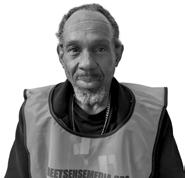
William Hargrove Nov. 29
ARTIST/VENDOR
VENDOR PROGRAM ASSOCIATES
Aida Peery, Chon Gotti, Nikila Smith
VENDOR PROGRAM VOLUNTEERS Ann Herzog, Aiden Eisenschenk, Beverly Brown, Roberta Haber
□ The November vendor meeting will be Friday, Nov. 21, at 2:00 p.m. Come for pizza, business, and fellowship!
At her confirmation hearing last month, Interim DHS Director Rachel Pierre stated this new system will help assure ERAP is used solely for preventing homelessness in emergency situations, not to cover a backlog of missed rent. Pierre mentioned that this is one of many programs DHS uses to support District residents, with others being the Family Rehousing Stabilization Program, Permanent Supportive Housing, and Targeted Affordable Housing.
This is just one in a string of recent changes to ERAP. In fiscal year 2025, which ran from Oct. 1, 2024, to Sept. 30, 2025, the application only opened once. In previous years, the application would open every three months, giving residents multiple chances to apply.
Then in April of this year, the D.C. Council voted to allow tenants to be evicted even if they had a pending ERAP application to cover missed rent. Councilmembers asserted people were applying to ERAP just to avoid eviction, and left it to a judge’s discretion whether a tenant can be evicted while their ERAP application is pending.
If you want to apply for ERAP, you will need to schedule an appointment to apply by calling 202-507-6666 or visiting the Virginia Williams Family Resource Center. Your application will be processed at the time of your appointment.
To apply for emergency funding, you will need proof of residency, a photo ID, proof of income, proof of resources or benefits, and proof of an emergency, such as job loss, unexpected costs like medical expenses, or an unexpected loss in income. To apply for help with your first month’s rent or a security deposit, you will need proof of your rental agreement and documentation of your need for assistance. More details about these documents can be found at https://erap.dhs. dc.gov/ERAPShutdown.aspx.
According to DHS, the agency may pause appointment scheduling to process applications and will only schedule appointments if it has available funding.


EDITOR-IN-CHIEF
Annemarie Cuccia
DEPUTY EDITOR Donte Kirby
EDITORIAL INTERNS
Alaena Hunt, Jelina Liu, Molly St. Clair, Sachini Adikari, Ranee Brady, Shani Laskin
Eric Thompson-Bey Nov. 22
ARTIST/VENDOR
Don Davis Nov. 30
ARTIST/VENDOR
WEB INTERN Zachi Elias
GRAPHIC DESIGN INTERNS
Arisha Shumael, Kevin Akakpo
ARTISTS-INRESIDENCE Alexandra Silverthorne (Photography),
Bonnie Naradzay (Poetry), David Serota (Illustration), Leslie Jacobson (Theater), Roy Barber (Theater), Willie Schatz (Writing), Molly Pauker (Watercolor), Debbie Menke (Watercolor)
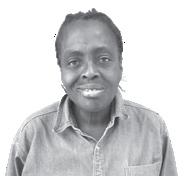
Beverly Sutton Dec. 2
ARTIST/VENDOR
EDITORIAL VOLUNTEERS
Abigail Chang, Anne Eigeman, Ben Litoff, Cari Shane, Chelsea Cirruzzo, David Fucillo, Erin Swain, Ingrid Gilles, Madi Koesler, Mark Rose, Megan Praschak, Nina Elkadi, Ryan Bacic, Sarah Eccleston
□ The Street Sense Media office will be closed Thursday, Nov. 27, and Friday, Nov. 28, for Thanksgiving.
□ Feeling the SNAP cuts or just having a hard time making ends meet? Come see Darick in case management.
□ Is the office closed for a holiday, bad weather, or political event? Call the front desk (x101), check your texts or emails from Thomas, or go to the vendor announcements page at streetsensemedia. org/vendor-info. And make sure Thomas has your current contact info!
Read this democratically elected code of conduct, by vendors, for vendors!
1. I will support Street Sense Media’s mission statement and in so doing will work to support the Street Sense Media community and uphold its values of honesty, respect, support, and opportunity.
2. I will treat all others, including customers, staff, volunteers, and fellow vendors, respectfully at all times. I will refrain from threatening others, pressuring customers into making donations, or engaging in behavior that condones racism, sexism, classism, or other prejudices.
3. I understand that I am not an employee of Street Sense Media but an independent contractor.
4. While distributing the Street Sense newspaper, I will not ask for more than $3 per issue or solicit donations by any other means.
5. I will only purchase the newspaper from Street Sense Media staff and volunteers and will not distribute newspapers to other vendors.
6. I will not distribute copies of “Street Sense” on metro trains and buses or on private property.
7. I will abide by the Street Sense Media Vendor Territory Policy at all times and will resolve any related disputes with other vendors in a professional manner.
8. I will not sell additional goods or products while distributing “Street Sense.”
9. I will not distribute “Street Sense” under the influence of drugs or alcohol.
10. I understand that my badge and vest are property of Street Sense Media and will not deface them. I will present my badge when purchasing “Street Sense” and will always display my badge when distributing “Street Sense.”
MICHELLE CALDERON Volunteer Freelance Reporter
While family homelessness has decreased in D.C. over the last decade, it’s still a challenge: during the 2024-2025 school year, D.C. Public Schools reported 9,104 students were unhoused.
One reason why homelessness among D.C. youth is such a prevalent issue is many live in poverty. According to DC Action, “approximately 21,000 District children lived in families with incomes below the federal poverty line in 2023.” Many of these families have a hard time finding affordable childcare, which prevents them from working more and growing their incomes, according to a 2024 fact sheet from the First Five Years Fund. Unhoused families in D.C. and Maryland face numerous obstacles when accessing affordable childcare, including programs with age restrictions, strict shelter rules, lack of transportation, and lack of financial literacy and long-term support.
Many shelters don’t have on-site childcare and also don’t permit families to leave children alone or hire babysitters to come into the shelter, making outside childcare the only option. While D.C. provides financial support for homeless families in need of childcare, families and their advocates say the process can still be challenging.
Jessica Portillo, 31, who lived in a Maryland shelter from December 2024 to September 2025, said that during her time at the shelter, she struggled to find affordable childcare for her son, specifically due to his age and special needs.
“Most daycares are not accepting children of my son’s age or seem to have knowledge on how to deal with a child with autism,” Portillo said.
Most D.C. and many Maryland family shelters are apartmentstyle, where families have their own unit in a building filled with other families. While children have their space away from other individuals at the shelter, many shelters don’t allow parents to leave their children unattended for the safety of themselves and others at the shelter. This is true at city-funded shelters in D.C., according to a Department of Human Services spokesperson.
Jamila Larson, Rosa Wright, and Aisha Springer work at Playtime Project, a D.C. organization that holds after-school programs and summer and spring break camps for children experiencing family housing insecurity. They say for the families they work with in D.C. and Maryland, it can be difficult to hire babysitters in shelters due to facility rules, which sometimes say visitors are only allowed during certain hours and cannot go into individual units. One mother they helped was almost kicked out of a homeless shelter for paying another resident to watch her child so she could work, they said.
“Babysitting others’ kids is often against the rules, but she had applied for childcare assistance and was denied. This mom was forced to choose between her shelter and her job,” Larson, Wright, and Springer wrote in a joint statement via email.
In D.C. city-funded shelters, on-site babysitting is not allowed, a DHS spokesperson said, to protect privacy for other residents, who may not want strangers coming into the shelter.
During Portillo’s time at a Maryland shelter, she wasn’t allowed to leave her son with anyone, even if she knew they were a trusted adult.
“We couldn’t leave our children in the shelter alone; if you did, they threatened to call CPS. If you leave them with other people, you’ll get a write-up or get in trouble,” she said.
That leaves the option of outside childcare, which can be both expensive and logistically challenging.

In D.C., families entering short-term housing are automatically connected to applications for childcare subsidies, according to a DHS spokesperson, and Maryland has a similar program. But those who work with families said just applying for childcare can be a rigorous process, which discourages many parents from even trying.
“Childcare paperwork is an extensive process requiring technology that is often challenging for our families to stay on top of,” Larson, Wright, and Springer wrote.
They also said that although families can apply for vouchers to help them with their expenses, they don’t always cover the full cost.
While Portillo received a voucher in Maryland, she said she still couldn’t find affordable daycare centers and couldn’t use them for a personal caregiver. “I got accepted for vouchers. They said I could only use these vouchers for daycares on their systems and not babysitters,” she said.
Tamara Brooks, the parenting program manager of Community Family Life Services, CFLS — a nonprofit organization based in Washington, D.C., that provides social services to help adults, families, and women achieve permanent self-sufficiency — said another reason why many parents can’t find childcare is that most affordable childcare they could pay for with their vouchers isn’t local to many shelters. Larson, Wright, and Springer added that because many parents experiencing homelessness don’t own a car, finding affordable childcare families can get to is even harder.
Approximately 36% of households in the District reported having no vehicle. While there is a metro system, it is often
unreliable for families who have a tight work schedule. Many D.C. shelters, such as The Brooks, also have strict curfew rules for their residents.
According to Larson, Wright, and Springer, families not living in shelters but staying with friends and family can also face their own challenges. They said some D.C. childcare centers require a set address, which families experiencing housing insecurity don’t have.
“They rarely know where they are going to live and where they are going to work, so it makes it impossible to find childcare until these foundational pieces of a puzzle are decided,” they wrote.
Despite these challenges, a lot of times parents don’t reach out for help because many struggle with mental health issues and are afraid of judgment, or that their children could be taken away.
“There was one parent we helped who was dealing with a mental health struggle. Instead of receiving the care and stability she needed, her housing was taken away. Too often, instead of offering understanding and support, the system punishes families when they’re at their most vulnerable,” Brooks said.
Instead, Brooks said, leaders, organizations, and individuals should express more empathy toward unhoused families, offering resources for low-income and unhoused parents, including affordable childcare.
“Empathy means creating the space and mindset to truly listen, accepting people where they are, and helping them, and you have to show up as a safe place,” Brooks said.
DONTE KIRBY Deputy Editor
The D.C. government is attempting to respond to long-standing concerns from residents in wealthier parts of the city about people exiting homelessness moving into their buildings.
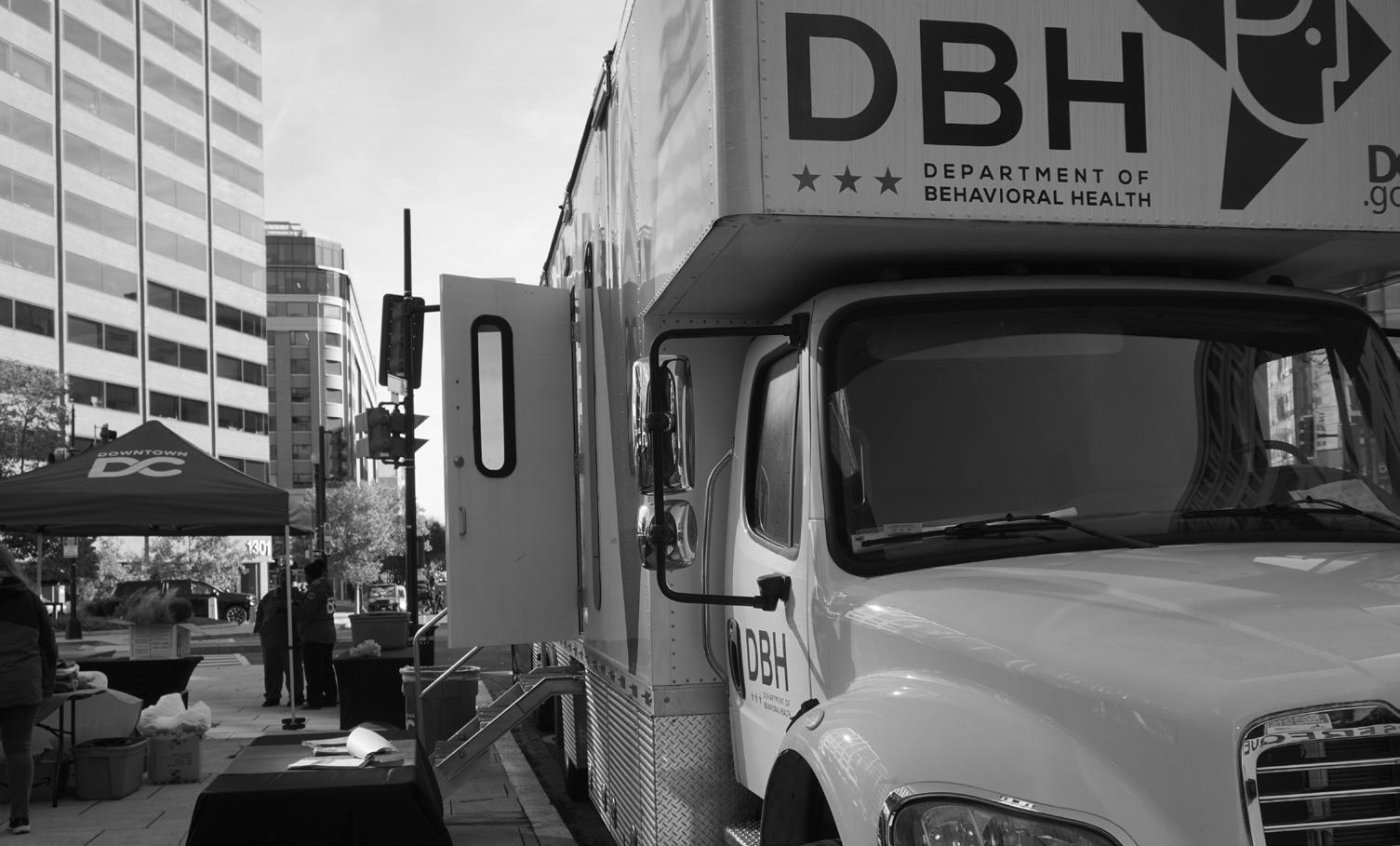
The Department of Behavioral Health (DBH) discussed two new programs to improve community relations with neighbors of Permanent Supportive Housing (PSH) voucher holders at a Nov. 6 roundtable discussion. The meeting convened local agencies, mental health providers, landlords, and housing advocates to look for ways to improve behavioral health services for PSH voucher holders.
PSH is a long-term voucher program for people exiting homelessness that only requires residents to spend 30% of their monthly income toward rent and utilities, with the city covering the rest. To be eligible for a PSH voucher, one must have a chronic disabling condition and a year or longer, and it’s often much longer, of documented chronic homelessness. These conditions can correlate with mental health or substance abuse issues, so the program comes with wrap-around social services such as intensive case management and an assertive community treatment (ACT) team that helps support those with mental illness or substance use issues transition into housing.
Tension has been growing with longtime residents as voucher holders move into wealthier neighborhoods, a dynamic some voucher holders say can lead to stereotyping.
Some housed District residents say the city isn’t providing the voucher holders enough support, while the city says it’s working to improve services, and concerns about the behavior of voucher holders are overblown.
At the six-hour roundtable addressing that divide, there wasn’t much to agree on. Still, government agencies, councilmembers, landlords, mental health providers, and community members all accepted one thing: communication can be improved. Specifically, communication could be improved among the Department of Human Services (DHS), which oversees homeless services programs; DBH, which oversees the mental health providers that provide case management and ACT team services; and landlords at buildings where voucher holders live, attendees testified. Miscommunication, or a lack of any communication, can paint PSH residents in a negative light and give the perception that behavioral health services are ineffective, which fuels complaints from residents and property management companies.
Sam Tsemberis, the founder of Pathways to Housing and one of the architects of the Housing First model, explained during his testimony that when the PSH voucher program is working optimally, a participant would have a case manager whom they see regularly. This person would help them acclimate to living in housing after extended period experiencing homelessness and navigate mental health and/or substance abuse treatment.
At-large Councilmember Christina Henderson, who chairs the D.C. Council’s health committee, put the central question around behavioral health supports for PSH voucher recipients succinctly: “[Does it] truly support recovery and long-term stability, or are there too many individuals still caught in the cycle of crisis, hospitalization, and homelessness?”
If you ask Courtney Carlson, an ANC commissioner in Ward 3, and Marilyn Lantz, director of the Tenants Association for the Brandywine Apartments on Connecticut Avenue, these behavioral health supports aren’t just ineffective; they’re failing. They reported an increase in police calls to apartments
in the area, and said voucher holders are disrupting the fabric of the community with behavioral health-related issues. Through Freedom of Information Act requests to the Metropolitan Police Department, Lantz said she found that in 2024, of the 362 incidents at the Brandywine building that required an MPD response, 45% were connected to behavioral health, mental health, domestic violence, and child abuse issues. That doesn’t mean voucher holders were involved in a majority of these incidents, but some tenants are still drawing the connection.
“How could you put someone with a mental illness in an apartment with no one to look after them? Because that’s what we’ve seen here,” Carlson testified at the hearing.
The perception DBH and DHS are doing nothing is something Rachel Pierre, the acting DHS director, and Barbara Bazaron, DBH director, are acutely aware of. Insufficient communication and transparency about how these agencies are providing support to clients is a known pain point. Sometimes that lack of communication is by design. The Health Insurance Portability and Accountability Act (HIPAA) mandates agencies and case managers under their purview can disclose only so much, and in most cases, disclose nothing without a client’s consent.
“The neighbors hear the [night] terror, they will assume we’re doing nothing,” said Pierre in response to a hypothetical situation involving a PSH voucher holder screaming and banging on their neighbors’ apartment doors due to a mental health crisis.
“We never not do anything. It is the perception that because it’s not fixed, then that means that the services are absent.”
Other times, the lack of communication is a breakdown in the system, a result of caseworker and social worker shortages and turnover. Sometimes, a landlord may have known who the caseworker was when a PSH voucher holder moved in, but by the time an issue arises, that caseworker may have left the job, and finding out who to call next is a labyrinth of mental health providers’ directories and receptionists.
In an effort to alleviate community concerns, Pierre and Bazaron are trying to communicate that services are available and working through the pilot of two new programs to address those community concerns. The first is a hotline residents and landlords can call, at 202-281-2911, to report any concerns about the behavior of a resident before it escalates to a crisis. DBH, through the Office of Contracting and Procurement, awarded a $1.3 million contract to Community Connections last May to run the service. When the hotline gets a call, Community Connections works to either mediate issues with landlords and tenants or tries to connect a resident with behavioral health services.
The second initiative is having on-site case managers at eight buildings along Connecticut Avenue that have been identified by tenant associations, property managers, and community members as having a high
number of reported incidents involving individuals whose conduct suggests behavioral health issues.
Both agency heads noted that mental health care is difficult work, especially for people experiencing severe, persistent mental illness.
“I don’t think there’s anybody in the world who has cracked the code on how you really treat the hardest people, who are experiencing severe and persistent mental illness, outside of committing them to a psychiatric hospital,” said Pierre. “That’s what we’re talking about here. It’s not a poverty, it’s not a voucher. The issue is really an extreme behavior, health, and mental illness.”
But programs to address the community concerns aside, as a whole, the two agency heads believe the concerns about the effectiveness of behavioral health services for PSH voucher holders are overblown, based more on perception than reality.
A key example of that difference between the perception of services for voucher holders versus what DBH and DHS say they provide was a consistent reference to child negligence and deaths in households with PSH vouchers. Ward 3 Councilmember Matthew Frumin, who chairs the council’s human services committee, repeatedly brought up the need for more mandatory home visits to households with children. Child welfare was also a major concern for Carlson and Lantz, who claimed several children had died while in PSH housing. Pierre countered the claim “all these children died in our housing” with data showing that from fiscal year 2024 to 2026, only six juveniles died while connected to the PSH program. None of those deaths were from child neglect, according to Pierre.
“Oftentimes, there’s the assumption that people are attached to a voucher program and they’re passing away because we’re not providing the services. It’s just an assumption,” said Pierre. “And because we can’t share what we know about cases, we let people have that assumption. But I can tell you about the young people who died in our program. It was not neglect-related.”
There’ll be a follow-up on the impact of the two DBH pilot programs at a future performance oversight hearing for the agency, Henderson said. A recording of the hearing is available on Frumin’s YouTube channel.
SHANI LASKIN AND MOLLY ST. CLAIR Editorial Interns
espite a decrease in scheduled encampment closures city-wide, continued immediate dispositions at the Martin Luther King Jr. Memorial Library have caused heightened uncertainty among those who frequently sleep outside its doors.
The Office of the Deputy Mayor for Health and Human Services (DMHHS), the agency which leads the city’s homeless encampment clearings, mainly closes encampments in one of two ways. The first is a standard disposition, when DMHHS notifies residents a clearing will take place at least a week in advance. The second, an immediate disposition, requires less notice and is not publicly announced. According to DMHHS, this fall the city has conducted 18 immediate dispositions and 19 standard dispositions.
Three of the immediate dispositions have taken place at the MLK Library, which has long been a refuge for people experiencing homelessness in the city because of its resources and proximity to nearby services such as the Downtown Day Services Center. The library’s free Wi-Fi, computer access, and amenities are valuable supports. In winter months, the city’s public libraries act as critical warming zones.
Since 2014, the rules of behavior for the D.C. Public Libraries have included prohibitions against lying down or sleeping outside the libraries. However, the rules were largely unenforced until 2024, when the MLK Library put up permanent signage and increased overnight patrols. Regardless, the library
has remained a space where people congregate during the day and sleep by at night, with many people frequently taking shelter under its awnings.
“This is a safe house. No one ever touches here,” Al Benny Morales, who hangs out outside the library, said. “They touch everywhere else, but not us.”
Since the federal takeover in August, those who sleep outside the library have also been visited by other local and federal agencies. MPD told people to leave the site in August, during the spate of sudden encampment clearings, and both the National Guard and the U.S. Public Health Service have repeatedly visited the site.
This fall, DMHHS has maintained a consistent presence outside the library. Since the start of September, there have been three official immediate disposition at the library, according to DMHHS. Street Sense also witnessed the start of a fourth immediate disposition at the library on Nov. 6 that the city cancelled while on-site after people complied with its posted notices, leaving the library premises and taking their things with them.
“It makes everyone go like, ‘When they coming? When they coming around?’” Morales said.
City workers often take photos during DMHHS encampment clearings for documentation. For Morales, the increased presence of cameras adds to the unsettlement he and other people around the library feel about the clearings.
“It’s continued harassment,” Morales said about the clearings. He’s waiting on housing and hopes to move on, but worries about the others who take shelter outside the library.

“When I leave, I don’t know what’s gonna happen to them.” It’s not just the library that has seen repeated clearings. DMHHS carried out 11 immediate dispositions in September, six in October, and one in November so far. Some of the sites — including spots near the E Street Expressway that came under increased scrutiny following a social media post from President Donald Trump in March — have been cleared multiple times this year. While most of the immediate dispositions have involved no more than one resident, those at the library have routinely impacted three to five people, according to a DMHHS spokesperson.
Aside from immediate dispositions, the city’s standard closures have continued, though significantly declining since September. In the first few weeks of November, DMHHS scheduled six encampment clearings across the city, ultimately cancelling four.
On Nov. 6, DMHHS cleared a one-person encampment situated next to the outlet of a tunnel exiting I-395. According to DMHHS, the spot has been cleared three times since the start of 2025.
The following week, on the morning of Nov. 12, city officials cleared an encampment located on a District Department of Transportation maintenance lot under the Whitehurst Freeway in Georgetown.
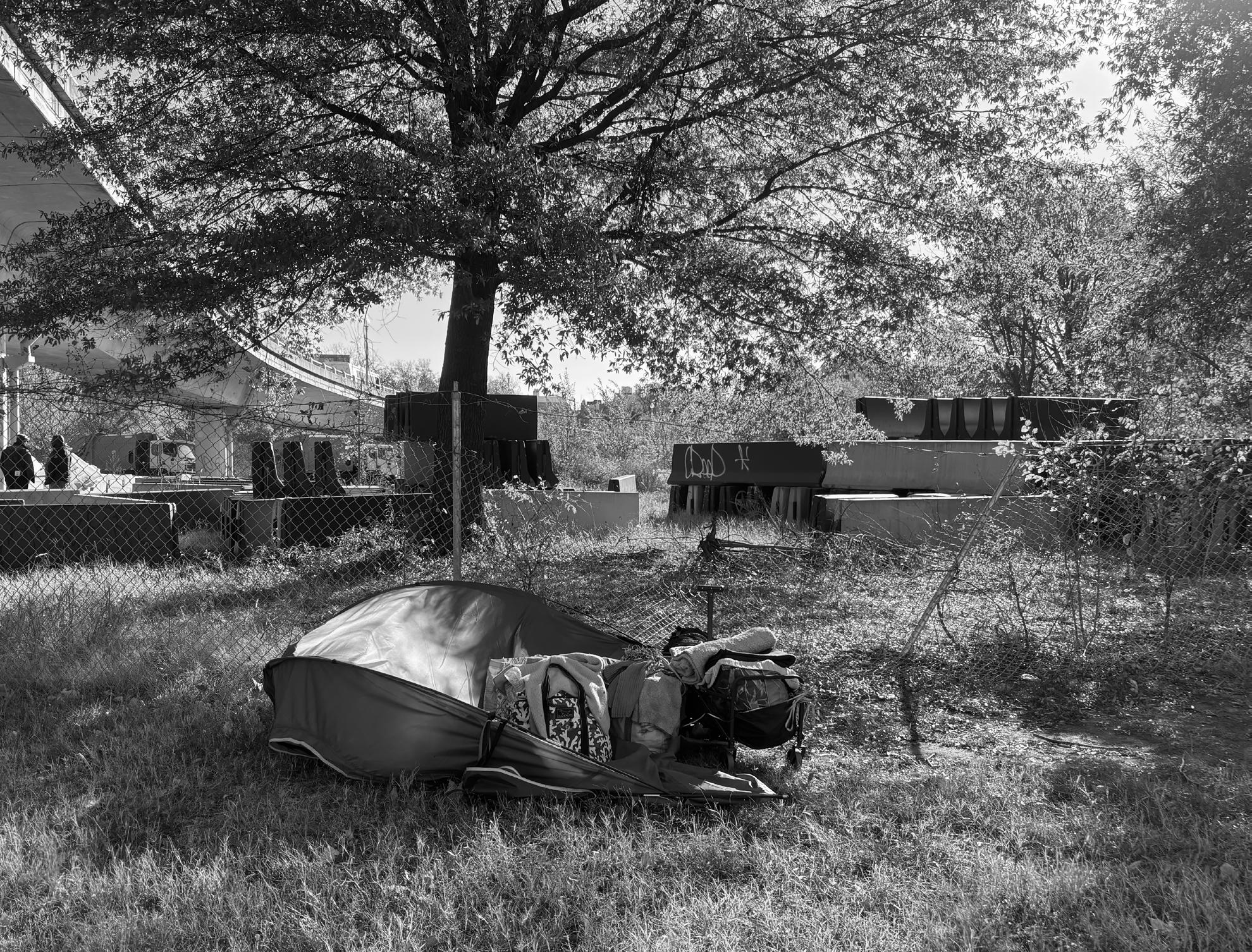
Abdullah Ibrahim said he had been living in the encampment with his fiancée for about two months. This is the first place where he has set up camp and slept outside since becoming homeless. The couple had situated their tent in a small forest within the lot behind a series of discarded concrete highway barriers. Ibrahim and his partner were in the process of moving their belongings — an electric bike, a few carts, and one tent — when city officials arrived at the scene at around 9:10 a.m. The residents took a few trips to move their things to another area across the highway, dodging morning traffic on the Rock Creek and Potomac Parkway to reach the other side of the street. Both residents left the area by 9:55 a.m. City officials began clearing the leftover items from the site, including a mattress, a few bags of trash, and two propane tanks from the area, finishing the cleanup and driving away at around 10:21 a.m.
Upcoming encampment closures: Nov. 19 at 1711 8th St. NW.
ANNEMARIE CUCCIA Editor-in-Chief
C. did not see a spike in the number of people involuntarily admitted to area hospitals during the federal takeover, according to data from city agencies, despite concerns local and federal law enforcement would place more holds on people experiencing homelessness.
Nationally, President Donald Trump has pushed involuntary civil commitment as a response to homelessness. In July, shortly before the takeover of D.C., he signed an executive order encouraging more states to use the process to remove people with severe mental illness from the streets and “restore public order.”
As Trump foreshadowed taking over law enforcement in the District in early August, the D.C. Office of the Attorney General (OAG) followed by sending an email to local hospitals, warning an “anticipated and concerted effort to clear out homeless tents/encampments and parks” could lead to an increase in involuntary hospitalizations.
Under D.C. law, people can be involuntarily admitted to a hospital for psychiatric evaluation if a police officer or Department of Behavioral Health (DBH) officer determines they are a danger to themselves or others. Depending on the evaluation’s outcome, the person may then be held in the hospital for several days for treatment. D.C. officials have occasionally used this process, called an FD-12, on people experiencing homelessness who refuse to leave during encampment closures. While mental health professionals generally say involuntary commitment is an important tool, they caution its widespread use. Housing advocates say it does not address the root causes of homelessness and can be traumatizing for some people who experience it.
Encampment closures did rise during the takeover, as federally-driven sweeps displaced at least 20 people in the first two weeks, according to Street Sense reporting. But figures from the city show instances of involuntary commitment remained largely consistent both with the summer months before the takeover and with years prior.
In 2024, 205 people were involuntarily hospitalized in August and 214 in September, according to DBH’s data; that number was 213 this August, and 210 this September.
OAG also tracks involuntary commitments, though the agency has a different data process than DBH, including counting individual hospitalizations, rather than people hospitalized. While OAG’s statistics aren’t consistent with DBH’s, they also suggest a surge in involuntary admissions didn’t materialize.
OAG reported 429 hospitalizations in August, which was in line with the numbers from the rest of the summer: 413 in May, 415 in June, and 437 in July. According to OAG data, hospitalizations dropped in September and October. Recent research suggests it’s common for demand for emergency mental health treatment to spike in the summer.
The DBH and OAG numbers do not capture everyone who is placed on a hold, only those who are admitted. They likely wouldn’t include, for instance, a man who was recently detained during an encampment closure in downtown D.C. but never admitted to a facility and released later that night. But the D.C. Hospital Association told Street Sense it hasn’t heard local facilities have seen any spikes in involuntary holds, either.

At least during the first week of the takeover, when most of the federally driven encampment closures took place, federal officials said they weren’t using involuntary commitment as a response to homelessness. In emails obtained by Street Sense through the Freedom of Information Act, D.C.’s Deputy Mayor for Health and Human Services, Wayne Turnage, questioned federal officials about how many people experiencing homelessness had been arrested or involuntarily committed. A federal official wrote that of 16 people sleeping on federal property whom the U.S. Park Police spoke to Aug. 15 to 17, none were arrested or committed, though all were told to move.
According to the email, the Metropolitan Police Department also did not arrest or FD-12 to anyone for camping during the same period.
Throughout the takeover, outreach workers and advocates also expressed concerns about a possible spike in arrests of people experiencing homelessness, especially as people were arrested for petty crimes, like fare evasion or drinking in public. While Street Sense was not able to identify any arrests for sleeping outside, several people experiencing homelessness were arrested for other offenses.
SACHINI ADIKARI Editorial Intern
hile D.C. residents received their November Supplemental Nutrition Assistance Program (SNAP) benefits this month, despite uncertainty amid the now-ended government shutdown, that won’t be the end of the story as a region with “persistently high” food insecurity faces ongoing changes to the federally-funded program.
WMany D.C. area residents relied on food banks and distribution centers as federal funding for SNAP was up in the air in late October and early November. But food service providers say they saw an increased need for food long before that, with some providing double the number of meals in recent months. The need for food is likely to only increase as changes to SNAP are implemented under the GOP tax and spending bill passed this summer, making it harder for individuals to qualify for the program and reducing benefits for those who do. SNAP helps low-income individuals and families purchase food. Benefits are loaded onto an Electronic Benefits Transfer card, which can be used to purchase items at most grocery stores, convenience stores, and farmers’ markets. The federalfunded program serves about 42 million people, about one in eight Americans, in lower-income households. One-fifth of D.C.’s population receives SNAP benefits, about 85,000 households and 141,000 residents, according to data from D.C. Mayor Muriel Bowser’s office.
On Oct. 30, while it was still unclear whether the federal government would pay out benefits during the government shutdown, Bowser said local funds would be used to provide full monthly SNAP benefits. November benefit payments were issued in D.C. as of Nov. 10, according to a D.C. Department of Human Services statement, which also said D.C. was the only jurisdiction to send out all benefits on time. Of the payments, $18.5 million came from local contingency funds, and $8.1 million from federal dollars with U.S. Department of Agriculture guidance, the statement reads.
The Trump administration directed states last week to “take immediate steps” to ensure families receive full November SNAP benefits. Despite the temporary relief payments will provide for families, the crisis of food insecurity in the city is far from over — and for many families, nothing new.
“We’re going backwards instead of going forward and continuing to make the improvements that we have been able to make when addressing food insecurity, hunger, poverty, and its root causes,” LaMonika Jones, the director of D.C. Hunger Solutions, said
D.C. is already a region with above-average food insecurity. The Capital Area Food Bank’s 2025 hunger report found that 40% of D.C.-area residents experienced food insecurity within the past year, a 4% increase from 2022. Households with very low food security in the D.C. region have also grown sharply over the past three years, from 16% in 2022 to 22% in 2025, the report found, equating to more than 820,000 adults in the lowest tier of food security, an increase of nearly 75,000 adults per year since 2022.
The increase is driven in part by financial pressure on lowincome households, with many families facing the pressures of high inflation on food and experiencing slow wage growth, according to the report. Forty percent of adults said their household finances declined within the past year, while only 16% reported an improvement, the report states.
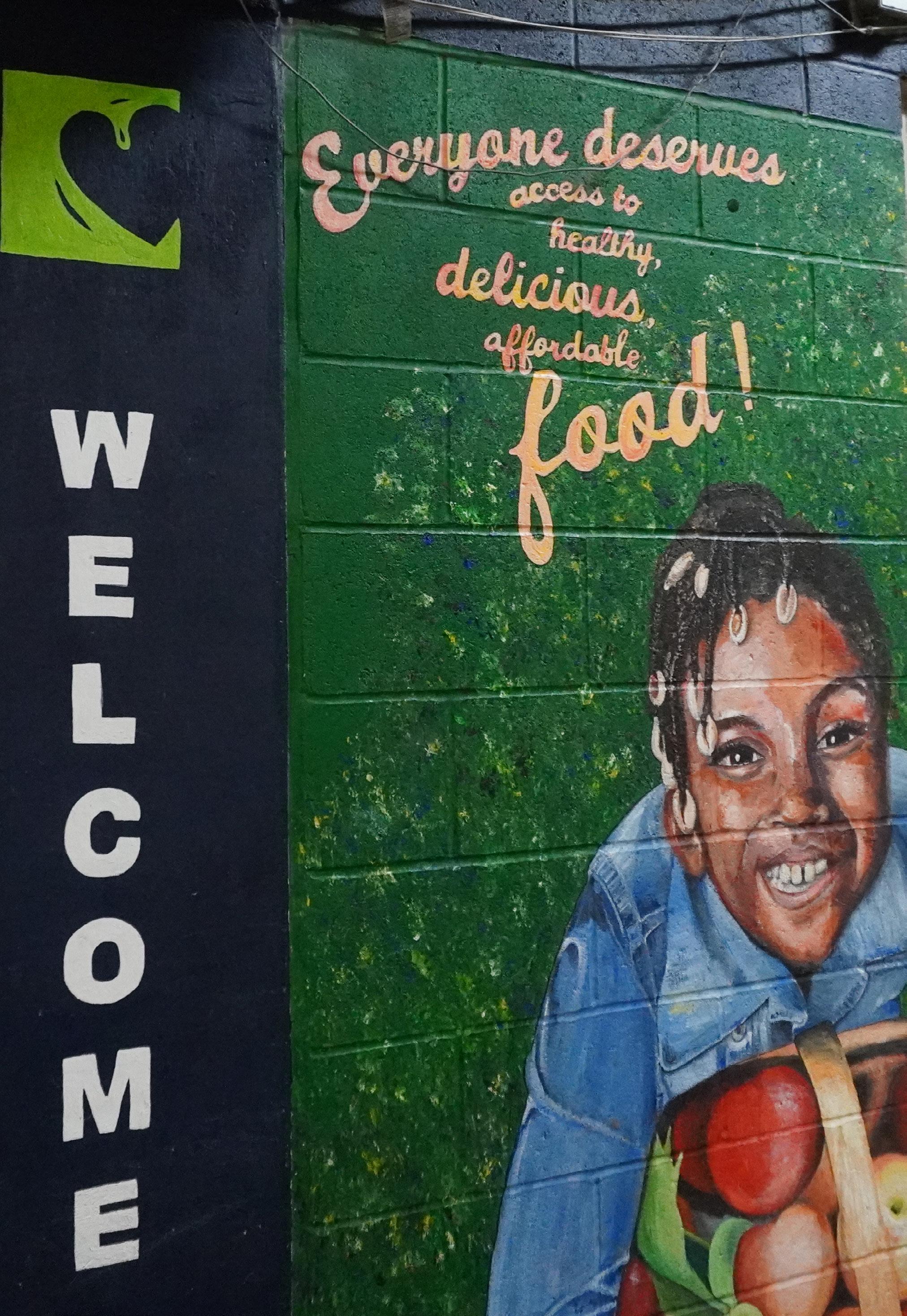
Trazy Collins, the director of food and clothing programs at Bread for the City, said the organization has seen the demand for food aid increase this year. The organization distributed 133,000 meals at one of the organization’s centers in September, compared to about 90,000 meals in September 2024, according to Collins. And in July, the organization experienced a 150% increase in food demand, distributing over 100,000 meals that month.
“July is typically one of our quieter times,” said Collins. “We were just really shocked.”
This food insecurity has only been magnified by the government shutdown.
“These are new folks coming in for the first time saying, ‘I need to provide food for my family, and I can’t right now because I’ve been furloughed,’ or ‘I’m a contractor and not receiving pay,’ and so we expect for those numbers to continue to increase,” Collins said.
Amid the threats to SNAP, Bread for the City has tried to mitigate the increased need by buying more food, increasing staff capacity, and recruiting additional volunteers, according to Collins. In mid-October, Bread for the City saw an additional 145 families who had not used the organization’s services prior to the federal shutdown, Collins said.
Services organizations like Bread for the City provide are crucial for some. Alice Ratajczak, a Maryland resident who has been experiencing homelessness since January 2024 and who receives SNAP benefits, said she mainly receives her meals from shelters.
Ratajczak said that after her husband passed away, she was overwhelmed with bills and unable to afford the condominium she and her husband had lived in. Forced to move out, she has been living between shelters and outside since.
Ratajczak recently began staying overnight at Shepherd’s Table, a nonprofit organization providing food and support services in Maryland. The organization offers a daily meals program, with three meals every weekday.
Jan Weetjens, the executive director of Shepherd’s Table, said in the days before the government shutdown ended, he saw an increase in people visiting Shepherd’s Table for meals.
“I was doing the breakfast service, and there were many people I hadn’t seen before,” Weetjens said.
In Maryland and Virginia, SNAP recipients received partial benefits in early November through state funds, followed by the rest of the payments later in the month, once the government reopened. 11.2% of Maryland’s population receives SNAP benefits, while 9.6% of Virginia’s does.
In October, before SNAP benefits resumed, Weetjens said he was worried Shepherd’s Table would not be able to handle the influx of different communities looking for food, especially since the organization doesn’t normally focus on serving families.
“My concern is that at this moment, the need from among that population might increase, and we might not be equipped here to deal with that,” Weetjens said.
During the shutdown, SNAP benefits experienced a flurry of problems, from legal issues to the threat of complete defunding. The U.S. Department of Agriculture (USDA) released a plan on Sept. 30 outlining how programs would be affected if Congress fails to pass a funding bill. On Oct. 1, the government shut down.
USDA paid SNAP benefits through October, but on Oct. 24, announced the department would not pay November benefits despite having a contingency fund, reversing guidance outlined in the Sept. 30 document. Democratic states, including D.C., filed a lawsuit on Oct. 28 against the USDA in federal court in Massachusetts, demanding USDA pay November benefits.

On Oct. 30, several nonprofits, religious groups, and municipal governments brought forth a similar suit in Rhode Island.
Two federal judges in each case issued near-simultaneous rulings on Oct. 31. In the Rhode Island case, Judge John J. McConnell Jr. ordered USDA to continue funding SNAP benefits in November, while in the Massachusetts case, Judge Indira Talwani ruled that withholding November benefits was illegal, but gave the administration until Nov. 3 to respond.
In response, on Nov. 3, USDA said it would pay about half of the benefits, though Trump announced later he planned to stop SNAP payments altogether during the shutdown.
On Nov. 6, Judge McConnell ordered the Trump administration to pay full November benefits by the next day. USDA immediately appealed the decision, but issued guidance to states greenlighting full November benefits.
The Supreme Court granted an emergency stay of the lower court order to the Trump administration on Nov. 7, temporarily allowing it to continue with partial payments rather than full while the case underwent the appeals process. USDA sent states letters the next day demanding they “immediately undo” any moves to provide full SNAP benefits.
Then, after the government reopened, USDA issued guidance on Nov. 13 instructing states to issue full SNAP benefits for November.
The government shutdown was not the only issue SNAP recipients are facing. Trump signed the One Big Beautiful Bill Act into law in July, changing both SNAP funding and how individuals qualify for benefits. To partially offset the cost of trillions of dollars in tax cuts, the legislation will reduce SNAP funding by around $186 billion over 10 years, the largest cut in the program’s history.
Fewer people may qualify for benefits under stricter rules regarding working hours. Under the previous requirements, adults without disabilities or dependents could receive SNAP benefits for just three months out of every three years unless they verified they were working at least 80 hours per month or qualified for an exemption. Exemptions used to include people experiencing homelessness, veterans, and those younger than 24, but the bill removed those, imposing work requirements on more people.
“We’re looking at anywhere between 20 and 30,000 residents that are going to have to follow these 80 hours per month work requirements for the first time,” Jones said about D.C. residents facing changes to SNAP.
Even if people may fit the new requirements or get a job to stay on benefits, they still have to worry about filling out “onerous” paperwork in applying for SNAP, which Weetjens said is an extra burden.
“It would be kind of a double-edged sword,” Weetjens said. “On the one hand, more stress for people to comply with those requirements, and then less likelihood that they will actually be able to enhance more chances to no longer qualify.”
Ratajczak said she is lucky to have some money for herself that she can use on food, but with the changes to SNAP, she is worried about the future.
“It will affect me, because I’m going to have to take it out of my monthly income, and I’ve got so many responsibilities and bills that it is going to cause a problem,” Ratajczak said.
While Jones suspects the changes will lead to an increase in food insecurity, that might be hard to confirm — days before the government shutdown, the USDA announced it would stop producing an annual household food insecurity report, calling it redundant, costly, and a proponent of fear mongering.
Jones said she has relied on the USDA report to understand how many households are experiencing food insecurity, but without it, Americans will no longer have a picture of what food insecurity may look like at a given time.
“The USDA report is not just informational for D.C.,” Jones said. “What is the regional impact? What does it look like for D.C., Maryland, Virginia, as well as the rest of the Mid Atlantic region?”
She worries lawmakers do not understand what food insecurity is like and how SNAP benefits are a helping hand for many. She said there is a negative social stigma toward those who receive SNAP benefits, and many false assumptions that people are committing fraud to receive benefits.
“I’m not confident that at the federal level, there is a deep understanding of what this looks like on the ground,” Jones said. “What a food-insecure family goes through when they are applying for SNAP or they’re utilizing with, there’s not an understanding of what this looks like.”
DANIEL KINGERY
There are hundreds, if not tens of thousands, of similar videos on social media, the same as those of me and the clearing of an “encampment,” which had set up near me. But that encampment had relocated the morning of Oct. 2, the day scheduled for the removal. By the city’s definition, being on wheels, and never more than 150 feet from my property (day or night), I was not an encampment.
All those other videos? Lots of people are taking pictures and videos. Lots of people are screaming and cussing the police, ICE, National Guard, or other government personnel, who are just doing what they were told.
And then? And then, nothing happens. And then, the government doubles down. And then, more people complain but still do nothing.
People ask me, “But what can I do? I am just one person.”
So I tell them. Go to your city, county, and state election offices in person. Request their recall election paperwork for every person in elected office who you can prove, by their actions, has violated the Constitution of the United States of America. This requires that you actually know the Constitution.
To complete that paperwork, you must identify the government officer you want to replace, as well as provide a short summary of why they need to be replaced. You also must identify the person nominated to replace them. If you cannot think of any constitutionally literate people, I am volunteering. CleanHonestGovernment.com has my complete resume.
The most EFFECTIVE recall would be to remove and replace the entire presidential administration, with me selecting my vice president, one who can prove their constitutional literacy without relying on precedent to justify their position. All of this can be finalized with the swearing-in ceremony completed by Dec. 25.
More than 500 people who saw the Oct. 2 encampment clearing video of me on social media followed me. The assumption taken, with regard to the current 500 or so social media followers (among other who know me), is that they would not mind too much if this barefoot homeless man became president. With the mathematical concept of doubling this following every day for 30 days, assuming a perfect doubling every day (one today; two tomorrow; four the next day; etc), it could be over 500,000 by the end of those 30 days.
We both know the entire population of these united States of America[sic] is not that much, which is better. We also know the total number of registered voters is less than 200,000,000, which is even better.
My objective is to have a lot more concerned citizens register as voters. Then, to encourage the actual vote count to be in accordance with the terms of the Declaration’s clause, “consent of the governed;” in that more than 50% of the total number of registered voters must agree to the same candidate.
This does require people to be more than spectators and more than cheerleaders. This requires people to actively inform new people and get their consenting vote on the final ballot.
Here is the really interesting aspect: 60% to 70% of the total number of registered voters have already declared they are ready for me as a candidate. They have consistently withheld their consent from the “usual” lot of candidates for the office. These are the registered voters we wrongly accuse of not voting, simply because they never submitted a ballot to a polling station. By withholding their ballot, they didn’t even consent to the lesser of evils.
The only thing that will stop this from becoming our reality is whether you will help make it happen, as I cannot do it alone. I have shown you this plan is better than just possible. It is probable. We need to revive that united States American[sic] spirit of Can Do.... No matter the odds.
Daniel Kingery owns and runs CleanHonestGovernment.com.
Volunteers organize an annual pre-Christmas potluck at the Street Sense office for vendors and employees. Warm items such as gloves, socks, scarves, T-shirts, breeches, clothing, and more are laid out in a separate room. After the potluck, vendors choose items they need for free in this room. An anonymous sponsor gives each vendor $50. We are grateful for this philanthropic effort.
I’ve been participating in these pre-Christmas events since 2012. Street Sense currently has 114 active vendors who sell our newspaper. However, not all vendors attend the holiday feast each year. I propose organizing invitations and personally handing them out to each vendor and Street Sense employee. The invitations should include any perks and incentives. I hope this way we can gather at least 70-80 vendors around the holiday table. I also have one request for the sponsors. I love beef. Please add beef to our diet, cut it into small, thin slices or pieces, and then fry it in oil. This is part of a larger problem about not having beef available
in D.C. I have been living in Washington, D.C. since April 2012. Unfortunately, public cafes and cafeterias mainly serve hot meat dishes made from chicken, turkey, and pork.
I often have lunch and dinner at Whole Foods Market. Its hot meat dishes and meal packages are mostly chicken, turkey, and pork. I’d like to buy a beef meal package, but the cooks don’t prepare them.
I’ve asked the manager several times, “Why don’t you serve beef dishes? Is beef only served in the White House for President Donald Trump and Vice President J.D. Vance, and in the Senate for senators? Are ordinary Americans not allowed to eat beef?” The manager shrugged and didn’t give a definitive answer.
The cook said, “Whole Foods Market has a meat section. You can buy beef there.” I once bought some beef in that section. Currently, a pound of Herb Roast Beef and Pepper Roast Beef costs $19.99. That’s quite expensive. For comparison, one pound of boneless beef at Costco costs about $9.
Costco Wholesale is another favorite supermarket for many Americans, including me. The goods and groceries there are much cheaper than at other supermarkets. Costco sells beef, chicken, and fish. There’s a section where cooks prepare meal kits with chicken, turkey, and pork. I’d like to buy a beef combo, but the cooks don’t prepare them.
Those Americans who live in private homes and have the opportunity to prepare meat dishes freely can buy cheap meat and fish. Unemployed and homeless Americans, including myself, don’t have the opportunity to prepare meat dishes. This leads to discrimination based on wealth.
There’s a way to make all Americans equal: just let Costco cooks prepare beef and fish platters for sale. Then we, homeless and unemployed Americans, will be able to buy and eat prepared beef and fish.
Hot beef dishes are prepared at some other restaurants, such as Chipotle, Sarku Japan, Suki Hana Japan, or Charley’s Philly Steaks, but they are burnt. Cooks slice beef and chicken very finely. Cooks heat an electric hotplate and add a small amount of oil, which spreads over the surface. Cooks place small pieces of meat on the hotplate, flip them two or three times, and pretend to fry them. The edges become charred and black as coal. Customers often eat these pieces of meat with the burnt ends.
The cook scrapes the hotplate surface with a special scraper. This removes some, but not all, of the burnt small pieces remaining on the hotplate. This only partially cleans the hotplate. The chef then adds another portion of finely chopped meat and cooks again, flipping the dish over on the stove. And this procedure, dangerous to the customer’s health, is repeated...
It is known that burnt, blackened pieces of meat can eventually cause cancer. I would recommend health inspectors or staff at D.C. Health take samples at restaurants using this method. Let them conduct a thorough analysis of the burnt small pieces of meat in the laboratory. They should also carefully check the condition of the hot plate before and after frying the meat. Based on the conclusions of the inspection, I would prohibit preparing meat pieces on a hot plate. I would advise frying them in hot oil, either finely chopped or in larger slices or pieces.
There’s a cafe called Raby Thai Kitchen in the Westfield Wheaton shopping center. Its cooks slice the meat thinly into small pieces and fry it in oil. They also chop carrots, bell peppers, cucumbers, and tomatoes separately, then mix them together and fry them in oil. Nothing goes bad. I buy and eat beef at this cafe.
Shuhratjon Ahmadjonov is an artist/vendor with Street Sense Media.
You are invited to join us at
ommunities connect, eat, and have fun — nearly 100 cities show us how it is done! We are referring to The Longest Table. When people hear about it, they seem to naturally want to bring the idea to their community, which is exactly what is happening to us in Washington, D.C.! So far, 29 states and 13 countries from France to Sweden are joining in.
The Longest Table is a free community event that brings people together for a shared meal, conversation, and a chance to connect. While the intriguing idea is hard to imagine at first, this basic concept is bringing back the true meaning of community. It can be as simple as starting with a few people or an organization. A few seventh graders hosted a gathering of 300 students.
We first heard of the idea when Pastor Cody Bracy of Newspring Church shared at a Peace4Tarpon Community Forum how he was trying to come up with the right words to describe his vision to welcome people of all faiths to get together. As he said “the longest table” description aloud, he was inspired to do a little research and was excited to find he is not alone in his quest to invite the entire community, rich and poor, to join in.
Thinking back, I recall how Reverend Glenna Huber had D.C. gatherings that quickly ended with the onset of Covid. Ironically, the idea for The Longest Table started with a photo of people sitting at a campfire table after the pandemic. In 2022, Maryam Banikarim and Andy Lerner were further inspired by a photo of people in Egypt sharing a meal on a long street. Banikarim posted the photo on her Next Door app. They decided to try it and 500 neighbors showed up! Banikarim expressed, “The desire to be connected is really a human need and it has been unlocked.” To spread this incredibly positive experience, The Longest Table organization created a toolkit, providing a framework for people to meet, eat, and be together. Many cities coordinate food, talking points, and entertainment.
When ABC News Chief Correspondent Rebecca Jarvis enthusiastically reported on The Longest Table, she mentioned, “My favorite book as a kid was ‘Stone Soup’ and I really hope it catches on.” Rebecca is in luck! Stone Soup is a story where hungry people benefit as each person shares a small amount of their food to make a meal. The Poor People’s Campaign is excited to report to Washington, D.C. community members they are planning to host The Longest Table where they include Stone Soup on the menu. PPC will surely extend an invite to Rebecca to join them for a bowl of D.C.’s finest Stone Soup!
The Poor People’s Campaign organizes across the nation to represent the 140 million poor and low-income people in the United States from the homeless to the working poor. They look forward to hosting this outdoor venue where we can get a chance to get better acquainted. More on the Longest Table project being planned by Poor People’s Campaign will be posted on poorpeoplescampaign.org/committee/washington-dc/. To learn more on The Longest Table, you can check out longesttablecommunity.org/. For updates and more Road Trip Stories, you can check out youtube.com/@GuidedResults.
Angie Whitehurst is a community advocate and vendor/artist with Street Sense Media. Lisa Blackburn Ullven is a community success coach and best selling author of “Secrets to Sustainable Solutions – Tips from Business, Science, and Non-Profit Experts.”
DRAKE BRENSUL
During the time of the Garden, prison was called the Granulation of Bees, to recognize other animals must continue on earth with man. It afforded the Bees a right to move through the mobile cage, and the argument became clear that the child causing the plate to switch pressure had a future in the conflict. The remaining structures tried erroneously to separate them from the process or normal movement that returning from war would not naturalize. Thus it stung.
The House of Stead built a longer range to keep the Court of Criminals in answer to the political decisions. Answering “War” to his Justice outside at forcing an imbalance to the Court of Criminals that set confinement to hold without rhetoric.
The Granulation of Bees learned to live anything through a cage and a compound. While prison, then court, then war would slow down the inertia itself; it is for justice in the length of politics. The Diplomatic Standard died that day. For all of Justice pivoted in its own house. War Raged. Politics had to answer to the state that was not a state. The implication is a way into the country. The circulation of time returned to business. The man with the sand in his eyes and the wind in his hair is able to walk in another’s land. Now the only thing weird is that he needed court. Education systems were housed with inheritance that continued the process of transferring information, financing discovery and dispensing conversation. However at the prove of the unknown individual moving in a street that was not their own. It could be business. It could be politics. It’s doubtful he found the House of Stead when the force of educations holds his freedom. In its hope was no violence In its achievement was no reality. And soon only that which learned remained.
The plates began to click again to sow time in a beautiful rhythm and sometimes in a beautiful dance. Seething below the surface was the Child of Slaughter for he had yet fallen into the House of Stead. For in its release the Child of Slaughter came out to be found and he rode a horse called “Politics.” “War” was on foot now, and it was treacherous. The snake who has been named Education could get out from time to time. And sometimes War would find him. In the needle of a hay stack, the Child of Slaughter was not allowed to right him.
For many years the child has been coming out of confinement. The organizational trait would compartmentalize the priority of consuming to its length in relationships including their position so the child would remain expendable. However for now the problem was they were only employable to politics. Letting it go by to presume the decision is. Shame would bring it down to its death in prison, and exalt would bring its rise to politics. So on one hand of the baton was leverage, and on the other hand a vote.
It is true the earth has grown and lost its groan to the sounds of the wind. However now it does not leave. Under many shady trees the men of education fail each time they wonder from the truth. Inside, the House of Stead grew his mind, his temple, and only war remained. In the land of the land there are many lands. And a city must not remain alone. They shared their food to forever condemn the men from prison who lost their wives to save their child.
The man dies before the child is born. The woman dies before the child is born. This is the force that causes the plate to click. Justice cannot hold the time in the cost of life is not held to the knowing of the child, sending time to be held in confinement. When the Child of Slaughter puts his horse “Politics” up in the stall it overruled Justice. For Religion could not secure his eat. For “He” had to eat from land that was not his.
Now that childhood welfare had formed its institution and youth was paying the rate of ignorance to go over to the generation of war. The casualty of weapons equanimity takes the food that would be in Religion and supplies it to the time of prison confinement so the child cannot get out of ignorance through education. And thus the Child of Slaughter moves his war horse.
The House of Stead found itself in disarray. While the man called “War” returned. At the state of deprivation education had been left desolate to ban the Diplomatic Standard. “War” and the House of Stead formed an enterprise for business to get out of the loss after work. Those had disappeared in prison.. The Child of Slaughter had not cried for many years and he did so now. At Education there was no circulation of money, it had lost its ability. So the child rose, and politics became the House of Money. Some how the clicking of plates could be heard in time an no money could be heard in rhyme.
Most of War had dusted off their boots and were at home. With Education being the greatest mythical suffering to humanity, for its track was granted at who could win; due to the vacancy of the Diplomatic Standard. In the leaves that came from autumn Religion let it flow to the ground to Education to pay for Weapons Equanimity. The Diplomatic Standard must come from bondage this time, so politics will answer to the court that generates it. And the prison mechanized agreement goes to war under its advantage of accounting. For this is the House of Money.
The power to flourish left Business to stand under the sun. The Police was formed by “War” through a guise of customs and missionaries that were sent to employ a Diplomatic Standard. While money and education would be free to flow under, which it would finance prison, it was only the child of ignorance stolen from them. For the House of Money had no war. The child still caused the plates to click but he was alive and in his mobile prison. For in a land of many cities that was the pain to rage the outcome of business the House of Money would not buy.
It is true that the House of Money had no war, and the rejuvenation of clicking plates lead to technology to find the problem of who had lost his sister. Education shriveled in its vine of secrecy, and I was lost in the vapor. Religion could not be found for there was no return home if there was no war to ensure the mechanized agreements. And under the burden we gave to the beasts the pressure to form in separation continued the scattering of the child who could slaughter. They were all over the world. And the children of war scattered all over the world. For they could not be found.
While its true the House of Stead and the House of Money fought for many years, there were many Houses from the children of institutions. The horse called “Politics” still tried to down the room of Justice. Religion would toil in its years to finance Education. And the clicking of plates would hum the world for he who did not die. “War” could not be found. And the Fathom laid his stay in business.
The day came, and they called for me, O Brother. There was no difference between us, except I was just. The child was in the caixa. Rentless. my things were stolen.. The man called “War” had kept the weapon pointed away from him and could not kill what he could not see. The Diplomatic Standard has failed in vacancy because lateral power is run over by the hedge money where the region courts the mechanized agreements. The absence of vacancy in death turns the events, it swooshes in the fabric of time the way a muscle tightens to water, deceiving the path so extinction stems width to consume, greed to land, and a never evolves.
Drake Brensul is an artist/vendor with Street Sense Media.
CRAIG THOMPSON Artist/Vendor
The Owl and the Pussycat went to sea
In a beautiful pea green boat
Do remember what our Lord said
About the sheep and the goats?
Hurricanes, hurricanes, fires, floods, and maybe a typhoon
Doesn't it just want to make you howl at the moon?
Mother Nature, Mother Earth being murdered by the few
With the money at the top, their addresses we knew
Do your best, do your part, recycle, reuse, donate
We'll have to do something real fast before it's too late
And never lose faith in Father God up above
And love

AMIA WALKER
Artist/Vendor
My favorite meal to eat was a steak with baked potatoes and spinach salad. In the last two years, I’ve been a vegetarian, but I eat a moderate amount of seafood. This diet takes a lot of focus and determination.
STARCHILD BLK
Artist/Vendor

A class, a swap, a beat, a thread For stories that were never said. For artists who create to live, And muses with the most to give. We don’t compete — we amplify, We lift each other, you and I. No trend, no gate, just open doors, A freedom space that’s truly yours.
Across the map, we plant the seed, For art, for joy, for every need.
From Indy’s soul to Brooklyn’s fire — We gather here to dream, inspire.
QUEENIE FEATHERSTONE
Artist/Vendor

Depression, oppression, and suppression are always really bad reasons, and you really get no good rest when you become depressed, oppressed, and suppressed.
Not in control of yourself, losing your mind and freedom because of someone else’s wicked, harsh, and simply foolish reason with their evil, poor judgment, and yes, because they want to hate. Please, for yourself, it won’t be too late for you to get help that’s really needed. So I can stop being depressed, oppressed, and even suppressed by you.
CYNTHIA HERRION Artist/Vendor
For we are truly energy beings in our spirit, mind, and body. All beings use energy always. Also, vibration and frequency use energy always. The five senses we use are sight, taste, hearing, smell, and touch, and the world is experienced through these. And the sixth sense can bring so much.
Open up to the energy all around, wherever we go, and everyone can gain this sixth sense. As we personally develop and grow, we are vibration beings, always tuned to the frequency of what we are emitting. It creates our reality. With our focused attention, we can turn and set the dial. Even the things we do not want, thinking of them stacks the pile. The law of attraction works like magic; universally and eternally, it never stops. Whatever we think and believe, its presence drops into our lives. In truth, we are all connected by the field of energy. Suppressed truths of the ages now shine for all to see. Energy healing, quantum physics; many paths now show the light. And science finally acknowledges consciousness affects energy, alright.
Energy, frequency, and vibration are the secrets of the universe; even the keys to how you feel. Happy or sad, better or worse, peace and harmony. You will gradually move beyond the laws of karma into a state of grace. A brand new Earth will be free from sin, evil, sickness, suffering, and death. It will be an Earth as God originally intended it to be, prior to the curse of sin. It will be Eden restored. On the new Earth, we will continue to work, learn, grow, develop, and accomplish things. Since there were animals in Eden, there may very well be animals on the new Earth as well.
JEANETTE RICHARDSON Artist/Vendor
Hello! How are you? I hope you all are fine.
I want to thank the partners in this wonderful newspaper. I am out there being a vendor as a way to survive. It helps me to show love for my Father of Glory, who gives me the strength to do what I do, when I do. Thanks be to God, who is in charge of my life and my daily duties.
I have lots of other people and situations trying to hack into my life. I’m working hard to block them out. Sometimes they hurt me when I’m going out of my comfort zone, but I won’t stop doing that. I’ll keep going out into the working world to make a source of income so I can eat and drink.
Here’s the biggest lesson I’ve learned as a Street Sense vendor: self-reliance is best because you don’t have to wait for anyone else.
JENNIFER MCLAUGHLIN Artist/Vendor

The holiday season is next month, and due to the government shutdown, SNAP benefits may be delayed in November. This is terrible for Americans who can’t provide an essential meal for their families. Congress needs to come up with a solution soon so Americans can enjoy their holiday.
WILLIAM SHUFORD Artist/Vendor

I don’t see nothing changing with the takeover of the D.C. police. Only scare tactics to put fear into the citizens of this city. To me, it’s bullying with a badge, with no respect for human rights. I’ve seen mothers holding their children close out of fear that the ones jumping out in masks will do them harm.
The clearing of encampments without proper resources is ridiculous. It’s done with disregard for people’s mental state. We are being treated like we’re in a third-world country right now. They are literally trying to take away our rights as U.S. and D.C. citizens, and they’re treating us like prisoners of war.
JEFFREY CARTER
Artist/Vendor
May peace and blessings be upon you, my brothers and sisters. The hour is near. Our love and integrity are questioned and tested by society and the environment we are in. We are being tested on our moral character due to the lack of resources in the economy. It’s a dark time when our U.S. president has no choice but to cut programs and jobs. America needs to be productive again.
So I say to you, my brothers and sisters, we will have to pull ourselves up by our own bootstraps because our country is not producing enough products, goods, and services to pay us. Instead, we buy from China, which means we are in China’s pockets.
My readers of this newspaper, Trump is cutting funding to education, something don’t sound right. In my opinion, if we want to make money in our nation, then why would he be cutting funding from education? My dear readers, that doesn’t make sense to me at all, because when we, as a nation, learn through education, we are able to be more productive. So here I ask you, as a country, why do we cut education when we need knowledge to produce goods, services, and products?
So I am saying to you Americans, again, this doesn’t make sense at all. I plainly say that education informs us to do anything or to produce anything, period. I say that cutting education doesn’t make sense to me, nor to my brothers and sisters.
JENKINS DALTON
Artist/Vendor
What do you do during your daily schedule? You may be missing out on fun. I spend time in my store trying to make ends meet. Where do you think the president spends his day? At Capitol Hill, or at the White House? Maybe down there with stars in Hollywood, California.
As for me, I sit up in the morning, go to work for eight hours, and come back at night. I get only two days off. Do you think I am retired? You can if you want. Work smarter, not harder.
FREDERIC JOHN Artist/Vendor
My, my, how the time seems but sugary dreams. A solicitous neighbor who shut down his private art studio and put his tidy law practice on hold summoned me on a bright September morn, crisp and cool. I had beefed over coffee with Joey, but I had hobbled back from Gotham, just having lost my walk-up lease. The acting biz had gone south.
My last decent pair of oxfords had collapsed underneath my walrus-like paws, and my penny loafers were spent. Joey was a man of means; the art, writing, and music of mine that Joey had enjoyed since he’d come up to D.C. working with Jimmy Carter endeared him tenaciously.
So now, an offer of oxblood Oxford Brogues was something I could not refuse. But there was more. Serendipitously, Joey was working for the young upstart Democratic candidate for president, William Jefferson Clinton. There was a tiny opening for a potential temp hire, down in the bell tower of the old Sun Building.

As fate would have it, I was pushed forward from senior volunteer orientation (as in “no filching the presidential transition paperclips”) up to correspondence clerk. After the official ratification of Clinton as president, we campaign mules shifted to the errant Fox complex at Thomas Circle, the very next morning after some starry-eyed fools ran around laughing on election night, ringing bells, blowing whistles, tooting horns, and blowing triumphantly, “Where was George?” as in Bush Senior. Bright and early, we filed through the gloomy grey slate lobby of 1120 Vermont Ave. and spilled out of the elevator on the third floor, passing rocket scientists, physicians, physicists, and political wonks all fumbling to make coffee for future Clinton cabinet members.
At my workstation, I quickly whipped out my battleship grey “Teenies Party Tape” given to me by a petite but cute social mentor as a favor for a recent house sit I had performed in Glen Echo (where I’d binged on old Turner Classic movies, most notably “It’s a Wonderful Life” traditional showing). And really. It was a wonderful life, having plumped down into “Vice President-Elect Gore’s” plush recliner armchair in the mock-up oval office of transition HQ. I had run my friend’s party cassette through my dictaphone tape player, nuzzled up close to 102.3 FM Majic, D.C.’s most happening gospel and soul station of the moment. Away with the giggles of Teenie’s water polo party. Onward with “When You’ve Been Blessed (Feels like Heaven),” Patti LaBelle at her most full-throated in spirit. Not to mention Michael Jackson’s “Wanna Be Startin’ Somethin’,” Sam Cooke’s “A Change Is Gonna Come,” “Fly Robin Fly,” and “His Eye Is On The Sparrow” by Rev Jonathan Greer. Such is the fuel that powered me along in the early days of Bubba’s transition.
Well, well, well, Majic 102.3 was a true time capsule of collective good feelings, especially up in the frenetic, fluorescent-lit transition trainee’s office. And I established the “laws of the land” as in “Secretary Christopher insists no filching of presidential stationery or paperclips.” Of course, then I could hunker down with my brittle earbuds (tailormade in Singapore) and coast into my own private little Idaho with Michael Jackson, of course, and his haunting refrain, “Do you remember, when we fell in love? We were young and innocent then.”
After responding to a handful of notes on pastel pink and aquamarine crepe cardstock urging Hillary “Clinton” the new “number one lady of the United States” to accept the gift of a breeding milk-cow from Bangladeshi farmers, I was ready to kick back and float effortlessly into the imaginary ethers of Vermont Avenue, grooving blissfully to the ecstatic wailing of the jazz master of electric fender rhodes, Sir George Duke, coaxing his sacred scatting “No Rhyme, No Reason” immediately after “Eye of the Tiger” by Survivor.
Just in time to field and interruptive threat call on line two, “your so-called president-elect is a godless infidel, we’re gonna get him, mark my words.” One index finger on the red button, buster, and the Secret Service is on the case.
JAMES LYLES III
Artist/Vendor
If I want to live to be 100 years old, and by God I do, I need to continue eating the healthy diet I recently started. That’s apples and oranges, nuts, whole grains, fish, greens, and cruciferous and root vegetables. Many reputable studies show that fish are high in omega-3 and similarly healthy oils. Fish clear up your arteries to improve blood flow. Apples clean out your colon and your intestines. Nuts and grains are full of powerful proteins. Green tea (which I forgot to mention earlier) helps build your immune system through antioxidants and, like oranges, delivers vitamins A, C, and D to help fight off colds and viruses.
So, centenarian, here I come!
STEVEN MILLER
Artist/Vendor
Brown cream tan board fizzle pink white parachute rat miniature ice mix taste bowl spoon desert churn piano key wound sewn pterodactyl stare
The ray of fire of creation, passionate and powerful, sparks building that gives rise to the universe and all life within it. It is the initial spark that turns into the fire of existences, narratives across different cultures and beliefs. The same ray of fire of creation ignites the creative energy individuals experience in their connections to a higher universal source of inspiration. A divine cosmic force at the heart of the spiritual. The ray of creation can be a force that burns away old forms, enabling new life and beauty to emerge. A guiding light beam of this creative energy. A light unto the darkness, guiding and sustaining the universe and all beings within it.
JAMES DAVIS Artist/Vendor

Once upon a time, when we were at 1012 14th St. NW in an office building, we had shared space with the National Coalition for the Homeless (NCH). We also had paper sales at the Church of the Pilgrim, where NCH relocated on Saturdays. We also had Roberta Haber, one of our irreplaceable volunteers, do paper sales on the weekend.
The Street Sense office, then, had moved to 13th and G Street, our present location. We had just one office, which Darick Brown now occupies. We expanded to include an editorial office, a vendor manager’s office, an executive directors’ office, and, at the behest of myself and members of the Vendor Advisory Team, which we had formed (comprising original vendors), a vendors’ lounge with tabletop computers for our vendors to use throughout the day.
Across 1. Epitome of thinness
5. Foxx of old TV’s “Sanford and Son”
9. Fighting force
14. Utah ski resort whose name is the Spanish word for high
15. Prefix with business or cultural
16. Stain shielder with strings
17. Divider between adjoining office cubicles
19. Says : speaketh :: said : ____
20. Check for fit, appearance - or both (2 wds.) (3,2)
21. Roman slave who led an uprising against Roman legions
23. Word with bum or bunny
25. Beach souvenir
26. Painful dental affliction
30. “Good____” (Scorsese’s 1990 mob masterpiece)
34. “Farewell, my friend” occasion
37. Kind of jerk
38. “Hawaii Five-0” actor Daniel ___ Kim
39. Aussie lassies
42. Word before can, Man or pan
43. Arm bone
45. Erected embankments for military defensive purposes
47. Where a poodle can get paw-dicures? (2 wds.) (3,3)
50. All kidding aside (literally!!)
51. It’s a no-no
54. Big auto racing sponsor (abbr./initialism)
55. The so-called “Little Corporal” of French history
59. First name in TV talk
63. Early Hollywood actor Murphy who was WWII’s most highly-decorated American
64. Kind of vocal harmony associated with Peter, Paul & Mary, Nirvana and the Police (5-4) 66. Bart, Belle, Brenda, Kenneth or Ringo
67. Fashion lines?
68. Explorer called “the Red”
69. “Land ___!”
70. Like some tests or testimony
71. Singer Graham who trio-ed up with fellow Rock and Roll Hall of Famers David and Stephen Down
1. Fully absorbed
2. Banned apple spray
3. Humble (or pseudo-humble) reply to “Great job!” (2 wds.) (1,3)
4. An 1887 French play on which a 1990 Puccini opera is based (2 wds.) (2,5)
5. Double-crosser
6. Auspices (var.)
7. Ophthalmologist’s prescription
8. Jazz singer Washington or singer, actress and TV personality Shore
9. What a moat protects
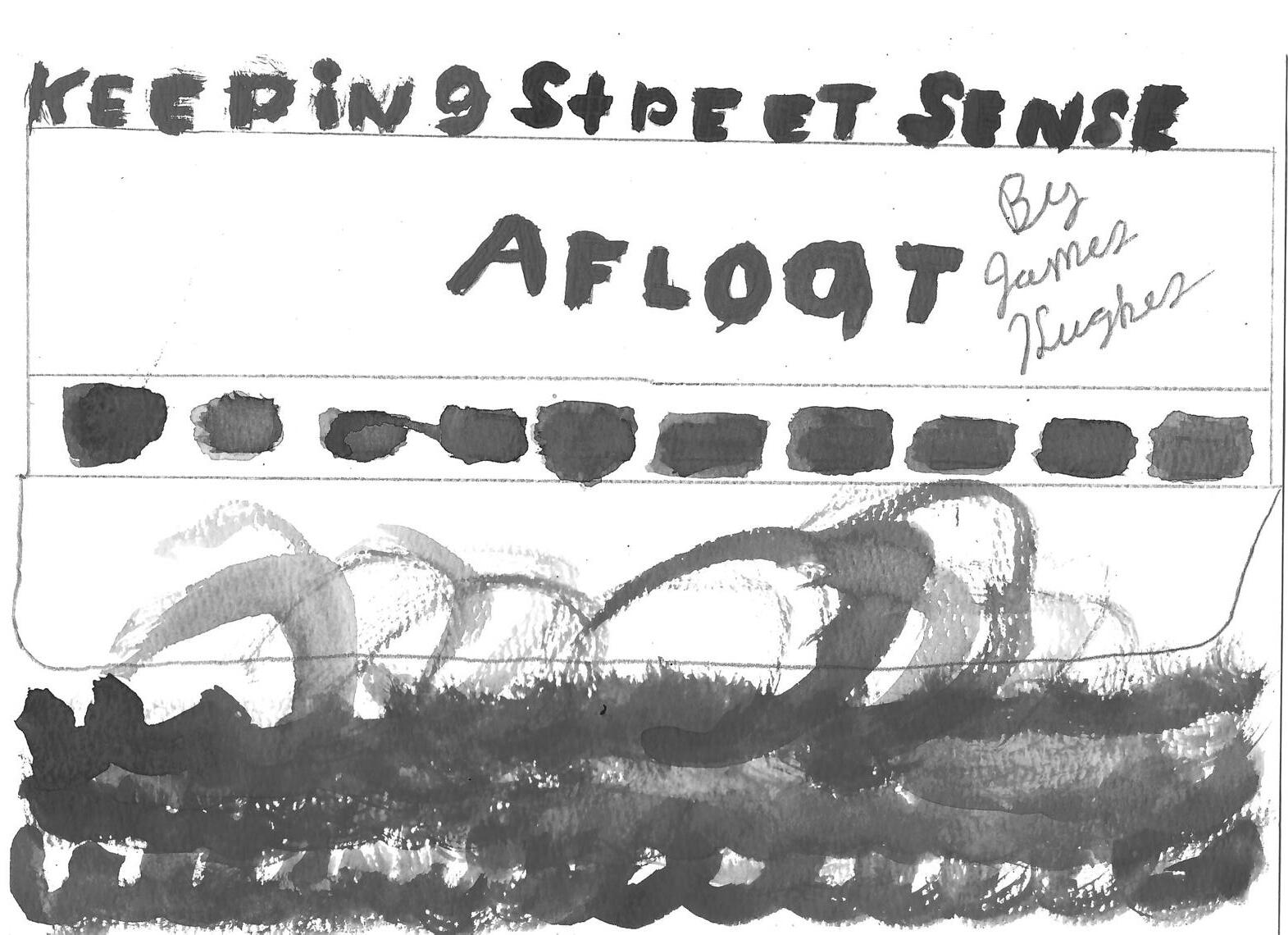
10. Disgusts
11. Blood count, familiarly?
12. Smart-TV device whose name means “six” in Japanese
13. Chemical endings
18. Printing press gizmos, or tattoo artists, slangily (SINKER)
22. Gridiron official, for short
24. Connecting strip of land (abbr.)
26. Total, as numbers (2 wds.) (3,2)
27. Memphis street of blues fame
28. All in
29. Litigant designated as the plaintiff
31. Kind of ticket
32. Francois’s French farewell
33. White, black or tan contents of many Zen desktop gardens
35. Coastline feature (Sp.)
36. “Desire Under the ___”
40. “Planet of the ___”
41. French writer/philosopher/Existentialist Jean-Paul who wrote “No Exit”
44. Sister-brother dance duo Fred and Adele of Vaudeville and Old Hollywood
46. Eagerly unwrap (2 wds.) (3,4)
48. “Real Change News” and the “Seattle Times,” familiarly
49. Lawyers org. (abbr./init.)
52. Garden products brand, or prefix with -pedic
53. None of the above
55. Low in pitch
56. “I’m ___ here!”
57. Bismarck is its cap. (abbr.)
58. Late humor columnist Bombeck
60. “Nobody doesn’t like ___ Lee”
61. Apt name for a florist or optometrist?
62. ____-a-Sketch (classic drawing toy)
65. Night school subj. for immigrants
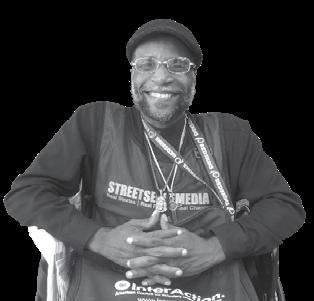
Vivienda/alojamiento
Management Coordinación de Servicios
Academy of Hope Public Charter School
202-269-6623 // 2315 18th Pl. NE
202-373-0246 // 421 Alabama Ave. SE aohdc.org
Bread for the City 1525 7th St., NW // 202-265-2400 1700 Marion Barry Ave., SE // 202-561-8587 breadforthecity.org
Calvary Women’s Services // 202-678-2341 1217 Marion Barry Ave., SE calvaryservices.org
Catholic Charities // 202-772-4300 catholiccharitiesdc.org/gethelp
Central Union Mission // 202-745-7118 65 Massachusetts Ave., NW missiondc.org
Charlie’s Place // 202-929-0100 1830 Connecticut Ave., NW charliesplacedc.org
Christ House // 202-328-1100 1717 Columbia Rd., NW christhouse.org
Church of the Pilgrims // 202-387-6612 2201 P St., NW (1-1:30 on Sundays only) churchofthepilgrims.org/outreach
Community Family Life Services 202-347-0511 // 305 E St., NW cflsdc.org
Community of Hope // 202-232-7356 4 Atlantic St., NW communityofhopedc.org
Covenant House Washington 202-610-9600 // 2001 Mississippi Ave., SE covenanthousedc.org
D.C. Coalition for the Homeless 202-347-8870 // 1234 Massachusetts Ave., NW dccfh.org
Father McKenna Center // 202-842-1112 19 North Capitol St., NW fathermckennacenter.org
Food and Friends // 202-269-2277
(home delivery for those suffering from HIV, cancer, etc) 219 Riggs Rd., NE foodandfriends.org
Foundry Methodist Church // 202-332-4010 1500 16th St., NW foundryumc.org/idministry
Identification services
Friendship Place // 202-364-1419 4713 Wisconsin Ave., NW friendshipplace.org
Georgetown Ministry Center // 202-338-8301 1041 Wisconsin Ave., NW georgetownministrycenter.org
Jobs Have Priority // 202-544-9096 1526 Pennslyvania Ave., SE jobshavepriority.org
Loaves & Fishes // 202-232-0900 1525 Newton St., NW loavesandfishesdc.org
Martha’s Table // 202-328-6608 marthastable.org 2375 Elvans Rd, SE
2204 Martin Luther King Ave. SE
Miriam’s Kitchen // 202-452-8926 2401 Virginia Ave., NW miriamskitchen.org
My Sister’s Place // 202-529-5991 (24-hr hotline) mysistersplacedc.org
N Street Village // 202-939-2076 1333 N St., NW nstreetvillage.org
New York Avenue Shelter // 202-832-2359 1355-57 New York Ave., NE
Patricia Handy Place for Women 202-733-5378 // 810 5th St., NW
Samaritan Inns // 202-667-8831 2523 14th St., NW samaritaninns.org
Samaritan Ministry 202-722-2280 // 1516 Hamilton St., NW 202-889-7702 // 1345 U St., SE samaritanministry.org
Sasha Bruce Youthwork // 202-675-9340 741 8th St., SE sashabruce.org
So Others Might Eat (SOME) // 202-797-8806 71 O St., NW some.org
St. Luke’s Mission Center // 202-363-4900 3655 Calvert St., NW stlukesmissioncenter.org
Thrive DC // 202-737-9311 1525 Newton St., NW thrivedc.org
Unity Health Care unityhealthcare.org - Healthcare for the Homeless Health Center: 202-508-0500 - Community Health Centers: 202-469-4699
1500 Galen Street SE, 1251-B Saratoga Ave NE, 1660 Columbia Road NW, 4414 Benning Road NE, 3924 Minnesota Avenue NE, 765 Kenilworth Terrace NE, 850 Delaware Ave., SW, 3240 Stanton Road SE, 3020 14th Street NW, 425 2nd Street NW, 4713 Wisconsin Avenue NW, 2100 New York Avenue NE, 1333 N Street NW, 1355 New York Avenue NE, 1151 Bladensburg Rd., NE, 4515 Edson Pl., NE
Washington Legal Clinic for the Homeless 1200 U St., NW // 202-328-5500 legalclinic.org
The Welcome Table // 202-347-2635 1317 G St., NW. epiphanydc.org/thewelcometable
Whitman-Walker Health 1525 14th St., NW // 202-745-7000 1201 Sycamore Dr., SE whitman-walker.org
Woodley House // 202-830-3508 2711 Connecticut Ave., NW
For further information and listings, visit our online service guide at StreetSenseMedia.org/service-guide
Suite attendant
Aramark // Washington D.C.
Part-time
Suite attendants are responsible for taking guest orders and serving food and beverage. Suite attendants provide a premium guest service experience by addressing and/or resolving any concerns or special requests made by the guests in the suite(s).
Required: Must be able to obtain a food safety certification. Must be able to obtain all Aramark and state/local required alcohol service certifications.
Apply: tinyurl.com/DCSuiteAramark
Guest advocate
Target // D.C.
Part-time
A typical day will most likely include the following responsibilities: greet and service guests; work to ensure sales floor is full, zoned and in stock; push and stock product to sales floor; execute adjacency changes, transitions, revisions and sales plans; conduct weekly price change workload and ensure regular and promotional signing is set accurately; complete scans and system audit functions.
Required: Must be able to lift and/or move up to 50 pounds
Apply: tinyurl.com/TargetDCSeasonal2025
Housekeeper room care
Concord Hospitality // D.C.
Full-time/ Part-time
Responsibilities include but are not limited to: cleaning and servicing guest rooms; following procedures and hotel standards; keeping a linen cart that is neat, well stocked and organized; reporting any areas within guest rooms that need attention.
Required: N/A
Apply: tinyurl.com/HousekeeperHotelDC
EVELYN NNAM Artist/Vendor


Thank you, Lord, for all you give. For the strength to work, for the love to live. For every sunset that covers the skies. For our faith that lifts our hearts and eyes. For peace of mind when troubles appear. For every friend who brings us near. For every blessing, known and unknown. We thank you, Lord, for all you’ve shown. For all the laughs shared and tears you dried. For grace that walks close by our side. For giving us chances and mercies new. For every way you see us through. For those quiet moments, still and sweet. For restful nights and gentle sleep. For hands that heal and words that mend. For the warm love that has no start or end. For trials that teach us how to grow. For all the ways your goodness flows. We come together to show our gratitude. For every breath we take each day. For all the movements we make. We lift our hearts in thanks and pray. For patience learned through waiting long. For voices raised in grateful songs. For children’s laughter, so pure and bright. For elders’ counsel, burning light. For strangers’ kindness on our way. For the courage to face each day. For the broken things you make complete. For the bitter turned to something sweet. For hope that rises like the dawn. For strength to carry, to push, and to press on. For seasons changing, year by year. For signs of your presence, ever so near. For doors you close and doors you open wide. For your unfailing truth, our master guide. For answered prayers and those still heard. For comfort found within your word. With humble souls and grateful praise, we honor you through all our days. For the past, present, and the future too. Jesus, every good thing comes from you. Let’s enjoy this Thanksgiving, eat so much grub, and be thankful for everything! Happy Thanksgiving!
PATRICIA DONALDSON
Artist/Vendor
Happy Thanksgiving to all. What I love about Thanksgiving is that it’s purely about getting together with friends or family and enjoying food. It’s really for everybody, and it doesn’t matter where you’re from.
Thanksgiving is an act of acknowledging favor from God. Learning to be thankful is something you must do as a child of God. (Thanksgiving, you come into his gates.) Listen and be blessed as the man of God demystifies this mystery and empowers you to live above.

MARC GRIER Artist/Vendor
Today I wake up, and I am grateful I have hands, even though they don’t work great; I have feet, even though they’re hurting. Today I wake up and head out to my job. Even though it’s hard, I am grateful and thankful the Lord has given me one more day.
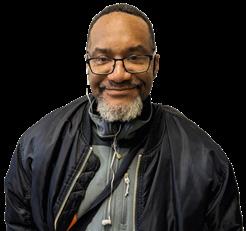
WARREN STEVENS
Artist/Vendor
TASHA SAVOY Artist/Vendor
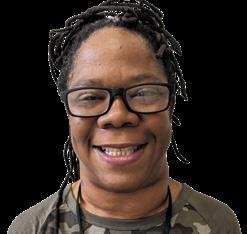
Have you ever sat and looked at your calendar, watch, diary, or even at your television, waiting and anticipating what’s going on or what might happen?
Anticipating is the world we are looking for. I most anticipated our family holidays. I would get so excited, my palms would sweat. I would even get headaches thinking about which holiday is here and which one is next. Will all my family be here? Where will it be? What time? I put Xs on my calendar, marking off the days to happiness and fulfillment. I loved my family’s presence on those days. That was worth all my anticipation and its accompaniments.

LATICIA
BROCK
Artist/Vendor
To all the dedicated angels who come out every year to help feed the homeless and keep each other near Gather in the streets with good food to eat just the thought of giving back So the unhoused residents won’t have to eat out of a sack we gather the tables and chairs we come together to eat Happy Thanksgiving feast in the streets

P.S. My dream Thanksgiving menu: lamb chops, fried turkey, oxtails, steak, crab legs, jerk turkey, curried chicken, mac and cheese, potato salad, greens, asparagus, broccoli casserole, yams, seafood stuffing, cakes, pies, especially sweet potato brownies, and assorted beverages.
This is what I want the homeless to eat for their Thanksgiving feast in the streets.


Fall is here, and the leaves are turning colors. We are enjoying this good weather in November. People I know with birthdays this month are my sister, on Nov. 20, my girlfriend’s brother on Nov. 21, and there’s the guy I used to work with as a summer aide, on Nov. 29. We used to work in the mailroom at the FAA building. My sister took a trip to Tennessee for three weeks with her dog, Jasper, to meet some friends for a competition. She should be back soon. I hope it was a beautiful trip. My sister and her future husband will drive or fly to Sarasota, Florida, for the Stevens’ family reunion. I hope I will hear from the relatives down there. I want to say hello.
Veterans Day is in November. People will be catching those good sales on furniture, clothes, and everything. Thanksgiving is around the corner. We hope we will get together and have a Thanksgiving with relatives and friends at a fine restaurant, which would be fun for the holidays. I will be using my phone to take pictures of everybody. I hope my son, his girlfriend, and his family will get together over the holidays. I hope the government will reopen soon so federal workers and the American people can return to work, so they can get paid and enjoy their families on Thanksgiving Day.
Remember to enjoy your turkey dinner with goodies while watching the football game. Happy Thanksgiving.
