






people moved into housing using case management services.
In 2013, we began offering case management services to help anyone, including vendors, with their needs — from obtaining identification cards and emergency cash for bills and food to accessing supportive programs and applying for housing vouchers. Our team builds long-term relationships with our vendors and other clients to understand their needs and help them create plans to achieve their goals.
people, including artists/vendors, used case management services in 2025,
Physical and mental health services, emergency cash assistance and housing services were provided hundreds of times over the last year. 31 of which were new clients.

Abel Putu, Abraham Aly, Archie Thomas, Aida Peery, Akindele Akerejah, Alia Huag, Amia Walker, Andre Brinson, Andre Baltimore, Andrew Anderson, Angie Whitehurst, Angela Morris, Anthony Carney, Apollos Robinson, Beverly Sutton, Brian Holsten, Brianna Butler, Cameé Lee, Carlos Carolina, Carlton Johnson, Charles Armstrong, Chris Boone, Chris Cole, Chon Gotti, Conrad Cheek, Craig Thompson, Cynthia Herrion, Daniel Ball, Darrel Stone, Darlesha Joyner, David Snyder, Debora Brantley, Degnon Dovonou, Dominique Anthony, Don Gardner, Drake Brensul, El-O-Him, Elizabeth Bowes, Elynora Houston, Eric Glover, Eric Thompson-Bey, Evelyn Nnam, Faith Winkler, Flegette Rippy, Frederic John, Frederick Walker, Gerald Anderson, Gloria Prinz, Gracias Garcias,
Greta Christian, Henry Johnson, Invisible Prophet, Ivory Wilson, Jacqueline Gale, Jacqueline Turner, James Davis, James Hughes, James Lyles III, Jay B. Williams, Jeanette Richardson, Jeff Taylor, Jeffery McNeil, Jemel Fleming, Jenkins Dalton, Jennifer McLaughlin, Jewel Lewis, John Littlejohn, Josie Brown, Julienne Kengnie, Kenneth Middleton, Kannon Brown, Kendarius Tucker,
Kym Parker, L.Q. Peterson, Lawrence Autry, Leo Hughes Jr, Levester Green, Lillie Thomas II, Marc Grier, Marcus McCall, Mars, Maurice Carter, Melody Byrd, Melveon Harp, Milan Stevenson, Nikila Smith, Patricia Donaldson, Patty Smith, Paul Martin, Phillip Black, Qaadir El-Amin, Queenie Featherstone, Rachelle Ellison, Randall Smith, Rashawn Bowser, Reginald Black, Denny,
Reneece Brinkley, Ricardo Meriedy, Richard Mooney, Rita Sauls, Robert Vaughn, Robert Warren, Rochelle Walker, Ron Dudley, Ronnell Wilson, S. Smith, Sasha Williams, Saul Presa, Shawn Fenwick, Sheila White, Shuhratjon Ahmadjonov, Stephen Lennon, Starchild BLK, Susan Wilshasen, Sybil Taylor, Tasha Savoy, Tim Holt, Tonya Williams, Tony Morris, Vincent Watts, Warning Label, Warren Stevens, Wayne Hall,
Williams, Wendy
ELIZABETH SHORT Editorial Intern
On April 1, a federal appeals court upheld an injunction preventing the U.S. Department of Housing and Urban Development (HUD) from implementing its proposed funding plan for supportive housing and homelessness programs.
The plan, released by the agency under the Trump administration, would have reallocated up to $3.9 billion in funding for major homeless services programs and left at least 170,000 people at risk of losing housing, according to homeless services advocates.
In November 2025, HUD rescinded its initial funding plan for fiscal year 2025 and announced a new plan which included sweeping changes to its grant opportunity for supportive housing programs. The new guidelines would have redirected some funding from permanent supportive housing toward temporary housing and treatment programs, impacting hundreds of thousands of people who rely on these programs across the country.
The National Alliance to End Homelessness (NAEH) estimated this new funding plan would cause D.C. programs to lose up to $22 million in federal funding, potentially forcing nearly 1,500 people out of permanent housing in the District.
The new funding plan is just one example of the Trump administration’s efforts to dismantle Housing First programs, which focus on providing housing to recipients without prerequisites like being sober. Most experts say the historically bipartisan programs are the most effective way to end homelessness.
In late November and early December, a coalition of state attorneys general and a group of nonprofits, including the NAEH, filed two lawsuits against HUD, arguing the new conditions were unlawful. In a preliminary decision late last year, a federal judge temporarily blocked the changes while considering the case.
In March, the Department of Justice appealed the preliminary injunction on behalf of HUD. The appeal “underscores HUD’s commitment to reform the misguided ‘Housing First’ approach that funded the self-serving homeless industrial complex, rewarded activists, and ignored solutions,” according to a HUD statement. Last week’s ruling denied that appeal.
CHIEF EXECUTIVE
OFFICER
Brian Carome
DIRECTOR OF PROGRAMS
Darick Brown
DIRECTOR OF VENDOR
EMPLOYMENT
Thomas Ratliff

EMPLOYMENT SPECIALIST
Esmat Amin
VENDOR PROGRAM
ASSOCIATES
Aida Peery, Chon Gotti, Nikila Smith
VENDOR PROGRAM
VOLUNTEERS
Ann Herzog, Aiden
L.Q. Peterson April 15
ARTIST/VENDOR
Eisenschenk, Beverly Brown, David Fucillo, Roberta Haber, Stephen Lennon
EDITOR-IN-CHIEF Annemarie Cuccia
DEPUTY EDITOR
Donte Kirby
EDITORIAL INTERNS
“The record paints a disturbing picture of the harms that would flow to the plaintiffs, their constituents, and the public from issuing a stay,” the decision reads. “Conversely, HUD does not face irreparable harm from injunctions ‘bar[ring] enforcement of an unlawful [Notice of Funding Opportunity].’”
The new decision means the block on HUD’s proposed overhaul will remain, and the agency will have to return to its initial pre-November funding plan until a final decision on the case is made.
The federal budget, signed Feb. 3, included language ensuring these permanent supportive housing grants, under the original funding plan, are awarded as quickly as possible. The budget requires HUD to renew all grants expiring in the first three months of 2026 for a 12-month period.
On March 31, HUD announced nearly $350 million in renewal funding for over 600 projects across the country that had expired over the last three months. This includes $15 million in awards to 15 projects in D.C. HUD awarded The Community Partnership, which runs the city’s continuum of care and helps oversee many HUD-funded programs, nearly $600,000. Tom Fredericksen, chief of policy and programs, said the organization expects delays in funding every year, and is always prepared with gap funding. “But we are getting the award announcement later than usual,” he said. “I don’t know in this case how long it will be until HUD is able to start to execute grants.”
This decision came just a day after the U.S. District Court in Rhode Island’s Judge Mary McElroy ruled against HUD’s efforts to require programs and jurisdictions it funds to adhere to the Trump administration’s views on immigrants and transgender rights. This plan, which HUD tried to implement for a smaller, related homelessness funding program, included blocks to programs which offered harm reduction services and were inclusive to transgender people, but this ruling prevents these changes. McElroy is the same judge who initially issued the injunction in the permanent housing funding case.
According to the NAEH, the organization still awaits the court’s final decision on the permanent housing case. “As the Trump-Vance administration continues to weaponize federal funding and attempts to hold hostage support for people experiencing homelessness — including families, seniors, veterans, and people with disabilities — we are relieved that the appeals court has left the order we earned late last year in place,” NAEH said in a statement.

Warren Stevens April 18
ARTIST/VENDOR
Aubrey Butterfield, Elizabeth Short, Grace Copps, Katie Doran, Kordell Martin, Maggie Westhoven, Natalie Note
WEB INTERN Zachi Elias
GRAPHIC DESIGN INTERNS
Arisha Shumael,
Kevin Akakpo
SOCIAL MEDIA INTERN
Harmony Jones
ARTISTS-INRESIDENCE
□ The April vendor meeting will be a week later than normal, on Friday, May 1, 2:00 p.m. - 3:00 p.m. Come for pizza, business, and fellowship!
□ SNAP is changing soon. Be sure you’ve talked to Esmat and Darick about SNAP work requirements.
□ The yoga workshop is great! And it happens every Thursday from 11:30 a.m. - 1:00 p.m. No need to bring anything but yourself.
□ Find a list of vendor announcements and other useful information just for you at streetsensemedia. org/vendor-info.
Read this democratically elected code of conduct, by vendors, for vendors!
1. I will support Street Sense Media’s mission statement and in so doing will work to support the Street Sense Media community and uphold its values of honesty, respect, support, and opportunity.
2. I will treat all others, including customers, staff, volunteers, and fellow vendors, respectfully at all times. I will refrain from threatening others, pressuring customers into making donations, or engaging in behavior that condones racism, sexism, classism, or other prejudices.
3. I understand that I am not an employee of Street Sense Media but an independent contractor.
4. While distributing the Street Sense newspaper, I will not ask for more than $3 per issue or solicit donations by any other means.
5. I will only purchase the newspaper from Street Sense Media staff and volunteers and will not distribute newspapers to other vendors.
EDITORIAL VOLUNTEERS
Anne Eigeman, Eli Ukpokwu, Mark Rose, Maryann Wenning, Megan Praschak
Alexandra Silverthorne (Photography), Bonnie Naradzay (Poetry), David Serota (Illustration), Willie Schatz (Writing), Molly Pauker (Watercolor), Debbie Menke (Watercolor), JM Ascienzo (Yoga)
6. I will not distribute copies of “Street Sense” on metro trains and buses or on private property.
7. I will abide by the Street Sense Media Vendor Territory Policy at all times and will resolve any related disputes with other vendors in a professional manner.
8. I will not sell additional goods or products while distributing “Street Sense.”
9. I will not distribute “Street Sense” under the influence of drugs or alcohol.
10. I understand that my badge and vest are property of Street Sense Media and will not deface them. I will present my badge when purchasing “Street Sense” and will always display my badge when distributing “Street Sense.”
GRACE COPPS
Editorial Intern
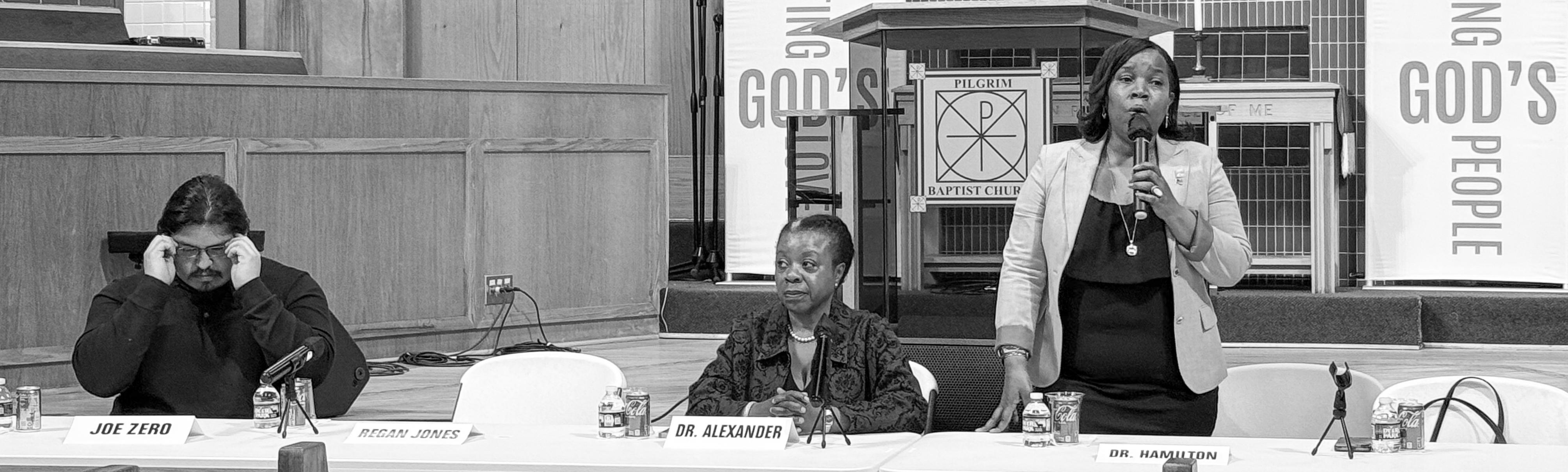
Some mayoral hopefuls described their visions for combating homelessness in a March 31 forum hosted by the National Coalition for the Homeless. All candidates were invited, but the two frontrunners and most highprofile candidates, former At-large Councilmember Kenyan McDuffie (D) and Ward 4 Councilmember Janeese Lewis George (D), did not attend, nor did the majority of the other candidates. The three attendees were Myrtle P. Alexander (I), an educator and entrepreneur, Rhonda L. Hamilton (I), a small business owner and self-described mental health advocate, and Joe Zero (I), who is also a Street Sense vendor and artist.
The forum was held at Pilgrim Baptist Church in Northeast Washington and moderated by Kelvin Lassiter, a policy analyst for the National Coalition for the Homeless. Lassiter asked the candidates about ending encampment sweeps, building more affordable housing, revising the shelter system, reviving public housing, and their plans for seniors, the fastest-growing demographic of unhoused people nationally.
The mayoral election will be held on Nov. 3, with the party primaries on June 16. The frontrunners for the Democratic nomination are McDuffie and Lewis George. McDuffie has pledged to reform Rapid Rehousing to prevent premature exits, make accessing government resources easier through street outreach and “one-stop service centers,” and create “smaller, trauma-informed non-congregate facilities” to provide support to D.C.’s homeless population. Lewis George, a selfdescribed democratic socialist, says she wants to “strengthen and expand” D.C.’s rent stabilization programs and build more affordable housing, including launching “Dignified Homes DC,” which she describes as “publicly owned, mixed-income housing with stable and affordable rents.”
At the forum, Lassiter asked about candidates’ commitment to ending encampment sweeps — a perennial debate in the District, especially as clearings spiked last summer with the federal takeover of D.C.’s law enforcement agencies. Hamilton explicitly said she would end sweeps, and Alexander criticized their lack of “dignity.” Lassiter subsequently asked how the candidates planned to create a clear path to housing without disrupting people’s lives.
“Absolutely, there would be no sweeps,” Hamilton said. She called a recent encampment sweep near a construction site under the M Street SE overpass “callous decision-making” and said D.C. needed more “empathetic” leadership. She also said she wanted greater involvement of church communities in providing shelter. “We have so many churches in the District, and yet in the depth of winter, many of the doors are closed,” Hamilton said. “What I’d like to be able to see is that our clergy community would galvanize and come together in order that we have more homeless missions in our church setting.” (While some churches have served as winter shelters in the past, the city pivoted to open other sites this year.)
Alexander said with the amount of money D.C. receives in tax revenue, “we should not have one homeless person in the District.” She said she plans to turn vacant buildings into housing, a proposal she shares with Hamilton.
“Everyone deserves dignity,” Alexander said. “Where is the dignity when you take up someone’s belongings and dump them? That’s everything they possess.”
Zero said people may need “a small push,” like one month of subsidized or traditional housing, to get on their feet. He also emphasized workforce training, especially in technology and electricity, as part of his plan to get people off the streets. “If we can get people in these jobs that would be helping, we’re able to provide them with a way to sustain themselves,” he said.
Zero also stated his support for universal basic income (UBI), a policy where all citizens receive a certain amount of money from the government every month, intended to help pay for basic necessities. Under Zero’s UBI proposal, D.C. residents who have been in the city for longer than 10 years would receive $400 a month.
Lassiter’s second question to the assembled candidates was about their commitment to expanding affordable housing through adaptive reuse, or letting existing buildings be used in a capacity differing from their original purpose, like office to residential conversions, which all three candidates supported. Lassiter asked the candidates about how many affordable housing units they’d aim to produce.
Hamilton answered first, re-stating her plan to turn vacant buildings into housing for D.C.’s homeless residents and to utilize church communities and peer advocates to help people “trust the process.”
Zero said if he were the mayor, he would try to make deals with the federal government to get back unused federal land and buildings that could then be part of an adaptative reuse plan. He also said he wanted to bring “people who want to be here” back to D.C. Zero outlined his plan for a “digital civic system” website or app where all Washingtonians would easily be able to access housing resources. “People that need it most, need it now,” he said.
Alexander said D.C. does not have a homeless problem, but a “management” problem. “Why are we so top-heavy and bottom-scarce?” she asked. Alexander said her administration would conduct an audit of the budget on day one to put an end to rampant “duplication of efforts” without results. She said her administration would be able to house homeless people within a year. Responding to questions about revising the shelter system, all three candidates continued to emphasize the main themes of their campaign. Zero mentioned how his planned “digital civic system” would facilitate easy access to resources for D.C. residents and his vision for improving the flow of the shelter system. Alexander reiterated her support for “bringing back the Bible” and the “traditional family” as justification for her belief that “families must stay together.”
“If we can’t accommodate our residents and our citizens as a family,” Alexander said, “who are we as United States, who are we as Washington, D.C.?... If the head is sick, the whole body is full of worms.”
Hamilton said “our shelters are not safe” and the conditions were “not acceptable when we are building stadiums,” a reference to the construction of a new RFK Stadium in Southeast, which has caused controversy for its use of billions of dollars in the city budget.
“We must audit our moneys,” said Hamilton. “We must house our citizens. We have the money to do so.”
Editor’s note: One candidate, Joe Zero, is also a Street Sense vendor. Street Sense is covering his campaign the same as all others, and no one involved with the campaign worked on this story.
KATIE DORAN Editorial Intern
In 2022, Georgetown University was preparing to break ground on a new building for its downtown D.C. campus. At the time, there were about 20 people experiencing homelessness living around the soon-to-be construction site. That summer, the university quietly paid the h3 Project, a nonprofit homeless outreach organization, to survey the people in the encampment and connect them with housing, health care, and other services before the D.C. government cleared their encampment.
Dozens of universities have bought buildings in downtown D.C. in recent years, often leading to construction or redevelopment. But it’s not the norm for a university to invest in direct outreach work with unhoused communities living around their new property. What Georgetown did was “extremely unique,” Alexis Johannessen, the associate director of outreach at the h3 Project, said. Outreach workers hope Georgetown’s project could serve as a model for other developments.
Georgetown never advertised or spoke publicly about its work with h3 over that summer, but h3 told Street Sense the partnership had a significant impact on people experiencing homelessness living in the area, some of whom the organization is still in touch with. Some encampment residents started new jobs or got into housing with h3’s help.
“In some cases, it was absolutely life-changing,” Ami Angell, founder and director of outreach at h3, said.
According to Angell, a few months before the Georgetown partnership, h3 worked on a similar project with one of Kaiser Permanente’s buildings in NoMa. She said the projects with Kaiser and Georgetown are the only examples she knows of any university, corporation, or other large organization funding this kind of work in D.C.
When downtown developers begin construction or ask for encampment closures around their new property, it can displace residents experiencing homelessness and make outreach organizations’ work more difficult. While city workers offer to connect residents with services during an encampment closure, the closures usually result in people continuing to live outside, even if they move to new spots.
“When they’re dislocated, it’s more difficult to find them and follow up on services. If they get matched to housing, we can’t find them. This happens all throughout the city, with the encampment clearings, and it actually creates more havoc for us, because we don’t know where the folks have relocated to,” Angell said.
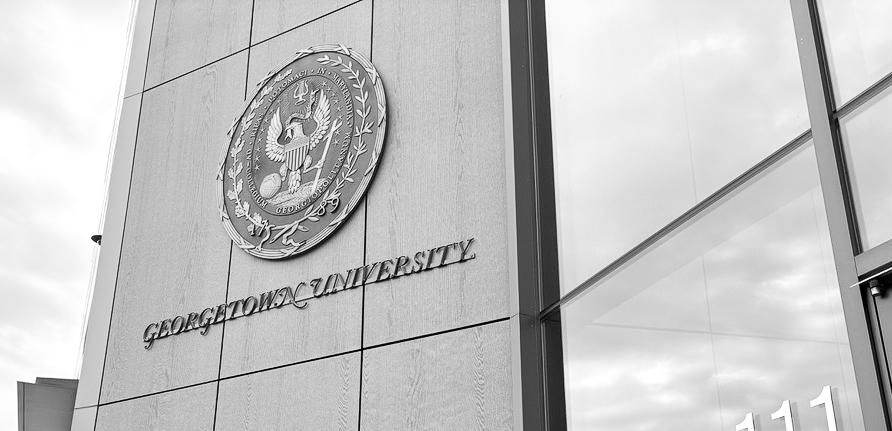
Georgetown’s partnership with h3 sought to avoid these impacts. Angell said she originally connected with the university through the Mount Vernon Triangle Community Improvement District, which oversees the area the building, located at 111 Massachusetts Ave. NW, is in.
“[h3] had a very clear understanding of what some of the day-to-day needs of what these communities could be,” Dave Green, the executive vice president and chief operating officer of Georgetown, told Street Sense. “They were a perfect fit,” Green said.
After meeting with Georgetown’s then-president John DeGioia and other university leaders, a team from h3 spent June and July surveying encampment residents about the circumstances that led them to homelessness and connecting them with resources. After D.C. cleared the encampment on Aug. 12, 2022, h3 staffers continued working on individualized case management plans with the residents.
Eighteen of the 21 encampment residents participated in h3’s survey. According to a July 2022 report on the survey findings, which h3 shared with Street Sense, most participants said they didn’t know where they would go if they had to move from the encampment. “I should have a backup contingency plan, but I don’t,” one resident is quoted as saying. Most participants — 10 of them — said they did not have a case manager.
h3 filled in: the outreach team helped residents secure vital documents like birth certificates and IDs, enroll in Medicaid or the Supplemental Nutrition Assistance Program, create resumes and apply to jobs, connect with housing programs, and more.
“I have no doubt that by [Georgetown’s] direct action of investing in the people that were on their property when they could have turned the other way, that their action of allowing us that intensive case management did save lives,” Angell said.
Many of the encampment residents had been experiencing homelessness for several years, according to the report, most commonly becoming homeless due to disputes with family members or a relationship fallout. However, all survey participants said they had been living at the 111 Massachusetts Ave. location for 12 weeks or less, except for two residents who were unsure. The encampment was not there when Georgetown first bought the building in 2021, university leadership told Street Sense.
Asked how they envisioned the next year, most encampment residents told h3 they hoped to find housing. “That’s all I can imagine right now,” one resident is quoted as saying in the survey report. Another said, “I want to be complete. Have housing, have community, have things of my own.”
h3 gave out 18 referrals to housing resources to encampment residents, according to a September 2022 project impact report h3 shared with Street Sense. Two people were already matched with housing by that September.
Sixteen of the 18 survey participants were interested in working, though none were employed. “I am not helpless! I just need a little help,” one encampment resident is quoted in the survey report as saying. “I am not the guy saying I will never work again. I just need a little boost. Then I’ll be fine. I just need an interview. A chance to prove I am worth it.”
Now, some residents are still working in jobs the organization helped them apply to in 2022, according to Angell and Johannessen.
Both outreach workers said without Georgetown’s support and funding, it would have been much harder to provide the same resources to the encampment residents.
“We would not have been able to do it as quickly and have as positive outcomes in such a short time frame,” Angell said.
The 111 Massachusetts Ave. building is now part of Georgetown’s Capitol Campus, where some students live and take classes away from the university’s main campus in the Georgetown neighborhood. Georgetown is one of more than 50 colleges and universities that have a presence — either a satellite campus or main campus — in downtown D.C., according to data from the Washington D.C. Economic Partnership. This includes nine universities that launched new campuses since 2024. Most people who live outside in D.C. also live downtown, where there’s a greater concentration of service providers and proximity to community spaces and organizations, according to 2024 data.
However, Angell and Johannessen said they have never worked with or heard of another university investing in this kind of direct outreach work when they buy or develop property in the city.
Some other universities in D.C. engage with homelessness outreach organizations in different ways, such as through partnerships offering volunteer opportunities. Johannessen encouraged universities and other institutions to be intentional about how their development projects impact the local community.
“Even if they’re not able to fund a project in the same way that Georgetown did, they can reach out and connect with community organizations that are on the ground doing the work to make sure that [the local community] is aware of changes that might be coming, and maybe get some extra support around that area for folks,” Johannessen said.
Georgetown leadership told Street Sense the partnership with h3 was an important way for the university to live up to its mission.
“What was exciting about the work is how it really supported the university’s mission to serve the unhoused, serve the poor with dignity, and addressing justice there for the most vulnerable,” Cory Peterson, Georgetown’s associate vice president for community engagement and local government affairs, said.
Georgetown’s main campus is peppered with banners declaring the university’s values: “people for others,” “faith that does justice,” and “cura personalis” (“care of the whole person”), to name a few. The project was part of living out those values as a Jesuit university, Green, Georgetown’s executive vice president, said.
“That was something that we didn’t come up with and sit in a room and say, ‘Oh, how is this going to look good for Georgetown, look bad for Georgetown?’ It was, ‘We already have our core values. Now, how do we execute on them?’” Green said.
Georgetown’s leadership has never spoken publicly about the project.
“We should be doing this every day, without the fanfare,” Green said. “We’re supposed to be doing this.”
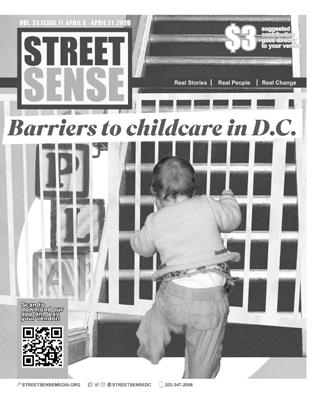
Frances Goines says she feels “naked” without having a job; she’s been working since she was 11. But when Goines moved into one of the city’s family homeless shelters and was told she needed to have around-the-clock childcare for her 13-year-old son, she had to quit working to watch him.
Goines and her son moved into D.C.’s New Beginning Temporary Family Shelter in November 2025 after being evicted from their home in Trinidad and finding temporary housing at a hotel in Falls Church for about two months. At the time, Goines said staff told her she should maintain both employment and childcare for her son. (Eligibility requirements may vary depending on the program, but the D.C. Department of Human Services (DHS) website says families are required to provide identification, birth certificates for each family member, proof of income, and proof of District residency to access emergency family shelter and services.)
Goines worked as a bartender, so she couldn’t bring her son to work, and she couldn’t find childcare for teens late into the evening. When she requested an exemption to allow him to stay in the shelter alone during her evening shifts, she was denied.
“No one else was allowed to supervise him or watch him,” Goines told Street Sense. “I had to provide the childcare.”
Childcare has been a hot-button issue in the District in recent weeks as Mayor Muriel Bowser finalizes her budget to share with the D.C. Council and mayoral candidates highlight childcare reform in their platforms. In an effort to rein in increasing costs caused by rising demand, D.C. officials are instituting a waitlist for new families who sign up for the District’s child care subsidy program starting on May 12, according to The Washington Post.
Audrey Kasselman, a policy analyst for D.C. Action, said families experiencing homelessness will not be subject to the new waitlist policy, but a variety of other barriers still make it hard for unhoused families like Goines’ to find childcare. The application process for vouchers and a lack of extended and weekend hours at childcare facilities can make it difficult for families experiencing homelessness to find childcare that works for them. The Office of the State Superintendent of Education reported 9,104 students experienced homelessness at some point during the 2024-25 school year.
Kasselman also said not enough families know about the childcare subsidy program, and families experiencing homelessness might not know that they are exempt from the new waitlist, preventing them from accessing the vital support.
In a letter sent to multiple D.C. councilmembers early this year, including Ward 3’s Matt Frumin, chair of the Committee on Human Services, Goines wrote the shelter’s requirements placed an unfair burden on her family. With no family in the area to help her and limited extended-hour childcare options for children over the age of 12, Goines said her housing and employment situation worsened rather than improved while in the shelter.
“I have been forced to decline positions aligned with my professional expertise solely due to the inability to secure reliable childcare, even though my son has a documented history of safely supervising himself in settings comparable to our current shelter unit,” Goines’ letter, which she also shared with Street Sense, stated.
As she struggled to find employment that would allow her to watch her son, Goines faced the potential loss of the storage unit she had rented since October 2022, which held her father’s ashes, her children’s baby photos, and other sentimental items. Goines was able to pay the $700 needed to keep her items from being auctioned off, but said she remains frustrated she was put in a position where it was almost lost.
“This could have all been prevented if I was still allowed to work,” Goines said.
The city argues the requirement for children to be supervised is essential for safety. At an oversight hearing on March 6, DHS Director Rachel Pierre said while DHS wants to keep parents connected to work as best it can, it is not willing to revisit the policy requiring children to be monitored by their parents in shelter at all times, no matter their age. Pierre said the policy is in place to protect against incidents like the abduction of Relisha Rudd, an 8-year-old girl who was taken from the now-closed D.C. General Family Shelter in 2014 by a janitor.
“I think the whole system has a little bit of PTSD with what happened to Relisha Rudd, so we are very strict about that,” Pierre said. “But, a case manager can help a parent just kind of troubleshoot and figure out options to leave their children if they have to work overnight. If they have a job, leasing up as quickly as possible is also an alternative.”
The shelter environment Goines experienced is much different from what it was when Rudd went missing. D.C. General featured many common areas and spaces where families would be required to interact. Rooms only had beds and dressers, meaning children and their parents used the communal cafeteria and playrooms for food and recreation. In the shelter where Goines lived, families are placed in units that feature a living room and kitchen for the family to use in private.
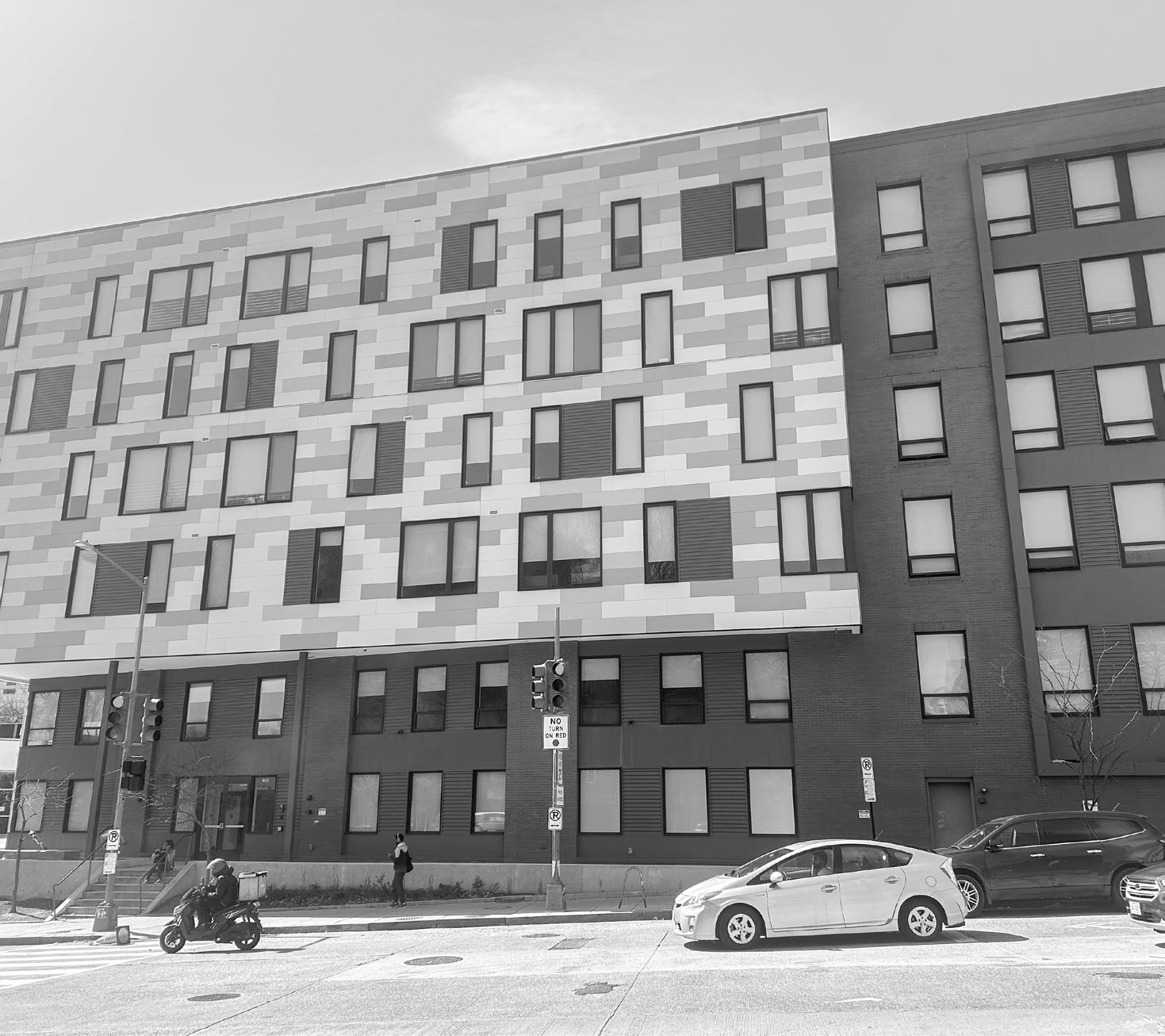
In her letter, Goines wrote the apartment-style accommodations are enough to keep her teenage son safe if he is left alone while she works. Goines urged the council to consider exceptions for families in similar positions to hers.
“It just amazed me that no one considered families who have minors that are in the age range of 13 to 17 that are experiencing homelessness,” Goines told Street Sense.
As Goines struggled to find work that would allow her to be home when her son would need supervision, she said he began to feel responsible for the situation the family was in.
“My son really felt, I saw he felt bad because I couldn’t work and because of him, that’s how he saw it. ‘My mommy would still have her job if it weren’t for me,’” Goines said. “And I had to let him know, it’s not you. You didn’t make these rules up.”
Jamila Larson is the executive director of the Playtime Project, a local organization that provides play to children in emergency housing, transitional housing, and community sites. She said it’s “heartbreaking” to see how children can end up feeling like a burden to families trying to navigate the family shelter system and poverty or homelessness.
“We definitely need to have more robust evening childcare for all kids, certainly older kids,” Larson said. “It really makes me sad, because I’ve seen a lot of parents feel like they have to choose between their job and their shelter, which is a terrible choice.”
Goines feels that without more flexibility, these childcare requirements will push working families deeper into instability. But the District remains firm.
“We are very clear, we’re not really interested in revisiting the policy of leaving children unattended in shelter without their parents, no matter the age,” Pierre said at the hearing.
Families experiencing homelessness can apply for a childcare subsidy at a DHS service center, a level-two center — a select few childcare providers that can process eligibility for the subsidy program — or online. Kasselman said applying online might seem like the most accessible option, but families have reported issues navigating the system and uploading all their required documents.
While Goines has been able to press her case worker for help and secure Rapid Rehousing for herself and her family, she said she sent her letter to advocate for the other families who might not have that same drive or time to demand support.
“I’m not a people person. I’m more of a for-the-people person. There is a difference. I’m not out here to make friends, but I’m just trying to prevent a crisis that will happen,” Goines said.
DONTE KIRBY Deputy Editor

Last month, Mi Casa broke ground on the 10Q Apartments in Ward 5, bringing new affordable housing stock to a city that desperately needs it.
The 10Q is expected to be open to tenants by the summer of 2027. It will have 29 units, with a mix of one-, two-, and three-bedroom apartments serving residents at 30%, 50%, and 80% of the area’s median income. And it can’t come soon enough, as many D.C. residents are continually rent-burdened at best and forced to move out of the city at worst.
Mi Casa is a nonprofit that has been working to improve affordable housing in the District. With the groundbreaking of the 10Q apartments, the organization hopes to show that, although it’s not easy, keeping development costs low with the right fiscal partners and a commitment to cost savings can lead to long-term affordability for tenants.
How to build affordable housing in D.C. has become an increasingly hot-button issue. Lawmakers and landlords often blame the Tenant Opportunity to Purchase Act and D.C.’s eviction laws for the city’s difficulties in building more affordable housing. Last summer, the D.C. Council passed the Rebalancing Expectations for Neighbors, Tenants, and Landlords (RENTAL) Act, exempting some buildings from legislation protecting tenants and speeding timelines for evictions. The legislation was aimed at combating a growing eviction and unpaid rent backlog, which some councilmembers said was stalling affordable housing investment. At-Large Councilmember Robert White, who introduced the bill, and its supporters claimed the dire state of affordable housing production in the city required loosening regulations to make investment more attractive.
But Elin Zurbrigg and Juan Pablo Vacatello, co-executive directors of Mi Casa, see the main barriers to affordable housing in the District a little differently. For them, high eviction rates, unpaid rents, and the rising interest rates that lead affordable housing providers like Neighborhood Development Company to shut down are factors, but they aren’t the biggest barriers. Those are the rise in the cost of living and inflation driving up construction costs.
As Mi Casa defines it, affordable housing caters to D.C. residents who make 30% or below the area’s median income (AMI), which is the District’s lowest income bracket. That’s less than $34,400 a year for an individual and $44,250 for a family of four, according to an annual report from the D.C. Department of Housing and Community Development.
From a housing developer’s perspective, the rent they receive for a housing unit that is affordable at 30% AMI is less than it costs to maintain and operate that housing, along with all the costs for maintenance and utilities like water and electricity going up. It’s extremely difficult to build affordable housing and make the expenses and the income of a building balanced.
“A lot of buildings have built their financial performance based on the maximum AMI that they can get from residents,” Vacatello said. “But that puts the residents to the point of paying half of what they make, or maybe even more, like we in general, try to maintain and observe what the market can actually afford.”
When Zurbrigg and Vacatello break down the finances of affordable housing, they say it only works with subsidies from a city or the federal government. And from their perspective, the general public doesn’t recognize how big that financial gap is that needs to be filled by public or private investment.
Mi Casa’s secret sauce to make projects like 10Q and the 12 other properties it owns sustainable is to do whatever they can to keep building development costs low so they can keep rents low. That means not only being a developer, but also managing the properties themselves.
“We have been seeing in the last 10 years, projects that have been going for almost a million dollars per unit when it becomes affordable housing, and in all the projects that we have been able to develop, we’re likely to be able to spend significantly less than that,” Vacatello said. “That, of course, helps in the long run on the operations of the property, because that means that you have less liabilities. That means that you can charge lower rents, meaning that the people can actually pay an affordable rent for them. It’s not only an affordable rent off what the spreadsheet says, based on the AMI of the area, but actually affordable to the people actually paying the rent.”
One of the major ways Zurbrigg sees to reduce the cost of building affordable housing is to reduce the timeline. Time is money when paying consultants, architects, lawyers, and maintenance, and factoring in inflation; the price of copper today isn’t the same five years later when the project breaks ground. In this case, it took Mi Casa two years to get through the permitting process. In the future, Zurbrigg hopes D.C. can expedite the process, even if it just means city agencies better communicating with each other.
“The time it takes is also money spent on, you know, staff time, consultant fund, and architects still need to get paid,” Zurbrigg said. “And all these expenses continue over many years. And if we can do it more quickly, we can do it more cost-effectively, too.”
Throughout its seven years of development, the building went through multiple design changes. Originally, 10Q was meant to be a mix of commercial and residential space. But due to changes in the D.C. rental market resulting from the pandemic and shifts to remote work, Mi Casa pivoted to putting 2,000 square feet of community space on the ground floor.
10Q was financed with about 50% public and 50% private money, with contributions from D.C.’s Housing Production Trust Fund, D.C’s Local Initiative Support Corporation, and PNC Bank, among others. Without bridge funding from their partners through the pandemic and the multiple shifts in D.C.’s rental market, the city would have just another empty rental lot while the need for affordable housing continues to grow, Mi Casa said.
“The need for affordable housing, especially the deeply affordable housing, is only increasing, and the number of construction starts are decreasing in this moment because of the challenges of financing and investments,” Zurbrigg said.

KORDELL MARTIN Editorial Intern
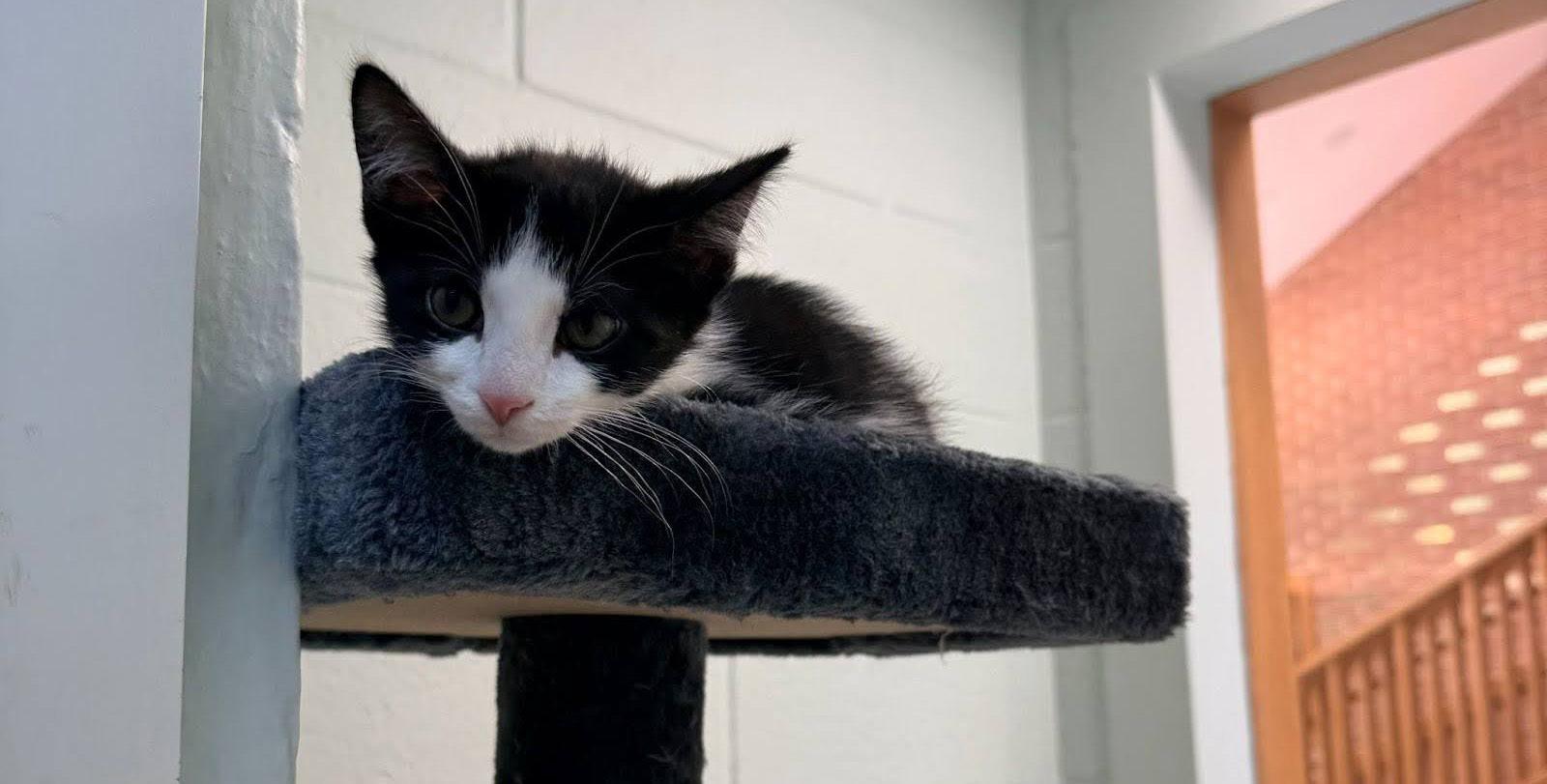
Pet owners experiencing homelessness in the District may still have to abandon their furry companions to access shelter, as a D.C. law passed over a year ago to create a pet-friendly homeless shelter remains unfunded. Passed unanimously by the D.C. Council in 2024, the Pets in Housing Amendment Act aimed to lower barriers for entry into shelters and housing for D.C. pet owners. The act, dubbed Roscoe’s Law, capped pet rental fees, eliminated breed discrimination in the District, and mandated D.C’s Department of Human Services (DHS) develop a low-barrier pet-friendly shelter. But the law, which would cost $2.4 million to implement, was never funded, preventing DHS from finishing the shelter by the deadline of October of this year.
Currently, there are no individual, emergency, family, or domestic violence pet-friendly shelters in the District. Kelly Whitter, director of public affairs for the Humane Rescue Alliance, called this absence a “shame,” as D.C., a place she describes as being full of animal lovers, does not account for pet owners experiencing homelessness.
“The fact that we don’t even have a designated emergency shelter during extreme temperatures for pets and their people — it’s an unacceptable gap in the system,” Whittier said. Pet surrenders in the U.S. climbed significantly in 2025, according to the American Society for the Prevention of Cruelty to Animals. The total number of cats surrenders rose by 34,000, while dog surrenders increased by 10,000. Surrenders comprised 30% of shelter intakes for dogs and cats in 2025. According to the National Alliance to End Homelessness, 10% of the U.S. homeless population has pets.
Whittier was a member of the People + Paws Coalition for Affordable Housing, the group that successfully pushed for the approval of the Pets in Housing Act. She hopes the District will fund the law within the next fiscal cycle to minimize the separation of homeless pet owners and their companions. Finding funding may be challenging in a tight budget year, when childcare and health care programs are expected to be on the chopping block.
Whittier said a lack of housing should not be seen as a variable in measuring how much an individual cares for their pet. In her experience, many individuals and families facing homelessness are heartbroken when surrendering their animal companions.
“If you feel as though you’ve been rejected by your family, isolated from society, judged at every turn for your choices, who doesn’t judge you? Who doesn’t love you unconditionally? Who is there for every step of the way? It’s your animal. It’s your companion,” Whittier said.

To founder and executive director of DC Voters for Animals, Max Broad, the stalled development of a pet-
friendly shelter is “frustrating.” He argued the District has inflated its past projections for the resources needed to develop and maintain an emergency shelter that accommodates pets.
In a 2024 memorandum, D.C. Chief Financial Officer Glen Lee said the District lacked funding to fully implement the then-bill. A pet-friendly shelter would cost the District more than $600,000 annually, totaling $2.4 million over the next four years. Existing funds weren’t “sufficient” to satisfy the entirety of the bill, according to Lee, and the city has not funded the bill since.
In a 2024 hearing before the act’s passage, former DHS Director Laura Zeilinger said she did not believe bringing pets into shelters was a major issue for people experiencing homelessness, according to reporting from Street Sense. She said shelter staff did not report a large number of people who would have gone in if not for their pet, and did not advocate for funding for the shelter. Today, DHS told Street Sense, individuals experiencing homelessness are still allowed to bring only documented service animals and emotional support animals with them into emergency shelters. The agency did not comment on the pet-friendly shelter required by the new law. The city has recently piloted other new models to respond to concerns people say keep them out of shelter, such as a lack of privacy or the inability to move in with an adult of a different gender.
Finding shelter while owning a pet is “just another constraint” for those experiencing homelessness, Broad said. He wants the District to prioritize finding low-cost, common-sense options that allow pet owners to stay with their animals, regardless of how many need a designated shelter.
“I think every individual that we can help find a home and every person’s life that we can make just that little bit easier, especially for people who are having such a hard time, matters,” Broad said.
D.C. Mayor Muriel Bowser is expected to introduce her proposed budget for the 2027 fiscal year in mid-April. The council will then review and revise the budget before passing it. The mayor’s office declined to comment on the budget until its release, including on whether Bowser would propose funding for the shelter.
The council’s unanimous passage of Roscoe’s Law in 2024 gives Whittier hope the act will
JEFFERY MCNEIL Vendor Journalism Fellow
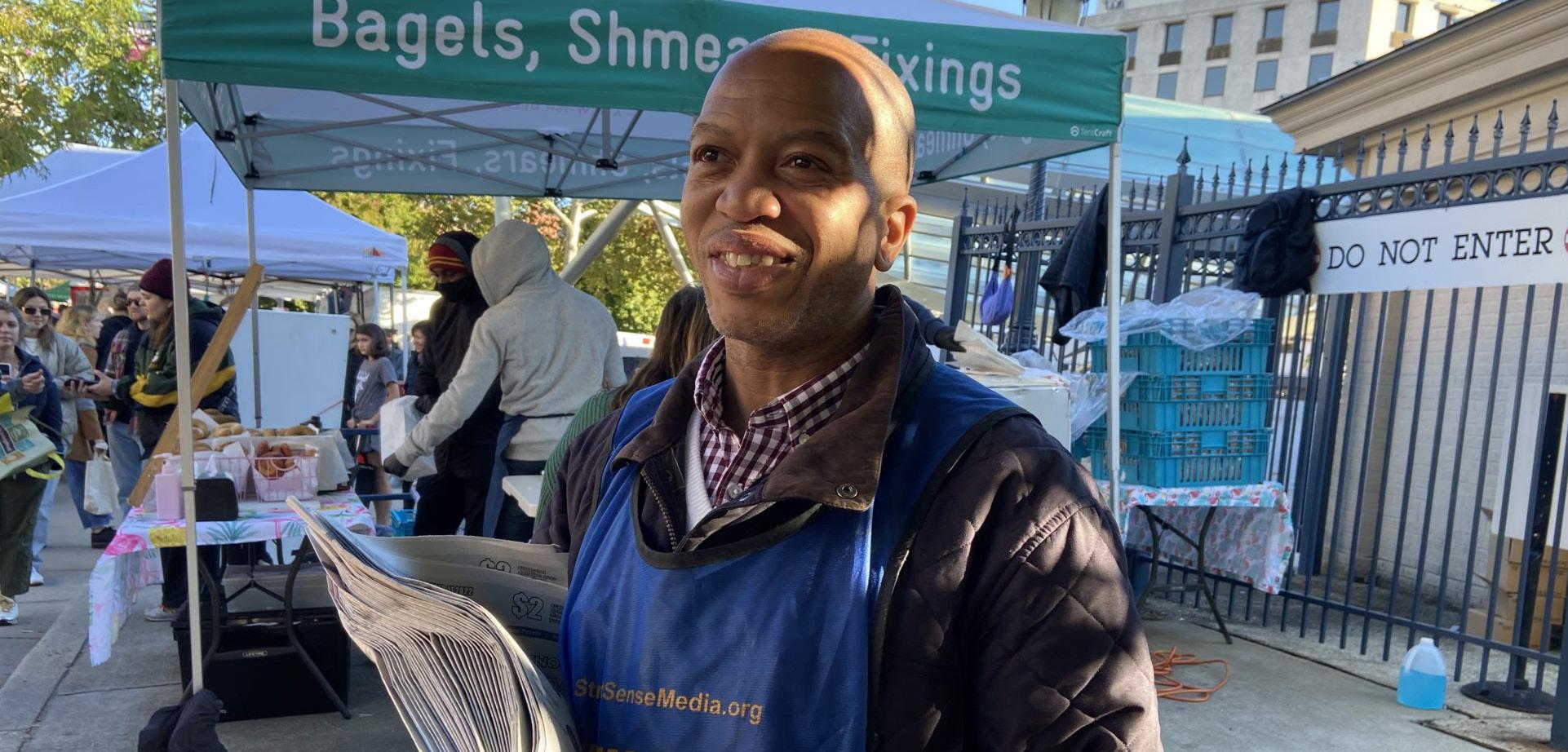
t’s early Sunday morning as I arrive at the FreshFarm farmers market at Dupont Circle. I pull on my vest and think about how I’m going to promote my latest article. Before the market opens, I take a quiet moment to reflect on where I began in 2008 — and how far I’ve come.
Back then, Street Sense cost 25 cents, and vendors sold it for a dollar. I was so broke I could barely afford to buy a dollar’s worth of papers, so most of the copies I sold were earned through writing and helping with distribution. Every Street Sense vendor starts not in a limo, but in survival and desperation. I think I really learned to write because being published was the difference between waiting for a bread truck or eating at McDonald’s. Believe me, I didn’t start off with crowds lining up to buy papers — there was a time I’d arrive at the farmers market early with 10 papers, and still have seven left when it closed. What kept me going wasn’t talent or luck — it was refusing to quit and paying attention to what the better vendors were doing that I wasn’t. The lessons I learned watching better vendors were that being open to customers, your presentation of the paper, and friendliness mattered. When you’re out there in the market, metro, or wherever you sell, you’re basically on a stage. When I first decided to do this article, I was nervous at first, but with pressure to finish and running out of time to procrastinate I had to write something. I decided to ask Michael Rawson, probably one of my first customers and one of the few I sold consistently to over the last 15 years, a question I’ve always wanted the answer to.
Rawson is a longtime Dupont Circle resident and patron of the FreshFarm farmers market. As long as I’ve been selling at the market, he’s been buying Street Sense. We’ve been through some storms — literally. He’s bought from me in blizzards, sub zero temperatures, high winds, heavy rain, and scorching summers. Naturally, if I was going to do any interviews, I was glad he was the first one. After all these years, I finally asked him a question I’ve always wondered: “What makes you buy the paper — is it the content or the people?”
“I’m loyal to you first because you are engaging and I love the fact you’re a writer and you write about what’s happening,” Rawson said.
He takes his paper and moves on, but his words stay with me: “It began as the content, but now it’s the people.” As the morning continues, other longtime customers arrive. Mimi, who’s worked in affordable housing for 30 years, has been another regular who’s done more than just purchase the paper — I look forward to her little gifts and her Christmas cards during the
holidays. Susan, who’s been buying Street Sense for close to a decade, was the first person to purchase from me through Venmo. We’ve come a long way in figuring out technology, and I always look forward to her visits. I asked them what the impact of Street Sense has been for them. They tell me they were first drawn to the paper because it covered issues overlooked by mainstream media. But over time, that changed. They began buying from me specifically — because of the conversations, the writing, and the connection.
After several interviews like these, a clear pattern emerged. Many customers are first drawn to Street Sense for its content — its perspective on homelessness and life in the city. But what keeps them coming back is something else.
Unlike a newspaper picked up at a stand, Street Sense is sold person-to-person. Customers interact with someone who represents the paper, and over time, that interaction becomes a relationship. Don and Linda McIntyre often talk about Street Sense with their friends, they said. Everyone has a specific person they buy from.
“I just appreciate the entrepreneurial spirit,” Linda said when asked why she buys Street Sense. Take Alison Ryan, who has been buying the paper for 15 years. One of my best memories is when she brought her son and grandchildren to meet me. There’s no monetary value you can put on someone bringing their family to introduce them to you. I asked her why she buys. She told me she started because she cared about homelessness, but over time, she developed conversations with vendors and now mainly buys at the farmers’ market.
“I like the whole concept,” said Ryan about Street Sense. “Sometimes when I see somebody out, I’ll just give a donation, but I don’t need more than one paper.”
Then there’s Dylan, a newer customer. He was drawn to Street Sense because of its local, grassroots feel — something he didn’t find elsewhere. He told me he prefers to buy from the same vendor each time.
And Megan Huntley, who has been buying for seven years, said she was first drawn to the art and poetry, but now reads my opinion pieces and continues to support me directly.
From these conversations, I came to a simple conclusion: there is no single reason people buy Street Sense. Some come for the content, others for the cause — but lasting support comes from connection. It’s easy to make a sale. What matters is building something that lasts — repeat customers, trust, and a loyal following.
Street Sense provides the information, but the people give it meaning.
REGINALD BLACK
s the budget and performance oversight season geared up, the Bowser administration held its final budget engagement forum of the yand its 39th since taking office in 2015 on Feb. 26 at Dock 5 in Union Market.
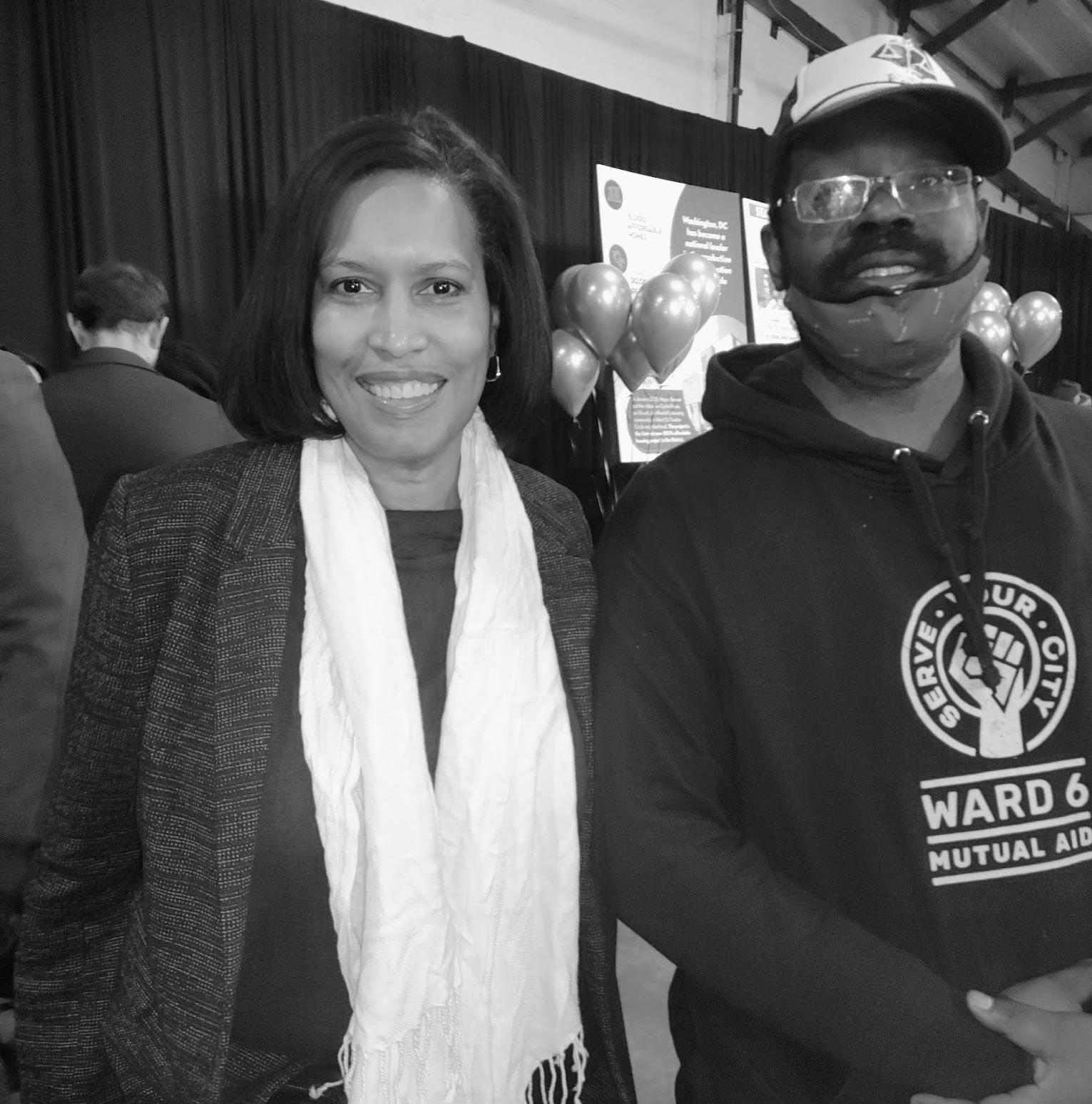
The event could be the last budget engagement forum held by Mayor Muriel Bowser, who decided not to run for reelection this year. I was so, so happy to see so many people there. Bowser called the forum “a great discussion among leaders, government leaders, about the priorities of our budget.”
“We will not fully bake the budget until we’ve heard from you,” Bowser said. Bowser’s budget proposal was originally expected on April 1, but has been delayed until mid-April.
In previous years, the mayor’s budget engagement forums featured an interactive activity where attendees had $100 to place into areas or issues they cared about. Then the attendees were asked to repeat the same activity in groups, and report to the room where their $100 landed. This year, Bowser and her team pivoted from this activity to a different one, where each city agency head gave a presentation about their priorities, and then attendees discussed what they would like to see in the budget at their individual tables.
“We’re not going to do that today,” Bowser said about the $100 interactive activity. “We are going to ask you to help us with some policy areas. What we know is the investments we have made have made us a better city.”
Bowser then turned the microphone to the members of her team seated at the table with her to describe the budget process. At the table with the mayor were the director of the Office of Budget and Performance Management, Jenny Reid, and the city administrator, Kevin Donahue.
“I always love these,” Donahue said about the event. “You get to sort of operate and think, we get to share some of the choices and trade-offs that we have to think of in responses and feedback we get every year.”
Donahue broke down the mayor’s budget process. First, the administration spends the first few months determining what it’s going to cost the city next year to do what it’s doing this year. Then the Bowser administration looks at the demand for a particular city service or issue. What makes D.C. unique from other cities and states, come budget time, is that the administration not only has to balance the budget for the year, but it has to show how it will maintain a balanced budget for the next four years.
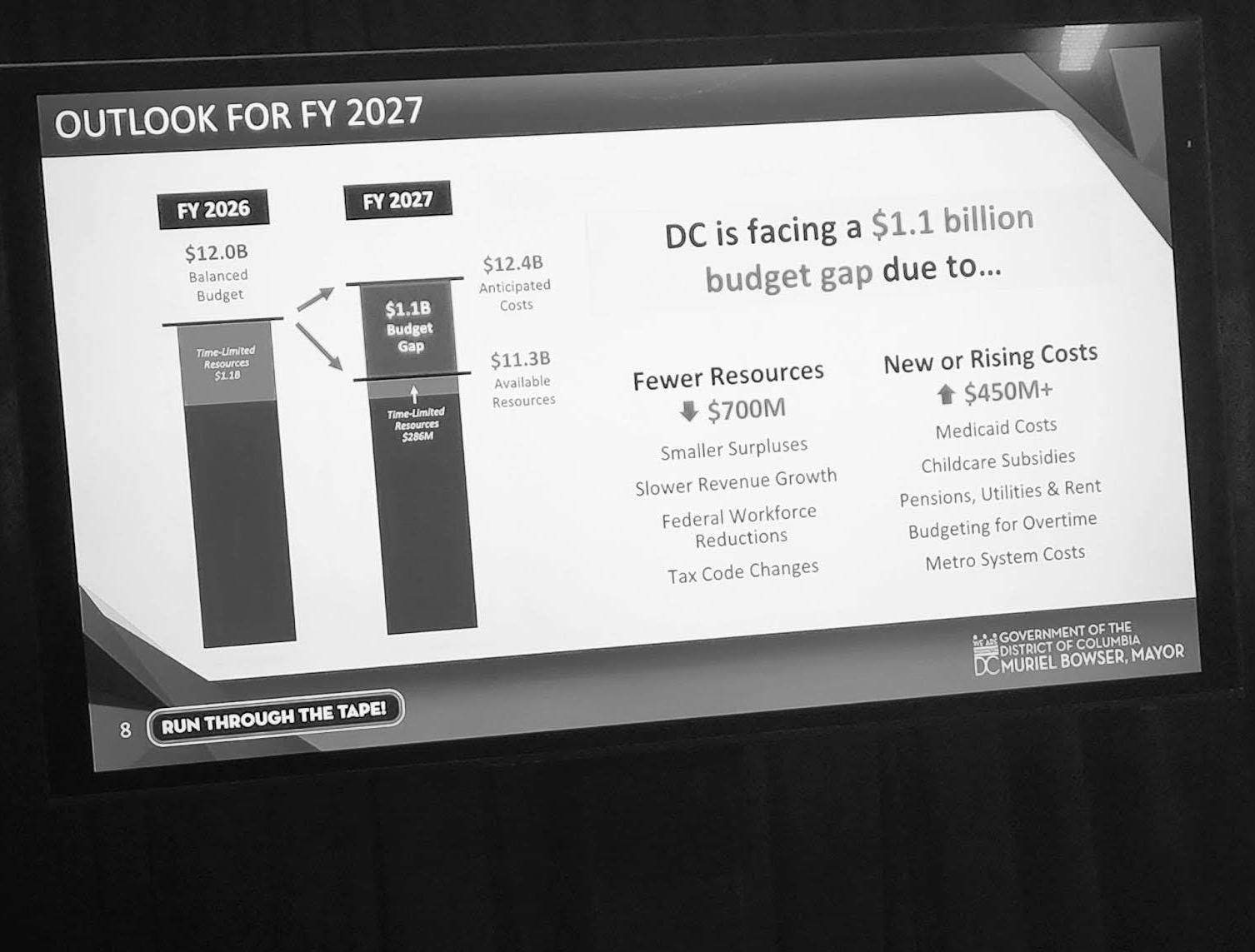
The presentations then turned to the different deputy mayors to describe their clusters and what priorities they are looking to advance in the next year. First to present was the deputy mayor for health and human services, as well as the director of the Department of Health Care Finance, Wayne Turnage. Turnage shared some of his thoughts about Medicaid in the city and the need to modernize the city’s shelter system.
D.C. provides Medicaid benefits beyond what the federal government allows, and the city pays for that with local money, according to Turnage.
“I tell people all the time, every four out of 10 people that you touch will be on Medicaid,” Turnage said. “We spend over a billion dollars on Medicaid services.”
In terms of shelters and supporting those experiencing homelessness, Turnage said he would guess, “If you looked at our dollars per capita across any jurisdiction in the country, there’s no jurisdiction that invests as much into homeless services as D.C.”
The city spends close to $100 million on operating costs for shelters a year and millions of dollars on homeless services through the Department of Human Services, according to Turnage, including on new non-congregate shelters.
“What we have been doing is buying buildings that were once hotels and converting them to what we call transition housing,” Turnage said. “There are non-congregate facilities that house persons who have special needs, and our staff there can work with them to help move them towards a place where they might can live independently.”
Turnage highlighted priorities Bowser held throughout her tenure as mayor, including that no one should have to live outside in D.C.
“One of the things we do is we modernize our shelter system we have across the system, so that we can guarantee a shelter bed for residents who are experiencing homelessness,” Turnage said.
When the deputy mayor of planning and economic development, Nina Albert, presented, she celebrated the city exceeding the mayor’s goal of delivering 36,000 units of housing, creating 42,000 units. She also said D.C. was a leader in transforming commerical properties, and the city committed, just this year, $1.5 billion of contracting opportunities for small local businesses.
“We don’t wanna be too costly, too onerous, and a place that is too unpredictable to live in,” Albert said. “We want to be in control of our own narrative and our own story. We need to market our city and talk about how great our city is and why we need to be here to live and to invest.”
The event then turned to the attendees speaking with their respective tables. The activity called for the priorities in the city to fit together like a jigsaw puzzle. There were many perspectives in the room. Hopefully, even in an odd budget cycle and with the uncertainty of federal funding, the residents’ voices will be heard and will greatly impact how Bowser will arrange her final budget as mayor.
Reginald Black is an artist/vendor with Street Sense Media.
CARLOS CAROLINA
Iknow many people have heard about the juvenile curfew law being enforced across the District, i.e. the Juvenile Curfew Second Temporary Amendment Act of 2025, effective through April 15. The law says all persons under the age of 18 cannot remain in any public place or any establishment within the District of Columbia during the 11 p.m.- 6 a.m. curfew hours unless that person has an exemption. Enhanced, earlier curfew zones (8 p.m. to 11 p.m.) can be active on weekends in areas like the Navy Yard, Chinatown, and U Street to prevent large group gatherings.
Lately, local news has been displaying images of children meeting in areas such as the Navy Yard and the Waterfront. These images show children fighting, shooting fireworks at law enforcement personnel, vandalizing peoples’ personal belongings, and committing other random acts that could be construed as criminal.
As a native Washingtonian who comes up with program ideas and seeks funding for the kids, only to see these children act in such wrong ways, this frustrates me a lot. I don’t think these children understand how hard it is to request assistance for those who publicly act as though the only place they want to go is to jail. If these children don’t understand this, I’m sure their parents do.
Matter-of-fact, the talk around town is “where are the parents of these children and where are they when their children are out destroying the city?” Food for thought!
My team and I are organizing ideas to create programs for these youth. There are plenty of people who understand jail is always an option. So, if you’re smart, take heed of what’s happening around you. And consider this as “words to the wise.”
Carlos Carolina is an artist/vendor with Street Sense Media.
INVISIBLE PROPHET
Artist/Vendor
I have a dog who assists me in daily activities and in loving myself more, no matter how hard this chaos disrupts a dying lineage without me. Of course, she’s a handful, however, adopting a pet is more important than our selfish needs.
If you have ever adopted a pet, then you know everything has a warning label. Most of the time owners who relinquished their pets are honest about the animal’s behavior.

In my dog’s case, her owner was not. I’m still learning about how she functions, especially on walks. Her focus is on squirrels, mice, rats, birds (no matter the size), cars, people, bikes, and dogs and their owners.
That’s when her aggression is stressful. Peoples opinions are: she’s a dog, it’s playful. I say, nope. Don’t trust that any of this is true. Maybe that’s her way of protecting me, I don’t know: that’s way too aggressive for me.
I’m working on training her on the words “leave it.” Sometimes it works and sometimes it doesn’t, which is difficult when she’s honed in on squirrels. She spins herself into her leash, tugging and pulling. I try not to tug at her leash.
What works best is picking her up. I have instructions on muzzle training, which seems
amadan, although Islamic, is yet all the while an ancient tool of self-mastery in the face of (all there is, was, and evermore to be) Allah via fasting. Reflection is the business of man (mind), aligning the likeness and image with the true image of Allah in oneness from falsehood in an example of the almighty will to perfect love, truth, peace, freedom, and justice through pain of sacrifice and gain the attributes of Allah. The month of Ramadan is a great time to notice the mind you have and its boundless space of mastery. Waking up from the heart (true self) and instructing the mind that the body must abstain from eating between sunup and sundown. To do otherwise than what the true self has commanded would be to notice the conflict.
To start a war is the search for peace to be still, and to not be at peace with all there is; certainly, another war is provided until again there is peace with all of existence in itself.
Perfect the way one’s body sends a signal to the mind, regardless of the order given to fast… “Hungry, must eat!” Does this body have a mind of its own?! As if the mind owns the body, but who owns the mind? Surely, the owner of the mind controls the body. To give in would be submitting to the mind’s carnal nature and not the true self. “Not now, but sunset, yes!” Spoken to the mind like before, but now a reclaiming of authority. The body and mind were conquered in the moment by whom? What thought is held higher, and which are you submitting to, the flesh, or the will in alignment with the ascending nature of the true self? Perhaps a soldier of Allah in likeness and image indeed, striving in awareness of the higher will and the measurement of one’s understanding guided by knowledge and wisdom that stands true through the test of time.
War is the beginning, and peace is the end. Sacrifice the flesh in works, actions, and deeds to edify yourself as master of time, given as another tool to create space for practicing the unseen matters of the heart, perfecting love, truth, peace, freedom, and justice. Cutting the ungainly parts for the greater glory, mastering the distinction between the true self that has a mind and being one in the flesh at peace. Only one knows best where the war exists in self-reflection. Does one have the willingness to sacrifice for the uplift of self, mastering the mysteries inwardly, the knowledge and wisdom of self, projecting outwardly the virtues for fallen humanity as well?
The purpose is clear, and true intentions become highly discernible in this sense, with practices like Ramadan’s month of fasting… because what has a beginning has an end. For example, at the end of Ramadan, one might have left behind ungainly parts of daily routines or discovered hindrances that weren’t revealed or overlooked. Even if one never acknowledges the difference between the higher self and lower self’s actions, works, and deeds, through fasting and sacrifice, the mind becomes apparently conscious, holding all the possibilities, imagination, thoughts, of existing for the sake of comfort, pursuing happiness. Easily ensnaring the true self when discomfort in any manner is considered pain. All the while this pain is unavoidable, for every emotion is fleeting and surely a discomfort not to hold happiness steady in one’s life. As the mind provides all thoughts, a world of thoughts is created by man to readjourn happiness within this one consciousness we exist in, through material gain, food, drugs, religion etc… but like fleeting emotions, all things and thoughts have a beginning and end such as the flesh (body) but you are not, only have, to carry out the meaning of one’s existence. The mind you are not and shall not serve but have to exist and make peace with to align with what is, was, and evermore to be true self. To find everlasting in what has a beginning and an end. Which means an end to being ignorant of the true self, with a worthy fight to be had. Acknowledging and expressing might and will, building the self high. Sacrifice and fast to be what you know best. The attributes of Allah are to be personified, lived, exist… to be continued.
El-O-Him is an artist/vendor with Street Sense Media.
to be a necessary matter. That is the last resort. I have tried to go out at certain hours when it’s not busy. Either way, the squirrels are her focus.
My whole purpose for her is to train as a service animal or emotional support animal. Her barking and growling need to be addressed first. She does like to cuddle, but also protect when someone is in the hallway.
I say these words to her: “I’m okay, we are okay.” It lets her acknowledge she can relax and stop barking. I’m working on a dynamic that will assist her needs and mine. Our wellness is important and I feel she has a lot of chaos as a dog.
Hopefully, treats will assist with training and her focus will be more on going to the bathroom, fully understanding people, places and things are just in the space too. Overall she’s a lovely dog with a sassy attitude who likes to kick me to wake me up to take her out.
She knows how to be bossy and has a lot of energy. Her skill is trust falling into my arms to get treats or go outside. I’m pretty sure she’s hamming it up and is very clever. Miss P brings me my socks and drags my shoes to her blanket, waiting for me to get ready for her diva walk.
Her attitude about me taking my time is hilarious, with her stare of “hurry up.” Our wellness is greater than all the unnecessary chaos in the world. She’s in this picture. When I brought her home, she had mangled hair and it was smelly. Six baths and a haircut later, her body is clean.
ABEL PUTU Artist/Vendor

The Earth is falling apart. Everything will be on one card, like EBT, instead of digital. Instead of TV, everything will be in the newspaper, like the Washington Post or Street Sense. We are coming into a new beginning, the start of the new world. Things will never be the same. The world is changing step by step. Look at the date and the time, the clock is running faster. A lot of people want to see wheelchair basketball at Capitol One, and they want us to have a tournament. We need a petition from everyone on both sides, so we can have a whole league. How can we make social distancing go away, for there to be unity, peace, and love? We fear for the new kids of the new generation. Change is gonna come so things can get better. And the world will always fall. If we don’t come together before we realize it, it will be too late, and things will get more expensive. And people will not be able to work in the office, and we’re going to have a robot working as a social worker, as a person in the rental office, we’re going to have an AI robot working as a police officer, so we should get ready for the challenge. It‘s not only going to be here. We all could come together as one to make the world better. Black mamba, Mamba Mentality, shining star. Mamba out.
DON GARDNER Artist/Vendor
I learned that strength did not arrive with noise. It came quietly, after everything else had left.
It stood beside me when explanations failed, when answers refused to show up, when the mirror asked questions I wasn’t ready to answer.
I didn’t rise because I was fearless. I rose because something within me would not agree to disappear. There were days I leaned on walls just to breathe, nights when faith felt thin, and love seemed like a memory someone else was allowed to keep.
But survival taught me this: standing doesn’t always look like victory. Sometimes it looks like staying. Sometimes it looks like waking up and choosing not to quit.
I am still here. Not untouched, not unscarred, but present. And presence, after everything, is power.
CHRIS COLE Artist/Vendor

He surprised me by responding at 10:48 A.M
It stopped me in my tracks: Oh my God! It’s finally him
Dissertations via text had been ignored Maybe suddenly, his feelings for me had been restored
We last spoke in December, And my life has been so cold I always thought with him I’d grow old
JOSIE BROWN
Artist/Vendor
Easter Sunday is a memorable moment when families gather in churches to celebrate the resurrection of Christ
Who makes things right in the middle of the night with all the big might so we can hold on tight
Easter is a time to excite and brighten up the darkest night with all his might

Easter is a place to dress up in different colors with many lovers, but one thing is for sure: Easter is the resurrection and the truth of life
WARNING LABEL
Artist/Vendor
As a phoenix dies, it is reborn
From the ashes, as this corrupt nation shall
A dying phoenix, a legendary ruler of the skies
Never dies from the ashes but is born to burn bright Through the day and night
The fallen shall rise bright
As America dies and is born from the ashes
Repetitiously, we love each other so much it hurts us, and we push apart I’m praying today’s words will be a new start
He called me baby, and it quickened the pace of my heart
Quickly, I grabbed a pen, and that’s how this poetry begins
I’ll form the words, then the lines, and then the stanzas to win him back
Today’s the day he responded He surprised me by texting back
ROBERT WARREN Artist/Vendor
Truth or poetry?
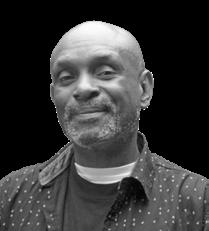
Some people came to believe in words spoken by a messenger telling tales of long ago.
No one knows, but it’s been told these are only the words of a mad poet.
Mad poetry in this world you see, if you are one who believes. The Lord teaches us by the pen.
In a book inscribed and purified from lies, repeated over and over by mad poets in our ancestors’ time, the words never rhymed, only made sense when you spoke in that native tongue, if you were one of those mad poets.
There are truth tellers who speak the truth so poetically that for some of us, it’s hard to believe in a mad poet standing up for justice against the injustice he sees, when the devil whispers “it’s only mad poetry.”
For some people, mad poets give humankind prophecies, living in their times.
For others, mad poets are nothing but the liars they’re said to be.
A mad poet at the top of the world sees hate, wars, and people suffering in extreme poverty and statelessness.
I am a mad poet who believes this world needs more mad poets, just like me.
MARCUS MCCALL Artist/Vendor
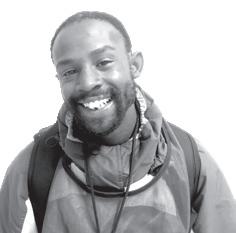
Dear reader, I’ve been dealing with the court system since I was in my youth. Now, as an adult, I’m going through it all.
It started in 2015. I was homeless, trying to make a fast buck selling narcotics on D.C. streets, from weed, crack, and heroin, the worst drug. Now I’m just finishing up all my parole time, still with nothing to show for it. I hope to come home now and focus. I once saw a quote long ago that said, “It is during our darkest moments that we must focus to see the light.”
But it’s not just my life and streets that are going through it. There are difficulties with the city budget, the federal government can’t fully work, some programs lose funding, and people get laid off. I’m saying all that to say Street Sense gave me hope by selling the newspaper, making good community connections, and changing my vision on life. “What lies behind you and what lies in front of you pales in comparison to what lies inside of you,” Ralph Waldo Emerson said. That means there is some good left inside of me and others facing hard times. Thank you, supporters!!
DEGNON DOVONOU
Artist/Vendor

It was in 1990 I lost my lovely mother
Yes, I was to be an orphan
How difficult for a boy without the love of a mother
Tears in my eyes, I couldn’t shed them
Fears in my heart, I couldn’t share them
Sitting down on the rock, I decided to live my life as an orphan
I accepted my challenge as it needed to be changed
From a young boy to a grown man, I knew I didn’t have any option
Other than taking the reins to lead my siblings through the rains
Rain of fear? Rain of hunger? Rain of tears I knew I would lead them out
I decided to take the greatest action as a leader, Holding it on tight as a commander
Not only to be able to succeed in my life and siblings’ lives,
But to make sure I make my lovely mother happy beyond
Since then, I have decided to look before I leap I didn’t say it just because I said it, but I meant it
My actions were taking care of orphans like me
Because I know how it feels
Since life changed and I became homeless, I know many are still looking for me I know I have to keep it instead of giving it up
Holding onto it for me is a vitality
Making it work may look and seem a banality
Keep believing that it will change is for me a reality
Seeing it change a day sooner or later will be a glory
Enjoying it at the end of the party will be a victory
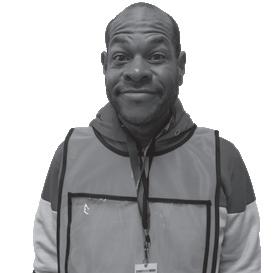
FREDERICK WALKER
Artist/Vendor
I love my new apartment.
I like my next-door neighbor. I care about my family.
I love my wife. She takes care of me.
BRIAN HOLSTEN Artist/Vendor
A marketplace sale opportunity
Only possible if we made it there
Grandmother bought me a wallet I told her, “Thank you so much.”
Mother gave me a quarter As I hoped to make a wish
I saw all the pennies in the water The water sprouted into the fountain
I never stopped spending on a belief Every wish may come true
An elder led me to the well She held my hand with firmness
All throughout time, I came to the well In hopes to see her again
I wished to have newfound friends I hoped for a better tomorrow
The plants around the water illuminated The well glowed with copper pennies
I wished again to survive in A world so hostile to children
Then, I found change within me It will come naturally, the passage of time
To endure one more night at the well I made one more wish
(The moon’s a coin, the Well has drowned)

RONNELL WILSON
Artist/Vendor
My recovery
Will get there because of me
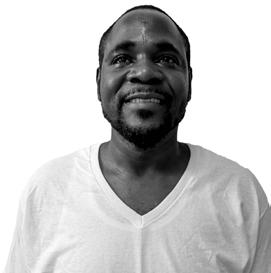
Just not as simple as one, two, three And a tad bit of luck is very clear to me — Giving up would be blasphemy
NA, AA, and SMART recovery, Are tools I use to take care of me
My prayers don’t stop, they can’t, they won’t Many days, it’s as simple as picking up the phone
Who else out there will take care of me?
It’s mine, not yours, yes, my recovery!
LEVESTER GREEN Artist/Vendor
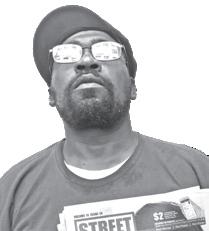
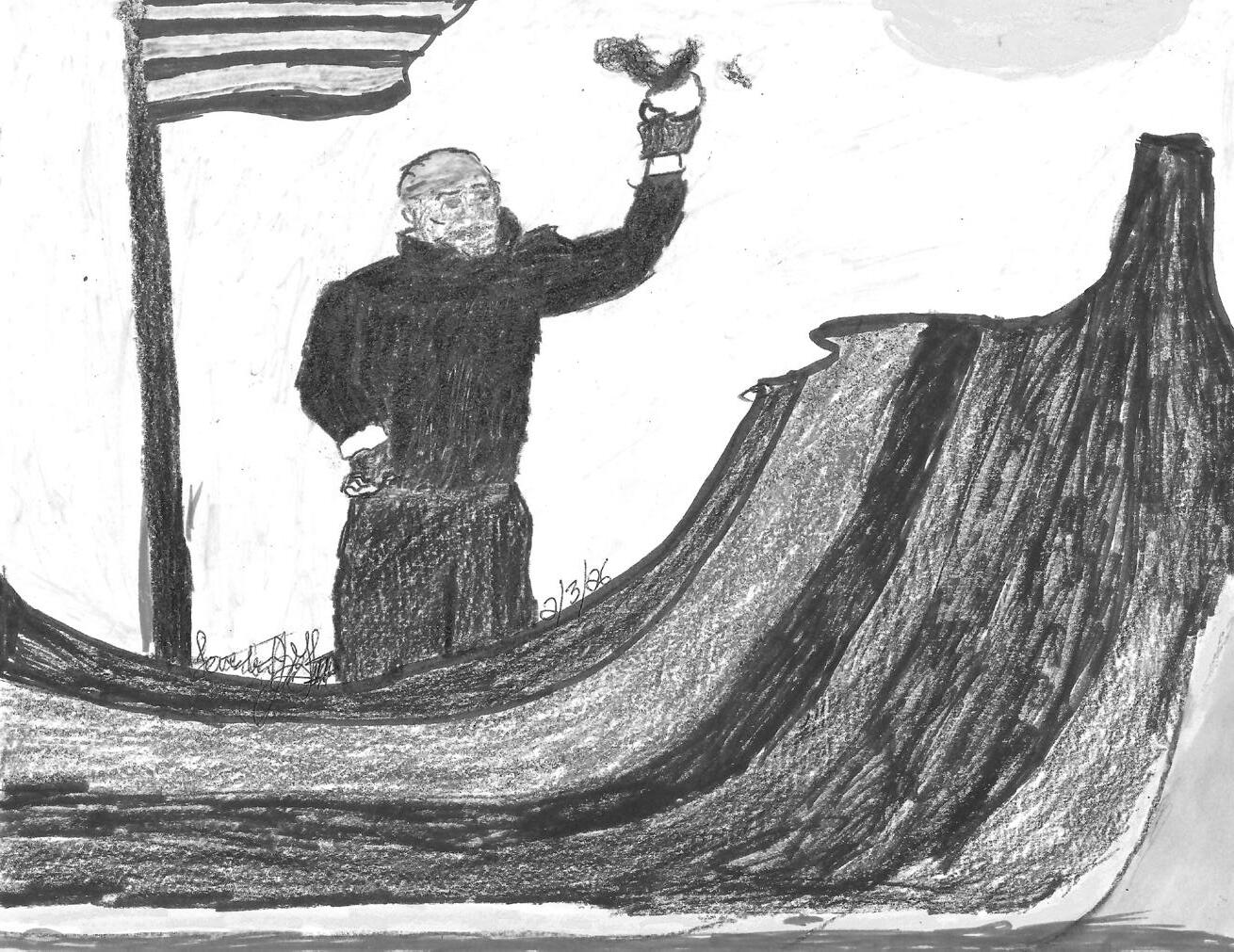
Others I have met are MC Eiht and Ed Lover in Daytona Beach for Black College Weekend. Patrick Ewing came to my Southeast neighborhood barbershop on 6th Street to get his haircut when I was a youngin’ and going to get mine cut there at the same time. Rapper WC (dub-C) got straight off the tour bus and walked up to me in line to greet me with a handshake at the Myspace.com free Ice Cube concert on New York Avenue by the convention center.
I took my mother along with me as my guest when I was invited to a poetry reading and meet and greet with Sonia Sanchez after hours in downtown D.C. I’ve also met local newscasters and anchors: such as Angie Goff, Derrick Ward, and Surae Chinn, News 4 meteorologist Veronica Johnson, Channel 9 reporter Russ Ptacek, and former 1580 AM on-air personality Steph Lova.
In sports, I met former Commanders players Dexter Manley and Brian Mitchell. I’ve also met former heavyweight champion Riddick Bowe, Wizards broadcaster and former player Phil Chenier, and former point guard Michael Adams. I also met former Browns and Ravens offensive tackle Orlando “Zeus” Brown. May he rest in peace. Let me know if I’ve overlooked anyone, and that’s not including some of the standouts who I’ve attended high school with!
ROCHELLE WALKER Artist/Vendor
To produce our purpose, our price, and our plans.
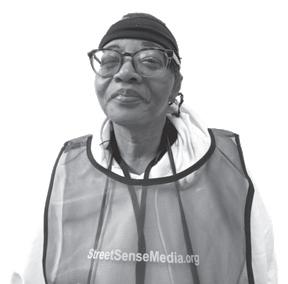
Purpose: I ask myself this question: What on earth am I here for? The answer: This is not about me. This is not about you. Our purpose in life is far greater than our personal lives. But I still need to fulfill my wildest dreams! Here I am writing poems and trying to understand how I got here. And, I can’t believe I am still here at Street Sense Media.
Price: What’s my price? What does it cost? What I believe or what I receive. Or what I can perceive, that one day I will be the greatest poet who ever lived. And that God called me to do this.
Plans: Do I need a plan? Does God follow a plan? We all need help. We all need someone to look up to. Yes, I need a plan so I will land on my feet. I’m still working on it. I’ll let you know when I finish it.
So, let me ask you: What are the three P’s in your life?
Across
1. Eel, in sushi restaurants
6. Dudley Do-Right’s org. (abbr./init.)
10. Little amount of Brylcreem that will “...do ya”
13. Sasha Obama’s big sister
14. Blacksmith, at times (HORSE anagram)
15. 12 meses (Sp.)
16. “The 23rd ____ “ (much-cherished Bible passage, which begins “The Lord is my shepherd...”)
17. Living structures sold via Sears catalogs from 1908 - 1940 (2 wds.) (3,6)
19. Headwear known as boaters (2 wds.) (5,4) (START WASH)
21. Turkish generals
22. Boaters tool seen 2x in “Board here to go to a regatta”
23. Eyeball covering (CLEARS anagram)
24. “Eureka! I’ve been looking all over for this!” (5 wds.) (2,3,4,2,2)
30. Like many mittens
31. ___ de Triomphe (Fr.)
32. Meditation sounds
35. Bedouin
36. Windy City rail inits.
37. Chevy’s destination in the hit tune “American Pie”
39. Cousin of calypso
40. Batman and Robin, e.g.
41. Donnybrooks
42. “From this point going forward...” (2 wds. (3,10) (CONFER WHEN HOT anagram)
46. Egyptian underworld god
48. Realtor’s offering
49. Nuremburg Trials defendants
50. Useful ability for one seeking to join a church choir (2 wds.) (4,5)
56. Memory-aiding phrase known to every cub reporter... and a description of a group tucked into 5 of this puzzle’s answers (3 wds.) (3,5,2)
58. Your basic vowel string
59. Cause of inflation?
60. “We Shall ____ Moved” (Civil Rights Era anthem) (2 wds.) (3,2)
61. Mother-of-pearl, e.g. (CRANE anagram)
62. “Nova” network, familiarly (abbr./init.)
63. Kind of worm
64. Feeling with which most teens approach parental discussions about sex
Down 1. No Clue
2. Early political cartoonist whose last name, with a Y added, describes how some of his targets considered his barbs
3. Banned apple spray
4. Desert-denizen “monster,” or a name for an Arizona river
5. “Holy crap! That just blows me away!” (3 wds.) (1,2,5)
6. Subj. matter of a publ. spkng. course (abbr.)
7. Angus and Hereford are two types
8. Verbal shrug
9. Take initiative in advance to prepare for an anticipated problem or event (CAPTOR anagram)
10. Responds quickly to a friend’s request for an in-person visit (2 wds.) (6,4)
11. Lend ___ (listen) (2 wds.) (2,3)
12. ___ nova
14. This is a trap
18. Wrinkly fruit
20. Chemistry Nobelist Otto famous for his discovery of nuclear fission
23. [not my error]
24. Admits, with “up to”
25. Fish ____
26. Cassanova and Hugh Hefner, famously
27. Suffix with pay or schnozz
28. What informers do to their partners in crime (2 wds.) (3,2)
29. Slice of history
33. ____ ‘n’ greet
34. Office get-together, informally
36. Word that can go before ball, card or stick
37. Ring finger’s place (2 wds.) (4,4)
38. “Evil Woman” band, for short (abbr./ initialism)
40. Some batters, for short (abbr./init.)
41. Cat call
43. “...____ that doesn’t work, then try to...” (2 wds.) (2,2)
44. ___ up (getting smart)
45. Up ____ and personal
46. Ready to be drawn, at the local tavern (2 wds.) (2,3)
47. Sir, in India
50. High-fat diet
51. Abbr. for compass direction located one point west of northwest
52. Four quarters, but not 10 dimes
53. Cheese-nibbling squeakers
54. Woman’s name that, spelled in reverse, is Elvis Presley’s given middle name
55. Took to (or got taken to) court
57. Tennessee athlete, briefly
This crossword puzzle is the original work of Patrick “Mac”McIntyre. It is provided to us courtesy of Real Change News, a street paper based in Seattle, Washington. Learn more about Real Change News and the International Network of Street Papers at realchangenews. org and insp.ngo.
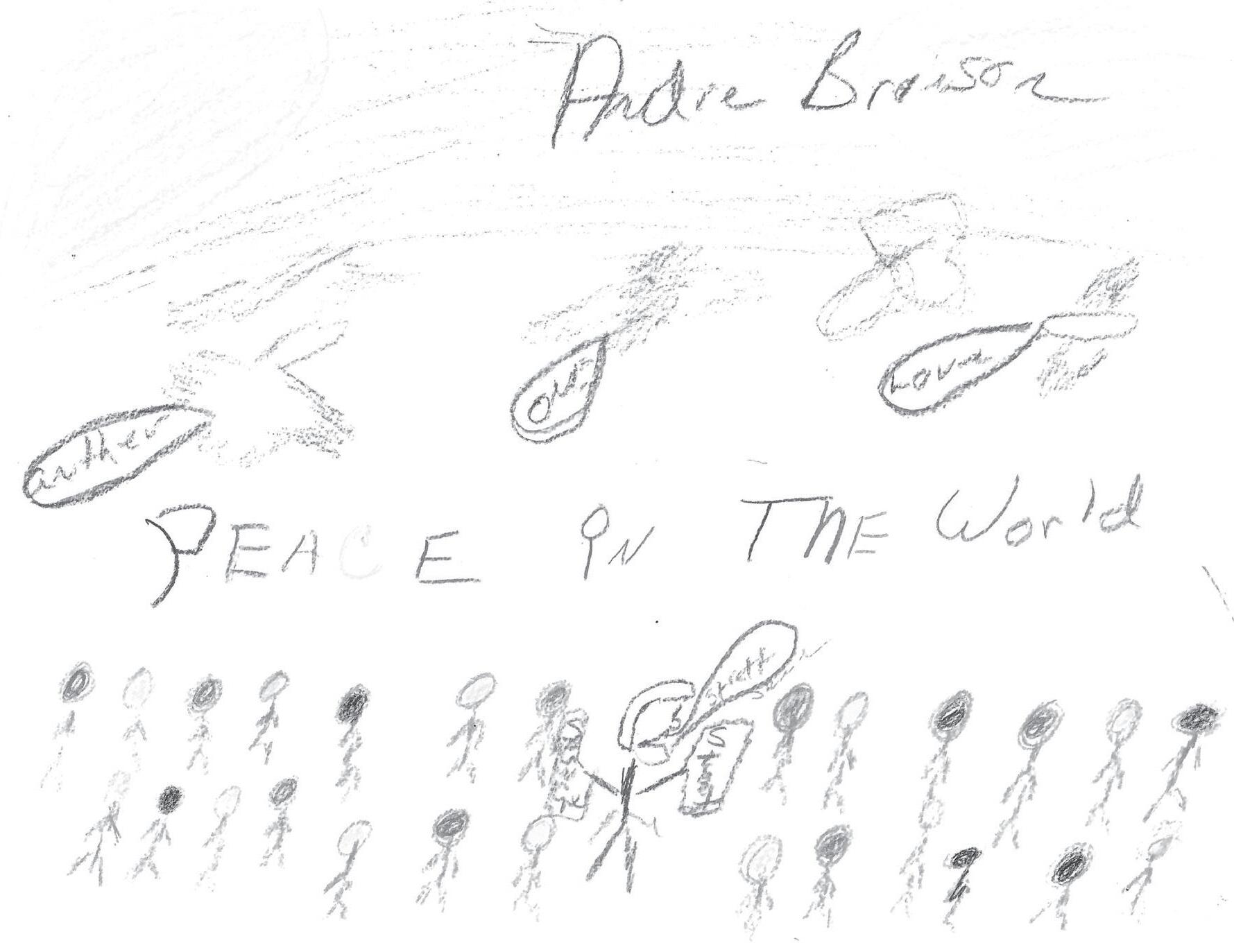

Academy of Hope Public Charter School
202-269-6623 // 2315 18th Pl. NE
202-373-0246 // 421 Alabama Ave. SE aohdc.org
Bread for the City 1525 7th St., NW // 202-265-2400 1700 Marion Barry Ave., SE // 202-561-8587 breadforthecity.org
Calvary Women’s Services // 202-678-2341 1217 Marion Barry Ave., SE calvaryservices.org
Catholic Charities // 202-772-4300 catholiccharitiesdc.org/gethelp
Central Union Mission // 202-745-7118 65 Massachusetts Ave., NW missiondc.org
Charlie’s Place // 202-929-0100 1830 Connecticut Ave., NW charliesplacedc.org
Christ House // 202-328-1100 1717 Columbia Rd., NW christhouse.org
Church of the Pilgrims // 202-387-6612 2201 P St., NW (1-1:30 on Sundays only) churchofthepilgrims.org/outreach
Community Family Life Services 202-347-0511 // 4860 Fort Totten Dr, NE cflsdc.org
Community of Hope // 202-232-7356 4 Atlantic St., NW communityofhopedc.org
Covenant House Washington 202-610-9600 // 2001 Mississippi Ave., SE covenanthousedc.org
D.C. Coalition for the Homeless 202-347-8870 // 1234 Massachusetts Ave., NW dccfh.org
@StreetSenseMedia.org Housing/Shelter Vivienda/alojamiento Case Management Coordinación de Servicios
Father McKenna Center // 202-842-1112 19 North Capitol St., NW fathermckennacenter.org
Food and Friends // 202-269-2277
(home delivery for those suffering from HIV, cancer, etc) 219 Riggs Rd., NE foodandfriends.org
Foundry Methodist Church // 202-332-4010 1500 16th St., NW foundryumc.org/idministry
Identification services
Friendship Place // 202-364-1419 4713 Wisconsin Ave., NW friendshipplace.org
Georgetown Ministry Center // 202-338-8301 1041 Wisconsin Ave., NW georgetownministrycenter.org
Jobs Have Priority // 202-544-9096 1526 Pennslyvania Ave., SE jobshavepriority.org
Loaves & Fishes // 202-232-0900 1525 Newton St., NW loavesandfishesdc.org
Martha’s Table // 202-328-6608 marthastable.org 2375 Elvans Rd, SE
2204 Martin Luther King Ave. SE
Miriam’s Kitchen // 202-452-8926 2401 Virginia Ave., NW miriamskitchen.org
My Sister’s Place // 202-529-5991 (24-hr hotline) mysistersplacedc.org
N Street Village // 202-939-2076 1333 N St., NW nstreetvillage.org
New York Avenue Shelter // 202-832-2359 1355-57 New York Ave., NE
Patricia Handy Place for Women 202-733-5378 // 810 5th St., NW
Samaritan Inns // 202-667-8831 2523 14th St., NW samaritaninns.org
Samaritan Ministry 202-722-2280 // 1516 Hamilton St., NW 202-889-7702 // 1345 U St., SE samaritanministry.org
Sasha Bruce Youthwork // 202-675-9340 741 8th St., SE sashabruce.org
So Others Might Eat (SOME) // 202-797-8806 71 O St., NW some.org
St. Luke’s Mission Center // 202-363-4900 3655 Calvert St., NW stlukesmissioncenter.org
Thrive DC // 202-737-9311 1525 Newton St., NW thrivedc.org
Unity Health Care unityhealthcare.org - Healthcare for the Homeless Health Center: 202-508-0500 - Community Health Centers: 202-469-4699
1500 Galen Street SE, 1251-B Saratoga Ave NE, 1660 Columbia Road NW, 4414 Benning Road NE, 3924 Minnesota Avenue NE, 765 Kenilworth Terrace NE, 850 Delaware Ave., SW, 3240 Stanton Road SE, 3020 14th Street NW, 425 2nd Street NW, 4713 Wisconsin Avenue NW, 2100 New York Avenue NE, 1333 N Street NW, 1355 New York Avenue NE, 1151 Bladensburg Rd., NE, 4515 Edson Pl., NE
Washington Legal Clinic for the Homeless 1200 U St., NW // 202-328-5500 legalclinic.org
The Welcome Table // 202-347-2635 1317 G St., NW. epiphanydc.org/thewelcometable
Whitman-Walker Health 1525 14th St., NW // 202-745-7000 1201 Sycamore Dr., SE whitman-walker.org
Woodley House // 202-830-3508 2711 Connecticut Ave., NW
For further information and listings, visit our online service guide at StreetSenseMedia.org/service-guide
Store Associate
CVS Health // Washington, D.C.
Full-Time (Onsite)
Provide customer service, operate the register, restock shelves, support store operations, and assist across departments including beauty and pharmacy as needed. Training provided.
Requirements: Must be at least 16 years old; able to lift up to 35 lbs; customer service experience preferred
Apply: tinyurl.com/CVSrandb
Target Security Specialist
Target // Washington, D.C.
Part-Time (Onsite)
Maintain a safe and secure store environment by monitoring activity, preventing theft, responding to incidents, and supporting guests and team members. Training provided.
Requirements: Must be 18+; high school diploma or equivalent; able to lift up to 40 lbs; flexible schedule
Apply: tinyurl.com/targetsecurity
Service Desk Associate
Planet Fitness // Washington, D.C.
Part-Time (Onsite)
Provide front desk support, assist members, handle check-ins, sell memberships, and maintain cleanliness of the facility in a fast-paced environment. Training provided.
Requirements: High school diploma/GED preferred; customer service skills; able to lift up to 60 lbs
Apply: tinyurl.com/fitnessdesk
CAMPBELL
NIKILA
Artist/Vendor
Wonders in this world
Make me wonder
At the beginning of life, we wonder
Why
We wonder our purpose
Ever since I left Wonderland
I don’t wonder
I’m living in my dreamcatcher
My loneliness is normal
My sadness is not depression
It’s an awareness of feelings
I have to keep my feelings to myself
For not being understood, I’m tired
It’s not how I feel, but I’m tired
I’m not good enough for who?
I was abused in different ways
But my thinking and caring
Have always been protected
I wonder about the one I bound with
Is he wandering
In Wonderland?
I can’t disconnect
My love is connected
In ways I can’t explain
I wonder if love is a curse
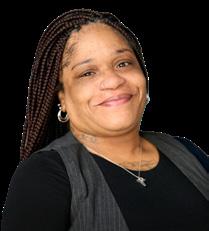

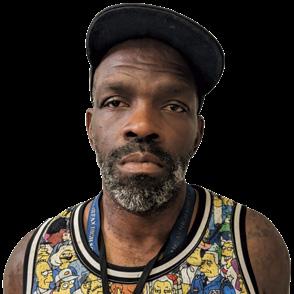
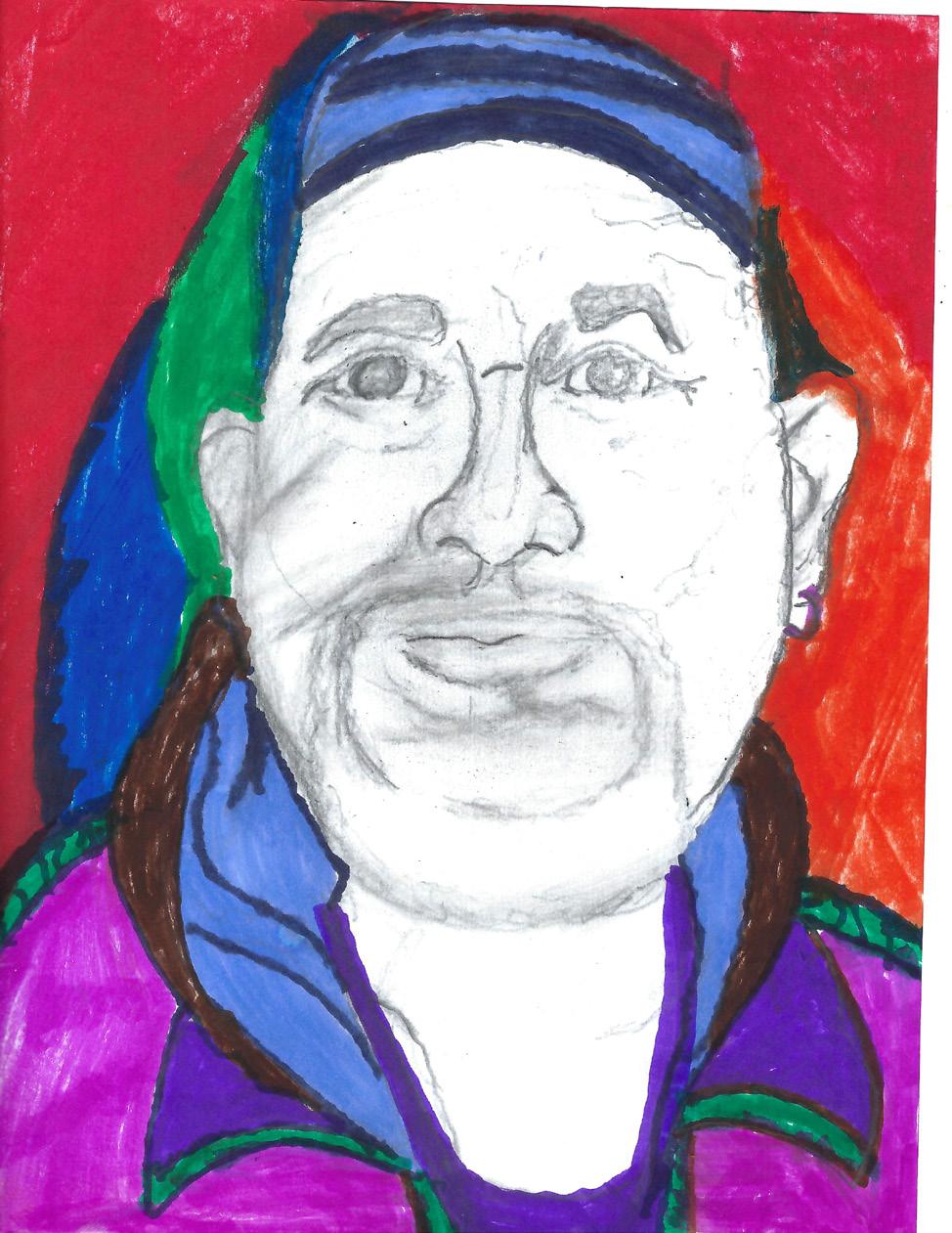
WILLIAM HARGROVE Artist/Vendor
I’m doing a life sentence in loneliness
But set free from my negative addictions
I wonder if there is a positive addiction
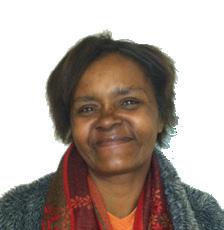
Happy Easter to our newspaper! Happy Easter to my vendor friends working so hard to sell our Street Sense copies. Happy Easter to the staff and the volunteers who give us the time to help us get drawings, paintings, and stories in the paper to show our customers so they can reward us with extra money.
Number one: People who take drugs do not always see the real world in front of them. They are not really there. On a highway, in casual contact, in a home, they can be very dangerous to you. People mistakenly believe they feel better, act better, or are only happy when on drugs. This is just another delusion. Sooner or later, these drugs will destroy them physically. Discourage people from taking drugs. When they are doing so, encourage them to seek help in getting off them.
And number two: Do not take alcohol to excess. People who take alcohol are not alert. It impairs their ability to react, even when it seems to them they are more alert because of it. Alcohol has some medicinal value, but it can be grossly overestimated. Do not let anyone who has been drinking drive you. Drinking can take lives in more ways than one. A little liquor goes a long way; don’t let too much of it have you wind up in unhappiness or death. Deter people from excessive drinking.
RACHELLE ELLISON
Artist/Vendor
Once you start to heal from all the trauma and pain, You learn some days, there must be rain
Before all the gifts from God can align, Some footwork must be done; it’s all in the grind
In life, you get out what you put in, and that’s a fact
In no areas can you afford to relax
In life, you have to face all your fears
So the life you truly want can draw near
Those days can feel like tidal waves, But you must survive the storms so you can get to better days