SERVING THE LGBTQIA+ COMMUNITIES OF THE PACIFIC NORTHWEST
March 2026
VOLUME 18 ISSUE 3
Pacific Northwest Artist Ken Spurlock
Saving Our Stories: The Oregon Queer History Collective
Catherine O’Hara
Beloved Actress and Comedian, Dies at 71
Idaho Bill Would Fine Cities $2,000 Daily for Flying Unapproved Flags
ACLU Files Lawsuit Against Kansas
Damnatio memoriae and the genius of renewal
LGBTQ+ Equality Weekly National & International Headlines
Anti-Trans National Risk Assessment Map: Feb 2026
Paris: The Ultimate LGBTQ+ Destination
INTERVIEWS | Frank Gaimari: Conversations with Legends
Founded 1992 Relaunched 2025
March 2026
Volume 18 Issue 3
www.stonewallnews.net
PO Box 871112
Vancouver, WA 98687
PUBLISHER
Mike Schultz publisher@stonewallnews.org John Deen 1995-2005 Lawrence Stone 1992-1995
ADVERTISING
April Gilbreath advertising@stonewallnews.org 509-541-5615
About the Artist Ken Spurlock
Saving Our Stories: The Oregon Queer History Collective
Catherine O’Hara, Beloved Actress, Dies at 71
Idaho bill to fine cities $2,000 daily for flying unapproved flags
ACLU Files Lawsuit Against Kansas Trans Drivers License Revocations, Bathroom Bounty Hunter Law
Damnatio memoriae and the genius of renewal
LGBTQ+ Equality Weekly National & International Headlines
Anti-Trans National Risk Assessment Map: Feb 2026
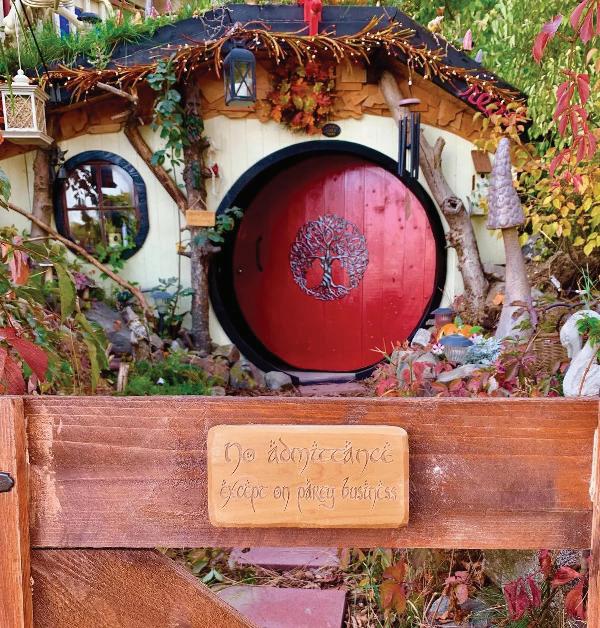
From the Hobbit House
Out on the Ranch
Sacred & Proud
Frank Gaimari: Conversations with Legends
Paris: The Ultimate LGBTQ+ Destination
From Sandusky to Stardom: The Rise of Tim Murray
A Private Life: A Spellbinding Parisian Mystery
Grays Harbor Pride in Jeopardy:
Needed
TRACY SIMMONS
RYAN OELRICH
DAVID CAPOCCI
FRANK GAIMARI
FABRICE HOUDART
PERCY LAIRD
NOVA BERGER
KEN SPURLOCK
OREGON QUEER HISTORY
COLLECTIVE
LOGAN FINNEY
ERIN REED
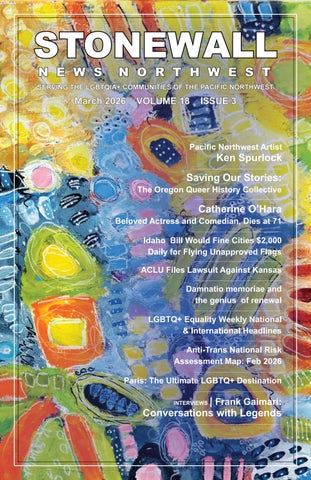
Front Cover art by Ken Spurlock: “Meanderings”
12 x 16 in. — mixed media — 2025
“This piece is inspired by spring time flowers at Memaloose Overlook park in the Columbia Gorge. This hiking trail explodes with rare flowers between May and June. Views of snow capped Mt Hood and Mt Adam’s in the distance. I have hiked in the Columbia Gorge for over 35 years. Hiking through nature’s wonderland gives me an endorphin rush.
--Ken Spurlock
Ken Spurlock
Ken Spurlock in Ridgefield: Mark Making in the Land of Volcanoes
by Percy Laird
In Ridgefield, just north of Vancouver, Ken Spurlock begins many of his paintings the same way: by covering the canvas in black.
From there, color pushes forward — circles, ovals, crosses layered in acrylic, marker, and collage. Some marks disappear. Others remain.
He describes this process as mark
making — the idea that everyone is drawn to certain shapes, and that those repeated forms become a kind of signature. In workshops, he asks people to notice what they naturally return to. The exercise is less about technique and more about recognizing instinct.
That repetition — of shape, of layering — runs through his work.
Spurlock grew up in a workingclass town in northern Michigan, one of three children and the only
son. His father was a construction painter with Appalachian roots. His mother hosted painting parties at home. As a child, he wasn’t formally trained in art, but he was always creating — building toys from cardboard and paper, inventing worlds out of what was available.
At nineteen, he moved to Idaho to attend a small Nazarene Christian college. While studying
SPURLOCK- To Page 18
Artist Ken Spurlock
“We talk about communication a lot in our world: Communication is key, communication is the star! We pat ourselves on the back for using technology, for mastering social media, and we call it a communication win, but what does that mean? Is it a “win” if all we are doing is talking at the world? “
Saving Our Stories: The Oregon Queer History Collective
by Nova Berger
When you think of history, you may picture a stuffy visit to a museum: the smell of old documents, the replicas of Civil War–era dresses, dust collecting on ancient plaques. Those places also often overlook the histories of those who need their stories showcased the most.
The Oregon Queer History Collective is quite the opposite. Its collection is made up of the colorful personal anecdotes and documents of the state’s Queer community. It isn’t about just preserving the past — it’s also resisting the constant erasure of marginalized people.
“We constantly have to be stewards of our own history,” said President Cayla McGrail. “It adds so much to the historical record [since] we’re constantly being erased.”
Queer archiving
For centuries, archives were controlled by governments, religious institutions, and elite scholars, meaning they primarily preserved documents that reflected dominant political, religious, and social structures. Because archival systems were shaped by those in power, they often excluded marginalized communities — including Queer people — whose lives were criminalized, stigmatized, or forced into secrecy.
Queer archiving is different. By considering the lived experiences of LGBTQ+ people, it challenges the traditional idea that only official records, government documents, and elite voices are worth preserving. Instead of focusing on power, it focuses on truth.
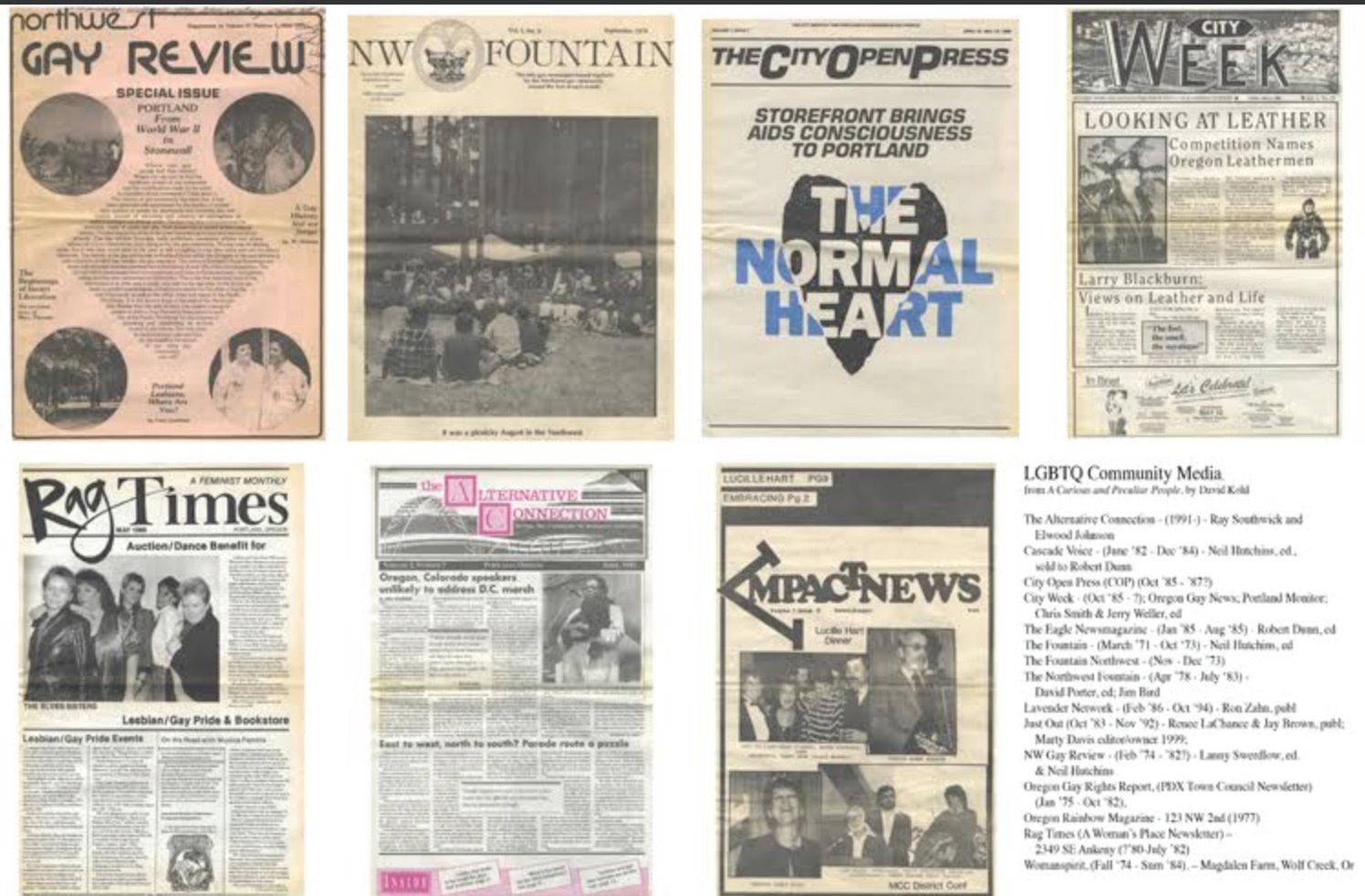
Queer archives actively collect personal letters, zines, flyers, photographs, oral histories, protest signs, and ephemera — materials
that traditional institutions often ignore or discard.
“I think of the Lesbian Herstory Archives in New York using the
moon cycle to organize some of their collections,” said McGrail.
OREGON - To Page 16
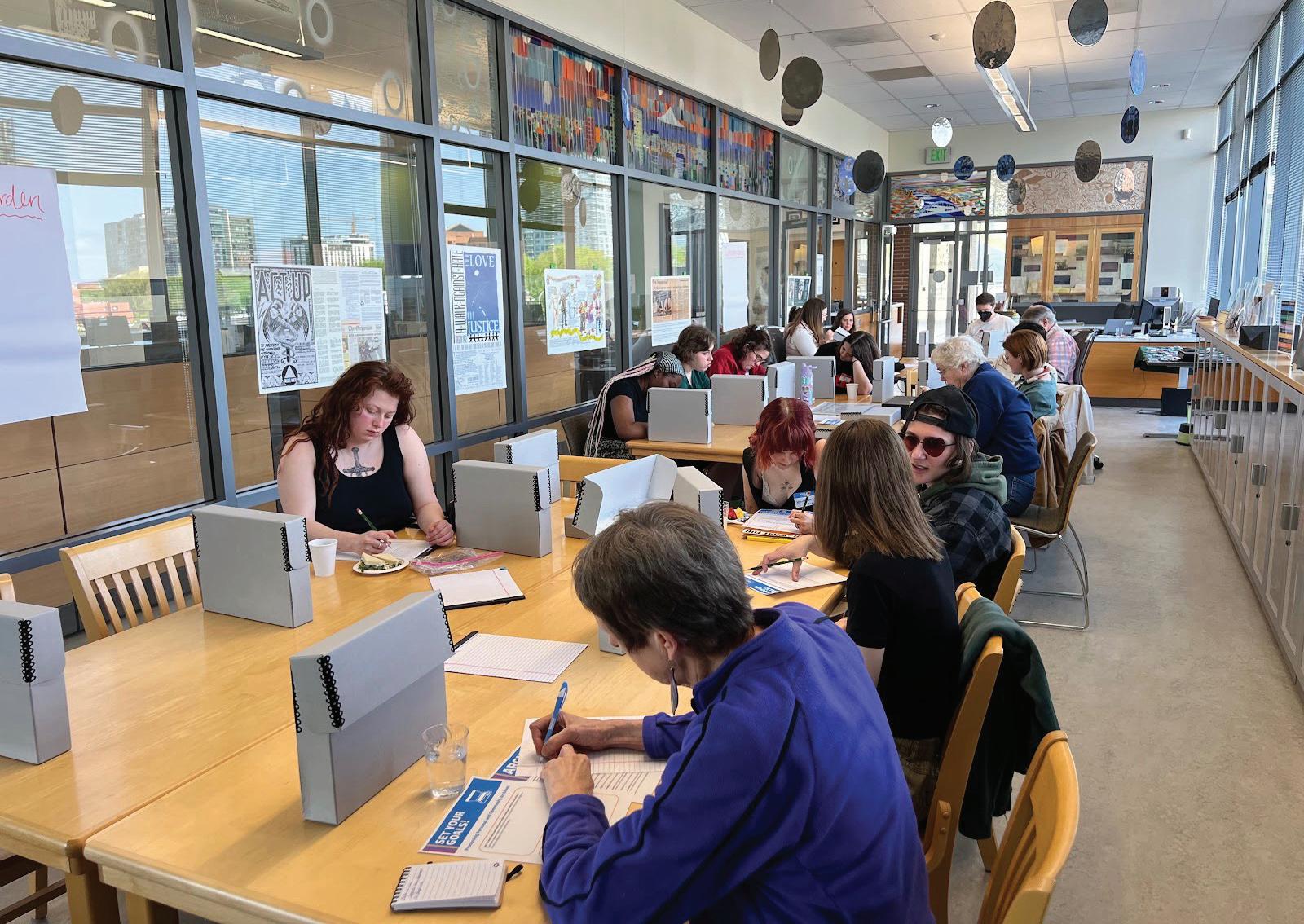
OQHC partnered with City of Portland Archives and Records Center to host “Better than a Shoebox” archive training in April 2025.
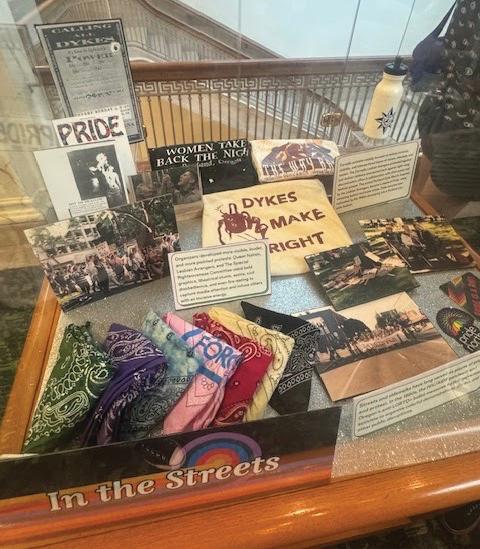
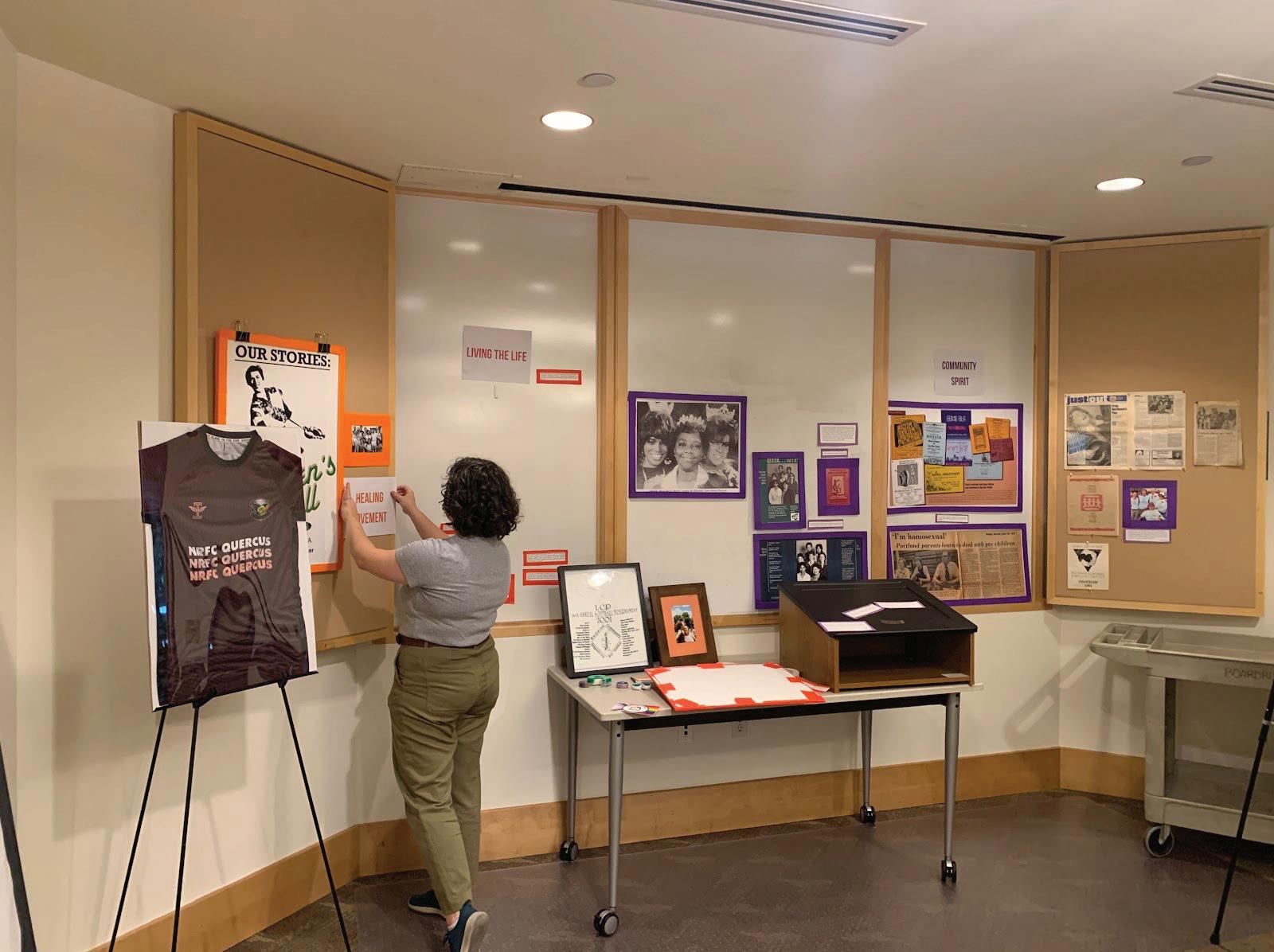
Archival materials related to Portland’s dyke march and Corvallis’ Lesbian Avengers chapter displayed at Multnomah County Central Library as part of exhibit, Love, Life, Resistance & Solidarity: Celebrating LGBTQIA2S+History in Portland, developed in partnership with Portland City Archives.
Catherine O’Hara, Beloved Actress and Comedian, Dies at 71
From her early days in Canadian comedy to her status as a global icon, Catherine O’Hara’s legacy will endure. She will be deeply missed, but her remarkable body of work ensures that her influence and memory will continue to delight and inspire for generations to come.
by Frank Gaimari
Catherine O’Hara, the celebrated CanadianAmerican actress and comedian, has passed away at the age of 71. Her manager confirmed the news on January 30, 2026, sharing that she died peacefully at her home in Los Angeles following a brief illness. O’Hara leaves behind a legacy of humor, heart, and unforgettable performances that have endeared her to generations of fans around the world.
Born in Toronto, Canada, in 1954, O’Hara began her remarkable career with the legendary comedy troupe The Second City, which later evolved into the groundbreaking sketch show “SCTV.” Her sharp wit and
comedic timing shone on “SCTV,” earning her an Emmy Award for writing in 1982 and establishing her as a comedic force to be reckoned with.
O’Hara’s film career is a treasure trove of beloved classics. She brought her unique charm and energy to Tim Burton’s “Beetlejuice” (1988) as the eccentric Delia Deetz, a role she reprised to great acclaim in the 2024 sequel, “Beetlejuice Beetlejuice.” Her portrayal of Kate McCallister, the frantic yet loving mother in “Home Alone” (1990) and its sequel, “Home Alone 2: Lost in New York” (1992), remains a holiday tradition for families worldwide, her memorable performances capturing both comedy and genuine emotion.
Her collaborations with
director Christopher Guest in mockumentary favorites such as “Waiting for Guffman” (1996), “Best in Show” (2000), and “A Mighty Wind” (2003) showcased O’Hara’s comedic brilliance and versatility. Each role demonstrated her ability to infuse characters with depth and humanity, earning her the admiration of her peers and audiences alike.
However, it was her role as the eccentric and theatrical Moira Rose in the Emmy-winning sitcom “Schitt’s Creek” that brought O’Hara renewed acclaim and a devoted global fanbase. Her performance as Moira — a character both hilarious and heartfelt — earned her an Emmy Award in 2020 and solidified her place as a television icon.
Beyond her on-screen work, O’Hara lent her voice to animated classics like “The Nightmare Before Christmas” (1993) and “Frankenweenie” (2012), bringing life to unforgettable characters. In recent years, she continued to impress audiences with roles in HBO’s “The Last of Us” and Apple TV’s “The Studio,” earning Emmy nominations for both performances and demonstrating her enduring
relevance and talent.
Off-screen, O’Hara was a devoted wife and mother. She married production designer Bo Welch in 1992, and together they raised two sons, Matthew and Luke. The family made their home in Los Angeles, where O’Hara was named honorary mayor of Brentwood in 2021 — a testament to her warmth and generosity in her community.
Catherine O’Hara’s passing is a profound loss to the entertainment world. Her ability to bring humor and humanity to every role made her a cherished figure both in Hollywood and beyond. Fans will forever treasure the joy she brought into their lives through her work, her spirit living on in the laughter and love she inspired.
From her early days in Canadian comedy to her status as a global icon, Catherine O’Hara’s legacy will endure. She will be deeply missed, but her remarkable body of work ensures that her influence and memory will continue to delight and inspire for generations to come. Rest in peace, Catherine O’Hara.
Eugene Levy, Catherine O’Hara, Dan Levy, and Annie Murphy / IMDb
Catherine O’Hara
“For us as people who have been longtime queer-affirming communities, it’s not lost on us that this bill is a real target to the queer community, because it’s an attempt to really erase the pride flag from public space. That feels like targeted discrimination. “
-- Rev Sara LaWall, Boise Unitarian Universalist Fellowship
This article first published by FaVS, a 501(c)(3) nonprofit. Please consider supporting their important work at https:// favs.news/
by Logan Finney
Idahoans serenaded the capitol halls Monday morning with a spin on the gospel song “This Little Light of Mine” as lawmakers made their way to the House State Affairs Committee.
“This little flag of mine, I’m gonna let it fly,” the crowd sang. “Let it fly, let it fly, let it fly!”
The committee heard House Bill 561, legislation that would strengthen an existing law that forbids local governments from flying flags that have not been approved by the state legislature.
“You can have all these flags anywhere you want, you just can’t put them up the government flag poles,” said bill sponsor Rep. Ted Hill, R-Eagle. “Local control can be oppressive, in shoving these agendas down someone’s throat. That actually doesn’t include everybody. The term ‘inclusive’ is an entertaining term, because it rarely includes me when that term is used.”
The bill would add a $2,000 daily penalty for each flag flown, and empower the attorney general with a duty to enforce the law. It would also specify that only the official city and county flags “as established prior to January 1, 2023” can be flown. The Boise city council voted to designate the LGBTQ+ pride flag as an official
Idaho Bill Would Fine Cities $2,000
Daily for Flying Unapproved Flags
city flag after state lawmakers created Idaho Code 67-2303A.
Boise mayor defends pride flag as symbol of welcome
Boise Mayor Lauren McLean testified before the committee Monday to defend her city’s actions.
“The pride flag we have flown —–for over a decade —– as a symbol of being a welcoming and safe city for everyone. The flag is seen as a representation of our city’s values and a statement that you can welcome all, respect all,” McLean said. “I want to be clear that the pride flag is an expression of welcoming all people, and it is my job to ensure that we see and welcome everybody in our community, including those that identify as trans.”
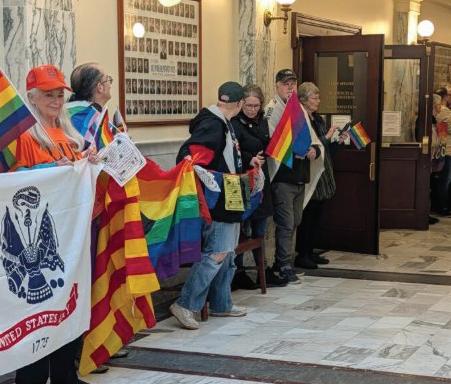
The Rev. Sara LaWall of Boise Unitarian Universalist Fellowship helped coordinate the group that lined the statehouse hallway outside the hearing room with a wide variety of flags and banners.
“There are so many different people that are part of this community. Flags and banners are a way to signal welcome, inclusion, support, celebration,” LaWall told FāVS News.
“When we start to ban those opportunities, our lawmakers are sending us the message that
celebration and inclusion of all people in our communities is not okay with them,” LaWall said. “Particularly for us as people who have been longtime queeraffirming communities, it’s not lost on us that this bill is a real target to the queer community, because it’s an attempt to really erase the pride flag from public space. That feels like targeted discrimination.”
Boise activist Nikson Matthews, a transgender man, echoed those sentiments in his testimony.
“It really means a lot to me to live in a city that says that I am included —– because, as what has been shared, I live in a country and a state right now that doesn’t feel that way,” Matthews said.
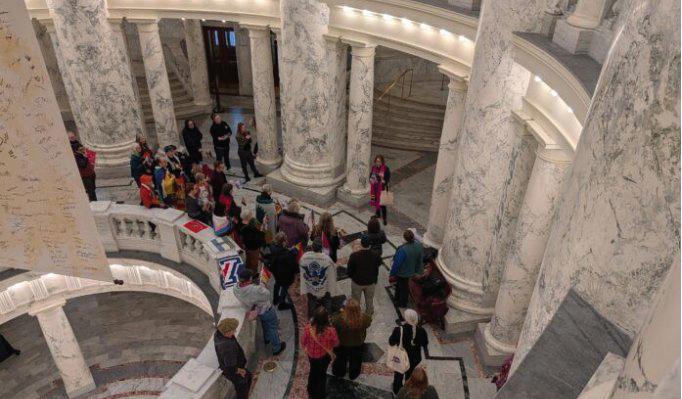
Crowd at the Idaho legislature (Logan Finney/Idaho legislature (Logan Finney/ FāVS News).
The Rev. Josh Lee of Boise First United Church of Christ told FāVS News that his congregation, the first Idaho church to become IDAHO - To Page 19
Crowd at the Idaho legislature (Logan Finney/ FāVS News)
ACLU Files Lawsuit Against Kansas Trans Drivers License Revocations, Bathroom Bounty Hunter Law
This article first published by Erin in In The Morning. Please consider becoming a subscriber of her important work at https://www. erininthemorning.com/
Reed
Eviolence, and may still be sued by individuals who are ‘aggrieved’ because they think they’re in the wrong restroom.”
rin in the Morning was the first to report that transgender residents across Kansas were receiving letters demanding the immediate surrender of their driver’s licenses. The letters were triggered by a new law that had just gone into effect, House Substitute for Senate Bill 244, which immediately invalidated driver’s licenses for transgender people and enacted what may be the harshest bathroom ban in the nation. The law and the speed at which it began impacting people left transgender Kansans scrambling and stunned commentators who were unaware of the serious escalation targeting transgender people in the state. Now, the ACLU has filed a lawsuit in Kansas state court to block the law. If successful, the challenge could buy transgender residents time or see the law overturned altogether.
The lawsuit, Doe v. State of Kansas, was filed on February 27 in the District Court of Douglas County by the American Civil Liberties Union, the ACLU of Kansas, Stinson LLP, and Ballard Spahr LLP. It was brought on behalf of two anonymous by Erin
plaintiffs, Daniel Doe and Matthew Moe, both transgender men living in Lawrence, Kansas. The complaint challenges SB 244 on six grounds under the Kansas Constitution, alleging violations of due process, personal autonomy, informational privacy, equal protection, freedom of expression, and the state’s single-subject rule. The plaintiffs are seeking a temporary restraining order to block the law immediately, followed by a permanent injunction.
The lawsuit challenges SB 244, a bill that was rushed through the Kansas Legislature in January. Governor Laura Kelly vetoed the bill on February 13, but the legislature overrode her veto five days later. The law is sweeping in its impact on transgender people. It retroactively invalidates driver’s licenses that display a gender marker reflecting a transgender person’s gender identity, ordering the state Division of Vehicles to demand their surrender, which appears to have occurred on Wednesday as thousands of transgender Kansans got letters demanding just that. It bans transgender people from using restrooms that match their gender identity in government buildings—a category that extends to libraries, courthouses, state parks, hospitals, and interstate rest stops—with criminal penalties including jail time. And most
significantly, the bill creates a private “bathroom bounty hunter” provision allowing anyone encountering a transgender person in a restroom—including potentially in private businesses— to sue them for large sums of money.
The lawsuit is being brought by two anonymous plaintiffs, both transgender men. Both hold driver’s licenses with male gender markers. SB 244 retroactively invalidates those licenses, which will “forcibly out Plaintiffs as transgender.” One plaintiff, Daniel Doe, is an administrative associate at the University of Kansas whose job requires him to drive university vehicles twice daily.
The other, Matthew Moe, is a PhD student who works at a local bar and frequently ends shifts at 3 AM—without a valid license, he would be forced to bicycle home at unsafe hours. The bathroom provisions are equally punishing to the plaintiffs. SB 244 places both men in what the complaint calls an “untenable and dangerous position.” If they continue using the men’s restrooms as they have for years without incident, they risk fines or misdemeanor charges. If they begin using the women’s restrooms, they will be immediately outed as transgender—and may still face confrontation or lawsuits. As the complaint states, they “may be harassed and targeted for
The filing argues that the law violates the plaintiffs’ rights in at least six ways. One claim is that the law failed to give transgender residents sufficient notice or opportunity to comply, given that driver’s licenses were invalidated immediately with no grace period. Another argues that SB 244 violates the Kansas constitutional right to personal autonomy and self-determination. A third claims it violates the right to privacy by forcing transgender people to disclose their transgender status every time they present a license. The complaint also alleges that the law violates the right to equality under the law: because SB 244 imposes a sex-based classification, it must survive intermediate scrutiny under state precedent, meaning it must be substantially related to an important government objective— a test the ACLU argues it cannot pass. The filing further contends that the law violates transgender residents’ right to free expression by compelling speech through their driver’s licenses. Finally, it argues that the law itself was passed in an unconstitutional manner, with legislators logrolling multiple unrelated subjects into a single bill—a violation of the Kansas Constitution’s singlesubject rule.
It is notable that the lawsuit was filed in state court, not federal court. The United States Supreme Court has grown increasingly hostile to transgender rights, allowing the Trump administration’s transgender passport restrictions and state gender-affirming care bans to go into effect. Filing under the Kansas Constitution rather than the federal one insulates this challenge from federal review entirely. The Kansas Supreme Court, which is likely to eventually hear this case, holds a comfortable liberal majority and has repeatedly ruled against Attorney General Kobach, who has publicly complained that the court’s composition makes it “very difficult” for him to win cases. The state-court strategy also follows a path that has already produced results for transgender people in other red states. In Montana, for instance, state courts have blocked a transgender youth KANSAS - To Page 20
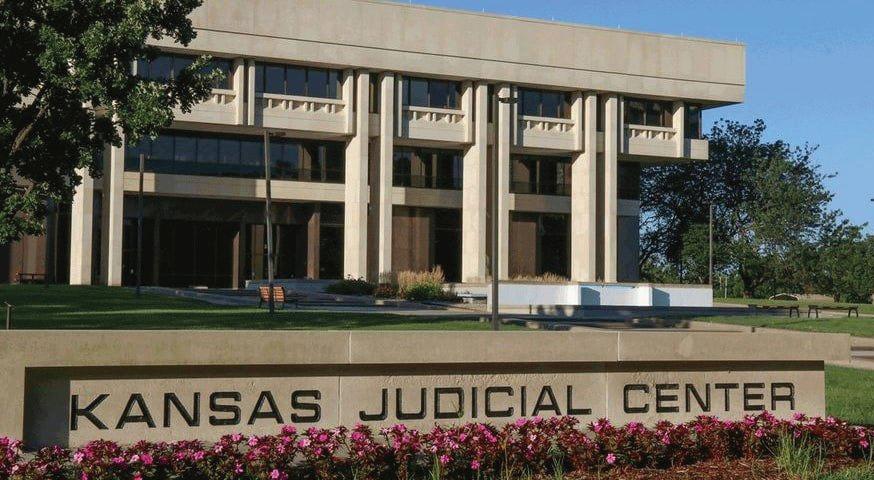
Kansas Judicial Center
Street protests and civil disobedience remain vital expressions of resistance. But this new phase of our history demands that we also reinvent how we organize and build power— work that’s harder.
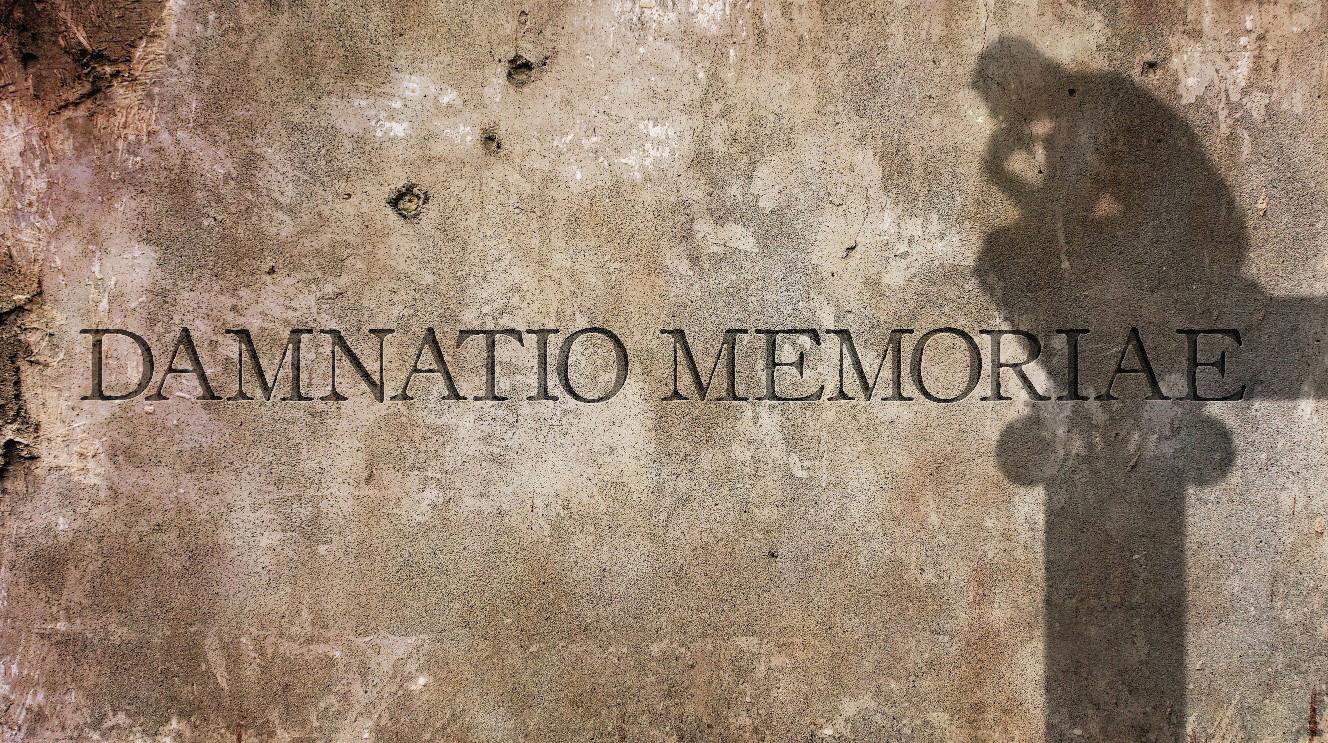
Damnatio memoriae and the genius of renewal
by Fabrice Houdart
Our community is back in the streets! Recently hundreds gathered at Stonewall to protest after the National Park Service removed the rainbow flag from the historic landmark(see here). Last June, around 100,000 protesters defied Viktor Orbán’s constitutional ban on Pride to march through Budapest. Both events were reminiscent of a tradition of queer civil disobedience—the anger, chants, signs, and the courage to show up in the freezing cold.
We have every right to be angry and to express it. The Romans called it damnatio memoriae—the deliberate erasure from history. This practice aimed to remove a person’s political and social presence, wiping out all traces of them from public life. Actions like ignoring World AIDS Day, destroying the Orlando memorial, renaming the USNS Harvey Milk, and lowering the rainbow flag at Stonewall follow the same playbook: erase the symbols, erase the people.
Showing the world we refuse to stay passive—as Pride marches are cancelled and landmarks like Stonewall are disrespected—is also powerful and necessary.
Yet, looking at the photos from Thursday’s rally in USA Today, I noticed something else: most of the crowd was older. The return of vintage homophobia seems to have brought back both old tactics and old activists.
Many LGBTQ+ people — myself included — feel nostalgic for the energy of our past resistance. We remember the thrill of taking our fight to the streets and winning: blocking the FDA floor in 1988, chanting Stop killing us, flooding Castro Street when Harvey won, and standing on the Supreme Court steps as marriage equality became law. I am even personally nostalgic for the 2016 HB-2 corporate coalition.
The rights we enjoy came from people who risked their lives, their reputations, and their livelihoods in successive campaigns. We owe them continuity. The “LGBTQ+ community” is a lineage sustained through courage, and none of us is exempt from sustaining it. That’s why the American LGBTQ+ Museum matters: to preserve memory and challenge us to exceed it.
But as Mark Carney reminded us last month, “Nostalgia is not a strategy.” Ignoring history can lead to repeating it, yet staring too long in the rearview mirror can leave us unable to move forward.
The desire to relive past victories is also rooted in vested economic and political interests. Two generations of organizing have left us with extensive professional networks—from ACT UP-era groups to DEI-era consultants— that face existential threats and would like to return to better
days. Reenacting those battles keeps their relevance alive and, honestly, helps sustain donations and careers. Outrage has become a business model on both sides: conflict drives coverage, and coverage attracts funding. A friend told me there were more cameras than people at Stonewall Park on Tuesday evening after Park Services first removed the flag.
“This is our America too and by God that flag will go back up - for every flag you take down - 10 more will go up!” New York State Assemblyman Tony Simone said.
Politically, this cycle benefits progressive politicians as well. Our communities get attacked, Democrats rush to defend us, and portray conservatives as tyrants. It’s worth noting that, in both Budapest and New York, those who received the most coverage are straight progressive mayors — Gergely Karácsony and Zohran Mamdani.
The Third Chapter of Our History
This week, I spoke with a gay historian about the tensions modernity and technology create for LGBTQ+ people. Community centers are closing, digital life fragments identity, and gentrification has hollowed out the neighborhoods we built. Between 2002 and 2023, gay bars declined by 45%—the pandemic only sped up a trend already underway. Visibility has never been higher,
yet our ability to consolidate and harness queer power has never been weaker.
We now face the challenge of defining what it means to be LGBTQ+ in 2026. This requires articulating a shared vision, beyond simple defense and outrage, that gives younger generations, established leaders, and allies a reason to stay engaged.
The first phase of LGBTQ+ history—from Stonewall through the early 1980s—focused on visibility and liberation. The second, from the AIDS crisis to marriage equality, emphasized survival and legitimacy. We are now entering a third phase: one dedicated to building lasting political, economic, and cultural power.
This work is more difficult because it involves dismantling parts of what we have built. It means retiring tactics that no longer work, closing organizations that mainly sustain themselves, refusing to be useful props for progressive politicians who benefit from constant crises, and creating space for new leaders.
Our next era requires a different kind of genius: the genius of renewal. It’s great to see LGBTQ+ people back in the streets, but what we build when we come home might matter more.
The Nostalgia Trap
This article first published by Fabrice Houdart, a weekly newsletter on LGBTQ+ Equality. Please consider becoming a subscriber of his work at https://fabricehoudart.substack.com
LGBTQ+ Equality
Weekly National & International Headlines
by Fabrice Houdart
This week: Rob Jetten, Paris Mayoral Race, Upmanship in Senegal and Malaysia, Bishops vs. The Vatican in Ghana, US State of the Union, Pedro Pascal, Polari and much more…
Global News
Netherlands: Rob Jetten
Becomes First Openly Gay Prime Minister
Rob Jetten was sworn in this week as the country’s youngest and first openly gay prime minister at age 38, after his Democrats 66 (D66) party narrowly defeated Geert Wilders’ anti-Islam populist party in October’s election. Leading a centre-right minority coalition with the VVD and the Christian Democratic Alliance (CDA), Jetten will need to negotiate major reforms vote by vote in parliament, including a proposed €19bn defence boost, cuts to healthcare and benefits, and stricter asylum policies requiring refugees to apply outside Europe. Sworn in by King WillemAlexander at Huis ten Bosch Palace, Jetten struck an optimistic tone, pledging courage and collaboration.
France: “Gay Conspiracy” Row Shakes Paris Mayoral Race
Just weeks before the first round of the 2026 Paris municipal elections, Culture Minister and mayoral candidate Rachida Dati is facing controversy after Le Nouvel Obs alleged she privately referred to a “gay conspiracy” and a “club of homosexuals” seeking to derail her campaign. The remarks were reportedly aimed at centrist rivals PierreYves Bournazel and former Prime Minister Gabriel Attal, both openly gay. Dati has firmly denied the accusations, calling them “false and shameful,” and announced she will file a defamation lawsuit against the magazine. The episode has reignited scrutiny of her past positions on LGBTQ+ issues, though—including her
February 25, 2026
End of February should now officially be known as “gay mafia” week. Everywhere you look, someone is whispering about a nefarious “gay lobby” (that’s YOU, in case it did not register yet) from Dakar to Silicon Valley. You can feel it in the oddly framed Wired piece about a so called “Gay Tech Mafia,” in Paris City Hall hopeful Rachida Dati’s flirtation with the idea of a “gay conspiracy,” and in Senegal’s newfound obsession with homosexuals. What’s striking is not the originality of these accusations—they’re vintage—but how openly anxious some are about LGBTQ+ people having any kind of agency at all. If they see a “mafia,” it’s because we are being a little more vocal about getting our fair share of the pie: a community slowly learning to understand power and organize it. Power may be the word of the year for our community—how we build it, how we keep it, how we deploy it so it becomes a reality, not just a slander.
opposition to aspects of marriage equality reforms, reservations about surrogacy and assisted reproduction, and abstention on banning conversion therapy.
Senegal: Double Prison Terms for Same-Sex Relations?
You know who else believes in a Gay Conspiracy? Senegal’s Prime Minister Ousmane Sonko, who, introduced a bill that would double the maximum prison sentence for same-sex relations to up to 10 years. The draft legislation, approved by cabinet and sent to parliament—where Sonko’s Pastef party holds a majority—would redefine samesex intimacy as an “act against nature,” impose sentences of five to 10 years, criminalize the “promotion” of homosexuality with three to seven years in prison, and introduce fines of up to 10 million CFA francs. The move follows a wave of arrests reportedly targeting around 30 people this month alone
homosexuality is now linked to burnout - has blocked access to LGBTQ+ dating apps Grindr and Blued (now rebranded HeeSay), with the country’s communications regulator reviewing further legislative measures to curb such platforms in the Muslim-majority nation, according to a parliamentary reply reported by Bloomberg and published in the South China Morning Post
India: A vibrant Mumbai Pride
Ghana: Bishops Push AntiLGBTQ+ Bill In Opposition to Vatican
As reported by The Tablet, Ghana’s Catholic bishops have urged President John Dramani Mahama to reintroduce and pass the controversial “Proper Human Sexual Rights and Family Values Bill,” arguing that it reflects the will of the people and must become law rather than rely solely on education to promote “African values.” Their lobbying positions the conference firmly against the Vatican’s direction, and the Church’s pastoral mission is accompaniment rather than punishment. While the Catechism upholds traditional teaching on marriage, it also demands that gay people be protected from “unjust discrimination”. While I am on this, there is also a petition against the Bill run by AllOut.
Malaysia: Grindr and Blued Now Blocked
Malaysia - the country where
Thousands took to the streets for the 16th Mumbai Pride on February 21, celebrating how far India has come—while underscoring how far it still has to go. Activists marked eight years since the 2018 decriminalization of homosexuality and highlighted milestones such as the recognition of a third gender in 2014 and recent administrative steps expanding access to joint bank accounts and healthcare protections. Yet the Supreme Court’s 2023 refusal to legalize same-sex marriage, leaving the matter to a divided legislature, continues to loom large. Marchers called for a comprehensive anti-discrimination law, legal recognition of unions, an end to the blood donation ban, and greater protections for transgender people—pointing out that, despite judicial gains, India still lacks explicit employment and housing protections and has never elected an openly LGBTQ+ member of parliament.
US News
Trump’s State of the Union
During his State of the Union address, President Donald Trump spotlighted a transgender teen as part of a broader attack on genderaffirming school policies and promoted “Sage’s Law” requiring schools to out trans students to parents. As reported by LGBTQ Nation, Trump also declared an end to DEI initiatives and framed transgender inclusion as a national threat.
Surely we can all agree, no state can be allowed to rip children from their parents’ arms and transition them to a new gender against the parents’ will. We must ban it.
NATIONAL - To Page 22
This article first published on Fabrice Houdart, a weekly newsletter on LGBTQ+ Equality. Please consider becoming a subscriber of his work at https://fabricehoudart.substack.com
Photo courtesy of Fabrice Houdart
Anti-Trans National Risk Assessment Map: Feb 2026
At the one-year mark of Donald Trump’s presidency, the risk for transgender people continues to deteriorate nationwide. The United States now carries a “Do Not Travel” rating for transgender people.
by Erin Reed
This article first published by Erin in the Morning at https://www.erininthemorning.com/p/antitrans-national-legal-risk-assessment-a5d | Please consider becoming a subscriber of her important work at https://www.erininthemorning.com/
The situation continues to deteriorate when it comes to transgender youth care. For adults, we see Kansas as the newest state added to a “Do Not Travel” advisory list.
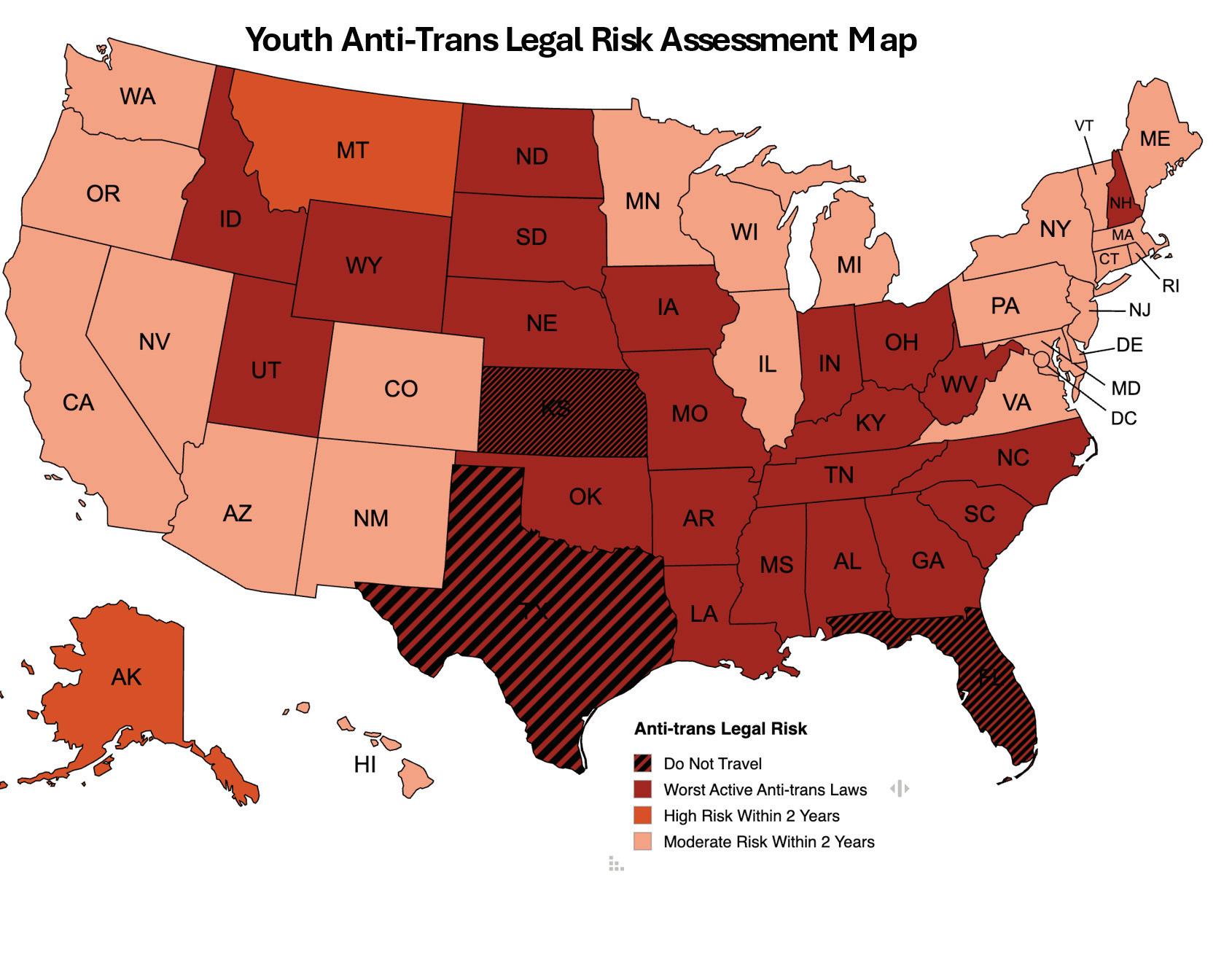
Short summary of updates: The situation continues to deteriorate for transgender youth care, and the risk profile for adults has shifted as well, with Kansas now added to the “do not travel” category. For adults, expanding bathroom bans are driving much of the change—Kansas has escalated due to establishing a bathroom bounty, while Indiana’s ID policy now places it among the harshest anti-trans states in the country. One state improves: Montana, where the state court system has repeatedly blocked or enjoined anti-trans laws under the state constitution. For transgender youth, however, the national picture has grown more unstable. Federal policy shifts, institutional capitulations, and ongoing legal battles have created a volatile patchwork even in states once considered protective. Rather than attempt to track an effectively real-time capitulation crisis, I have elevated every state previously rated below “moderate” to at least moderate risk. In the current environment, no state can reasonably be considered low risk for transgender youth.
About The Map
I have tracked anti-transgender legislation for 5 years. Every day, I’ve gotten messages from worried people wondering how they are supposed to assess their risk of staying in their home state. The messages range from parents of trans youth wondering if their children will be taken from them to trans teachers wondering if their jobs will be safe in coming years. Sometimes people just want to know if there is a safer state they can move to nearby.
I created the legal risk map specifically to help answer that question. Now more than ever, it is a question that needs answering for so many transgender people facing forced medical detransition, arrests for using the bathroom, bans on the use of our names, pronouns, and identification documents, and many other curtailments of our rights to exist in public life.
Methodology
The methodology used is primarily qualitative, with a scoring-rubric element for the worst bills. Part of the methodology is my own expert assessment of laws, of which I am well equipped to do. I have read all 1,000 bills targeting transgender people this year. I have watched hundreds of hours of hearings on anti-trans legislation and am fully aware of all of the players nationally as well as where they are making their pushes against trans rights. I have followed the vote count and regularly talk to activists on the ground in each state. I am looking at how similar states are moving in their legislative cycles. Lastly, I watch for statements by governors and bill drafts to see if the Republican party in various states seems to be pushing anti-trans legislation heavily - you can see many examples of such legislation in this newsletter.
In terms of actual laws, I keep a rubric of the various types of laws that target transgender people. For transgender youth, the most concerning laws are those that prohibit gender-affirming care and mandate medical detransition. Additionally, bathroom bans, laws that rigidly define sex as binary, and restrictions on social transition are other key factors that negatively impact a state’s ranking. For transgender adults, the primary legislative concerns include adult gender affirming care bans, bathroom bans, prohibitions on drag specifically aimed at trans people and pride events, restrictions on changing birth certificates and drivers licenses, and laws that end legal recognition for trans people entirely. These factors play a significant role in how I assess and rank a state’s legislative risk.
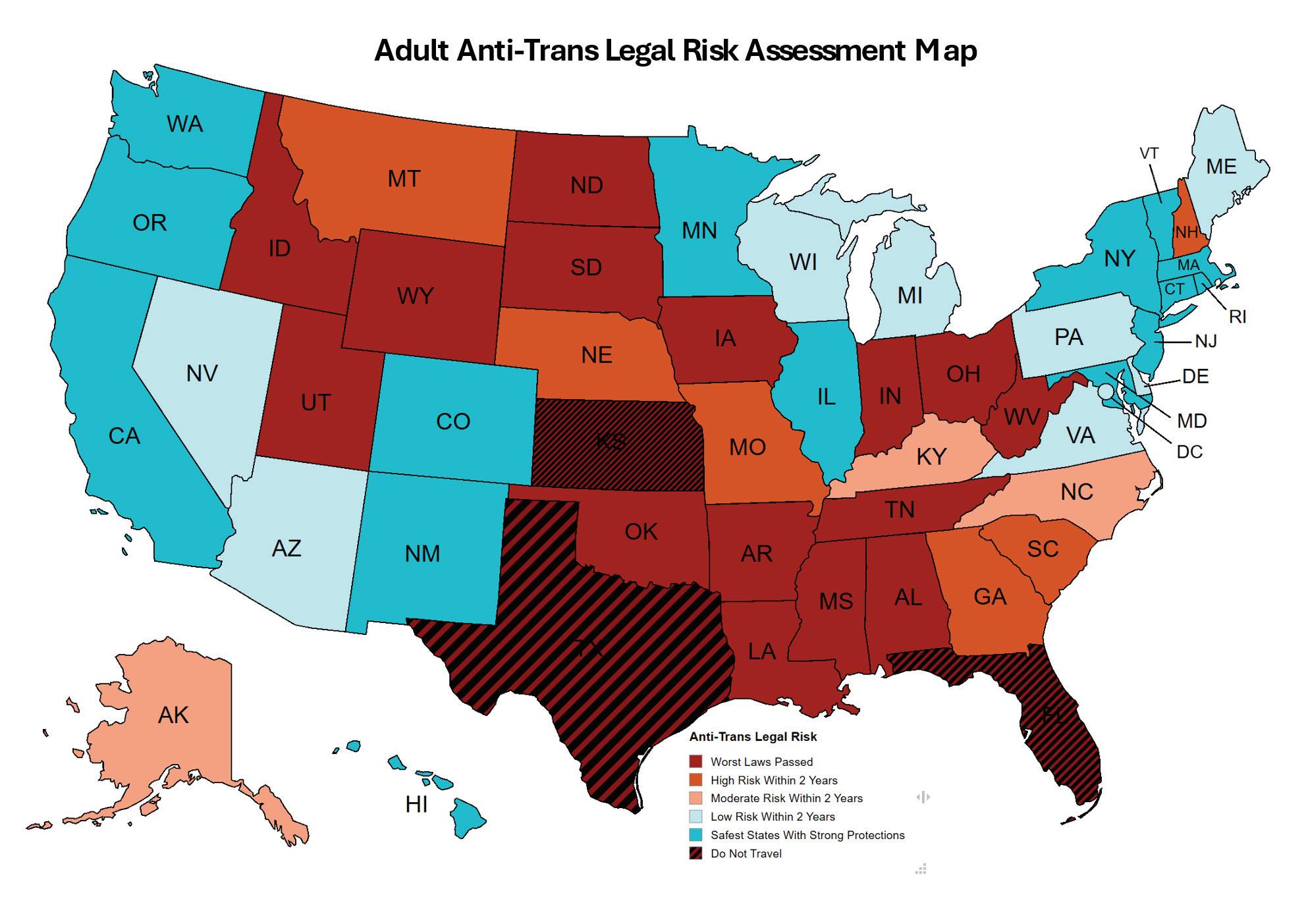
The Adult Trans Legal Risk Assessment Map
Montana (Worst Laws → High Risk), Arkansas (High Risk → Worst Laws), Indiana (High Risk → Worst Laws), Kansas (Worst Laws → Do Not Travel)
Summary of updates:
There are significant changes for transgender adults this cycle. Kansas marks the most dramatic shift, becoming the first “Do Not Travel” state in a year after enacting a bounty-style law that allows private individuals to sue transgender people encountered in restrooms for substantial amounts of money—legislation widely described by experts as among the harshest anti-trans laws in the country and one that could meaningfully affect interstate travel. Arkansas’ risk level has also increased following the implementation of its publicbuilding bathroom ban, and
Indiana has escalated into the highest tier due to a sweeping anti-trans identification document law. One state improves: Montana. It is the first to see its risk profile lowered as a result of cumulative court rulings and injunctions, with the state constitution and courts repeatedly blocking enforcement of antitrans statutes, leaving little of the legislative agenda currently operative.
Nationwide Risk:
Worst Policies In Effect. The wave of executive orders targeting transgender Americans has reshaped the national landscape in chilling fashion. These directives have forced nonprofits to scrub the word “transgender” from their websites, stripped transgender history from the Stonewall National Monument, withdrawn federal funding from schools ANTI-TRANS - To Page 20
Thoughts from the Hobbit House
The Costs of Cowardice & Courage
Why 2026 is Forcing Us to Choose Who
We Really Are
“I’ve reflected on moments when I managed to summon courage—and moments when I fell painfully short. I’ve also learned that sometimes courage isn’t optional. The storm is coming either way. Whether we stand tall or curl up, the only real choice is how we meet it.”
by Ryan Oelrich
Like so many others, I held my breath as I watched hockey star, Scott Hunter, risk everything to courageously invite the love of his life onto the ice after his victory in Heated Rivalry. I definitely was feeling that heat.
We love stories about courage because they make bravery feel clean and contained. Real life isn’t like that. There’s no soundtrack.
No narrator. And often no reward. In 2026, courage looks less like a moment and more like a choice we have to make over and over again.
When I think about courage, my mind drifts to some of my favorite fictional heroes: Bilbo Baggins, a small Hobbit who stepped beyond his round green door into danger and uncertainty; Katniss Everdeen, who stood up to an oppressive system armed
with little more than resolve and a stubborn moral compass; or like Scott Hunter who risked his career and public approval to live honestly and love openly.
These stories move us because they remind us what’s possible when fear doesn’t get the final word. But these characters are fictional. What does it look like in real life in 2026?
When Courage Costs Too Much
Real life doesn’t come with scripts, acts, or applause. Real courage is often quieter. Messier. Less celebrated. And sometimes far more costly.
This year, the people of Minnesota have shown us what that kind of courage looks like.
HOBBIT HOUSE - To Page 26
Out on the Ranch
Belonging, and the Grace of Being Seen
“Out here, belonging is about being seen. It’s about shared ground. Sometimes, all that takes is a few honest words at the end of a long weekend to remind someone that they matter. They belong. They are seen.”
by David Capocci
There is a particular kind of anticipatory quiet that settles over the ranch in the early morning, before guests emerge from yurts, before tours and questions are asked, before engagement arrives along with coffee mugs. It’s in that quiet
that I’m reminded why this place matters. Not just as a mountain ranch, but as a place where people come to be seen, to connect, to belong, often without realizing that’s what they’re looking for.
RANCH - To Page 27
David Capocci at Paca Pride Guest Ranch
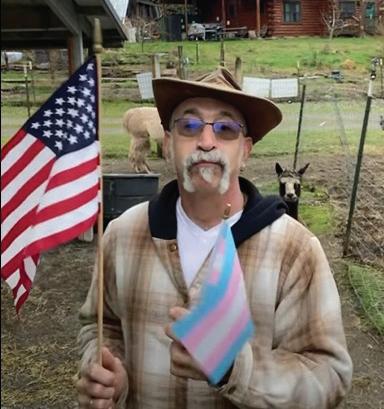
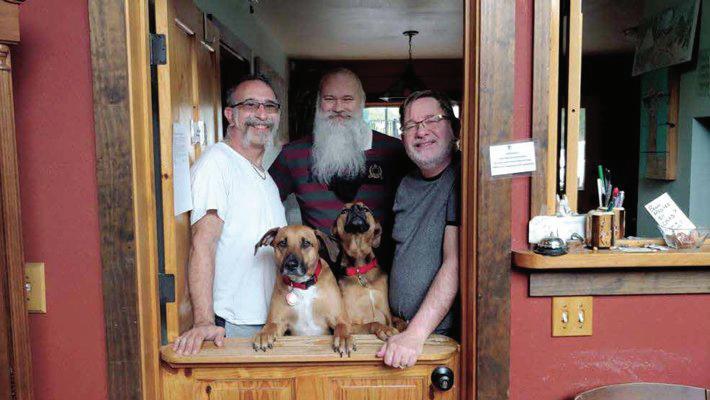
Ryan and his husband built a Hobbit House that’s become a regional attraction.
Sacred & Proud
Why I Adopted My Own Son
“Second-parent adoption exists because being married and being listed on a birth certificate isn’t always enough. Not in every state. Not in every courtroom. Not in a country where the legal landscape for LGBTQ+ families can shift depending on which way the political winds are blowing.”
by Tracy Simmons
Earlier this month I stood in a Spokane County courtroom surrounded by some of the people I love most and made it official: Stanley Francis is my son.
He already was, of course. He has been since the moment he arrived in December, squirming and perfect and unaware of how long we had waited for him. But the law didn’t know that yet — not in the way I needed it to.
So there we were — my wife, our 2-month-old, our chosen family packed into a courtroom — doing the paperwork that would give my son the most ironclad protection the state of Washington could offer.
It was one of the most beautiful days of my life.
People stood up and said things that made me weepy. They
SACRED & PROUD - To Page 25
Illustration by Ken Min
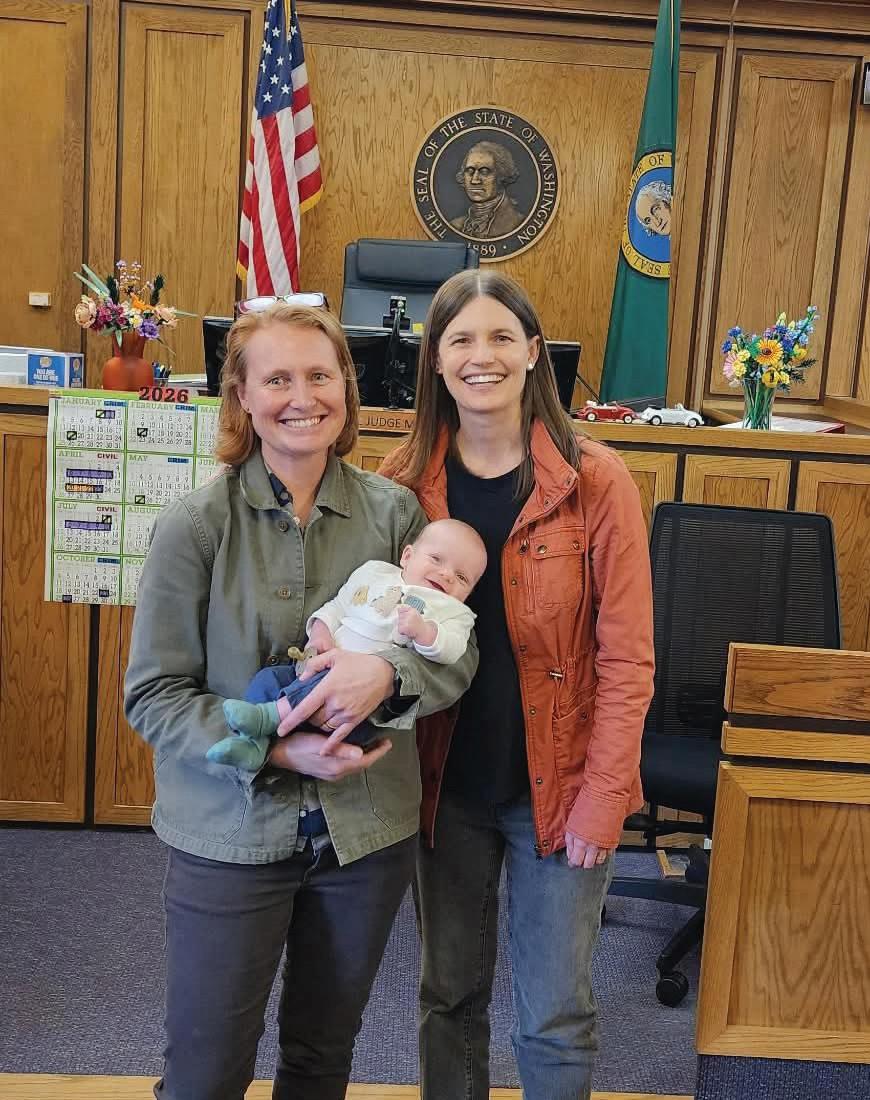
Tracy Simmons (left) and her wife Traci Gillig with their son, Stanley, after an official adoption hearing in Spokane earlier this month.
“What made these interviews so memorable wasn’t just the stories they shared, but the authenticity behind them. Getting to know the real, unfiltered people behind the public personas was both refreshing and deeply rewarding. ”
-- Frank Gaimari
Frank Gaimari: Conversations with Legends
by Lyndal Simpson
Frank Gaimari doesn’t just tell stories — he brings them to life. At 64, this Seattle-based writer and storyteller has turned a lifetime of experiences into narratives that entertain, inspire, and connect with people on a real, personal level. After a 36-year career in the federal government, Gaimari has fully embraced his love for writing, and the results are nothing short of amazing.
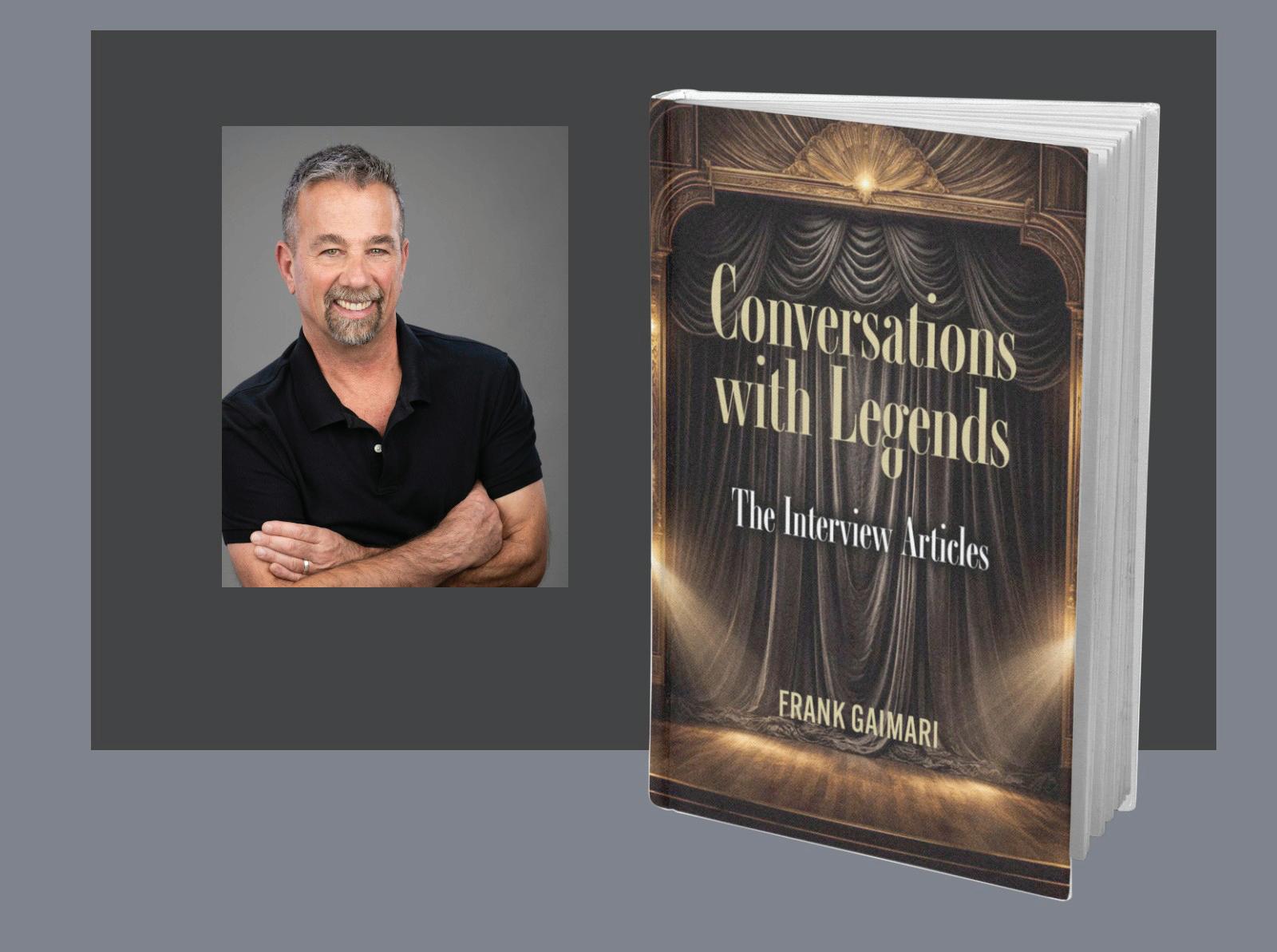
His latest book, Conversations with Legends: The Interview Articles, is a celebration of curiosity, connection, and compassion. This collection of 24in-depth interviews goes beyond the surface of fame, giving readers an honest, behind-thescenes look at the lives of some of the most interesting people in entertainment. From the vibrant Kate Pierson of The B-52s to the heartfelt David Archuleta, the bold Margaret Cho, and the visionary filmmaker Todd Stephens, Gaimari’s interviews aren’t just Q&As — they’re meaningful conversations full of wit, wisdom, and real emotion.
Through his thoughtful questions and engaging style, Gaimari
doesn’t just interview his subjects — he brings readers into their world and uncovers the stories that shaped them. And yes, I’m honored to be one of the voices featured in his book. Whether it’s the creative mind of Craig Chester or the artistic talent of Richard Vyse, Gaimari’s ability to connect with people on a genuine level makes each interview unforgettable. Conversations with Legends isn’t just a book — it’s an invitation to explore creativity, fame, and the shared experiences that connect us all.
But Gaimari’s talent for storytelling doesn’t stop with books. He’s also a skilled screenwriter with a knack for bringing history and relationships to life. His screenplay Vincent and Paul: Unspoken Brotherhood — a dramatized look at the complicated friendship between Vincent van Gogh and Paul Gauguin — has earned high praise. Another screenplay, La Famiglia, stood out in the prestigious Nicholl Fellowship contest, placing in the top 15% in 2019. These achievements highlight Gaimari’s unique gift for creating stories that truly resonate with people.
Curious to learn more about the
man behind these stories, I had the chance to talk with Gaimari about the inspiration, challenges, and insights that drive his incredible work.
Lyndal Simpson: What inspired you to write Conversations with Legends?
Frank Gaimari: Conversations with Legends was born out of a moment that changed everything — a moment that made it necessary to pause, reflect, and refocus.
Let me explain. Just recently, I was diagnosed with leukemia. The doctors are hopeful, and my prognosis is good, but hearing those words — “You have cancer” — stopped me in my tracks. It’s the kind of moment that forces you to take stock of your life. I found myself asking questions I’d never really faced before. What truly matters? What have I done with my time? What will I leave behind?
The answer came to me almost instantly. My interviews. These conversations with some of the most fascinating, creative, and inspiring people are what I’m most proud of. I wanted to bring them together, not just for myself
but for anyone who might find meaning in them. Conversations with Legends became my way of holding onto what matters most and making sure these voices and their stories are never forgotten. A diagnosis like this changes everything. It strips life down to what’s essential. It forces you to focus on what gives you purpose and keeps you going. For me, this book became that purpose. It gave me something to hold onto, something to look forward to — something bigger than the recurring tests, doctors’ appointments, and the uncertainty. It reminded me of the beauty of connection, the power of storytelling, and the importance of leaving something behind that matters.
LS: How did you choose the 24 celebrities featured in the book?
FG: When it came to choosing the 24 celebrities for the book, I simply picked people I was genuinely curious about — people whose stories I thought would interest me and, hopefully, the readers as well. My thinking is, if I find someone fascinating or their journey inspiring, chances
GAIMARI - To Page 25
Paris: The Ultimate LGBTQ+ Destination
Paris invites every traveler to become the protagonist of their own story. It encourages dressing a little sharper, eating a little slower, and loving a little louder. The city doesn’t ask anyone to tone themselves down — it asks them to embrace their fullest selves.
by Frank Gaimari www.FranksFilmReview.com
Paris has a way of making you feel like the main character in your own romantic film. It invites you to be seen, to be bold, and to fall in love — not just with its iconic landmarks but with yourself. For Gay travelers, this feeling is even more profound. Here, rainbow flags fly above bustling cafés, and same-sex couples stroll hand in hand along the Seine. In Paris, queerness isn’t just an accepted part of the scenery — it’s joyfully celebrated.
While the entire city exudes an
air of inclusivity, the heart of its Gay culture beats loudest in Le Marais. Spanning the 3rd and 4th arrondissements, this vibrant district is a captivating blend of history and modernity. Its centuries-old mansions have been transformed into contemporary art galleries, and chic boutiques double as art installations.
It’s also far from being a tuckedaway “gayborhood.” Instead, it’s one of Paris’s most stylish and sought-after areas, where medieval streets like Rue des Archives and Rue du Temple invite you to wander and discover what unfolds. The energy is unmistakable. Queer
couples hold hands openly and share kisses on street corners without hesitation.
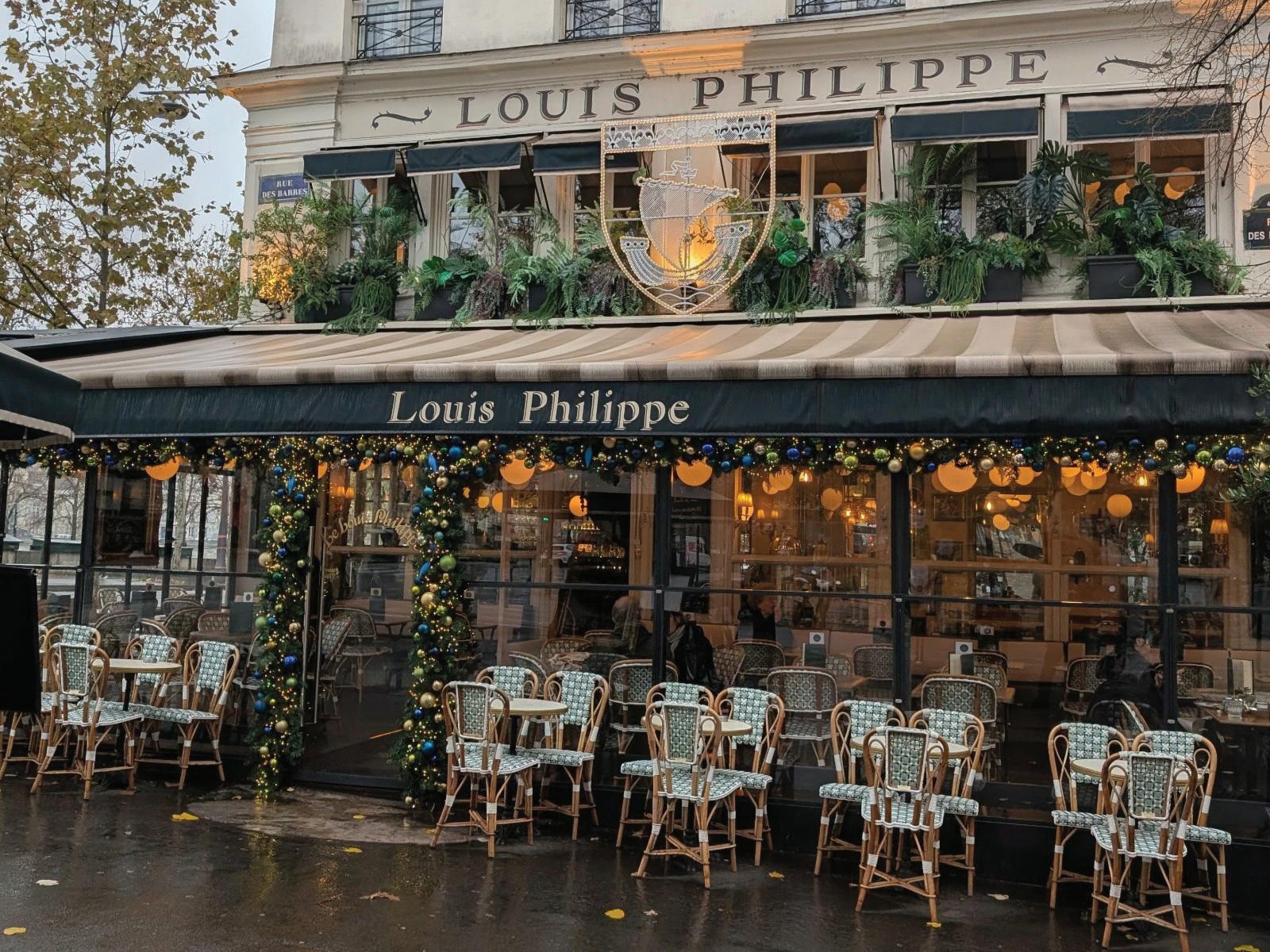
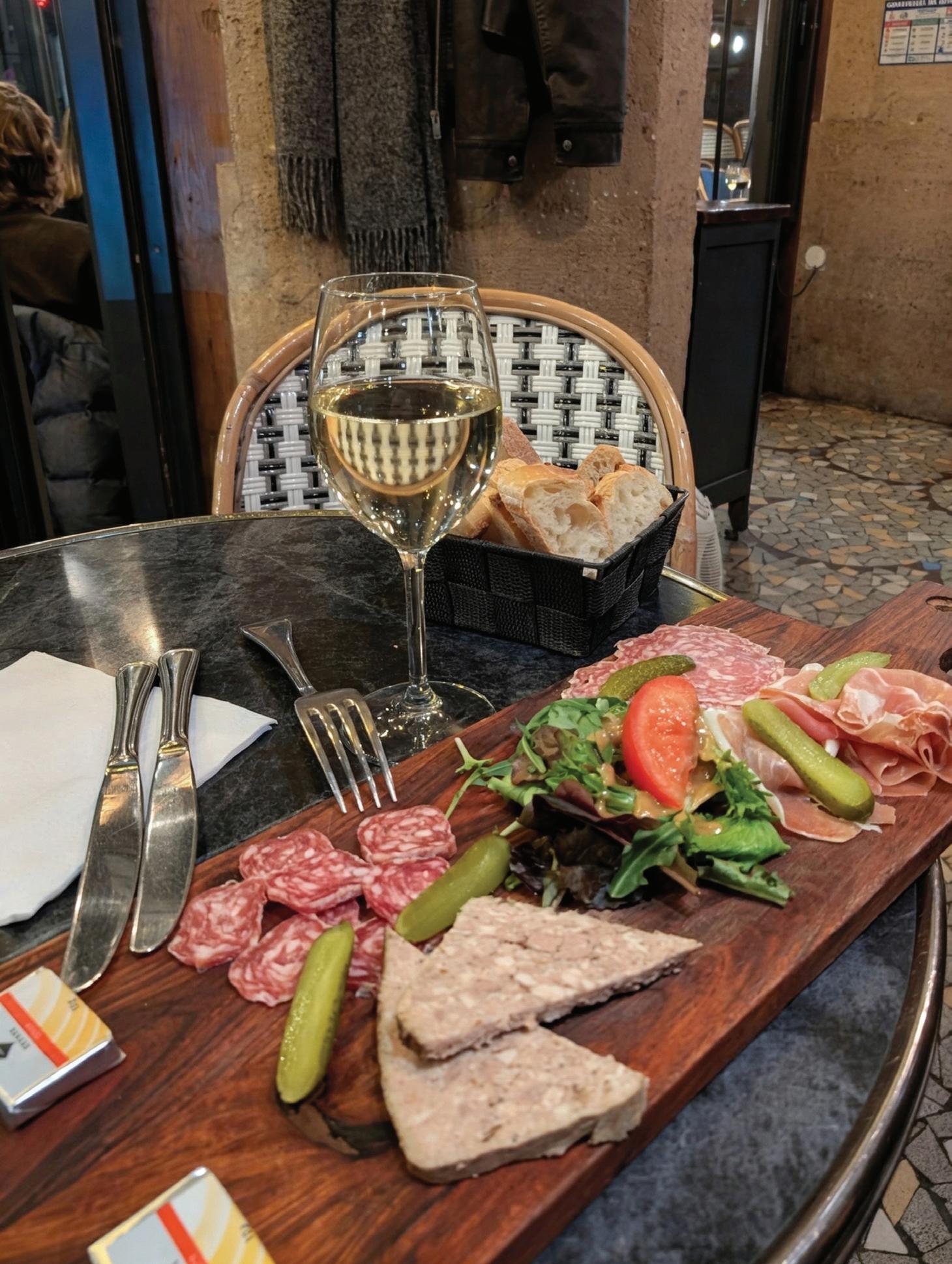
Staying in Le Marais puts you at the center of it all, surrounded by the best of Paris’s inclusive spirit. It’s a district where anyone can sit at a sidewalk café, order a café crème or perhaps a glass of red wine, and people-watch for hours.
Museums
Beyond its lively streets, Paris’s cultural soul beckons. For LGBTQIA+ travelers, the city’s museums offer more than just celebrated masterpieces; they
provide a connection to a Queer history that has long thrived here. A visit to the Louvre is essential. While the Mona Lisa might surprise you with its modest size, the Denon Wing surrounds visitors with Greek and Roman statues that honored the male form, quietly affirming that the appreciation of beauty is as old as civilization itself.
The Musée d’Orsay, housed in a stunning Beaux-Arts railway station, feels more intimate. Standing before Impressionist canvases that revolutionized
PARIS - To Page 21
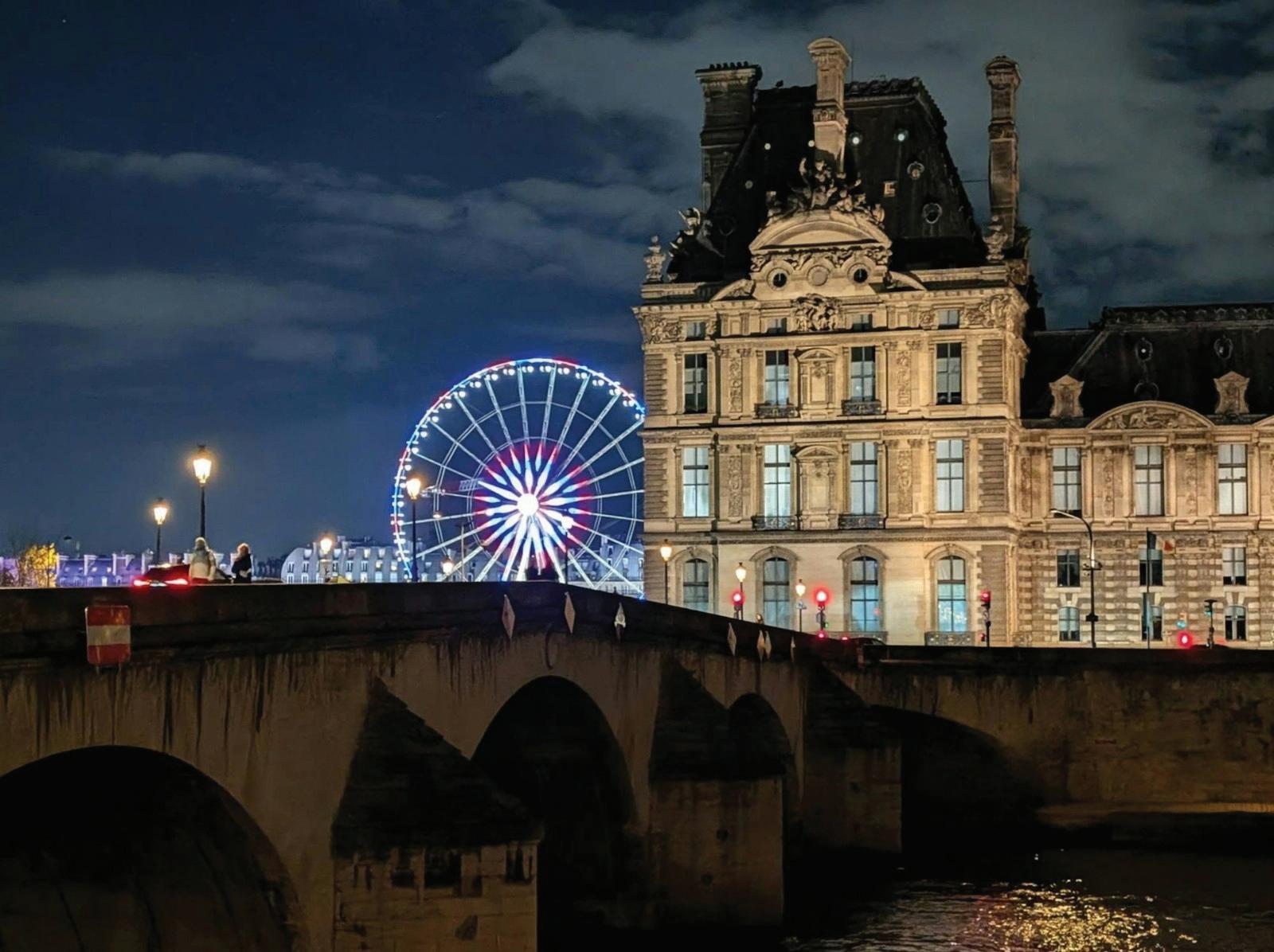
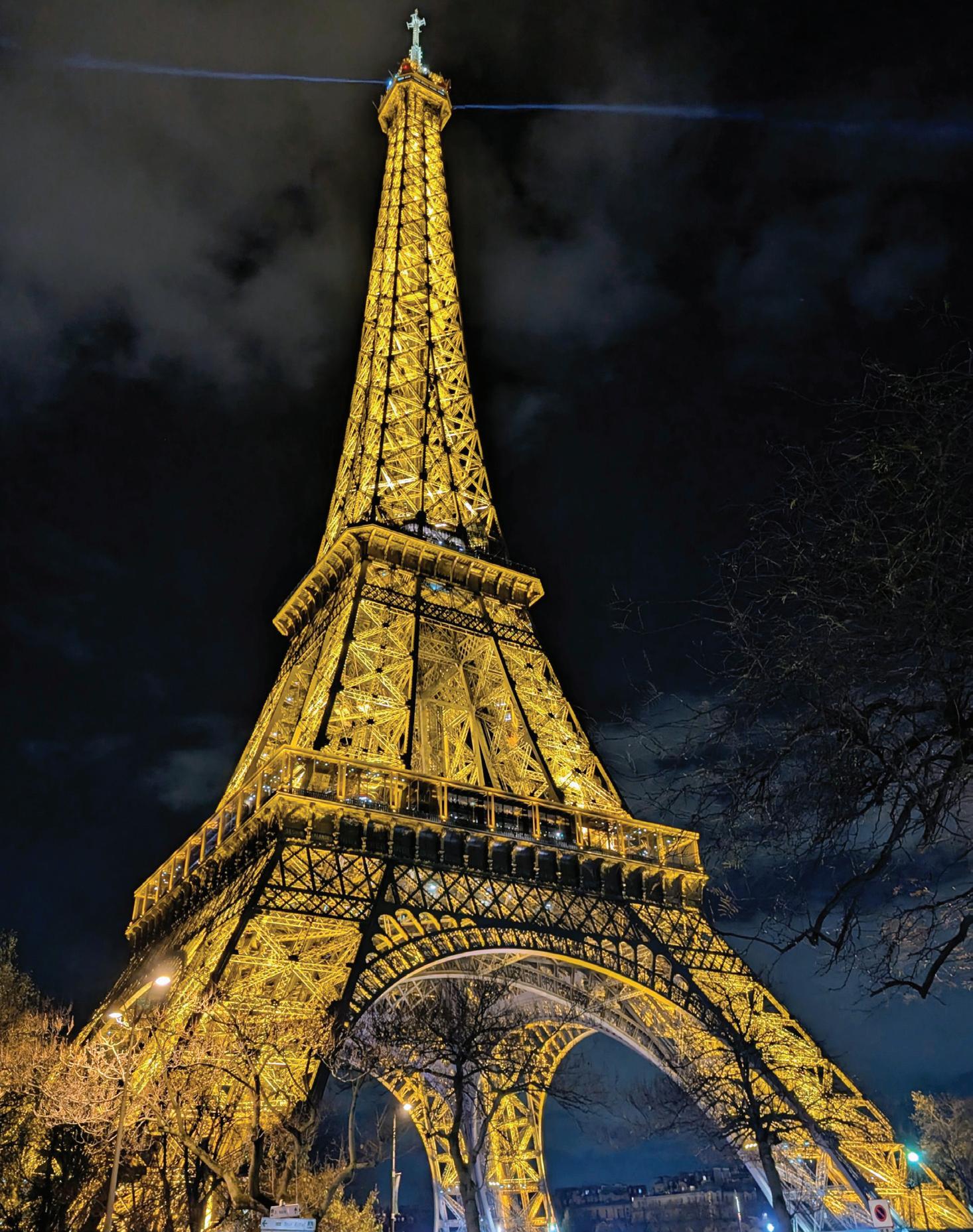
Paris | Photo by Frank Gaimari
From Sandusky to Stardom: The Rise of Tim Murray
by Frank Gaimari www.FranksFilmReview.com
Tim Murray’s journey is as enchanting as his comedy. It begins in Sandusky, Ohio — a lakeside town better known for its amusement parks than for queer culture or a vibrant comedy scene. Growing up as a closeted gay kid in a conservative environment, Tim often felt like an outsider. Yet, it was within the walls of his small-town home, surrounded by family and a persistent sense of not quite belonging, that the seeds of his comedic genius were planted. His early years were a delicate balance of challenges and creative exploration, filled with dinner table antics and the refuge he found in the arts at Sandusky High School.
At Sandusky High, the choir, drama club, and arts programs became his sanctuary — a space where he could express himself long before he was ready to come out. Leadership came naturally to Tim; he was elected class president, channeling his humor and charisma into every assembly and school event.
Today, Tim Murray is celebrated for his one-of-a-kind comedymusical show, Tim Murray Is Witches. Drawing inspiration from his lifelong love of the musical Wicked and a childhood fascination with witches, the show is a whirlwind celebration of self-acceptance and individuality. A mashup of stand-up, original songs, drag, and fearless crowd work, Tim Murray Is Witches has captivated audiences on both national and international stages.
Tim’s latest project, Wish You Were Queer, takes his comedy to new heights. The OUTtv original series follows Tim and his comedy partner, Michael Henry, as they embark on a cross-country journey, performing stand-up in cities across middle America. Under the mentorship of drag superstar Trixie Mattel, the duo is pushed to connect with audiences far beyond the liberal bubbles of Los Angeles. Each episode blends comedy, culture, and heartfelt connection, as Tim and Michael navigate the joys and challenges of reaching new communities.
But Wish You Were Queer is more than just a comedy road
trip — it’s a celebration of queer culture in America’s heartland. Through quirky local encounters and moving conversations with LGBTQ+ people, the series reveals the resilience and remarkable diversity of queer life in unexpected places.
Recently, I had the opportunity to connect with Tim for an in-depth conversation. What I found was that, beyond his undeniable talent and sharp comedic edge, Tim Murray is a genuinely kind and thoughtful person — someone who uses his platform to inspire, uplift, and bring people together.
Here’s an excerpt from our conversation, where we explored the moments, mentors, and motivations that have shaped his incredible journey:
Frank Gaimari: How did your experiences growing up in Sandusky shape your comedic voice?
Tim Murray: I ate a lot of ranch dressing, and that made me feel very funny. The culture of Ohio is rooted in kindness and fun, which really set the tone for my upbringing. It was a wonderful place to grow up — aside from the homophobia of the ‘90s, which, unfortunately, was common everywhere back then.
The people I grew up with were incredibly witty and personable, almost as if it were baked into
Tim Murray’s story is one of transformation, from a small-town boy with big dreams to a comedian redefining what it means to be queer in America. With Wish You Were Queer streaming on OUTtv, and Tim Murray Is Witches continuing to tour, he’s at the top of his game. Yet, he remains grounded, using his platform to inspire and uplift others in the LGBTQ+ community.
the culture. Being surrounded by that level of sharpness and charm naturally sharpened my own comedic skills. It was like living in a master class in humor, where every interaction was an opportunity to refine your timing and delivery.
FG: What inspired you to create Tim Murray Is Witches?
TM: I had been doing traditional stand-up for a few years when I saw my friend Matt Rogers’ musical comedy show, Have You Heard of Christmas? And it completely clicked for me. That night, something shifted. I started thinking about performers like Cole Escola, Catherine Cohen, and all these incredible musical comedians I admire, and I realized I had that same energy in me — I just hadn’t tapped into it yet. Watching Matt’s show, which I absolutely loved, made me ask myself, “What’s my version of this?” And then it hit me: Halloween!
From that moment on, it was like a floodgate had opened. Comedy songs about witches started pouring out of me, and I knew I had found something uniquely mine. That realization was the spark that brought Tim Murray Is Witches to life.
Nina West / Photo by Jennifer Englert
MURRAY - To Page 24
A Private Life: A Spellbinding Parisian Mystery
What makes Twinless stand out is its fearless portrayal of queer identity and the emotional weight of isolation. This isn’t a sanitized or simplified depiction of grief — it’s messy, complicated, and deeply human.
by Frank Gaimari www.FranksFilmReview.com
Last November, I found myself wandering the enchanting streets of Paris, swept up in the city’s charm and energy. Everywhere I turned — at metro stations, along grand boulevards, in the windows of cozy cafés — I saw striking posters for a film called A Private Life. The film was playing in theaters across the city, and the name Jodie Foster stood out in bold letters, promising something extraordinary. I was instantly intrigued.
But, as often happens with travel, my schedule was packed to the brim. Between exploring museums, sightseeing, and soaking in all that Paris had to offer, I didn’t have the time to see the film everyone was talking about. I remember lingering by one of the posters near the Seine, wishing I could press pause on my trip and spend a couple of hours in a dark theater, swept up in this Parisian mystery. When I left Paris, the film stayed with me — as a missed opportunity and a lingering curiosity.
Months passed, and my anticipation only grew. I read about A Private Life’s triumphant premiere at the 2025 Cannes Film Festival, where it received a 10-minute standing ovation and garnered glowing reviews. Still, I waited patiently for the film to arrive in the States. Today, that wait ended — and let me tell you, it was worth every second.
From the moment Jodie Foster appears onscreen as Dr. Lilian Steiner, I was completely engrossed. Foster, already an icon, delivers a performance that is nothing short of revelatory. As a Jewish-American psychiatrist
living in Paris, she’s magnetic — her every gesture, every line, brimming with quiet intensity and emotional depth. Her French is flawless, adding a layer of authenticity and allure to her character. Watching Foster speak the language so naturally is a treat in itself. If only I’d had the chance to see her inhabit this role while actually in Paris!
The story itself is as intricate as the city’s winding streets. Dr. Steiner is drawn into a web of suspicion and grief after the sudden, mysterious death of one of her patients. What unfolds is a masterfully layered mystery, full of secrets, shifting loyalties, and even surreal visions during hypnotic therapy sessions. There were moments I found myself piecing together the puzzle, but the film’s conclusion is wholly satisfying — a testament to both the screenplay and Rebecca Zlotowski’s deft direction.
The supporting cast is equally outstanding. Daniel Auteuil, as Steiner’s ex-husband Gabriel, brings warmth and humor to the story, grounding the film with genuine chemistry. Virginie Efira, Mathieu Amalric, and Luàna Bajrami each add depth and intrigue, creating a tapestry of richly drawn characters. The city of Paris becomes a character — its rain-soaked avenues and spiral staircases beautifully captured by George Lechaptois’ cinematography, especially in the film’s haunting dream sequences.
Watching A Private Life, I was transported back to Paris, reminded of why I fell in love with foreign films in the first place. The French dialogue, accompanied by subtitles, never
felt like a barrier. Instead, it drew me in closer, allowing me to savor every nuance of Foster’s remarkable performance.
Reflecting on my missed chance to see the film in Paris, I realize it only heightened my appreciation when I finally did. The anticipation, the longing, the sense of discovery — all of it made the experience that much richer.
A Private Life is a film that stays with you. It’s a testament to the power of cinema — to move, to challenge, and to transport us across languages, cultures, and even continents. If you love mysteries, powerful performances, or simply want to be reminded of why movies matter, don’t miss this one. Jodie Foster, you were extraordinary. Bravo!
Jodie Foster and Luàna Bajrami / IMDb
OREGON - Continued
OREGON - From Page 3
Highlights
The collective has been around since 1994, when it was known as the Gay and Lesbian Archives of the Pacific Northwest; the more inclusive name change came in 2024.
Full of lore and emotions, it approaches storytelling in a different way. Much of the collection is composed of personal stories and documents, from all across the state. By bringing the private collections of Oregon’s LGBTQ+ community to the public eye, McGrail also gives people a chance to preserve their own histories.
Membership is open to all, and McGrail says that anyone is welcome to share their story.
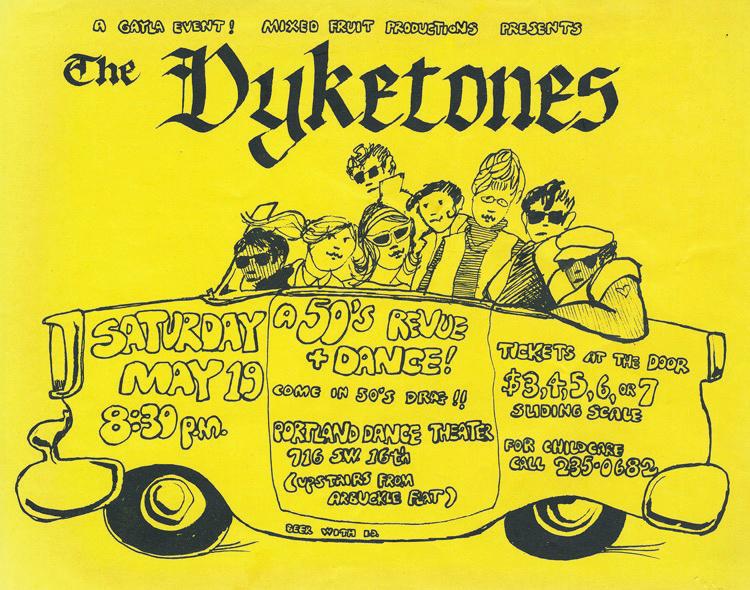
Some of the most prominent moments from Oregon’s Queer history are on display, from banners of anti-vice campaigns targeting Queer businesses to ads for a ’50s drag “gayla.” Other items of interest include journals and papers from Patrick Finneran, a Buddhist activist and generally prominent in Portland’s Gay community; and those of women activists, including Nedra Bagley, who in the mid-’70s was elected to the board of Portland Town Council, one of the city’s earliest Gay rights groups and the first to include political activism in its charter.
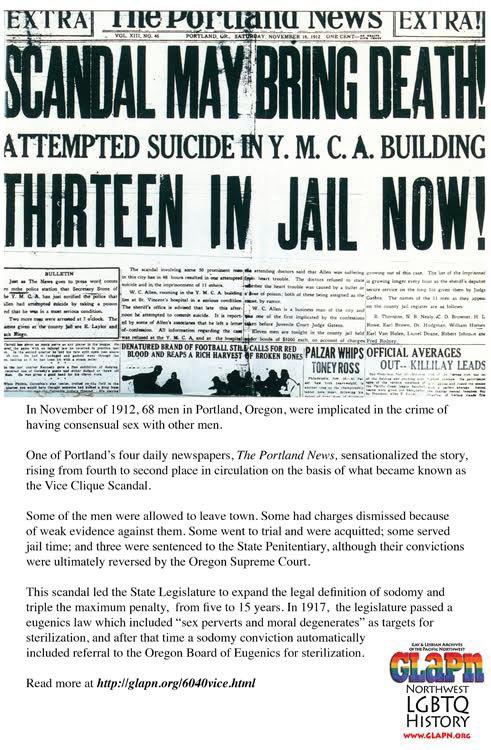
Some other key moments from Queer history are on display, such as the Vice Clique Scandal (1912–13), which exposed a system of corruption in Portland in which police, politicians, and judges secretly allowed prostitution and gambling to operate in exchange for bribes. Rather than eliminating “immoral” activity, city leaders regulated it through protection schemes and selective enforcement, punishing vulnerable people while shielding those with money and power. The scandal revealed how morality laws were used as tools for profit and control, not justice, and led to firings, resignations, and a collapse of public trust. It remains a key example of how policing and politics can enable the very systems they claim to fight.
The collection also highlights 1992’s Ballot Measure 9,
a proposed constitutional amendment backed by the Oregon Citizens Alliance, which sought to label homosexuality as “abnormal, wrong, unnatural, and perverse” and block any state or local protections for LGBTQ+ people. Its defeat marked a major turning point and sparked one of the first large-scale, statewide mobilizations of Queer activists and allies, strengthening grassroots organizing networks and demonstrating that such ballot initiatives could be successfully challenged at the polls. The campaign helped shape future
LGBTQ+ political strategy and became a defining moment in the fight for civil rights in the 1990s.
McGrail’s said that Collective also makes history interactive and part of daily life, from guest speaker events and presentations to community conversations and intergenerational lunches, where, fueled by prompts like “what is queer joy,” 88-year-olds are able to connect with 18-year-olds.
Besides monthly meetings, the Collective does most of its work through social media. With a
promise to continue to uplift and document the stories of the LGBTQ+ community, it has active and updated social media accounts that welcome contributions.
The Queer History Collective is real. It showcases the genuine, if messy, history of people who have continually been silenced. It’s a reminder that life isn’t perfect, that the past isn’t black and white. But the only way we can encourage a future that is more
OREGON - To Next Page
OREGON - From Previous Page
truthful and genuine is to embrace those colorful moments.
“We want to all Oregonians to be inspired by our past,” said McGrail.
The Queer History Collective is mostly on display at the reference library at the Oregon Historical Society, 1200 SW Park Avenue, in Portland. Online resources include the following:
For more information on the OHS, including library hours and admission fees for nonresidents of Multnomah County, visit the www.ohs.org.
Poster promoting Portland’s lesbian band, The Dyketones. Exact year unknown. Part of Oregon Queer History Collective’s archive.
OQHC Secretary Alex Maresca installs exhibit materials at Multnomah County Building ahead of the county’s Pride Proclamation, July 2025.
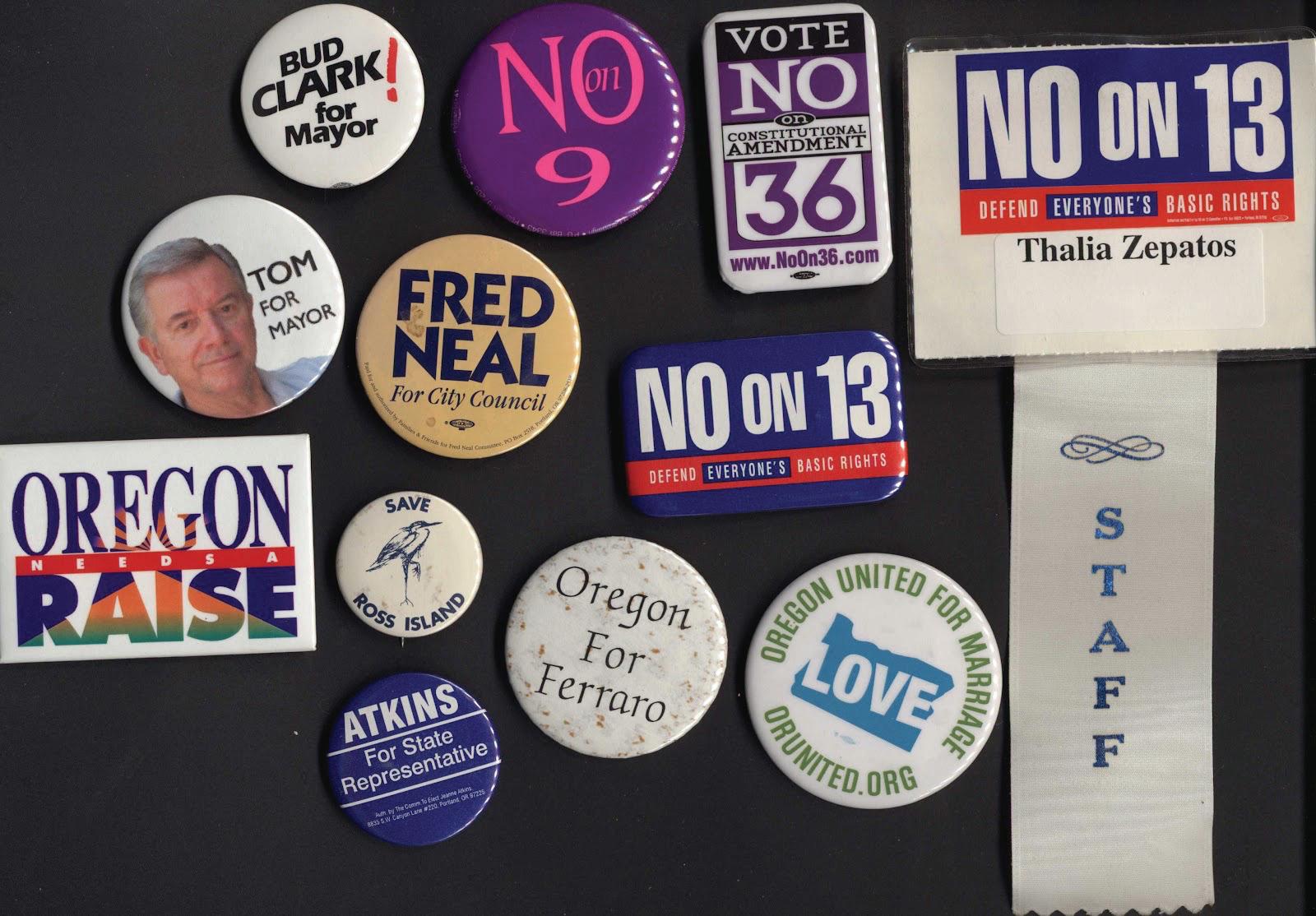
Political buttons from Thalia Zepatos Collection, Oregon Queer History Collective.
PROFILES - Continued
SPURLOCK- From Page 2
sociology, he took an abnormal psychology course and learned that homosexuality was still being described as a mental health issue. He did not yet have the language for his identity. When he eventually came out, he describes leaving that religious environment as a “great divorce.” His church community had shaped much of his early life. Separating from it meant starting over.
He moved to Boise, completed his undergraduate degree and later a master’s in education, and became involved in the gay community there. That period marked a turning point — socially and personally. It required redefining who he was outside of the structures that had once defined him.
Art stayed steady.
For nearly 28 years, Spurlock worked as a residential real estate agent. He taught children to paint. After moving west, he sang in Portland’s Gay Men’s Chorus. He ran a bed and breakfast near Mt. Adams. In each chapter - educator, realtor, entrepreneur - creativity remained central.
About seventeen years ago, he began holding one-man art shows and eventually set up a gallery in his garage. What had long been present became more intentional. Two years ago, after retiring from real estate, he chose to focus fully on developing his art practice.
He now lives in Ridgefield, Washington, just north of Vancouver. He calls it the land of volcanoes. The Pacific Northwest shapes his work, even when it remains abstract. Forest tones, river light, and darker contrasts show up in palette and composition rather than literal landscape. He also travels to the Southwest to see Indigenous petroglyphs. The repetition of carved shapes resonates with him — the way people return to certain marks over time.
Two years ago, he experienced a stroke that left him with temporary double vision. Instead of stepping away from painting, he created what he calls his Double Vision collection. The works from that period layer forms more densely. Shapes overlap. Contrast intensifies. The physical experience became part of the visual language.
His paintings shift with what he is living through. During COVID isolation, anger surfaced in the work. During the Me Too movement, the tone became more confrontational. For Spurlock, art is not separate from experience. It absorbs it.
One painting, Dixon, began during the Double Vision period in 2023. It is named after a family he helped move multiple times over the years, reflecting the long relationships built during his real estate career. Like much of his work, it continues to evolve.
Ridgefield is small. Artists gather for monthly art chats in Ridgefield, Battle Ground, and Woodland — informal spaces to bring work and receive encouragement rather than critique. The range is wide: recycled jewelry, first canvases, experienced painters. Within that room, Spurlock’s bold abstraction stands out.
When he sold a piece of Pride art in Ridgefield for the first time, it felt significant. Being openly gay in a small community is not separate from his practice. He does not hide who he is. He has helped expand local arts bylaws to more explicitly welcome LGBTQ+ artists. He also creates male nude photography for smaller audiences.
At the center of his practice is process. The canvas begins in black. Marks return. Layers build. Some are buried. Some stay visible.
In Ridgefield and throughout the Northwest, his work hangs on the wall — bold, abstract, and unmistakably his.
Ken can be reached at AbstractArtKSpurlock@gmail.com and his work can be found online on Instagram @abstractartkenspurlock.
The public can make an appointment to see his art at his studio and home gallery.
Affiliations, shows and awards:
2026 Featured Artist at the Ford Gallery, Portland, Oregon
2025 Creating Spaces Guest Artist at Plas Newydd Farm Art Show, Ridgefield WA
2025 Featured Open Studios Artist, Clark County, Sponsred by ARSTRA
2023 Featured Open Studios Artist, Clark County, Sponsred by ARSTRA
2024 Best of Show Award Winning Artist, Ridgefield, Washington
2024 Rembrandt Award, Ridgefield Art Association
2024 Guest Artist at the Broadway Gallery, Longview, Washington
2022-2024 Clark County Arts Commission
2022-2024 Ridgefield Art Association board member
Current art installations where Ken’s art can be seen:
Ridgefield Mercantile at 418 Pioneer Street, Ridgefield, Washington. Ken is the first artist with an installation in this venue that runs through March 31, 2026.
Ridgefield Library at 210 Main Street, Ridgefield, Washington.
In November, 2026, Ken will be the featured artist with Clark County Open Studios when his art studio will be open to the public for two days.
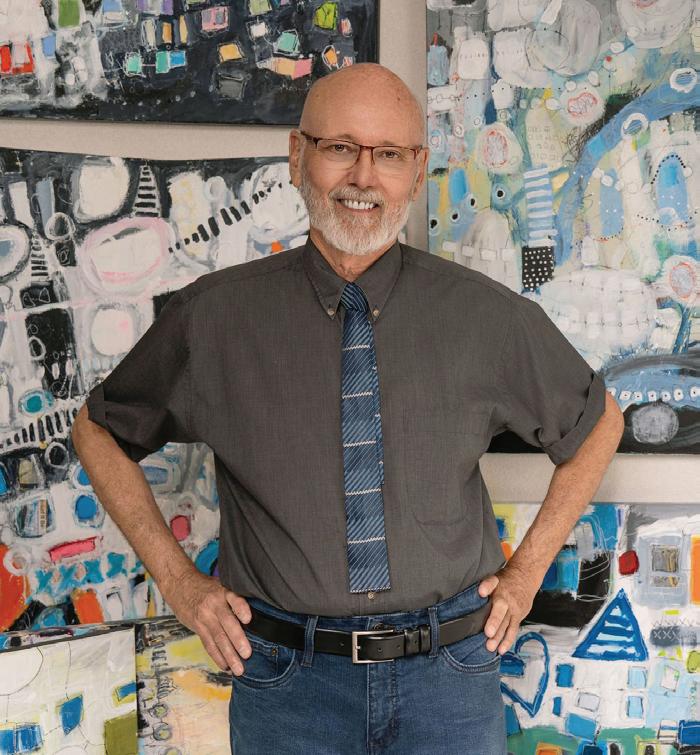
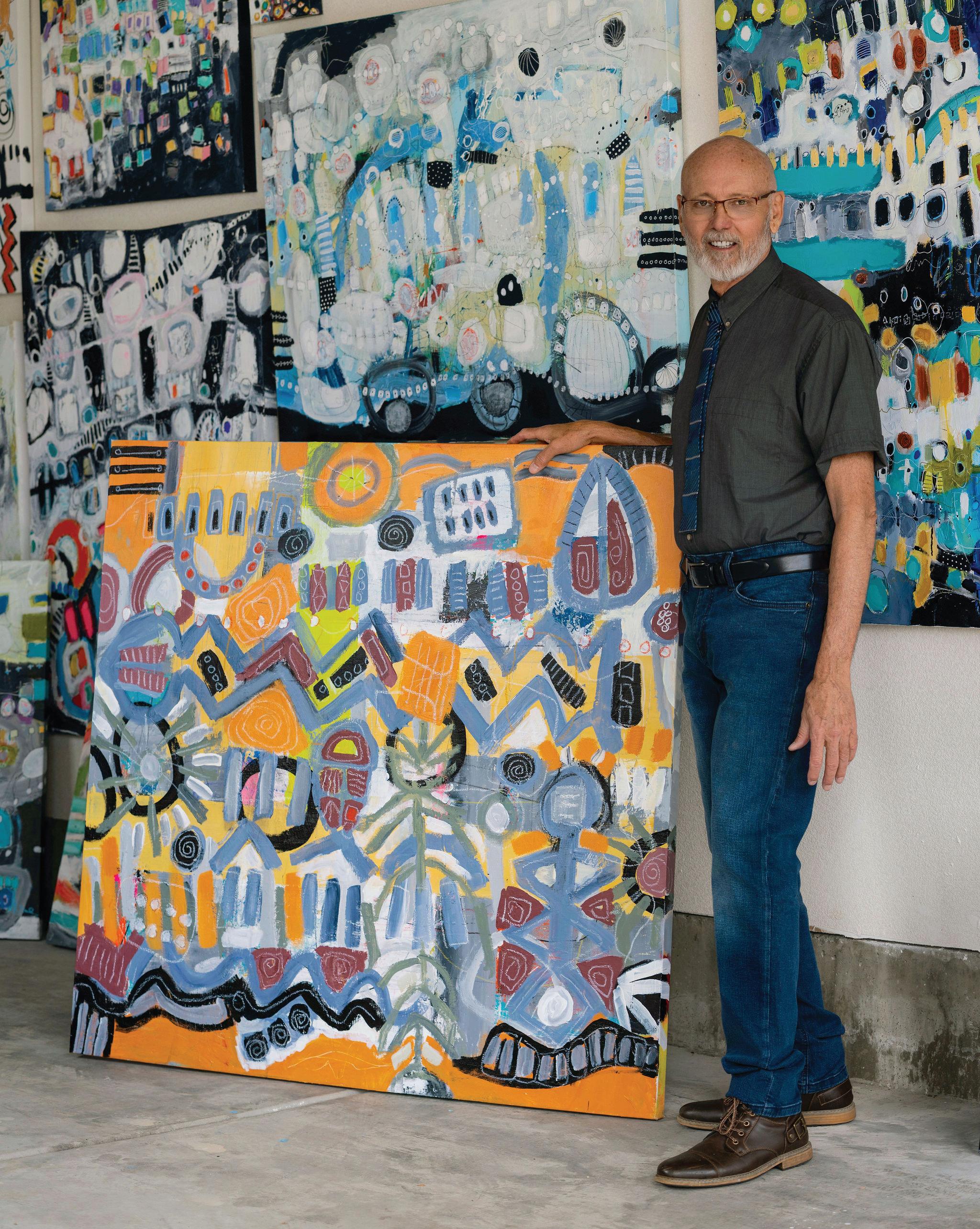
Ken standing with Petroglyph Point, 48x48 2023 mixed media painting.| Photo by Charisa Martin Cairn, charisamartincairn@gmail.com
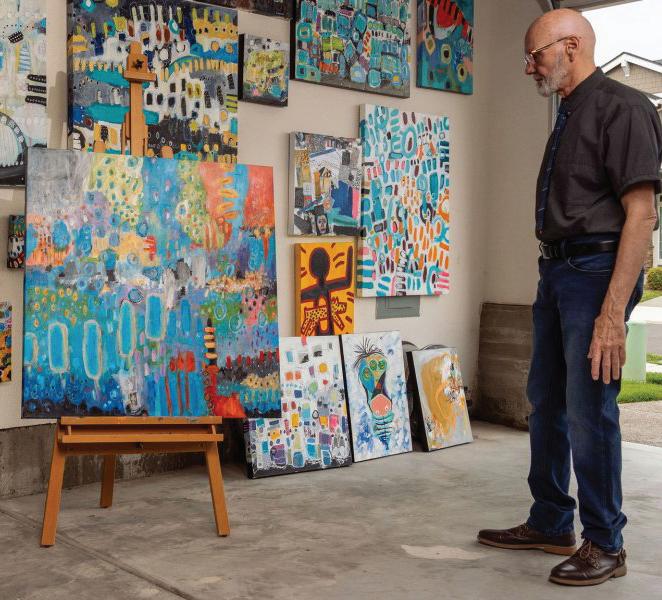
Artist Ken Sprulock surveys some of his creations. | Photo by Charisa Martin Cairn, charisamartincairn@gmail.com
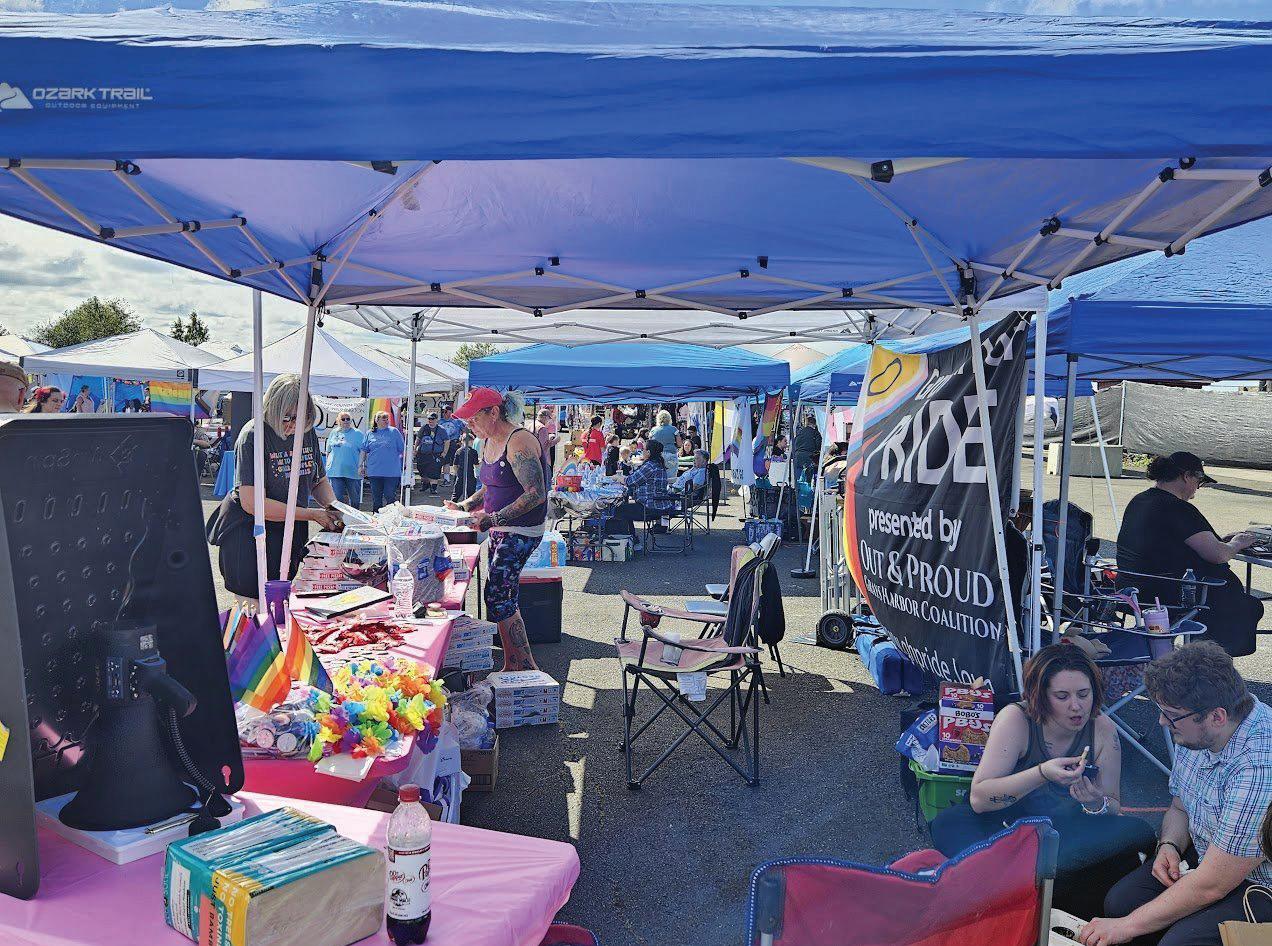
Grays Harbor Pride in Jeopardy: Volunteers Needed
Out & Proud Grays Harbor Coalition has been putting on Grays Harbor Pride for over a decade. But the 2026 festival may not happen unless more community members step up to help.
For 12 years, the annual event has offered music, community, drag, artisans, vendors, and a lot of love.
But the 501(c)(3) nonprofit’s core is dwindling. Only one founding member still serves on the board: renowned drag king Ceasar Hart, who remains fiercely active despite moving from the Harbor to Seattle years ago.
Die-hard co-founder Jen Gillies stepped down in January to focus on other commitments. And Steven Puvogel, longtime chairman of the group’s Pride Committee, is stepping back from the organization this year. It’s a gross understatement to say those losses will be difficult to overcome.
IDAHO - From Page 5
gay-affirming in 1990, uses the LGBTQ+LGBTQ pride flag to signal safety.
“The pride flag is not taking the side of a political party; it’s taking the side of people’s humanity. For us in my religious tradition, we have a variety of opinions and ideas on theological things, political things, but where we don’t negotiate is people’s humanity,” Lee said.
“There’s people who brought flags today that aren’t pride flags. There’s a variety of flags. We have a strong Basque community. We have people who have served in the military, we’ve got Navy SEALsf and the Army flags behind us. We’ve got a wide variety of representation, because flags, they usually represent people groups,” Lee said. “The flag is just another one of those expressions of our diverse country. People say that we’re
The four remaining board members – Hart, Brie Ann Cooper of Grayland, Emily Puvogel of Hoquiam, and Kat Bryant of Hoquiam – have some difficult decisions before them.
“We want very much to keep Pride going, and we have the financial wherewithal to do it,” said Bryant, Out & Proud’s treasurer since 2019, who also volunteered to act as interim president after Gillies stepped down. “What we desperately need are more people who share our passion and are willing to show up to get it done.”
The board has tried to establish collaborations with other organizations over the past several months, with tepid results to date.
At their February meeting, the members decided to put out one last plea for volunteers. If they don’t get a significant response by the end of March, when planning would need to begin in earnest for the proposed Sept. 19 event, there
supposed to be a melting pot, but I would like to say we’re more of a stew. We don’t want to lose ourselves as we come together.”
The two Democrats on the committee, both from Boise, expressed their opposition to the bill.
“In 1935, a law was passed in Germany, a lot like this one, to make the swastika flag the sole flag,” said Rep. Anne Haws, DBoise. “It carried with it extreme penalties for anyone that flew any other kind of symbol, for anyone that flew the old German colors, the old German flag.”
Republicans say flag divisive to Christians
Lawmakers who support the bill say LGBTQ+LGBTQ affirmation doesn’t respect their religious beliefs.
“These other countries, that the government is telling you you
will be no Grays Harbor Pride in 2026.
As a parting gift, the outgoing Pride chairman compiled a detailed guide to every aspect of the festival’s planning and operations, including grant writing, fundraising, vendor coordination, community outreach, event logistics, and more.
That institutional knowledge, combined with fresh ideas from new volunteers, could make a 13th annual Grays Harbor Pride memorable for all involved.
Anyone around the Harbor who’s willing to commit the time and energy needed to help keep Grays Harbor Pride alive should email volunteer@ghpride.love no later than March 24. Include a little bit about yourself, any skills you might have, and what interests you. The organization needs people to show up – not just in September, but now.
“This is a corner of Washington that doesn’t always make it easy to be yourself,” said Steven Puvogel. “That’s something worth protecting.”
Grays Harbor Pride can be found online at: https://ghpride.love
can’t carry other flags or have political flags, that is for the people. This is about government. This is only about government. Any person in this country can fly any flag they want. Offensive or not offensive., Iit does not matter. But when it comes to government, I think we need to be united,” said Rep. Heather Scott, R-Blanchard. “I think the government needs to stop trying to divide citizens. And whether the city of Boise thinks it’s divisive or not —– they may see it as unifying —– Christians are offended by that flag. And so it is divisive, one way or another.”
The capital city’s pride flag displays inspired last year’s law, and its legal maneuver to continue flying the pride flag downtown at city hall have drawn the ire of lawmakers just down the street.
“This debate obviously centers around one flag,” said Rep. Joe Alfieri, R-Coeur d’Alene, “If it were a different flag we were talking about, if the flag at issue
was the Confederacy flag, how many of us would think differently? How many people would be outraged that a city would fly a flag that honors rebellion in the United States? I, for one, would be —– as I am by the flag that’s being flown in opposition to the feelings of many people in this community.”
Alfieri asked McLean about representation for other minorities, such as Latin Mass Roman Catholics like himself.
“I’m wondering why the city is not flying the flag of the Priestly Fraternity of Saint Peter, or a Vatican flag, to welcome me to the community,” Alfieri said.
Rep. Jaron Crane, R-Nampa, inquired whether there is a flag that represents heterosexuals.
“There seems to be a group that is offended, or left out, in your
IDAHO - To Page 24
Grays Harbor County Pride at the Grays Harbor Historical Seaport in Aberdeen. | Photo courtesy of Grays Harbor Pride Committee
TRANSGENDER - Continued
ANTI-TRANS - From page 9 and hospitals that recognize or research transgender people, and imposed new barriers to obtaining passports and legal documents. The result is a sweeping, nationwide rollback of rights and recognition for transgender adults. For international visitors, the risk is even more severe: citing the sharp escalation in legal and bureaucratic targeting, several countries have issued travel advisories. Marco Rubio’s cables targeting trans adult visa seekers with potentially permanent bans on entry is alarming, as has ICE enforcement against immigrants and visitors more broadly. Following suit, I’ve designated the United States a “Do Not Travel” zone for non-essential travel for transgender people without a full understanding of the legal environment, due to the heightened risk of visa revocation, denial of entry, or detention.
Here are the categories and where each state falls:
• Do Not Travel (FL, KS, TX): Three states have earned “Do Not Travel” advisories: Florida, Kansas, and Texas. Kansas bathroom ban allows for everyday citizens to seek out transgender people in bathrooms and sue them for large sums of money, creating a bounty hunter system in the state. Florida has a law that allows for the arrest of transgender people for using bathrooms according to their gender identity and another policy targets transgender people’s drivers licenses. Florida has also put into effect a policy that says trans people “misrepresenting” their gender on their drivers license could be guilty of fraud and has begun erasing Pride crosswalks across the state. Local LGBTQ+
KANSAS - From Page 6
healthcare ban, struck down a bathroom ban, and ordered the state to issue accurate driver’s licenses to transgender residents. As federal courts become less hospitable, state constitutions may increasingly become the last line of defense.
Now, transgender Kansans face a difficult choice. They can surrender their driver’s licenses immediately and comply with the law, or they can hold onto them and hope that the court enjoins the state from enforcing SB 244 before they are pulled over.
orgs as well as HRC have issued travel advisories for the state. This analysis likewise concurs with such a rating. In Texas, the state is not only ignoring court ordered drivers license changes for trans adults, but it is also creating a database of people attempting to make such changes. A new statewide bathroom ban that has already resulted in detainment makes the state the Do Not Travel on this list.
• The Worst States (AL, AR, IA, ID, IN, LA, MS, OH, OK, ND, SD, TN, UT, WV, WY): These states have passed deeply troubling legislation targeting transgender adults in extremely harmful new ways. Utah has a bathroom ban for transgender adults. Alabama has also passed a Don’t Say Gay bill that includes a bathroom ban on college campuses. Many states, including Louisiana, Mississippi, Oklahoma, and Tennessee, and others listed in this category have gone so far as to legislatively erase transgender people, effectively removing any legal rights associated with their gender identities. Other states, such as North Dakota, Oklahoma, and Tennessee, prohibit any changes to birth certificates, forcing trans people to out themselves when showing their documents. These states also could start targeting adult gender affirming care - Florida has already done so, banning 80% of such care. Idaho has an extreme ban on state funds for gender affirming care.
• High-Risk States (GA, MO, NE, NH, MT, SC): All of these states have passed anti-trans laws, but they haven’t reached the same level of severity as the worst states. Missouri for example, prohibits gender-affirming care
Driving on a revoked license carries criminal penalties—a class B misdemeanor punishable by up to six months in jail and a $1,000 fine—and Kansas already requires county jails to house inmates according to sex assigned at birth. But surrendering a license may complicate their ability to obtain relief should a temporary restraining order be issued. Numerous transgender residents have reported that they are considering leaving the state altogether, though for many that is not an option. For now, all eyes are on the Douglas County District Court.
for incarcerated adults as well as transgender youth and have seen new laws proposed this cycle going even further. Nebraska’s governor has issued an executive order ending legal recognition of trans people. Additionally, some of these states have laws that permit the refusal of medical care to LGBTQ+ individuals on religious grounds. Although each of these states has laws targeting transgender adults, none have done so to the extent of the worst states. Montana is a special case on this list, in that it has passed laws that would normally place it among the worst states, but those laws have repeatedly been blocked in court.
• Moderate-Risk States (AK, KY, NC): These states have either passed one or two laws aimed at transgender adults or have enacted multiple laws targeting transgender youth, or are advancing negative laws quickly. For states focusing on trans youth, history shows they are more likely to introduce anti-trans legislation for adults in subsequent years. Most of these states are under Republican control, either through supermajorities in the legislature or Republican governorships. Many have enacted “Don’t Say Gay” provisions, which frequently result in the banning of transgender teachers. Additionally, many have passed religious refusal rights bills. However, most of these states have either not yet ventured into anti-trans adult legislation or have only passed milder forms of such laws.
• Low-Risk States (AZ, DE, ME, MI, NV, PA, VA, WI, DC): These states have largely refrained from targeting transgender adults, although they haven’t taken extraordinary steps to protect adult transgender rights either. For example, Arizona and
Virginia have enacted anti-trans policies affecting youth but, due to state-specific factors, appear unlikely to extend such policies to adults. Conversely, Michigan, and Nevada have enacted fairly robust non-discrimination policies but fall short in ensuring healthcare equity and providing protections for incarcerated transgender individuals. Maine has increased in risk due to capitulation to Trump over sports bans in the University of Maine system. While these states generally offer a safer environment for transgender adults, they stop short of going the extra mile to make their jurisdictions unequivocally safe places to reside. In the case of the District of Columbia, it may fall under attack from Congress and executive actions, meaning it can no longer be considered “most protective.” This most recently was manifested with the DC House bathroom ban.
• Most Protective States (CA, CO, CT, HI, IL, MA, MD, MN, NJ, NM, NY, OR, RI, VT, WA): These states have gone above and beyond in safeguarding the rights and well-being of transgender individuals, making them highly desirable places to live for those in search of security. States like Colorado, Hawaii, Maryland, and Washington have enacted comprehensive health insurance laws that cover facial hair removal and an expanded range of medical procedures. Each of these states offers refugee protections for individuals fleeing more repressive states with anti-trans laws. Care is not only supported but also enjoys legal reinforcement from the state, ensuring accessibility as long as such treatments remain lawful at the national level. These states are the most likely to counteract federal anti-trans regulations.
PARIS - From Page 13
the depiction of light and color, you are reminded that Paris has always welcomed artists, outcasts, and those who see the world differently.
For deeper insight, a private Queer history tour comes highly recommended. Expert guides reveal layers of the city hidden from standard guidebooks, sharing the secret lives of kings; the stories of writers who found freedom here, like Oscar Wilde and Gertrude Stein; and the moments that shaped Paris’s reputation as a Queer sanctuary.
Nightlife
Parisian nightlife is legendary, with a Gay scene that caters to every mood — from casual drinks to exuberant dancing. Back in Le Marais, Cox stands out as a must-visit institution, always filled with a lively crowd spilling onto the sidewalk, drinks in hand, turning the street into a nightly celebration. The atmosphere is energetic and welcoming, the perfect place to meet locals and fellow travelers. There’s no pretension — just great music and infectious joy.
For those seeking something
Continued - TRAVEL
a bit spicier, Le Raidd Bar is iconic, famous for its “shower show,” a spectacle that balances performance art with unapologetic fun. The bar is often crowded, sweaty, and unabashedly Gay.
reflect on the water and bateaux mouches glide by, you’ll find friends sharing wine and lovers whispering on benches, connecting you to every romantic soul who has come before.
What truly distinguishes Paris is its inclusivity. LGBTQ+ couples feel it when they check into their hotel, and the concierge doesn’t blink at a request for a double bed. They sense it while dining in candlelit bistros, where waiters treat them with the same respect as any other couple.
Paris invites every traveler to become the protagonist of their own story. It encourages dressing a little sharper, eating a little slower, and loving a little louder. The city doesn’t ask anyone to tone themselves down — it asks them to embrace their fullest selves.
Yet nightlife in Paris isn’t only about raucous bars. It’s also about quieter, meaningful moments. Escape the noise and wander down to the banks of the Seine.
As illuminated monuments
So, the advice is clear: don’t just dream about Paris; make the trip. See the Mona Lisa, dance until dawn in Le Marais, indulge in too many croissants, and stroll along the Seine until your feet ache. Let the city seduce you. Discover that romance isn’t just for the movies — it’s real and waiting right here in Paris.
Eifel Tower, Paris | Photo by Frank Gaimari
Paris photos by Frank Gaimari
Gay Asylum Seekers Get the Memo
Samir Gadirov and his husband, Tural Atakishiyev, are living a nightmare after Atakishiyev was detained during a routine ICE check-in in North Carolina. The couple says they complied with every legal step—applying for asylum, work authorization, and marriage-based residency—yet Atakishiyev has spent weeks in Georgia’s Stewart Detention Center. Confronted with the prospect of prolonged detention or returning to a country hostile to LGBTQ+ people and where their marriage won’t be recognized, the couple has chosen to “selfdeport,” saying they no longer see the U.S. as the beacon of freedom they once believed it to be.
William’s Institute On The Global Gag Rule’s + Fallout
As the Trump administration’s new “Promoting Human Flourishing in Foreign Assistance” rules take effect, a new report from the Williams Institute at UCLA School of Law warns of profound consequences for LGBTQI+ people worldwide. The policy—covering more than $40 billion in non-military foreign aid—bars foreign NGOs receiving any U.S. funding from engaging, even with other donors’ money, in activities deemed to promote “gender ideology,” including providing gender-affirming care, acknowledging gender identity in services, or advocating for legal protections. The report finds that transgender, nonbinary, and intersex people are most directly targeted, while broader LGBTQI+ programming—from PEPFAR HIV services for key populations to refugee protection and reproductive health access—faces chilling uncertainty.
Raquel Willis On Recent GLM Arrests
Raquel, the cofounder of the Gender Liberation Movement, led a protest against new HHS rules banning gender-affirming care for trans youth, with 25 activists arrested outside HHS headquarters. Read more in The Blade and The Nation
We want trans youth and their loving families to know that we see them, we cherish them, and we won’t let these attacks go on without a fight
The Gay Business
WIRED And The “Gay Tech Mafia”
A strange WIRED investigation interviewed 51 people — 31 of them gay men — to examine what Silicon Valley insiders allegedly call the “gay tech mafia.“ The network would include Tim Cook, Sam Altman, Peter Thiel, Keith Rabois, and Jacob Helberg (French-born and raised by the way, now US Undersecretary of State), who form a secret coven of an interconnected web of capital, hiring, and social life. Yet, I’d argue, the numbers tell a different story— between 2000 and 2022, only 0.5% of startup venture funding went to LGBTQ+ founders, and LGBTQ+ people hold less than 1% of NASDAQlisted companies’ board seats. The investigation also claims a darker pattern: 9 of 31 gay men reported unwanted sexual advances from senior industry figures, with behaviors ranging from explicit unsolicited messages to transactional pressure around investment meetings.
Beauty as a Safe Haven
Ahead of the Association of LGBTQ+ Retail and Beauty annual dinner, I wrote a short essay for e.l.f. Beauty reflecting on my brief stint in the cosmetics industry in the late 1990s. It became my first professional refuge as a young gay man in Paris — a place where I felt, perhaps for the first time, that my desire for a professional career and authenticity could coexist (I was closeted until 2001). That experience says something important about how LGBTQ+ people often gravitate toward a limited number of “safe” industries. Contrary to the WIRED narrative that being gay is an advantage, queer talent still tends to self-select into sectors perceived as welcoming. Our task, then, is not only to safeguard those spaces, but to widen them — industry by industry, board by board.
Rita S. Lane is leaving the Supervisory Board of Signify N.V., effective April 30. Mary Jo Hudson was also removed from the Association of Life Insurance Counsel website as a Board Member. Wesley Chan is no longer an Advisor at Felicis Ventures. Meanwhile, Pablo Ottado was appointed to the Board of Climate First Bank.
Developing your Board Value Proposition
Last week, PRISM: the Association of LGBTQ+ Corporate Directors welcomed Tiss Richard to dicuss Board materials:
father whose daughter was adopted — confronts a question many LGBTQ+ people quietly carry: what if we have absorbed the belief that our lives are, in some essential way, failures? When he is later diagnosed with infertility while attempting surrogacy, the news does not simply derail a family plan; it resurrects an older wound. Drawing on queer theory, Lent, and the radical idea of “the art of failure,” Koym-Garza interrogates why success, lineage, and biological reproduction still haunt queer respectability politics. This is not just a meditation on fatherhood. It is an invitation to ask ourselves where we still equate queerness with lack.
Queering the Boardroom Board Departures and Appointments
The semi-cultural desk
What to watch? HBO’s ‘Murder in Glitterball City
HBO’s two-part documentary Murder in Glitterball City, from queer filmmakers Fenton Bailey and Randy Barbato, revisits the 2010 killing of James “Jamie” Carroll in Louisville, unpacking a toxic relationship, a community in shock, and a justice system that may have failed to deliver full accountability. The documentary reexamines the roles of Jeffrey Mundt and Joseph “Joey” Banis—one now free, the other still behind bars—while pointedly asking whether “two people should be in jail.” It is apparently a must-see.
‘Gugu’s World’: Brazil’s Queer Pre-Teen Hero
Fresh from winning the Generation section jury prize at the Berlinale, Allan Deberton’s Gugu’s World is a radiant Brazilian coming-of-age tale anchored by an unforgettable 11year-old protagonist. As reviewed in Variety, the film introduces Gugu (a breakout Yuri Gomes) through the intimate geography of his bedroom—soccer trophies, glitter, capes and all—before unfolding a tender portrait of a queer pre-teen navigating schoolyard taunts, a strained relationship with his father and, most movingly, a fiercely loving bond with his grandmother.
What to read? Our Search for Meaning
I liked an essay in the March issue of Christian Century, Mario Koym-Garza — a gay, married
Upcoming documentary: DADDY
Five years ago, filmmaker Hannah Myers began turning her camera on her own family after her father came out later in life, unraveling decades of marriage and forcing each of them to confront longavoided truths. What started as an intimate effort to make sense of personal upheaval has grown into DADDY, a debut feature documentary exploring identity, grief, and the fragile architecture of belonging in the American South. As Myers captures her mother’s heartbreak alongside her father’s unfolding self-acceptance, the film evolves into a meditation on time, forgiveness, and the quiet courage it takes for families to remake themselves. Now in postproduction, DADDY is seeking support to complete the project and invites those interested to visit the film’s website or contact its team.
Polari: Our Forgotten Secret Language
I discovered Polari because my DC club, of all places, is having an event on the topic next month. Polari, a coded slang that flourished in Britain from the 19th century through the mid20th century, allowed gay men and others on society’s margins to communicate discreetly in hostile environments. Drawing from Italian, Romani, Yiddish, rhyming slang, and theatrical jargon, Polari was both shield and signal.
“Vichy Gays”: A Slang Term That Lingers
NATIONAL - To Next Page
“Vichy Gays” — a phrase that gained traction during Donald Trump’s first term — is a slang label used by some critics to describe LGBTQ+ officials or public figures seen as aligning with or staying silent about policies affecting the community. Borrowing from the idea of wartime collaboration, the term was far more common between 2017 and 2021 than it is today, though it still resurfaces online during political flashpoints. Worth noticing: the domain name vichygays.com has been snapped up, so maybe someone is keeping track.
I’m not a murderer… I’m not gay
File this under the kind of courtroom spectacle one probably shouldn’t amplify — and yet here we are. A Detroit judge sentenced Desmond Burks, 35, to 35 to 60 years for the murder of neurosurgeon Dr. Devon Hoover, plus additional time for a separate road-rage manslaughter case, after Burks pleaded guilty. What pushed the story from tragic to grotesque was his behavior in
court: smirking, waving, flashing peace signs, rolling his eyes at the victim’s family, and insisting, “I’m not a murderer… I’m not gay,” despite testimony about their paid relationship. The judge was unmoved — “Quite frankly, you are a murderer, sir” — and Hoover’s family called the sentence a fitting consequence.
Coming and Going
Pedro Pascal and Rafael Olarra
Pedro Pascal set social media alight this week after photos published by TMZ and amplified by outlets including Wion showed the Chilean-American actor strolling through Los Angeles hand in hand with Argentine creative director Rafael Olarra, the pair appearing relaxed, affectionate, and notably unbothered by cameras. The images quickly fueled speculation about the nature of their relationship, though neither has commented publicly, and Pascal has long kept his private life firmly offstage. Olarra was previously linked to actor Luke Evans, while Pascal has
consistently avoided labels or public discussion of his dating history.
Alex Di Giorgio Finds Pride — and Love — in Milan
As reported by Outsports, twotime Italian Olympian Alex Di Giorgio joined fellow LGBTQ+ athletes at Pride House Milano during the Winter Games, speaking candidly on a panel about authenticity in sport and reflecting that he “may not have had the support” he once needed during his elite swimming career. The article traces Di Giorgio’s complicated journey — from Olympic competition and a painful, highly publicized stalking case involving a former boyfriend, to becoming one of Italy’s most visible out athletes and even competing in the country’s “Dancing With the Stars” in a same-sex pairing. Now 35, Di Giorgio is back in the headlines for happier reasons: his relationship with Italian TV personality Tommaso Zorzi.
The Gay Agenda
March 5: 37th Annual GLAAD Media Awards
Demi Lovato will perform; Jonathan Bennett will host. Heated Rivalry, The History of Sound, and Stranger Things are among the night’s top contenders. The ceremony streams on Hulu March 16.
May 18: LSEG to Ring the Bell for LGBTIQ+ Equality
It’s now confirmed. On 18 May 2026, the London Stock Exchange Group (LSEG) will host its second annual “Ring the Bell for LGBTIQ+ Equality” ceremony as part of the UN Sustainable Stock Exchanges initiative, bringing together leaders from business, finance, and culture to affirm that inclusion strengthens markets.
June 17: Gay Games in Valencia
Valencia will host the Gay Games in June 2026, after beating bids from Munich and Guadalajara to stage the world’s largest LGBTQ+ sporting event, typically drawing 12,000–15,000 athletes and tens of thousands of visitors. The milestone is set to spotlight the city’s long-standing culture of openness and give a major boost to its queer scene, from Old Town institutions like Café de la Horas to the newly opened Axel Hotel Valencia.
PROFILES - Continued
IDAHO - From page 19
inclusivity,” Crane said.
“I believe that every neighbor, every citizen is welcome, has the same respect in our city hall and throughout our city. Recognizing a group that has been marginalized with the statement that ‘everyone is welcome’ does not take away recognition of others,” McLean responded.
Attorney warns bill allows religious symbols on foreign flags
Attorney Erik Stidham is representing the city as pro bono
MURRAY - From Page 14
FG: What’s the most memorable moment you’ve had while performing Tim Murray Is Witches?
TM: When I was filming the special in Seattle, I went to breakfast that morning feeling incredibly nervous about how the audience would respond. Having lived in NYC and LA, I initially wanted to film the special in one of those cities where I knew I could count on friends to come out and support. But my amazing director, Brent Driscoll, convinced me to film it in Seattle, promising he could make it look incredible on his home turf.
That morning, as I worried the crowd might not be as excited as I hoped, the waiter brought me a free dessert and said, “I loved your improv song last time you were in town.” It was such a surreal and reassuring moment. I gave him free tickets to the special (which he didn’t know I was filming), and that night, the improv song ended up being about him! It was such a full-circle moment, and one of the most memorable experiences I’ve had performing Tim Murray Is Witches
FG: In Wish You Were Queer, what was the most surprising thing you learned about performing in middle America?
TM: The biggest lesson I learned is that you truly can’t predict anything — it’s your job as the comedian to adapt and make it work, no matter the circumstances. Michael Henry and I encountered every type of audience you can imagine. Some were thrilled to have us; others seemed more interested in their
outside counsel on the flag issue.
“This is a Soviet-style statute from top to bottom. It forces orthodoxy from the top. It provides no meaningful access to the court,” Stidham said. “A cowardly move, to protect a weak statute from judicial review.”
Stidham pointed out numerous official national flags that contain the kinds of political and religious symbols that lawmakers say they want to avoid being flown by Idaho governments.
“There was concern about the Shahada flag, the Islamic flag,
drinks; and some were stone-cold sober and somber. And then there was everything in between. It was a major learning curve, but also incredibly fun and rewarding.
What stood out to me most was how performing in middle America differs from the coasts. Audiences there are often more excited to see live shows because they don’t get them as frequently, which brings a unique energy to the room. At the same time, you must tweak a few references to make sure the material resonates. It’s a balancing act, but one that taught me so much about connecting with people.
FG: How has Trixie Mattel’s mentorship influenced your career and your approach to comedy?
TM: Trixie rocks so hard. Her support has been nothing short of transformative for me during this chapter of my life and career. This year, I’ve been fortunate to have people in higher positions extend a helping hand, and Trixie has been the most significant person doing that. Her mentorship has truly been a game-changer.
What’s so inspiring about Trixie is her genuine love for supporting fellow queer artists. She has an incredible ability to champion people, she believes in — those who work hard and make her laugh — and I feel so lucky to be part of that camp. Her support has not only opened doors for me but has also reinforced the importance of lifting others up in this industry. It’s a lesson I’ll carry with me as I continue to grow.
FG: What role does Los Angeles play in your creative process and personal life?
being flown. Well, this bill expressly states that it can be flown. The Kingdom of Saudi Arabia contains that insignia, it’s an official flag. Afghanistan’s official flag contains that language,” Stidham said. “It states that ‘There is no God but God. Muhammad is the messenger of God.’”
Ada County Republican Lynn Bradescu told the committee about her request to fly an Israeli flag at Boise city hall for one day in recognition of that country’s founding.
“I would give up my right, or my
TM: I am deeply obsessed with LA. It gave me so much material and was such a pleasant and beautiful place to live. However, I’ve recently moved back to NYC for my husband’s job and some theater-related comedy opportunities that have come my way. I will always have a deep love for LA, but right now, I’m enjoying being back in New York, surrounded by so many live performance opportunities.
FG: How do you balance live performances, teaching improv, and creating viral content for TikTok?
TM: I don’t! Lol. I’m constantly burnt out. If you’ve ever wondered why my hair looks disheveled or why there are bags under my eyes, it’s because I’ve spread myself way too thin! Luckily, I genuinely love everything I do, but I’ve been feeling the fatigue lately. I’m working on finding a balance so that none of these things suffer. For example, if I’m focused on writing, I still prioritize scheduling live shows and creating viral videos. It’s a beast to manage, but I’m doing my best to keep it all afloat.
FG: What’s next for you — another tour, a new show, or
ask —– to fly the Israeli flag in support of Israel —– to have a flag neutral policy,” Bradescu said. “They did send me a very adamant rejection letter, and said absolutely not, we are not allowing you to fly it.”
The committee voted along party lines to advance the bill to the floor after unsuccessful motions to amend it or postpone it. If approved by the Idaho House, the legislation would need to pass through the Senate as well as receive the governor’s signature to become law.
something entirely different?
TM: I’m currently writing two new comedy musicals. My Traitorz Musical Parody, which I co-wrote with Ben Fankhauser, recently had its first concert version, and it went well! We’re hoping it will lead to an offBroadway run or even a tour. The other project I’m working on is something I’m super excited about, but I can’t announce it just yet.
Touring will always be a big part of what I do, and I absolutely love being on the road! My next adventure is an hour of comedy at the Upright Citizens Brigade Theatre in NYC on April 9th, and I couldn’t be more excited. Plus, I’m doing Witches again in Austin on April 15 and 16!
Tim Murray’s story is one of transformation, from a smalltown boy with big dreams to a comedian redefining what it means to be queer in America. With Wish You Were Queer streaming on OUTtv, and Tim Murray Is Witches continuing to tour, he’s at the top of his game. Yet, he remains grounded, using his platform to inspire and uplift others in the LGBTQ+ community.
Michael Henry and Tim Murray / Wish You Were Queer
SACRED & PROUD - From Page 11
vouched for me, told the court I would be a good parent. They said they saw me as family — a word that hasn’t always meant safety for me, not since my parents walked out. These were my people. The ones who showed up. And they showed up in a courtroom, on a Friday, to make sure my son would be protected.
Afterward, there were photos and food and the giddiness that comes from doing something that matters. Stanley smiled through most of it, the way only a twomonth-old can — oblivious to the significance of the moment, and somehow making it more significant because of that.
I want to hold onto all of it. And I also can’t stop thinking about the fact that it shouldn’t have been necessary.
Second-parent adoption exists
because being married and being listed on a birth certificate isn’t always enough. Not in every state. Not in every courtroom. Not in a country where the legal landscape for LGBTQ+ families can shift depending on which way the political winds are blowing. I didn’t want the pretty good protection. I wanted the bulletproof kind. Even after marriage equality, adoption creates the strongest, most legally durable parent-child relationship available. It’s a court order, not just a document. Other states have to recognize it.
That matters right now. Enormously.
Just this week, an Idaho House committee advanced a joint memorial calling on the U.S. Supreme Court to overturn Obergefell v. Hodges — the 2015 decision that legalized same-sex marriage nationwide. It’s not a law, but it doesn’t have to be to
send a message. A nearly identical memorial passed the Idaho House last year 46-24. These are our neighbors. This is happening now, in 2026, just months after my son was born into a family the state of Idaho would prefer didn’t exist.
We are living in a political moment when rights that felt settled are being relitigated. When families like mine are being used as political fodder. When the question of whether both of Stanley’s parents are his parents — legally, irrefutably — is not something I’m willing to leave to chance.
So I did the paperwork. I stood in the courtroom. I cried when my friends said I was family.
And someday, when Stanley is old enough to understand, I’ll show him the photos from that day. The ones where everyone is beaming. I’ll tell him about the people who came, what they said, how much
he was wanted before he even knew what wanting was.
And I’ll hope that by the time he’s old enough to have a family of his own, none of this will be necessary anymore.
GAIMARI - From page 12
are others will too. That’s always been my approach: follow my own curiosity and let that guide my interviews.
I feel fortunate — about eight out of ten times, the people I reach out to are open to talking. I’m not sure if it’s because of my previous work or just the way I approach them, but I’m always grateful when someone says yes. It means a lot to have them share their time and experiences, and I think a relaxed, genuine approach helps set the tone for a good conversation.
LS: Was there a particular interview that stood out to you as especially memorable?
FG: While no single interview stood out above the rest, what truly left an impression on me was how genuinely kind and grounded these celebrities were. Going into these conversations, you never really know what to expect, but time and again, I was pleasantly surprised by their warmth, sincerity, and approachability. There was only one instance in which someone came across as a bit distant, but that was the exception.
What made these interviews so
memorable wasn’t just the stories they shared, but the authenticity behind them. Getting to know the real, unfiltered people behind the public personas was both refreshing and deeply rewarding.
LS: Your screenplay, Vincent and Paul: Unspoken Brotherhood, has received significant recognition. How does your screenwriting process differ from writing a book?
FG: Writing a book like Conversations with Legends is a much more interactive process because I get to engage directly with people. The interviews are conversations, full of energy and connection, which makes the process feel dynamic and collaborative. Screenwriting, on the other hand, is a solitary experience — just me and the computer, crafting the story on my own. While they’re very different approaches, I enjoy both mediums. Each offers its own unique challenges and rewards, and I find fulfillment in both.
LS: What advice would you give to aspiring writers who want to explore both screenwriting and book writing?
FG: My biggest advice is to never tell yourself, “I can’t do this.” If writing is your dream, commit to making it happen. The most
important step is simply starting — get something, anything, down on the page. It doesn’t have to be perfect; everything you create can be refined or edited later. The key is to overcome the fear of imperfection and take that first step.
Discipline is just as important as inspiration. Sometimes, you must push yourself to keep moving forward. Writing isn’t always easy, but the satisfaction of seeing your ideas come to life is worth the effort. Believe in your ability to grow, and don’t let self-doubt hold you back. Dreams only become reality when you act, so start writing and keep going.
LS: Do you have any upcoming projects or books in the works that you’re excited to share?
FG: Absolutely! After turning my screenplay Circus Animals into a novel and seeing the incredible response it received, I felt inspired to do the same for La Famiglia. It’s such a beautiful story, and I truly believe it deserves to be told in novel form.
I started working on it before my diagnosis, but when I received the news, I set it aside and focused on completing Conversations with Legends. Now that this book is complete, I’m ready to return to La Famiglia and bring it to life.
The story is about two Italian men who fall in love. It’s filled with heart, culture, and emotion. It’s a story that means so much to me, and I think it’s one that everyone needs to read. I can’t wait to share it with the world.
Frank Gaimari’s talent for connecting with people and bringing their stories to life is the cornerstone of his work. From his heartfelt interviews with celebrities to his award-winning screenplays, film reviews, and novels, he has a unique ability to captivate audiences with his thoughtful, authentic approach to storytelling. Conversations with Legends is a true celebration of human connection, offering readers a glimpse into the lives and experiences of some of the most fascinating figures in entertainment.
The book is now available on Amazon at https://a.co/ d/03LCMv5c.
Check out his website at www. FrankGaimari.com.
Lyndal Simpson is a multi-awardwinning screenwriter with two movies currently in development. She lives in Melbourne, Australia, with her husband and two teenage sons.
Tracy Simmons is an awardwinning journalist specializing in religion reporting and digital entrepreneurship. She is a Professor of Journalism at WSU and executive director of FāVS.News, a digital journalism start-up covering religion news and commentary in Spokane, Washington.
COLUMNISTS - Continued
HOBBIT HOUSE - From Page 10
Neighbors helping neighbors. Strangers helping strangers. People standing shoulder to shoulder in sub-zero cold—not for politics, but for humanity. Standing against cruelty, intimidation, and violence. Some have paid the highest price for doing so.
In early January, Renée Nicole Good, a 37-year-old mother of three, was fatally shot by a federal immigration enforcement officer in Minneapolis shortly after dropping her six-year-old off at school. Her final words—spoken calmly, even kindly—were, “That’s fine, dude. I’m not mad at you.”
Just weeks later, Alex Jeffrey Pretti, a registered ICU nurse and veteran’s care provider, was executed on the street by federal immigration agents.
Both were American citizens. Both deaths shook their community—and our country—to its core.
What struck me most was not just the outrage that followed, but the response. Ordinary people showed up. They marched in freezing winds not because they enjoy confrontation, but because they refused to let these lives fade into silence. We gathered to name them. To mourn them. To insist they mattered.
We stood not only for Renée and Alex—but for every unseen, unheard person pushed to the margins.
This is courage that doesn’t wear a cape. This is courage that arrives holding another person’s hand.
So What Does Courage Look Like Now?
In real life. In 2026.
It looks like refusing to let injustice go unchallenged. It looks like showing up to vigils, conversations, and protests to protect our shared humanity. It looks like choosing compassion and speaking up even when fear tells us to stay quiet and safe.
At this pivotal moment, we’re all being asked to look in the mirror and answer an uncomfortable question:
What does courage look like for me?
I’ve been asking myself that a lot.
Learning From My Own Failures
I’ve reflected on moments when I managed to summon courage— and moments when I fell painfully short. I’ve also learned that sometimes courage isn’t optional. The storm is coming either way. Whether we stand tall or curl up, the only real choice is how we meet it.
While watching Heated Rivalry with friends, when Scott Hunter comes out publicly and embraces his boyfriend on the ice, it stirred something uncomfortable in me, because my own coming-out story was far less courageous. I didn’t step boldly onto the ice—I inched out, carefully. I denied and deflected even when it hurt others.
As a teenager, I exchanged excited emails with a boy in another rural town I had a huge crush on. I was too scared to use my real name, so I gave him my middle name—which also happened to be my father’s first name. When he decided to take our romance offline and courageously send me a handwritten love letter, complete with a stamp and a squirt of cologne, it arrived addressed to my very confused father.
I should have stood up and said the letter was meant for me. I should have protected him. I should have chosen courage.
I didn’t.
That boy was outed to his parents. I never heard from him again. I was terrified and heartbroken— and I’ve had to live with that ever since. There are consequences to cowardice.
Choosing Courage When It Hurts
There have also been moments when I chose courage knowing it would cost me—when doing the right thing promised no reward beyond being able to face myself in the mirror.
On one such occasion, I witnessed illegal actions at an organization I worked with. It became clear that unless someone spoke up, young people would continue to be put
in harm’s way. I was ignored. Then warned. Repeatedly told to stay quiet.
Instead, I documented everything. I double-checked my facts. I made a plan. And I spoke up.
The organization was shut down. I lost my job. I lost future opportunities. I lost relationships.
I’m here to tell you unequivocally: it was painful—and it was worth it.
The Storms We Don’t Choose
Some courage is forced on us. Storms we never asked for but must still face.
When I was diagnosed with epilepsy, my life changed dramatically. I was discharged from the military. I faced seizures and daily medications with brutal side effects. Disability was presented as the obvious path. I was devastated and scared. I couldn’t choose the diagnosis—but I could choose my response. I chose to stand. I took a deep breath, and went to work for the Epilepsy Foundation. I learned everything I could. I built relationships with neurologists and pharmacists. I fought to regain control.
Late last year, I was diagnosed with cancer.
I don’t get to vote on this storm either. But once again, I get to choose whether I face it standing or lying down. I choose to stand. I purchased a “Battling Cancer. Still Sexy.” t-shirt, and I’m grateful my prognosis so far is promising.
Not All Courage Looks the Same
We can’t all be Superman or Wonder Woman. We often can’t choose the storms we face. And courage isn’t one-size-fits-all. If you think you’re not courageous, you may just be measuring yourself by the wrong standard.
Authors Jennifer Armstrong and Lisa Dungate identify six types of courage:
• Physical: Acting despite fear of physical harm or pain
• Social: Risking rejection or loss of status to do the right thing
• Moral: Standing up for
convictions, ethics, and justice
• Emotional: Allowing vulnerability and the full range of feelings
• Intellectual: Being willing to learn, unlearn, and challenge beliefs
• Spiritual: Seeking meaning, purpose, and inner peace
Not all of us will show physical courage. But moral courage, emotional courage, spiritual courage—especially social courage—are desperately needed right now.
So I’ll ask again:
Which courage type are you choosing?
Courage isn’t just what shows up in headlines. It lives in quiet choices.
In small acts of solidarity. In facing our own fears and insecurities.
In standing with others when retreat would be easier.
The storm is already here. History will not remember what we said we believed or our private opinions. It will remember what we were willing to stand up for when it mattered.
So stand.
Even if your voice shakes. Even if it costs you. Even if you’re scared.
Stand.
Because the cost of courage is high.
But the cost of cowardice is everything.
is a Robert Wood Johnson Foundation Culture of Health Fellow and has an MBA and an MA in Leadership. Oelrich was awarded the Peirone Prize for service in 2016 and has received congressional recognition for his work on poverty and homelessness issues. Oelrich has founded 3 nonprofits focused on youth issues, and he’s an advocate for increased collaboration and coordination.
Ryan Oelrich is a highly regarded mental health trainer and facilitator, having trained thousands of professionals since 2008. He’s developed mental health curriculum used by Washington State. He
RANCH - From Page 10
As the proverbial innkeeper, I remain intentionally reserved in how and when I insert myself into our guests’ experiences. I operate at the edge, allowing for something authentic to unfold. Hospitality, at its best, is not intrusive, but about holding space for others. Sometimes it is about storytelling, sharing connection to what one is seeking in this pastoral setting. Sometimes it is simply offering a well-timed compliment. Small acknowledgments can create a powerful sense of belonging.
One time, we hosted a Girl Scout troop—young pre-teens, brimming with energy and curiosity. For them, it was adventure. For the two troop mothers, it was work. The kind of work that requires constant recalibration: corralling enthusiasm, navigating emotions, keeping the group moving while making sure no one gets left behind.
The girls had a great experience, but there were moments when everyone had to regroup. Moms had to have chats and boundaries had to be reset. I watched the mothers handle it all with steady patience. Leadership often looks like composure practiced in public.
Other guests were staying at the ranch that weekend as well, and they observed me guiding the troop through barnyard chores. Later, they commented on how effective the scouts were at getting the work done. What they were really noticing was something simple: I met the troop at their level and turned the work into an adventure. High energy doesn’t need suppression; it needs direction. I even challenged them to collect eggs from nest boxes while chickens were still inside; a fun thrill balanced with a bit of courage. I’m certain those moments will bloom into lasting memories.
But the moment that mattered most came at the end.
On their final morning, with tents packed and the last of their gear being loaded, I walked over to help the troop mothers. And in that moment said, “You two did a great job this weekend. I was genuinely impressed by the grace you showed navigating the energy you were being dealt.”
I thanked them. I acknowledged their labor. Then I added something unexpected: an invitation for a future midweek yurt stay, for the two troop moms.
The tears came immediately. “
You have no idea how much that means to hear right now,” one of them said.
They felt seen. That, I’ve learned, is often what people are hungry for — recognition.
I think often of the words etched into the Statue of Liberty: give me your tired, your poor, your huddled masses yearning to breathe free. That invitation is unconditional. It doesn’t ask for belief alignment or comfort. It asks only that we recognize one another’s humanity.
Here at the ranch, we practice that recognition in small, intentional ways. We operate at the edges of people’s experiences, nudging only when the moment is right, with thoughtful acknowledgement of our guests’ experiences. There is quiet power in noticing and naming effort, in offering a gracious word without fanfare.
Out here, belonging is about being seen. It’s about shared ground. Sometimes, all that takes is a few honest words at the end of a long weekend to remind someone that they matter. They belong. They are seen.
perience into a business plan to reinvent the family farm and bring “glamping” to the public. This column shares their ongoing experience in working and living as out and proud members of their community in their guest ranch setting.
David Capocci, Glenn Budlow and Tim Leingang founded Paca Pride Guest Ranch in 2004.
David Capocci is one of the owners of the homestead campground, Paca Pride Guest Ranch, along with his husband, Glenn Budlow, and business partner, Tim Leingang. Having purchased land to build a legacy project in the mountains, they went from city boys to rural ranchers, turning their yurt camping ex-
Paca Pride Guest Ranch is nestled on 17 acres in the rural mountains outside Granite Falls, Washington.