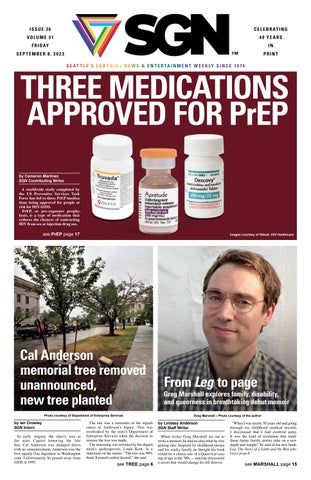
A worldwide study completed by the US Preventive Services Task Force has led to three PrEP medications being approved for people at risk for HIV/AIDS.
PrEP, or pre-exposure prophylaxis, is a type of medication that reduces the chances of contracting HIV from sex or injection drug use.
see PrEP page 17
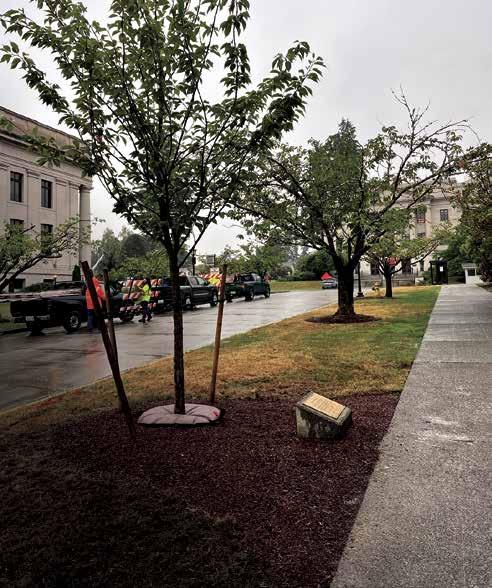
Cal Anderson memorial tree removed unannounced, new tree planted
by Ian Crowley SGN Intern
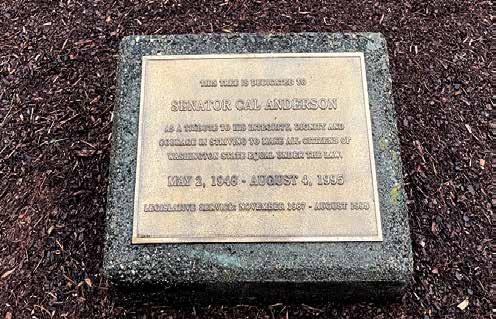
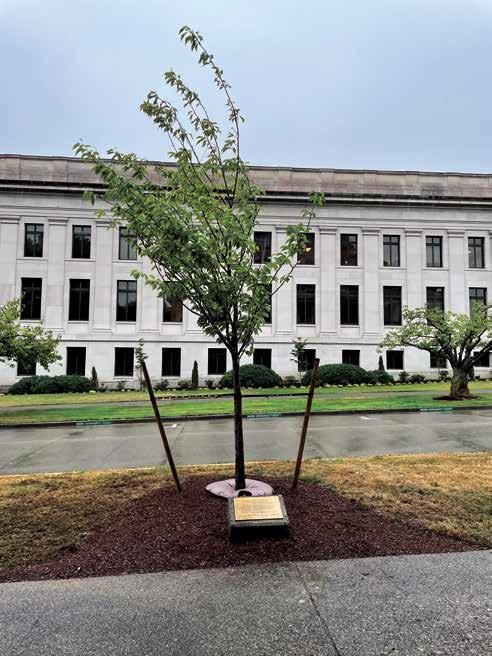
In early August, the cherry tree at the state Capitol honoring the late Sen. Cal Anderson was chopped down, with no announcement. Anderson was the first openly Gay legislator in Washington state. Unfortunately, he passed away from AIDS in 1995.
The site was a reminder of the significance of Anderson’s legacy. This was overlooked by the state’s Department of Enterprise Services when the decision to remove the tree was made.
The reasoning was revealed by the department’s spokesperson, Linda Kent, in a statement on the matter. “The tree was 90% dead. It posed a safety hazard,” she said.
see TREE page 6
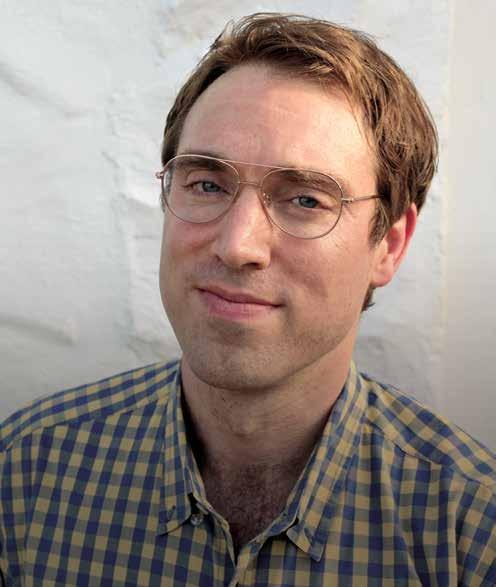
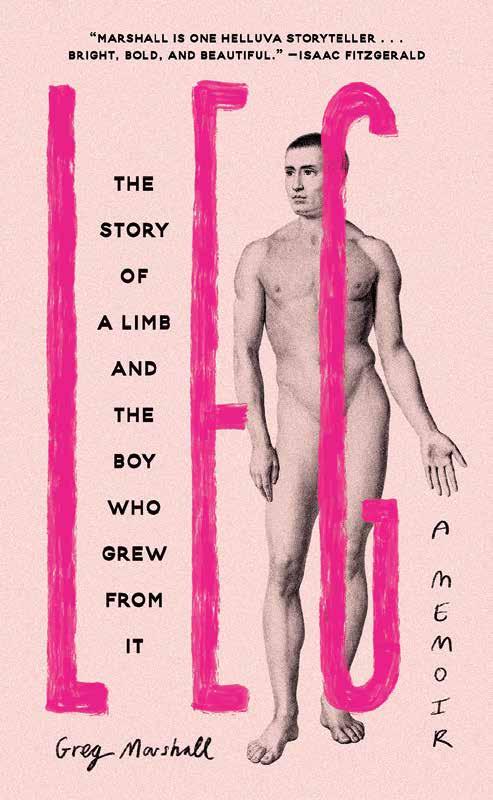
From Leg to page Greg Marshall explores family, disability, and queerness in breathtaking debut memoir
by Lindsey Anderson SGN Staff Writer
When writer Greg Marshall set out to write a memoir, he had no idea what he was getting into. Inspired by childhood stories and his wacky family, he thought his book would be a classic tale of a Queer kid coming of age in the ’90s — until he discovered a secret that would change his life forever.
“When I was nearly 30 years old and going through my childhood medical records, I discovered that I had cerebral palsy. It was the kind of revelation that made these funny family stories take on a new depth and weight,” he said of his new book, Leg: The Story of a Limb and the Boy who Grew from It
see MARSHALL page 15
Photo courtesy of Department of Enterprise Services
Greg Marshall – Photo courtesy of the author
Images courtesy of Gilead, ViiV Healthcare
Spokane mayor caught with Christian nationalists amid reelection campaign Local News
by Lindsey Anderson SGN Staff Writer
Spokane, Washington, is currently in the midst of a contentious mayoral election.
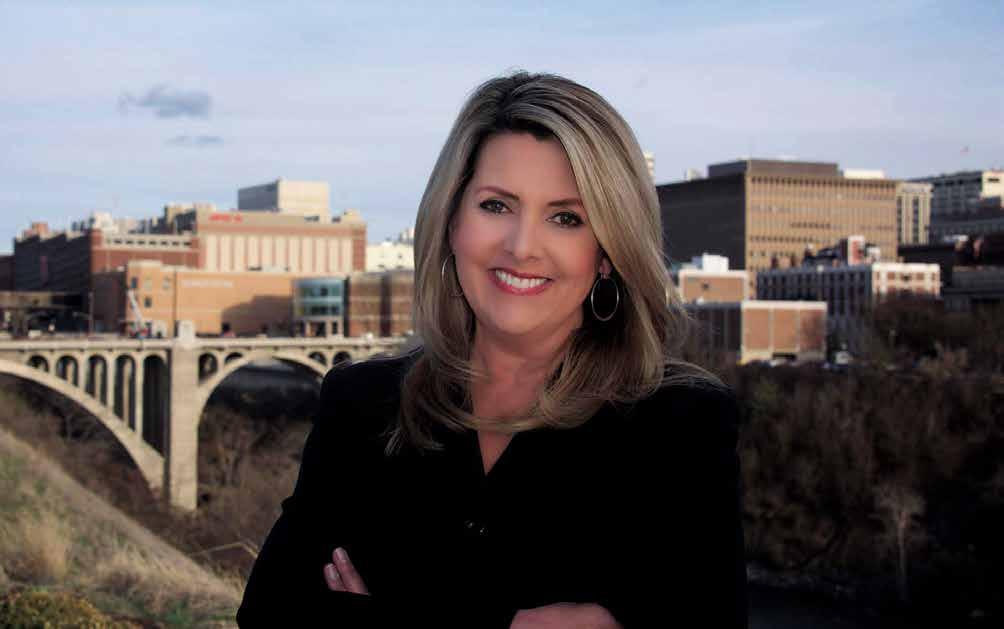
The incumbent, Nadine Woodward, who has held office since 2019, is facing former Washington state Sen. Lisa Brown in the general election. Now a new political scandal stands to either make or break Woodward’s chances at reelection.
The scandal
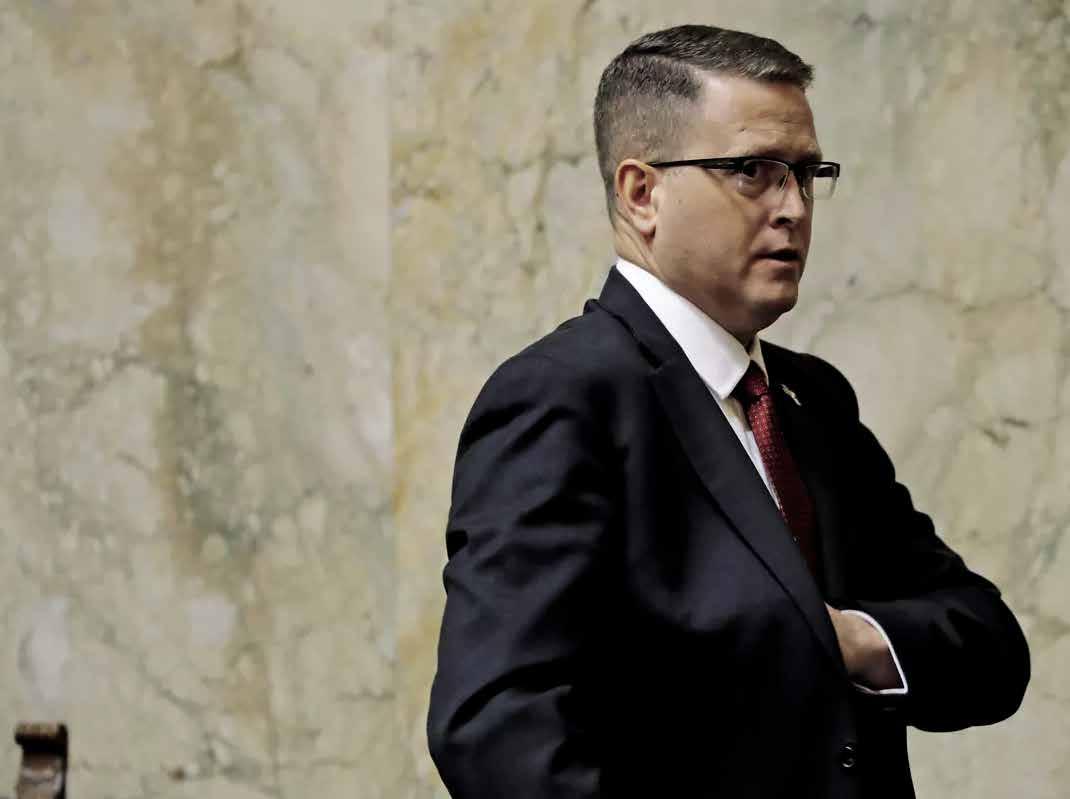
On Sunday, August 27, Woodward appeared at a worship event hosted by a prominent Christian nationalist musician and politician and seemed to receive an endorsement from Matt Shea, the disgraced former Spokane Valley state representative. Videos posted online show the mayor singing and raising her hands on stage in prayer.
The clips went viral and sparked outrage from many Spokane voters. Woodward has since spoken out, claiming she had no idea Shea would be present.
In a statement, Woodward claimed that she chose to go to pray for the victims of the recent fires that have consumed rural areas surrounding Spokane. “I attended the event with one purpose only, and that was to join with fellow citizens and begin the healing process,” she said. “I was not aware that [Shea] would be at the event last night, and it only became apparent as I was walking on stage that he would be leading the prayer. I should have made better efforts to learn who would be speaking at the event.”
Woodward also addressed Shea’s rhetoric there. Before she joined him on stage, he made several homophobic statements. “I am deeply disturbed that Matt Shea chose to politicize a gathering of thousands of citizens who joined together yesterday to pray for fire victims and first responders,” she wrote.
Woodward has also said that she decided to attend at the last minute. Shea has pub-
licly refuted that claim. On Patriot Radio, a podcast he runs and releases, Shea explained that Woodward received and accepted the invitation far in advance — before the wildfires even sparked in Spokane County.
Though the mayor insisted she had no idea Shea would be involved, advertise -
ments clearly stated as much. He promoted the event on his social media platforms. He is also closely linked with the headliner, Sean Feucht, who has traveled the Pacific Northwest with his “Let Us Worship” tour. He performed just a month earlier in Olympia, where Shea also appeared.
a
for
The tour is produced by Turning Point USA,
conservative religious group that the Anti-Defamation League has flagged
promoting terrorism, extremism, and bigotry.
Nadine Woodward – Photo courtesy of City of Spokane
Matt Shea – Photo by Ted S. Warren / AP
Local News
TREE
This put things into perspective, but the removal still drew criticism from the public and elected officials alike.
Denny Heck, the lieutenant governor, who worked with Anderson for many years and considered him a friend, claimed that removing the tree without notifying LGBTQ+ legislators would be equivalent to destroying the memorial. “This was a memorial, and to unilaterally not just make the decision but to implement it without any — what we call in this environment — stakeholder work, in other words, talking to folks, is to desecrate the site.”
These criticisms made their way to Kent, and she admitted that the state made a mistake. Since the plan was always to replace the tree, Kent said that the department should have done a better job reaching out
SPOKANE
continued from page 4
Many have also pointed out that even if Woodward did not know Shea would be attending, she had several opportunities to leave once she realized he was there, once she heard him spew homophobic and transphobic rhetoric, and before he placed his hands on her head and blessed her. Instead, she took to the stage and raised her hands in praise. “Father God, we pray a blessing over the leaders you have chosen for this time,” Shea said while pressing his palms down on Woodward’s head.
Who is Matt Shea?
Shea is well-known for causing controversy in Eastern Washington. The former District 4 representative was expelled from the GOP caucus in 2019 for connections to domestic terrorism. An independent investigation found that Shea was involved in the 2018 Malheur National Wildlife Refuge occupation in Oregon, which lasted over 40 days, after armed militants attempted to take over conservation land from the United States government to protest grazing taxes. The skirmish ultimately ended with FBI intervention and one fatality.
Even though he was involved, Shea was not prosecuted.
Shea’s expulsion from state government came on the heels of the publication of his call for a “biblical holy war” and advocating for the murder of LGBTQ+ people. The manifesto, titled “The Biblical Basis for Holy War,” praised an Eastern Washington fringe group called “Team Rugged.” The group trains children, teenagers, and young men in their twenties for warfare and an anticipated second American Civil War. Before he released the manifesto, Shea publicly supported “Team Rugged” in social media vlog posts and used 2018 campaign funds to donate to the organization.
Spokane County’s sheriff at the time, Ozzie Knezovich, turned the manifesto into the FBI. He described the document as a “‘how to’ manual consistent with the ideol-
to stakeholders and finding the replacement tree sooner.
Gov. Jay Inslee ordered a new tree be planted by the agency. The new cherry is 16 feet tall and perfectly healthy. Kent said that due to the possibility of future utility work in that area, however, the tree will likely have to be removed again.
Heck chimed in on the future of the tree, stating that he hopes for a new location for the memorial, and for that location to be bigger.
The story of the Cal Anderson memorial tree shows the importance of community agreement and oversight. Proper channels of communication were not utilized, leading to a violation of the LGBTQ+ community’s trust. It is gratifying that the agency took responsibility for this, and hopefully it won’t do anything similar in the future.
For now, you can see the new Cal Anderson memorial cherry tree at the state Capitol.
ogy and operating philosophy of the Christian Identity/Aryan Nations movement.”
Shea responded to the condemnation of the manifesto on Facebook in 2018. He claimed that the government planted the pamphlets to frame him.
He has also been an outspoken proponent for Eastern Washington to secede and form its own state, Liberty, along with the Idaho panhandle.
Faith leaders across the Pacific Northwest have been wary of Shea and Feucht for their shared hateful beliefs and rhetoric. In July, a Portland-based activist group organized a letter to local legislators from over 20 local faith and community leaders about the “Let Us Worship” tour, warning of its dangerous teachings.
“Sean Feucht has spent the past year capitalizing on anti-LGBTQ+ sentiments by railing against Pride Month, even embracing the exclusionary label of ‘Christian nationalist,’ and declaring that people with
his narrow view of Christian theology should make all laws in the United States,” they wrote. “We reject these attempts to cloak bigotry in religious language, and we ask you to do the same.”
Not buying Woodward’s excuses
Opponents of Woodward aren’t buying her claims. Former Spokane City Council President Ben Stuckart (who ran against Woodward for mayor in 2019) believes she knew what she was getting into at the event.
“It’s just so disgusting,” Stuckart said.
“If a Christian white nationalist asks you to stand up on stage and be prayed for, you say … ‘no,’ and you leave the room the moment you figure out that person is there.”
“You don’t go to white Christian nationalist events, put on by Christian nationalists, and not expect the Christian nationalists to be there,” he said to the Spokesman-Review
While political figures like Stuckart have called for Woodward to resign amid the
recent scandal, her opponent hasn’t gone so far. Like Stuckart, Brown believes Woodward knows more about the event than she lets on but has faith voters who will take her actions into account this fall.
“It’s not just, ‘Here’s a difference in policy perspectives.’ Shea is calling for armed insurrection [against] people who have a different perspective than he does,” Brown said. “It’s inexcusable to be associated with him in any way at any time.”
“I think one would have to be very much out of touch to not understand what was happening at the time it was happening,” she continued. “That is beyond my belief, that she didn’t know what was going on.”
Mayor Woodward has not released any other statements about the event or her connections to Shea since he claimed that she was not as ignorant about it as she suggests. Instead, she continues to focus her energy on the upcoming election.
Matt Shea – Photo by Ted S. Warren / AP
Photos courtesy of Department of Enterprise Services
Arts & Entertainment
Timberlust at The Lumber Yard
“Magical and a dream come true”
by Nemesis
SGN Contributing Writer
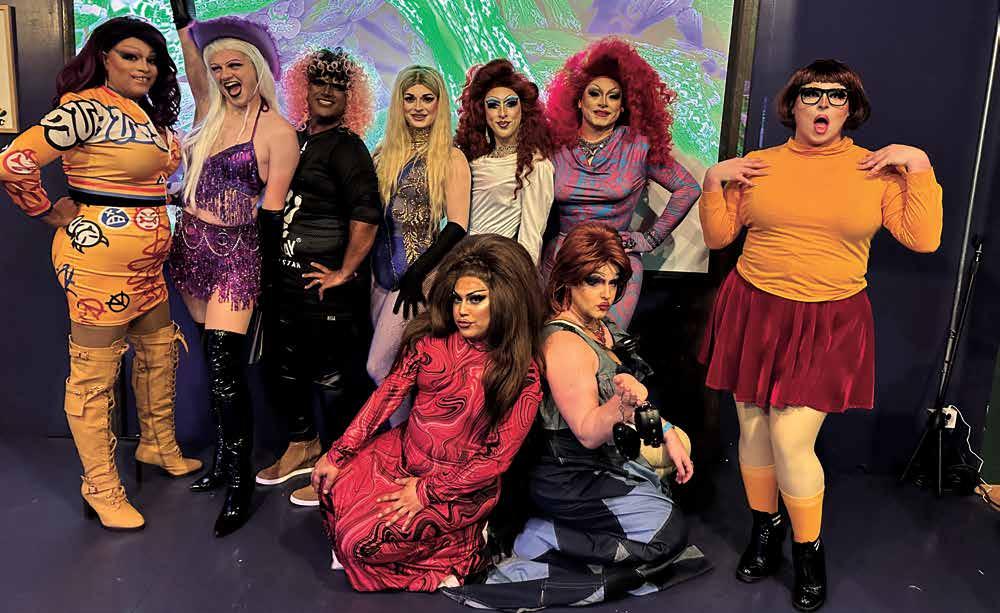
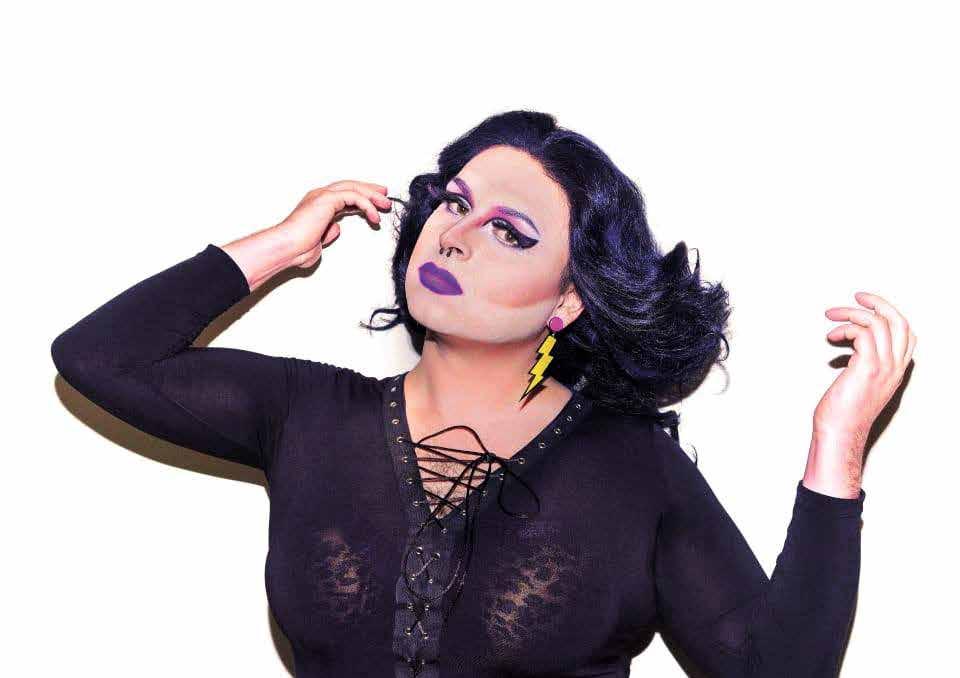
The Lumber Yard Bar, White Center’s premier LGBTQIA+ bar, just debuted its newest drag show, Timberlust, on Thursday, August 31. Hosted by Sara Monèt Paradisco and Seattle’s newest queen, Summer Heaux, it highlights the city’s talented entertainers and brings the community closer together.
The first edition was a family affair, according to Sara. The lineup of entertainers consisted of her closest friends and drag family: Mystic Minx, Jolene Granby, Jizzuhbell Johnson, Delyla Dalyte, Melody Lush Paradisco, Jessica Paradisco, and Drew Paradisco all graced the venue’s stage. With all talent levels and styles of drag showcased, the entertainment was immensely fun to experience. DJ Purplelicious played incredible beats and made sure the queens’ tracks played seamlessly.
White Center is strong on community, and this night was no exception. The house was packed, and it was a treat to see a handful of queens in the audience supporting their sisters, including Rita LaRue, Holli B Sinclair, and Shay Fox, each of whom had handfuls of cash for tips, and their applause was some of the loudest and most supportive.
A night of success
Nathan, the Lumber Yard’s owner, seemed delighted at the turnout and stated that “it’s amazing to have drag at the bar again.”
This was Sara’s first time hosting a show in her eight-year career. This Seattle queen is a natural on the mic, and her hosting skills made me grin and giggle at every turn. Having started doing drag at the age of 19, it had been a dream of hers to do so, and so now that has become a reality. She said that the evening was “magical and a dream come true.”
Summer Heaux happens to be Sara’s roommate and now drag daughter. Timberlust is the first show that she has per-
formed in; she also contacted the bar to get it started and helped to produce it. Asked what it was like to perform at her first show, Summer said that “drag is a drug” and that it was a high she’s never felt before. This budding queen added that she wants this to be a platform to help showcase local talent, both new and seasoned.
A deeper look with Sara
After spending some additional time with Sara, I was able to better understand
her drag journey and how far she’s come. This particular queen originates from Utah, having moved to Seattle when she was 19. Drew Paradisco — Sara’s biological brother and drag mother — took her in and showed her the ropes. COVID-19 really lit a fire under her, pushing her to take her art to the next level.
Drag has been her only source of income for the past year, and she said that it has been amazing to reach a point where she can have her own show: “I’m 27 and
to have not only my brother but my drag mother there with me to start it off was perfect! With some of my drag sisters and friends, the show was a success!”
You can catch Lumber Yard’s other drag shows every weekend at 9630 16th Ave. SW, Seattle, WA 98106. “Dolly and the DJ” takes place every Saturday at 9 p.m. The “Wood Morning” drag brunch happens every Sunday at noon.
Courtesy photo
Sara Monèt Paradisco – Courtesy photo
Li Turner’s In Search of Identity on view at Gallery 110
by Ian Crowley SGN Intern
Few art forms can capture energy and fluidity in the way that watercolor painting does. It brings dissolution to binaries. Watercolor works often evoke something in the viewer that is intimate to them alone.
Artist Li Turner seeks to use the way this medium provokes introspection to spark a conversation around identity, particularly gender identity.
Starting on September 7 and running through the end of this month, In Search of Identity, a collection of her works, seeks to “raise social and political awareness about the ‘gender question,’” according to Turner. She has been making art for more than 50 years and has a longtime working relationship with Gallery 110, where the show will take place.
“That’s why I work with Gallery 110 — they let me do what I want…they do allow experimentation,” Turner said in an interview with the SGN
In our conversation, she revealed that recently she has begun an exploration of gender in her personal life, which influenced the work heavily. As labels have begun to change in the last decade, due to an increased awareness and acceptance of divergent identities, Turner found herself fearful of not knowing how to properly identify. This caused her to make the pieces that would become In Search of Identity, in order to put into the universe what words could not.
Turner mentioned how her environmentalism is showcased in her art. She spoke of the vast cosmos and nature displayed in some of the pieces, and how they represent the infinite possibilities of gender expression.
“I’m an old hippie chick…I’ve marched in a lot of marches, still do,” she said.
A look at two pieces
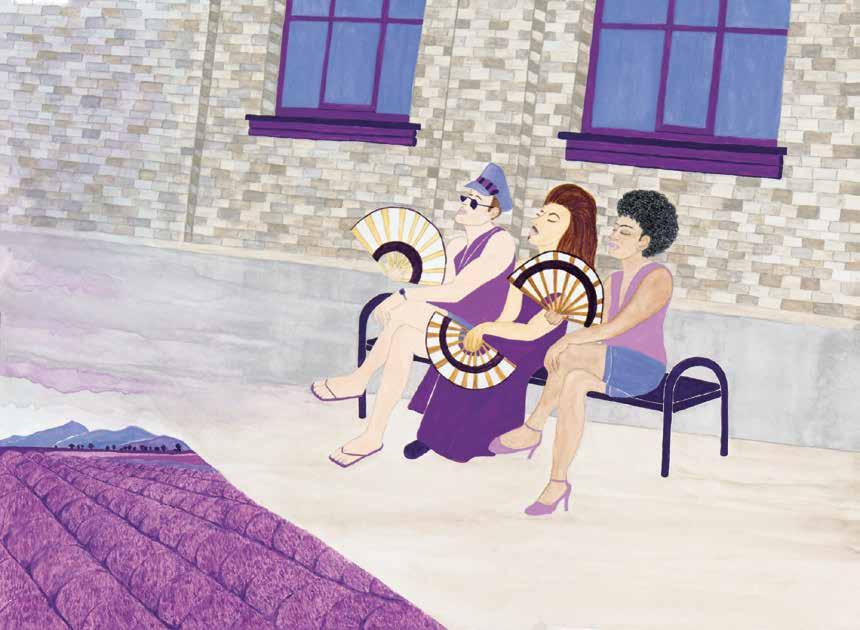
In the piece Lavender Fields Forever, we see three people sharing a bench. Their gender expressions all differ from one another, yet they are unified by the purple coloring of their outfits. Other objects surrounding the group are purple too, contrasting with the whites and grays that appear in the rest of the frame. This, to me, signifies the unification of these three in their queer-
ness, and stands as an acknowledgement that the world reflects all people in it.
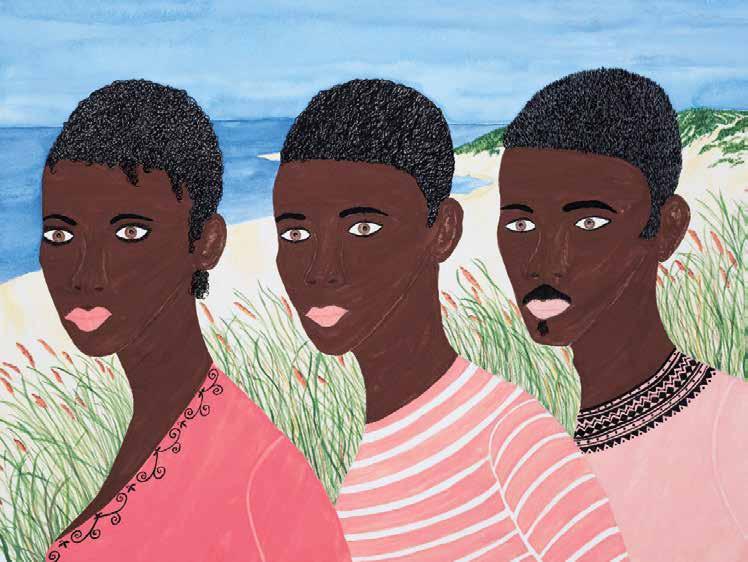
She/Her Transition is another piece I had the pleasure of seeing. It showcases a person’s transition from feminine presenting to masculine presenting. This is done softly though, as the image of the person remains stagnant in all three positions, with only fine details changing in each successive image. This piece, to me, shows the humanity of the Trans experience, as we can see the different, equally valid stages of identity. It also evokes questioning of gender binaries and expression, as we see the truly fine line between what we perceive as feminine and masculine.
Show, don’t tell It is the ultimate goal of the collection, according to Turner, is to “explore identities that stray from the more stringent biological definition.” She shared how it is her hope for people to begin that self-exploration after having seen the pieces. In addition, she hopes to represent some of the forms gender identities can take, but acknowledges that there are too many to accurately capture. “There’s so many ways people can be unique and different; there’s no way I could paint them all…but I hope to show that it’s endless,” Turner reflected. Showcasing the spectrum on which gen-
der identities can exist often can become exhausting using just words, subject to constant unintentional and intentional misunderstanding. It can also be overwhelming trying to express it ourselves verbally, too. This is the reason the In Search of Identity gallery is so important: it is able, through art, to communicate the lived realities of people all across the gender spectrum.
In Search of Identity will be showing all of September at Gallery 110 at 110 Third Ave. S. in Pioneer Square.
Lavender Fields Forever, Li Turner, watercolor & gouache, 11 x 15 inches – Image courtesy of the artist
She/HerTransition, Li Turner, watercolor & gouache, 11 x 15 inches – Image courtesy of the artist
DIY songwriter SoyJoy uses genre as expression Arts & Entertainment
Kali Herbst Minino SGN Intern
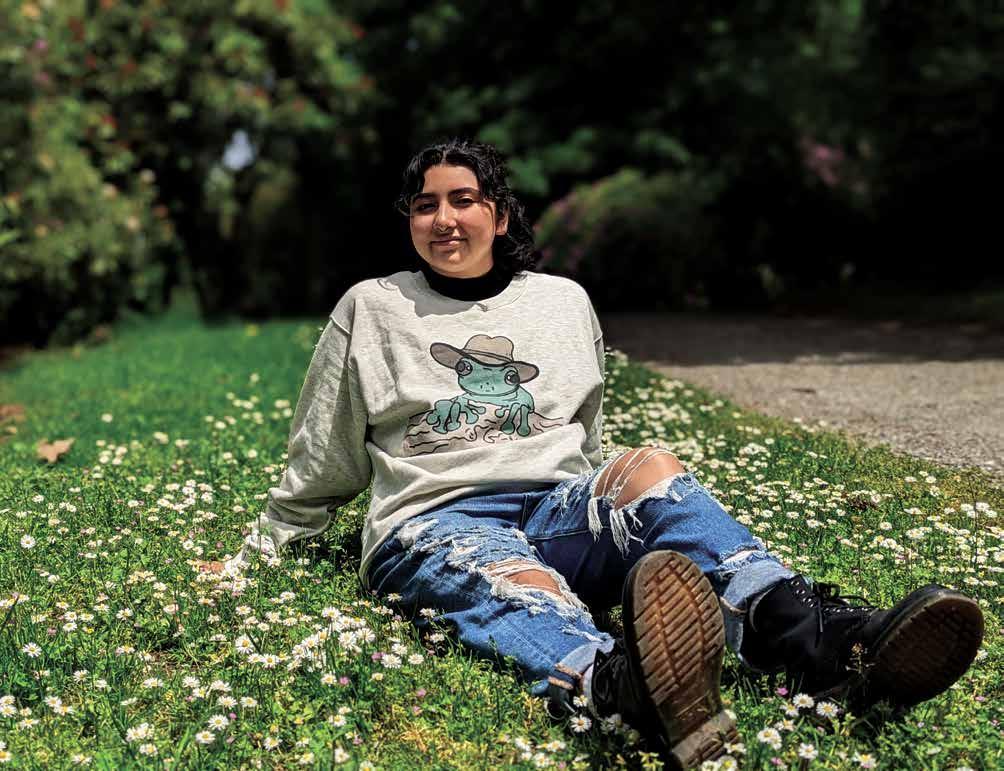
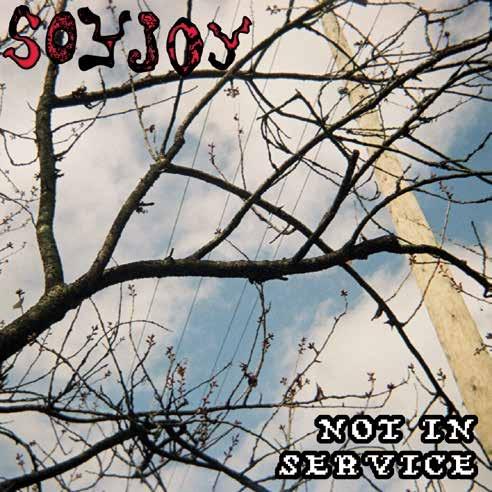
Juniper Lee, the singer songwriter behind SoyJoy, is selling their newest album’s cassette tapes over Instagram, managing the labor with the help of friends instead of a record label.
Titled Not in Service, it features distinctive, colorful, and calming guitar chords, is in the indie folk rock realm. SoyJoy’s full discography encompasses a wider variety of genres, including electronic and rougher folk.
Characterizing their style as “a little bit all over the place,” Lee says they’re comfortable with the mix. “My music is mostly a means to express my different facets. I really like experimenting, and I don’t like being bound by genre. I like using genre to express myself.”
Lee started playing guitar when they were young and their mom had them pick an instrument. “I picked the guitar after watching School of Rock when I was 5,” Lee said.
They got bored of playing other people’s songs when they were 12, and starting coming up with their own melodies. In high school, they sang in choir and held jams with friends. When they were 19, they made a Bandcamp for SoyJoy.
The name “SoyJoy” is a reclamation of the term “soyboy,” a slur used to insult male femininity in some online spaces. Lee says the reclamation includes the gendered part of the term.
“I wanted to twist that and kind of mock that, reclaim that,” Lee said. “Soy is a big part of Korean culture and cuisine, and food is really sacred and medicinal to peo -
ple around the world. I wanted to find the joy in soy and remind people of something wonderful.”
COVID hit shortly after they created the Bandcamp, so they weren’t able to play shows, but they have been playing more
gigs since summer 2022. They met Freddie Lee Toyoda, an Enby Party organizer and active member of Vancouver’s music scene.
The two bonded over shared identities and will be playing together for the PNW tour.
“We’re both Nonbinary, Trans, and
mixed Korean, so we had an instant bond, and we collaborate really well together,” Lee said.
Lee says Vancouver’s gentrification has made it hard for the music scene to thrive. They and other artists, organizers, and listeners are working to keep it alive.
“Everyone’s working so many jobs and really broke but still coming out to shows and doing their best to support the artists,” Lee said. “There’s a lot of systemic barriers, like racism and transphobia, that make it difficult for a lot of musicians impacted by those … to be able to create and share their art in the scene up here.”
The folk artist of many genres has visited Seattle from Vancouver in the past to play at Enby Party — a yearly music and art show focused on Nonbinary artists — and will be visiting again for a tour of the PNW (starting in Vancouver) alongside Freddie Lee Toyoda. In Washington, they’ll make stops at Olympia, Seattle, Tacoma and Bellingham, starting Sept. 15.
Lee hopes people will come out to see them. “I hope there will be a lot of cultural exchange,” Lee said.
As for after the tour, they say they’re going with whatever happens. They hope their music will bring people together.
“I just hope that my music can give people a lot of food for thought,” Lee said. “I want to show and remind people that you can just make art on your own.”
Lee can be found on Instagram @ soyjoymusic, where they have a link to their new album, Bandcamp, Patreon, and Spotify. They will be playing in Seattle on Sept. 16.
Film My Big Fat Greek Wedding 3 as harmlessly forgettable as its rom-com predecessors
by Sara Michelle Fetters SGN Staff Writer
MY BIG FAT GREEK WEDDING 3
Theaters
For those who loved 2002’s My Big Fat Greek Wedding or its belated 2016 sequel My Big Fat Greek Wedding 2, it will come as no surprise that My Big Fat Greek Wedding 3 will be right up your alley. Writer, director, and star Nia Vardalos returns to conclude her trilogy, offering up more of the same harmlessly obvious rom-com antics fans of the series seem to thrill over. Whether that’s a positive or a negative is in many ways completely beside the point. Vardalos knows what her dedicated audience wants to see, and she’s more than content to give them that and exactly nothing else. She peppers it with a dab of social commentary here, a dollop of romantic whimsy there, and smothers it all in layer after layer of Grecian melodramatic schmaltz that’s as off-putting as it is strangely charming.
After the recent death of her beloved father, Gus Portokalos, and the arrival of an invitation to attend a family reunion in Greece, Tula (Vardalos) sees this as a sign. Before he died, Gus asked his eldest daughter to deliver his diary to his three best friends, and this is her opportunity to do just that. Soon Tula, her husband Jan (John Corbett), their college-aged only child Paris (Elena Kampouris), Tulas’s brother Nick (Louis Mandylor), and eccentric aunts Voula (Andrea Martin) and Frieda (Maria Vacratsis) are all on a plane to visit the old country. There’s not a lot more to it. Actress Lainie Kazan (returning as Portokalos family matriarch Maria) is sidelined this time around — with her character battling the early stages of dementia — but still manages to make the most of the two scenes she appears in. Gia Carides and Joey Fatone are also back, but they’re only involved during the film’s final third, as Nikki and Angelo run around Greece partying it up while searching for Gus’s childhood chums.
Newcomers include Elias Kacavas as one of Paris’s classmates at NYU. He’s been brought to Greece as a guide and interpreter for the group (even though they don’t really need one) by the romantically devious Voula. There’s also Melina Kotselou as Victory, the plucky young mayor of Gus’s tiny hometown, and Stephanie Nur as Syrian immigrant Qamar, and they’re both key to how everything will turn out for the Portokalos clan during their adventure.
Vardalos unsurprisingly packs her scenario with plenty of twists and turns, and none of them are anything approaching shocking. There are lost loves, new friendships, unanticipated newfound family relations, and even another set of nuptials (this is a Big Fat Greek Wedding entry, after all). Everything moves from one scene to the next with perfunctory simplicity, and
all the pieces fit together with exacting simplicity. It’s as cookie-cutter as these things get, so becoming overly emotionally involved in the outcome isn’t easy.
But it’s also not altogether necessary. This cast of pros knows what they are doing, especially the always delightful combination of Martin and Vacratsis. There are singular moments of tenderness that do resonate, and it’s so benignly inoffensive that it’s honestly difficult to care how unoriginal it ultimately proves to be. Happy endings and simple resolutions are par for the course, and for most, that’s precisely how it should be.
Personally, this series has never done much for me, and that’s undeniably the case with this third effort, too. As great as the ensemble might be, Vardalos aims much too low, as far as I’m concerned. She
refuses to shake things up and refrains from taking any big swings. There is humdrum patter to all of this I tend to find tiresome, and even if there are a few hearty laughs and a handful of authentic character beats, none are even slightly memorable. Not that it matters. The food porn is absolutely terrific, and like its predecessors, My Big Fat Greek Wedding 3 does what it sets out to do and precious little more. While not much is of consequence, it still goes down smoothly enough that the fact it vanishes from memory the second the film comes to an end is hardly the disaster it might have been. The Portokalos clan’s purportedly final adventure (although I wouldn’t bet on that being true) is a tourist trap of emotional pabulum laid on as thick as freshly mixed tzatziki sauce.
My Big Fat Greek Wedding 3 – Photos courtesy of Focus Features
Books Spring Fire : Elle Woods meets One Flew Over the Cuckoo’s Nest
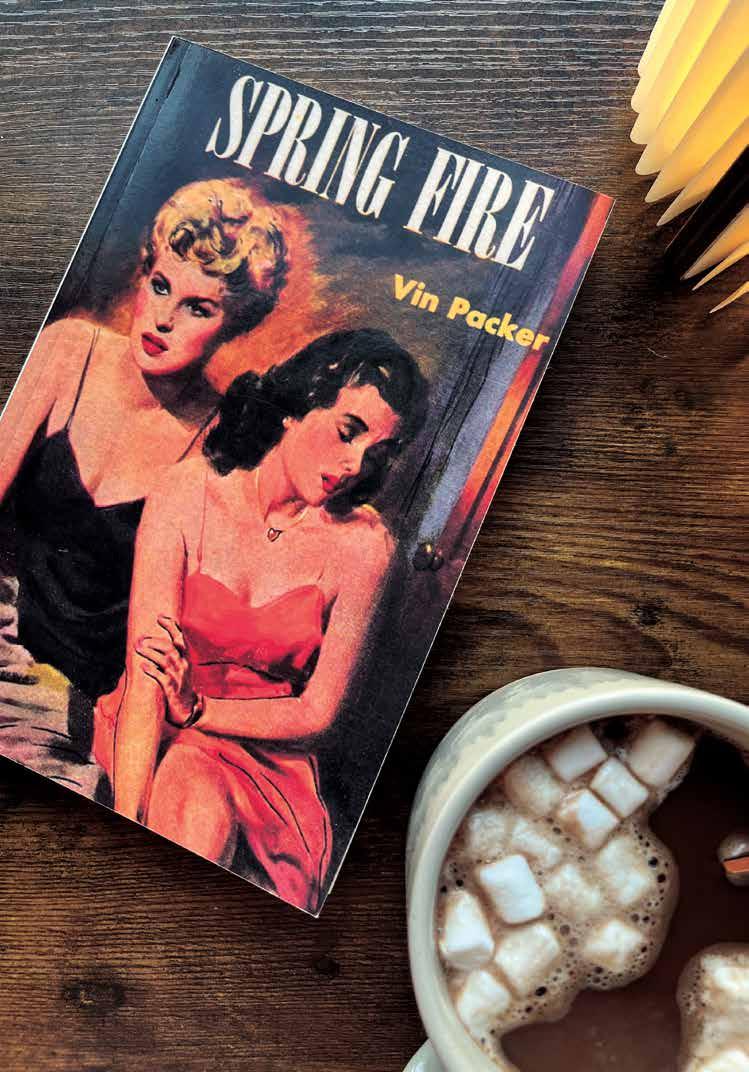
Vin Packer (real name: Marijane Meaker) wrote Spring Fire in 1952 based on her experience in boarding school, where she was in a “situationship” with another girl — but, when her girlfriend’s mother found out, the gal denounced the Church of Gay and told Meaker she’d rather die than be like her. In revenge, a decade later, Meaker wrote a book in which her exgirlfriend is an alcoholic who gets kicked out of her sorority.
Do I love a romance story? Absolutely. Do I love a romance based on petty revenge? Absolutely +1.
Much of the book felt surprisingly modern. Having your first Gay crush turn out to be a real asshole, chaotic Bisexuals, mental health struggles, an inexplicable obsession with swimming — some Queer things are perennial, it seems.
In summary, Mitch, a hot butch with big hands, joins a sorority and rooms with Leda, the femme campus queen with killer heels and mommy issues. Leda dates frat boys and attempts to overcome a lifetime of sexual abuse with dissociative sex. Mitch is a sheltered farm girl, daughter of a nouveau riche farmer, whom the sorority only allows to join because she’s rich as balls.
After Mitch smashes a vase over a predatory frat boy’s head (love it), she is assaulted by the him in a dank basement (hate it). When Mitch stumbles back up to her room, dazed and hurting, Leda has to break to her the rules of 1950s heteropatriarchy hell: Mitch can’t report her assault. If she did, she would be blamed.
Then, in a move worthy of the worst Bond movies, Leda has sex with Mitch. (This is one of my least favorite tropes. Someone gets assaulted by a bad guy, but don’t worry, there’s a good guy to assault them back to health? Ugh.) Mitch — naive, hapless Mitch — dramatically falls in love with Leda after a single shag.
The rest of their relationship showcases the difficulties of creating a healthy relationship in a world that tells you that you are sick. Leda runs hot and cold, alternately pushing Mitch away, running to her boyfriend, and then returning to Mitch in a haze of desperate longing. Mitch struggles to find herself while dealing with the abuse poured on her by Leda.
In the confused panic of two Queers who are only open to each other, they tear into each other like two cats drowning in a sack. They face the classic Queer struggle of letting love for the other person overcome their repulsion for the bitter thing society tells them they are. Unsurprisingly, in the noxious culture of a sorority at that time, they fail.
Meaker hated the ending she wrote. The obscenity laws of the time dictated “no happy homos,” so she was forced to write a grueling denouement. She despised it so much that she refused any republishing. While the conclusion’s framing is as tacky as expired lube, I don’t think the plot choices themselves were wrong or untruthful to the Queer experience.
Leda has a breakdown and goes to a mental health facility, which is all spoken about in an extremely hush-hush, judgmental tone. As a Queer of the 21st century who
references my therapist in casual conversation, Queers dealing with mental health is not unrealistic. Leda has been sexually assaulted since she was 10. Her mother, who demands Leda call her “Jan,” is an emotionally abusive alcoholic.
Leda has carved out a space for herself on campus where she is an alpha heterosexual. But she’s suddenly no longer able to maintain her ruse or hold on to her semblance of security. The only place she’s ever found value is stripped from her. That’s a crisis-level mix of stuff.
Mitch drops out of the sorority and realizes that she never loved Leda. This, also, makes her out to be an asshole, but it makes sense. Who is lucky enough to be truly in
love with the first person they fall in lust with? Mitch found another Queer, and for the first time, the undercurrents she felt were reciprocated. She was able to be open about a piece of herself and have hot, sexy times the way she wanted. That person was also emotionally stunted, cruel, and struggling with a lifetime of unaddressed baggage — it’s not something that could have lasted. But it brought them both to a painful crisis that caused them to confront pieces of themselves they needed to see.
So that’s Spring Fire. There’s one scene in the middle in which some friends put on fluffy robes and sip hot cocoa together late night in the kitchen — and that’s all I wanted for these two fucked-up, beautiful
Queers. For god’s sake, somebody get them a hot beverage and a good therapist.
What I’m reading to get over this: Take a Hint, Dani Brown, by Talia Hibbert
To stay in academia but move far away from the malignancy of Greek life, a hot Queer professor meets a grumpy-but-softhearted rugby player turned security guard. Fake dating and thick thighs ensue.
Next week: The Girls in 3B, by Valerie Taylor Three roommates in the big city with big decisions and bad times ahead.
Courtesy photo
Bringing his leg to the page
The book took on a new shape following Marshall’s discovery. Like many people who unearth later-in-life diagnoses, he spent a lot of time reexamining parts of his childhood and trying to understand what role his disability had played in his life, even before he knew he had one.
“Once I brought my leg to the page, the rest of me followed,” he said. “I started to allow my body and person to show up on the page in ways I hadn’t before. Then the book became this confrontation with queerness and disability in my family, and looking at those things as sources of not just tension but intimacy, and how disability and queerness course through the life of a family.”
Marshall started to find threads of connection between himself and his parents, who also developed debilitating illnesses as he grew up. “My dad passed away from ALS, and I was one of his caregivers,” he said. “My mom has had cancer for years — non-Hodgkin’s lymphoma and breast cancer — and has beaten all kinds of medical odds. I saw that it wasn’t just me having a disability. We’re all on this disability spectrum in life.”
Looking back at his childhood with a new lens, Marshall saw that much of the ableism he faced and internalized came from a sense of shame society tends to place on people with different abilities. Hiding his diagnosis was a way of feeding into that shame.
However, caring for his father during the late stages of ALS helped Marshall learn how to move past ability prejudice. “Shame, secrecy, and taboo kind of starts to go out the window, because you see how much you need each other and how precious life is,” he said. “The body and the mind are so separate.”
“When you burst through those taboos of shame or need, medical need, you become so much closer,” he continued. “For me and my dad, with his ALS and my CP, we had moments of bodily communion where we
related to what the other was going through. We didn’t have the same prognosis or experience, but for example, I was able to stretch him. I had been through a lifetime of physical therapy, so I knew how to stretch his limbs better than my siblings.”
Reexamining his memories
Discovering his diagnosis changed the way Marshall viewed his childhood memories. An early draft of one of his essays was about his childhood obsession with The Wizard of Oz and his subsequent acting career. At first, Marshall examined the experience of meeting an actor who played a Munchkin in the original film production through the lens of being a closeted Queer kid.
“It wasn’t until I found out that I had CP that that deeper layer or that puzzle piece clicked into place,” he explained. “It was the funniest thing. Before I knew about CP, I still had the same experiences, but [then] it was like somebody had taken the blinders off. I could suddenly see — not just my disability and how I walked around the stage with a noticeable limp. Certainly, that was something audience members were clocking, and my fellow cast members were well aware of, but I’d always thought of myself as a star.”
Marshall realized that his disability affected what parts he did and didn’t get. He took offense when teachers offered him disability-coded parts, like Quasimodo, but overlooked him for general leads like Dennis the Menace. He also recalled a feeling of disdain for the Munchkin he met, unaware of how her bodily differences shaped the roles she was offered.
Marshall also realized that the way his parents saw him was also affected. Though they did not share his diagnosis with him, they were both aware he had CP. In middle school, Marshall took a class trip to France and was upset that his “dorky dad” came along as a chaperone.
“Looking back with the knowledge of my disability, I was suddenly aware that my parents were doing that for me,” he said. “They wanted me to have the security of a parent chaperone with me. So much of my life [it] seemed that people had been more generous toward me. I was able to see myself more clearly, and I was able to give myself a little bit more grace in the process.”
Family history fosters intimacy
Digging deeper into his family stories allowed Marshall to connect with people in his life in a new way. He spent hours inter-
viewing his family members about the stories he wanted to retell in Leg, which wasn’t always easy.
“So much of the time, they were uncomfortable. Especially with my mom,” he said. “She was hard to talk to initially, but we had many beautiful moments. We always talk about seeing our parents for the first time as adults, but I think the interview process with my mom allowed her to see me as an adult.” Reexamining the stories he had grown up with also helped Marshall gain a new perspective as a professional writer. While writing his book, he asked his mom to retell his birth story.
“She went bowling and had amniotic fluid start leaking at the bowling alley, so she drove to the hospital,” he said. “She tells this story of her doing a headstand in the hospital bed to get me off the umbilical cord, and that there was a watermark on the wall right across from where she was sitting that was ‘in the exact shape of William Shakespeare,’ and that’s how she knew I was going to be a writer.
“So you take the lore of a birth story and ask real questions about that, like, ‘Well, was that really scary?’ She’d always told it to me as a funny story and how ‘it was almost this wild thing that happened,’ but then [you] go back with an adult’s knowledge and say, ‘You were alone in this delivery room’ — it was a couple of months before my due date, so it wasn’t anything that she was expecting — and … have a meeting of minds as adults on these topics.”
Keeping it light
One thing apparent about Marshall’s whole family is their sense of humor. Whether it was his mom telling stories of his prophetic birth or the family referring to his father as “neck-less” after a severe spinal cord injury left him without mobility in his neck, the people who raised him knew how to make light of a difficult situation.
“For so much of my life, humor and tragedy were just sitting side by side in the room,” Marshall said. “Sometimes the humor in the book can come from this French farce nature, where the reader knows information that I didn’t know as a kid, so there’s almost this sitcom-level of misunderstanding.”
He likens his role in the memoir to that of Stewie in Family Guy. “He’s a baby, but he has an adult consciousness. That’s a little bit of the humor of Leg
Image courtesy of Abrams
Photo courtesy of the author
Books
able; we laugh when we’re surprised.”
MARSHALL
continued from page 15
You’re going through these awkward, cringy experiences, but you have an adult perspective layered over these things,” he said.
“My story would be classified as a tragedy if it didn’t have this grace of hindsight and perspective and letting the dust settle.”
Humor has helped Marshall and his family push past the shame and stigma placed on the identities they carry. “One way life can be funny is by being super honest. Once you can push past the cringe, life can just read as really funny,” he said. “I think there’s a way of activating [taboo and shame] to a humorous end. We laugh when we’re uncomfort-
While the Marshall family knows a thing or two about laughter, he credits his mom for teaching him the most about finding humor in the dark times. “She was the chemo patient who would show up in a grass skirt and a coconut bra and hula into the chemo room as kind of a schtick. She’d show up with those glasses that have eyeballs dangling on springs. She consciously turned it into a humor routine,” he said.
In many ways, his mother has inspired him. When he was a kid, she wrote a weekly column for their local paper. Growing up, he watched as she cared for his father as his condition declined. Even when life dealt her multiple cancer diagnoses, she took it in good stride.
As it turned out, his mother also learned a
thing or two from Marshall. “My mom, after my dad passed away, ended up in a relationship with one of her former cancer doctors, a reconstructive plastic surgeon. This woman saved my mom’s life,” he said of his new stepmother. “I don’t know if my mom would have been able to take that walk on the wild side if she hadn’t seen me be a happy and relatively well-adjusted Gay man.
“I think she would probably even say that she hadn’t met a Gay person, at least an out Gay person before she met me. It’s a little narcissistic to put it like this, but having a Queer kid allowed my mom to be Queer. That saved and shaped the rest of her life.”
His mom and stepmother have now been together for 15 years.
While no family is perfect, the Marshalls have learned to accept each other as they
are, to cast shame aside, and to take up as much space as possible.
“So much of the beauty of what we do for each other as a family is when you show up as yourself and demand acceptance,” he said. “That’s the beauty of my family. Everyone in my family takes up so much space, and we teach each other to take up space, which can make family vacations very tricky, in particular. There’s a lot of space being taken up. But in terms of just personhood and selfhood, it can be a really beautiful thing.”
Leg: The Story of a Limb and the Boy Who Grew from It is available now. Fans of Greg Marshall can find extra essays that didn’t make it into the final book on his website, Gregmarshall.com.
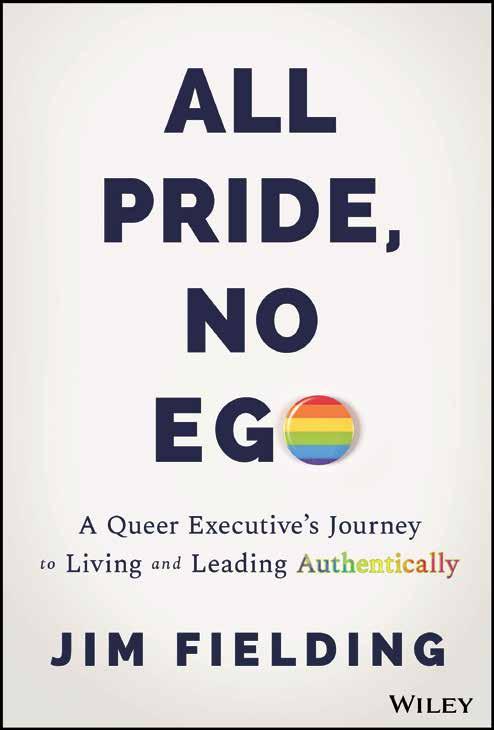
All Pride, No Ego : Advice from a Gay executive’s personal journey
by Terri Schlichenmeyer
Special to the SGN
ALL PRIDE, NO EGO: A QUEER EXECUTIVE’S JOURNEY TO LIVING AND LEADING AUTHENTICALLY
Born in Toledo into a big extended clan, Jim Fielding says that it looked like he was a member of “the perfect, nuclear family.” The truth was, though, that “vulnerabilities and dysfunctions were numerous” and that included homophobia, which was a problem: when he was six years old, Fielding
realized he was Gay.
To cover for it, he became an overachiever but with a lack of self-confidence and an abundance of insecurities. To help him to conquer his weaknesses, he built a great support system, but still, he says, “I wish I had a book like this when I was starting out in my career.”
His first point here is his mantra: “Control the controllable, but leave space for the possible.”
Other advice he’s learned: Color “within the lines” if you must, but do it at “a company whose ethics and values align with your own.” Remember that if the job is right, you won’t have to change who you fundamentally are.
What else? If you’re in control, set clear goals, “hire people who are smarter than
you are” and get to know them well. Strive always for “cultures of excellence.” Trust your intuition, tamp down impulsiveness, but be flexible — which will help you attract and keep the best team possible.
Also: “Never stop learning.” Accept that you can forgive without forgetting transgressions. Learn to “define family however it works for you...”
Plus: Know the difference between want and need. Know that selfishness is a righteous thing sometimes.
And always “leave [your] corner of the world a better place than [you] found it”: donate, volunteer, do good.
In his preface, Fielding says that he wrote this book because he “realized that my leadership style and success... are completely dependent on my personal journey.” Those
words should alert readers that All Pride, No Ego is predominantly a memoir, which isn’t a bad thing but it bears mentioning.
If you don’t have the patience it takes for rambling stories, you won’t like this book at all, in fact. Fielding is a storyteller, and he smartly uses his experiences to show, not tell, in a way that’s pleasant and relatable for anyone who’s ever struggled at work. Yes, the workplace tales mean that business advice is sometimes embedded, sometimes apparent, and sometimes down a rabbit hole for you to follow, but for most readers, it’ll be a useful scavenger hunt. While this book is perhaps best for the person who’s looking for a first job or who just found one and is sweating to fit in, All Pride, No Ego is worthwhile for anyone.
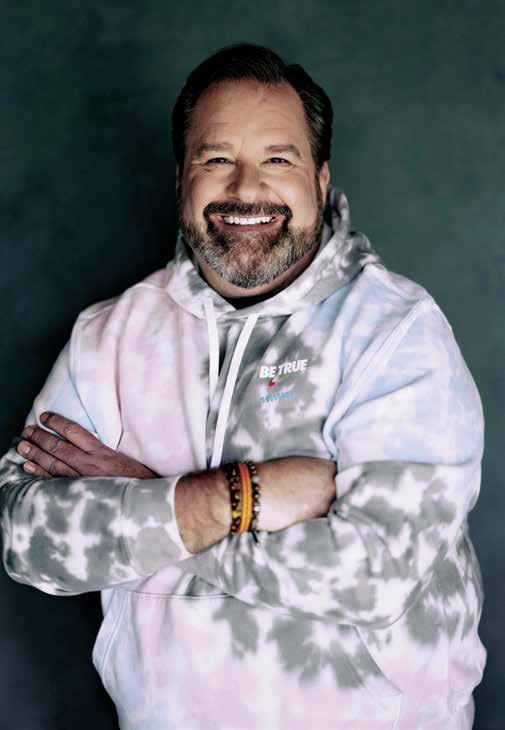
Image courtesy of Wiley Jim Fielding – Photo by Ben Rollins
National News
Nuclear Fusion app could put found family a click away
by Daniel Lindsley SGN Staff Writer
After helping two families who happened to be mere blocks away find each other, influencer and content creator Jessica Daylover took it as a sign: the Nuclear Fusion project had to happen. So in early July, she Kickstarted the app, which is designed to bring people together for a rare kind of mutual support.
The first phase of the project was funded in less than a month, in no small part because Daylover was already well known in the right circles. She’s the founder of Remodeled Love, a multimedia resource on polyamory and parenthood, so she’s been immersed in discourse about “nontraditional family structures” for some time.
“You cannot get a group of polyamorous people in a room for more than ten minutes before someone brings up a commune,” Daylover said over Zoom. But “the reality of that happening is probably less than 1% for all of the people who say that.”
There are a number of reasons why that might be. The disappearance of “third places” like cafés, bookshops, libraries, and bars is a big one, Daylover said. If people don’t have a place to meet outside of work, they might find that bonding with even their next-door neighbor has to be a deliberate decision rather than a casual one.
There’s also the prevailing ideal of the “nuclear family,” which fittingly atomizes each couple and their children into a singular, ostensibly independent household.
The app’s name is a clever play on that physics metaphor.
“With [actual] nuclear fusion, you have these really unstable elements whose electrons are flying around all crazy,” Daylover explained. “And if you can create a force strong enough to fuse them together, it creates stability in the element, which releases a ton of energy that can then be used for something else.”
“It takes a village”
Nuclear Fusion wouldn’t just be for the polyamorous, though, because even monogamous couples find that the nuclear family doesn’t really work as advertised. Without extended family or close friends nearby, who will be there to pick up a kid who gets sick in the middle of the day? Who will make dinner for everyone if one parent has to work late and the other is on a business trip?
Nuclear Fusion is about taking those burdens of daily living, like childcare, elder care, cooking, transportation — things that are often monetized by other apps — and sharing them to whatever degree a group is comfortable with. It aims to suggest matches based on
PrEP
continued from cover
According to Infectious Disease Special Edition, the medications are “the daily oral agent tenofovir disoproxil fumarate with emtricitabine (Truvada, Gilead) ... and the daily oral drug tenofovir alafenamide with emtricitabine (Descovy, Gilead) and the longacting injectable cabotegravir (Apretude, ViiV Healthcare).”
In the conclusion of the 2023 study titled “Preexposure Prophylaxis for the Prevention of HIV: Updated Evidence Report and Systematic Review for the US Preventive Services Task Force,” the authors state that “in adults at increased HIV acquisition risk, oral PrEP was associated with decreased risk of acquiring HIV infection compared with placebo or no PrEP. Oral TAF/FTC was noninferior to oral TDF/FTC, and injectable cabotegravir reduced the risk of HIV infection compared with oral TDF/ FTC in the populations studied.”
According to the USPSTF, 1.2 million
“shared values, interests, and needs.”
Daylover compared the process to building a “village,” as in the proverb “it takes a village to raise a child.”
“If I could open my front door and have my kids run outside and play with all the other commune kids, and we could resource-share, and there could be big family dinners every night, and you’re only responsible for cooking once a month — that would change my life,” Daylover said.
“It’s probably not gonna happen, but what would also change my life to almost the same extent is if I could find one other family, just one, that wanted to live next door, or down the street, who also wanted to behave in sort of an urban commune–type way.
“And so the idea of this app is that it can create this bite-sized version of that dream for people. And in doing so, people’s lives would change dramatically.”
Hearing all this, it’s easy to jump to the
people in the US are eligible to receive PrEP medication to prevent the spread of HIV/AIDS, but only 30% of those people are taking it. This is due in part to existing disparities and issues with obtaining access to the drug, which is especially true in communities of color. According to the Centers for Disease Control and Prevention, only 11% of eligible Black people and 21% of eligible Latinx people take PrEP, compared to 78% of eligible white people.
One of the hopes of the USPSTF is to increase accessibility to PrEP, because it has been proven to be successful. But unfortunately, due to a history of stigma related to HIV/AIDS and a general mistrust for the healthcare system, many people choose not to take the drug, which is also not always covered completely by insurance. Another issue is the fact that many people who are eligible to take the drug are unable to obtain refills, due to preexisting issues like substance abuse or being unhoused.
According to the USPSTF, “an estimated 1.2 million persons in the US currently have HIV and more than 760,000
comparison of dating apps, and that elicits a whole bunch of questions and assumptions, the foremost being about safety.
Nuclear Fusion is still in development, but Daylover said it will have an extra layer of safety tools similar to those used in apps for finding nannies, such as background checks.
Those tools would be supplemented by a free educational module, which would help users not only recognize red flags but also maintain existing relationships, along with a host of other expert-led lessons about communication and emotional intelligence.
The dating-app comparison also brings up questions of money and incentives. Monetizing something as important as romantic relationships or, in this case, found family and support networks might raise some hairs. Can a solution to loneliness and isolation in the digital age really be a digital one?
Daylover acknowledged those poten-
persons have died of complications related to HIV since 1981.”
Access to PrEP in Washington state Washington state has a PrEP drug assistance program (DAP) that provides financial assistance for HIV-negative people who have risk factors that expose them to HIV.
According to the Washington State Department of Health, in order to be eligible for PrEP DAP you must:
1. Be HIV-negative
2. Live in Washington state
3. Meet one of the following risk factors:
• a. Is male or Transgender and has sex with men and has one or more of the following risks:
◦ diagnosis of rectal or urethral gonorrhea, rectal chlamydia, or early syphilis in the prior 12 months
◦ methamphetamine or popper use in the prior 12 months
◦ history of providing sex for money, drugs, food, shelter, or transportation in the prior 12 months
tial contradictions. That’s part of why the educational portion would be free; it would give users the tools they need to build and maintain their “villages.”
“I’m working with a consultant on making a nonprofit arm of the app, whose sole mission is education,” Daylover said. “So that way we can go after grants.”
As for the project’s future, it’s currently in its second phase, but it’s already seeking additional funding from backers for the next phase.
You can find out more about Nuclear Fusion and follow its progress at www. kickstarter.com/projects/remodeledlove/ the-nuclear-fusion-app or on Instagram @ nuclearfusionapp. To donate to the app’s third and final phase, visit www.gofundme. com/f/nuclear-fusion-app-phase-3-of-3.
◦ unprotected anal sex outside of a longterm, mutually monogamous relationship
• b. Is in an ongoing sexual relationship with an HIV-infected person who:
◦ is not on antiretroviral therapy (ART)
◦ is on ART but is not virologically suppressed
◦ is within six months of initiating ART
◦ is on ART and is virologically suppressed
• c. Is in an ongoing sexual relationship in which the female partner is trying to get pregnant
• d. Is a woman who provides sex for money, drugs, food, shelter, or transportation
• e. Injects drugs that are not prescribed by a medical provider
For more information regarding eligibility for Washington’s PrEP DAP, go to https://doh.wa.gov/you-andyour-family/illness-and-disease-z/hiv/ prevention/pre-exposure-prophylaxisdrug-assistance-program-prep-dap.
Courtesy image
National news highlights National/ International News
by Teddy MacQuarrie SGN Contributing Writer
Mississippi poised to elect state’s first-ever Gay legislator
Voters in Mississippi’s House of Representatives District 66, located in the Jackson metro area, handed Fabian Nelson, a Gay Black man, a victory in the Democratic primary runoff election against Roshunda Harris-Allen, ensuring his victory in November’s uncontested general election.
According to Advocate.com, Nelson, a 38-year old real estate professional, will be the state’s first out Queer legislator in its history. Mississippi is one of only two states (with Louisiana) never to have had openly Queer members of the state legislature.
“I still think I’m in a dream. I’m still trying to process it and take it in,” Nelson told the Associated Press Wednesday. “It’s still shocking to me, I have to be honest.”
The district’s incumbent, Democrat De’Keither Stamps, did not seek reelection, as he is running for the Mississippi Public Service Commission. Nelson had run unsuccessfully against Stamps for the District 66 House seat in 2020.
Nelson’s priorities as a state representative will include better funding for education, supporting small businesses, and expanding Medicaid. He plans to be a voice for marginalized people in the deeply conservative state.
Nelson’s victory “sends a real message in a time when we are seeing attacks legislatively and through violence against the LGBTQ+ community that the majority of people reject that kind of animus,” Rob Hill, state director of HRC’s Mississippi chapter, told the AP. “I think a lot of youth around the state who have felt like their leaders are rejecting them or targeting them won’t feel as lonely today.”
Nelson vowed to fight legislative attacks on LGBTQ+ people and other oppressed groups in Mississippi. “At the end of the day,
I put my suit on the same way every other person who walks in that statehouse does,” he told the AP. “I’m going to walk in there, and I’m going to be a sound voice as to why things like this can’t continue to go on in the state of Mississippi.”
Judge blocks Tennessee drag ban
A federal court has issued a decision temporarily suspending the enforcement of Tennessee’s controversial anti-drag legislation for an upcoming event, the Blount County Pride Festival.
According to Advocate.com, the legislation, officially referred to as the Adult Entertainment Act, restricts certain performances, such as drag shows, from occurring in public venues that could be frequented by minors. The festival faced concerns when local law enforcement authorities signaled their intent to enforce
International news highlights
by Teddy MacQuarrie SGN Contributing Writer
Most Church of England priests support marriage equality
A survey conducted by the Times found that more than half of the priests in the Church of England support marriage equality, which would involve a change in the law to allow clergy to preside over weddings of same-sex couples.
The survey showed that 53.4% of the clerics were in favor and 36.5% were opposed, in what is a major shift in attitude among the clergy from 2014, when the Times polled clergy following the legalization of marriage equality in England.
The survey further indicates deeper changes in attitude among the clergy concerning Queer issues more generally. It showed that 64.5% support ending the teaching that “homosexual practice is incompatible with Scripture,” with less than a third (29.7%) saying that the Church of England’s teachings on Queer people should not change.
These shifts come in the wake of a row that erupted last year at the Church of England’s first Lambeth Conference in over 14 years, in which Archbishop of Canterbury Justin Welby faced overwhelming public criticism for maintaining current church teachings, affirming a 1998 declaration that homosexual sex is a sin.
Responding on behalf of the Church, the Bishop of Leeds, the Right Reverend Nick Baines, told the Guardian, “The church is the church, and, as such, not a club. It has a distinct vocation that does not include seek-
the contested law, despite a prior court having ruled it unconstitutional.
The suspension effectively prevents the enforcement of the anti-drag legislation in the context of the festival. The ruling allows organizers to proceed with the event without the immediate danger of legal repercussions.
Blount County Pride Festival’s headliner, Matthew Blake Lovegood, known for performing in drag as Flamy Grant, responded to the situation by taking legal action against Blount County District Attorney Ryan Desmond and other public officials.
Lovegood filed a lawsuit in the US District Court in Eastern Tennessee, arguing that Desmond’s letter was a “blatant attempt to chill Plaintiffs’ speech and expression protected under the First Amendment.” In the suit, Lovegood sought a temporary restraining order to prevent the enforcement of the Adult Entertainment Act at the event.
ing popularity. Repentance means being open to changing our mind in order that society should encounter both love and justice. And this means sometimes going against the flow of popular culture, however uncomfortable that might be.”
Advocates for Queer equality and inclusion, however, see things differently.
Andrew Foreshew-Cain, founder of the Campaign for Equal Marriage in the Church of England, said the survey showed there was “no excuse for further delay and equivocation” in welcoming Gay people into the church.
“The clergy of the Church of England are kinder, more generous, and more welcoming towards LGBTI people than the current official position allows,” he said.
“The C of E, and in particular our bishops, needs to stop wringing its hands over Gay people and move forward towards blessings and, in time, to celebrating same-sex marriages in our parishes.”
Judge Ronnie Greer ruled in the festival’s favor, acknowledging that Pride organizers and Lovegood are likely to succeed in their suit. He emphasized that they would probably suffer “irreparable harm” if the antidrag law’s enforcement proceeds.
Notably, Judge Greer highlighted that “District Attorney Desmond appears to concede that Plaintiffs would pose no harm to children through their onstage performances.”
The American Civil Liberties Union of Tennessee, representing the plaintiffs, released a statement celebrating the court’s decision. Legal Director Stella Yarbrough stated, “This ruling reinforces that drag performance is constitutionally protected expression under the First Amendment, regardless of where in the state it is performed. To anyone else seeking to restrict the constitutional right of drag performance, you’ll see us in court.” Ari Baker, president of Blount County Pride’s board, expressed relief and gratitude, saying, “We are relieved that the court has taken action to ensure that law enforcement will not wrongly apply this unconstitutional law. This ruling allows us to fully realize Blount Pride’s goal of creating a safe place for LGBTQ people to connect, celebrate, and share resources. We appreciate the community support and look forward to celebrating with you all on Saturday.”
Lovegood, who has recently achieved recognition on iTunes Christian album and singles charts, emphasized the importance of the First Amendment rights in this context. “This ruling confirms that despite continued attempts to remove LGBTQ people from public life, our First Amendment rights matter just as much as anyone else’s. Our fundamental right to exist as we are and to gather in celebration with our community is protected by the First Amendment on and off the stage.”
Hong Kong court orders “alternative recognition”
Hong Kong’s Court of Final Appeal ruled Tuesday against marriage equality, instead calling for an “alternative legal framework” to grant rights to same-sex couples.
The ruling comes after an appeal brought by pro-Queer and pro-democracy activist Jimmy Sham, which argued for the constitutional right to marry another man. The court dismissed the appeal, but according to Reuters, “effectively gave the government two years to ensure that rights, such as access to hospitals and inheritance, could be protected for same-sex couples.”
In order to meet what the ruling calls “basic social requirements,” Justice Patrick Keane added, “The absence of legal recognition of [a same-sex couple’s] relationship is apt to disrupt and demean their private lives together in ways that constitute arbitrary interference.”
A previous ruling in 2019 from a lower court in a separate case also sided against marriage equality, and also called for alternative legal recognition. Tuesday’s decision affirmed the lower court’s ruling, and made final the call for such an alternative framework.
Though it falls short of full marriage equality, in a statement to the Associated Press, Queer activists in Hong Kong called the ruling encouraging. “This judgment, we believe, will go a long way in attracting young talent coming to Hong Kong to work and live,” said Hong Kong Marriage Equality co-founder Jerome Yau.
In a separate statement to Reuters, however, the group’s campaign manager, Esther Leung, said the ruling is a “major step forward” but “falls short of what is really at stake in this case: full inclusion in marriage.” Still, “it is a significant victory which makes clear that Hong Kong law must afford due respect and protections to same-sex couples. This will help families while hurting no one.”
Hong Kong is a former British colony that is now a part of China, though it is ostensibly self-governing in all areas except defense and foreign policy. It has a “mini-constitution,” known as the Basic Law, on the basis of which jurists render legal judgments.
In a poll conducted by the BBC earlier this year, 60% of Hong Kong residents supported marriage equality, up from 38% ten years ago.
Fabian Nelson – Courtesy photo
Photo by Hannah McKay / Reuters
Episode 75: Sid Seedy
It's time for SGN's annual special issue on finance! Co-hosts Lindsey and Benny talk about the nuances of the wealth gap between Queer people and their straight counterparts, and about the veterinary technician shortage, Seattle's overloaded animal shelters, and the many resources out there for struggling pet owners. Lindsey interviews local "dragabond" king Sid Seedy.