Fall Arts & Travel

Pinchos and paleo art on the Spanish Coast
by Scott Wittet Special to the SGN
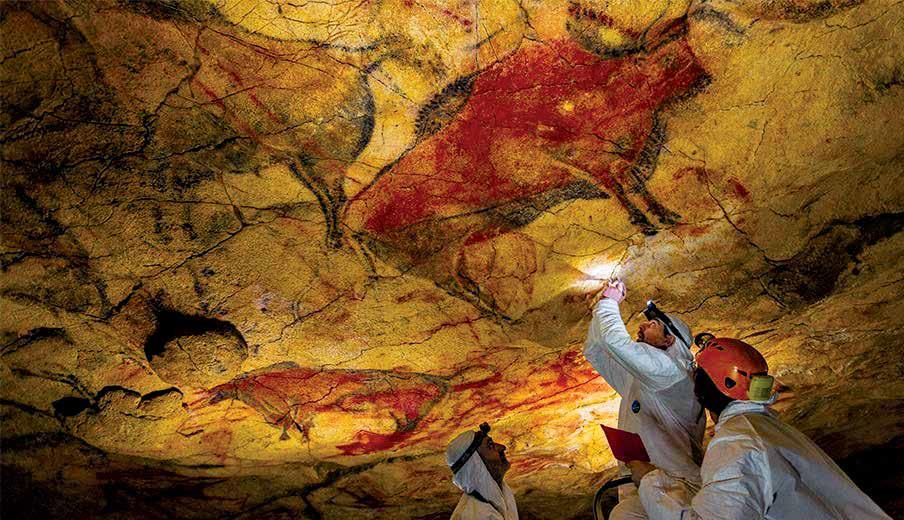
We knew we were in for a treat when the lights went off. We had been through the drill several times already – at a certain point in every cave tour the guide would throw a switch, plunging us into perfect darkness –no moon, no stars, no distant city lights. With another click a set of floodlights would blaze on, startling us with a view we hadn’t noticed before, a wall swarming with beasts that no longer walk the earth – woolly mammoths, extinct horses, aurochs (a kind of prehistoric bull), cave bears and cave lions. The paintings and etchings were spectacular – not only beautiful, but also awe-inspiring because they were created tens of thousands of years ago. They are the work of men and women who
were, physically and mentally, just like us and who had thoughts and feelings we would understand. To feel moved by a piece of art made so long ago, and to experience it in the wondrous and strange environment of an ancient cavern deep beneath a mountain, was, for me, a childhood dream come true.
We had headed to the northern Spanish regions of Cantabria and Asturias to see ancient art, but we were thrilled to discover so much more! The coast from Bilbao to Gijón is not a top destination for foreign tourists, but it is a favorite landing spot for Spaniards, especially in summer – they love the beaches, fresh seafood and cooler temperatures. So after visiting Madrid, Andalusia, Barcelona
and other Iberian top spots, consider heading north. It’s where you’ll find great food –including innovative pinchos (tapas) – charming towns, the gorgeous Bilbao Guggenheim, Altamira and other ice age decorated caves (if you’re interested in that sort of thing) and good value for your strong dollar. In June the weather was pleasant (70s to low 80s during the day) and the European tourist season wasn’t in full swing yet, so we didn’t have to fight crowds.
We seldom book a guide during our travels, but for this trip we made an exception. Charles Schwalbe, owner of Northern Exposure Spain, was born in the area and first visited the painted caves as a young boy
with his dad. Charles’ fascination with ice age art grew over the years, and he developed a profound expertise. After a career in finance in Texas, Charles gave up corporate life to return home and follow his bliss. Now he’s shepherding small groups not only to his beloved caves; he also leads hikes in the Picos de Europa mountains, and tours focusing on wine, art and architecture, festivals or wildlife. A few of the six caves we visited were hard to find, so having Charles at the wheel was time and aggravation-saving, but what we loved most was his cultural guidance, including advice on where to stay, and where to find the best food.
see SPAIN page 4
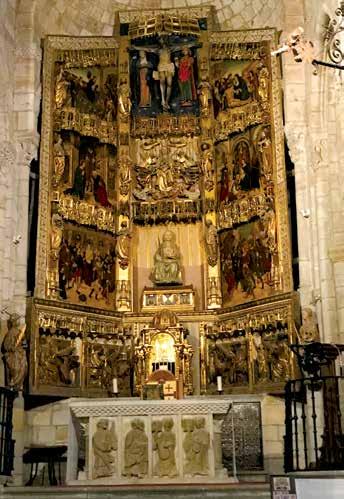
Detail of an alterpiece in Burgos Cathedral.
SPAIN · GSBA · CRABFEST · WALLA WALLA · SEATTLE ART MUSEUM · CANNON BEACH · HOTEL MOXY


SPAIN
For the first few days our base was the quaint medieval town of Santillana del Mar. Our hotel, the Casona de Revolgo, features huge, comfy rooms with high, exposed beam ceilings. It is in a great location at one end of town, across from a park – in the morning you wake to birdsong. The Casona is a historic building and doesn’t have as many power outlets as we tend to need these days, so bring an adaptor with multiple jacks to keep everything charged.
You can’t get lost in Santillana – it’s only got three parallel, cobbled streets. At one end of town is a picturesque, 12th century Romanesque church. Tour buses disgorge their hoards all day, but in the late afternoon we were the only people wandering through its atmospheric cloister. We had all the pews to ourselves as we took in the small, but brilliant golden altar housing the remains of Santa Juliana, surrounded by scenes from her life.
The town is packed with boutique shops and eateries. At La Huerta del Indiano – a restaurant owned by the Casona but not attached – we enjoyed a marvelous, three-course meal, with wine, for 16 euros (about $19). That was the best bargain we found in town, but other restaurants had similar offers – try the Gran Duque and the Villa. Tip: the Huerta website calls its cuisine “Indian food,” but you won’t find naan or chicken tikka there. When they say Indian, they mean someone who traveled to the new world – the” Indies” – to make his fortune. It was an adventurer like that who, hundreds of years ago, built a mansion, which became the restaurant.
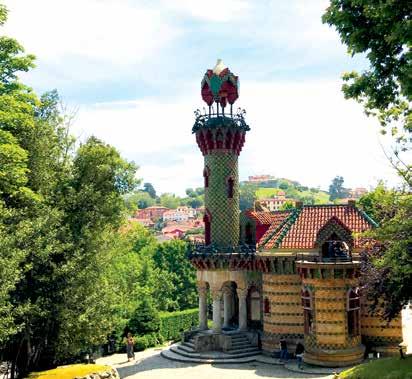
On a break from the caves, Charles organized a walking tour of the nearby, historic town of Comillas, where we visited the whimsical, modernist “Capricho” built by famous Catalan architect Antonio Gaudi (the most famous of Gaudi’s buildings are in Barcelona, but you can get a taste for his design sense here). Don’t skip the fascinating guided tour.
Another day we headed inland to explore Burgos, the ancient capital of the Kingdom of Castile. Burgos Cathedral is impressive – it’s the third largest in Spain after Seville and Toledo – and is packed with over-the-top sculpted altars and art. More central to the theme of our trip was Burgos’ award-winning Museum of Human Evolution. Don’t miss the model of a Neanderthal wearing feathers in his hair, looking a lot like an
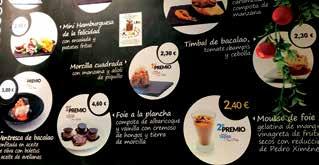
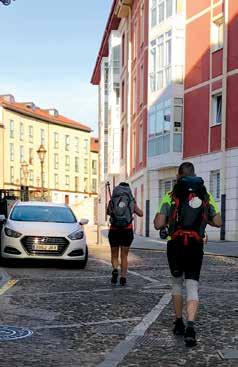
Iroquois hunter. All European- and AsianAmerican DNA contains some Neanderthal genes, and our ideas about these ancestors are evolving rapidly. We know they weren’t the knuckle-dragging brutes of old movies. And to their credit, they all ate paleo! Burgos is an official part of the Camino de Santiago, and you’ll see loads of folks with scallop shells on their backpacks, indicating that they are on the “Way of St. James.” Part of the route – marked by bronze shells in the pavement – happened to run between our hotel and breakfast. So we walked the Camino a bit, but sadly that was the extent of our pilgrimage. Our most enduring memory of Burgos? The pinchos! Charles knew just where to find the most interesting small plates, and how to cozy up to the counter to order. The fashionable lunch crowd at La Lorencita wasn’t there for traditional recipes. They were interested in snacks like the top prize winner in last year’s Burgos pincho Olympics – an unexpected combination of panseared foie surrounded by “satellites” of dark chocolate wafers sandwiching mush-
room mousse. Who would have thought? It was amazing, only five dollars, and one of many tasty bites we enjoyed that afternoon.
Our route from Burgos took us through Rioja wine country and while we didn’t have time for tasting this visit, we did admire two wineries famous for their architecture.
The Marqués de Riscal includes a hotel designed by Frank Gehry (architect of the Guggenheim in Bilbao and MoPOP in Seattle). The undulating roof of the nearby Ysios winery echoes the mountains looming behind. Both stand out because they’re in the middle of nowhere – a perfect showcase for buildings like these. There are other innovative wineries too – the previous week Charles had been the designated driver for a van full of Americans working their way through the vinos of northern Spain. Sounds like a good plan for the future!
We said goodbye to Charles in Bilbao, a city with an incredible story of renaissance following the fall of its industrial economy. Now it is a world-class destination, with an international airport convenient to some of the oldest art on earth.
Northern Exposure Spain – Tel. (844) 667-3977 – info@northernspaintour.com –http://www.northernspaintour.com
Casona de Revolgo – Campo de Revolgo, 3, 39330, Santillana del Mar, Cantabria, Spain – Tel. +34 942 81 82 77 – https://www.turismocantabria.es/es/verhotel-la-casona-de-revolgo/224
La Huerta del Indiano – Calle la Carrera, 15, 39330, Santillana del Mar, Cantabria, Spain – Tel. +34 942 84 02 36 –lahuertadelindiano@santillanadelmar. com – http://www.santillanadelmar.com/ restaurante-la-huerta-del-indiano
La Lorencita – Calle San Lorenzo, 27, 09003, Burgos, Spain – Tel. +34 616 22 15 90
All photos except the Altamira bulls by G. Tang/S. Wittet
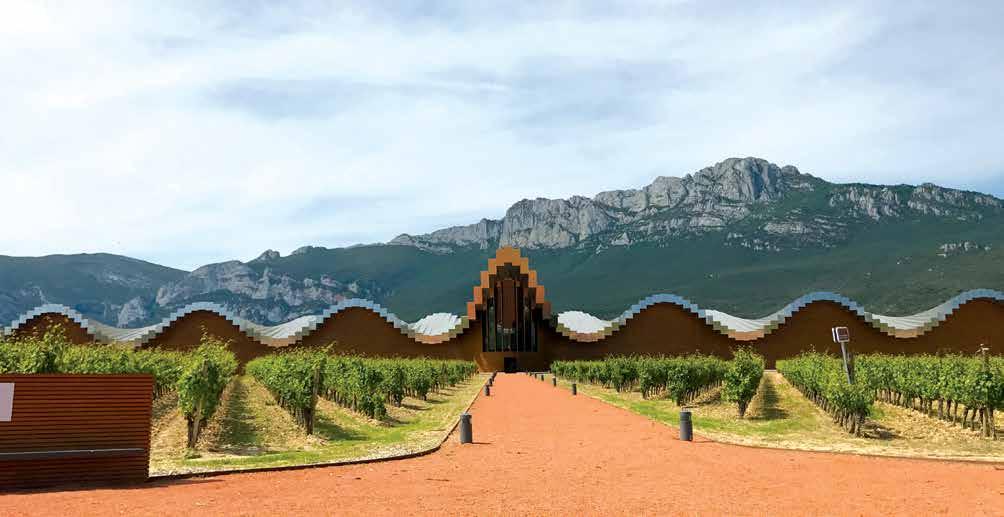
Ysios Winery in the Rioja region wins awards for architecture and wine.
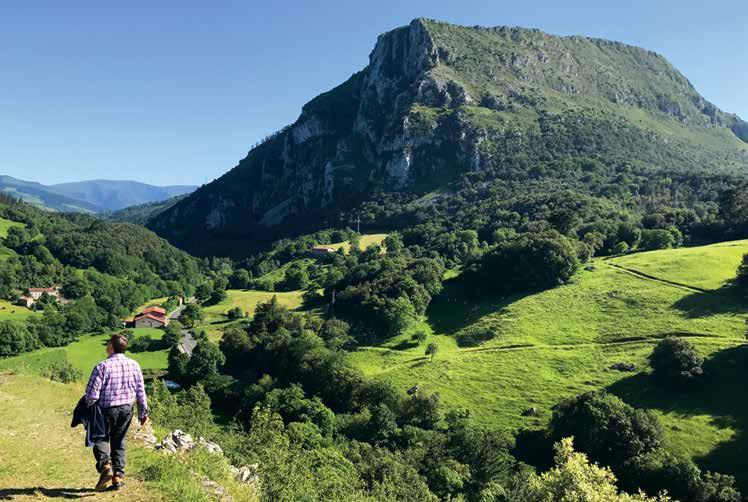
Cantabria’s limestone mountains are riddled with caves – some containing Ice Age art.
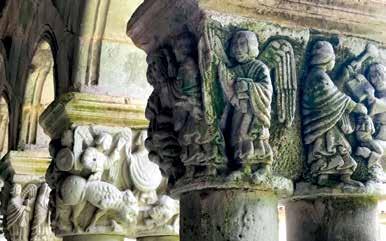
Medieval pillars in the cloister of Santa Juliana church in Santillana del Mar.
The courtyard of Santa Juliana church in Santillana del Mar.
The 12th-century high altar of the Santa Juliana church in Santillana del Mar.
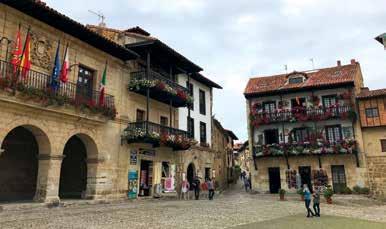
A quiet afternoon in the main square, Santillana del Mar.
Gaudi built his audacious “Caprichio” in Comillas.
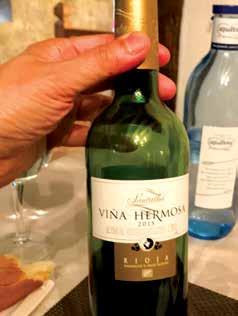
Wine comes with dinner, all for under $20.
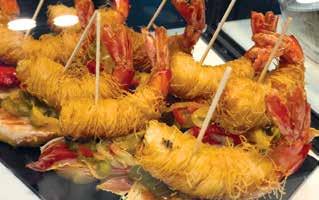
Innovative, prize-winning pinchos (tapas) on display at a bar in Burgos.
The “Way of St. James” is marked with scallop shells. So are the pilgrims.
Altamira’s famous “Hall of the Bulls” was created by a single artist 15,000 years ago. It’s called the “Sistine Chapel of the Ice Age.”






GSBA’s 2018 WINE TOUR
Old favorites and new friends: Four days in Walla Walla
by Matt Landers, Public Policy Manager
Greater Seattle Business Association
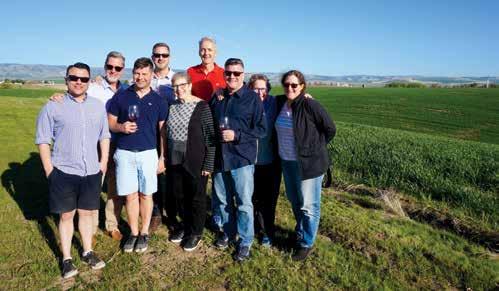
[EDITOR’S NOTE: The GSBA organized an intimate tour of the Walla Walla wine country this past spring with 8-10 individuals participating over the weekend of April 19-22. Following is their report.]
Annette Bergevin, co-founder of Bergevin Lane Vineyards, is passionate about her home and her business. A fifth-generation Walla Walla native, she says that growing wine isn’t just a hobby, it’s her family’s legacy. “When I left Walla Walla, it was scary to be gay. So when I came back pregnant and with a wife, we were afraid what people were going to say,” recalls Annette. “But people were fantastic! All the farmers were fantastic. We worked hard, looked everyone in the eye, and said ‘Here we are!’”
Over four days in Walla Walla wine country, we continuously met a strong community building on their region’s legacy and agricultural bounty to create some of the finest culinary and cultural experiences in the Northwest.
Helming the trip were Guy and Robin Glaeser of Inquisitours (www.inquisitours. com) Together with Visit Walla Walla (www.wallawalla.org), the Glaesers wanted to organize a trip to meet with our members on the eastern side of the Cascades. GSBA has been increasingly serving LGBTQ and allied business across the entirety of Washington State, with members in more than 12 counties in 2017. We know from EQUALUX: TASTE OF GSBA that GSBA members are fierce oenophiles, so of course the trip had to include our member wineries in Walla Walla, but it grew to become so much more than that. With the enthusiastic help of Inquisitours, a more rounded itinerary was planned that would take us through the burgeoning Walla Walla art scene, introduce us to small business owners, and connect us with LGBTQ leaders across Eastern Washington.
We departed Seattle in a thick cloud bank that enveloped us as we climbed up Snoqualmie Pass. As the firs and cedars gave way to larches, ponderosa pines, and sagebrush, the sun also emerged to the delight of the Puget Sound guests and remained out for the remainder of the trip. Spring had arrived in Walla Walla, with the vines just starting to bud, the wheat fields sprouting in vibrant green, and flowers of all sorts in bloom.
Being in Walla Walla, each day included a visit to a winery or brewery. Upon our arrival Thursday evening, we were treated to a welcome reception at Waterbrook Winery and their fantastic grounds outside the city. Many members of the Walla Walla small business and LGBTQ communities joined us for some phenomenal rosé and sparkling wine overlooking the pond, bocce court, and horseshoe pit.
Friday was dedicated to exploring some
of the region’s 150+ wineries. We started the day bright and early with a drive around the beautiful rolling hills of countryside around the city, with Guy’s expert knowledge of the geography and geology helping us understand why Walla Walla has been such a hotspot for quality wine and food. At a thoroughly respectable hour of the morning we started our wine journey in downtown Walla Walla, where many tasting rooms are within walking distance of one another.
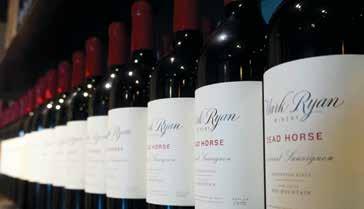
Rôtie Cellars and Mark Ryan Winery started us off with personal tastings, with particularly rich arrays of reds. New friends from the night before, we found SuLei Winery and owners and partners Elaine and Tanya, to try their Roller Girl wines and an exceptional SuLei cabernet sauvi-
gnon. Browne Family Cellars allowed us to bring a picnic lunch to their sunny patio, where we fell in love all over again with their rosé, a particular favorite of the GSBA staff. Goose Ridge Vineyards, with the largest contiguous estate vineyard in the state, offered a great selection of wines as well as ciders from the Yakima Valley. A short (chauffeured) drive out to Va Piano Vineyards gave us another lovely view of the green and gold hillsides from the burgeoning vineyards.
The arts and culture scene in Walla Walla is not to be missed. There are always big events happening around town, bringing visitors in from across the country for programs like the Tour of Walla Walla bike race, the bi-annual Walla Walla Chamber
Music Festival, and the Balloon Stampede. As part of our tour, Guy organized a sculpture tour around the Whitman College campus and then visits to local artists in their galleries. Todd Telander’s landscape and animal paintings gorgeously reflected the natural world around the Walla Walla, while Squire Broel’s more abstract totemic structures echo natural forms in their modernist design. Raised in Walla Walla and still connected to his hometown, Broel says that it is a testament to the community that he has been able to live in a small town, maintain his creativity and his own voice, and find significant national and international success.
Courtesy of GSBA
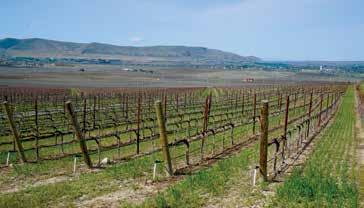
A view of Red Mountain from the vineyard.
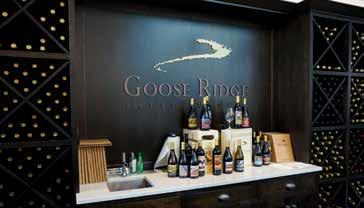
Goose Ridge Vineyards
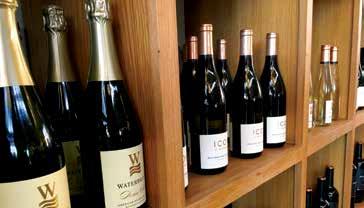
Waterbrook Winery
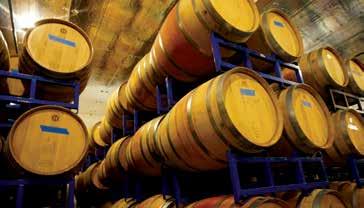
Wine barrels
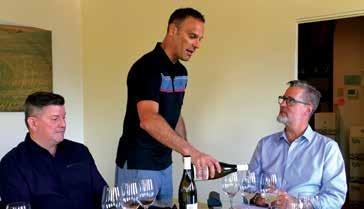
Wine tasting at Rôtie Cellars
Mark Ryan Winery
GSBA with Va Piano Group
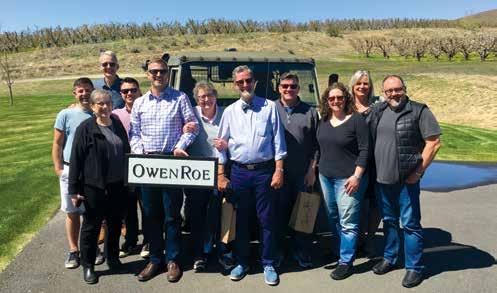
GSBA with Owen Roe Group





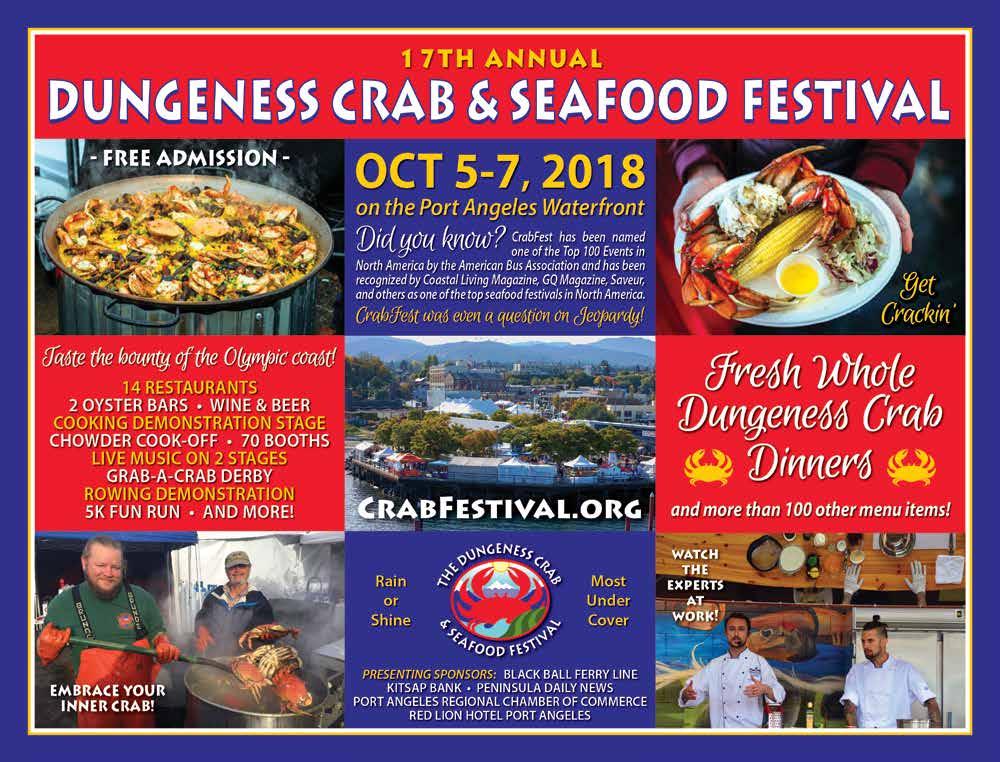
17th annual Dungeness Crab & Seafood Festival celebrates Olympic Peninsula coast cuisine in Port Angeles October 5 -
7
PORT ANGELES, Wash. – After serving-up a record eight tons of fresh-caught Dungeness crab in 2017, one of the country’s most acclaimed seafood events is preparing for another “crabsational” year! The Dungeness Crab & Seafood Festival celebrates not only the aquaculture, agriculture and maritime traditions of Washington state’s Olympic Peninsula, but brings food, art, music, Native American culture and children’s activities into one spectacular three-day event for the whole family. Admission is FREE!
This Pacific Northwest event will take place Friday, Saturday and Sunday, October 5 - 7, at the Port Angeles City Pier (308 E 4th St., Port Angeles). Hours are: Friday 12pm10pm, Saturday 10am-10pm, Sunday 10am5pm. After the great crowds we experienced in 2017 we’ve expanded our crew, purchased additional equipment, and expanded the Kitsap Bank Crab Central Pavilion, so it now totals over 17,000 sq. ft., with more seating so we can serve all of our visitors.
“CrabFest” has been named one of the Top 100 Events by the American Bus Association and has been recognized by Coastal Living Magazine, GQ Magazine, Saveur,
and others as one of the top seafood festivals in North America. And we were even a question on “Jeopardy”!
The Food!
More than 8 tons of Dungeness crab is pulled from local waters each year, enabling festival-goers to savor the freshest crab available. Whole crab dinners are served in the Kitsap Bank Crab Central Pavilion along with fresh corn and cole slaw, with discounted pricing for active military members and spouses. Throughout the grounds, 16 local and regional restaurants will serve-up everything from crab bisque to seafood gumbo and much more! Non-seafood and vegetarian dishes are also available. All day Friday is the Peninsula Daily News Community Crab Dinner special with reduced prices on our signature whole crab dinners.
The Fun!
In addition to great food, there will be two live music stages with more than 30 bands, two live oyster bars, local beer and wine, a Chef Demonstration Stage featuring local and regional culinary talent,
and our unique Grab-a-Crab Crab Derby for the entire family. Saturday activities will include a Welcoming Ceremony with the Lower Elwha Klallam Tribe, a United States Coast Guard Air and Sea Rescue Demonstration, an Olympic Peninsula Rowing Association demonstration and a Peninsula College 5K Fun Run. A nondenominational “Crab Revival” and the Captain Joseph House Foundation Chowder Cook-Off will take place on Sunday.
The Art!
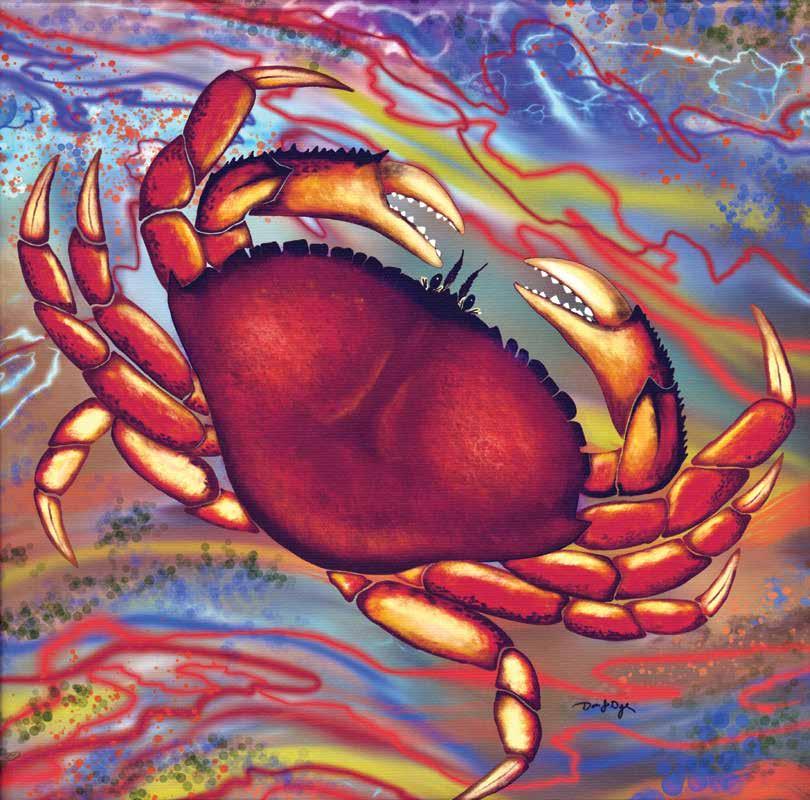
Don Dye is one of the many fine artists participating in the Festival with a booth on the pier. He also painted this year’s art, a great crab called “Louie.”
The Sponsors!
Presenting sponsors include Black Ball Ferry Line, Kitsap Bank, Peninsula Daily News, Port Angeles Regional Chamber of Commerce, and Red Lion Hotel Port Angeles. We have more than 40 sponsors throughout the community. For a complete list please go to our website – www.crabfestival.org.
A Perfect Getaway!
CrabFest is a seasonal highlight for Port Angeles, located at the Gateway to Olympic National Park, a UNESCO World Heritage Center. The region is long known as an outdoor enthusiast’s paradise with a growing reputation for culinary adventure. During the fall, travelers can visit artisan wineries, take a county farm tour and savor local cuisine at a waterfront resort. The area’s diverse geography features glacially sculpted peaks and towering old growth forest, wild ocean beaches and lush estuaries enhanced by living tribal cultures, historic seaport towns, and rolling agricultural land. For more information, go to www.visitportangeles. com, and olympicpeninsula.org.
CrabFest Info!
Tickets and information at www.crabfestival.org. E-mail your questions to info@ operations.org, or phone 360-452-6300.
“Louie” by Don Dye




Travel
Fall in Walla Walla is truly a season to sip and savor
With the grape harvest and crush, fresh farm-to-table fare, and a busy schedule of events, Walla Walla offers so many reasons to visit this fall

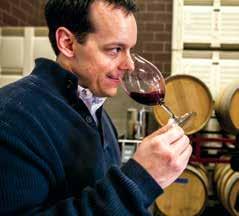
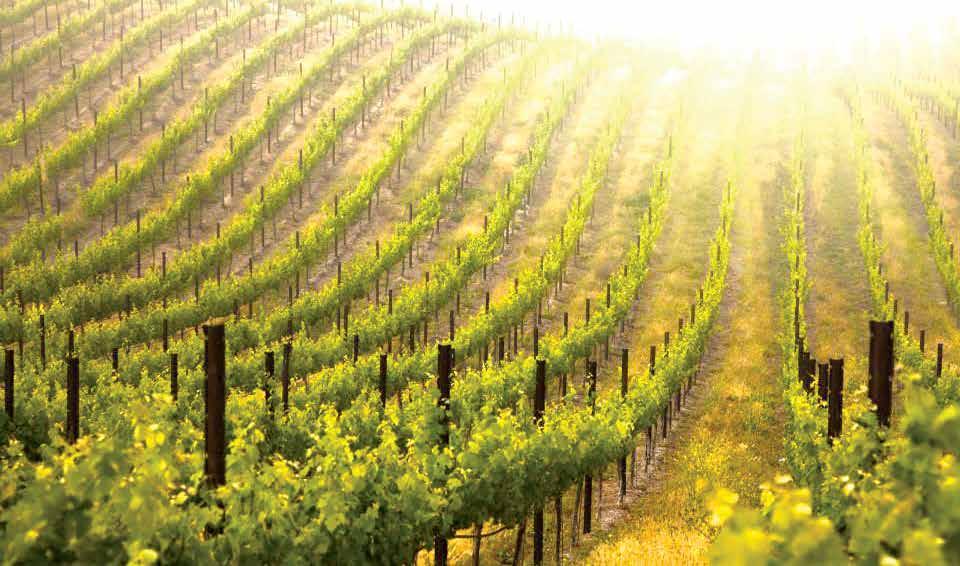
Those who know Walla Walla best, know that fall is when the unofficial capital of Washington wine country shows its truest colors. The freshness of harvest brings out the best in more than 120 Walla Walla wineries, not to mention its eclectic farmto-table restaurant scene. But the real surprise often comes from the wealth of local art and rich history on display during fall events, the mild and clear Southeastern Washington weather, and Walla Walla’s beautiful natural setting that grows more vibrant with the colors of the season.
Named recently by Sunset Magazine as the “Best Wine Town” for 2018, the annual grape harvest and crush calls to oenophiles while Walla Walla’s chefs create true farmto-table experiences with the fresh, locally produced fare that has made this region the “Breadbasket of the Northwest.” At the same time, as the pace of the town slows from summer, visitors are afforded more opportunities to meet with the renowned winemakers and chefs that have made Walla Walla a top destination for wine lovers and foodies.
“Fall is my favorite time in the Valley. ... As the grape harvest comes in and winery production ramps up, our chefs bring forward their best fall creations,” said Ron Williams, CEO of Visit Walla Walla. “The
Blue Mountains are full of color, the bird migration attracts enthusiasts from all over the country. The Symphony starts their season, artists’ shows are in full swing, and the pace, in general, slows down so we can enjoy the town at a more leisurely pace.”
Weather and growing conditions dictate the schedule, but generally Walla Walla’s grape harvest begins in September and runs through Fall Release Weekend in early November. And as the clear weather of Southeastern Washington begins to cool, the events scene in Walla Walla heats up.
Here are some of the highlights:
First Friday Art Tour (Oct. 5): Walla Walla welcomes everyone to explore its locally owned galleries, wineries, restaurants and businesses, each showcasing a variety of works by local artists in a monthly celebration of art and wine. The First Friday Art Tour is held May-October. (www.artwalla.com/Art-Tour)
Downtown Farmers Market (through October): Visitors and locals – including many of the chefs from Walla Walla’s acclaimed restaurants – peruse locally grown and seasonal fresh fruit and vegetables at one of the great farmers markets in the West. The Downtown Farmers Market is open Satur-
days, May-October, 9am-1pm, Main St. & 4th Ave., in downtown Walla Walla.
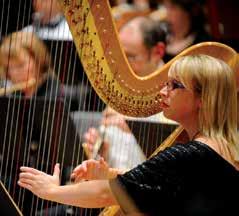
Walla Walla Symphony Series (Oct. 2, Oct. 27-28, Oct. 30, Nov. 18): The longest continually operating symphony orchestra west of the Mississippi River returns this fall for the 2018-19 season. Enjoy magical music from great composers performed by wonderful musicians. (www.wwsymphony.org/)
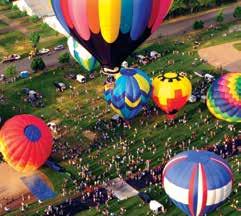
Walla Walla Balloon Stampede (Oct. 17-21): Hot-air balloons fill Walla Walla’s famously blue skies each morning during this iconic and internationally acclaimed event. (https://wallawallaballoonstampede.com/)
Dia de Los Muertos (Oct. 27-28): The annual “Day of the Dead” festival brings together artists, students, local businesses, and the community for the Latin American holiday. (Check the Visit Walla Walla website at www.wallawalla.org in October for details.)
Fall Release Weekend (Nov. 2-4): Enjoy freshly released wines, some of which are only available in the wineries and tasting rooms themselves, as winemakers across the valley swing open their doors and invite guests to celebrate the end of harvest. (www. wallawallawine.com/fall-tasting/)
Holiday Barrel Tasting (Dec. 7-9): The festivity of the season is best enjoyed
with world-class wine. Wineries entice visitors with tastings of future releases straight from the barrel and offer food, art, music and more. (www.wallawallawine.com/holiday-barrel-tasting/)
For more information on planning a trip to Walla Walla, go to Visit Walla Walla at www.wallawalla.org.
About Walla Walla
As the unofficial capital of Washington wine country, Walla Walla is home to more than 120 wineries, a nationally recognized culinary scene, access to an abundance of outdoor recreation, and an arts & entertainment scene that rivals cities many times its size. This community of just over 30,000 residents is known for many things, including its friendliness and hospitality, the quality of its wine, and of course the famous Walla Walla Sweet Onion. An easy and scenic four-hour drive from Seattle, Portland, or Boise, Walla Walla can also be accessed via Alaska Airlines’ daily nonstop flights from Seattle, or through nearby Tri-Cities Airport, with daily non-stop flights to most major Western hubs.
Courtesy of Visit Walla Walla
Photo courtesy of Downtown Farmers Market
Photo courtesy of Walla Walla Symphony
Photo courtesy of Walla Walla Balloon Stampede
Photo courtesy of Walla Walla Valley Wine Alliance
Photo courtesy of Visit Walla Walla





Peacock in the Desert: The Royal Arts of Jodhpur, India opens October 18 at Seattle Art Museum
Immersive exhibition explores five centuries of the artistic and cultural heritage of the city of Jodhpur and its people
The Seattle Art Museum (SAM) presents Peacock in the Desert: The Royal Arts of Jodhpur, India (October 18, 2018 - January 21, 2019), showcasing five centuries of artistic creation from the kingdom of Marwar-Jodhpur in the northwestern state of Rajasthan. Organized by the Museum of Fine Arts, Houston, in partnership with the Mehrangarh Museum Trust of Jodhpur, the exhibition features 250 objects from the 16th to the mid-20th century including intricate paintings, decorative arts, elaborate tents, canopies, textiles, jewelry, and weapons, presented with photos and videos that evoke the impressive setting of the Mehrangarh Museum.
Peacock in the Desert presents a vision of a cosmopolitan court culture that relies on art as an essential aspect of its rule. Established in the 15th century, the city of Jodhpur was ruled by the Rathores for over seven centuries. The objects on view, many of which have not been seen beyond palace walls or traveled to the United States, tell the story of this vast desert kingdom.
The exhibition traces the kingdom’s cultural landscape as it was continuously reshaped by cross-cultural encounters, notably by two successive empires who ruled India: the Mughals and the British. These encounters introduced objects, artists, languages, architectural styles, and systems of administration that influenced the complex royal identity of the Rathore dynasty.
His Highness Maharaja GajSingh II of Marwar-Jodhpur established the Mehrangarh Museum Trust in 1972 and has overseen its evolution from a historic fort to a popular destination for visitors to Jodh-
pur from around the world. Both he and his daughter, Baijilal Shivranjani Rajye of Marwar-Jodhpur, will visit Seattle to see the exhibition in October. SAM previously collaborated with the Mehrangarh Museum Trust on the popular exhibition Garden and Cosmos: The Royal Paintings of Jodhpur (January 29 - April 26, 2009) at the Asian Art Museum.
Peacock in the Desert opens an evocative window on the kingdom of MarwarJodhpur,” says Kimerly Rorschach, SAM’s Illsley Ball Nordstrom Director and CEO.
“We’re grateful for the opportunity to present an experience of this multi-faceted court culture to Seattle audiences.”
“The city of Jodhpur is not frozen in time, and royalty is not just about bling and splendor,” says Karni Singh Jasol, director of the Mehrangarh Museum Trust. “Ours is a museum of the 21st century, dedicated to promoting awareness of a vibrant and hardworking royal endeavor. With this exhibition, visitors have the opportunity to experience the colors, sights, and sounds of our unique culture, as well as our history of continual patronage throughout the centuries.”
EXHIBITION OVERVIEW
Peacock in the Desert is organized into six thematic sections. For the first time since the museum’s expanded building opened in 2007, the special exhibition begins in a spacious gallery on the third floor before continuing in the fourth floor special exhibition galleries.
Tradition and Continuity:
The Royal Wedding Procession
Visitors are welcomed to the exhibi-
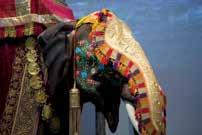
tion with a dramatic recreation of a royal wedding procession on the museum’s third floor. This immersive setting introduces visitors to the crucial role that marital alliances played in the lives of the citizens of Marwar-Jodhpur and in the development of the region’s aesthetic traditions. Lifesize horse and elephant mannequins fill the space, adorned with an elephant howdah (seat), wedding regalia, and royal insignia. Video projections feature preparations for a 21st-century wedding and an aerial view of the Mehrangarh Fort, which encloses palaces, temples, and courtyards.
The Rathores of Marwar
A photographic montage introduces the desert landscape of Marwar-Jodhpur, its diverse peoples, and the exhibition’s central protagonists: the Rathore clan that ruled the region from the 13th to the mid-20th century. Two sculptural highlights include a gilt wood and glass mahadol (palanquin) that underlines the Rathores’ emphasis on dignified processions for kings and queens, and a large cradle for Krishna that demonstrates their spiritual leadership.
Conquest and Alliance:
The Rathores and the Mughals
The arrival of, and eventual takeover by, the Mughal Empire in 1561 began centuries of political and military alliances between the Mughals and the Rathores. This section examines the movement of objects throughout these alliances in the 16th and 17th centuries, presenting ornate sabers, daggers, and rifles alongside 17th- and 18th-century paintings and illustrations of the court and portraits of kings. The section
begins with the extraordinary 17th-century Lal Dera tent, one of the oldest, if not the only, intact Indian court tents in existence. Zenana: Cross-Cultural Encounters In this section, paintings, carpets, textiles, and jewelry evoke the setting of a royal zenana, the women’s wing of a Rathore palace. Here, the zenana is explored as a hub of language, exchange, and culture led by the women of the court. They played a crucial role as agents of cultural change and patrons of the arts, preserving cultural traditions of festivals and dress throughout the centuries. Among the furnishings shown in this section is an exceptional wood baradari (pavilion). A sequence of paintings emphasize the unique role of women as patrons of festivals that marked the seasons.
Durbar: The Rathore Court
As Mughal influence began to decline in the late 18th century, artists, craftspeople, and nearby dynastic kingdoms were attracted to Jodhpur due to its increased stature. This shift is seen in paintings of durbars (royal receptions) staged by the Rathores. Alongside these developments came the growing trend of exchanging artworks as gifts. This led to a period of intense creativity in artistic production and a cross-fertilization of Mughal and Rathore styles, seen in the woven canopy and textiles, finely crafted arms and armor, and 18th- and 19th-century paintings on view.
The Raj
A dramatic transformation in Jodhpur is triggered by India’s encounters with the British Empire in the 19th century.
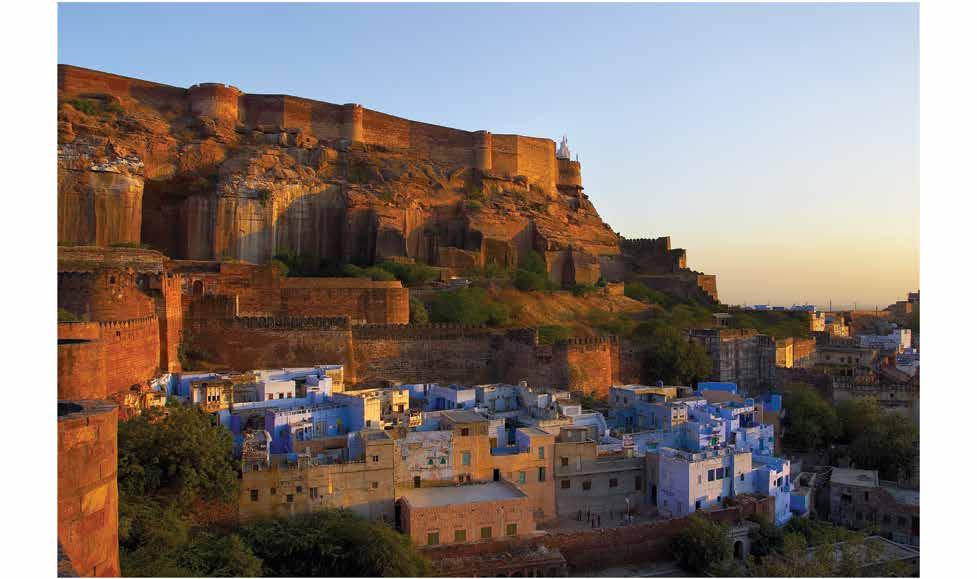
Western Ramparts of the Mehrangarh Fort, Jodhpur. – Photo by Neil Greentree
By 1876, Queen Victoria took the title of Empress of India and set off a new wave of European aesthetics. Merging with traditional Indian garments, paintings, and jewelry, an imperial hierarchy was emphasized during the era known as the Raj. During the 20th century, the Maharajas of Jodhpur became renowned for innovative patronage. In 1944, Umaid Bhawan Palace was completed and is now operated as a hotel by the Taj Group. Today, this legacy continues with the current leader of Marwar-Jodhpur.
EXHIBITION CATALOGUE
A 296-page exhibition catalogue (including 380 color illustrations) published by Yale University Press will be available for purchase in October in SAM Shop ($85.00). Also titled Peacock in the Desert: The Royal Arts of Jodhpur, India (ISBN: 978-0-300-23296-7), it is written by Karni Singh Jasol and edited by Angma Dey Jhala, with contributions by Peter Alford Andrews, Robert Elgood, Catherine Glynn, Shailka Mishra, and Giles Tillotson. It features a foreword by His Highness Maharaja GajSingh II of Marwar-Jodhpur.
RELATED PROGRAMS AND EVENTS
In conjunction with the exhibition, SAM will present a dynamic lineup of programming, including Art Beyond Sight and docent tours, programs for schools and educators, and a series of public programs co-presented with SAM’s Gardner Center for Asian Art and Ideas as well as community partners.
The programs will highlight performance, visual art and community traditions from Rajasthan. A free community celebration, featuring a curator talk, will be held on Thursday, October 18. SAM will also host an exciting edition of its Diwali Ball, an annual fundraising event being held this year on Saturday, October 20.
LOCATION, HOURS & TICKETING INFO
Seattle Art Museum is located at 1300 First Avenue. Museum Hours: The museum is closed Monday and Tuesday, Wednesday 10am-5pm, Thursday 10am9pm, Friday-Sunday 10am-5pm. Holiday Hours: Closed Thursday, November 22 (Thanksgiving Day); Open Friday, November 23 (day after Thanksgiving); Closed Monday, December 24 (Christmas Eve); Closed Tuesday, December 25 (Christmas Day); additional holiday hours may be announced. Tickets for Special Exhibition: $24.95 Adult; $22.95 Senior (62+), Military (with ID); $14.95 Student (with ID), Teen (13-17); FREE for children (12 and under); FREE for SAM Members. First Thursday Reduced Ticket Prices: Special Exhibition ticket prices are reduced by more than 50% on the First Thursday of each month. Tickets to SAM Collections and Installations are free on First Thursdays. For more information, visit www.seattleartmuseum.org/ or phone (206) 654-3100.
EXHIBITION ORGANIZATION AND SUPPORT
Peacock in the Desert: The Royal Arts of Jodhpur, India is organized by the Museum of Fine Arts, Houston, in collaboration with Mehrangarh Museum Trust, Jodhpur, India. The exhibition premiered at the Museum of Fine Arts, Houston (March 4–August 12, 2018) before traveling to SAM. It will next travel to the Royal Ontario Museum, Toronto, Canada (March 9–September 2, 2019).
Special exhibitions at SAM are made possible by donors to: Jeffrey & Susan Brotman Fund for Special Exhibitions. Presenting Sponsor: ArtsFund. Lead Sponsors: Estate of Barbara LeVine Weinstein; 4 Culture; Seattle Art Museum Supporters. Supporting Sponsor: Perkins Coie LLP.
ABOUT SEATTLE ART MUSEUM
As the leading visual art institution in the Pacific Northwest, SAM draws on its global collections, powerful exhibitions, and dynamic programs to provide unique educational resources benefiting the Seattle region, the Pacific Northwest, and beyond. SAM was founded in 1933 with a focus on Asian art. By the late 1980s the museum


had outgrown its original home, and in 1991 a new 155,000-square-foot downtown building, designed by Venturi, Scott Brown & Associates, opened to the public. The 1933 building was renovated and reopened as the Asian Art Museum in 1994. SAM’s desire to further serve its community was realized in 2007 with the opening of two stunning new facilities: the nine-acre Olympic Sculpture Park (designed by Weiss/Manfredi Architects) – a “museum without walls,” free and open to all – and the Allied Works Architecture designed 118,000-square-foot expansion of its main, downtown location, including 232,000 square feet of additional space built for future expansion. The Olympic Sculpture Park and SAM’s downtown expansion celebrated their tenth anniversary in 2017. From a strong foundation of Asian art to noteworthy collections of African and Oceanic art, Northwest Coast Native American art, European and American art, and modern and contemporary art, the strength of SAM’s collection of approximately 25,000 objects lies in its diversity of media, cultures, and time periods.
ABOUT THE MEHRANGARH MUSEUM TRUST
Mehrangarh Museum Trust is India’s leading cultural institution and center of excellence, established in 1972 by the 38th Custodian of Marwar-Jodhpur, H. H. Maharaja GajSingh II, to make the Fort come alive for visitors. Today, Mehrangarh Museum has a unique importance as a repository of the artistic and cultural history of the large area of central Rajasthan, Marwar-Jodhpur, ruled by the Rathore dynasty. The Museum displays one of the most important and bestpreserved collections of fine and applied arts from the Mughal period of Indian history, during which the Rathore rulers of Jodhpur maintained close links with the Mughal Emperors. Apart from the Museum, the Trust is at the forefront of conservation and restoration, a generous patron of the arts and music and a lively center of academic study. Mehrangarh Museum Trust is a recipient of the UNESCO Asia-Pacific Award in the field of Architectural Conservation, Cultural Heritage and adaptive reuse.
Courtesy of the Seattle Art Museum
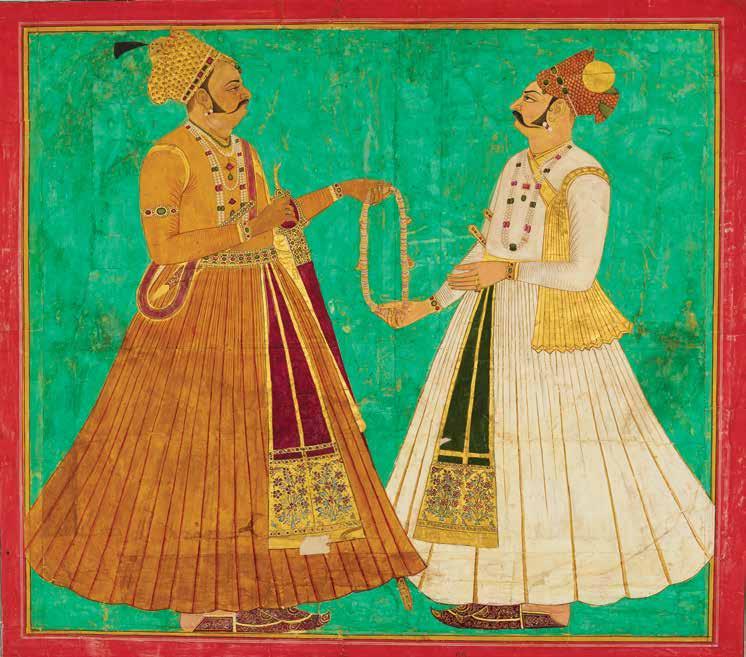
Maharaja Ajit Singh Presenting a Garland to His Son Bakhat Singh, ca. 1751-52, Jodhpur, opaque watercolor and gold on paper, 32 1/4 × 28 7/8 in., Mehrangarh Museum Trust. Photo by Neil Greentree
Installation View: Peacock in the Desert: The Royal Arts of Jodhpur, India at the Museum of Fine Arts, Houston. Photo by Will Michels
Installation View: Peacock in the Desert: The Royal Arts of Jodhpur, India at the Museum of Fine Arts, Houston. Photo by Will Michels
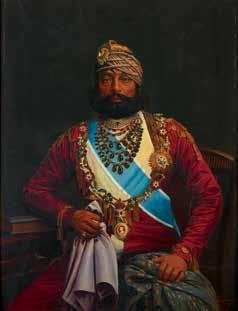
Portrait of Maharaja Jaswant Singh II, 1895, Bert Harris, Jodhpur, oil on canvas, 59 7/8 × 48 3/8 in., Umaid Bhawan Palace.
Photo by Neil Greentree
Shiva and Parvati in Conversation; Shiva on His Vimana (Aircraft) with Himalaya, Folio 53 from the Shiva Rahasya, 1827, Jodhpur, opaque watercolor and gold on paper, 16 1/2 × 45 5/8 in., Mehrangarh Museum Trust. Photo by Neil Greentree
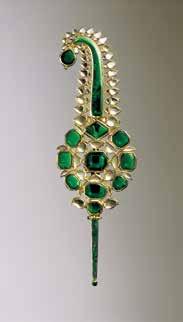
Sarpech (Turban Ornament), Probably second half of 17th century, India, probably Deccan, gold with champeleve and overpainted enamels; worked in kundan technique and set with diamonds and emeralds, 6 13/16 × 2 1/16 × 1/2 in., the al-Sabah Collection, Dar al-Athar al Islamiyyah, Kuwait
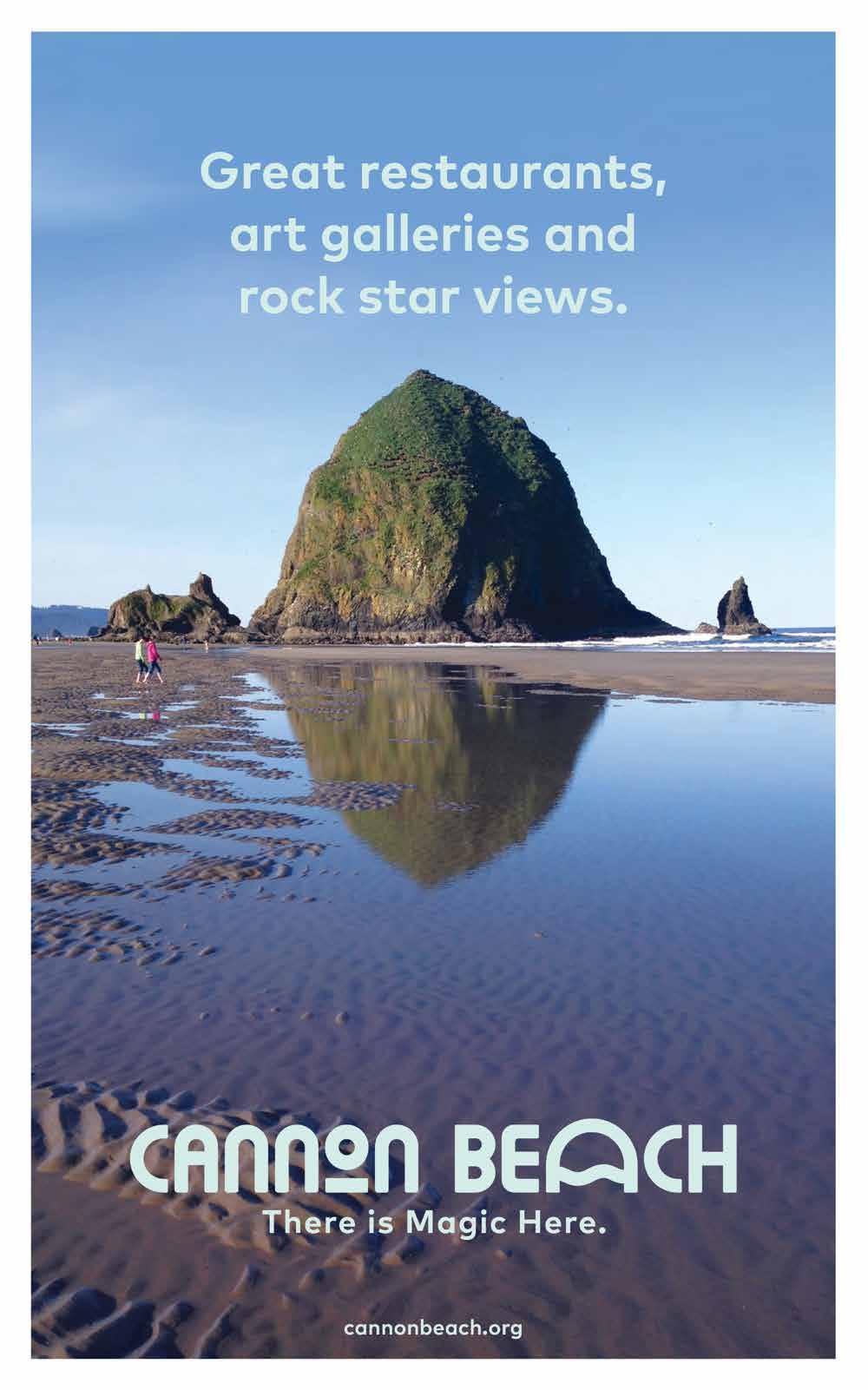
Visit Cannon Beach!
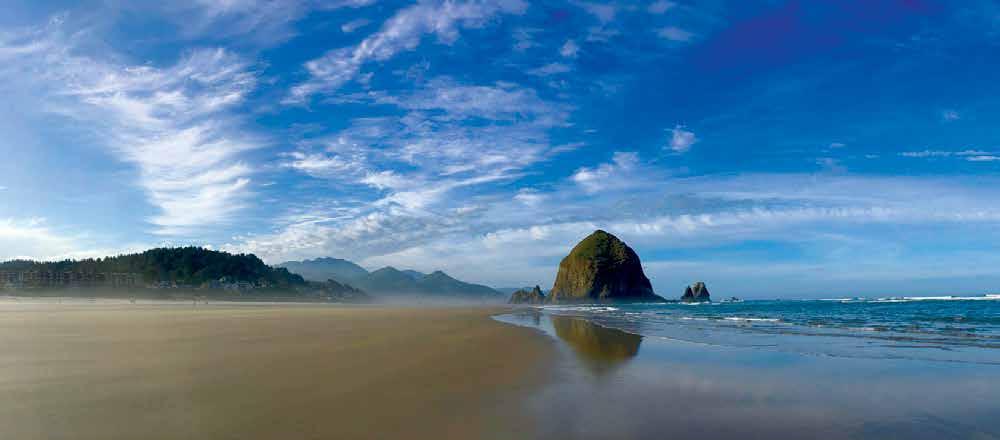
Cannon Beach is an exhilarating place to visit! A small coastal city in northwest Oregon, it’s known for its long, sandy shore. Standing tall in the ocean, the magnificent Haystack Rock is a seasonal haven for tufted puffins. On a headland to the north, trails in Ecola State Park offer sweeping views of the ocean, coves and a lighthouse. South is Arcadia Beach, with tide pools and a picnic area. Nearby Hug Point has sea caves. Cannon Beach is a great place to visit for a weekend getaway or for an extended exploration of the Oregon Coast. For more information, contact the Cannon Beach Chamber of Commerce at (503) 436-2623, via email at chamber@cannonbeach.org or visit www. cannonbeach.org.
CANNON BEACH, OREGON GENERAL INFORMATION
ABOUT CANNON BEACH: Cannon Beach is one of the premier vacation destinations in the Northwest, a small town beach resort experience on the North Oregon Coast. It offers an unmatched combination of iconic Oregon Coast scenic sightseeing, immediate access to natural areas, outdoor recreation and high quality choices in lodging, dining and shopping. Cannon Beach is known as one of the Northwest’s top art towns and romantic getaway destinations. It is popular for its long stretch of sandy beach, scenic shoreline with rock formations and its small, picturesque, walk-able downtown.
LOCATION: Cannon Beach is located on the Oregon Coast, 80 miles west of Portland and 25 miles south of Astoria. It is 90 miles from Portland International Airport and 200 miles from Seattle.
GETTING TO CANNON BEACH: Most visitors drive to Cannon Beach, which is located four miles south of the junction of US 26 (Sunset Highway) and US 101 (Pacific Coast Highway). It is approximately a 90-minute drive from Portland. Most visitors from the Seattle area connect to US 101 west of Olympia or follow US 30 west of Longview for a total driving time of about four hours. Public transportation is available in the form of a twice-daily bus from Portland to Cannon Beach, which is provided by NorthWest Point.
POPULATION/SIZE: The population of Cannon Beach is approximately 1700, though the city website states that it hosts an estimated 750,000 visitors annually. The city has a total area of 1.54 square miles.
HISTORY THUMBNAIL: Cannon Beach was occupied by Native Americans when the area was explored by the Lewis and Clark expedition in 1806. It was established by American settlers in the late 1800s and incorporated as a city in 1957. The city’s namesake is a cannon from the USS
Shark, which was shipwrecked in 1846 in the treacherous Columbia River Bar. The cannon was later recovered near Arch Cape. (See our history timeline on our website for a more detailed history of Cannon Beach.)
LODGING: There are over 40 hotels, motels and resorts in and around Cannon Beach. The largest lodging properties include the Hallmark Resort & Spa, Surfsand Resort and Tolovana Inn. In addition, there are a number of businesses that offer everything from camping to vacation home rentals. [EDITOR’S NOTE: There are also many great places to eat.]
CANNON BEACH TOP ATTRACTIONS
THE BEACH: The town’s main fourmile stretch of beach, like all Oregon beaches, is designated as a public recreation area, free for everyone to use and enjoy with 44 public beach access points. Oregon’s iconic shoreline with sea stack rock formations begins in the Cannon Beach area near Tillamook Head and several prominent near shore and offshore rock formations are visible along this stretch of beach. Haystack Rock, the most recognizable landmark on the beach is located approximately midway along the four-mile stretch between Chapman Point in the north and Silver Point in the south.
HAYSTACK ROCK: Haystack Rock is one of the most recognizable landmarks in Oregon. It rises 235 feet from the ocean’s edge and is famous both for its vibrant intertidal area and its bird life. Its intertidal area is protected as a State of Oregon Marine Garden and it is part of the Oregon Islands National Wildlife Refuge. During the spring and summer, it provides nesting ground to the Northwest’s most easily viewed colony of Tufted Puffins. Other birds that can sometimes be observed on or around Haystack Rock include Pelagic Cormorants, Pigeon Guillemots, Western Gulls, Black Oystercatchers and Bald Eagles.
ECOLA STATE PARK: Located just one mile north of downtown Cannon Beach, Ecola State Park winds through thick rainforest and emerges at one of the best viewpoints on the North Oregon Coast. The main parking area is just steps from an expansive view of the coastline to the south including Cannon Beach, Haystack Rock and Cape Falcon more than 10 miles to the south. The Tillamook Rock Lighthouse can be seen just offshore to the west. The park offers excellent wildlife, bird and sea life viewing; and is one of the coast’s best vantage points for watching Gray Whales during their twiceyearly migrations. Roosevelt Elk are frequently seen in the park’s meadows and Bald Eagles are often spotted here. The park offers picnic areas, paved walking trails and several miles of hiking trails. A road also
leads to the Indian Beach parking area and viewpoint with beach access and hiking trailheads. A $5 day use fee is charged by Oregon State Parks.
PICTURESQUE WALKABLE
DOWNTOWN: The main downtown area of Cannon Beach is easily walkable at only about half a mile long. There are over a dozen art galleries situated in Cannon Beach; more than 40 hotels, motels and resorts; and more than 30 eateries. In addition, a short walk or ride takes visitors to additional shops, dining establishments and lodging options in Midtown or Tolovana Park, south of downtown Cannon Beach.
WILDLIFE & NATURE VIEWING: Roosevelt Elk often wander through the town and surrounding areas of Cannon Beach. Gray Whales pass through neighboring Pacific waters on the way south to breed in the winter and back north in the spring; and can be spotted during these migrations from the heights of Ecola State Park. Additionally, a variety of birds both live and pass through this area by the thousands. The most visible colony of nesting Tufted Puffins in the Northwest, Bald Eagles, Pelagic Cormorants and all manner of migrating shorebirds can be found in Cannon Beach, either along the sands of the ocean, on rocks and sea stacks or in the wetlands along Spruce and 2nd Streets.
TILLAMOOK ROCK LIGHT-
HOUSE: Commissioned in 1878, lit in 1881 and decommissioned in 1957, Tillamook Rock Lighthouse, also known as Terrible Tilly, still sits atop the rugged basalt formation just off the Cannon Beach coastline. When first lit, it was the most expensive West Coast lighthouse ever built. It is now listed in the National Register of Historic Places and is part of the Oregon Islands National Wildlife Refuge. The best views of Tilly are from Cannon Beach and Ecola State Park.
CANNON BEACH FREQUENTLY ASKED QUESTIONS
CAN I BUILD A FIRE ON THE BEACH? Fires are allowed on the beach as long as they are no larger than three feet, are in the open sand area and are away from shoreline vegetation and wood debris or log accumulations. Fires must not be left unattended and must be extinguished completely with water and broken apart by the user before leaving.
IS MY DOG ALLOWED ON THE BEACH? Dogs are allowed on the beach and must be on a leash or under the voice control of the owner, though pets must be on leash in the immediate vicinity of Haystack Rock, a National Wildlife Refuge and State of Oregon protected Marine Garden. Owners must prevent their animals from harassing people, wildlife and other domestic animals and are
responsible for the removal of the animal’s waste. Dogs must be on a leash at all times when in town or in Ecola State Park.
CAN I CAMP ON THE BEACH? Overnight camping is not allowed on the beach or in any non-designated area within the city limits of Cannon Beach including public streets, public sidewalks, public parks and public parking lots. There are two private campgrounds that offer tent camping sites: Sea Ranch Resort Park & Stables and Wrights for Camping.
CAN I DRIVE MY CAR ON THE BEACH? Motor vehicles are not permitted on the beach unless a permit has been issued by either the Cannon Beach Police Department or the Oregon Department of Parks and Recreation. The Police Department issues short duration beach access permits at no cost for persons with disabilities.
WHY ARE FIREWORKS NOT ALLOWED ON THE BEACH? By state law, fireworks of any kind are not allowed on Oregon beaches and this ordinance is enforced by Cannon Beach law enforcement and the US Fish and Wildlife Service in part due to Cannon Beach’s close proximity to Haystack Rock and other near shore rocks that are part of the Oregon Islands National Wildlife Refuge. Fireworks legally sold in the State of Oregon are allowed in other suitable public spaces within the city limits of Cannon Beach, but use of illegal fireworks can result in confiscation or be punishable by fine.
CAN I KEEP THE TREASURES I FIND ON AND AROUND THE BEACH? It is legal to remove small quantities of loose natural products such as driftwood, shells or rocks from the ocean shore state recreation area for personal use with the exception of within 300 feet of the base of Haystack Rock, which is a State of Oregon designated Marine Garden protected area. In other areas, there are some legal restrictions to quantities and size of materials, but, in general, collecting a small bucket or baggie full of souvenirs is not a problem. Limited collection of living creatures is allowed for scientific purposes and fishing bait, though common etiquette dictates that no living creatures should be removed from the beach or intertidal area so that these vibrant ecosystems can be preserved and enjoyed by all.
IS CLIMBING ALLOWED AT HAYSTACK ROCK? No. Haystack Rock and other near shore rocks in Cannon Beach are part of the Oregon Islands National Wildlife Refuge and climbing is not allowed to protect the seabird populations that use the rocks and small islands as nesting grounds. Respect of these natural areas is encouraged to preserve them for all to enjoy.
Courtesy of Cannon Beach Chamber of Commerce
Haystack Rock – Photo courtesy of Experience Cannon Beach







Travel
A night at the MOXY: New South Lake Union hotel makes for a fun and cool in-city stay
by Albert Rodriguez SGN A&E Writer
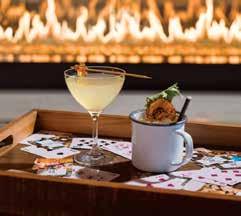
For a number of reasons – finances, minimal vacation hours, pets can’t be left at home for too long – a getaway in your own city makes perfect sense. It’s also a way to discover, or rediscover, the place you call home and to stumble across new restaurants, explore fresh territory, or become familiar with neighborhoods that you haven’t visited in years, all within minutes of your front door.
What you need for an overnight or weekend staycation is a centrally located hotel, one that allows you convenient access to eateries, coffee shops and attractions, as well as a hotel with the essentials and amenities that will make your stay both comfortable and enjoyable.
Newly opened is MOXY Seattle Downtown (1016 Republican St., www.moxyseattle.com), situated in the heart of South Lake Union, putting you within walking distance, or a quick streetcar ride, to the core downtown district and Lower Queen Anne. After my stay at this hotel last spring, it immediately became one of my favorite places to rest my head in the Emerald City, and I think you’ll love it, too. The MOXY is part of the Marriott brand and it opened on February 21. Currently, there are 38 MOXY hotels under contract with the latest addition scheduled for Denver.
So, let me tell all about the MOXY.
LOCATION
At the corner of 10th and Republican, tucked into the fast-redeveloped South Lake Union neighborhood, is where you’ll find the MOXY. If you haven’t been to this part of the city, once a sprawl of warehouses, independent artist shops and empty lots, then you’re in for a big surprise as
block upon block of very recently built apartment, condo and commercial complexes, in addition to rows of street level restaurants, bars, coffee shops and retail stores, have made this area nearly unrecognizable to any Seattle native.
Without a car, the simplest way of getting to the MOXY is by bus or light rail to Westlake Center. From there, take the Seattle South Lake Union Streetcar behind Westlake Center, across the street from Bartell Drugs on 5th Ave. & Olive St., to the Terry Ave. & Mercer St. stop and then walk a few minutes to the main entrance on Republican St.
CHECK-IN / LOBBY
Upon arrival at the MOXY there’s no need to look for the reception desk because guests can check-in at the bar. You read that correctly, the bar on the ground level of the hotel doubles as the check-in counter, where bartenders also serve as front desk staff, who kindly provide you with information about your stay, hand you a room key and offer a complimentary signature cocktail called the “Got MOXY,” which can be immediately consumed or saved for later, after you’ve had time to settle into your room. Bartenders will also assist at check-out.
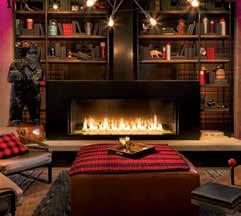
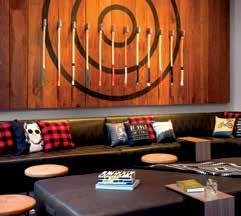
Best described as an urban playground, the MOXY lobby is an inviting and fun space for guests to socialize, study, read, relax, work, or even conduct a meeting. It’s a communal area – with comfy sofas, armchairs, fireplace, long tables, small conference room and a rectangular bar counter – that really does have a community feel; I partook of good, interesting conversations with visitors and locals in the lobby that made my stay all the more memorable. Board games, foos table, free WiFi
and a selfie nook (for those active on social media) are a few amenities provided for guests in the lobby, unless you prefer just hanging out with a refreshment or snack.
ROOMS
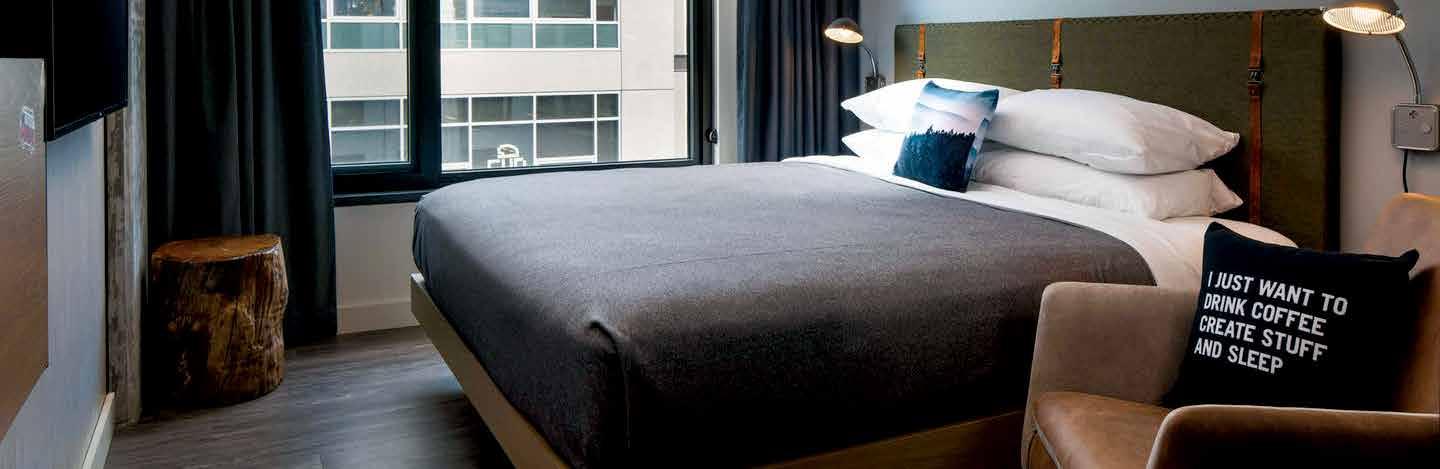
Ranging between 190 to 205 square feet, guest rooms at the MOXY – Standard, Larger Guest, Prime – are a bit more intimate than at other hotels. But with brilliant design, colorful furnishings and great use of the space provided, rooms surprisingly feel cozy instead of claustrophobic. Comfortable king size beds with simple, yet classy, covers and sheets not only aid in getting a good night’s rest, but they’re the perfect spot to watch meaningless minutes of cable shows on wall-mounted HDTVs.
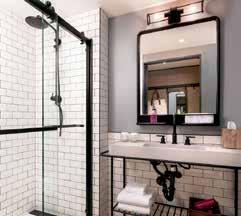
Laptop desks that fold up into the wall, gray and orange colored rotary phones, nifty bedside lamps, throw pillows with cute inscriptions and shower mats that read “Deep End” are just some of the cool items you’ll remember from your stay. Besides this, a white-tiled shower with sliding glass door, premiere bath essentials, closet with shelves and windows that look out to the surrounding very active South Lake Union district are also included with your room.
ON-SITE
AMENITIES
Besides the fun stuff in the lobby, guests can get a good workout with access to the hotel’s 24-hour fitness center, featuring various pieces of new equipment, including a boxing stand and punch bag. There’s also a small conference room within the lobby, available on a first come-first serve basis for those needing to conduct a meeting, study, or simply wanting some alone time.
What you won’t encounter at the MOXY
is an on-site restaurant, mainly because the hotel wants its guests to get out and explore the Emerald City. The bar does serve an assortment of small pizzas, using naan as the crust; the Hummus Naan – toasted naan, hummus, cherry tomatoes, kalamata olives, feta, and crispy chick peas – was quite delicious, and surprisingly filling. A short menu of snacks, most of them microwavable, such as Won Ton Soup, Carnitas Kit and Turkey Muffuletta, in addition to salads, chips and soft drinks are also available. In the morning, grab a toasted bagel with freshly brewed coffee, or a yogurt parfait, on your way out the door, or take a seat in the lobby and chat with a fellow guest.
SERVICE
Something that can either make or break a vacation is the hospitality experienced throughout your trip, especially at your hotel. At the MOXY, not only was the service at the front desk and bar very friendly, in addition to being professional, but it was also prompt; I didn’t have to wait long to be checked in or out, and neither did I have to ask for another cocktail or water refill while camping out at the lounge for a few hours. The staff was polite, approachable, knowledgeable and also helpful, recommending good restaurants and city attractions both near and far from the hotel, wanting guests to absorb as much of Seattle as they could. The service certainly left an impression on me.
Photos courtesy of Marriott International, Inc
Hotel Moxy Lobby Seating Area
Hotel Moxy Lobby Seating Area
Hotel Moxy Guest Bathroom
Hotel Moxy Fireplace Drinks
Hotel Moxy King Guest Room

Third Generation Violin Maker
Third Generation Violin Maker
Third Generation Violin Maker
“Voted Evening Magazine’s Best of Western WA!”
“Voted Evening Magazine’s Best of Western WA!”
“Voted Eve ning Magazine’s Best of Western WA!”
www.kirklandv iolins.com (425)822-0717
www.kirklandv iolins.com (425)822-0717
Sales Appraisals Repairs Rentals
Sales Appraisals Repairs Rentals
www.kirklandv iolins.com (425)822-0717
es Appraisals Repairs Rentals
Tneration Violin Maker
neration Violin Maker
neration Violin Maker
Third Generation Violin Maker
Third Generation Violin Maker
Evening Best of Western WA!”
ed Evening Magazine’s Best of Western WA!”
ed Evening Magazine’s Best of Western WA!”
“Voted Evening Magazine’s Best of Western WA!”
“Voted Evening Magazine’s Best of Western WA!”
w.kirklandv iolins.com (425)822-0717
w.kirklandv iolins.com (425)822-0717
w.kirklandv iolins.com (425)822-0717
Sales
www.kirklandv iolins.com (425)822-0717
www.kirklandv iolins.com (425)822-0717
Appraisals
airs
airs Rentals
airs Rentals
sals Repairs Rentals
Sales Appraisals Repairs Rentals
November 9th - 11th, 2018
MAGNUSON PARK , HANGAR 30
Friday Noon - 7pm
Saturday 10am - 6pm
Sunday 10am - 5pm
FREE PARKING