
Seattle Gay News
New York LGBT group says “Sesame Street” coming-out party is long overdue

NEW YORK (September 19, 2018) –Emmy Award–winning “Sesame Street” writer Mark Saltzman has announced that two of the show’s iconic characters, “Bert” and “Ernie,” were written as a gay couple.
The relationship reflected his own samesex relationship, according to Saltzman, who began writing for the show in 1984. Bert and Ernie shared a basement apartment at
see BERT & ERNIE page 5
Serbia’s Lesbian prime minister “not wanted” at Pride, organizers say
by Mike Andrew SGN Staff Writer
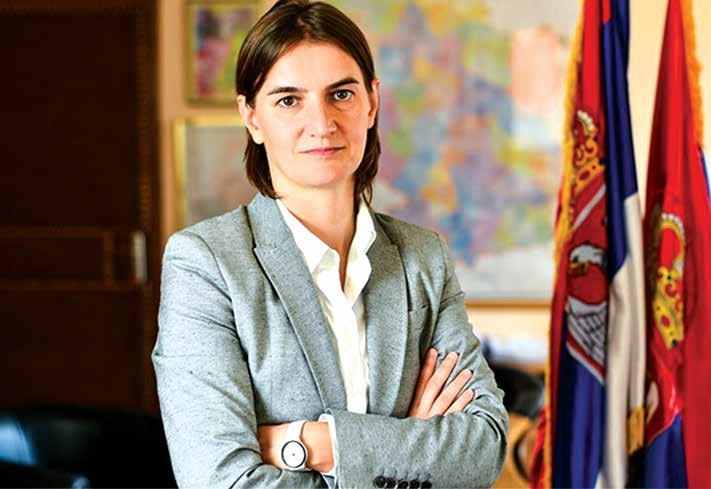
Serbia’s Lesbian Prime Minister, Ana Brnabic, is “not wanted” at the country’s Pride parade, LGBT activists say.
When Brnabic became prime minister last year – the first LGBT head of government in a Balkan country – she became an instant celebrity.
see SERBIA page 13
SGN EXCLUSIVE: Judy and Dennis Shepard reflect on 20 years after Matthew Shepard’s death

by MK Scott SGN Contributing Writer
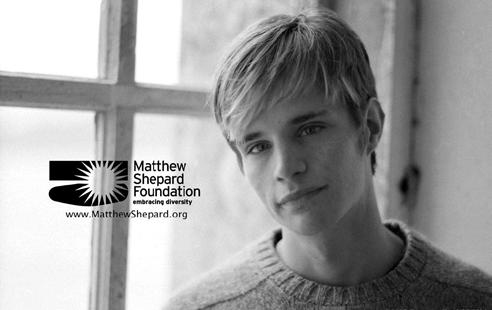
It is hard to believe that October 12th will be the 20th anniversary of the death of
Matthew Shepard. It all started on the night of October 6, 1998, when Matthew Shepard was lured to an open field and was tied up to a fence and tortured for days. Not since the
see SHEPARD page 6
Court rules case challenging Defense Department’s discriminatory HIV policies to proceed
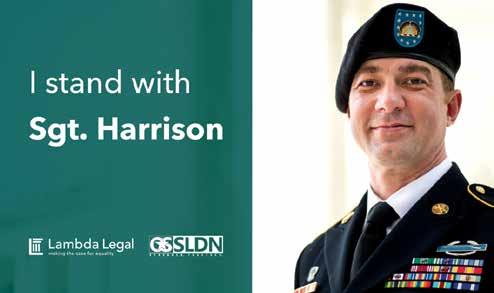
ALEXANDRIA, Va. (September 14, 2018) – [On September 14], a Virginia federal court ruled that a case filed by Lambda Legal and OutServe-SLDN, along with pro bono counsel from Winston & Strawn LLP, challenging the military’s discriminatory policies governing the enlist-
ment, deployment, and promotion of service members living with HIV, will continue, by denying the government’s motion to dismiss. The plaintiffs’ motion to halt implementation of a new Department of Defense (DoD)
see DISCRIMINATION page 5
Ana Brnabic, Prime Minister of Serbia – Photo courtesy of Ministry of Public Administration and Local Self-Government, Republic of Serbia
Image courtesy of Lambda Legal
Judy and Dennis Shepard – Photo courtesy of The Matthew Shepard Foundation Bert & Ernie – Photo courtesy of Getty





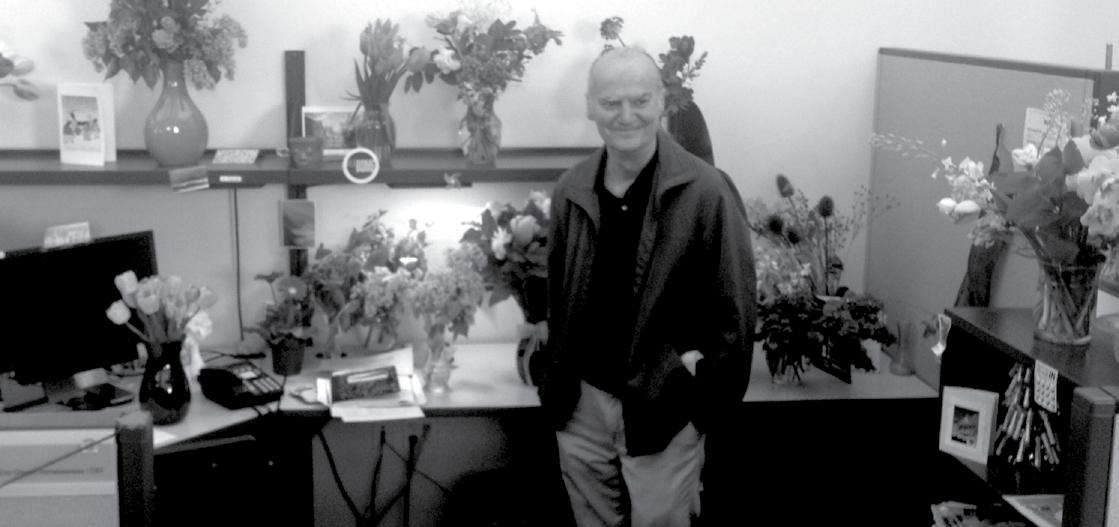
Neil Powers dies at 63
LGBT activist and former aide to Peter Steinbrueck
by Mike Andrew SGN Staff Writer
Neil Powers, LGBT activist and legislative aide to former Seattle City Council member Peter Steinbrueck, has died. He was 63 years old.
According to his friend and fellow homelessness advocate, John Fox, Powers had been living in Toronto for the past two years, pursuing a career in journalism. His death was reported to Fox by a housemate.
Powers was born in Scranton, Pennsylvania, lived and worked in Canada, and came to Seattle in the mid-’90s. His first job here involved outreach and assistance to homeless youth in the University District.

In 1997, Powers was hired by newly elected Seattle City Council member Peter Steinbrueck. He became Steinbrueck’s legislative assistant and resident expert on land use, housing, and homelessness.
“When voicing our concerns on policy,”
John Fox remembers, “it was Neil we would first talk to in order to influence Peter…
“I’d joke with him that as Peter’s assistant, he was like the vice principal who got to absorb all the flak, tell us ‘there, there,’ was the one who sometimes had to say ‘no,’ i.e., wield the paddle on all us activists –always politely of course. Neil liked the analogy a lot.”
When Steinbrueck left the City Council in 2008, Powers went to work at United Way, advising programs serving the homeless. When not at work, he continued to contribute his time and resources toward causes he believed in.
Two years ago, Powers moved to Toronto, where he’d lived prior to coming to Seattle, to attend journalism school. After graduation, his articles appeared in prestigious Canadian publications like the National Post and Financial Post
Occasionally Powers also wrote for Fox’s website, Outside City Hall, doing
interviews with Nikkita Oliver and Bob Hasegawa during their campaigns for mayor of Seattle last year.
Powers’ cause of death in not known. According to the report Fox received from Powers’ housemate, he had been experiencing a number of symptoms, including shortness of breath, weakness, and a sudden loss of weight.
“Last Friday,” Fox wrote, “only hours before his passing, Neil called to alert me of his condition. I was concerned, but he assured me he was seeing a doctor who had given him a series of tests and now was waiting to hear back on the results. He mentioned too that the doctor had found some evidence of ‘fluids in the upper chest.’”
Powers’ friends are planning to hold a memorial service for him in the near future, but no date has been set yet.
Neil Powers – Photo courtesy of the United Way of King County
Westin Hotel workers vote to strike
by Mike Andrew SGN Staff Writer
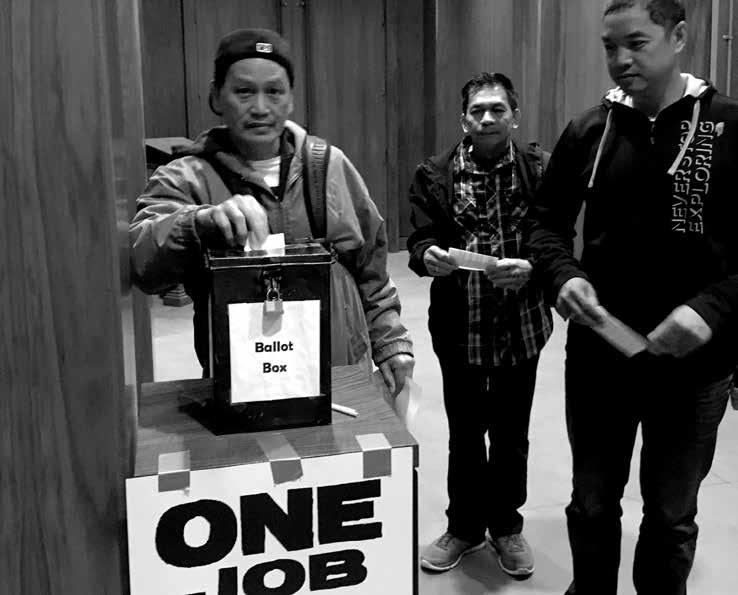
Workers at Seattle’s iconic Westin Hotel voted on September 14 to authorize a strike by a whopping 98% margin, following 22 other hotels in five cities.
Strike votes have been held by more than 8,000 union workers in Seattle, San Francisco, Waikiki, Maui, Boston, and San José.
MLK Labor, the central labor council that covers King County, gave strike sanction to UNITE HERE Local 8, the union representing Westin workers, on September 19. That means that the union is free to call a strike at any time.
The Westin Hotel was recently acquired by the Marriott hotel chain, and although Westin workers have had a union contract for many years, the union says that Marriott is resisting a fair settlement.
The most crucial point of contention is compensation, Westin workers say. Many report having to take second – or even third – jobs just to make ends meet, including workers who have many years of experience at the Westin.
In addition, workers are fighting for improved workplace safety. Rather than reducing room quotas for housekeeping staff, Marriott has increased the quota to 19 rooms per day, causing physical injuries to workers.
Westin housekeepers are also critical of the so-called “Green Choice” program, which asks hotel guests to opt out of daily room cleaning – supposedly to save energy on laundering bed linens. The energy savings are minimal, hotel workers say, but the additional labor required to clean rooms after a long stay contributes to work-related injuries.
UNITE HERE Local 8 represents over 5,000 members working in the hotel, food service, and airport industries in Washington and Oregon, including 400 Marriott workers at the Westin Seattle.
The union will assist organizations that may have booked events at the Westin – or may be planning to do so – to find another venue in case of a strike.
Teen sues former school district: They didn’t protect me from bullying and harassment
by Mike Andrew SGN Staff Writer
A Kenosha, Wisconsin, teen is suing his former school district, charging that it failed to protect him from bullying and harassment while he was a student.
Guadalupe Paredes is now 19 years old but says he was subjected to continual bullying and even physical assaults from the time he was in third grade, at 8 and 9 years old, through the tenth grade. He eventually quit school in 2015, as he was starting the 11th grade.
The Kenosha News reports that Parades is charging the school district and five school officials with being indifferent to his complaints and causing him to suffer physical and mental illness as a result of the bullying.
The lawsuit was filed in US District Court on September 14 and charges that the Kenosha school district and its officials failed to comply with Title IX, a federal law prohibiting discrimination in schools.
During the Obama administration, the federal government interpreted Title IX’s ban on discrimination based on sex as extending to gender identity and sexual orientation.
According to the suit, Paredes was harassed by multiple students during his time in Kenosha schools, with the students calling him anti-gay slurs. His mother, the suit says, complained to the principal and assistant principal of the school at the time.
Paredes met with the school officials, telling him that students called him the derogatory names while “shoving him or striking him,” the suit continues.
At one point, Paredes told the assistant principal he wanted to stay inside during recess in order to avoid his harassers but was told by Assistant Principal Sandoval that everyone must go outside. He said he tried to explain how much he was hurting, but when he revealed he was attracted to boys, the assistant principal became uncomfortable and told Paredes to go back outside.
Paredes says he was later told not to consult with the assistant principal any longer, “because Sandoval did not feel comfortable with the Plaintiff’s kind,” according to the suit.

Paredes also says a member of staff told his mother he brought on the bullying himself by “acting gay” and “telling other students he was gay.”
Paredes suffered physical and psychological harm from the continual bullying, his lawsuits charges.
In fifth grade, during one incident outside of the school, other students pushed him down and kicked him repeatedly while he was curled up on the ground. One student, described as “the worst perpetrator” of the harassers, cornered Paredes in a school restroom, telling him he should kill himself because he is gay.
Paredes says he was also harassed on
social media by a student who told him to kill himself. During his seventh-grade year, Paredes received a Facebook message from a student harassing him and telling him he should kill himself because the “world would be better off without him,” the suit says.
Students again cornered him in the school restroom. He said the ongoing harassment made him feel hopeless, and he stopped caring about himself or his appearance. Paredes stated in court documents that he would often feel sick and would vomit after incidents of abuse.
By the tenth grade, while he had passed his first quarter classes, his academic performance declined, and he failed to complete or
receive credit in several of them. The school conducted an intervention that resulted in a plan to address the academic issues, but shortly afterward, he was hospitalized for inpatient psychiatric treatment.
According to the suit, Paredes attempted to make a fresh start by transferring to a different high school but dropped out before the end of the first semester of 11th grade, because “mental health issues prevented him from being successful.”
He never returned to school.
A school district spokesperson acknowledged receiving the legal complaint on September 17, and said the district’s insurance company will be handling the defense.
Photo courtesy of UNITE HERE Local 8
Transgender Law Center responds to murder
of Nikki Janelle Enriquez: “We refuse to become numb to this rapid accumulation of injustices”

BERT & ERNIE
continued from cover
“123 Sesame Street” since the show’s beginning and have been longtime gay icons for the LGBT community. “Sesame Street” is a staple educational television show for children and has been seen by billions of children worldwide.
New York LGBT Network President/ CEO David Kilmnick has said that a coming-out party for the “Sesame Street” stars is long overdue. Kilmnick says that these two main characters being part of the LGBT community will help children discover who they are and further enable parents to speak openly with their children
about LGBT causes at a young age.
The following statement has been released by Kilmnick:
“Bert and Ernie are icons of the LGBT community, and this announcement warrants a long-overdue ‘coming-out’ party. These two characters are known throughout the world as children’s icons and will help parents discuss the LGBT community with children at a young age, all the while allowing children to express themselves freely. LGBT advocates everywhere see this as a terrific step in the right direction for inclusion everywhere, teaching kids that they may feel welcome and safe everywhere –including on Sesame Street.”
Courtesy of the LGBT Network

LAREDO, Texas (September 19, 2018)
– This last weekend, Texas law enforcement captured Juan David Ortiz, a Border Patrol agent who confessed to murdering several women. Transgender Law Center (TLC), the largest national trans-led organization advocating self-determination for all people, issued the following response from deputy director Isa Noyola:
“We are horrified by the news that a Border Patrol agent has targeted and killed several sex workers, including Nikki Janelle Enriquez, a transgender woman. While our society treats trans women, sex workers, and people of color as disposable, Transgender Law Center works every day to end the violence that is all too routine for people living at these intersections and to create a world in which everyone is afforded dignity and respect.
“At this moment it is critical that we interrogate the different factors that led to this horrible loss of lives. Complicit in this tragedy are state and federal governments that are aggressively attacking sex workers’ well-being under the pretense of combating human trafficking. Congress’s recent passage of SESTA/FOSTA [the Stop Enabling Sex Traffickers Act and the Allow States and Victims to Fight Online Sex Trafficking Act] has driven some into more dangerous street-based work, while simultaneously making it more difficult for sex workers to continue their work while build-
DISCRIMINATION
continued from cover
policy that likely would have resulted in the discharge of service members living with HIV was also denied because the Pentagon modified the policy after the plaintiffs filed the motion.
“All service members with HIV want is for the Pentagon to let us do the jobs we signed on to do,” said plaintiff Sgt. Nick Harrison. “These patriots love this country, volunteered to be soldiers, and look forward to the day that they can serve to the full extent of their abilities, and to not be impeded by misperceptions about HIV.”
These service members are being denied significant career advancement opportunities and even threatened with discharge due to the Defense Department’s long-standing discriminatory policies. Left unaddressed, hundreds of service members who are otherwise fit for duty, including plaintiff Harrison, will be discharged from the military, suffering irrevocable harm to their careers and losing critical health care and other benefits.
“We are pleased the court recognizes the importance of allowing this case to move forward, and of ensuring that outdated and irrational policies regarding people living with HIV are not allowed to stand,” said Scott Schoettes, counsel and HIV Project Director at Lambda Legal. “While we develop the record the Court needs in order to rule on the constitutionality of the Defense Department’s HIVrelated personnel policies, we will continue to be vigilant to ensure that service members are not being discharged solely because they are living with HIV under the Trump administration’s new version of its ‘deploy or get out!’ [policy].”
Under long-standing DoD policies, those who are serving stateside after an HIV diagnosis are denied important career advancement opportunities and are not allowed to commission as an officer. Sgt. Harrison was denied a position in the Judge Advocate General (JAG) Corps because his HIV prevents him from commissioning as an officer. Currently, service members who are diagnosed with HIV while in the military, like Harrison, are classified
ing and accessing community safety tools.
“Meanwhile, it is crystal clear that US Customs and Border Protection (CBP) and Immigration and Customs Enforcement (ICE) foster and cultivate brutal, callous, racist attitudes in their staff. From Trump’s ‘taking the handcuffs off ... the border patrol and ICE’ to family separation to the many deaths of immigrants in detention, these agencies have only become more brazen and deadly under the current administration.
“This tragedy is positioned in the broader context of 2018, a year of unprecedented violence against trans women of color, intense and emboldened racism, and ramped-up stigmatization of sex workers. We refuse to become numb to this rapid accumulation of injustices. We feel every attack, every aggression, and every loss. We fight for the lives and dignity of every trans person, every sex worker, and every person of color, and we refuse to stop until we achieve liberation for all.”
Transgender Law Center (TLC) is the largest national trans-led organization advocating self-determination for all people. Grounded in legal expertise and committed to racial justice, TLC employs a variety of community-driven strategies to keep transgender and gender-nonconforming people alive, thriving, and fighting for liberation. (transgenderlawcenter.org)
Courtesy of Transgender Law Center
as nondeployable without regard to their fitness, while people who have already been diagnosed with HIV are not allowed to enlist or commission as officers at all. The revised version will create a new category of deployment-limited personnel that the military will not discharge under the new policy, and the government’s lawyers have indicated that people living with HIV are likely to be reclassified into this category.
OutServe-SLDN is also an organizational plaintiff in this case to advance the interests of its members who are living with HIV. In a companion lawsuit entitled Doe v. Mattis, Lambda Legal and OutServeSLDN are representing an anonymous service member living with HIV who the Air Force refused to commission as an officer after he graduated from the Air Force Academy, despite recommendations from medical personnel.
“Since we first filed this case, we have heard from many service members worried about how Trump’s Defense Department will handle people living with HIV, so we are very pleased the Court denied the government’s motion to dismiss,” said Peter Perkowski, legal director of OutServeSLDN. “The judge had some very pointed questions for the government about why it made sense for the military to invest as much as it had in Sergeant Harrison and then deny him this position as a JAG officer simply because he is living with HIV. We look forward to proving that decision was not only nonsensical, but unconstitutional.”
Read a copy of the Motion for Preliminary Injunction [at https://www.lambdalegal.org/in-court/legal-docs/harrison_va_20180719_complete-motion-forpreliminary-injunction]. Read more about the Harrison v. Mattis case here: https:// www.lambdalegal.org/in-court/cases/ harrison-v-mattis.
Lambda Legal is a national organization committed to achieving full recognition of the civil rights of lesbians, gay men, bisexuals, transgender people, and everyone living with HIV through impact litigation, education, and public policy work.
Courtesy of Lambda Legal
Nikki Janelle Enriquez – Photo courtesy of Transgender Law Center
Bert & Ernie – Photo courtesy of HBO
days of the AIDS crisis, both the LGBTQ and straight community came together to help put hate crime legislation into law. Yes, Matthew was known as being the face of combating hate crimes.
I first met Judy Shepard in the fall of 2001 during her visit to Seattle to appear as a keynote speaker at the screening of a documentary called Journey to a Hate Free Millennium at the old Opera House. In 2009, I met up with Shepard again at a cocktail party in Portland; so when I had a chance to actually interview this amazing woman (and meeting her incredible husband) at the National Conference of LGBTQ Journalists on September 8th in Palm Springs, CA I seized the opportunity.
Earlier in the day, the Shepards spoke to a jam packed room of over 200 journalists and when it was all over the audience got up and gave them a standing ovation that lasted for over 10 minutes. This was an amazing opportunity to reflect on the past 20 years and we got to go into detail of what we discussed 17 years ago.
MK Scott: It’s been a joy to finally get a chance to chat with you, because I first met you back in 2001. Do you remember your last conversation with Matt?
Judy Shepard: Yes. It was a couple of days before he was taken. It was about his unpaid cellphone bill.
Dennis Shepard: Well, there are two different ones. One is the last one I had with him face to face which is when we gave him our old, ’78 Bronco. We went out and detailed it. And then worked on that together, cleaning it up, and then before he left gave him a big hug and told him I loved him. And then when we were in Saudi he called and the last time I talked to him on the phone call, we were just seeing how he was doing and stuff, again, just both of us said; I love you. And that was it.
MK: And in those 20 years what have you both learned the most?
Dennis: I learned that people can regress rather quickly when they have the encouragement to do so. The steps for American tours, complete social equality and justice in the last two years is we’ve returned to the era of the caveman. And it’s going to be very difficult to pull up Pandora’s Box and start cleaning up the mess.
MK: Now what advice would you give in the age of Trump and the current administration? What advice would you get to LBGT youth, and their parents?
Judy: Write letters, call your congressman, join the parades, protest, talk, talk, talk.
Dennis: Run for office.
Judy: Run for office. Working the campaign. Get involved. Don’t stay … Dennis: Be visible and vocal.
Judy: Yeah.
MK: This is an interesting question. What would have been Matt’s legacy? What was his dream? Or what would be his way to leave his mark if he had lived?
Judy: His dream was to be part of the Foreign Service. He was always rooting for the underdog. And when we moved to Saudi he saw what actually happens when the government sends aid to countries, but the aid never gets to the people who live there. It only lines the pockets of those in power. And it was infuriating to him. So that was, at that age, that was his dream, was to do something along those lines.
MK: Now, and I’m actually Facebook friends with Jane Clementi and Tyler’s brother and so forth. Have you ever reached out to her?
Judy: I’ve met her several times. In New York. And …
Dennis: Done a couple of events.
Judy: Yeah, we’ve done events together.
MK: Yeah. Because I had heard that there was a choir that was going to be doing a tribute to Matthew, because I had just seen that the Seattle Men’s Chorus had done a tribute to
Tyler called “Tyler’s Suite,” I think. Yeah, so that was interesting. So in the aftermath, after the tragedy 20 years, the community came together. And I had mentioned this to you when I first met you (in 2001) that I believe that unity needs to come within the community, but the thing is, is that, especially at that particular time they really didn’t really come together till after a tragedy happened. You know? And it may be the last time that the community really came together was during marriage equality, and that really wasn’t 100% come together either. So what needs to happen in order to be able to create unity?
Dennis: Respect within the community before we worry about that, because you can’t have, if you don’t have respect for others within your community, the trans community versus the black lesbian versus the white gay man, how are you going to have unity against, become the face of unity, against those who are trying to take your privileges and rights away.
Judy: Exactly. One of the most disappointing things we discovered was the …
MK: Actually you kind of mentioned that....
Judy: Yeah, the discrimination against others in your own community. That’s disheartening. It’s backwards.
MK: When I mentioned it to you (in 2001), you really, you know, you knew
exactly what I meant by that.
Judy: Mm-hmm.
MK: How has the Foundation helped the community or, I’m sorry, how will the Foundation help the community in the next 20 years?
Judy: Oh, that’s a really good question.
MK: Do you have any long range goals, now that you’ve been around for 20 years? how is the next 20 years?
Judy: What I’ve learned is long range goals just don’t work.
MK: (Laugh)
Judy: You make plans and God laughs. I just have felt over the last 20 years one of the things that I have learned is that we have tried to be proactive again and again.
MK: Exactly.
Judy: This is the best we’ve been at it, but we are largely reacting. And I think also rights organizations. And if nothing proves that it was the election of 2016.
MK: Yes.
Judy: It changed everything. Our longrange plans are really we just want to shut the door because we’re not needed.
MK: Now, would you have known like 20, 25 years ago that you would’ve been an incredible figure and activist?
Judy: Oh, no.
MK: (Laugh)
Judy: We wouldn’t have been the
(00:07:01) parents. I would’ve been the mom in the kitchen baking cookies. Dennis would be calling and organizing, but we would not have been the lectern people.
MK: Right. I have one more question. What has the, oh, I’m sorry, what … I can’t even read my notes. Okay … what has impacted both of you the most in the last 20 years?
Dennis: Matt’s death.
Judy: Yeah, just completely Matt.
Dennis: And the realization that he is not considered a full human being in America with all the rights and privileges of an American citizen born in this country, and raised in the middle of the United States. That’s the thing that, to me.
Judy: It’s just literally actually feeling the fear of the community itself. But the hate directed at the communities. Both of those things are powerful and lessons learned.
Dennis: And overwhelming and disappointing.
MK: And then also a follow up to that is would you have liked to set the fact that Matthew is considered to be, you know, a poster of, you know, of hate? You know? And how do you feel about that?
Judy: Are you asking about Matt’s, like the pictures of Matt on the Westboro?
MK: Yes.
Judy: You know, just in regard to them in particular, and all those sorts of people, that I, we just don’t give them any time of day or power over us. They’re just ridiculous people who, for whatever reason, decided their world needs to be full of hate instead of love.
MK: Right.
Dennis: It’s where they can get attention instead of becoming good citizens and doing good. They spend all their time trying to tear down what is good.
MK: Thank you so much.
For more information on the work of the Matthew Shepard Foundation, visit their website at matthewshepard,org
MK Scott is a Seattle based writer. Check out his blog at uniteseattlemag.com.
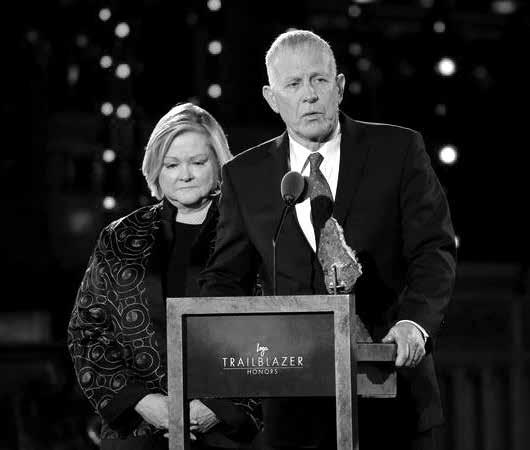
Judy and Dennis Shepard – Photo courtesy of The Matthew Shepard Foundation






BOOKS
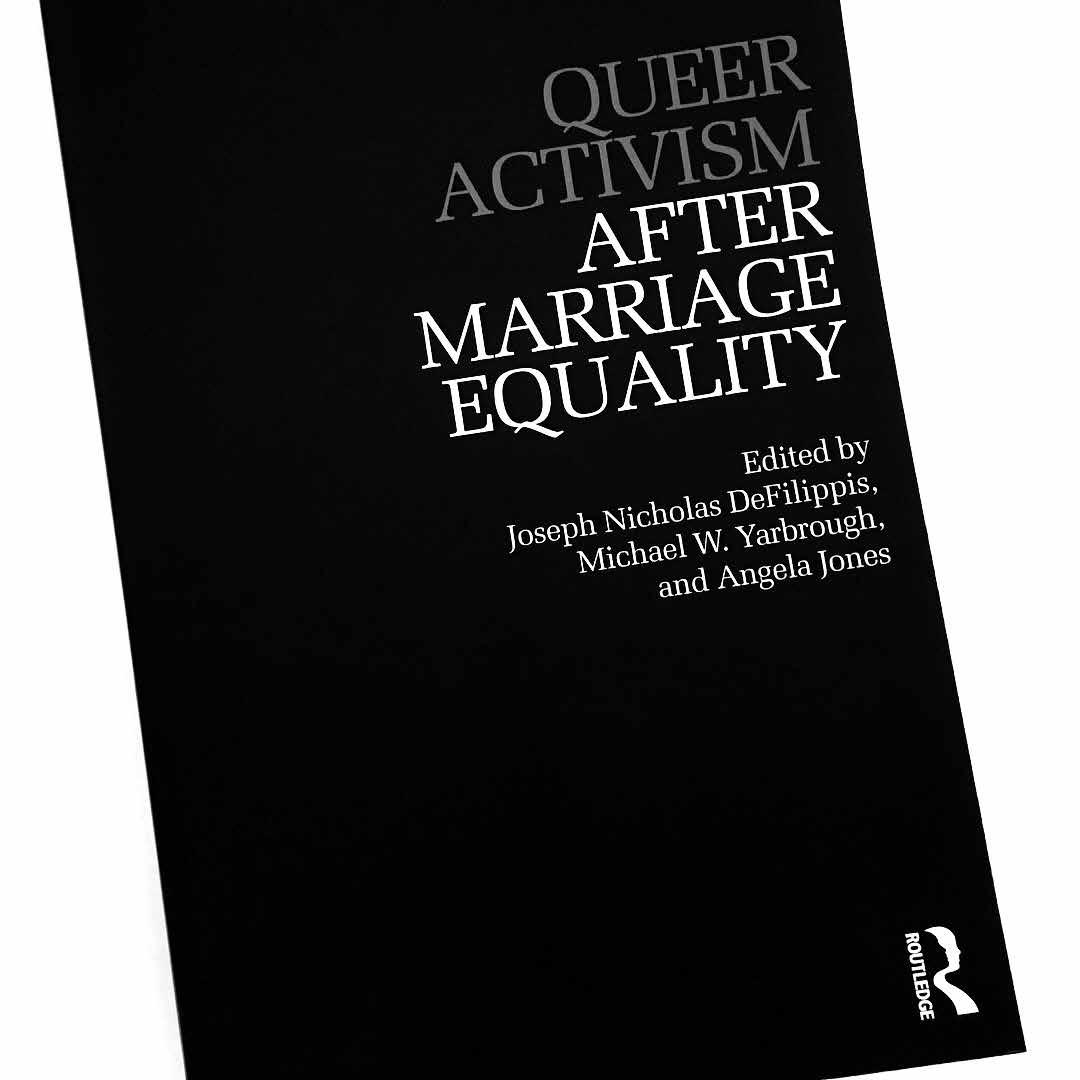
Book Review: Queer Activism After Marriage Equality
Editors: Joseph Nicholas DeFilippis, Assistant Professor of Social Work at Seattle University; Michael W. Yarbrough, Assistant Professor of Law and Society in the Political Science Department of John Jay College of Criminal Justice (CUNY); and Angela Jones, Associate Professor of Sociology at Farmingdale State College, SUNY.
by Scott Rice
SGN Contributing Writer
Is marriage what we should have been fighting for all this time? That’s the lame duck question that prompts the central ideas in Queer Activism After Marriage Equality ( QAAME ), but that question isn’t the central message behind its call to action. The editors of and contributors to QAAME want nothing less than to change the bedrock goals and methods of queer activism. And they are looking forward.
The fight for marriage equality (and for military service for that matter) has always been suspect for me personally. One could argue that in Western civilization marriage is a marginally successful (or even failed) institution rooted in compulsory religion, the commodification of women, and the preservation of patriarchal power. A more contemporary critique would also question why the state is even involved in anyone’s most intimate personal relationship in the first place.
That said, I need to come clean. I’m legally married in the state of Washington. My partner and I met on September 1, 1992. We have been in a committed relationship for 26 years. We obtained a civil union on March 1, 2012. On July 1, 2015 our civil union automatically became a marriage because we did not take action to opt out. So we’re married. And we have three anniversaries.
My partner and I are cisgender white men. I am a writer, teacher and volunteer supervisor for a local non-profit organization, and my partner has been a supervisor with the same national purveyor of natural and specialty groceries for nearly 20 years. We own a home about 1/2 mile outside the city limits of Seattle, we have two cars and two dogs, and we generally take at least one nice vacation each year. The marriage contract provides a way to protect our assets and insure that we will be able to make important decisions for one another if needed. The marriage contract is important to us.
Let me share some examples of people who might feel differently. A black trans woman arrested for prostitution and sitting in a men’s holding cell. A gay asylum seeker from a country where queer sex is punishable by death. An undocumented lesbian living in a detention center and separated from her child. A homeless nonbinary white teenager who was kicked out of their house for being non-binary. These people probably wouldn’t list marriage as their top immediate priority.
Here are some examples of queer people who do care about marriage: white cis couples in committed relationships who have assets to protect, e.g., those of us who look and act a lot like breeders. I’m being a bit hyperbolic and a lot sarcastic here to make a point, so bear with me.
QAAME, inspired by the 2016 conference “After Marriage: The Future of LGBTQ Politics and Scholarship,” is a collection of edited transcripts of selected conference sessions, academic essays, international case studies, and interviews with activists. The collection is edited by three academics and social activists, Joseph Nicholas DeFilippis, Assistant Professor of Social Work at Seattle University; Michael W. Yarbrough, Assistant Professor of Law and Society in the Political Science Department of John Jay College of Criminal Justice (CUNY); and Angela Jones, Associate Professor of Sociology at Farmingdale State College, SUNY.
Some of the essays are intellectually thick and come off as stridently academic (if
it walks like a duck…) like Chriss V. Sneed’s essay “Ga(y)tekeeping identity, citizenship, and claims to justice.” Others read more like personal essays by really smart and well-read writers like “Putting the T back in LGBTQ?” by Courtenay W. Daum. Defilippis’s essay “A new queer liberation movement: and its targets of influence, mobilization, and benefits” is the centerpiece of the collection and reads easily in spite of the complicated ideas presented. The interview and panel discussion transcripts are especially engaging, and DeFilippis’s introduction is like a tidy history lesson on post-epidemic queer culture. To be clear, you should read this book.
Don’t get me wrong. This is a challenging collection. It’s intellectually challenging, but it’s also ideologically challenging. We, the part of the queer community that thought we were finished with activism after we got the right to military service and matrimonial bliss, have our drive to assimilate (and our privilege to do so) challenged at every turn. This group of writers consider themselves unapologetic radicals who hope to upend queer activism and make it even queerer (the word “queerer” comes from the collection, but I intend to use it every chance I get from now on).
QAAME posits that the fight for marriage equality was planned, led, and funded by white, cis and middle-class people, mostly men. In the preface the three editors write, “Obergefell (Obergefell v. Hodges, the Supreme Court ruling that same sex couples have the right to marry) did not foster economic justice; it did not address poverty; it did not address racist
and heterosexist policing; it did not address a bigoted immigration system; it did not address a broken health care system; it did not address systemic violence and any of the other ominous issues facing queer and trans people that were ignored by the marriage equality movement. It did not even provide legal protections for most LGBTQ families.”
On June 26, 2015, not everyone was celebrating.
Another centerpiece of the collection is the concept of the Gay Rights Movement (GRM) vs. the Queer Liberation Movement (QLM). The GRM, in the parlance of the collection, is the established and whiter movement that uses its formidable financial resources to advocate, litigate, and lobby for equality. They aren’t interested in changing the institutions as much as they want equal access to those institutions. The GRM has accomplished a lot by focusing on marriage, military service, hate crime laws, and non-discrimination laws and policy – items that will initially impact white upper and middle-class queer people and then presumably trickle down to everybody else. According to DeFilippis, “The GRM has frequently been accused of inaccurately assuming that policies which help middle-class white people will “trickle down” and also benefit LGBT people of color or poor people.”
The QLM has a different agenda. They are radical, youthful, and full of color, and they are interested in changing the institutions that exclude not only gay and lesbian people, but other identities such as race,
class, gender, and national status. They believe that activism must start by benefiting those who need it most. Also according to DeFilippis, “The QLM organizations employ a version of the trickle up social justice, in which benefit is conferred first to those in most need of it.”
If we can ensure that the black trans woman is treated justly by the criminal justice system (or never comes in contact with it), if we can ensure that the gay asylee is safe and gets the resources he needs, if we can reunite the undocumented lesbian with her child and welcome her into our community, if we can ensure that queer teen who gets rejected by their family of origin has a home, and if we can connect all of these discrete identities to housing, education, health care, and employment, the likelihood of this making our community stronger seems obvious.
Sometimes in a free society we have to read things that are hard. QAAME is not light reading, but it is important reading about how queer people can keep moving forward, keep working toward a more just and equitable community for all queer people, not just white cis guys like me.
QAAME is a collection of queer voices of queer people of queer color, and they are speaking powerfully to white people. We as white queer people need to do three things. First, we need to listen when people of color tell us their stories and identify their priorities. Second, we need to believe them. Third, we need to act on that information. In fact, white straight people ought to do the same three things.
Queer Activism After Marriage Equality – Photo by Siobhán McGuirk
Lambda Literary presents the 2nd Annual Lambda
LitFest in Los Angeles, Sept. 29-Oct. 6
Stellar roster of performers includes Jewelle Gomez, Bamby Salcedo, and Patrisse Cullors


Lambda Literary presents its second annual Lambda LitFest Los Angeles, a week-long, LGBTQ literary festival, from Sept. 29 - Oct. 6, 2018. Held at 25 venues across Los Angeles County, the festival features community-curated performances, talks, and low-cost writing workshops.
“Lambda LitFest LA is a unique way for Angelenos to experience all that queer literary LA has to offer,” said Sue Landers, Executive Director. “It is a community driven, collective action that amplifies queer voices and celebrates our lives.”
Live Performances, Talks, and Exhibits from Sept. 29 - Oct. 6
Lambda LitFest’s premier event occurs Saturday, Sept. 29, with a full day of discussions, workshops, and mingling at the Japanese American Cultural and Community Center (244 San Pedro St, Los Angeles, CA 90012). Saturday’s program features four panels and six writing workshops, covering topics from writing queer characters for movies and TV, to geek culture, and queer sex worker narratives. Attendees are invited to check out the exhibitor fair between events to learn more about local organizations helping to enrich the cultural legacy of Los Angeles.
Lambda LitFest LA continues the following week with forty community curated events in neighborhoods across LA county.
The festival closes at Plummer Park in West Hollywood (7377 Santa Monica Blvd, West Hollywood, CA 90046) with a live taping of the LA Review of Books Radio Hour Podcast with Patrisse Cullors, co-founder of Black Lives Matter.
Lambda LitFest is made possible through the generous support of the City of West Hollywood, the City of Los Angeles Department of Cultural Affairs, UCLA Extension Writers’ Program, the California Arts Council, a state agency, and presenting media partner, The Los Angeles Blade. Visit www.lambdalitfest.org for the complete schedule. Join the conversation by following #LambdaLitFest.
General Event Information
Main Day Event: A full day of discussions, readings, networking, and exhibitor fair.
Date: Sept. 29, 11am - 5pm.
Location: Japanese American Cultural and Community Center, 244 San Pedro St, Los Angeles, CA 90012.
Community-Curated Events: Forty readings and events in neighborhoods across LA.
Dates: Sept. 30 - Oct. 5. (times vary)
Location: Varies. See program for details.
Closing Event: Patrisse Cullors, co-founder of Black Lives Matter, in conversation with Eric Newman, host and executive producer of the LA Review of Books Radio Hour
Date: Oct. 6, 6pm - 7:15pm.
Location: Plummer Park, 7377 Santa Monica Blvd, West Hollywood, CA 90046.
Featured Artists
Co-founder of Black Lives Matter Patrisse Cullors; Editor-in-Chief of INTO Zach Stafford; Poet, gender non conforming and disability advocate Kay Ulanday Barrett; Poet, critic, and playwright Jewelle Gomez; Author and translator Randa Jarrar; Vice President of PEN Center USA and winner of the American Library Association Barbara Gittings Prize David Francis; Bestselling writer of books, comics, and video games Sam Maggs; Bay Area Writer to Watch and Lambda Literary Poetry Fellow Baruch PorrasHernandez; YA speculative fiction writer Henry Lien; Poet and Program Director of the UCLA Extension Writers’ Program Charles Jensen; NCIS New Orleans screenwriter Greta Heinemann; Screenwriter and chair of WGA’s Latino Writers Committee Danny Tolli; Shadowhunters screenwriter Zac Hug; Screenwriter, director, producer Moisés Zamora; Dominatrix and Ph.D. in Gender Studies Natalie West; Podcaster, sex worker, and author Vanessa Carlisle; Moth Slam Winner and writing instructor Antonia Crane; Zinemaker Softcore Mija; Former porn star and memoirist Christopher Zeischegg (aka Danny Wylde); Writer, actress, and comedienne Chingy (aka Lani Ching); Host and executive producer of LA Review of Books Radio Hour Eric Newman; Lambda Literary Fellow Hank Henderson; Multi-disciplinary artist, writer/author, actor, arts educator, community organizer, and co-founder and director for Tuesday Night Project Traci KatoKiriyama; YA author Amy Spalding;
INTERNATIONAL NEWS
At the 2017 Pride parade in Belgrade, Serbia’s capital, she was surrounded by supporters carrying placards saying “Ana is here!” Dozens of Pride marchers swarmed around to take selfies with her.
Now she’s been disinvited to the event.
According to BBC News, a group of Serbian LGBT activists has organized a “Say No” campaign, aimed at excluding all politicians from Pride events.
The country’s political leaders, Brnabic included, have done nothing to advance LGBT rights, activists charge, and they are not welcome at Pride.
Brnabic is the main target of their campaign, because her “work on strengthening LGBT rights has been disappointing,” said a statement from the Gay and Lesbian Info Center (GLIC), the organization behind the campaign.
As a featured speaker at the 2017 Pride parade, Brnabic disappointed the crowd by telling them that LGBT rights would be addressed only after more pressing problems facing Serbia – inflation, pensions, and the standard of living – had been resolved.
“It was a scandalous statement,” Predrag Azdejkovic, the head of GLIC, told the BBC.
Critical of the original group of Pride organizers for cooperating with government officials like Brnabic, Azdejkovic started a rival Pride parade in June. Its goal is to “bring the gay march back to ordinary people and away from politicians.”
Azdejkovic says little has changed for
Award-winner writer, performer, and slam poet Meliza Bañales (aka Missy Fuego); Lambda Literary Award Finalist CB Lee; Internationally touring bisexual poet and actress Yazmin Monet Watkins; Poet, writer, and founder of Writers At Work, a creative writing studio, Terry Wolverton.
Steering Committee
Amy Scholder, Brandi Spaethe, Carrie Lee, Charlie Jensen, Corey Roskin, Joseph Rey, Kevin Robertson, Lynn Harris Ballen, Mathew Rodriguez, Meliza Bañales (aka Missy Fuego), Ron Gutierrez, Rosalind Helfand, Samantha Cohen, Seth Fischer, Steven Reigns, and LitFest Event Producer Dan Lopez.
Sponsors
The 2nd Annual Lambda LitFest LA is made possible through the generous support of our sponsors: the City of West Hollywood, the City of Los Angeles Department of Cultural Affairs, UCLA Extension Writers’ Program, the California Arts Council (a state agency), and our presenting media partner, the Los Angeles Blade
About Lambda Literary LAMBDA LITERARY nurtures and advocates for LGBTQ writers, elevating the impact of their words to create community, preserve our legacies, and affirm the value of our stories and our lives. Lambda Literary’s programs include the Lambda Literary Awards, the Writers Retreat for Emerging LGBTQ Voices, LGBTQ Writers in Schools, Lambda LitFest LA, and our web magazine the Lambda Literary Review at www.LambdaLiterary.org.
Courtesy of Lambda Literary

Serbia’s LGBT community since the bad old days of nationalist strong man Slobodan Milosevic in the 1990s.
“They say: ‘You have a gay prime minister, two parades, you should be content.’ But it’s all just made up,” Azdejkovic said.
For Serbia’s LGBT community, everyday life is still marred by widespread –often violent –homophobia.
Serbia’s first Pride parade in 2001 ended in violence when hundreds of right-wing hooligans attacked the peaceful march
despite a heavy police presence. In 2010, about 100 people were injured when that year’s march was also attacked in central Belgrade.
In the years that followed, the country’s Interior Ministry refused to grant security clearance for the parade to take place. Only in 2014 did the marchers return to the streets, again with considerable police presence.
The government has adopted the Law Against Discrimination, which protects LGBT individuals, but cases rarely come to justice. A
survey by the European Human Rights Association (EHRA) showed that 20% of same-sex couples in Belgrade are rejected when they trying to rent an apartment.
Another survey done by the EHRA showed that 90% of people in Serbia are against giving LGBT couples the right to adopt, while about 70% are against gay couples inheriting a partner’s belongings after death.
Same-sex marriage is still illegal in Serbia.
Patrisse Cullors – Photo by Curtis Moore
Serbian Prime Minister Ana Brnabic (center) at last year’s Pride Parade in Belgrade – Photo courtesy of Reuters