Seattle Gay News
ROME · FLESH AND BLOOD · WASHINGTON STATE HISTORY MUSEUM
FRIDAY HARBOR FILM FESTIVAL · MONET, RENOIR, AND DEGAS · CHICAGO
by Ed Walsh
SGN Contributing Writer
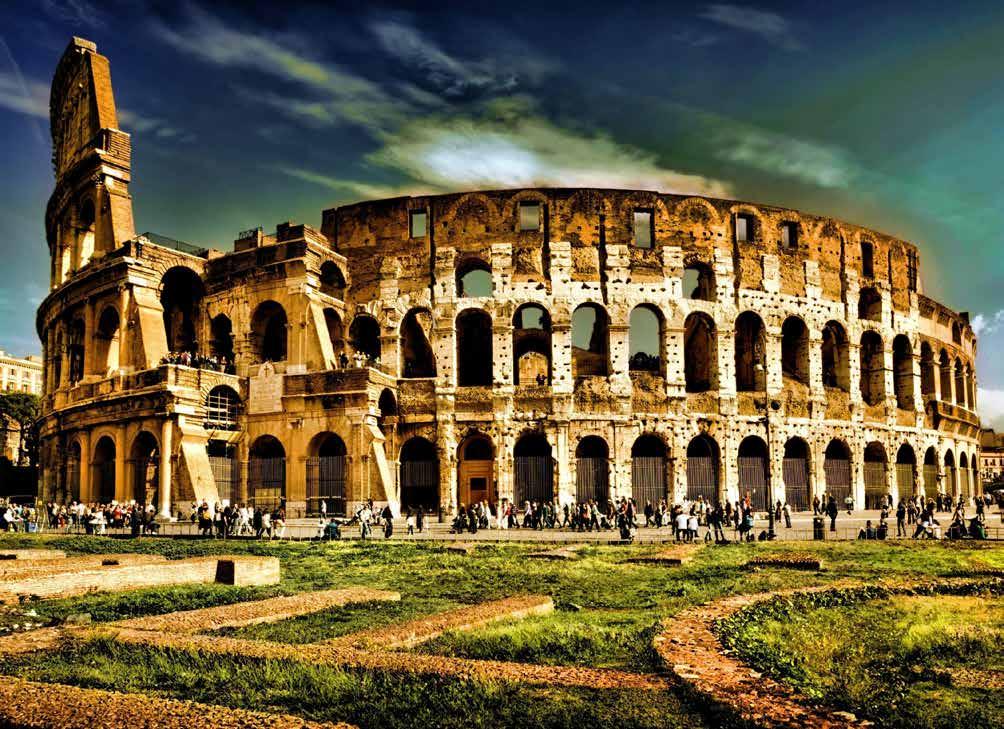
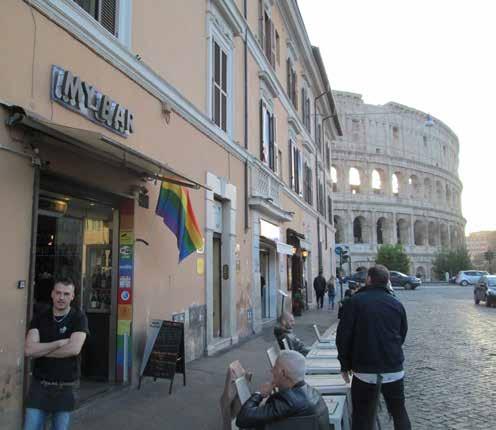
Rome does not have a big gay scene but it may have the most unique location of any gayborhood in the world. The gayest block in the city is across the street from Rome’s most iconic landmark, the Colosseum. ( https://en.wikipedia.org/wiki/Colosseum) The 300-yard stretch of Via San Giovanni on the east side of the Colosseum was formally renamed “Gay Street di Roma” or the Gay Street in 2007, although there are no street signs there that say that. That is where you will find the Coming Out bar, My Bar, and the lesbian bar, the Colosseum RistoBar. There are also a few other gay bars and saunas scattered around the city.
Rome celebrated its 25th annual pride celebration in early June. The week-long series of events was highlighted by a march in the heart of the city’s historic center, just east of the famed Trevi Fountain. Rome hosted the LGBT sporting event, EuroGames, in July.
THE SIGHTS
Of course, you can combine a visit to the gayborhood with a visit to the Colosseum just across the street. The structure dates back more than 2,000 years. It was built by Rome’s leaders to give the unwashed masses entertainment. Admission was free in those days but how close you were to the action depended on your social status. The nosebleed seats were reserved for slaves and others on the lowest rung of society. If you go, you can walk in for a fee and explore on your own or go with a tour guide. My traveling companion and I
went on one of the monthly free days at the Colosseum and paid just €15 euros (about $16.50 US) for a guided tour with My City Tours ( https://mycity-tours.com/ ). It was well worth the cost. The tour cost apparently is flexible depending on the demand and on the barkers in front of the Colosseum who drum up business. I heard them charge two women who were ahead of us €20 euros for the same tour, so keep in mind the price of the tour is negotiable. Admission to the Colosseum is usually €12 euros (about $13.25 US) (admission will be increasing to €16 euros (about $17.50 US in November]. My friend and I got in on a rare free weekday. More information can be found on the Colosseum’s official website https://www.coopculture. it/en/colosseo-e-shop.cfm
After an hour’s tour of the Colosseum with our guide Mercedes, we were turned over to a second guide, Elaine, for a tour of the Forum ( https://en.wikipedia.org/wiki/ Roman_Forum), right next to the Colosseum. The Forum was kind of a shopping district for ancient Rome. Both guides were excellent. The guides can point out the stuff you might miss if you are walking around on your own, like the group toilets that were continually flushed by water from the aqueduct system for which ancient Rome was famous.
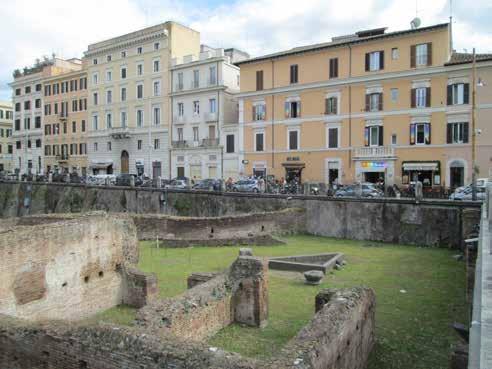
Right across the street from the gay bars on The Gay Street is an excavated block of the ruins that once was the training ground for the gladiators who fought to the death across the street at the Colosseum. It wasn’t included in the tour but it is worth checking out and reading the plaque that explains the history.
A good way to see the main attractions of Rome without getting lost are on one of the
city’s double decker tour buses. I took both the Big Bus Tours bus (www.bigbustours. com) and the City Sightseeing bus (www. city-sightseeing.com). The Big Bus offered the most bang for the buck with two different routes. It also includes walking tours as part of the service. The tour buses give out earbuds so you can listen to narration in English or another language. Both services offer you the ability to hop on and off.
The Turbo Pass (www.turbopass.com) is another good way to go. It includes options for public transportation, airport bus transfers as well as a 24-hour pass on the City Sightseeing bus The pass also allows for free or discounted admission to a number of attractions around the city.
One of the best tours I took was a free two-hour walking tour in central Rome. You need to make a reservation in advance at http://www.newromefreetour.com/. The tour guides work for tips. I wasn’t sure how much to tip the guide but I gave 10€ euros, which was well worth it. The free walking tour goes by the world-famous Trevi Fountain, the Spanish Steps, the Pantheon, the church with a round openair dome, as well as other lesser-known but historically important churches.
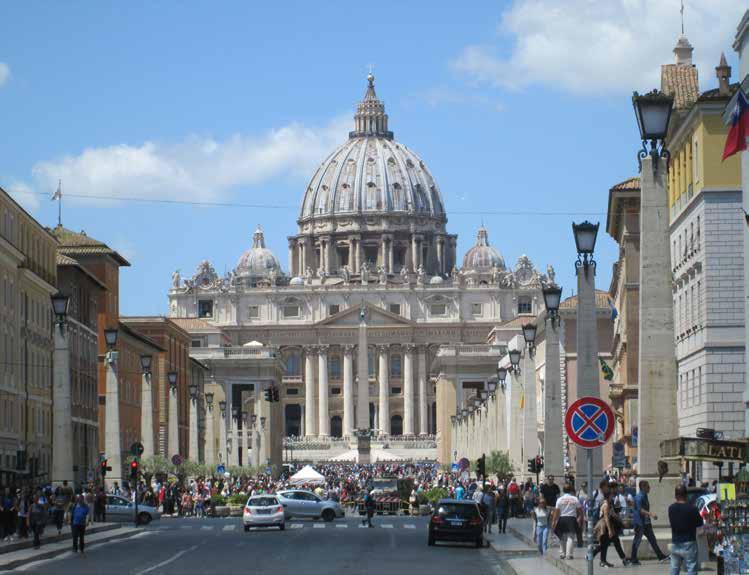
Whatever your religious beliefs, the Vatican is well-worth seeing but you need to plan ahead to see the Vatican Museum (http://www.museivaticani.va/content/ museivaticani/en.html) and the Sistine Chapel (https://en.wikipedia.org/wiki/Sistine_Chapel) (http://www.museivaticani. va/content/museivaticani/en.html). You have to go through the museum to see the chapel. A number of tour companies offer guided tours but they often sell out a couple of weeks in advance. Anyone can walk into the Vatican’s main church, St. Peter’s
Basilica, but the lines are often long. You have to be cleared through a metal detector before entering.
The Pope appears in a window of the papel apartment at noon on Sundays. During that appearance, guards check the bags of everyone entering St. Peter’s Square and a long line forms as people try to get closer but the line moves very quickly.
One of the most revered figures in the Vatican art world is the painter of the Sistine Chapel, a gay man you might have heard of, Michelangelo. (https:// en.wikipedia.org/wiki/Michelangelo). A great hour-long show depicting his work as the sculptor of the famous "David" as well as the process for painting the Sistine Chapel is in the Giudizio Universale (https:// www.giudiziouniversale.com/en/) show just outside the Vatican.
The spectacular show uses live actors and projects his Sistine Chapel paintings on the ceiling and sides of the auditorium. About 15 minutes of the show is narrated in Italian but you can get a handset with the English translation for €5 euros. The ticket prices start at about €25 euros. Unfortunately, the show doesn’t touch on his personal life, but hopefully it would encourage people to do their own research that would reveal the gay side of this remarkable man.
Michelangelo's "David" is in Florence, about a three-hour drive north of Rome. But his other famous sculpture, "La Pieta", is in St. Peter's Basilica. The translation of "La Pieta" is "The Pity." and it depicts Mary cradling the dead body of her son Jesus just after his crucifixion.







The best time to go to Rome is in the winter. The crowds are a lot smaller, the hotels and the airfare are a lot cheaper. A number of airlines offer connecting flights to Rome from SeaTac. The average high temperature in Rome in January is 54 degrees, so you will still be warmer than if you are in Seattle during that time of year.
It is easy to get around in Rome on public transit. The city has an efficient subway system with a fare of €1.50 euros or about $1.70 US. Each transit ticket is good for 100 minutes. My friend and I purchased a weekly transit pass for €24 euros or about $27 US, which was worth it considering the time we saved in hassle of dealing with paying a fare every time. One of the stops is the Colosseum stop convenient for the gayborhood as well as its namesake.
To avoid getting ripped off by cab drivers, always use Uber or install the app MyTaxi, which is a common app to call for a taxi in Europe. With the app, you have a record of fare and the driver. It is worth it even if you have to take a few extra minutes. I experi-
enced first-hand getting ripped off by a taxi driver who at first tried to charge me about triple what the fare should have been and then claimed I gave him a €10 euro bill when I gave him a €50. He backed down when I protested but he still wound up over charging me. I took his license plate number and filed a complaint but no one from the licensing board ever got back to me. All things being equal, Uber is your best bet in getting around. If you call a taxi on the phone or through MyTaxi, you will be charged on the distance the taxi has to drive to reach you.
My friend and I stayed at the Hotel Prati (https://translate.google.com/ translate?hl=en&sl=it&u=https://www. hotelprati.com/&prev=search), just a fiveminute walk from the Vatican. Rates were a very reasonable $77 US per night for a stay in May, a busy time in Rome. The front desk staff was very friendly and accommodating. It included a continental breakfast with coffee, pastries or yogurt. The rooms were very small and the hotel could get a little noisy at times but it is a place I would recommend. The Vatican area is a good place to stay within walking distance of
some great restaurants and shopping. The boutique Second Floor Hotel (https://www.1floor.it/) promotes itself as a gay and lesbian hotel. It is perfectly situated on the second floor above the Coming Out bar. It is a little more expensive that the Prati but my friend and I decided against staying because some reviews of the hotel mentioned that it can be noisy when the clubs below get noisy.
Don’t make the mistake like we did of assuming a restaurant in Rome that looks good will be a good restaurant. We made the mistake of stumbling into a couple of bad restaurants near the Vatican, including the Vatican Ristorante La Romanella which served up good food but then a waiter lorded over us insisting that we leave a tip and that it had to be cash and we couldn’t put it on a credit card. Tipping is not customary in Rome.
Pizza is popular and inexpensive all over Rome and I found no difference between the pizza served in high end places versus inexpensive storefront restaurants.
As a general rule, restaurants next to tourist attractions tend to not be as good as restaurants a few blocks away. Restaurants that can’t rely on heavy foot traffic have to be good.


The Seattle Art Museum presents Flesh and Blood: Italian Masterpieces from the Capodimonte Museum (October 17-January 26), featuring 40 Renaissance and Baroque works of art (39 paintings and one sculpture) drawn from the collection of one of the largest museums in Italy. Traveling from the Museo e Real Bosco di Capodimonte in Naples, the exhibition offers a rare opportunity to see works by significant Italian, French, and Spanish artists who worked in Italy including Artemisia Gentileschi, El Greco, Parmigianino, Raphael, Guido Reni, Jusepe de Ribera Titian, and more.
The Capodimonte Museum is a royal palace built in 1738 by Charles of Bourbon, King of Naples and Sicily (later King Charles III of Spain). The core of the collection is the illustrious Farnese collection of antiquities, painting, and sculpture, formed in the sixteenth and seventeenth centuries and inherited by Charles of Bourbon. Italian and Spanish masterpieces of the Baroque period, grounded in realism and produced in Naples, build on this foundation. The Farnese collection traces a century of creativity, inspiration, and a constant search for beauty, followed by masterpieces of the Baroque era characterized by grandeur, dramatic realism, and theatricality.
This exhibition marks the first time that this many works from the Capodimonte Museum will travel together at the same time. The New York Times called the museum an “under-visited treasure trove” with a “staggering collection of art” and Conde Nast Traveler called it “the most underrated museum in Italy.”
The paintings in Flesh and Blood center on the human figure, whether featured in portraits or mythological and religious
scenes. They explore the intersection of physical and spiritual existence, with an emphasis on the human body as a vehicle to express love and devotion, physical labor, and tragic suffering.
“I am thrilled that we have the rare opportunity to see these incredible works in Seattle,” says Chiyo Ishikawa, SAM’s Susan Brotman Deputy Director for Art and Curator of European Painting and Sculpture. “Epic and intimate, divine and brutally realistic, these paintings speak to the complexity of human experiences in a timeless way that will resonate with our visitors.”
EXHIBITION HIGHLIGHTS
Flesh and Blood will be presented chronologically, tracing a 200-year period from the 16th through the 18th centuries. Here are nine highlights:
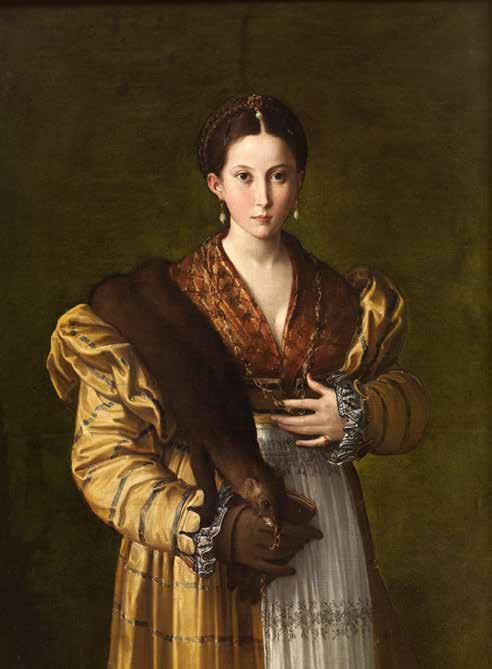
Antea (1524-1527), Parmigianino
With the identity of the sitter a mystery, this striking portrait most likely represents a vision of idealized beauty typical of the Renaissance. Girolamo Francesco Maria Mazzola, known as Parmigianino (1503–1540), has his subject look directly out at the viewer, adorned with furs and jewelry that may have signified fertility or lust.
Pope Paul III (1543), Titian Titian (1488/90-1576) established strong ties with the powerful Farnese family, beginning with Pope Paul III. In this official portrait, Titian delivers a vivid likeness that conveys both the elderly human being and the shrewd statesman.
Danaë (1544-1545), Titian
This overtly erotic painting is one of the most celebrated nudes of the Renaissance.
It depicts the mythological princess Danaë, whose father locked her in a chamber so that no man could reach her. The God Zeus gained access by transforming himself into a golden cloud, showering down upon her. Painted for Cardinal Alessandro Farnese, it probably portrays his mistress Angela as the goddess and was intended only for private viewing.
Boy Blowing on an Ember (15711572), El Greco
This painting by Doménikos Theotokópoulos (1541-1614), commonly known as El Greco, may reference an antique painting mentioned by the Roman writer Pliny the Elder. Depicting a boy blowing on an ember to light a candle, El Greco uses that as the work’s sole source of light, illuminating the concentrated face of the boy.
Pietà (1599-1600), Annibale Carracci
Annibale Carracci (1560-1609) was one of the most influential painters and teachers in Bologna and Rome. This effective expression of maternal grief at the death of her son was inspired by Michelangelo’s Pietà in Saint Peter’s Basilica in the Vatican.
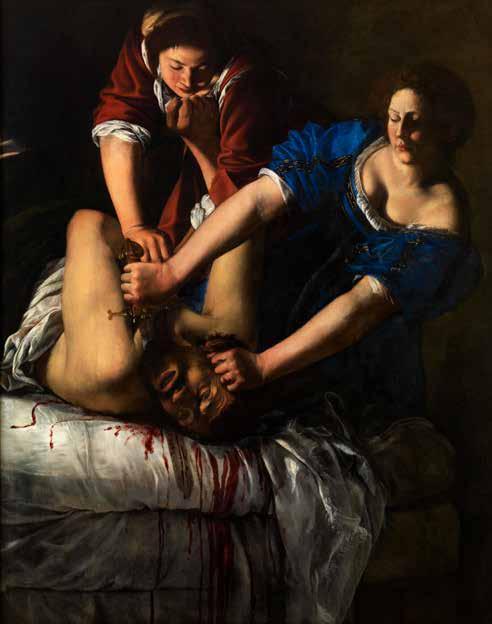
Judith and Holofernes (1612-1613), Artemisia Gentileschi
Artemisia Gentileschi (1593–1653 or later) may be the most celebrated female painter of the Baroque period. In her work, she often painted dramatic scenes featuring women subjects from the Bible and mythology. With this painting, she depicts the story of the Jewish heroine Judith slaying the Assyrian general Holofernes, who was threatening to destroy her village. Gentileschi’s decision to focus on the violent act has been associated with her traumatic experience in 1611, when she was raped by the painter Agostino Tassi.
Atalanta and Hippomenes (ca. 16201625), Guido Reni
The influential Baroque painter Guido Reni (1575–1642) was known for both Biblical and mythological subjects. In this painting, he depicts the story of Atalanta, who had taken a vow of chastity. Under pressure from her father, she agreed to marry the first man who could outrun her in a footrace. Hippomenes won by distracting her with three irresistible golden apples given to him by Venus.
Drunken Silenus (1626), Jusepe de Ribera
This unusual depiction of a classical bacchanal centers on Silenus, companion to the wine god Dionysus. Ribera (1591–1652) renders his rotund body with loaded, vital brushstrokes typical of his naturalistic style. Painted for a private collector, this reclining, unglamorous male nude seems to send up the physical beauty and erotic appeal of Renaissance Venuses.
Saint Jerome (1626), Jusepe de Ribera
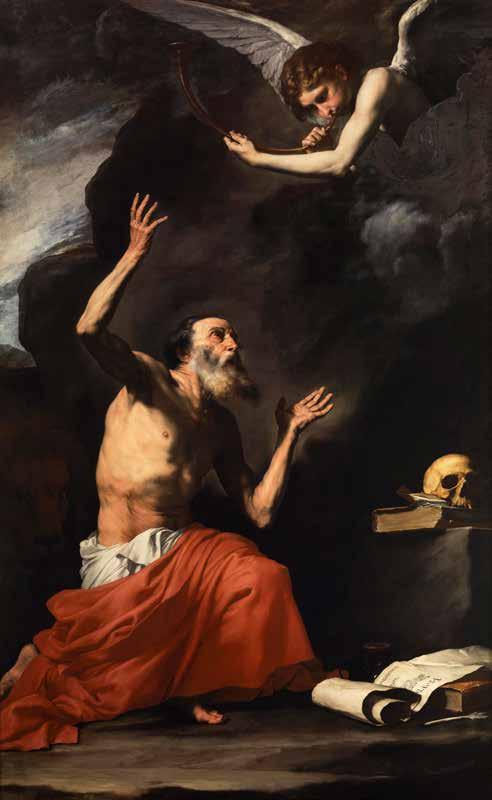
Saint Jerome is one of Ribera’s most frequently painted subjects. In this monumental altarpiece, the emaciated, aged hermit is startled by the angel that appears in the upper right blowing the trumpet of the Last Judgment. The saint’s withered body, which reflects the divine light above, dominates the composition and is as palpable as human flesh.
TICKETING INFO
Location: 1300 First Avenue (at Union St).
Museum hours: Closed Monday and Tuesday, Wednesday 10am-5pm; Thursdays 10am-9pm; Friday-Sunday 10am5pm.
Daily tickets: $29.99 Adult; $27.99 Senior (65+), Military (with ID); $19.99 Student (with ID), Teen (15-18); FREE for chil-
dren (14 and under); FREE for SAM Members.
First Thursday reduced ticket prices: $9.99 Adult; $7.99 Senior (65+), Military (with ID); $4.99 Student (with ID), Teen (15-18); FREE for children (14 and under); FREE for SAM Members.
Special exhibition ticket prices are reduced by more than 65% on the First Thursday of the month. Tickets to SAM Collections and Installations are free.
More information: (206) 654-3210; www.seattleartmuseum.org
A 160-page illustrated softcover exhibition catalogue will be available for purchase in SAM Shop ($30). Also titled Flesh and Blood: Italian Masterpieces from the Capodimonte Museum, it features essays by Sylvain Bellenger, General Director, Museo e Real Bosco di Capodimonte; James P. Anno, American Friends of Capodimonte Curatorial Fellow; and Christopher Bakke, American Friends of Capodimonte Curatorial Fellow.
In conjunction with the exhibition, SAM will present a dynamic lineup of programming, including Art Beyond Sight and docent tours and a series of public programs. Highlights include a free community opening celebration on October 17, free drop-in
art workshops, and an in-gallery response space. For details, visit http://www.seattleartmuseum.org/
For each major exhibition, SAM convenes a group of advisors from the community to take part in its planning. The Flesh and Blood advisory committee is Lia Chiarelli, Dr. Amish J. Dave, Tamasha Emedi, Klara Glosova, Corinna Laughlin, Estelle Lingo, Stuart Lingo, and Elisabetta Valentini.
The exhibition is organized by the Museo e Real Bosco di Capodimonte, Naples, the Seattle Art Museum, the Kimbell Art Museum, and MondoMostre.
The presentation in Seattle is made possible by: Presenting Sponsor – ArtsFund; Lead Sponsor – 4Culture; Major Sponsor –Robert Lehman Foundation
As the leading visual art institution in the Pacific Northwest, SAM draws on its global collections, powerful exhibitions, and dynamic programs to provide unique educational resources benefiting the Seattle region, the Pacific Northwest, and beyond. SAM was founded in 1933 with a focus on Asian art.
By the late 1980s the museum had out-
grown its original home, and in 1991 a new 155,000-square-foot downtown building, designed by Venturi, Scott Brown & Associates, opened to the public. The 1933 building was renovated and reopened as the Asian Art Museum in 1994. The building is currently undergoing a renovation and expansion with a scheduled reopening in fall 2019.
SAM’s desire to further serve its community was realized in 2007 with the opening of two stunning new facilities: the nineacre Olympic Sculpture Park (designed by Weiss/Manfredi Architects) – a “museum without walls,” free and open to all – and the Allied Works Architecture designed 118,000-square-foot expansion of its main, downtown location, including 232,000 square feet of additional space built for future expansion. The Olympic Sculpture Park and SAM’s downtown expansion celebrated their tenth anniversary in 2017.
From a strong foundation of Asian art to noteworthy collections of African and Oceanic art, Northwest Coast Native American art, European and American art, and modern and contemporary art, the strength of SAM’s collection of approximately 25,000 objects lies in its diversity of media, cultures, and time periods.
Over the last 20 years, MondoMostre has partnered with museums around the world providing exhibition planning services. Offices in Rome, Milan, Moscow, Beijing, Tokyo, Boston, and Mexico City provide services including support for concept development, production, registration, insurance, shipping, publication services, marketing, advertising, exhibition place -
ment, and exhibition strategy consulting. MondoMostre has put its expertise to the service of museums everywhere to help them create world-class exhibitions in its broad international network.
As of now, the company counts 162 exhibitions organized with 83 institutions located in 47 cities, generating a total of 25 million visitors worldwide. Some of the more important exhibitions have been: Botticelli; Caravaggio; Leonardo; Hokusai; Hiroshige and Kuniyoshi; Picasso, Dali, Frida Kahlo, and Diego Rivera; Manet; Vermeer; Rembrandt. Some partner institutions have been the Uffizi; the Capitolini; the Vatican; the Capodimonte Museum; the Pushkin Museum in Moscow; the Hermitage in Saint Petersburg; the National Museum of China; the National Museum of Western Art in Tokyo; and the Musée Picasso-Paris.
Courtesy of Seattle Art Museum


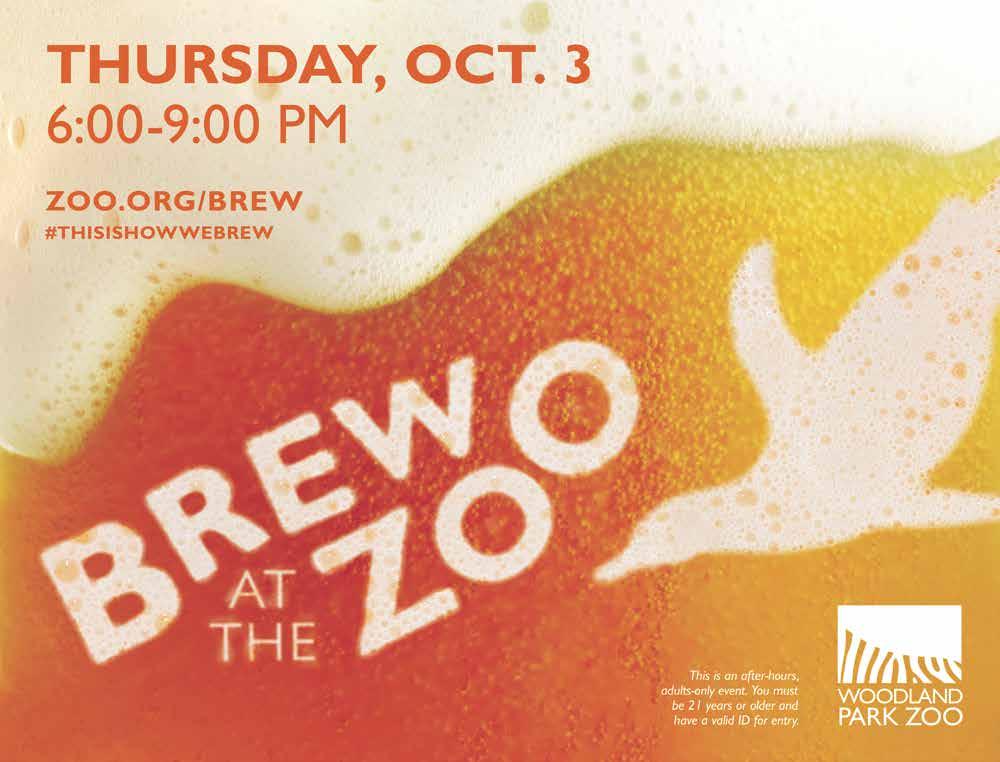
Seasonal Craft Brews / Hop-Infused Experiments
Costume Contest / 12 Pours Included After Hours Exhibit Access
Drink Local and Support Science! Tickets on Sale Now | PACSCI.ORG












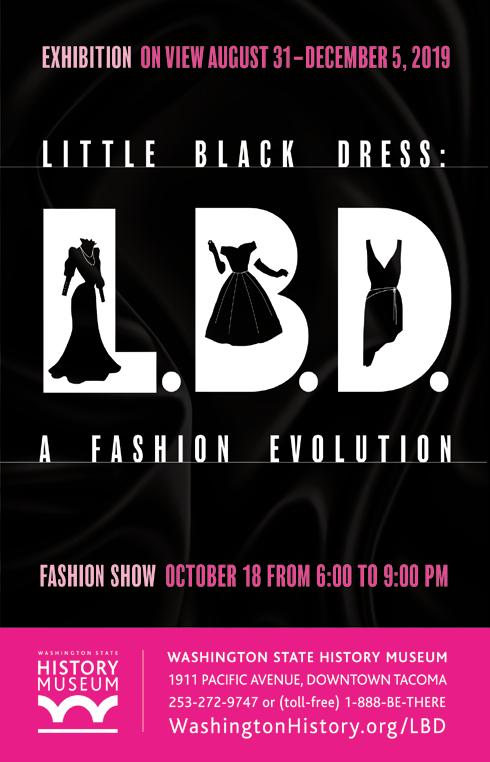
Washington State History Museum opened two new exhibitions on August 31. A New Moon Rises is from the Smithsonian Institution Traveling Exhibition Service (SITES), and Little Black Dress: A Fashion Evolution is drawn from the Historical Society’s collections. Both exhibitions will run through early December.
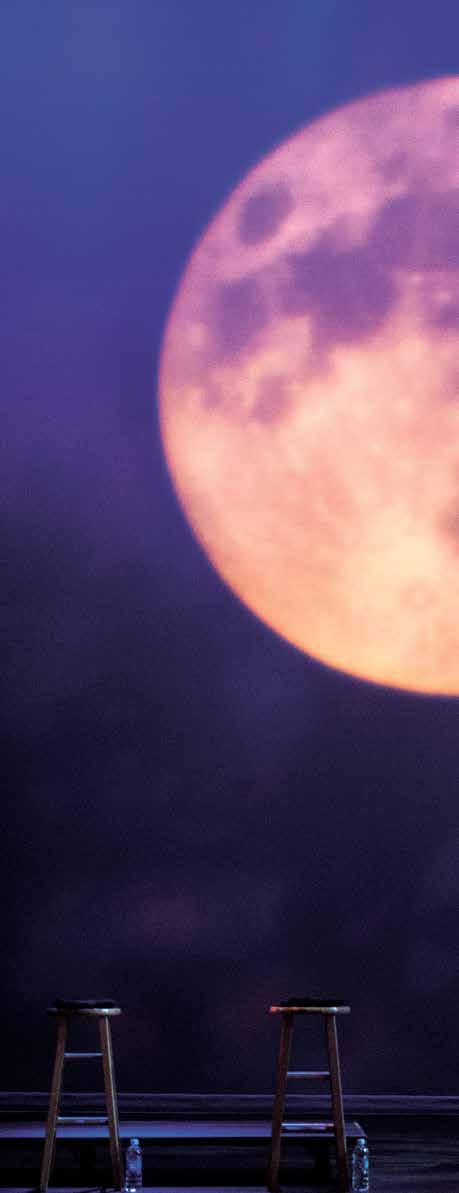
While you cannot yet travel to the Moon, it is easy to imagine you are there as you stand surrounded by grand images of its craters, mountain ranges and rocky landscapes.
“In July our nation celebrated the 50th anniversary of the Apollo 11 mission. A New Moon Rises continues that celebration,” said Jennifer Kilmer, the Historical Society’s director. “Visitors can find out what science has learned about the Moon since then, while exploring the lunar surface through dozens of stunning large-scale images. We’ll also have three-dimensional models, small Moon rocks, and retro-futuristic objects from our collections that show what Americans thought life would be like in the space age.”
The images were captured by the Lunar Reconnaissance Orbiter Camera (LROC) between 2009 and 2015. A New Moon Rises was created by the National Air and Space Museum and the Arizona State University, and is organized for travel by SITES.
Visitors ages 21-plus can enjoy A New Moon Rises after dark on Thursday, October 10 during History After Hours Washington In Spaaace; tickets are available at WashingtonHistory.org/HistoryAfterHours and include two beverages, games, the exhibition and more. (After Hours tickets are $15 for members; $20 in advance for non-members; $25 at the door.) On Free Third Thursday Evening, October 17, the Museum of Flight
will bring their traveling planetarium to the History Museum for guests to participate in another type of space exploration. A New Moon Rises closes on December 1
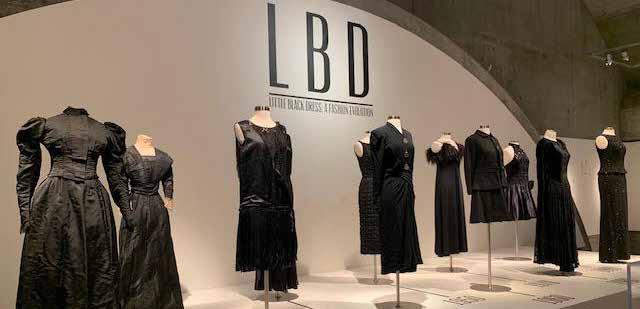
In the adjacent galleries, visitors can take a journey of a different style through a timeline of garments as dark as the Moon’s shadow.
Coco Chanel once said, “Fashion is not something that exists in dresses only. Fashion is in the sky, in the street. Fashion has to do with ideas, the way we live, what is happening.” Little Black Dress: A Fashion Evolution explores how styles changed over the decades, reflecting shifting social norms and cultural values.
“The timeline of dresses starts with Victorian mourning gowns in the 1800s and ends with present day cocktail attire,” said Audience Engagement Director Mary Mikel Stump. “We’ve paired original art-
work by women from each decade with the dresses. Visitors can see how forms followed norms through the design of the clothing. It’s a delightful opportunity to teach history through material culture from the Historical Society’s collection. We’re kicking off the upcoming Year of the Woman, the 2020 suffrage centennial, with this exhibition, highlighting women in our society.”
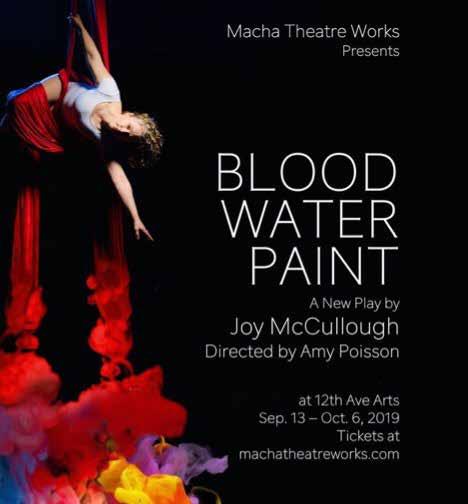
Don’t miss the Little Black Dress Fashion Show on the evening of Friday, October 18, at the History Museum. This special event with emcee Amanda Westbrook, the JBLM Roller Derby team and drag queen Poison Waters will feature tunes by DJ Action Slacks and local icons, leaders, and celebrities as models – women who have contributed to the culture, politics and communities of South Sound and our state –including Secretary of State Kim Wyman, the City of Tacoma Arts Manager Amy McBird, Tacoma TV show host Amanda
Westbrook, and many others – wearing black dresses and pantsuits, courtesy of vintage boutiques in Tacoma. Food will be included and there will be a no-host bar. FREE for members; non-members $20 advance, $25 at the door, VIP package $50.
Little Black Dress closes on December 5, following the museum’s History After Hours Bootleggers Ball event that same evening. More information at WashingtonHistory. org/LBD.
Washington State Historical Society partners with our communities to explore how history connects us all. The Society’s most visible activity, the Washington State History Museum (WSHM) is located in Tacoma’s downtown core along Pacific Avenue among a thriving cultural scene. The museum features interactive permanent exhibitions about Washington’s past in the Great Hall, unique rotating exhibitions highlighting the Society’s collections, and dynamic feature exhibitions.
Location: 1911 Pacific Avenue, Tacoma, WA – Hours: Tuesday through Sunday 10am-5pm. Third Thursday of each month, 10am-8pm. Admission: Free for members; Adults $14; seniors (age 65+), students (age 6-17) and military (with ID) $11; free for children 5 and under; family rate $40 (up to two adults and four children under age 18).
Patrons with a Washington Quest card and licensed Washington Foster Parents can attend for $1 per person or $2 per family.
Courtesy of Washington State Historical Society
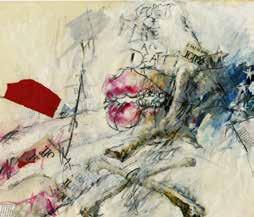
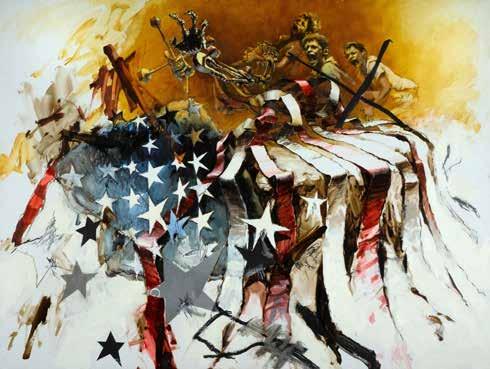

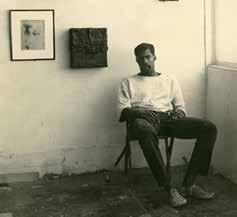
The Whatcom Museum in Bellingham presents a six-decade retrospective of artist Ed Bereal’s work, showing provocative imagery and messages about identity, racial inequity, violence and war, and political and corporate power.
Through January 5, 2020
Whatcom Museum | Lightcatcher | 250 Flora St. More info at www.whatcommuseum.org
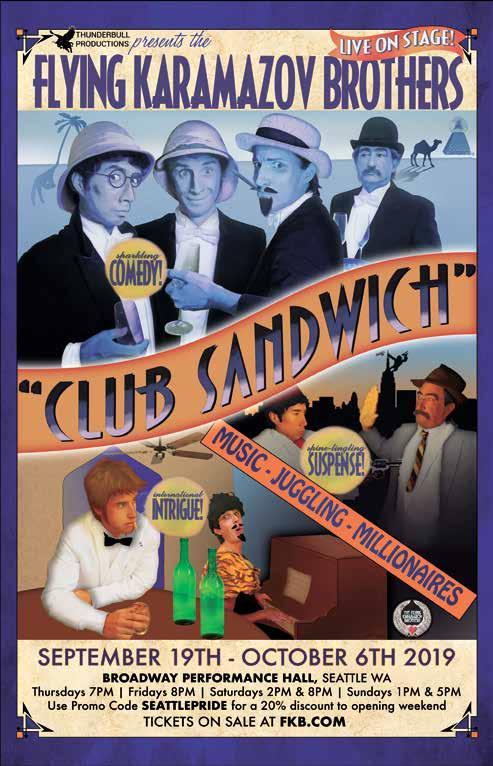


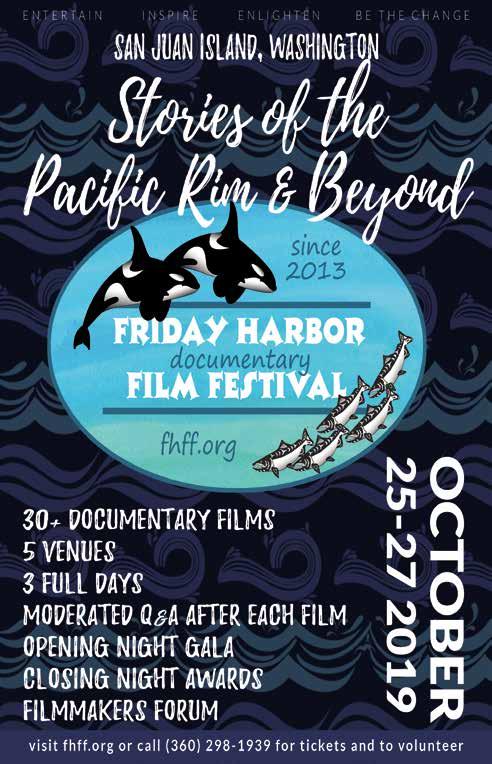
Friday Harbor Film Festival (October 25-27) is excited and proud to announce that the Andrew V. McLaglen Lifetime Achievement Award will be presented posthumously to Paul G. Allen for his outstanding contributions to the art of documentary filmmaking, television, and media. The award presentation, to be held during the Festival’s Opening Night Gala on October 25 at San Juan Community Theatre, will honor Allen’s legacy by screening Vulcan Productions’ tribute reel entitled A Tribute to Paul G. Allen’s Contributions in Film, TV and Media.
Allen made significant contributions to filmmaking through his company, Vulcan Productions, providing critical support to filmmakers working to make the world a better place by telling important stories. Without the support of people like Allen, documentary filmmakers struggle to find the funds to get their stories told. Vulcan’s message aligns with the mission of the Festival: Entertaining, inspiring, and enlightening audience members so they create positive changes in the world.
Allen was known worldwide as a businessman, investor, researcher, humanitarian, and philanthropist. As the co-founder of Microsoft, he helped start the microcomputer revolution. He also founded a variety of organizations to support medical research, education, wildlife and environmental conservation, the arts, healthcare, community services, artificial intelligence, and spaceflight. In addition, he owned two profes-
sional sports teams – the Seattle Seahawks and the Portland Trail Blazers – and was coowner of the Seattle Sounders. He authored a memoir in 2011 entitled Idea Man
The Lifetime Achievement Award honors a person who has made outstanding contributions to raising the general public’s awareness of important issues, either through his/her activism or as a filmmaker. It is presented in memory of Andrew V. McLaglen, a proficient, award-winning Hollywood film director and long-time resident of San Juan Island.
The 2019 Friday Harbor Film Festival program is available at the FHFF office (10 First St., Friday Harbor) and on the Washington State Ferries and online at https:// www.fhff.org/ Washington State Ferries: (206) 464-6400; (888) 808-7977 or 511 within WA; https://www.wsdot.wa.gov/ferries/ Kenmore Air is the official airline for the Friday Harbor Film Festival. (866) 4359524; KenmoreAir.com.
Please support the Festival by buying a FHFF Patron Pass ($500 + $26 processing fee) enables a tax-deductible donation of $300 to help support the Festival and provides access to all special events and a guaranteed seat for any screening, up to 10 minutes before showtime. BUY A PATRON PASS NOW.
The 7th Annual Friday Harbor Film Festival runs October 25-27. For more information, visit https://www.fhff.org/
Courtesy of the Friday Harbor Film Festival

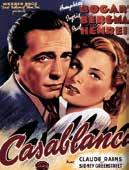
ECA FILM CABARET Casablanca
Thursday, October 10, 2019
Cabaret 6:30 pm | Film 8:00 pm
$20 Film + Cabaret | $10 Film Only
Starring Humphrey Bogart, Ingrid Bergman, and Paul Henreid. A cynical American expatriate struggles to decide whether or not he should help his former lover and her fugitive husband escape French Morocco.
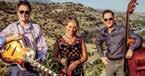
Cabaret Act: Max Hatt / Edda Glass Max Hatt / Edda Glass combine the harmonic innovations of jazz and classical with the melodic resonance of folk, creating music that’s “subtly poignant, elegantly funky, and haunting without trying to be” (Nels Cline, Wilco).

“The Fiddler Expanding Tradition”
Saturday, October 12, 2019
7:30 pm | $19–$49
Acclaimed Grammy-nominated Broadway “Fiddler”/ Violin Soloist, Kelly Hall-Tompkins, is the first violin soloist to bring an entire program of ALL NEW solo arrangements from the beloved musical through her new album
The Fiddler Expanding Tradition. Ms. Hall-Tompkins will appear at ECA in a quartet configuration with violin, bass, guitar, and accordion.
Saturday, October 26, 2019
7:30 pm | $19–$44
Classically-trained Canadian Indigenous tenor, composer, musicologist, performer, and activist.
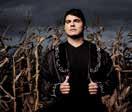
Jeremy Dutcher takes every opportunity to blend his Wolastoq First Nation roots into the music he creates, blending distinct musical aesthetics that shape-shift between classical, traditional, and pop to form something entirely new. FREE Pre-Show Artist Talk 6:15–6:40 pm.
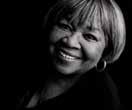
Thursday, January 16, 2020
7:30 pm | $39–$74
From the traditional gospel music of the 1950s to the 1960s protest songs that underscored dramatic social changes, from the self-empowerment anthems of the 1970s to the soulful love tunes and mature Americana of more recent years, Staples and her family have consistently created some of the best and most inspirational music of the past half-century.
Thursday, April 2, 2020
7:30 pm | $24–$59
International siren and comedienne extraordinaire Meow Meow brings her glorious brand of subversive and sublime performance to ECA. This spectacular crowd-surfing queen of song will create an unforgettable evening of exquisite music and much mayhem.

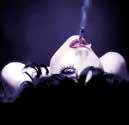
with Jan Martinelli and Tammy Hall
Friday, May 1, 2020
7:30 pm | $19–$44
Gifted with a powerful voice and a love for entertaining, Holly Near puts on a great show reflecting on the world in which we live, the complexities of love and integrity. Singing with Holly is Tammy Hall, a remarkable force on keyboards. The 3rd of this trio of talented women musicians is bass guitarist Jan Martinelli.

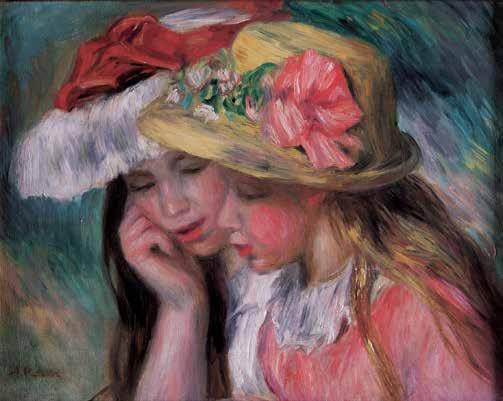
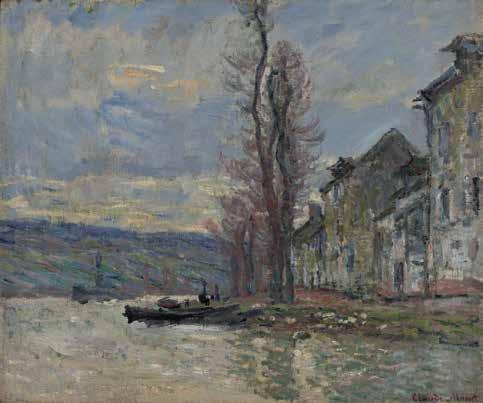
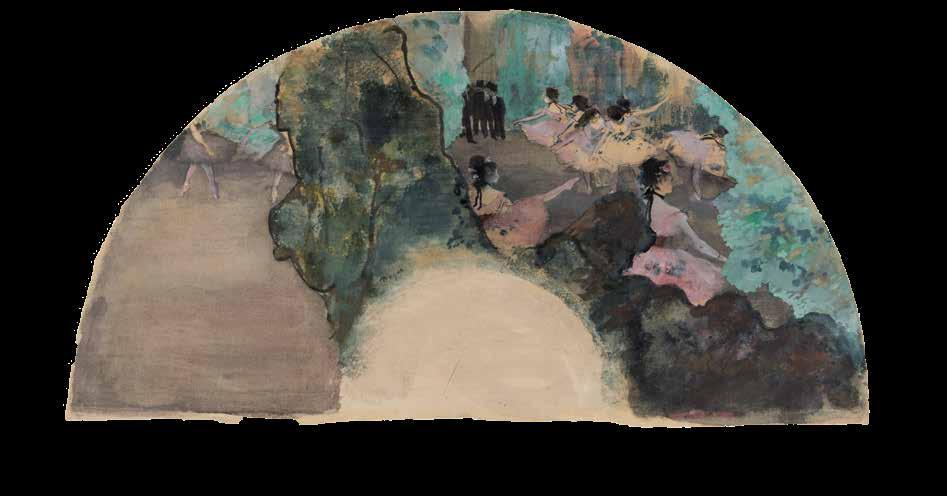
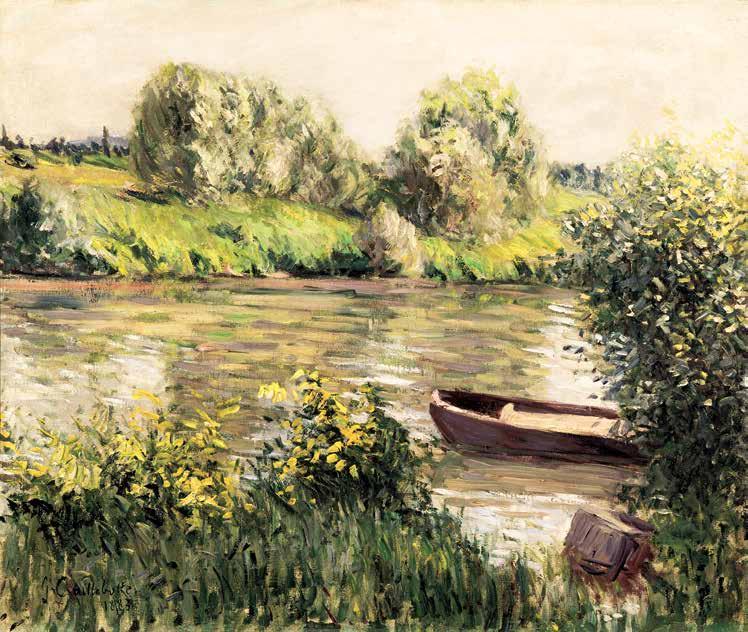
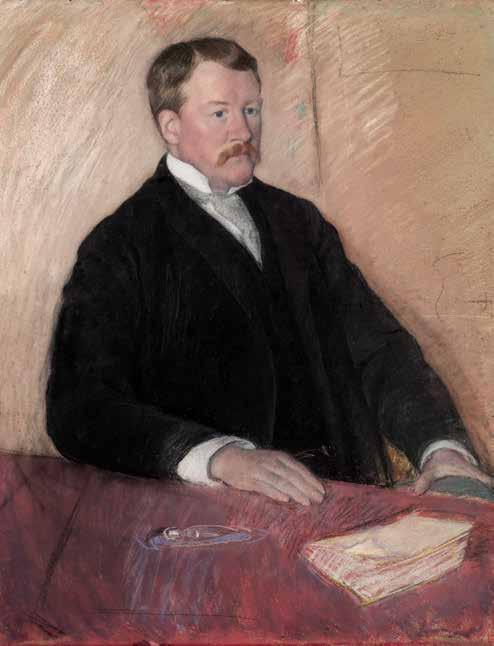
Tacoma Art Museum will present Monet, Renoir, Degas, and Their Circle: French Impressionism and the Northwest, a new exhibition that examines how the work of French Impressionists and their immediate precursors made their way into Northwest public and private collections. It will also include selected paintings by American and Northwest artists to illustrate the spread of Impressionism across the country. The exhibit runs Sept. 28 through January 5, 2020.
“The purpose of this exhibition is deeply connected to the same passion that drove the French Impressionists, to transform the way we see,” said David F. Setford, TAM’s Executive Director and curator of this exhibition. “It does this in two ways. First, it puts rarely seen works from TAM’s European art collection into context and allows for an expanded visitor learning opportunity. In addition, it is also the first time that these Impressionist works from museums and private collections in the Northwest have been seen together. It will provide a lasting resource about French Impressionism and its historical impact for curators and collectors in our region and beyond.”
Monet, Renoir, Degas, and Their Circle: French Impressionism and the Northwest was organized and curated by the Tacoma Art Museum, and includes approximately 50 works of art. The exhibition is accom
provide visitors the unique opportunity to enjoy signature works by Gustave Caillebotte, Mary Cassatt, Edgar Degas, Claude Monet, Berthe Morisot, Camille Pissarro, Pierre-Auguste Renoir, and Alfred Sisley among others. Filling out the story, paintings from some of the most important precursors of Impressionism such as Eugène Boudin, Jean-Baptiste-Camille Corot, Gustave Courbet, and Johan Barthold Jongkind are included.
The exhibition includes artwork from the following institutions: Frye Art Museum, Henry Art Gallery, Portland Art Museum, Tacoma Art Museum, and Seattle Art Museum. These works are complemented by selected loans from some of the major private collections in the Northwest.
“To round off the exhibition, there will be a section of artworks which demonstrate the influence of French Impressionism on Northwestern and American painters – in other words, how East Coast and Northwest artists adapted and interpreted the brushwork and use of light and color in their own work,” notes Margaret Bullock, co-curator of the exhibition. This section will feature artists from the Northwest such as Edward Espey, C.C. McKim, Clara Jane Stephens, and Fokko Tadama, and American artists from further afield such
as Cecilia Beaux, Childe Hassam, and Theodore Robinson.
“We are extremely grateful for the immense generosity of our regional sister museums in collaborating to create this exhibition,” notes Setford. “The treasures of French Impressionism that will be brought together for this exhibition demonstrate the depth and strength of the collections located in the Pacific Northwest.”
In conjunction with the exhibit the museum will offer the following educational presentations:
Curator Talk: Impressionism and Northwest Collections
Sunday, September 29 @ 2pm Monet, Renoir, Degas, and Their Circle: French Impressionism and the Northwest brings together major Impressionist works from public and private collections across the Northwest. Join TAM’s Chief Curator Margaret Bullock for a deep dive into how these artworks made it to this region and their profound impact on Northwest artists.
Cost: $10 ($5 TAM members/students with ID)
TAM Teach: Impressionism: Color and Light
Thursday, November 14, 4:30-7:30pm
have much to teach us. Explore works of art in Monet, Renoir, Degas, and Their Circle: French Impressionism and the Northwest. Investigate color and light with activities that can be adapted to any age or art ability, and create some art of your own!
Cost: $15 per person for a 3-hour workshop; clock hours provided
Director Talk: French Impressionism
Sunday, November 11 @ 2pm
Join TAM Executive Director David Setford for a discussion of the role of French Impressionism in the Northwest. Hear firsthand how the exhibition Monet, Renoir, Degas and Their Circle: French Impressionism and the Northwest was assembled, learn about the escapades of the impressionist artists, and their revolutionary approach to color and light.
Cost: $10 ($5 TAM members/ students with ID)
Homeschool Day: Impressionism
Wednesday, November 20, 10am-2pm
Join us for a special day just for homeschool students! Explore the Impressionists’ world of light and color. Participate in a guided tour of works of art in the museum, including the exhibition Monet, Renoir, Degas and Their Circle: French Impressionism and the Northwest. Create your own impressionist-style artwork, learning from an expert teaching artist. Spend time exploring the galleries on your own, with self-guided activities and a scavenger hunt. Check out art-making activities
Cost: $10 per student; one adult chaperone per family free ($5 per additional adult); children under 4 free.
This exhibition is made possible by generous support from KCTS-TV, Propel Insurance, Nordstrom, South Sound Magazine, the many thoughtful individuals and businesses who participated in the exhibition adoption program, and in part by ArtsFund and the Tacoma Arts Commission.
ABOUT TACOMA ART MUSEUM
Celebrating over 80 years, Tacoma Art Museum is an anchor in Tacoma’s downtown with a mission of connecting people through art. TAM’s collection contains more than 5,000 works, with an emphasis on the art and artists of the Northwest and broader Western region, 25% of which consists of studio glass. The collection includes the largest retrospective museum collection of glass art by Tacoma native Dale Chihuly on permanent view; the most significant collection of studio art jewelry by Northwest artists; key holdings in 19th century European and 20th century American art; and one of the finest collections of Japanese woodblock prints on the West Coast. In 2012, TAM received a gift of more than 300 works of western American art from the Haub Family Collection, one of the premier such collections in the nation and the first major western American art museum collection in the Northwest. The Haub family also contributed $20 million for an endowment and expansion completed in 2014. In January 2019, TAM inaugurated the Rebecca and Jack Benaroya Wing which will feature the extensive Benaroya collection of studio glass as well as TAM’s own collection of studio glass, which was started in 1971. TAM is located in the heart of Tacoma’s vibrant Museum District which consists of six museums including the Museum of Glass, a frequent collaborator.
Hours – Tues-Sun 10am-5pm; FREE Neighborhood Nights every Thursday 5-8pm
Admission – $18 Adult, $15 Student/ Senior (65+), $40 Family (2 adults and up to four children age 6-18), Children 5 and under free every day. Children 18 and under free every Saturday. TAM Members; active duty military, reservists, veterans, and their families always free.
For more information – 253-2724258/ www.tacomaartmuseum.org
ABOUT FRYE ART MUSEUM
The Frye Art Museum is a living legacy of visionary patronage and civic responsibility, committed to artistic inquiry and a rich visitor experience. A catalyst for our engagement with contemporary art and artists is the Founding Collection of Charles
and Emma Frye, access to which shall always be free. Reflecting Seattle’s evolving identity through exhibitions, programs, and outreach, the Museum showcases local and global artists who explore the issues of our time as well as contemporary scholarship on historical subject matter. By taking calculated risks, we uncover new voices, facilitate conversation, and engage our community in relevant social dialogues. Visit fryemuseum.org for more information.
ABOUT HENRY ART GALLERY
A museum of contemporary art and ideas, Henry Art Gallery presents exhibitions by a multi-national roster of emerging and mid-career artists. Known for taking risks and for allowing space for uncertain outcomes, the museum anticipates the conversations and opinions that will be important and relevant in the field. Learn more at henryart.org.
ABOUT
The seventh oldest museum in the United States, the Portland Art Museum is internationally recognized for its permanent collection and ambitious special exhibitions drawn from the Museum’s holdings and the world’s finest public and private collections. The Museum’s collection of more than 45,000 objects, displayed in 112,000 square feet of galleries, reflects the history of art from ancient times to today. The collection is distinguished for its holdings of arts of the native peoples of North America, English silver, and the graphic arts. An active collecting institution dedicated to preserving great art for the enrichment of future generations, the Museum devotes 90 percent of its galleries to its permanent collection.
The Museum’s campus of landmark buildings, a cornerstone of Portland’s cultural district, includes the Jubitz Center for Modern and Contemporary Art, the Gilkey Center for Graphic Arts, the Schnitzer Center for Northwest Art, the Northwest Film Center, and the Confederated Tribes of Grand Ronde Center for Native American Art. With a membership of more than 22,000 households and serving more than 350,000 visitors annually, the Museum is a premier venue for education in the visual arts. For information on exhibitions and programs, call 503-226-2811 or visit portlandartmuseum.org.
The Portland Art Museum welcomes all visitors and affirms its commitment to making its programs and collections accessible to everyone. The Museum offers a variety of programs and services to ensure a quality experience and a safe, inclusive environment for every member of our diverse community. Learn more at portlandartmuseum.org/access.
The Portland Art Museum is pleased to offer accommodations to ensure that our programs are accessible and inclusive. Please email a request to access@pam.org two to three weeks in advance, or call 503226-2811.
As the leading visual art institution in the Pacific Northwest, SAM draws on its global collections, powerful exhibitions, and dynamic programs to provide unique educational resources benefiting the Seattle region, the Pacific Northwest, and beyond. SAM was founded in 1933 with a focus on Asian art. By the late 1980s the museum had outgrown its original home, and in 1991 a new 155,000-square-foot downtown building, designed by Venturi, Scott Brown & Associates, opened to the public. The 1933 building was renovated and reopened as the Asian Art Museum in 1994. The building is currently undergoing a renovation and expansion with a scheduled reopening in fall 2019. SAM’s desire to further serve its community was realized in 2007 with the opening of two stunning new facilities: the nine-acre Olympic Sculpture Park (designed by Weiss/Manfredi Architects) – a “museum without walls,” free and open to all – and the Allied Works Architecture designed 118,000-square-foot expansion of its main, downtown location, including 232,000 square feet of additional space built for future expansion. The Olympic Sculpture Park and SAM’s downtown expansion celebrated their tenth anniversary in 2017.
From a strong foundation of Asian art to noteworthy collections of African and Oceanic art, Northwest Coast Native American art, European and American art, and modern and contemporary art, the strength of SAM’s collection of approximately 25,000 objects lies in its diversity of media, cultures, and time periods.
Courtesy of Tacoma Art Museum






by Ed Walsh
SGN Contributing Writer
It was a pivotal moment in Victor Salvo’s life that would eventually give birth to a Chicago landmark, The longtime activist read a brief profile in Time magazine in 1999 on Alan Turing, the British mathematician who helped break the Nazi enigma code. Turing was gay and committed suicide after being convicted of engaging in homosexual sex.
“It went through me like a hot spear,” said Salvo, a gay man who had survived a suicide attempt as a teenager. “I just screamed out in agony like I saw my mother being murdered.”
Salvo’s dogged activism in Chicago’s LGBT community had earned him a place in the city’s LGBT Hall of Fame.
“Who was I to be in the Hall of Fame when no one knew who he was?” Salvo said.
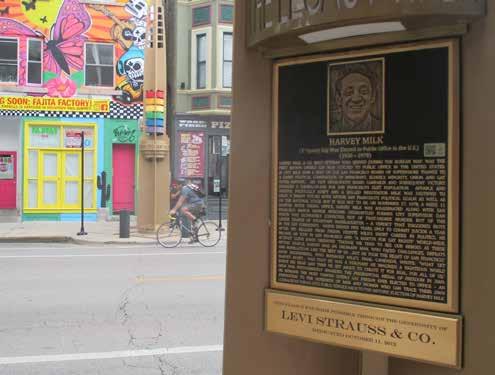
That obsession led to action and eventually to the Legacy Walk, 40 bronze plaques dedicated primarily to prominent LGBT people and a few to historical events, including Stonewall. The plaques were installed on the rainbow colored pylons that were installed in the North Halsted neighborhood, more commonly known as Boystown. The first plaque was installed for Turing, whose story as since gotten more attention, including the 2014 movie The Imitation Game
Plans are in the works to open an LGBT visitors center in the Boystown neighborhood and that center will contain some of the plaques that will be rotated off the street pylons as new plaques take their place on the street.
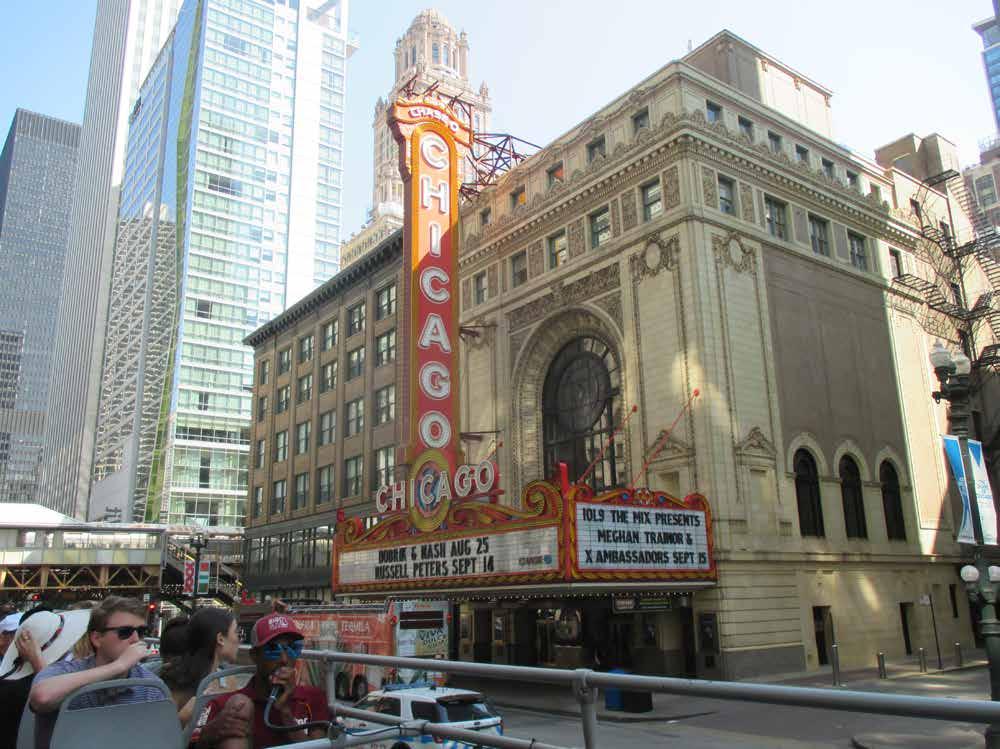
While the visitors center is two years away, the nation’s third largest city has long been gay friendly, attracting Midwesterners in search of a big city gay scene as well as visitors from all over the world.
Chicago has come a long way. Native Americans knew it as swampland where an onion plant grew. The city’s name is derived from an Indian word for onion. One of the earliest explorers, Jacques Marquette, saw beyond the onion plants and admired its strategic importance on Lake Michigan with two rivers running through the land that would eventually become America’s third-largest city.
By the mid 1800s, Chicago became the world’s fastest growing city. From 1840 to 1870, the city’s population grew from a mere 4,000 residents to nearly 300,000. The Great Chicago Fire of 1871 didn’t slow down the trend. By 1890, the city boasted more than a million residents.
The Great Chicago Fire ultimately left the city with an architectural legacy that draws visitors from all over the world. The city was reborn after the fire but in brick, stone and steel. By the way, the fire is believed to have started in or around the O’Leary family barn but there was no evidence of the legend that it started as the result of a cow kicking over a lantern.
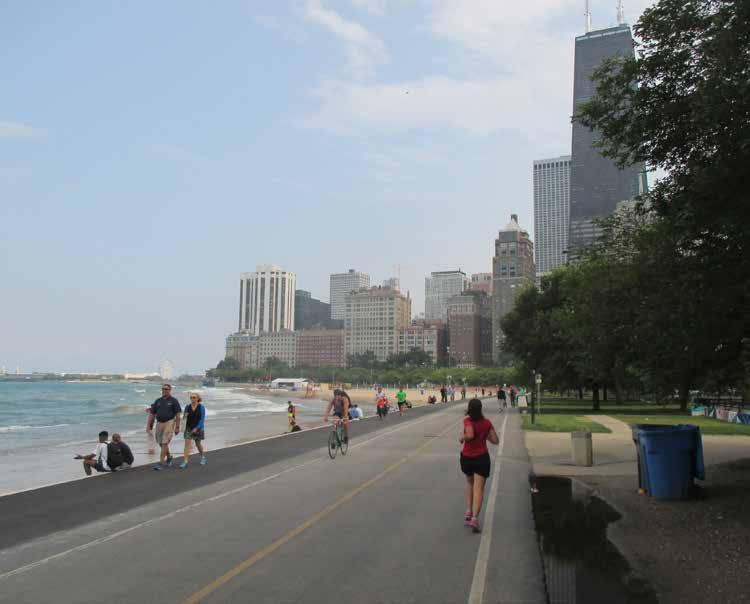
Chicago makes the most out of its greatest asset, Lake Michigan. The city lined the lakefront with parks, beaches and bike paths. The lake is only about a 20-minute walk from Boystown but the unofficial gay beach, the Kathy Osterman Beach, is about two miles to the north. Kathy Osterman was a former City Alderman who was a strong ally of the LGBT community. The beach was renamed in her honor in 1993, a
year after her death from cancer at the age of 49.
For first time visitors to the city, one of the best ways to get around without getting lost is on a bus, bicycle or walking tour.
The Legacy Walk offers a walking tour of the plaques that you can request through its website. For a nominal fee, a guide will take you or your group around for a walking LGBT history tour. Visit the walk’s website at http://www.legacyprojectchicago.org/
The Chicago Cultural Center, in a former downtown library building, offers free
walking tours of the city through the Chicago Greeter program. Google the center’s website for more information.
On a recent trip, I took Bobby’s Bike Hike (www.bobbysbikehike.com), which was an excellent tour along with a history lesson of the city’s downtown and Gold Coast neighborhood, to the city’s famed and free Lincoln Park Zoo before heading back downtown along the lakefront bicycle path.
Several different companies operate bus tours throughout the city. Some will let you hop on/hop off at stops at various at-
tractions. I took the double decker Big Bus Chicago (/www.bigbustours.com/en/chicago), which, thanks to guide Austin Echols, was both entertaining and very informative. I took the whole tour without hoping off and later took a bus or the subway to the attractions I wanted to see.
Speaking of the bus and subway, both are very good ways of getting around in Chicago. The subway, including the famed El or elevated track trains, are the best way to get around when there is traffic. A three-day pass for $20 is a good option for visitors. You won’t need to have to worry about having the exact $2.25 fare.
Chicago has a bike sharing program called Divvy Bikes (www.divvybikes. com). The bikes are a fun way to explore the city. They offer a deal for $15 to use a bike for a 24-hour period for a maximum ride of 3 hours at a time, so that is more than enough time to get anywhere in the city. The app shows you where the nearest station is where you can dock the bike. You can use the bike all day, just be sure to dock it at least once every three hours. You can dock the bike and immediately take out the same or another bike at the docking station. The bike path along the lake is one of the best urban bike paths in the world.
A number of companies offer river cruises. I took the Chicago Architecture
Foundation River Cruise, which provided a great architectural history of the city known for its high rise. The Chicago River was a virtual sewer as businesses and apartment buildings dumped their sewage and other waste into the river. But now that the river is cleaner, all new construction is required to include a public river walk.
If you expected that a world-class city like Chicago would have world-class museums, you would be right. The biggest museum in the city and what many would say is the best, is the Museum of Science and Industry Chicago (https://www.msichicago. org/).. Although off the beaten path, a few miles from downtown, the trek is worth it.
The Art Institute of Chicago is in the heart of downtown and is another museum not-to-be-missed. (https://www.artic.edu/).
The museum owns Grant Wood’s iconic “American Gothic,” Edward Hopper’s “Nighthawks,” which depicts a late-night New York diner, Vincent van Gogh’s “The Bedroom,” a dozen of George Seurat’s paintings including “A Sunday afternoon on the Island of La Grande Jatte,” Picasso’s “The Old Guitarist” and many of Monet’s water lily paintings.
The Northalsted or Boystown neighborhood is still where you will find the biggest concentration of LGBT nightlife. Halsted
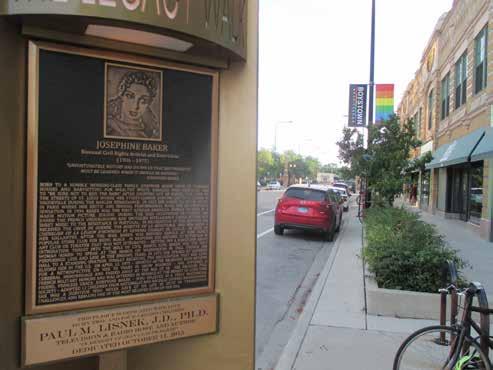
Street is the Castro Street of Chicago. That is where you will find the aforementioned rainbow-colored pylons and the Legacy Walk.
The Halsted Street mainstays are Sidetrack (www.sidetrackchicago.com/), which includes seven separate rooms and rooftop patio. The bar has been around for 35 years but looks new thanks to ongoing renovations. Popular nights include Monday, Friday and Sunday show tunes and TRL Tuesdays with music videos from the ’70s, ’80s and ’90s. Roscoe’s (http://roscoes.com/) is another Boystown mainstay kitty corner from Sidetrack. The newly renovated beautiful space boasts a lively dance space, karaoke and amateur drag contests. The Closet about a 10-minute walk away on N Broadway, used to be the city’s lesbian bar; while it is still women-popular the bar is more mixed now.
Chicago used to have a couple of gay saunas in the heart of Boystown but the oldest, Man’s Country, closed a year ago. Steamworks, part of the same ownership of Steamworks in Seattle is still going strong on the street.
The gays aren’t just in Boystown. North along the lakefront Uptown, Edgewater, Andersonville and Rogers Park are all gay popular neighborhoods.
In the Uptown neighborhood, Big Chicks (www.bigchicks.com/) is a rustic friendly
locals bar where you can meet for a drink and sample some tasty bar food. The Touché bar (https://touchechicago.com/) has been going strong in the Edgewater neighborhood since 1977. It is a popular leather and bear cruise bar with a backroom.
On a recent visit, I had the pleasure of staying at the Best Western Hawthorne Terrace (www.hawthorneterrace.com/) which was perfectly situated just a short walk to the heart of Boystown. It deservedly gets kudos for being one of the best hotels in the city with reasonable rates that start at about $85.
City Suites Chicago (https://chicagocitysuites.com) is another perfectly situated hotel in Boystown and just steps from the Belmont El stop. Rates start at a very reasonable $72.
If you prefer a smaller hotel feel, check out Villa Toscano (http://thevillatoscana. com). The eight-room inn is in the heart of Boystown with rates over the slower winter months for as little as $69.
Chicago’s largest airport, O’Hare, as well as the smaller Midway, are serviced by the city’s subway system. It will take you about 45 minutes to get to downtown on the train from O’Hare and about 25 minutes from Midway. Southwest flies nonstop to Midway from SeaTac and is a good option and a little closer to the city.
Public transit in Chicago is so good that a car is more trouble than it is worth. If you really need to get somewhere in a hurry Uber and Lyft cars are everywhere all the time.
Chicago has some of the best restaurants in the world and is known as the birthplace for casual eating favorites including both deep dish and thin-crust pizza. Ceres’ Table (www.cerestable.com) is a chic Italian restaurant with delicious gourmet pizza. If you are in the mood for elegant French cuisine, check out Chez Moi (http://www. chezmoichicago.com/) on N. Halsted Street about two miles south of Boys Town. In downtown Chicago, the Revival Food Hall (www.revivalfoodhall.com) features 15 different restaurant stands under one roof. It is a great one-step shop for all the best food in Chicago. More than a quarter of Chicago’s population is Latino and you can get a great sampling of Latin American cuisine in Latin City (www.latinicity.com) Like the Revival Food Hall, it is made up of several individual food stands. In the heart of Boystown Wood (http://woodchicago. com/) is known for its creative cocktails and superb brunch. The Split-Rail (www. splitrailchicago.com) is known for filling comfort food and a bargain happy hour. Fried chicken is one of its specialties.
For more information visit www.choosechicago.com, Be sure to click on the LGBT section.




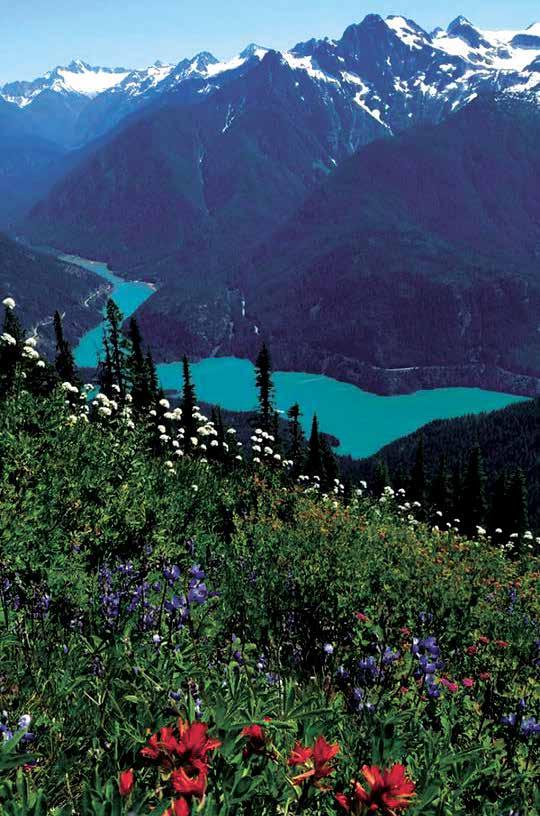

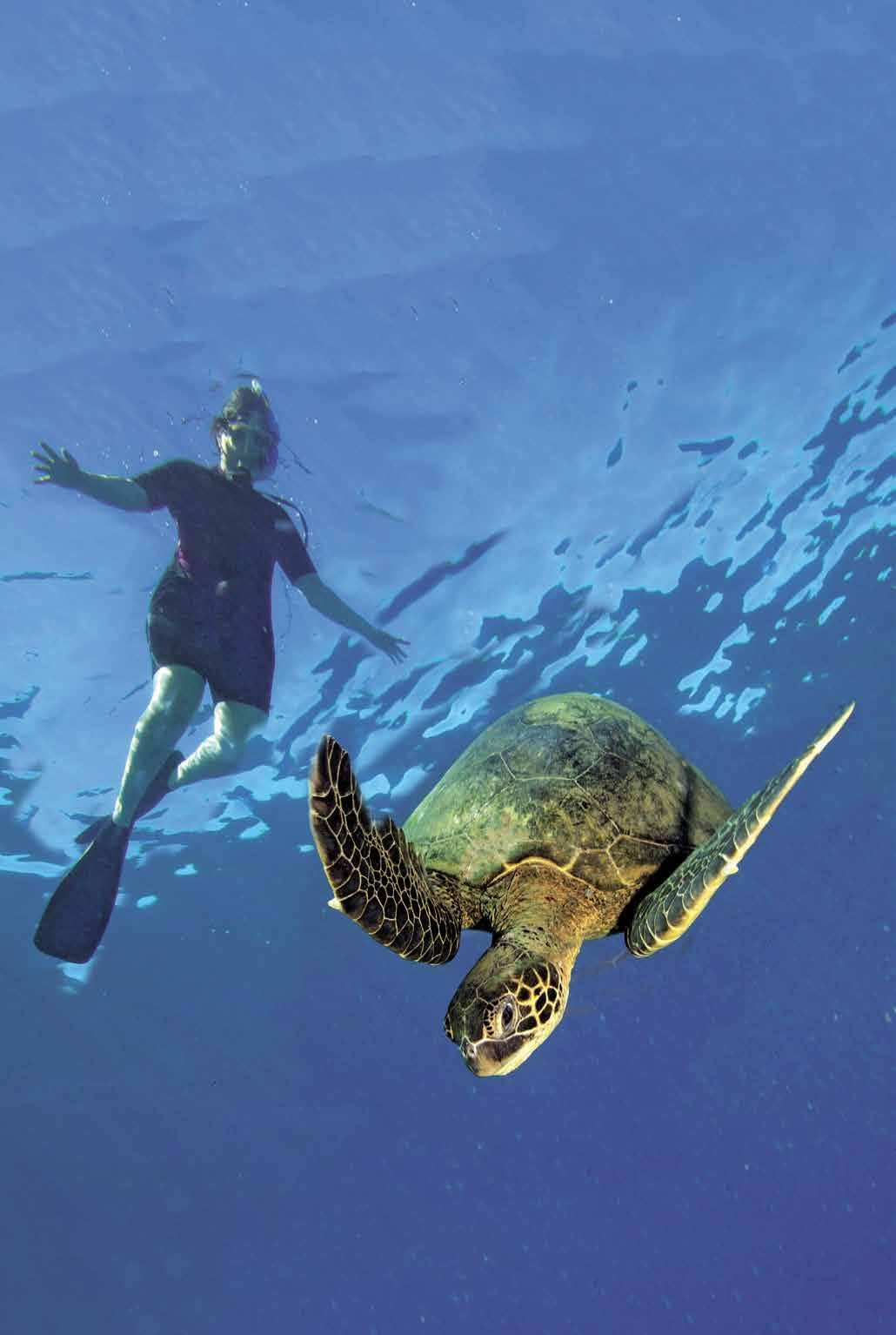
Our name and our passion. Uncovering playgrounds that offer the richest, wildest experiences by hike, paddle, with locals, and more. Explore places so tucked away that our cozy boats fit in just right. It’s all included, and there’s something for everyone.
Meet your people. Small ships acquaint you with like-minded travelers and places that tug your heartstrings. Bonds are hard to define but easy to spot hugging it out at the end—from co-explorers to friends for life.
Swim in a waterfall on a hike in Hawaii’s Halawa Valley. Learn new dance steps in the Darién Jungle. A mule ride with a family of rancheros ambles into the unexplored at a local pace. Your senses are awake and engaged, all day, every day.
small ships, BIG adventures