







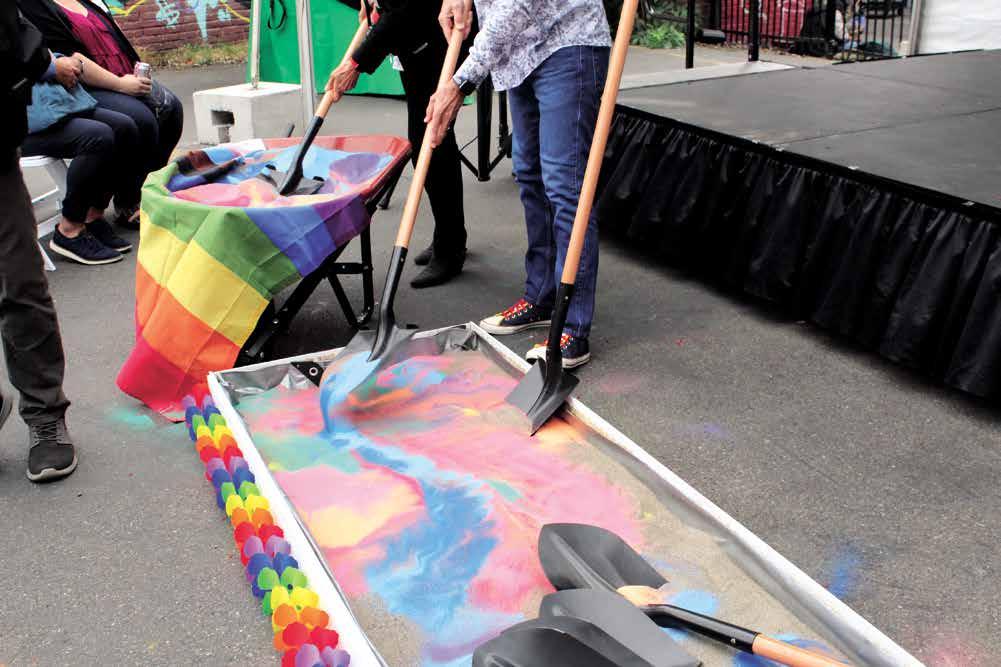
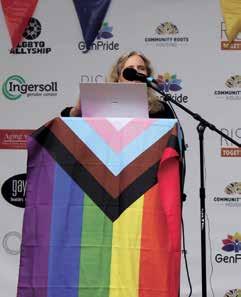
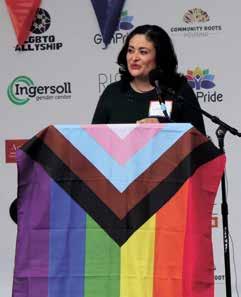
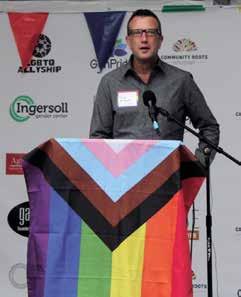
The project was made possible by Gen Pride and Community Roots Housing, which lobbied for funding from the county, city, and state legislators after providing thorough research indicating that the community had a dire need for more such housing for senior citizens.
Pride Place will provide 118 units of affordable apartments on seven stories to LGBTQIA+ senior community members.
Remembering and honoring history
The decision to place the project in the heart of Capitol Hill was deliberate. Much of the charm and culture of the neighborhood comes from its being a safe and welcoming place for Seattle’s Queer community, as it grew during the height of the Gay liberation movement.
Joe McDermott, vice chair of the King County Council, spoke to the experiences of Queer activists in Capitol Hill’s early days, telling the story of a friend who “recalled vividly coming and going from alley entrances to Gay bars because visibility carried a real risk.” Today, Seattle has the second highest Queer population, behind only San Francisco.
“It is so important to remember our history and honor our trailblazers who led us. And yet, far too often, as members of the LGBTQIA community age, they lose community and often connections to their family of choice,” added McDermott.
As more people move to the city, neighborhoods have begun to become gentrified. Many Queer residents who worked so hard to make neighborhoods like Capitol Hill a safe space are now finding themselves pushed aside. Pride Place aims to solidify a space for these aging activists who have spent their lives solidifying spaces for younger LGBTQIA+ people to grow and feel safe.
Lorena Gonzales, president of the Seattle City Council, noticed the effect gentrification has had on many of Seattle’s long-term residents. It was this trend that pushed her to get involved with the Pride Place project.
“Like so many of you, I see the magnitude of housing and affordability challenges facing so many Seattleites, making it too hard for many to continue to call our city home,” Gonzales declared. “I first became involved in this wonderful effort because I believe that everyone deserves to live in a welcoming place. And I was horrified to learn that some of our LGBTQ seniors had to go back into the closet just to find housing stability and a place to be housed.”
In 2016 Gonzales championed funding for the Rainbow Housing Report. “It affirmed what we knew: that our LGBTQ seniors need housing,” she said, “and they need housing that is both affirming and responsive to their needs in the historic part of the city that has always been a home for you.”
First to speak at the groundbreaking event was Dr. Karen Fredriksen-Goldson, a nationally recognized scholar whose work in addressing equity and intersections of health disparities, aging, and well-being in resilient at-risk communities made the
Pride Place project possible. Dr. Fredriksen-Goldson was also the pilot behind the Rainbow Housing Report.
“There were rumblings about this 20 years ago. A decade ago, I was talking to a person in the city about an LGBTQ elder center. They concluded that it would never happen,” said Dr. Fredriksen-Goldson. She has put in decades of work to help create the state’s first LGBTQIA+ senior center.
“Never underestimate the fortitude of our community,” she said. “Today will celebrate Seattle’s first LGBTQ-affirming, agefriendly, racially equitable, and affordable housing community. And the Gen Pride center will be right inside the doors, creating community here in the very heart of our historic Capitol Hill. Pride Place: a place we can all call home.”
Not only will Pride Place provide homes to Queer seniors, but it will also be the location of a new, 4,400-square-foot GenPride community and health services center. LGBTQIA+ providers will be brought in so residents will have easy access.
In addition, 3,800 square feet of commercial retail space will also be included on the street level of the building, ensuring a place for LGBTQIA+ businesses to operate.
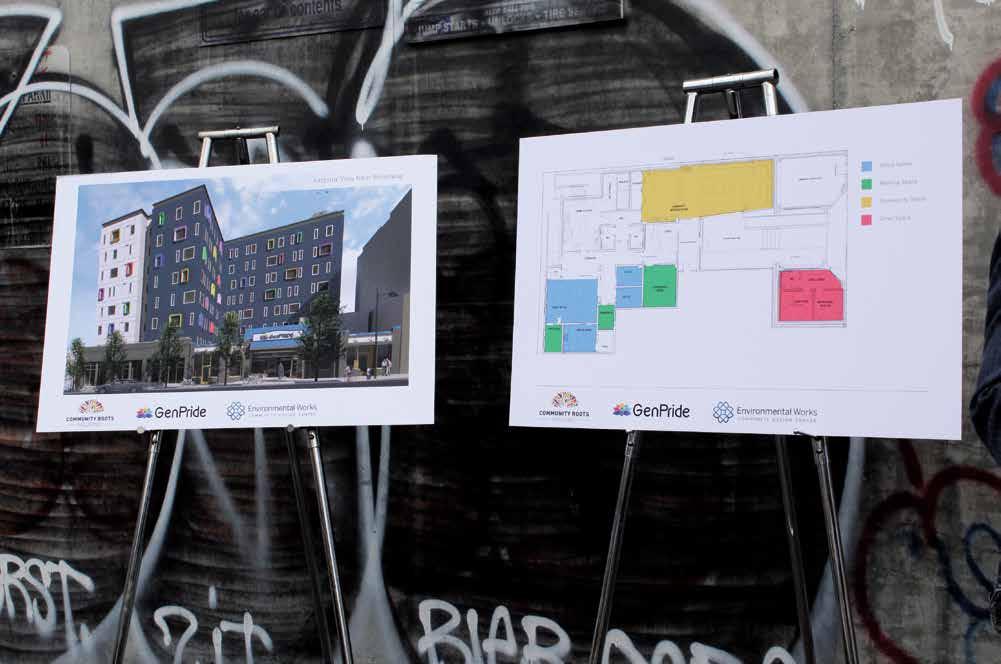
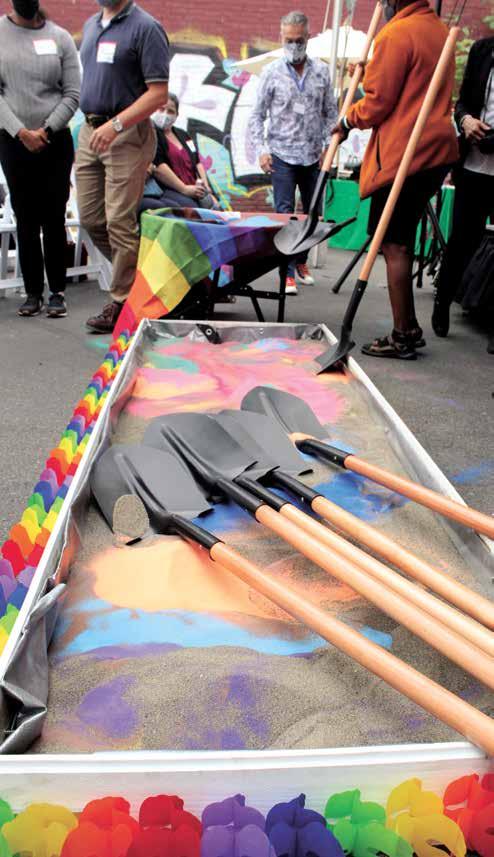
Photos by Lindsey Anderson

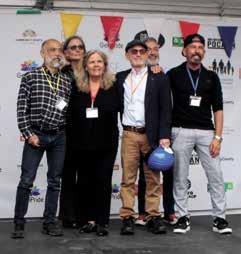
The decision to place the project in the heart of Capitol Hill was deliberate. Much of the charm and culture of the neighborhood comes from its being a safe and welcoming place for Seattle’s Queer community, as it grew during the height of the Gay liberation movement.
A study out of the University of Washington found that LGBTQIA+ adults are more likely to face financial challenges in their later years due to a lack of familial financial support and the cost of additional healthcare that may not be as necessary for heterosexuals and cisgendered people.
“I realized early on that Seattle had some of the least support for LGBTQ elders across the nation. So we started Gen Pride,” added Dr. Fredriksen-Goldson. “When I first started talking to elders here, I heard another important message: We want a place we can call home. A place that is home a place that feels like home.
“LGBT elders still to this day remain largely invisible, underserved, even though we have one of the largest LGBT communities in the nation. We all know Seattle is facing a housing crisis, and we need to create an inclusive and safe environment for LGBTQ older adults, really to better our entire city.”.
Units at Pride Place will be affordable for low-income households that earn 30-60% of the area’s median income.
Funding for the project has come to $52
million, much of it from a variety of public and private investments, as well as lowincome state and federal tax credits, the Rise Together campaign, and GenPride.
When it comes to meeting funding goals, the director of the City of Seattle’s Office of Housing, Emily Alvarado, is not too worried.
“We are on track to meet our levy goals. We may even exceed our levy goals, and we see the power and the promise of these investments, [though] we must do much more.”
“All people deserve to age with the dignity and safety that an affordable home provides,” she added. “Here at Pride Place, we are bringing 118 new, critically needed, affordable homes to the heart of Capitol Hill.”
Members of Seattle’s Capitol Hill community are thrilled to see the project begin. Community member Jordan Ross said, “It’s nice to see this space getting good use. It’s just been sitting vacant for so long.” Friends, neighbors, and supporters can’t wait to return to the building site in 18 months when the ribbons are cut, and the heroes of the LGBTQIA+ movement finally get a place where they can age with pride.
by Hannah Saunders SGN Contributing Writer
On September 2, 2021, Jeff Duchin signed a public health order for Seattle and King County that requires mask wearing at outdoor events with 500 or more people in attendance, effective September 7. The decision was made not long after the Delta variant of the coronavirus began sweeping the state at a shocking yet familiar rate.
Who is Jeff Duchin, and how can he do this?
Jeffrey Duchin, MD is the local health officer for Seattle and King County. He also actively serves on the Board of Scientific Counselors in the Office of Infectious Diseases for the Centers for Disease Control and Prevention (CDC).
Washington law allows for local health officers to take any action deemed necessary to control and prevent the spread of infectious diseases in the officer’s jurisdiction and maintaining the health and well-being of people therein. State law also allows for local health officers to enforce safety control measures (such as wearing a mask) based on scientific and medical data, their personal judgment, and existing standards of practice.
A brush-up on what we know
Let’s go back to the basics: COVID-19 spreads from person to person through the air in small droplets or aerosol particles that contain the virus. It can also be spread before an infected person shows symptoms.
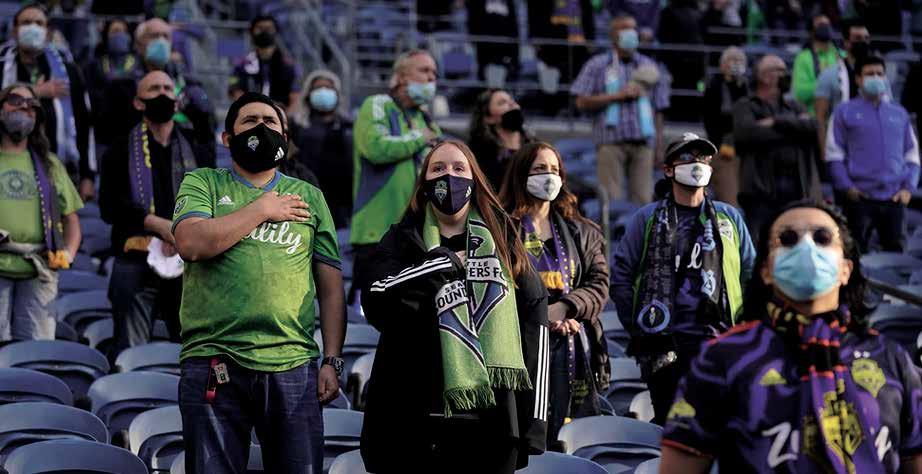
The risk of transmission outdoors is very low, yet that risk increases in crowded areas, where physical distancing (6 feet ideally) is difficult to maintain. Because of this, it is crucial to wear face masks, because they reduce the release of infectious viral droplets (as well as the rate at which they are breathed in).
When within 3–6 feet of an infectious source for 15 minutes or longer, the risk of transmission is high, but transmission can also occur even when 6 feet or further away.
The coronavirus spreads more rapidly among those who are not vaccinated, yet it can spread in those who are fully vaccinated and have a high level of protection against severe health-related outcomes.
COVID-19 and King County
The Delta variant of the coronavirus has been associated with higher risks of hospitalization in the state in comparison to the original strain from the spring of 2020. It is
also 2–3 times as transmissible as the original strain. That, combined with the state reopening and the more activities being allowed, has contributed to an increase in new cases.
Young and middle-aged adults and teens are currently being hit the hardest, particularly those living in south and southeast King County. Those who are Native Hawaiian/Pacific Islander, Black, Hispanic, Native American/Alaskan Native, essential workers, or living in multigenerational households are being disproportionately impacted. Additionally, there are tens of thousands of people living in King County who are immunocompromised, which puts them at greater risk of infection.
If you haven’t already, join the fully vaccinated crew
According to Seattle and King County Public Health, about 67% of King County residents are fully vaccinated. About 750,000 county residents remain unvaccinated: approximately 320,000 are eligible yet have still not received a vaccine, while approximately 308,000 are under the age of 12 years and are not eligible to receive a vaccine.
COVID-19 vaccination rates remain lower in younger age groups:
• 64% of 12–19-year-olds are fully vaccinated
• 64% of 20–29-year-olds are fully vaccinated
remained an ardent, lifelong fan of University of Oregon sports, proudly wearing his Fighting Duck apparel for any occasion, whether formal or informal.
• 73% of 30–39-year-olds are fully vaccinated
Getting vaccinated against the coronavirus is one of the most important health decisions you will make, most likely, in your entire life. About a year and a half into this pandemic, the virus is still putting people in the hospital and taking lives daily — both in Washington state and around the globe. The vaccine protects not only yourself but also every single individual you cross paths with.
The new masking orders
“The use of face masks in certain outdoor situations where people cannot remain at least 6 feet apart from non-household members is reasonable and necessary in King County to reduce the risk for CoV-19 transmission,” stated the order.
The risk of COVID-19 transmission is found to be greater at large and crowded outdoor events where unvaccinated individuals are in attendance, where individuals cannot maintain adequate physical distance from one another, or where there is aerobic exercise, singing, shouting, or loud talking.
“Masks are required at any outdoor event with 500 or more people in attendance. This requirement applies to all people, both vaccinated and unvaccinated, five years of age and older,” stated the order.
In addition to the new large-event outdoor masking order, the indoor face mask
requirement remains in effect. Those aged 5 and above in King County are required to wear face masks while in indoor public spaces, including grocery and retail stores, gyms and exercise facilities, stadiums and auditoriums, and governmental buildings. Everyone in King County is required to wear a mask in schools, public transit, healthcare settings (such as doctor’s offices, hospitals, and long-term care facilities), homeless shelters, and correctional facilities. Indoor masking requirements do not apply to children under 5 years of age (2-to 4-year-olds are not required but strongly recommended to mask up with adult supervision), while eating or drinking, those doing gymnastics (where there’s a possibility of the mask getting snagged on equipment), or while in indoor, non-public facilities, including offices and businesses.
What’s next?
Since this virus remains unpredictable, we have to get down with these new masking orders, as per Jeff Duchin. For some, it may feel like we’re traveling backward, but in the long run, we’ll be traveling at the speed of light when it comes to getting out of this viral mess.
For the time being, it’s important to play things safe. But by all means, please don’t cancel your concert tickets. Get vaxxed, get your mask on, and go to the damn show.
Jeff loved sports, and his height made him a natural candidate for basketball. At South Eugene High School, he played on the varsity team. His coach Dale Jones happily listed this very skinny player at 6’7” to intimidate opponents. But apparently he was not intimidating enough: the team finished eighth (out of sixteen) in the 1974 state championship tournament, narrowly losing the consolation bracket championship game.
Jeff continued playing basketball on the varsity team at Lane Community College in Eugene until knee injuries forced an end to his athletic career. He later recalled being recruited for a basketball scholarship by Idaho State University, but scorned the idea of living in “Pokey-tello.” Little did he know that a few years later, lowly Idaho State would upset mighty UCLA in the NCAA tournament!
After he and his family relocated from Eugene to the Seattle area in 1977, Jeff
Growing up, Jeff had an amazing range of talents. He was an excellent musician. Thanks to training from his piano teacher, Miss Wanda Eastwood, he performed with success in local competitions. He also played the French horn so well that in 1969 he won admission to a summer music camp in Eureka Springs, Arkansas, and stayed there with his uncle, Robert Etherington, the town doctor.
Jeff also excelled at mathematics, the only one of his siblings to complete an advanced calculus course. This delighted his father, an engineer, since Jeff’s brothers and sister were pursuing less useful subjects, such as languages, history, and special education. His siblings also remember with dismay his prowess in every kind of board and card game. He won so often that they nicknamed him “The Cheater.”
Jeff’s math skills served him well during the long career in retail and distribution man-
agement that he began in Seattle, although some of his jobs required other “soft skills” as well. One of the first was managing a 7-11 store whose staff sometimes summoned him to relieve them in the middle of the night after unspecified “incidents” involving crime (armed robbery) or the suspicion of crime (cash missing from the register).
Another of Jeff’s early employers was a new “members only” discount warehouse store chain, where he trained food sample presenters. He apparently wasn’t convinced by this company’s business model, perhaps because it required his trainees to hawk products branded with the unexciting name of the store’s suburban headquarters location: Kirkland.
He later worked as manager of the shipping dock at the old Bon Marché store in downtown Seattle, but left that position after becoming frustrated from dealing with his employees’ union, the Teamsters. Jeff ended his career as warehouse manager at the Ocean Beauty Seafoods facility in Ballard, retiring from there when it closed in 2017.
In retirement, Jeff divided his time between travel, attending musical theater, working seasonally at T-Mobile Park, gardening, and meeting often with his many friends. Jeff was a true gourmand who loved to eat and drink well, in ample portions, as so many of his social media posts show. He especially enjoyed Zatarain’s jambalaya mix and once suggested an entire case of it as a Christmas gift.
Jeff requested cremation, so his family is planning a memorial event (pandemic permitting) later this year for family and friends.
The Madison Pub hosted a remembrance event for him on August 28. Many thanks to all who attended to celebrate his memory! Jeff is survived by his brothers, Mark Johnston and Phillip Johnston, sister Lori Johnston-Baker, beloved friend Ng Aik “Justin” Keat, five nieces and nephews who adored him, and many, many other friends, all of whom will deeply miss his gregarious, outgoing character, his generosity, his loving spirit, and his joie de vivre. It will be very, very hard to fill his size 15 shoes!