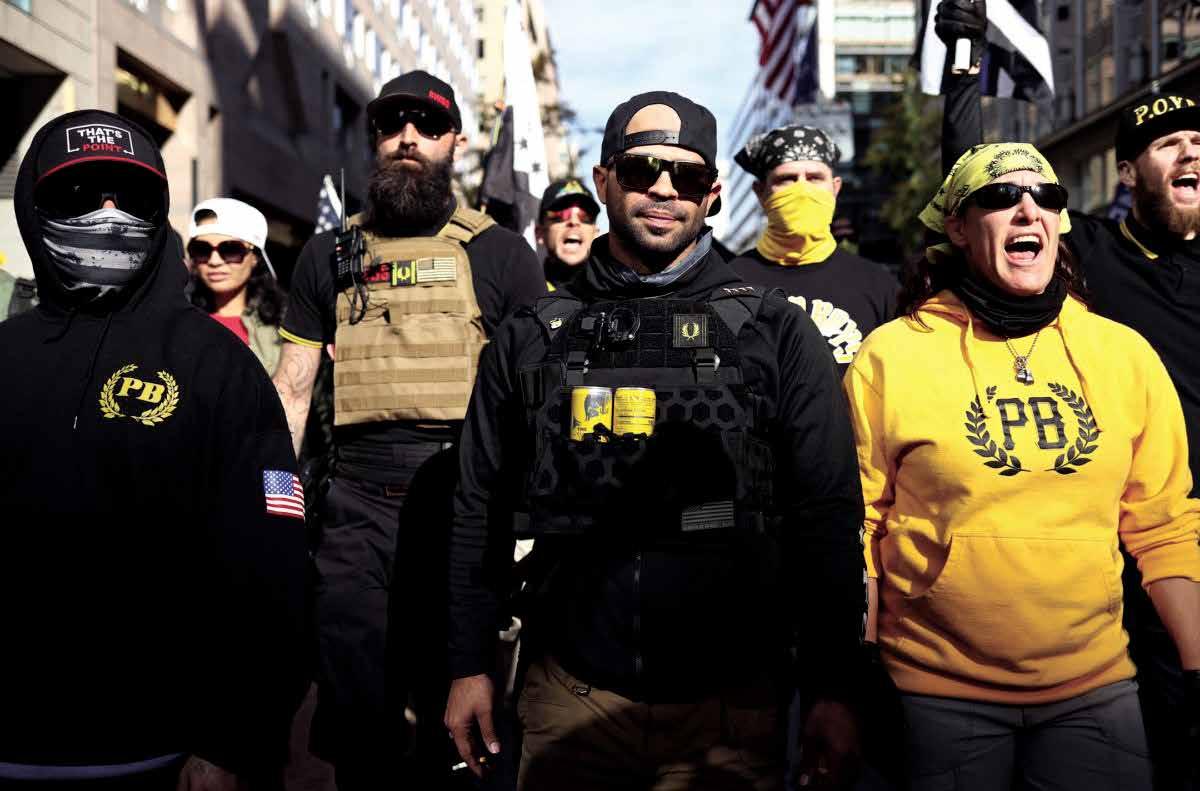
Two years after the January 6 insurrection, federal judges are handing out sentences for some of the most prominent ring leaders. On Tuesday, September 5, Federal District Judge Timothy J. Kelly sentenced the former national chairman of the Proud Boys, Enrique Tarrio, to 22 years in prison. His sentence is the harshest any of the 1,100 people charged with participating in the insurrection have faced yet.
see PROUD BOYS page 17
by Daniel Lindsley SGN Staff Writer
The nebulous “gaming community” doesn’t have a great reputation online, partly because of the bile that wells up at the slightest hint of inclusivity, or indeed even the mildest criticism of certain beloved franchises.
You might then expect that caustic undercurrent to spill into a real-world gaming
convention like PAX West, but you would be wrong. The event was a pleasant surprise for a first-timer, and it had a lot to offer Queer gamers and devs alike.
by Kali Herbst Minino SGN Intern
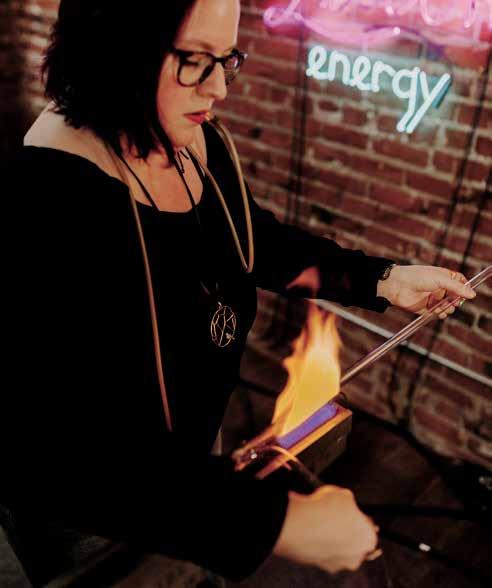
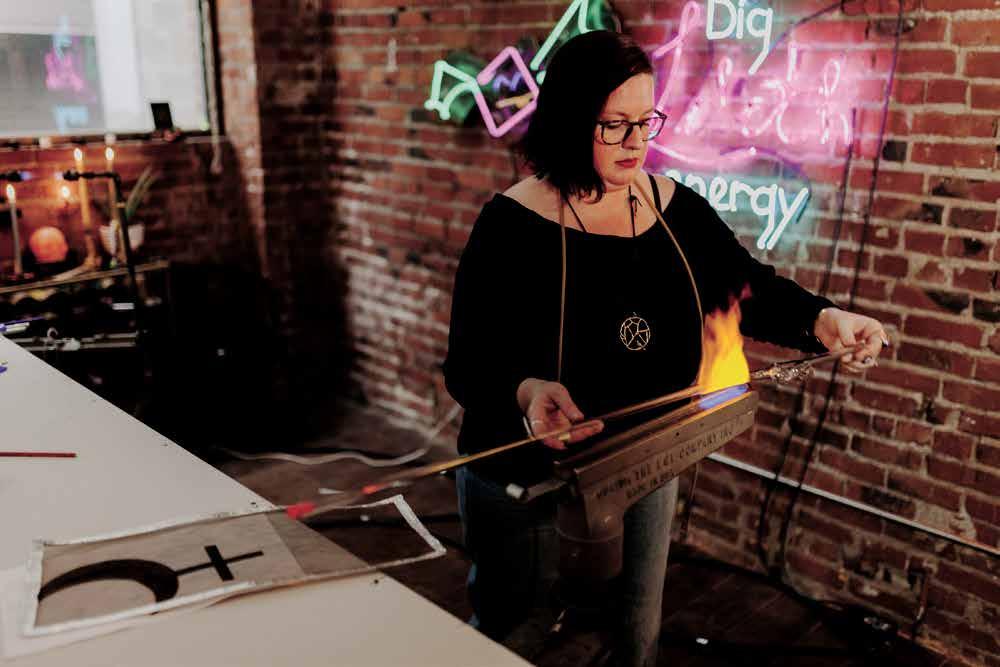
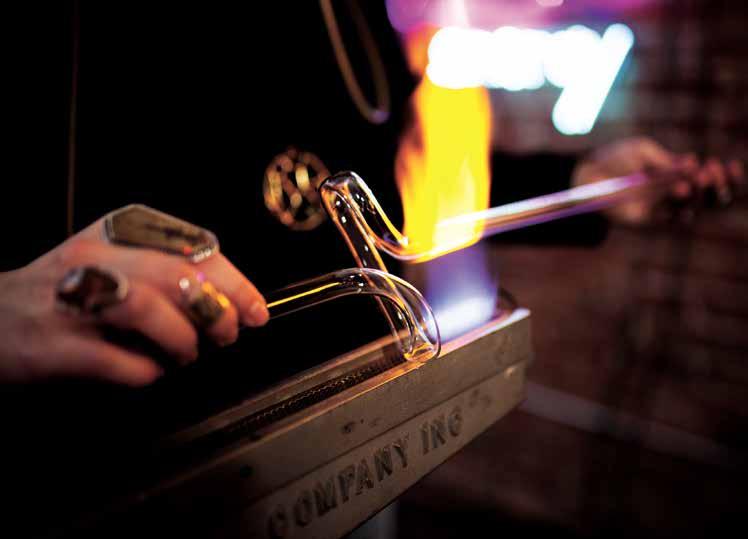
When she’s not bending glass tubes with an open flame to create glowing art pieces, Alleson Buchanan manages her womanowned-and-operated studio, Radiant Neon. The studio is part of Seattle’s larger neon culture, which is most visible at iconic landmarks, like the Elephant Car Wash sign.
In recent years, the community’s focus has shifted to a reinvigorated appreciation for neon bending as art as opposed to signage, Buchanan says.
“The art side of the sign-making is what’s captured people,” Buchanan said. “While we all love signage, transitioning it into the art world has made people go, ‘Oh, that’s an interesting medium.’”
Gaming conventions differ from others in the general realm of geekdom, like Comic Con, in that they focus specifically on playable media. That means there isn’t as much of an artist alley to peruse for see NEON page 7 see PAX WEST page 4
Alleson Buchanan at her all-woman studio, Radiant Neon – Photo by Janette Casolary
Photo by Daniel Lindsley
Photo by Paula Bronstein / AP
Local News
like Tekken 8 are apparent from the moment you pick up the controller. The same goes for platformers and many shooters.
on-site commissions, nor is there the same magnitude of celebrity presence — at least, not from celebrities more widely known beyond gaming circles.
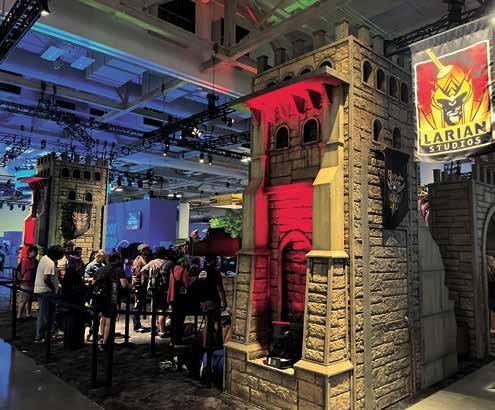
Still, the towering new Summit building was alive with activity, even as a portion of the convention took place in the Arch edifice nearby. That “split” made it somewhat more of a hassle to experience all the games being showcased, but the buildings were ultimately more walkable than during Emerald City Comic Con, perhaps as a result of being less crowded. That’s an impressive feat for an event that boasts over 120,000 annual attendees on its website.
Free play
In lieu of an artist alley, a good portion of the Arch’s second floor was dedicated instead to “free play” tables, where guests could bust out a card or board game and invite strangers to join them. There were also sign-ups for quick sessions of tabletop roleplaying games, like the emphatically Queer Thirsty Sword Lesbians.
Magic: The Gathering and Dungeons & Dragons were both prominent, of course, with probably the largest booths. There was even a live D&D session on the main stage, a revival of the fan favorite Acquisitions Incorporated, featuring big names like PAX founder and CEO Jerry “Tycho” Holkins, WWE star Xavier Woods, and lead D&D developers Jeremy Crawford and Christopher Perkins.
On the show floors themselves, there were the heavy hitters like Bandai Namco with the upcoming fighting game Tekken 8, Devolver Digital with Wizard with a Gun –themed carnival games, and Bethesda Studios with a hands-on preview of its openworld spacefaring game Starfield.
Getting to try out games before they are released is exciting, but the lines for the bigger ones were the longest, with some guests reporting wait times of up to three hours just to play for 30 minutes or so and be ushered out.
I quickly learned that some games seemed to exhibit better than others. For example, the most important elements of a fighting game
Games that rely more on an overarching narrative, meanwhile — best enjoyed at a slower pace — keep much of their hands hidden, since one either has to take their time reading text boxes and exploring the environment for more subtle story elements, or rush through to pack in as much as possible.
The smaller booths, meanwhile, had shorter lines, more lenient time restrictions, and often the actual developers of the games themselves. In truth, that was the closest thing to an artist alley at PAX West. It’s a rare opportunity to be able to speak with the people responsible for the game in your hands while you’re playing it.
Safe and diverse
On the show floor, I spoke with a certain convention staff member as they were acting as a “traffic cone” for a crowd. They said they attended their first PAX West years ago, and had been supremely impressed at how safe and diverse the convention managed to be. They chalked it up to it taking place in Seattle, partly, but also to the efforts of Take This, a nonprofit working to improve mental health in the gaming community and industry.
The nonprofit had an “AFK Room,” a quiet space where con-goers could rest and recharge. It also hosted nine panels over the course of the weekend.
The “Attention Deficit Hyperactivity Dragons” panel featured neurodivergent dungeon masters and players to talk about how tabletop roleplaying games had improved their lives, and could better accommodate people with ADHD.
“It Builds Character(s): TTRPGs and Socio-Emotional Learning” brought on guests from the mental health nonprofits Game to Grow and Games Unbound, as well as Washington Secretary of State Steve Hobbs, to discuss the mental health applications of tabletop roleplaying games.
In each case, many of the panelists would stick around after the session had ended to answer questions. Between that, the show floor, and the many fan meetups in a dedicated community room, the whole event felt intimate in ways even smaller conventions I’ve attended couldn’t match.
PAX WEST
continued from cover
Photos by Daniel Lindsley
Arts & Entertainment
that we work with, it because we aren’t working with molten glass.”
Glassblowing’s influence Seattle houses multiple neon benders, according to Buchanan, with at least 10 others in Seattle and 5–10 in Tacoma. She credits neon’s success in the region to the infrastructure glassblowing has provided.
.“It’s a glass city,”Buchanan said. “The glass influence [here] has allowed a foundation for neon to thrive. People are familiar with glass, and neon is definitely glass work, but it’s kind of adjacent in the way
The glass experience called “Refract” has taken place in Seattle for the past four years, and Buchanan has participated in it. She thinks that the glass community is beginning to recognize neon as part of its umbrella. For example, Washington’s Pilchuck Glass School, founded by Dale Chihuly, held an event titled “Neon Symposium” this year.
“[Neon] was kind of like the stepchild for a while.” Buchanan said. “We’re kind of being recognized as also pushing the glass medium.”
Neon-tinted nostalgia
When the decision to donate the bigger of two Elephant Car Wash signs to the Museum of History and Industry (MOHAI) was made, the Seattle Times reported on a protest by Friends of Historic Belltown, who asked the city to make it a landmark instead. The smaller of the two signs is a landmark owned by Amazon, and the bigger sign is still in MOHAI’s possession. Both have undergone restoration efforts.
Matt Hucke wrote Seattle Neon: Signs of the Emerald City, a book full of photographs of neon signs in Seattle, paired with
their history or that of the business they’re attached to. He says he always got warm responses from online groups when he posted progress updates.
“I would hear about how they had seen these signs, [how] they’d grown up with them since their childhood, like the Elephant Car Wash,” Hucke said. “You’d be … maybe visiting relatives in the suburbs as a child, going to grandma’s house, and you come back into the city and the elephant’s right there to welcome you home.”
Buchanan says there’s a lot of comfort in neon, and that it holds the memory of the community surrounding it. Having grown up in Oregon, Buchanan has fond memories of such a sign that used to say “White Stag” but was changed to say “Portland Oregon.” “Every time it changed, people are like, ‘No, you can’t change the neon sign.’ It has this way of being a constant,” Buchanan said.
Not every neon sign has received the restoration efforts the Elephant Car Wash signs did. Bardahl Oil’s sign was one of the first Hucke wanted to photograph for his book. When he arrived, he found out it had died a few months prior.
“When I contacted the company, they said it would cost something like $100,000 to repair, because the whole structure is rickety and it’s not safe to get up there,” Hucke said.
Access to the neon world
The signs are also expensive to make. Buchanan says the niche is what makes it so.
“I don’t control my supplier cost. The glass alone ranges and costs wildly,” she said.
Learning how to bend neon can also prove challenging. Neon shops traditionally have an apprentice program. That’s changed in the last seven years, according to Buchanan, but hers offers classes, and she’s proud to be part of the community shift.
“There [were] a lot of secrets, a lot of ‘we don’t share out styles, we only teach our apprentices,’” Buchanan said.
As for Hucke, he hopes his book will stimulate some interest in neon.
“There was a low point. We’re kind of coming back from that,” he said.
Alleson Buchanan at her all-woman studio, Radiant Neon – Photos by Janette Casolary
Branagh’s Haunting in Venice return is cracking good fun
by Sara Michelle Fetters SGN Staff Writer
A HAUNTING IN VENICE
Theaters
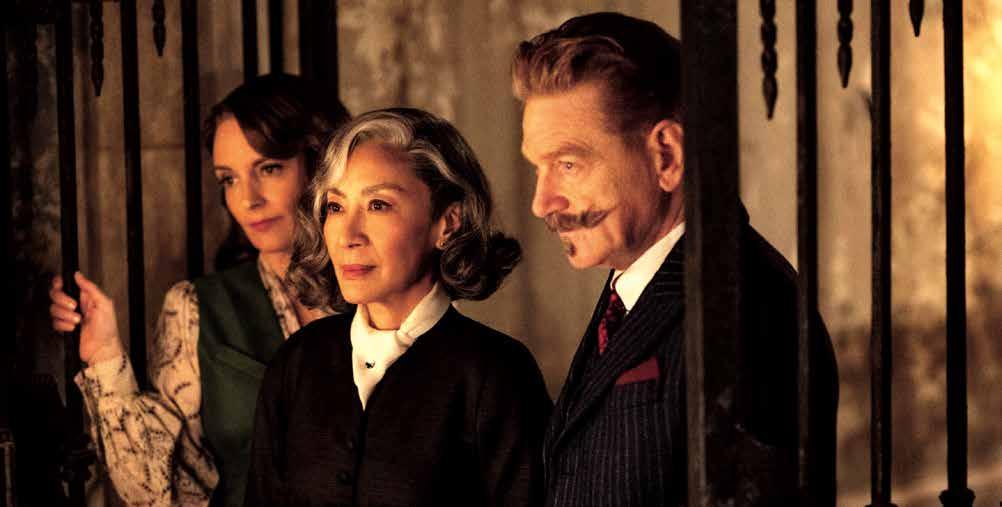
Belgian detective Hercule Poirot (Kenneth Branagh) has retired to Venice. He’s hired retired policeman Vitale Portfoglio (Riccardo Scamarcio) to aggressively shoo away anyone trying to engage his services, which Vitale does with understatedly aggressive zeal. But celebrated mystery writer Ariadne Oliver (Tina Fey) is one of Poirot’s oldest friends and most ardent admirers, and the former detective is happy to end his selfimposed isolation to meet with her when she arrives unannounced at his front door.
So begins A Haunting in Venice, and after two fine, entertaining, but nowhere near outstanding attempts to bring author Agatha Christie’s most famous literary character to life (Murder on the Orient Express, Death in Venice), director and star Branagh finally hits one out of the park. Boasting a wonderful script by series veteran Michael Green (Logan), an outstanding ensemble, and superb technical facets, this suspenseful adaptation of Christie’s 1969 novel Hallowe’en Party is one of 2023’s most captivating surprises.
The setup is a séance performed by the beguiling Joyce Reynolds (Michelle Yeoh). Oliver can’t decipher how she does her tricks of the trade, and she preys on Poirot’s vanity to get him on the case. Mrs. Reynolds has been hired by former opera singer Rowena Drake (Kelly Reilly) to contact the spirit of her recently deceased daughter, who was supposedly driven to suicide by the ghosts of the murdered children who are rumored to dwell in her spacious Venetian home.
After a lot of whiz and quite a bit of bang, there’s of course a murder, and with a ranging storm keeping the police off of the canals, it’s obviously up to Poirot to bring the killer to justice and prove there’s nothing supernatural going on. The remaining suspects are a typically eclectic and cinematically attractive bunch, portrayed by a collection of familiar faces (Jamie Dornan, Camille Cottin, breakout Belfast youngster Jude Hill) and charming relative newcomers (Emma Laird, Ali Khan, Kyle Allen).
It was nice watching an adaptation whose source material I was unfamiliar with. The bad news is that it turns out this isn’t one of Christie’s more adventurous mysteries, and it’s honestly pretty easy to follow the clues and figure out who the murderer is.
But the reasons behind the killings? Who is pulling the strings? The series of events that lead to the evening’s carnage? None of that I knew beforehand, and seeing Branagh place those puzzle pieces on the board with such skillful cunning was a pleasure.
What’s also pretty great is watching the filmmaker dip his toe (if ever so slightly) back into the horror waters for the first time since his decidedly uneven attempt to bring Mary Shelley’s Frankenstein to the big screen way back in 1994. Branagh appears to be much more confident handling the genre’s ins and outs this time around, and it’s clear he’s taking giddy delight in dropping Poirot into this realm of ghosts and demons. There are several outstanding scare sequences, not the least of which is the initial murder that sets everything into motion. It’s a gruesomely delicious jolt to the senses that brought a massive smile to my face.
As usual for one of Branagh’s films, the technical facets are excellent. What helps this effort stand out, however, is the emphasis on practical sets and makeup effects. There is little to no large-scale digital trickery here, so unlike Murder on the Orient Express and especially Death on the Nile, there is not a single moment where the backgrounds look cartoonishly fake. The production design crafted by veteran John Paul Kelly (The Theory of Everything) is particularly outstanding, as is Joker Oscar-winner Hildur Guðnadóttir’s robustly thrilling score.
Best of all is the magnificent cinematography by Haris Zambarloukos, a frequent Branagh collaborator (he’s worked on everything with the director from Jack Ryan: Shadow Recruit on, including both of his previous Christie adaptations).
I admittedly had my doubts about why this film needed to be shot for an IMAX presen-
tation. But I shouldn’t have worried. From shadowy Dutch-angled closeups to shimmery black-and-white flashbacks, the atmosphere Zambarloukos manages to create is out of this world. There is an ethereal uncertainty to his framings that fits the piece perfectly, and if it were possible, I’d rent out an IMAX screen just so I could watch the film again without sound, only so I could marvel at the images without any other sensory intrusion fracturing my attention. I could go on, especially about Fey and Hill (they steal the show), but I think I’m going to leave things there. Branagh has made his best Poirot adventure yet, and even if the central mystery leaves a little something to be desired, that does not make the experience of watching the Belgian sleuth work his magic any less enjoyable.
A Haunting in Venice is cracking good fun.
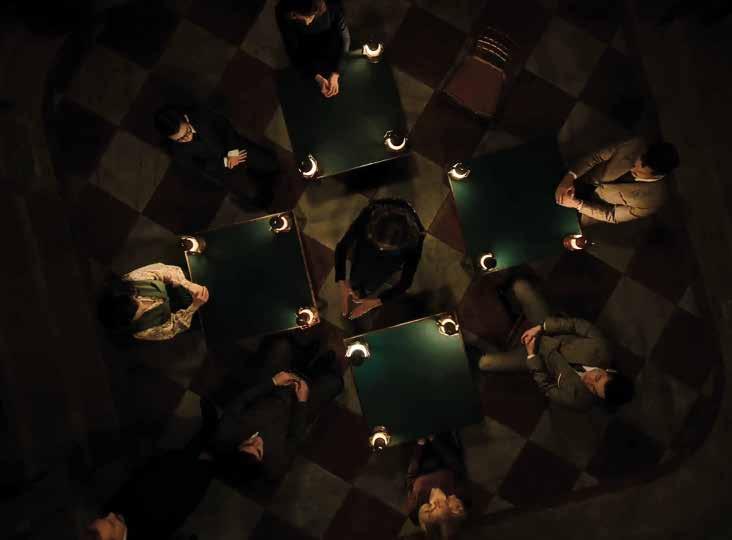
A Haunting in Venice – Photos courtesy of 20th Century Studios
Film
Spooky Nun II breathes undead life into the Conjuring universe
by Sara Michelle Fetters SGN Staff Writer
THE NUN II
Theaters
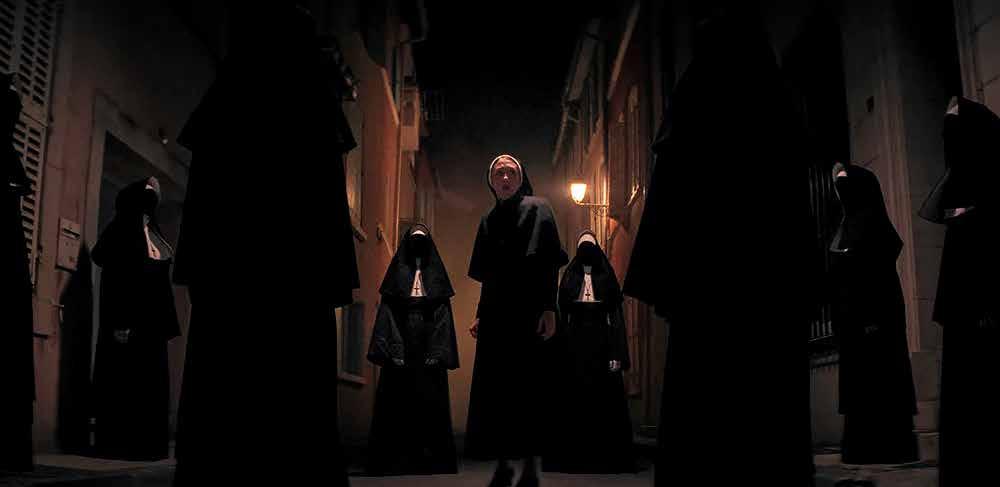
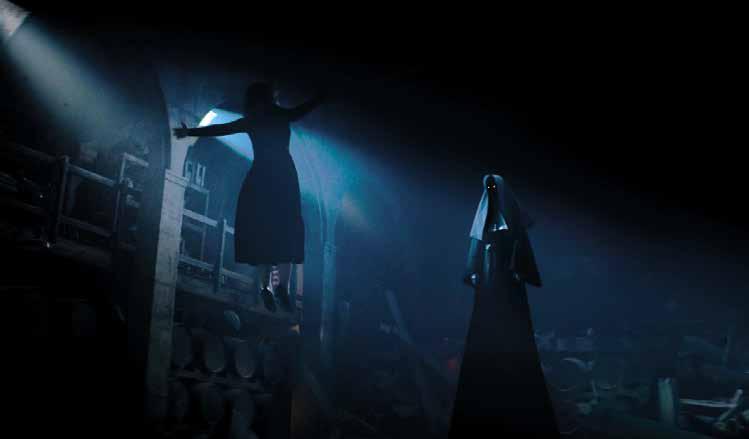
After her epic battle with the bloodthirsty demon Valak (Bonnie Aarons), the tenderhearted Sister Irene (Taissa Farmiga) has retreated to a secluded abbey to mentor young nuns, like the headstrong Sister Debra (Storm Reid). But when Rome calls for help, the devout, psychically gifted nun must once again gird herself to confront satanic evil faceto-face. It appears that Valak has returned, and Irene is the only one the Catholic Church feels is capable of returning this demon to the fiery pits of Hell from which it came.
Much like its 2018 predecessor, The Nun II plays out like an old-school horror effort from the 1960s, only this time a little less creatively imaginative and tonally unhinged. But Conjuring universe veteran Michael Chaves (he also helmed The Curse of La Llorona and The Conjuring: The Devil Made Me Do It) brings a more formalist approach to the proceedings that’s moderately appealing. In his best directorial outing to date, the filmmaker stages a handful of highly effective scare sequences that do get the job done.
Written by Ian Goldberg, Richard Naing (The Autopsy of Jane Doe), and Akela Cooper (M3GAN ) from an original story conceived by Cooper, the sequel is basically split into two halves. The first involves Irene and Debra investigating a series of brutal deaths that appear to be the result of Valak’s supernatural machinations. The second involves handyman Maurice (Jonas Bloquet), who helped defeat the demon the last time around and is now working at St. Mary’s Boarding School for Girls, located in a former monastery.
Chaves does a decent job of balancing these dueling plots, and it’s always a given that Irene and Maurice will reunite near the end to engage Valak in battle for a second time. The kicker is that one of the pair may not be able to fight the good fight this time around, as they may be an unwitting vessel for the demon.
As for the demon, it’s as playfully nasty as ever, toying with its various victims before dispatching them in a variety of gruesome ways as it searches for an ancient religious artifact that could give it untold power in the human realm.
I admit I missed the anarchic, gothic lunacy the filmmaker Corin Hardy and writers Gary Dauberman and James Wan brought to the previous film. Hardy knew he was making high-intensity horror schlock in the vein of classic Hammer yarns like Blood from the Mummy’s Tomb or The Plague of the Zombies. It was an over-the-top hoot, but one that still had a plethora of effective moments and was anchored on a wonderful lead performance from Farmiga.
As both his prior entries in the Conjuring universe have shown, Chaves does not have Hardy’s imaginatively creative skill or the willingness to embrace absurdity in an effort to do something unexpected with it. However, he does have workmanlike chops and knows how to set a sinister mood. Chaves manufactures a chilling atmosphere of dread that got under my skin, and unlike either of his other films, this one manages to have an emotional center I felt was worth engaging with.
It helps considerably that the technical facets are top-notch. Production designer Stéphane Cressend (At Eternity’s Gate), art director Alexis McKenzie-Main Mougin
(Oxygen), and set decorator Emmanuel Delis (Tenet) create a tactile, suitably lived-in world for the characters to seamlessly inhabit. Thanks to cinematographer Tristan Nyby (The Dark and the Wicked ), this may be the most impressively shot entry in this spooky series in quite some time, at least since 2017’s Annabelle: Creation, probably since 2016’s The Conjuring 2 I was also really impressed with youngster Katelyn Rose Downey. She stole more than her fair share of scenes in the wonderful 2022 actioner The Princess (whose Hulu release was ruthlessly “disappeared” by Disney earlier this year into the same tax write-off vault Warner Bros. deposited the never-released Batgirl before transitioning HBO Max to Max not so long ago), and she’s even better here. Downey plays Sophie, the quietly inquisitive daughter of the school’s primary educator, Kate (Anna Popplewell), who shares a captivatingly subtle adopted father–daughter relationship with Maurice. She steals virtually every scene she’s in, and Chaves rightfully keeps his film’s focus on her whenever possible.
The final showdown between Irene and Valak is…fine. Nothing surprised me. At the same time, there’s enough energy and excitement that this is never as gigantic a problem as it could have been. Farmiga again showcases an internalized intensity that works rather nicely, and Aarons continues to make Valak an unnerving presence who can send shivers cascading down a viewer’s spine with seemingly little to no effort whatsoever.
Did I still want more from The Nun II ? Yes. I think that’s fairly obvious. But I was never bored by this sequel, and even if I always knew how things were going to work themselves out, my eyes nonetheless remained glued to the screen. While it’s doubtful any entry in the Conjuring universe will ever rise to the stratospheric heights of Wan’s initial feature released back in 2013, a decade on, there’s still undead life left in this spooky series of supernatural tales of terror. For fans, that’s sinister news of the macabre worth screaming bloody murder about.
The Nun II – Photos courtesy of Warner Bros
Books
Natalie Caña serves spicy romance with Bi character
by Lindsey Anderson SGN Staff Writer
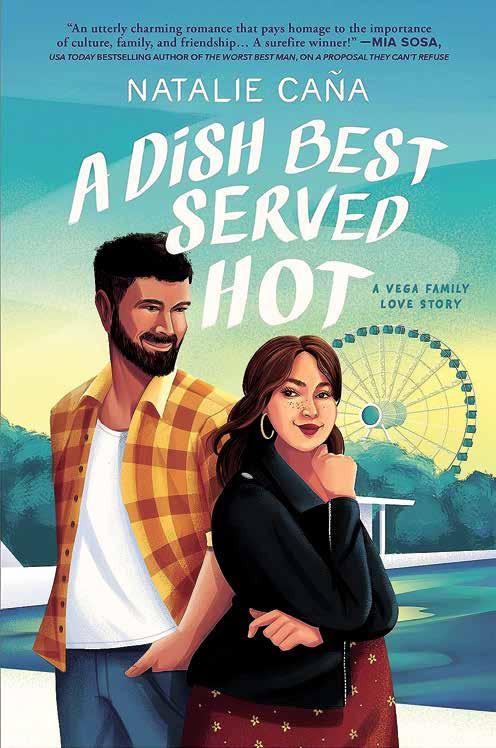
Natalie Caña is ready to spice fall up with her latest romance, A Dish Best Served Hot The follow-up to her hit debut, A Proposal They Can’t Refuse, follows the story of the Vega family, a large Puerto Rican clan living in Chicago. It picks up where the last left off, as single dad Saint clashes with Lola, the one that got away, over the preservation of an LGBTQ+ youth shelter. The novel also crams as much romance into its pages as possible.
“I originally pitched this … as a ‘trope-tastic’ series featuring a large Puerto Rican family in Chicago. I love the tropes,” Caña said with a laugh.
She tries to fit as many of her favorites into the series as possible, though there is one readers won’t find. “I do not like Secret Baby, especially when there’s no reason for her to have kept the baby a secret. For me, that’s one of those things that gives me an instant cringe,” she said.
Following such a successful debut was difficult for Caña. “Before you’re published, you have all the time in the world because you don’t have an agent or contract yet,” she explained. “But with book two, once you have that contract, you have a deadline. Writing is no longer a hobby. It’s a job, and you have more expectations.”
Caña began writing A Dish Best Served Hot while still doing press and reading feedback on her first novel. “You really feel pressure to make the second book just as good for the reader as the first book, if not better,” she said. “With book two, that specific part was really a battle for me. The characters are very different, and it has a different vibe from book one, and so many people like the vibe from book one.”
Early drafts were completely different from the final project. “Lola was not the heroine originally,” Caña revealed. “Originally, the heroine was supposed to be the kindergarten teacher, but as I got into it and started writing, it just wasn’t working. Saint was in my head, arms crossed, shaking his head.”
Eventually, Caña let the characters speak to her and embraced the differences between her two books. “I had to realize that not every book will be that silly. The characters will be different people, so I had to think about other ways to add in that humor.”
admitted. “She kind of just popped into my head completely formed, and she was always Bi. I didn’t want to make it a story of her having to come out or battle against
all these different things. I just wanted it to be something that was. Like her being plussized — it’s just something that is. It’s okay. It’s accepted, especially by the hero.” Caña, who is also Bisexual, felt empowered while writing Lola. “I have not been out for a very long time. I struggled a lot, whereas Lola did not,” she said. “Our stories were very different. To write somebody who was just so 100% fully herself and accepting was a bit challenging. I will always be grateful to Lola for making me, personally, think about those things and work through some of my own issues.”
While Lola is the first LGBTQ+ character to appear in the series, she does not function as a lesson to the protagonist. “I didn’t want her to have to educate him on things. It’s not our responsibility — Google is free. Everybody can learn if they want to learn,” Caña said.
Caña hopes readers will appreciate the attention to detail she put into the book and find lessons beyond the romance. “I want to leave a little nugget of thoughtfulness, of thinking about things in a new way,” she said. “I try not to be on my soapbox and preach to the readers. My goal is always to entertain them but also to make them think. I also hope that by letting the characters be who they are and live their life, readers also take away a certain type of empathy.”
Introducing rom-com readers to a Bisexual couple is a stepping stone to creating an environment of inclusivity. “There are differences, but not that much. All humans want is to be safe, happy, and who we are,” Caña said. “I hope readers seeing Queer characters or people of color can be like, ‘Oh, I actually can relate to these people because they want the same things I want.’”
Fans of Caña won’t have to wait much longer to see book three. The final installment of her Vega Family trilogy, Sleeping with the Frenemy, will see Leo and Sophie reunite in an epic conclusion. It should hit shelves by summer 2024. In the meantime, Caña is working to brainstorm her next Queer romance. “I have so many ideas right now that are … going on at one time. Right now, I would love to do more of the Vega family, but I also have a paranormal idea that will definitely be Queer,” she said.
Bringing queerness to the page Lola and Saint’s story brings queerness to the forefront. “The original heroine… was not Queer, but …Lola, she just was,” Caña
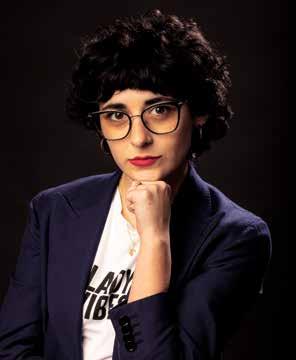
Natalie Caña – Photo courtesy of the author
Image courtesy of MIRA
Op-Ed
The value of quiet
by Jack Hilovsky SGN Contributing Writer
Most people, when they meet me, would guess I’m an extrovert. I’m a native Midwesterner: outwardly friendly, someone who enjoys meeting new people and doesn’t think twice about striking up a conversation with someone I don’t know.
In Seattle, where many people exhibit a polite reserve, I’ve found that if I want to make a new friend, it’s on me to take the initiative. And if the person on the receiving end is responsive, I don’t mind doing so. It may take a little while for said person to warm up, but if I’m patient and not in a hurry, I find this is a successful strategy. And if you’re lucky enough to have more than one friend, it’s tolerable,
On the other hand, while I enjoy good conversation and attending parties and large gatherings, I also can lose my mojo after standing around in loud environments with multiple conversations happening at the same time. Dance clubs, rock concerts, and Capitol Hill Block Party comes to mind. Maybe it’s a function of age. Or the limits of small talk. Or inebriation. (Or lack of it.)
I do enjoy my quiet time. And as Seattle grows denser with more people and buildings, there seems to be a lack of it. There are more cars, more garbage trucks, earlier morning deliveries at my nearby co-op, and more people on the street (houseless or otherwise) screaming out into the night (and day). And of course, during our summer of protests over George Floyd’s murder, there was CHOP.
I fully agree that if you don’t want noise, well, don’t live in a city. But I think we all need times where we can just be alone with our thoughts and not have to suffer the endless drone of a leaf blower outside
our window. I am lucky that one of my hallowed spots for quiet is a large backyard shared by everyone in my condo building. I am always amazed that despite the fact there are 74 units, rarely do I see more than one other person enjoying the space, which includes an outdoor deck leading down to a grassy area that stretches one block and is surrounded by towering pine trees and flowering shrubs. There is a variety of birds, squirrels, and bunny rabbits.
One night I even saw a raccoon hanging from a tree, looking down on me. Scary!
Ten years ago, I asked our condo board to buy a hammock for our backyard. Surprisingly, rarely do I find anyone using it — which is fine by me, as it’s my reflective place. I bring my books back there, sometimes I read the (digital) newspaper, and late at night, I’ll lay down and gaze at the stars. Yes, I still hear cars and lots of planes passing overhead (is Capitol Hill on a flight path?). But it’s the pleasure of being alone with my thoughts that really feeds me while I’m in the hammock. Typically, no one interrupts my reverie; its like I’m lying in my grave, though that sounds macabre.
I think humans need solitude, time for quiet and reflection. People used to go to church for that reason (or out of guilt or obligation). I still do attend church when the desire is there. After all, I’m one of those recovering Catholics, who, when I first acknowledged liking guys, didn’t feel much support from the papal powers that be. That has slowly changed, at least during the decade-long reign of the compassionate Pope Francis.
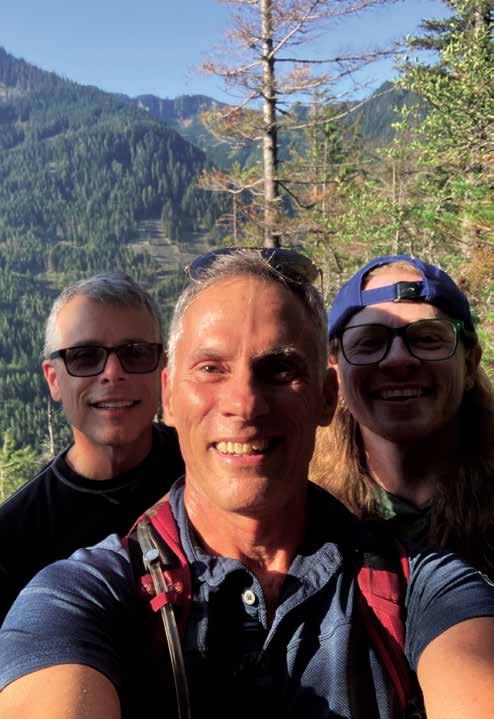
There are other ways of seeking quiet. Most Northwesterners find an alternative church, or source of quiet, in hiking. Last week, for the first time all summer, two
friends and I bought a Discovery Pass and headed to Dirty Harry’s Balcony in the Snoqualmie region. We left at 7:30 a.m. to beat the rush and nabbed the last spot in an already full parking lot.
On that gorgeous morning, we hiked in the cool, moist air and arrived at the 1,600foot peak by mid-morning, ate half our lunch, and stumbled back down the mountain, arrive home by noon. The 4.5-mile round trip hike was challenging but not backbreaking and reminded me how lucky we are to live within comfortable driving distance of the rugged outdoors.
It also brought back memories of an earlier adventure in 2014 navigating the Enchantments, which offered an otherworldly environment of way-too-friendly mountain goats, pristine lakes, and snow-capped glaciers. Whether in the mountains or my backyard hammock, the sounds of silence offer muchneeded rest for this extroverted introvert
(or introverted extrovert — I think there is a new term called ambivert, which means that while social, one gets their energy from being alone).
There is a lot of noise in the world, whether it’s idle chatter, political claptrap, or blare from a television or social media channel. How do we relax, focus, dream, and find the callings that satisfy our heart’s desire? I think it’s in the quiet, a place where no one dares interrupt us, or disturb our train of thought. Find that place, and I think you’ve found true happiness.
Jack Hilovsky is an author, actor, and blogger who has made his home in Seattle since 1986. His first book, RJ, Farrah and Me: A Young Man’s Gay Odyssey from the Inside Out, was published in June 2022. It can be found at Elliott Bay Book Co., Madison Books, Nook & Cranny, and University Bookstore, among other local booksellers.
Courtesy photos
or move on? Finding value alignment in long-term relationships
Dear Izzy,
I’ve been with my boyfriend for about seven years now. I’m ready for full commitment — house, marriage, kids… I bring it up often, but it’s never really a conversation with a “resolution.” It’s just put back on the back burner. I don’t want to pressure him, but I also don’t want to wait around for nothing to happen. What if I am wasting my twenties on somebody who cannot commit to me?
I love him so much and hate to think of us breaking up, but my personal values include starting a family and having a happy marriage. What do I do?
— Impatiently in Love
Dear Impatiently,
I was scrolling through Netflix this past weekend and stumbled across The Ultimatium: Marry or Move On. If you aren’t familiar with the show, it is exactly what it sounds like. In this particular season, we meet a couple similar to you: high school sweethearts who have been together for seven years. In this case, Ryann, a sweet Southern woman who has been patient for so long, gives her partner James the option to either get married finally or break up. Like you, she has been bringing up her needs and wants for years, and the conversations never go anywhere. They decide to go on the show in order to figure out if the problem is compatibility, or something else.
The reason I bring this up is because, more often than not, it is not a question of compatibility or values. Instead, it has to do with a fear or anxiety that one person in the relationship has. In the case of the show, James often talks about how he does want to get married and have a family, but because of his turbulent childhood, he has a huge fear of being abandoned. If he finally does take that next step and it doesn’t work, all his fears will become real.
This is so scary for a lot of people who have gone through some form of trauma. The difficult thing is that this has nothing to do with the other partner, who can’t do much except show support.
By the end of the season, viewers see some amazing communication between James and Ryann, in which they talk about how they can work through those fears together.
This is where my advice for you comes in. The first thing is to establish whether or not it is actually value misalignment, or something else entirely. When you bring up your desire to get married, settle down, have kids, etc., with your partner, what is his response? Does he ever say that he also wants those things?
If the answer is yes, then I would encourage you to dig a little deeper and ask your partner about his views on marriage as a whole. Did he have a good example of marriage growing up for him to emulate?
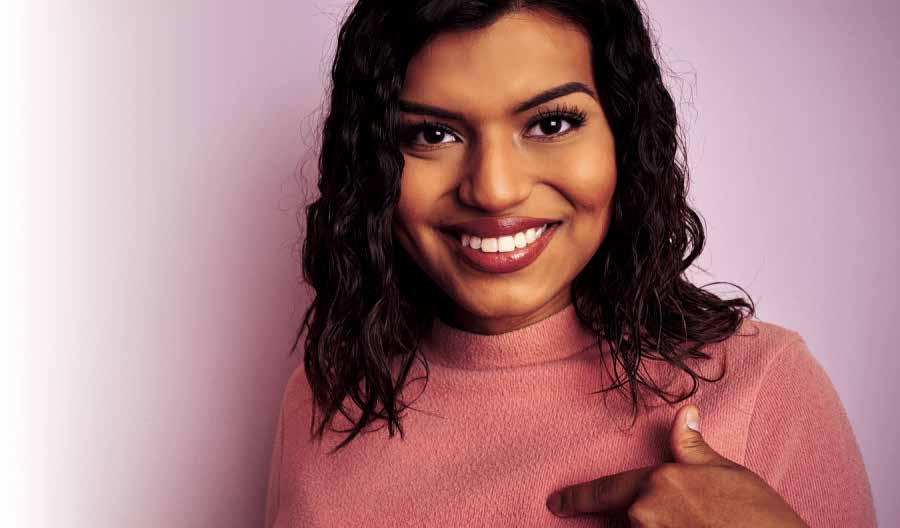
by Isabel Mata SGN Staff Writer
Ask Izzy is a biweekly advice column about relationships, mental health, and sexuality. Written by Isabel Mata — a Seattle-based lifestyle writer, podcast host, and mental health advocate — Ask Izzy offers tangible expert advice so all readers can have stronger relationships, better sex, and healthier mindsets. Submit your question today by scanning the QR code below.
Couples therapy is a great place to start these conversations if you have tried before and they haven’t ended the way you would like.
If you bring up marriage and family and it seems as though your partner does not want those things, then unfortunately, you have your answer. So many couples in longterm relationships forget the importance of value alignment, which ultimately leads to divorce or breakups. Truly, the only way for a marriage to actually work is if both partners want and care about the same things. While I understand how hard it is to
think about breaking up with someone you care deeply about, remember that you deserve a relationship rooted in the same core values. If you try to move forward with someone on a different page, then you will constantly feel disappointed and hurt. If your current partner does not want the same things as you, it will be sad. But like the cliché says, when one door closes, another opens. There is someone out there for you who wants the same things as you do. But you won’t find out if you are constantly trying to fit a square peg into a round hole.
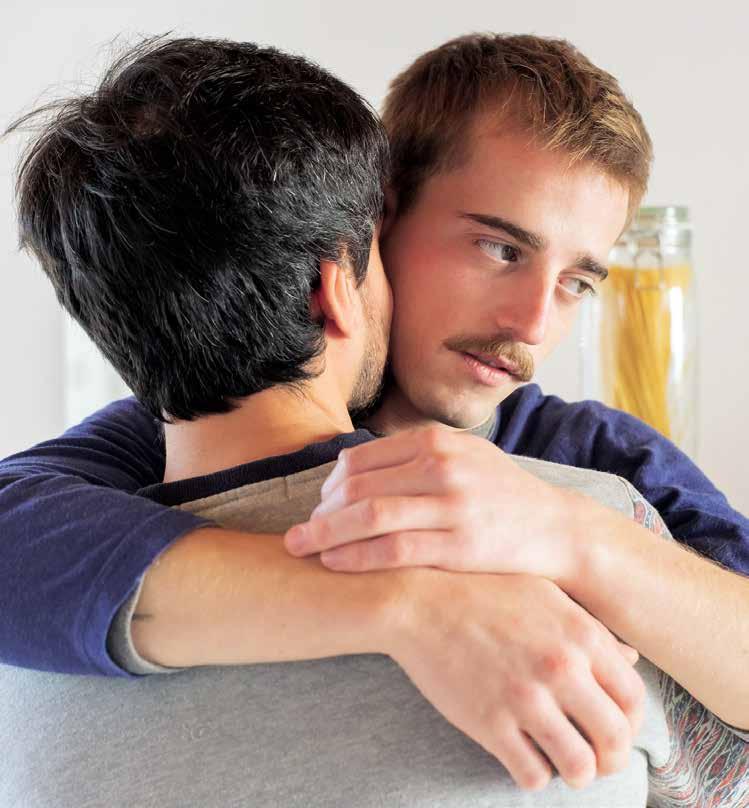
Photo by Kampus Production / Pexels
National news highlights
by Teddy MacQuarrie SGN Contributing Writer
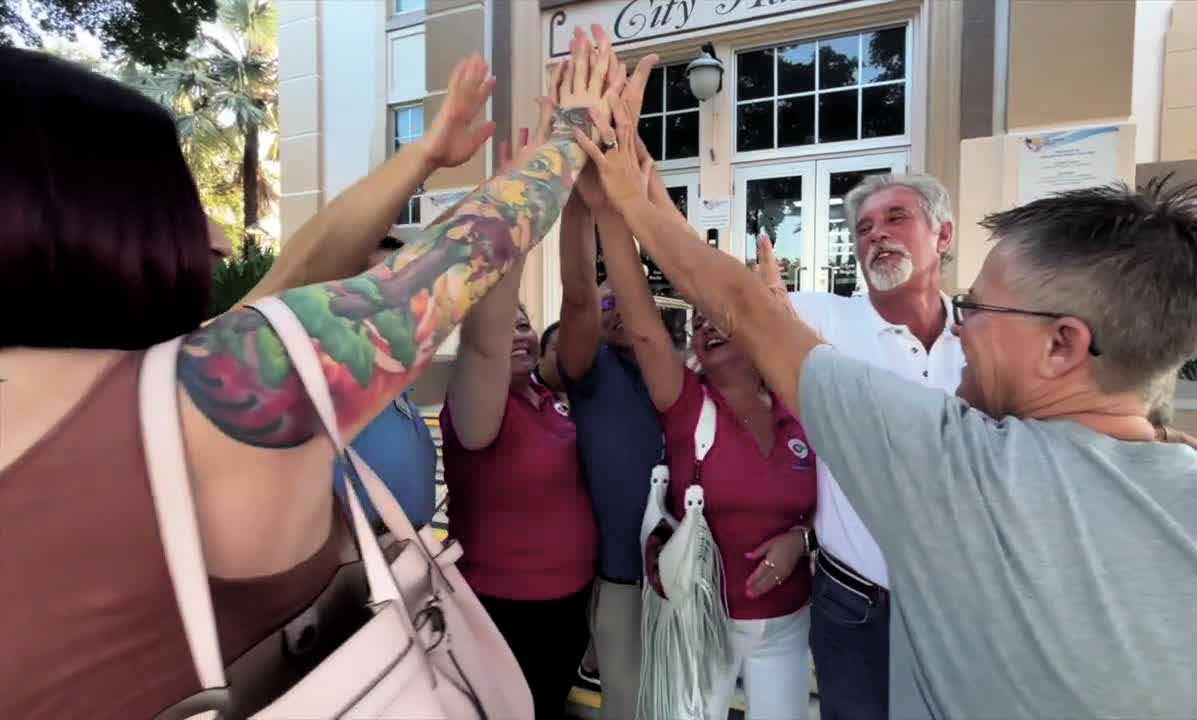
Florida city declares itself Queer sanctuary
In the light of aggressively anti-Queer legislation pushed by Florida Gov. Ron DeSantis and passed by the Republicanled legislature , the city of Lake Worth Beach has declared itself a sanctuary city for Queer people.
The City Commission unanimously adopted a resolution September 5, stating in part, “The City of Lake Worth Beach shall now and forever be considered a safe place, a sanctuary, a welcoming and supportive city for LGBTQIA+ individuals and their families to live in peace and comfort.”
While about 40 cities, counties, and townships in Florida have Queer-inclusive nondiscrimination ordinances, Lake Worth Beach is the first to designate itself
as a sanctuary city, according to numerous Florida media outlets, citing a press release from the Palm Beach County Human Rights Council.
“With so many LGBTQ+ people and allies fleeing Florida for less hostile states, we are thrilled Lake Worth Beach Mayor [Betty] Resch and the city commissioners continue to work to ensure the health, safety, and well-being of LGBTQ+ people and our families,” said a statement from Rand Hoch, founder and president of the Human Rights Council.
Florida is one of the states in which an onslaught of legislation has curbed the rights of Queer people, forcing many to move to more affirming states and, according to a Human Rights Campaign report released in August, causing harm to the mental health of all types of Queer people, most especially Transgender people.
Tallahassee, the capital city, is con-
sidering a sanctuary designation, according to the Human Rights Commission. Several cities and states around the nation (including Washington state) have declared themselves sanctuaries to some degree, such as assuring that Trans people can access gender-affirming care in those locations.
Fertility clinic for Transgender people to open in Pittsburgh Transgender residents in Pittsburgh will soon have a fertility clinic serving their needs.
Opening in the spring of 2024, the Allegheny Reproductive Health Center and Mate Fertility will partner to provide the area’s Transgender residents sperm and egg donation, surrogacy, in vitro fertilization, hormone therapy, and some gender-affirming surgeries.
Dr. Sheila Ramgopal, an obstetrician and gynecologist at the Allegheny
center, told the Philadelphia Gay News, “A lot of our clients [have] had massive difficulty [accessing] these services, both from an affordability perspective but also from a safety perspective, even the basics — going into a place where they feel safe and feel like they’re in an inclusive community — because a lot of providers don’t reflect those communities.”
“A lot of the [fertility] services are actually very tailored for, let’s say, affluent cis white women and heterosexual couples,” Ramgopal added. “For the Nonbinary and Trans community, there’s a massive gap in terms of all of us accessing care for fertility services.”
The new clinic plans to offer these services at one-third to one-half of what other providers charge, Ramgopal said. “Our goal is to make this extremely accessible for people, no matter where you’re coming from and what your financial picture is,” the doctor explained.
The gaps in Transgender healthcare this clinic intends to address are substantial. The healthcare model offered in the upcoming clinic differs in some respects from others, especially in its emphasis on underserved Queer and BIPOC communities. The clinic also intends to address gaps in Transgender patients’ access to information and care related to sexual health.
Importantly, it intends to cultivate a diverse staff reflective of its intended clientele. “We look at markets that are what we call fertility deserts or underserved markets,” Mate Fertility CEO Traci Keen explained. “We try to find OB/GYNs, because there’s this huge delta between the number of people in the United States who need access to care and the number of people who geographically have it or can afford that care, even if they do have some access in their market. The only way to start to bridge that gap is to bring OB/GYNs to the top of their license, which they can be doing.”
Although the number of Queer-identified providers at the new fertility clinic is to be determined, Ramgopal has a diverse staff at ARHC, and Keen strives to ensure that there’s “access, awareness, and intentionality” at Mate.
Image courtesy of WPTV
Photo courtesy of Allegheny Reproductive Health Center
PROUD BOYS
Tarrio’s federal trial took three days. Lead prosecutors characterized him as calculating. “His leadership over the Proud Boys was about violence and manipulation,” Justice Department prosecutor Connor Mulroe said. “He demonized his perceived adversaries. He glorified the use of force against them. He elevated the street fighting element in his group — the socalled rally boys — and he practiced and endorsed the use of disinformation, deceiving the public, and cultivating fear.”
In the days leading up to the insurrection, Tarrio was in Baltimore, not Washington DC. Despite Tarrio not being at the Capitol that day, the judge still found him guilty of planning and organizing it.
He was previously kicked out of the city by a local judge overseeing a criminal matter wherein Tarrio burned a Black Lives Matter banner that belonged to a Black church. (He
later received a five-month sentence.) At the time, Tarrio carried two high-capacity rifle magazines emblazoned with the Proud Boys logo. He then relied on the leadership of Proud Boys leader Ethan Nordean to carry out his plans on the ground in DC following his removal from Washington.
A calculating leader
Tarrio has served as the leader of the Proud Boys since 2018. In the days following January 6, 2021, the FBI determined that the Proud Boys were the leading organizers of the attack.
“The Justice Department proved in court that the Proud Boys played a central role in setting the January 6th attack on our Capitol into motion,” said Attorney General Merrick Garland.
“No organization put more boots on the ground at the Capitol on January 6, 2021, than the Proud Boys, and they were at the forefront of every major breach of the Capitol’s defenses, leading the on-the-ground efforts to storm the seat of government,”
added Matthew Graves, the US Attorney for the District of Columbia.
Court documents showed that Tarrio and co-defendant Nordean started a chapter of the Proud Boys specifically to conspire, hinder, prevent, and delay the certification of the Electoral College vote.
The Proud Boys started to gain steam as an influential conservative organization following Tarrio’s rise in leadership. Prosecutors noted that Tarrio’s charisma had helped him rise in the ranks of the organization.
In recent years, the group has caused conflict at the local level, protesting COVID19 shutdowns, vaccines, and critical race theory. Members have also been responsible for several LGBTQ+ Pride protests. The organization has seen a significant increase in regional chapters since the insurrection.
Despite the serious charges he has faced over the last two years, Tarrio has continued to promote a laid-back façade, often appearing in public in a ball cap and sunglasses. During jury deliberations, he gave an interview in which he insisted that the insurrec-
tionists did nothing wrong . When federal marshals escorted him out of the courtroom following his sentencing, Tarrio raised two fingers in a peace sign for photographers.
Seattle chapter leader gets 18 years in prison
Tarrio’s sentencing came just days after another Proud Boys leader faced harsh verdicts. Ethan Nordean earned the second-highest sentence (18 years) just days before Tarrio’s trial wrapped. His charges included seditious conspiracy and obstruction of law enforcement.
Nordean, a 33-year-old from Auburn, Washington, was on the ground leading a pro-Trump mob during the insurrection. He was the self-described “sergeant at arms” for the Seattle chapter of the Proud Boys, which has become well-known in the region for starting street brawls and antagonizing anti-fascist protesters at proLGBTQ+ events.
Nordean led one of the first groups to breach the Capitol. He tore down a fence and led nearly 200 men onto Capitol grounds. Prosecutors in his case noted that he used his muscular physique and background in bodybuilding to intimidate and “dole out physical violence.”
The grand jury that convicted Nordean relied on his social media accounts as evidence of his preplanning and intent to cause harm. Following the 2020 election, Nordean wrote on social media, “We tried playing nice, and by the rules, now you will deal with the monster you created. The spirit of 1776 has resurfaced and has created groups like the Proud Boys, and we will not be extinguished.”
Additional sentencing arguments provided a lengthy trail of violent threats by Nordean, both online and through his podcast, Warboys, in which he talked about “the day of the rope.”
“Over the past week, four members of the Proud Boys received sentences that reflect the danger their crimes pose to our democracy,” said Attorney General Garland. “Today, the leader of the Proud Boys, Enrique Tarrio, learned that the consequence of conspiring to oppose by force the lawful transfer of power is 22 years in federal prison.”.
Tarrio will be up for parole in 2045. Nordean will be up for parole in 2041.
Ethan Nordean – Photo by Carolyn Kaster / AP
Members of the far-right Proud Boys, including leader Enrique Tarrio (center) – Photo by Hannah McKay / Reuters
National/ International News
International news highlights
by Teddy MacQuarrie SGN Contributing Writer
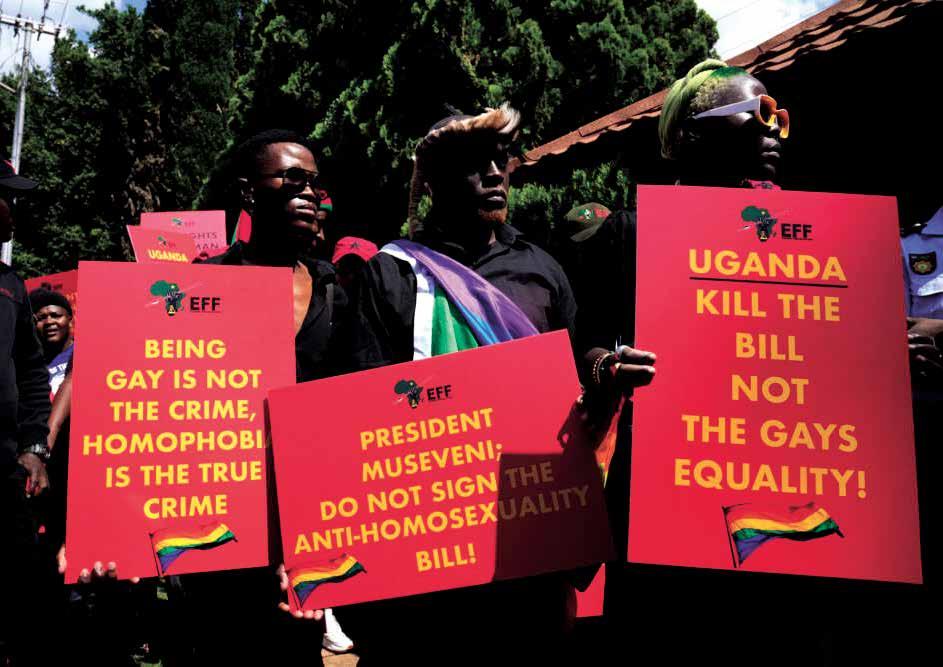
Ugandan Queer activists criticize EU for inaction over draconian law
In the ongoing fallout over the enactment of a strict anti-Queer law in Uganda, Queer activists have decried the European Union’s failure to suspend funding to the East African nation.
Jutta Urpilainen, the European commissioner for international partnerships, raised concerns that withholding financial assistance from Uganda due to this legislation would “deprive the most vulnerable populations, including LGBTIQ persons, [of] vital support,” according to a written statement delivered to the European Parliament on September 6.
“Disengagement by the EU would also create gaps which may be further filled by other players who do not share EU values,” Urpilainen said.
The Ugandan Queer organization Convening for Equality (CFE) slammed the EU’s position.
“The recent EU announcement misses a critical opportunity to take more strategic action to protect the fundamental principle of nondiscrimination — something the EU and EU member states profess a deep commitment to,” Clare Byarugaba, one of CFE’s leaders, told Reuters.
Frank Mugisha, another CFE leader, added that the EU had other opportunities to create an “effective response” to the anti-Queer law if it didn’t want to cut off financial support to Uganda.
“An effective response is one that finetunes and reallocates EU assistance to Uganda in ways that ensure that those who spout hatred and catalyze violence and discrimination against LGBTIQ people — including Ugandan government officials — won’t benefit from EU taxpayers’ money,” Mugisha said.
The EU’s decision comes in the wake of four arrests under the harsh and much-
criticized law, which prescribes the death penalty for acts of “aggravated homosexuality” and life imprisonment for “nonaggravated” homosexuality.
The impact of this law on the Ugandan Queer community cannot be understated, with the threat of violence, blackmail, and exclusion from public life looming over their head.
DeLovie Kwagala, a Ugandan photojournalist, told PinkNews that “violence against Queer people has been happening
over and over again” in the country.
“You are hunted for being Black, but at the same time you are also hunted for being Queer,” Kwagala said. “Visibility without protection is also a death sentence.”
Arrest in anti-Gay attack outside South London nightclub
A 19-year-old suspect has been arrested on suspicion of carrying out a brutal attack that has rattled London’s Queer community.
According to the Metropolitan Police, the suspect was arrested Thursday in South Norwood on suspicion of two counts of grievous bodily harm. Police had previously released surveillance images of the suspect in a search for leads, though to date, they have not publicly named him.
Metropolitan Police Det. Supt. Vanessa Britton said, “The two victims have been informed and continue to be supported by our officers, including our dedicated LGBT+ community liaison officer.
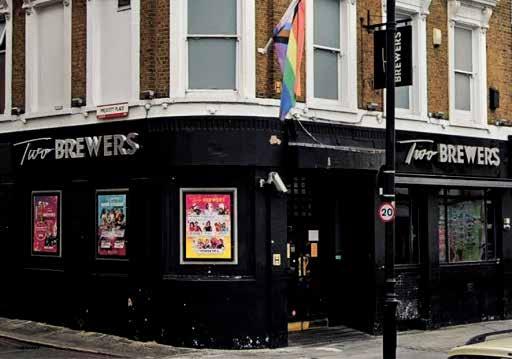
The arrest follows an August 13 incident in the London-area municipality of Clapham, where two Gay men in their twenties and thirties were stabbed in an unprovoked attack outside Two Brewers, a Gay pub. They were taken to the hospital, where they were treated for their injuries and released.
The attack put the Queer community on edge, with bars and pubs stepping up security and Metropolitan Police patrolling the area more thoroughly and escorting staff to their cars.
“I know the concern and distress this horrific incident has caused among the LGBT+ community, and I want to reassure them — and Londoners as a whole — that a team of officers is working diligently to investigate,” Britton added.
Mayor of London Sadiq Khan posted on X, formerly Twitter, the day after the attack, saying there was “no place for hate in London,” adding that he stood with Queer Londoners.
Speaking to the BBC, Ian Howley, chief executive of the charity LGBT Hero, voiced the fear that the attack caused the Queer community, calling it “something that makes you think twice about your own actions, about the way that you talk, the way that you dress, the way that you are as a person.
“You kind of see yourself as a beacon for hate and people want to... physically and verbally abuse you for being who you are as a person. And I find that really shocking.”