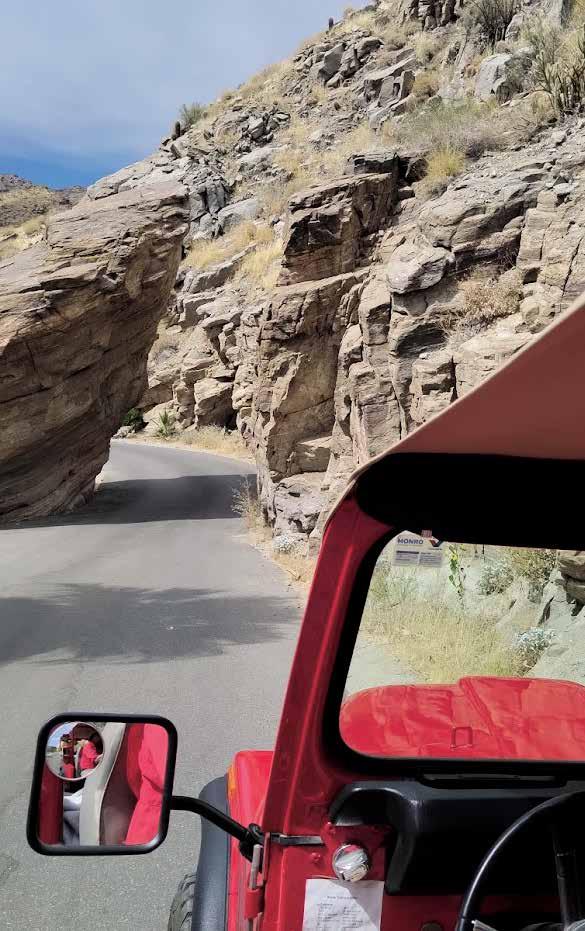
Photo courtesy of Ed Walsh

BY BENNY LOY SGN ACTING EDITOR
I often hear Washingtonians discussing trips to Las Vegas or California when considering where to vacation. While traveling to these popular destinations is very desirable, here in the Evergreen State, we have many opportunities to explore without the stress and expense of boarding an airplane.
Port Angeles
My fiancée proposed to me in Ape Cave on Mount St. Helens during the 2022 Memorial Day weekend. Since then, we’ve planned to visit every national park.
So, for the 2023 Memorial Day weekend, we traveled along the Washington coast, heading toward the Hoh Rain Forest. Our first stop on Friday night was Port Angeles, where we escaped the Seattle traffic with one of our dogs in tow and slept soundly in our hotel room.
If you find yourself there, I highly recommend kayaking near Ediz Hook with the seals and star gazing on Hurricane Ridge. At the latter destination, look up when the Olympic Telescope astronomers group will be there — on my visit in 2019, they were kind enough to show me the rings of Saturn.
Neah Bay
Port Angeles was our pit stop before beginning the rest of the journey. So when we awoke on Saturday, we loaded back into the car and drove down the winding Strait of Juan de Fuca Scenic Byway to Neah Bay.
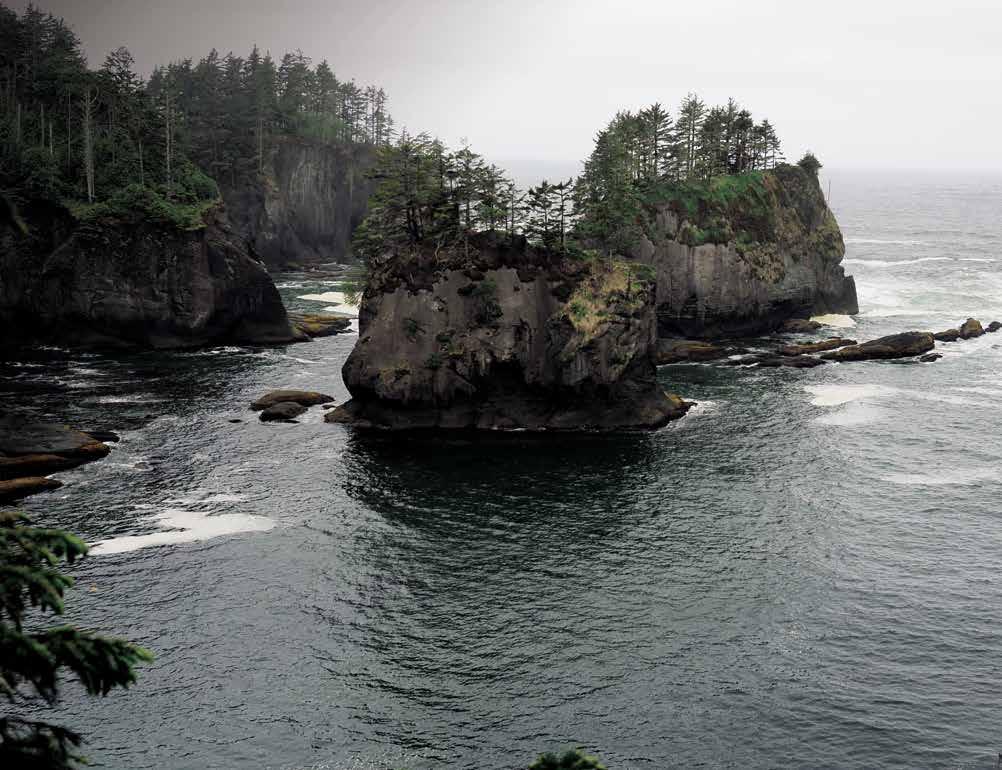
We had many miles ahead of us, so our visit to the bay was short. Our goal there was to walk along the forested trail to Cape Flattery, the northwesternmost point of the contiguous United States. When you reach the end, you’ll find yourself on the edge of rocky cliffs overlooking the ocean. Watching the roiling waves crash against the cliffs as the wind pushes against you is a sight to behold.
Forks, Washington
Next was Forks, a city famous for its association with the Twilight series. We checked out the visitor center and watched as gaggles of young women took photos with a cardboard cutout of the character Edward Cullen, played by Robert Pattinson.
Finding the Twilight T-shirts not our style, we made our way to our true objective, the Forks Timber Museum, which resides in a cozy wood cabin. Walking through the displays of local logging history is a short and quiet experience — after trying to weave through the vampire enthusiasts in the visitor center to get to the bathroom, I was glad for that. I recommend stopping by on your way to your next destination.
First attempt at the Hoh Rain Forest
The drive was calm, and we thought it wouldn’t be busy, but as we approached the last mile before the gate, we realized reaching the fabled rain forest would be impossible that day. Car after car was bumper to bumper in a line so long that you could not see the entrance from the back.
We waited a while until we spoke to someone walking down the road. They explained that the expected wait time was five hours — and that that estimate was most likely very optimistic. We learned from this experience that to visit Hoh, you’ll have to avoid the crowds. We vowed to return and went on to our Ocean Shores hotel.
First night in Ocean Shores
We arrived at the Shilo Inn, which I’d recommend for its proximity to the beach. We wanted to eat at the hotel’s restaurant, but unfortunately, it was closed due to understaffing. Down the road was the only sushi place in town, so we ordered some prepared by a chef with a pistol on each hip. I don’t recommend choosing sushi in Ocean Shores, though. You will fare much better with a clam chowder.
Sunday morning, I started my day with a scare. I showered and turned on the old hair dryer affixed to the wall. Suddenly, it started pluming with smoke and refused to turn off. I was afraid it would begin to spit flames, but fortunately, it burned itself out and stopped. Hotel maintenance removed it and put a backup hair dryer in its place. On a whim, I decided I preferred air-drying my hair and would do so for the rest of the trip.
Astoria, Oregon
We drove along the rest of the Washington
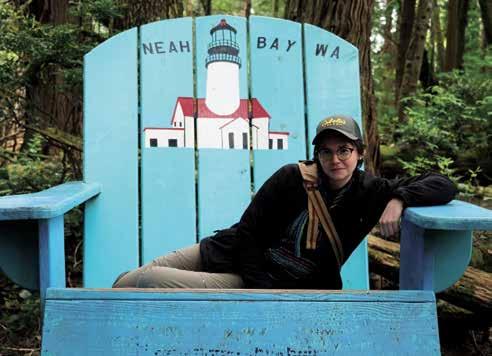
coast and stopped in Astoria, Oregon. We had completed half of our goal and decided to celebrate in this unique city between the Pacific Ocean and the Columbia River.
Astoria is famous for being a shooting location for several films, such as The Goonies, and so is home to the Oregon Film Museum, a favorite for cinephiles.
We arrived in town during a street festival and perused the arts and crafts stalls. Afterward, we went to Godfather Books, a must-see for the avid reader. The atmosphere in the store was very chill, and the staff were accommodating. The book selection featured robust Pride and localauthors sections.
Exploring Ocean Shores
We returned to Ocean Shores, and on Monday, we decided to spend the day there. We rented a beat-up moped from Affordable Mopeds. The process to rent was easy but not for the faint of heart. They gave us a short primer on driving a moped and handed us our helmets.
We packed our things into the storage compartment in the seat. My fiancée and
I shared one moped, and she drove us along Ocean Shore’s roads. I clung to her as the moped whirred, and I tried to stifle my anxiety. My advice: stick to the streets! They’ll tell you you can ride along the beach, but god forbid you hit a patch of sand that hasn’t been packed down by other vehicles. After a few harmless topples, we gave up on the idea of a romantic beach ride and returned to driving on asphalt.
At one point, we wanted to get our things from the storage compartment — and found that the lock was broken. We returned to the shop, and the mechanic broke the latch to open it. He said that it was okay to keep riding it after. I observed the state of some of the other banged-up rentals and wondered if some ran on the drivers’ faith alone.
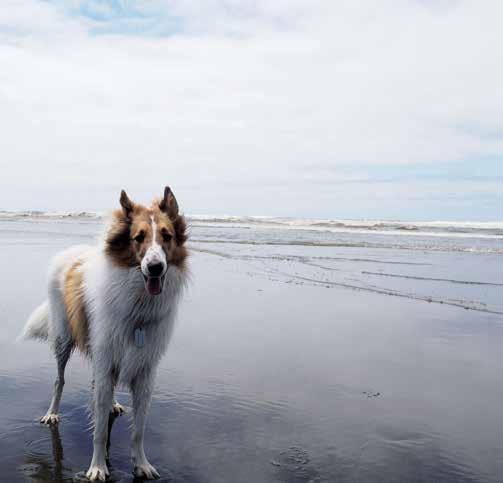
We returned our moped and went to the beach with our dog, Caius. We had never seen him love a place more as he galloped across the sand joyfully. We ran along the water and played keep-away with the waves. Our collie met some other dogs, and they played together. I was happy to see our canine so happy and worn out when we returned to our hotel in the evening.
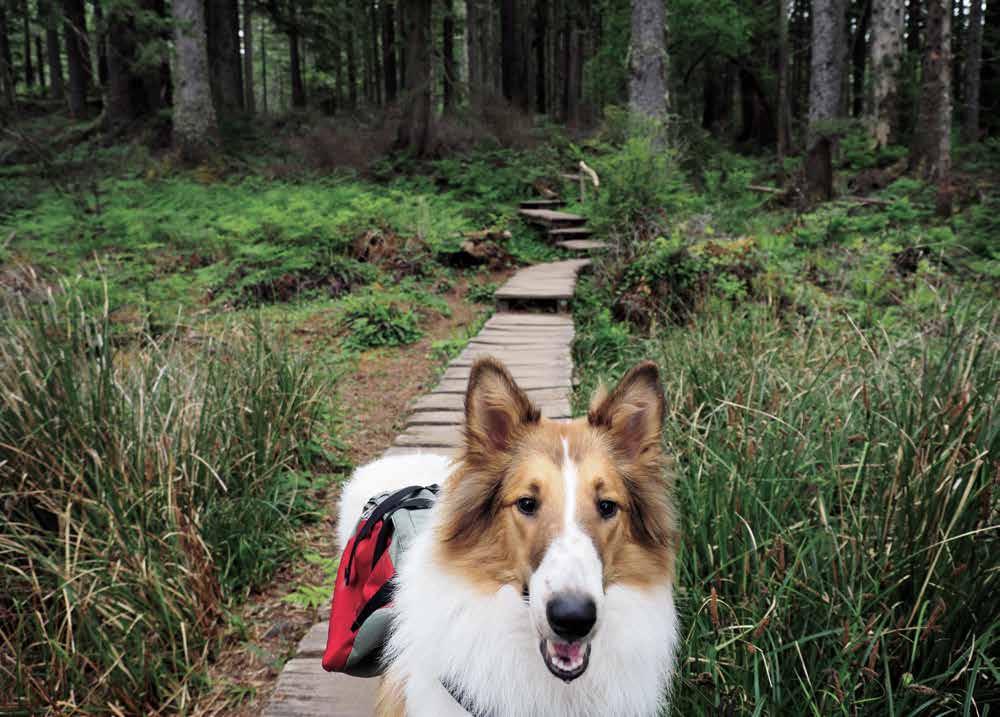
Tuesday morning, we checked out of our hotel and headed for the Hoh Rain Forest. We hoped our bet that most vacationers would be headed home and that the line into the park wouldn’t be impossibly long would pay off.
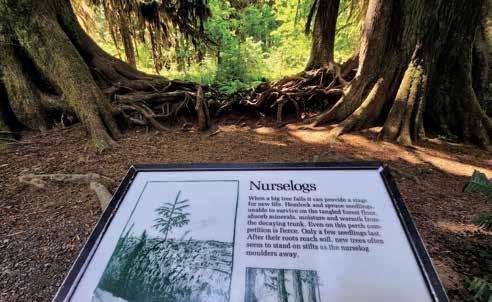
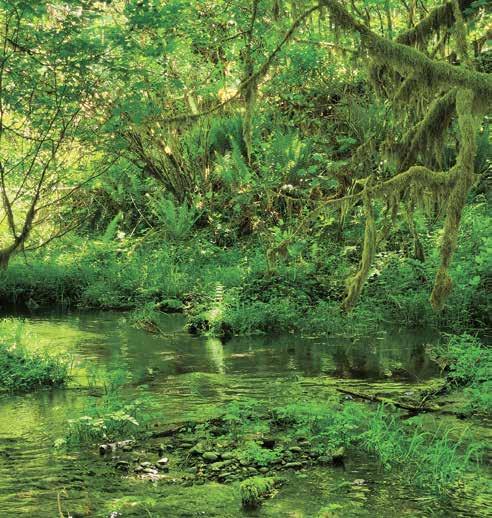
It was busy, but getting in only took a few minutes. We trekked into the greenery and were awed at the crystal-clear stream running under the path’s footbridge. Trees and bushes beaming with dark green leaves surrounded us, and I spotted a mother duck with a line of ducklings behind her, calmly floating in the water. It was tranquil; even the wildlife that flitted about the forest floor seemed to know that this was a place of peace and showed no fear of the visitors.
We went down the Hall of Mosses trail and came to its end, an open circle, fenced off to keep hikers from straying from the path. Like the trail’s namesake, the trees
stood around us, with curtains of hanging moss draped over their branches. Standing there and observing the rain forest that had been dutifully protected from the rest of the world, I felt a sense of spirituality come over me. Few places exist anymore that haven’t been drastically altered by human hands.
Visitors are warned to stay on the trail and do their best not to leave any trace of their presence there. I wondered whether working at preserving this place felt anything like being a devout monk caring for a monastery.
We followed the Spruce Nature Trail and said goodbye to the Hoh Rain Forest. I’m glad that we ended the trip — which was full of gorgeous scenery and interesting towns — in the rain forest. It reminded me of the importance of maintaining our national parks. Try it sometime and celebrate the incredible destinations our state has to offer.
by Lauren Vasatka
a welcoming, diverse culture and wide range of experiences in a stunning setting
BY CHAD MANTOOTH, DALLAS VOICE SPECIAL TO THE SGN
Having grown up in Kansas, in the middle of the United States, I’ve always longed to see more than the flat, flyover states that are the Midwest.
When I was a kid, my dad was a huge Olivia Newton-John fan. She was his Australian heartthrob. Many a schoolday, I would come home to her music blaring or one of her live concerts in the VCR. And as a young Gay boy, I was mesmerized by her as well. She was pretty, sang beautifully, and was from this great land far, far away.
I wondered how this pop chanteuse from Down Under got into my living room. And I always wondered what her homeland of Australia was like. Was it filled with dangerous animals as everyone suggested? Was there something at every turn that could kill me?
To me, it sounded exciting! I’ve always tried to live my life by a Helen Keller quote I heard while in high school: “Life is either a daring adventure or nothing at all.” And it was with that mindset firmly in place that I packed my bags this past spring to visit that mystical place.
Queer friendly
Australia is one of the most LGBTQfriendly countries in the world, with a progressive culture that embraces diversity and inclusivity. Australia decriminalized homosexuality in the 1970s and legally recognized same-sex marriage in 2017. The country has a very vibrant and dynamic Queer community, and it is a popular destination for LGBTQ+ travelers.
Sydney, the largest city in Australia, is often considered the Queer capital of the country. It hosts the famous Gay and Lesbian Mardi Gras, an annual festival and parade that attracts more than 300,000 visitors from around the world. The event, featuring colorful floats, music, and performances, has become a symbol of Australia’s commitment to LGBTQ rights and is a must for anyone traveling to Australia at that time.
The parade, beginning with the roar of hundreds of “Dykes on Bikes,” is truly a sight to behold. The whole country comes to slay! Everyone puts on their brightest colors and outfits for this over-the-top event. It was one of the best (and longest) Pride parades I’ve ever been to.
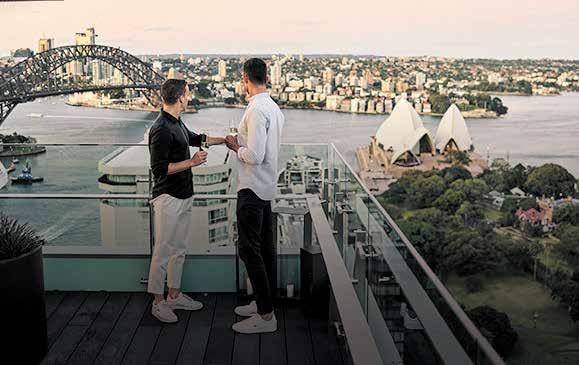
In 2023, Sydney hosted the 2023 WorldPride festival, and the city rolled out the rainbow carpet for the estimated one million-plus people, staging more than 400 events. And when I tell you that Sydney
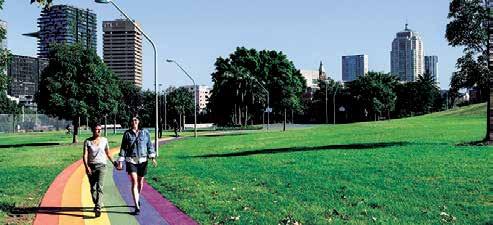
went above and beyond — well, that’s a complete understatement. Everywhere I went, everything was covered in rainbows — from the sidewalks to the lighting on buildings, to the pins and buttons on every employee I saw in every shop. It was like Gay was the norm and straight was the minority — it was weirdly fabulous!
Australia has several LGBTQ-friendly beaches, including the popular Bondi Beach in Sydney, home to the Bondi Gay and Lesbian Beach Picnic, held on the first Sunday of every month. It’s a great way to meet other LGBTQ travelers.
Melbourne
Melbourne is another great destination for LGBTQ travelers. Aside from being the current home of my favorite pop star, Troye Sivan, the city is known for its vibrant arts and culture scene and has a thriving LGBTQ community. The annual Midsumma Festival, a three-week celebration of Queer arts and culture, features a range of exhibitions, performances, parties, and other events.
If shopping is your thing, check out the 145-year-old, open-air Queen Victoria Market, which as more than 600 small businesses from which you can buy everything
from Australian fruits and veggies to gourmet food, clothing, and souvenirs. There is literally something for everyone.
Wild Australia
What initially drew me Down Under were the lush landscapes and wild animals I saw on TV growing up. The country is home to some of the world’s most stunning natural wonders, including the Great Barrier Reef, the Outback, and the Blue Mountains. LGBTQ travelers can explore these through a range of activities, including hiking, snorkeling, and even zip lines and hot air balloon rides.
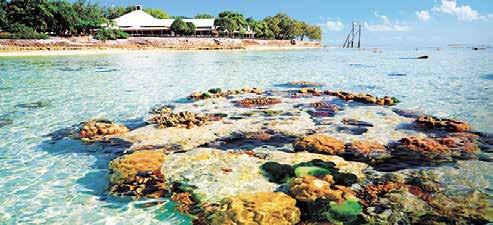
One favorite stop was the breathtaking Heron Island, a stunning coral cay located on the southern Great Barrier Reef, off the coast of Queensland. Accessible only by catamaran or helicopter, it offers a secluded and pristine escape for travelers looking for a uniquely tranquil experience.
The island also boasts world-class snorkeling and scuba diving opportunities, giving visitors the chance to swim among vibrant coral reefs and an abundance of marine life, including sea turtles, manta rays, and reef sharks, while its sandy beaches provide a picturesque setting for sunbathing and leisurely walks.
The island is also a breeding ground for several species of seabirds, including the endangered black noddy tern and the wedge-tailed shearwater, making it perfect for birding enthusiasts.
I spent three glorious days on this piece of paradise and have never felt so relaxed in my life. I got up close with nature — and every kind of wildlife you could imagine — in a way that I’ve never experienced before and will never forget.
Accommodation options on Heron Island range from eco-friendly tents to luxurious suites, with all rooms offering stunning views of the reef and the lush vegetation. Facilities include a restaurant and bar as well as guided nature walks and reef talks. If you need a chance for some peaceful rest and rejuvenation, especially after all the excitement of Sydney and Melbourne, Heron Island is perfect. Its remote location and unparalleled natural beauty make it a must-visit destination.
Food and wine
Australia’s food and wine culture is yet another draw for LGBTQ travelers, offering a range of culinary delights, from fresh seafood to world-class wines and unique indigenous cuisine. I know I came back to the states 10 pounds heavier! The cities of Melbourne and Sydney are particularly known for their food and wine scenes, with a variety of LGBTQ-friendly restaurants and bars. Overall, I spent a little more than two weeks in the Land Down Under. I loved it so much that I’ve decided I will definitely be going back to vacation there again, and I might even move there some day! The welcome I felt from the people there is something I will never forget.
Aussies care about their country and the people in it. From the moment I touched down until the minute that I left, I never felt unwelcome anywhere I went.
The country’s progressive culture, natural beauty, and diverse cities make it an ideal vacation spot for LGBTQ individuals and couples. Whether you’re looking to attend a Pride parade, explore the great outdoors, or simply relax on a beautiful beach, Australia has something to offer everyone. So, pack your bags and come and say, “G’day.” You won’t regret it!
For more information on traveling to Australia, visit https://www.australia.com.
Courtesy of the National LGBT Media Association
BY CAMERON MARTINEZ SGN CONTRIBUTING WRITER
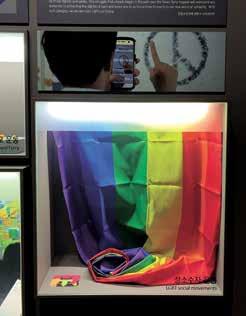
I know what some of you are thinking: “11 hours and 40 minutes on a plane is a really long time, and the culture is very different from Seattle.” Well, I’m here to prove to you that a trip to Seoul is worth your while.
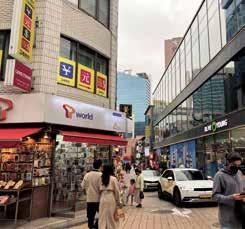
From late August to December 2022, I studied abroad at Yonsei University in the Sinchon neighborhood of Seoul. While I may not be an expert on the city because of my elementary-level Korean, I still think I can give some fantastic recommendations on fun activities to do and delicious food to devour.
Most people don’t like homework, but trust me when I say doing these things before your trip to Seoul will make it way better.
The first is learn hangul (the Korean alphabet), and thanks to the internet, you can do this in 30 minutes. The YouTube video I used is “Learn Hangul 한글 (Korean Alphabet) in 30 minutes” (https:// www.youtube.com/watch?v=85qJXvyFrIc) by Korean with Miss Vicky 빅키샘 한국어
Once you have that down, you’ll be able to understand a good number of words with similar spelling and pronunciation to those in English.
Here are a couple of words to make you feel like a pro:
•바나나 (pronounced bah-nah-nah) means banana.
•핫도그 (pronounced hawt-doh-g) means hotdog.
•치즈 (pronounced chee-jeu) means cheese.
You should also learn some of the main key phrases. The most important word you need to know is thank you, 감사합니 다, pronounced kahm-sa-hahm-nee-dah, which you should always follow with a bow whose deepness reflects how thankful you are for what happened. For reference, this would be a slight bow for a McDonald’s worker and a deeper one for a tour guide.
Queer in Seoul
When I planned for my trip to Seoul, I was worried about how I might be treated as an openly Queer person. While my experience in no way reflects the experience of everyone, I still think it’s important to say that I was generally treated well. Since I was a white person wandering the streets of Seoul, I was already seen as different, so the Queer part of the equation was never really considered.
Korea is a generally conservative country: only 38% support same-sex marriage,
according to a 2021 Gallup Korea Poll.
That same poll says that 73% of Koreans in their twenties are in favor of same-sex marriage, so the homophobia mainly comes from older generations.
Every time I encountered a Queer Korean, it was a bit of a secretive moment, in which they confided in me because of my openness with my sexuality. I also heard about Queer people of East Asian descent being verbally harassed by older people who mistook them for Koreans.
So it’s not an ideal scenario, but neither is the situation in the United States right now. For me, it feels like choosing between the Queer-based violence of the US and the subtle homophobia of Korea. In terms of safety, Korea is my pick, but I also don’t speak Korean, so if anything bad was said to me, I was unaware of it.
Despite Korea’s conservative attitude toward the Queer community, Seoul still has a plethora of Gay bars. The two best neighborhoods for Queer nightlife are Itaewon and Hongdae. The former is the old location of an American military base, so it has an international crowd; the latter is located between three universities, so it’s known for its youth-like, artsy vibes.
Some Gay bars in Seoul restrict access to foreigners, so I recommend checking out the Queer Korea Information group on Facebook.
Attractions in and around Seoul
Seoul is one of the most uniquely designed metropolises in the world. Among the forest of space-age-like skyscrapers are palaces, remnants of the wall that used to protect the city, and museums that tell the history of this place that has been conquered over and over.
One of the craziest-looking buildings (probably in the world) is the Dongdaemun Design Plaza. The complex, which stands in the exact location of a sports stadium built during the Japanese colonial era, is worth visiting for its architecture alone, but it is also a mecca for design lovers because of its museums, labs, and other spaces. (Not to mention that it is also surrounded by countless shopping malls.)
No trip to Seoul is complete without seeing one of its five palaces. My two personal favorites are Gyeongbokgung and Deoksugung. The former, the largest of the remaining palaces, lies at the foot of Bugaksan Mountain in the financial district and features an abundance of re-created buildings. Given its size and location, it is the most
popular palace tourists visit. Deoksugung gets significantly fewer visitors, but it is just as beautiful. I would go to Gyeongbokgung to learn about history and Deoksugung to relax alongside the thrones while listening to music.
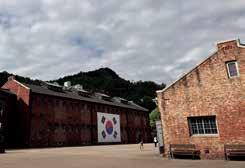
This might sound strange, but my favorite place in Seoul is the Seodaemun Prison History Hall. It consists of the remnants of a Japanese colonial-era site where Korean nationalists were imprisoned. While the history and stories of the place are tragically horrific, they give context to how hard the Korean people fought to keep their culture, which gave me a deeper appreciation for the city.
The Demilitarized Zone is worth a day trip. It’s the closest any American can get to North Korea, and despite the history of the area, it’s gorgeous in terms of nature.
Not only does Seoul have some of the tastiest food in the world, but it’s also very cheap.
I’ve eaten a lot of fried chicken in my life, but nothing compares to the Korean version. Even the chicken at KFC and McDonald’s was better than anything I had ever eaten in the United States. Korean fried chicken is typically accompanied by beer and eaten with large groups of people. It’s one of the best things ever.
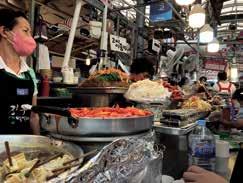
As you walk down the streets, you’ll notice a lot of old ladies running food stands. They know how to cook, so you should stop to get something. My personal street food favorites are mozzarella hot dogs, tteokbokki (spicy rice cakes), bindaetteok (stuffed pancakes), lobster tails covered in cheese, and gimbap (a Korean version of sushi).
If you’re in an especially large group of people, you should check out a barbecue place or get some dakkalbi (spicy stir-fried chicken). At the former, you cut and cook all your meat on the table. At someplace serving the latter, you are given a bunch of chicken, veggies, cheese, and whatever else you’re craving, and it is all stir-fried in front of you. Both experiences are typically accompanied by soju shots and cups of beer.
This guide only covers a small portion of what you can experience in Seoul, because there is a lot to do there. If you’re interested in making the trip, I recommend checking out in-depth neighborhood guides beforehand because of how drastically different some parts of town are compared to others.
Happy travels!
LGBT people like to travel, and like many others, they take cruises to see the world or just to relax. It used to be, when taking something as personal as a cruise — where you’ll be with people in close quarters and where conversations can be easily overheard — you might have felt uncomfortable to be yourself.
Today there are numerous LGBT cruises for almost every segment of the community, where you can be your fabulous self and party until dawn or more. Among those companies are Atlantis Adventures, primarily for men; and Olivia Cruises for women.
But those companies still form only a fraction of available sailings. So, how welcoming are non-LGBT cruises?
My husband Jason and I have been on numerous cruises on many LGBT and nonLGBT lines. For our current trip, we booked with Oceania, a line known for its food (they claim to have the best food at sea), exceptional attention to detail, and out-of-the-ordinary shore excursions. We chose Oceania once before, and it was better than most of the other cruises we’ve taken.
Another advantage of Oceania is that it offers exotic itineraries. Our July voyage started in Reykjavik, Iceland, and then proceeded to Greenland, the Shetland Islands, Denmark, and Sweden before ending in Oslo, Norway, after a whopping 15 days. We traveled with another Gay couple, our friends Klay and Val, who are out and proud like us.
And that really is the heart of the question: how out and proud can LGBT people be on a traditional cruise?
Out and proud?
On the first night, the ship promoted an “LGBTQIA+ get-together” on the daily schedule printout. The four of us attended, along with three other couples, though we weren’t the only LGBT people on board. Throughout the trip, we met many others, mostly couples, who had also had other cruise experiences. I asked many of them why they picked this cruise over an LGBT one, as well as how comfortable they felt being out on the ship.
The overwhelming answer was that people on a cruise, like the general population, gravitate to like-minded people, and since everyone’s on vacation, it’s easier to get along. Most of them were comfortable being open about their sexuality.
Jason and I felt comfortable enough to show our emotions at times and hold hands or put an arm around each other, just like non-LGBT couples. It made a larger point for me. Could we have done that a decade ago? The answer is: probably not. So in that regard,
traditional cruises pass the comfort level for LGBT people.
But what about the more nuanced reality of being one of the 3% on a cruise?
Like any cruise, we found ourselves making our own friends, who turned out to be a fascinating lot. There was a couple who work at a small college and are developing new ways to be inclusive of LGBT students. There was also a retired couple from Seattle, and another from Dallas. That’s the secret sauce in cruising: finding the people you get along with and having a nice time.
For all of us, the two factors that led us to choose this cruise were the itinerary and the reputation of Oceania. Let’s start with the stops.
The departing port, Reykjavik, deserves a few days to tour, since Iceland has some of the greatest landscapes and wonders on earth — and if you’re lucky as we were, you will be met by an active volcano. So we arranged for three days of touring with an LGBT company called Pink Iceland (https:// www.pinkiceland.is). (There not only is a sizable LGBT population in Iceland, but it seems that everywhere you go, there are rainbows. The country even has had a Lesbian prime minister. It’s one of the most LGBT-friendly places on earth.)
Our first day, we traveled to the south shore and marveled at the raw natural landscape, which looks like something from the moon but is actually dried lava with moss growing atop. Volcanoes and glaciers are everywhere, and so you’ll see steam coming up from the ground in certain places. This has translated into natural geothermal energy that powers the country, as well as natural glacier water (which tastes better than any bottled water) in every home.
Later that day, we went to the black beach at Reynisfjara, with its basalt rock formations from eruptions thousands of years ago. We also visited and walked behind several waterfalls, and the sunshine meant that rainbows were aplenty. It was wet, magical, and romantic.
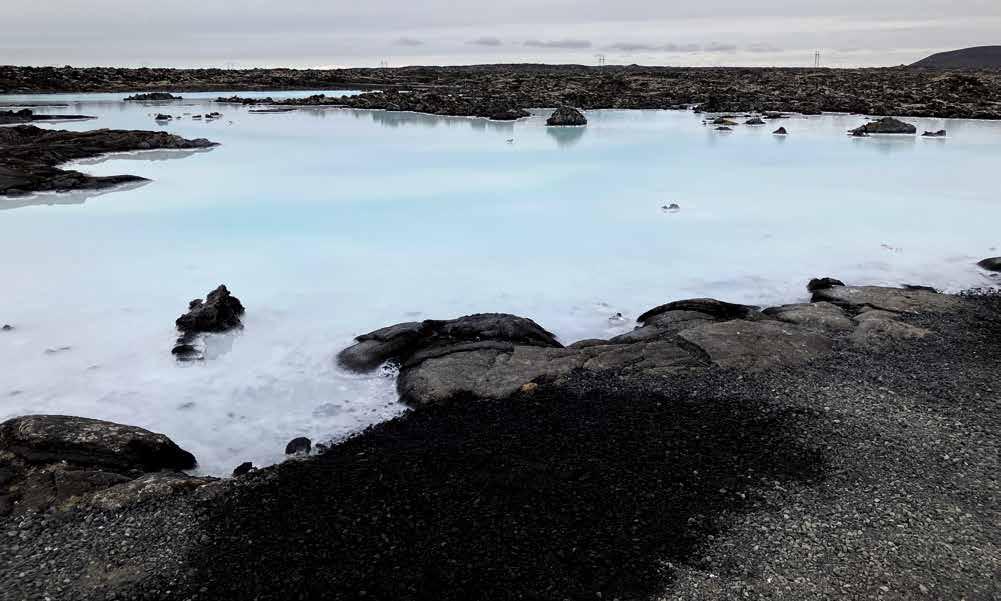
Our second day began with an adventurous ATV ride on that moonscape with a stop at a dormant volcano’s top ridge. With me driving, Jason held on for dear life. Afterward, we spent the afternoon in the worldfamous Blue Lagoon spa, where there are pools of volcanic minerals and silica that are a color of blue you’ll see no other place on earth. As you soak, you can apply those minerals as a face mask. Even though it was around 50 degrees outside, by the time we finished, we were all pleasantly overheated.
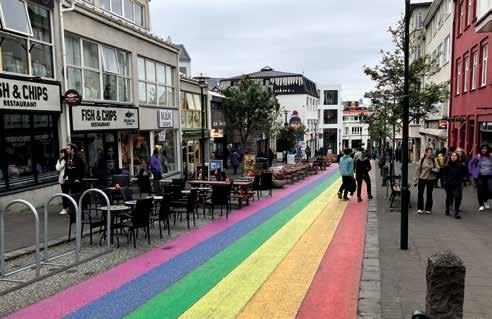
On our third day, we toured the capital city, Reykjavik, which is easily walkable and features a long rainbow-colored street. We then attended a get-together organized by Eva and Birna, the owners of Pink Iceland, with some local LGBT community members, including a member of Parliament and playwright Bjarni Snaebjornsson (@bjarni.snaebjornsson on Instagram), who was the first to come out in his village in western Iceland. The audience was among the most engaged I’ve ever spoken to, and they asked insightful questions and were delightful to talk with. Iceland is a country built on stories (called the Sagas), so the people are keen to learn the stories of others.
After our three days in Reykjavik, we went onto our ship, the Oceania Riviera
The ship had recently come out of dry dock after a total renovation. The cabin was the most beautiful we’ve ever seen at sea,
and had ample closet space and a bathroom with a rainfall shower. Our home away from home would be comfy.
Our friends Klay and Val opted for a larger room with butler service. It had more closet space than some New York apartments, and the amenities were above average. But their butler, as they learned, seemed to have had no understanding of his role and often overcomplicated things.
Ísafjörður, Iceland
Iceland is still developing its infrastructure for tourism. Our ship had provided 10 shore excursions, but all were completely sold out before we even boarded, including the one we wanted most: whale watching. The fact that excursions sell out months before the trip was not fully communicated to us. When we attempted to book six weeks before the trip, many ports had no available excursions.
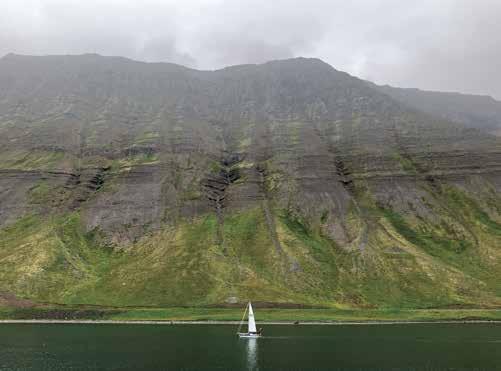
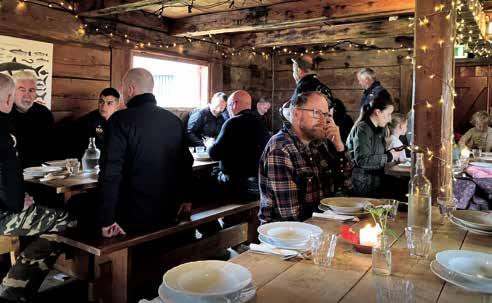
Nevertheless, in this small fishing village, left to our own devices, we discovered one of the treasures of Iceland, the Tjöruhúsið Restaurant, serving the most traditional Icelandic food in the country. You still needed a reservation, though, since locals and tourists come from all over for its cuisine. But with true Icelandic hospitality, the staff found room and were kind enough to seat us, and I must admit that while I’m not a seafood eater, it was amazing. The buffet meal included a fish soup, five types of fish entrees (including fish throat, which I didn’t know existed), various vegetable combinations, coffee, biscuits, and chocolate.
After the meal, we took a stroll through the village and discovered that besides fishing boats, fjords, and homes, the town has a main square with a giant rainbow painted down the center. That’s two for two cities in Iceland with rainbow streets.
Paamiut, Greenland
Our second stop was a small village of about 1,300 whose whole economy was based on fishing and seal hunting. Very few cruise ships have ever stopped there, and for good reason. While there are limited facilities and the infrastructure is sparse, the main problem was that as we approached, the seas were somewhat choppy, and we found ourselves in a sea of icebergs.
Before I could suggest to everyone that we all break out into a chorus of “My Heart Will Go On,” the captain stated the obvious: he canceled the adventure in Paamiut. It was not safe to take the tenders ashore (there was nowhere to dock in a port that small). However, a consolation prize was being treated to a sea of majestic icebergs as we sailed away.
That evening, the entertainment and information system in all the staterooms went down. No television, no stateroom information, no map. Not only was the television system down, but the ship’s entire network went down as well. The casinos were out of service, and bartenders and shop staff had to write down stateroom numbers on paper receipts. Getting information about the problem was met with what would become a common complaint on this trip: a lack of communications skills on the part of the staff.
But we moved on to the next port of call, which turned out to be one of the highlights of the trip.
Nuuk, Greenland
The capital of Greenland, Nuuk, held its Pride celebration the week before we arrived. Discovering small cities with Pride events astonishes me even to this day. We had tried to find a Nuuk Pride T-shirt, but since the city is so small (17,000 people), the organizers told me they didn’t have the funds to create merch.
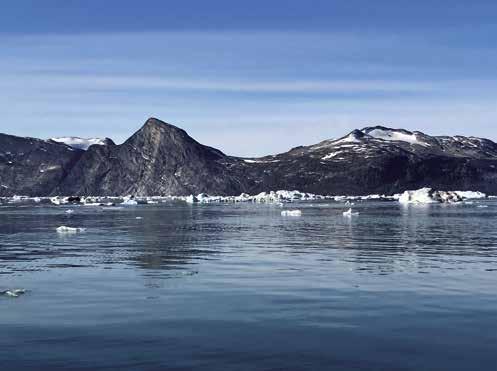
For our excursion for the day, we chose the fjord boat tour, which was majestic. Our driver dodged icebergs like a taxi weaving in and out of traffic. When we stopped for a few minutes, the calmness and solitude — and being surrounded by ice and mountains — was otherworldly.
Sadly, our driver said that 10 years ago, none of the ice in the water was there; the current state was a result of climate change and melting ice. I shudder to think what the area will be like in another 10 years.
Qaqortoq, Greenland
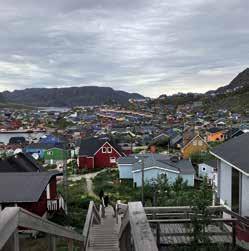
In this 1,500-person city south of Nuuk, the excursion we chose was the “Kaffemik,” basically enjoying coffee and traditional Greenland cakes in a private house. We walked up the hills and passed by colorful homes to get to the residence of our host, a charming, 80-year-old widow with Swedish ancestry who explained Greenlandic culture. One of her children was there to help translate, while her other children live in Denmark (of which Greenland is a territory, and which, during the pandemic, sent ample funds to make up for Greenlanders’ loss of income.)
After we wrapped up our sightseeing, while walking around the ship that evening, we came across a portrait of the godmother of the ship, Cat Cora, the famous Iron Chef. She and her wife and children were also among the guests on board with us. We went to see her give a talk the following evening. We figured that, since there was no working casino or stateroom entertainment, meeting an Iron Chef would be worth seeing. During her presentation, she introduced her family, and afterward, we got a chance to chat. When I asked her about how it felt introducing her wife, she said, “That’s what we need as a community — we need to be more visible.”
That was music to our ears.
Torshavn (Faroe Islands), Denmark
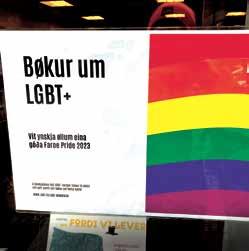
The charming capital of the Faroe Islands is a wonder of old architecture and homes with grass roofs. The town’s library had several LGBT books on display in the window, due to the previous week’s Pride celebration. After learning about Pride in Nuuk, Greenland, and now also the Faroe Islands, this trip proved to me what I’ve always believed: that Pride is one of the best exports America has ever given to the world. I thought of my friend Ellen Broidy, who helped write the resolution that created Pride, and all of us who marched in that first Pride in 1970 in New York.
Lerwick (Shetland Islands), Scotland
Believe it or not, it was actually stated in the ship’s excursion brochure that an “encounter with Shetland ponies is not guaranteed,” which gave me a chuckle.
The tour we took in Lerwick included going to the town’s museum to learn about the Shetland Bus (which ferried people and supplies back and forth to Norway during WWII) as well as, thankfully, a stop at a Shetland pony farm. Seeing these animals and the beautiful green hills full of sheep was the highlight of this stop.
One surprise was that while the Shet-
lands are part of Scotland, the citizens feel culturally closer to Norway, and there are lots of Viking motifs.
Haugesund, Norway
While there were excursions available to see the Norwegian fjords, by this point in the trip, we needed a little bit of a break, so we simply walked around the town’s main square, bought a magnet as a souvenir, and enjoyed the warm sunshine, the first day above 50 degrees we’d had in two weeks. One of the Queer couples did go on a fjord tour, and they said it was beautiful, despite spending three hours in a bus to get there.
Skagen, Denmark
Skagen is the picture-perfect Danish seaside town. I’d recommend not doing any guided tours but rather just walking around the downtown area on your own. There are museums, art galleries, shopping, and plenty of outdoor cafés and bistros. There are also top-notch garden shops for those who have a green thumb.
Gothenburg, Sweden
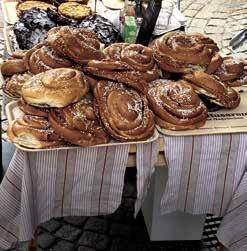
Sweden’s second-largest city (population: 579,000) is a model of a beautiful European metropolis, with Second Empire buildings and a very large central shopping area. We stumbled upon some fun shops, including one dedicated to Pippi Longstocking, as well as the largest cinnamon rolls and cookies we’ve ever seen. We took some time to sit in a park and enjoy the surroundings.
On the final night of the cruise, we enjoyed a performance by Tiano, the tenor and piano duo of Shimi Goodman and Chris Hamilton. They dedicated one of the love songs to Val and Klay, who were celebrating their 25th anniversary. The duo will soon embark on a North American tour, and we’re looking forward to seeing them again. They’re also a couple, and they mentioned that they were glad to meet other LGBT people on the ship.
Delight and some disappointment
The cruise ended in Oslo, Norway, and many passengers planned a couple-day layover before heading home. But others, like Jason and me, decided to head to the airport the morning of disembarkation, and we purchased tickets from the ship that would transfer us and our luggage to the airport. The luggage was put in a truck, and we were ushered into buses. The process was confusing, and there was no ship representative at the airport to direct us where our
luggage was. Ultimately, the truck arrived about 15 minutes after we did, and everyone was reunited with their bags.
Compared to the other Oceania cruises we’ve been on, this one failed to meet expectations. While it had what seemed like the best cabin at sea and a wonderful itinerary, the staff, while helpful, seemed to be learning on the job.
The other major disappointment was the food. Oceania no longer has the best food at sea. Other than the specialty restaurants, it was similar to any other ship at best, and at times, some of it was severely disappointing. Also disappointing was the lack of available shore excursions, and lack of communication skills. The absence of information, especially from the cruise director and excursion staff, was subpar compared to many other voyages we’ve been on. And while the ship did go to ports that have little infrastructure, there are ways to mitigate that, which the staff did not do.
While the experience did not bolster Oceania’s reputation, it still afforded us delight in the people we met and the destinations we saw along the way. That’s what we’ll remember most. A private party with some of the LGBT guests we met; Tiano on that final night; the maître d’ in the dining room who seemed to know the name of every passenger on the ship — each evening we had the pleasure of sharing our experiences with our friends over dinner.
To sum up the reason for this trip: as an LGBT couple, we felt comfortable being ourselves on a non-LGBT cruise, and the other LGBT people we spoke with didn’t seem to have any issues either. As for whether we’d take Oceania again, we sadly would not, unless the itinerary was completely unique. Oceania seemed to have lost the sparkle that made it one of the best such companies around.
But despite the ship’s faults, seeing Iceland, Greenland, and so many other places was an experience of a lifetime. We can’t wait to go back to Reykjavik someday and tour more of the country and meet more of the people. And we’re forever grateful to have seen Greenland, a place of unparalleled beauty and where few others have ever been. It’s a reminder that the planet has existed long before humans, and that we are but a small part of the wide wonder of nature.
Courtesy of the National LGBT Media Association
BY TEDDY MACQUARRIE SGN CONTRIBUTING WRITER
My home state might not be what comes to mind when you hear the phrase “Queer travel destinations.” Chances are, you’d think of well-known places such as Palm Springs, Provincetown, and the major urban centers of Queer life like New York and San Francisco. But not Texas.
That’s not for lack of a good reason.
Texas is a state that disdains Queer life politically. Nonetheless, despite the loud antics and undeniably destructive outcomes of its red-dyed leaders, there’s a lot more to it than its worst qualities. I wouldn’t “recommend” it to Queer travelers, but neither would I discourage them from finding fun, joy, community, and a good meal while they’re there — in fact, consider such encouragement this expat’s way of practicing Texas hospitality.
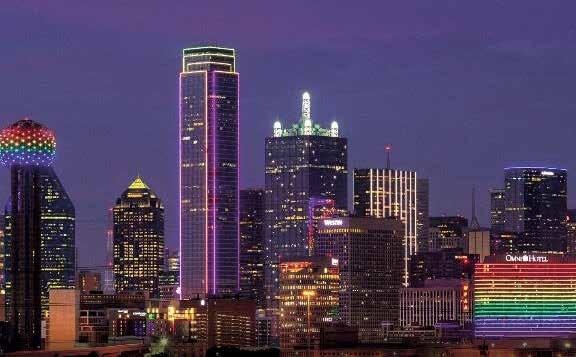
The state is home to many peoples with rich histories, unique cultures, and decadent cuisines. Despite its popular image, Texas is highly urbanized, with its largest cities (Houston, San Antonio, Dallas, Austin, and Fort Worth) accounting for 5 of the top 15 in the US. Those also contain two of the most vibrant gayborhoods in the country — Oak Lawn in Dallas and Montrose in Houston — world-class shopping and dining, and nightlife that is the envy of cities of similar profiles.
The two places in Texas I’ve lived in have much to offer Queer residents and travelers. I spent my early college years in Austin, and later moved to the Dallas-Fort Worth metroplex, where I stayed a decade. Living as a Gay man in the state was always a challenge, but doing so in these cities made it possible, at times even easy, to find my people, live my truth, and be myself. This is a list of some of the reasons why.
Let’s take a look at what Austin and Dallas-Fort Worth have to offer Queer travelers, starting with the capital: the progressive, creative, fun-loving proverbial “blueberry in the tomato soup.”
Austin
Anti-Queer Gov. Greg Abbott hates Austin. Conservatives mockingly call the city of nearly one million “the People’s Republic of Austin,” and its left-to-leftof-center populace, eager to live up to its motto, “Keep Austin Weird!,” accept it as a badge of honor.
Passersby compare Austin to Seattle and Portland, but with significantly more sun and a penchant for breakfast tacos. Despite not having its own Queer district, it holds the reputation of being a very Queer-friendly city.
Downtown Austin is home to several toptier Queer venues. In the closest thing to a gayborhood there is here, the illustrious Oil Can Harry’s, Rain, and the popular-with-theQueers coffeeshop Halcyon bunch together around Fourth and Lavaca, with the Iron Bear nestled just up the street, camouflaged among the dives of the world-famous bar crawl known as Sixth Street. Cheer Up Charlie’s lies in the Financial District, just blocks from the State Capitol, and the brand-new leather bar, the Austin Eagle, stands off the beaten path in the northeastern corner of town.
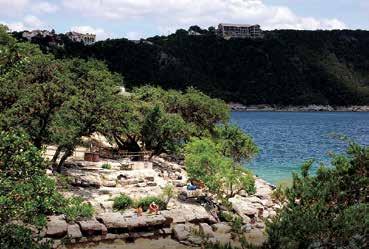
For the more (ahem) “naturally” inclined, Texas’s only clothing-optional public park lies along the rocky shores of Lake Travis to the west. The gender-inclusive 18-andover park is popular among sunbathers and free spirits, with an alcove that has unofficially become the “Gay” part. For the more modest and family oriented, Barton Springs near downtown offers a natural pool that runs 68 degrees year-round.
Austin is the live music capital of the world, boasting more such venues than any other US city (yes, even that one, in the other state starting with a T). It hosts two major music festivals every year — South by Southwest during spring break, and Austin City Limits at the end of each summer.
The South Congress district features quirky shops and eateries, and bits of local flavor lie scattered throughout town. Make sure to try the eclectic menus at Kerbey Lane Café, Maudie’s Tex-Mex, and Magnolia Café, with a helping of Amy’s Ice Cream for dessert.
Dallas-Fort Worth metroplex
The megalopolis in North Texas is a metropolitan complex (“metroplex”) of 11 counties that sustains 7.6 million people. Geographically about the size of Connecticut but with over double its population, the metroplex contains 15 cities larger than
100,000, the largest of which are Dallas, Fort Worth, and Arlington.
The Queer gem of DFW is Oak Lawn, the gayborhood of Dallas. Centered around the intersection of Cedar Springs and Throckmorton and a short drive from downtown, the district has bars and nightclubs capable of accommodating every taste. Those looking for world-class drag shows can find them at Station 4, while those wanting a “Texas” experience (emphasis on the quotation marks) can two-step at the Round Up Saloon. Sue Ellen’s is a vibrant bar popular among Lesbians, and JR’s is open during the day for lunch and at night for drinks and dancing.
Other establishments along “The Strip,” as the locals affectionately call it, include several eateries that anchor the community during the day, such as Hunky’s Old Fashioned Hamburgers, Street’s Fine Chicken, and Roy G’s. Retails outlets include Skivvies and Package, which sell men’s underwear, gear, and (what they are legally required to call) novelties, and an Out of the Closet thrift store.
About a mile away from this epicenter, on Lemmon and Mahana, the recently popular, cash-only Hidden Door has picked up the slack after the Dallas Eagle closed in 2020, becoming a haven for the bear and leather crowd, with a large outdoor patio and drinks strong enough to compete with Seattle’s Diesel.
Dallas boasts world-class, luxury, and high-fashion shopping at places such as NorthPark Center, the Galleria Mall, and for the more down-to-earth, countless outlet malls popular among visitors, such as Grapevine Mills. Dallas possesses the sprawling flagship Half Price Books, roughly the size of a large department store.
Deep Ellum and the Bishop Arts District are two of the most exciting neighborhoods in Dallas, featuring shops, eateries,
live events, and festivals. Wild Detectives, a hybrid coffee shop/bookstore/cocktail bar popular among artistic, intellectual, Queer residents and Latin expats, runs out of an old house in Bishop Arts. The Gay bathhouse, Club Dallas, stands adjacent to the light rail station in Deep Ellum.
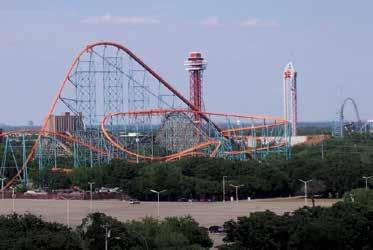
Arlington, the city wedged between Dallas and Fort Worth, boasts two major ballparks, a water park, and Six Flags Over Texas, which has some of the largest, fastest roller coasters in the country and hosts Pride Month celebrations every June.
In Fort Worth, known locally as Cowtown, expect amazing barbecue in the Stockyards District and peruse the stretch of bars, eateries, and shops along Magnolia Street. Check out the town square in Denton, the college town to the far north of the metroplex, which has Recycled Books, several bars, restaurants, beer pubs, gaming taverns, and boutiques, all within an enjoyable walking distance of each other.
For Queer campers, Rainbow Ranch Campground lies to the south of DFW and to the east of Waco, while the more maleoriented, clothing-optional campground Grizzly Pines is located in Navasota, between Houston and Waco.
More to explore
While I haven’t mentioned what’s to be found in the cities of San Antonio and Houston, that is not to say that either should be ignored. My first visit to a Gay bar, in fact, was at the Bonham Exchange, right behind the Alamo in San Antonio. And I wish I could tell you the things I, um, can’t remember from my nights at Ripcord and South Beach in Houston. But if you’re going to be in those areas, do yourself a favor and check out what the locals tell you.
If you happen to be in DFW or Austin, however, make sure to tell them I sent you!








BY LINDSEY ANDERSON SGN STAFF WRITER
“That’s ambitious” was all anyone could say when we explained our summer plan to drive from Seattle to Stanford, California, in one day with our two dogs in a small car packed full of snacks. I just scoffed — ambitious would have meant taking the 20 lb. cat, too.
We splurged on the concert tickets months before the trip. We hadn’t really planned out just how to get to California, where to stay, and how to pay for it all. We figured we’d cut costs wherever possible.This meant driving instead of flying, bringing the dogs instead of paying for a pet sitter, and renting the cheapest Airbnbs on the market (which were still super expensive, because: California).
We planned one day to drive through three states and arrive at our destination, one day to enjoy the music festival, and two days to get back (assuming we’d be a bit tired).
As July snuck up on us, nostalgia set in. This would be my third road trip to California but my first as an adult. I started looking through old pictures, reminiscing about the drives through the mountains with my family, all piled into one big car. I remembered the sights, the splendor of beaches and national parks, and the adventure of the open road. Scanning our bare-bones itinerary, I decided to add just a few more stops.
On July 22 at 5 a.m., we began our descent into California and the madness of a summer road trip. Izy took the first driving shift while the dogs and I tried to contort our bodies for an uncomfortable car nap. Three hours later, we arrived at our first stopping point: Portland, Oregon.
Portland
We found a Target off the freeway and stopped so the dogs could empty their bladders on some dying trees, and I could run inside and decimate the bathroom before anyone else got the chance. Just as the morning employees flipped the sign to “open,” I burst through the automatic doors and sprinted to the toilets. Word to the wise: don’t start a 16-hour road trip with an iced coffee.
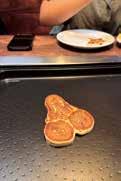
Portland is a magical place where miracles can happen. The first happened to be leaving a Target without purchasing any items. The second was finding a dog sitter on Rover who was willing to watch our pups while Izy and I grabbed breakfast. We dined at the fabulous Slappy Cakes, a restaurant where patrons create their own fun pancake shapes on a griddle right in front of them. Haters will say, “What’s the point of a restaurant if you’re cooking for yourself?” But I have yet to find any other restaurant where you can eat a chocolate chip pancake in the shape of a penis at 8:00 in the morning.
With time left before we had to pick up the dogs, Izy and I decided to explore one of Portland’s greatest establishments: Powell’s Books. For years, friends have suggested taking the
sacred pilgrimage of the nerds to this sanctuary of new and used books. Powell’s did not disappoint, though I would note that there are at least ten bookstores in Seattle with the same atmosphere. I left with a new yellow notebook and a copy of I’m Glad My Mom Died by Jennette McCurdy.
By 10 a.m., we were back on the road with the dogs and ready to bid Portland farewell. It was a cute town that felt akin to a movie lot. Though we were only there for two hours, a crazy woman still yelled at us. It felt like home.
Alpacas
I took the next driving shift as we forged on toward Eugene, Oregon. I listened to Noah Khan’s entire extended album of Stick Season, and to prepare for our festival, we cued up a playlist of Ricky Montgomery, Mxmtoon, Grent Perez, and Cavetown.
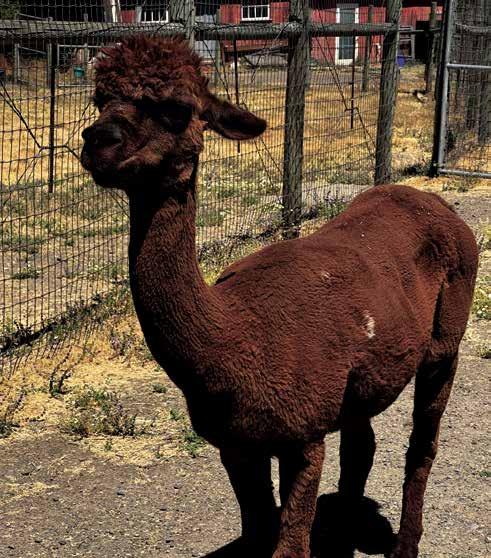
We took a detour from the freeway once we made it to Eugene, following dirt roads into the mountains. We pulled up to a quaint red barn and parked our car at our next stop: the Aragon alpaca farm.
We spent the next hour walking around the lovely little farm on a guided tour by owner Anne Dockendorf, who introduced us to each of her alpacas by name. Shy by nature, none let us touch them, but one did sneeze on me. It was an honor.
Once we had learned everything there is to know about alpacas, we loaded ourselves back into the car and took off once again. This time, as I drove, I tuned our aux to some of my favorite NPR podcasts. We learned about American history and politics from NPR’s Throughline as we drove over the Oregon border into California.
Weed
A surge of hope filled my chest when we passed the “Welcome to California” sign — we were ahead of schedule. When Izy could no longer tune out my NPR podcasts with their headphones and Nintendo Switch, they suggested we stop at the nearest town for a break and some food.
The next town just happened to be Weed, California. Weed is best known for, well, its name. There is nothing else of importance in that town. Regardless, we stopped at a gift shop to buy “I Love Weed” T-shirts for all our friends and family. I also considered getting a dog shirt for the pets to share, but that felt inappropriate.
It was hot in Weed. The United States was experiencing a heatwave all week, but in the coastal Pacific Northwest, we hadn’t had much more than 80 degrees. Even as the sun set, the air around us was still above 100. We decided to keep the car’s AC running and wait until we found a cooler stopping place to let the dogs outside again.
Because we were ahead of schedule, we also assumed we could afford a “real dinner” at a diner instead of fast food. We stopped at the Hi-Lo Café, a retro-looking eatery attached to the town’s only motel. Izy ran inside to pick up our takeout while I waited in the car with the dogs.
For 45 minutes, Izy stood inside waiting for our food while a Karen-in-the-making yelled and berated the staff. The woman demanded they bring out their cook, Shane, with whom she was romantically involved. The manager refused, and the woman called the police, who arrived before our food did. Eventually, Izy bucked up and asked for our takeout, which we ate in the parking lot while Karen yelled at Shane and then the police, right behind our car.
The food was abysmal. I ordered breakfast for dinner and got a soggy waffle with a side of bacon that burned a hole in the styrofoam container. I ate it anyway.
Now way behind schedule, Izy stepped in to drive while I coughed burnt styrofoam into a bag.
Headlights
We drove until it got too dark for Izy to see, then pulled off the road to switch drivers and also snag a late-night Dutch Bros. After we got our caffeinated oat milk beverages, we headed back to the highway, though there was one hitch: our headlights were not working.
Ever the problem solver, Izy suggested we pull over so they could take a look at it. We stopped beside a cornfield on a dirt road with no lights. Izy popped the hood and examined the mechanics of our vehicle like a Queer greaser while I sat in the driver’s seat, keeping an eye out for killer children, aliens, or Karen and Shane, any of whom may have popped out of that cornfield and ended our trip then and there.
Luckily, we made it out with our lights working, and I started the last leg of the drive. We played the hype club music of our Gen Z childhood to keep me awake as the clock ticked closer and closer to midnight. The freeway led me to the illuminated city of San Francisco, and my heart soared.
“Are we almost there?” I asked.
“Yeah, a little less than an hour,” Izy told me. This conversation repeated every 30 minutes for the next two hours. Eventually, we realized we had the “no tolls” setting on our maps app, which added another hour to the drive through San Francisco alone. Word to the wise: pay for those tolls.
Stanford
Finally, we pulled into a nice little neighborhood to look for our Airbnb. We passed cute houses with manicured lawns and succulent gardens. We did not stay in any of
those houses. Instead, we pulled up in front of the neighborhood crack house.
“Are you sure this is it?” I asked Izy. They nodded with a grimace. A burly man in a muscle tank walked down the driveway past piles of car parts. He was our host. He told us we were lucky to catch him as he was heading to the gym at 1 a.m.
He led us to the mother-in-law suite. Rats scurried up the branches of an orange tree nearby; the fruit was rotting on the branches. Before leaving, our host warned us not to let our dogs outside at night. Apparently, raccoons twice their size lived in the piles of decaying Christmas decorations that littered the yard and were more than ready for a fight.
The suite smelled awful. Mysterious gunk crawled up the walls of the bathroom. Too tired to look for the cameras we were certain our sketchy host had planted in the room, we just slept in the clothes we drove in — on top of the covers of the mattress on the floor. We bundled up with a beach towel for warmth.
The next day, we decided to splurge and book a hotel. We wanted to take proper showers and prepare for our concert in the comfort of a less rodent-infested criminal hotbed. We found an option just a mile from the venue and drove around Stanford until our room was ready.
We got in our room just a few hours before the concert doors opened. I took the best shower of my life and quickly got ready to slay. We left the dogs in the safety of the air-conditioned hotel room and took an Uber to the Frost Amphitheater.
The concert
When we stepped into the open-air venue, we were surrounded by Queer people. Cute frog hats, baggy sweaters, and overalls of all shapes and sizes filled the grassy hill where we set up our picnic blanket.
The concert began with Filipino-Australian pop singer Grent Perez. His light, low-fi songs had a chokehold on the fans: it was clear by the VSCO vibes of those who had come to the concert to see him. After his set, the next performer emerged — a fratty-looking little guy with too much energy.
“Who is that?” I asked before Ricky Montgomery opened his mouth and started singing. It was wild to see one of my favorite artists yet not recognize them in person (he really is much shorter than I thought). Montgomery brought so much energy to the stage and hyped the crowd, even when singing some of his more mellow hits, like “Mr. Loverman.”
The sun was setting when the third artist, Mxmtoon, arrived. While I had been a fan of hers before the concert, hearing her live made me appreciate her even more. Mxmtoon didn’t shy away from talking about sexuality and the politics that have popped up around identities. She shared her experiences coming out as Bisexual when introducing two of her songs. By the end of her set, she had the whole venue singing along as she belted out “Prom Dress” and “Mona Lisa.”
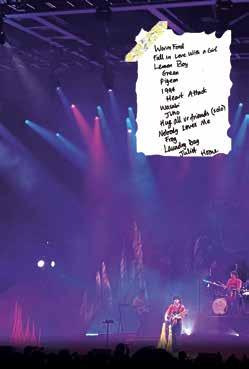
The moment everyone had waited for (and Izy and I had driven 16 hours for) finally came when Cavetown trotted onto the stage. Dressed like a character from Where the Wild Things Are, in baggy black overalls and a beanie with bunny ears trailing behind his shaggy head of hair, he hopped around the stage like a little woodland creature from a fairytale coming to life. His songs evoked raw emotion from the crowd, who shared a sense of angst during “1994,” joy during “Fall in Love with a Girl,” and mourning when he finished with “Home.”
Before wrapping his set, Cavetown also invited Mxmtoon and Ricky Montgomery back on stage to sing “Nobody Loves Me,” a new EP the three of them released together. While I wondered whether or not the road trip was worth it around hour 12 the day before, looking over at Izy’s face and feeling the joy and community in a venue with thousands of other LGBTQ+ people wiped the doubts from my mind. It was tumultuous and ambitious — and we still had two more days left to drive, explore, and face more challenges — but I wouldn’t have wanted it any other way.
Word to the wise: the best way to pregame a chaotic music festival is with a chaotic adventure there.
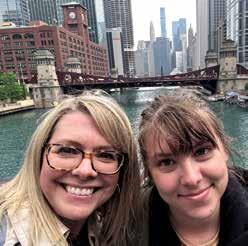
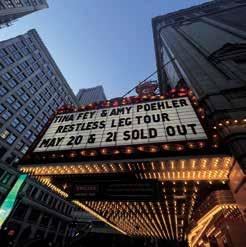
My mom introduced me to Saturday Night Live when I was a kid. While my peers ran around the playground making fart jokes, I perfected bits about the Tiger Woods affair and the Obama administration. While watching reruns of old episodes together, I studied the cadence and style of each joke that sent my mom into a laughing fit.
One night, we watched an old episode with two women sitting at the Weekend Update desk.
“That’s Tina Fey. She’s one of the funniest writers ever,” my mom said. Watching Tina and Amy crack jokes about the news changed my life that night. I fell in love with them, and my life would never be the same.
I memorized Amy Poehler’s Sarah Palin rap (and to this day can still perform it flawlessly), I wrote my own SNL sketches with my little sister, and when I got to college, I set my mind on becoming a writer, just like Tina Fey.
After I graduated college, I moved to Seattle and got a real writing job (depending on who you ask) at the best newspaper in the city (depending on who you ask). I also started doing stand-up comedy. In a year, I went from writing entire sets out word for word at small LGBTQ+ open-mic nights to performing as a rotating comedian at Club Comedy Seattle. I met some of the funniest people I’ve ever known and learned more about honing the craft I fell in love with so long ago.
Throughout it all, my mom has been my biggest supporter. She posts on her Facebook page about the shows I do, even though the WASPS in her bunco group don’t care. She still tells me I can be like Tina and Amy someday, even when it feels impossible. She also warns me to never joke about that one incident at the Hot Pot in Bellevue.
Getting lost in Chicago
Once again, my mom put me on the path toward Tina and Amy when she discovered that they’d be going on tour. This would be my Eras tour. We got tickets for the closest show: Chicago.
The Restless Leg Tour was only hitting cities with significance to Tina and Amy:
BY LINDSEY ANDERSON SGN STAFF WRITER
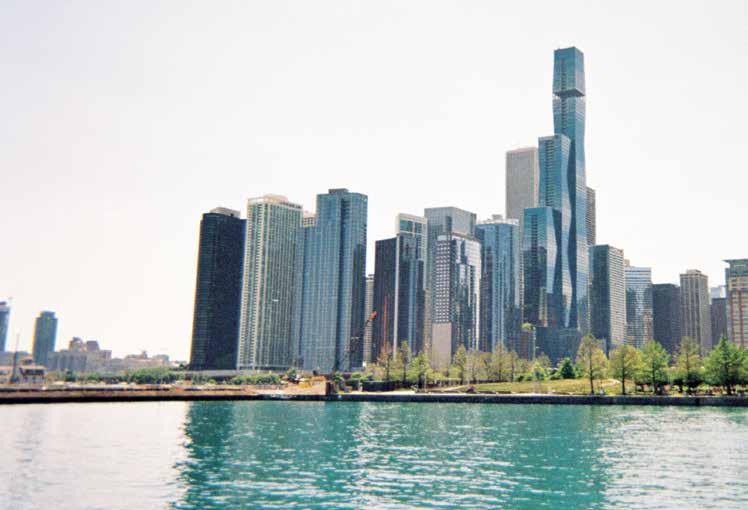
New York, where they worked together on SNL; Boston, where Amy was born and raised; and Chicago, where Tina grew up and the two started their comedy careers.
The trip was just a couple weeks after my birthday, so it functioned as my 24th birthday present... and my 25th, and my 26th.
We flew out from Sea-Tac and landed in O’Hare around dinnertime. We figured we could save a little money and walk to our hotel from the airport instead of calling an Uber. Suitcases in tow, we headed down the street. After 15 minutes of walking in circles, we realized we were lost. Not only were we lugging bags under a bridge in one of the most dangerous cities in the US, but we also shared the same far-off look Mitch McConnell has become known for.
A security guard clocked us as tourists in a millisecond and helped us get our bearings. We’d walked half a mile in the wrong direction. He politely helped us call a cab. It was not cheaper than an Uber.
We checked in at the historic Palmer House Hotel. The lobby boasted glamorous decor from the 1920s. Walking through the spinning doors felt like taking a trip back to an era when Chicago was full of outlaws, gangsters, and women in flapper skirts. (The Palmer House also claims to have invented the brownie, which we just had to sample.)
We found dinner just a quick walk down the street at Exchequer Restaurant, a location famous for Chicago-style pizza and ribs. We made it to the restaurant after the rush, but at the time our stomachs (which were still working on Pacific time) started grumbling. The food was exquisite. I instantly regretted ever bad-mouthing deep-dish pizza. The pepperonis hid under the cheese, making every bite a savory surprise!
Touristing
We spent the next day as full-blown tourists. As we rode the elevator to the top of the Willis Tower (formerly known as the Sears Tower), a video compared it to other wellknown tall buildings. My stomach dropped when I realized we had risen over double the height of the Space Needle!
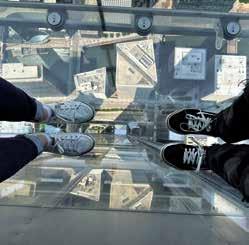
At the top, we stood above the whole city, with just a bit of plexiglass separating our feet from a 1,451-foot drop to the concrete below. We could see forever. I looked out over the flat Illinois landscape. It struck me that this was the first time I had seen the sky meet the earth on the horizon with no mountains or bodies of water to break it up. Though lacking in the greenery and nature Seattle is so known for, Chicago still charms with its flat beauty.
We continued our tourist adventure by walking to the Bean. The public art in Millennium Park is just a big silver bean. It doesn’t do much. I flicked it, and we continued on with our afternoon.
We grabbed some hot dogs for lunch and explored the retail areas. Our hotel was in
Sox territory, a hat salesman informed my mom, and so buying any Cubs merch would be sacrilegious. She decided on Sox socks as a souvenir.
My night as a major fangirl
When the evening came, we prepared for the show — the whole reason we’d flown into the city. Nerves consumed me as I changed my outfit time and time again. I settled on a long skirt and a button-up shirt. We walked to the theater and paused in front of the marquee. I had to blink a few times to ensure I wasn’t dreaming when I read “Tina Fey and Amy Poehler.”
The theater was gorgeous, an older building like the Moore. Ornate features and Greek symbolism decorated the walls. Clouds were painted on the ceiling. I took it all in as a straight couple argued behind me. Then the lights dimmed, and an announcer introduced the opener: Molly Kearney. I couldn’t believe my ears — were we about to see a set from the first and only Nonbinary SNL cast member! It was the Saturday that should have been SNL’s season finale, but the writers’ strike (which is still going on) had just started, and Kearney now had a big opening in their schedule.
Kearney was hilarious! Their humor and style evoked the essence of Chris Farley, Melissa McCarthy, and Kate McKinnon. They were loud, at times crass, and unapologetically Queer. Their set felt like listening to the stories of a cool new friend. They talked about their childhood, how they earned the nickname “Meatbrick,” and coming out to their family.
Seeing an openly Queer comedian on stage in front of me, telling stories just like the ones I hear from my friends at Queer open mics week after week, gave me hope. For the first time, I was seeing someone Queer and Trans share the stage with the greatest comedians of my childhood. What’s more, Kearney did not suppress their identities — they embraced them, and people laughed and related to them for it.
I could have left the theater satisfied after the opening act, but the show just kept getting better. When Kearney wrapped up, it was time for Tina and Amy to arrive. They did not disappoint. They walked on stage in awards show glam, as if they were hosting the Golden Globes again. They roasted celebrities like they were in the audience and made jokes about some of the biggest pop culture moments. They bantered with each other and even did some crowd work, then bounced off-stage for an outfit change. When they returned, they looked like twentysomething versions of themselves from the ’90s, complete with hideous wigs.
Even the best start somewhere Tina and Amy narrated their journeys into comedy, relating how they both started
as confused kids fresh out of college but found a community in the comedy scenes in their cities. They described their early years doing improv and following the dream that someday people would pay them to do stupid skits on stage.
My eyes lit up. It was as if these two women had erased every Instagram post I’d seen in the last two years. Every whisper in my head that told me I was wasting my time taking improv classes and doing stand-up open mics while my high school peers were starting grad school and getting married vanished. At one point, these two women were exactly where I am now. They also did several improv scenes for the room, who ate it up. I’d never seen a performance kill so well. Then they disappeared backstage yet again.
When the lights came back up, a replica of their SNL Weekend Update desk sat on stage. Tina and Amy walked out to their old SNL introduction in matching blazers. They did a 2023 version, discussing Trump, George Santos, and the writers’ strike. Then they brought out their Weekend Update guest: Fred Armisen.
The SNL and Portlandia alum did a bit for the hometown crowd, impersonating different Chicago accents. While I didn’t get the bit as much as the arguing straight couple behind me, I was still ecstatic to see yet another one of my comedy icons live and in person.
After their bit, Amy took the stage for solo stand-up. She prefaced her set by warning the crowd that she hadn’t done stand-up in a very long time, but like riding a bike, she’d never forgotten it. Her jokes killed me. She tackled ideas of femininity and experiences at award shows.
Next, Tina came out to do her set about motherhood and the double standards of Mother’s Day. Both ladies had the audience in stitches and gave me a secret hope that they could someday release a stand-up special on Netflix.
The final portion of the show featured one last outfit change. Tina and Amy returned to the stage in pajamas and answered audience questions about their careers, personal lives, and friendship. They didn’t take the questions too seriously and often joked about secretly hating each other in the way only long-term best friends can.
When the house lights came up, my heroes took their final bow. I felt like I’d risen to the clouds painted on the rafters. It was the best show I’d ever seen. As we left the venue, my mom squeezed my hand.
“That can be you someday,” she told me. While she may have a bit too much blind optimism in me, for just a moment, I imagined what it might be like to stand on a stage wearing a wig of the haircut I have now, telling some kids who haven’t even been born yet about what the Queer Seattle comedy scene was like back in the ’20s.
BY ED WALSH SPECIAL TO THE SGN
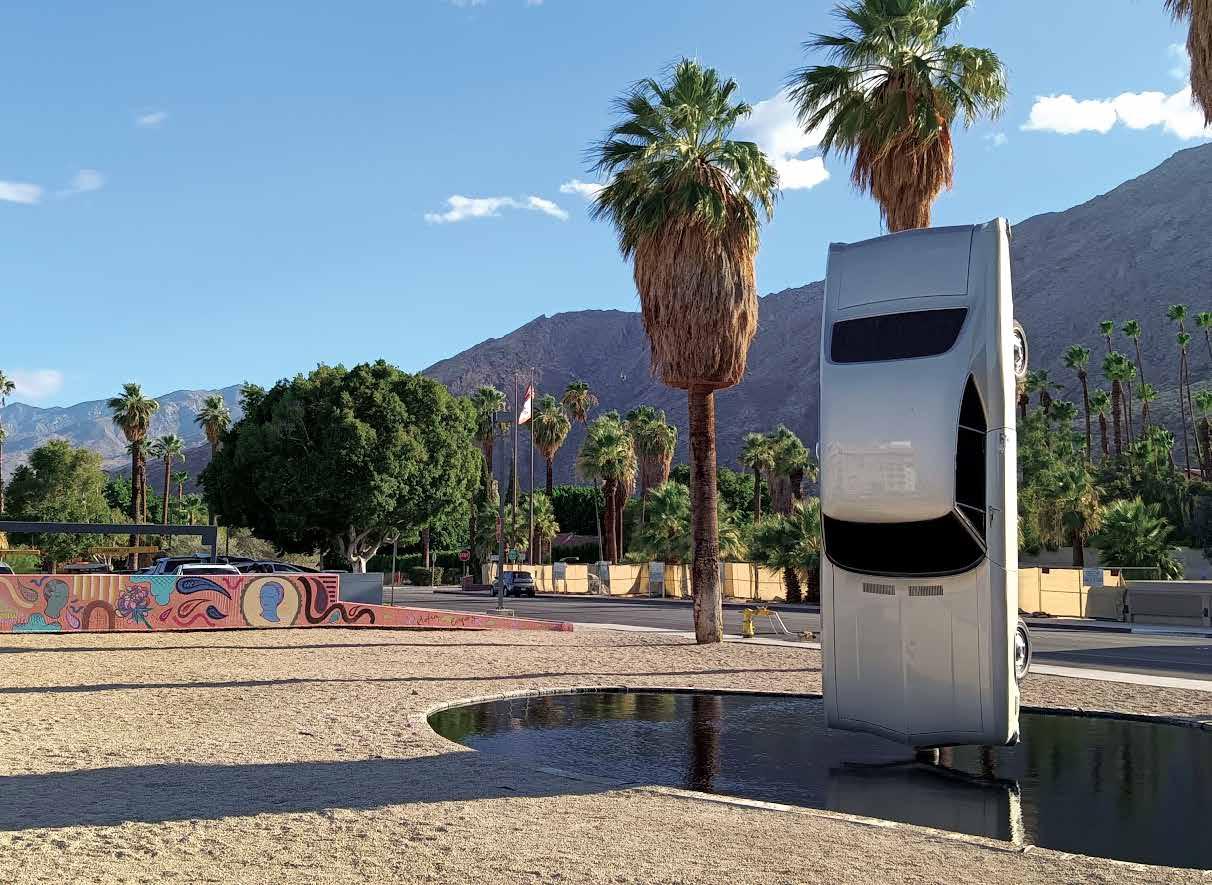
After a drought-busting winter followed by a cool spring and a typically hot summer — topped off by flooding from Tropical Storm Hilary in August — Palm Springs is gearing up for a busy fall. A number of events designed to bring more visitors to the desert city are coming up, including the Dinah, Cinema Diverse, Leather Pride, Pride, and Halloween.
Palm Springs is about a 3-hour, 45-minute flight from Sea-Tac, with flights starting around $250 round-trip on Alaska or Delta Airlines. The Palm Springs airport is also one of the world’s most convenient: it’s less than three miles from downtown, and the car rental lot is just steps from the terminal. Ubers and taxis are plentiful, or you can take a SunLine bus to downtown for $1.
Events
The Club Skirts Dinah Shore Weekend, better known as the Dinah, kicks off the fall Sept. 20–24. The Lesbian-centric gathering, which includes pool and dance parties, is one of the most popular events of its kind in the world. The Margarita Resort and Spa is “Dinah Central.” It’s already sold out, but there are still a few rooms left at the event’s overflow hotel, the Hilton Doubletree. But if that fills up, September is generally a slow month in Palm Springs, so you probably won’t have much trouble finding another lodging nearby at a reasonable rate.
The 16th annual Cinema Diverse LGBTQ film festival partially overlaps with the Dinah, Sept. 21–24 and Sept. 28–Oct.1. For a film schedule and to buy passes, check out https://psculturalcenter.org/filmfest.
PS Leather Pride is held the weekend before Halloween, Oct. 26–28. Hotel Zoso is the host hotel, conveniently located adjacent to the Arenas District, where the biggest concentration of Gay bars and nightclubs is situated.
Palm Springs’ Halloween block party will be held this year on Sunday, Oct. 29, 4–10 p.m. Admission is free, but there is a suggested donation of $10, with the proceeds going to LGBT charities. A $75 VIP pass that includes an open bar can be purchased online at https://halloweenpalmsprings.com.
The 37th annual Palm Springs Pride is Nov. 3–5. Broadway star Idina Menzel
headlines the stage at the Arenas District block party on Saturday, Nov. 4. On Sunday, Nov. 5, the parade steps off in downtown Palm Springs at 10 a.m.
Gay resorts
Palm Springs has a dozen Gay resorts, more than any other place on the planet. All are marketed toward Gay men and all are clothing-optional, with 24-hour pool and hot tub access, so you can take advantage of a warm fall night swim without having to worry about sunburn. Most have free continental breakfasts, all have free parking, and some even throw in a free lunch. Five of the 12 gay resorts still don’t charge the dreaded resort fee, so be sure to check out the bottom line when you are comparing prices.
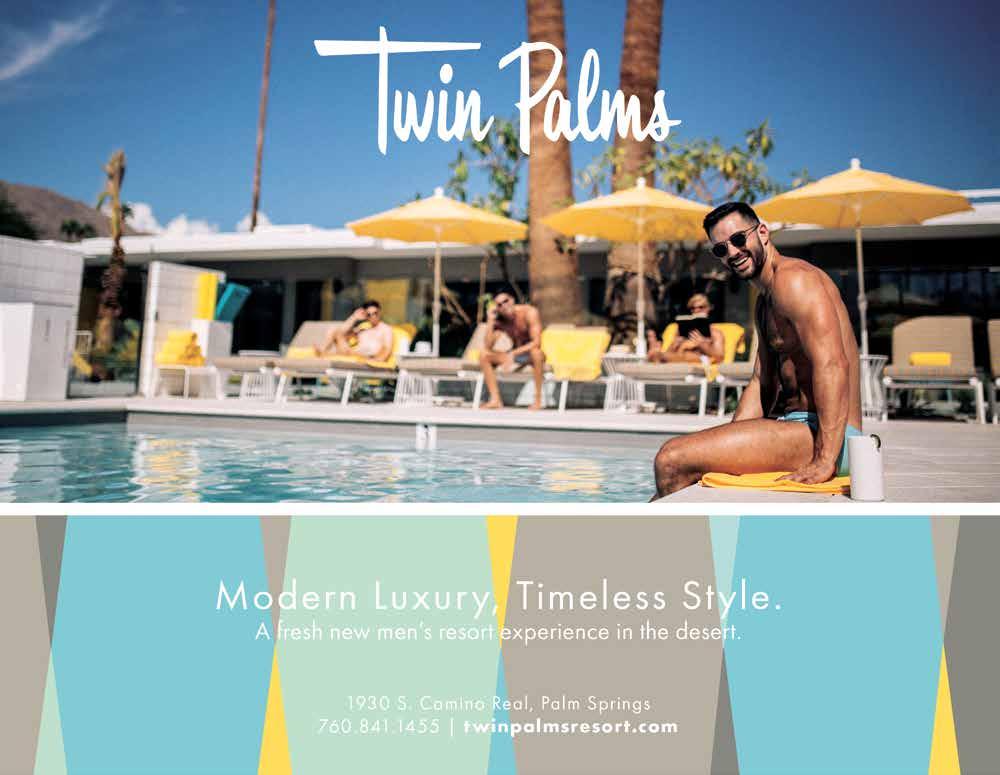
The newest, Twin Palms Resort, will be celebrating its first anniversary in November.
Twin Palms is a modern, stunning luxury resort. The hotel includes an expanded continental breakfast and a free lunch. It also has bicycles free for guests and a free wine happy hour. A 24-hour canteen offers free drinks and snacks.
Twin Palms’ sister properties, Descanso and Santiago, are also known for a similar high level of service and luxury. They also provide a free breakfast and lunch and a 24-hour canteen with free snacks and soft drinks. Descanso is centrally located just north of downtown, and Santiago is just south of downtown, with a huge pool and hot tub. Twin Palms, Descanso, and Santiago all charge a resort fee of $16 a day. Nightly rates at the three hotels start around $250.
The Triangle Inn is on the same block as Santiago and deservedly has a very loyal following. Michael Green and his husband
Stephen Boyd are known for their service to the LGBTQ community. Green is the executive director of the Palm Springs Cultural Association, which runs Cinema Diverse. The Triangle Inn was built in 1958 by Hugh Kaptur, who was one of the city’s most acclaimed mid-century modern architects. Both architecture and landscaping buffs will find plenty to love about this picture-perfect resort. Rates start around $175 a night, and it thankfully still has no resort fee.
The Canyon Club Hotel is the only Gay resort in downtown Palm Springs and has the cheapest rates, starting at $119, with no resort fee. It’s not a luxury property, but it has a huge backyard with a koi pond and a hedge maze. Day passes are available for $15. Renovations are underway at this property to bring it back to its past glory.
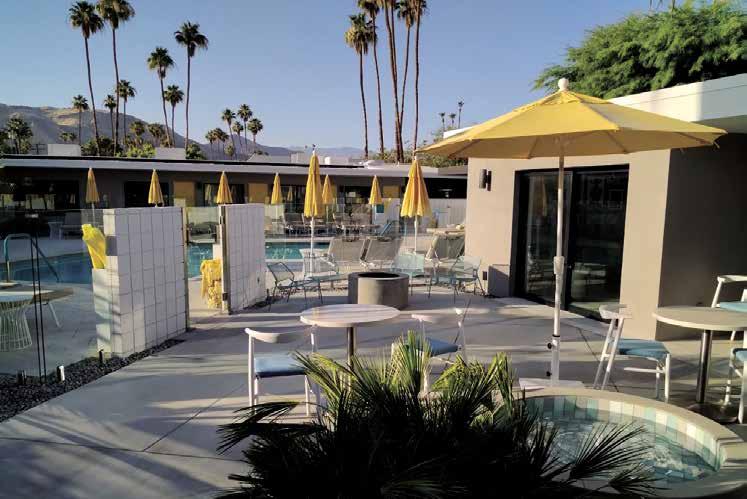
The biggest concentration of Gay resorts is in the Warm Sands neighborhood about a half mile east of downtown. El Mirasol Villas is a historic property (built by Howard Hughes in 1947) and eventually turned into a Gay hotel in 1975, the oldest in town. Rates start at $159 a night, with no resort fee.
All Worlds Resort, next to El Mirasol (on the property that was formerly Inn Exile), is the only one of the resorts in Warm Sands that offers day passes. Expect to pay extra fees, starting at about $20 a day, tacked on to the already hefty room rate that starts at about $350. All Worlds creatively calls the fees “Energy Cost Fee” and “Merchant Service Processing Fee.”
Vista Grande is a fabulous Gay resort that includes three pools, a huge hot tub, a waterfall, and a steam room. Breakfast and lunch are free. There is a resort fee starting around $8 a day. Its sister property, Atrium, is diagonally across from the main resort and has its own pool. Rates start at about $239 a night.
The Hacienda Palm Springs is next to Vista Grande and is known for its pampering of guests — it even has a pillow menu. The luxury resort also includes a free breakfast and lunch. The property boasts two pools and a hot tub with a mountain view. It has a resort fee starting around $30 daily, but that includes all tips to staff. Hacienda’s rates start around $430 nightly. InnDulge is just across the street from Hacienda and deservedly stays busy even during the slower summer months. It has a great happy hour with free drinks and snacks every early evening; free pizza is included with the cocktail hour on Thursday evenings. Rates start around $250 a night, with no resort fee.
The Desert Paradise Resort is another first-class property that includes steam and dry saunas and a continental breakfast. It is kitty-corner from the Hacienda. Nightly rates start about $179, with no resort fee.
The Cathedral City Boys Club, better known as CCBC, is the only Gay resort in Cathedral City, which is just south of Palm Springs. The expansive property (3.5 acres) hosts a number of special events and is open all the time for day passes. CCBC no longer
serves a continental breakfast, and it has the steepest resort fee of any of the Gay resorts: $35 a day. Rates start about $275 ($310 with the resort fee).
Spa Palm Springs’ newest spa, The Spa at Séche, opened in April in downtown and is one of the most modern and upscale in the country. You can bathe in the hot springs for which the city is named. Those waters are considered sacred by the Agua Caliente tribe, which owns the property. A day pass costs $145, but if you schedule a massage or other individual spa service, you can enjoy all the benefits of a day pass without an added cost.
Most of Palm Springs’ nightlife is centered in the Arenas District, in downtown, on E. Arenas Rd. just east of Indian Canyon Drive. That is where you will find the popular Hunters, Chill, Quadz Palm Springs, Dicks on Arenas, BlackBook, and StreetBar.
The newest bar in the district is the retro speakeasy bar called the Evening Citizen. Its entrance is hidden on the backside of the building, where Stacey’s used to be.
A couple of Gay nightlife options outside of Arenas are Toucans, which is on the north side of the city, and Tool Shed, on the south edge of the Warm Sands neighborhood. The latter is making permanent its huge outdoor patio, which it started during the pandemic. The patio is slated to open in late October, in time for Leather Pride.
Reforma is a huge Gay-friendly restaurant and nightclub in the heart of downtown. You will often see a line wrapped around the block on the weekend there. The restaurant has an intimate feel and serves up top-notch gourmet grub in a dark and dramatic intimate setting.
Nightlife options in Cathedral City include The Barracks, The Runway (at CCBC), One Eleven Bar (formerly Studio One 11), The Roost Lounge, and the AMP Sports Lounge.
For a great guide to nightlife options when you are in town, check out the excellent Gay Desert Guide online at https:// gaydesertguide.com.
Art
If you want to get a great sampling of locally made art and crafts and sample some of the best eats and entertainment in the desert, check out the city’s Village Fest street fair every Thursday evening, 7–10 p.m. By the way, the Palm Springs Art Museum is free every Thursday night 5–8 p.m., so you can combine it with a visit to the street fair. Through February 2024, the museum includes the special exhibits “Contemporary African Art” and “Meditations in Glass,” the latter being a stunning collection of glass sculptures.
For more information, check out the Palm Springs’ official web site at https:// visitpalmsprings.com.



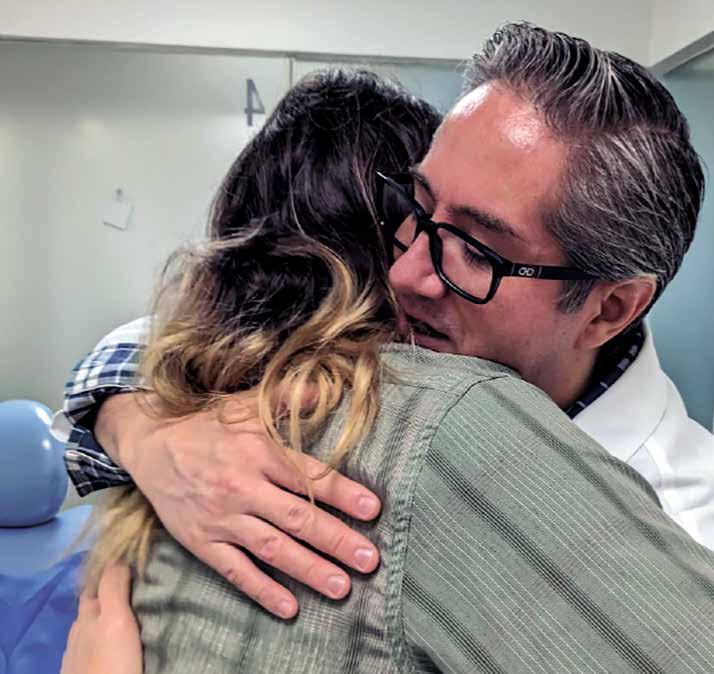
some money and cut the time in the recovery house short, just remember that healing is a roller coaster, and just because you feel really good one day does not mean you are ready to travel. I would recommend following the doctor’s advice on how long to stay in town in the recovery house, even if it’s a few days more than you think you might need. Most complications happen within the first 10 days to two weeks, and you want to be available to your doctor to address anything that might happen.
A two-week stay in a recovery house is an additional $1,400 or so, bringing our base cost for surgery and recovery to around $5,200. The recovery house is not an expense you would have if this procedure were to be performed in the US, but this total is still far below the $18,000 estimate to have same procedure domestically.
BY SEAN HAMILTON, DALLAS VOICE SPECIAL TO THE SGN
My son (FTM) has been transitioning for several years and completely passes as male. His hormone replacement therapy (HRT) treatments started before Texas Gov. Greg Abbott and the Republicans scared off or shut down a lot of gender-affirming clinics and have continued in the gray area, in which they can continue treatment but not take on new patients.
As parents, my wife and I have been supportive, enrolling him in gender-affirming care and providing counseling and therapy for both him and ourselves. My son had begun developing breast tissue prior to starting HRT and so has been binding for years. Obviously, for a good while, he has wanted top surgery to remove the developed breast tissue and thus end the constant stress and expense of binding.
Some may not agree with our parental approach to top surgery, so proceed with awareness.
We as parents understand that most effects of hormone treatment are reversible or minimized if the person decides to stop treatment. This gives parents — as well as the child — a lot of flexibility to determine the future while being supportive and proactive. Surgery is irreversible, and so that decision must be made with much greater confidence. That being said, my wife and I decided that our son would be responsible for providing his own top surgery. We gave our permission, but the actual cost and logistics needed to be our son’s responsibility.
It is important to us that our son owned his transitionary steps. We know some won’t agree with us on this — so be it. We did not want his transformation to be a gift but a milestone in his journey, something he made happen. In consulting with his therapist and psychologist, we agreed it would be beneficial if this step was something our son accomplished himself.
And so he began the search for a provider. Our insurance was willing to cover the procedure as medically necessary. But we could find no providers anywhere in this country who would accept our insurance. Every one of them asked for up-front payment.
Our insurance company was unable — or unwilling — to help us find someone. They suggested we have the procedure done outof-network, and they would cover it if we could get the provider to fill out and submit
a one-page form. None were willing.
And the costs were between $16,000 and $18,000 up front. That’s not something a high school or college student can afford.
In addition, many of these doctors had wait-lists of six months to two years to even have an initial consultation. For those familiar with the stress of gender dysphoria, months and years add massive burdens to mental health and well-being.
Medical tourism
So my son began looking further out for other alternatives. This brought him to the idea of medical tourism.
If you aren’t familiar with it, medical tourism is where a person travels to another country to have a medical procedure performed, spends time there to recover, and then returns home. Not surprisingly, this is mostly an American phenomenon, as many other countries have much more accessible and affordable care, even for “elective” procedures such as top surgery for Transgender people.
According to an NPR article from March 2023, more than 780,000 Americans participated in medical tourism in 2022, experiencing drastically reduced costs compared to equivalent procedures in the United States.
My son researched various connecting agencies designed to match patients to providers in Mexico. Ultimately, he found someone he felt was compatible, available, and supportive. Emails and phone calls were exchanged, followed by initial virtual consultations that led to scheduling a date for surgery.
Let me take this moment to elaborate on the state of Mexico’s healthcare system. IT provides no-cost access to healthcare for citizens. But this does not prevent or exclude private treatment, so Mexican citizens who want a higher quality of care than the government provides might opt for private providers at their own expense. It is this sector that also accommodates medical tourists.
So, to be clear, this is still a for-profit medical practice. It is not charity or a government service, and it operates like any other for-profit business. A payment up front is required to show commitment and to secure a space.
For my son, this was in the form of a nonrefundable wire transfer of several hundred dollars. He needed to work with our bank
to facilitate the transfer, as there are several security steps involved, and wire transfers to Mexico have specific rules and requirements.
Once approved and accepted, the remaining payment for the procedure is expected either in advance or on the day of the procedure. Credit cards are preferred, but other forms of payment are accepted, depending on the provider.
In my son’s case, this payment covered everything — pre-op consultation, surgery, anesthesia, and all post-op care, even after we returned to the United States. This included daily updates to the surgeon on healing progress and multiple follow-up visits. Where this would have cost over $18,000 in the United States, the fee for this private service in Mexico was $3,800.
Recovery houses
But this is only half the process.
At this point, we have provided for the procedure, but we’re also in a foreign country, and we don’t want to navigate airports and customs with fresh cuts and blood drains. So we needed a place for him to recover and heal. This is where the “recovery houses” enter the picture.
These are facilities — sometimes hotels, sometimes just homes — that are rented out as safe and staffed spaces where medical tourists can safely recuperate and heal with daily care. Costs run from $80 to $120 a day as of June 2023, and that includes all meals, sanitation, room cleaning, laundry, transportation to and from airports and medical appointments, and on-staff or on-call nurses with direct contact to your doctor for the entirety of your stay. In our case, I was an additional person, and that was an extra $30 a day, which included all meals and transportation.
I try to imagine what this kind of care would cost in the United States, and I don’t think there even is any equivalent. It’s not a hospital room, but it’s not just a hotel room, either. I can’t imagine a similar service in the US — three healthy meals a day, on-call nurses to manage your bandages and medications, staff to clean your bed and clothes, and a driver to take you to and from all of your appointments? How much would that be here? Like the for-profit doctor, this is also a forprofit enterprise and requires nonrefundable payment up front for the entire length of the stay. While some may be tempted to save
And, of course, you must factor in the cost of flights to Mexico. As of June 2023, Texas to Guadalajara — where my son had his procedure — was about $350 per person, coach, with a flight time of about three hours. As for the travel aspect, if you can afford it and you have the time, Global Entry will save you huge headaches and lines getting between the US and Mexico. When entering Mexico through customs, “medical tourism” is a valid reason to give customs agents; they are familiar with it and understand.
You must have a passport; just a US driver’s license is no longer enough to travel to Mexico. It can take months to get a passport, so plan ahead. It is my personal opinion that everyone should have a valid passport anyway, as it supersedes any other form of ID the US provides.
An interesting fact for Transgender people: My son was able to get his passport in his identifying gender, opposite his birth certificate, even though he can’t get his state driver’s license in that gender, because Texas. Uber and Airbnb work in Mexico quite well. There are many Uber drivers, and we rarely had to wait more than a few minutes for a ride anywhere (when we wanted to go somewhere that wasn’t a doctor’s appointment). And it is cheap; most drives only cost us a few dollars. Have your Uber app updated and ready, and you can get anywhere easily.
A note of caution: There is a delivery app that is quite popular in Mexico called Rappi, but it does not accept US-based credit cards or accounts at this time, without extensive and expensive verification steps. Avoid it until it accepts US credit cards. This limitation is not advertised on the site or app; I found out through trial and error.
I don’t know about other medical tourism areas in Mexico, but where we were, our recovery house was within easy walking distance of two convenience stores, three pharmacies, and multiple cafés and restaurants. It was wonderful for us, since I was able to walk and get any supplies we needed with ease. Check with your proposed recovery house about what is in the area, because sometimes a little snack or a short walk can make a recovery day much better.
As far as money, most places take credit cards and mobile payments easily. Just let your credit card company and your bank know you are traveling. Cash is mostly unnecessary unless you want to tip. Tipping is less expected than in the US but is appreciated. No one got offended any time we did not tip, and often our Uber driver would drive away before we had the chance to tip. The minimum wage in Mexico is about $13 an hour, so tipping is not necessary for anyone’s survival, and if you’re on a strict budget, you can get by without tipping. We did choose to leave some chocolate for our nurse and staff as recognition, and I tipped our driver at the end of our stay. But that was a personal choice and not expected.
I hope that our experience gives some clarity into what to expect if you or your Trans loved one are considering medical tourism. It was overall a very positive experience. This article was about the logistics and the details; in part 2, I will explore our experience from a more cultural and emotional point of view.
Thank you for reading and thank you for supporting your LGBTQ+ people.
Courtesy of the National LGBT Media Association
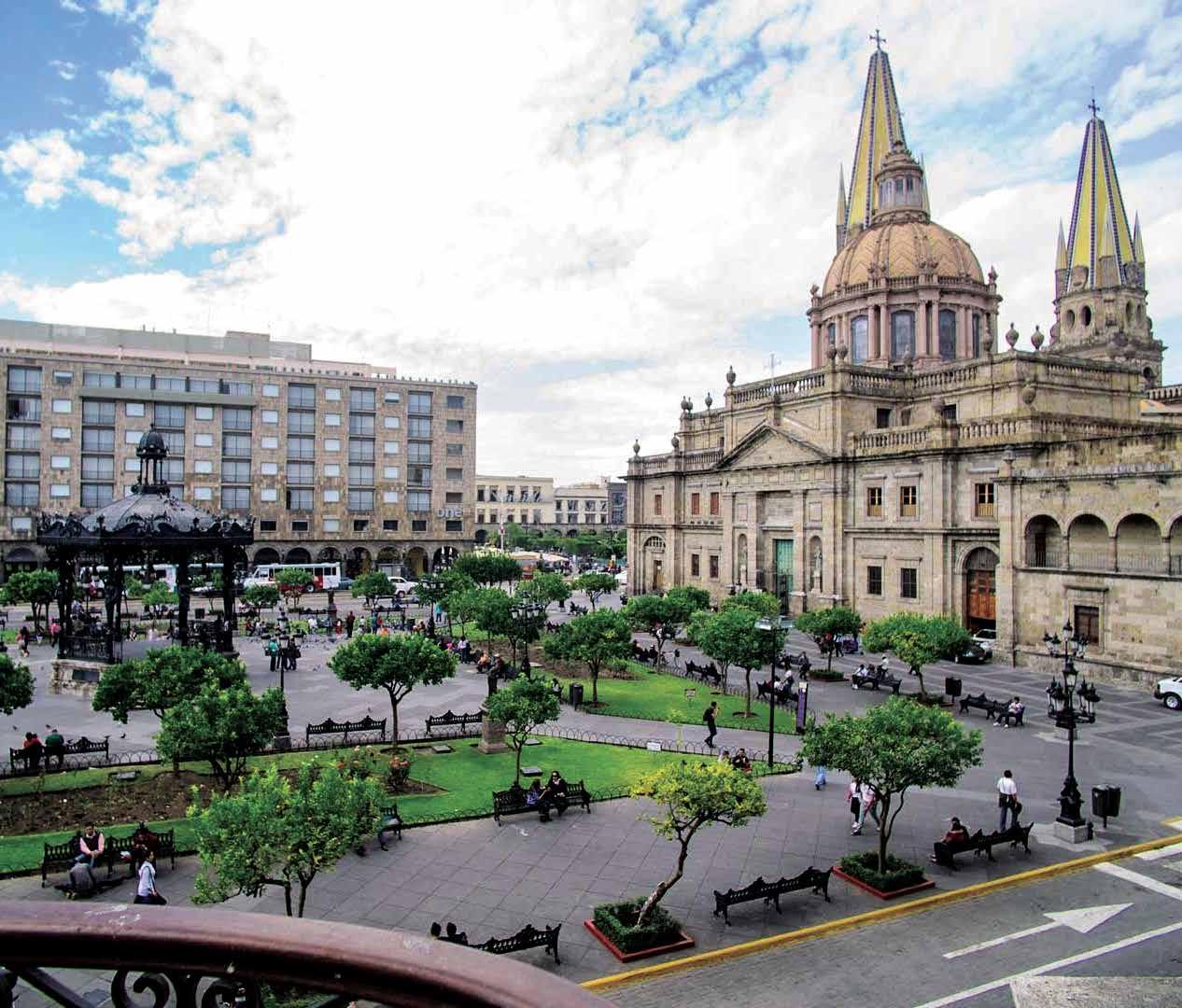
A parent’s experience in gender-affirming medical tourism
Part 2: What happened when I traveled to Mexico with my FTM son for his gender-affirming surgery
BY SEAN HAMILTON, DALLAS VOICE SPECIAL TO THE SGN
It’s January 2023. My son (FTM) sends me a text, just an aside in the middle of a conversation about movies or philosophy or something: “Also!! Top surgery on June 27th.”
I open my calendar to start making plans. It’s something he’s been working on for more than a year. We tried going through my insurance, and while the company promised to cover the procedure, we were unable to find anyone willing to do it using insurance. They all wanted no insurance and payment in full up front.
Most doctors were putting new patients on a six-month, one-year, or even two-year waitlist to even have an initial consultation. And then, it would cost approximately $16,000–18,000. And, to be honest, the doctors he talked to in person were cold, unfeeling, and just chasing profit.
So, my son researched medical tourism, which is traveling to another country to have treatment done cheaper and faster than what could be found in the United States.
Some may not agree with us on this, but his mother and I put the burden of achieving this goal on our son. We had him in gender-affirming care, including hormone replacement, and were fully supportive of his pronouns and recognition of his gender. But we wanted this surgery to be something he owned, something he made happen for himself, not something we gave him.
It is part of life’s journey that we struggle to accomplish the things most important to us, the experiences that define us. Gifts don’t do that; struggle does.
But that being said, we were not going to just abandon our son. We wanted to be supportive. So I helped with flights, and told him I was willing to pay for my own accommodations to be there with him during his transformation, though he could have done this completely on his own. That was important.
The reality of Mexico
So, I scheduled our flights, and then I began thinking:
I’m a native Texan, but in all my years, I’ve never been to Mexico. And as far as Texans go, my Spanish is terrible, good for little more than reading a restaurant menu. And I’ve been fed a media diet that looks down on Mexico as a Third World country, rife with crime and danger and filth.
Let me just say that, as open-minded as I am and as much as I try to be nonprejudiced, I was worried about this trip because of everything I’d heard in our insidious and pervasive media.
Were we at risk of being kidnapped? Are the hospitals there terrible? Do the toilets work? Are we going to get sick if we inadvertently drink the water? Is my kid safe having surgery here?
But life is an adventure. So I booked our flights and he booked our Airbnb and the recovery house. And we prepared for our adventure.
His surgeon was located in Guadalajara, which has a strong medical tourism industry. It’s not as prevalent as in Mexico City or other cities in the country, but it is established. There are multiple surgeons and surgery centers and recovery houses available there.
It is a large city, with all of the modern elements you would expect. Uber and Airbnb are common and easy to use. We made extensive use of Google Translate and the translation functions of WhatsApp to communicate, which made our lives much easier.
We arrived a day before my son was to have his initial consultation. He booked a cute little Airbnb for the first two nights, as it was much cheaper than the recovery house. For these two nights, a one-bedroom place in a nice part of town was about $50 a night. It had an upstairs bedroom with an air conditioner, bathroom, and shower, and
I’ve certainly stayed in worse places for more money.
Meeting the doctor
The next morning, my son was scheduled for his blood draw and in-person consultation with the surgeon. I must say that one of the most striking differences in the health care practices in Mexico versus the United States is the simple practicality of the process.
We arrived at the surgeon’s office for the blood draw and consultation. My son talked to the lady running the lab desk. She took his payment — $30 — and then sat him down right there and did the blood draw, giving him a receipt to take to the surgeon. Including the delays for translation of instructions and payment, we were there about 10 minutes.
Then we walked upstairs and told the desk he was there to see his surgeon. We waited about five minutes, and then were escorted back to meet with the doctor in person.
Now, to be clear, this is a person that my son had been talking to over email and in messages for months, using electronic consultations. My son had sent him a wire transfer of $500 to secure the surgery date, and this day was the first time they had met in person.
The doctor was very supportive, spoke fluent English, and answered all of our questions, multiple times. While my son was getting changed for the physical aspect of the consultation, the doctor addressed me, saying (paraphrased), “It is so nice when I see family come with my patients. It is love. It is love to support them.”
I’m sure there are some that will say this was just him keeping his paying clients happy, but I felt it was more than that. Yes, he is a plastic surgeon performing cosmetic surgery. And mostly this center does breast enhancement. But this felt different. I genuinely feel that he wanted to help my son feel more confident and at home in his own body.
So my son consulted with the doctor. And, upon seeing him in person, the surgeon changed his plan a bit before scheduling surgery for 8:30 a.m. the next day.
Our challenge then was to get from the Airbnb to the recovery house, get set up, and go straight from there to surgery. Fortunately, the recovery house was very accommodating, and they were able to pick us up early in the morning with enough time to move our gear and get us to surgery — with time to spare.
A note on traffic: Traffic in Guadalajara is much like in any larger city — except in Guadalajara, stop signs are a mild suggestion. Stoplights are more serious — but not much. It was common for our drivers to see a stop sign or a light and just check that the intersection was clear — if it was, they just blew through it. So I do recommend using official taxis and Uber drivers to get around unless you are an adventurous driver. I had heard about people trying scam tourists with bad or fake taxi services, but I think the Uber phenomenon has supplanted that. We used an official taxi service to get from the airport to the Airbnb, then we used Uber after that. We had no problems at all with any of these services.
Surgery
On the day of surgery, we arrived at the medical center. From what I could determine, we were the only patients there that morning, so we had the building and the staff to ourselves. The rooms were very plain and simple compared to surgery rooms in the US, and very practical: a bed, a seating area for supportive relatives, a bathroom, and some basic medical equipment, such as heart and blood pressure monitors. And that’s all.
Now I’m going to go into some differences in procedures and treatment.
In the US, top surgery — more officially, double mastectomy with chest sculpting — involves the patient being put fully under anesthesia, that is, intubated and completely down. However, this anesthesiologist did not feel that was necessary, so her plan was to put my son in twilight with an epidural. The option was always there to take him fully under if necessary, but she didn’t feel it was needed.
Again, practicality.
This surgery required no cutting of muscles or bones; it’s just skin and fatty tissue work. This made my son a bit anxious, but it worked out very well. Surgery took about four hours, during which time I used the Wi-Fi to work.
I took a picture, and I remember vividly that last moment, watching my son walk into the operating theater to his transformation, knowing that the person I would meet a few hours later would be fundamentally different. It was a long wait. But finally they rolled him back from surgery, already awake and talking. He recovered quickly because of the lower anesthesia, and at about 4:00 in the afternoon, we called for our ride to take us back to the recovery house.
During this time, we needed to make the final payments for the surgery, and here is how understanding and nice they are: My son had already paid half upon arrival, and the other half was due prior to surgery starting. However, their system glitched, and they were not able to process the payment at that time. But they went ahead with the surgery anyway.
While he was in surgery, the system cleared, and I worked with them to complete payment. I can’t imagine that we would have had the same understanding in the US.
Postop care
I was instructed on the postoperative care my son would need in the recovery house — prescriptions, bandages, antiseptics, compression wraps, gauze, cotton — and the nurse, while my son was recovering, literally walked with me down the street to a
pharmacy, ordered the prescriptions, and picked out all of the items we would need. I just paid drug store prices for all of it.
No stupid $300 markup for Tylenol — just go to the pharmacy and buy these things to use in recovery. Very practical. And you can get Tramadol over the counter for pain management.
After we left the surgery center and returned to the recovery house, the same nurse that walked me to the pharmacy came there to help my son shower, clean, change his bandages, and rewrap everything.
According to my son and his peers who have had top surgery in the US, this is very different. In the US, they have been told to stay in their bandages for a week, maybe two weeks, before changing anything. Here, they wanted the bandages changed, the wounds inspected every day, and pictures sent to the surgeon to monitor healing.
My son got to see the shape of his new chest the next morning, unlike his peers in the US. The nurse helped him shower, and even washed his hair, the very next morning after surgery. I can’t even express how good this was for my son’s morale.
If you aren’t aware, this procedure often requires having drains present to siphon off bodily fluid generated by the surgery. This means plastic tubes coming out of the chest to drain into a container. In the US, doctors often just let the patient heal for a week with these drains in, with no changing of bandages or other care.
Here, this was different. It still took a little more than a week before the drains were removed, but in that time my son was able to shower every day, view the progress of his healing every day, and feel better every day.
There were some issues with pain. Even though this surgery did not involve cutting any muscle or bone, it did involve removal of breast tissue and lactation glands, liposuction and nipple replacement, with long cuts across the chest to sculpt the skin. My son is generally opposed to opioids, but on the second night, the pain was rough. Fortunately tramadol is available over-thecounter, as I noted, and I was able to walk to a nearby pharmacy and get some serious
pain relief for him. This got him through the next couple of nights until the healing crested and the pain began to subside.
The recovery house
The recovery house provided everything he needed. All meals were covered and included protein, fresh fruits and vegetables, and, usually fruit or vegetable juice. They had direct access to his doctor’s office for any questions.
They did not provide items such as soap, shampoo, or toothpaste or any of the materials needed for recovery. You provide those yourself. But they did clean the rooms and do laundry every day, including our personal laundry.
There was a nice sitting area, Wi-Fi, a patio, and comfortable places to just be and listen to the birds or enjoy the weather. The house was gated and protected by electric wire, and the gates were always closed. I never had a sense of being unsafe.
Because Guadalajara is not “zoned” the way many neighborhoods in the US are, there were many options for food and supplies within easy walking distance. Less than five minutes’ walk in three directions, there were convenience stores and pharmacies as well as cafés, restaurants, and other shops. It was easy to simply walk out the gate down to the 7-11 or the pharmacy, pick up some gauze or tape or prescriptions, and return.
Recovery
Two weeks of watching your kid recover is a long time, so I read a lot of books on my computer and worked with my teams in the US. We watched Netflix at night until he was tired.
After about eight days, the doctor felt the fluid drainage had subsided enough to remove the drains. So we went into the office, where he snipped the ends of the sutures holding the drains in and smoothly removed them. My son said it felt weird but was not painful.
It’s important to know that this surgery requires compression to make sure the skin reattaches to the underlying body fascia. So this whole time, my son was wearing a
layer of gauze over the wounds, a layer of cotton over the gauze, and an elastic bandage wrapped multiple times around his torso to provide compression. With the drains in, this was uncomfortable for him. Once the drains were removed, a lot of that discomfort went away, and a day later he felt ready to go out and see something other than the inside of the recovery room. Fortunately, there were a lot of options nearby. Just a 10-minute walk away was a nice shopping area with a casino, several restaurants, and some shops. You only need to be 18 to gamble, so we spent a few hours on the slots until he got tired, and we walked back and had a nice dinner to celebrate.
It was not lost on me, by the way, that my son had his transformative surgery during Pride Month.
He continued to heal over the next week and, finally, on the day before we were to return the US, he saw his surgeon for a final checkup. All this time, the surgeon had been getting daily photos of my son’s healing process, and now it was time to snip the sutures. This was painful, but it also marked the final step.
This is where the full reality of transformation really hit home. My son was crying with happiness. And his surgeon showed so much compassion and care; he spent easily a half an hour with us, even as he had other patients to care for, to make sure that my son was okay.
As has always happened anytime I travel, I completely reevaluated my expectations, threw away prejudices I was not aware I had (mostly due to US media), and came to a greater understanding of our shared humanity. I was privileged to watch a person I love become more of who they want to be, and I was privileged to meet people who gladly helped him make this transformation. From the surgeon to the housekeepers, everyone was supportive, smiling, and friendly. I went to Mexico to support my son and found I was only one of many people willing to be his support.
Courtesy of the National LGBT Media Association
BY IAN CROWLEY
SGN INTERN
My fiancée Emma and I traveled to Michigan this past August to visit our families. We both were raised in the state and lived there until 2021, when we moved west. Her family does an annual camping trip to Petoskey, in northern Michigan, that we used to go to year after year when we were living in the state; Emma has been going since she was a baby. We unfortunately missed the 2022 trip, so it was very important we make it back for this year’s reunion.
Our overnight flight got into the Detroit Metro Airport at 5 a.m. A good friend of ours, Nathan, picked us up and brought us to breakfast. Mornings seem to represent promise while on vacation; you sit there, bright and early, thinking about all the possibilities of experiences the day will bring. This is especially true on the first day, as the bulk of the journey only exists in your mind; there are so many people to spend time with, and such a limited time to see everyone.
Once we finished our breakfast, Nathan dropped us off at Emma’s brother Nick’s house, since we were riding with him and his longtime partner Matt up north. Nick is one of several Queer siblings in Emma’s family; my siblings include two Bisexuals and a Lesbian, whom we would be seeing later that week. This was merely the first instance in the trip of being comforted by queerness at home.
We were both 22 when we left home, so in the last few years out west, we’ve really been able to come into our identities as Queer people and find our family-awayfrom-family. As we’ve grown up, having these people close really makes the realities of living out and proud feel safer and cozier. Getting to start the visit with Nick and Matt was a nice way to ease back into seeing everyone, since we’ve grown most comfortable around our found Queer communities in Seattle.
Time with our niece
After our four-hour drive, we arrived at our destination, the Petoskey State Park campgrounds. Here, we got to see the entirety of Emma’s family. This included her 7-year old niece, Brielle, whom we haven’t seen since she was 5. When put into the perspective of young children, two years suddenly seems like much longer to go without spend-
ing time with those close to you. “I haven’t seen you in years” she said, as Emma and I locked eyes out of her sight and frowned at each other. This made the visit even more important to the both of us, and we wanted to make the time spent with Brielle count.
One thing Brielle and I used to bond over was our love for the Teenage Mutant Ninja Turtles. Being that I hadn’t seen her in two years, I wasn’t sure if she would still enjoy all the same things, or even remember playing with me. I talked Emma’s ear off in the lead-up to the trip about how there was a new Ninja Turtles movie that would be in theaters during the week we were home.
Luckily, one of the days at the campsite, it started raining heavily, causing everyone to brainstorm indoor activities to pass the time. Brielle shared her idea to go see Mutant Mayhem at the theater. I was ecstatic, as was Brielle’s dad and Emma’s brother, Dusty, who grew up with the turtles in ’90s cartoons.
Emma, Brielle, Dusty, and I all went to the movie, and Brielle was glued to the screen the whole time. For the rest of the week, she made us all pretend to be different turtles, with little makeshift weapons made from sticks. I considered moving back east in those moments, pretending to be Michelangelo with Emma’s niece.
Seeing our wedding venue
We also got to see our wedding venue in Frankfort, another “up north” town on the cliffs of Lake Michigan. It is on a site with three big houses for people to stay in. The saturated greens of the plant life and the simply designed living quarters reminded me of the film Midsommar This might be alarming to some, but I am a film major, so I personally enjoyed this aspect a lot. We loved the venue, and we both are stoked for our wedding there next April.
Fun in the lake
Lake Michigan itself was a huge presence during the trip, and we got to spend a lot of time in that body of water. It is so big that it convinces you it is the ocean, though I’m sure many readers of this West Coast publication don’t consider lakes as nice to swim in. But with no salt stinging your eyes, the clear, refreshing, and endless water feels like a sanctuary in the summer sun.
One of the last days we were at the beach
next to our campsite, four-foot waves were coming in continuously and very intensely. It was serving as the biggest and best wave pool any of us could conceive of. We all stayed there for hours as the waves crashed into us, knocking us down, or rolling off our backs as we dove through the crests.
Going south, but still up north
At the end of the Petoskey leg, three of our friends picked us up and drove us two hours south to West Branch, just north of the midpoint of the Lower Peninsula. This is where I went up north as a kid. My parents just sold my childhood house near Detroit, and bought one in West Branch, on Clear Lake. We got to see my whole family there, including my Queer siblings, who also brought a sense of comfort in the same way that Emma’s did.
Queer solidarity
Throughout the dazzling and exhausting trip, Emma’s brothers and my sisters provided us with reassurance when our straight parents wouldn’t get a joke we made. Having them react to things that would only catch the attention of people from the Queer community and be able to covertly exchange looks or laughs made us feel seen. Though it’s no one’s fault, when people don’t truly understand queerness, the relationships we have with them lack depth and understanding, which in contrast makes bonds in the LGBTQ+ community sacred. Having that oppositional awareness together can sprinkle any funny, uncomfortable, or tense situation with joy.
This became more apparent to me when we and some friends decided to go to the bar and grill in West Branch. It is the only place that sells food in about three square miles, so we often patronized it growing up. My parents still go and have found friendships with the new owners, a Gay couple.
Emma let me know she was going to stay back, because while the signs and flags at the establishment were bigoted, they were less intimidating than the large crowd of Gen Xer and boomer men with their four-wheelers and pickup trucks.
When the bar switched ownership to two Gay men, we had high hopes that the vibes there would change: the wall of pornography in the men’s bathroom was taken
down, and several of the taxidermied critters were rehomed. Yet Blue Lives Matter banners still hang on the walls, and we’ve yet to hear a political conversation that doesn’t end in someone demanding Biden pays for their gas.
Not wanting to feel unsafe in the haze of crowded, maskless masculinity, my Gay sisters opted to forgo the bar scene along with Emma.
Having people in these situations to stick together with and not doing anything that makes anybody uncomfortable is a tenet of this community. It is always important to show solidarity.
My friends and I got our food and didn’t go back that weekend.
Fun in the lake, part 2
The rest of the weekend was filled with recreational fun, swimming, paddleboarding, kayaking, pontooning, and more. Spending time with everybody on the lake like that made the trip feel the most Michigan it possibly could.
Seeing our friends, cousins, nieces, siblings, and parents was incredibly healing, since we’re out on the West Coast alone. We had great luck with our dog sitter this time, which was a major impediment to both of us being able to make it home, so we’re hoping to be able to go back to Michigan sooner than later.
This trip also put into perspective how distance affects our ability to have these intimate connections with our families that only quality time can deepen. We might end up back in Michigan sooner than we thought!
Reflections
The whole visit was a whirlwind, and we got to so many of our close friends and family for only a short period of time. This left a lot to be processed.
However, getting to synthesize and unpack the experience in real time with our Queer family made everything a lot easier. I’ll always be so grateful for the people who showed me when I was growing up that being myself is the happiest way to live, and that those relationships encouraged me to live authentically on my own. I miss my Michiganders.
BY NEMESIS SGN CONTRIBUTING WRITER
Respect the land: a statement so simple, yet a concept rarely practiced.
Having had the distinct privilege of growing up in Hawaii — Ewa Beach to be specific — I was able to witness the disparity in this regard between the population of military personnel, big corporations, and tourists in comparison to local families and Indigenous people native to the islands of Hawaii.
This article is meant not to make people feel guilty but to educate and make a brighter future for those that are struggling to exist in a place they call home.
I had the opportunity to speak with several people who were born and raised in Hawaii and was able to gather their opinion on tourism and the impact outside people have on the islands.
Marley Rall
I started with Marley Rall, a 38-year-old bar owner born and raised on the island of Oahu. She offered her perspective on tour-
ism in Hawaii, saying that “everything in life is a balance.” Tourism is a vital part of the economy. Money needs to come in. But there needs to be a balance. Tourists need to respect the land and the people that live there and leave the place better than they found it. There is also a contrast of fantasy versus reality when it comes to tourists and the people that call Hawaii home. Rall shared that going to Hawaii for vacation is essentially traveling to someone’s home and not a theme park. “Hawaii isn’t Disneyland. Disney is a fantasy. Hawaii is a reality.”
Part of the culture of the 50th state is having multiple generations of family members living under one roof. That can be helpful when it comes to a mortgage and property taxes, but when there are several sources of income in one household and people still can’t afford to pay their bills, there is a larger problem at hand.
The islands have only so much real estate. Astronomical property taxes are pricing families that have lived there for genera-
tions out of their homes. People who are buying their second home or dream vacation spot are part of that problem.
Reign Ferrah James
I also interviewed Reign Ferrah James, a drag queen new to Seattle. Born and raised on Oahu, this 28-year-old entertainer had a lot of wisdom to share in regards to respecting the land she calls home.
As to how tourists can be more respectful when visiting Hawaii, she said that there are several things that can be done. Among those, “they can research Hawaiian values and culture prior to going to the islands.”
The 50th state has a long history — it’s not just a group of tropical islands. “It’s the history our ancestors left behind for their families,” she added. “People take pride in their home. When you go anywhere, always remember there is history there.”
As for people buying vacation homes and large corporations buying up land, Ferrah had this to say: “They affect local families,
because these people buying properties are pushing Hawaiian residents out, making it unaffordable for them to live. This is why so many Kama’āina [Hawaiian residents] are forced to live in multigenerational households, or even move out of state to afford to live and buy property.”
Hawaii is a place with a vast and rich history. Ferrah said that one should “think twice about whose legacy, family, homes, traditions, and memories you are affecting before destroying historical places” and the lands of Hawaii.
The islands are a beautiful place. Help take care of the aina (land) and respect the history and families of the beautiful people of Hawaii. Please enjoy one of the most beautiful places on Earth responsibly.
You can support Marley Rall by visiting the Brewmaster’s Taproom at 2000 Benson Rd. S., Renton, WA. You can find Reign Ferrah James on Instagram @ thereignfjames.