
by Mike Andrew SGN Staff Writer
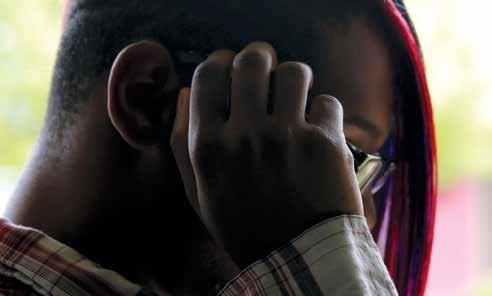
Half of female-to-male Transgender teens in the US have attempted suicide in the last three years, according to a new report published by the American Academy of Pediatrics.
The study, titled “Transgender Adolescent Suicide Behavior,” investigates suicidal behavior in six gender identities among youth, authors Russell B. Toomey, Amy K. Syvertsen, and Maura Shramko wrote. Included in their study were Transgen-
see TRANS TEENS page 11
Hosts community reception and discussion Sept. 25

Join Seattle Mayor Jenny Durkan, King County Council Chair Joe McDermott, and Seattle City Councilmember Lisa Herbold and Generations Aging with Pride on Tuesday, September 25, from 4:45pm-6:45pm, for the release of the Seattle Rainbow
Housing Report – “Aging in Community: Addressing Inequities in LGBTQ Housing & Senior Services” at the GenPride Center – Seattle first LGBTQ Senior Center, 401 Broadway E, Suite 223, Seattle WA 98102. see RAINBOW HOUSING page 6

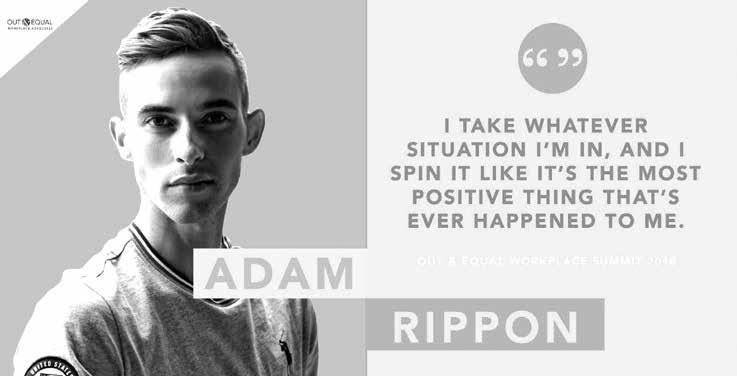
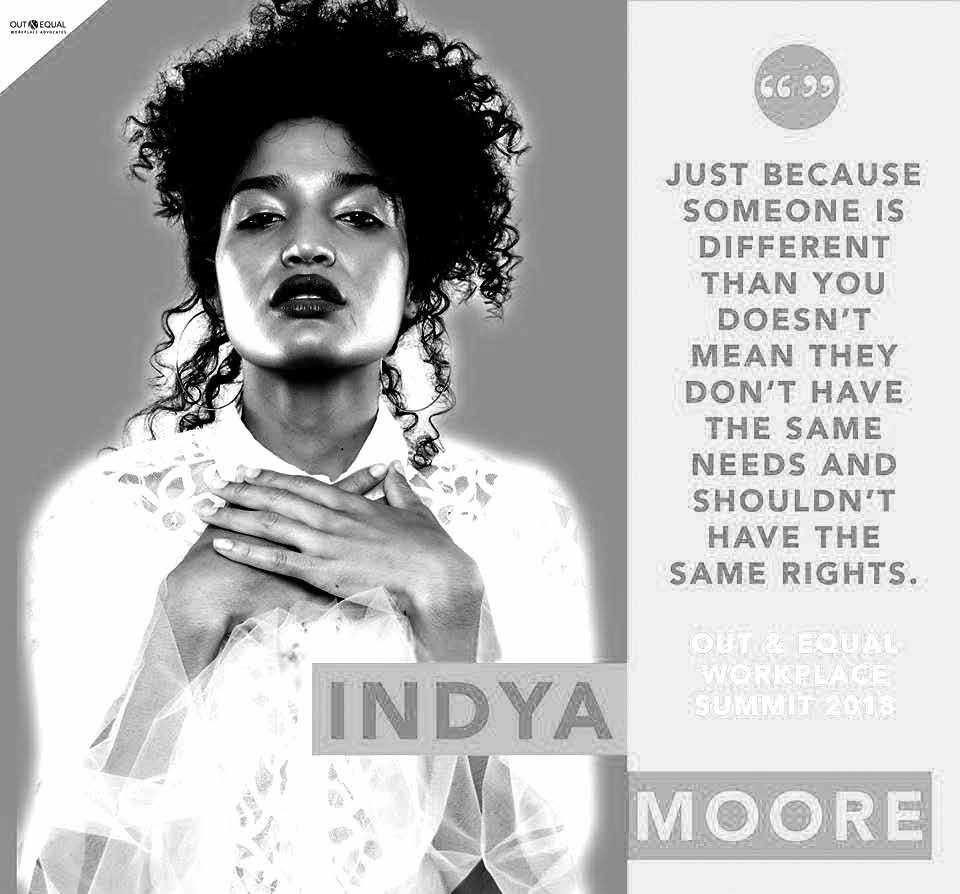
Join Out & Equal Workplace Advocates in Seattle Oct. 1-4 at the largest conference dedicated to LGBTQ Workplace Equality in the world, attended annually by over 4,000 LGBTQ & Ally Professionals!
The 2018 Workplace Summit in Seattle will feature 3 days of educational opportunities including over 100 workshops, featured panels, community advisory roundtables,
Only
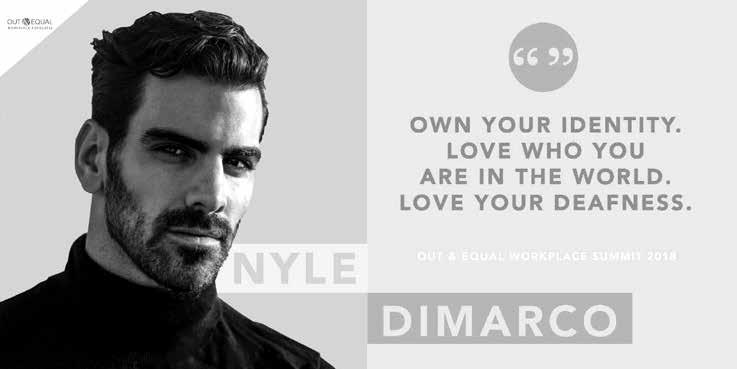
special networking mixers, receptions and events. The conference will also include 3 inspirational plenary sessions featuring prominent LGBTQ and ally leaders and amazing performances, including: Olympian Adam Rippon, Pose Actress Indya Moore, Model and Deaf Activist Nyle DiMarco, Indie Band Walk the Earth, Scott Nevins see WORKPLACE SUMMIT page 5
4% of sexually active gay and bisexual men in the
U.S.
use Truvada as pre-exposure prophylaxis
25% of young sexually active gay and bisexual men have never been tested for HIV

The Williams Institute at UCLA School of Law finds that only 4% of sexually active gay and bisexual men in the United States use Truvada as pre-exposure prophylaxis (PrEP), which the Centers for Disease Control and
Prevention regards as a highly effective tool to prevent the transmission of HIV. In addition, researchers found that most sexually active gay and bisexual men aged see YOUNG MEN page 12







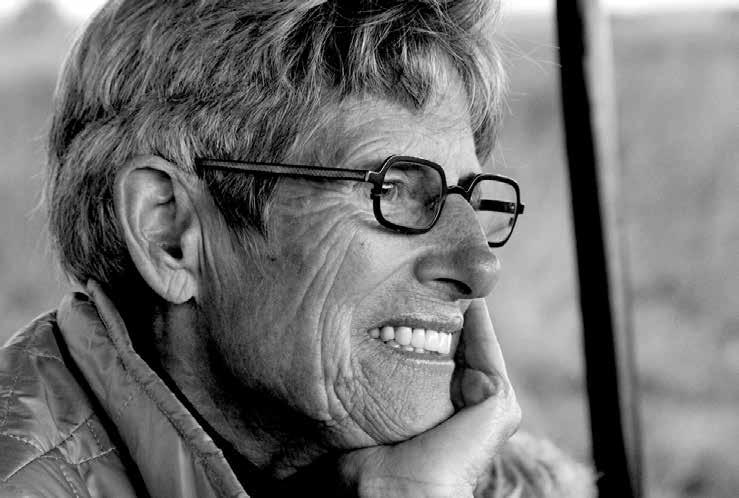
On September 1, the Seattle community lost one of our own. Barbara Bailey, a force to be reckoned with.
Barbara’s strength, conviction, passion, and unwavering commitment to community, civil rights, small business, and the promotion of women in leadership has touched every aspect of our community.
When we think of Capitol Hill businesses, it is hard not to remember the vital role Bailey/ Coy Books played as one of the nation’s top independent bookstores and a prime gathering place of the LGBTQ community.
Not long after opening Bailey/Coy, Barbara joined GSBA and remained a steadfast supporter of our organization, the LGBTQ community, small business, and the work to elect progressive leaders. She was serious in her work and irreverent in her life, which she lived with grace.
The Bailey family has a legacy of shaking up the world and challenging us to be the best we can be. Barbara was a founder of Pride
Foundation, where she has a scholarship in her honor. Later on, her brother Thatcher would become Pride Foundation’s Board President, the founder of Bailey-Boushay House, and current President and CEO of Seattle Parks Foundation; her sister Mary Ann Bailey would launch and lead the GSBA Scholarship Fund, the first LGBTQ Scholarship Fund in the U.S.
Barbara challenged us all. Her greatest gift is not to simply leave us with a memory but an amazing family and cadre of friends to continue her activism, commitment to community, and making the world better. The best tribute we can give to Barbara is to continue to fight the good fight.
We will miss you, Barbara.
Louise Chernin
President & CEO
Greater Seattle Business Association
Dear Friends:
We were deeply saddened to learn that Barbara Bailey, a founding member of Pride Foundation, passed away on September 1st.
Barbara was a longtime owner of the independent bookstore Bailey/Coy Books, and a kind, passionate, and tireless advocate for LGBTQ communities and communities of color. She spent her life lifting up the voices of others, by hosting fundraisers for her favorite organizations and candidates, and through making a local bookstore into a powerful community resource at a time when LGBTQ organizations were just beginning to emerge and strengthen.
Around a kitchen table in the early 1980s, Barbara and other activists close to her began a discussion that would lead to the founding of Pride Foundation. It was her passion and vision that helped catalyze the community to come together at that critical moment, and created new opportunities for
LGBTQ people across the Northwest.
As a founder, longtime volunteer to our scholarship program, and donor to Pride Foundation, Barbara’s generosity had an enormous impact on the student leaders who found affirmation and inspiration from her support over the years.
Those who knew Barbara describe her as fearless, passionate, and fierce in the face of all injustice she encountered. Marschel Paul, a dear friend of Barbara’s, offered these words in remembering her:
“Barb had given tremendously to the LGBTQ+ community over the years. Along with a small cadre of concerned activists during the 1980’s HIV/AIDS crisis, she helped found Pride Foundation and served on its first board. Her fight for fairness didn’t stop there. Later, as a member of the Lambda Legal Board of Directors, she took her passion for equal rights to a national level.
Fifteen years ago, when Barbara turned 60, she threw a huge party, a fantastic cele-
bration at Chevy Chase Beach Cabins, her family’s long-time home and enterprise in Port Townsend. There was live music, champagne forever, and a big crowd of people who admired and adored her. Anyone who knew Barb knew they would, at some point, be attending a social event at her home and writing a check to something she (and we all) believed in.
Margaret Sutro, my now legally beloved, and I wanted to do something for Barb’s 60th birthday that was as grand as she was. So we came up with the idea of starting a scholarship fund at Pride Foundation in her honor. We quietly went around to the guests at the party and asked if they would contribute to launch the fund. Of course, they wanted to and many of them wrote checks right then and there. Now that Barb is gone, it helps all of us to know that the Barbara Bailey Scholarship Fund lives on.”
All of us at Pride Foundation are better for having known Barbara. We hope you
by Mary Dispenza Special to the SGN
Dear Pope Francis,
Time is begging you to do the right thing. There have been too many apologies from you and other Popes through the ages with little to no significant reform. The Catholic Church remains seemingly unable to conquer its demons. And yet, if you don’t, the Catholic Church may perish – never becoming the great Church it could be.
Neither you, your bishops or priests appear serious about ending the torture and clergy sex abuse of children, minors and vulnerable adults. The silence of so many priests and bishops including yourself speaks complicity in one way or another.
Why aren’t you taking any concrete steps to assure your flock that you mean business? Why would you not write a letter immediately to the faithful to be read at Sunday services throughout the United States, offering assurance and specific steps to clean up this mess? A friend wrote, “I’ve heard nothing but justification, minimization, obfuscation, etc. from two different parishes in the past couple of weeks. I can no longer continue to attend.”
If you are serious, Pope Francis, with a stroke of your pen wipe out the “Pontifical Secret” written into Canon Law, known as

the Secreta Continere. Why would you not remove this stumbling block, which prevents bishops from disclosing child sexual abuse allegations and imposes strict secrecy on the investigation and handling of child sex abuse?
If you are serious, Pope Francis, why not throw open the vaults and doors of all the secret Vatican files? Provide authorities and attorneys access to the secretly guarded information so needed to uncover crimes against children and those who are responsible. Your bishops could follow suit because you have shown and approved the way forward.
If you are serious, Pope Francis, refuse to simply accept resignations from your bishops and priests complicit in covering up crimes and/or guilty of rape and torture. Mandate that these offenders leave their positions. Release their records to the authorities. Is a life of seclusion, prayer and penance consis-
tent with the Bible’s definition of punishment for those who commit crimes against the “little ones”?
If you are serious, Pope Francis, instead of procuring lobbyists to defeat statute of limitations reform in the United States, instruct your bishops to use the same resources to abolish the statute of limitations, not only for victims of clergy sexual abuse, but for the millions of victims who were raped and molested as children. The power and money of the Catholic Church has devastated too many victims, their families and communities for too long. Support a theology of restitution by working for changes in these laws.
If you are serious, Pope Francis, instruct your bishops to do everything possible to give victims of clergy sexual abuse a two-year window of opportunity within these statute of limitations reforms and allow them to come forward and be given the chance they deserve for justice and healing.
If you are serious, Pope Francis, you will stop pinning the sordid reality of priest sex abuse and torture of children, minors and vulnerable adults on priests who are homosexual. Healthy gay men do not rape or sexually violate children just as healthy heterosexual men do not rape and molest children. Scientific research provides no evidence that gay men are any more likely than heterosexuals to molest children. In 2002, the bishops,
will take a moment to read a loving remembrance of her from last Wednesday’s Seattle Times and attend the gathering in celebration of Barbara’s life, to be held at 3pm, Sunday, October 21 at the Lakeside School. Please join us in sending love, comfort, and warmth to Barbara’s family and friends.
In loving remembrance, Katie Carter Acting CEO Pride Foundation
[NOTE: The Seattle Times obituary can be read online at https://www.seattletimes. com/entertainment/books/barbara-bailey-coowner-of-bailey-coy-books-dies-at-74/?utm_ source=email&utm_medium=email&utm_ campaign=article_left_1.1.]
no less, commissioned and paid for an extensive study by the John Jay College from 2002 to 2009, on the roots of clergy sex abuse. The researchers found no evidence that gay priests were more likely than heterosexual clergy to molest children. Margaret Smith, a lead researcher, stated, “What we are suggesting is that the idea of sexual identity be separated from the problem of sexual abuse.”
There is so much more I wanted to tell you, Pope Francis, about my own journey from childhood priest abuse to healing and justice – how the parish priest, Father George Neville Rucker, raped me and how he was passed on from one parish to another for over four decades to rape and abuse over 35 little girls in Los Angeles and surroundings. All the while Cardinal James McIntyre, Cardinal Timothy Manning and Cardinal Roger Mahoney and at least 5 Popes knew this. I wanted to tell you about the window of opportunity that saved my life. I wanted to tell you about the loss and betrayal of the Catholic Church that broke my heart. You still have time to do something about the mess the Catholic Church is in. You can be a different kind of Pope. Change the trajectory. Make a different history. It’s still not to late.
Sincerely,
Mary Dispenza

continued from cover
from Bravo TV, and Out & Equal’s new CEO Erin Uritus!
Each year over 4,000 employees, including executives, Employee Resource Group members, HR and Diversity & Inclusion
professionals, join other experts to share strategies and best practices to create workplaces which are inclusive of all sexual orientations, gender identities, and gender expressions.
For more information and to register, visit http://outandequal.org
Courtesy of Out & Equal Workplace Advocates
by Eric Moss GSBA Director of Communications
GSBA was awarded a top grant of $10,000 for excellence in business development programming by NGLCC, the National LGBT Chamber of Commerce, at the August 16 NGLCC International Business & Leadership Conference in Philadelphia. Funded by the Wells Fargo Foundation and administered by NGLCC, grants are targeted towards programs that foster the development, growth, and sustainability of certified LGBT Businesses Enterprises® (LGBTBEs®).
“As we celebrate our largest and most expansive NGLCC Conference yet, we are thrilled to celebrate the continued outstanding work accomplished by our growing network of local affiliate chambers,” said Justin Nelson, NGLCC Co-Founder & President. “Without the leadership and passion of these chambers, NGLCC would not be able to effectively promote the LGBT business community. We are proud to acknowledge these thriving organizations with these awards at our Conference, and promote their achievements throughout the year.”
“GSBA conducts our Business Empowerment program, offering businesses the opportunity to learn and sharpen new skills, and to connect with resources that will help their business grow and thrive in today’s business climate. We are the only organization in the region that includes diversity, equity, and inclusion components in every workshop we offer,” said Louise Chernin, GSBA President & CEO. “This additional funding will help us further develop this
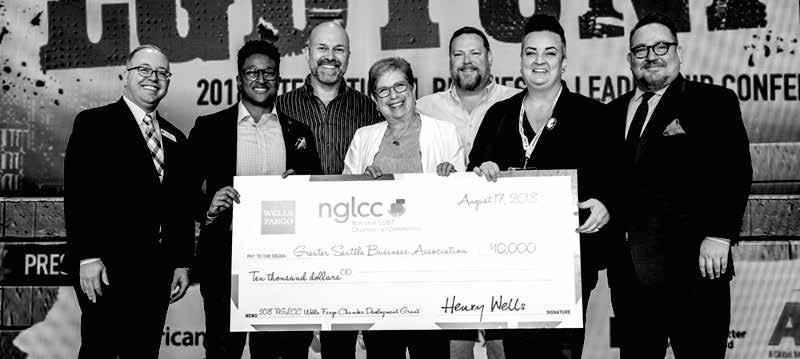
program, and allow us to broaden the scope of the workshops we currently offer.”
Applications were judged based on overall chamber strength, growth in members and community presence, engagement with NGLCC and the LGBT Supplier Diversity Initiative, the strength of the program, and outlined goals and metrics.
“NGLCC local affiliate chambers are the backbone of the LGBT business equality movement,” said Chance Mitchell, NGLCC Co-Founder and CEO. “The chambers that we recognized at Conference go above and beyond to guide and develop their local LGBT business communities.”
About GSBA
GSBA is the largest LGBTQ and allied chamber of commerce in North America, representing over 1,300 small business, corporate, and nonprofit members who share the values of promoting equality and diversity in the workplace. GSBA proudly serves as a connector across the region, bringing the community together through business while advocating for civil rights and small business, promoting LGBTQ tourism through Travel Out Seattle, and investing in the next generation of leaders through the GSBA Scholarship Fund. www.thegsba.org
About NGLCC
The National LGBT Chamber of Commerce is the business voice of the LGBT community and is the largest global advocacy organization specifically dedicated to expanding economic opportunities and advancements for LGBT people. NGLCC is the exclusive certification body for LGBTowned businesses. www.nglcc.org | @ NGLCC
Courtesy of GSBA
Part of possible 21-location strike against Marriott Corporation
by Mike Andrew SGN Staff Writer
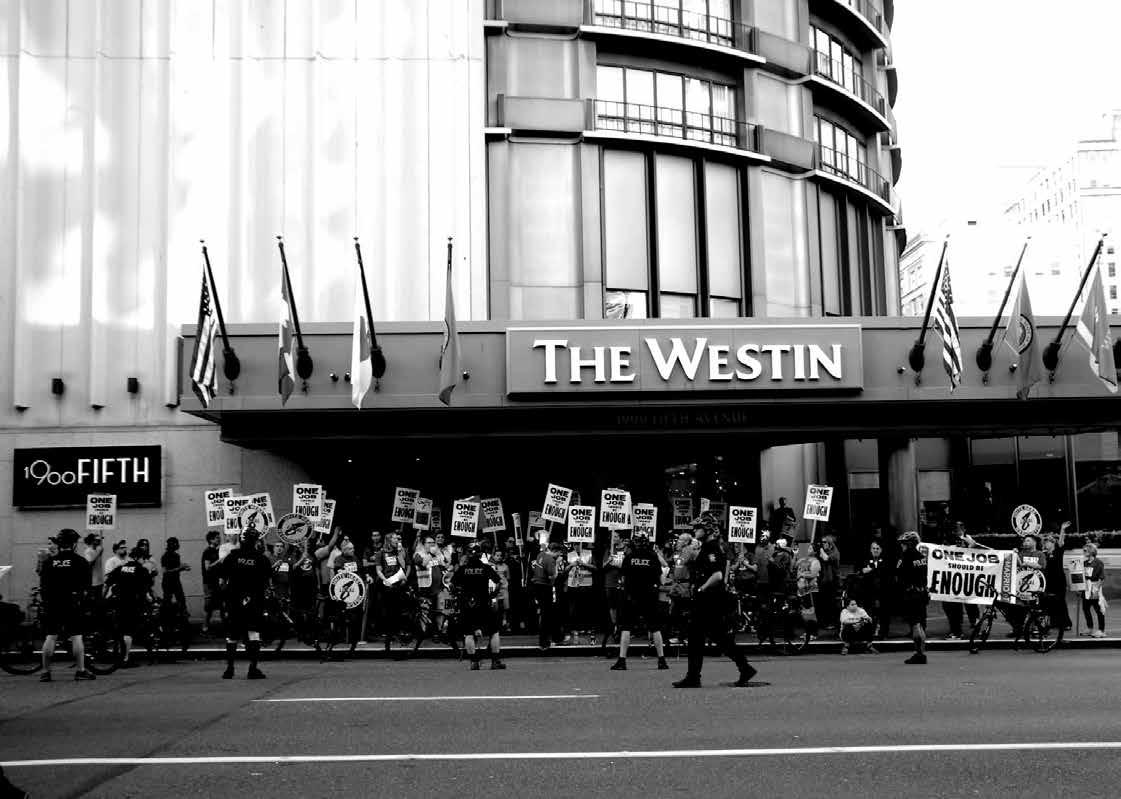
Workers at Seattle’s Westin Hotel announced on September 10 that they will be holding a strike vote against the hotel’s owners, Marriott Corporation, on September 14.
The strike, if members of UNITE HERE Local 8 who work at the Westin decide to walk out, is part of a national, 21-location action against Marriott.
On September 10, some 3,500 UNITE HERE Local 5 workers in Hawai’i voted to authorize a strike against six major Marriott properties.
On September 12, 1,800 UNITE HERE Local 26 workers in Boston also authorized a strike against the Marriott chain.
As the SGN goes to press, some 2,500 UNITE HERE Local 2 workers in San Francisco will vote whether to strike seven major Marriott hotels in their city. They are expected to approve the strike.
Four hundred Local 8 members in Seattle are also expected to vote in favor of a strike on September 14.
“Across North America, union workers are ready to fight back against a rigged economy that has left working-class families behind for too long now,” said D. Taylor, international president of UNITE HERE.
“UNITE HERE has a proud tradition of refusing to take concessionary contracts and changing lives around the world by raising the standards for union and non-union hospitality workers. Our members are proud of the exceptional guest service they provide the people who stay in our hotels, but 8,000 Marriott workers are ready and prepared to strike to secure their fair share from a highly profitable company receiving major tax handouts from Donald Trump while workers struggle to get by.”
UNITE HERE represents more than 20,000 Marriott hotel workers across North
America, of which more than 12,000 have had their contracts expire and are locked in ongoing negotiations, including workers at Seattle’s Westin.
Westin workers, who staged a massive demonstration in front of the hotel on Labor Day, including civil disobedience, at which 21 people were arrested, say they are often forced to work additional jobs to make ends meet.
A Meet and Greet reception with refreshments will be held from 4:45pm-5:15pm.
“My wife and I both work full-time at the Westin, but still I have to work a second job just to pay my bills,” said Mohamed Faik, a cook at the Westin Seattle. “My sons are getting older, and I am missing important time with them. This company doesn’t respect us. It’s time to strike for respect and for my family’s future.”
Workers also say they need better workplace safety rules, especially because the
hotel’s so-called “Green Choice” program –delaying cleaning until the guest checks out of the hotel – has created unsafe workloads.
The Westin Hotel is historic for Seattle’s LGBT community because UNITE HERE Local 8 won the first union hotel contract in the country to explicitly protect Trans workers from discrimination and harassment at the Westin in 2007.
continued from cover
From 5:15pm-6:45pm Karen Fredriksen Goldsen, PhD will present the highlights of the Seattle Rainbow Housing Report followed by a panel discussion and a community conversation: What next? during
which time you will be invited to share your insights and hopes for the future! To RSVP, please call 206-739-7498.
Courtesy of Generations Aging with Pride RAINBOW HOUSING
Parking is available – enter on E Harrison St between Broadway E and Harvard Ave E. The GenPride Center is accessible and captioning will be provided. This event
is sponsored by GenPride, the City of Seattle Office of Housing, Aegis Living and UW Aging with Pride.
Conducted in Massachusetts, first-of-its-kind study assesses the validity of claims that genderidentity protections lead to privacy
A new study by the Williams Institute at UCLA School of Law finds that Massachusetts’ public accommodations nondiscrimination laws that include gender identity do not affect the number or frequency of criminal incidents in restrooms, locker rooms or changing rooms. In addition, reports of privacy and safety violations in these places are exceedingly rare.
Researchers used criminal report data from several Massachusetts localities to assess differences in the rates of crime in areas with and without public accommodation laws that included gender identity protections. Results showed that immediately after the laws’ passage, there were fewer incidents of privacy and safety viola-
tions in places with gender-identity inclusive public accommodations laws than in comparable areas without the laws.
“Opponents of public accommodations laws that include gender identity protections often claim that the laws leave women and children vulnerable to attack in public restrooms,” said lead author Amira Hasenbush, a law and policy fellow at the Williams Institute. “But this study provides evidence that these incidents are rare and unrelated to the laws.”
In November, Massachusetts voters will decide whether to uphold the state’s 2016 nondiscrimination law that protects transgender people in public spaces. This is the firstever statewide popular vote on nondiscrimi-
nation protections for transgender people.
“Research has shown that transgender people are frequently denied access, verbally harassed or physically assaulted while trying to use public restrooms,” said study author Jody L. Herman, a scholar of public policy at the Williams Institute.
“This study should provide some assurance that these types of public accommodations laws provide necessary protections for transgender people and maintain safety and privacy for everyone.”
The report, “Gender Identity Nondiscrimination Laws in Public Accommodations: A Review of Evidence Regarding Safety and Privacy in Public Restrooms, Locker Rooms and Changing Rooms,” appears in
the Sexuality Research and Social Policy and is authored by Amira Hasenbush, the Jim Kepner Law and Public Policy Fellow at the Williams Institute, along with Andrew R. Flores, Assistant Professor at Mills College and Visiting Scholar at the Williams Institute, and Jody L. Herman, Scholar of Public Policy at the Williams Institute.
The Williams Institute at UCLA School of Law, a think tank on sexual orientation and gender identity law and public policy, is dedicated to conducting rigorous, independent research with real-world relevance.
Courtesy of the Williams Institute





TUCSON, Ariz. – Research has shown that transgender adolescents are at greater risk for attempting suicide than cisgender teens, who identify with the gender they were assigned at birth. A new study from the University of Arizona takes a deeper look at who within the transgender adolescent community is most at risk.
UA researcher and lead study author Russell Toomey and his colleagues found that transmasculine adolescents – those who were born female but identify as male – and teens who don’t identify as exclusively male or female are at the greatest risk for attempting suicide.
The research, published today in the journal Pediatrics, is consistent with findings on transgender adults and could help inform suicide-prevention efforts for transgender youth.
“To date, research on transgender adolescent suicide behaviors has really focused on comparing transgender youth as a whole group to cisgender youth as a whole group, rather than looking for any within-group differences that might exist, which we know might be beneficial knowledge for prevention and intervention efforts,” said Toomey, an associate professor in the UA’s Norton School of Family and Consumer Sciences in the College of Agriculture and Life Sciences.
Toomey and his co-authors found that 50.8 percent of transmasculine adolescents between the ages of 11 and 19 have attempted suicide at least once, while 41.8 percent of nonbinary adolescents – those who don’t identify as exclusively male or exclusively female – have attempted suicide. The next most at-risk adolescent groups were transfeminine – those who were born male but identify as female – at 29.9 percent, and those questioning their gender identity, at 27.9 percent.
Risk was lower for cisgender teens, or those who identify with the sex they were assigned at birth. Among females, 17.6 percent said they had attempted suicide, while the number for males was 9.8 percent.
Toomey’s findings are based on an analysis of data from the Profiles of Student Life: Attitudes and Behaviors survey, a national survey designed to provide a snap -

shot of youth behaviors, attitudes and experiences. The survey focuses on 40 developmental assets known to be associated with healthy development, as well as risk behaviors, such as depression and suicidal behaviors. Data was collected over a 36-month period between 2012 and 2015, and from 120,617 adolescents, most of whom identified as cisgender.
Survey respondents were asked, among other things, about their gender identity and whether or not they had ever attempted suicide. Nearly 14 percent of all adolescents surveyed reported having attempted suicide at least once.
More research is needed to understand why transmasculine individuals are most at risk, but the finding aligns with research on suicide attempts in the cisgender population, which has shown that females are more likely to attempt suicide than males, although males are more likely to die by suicide because they more often use lethal means. This suggests that the ways in which individuals assigned female at birth are socialized may contribute to the heightened risk, Toomey said.
More research also is needed to better understand the experiences of nonbinary adolescents.
“Nonbinary youth are putting themselves out there every day as not being read by society as male or female, and there hasn’t been much research on this population, but we expect that they’re probably experiencing the highest levels of discrimination or victimization from their peers and from communities, based on their gender presentation,” Toomey said.
Toomey also found that sexual orientation exacerbated suicide risk for almost everyone in the survey. The only population whose risk didn’t seem to be affected by sexual orientation was the nonbinary population.
“Nonbinary youth do not identify as totally masculine or totally feminine, so it complicates an understanding of sexual orientation, which is rooted in a binary, male-female understanding of gender. Thus, for these youth, the combination of gender and sexual orientation may be more complicated,” Toomey said.
Differences in protective factors between trans and cisgender teens
Toomey and his colleagues also examined the impact of other factors – including race and ethnicity, parents’ educational attainment, and the types of communities where teens grow up – on suicide risk.
They found that although cisgender teens who belonged to a racial or ethnic minority had a heightened suicide risk, race and ethnicity was not associated with higher suicide risk in transgender teens.
“This is consistent with some other recent research that has shown that perhaps identifying and experiencing both marginalized racial and ethnic identities, and gender identities, may confer protection. For example, a youth may learn how to cope with marginalization based on one of their identities, and that helps them cope at the intersection of multiple identities,” Toomey said.
Toomey and his co-authors also found that some factors that seem to protect cisgender teens from suicide risk – such as having parents with a higher level of educational attainment or having grown up in a more urban versus rural community – do not have the same effect for transgender teens.
With suicide ranking as the second leading cause of death among adolescents and young adults ages 10 to 34 in the United States, and with research suggesting that between 28 and 52 percent of transgender people attempt suicide at some point in their lives, it is critical to better understand suicide behaviors across gender identities, Toomey said. This is especially challenging since autopsy reports in the U.S. do not contain information on whether or not suicide victims are transgender, and parents may not know or wish to divulge that information, making it difficult to know how many transgender individuals actually die by suicide.
In future research, Toomey plans to look at other factors that may impact suicide risk in different populations of transgender adolescents and how those factors might be integrated into suicide prevention and intervention strategies.
“Transmasculine youth and nonbinary youth are the two populations that often are the least focused on in the transgender community,” he said. “So really reorganizing our efforts to focus in and try to really understand and learn about the experiences of these youth is critical.”
Courtesy of University of Arizona News
A new study just released from the American Academy of Pediatrics that documents the distressing levels of attempted suicide among transgender youth. The study found the highest rates of attempted suicide among transgender boys and non-binary youth.
“These harrowing statistics lay bare the urgency of building welcoming and safe communities for LGBTQ young people, particularly for transgender youth,” said Ellen Kahn, the HRC Foundation’s Director of Children, Youth and Families Program. “The distressing reality reflected in this study is preventable, and our nation’s schools, political leaders and communities can take concrete steps to combat this
continued from cover
der male-to-female, Transgender femaleto-male, nonbinary, questioning, cisgender female, and cisgender male teens.
The authors used data from the Profiles of Student Life: Attitudes and Behaviors survey of 617 teens between the ages of 11 and 19. The data were gathered from June 2012 to May 2015.
According to the authors, their primary objective was to examine prevalence rates of suicide behavior across the listed gender identities. Their secondary objective was to exam-
ine any associations between key sociodemographic characteristics and suicidal behavior across gender identity groups.
Two findings jump out at the reader:
• First, an astonishingly large proportion of gender-nonconforming teens attempt suicide, and
• Second, there appeared to be a large discrepancy among the different gender identities in suicide attempts.
During the period under investigation, 50.8% of Transgender female-tomale-identifying teens reported attempted suicide. This was the highest number among all groups.
Next, 41.8% of nonbinary people and
epidemic. HRC will continue to work with schools, faith communities, health care facilities, policy-makers and families to ensure that LGBTQ youth are able to live full, healthy lives.”
Earlier this year, HRC released its 2018 LGBTQ Youth Report, which detailed similarly alarming experiences, but also
29.9% of Transgender male-to-femaleidentifying people reported suicide attempts.
Finally, 27.9% of questioning teens, 17.6% of cisgender females, and 9.8% of cisgender males reported attempts.
A total of 14% of all the teens in the study reported a suicide attempt, highlighting the much higher proportion of gendernonconforming teens who attempt to take their own lives.
“Identifying as nonheterosexual exacerbated the risk for all adolescents, except for those who did not exclusively identify as male or female (i.e., nonbinary),” the study found.
“For transgender adolescents, no other
significant perseverance among LGBTQ young people in the face of significant challenges.
http://pediatrics.aappublications.org/ content/early/2018/09/07/peds.2017-4218
Courtesy of Human Rights Campaign and the American Academy of Pediatrics
sociodemographic characteristic was associated with suicide attempts.”
“These harrowing statistics lay bare the urgency of building welcoming and safe communities for LGBTQ young people, particularly for transgender youth,” said the director of the HRC’s Children, Youth, and Families Program, Ellen Kahn, in response to the study.
“The distressing reality reflected in this study is preventable, and our nation’s schools, political leaders, and communities can take concrete steps to combat this epidemic.”
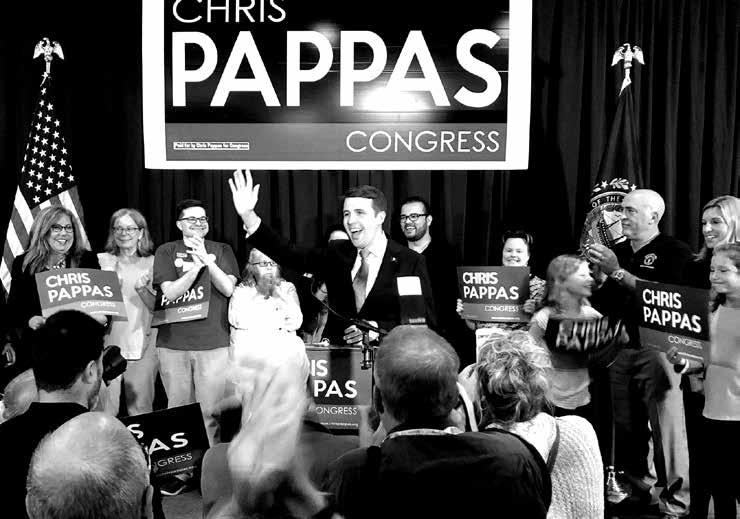
WASHINGTON, DC – Openly LGBTQ candidate Chris Pappas won his primary and is on-track to becoming the first openly LGBTQ person elected to Congress from New Hampshire. Thirteen Victory Fund endorsed Congressional candidates will now be on the ballot in November – more than at any time in history. A win for Chris is critical to increasing the number of openly LGBTQ members of Congress, and is part of a Rainbow Wave of LGBTQ candidates running for high-level offices across the United States.
“Chris Pappas continues to smash longstanding political barriers for LGBTQ New Hampshirites – and his victory is emblematic of the pipeline of LGBTQ leaders who continue to rise through the ranks to better serve their constituents,” said Mayor Annise Parker, President & CEO of LGBTQ Victory Fund. “Democratic primary voters are demanding authentic, values-driven leaders who prioritize policies over politics – and they found that
leader in Chris. He was born and raised in the district, is a fierce advocate for fairness and equality, and will fight tirelessly to push forward policies that advance those principles. We need change in Washington, and a November victory for Chris is critical to securing a pro-equality majority in the next U.S. Congress.”
Two Victory Fund endorsed U.S. Senate candidates and 11 Victory Fund endorsed U.S. House candidates are on the ballot in November. Currently six openly LGBTQ people serve in the U.S. House, and U.S. Senator Tammy Baldwin serves as the only openly LGBTQ Senator.
LGBTQ Victory Fund works to change the face and voice of America’s politics and achieve equality for LGBTQ Americans by increasing the number of openly LGBTQ elected officials at all levels of government. victoryfund.org
Courtesy of LGBTQ Victory Fund

18-25 are not tested for HIV annually, as recommended by the CDC, and 25% of young men have never been tested.
“Our findings suggest that health education efforts are not adequately reaching sizable groups of men at risk for HIV infection,” said the study’s principal investigator Ilan H. Meyer, Distinguished Senior Public Policy Scholar at the Williams Institute. “It is alarming that high-risk populations of men who are sexually active with samesex partners are not being tested or taking advantage of treatment advances to prevent the spread of HIV.”
This is the first study to report on estimates of HIV testing and use of PrEP among gay and bisexual men using a national probability sample in the United States. In the study, researchers examined gay and bisexual men in three age groups: young (18-25), middle (34-41) and older (52-59).
PrEP Use
Only 4% of sexually active gay/bisexual men of all age groups use PrEP.
Visiting an LGBT health clinic and search-
Lambda Literary is proud to announce the opening of submissions for the 31st Annual Lambda Literary Awards.
The Lammys honor books in more than twenty genres ranging from literary fiction and poetry to speculative fiction, graphic novels, and memoir. New this year is the addition of a bisexual poetry category.
“We are thrilled to add bisexual poetry to the books we’ll honor next year,” said Ella Boureau, Lambda Literary Awards Manager. “Our community made it clear that this is an important category to recognize, and we listened.”
ing online for LGBT resources were associated with greater likelihood of PrEP use.
Slightly more than half (52%) of young sexually active gay and bisexual men were familiar with PrEP as HIV prevention, compared with 79% of men aged 34-41.
Bisexual and non-urban men were less familiar with PrEP compared with gayidentified and urban men.
Most (68%) men who were familiar with PrEP as HIV prevention had a positive attitude toward PrEP use – despite the low level of usage.
One quarter (25%) of young gay and bisexual men had never tested for HIV in their lives, compared to approximately 8% of the middle and older groups of men.
45% of young sexually active gay and bisexual men had tested for HIV at least annually, compared with 59% of men aged 34-41 and 36% of those aged 52-59.
Black gay/bisexual men were more likely than White men to meet recommendations for HIV testing, which may be due to recent efforts to target Black men for HIV testing.
Visiting an LGBT health clinic and being out as gay or bisexual to health care providers were associated with greater likelihood of HIV testing.
“The extremely low rate of PrEP use,
Books submitted for consideration in this Lammys cycle must be published between January 1 and December 31, 2018 and meet all of the submission guidelines. Please read the guidelines carefully and choose the correct category before you submit. For complete information, visit www.lambdaliterary.org.
Finalists will be announced in March 2019. Winners will be revealed at the Lambda Literary Awards awards ceremony held on June 3, 2019 at the NYU Skirball Center for the Performing Arts in New York City. Tickets for the gala go on sale in spring 2019.
while not surprising given barriers to access in various parts of the country, is disappointing,” said lead author Phillip L. Hammack, Ph.D., Professor of Psychology at the University of California, Santa Cruz.
“I worry especially about younger men who didn’t grow up with the concerns of HIV that men of older generations did. The low rate of HIV testing probably reflects a degree of complacency and cultural amnesia about AIDS.”
“In the early days of the AIDS epidemic, gay and bisexual men had to rely on LGBT community sources to receive information about HIV prevention,” said Meyer. “Our findings suggest that contact with LGBT community resources – health clinics and online information – still serves an important role in HIV prevention.”
Truveda is currently the only FDAapproved form of PrEP.
The report, “HIV Testing and Pre-Exposure Prophylaxis (PrEP) Use, Familiarity, and Attitudes among Gay and Bisexual Men in the United States: A National Probability Sample of Three Birth Cohorts” appears in PLOS ONE and is co-authored by Phillip L. Hammack, Ph.D., Professor of Psychology at the University of California, Santa Cruz, Ilan H. Meyer, Ph.D., Distinguished Senior Public Policy Scholar at the
The Lammys celebrate the best in lesbian, gay, bisexual, and transgender literature. Since the first ceremony in 1989, Lambda Literary has awarded more than 575 Lammys to outstanding authors, including Dorothy Allison, Hilton Als, Kate Bornstein, Rita Mae Brown, Samuel Delany, Leslie Feinberg, Roxane Gay, Carmen Maria Machado, Cherríe Moraga, Armistead Maupin, Chinelo Okparanta, John Waters, and Jacqueline Woodson.
Courtesy of Lambda Literary
Williams Institute, Evan A. Krueger, MPH, Research Coordinator at the Williams Institute, Marguerita Lightfoot, Ph.D., Professor of Medicine at the University of California, San Francisco, and David M. Frost, Ph.D., Senior Lecturer at University College London.
Research reported in this article is part of the Generations Study, supported by the National Institute of Child Health and Human Development (NICHD) of the National Institutes of Health, under award number R01HD078526. The content is solely the responsibility of the authors and does not necessarily represent the official views of the National Institutes of Health. The Generations investigators are Ilan H. Meyer, Ph.D., (PI, UCLA); David M. Frost, Ph.D., (University College London); Phillip L. Hammack, Ph.D., (UCSC); Marguerita Lightfoot, Ph.D., (UCSF); Stephen T. Russell, Ph.D. (University of Texas, Austin) and Bianca D.M. Wilson, Ph.D., (UCLA) Co-Investigators are listed alphabetically.
The Williams Institute at UCLA School of Law, a think tank on sexual orientation and gender identity law and public policy, is dedicated to conducting rigorous, independent research with real-world relevance.
Courtesy of The Williams Institute
On Friday, September 7, a divided threejudge panel of the Eighth Circuit Court of Appeals denied a Certificate of Appealability to South Dakota death row prisoner Charles Rhines, who asked the court to review new evidence that some of the jurors who sentenced him to death were motivated by anti-gay bias and deprived him of a fair trial and due process under the Sixth and Fourteenth Amendments. One of the judges voted to grant Mr. Rhines’s application.
Below is a statement from Shawn Nolan, one of Charles Rhines’s attorneys, followed by background about the case.
“There is compelling new evidence that some of the jurors who sentenced Charles Rhines to death in South Dakota were motivated by anti-gay bias. Statements from three jurors show that the jury sentenced Mr. Rhines to death because some thought that, as a gay man, he would enjoy life in prison with other men.
“The U.S. Supreme Court’s decision in 2017, Peña-Rodriguez v. Colorado, applies to Mr. Rhines’s case and requires that a court review his evidence of anti-gay bias before his execution can proceed. Anti-gay stereotypes and animus should have no role in our criminal justice system and certainly should never be a reason to impose a death sentence. We are gratified that one of the judges on the panel, Judge Kelly, voted to review this important issue.
“We express our appreciation to the six civil rights organizations – American Civil Liberties Union; the American Civil Liberties Union of South Dakota; Lambda Legal; GLBTQ Legal Advocates & Defenders; National Center for Lesbian Rights; and National LGBT Bar Association – who filed a friend-of-the-court brief with the Eighth Circuit. The amici brief provided critical information about the long and painful history of discrimination against lesbian, gay, and bisexual people in the United States, which created the context in which Mr. Rhines received a death sentence and persists in the current day.”
– Shawn Nolan, Attorney for Charles Rhines and Chief of the Capital Habeas Unit, Federal Community Defender for the Eastern District of Pennsylvani – September 7, 2018
Case Overview
Charles Rhines is a gay man on death row in South Dakota. On September 7, 2018, the U.S. Court of Appeals for the Eighth Circuit declined to hear his claim that Peña-Rodriguez v. Colorado applies to his evidence that at least one juror relied on anti-gay stereotypes and animus to sentence him to death and violated his rights to a fair trial and due process under the Sixth and Fourteenth Amendments.
Jurors who voted for death expressed a desire to prevent Mr. Rhines from serving a life sentence “with men in prison” or enjoying “conjugal visits” and recalled jurors expressing “disgust” about Mr. Rhines’s sexual orientation. Anti-gay bias should have no role in a capital jury’s life or death decision-making.
Before trial, Mr. Rhines’s attorneys asked prospective jurors if they had any anti-gay bias that would prevent them from giving Mr. Rhines a fair trial. The jurors selected to hear his case said they could be fair and free of prejudice. This turned out not to be true.
At trial, the jury heard through

witnesses presented by the state that Mr. Rhines was gay and had relationships with other men. They were asked to choose between life in prison without parole and the death penalty for a murder committed when an employee surprised Mr. Rhines in the course of a commercial burglary. During their deliberations, the jury sent a note to the judge showing that deliberations had become infected with anti-gay stereotypes and prejudices. Among other things, the jurors asked whether Mr. Rhines would be allowed to:
• “mix with the general inmate population;”
• “create a group of followers or admirers;”
• “brag about his crime to other inmates, especially new and/or young men jailed for lesser crimes;”
• be “jailed alone or … have a cellmate;” or
• “marry or have conjugal visits.”
(Application at p. 6.)
As the amici brief of six civil rights organizations stated, “[t]he jury note suggests that at least some members of the jury accepted the notion that life in prison without parole would be fun for a gay person – so much so that they felt it was necessary to impose the death penalty instead. In other words, significant evidence suggests that the jury may have sentenced Mr. Rhines to death based not on the facts of his case, but because he is gay.”
(Amici brief at p. 2.)
The judge did not address these questions and failed to head off the anti-gay bias that the questions revealed. The same day, about eight hours later, the jury voted to sentence Mr. Rhines to death. (Application at pp. 5-6.)
New evidence confirms that some of the jurors who voted to impose the death penalty on Mr. Rhines did so because they thought the alternative – a life sentence in a men’s prison – was something he would enjoy as a gay man. Three jurors have made statements indicating that anti-gay prejudices played a significant role in the jury’s decision-making. (Amici brief at p. 1.)
One juror stated that the jury “knew that [Mr. Rhines] was a homosexual and thought that he shouldn’t be able to spend his life with men in prison.” Another juror recalled a juror commenting that “if he’s gay we’d be sending him where he wants to go if we voted for [life without parole].” A third juror confirmed that “[t]here was lots of discussion of homosexuality. There was a lot of disgust. This is a farming community . . . . There were lots of folks who were like, ‘Ew, I can’t believe that.’” (Application at p. 8.)
As Chief Justice Roberts has explained, the core premise of our criminal justice
system is that “[o]ur law punishes people for what they do, not who they are.” (Buck v. Davis) Bias based on a characteristic that cannot be changed, such as race or sexual orientation, goes against this foundational principle. Allowing bias to play any role in sentencing is especially alarming when the bias may have made the difference between life and death.
After a verdict and sentencing, the courts do not usually inquire into jury deliberations. However, in 2017, the U.S. Supreme Court recognized an exception to this rule and directed states to consider evidence that jurors relied on racial stereotypes or prejudice in convicting a defendant. (Peña-Rodriguez v. Colorado)
In Peña-Rodriguez, after the jury voted to convict a person in a non-death penalty case, two jurors said that another juror believed that the defendant was guilty of unlawful sexual contact and harassment “because he’s Mexican and Mexican men take whatever they want.” (Amici brief at pp. 2-3.) The Court found that evidence of anti-Mexican bias “cast serious doubt on the fairness and impartiality of the jury’s deliberations and resulting verdict” and set the verdict aside. (Amici brief at p. 3, quoting Peña-Rodriguez.)
The Court has also recognized that a person’s sexual orientation is “immutable” or unchangeable, in the same way that a person’s race is unchangeable. (Amici brief at p. 3.) Because the principles underlying Peña-Rodriguez apply to anti-gay bias, a court should consider Mr. Rhines’s new evidence before proceeding to his execution.
The jury’s decision to allow Mr. Rhines to live or die occurred in the context of the history of discrimination against lesbian, gay, and bisexual people in the United States. (Amici brief at pp. 7-9.) As the amici brief states, “Well into the twentieth century, gay people were ‘prohibited from most government employment, barred from military service, excluded under immigration laws, targeted by police, and burdened in their rights to associate.’” (Amici brief at p. 5 quoting Obergefell v. Hodges.) (See also Application at pp. 10-11.)
While many of the laws that allowed or required discrimination against lesbian, gay, and bisexual people have been repealed or found unconstitutional, recent years have seen renewed efforts to ban samesex couples from adopting children, allow discrimination against them by private actors, and otherwise maintain their inferior status under the law. (Amici brief at p. 5.)
Lesbian, gay, and bisexual people continue to experience negative consequences because of their sexual orientation. Despite significant progress, eliminating bias based on sexual orientation on the part of the government and private individuals continues to be an uphill battle. For
example, the current Attorney General of the United States has argued that employers should be able to fire lesbian, gay, and bisexual people because of their sexuality under federal law and that businesses open to the public should be able to discriminate against same-sex couples. (Amici brief at pp. 11-12.)
Today, the federal government and 28 states do not have laws that expressly prohibit discrimination based on sexual orientation, leaving lesbian, gay, and bisexual people at risk for discrimination in jobs, housing, education, credit, healthcare, jury service, retail stores, and other aspects of public life. (Amici brief at p. 12.) In 2017, 46 percent of LGBTQ employees reported remaining closeted at work. (Amici brief at p. 13.) 2016 was the deadliest year on record for hate crimes against this community with more than 1,000 incidents of hate violence reported. (Amici brief at p. 15.)
Historic and present day anti-gay bias infects the justice system, just as it does other aspects of life. When anti-gay bias poisons a criminal proceeding, it violates the defendant’s rights to a fair trial and due process and undermines the integrity of our justice system as a whole. In a 2008 study, a majority of police chiefs said they believed that being gay constitutes “moral turpitude” and a “perversion.” This continuing bias helps explain why gay men are still targeted for lewdness offenses and why young lesbian, gay, and bisexual people are more likely to get stopped by police or arrested than their heterosexual peers. (Amici brief at pp. 14-15.)
Research shows that discriminatory attitudes against lesbian, gay, and bisexual people negatively affect their experiences in the civil and criminal courts as jurors, litigants, court employees, and other participants. For example, in a 2001 study of the California court system, more than a third of lesbian, gay, and bisexual court users “felt threatened in the court setting because of their sexual orientation.” (Amici brief at p. 17.) (See also Application at p. 12.) Of jurors who participated in mock trials between 2002 and 2008, a jury research firm found that 45 percent believed that being gay “is not an acceptable lifestyle.” (Amici brief at p. 19.)
Punishing people based on who they are is fundamentally “inconsistent with our commitment to the equal dignity of all persons.” (Amici brief at p. 4, quoting Peña-Rodriguez.) Mr. Rhines should be allowed to show whether anti-gay prejudice factored into the jury’s decision to sentence him to death.
Courtesy of Dupont Circle Communications