

BY LINDSEY ANDERSON SGN STAFF WRITER

I consider myself an expert in Queer love. As the resident coordinator of the weekly SGN book club, I read roughly one LGBTQ+ book a week. Over the last two years, that has amounted to nearly one hundred books, ranging from smutty romantic holiday novels to modern classic coming-ofage books. On top of reading all these stories, I also interview most of their authors. One of my favorite questions to ask them is, “What makes a Queer story different?”
It is an important question. I hear it often from heterosexual friends and family members when I tell them I review Queer books. As important as the question is, it can be hard to answer. The most common response is that Queer stories, especially Queer love stories, are not different. Like the ugly mug my mom gave me for Valentine’s Day in 2021, “Love is love.”
It’s the simple answer. One mass-produced over the last fifty years used to convince straight people that LGBTQ+ folks deserve the same rights and opportunities because humans often fail to see the humanity in others if they can’t first find similarity.
On paper, LGBTQ+ love stories aren’t any different than straight ones. The desire to love and be loved, for vulnerability and acceptance transgresses sex and gender. Off paper, in real life, the experiences of LGBTQ+ people falling in and out of love vary and often differ immensely from their heterosexual counterparts.
Playing the part
For heterosexual people, the idea of a “first love” fills the mind with romance, discovering attraction, teen rebellion, and coming of age. For Queer people, first love might be fabricated, in an attempt to follow the narrative movies and books have laid out for us.
For six years, Nat thought she was in love. She started dating the perfect guy when they were sixteen. Everything about the relationship checked the right boxes. He was handsome. He was respectful. She loved spending time with him and loved that he gave her space when needed. Her boyfriend was what Disney Channel movies and her parents’ stories had made her believe love should be.
Their relationship had survived high school and the first years of young adulthood. It was comfortable, and to Nat, it was good, until everything changed.
“He came out,” she said. “He then proceeded to explain to me how there is no way I was straight because we never even kissed. I never even asked to.” Within moments, her perfect relationship came crashing down around her, and Nat was left to reevaluate what the last six years of her life had meant.
“It took me about a week to realize he was right. I never had the slightest attraction to men,” she said. Nat came out as a Lesbian, and now, at 24, she’s ready to experience her first romantic love.
While it may not have been romantic or sexual, the love Nat had for her first boyfriend was sincere. They are still friends to this day.
Queer love can often spur feelings of intensity. Without more mainstream depictions of it, LGBTQ+ folks can often feel as if they’re re-inventing love itself.
Much of the media we consume shapes the expectations we have surrounding love. While Queer romances are becoming more and more common today, most young adults grew up bombarded by heteronormative media. Some grew up like Nat, convinced they were straight because that’s all they knew. Others, like Ant, realized their Queerness but felt excluded from love stories because of it.
Ant is a younger Queer person. He “grew up on the internet” outside of the US. At eighteen, he had watched as others around him fell in love but felt excluded from the experience often portrayed as a universal part of growing up. He would eventually meet his first love at a writing group.
“I reached out to him because I thought his poetry was beautiful,” Ant said. The two cultivated a rich friendship out of a mutual love for the craft of poetry. Eventually, the handsome poet asked Ant to be his partner.
Like many first loves, the relationship ran its course and eventually fizzled out. Even though Ant is no longer with his poet,
he will forever treasure the memories of the boy who first opened his eyes to love. “That relationship was special to me because we had a lot of fun. I’d never felt that type of connection with somebody before,” he said. “Queer love is so beautiful, but it’s very misunderstood and judged.”
Mourning the memories you don’t have
Sometimes, you meet a person and feel as if you should have known them your whole life. For many Queer people, a first love happening in their 20s feels like it should have come decades earlier. That sensation of nostalgia for a person you’ve only known as an adult inspired Lo to write an original poem titled “Cedar Ave.”
“I love you because it’s as if you’ve always been important to me,” they wrote in a poem for the girl who made them believe in love again. Through their poem, Lo explored the memories they wished they had with their former love. Memories of childhood, awkward middle school photos, and romantic late-night drive in high school.
Despite feeling like they should have known this person forever, Lo only has a handful of young adult memories and lessons learned from an admittedly dysfunctional relationship. Despite breaking up over a year ago, Lo still cherishes their love.
“I still hold her tenderly in my heart because the love I had for her was beyond anything romantic or sexual. I loved her like how one would a childhood friend they’ve known over half their life, and I always will.”
Despite meeting as adults, in many ways Lo’s ex helped them grow up and into themself. “She taught me how to be confident in my gender identity. She challenged my politics. She made me feel every part of me was seen and accepted. We spent the summer time irresponsibly crashing into each other because we were young and dumb. We burned each other badly. I miss her every day, but I wouldn’t want her to come back into my life, I think.”
Lo’s experiences reflect one felt by many LGBTQ+ people, a longing for the love stories we were promised as children. Lo turned their pain, an ache for a memory they’ll never have, into beautiful art. Even though they’ve moved past the relationship, they still wonder what their life might have been like if they had grown up with the same acceptance their former partner had.
“I met her in the spring, a few months after I turned 25. She’s 23 and was born and raised here her entire life. She had more experience than I did. She knew her identity for a long time. I often think about how different my life would have been if we did meet as kids.”
Just one kiss
Queer love can often spur feelings of intensity. Without more mainstream depictions of it, LGBTQ+ folks can often feel as if they’re re-inventing love itself. When Mateo fell in love with his partner, he experienced a moment in which he felt like the entire world had shifted.
“I fell in love with my partner with one kiss,” Mateo recalled. She was a year older than him. They met in college, through social justice community work. “For some reason, I felt like I needed to know her before she graduated,” he said.
Sometimes the universe aligns perfectly. For Mateo, the stars aligned to ruin his partner’s birthday. “Her friends canceled her party,” he explained. Not wanting his crush to spend her special day alone, Mateo invited her over and threw an impromptu birthday party.
“She made a surprise dinner that made me cry [because] it was so good and familiar. I made her a vegan chocolate cake that she took home to her vegan mother,” he remembered. As the party winded down, Mateo started to feel tired.
“I wanted to take a nap. She laid with me,” he said. “I was too shy to kiss her, so she kissed me, and the rest is history.” Since that fateful day, Mateo and his partner have graduated. They’re still together, navigating life, identities, and Seattle.
Opposites attract
For some people, love nurtures growth through challenges in self-exploration. Eight months ago, Corbyn logged onto Grindr looking for a casual fling. “Initially, we just met for a hookup, but instantly I knew I wanted them to be a part of my life,” he said. The date didn’t end, and over half a year later, Corbyn hopes it never does.
In many ways, Corbyn and his partner couldn’t be more different. “I’m a Black Trans Pansexual man, and my partner is a white Nonbinary Genderqueer Bisexual human,” he said. “They’re very open and Queer about their gender, whereas I am very binary in gender and fluid in my sexuality and gender expression.” Despite Corbyn and their partner viewing gender and sexuality through different lenses, they work hard to communicate. Both of them use therapy as a tool to work on their different communication styles. They hope to merge their therapy journies eventually. “They have been in therapy for many years, and so have I,” Corbyn said. “We both have different communication styles and are autistic, so we’re seeking a couple’s therapist to help us bridge that gap and be a better team.”
This isn’t Corbyn’s first relationship, but it is the first time he feels comfortable and

healthy in his partnership. “I’ve been in two other long-term relationships that were also Queer but very toxic. It’s so nice to have met my current partner who is so full of love, curiosity, and kindness for the world.” Queer people sometimes face slack for “U-Hauling,” or moving too fast in a relationship. However, when people have spent decades discovering who they are on their own, they often know what they want in a partner. “I finally feel like I’ve met my soulmate,” Corbyn said.
What is Queer love?
As much as I love reading about perfect fictional couples, I decided to challenge myself and seek out real Queer love stories. After speaking with members of Seattle’s LGBTQ+ community, I’ve come to understand that not all love is the same.
What I found is that Queer romances are fundamentally different from straight ones. We are often presumed straight, raised in a world where the romances we read and watch on TV are (typically white) cis men and women. Unlike our straight peers, we are more likely to experience heartbreak before we even fall in love. To fully love someone else, we must first truly love and accept ourselves as someone different than who we were expected to be. We don’t have many childhood romances. First crushes can be fabricated to appear “normal” or hidden in the pages of a locked diary. We experience that rush of a first love later in life. We run around the streets, go from bar to bar, high on the experiences we may have been denied as teenagers. For us, loving someone else can mean losing our families. While straight people grow up with the
expectation that they will eventually fall in love, “settle down,” and start a family, the mechanics of such a future look different for us. Marriage has only been an option in Washington for ten years. We can’t have children by chance. For us, it will take money, adoption agency home visits, and the biological parts of someone else. Love is not the same. Love is not love. To love someone in a Queer way is to defy the expectations the world of gender binaries and heteronormativity places on us. To love someone queerly is an act of rebellion. To love someone queerly is to know you’re not the main character in any Hollywood romance. Queer love is bold. Queer love is authentic. Queer love is not the same as heterosexual love, but it deserves to be celebrated, understood, and talked about just as much.
BY DANIEL LINDSLEY SGN STAFF WRITER
Delve at all into urban planning discourse and you’ll soon encounter the concept of the “third place,” a space away from one’s home or work where people socialize across boundaries of profession and social class, a kind of crossroads for all walks of life.
A third place could be a bar, a park, a town square, a café, or a barber shop. More recently, scholars have begun exploring the idea that certain digital spaces count, since the events of the last few years have made it necessary for online games, chat rooms, Discord servers, and the like to fulfill our social needs in similar ways.
Strict definitions will differ depending on who you ask, but it is generally agreed that a third place should be inclusive, wholesome, and quite importantly, playful.
A playful atmosphere lacks hostility; it might even be considered an antidote to such tensions. It replaces with curiosity the wariness with which we might regard an approaching stranger, and it helps us open up to friends and acquaintances about the troubles of the world beyond.
Some advocates worry that third places are slowly disappearing. They blame suburban sprawl, Airbnb, inflated rent prices, the decline of shopping malls, and social media. Downtown Seattle has suffered from such erosion, as the pandemic saw restaurants, bars, and other third places close, to say nothing of tech companies buying up spaces that were once public.
Yet one of the most resilient of these
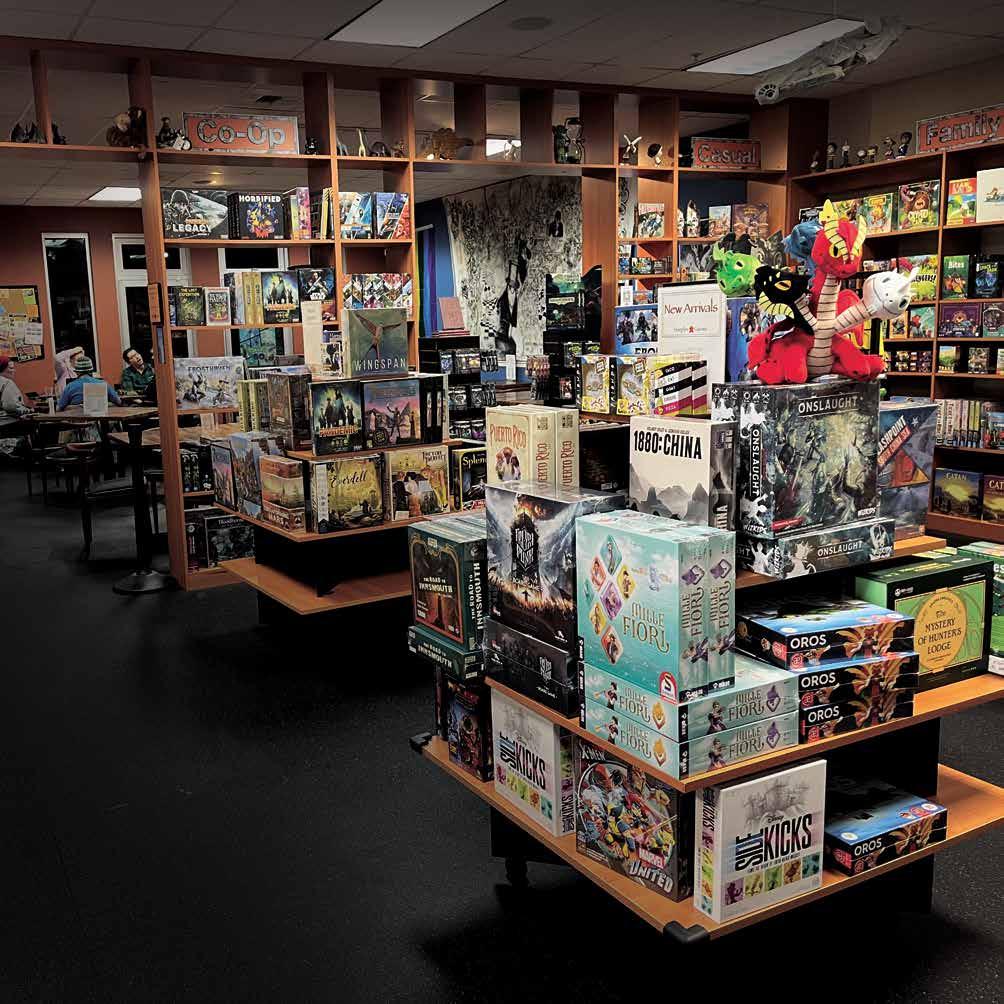
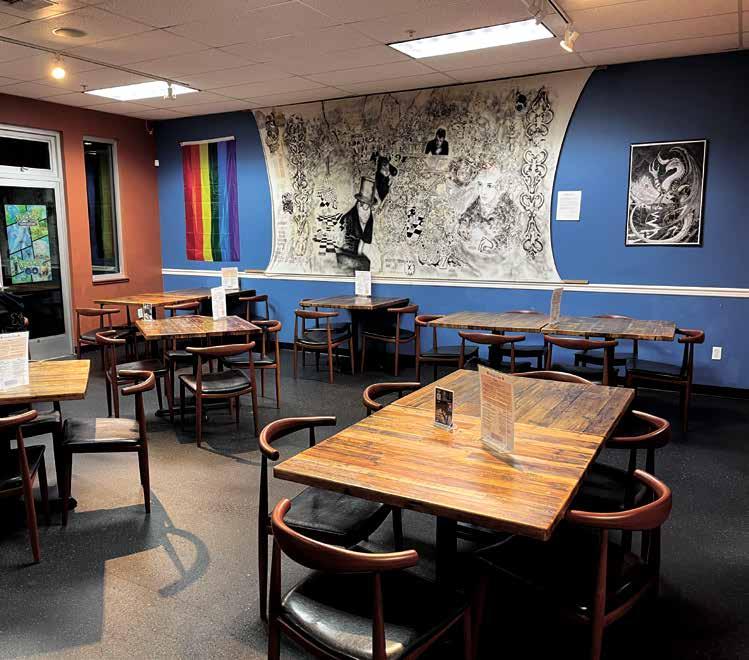
third places, especially in Seattle, has been the local game store (shortened to “LGS” in the tabletop gaming community). Each LGS acts as an independent hub for board games, roleplaying games, war games, and trading card games. It’s one of the few places where you can sit for hours without paying a cent, and never be bothered for it.
At a bar or café, you drink something. At an LGS, you have the choice to play something, and most stores will have ways to find people willing to do that, like a calendar or corkboard for clubs, tournaments, and Dungeons & Dragons campaigns looking for players.
It will often have a games library as well, to let patrons check out board games before they decide to buy them. Like seasoned bartenders, the more veteran LGS staff will know their stock well enough to give recommendations based on taste.
As if that weren’t enough, some stores, like the local chain Meeples Games, have food and drinks — not popcorn and sweets like a movie theater but sandwiches, pizza, coffee, and even a full restaurant and bar, in the case of Star City Games’ flagship store, Mox Boarding House.
Thawing the freeze
But what do third places and the LGS have to do with Queer love? The receding pandemic has had many of us in the community searching for ways to connect with new people, and reconnect with friends and acquaintances — and when it comes to cre-
The infamous Seattle Freeze might thaw under the warmth of a good-natured round of Settlers of Catan , or during an exciting moment in a Dungeons & Dragons adventure.
ating a playful atmosphere, there are few things that do it better than games.
Think of the air of camaraderie that can form around rooting for a team in a sports bar, for instance. Or if sports aren’t your thing, think about a Queer bar with RuPaul’s Drag Race on. Any two people there could have never seen each other before, but all the same, they will cheer and holler together.
Playing a game does demand more effort than watching one, which is fairly passive (and it’s easy enough to ignore the other people in a bar). To play one has to know the rules, pay attention to the other players, and think ahead about strategy, execution, and even narrative.
That’s a big ask for a Friday night, some might say, but keeping close track of the rules or the story of a game can divert focus away from oneself and toward an engaging, collective task. Self-consciousness gives way to a softer frame of mind, and with everyone there dropping pretense, they can relax enough to both witness and become more authentic versions of themselves.
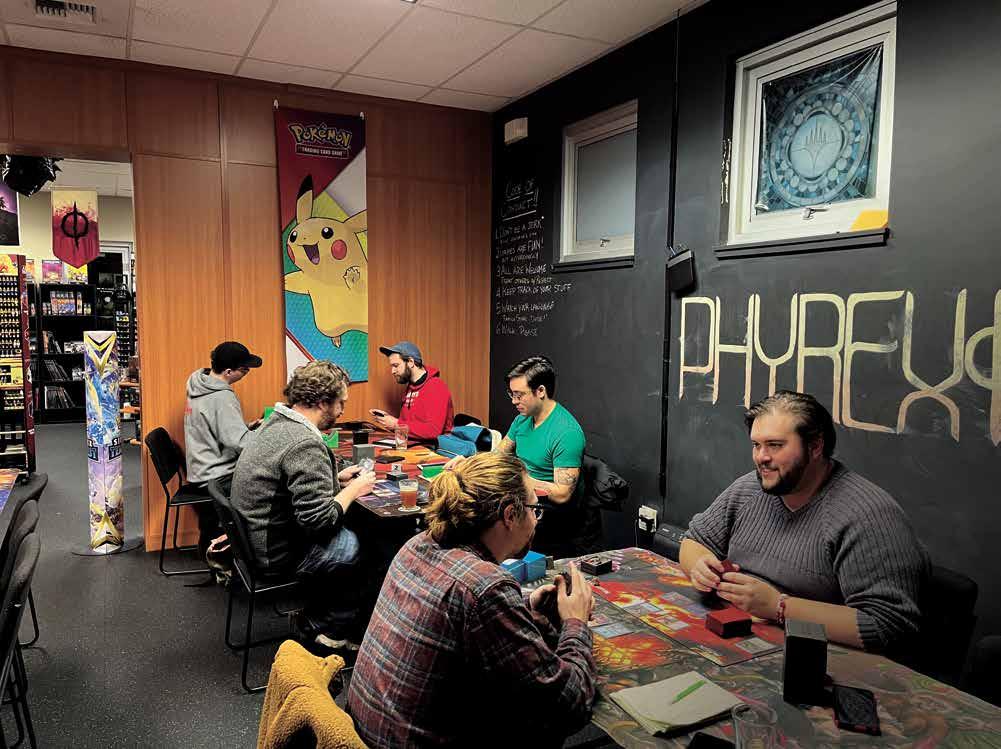
In other words, games break the ice, and they can tell you more about the people involved than shouting in a sports bar ever could. The infamous Seattle Freeze might thaw under the warmth of a good-natured round of Settlers of Catan, or during an exciting moment in a Dungeons & Dragons adventure.
Such things happen again and again at any thriving LGS. And they often happen between Queer people, because Queer gaming groups in Seattle have deemed a few such places safe enough to meet. Queer Geek! Seattle, for instance, has monthly meetups at Phoenix Comics and Games, which also carries comic books by local Queer artists. The more gamesfocused Seattle Gaymers bring games beyond the LGS, holding a weekly board game night at Optimism Brewing Co., and a video gaming night at CC’s. The famous Raygun Lounge on Capitol Hill, with its pinball machines and board game library, hosts voting for the Emperor and Empress of Seattle each year.
Making worlds together
But enough about meeting new people. What about the friends we already have?
“In a way that is very difficult to come by in any other sort of environment or situation, gaming allows you to open up in a very personal and intimate way toward your friends and the people you’re gaming with,” said Anna Goldberg, cofounder of 6 String Games.
Goldberg was referring specifically to the more narrative-focused tabletop genre of roleplaying games (TTRPGs) — the likes of Dungeons & Dragons, Burning Wheel, and Lancer. Before 6 String, Goldberg wrote for Zweihander, a gritty gothic horror system, and she has taken that expertise onward to forge a new path in a growing industry.
She has been playing TTRPGs since college, and she had this to say about what they offer: “Exploring very emotional and personal topics through the lens of these characters is not really something you do very much in your life — except maybe, you know, when you’re in college and you’re really wasted, doing the ‘I love you so much!’ kind of thing.”
But unlike getting drunk, when you play TTRPGs, “you still remember those stories like they really happened,” she said.
“It takes an incredible amount of trust to have that kind of buy-in with a group of people, and just be like, ‘Okay, we’re all getting together to tell this story,” she said. “There aren’t really any other activities that, you know, form that group collective in that way. It’s like, ‘We’re gonna make a world and share it for a while, together.’”
In addition to gaming with old friends, Emma continues to meet new ones through games; that’s even how she met her business partner, Colin McNamara, in a digital third place.
“Before we were in that same ‘friend Discord’ together, lockdown happened — which, you know, really happened here,” Goldberg said. “You weren’t supposed to leave your place. “
The two of them ended up on the same “actual play” Twitch stream, she said, although in separate campaigns. “We actually met because I watched one of the
games he was in. I started a group chat with the people I was becoming friends with who were in that game. And from there, we realized we had a lot more in common outside of liking tabletop games.”
Only a year later did Goldberg and McNamara finally meet up in real life, for a “tight, spine-cracking hug” in the latter’s
home state of New York. They’ve visited each other a few more times since.
As for other friends, Goldberg has seen relationships come and go. “Both in character and out of character, I have seen them blossom, I have seen them fall apart, I have seen them strengthened — basically, anything that can happen to a romantic
relationship outside of a game can happen around a game table.”
You can find out more about 6 String Games at https://www.6stringgames.com. Its solo journaling game The Secret Ingredient Is Love guides players through the experience of making old family recipes while exploring fond memories.

BY GEORGIA SKERRITT SGN CONTRIBUTING WRITER
Many of us have Valentine-related memories as far back as elementary school, where classmates would hand out handwritten notes and chocolates to express affection and platonic love to one another.
Over time, the holiday would morph into something different and uniquely lovely for us: a day for us to focus attention on partners and spouses and dote on them with romantic affection.
For anyone on the Asexual (Ace) or Aromantic (Aro) spectrums, though, their relationship with Valentine’s can become tense and complicated.
Popular culture, social media, and the film and television industries all contribute to an overarching narrative that places romantic and sexual attraction at the center of a healthy and happy life. They’re made out to be the best types of experiences someone can have.
If someone identifies as anywhere on the Ace or Aro spectrum, however, they’re automatically navigating a much more complex relationship with sex or romance than those who regularly experience sexual or romantic attraction (who are called Allosexual and Alloromatic, respectively).
Here’s a quick primer on Asexuality and Aromanticism for anyone who might not be completely familiar:
Asexual: Used to describe people who don’t experience sexual attraction to others. Aces often will still have some sort of libido (sex drive), even if it is not directed at another person, and will often also experience other types of attraction (romantic, emotional, sensual, etc.).
Aromantic: Used to describe people who don’t experience romantic attraction to others. People who are Alloromatic desire an intimate romantic relationship with another person on some level, but Aro people don’t share this desire.
Asexuality and Aromanticism are not
the same thing, and they do not always exist together. Because sexual and romantic attraction are different, a person can be both Ace and Aro, or just one or the other.
As Valentine’s Day approaches, here are a few resources for those on the Ace or Aro spectrums who might be seeking support and community.
AVEN
An obvious first choice for this list, the Asexuality Visibility and Education Network (commonly known as AVEN) is one of the best resources for anyone who identifies as Asexual or Aromantic. It’s also a great place for people with Ace or Aro friends, family, or partners to educate themselves.
Created by American Asexual activist David Jay in 2009, AVEN was once called the “unofficial online headquarters of the Asexuality movement by Salon and is widely known today as the largest online Asexual community.
The website is as vast as it is informative, offering an entire section titled “About Asexuality,” which includes an FAQ for friends, family, partners, and those who are exploring different labels on the Asexual spectrum.
Beyond that, AVEN hosts hundreds of forums and discussion threads relating to sexuality and romance. There is even an entire forum dedicated to gray areas on the Ace spectrum, called “The Gray Area, Sex, and Related Discussions.”
Furthermore, members will find forums on romantic relationships, Aromanticism, dating sexual people, coming out, and many other topics. There’s also a Welcome Lounge, where new members can introduce themselves and tell their stories.
Even 22 years after the website launched, people are still joining AVEN every day with a new sense of belonging and commu-
nity. In the last few days, one new member took to the Welcome Lounge with a short post befitting the overall purpose of the network: “Just joined… After years of not fitting into the correct box, I think I may have found mine. Reading a lot of your posts makes me feel like I’ve found my people.”
If you or anyone you know might be interested in learning more about Asexuality or Aromanticism, visit AVEN’s website at https://www.asexuality.org.
Meetup
While the internet allows people to connect with one another all over the world at any time of the day, physical companionship is still important for all of us. This is where Meetup comes in. Yes, this is another online platform, but it’s designed to bring people together in real life based on common experiences or hobbies. On the login page, the site describes itself as “The people platform — where interests become friendships.”
Upon creating a free account, members can enter their interests, hobbies, and city. From there, they can join groups that interest them and RSVP to events (both online or in person) to network with people and create friendships.
For anyone in the Seattle area looking for a place to meet fellow Aces and/or Aros, feel free to join the “Seattle Aces and Aros” group, which has consistent online meetings and also hosts several in-person excursions, the next one being on February 19!
To make an account and start finding communities in your area, go to https:// www.meetup.com.
Ace by Angela Chen
A list of Ace resources doesn’t feel complete without mentioning Angela Chen’s exploration of Asexuality and society in her book Ace: What Asexuality Reveals About Desire, Society, and the Meaning of Sex.
An Asexual journalist and editor, Chen previously worked for publications like WIRED magazine, the Wall Street Journal, and Vox Media’s The Verge before publishing her book in 2020. Over several chapters, Chen unpacks the meaning of Asexuality and how the Asexual experience intersects with gender, race, and disability. What makes Chen’s work stand out is her use of in-depth interviews to paint an accurate picture of Asexuality. By including first-person experiences from several interviewees, Chen gives Asexuality an important type of representation, by centering real human voices in her work rather than intellectualizing it and extracting it from its social and cultural contexts (which can often happen in discussions of Asexuality and Aromanticism).
At just over 200 pages, this is an accessible read for anyone in or outside of the Ace/Aro communities who is looking for more information and understanding.
Especially for those who are in the process of exploring Asexuality for themselves and might find it hard to explain their experiences during their coming out, this book is a great resource to point loved ones to. Coming out is a hard process and can be made worse by the task of educating people around you who might not completely understand the labels and identities that work for you. Ace does a great job of doing that job, giving you more time to build a community for yourself and find belonging elsewhere.
If, on the other hand, you have a friend, family member, or partner on the Ace/Aro spectrums, consider this book a way to educate yourself and better understand and support those close to you.
For more information about the book and where to buy it, visit Chen’s website at https://www.angelachen.org/ace.


















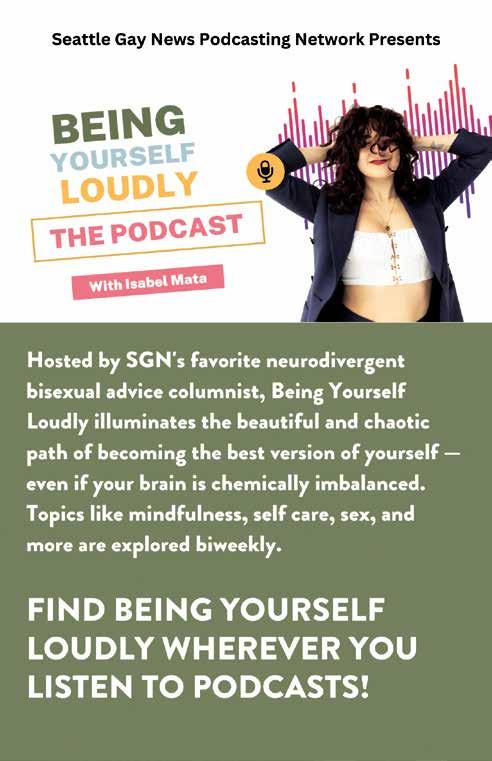

Ask Izzy is a biweekly advice column about relationships, mental health, and sexuality. Written by Isabel Mata — a Seattle-based lifestyle writer, podcast host, and mental health advocate — Ask Izzy offers tangible expert advice so all readers can have stronger relationships, better sex, and healthier mindsets. Looking for some more guidance? Submit your question to info@sgn.org the subject line: Ask Izzy Submission.

If I could go back in time and give my younger Bisexual self some advice on for aging healthy relationships with others, I would begin with this: Before you can love someone else to your fullest ability, you must love yourself. And I don’t mean that self-care marketing bullshit that beauty companies want you to believe in so you’ll buy more of their products. I mean truly showing up for yourself and your needs every single day.
Here are three ways to foster a better relationship with yourself so you can be a better partner to others and live the life you’ve always dreamed of:
1. Set clear boundaries
This may seem obvious to some, but one of the best ways you can show yourself — and others around you — love is to maintain clear boundaries.
For those learning this word for the first time, a boundary is an imaginary line that separates you from others. Boundaries can be physical (e.g., do not touch me) or emotional (do not lie to me). Boundaries can also be based on time or space (e.g., when I am at work, please do not call me, or when my door is closed, that means I would like some space). When you set a boundary, you are setting the bar for how you deserve to be treated. Believe it or not, setting boundaries is one of the deepest forms of self-love, because it lets others know what is or isn’t acceptable. It also honors our own needs and wants so that we feel respected and safe in any relationship. It can also help prevent burnout, stress, anxiety, and further emotional burdens.
To start setting healthy boundaries, first, you need to acknowledge that you are a worthwhile person who deserves to be treated with respect. Period. Second, you can take a look at your relationships and acknowledge what boundaries you may or may not have already set. You might be surprised at how much you already do this! Third, decide what boundaries you would like to set in place. What are your needs and wants? Note: Your boundaries for friends versus family may look different. Lastly, communicate your boundaries in a respectful way and be respectful of others’ boundaries.
2. Maintain a regular self-care routine
You’ve heard it before and here it is again: Taking care of your physical body is the first step to taking care of your emotional needs. When we feel good on the outside, we feel good on the inside.
When I was younger, I used to hate exercising. And that’s because I thought doing it at the gym was the only way to exercise. Now, I’ve learned that moving your body in any capacity is just as good, if not better, than a formal workout.
BY ISABEL MATA SGN STAFF WRITER
Whether it’s going to the gym, taking a long walk, or drawing a bath at the end of a long day, you are showing your inner child some much-needed love. It goes with the saying “you can’t fill from an empty cup.”
And it’s true! When you do this every day, you will find that over time, the voice inside your head is kinder, more patient, and more loving than ever before. Therefore every day I make sure to do at least one thing for myself. Sometimes it’s taking extra-long on my skincare routine, and other times it’s reading a juicy book before bed. Whatever it is, do it with intention and make it a part of your daily routine.
3. Challenge your cognitive distortions
One of the most life-changing things I ever learned in therapy is that feelings are not facts. Just because you feel like everyone hates you and that you are a terrible person who does terrible things does not
make it true. It is simply a distorted thought that is seriously unhelpful.
One way that cognitive distortions show up in your relationships is that you feel a certain way and then you act on it, even if there are no facts to back up the statement. Challenging your cognitive distortions will allow you to unlearn negative behavioral problems that often get in the way of having a healthy relationship. Which, in turn, will help you build a more balanced perspective. To start the process, here are some questions you can ask yourself to try and reframe your distortions when they arise:
• What evidence do I have that confirms my perspective?
• Are there aspects of this situation that I’m not seeing?
• Is there a middle ground or gray area that I’m rejecting?
• Is it realistic to hold myself to these expectations?
• Would somebody else also arrive at the same conclusion?
• What’s the overall effect of how I’m thinking?
Conclusion
Despite what lifestyle magazines want you to believe about love, the key to a healthy and long-lasting relationship is your ability to show yourself love and kindness every single day. When we don’t do that, we start to depend on others for happiness, which can lead to an emotionally imbalanced relationship.
But when you show up for yourself, you are saying that there is no relationship more important than the one you have with your subconscious. Eventually, this will be reflected to you in the way you treat others, making it easier to find (and keep!) the person of your dreams.
There are a bunch of different types of cognitive distortions, but here are the ones most likely to show up in your personal relationships:
Black-and-white thinking
Overgeneralization
Jumping to conclusions
Magnification or minimization
Emotional reasoning
You think of things in absolutes; it must be one way or another.
You view one negative thing as a never-ending pattern of defeat.
Two kinds: (a) mind reading, when you assume that people are reacting negatively to you when there are no facts to back it up, or (b) fortune telling, predicting things will turn out badly without evidence.
You either blow things way out of proportion or shrink their importance inappropriately.
You take reason from feeling, e.g., “I feel like an imposter so I really must be one” or “I don’t feel like doing this so I am not going to.”
“Should” statements, aka “should-ing” You criticize yourself or other people with “shoulds” or “shouldn’ts,” “musts,” “oughts,” or “have tos”. All are expectations, not facts.
Personalization and blame
You blame yourself for something you weren’t entirely responsible for, or you blame other people and overlook ways that your own attitudes and behavior might contribute to a problem.


Spread the love this Valentine’s Day with these festive, fun, and sometimes frisky gifts to fill all your special someones’ (hey, we don’t judge) hearts with happiness and appreciation.
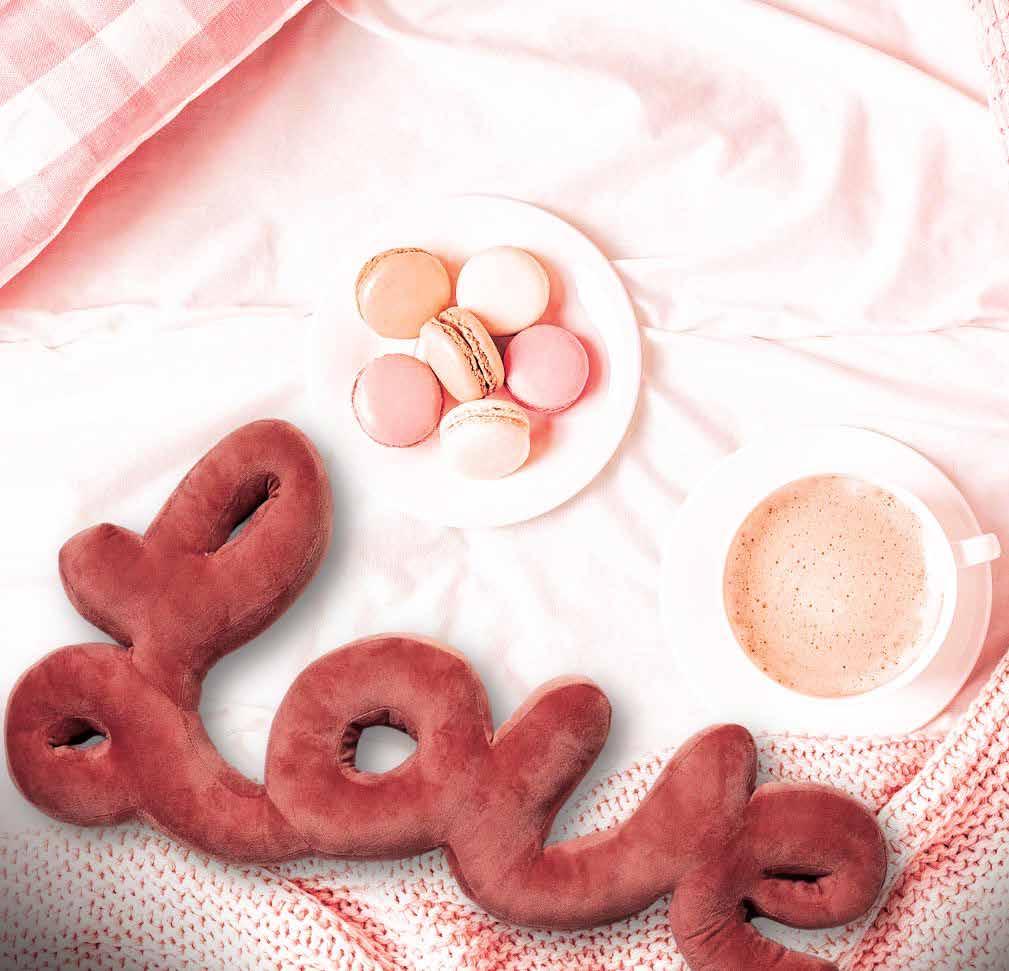
Love script pillows
PillowScript’s royal-hued love script pillows — in muted green, red, blue, or gray — imbue your personal space with optimism, openness and a velvety softness smoother than Cupid’s bare bottom. $50, PillowScript.com
Tale as old as time
At once slim and sleek, the Vincero Kairos and Eros Petite mesh and leatherbanded watches look stunning on a beauty or a beast. $99-178, VinceroCollective.com
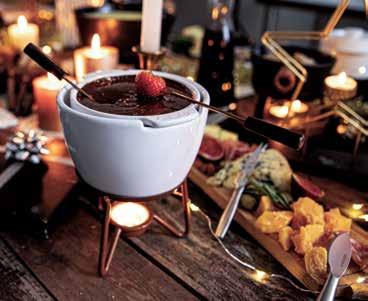
Fondue feasts
You dip, she dips, they dip bite-size savories and sweets into BOSKA’s cheese and chocolate fondue sets, equally suited for a sophisticated date night at home or as the centerpiece of a ’70s-inspired Galentine’s party. Better dust off the orgy lamp. $3344, USA.Boska.com
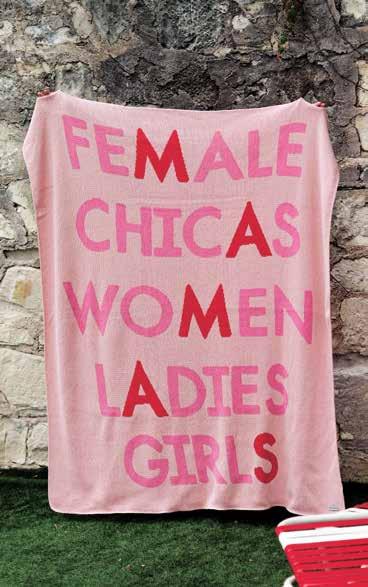
Covered in love
Kisses and hugs and on-the-couch snugs are instantly cozier in Sunday Citizen’s XOXO throw or the Mamas Blanket x Calhoun & Co.’s pink-and-red girl-power blanket for wrapping up near-and-dear babes and broads. $170, SundayCitizen.co; $138, AustinMotelStore.com
see GIFTS page 16

BOSKA
Playboy pleasure
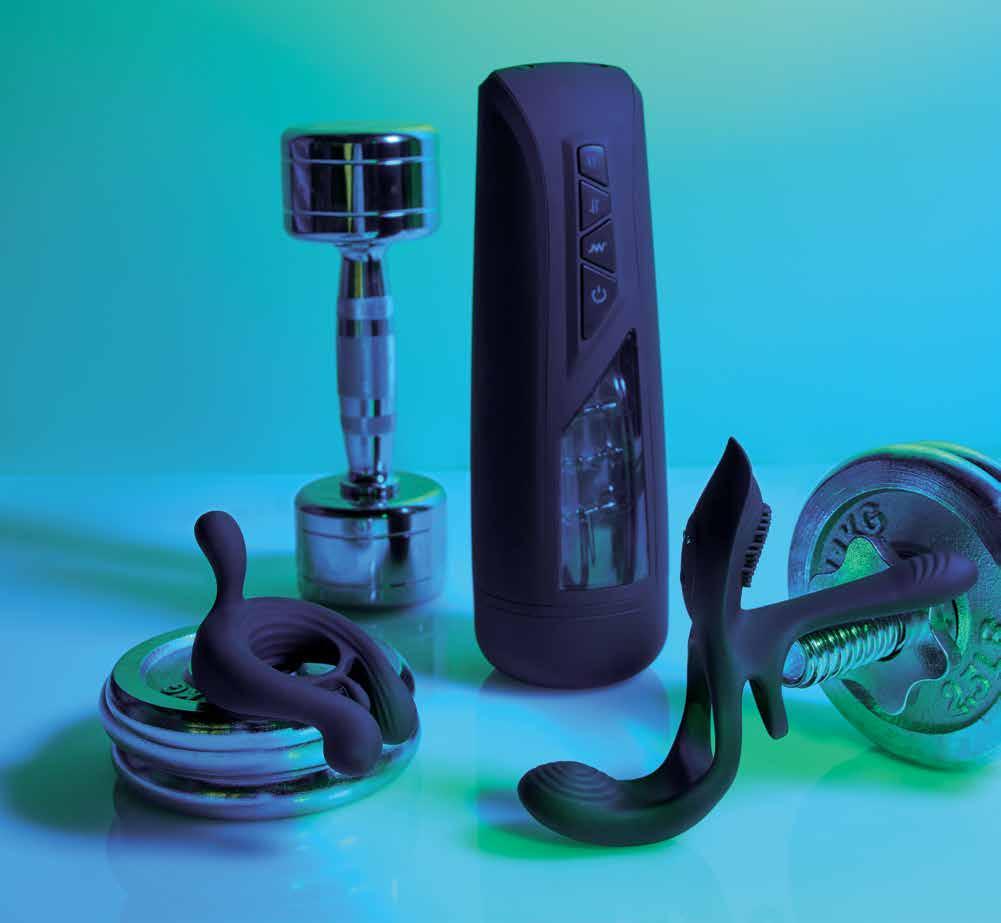
One might assume that a synonymouswith-sex brand like Playboy would already have a leg (or two) up on the adult-toy industry, but its recently launched, first-foray Playboy Pleasure line couldn’t be rushed: the inaugural collection includes vibrators with heating, tapping, and thrusting functions; a spinning butt plug; multimotor cock rings; toys with flickering tongues; solo strokers; and a first-of-its-kind flapper shaft for the G-spot. You’re gonna need a bigger tarp. $26-200, LoversStores.com
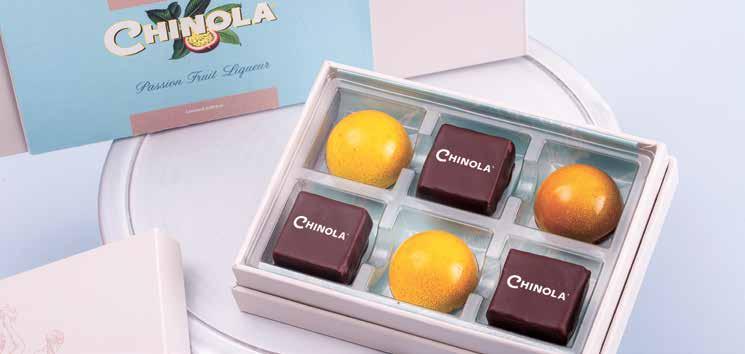
Chinola x Vesta chocolate
Skip the Stover’s and improve your chocolate-gifting game with limited-edition Chinola bonbon and ganache chocolates, the melt-in-your-mouth collab between Dominican-sourced Chinola Passion Fruit Liqueur and Vesta Chocolate, co-founded by Chef Roger Rodriguez. $25-48, VestaChocolate.com
Lace charms
Customize your kicks with splashes of sparkle when you outfit their laces with burnished beads and baubles — like Lace Charms’ Digital Pink Bundle, featuring gold stars and rosy bling-blings — fit for sneakerhead kweens and king-kings. $3075, LaceCharms.com
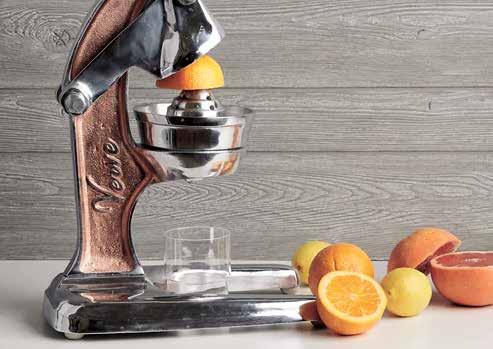
Happy juice
You’ll get your lips kissed when you twirl a Sunkist on the stylish Verve Culture artisan citrus juicer (available in gold, rose gold, and black), your new go-to handoperated appliance that gilds the lily of an already decadent holiday brunch in bed. $98-150, VerveCulture.com

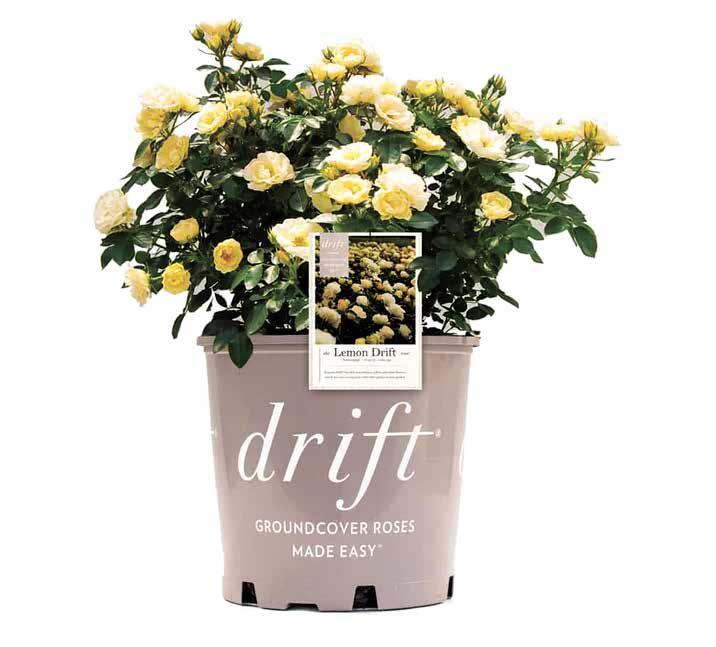
Power flowers
If Miley can buy herself flowers, so can you. Treat your resilient self to Perfect Plants’ bounty of blooms — including houseplants, trees, shrubs, hedges, and a wide selection of coveted Drift rose bushes — that’ll keep your space fresh long after love goes stale. $40+, MyPerfectPlants.com
Gas you up
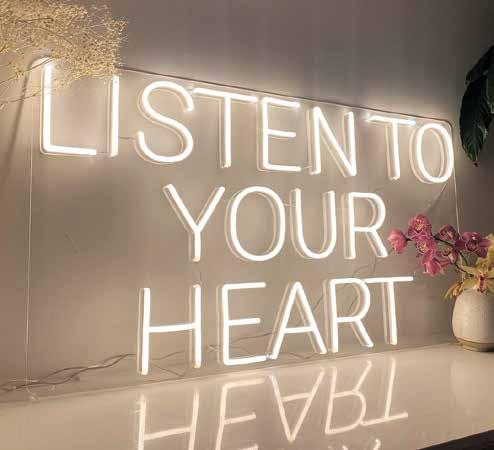
Motivational neon signs that empower you to “Rise & Grind,” “LISTEN TO YOUR HEART,” “Hu$tle,” and “BE A BADASS WITH A GOOD ASS” not only add pops of radiating light and liveliness to your home and office, but they just might reduce your therapy bill too. $200-600, CustomNeon.com
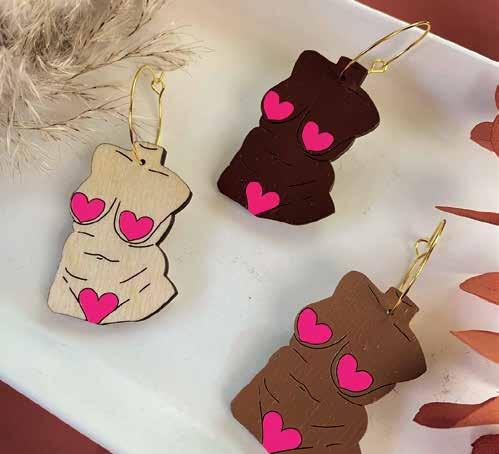
Big and beautiful
Lizzo launched a thousand hips with her body-positive lyrics and lifestyle, and you can continue that self-satisfying trend with Le Chic Miami’s hand-painted, more-tolove basswood Venus hoop earrings, available in three everywoman skin tones. $27, LeChicMiami.store
All the restaurants
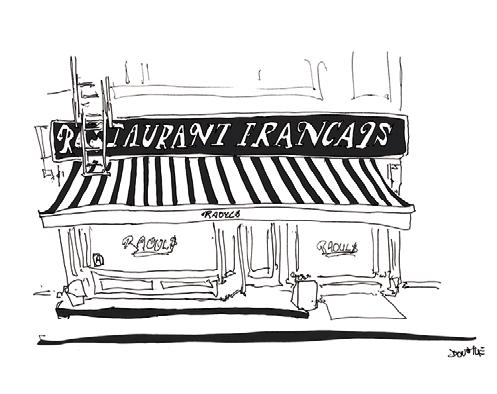
Former New Yorker magazine editor turned self-taught artist John Donohue recognizes that most Americans’ first dates take place at restaurants (Starbucks is #1 while In-N-Out Burger clocks in at #2, according to a survey of Clover app users), which is why he’s made it his mission to commemorate the occasion with signed, limited-edition prints of your fave romantic dining destinations, including Manhattan’s 12 Chairs Café and Abilene Bar, Jaleo in DC, and London’s Noble Rot. $95, AllTheRestaurants.com
Bye-bye, Dry January
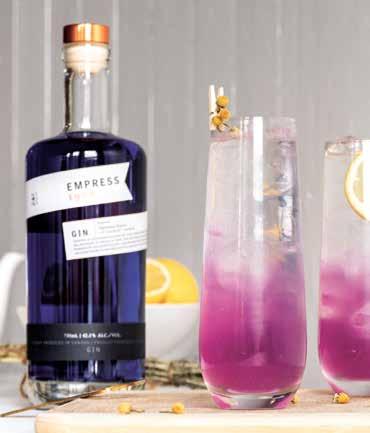
Build a more discerning home bar in 2023 with a curated selection of luxury liquors, including Empress 1908 and Jaisalmer gins, Rampur Double Cask and Bearface Triple Oak whiskies, Tequila Ocho Plata, and L’etoile du Nord vodka. Prices vary, Drizly. com; TotalWine.com
Jaisalmer Gin Negroni 1.25 oz. Jaisalmer Indian Craft Gin 1 oz. Camapri 0.75 oz. Cocchi Torino Vermouth
Combine all ingredients in a mixing glass. Add ice and stir until proper chill and dilution are achieved. Strain into a double rocks glass. Add a few large pieces of clear ice. Garnish with an orange twist.
One love
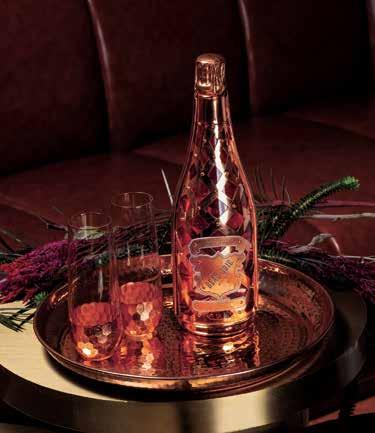
Dateless for V-Day? Toast your single status — self-imposed independence should be celebrated (just ask Shakira) — with a bottle of Beau Joie Rosé Champagne and poppable Doughp cookie dough bites, in upbeat flavors like Cinnamood,
and
; $1216, Doughp.com
Mikey Rox is an award-winning journalist and LGBT lifestyle expert whose work has been published in more than 100 outlets across the world. Connect with Mikey on Instagram @mikeyroxtravels.