


by Jesse Monteagudo SGN Contributing Writer
In its June 14, 1979 issue The Advocate (then a tabloid) published three articles by its house reporters about “The Florida Triangle.” Joe Baker wrote about “Fort Lauderdale: Gay Enclave on the Condo Coast.” Lenny Giteck wrote about “Miami: Dade, But Not Dead” and Robert I. McQueen wrote about “Key West: Verdant and Violent - A Troubled Paradise.” The articles detailed the condition of each community, listed local bars and other gathering places, and featured photos of those few gays or lesbians then willing to appear in a national queer paper, including Staci Aker, Harry Losleben, Pat Tong, Stephen Jerome and Jesse Monteagudo. 1979 was a year of transition, for myself and for South Florida’s LGBT community.

Though I already moved to Fort Lauderdale, to live with my then-partner, I was still on the board of the Dade County Coalition for Human Rights, in 1979 led by Club Baths mogul Jack Campbell. The DCCHR had declined since its golden age, when it tried in vain to defend Dade County’s “human rights” ordinance (1977). Attempting to reach out to the bar crowd, the Coalition held some of its meetings in local watering holes, including the notorious Mine Shaft. In 1979 the DCCHR led South Florida’s involvement in the first March on Washington for Lesbian and Gay Rights (October 14); organized Miami’s own Gay Pride March (June 24); and published The Weekly News Bulletin (twn). I was involved in all three endeavors; as a participant, organizer and contributor, respectively. Both Pride South Florida and twn later became independent entities and long survived the group that created them. Meanwhile, the future pointed to Fort Lauderdale, where the semi-closeted Tuesday Night Group (a.k.a. “Closet Clusters”) united middle class professionals and business leaders on behalf of a love that still dared not speak its name.
According to Lenny Giteck, Miami never recovered from its 1977 debacle. “Despite brave claims that [Anita Bryant] was ‘the
best thing that ever happened to gay people,’ many of those who took their first venturesome steps out of the closet during the Dade County campaign have retreated deep into its recesses. Much of the gay community appears demoralized and quiescent, and what promised to become a lively gay political scene in south Florida has lost a great deal of verve - and nerve.” In 1979 most LGBT people stayed in their respective closets, trusting that Miami’s “don’t ask, don’t tell” environment would keep them safe. “Gays here are more concerned with going to the bars and worrying about where their next Quaalude will come from than in doing anything political,” attorney Stephen Jerome told Giteck. “There must be at least 150,000 gay people in Miami and Ft. Lauderdale, yet the Broward County Coalition in Ft. Lauderdale is lucky if it gets 15 people at a meeting.”
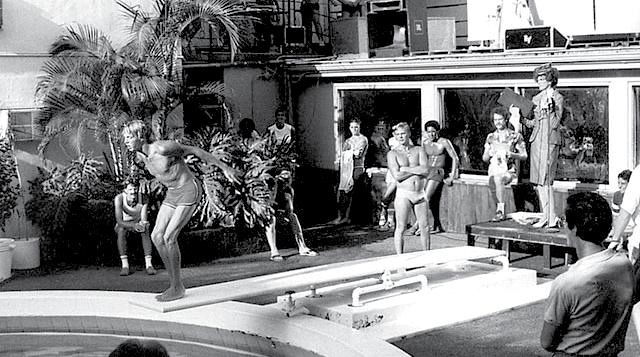
Meanwhile, Fort Lauderdale held on to its reputation as the city “Where the Boys Are.” According to Joe Baker, who was kinder to its subject than his fellow reporter Giteck, in 1975 “Fort Lauderdale had only 7 gay bars, 1 gay bath, 3 gay restaurants and 1 gay hotel. Today [1979] there are 18 bars and discos, 9 restaurants, 8 hotels and motels and 3 baths catering to the homosexual community. It is a “B” city: bars, beaches, boys, broads, beer, boobs, bronze bodies, baths and boogying.”
Baker’s article listed Broward County’s gay commercial outlets, including the thenfamous Marlin Beach Hotel and a variety of gay pubs and discos, all now gone: The Copa, 13 Buttons, Lefty’s Bar, The Grotto, Tacky’s, the Everglades, Zelda’s Disco, The Tunnel and the lesbian bar Top’s. Another visitor to South Florida was novelist Edmund White, who wrote about his experiences in States of Desire: Travels in Gay America (1980). Having enjoyed New York City’s exciting social and cultural life for years, White could not appreciate South Florida’s more laid-back and closeted lifestyle. According to White, “Ft. Lauderdale is a short, angry strip along the ocean, crawling with teens drugged or drunk or both. The two most common ages are sixteen and sixty - the latter buys the former. ... In Ft. Lauderdale many gays make the assumption that all older men want adolescents and are willing to pay for them.” White later admitted that “I have not, of course, described Ft. Lauderdale as it must seem to those gay men who live there; they, like people everywhere, lead varied lives not subject to generalization. But I have tried to single out the one feature that most strikes the tourist - that, indeed, exists for the tourist” (hustlers). So it was in 1979 South Florida. But not to worry. The best was yet to come.
STONEWALL
continued from cover
versions espoused by people who were there, historical scholars, journalists, and people who like to make things up. Let’s parse out the facts and inconsistences of all of these views.
First: who was there? It amazed me, as I was on my book tour, how many people came up to me and said “you remember me from Stonewall” and wanted me to confirm to their friends that they were indeed there. This has been a contentious issue to the point that now thousands of people claim to have been present. To each I said, “It was a riot. You can’t take attendance at a riot.”
But there are ways to at least make assumptions on who was there. The best accounts are from those who, out of the ashes of Stonewall, created Gay Liberation Front. Many of us GLF members are still around. Stonewall was not just one night. Those who were there know of the other three nights as well. Those nights helped form GLF. GLF and Stonewall are connected at the hip. Writings on Stonewall published by our own community during the time period are more accurate, since mainstream media largely ignored it or was biased. A good place to start is Donn Teal’s The Gay Militants, published by Stein and Day in 1971. Many of those at Stonewall contributed to Donn’s work.
Here’s my simple rule, anyone who propagates the myth that we were angry because of the funeral of Judy Garland wasn’t at Stonewall. That myth is an insult to all that did participate. And it should be obvious, since we were in the counter culture of the 1960’s, not the ‘40s. Garland might have been the music of some 40 and 50 year olds who might have been in the bar, but those people were privileged enough to run away. To those of us who stayed, Garland was not on our mind. It’s a stereotypical slur that was started by a straight white man writing about the event a week later in the Village Voice. None of those who have credible claim to being there think Garland was a factor. So if you’re writing about Stonewall and continue the myth, check your delusion in the mirror. That includes Charles Kaiser who, while being interviewed by The Washington Post about his book The Gay Metropolis, was quoted as saying he thought “the prospect that a funeral service for Garland held on the first night of the riots on the city’s Upper East Side inspired a grieving gay fandom to stand up to police bullies.” No.
Second: who threw the first rock? Again this was a riot, not an organized demonstration. People gathered in a semi-circle around the front doors and across the street as police were letting people out. Something was said to the police, they said something back and then people started hurling objects towards the bar. Stones, empty cans. The reality is no one actually knows who threw first, or even what they threw.
Those of us who were at Stonewall all have different accounts, based on our own memories of that night, about what we did. It wasn’t a precision march. Each person had a different experience. Some gathered at the door as people were let out, some ran up and down the streets letting others know what was happening and others wrote on the walls and streets “tomorrow night Stonewall,” to help organize the rallies in the days after. To me, all the accounts of my brothers and sisters of GLF are correct since each account is their own personal memory and their different views on what created the riot. Everyone in GLF has a different perspective and I accept each person. Historians must take all of them in consideration in writing about that historic night, and thus far most of the work compiled has not done that well.
The two best known that come to mind are David Carter’s Stonewall, which is more detailed and researched than anything that came before but written during a time of competing and conflicting views. Carter had to sift through the noise, he persevered, and his book can and should be used as a start-
ing place to be built on. I personally hope he continues to research and others continue to forward him material. For my part I’ve recently sent him information on one of the bouncers/doormen who married a friend of mine and who still lives in NYC. I trust his research and hopes he’ll chat with others that he did not have time for in his first edition. The other well-known Stonewall book, by Martin Duberman, focuses on just six people, overdramatizes the drama within the community, and is fueled by his personal, privileged agenda
As to the recent Gus Van Sant film, Stonewall, that was a complete disappointment. There is no actual video footage from that first Stonewall night, and the photos you’ve seen are from the other nights. Cell phones were not invented as yet. Everything you’ve seen in the film is a (largely incorrect) re-creation built upon the director’s image, not ours. Several of us who were at Stonewall offered to help give the filmmakers detail and context, but none of us were asked to do so.
Moving on, exactly how many people were at Stonewall? It went on for many hours. Some people were there the entire time; others came later. Even more were just passing by. Was it 50 or 200? We all have different views. My personal thought is less than a hundred from noting the numbers of people on the street. The participants were scattered with the exception of those around the front door, which might make people think there were more people than there actually were. Everything I’ve said thus far is from my own memory and from reading wellsourced materials. But here is what is absolutely known: from Stonewall came Gay Liberation Front. Without Gay Liberation Front, Stonewall would be as remembered as the Dewey’s sit-in or the Compton’s riot, both of which happened before Stonewall, but which the general public knows little about. GLF, which had many of those who stood tall that first night at Stonewall and who helped organize the following three nights, made that first night historic by real-
izing that it was the catalyst for change that our community needed. Some might say that Gay Liberation Front, born from the ashes of Stonewall, might be more important then Stonewall itself.
Many people in New York in June 1969 were fed up with the antiquated tactics of prior movements such as asking for “homosexual equality,” as it was called by members of the Mattachine Society. Before Stonewall, several of the early GLF founders including Martha Shelley and Marty Robinson were attempting to create a new movement. Others like Sylvia Rivera also wanted a new movement, but few people at that time from those earlier organizations wanted to be associated with her.
GLF was created and Sylvia was welcomed gladly, the first trans person to be a member of a gay organization and GLF changed our community in other drastic ways. GLF helped us decide that we had the sole right to define ourselves rather than live by society’s definition. We were out loud and in your face. Rather than beg for our rights, we demanded them. Then we did something even more revolutionary. We created a community where there was none before. Before GLF, the only place LGBT people met were small organizations in large cities, private parties, a few illegal gay bars, and cruising places.
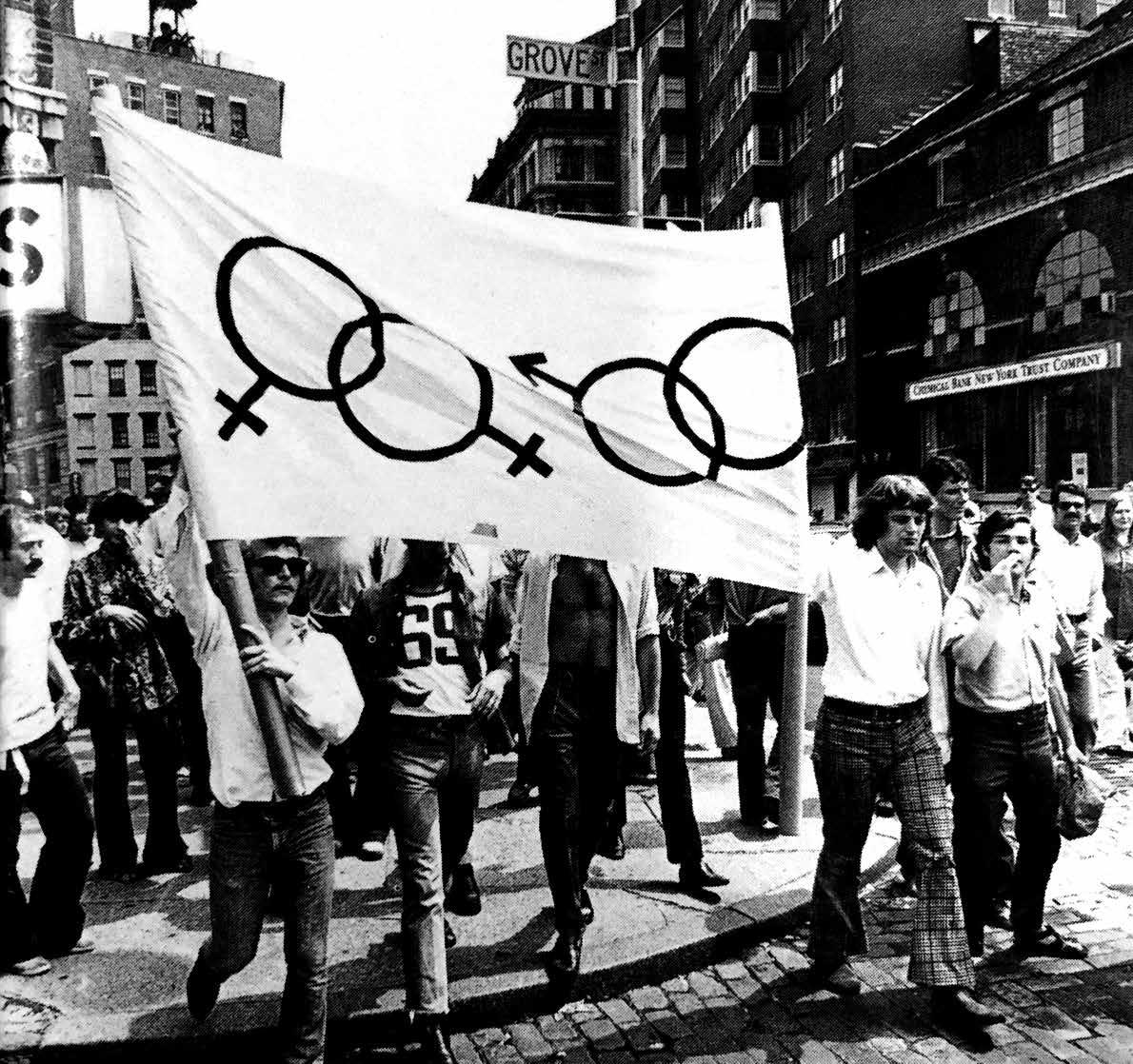
One month after Stonewall, GLF had its first demonstration. We took over Christopher Street and told the police it was our home, our community, the very first gayborhood. We invited what today would be called the trans community, including Sylvia Rivera and Marsha P. Johnson, to join our ranks. They created “Street Transvestite Action Revolutionaries,” STAR. Some of us created Gay Youth, the nation’s first organization for LGBT youth. We held public dances, public meetings. We went on TV and Radio shows, we printed and distributed publications and medical and legal alerts. We even created the first LGBT Community Center. If all of that was not enough in that first year, many of us joined with Craig
Rodwell and help form “The Christopher Street Gay Liberation Day March,” which was the first Gay Pride Parade.
How dramatic was this? Before GLF, the nation had only around 100 openly gay people who would speak on behalf of our community or show up at a demonstration. In fact, there was only one demonstration a year. One. That was in Philadelphia each July 4th in front of Independence Hall from 1965-69. That national demonstration never drew more than a hundred participants.
One year after the creation of GLF, there were anywhere between 5,000 and 15,000 people at that first Gay Pride. The FBI report states 3,000, The New York Times states 5,000. Those of us who were there think it was more. But even going from the NYT numbers, from one hundred to thousands in just one year is an incredible shift. GLF was a phenomenon with autonomous chapters sprouting up all over the nation and the world. GLF created the movement we have today. More importantly, GLF created the LGBT Community where there was no community before.
There are other lessons that could be learned from GLF. Today’s LGBT organizations struggle with what they assume to be the difficulties of the intersection of social justice movements working together. GLF joined with other movements and supported them regularly. Likewise, GLF welcomed diversity.
Here is one last point, one that is personal and stated with a sense of pride. GLF was by far the most dysfunctional LGBT organization that has ever existed to this day, and that was part of its magic. So much arguing, so much yelling, so much disagreement. But how else could it have fought off the oppression of 2,000 years and produced the first real out, proud, and in-your-face generation? How else could it have inspired people to come out when it was illegal to be openly gay? Stonewall created GLF, but it was GLF that changed the world.
Courtesy of the Philadelphia Gay News


by Mike Andrew SGN Staff Writer
After a marathon bargaining session, workers at the Westin Hotel have reached a tentative labor agreement with the Marriott Corporation, their employer.
According to UNITE HERE Local 8, the union representing Westin workers, the final bargaining session lasted 19 hours, starting on Friday, October 12, and lasting till 5:00 a.m. the following day.
Details of the agreement have not been released, pending approval by the union’s members. Hotel workers in eight other cities are currently on strike against Marriott-owned properties.
According to their union, Marriott hotel workers want contracts that will allow them to support their families with dignity, to work in safe conditions, and to win basic job security. Although Marriott is the most profitable hotel company in the world, with revenue of almost $23 billion in 2017, hotel employees say they often have to take second jobs just to pay their bills.
UNITE HERE and its allies staged a massive rally and picket at the Westin on October 12 as the new round of bargaining got underway. With their ranks swelled by women building trades workers – in town for the Women Build America conference – their picket line almost entirely
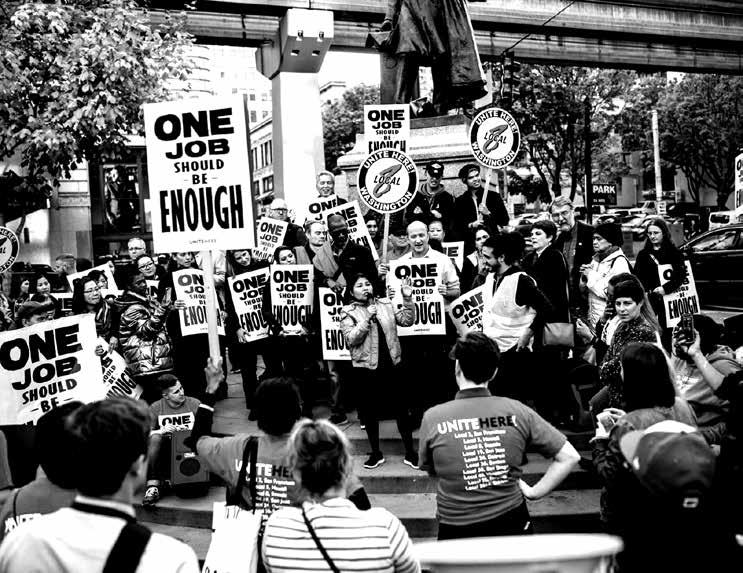
surrounded the hotel.
Photo by Grant Hindsley / Unite Here Local 8
Bargaining had gone on for several months, with union members adopting an aggressive attitude toward an apparently intransigent employer.
On Labor Day, for example, union
members and supporters blocked Fifth Avenue in front of the Westin with a sitdown protest, in which 21 people – including union president Erik Van Rossum and State Labor Council officers Jeff Johnson and Lynne Dodson – were arrested.
A whopping 98% of Westin workers voted on September 14 to go on strike if and when negotiations with Marriott broke down. The October 12 bargaining session was widely viewed as the last chance to reach a settlement and avoid a strike.
UNITE HERE also got strike sanction from the Martin Luther King County Labor Council and pledges of support from other unions, many of which turned out members for the October 12 picket line.
In a statement, UNITE HERE acknowledged the “outpouring of support from the community, with organizations and individuals donating money to a hardship fund, signing up for picket duty alongside workers, and pledging not to do business in Marriott hotels in the event of a strike.”
Local 8 also said that it hopes its agreement in Seattle will encourage Marriott workers on strike against other locations.
“Throughout this campaign, UNITE HERE members across the country have called on Marriott to be a leader in the hotel industry in providing jobs that are enough for hotel workers, and we’ve demonstrated we’re willing do whatever it takes to achieve this goal,” the union said.
“The tentative agreement reached in Seattle shows that Marriott can meet workers’ expectations for a fair contract.”
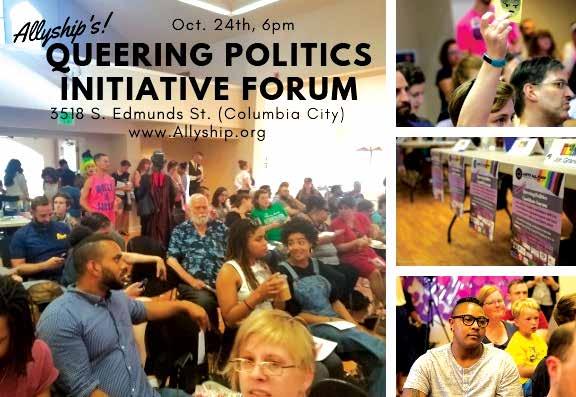
Do you know how the four statewide initiatives will impact the LGBTQ community? Or your life?
On Wednesday, Oct. 24, at 6pm, Ally-
continued from cover
Members of Seattle’s LGBTQ older adult community, as with other people living in our city, are feeling the strain of today’s housing crisis, inequality, and neighborhood gentrification. In fact, a recent survey commissioned by the City of Seattle Office of Housing revealed that LGBTQ older adults are more likely to be housing cost-burdened than the general population of older adults.
Mayor Durkan and the political establishment’s proposed budget fails to prioritize the needs of the LGBTQ community.
The political establishment’s repeal of the Amazon Tax, which would’ve funded publicly owned permanently affordable housing, shows that ordinary people will need to
ship is hosting their 2nd Annual Queering Politics Initiative Forum at the Southside Commons (3518 S. Edmunds St.) focusing on the lives of LGBTQ low-income, youdth, people of color, seniors, women, trans and people living with disabilities. Please register to attend at: https://secure. lglforms.com/form_engine/s/eTepkC7MfMddT3zVV4gnlA
LGBTQ experts on each initiative will answer questions in a “Jeopardy”-style forum. (Music will be included!) Audience questions will also be included!
Speakers include:
build our own independent movement to fight for and win the kind of City We Need.
That’s why we need you to be part of the People’s Budget movement!
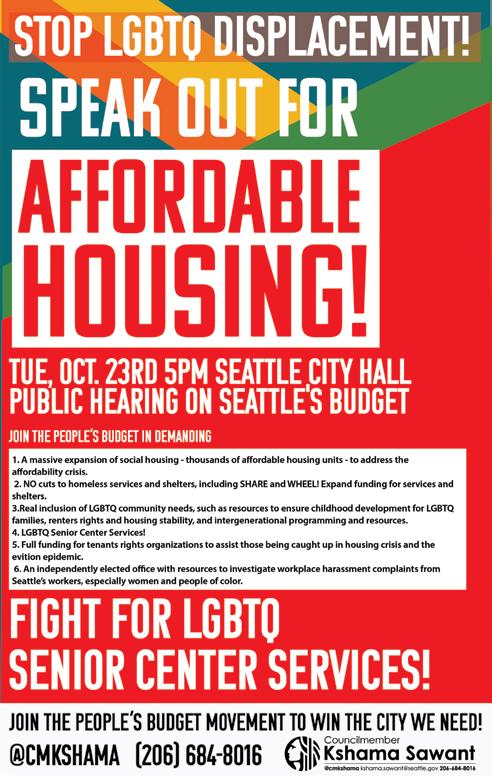
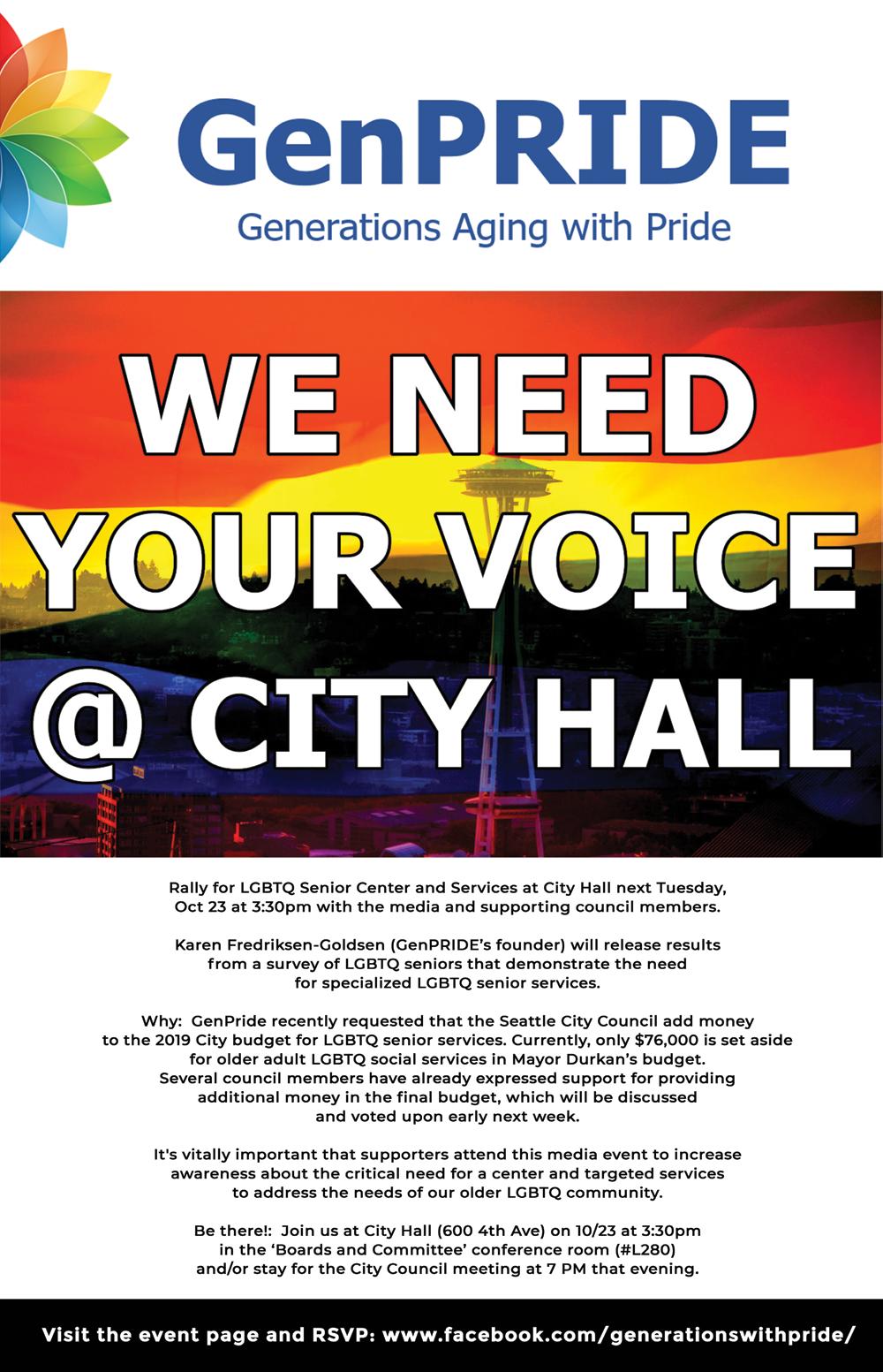
Join us in demanding that the City Council adopt a budget that promotes aging in community, and with the dignity our neighbors deserve, by funding LGBTQ senior center services with LGBTQ-affirming programs to support our at-risk older adults.
We need to demand a City budget that allows everyone to age in community with pride! We also need a Seattle that’s affordable to all!
It is unconscionable that in our city, one of the wealthiest in human history, tens of thousands of working families are rentburdened, and thousands are being forced out onto the street, while many apartments stand empty.
Proposition 1 Education Levy –Sabrina Bolieu (Funds public K-12 schools)
Initiative 940 – Monisha Harrell (Requires specific training for law enforcement and changes the standards for use of deadly force)
Initiative 1631 – Ahmed Gaya (Establishes a carbon fee and funds environmental programs)
Initiative 1639 – Logan Rysemus (Implements changes to gun ownership and purchase requirements) I nitiative 1000 – Bryan Adamson (Bringing back affirmative action in higher education and employment)
We know the solution to the housing crisis facing us is massive investment in high-quality publicly owned permanently affordable housing. This would also mean a green jobs program for our city, creating thousands of unionized, living-wage construction jobs.
In her State of the City address back in February, Mayor Durkan declared, “First, we must address the crisis of affordability, the growing economic disparities, and homelessness. This is a crisis that threatens the soul of our city.”
And yet, when it comes to matching rhetoric with action, the Mayor and most of the politicians have decided to allocate only 0.8% of the nearly $6 billion budget toward affordable housing.
This is shameful! We know the LGBTQ community is one of the hardest hit by
Initiative 1634 – Speaker TBA (Prohibits local governments from enacting taxes on groceries)
This event is free, child-friendly, scent free and wheelchair accessible.
This event will also be broadcast live!
If you are interested in volunteering, please contact Venus Aoki at venus@allyship.org
For more information visit Allyship.org.
Courtesy of LGBTQ Allyship
this lack of affordability, with trans youth making up a disproportionate number of youth facing the burdens of homelessness. Let’s end this, and fight for a budget that makes housing a serious priority for our city!
Before the public hearing, please also join GenPride and me for a reception at 3:30pm at City Hall, room L-280, with coffee, tea, bagels – and to take action steps – to win our demand for $249,000 in funding for an LGBTQ senior center, and for publicly owned, affordable housing.
Solidarity, Kshama Sawant
Courtesy of the Office of City Coucilmember Kshama Sawant
by Graham Brunk Special to the SGN
Emma Jones was one of the greatest LGBT allies in the 1960s in northern Florida. Too bad she didn’t actually exist.
When a reporter once went looking for the mysterious woman he was told, “Honey, the Emma Jones Society is you and me and every other faggot in this town, and nobody here gives a damn who Miss Emma Jones herself is.”
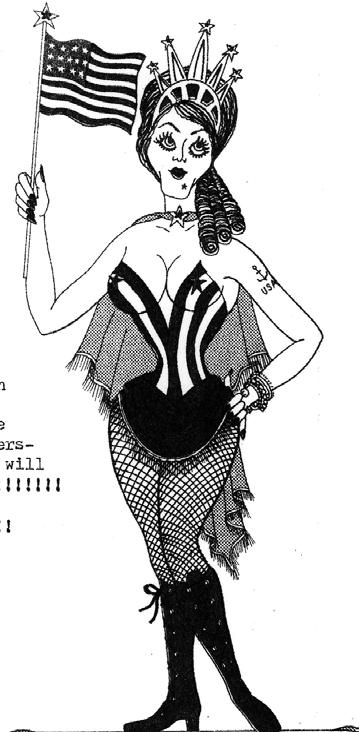
Emma Jones turned out to simply be a cover for a regular gay gathering on the beach in Pensacola Florida, starting on the Fourth of July in 1964. The Advocate once described the celebrations as one of the “largest gay organized events in the country.” That’s pretty remarkable considering how conservative the Panhandle of Florida is – even now it’s still known as the “Redneck Riviera.” While today the area has a handful of gay bars, back then, there was nowhere for the gays to go. The police would raid any place they would conjugate. Parks and restrooms were the only place to meet. That’s the way things were until Ray and Henry Hillyer decided to change the status quo.
The couple shared a last name, which was almost unheard of in those days. The radical pair moved to the area in the 1950s. Ray was an artist for the St. Regis Paper Company and Henry worked in the display department at Gayfers Department Store. Despite its name, it had no connection to the LGBT community.
In an effort to network more with local gay men who felt they had no social outlet, the couple set up a P.O. Box under the name Emma Jones to receive LGBT-related media such as One Magazine. They picked the name because they felt it was average, boring, and wouldn’t draw much attention.
And for many years it didn’t.
Once a month a New Orleans lady friend would come to the area to check the P.O. Box in the name of Emma Jones and deliver the material to the Hillyer’s house. The Hillyers sought to share this experience with other gays in the area. At first it started off with close friends of the Hillyers but word traveled and it soon became a much larger group. In keeping with the idea of maintaining this safe social outlet for gays in the area the Hillyers began keeping a social registry.
By the early 1960s the Hillyers decided it was time for something bigger than a social registry and a P.O. Box so they came up with the idea of throwing a beach bash. They chose the Fourth of July, a pretty radical idea for that time period in an area that was so conservative. Initially, instead of hiding, they chose the most public and crowded place they could for the holiday celebration.
And that’s how the first gathering of the “Emma Jones Society” came into being.
Over the years these gatherings continued to grow and attract more attendees. While the actual numbers are difficult to determine, it is thought that the events drew the same amount of people, or perhaps even more, than the much more famous Christopher Street Liberation Day celebrations in June that started in 1970 following the Stonewall Riots in 1969.
By 1970, over 1,000 people were attending. With those kinds of numbers they
could no longer be as inconspicuous and decided to move the crowd indoors. The event moved to Pensacola’s historic Hotel San Carlos, affectionately known as the “Gray Lady of Palafox.” Built in 1910 as a grand jewel of the GiIded Age, the hotel in the ‘70s was a shadow of its former self. As a result, the hotel welcomed the gay community especially since they had more expendable income than straight couples and families that once frequented the establishment. In fact, the hotel had already been noted in many gay guides as a popular place to stay in the Pensacola area. Tropic, The Miami Herald’s Sunday Magazine, even took note, writing of its former glamor, “its bars and men’s rooms were all that remained popular.”
The hotel suggested the event be billed as a convention. With such a platform came the use of a giant ballroom and discounts on rooms. The hotel even opened an additional bar on its top floor to cater to guests.
For the next few years the gay men would start the day out at the beach and make their way back to the hotel’s ballroom where there would be music, dancing, drag shows, and contests. One such event was the Red, Hot, and Blue Revue where men would compete as female impersonators. Sometimes women would join in, leaving the audience to guess which entertainers were actually female.
Eventually a reporter 200 miles away in New Orleans caught wind of Emma Jones and her annual celebrations. Benton Abbey was intrigued and wanted to meet this mysterious woman. At the time he worked for The Figaro, a New Orleans based newspaper in the 1970s known for its reporting of unconventional news topics, such as homosexuality.
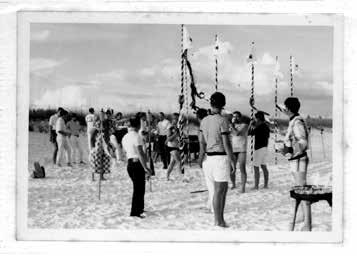
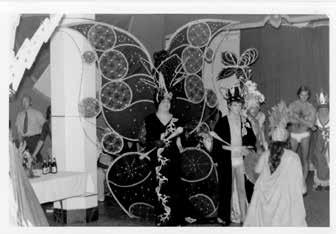
In 1971 he attended the annual gathering and found himself standing in the lobby of the Hotel San Carlos and amidst the many gay men around him were signs noting the “Emma Jones Society Convention.” Not knowing what to do next, he stopped someone and asked, “Who is Emma Jones?” The stranger put his hand on Abbey’s cheek and said, “Honey, the Emma Jones Society is you and me and every other faggot in this town, and nobody here gives a damn who Miss Emma Jones herself is.”
Abbey was concerned that without Emma his story would fall apart. But he didn’t leave. He stayed to see what else he could come up with. He described the hotel as “faded Floridiana,” referring to how you could once see the marvel of early 20th century architecture the hotel still possessed, mixed with bland second rate Art Deco, as well as furniture and objects he claimed could be obtained in a discount store. The one thing that stood out in Abbey’s mind as he interviewed attendees was that the men who were frolicking around in their underwear, or cross dressing, were bank tellers, writers, record store salesmen, etc.
They were people you saw every day.
Abbey even noted in his story that if it weren’t for seeing them in this context, these would be the kind of guys who would take your sister home. He noted that for this weekend every business around downtown Pensacola seemed gay: every bar, every restaurant, and every store. When he asked a cashier at one of these businesses what she thought of all this controversial activity, she just looked at him and said, “It’s money honey.” And even though Abbey never did find out who Emma Jones was, he still published his rather brief story in the newspaper detailing the weekend’s events.
After that, other media outlets started picking up on the convention as well. In 1972 the Pensacola News-Journal took note of the annual event’s “Mr. US Gay” contest. Eleven contestants competed for the $100 prize money but the winner, a young New Orleans man, refused to give his name to the paper.
But like most good things the Emma
Jones Society Convention came to end in 1974 when the last party was held. In a way the informal organization was a victim of its own success. As it became more popular, attendance grew, and as more media outlets wrote about the celebrations, the local backlash grew as well.
For a while, as mentioned above, some locals overlooked the “deviants” as long as they brought money to the city.
Jerry Watkins III, who has researched the convention in great detail, said of the event near its end, “The Emma Jones Society parties [the Hillyers] hosted were written about as a gay event on the front page of the paper by the 1970s. To be clear, repression was swift and severe when somebody stepped too far out of line. And one of my main arguments is that when a politician or city needed an image boost in the ‘tough on crime’ or family friendly department, LGBTQ folks proved easy targets.”
And that’s just what happened.
“Emma Jones died in the streets of Pensacola on July 4, 1974. She was 17,” The Advocate reported. Some attendees started receiving death threats, local ministers organized against the convention, and the city council started to work closely with law enforcement to find ways to curb the annual event by raiding popular bars catering to gays such as the Yum Yum Tree and the Red Garter. More than 30 people were arrested that final weekend alone and charged with “lewd and lascivious acts.” Tropic Magazine also covered the final Emma Jones Society Convention.
“We set out to laugh and be merry with our friends,” the Hillyers told the Tropic reporter. At this point even they remained anonymous out of fear of repercussions. “It’s a shame people won’t accept that. You’d think in the 1970s, people would let you alone.”
Once the Emma Jones Society faded away came a new era of LGBT visibility in the area with the opening of all year round gay bars.
The event certainly fostered long lasting relationships and it was those bonds that would eventually go on to create a similar event in in 1981 during Memorial Day weekend – The Pensacola Memorial Day Beach Pride. Of course not everyone was happy. In 1993, Pensacola City Councilman Doug Profitt said he felt Pensacola should not be known as a “gay friendly destination.” Even so, enough local business owners came forward expressing their appreciation for the strong positive economic impact on the area. This turned out to be enough to hush the conservative opposition.
Today the event continues every year with over 40,000 in town for the festivities.
If you’re interested in reading more about this event, check out Jerry Watkins III’s new book “Queering the Redneck Riviera: Sexuality and the Rise of Florida Tourism.”
continued from cover
online at https://www.aarp.org/research/ topics/life/info-2018/loneliness-socialconnections.html?CMP=RDRCT-PRIHOMFAM-073118]
continued from cover
severe injuries following a vicious attack in October 1998 in Laramie, Wyoming.
The National Museum of American History will receive a donation from Judy and Dennis Shepard representing the life of their son Matthew Shepard who died in Laramie, Wyoming on October 12, 1998, due to severe injuries he sustained during the vicious attack.
The Shepards will donate personal papers highlighting Matthew’s school life from elementary through college, theater scripts, photographs, correspondence and notebooks, as well as a number of objects, including a child-sized Superman cape, sandals, a wedding ring and purple ribbon award.
Students from George Mason University’s School of Theater will perform excerpts from The Laramie Project by Moisés Kaufman and the Tectonic Theater Project. A brief panel discussion will follow.
Over the past several years, loneliness has emerged as a public health issue. The size of one’s social network and physical isolation are the top predictors of loneliness. Studies have found that social isolation and loneliness are worse for our health than obesity or smoking, especially if you’re over age 50. In fact, chronic loneliness can increase the risk of early death by as much as 45%.
report from AARP Public Policy Institute found that social isolation increased Medicare spending by $6.7 billion annually.
Social isolation is not just detrimental to the individual, it affects us all. A recent
The survey examined how frequency of contact with neighbors affected loneliness. It found that those who knew their neighbors were only 25% likely to report loneliness. However, those who did not know their neighbors were 64% likely to be lonely. While the factors of loneliness and social
isolation are complex, getting to know your neighbors can make a big difference.
AARP Foundation is encouraging individuals to reach out to their neighbors and look out for those who might be more vulnerable to loneliness.
Courtesy of AARP
by Mike Andrew SGN Staff Writer
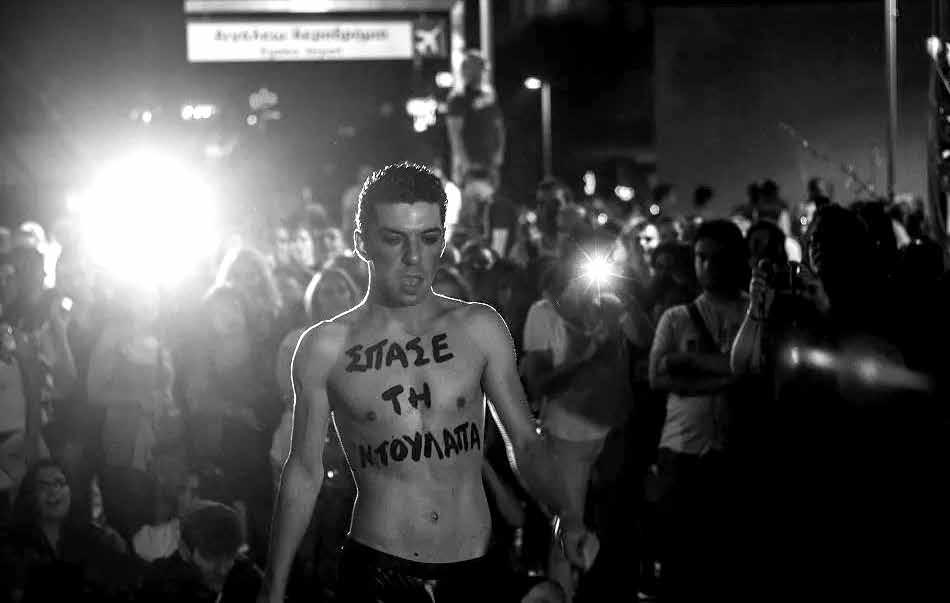
The killing of Greek LGBT activist Zak Kostopoulos will be investigated as a hate crime, a Greek prosecutor said on October 9. Supreme Court prosecutor Xeni Dimitriou called for a special investigation into the killing of Kostopoulos to determine whether two shop owners should be tried under a law penalizing racism and other forms of discrimination.
Kostopoulos died September 21 after being beaten and kicked by two shop owners and several policemen in downtown Athens.
Dimiriou’s demand was prompted by media suggestions that Kostopoulos had sought shelter in the jewelry store owned by one of the suspects after being targeted for his sexual orientation and role as an LGBT rights activist.
Videos from the scene show him trying to flee the jewelry store after being trapped inside by a security door. Once he escaped from the store, he was repeatedly kicked in the head by the two shop owners.
Additional videos uncovered by Greek media show Kostopoulos being roughed up by police after he was down on the ground and bleeding from the initial attack.
In the videos, eight policemen surround Kostopoulos, who lies motionless on the ground. They were called to the scene by bystanders, who were concerned by the violent attack on Kostopoulos by the shop owners.
But the police do not assist Kostopoulos, although the videos clearly show him bleeding and semiconscious on the ground.
Instead, the police kick him, beat him with a baton, drag him by one of his arms, and swear at him. Meanwhile, he shows no
reaction at all. His head is wrapped with bandage and is bleeding.
While Kostopoulos in on the ground, the policemen step on his legs, and pull him by the arms. At some point and without obvious reason, a policeman approaches him and steps on Kostopoulos’ throat, while a second officer approaches him and kicks him.
Later, and again with no obvious reason, the officers fall on Kostopoulos.
Greek police are notoriously hostile to the LGBT community. Many are reportedly members of the neo-Nazi Golden Dawn party.
Another incident that will be investigated as a hate crime involves a fire that broke out in June at a makeshift migrant
workers’ camp in the rural area of Manolada in the northwestern Peloponese.
According to the National Committee for Human Rights, the fire resulted in 164 foreign laborers losing all of their personal documents, including work and residence permits.