Seattle Gay News
CALLING ON CAL
by Kylin Brown SGN Contributing Writer
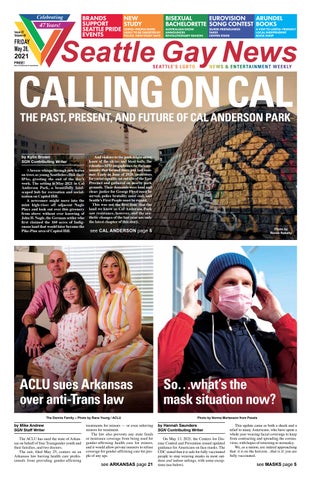
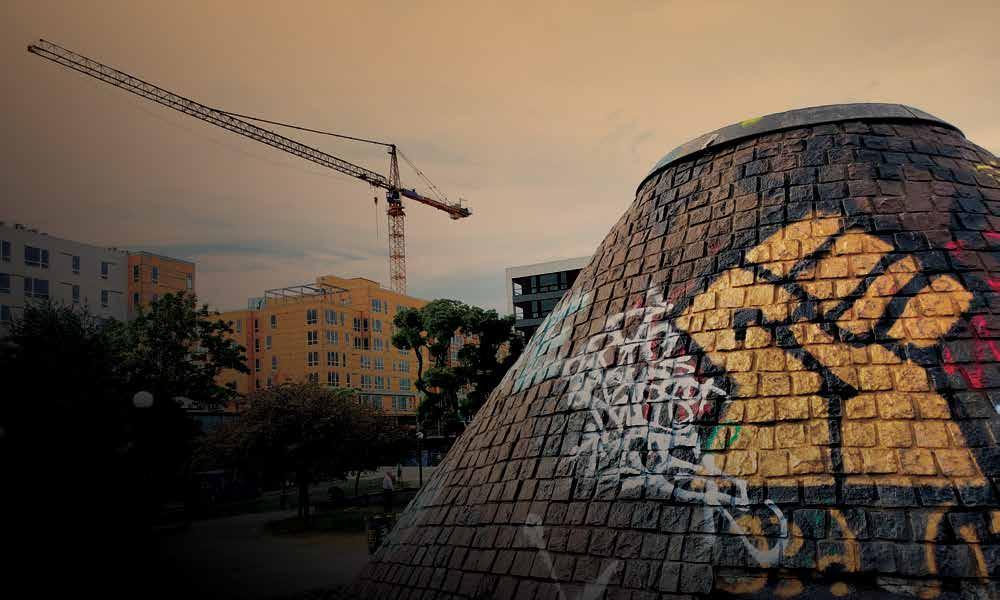
A breeze whisps through new leaves on trees as young Seattleites clink their IPAs, greeting the end of the day’s work. The setting is May 2021 in Cal Anderson Park, a beautifully landscaped hub for recreation and socialization on Capitol Hill.
A newcomer might move into the mint high-rises off adjacent Nagle Place and look out over this greenery from above without ever knowing of John H. Nagle, the German settler who first claimed the 160 acres of Indigenous land that would later become the Pike-Pine area of Capitol Hill.
And visitors to the park might never know of the sit-ins and blast balls, the relentless SPD megaphones, or the community that formed there just last summer. Early in June of 2020, protestors for racial equality sat outside of the East Precinct and gathered on nearby park grounds. Their demands were loud and clear: justice for George Floyd must be served, police brutality must end, and Seattle’s First People must be repaid.
This was not the first time that the land we know as Cal Anderson Park saw resistance, however, and the aesthetic changes of the last year are only the latest chapter of this story.
by Mike Andrew SGN Staff Writer
by Hannah Saunders SGN Contributing Writer
On May 13, 2021, the Centers for Disease Control and Prevention issued updated guidance for Americans on face masks. The CDC stated that it is safe for fully vaccinated people to stop wearing masks in most outdoor and indoor settings, with some exceptions (see below).
This update came as both a shock and a relief to many Americans, who have spent a whole year wearing facial coverings to keep from contracting and spreading the coronavirus, with hopes of returning to normalcy. We, as a nation, are indeed approaching that: it is on the horizon…that is if, you are fully vaccinated.
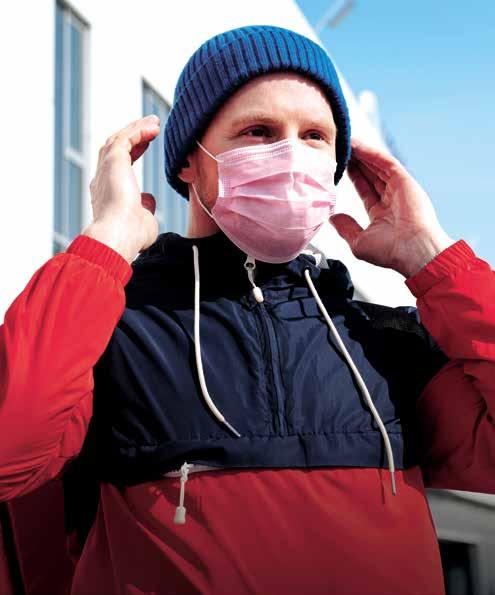
Photo by Norma Mortenson from Pexels
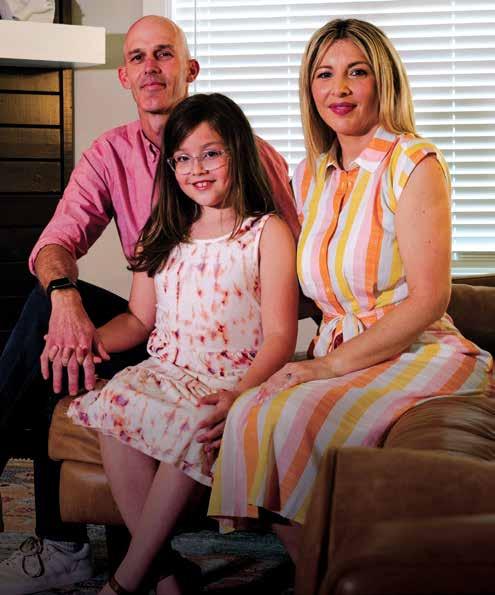
The Dennis Family – Photo by Rana Young / ACLU
Photo by Renee Raketty



THIS AD SPACE HAS BEEN GENEROUSLY DONATED BY KRISTIN COSTELLO IN MEMORY OF SGN PUBLISHER GEORGE BAKAN




Local News
Here are the brands supporting Seattle’s Pride events this year
by Paige McGlauflin SGN Contributing Writer
The last several years have seen an increase in brand support at Pride festivities. Come June, it’s not hard to miss the rainbow billboards and plethora of corporates handing out branded Pride freebies at parades. There’s good reason for the growing ire over rainbow capitalism and brands missing the mark on Pride merch (one TikTok lampooning Target’s Pride collection, posted by @ ylracbutler on April 30, has accumulated almost one and half million “likes”). If willing to turn a blind eye, however, there’s a growing list of national and local companies supporting Seattle-area Pride festivities and LGBTQ-owned businesses, with proceeds going directly to Pride organizations or nonprofits supporting LGBTQ individuals.
SEATTLE PRIDE
Savor Seattle:
Seattle Pride has partnered with Savor Seattle, the TK box, for the month of June. A portion of proceeds from each box purchased benefits Seattle Pride. The box will feature nine items, including a 12oz bag of Broadcast Coffee’s Breaker One 9 Blend, a bag of biscuit mix from Honest Biscuits, and a six oz. jar of liliko’i caramel sauce from Marination. Everything in the box is made by Seattle area LGBTQ+-owned businesses and producers. Boxes cost $119.99 each and are available for both local delivery and nation-wide shipping. Shipments will be sent out every Tuesday and Friday from June 8 through July 2, or until sold out.
ShakeShack:
From Monday, June 14th through Wednesday, June 16th, the New York-based burger chain will donate 25% of associated sales from its Kirkland, South Lake Union, and University Village locations to Seattle Pride, as part of its ShakeShack Gives Back initiative. Use code DONATE25 at checkout for online orders or mention the fundraiser to the cashier when placing an order in-person.
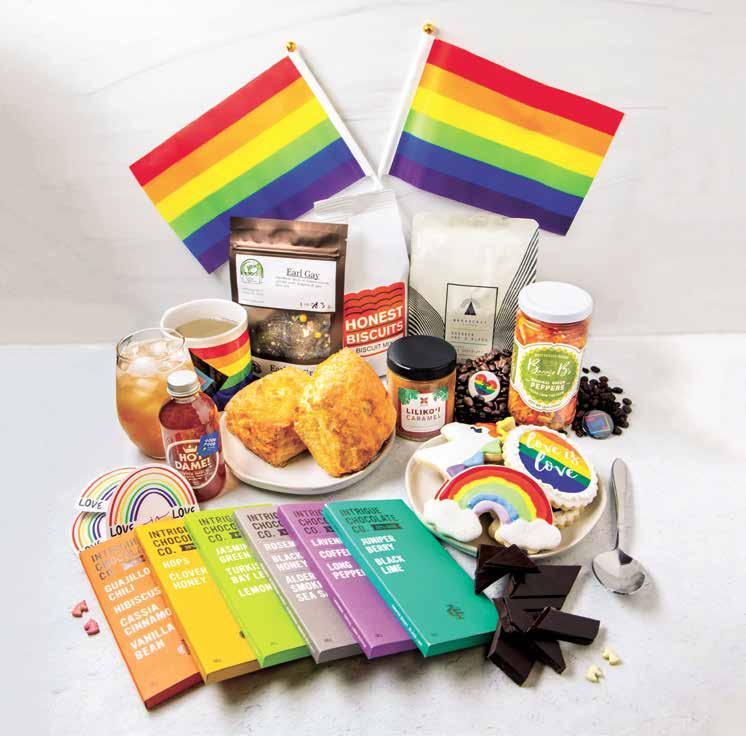
There’s a growing list of national and local companies supporting Seattle-area Pride festivities and LGBTQ-owned businesses, with proceeds going directly to Pride organizations or nonprofits supporting LGBTQ individuals.
Silver City Brewery:
Silver City Brewery will be offering a Strawberry Rhubarb Hard Seltzer available during the month of June at their taproom and restaurant location. A portion of sales will be donated to Seattle Pride. More information on this partnership will be available via Seattle Pride at a later date.
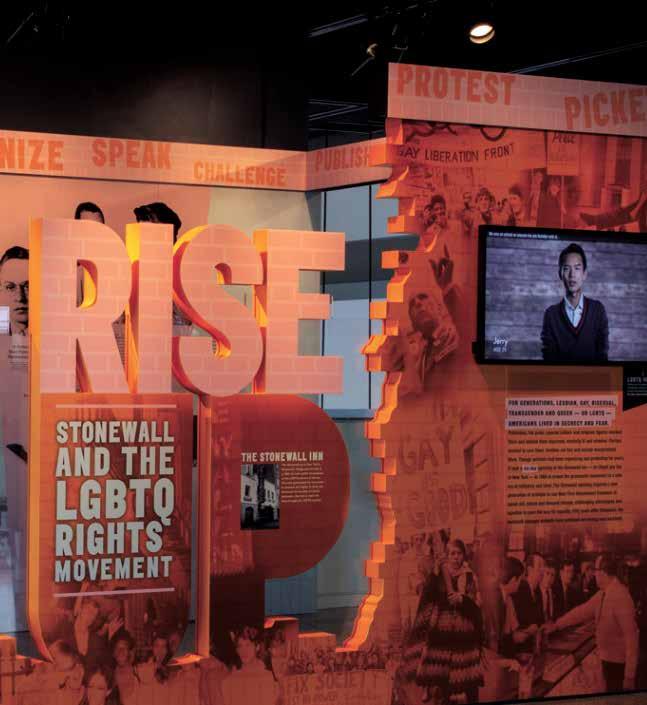
MoPOP – Rise Up: Stonewall and the LGBTQ Rights Movement: Opening Saturday June 26, MoPOP will exhibit the cultural transformations that have taken place in the nearly 52 years since Stonewall. MoPOP has also curated a series of stories featuring local LGBTQIA+ activists and artists and their impact on Seattle. In partnership with Seattle Pride, MoPOP will raffle off five pairs of tickets to Seattle Pride’s Protectors of Pride members. This list isn’t exhaustive, as Seattle Pride plans to share more partnerships in the coming week.
CAPITOL HILL PRIDE MARCH (CAL ANDERSON, JUNE 26 & 27) Due to last minute scheduling, the Capitol Hill Pride March (not affiliated with Seattle Pride) does not have any partnerships or sponsorships this year, but is still showcasing a few vendors and artists ahead of their own festivities, which will be focusing on a late-60s, Stonewall and Summer of Love theme, “tye dyeing the connection to activism and police reform,” according to Charlette LeFevre.
Pride Shades
Proceeds from Pride Shades, which sells the translucent-rainbow sunglasses, will go towards True Colors United, the nonprofit founded by Cyndi Lauper that focuses on homelessness in LGBTQ-youth.
Official Capitol Hill Pride 2021 Poster
Capitol Hill Pride also announced that CHOP artist Kreau has been commissioned to create their 2021 poster.
Moving beyond the PNW but still on the West Coast, Stoli Vodka is continuing its partnership with the Harvey Milk Foundation, launching a limited stock Stoli Harvey Milk Global Collector’s Edition Bottle. The bottle, launched on May 22nd in honor of Harvey Milk Day, features the art Paraguayan artist Oz Montania.Stoli also features a Spirit of Stonewall limited edition bottle on their website, and both bottles can be found locally through reservebar.com.
Photo courtesy of Seattle Pride
Photo courtesy of MoPOP
CDC guidance
As stated by the CDC, “Fully vaccinated people can resume activities without wearing a mask or physically distancing, except where required by federal, state, local, tribal, or territorial laws, rules, and regulations, including local business and workplace guidance.” (An individual is fully vaccinated two weeks after receiving their second dose of the Pfizer or Moderna vaccines, or two weeks following the single-dose Johnson & Johnson vaccine.)
Masks will still be required on “planes, buses, trains, and other forms of public transportation traveling into, within, or out of the United States, and in U.S. transportation hubs such as airports and stations.”
What is known (or still unknown) about the vaccines? It is known that they are highly effective at preventing severe illness and death from COVID-19, and they reduce the risk of spreading the coronavirus. What is still unknown, and what is continually being researched, is how long the vaccines protect against COVID-19, how effective the vaccines are against coronavirus variants, and how well the vaccines protect those with weakened immune systems.
“If you have a condition or are taking medications that weaken your immune system, you may NOT be fully protected even if you are fully vaccinated. Talk to your healthcare provider. Even after vaccination, you may need to continue taking all precautions,” read the guidance, which also described how those who are not fully vaccinated should continue taking all safety precautions by wearing face masks and physically distancing.
What does this mean for Washingtonians?
On May 21, the Washington Department of Health issued update guideance for face masks.
“If you are not fully vaccinated, it’s important to continue to wear face coverings and practice physical distancing in public,”
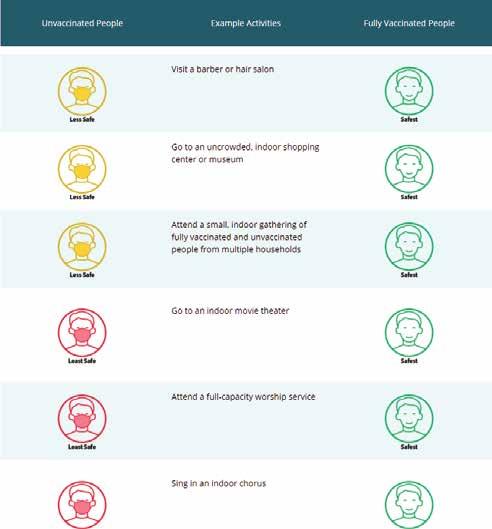
read the statement. The secretary of health issued a general public order that requires unvaccinated residents to wear facial coverings in some public spaces; in addition, all people, regardless of vaccination status, are required to wear face masks in specific settings, including healthcare facilities, correctional facilities, homeless shelters, and schools, and while using transportation.
For the time being, businesses have the right to enforce mask wearing, whether someone is fully vaccinated or not. Under the state’s workplace order, employers are required to confirm the vaccination status of their employees before choosing to relax any mask wearing or physical distancing protocols, and unvaccinated people are still required to mask up. Employers must also
continue to provide masks for employees, and they must allow an individual to wear a mask if preferred. The workplace order is currently being enforced by the Department of Labor and Industries.
Additional COVID-19 worker protections to help get you vaccinated On May 21, Gov. Jay Inslee extended the Safe Workers Proclamation to give employees more rights when navigating events surrounding the coronavirus. The extension of the proclamation protects employees who are getting vaccinated, in quarantine, or symptomatic for COVID-19. The proclamation states that employees cannot be punished for coronavirus-related reasons by terminating or suspending them, or denying them a promotion, reducing their hours or pay rate, or denying them any available paid or any unpaid leave.
If you have been concerned about scheduling your vaccination around work, don’t be, as you are protected if you take reasonable time off. Visit https://vaccinelocator.doh.wa.gov/ to schedule your appointment now.
An important consideration
Often, smaller groups are frequently forgotten about, especially when we see a light at the end of the tunnel. But what about children who are too young to yet receive a vaccine? What about those with medical conditions that prevent them from receiving a vaccine? Or those taking medications that suppress their immune response, leaving them without full protection even after receiving the vaccine?
As uplifting as it is to be able to begin our return to a state of normalcy, keep these people in your thoughts. Think of them, and how your actions may impact those who remain vulnerable. Keep in mind that 20–40% of people with COVID-19 are asymptomatic.
And never forget: when in doubt, it is never rude to wear a mask.
Now go and hug your family and friends, and smile at the next person you see while walking down the street.
Historically disputed land Seattle lies upon the unceded land of the dxʷdəwʔabš, or the Duwamish people. According to historian Warren KingGeorge, Cal Anderson Park is located where there was once a marshy forestland called “s.ts’p’alich.”
In 1855, the Duwamish people signed over 54,000 acres to the city of Seattle via the illegitimate Treaty of Point Elliott. This treaty and others following it remain highly disputed and led to many small wars between Seattle and several area tribes, as forced relocations and incarceration began. Today, several organizations work alongside tribal advocates to undo the financial wrongs of our city’s past. Real Rent Duwamish, for example, enrolls monthly donors to pay “rent” for living on Duwamish land. Because the tribe remains federally unrecognized, their approximately 600 enrolled members do not receive financial or social support from the US government and never have.
It was John H. Nagle, for whom Nagle Place is named, who then cleared out forests for farmland in the 1850s. He was one of the first 170 settlers to the area and took on this land in his early twenties to become a cattleman.
In 1874, Nagle was sent to the Washington Hospital for the Insane at Fort Steilacoom (where he would later die of “exhaustion due to acute mania,” according to a letter declaring his death). Upon his institutionalization, David Denny became entrusted with Nagle’s property. This name might sound familiar: the Denny party, along with a Holgate, Boren, and Yesler, were the major landowners upon Seattle’s original settlement in the 1850s.
Changing community
After Nagle’s death, the City of Seattle bought about 12 acres of his property to be “used as the site for a water reservoir,” according to newspapers. This would become Lincoln Reservoir, an infrastructure response by the city following the Great Seattle Fire of 1889.
Seattle’s population tripled from 1900 to 1910. What many knew as “Million-
aire’s Row” began to develop near Volunteer Park, and Broadway became one of the city’s premier urban commerce districts.
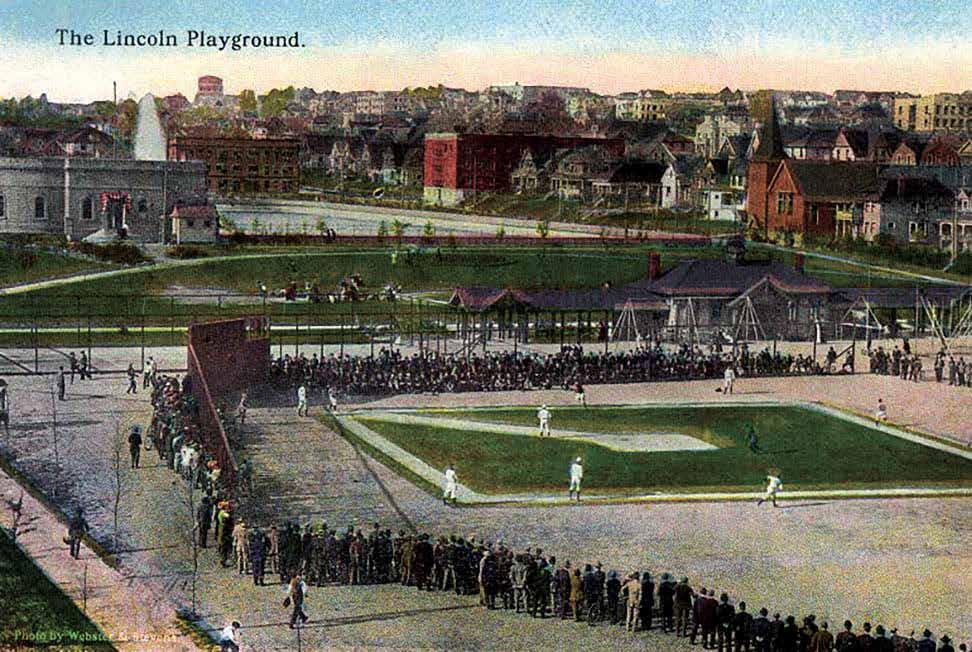
The acreage surrounding Lincoln Reservoir became an official playfield and served as a public events space throughout the 1900s. The park would go on to host public expositions and athletic meets that would sometimes garner thousands of spectators.
Organized resistance to segregation in the most urban areas of Seattle began in the 1940s. However, Capitol Hill still remained informally segregated until almost the ’70s, after the assassination of Dr. Martin Luther King, Jr. led to massive unrest in the Central District and beyond, finally setting in motion the open housing ordinance of 1968.
Lincoln Playground, Capitol Hill, Seattle, ca. 1910 postcard – Image courtesy Friends of Seattle's Olmsted Parks
Image courtesy of CDC
Local News
CAL ANDERSON
Park pitched Cal Anderson Park as we know it now started with an idea in the early 1990s, when Seattle got its “grunge” label. Amazon was just a bookstore, AIDS treatments were becoming available, the peak of the epidemic had passed, and a Gay man named Cal Anderson had been elected to the state legislature.
Anderson served Washington’s 43rd Legislative District, having been appointed as a representative in 1987, then a senator in 1995, shortly before he died after a long battle with non-Hodgkin’s lymphoma, a complication of AIDS. He was a champion for LGBT rights, consistently fighting an uphill battle for state civil rights laws to include the Queer community, all while receiving death threats for being Gay himself.
During his time in office, Anderson established annual LGBTQ town halls to garner community participation and input, and he was a strong proponent of the federal Hate Crimes Sentencing Enhancement Act of 1993, which included harsher penalties for hate crimes based on sexual orientation, disability, and gender.
Dewey Potter, a former co-worker and friend of Anderson’s, recalled in a 2005 interview with the SGN his rare advocacy for parks and open spaces during a time of fast-paced urbanization in the district.
Lincoln Reservoir, while celebrated at the turn of the century, had become an eyesore by the 1990s. Reflecting a lack of maintenance following the Great Depression, one 2004 article by the Daily Journal of Commerce called it an “ugly-duck Capitol Hill park.”
“It was like a prison yard; it was seven acres of lifeless, colorless, inaccessible dreariness,” said Kay Rood, a member of the Cal Anderson Park Alliance in conversation with the journal Rood has long been an advocate for the park, calling for a more appropriate use of the land since 1993, when she was driven to begin tackling the reservoir’s unsightly overgrowth of thistles herself. She began to organize alongside other community members and co-founded a neighborhood organization, Groundswell Off Broadway.
Groundswell became involved with city decision-making and launched the first enhancements the Lincoln Reservoir site and affiliated playfield had seen since its outdoor lighting and tennis courts were added by the Works Progress Association in the late 1930s. “We started the ball rolling by saying, ‘We really need a park, and this ain’t it,’” said Rood.
Groundswell Off Broadway was successful in gathering community input. They unearthed what Cal Anderson’s neighbors wanted their park to look like or feel like, and they set it into motion.
The park serves as a place where community gathers. It offers the city’s most densely populated neighborhood access to safe outdoor recreation, and it fulfills the legacy of its namesake.
The city began planning to cover the reservoir, making four additional acres of the park available for safe public usage.
Designers contributed to the now-luscious hills and landscaping designs of the park and began to pitch name ideas.
Rood recognized Cal Anderson as soon as he was nominated for working “tirelessly
on behalf of the disenfranchised.” She and others in the planning committee for the park considered his name to be ideal, bringing the community a “pride of place.”
Since its grand reopening, the park has maintained its spot in local history and beyond. It promised to be a world-class park, even in this densely populated neigh-
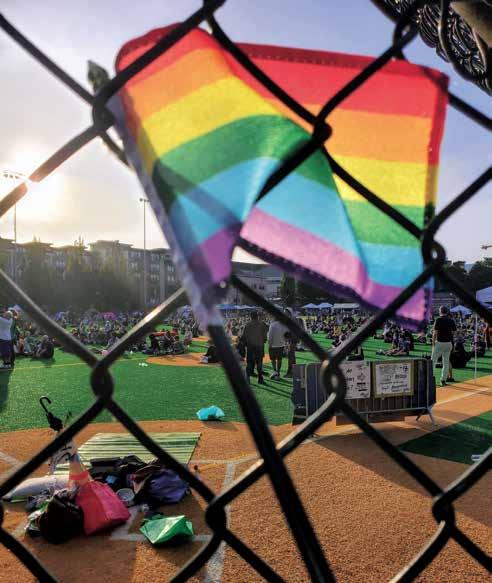
borhood, and to be a nationally recognized site of resistance that celebrates diversity. Since the 1970s, when it informally hosted the first Seattle-area Pride festivals and marches to the 2010s’ BLM marches and Trump-era protests for LGBTQ rights, DACA recipients, etc., Cal Anderson Park has surely proved itself a fit legacy for its namesake and served its community however they needed it to.
Change and legacy
Capitol Hill is always changing, I’ve learned, and its umbilical park is no exception. The topical and aesthetic modifications in the past year and beyond reflect a rapidly transformed Seattle and world. Correct usage of this space is constantly redefined and invented by the community. Nevertheless, it endures as an asset to the community in a variety of dynamic ways, and Cal Anderson’s legacy in his ever-so-civically-inclined 43rd District would make him proud.
The park named after him is the hub of the Hill right now, affording nearby school and recreational sports leagues various facilities, including the Bobby Morris Playfield, and offering shoppers and residents alike a proper place to sit down and enjoy the scene.
The park serves as a place where community gathers. It offers the city’s most densely populated neighborhood access to safe outdoor recreation, and it fulfills the legacy of its namesake.
Capitol Hill Pride Festival is hoping to have a police-free march and rally this June. Meanwhile, protests calling for racial justice, defunding the SPD, and protecting Black lives continue near Cal Anderson in light of the anniversary of George Floyd’s murder this week.
Seattle Parks Superintendent Jesús Aguirre told the Seattle Times on April 4, “It’s a neighborhood park, a regional destination park, and it’s at the core of our civil rights movement. It evolves, but it’s doing what it’s supposed to be doing.”
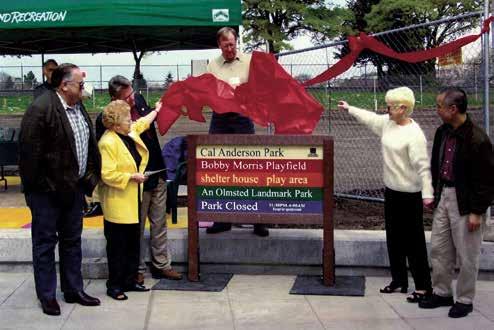
Dedication of Cal Anderson Park, (L to R) Joe Anderson, Alice (Anderson) Coleman, Mayor Greg Nickels, Parks Superintendent Ken Bounds, Gaye Anderson, Eric Ishino, Seattle, April 13, 2003– Photo courtesy Seattle Gay News and Kay Rood
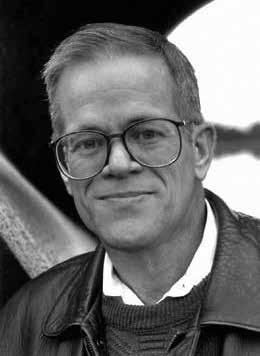
Cal Anderson – Photo courtesy of Eric Ishino
Photo by Renee Raketty
continued from page 5
Arts & Entertainment
Eurovision: Queer-friendliness takes center stage
by Richard Isaac SGN Contributing Writer
What’s the biggest Queer-friendly event you’ve probably never heard of, and even less likely seen?
Surely it’s got to be Eurovision, the 65-year-old song contest that draws nearly 200 million viewers around the globe annually. It’s the world’s largest nonsporting TV event and the longest running annual TV music competition — but nearly unknown in the United States.
But that’s not the case among its many LGBT fans, here and around the world, for which the glitzy competition is one of the year’s highlights. They form the lion’s share of fan clubs, and are more and more visible in the televised audience, as are their rainbow flags.
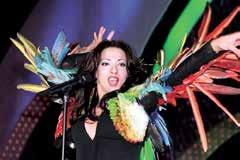
On stage, too, the Eurovision Song Contest itself has gotten more visibly Queer in the last quarter-century, especially after Paul Oscar of Iceland became the first out contestant in 1997, and Dana International won for Israel in 1998 as an openly Transgender woman, igniting joyous celebrations — and not a little controversy — back home.
Since then, numerous Queer contestants have participated (either before or after coming out), and some have even won — such as Katrina (Leskanich) & the Waves, who emerged victorious in 1997 for the UK, before she came out; Serbia’s Marija Šerifović, who won in 2007, also before coming out; Conchita Wurst, the bearded drag persona of openly Gay Thomas Neu-
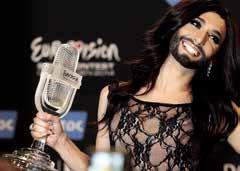
wirth, who brought home the trophy for Austria in 2014 with “Rise Like a Phoenix” and made an appearance in last year’s Eurovision: Story of Fire Saga; and 2019’s openly Bisexual victor, Duncan Laurence of the Netherlands, whose “Arcade” recently entered the American charts and has become a bit of a TikTok sensation.
Drag has also been featured by the likes of Slovenia’s campy air stewards in 2002, Denmark’s glittering, feathery “Drama Queen” in 2007, and Ukraine’s Verka Serduchka’s indelible, wacky performance in 2007, which reached second place and has since become a classic.
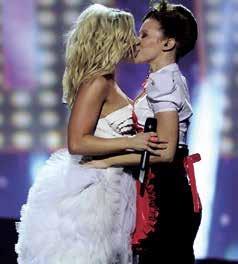
Same-sex affection has begun to make an appearance as well, such as the girlon-girl kiss by Finland’s Krista Siegfried in “Marry Me” in 2013, and the stage show for “Together” by Ireland’s Ryan O’Shaughnessy in 2018, which portrayed two men in a relationship.
This growing Queer visibility has led to some backlash, especially in the Eastern Bloc. Increasingly illiberal Turkey and Hungary no longer participate, and LGBT visibility has been cited or rumored, respectively, as one of the reasons. China, which broadcast the competition for years, censored the abovementioned Irish act in 2018; the network’s rights were terminated by the European Broadcasting Union, which puts on Eurovision and requires the show to be broadcast in its entirety.
This year, a number of out Queer performers participated in the contest, held in Rotterdam in the Netherlands. Ireland was

represented by Lesley Roy, who recently married her wife; last year she performed an explicitly Queer anthem, “Story of My Life.” Germany’s Jendrik (“I Don’t Feel Hate”) and North Macedonia’s Vasil (“Here I Stand”) are openly Gay, as was the host country’s representative, Jeangu Macrooy, who sang “Birth of a New Age.”
(Spoiler: Not to mention, Victoria de Angelis, a member of 2021 winning band Måneskin from Italy, openly identifies as Bisexual; fellow band member Ethan Torchio self-identifies as “sexually free.” The lead singer is straight but “curious.”)
Moreover, Tusse from Sweden presented as very gender-fluid in silk and jewels, and Russia’s Manizha drew flak for, among other things, her LGBT friendliness. Plus, one of the broadcast’s four hosts, Nikkie de Jager, is openly Transgender — and a YouTuber (known as NikkieTutorials) with nearly 14 million subscribers.
So if you want to dive into the fabulousness that is Eurovision — the contest that brought fame to the likes of past winners ABBA and Céline Dion, and has featured entries by greats like Cliff Richard, Olivia Newton-John, and Bonnie Tyler — you can see this year’s show free on demand on Peacock [peacocktv.com].
Then start gearing up for next year’s Queer-friendly musical extravaganza!
A YouTube playlist of the artists and songs mentioned here can be found at https://bit.ly/3oQfeJ9.
Conchita Wurst – Photo courtesy AP
Dana International – Photo courtesy of wiwibloggs
Verka Serduchka – Photo courtesy of Reuters
Paul Oscar – Photo courtesy of Reuters
Krista Siegfried– Photo courtesy of Reuters
Drama Queen – Photo by Indrek Galetin via Wikipedia
Jendrik – Photo courtesy of the artist
Arts & Entertainment
Bisexual Bachelorette contestant holds promise but bewilders some
by Lindsey Anderson SGN Contributing Writer
Fans of The Bachelor have tuned in for decades to enjoy the reality series, which showcases the messy, sexy, chaotic, and complicated sides of dating. Since March 25, 2002, people across the world have enjoyed watching abnormally attractive men and women throw themselves at the coveted title of bachelor or bachelorette.
The show has recently begun attempting to diversify racially, welcoming the first Black bachelorette, Rachel Lindsay, in 2017, and the first Black bachelor, Matt James, in the latest 2021 season.
Speculation that the franchise could continue on the diversity track by including more openly queer representation has been in the air for years now. However, many have also questioned whether an openly Gay or Lesbian lead would evoke the same kind of competition — after all, couldn’t contestants just partner up with each other instead of vying for the star?
Australia has decided to take the plunge, though. This month it was announced that the next Bachelorette Australia will be none other than 26-year-old Brooke Blurton, an Indigenous, Bisexual woman, and an advocate and youth worker for the Noongar-Yamatji people of Australia.
Because Blurton is Bisexual, The Bachelorette Australia will offer a groundbreaking and revolutionary new season — one that includes both male- and female-identifying contestants. That’s right: the cast will include straight and Bisexual men, and Lesbian and Bisexual women!
When asked about some of the backlash this decision has been receiving, Blurton responded by saying, “If it makes people uncomfortable in any way, I really challenge them to think about why it does. Times are more progressive, and sexuality and gender expression are just so fluid these days.”
Regarding the possibility of some of the contestants falling for each other, instead of her, Blurton said, “I would be really supportive if that is what they want, but I would also be a bit disheartened if I didn’t get the chance to develop that relationship with them as well. It is what it is; you have to roll with it.”
The backlash a queer season of The Bachelorette Australia is facing — particu-

larly that it could turn into one giant orgy — continues to perpetuate problematic stereotypes about Queer people, and Bisexuals in particular.
For decades Bisexuality has been invalidated by both Queer and straight people as either nonexistent or an expression of hypersexuality. For many, the idea of a binary is so rigid that Bisexuals are considered either confused, closeted Gays and Lesbians, or straight but looking for attention and a way into the LGBTQ+ community.
These attitudes have made it especially difficult for many Bisexual people to come out, as they fear rejection from both
The backlash a queer season of The Bachelorette Australia is facing — particularly that it could turn into one giant orgy — continues to perpetuate problematic stereotypes about Queer people, and Bisexuals in particular.
sides, and it has also led to higher rates of depression. In a 2020 study by Randolph C.H. Chan et al., it was found that Bisex-

ual individuals face much higher rates of mental illness, including depression and anxiety, than Lesbians and Gay men. The study states that “bisexual individuals were more likely to report identity uncertainty, conceal their sexual orientation, and have a weaker sense of connection to the LGBT community, which were in turn associated with greater affective symptoms and poorer mental well-being.”
If the upcoming season of The Bachelorette Australia is successful, though, a new precedent can be set, showing straight audiences that Queer people, and especially Bisexuals, exist as more than just their sexualities.
No matter the outcome, this season will be revolutionary for the entire Bachelor Nation franchise, as it will put a Queer woman at the center of the series. Furthermore, it will allow audiences to get a peek at what dating is like for millions of Bisexual woman across the world.
The Bachelorette is known for being messy, sexy, chaotic, and complicated — and what could be more sexy, chaotic, and complicated than the inner dating life of a Bisexual? So here’s to The Bachelorette Australia: may she pave the way for more Queer representation in the franchise and more acceptance of bisexuality. And if she dares to choose a straight man, may he at least exude “bi wife energy.”
Brooke Blurton – Photo courtesy of The Bachelorette Australia Instagram
Appearing on last year's Bachelor In Paradise Australia, Brooke Blurton made headlines when she took fellow contestant Alex Nation on a date. – Photo courtesy of Channel 10
New unscripted television show casting Queer women in PNW
by Josephine Baird SGN Contributing Writer
It seems like the world goes crazy for reality dating television shows. Although these stories of drama, romance, and heartbreak seem to capture large fan bases, they are often missing something: inclusivity and clarity.
Which is why Stephanie Lewis, lead casting producer with Kinetic Content, is excited to start a new, currently unnamed project, focusing on Queer women and their relationships. As Lewis said, “Representation matters; it really does.”
This new unscripted show hopes to steer clear of the confusion-inducing, dramafueled reputation of reality television shows, focusing instead on providing clarity and hope to real people and real couples.
The project, from the Emmy-nominated producers of Love Is Blind and Married at First Sight, is currently looking for Lesbian, Bisexual, and Queer women in LGBTQ+ relationships, living in California, the Pacific Northwest, and Vancouver, Canada. Lewis believes that Kinetic Content will find the couples they need on the West Coast due to the “pockets of queer women that belong to the great gay-friendly communities” in this area, including members of the Seattle LGBTQ+ community.
The producers are looking specifically for Queer women at a crossroads in their relationship, such as when one is ready for marriage and commitment, while the other
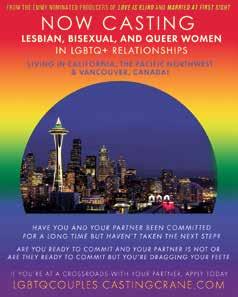
is still dragging her feet. Lewis said, “We want to show that queer relationships are just as interesting, dynamic, and full of layers as any heterosexual relationship is.”
Show concept
After a couple applies and is chosen for the show, they will arrive at the film location and meet the other couples. After that, they will spend one last night together.
The next day they will live for three weeks with another Queer woman who isn’t their partner. This will serve as a “trial marriage,” which is meant to help them gain perspective on their own relationship, giving
Books
cast members a chance to ask and answer questions such as “Is the grass actually greener on the other side?,” “Am I marrying the right person?,” and “Am I even ready to settle down and live the married life with a partner — forever?” before they walk down the aisle and take part in a lifetime commitment. These are just some of the questions that this show hopes to help couples answer.
After three weeks apart, the couples will return from their “trial marriage” and then turn around and share the same experience, in another location, with their original partner. In the end, it’s decision time.
At this point participants might decide that their partner is indeed the right choice for them, or that there might be better matches awaiting them out in the dating world. They will have to make the tough decision to get engaged, go their separate ways, or continue dating. These big decisions that were daunting before may be easier after weeks of contemplation.
Producers of the show recognize that it is normal for people to wonder if someone else might be out there, someone who might make a better match than their current partner — and this show hopes to take the wondering out and replace it with certainty.
As Lewis said, “We hope to create a positive, insightful experience for the cast. An experience that will give them clarity.”
The producers believe this show will be enjoyed by people across the sexualattraction, behavioral, and orientational
Arundel Books: A bundle of joy
by Lindsey Anderson
SGN Contributing Writer
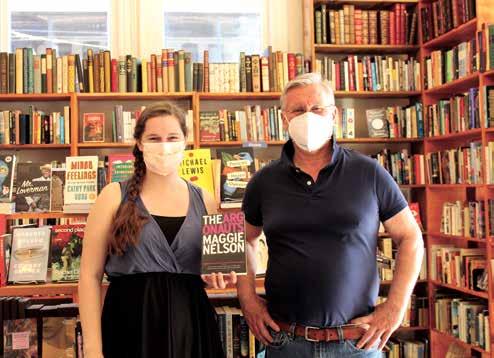
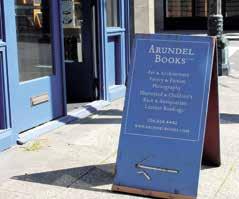
Before even entering the front doors of Arundel Books, customers are greeted by the friendly face of Briana Schwartz at the register on the other side of the big glass window. Surrounded by book displays, she encourages readers young and old to enter the store — and use hand sanitizer use before touching any of the books.
Visitors to the bookstore in the pristine and ornate white building, decked out with intricate pillars and Edison-style light bulbs, are taken back in time, as if sucked into a history book on Seattle’s Pioneer Square district.
Ornate marble carvings of the beermaking process line the walls. “This was originally built as a brewery for the Capital Maulten Brewing Company, which became Olympia Beer,” owner Phil Bevis, informed me while we discussed all the books Arundel has to offer its Queer readers.
Bevis founded Arundel Books in 1984. “A long, long time ago, in a galaxy far, far away!” he quipped as he explained some of the interesting history of the store.
The LGBTQ community has been pivotal for Arundel Books over its 37 years. “Let’s face it,” Bevis said, “folks in the LGBTQ community just, on average, read more.” As a result, over the years, Arundel Books has included more diverse works of fiction and nonfiction by LGBTQ authors, thanks in part to the amazing patronage Queer readers have given the store.
“We would shelve fiction and biographies by LGBTQ writers in the LGBTQ section, and now, that isn’t the case,” Bevis explained. “The work has become mainstream, and so it’s featured in all of the sections.”
Arundel Books still features an LGBTQ section, smack in the middle of the store, but as Bevis pointed out, great works by LGBTQ authors, and stories centering
The LGBTQ community has been pivotal for Arundel Books over its 37 years. “Let’s face it,” Bevis said, “folks in the LGBTQ community just, on average, read more.”
Queer experiences, can be found in just about any genre and section of the store.
The store carries a wide variety of books, some of the most popular titles at the moment being The Hill We Climb by poet Amanda Gorman and Meditations by Marcus Aurelius. “Surprisingly enough, we’ve
sold nearly a dozen Communist Manifestos since moving to this location,” Schwartz added.
As for LGBTQ titles, Schwartz and Bevis pointed me toward a variety of wonderful works, both fiction and nonfiction. For younger and middle school- and early high
spectrum. Said Lewis, “I think it is good for everyone to see that queer women go through the same thoughts and issues that straight couples do.”
The producers also look forward to bringing to light the interesting and relatable realities of Queer relationships. Lewis believes that this show will give viewers the opportunity to see that Queer women take marriage seriously. She said, “I’m excited for people to see how important marriage is to the gay community and to see that they take it as seriously as any other couple.”
Casting and airing information
If you (or someone you know) is a Lesbian, Bisexual, or Queer woman in an LGBTQ+ relationship who is at a crossroads and could use some help finding clarity, Kinetic Content is looking for couples just like you! Casting will be open until mid-June, so there is still time to throw your hat into the ring.
To apply, go to lgbtqcouples.castingcrane.com, or check out Kinetic Content on Instagram @kineticcontentcasting for more information.
If you’re someone who doesn’t qualify to participate but would like to watch the show when it comes out, stay tuned. The producers haven’t announced an exact air date for the show yet, but when it does come out it, will be featured on a major streaming platform. And when it’s ready for viewing, it will be well publicized. So keep your eyes peeled!
school-aged readers, Schwartz recommended Every Heart a Doorway, a fantasy adventure novel featuring an asexual main character. The series, Schwartz pointed out, features many LGBTQ characters, as well as other people with identities not usually seen in heroes. And the best part of the representation is that their identities don’t consume the characters. While the protagonist is asexual, that’s not what her story is about; it is just one part of who she is.
For older readers, Bevis recommended The Argonauts by Maggie Nelson, a beautiful prose memoir that tells the story of family, identity, and change. Maggie navigates her life as a new step-parent while trying to build a home and support her husband during his transition. The emotions of the book are raw, and the text itself ties in brilliant theorists, philosophers, and some of the greatest minds of the last century.
When asked why our readers should shop at Arundel Books, Bevis and Schwartz were candid, telling us that their store is no more deserving of customers than any other independent bookstore.
“Support independent bookstores in your community, wherever that may be. It doesn’t necessarily have to be us,” Bevis said.
However, Arundel will continue to integrate Queer authors and texts into all sections of the store, and continue to create a safe space for all customers. “Books should be for everyone,” Schwartz added.
And at Arundel Books, everyone is welcome.
Note: The Argonauts will be the first book in our new SGN Summer Reading Book Club! If you are interested in reading along with other bibliophiles, follow us @ sgn_books on Instagram.
Photos courtesy of Lindsey Anderson
Film
Colorfully aggressive Cruella a fabulously coifed sensation
by Sara Michelle Fetters
SGN Staff Writer
CRUELLA
Theaters / Disney+
There’s not much of One Hundred and One Dalmatians author Dodie Smith’s source material or its classic 1961 animated adaptation to be found in Disney’s Cruella, and I’m perfectly okay with that.
Transplanted to a punk-rock London of the 1970s, this isn’t so much an origin story for the iconic fashionista villainess with a murderous thing for spotted puppy fur as it is an alternate reality, in which a similar character takes her first stiletto-heeled steps into her own fabulously coifed tomorrow.
Directed by I, Tonya and Lars and the Real Girl filmmaker Craig Gillespie and with a story and script credited to five writers (including The Favourite scribe Tony McNamara and The Devil Wears Prada screenwriter Aline Brosh McKenna), the finished product feels a bit messy, especially during its convoluted second act. But the opening hour is dazzling, while the climax is a crackerjack barnburner of suitably cartoonish rage and whimsically rambunctious adrenaline. The film is a heck of a lot of fun, so even at 134 minutes, it still managed to keep my full attention for the most of its epic running time.
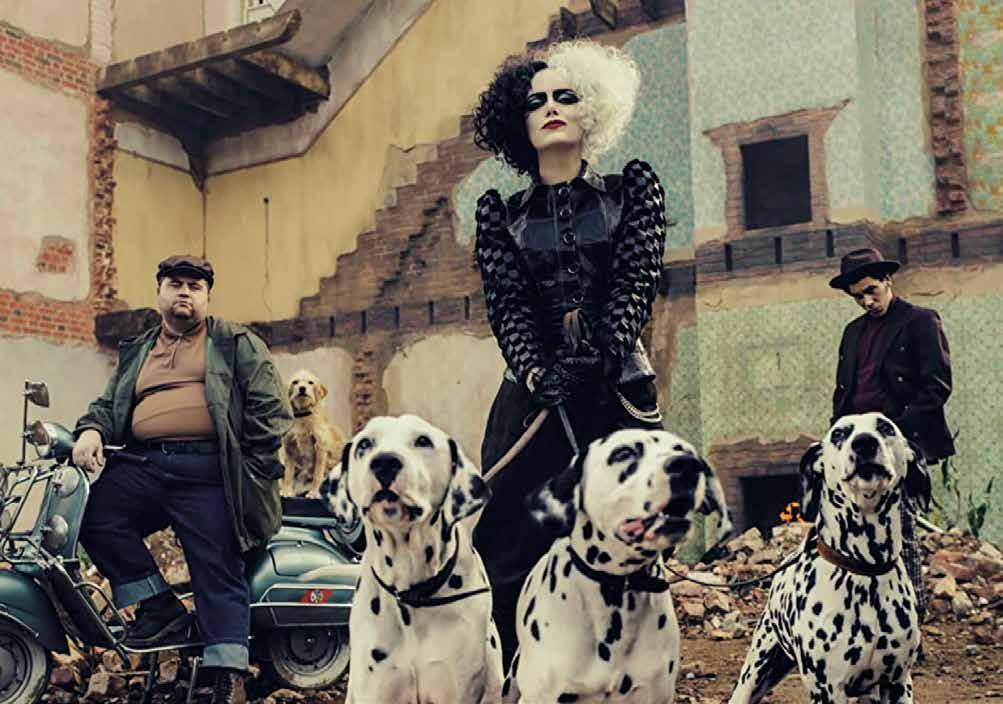
Estella (Emma Stone) is a twentysomething orphan living on the London streets with her two best friends and partners in pickpocket crime, Jasper (Joel Fry) and Horace (Paul Walter Hauser). The young
woman has talent as a seamstress and fashion designer, and she harbors dreams of going to work for the legendary Baroness von Hellman (Emma Thompson).
When the opportunity to do so arises seemingly by chance, after earning the baroness’s trust and becoming a valuable member of her design team, Estella is shocked to discover that her icon harbors a devastating homicidal secret directly connected to the tragic death of her mother roughly a decade prior. Determined to exact revenge, she develops a colorfully aggressive alter ego named “Cruella,” a rival up-and-coming designer who wants to dethrone the fashion industry’s reigning queen.
It’s not a ton of plot, and as elaborate as the scenario gets, there still isn’t a valid reason for the story to stretch well over two hours. But that opening section is incredible. There is a passionate female-centered strength to the world Gillespie has created that’s exceptional, and the ways he allows Stone so much freedom to make Estella/Cruella her own cannot be understated. The fusion between actor and character is seamless, and I loved the underlying emotional ferocity that hypnotically fuels her performance.
As terrific as Stone is, however, Thompson comes remarkably close to stealing the motion picture right out from underneath her co-star. The baroness is a magnificent villain; her venal self-righteous narcissism is beyond anything I could have imagined. Thompson brings a level of sanctimonious sincerity to the proceedings that’s sublime, her lithe, almost serpentine physicality adding an additional layer I found impossible to resist.
Transplanted to a punk-rock London of the 1970s, this isn’t so much an origin story for the iconic fashionista villainess with a murderous thing for spotted puppy fur as it is an alternate reality, in which a similar character takes her first stiletto-heeled steps into her own fabulously coifed tomorrow.
There is a point where things begin to stumble and fall apart. The seams start to show, and Gillespie has to rely on a few wellplaced needle drops to help keep narrative momentum moving forward at a spirited clip. This is a bit lazy in my opinion, and I do wish he’d have allowed the fabulous score by Nicholas Britell (Moonlight) to do more of the musical heavy-lifting instead of turning to the likes of The Rolling Stones, Ike & Tina Turner, The Clash, The J. Geils Band, Judy Garland, Blondie, Queen, and many others for a far-too-obvious assist.
Other areas I could pick a few nits with include how Jasper and Horace are sidelined during the laborious middle section and the almost inexcusable way in which Anita Darling (Kirby Howell-Baptiste) is utilized as a prop and not a full-blown character. There’s also a vital subplot involving the baroness’s trusted valet John (Mark Strong) that is far too contrived to satisfy, and I may have rolled my eyes during a piv-
otal reveal involving the character’s connection to Estella.
These annoyances were moderately mitigated in large part courtesy of the charming performances of the actors; Fry and Hauser were outstanding in particular. There is also the bravura work turned in by costume designer Jenny Beavan (Mad Max: Fury Road ); her spectacular collection of frocks, business suits, punk jackets and casual wear were arguably the film’s third most important character behind Estella and the baroness.
Thankfully the climax truly is wondrous, with Gillespie recapturing the riotous, anything-goes mania of that opening hour with stupendous aplomb. Cruella roars back to life with thunderous intensity, delivering a crowd-pleasing ending that had me wanting to rise out of my seat to cheer. I had a blast, and much like 2015’s Cinderella and 2016’s Pete’s Dragon, this is one Disney live-action remake worth getting excited about.
Paul Walter Hause, Emma Stone, and Joel Fry in Cruella – Photo courtesy of Disney






Thrilling Quiet Place sequel a monstrously good time
by Sara Michelle Fetters
SGN Staff Writer
A QUIET PLACE II
Theaters
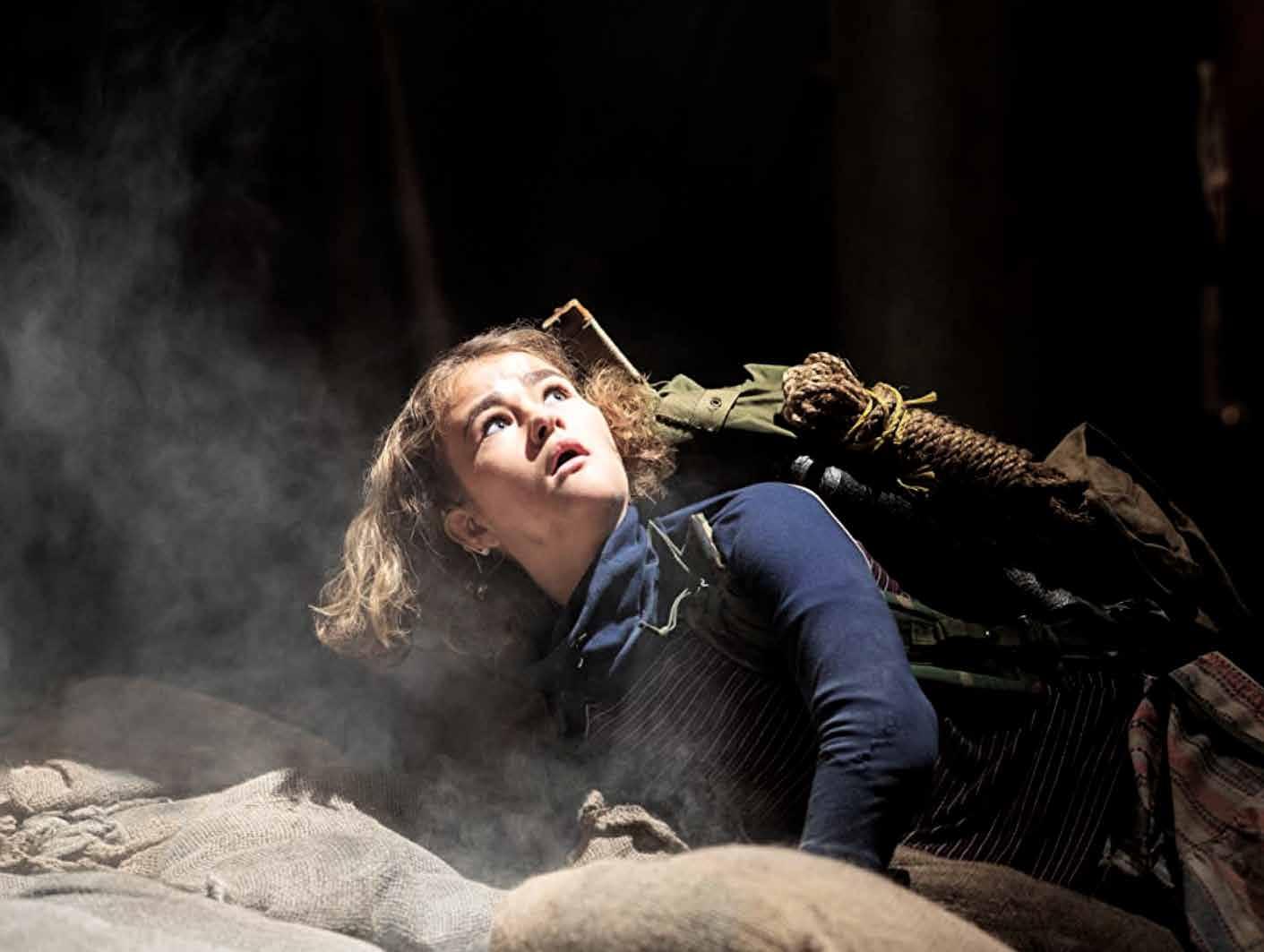
Their farm destroyed, Evelyn Abbott (Emily Blunt) and her newborn baby and older children Regan (Millicent Simmonds) and Marcus (Noah Jupe) are forced to search for a new haven safe from the mysterious creatures terrorizing Earth. Traveling in the direction of one of the remaining fire beacons lit up in the mountains, in an abandoned factory, they encounter Emmett (Cillian Murphy), a one-time friend of the family who has lost everything and wants nothing to do with any of them.
During their journey, Marcus suffers a horrific leg injury. Even though Emmett insists they must leave, Evelyn refuses, unwilling to put her son’s life in jeopardy just to ease a broken man’s suffering. But when Regan, convinced she has the key to defeating the monstrous menace that makes every sound a potentially lethal mistake, heads out on her own into the unknown, suddenly this determined mother no longer knows what to do. Evelyn pleads with Emmett to go after her daughter, desperately hoping the good man they once knew and loved still exists somewhere below the mountain of grief he’s trapped underneath.
Writer-director John Krasinski’s sequel hits the ground running, with a brief prologue reminding viewers how Evelyn and her children survived the arrival of the sound-hunting creatures that destroyed
their close-knit community, as well as the stakes involved if any of them takes a single misplaced step. It then immediately picks up after the events of its 2018 predecessor, developing the previous story’s mythology and widening the scope to the larger world while still keeping the focus squarely on the remaining members of the Abbott family.
Even if I did not enjoy this second effort as much as the first film, I still found it to be a terrific follow-up, overflowing in thrills and chills. The sound design is once again spectacular, and for long stretches, Krasinski utilizes silence as an unsettling weapon to put the viewer continuously on edge. It’s also stunningly edited by Michael P. Shawver (Black Panther); the third act is particularly impressive, as three separate subplots are all juggled with such seamless precision that the lines dividing them become practically invisible.
Blunt continues to be marvelous as Evelyn. A section where she is forced to leave her new hideaway to find fresh oxygen tanks for her baby and get medical supplies for Marcus’s injury showcases the actress at her best. Blunt exhibits a plethora of emotions with magnetic ease, going from one extreme to the next with electrifying precision. She also has a couple of lovely moments with Murphy, in which the pair develop a connective resonance that speaks to the collective pain both feel yet also hints at the deep, almost familial friendship they shared before the monsters came and made their world a soundless living hell.
But it is Simmonds who amazes. The young actress is magnificent. Krasinski
But it is Simmonds who amazes. The young actress is magnificent. Krasinski wisely makes Regan the star this time around... she is the driving force who propels this chapter of the story forward. Simmonds dazzles... This is likely going to end up being one of the best performances of the year.
wisely makes Regan the star this time around, and as much value as he places on the subplots involving Evelyn and Marcus, she is the driving force who propels this chapter of the story forward. Simmonds dazzles, and she has stratospheric chemistry with Murphy. This is likely going to end up being one of the best performances of the year.
While all of the action set pieces are superbly directed and staged, none match the terrifying timbre of the first picture’s climax. I also still can’t help but giggle at how the monsters can be defeated, and that no one other than Regan seems to understand the significance of her and her late father’s discovery. Krasinski builds to a finale that’s slightly reminiscent of the ending to Mars Attacks!, and while that isn’t necessarily a bad thing, it does add an unintentionally laughable element that’s moderately unavoidable.
Not that it matters. These monsters
remain super scary, and even if the prologue does feel like it’s been inserted by Krasinski so his character from the first film can make a brief appearance, the attack on the town and what the Abbotts do to survive is still pretty darn awesome nonetheless. As for that last act, it’s incredible, with the director crafting a triptych of narrative events all happening simultaneously. I never lost track of what was occurring where or to whom, and the tension rose incrementally with such violent intensity that it almost became unbearable.
A Quiet Place Part II was the last film I was supposed to watch at a press screening before the pandemic shut everything down. Over a year later, I find that this sequel is well worth the wait. Now that I’m fully vaccinated, I’m excited to watch it for a second time with an actual paying audience, and the shrieks of terror certain to reverberate throughout the auditorium are ones I cannot wait to experience.
Millicent Simmonds in A Quiet Place Part II – Photo courtesy of Paramount Pictures
Allyship - an organization of LGBTQ individuals fighting for economic and social justice. www.LGBTQAllyship. org, allyship@yahoo.com, (206) 279-8169. American Veterans for Equal Rights - www.aver.us
Another Gay Social Club! - www.meetup.com/AnotherGay-Social-Club/ Bellingham/Whatcom County - www.theslowlane. com/guide.html
BiNet Seattle is a mixed gender, social group for Bisexuals, their partners & other Bi-friendly folks - www. binetseattle.org.
Bremerton/Kitsap County - www.outwestsound.org Capitol Hill Alano Club - www.chacseattle.org
Cascade Rainbow Community Center (Mount Vernon) - (360) 840-8499 and on Facebook. Central Washington University GALA Hotline: (509) 963-1994.
Channel Q 103.3 FM - LGBTQ+ Talk Radio NetworkNews and information, pop culture and music. radio.com COLAGE unites people with LGBTQ parents and caregivers into a network of peers and supports them as they nurture and empower each other to be skilled, self-confident, and just leaders in our collective communities - www.colage.org
DIFFA/Northwest (Design Industries Foundation Fighting AIDS). (206) 763-8885; www.diffanorthwest. org
DOMESTIC VIOLENCE & SEXUAL ASSAULT: Crisis Clinic, (206) 461-3222 (24 hour line); King County Sexual Assault Resource Center (KCSARC) - 24-hour crisis line for information, support, & medical & legal assistance: 1-888-99-VOICE; Northwest Networksupport & advocacy for Bisexual, Trans, Lesbian & Gay Survivors of Abuse & Dating Violence, (206) 568-7777 (voice), 517-9670 (tty), www.nwnetwork.org; Pierce County Domestic Violence Helpline: Teresa, (253) 798-4166; Seattle Counseling Service for Sexual Minorities - offers on-going support groups for men: 323-1768; Seattle Police Dept Domestic Violence Unit, (206) 684-0330; State Wide Domestic Violence Hot Line, 1-800-562-6025. In an emergency call 911 Report domestic violence and sexual assault. Equal Rights Washington - (206) 324-2570; www. equalrightswashington.org
Everett/Snohomish Cty - www.gaysnohomish.org
Freely Speaking Toastmasters - www.freelyspeaking.org
Gay City promotes wellness in LGBTQ communities by providing health services, connecting people to resources, fostering arts, and building community. Gay City Health Project’s Wellness Center provides anonymous & confidential HIV/STD testing. 517 E Pike St. More info or to schedule an appointment, (206) 860-6969. www.gaycity.org
Gay & Lesbian National Hotline (GLNH): 1-888-THEGLNH (1-888-843-4564). Non-profit, peer-counseling, information & local resources telephone hotline for GLBT people across the country.
Generations Aging With Pride empowers elder LGBTQ adults to live with pride and dignity by promoting, connecting, and developing innovative programs and services that enhance belonging and support, eliminate discrimination, and honor the lives of older members of our community - (206) 393-3400; info@gapseattle.org; gapseattle.org
GLSEN/WA - Gay, Lesbian, Straight Education Network - (206) 330-2099; www.glsenwa.org
Greater Seattle Business Association (GSBA) - (206) 363-9188; www.thegsba.org
HIV/AIDS Program, Seattle/King County Dept of Public Health, provides confidential/anonymous information about & testing for HIV/AIDS. (206) 205-7837. For a comprehensive list of HIV/AIDS service organizations see the GSBA Guide or visit www.thegsba.org or call Lifelong AIDS Alliance, (206) 328-8979.
Imperial Sovereign Court of Seattle & the Olympic & Rainier Empire - www.facebook.com/ISCSORE; www. imperialcourtofseattle.com
Lambert House - (206) 322-2515; www.lamberthouse. org
LGBT Library - 517 E Pike St. Open Mon-Fri 2-8pm; Sat 2-5pm. A wide range of fiction and non-fiction for the LGBT community and allies can be borrowed free of charge.
LGBT MS Connection - (425) 785-8593; lgbtmsconnections@comcast.net. Support group for LGBT persons with MS and their partners and their caregivers. Sponsored by the National Multiple Sclerosis Society. Lifelong AIDS Alliance - (206) 328-8979, www.lifelongaids alliance.org
Lion’s Main Art Collective - www.lionsmain.org
MEN: Gay City: (206) 860-6969, www.gaycity.org; Knights of Mantra: (206) 329-0886, www.jetchapterkofm.com; Mature Friends: Gay men & women 40 & over, www.maturefriends.org; Northwest Bears: www. nwbears.com; The Olympians: www.TheOlympians. net; POZSeattle: www.pozseattle.com; Q-Squared: www.qsquared.org; Rain City Jacks: www.raincityjacks. org; Seattle Gay Couples: www. seattlegaycouples.org; Seattle Men in Leather: www.seattlemeninleather. org; Seattle Prime Timers: Gay & Bi men 40 & over, www. seattle primetimers.org; Tacoma Older LGBT: www. tacomaolderlgbt.org. (See also listings under Bisexual, Parenthood, People of Color, Transgender.)
MUSIC: Diverse Harmony: www.diverseharmony. org; Rainbow City Band: 1-866-841-9139 ext 2126; rainbowcityband@onebox.com; www.rainbowcity band. com; Seattle Men’s Chorus and Seattle Women’s Chorus: (206) 388-1408, (206) 323-0750. www.seattlechoruses.org.
Northwest Lesbian & Gay History Museum Project - gayhistnw@aol.com
community resources
Northwest Rainbow Alliance for the Deaf - www. nwrad.org
Olympia/Thurston County - www.RainbowCenterOly. org
Out & Equal Workplace Advocates/Seattle Regional Affiliate supports the work of LGBT employees and the growing number of ERGs (Employee Resource Groups) making a difference within local companies, including Alaska Airlines, Amazon.com, Amgen, AT&T, Bank of America, Deloitte, Macy’s, Microsoft, Russell Investments, Safeco Insurance, Starbucks Coffee, Xerox. www.outandequal.org/affiliates/seattle
Out & Proud Grays Harbor Coalition - http://outandproudgh.org
PARENTHOOD: Families Like Ours provides a gateway for LGBT families interested in adoption & provides a network of safe placement agencies, training, support & resources: (206) 441-7602, www.familieslikeours. org; Family Works offers support, information & activities for LGBT families: (206) 694-6727, www.familyworksseattle. org; Gay Fathers’ Association of Seattle offers support groups & social activities: www.gfas. org; Proud & Loud Families - Northwest, www.meetup.com/proudand-loud-families-northwest, plfnorthwest@aol.com; Queer Parent Networking Dinners: (206) 568-7777, qpnd@nwnetwork.org, www.nwnetwork.org; Rainbow Families of Puget Sound: www.rainbowfamiliesps.org PFLAG is the national organization for parents, families, allies, and LGBTQ people united for equality with chapters in Seattle, Bellevue/Eastside, the Puget Sound region and across Washington state. PFLAG Seattle: (206) 325-7724, info@pflagseattle.org, and www.pflagseattle.org; PFLAG Bellevue/Eastside: (425) 483-6642, info@bellevue-pflag.org, http://community. pflag.org/PFLAGBellevue; PFLAG Pacific Northwest: www.pnwpflag.org; PFLAG Washington State Council: www.pflagwsc.org. Peer Seattle (formerly Seattle Area Support Groups) is a non-profit organization that builds community and cultivates powerful, healthy lives by providing emotional support and personal development services to those affected by HIV/AIDS, the Queer communities, and those who love them. Our work is done in a spirit of safety, trust, inclusiveness, and celebration of individual differences. (206) 322-2437; www.peerseattle.org
PEOPLE OF COLOR: AARTH (African American Reach & Teach Health Ministry), (206) 850-2070, www.aarth.org; Asian/Pacific Islander Queer Network Program at API Chaya, (206) 467-9976; Center for MultiCultural Health, (206) 461-6910, www.multiculturalhealth.org; Entre Hermanos, GLBT Latinos/as, (206) 322-7700, www.entrehermanos.org; Ile LaiLai, (206) 781-3565, iya@ilelailai.org; Men of All Colors & Cultures Together (MACCT), (206) 923-8313, macctseattle@yahoo.com, www.macctsea.org; Northwest Two Spirit Society, https://www.facebook.com/ groups/nw2spiritsociety/, Nubian Pride Productions, nubianpride@gmail.com; People of Color Against AIDS Network (POCAAN) offers rapid HIV testing, M-F, 10am-5pm, (206) 322-7061, www.pocaan.org and on Facebook; QBASS - Queer Black Alliance of the South Sound, (253) 256-1846, weareqbass@gmail. com; Sistah 2 Sistah, LBT women of African descent, (206) 322-7061, (206) 255-8951; Somos Seattle, somosseattle.org; Trikone-Northwest, GLBT South Asians, (425) 985-4376, www.trikonenw.org; Two-Spirit Honor Project, 1-866-685-0164; U.T.O.P.I.A. Seattle, www.utopiaseattlewa.org; VietQ Greater Seattle, vietqorganization@gmail.com
Pierce County AIDS Foundation - (253) 383-2565; www.piercecountyaids.org
Pride Foundation - (206) 323-3318; www.pridefoundation. org
Pride Lives - www.facebook.com/PrideLives/ Pride Radio 93.3 HD2
Project NEON is a program of Seattle Counseling Service providing FREE information & services to Gay & Bi men to reduce health risks associated with methamphetamine use. (206) 323-1768. www.crystalneon.org
Public Health-Seattle & King County Online Comprehensive Health Information for Sexual Minorities: www.kingcounty.gov/healthservices/health/personal/ glbt.aspx
Q Law: The GLBT Bar Association of WA - (206) 682-6711; www.q-law.org
Q Law GLBT Legal Clinic - (206) 235-7235. Queer Geek! - queergeekseattle.org
Rainbow Center - Resource Center for Tacoma/Pierce County LGBTIQA community. Through education, advocacy and celebration, the Rainbow Center expands resources, and safe space for the LGBTQIA community.
Sponsors Tacoma Pride Festival. (253) 383-2318, www. rainbowcntr.org
SEAMEC interviews, researches & rates candidates for public office on issues of concern to the LGBT community. www.voteseamec.org
Seattle Area Support Groups & Community Center (SASG) i- SEE LISTING for Peer Seattle. Seattle Bisexual Women’s Network - BiSeattle.wixsite. com/SBWN and on Facebook.
Seattle Counseling Service for Sexual Minorities is a community mental health service for GLBT persons & their families providing comprehensive mental health services on a sliding scale. (206) 323-1768.
Seattle LGBTQ Commission - (206) 684-4503. www/ seattle.gov/lgbtq
Seattle Out & Proud - (206) 322-9561; www.seattlepride.org
Seattle Police Department Sexual Minorities Community Advisory Council: kim.bogucki@seattle.gov
Seattle PrideFest - www.seattlepridefest.org
Servicemembers Legal Defense Network - (202) 328-3244; www.sldn.org
Sex Workers Outreach Project - https://seattle. swopusa.org
Sisters of Perpetual Indulgence, The Abbey of St. Joan - (206) 860-3666; www.theabbey.org Snohomish Health District HIV/AIDS Program provides free confidential/anonymous HIV counseling & testing 9am-5pm Monday-Friday, until 7pm Tuesdays. (425) 339-5298.
South Sound Q Calendar - LGBTQ events in Tacoma, Olympia & Sound Puget Sound area; www.SouthSoundQCal.com Spokane/Inland Northwest - www.outspokane.com; www.stonewallnews.net
SPORTS & RECREATION: Bent Car Guys: www. bentcarguys.org; Border Riders Motorcycle Club: www.borderriders.com; Bottom Dwellers Scuba Club: www.bottomdwellers.org; Capitol Hill Cyclers: join their Facebook group or email capitolhillcycling@ groups.facebook.com or jordan.l.simonson@gmail.com; Cascade Flag Football: www.cascadeflagfootball.org; Cascade Flyers: www.cascadeflyers.org; Emerald City Mudhen Rugby: www.mudhenrugby.com; Emerald City Softball Association: www.emeraldcitysoftball. org, www.eteamz.com/womensecsa; Ethyl Forever Car Club: ethylforever@hotmail.com; Festival of the Babes: www.festivalofthebabes.com; Olympic Yacht Club: www.oycnw.org; OutVentures: outdoor education & recreation activities, www.outventures.org; Pacific Northwest Gay Rodeo Association: www.pacificnwgra.org; Puddletown Squares: www.puddletownsquares.org; Rain City Soccer: www.raincitysoccer.org; Rain Country Dance Association: a country-western dance organization catering to the LGBTQ community but open to all, www.raincountrydance.org; Sea Dawgs: LGBT ice hockey - SkateSeaDawgs@gmail.com and on Facebook; Seattle Frontrunners: www.seattlefrontrunners.org; Seattle Gay Basketball Association: www. seattlegaybasketballassociation.com; Seattle Orca Swim Team: www.orcaswimteam.org; Seattle Otters Water Polo: www.otterpolo.com; Seattle Quake Rugby: www.quakerugby.com; Seattle Tennis Alliance: www. seattletennisalliance.org; Seattle Unified Bowling Association (SUBA): magee98106@aol.com, www. teamseattle.org/bowling.htm, www.theprideleague. com, Century 21 League; Seattle Volleyball Club: www.seattlevolleyballclub.com; Ski Buddies: www. skibuddies.org; Team Seattle Gay Sports Network is an umbrella organization for a wide range of local GLBT sports activities, (206) 367-4064, www.teamseattle.org (see website for comprehensive list of sports clubs); Triangle Recreation Camp at Bender Creek: recreational camping for GLBT folks. Must be 21; ID required. trc@ camptrc.org, www.camptrc.org, 1122 E Pike St #1069, Seattle 98122-3934. Strength Over Speed - www.strengthoverspeed.org Tacoma/Pierce County - Rainbow Center, 2215 Pacific Ave, Tacoma, a resource center for the LGBTIQA community of Pierce County, (253) 383-2318, www. rainbowcntr.org
Three Dollar Bill Cinema - TWIST: Seattle Queer Film Festival; Translations: Seattle Transgender Film Festival; Outdoor Cinema at Cal Anderson Park. www. threedollarbillcinema.org
TRANSGENDER: Emerald City Social Club: (425) 827-9494; Gender Alliance of the South Sound: www. SouthSoundGender.com; Gender Diversity: www. genderdiversity.org; Gender Justice League: www.genderjusticeleague.org; Gender Odyssey: www.genderodyssey.com; Hermanos Trans Latino & Foreign-Born
Support Group: (206) 322-7700; Ingersoll Gender Center: (206) 329-6651, www.ingersollcenter.org; Lion’s Main Art Collective: www.lionsmain.org; The New BoyZ Club: www.olympiaftmgroup.webs.com; Olympia Trans Discussion Group: www.facebook.com/pages/ Olympia-Trans-Discussion-Group/262449878114; [trans] ACTION: Trans* & Gender Non-Conforming Sex Workers’ Support Group - a safe, peer-led space. mail@utopiaseattle.org; TRANSform Washington: transformwashington.com; Trans Resource & Referral Guide: kctransguide.org; Trans Women of Color Solidarity Network: Funding the collective liberation of Trans women of color – https://m.facebook.com/ TWOCSolidarityNW/; Washington Gender Alliance: (360) 445-2411, www.washington genderalliance.com
WOMEN: Aging Ballard Lesbian Exchange (A.B.L.E.): We are Lesbians 60 years (generally) and up, living (mostly) in the north half of Seattle. The purpose of the group is to connect, socialize and support each other. ruthemilyvogel@gmail.com; Aging Lesbians in South Seattle (ALISS) - Lesbian Group at the Southeast Seattle Senior Center. This is a gathering primarily for Lesbians but all are welcome to attend. Kate, (206) 722-0317; www.sessc.org; BABES: support groups for HIV+ women. (206) 720-5566, 1-888-292-1912; Coming Out Women Support Group of Tacoma: www. comingoutwomen.org; Festival of the Babes: www. festivalofthebabes.com; Mature Friends: Gay men & women 40 & over, www.maturefriends.org; Puget Sound Old Lesbian Organizing for Change: http:// psoloc.org, (253) 777-3357; Older Lesbians Organizing for Change/WA State Chapter: gloria@oloc.org, mary@oloc.org, www.oloc.org; Pacific Northwest Lesbian Archives: www.pnwlesbianarchives.org; RainshadowWomen: RainshadowWomen@aol. com; Seattle Bisexual Women’s Network: BiSeattle. wixsite.com/SBWN; Seattle Girls of Leather: www. sgol.org; Tacoma Lesbian Concern (TLC): www.tacomalesbianconcern.org; Tacoma Older LGBT: www. tacomaolderlgbt.org; Women of West Seattle (WOWS): a fun, member-driven social group for Lesbians, http:// groups.yahoo.com/group/womenofwestseattle; YWCA Women’s Health Outreach: providing low or no-cost mammograms for income eligible 40+ LBTQ individuals. Follow us at http://lbtqhealth-ywca.blogspot.com, twitter.com/ingridWHO or email lbthealth@ywcaworks. org, (206) 461-4493. (See also listings under Bisexual, Parenthood, People of Color, Transgender.)
YOUTH: B-GLAD (Bisexual, Gay, Lesbian, Trans & Questioning Adolescent Drop-In Group): Youth Eastside Services offers many programs for GLBT youth, including B-GLAD, (425) 747-4937; Coyote Central: www.coyotecentral.org; Diverse Harmony: www.diverseharmony. org; GLSEN/Washington State (Gay, Lesbian, Straight Education Network) & Washington State GSA (Gay-Straight Alliance) Network: GLSEN works to create safe schools for LGBT students. WA GSA Network supports youth-led GSA’s to fight harassment & homophobia in Washington state schools. (206) 330-2099; www.glsenwa. org; www.wagsa.org. GLOBE (GLBTQ Loving Ourselves, Becoming Empowered): a support group & HIV/STD prevention program for GLBTQ youth, 14-20, in Everett, (425) 263-2908, www. globeyouth.org; It Gets Better Project: www.itgetsbetter.org; Lambert House: an activities & resource center for LGBT youth, 14-22, 1818 15th Ave @ E Denny Way, with additional support groups organized in smaller towns throughout King County, (206) 322-2515, www. lamberthouse.org; Lifelong HEYO (Health Education Youth Outreach): for LGBTQ youth, ages 16-24: (206) 957-1665; www.llaa.org/HEYO; www.MatthewsPlace. com ; The Mockingbird Society: (206) 323-KIDS (5437), www.mockingbirdsociety.org; New Horizons: social services and shelter for homeless youth, 2708 3rd Ave (in Belltown), (206) 374-0866, http://namin.org; Oasis Youth Center: for GLBTQ youth, ages 14-25, in Tacoma, (253) 671-2838, www.oasisyouthcenter. org; OKAY! LGBTQ+ Outreach for Kent Area Youth: (253) 859-0699 ext 3034. OKAY! is an open support group for youth ages 13-19 who identify as LGBTQ+. A program of Kent Youth & Family Services; OUT There Adventures: www.outthereadventures.org; Parents, Family & Friends of Lesbians & Gays (PFLAG)/ Puget Sound: (206) 325-7724, www.seattle-pflag.org; Pizza Klatch: weekly lunchtime support groups for LGBTQ youth in Thurston County, www.pizzaklatch. org; Prism: for LGBTQ youth, 14-21, in PuyallupCherise.Alexander@ multicare.org; www.facebook. com/PuyallupPrism; Proud Out Wonderful (POW!): for LGBTQ youth, 13-21, in South King County, (206) 326-9112, www.facebook.com/proudoutwonderful; Q Youth Resources: in Kitsap County - (360) 698-3335; www.kchaf.org; Roots Young Adult Shelter: 1415 NE 43rd St., (206) 632-1635; www.rootsinfo.org; Safe Schools Coalition: www.safeschoolscoalition.org; (206) 451-SAFE, (206) 451-7233 (non-emergency), 1-877-SAFE-SAFE (1-877-723-3723) (crisis line); Seattle Young People’s Project (Queer Youth Resource Board): (206) 860-9606, www.sypp.org; Street Youth Ministries (SYM): (206) 524-7301 ext 111; www. streetyouthministries.org; Teen Link: (206) 461-4922, 1-888-431-TEEN; The Trevor Project: 866-4-U-Trevor; www.thetrevorproject.org; True Colors - Connecting LGBTQ Teens: in Shoreline, (206) 362-7282 x 8018, lbagley@chs-nw.org; The Vera Project: fuels personal & community transformation through collaborative youthdriven engagement in music and art. (206) 956-8372; theveraproject.org; Vista Youth Center: for LGBTQ, questioning and allied youth, ages 14-21, in Kennewick, (509) 396-5198, www.vistayouthcenter.org; YouthCare/ Isis Program (Transitional Living Home for LGBTQ Young Adults, 18-22): (206) 522-8412; YouthCare/ Orion Center Young Adult Shelter: 1828 Yale Ave @ Stewart St. (206) 622-5555; Youth in Focus: (206) 723-1479; www.youthinfocus.org; Youth Suicide Prevention Program (OUTLoud-GLBTQ): (206) 297-5922, ext 116, 1-800-273-TALK, www.yspp.org
Are Seattle tattoo shops avoiding Black clients?
by Janice Athill SGN Contributing Writer
Tattoos have developed over thousands of years, at times culturally significant and at others a social taboo. While today they are socially accepted, something else has arisen: racism, colorism, and discrimination.
This practice, which can be traced as far back as 4000-3500 BCE in ancient Egypt, has become dominated by white supremacy and privilege. The forms of racism in tattooing range from a lack of Black representation in tattoo artists to the images shown in shop portfolios.
As a tattooed Black woman with a love for color ink, I have experienced my fair share of racism and discrimination. Along my journey I have had artists tell me “your skin tone is a problem if you want those colors.”
In the past I have taken these experiences on the chin, dismissed those artists, and found someone else who not only believed the colors I chose would show beautifully but also recommended more suitable colors for my skin shade. This artist was accommodating and skilled enough to provide me with an amazing work of art on my skin. However, they did not include this work in their portfolio afterward. (I searched through three other shops’ portfolios and their artists’ Instagrams, and in over 500 pics, I only saw three with obviously darker skin.)
More recently, on Sunday May 16, 2021, to be exact, I accompanied Jeza (a white woman, friend, and ally) to her tattoo consultation at Two Birds Tattoo. I intend to complete a watercolor sleeve on my left arm that I started in Miami, so I was excited to browse artist portfolios in my new city.
I entered the shop after my friend had already taken a seat with her desired artist. The man at the front desk regarded me cautiously, a reaction I am used to, unfortunately. I expressed my desire to look through the shop books; he pointed me in the direction and stood guard as I browsed the covers, unsure where to start.
“Who would you say is the best with color?” I asked.
“Well, that depends on what type of color you want,” he responded, and I stated I would like watercolor.
“Well, none of our artists really do watercolor, and the thing is with your skin tone, without the dark outlines, the colors would just turn into a blob.”
I was appalled at this response. I immediately removed my jacket and showed my current watercolor piece.
“Do you mean like this? Because it looks
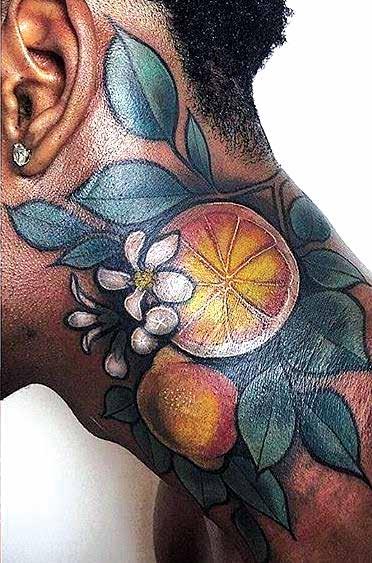
exactly the way I want it to,” I replied.
“Oh. Well, OK, if that’s what you want, but no one here really does that kind of work,” he said me and proceeded to give me the number of another artist.
I left the shop and took a seat on the bench directly in front of their window. I looked at their Black Lives Matter sign and laughed at how my life matters to them but not my business.
On the car ride home, I explained my
experience to Jeza, who was just as appalled as I had been. She immediately messaged the artist she consulted with to cancel her appointment and inform her of why she would not be supporting their business.
The artist apologized profusely, explaining that the man at the front desk is the owner’s husband and temporarily filling that position while they interview candidates. She even offered to do the tattoo I would like for free.
Tattoos have developed over thousands of years, at times culturally significant and at others a social taboo. While today they are socially accepted, something else has arisen: racism, colorism, and discrimination.
Although this was a nice gesture, further investigation into the matter revealed not only an enormous lack of POC clients for this artist but for the shop in general.
I refused the offer, convinced of two possible outcomes. While it is likely my tattoo could have come out perfectly, it is also highly probable that the artist’s lack of experience on deeper skin tones would result in a subpar job that would then be blamed on my skin instead of the artist’s ability.
The discrimination I experienced is more common than not and has even been expressed openly on television. In 2015 the news site Splinter covered a 2012 episode of a tattoo competition called Ink Masters. Artists on this show avoided tattooing darker skin, considering it to be a “difficult” canvas. One contestant on the second season even said, “I don’t want the dark canvases. They take away half your skill set. My stuff is dark and creepy, and I do not want to go that dark on dark skin. This is not the canvas for me.”
I find it mind-boggling that an artist can complete their apprenticeship without having worked on darker skin tones. Artists who do their apprenticeship in a primarily white studio that does not tattoo darker skin–toned clients will simply never gain that experience.
But how can someone call themselves a “master tattoo artist” if there are canvases outside of their skill set and ability? Being able to tattoo Black skin needs to be something that every tattoo artist is required to learn, because it is possible.
If a canvas can take away half of your skill set, then chances are you are only half as skilled as you think.

Photo courtesy of Miryam Lumpini Instagram
Op-Ed
Search for the Soul of Seattle: Staring at the Space Needle
by A.V. Eichenbaum SGN Associate Editor
It’s humid. The sky overhead looms like the cement ceiling in a cheap apodment. The smell of damp roses and human waste hangs heavy in the air, and the sound of traffic is so jarring that my chest tightens. This is my walk down Mercer Street in late spring.
A block from the Seattle Opera, there’s a small tent city. No one ever talks about the tent cities.
I almost get hit by a car crossing the street. The driver hadn’t noticed the red light.
While I’m sitting in front of the Seattle Opera, a middle-aged man in a turtleneck gives me an unwelcome look. He stands there awkwardly until I leave, taking my notebook with me.
As I reach Seattle Center, I have an anxiety attack.
An anxiety attack, unlike in the movies, doesn’t always involve hyperventilating or wild gesticulation. For me, it’s usually very quiet. Everything gets very focused — tunnel vision — and it feels like someone is trying to press through my sternum with their fingers. My only goal becomes finding a place in the nearly empty park to sit.
Generally, I’ve got ways to prevent this in public, such as objects in my pockets, like a coin or worry stone, to keep me anchored. In lieu of that, I can usually find some fountain or water feature to sit by until the feeling subsides and I feel the strength to walk home.
The water is shut off at the Seattle Center, though, and my pockets are empty, save for a pen and a gum wrapper. The heavy clouds
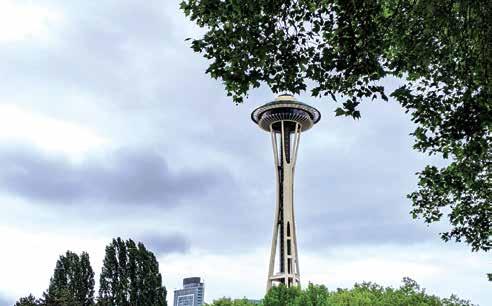
above make the scene feel even more claustrophobic. I start to sweat. I find a quiet bench somewhere and sit, staring at the Space Needle, eternally grateful there are no crowds.
Does the constant din of the city affect your sleep? The building next to mine has an industrial floodlight motion activated — and despite my best efforts, I can’t seem to block out the bright white flashes that surprise me and whatever guest I have at 2 a.m.
I’ve never slept well, anyway, but it seems to be getting worse. Strange dreams of an endless, changing labyrinth with the sound of forklifts and cranes distant in the background. In the middle of this maze is an obelisk.
Hence the state of my anxiety, sitting there, looking at Seattle’s most recognizable attraction. My mother, a tourist and
Cait’s self-hate
by Lindsey Anderson SGN Contributing Writer
Caitlyn Jenner, the Transgender conservative activist nobody asked for, is stirring up more controversy this month as she continues down the campaign trail.
First, some background: Jenner announced in April that she is running for the position of California governor, challenging the current incumbent, Democrat Gavin Newsom, who is the subject of a recall campaign. If Jenner wins the election, she would become the first Transgender governor of California and the second in the United States, following in the footsteps of Christine Hallquist, who won in 2018 in Vermont with 40% of the vote.
However, Jenner’s history-making campaign has been quite unpopular with many in the California Trans community.
One of the most basic problems with Jenner’s campaign is the party with which she has chosen to align herself. Before her transition, Jenner was an active and adamant Republican; after transitioning in 2015, she remained loyal to the party, even going so far as to endorse Donald Trump in 2016 (although she later revoked her support).
It is no secret the Republican Party is fundamentally transphobic. In the last five years it has backed legislation to prevent Trans people from using the bathrooms of their choice, allow private businesses to refuse them service, and passed a federal ban excluding Trans members of the military from serving.
More recently, it has focused on Trans athletes. Since 2019, Fox News has run 126 segments slamming Transgender athletes. In a segment of Tucker Carlson Tonight
traveler, was disappointed to learn that the Space Needle’s main purpose was not, in fact, astronomical exploration.
“What do you mean they don’t do science there!?” were her exact words.
“No,” explained my aunt, “they just have a restaurant and an observation deck at the top.”
“You’d expect some sort of lab or something,” she grumbled on her way to “the original Starbucks.”
This happened years ago, but I can’t help but think of it every time I see that weird white spire. These are the things a mind does when trying to ground itself. Aside from general exhaustion, I’m not even sure what set me off. Traffic? That seems ridiculous. Almost as ridiculous as the Space Needle not doing science. Maybe it’s just
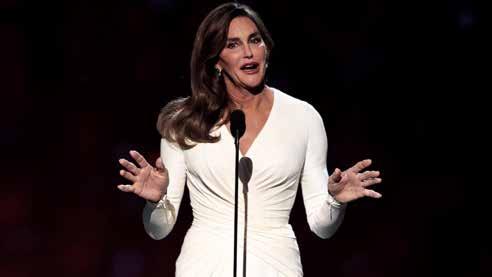
on March 22, the conservative host opened with hateful and transphobic statements, saying, “There’s been a big push, nationally — the administration squarely behind it — to allow biological males to compete in girls’ sports.” Carlson went on to slam young Transgender athletes competing in school-level sports programs for daring to pursue their passion as the gender with which they identify.
For most members of the LGBTQ community, Carlson’s words register as bigotry and hate. For Jenner, however, Carlson has become a prophet.
On May 1, Jenner echoed Carlson nearly verbatim while talking with a TMZ reporter. When stopped for an interview in a Malibu parking lot, Jenner commented, “That’s why I oppose biological boys who are trans competing in girls’ sports in school. It just isn’t fair. And we have to pro-
tect girls’ sports in our schools.”
In a response, Kai Shappley, a ten-yearold Trans girl, tweeted, “If you don’t want to help trans kids, at least stop hurting us!!! Not all trans people are rich, white, and live in California.”
Jenner’s hate towards her own community seems to be a rather new belief. Back in 2015, she voiced public support of Trans athletes competing in school sports when receiving the Arthur Ashe Courage Award. Even as recently as April 2020, Jenner was recorded voicing support for Trans athletes when interviewed on the Outsports podcast.
Jenner’s hate for the Trans community doesn’t stop with her sudden change in heart toward school-aged Trans athletes. She has also recently gotten in hot water due to her social media presence. Just this last week, Donald Trump Jr. posted a meme to his Instagram account comparing Jen-
readjusting to being out and about more post-quarantine.
Seattle Center is quiet enough that you can hear birdsong clearly. Everything slows down. A quick look around finds only one or two people sitting there, exactly like me, breathing deeply and watching the elevators on the Needle go up and down, over and over again.
The man to my left adjusts his tie and blots some sweat from his forehead, clearly undergoing his own stress. He sees me, with my pale face and the dark circles under my eyes, and he smiles. A real, genuine smile of recognition. I smile back uncertainly and we return to staring at the Space Needle for a while.
Unclenching my jaw, I finally find the wherewithal to call an old friend to join me, maybe drive me home. They offer to come get me, which is really beyond kind.
In their car, I wonder aloud if the entirety of Seattle is in a constant state of low-level anxiety. It would explain why everyone around here is always in a rush, lips pursed, eyes locked on their goal. How many people around me are having their own quiet, largely unnoticed panic attacks before moving on with their day?
My day doesn’t end there, certainly. I have a late lunch and work at my desk to get back to once I’m home. While it takes me a few hours to shake off that gray-sky feeling, eventually it lifts.
The next day, like any self-respecting member of the Queer community, I buy a plant to make myself feel better. Creeping rosemary. It works.
And the world keeps spinning.
And the elevators on the Space Needle keep going up and down.
ner to Assistant Secretary for Health Dr. Rachel Levine in the Department of Health and Human Services. The meme, which labeled Jenner under “conservative girls” and Levine under “liberal girls,” was captioned by Trump: “It seems to hold true no matter what!!! Conservative girls are just better looking…” Jenner reposted Trump’s meme to her Instagram story with three laughing emojis.
Jenner received backlash from prominent Trans actress and star of Transparent Alexandra Billings, who slammed her for being insensitive. Billings wrote in a statement on Instagram, “It isn’t your transness people are bothered by; it’s your behavior as a human, Caitlyn.”
Jenner’s insensitive, transphobic, and antifeminist posts online, as well as her sudden flip-flop on important Trans rights issues, seem to reflect a lack of authenticity on the part of the former Keeping Up with the Kardashians star. When celebrities use their platforms to lift up the voices of the marginalized, and advocate for the underrepresented communities they are a part of, they can be a real force for change. Jenner, however, has been using her fame and fortune, as well as her position as a member of an oppressed community, to take power and rights away from others you’d think she might have some empathy for.
Perhaps the empathy was drained out of Jenner during her years as a Kardashian, or perhaps it came more recently as she grew chummier with the Trump family. Whatever the reason, Jenner seems to have found her place, where her lack of empathy will not only be shared but may even become an asset: in the cold heart of the Republican Party.
Caitlyn Jenner – Photo by Chris Pizzello / Invision / AP
Photo by A.V. Eichenbaum
Excluding blue from the rainbow: Will Seattle Pride ban cops?
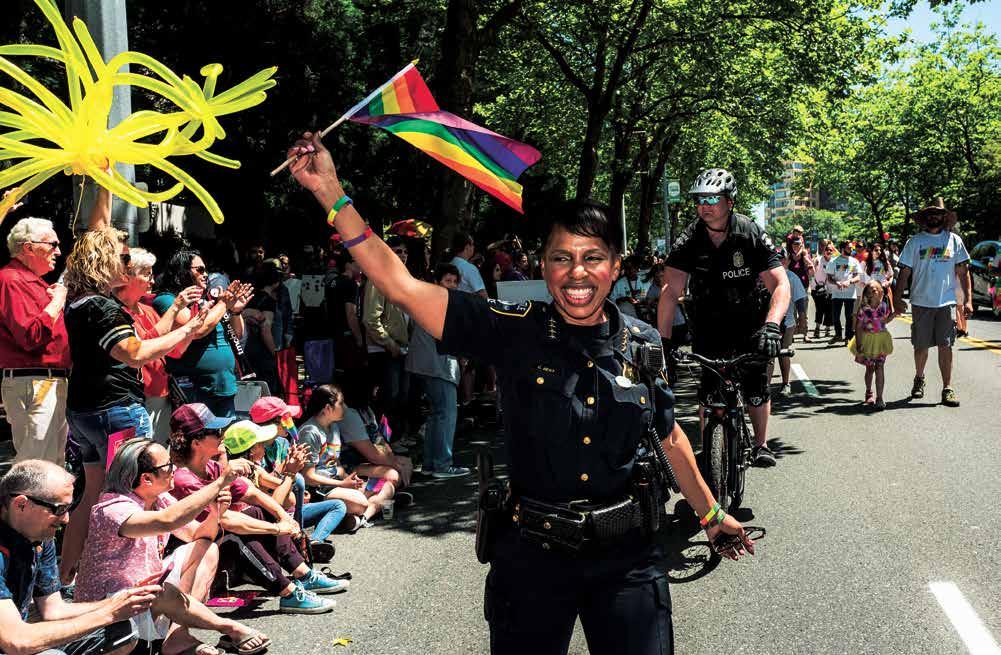
by Lindsey Anderson SGN Staff Writer
One year ago this week, George Floyd was murdered by Officer Derick Chauvin as Minneapolis police officers looked on, passively. Floyd’s death sparked outrage throughout the nation, and in the following weeks, Black and Indigenous people and people of color (BIPOC) and allies alike took to the streets to march and demand justice for all unarmed Black people murdered at the hands of police. The activism culminated in a battle cry to “defund the police,” sparking debate and backlash across a nation divided on what exactly this means or might look like.
In the months thereafter, calls to defund the police picked up around the country; however, few jurisdictions took it upon themselves to do this, and the movement began to stall. That is, until the LGBTQ+ community in New York made an astonishing announcement on May 15.
NYC Pride and law enforcement
As New York City prepares for this year’s Pride celebration, special attention is being paid to some of the community’s most vulnerable groups. Heritage of Pride, the march’s organizers, released a statement saying, “NYC Pride seeks to create safer spaces for the LGBTQIA+ and BIPOC communities at a time when violence against marginalized groups, specifically BIPOC and trans communities, has continued to escalate. The sense of safety that law enforcement is meant to provide can instead be threatening…to those... most
often targeted with excessive force and/or without reason.” The organizers therefore announced that they will ban corrections and law enforcement exhibitors at NYC Pride until 2025.
In hearing the cries to defund the police, NYC Pride is doing what local governments across the country have been unable to: they are reallocating funds away from police forces with a history of violence, and back into the communities they are a part of. NYC Pride is looking to fill the roles usually occupied by the New York Police Department with trained volunteers, community leaders, and private security.
Not only is NYC Pride eliminating NYPD’s involvement in the parade and related events but it is also elevating the voices of BIPOC queer activists. The statement released by NYC Pride continues: “The dedicated QPOC [Queer People of Color] contingent of the NYC Pride March will be prominently featured this year and in future years thereafter. NYC Pride will also commit to increasing Black-led, Blackcentered partnerships and establishing long-term vendor relationships with minority-owned businesses in an effort to uplift queer and BIPOC-centered organizations.”
Capitol Hill Pride and the police
On May 21, Capitol Hill Pride announced that it would follow suit, saying in a press release statement that “Capitol Hill Pride agrees with and applauds New York Pride’s ban of police presence until 2025 and stands with other social justice organizations to ban a police presence and advocate [for] police reform.”
Capitol Hill Pride went on to condemn the Seattle Police Department for continuing to employ six officers who attended the January 6th insurrection in Washington DC, and called for the department to fire them.
The organization also issued a statement regarding past controversies with the SPD, writing, “Capitol Hill Pride was offended in 2015 that three officers did not escort a disruptive group out of the festival but instead posed with an open-carry group and filed an OPA [sic]. Capitol Hill Pride is still requesting the identities of the three officers.”
Groups that are not fully willing to support and protect all members of the LGBTQ community, it seems, will not be welcome at Pride anytime soon.
CHOP and the police
It may not come as much of a shock that Capitol Hill Pride followed NYC Pride’s decision to ban police. Seattle, after all, has been known for its anti-establishment energy. It was one of the first cities to implement a practice of anti-police community engagement when on June 8, 2020, the Capitol Hill Autonomous Zone (CHAZ, aka CHOP) was born.
Lasting nearly one month, the zone included six city blocks and Cal Anderson Park, appearing in response to claims that the Seattle Police Department was exercising blatant hypocrisy by using excessive violence and force with Black Lives Matter protesters but allowing counter-protesters to go so far as to drive a car into the crowds of people and fire shots, one of which hit a protester near 11th Avenue and Pine Street.
Following the style of successful modern movements, CHOP was leaderless. Run by the people, it advocated for three main changes: the reduction of Seattle’s police department budget, from a whopping $409 million to $200 million; a reallocation of the remaining $209 million to community programs, particularly ones that serve historically Black communities; and impunity for all protesters involved in CHOP.
In the end, the demands made by CHOP protesters were not met, and the zone was ultimately taken back by police within a month. The impact of Seattle’s activists, however, did continue to live on in the Pacific Northwest, inspiring many in Portland to continue calling police out for blatant hypocrisy, and making similar demands to cut budgets and reallocate funds to community programs.
Excluding police from Pride for the next four years is a bold statement, one reminiscent of the actions taken by Seattle CHOP activists. While NYC Pride is now facing backlash from supporters of the police, as well as Queer officers, waves of encouragement are also being heard across the country, and Seattle’s support is a sign of that. Many QPOC activists are calling on their own communities to follow along with Seattle and New York. One can be hopeful that a community as bold as Seattle, and as committed to social justice, can take the steps to provide a safer Pride experience for Trans and BIPOC members of the LGBTQ+ community, and excluding the SPD is a great first step.
Photo by Nate Gowdy
National News
National news highlights
by Daniel Lindsley SGN Contributing Writer
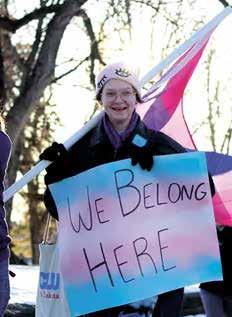
Philadelphia Gay News laid out a PBS NewsHour/NPR/Marist poll which found, despite of the wave of anti-trans legislation in states across the country, that two thirds of Americans are against laws that limit transgender rights. The poll goes into detail about trans issues across different age groups and political parties, including views on genderaffirming care for minors, trans athletes in sports, and the Equality Act. Overall, the numbers show that those who support anti-trans legislation are in the minority, but PGN emphasized that the Republican-majority Supreme Court, among other elements of the political landscape, will make preventing such legislation difficult at a state level.
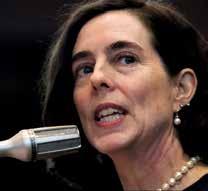
LGBTQ Nation reported on May 26 that Governor Kate Brown has signed a bill banning the “LGBTQ panic” murder defense. Before the signing, a defendant could claim they murdered someone in a “panic” about their own heterosexuality, after finding out the victim was gay or trans. The defense was usually used when the perpetrator had previously had sex with the victim, and it has managed to downgrade at least one murder charge from first-degree to second-degree in the past. This makes Oregon the 14th state to ratify such a bill.
LGBTQ people
more likely to be targeted by police, new study says Also less likely to be satisfied with police conduct
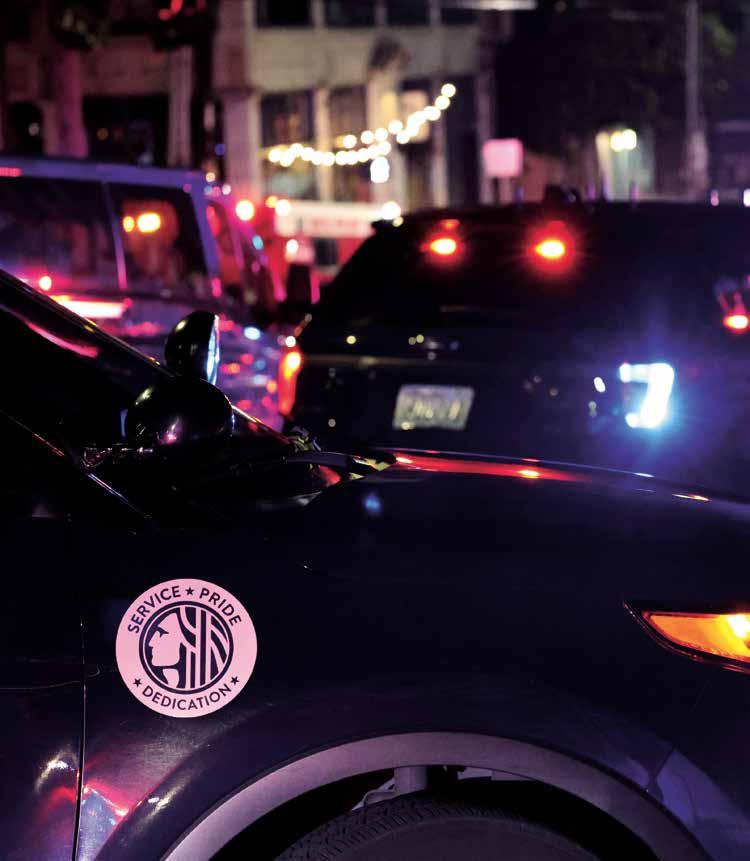
by Mike Andrew SGN Staff Writer
LGBTQ people are more likely to be stopped by police than the general population, according to a new study released by the Williams Institute. LGBQ people are also more likely to contact police for help, the study says.
In those contacts with police, LGBQ people tend to be less satisfied with police performance than straight people.
The findings hold across racial and gender demographics, with white and non-white LGBQ people reporting about the same rates of contact with police and about the same dissatisfaction with police conduct — both higher than for straight people.
The survey compared responses for a national sample of LGBQ people with the 2015 Bureau of Justice Statistics Police-Public Contact Survey (PPCS) for the general adult population.
“Reviews of LGBQ people’s experiences with police indicate a history of targeted sur-
veillance — much of this documented in public spaces, like parks and sex work domains,” the study concludes.
Compared with the general population, almost six times as many LGBQ people were stopped by the police in a public space (6% vs. 1%), and nearly seven times as many LGBQ people were stopped by the police for reasons other than involving a vehicle (driving or being a passenger).
Additionally, twice as many LGBQ people approached or sought help from the police (22% vs. 11%) as compared to those in the general population.
Other findings include more common experiences of police stops while driving among LGBQ (19%) than non-LGBQ (8%) people, being a passenger (12% vs. 2%), or being involved in an accident to which the police were called (6% vs. 3%).
Thirteen percent of LGBQ people said they did not call the police even when they needed help. There were some statistically significant differences between Black and white respondents in the PPCS — with
Black respondents being more reluctant to call police — but there were no statistically significant differences between Black and white respondents in the LGBQ population.
As a result of their experiences with the police, more LGBQ people said they were unlikely to contact the police again (22%) as compared with the general population (6%).
Fewer female LGBQ adults report satisfaction with the police (69%) compared to females in the general population (85%).
Fewer female and white LGBQ people reported agreement that the police behaved properly (73% and 80%, respectively) compared to their peers in the general population (91% and 91%, respectively).
The LGBQ survey did not include Trans people because the PPCS reports the gender of individuals based on the gender stated on their ID documents — often the gender assigned to them at birth.
The Williams Institute, attached to UCLA Law School, studies public policy as it related to the LGBTQ community.
Photo by Renee Raketty
Gov. Kate Brown –
Photo by Michael Lloyd / AP
Photo by Stephen Groves / AP
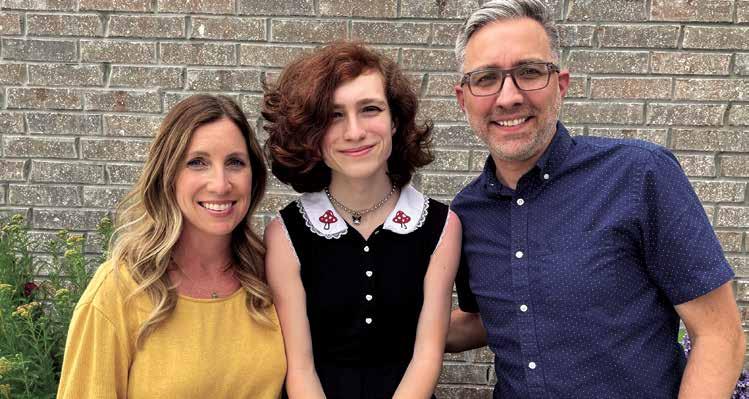
ARKANSAS
The plaintiffs charge that the law violates the US Constitution.
The ACLU said Arkansas lawsuit is the first of many legal challenges in response to a record-setting year of legislative attacks on Transgender people, particularly Transgender youth, across the country.
“This law would be devastating to trans youth and their families, forcing many to uproot their lives and leave the state to access the gender-affirming care they need,” said Holly Dickson, the executive director or the ACLU of Arkansas.
“Gender-affirming care is life-saving care for our clients, and they’re terrified of what will happen if this law is allowed to take effect. No child should be cut off from the medical care they need or denied their fundamental right to be themselves — but this law would do both. We’re suing to stop this cruel and unconstitutional law from taking effect and inflicting further harm on these children and their families.”
“Our child has known exactly who she is since she was two years old,” said Amanda Dennis, the mother of one of the plaintiffs.
“She was a happy child and felt comfortable expressing herself, but when she began to feel pressure at school to pretend she is a boy, she began to really struggle. It was painful to watch our child in distress. Last year, when she told us she is a girl and would like to be called ‘Brooke’ and referred to using ‘she’ and ‘her’ pronouns, we supported her immediately, and the cloud of sadness lifted and her smile came back.”
She added, “We have told all of our children that we will always protect them, but this law stands in the way of our child getting the medical care she will desperately need.”
“This is who I am, and it’s frustrating to know that a place I’ve lived all my life is treating me like they don’t want me here,” said Dylan Brandt, a 15-year-old plaintiff who lives with his mother, Joanna Brandt.
“Having access to care means I’m able to be myself and be healthier and more confident, physically and mentally. The thought of having that wrenched away and going back to how I was before is devastating.”
Thirty-five states have considered antiTrans legislation in 2021. Arkansas is the only state to pass legislation banning health care for Trans youth, though several other bills were introduced.
“These attacks against trans youth in Arkansas and in states around the country will not go unchallenged — not while they are debated in legislatures, not after they pass, not when they are discussed in public conversation,” said Chase Strangio, deputy director for Transgender justice with the ACLU’s LGBTQ & HIV Project.
“The ACLU and our partners will be filing several lawsuits over the course of the
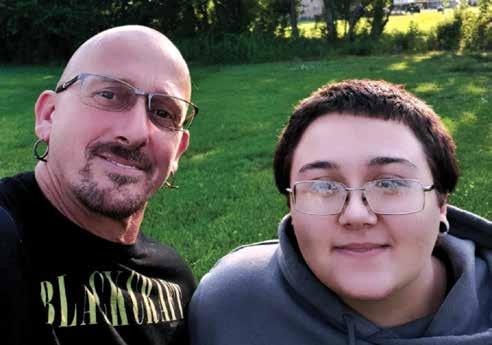
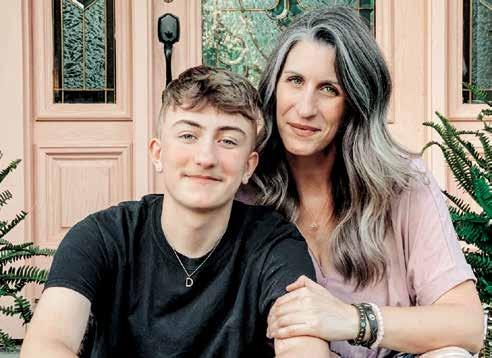
Trans young people should not have to fight so hard to live. Even with supportive families, these bills have devastating consequences. Our work will not be done until every law that targets transgender people is struck down as unconstitutional and all transgender people are able to live without fearing discrimination and violence because of who we are.
International news highlights
Reuters reported on May 19 that Singapore warned the U.S. “not to interfere in [their] domestic social and political matters” after the U.S. embassy in the country co-hosted a webinar with a local LGBTQ support group. The webinar occurred on the International Day Against Homophobia, Transphobia, and Biphobia, and focused on the benefits of LGBTQI+ equality. Reuters noted that sex between men is illegal in Singapore, with a sentence of up to two years in jail, although this is rarely enforced.
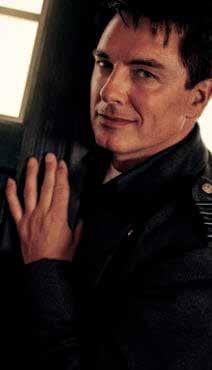
next few months to make it clear that there is a robust movement of trans people and allies fighting for trans justice. Trans young people should not have to fight so hard to live. Even with supportive families, these bills have devastating consequences. Our work will not be done until every law that targets transgender people is struck down as unconstitutional and all transgender people are able to live without fearing discrimination and violence because of who we are. To all the transgender people who are fighting each day, please know that you are not alone and that we will continue to build movements for justice that center your needs, your experiences, and your beauty.”
Adam Bloodworth’s MSN piece, posted May 21, brings up the issue of a “double standard around gay men and sexual harassment,” with the added context of Doctor Who star John Barrowman’s apology in the wake of sexual harassment allegations. Bloodworth believes Barrowman’s description of his acts (“tomfoolery”) is genuine, but also asserts that his own experience with the actor has been dicey, and that whatever Barrowman may have intended, he should be aware of the trauma his actions might have caused. Bloodworth cited a survey by the Gay Men’s Health Project, which found that 62 percent of gay men have been touched inappropriately in a bar without their consent.
Donnie and Parker Saxton
Dylan and Joanna Brandt
The Jennen Family – Photo courtesy of ACLU Arkansas
Photo courtesy of Reuters
John Barrowman
– Photo by James Pardon / BBCA
by Daniel Lindsley SGN Contributing Writer



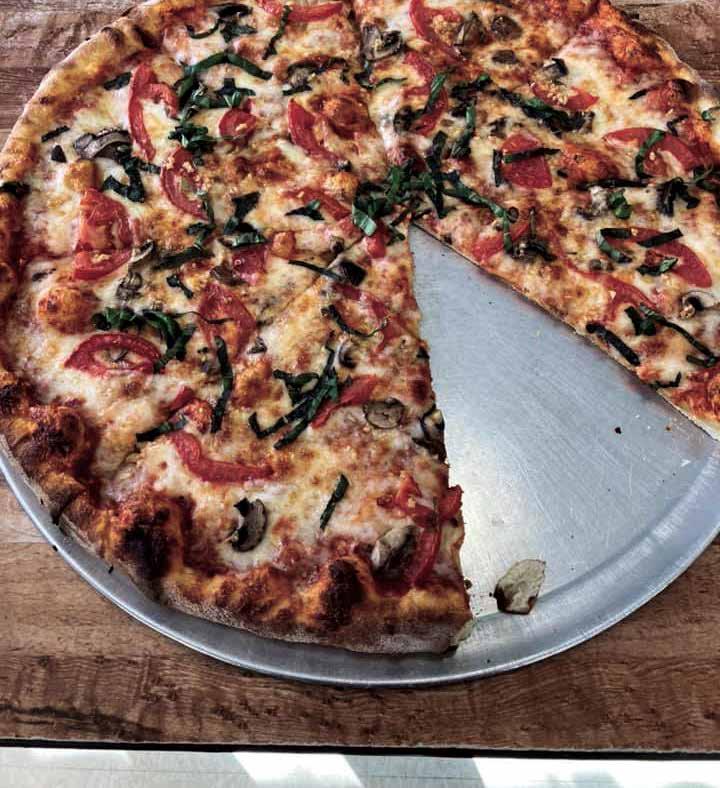


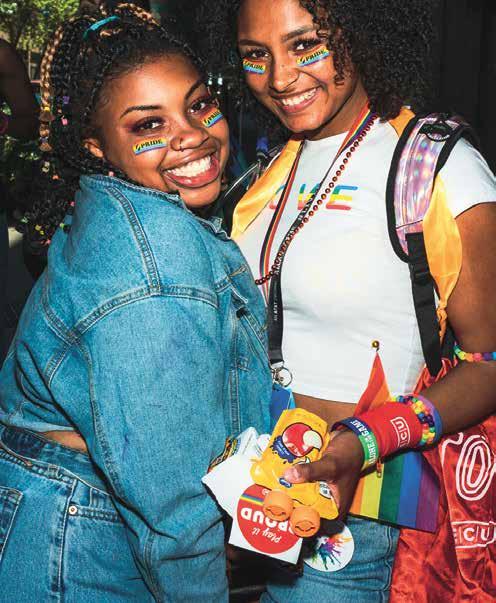


Rea Carey exclusive: Then- SGN Associate Editor Shaun Knittel reported, “[NGTLTF Executive Director] Carey believes we are living in exciting times. ‘I’ve been working in the LGBT movement since the late 1980s, and I’ve never seen so much in play. This is a wonderful time for the advancement of civil and human rights in this country. We can start to see the other side of the fence. We need to stick with it because we are not done yet. We have a lot of work ahead of us but we will continue to make progress.’”
Update: Carey recently left her position as executive director of the Task Force after 13 years.
2012 GSBA scholars: SGN Staff Writer James Whitey reported, “This year, the GSBA awarded $182,000 to 43 students. The Pride Foundation, which covers four other Northwestern states in addition to Washington, awarded a record $400,000 to their 94 scholars.
“The GSBA held its annual awards banquet on May 18 at Seattle’s Waterfront Marriott Hotel. Keynote speaker Gautam Raghavan spoke at the event. Raghavan is an associate director in the White House Office of Public Engagement and serves as the Obama administration’s liaison to the LGBT community.
“‘Gautam was charming, warm, delightful, and inspiring,’ [GSBA President and CEO Louise] Chernin told the SGN. ‘Speaking of charming, our witty MC, JJ McKay, kept up just the right amount of delightful banter and used great skill in hosting this complicated event.’”
USNS Harvey Milk: The SGN’s associate editor reported, “California Gov. Jerry Brown issued a proclamation in the honor of Milk’s birthday. ‘His courage in facing a hostile public and his insistence on being treated the same as anyone else contributed greatly to the advancement of this cause,’ Brown said. “In addition to having a street named after him, the San Francisco Board of Supervisors on Tuesday voted 9-2 in favor of a resolution putting the City on record supporting the christening of a US Navy ship as the USNS Harvey Milk. There was, however, division among supervisors over whether it was a fitting honor. Milk was an outspoken critic of the Vietnam War.
Supervisor Scott Wiener, who introduced the resolution, called it a ‘great honor’ and said Milk was proud of his military service.”
Update: The USNS Harvey Milk started construction in September 2019 and as of May 2021 is more than halfway finished.
Rutgers bully: Over 18 months since the suicide of Rutgers student Tyler Clementi, his then-roommate, Dharun Ravi, was convicted of the cyberbullying that led to Clementi’s death, as reported by then-SGN Associate Editor Shaun Knittel: “Ravi received a big break Monday when the judge sentenced him to just 30 days behind bars. He could have received as much as 10 years. In addition to the jail term, Ravi was sentenced to three years’ probation, 300 hours of community service, and court costs. He also was ordered to contribute $10,000 to a community organization assisting bias crime victims.”
Update: Ravi completed his three years of probation in 2015. In October 2016, he pleaded guilty to invading the privacy of Tyler Clementi. The judge rendered the sentence as time served.
Miss Congeniality: SGN Staff Writer Mike Andrew reported, “Jenna Talackova, the Transgender Canadian woman who hoped to represent her country in the Miss Universe pageant, placed in the top 12 in the contest for Miss Universe Canada, but fell short of the crown. According to Trump spokesperson Michael Cohen, the Miss Universe organization decided that as long as Talackova is a woman under Canadian law, she is a woman for the purposes of the pageant.”
Update: Talackova filmed Brave New Girls, a Canadian reality show, in 2014. Michael Cohen was sent to prison but is currently serving his sentence at home, while Donald Trump served four years as president and is still at large.
Pro-Gay shirt: SGN Staff Writer Mike Andrew reported, “A court in Waynesville, Ohio, has ruled that high school student Maverick Couch may wear his ‘Jesus is not a homophobe’
2012 This Week in SGN History
Compiled by MK Scott SGN Contributing Writer This week in SGN history: 9 years ago
Over 47 years, the Seattle Gay News has covered thousands of stories that still resonate today. This week we look back at Vol. 40, Issue 21, published on May 25, 2012.
T-shirt whenever he likes. The Waynesville school district was also ordered to pay Couch $20,000 in legal fees.
“Couch first wore the shirt to school for GLSEN’s National Day of Silence last year. At that time, principal Randy Gebhardt ordered him to turn it inside out, and Couch complied. The next day, he wore the shirt again. This time, Couch and his mother were summoned to the principal’s office, where Gebhardt ordered him to remove the shirt. Couch again complied.
“After spending the summer researching his First Amendment rights, Couch asked Gebhardt for permission to wear the shirt again. The principal refused, telling Couch he would be suspended if he did.”
In other news...
Colin Powell supports marriage equality
DOJ agrees that Title VII protects Trans people
Dow Constantine has an $11,300 surprise for the Approve Ref. 74 campaign
Jim Parsons comes out
Seattle’s 4th annual Red Dress Party nets $16K to fund local HIV/AIDS organizations
La Femme Magnifique winners crowned at Neighbours: Diamond St. James Black and Beyonce Blaque were crowned as La Femme Magnifique Washington 2012 and La Femme Magnifique Washington Plus 2012, respectively.
In A&E news:
Glambert: Adam Lambert released his second album, Trespassing, and SGN A&E Writer Chris Azzopardi interviewed the glam rocker, who said, “Being who I am in this music environment is trespassing, and that’s why Pharrell [Williams] and I wrote about that. We had a big conversation about the music industry and the business and being an artist, and then on top of it, being somebody who’s different, being a Gay man, and being in an industry where it’s not very common, not very present. Kind of feeling like I’m gonna own this, march forward, and ignore any kind of sign or person telling me no. I’m gonna do what I wanna do and not feel sorry for myself.”
as
reported by SGN A&E Writer Albert Rodriguez: “[After] suffering many years from gender dysphoria, a disorder in which a person is unhappy with their biological sex and desires to be the opposite sex, the decision was made to go public. Gabel, who will soon transition to Laura Jane Grace, broke the news to Against Me! followers on May 8, though she had already shared the information with Rolling Stone magazine about a month before. At that time, only a tight circle of family and friends knew about it.
“As reported by Rolling Stone contributing editor Josh Eells, not even the band’s drummer was aware of Gabel’s circumstances until late March. Following the announcement, support from GLAAD and fellow artists soon began streaming in. Mike Shinoda of Linkin Park, who outspokenly voiced his opposition to Proposition 8 several years ago, tweeted, ‘I don’t think I’ve ever done anything that demonstrated the bravery of Tom Gabel.’ New Jersey-based punk act The Gaslight Anthem wrote an entire page of support for Tom on Tumblr, basically telling unsettled fans to just deal with it. The note ended with, ‘So go live, Tom.’ And it wasn’t long before some of Against Me!’s faithful started posting words of encouragement on random Internet sites.”
Update: Gabel soon changed her name to Laura Jane Grace. In 2016, her memoir, Tranny: Confessions Of Punk Rock’s Most Infamous Anarchist Sellout, was released. She now fronts a new band called Laura Jane Grace and the Devouring Mothers.
2012 film preview: SGN Film Critic Sara Michelle Fetters previewed the 2012 summer film season which saw the release of some modern classics, like Magic Mike, Pixar’s Brave, Wes Anderson’s Moonrise Kingdom, Lynn Shelton’s Your Sister’s Sister, and the final installment of The Dark Knight But there were some real flops, like Men in Black 3, the second Spiderman in the form of Andrew Garfield, Battleship, and Rock of Ages
Trans rocker: Tom Gabel, lead singer of the hard rock music group Against Me!, came out
M2F Transgender, as