THIS AD SPACE HAS BEEN GENEROUSLY DONATED BY KRISTIN COSTELLO IN MEMORY OF SGN PUBLISHER GEORGE BAKAN
Local News
Finding Pride in LGBTQ small businesses
by Lindsey Anderson SGN Contributing Writer
It’s that time of year again! The lilacs are blooming, the jorts are coming out of the closet, and so are all of America’s biggest corporations!
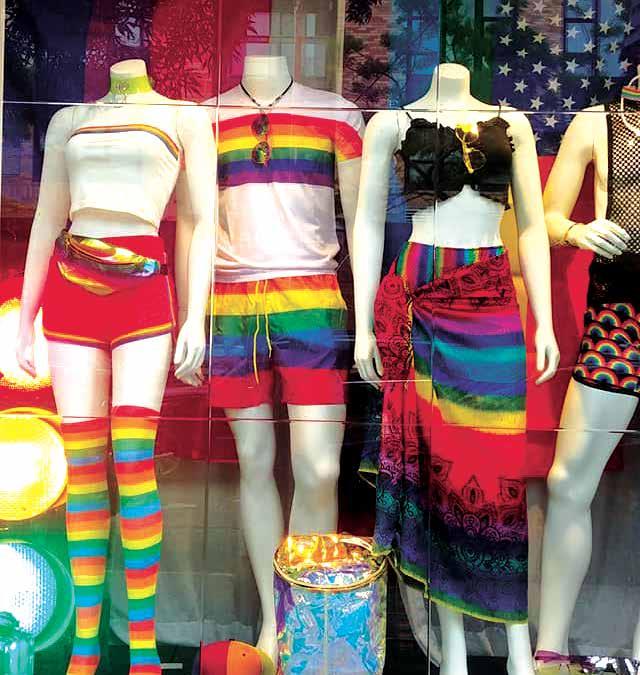
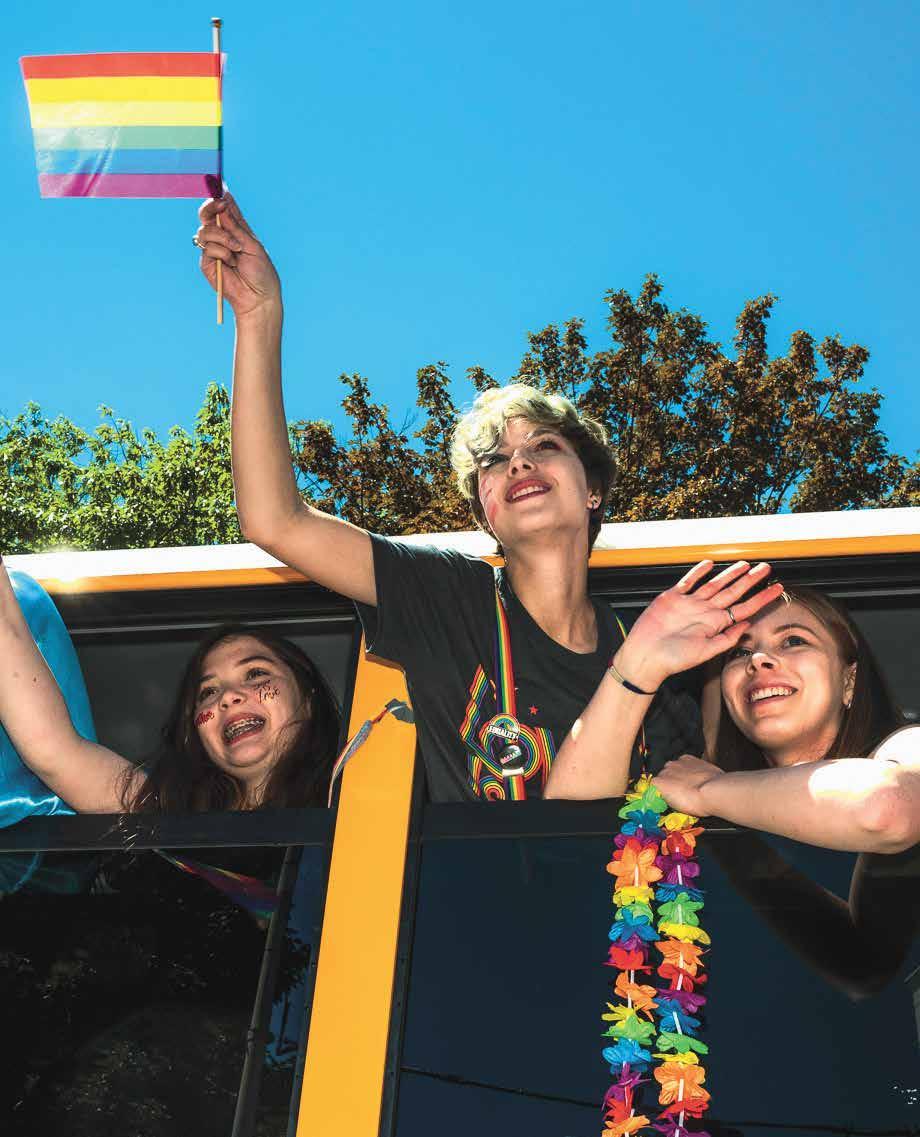
That’s right, we’re just weeks away from Pride month, and all of a sudden, every Hot Topic, Target, and even Walmart is putting out its Pride wear!
It’s a drastic flip for many corporations, such as Walmart, which has had close ties to the American Family Association, a large anti-Gay group; and Target, which donated up to $150,000 to a political action group known as Minnesota Forward, which supported several homophobic politicians in the Midwest.
So how do you symbolically support Pride with a festive T-shirt or shoes without financially backing massive homophobes? The answer: shop small! There are many amazing small businesses to choose from when deciding where to spend your life savings on fantastic Pride apparel.
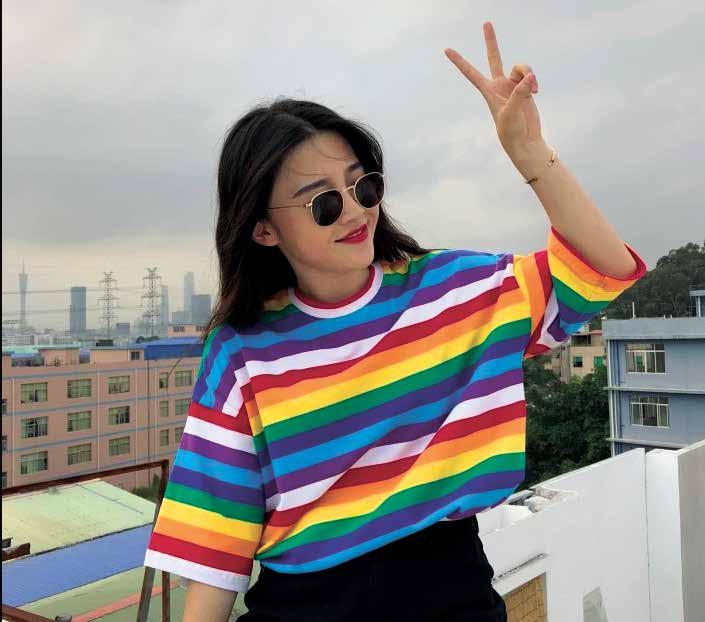
If you’re thinking of making a day out of shopping, start with Panache, an LGBTQfriendly store on Broadway run by members of the community. Customers have boasted about the great deals and amazing quality of the items they’ve discovered at the boutique, and the friendly staff are willing to offer plenty of hands-on help and style advice. If your wardrobe is aching for some fresh summer vibes, look no further.
If the pandemic still has you apprehensive about in-person shopping, though, don’t worry! There are plenty of small businesses online that contribute to the LGBTQ community.
Looking for clever T-shirts or dope shoes? Rose Gold Co. [www.rosegoldco.shop] has it all. It is also a Lesbian- and Black-owned business that “strive[s] to represent those who are often overlooked in the community. Gender Queer, Pansexuals, Transgender Men and Women, Ace, Bisexuals, Lesbians, Gays, Queers, Non-Binary, Intersex, etc....” The site offers a wide variety of apparel at affordable prices, with T-shirts starting at just $12 and sweatshirts at $24. It also offers an adorable selection of jewelry, all at under $10.
Not only does Rose Gold Co. have affordable and adorable apparel, but as of
this week, it has donated over $10,000 to programs that support the LGBTQ community.
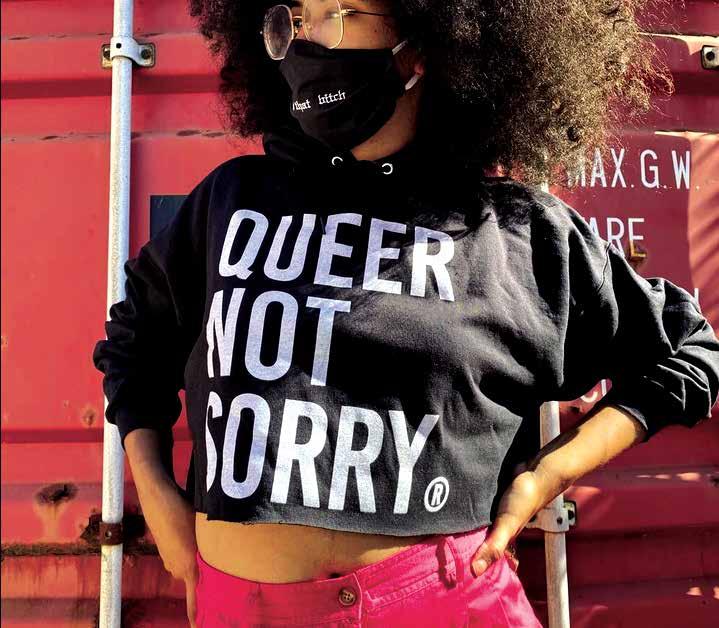
If trendy Pride wear is what you’re looking for but you’re also environmentally conscious, then check out Not Sorry Goods [notsorrygoods.com]. Based in Detroit, this is a Black- and Latinx-owned business with a focus on sustainability. It offers a variety of Pride flags made out of recycled materials, a cute black denim jacket with rainbow cursive writing on the back advocating for recycling, and perhaps best of all, a long-sleeved black crop top with the words “Queer Not Sorry” embrodered above the heart. The items at Not Sorry Goods are a bit more spendy than those at other online and local stores, but they’re worth it for the good quality and recycled materials.
So how do you symbolically support Pride with a festive T-shirt or shoes without financially backing massive homophobes? The answer: shop small!
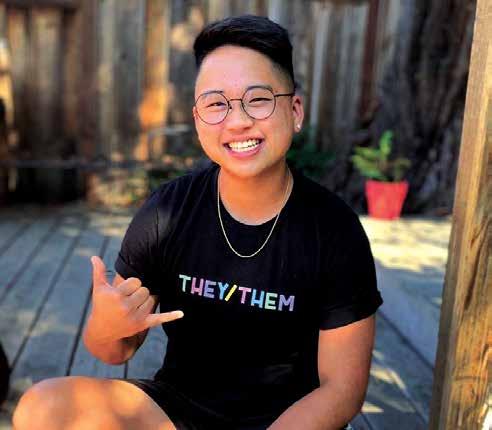
If Etsy is more your taste, take a moment to check out designer Meg Emiko [www. etsy.com/shop/megemiko]. Emiko is a nonbinary teen who created their own line of super trendy shirts, crewnecks, and stickers. Not only does Emiko have some beautiful designs, including a shirt with the Trans flag that says “protect trans kids,” they also have a wonderful selection of swag for Asian American and Pacific Islander Heritage Month. Other popular styles on Emiko’s page include pronoun shirts, to reduce the chances of awkward mixups while looking cool and feeling comfortable.
As we prepare for Pride month, it is important to be conscious of where our money goes. Large corporations are quick to capitalize on rainbow colors and cheesy slogans, but small businesses, especially BIPOC-run ones, use your money to make a difference for their own communities, and the greater LGBTQ community. Also, their clothes are just really cool.
Photo courtesy of Panache
Photo courtesy of Not Sorry Goods
Photo courtesy of Meg Emiko
Photo courtesy of Rose Gold Co.
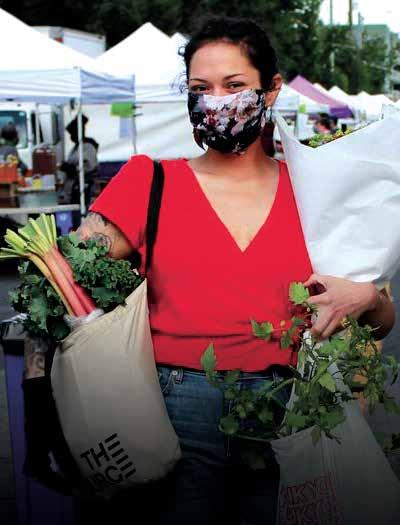
FARMERS MARKET
continued from cover
between Broadway and 10th Avenue East, adjacent to the light rail station plaza.
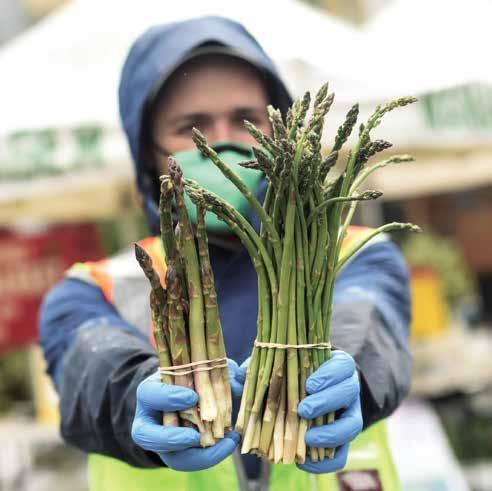
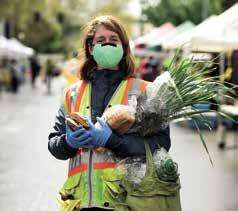
The market, part of the Neighborhood Farmers Markets group, is a community source of year-round local produce and artisanal foods.
Manager Ele Watts believes that the new location will bring new growth to the market. In a press release, Watts said, “This new site will help the market grow into an even more vibrant community space for the neighborhood. We’ll be able to expand the number of vendors in the market, so shoppers will find a huge variety of fresh, local foods; beautiful flowers; and delicious treats every Sunday, all year round.”
The Neighborhood Farmers Market team is excited about the move, because with it comes the guarantee that this essential food source isn’t going anywhere, bringing a sense of security for vendors and community members. In the past, many markets have been displaced by construction and development efforts.
The move puts the farmers market near the AIDS Memorial Pathway and Cal Anderson Park, locations that make Capitol Hill the neighborhood that it is. Now it will be added to the map of important Capitol Hill landmarks.
The effort to create a lasting home for the Capitol Hill Farmers Market was a team effort, with help from the community and partners. The Neighborhood Farmers Market thanks the Capitol Hill Champion, the City of Seattle, Sound Transit, the AIDS Memorial Pathway, Elden and Company, Green Cities Property Management, Seattle Central Community College, and all neighbors and community members who helped.
The Neighborhood Farmers Markets organization has been “educating consumers about seasonal eating, local agriculture, and the importance of supporting our local farm economy” since its beginnings in 1993, when it was first located in the University District. Since then, it has grown and now has seven food-only farmers markets across the Emerald City.
Before the pandemic, these hosted over 200 farm and food businesses and sold a variety of products, including honey, pro -
duce, eggs, dairy, protein, alcohol, and prepared food. In the year 2019 alone, the markets were open on 237 days and hosted over 11,000 vendor stalls.
Along with that, over $500,000 was spent on food programs, designed to ensure equal access to fresh foods for all income levels. Thanks to community groups and nonprofits, 193 booth spots were offered, and 23,765 pounds of food were donated to local food banks. The markets have also worked with many federal and local food access programs, including SNAP, SNAP Market Match, Fresh Bucks Vouchers, WIC, and the Senior Farmers Market Nutrition Program.
As everyone knows, COVID-19 has changed many things. Unfortunately, the Neighborhood Farmers Markets were not immune to these changes. Because of the pandemic, there have been many new restrictions, resulting in closures, a decreased capacity for shoppers, a new
limit on the number of vendors allowed, and an increase in equipment costs. Because of all these changes and challenges, the nonprofit organization has had to come to terms with an incredible amount of lost revenue.
With that in mind, it is important, this year more than ever, to support local farmers markets. Their future depends on the support of generous donors, community partners, and local government, as well as dedicated local weekly shoppers.
To support the Neighborhood Farmers Markets, you can patronize the new Capitol Hill location on East Barbara Bailey Way every Sunday from 11:00 a.m. to 3:00 p.m.
If you don’t live on Capitol Hill, check out one of the six other markets, including Saturdays in the University District and Sundays in West Seattle, among others. To find one close to you or to learn more, go to seattlefarmersmarkets.org.
Photos courtesy of Neighborhood Farmers Markets
Arts & Entertainment
Coming out in the digital age: Still figuring it out
by Lindsey Anderson SGN Contributing Writer
In an interview that surprised thousands of young girls across America, Joshua Bassett, teen heartthrob and star of High School Musical: The Musical: The Series, announced his coming out exclusively on Clevver News
In a moment of pure admiration for fellow heartthrob Harry Styles, Bassett gushed, “Who doesn’t think Harry Styles is cool? Also, he’s hot, you know? He’s very charming too, lots of things.”
The interview took a turn when Bassett coyly added, “I guess this is, um, this is also my coming out video.”
After it was released, Twitter blew up with support — as well as speculation on whether the video was sincere or rather just glib.
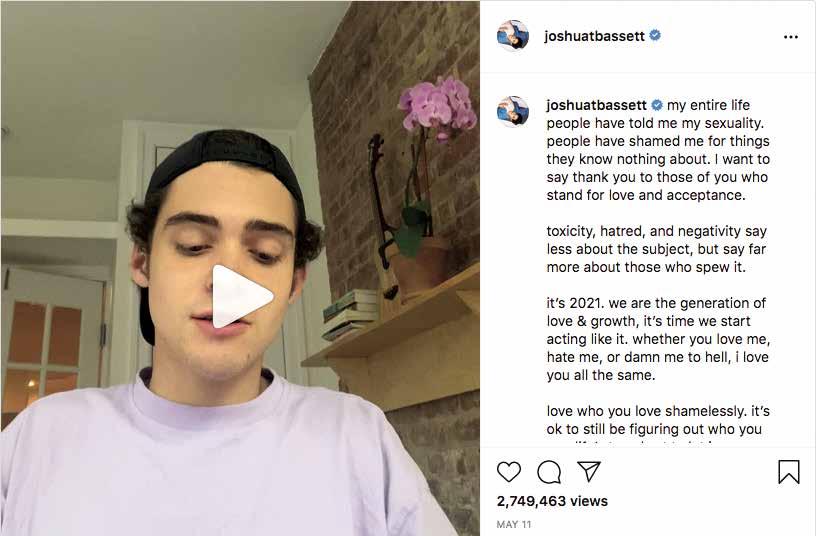
In response to many fans claiming he was only joking and queer-baiting, Bassett posted a sincere video and caption to Instagram, writing in part, “My entire life, people have told me my sexuality” but informing fans he is still “figuring out who he is.”
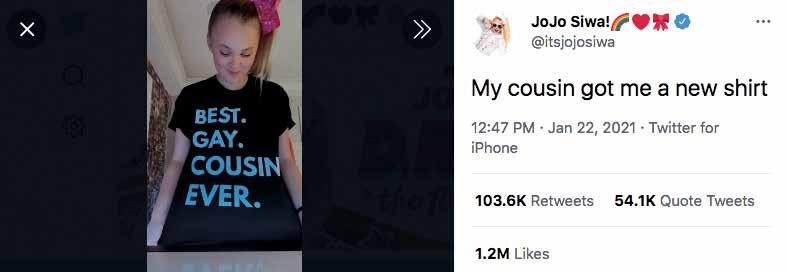
Bassett’s coming-out experience eerily mirrors another queer teen icon, JoJo Siwa, who came out earlier this year through a series of tweets. Siwa had previously hinted at her coming out in a viral TikTok, in which she danced along to the chorus of Lady Gaga’s “Born This Way.” However, fans were not totally convinced until she donned a T-shirt that read “Best. Gay. Cousin. Ever.”
The trend of disbelieving popular young people coming out in the media only works to perpetuate heterocentric ideas around sexuality. Coming out is hard enough for young people (or people of any age), but it is made even more difficult when fans of queer celebrities question their coming-out process or demand more proof.
As Bassett put it, he is still figuring it out. “Figuring it out” is a very valid, and often personal, part of coming to accept one’s queer identity, and it can be just that much harder when fans seem to think they have already figured celebrities out.
How coming out is changing Bassett and Siwa have become popular symbols of what it means to come out as a member of Generation Z. Whereas older, millennial child stars, such as Raven-Symoné, Demi Lovato, and Miley Cyrus, all began the “figuring it out” process around the same age Siwa and Bassett did, a lack of acceptance — especially for actors in children’s media — forced them to figure it out on their own, in silence.
Only after their Disney contracts had terminated and they had begun to distance themselves from their childhood sitcoms were these stars able to publicly come out. This came with its own challenges, as many of these older stars had already made names for themselves as percieved heterosexual tweens.
Raven-Symoné, in particular, found it challening to continue publicly coming out as a Lesbian to a fan base that had come to know and love her as the spunky, boy-crazy, teen psychic of That’s So Raven. In a June 2018 interview with Variety magazine, Raven talked about some of the setbacks she faced in the industry as a teenager that prevented her from coming out sooner, saying, “I remember that I wore Ambercrombie & Fitch jeans, a stereotypical lesbian vest, and a tie, and one of the members of my team went up to my mom and was like, ‘She looks too much like a lesbian. Can you tell her to put on a skirt and makeup? Because then they’ll accept her and come to her concert.’”
The trend of disbelieving popular young people coming out in the media only works to perpetuate heterocentric ideas around sexuality. Coming out is hard enough for young people (or people of any age), but it is made even more difficult when fans of queer celebrities question their coming-out process or demand more proof.
In the past, coming out in the public eye meant defining oneself by one’s sexuality, choosing a label, and repping it. LGBTQ celebrities were known for their sexuality and perceived in ways straight celebrities never were. To come out was to say “I’m different than you.” It cost many their careers.
Even when Ellen DeGeneres made a comeback after suffering a career setback following her coming out, her identity as a Lesbian was at the forefront of her public image.
For younger stars, such as Bassett and Siwa, coming out has had less to do with
community acceptance and more to do with self-acceptance.
Coming out for young people today does not mean discovering a finite and exclusive attraction for the same sex, it does not mean certainty, it does not mean fitting into the box society has labeled “other.” Coming out for young people today means trying on different hats, embracing the confusion, and fitting into all the boxes, some of the boxes, or none of the boxes.
In a digital world where information travels like wildfire across social media, learning about one’s sexuality and finding acceptance in a broad variety of communities has become much easier. However, for young people, coming out in the digital world also means new challenges the older generations never had to deal with. It means a lack of privacy, it means faceless bullies who can hide behind their screens, and it means constant speculation as some try to put you into a box.
Breaking the binary
According to a recent poll in the Washington Post, one in six Gen Z adults identify as LGBTQ, and of those, half identify as Bisexual. More young folks coming out as Bisexual are taking the stigma out of binary identity politics. “Bisexual” is less finite, more ambiguous. It is harder for outsiders to put you in a box when you, yourself, can fit in
all the boxes, sometimes all at once.
The idea that sexuality exists as “one or the other,” “I’m different than you,” or “I’m the same as you” is becoming outdated. The spike in Gen Z adults idendifing as Bisexual is reflective of how much easier it is for younger people to explore their sexuality without finding themselves trapped in a box or identity that society can immediately label as foreign.
The greater acceptance of Generation Z, and the understanding that sexuality and gender exist not as binaries but on a spectrum, has also allowed young stars, like Bassett and Siwa, to do something else entirely revolutionary with their coming out stories: keep them private.
Joshua Bassett never said what he was coming out as. Fans could only speculate, but for the most part, he was left alone. In this sense, Bassett is able to gain acceptance from the LGBTQ community without having to publicly disclose too much personal information about his sexuality. He is able to utilize the kindness and support many before him never had as he continues to explore and figure it all out.
As we move forward, and more Gen Z kids are able to grow up with young queer role models, particularly ones who refuse to label themselves, the community will continue to see fewer boxes and much more acceptance.
Image courtesy of Joshua Bassett Instagram
Image courtesy of JoJo Siwa Twitter
Transforming the scene: Adé Cônnére talks art, activism, and new projects
by Carter Hemion SGN Contributing Writer
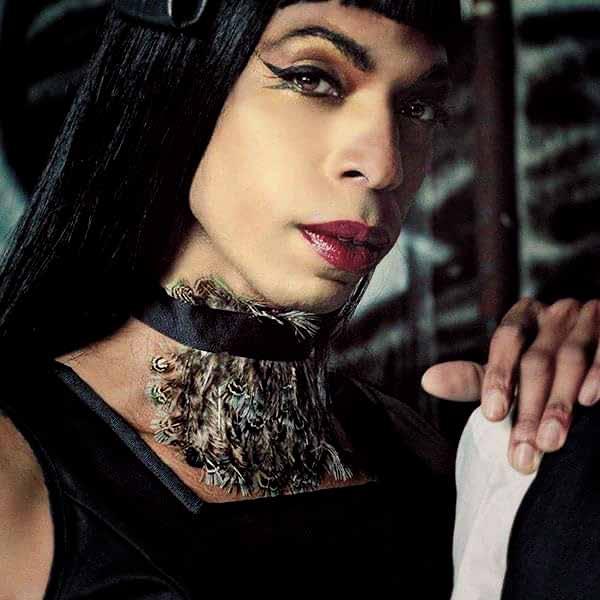
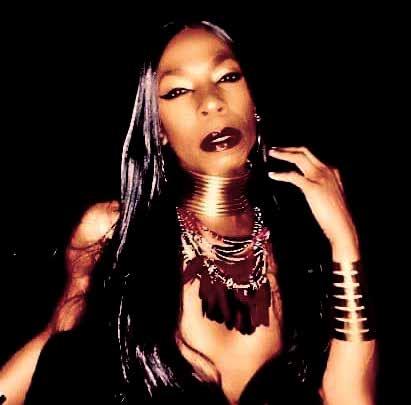
Adé Cônnére is making waves with their performance art. Based in Seattle, they have been performing their whole life as a singer, dancer, thespian, and musician. They also have experience in modeling, fashion, and photography. As one of the most impactful performance artists of the moment, they have also been outspoken as an activist, using their voice to spread love and acceptance.
Last week, I was lucky enough to talk with Adé Cônnére about their background and work as an artist in many forms. They also spoke to me about their current music project and upcoming show.
Background
Cônnére has been an artist their whole life, having been brought up learning to perform. They were raised in Denver in an artistically inclined family: Cônnére’s parents, both performers, met while working on the set of a musical, and their grandmother was an opera singer. By the age of four, Cônnére was performing on stage.
They said, “[It] has been a lifelong effort for me,” music and performance having been an integral part of their experience growing up.
Performance arts
Well known in Seattle’s drag and performance scene, Cônnére highlighted some notable moments in their career so far.
They have been in Seattle for 17 years and built much of their presence as an artist here. While they learned “the tools of the trade” in Denver, “Seattle is really where [they] discovered who [they] wanted to be as a performer.”
Cônnére does not consider themself a drag artist, as they “have always been so gender fluid” in their expression, but their performance work has often crossed paths with drag shows.
One of their most notable performances was Bacon Strip, a drag pageant. Cônnére said, “Especially in Seattle, it was a big, big part of forming myself as an artist. Sylvia O’Stayformore was so instrumental in allowing me the space to just create.”
Another notable time in their career was performing in Ian Bell’s “Brown Derby” series. In finding themself as a theatre artist in Seattle, Cônnére did “stage readings of movies, and it was a really farcical, fun thing.”
Visual arts
Outside of being a performer, Cônnére has also explored fashion. They started modeling when they were 16 years old in Denver and have done catalog work and fashion shows. In Seattle, they decided it was time to “create [their] own sort of narrative as far as fashion goes.”
Since the COVID-19 pandemic shook
our world, Cônnére also created a photography series called “19 Looks of COVID19,” consisting of 19 self-portraits. In this project, they used “scraps of things [they] had around the house” to make masks paired with different looks. They “feel very proud, because it’s not easy to pull 19 looks out.” This project taught them about photography and being on the other side of a camera. While “it was really a gamble,” it turned out to be a “fun way to keep activated as an artist” during the pandemic.
Activism
Cônnére is, in their own words, “a Black, Queer, femme-presenting, Genderqueer person” fighting “for queer rights, trans rights, [and] with the Black Lives Matter movement.”
After being attacked several years ago, Cônnére was catapulted into the realm of activism. “It wasn’t something that I ever really thought about,” they said.
For Cônnére, being an artist and true to themself has been another form of activism.
Being a strong advocate for change is very important to Cônnére. They are “spreading a message of love and acceptance and also just finding your power.” They hope that through their work they can “inspire people to really be themselves… and to accept and love the people that they may not understand.”
Speaking out authentically — and using their art to do so — is a way of being visible for young, Black, Queer people.
Cônnére reflects that “art isn’t necessarily being loved and accepted but trying to stay on a platform and stay relevant and have a voice to be able to advocate for people like me is really important to me.”
As one of the most impactful performance artists of the moment, they have also been outspoken as an activist, using their voice to spread love and acceptance.
Current projects
Currently, Cônnére is performing in the disco band Bijoux. Music has “always been my first love,” they said. Their musical partner Jayson Kochan reached out to them to start creating original music together after the duo played together for several years.
Despite the challenges musicians are facing with COVID-19, Bijoux has found ways to connect with their listeners. Artists “have to look at the world around [them] and adapt,” which they have done with their music.
Recently, Bijoux performed at Vermillion together as part of the “Artists Behind Glass” series, a set of performances that place musicians behind a window for listeners to hear from a safe distance. Bijoux also performed the Northwest Film Forum’s “Tour Around Town,” which benefits local venues and artists. These performances can be found online.
Cônnére is also excited to be recording of an album with Bijoux right now and planning music videos. Bijoux will be premiering an online show on June 1 through Solarium Creative, which will be available through the organization’s website, https:// solariumcreative.works.
Photos courtesy of Adé Cônnére, taken by Adé Cônnére and Angel Ceballos.
Arts & Entertainment
Embracing the spirit and truth: The Celestial Omnibus dazzles
by Kristina Ferrari SGN Intern
Close your eyes and slip into a dreamy realm of endless opportunity. This is what it felt like to be immersed in the radio play
The Celestial Omnibus by E.M. Forster, which was written in 1911.
The play pulls you in with an imaginative story, enchanting cast, and magical sound design. Between the ambient sounds and sound effects, I felt as if I were there, too, journeying with the immortals — feeling belittled by those in “reality” but at peace once in the realm of light and vivid rainbow reflections.
There is a distinction to be made between an internal narration while reading the story and the narration of the radio play. During the latter, I felt myself imagining greater and grander things with each description, noise, and whisper. This made me feel as if I were the singular audience for this story of the decay of imagination that comes with aging.
The narrator, Jennifer Ewing, tells the story of Forster’s main character, The Boy, a fragment of his imagination: “... the Narrator was at one time The Boy, with a wisdom and sense of irony that comes with more years of lived experience.”
Through the eyes of The Boy, we are gently reminded of youth and its endless possibilities, and how literally things used to be taken when we were young, how we used to admire things or people and wished to be just like them.
Yet, we are also shown how we have become like Mr. Bons, a wise man in his own right but one of little faith. He has no will to be a part of something more “celestial” than his evident experience or knowledge.
The Boy is ridiculed by his own parents for reading the instructions for the Omnibus vehicle in the alleyway, just because he took it literally. On the other hand, when Mr. Bons accompanies The Boy to the Omnibus to con-
firm his denial of its existence, he is proven wrong. So, the play paints a simple-minded society in gray, and the only specks of color are described by this imaginative boy.
In The Boy’s first journey on the Omnibus, Sir Thomas Brown asks him if he is afraid, whereupon The Boy responds, “What is there to be afraid of?” This fearlessness is shown to be the reason why the Omnibus exists.
The Boy places his spirit and truth into the Omnibus, as well as the immortality of his conjured poets. Hence during the journey with Mr. Bons, the driver Dante talks to Mr. Bons “in spirit and in truth” regarding poetry and how one must love it. This can be interpreted as an allegory of life itself, describing a world where no one believes The Boy or his truths. I assume this only means that if life is lived without truths or spiritual ignition, then that person’s life is no different than Mr. Bons’, according to Forster.
At the end of the play, there is a striking pause as things transition back into “reality.” The Narrator tells us, “Someone had crowned him” The Boy. The twist at the end leaves you wanting for nothing and pondering your own mortality.
I believe Forster’s purpose was to convey how dreams may be subjective for every individual, and when we stop dreaming, it is the end to the means of or purpose as to why we live at all.
The cast’s beautiful execution of this fantastical script gives the audience an excuse to sit or lay there for 45 minutes and just imagine, to remind ourselves to dream.
The Celestial Omnibus can be found at Theatre22.org until May 30, 2021. It is Theatre 22’s first on-demand radio play. Tickets are name-your-price.
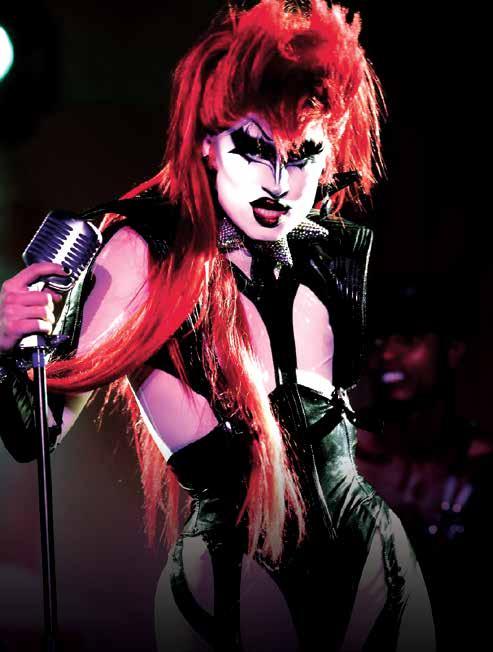
DRAG N DRIVE
continued from cover
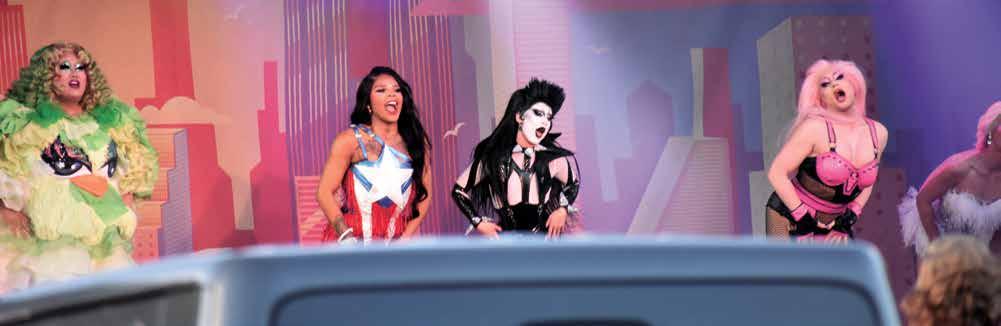
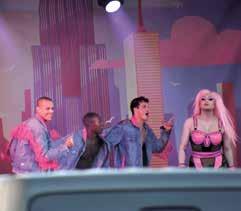
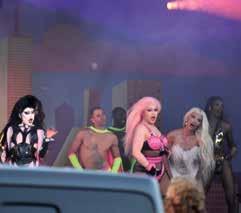
I went to the 7pm Friday night show at of Tukwila’s Westfield Southcenter mall parking lot right in front of Nordstrom, where you could either sit in your car or plunk down on top of it on a blanket. There was a stage and large screen (though not as big as an actual drive-in screen).
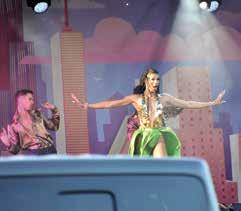
Asia O’Hara, the hostess with the mostest, did a fine job and performed as well. Then came the incredible she-hulk Kameron Michaels, the dazzling Naomi Smalls, the winged warrior Plastique, the seductive Violet Chachki, the spicy Vanjie, and a surprise addition, Kim Chi, playing “The Great Kim Chick.”
Also joining them were season 13 favorites Rosé and Gottmik. Rosé is a gifted vocalist and even took last-minute requests
from the audience. Gottmik, in a dominatrix outfit, was fierce, lip-synching to Joan Jett. Backing them all up was the spicy allmale dance crew.
I confess I was a little burned out from having seen the previous live tour shows, but this time it was all built around a superhero theme, which made it a lot of fun.
I also went to see out the promotional tie-in with the upcoming film In the Heights. I was really expecting more than
just a trailer and a tiny replica of the George Washington Bridge, perhaps at least a production number live or on the screen. But overall, the show arrived at the right moment, as we head out to more fun live events in the remainder of 2021 and beyond.
Image courtesy of Theatre22
Photos by MK Scott
HELP SAVE LGBTQ
HISTORY!
Volunteers are being sought to help create eight sets of Seattle Gay News (SGN) issues dating from its founding in the late 1970’s to the 2015.
The sets will be sent to the Seattle Public Library and other libraries and LGBTQ collections around the US to be available to the public.
Creation of the sets is underway and involves taping and setting up archival boxes and then identifying and placing the issues in chronological order into boxes. The copies will be organized into complete runs with one copy of each issue in each set.
The work will take place this month and possibly in June, two days a week from 9:00 AM to 1:00 PM at Seattle City Hall, 600 Fifth Avenue. Collection assembly will occur in a large conference room and the vault that holds records for the Seattle Municipal Archives.
Volunteers need to be able to lift boxes up to 40 pounds, stand on a cement floor, or able to accurately input data into Google Sheets and be willing to follow COVID-19 protocols which involve having your temperature taken as you enter the building and wearing a mask at all times.
Translations: Seattle Transgender Film Festival delivers excellence in its 16th year
Twenty-seven states and eight countries take part in the 2021 festival
by Renee Raketty SGN Contributing Writer
As a film lover of a Transgender experience, it was hard not to enjoy the diverse offerings and events this year at Translations: Seattle Transgender Film Festival, produced by Three Dollar Bill Cinema, the geniuses behind the annual Seattle Queer Film Festival.
The event went virtual again this year, streaming rare gems from around the world into my living room. With popcorn in hand, I was happy to be among those participating May 6-9.
The festival showcased 52 films from around the world, including Brazil, Russian, Iran, Japan, Italy, India, Sweden, and the United States. The films garnered over 2,140 views from participants in 27 states and eight countries. Another 742 people joined the panel discussions and events via YouTube and Facebook.
All in all, I didn’t miss the packed venues or ticket lines. The online platform had all the usual bells and whistles that a festivalgoer would expect: a welcome from Three Dollar Bill Cinema, sponsorship information and ads, and information on the nonprofit film partners. My streams had no interruptions, except when I hit pause to use the bathroom or refill my drink.
The only thing lacking was the traditional socializing that brought me out to the festival in years past. Speed Friending and a Filmmaker Networking Hour were held via Zoom, but I still have not personally mastered genuine human interactions over the internet.
Several films this year had a Seattle or Pacific Northwest connection, including
Four Fruitbites, directed by Dave Quantic; Aromatics of Longing, directed by Jade Wong; All Black Lives Matter, directed by Gabrielle Grimm; Satan’s Tears, directed by Andrew Lush; and Rotten Fruit, directed by Lyr Casper.
Grimm’s short film was particularly impactful to me as someone who has spent the last year documenting the Black Lives Matter protests in Seattle. While limited in its scope, it focused on the struggles facing Trans Black and Indigenous people and people of color and the importance of white allies fighting internal and institutional racism.
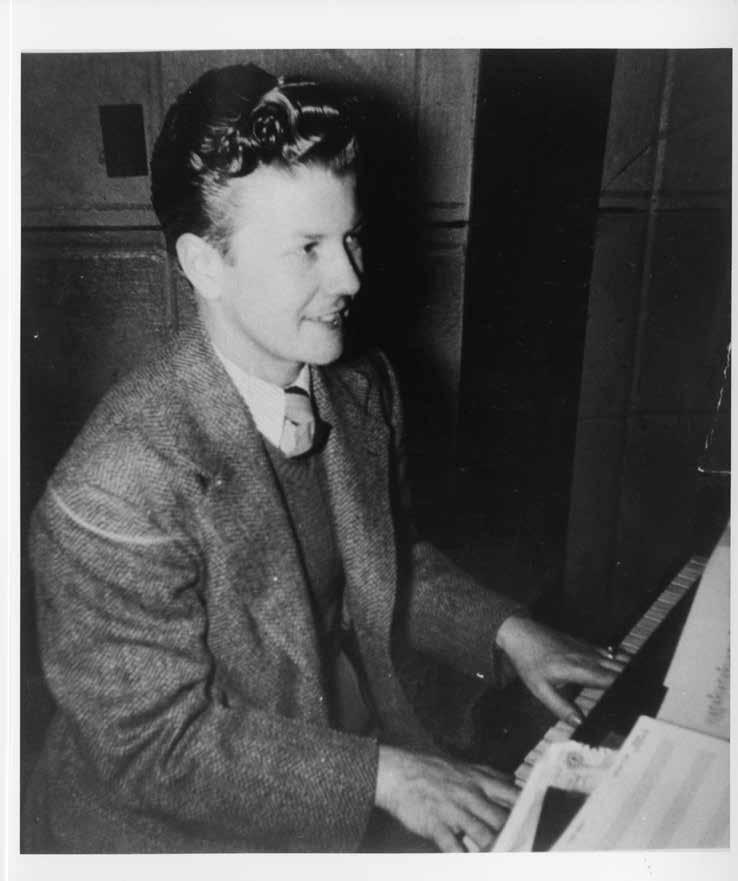
The clear standout this year was the opening film, No Ordinary Man, which chronicled the life of Trans legend Billy Tipton, a jazz musician who performed from 1936 until the late 1970s. The film was interlaced with actor portrayals and documentary footage to create a compelling and mesmerizing narrative. The cast included local activist and author Jamison Green. The film is scheduled for a limited release later this year.
I also caught several of the featured films this year, including Always Amber, a drama from Sweden, directed by Lia Hietala and Hannah Reinikainen Bergeman. The film was full of gender-bending young love and traditional teen angst and vices. It felt a little voyeuristic by puritan US standards, but I did appreciate how it didn’t hold anything back.
Drama Queen, a Vietnamese action comedy directed by Kay Nguyen, took me some time to warm up to, because the underlying storyline was a little over the top. The main character is likeable, and the tale of friendship interwoven throughout
Always Amber – Photo courtesy of Story AB
Billy Tipton in No Ordinary Man – Photo courtesy of Oscilloscope
was touching. The final scenes bring the story together and make its intentions clear.
Genderation, a German documentary by Monika Treut, takes the audience back twenty years to revisit the subjects of Gendernauts, a first-of-its-kind documentary about the Trans movement in San Francisco. It was a little slow going for my taste but insightful. I did enjoy hearing about the journey of other gender pioneers, and there was a lot here I could relate to.
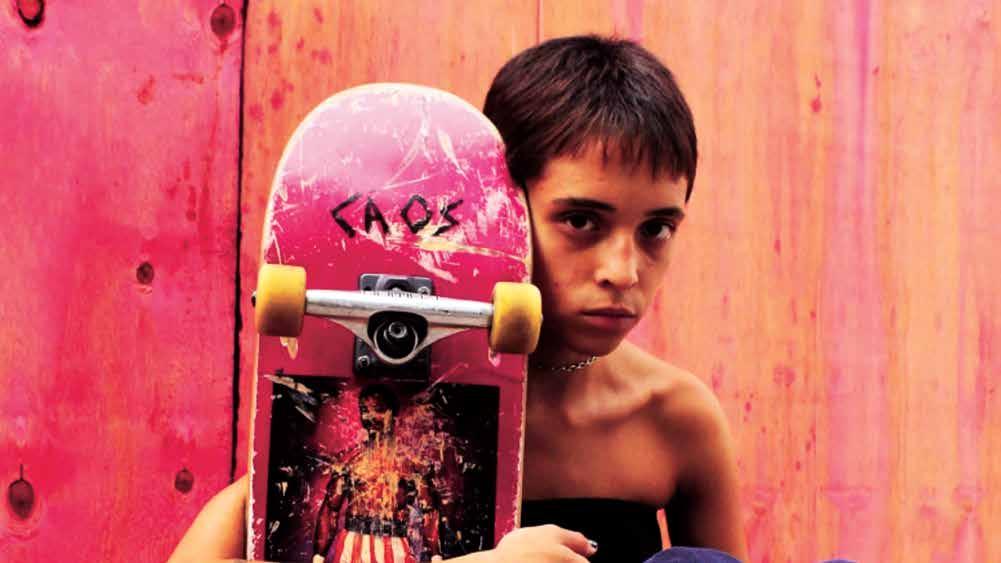
My Name is Baghdad, a Brazilian film about a gender-defying teenager in a working-class neighborhood in São Paulo, was also enjoyable. I found the musical numbers to be out of place, though, because the story stood on its own and the main plot points were compelling and realistic enough without them. However, they were well choreographed and provided some comic relief from the weighty underlying issues that define the friendships and family dynamics in the film.
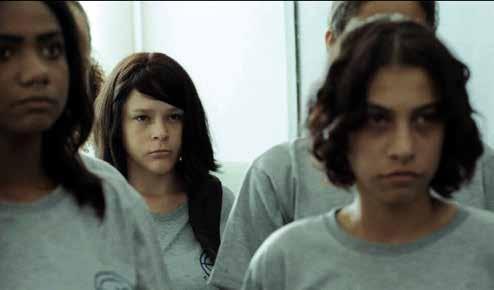
The closing night film from Brazil, Valentina, was a personal favorite. It is not the typical Trans teen coming-of-age film you might expect here in the United States. It does not patronize the audience or seek to sugarcoat anything. Instead, it’s an honest tale of a girl seeking to live out a normal teenage existence without the judgment of her close-minded community, all while navigating life with an absent father, the trauma of sexual assault, and making friends in a new town.
The Seattle Gay News spoke with Maddy Szmidt, programs and operations coordinator at Three Dollar Bill Cinema; and Alanna Francis, development and community outreach manager, this week about Translations and the incredible task of programing and delivering the 2021 festival during the on-going COVID-19 pandemic.
Renee Raketty: What was your overall impression of how the festival went this year?
Maddy Szmidt: The festival went great. We were able to expand our programming to include 52 films, and we reached over 2,000 watchers through paid screenings and recorded panels and Q&As available through our Facebook and YouTube accounts. We had more submissions than last year, which made it even harder to narrow down the final program. We also had some great engagement at our live Zoom events, which was really exciting.
Alanna Francis: The event was an immense success. We were able to be innovative and create engaging film oppor-
tunities for all of our audience members and filmmakers. The abilities we have to think outside of the box within film festival industries and Queer/Trans representation in media is a true treasure and privilege, and we continue to challenge ourselves.
Raketty: What did you like most about the 2021 festival?
Szmidt: I loved being able to connect with filmmakers and festivalgoers. My favorite events were Speed Friending and
internationally, it is vital we connect with each other.
And our film programming highlighted a diverse variety of Trans perspectives and identities, pushing the boundaries of what Trans representation can look like. Utilizing film to explode representation, not only to include people within binaries but to intentionally evolve the societal normalization of the full spectrum of identities that create our LGBTQIA+ communities.
the Filmmaker Networking Hour. Being able to talk with others who love Queer and Trans cinema, and connect people with each other is amazing. It was great to hear from attendees how much the festival means to them, especially during a time in which Trans rights are being attacked throughout the country, and world.
As a film lover, I also loved seeing the newest emerging talent in the filmmaking community. Some of my favorite films were To You My Love, Coming Out, and To the Farmhouse. There was a vast array of identities, genres, themes, and aesthetic styles represented in the fest this year, which reflects the vast spectrum of Trans experiences.
Francis: What is there not to like? We started the days off with utmost fabulosity, starring morning Tea Time, embracing each morning with fierceness.
Almost nothing beats bringing together Trans filmmakers from across the world to share love, space, and resources at the Filmmaker Networking Hour. In times when we often cannot physically embrace each other and Trans rights are being brutally attacked
Raketty: What were the challenges of putting on a virtual festival again this year during the COVID-19 pandemic?
Szmidt: It’s definitely been difficult to maintain the festival feeling, especially as an organization focused on building community. We’ve had to get creative when going virtual. I think it’s amazing that we’ve still been able to create events to bring communities together, even when we feel so isolated.
We’ll definitely always keep virtual as a component of our festivals, even once in-person screenings are permitted again. We’re able to reach people outside of our Seattle/Capitol Hill bubble, who otherwise would probably never have had access to these incredible films, plus people who wouldn’t have had the time or capacity to spend all day at a film festival can watch the films on their own time.
Francis: Ensuring that far and wide, rurally, internationally, and beyond, Queer and Trans communities know how and when to access our programs. Through virtual programming — which will always be a part of our festivals — we have not only
expanded our reach but opened accessibility, as we work to further include the vast identities/realities within the Queer and Trans experiences.
Raketty: What else would you want our readers to know?
Szmidt: Stay tuned to our social media and website for more info on our upcoming Pride events, and other programs we’ll be hosting throughout the year, including Seattle Queer Film Festival 2021.
“[The] film programming highlighted a diverse variety of Trans perspectives and identities, pushing the boundaries of what Trans representation can look like. Utilizing film to explode representation, not only to include people within binaries but to intentionally evolve the societal normalization of the full spectrum of identities that create our LGBTQIA+ communities. ”
Francis: Create, collaborate, and dream with us at Three Dollar Bill Cinema. Check out our social media and website to see our upcoming programs like Pride, Reel Queer Youth, and the Seattle Queer Film Festival. Visit ThreeDollarBillCinema.org.
My Name is Baghdad – Photo courtesy of Manjericão Filmes
Valentina – Photo courtesy of Campo Cerrado
PHOTO BY NATE GOWDY
PHOTO BY NATE GOWDY
Entertaining Retreat a horrific weekend of catharsis and survival
by Sara Michelle Fetters SGN Staff Writer
THE RETREAT
Theaters / VOD
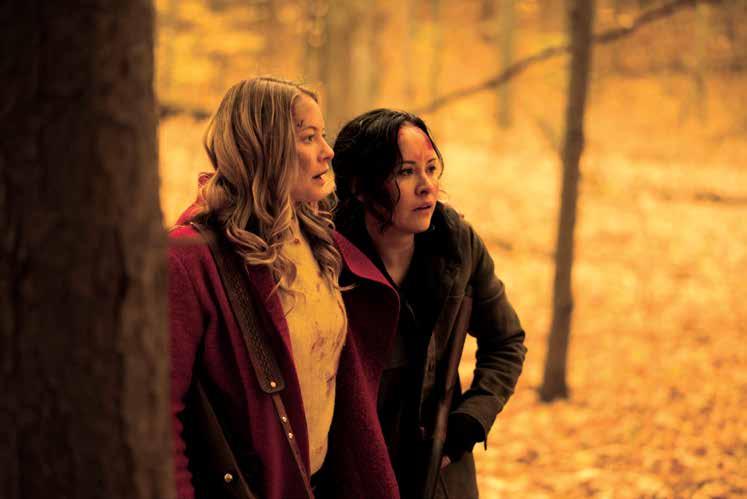
Renee (Tommie-Amber Pirie) and Valerie (Sarah Allen) set out on a road trip to a secluded cabin in the woods for a shindig with a couple of friends about to tie the knot. The two have been dating for some time, and they’re at that point in their relationship where a permanent future together has become a prime topic of conversation. Renee has commitment anxiety. Valerie would like to put a ring on it.
But before those conversations can be had and any issues between them can be ironed out, the women find that things at the cabin are strangely amiss. Not only are their friends missing but Renee and Valerie also discover they’re being hunted by a small group of murderous backwoods homophobes. Make no mistake, this is not the weekend of relaxing seclusion and blissful solitude they’d been promised.
Even if it doesn’t do anything unexpected, The Retreat is a well-made and amusing survivalist slasher film that gets the job done with suitably violent and gory aplomb. Its primary twist is the obvious one highlighted in the synopsis: the women being hounded, stalked, and tortured by masked madmen also happen to be lesbians whose relationship is at a metaphorical crossroad.
There’s not a lot more to it. Making the most of what had to be a limited budget, director Pat Mills plants his foot firmly on the accelerator and keeps exposition to a minimum. Everything I needed to know about Renee and Valerie I learned while they were traveling to their destination and in the brief, idyllic first moments they have exploring the forests and fields surrounding the cabin. Alyson Richards’ script is a model of simplicity and brevity. The filmmakers
treat their audience with respect, doing nothing that belittles their intelligence. What I do take issue with, even with a novel, well-constructed LGBTQ bent to the material, is how by-the-numbers much of this turns out to be. The killers are onedimensional lunatics. They also aren’t very interesting. It is hinted that they’ve been doing this sort of thing for some time. But considering how poorly executed their plans for the two women are, that no one has attempted to turn the tables on them before this (or how they weren’t at the very
least tracked down by law enforcement investigating prior disappearances) made zero sense to me.
Still, Renee and Valerie prove to be terrific “final girls,” and while we’re not talking Revenge or You’re Next levels of excellence, Pirie and Allen still give it their all with enthusiastic vivacity. The blood-and-guts quotient is high yet never feels exploitive, and I liked that no one — neither the killers nor their prey — had anything resembling superhuman abilities beyond what a normal person under extreme duress would likely
Malevolent Djinn lacking in magic
by Sara Michelle Fetters SGN Staff Writer
THE DJINN Theaters / VOD
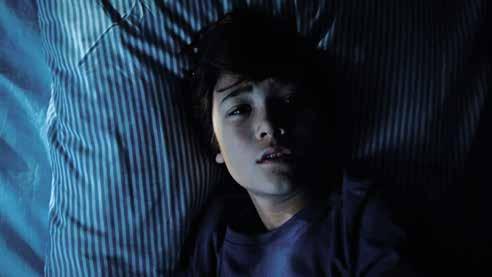
Even though it carries an R rating, The Djinn would be a pretty decent “gateway horror” flick for older kids who enjoy reading the works of Alvin Schwartz or R.L. Stine. Set in 1989, the film follows Dylan Jacobs (Ezra Dewey), a mute 12-year-old who has just moved into a new apartment with his radio deejay father Michael (Rob Brownstein). While going through a box of junk left by the former tenants, he discovers a book of ancient spells and demonic lore, including a spell that summons a djinn and potentially grants the caster a single wish.
After his dad goes to work the graveyard shift, Dylan disregards the warning at the bottom of the page involving the risks to his immortal soul and decides to try out the spell. He believes that if he had a voice, his mother would still be around, and so that’s the wish he asks for after lighting the sacred candle and adding three drops of his blood into the melting wax.
It isn’t terribly difficult to figure out what happens next. This isn’t a game: the djinn is real and things do not work out as Dylan had imagined. Trapped in his own house, unable to call for help, the shocked youngster finds
himself in a cat-and-mouse battle with a dangerous, soul-sucking demon. It’s another case of “be careful what you wish for,” with Dylan going all Kevin McCallister at his Home Alone best on the djinn to survive the night. Written and directed by newcomers David Charbonier and Justin Powell, this is a handsome-enough one-location thriller that’s stylishly shot by cinematographer Julián Estrada and features a strong, suitably disquieting score from composer Matthew James. Youngster Dewey, who is in almost every scene, does a fine job as well, deliv-
ering a nicely modulated performance that overflows in authentic emotional nuance. Problem is, there are no shocks and zero surprises to be found in the scenario that Charbonier and Powell have cooked up. The film tends to play like a short or a student film expanded to feature length, and even at a briskly paced 82 minutes, this thriller still feels frustratingly padded. It all builds to a supposedly explosive conclusion that more mature viewers will see coming from a mile away, all of which helps make this supernatural thriller more of an inter-
exhibit. The film also is thankfully free of the downbeat nihilism that can so often cripple thrillers similar to this one, with Richards adding a cathartic tenderness to her scenario that caught me by surprise.
If nothing else, The Retreat is another refresher on the cinematic rule that taking a holiday break at a secluded cabin in the woods is never a good idea. Awful things are bound to happen. Thankfully, when said awfulness is as entertaining as this thriller, that’s one reminder I’m okay with having reiterated.
esting, well-made trifle than it is anything remotely substantive.
All of which is why I say this one will work better for younger audiences than it does for adult horror aficionados. The djinn creature design is pretty cool. The spells he casts to ensnare and trick his prey into making a fatal mistake are relatively clever. Dewey is very good as Dylan, and I imagine viewers around his age will find it easy to relate to the character. The message at the end, while very Goosebumps meets Are You Afraid of the Dark?, is effectively delivered with the requisite amount of sly, winking-at-the-camera conviction.
None of which means I had a great time watching it. While I was impressed by the production values and the filmmaking confidence that Charbonier and Powell showcase — especially considering all they successfully pull off on what had to have been a minuscule budget — I don’t have much in addition that’s positive to add. It’s fine, nothing more, and that’s all there is to it.
If I had seen this one as a kid, I think I might have loved it. But as an adult who has viewed more than her fair share of supernatural tales exactly like this one, I cannot say The Djinn did much for me. Its malevolent spell sadly doesn’t last, and if I had one wish for Charbonier and Powell, it’s that for the next magic trick they conjure up to be something a bit more imaginative.
Sarah Allen and Tommie-Amber Pirie in The Retreat – Photo courtesy of Quiver
Ezra Dewey in The Djinn – Photo courtesy of IFC Midnight
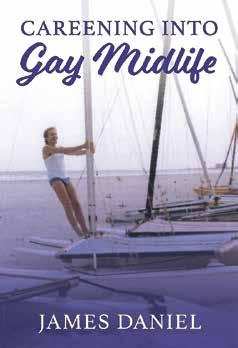
Careening into Gay Midlife careens into the better
Have you ever taken time to reflect over the years and asked yourself, “Where did the time go?” or “How did I get here?” or even “What events have led me to where I am now?” If you have found yourself questioning your life choices and your state of existence, know that you are not alone.
Author James Daniel’s newest novel, Careening into Gay Midlife, follows Jim, a man who looks back and finds that his life has been marked by regrets. So he embarks on a literal journey to fulfill his childhood dreams and adult desires.
Throughout the novel, Jim’s relationships with family, friends, coworkers, partners, and even hook-ups — and how they impacted him and certain decisions he made — are uncovered through short tales. His difficult childhood was filled with abuse, and as a result, he lacks the proper social and interpersonal skills needed to maintain lasting relationships. His abandonment issues also soon become apparent when he continually becomes rapidly attached to others with grand displays of adoration. This gets tricky during sexual relationships, as when he describes one:
“His love of fabricating falsehoods should have warned me never to see him again, but before I could make an escape, Cupid aimed a bazooka at me and hit my heart dead center.”
Although Jim struggles with many relationships, he holds the positive ones in high regard, even if they only last a short time. This becomes particularly relatable when he describes his years working at Tower Records, and some good memories with his
colleagues. Do you ever look back at your previous jobs and think about the times when you worked with some truly wonderful people? I know I certainly do. If there is anything Jim teaches readers, it is to cherish the good times, because the bad ones can creep up far too quickly.
The events in this book mostly occur from the 1970s through the 1990s. For a Gay man trying to take advantage of his early adult years, that meant navigating the world during the AIDS crisis, with little idea of what the future would hold. As a reader, this allowed me to take a step back for a second and draw parallels to the current pandemic, especially during the spring of 2020, and how we were still uncertain how to combat the virus, and how it was transmitted.
As for the unknown disease going around the Gay community back then, Jim did not seem to pay too much attention to it initially. During his early twenties, he struggled with dating and small talk (let’s be real, both can be pretty challenging, especially when combined), but by the time he was in his late twenties, he had gained much more confidence and took advantage of it by having more frequent one-night stands — right around the time when the AIDS epidemic was reaching its peak.
I won’t go into much more detail. But like with COVID-19, people end up in a place from which they can’t ever return. Some of these are people closest to Jim.
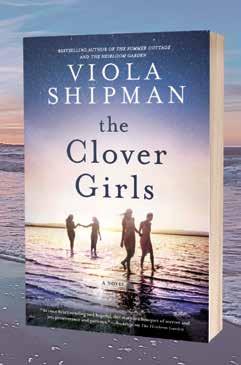
The grass is greener on the other side of the fence. Someone else’s life is always better than yours. Greener grass often goes with sour grapes, though, but, as in the new novel The Clover Girls by Viola Shipman, it ultimately depends on how well you tend your own garden.
There’s a meme-thread going around social media chiding men who write awkwardly about female characters. You might ask yourself, then, how author Wade Rouse, a Gay man writing under a female pseudonym, would do it.
The answer is: with a semi-contrived plot and a whole lotta heart.
V, formerly known as Veronica, felt fat.
She was sure that her husband David was embarrassed by the weight she’d put on since the kids were born and she’d had to give up her modeling career. Yes, she was once a cover model, lithe and beautiful. Now, she had an extra 15 pounds but no career, no forward-looking future, and no friends.
And then she got the letter.
When they were kids at Camp Birchwood, Rachel told her campmates that she’d be a famous actress someday. More than twenty years later, she was famous all right — as the spokeswoman for a misogynist political candidate. Everybody hated what Rachel said on his behalf, and they sometimes hated her too. But she was happy, wasn’t she?
And then she got the letter.
As Liz sat next to her dying mother, it hit her: Liz’s own kids and grandkids would never take care of her like that when the time came. So what kind of legacy was she leaving then? There was her online store and a respectable number of sales, but the
creativity she had as a girl — the talent her friends appreciated — had never quite taken hold. And where were those friends these days, she wondered.
And then she got the letter.
Em said she’d be dead by the time they read their letters, that the cancer had metastasized too far for a cure. Sweet, dear Emily was the only one who’d kept track of everyone; she’d hoped the friendship-shattering event that happened years ago was forgivable, so she had made a drastic move to try and make it so.
But is a four-leaf clover missing a leaf still lucky?
On one end, readers who are used to more action-packed novels may roll their eyes: the main characters in The Clover Girls are all celebrity look-alikes, their spat was schoolgirl-silly, the plot lines are oh-so-convenient (how many times will they spread Emily’s ashes, and where did Liz get all that fabric?).
themes of mental illness also arise: anxiety, self-doubt, depression, post-traumatic stress disorder. Everybody struggles with at least one of these. (I mean, you’d be lying to yourself if you said you haven’t struggled with anxiety once during this entire ’rona pandemic.)
That’s part of what makes this book so relatable, particularly now. It isn’t a requirement to have fought in war or suffered an extreme accident in order to have anxiety, depression, or PTSD. Events such as childhood trauma or just living through a pandemic can be stressors, too.
One important lesson of this book is getting help, especially when things haven’t been going well. It’s about coming to terms and coping with decisions and memories, and growing into the person you want to be.
I highly recommend you pick up a copy of Careening into Gay Midlife, in which you can travel back in time to San Francisco, Washington DC, and Seattle too. Discover how interpersonal relationships shape the way we act and perceive the world, and how dance and music always heals (oh, you can bet Prince and Donna Summer come up). And most importantly, revisit Gay communities throughout the country during one of the biggest turning points in history.
Rating: 5/5
It’s enough to make you squint.
And yet, the basic story here is sweet and not outrageously dramatic. Shipman/Rouse instead makes it gentle, loving, squeakyclean, and perfect for sharing with anyone who devours women’s fiction like this.
So if you put aside the go-go-go novels
and look beyond the contrivances, The Clover Girls may be your next obsession. You might not be able to leaf it alone.
Image courtesy of the author
Image courtesy of Graydon House
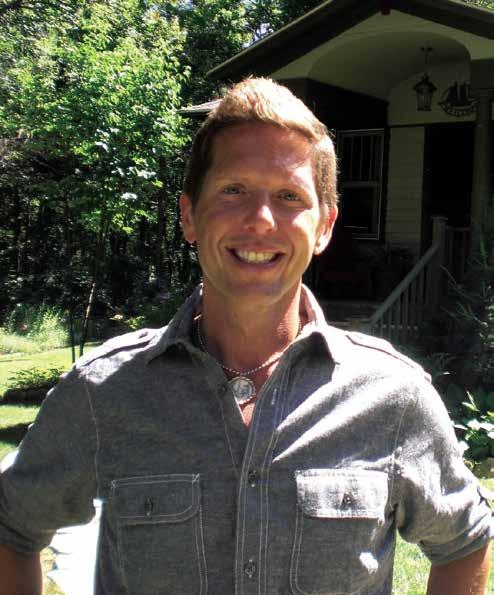
Author photo by Mlive
Strength comes from a welcoming spiritual home
by John Dunn Contributed by St. Patrick Catholic Church for SGN
When a member of our LGBTQ+ community is in search of a spiritual connection to life, creation, and the universe it sometimes feels daunting. This is especially true after so many of us have recently experienced the isolation caused by our attempts to live successfully through the pandemic. We are also well aware of the blocks we have experienced when people use religion as an excuse to deny spiritual growth for our community. For many of us the experience of feeling excommunicated from our community, our religious home, and our family has been excruciating and will haunt us as long as we focus just on that experience.
However, the search should not end there. We are living beings. All of us are blessed to have been given life in this universe. Imagine the expanse of this universe that we live in and the beauty of the life that surrounds us and supports us. There can be so many events in our lives that can help us come to
this realization: Sitting on a log in a forest and looking up at the towering green life surrounding us. Standing on the shore of an ocean listening to the waves breaking on the beach. Staring at the night sky looking for certain constellations or simply being in awe of the dimensions of our universe. These experiences can help us connect to things much larger than ourselves.
This realization can give us the courage to seek out others who share these experiences. There are religious communities that accept members of the LGBTQ+ community and who can help develop supporting relationships. There are communities that will accept our gifts, that actually do practice the Golden Rule, and who are loving to their neighbors. We just have to seek them out.
Posted by the St. Patrick Church LGBTQ+ Engagement and Accompaniment Circle and Circle of Friends –St. Patrick Catholic Church, 2702 Broadway Ave. E., Seattle, WA. 98102 - All are welcome on Sundays at 10:30 in person or online at www.stpatrickseattle.org // Contact John Dunn at dunn570@aol.com
Photo by Tima Miroshnichenko from Pexels
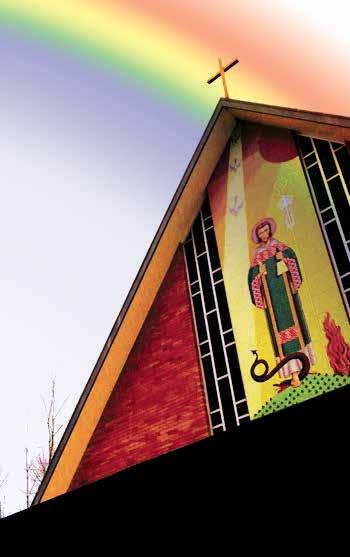
Photo courtesy of St. Patrick Church
Allyship - an organization of LGBTQ individuals fighting for economic and social justice. www.LGBTQAllyship. org, allyship@yahoo.com, (206) 279-8169. American Veterans for Equal Rights - www.aver.us
Another Gay Social Club! - www.meetup.com/AnotherGay-Social-Club/ Bellingham/Whatcom County - www.theslowlane. com/guide.html
BiNet Seattle is a mixed gender, social group for Bisexuals, their partners & other Bi-friendly folks - www. binetseattle.org.
Bremerton/Kitsap County - www.outwestsound.org Capitol Hill Alano Club - www.chacseattle.org
Cascade Rainbow Community Center (Mount Vernon) - (360) 840-8499 and on Facebook. Central Washington University GALA Hotline: (509) 963-1994.
Channel Q 103.3 FM - LGBTQ+ Talk Radio NetworkNews and information, pop culture and music. radio.com COLAGE unites people with LGBTQ parents and caregivers into a network of peers and supports them as they nurture and empower each other to be skilled, self-confident, and just leaders in our collective communities - www.colage.org
DIFFA/Northwest (Design Industries Foundation Fighting AIDS). (206) 763-8885; www.diffanorthwest. org
DOMESTIC VIOLENCE & SEXUAL ASSAULT: Crisis Clinic, (206) 461-3222 (24 hour line); King County Sexual Assault Resource Center (KCSARC) - 24-hour crisis line for information, support, & medical & legal assistance: 1-888-99-VOICE; Northwest Networksupport & advocacy for Bisexual, Trans, Lesbian & Gay Survivors of Abuse & Dating Violence, (206) 568-7777 (voice), 517-9670 (tty), www.nwnetwork.org; Pierce County Domestic Violence Helpline: Teresa, (253) 798-4166; Seattle Counseling Service for Sexual Minorities - offers on-going support groups for men: 323-1768; Seattle Police Dept Domestic Violence Unit, (206) 684-0330; State Wide Domestic Violence Hot Line, 1-800-562-6025. In an emergency call 911 Report domestic violence and sexual assault. Equal Rights Washington - (206) 324-2570; www. equalrightswashington.org
Gay City promotes wellness in LGBTQ communities by providing health services, connecting people to resources, fostering arts, and building community. Gay City Health Project’s Wellness Center provides anonymous & confidential HIV/STD testing. 517 E Pike St. More info or to schedule an appointment, (206) 860-6969. www.gaycity.org
Gay & Lesbian National Hotline (GLNH): 1-888-THEGLNH (1-888-843-4564). Non-profit, peer-counseling, information & local resources telephone hotline for GLBT people across the country.
Generations Aging With Pride empowers elder LGBTQ adults to live with pride and dignity by promoting, connecting, and developing innovative programs and services that enhance belonging and support, eliminate discrimination, and honor the lives of older members of our community - (206) 393-3400; info@gapseattle.org; gapseattle.org
Greater Seattle Business Association (GSBA) - (206) 363-9188; www.thegsba.org
HIV/AIDS Program, Seattle/King County Dept of Public Health, provides confidential/anonymous information about & testing for HIV/AIDS. (206) 205-7837. For a comprehensive list of HIV/AIDS service organizations see the GSBA Guide or visit www.thegsba.org or call Lifelong AIDS Alliance, (206) 328-8979.
Imperial Sovereign Court of Seattle & the Olympic & Rainier Empire - www.facebook.com/ISCSORE; www. imperialcourtofseattle.com
Lambert House - (206) 322-2515; www.lamberthouse. org
LGBT Library - 517 E Pike St. Open Mon-Fri 2-8pm; Sat 2-5pm. A wide range of fiction and non-fiction for the LGBT community and allies can be borrowed free of charge.
LGBT MS Connection - (425) 785-8593; lgbtmsconnections@comcast.net. Support group for LGBT persons with MS and their partners and their caregivers. Sponsored by the National Multiple Sclerosis Society. Lifelong AIDS Alliance - (206) 328-8979, www.lifelongaids alliance.org Lion’s Main Art Collective - www.lionsmain.org
MEN: Gay City: (206) 860-6969, www.gaycity.org; Knights of Mantra: (206) 329-0886, www.jetchapterkofm.com; Mature Friends: Gay men & women 40 & over, www.maturefriends.org; Northwest Bears: www. nwbears.com; The Olympians: www.TheOlympians. net; POZSeattle: www.pozseattle.com; Q-Squared: www.qsquared.org; Rain City Jacks: www.raincityjacks. org; Seattle Gay Couples: www. seattlegaycouples.org; Seattle Men in Leather: www.seattlemeninleather. org; Seattle Prime Timers: Gay & Bi men 40 & over, www. seattle primetimers.org; Tacoma Older LGBT: www. tacomaolderlgbt.org. (See also listings under Bisexual, Parenthood, People of Color, Transgender.)
MUSIC: Diverse Harmony: www.diverseharmony. org; Rainbow City Band: 1-866-841-9139 ext 2126; rainbowcityband@onebox.com; www.rainbowcity band. com; Seattle Men’s Chorus and Seattle Women’s Chorus: (206) 388-1408, (206) 323-0750. www.seattlechoruses.org.
Northwest Lesbian & Gay History Museum Project - gayhistnw@aol.com
community resources
Northwest Rainbow Alliance for the Deaf - www. nwrad.org
Olympia/Thurston County - www.RainbowCenterOly. org
Out & Equal Workplace Advocates/Seattle Regional Affiliate supports the work of LGBT employees and the growing number of ERGs (Employee Resource Groups) making a difference within local companies, including Alaska Airlines, Amazon.com, Amgen, AT&T, Bank of America, Deloitte, Macy’s, Microsoft, Russell Investments, Safeco Insurance, Starbucks Coffee, Xerox. www.outandequal.org/affiliates/seattle
Out & Proud Grays Harbor Coalition - http://outandproudgh.org
PARENTHOOD: Families Like Ours provides a gateway for LGBT families interested in adoption & provides a network of safe placement agencies, training, support & resources: (206) 441-7602, www.familieslikeours. org; Family Works offers support, information & activities for LGBT families: (206) 694-6727, www.familyworksseattle. org; Gay Fathers’ Association of Seattle offers support groups & social activities: www.gfas. org; Proud & Loud Families - Northwest, www.meetup.com/proudand-loud-families-northwest, plfnorthwest@aol.com; Queer Parent Networking Dinners: (206) 568-7777, qpnd@nwnetwork.org, www.nwnetwork.org; Rainbow Families of Puget Sound: www.rainbowfamiliesps.org PFLAG is the national organization for parents, families, allies, and LGBTQ people united for equality with chapters in Seattle, Bellevue/Eastside, the Puget Sound region and across Washington state. PFLAG Seattle: (206) 325-7724, info@pflagseattle.org, and www.pflagseattle.org; PFLAG Bellevue/Eastside: (425) 483-6642, info@bellevue-pflag.org, http://community. pflag.org/PFLAGBellevue; PFLAG Pacific Northwest: www.pnwpflag.org; PFLAG Washington State Council: www.pflagwsc.org.
Peer Seattle (formerly Seattle Area Support Groups) is a non-profit organization that builds community and cultivates powerful, healthy lives by providing emotional support and personal development services to those affected by HIV/AIDS, the Queer communities, and those who love them. Our work is done in a spirit of safety, trust, inclusiveness, and celebration of individual differences. (206) 322-2437; www.peerseattle.org
PEOPLE OF COLOR: AARTH (African American Reach & Teach Health Ministry), (206) 850-2070, www.aarth.org; Asian/Pacific Islander Queer Network Program at API Chaya, (206) 467-9976; Center for MultiCultural Health, (206) 461-6910, www.multiculturalhealth.org; Entre Hermanos, GLBT Latinos/as, (206) 322-7700, www.entrehermanos.org; Ile LaiLai, (206) 781-3565, iya@ilelailai.org; Men of All Colors & Cultures Together (MACCT), (206) 923-8313, macctseattle@yahoo.com, www.macctsea.org; Northwest Two Spirit Society, https://www.facebook.com/ groups/nw2spiritsociety/, Nubian Pride Productions, nubianpride@gmail.com; People of Color Against AIDS Network (POCAAN) offers rapid HIV testing, M-F, 10am-5pm, (206) 322-7061, www.pocaan.org and on Facebook; QBASS - Queer Black Alliance of the South Sound, (253) 256-1846, weareqbass@gmail. com; Sistah 2 Sistah, LBT women of African descent, (206) 322-7061, (206) 255-8951; Somos Seattle, somosseattle.org; Trikone-Northwest, GLBT South Asians, (425) 985-4376, www.trikonenw.org; Two-Spirit Honor Project, 1-866-685-0164; U.T.O.P.I.A. Seattle, www.utopiaseattlewa.org; VietQ Greater Seattle, vietqorganization@gmail.com
Pierce County AIDS Foundation - (253) 383-2565; www.piercecountyaids.org
Pride Foundation - (206) 323-3318; www.pridefoundation. org
Pride Lives - www.facebook.com/PrideLives/ Pride Radio 93.3 HD2
Project NEON is a program of Seattle Counseling Service providing FREE information & services to Gay & Bi men to reduce health risks associated with methamphetamine use. (206) 323-1768. www.crystalneon.org
Public Health-Seattle & King County Online Comprehensive Health Information for Sexual Minorities: www.kingcounty.gov/healthservices/health/personal/ glbt.aspx
Q Law: The GLBT Bar Association of WA - (206) 682-6711; www.q-law.org
Rainbow Center - Resource Center for Tacoma/Pierce County LGBTIQA community. Through education, advocacy and celebration, the Rainbow Center expands resources, and safe space for the LGBTQIA community.
Sponsors Tacoma Pride Festival. (253) 383-2318, www. rainbowcntr.org
SEAMEC interviews, researches & rates candidates for public office on issues of concern to the LGBT community. www.voteseamec.org
Seattle Area Support Groups & Community Center (SASG) i- SEE LISTING for Peer Seattle. Seattle Bisexual Women’s Network - BiSeattle.wixsite. com/SBWN and on Facebook.
Seattle Counseling Service for Sexual Minorities is a community mental health service for GLBT persons & their families providing comprehensive mental health services on a sliding scale. (206) 323-1768.
Sex Workers Outreach Project - https://seattle. swopusa.org
Sisters of Perpetual Indulgence, The Abbey of St. Joan - (206) 860-3666; www.theabbey.org Snohomish Health District HIV/AIDS Program provides free confidential/anonymous HIV counseling & testing 9am-5pm Monday-Friday, until 7pm Tuesdays. (425) 339-5298.
South Sound Q Calendar - LGBTQ events in Tacoma, Olympia & Sound Puget Sound area; www.SouthSoundQCal.com Spokane/Inland Northwest - www.outspokane.com; www.stonewallnews.net
SPORTS & RECREATION: Bent Car Guys: www. bentcarguys.org; Border Riders Motorcycle Club: www.borderriders.com; Bottom Dwellers Scuba Club: www.bottomdwellers.org; Capitol Hill Cyclers: join their Facebook group or email capitolhillcycling@ groups.facebook.com or jordan.l.simonson@gmail.com; Cascade Flag Football: www.cascadeflagfootball.org; Cascade Flyers: www.cascadeflyers.org; Emerald City Mudhen Rugby: www.mudhenrugby.com; Emerald City Softball Association: www.emeraldcitysoftball. org, www.eteamz.com/womensecsa; Ethyl Forever Car Club: ethylforever@hotmail.com; Festival of the Babes: www.festivalofthebabes.com; Olympic Yacht Club: www.oycnw.org; OutVentures: outdoor education & recreation activities, www.outventures.org; Pacific Northwest Gay Rodeo Association: www.pacificnwgra.org; Puddletown Squares: www.puddletownsquares.org; Rain City Soccer: www.raincitysoccer.org; Rain Country Dance Association: a country-western dance organization catering to the LGBTQ community but open to all, www.raincountrydance.org; Sea Dawgs: LGBT ice hockey - SkateSeaDawgs@gmail.com and on Facebook; Seattle Frontrunners: www.seattlefrontrunners.org; Seattle Gay Basketball Association: www. seattlegaybasketballassociation.com; Seattle Orca Swim Team: www.orcaswimteam.org; Seattle Otters Water Polo: www.otterpolo.com; Seattle Quake Rugby: www.quakerugby.com; Seattle Tennis Alliance: www. seattletennisalliance.org; Seattle Unified Bowling Association (SUBA): magee98106@aol.com, www. teamseattle.org/bowling.htm, www.theprideleague. com, Century 21 League; Seattle Volleyball Club: www.seattlevolleyballclub.com; Ski Buddies: www. skibuddies.org; Team Seattle Gay Sports Network is an umbrella organization for a wide range of local GLBT sports activities, (206) 367-4064, www.teamseattle.org (see website for comprehensive list of sports clubs); Triangle Recreation Camp at Bender Creek: recreational camping for GLBT folks. Must be 21; ID required. trc@ camptrc.org, www.camptrc.org, 1122 E Pike St #1069, Seattle 98122-3934. Strength Over Speed - www.strengthoverspeed.org Tacoma/Pierce County - Rainbow Center, 2215 Pacific Ave, Tacoma, a resource center for the LGBTIQA community of Pierce County, (253) 383-2318, www. rainbowcntr.org
Three Dollar Bill Cinema - TWIST: Seattle Queer Film Festival; Translations: Seattle Transgender Film Festival; Outdoor Cinema at Cal Anderson Park. www. threedollarbillcinema.org
TRANSGENDER: Emerald City Social Club: (425) 827-9494; Gender Alliance of the South Sound: www. SouthSoundGender.com; Gender Diversity: www. genderdiversity.org; Gender Justice League: www.genderjusticeleague.org; Gender Odyssey: www.genderodyssey.com; Hermanos Trans Latino & Foreign-Born
Support Group: (206) 322-7700; Ingersoll Gender Center: (206) 329-6651, www.ingersollcenter.org; Lion’s Main Art Collective: www.lionsmain.org; The New BoyZ Club: www.olympiaftmgroup.webs.com; Olympia Trans Discussion Group: www.facebook.com/pages/ Olympia-Trans-Discussion-Group/262449878114; [trans] ACTION: Trans* & Gender Non-Conforming Sex Workers’ Support Group - a safe, peer-led space. mail@utopiaseattle.org; TRANSform Washington: transformwashington.com; Trans Resource & Referral Guide: kctransguide.org; Trans Women of Color Solidarity Network: Funding the collective liberation of Trans women of color – https://m.facebook.com/ TWOCSolidarityNW/; Washington Gender Alliance: (360) 445-2411, www.washington genderalliance.com
WOMEN: Aging Ballard Lesbian Exchange (A.B.L.E.): We are Lesbians 60 years (generally) and up, living (mostly) in the north half of Seattle. The purpose of the group is to connect, socialize and support each other. ruthemilyvogel@gmail.com; Aging Lesbians in South Seattle (ALISS) - Lesbian Group at the Southeast Seattle Senior Center. This is a gathering primarily for Lesbians but all are welcome to attend. Kate, (206) 722-0317; www.sessc.org; BABES: support groups for HIV+ women. (206) 720-5566, 1-888-292-1912; Coming Out Women Support Group of Tacoma: www. comingoutwomen.org; Festival of the Babes: www. festivalofthebabes.com; Mature Friends: Gay men & women 40 & over, www.maturefriends.org; Puget Sound Old Lesbian Organizing for Change: http:// psoloc.org, (253) 777-3357; Older Lesbians Organizing for Change/WA State Chapter: gloria@oloc.org, mary@oloc.org, www.oloc.org; Pacific Northwest Lesbian Archives: www.pnwlesbianarchives.org; RainshadowWomen: RainshadowWomen@aol. com; Seattle Bisexual Women’s Network: BiSeattle. wixsite.com/SBWN; Seattle Girls of Leather: www. sgol.org; Tacoma Lesbian Concern (TLC): www.tacomalesbianconcern.org; Tacoma Older LGBT: www. tacomaolderlgbt.org; Women of West Seattle (WOWS): a fun, member-driven social group for Lesbians, http:// groups.yahoo.com/group/womenofwestseattle; YWCA Women’s Health Outreach: providing low or no-cost mammograms for income eligible 40+ LBTQ individuals. Follow us at http://lbtqhealth-ywca.blogspot.com, twitter.com/ingridWHO or email lbthealth@ywcaworks. org, (206) 461-4493. (See also listings under Bisexual, Parenthood, People of Color, Transgender.)
YOUTH: B-GLAD (Bisexual, Gay, Lesbian, Trans & Questioning Adolescent Drop-In Group): Youth Eastside Services offers many programs for GLBT youth, including B-GLAD, (425) 747-4937; Coyote Central: www.coyotecentral.org; Diverse Harmony: www.diverseharmony. org; GLSEN/Washington State (Gay, Lesbian, Straight Education Network) & Washington State GSA (Gay-Straight Alliance) Network: GLSEN works to create safe schools for LGBT students. WA GSA Network supports youth-led GSA’s to fight harassment & homophobia in Washington state schools. (206) 330-2099; www.glsenwa. org; www.wagsa.org. GLOBE (GLBTQ Loving Ourselves, Becoming Empowered): a support group & HIV/STD prevention program for GLBTQ youth, 14-20, in Everett, (425) 263-2908, www. globeyouth.org; It Gets Better Project: www.itgetsbetter.org; Lambert House: an activities & resource center for LGBT youth, 14-22, 1818 15th Ave @ E Denny Way, with additional support groups organized in smaller towns throughout King County, (206) 322-2515, www. lamberthouse.org; Lifelong HEYO (Health Education Youth Outreach): for LGBTQ youth, ages 16-24: (206) 957-1665; www.llaa.org/HEYO; www.MatthewsPlace. com ; The Mockingbird Society: (206) 323-KIDS (5437), www.mockingbirdsociety.org; New Horizons: social services and shelter for homeless youth, 2708 3rd Ave (in Belltown), (206) 374-0866, http://namin.org; Oasis Youth Center: for GLBTQ youth, ages 14-25, in Tacoma, (253) 671-2838, www.oasisyouthcenter. org; OKAY! LGBTQ+ Outreach for Kent Area Youth: (253) 859-0699 ext 3034. OKAY! is an open support group for youth ages 13-19 who identify as LGBTQ+. A program of Kent Youth & Family Services; OUT There Adventures: www.outthereadventures.org; Parents, Family & Friends of Lesbians & Gays (PFLAG)/ Puget Sound: (206) 325-7724, www.seattle-pflag.org; Pizza Klatch: weekly lunchtime support groups for LGBTQ youth in Thurston County, www.pizzaklatch. org; Prism: for LGBTQ youth, 14-21, in PuyallupCherise.Alexander@ multicare.org; www.facebook. com/PuyallupPrism; Proud Out Wonderful (POW!): for LGBTQ youth, 13-21, in South King County, (206) 326-9112, www.facebook.com/proudoutwonderful; Q Youth Resources: in Kitsap County - (360) 698-3335; www.kchaf.org; Roots Young Adult Shelter: 1415 NE 43rd St., (206) 632-1635; www.rootsinfo.org; Safe Schools Coalition: www.safeschoolscoalition.org; (206) 451-SAFE, (206) 451-7233 (non-emergency), 1-877-SAFE-SAFE (1-877-723-3723) (crisis line); Seattle Young People’s Project (Queer Youth Resource Board): (206) 860-9606, www.sypp.org; Street Youth Ministries (SYM): (206) 524-7301 ext 111; www. streetyouthministries.org; Teen Link: (206) 461-4922, 1-888-431-TEEN; The Trevor Project: 866-4-U-Trevor; www.thetrevorproject.org; True Colors - Connecting LGBTQ Teens: in Shoreline, (206) 362-7282 x 8018, lbagley@chs-nw.org; The Vera Project: fuels personal & community transformation through collaborative youthdriven engagement in music and art. (206) 956-8372; theveraproject.org; Vista Youth Center: for LGBTQ, questioning and allied youth, ages 14-21, in Kennewick, (509) 396-5198, www.vistayouthcenter.org; YouthCare/ Isis Program (Transitional Living Home for LGBTQ Young Adults, 18-22): (206) 522-8412; YouthCare/ Orion Center Young Adult Shelter: 1828 Yale Ave @ Stewart St. (206) 622-5555; Youth in Focus: (206) 723-1479; www.youthinfocus.org; Youth Suicide Prevention Program (OUTLoud-GLBTQ): (206) 297-5922, ext 116, 1-800-273-TALK, www.yspp.org
Op-Ed
Pauli Murray, inspiring progress
by Janice Athill
SGN Contributing Writer
Diversity and inclusion are two of society’s most important tools for progress. The infinite personality variations created by biology, education, and upbringing create steady sources of innovative ideas.
While many differences define diversity — like race, gender, ethnicity, age, beliefs, and upbringing — one of the most valuable contributions they all provide is perspective.
A new perspective can be the difference between victory and defeat in the face of difficult problem-solving, and excluding someone because of their differences can and will restrict progress. Someone whose perspective has been a force in the fight for equality and diversity is legendary lawyer Pauli Murray.
Born Pauline Murray in 1910 and orphaned at a young age, this political warrior used their unique perspectives to challenge the system. S/he fought for civil rights in the 1930s through the 1970s and resisted racial, gender, and sexual discrimination with brilliance and tenacity, finding innovative ways to inspire connections between cases for women’s equality and the male point of view.
S/he was the first Black person to get a JSD (doctor of science of law degree) from Yale and was instrumental in the desegregation of schools, having helped Thurgood Marshall win Brown v. Board of Education while still in law school. Murray was also one of the founders of the National Organization for Women (NOW). However, she
felt NOW did not prioritize women of color, and so left the organization to join the Equal Employment Opportunity Commission (EEOC).
Murray struggled with gender identity and the expanding view of gender itself, which became a primary focus of her life. Murray even tried to obtain testosterone treatments in the late 1930s, feeling as though s/he had been born in the wrong body.
Murray’s upbringing and education contributed to her unique perspective, which helped her make innovative decisions instrumental to progress in the fight for women’s rights in the workplace and connecting LGBTQ+ rights with the 1964 Civil Rights Act.
“I must be involved with and necessarily concerned with racial liberation, but I must also personally be concerned with sexual liberation because the two, as I often say, the two meet in me,” Murray once said.
Her brilliance and eloquence inspired other great minds, like Kimberlé Crenshaw, who coined the term “intersectionality” (the unique discrimination experienced by someone who represents more than one oppressed group) that finds expression in the quote above, as well as lawyer and Supreme Court Justice Ruth Bader Ginsburg (RBG).
RBG’s choice to represent male plaintiffs being discriminated against due to their sex (like in the 1973 case Frontiero v. Richardson) served as a catalyst for acknowledging discrimination against women. RBG was able to gain recognition of gender discrimination from male
“I must be involved with and necessarily concerned with racial liberation, but I must also personally be concerned with sexual liberation because the two, as I often say, the two meet in me.”
— PAULI MURRAY
Supreme Court judges in a way that related to them personally — and then these wins were tied into similar cases that discriminated against women.
Although Pauli Murray suffered setbacks due to her gender, it molded her into someone who would not take no for an answer. Her fight for equality has been triumphant and inspiring.
Like it says on the Pauli Murray Center website, Rev. Dr. Pauli Murray, who died in 1985, was a human rights activist,
legal scholar, feminist, poet, Episcopal priest, labor organizer, and multiracial Black, LGBTQ+ community member of transmasculine experience. S/he fought for equality, diversity, and inclusion in ways that have positively shaped the world around us.
The pronouns used in this article are in keeping with the analysis found at www. paulimurraycenter.com/who-is-pauli.
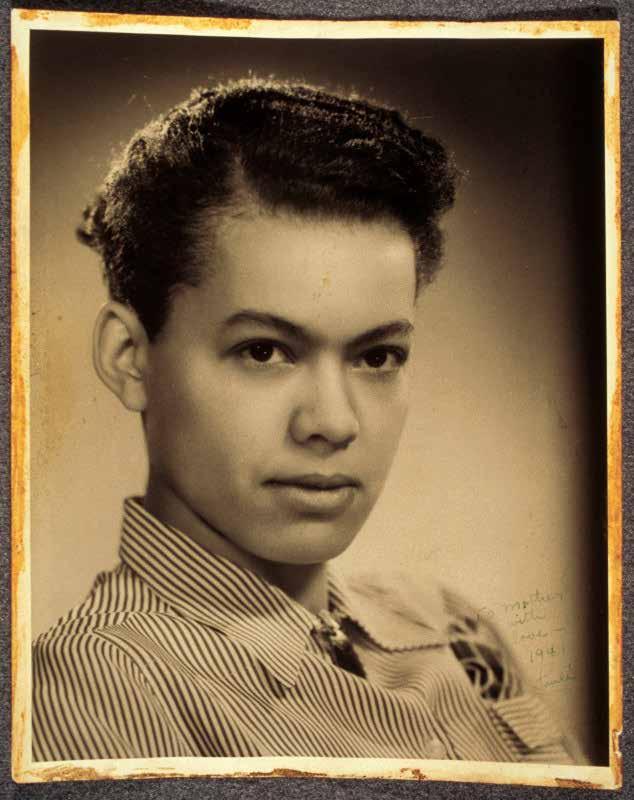
Pauli Murray in 1941 – Photo courtesy Schlesinger Library, Radcliffe Institute, Harvard University
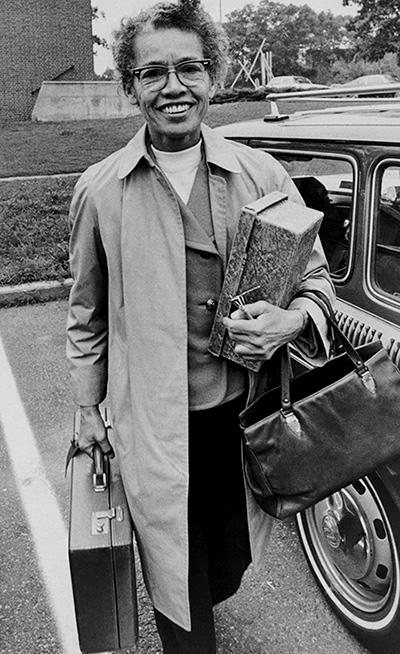
Dr. Pauli Murray, then a law professor at Brandeis University, arrives for classes in Waltham, Mass. on Sept. 27, 1971. – Photo by Frank C. Curtin / AP
Op-Ed
Search for the Soul of Seattle: The quiet spots
by A.V. Eichenbaum SGN Associate Editor
In the ’60s, a man named John B. Calhoun ran a series of experiments in which he built insular “mouse cities” to test the psychological stresses of overpopulation and city living. In the beginning, some mice would fight and form social groupings to protect resources, despite the clear abundance of food and water. Over time, the population became too large, the groups broke down, and the mice became more and more secluded, leading solitary lifestyles, either eating and grooming themselves without social interaction or hiding away in their prefabricated apartments and dying alone.
I think about this a lot, lying in bed, exhausted by the sound of traffic and listening to the constant scrapes and bumps coming from the apartment above mine. They never seem to go out, but they’re always restless, whoever they are. To my left is a young woman whose dishes’ clattering I can hear from what constitutes the living room of my studio abode. And to my right is a stairwell. The constant stomping and movement have become an irregular orchestra playing over the claustrophobic cacophony of everyday city living.
They say there are ties between city noise and a shorter life — and Seattle’s constantly under construction.
As soon as the weather warms up, it’s become my tradition to leave my mousetrap — with its hair-trigger fire alarms and tap-dancing neighbors — and find the quiet spots in the city. There are several pocket parks in and near my neighborhood, but my favorite place is just at the edge of Bell-
town. If you walk a little off the path of the Olympic Sculpture Park and down to the water, you’ll find it.
in the middle of the Emerald City.
Myrtle Edwards Park.
Staring out into the Sound from a rocky beach, mostly obscured by trees, the first thing I always notice is the smell of the salt air. The second is that aside from the occasional train or plane, the only sound here is
the waves crashing against the rocks. I have a tendency to sit on the rocks and watch the water for hours.
I ruined someone’s engagement photos doing this once, but only because I was there first, and the photographer was being loudly passive aggressive instead of politely asking me to move.
I’d never been so calm and so full of spite at the same time. It’s a life changer.
The peace there comes not only from
National News
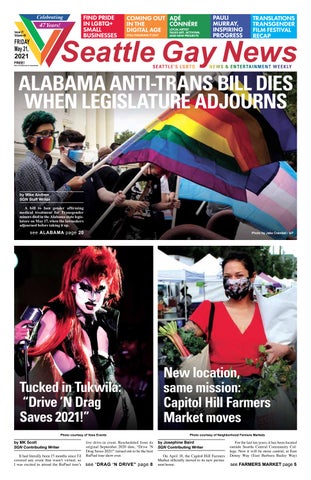
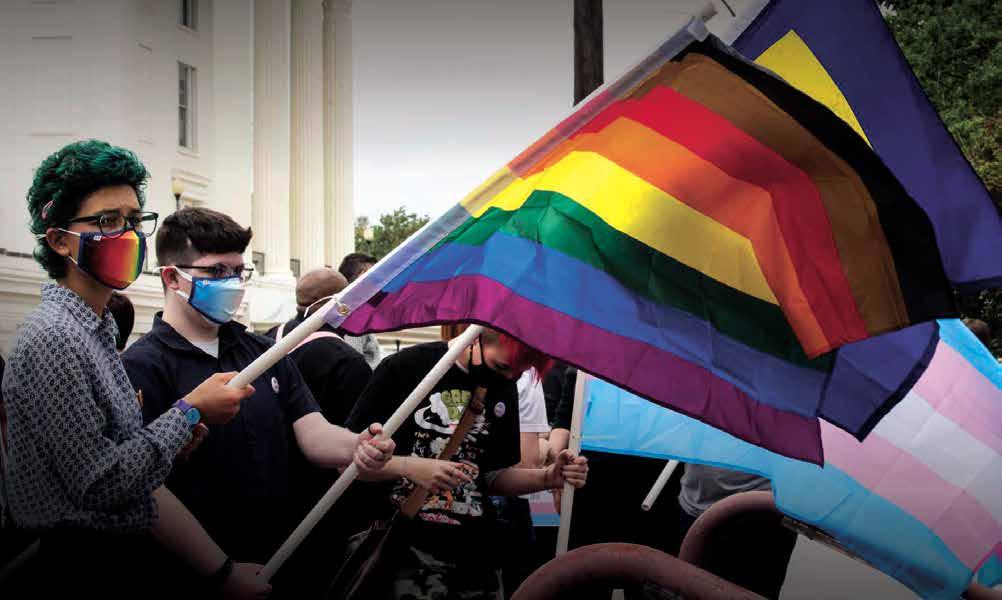
ALABAMA
The measure had been passed by the Alabama Senate, but it came to the floor of the state House in last place on a very long agenda, and lawmakers bailed before taking it up. According to Associated Press, the House adjourned around midnight on May 17, the last hour of the last scheduled day of their session.
by Daniel Lindsley SGN Contributing Writer
Pennsylvania
The New York Times reported on May 16 that Bucknell University is investigating an act of hostility against its LGBT students. A group of men “harassed and intimidated” the residents of the university’s LGBT-aligned Fran House, and tried to break into the building. Witnesses say 15-20 people were outside the building during the night, banging on doors and even climbing to the roof. By the time campus security officers arrived, only four of the intruders remained. Witnesses say the officers
The bill would have prohibited doctors from providing gender-affirming medical treatments for Transgender minors, and would have made the parents or guardians of minors who underwent gender-affirming treatments liable to be prosecuted for child abuse.
The demise of the bill was a victory for LGBTQ advocacy groups and Trans youth and their parents, who held rallies outside the Alabama statehouse to oppose the bill.
“This important victory is the result of
spoke with the intruders in a cordial way and did not speak with the residents.
Bucknell has since hired a firm to correct its safety department’s shortcomings. The university’s community has actively supported Fran House’s residents, setting up nightly watches outside the building and organizing a march against toxic masculinity.
California
LGBTQ Nation on May 16 covered Caitlyn Jenner’s latest campaign ad, which criticizes California for its regula-
trans people and their families mobilizing to defend this life-saving medical care in Alabama and around the country,” said Chase Strangio, deputy director for Trans justice at the ACLU LGBTQ & HIV Project.
Supporters of the bill alleged that they were trying to protect children from decisions that should wait until adulthood.
“Children aren’t mature enough to make these decisions on surgeries and drugs,”
Republican Sen. Shay Shelnutt, the sponsor of the bill, said earlier in the legislative session.
tions, high taxes, and high number of citizens moving out of the state. She shows off a gold medal in the ad, claiming she can “compete” with Florida and Texas, with promises of lower regulations and good business. LGBTQ Nation writer Juwan J. Holmes noted, however, that California’s population growth is still positive, and higher than half of all states.
Fans of Blizzard Entertainment’s popular video game franchise Warcraft learned from Twitter users on May 11 that one of the title’s foremost characters is trans. Chromie, the character in question, is a time-travelling dragon who often takes the form of a three-foot Gnome. She has appeared in multiple games, as well as in trailers for major releases like World of Warcraft Classic Her trans status was confirmed in the early release of a “folklore” book featuring a short story called “Visage Day,” which describes a coming-of-age ceremony for dragons in which they choose their forms.
the quiet but also from view of the mountains on a clear day, and the closeness to the water. I like to sit on the edge of the rocks until high tide forces me to climb up further. It feels wild, Myrtle Edwards Park, despite knowing it isn’t. It’s an easy return to the simple joys for someone like me, who grew up so close to wilderness before transplanting.
You get a real appreciation for the sturdy things — the mountains and rocks and waves — when you’ve lived a life pretending to be something you’re not: straight or male or happy. Sure, the mountains and rocks will erode eventually, but they do it at a rate so incomprehensibly slow that they feel eternal. They’ll outlast my mousy, solitary life of hustle and bustle. There’s a sense of calm in that, too. Knowing the world goes on without you, I mean.
If the rain clouds hadn’t rolled in, I would’ve stayed until sunset. Watching the lights on the other side of the water twinkle to life and paint a portrait of the sky on land is one of those things that never loses its splendor.
After walking no more than two blocks from that spot, I’m almost flattened by a tourist’s SUV. Oregon plates. There goes that sense of calm. I rush home to spend the rest of my day hiding away in my studio apartment with noise-canceling headphones on.
Which neighborhood should I explore next? Tweet suggestions, critiques, or flatout insults @photondetective for the next installment of Search for the Soul of Seattle.
He added that he had been unaware such treatments were happening in Alabama when he first introduced the bill last year. Arkansas was the first state to enact such a measure earlier this year. Alabama lawmakers did approve another bill banning Transgender girls from playing on gender-appropriate school sports teams. Alabama Gov. Kay Ivey signed that bill into law last month.
Heaven
Photo by A.V. Eichenbaum
Chromie – Image courtesy of Blizzard Entertainment
Photo courtesy of Fran's House
Cuba flies rainbow flag to mark International Day Against Homophobia
by Mike Andrew SGN Staff Writer
Cuba draped its health ministry building with a giant rainbow flag on May 17 to mark the International Day against Homophobia.
“I never thought I would live to see the flag of the sexual diversity movement hung next to the Cuban one on such an important institution as the health ministry,” said Teresa de Jesús Fernández, coordinator of the National Network of Lesbian and Bisexual Women, after posing for a photo with the flag.
The display comes at a critical time for the country’s LGBTQ community. Cuba will soon pass a new family code, which could include marriage equality. A proposed marriage equality provision was removed from Cuba’s draft constitution in 2019 after protests by religious organizations.
The LGBTQ community’s relationship with the Cuban government has had its ups and downs. For some years after the 1959 revolution, the country’s government iden-
tified LGBTQ people with the mafia-run sex tourism industry that it wished to suppress. As a result, LGBTQ were often sent to correctional labor camps.
In a 2010 interview with the Mexican newspaper La Jornada, then-President Fidel Castro publicly apologized for his government’s actions, saying it had been “a great injustice.”
Fidel’s brother and successor as president, Raúl Castro, became an important ally of Cuba’s LGBTQ community, influenced by his daughter Mariella Castro, the director of the National Center for Sex Education.
Raúl’s successor, current Cuban President Miguel Díaz-Canel, is also an LGBTQ ally. As a young provincial Communist Party leader, he opposed more conservative party members by backing a local LGBTQfriendly bar.
Commemorating the International Day Against Homophobia, Díaz-Canel wrote that Cuba was committed to guaranteeing all rights for all people.
Cubans currently enjoy the right to
free gender-affirming medical treatments, including free surgery, and protection against workplace discrimination on the basis of sexual orientation. The government has also sponsored annual congas against homophobia, Cuba’s equivalent of Gay Pride parades.
Because of the COVID pandemic, the Cuban government suspended this year’s conga line but hung giant rainbow flags on government buildings instead. Authorities say they will project the flag onto two colonial castles in Old Havana at night as well.
In spite of the progress, members of the Cuban LGBTQ community say they have been frustrated by the slow pace of change in recent years while other Latin American countries have moved forward with approving same-sex marriage.
In his speech to this year’s Communist Party Congress, Raúl Castro admitted he was disappointed that action against sexism and homophobia was not proceeding as quickly as he’d hoped.
by Daniel Lindsley SGN Contributing Writer
Puerto Rico
NBC News on May 14 brought forth the words and experiences of Justin Santiago, Puerto Rico’s first trans man to change his name and gender on his birth certificate. Santiago speaks out against conversion therapy, which he suffered at 15 years old, after a bill that would ban the practice died in Puerto Rico’s senate. Some senators have claimed that conversion therapy no longer takes place on the island. Miguél Vázquez-Rivera, a psychologist who has served LGBTQ people for years, disagrees.
Cameroon Reuters confirmed on May 12 that the two transgender women on trial for “attempted homosexuality” in Cameroon have been fined and sentenced to five years in prison. The women were arrested in February for the clothes they wore in a restaurant. One of the women’s lawyers, Alice Nkom, calls the result “a political decision” of Cameroon’s central government, as a part of what Human Rights Watch called an “overall uptick of police action” against sexual minorities in the country. Nkom says she will appeal the verdict.
Abroad
Philadelphia Gay News reported May 12 on the Biden Administration’s announcement in support of LGBTQI+ people across the world. The message is promising, but many countries have responded in opposition, with their governments reaffirming their anti-LGBTQ stances, doubling down on discriminatory laws, and either perpetrating or allowing greater violence against people based on their LGBTQ status.
PGN ’s Mark Segal speaks about the “thorny” nature of changing cultural and religious attitudes on the subject, and puts the number of countries in which being gay is illegal at 71. Segal writes, “The simple sign of an American Embassy in one of those 71 countries flying a Rainbow flag to announce LGBT pride...shows people that we do not stand with their government’s anti-LGBT policies.”
Photo courtesy of Reuters
Justin Santiago – Photo by Jose (Tito) Fuentes
Frank in Seattle: MK Scott remembers this well, because he was there. On May 17, 2011, MK was one of three journalists that attended a quick press conference at the offices of Nyhus Communications about a private fundraiser for District 7 Rep. Jim McDermott and the equally respected congressman from Massachusetts, Barney Frank.
As MK recalls, “Now, this wasn’t my first meeting with Mr. Frank. I had met him years earlier at a convention in New York. I was there representing my blog, OUTview TV, with my cameraman Stewart and two other reporters, one from an environmental outlet and SGN staff writer Mike Andrew…
“Asked what was the main obstacle to getting a Democratic-controlled House to adopt the Employment NonDiscrimination Act (ENDA), Frank replied, ‘It’s the transgender language, plain and simple... We’ve spent 30 years educating people on the LGB issues, and we’ve passed ENDA without the trans language. But the community said, “We want the trans language,” so there you go. Look, Maryland — it’s a pretty liberal state — they refused to pass a trans rights bill. If you can’t pass it in Maryland, or New York, or Massachusetts…’ His voice trailed off.
“Nevertheless, Frank predicted, ‘It will pass the next time we have a Democratic Congress.’”
UPDATE: Frank stepped down from Congress in 2013. ENDA is now part of the Equality Act that the House passed by a vote of 224 to 206 on February 25, 2021, with support from three Republicans. The bill has moved on to the Senate for consideration.
HIV vaccine: SGN Staff Writer Mike Andrew reported, “According to spokesperson Scott Samples, Martin Memorial has already been in talks with [the Vaccine and Gene Therapy Institute] about various HIV trials. VGTI Oregon has been researching the vaccine for more than 10 years with federal grant money from the National Institutes of Health, and additional funding from the International AIDS Vaccine Initiative (IAVI). The project received $1.06 million from the NIH in 2010 and received similar amounts in 2008 and 2009, according to the NIH website. For the previous
five years, the NIH funded the project at about $700,000 per year. ‘When the time comes, if [the VGTI is] looking for assistance from Martin Memorial, we’ll see if we can accommodate that, and we look forward to having the opportunity to help them further their research,’ Samples said.”
UPDATE: New studies regarding a vaccine for COVID-19 have also helped in the development of an HIV vaccine. NIH Director Dr. Anthony Fauci said in our recent interview that an HIV vaccine is almost here and that it might be possible to eradicate HIV by the end of this decade.
Anti-bullying survey results: As Staff Writer Shaun Knittel reported, “LGBT young adults who reported high levels of LGBT school victimization during adolescence were 5.6 times more likely to report having attempted suicide, 5.6 times more likely to report a suicide attempt that required medical care, 2.6 times more likely to report clinical levels of depression, and more than twice as likely to have been diagnosed with a sexually transmitted disease and to report risk for HIV infection, compared with peers who reported low levels of school victimization.
“Gay and Bisexual males and Transgender young adults reported higher levels of … school victimization than Lesbian and Bisexual young women.
“LGBT young adults who reported lower levels of school victimization reported higher levels of self-esteem, life satisfaction, and social integration compared with peers with higher levels of school victimization during adolescence.
LGBT youth homelessness bill: SGN
Staff Writer Mike Andrew reported that Sen. Patty Murray was co-sponsoring (with Sen. John Kerry (D-Mass.) the Reconnecting Youth to Prevent Homelessness Act. “The bill addresses the needs of young people living on the street and has specific provisions dealing with the problem of LGBT homelessness.”
UPDATE: Since the introduction of the Reconnecting Youth to Prevent Homelessness Act of 2011, several pro -
2011 This Week in SGN History
SGN Contributing Writer This week in SGN history: 10 years ago
by
visions in the bill have become law.
Sen. Murray has continued to push for measures to address and prevent youth homelessness, and she has been a vocal advocate for the LGBTQ+ community in Washington state and across the country.
In other news:
CNN’s Don Lemon announced, “I’m gay.”
C.C. Attle’s announced that the grand reopening of its new location would happen on June 11. (Update: C.C.’s lost its 15th and Madison location and ended up at the space formerly occupied by another Gay business, Café Metropolitain.)
Madison Pub celebrated 25 years.
In A&E news:
Pride Idol corrals the talent on Country Night: SGN Staff Writer Shaun Knittel reported, “Contestant number one, Joshua Johnson, did not get the memo that there was a theme. Instead, he sang Lady Gaga’s ‘Poker Face.’ The thing is, he was really good and performed the song as he recorded it himself. Thanks for the fun, Joshua!
“Giving us what I thought was the performance of the night, Julie Mains sang a flawless version of Shania Twain’s ‘Man, I Feel Like a Woman.’ The performance was fun, countrified, and not a parody — Julie really owned the song. Julie will return June 12 for the wildcard round and a chance to win a spot in the Pride Idol finals!”
2011 SIFF preview: SGN film critic
Sara Michelle Fetters sat down with SIFF Artistic Director Carl Spence for a preview of the 37th Annual Seattle International Film Festival. “Carl talking about Beginners leads me to ask about this year’s tribute guests, the aforementioned Ewan McGregor, and esteemed extreme sports filmmaker and adventurer Warren Miller, upon whom SIFF is bestowing a Golden Space Needle for Lifetime Achievement. Both have proven themselves in the entertainment world, one with his daring performances and the other by his six-plus decades of showcasing outdoor wintertime the excitement in all its widescreen fury.
“[Said Spence,] ‘Ewan McGregor is just someone I and others have admired for many, many years. Trainspotting was a huge hit here [at SIFF] and won the Golden Space Needle audience award for Best Film. It was the first award Danny Boyle ever got. With McGregor, he has such an amazing reach, and I think all four films we’re screening showcase that. There are Beginners, obviously, and there’s Perfect Sense, which is sort of a post-apocalyptic love story. As for older selections, we’re showing The Pillow Book, which is arguably one of [director] Peter Greenaway’s best films but also showcases an amazing performance from McGregor; he brought so much to that. And Moulin Rouge! You kind of have to show Moulin Rouge! But then, that’s just a sampling of what he’s done and the type of roles he’s had. We’d show more if we could.’”
UPDATE: Beginners star Christopher Plummer won his first Academy Award for his role as a man coming out in his eighties.
A Dyke About Town: Dan Savage reads his book It Gets Better: As reported by SGN Contributing Writer Mercy Moosemuzzle, “When I went to get my book signed, I mentioned that as a teenage Lesbian, I had spoken in high schools about human sexuality. I said to Dan that I had done this in the 1970s — many moons ago. He thanked me for being an early participant.”
La Femme Magnifique @ 30: SGN Staff Writer Shaun Knittel got a preview of the annual drag contest started by Portland Legend Darcelle and longtime partner Roxy. “’There are so many factors that go into the shaping of a queen,’ said Coco Vaughn, a Seattle drag legend and past titleholder. ‘A La Femme has to have not only looks and be able to entertain people, but they also have to be a person who is well-rounded and can give back to the community.’ Coco said, ‘The community gives us so much, and we as entertainers have a responsibility to give back all the love and support we receive.’”
UPDATE: The winner was Ladie Chablis.
Compiled
MK Scott
Over 47 years, the Seattle Gay News has covered thousands of stories that still resonate today. This week we look back at Vol. 39, Issue 20, published on May 20, 2011.