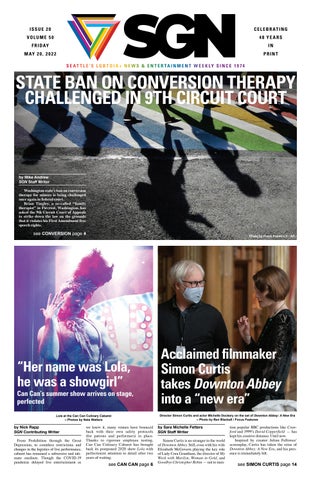
STATE BAN ON CONVERSION THERAPY CHALLENGED IN 9TH CIRCUIT COURT
by Mike Andrew SGN Staff Writer
Washington state’s ban on conversion therapy for minors is being challenged once again in federal court.
Br ian Tingley, a so-called “family therapist” in Fircrest, Washington, has asked the 9th Circuit Court of Appeals to strike down the law on the grounds that it violates his First Amendment free speech rights.
see CONVERSION page 4
“Her name was Lola, he was a showgirl”
Can Can’s summer show arrives on stage, perfected
by Nick Rapp SGN Contributing Writer
From Prohibition through the Great Depression, to countless restrictions and changes in the logistics of live performance, cabaret has remained a subversive and intimate medium. Though the COVID-19 pandemic delayed live entertainment as we knew it, many venues have bounced back with their own safety protocols (for patrons and performers) in place. Thanks to rigorous employee testing, Can Can Culinary Cabaret has brought back its postponed 2020 show Lola with perfectionist attention to detail after two years of waiting.
Acclaimed filmmaker Simon
takes Downton Abbey into a
by Sara Michelle Fetters SGN Staff Writer
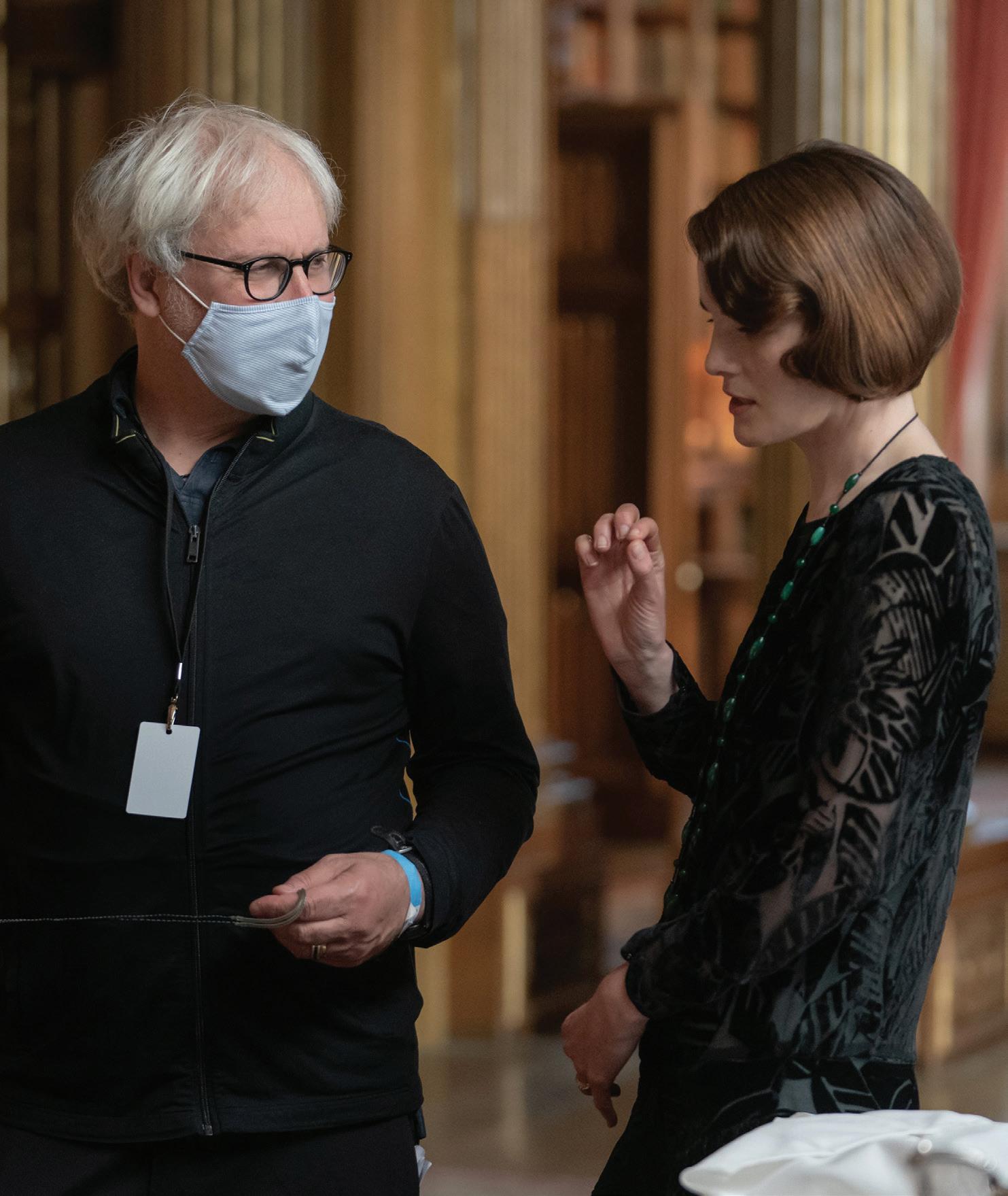
Simon Curtis is no stranger to the world of Downton Abbey. Still, even with his wife Elizabeth McGovern playing the key role of Lady Cora Grantham, the director of My Week with Marilyn, Woman in Gold, and Goodbye Christopher Robin — not to men-
tion popular BBC productions like Cranford and 1999’s David Copperfield — has kept his creative distance. Until now. Inspired by creator Julian Fellowes’ screenplay, Curtis has taken the reins of Downton Abbey: A New Era, and his presence is immediately felt.
Lola at the Can Can Culinary Cabaret
Photos by Nate Watters
Director Simon Curtis and actor Michelle Dockery on the set of Downton Abbey: A New Era – Photo by Ben Blackall / Focus Features
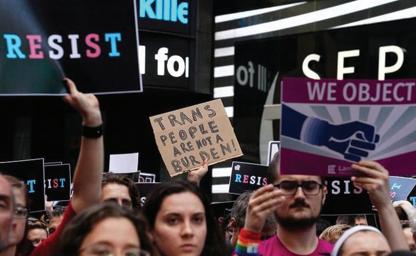
Photo by Frank Franklin II / AP
Local News
Though exhausted, SPU student activists continue the fight
by Josephine Baird Special to the SGN
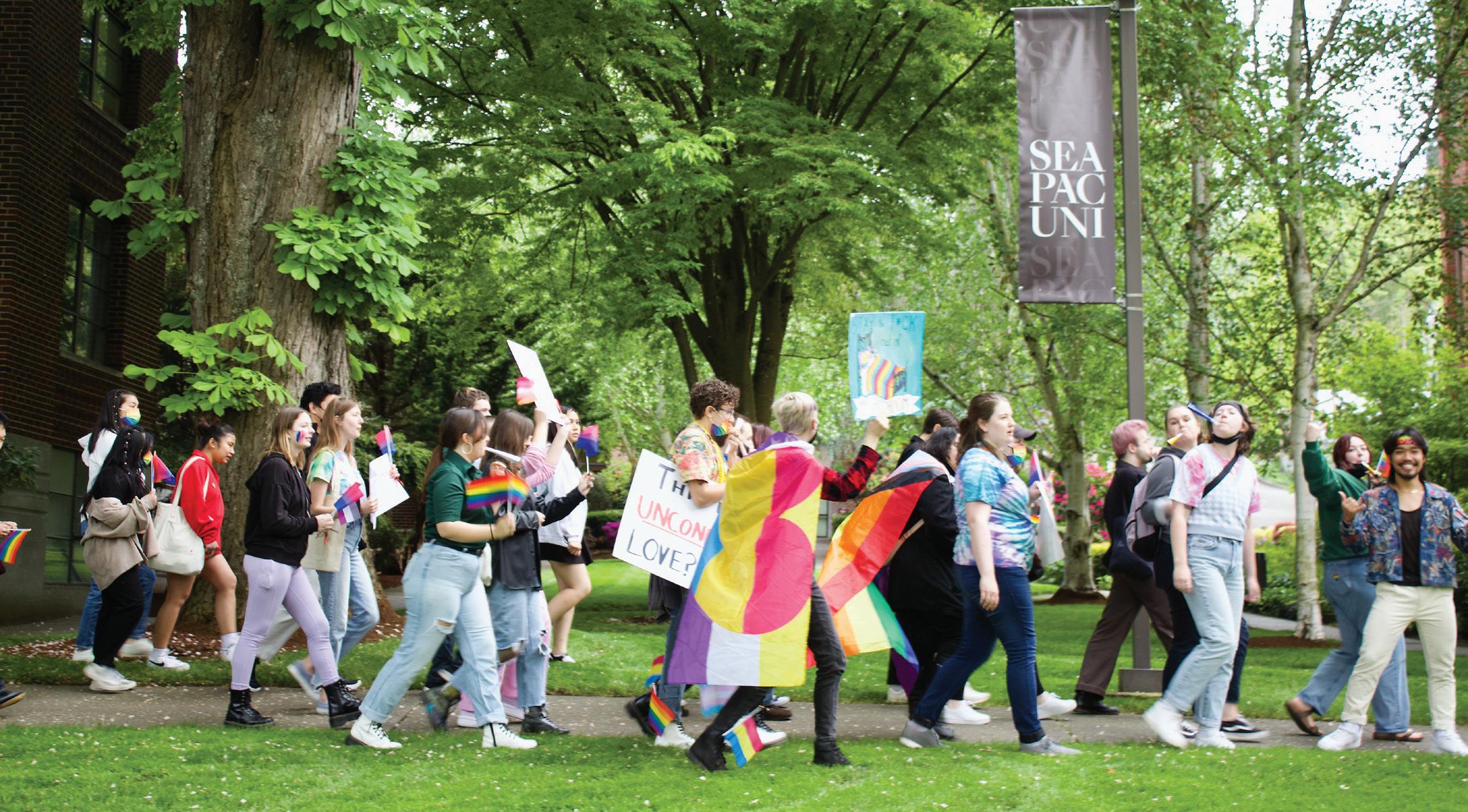
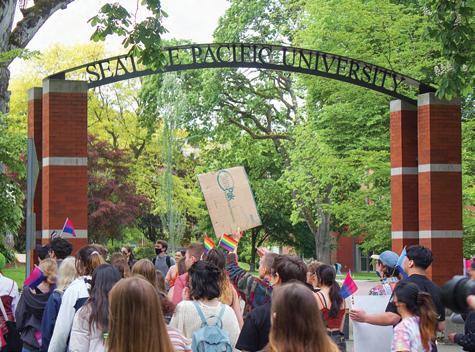
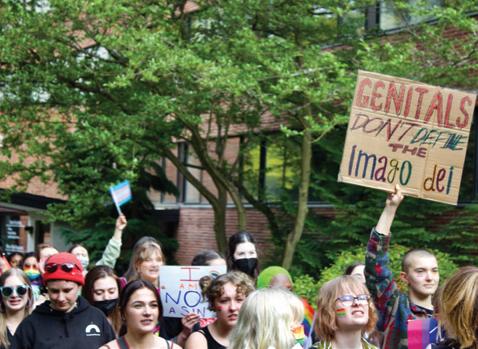
On May 17, 2022, a beautiful Seattle day, the Seattle Pacific University campus was ringing with the chirping of birds — and the chanting of Gay rights activists calling for change. SPU has been the center of controversy since January 2021, when Jeaux Rinedahl, an adjunct professor of nursing, sued the school for hiring discrimination after being denied a full-time position because of his sexuality.
Si nce then, students, alumni, staff, and faculty activists have committed to bringing attention to SPU’s homophobic policies and hiring practices. They have been frustrated from and exhausted by their work, which has included demonstrations, protests, and lawsuits, resulting in yet no huge change of heart and policy by SPU’s administration and board of trustees.
Ch loe Guillot, vice president of ministries in the Associated Students of Seattle Pacific and an activist, said, “It’s my senior year, and it doesn’t feel great to have to keep [protesting] every year.”
This year, a LGBTQ+ work group was created with the goal of bringing about change that would best serve the campus. In April, it concluded its research and made recommended that the board of trustees change the employee-lifestyle expectations to no longer prohibit same-sex relationships.
The protest
With the school year drawing to a close and the May 18-20 board meeting approaching (in which a decision will be made in response to the above recommendation), campus activists wanted to plan a protest as one last effort to make policy changes this year.
The protest started at Tiffany Loop, the location of the many previous protests. It then moved toward the nursing building, to recognize the department that Rinedahl was denied a full-time position in. Then it moved to the First Free Methodist Church across from campus, where advocates chanted “Two, four, six, eight, time to disaffiliate!” (The Free Methodist Church has threatened any affiliated university that changes its policies regarding LGBTQ+ issues with expulsion from the church.)
At this point, protesters walked to the Ames Library building, where the board of trustees meets. Finally, the protest perched outside of the president’s building, chanting “SPU is Gay — correct!” During the chants, SPU President Pete Menjares could be seen looking down on the protestors.
Out of sync
For students, one of the most frustrating aspects of this fight is that the homophobic policies don’t represent the thoughts and desires of the SPU community. According to a 2021 survey, around 80% of students, faculty, and staff support removing the employee-lifestyle expectation from hiring policies. In addition, the survey showed that 75% of the Christian SPU students do not believe that the statement on human sexuality aligns with their views.
Ca itlin Thomas, a SPU seminary graduate student in her last quarter, is questioning her future. She has been offered a fulltime position by the university, but because of the employee-lifestyle policy, she can’t accept it. She said she appreciates the undergraduate community heading up the fight: “I’m so proud of what they’ve been doing. I hope it can keep going without people experiencing burnout.”
With many of the current student activists graduating in just a matter of weeks, the future of the fight is unknown. Raegan Figgins, an SPU junior and former activist leader, has taken a back seat this school year due to burnout and exhaustion. She is hoping that the summer will allow her to return in the fall rested and able to contribute at a higher level.
“I’ll be ready to go again if need to, but I’m praying I won’t have to,” she said.
Although student leaders are exhausted from the uphill battle for inclusivity, Guillot is thankful for the strides that they have made during her time at SPU. Student activists have been burned before, and Guillot and other students are worried that they will be let down by the response from this week’s meeting of the board.
But still, Guillot is feeling hopeful after seeing the turnout at the protest. “I deeply care about my professors and the students here, and I believe that SPU can be a Chris-
tian school that’s radically progressive, if we just keep pushing,” she said.
Next steps
The Associated Students of Seattle Pacific has started a petition to “hire and protect LGBTQ+ staff and faculty and SPU” with the goal of 2,500 signatures. Student activists hope to show the petition to the board of trustees this week as a way to emphasize and highlight community support for this issue. As of Wednesday morning, the petition has over 1,700 signatures.
To include your name and help SPU activists reach their goal, go to www. change.org/p/hire-and-protect-lgbtq-staffand-faculty-at-spu.
The law, passed in 2018, forbids the practice of trying to change the sexual orientation or gender identity of minors through “counseling” that often amounts to torture. More than 20 states have passed laws against conversion therapy. The American Psychological Association has said such therapy is harmful to lesbian, gay, bisexual, and transgender people.
Ti ngley says his work is based on his Christian faith, and that his “treatments” are carried out with the consent of the “patient’s” parents.
He sued to get the law overturned in 2021, but his suit was dismissed by US District Judge Robert Bryan last August. Bryan ruled that the state has the right to regulate professional conduct even if it “incidentally” burdens speech.
Tingley appealed the ruling. He is represented by Roger Brooks, a lawyer for Alliance Defending Freedom (ADF), a notorious Christian-right group. Among the ADF’s other recent clients is an Ohio professor who was disciplined for misgendering a student.
The ADF has also intervened legally to prevent Jewish people from adopting children. Ac cording to Brooks, restrictions on Tingley’s free speech are not incidental to his professional practice because the “therapy” itself consists entirely of speech.
As sistant Attorney General Cristina Sepe, arguing for the state, countered that the law regulated therapists’ professional conduct, not speech, and protects minors from an ineffective and harmful practice.
Ci rcuit Judge Mark Bennett, sitting on the three-judge panel that heard the appeal, pressed Brooks on whether the panel could go against an earlier 9th Circuit decision upholding a similar California law.
Brooks said it could and should, adding that the US Supreme Court expanded free speech protections in its 2018 decision in National Institute of Family and Life Advocates v. Becerra. In that case, the high court struck down a California law requiring clinics for pregnant women to provide notices of the availability of certain statesubsidized services, including abortion. Sepe argued that case was different because Tingley’s speech, unlike the notices, was a part of the treatment he was offering, and so could be regulated as professional conduct rather than speech. She said the law did not infringe on Tingley’s right to express his views publicly but only regulated the treatment he could offer.
In addition to Bennett, Circuit Judges Kim Wardlaw and Ronald Gould are also on the panel. If the panel upholds the law, the next step for Tingley would be to ask for the entire 9th Circuit to hear the case. After that, he could ask the US Supreme Court to take it up.
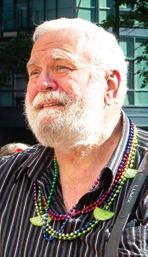
Brian Tingley – Photo courtesy of ADF
Photos by Josephine Baird
Arts & Entertainment
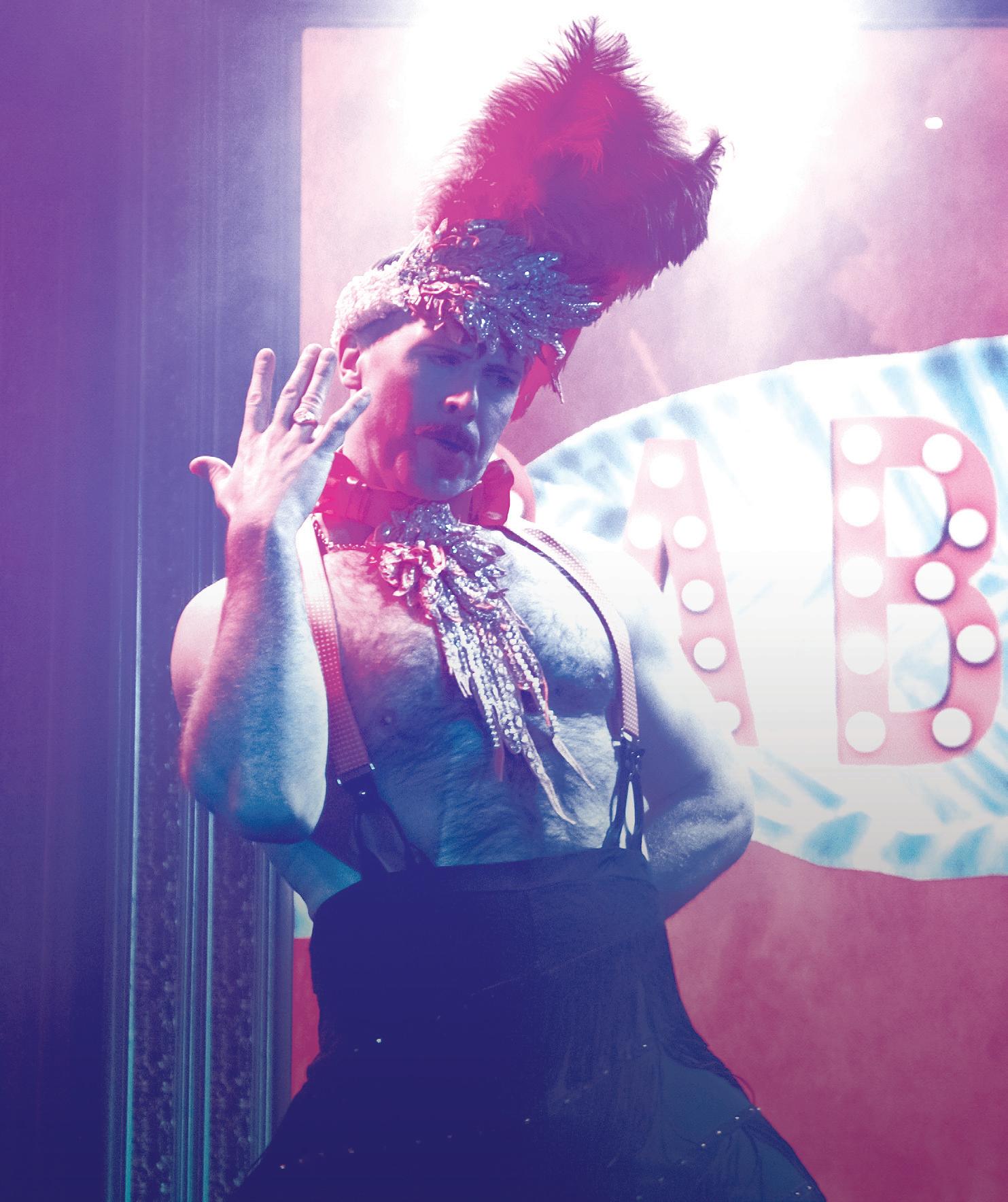
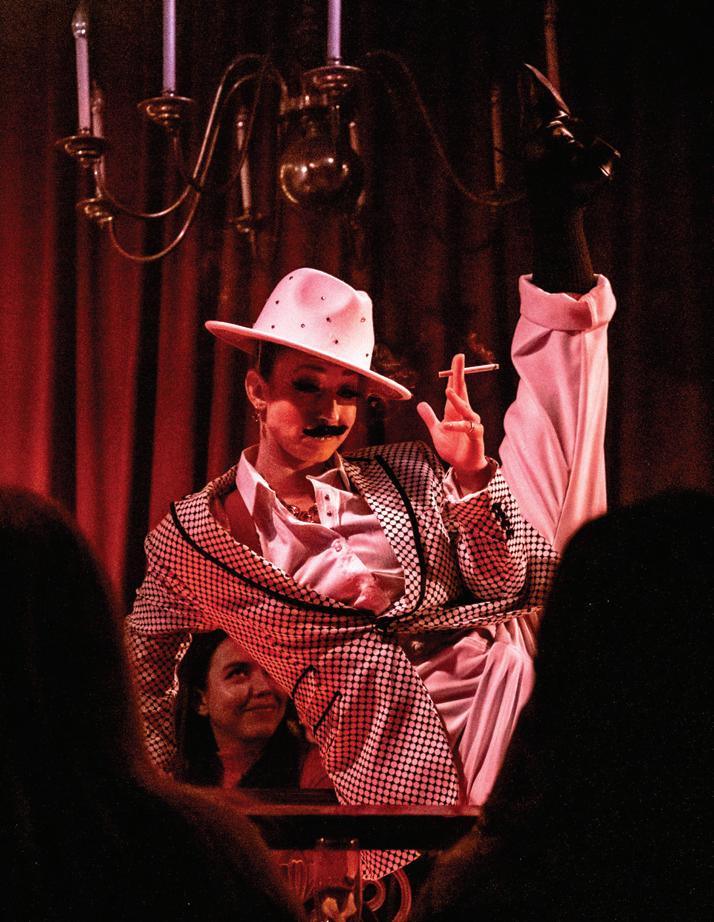
Lola at the Can Can Culinary Cabaret – Photos by Nate Watters
of Lola’s affairs. Whether spinning on dangling props or strip-teasing special guests, Betchtel captivates and exudes a love of live entertainment.
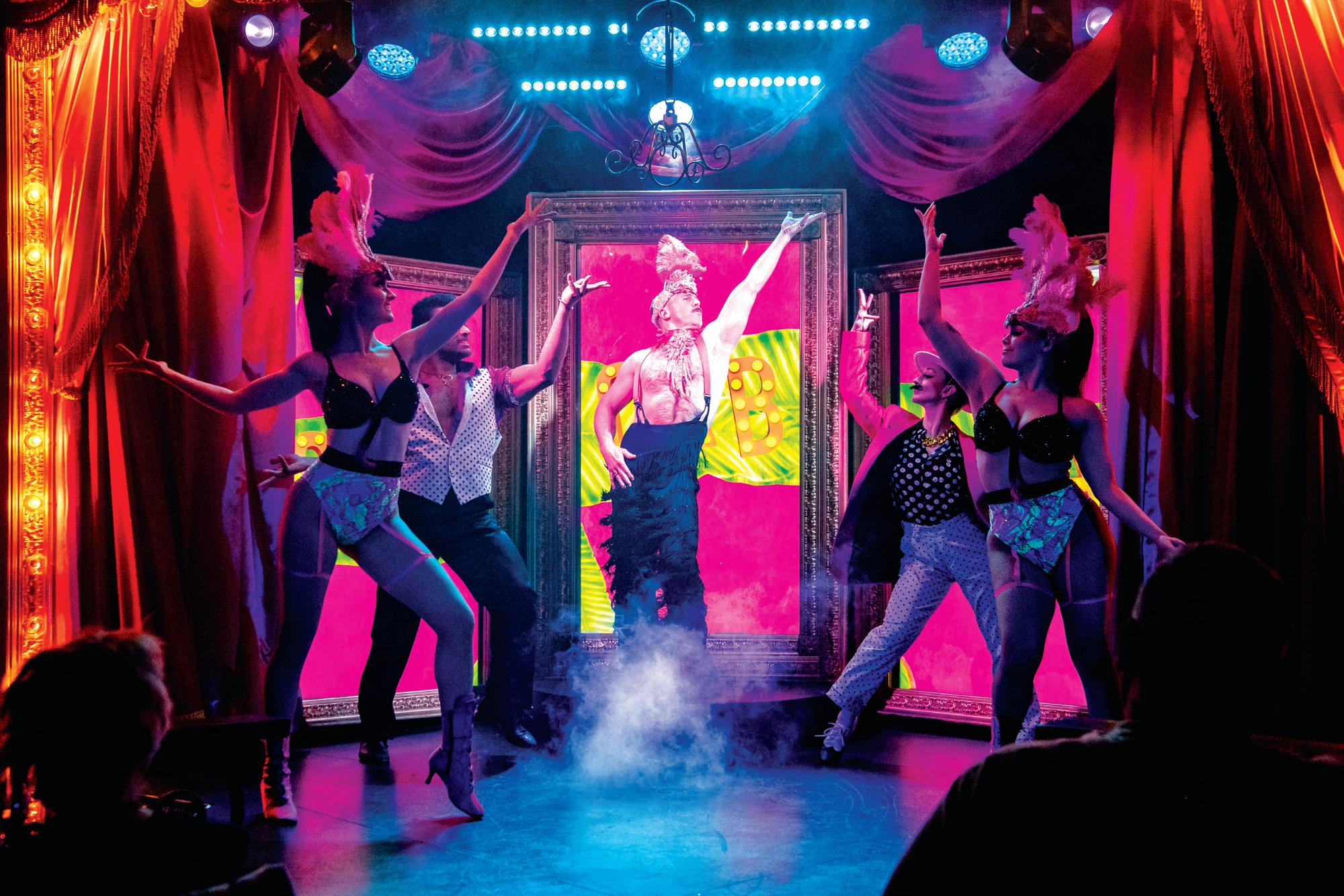
Based on the plot of Barry Manilow’s seventies hit “Copacabana,” the show (loosely) tells the story of Lola, a showgirl torn between her fling with bartender Tony and the temptation of the Copacabana’s rival restaurant bartender, Rico. Like all cabaret, it is spectacle over plot — you may be pressed to trace too strong of a story, but you’ll know who is who because everyone is stunning, and the cast’s presence outweighs the need for a detailed narrative.
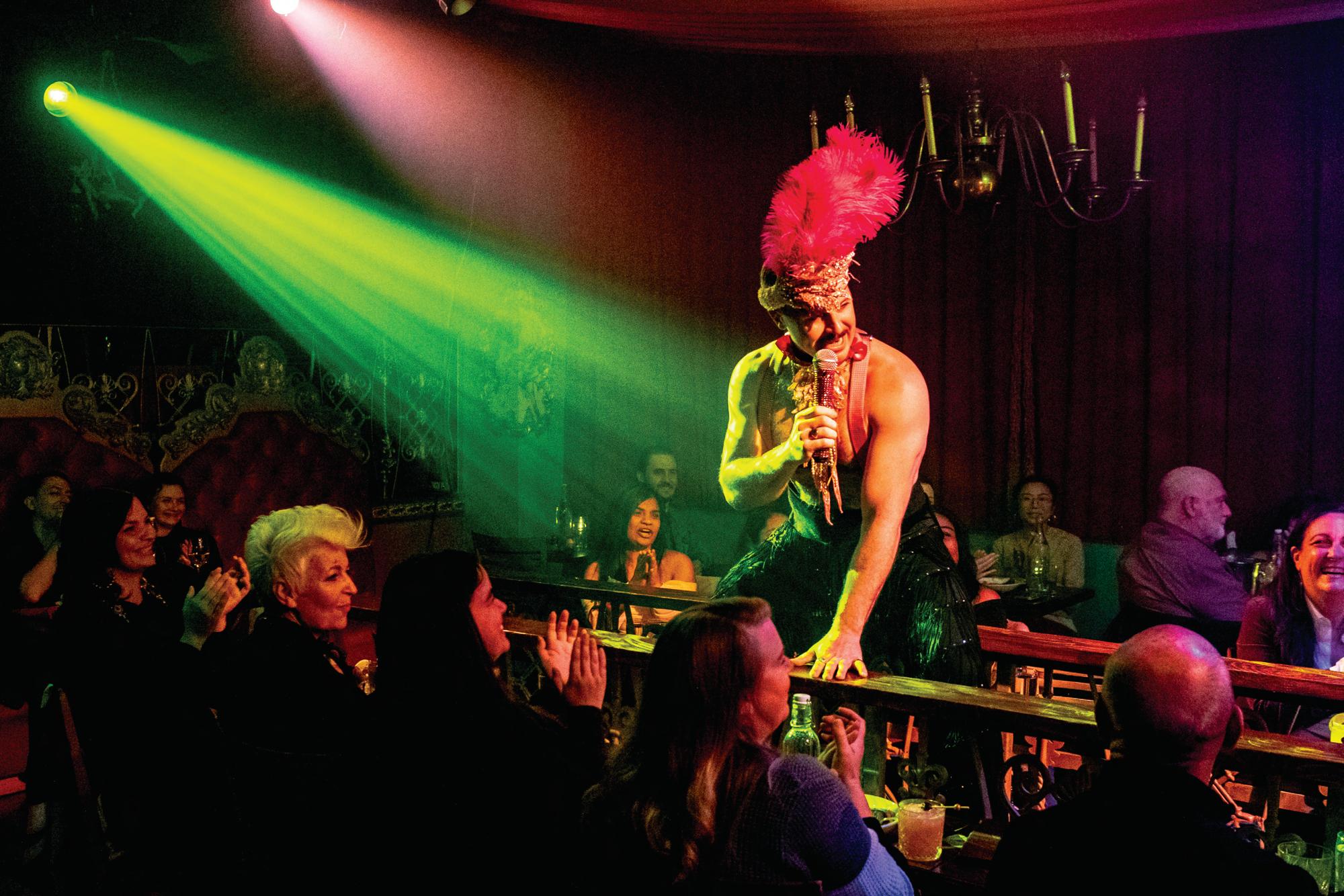
Can Can co-owner Jonathan Betchtel plays the titular Lola, costumed throughout in decadent headpieces, bedazzled accessories, and often, near nothing at all. He is equal parts emcee (expect lots of crowd work) and showgirl, jumping straight from interactive audience embarrassment to elaborate dance sequences. His toying with front-row showgoers breaks the ice, inviting audiences into the hypersexual world
Multihyphenate Richard Peacock plays Tony, who woos Lola and the audience with a charming smile, strong voice, and insanely sculpted physique. His dance skills shine bright, and his macho sex appeal plays wonderfully off of Rico’s slender figure and mysterious feminine energy in the love triangle.
Donning a corny fake moustache, co-producer and dancer Shadou Mintrone as Rico camps up the show with drag king flair, a hairy bodysuit, and banana penis gags. From the moment Rico emerges through the back curtains, coyly taking cigarette drags, he captivates with eye contact and frequent winks.
Showgirls Hannah Mooney and Jasmine Jean Sim strut about, the latter belting out a showstopping solo at the tail end of the production. The entire cast sings throughout, and there’s nary a missed note to be found.
The costume work shines perhaps the brightest in Lola. Bows adorn Tony’s head and briefs (front and back). Feathered cabaret headpieces shimmer, looking all the more beautiful alongside goofy props, including a large apple, stuffed snake, and spinning pineapple bed. Lola bounces from lowbrow to highbrow and back again, stunning and kidding in turns in this unpretentious but high-caliber performance.
At this past Sunday’s sold-out show, a diverse crowd of cabaret enthusiasts, unsuspecting straight husbands, college roommates, and entire families gathered for the evening performance. Tourists and locals mingled, Can Can’s setup serving as a catalyst for friendly banter between tables. Servers expertly dodged performers and audience members, balancing cocktails, shots, and burgers alike. Can Can’s Disneyland-adjacent decoration combined fancy frills with kitschy fun.
While I only got truffle fries and an Old Fashioned, they were very good fries, and the cocktail was perfect. Others ordered
multicourse meals with ingredients sourced from an impressive array of local vendors. Rarely have I been to a venue with such unanimous positivity from the servers, performers, and patrons. And artistic director Chris Pink voiced his obvious enthusiasm for bringing Lola back in a recent press release:
“We are head over heels that we finally get to release Lola into the wild after being shelved in the midst of the pandemic. [Though it was originally meant to premiere] in May of 2020, the break offered us some extra time to fine-tune all of the accouterments that make Can Can shows so special: original music, new costumes, and a fully inclusive scripted storyline. It definitely feels great to be in the swing of things in our brand-new home in the Pike Place Market.”
Lola runs evenings (except Mondays and Tuesdays) until August 28. Tickets and more information can be found at: www. thecancan.com.
Lola at the Can Can Culinary Cabaret – Photos by Nate Watters
Food Wunderground Coffee launches dreamy Salt & Straw collaboration
by Kylin Brown SGN Contributing Writer
West Coast ice cream favorite Salt & Straw has teamed up with Seattle entrepreneur Jody Hall’s latest, Wunderground Coffee, to introduce three new flavors. In a launch event at Wunderground Café on East Pike last Friday, Salt & Straw servers and baristas came together to offer free scoops with a coffee purchase.
“We’re so excited to partner with Seattle’s Wunderground Coffee, created to help explore what’s trying to get out of your magical brain,” read Salt & Straw’s press release. “Their aim was to create the most delicious adaptogenic mushroom coffee and tea in the world. And we have to say, they nailed it.”
Wu nderground’s pure whimsy makes the perfect match for Salt & Straw’s legendarily fanciful and original flavors. With its highly concentrated, adaptogenic mushroom blends (previously covered by the SGN ), it offers expert-made coffee with easygoing added health benefits.
The flavors made their first debut at a twoweekend Coachella pop-up. Put delicious and healthful coffee and tea in an ice cream and launch it for the first time at Coachella 2022, and well, you’ll have everyone in awe (or should I say “wunder”?).
At the Seattle launch, the companies’ founders, Hall and Kim Malek, were present to greet those stopping in. In true Capitol Hill fashion, a couple of random buskers came flying in mid-event, and everyone enjoyed some indie-rock tunes with their ice cream. I got a Brainwash latte for my complimentary scoop and couldn’t have been more content.
The three-limited edition Wunderground x Salt & Straw mashups are now available online in the latter company’s direct-to-
consumer web offerings. With its “Mushroom Magic Pack,” you can secure two pints of each exclusive flavor: Brainchild Coffee with Five-Spiced Hazelnut Praline, Dream Supply Chamomile & Candied Orange Sherbet, and Hocus Pocus Red Velvet & Cocoa Nib Fudge. Their website details each flavor profile: “Wunderground’s Hocus Pocus harnesses the power of Chaga and Reishi (the ones that support your energy and immune system, and kick bad vibes to the curb),” read one description. “We amp it up with one of the most joy-inducing treats out there: red velvet.”
This pairing had me speechless — eyes closed, all-you-know-is-bliss type of speechless. Salt & Straw really knows how to cream. I went back for seconds, because my go-to coffee is the Brainchild blend, because of its lion’s mane and cordyceps mushrooms and their neurological benefits. In the case of a grimace, I’ll remind you: Hall’s team worked for years to magically erase the taste of mushrooms in this coffee.
I decided that Brainchild matched with five-spiced hazelnut praline ice cream might have to be my new daily necessity. This flavor tests the line between coffee
and dessert — but it’s normal to eat coffee ice cream with breakfast, right?
“Revered throughout history, hazelnuts have long been equated with wisdom and inspiration. We candy them into a fivespice praline for a crunch that will ignite your tastebuds — and your brainpower,” reads the online profile.
Vegans (you’re so strong), sleepy ice cream addicts, and Seattle’s small population of uncaffeinated folks, fear not! The dream duo also released the perfect noncoffee, non-dairy option, just for you. “Drift off on a dreamy chamomile cloud while Reishi and Lion’s Mane work together to soothe your stress receptors,” reads the profile for Dream Supply, describing it as happy little clouds in a Bob Ross painting.
Wunderground’s chamomile and Meyer lemon tea has an extra-high concentration of lion’s mane and reishi, without the caffeine buzz of their signature coffee blends. Mix that with candied orange sherbet from Salt & Straw and float off into the chillest evening of your life.
Hall founded Wunderground Coffee for the sake of focus, calm, and overall mental wellness. In line with her mission, a portion of proceeds from all of Salt & Straw’s Mushroom Magic Packs sold will be donated to the Jed Foundation, a nonprofit working tirelessly to protect teens’ emotional health and prevent youth suicide across the United States.
Now, tell me you know of a better way to Netflix and chill.
Find the Wunderground 6-Pint Mushroom Magic Pack for a limited time at saltandstraw.com/products/ wunderground-mushroom-magic-pack.
Photo by Kylin Brown
SGN Book Club: Mean Little Deaf Queer is one woman’s journey to coming out — twice Books
by Lindsey Anderson SGN Contributing Writer
SGN Book Club explores LGBTQIA+ literature, new and old, from the fresh perspective of a Gen Z book enthusiast.
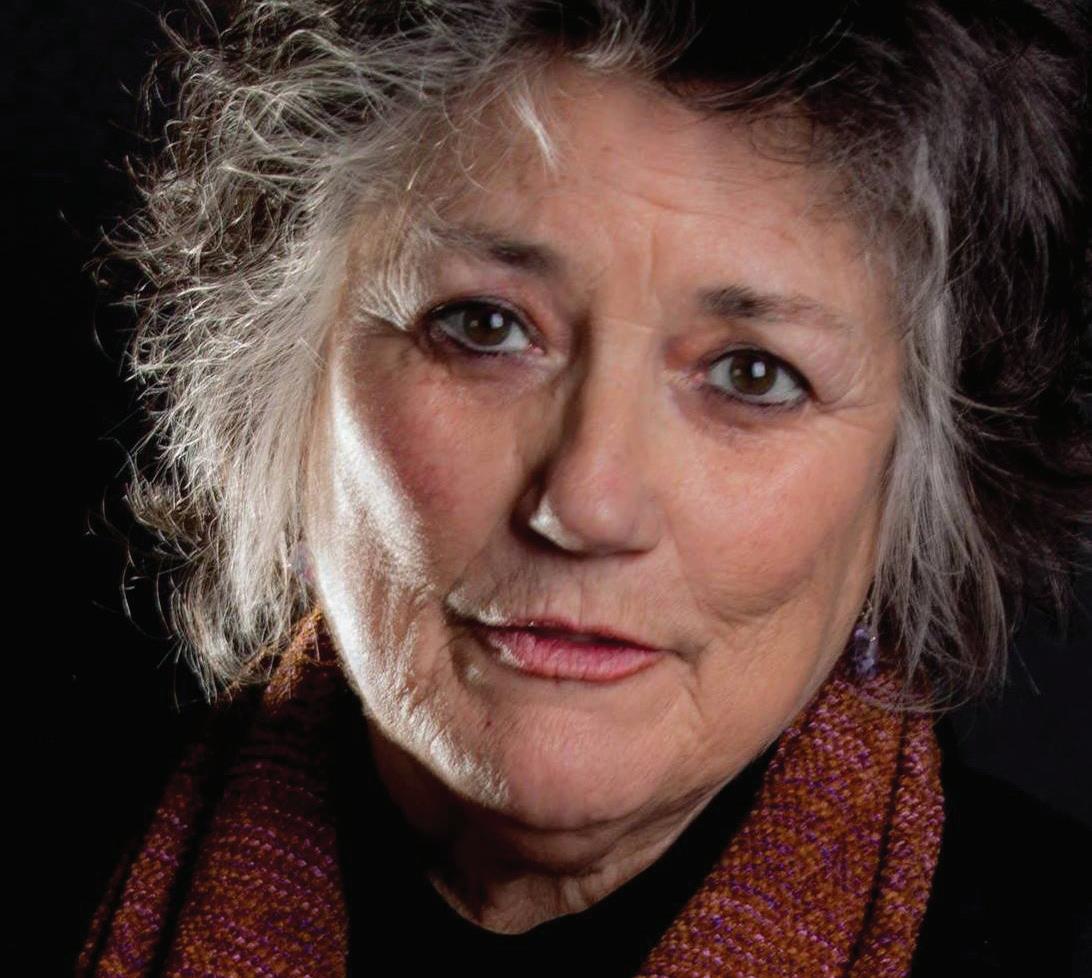
This week’s SGN Book Club decided to pick up a copy of performer Terry Galloway’s memoir, Mean Little Deaf Queer, a collection of stories from the author’s childhood and young adult life as a deaf person, a Queer person, and, as the title might suggest, a girl with a bit of a “mean” streak. In between stories of her coming of age and coming to be, she adds old family lore, retelling classic tales of her tight-knit Texas ancestors from before she entered the picture.
Exiling community
One theme that connects Galloway’s many stories from adolescence to adulthood is her attempt to form a community around her. Through an internal sense of elitism, she often rejected those who shared identities with her in order to climb the social ladder. As a child, she was a tomboy, always searching for her way into the boys’ circles.
When she finally found a way to fit in with her male playmates, Galloway recalls with a tinge of shame that it was at the expense of her female peers. “Girls tended to like me.” she writes. “They trusted me and my dumbstruck heart. It was a grave mistake. I might love the girls but I lusted for power.” Working as a double agent, she would lure a girl away, only to watch as her group of male friends jumped out and pinned her down, forcing her to kiss them. Through this exchange, Galloway developed a sense of her gender. She recognized a longing to be one of the boys and a feeling of jubilation when they allowed her into their circle. “When they offered me a place in line, I felt as honored, as if I’d been asked to join the Marines,” she recalls. However, Galloway also made the mistake of looking into the girl victim’s eyes, and what she saw was the unmistakable connection of sameness.
This story continued to play out in different ways throughout Galloway’s narratives. She recounted her experiences at a summer camp for children with disabilities and her smug feeling of superiority as she watched children with physical and mental handicaps so severe that they could not leave the shallow end of the pool. Because Galloway’s disability, deafness, was one she could easily hide, she felt as though she were better than the others at the camp. As a result, she isolated herself from acceptance into a greater community.
As a young adult, Galloway recognized her queerness in the attraction she had for women. However, because she was also
attracted to men, she found it easier to hide her same-sex romances and masqueraded as straight when in public or around her family. In the same ways she had distanced herself from female and disabled communities, Galloway attempted to play more socially acceptable roles.
Part of her desire to “pass” for straight, able-bodied, and even male at times were her feelings of inadequacy. She felt she was not Queer enough or disabled enough to truly fit into communities that seemed to unite and celebrate those who came together due to their shared experiences.
Little-d deaf
As Galloway explains in her memoir, she was not born deaf. She was diagnosed at age nine with a rare condition that would cause her to go almost entirely deaf by her early teens. Because she was born hearing into a hearing family, her experiences with deafness differed from most of those in the deaf community.
“There is a definite hierarchy in that deaf culture,” she explained. “If you are deaf — a deaf person born to a deaf parent — and your language is Sign, and the company you keep is primarily deaf, you are Deaf with a capital D,” Galloway continued. As someone who had never met another deaf person, who didn’t know Sign, and had at one point in her life been entirely hearing, Galloway felt she did not fit into the deaf community at all.
For most of her young adulthood, she saw her status as “little ‘d’ deaf” [sic] as a symbol of superiority. Excluding herself from the deaf community, she was able to pass (with some effort) as able-bodied. She did not feel a kinship or connection to the deaf community until she was much older and learned about some of the harsh realities of deaf institutes, discrimination against people who can only sign, and even children aban-
doned at birth for showing signs of deafness.
Throughout her stories, Galloway references a nonspecific “us” and “them.” “Them” often refers to a group of oppressors, the ones who just don’t get it. Despite despising “them,” Galloway admits she spent most of her life trying to become them. As a child at summer camp, she saw herself as “them,” and cast scorn on the disabled kids around her. As an adult, she sank into a feeling of “specialness” for “overcoming” her disability and acting on stage, just like all her able-bodied cohorts.
She bought into the narrative pushed by an ableist society that it is the responsibility of the person with a disability to overcome, and once they can operate in the same ways able-bodied folks do, they ought to be celebrated. However, those who cannot overcome should be hidden away or infantilized.
“My deafness had made me memorable, and I liked the fuss when people oohed and aahed over how much I had accomplished despite my ‘terrible handicap.’ I was made to feel special, a word with which I had had a long and convoluted relationship,” she writes.
Galloway shifted her thinking after an encounter teaching acting workshops in Europe. Each of her fellow actors were chosen to lead a different class, based on skills or techniques they had. Galloway was assigned to teach a workshop to adults with disabilities. She saw this assignment as a slap in the face — an acknowledgment that no matter how hard she worked to leave her disability behind, the rest of the world still saw her as an outsider.
In the class, she assumed her students would be unable to carry out any of the basic acting exercises she knew. Instead, she spent the entire two hours talking with them about their lives. It wasn’t until after the class ended that Galloway reflected on the opportunity she had thrown out. She
realized that despite her students lacking some abilities, they also brought with them exceptional qualities she had overlooked and cast aside as worthless.
Changing the societal narrative
Despite the stories she built up in her head and the expectations she had for herself and others, Galloway learned that the world, and people around her, were capable of surprising her. In her young adult years, she started a relationship with a woman but felt too afraid to come out to her family. It was the ’70s, and she feared that her father, an ex-military spy, and her mother would not approve of her sexuality.
One day, tired of her family referring to her girlfriend as her “best friend,” she blurted out the truth. To her shock, both parents accepted her and came to love all the Queer friends she brought home, even going so far as to become surrogate parents for those who had been disowned by their biological ones.
After her encounter in Europe, Galloway realized that her ways of thinking about disability culture were shaped by and aiding ableist ideologies. She realized that no matter how hard she swam, she would always be in the “shallow end of the pool” if she continued to hold everyone to the same standards. She became an advocate for disability rights and accommodations and realized that making it further than others in a flawed system was not an accomplishment worth striving for.
Mean Little Deaf Queer is a story of growth, of seeing beyond one’s body and the narratives society tells us about our shortcomings. It is the story of a woman coming of age and coming out. Queerness and disability are two identities that often overlap, and Galloway uses comedy and reflection to illustrate her journey to accepting and celebrating all her identities.
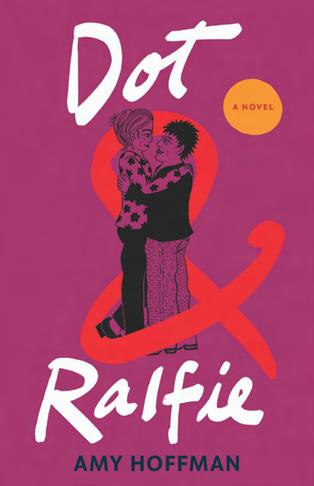
Neither Dot nor Ralfie could agree on how they met, except that it was back when good Lesbian bars still existed, before the internet. Dot recalled — but Ralfie denied — that they met over a pool game and Ralfie wandered away. They both remember a cocktail party when Ralfie first took Dot home with her.
These days, though, “home” is a thirdfloor walk-up in a Boston neighborhood. It’s been a great place. Dot & Ralfie like the neighbors and all, but Dot’s 68 and Ralfie’s over 70, so three floors of steps are a problem. A big problem, especially when you’ve had knee surgery like Ralfie has. Especially
when you’ve had a teensy little heart attack and walking makes you winded, as it does Dot.
And so Dot’s sister, Susan, has been pushing Dot and Ralfie to move to a seniorliving complex, which Ralfie refers to as Maple Grave, because that’s what’s next, isn’t it? Susan is so determined to have Ralfie and Dot move there that she buys a wayoff-the-beaten-path Maple Grave apartment of her own, for herself and her lover, Germaine.
But Germaine’s not happy: she’s more than a decade younger than Susan, and besides, she’d miss her friends back in the city, just as Ralfie would miss the guys at her job at the DPW, and Dot would miss the kids at the school library where she worked. And it would be such a hassle for Dot to see the older librarian that she had a little affair with not long ago. Viola was ailing, and needed Dot’s help.
St ill, those stairs. What was the next step?
The meme is correct: “Old age ain’t for sissies.” But what are ya gonna do about it? You’re gonna read Dot & Ralfie, that’s what.
Th at’s because this is an adorable book. It’s funny in all the right parts, goodnaturedly grumpy where it needs to be, and wonderfully, wryly sarcastic, but author Amy Hoffman also nudges her readers to think about their own futures and what they might entail. Who will care for us when we only have similarly aged friends to rely on?
To soften the soberness of that question, Hoffman gives readers a handful of very charming characters that fuss at one another, argue, make up, scheme, and fuss some more. It’s a little like a Lesbian Honeymooners episode, only much sweeter and better.
There aren’t a lot of novels specific to Lesbian seniors who want something reflective of their lives, so seek out Dot & Ralfie. If you’re tired of the usual literature, it’s the perfect alternative.
Image courtesy of University of Wisconsin Press
Latest chapter of Downton Abbey worthy of celebration Film
by Sara Michelle Fetters SGN Staff Writer
DOWNTON ABBEY: A NEW ERA
Theaters
Not being a big Downton Abbey fan — I’ve never even watched an entire episode of the series — I’m as shocked as anyone by just how much I adored Downtown Abbey: A New Era. Maybe it’s the presence of director Simon Curtis. Maybe it’s that creator and screenwriter Julian Fellowes doesn’t attempt to cram an entire season’s worth of plotlines into a single, two-hour motion picture. Whatever the reason, this is a glorious sequel, and the best compliment I can give is that I can’t wait to watch it again.
Picking up not too long after the events of the previous film with the wedding of Tom Branson (Allen Leech) to Lucy Smith
(Tuppence Middleton), Fellowes has separated the narrative into two distinct yet complementary halves. The first concerns a film company, led by director Jack Barber (Hugh Dancy), shooting a silent melodrama at Downton, featuring major movie stars Myrna Dalgleish (Laura Haddock) and Guy Dexter (Dominic West) under the eagle-eyed supervision of Lady Mary Talbot (Michelle Dockery). The second involves a villa on the French Riviera left to Violet Crawley (Maggie Smith) by a former weekend companion when she was a much younger woman.
The first plot quickly treads into territory reminiscent of 1957’s Singin’ in the Rain and Alfred Hitchcock’s 1929 drama Blackmail. What starts as a silent production must quickly transform into a talking picture. Problem is, beautiful Myrna’s inability to get rid of her thick, working-class
accent may destroy any chance Barber has to save the film. Knowing that, if the production folds, she won’t get the cash to fix Downton’s leaky roof, Lady Mary agrees to provide voiceover for Myrna’s character, creating a whole flurry of new complications requiring equally creative solutions.
The second involves a culture clash as Lord Robert (Hugh Bonneville) and Lady Cora Grantham (Elizabeth McGovern) head to France — along with their perfectionist former butler, Mr. Carson (Jim Carter) — to meet with the current residents of the villa and decide whether or not it is appropriate for Violet to assume ownership. She wants to bequeath the house to Tom and Lucy’s daughter, but Robert and Cora are hesitant to give their blessing.
The two plots mesh together nicely, and the exceptionally talented ensemble are given multiple opportunities to shine.
While it is no shock that Smith coolly and confidently dominates her few scenes, one of the great pleasures of this sequel is to see both Dockery and McGovern given so much meaty material to consume. Each actor does so with great relish, with both bringing a sublime emotional complexity to their performances that’s frequently wonderful. Dockery, in particular, is outstanding, and her scenes with Dancy showcase an energetically intimate authenticity I found joyfully captivating.
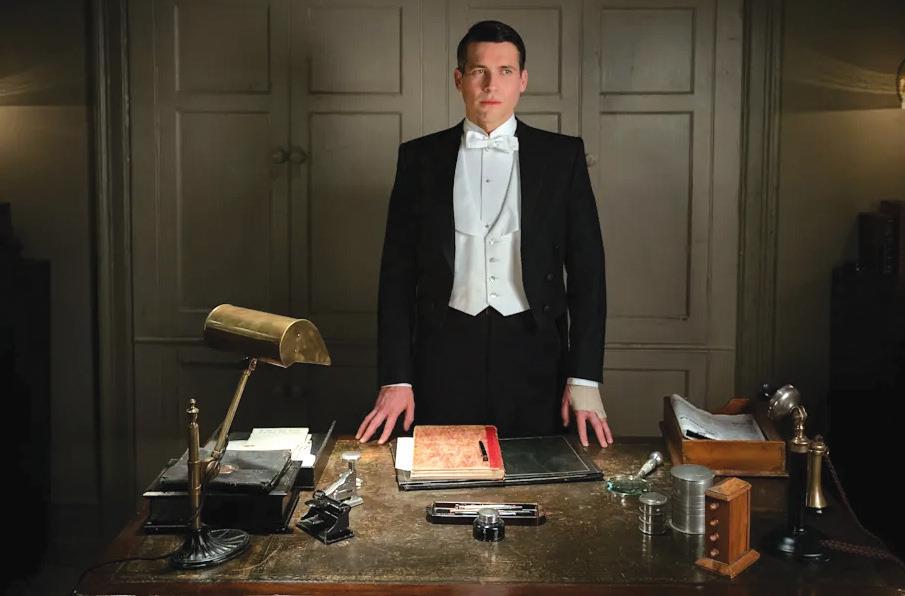
There’s also a lovely subplot involving Dexter and head butler Thomas Barrow (Robert James-Collier); the subtlety of their interactions is as touching as it is eraappropriate. I also adored the way Fellowes constructs the relationship between Myrna and assistant cook Daisy Parker (Sophie McShera). While where things go between the pair isn’t exactly surprising, but McShera is so gosh darn great during her moments with Haddock that I could have cared less, and I may have even shed a happy tear when the pair finally had their showdown and disbelieving shock quickly gave way to empathetic, sisterly understanding.
Curtis, the man behind films like My Week with Marilyn and Goodbye Christopher Robin, not to mention sprawling BBC television productions like 1999’s David Copperfield, breathes fresh life into Downton Abbey with his handling of Fellowes’ script. He balances all of the plot strands with dynamic confidence, putting emphasis on each character at the appropriate time and never allowing the inherent melodramatics to feel schlocky or facile.
I still don’t feel the need to go watch the series, but unlike the last film, I also don’t get the sensation that I need to to fully understand who these characters are and the intricate histories that shape them. This sequel lives and breathes outside of the television show that birthed it, and not once did I wonder if I was missing out on anything by not having seen any of its 52 episodes. Downton Abbey: A New Era stands on its own, and without question, it will go down as one of this summer’s finest cinematic entertainments.
Harry Hadden-Paton, Laura Carmichael, Tuppence Middleton, and Allen Leech in Downton Abbey: A New Era – Photo courtesy of Focus Features
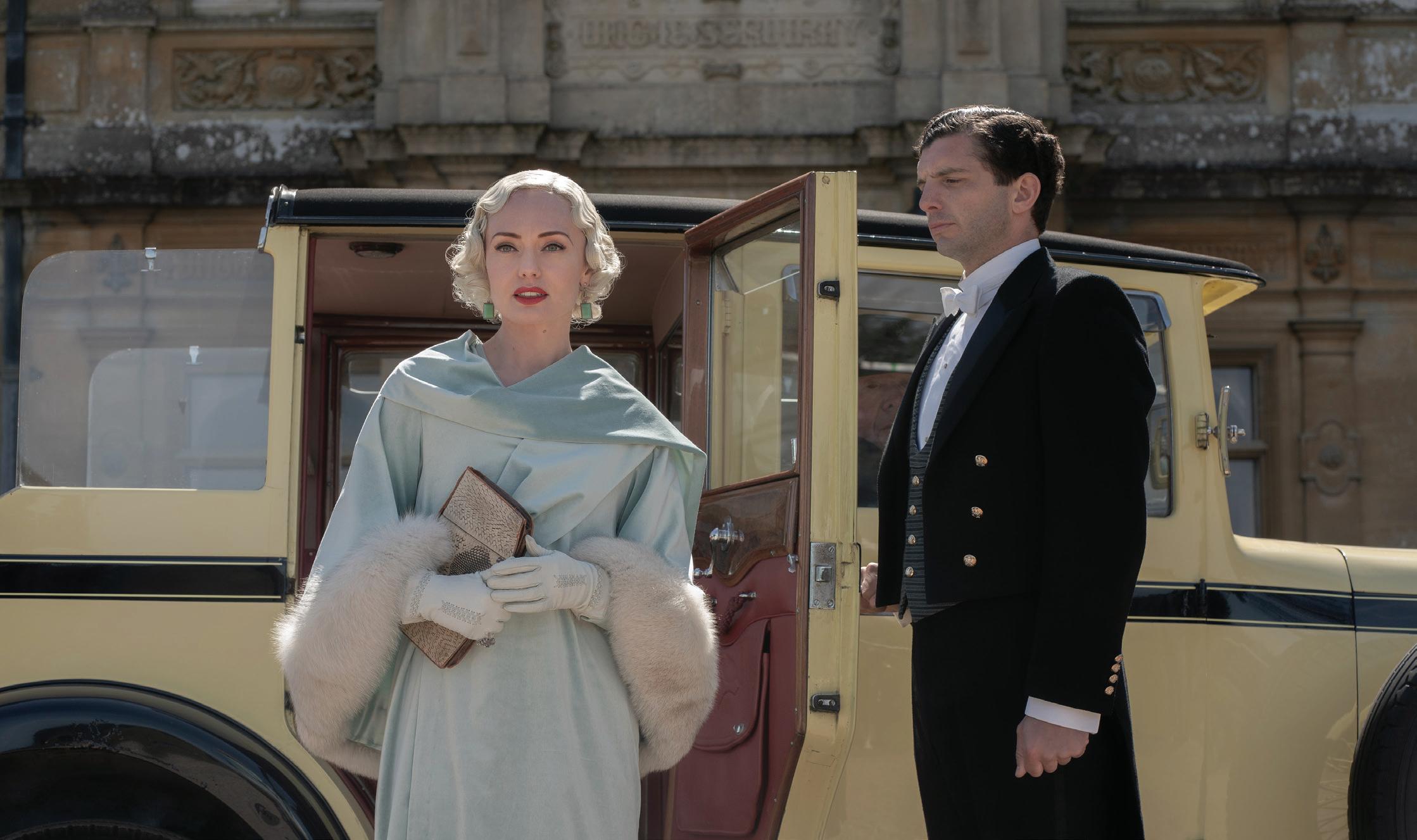
Laura Haddock and Michael Fox in Downton Abbey: A New Era – Photo courtesy of Focus Features
SIMON CURTIS
In this follow-up to the 2019 hit — itself a big-screen continuation of the long-running BBC television series — there is a noticeable uptick in emotional clarity that I found mesmerizing. The upstairs-downstairs melodramatics at Downton haven’t felt this invigorating and, dare I say it, joyous in quite some time, making this a superior sequel and one of the more effortlessly enjoyable films I’ll likely see this summer. I caught up with Curtis over Zoom for a quick chat about the latest goings on at Downton Abbey. Here are the edited transcripts of our brief conversation:
Sara Michelle Fetters: I can guess why you are interested in Downton Abbey, but I would never want to presuppose. So what was it that drew you to this second film?
Simon Curtis: I liked the script. That’s just been the guide for every film I’ve done. And, obviously, there was the attraction of working with these actors. Also, not least of all, it got me out of lockdown.
SMF: My chief criticism of the first film is I felt like it was trying to cram an entire season of plot lines into one movie. I still liked it, but I felt like it was still overstuffed. I did not feel that this time around. Julian’s script was very focused, and I liked how there were these concise dual plot treads that were working with one another, so they could build toward a satisfactory conclusion.
SC: I liked the script, and you try and make every scene work as well as possible, and then you splice them all together and hope the film is greater than the sum of its parts. Do you know what I mean? I take my hat off to Julian, because he manages to write all the 20 stories of these characters with such consumer skill.
It’s the film I hoped it would be. It’s sort of a wonderful escape for two hours from this wretched world we’re living in, and it makes you laugh and it makes you cry. What more can you ask?
SMF: It’s fascinating to me that, in your prior motion pictures, yes, while they are technically ensembles, they’re also focused down to just a select few characters. In this one, I wonder, did you have to draw on your theater background in order to work with such a giant ensemble?
SC: That’s a smart question. In fact, what I
drew on was the David Copperfield I did at the BBC with an ensemble as great as this one, including Maggie Smith and Imelda Staunton; or Cranford, which included Jim Carter and Michelle Dockery and Judi Dench. Those big British ensembles were the perfect training for this.
SMF: What sort of instruction do you give your cast? Most of them are so used to these characters at this point. Is the direction you give to say, Maggie Smith, who has played her character for such a long time, different than what you give Hugh Dancy, who is coming into this world for the first time?
SC: What people don’t often say about directing is that every actor has a different version of how you can help them do their best work. Sometimes that’s to say nothing. Sometimes it’s to give a thousand notes. You just go through all of that. But, obviously, you take into account and benefit from, in this case, the fact that the actors
know their characters so very well. That makes my job a lot easier.
SMF: By sheer happenstance, I watched the new 4K release of Singin’ in the Rain literally the day before I watched this movie. Do you think people will notice some of those parallels?
SC: They have noticed that, but it’s annoying to me, because in fact, this idea comes from the Alfred Hitchcock film Blackmail made in 1929, which our producer Gareth Neame’s grandfather, Ronald Neame, was the assistant director on. That film, which you should also watch, is literally shifted from silent to sound, and on the DVD, you can see some scenes done in both ways.
SMF: That was actually going to be my very next question. You appear to call and reference Hitchcock a little for some of these set pieces, or do I have that wrong?
SC: You do not. It’s why I prefer to talk about Blackmail instead of Singin’ in the Rain when people make the comparison.
SMF: Switching gears, I have to imagine that this was really exciting for Michelle Dockery, because this is sort of an exciting expansion of Lady Mary’s character. She gets to do so much in this film.
SC: Yes. It is. I think it’s lovely to see Mary doing a job so well and getting so much pleasure from that. I know Michelle felt that as well.
SMF: I think I could feel that, too. I guess that’s maybe why I loved this sequel so much. It’s infused with joy. Even when we’re dealing with the serious and the dramatic parts, or the stuff that’s supposed to have you reaching for your tissues, there is this all-over sensation of joy. I’m not sure these characters have been afforded the opportunity to universally feel that in quite some time.
SC: That’s good to hear. Thank you. I’d like to think I bring a warmth and positivity to my films, and it seems to be just a very happy marriage in this instance.
continued from cover
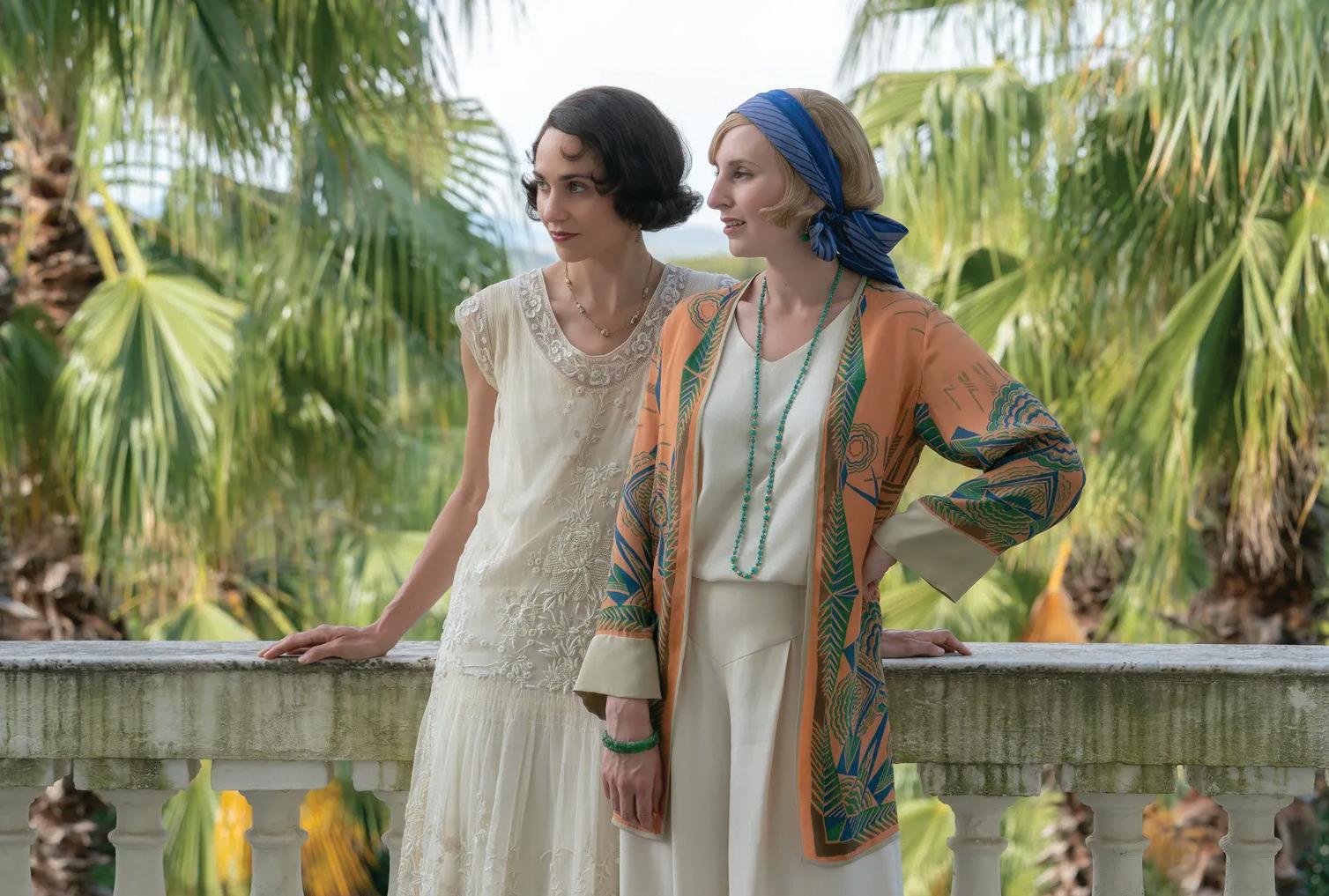
Tuppence Middleton and Laura Carmichael in Downton Abbey: A New Era – Photo courtesy of Focus Features
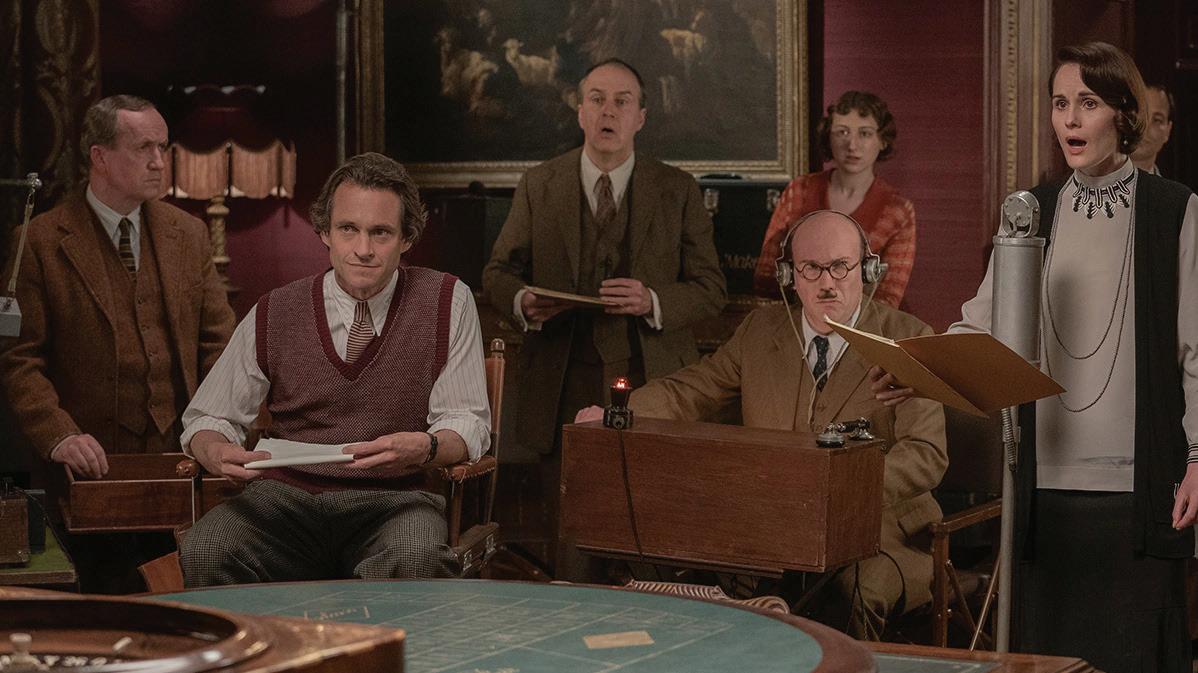
Hugh Dancy (second from left) and Michelle Dockery (far right) in Downton Abbey: A New Era – Photo courtesy of Focus Features
SMF: You mentioned earlier that one of the reasons you were eager to make this film is that it got you outside again. But you were still making this motion picture in the middle of a pandemic. Were there difficulties that you hadn’t anticipated? Were there any roadblocks?
SC: The biggest difficulty was we didn’t know if we were going to be able to get to France or not. We had to prep UK alternate locations for all the French locations in case we couldn’t get there. This was very timeconsuming and depressing, because a park in West London doesn’t look to me like the French Riviera.
But at the end of the day we did get to France. So that was very exciting.
SMF: The day in the south of France when Jim Carter showed up in his full British butler uniform — did everybody on the set giggle as much as I did in the theater? Such a splendid moment.
SC: Yes. [laughs] Yes they did. And he generally was very hot. I don’t think he needed to act that.
SMF: I don’t want to go into it in detail, because we don’t want to spoil anything for the audience, but you and Julian do give Cora a wonderful plot arc. Personally, how nice was it that you were able to
give Elizabeth more to play than I think she’s gotten from her time in Downton Abbey for quite some time?
SC: Truthfully? It was nice. That was one of the things on my checklist. One of the things while reading the script I knew needed to be there before I decided to sign on.
SMF: Is it hard, though, when you’re dealing with some of these — I don’t want to call them Douglas Sirkian melodramatic moments, but in some instances that’s exactly what they are — how do you ensure they feel authentic and the audience doesn’t look at them as if they were contrived or clichéd?
SC: I like the Douglas Sirk reference. As a director, you are given hundred or so scenes, and you just have to make every one of them as good as possible. If it’s about making something emotional, something real, that’s the task of that day. You just hope for the best. With these actors and this writing, it came out good most of the time.
SMF: For obvious reasons, Maggie has a few incredible moments. You’ve worked with her in the past. How does it feel as a creator, as an artist, to watch somebody with that much talent and that much history, an icon, if you will…
SC: It’s great. I really like that question, because I would say watching Maggie
Smith on the monitor is as good as it gets if you’re a director.
SMF: For everybody else, though, do you ever find that — especially when you have a cast this stacked and this incredible top to bottom — people start watching the other actors and they forget to perform themselves?
SC: I don’t know. As you said, they’re all so talented, so if it happened I can’t say I was able to tell. But Dominic West said his first day on set with Maggie at that dining table was the best day of his life. I could understand that.
SMF: Speaking of Dominic, I would be remiss if I didn’t talk a little about the subplot involving him and Robert James-Collier. Again, I don’t want to ruin anything for people that are going to be coming to this one fresh, but I love that that storyline concerning their two characters is era appropriate.
SC: Exactly. I mean, it’s sort of in code, right? But erotically charged as well.
SMF: Definitely. For Robert, who has in the past said that sometimes he’s not necessarily always wanted to keep coming back to Downton Abbey and playing Thomas, this had to be exciting. His character gets a rather meaty subplot.
SC: Yes, I believe it was. One of my
favorite moments of preproduction was calling Robert up to tell him who’d been cast as Guy. He was ecstatic.
SMF: If the story of Downton Abbey were to continue, would you return to direct another installment?
SC: It’s the same as two years ago when it was first mentioned as an idea: let me read the script. If I loved the script, the same would apply. I’d happily return.
SMF: As I look at the films that you’ve made, there is always a humanistic component where you’re trying to find the heart of why people make the decisions they do and how that affects the people around them. Do you find that those scripts and those stories are getting harder to find now?
SC: I definitely do. I mean, I wish I was working when Douglas Sirk was working, because I’d be the top director in town. But I do feel the kind of films I want to make are happening less and less.
I’m very much driven by the scripts that I can get my hands on and the story. I love watching TV. I love going to the theater. I love film. If I’m lucky enough to keep working, I hope I get my hands on a few more great scripts.
SMF: I revisited My Week with Marilyn a little while ago, because we have that Andrew Dominik film that’s coming out for Netflix. I know this is off-topic and I apologize, but I was wondering, why do we still continue to have this obsession with Marilyn Monroe? Why are there so many stories and documentaries looking at Marilyn and her life?
SC: I don’t know. I mean, she’s a fascinating, underestimated woman, but I think it’s the power of the still photograph. I think that those photographs, those images of her beautiful face remain in the public eye, and that fuels the ongoing fascinating with her.
SMF: Bringing things back to Downton Abbey, why do you think this world that Julian has crafted has become so popular around the world? Why has it carried on?
SC: I think because he loves his characters and he treats them all with dignity and enthusiasm. And they’re portrayed by a brilliant ensemble of actors at their peaks.
SMF: Now that we’re hopefully coming out of this pandemic and able to go out and do things again, and considering this is a purely theatrical experience, what do you hope audiences are talking about when they leave the theater?
SC: I hope they’ve, for two hours, escaped this wretched world that we’re living in at the moment. That they have been reunited with some friends and their family. I hope they’ve enjoyed themselves. That’s really all I could hope for.
Robert James-Collier in Downton Abbey: A New Era – Photo courtesy of Focus Features
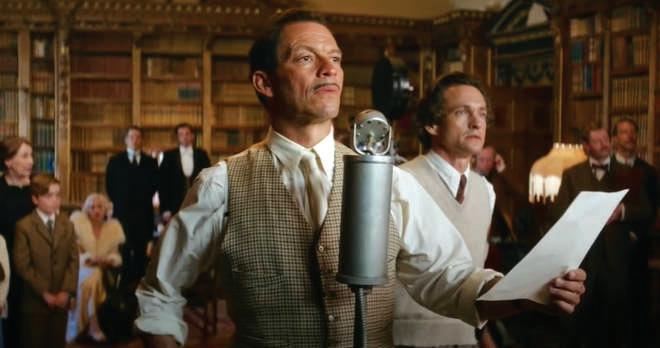
Dominic West (center) in Downton Abbey: A New Era – Photo courtesy of Focus Features
Film
Lackluster Firestarter fails to ignite
by Sara Michelle Fetters SGN Staff Writer
FIRESTARTER
Theaters / Peacock
Back in the early 1980s, John Carpenter was tasked by Universal Pictures to write and direct an adaptation of Stephen King’s Firestarter. But after his remake of The Thing tanked at the box office and was savaged by critics in the summer of 1982, the studio jettisoned him from the project and went with Roller Boogie and Class of 1984 filmmaker Mark L. Lester instead.
Time has proven this decision to be a mistake. Where The Thing has become a bona fide classic and is considered one of the greatest horror films ever made, the 1984 version of Firestarter is best known for an early starring role for Drew Barrymore and its explosively over-the-top climax. I only sit back and wonder what Carpenter would have done with the material, and if his 1983 adaptation of King’s Christine is any indication, it’s easy to surmise it could have been something special.
Fast-forward four decades. Universal is back with a new take on Firestarter, and this time Carpenter is involved. Along with his Halloween (2018) and Halloween Kills collaborators Cody Carpenter and Daniel A. Davies, he’s responsible for this latest version’s score, and it’s excellent. The music oozes danger and intensity, with Carpenter and company adding a layer of ominous menace that got under my skin.
As far as superlatives go, that’s pretty much it for this incarnation of Firestarter I don’t know if something happened behind the scenes. I don’t know if producer Jason Blum or the studio overlords at Universal had more control over the finished product than director Keith Thomas (The Vigil ) and writer Scott Teems (The Quarry). Whatever the reason, this version makes the 1984 film look like a cinematic masterpiece in comparison, and even fans of Lester’s take would never in a million years claim that.
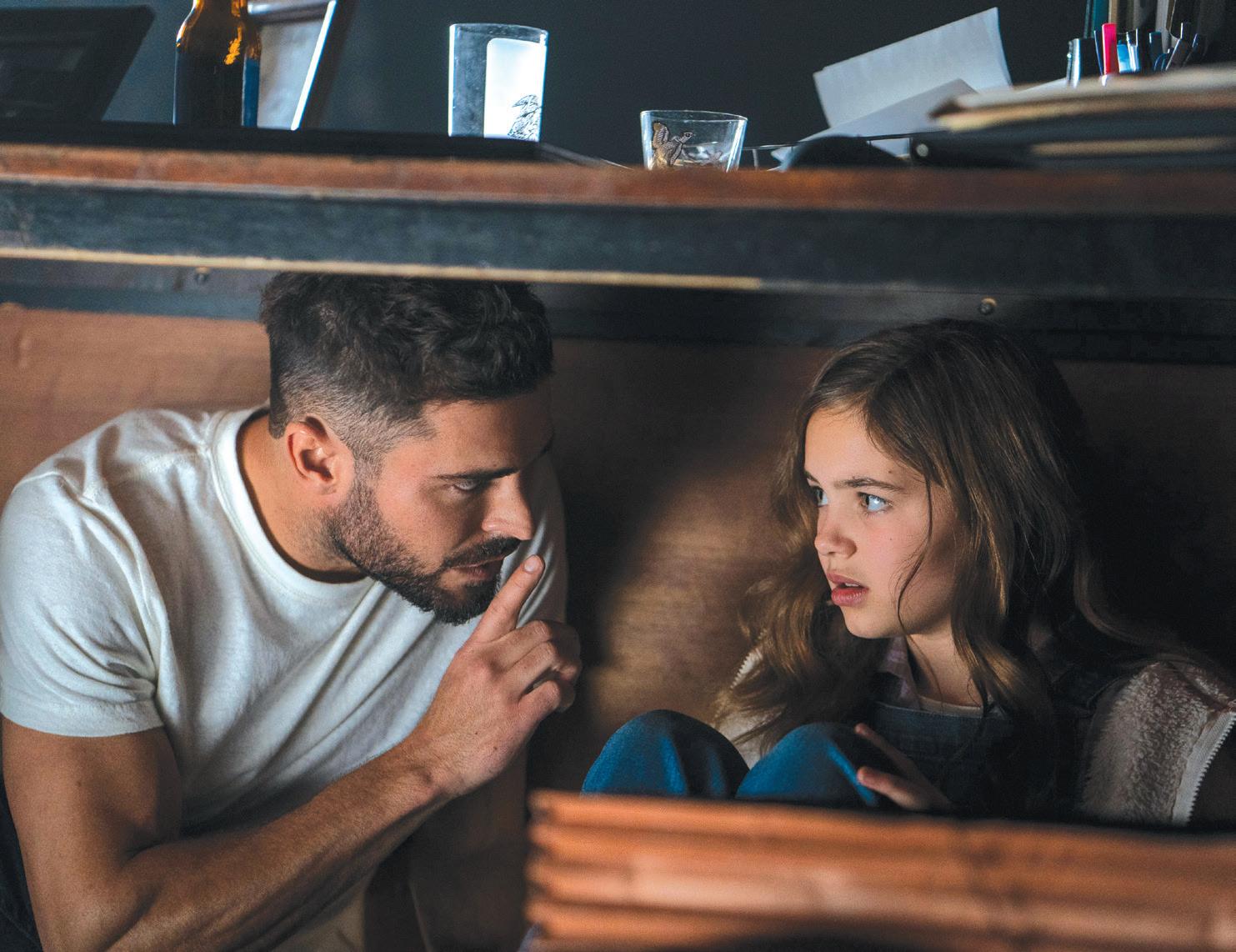
The core plot dynamics have been updated to the current day but otherwise remain relatively unchanged from King’s source material. Parents Andy (Zac Efron) and Vicky McGee (Sydney Lemmon) have been lying to their 11-year-old daughter Charlie (Ryan Kiera Armstrong). They are not who they say they are. Instead, the family has been on the run from a secretive government agency for over a decade, keeping Charlie in the dark as to why. While in college, Andy and Vicky were part of an experiment to augment any psychic abilities they may have had. These tests were a success, and the pair fell in love and had a child, Charlie. She was born with a terrifying gift, the ability to start fires only with the power of her mind. Before their daughter could be taken from them to be studied, and maybe even transformed into a dreadful weapon, the parents executed a daring escape. They’ve been in hiding ever since.
There are only two characters who are even moderately fleshed out in this mess: Andy and Charlie. Vicky has a couple of moments, and Lemmon certainly does her best to make her few scenes memorable. But for the most part, none of the supporting actors are given even the faintest of opportunities to impress. Only Efron and Armstrong rise above the fray, the latter in particular doing a terrific job of showcasing the whirlwind of emotional chaos Charlie is forced to deal with when scientists and assassins come knocking at her family’s front door.
But so what? It’s all in service to nothing. The exploration of Charlie’s powers is nonexistent up until the point she needs to know how to use them to take on the baddies who are hunting her. As to those villains, other than a good scene with Kurtwood Smith as a doctor who originally supervised the tests performed on Andy
and Vicky, they’re a bunch of one-note, Snidely Whiplash mustache-twirling nincompoops who are more unintentionally laughable than they are sinister or scary. Where this is truly appalling is in regards to actor Michael Greyeyes. He’s cast as a shadowy operative named Rainbird, who is tasked with capturing Charlie for experimentation. The character was memorably portrayed by George C. Scott in the 1984 version, even though he was wrong for the role. Greyeyes is a perfect replacement, and Thomas and Teems go to great lengths to imbue this character with dignity, strength, and a sense of cultural heritage and purpose absent from the earlier film and only hinted at in King’s novel.
What makes it damning is that the finished feature does nothing with Rainbird after his terrifying introduction. He makes a couple of speeches and foreshadows what will transpire during the last act. Other than that? He’s window dressing. While Greyeyes does what he can, mostly he is a figure hovering in the background, making his scenes with Armstrong during the climax baffling head-scratchers that would be flatly idiotic if they weren’t so disagreeably insulting.
Maybe this book is unadaptable? I wouldn’t think that would be the case, because as far as King stories go, this one is fairly straightforward. But Lester was no stranger to entertaining genre schlock — he did make Commando and the aforementioned Class of 1984, after all. As for Thomas, The Vigil was a spooky, imaginative heart-stopper and one of last year’s best horror films. So as artless as this Firestarter might be, that does not mean the director does not have any talent. Quite the opposite.
Honestly, all this does is make me wonder once again what Carpenter’s Firestarter would have looked like. Based on the crackerjack score he’s provided for this otherwise anemic remake, I’m tempted to believe I would have loved it, and it’s a pity I’ll never know for sure.
Zac Efron and Ryan Kiera Armstrong in Firestarter – Photo courtesy of Universal Pictures
Nat’l & Int’l News
by Mike Andrew SGN Staff Writer
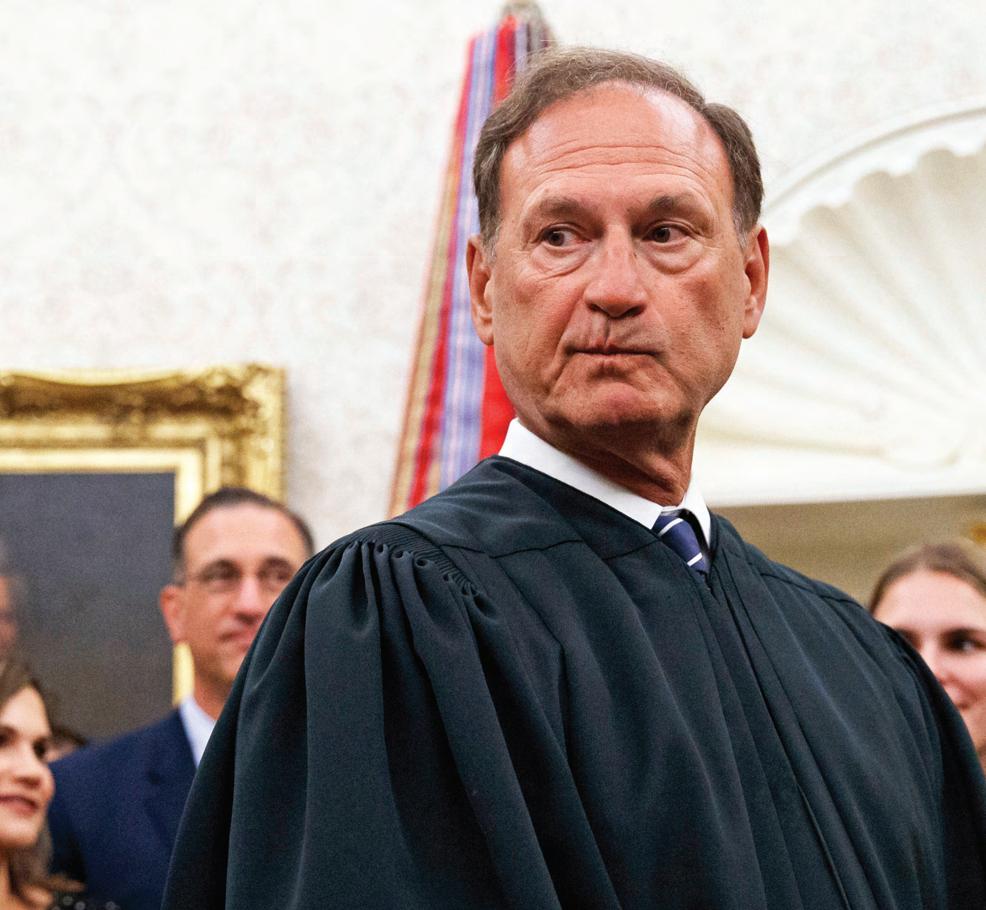
Watch out: Supreme Court Justice Samuel Alito is after us next.
Alito is gunning for LGBTQ rights next National news highlights
Af ter reading Alito’s leaked opinion striking down Roe v. Wade, many people speculated that he’d attack pro-LGBTQ court decisions next. Now he’s confirmed that exactly what’s he’s thinking.
In his first public speech since Politico leaked his draft opinion in case involving Mississippi abortion restrictions, Alito said explicitly that Bostock v. Clayton County was wrongly decided.
Bostock is the landmark Supreme Court ruling that prohibitions against discrimination based on sex in Title VII of federal civil rights laws also protect sexual orientation and gender identity.
If Alito succeeds in convincing his fivevote majority on Roe that Bostock is also bad law, it would once again be legal for employers to fire workers simply based for being LGBTQ.
It’s not a slam-dunk for Alito, though, because Bostock enjoyed a 6-to-3 majority, including Neil Gorsuch, who wrote the majority opinion, and Chief Justice John Roberts.
Al ito voiced his opposition to LGBTQ rights in the context of a philosophical discussion of the legal doctrine of “textualism,” once championed by Justice Antonin Scalia, who died in 2016.
According to Alito, Scalia revolutionized the way the high court looks at federal laws. Scalia was known for emphasizing a strict reading of the text of legislation, rather than trying to determine the intent of Congress when it passed the law.
Ironically, this was the very method Gorsuch used when he wrote the majority opinion in Bostock. When Title VII of the Civil Rights Act of 1964 prohibits discrimination “because of sex,” it obviously includes Lesbian, Gay, Bi, and Transgender employees, Gorsuch wrote.
International news highlights
by Daniel Lindsley
SGN Contributing Writer
Italy:
Queer firsts at Eurovision 2022
NBC News reported May 14 on stage gimmicks and Queer milestones at this year’s Eurovision Song Contest in Turin, Italy.
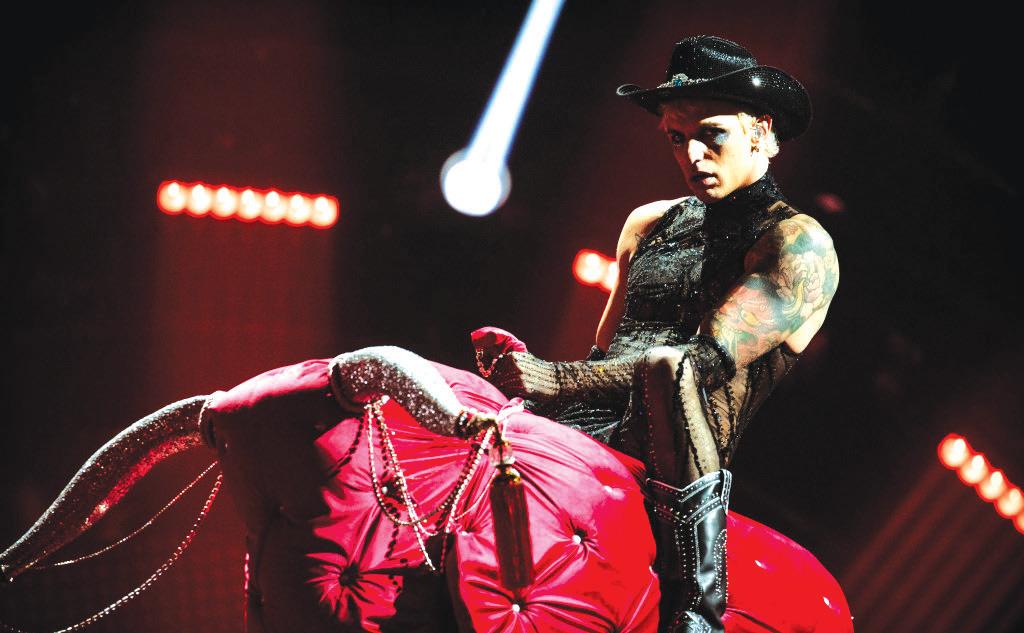
San Marino’s singer Achille Lauro and his guitarist Boss Doms had Eurovision’s first mid-performance male-male kiss (excluding winner Måneskin’s reprise performance last year). Albania’s act had a Lesbian moment, and the music video for Malta’s “I Am What I Am” was explicitly Queer friendly.
Icelandic trio Systur, strong advocate for Trans children in Iceland, waved the Transgender flag alongside that of of their nation and made history when they entered the Grand Final with a Lesbian and the mother of a Trans child.
In addition, two of the show’s on-air personalities were Queer. Out British singer Mika served as one of three hosts in Turin, and Olympic bronze medalist and NBC commentator Johnny Weir ran the American broadcast.
The Grand Final featured several out Queer acts, among them Israel’s Michael ben David in a flamboyant dance number and Australia’s Sheldon Riley in an outfit with thousands of Swarovski crystals.
But here’s where Alito is not as much of a textualist as he claims. The Bostock decision, relying on the text of the law alone, was “in my view indefensible,” Alito said.
It was clear that Congress in 1964 not only allowed but also practiced discrimination, Alito added.
“It is inconceivable that either Congress or voters in 1964 understood discrimination because of sex to mean discrimination because of sexual orientation, much less gender identity,” Alito said.
“If Title VII had been understood at that time to mean what Bostock held it to mean, the prohibition on discrimination because
of sex would never have been enacted. In fact, it might not have gotten a single vote in Congress.”
He said the majority in Bostock cited an opinion written by Scalia to justify its decision, but he thought they had misunderstood it.
“I only wish [Scalia] were here to enlighten us,” Alito said. If Scalia said Alito was wrong, “I would take that evaluation in good humor, and learn from the exchange,” Alito added.
Other performances showed support for Queer sexuality, including Italy’s Mahmood and Blanco.
Gimmicks included monk-supervised hand-washing, wolf masks, and riding a pink mechanical bull.
Qatar:
FIFA-recommended hotels refuse service
Reuters reported on May 12 that three hotels in Qatar have refused to accommodate same-sex couples during the World Cup this year, contrary to FIFA’s past assurances. A report by Norwegian Broadcaster NRK, Swedish SVT, and Denmark’s DR broke the news.
Twenty other hotels on the list have said they would accommodate same-sex couples, as long as they did not openly display that they were Gay. The remaining 33 took no issue with same-sex couples.
The Supreme Committee for Delivery & Legacy (SC), the group running the host country’s operations for the World Cup, said that Qatar is a “conservative country” but was “committed to delivering an inclusive FIFA World Cup experience that is welcoming, safe, and accessible to all,” adding that they would take action against hotels that did not align with this goal.
An SC spokesperson told Reuters that the hotels accommodating visitors for the World Cup would be “required to comply with the Sustainable Sourcing Code... The SC treats any violation of this code or instance of discrimination with the utmost seriousness.”
England manager Gareth Southgate said in March that he was unhappy some fans wouldn’t feel safe traveling to the event, given this, and that homosexuality is still illegal in Qatar.
by Daniel Lindsley SGN Contributing Writer
Alabama:
Judge blocks ban on HRT, not surgery
NBC reported on May 14 that a federal judge partially blocked a new law that makes providing certain genderaffirming medical care to minors a felony, with a sentence of up to 10 years and a $15,000 fine.
US District Judge Liles Burke said in an opinion that it was a “substantial likelihood” that part of the Alabama’s law was unconstitutional, and put a temporary block on the portion that bans minors from receiving nonsurgical care like puberty blockers and hormones. He reasoned that “parents have a fundamental right to direct the medical care of their children.”
“This right includes the more specific right to treat their children with transitioning medications subject to medically acceptable standards,” he went on. “The Act infringes on that right and, as such, is subject to strict scrutiny.”
Burke allowed other parts of the bill to remain in effect, such as the ban on gender-affirming surgery for minors, and two provisions that prohibit school officials from keeping a child’s gender identity a secret from parents, or from “encouraging or compelling children to keep certain gender-identity information secret from their parents.”
Indiana:
Another Queer victory at Homecoming NBC News reported on May 14 that an Indiana high school has crowned its 18-year-old drag queen Cristian Hernandez as prom king. Hernandez is nonbinary, and goes by he or they pronouns.
“Honestly, when I walked out there, I left everybody speechless,” Hernandez said of his walk down the red carpet after his victory. A video of the event quickly went viral on TikTok, with over 150,000 views and 50,000 likes.
“I was a senior in 2013 and he had one out kid in a school [of] over 2,000 kids,” one commenter said. “This warms my heart that you all get to be your most authentic selves.”
Hernandez said that not all of his classmates were happy that he won, but he shrugged them off. “The boys at school, they always have a problem with something,” he said. As for a message to other LGBTQ youth: “Really be yourself, and confidence is key. You can’t let people tear you down.”
NBC put the event in a context of other LGBTQ high school students who have busted through barriers and gender norms, such as a Missouri high school crowning its first male homecoming queen, and a teen in Florida being crowned her school’s first Trans homecoming queen.
Achille Lauro – Photo by EBU / Nathan Reinds
Photo by Carlo Allegri / Reuters
Justice Samuel Alito – Photo by Carolyn Kaster / AP
BI-WEEKLY! FIND US WHEREVER YOU LISTEN TO PODCASTS!