
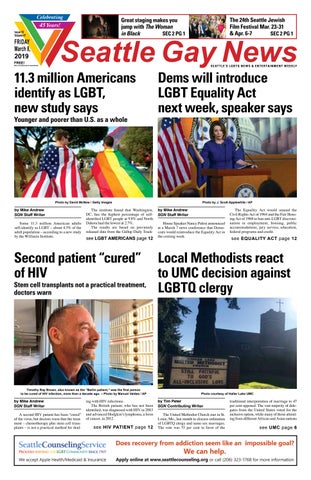

by Mike Andrew SGN Staff Writer
Some 11.3 million American adults self-identify as LGBT – about 4.5% of the adult population – according to a new study by the Williams Institute.
The institute found that Washington, DC, has the highest percentage of selfidentified LGBT people at 9.8% and North Dakota had the lowest at 2.7%.
The results are based on previously released data from the Gallup Daily Tracksee LGBT AMERICANS page 12
Stem cell transplants not a practical treatment, doctors warn
by Mike Andrew SGN Staff Writer
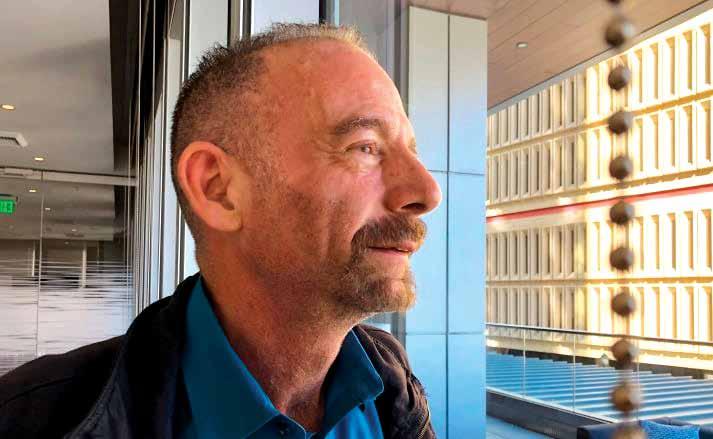
A second HIV patient has been “cured” of the virus, but doctors warn that the treatment – chemotherapy plus stem cell transplants – is not a practical method for deal-
ing with HIV infections.
The British patient, who has not been identified, was diagnosed with HIV in 2003 and advanced Hodgkin’s lymphoma, a form of cancer, in 2012.
see HIV PATIENT page 12

by Mike Andrew SGN Staff Writer
House Speaker Nancy Pelosi announced at a March 7 news conference that Democrats would reintroduce the Equality Act in the coming week.
The Equality Act would amend the Civil Rights Act of 1964 and the Fair Housing Act of 1968 to ban anti-LGBT discrimination in employment, housing, public accommodations, jury service, education, federal programs and credit.
see EQUALITY ACT page 12

by Tim Peter SGN Contributing Writer
The United Methodist Church met in St. Louis, Mo., last month to discuss ordination of LGBTQ clergy and same-sex marriages. The vote was 53 per cent in favor of the
traditional interpretation of marriage to 47 per cent opposed. The vast majority of delegates from the United States voted for the inclusive option, while many of those attending from different African and Asian nations
see UMC page 6






David Deyo was born in Ohio on March 9, 1962, where he grew up under the watchful eye of his Grandma Carter. Initially, when he attended Kent State University, his goal was to major in physics. Instead, David graduated from a technical school, where he completed a degree in electronic engineering technology. In 1984, he moved to Atlanta, Georgia and began a long career in technical writing and training.
Developing technical content often required production of associated art, which David produced with guidance and feedback from graphic designers. His design education began long before he ever got the idea to make that a career focus. As he began to embark on his own creative ventures, David turned his experience in computer graphics to producing the different designs necessary for his projects. He created a portfolio of over 200 renderings. In addition, he was a budding photographer with a passion for architectural images and the study of line and form.
To provide outlets for his creativity, David created a banner company named TalisMedia. He also created and operated Chronal House, a web-based startup that offered content and products to people interested in spirituality. Further, he was the writer, producer and host of a webbased television series on spiritual topics called “The Temporal Reverie.” He most recently worked with a startup, Docker.
David’s many interests included music, science fiction, poetry, movies and physics. His unique poetry has been published in various literary magazines. One of his favorite and inspiring books was The Prophet by Khalil Gibran. He was also a big animal lover, especially of dogs. This is always an indication of kindness and compassion.
After he moved to Seattle, through several unfortunate events, he actually ended up homeless and lived in motels. Despite everything, he remained a man of faith throughout the trials he endured. Finally, after much personal effort and never losing hope, David rebounded and was offered a position with Amazon, thus
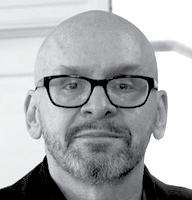
moving to a small house on Capitol Hill and rebuilding his life.
David always remembered his difficult times. With his friends, he worked to feed people living in the streets, gave free haircuts and grooming and warmth through collected hats, socks and blankets on a monthly basis on Capitol Hill.
His church community gave David the gift of inviting him to preach and share his love of The Word.
On October 3, 2018, David married the love of his life, Joshimar Abarca. The wedding date was the third anniversary of the day they met.
David passed away unexpectedly on November 28, 2018. He is survived by his husband, Joshimar, and their dog, Trixie. He was gifted, unique and beloved and will never be forgotten.
A celebration of life service will be held on Saturday, March 9, 2019 at 11am at Prospect Congregational United Church of Christ located at 1919 East Prospect Street, Seattle, WA 98112.
If anyone wishes, please make a donation in his memory to Lifelong. Thank you and God Bless.
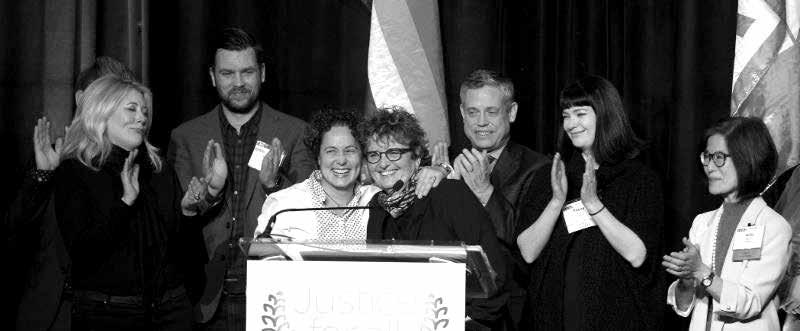
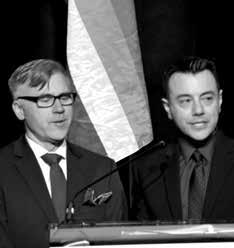
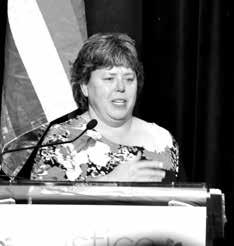
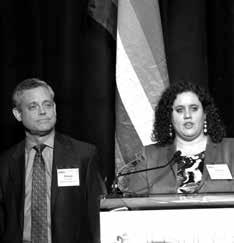
GSBA, Washington’s LGBTQ chamber of commerce, and the largest LGBTQ and allied Chamber of Commerce in North America, honored outstanding businesses, business and nonprofit leaders on February 21 at its annual Business & Humanitarian Awards dinner. The award recipients, each one demonstrating proven leadership in our community through philanthropy and volunteerism, embody a commitment to advancing LGBTQ equality, and working to achieve a world in which “Justice for All” is a reality.
The passion and commitment to justice was articulated by each recipient, captivating the 600 guests in attendance. Opening remarks by U.S. Representative Pramila Jayapal (WA-07), and then Washington State Lt. Governor Cyrus Habib roused the crowd in anticipation for the awards and speeches to come. “To all of those who are fortunate, and have worked hard enough to be in a position to run a business, to work in the business community, to earn a middle class wage or better: You all demonstrate leadership when you come together as a business association and say, we’re going to use the economic privilege we have to make our community better, to make our state better,” said Habib.
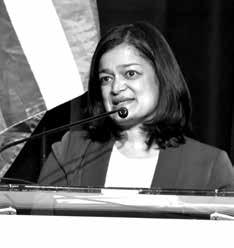
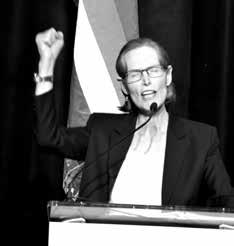
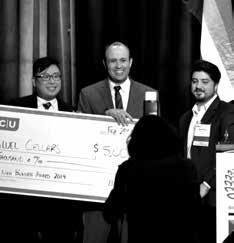
Throughout the evening, honorees spoke about their personal commitment to supporting equality and justice for all in the work that they do. In recognition for their hard work and challenges they face, BECU presented the Small Business of the Year honoree, Aluel Cellars; and Pride Foundation presented the Nonprofit of the Year honoree, Northwest Immigrant Rights Project, checks for $5,000 each. Justice Bobbe Bridge (ret.), founding Executive Director of the Center for Children & Youth Justice, received the Lifetime Achievement Award. “I wasn’t put on earth to just hang out,” said Bridge. “I do believe that community service is the rent you pay for the space you occupy on earth.” Speaking on behalf of Northwest Immigrant Rights Project, Board President Luanda Arai reminded guests about the intersection of LGBTQ equality and immigrant rights: “We share your vision for a vibrant global economy that’s strengthened through the full participation of diverse local communities. And we hope that together we can continue to ensure that everyone in our region gets a fair chance at building the life they want, no matter the country of their birth, or the size of their wallet.”
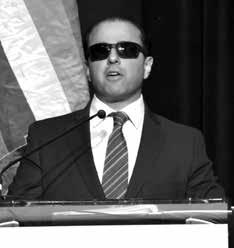

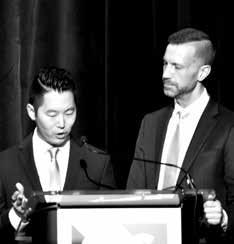

The 2018 GSBA Business & Humanitarian Awards Honorees:
2018 Business of the Year
TomboyX | Fran Dunaway and Naomi Gonzales, Co-Owners
2018 New Business of the Year
Aluel Cellars | Alex Oh and Samuel Hilbert, Co-Owners
2018 Green/Sustainable Business of the Year
InterChange Media Art Productions | Jenny Ting and Michele Gomes, Co-Owners
2018 Business Leader of the Year Kate Beck | Wells Fargo Home Mortgage
2018 Corporate Leader of the Year Stephen Black | Vice President, Marketing, BECU
2018 Community Leader of the Year Monisha Harrell | Equal Rights Washington (ERW)
–Photos by MK Scott
2018 Nonprofit of the Year
Northwest Immigrant Rights Project | Jorge Barón, Executive Director
2018 Special Recognition: Voice of Social Justice Washington State Supreme Court Justice Mary Yu
2018 Lifetime Achievement Award Bobbe Bridge (ret.) | Center for Children & Youth Justice
2018 President’s Award Barry Faught | Broadcast Coffee Company, Owner
About the GSBA
GSBA (the Greater Seattle Business Association) is Washington’s LGBTQ chamber of commerce, and the largest LGBTQ and allied chamber of commerce in North America. We represent over 1,300 small business, corporate, and nonprofit members who share the values of advancing equality and diversity in the workplace.
Courtesy of the GSBA
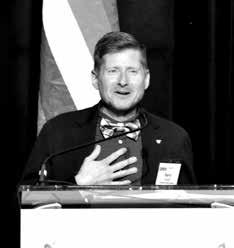


Do you feel adrift in the sea of new technologies? Join us for talks on artificial intelligence and blockchain in Emerging Technology 101, The Seattle Public Library’s new program series at the Central Library. You’ll learn what these new technologies are, why they’re important, and how they’re applied in real life.
Library events are free and everyone is welcome. Registration is not required. Parking is available in the Central Library’s garage for $7 after 5pm.
Artificial Intelligence – Meets Wednesday, March 18, 6pm to 7:30pm at the Central Library, 1000 Fourth Ave., Level 4, Washington Mutual Foundation Meeting Room 1. Learn about this technology from Nirav S. Desai, co-founder of Moonbeam, a startup focused on rapid prototyping of solutions that address barriers to spatial computing and artificial intelligence technology adoption. He also mentors startups through TechStars Seattle, the TechStars/Amazon Alexa startup accelerators, and the University of Washington’s CoMotion Labs.
Blockchain – Meets Wednesday, April 18 6pm to 7:30pm at the Central Library, 1000 Fourth Ave., Level 4, Washington Mutual Foundation Meeting Room 1. Remember Bitcoin? Bitcoin is a cryptocurrency using a new technology called “blockchain.” Learn about this technology from Alex Ortiz, a software professional with a fascination for the computer sciences. He served as the chief blockchain specialist for the open-source blockchain identity project lifeID, where he spearheaded partnership development efforts, educated IT decision-makers on blockchain infrastructure for identity, and represented his team at standards bodies like the W3C. This program series is made possible by support from UW CoMotion Labs and
Moonbeam, and in partnership with the Library’s Community Technology Advisory Board.
The Library brings people, information and ideas together to enrich lives and build community. We support universal access to information and ideas, and form strong partnerships with community organizations to offer presentations and workshops that are accessible to all.
For more information, call (206) 386-4636 or visit www.spl.org. For ADA accessibility, please contact: leap@spl.org
Courtesy of Seattle Public Library
Festival 2019 (4 films, 2 events) at NWFF March 15-17

Design in Public is honored to co-present the 19th annual ByDesign Festival, held March 15-17, in partnership with Northwest Film Forum (NWFF). Over the course of a weekend, every space within NWFF (1515 12th Ave.) will be activated by programs centered on design and architecture, including short and feature films, performances, hands-on generative workshops, and a design faire featuring local makers. This year’s festival will also integrate with NWFF and DiP’s core missions and visions, by focusing on societal growth and community-building – as viewed through the lens of design-centered thinking.
Opening Night features a screening of Endless Letterpress, complete with Argentinian filmmaker Pablo Pivetta in attendance, and a live demo by Expedition Press and related workshops in typography and moving image. A design faire and short film program, open to the public during Saturday and Sunday afternoon, will lead into evening film programs, as well as a lecture on sculptural design objects and “100 Year Plan” – a hyper-colored multidisciplinary performance, both presented by LA artists Bailey Hikawa and Scotty Wagner.
March 15 at 6pm
ByDesign 2019 – Participatory letterpress demonstration with Expedition Press Join Expedition Press in the NWFF lobby for a participatory letterpress demonstration before and after the screening of Endless Letterpress! Run by artist Myrna Keliher, Expedition Press is a poetry publisher and letterpress printshop in Kingston, WA making art, books, and broadsides that showcase text and type. Their mission is to deepen regard for language and to increase access to poetry.

March 15 at 7:30pm
ByDesign 2019 – Endless Letterpress (Los Ultimos: Past, Present & Future of Letterpress in Argentina) (Pablo Pivetta & Nicolás Rodríguez Fuchs, Argentina, 2018, 68 min) + Opening Night Party
Facing the deterioration of old machines and the advance of new technologies, printing presses in Argentina are on the verge of closing up shop. When a group of young enthusiasts rediscovers typeset printing –a trade that has always been passed down from master to apprentice – will the last graphic mechanic in the country be able to teach these young outsiders the craft? Will this historically significant technique withstand the passage of time?
March 16 at 2:30pm
Text Tutorials in After Effects –Workshop
Breathe life into your words! Become acquainted with the broad capabilities of Adobe After Effects and its powerful text animation engine. This workshop will cover many approaches to animating in and out of your type design, as well as demonstrate how text animators can be used creatively to achieve unconventional results. No experience required, but basic familiarity with After Effects a plus. Recommended for anyone who wishes to animate text or bring their film credits, title cards, and wordcentric graphic elements to the next level. Taught by professional motion designer and digital colorist Jordan Becke.
March 16 at 5pm
ByDesign 2019 – “100 Year Plan” by Emotional.Store (50 min)
“100 Year Plan” is a dystopian response to participating in the producer economy in the age of automation take-over. This live-cinema experience presents a performance of an online video in RL in which two “creatives” risk everything for digital success. Emotional.Store is the collaborative duo of artists Scotty Wagner and Bailey Hikawa. Through comedic storytelling, magical language, and technological seduc-
tion, Emotional.Store projects weave audience members through a viscerally weird conversation around the interplay between systems that drive technological progress and the phenomenology of engagement in a digitally and physically hybridized world.
March 16 at 7:30pm
ByDesign 2019 – SuperDesign: Italian Radical Design 1965-1975 (Francesca Molteni, Italy, 2017, 62 min)
The mid-1960s represented a revolutionary time when the need for change pervaded all aspects of life in the Western world. It was a time of political violence, terrorism, and on an artistic level, a time of “positive turbulence.” As the creativity of industrialists and designers swelled, Italy became a global focus for design. Through the words and stories of 19 revolutionary designers, SuperDesign retraces the history and the heritage of the Italian Radical Movement. These architects, designers, and curators take us back to a time when everything seemed possible, to find that the dreams, utopias, ideologies, and passions that permeated their professional practice and art practice are still alive today.
March 17 at 5pm
ByDesign 2019 – FLYING MONKS TEMPLE – LIDOJOŠO MŪKU TEMPLIS (Žanete Skarule, Latvia & China, 2017, 56 min)
A dreamer by nature, Chinese businessman Quanqi Zhu embarks on developing a unique building at the hillside of Sacred Mount Song in China’s central Henan Province. Despite the language barrier, Zhu’s best companion is Latvian architect Austris Mailitis. As the construction of the ambitious structure begins, the architect and the businessman have to levitate between cultural differences, conventions and personal and professional ambitions.
March 17 at 7:30pm
ByDesign 2019 – Brasília: Life After Design (Bart Simpson, Canada, Brazil, UK, 2017, 88 min)
Located 2,000 kilometers from the Amazon Rainforest and 18 hours from Rio de Janeiro, lies the planned city of Brasília, the capital of Brazil – a mythical place of concrete utopia born out of the desert.
In 1956 at the rebirth of Brazilian democracy, visionary architect Oscar Niemeyer and urbanist Lúcio Costa envisioned a city that attempted to micromanage the daily activities of human life. The unabashed goal was to create a city that would birth “the new Brazilian citizen.” Presently, the stark beauty of the imposing architecture acts as a backdrop to human isolation, changing cultural values, and the power dynamics and politics of contemporary Brazil.
Director Bart Simpson will be in attendance for a Q&A following the screening.
About Design in Public
Founded in 2011, Design in Public is a platform for bold design conversations. We believe that design is for everyone and that inclusive co-design practices are essential to shaping an equitable Seattle. We collaborate with diverse communities, architects, designers, civic and business leaders, nonprofits, artists and activists to generate solutions to complex social, cultural and ecological challenges that affect all of us. More information is available at designinpublic.org.
Founded in Seattle in 1995 as an independent film and arts nonprofit, Northwest Film Forum incites public dialogue and creative action through collective cinematic experiences. Each year the Forum presents hundreds of films, festivals, community events, multidisciplinary performances, and public discussions. As a comprehensive visual media organization, the Forum offers educational workshops and artist services for film and media makers at all stages of their development. More information is available at nwfilmforum.org.
Courtesy of Northwest Film Forum

WHY I RUN:
35 PROGRESSIVE CANDIDATES WHO ARE CHANGING POLITICS
ELLIOT BAY BOOK COMPANY
March 11 @ 5:30pm
“This book is exactly the kind of inspiration we need, encapsulating the energy and vision embodied by every progressive candidate who stepped up and ran for office in 2018. They believe in a big-hearted, inclusive America, and their stories are a clarion call to all Americans who believe in their country and in the work it will take to change it for the better.” – Hillary Rodham Clinton
Just weeks before President Trump was inaugurated, President Obama said this: “If you’re disappointed by your elected officials, grab a clipboard, get some signatures, and run for office yourself.” Since then, thou-

sands have taken that rallying cry to heart.
Why I Run: 35 Progressive Candidates Who Are Changing Politics (Abrams Image; March 12, 2019; U.S. $24.99; Hardcover) is a collection of original essays from women, people of color, LGBTQ people, and progressive allies who have recently run for office. Contributors like Congresswoman Pramila Jayapal, Seattle Mayor Jenny Durkan, Oregon Governor Kate Brown and others who share what encouraged them to run, what it takes to win, and what lessons can be learned in the face of a loss. Featuring a foreword from U.S. Senator Tammy Duckworth, Why I Run is a powerful testament to the importance of following your principles in a precarious political landscape.
On Monday, March 11 at 5:30pm, The Elliott Bay Book Company will host the launch of Why I Run with Seattle Mayor
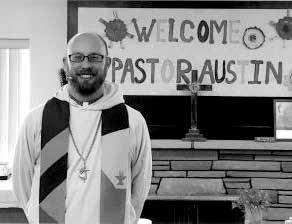
Jenny Durkan, the first woman elected as Seattle mayor in nearly a century. Alex Rozier, an award-winning reporter from KING5, will moderate a discussion about what inspired her to run and the growing movement of first time candidates, women, people of color, and LGBTQ candidates changing the face of politics. The Elliott Bay Book Company is located at 1521 10th Avenue (between E Pike and E Pine Streets on Seattle’s Capitol Hill). This event is free and no tickets are necessary.
Contributors to Why I Run include Stacey Abrams, Amy McGrath, Kwame Raoul, Helen Gym, Ashley Bennett, Zach Wahls, Saira Rao, Barbara Lee, Daniel Hernández Jr., Heather Ward, Sheila Oliver, Debra Haaland, Valerie Hefner, Michelle Lujan Grisham, Jason Kander, Jennifer Carroll Foy, Pramila Jayapal, Alexandra Chandler, Shoshanna Kelly, Kate Brown, Michelle
De La Isla, Andrew Gillum, Nelson Araujo, Jenny Durkan, Andrea Jenkins, Karen Caudillo, Tom Perriello, Kevindaryán Luján, Vi Lyles, Dimple Ajmera, Wilmot Collins, Kelsey Waits, Anna V. Eskamani, Mai Khanh Tran, Tyler Titus.
About the Author Kate Childs Graham is a political speechwriter. She served as communications director for U.S. Senator Amy Klobuchar. She also wrote speeches for principals and surrogates during the ClintonKaine campaign and the 2016 Democratic National Convention. Currently, she is a principal at West Wing Writers. She lives in Mount Rainier, Maryland.
voted along more conservative lines.
The Rev. Austin Adkinson, pastor of Haller Lake UMC in Seattle, attended the conference. Adkinson, who identifies as Queer, sits on the Board of Ordained Ministry for UMC, which approves clergy candidates. He is also a member of UMC’s Queer Clergy, which advocates for LGBTQ issues within the church at large.
“We are sharply divided at the international level, but 70% of delegates in USA voted for inclusion. We’ve seen a groundswell of support across the country that has been quiet before but who are now speaking up and saying this is not who we are. We’ve seen rainbow flags at churches across the USA. But how we solve that politically has yet to be seen.”
He added, “We have a hard time talking about sexuality with people of our own language, and we’re dealing with people from different cultures. We’re the only
denomination that tries to do this internationally and democratically. We hoped the denomination would move forward; (instead) we went backwards.”
Seattle First United Methodist Church, aka First Church is part of Reconciling Ministries Network, which “equips and mobilizes United Methodists to resist evil, injustice and oppression as we seek justice for people of all sexual orientations and gender identities,” according to www. rmnetwork.org.
“We have been open and affirming for many years,” said Rev. Jeremy Smith, senior pastor of First Church. “This conference does not change that, and it makes us be even more resolute and active in inclusion of all people. In the UMC there’s a conflict of what the global conference says and what the region practices. In this region we’ve been practicing full inclusion for many years. This decision does not change that. There’s a new spirit of resistance and a new call to respond in more faithful ways.”
by Gregory L. Evans
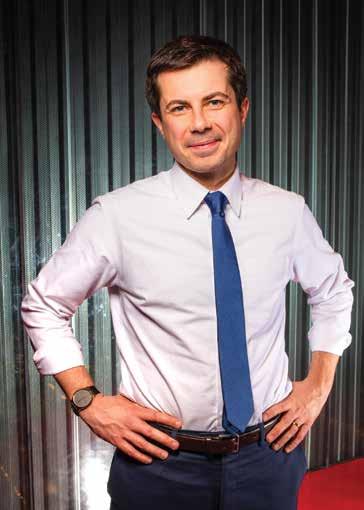
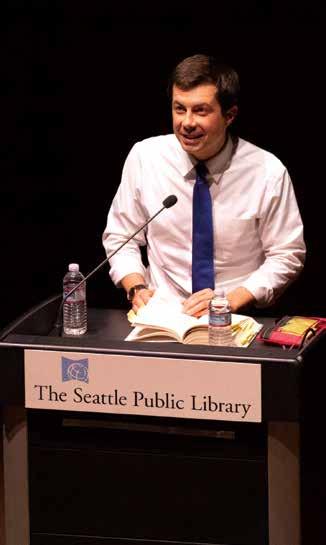
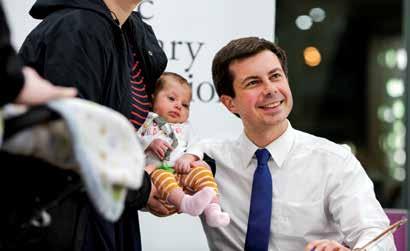
Gregory L. Evans interviewed Pete Buttigieg, the 37-year-old Democratic mayor of South Bend, Indiana, on behalf of Seattle Gay News before Buttigieg’s book tour appearance at Seattle Public Library on February 28, 2019.
SGN: What do you think is the biggest defect in the Democratic Party’s strategy in opposing Trump?
PETE: Well, I think the biggest defect is that it’s all about Trump. I think it being fundamentally about him is not going to be a winning strategy. We need to be talking about the country as it will be when he goes.
SGN: Why are people so attracted to Trump?
PETE: When there’s something grotesque going on, it’s very hard to look at anything else. And I think the scene, especially in Washington, DC, right now, is grotesque. So, you know, we’re always mesmerized by horror shows like what we’re seeing right now in our government. But it also calls on us not to get completely absorbed in it, but to start presenting an alternative.
SGN: Switching gears, there’s a lot of conversation about legislation to control conversion therapy and other ultra rightwing practices, like “pray the gay away.”
PETE: First of all, we need a federal equality act, just to make sure that we establish, as a matter of law, that everybody’s equal across different sexual orientations and gender identities. I think that the problem with obviously these conversion therapy strategies is that they can be actively harmful. And so, I haven’t reviewed the minutia of the competing proposals about how you do it legislatively, but I think it has to be a priority that we establish that this is something that is bad for your health.
SGN: Do you want to talk about intersectional and restorative justice?
PETE: Sure. I think we’re learning. Look, I think about justice a lot, because I’m from a largely low-income, diverse community where I think a lot of our traditional or old-fashioned approaches have done more harm than good. Incarceration: retributive justice often perpetuates cycles of violence and harm. Restorative justice holds out the promise of actually making us safer. It’s an example of the sort of thing I think will get more attention if, as I’ve been calling on us to do, we paid more attention to a generational outlook and asked about how the choices you make today impact the long run. So, if you’re living in the moment, or

you’re thinking about retribution, you get the one account of how to deal with the wrong. If you’re thinking about the future and especially the generation-upon-generation impact of what we do to respond to a wrong or a transgression, then it leads you to a different place. Restorative justice is showing a great deal of promise, not only in terms
bring to the table our own life experience. I definitely – from a diversity perspective –have the Maltese American, gay, millennial, veteran, mayor lane all to myself. And, you know, I think all of us have to simply bring together the sum of our life experience and hope that it makes us as compassionate and insightful about the big picture.
of redemption but also in terms of safety. But, you know, we’re way behind in the U.S. in terms of our approach to these things.
SGN: What do you say to people who don’t think we need another white man running for President, regardless of sexual orientation? We’ve had a lot of those as presidents.
PETE: Look, I mean, everybody comes into this with whatever they can bring to the table. And I’m thrilled by the diversity, not just in the 2020 field, but also of the people who’ve been stepping up, including many people that we’ve supported last year running for Congress. I think all any of us can do is
bureaucracy and more of it goes to patient care, then more and more people are going to buy into it and it will be a very natural glide path to a single-payer environment.
SGN: It’s a refreshing perspective. Do you have any thoughts on how improving Medicare and education will, in turn, have long-term impacts on our economy?

SGN: I’d love to hear a little bit about healthcare and where you stand on that.
PETE: I think “Medicare for All” has to be our destination. I think anybody, who like me, says that that’s a good policy needs to also explain how we’re supposed to get there. And the approach I favor is one where you take some version or flavor of Medicare and you make it available on the exchange as a sort of public option. Sometimes it’s been called “Medicare extra.” And the thought here is that if people like me are right, that expanding access to Medicare ultimately leads to a more efficient system where less of our healthcare dollar goes to
PETE: Yeah. I mean, we need to invest in things that pay off. Investing in health pays off. Investing in education pays off. Investing in infrastructure pays off. And another generational concern I have is that the costs of the disinvestment in these things will make our whole generation worse off economically.
S GN: I can really see how you treat that by how you’ve affected the economy where you’re from, South Bend, Indiana.
PETE: That’s part of the idea.
SGN: Brilliant. Thank you.









by David Caldwell Benaroya Research Institute at Virginia Mason
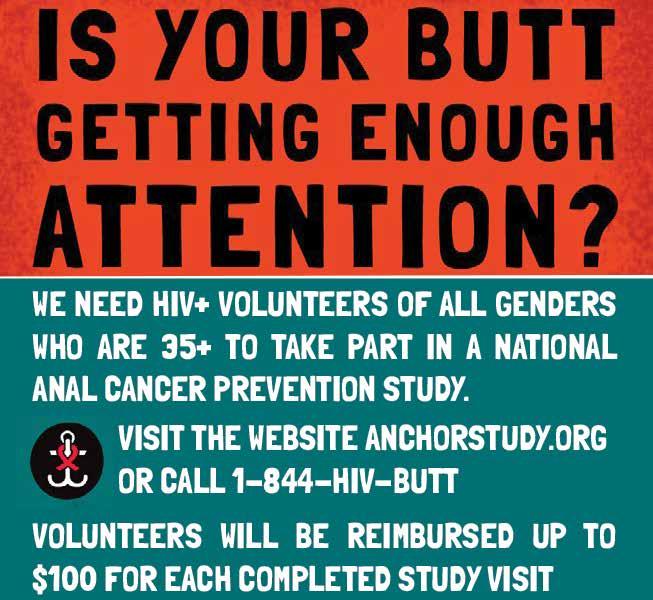
For many people, the path to joining a clinical research study begins with a startling diagnosis followed by a series of very heavy decisions. Fear, anxiety, disbelief and sadness are perfectly reasonable emotions to feel when faced with the reality of an incurable condition.
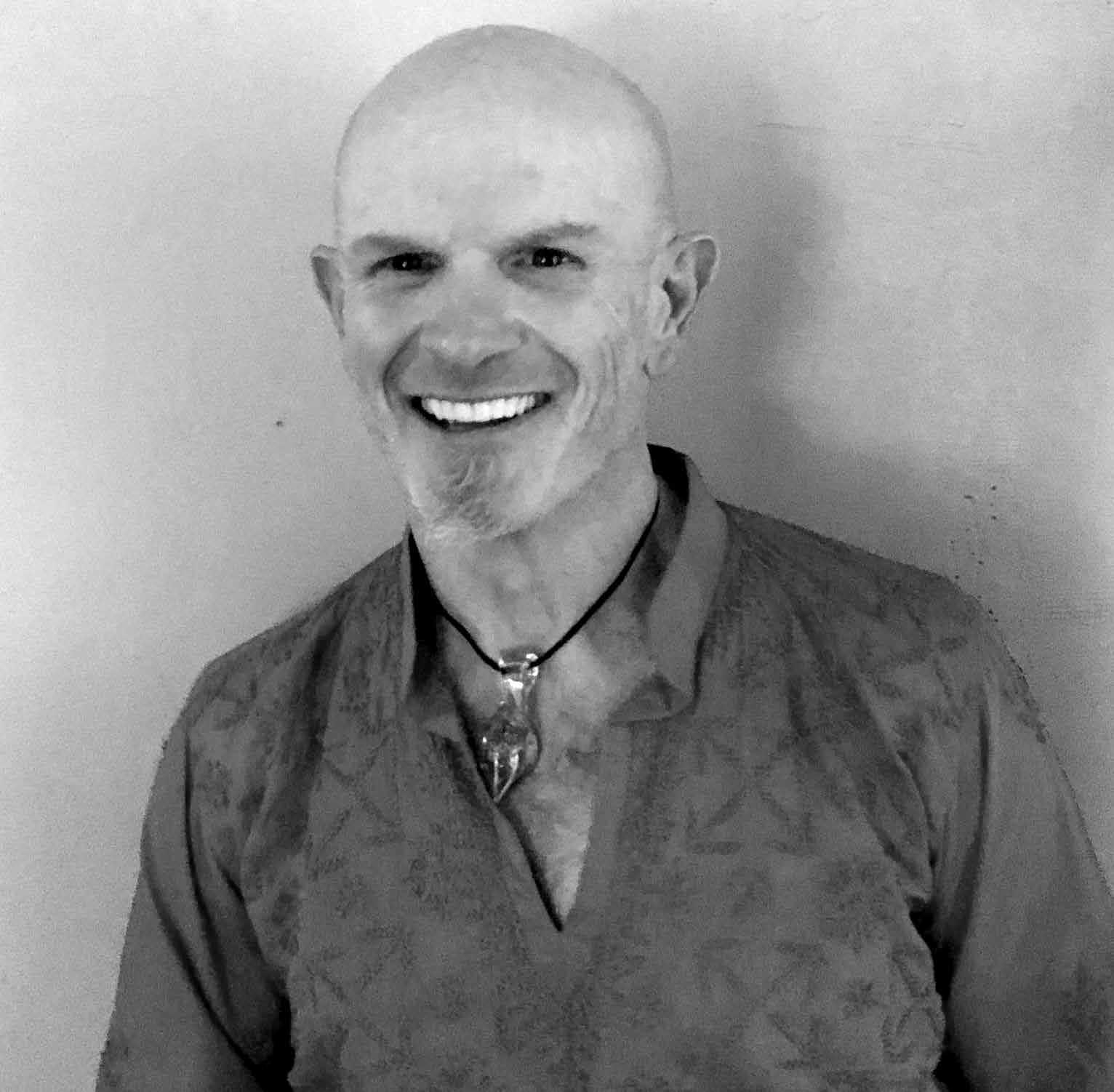
However, to hear James Alton Thomas describe his experience, one might think they were listening to the memories of a proud parent rather than a cancer patient. He consistently uses the words “grateful,” “love,” and “magic” when reflecting on his journey. “As a child I always thought I’d make a wonderful spokesperson,” laughs James. “Of course, I didn’t know it would be for clinical research. But here I am. And I was right.” He erupts into laughter and then adds, “I am thankful every single day for having cancer. And I am here because of a clinical trial.”
James’ journey from patient to clinical research advocate began thirty years ago when, at the age of 24, he was diagnosed with HIV. As a young man in Monterey, CA, he witnessed numerous friends bear the same diagnosis in addition to the oftenunpleasant side effects of AZT, the only available treatment then.
“I declined AZT after watching my friends get really sick,” James says. He then adds, “I endured a lot of abuse in my life. And I learned that responding with anger only allows an abuser to retaliate against you. So, I told HIV ‘we need to take this journey together’ and I decided to love it and invite it in.”
James is a long-term non-progressor which means he is one of a small group of people with HIV who do not take antiretroviral therapy yet still maintain normal CD4+ counts – the marker of a healthy immune system. He says among that original group of friends he is the only one still alive.
For decades James was the picture of health. He became a hairdresser and, in 1996, followed a lover to New York. He earned a degree in Horticultural Science and took a job with an orchard near his current home in Greenville Township, NY. However, all of that changed in 2014.
For about a year, James had suffered from a series of stomach aches which his doctor attributed to H. Pylori, a gastrointestinal bacterial infection. “I just thought I was just going through a new phase in my life,” he jokes dismissively. By May of 2014, the treatments, however, weren’t working and James’ condition worsened to the point where he was unable to eat any food without vomiting. “At that point,” he says, “I knew what it was.”
An endoscopy at Memorial Sloan Kettering confirmed James’ intuition: there was a tumor in his abdomen applying significant pressure on his stomach. The final diagnosis was Large B Cell NonHodgkin Lymphoma.
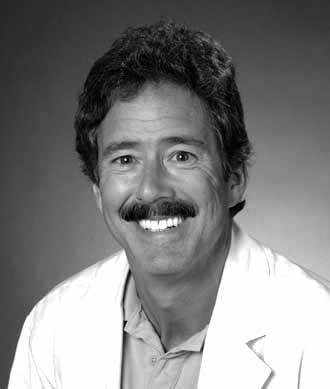
As David Aboulafia, MD, Hematologist/Oncologist at Virginia Mason in Seattle and a Principal Investigator with the AIDS Malignancy Consortium (AMC) explains, James’ diagnosis was not entirely unexpected. “Advances in treatment of HIV/AIDS have multiplied in an unprecedented and truly remarkable fashion,” says Dr. Aboulafia. “With effective antiviral medications people living with HIV are now living a normal lifespan yet they are still susceptible to certain cancers. Cancer of the lymph nodes, also called lymphoma, is the most common cancer to be diagnosed in this group.”
James’ lymphoma specialist was Ariella
Noy, MD. Her goal was to provide him with the most effective treatment, which included the opportunity to participate in an AMC clinical study for patients with HIV-related Lymphoma. James remembers Dr. Noy calling him from atop a mountain while on a skiing vacation to tell him he had qualified for the study. He exclaims, “It was like getting a golden ticket!”
James began a complex treatment regimen in which he received intravenous chemotherapy infusions in combination with the drug Vorinostat. And, because chemotherapy weakens the immune system, he had to begin treating his HIV for the first time. During the study, James was treated in an outpatient infusion center for
five consecutive days at a time – a schedule that was repeated every three weeks. The treatment restructured his life, yet he continued to work up to 80 hours a week at the orchard whenever he was able.
In a rare moment of somber reflection, James admits the process wasn’t always easy. “So many patients were frustrated and angry. I saw people become smaller lashing out against their cancer, even calling it names. I saw patients having to take care of their partners who were also angry from their lack of control.”
James’ own partner struggled to be present during the treatments. “I didn’t need to burden him with this,” James offers kindly. Though difficult, the process allowed them both to grow deeper into their relationship.
“As a cancer patient, you come to represent other people’s mortality,” James offers. “That can be very scary. It can be uncomfortable. But breathe into that discomfort. Ask yourself, ‘What is there to learn from this?’” Through a soft laugh he says, “Remember what I said about anger?”
After four very intense months James completed his study. Yet one month later, during a routine follow up visit, he discovered his lymphoma had returned.
“The truth is,” James says, “you can never know the outcome of your cancer treatment. But as a study participant, you have so many more people coming to care about you than you would as a standard patient. Everyone wants to help you get to the other side. It’s incredible.”
With the support of his care team, James enrolled into a second clinical study. Each new treatment involved three days of
inpatient chemotherapy in addition to radiation and an oral drug called Ibrutinib. At one point James developed severe lesions in his mouth prompting Dr. Noy to suggest removing him from the study. “I have a larger purpose,” he remembers. “And I begged to be kept on knowing this study would save my life.” After another four months of chemotherapy James completed the study. His lymphoma was finally gone.
“I am so lucky,” James reflects.
Today, James is choosing to live his life “like a leaf in a stream.” He plans to work with sick people helping them connect with their spirit through dance yoga. “Everyone is a dancer,” he says. There’s even talk of writing a children’s book about cancer. “Cancer can help you find that secret power within you.”
When asked what advice he would give someone considering clinical research, James takes a deep breath and pauses. “Clinical trials are like dreams for both patients and researchers. If you are willing to step into your critical role as a participant, you can help manifest these dreams into reality. This may be the only time in your life that it is all about you. So, receive the love being sent to you – even from total strangers. Believe in the experience. Surrender control. Allow room for magic and let the miracles happen.”
For more information on HIV-related cancer clinical research, please visit the Benaroya Research Institute website, the AMC website, and www.ClinicalTrials.gov.

WASHINGTON, DC – [On May 7]
Sasha Buchert, Senior Attorney at Lambda Legal, issued the following statement after the U.S. Senate confirmed Eric Murphy, President Trump’s nominee to the U.S. Court of Appeals for the Sixth Circuit:
“Today’s vote to confirm Eric Murphy was yet another example of how little concern Senate Republicans have for the safety and security of the LGBT community, and their broader disdain for civil rights. The fact that even Senator Portman (R-OH), who came out publicly in support of marriage equality, could not bring himself to vote against this nominee demonstrates the extent to which Senate Republicans have completely abdicated their duty to provide meaningful advice and consent. Our federal courts will be the worse off for generations to come.”
Earlier this year, Lambda Legal released a report detailing Trump’s judi-
cial assault on LGBT rights. The analysis outlines the ways in which Senate Republicans have eviscerated nearly all Senate rules and traditions that protect the nomination process, leading to an alarming rate of confirmations for Trump-appointed judges. Trump has confirmed more circuit court judges than any other president by this point in his first term, and his administration shows no signs of slowing down.
About Lambda Legal
Lambda Legal is a national organization committed to achieving full recognition of the civil rights of lesbians, gay men, bisexuals, transgender people and everyone living with HIV through impact litigation, education and public policy work. www. lambdalegal.org
Courtesy of Lambda Legal

The bill also seeks to update federal law to include sex in the list of protected classes in public accommodation, and to expand the definition of public accommodations to include retail stores, banks, transportation services, and health care services.
“Next week, we will be launching our Equality Act to end discrimination for the LGBTQ community, and we will be launching our initiative to protect the DREAMers and temporarily protected status persons in our country,” Pelosi said.
Citing the Democratic House majority’s achievement in passing background checks for gun purchases and government reform legislation, Pelosi said equal pay legislation for women workers and reauthorization of the Violence Against Women Act would
come later in March.
“We said these things during the campaign, and we’re getting it done and we are telling the public about the paths that we are on to get them turned into law to make a difference in the lives of the American people,” Pelosi said.
After the news conference, Pelosi told reporters “we’ll see” when asked when she’d bring legislation to a floor vote but was confident the House would approve it. (The Republican-controlled Senate is a different story.)
“As we go along, it’s the tempo of the floor, but it is a priority for us,” Pelosi said. “I’m very pleased because we have a great deal of outside support for it, which I hope will help us pass it in the Senate. We most certainly will pass it overwhelmingly in the House.”
ing survey, but the Williams Institute made a deeper analysis of the numbers to get a more detailed demographic picture of the adult LGBT population.
Of Americans who self-identify as LGBT, only 23% are age 50 or older, compared with 47% of the general adult population. On the other hand, 56% of LGBT adults are under age 35 compared with 28% of the general population.
According to Kerith Conron, research director at the Williams Institute, this is because younger people are more likely to publicly self-identify as LGBT than their elders.
“Younger people are more likely to actually live as LGBT and to identify that way because they are growing up in a time when it’s more acceptable to acknowledge those feelings and to act on them,” he explained.
LGBT people are also economically disadvantaged, compared to the whole US population. LGBT people are more likely
to have household incomes below $24,000, and to lack access to a sufficient nutrition, the analysis found.
Although LGBT people come from all ethnic groups, people of color represent a slightly higher percentage than they do in the general population for reasons that require more research, Conron said.
In 2011, the Williams Institute estimated the US LGBT population at 3.5% based on other survey data.
Conron said the apparent one-percentage-point increase in the LGBT population from 2011 was likely the result of more
people feeling comfortable responding to questions about their sexual orientation.
Many current surveys estimate the LGBT population at well below the conventional estimate of 10% that is derived from what Williams Institute calls an “oversimplification” of Alfred Kinsey’s pioneering sexology studies some 70 years ago.
However, in surveys that are more anonymous and private, about 10% of respondents say they have some level of same-sex attraction, even if they stop short of identifying themselves as Gay, Lesbian, or Bisexual, Conron said.
He had chemotherapy to treat the cancer and, in addition, stem cells were implanted into the patient from a donor resistant to HIV, leading to both his cancer and HIV going into remission.
He has now been in remission from HIV for 18 months and is no longer taking HIV drugs. However, doctors working on the case say it is too early to say the patient is cured of HIV. And they warn that the approach is not practical for treating most people with HIV but may one day lead to a cure.
Researchers from University College London (UCL), Imperial College London, and Cambridge and Oxford Universities were all involved in the case.
This is the second time a patient treated this way has ended up in remission from HIV. Ten years ago, another patient in Berlin received a bone-marrow transplant from a donor with natural immunity to the virus.
Timothy Brown, said to be the first person to “beat” HIV, was given two transplants and total radiation therapy for leukemia, a much more aggressive treatment than was used in the British case.
“By achieving remission in a second patient using a similar approach, we have shown that the Berlin patient was not an anomaly and that it really was the treatment approaches that eliminated HIV in these two people,” said lead study author Prof Ravindra Gupta, from UCL.
Why this is not a “cure” but could lead to one
Chemotherapy plus the stem cell transplant were used primarily to treat the patient’s cancer, not his HIV. Current HIV therapies are very effective, allowing people with the virus to live long and healthy lives. But this new case is significant because it could help researchers who are looking for new ways to tackle HIV and achieve a real cure.
Professor Eduardo Olavarria of Imperial College London, also involved in the current
case, said the success of stem cell transplantation offered hope that new strategies could be developed to tackle the virus.
But he added, “The treatment is not appropriate as a standard HIV treatment because of the toxicity of chemotherapy, which in this case was required to treat the lymphoma.”
How did it work?
The treatment “worked” – eliminated HIV – by interfering with the protein receptor that allows HIV to penetrate healthy cells.
CCR5 is the most commonly used receptor by HIV-1, the virus strain of HIV that dominates around the world, to enter cells. A very small number of people who are resistant to HIV have two mutated copies of the CCR5 receptor.
This means the virus cannot penetrate cells in the body that it normally infects.
The London patient received stem cells from a donor with this specific genetic mutation, which made him resistant to HIV
as well. But a reservoir of cells carrying HIV can still stay dormant in the body for many years.
The UK researchers say it may be possible to use gene therapy to target the CCR5 receptor in people with HIV, now that they know the Berlin patient’s recovery was not unique.
Dr. Andrew Freedman, reader in infectious diseases and honorary consultant physician at Cardiff University, said it was an “interesting and potentially significant report.”
But he said much longer follow-up would be needed to ensure the virus did not re-emerge at a later stage.
“While this type of treatment is clearly not practical to treat the millions of people around the world living with HIV, reports such as these may help in the ultimate development of a cure for HIV,” he said.
In the meantime, he said the focus needed to be on diagnosing HIV promptly and starting patients on lifelong combination antiretroviral therapy.
[On Wednesday, February 27] the Daily Beast published writings from Marc Short, Vice President Pence’s incoming chief of staff and a former top White House aide, that denigrates LGBTQ people for a “perverted lifestyle” and calls the transmission of HIV/ AIDS the result of “repugnant” acts.
In response, DNC LGBTQ Media Director Lucas Acosta issued the following statement:
“This administration continues to
promote people, like Marc Short, who hold dangerous, out-of-touch, and bigoted views about the LGBTQ community. Short’s column is disturbing and clearly attacks people living with HIV and AIDS, as well as all LGBTQ persons.
“Now, the second most powerful person in the country has elevated Marc Short to the most senior position in his office. The choice to promote someone with such hostile views
toward the LGBTQ community further confirms this White House’s goals of eliminating HIV/AIDS transmissions and decriminalizing homosexuality abroad are nothing more than empty rhetoric.
“Vice President Pence has never failed to find ways to discriminate against the LGBTQ community, from attacking our health care, to ending programs that prevent the spread of HIV infections in his
home state, to supporting a policy that bars us from serving our country.
“The anti-LGBTQ values that Trump, Pence and Short share are abhorrent. Democrats will continue to fight for equal rights and stand up against this administration’s attempts to roll back our progress.”
Courtesy of the Democratic National Committee
[On Tuesday, March 5] the U.S. Senate confirmed Allison Rushing to serve a lifetime appointment on the U.S. Court of Appeals for the Fourth Circuit. Rushing began her career as a legal intern for the Alliance Defending Freedom, an antiLGBTQ hate group, and has maintained her relationship with the group in the years since she worked there.
In response to today’s confirmation, DNC
LGBTQ Media Director Lucas Acosta issued the following statement:
“Today, Senate Republicans confirmed one of the most anti-LGBTQ nominees in history. LGBTQ people are right to be concerned that Allison Rushing will be unable to provide fair and impartial judgment to all those that come before her given her previous employment at the Alliance
Defending Freedom, which has advocated for re-criminalizing homosexuality and has even defended state-sanctioned sterilization of transgender people abroad.
“By continuing to promote people like Allison Rushing, who hold dangerous and out-of-touch views about the LGBTQ community, this administration clearly demonstrates that their goal of decriminalizing homosexuality across the world is just
empty rhetoric.
“Every Republican Senator must be held accountable for this dangerous appointment to the Fourth Circuit. Democrats stood united against Rushing’s appointment, and we will continue to speak out against hate.”
Courtesy of the Democratic National Committee
In his State of the Union [on Tuesday, February 5] Donald Trump announced a notable goal to end HIV/AIDS transmissions by 2030. However, the Trump administration has consistently undermined advancements in HIV/AIDS research, attacked people living with HIV/AIDS and sabotaged access to quality health care at every opportunity. Here’s Trump’s real record on HIV/AIDS:
FACT: Trump celebrated a court ruling in favor of a lawsuit he backed to overturn the ACA [Affordable Care Act], endangering coverage for around 130 million people with pre-existing conditions, including HIV/AIDS.
CBS News: Around 130 million people in the United States have pre-existing conditions, and without the ACA, insurers would no longer be required to cover those conditions.
Vox: “To put it simply, the ACA was a ‘watershed moment in the [HIV] epidemic’s history,’ as the Kaiser Family Foundation’s director of global health and HIV policy, Jennifer Kates, told me in 2017. The law was designed to get more people access to health care, including those who were traditionally denied coverage because of ‘preexisting conditions’ like HIV, or who were driven out of the marketplace because their health care was unaffordable. And so under the law, the disease was no longer a barrier to health insurance.”
FACT: The Department of Health and Human Services proposed new rules to eliminate requirements that insurance plans for Medicare beneficiaries cover prescription drugs in “protected classes,” such as HIV/ AIDS.
“The Trump administration proposal is bad medicine and dangerous to people living with H.I.V.,” said Carl E. Schmid II, the deputy executive director of the AIDS Institute, a public policy and advocacy organization for patients. “Not all H.I.V. medications are the same. The Medicare Part D program is working well for people with H.I.V., and there is no reason to take these draconian actions.”
FACT: The Department of Health and Human Services redirected money from the Ryan White HIV/AIDS Program to help fund the separation of immigrant families.

POZ: “Trump Agency Is Using Federal HIV Funds to Separate Immigrant Families”
FACT: Both of Trump’s budget proposals sought to cut global HIV/AIDS funding by over $1 billion, which could cause 300,000 deaths per year.
Huffington Post: “His 2019 budget proposal would cut $1.2 billion from global HIV programs like PEPFAR and the Global Fund to Fight AIDS, Tuberculosis and Malaria.”
CBS News: “Trump’s 2018 budget not only slashes PEPFAR by 17 percent – from $4.6 billion to $3.8 billion – it cuts global health programs overall by $2 billion. It also downsizes the National Institute of Health’s National Institutes of Allergy and Infectious Diseases (NIAID), which funds HIV/AIDS research, by 23 percent.”
The Daily Beast: “Trump’s Budget Cut for HIV/AIDS Would Kill 300,000 People Per Year, Report Says”
FACT: United States Secretary of Health and Human Services Alex Azar created a
“Conscience and Religious Freedom Division,” giving health care providers the ability to refuse treatment to LGBTQ people if they have a “moral objection.”
HIV+ Magazine: “In January 2018, the U.S. Department of Health and Human Services created the Division of Conscience and Religious Freedom under the Office of Civil Rights (OCR). This division was created following a 2017 executive order by President Trump directing agencies to expand religious freedom protections in ways that could increase discrimination against LGBT individuals and same-sex couples.”
CDC: “Gay and bisexual men are the population most affected by HIV in the United States. In 2016, gay and bisexual men accounted for 67% of the 40,324 new HIV diagnoses in the United States and 6 dependent areas. Approximately 492,000 sexually active gay and bisexual men are at high risk for HIV.”
FACT: Vice President Mike Pence, while governor of Indiana, opposed a needle exchange program and exacerbated the local HIV/AIDS crisis.
Politico: “But when confronted with a spiraling HIV outbreak in his home state as a result of opioid addicts sharing contaminated needles, Pence dragged his feet…”
FACT: Trump’s Department of Defense instituted a “Deploy or Get Out” policy, which would remove HIV+ military personnel from service solely because of their status.
Washington Post: “They tested positive for HIV. Then the military kicked them out.”
Sergeant Nick Harrison, an 18-year veteran of both Afghanistan and Kuwait: “This is about every person living with HIV knowing that they can perform any job in the world, including serving in the military [...] I look forward to the day that I can serve my country to the full extent of my abilities, based on my performance and unfettered by unfounded fears and misperceptions about HIV.”
Courtesy of the Democratic National Committee