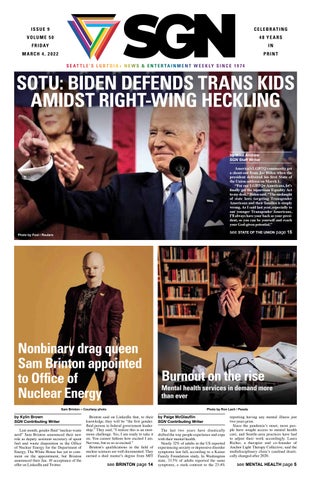
SOTU: BIDEN DEFENDS TRANS KIDS AMIDST RIGHT-WING HECKLING
Nonbinary drag queen
Sam Brinton appointed to Office of Nuclear Energy Burnout on
by Kylin Brown SGN Contributing Writer
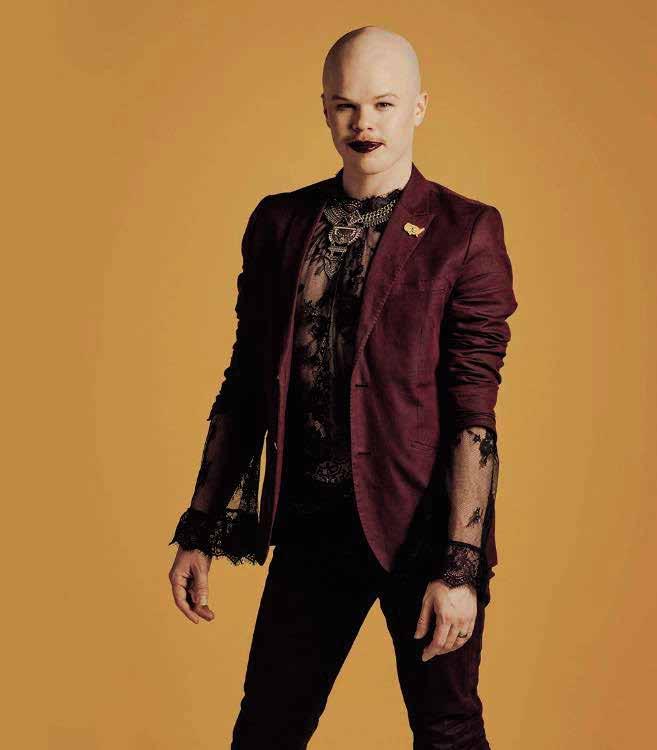
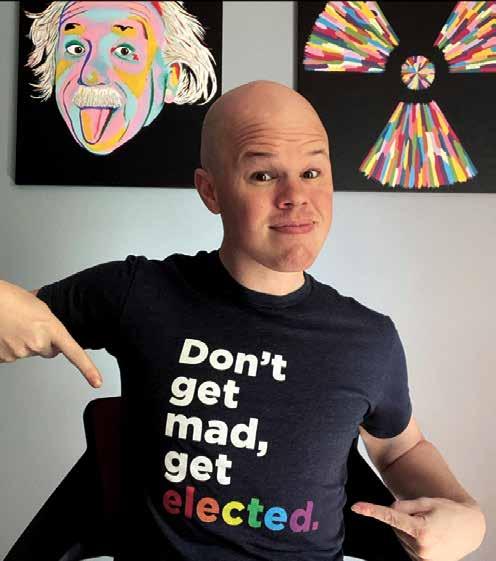
Last month, gender-fluid “nuclear waste nerd” Sam Brinton announced their new role as deputy assistant secretary of spent fuel and waste disposition in the Office of Nuclear Energy for the Department of Energy. The White House has yet to comment on the appointment, but Brinton announced their Jan. 10 acceptance of the offer on LinkedIn and Twitter.
Brinton said on LinkedIn that, to their knowledge, they will be “the first genderfluid person in federal government leadership.” They said, “I realize this is an enormous challenge. Yes, I am ready to take it on. You cannot fathom how excited I am. Nervous, but so so so excited.”
Brinton’s qualifications in the field of nuclear sciences are well documented. They earned a dual master’s degree from MIT
by Mike Andrew SGN Staff Writer
America’s LGBTQ community got a shout-out from Joe Biden when the president delivered his first State of the Union address on March 1.
“For our LGBTQ+ Americans, let’s finally get the bipartisan Equality Act to my desk,” Biden said. “The onslaught of state laws targeting Transgender Americans and their families is simply wrong. As I said last year, especially to our younger Transgender Americans, I’ll always have your back as your president, so you can be yourself and reach your God-given potential.”
Mental health services in demand more than ever
by Paige McGlauflin SGN Contributing Writer
The last two years have drastically shifted the way people experience and cope with their mental health.
Nearly 32% of adults in the US reported experiencing anxiety or depressive disorder symptoms last fall, according to a Kaiser Family Foundation study. In Washington state, 33.5% of adults reported the same symptoms, a stark contrast to the 23.4%
reporting having any mental illness just two years prior. Since the pandemic’s onset, more people have sought access to mental health care, and Seattle-area practices have had to adjust their work accordingly. Laura Richer, a therapist and co-founder of Anchor Light Therapy Collective, said the multidisciplinary clinic’s caseload drastically changed after 2020.
Sam Brinton – Courtesy photo
Photo by Ron Lach / Pexels
Photo by Pool / Reuters
Local News
Drag Race queens, Keri Hilson set to thrill Rhein Haus Pride weekend
by Kylin Brown SGN Contributing Writer
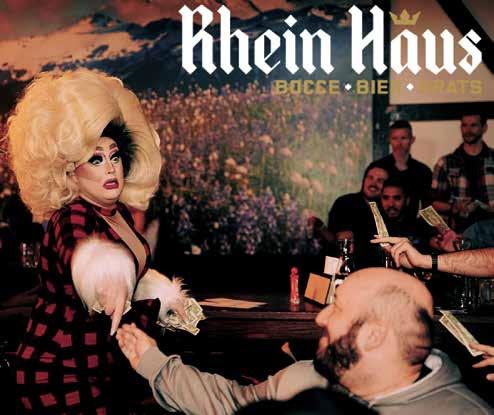
With the return of in-person Pride activities this June, 12th Avenue’s Rhein Haus has announced its biggest Pride weekend to date, with performances from R&B singer-songwriter Keri Hilson and iconic RuPaul’s Drag Race queens.
In partnership with Revolution Productions, the weekend lineup will begin Pride Saturday with a drag brunch from 12 pm to 3 pm and continue with drag performances throughout the evening, leading up to headliner Keri Hilson.
Let’s do the “Pretty Girl Rock”
Keri Hilson is a singer-songwriter and vocal advocate for the LGBTQ community who has previously dated women and men. Her pop-infused R&B music became essential to the genre of the time upon its release in 2009 and 2010, including the tough-love anthem “Knock You Down,” which features Kanye West and Ne-Yo, and the platinum single “Pretty Girl Rock,” with its upwards of 100 million streams across Spotify and YouTube.
Hilson earned two Grammy nominations for her 2009 album In a Perfect World…, for Best New Artist and Best Rap/Sung Collaboration. She is rumored to be releasing her long-awaited next album soon and has, in the meantime, performed at Pride in Atlanta, Indianapolis, Los Angeles, and Washington, DC.
Hilson has also contributed much of her downtime to the fight against HIV and AIDS, having previously served as a Reed for Hope Foundation ambassador, and having joined AIDS Walk New York. “We all know someone who has been affected by it, yet no one wants to talk about it,” she said of her efforts in 2013. “That’s why I am so passionate. It needs to change.”
Beer and bocce made Gay
Deming Maclise and James Weimann, owners of Weimann Maclise Restaurants, developed Rhein Haus by transforming the previous 1940s candy factory space into their own 10,000-square-foot “slice of Bavaria.” Inside, Rhein Haus offers a killer combination of “bier, bocce, and brats,” aka an 80-seat beer hall, an outdoor Biergarten, five indoor bocce ball courts, and house-made sausages. The sports-pub atmosphere you would expect is warmed by Pride flags flying high outside and an entirely welcoming staff.
Over the last decade or so, Seattle has seen businesses hoist the Pride flag as a marketing strategy, but we checked in with Weimann Maclise’s director of public relations and marketing, Erica Waliser, to see what drove Rhein Haus to fly theirs and get involved as a venue for drag.
She said that the restaurant shares ownership among three individuals beyond Weimann and Maclise, including Matt Fundingsland and his husband Dustin Jeremiah. The general manager and long-time industry professional Jeremy Walcott also identifies as Gay.
“The LGBTQ community has always been an important community for us, because it’s part of [Rhein Haus]’s foundation. It’s who we are; it’s a part of our own family,” she said.
Walcott described the business’s relationship with Revolution Productions, a Seattlebased nonprofit event management company focused on hosting drag shows, sports tournaments, fundraisers, and more to support local and national LGBTQIA+ organizations.
“We started working with Revolution Productions in 2019 to bring drag performances to Rhein Haus,” he said.
Waliser added that Revolution Productions co-founder Tyler Keys first tapped Rhein Haus to become the bar sponsor for
his Gay softball league, which the venue started doing in 2019, in addition to working with Keys to put together the first Drag Brunch events. “We are really excited about all the talent that’s coming out for this and working with Tyler,” she said.
Waliser said that the lineup is largely credited to Revolution Productions. “Tyler works with drag queen talent bookers, and got connected with Keri Hilson,” she said. “Keri mentioned that she loves doing Pride shows, and she was super excited to join ours.”
Keys said he enjoys the relationship they have forged to create a new space for drag.
“Working with Rhein Haus to provide a new venue for local drag queen talent and bringing in drag queens from around the country has been a highlight of the last year for us,” he said. “Having Keri Hilson headline the weekend will be the largest event yet, and we know the team at Rhein Haus
will make this a spectacular destination for Pride weekend.”
Excitement brewing for Pride
According to the restaurant’s announcement, it has snagged a star-studded lineup of queens for the weekend surrounding Hilson’s performance Saturday night. From RuPaul’s Drag Race, Rhein Haus patrons will see Symone, Joey Jay, Trinity K. Bonet, Ra’Jah O’Hara, Blair St. Clair, Tatianna, Thorgy Thor, and Mayhem Miller.
Performances from local Seattle and visiting queens will include Anita Spritzer, Mila Skyy, Kungpow Meow, Lucy Paradisco, Sable Jones St. James, Alaysia McKenzie, Beyonce Black St James, and others.
DJ Tone, DeeJay Sessions, DJ Alfonso Tan, and additional DJs to be announced will provide an ongoing soundtrack for the weekend.
“With the city opening back up, we are
excited to throw our biggest event to date over Pride Weekend in 2022,” said Walcott. Waliser added that after 2020, Rhein Haus feels that this is their year to “really go all out.”
General admission and VIP tickets will go on sale Friday, March 18, at 10 a.m. PT. Some ticket options will include the entire day Saturday, from brunch to evening admittance, and others for certain performances, Waliser said.
Visit rheinhausseattle.com/pride for tickets and programming information. Follow Rhein Haus on Facebook and Instagram to see lineup updates and more announcements. You can also check out the venue prior to Pride to play some friendly indoor bocce ball at 912 12th Ave., Seattle, WA 98122. Visit www.rheinhausseattle.com for hours, menus, and reservations.
Photo courtesy of Rhein Haus
Anita Spritzer – Photo courtesy of Rhein Haus
Keri Hilson – Photo by K Rish
New GSBA president shares vision for “thriving” Washington
by Paige McGlauflin SGN Contributing Writer
Michael Soto is having a busy February. The new president and CEO of the Greater Seattle Business Association (GSBA) started his role on Feb. 7 and is already deep in preparations for the spring and summer with his team.
“It’s been so delightful to actually be in meetings with everyone, getting to know the team, [and] getting to know more about the work,” Soto told the SGN “I’m so thrilled to be a part of it,” he added.
Soto joins the GSBA, Washington state’s LGBTQ+ and allied chamber of commerce, after Louise Chernin stepped down from the role in Dec. 2020.
Born and raised in Arizona, Soto was first introduced to community advocacy from a young age through his own family’s civic engagement.
“That [engagement] perhaps looked different when I was little and growing up in an LDS family in the very conservative city of Mesa, but that passion for contributing to something beyond my life has always been a part of what has driven me,” Soto said.
Eventually Soto went into advocacy and policy work in various sectors, including arts advocacy and social services. After coming out at 19 years old, he began to form strong ties to LGBTQ advocacy, and this eventually led to him serving as the executive director of Equality Arizona from 2018 until taking his current gig.
“The LGBTQ community, that’s where my heart has always been in terms of advocacy work, and in terms of community
MENTAL HEALTH
continued from cover
“We saw a huge uptick in people wanting couples and family therapy, which makes perfect sense, because people were in their homes, they were together all the time, they were teaching their kids online while trying to work online,” Richer told the SGN
Adults aren’t the only ones needing support, though. In 2021, 48% of LGBTQ youth wanted mental health care but didn’t get it, while 36% did receive mental health care, according to a survey from the Trevor Project.
Erin Karcher, a therapist with Star City Therapy, whose specialties include relationship issues, sexual and gender identities, and neurodiversity, has seen an increase in intake requests from children younger than her normal caseload, who were aged 15 years or older in prepandemic times.
“Just last week, I got a request for a Nonbinary kiddo with ADHD who’s 9. I’ve got younger and younger folks just really needing someone to talk to,” Karcher told the SGN
“It’s been really difficult for… adolescents and teenagers to connect with a therapist through their screen because of how much time they had to spend on Zoom for school. They have the same kind of screen fatigue that we do, but they’re less capable of regulating it,” Karcher added.
Yungee O’Connell, a therapist and director with MEND Seattle, a practice dedicated to an antioppressive and liberatory approach to therapy, found that the pandemic’s economic consequences have also changed the access needs for many seeking services. In addition to two years of job loss or fluctuating housing situations, inflation is impacting how people can spend their money, O’Connell told the SGN MEND Seattle doesn’t take insurance, instead offering a sliding-scale $50-70 appointment fee.
“We’re seeing clients [having] to leave because they can’t afford even the lower fee. While we’ve tried to make therapy more affordable for folks to increase access, we’re finding even that is a hardship for people,” O’Connell said.
Long waits for service
The American Psychological Association (APA) reported last fall that the number of psychologists who reported increases in referrals rose to 62% in 2021. The same
work wanting to build a foundation so that we could truly thrive,” Soto said.
So what prompted the decision to relocate to the Evergreen State? Serendipity. During the GSBA’s nationwide candidate search, Soto was contacted for an interview.
“At first I was, like, oh, that sounds really interesting… it’s an absolutely gorgeous place, wonderful community, all the things that I would be looking for in a community if I were going to move,” Soto said.
He was inevitably won over by conversations with the GSBA staff and board. “I just felt this wonderful welcoming, this invitation to be a part of something so exciting. The work that GSBA does for the LGBTQ community and the business community in the state of Washington is just incredible work, and so important coming out of the pandemic. That’s what really drove me.”
study found that 68% of psychologists had longer waitlists since the pandemic started, and 65% reported not having the capacity for new patients.
Karcher’s practice has been full since before the pandemic, but the last time she had an opening, she was slammed with intake requests.
“I had 12 inquiries in 24 hours, which has literally never happened to me before. I take Premera and I am private pay I’m pretty limited access,” Karcher said.
Anchor Light Therapy hasn’t experienced waitlists over the pandemic and has been able to accommodate patients as they increase their staffing, but Richer has faced long wait periods as a client herself.
“There’s a therapist that I wanted to start working with for my own personal therapy, and I waited about five months to get in to see her,” Richer said.
Burnout has hit mental health care
“The Great Resignation” is a phenomenon that has perplexed employers across all industries. In November, the Bureau of Labor Statistics reported that health care and social assistance saw the second highest number of workers quitting that month.
Burnout has also been highly reported among practitioners. The aforementioned APA study found 39% of psychologists reported an increase in their workload, and 46% reported feeling burned out.
“If you’re working in community mental health, or a more government-funded [or] insurance-based program, those are the sites that have been very overwhelmed; I think that’s where you’re really going to find a lot more burnout. Even in private practice, I would definitely not say I’m burned out, but I have worked more than I ever have before,” Richer said.
“[We’re] being looked to for answers, and processing and guidance, and not necessarily having a space to take that and do that ourselves,” Karcher said.
As a way to provide care to staff and increase their talent pipeline, clinics are retooling the benefits that practitioners are offered, including bigger salaries and signon bonuses. At MEND Seattle, other means are being pursued, including access to therapy, acupuncture, and massages, even food, especially for clinical interns whose academic programs might block them from being compensated.
Soto’s vision for the GSBA
As Soto acclimates to his role, the two major goals on his agenda are to embed himself with both his team and Seattle’s LGBTQ and business community, and continue to build off the GSBA’s decades-long legacy.
The timing couldn’t be better, as the GSBA is now looking to help businesses emerge from surviving the pandemic to thriving.
Between 2020 and 2021, the GSBA provided $370,000 in emergency grants to BIPOC-, women-, and LGBTQ-owned businesses through the Ready for Business Fund (co-launched with Comcast Washington). The fund highlights Soto’s vision of how the GSBA best supports Seattle’s business community.
“That’s the best of what this organization should be whether in crisis or in times of prosperity: that we are there to support this community, to build this community up,” Soto said. “We want to make sure that everyone has an opportunity to be a part of thriving in Washington and owning a business, accomplishing those dreams, going after whatever it is that they want to do with their lives or career path.”
The last two years have presented businesses with the opportunities to be leaders in social change. The pandemic, social unrest, and “the Great Resignation” have prompted businesses to rethink practices, from policies on remote work to company culture, as well as publicly support political movements, including Black Lives Matter.
Soto sees this change as an opportunity to create a path for economic and social flourishing.
“The business community is one of the
most important levers for social change in this country. The choices that business leaders make around how they shape their companies, the priorities of those companies, how they go about doing that business, and then how they engage politically… [have] a massive impact on our country as a whole,” Soto said. “I’m excited to be a part of that dialogue in the Pacific Northwest and do what I can to create a foundation of equity and fairness and justice for all.”
Looking forward
As spring approaches, Soto also looks forward to supporting the GSBA’s Scholarship and Education Fund, which has awarded over $4.5 million to LGBTQ+ and allied students who demonstrate leadership capabilities. Recipients can receive funding for up to four years of their undergraduate education, and have the chance to join Seattle’s LGBTQ business community at a young age.
“Having not just monetary but also community support the scholars that went before you who are now alumni, the GSBA membership having that support just makes sure that the scholars who are benefiting from the… fund also have other doors open to them,” Soto said. “That support makes all the difference in the world for whether someone can be successful, taking education or training and then implementing it into a career.”
Spring will also mark big personal changes for Soto, as he plans to make the official move from Arizona to Washington in April.
“I’m very much looking forward to not spending the summer in Arizona again, I’m excited to experience the Pacific Northwest summer,” Soto said.
O’Connell also thinks MEND Seattle’s focus on prioritizing Queer and Trans BIPOC voices can make the difference for marginalized practitioners who may experience burnout elsewhere.
“Because we are centering QTBIPOC in our community, oftentimes what we hear and feel is that folks find us and feel relief,” O’Connell said.
“We do have a pretty robust clinical training program, where we’re trying to really have these conversations from an intersectional feminist lens… we like to think of ourselves as being change agents
in the realm of economic justice, by trying to redistribute wealth, by launching over [a hundred] women-, BIPOC-, or QTBIPOCowned practices,” O’Connell added.
For those seeking counseling, MEND currently has openings and can be found at mendseattle.com. Star City Therapy is part of Seattle Psychology, an interdisciplinary co-op of independent providers, with openings listed at seattlepsychology.com/ find-a-therapist/. To explore Anchor Light Therapy’s services and openings, visit anchorlighttherapy.com.
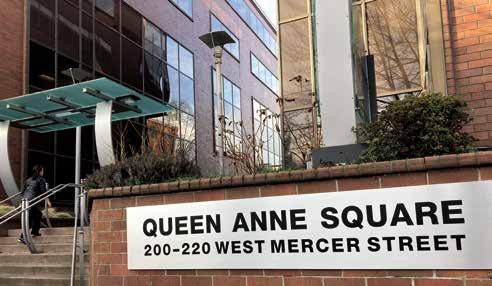
LQA/Uptown locations of Seattle Psychology and Anchor Light Therapy – Photo by Paige McGlaflin
MEND in Columbia City – Photo by Paige McGlaflin
Michael Soto – Photo courtesy of GSBA
Arts & Entertainment
Blue makes a powerful impression at Seattle Opera
by Alice Bloch & Sharon Cumberland SGN Contributing Writers
Blue Music by Jeanine Tesori
Libretto and stage direction by Tazewell Thompson
Seattle Opera at McCaw Hall
February 26 and 27, 2022
The biggest challenge for a new opera comes after its premiere production. Will it be picked up by other opera companies and become part of the standard repertoire, or will it die after its initial outing?
Blue, which premiered at Glimmerglass Festival in 2019 and was named Best New Opera by the Music Critics Association of North America, was slated for productions at the Washington National Opera and Lyric Opera of Chicago when COVID-19 forced cancelations.
But as soon as vaccines made it possible for opera companies to offer in-person performances again, this exciting, moving work was presented by the Michigan Opera Theatre, and now by the Seattle Opera, and the Washington National Opera has rescheduled its production for the coming season.
Blue’s story is torn from the headlines: a Black police officer and his wife (who owns a soul food restaurant in Harlem) greet their newborn son with joy; the son becomes a rebellious, politically involved teenager at war with his father; the son is killed by a cop at a peaceful protest; the couple and their community grieve his loss and struggle to find a way forward.
The Seattle Opera production, stagedirected by librettist Tazewell Thompson, is aptly spare, with little visual distraction from the feelings and interactions of the characters. The sets designed by Donald Eastman are simple and effective, the costumes designed by Jessican Jahn are colorful and appropriate, and lighting the designed by Robert Wierzel and Eric Norbury creates the perfect mood for each scene.
Most Seattle Opera productions have two casts, to give singers a chance to rest their voices between performances. This production has only one. Jeanine Tesori’s music is difficult to sing, and the drama is emotionally intense, so the excellent performances on both Saturday evening and Sunday afternoon of opening weekend were particularly impressive.
Mezzo-soprano Briana Hunter as The Mother, bass Kenneth Kellogg as The Father, and tenor Joshua Stewart as The Son all sang and acted superbly, as did the small group who portrayed their friends and community members. Soprano Ariana Wehr as The Nurse/Girlfriend 1 and tenor Camron Gray as Policeman 1/Congregant 1 were especially memorable. Wehr’s hilarious performance as a manic maternity ward nurse was spoton and provided some needed comic relief. The ensemble singing, especially in the Act 2 funeral scene, was glorious.
One of the most moving moments was The Father’s solo during the funeral, a sort of mad scene in which he speeds through all the instructions he gave The Son to try to keep him safe: “Don’t wear a hoodie. Don’t walk. Run. Don’t run. Walk. Don’t walk. Don’t carry shiny objects. Don’t make sudden movements. Don’t shave your head. Don’t have an Afro. The hoodie. The hoodie. Don’t wear a hoodie…”
The drama is so arresting that you might need to attend more than one performance to notice Tesori’s beautiful, complex score. The music, expertly played by members of Seattle Symphony under the direction of conductor Viswa Subbaraman, features unusual harmonies and a wide variety of percussion. There are echoes of Ellington, Gershwin, Bernstein, and even Wagner, but the sound is distinctive and original. The most tuneful music occurs in the funeral scene, with songs that sound like traditional spirituals but were composed by Tesori: “I lay my
burden down, I ain’t going to study war no more,” and “Somebody, somebody, O Lord, must come forth.” It is the perfect match to Thompson’s colloquial and clever libretto. As far as we know, this is the first opera to include the words “Damn, girl!” and to mention collards and chitlins. It’s about time.
After the opening night performance, the audience was invited to come into the front seats to hear Thompson talk about the origins of Blue, his collaboration with Tesori, and his own journey into the opera world via his “four mothers” (Dominican nuns) who raised him in a foster home in Blauvelt, New York. Though born and raised in Harlem, where he lived until the age of eight, Thompson lived with the sisters for ten years after his birth family could no longer care for him.
One of the sisters loved opera and played excerpts for the children twice a week. Thompson loved their stories and was nurtured by the sisters to pursue his interests. So it’s no surprise that he grew up to be a librettist, actor, director, and playwright. The list of his credits is long, including his
selection, in 2020, as the director of opera studies at the prestigious Manhattan School of Music.
Thompson’s background also explains the deeply religious element in Blue. When The Son is murdered by a fellow policeman, The Father goes to The Reverend performed with passionate commitment by baritone Gordon Hawkins to ask forgiveness “for what I am about to do.” He shows the priest a gun he intends to use to kill the man who killed his son.
The audience is then confronted with the problem that confronts us all: how to respond to a profound injustice, and how to manage one’s justifiable rage. Thompson’s libretto faces this problem head-on, as The Reverend makes the case for restraint in the face of evil: “You must not become evil to justify your evil.” Though The Father rejects The Reverend’s prayer that God will “redeem the hours wept clean from lost loves and lost lives,” he nevertheless leaves the gun on The Reverend’s table as he exits.
In his post-performance talk, Thompson said that he is a Christian, a Roman Catho -
lic, and someone who believes every word of his libretto. In this secular world, it’s a brave writer who will declare so clearly his belief in forgiveness in the face of disaster and injustice. He takes the side of humanity over its many subsets race, gender, nationality, politics, guilt, innocence and makes a case for the peace that “passes all understanding,” that begins in the hearts of those who suffer the most.
It’s not a popular argument for our times as Russia invades Ukraine, as blue and red states struggle over the definition of freedom, as millions die of COVID-19, and as LGBTQ+ people, BIPOC, and women continue to seek equality but it’s a powerful argument nonetheless. Audiences stood up and cheered at the end of Blue For a moment, we could see hope in suffering, and hopefulness in an opera that tells the truth from lived experience.
Blue is at McCall Hall through March 12. For more information and to order tickets, go to seattleopera.org.
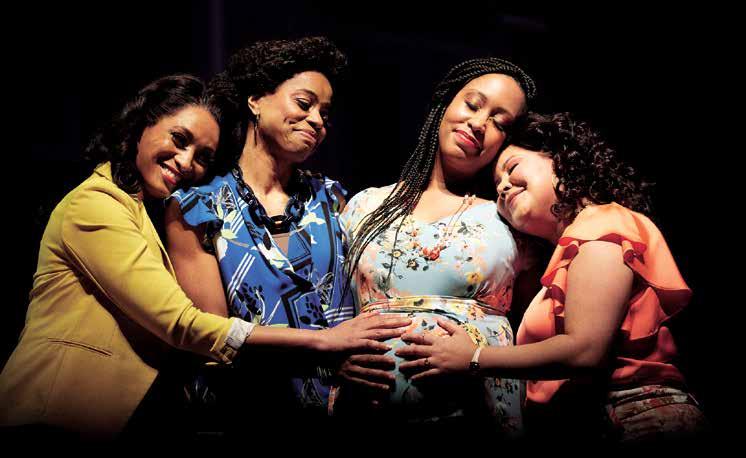
(l-r) Cheryse McLeod Lewis as Girlfriend 3, Ellaina Lewis as Girlfriend 2, Briana Hunter as The Mother, and Ariana Wehr as Girlfriend 1 in Seattle Opera’s Blue – Photo by Philip Newton
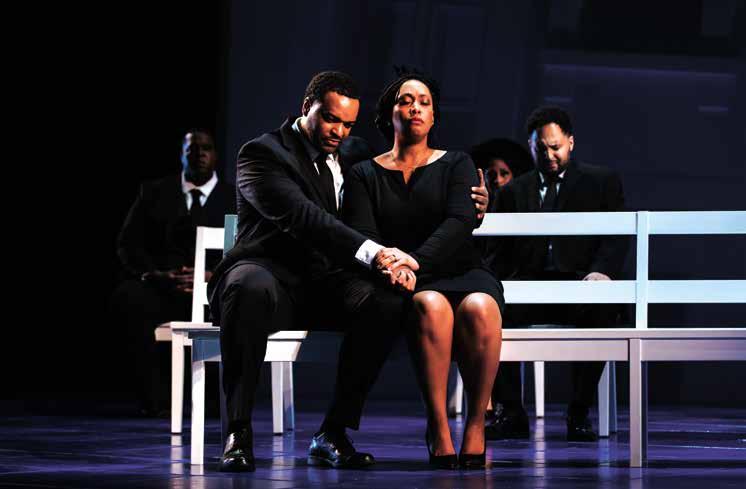
Kenneth Kellogg as The Father and Briana Hunter as The Mother in Seattle Opera’s Blue – Photo by Sunny Martini
Wake up! A new golden age of opera is here!
by Rod Parke Special to the SGN
Are we entering a new “golden age of opera”? Two new, very popular operas, both from Black librettists, Black directors, and all-Black casts, seem to raise this question. One of them, Blue, is currently playing to enthusiastic audiences at Seattle Opera. The other, Fire Shut Up in My Bones, was very recently shown as part of the “Met: Live in HD” series at your local cinema.
I want to stress that both these works are the very opposite of elitist, esoteric, or difficult to encounter. They are, in the best sense of the word, popular. Fire was immediately hailed as an “instant classic” by critics and audiences alike.
What’s more, they are drawing in crowds of people who are new to opera. Back in the 1990s, the phenomenon of “The Three Tenors” tours and recordings was predicted to do the same thing: open up opera to the masses. Didn’t happen! But I suggest that new operas like Blue and Fire are doing far more to interest new audiences than even the best singers could ever hope to accomplish cranking out chestnuts, ripped from their context in great operas.
I might suggest that you search YouTube for excerpts of Blue and Fire, but please accept that these snatches of the fabric of these works cannot begin to convey the emotional impact of seeing them whole.
Simply put, great opera is great theater. Excerpts are not. Even attempting, via excerpts, to discover if a composer’s music is friendly to your ears is a poor test when torn out of context.
The music of these two operas could hardly be more different, though neither was atonal or hard on the ears. Having seen each of them only once, I can give little more than general hints.
Fire, by Black composer Terrence Blanchard, is much the more jazzy and
more infused with traditionally Black sounds and rhythms.
Blue, by Jeanine Tesori, is no less brilliant, especially in its orchestration. Actually, I wished at times during the February 27 performance that I could listen to the orchestra by itself. It was so interesting that it drew attention to itself, often drowning out the singers with loud brass. Somehow this seemed more the fault of the composer than, as is usually the case, the conductor. The score seemed to demand to be played loud, although every
outburst was followed by quieter passages. Blue ended with a standing ovation (as did Fire in “Met: Live in HD” at the cinema on October 23). Thus, I put it in a category of new operas that are sure to pull in new audiences. But I must admit that this opera did not move me. I loved the orchestra, and all the singers were fine, with “nurse/congregant 1” (soprano) and “the son” (tenor) as standouts. Yet the libretto, by Tazewell Thompson, had nothing new, nothing that anyone passionate about civil rights hasn’t seen or read at least as effectively elsewhere. As further testimony that we may be entering a period of glorious new operas, let me submit Andrew Aucoin’s Eurydice, as seen at the cinema (“Met: Live in HD,” December 4). This gorgeous and thrilling work was one of no less than three new works presented this season at the Metropolitan Opera, an institution long criticized as a museum of old, fossilized operas. (The third, after Fire and Eurydice, is Brett Dean’s Hamlet, due at your cinema on June 4 at 9:55 a.m. live from the Met stage.) This revolution at the Met is no doubt the gift of its new, openly gay music director, the French Canadian Yannick NezetSeguin.
Those “Live in HD” shows (and modern Blu-ray discs) make me want to shout out the glories of modern technology as it relates to opera today. But for that, I need a whole article in itself.
Suspenseful The Burning Sea sets the screen ablaze
by Sara Michelle Fetters
SGN Staff Writer
THE BURNING SEA
Theaters / PVOD
Deep in the North Sea, a Norwegian oil platform collapses in a matter of minutes. Robotics engineers Sofia (Kristine Kujath Thorp) and Arthur (Rolf Kristian Larsen) are sent to investigate. Their underwater snake is perfect for weaving its way through the superstructure to both search for any survivors trapped in an air pocket as well as help determine the cause of this unspeakable tragedy.
What they uncover goes far beyond anything anyone could ever have predicted. A half-century of drilling has resulted in the crumbling of the ocean floor, leading Norwegian authorities to order the evacuation of all platforms in the North Sea until the full scope of the danger can be determined.
Before everyone can be flown to safety and all of the drills are closed down, a geological event causes a chain reaction that starts flooding the ocean with oil. It’s a catastrophic turn of events that could lead to a worldwide catastrophe, leaving government officials with few options to contain the damage before it’s too late.
Rounding out Norway’s unofficial ecological disaster trilogy that began with 2015’s The Wave and continued in 2018’s The Quake, the tense, character-driven The Burning Sea is almost as effortlessly entertaining as its predecessors. While not directly connected to the previous two pictures, it’s clear this one still fits right in with them. It is another example of filmmakers tackling genre conventions in ways that are fresh, innovative, and original, putting the focus on only a handful of characters instead of trying to revel in sequences of mass chaos and carnage.
This time around, the key cog is Sofia. She’s in a relationship with platform supervisor Stian (Henrik Bjelland), and when he goes missing during the evacuation, she becomes convinced he’s alive and waiting to be rescued. She and Arthur manage to get onto the damaged platform and utilize their robotics expertise to pinpoint his location.
The other plotline is the Norwegian government’s decision as to how best to handle the slick threatening coastlines throughout the world, most especially their own. The thought is to destroy it by launching missiles directly into its heart while the oil is still in a giant clump floating in the North Sea. This will cause a firestorm that
will engulf all of the remaining platforms, a list that includes the one Sofia, Arthur, and Stian are stranded on.
The film is not especially complex. Sofia sets out to save the man she loves no matter what the cost. There are heroics. Ultimate sacrifices are made. People go above and beyond to survive. All the requisite disaster-movie beats are hit from A to B to C. Director John Andreas Andersen and writers Harald Rosenløw-Eeg and Lars Gudmestad the first two having worked together on The Quake and the latter having co-written the spellbinding 2011 thriller Headhunters are not at all interested in reinventing the wheel.
By keeping the human angle small in scope, the filmmakers do a splendid job of making this crisis personal. There are real stakes at play, and as obvious as the central dynamics are, I still cared about who lived and who died. Tension is generated during the final third, and the suspense as to whether or not Sofia, Arthur, and Stian are going to make it off of the damaged oil rig before the firestorm reaches them is genuine.
There aren’t any real surprises, I guess, and while Thorp, Larsen, and Bjelland are solid in their respective roles, there isn’t a ton of internal complexity to any of the
members of this particular trio, unlike the characters in The Wave It’s up to their performances to do all the heavy lifting, and thankfully, each actor is up to the challenge, Thorp is particularly outstanding, as she makes even Sofia’s most outlandish decisions feel authentic no matter how nonsensical they appear to be.
Andersen handles the destruction with the same confident precision he brought to The Quake, and the breathless stretch where Sofia, Arthur, and Stian are informed of the government’s decision to set the North Sea ablaze and are only given minutes to come up with a survival plan is masterfully executed. The visual effects are strong, while the immersive sound design adds an undeniable aura of chilling creepiness.
The Burning Sea is a topical thriller that relies upon three-dimensional characters to generate chills. It’s a white-knuckle tale of people doing the incredible against impossible odds, delivering a potent ecological message that never feels forced or clumsily didactic. There’s heat here, the embers of a suspense-filled journey into the unknown that lingers on long after the fires of a catastrophe ignited by human ignorance and greed have been extinguished.
Fire Shut Up in My Bones – Photo courtesy of the Metropolitan Opera
The Burning Sea – Photo courtesy of Magnolia Pictures
Arts & Entertainment
Reeves’ ambitious The Batman a frustrating comic book procedural
by Sara Michelle Fetters SGN Staff Writer
THE
BATMAN Theaters
If nothing else, director Matt Reeves’ The Batman is ambitious: Nearly three hours long. Featuring an intricately plotted narrative written by Reeves and Peter Craig (Bad Boys for Life) that comes across more like a modern police procedural crossed with a 1970s-style neo-noir more than a modern comic book adaptation. Putting extra emphasis on character development and less on showcasing a never-ending stampede of energetic action set pieces. Deadly serious with precious few instances of deliberate humor.
It’s a lot to take in, and I give Reeves props for convincing Warner Bros. to allow him to go so far out on a potentially audience-unfriendly limb with the studio’s most profitable DC superhero. No one is playing it safe, and I imagine that on a rewatch, all of the film’s stunning highs will make the frustrating lows feel a bit more insignificant.
But that’s not how it feels at the moment. After a spectacular string of success that began with 2008’s Cloverfield, continued with 2010’s Let Me In, and culminated with the soaring double-whammy of Dawn of the Planet of the Apes in 2014 and War of the Planet of the Apes in 2017, Reeves has now delivered something of a mixed bag. While there’s much to love, I cannot say I walked out of The Batman satisfied. It is a motion picture whose parts are more impressive than the whole, and watching it is something of an exhilarating endurance test.
It has been two years since billionaire Bruce Wayne (Robert Pattinson) secretly took up the mantle of the vigilante crime fighter known throughout Gotham City as the Batman. His name has become synonymous with the word “vengeance,” and every time his signal lights up the sky, criminals stare into darkened alleys, wondering if he’ll come striding out to inflict unimaginable pain upon them.
There’s a new threat to the city, one enamored with and emboldened by his antics. They have begun executing many of Gotham’s most powerful figures, including the mayor, leaving behind cryptic riddles for the hero to decipher. While Lt. James Gordon (Jeffrey Wright) is open to getting assistance from the vigilante, others in the department aren’t happy their boss is allowing the Batman the freedom to investigate, free from supervision or restraint.
Needless to say, this new bad guy gets tagged with the nickname “Riddler,” and,
as portrayed by Paul Dano, he is a jittery sparkplug overflowing in rage toward a corrupt political status quo and a citizenry at large, who he feels have been negligent in doing anything to change this. It is a deliciously nasty performance, one that drips in the grimy, unwashed vindictiveness of toxic masculinity left unrestrained.
This on its own would be an intriguing take on one of Batman creator Bob Kane’s more iconic characters. It’s as if Reeves and Craig want their film to be the antithesis to Todd Phillips’ Joker This is no celebration of white male anger. They’re trying to start a valuable discussion, especially as they compare the Caped Crusader to the Riddler, showcasing how they easily could be two sides of the same coin if the former keeps wandering down back alleys looking only for vengeance and nothing else.
I adore this aspect of the production. There is a point where Bruce Wayne/the Batman must decide who he is going to be and what he wants the people of Gotham to think about him. For fans of the character, the choice may feel obvious. But in this iteration, it’s an actual question mark as to what he is going to do. Will the Batman
remain nothing more than a hardened vigilante pulverizing his prey before turning them over to the police? Or will he embrace the mantle of hero, and in the process become a symbol of hope people can emulate and be proud of, no matter who they are or what their background?
But all this gets muddied by the convoluted procedural happening around the two characters. This is Zodiac without the nuance, Se7en without the shock value or intense terror. In an attempt to allow the Batman to own up to his duty as “The World’s Greatest Detective,” Reeves sets the ominous mood and provides the appropriate backdrop and then forgets to provide decent clues so the guy can effectively do his job. Instead, the hero stares intently or flips through various pieces of paper, coming up with solutions to many of the Riddler’s puzzles as if he’s pulling them out of thin air instead of meticulously putting each piece together to decode the cryptic ciphers.
Then there are the numerous subplots. Some of them are interesting, most notably Selina Kyle (Zoë Kravitz) a.k.a. Catwoman and her connection to a potential witness to the mayor’s illegal activities,
which led to the Riddler to single him out for judgment. Even though not a lot of time is spent with her, Kravitz makes her connection to Selina heartbreakingly genuine. I could feel her anger, despair, and fear as she does what she feels is necessary to discover what has happened to her suddenly vanished friend.
Not working near as well are connective offshoots concerning Gotham crime boss Carmine Falcone (John Turturro) and his venal enforcer Oswald “Penguin” Cobblepot (Colin Farrell). While both actors are exceptional the latter especially so even under layers of prosthetics making him unrecognizable whenever the film shifts its focus to either of them, the whole thing comes to a perplexing stop.
Moreover, an additional subplot tying Falcone and Kyle together even more intimately doesn’t work. While I like that Reeves and Craig shake up the source material, everything about this relationship is inelegantly shoehorned into the proceedings to the point that it came across as irritatingly inauthentic. It’s only thanks to the mesmeric strength of Kravitz and Turturro as actors that I refrained from rolling my eyes in disbelief during the pair’s big moment.
Yet I remain torn. Veteran Greig Fraser (Dune, Zero Dark Thirty) shoots the heck out of the picture. As dark as it is, shadow and light still bounce off one another in increasingly fascinating patterns. There is a transcendently immersive depth to the visuals, and a car chase between Penguin and the Batman so magnificently constructed that it ends up being one of the best of its type I’ve seen in years. Even better is an early moment where the Caped Crusader first appears, emerging from a darkened corner to battle a group of clownish thugs as if he were a demonic entity rising out of Hades to send fresh souls into pits of fiery damnation.
There is something triumphant about Reeves’ The Batman, and I do like where the film leaves the character before the screen fades to black. But so many aspects don’t come together, each refusing to resonate no matter how much I wished otherwise. The themes never coalesce, and while this version of the character has its strengths, I worry that the weaknesses of the mystery surrounding him are just too great for the hero to overcome.
Robert Pattinson and Zoë Kravitz in The Batman – Photo courtesy of Warner Bros.
Robert Pattinson in The Batman – Photo courtesy of Warner Bros.
The Comeback ushers in the era of “Homo-SoDo”
by Nick Rapp SGN Contributing Writer
With a roomy performance space, a fierce cast of local queens, and an impressive lineup of guest stars, it is safe to say that Lashes has found its new home in SoDo’s newest queer bar, The Comeback (1950 First Ave. S).
Seattle drag darling Ladie Chablis hosted Lashes at R Place for over 17 years before the bar permanently closed its doors during the COVID-19 pandemic at the end of its lease (though it is searching for a new home). It was a staple drag show at a staple Queer bar, and the closure brought great uncertainty about the weekly show’s future. Luckily, its fate is anything but uncertain now.
Lashes sees no small crowds; seats have been filled since The Comeback’s opening in January. The bar’s general manager, Floyd Lovelady, gushed that it feels “simply amazing” to see such success after the difficulties of the move.
“When I see a packed house in a space twice the size of R Place, and Chablis doing her magic as the spotlight hits her, it’s so magical audiences jumping and throwing money in the air for all the cast. We did it: a true ‘comeback.’”
Lovelady also noted that “having room for more people allows me to book certain entertainers” that would have generated a “hefty ticket price” at R Place. The impressive lineup of visiting drag queens add that much more excitement to the return of the beloved show.
In fact, this past Friday and Saturday, RuPaul’s Drag Race favorite Silky Nutmeg Ganache headlined Lashes with glamour and raunch to boot. The self-proclaimed “Big Silk with the Good Milk” sauntered through the crowd to Whitney Houston’s “I Have Nothing” in a glimmering slit dress with elegant pageant drag accessories. She professed her love for Seattle and its oddities, claiming that last time she visited, “Y’all tried to take me to the hallway with the bubblegum… y’all started the pandemic with that.”
Ganache encouraged patrons to slip tips into her “cash register” (wig), and took a firm stance on the subjecdt: if you’re tip -
ping her, you better also be tipping the local queens. And if you’re buying her a round, you’re buying the whole cast a round.
Beyond tipping being the industry standard (and just the decent thing to do), the Lashes Seattle performers put on quite the show. The night’s lineup consisted of alternating numbers performed by Miss Texas 1988, Dion Dior Black, Mila Skyy, Kung Pow Meow, and the drag duo Luchi.
Some acts were prop-heavy: Miss Texas 1988 bit the heads off Ken dolls in a rendition of “Heads Will Roll,” and Kung Pow Meow shocked with a Kill Bill outfit reveal, swinging around a silver baton-saber to “I’ll Make a Man Out of You.” The crowd went wild.
Classics and current hit songs varied the pace and kept the show fresh. Ladie Chablis danced on Silky Ganache’s lap while effortlessly lip-synching to “Finally.” Dion Dior Black embodied Saucy Santana’s “Material Girl.”
You could feel the buzz of a satisfied crowd, thankful their old haunts are new and improved. SoDo has potential for a recentering of large-scale nightlife in Seattle. In the words of Ladie Chablis, “We are about to make SoDo Gay. It’s gonna be Homo-SoDo.”
Lovelady explained that while the old Pine Street location holds a special place in his heart, “the more time I’ve spent down here the more I’ve fallen in love with it. It reminds me of what Seattle used to be like: the charm of the old buildings, side streets, lots of parking. And rush hour traffic here is waiting three minutes for a train to pass.”
With lots of R Place furniture and most staff and performers back, he assured me that “it feels like home.”
In the coming weeks, The Comeback is hosting numerous events to look forward to. “March Dragness” starts this month, with performances by Drag Race season 14 queens Willow Pill, Lady Camden, Angeria Paris VanMichaels, and Daya Betty on successive Fridays. Additionally, Drag Race UK vs. The World’s Pangina Heals and multiple-season Drag Race queen Shangela are part of the upcoming lineup.
Hop on the light rail, take a ferry, find your bus route, or drive and relish in the ample parking The Comeback is here to stay.
Event dates and tickets can be found at thecomebackseattle.com.
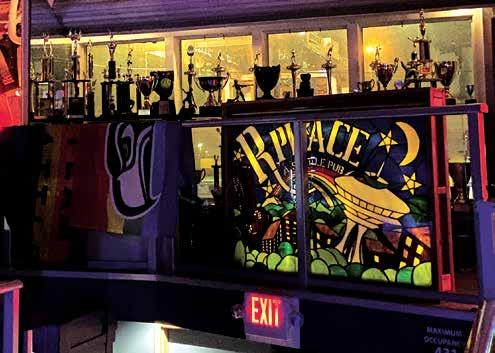
(clockwise) The original R Place sign, Dion Dior Black, Mila Skyy, Kung Pow Meow, and Luchi – Photos by Nick Rapp
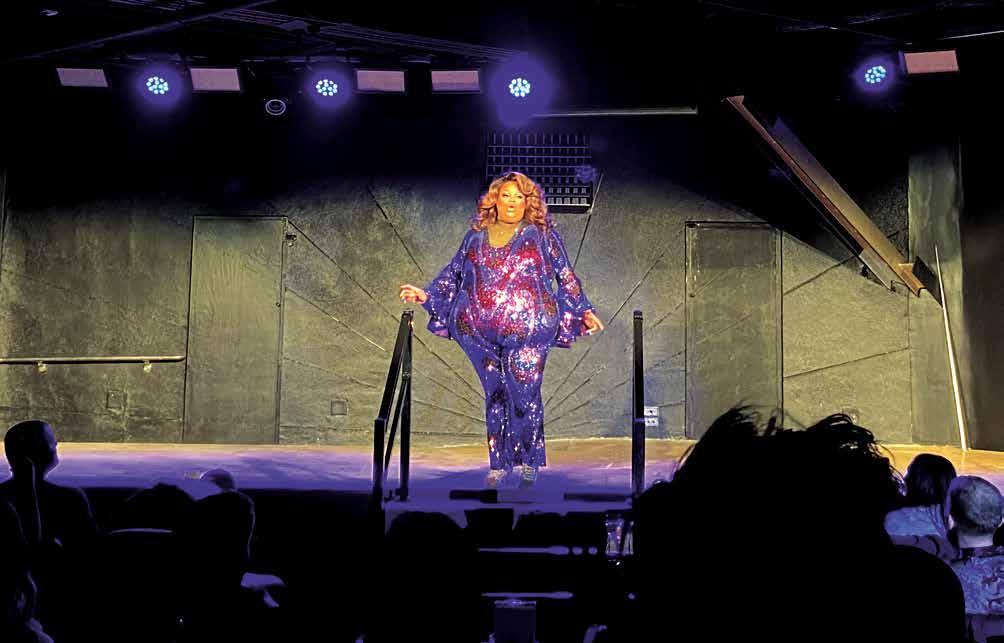
Silky Nutmeg Ganache – Photo by Nick Rapp
Books
First Kennedys a thrilling, vibrant adventure through history
by Terri Schlichenmeyer
Special to the SGN
THE FIRST KENNEDYS: THE HUMBLE ROOTS OF AN AMERICAN DYNASTY
On his way home from reporting on the accident that killed John Kennedy, Jr., Neal Thompson drove past the cemetery where his Irish grandparents lay, and he began to think about his roots. His grandfather, Patrick, and his grandmother, Bridget, had joined millions of fellow Irish compatriots to make the journey to America.
Some of those Irishfolk were Kennedys.
Women in Ireland in the mid-1800s were second-class citizens at best, meant only for work and childbirth, so what Bridget Murphy faced was a rough life, made even worse by famine. So she said goodbye to her parents and siblings and boarded a ship, alone, that would take her away from her beloved Ireland and to America, to Boston.
In her time, says Thompson, Bridget was a common name with several variations, popular due to a culturally and religiously important Catholic saint. Because of its commonness, and since most female Irish immigrants became domestics, the name ultimately became synonymous for servant Thus, though industrious and watchful for opportunity, Bridget became a “bridget” at least, until she met Patrick Kennedy.
Star Child –
by Terri Schlichenmeyer Special to the SGN
And so Bridget married Patrick, and they lived an average mid-19th-century immigrant life. Patrick worked as a cooper; Bridget was a maid. They had three daughters before Bridget gave birth to a son, John, a beloved child who died of “summer diarrhea” at age 20 months. Three years later, tragedy struck again: just after the birth of their fifth child, Patrick took sick with consumption and died on November 22, 1858, exactly 105 years before the assassination of his great-grandson, the president of the United States.
One of the best things about a good story is imagining yourself in it. Author Neal Thompson (who now lives in Seattle) makes that entirely possible: read The First Kennedys, and you’re hungry in Ireland, you’re sailing and seasick, you’ve just arrived on a crowded wharf, you must fight to survive.
And yet, despite the horrors that Thompson describes, he also lends a sense of wonder and pride to the story of those early Kennedys, Bridget especially. She’s a heroine, keeping her fatherless children together at a difficult time while moving up in the world of commerce, and instilling in her youngest son that same square-shouldered fearlessness. Her story, and the background it’s set in, will keep you on the edge of your seat, and they’ll give you a new appreciation for the millions of immigrants who crossed the ocean and changed America.
Indeed, this is a great book for genealogists as well as history lovers and fans of politics. Find The First Kennedys and turn the page...
Out-of-This-World writing about an immortal star
STAR CHILD: A BIOGRAPHICAL CONSTELLATION OF OCTAVIA ESTELLE BUTLER
Laurice James Butler and his wife, Octavia Margaret, tried and tried to have a child together, but the stars weren’t ready to let that happen. It took nearly 16 years after they were married before the universe said they were ready and little Octavia Estelle Butler was born, in June of 1947.
Just days later, a UFO crashed in the desert near Roswell, New Mexico; a year after that, the big bang theory was formulated.
Three years after her birth, little “Junie” lost her father, and from then on, she was raised by strong women: her mother, who was “the greatest constant in her life,” and her grandmother. Her mother protected her, so Junie wasn’t often allowed out of the house alone. Perhaps that was why she was a bit of a loner, preferring her books to almost anything else.
Or she might have been an introverted child because she was very tall for her age, or because she was not a good student. Segregation might have had something to do with it, too. At any rate, she was quiet, observant, and bookish.
At some point, young Octavia began to devour books on horses and fairy tales, and she jotted down stories of her own that never ended. She wrote tales about traveling to Mars and exploring space. She created other worlds and universes that pleased her. She “copied boys’ books” and the plots that she made into a series later.
At age 13, Octavia discovered an abandoned writer’s magazine that someone had left on a bus seat. Curious, she read it all It was then that she learned that it was possible to make money from the stories she told...
In the latter chapters of Star Child, author Ibi Zoboi explains how she formed a friendship with Octavia Butler (who dies in 2006 in Lake Forest Park), and why she felt that she and the author were “kindred.”
It’s a story that kids will love what child hasn’t dreamed of meeting the person who wrote their favorite tales? and it absolutely adds to this book.
What may fall flat, however, is its poetry. Zoboi says that Butler told her “poetry simplifies” things, but here, the “biographical speculative poems” seem to be too full of imagery to be helpful particularly for kids on the lower end of the targeted age group for this book, some of whom may not grasp the meanings of the fantasy-filled stanzas.
Think twice, then, before handing this book to a kid aged 10-13 unless you intend to help them understand it. Older kids and adults will appreciate it more, especially if they’re fans of poetry. For them alone, Star Child will shine.
Image courtesy of Dutton Books for Young Readers
Image courtesy of Mariner Books
Kate Davies talks In at the Deep End and the art of starting over
by Lindsey Anderson SGN Contributing Writer
Queer experiences range across ages, genders, and identities. Throughout our winter book club, we have read romantic, young adult novels centering on strong-minded individuals who know who they are and what they want at increasingly younger ages.
However, figuring yourself out is not an experience reserved for youth, and many Queer people blossom later in life. This week, we are reading In at the Deep End, a delightful rom-com from London-based author Kate Davies that focuses on the experiences of a twentysomething discovering her sexuality and learning how to integrate into the London Lesbian scene.
I sat down to talk with author Kate Davies about her debut novel, her illustrious writing career, and her opinions on classic romcoms.
A full writing résumé
While In at the Deep End is Davies’ first novel, it was not her first published work.
“It’s quite an unusual job, but I used to write children’s books for a publishing company in-house, so I had a salary, but I wrote nonfiction children’s books,” Davies said. She liked that, but felt she wanted to explore different styles.
“I enjoy publishing, but I always wanted to work in fiction. I found it hard to get a job as an editor in fiction it’s very competitive. So I found writing as a sort of escape from my job… I would do it in the mornings before work, on my lunch, or after work.”
“It was useful, having worked in the publishing industry, for getting published,” she added, “because I knew how it worked, but it was also quite unconnected from the children’s publishing that I was doing… Then, when I finished the book, I went freelance.”
Davies has dabbled in many different types of writing. Aside from children’s writing and her adult novel, she has also done screenwriting and is currently working on a show for the Cartoon Network.
A process of starting over Davies’ writing process is influenced by her background in screenwriting. Her initial idea for In at the Deep End was to structure it as a film, but eventually, she decided the story would fit best as a novel.
“When I started writing it, a really long time ago, in 2010, I started writing it in a screenwriting class as a movie, as like a rom-com, and I kind of wanted it to be like a Lesbian Bridget Jones,” she said.
Davies hoped to reflect some of her own experiences on the big screen, “I didn’t find anything that reflected my experiences as a Lesbian in London.” However, as she continued to work on her draft, she realized it would have a better shot at getting her story out there if she reformatted it.
“I decided to write it as a novel, because I thought novels exist, and films by random people in London don’t get made,” Davies joked. She continued to draft and reformat her story but realized it was still missing something.
“I wrote it as a kind of Bridget Jones Diary –style novel, and it was okay, but it felt a bit too light, and I decided that I wanted to write something that was much more truthful. I decided to make it about a much more controlling relationship, and I rewrote the whole thing. At that point, I made it much more serious, and I had to sort of find the balance between the comedy and the seriousness as I went along.”
An amalgamation of people
While reflecting on her real-life experiences in the London Lesbian scene was important for Davies, she says she didn’t mold any characters after specific people she knows. “There’s no one that’s exactly one person, but I suppose all writers are influenced by people that they know, and all characters are an amalgamation of people,” she said. Despite that, she finds a lot of similarities between herself and her main character, Julia. “Julia is quite a bit like me, but she is
cooler than me. I’m not that cool. She’s kind of dryer than me; her wit is quite dry. But she’s a lot like me in how she came out. I came out in my late twenties and was quite naïve and thought that I’d have a feminist relationship and lots of really equal sex, since I’d, like, opted out of the patriarchy,” Davies said with a laugh.
Other characters were influenced by people Davies has met throughout her life. “The old man, Eric, he was inspired by when I worked in children’s publishing. I did a book on the Second World War, and I met a lot of [WWII] veterans, which was amazing. The way he speaks is a lot like the way those people spoke. And my grandmother… who would be like 105 the sort of like turns of phrase that we don’t use anymore but those people use, I gave to Eric, and it was fun.”
What’s next from Davies?
Writing novels has become a creative outlet for Davies in which, unlike in children’s writing and screenwriting, she can incorporate her worldview and experiences more freely. For her, this means writing Queer characters and stories.
“I suppose I only started writing fiction after I came out, and I did [only want to write Queer characters] that was what I wanted to do,” Davies said.
The Queer character will continue to dominate the pages of Davies’ novels for the foreseeable future. “My next book also has Queer characters in it too. I probably will always. It’s nice to be able to put yourself into books.
“When I was first starting in, like, 2010, people would say, ‘Oh, books about Gay people don’t sell.’ And that has changed, you know, over the last ten years or so. I think it’s exciting to be in a time when you can write Queer characters and foreground Queer characters. I’m proud to be Queer, and I enjoy writing Queer characters.”
Davies also enjoys a good rom-com and hopes to incorporate her favorite tropes into her future projects. “I do love a dash to the airport at the end. I like a meet-cute. I enjoy a You’ve Got Mail, when they kind of hate each other in the beginning, that’s great,” she said with a smile.
“I’ll tell you what I don’t like. I don’t like a contrived argument two-thirds of the way through. If they’re going to fall out and I understand they have to fall out but if they’re going to fall out, I want it to be for a real reason and not some petty argument that those characters would never really have in real life.”
Davies also has opinions on box-office Queer films, which tend to glorify coming out as the one Queer experience. “I tell you what annoys me: Happiest Season annoyed me. I was like, ‘That is a toxic relationship! She should not be in that relationship! Come out to your bloody family!’ That pissed me off.
“In a Queer story, not being able to
come out to your family just felt contrived in that film. It didn’t feel like a real thing holding them back. It was just her, and that annoyed me.”
Davies hopes to bring her love of Queer media and rom-coms together to create a less disappointing Lesbian romance. “I’d love to write just a Queer When Harry Met Sally over ten years or something like that, but with two women. I think we can mess around with straight-people tropes,” she laughed.
A new precious project
While Davies waits for a film deal, she is getting ready to release her next Queer novel. “My next book is from three different perspectives. It’s about a family. It’s actually about donor conception, which is a bit of a Queer thing to write about, and one of the main characters is a Lesbian. I’m donor-conceived myself. I’d always known I was donor-conceived. I decided to start looking into it and researching it more when I decided I wanted to start a family, so I just thought it would be interesting to write about a woman who finds out she’s donor-conceived and from a donor’s perspective. I feel like that was foregrounding a Queer issue.”
On the side, Davies is continuing her screenwriting and even preparing a spec script for a Queer project but will have to take a bit of a break as she prepares to welcome a new baby into the family.
“I’d love to do more screenwriting for TV, and then I guess I need to start thinking about my third novel, but first we’ll have to have the baby and bring up the baby a little bit, so I’m going to take a break for a few months, which is a bit scary,” she said. While she takes some time off to spend with family, fans will anxiously await the release of her soon-to-be-titled second book.
In at the Deep End is available now. If you’d like to read along with us this week, pick up a copy and check out our book club on Instagram @sgn_books.
Image courtesy of The Borough Press
Kate Davies – Photo courtesy of the author
National News
in nuclear engineering and technology and policy programming in 2013, and have since worked at Global Zero and Deep Isolation, two companies dedicated to improving the safety, proper usage, and disposal of nuclear waste. (They will finish their current work as a director of global political strategy at Deep Isolation soon.)
Brinton is also a vocal LGBTQ+ activist and advocate for LGBTQ+ youth, having worked in the Trevor Project’s Department of Advocacy and Government affairs for four years.
As a gender-fluid, stiletto-loving nuclear professional, they are well versed in selfadvocacy already. Brinton is also a member of the Sisters of Perpetual Indulgence, where they are known as Sister Ray Dee O’Active.
Of the topics they advocate for, they have made it clear that ending conversion therapy is a major priority. As a young person, Brinton’s religious parents forced them to take part in conversion therapy. Brinton also had to move out from their home in Perry, Iowa, and live with an uncle after coming out to their parents as Bisexual during high school.
They wrote about the “torturous” experiences brought upon them by conversion therapy and their parents’ beliefs, in an Opinion piece for the New York Times (www.nytimes.com/2018/01/24/opinion/ gay-conversion-therapy-torture.html). “My parents were Southern Baptist missionaries who believed that the dangerous and discredited practice of conversion therapy could ‘cure’ my sexuality,” they said.
Brinton added, “For over two years, I sat
on a couch and endured emotionally painful sessions with a counselor. I was told that my faith community rejected my sexuality; that I was the abomination we had heard
about in Sunday school; that I was the only gay person in the world; that it was inevitable I would get HIV and AIDS.”
Their mother, Peggy Jo Brinton, told the
Daily Mail that she keeps in touch with Sam today, though she refused to attend their wedding in 2019. “I think it’s in the past, and we speak as much as we can do, when we live so far apart now. Everything is texts, emails, that type of thing.” She added that she was proud of Sam and excited about their new position with the Department of Energy.
Brinton is now one of the loudest voices in national activism and policy work to end conversion therapy. In recent years, they have met with several state legislatures to advocate for bills banning the practice, and founded the 50 Bills 50 States campaign in 2016. Their work in LGBTQ+ activism for youth and the end of conversion therapy has caused them to be featured on platforms like NowThis News, Playboy, and Active Minds.
Though federal employment in the Office of Nuclear Energy and LGBTQ+ activism seem like two entirely different careers, Brinton has managed to balance both. They described the duality of their life’s work in an MIT newsletter interview in May 2021:
“My husband sometimes describes me as a weird kind of Batman. Why, you might ask? Because by day I work to save Lesbian, Gay, Bisexual, Transgender, Queer, and Questioning (LGBTQ) youth from suicide, and by night I work to save the world from nuclear waste–related environmental disaster.”
Now, they look forward to the job of their dreams, as they said on LinkedIn. “In this role, I’ll be doing what I always dreamed of doing, leading the effort to solve the nation’s nuclear waste challenges. I’ll do all I can to bring innovative thought into this government role.”
Major US companies oppose anti-LGBTQ legislation
by Hannah Saunders SGN Contributing Writer
Business leaders consistently report difficulties with recruitment, retention, and tourism in states that debate or pass legislation that excludes members of the LGBTQ+ community from full participation in daily life. In light of this, Marriott, Hilton, American Airlines, and Airbnb are among the over 150 major US companies that are vocally opposing anti-LGBTQ legislation in Florida and across the country, having signed on to a statement issued by the Human Rights Campaign.
Anti-LGBTQ+ policies negatively impact businesses both operationally and financially, while putting the safety and well-being of team members and families at risk, according to the HRC.
In 2021, the United States saw a recordbreaking 26 anti-LGBTQ bills enacted into law across 10 states. In 2022, there are at least 160 anti-LGBTQ bills pending in state legislatures more than half of which target Transgender youth.
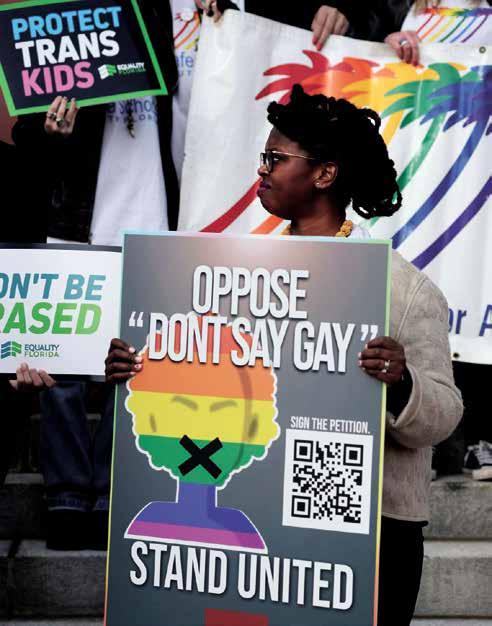
In Florida, the “Don’t Say Gay or Trans” bill (HB 1557, SB 1834) and “Stop WOKE Act” (HB 7, SB 148) are expected to be considered in state Senate committees this week.
Across the country, lawmakers are seeking to ban Transgender youth from participating in sports, criminalize medically necessary and life-saving healthcare for Transgender youth, and revive “bathroom bills” to prohibit Transgender people from using their preferred restrooms at schools and in businesses, as well as ban the discussion of LGBTQ youth and families in classrooms.
Statement against anti-LGBTQ legislation
“We are deeply concerned by the bills that are being introduced in state houses across the country that single out LGBTQ individuals—many specifically targeting transgender youth—for exclusion or differential treatment,” read the statement from businesses opposing anti-LGBTQ legislation.
“Laws that would affect access to medical care for transgender people, parental rights, social and family services, student sports, or access to public facilities such as restrooms unnecessarily and uncharitably single out already-marginalized groups for
additional disadvantage. They seek to put the authority of state government behind discrimination and promote mistreatment of a targeted LGBTQ populations.”
The statement also mentions how the proposed anti-LGBTQ bills would harm
business team members, strip them of opportunities, and make them feel unwelcome and at risk in their own communities. Furthermore, the statement addresses how anti-LGBTQ legislation directly affects the businesses, whether the measures in the bills occur in workplaces or not.
“As business leaders dedicated to equal treatment, respect, and opportunity for all as well as to improving the financial and investment climate across the country we call for public leaders to abandon or oppose efforts to enact this type of discriminatory legislation and ensure fairness for all Americans,” read the statement.
Photo courtesy of Sam Brinton
Photo by Rick Wilson / AP
STATE OF THE UNION
The Equality Act was passed by the House on May 17, 2019, but is blocked in the Senate by the filibuster rule, which requires 60 senators to consent to bring
a bill to the floor for debate. If passed by the Senate and signed by the president, the measure would amend the Civil Rights Act of 1964 to explicitly protect sexual orientation and gender identity.
Biden referred to legislation pending in several states that limit the rights of Transgender people as well as draconian Texas
guidance from the attorney general there that equates gender-affirming medical treatments with child abuse. Lawmakers in Alabama are considering a similar law.
Several states have also considered barring Trans people from competing in sports and from using restrooms that align with their gender identity.
Biden’s speech got immediate plaudits from the HRC. “To the LGBTQ+ community, and especially Trans kids: know President Biden will fight for you,” the group tweeted. The HRC was joined by many ordinary citizens and rank-and-file Trans activists.
“Thank you to Pres. Biden and team for making it clear that trans rights are nonnegotiable. That one line just saved many lives,” one tweeted.
“Joe Biden mentioning support for trans kids might not be the most important thing ever spoken in a State of the Union address but it’s most likely the bravest,” another said.
Heckled by Republicans
Biden’s remarks on the LGBTQ community were met with applause from Democratic members of Congress, and silence from most of the Republican side.
QAnon Republican Marjorie Taylor Greene, however, actively heckled the president when he spoke about Trans participation in sports. Greene an outspoken anti-mask, anti-vaxx advocate was also heard talking over Biden’s remarks on the COVID pandemic.
Greene was joined by Republican Lauren Bobert in a “build the wall” chant when the president spoke about reforming immigration law.
Boebert also heckled the president as he was describing the death of his son, Beau, an Iraq War veteran who succumbed to brain cancer.
Biden outlined the severe medical symptoms that US troops deployed to Iraq and Afghanistan endured from breathing in toxic fumes from “burn pits,” saying many of the troops developed “a cancer that would put them in a flag-draped coffin.”
“You put them in. Thirteen of them,” Boebert yelled. Observers believe she was referring to the terrorist attack at a gate outside the Kabul airport last summer that killed 13 US service members. The outburst drew immediate and bipartisan boos inside the chamber.
Photo by Saul Loeb / AP
Photo by Win McNamee / AP
National news highlights
by Daniel Lindsley SGN Contributing Writer
& Int’l News
Gay rights activist Joe Tom Easley dead at 81
by Hannah Saunders SGN Contributing Writer
Near his Miami Beach home, Gay rights activist Joe Tom Easley died at 81 years old on Feb. 13, due to complications of lung disease. Easley, who was known for his involvement in the repeal of the US military’s homophobic “Don’t Ask, Don’t Tell” policy, dedicated his life to LGBTQ rights.
Easley was born on Sept. 28, 1940, in Robstown Texas, and after graduating from Texas A&M University in 1963, he worked as an English teacher. He was drafted into the Vietnam War in 1966, whereupon he joined naval intelligence.
United States: First same-sex couple on cover of Essence
NBC News reported on February 25 that actress Niecy Nash and singer Jessica Betts are the first same-sex couple to appear on the cover of the popular Black women’s lifestyle magazine Essence Nash and Betts are featured in an issue on Black women in Hollywood, and talk about their romance and the response to their 2020 wedding announcement.
Nash told Essence of her first romantic night with Betts. “I was nervous at dinner because I felt something. I could not wrap my head around it. I was trying to see if I was off, ’cause I wanted to keep the night going. And the night turned into the rest of my life.”
Of the incredulous public response to their wedding announcement, Nash said, “I never knew why where you lay your head is such a big deal to other people. I was like, ‘People care?’” Betts and Nash say they are still very much in love, and hope to share that love so the world can see it.
Florida man tries to “cut the gay out” of own brother David Martinez, a Miami resident, was arrested late February when he threatened to attack his own brother with a large kitchen knife. Police were called to the scene after a “violent dispute” between the two men. Martinez reportedly followed his brother around the property “while sharpening a large kitchen knife, telling him he was going to ‘cut the gay’ out of him.” While Martinez initially resisted arrest, he was eventually subdued by officers and taken into custody.
Following a year in the service, a former friend relayed to military leadership that Easley was Gay. Easley’s commander in Alaska told Easley that he was required to boot him from the military, but due to his outstanding service, he would ensure that Easley received an honorable discharge with veterans’ benefits (during that time, homosexuality was grounds for dishonorable discharge).
Since his commander had not stripped him of his veterans’ benefits, the military paid for three years of higher education at the University of Texas Law School, where Easley also became a prominent antiwar activist.
In the late 1970s, Easley became a law professor at the American University Law School in Washington, DC, and by 1978, he also took on the role of assistant dean. From 1981 to 1983, Easley was a professor at the
Antioch Law School in Washington DC (now known as the University of DC Law School), where he also served as an advisor to LGBTQ student groups.
For two years, Easley was active with the city’s Gay and Lesbian Activists Alliance, and in 1982, he was elected president of the Gertrude Stein Democratic Club, which was the largest local LGBTQ political group.
With his law education, in 1983 Easley began lecturing for BARBRI, the nation’s largest training course and coaching program for law school graduates preparing to take state bar exams. Easley retired from BARBRI in 2013.
Also in 1983, Easley met Peter Freiberg, and in 2003 the pair traveled to Toronto to marry. Easley and Freiberg’s marriage was the first same-sex wedding written up in the New York Times; shortly after their wedding, Ontario legalized same-sex marriage.
Easley served as president of the Human Rights Campaign from 1988 to 1995. Most notably, he was involved with the repeal of the US military’s Don’t Ask, Don’t Tell policy.
On July 19, 1993, President Clinton announced the policy, which permitted LGBTQ-identifying Americans to serve in the military, if they remained closeted about their sexuality.
From 2006 to 2010, Easley served as board co-chair of the Servicemembers Legal Defense Network, an organization that works toward ending discrimination against LGBTQ military personnel, and which led the fight to terminate the DADT policy.
In 2010, President Obama signed the repeal of the policy, so that servicemembers could openly serve in the US military.
Easley is survived by his husband.
ACLU sues to block Texas investigation of Trans teen's family
by Mike Andrew SGN Staff Writer
Texas has begun its first investigation of parents of a Trans child, according to an ACLU lawsuit.
According to CNN, the move comes in the wake of Texas Gov. Greg Abbott signing an order instructing the state’s Department of Family and Protective Services (DFPS) to investigate “any reported instances of these abusive procedures in the State of Texas.” Abbott’s order was prompted by a legal opinion issued by Texas Atty. Gen. Ken Paxton saying gender-affirming treatments and procedures for transgender children are a form of “child abuse.”
Ironically, the first case involves the family of a 16-year-old whose mother works for the state agency charged with child abuse investigations.
The ACLU filed suit on behalf of that family, seeking to block the investigation and strike down the governor’s order.
The employee, who was not named in the court filing, was placed on administrative leave last week, and was visited by an investigator from the agency on February 25.
The state investigators are also seeking medical records related to her child. The family of the child, identified in court documents only as Mary Doe, has refused to voluntarily turn over the records.
“We are terrified for Mary’s health and well-being, and for our family,” wrote the employee in a declaration filed with the suit. “I feel betrayed by my state and the agency for whom I work.”
“Not providing Mary with the medically necessary health care that she needs is not an option for us,” she added.
According to the ACLU filing, the state’s investigator told the parents that the only allegation against them was that their Transgender daughter might have been provided with gender-affirming health care and was “currently transitioning from male to female.”
Dr. Megan Mooney, a licensed psychologist in Houston, is also a plaintiff in
the lawsuit. Dr. Mooney has a practice that includes Transgender patients, many of whom have been diagnosed with gender dysphoria, according to the suit.
“No family should have to fear being torn apart because they are supporting their trans child,” Adri Pérez, the policy strategist at the ACLU of Texas, said in a statement.
“A week before an election, Gov. Abbott and Atty. Gen. Ken Paxton issued a partisan political attack that isn’t rooted in the needs of families.”
Paul Castillo, senior counsel at Lambda Legal, said in a statement that Abbott and Paxton were “joining a politically motivated misinformation campaign with no
consideration of medical science and seem determined to criminalize parents seeking to care and provide for their kids.”
“Gender-affirming care for the treatment of gender dysphoria is medically necessary care, full stop,” he added.
The effort to stop medical treatments for Transgender teenagers has been sharply criticized by professional medical groups and by Transgender health experts. Medical decisions, particularly those that carry potential risks, should be weighed by a patient, their parents, and their doctors, medical professionals say.
Image courtesy of Essence
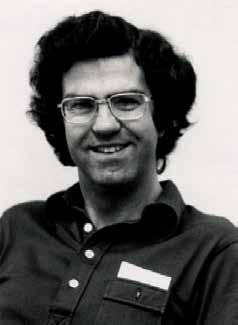
Joe Tom Easley, December 1974
– Photo courtesy of Arthur J. Morris Law Library Special Collections, RG 204-96, Records of the Virginia Law Weekly
Texas Gov. Greg Abbott – Photo by Jonathan Bachman / Reuters
Homophobic graphic designer to face Supreme Court in landmark case
by Lindsey Anderson SGN Contributing Writer
As of 2022, discrimination against the LGBTQ+ community remains a legal gray area. With no federal laws on the books banning discrimination based on sexual orientation or gender identity outside of the area of employment, the issue has depended on local and state laws.
While many hoped the Supreme Court would set a precedent, protecting LGBTQ+ people from discrimination when they heard the case of Masterpiece Cake Shop v. Colorado Civil Rights Commission in 2017, the outcome left many just as confused about the federal stance on LGBTQ+ rights.
Now, the Supreme Court is looking for a redo. On Tuesday, Feb. 22, the court announced it would hear the case of 303 Creative LLC v. Elenis, which could decide whether or not specific businesses can legally discriminate against LGBTQ+ people.
The case centers on Lori Smith, a graphic designer in Colorado, who was hoping to expand her business practice to include website design for engaged couples. However, before Smith even set up this business, she was adamant that she would not serve LGBTQ+ couples and insisted that she would include this in a notice on her website.
The case reflects many familiar elements to the Masterpiece Cake Shop case. To understand 303 Creative LLC v. Elenis, it is important to revisit what happened in that case.
Masterpiece Cake Shop v. Colorado Civil Rights Commission
In 2017, the Supreme Court had a chance to set a federal legal precedent regarding LGBTQ discrimination when it agreed to hear Masterpiece Cake Shop v. Colorado Civil Rights Commission The case centered on Gay couple Charlie Craig and David Mullins, who were searching for a wedding cake. Jack Phillips, the owner of Masterpiece Cake Shop, refused service to Craig and Mullins, because he was religiously opposed to same-sex marriage.
Under Colorado’s antidiscrimination law, which prohibits “discrimination based on sexual orientation in a place of business engaged in any sales to the public,” Phillips’s actions were deemed illegal by a court. The Colorado Court of Appeals affirmed the ruling. However, when the Supreme Court took it up, it reversed the decision.
The case was presented as a challenge to Phillips’s First Amendment right to religious freedom, which Justice Anthony Kennedy acknowledged in his decision was in conflict with Craig and Mullins’s rights to fair and equal service, according to Colorado state law.
“The case presents difficult questions as to the proper reconciliation of at least two
principles. The first is the authority of a State and its governmental entities to protect the rights and dignity of gay persons who are, or wish to be, married but who face discrimination when they seek goods or services. The second is the right of all persons to exercise fundamental freedoms under the First Amendment, as applied to the States through the Fourteenth Amendment,” Kennedy said.
Kennedy acknowledged the free speech argument was weak, saying, “The free speech aspect of this case is difficult, for few persons who have seen a beautiful wedding cake might have thought of its creation as an exercise of protected speech.”
A case without precedent
The court ruled in Philips’s favor, reversing the decision of the Colorado Court of Appeals. However, Justice Ruth Bader Ginsburg, joined by Justice Sonia Sotomayor, provided key arguments in their dissent that the case was wrongly decided.
Ginsburg first began her dissent with a callback to Kennedy. “There is much in the Court’s opinion with which I agree,” she said.
“’[P]urveyors of goods and services who object to gay marriages for moral and religious reasons [may not] put up signs saying ‘no goods or services will be sold if they will be used for gay marriages,’” she quoted.
Ginsburg then brought up the distinction that Phillips was not refusing to create something that went against his beliefs, as he had created elegant wedding cakes for couples before and did support marriage. He, however, was discriminating against the customers, who had not asked him to include any messaging on the cake.
“Phillips would not sell to Craig and Mullins, for no reason other than their sexual orientation, a cake of the kind he regularly sold to others,” she said. “When a couple contacts a bakery for a wedding cake, the product they are seeking is a cake celebrating their wedding not a cake celebrating heterosexual weddings or same-sex weddings and that is the service Craig and Mullins were denied.”
“Phillips declined to make a cake he found offensive where the offensiveness of the product was determined solely by the identity of the customer requesting it,” she continued. “The Colorado court distinguished the cases on the ground that Craig and Mullins were denied service based on an aspect of their identity that the State chose to grant vigorous protection from discrimination.”
Kennedy finished his opinion with a caveat. “The outcome of cases like this in other circumstances must await further elaboration in the courts,” he said, refusing to set precedent.
Now, another case is awaiting further elaboration.
Baiting the court
Before Smith could begin her new business project, she learned that the same Colorado antidiscrimination law from Craig and Mullen’s case prohibits LGBTQ+ discrimination by any business open to the public. Before she could discriminate against any clients, Smith sought to challenge the legality of the law in federal court.
Smith’s case raises the issues of another ruling. Kennedy and Ginsburg had agreed that signs cannot deliberately state that a business has plans to discriminate against LGBTQ people. This, however, is a fundamental basis of Smith’s argument.
Smith is being defended by the conservative legal group Alliance Defending Freedom, which has argued that the law “compels speech based on viewpoint, and creates a pro-LGBT gerrymander by requiring religious artists to celebrate same-sex marriage while allowing other artists to decline messages like ‘God is dead.’”
Instead of arguing that the antidiscrimination law is violating her freedom of religion, Smith is instead using the argument Kennedy called “difficult,” stating that her free speech has been violated, despite her wedding website business still being hypothetical.
The Supreme Court, which now has a conservative supermajority, agreed to take up the case to consider “whether applying a public accommodation law to compel an artist to speak or stay silent violates the freespeech clause of the First Amendment.”
Colorado urged the court not to take the case, as it appears to be a blatant attempt to bait the court into setting a precedent that will reverse the state’s antidiscrimination law, with no denial of service yet having occurred. Colorado Attorney General Phillip J. Weiser said, “Companies cannot turn away LGBT customers because of who they are. We will vigorously defend Colorado’s laws, which protect all Coloradoans by preventing discrimination and upholding free speech.”
The Lambda Legal Defense and Education Fund has submitted an amicus curiae brief to the court. “This isn’t about cake, or websites, or flowers,” it said. “It’s about protecting LGBTQ people and their families from being subjected to slammed doors, service refusals, and public humiliation in countless places from fertility clinics to funeral homes, and everywhere in between.”
The court will hear the case in its next term, which will begin in October 2022. It agreed to hear the free-speech argument but not Smith’s additional freedom of religion aspect. The ruling will either further alienate LGBTQ+ people from their civil rights or provide needed protection at a federal level.
International news highlights
by Daniel Lindsley SGN Contributing Writer
Ukraine:
LGBTQ group captures Russian soldiers
LGBTQ Nation reported on February 28 that members of an LGBTQ group in Ukraine captured and beat a group of AWOL Russian soldiers hiding in the basement of the group’s office in Kharkiv. LGBTQ activist Viktor Pylypenko, a veteran who rejoined the Ukrainian army last week, described the event.
LGBTQ Nation noted that Ukraine doesn’t fully recognize LGBTQ rights, since same-sex marriage isn’t legal there, but it doesn’t have the same active persecution of LGBTQ people as seen in Russia.
Another Ukrainian LGBTQ activist, Veronika Limina, works for an NGO that promotes LGBTQ rights in the military. She has been running a camp that trains LGBTQ volunteer cadets how to fight. “I’m angry,” Limina told The Daily Beast “We will kill Putin.”
She went on to say that many LGBT+ activists with military and paramedical experience have joined the Territorial Defense Forces.
Singapore:
Court won’t repeal ban on sex between men
The Advocate reported on February 28 that Singapore’s highest court has declined to overturn a law criminalizing sex between men, on the grounds that the law is not enforced. One of the three men who sued, Roy Tan, agreed that the law was unenforceable but insisted the law should be struck down, since it paints Gay men as criminals.
The law itself, The Advocate noted, dates back to the late 1930s, when Singapore was a British colony. Convictions carry a sentence of up to two years in prison.
The LGBTQ+ organization Pink Dot SG said of the ruling that the law’s “real impact lies in how it perpetuates discrimination across every aspect of life: at home, in schools, in the workplace, our media, and even access to vital services like health care.”
“We may be safe from persecution today,” said Ong Ming Johnson, another of the men who sued, “but we may not be safe ten years or two years from now, or even next month.”
Viktor Pylypenko – Photo by Valentyn Ogirenko / Reuters