
ANTI-TRANS RESTROOM BILL PASSES IN IDAHO

by Benny Loy
SGN Contributing Writer
by Mike Andrew SGN Staff Writer
Sara Michelle Fetters
Staff Writer
Photo courtesy of Mike Andrew
Photo by Kyle Green / AP








Seattle Pride Spotlight
How to spend a Gay Day in Seattle



by Lindsey Anderson SGN Staff Writer
When planning the perfect Gay Day in Seattle, there’s no better place to start than in the unofficial “gayborhood,” Capitol Hill.
But first, brunch
Of course, the ideal Gay Day does not start before 10 a.m., as one should enjoy the comfort of sleeping in as long as possible. Challenge yourself to press snooze one more time. When you are ready for brunch, there’s no better place to dine than Olmste(a)d. The tropical interior of the flamingo room will bring euphoria to any plant Gay, as you get the opportunity to dine under a beautiful skylight, surrounded by real and faux plants. Make sure to arrive at Olmste(a)d with an empty stomach and calendar. There is no wrong choice on the menu, but if you’re looking for recommendations, the brioche French toast is pure ambrosia. If you want the sensation of tiny angels dancing on your taste buds, you must try a bite of the perfectly grilled and battered bread topped with the chef’s special homemade applesauce and sweet cream.
The restaurant doubles as an event venue after dark, home to many fun Queer comedy nights, including Flock, a QT BIPOC-focused comedy showcase every second Thursday of the month; and Munch, a night of kinky Queer comedy every first Thursday.
Anyone who can leave Olmste(a)d without a takeaway box and unbuttoned pants deserves a medal. You’ll leave with a full belly — and a full wallet thanks to the restaurant’s great prices. It’s a great way to start the next phase of your Gay Day: shopping.
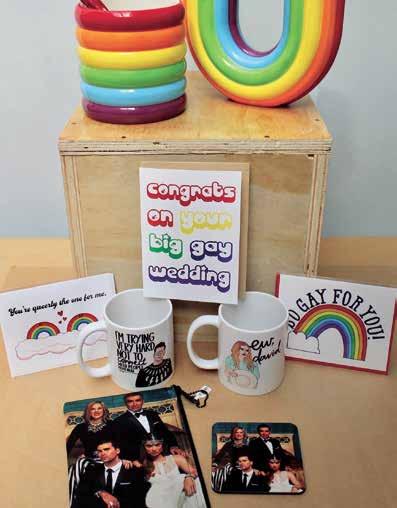
Retail therapy
You’ll need to hit all the best thrift shops in Seattle, including Lifelong Thrift in Capitol Hill and Red Light Vintage in the U District. Lifelong is an excellent place to find exactly what you weren’t looking for, from exquisite artwork to one-of-a-kind dishware. Thrifters won’t find better-priced items anywhere else. You can leave with a two-piece suit and $20 still in your pocket. Red Light Vintage is a bit more spendy, but it’s well worth it when you realize you dropped $30 on a shirt made in the USSR. The store is full of timeless pieces you’ll want to use to accentuate your wardrobe.
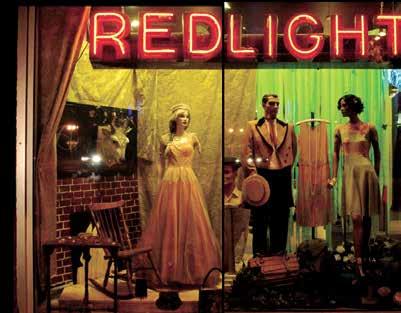

If you’ve been looking for assless chaps, ironic socks, and a new blonde wig, you can find them all in the same place. No Seattle shopping experience is complete without a stop at a few hidden gems. Perhaps the most underrated store in the city is Standard Goods. Combining the best elements of millennial and Gen Z culture, Standard Goods carries trendy clothes, hilarious stickers, and a card for any occasion. The store also has a collection of boob-molded (and scented?) candles and a wall full of ironic totes and hats. It’s hard to enter a Standard Goods store and not drop $100. Luckily, they offer plenty of discount days at the
beginning and end of the month.
One of the best-hidden gems in Seattle also sells… hidden gems! Located above Broadway on Capitol Hill, Sankofa Boutique is the metaphysical store for all your crystals, incense, and rings. You’ll smell Sankofa Boutique before you see it, due to the lush incense burning at all times. The store keeps all its crystals on display, along with little handwritten signs explaining what energies each one carries. Shoppers can get stones in the shape of hearts, stars, or even penises, depending on what the soul craves.
Photo by Nate Gowdy
Red Light Vintage
Sankofa Boutique
Standard Goods
Lifelong Thrift
Olmste(a)d
Get outside and listen to the birds
Once you’ve finished shopping, you might feel a bit snacky again. And since the perfect Gay Day is not spent inside, for the next phase, you’ll head back to nature for a superb picnic. Pack a vegan picnic basket, grab your best friend, the love of your life, or your dog, and head up to Volunteer Park. Just keep your dog on a leash, as the park does not offer an off-leash area for pets.
A spring vegan picnic calls for plenty of fruit and veggies to snack on. Make sure to include carrots, cotton candy grapes, and plenty of strawberries! The best main course is mini sandwiches. If you want something fancy, pick up Boursin dairyfree garlic spread from QFC and make tiny cucumber-and-garlic sandwiches.
The prime picnic nourishes the body and the soul. Volunteer Park is the best place to spark creativity. Bring along a craft project to work on while you eat! Paint a portrait of the sky, sketch your companion, or even scrapbook all the photos from your disposable film cameras that have just been sitting around gathering dust.
Volunteer Park is full of great spots to set up a picnic, but the ideal location combines shade and sunny patches. The best picnic spot in the park is at the south end, between the Black Sun sculpture and the water tower. Here, you get a gorgeous view of blooming willow trees, the duck pond, and the Seattle skyline.
If you’re lucky, you may even spot the elusive Scooby Dogs van, serving the best vegan hot dogs in Seattle. You can get also a Mystery Machine–inspired snack topped with mini french fries. The van isn’t always at Volunteer Park, so if you spot it and don’t get a dog, you may regret it for the rest of your life.
A dinner date with a book
If you didn’t get a chance to catch a Scooby Dog, don’t worry — there’s still plenty of great food to eat on your perfect Gay Day. If you go back down to Broadway, you’ll find Bai Tong, one of the best Thai restaurants on Capitol Hill. If your Gay Day includes four or more friends, make sure to get a reservation ahead of time. If not, put your name on the list — the wait will be worth it.
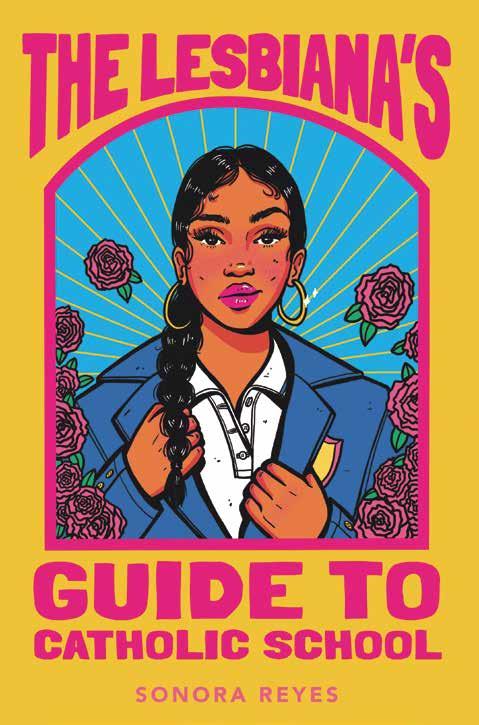
While you wait for the staff at Bai Tong to prepare your table, check out the grandest bookstore in all of Seattle: Elliott Bay Book Company. The three-level business is constantly updated with the newest and most talked-about novels. If you’re not leaving with at least three new books, you probably missed the humor section — it’s upstairs, go back and check it out. (While you peruse the aisles, keep an eye out for the SGN Book Club’s latest pick of the week, The Lesbiana’s Guide to Catholic School.)
Elliott Bay doesn’t just sell books, though. The store also has vintage-style posters, games to get you thinking, and cute T-shirts and hats.
Hopefully, you’ll receive a text from Bai Tong before you’ve spent your whole retirement fund at Elliott Bay (unless you’re under 35, in which case, what retirement fund?).
The wait will have been worth it once you sit down in one of the most energetic restaurants on Capitol Hill. A hot spot for celebrations, Bai Tong is a terrific place to spend part of your Gay Day. If you’ve ever wanted to know what Meryl Streep’s character felt like in Sophie’s Choice, just read the menu and try to pick a dish for dinner. Of course, you can’t go wrong with the classic pad thai, but the crispy garlic chicken is a must for anyone who consumes meat.
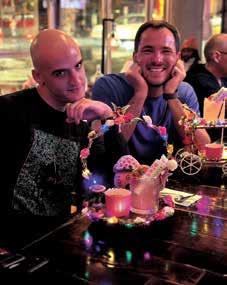
Most come to Bai Tong for the food, but trust me, you’ll want to stay for the drinks. The Fairy Flight is every cottage-core dream come true. For just $16, you are treated to a delicious peach-mixed drink rolled out on a tiny cart adorned with fairy statues, twinkle lights, and flowers. Plus, it comes with a small savory snack to help contrast with the sweetness of the drink.
Drink, then dance with somebody If you’ve ever experienced a night on Capitol Hill, you’ll know one drink is never enough. Following your meal at Bai Tong, you’ll want to hit the streets. If margaritas are your thing, there’s no better place than Nacho Borracho. The small bar is bursting with pride. You’ll instantly feel safe under





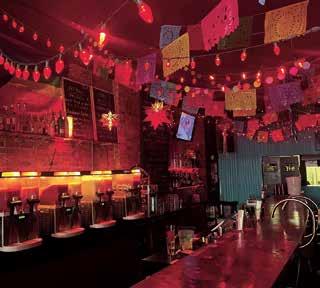
the array of rainbow flags raining down from the ceiling. Nacho Borracho also has the best-frozen margaritas on tap — just make sure to sip slowly, or you’ll leave with a spinning brain freeze.
If you’re more of a sophisticated drinker, head down to Capitol Cider, where you can try some of the best locally grown mulled beverages. Here you can sip your cider knowing you’ve decreased your carbon footprint by only consuming regional products. Capitol Cider is also just the right place for low lighting and live music. As it’s not usually too loud, you can converse with your companion(s) about how perfect this Gay Day is.
For those seeking a nonalcoholic beverage, there is only one answer: boba. Hi Tea Café is the best boba spot on Capitol Hill. The cute shop is on Broadway has plenty of seating for people looking to catch up with friends or even get work done while they sip on sweet tea. Hi Tea also offers a variety of milk alternatives, and thanks to its automotive service system, diners can adjust how much sugar or ice is in their drinks.



For anyone overwhelmed by the novel of a menu, there is a correct option, and that option is the Cookie Milk Tea.
Gay Day is not complete without a little bit of dancing. While there are so many Gay bars to choose from on Capitol Hill, the neighborhood is also home to one of the 25 Lesbian bars left in the country. Wildrose is open not only to Lesbians but also Nonbinary, Gay, Bisexual, and Trans people. However, it is the Lesbians that run the night. Get ready for a thousand compliments from some of the hottest people you’ve ever seen, some amazing throwback music, and best of all, no sleazy cishet males, thanks to the tireless work of the Lesbian bouncers.
Treat yo’self
Once you’ve danced away all your cares, it will be time to go home. On your way, you’ll need to stop for a sweet treat. I don’t make the rules. I’m pretty sure that’s just written in the Gay Agenda somewhere.
Grab a delectable dessert from R&M
Dessert Bar. Open late, R&M is a small business owned and operated by Rod Gambassi and Marc Adams. The couple makes each pastry from scratch using recipes handed down by their grandmothers. The menu changes daily, but whatever you pick will become your new favorite food. Once you get home, enjoy your dessert in bed — you deserve it. Snuggle with whoever may join you, be it a partner, a pet, or even just a squish-mallow. If you feel the medieval urge to enjoy visual entertainment while you feast, put on a comfort movie or show. If you need suggestions, you can never go wrong with Schitt’s Creek or Modern Family Now, dream, dear readers. Dream all about your perfect Gay Day. Dream about the cute dogs you saw — probably being pushed in strollers, because you spent the day on Capitol Hill. Dream about the sunshine and all the ways you’ll complain about it once it sticks around. Dream about all the fun things you’ll do on your next Gay Day...
Volunteer Park
Scooby Dogs
Elliott Bay Book Company
Hi Tea Cafe
Bai Tong
Nacho Borracho
Capitol Cider
Bai Tong
Wildrose Bar
R+M Dessert Bar
Local News
STARBUCKS
continued from cover
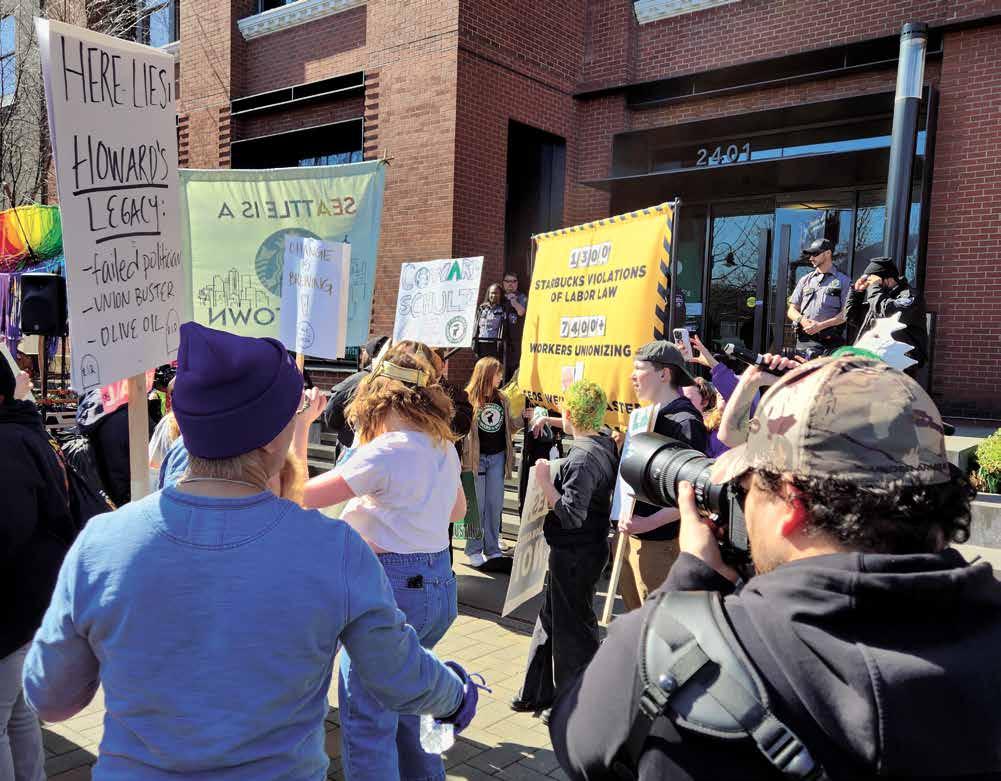
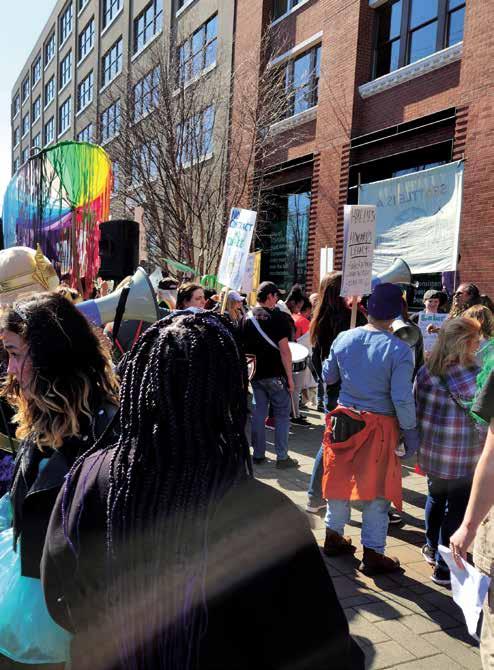
The rally and strike actions coincided with Starbucks’ annual shareholders meeting. Organizers said they hoped to convince newly installed Starbucks CEO Laxman Narasimhan to take a more conciliatory approach to Starbucks Workers United (SBWU), the union representing a growing number of Starbucks employees.
Starbucks founder and three-time CEO Howard Schultz stepped down from his post once again just before the shareholders meeting, which ratified Narasimhan’s appointment to the top spot. Schultz took the helm of the coffee megacorporation last year, in a vain attempt to stave off the SBWU’s unionization campaign. He was CEO from 1986 to 2000, from 2008 to 2017, and again from March 2022 to March 2023.
Schultz utterly failed to stem the union tide. When he resumed the CEO mantle last year, fewer than a hundred stores were unionized.
Today more than three hundred have SBWU unions, and the applications for union elections are so numerous that the National Labor Relations Board (NLRB) is reportedly having trouble processing them all.
“Starbucks baristas like me are the ones who keep our stores running. We remember our customers’ regular orders, make the lattes, clean up spills, and are often the bright spot of our customers’ days,” Sarah Pappin, a Seattle Starbucks worker, said in a prepared statement.
“Starbucks should respect our right to organize and meet us at the bargaining table.”
The SBWU has charged Starbucks with a number of federal labor law violations, including bad-faith bargaining. In many cases, Starbucks attorneys show up to bargaining sessions, make an initial presenta-
“Starbucks should respect our right to organize and meet us at the bargaining table.”
tion, and then disappear before SBWU bargainers can respond, the union has charged.
The NLRB has found Starbucks guilty of many violations of US labor law, most charges relating to illegal intimidation and retaliation against union activists. The NLRB’s general counsel said on March 27 that Starbucks had violated federal law by refusing to bargain with the SBWU via Zoom.
In related news, now-former CEO Schultz testified before the Senate’s Health, Education, Labor, and Pensions (HELP) Committee on March 29. Committee chair Bernie Sanders has been critical of Starbucks’ attempts to stifle union organizing.
“While Howard Schultz is a multibillionaire who runs a very profitable multinational corporation, he must understand that he and his company are not above the law,” Sanders said earlier this month.
Schultz was invited to testify before the HELP Committee but initially resisted, only agreeing after Sanders suggested he might be compelled by subpoena to come to a hearing.
Photos courtesy of Mike Andrew
Every Brilliant Thing not a comedy for the softhearted Arts & Entertainment
by Lindsey Anderson SGN Staff Writer
For anyone who enjoys interactive theater and can sit through a one-person show without groaning, Every Brilliant Thing might be the program for you! However, theatergoers should know that the play explores triggering topics, including suicide. Anyone with a sensitive history with this topic may want to sit this one out.
All the feels
Despite being branded as a comedy, Every Brilliant Thing tries very hard to evoke heartbreak from the audience. In the very first scene, actor Ian Bell requests audience participation in a reenactment of the euthanasia of his childhood dog. As far as the story goes, it’s an easy (and sometimes cheap) way to tug on the heartstrings of audience members who have likely experienced the same thing.
Right off the bat, the crowd feels immediate empathy for our storyteller, who uses youthlike whimsy to compare his first experience with death to his mother’s first suicide attempt. While the audience may know this is where the story is going, as soon as suicide is mentioned, the tone in the room shifts. It is a topic that needs to be addressed with tact and precision.
The first half of the play provides a heartbreaking and fresh perspective on suicide, as the room gets to peer into the eyes of a young child learning about death and depression at just seven years old. The boy’s list of “brilliant things” that make life worth living is enduring and a testament to his love for their mother.
Missing the point
The show sets itself up to go in many directions, both as a semi-improvised piece and in terms of a structured plot. With the established premise of a child’s optimism contrasted with a mother’s battle with depression, the play could dive into the complexities of the disorder, and it could get into the deep love and humanity of the struggling mother. Instead, however, it chooses to narrow its focus on the boy as he grows up.
The storyteller adopts a different tone, indicating growth, as he details his mother’s second attempt ten years later. This time, he has less empathy for his mother. Through his monologue, the crowd can understand the anguish and struggle of a child whose parent cannot properly care for them.

The story crafts a feeling of intimate empathy and pity for the child of a mentally ill woman, but it leaves little humanity for the mother. Audience members are recruited to act out pivotal characters in the story, from a childhood therapist to a college professor, and from a love interest to even the storyteller’s father. However, the mother is never given a voice.
When suicide ultimately does take her life, the audience is left upset with her. There is an aura of blame and guilt. If only this woman had tried to get over her depression, if only she had absorbed the list of brilliant things, maybe she wouldn’t have taken her own life.
The reality of depression and suicide is that it is not a choice. Nice things, like the color yellow, ice cream, and Michael Keaton’s voice, aren’t enough to keep suicidal people alive. Medicine, therapy, and intervention are often necessary.
The monologue only continues to twist the blade of guilt further when the storyteller
angrily spews off facts about how suicide is “contagious.” Ironically, he exclaims that there are correct ways to talk about suicide in the media. Perhaps the worst part of this monologue is when he informs the crowd that attempting suicide can often inspire others to do it too, implying selfishness to the action.
Landing on the tip of the iceberg
The show attempts to recover from the heavy d.a.r.e-like anti-suicide sermon by showing that the storyteller ultimately suffers a mental breakdown. He has one conversation with a therapist, something his mother was never strong enough to do, and continues to find beauty in the everyday. Perhaps the fact that he could still see beauty in everyday life should be enough of an indicator that he was not experiencing depression to the same extent that many people do.
Despite the play’s lackluster attempt to tackle such a heavy beast, there were plans for a post-performance debriefing

on March 28 for anyone with the energy to stick around.
“We will discuss how the artist’s choice to present their story in this way, as a one-man show with improvised audience involvement, draws the audience into this exploration of mental health and highlights the intersections between theater and therapy,” said Artistic Associate Shana Bestock. “This discussion will allow us to reflect on shared experiences, build empathy, and gain a deeper understanding of how brilliant things connect us, move us forward, and empower us, through the community.”
Praise for Ian Bell
While the story itself may not be the most empathetic approach to the subject, it is not for lack of effort by ACT. Bell puts his whole heart into the performance and brings a contagious energy. He approaches audience members with kindness and can coax performances out of the shyest in the room.
The writers have also updated the script and made it feel more personal to Seattleites. “It’s the show that Seattle needs right now,” said producer Paige Lee. “It touches on so many different subjects, and there are a lot of really great changes they made to the script to localize [it]. People who come see [it] who have lived in Seattle will resonate with the character so much.”
The improvisation also means that each night will vary in regards to what happens on stage. The crowd is there just as much to create the experience as they are to live it.
“What I love about this show is that it’s not going to mean the same thing to people…from one night to the next. It’s just that beautiful journey of life and love, sorrow and joy,” said producer Anita Shaw. “I love watching the audience have this experience. The lights are up in the house, and you can see the audience have this experience. It’s so great when the building is open and alive with people.”
If you’re looking for a show that will make you laugh and cry, and you’re willing to shout out a random prewritten phrase, Every Brilliant Thing is the production for you.
Just keep in mind that mental illness is not a choice. It’s a real battle people are fighting. Those who lose that battle are not weak-willed or selfish. The conversation around depression and suicide needs to continue to happen, and Every Brilliant Thing is starting the dialogue.
Ian Bell reflects on life’s brilliant things in Every Brilliant Thing – Photo by Truman Buffett
Ian Bell high-fives the entire room in Every Brilliant Thing – Photo by Truman Buffett
Arts & Entertainment
Indie writer Charles Dobes to kickstart colorful comic
by Daniel Lindsley SGN Staff Writer
On occasion, an artist enters their scene without the classical training of their forebears or the innate talent of a child prodigy. Raymond Chandler, Laura Ingalls Wilder, and Claude Monet all started their crafts relatively late in their lives, and what drove them to it is often a key subject of their biographies.
All of the artists mentioned above started far later than Renton resident Charles Dobes, who has not only been writing stories in his spare time but working extra hours at his day job to pay artists and other contributors at Essence Comics.
“I started in 2015, so I’m still a bit of a rookie when it comes to doing all the writing and whatnot,” Dobes said of comic books on a Zoom call.
Before his latest project, dubbed Essence: Destiny of the Twelve Warriors, Dobes had written narratives and settings of a much smaller scope. In 2021, he published the first volume of Krunk’s Elf Adventures, a lighthearted urban fantasy series following Krunk the young skater elf, Carl the Gay genie, and Ragaylia the witch.
But Dobes doesn’t just write. He tables at conventions, scopes out talent, and does whatever else needs doing for the Essence project to continue. If everything goes right, it will be a long time before he stops.
“I used to play Warcraft, Starcraft, and all those games back in the day, and I actually wanted to create my own video game, and my own system and world,” Dobes recalled.
Since then, Essence has “evolved a lot.” It went from an idea for a video game to one for a novel, but as the concept progressed, its focus on colors as a crucial element of the setting’s cosmology drew Dobes to a more visual medium. Comics, he found, were also easier on a novice writer than heavy prose.
Characters and superpowers being colorcoded is hardly new to speculative fiction; there’s a good reason many young children refer to their favorite super-character in an ensemble cast as the “green one” or the ever-popular “red one.”
Artists and game developers use our learned associations between colors and emotions to make the personalities of characters and scenes instantly more “readable.” DC Comics’ Green Lantern, LEGO’s Bionicle, and Naughty Dog Games’ Jak and Daxter come to mind.
Essence pulls a similar trick, but with a twist: the characters of the main cast each have their own chromatic flavor of superpower, with a matching outfit (which they use to battle a force of ravenous, evil aliens of course). But their abilities are usually summed up in a single word — like stockpile, regrowth, perception, or overload — whose openness to interpretation allows room for growth and discovery.
In fact, it was seeing his ideas rendered visually for the first time that convinced Dobes that his vision for the comic was worth pursuing.
“I know what I’ve created, I know what it’s capable of doing,” he said. “I just need to get it to that point where people start recognizing it.”
Of course, that process hasn’t been a cakewalk, for writing reasons and others.
“It’s been a challenge because the abilities, and the ways the characters operate, and the ways everything kind of comes together — it’s very complicated,” he said. “It’s really easy to get lost, even as a creator.”
Characters in Essence not only have powers of their own but can share them, according to the comic’s website, which could create some very hyped-up action scenes but also some mind-bending conundrums of visual and prose storytelling.
“I understand my world, but now I’ve gotta make sure the readers can understand it as well, without making any mistakes.”


That being said, Dobes admitted that “I’ve made a lot of mistakes on the way.”
For the earliest rendition of Essence, he and an Italian artist (who has since gone on to work with Marvel Comics) created a little over 200 pages.
“But after people close to me had read it and stuff, they were like, ‘This jumps way too fast,’” Dobes said. “I basically pulled an Eternals, where they introduced all the characters in one movie and it kinda backfired on them.”
Dobes seemed especially grateful for the help of a certain frank and fastidious

friend, editor John Carter, who has been eager to not only point out all the potential plot holes and other problems with the script but give some sound advice on how to improve things.
Now, with colorist Fahriza Kamaputra and Indonesian artist Erfan Jafar, Dobes is gearing up to crowdfund the project on Kickstarter, and release the first two volumes of Essence, 300 pages total.
“It’s exhausting doing all of it,” Dobes said. “There were three paychecks in a row in a six-week period. It was 110 hours, 120, 110 — still, on top of that, I was doing
everything else.
“It doesn’t leave a lot of time for anything.” What keeps Dobes motivated, in addition to his vision for the project, is the potential for having a positive impact on Queer fans and artists in the comics industry. If Essence goes on to be popular enough, Dobes said, he has plans for expanding it into games and other media as well.
You can learn more about Essence, keep up with its Kickstarter countdown for July 14, and sign up for its mailing list at https:// essencecomics.com
Images courtesy of Essence Comics
A game Dungeons & Dragons casts a winning spell Film
by Sara Michelle Fetters SGN Staff Writer
DUNGEONS & DRAGONS: HONOR AMONG THIEVES
Theaters
Dungeons & Dragons: Honor Among Thieves is a lot of fun. It’s a little on the longish side and takes a few moments to hit its stride. But once it does, this inventively silly fantasy adventure from directors and co-writers John Francis Daley and Jonathan Goldstein overflows in thrills, chills, and laughs galore. I liked it a lot.
Not that I should be surprised. Even if the source material has never lent itself to narrative adaptation (while I do have a soft spot in my heart for the 1980s animated series, the less said about 2000’s live-action Dungeons & Dragons the better), Daley and Goldstein are, after all, the minds behind 2018’s spectacularly funny Game Night, one of the better comedies of the 21st century. They’re
now two-for-two in my book (I’m choosing to forget 2015’s unfortunate Vacation legacy sequel ever happened), and I cannot wait to see what the pair conjure up next.
After charming minstrel-thief Edgin (Chris Pine) and his potato-loving professionalwarrior partner Holga (Michelle Rodriguez) escape from prison, they immediately set out to reunite the former with his whip-smart daughter Kira (Chloe Coleman), who’s been living with their former partner, gregarious second-rate conman Forge (Hugh Grant).
Aided in no small part by the sorceress Sofina (Daisy Head), Forge has somehow gone from being one of the kingdom’s most wanted to the trusted leader of a rich and powerful city, and he has no intention of returning Kira to her father. In fact, he has gone out of his way to convince the young girl that Edgin outright abandoned her.
This will not do. Smelling something insidious, Edgin and Holga search out another old friend, the bumbling wizard Xenk (Regé-Jean Page), and through him
form an alliance with half-elf druid shapeshifter Doric (Sophia Lillis). They all agree Forge is up to something horrible, and likely working on a grift that will leave him holding all of his kingdom’s treasures.
But they could not imagine what is really going on. There is true evil afoot, and circumstances being what they are, it turns out that Edgin, Holga, Xenk, and Doric are the only ones available to save the day.
What follows are a series of goofy “miniquests” in which this band of slightly inept heroes have to get answers to insoluble questions and learn the whereabouts of magical McGuffins, most of which ultimately won’t be of much help once the final showdown with the mysterious “big bad” pulling all the strings commences. There’s a spectacular extended bit straight out of Monty Python, in which the gang has to literally interrogate the dead, while a later reverse-heist involving placing an enchanted object inside a moving, heavily guarded treasure wagon is as ridiculous as it is exhilarating.
But as ingeniously staged as the majority of the action set pieces are (save one brief underground face-off between a selfless mystical warrior — handsomely portrayed by Justice Smith — and a cadre of undead assassins, which goes nowhere), it’s the emphasis on the characters that makes this loopy yarn work so well. Grant, Coleman, Rodriguez, Page, and Lillis are all wonderful, and the script makes sure to give each their fair share of memorable moments that they agreeably make the most of. Yet Pine is the reason things work. His performance is a work of nimble art, perilously balancing between caricature, farce, melodramatic sincerity, and heroic arrogance with shocking ease. It feels as if Pine is pulling from a variety of influences, ranging from the rapid-fire slapstick genius of His Girl Friday (Cary Grant), the comic book wholesomeness of Superman (Christopher Reeve), and the whimsically haughty conviction of Young Frankenstein (Gene Wilder.)
Somehow, Pine pulls it off. His emotional beats are heartbreakingly genuine. He has a connection with both Rodriguez and with Coleman that’s haunting. As pleasantly daffy as the world Edgin struts around in may be, his feelings for Holga and especially Kira are affectingly pure. There is an honesty to these relationships that grounds all of the insanity in something wholesomely authentic, and Pine is the primary reason this is the case.
I do wish there wasn’t so much filler, and as well put together as the finished film is, I do think it would have been nice had Daley and Goldstein allowed editor Dan Lebental (Bad Boys for Life) one more pass at the material to tighten things up. The opening act is especially arduous, and while I get that most of the information being discussed is moderately vital, the sheer volume of exposition dumped on the audience is still rather tiresome. But who am I kidding? Rolling the dice on Dungeons & Dragons: Honor Among Thieves is undeniably the way to go. It’s a magical ride into the fantastical, and I spent most of the film’s running time happily giggling in engrossed appreciation. Daley and Goldstein cast a winning spell, and I’d enthusiastically open a second book featuring this rogues’ gallery of heroes and their subsequent adventures if the opportunity to do so were to arise.
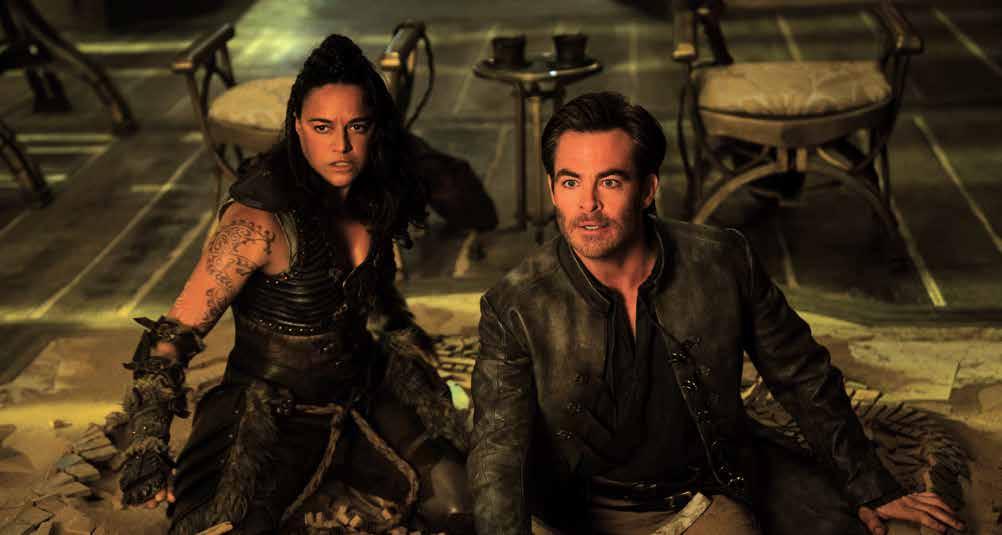
Michelle Rodriguez and Chris Pine in Dungeons & Dragons: Honor Among Thieves – Photo courtesy of Paramount Pictures
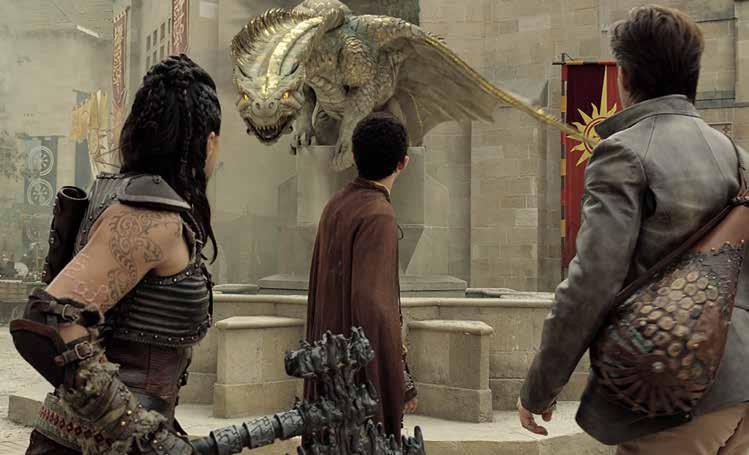
Dungeons & Dragons: Honor Among Thieves – Photo courtesy of Paramount Pictures
Film
UNFORGETTABLES
continued from cover
made their debuts, like directors Annabel Jankel and Rocky Morton’s D.O.A. remake and the risqué teen comedy Johnny Be Good with Anthony Michael Hall, Robert Downey Jr., and Uma Thurman. Heck, there was even an entry in the long-running (if god-awful) Police Academy series.
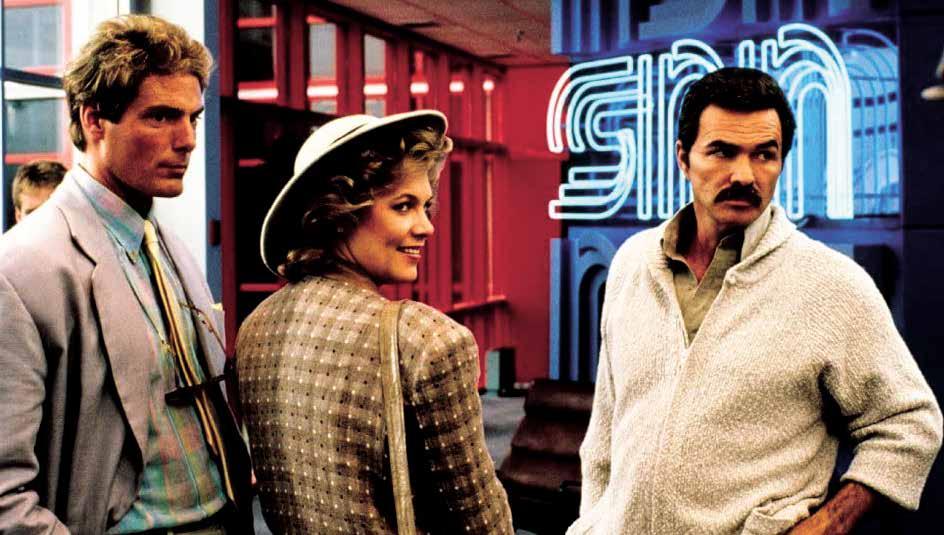
As worthy as the majority of those titles are for 35th-anniversary celebrations, the March 1988 film I want to shine the spotlight on is director Ted Kotcheff’s Switching Channels, starring Kathleen Turner, Burt Reynolds, and Christopher Reeve. I’m not sure why I have watched it so many times over the years — I just have, and whatever the reason, every time I do, the darn motion picture makes me smile as if I were watching it for the first time.
I get it: Kotcheff’s 24-hour cable news slapstick farce is another remake of 1931’s The Front Page. It is a film that makes no attempts to hide how much it’s also cribbing from the screwball heavyweight titan, 1940’s undisputed classic His Girl Friday, directed by Howard Hawks and starring Cary Grant, Rosalind Russell, and Ralph Bellamy. If judged solely on how it compares to those two masterworks, for all of Turner, Reynolds, and Reeves’ chemistry and modern-day movie star panache, it understandably comes up short.
But so what? Turner, fresh off of a string of masterful performances in works as varied as Body Heat, The Man with Two Brains, Prizzi’s Honor, and an Oscar-nominated turn in Peggy Sue Got Married, was at the height of her creative powers. Reynolds, a terrific comedic talent when challenged and forced to interact emotionally with his costars and not float by on his trademark smile and cocksure (some might say smarmy) charm, is as lively and as engaged as he ever was during the latter half of the 1980s. As for Reeve, he was always an underrated physical comedian (take a look at Deathtrap and Noises Off ), and he showcases those gifts magnificently as the third point of an aggressively sexy love triangle.
Yet my connection to Switching Channels runs deeper than my affinity for this trio of above-the-title stars. By the time Kotcheff’s comedy was released, I was fully suppressing my issues regarding gender identity
and was tragically attempting to transform myself into the stereotypical “all-American boy” I felt like my parents, teachers, and friends all wanted me to be. It was a constant struggle, a battle to destroy feelings, traits, and tendencies I’d had long before I even knew they were there in the first place. Along came this comedy. Superman himself plays a snobby, slightly effeminate fuddy-duddy who also happens to be an incredible athlete and is the owner of a slew of sporting goods stores worth millions. Reynolds, fast-driving Smokey, is a laid-back lout who comes to realize that hiding behind his quick wit, barked orders, and sycophantic grin may get him a terrific lead story for the 6:00 p.m. newscast but will also likely lose him the heart of the love of his life forever. Turner, the quirky damselin-distress who transformed into a fearless treasure hunter in Romancing the Stone, is fiercely feminine, unapologetically strongminded, and resolutely determined to be the smartest person in the room no matter what.
I responded to all of this. My freshly teenage mind marveled that two giant, unabashedly masculine superstars like Reynolds and Reeve would play second
fiddles to Turner, and in the process be systematically emasculated with gigantic grins on both their faces. I loved that the female lead didn’t have to be any one thing, that she could stand up for herself with zero shame, still dress like a million bucks, and eat greasy hot dogs and runny cottage cheese with plucky abandon. Stereotypical definitions of masculinity and femininity were social constructs meant to be exploded. Considering all I was concealing in my personal life, this was a fantasy I eagerly embraced.
While I obviously still hold Switching Channels in high regard, I’m not about to herald it as some misunderstood masterpiece or comedic marvel that should be spoken about in the same breath as either the original The Front Page or the far-ahead-of-its-time His Girl Friday Kotcheff’s direction is not nearly as confident as it needs to be. Jonathan Reynolds’ efficient, if not altogether inspired, screenplay hits a few risibly sour notes, and anytime Turner, Reynolds, and Reeve aren’t the focal point, things noticeably drag.
None of which changes my feelings that this remake got a raw deal in 1988, and it con-
tinues to be frustratingly forgotten 35 years later, although all three of its leads — two of whom are sadly no longer with us — remain household names. Notably, I’d go further and state that this is one of Turner’s finest performances, her level of commitment to the material and what she does with it frequently astonishing.
But it’s my personal connection to Switching Channels that keeps me coming back three-plus decades after its original release. While it’s a product of the 1980s, there are still several elements that remain progressive even by today’s 21st-century standards. What it says about gender roles, political malfeasance, and the absurd power of major news outlets owned and operated by wealthy special interests is as prescient as ever.
Most of all, though, it’s just plain funny, and that’s the biggest reason I find Switching Channels unforgettable, and that’s really all I need to say.
Now celebrating its 35th anniversary, Switching Channels is available on DVD and to purchase digitally in HD on multiple platforms.
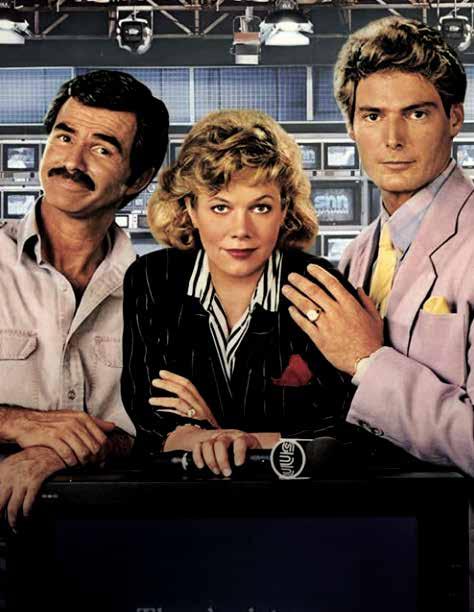
Christopher Reeve, Kathleen Turner, and Burt Reynolds in Switching Channels – Photo courtesy of TriStar Pictures
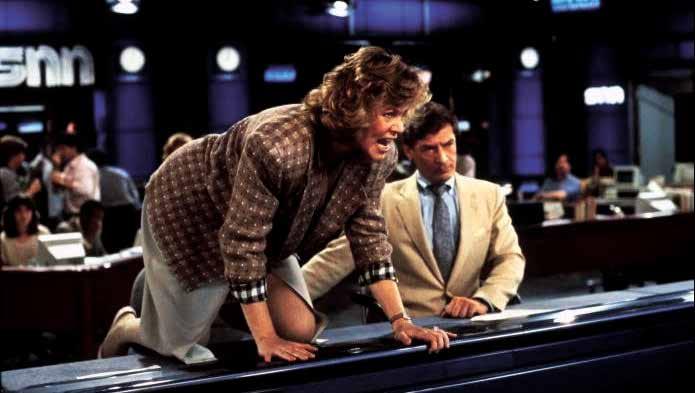
Kathleen Turner in Switching Channels – Photo courtesy of TriStar Pictures



Pugh’s a terrific addict, but melodramatic A Good Person still disappoints

by Sara Michelle Fetters SGN Staff Writer
A GOOD PERSON
Theaters
Allison (Florence Pugh) has the world in the palm of her hand. She has a promising career as a pharmaceutical representative and is engaged to marry the love of her life, Nathan (Chinaza Uche). Her mother Diane (Molly Shannon) dotes on her. She has a plethora of close friends who think she’s nothing less than wonderful. But everything changes in the blink of an eye when the car Allison was driving is involved in a terrifying accident that kills Nathan’s sister and her husband, leaving his teenage niece Ryan (Celeste O’Connor) an orphan.
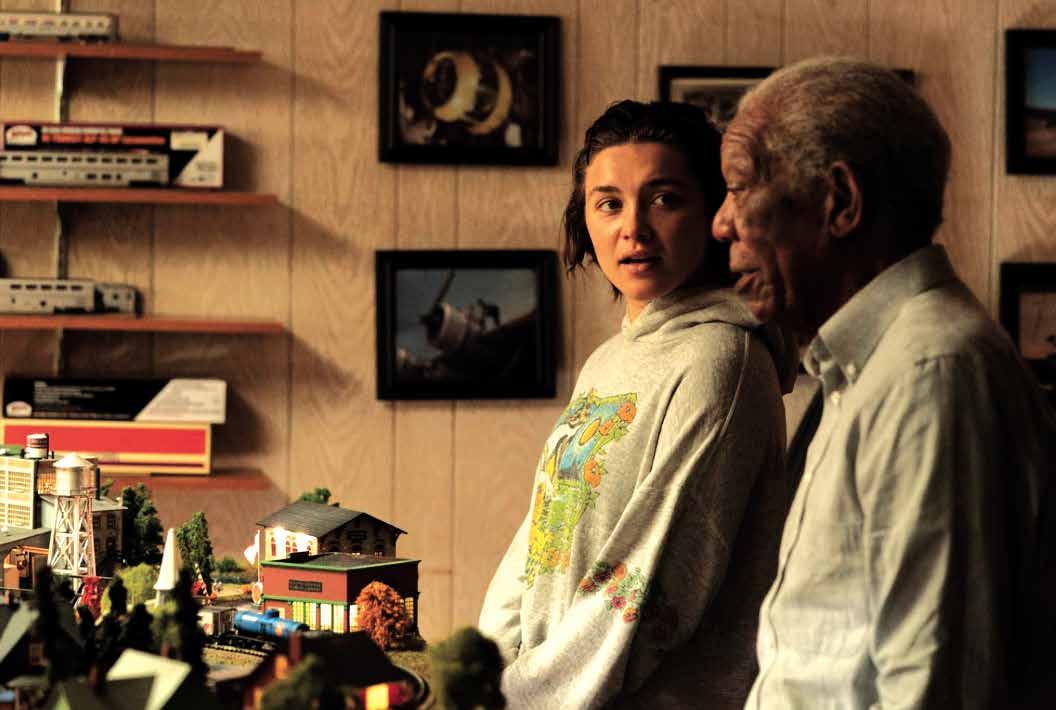
Fast-forward to a year later. Allison and Nathan are no longer engaged. Ryan is living with her grandfather, ex-cop and avid miniature train enthusiast Daniel ( Morgan Freeman). Allison has lost her job, has been forced to move back in with Diane, and is hopelessly addicted to opioid painkillers. The bottom has completely fallen out of the young woman’s life, and she’s clueless as to how to go about building a new foundation.
Writer-director Zach Braff’s A Good Person is a fairly standard addiction melodrama that does precious little new or unexpected. It also features a pair of performances from Pugh and Freeman that border on extraordinary — any life this film has is entirely due to them. Likewise the emotional weight it manufactures. While everyone in the picture is good, Pugh and Freeman are nothing less than stunning, and because of the duo, Braff’s latest comes remarkably close to being worth the price of a matinee ticket.
But only almost. There are issues, not the least of which is that this tale frequently becomes more of a “white redemption” piece instead of a nuanced narrative involving two broken individuals learning to forgive both themselves and each other as they also battle addictive personalities threatening to derail any hope of a happy future. Daniel, and to a lesser Ryan, come perilously close to embodying certain cinematic tropes and stereotypes that should have been buried for good ages ago. Pity, because there are several strong moments and sequences that had my eyes
glued to the screen and tears filling the corners of my eyes. A scene where Allison and Daniel see one another for the first time in almost a year — when the former stumbles into an Alcoholics Anonymous meeting desperately seeking some help, only to see the latter already there — is surprisingly powerful. Another later on, when she encounters Ryan and has no clue what to say to or how to act around the teenager, is an overpowering punch in the gut. It should also be noted that Braff hasn’t lost his visual touch. Much like with Garden State and Wish I Was Here, the actorturned-director knows how to move his camera. Braff and vaunted cinematographer Mauro Fiore (Avatar) delicately craft naturalistically mesmeric images. The aesthetic they create is dreamlike yet journalistically precise, allowing for the generation of an empathetically dynamic intimacy that’s often haunting.
However, I just can’t get over the picture’s climactic third. It isn’t the familiarity of what transpires — even great addiction dramas like The Lost Weekend, The Days of Wine and Roses, The Man with the Golden Arm, Clean & Sober, and 28 Days can only play variations on a similar themes. It’s the direction Braff takes his characters that’s so gosh darn insulting. There is nothing honest about the climax. Nothing pure. Nothing that doesn’t feel cloying, gimmicky, and inelegantly manufactured. Thankfully, Pugh remains inarguably one of the finest actors of her generation. As awful as some elements of Braff’s script may be, her performance continually remains a thing of phenomenal beauty. She shreds Allison down to the bone. This is a nakedly raw tour de force, and Pugh’s sweaty physicality and jittery line readings are astonishing. She and Freeman share a truthfully anarchic chemistry that fits their
characters to perfection, and even when Braff’s sometimes cringy dialogue threatens to derail the whole enterprise, the pair frequently find a way to get the film back on track with effortless grace and impressive ease.
It’s all for naught, though. I like happy endings as much as the next person. I’m all for intense dramas dealing in tough, uncomfortable subject matter offering up hope and the opportunity for redemption for the characters going through such demoralizing ordeals. But A Good Person adds schmaltz where it does not belong, and instead of some observational distance that could further humanize the events Allison and the others are confronting, Braff forces ghastly treacle down the viewer’s throat. It left a bitter taste in my mouth, and sadly I don’t think that rancid aftertaste is going to dissipate anytime soon.
Florence Pugh in A Good Person – Photo courtesy of MGM
Florence Pugh and Morgan Freeman in A Good Person – Photo courtesy of MGM
Sonora Reyes is reinventing the YA genre

by Lindsey Anderson SGN Staff Writer
Despite having one of the most popular YA books of 2022, Sonora Reyes had never published a novel before. Inspired by their friends and background in fan fiction, Reyes decided to complete the National Novel Writing Month challenge by creating an original work. “I got peer-pressured into writing my original novel, because all my friends were writing original books, so I was like, ‘Okay, I’ll do it,’” they said.
After just one month, they completed a finished draft of The Lesbiana’s Guide to Catholic School and decided to send it off for queries. Looking back, Reyes realizes they should have given the draft a few more rounds of edits, but the novel still managed to draw interest from a few agents after the first round of queries.
“It sold pretty quickly. It was a wild ride, especially because I had just gotten top surgery the day before I got my first call from an agent, so I thought it was a dream in my pain-medicine-induced haze,” they said. “It didn’t feel real at all.”
Despite all the post-op drugs, they still managed to send the necessary emails and sign an agent. “I was on pain meds for so long, but I did everything I was supposed to do,” they said with a laugh.
Processing Catholic school during NaNoWriMo
When Reyes first sat down to write a novel over the course of a month, they had to pick a topic they knew a lot about.
“I wanted to write about something I knew I could talk about for 50,000 words, at least, without having to stop and think or… research,” they explained. They decided to write about Catholic schools in order to reexamine a lot of their own growing-up experiences and trauma.
“I wrote about something that I had to process, so that I could do my processing in the book,” they said.
They did not intend to write a YA or coming-of-age story, but as Reyes began to process their childhood trauma, they realized that was the natural direction of the book. It had been ten years since Reyes attended Catholic high school. They found the process of looking back at their experiences very eyeopening and ultimately cathartic.
“I wanted to heal my teenage self, and in doing that, I wrote a coming-of-age story,” they said. “It was just the story that ended up healing me. I needed to tell it at that moment. I needed to use it to process all my stuff.”
The Lesbiana’s Guide to Catholic School connects with readers who have experienced being Queer in a religious community. Religion adds a lot of complexities to
“It’s necessary for more stories to have intersectionality in them, because we exist.”
the Queer experience and can cause people to internalize hatred and shame.
“[Catholic school] provides a good foil [to queerness], because a lot of religious institutions are not as friendly to queerness,” Reyes explained. “In religious communities, it can feel very isolating, even though there are many Queer people present. Catholic school showed me that I needed to be quiet about my queerness and not be seen or heard. That was how I could be accepted.”
The world needs more intersectional stories
The book also connects with readers who, like Reyes, experience multiple intersections of marginality. Reyes did not intend for the book to be a tool to teach intersectionality, but it reflects the experiences they share with others in the LGBTQ+ community. “I wasn’t necessarily going into it to explore the overlap [of Queer and Latinx identities], but I have the overlap in myself,
so it just came naturally,” they said. Many books take on just one aspect of marginalization, but in 2023 that is not reflective of the world. People are more complex, and our identities overlap to inform our experiences. “It’s necessary for more stories to have intersectionality in them, because we exist. Many people can’t identify with a story about a white cis Gay man or a white cis Gay woman. If it’s a Queer person of color or a Queer mentally ill person of color or a disabled person of color, there are all these different intersections that can come into play.” Reyes believes that telling stories about intersectionality helps people see that their existence goes beyond just their race, sexuality, or gender. When LGBTQ+ stories only center on white, cis, neurotypical protagonists, other community members often feel isolated or invisible, as if their Queer experiences don’t count.
see REYES page 14
Sonora Reyes – Photo by Nina Paz
Books
Get a head start on business inclusivity with these two books
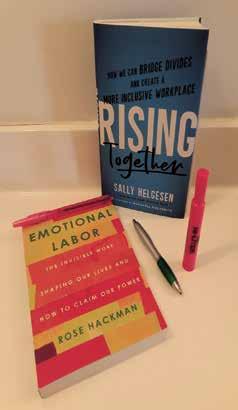
Photo by Terri Schlichenmeyer
REYES
continued from page 13
Reyes tells stories that will resonate with audiences excluded from typical YA bookshelves. Because of that, they wanted to work hard to provide LGBTQ+ characters that readers could relate to. They spent a lot of time working on how they depicted certain LGBTQ+ characters and wanted to avoid stereotypes.
“With Yami, I felt very confident in her character. I didn’t feel worried about it, just because I felt so firmly that this was how I wanted to write her. If anybody didn’t like it, it wouldn’t bother me,” they said.
Avoiding Queer stereotypes
Despite being so confident in Yami’s character, Reyes worried that other Queer characters might fall into stereotypes.
“I wanted to get it right, because I know stereotypes around this identity that I didn’t want to play into. I wanted to make sure that they were a fully well-rounded person who was [also] a messy person. They’re teenagers. They’re not going to be the perfect example of their sexuality. They’re not supposed to be on a pedestal or anything like that.”
While they tried to avoid stereotypes, Reyes admits that sometimes characters, like real people, do fall into being clichés. According to Reyes, the best way to avoid writing stereotypical characters is to include multiple LGBTQ+ and BIPOC characters.
“We’re not supposed to be a monolith. If you’ve got multiple Queer characters and one of them fits into a stereotype, I think that’s okay, because you’ve got a whole cast,” they explained.
A message to anyone in the closet
Writing a YA book means connecting with vulnerable audiences. While The Lesbiana’s Guide to Catholic School is full of insights about intersectionality, religious trauma, and individuality, Reyes hopes readers take away the message about coming out.
“Being closeted doesn’t mean you’re not authentically you,” they said. “It doesn’t mean you’re living a lie. It just means that you’re waiting for your moment to share something that you don’t owe to anyone. It’s all up to you, how you share that, and when you share that. If someone takes that from you, you can take that back.”
In the book, Yami reclaims her moment after being outed by an ex-friend. Reyes hopes her story can inspire the LGBTQ+ community to look at the closet differently.
“She goes back into the closet, which a lot of people would think is a negative thing,
by Terri Schlichenmeyer Special to the SGN by VARIOUS AUTHORS
© 2023 various publishers $28.99—30.00 various page counts
Every year has its challenges. A few years ago, it was COVID-19. Meanwhile, changes in the economy influence your business constantly. Customer acquisition is a big issue, but you’re also laser-focusing on staffing. You’re determined to make a change in the people you hire and the workplace you offer them so let these two books be your guides.
Unless you fall into the nonwhite, noncis-male category, you may not realize the amount of extra labor that women and minorities do at work and do to be able to work. It’s hidden, and few people discuss it. But those who experience it know it. Emotional Labor by Rose Hackman (Flatiron Books, $28.99) helps you recognize those burdens and, if you’re someone dealing with these issues, learn how to regain your sanity and your strength.
Women — even, maybe especially, professional women — are asked to “smile more” and are often talked over. People of color feel that they need to “code-switch” and talk differently in the presence of their white co-workers. Black hair is now a workplace issue. Assuming who brings the coffee to a meeting is an issue. Gender is a workplace issue.
None of this — or any other similar thorniness on the job — is new; in fact, emotional labor has a long, long history, and Hackman unpacks it with firmness.
And yet, this is not an anti-white-menrant kind of book. The author has a lot to say, and she’s respectful. Though a good bit of it may be uncomfortable, leaders, supervisors, business owners, and C-suiters will be glad they read what she and her casestudy subjects have to say. Business owners can no longer pretend not to know this information, making Emotional Labor an essential eye-opener, to be sure.
Another sure thing: you know you need to make change, and you want to do it. You’ve wanted to do it for years, actually, but you’re not sure where to get started.
In Rising Together by Sally Helgesen
“Being closeted doesn’t mean you’re not authentically you… It just means that you’re waiting for your moment to share something that you don’t owe to anyone.”
(Hachette Go, $30.00), you’ll see why you’re stymied, and you’ll learn how to move forward.
There are, says Helgesen, eight barriers to making change, including gender and age. Here, you’ll learn how to spot the most common walls between you and an inclusive workplace, and how to knock them down with communication, equity, and (yay!) humor. And just to be sure you can do this, the author offers tools to implement every workday until inclusivity feels natural and automatic. If you’re looking to make a better team or a new, top-notch workplace with a different and dynamic outlook, then this easy-to-grasp, calm, and methodical book is what you need.
But let’s say you’re hungry for more on this subject. You want to be absolutely sure that forming an inclusive, welcoming, productive workplace is done right. Good for you — now ask your favorite librarian or bookseller for help. They’ll know what books you need, what you’re missing, and where you can find them. They’ll help you make change by stepping up to the challenge.
but for her, it’s a chance to have a do-over. It’s a chance to do it on her terms when she’s ready, but she wasn’t ready,” Reyes explained.
Reyes wants closeted people to know that they are still a part of the LGBTQ+ community, they are still valid, and they are still supported, even if they’re still figuring themselves out. “It’s okay to be closeted longer than other people are. It’s okay to not tell everyone all the time,” they said. “As long as you take your safety and well-being into account first, that’s the most important thing.”
Sweet revenge Reyes is continuing to write empowering stories for LGBTQ+ readers. Their next novel, The Luis Ortega Survival Club, comes out on May 23. This book is about Ariana, an autistic Bisexual heroine struggling to understand her complex feelings around a trauma she has endured.
“She’s not sure if she has the right to feel any kind of way about it,” Reyes explained. Throughout the book, Ariana discovers a found family and forges a strong bond over a shared desire for revenge.
Unlike most revenge fantasies, The Luis Ortega Survival Club doesn’t preach forgiveness. “A lot of revenge media sees the person getting revenge as evil. They’re tainted by their desire. That’s not this book,” Reyes said. “[Luis] deserves what’s coming to him. He’s going to get what’s coming to him, and [the revenge seekers are] the righteous ones for doing it.”
This is also a fantasy novel. Often, readers want to know why, in a world where anything can happen, Ariana still experiences such trauma.
Reyes replies, “My answer is that I think a lot of traumatized people, their fantasy isn’t necessarily that the trauma never happened. A lot of us can’t picture ourselves without that trauma. Some of us might be able to, but for me, I can’t. For me, the fantasy isn’t that it never happened. For me, it’s what if this still happened — but now I get to win in the end. I still get my happy ending, apart from this trauma. I still get everything I want.”
Reyes is changing the YA genre, writing books that show young people that it’s okay to feel big things, seek revenge, and question authority. They can’t imagine writing a novel that isn’t LGBTQ+ down to the core, because they write about the world they want to live in.
The Lesbiana’s Guide to Catholic School is out now. Grab a copy from your local bookstore and read along with us! The Luis Ortega Survival Club will be available at bookstores everywhere on May 23, 2023.
Image courtesy of Balzer + Bray
ECSA jumps into exciting new season Sports

by Brittney Miller Special to the SGN
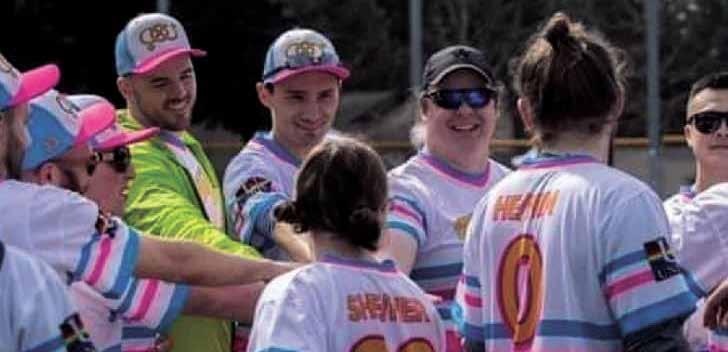
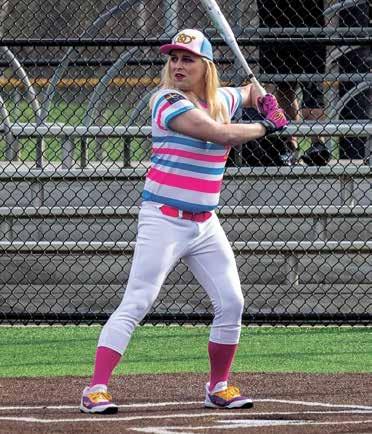
Seattle’s premier LGBTQIA+ softball league, the Emerald City Softball Association (ECSA), is kicking off its 44th season starting this Sunday, April 2 at 9 a.m. at North SeaTac Park.
Featuring 27 teams across five divisions
of competition, the ECSA has become an excellent space for members of our community to create and nurture relationships with each other. Founded in 1980 by local Gay athletes that were simply trying to have fun and expand their social circles, the ECSA has grown into one of the largest LGBTQIA+ leagues in the country.
The ECSA is governed by the North
Founded in 1980 by local Gay athletes that were simply trying to have fun and expand their social circles, the ECSA has grown into one of the largest LGBTQIA+
American Gay Amateur Athletic Alliance (NAGAAA), a national athletic body that unites member cities. It hosts the Gay Soft-

leagues in the country.
ball World Series every fall to determine the best Queer softball teams in the nation. The ECSA is focused on inclusivity and growing its diverse member base to better serve the community. Membership includes players in their twenties all the way up into their late sixties. Teams have Gay men, Lesbians, Trans men and women, Nonbinary players, and straight allies across all divisions of the league. Each weekend, 30 games featuring over 400 players are conducted, helping us find each other while sprinkling in a friendly dose of competition.
Beyond softball, the ECSA does its best to be a pillar of the community, focusing on using its platform to fundraise for a chosen LGBTQIA+ charity each season. Last year, the league donated $10,000 to the Gender Justice League, choosing it due to the everincreasing threats Trans people are facing. One of the most popular events on the league calendar is the yearly drag pageant, used to fundraise and cover league costs. I’m a former participant myself, as a representative of the Seattle Squadron — and using the event to take a leap of faith and show the world my true self. Without ECSA’s drag pageant, I might still have been in the closet today. (This year’s pageant will take place on June 3, time and location to be determined.)
While the league itself is a 501(c)(3) charitable organization — one of the largest LGBTQIA+ charities in the state of Washington — it is also currently supported by the AIDS Healthcare Foundation and the Imperial Sovereign Court of Seattle & the Olympic and Rainier Empire, and is hoping to find more organizations to help financially support the league to further its goal of expanding its membership.
The ECSA season runs from April 2 through June 10, playing games every Sunday at North SeaTac Park. A day at the ballfield is an excellent way to meet members of your community that you otherwise might not, and you’ll get to see many of your peers pulling off impressive feats of athleticism. After the games, join the teams for Sunday Funday, a social event for the entire league, rotating through bars sponsoring ECSA teams.
For further information about the league, email commissioner Jon Ericson at commissioner@emeraldcitysoftball.org.
Photos courtesy of Puget Sound Pronouns
Washington schools: The latest target of Republican culture warriors?
by Gary L. Day Special to the SGN
In the ongoing culture war being waged by conservative right-wingers against the LGBT community and other progressive communities and causes, one player has recently emerged that has had remarkable success in promoting a right-wing agenda: an organization called Moms for Liberty.
Founded in early 2021 in Florida, Moms for Liberty (M4L) has expanded exponentially since then. It now boasts over 200 county chapters nationwide in almost all 50 states, and currently claims almost a quarter million members. Originally focused on opposing mask mandates in schools during the COVID-19 pandemic, M4L quickly expanded its agenda to oppose LGBT-positive policies in schools, LGBT-themed and diversity-positive books and materials in school libraries, alleged critical race theory subjects in curricula, and many other diversity-positive issues related to schools and students.
Recently, a pattern has emerged that is being repeated in almost every state. Inevitably, when M4L organizes a chapter in a particular county, that county’s school district immediately is pressured to remove certain books from the school library or curriculum that the Moms find objectionable (or even pornographic). The subject matter deemed inappropriate is predictable: LGBT issues, racial issues, gender identity, sexual development, or anything seen promoting diversity‚ even history allegedly espousing critical race theory (without ever defining exactly what that is).
M4L has enjoyed rapid growth recently in Washington. The organization currently has active chapters in nine counties across the state, five of which have been established since October of last year: Kitsap, Pierce, King, Snohomish, Chelan, Douglas, Benton, Whitman, and Spokane. Not so coincidentally, this coincides with a rash of book challenges in schools across the state, such as in the Kent School District, the Central Kitsap School District, and Walla Walla Public Schools, among others.
Strategies
One factor explaining the meteoric growth of M4L is its expert use of social media, particularly Facebook. Each new chapter immediately creates its own Facebook group page as a means of membership recruitment and strategizing. The group pages are private, which allows page administrators to ensure that only local true believers gain access and membership.
Currently on Facebook there six group pages listed for M4L chapters in Washington‚ in Whitman, Snohomish, Pierce, Spokane, and King Counties. A sixth page covers multiple counties in the eastern part of the state. Each page is identically structured and formatted, starting with a banner mission statement that reads: “Moms for Liberty [location of chapter] is dedicated to the survival of America by unifying, educating, and empowering parents to defend their parental rights at all levels of government.”
Another strategy that M4L has had a great deal of success with in other states like Florida and Pennsylvania is co-opting school administrations. First, they seek out administrators and school board members who share their conservative agenda and are willing to serve as allies for their cause. However, if a school board is unreceptive to M4L’s demands, they will field their own candidates for the next school board election. School board elections tend to be a low priority for most voters, and so, in a distressingly large number of cases, this results in school boards dominated by M4L members and allies.

It’s unclear how effective this strategy will be in Washington, given that most of this state’s M4L chapters are too new to have participated in local elections‚ thus far.
Book bans
One resource that M4L can call on to facilitate its book-banning agenda is a national database it has created called BookLooks, a website that list copious numbers of allegedly objectionable books that can be found, or possibly be found, on school library shelves. Each book is given a rating; the higher the rating, the more objectionable the book is deemed.
The highest-rated books on the list are predictable, including such perennial offenders as Gender Queer, Heather Has Two Mommies, and The Handmaid’s Tale The authors listed comprise a veritable
Inevitably, when M4L organizes a chapter in a particular county, that county’s school district immediately is pressured to remove certain books from the school library or curriculum.
who’s who of American letters, including Toni Morrison, Tennessee Williams, Zora Neale Hurston, Kurt Vonnegut, and Langston Hughes. Even Supreme Court Justice Sonia Sotomayor made the list.
A visit to Moms for Liberty’s website gives a disturbing insight into the psychology of this organization. Clearly they see themselves‚ proudly‚ as warriors (their term) protecting America from the evils of a “woke” culture
that seeks to destroy their vision of American life. And they enjoy enough substantial support from Republican elites to make them a formidable political player. Washington is only the latest battleground on which the Moms for Liberty warriors have chosen to fight their culture war against progressivism, diversity, and equality.
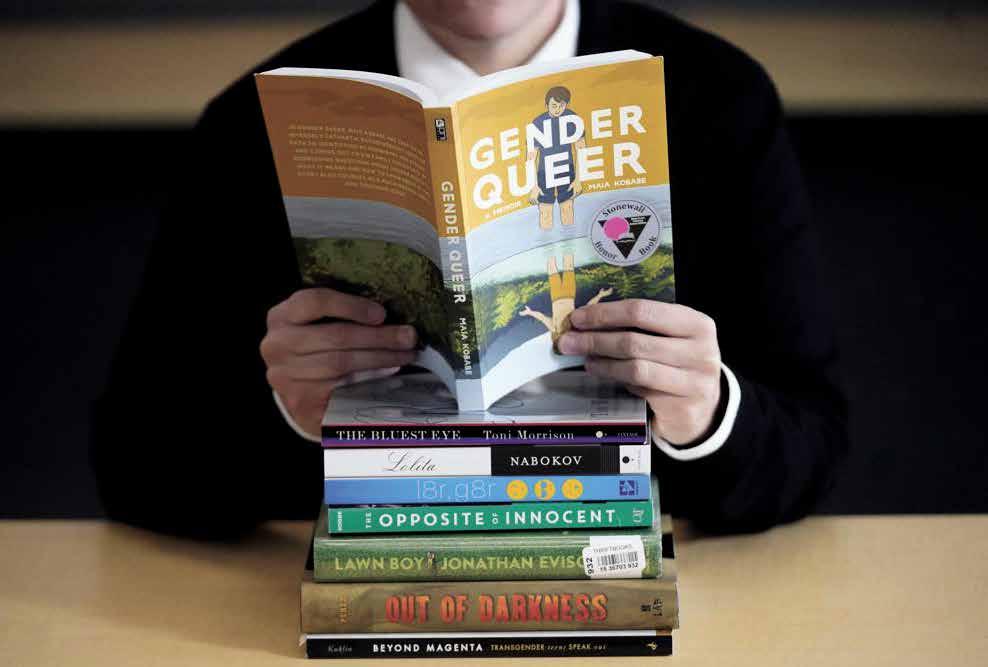
Photo by Evelyn Hockstein / Reuters
Photo by Rick Bowmer / AP
National News
National news highlights
by Daniel Lindsley SGN Staff Writer
Old-guard Republicans decry anti-Trans bill in radio ad
Opponents of a Kentucky bill targeting Trans youth have taken their fight to the state’s airwaves, with former GOP lawmaker Bob Heleringer calling the legislature’s potential overruling of Gov. Andy Beshear’s veto “a bad look for the party of Abraham Lincoln.”
Former Republican secretary of state Trey Grayson spoke in another radio ad, saying he couldn’t believe the GOP is “working in the final days [of the session] to take rights away from Kentucky parents.”
“They want to overrule parents and doctors when it comes to care for Transgender kids,” Grayson said.
On a similar note, Gov. Beshear has said that the bill “rips away the freedom of parents to make critical and difficult medical decisions for their children.
As one of the harshest of similar bills being proposed in other states, it would ban gender-affirming care for minors, including gender reassignment surgery, puberty blockers, hormones, and genderaffirming hospital services.
In the case of Kentucky minors already undergoing such therapy, doctors would be required to provide a plan for “detransitioning” them if an abrupt stop to treatment could cause harm.
Majority Floor Leader Damon Thayer, who has supported the bill, had the following issue with the ads: “They have a
First Amendment right to say whatever they want, but it’s extremely rare for registered lobbyists to appear in an advertising campaign.”
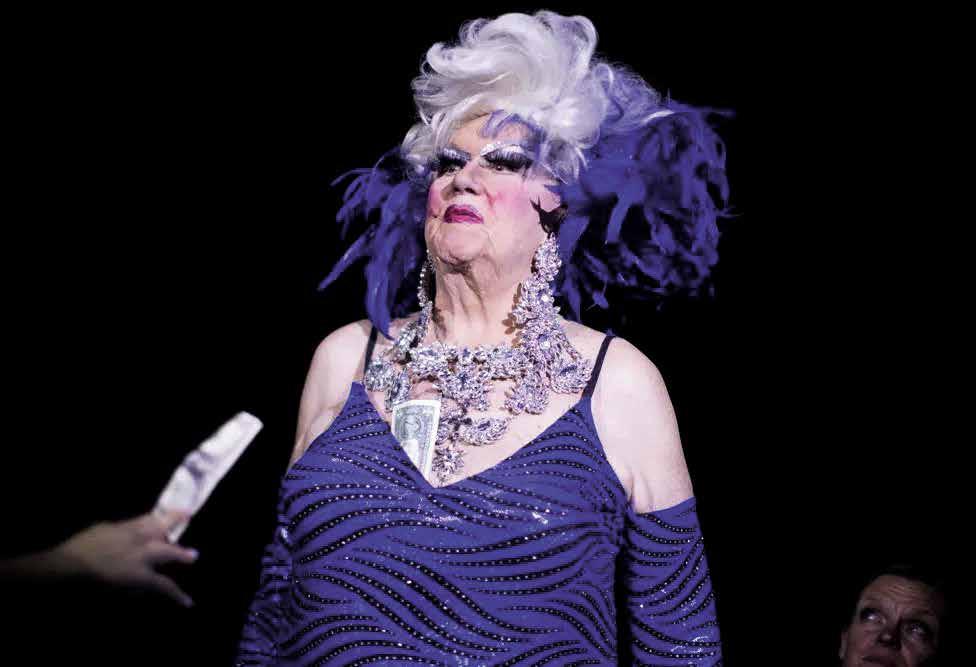
World’s oldest drag queen dies at 92 Darcelle XV, once crowned the world’s oldest working drag queen, has died in Portland, Oregon, at the age of 92.
She was known for hosting the longestrunning drag show on the West Coast, and ran a nightclub in downtown Portland that opened over 50 years ago. The city regards it as a cultural site, and it was
a gathering place for the LGBTQ+ community through the 1970s and onward.
“She touched the lives of so many, not only through her performances but also through her fearless community advocacy and charitable works,” said Todd Addams, executive director of Basic Rights Oregon. “She was nothing short of an icon.”
“She was just a very, very nurturing person,” writer Susan Stanley told the Associated Press. “She encouraged other guys to perform and get out of their shells.”
Of the current political controversy around drag, Stanley said, “It bespeaks a really, really big understanding. Politicians wanting to step back decades in attitudes ... it’s mystifying and horrifying at the same time.
While not performing, Darcelle was known as Walter Cole. Cole was an Army veteran, charity worker, and LGBTQ+ rights activist, born in 1930 and raised in Portland. He used his army money to open the Darcelle XV nightclub.
Texas bill to ban Pride events in public schools
by Mike Andrew SGN Staff Writer
Texas Republicans have introduced a bill in the state’s legislature to ban Pride events in public schools. The measure came up for debate in the state House on March 28.
The bill prohibits public schools from organizing programs “dedicated to celebrating or providing special instruction regarding a sexual preference.” Any district in violation of the ban could have its educators’ teaching permits suspended or terminated, which would effectively shut down the schools. Individual school employees could face fines up to $10,000.
Republicans control both houses of the Texas legislature, with a 22-vote majority in the House and a 7-vote majority in the Senate.
A petition being circulated by the state’s leading LGBTQ advocacy group, Equality Texas, calls the measure “a direct assault on school-based Pride celebrations or programs.”
“Pride events in particular are important because they show LGBTQ kids that their identities are valid and worth celebrating,” Equality Texas spokesperson Johnathan Gooch said.
“Having sexually oriented celebrations at school, for all grades, is teaching our kids a sexual ideology — no matter who’s doing it,” Rep. Kenneth King, the bill’s sponsor, retorted.
“If Pride week is caught up in that, fine,” he added. “But I didn’t specify one group over another.”
Texas’s state government has been particularly hostile to Pride celebrations in the state’s public schools. Last year, state Attorney General Ken Paxton scolded the Austin school district for hosting a Pride week.

“By hosting ‘Pride week,’ your district has, at best, undertaken a weeklong instructional effort in human sexuality without parental consent,” he wrote in a March 2022 letter to the superintendent.
“Or worse, your district is cynically pushing a weeklong indoctrination of your students that not only fails to obtain parental consent but subtly cuts parents out of the loop. Either way, you are breaking state law.”
Then-Superintendent Stephanie Elizalde responded days later with a statement reaffirming the district’s commitment to supporting all students.
“Here at Austin ISD, we celebrate Pride during every school year, so our LGBTQIA+ students know how much they are valued and loved,” she wrote.
“This year, it’s important to me personally that they know they are respected and
safe, too, and lest anyone have any doubt, that absolutely goes for our Trans kids.”
In this legislative session alone, Texas Republicans have filed dozens of bills to roll back LGBTQ rights, including ones to prevent Transgender athletes from competing in college sports, barring genderaffirming medical care for minors, and placing onerous restrictions on drag shows.
Darcelle XV performs in Portland, Ore. – Photo by Beth Nakamura / The Oregonian via AP
Photo by Erich Schlegel / AP
National/International News
IDAHO continued from cover
Senate Bill 1100
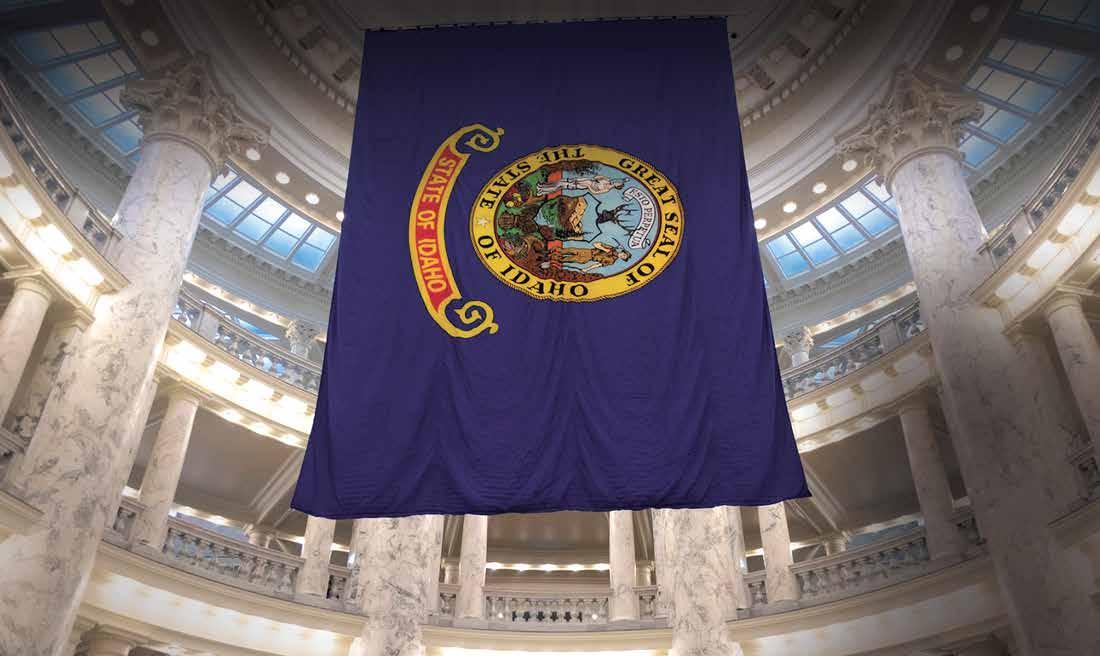
Senate Bill 1100 was signed into law by Idaho’s governor, Brad Little, on March 23. The bill amended the Idaho code regarding school restrooms, changing rooms, and overnight lodging. It states, “There are real and inherent physical differences between men and women” and that “every person has a natural right to privacy and safety in restrooms and changing facilities.”
This law prevent not only Trans students from using restrooms aligned with their gender identity but also create the narrative that Trans people’s presence in these spaces as dangerous.
The legislation goes so far as to say, “Requiring students to share restrooms and changing facilities with members of the opposite biological sex generates potential embarrassment, shame, and psychological injury to students, as well as increasing the likelihood of sexual assault...”
The supporters of this bill do not care about the potential shame generated by forcing Trans youths to use restrooms that don’t align with their gender identity. Also, a 2019 American Academy of Pediatrics study found that Trans youth whose bathroom and locker room use was restricted were more likely to experience sexual assault.
The bill also allows for a cause of action against the school. If a student encounters a person of the opposite sex in a school restroom, changing room, or sleeping quarters, they can take legal action. If the school was found to have permitted the person to be there, or they were found to have not taken steps to prevent that person from using a “facility of the opposite sex,” then the plaintiff student will prevail. The public school will then be forced to pay the student $5,000 for each instance the student encounters a member of the opposite sex. The student could also recover monetary damages for all “psychological, emotional, and physical harm suffered.”
International news highlights
by Daniel Lindsley SGN Staff Writer
Ugandan activist may challenge deadly anti-Gay law in court
The Ugandan parliament’s decision to pass a law outlawing the act of identifying as Gay has the East African country’s LGBTQ community worrying about mass arrests, harsher prison sentences, and even capital punishment for some charges, all carried out in the name of protecting what lawmakers call traditional values.
The bill has yet to be signed into law by President Yoweri Museveni, but there is little question about whether he will; he has consistently denounced homosexuality in the past.
Frank Mugisha, an activist and openly Gay man living in Uganda, said of the news, “It’s a moment of shock for the LGBTQ community.”
He added, “LGBTQ persons are going to fear going to health centers for services ... there’s going to be a lot of trauma and cases of mental health that will lead to a lot of suicide.”
But Mugisha also said he planned to challenge the law in court over its violation of international treaties, and of the country’s constitution.

Senate Bills 1016 and 1003
Gov. Little will likely also be signing Senate Bill 1016, thus amending Idaho’s code regarding discrimination in contracting. In 2014, President Obama amended an executive order to include sexual orientation and gender identity in federal contracts’ nondiscrimination clauses. SB 1016 would exempt state public works contractors from the requirement to provide nongendered, multiuse restrooms and locker rooms on job sites.
Sen. Melissa Wintrow, D-Boise, said, “Most facilities on construction sites are [porta-potties], single-use, and they don’t really need this. I think that this is a bill that is, again, just growing hostility against a group of people who just want to live their lives and go to the bathroom when they need to.”
Senate Bill 1003 expands the exemptions to public works offerors, bidders, and subcontractors.
Senate Bill 1071
This is an amendment to the Idaho code regarding education. If passed, it will prohibit instruction on human sexuality, sexual orientation, and gender identity before fifth grade. Idaho does not have a comprehen-
sive sex education curriculum for schools, and what does get taught must encourage abstinence and the importance of family. Idaho’s education codes say that the responsibility of providing sex education “rests upon the home and the church.”
Sen. Janie Ward Engelking, D-Boise, opposed the bill because she thought it was unnecessary.
House Bill 63
This is an amendment regarding counselors and therapists and their ability to refuse service to clients with goals, outcomes, or behaviors that conflict with their “sincerely held principles.” Proponents of this bill state that this will provide a “safety net” to counselors and therapists.
Those in opposition, like social worker Zach Ivey, have stated that it encourages some to let their biases stop them from doing what’s best for the client.
The bill will require the counselor or therapist to coordinate a referral of the client, but this does not nullify the impact this rejection could have on their mental health.
House Bill 71
Idaho lawmakers are attempting to criminalize gender-affirming care for children.
The bill states, “Any medical practitioner that knowingly engages in any of the following practices upon a child for the purpose of attempting to alter the appearance of or affirm the child’s perception of the child’s sex if that perception is inconsistent with the child’s biological sex shall be guilty of a felony.” The practices included are bottom surgery, top surgery, puberty blockers, and hormone treatment.
A previous bill version stated that anyone found guilty “shall be imprisoned in the state prison for a term of not more than life.” It has been updated to ten years instead.
This law would criminalize doctors for doing their jobs and block Trans youths in Idaho from potentially lifesaving care.
House Bill 265
In addition to laws regarding restrooms, education, mental health care, and gender-affirming care, Idaho legislators are, unsurprisingly, also targeting drag shows. HB 265 is about “protecting” minors from “sexual exhibitions.” It states that any person or institution that knowingly takes part in a show that exposes a minor to “live persons engaged in sexual conduct” or a performance that is “patently offensive to an average person” can be pursued in a civil action by the parent or minor. If a parent or minor prevails in their action, they can recover $10,000, and monetary damages for harm suffered.
How does this bill target drag shows precisely? One of the ways HB 265 defines sexual conduct is “sexually provocative dances or gestures performed with accessories that exaggerate male or female primary or secondary sexual characteristics.”
Idaho is currently ramping up its antiLGBT legislation, with one bill passed and six more in the works. In light of this, Washington’s House Bill 1469 is more important than ever, as LGBTQ Idahoans confront these harmful pieces of legislation.

Such a case holds water, according to Kampala-based lawyer Adrian Jjuko: “The law violates fundamental constitutional rights like privacy and free speech, so purely based on the law, I think it will be a strong case.” It wouldn’t be the first time such a law was struck down, either. In 2013, anti-Gay legislation prompted cuts to foreign aid and investment, and promptly died in court.
Japan conservatives drag feet on “gender identity” in LGBT rights bill
Members of Japan’s ruling Liberal Democratic Party (LDP) have dug in their heels
on a particular clause mentioning “gender identity” in a bill that is meant to promote better understanding of the LGBT community.
LDP lawmakers already had problems with another section of the bill, which officially denounces anti-LGBT discrimination. Their issue with the mention of “gender identity” is the possibility of “social confusion.”
“Gender identity should be respected,” said Foreign Minister Hirofumi Nakasone, but there had been no discussion on the matter, aside from his mention of an incident in which a male identifying as a
woman entered a women’s restroom at a golf course.
Another lawmaker added that such discussions “must be done carefully.”
Others worried that the bill, in its current wording, might allow people to “decide their genders by themselves.”
Meanwhile, both LDP coalition partner Komeito and opposition parties are calling for the legislation to be enacted early. Prime Minister Fumio Kishida, also of the LDP, said that his party is “preparing to submit a bill.”
LGBTQ activists in Tokyo, holding cards for civil engagement group Pride7 – Photo by Mari Yamaguchi / AP
Idaho Gov. Brad Little – Photo by Kevin Lamarque / Reuters