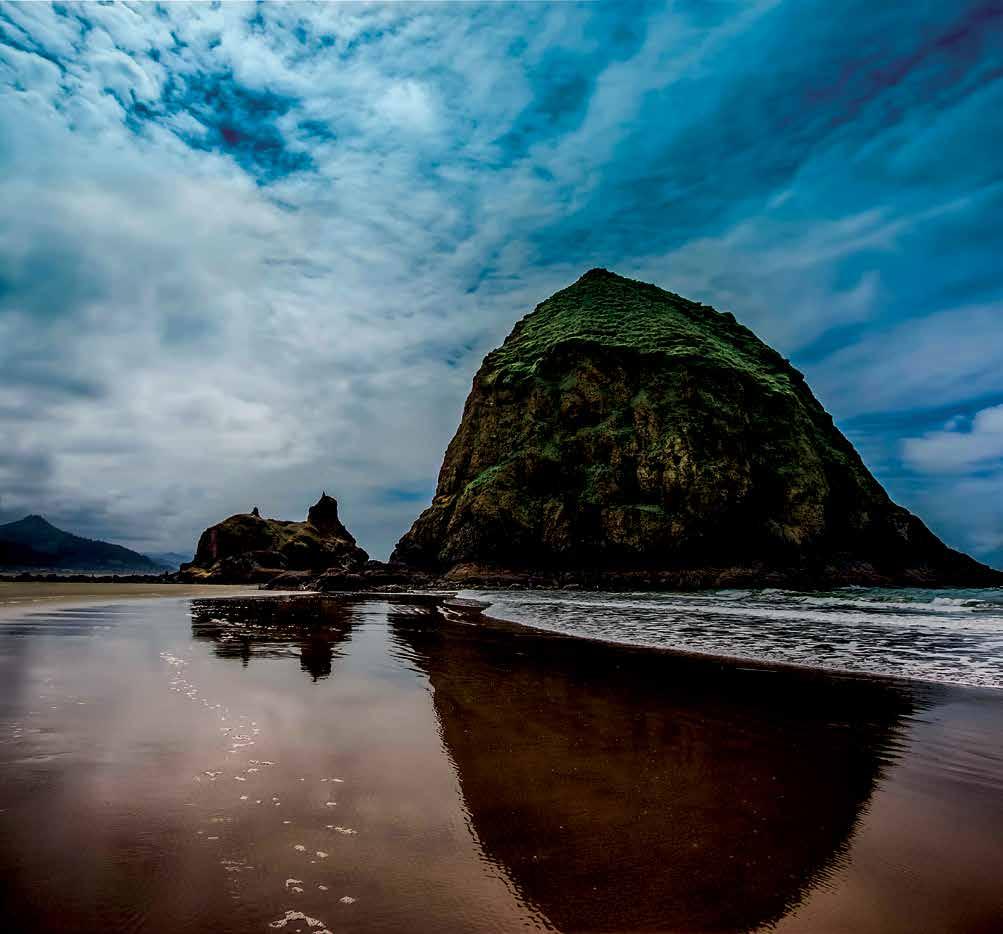
Haystack Rock Cannon Beach, Oregon
by Shaun Knittel SGN Contributing Writer
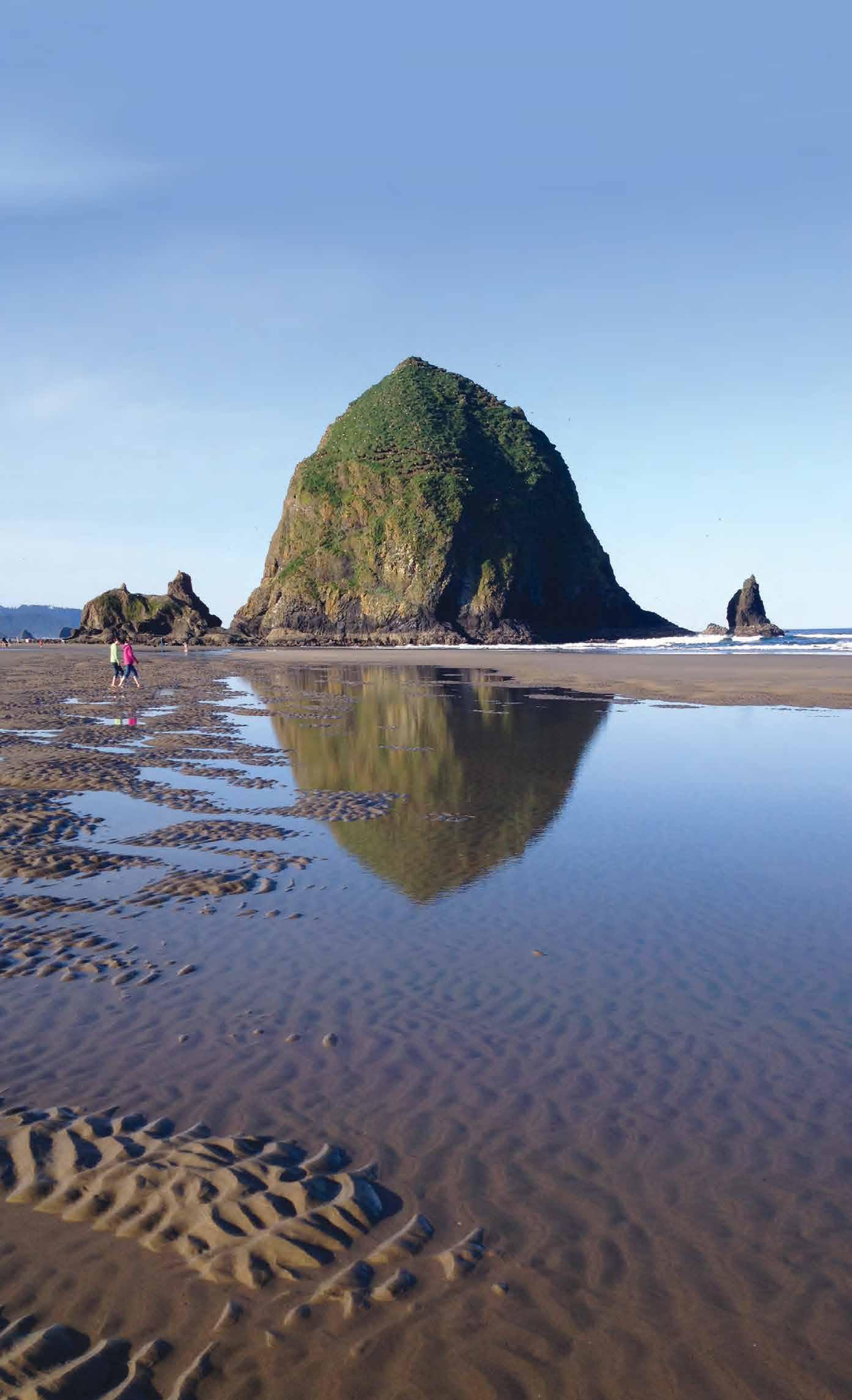
I’m a city Gay. I just am. And I don’t mean that I am afraid to use a bush to go to the bathroom when I am camping or have a particular fear of animals or anything like that, I just like urban life better than the wilderness, buildings better than trees and so on. I know, I’m an odd duck for the Pacific Northwest all right. But every now and then I do catch a glimpse of something that Mother Nature built and there is no denying that regardless of what man sets out to build, we just simply will never compare. That is how I felt when I recently visited Haystack Rock in Clatsop County, Oregon. And I highly recommend that if you have not been to the rock or the beach it sits on (Cannon Beach) then you should seriously take a look over the next few days at how you can get away a few hours drive south and take a look. You’ll be glad you did.
Haystack Rock is a 235-foot (72-meter) sea stack in Cannon Beach, Oregon. It is claimed (locally) to be the third-tallest such intertidal (meaning it can be reached by land) structure in the world. It is accessible by foot at low tide.
see OREGON COAST page 4
Haystack Rock – Photo courtesy of Wikimedia
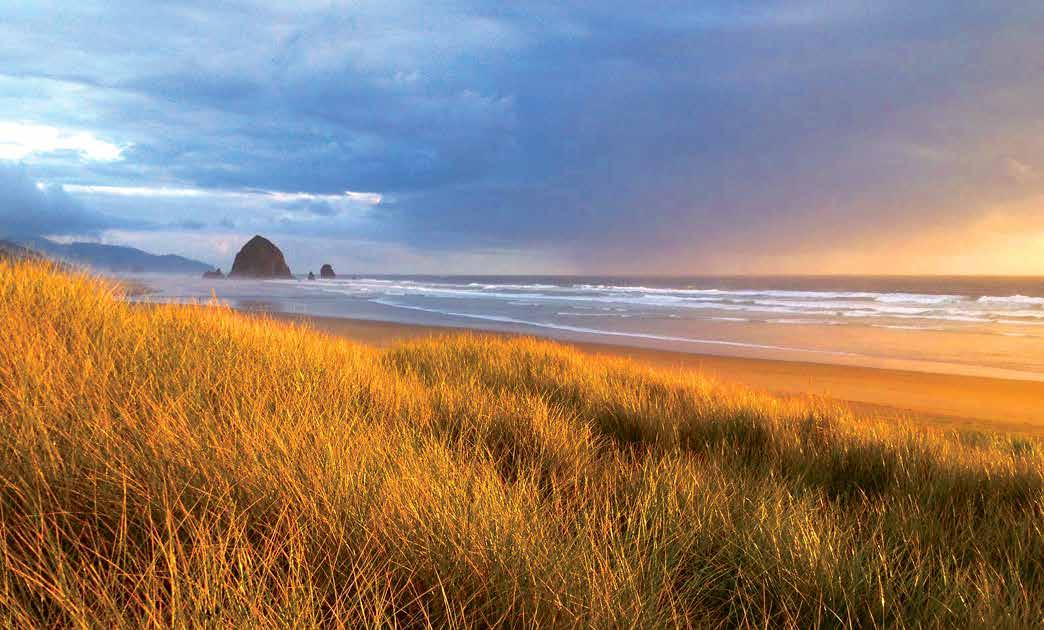
A view of Cannon Beach with Haystack Rock in the distance – Photo courtesy of Experience Cannon Beach

SPRING TRAVEL
OREGON COAST
continued from cover
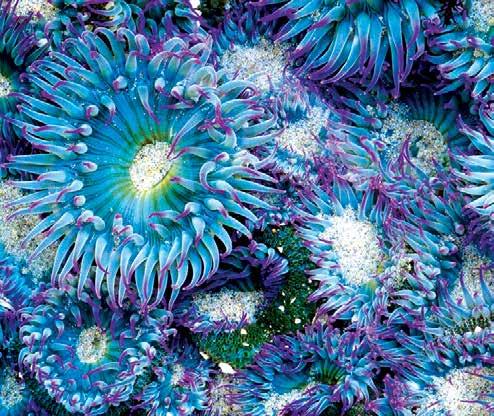
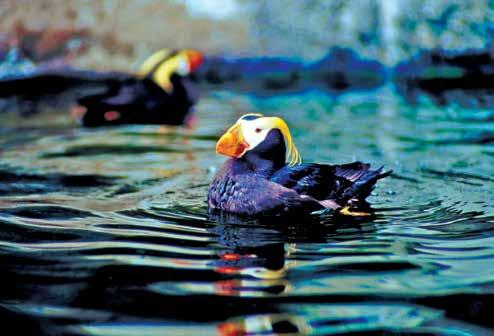
The Haystack Rock tide pools are home to many intertidal animals, including starfish, sea anemone, crabs, chitons, limpets, and sea slugs. The rock is also a nesting site for many sea birds, including terns and puffins.
Now, I know what you are thinking, “It’s just a big rock. Why would I want to go stare at that?” I know, because I was thinking that, too. But then I saw it, and maybe it was the perfect weather and the fact that my husband and I rarely get away for a weekend, but had just been lucky enough to get away for the weekend, that Haystack Rock registers in my mind as one of the most beautiful places I’ve ever seen. Peaceful, tranquil, yet looming and somehow curious, Haystack Rock is always there but you don’t mind.
Composed of basalt, Haystack Rock was formed by lava flows emanating from the Blue Mountains and Columbia basin about 15-16 million years ago. The lava flows created many of the Oregon Coast’s natural features, including Tillamook Head, Arch Cape, and Saddle Mountain. Haystack Rock was once joined to the coastline but years of erosion have since separated the monolith from the coast. Three smaller, adjacent rock formations to the south of Haystack Rock are collectively called “The Needles.”
It’s true, it is a popular tourist destination, but I can tell you that the monolithic rock is no tourist trap. As many as 200,000 people visit Haystack Rock every year. Even though the rock can be seen in the opening credits of The Goonies, it’s free to look at and the surrounding sea village has got some fantastic restaurants and cafes. The Goonies weren’t the only people filmed at Haystack Rock; its film credits include Kindergarten Cop, Bing, and Steven Spielberg’s 1941
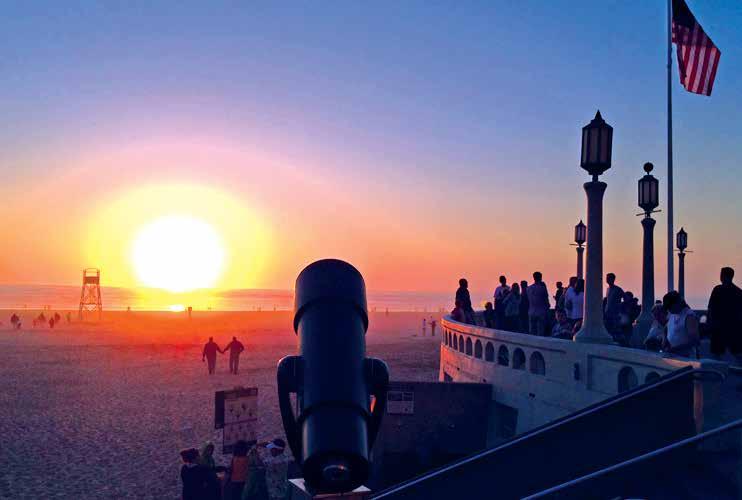
The hotels are a bit pricey, but that’s okay because a short drive away takes you to Seaside, a really cool little beach community a few minutes away from the rock. Seaside has historically been one of the Oregon Coast’s most visited and popular oceanfront resorts located only 80 miles from Portland. Seaside is a beautiful coastal community with a population of 6,445 and has numerous visitor-related activities to choose from. Sea-
side’s gently sloping 250-foot wide beach is heavily used along the Oregon Coast. Running a mile and a half along the beach is the historic Promenade providing tourists and local residents a place to walk, jog, or bicycle while viewing the beach.
Seaside is surrounded by natural wonders and attractions, tourists and locals enjoy hiking, bird watching, surfing, kayaking, fishing, crabbing, and clam digging, and looking for gray whales as they migrate along the coast. Seaside provides a great place to shop and dine with blocks of art galleries, restaurants and shops.
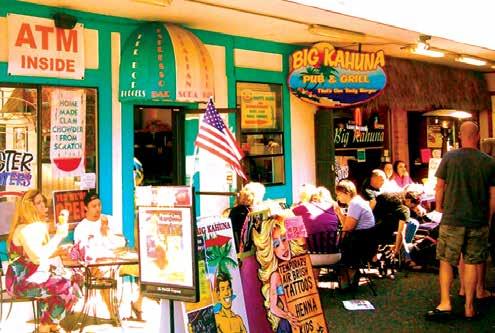
To really get the small beach town feel, eat at Bee Bop/Big Kahuna Burgers, which offers casual dining, specializing in burgers and sandwiches and seasonal outdoor seating in downtown Seaside (111 Broadway Ste. 1, Seaside, OR 97138.) We stayed at The Coast River Inn (800 S. Holladay, Seaside, OR 97138), which features renovated rooms in a budget-friendly lodging option with river views in Seaside.
The Oregon Coast is Oregon’s number one tourist destination. People come from all over the world to enjoy the scenic beauty, historical sites and wide variety of recreation opportunities. The once thriving logging and fishing industries are slowly being replaced by increasing retirement and tourism. People are drawn by the moderate temperature, sandy beaches, numerous attractions and more than 80 state parks and recreation areas.
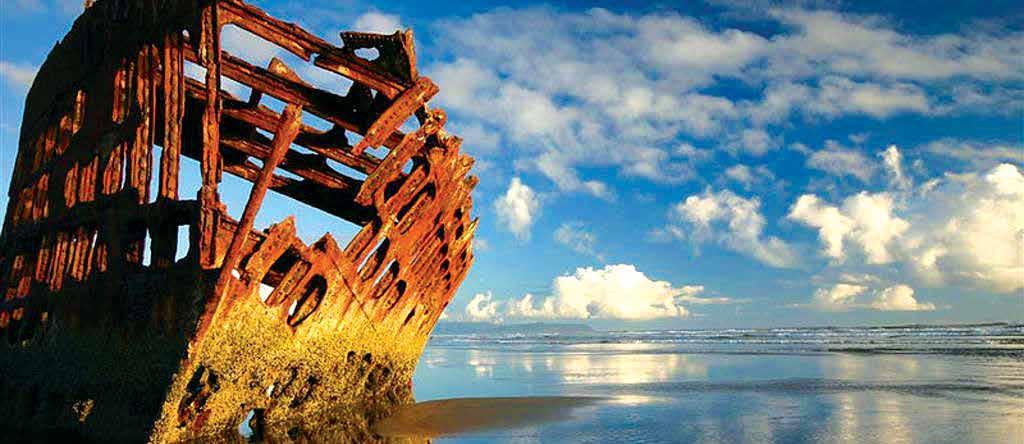
In fact, just driving along the coast is as cool as everyone says it is. You can see shipwrecked vessels, a prehistoric gardens, a lighthouse or two, the Oregon Coast Aquarium, and the West Coast Game Park. And, depending on the time of year, there are a lot of festivals that take place in the small coastal towns. Rockaway Beach even features a Pirate Festival in June.
Getting to Haystack Rock, Cannon Beach, Seaside and the rest of the Oregon Coast is less than a four-hour drive south on Highway 101. It’s a trip you won’t regret!
For more information, visit www.cannonbeach.org
This article first appeared in the Seattle Gay News Pride edition on June 24, 2016.
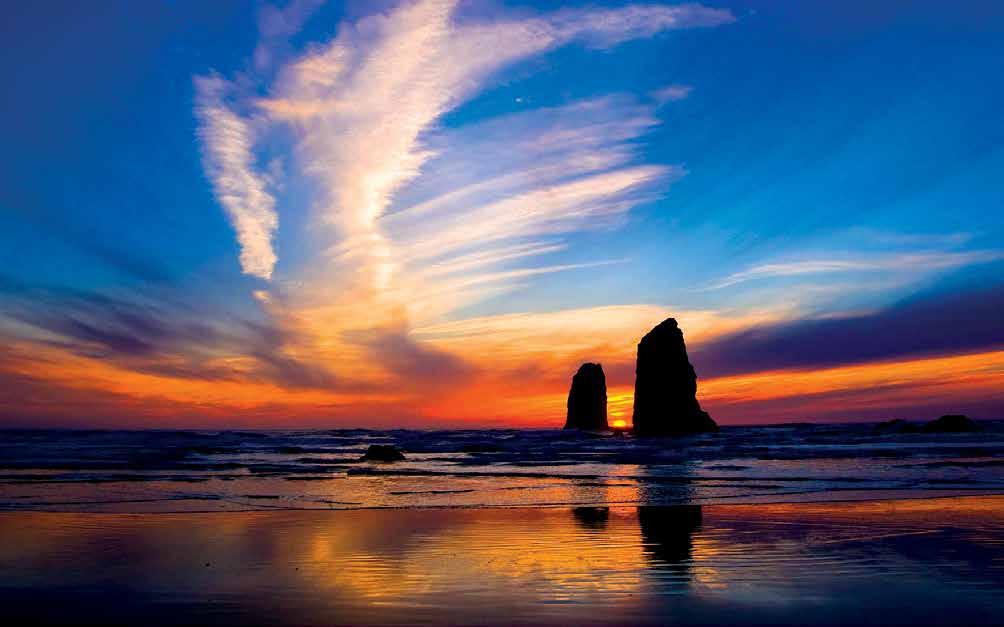
The Needles at sunset – Photo courtesy of Experience Cannon Beach
Cannon Beach tide pools – Photo courtesy of Experience Cannon Beach
Tufted Puffins make their annual return to nest on Haystack Rock in April – Photo courtesy of Experience Cannon Beach
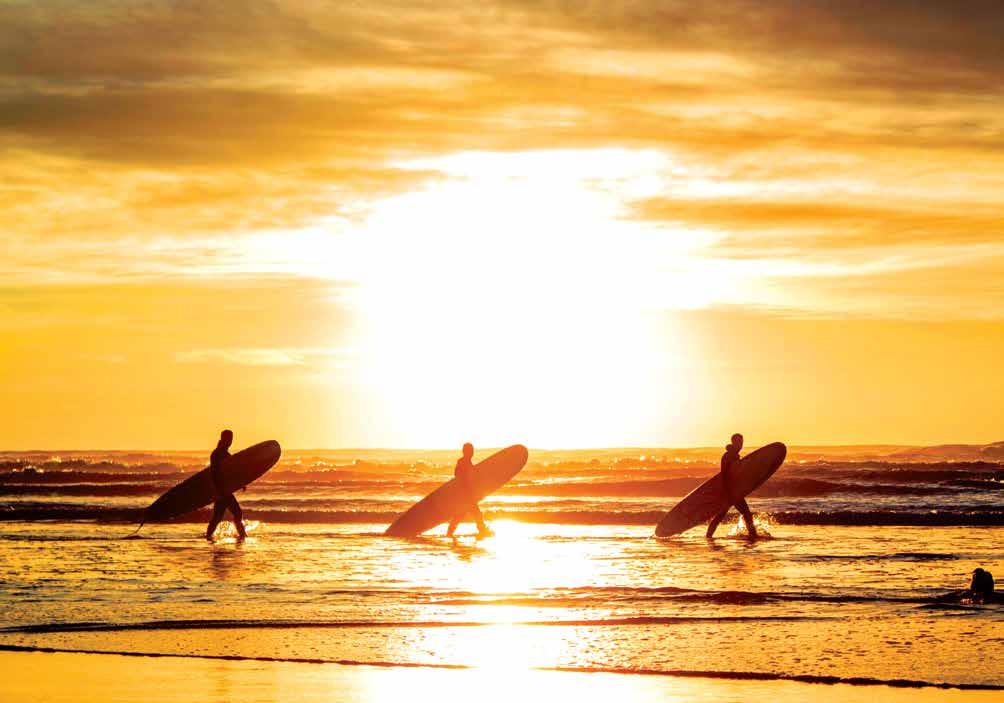
Sunset surf on Cannon Beach – Photo by Cronksi
Seaside, Oregon – Photo courtesy of Coast Explorer / Gary Hayes
The Peter Iredale shipwreck you can walk up to at low tide, near Warrenton, Oregon – Photo courtesy of Roadtrippers
Photo courtesy of Big Kahuna Pub & Grill
SPRING ARTS
Pacific Northwest Shop debuts in Wallingford
by Ryan Murray
City Living Seattle
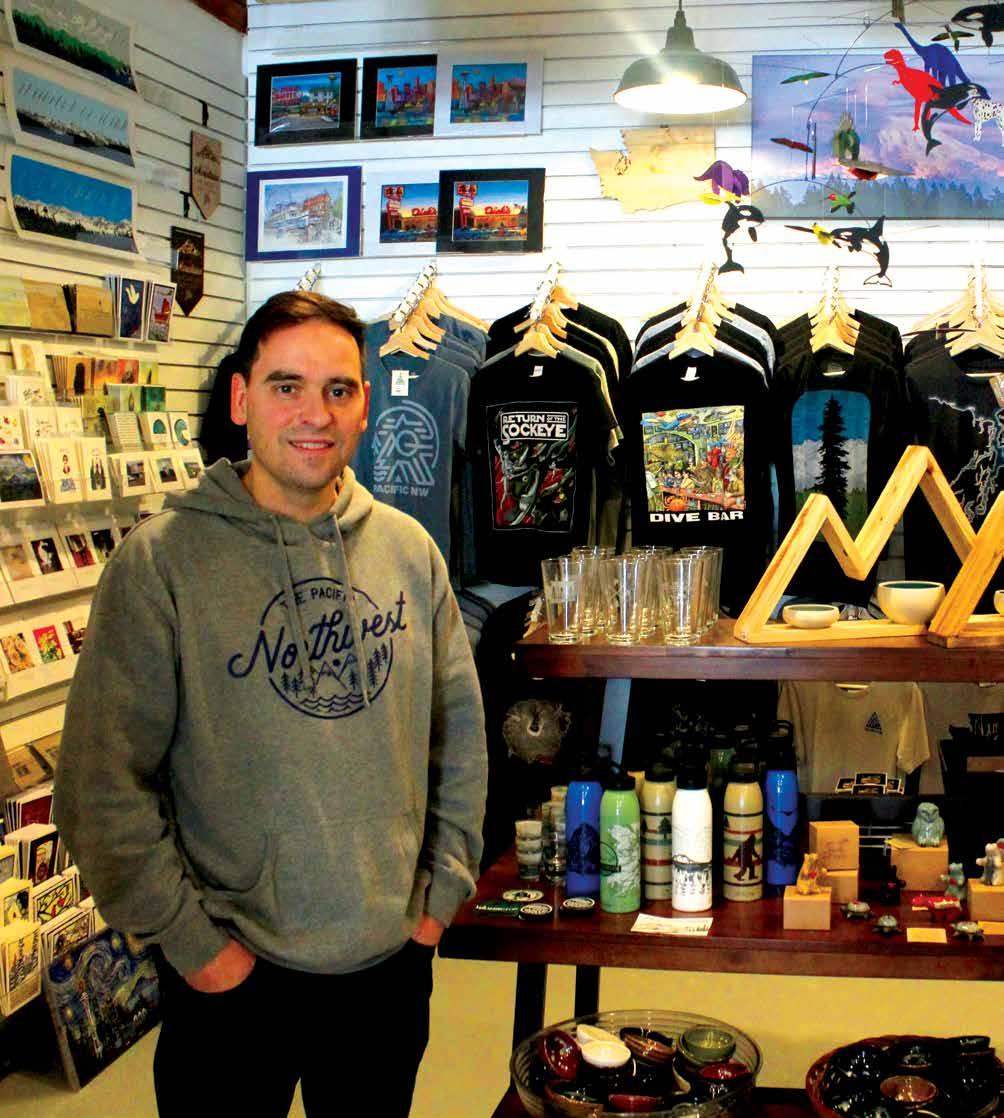
For 40 years, the Evans family has been selling high-quality, locally-produced goods at their Tacoma store, the Pacific Northwest Shop.
Last October, Matt Evans – son of longtime owners Bill and Ann – set up shop in Wallingford, offering the same wellsourced art, snacks and apparel.
“I feel like Seattle doesn’t have a shop quite like this,” Evans said. “You have touristy shops, but you don’t really have a store where you can buy great gifts made locally for friends and family.”
Evans was raised in Tacoma, in the
back of his dad’s shop. The office there will always be “Dad’s office,” he said. Both Bill and Ann are still alive and well, and remain passionate about their business.
When Evans and his husband moved to Seattle, they looked at the U-District, Capitol Hill, Ravenna and even Burien. Ultimately, Wallingford proved too tempting to pass up.
“People said “Why don’t you just go to [Pike Place] Market?” And I had to tell them we wanted to be different from those stores,” he said.
Products in the store are mainly from Washington, but Oregon, British Columbia and Idaho all have a significant presence on the shelves.
One of the most popular items are a series of nautical/pop-culture T-shirts by local artist Ray Troll.
Additionally, Evans said that while there are high-end works of art like from local Glass Eye Studio, most products aren’t going to break the bank. The average sale is less than $50 and the average item far lower.
“We have long-term relationships with suppliers, so we’re getting the same quality goods as in Tacoma,” Evans said. “My parents opened lots of different businesses, including a cafe, so they passed along a lot of that knowledge.”
While only a quarter of the size of his parents’ store in Tacoma, the curated prod-
ucts along Wallingford Avenue present a decent display of what the Pacific Northwest has to offer.
The Pacific Northwest Shop is located at 4411 Wallingford Ave N. www.pacificnorthwestshop.com
This article first appeared in City Living Seattle in the mid-December 2017 edition. Reprinted with permission.
Photo by Ryan Murray

SPRING ARTS
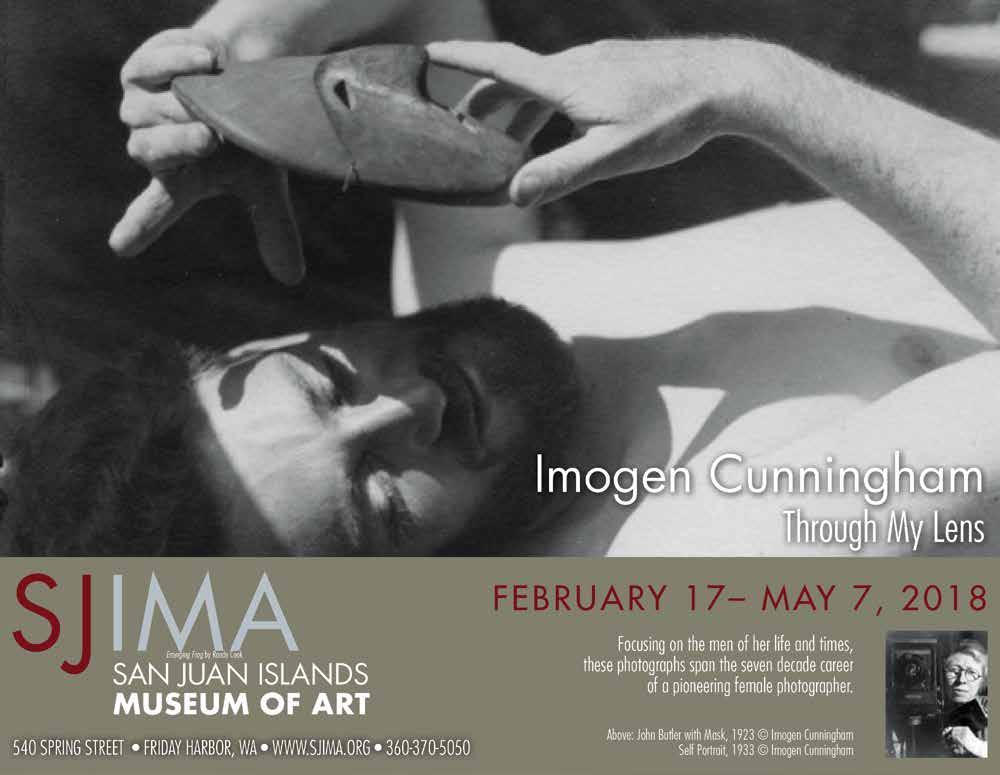
San Juan Islands Museum of Art presents Imogen Cunningham photographs
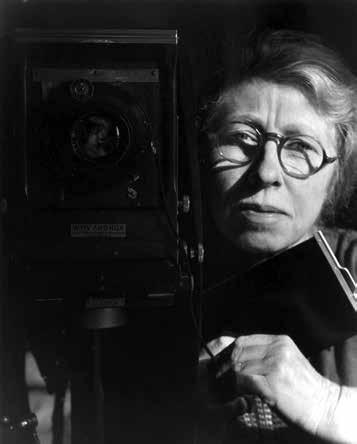
The San Juan Islands Museum of Art, SJIMA, is presenting an exhibition by world renowned Pacific Northwest photographer Imogen Cunningham, courtesy of the Imogen Cunningham Trust and its director, San Juan County resident Meg Partridge, Cunningham’s granddaughter, and an awardwinning documentary filmmaker.
Imogen Cunningham: Through My Lens will be on view from February 17th to May 7th, 2018 in the San Juan Islands Museum of Art’s North Gallery. The San Juan Islands Museum of Art is located at 540 Spring Street in Friday Harbor, WA. Winter hours: October 1 through April 30, Friday-Monday, 11am-5pm. Summer hours: May 1 - September 30, Thursday-Monday, 11am-5pm. Admission: $10 adults; children 18 & under free; members free. Mondays are pay-whatyou-can.
In addition Meg Partridge will give an Art As A Voice presentation of her film Portrait of Cunningham on April 7 at 3pm at the San Juan Island Grange, 552 First St., Friday Harbor. A reception and guided tour of the exhibit will follow immediately after the presentation. Tickets: $15 non-members, $12 members, $8 student. For more information and tickets call (360) 370-5050 or visit https://sjima.org/.
The exhibition of Cunningham’s “female gaze” offers a look at the men of her time. The diversity of her observations on men was a fascinating theme. She embodied many perspectives – that of an artist, of a mother, of a wife and a lover. The photographs in this exhibition span her sevendecade career. This exhibition gives a contemporary perspective on this iconic artist, who has influenced generations of female photographers to follow their intuition and passion regardless of societal preconceptions. A new perspective through her lens.
Imogen Cunningham (1883-1976) is renowned as the groundbreaking female American photographer of her time with one of the longest photographic careers in the history of the medium. A major figure in 20thcentury American photography, Cunningham was a co-founder of Group f.64, joining forces with Edward Weston, Ansel Adams, and other San Francisco Bay Area photographers who shared an aesthetic of sharplyfocused images and natural subjects.
Cunningham was born in Portland, Oregon, grew up in Seattle, and attended the Denny School at 5th and Battery Streets. In 1901, at the age of eighteen, Cunningham bought her first camera, a 4x5 inch view camera, via mail order from the American School of Art in Scranton, Pennsylvania. She entered the University of Washington where she became a charter member of the Washington Alpha Chapter of Pi Beta
Phi Fraternity for Women. It was not until 1906, while studying at the University of Washington, that she was inspired to take up photography again by an encounter with the work of Gertrude Käsebier.
In 1907, Cunningham graduated from University of Washington with a degree in chemistry. Her thesis was titled “Modern Processes of Photography.” While there, she served as class vice-president, participated in the German Club and Chemistry Club, and was on the yearbook staff.
After continuing her studies at the Technische Hochschule in Dresden, she eventually moved back to Seattle and opened a studio, winning acclaim for her portraiture and pictorial work. Most of her studio work of this time consisted of sitters in their own homes, in her living room, or in the woods surrounding Cunningham’s cottage.
Cunningham was a determined and innovative artist. She came to photography through studying chemistry, the scientific background for her chosen art form. She
was the first woman to photograph the male nude, for which she was considered “indelicate”. She gravitated towards artists, marrying printmaker Roi Partridge. She raised three sons all while continuing to expand her photography. Later in her career Vanity Fair hired her to photograph Hollywood celebrities. When asked who she would like to photograph, she replied, “Ugly men, because they never complain, you know.”
The Imogen Cunningham Trust
The Imogen Cunningham Trust is engaged in preserving Imogen Cunningham’s work, managing her rights and permissions, and promoting her work through publications and exhibitions.
The Trust was established by Imogen Cunningham in 1975, and is still a family run operation. Meg Partridge, Imogen’s granddaughter, is the Director of the Trust. A photographer and filmmaker, Meg worked for Imogen as a teenager as one of her assistants, archived Imogen’s negatives
in 1980, and worked for the Trust during the 1980s and 1990s in a variety of roles, from Archivist to Acting Director. As a filmmaker, she directed and produced the Academy Award-nominated documentary, Portrait of Imogen, among other films.
“I don’t know who tells me this, but somebody said, that I’m the first woman that ever photographed a nude man. I was made fun of at that time, when I photographed in 1915, my husband nude on Mount Rainier. Of course they were not acknowledged as being a nice ladylike job, I was condemned, by the newspaper, a well- known publishing company in Seattle, and they called me an immoral woman. And now, people seem to pay for them and buy them and like to look at them.” – Imogen Cunningham
Courtesy of the San Juan Islands Museum of Art
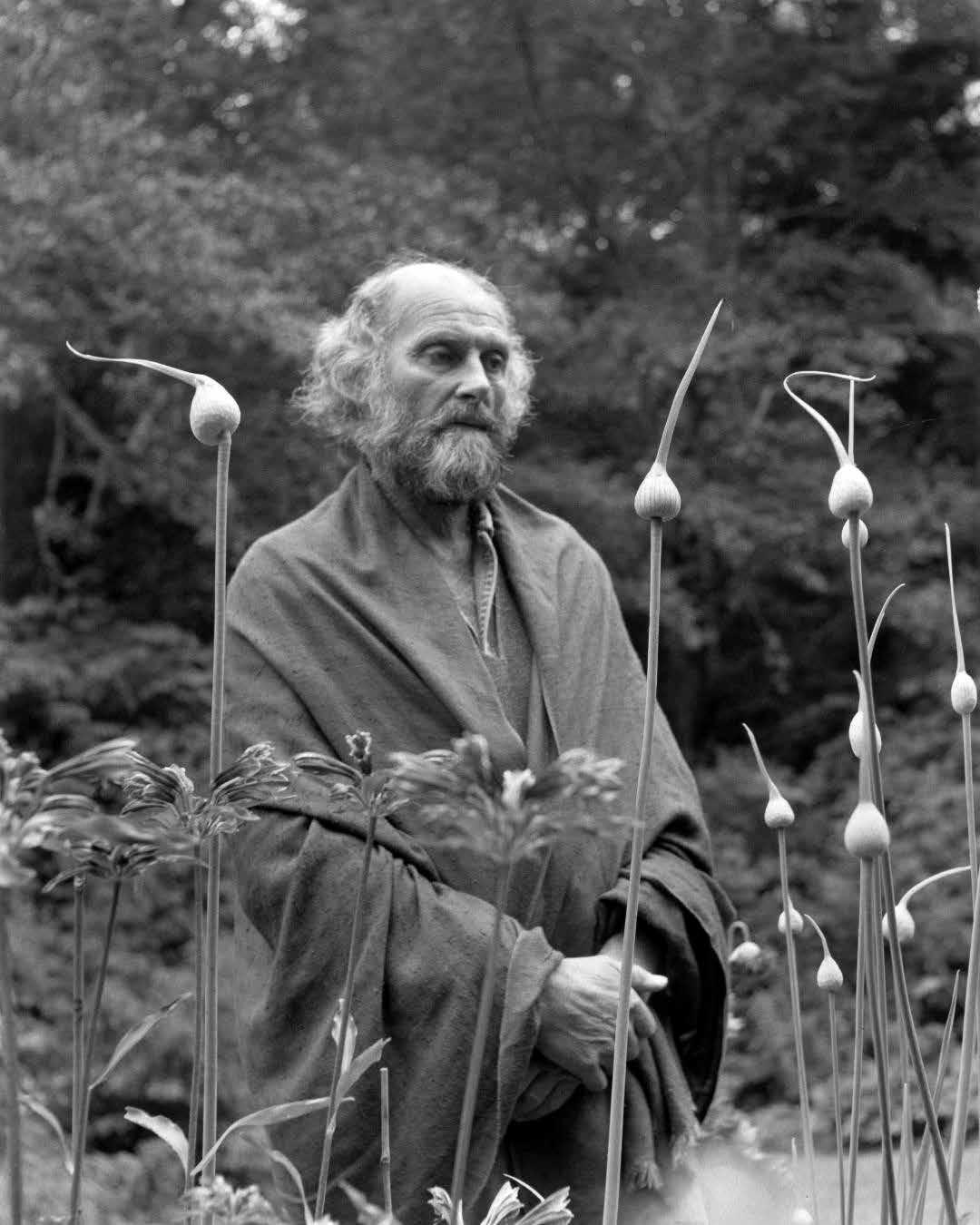
Morris Graves in His Leak Garden, 1973 – © 2018 Imogen Cunningham Trust
Self-Portrait with Korona View, 1933
– © 2018 Imogen Cunningham Trust
SPRING TRAVEL
Transgender-owned Floret
Opens as first vegetarian restaurant at Sea-Tac Airport
by Albert Rodriguez
SGN A&E Writer
You have choices when you fly and one of them is what to do about food on the day of travel. Do you eat before leaving home? Grab something along the way? Or, wait until you get to the airport? If you go with the latter, the next decision is picking a place to eat at the airport, which usually means choosing between fast food or standard bar fare; there’s not much else.
But thanks to the Port of Seattle, new dining options are scheduled for arrival at SeaTac Airport in the coming months, including a handful of local restaurants expanding with their first location outside the city limits. Among them is Floret, the offspring of Cafe Flora, a Madison Park restaurant that has long been a go-to spot for vegetarians and vegans; 27 years to be exact.
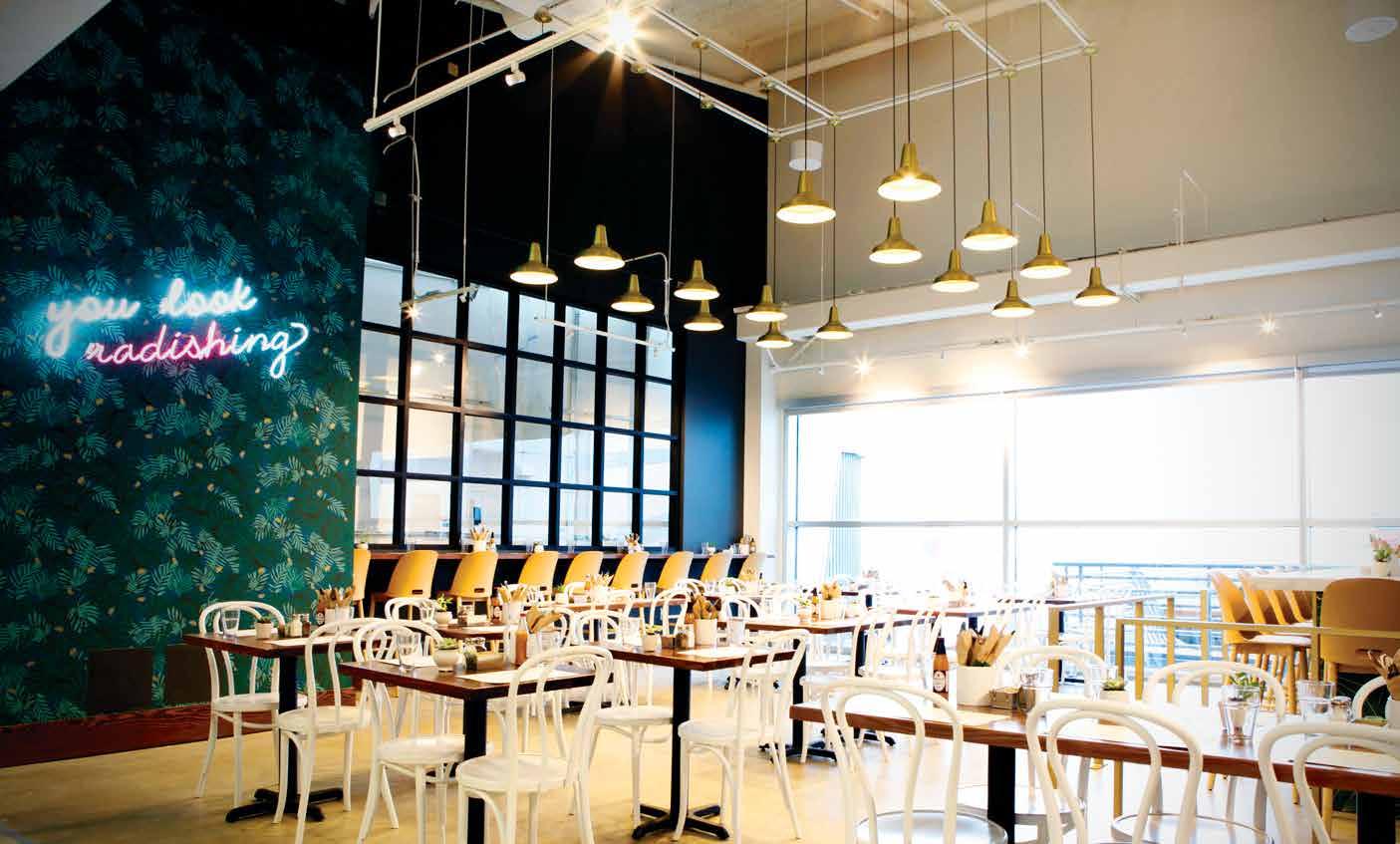
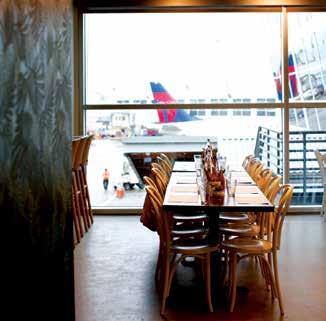
Floret similarly offers an all-vegetarian menu, a first at the airport, in a convenient and attractive space with both sit-down and grab-n-go service.
“One of the biggest challenges of opening at Sea-Tac was getting all of our farmers and vendors badged to deliver to the airport,” explains owner Nat Stratton-Clarke. “At Cafe Flora, we are used to farmers coming to the back door with flats of strawberries. Of course, there is no back door at the airport, so this meant working with each farmer and small business that we support to get them airport security clearance to deliver to us.”
Stratton-Clarke was Cafe Flora’s General Manager for ten years before purchasing it from the previous owner and now helms both restaurants. He came out as transgender before landing at the restaurant.
“I came out as trans many years before starting at Cafe Flora,” he said when I visited the new airport restaurant recently. “When folks found out that I was trans, they were nothing but supportive.”
Having an LGBT community member as your boss means that people from all walks of life are welcome to apply and work at either of Stratton-Clarke’s restaurants, something still not entirely comfortable at other businesses, even at the airport. But Stratton-Clarke is optimistic about future change.
“I think that they’re getting there,” stated Stratton-Clarke and adding, “I think that there’s more to be done.”
A benefit of working at Cafe Flora or Floret is that employees are given at least one day off during Pride weekend to celebrate. Also, Stratton-Clarke noted that staff is asked what gender pronoun they prefer upon being hired.
If you’ve been to Cafe Flora, you’ll notice similarities on the menu when you dine at Floret, including some of the older restaurant’s trusted favorites.
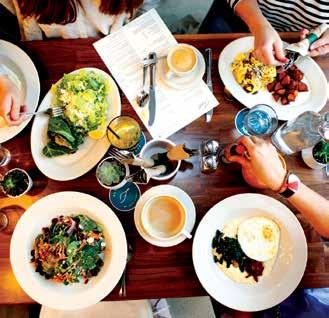
“People are loving our “Forager Scramble” for breakfast made with eggs or seasoned tofu, locally foraged mushrooms, delicata squash, roasted garlic, kale and herbed goat cheese,” said Stratton-Clarke.
“And (they) are enjoying our Oaxaca Tacos for dinner. These are a Cafe Flora favorite of corn tortillas filled with cheesy mashed potatoes and served with black bean stew, smoky braised greens, fire roasted salsa and lime sour cream. It’s perfect with a Rachel’s Ginger Beer or Fremont Brewing beer on tap!”
Other popular items are the Farmer’s Market Bowl, Buttermilk Breakfast Sandwich and the Black Bean Breakfast Burrito (flour tortilla, eggs or seasoned tofu, black beans, corn salsa, sour cream and fire roasted tomatoes), which I ordered and enjoyed to the last bite – well, almost to the last bite...it was too big to finish!
While the Floret menu is entirely vegetarian, 50% to 60% of the dishes are vegan and/or gluten-free. For carnivores open to trying something new, or anyone wanting a healthier eating option on the day you fly, Floret provides an opportunity to expand your palate and maybe your horizons.
“People have a misconception that vegetarian and vegan food is just brown rice and vegetables,” explains Stratton-Clarke, “when some of the most flavorful and delicious food in the world is vegetarian and vegan. Our menu is colorful and bright with so many flavors and textures. It’s one of the reasons that half of our guests do not consider themselves vegetarians.”
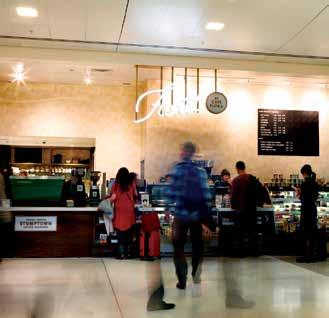
When you arrive at Floret, next door to a relatively new and lavish Delta Sky Club, footsteps from the main TSA secu-
rity checkpoint in the main terminal, you’ll notice large windows with generous views of parked aircraft at the gates. In fact, the eatery was carved out of a space previously used as a baggage inspection site. The kitchen, grab n’ go counter, seating area and full bar with additional seating were all built from scratch. Capacity is about 80 and on the morning I visited it was nearly full. For those considering a career in the culinary field, especially LGBT persons, Stratton-Clarke is quick to offer a suggestion.
“The culinary world is changing greatly and is becoming more and more open and supportive, Stratton-Clarke states assuringly. “I always encourage young people who are interested in food to get involved in some of the great non-profits that do food preparation like FareStart. It’s a great way to see if you like cooking on a large scale!” Floret is open daily from 6am to 10pm (main dining/bar area) and 5am to 9pm (grab n’ go counter). Food from either the restaurant or grab n’ go counter can be taken on board your flight, so if you’re in a pinch for time consider placing your order to go. You will need a boarding pass to access the area where Floret is located. For more information, including the current menu, go to www.floretseattle.com.
Photos by Belathee Photography



SPRING TRAVEL
JESSE’S JOURNAL
Off my bucket list: My first gay sea cruise
by Jesse Monteagudo
SGN Contributing Writer
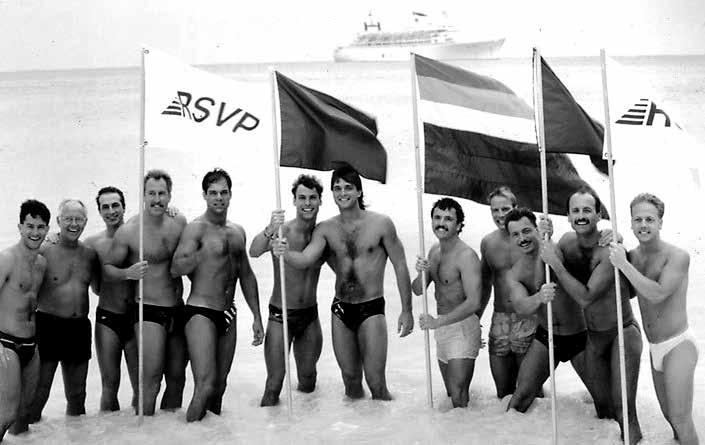
The first all-gay RSVP “Cruise to Remember” sailed out of New Orleans on February 15, 1986, with 750 gay guests on board. So what took me so long? 1986 was not a good time to be gay. The devastation of AIDS was on everyone’s mind, as was the Reagan administration’s neglectful response. “Don’t Ask, Don’t Tell” was in the future; and marriage equality was even further away. I just started a new relationship and a week in a gay love boat was something that I was not interested in. So I put a gay cruise on my bucket list, where it stayed for over 30 years.
Since then, the LGBT travel industry has flourished, with Atlantis, Pied Piper, Brand G, Source Events and Aquafest – not to mention the all-lesbian Olivia cruisesjoining RSVP in a quest for the queer vacation buck. RSVP itself, like the community it serves, had its ups and downs before it was bought by competitor Atlantis Events in 2007. Now part of Rich Campbell’s gay vacation empire, RSVP cruises seem to take a back seat to Atlantis’s floating circuit parties. There was even a rumor going around that this year’s RSVP Caribbean Cruise would be the last one; a rumor that Campbell hotly denied. In fact, even as we speak, Campbell and Co. are busy planning a Southern Caribbean Cruise for February 2019, and an Alaska cruise later that year.
Meanwhile, I had to overcome my inhibitions (and financial limitations) before I finally decided to go on a gay cruise. I was deterred by the Atlantis ads online, which featured young muscle boys in Speedos, frolicking by the pool. Though Atlantis does attract a youthful crowd, my friends assured me that RSVP cruises are full of men my age. So I finally took the plunge (so to speak) and booked passage on RSVP’s 2018 Caribbean Cruise, sailing from Fort Lauderdale February 11-18 on Holland America’s Koningsdam. With my friend and cabin mate Barry I boarded the dam ship only to find 2,500 men (and a few women) representing the diversity of queer humanity: young boys, old men, bears galore, muscle Marys, couples, singles, all races and religions, colors, shapes and sizes. That’s when I knew this was my kind of cruise. The fact that many of my South Florida friends were on board only made it all that much more fun.
Those of you who expect me to tell all will be disappointed. I will say that RSVP’s 2018 Caribbean Cruise was the most fun I ever had with my clothes on. Though
the destinations – Charlotte Amalie, St. Thomas; Amber Cove, Dominican Republic; and Half Moon Cay, Bahamas – were OK, most of the fun happened on the ship itself. Even the biggest gay landlubber knows that what makes gay cruises special are the onboard parties. This RSVP cruise had plenty of them: several afternoon tea dances and a theme party every night. RSVP threw out all the stops when it hired world class DJ’s to spin the disks. And the costumes! Though I did my best to wear the proper color or costume, I could not keep up with the elaborate (and expensive) outfits many of my fellow travelers wore to the parties. Even my friend Barry wore some of his award-winning costumes, and was even kind enough to lend me some of them.
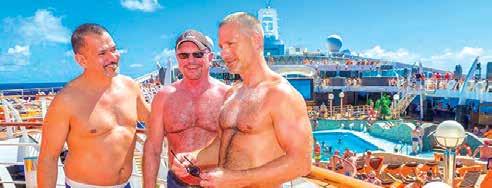
Gay cruises like Atlantis and RSVP have been criticized for their cost. Though they are more expensive than your garden variety cruise, the money goes toward providing us with a week of unique tricks and treats. In addition to Holland America’s regular entertainment, RSVP’s 2018 Caribbean Cruise featured shows by gay favorite Jackie Hoffman; comedian Jessica Kirson; jazz singer Soshana Bean; singer Branden James and his cellist husband James Clark; the Boy Band Project; and the duo of Amy Armstrong and Freddy Allen, a gay cruise favorite. There were events for guests in recovery, deaf guests, bears, singles, single bears, a Jewish service Friday afternoon, an art auction (with champagne!) and nude sunbathing on the top deck (you knew I was going to find it). In fact, there was something going on the Koningsdam all day and most of the night to please even the grouchiest traveler.
Though RSVP vacations try their best to give us the best cruise experience, it was far from perfect. Some of my fellow travelers complained about the high decibel level at the parties; the quality of the food; or the lack of opportunities for singles. Though I agree somewhat, I had such a good time that I forgot to complain. The RSVP staff, especially Cruise Director Brad Loekle, did a great job accommodating 2,500 demanding guests, some of who have been on every RSVP cruise since 1986. Many of them signed up for the 2019 cruise even before they left the ship on February 18. Though I did not do so, there is a strong possibility that I will return to the high seas next year, if not on RSVP then on Atlantis or another gay cruise. And, if I do, you know I will write an article about it.
For more about RSVP Vacations, visit www.rsvpvacations.com.
Photos courtesy of RSVP Vacations
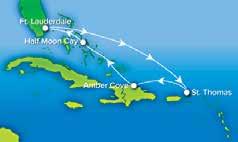
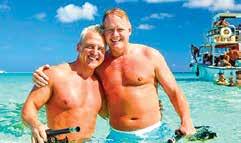
A couple enjoys a day of scuba diving Map of the cruise route
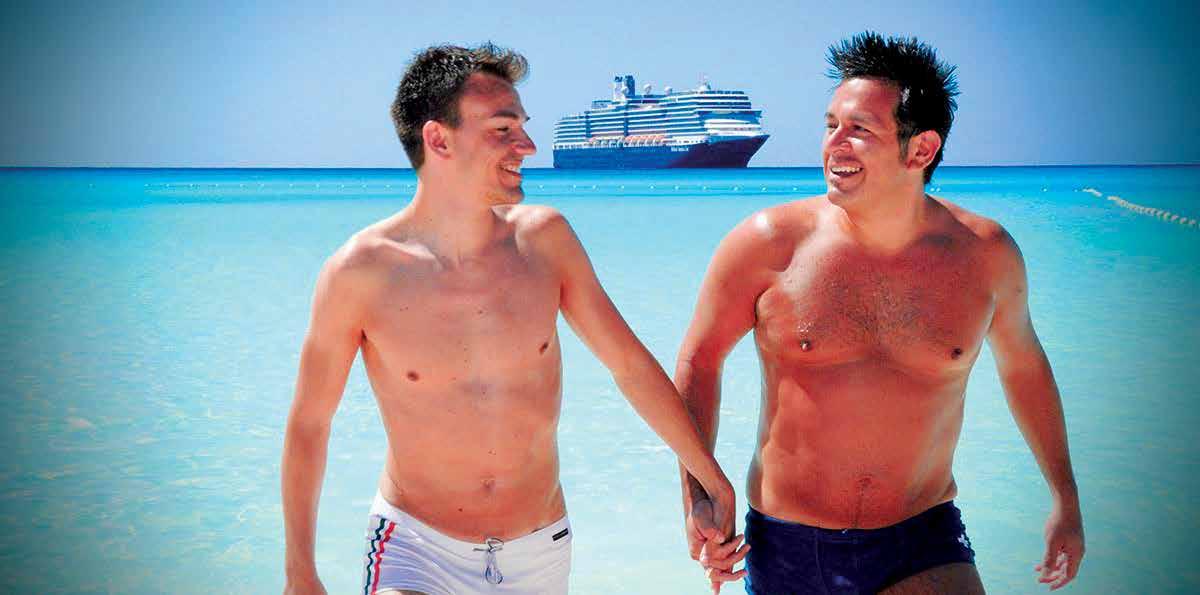
A couple walks along the beach of one of the many destinations the RSVP Vacations' all-gay cruises
Travelers on RSVP’s original all-gay cruise in 1986
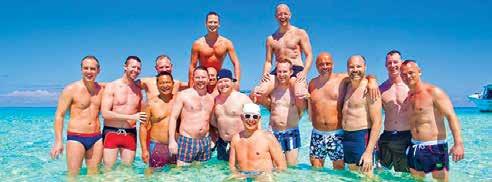
RSVP appeals to a diverse group of queer travelers
Most of the fun happened on the ship itself


SPRING TRAVEL
Hello, Theodore:
New hotel is the perfect location for an overnight in downtown Seattle
by Albert Rodriguez SGN A&E Writer
So you have tickets for an upcoming show at the Paramount Theatre – Waitress, On Your Feet!, Dear Evan Hansen – and you don’t feel like driving back home afterwards. Or, your just-around-the-corner birthday is calling for a staycation splurge with dinner, shopping and an overnight hotel stay. Or, you have an early morning flight and need to be close to a light rail station.
For either of these circumstances, consider staying downtown for a night, or two. Specifically, stay at the newly opened Hotel Theodore situated rather conveniently at the corner of 7th and Pine. Formerly the Roosevelt Hotel, the 153-room Theodore is three blocks away from the Paramount and a block up across the street from the Westlake tunnel station, where you can catch the light rail as early as 4:51am with direct service to Sea-Tac Airport.
Opened on November 1, 2017, the building dates back to 1929 when it first welcomed guests to the property as the Roosevelt. The renovated project, which includes a cool redesign of its rooms and new additions, such as restaurant/bar, coffee shop, atrium and a specially-curated art collection, allows the once-dated but now-polished Theodore to fit right into the upscale, chic downtown scheme.
Let me guide you through a stay at Hotel Theodore, having recently experienced it for myself, complete with dinner at on-site restaurant Rider and MADE Coffee counter. For more information, or to make a reservation, visit www.hoteltheodore.com.
CHECK-IN / ATRIUM
The main entrance to the hotel is on the 7th Avenue side, although you can weave your way to the check-in counter through Rider’s doors, located on Pine St.
Check-in is standard and simple, but focus your attention on the adjacent twolevel Atrium, utilized previously as a storage facility until Theodore was unveiled
last year. It’s an illuminating, ample and quiet spot to relax, read a book, log onto your social media pages with complimentary WiFi, or should you absolutely need to, get some work done.
ROOMS
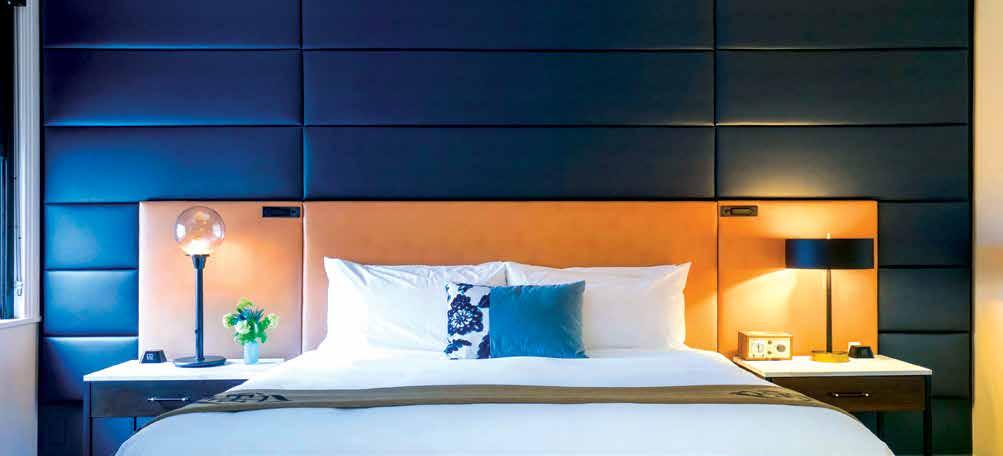
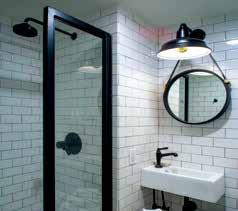
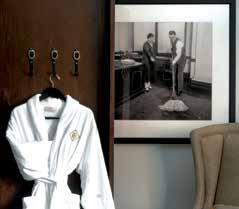
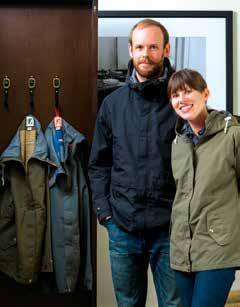
Two elevators are in frequent use between the lobby and the 20 floors of the hotel. I stayed in a Studio Suite: King (on the 11th floor) that provided me with 440 square feet of space and great city views. All the essentials were comfortable, from a cozy bed to 55-inch HDTV to luxurious LATHER bath products. A large, sturdy work desk made it possible to crank out a few emails, plus watch a downloaded movie, while a soak in a gorgeous ceramic tub was a much-deserved reward for a long, productive day. There are showers, as well. Dual bathroom spaces, one for the tub and shower, the other with the sink and toilet, are situated side-by-side. A unique amenity (for use during your stay at the property) are a pair of water-resistant raincoats hanging inside a big wooden dresser. The weather can be unpredictable in the Emerald City and Hotel Theodore has got you covered, literally, in the event you left your own raincoat or warm jacket at home.
RIDER
For some of us, and I won’t name names, the immaculate space now occupied by Rider was once the martini pit stop Vons that we somehow rolled into late at night on our way back up the Hill. The black and white checkered tile floor and expansive dining room with tables and chairs, plus grilling station with additional counter seating, is stunning.
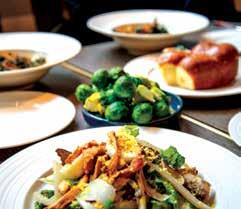
The menu, created by Executive Chef David Nichols, features a good selection of meat, fresh seafood and some vegetarian dishes. After trying the popular Shaved Kohlrabi starter (squash, fresh cheese, chimichurri), leading me to the conclusion that I’m not a kohlrabi fan, though I really wanted to like it, I ordered the regionally-
caught Rockfish, offered seasonally, with bite-size potatoes, which I did enjoy. I finished off the meal with Rider’s signature 5-Inch Apple Pie, a recommended finale to your meal, but the fruit filling does change seasonally. Other choices on the menu, as of now, include Whole Trout (from Idaho), Steelhead (from Quinault River), Salish Sea Cioppino, Roasted Carrot Pasta, Smoked Chicken Breast, Boneless Pork Chop and another guest favorite, The Burger – layered with house-made American cheese, crispy pickled onions, smoked tomato aioli and cured bacon.
Rider serves breakfast, lunch and dinner daily, plus weekend brunch, and if the prices aren’t within your budget, I suggest sliding into a bar seat for Happy Hour for a list of similar items, though less expensive.
MADE COFFEE
Most mornings, I only need an espresso and pastry to kick start my day. MADE Coffee, nestled in a corner of the hotel’s ground level, serves fresh drip coffee, Americanos, lattes, cappuccinos and other beverages, along with baked goods, at their counter to go, or you can have a seat in their intimate nook with streetside views.
MADE roasts its beans locally in a 1949 Balestra wood-fired roaster.
ART
In collaboration with MOHAI (Museum of History and Industry), guests can see a collection of art, from photography to patent drawings to artifacts, displayed throughout Hotel Theodore, including individual rooms and hallways on each floor.
AMENITIES
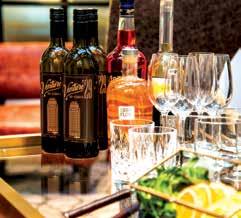
In addition to in-room amenities, hotel guests have access to a 24-hour fitness center, free high-speed Internet and a complimentary “Apertivo” social hour with regional beers and wines in the Atrium; ask the front desk for specific time.
Photos courtesy of Provenance Hotels
Hotel Theodore Guest Room
Hotel Theodore Guest Bathroom
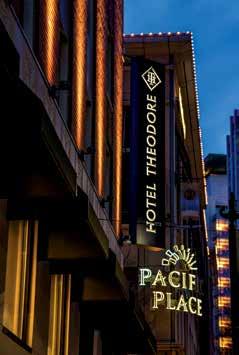
Hotel Theodore Exterior
Aperitivo Hour at Hotel Theodore
Scott and Brittany Freeman in a suite at Hotel Theodore stocked with their Seattle-made Freeman rain jackets
At Hotel Theodore's restaurant, Rider MOHAI art at Hotel Theodore
SPRING TRAVEL
by Albert Rodriguez SGN A&E Writer
Sometimes the most unexpected trips are the most memorable. And with only 175 miles separating Seattle and Portland, you really only need to figure out transportation and pack a bag to enjoy a brief, muchdeserved getaway. However, it’s probably best to plan ahead at least a week in advance to secure a hotel room and seat on the train, or bus, if you’ve ruled out driving down there yourself.
March is Portland Dining Month, which means foodies can take advantage of $33 three-course meals at over 122 restaurants scattered around. It’s a great deal, considering that the Rose City is a national hotspot for food that routinely produces new James Beard Award winners year after year. But like Seattle, there’s always something happening in PDX, whether it’s a beer festival or NBA basketball game or Pride, typically staged two weekends before ours in the Emerald City, so something is sure to be going on there whenever you go.
With no retail sales tax and no border crossing hassles, heading south to Portland is a more affordable and convenient escape than up north to British Columbia, plus it has an excellent public transit system that makes it so simple to get around town.
Here’s what I suggest doing on a quick trip to Portland, including a new hotel recommendation right smack in downtown. For more information to plan your trip and details on Portland Dining Month, go to www.travelportland.com.
Plane, Train or Automobile
Your Way to Portland
For non-drivers, or anyone not wanting to worry about parking during their visit, I suggest taking the train down.
My Amtrak reservation to Portland was booked just 10 days in advance, and in business class, and it still only cost $108 round-trip (or $70 for coach class, round trip). Amtrak runs both Cascades and Coast
PDX on a whim:
When you’re needing to get out of town and don’t want to plan too far ahead, there’s always Portland
Starlight trains daily between Seattle and PDX; the difference between the two is that Cascades terminates the journey in Eugene utilizing a single level train, while the Starlight continues to Los Angeles with a double-decker locomotive that treats passengers to wonderful perched views during the trek. Log onto www.amtrak.com for more information.
Other methods of getting to and from the Rose City are by bus, try an inexpensive ride on Bolt Bus (www.boltbus.com), and by plane, pricier yet faster on Alaska/Horizon Airlines (www.alaskaair.com).
Dossier Hotel is New, Cool and Located Right in Downtown
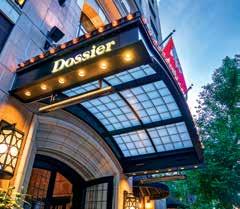
If you experience a case of déjà vu when stepping into the Dossier Hotel in downtown Portland, it could be that you’ve stayed here before when it was the Westin. The hotel, sitting at the intersection of SW Alder St. and SW Park Ave., puts you within blocks of shopping centers, performance theaters, top restaurants, the always active Pearl District and the city’s few, but time-tested gay bars.
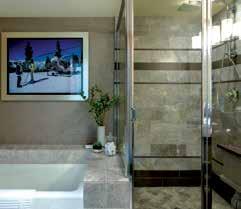
The 205-room newly opened Dossier not only provides guests with many walkable choices when it comes to dining and entertainment, but it assures them a luxurious stay with touches of modern elegance at every turn, beginning with guest rooms that feature comfortable beds with lush covers and linens, work desks, large HDTVs, personal k-pod brewing systems with premium local coffee and teas, bedside lamps and spacious bathrooms with marble sink counters and glass-door showers.
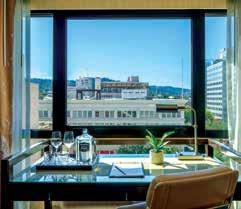
If you’re fortunate to get a room on one of the top floors, such as mine on the 18th, the city views are spectacular from up high and provide a glimpse of how the landscape of Portland, similar to Seattle, is changing almost weekly with new buildings popping up everywhere.
On-site amenities include 24-hour fitness center, complimentary Wi-Fi, complimentary daily social hour with local
beers and wines, as well as complimentary brewed coffee (morning only) in the lobby. Go to www.dossierhotel.com to make a reservation.
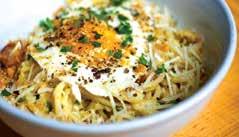
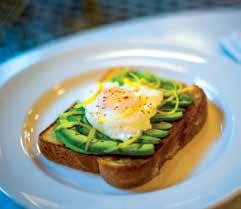
Opal for Breakfast, Lardo for Lunch, Food Truck Scavenge for Dinner If staying at the Dossier, an elevator ride is all you need to take for a good, solid breakfast. Opal Cafe & Bar, on the hotel’s ground level, is a bistro-like restaurant offering its version of morning favorites, such as Breakfast Sandwich, French Toast, Sourdough Pancakes, 2 Egg Breakfast, Daily Quiche and three varieties of benedicts – Smoked Salmon, Niman Ranch Ham and my choice, Molinari Pancetta, which served with fingerling potatoes was a delicious and adequately-portioned way to get me going. Visit www.opalbarpdx.com for a complete menu.
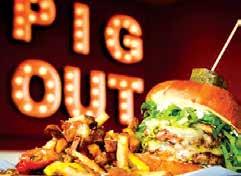
For lunch, you might want to venture to Grassa, one of the newest food installments from PDX restauranteur Rick Gencarelli. Handmade pastas at affordable prices, plus signature meatballs, are what you’ll find on the menu and not much else; he keeps it simple. But if Grassa is at full capacity, such as the weekend afternoon I stopped by, then next door is another Gencarelli beloved eatery, Lardo, known for its sophisticated and addictive sandwiches. I went with the Nashville Hot Fried Chicken, though I asked them to hold the “hot,” which they kindly did. The golden fried chicken breast, topped with Dukes mayo, bacon, pickles and white onion was pretty damn good, I have to say. Visit www.grassa.com and www.lardosandwiches.com for complete menus. Both are located downtown.
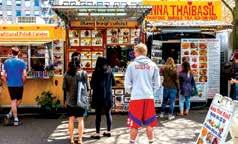
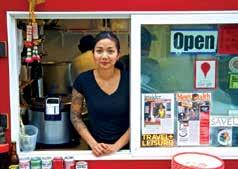
Although I’d planned on a sit-down restaurant for dinner, I can’t go to Portland and not scour the food truck scene. A block up from the Dossier is the Alder Street Food Cart Pod, giving residents and visitors a little something for everybody. There are noticeably more Middle Eastern trucks situated
see PDX ON A WHIM page 29
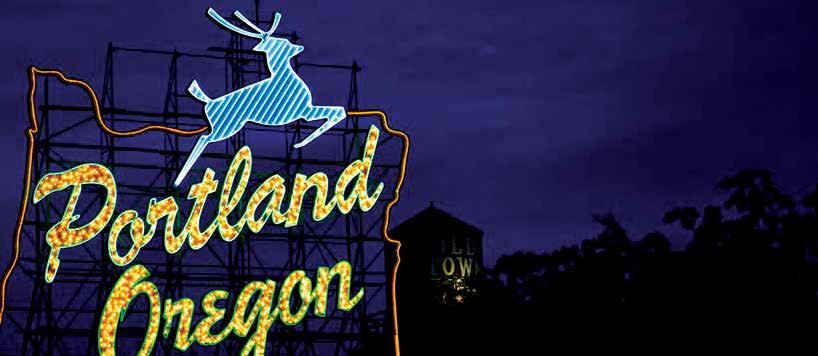
The White Stag sign at the west end of The Burnside Bridge has been a fixture of the city since 1940 – Photo by Jamie Francis
Dossier Guest Room View – Photo courtesy of Provenance Hotels
Dossier Exterior – Photo courtesy of Provenance Hotels
Dossier's Restuarant Opal – Photo courtesy of Provenance Hotels
Dossier Guest Bathroom – Photo courtesy of Provenance Hotels
Photo courtesy of Grassa
Photo courtesy of Lardo PDX
Alder Street Food Pod – Photo by City Lane
Nong's Khai Man Gai Food Truck
– Photo by David Reamer



SPRING TRAVEL
by Ed Walsh SGN Contributing Writer
Gay businesses in Key West escaped the wrath of Hurricane Irma virtually unscathed. The city’s four LGBT hotels as well as the island’s gay bars and nightclubs got away with only minor damage. As of late January 2018, tourism officials estimated that 91% of the city’s hotel stock was back in business. That is contrasted with the overall Keys which were at about 77%. The hardest hit areas of the Keys was a 30-mile stretch about 10 miles northeast of Key West up to the west end of the Seven Mile Bridge.
If you’ve thought about visiting Key West for the first time or are thinking about a return visit, now is a good time. Besides having a great time, you will be helping to support the jobs and the livelihood for not just those in Key West but those who commute from the northern Keys and depend on Key West tourism to support themselves. For many residents, the happiest sight was an arrival of the first cruise ship to the island on September 24, two weeks after the hurricane. Key West officially opened for tourists October 1.
You will find little sign of Irma today. The city banded together early on to clear out debris. Most homes and businesses that were damaged by the hurricane were quickly repaired. All of the city’s landmarks are up and running. The only sign of Irma noticed by this reporter just after New Year’s was the observation tower at a Shipwreck museum that appeared in good condition but remained closed apparently until further repairs could be made.
The neighbor-helping-neighbor community spirit for which Key West is famous undoubtedly helped speed the city’s fast recovery. And with a large gay community, it is no wonder that people simply would not tolerate the city looking unkempt.
Key West is used to pulling itself out of tight corners. The shipwrecking industry first put the city on the map in the mid 1800s. By 1856, that industry made it the richest city per-capita in the United States. The rule of shipwrecking is that you could keep a good portion of what you salvaged from ships as long as you saved the people first. But better navigation systems that kept
Key West, Florida,
largely unscathed by Hurricane Irma, is open for business
ships from crashing on the coral reefs, combined later with the Great Depression in the 1930s, transformed Key West into one of the most impoverished places in the country. In the mid-1970s the Navy scaled back its presence on the island, causing another big hit to the island’s economy. Gays were a big part of the city’s revitalization in the ’70s as they bought up and fixed up some of the island’s abandoned buildings and businesses.
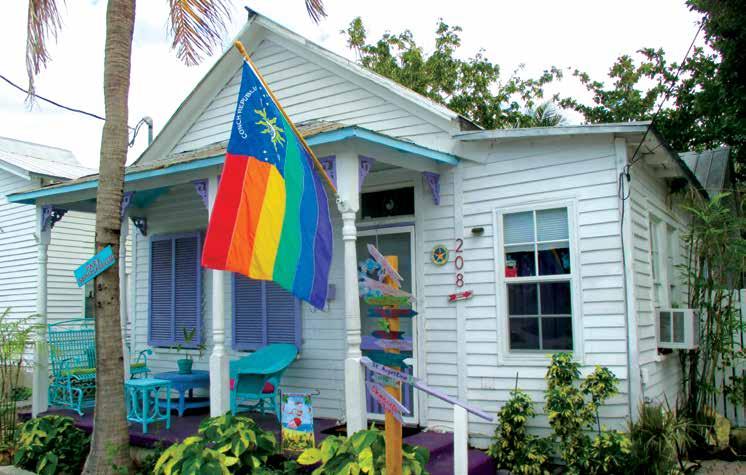
By the 1980s, the city emerged as one of the most upscale destinations in Florida The modernization and urban renewal movements of the 1950s and 1960s passed Key West by, so much of the charming architecture in the city remains.
Gay Stays
While many of the formerly gay resorts in Key West have gone straight or “all welcoming,” what the city lacks in quantity, it more than makes up in the quality of its
remaining gay resorts. The Island House (https://islandhousekeywest.com/) justifiably tops many lists as the best gay resort in the world. It stays busy even in the hurricane season. With 39 rooms, it is the largest gay resort on the island and it’s not uncommon for regulars to check in and seldom leave the property. The clothingoptional men-only resort doesn’t charge a resort fee but offers guests a long list of freebies including four alcoholic drinks a day during its late afternoon/early evening happy hour. Other amenities include cafe and bar that never closes, a small but well-appointed gym, wet and dry saunas, indoor and outdoor hot tubs, sundeck patio, porn video playroom, and a large swimming pool. It’s open for day passes so it is a good place to mix it up with locals and fellow travelers alike. If you are on budget, the upscale resort has some rooms that have a shared bath at a cheaper rate than the stan-
dard rooms. Island House also offers a deal that if you stay at least four nights over the winter, you get three summer nights free. The upscale Equator Resort (http:// www.equatorresort.com/) is just down the street from the Island House and is another first-rate property. The 34-room is also a men-only clothing-optional resort. A few years ago it combined with the former Coral Tree gay guesthouse and as a result it offers two pools and two hot tubs. The Equator also includes a continental breakfast, free WiFi, and a free cocktail hour. It does not offer day passes, so it has a more intimate feel than the Island House.
Alexander’s Guesthouse (http://www. alexanderskeywest.com/) is an upscale LGBT hotel that is the place to be if you prefer a quieter stay. It is across the street from the Island House and it offers discounted day passes to the resort, so you can have the best of both worlds. Although its
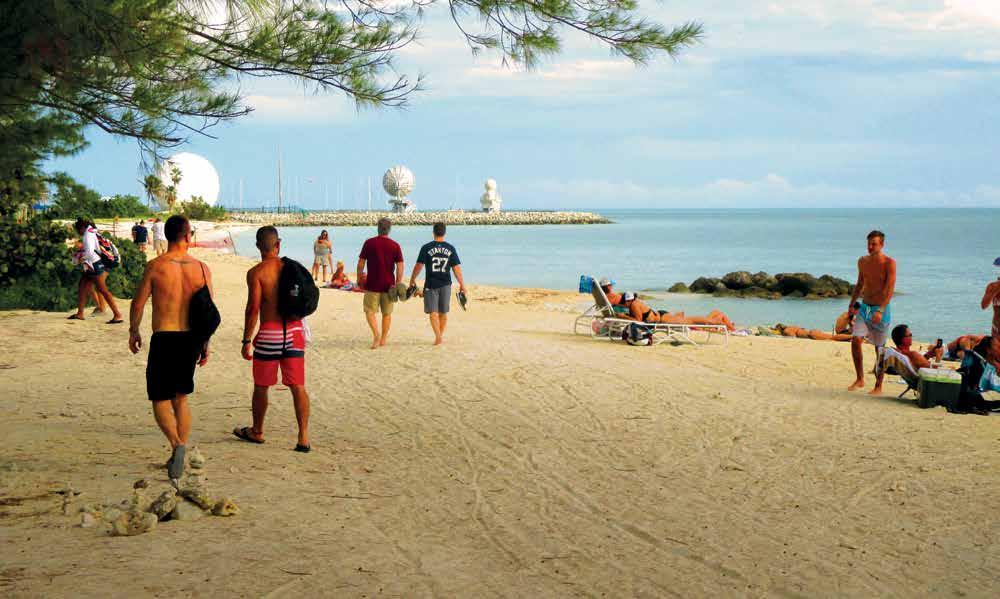
The beach at Fort Zachary Taylor Historic State Park, looking out towards the southernmost point in the continental United States
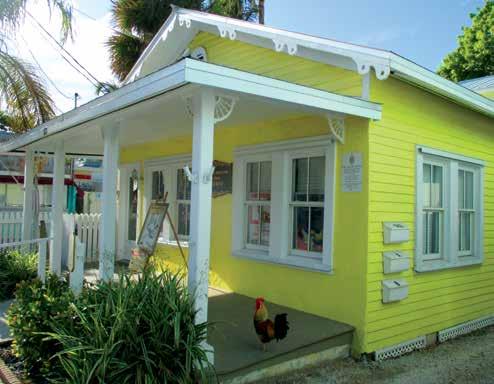
Typical Key West architecture. This house has a combo Conch / Key West flag and a rainbow flag.
clientele is mostly male, the property has a good share of lesbians and open-minded straight people. One of the hotel’s sundecks is clothing-optional but the pool and other parts of the property require a bathing suit. It includes a deluxe continental breakfast and a free happy hour. The hotel is open only to those 21+.
If you want to experience Key West’s lively gay nightlife but don’t want to stray too far, the world-famous New Orleans House is a good bet. The 17-room gay men’s clothing-optional hotel is on Duval Street, in the heart of the city’s gay nightlife block over the Bourbon St. Pub. It includes a continental breakfast. Its pool and hot tub are part of the Garden Bar, which is clothing-optional and right behind the main Bourbon St. Pub. It also includes a well-equipped gym that is free for guests and non-guests alike. The New Orleans House has a patio deck for guests with the best people-watching in town. Drag Queen Sushi descends from a giant high-heeled shoe each New Year’s Eve in a tradition that is usually covered live by CNN.
Nightlife
The Bourbon St. Pub includes a main open-air bar that fronts Duval Street. It has strippers who can often be seen beckoning customers in from the sidewalk. Depending on the night, you can also see live shows and karaoke there. The aforementioned Garden Bar is right behind the Pub. Like the name implies, it is an outdoor openair bar in a garden with an adjacent pool, jacuzzi and sundeck. The Garden Bar space is clothing-optional and open to men only.
The 801 Bourbon Bar is kitty-corner from the Pub and is appropriately located on 801 Duval Street. It is famous for its upstairs cabaret bar featuring Key West’s legendary drag queens. The downstairs bar is always fun and if you want to walk on the wild side, the One Saloon is right behind the main bar and is popular with the Levi leather crowd. It has a pool table and is known for its infamous Friday night contests.
A block away on Duval Street is a trio of connected nightclubs, Aqua, the Back Bar and the Side Bar. Aqua is famous for drag shows and live entertainment. The Back Bar is behind Aqua. You can enter through Aqua or through the entrance on the side alley. It is an open-air space perfect to socialize in while enjoying the warm Key West evening breezes. Key West’s newest bar is Side Bar. It is the modern space on the side of Aqua. With the closure of Pearls years ago, there are no longer any full time lesbian bars in Key West but Side Bar has a women-popular “Hot Dog Church” on Sunday afternoons that serves up hot dogs for an old fashioned cookout social. Lesbians take over for a week during Womenfest, which will be held Sept. 5-9 this year. Many of the mostly men’s bars will yield to women that week.
La De Da on Duval, just down the street from the Bourbon Bars, is known for its nightly cabaret and drag shows and is famous for its early Sunday Evening Tea Dance.
Bobby’s Monkey Bar is on Simonton Street, a street that runs parallel to Duval. The bar is off the beaten tourist path making it popular with locals who enjoy the bar’s nightly Karaoke show. A mural on the side of the bar depicts the quirkiness for which Key West is known. It depicts Wilhelmina Harvey’s crossing of the Seven Mile Bridge into Key West. The late Ms. Harvey was a Key West character who spearheaded a satirical separation of Key West from the rest of the United States, known as the conch rebellion. The mural is patterned after the depiction of George Washington crossing the Delaware River. One of the conch loyalists is depicted displaying the rainbow flag.
Attractions
The best place to get one-stop information on Key West attractions, both LGBT and mainstream, is the city’s new LGBT business guild storefront, which opened this fall, just after Irma. The center on 808 Duval St. includes a list of daily activities related to the LGBT community as well as information on mainstream tours and attractions. (http://gaykeywestfl.com)
One of the city’s newest attractions is a museum dedicated to gay playwright Tennessee Williams. It is on 513 Truman Ave. (US Highway 1). Before the LGBT business guild moved its offices to Duval Street, it shared the space with a much smaller Tennessee Williams exhibit. The new museum has taken over the whole space and dedicated it to the author’s life and work. It also includes a doll-house replica of his home on Duncan Street, which is a private home and not open for tours.
Key West’s long-running Blu Q is a catamaran touring company that runs a number of excursions marketed to LGBTs including a sunset tour and all-male clothing optional half-day tours. Blue Q is a great way to explore the waters around Key West with “family.” http://www.bluqkeywest.com/
The most photographed attraction in Key West is a buoy-shaped monument at the island’s Southernmost Point proclaiming it is just 90 miles to Cuba. But if you want to get precise, the Southernmost Point is 88 miles to Cuba and the actual Southernmost Point is the Naval Station adjacent to the buoy, which is just a little further south but it’s off limits to civilians.
A good way to get the lay of the land in Key West is through a number of bus or open-air tram tours of the island. The tours start near the beginning of Duval Street, where it meets Front Street along the waterfront. Most of the tours allow you to get on and off at anything you want to see.
East Coasters are not used to seeing the sun set over the ocean, so it is not surprising that. sunset is a big deal in Key West. People gather at the Mallory Square waterfront promenade every night to watch the sun go down. The square is lined with street performers and food stands and local artisans.
Of course, besides Tennessee Williams, Key West’s other famous writer is Ernest Hemingway. His house is open for tours daily. Across the street from Hemingway House is the city’s historic lighthouse. If you don’t have vertigo, you can walk up the winding narrow staircase to the lookout at the top of the tower. The keeper’s house next to the lighthouse is a museum that gives great insight on what it was like to live in Key West in the 19th century. The city’s old Custom House, now a museum, includes a section devoted to Tennessee Williams’ paintings.
The Key West Art & Historical Society manages the Tennessee Williams Museum, the Lighthouse and Keepers Quarters, the Custom House and Fort East Martello and their website provides a great introduction to their collections. http://www.kwahs.org
The waterfront is also home to a couple of museums dedicated to the shipwreck industry but its oldest running attraction is the Key West Aquarium. A much-less traditional museum, the Ripley’s Believe it or Not museum, includes oddities from around the world and a few from Key West.
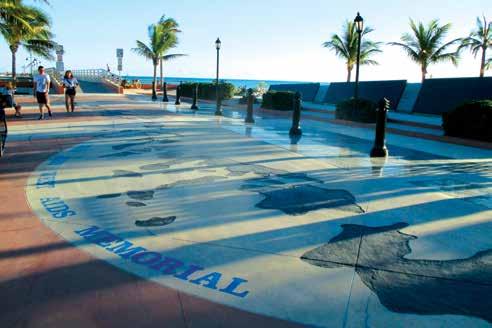
Key West’s gay community was hard hit by the AIDS epidemic in the 1980s and 1990s. A touching AIDS memorial stands on the start of the Edward B. Knight Pier where White Street dead ends into the ocean. It includes the names of residents lost to the disease.
There are a couple of beaches near the AIDS Memorial but a favorite beach is the Fort Zachary Taylor Historic State Park, which gays had dubbed the Elizabeth Taylor Park. The park includes a military fort that dates back to the civil war and has picnic tables and shade trees.
Getting there and getting around
A rental car is more trouble that it is worth in Key West. Parking is sometimes challenging. The best way to get around is by bicycle. You can rent a bike on the island for as little as $10 a day, and even cheaper if you rent by the week.
A number of airlines offer connecting flights to Key West from SeaTac. Delta offers flights that connect through Atlanta that can get you to the island in a little over seven hours total. Airfares are pretty reasonable with flights running earlier this year just a little over $300 roundtrip.
Photos courtesy of Ed Walsh
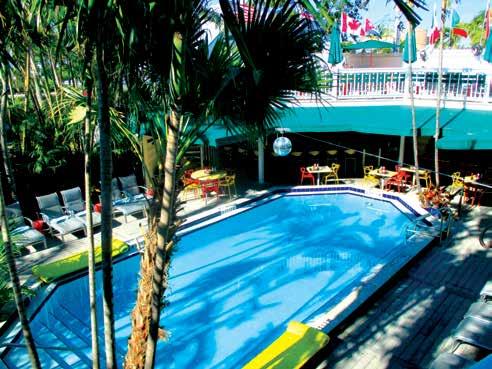
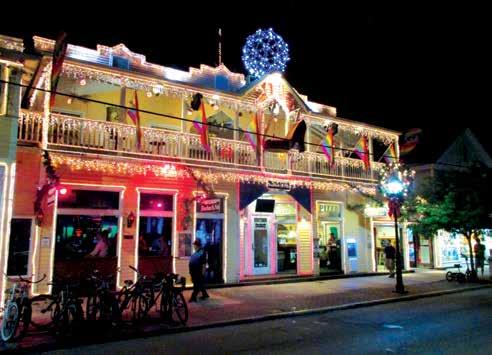
Bourbon St. Bar and New Orleans House
Inside Island House
A rooster standing guard in front of Tennessee Williams Key West Exhibit
The Key West AIDS Memorial

SPRING ARTS
Art ∩ Math at CoCA
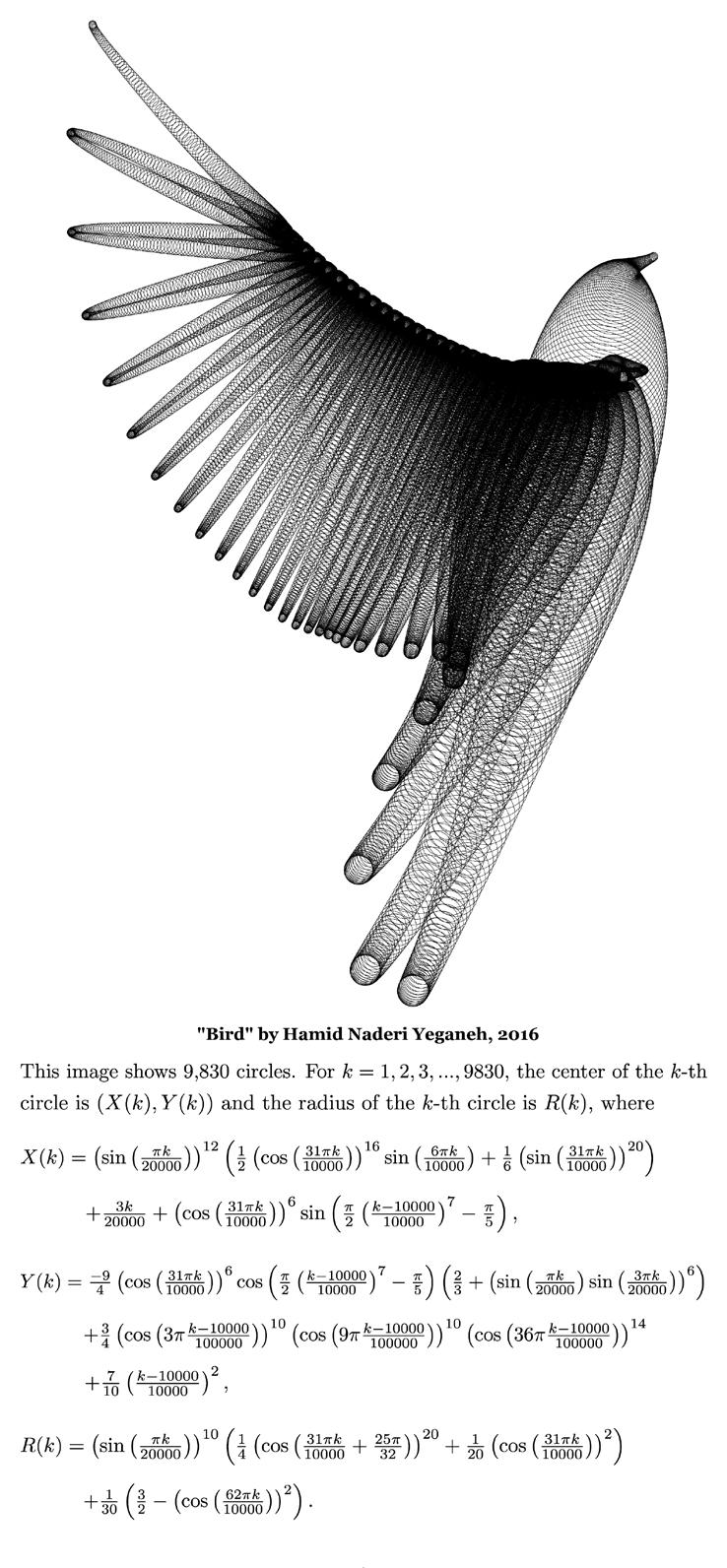
Seattle’s Center on Contemporary Art (CoCA) presents Art ∩ Math, (Art intersect Math), an exhibit that explores the intersection of artistic expression and mathematical ideas. CoCA is located at 114 Third Ave. S. in the Tashiro Kaplan Building in Pioneer Square. Gallery hours are Thursday to Saturday, 10am-5pm. Art ∩ Math runs from March 1 through April 14, 2018. https:// cocaseattle.org
Mathematics is the study of structure, number, pattern, and shape; though abstract, it has influenced art for centuries. Today, math and art are exploring bold new realms. The power of their insights and effects on each other provides opportunities to be delighted by seeing new connections hiding in plain sight.
Mathematics is a fresh lens to understand art: reckoning with chaos, algorithms, equivalence, topology, geometry and other
zation focused on transforming how mathematics is taught and learned. They also designed the mathematical board games Prime Climb and Tiny Polka Dot, and created the summer curriculum used by Seattle Public Schools.
An exhibit book will accompany the exhibit. Artwork, books, posters, and games will be for sale. Events include Dance performance of necessary and sufficient, by Katherine Cook, on April 6th at 7pm and April 7th at 3pm – a conversation between the embodied human and mathematical structure, exploring how pattern and form emerges from and becomes sustained by dancers. The exhibit closes with a Gathering for Gardner event on April 14 at 2pm. This exhibit is made possible with support from Gathering for Gardner, the Julia Robinson Math Festival, University of Washington Mathematics Department, and Rock’s Studio.
ARTIST STATEMENT
Hamid Naderi Yeganeh
mathematics tools helps us see art and the world with more depth. A diverse selection of media will be featured in the exhibit from artists and mathematicians including sculpture and oil paint, to textile and metalwork. Mathematician artists include Jayadev Athreya, Katherine Cook, Erik Demaine and Martin Demaine, Edmund Harriss, and Hamid Naderi Yeganeh. Visual artists who use mathematical principles in their practices include Rachel Holloway, Claire B. Jones, George Legrady, Jean Mandeberg, Savina Mason, Suchitra Mattai, June Sekiguchi, Timea Tihanyi/Slip Rabbit, Lun-Yi Tsai, Amber Barney-Nivon, and Ilana Zweschi.
The exhibit is the brainchild of CoCA Board Member and Artist, Kate Vrijmoet, and mathematician educators Katherine Cook and Dr. Dan Finkel. In addition to curating Art ∩ Math, Finkel and Cook also run Math for Love, a Seattle-based organi-
I believe there are an infinite number of ways of using mathematical tools in art. But for now I am interested in just a few of them. Here, I would like to talk about my favorite method. When I see a creature in the natural world, I ask myself this question: Can I find a mathematical formula that produces the shape of this creature? Trying to answer this question is very attractive to me. It reminds me of Galileo Galilei’s quote: “Mathematics is the language with which God has written the universe.” I know that if I have enough skills to predict the behavior of mathematical functions then the answer of the question is positive. In fact, I use a step-by-step process to find the desired formula. In each step, I add an appropriate mathematical function to the formula to obtain a shape with more resemblance to the creature. The process will continue until drawing a good enough shape. The most important step is the first one. Because it contains the main idea. For instance, when I wanted to draw a bird using this method, I used the graph of cos(31x) in the first step. Because this function easily enabled me to draw feathers.
Hamid Naderi Yeganeh is an Iranian mathematical artist. He creates drawings of real-life objects and intricate illustra-
tions using mathematical equations. His work has been featured on CNN Style, The Guardian, The Huffington Post, Science Friday and more. Also, one of his artworks was used as the background cover image of The American Mathematical Monthly –November 2017.
ARTIST STATEMENT
Erik Demaine and Martin Demaine
We use our exploration in sculpture to help visualize and understand unsolved problems in science, and their scientific abilities to inspire new art forms.
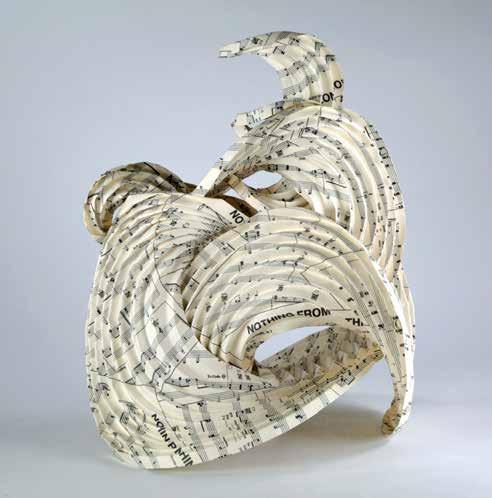
These sculptures explore the power of folding paper along curved creases using a form first studied by Josef Albers at the Bauhaus in the late 1920s. Each paper component is folded by hand from a circle of paper, using a compass to score the creases and cut out a central hole. The paper folds itself into a natural equilibrium form depending on its creases, a process not yet understood mathematically. In one piece, the paper is inserted into a hand-blown glass vessel as a kind of “ship in a bottle,” combining two mediums in an unusual way.
Erik Demaine and Martin Demaine are a father-son math-art team. Martin started the first private hot glass studio in Canada and has been called the father of Canadian glass. Since 2005, Martin Demaine has been an Artist-in-Residence at the Massachusetts Institute of Technology. Erik is also at the Massachusetts Institute of Technology, as a Professor in computer science. He received a MacArthur Fellowship in 2003. In these capacities, Erik and Martin work together in paper, glass, and other material. They use their exploration in sculpture to help visualize and understand unsolved problems in science, and their scientific abilities to inspire new art forms. Their artistic work includes curved origami sculptures in the permanent collections of the Museum of Modern Art (MoMA) in New York, and the Renwick Gallery in the Smithsonian. Their scientific work includes over 60 published joint papers, including several about combining mathematics and art. They won a Guggenheim Fellowship (2013) for exploring folding of other materials, such as hot glass.
Courtesy of CoCA
Image courtesy of CoCA Seattle
"Something from Nothing from Nothing III" by Erik Demaine and Martin Demaine, 2014 – Image courtesy of CoCA Seattle


SPRING TRAVEL
PDX ON A WHIM
continued from page 20
now at this particular pod, if you’re in the mood for falafel or a gyro, but I decided to combine two unlikely cravings for an unorthodox combo meal, The “B.L.T.G.C.” (Bacon, Lettuce, Tomato, Grilled Cheese) from popular local chain The Grilled Cheese Grill and Curry Fried Rice from Sawasdee Thai. It wasn’t what I imagined eating for dinner at the start of my day, but I went to bed a happy camper nonetheless. For addresses and current vendors at each location in the city, log onto www.foodcartsportland.com.
Visit The Portland Art Museum and Oregon Historical Society, Go to Washington Park, Pop into Powell’s Books
For artsy travelers, the Portland Art Museum has multiple levels of permanent and special exhibits to spend a full morning or afternoon taking in. For film lovers, spe-
cifically animation and anime fans, a mustsee exhibit is “Animating Life: The Art, Science, & Wonder of Laika” with props, costumes and set design models from several movies, including four Oscar nominated features, on display through May 20. Laika is a stop-motion animation studio based in the Rose City. Also running through May 20 is “Common Ground,” a series of bold photographs by award-winner Fazal Sheikh that chronicles individuals living in displaced and marginalized communities around the globe. Another photographic exhibit, scheduled through October 21, is “In the Beginning: Minor White’s Oregon Photographs,” documenting life in the Beaver State at its very earliest. For more information, including hours and admission prices, check out www.portlandartmuseum.com.
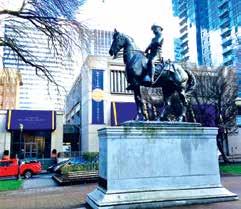
Directly across the street from the Portland Art Museum is the Oregon Historical Society, a recommended excursion for history buffs as it details, from past to present, the entire background of Oregon with vast memorabilia. I found it rather interesting
SPRING ARTS
and was able to see everything in about an hour. For more information, including hours and admission prices, go to www.ohs.org.
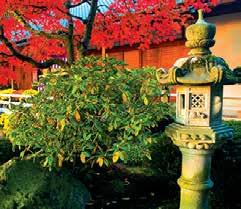
A 10-minute ride aboard The Max light rail line delivers you to Washington Park, where you can explore several attractions, including the newly expanded Portland Japanese Gardens, World Forestry Center, Hoyt Arboretum, Portland Children’s Museum, International Rose Test Garden and the Oregon Zoo, at which a big kid like myself couldn’t pass up the opportunity to lock eyes with lions, giraffes, monkeys, rhinos, hippos, elephants and even penguins in both outdoor and indoor settings. An excursion to Washington Park is a great way to also squeeze in a little exercise to your travel itinerary. The light rail stop puts you right by the zoo, but you’ll either have to walk, or catch a seasonal free shuttle to the Japanese Gardens, which wasn’t in operation during my visit, or you can always take Uber to and from. Plan your visit with more information at www.explorewashingtonpark.org.
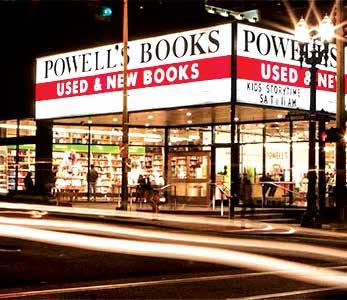
Coming from Amazon town and a city that already has an awesome independent bookstore (The Elliot Bay Book Company), the last place you might want to go into in Portland is Powell’s Books, right? Wrong. Powell’s is iconic to Portland, a local favorite that was long established before people began buying books online, plus it’s one of those places you can’t leave PDX without at least saying hello to even if you don’t buy anything. Powell’s, located on Burnside, between downtown and Union Station, if you’re catching the train back home, is the largest chain of used and new bookstores in the entire world. With over 3,500 sections to browse, plan on spending a good chunk of your afternoon looking around. Or, if you’re like me, I’ve already written down the books I’m looking for and I go directly to an employee to help me find them. Then, find an empty seat in the café against the window and read for a while with a cup of coffee. Check out www.powells.com for more information and other locations outside downtown.
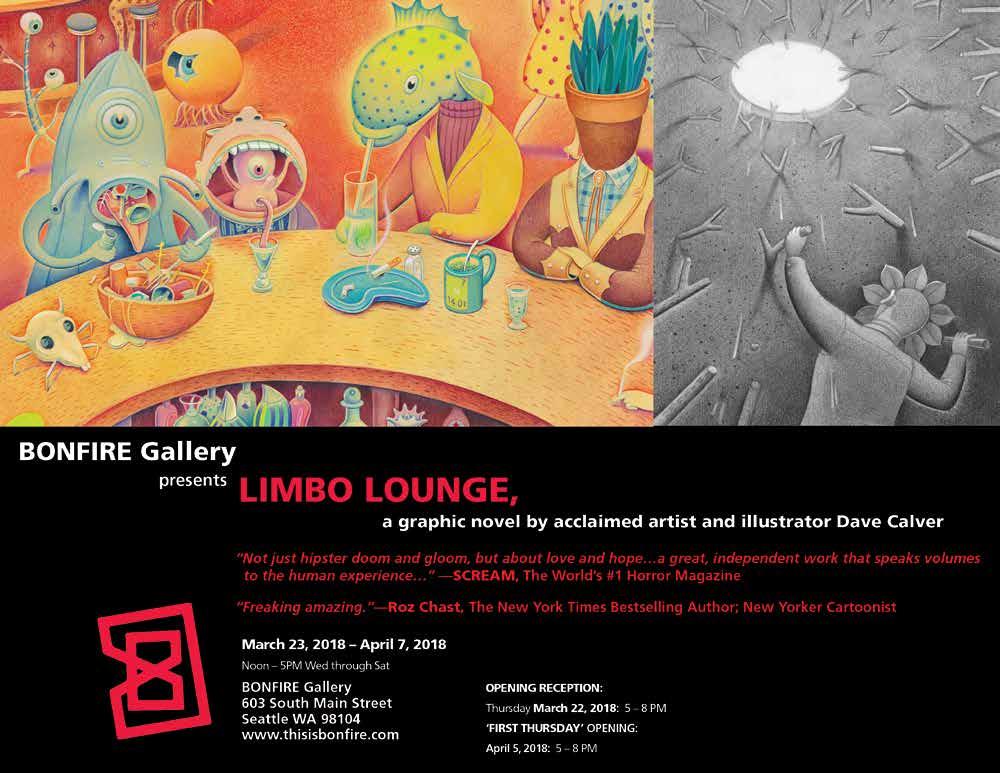
BONFIRE Gallery presents LIMBO LOUNGE (March
22-April 7)
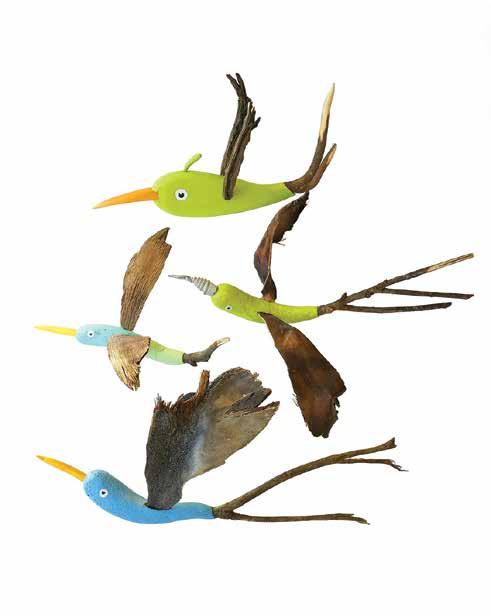
BONFIRE Gallery, located at 603 S. Main St., in the historic Panama Hotel, in the International District, presents LIMBO LOUNGE, a graphic novel by acclaimed artist and illustrator Dave Calver. The LIMBO LOUNGE exhibits selections from some of the 420 art pieces published in the graphic novel, released February 6, 2018 and already on Amazon’s list of best-selling graphic novels.
BONFIRE is open Wednesday-Saturday from noon to 5pm (and by appointment). There will be a First Thursday reception on April 5 from 5-8pm. BONFIRE is a short streetcar ride from Capitol Hill.
“This trippy, surreal, full color adventure brings us from the hot, swirling sands of hell to the colorfully bizarre “Limbo Lounge,” filled with the recently deceased as well as bored oddball interlopers from hell. Meet flower-headed freaks, Bud and Lou. Root for their friend, a spry, elderly nun, Sister Eunice, as she works remotely in Limbo continuing to rid earth of despicable dirt bags. And, by all means, avoid the knife-wielding little pageant-princessgone-bad as she plots for anything she can get at anyone’s expense.”
Artist Dave Calver’s rich, evocative, surreal work has been widely featured from The New York Times and Vanity Fair, to Rolling Stone and Playboy. Taschen recently chose him as one of their favorite 100 illustrators in the world. Huffington Post’s review of Taschen’s ”100 Illustrators,” singled out Calver as their #1 favorite. Published internationally, Calver’s work includes film, sculpture and commercial works.
Here’s some of the critical acclaim that Calver has received:
“A Delightfully Strange Romp Between Life and Death…what is shown is abso -
lutely stunning.” – Bleeding Cool
“Not just hipster doom and gloom, but about love and hope…a great, independent work that speaks volumes to the human experience…” – SCREAM, The World’s #1 Horror Magazine
“LIMBO LOUNGE mixes equal parts Tex Avery and Hieronymus Bosch. Vibrant, Expressionistic madness.” – DoomRocket “Freaking amazing.” – Roz Chast, The New York Times Bestselling Author; New Yorker Cartoonist
For more information about Dave Calver and his work, visit www.davecalver.com
About BONFIRE
BONFIRE connects people through art, culture and design.
BONFIRE is an art integration practice, a community gathering space and gallery, and a design practice. BONFIRE integrates art, culture and design through services, exhibits, advocacy and community events.
Located in Seattle’s historic Panama Hotel, BONFIRE is a place where people gather to connect with art and design.
For Bill Gaylord, owner and founder of BONFIRE, community engagement is the wellspring of civic vitality and professional effectiveness, expressed through his leadership that champions the value of art, architecture, and urbanism in public life. Bill is dedicated to connecting people through art and the power of design.
BONFIRE is open Wednesday through Saturday from noon to 5pm (and by appointment). BONFIRE is a short streetcar ride from Capitol Hill. For more information, visit http://www.thisisbonfire.com/ or call (206) 790-1073.
Courtesy of BONFIRE
Portland Art Museum – Photo courtesy of Portland Art Museum
Oregon Historical Society – Photo courtesy of Share Oregon
Japanese
Photo courtesy of BONFIRE