DR. HEALING HOME ANTHONY
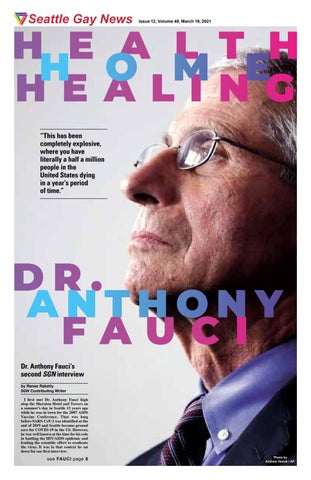
“This has been completely explosive, where you have literally a half a million people in the United States dying in a year’s period of time.”

Dr. Anthony Fauci’s second SGN interview
by Renee Raketty SGN Contributing Writer
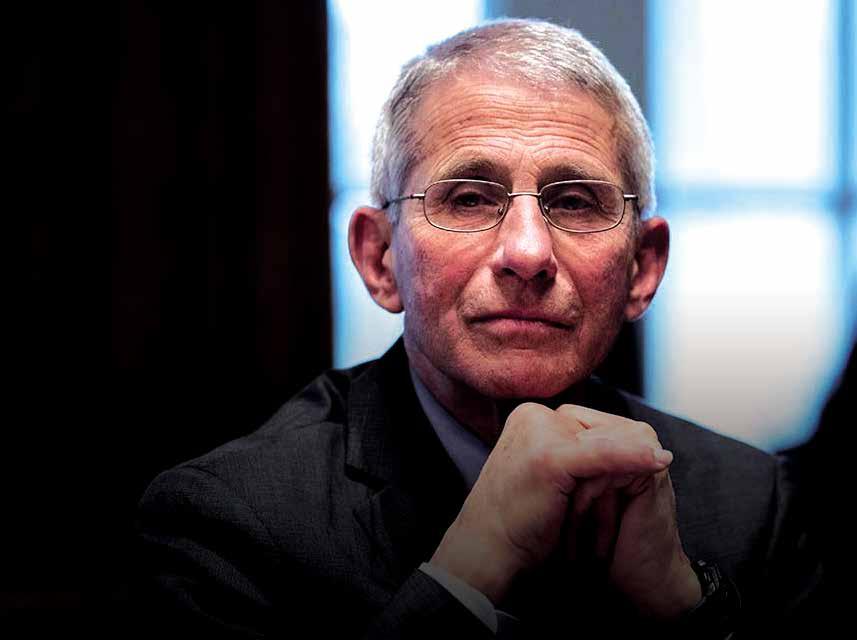
I first met Dr. Anthony Fauci high atop the Sheraton Hotel and Towers on a summer’s day in Seattle 13 years ago while he was in town for the 2007 AIDS Vaccine Conference. That was long before SARS-CoV-2 was identified at the end of 2019 and Seattle became ground zero for COVID-19 in the US. However, he was well known at the time for his role in battling the HIV/AIDS epidemic and leading the scientific effort to eradicate the virus. It was in that context he sat down for our first interview.
Photo by Andrew Harnik / AP


Spirituality

ONE TO MORE THAN HEAL WAY
by Janice Athill SGN Contributing Writer
There are many forms of health and a variety of ways to care for your own wellness. Some people work out at least 30 minutes a day to care for their bodies, and others follow specific diets. When it comes to mental health, we find options that range from therapy to getting your hair cut or nails done on a regular basis.
There are so many ways to practice self-care, but one of the trickiest is spiritual health. A plethora of traditional organized religions attract millions to cleanse and honor their spirit, yet millions of other souls require a more nontraditional approach (using the term “traditional” loosely, since many people are rediscovering a connection with their soul and healing through spiritual practices that predate what we now consider to be typical).
The success of the Crusades ensured that from our country’s beginning, Christianity took hold as the most common and primary practice in terms of nurturing that nonphysi-
cal part of what makes people who they are. However, in 2017 a survey conducted by the Pew Research Center showed that millions of Christians believe in one or more New Age beliefs. Many have turned away from mainline Protestant, evangelical Protestant, or Catholic beliefs in search of something more accepting and with a deeper connection to who they are as a whole.
In a 2015 study, Pew found that although members of the LGBT community feel unwelcome in Muslim, Mormon, Catholic, and evangelical places of worship, the majority still have some type of affiliation with non-Christian denominations and practices. In the interviews and research I conducted, I found that many LGBT people have done their fair share of “religion shopping,” such as transitioning from Buddhism to Hinduism or delving into a wide variety of pagan practices (including the religion of Wicca or nonreligious witchcraft), as well as picking among those that connect with their spirits in order to start their own traditions. Members of the millennial generation have dedicated themselves to honoring their spiri-
tual health in only the ways they see fit. I had the pleasure of speaking with Matt, 18, a Bisexual Transgender person who was cast out of their evangelical church. They have since adopted a blend of Norse and Celtic paganism, the result of their desire to worship the Earth as mother and goddess. Matt practices ritualistic baths to extract negative energy accumulated during the moon cycle as well as positive affirmations with sex magic. “I worked a ton on body image recently…enjoying the sensuality of my own body, appreciating all of the things my body does for me, and changing unhealthy views I had about myself and my own lovability and desirability,” Matt said.
Reiki master teacher, spiritual medium and educator Reverend Damion (Nova) Maddux, 27, is another whose “religion shopping” has led him to the spiritual selfcare he needs. Having survived an abusive childhood for being “too gay,” his current household’s openness to his religious exploration helped him find the path that would honor his cosmic soul. Although he endured
bullying from a young age, he never let someone else’s negativity get him down.
“Did it hurt me emotionally?” he said, in reference to his childhood abuse for being gay. “Absolutely — however, I still knew it had more to do about them attacking me because I was choosing to find comfort even through their distress for whatever reason. I didn’t want anyone choosing oppression to win.” This inspiring young man has educated himself spiritually and dedicated his time to starting his own practice, the Coven of Cosmic Redemption, teaching, healing, and guiding, and he helps lead others through their own trials in life as they seek out a path of understanding and betterment that works for them.
Times have changed, and so have views on religious practices and what constitutes self-care. While physical care — from exercise to facials and acrylic nails — is important, spiritual self-care is equally crucial and doesn’t require religion to be achieved. The most essential part of this form of self-care is finding and committing to what works for you.
Photo by Mikhail Nilov from Pexels
Dr. Anthony Fauci
We used to say this back in the early years of HIV: “It’s the virus that’s the enemy. It’s not the people.” In this situation, we try to get people to appreciate that it’s the virus that is the enemy, and the only way we’re gonna effectively address it is by pulling together in a unified way. Unfortunately, that’s not been the case.
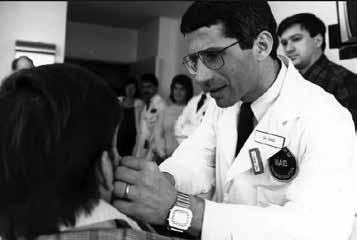
Fauci had led a team of researchers looking into HIV back in 1981 before becoming the director of the US National Institute of Allergy and Infectious Diseases (NIAID) three years later. He has made “seminal contributions to the understanding of how HIV destroys the body’s defenses, leading to its susceptibility to deadly infections,” according to the NIAID website. LGBT icon and early HIV/AIDS activist Larry Kramer, who passed away last May, said of Dr. Fauci’s efforts on HIV/AIDS that he became the “only true and great hero in all of this, in the government, in the system,” acknowledging him “every chance I can, because we certainly got off to a rocky start.”
As the director of NIAID and chief medical advisor to President Biden, Fauci has shown leadership on COVID-19 that will likely far eclipse his legacy on HIV/ AIDS in the minds of Americans and the global scientific community. The New York Times and New Yorker magazine have described him as being among the most trusted medical figures in the United States. He served on President Trump’s White House Coronavirus Task Force and remains a frequent guest on national television programs regarding COVID-19.
In addition to his role at NIAID, where he oversees a $6.1 billion budget, Fauci is the longtime chief of the Laboratory of Immunoregulation and is ranked ninth out of 2.5 million authors in the field of immunology by total citation count between 1980 and January 2021. He has also advised seven presidents during his service in American public health.
I asked Dr. Fauci to speak with me again — virtually this time, from the NIAID headquarters in Bethesda, Maryland — about his new worldwide fame, HIV/AIDS, and, of course, COVID-19.
Dr. Fauci: Hi. Hello.
Renee Raketty: It’s nice to see you again. It’s been a long time.
Fauci: Yes, I’m really sorry. I’m a little late. I’m running in multiple different directions. But it’s good to see you again. How have you been?
Raketty: I’m great! Thank you for asking. I want to thank you again for doing this interview. I know that you’re a very busy person these days.
Fauci: Well, it’s a pleasure to be with you. Happy to do it.
Raketty: I think I speak for the vast majority of our readers when I say that we appreciate your candor and reassuring presence during the ongoing COVID19 pandemic. As you know, we in Seattle have been acutely touched by COVID-19 — especially during those early days of the pandemic.
I often tell people that you appear to be the same person — in a figurative way — that I met high atop the Sheraton Hotel and Towers in 2007. You were in town for the AIDS Vaccine Conference. I was wondering how has your life changed in personal and professional ways since becoming a household name?
Fauci: Well, there’s the good and the bad about that. It’s been a most unusual year, somewhat surrealistic in the enormity of the problem and the acuteness of the problem, which is really in many respects different than HIV/AIDS. The importance and impact of HIV/AIDS is stretched over decades. It was something that started off, you know, insidiously, and there were a few of us in the early years of the ’80s that got involved. Then, as it became clear we were dealing with a global pandemic, it was the gradual appreciation of the globality of the outbreak — a lot of science, a lot of investment — but it was over many, many years.
This [pandemic] has been completely explosive, where you have literally a half a million people in the United States dying in a year’s period of time. It’s completely transformed what I do, because I’ve had to be involved in it from a scientific and from a policy standpoint. It’s been, in many respects, almost a surrealistic year of working literally every day. I have not had a day off in over a year, not a single day off, but it’s important and I hang in there and have the energy to do it. Because of the enormity of the problem and the acuteness of the problems.
You know, a lot of strange things have happened. I’ve gotten caught in something that’s quite different than what we went through with HIV, where we had activists who were confrontational. They were theatrical. They were iconoclastic. But what they were trying to say was very important. They wanted to gain our attention, my attention. They did gain my attention.
When I listened to them, which is one of the best things I’ve done, it became clear that what they were saying made absolutely good sense and that the federal government needed to change the paradigm of how we interacted with the activist community — how we interacted with the entire LGBTQ community — because we were dealing with a very unusual disease that was evolving before our eyes.
The ultimate end game, despite the early confrontation, was a very positive thing. We embraced the community. The community was value added; they made contributions. The AIDS effort was far better off as a result of the initial confrontation, which jolted us into a really enduring relationship with the community and the constituents. That’s really different from what’s going on right now.
What’s going on right now is we’re trying to address an outbreak in the context of very severe divisiveness in society. The confrontation is against the principles of public
health, where wearing a mask or not wearing a mask or being in a crowded situation or not being in a crowded situation has become sort of a political statement of where you are in your ideology, which is really unfortunate. As you know, when you are dealing with a disease, a disease doesn’t know.
We used to say this back in the early years of HIV: “It’s the virus that’s the enemy. It’s not the people.” In this situation, we try to get people to appreciate that it’s the virus that is the enemy, and the only way we’re gonna effectively address it is by pulling together in a unified way. Unfortunately, that’s not been the case.
How that’s affected me is that — since I’ve stood up for the truth, science, evidence-based and database approaches toward everything — I have been, on the one hand, praised and idolized by many and, on the other hand, scorned by others who took a more political outlook at what I’m doing and don’t like the idea that I’m talking about the public health principles that we need to live by if we really want to get this outbreak under the control.
It’s a little bit of a schizophrenic thing, you know: half of the people love me and half of the people hate me, which is something that I did not have to go through with HIV. With HIV …when one’s attention was gained, it was a very good cooperation, collaboration, and synergy between the activist group and the scientists and the regulators.
Raketty: I remember that Larry Kramer, an early HIV/AIDS activist, said about you originally — before he met you — that you were an “idiot.” Then later, he called you a “hero,” when it comes to efforts to combat HIV/AIDS in the early days of the epidemic. You certainly won over the LGBT community in the end there?
Dr. Fauci: Yes. Yes.
Photo by Andrew Harnik / AP
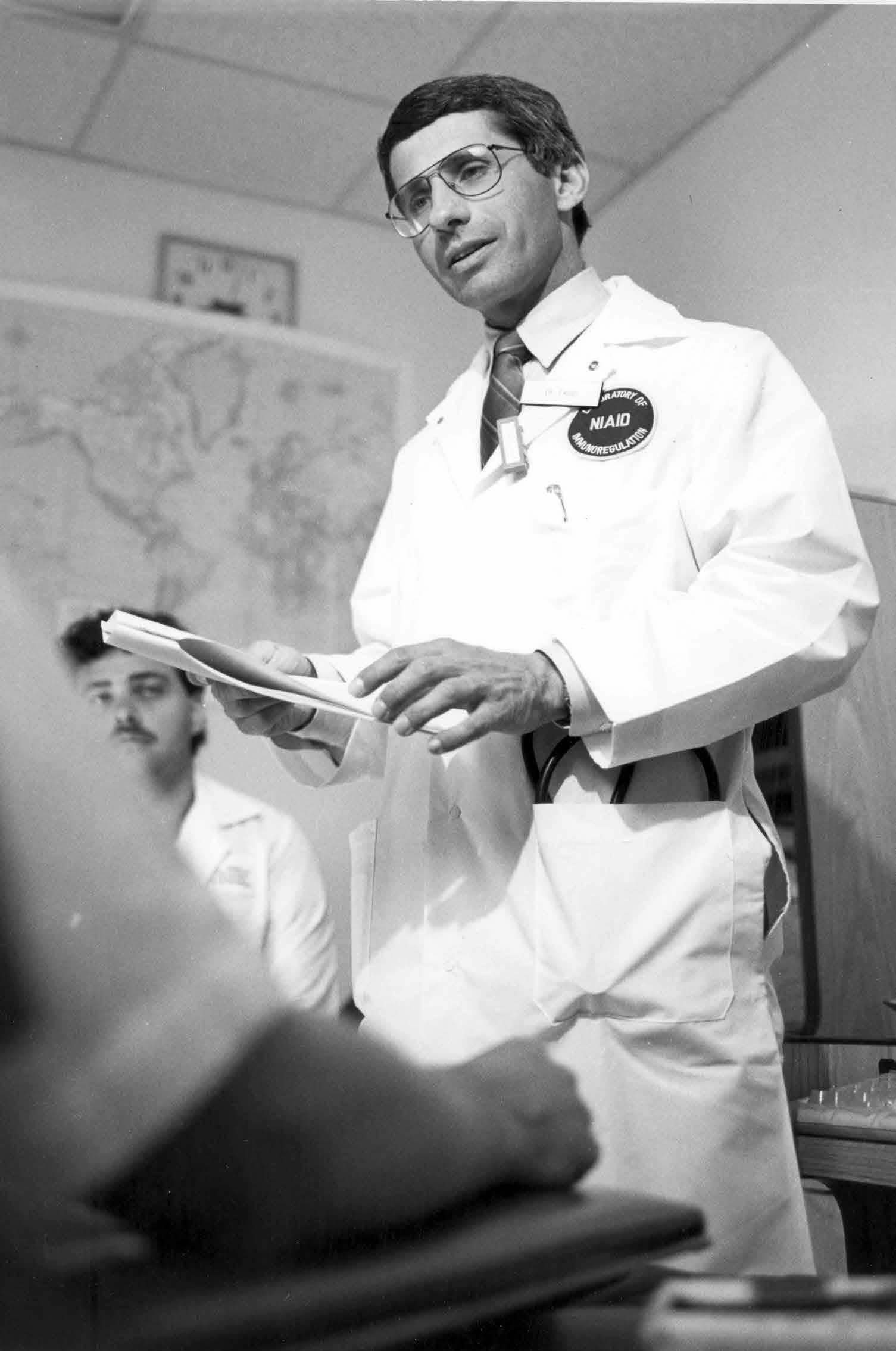
Photo courtesy of NIAID



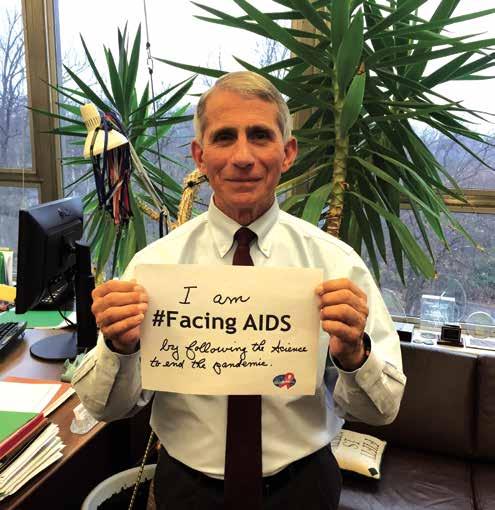
Dr. Anthony Fauci
Raketty: What would you say to that person who’s living with HIV/AIDS, who sees this robust response to COVID-19, how quickly these vaccines have been developed, manufactured, and deployed and wonder why a similar effort wasn’t made in those early days of the epidemic?
Fauci: Yeah, you know, that is a good question but not infrequently subject to misunderstanding — understandable misunderstanding.
Getting a vaccine against HIV is quite problematic because the fact is that the body does not make a very adequate immune response against the virus. One of the principles of developing vaccines… is to mimic natural infection, because when you have diseases like smallpox and polio and measles — even though they cause a considerable degree of morbidity and mortality — at the end of the day, the body very, very, adequately handles those viruses, eliminates them from the body, and leaves you with enduring immunity against reinfection with the same virus.
When vaccinologists like myself and my colleagues back in 1983-84-85 started working on a vaccine — we put in a lot of effort — the body did not give us that proof of concept, because the body does not handle HIV very well.… We’ve invested literally billions of dollars in research trying to develop a vaccine that does better than what the natural response to the virus.
Whereas with COVID-19, even though it’s caused a lot of sickness and death, in the majority of people, the body’s immune system handles it extremely well, eliminates it. At least 30–40% of the people who get infected with SARS-CoV-2 don’t have any symptoms at all, yet their body’s immune system eliminates the virus.
So, all we had to do with COVID-19 was develop a methodology where you expose the body to the very important spike protein — which is the protein that binds to the cells in the upper and lower respiratory tract — and induce a good immune response. Then, all of a sudden, bingo, you get a highly effective vaccine to the point of 94–95%. That’s the reason why there’s a difference, not because of lack of trying. It’s the inherent inability of the body to mount a truly adequate immune response against HIV, as opposed to the ease with which the body mounts a good response — most of the time — against SARS-CoV-2.
Raketty: Now in 1981, you began looking into the virus. Three years later, you’re the director of the NIAID. How could we have stopped the spread of the HIV/AIDS
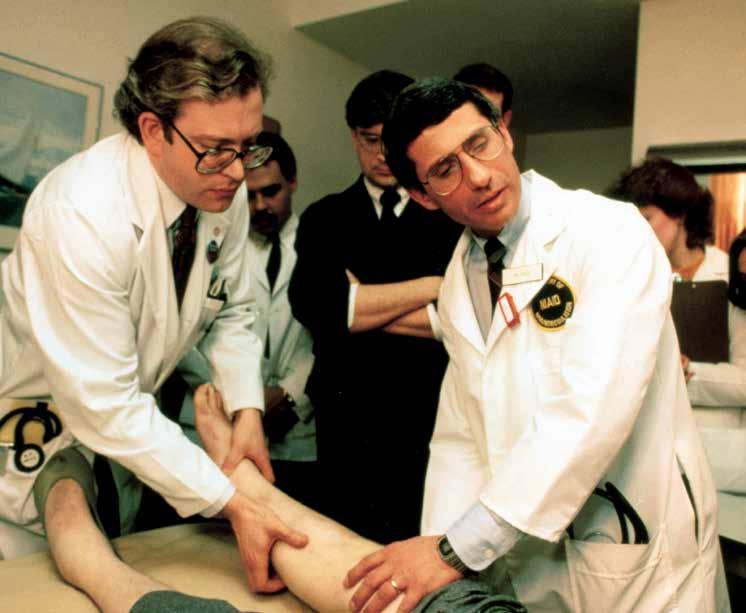

virus in those early years, and what kept us from containing it?
Fauci: …Apart from… injection drug using, which is a disease… if you look at the modality whereby this virus was spread, which was predominantly — not exclusively but predominantly — a disease or infection
of gay men [not only in the United States], whereas internationally, such as in southern Africa, it was predominantly a heterosexual disease, [it was] that we did not have a vaccine. Early on we didn’t have treatment — despite the fact that we have spectacularly effective treatment now, due to a lot of effort that was put in with resources and scientific commitment.
The fact is that the disease is spread by a very natural function, namely, sexual activity. That’s one of the really complicated issues… that many people are practicing risk behavior [but] did not even know they were practicing risk behavior, and then that seeded an outbreak, which then spread really very, very robustly throughout the gay community and then internationally — particularly in countries such as [South] Africa, where the conditions there are amenable to that type of a spread.
I’m not so sure what could have been done. Maybe early on if the Reagan administration had sounded the alarm. Whether or not the gay community would have listened to that is still unclear. We’ll never know, because it never happened. I guess one of the things that could have been done back then would have been to use the bully pulpit of the presidency to get out there and warn people about the danger of the sexually transmitted disease.
Raketty: Now, we won’t get our own “Operation Warp Speed,” but what will it take to end HIV/AIDS in the United States?
Fauci: We put together a plan in 2019 that really got rolling in 2020: to end the epidemic in 10 years in the United States. By implementing the tools that we have, by doing things like better and more extensive utilization of PrEP, including the more easily usable injection — long-acting cabotegravir — to get as many people on the treatment as
possible. To allow treatment as prevention to occur, namely, undetectable equals untransmissible; that’s an important area. Then finally, to get a moderately effective vaccine.
I believe if we do all of those things in a very proactive way, over the next 10 years, we can decrease new infections by 75% in five years and by 90+% in 10 years. I still hold that hope. The anticipation is that by the time we get to 2030, we will have ended HIV as an epidemic. End it as we know it.
I don’t think we’re going to eliminate it… at least not in the very foreseeable future. I think we can end it as a truly threatening epidemic in this country by 2030. If we continue to get people into treatment programs, to get as many people utilizing one form or another of PrEP, and hopefully, [an] at least moderately successful vaccine.
Raketty: I hope you’re right. Julia Raifman at Boston University’s School of Health has said that while it’s unclear that COVID-19 poses additional risks to people living with HIV, it is clear that COVID-19 has disrupted the health system: making it more difficult, more challenging for people living with chronic conditions like HIV. Also, people are having a hard time getting their PrEP. You know, there are disruptions for transgender people: having to postpone their surgeries and experiencing interruptions in hormone therapies. What role can the federal government play to ensure that these disruptions are minimized?
Fauci: That is a good question. I’m not sure the federal government can do much, but perhaps… subsidizing the state’s capability of making sure that the flow of drugs and the availability of testing and a number of the programs of implementation science continue with substantial support.
see FAUCI page 10
Dr. Anthony Fauci
If you’re talking about where the federal government plays a role here, one of the things would be to continue the support for HIV/AIDS, for the NIH [National Institutes of Health], for the CDC [Centers for Disease Control and Prevention], and for the HRSA [Health Resources and Services Administration]. If you look at the plan, in a paper that I wrote with my colleagues in 2019 in the Journal of the American Medical Association, we described all the things that we need — particularly implementation science. It involved multiple agencies, not only not only the NIH but the CDC, the ASPR [Assistant Secretary for Prevention and Response], the HRSA, the SAMHSA [Substance Abuse and Mental Health Services Administration] — a variety of agencies — all of which need to cooperate, collaborate, and synergize in trying to end the epidemic.
That’s what I believe the federal government can do: to continue to support these agencies that are essentially the implementers of the ending of the HIV/AIDS epidemic.
Raketty: I wanted to ask you what role can the federal government play [regarding] Truvada and how these antiretrovirals can reduce the severity of COVID-19 — or is there no relation between taking these antiretroviral drugs and the control of the coronavirus?
Fauci: We’ve been studying what impact [the pandemic] could possibly have on HIV besides the interruption of the services that you appropriately and accurately mentioned several minutes ago… if HIV-infected individuals have some of the underlying comorbidities that make them prone to have a more serious outcome were they to get infected.
I refer specifically to premature aging, because, you know, the older you are, the more likely it is that you’re going to get a severe outcome. You know that persons living with HIV have metabolic issues that make it make it appear, if not in reality, that they are aging a bit more quickly: chronic renal disease, the fact that HIV-infected individuals have more hypertension, heart disease, liver disease — those underlying conditions. When people did analyses of this, they found it wasn’t HIV in and of itself, but it was the comorbidities associated with HIV.
Now, if you have HIV that’s out of control, and you’re immunosuppressed with a CD4 count of 10 and a viral load of 700,000 to a million, obviously, you fall into the category of being immune deficient, which is one of the one of the risks of advanced disease.
Even a person who’s got a CD4 count of 600, 650, 700 and is on antiretroviral drug with an undetectable viral load… if that
person had been infected for a considerable period of time, particularly if they didn’t get on to drugs early on, they could have some of the morbidities that would make it more likely that, not that they would get infected but that they would get a serious outcome.
Raketty: Should the United States and the states in particular, who control the distribution of the COVID-19 vaccines, make people living with HIV a priority for the vaccine, or should the vaccine be targeted to communities with a higher level of HIV infection?
Fauci: You know, it becomes a slippery slope when you designate people by a particular race, a particular ethnicity, or a particular subcategory. I think HIV-infected individuals fall within the category of underlying comorbidities, that is for sure. It’s definitely recommended.
As soon as the priority opens up for people from 16 to 64, which is where most of the people living with HIV fall into, that is a priority for vaccination in level 1C. Some jurisdictions are already at 1C, and many will soon be at 1C. So I think that that prioritization is coming soon.
Raketty: We’ve had an overtly hostile administration, referring to the Trump administration, toward the LGBT community. And as someone who has advised mul-
tiple presidents and sort of seen — in your own history — how the LGBT community felt ignored, what are the public health implications of this overt hostility… and these policies toward the LGBT community?
Fauci: I mean, it’s very natural, Renee. When you have hostility towards anyone, it is detrimental to everything about that relationship — including the health of the person. We are right now in a different era.
It’s become very clear that President Biden and Vice President Kamala Harris feel that there should be equity in every respect — for all people — regardless of their age, their sex, their sexual orientation. I mean, in any aspect… there should be equity. He feels very strongly about that. So, I think you’re gonna see the fruits of that in the coming years.
Raketty: I know the CDC admitted earlier this month in a report that because of long-standing social inequities and a higher prevalence of severe underlying health conditions, sexual minority populations might be vulnerable to COVID-19 acquisition and associated severe outcomes, but [they] also admit that because data on sexual orientation are not collected in existing COVID-19 data systems, the effect of COVID-19 on sexual minority populations is unknown. How can
we address the concerns of the LGBT community if we don’t know the extent of the problem or the areas of concern?
Fauci: You know, that’s a very good point, Renee. I have to get back to you on that. I know we had a discussion like that with the CDC. They gave some reasons why sexual orientation has not been used, and I think it’s almost as if people don’t want to put it down. That’s one of the real problems. I think that may be an inadequate answer. So hopefully we can get an answer for you.
Raketty: It’s often said that privacy issues around orientation or concerns about refusal to answer questions has been used as justification for not including this information on public health surveillance and patient record systems. The CDC itself and its BRFSS [Behavioral Risk Factor Surveillance System], the National Health Interview Survey, and the National Survey on Family Growth have demonstrated the feasibility of collecting sexual orientation data from a civilian, non-institutionalized, population on an ongoing basis. Is it time to standardize the collection of this information? Especially since many states and municipalities refused to do so or declined?
Fauci: Yeah. Likely it is. Again, since that’s not what I do, Renee, I don’t want to get out of my lane, but it sounds like something reasonable.
Raketty: Thank you… What would be your recommendation to someone whose partner is refusing to get the vaccine or has concerns about, potentially, the health effects of it? What can they do? And what can we do as Americans to encourage people to get vaccinated?
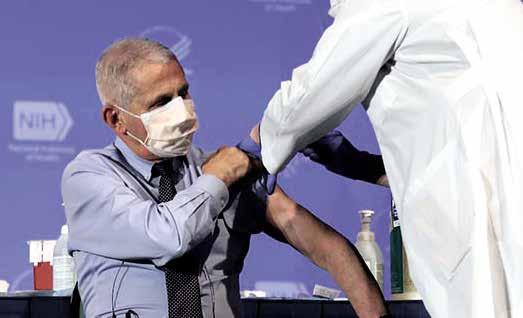
Fauci: I think you need to just explain to them the procedure that went into showing its safety and efficacy: thousands and tens of thousands of people in the trial; the decision about safety and efficacy [having been] made by an independent and transparent process; the fact that so many of us, confident in its safety and efficacy, have gotten vaccinated publicly, including me and the president and the vice president of the United States. So that’s a good reason, I think.
Raketty: Absolutely. Thank you so much.
Fauci: All right. Thank you.
Raketty: You have a great day. Fauci: You too. Take care. Bye-bye.
This interview was conducted in partnership with Unite Seattle magazine, which will include a version of this article in its spring edition. Full video is coming to SGN.org in April.
Dr. Anthony Fauci receives the Moderna COVID-19 vaccine on Dec. 22, 2020 – Photo courtesy of NIH
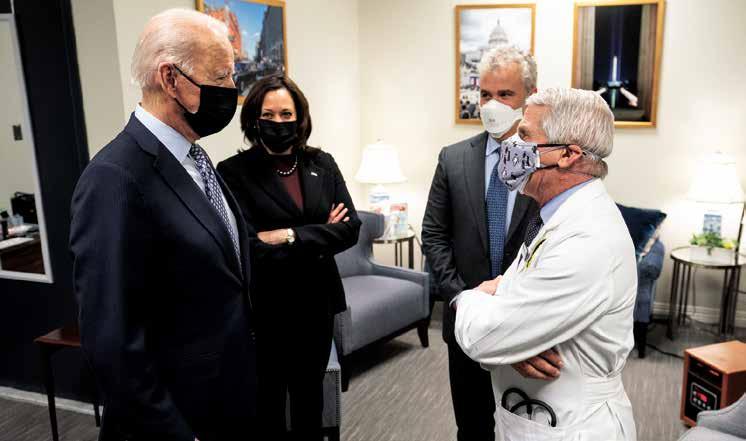
President Joe Biden and Vice President Kamala Harris talk with White House COVID-19 Response Coordinator Jeff Zients and Chief Medical Adviser to the President Dr. Anthony Fauci at the White House Thursday, Feb. 25, 2021, prior to an event celebrating the 50 millionth COVID-19 vaccination. – Official White House Photo by Adam Schultz

Coping with COVID
COVID SEX LIVES GAY MEN’S CHANGED HOW HAS
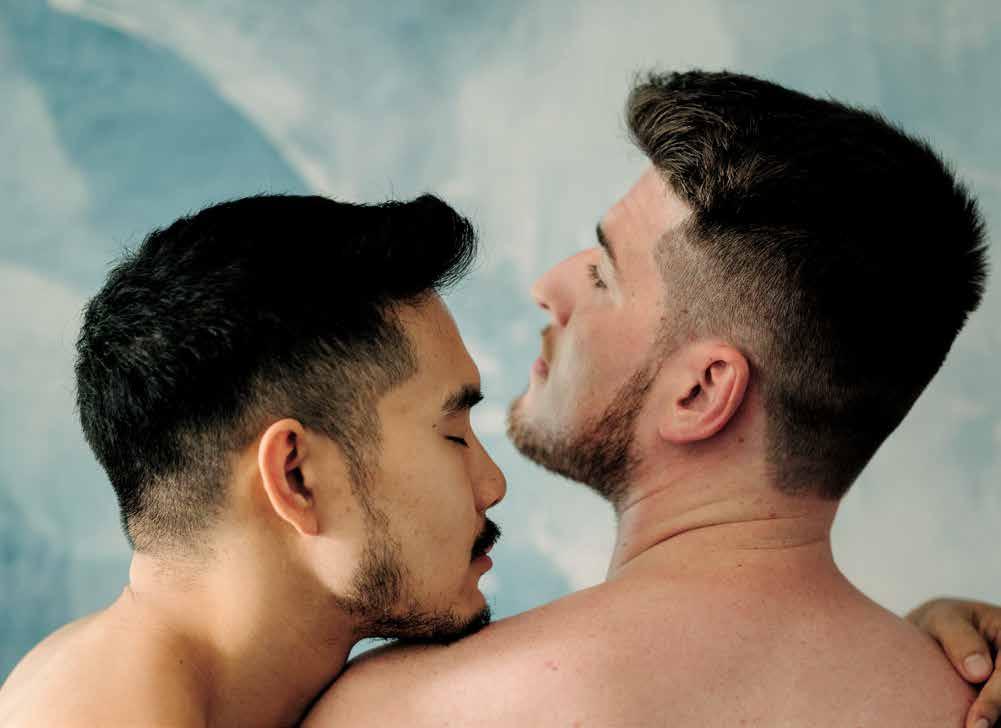
By David Tuller California Healthline
Dr. Jeffrey Klausner, a primary care physician in Los Angeles, has treated gay men for decades. Since the start of the coronavirus pandemic, he said, many patients have so dramatically changed their sexual behavior that they shrug off the need for routine screenings for sexually transmitted diseases.
“They say, ‘I haven’t had any contact since I saw you last, so there’s no need to do any STD tests,’” said Klausner, an adjunct professor of epidemiology and infectious diseases at UCLA.
But attitudes among these patients are shifting, Klausner has noticed, now that California and other states are loosening policies on social distancing. “People are starting to think about a return to engaging [in sex],” he said, “and are asking me, are there ways they can remain safe” from COVID-19?
Concerns about sexual intimacy during an epidemic are universal and not limited to gay men, of course. Public health experts, including those long involved in HIV prevention, recognize that a proportion of all people are likely to ignore or reject categorical mandates about sexual behavior—whether they involve using condoms or limiting contact because of social distancing norms.
“It didn’t work when we had to deal with HIV, and it won’t work in dealing with COVID,” said Pierre-Cédric Crouch, a clinical nurse researcher at the University of California-San Francisco, and an expert in HIV prevention.
The coronavirus is known to spread through oral and nasal secretions but not specifically through sexual intercourse. In New York City, the health department issued sex and coronavirus guidelines that counsel against sex with those outside your household but advise those who choose otherwise to “have as few partners as possible.”
The guidelines, which note that “kissing can easily pass the virus,” suggest that people “make it [sex] a little kinky” by being “creative with sexual positions and physical barriers, like walls, that allow sexual contact while preventing close face to face contact.” In the Netherlands, the government has advised single people considering sex to find a symptom-free sexual partner.
For many gay men, especially in urban areas, sexual exploration with multiple partners is a way of life, whether single or not. Many committed male couples maintain open relationships.
Research supports the notion that gay men tend to have more sexual partners than do heterosexuals. A 2012 review of surveys among adults ages 18 to 39 noted that men who have sex with men (a phrase often used in scientific studies that focus on sexual behavior rather than sexual identity) “reported significantly more lifetime partners than heterosexual men and women at all ages.” In the 35-39 age group, the median lifetime number of sexual partners reported by men who have sex with men was 67, compared with 10 for heterosexuals, according to the study.
Damon Jacobs, a therapist with many gay clients, lives alone in Brooklyn and remained celibate for the first month of the lockdown. At that point, he said, he reached out to a regular and trusted sexual partner.
“He’d also been alone for four weeks except for going outside for groceries, and he also had zero symptoms,” said Jacobs, 49.
“So we got together and started hanging out again,” Jacobs added. More recently, he has met up with several other partners after asking about their social distancing practices. He has also found many of his clients dealing with similar issues after months of being on their own.
“Human beings can cope with certain levels of pain and suffering for a specific amount of time if they perceive an ending,” said Jacobs. After more than two months,
he added, people who have been physically isolated are “starved for touch.”
This content is imported from {embedname}. You may be able to find the same content in another format, or you may be able to find more information, at their web site.
A mid-April survey of more than 1,000 men who have sex with men provided a snapshot of how the coronavirus had affected sexual behavior. While about half reported fewer sexual partners than before the pandemic, only 1% reported more, with 48% reporting no change. (The survey did not ask about the number of partners or whether sex was with a household member.)
Many gay men remain cautious. Lewis Nightingale, a retired graphic designer in San Francisco who lived in New York during the early years of the AIDS epidemic, said he had spent much more time using online apps such as Grindr and Scruff to flirt and sext with other men.
He has received, and turned down, occasional invitations to meet up in person, he said. As an older man, he knows he is in a higher risk group for coronavirus complications. But refraining has been challenging, he said, since expressing himself sexually has played such a big part in his life.
“For a lot of gay men, sex is pretty essential for a feeling of connection, for excitement, for validation,” said Nightingale, who has been in a relationship for 16 years.
Last month, Eric, a 42-year-old male escort in Manhattan who asked that his last name not be used, began weighing when and how to return to work. A former occupational therapist whose husband is a physician, he shut down business in mid-March and finally started seeing clients again earlier this month.
For now, he plans to limit scheduled appointments. He intends to see only those he knows well enough to believe they are truthful about routinely wearing masks and being symptom-free. And he is meet-
ing people at his home rather than in a hotel room or their place. “I figure if I have people coming here, I’m only exposed to that person’s germs,” he said. Eric also plans for now to avoid clients who have attended recent protests against police brutality. “I support the protests 1,000%, but I think they are probably pretty good breeding ground for the virus.”
In advising his gay patients about sexual activity, Klausner, the Los Angeles physician, said he tries to put the risk in context. The majority of coronavirus cases, he noted, have emerged from workplace and residential settings, such as meatpacking plants and nursing homes, as well as big indoor gatherings, such as concerts and religious services. Although the virus can be transmitted one-to-one in more intimate contexts, he said, “individual risk is really driven by people’s potential exposure to these crowded settings.”
A common misperception—that actions can be clearly defined as risky or not risky—can hamper understanding of other people’s actions, said Julia Marcus, a Harvard epidemiologist and HIV prevention expert. As restrictions on social distancing relax, she said, almost everyone will be making choices and engaging in activities that involve some level of risk—yet will likely be judged by various standards.
“There are very few zero-risk situations,” she said. Unfortunately, she added, “the gay guys are going to be shamed for hooking up, while the straight people having dinner together are less likely to be shamed.”
KHN (Kaiser Health News) is a nonprofit news service covering health issues. It is an editorially independent program of KFF (Kaiser Family Foundation) that is not affiliated with Kaiser Permanente.
Photo by Ketut Subiyanto from Pexels
by Vincent Kovar Special to the SGN
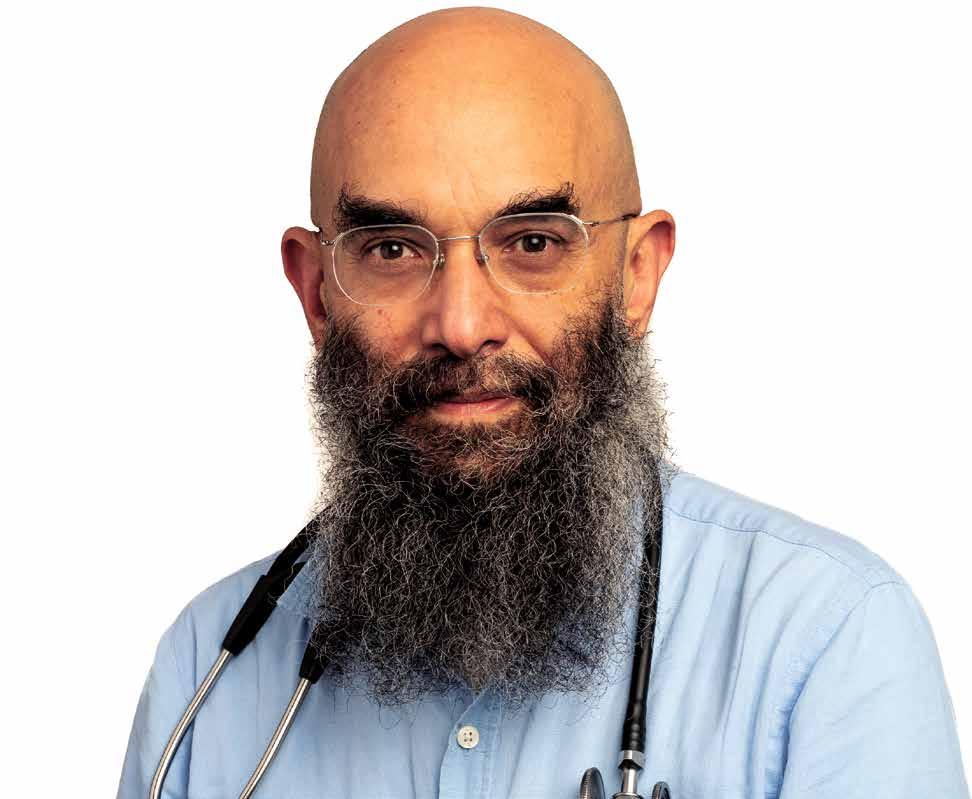
As part of our salute to the frontline workers in the fight against COVID-19, Unite Seattle Magazine sat down for a (virtual) Q&A with Peter Shalit, MD, PhD, longtime LGBTQ+ health specialist and author of Living Well: The Gay Man’s Essential Guide to Health
We discussed the similarities and differences between the early struggle with HIV and today’s fight against COVID-19, how the current pandemic is affecting our community in particular, and what we, as a community, need to be doing right now.
Vincent Kovar: How can the LGBTQ+ community better support frontline workers like yourself?
Dr. Shalit: The wrong answer is by thanking us, applauding us, praising us. These are hollow tributes for us folks who are really just doing our jobs. How you can really help is by wearing masks, observing physical distancing, following state and CDC guidelines to reduce transmission, and not catching the coronavirus or giving it to other people! Our community has suffered enough death and illness from the HIV epidemic, so let’s not let this new virus get us.
Also, by staying well, our community can ease the strain on frontline workers who are becoming overwhelmed by dealing with people who have become ill with COVID-19. The health care system is at the breaking point. Don’t assume that if you get sick, we will be there to care for you. We may be burned out, or sick ourselves from caring for too many folks with COVID.
Kovar: How can the LGBTQ+ history inform our community about COVID-19?
Dr. Shalit: There are many similarities between the COVID-19 situation now and the AIDS situation in the 1980s. Both are deadly diseases, in both cases there is a
“denier” community that doesn’t “believe in” the virus or that it makes people sick, and both have been relatively ignored in their early stages by the federal government while the epidemic caught fire and took thousands of lives.
From within the medical community, now, there are major differences. Back in the early days of AIDS, the care was provided by a self-chosen group of dedicated physicians, nurses, and other health professionals, while many other health care professionals avoided the care of people living with AIDS, either out of fear or perhaps out of prejudice. Today the whole health care community is on the front lines in the COVID-19 battle, and I don’t see any health care professionals avoiding working with patients affected by COVID-19. There is so much of it now, anyway, that [avoidance] would be impossible.
Kovar: Are you seeing the pandemic impact the LGBTQ+ community (outside the medical community) in ways that are different than for the mainstream?
Dr. Shalit: Not in big ways, but anecdotally COVID-19 affects the community in several smaller ways. Here are three that come to mind:
Some members of the LGBTQ+ community, particularly gender-variant folks, avoid medical care except from a few trusted care providers. Visits to the emergency room or hospital may be stressful, because of gender presentation, or samegender partner, etc.
Bars have been a very important meeting place historically for LGBTQ+ people, and obviously they have not been able to function much at all since March. Many iconic gay bars across the US have closed for good. So even when the pandemic is over, that part of LGBTQ+ culture and history will move instead to online support— or else go extinct.
DOC
GAY COVID-19 TALK STRAIGHT
Holidays can be a stressful time for LGBTQ+ folks, and we may want to celebrate with our family of choice or our family of origin; in either case, that won’t be possible (except remotely via phone or video), as we’re urged to stay within our household bubble this holiday season.”
Kovar: If people are HIV positive, are there special precautions they should be taking or any issues with common HIV medications that may complicate things?
Dr. Shalit: It seems that HIV infection is not a huge risk factor for a worse experience of COVID-19, but the data are mixed. There is some evidence that people living with HIV under age 50 do less well with COVID-19 than people without HIV, but that older people do the same whether or not they have HIV. The only issue with HIV medication is: these meds must be taken every single day. The pandemic may disrupt supply chains, and it may be more difficult to get refills in a timely fashion. Everyone taking antivirals for HIV, as well as other essential meds, should keep an extra supply. There are ways to do this, and it is endorsed by the CDC. Please don’t be the person who takes their last pill before refilling the medication, because it might not be available for you when you need it.
Kovar: Gay men (perhaps in particular) may be more likely to keep using online dating apps or engaging in other behavior that is not socially distant. For instance, a local bathhouse was recently reported as describing the use of “glory holes” as a safer option. Even after our current lockdown ends (in Washington State), how do these activities compare to say, going out to a restaurant or entertaining at home?
Dr. Shalit: This virus is mostly transmitted via respiratory exposure, and being unmasked in a closed space for more than 15 minutes with an infected person is the easiest way to become infected yourself.
Sex puts you that much closer to the person’s exhaled secretions. So it would make sense that sex is high risk, but as far as I know there are no data to back this up.
Eating in a restaurant is probably one of the highest-risk activities, because people are sitting in the same space, unmasked, talking, laughing, etc. Entertaining at home (with friends outside your normal “bubble”) is also one of the highest-risk activities for COVID-19 transmission, unfortunately.
It’s hard to compare the COVID-19 risk of these activities to the COVID-19 risk found during sex. All are risky. I think “glory holes” are probably lower risk since the partition would protect you from the other person’s exhalations.
I will say that dating apps, bathhouses, etc. are not struggling in this pandemic, nor are the bugs that cause STDs. In our clinic we are treating as many sexually transmitted infections (syphilis, gonorrhea, and chlamydia) as we were before the pandemic.
An aside to you, dear reader: scroll up to the top of this interview and reread Dr. Shalit’s phrase: “By staying well, our community can ease the strain on frontline workers...” Now is not the time to load up clinic schedules with STD appointments and “it burns when I pee.” Be aware. Be responsible. Support our frontline workers!
Thank you, Dr. Shalit, for this interview and for your ongoing advocacy of LGBTQ+ people’s health in King County.
Dr. Shalit is board certified by the American College of Physicians and the American Academy of HIV Medicine. He is a clinical professor of medicine at the University of Washington School of Medicine and is involved in the training of health professionals students in HIV care and the health care of sexual and gender minorities. His current practice is with the Swedish Hospital network.
Photo by Nate Gowdy
Community ONE YEAR, PUBLIC HEALTH TWO CRISES
SEATTLE LGBTQ ORGS REFLECT ON COVID-19, HIV, AND THE LONG ROAD THEIR SERVICES FACED

by Paige McGlauflin SGN Contributing Writer
Many populations with pre-existing health conditions have spent the last year in uncertainty. Among those are individuals living with HIV.
In the wake of the pandemic’s anniversary, the SGN spoke with several people and organizations with connections to HIV about the adjustments they’ve faced in the last 12 months.
Exact information regarding the virus’s impacts on those living with HIV is limited. Current CDC guidelines suggest that HIV-positive people who are on effective treatment have the same risks for COVID as those without HIV. On the other hand, a National Institute of Health study published last June found that, when compared to HIV-negative patients, there was a “trend toward increased rates of intensive care unit admission, mechanical ventilation, and mortality in HIV-positive patients.” However, the study noted that the results were not statistically significant, and that further study of COVID-19’s impact on HIV-positive patients is needed.
“There’s no data on how it works with HIV or other kinds of immune diseases,” T.J. Elston, a member of POZ Seattle, a volunteer-run social organization for those living with HIV, told the SGN. “When I got vaccinated, the nurse said, ‘You know, there’s really no data, we don’t know how, even if you got the vaccine, how you’re going to be able to go out in the world.’”
HIV-positive status alone is not enough to currently qualify for a vaccine in Washington state, but it could qualify in a matter of weeks, as more vaccination rollout phases are implemented. The NIH has also noted that many HIV-positive people often have one or more comorbidities that increase their risk of severe sickness from the virus.
POZ Seattle
Most organizations that provide HIV testing and support had to drastically reduce their services, and some temporarily closed altogether, with hopes that the now year-old pandemic will subside by May.
POZ Seattle halted in-person meetings when restrictions were implemented. Almost immediately after everything shut down, the group saw COVID-19-related fatalities.
“We lost four people right in the begin-
ning,” Elston said. “They got sick. And they passed away, directly from COVID.”
Elston, who was furloughed from his job at the beginning of the pandemic, began providing assistance to community members, from delivering food (potlucks were a staple of POZ Seattle events) to now assisting with vaccination sign-ups.
“You know, daily, I have people looking at websites, and I and some other people are setting appointments for people,” Elston said. “Seeing if they qualify, first off, and then setting appointments.”
Gay City
Gay City leads in HIV and other STI testing in King County, and saw as many as 5,000 people per year getting tested before the pandemic.
Then “[COVID-19] became a big concern for our community,” Melvin Givens, Gay City’s director of marketing and communications, told the SGN last week.
“So, you know, our whole goal was really to make sure that we could develop some messaging, really educate our community around...best practices and the best ways to stay safe. And not just for themselves but also their families and the community.”
Gay City made the decision in March 2020 to temporarily suspend many of the services its Wellness Center offers.
“We had to put a pause on those services initially, because we needed to really be able to speak with the health department, really understand the dynamics, to fully understand COVID, how it’s impacting the community, because we really wanted to center the health of staff members,” Givens continued.
Gay City reopened in the following months, as further guidelines were established for frontline workers. Services have resumed for four days a week, providing athome HIV testing and other assistance to Gay City’s clientele.
“When [people] come to Gay City, they’re not just looking to be tested. Sometimes they’re looking for other other resources, they may be looking for a medical provider, they may be looking for legal assistance, due to health inequities,” Givens said. “There are so many different things that people can be looking for… And so what our testers do is they connect folks to the resources that they really need to see.”
Entre Hermanos
Staff at Entre Hermanos told the SGN they are seeking to provide those same services to their clients.
“We’re working with the King County prevention department, and we are doing HIV testing kits, so we send the testing to homes,” José Cardona, Entre Hermanos’ community health educator, told the SGN “So we mail our clients; usually they pick up here in the office, or they we have different locations around King County where we distribute condoms, but right now, the the client does call us and say, ‘I need, a box, or lubes, and I need an HIV test.’” Entre Hermanos also mails PrEP medication to clients; STD tests are still conducted in person.
Despite seeing success in adjusting to “the new normal,” Entre Hermanos has sacrificed several crucial services that won’t be revisited until more social distancing restrictions are lifted.
“The consulate of Mexico [has] a mobile consulate, so they travel around the state. And we go in to do the testing for the population, offer PrEP to places that don’t have services,” Cardona said. Areas visited by the mobile consulate include Yakima and the Tri-Cities. “But with COVID, everything’s canceled. So that community is still needed there.”
Washington State Department of Health (DOH) data from June 2020 found that Hispanic people accounted for 24% of new HIV cases, the second-largest demographic by race or ethnicity in the state. Hispanics also account for 31% of all confirmed COVID-19 cases in the state, according to Washington DOH data updated on March 13.
Entre Hermanos also provides legal services for LGBTQ asylum seekers who have fled to the United States, many of whom receive an HIV-positive diagnosis upon arrival.
“The transgender asylum seekers from Latin America have been been through hell,” Robert Foss, interim director of Entre Hermanos, told the SGN. “And so they’re coming in and into detention situations where they’re also treated very badly. And so people have had COVID, they get diagnosed with HIV, while they’re in the middle of their immigration process. There’s all sorts of things that are happening like that. So it’s been a very critical time for the most vulnerable populations... For people who are just getting here, in addition to dealing
with trauma and PTSD, with everything they’ve been through, this health crisis has just made matters worse.”
Looking toward the future
As many as 38% of nonprofits in the US are at risk of closing in the next two years due to the financial crisis that’s come in the pandemic’s wake, according to a study released by Candid and the Center for Disaster Philanthropy earlier this month. The organizations the SGN spoke to were no exception to this reality.
“We’ve done pretty well, by keeping our head above water,” Foss said. “But a lot of nonprofits are really hanging on the edge, and so I know for a fact that the private foundations have been stepping up with that, so that we haven’t had to be in the layoff situations and all of that with regard to COVID. But…one day to the next, we didn’t know what was going to happen for most of last year.”
“Funding-wise, we saw a decrease, and that included the Wellness Center, which was really difficult for us to see,” Givens said. “(Funding has) improved slightly, still not back to where it was, where we were able to provide more. And it’s been a little bit challenging for the agency through that. But I will say, with support from our donors, from the community, we’ve been able to make it through.”
It was also announced in August 2020 that the building Gay City operates in had been sold and would be redeveloped, leaving the organization to seek a new home.
“It definitely is stressful,” Givens said of the impending move. “But, you know, we’re seeing this as an opportunity to really create a new home for Gay City, a space that’s very accessible and welcoming to and affirming for all of our community members.”
Looking toward the future, Gay City and Entre Hermanos are both eager to expand their services. POZ Seattle hosted an outdoor, socially distanced walk in midFebruary, its first non-online gathering of any kind in over a year.
“We tried a distanced walk around Green Lake, about a month ago, right before the snow,” Elston said. “About ten people just got together, who hadn’t seen anybody for over a year. And we walked in a group, you know, distanced, around Green Lake, and it was fun. Yeah, so do other things, outside, open-air. Just to get people out of the house.”
Photo by Nataliya Vaitkevich from Pexels




Pets & Mental Health
AT-HOME “PAWSITIVITY”
PETS & MENTAL HEALTH IN 2021
by Kylin Brown SGN Contributing Writer
Seattle is home to hundreds of thousands of pets, with an almost never-ending supply of puppies in the classifieds and at least 25 Capitol Hill cats sneakily watching me from their apartment windows on my walks to QFC.
In 2011, the Seattle Animal Shelter found that there were about 153,000 dogs (compared to about 107,000 kids) in households within the city limits. Ten years later, having felt the full force of the pandemic in the greater Seattle area, it is not atypical to hear a news story on surging pet adoption or fostering rates. Just last August, the Seattle Times reported shortages across local shelters.
At the same time, great declines in mental health have been indicated in psycho -
logical studies over the last year. They have found our pandemic lives to be “stressful” and note the potential for “traumatic effects” on human mental health. Last May, one poll found that about 78% of adults say the coronavirus pandemic is a significant source of stress in their lives, and overall increases in stress were found when compared to previous yearly polls. Not only are we feeling more stressed, we are feeling more lonely and more depressed. Even though there are thousands of results when searching for “self-care” online, the suddenness of quarantine has had effects that cannot be solved by an athome spa night. More time at home and less access to our usual human companions has taken its toll on us, and therapy is being sought out wherever possible.
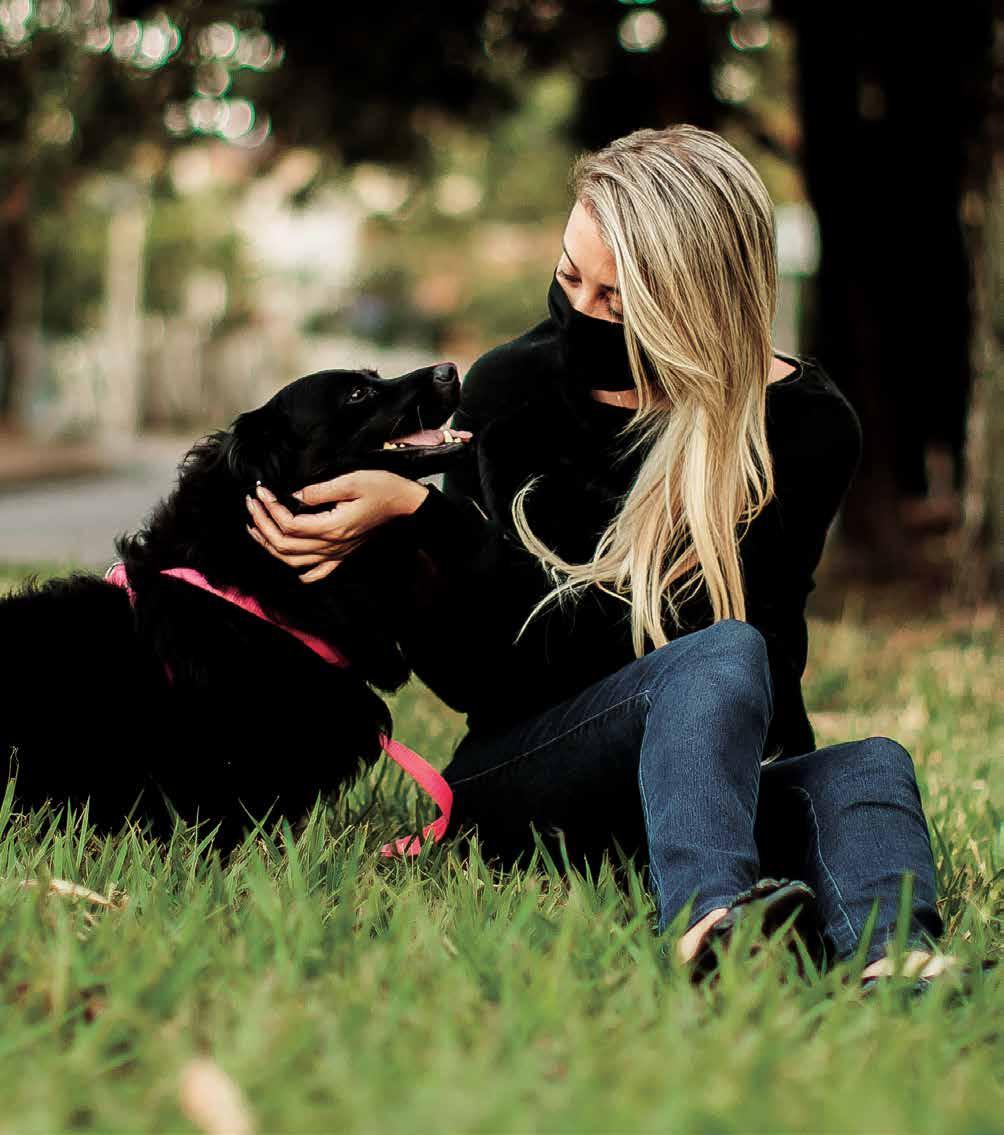
But pets are great companions, especially during socially distant times. According to the CDC, “[Pets] can increase opportunities to exercise, get outside, and socialize.” It also states that pet ownership in any form can cause decreases in blood pressure, cholesterol, and feelings of loneliness.
Moreover, according to one Washington State University study [http://bit.ly/3lpe85f], they can lower our stress hormone levels quickly and effectively, just from interaction and affection. Patricia Pendry, an associate professor in WSU’s Department of Human Development, cites a 2019 study of students done by her department.
“Students in our study that interacted with cats and dogs had a significant reduction in cortisol, a major stress hormone,” stated Pendry.
Pets can also make you feel needed. According to an American Psychological Association study on self esteem, “pet owners reported several other positive attributes relating to mental health and general wellness compared to non–pet owners, including reduced feelings of loneliness, less of a tendency to be preoccupied with their problems, less fearfulness, and better physical health.”
The results of a comprehensive review of the effects of pet ownership published in BMC Psychiatry showed that pet owners feel an intense connection to their pets, that pets contribute to mental health work in multifaceted ways, and that they can especially help in times of crisis.
So if the pandemic has affected your mental well-being, consider getting a pet!
Photo by Helena Lopes from Pexels
Health & Medicine ADVANCING CARE HEALTH RELATED GENDER-
by Dr. Colin Fields Special to the SGN
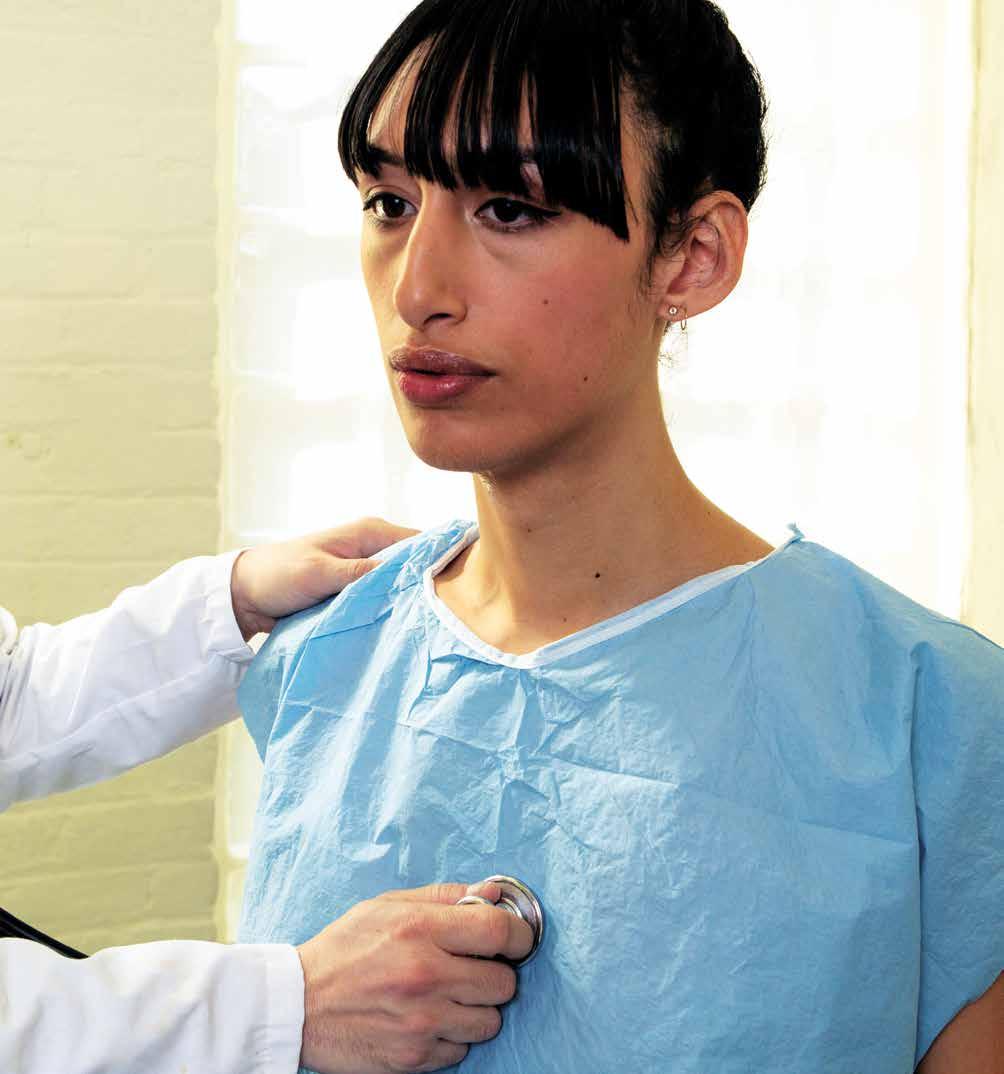
The medical profession continues our work to deliver quality, inclusive care that meets the needs of gender-diverse populations, especially as we more fully understand the impact that gender dysphoria has on a patient’s total health, including depression and anxiety. With gender dysphoria recognized as a serious health issue, health systems can better support appropriate and equitable care for gender-diverse people and overcome social and medical inequities.
The World Professional Association for Transgender Health (WPATH) is expected to release updated standards of care by this fall that may include new medical criteria for gender-affirming facial procedures. At the beginning of the year, the Kaiser Foundation Health Plan of Washington announced that it has broadened its medical criteria for gender-affirming facial pro -
cedures, which include a broad range of procedures based on each person’s unique needs, including chin augmentation, facial hair removal, jaw recontouring, and tracheal shaving. Clinicians and patients work together to create the appropriate care path based on medical necessity.
When we announced the new medical criteria for facial harmonization procedures, the response from patients was immediate, reinforcing the need and demand for these life-changing services.
To deliver gender-affirming care with dignity and sensitivity for our transgender, nonbinary, and gender-diverse patients, a gender-health social worker coordinates care with a specialist team consisting of clinicians in plastic surgery, primary care, adolescent medicine, gynecology, urology, mental health, social work, physical therapy, speech therapy, and nursing. This team collaborates to provide patients with gender-affirming health care services,
including hormone consultations, surgical evaluations, psychological services, facial harmonization, top surgeries, and lowerbody surgical care.
And we realize that our expertise is just one step of many that are needed. We need to include our patients’ perspectives and experiences to ensure a responsive approach to addressing the needs of gender-diverse patients. That’s why we’ve established a Gender Health Patient Advisory Panel to create an ongoing dialogue and deliver an exceptional experience for our patients with gender-related health care needs. The advisory panel will help inform innovation and care improvement, improve cultural responsiveness among care teams and staff, and ensure that care decisions are driven by patients’ best interests. The panel will begin meeting this spring, and we’re excited to learn and grow from it.
Kaiser Permanente’s commitment to diversity, equity, and inclusion fosters a
workplace that supports LGBTQ employees. We are proud to be recognized for the 15th consecutive year by the Human Rights Campaign Foundation, which awarded us the highest possible score on its 2021 Corporate Equality Index [www.hrc.org/resources/ corporate-equality-index] and named us a Best Place to Work for LGBTQ Equality.
We’re proud to continue our work in the medical field to provide truly inclusive care. At Kaiser Permanente, we have prioritized ongoing training and improvement to deliver on that promise. We hope our learning will help move the field further and faster. Our patients, who inspire us daily with their bravery and authenticity, deserve it.
Dr. Fields specializes in family medicine, obstetrics, and women’s health at Kaiser Permanente.
Photo courtesy of The Gender Spectrum Collection
DEXCOM G6 AD WHY HAS LOST ITS GRIP SUPER BOWL LV'S
WITH REALITY
by Hannah Saunders SGN Contributing Writer
As a Type 1 diabetic of twenty years, I can say that I have experienced it all. From the disabling low blood sugar episodes that make me feel like I am about to slip into unconsciousness, to the stubborn highs that leave me groggy and irritable for days to follow. Welcome to my disease, and to the disease of 1.6 million fellow Americans.
Type 1 diabetes (T1D) is an autoimmune disease. The precise reason as to why T1D occurs is not known, although scientists believe that it has something to do with a foreign invader that causes the immune system to attack the pancreas, rather than the actual invader itself.
That’s what we think happened to me, at least. When I was about four years old, I got really sick with a cold. A few months later, my dad recognized diabetic symptoms his sister had had while growing up (it’s also a genetic disease that runs in my family). I was taken to the doctor, who believed my cold triggered my type 1 diabetes. As a result, I’ve been living without a functioning pancreas ever since.
Because my pancreas simply cannot produce its own insulin, a hormone that helps regulate the amount of glucose in one’s bloodstream, I must take it every single day through other methods. I was on multiple daily injections for 19 years, but I currently absorb my insulin through an insulin pump. If I am unable to receive any insulin, I will die within 72 hours due to an abundance of glucose.
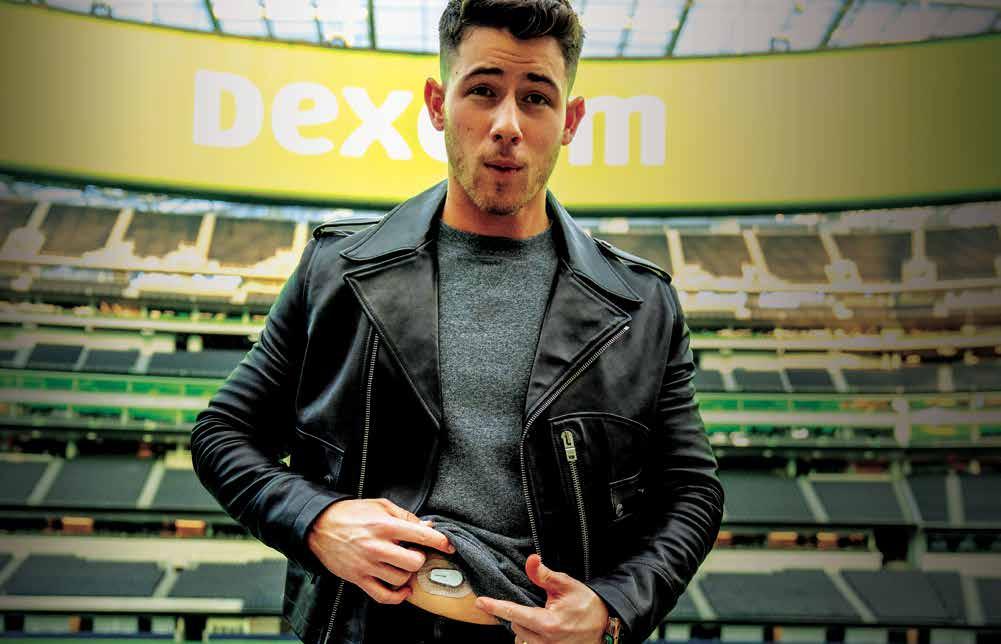
In order to calculate my insulin needs, I must obtain blood glucose (BG) readings throughout the day. Back in 2019, I was introduced to a new technology called the Dexcom G6. You know, the one robot part that Nick Jonas recently showed off in a Super Bowl LV commercial? Yeah, that’s the one! Instead of having to prick my finger with a needle and squeeze blood out onto a monitor to receive my blood glucose readings (5-8 times per day), I was able to wear the most recent version of Dexcom’s continuous glucose monitors (CGM), which did the majority of the work for me.
The Dexcom G6 sensor session lasts for 10 days, and unless you hit a nerve or some muscle, you rarely feel it; the sensor is an adhesive with an attached needle that rests under the skin. A transmitter is inserted
into the sensor that sends blood glucose readings to the receiver, which can be read on a small device provided by Dexcom, a cellphone compatible with the Dexcom app, or a compatible insulin pump. The G6 provides blood glucose readings every 5-15 minutes, can detect BG trends, and send alerts about high and low BG levels. Even though my endocrinologist says I have great control of my disease, I can confidently say that this medical device has saved my life on numerous occasions.
“So if this device is so awesome, then why are Type 1s bummed out about the Super Bowl LV Dexcom ad?” you may ask. Well, the answer is simple. As much as this magnificent piece of technology improves my quality of life and makes managing my disease so much easier, the answer is and will always be insulin.
Insulin is the equivalent of water to Type 1 diabetics, and the insulin pricing crisis throughout the United States has made it impossible for many diabetics to even think about getting a Dexcom G6, which is also financially prohibitive.
The price of the Dexcom G6 can vary depending on insurance. On average a three-pack of sensors costs $349, while one transmitter (that lasts approximately two months) is $237. In short, one month’s supply of the Dexcom G6 costs on average $467.50. Now let’s take a look at insulin pricing: one vial of insulin costs $174 to $300, and most diabetics use anywhere from 2-5 vials a month on average.
If you’re already paying $900 per month for insulin, on top of basic life necessities, obtaining a CGM isn’t really an option for the majority of diabetic folks out there. What’s even more worrisome? The shocking increase of insulin list prices has resulted in the deaths of handfuls of Type 1 diabetics within the past couple of years.
Unfortunately, one in four insulindependent diabetics ration insulin due to price gouging. And in that summer of 2019, before I hopped on the Dexcom G6, I found myself doing just that, something that at the time, I didn’t even know existed.
Usually I would order insulin through Express Scripts for cheaper pricing, but I was working three jobs while taking college classes, and I found my insulin to be the same price at Walgreens, so I got into the habit of picking up my life-juice there
due to convenience. After a long day at work, I ran over to Walgreens, and the pharmacist told me my long-acting insulin was given to someone else because I picked it up a day late, but that they would have more in stock tomorrow. As soon as I got home, I ordered the insulin via Express Scripts. When I returned to Walgreens the following day to pick up my one-month supply, the pharmacist told me my bill would be $294 instead of the usual $24. I demanded answers to questions, such as “Can you please tell me why my Lantus increased from $24 to $294 in one month?” and “I cannot afford thism and I don’t have any more at home. What do I do?” The best the pharmacist could do was politely smile and tell me to go to the ER for the night, to which I replied, “I cannot afford $294 for my medication, and the ER bill is about $1,300. That is not an option at all for me.” And it truly wasn’t. I spent that night and the following night without any long-acting insulin. Even with fantastic insurance, I realized that this can happen to any diabetic.
I spoke with a Type 1 diabetic, Laurie Sunshine, about her take on the Superbowl LV Dexcom Ad. “Frankly, this device has been lifesaving. The cost is so prohibitive even with insurance that I was forced into Freestyle Libre 14 usage [another brand of CGM]. Perhaps the knowledge of this unit might be lifesaving for a patient who isn’t aware that they exist. But I really find that hard to believe,” explained Sunshine.
Sunshine went on to express more concerns about Dexcom’s financial motives: “It appears that the company is just interested in selling more units, not the cost factor, which is disheartening. Makes the thought of a cure being made available pretty much not in my lifetime, sadly. Companies whose major propellant is money aren’t the ones that are going to help with a cure or even management of the disease.”
Riki Herrera, a type 1 diabetic of 16 years out in California, mentioned that when she saw the advert she “wasn’t amused; it felt like an insult honestly.” Herrera described how she uses the Dexcom G6 and that she liked how the ad spread awareness but disliked how it neglected to mention how expensive it is. In addition, Herrera described some issues with the Dexcom G6, such as “sensor issues — sometimes it’s inaccurate, sometimes they randomly fail,
sometimes the applicators fail.”
The Super Bowl LV Dexcom commercial advertised the device as being fingerprick free, which I find to be misleading. When the sensors fail or the readings are inaccurate, I have to prick my finger. When my blood glucose symptoms differ from the readings I see from my CGM, I have to prick my finger. When Dexcom changed its overnight sensor replacement shipment to standard ground shipping only, and I ran out of sensors due to repeated sensor failures, I had no choice but to resort to fingerpricks for a week. With that being said, there are definitely fewer fingerpricks. But zero? A false statement that needed to be addressed from a customer of a year and a half.
Overall, the spread of awareness about diabetes and diabetes management is fantastic. What disabled community doesn’t want to see more awareness about their disability in the media? Yet many other type 1 diabetics and I remain frustrated with how Dexcom has assisted the diabetic community, or its lack of assistance.
Because what’s a $5.6 million 30-second advertisement worth when 75% of the audience it’s directed at cannot even consider it as an option due to its steep prices and inaccessibility?
Sources: www.healthline.com/diabetesmine/ cgm-access-pharmacies
https://care.diabetesjournals.org/content/41/6/1299
https://investors.dexcom.com/newsreleases/news-release-details/dexcom-andnick-jonas-unveil-first-ever-super-bowlcommercial
Hannah Saunders is a contributing writer for the Seattle Gay News, as well as co-producer and editor of the podcast One Strain at a Time. She received a journalism degree with a minor in public health from Emerson College in Boston and began her journalism career covering the cops and courts beat for seven local newspapers in King County. Her writing interests focus highly on crime and health, with an added passion for photography. In her spare time, Hannah enjoys skateboarding to the oldies station.
Photo courtesy of Dexcom


Outdoors

TRIANGLE
RECREATION LOOKS AHEAD TO THE UPCOMING SEASON CAMP
by Josephine Baird SGN Contributing Writer
Through the thick and thin of the coronavirus pandemic, Triangle Recreation Camp, “the Northwest’s premier recreational campground that is Gay, Lesbian, Bisexual, Transgender, and Queer owned and operated” has continued to safely serve the community at a limited capacity.
In order to ensure camper safety, TRC has been complying with current state regulations. Last season, the camp reduced its capacity to 25%. It also required all campers to wear CDC-approved masks at all times outside of the campsite and keep six feet from members of different households. Moreover, it added additional camp oversight, in order to ensure that state and camp regulations are being followed.
The start of each season is weather dependent, but it usually opens in April and closes in October. For the 2021 season, the plan is to open in stages, first to full regular members, then to limited members. In order to become a member, you must identify somewhere on the LGBTQ+ spectrum; in order to be on the grounds, you must be a member of TRC and 21 or over.
The general membership usually numbers around 600 people. Before the pandemic, on an average weekend, TRC would host 100–150 campers, although during special event weekends, such as the Black Forest event or Leather Weekend, there are as many as 400 people. The 600 members are pretty evenly split between US and

Canadian citizens, but due to coronavirusrelated restrictions, Canadian members were not able to enjoy TRC last season.
TRC owns a total of 80 acres, but most people camp on the lower 40, with the upper 40 being completely undeveloped. The camp boasts many types of sites, including the option of maintaining a seasonal site, which campers can share with other members. Most members set up a kitchen and participate in “glamping” culture, with many venturing home to work on the week-
days and then returning to camp for a weekend of outdoor fun and community. TRC was started in 1975 with what Charlie Hill, vice president of marketing and public relations for TRC and a volunteer since 1992, described as “a desire for a community outside of the normal everyday gay city life.” TRC is unique in that it is 100% owned by members and is run as a nonprofit. “We aren’t out to make money,” Hill said. “Our goal is to create a safe space for the LGBTQ+ community to socialize in
a wonderful, beautiful outdoor space.”
Because TRC is member-owned, the last year has been hard on the organization. Working with limited capacity has caused financial difficulty. TRC is currently looking for more members to extend the community and continue its mission.
Although the last season was slower than usual, Hill has been working tirelessly, along with the rest of TRC’s volunteers, to continue to serve their members throughout the uncertainties of the last year, working on projects around camp, such as the potable water project. TRC has never had drinking water available on site, but that will soon be remedied.
Hill said, “The overall thing that stands out most with TRC is that it truly is a community.” But for all the introverts simply wanting a peaceful weekend under the stars, there are also plenty of spots to be completely on your own.
Although the future is still uncertain due to the pandemic, there is hope that TRC will soon be able to function at a larger capacity. According to KING-5 News, all Washington counties are scheduled to move to Phase 3 on March 22.
With the coronavirus situation slowly getting better and the arrival of spring, TRC is ready to continue serving its community. As Hill said, “There is no place better in the world to be on a sunny day.”
For more information on TRC, visit www.camptrc.org.
Photos courtesy of Triangle Recreation Camp
Coping with COVID
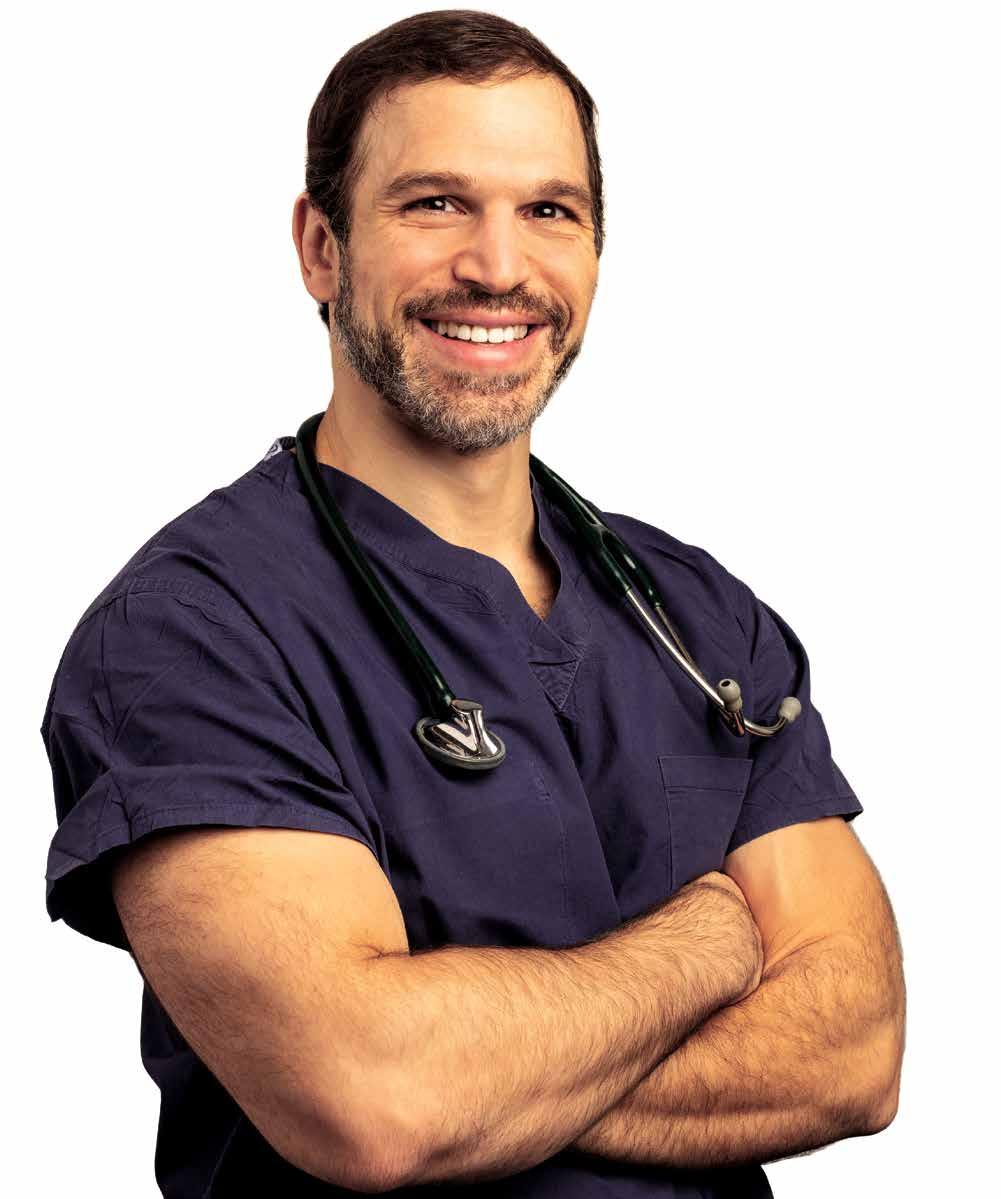
LIMIT PUSHED TO THE
HOW COVID CHANGED ME
by Dr. Hisam Goueli Special to the SGN
I wanted to help. On March 25, 2020, I drove to New York in my Fiat with my dog to join the fight against the COVID pandemic.
For the past seven months, I treated corona virus-positive adult and geriatric patients requiring in-patient psychiatric care. And although I knew the American healthcare system was broken, the pandemic acutely highlighted the remarkable inequities in health services and outcomes.
Patients with lower socioeconomic status were disproportionately hospitalized on the units and three times more likely to die.
Witnessing death was not new to me; what was were the countless unnecessary deaths, the virtual goodbyes via tablets, and the inability to meet the acute needs of my patients. I continue to struggle to forget the faces of patients gasping for air, the blueness in their lips as their lives slipped away, and the sadness of my colleagues who struggled to not take each death as a personal defeat.
While I am not a quitter and cannot
think of my life without caring for people, I cannot deny that the pandemic changed me.
How do you process a mother of four being separated from her children for suffering from severe psychosis, despite having no psychiatric history or risk factors? Or the heartbreak of telling a family— in the same week—that both their mother and father had died? Or the fear of catching an insidious illness while begging for the equipment you need to care for patients?
The person I was eight months ago is now lost to me. After practicing for ten years, for the first time in my life, I am
by
wrestling with feelings of hopelessness and helplessness regarding our failed response to COVID and the moral injury of witnessing the worst political failure of my lifetime.
Dr. Hisam Goueli is a Seattle based, board certified, psychiatrist and is affiliated with multiple hospitals in the area, He received his medical degree from University of Wisconsin School of Medicine and Public Health. Dr. Hisam, born in Minneapolis to Egyptian immigrants, married his Peruvian partner, Roberto in 2012.
Photo
Nate Gowdy
A PROFESSIONAL
by
REFLECTS CARE DURING GIVER COVID
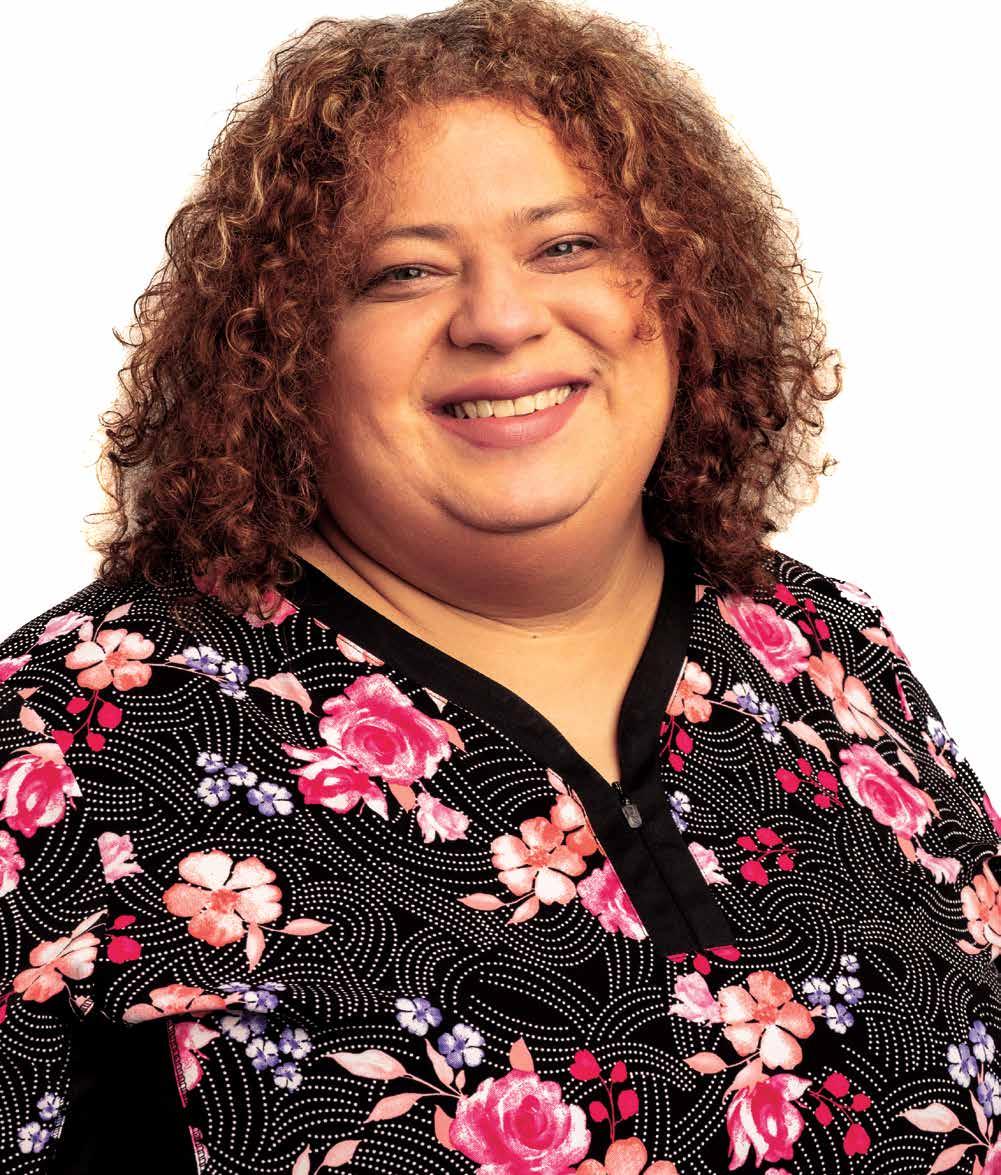
by Renee Raketty SGN Contributing Writer
I was sitting with my slumbering client in the Swedish Edmonds emergency department in late November as I overheard a nurse inform the attending physicians and nurses that another patient had tested positive for COVID-19. A lot of other people there, complaining of a variety of ailments we recognize as symptoms of the virus, could have also been positive.
I spent ten hours there that day, just a fraction of all the time I’ve spent in hospitals, doctors offices, and COVID-19 testing sites since the pandemic began. This such the life of a caregiver.
In Washington State, professional caregivers are licensed as registered or certified nursing assistants or home healthcare aides. I possess none of these licenses, how-
ever (although I do have counseling and phlebotomy licenses), because I am exempt from the requirements, having obtained a Fundamentals of Caregiving certificate while working at a twenty-bed mental health facility. Still, I am honored to consider myself among these healthcare professionals.
The life of a caregiver is demanding work, both physically and emotionally, even under normal conditions. With the addition of the uncertain course of this global pandemic, the disruption to routines, and the potential for infection, what caregivers do on a daily basis can only be described as miraculous.
Unsurprisingly, many of us found that our personal and professional stressors only grew during those early months, while at the same time the requirement to physically distance led to the collapse of our
support systems. This increased psychological stress has led to physical fatigue and depression among many caregivers.
I credit my employer for helping me through my own challenges. The Camelot Society, founded in 1970, is a nonprofit organization providing residential services for adults with developmental disabilities. It operates fourteen group homes and supports living sites across King and Snohomish Counties. It released its comprehensive COVID-19 plan has kept most residents and employees safe from the virus. In addition, the management provided virtual social opportunities and even a scavenger hunt involving our cars.
While caregivers are often overlooked when we discuss healthcare heroes, they are the most vital link between patients and the care they need. Therefore, it was heartwarming when the Refugee Artisan Initia-
tive delivered over a hundred hand-sewn masks to caregivers and patients alike. Likewise, a lot of folks worked overtime at the county and state levels to ensure we had the personal protective equipment we need to keep everyone safe.
Caregivers are special people. They often put others before themselves. During a pandemic, the risks involved in this kind of work are amplified manyfold. However, caregivers also leave work satisfied, knowing that their contributions give immeasurable comfort during unprecedented times.
Renee is a successful writer and photojournalist living in Seattle who found herself working as a caregiver during a global pandemic. She is also a longtime LGBT civil rights activist and former managing editor of the Seattle Gay News
Photo
Nate Gowdy





Coping with COVID
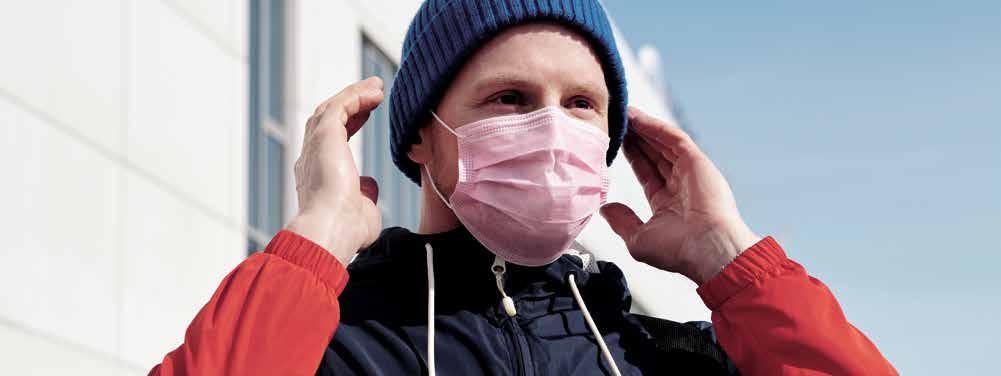
by Vincent Kovar Special to the SGN
A swiftly spreading plague whose methods of transmission—for a time at least— are mysterious and debated. An equally infectious spread of bigotry, suspicion, and shame. Methods of prevention that are unevenly adopted. A deluge of quack cures, uncaring politicians, inequitable resources. And, of course, deaths—too many deaths.
The LGBTQ community has seen this before. We have survived it before. We not only survived but came out the other side (out of the worst of it anyway) forever changed.
And now, this pandemic has given us the opportunity to change yet again.
Can we do that in isolation? Actually, queer people have always been limited when it comes to finding support and building community. First, it was our sexual
COMING OUT TENNIS OF COVID
orientation in general: it was us vs. the rest of the straight world. Then, we self-segregated by race, dress, mannerism, age, body type… More than any other group, we tend to form microcommunities: bears, pups, twinks, and other labels, who exclusively love/fuck/socialize with specific types.
Maybe—in this lonely era of social distancing—we should ask ourselves if it’s time to start unifying again. Who will we be when we emerge from our COVID cocoons? Will our favorite bars survive?
How about our clubs, sports teams, and fandoms? Will we fall back into our patterns of “only X” (“masc-4-masc,” “21–31,” etc.) or “no X” (“no Asians”)?
Or maybe we can use this break, this fresh start, to create a new vision for LGBTQIA+ people. Maybe we can use this reset to change.
Maybe, just maybe, this Pride month,
we, as a rainbow of communities, can take steps to start a new life.
We can take stock of things outside our own lives. Being trapped—working at home and not being able to socialize in person—can make us myopic and reinforce our existing beliefs. Or it can be a time to challenge them.
Right now is a great time for that. Right now is the time to write long email threads that last for days, or to actually call someone on the phone. Right now is the time to create relationships that are longer than a one-night stand.
Now is also a good time to start believing that other queer people have good in them. Even the ones who seem awful, judgy, bitchy, and stuck up. Believe there is good and even something really attractive in everyone.
Don’t just seek to join a community:
create one. Find others who dream and hope. Invite those with whom you have nothing in common, those who have been marginalized by “only” or “no” lists. Join the dream of a better world. Group video chats, group pages, email threads, online clubs...
Join the dream of a better world.
Yes, this all sounds a little utopian. Depression rates are rising, substance abuse is increasing, and loneliness is endemic, but the momentum behind the systems that made us feel alone in a crowd is fading. HIV/AIDS brought us out of the closet and thrust us into the light in a way that gay liberation never did. We will emerge from the recovery phases of COVID, but this time, rather than the focus being on the straight community accepting us, it should be on us accepting each other.
This is can be another coming out.

by Will Taylor
2012 USPTA PNW
THE SOCIAL, SOCIALLY DISTANCED SPORT
Professional of the Year and Tennis Professional at Pacific Clinic
Tennis is amazing! It is played by people of all ages, and it connects you to individuals all over the world.
Playing tennis has many health benefits, and during these socially distanced times, with spring just around the corner, it’s one of the best ways to get outside and do something! While playing 78 feet apart, you’ll be able to safely get a physical workout while mentally testing yourself.
Tennis can also help increase agility, increase aerobic capacity, maintain higher energy levels, and improve your overall health. According to Better Health Australia, playing one hour of singles can burn between 420 and 600 calories.
Sometimes the toughest part of trying something new is figuring out how. In an effort to make it easier, I have outlined some basics:
Equipment
Racquet: If you have a racquet, great! If not, no problem. Technology has come a long way in the last 20 years, and newer racquets allow for more power and more control. Look for a graphite racquet, all one piece and not aluminum.
In the greater Seattle area, there’s Avanti Sports and Sturtevant’s. They specialize in performance racquets; if you are serious about the sport, you’ll end up visiting one or the other. For some good racquets that won’t break the bank, check out Dick’s Sporting Goods. If you know what you are looking for, sometimes Goodwill has some amazing finds!
Shoes: You don’t need a pair of tennis-
specific shoes to play. At least not right away. Some non-marking soles, a good rubber toe, and good heel stability for ankle support are what I would recommend. Usually a pair of basketball shoes gets the job done. I would stay away from runners, though.
Tennis balls: A can of three will run you anywhere between $2.50 and $4.00. Penn and Wilson are the two leading ball manufactures that I would recommend. You can find these in almost any sporting goods section.
Athletic clothing: Anything that allows you to move easily and hold one or two tennis balls will suffice.
Courts and locations
Option 1: In Seattle there are over a hundred tennis courts in parks. These are free, and you can find their locations online at www.seattle.gov/parks/reserve/tennis-
court-reservations. It’s the easiest way to get out and play!
Option 2: If you are looking to get an introduction using an instructor, a public facility such as the Tennis Center Sand Point has classes for beginners that have never swung a racquet, and refresher classes for those that are getting back into the game. Its website (tenniscentersandpoint.com) is very easy to navigate. It also has a pro shop to get you set up quickly.
The Amy Yee Tennis Center is also a good place to book a court: (206) 684-4764.
Option 3: A private facility can be expensive but comes with some extra benefits: it will be easier to get court time, more available for instruction, and easier for plugging into the next levels of play, USTA match play, club leagues, and tennis socials.
Now that you have an idea of how to get into the game, I would encourage you to try!
Photo courtesy of Norma Mortenson from Pexels
Photo courtesy of Anna Shvets from Pexels
OF ROLL FOR SURVIVAL

by A.V. Eichenbaum SGN Contributing Writer
“I have this pet theory, which is that found family is inherently queer,” says podcaster and performer Monica Domena as she looks out at me from a Zoom call screen. We’re discussing the intersection between the LGBTQ+ community and the Dungeons & Dragons (D&D) renaissance. Why have the two communities embraced one another?
“Generally, we have had tough relationships with our blood family,” she continues. “Therefore, the idea of choosing your own family, or the people around you becoming your family, is appealing. The ability to do that in D&D is something that draws queers into it.”
Domena plays Top Card, a lesbian Tabaxi (cat person) warlock, on the D&D actual-play podcast “Save the D8.” Besides excellent cast chemistry, part of what makes the show special is that the majority of the cast are queer and/or mixed-race.
Often, when one imagines a group of people playing D&D, the picture is of a bunch of straight white dudes in a basement somewhere, but as the game grows in popularity, this is less and less the case.
Domena attributes some of that to the freedom that comes with role-playing a character. “I’ve never played a D&D character who’s straight,” she says. “I roleplayed a straight person for 20 years — I don’t want to do that, but [instead] just be an elf.”
Shows like “Save the D8,” “The Adventure Zone,” and “Dimension 20,” among others, have crafted relatable queer characters of all stripes and built inclusive communities around them. The publisher of the game, Wizards of the Coast, has introduced more queer-friendly options in its latest guidebooks, given players the option to choose any gender in the online platform D&D Beyond, made nonbinary NPCs (nonplayer characters) available in-plot, and included a gay wizarding couple in its 2020 release Tasha’s Cauldron of Everything,
among other things. These seemingly small touches are a huge step in the representation of a increasingly diverse community — and after over a year in lockdown, having that community has kept a lot of Seattleites sane.
Skyler Gahley, actor, Twitch streamer, and another cast member of “Save the D8,” says that having that community helped them through some of the hardest parts of quarantine. Like many of us, their whole life was turned upside down at the start of the pandemic. “I was in a show, I was acting, and I was bartending. If it weren’t for this, I wouldn’t have been able to chase my dreams as hard as I am now.”
On “Save the D8,” Gahley plays the Tabaxi cleric Odd Thrill, twin sister to Domena’s Top Card. In their latest D&D endeavor, “Hunt for the Rackium Claim,” streamable on Twitch, they play the Wild Magic barbarian Giddy Cantor, a playful nonbinary satyr.
Gahley’s brand of streaming is one of almost goofy positivity, fostering a com-
munity of other nonbinary creators and creating a safe space for mental health awareness over the past year, all while struggling with their own bipolar disorder in the middle of lockdown. “It’s been a symbiotic journey for a lot of people. It’s hard to feel alone, and I have the capability to reach out to other people. Inviting people into my life and being real with them lets them be real with me.”
The internet has long been a refuge for the queer community, largely because many of us grew up in a place that didn’t accept us for who we are. With most social interactions being conducted online over the last year, some people, Gahley included, are feeling more comfortable in their own skin than ever before. “I became more vocal about my sexuality, who I am, and my gender. A large part, maybe half of my online community is trans,” they say, smiling. “It feels like home.”
Photo courtesy of A.V. Eichenbaum