James Carl Moeller of Vancouver passed away on March 8 from progressive supranuclear palsy.
by Andrew Ashiofu Special to the SGN
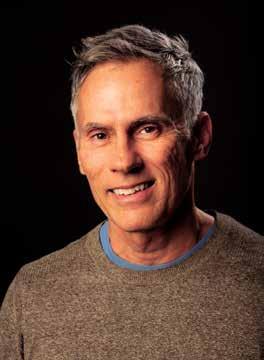
Jim Moeller – Courtesy photo
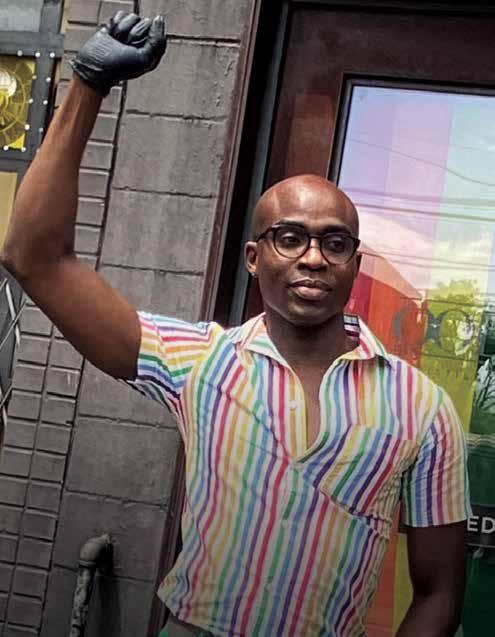
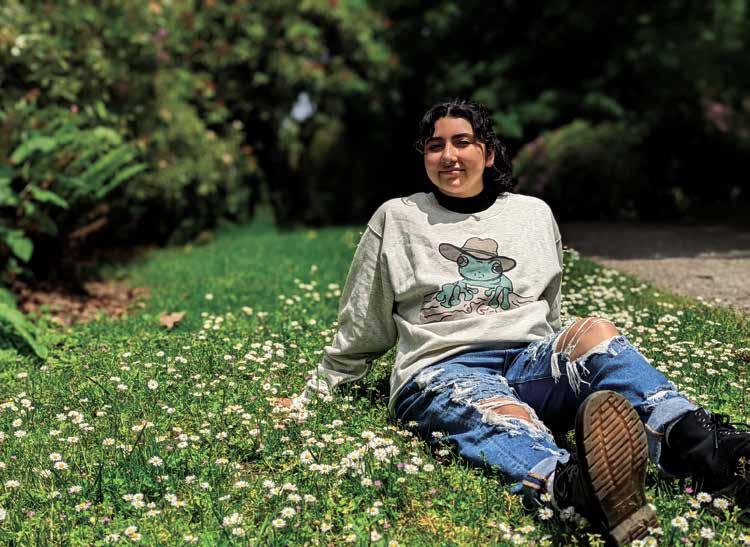
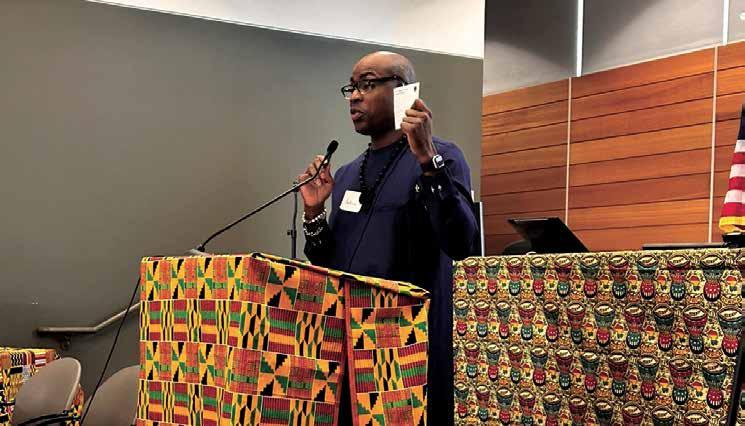
Andrew Ashiofu – Courtesy photo
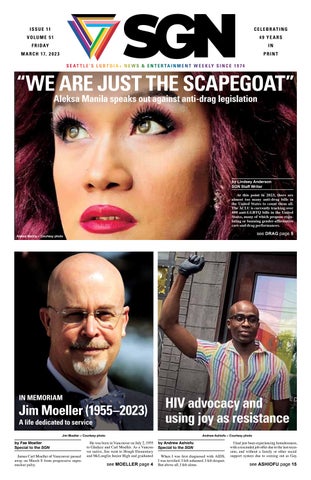
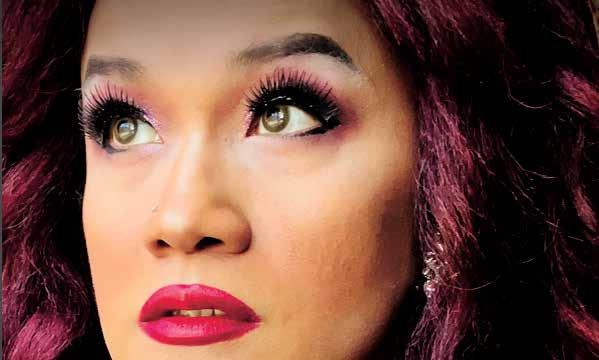
Aleksa Manila – Courtesy photo
by Lindsey Anderson SGN Staff Writer
Local News
MOELLER
continued from cover
from Fort Vancouver High school in 1973. He developed a rich singing voice and a love for music as an active member of the theater and choruses.
His parents did not believe in failure to launch, so for his graduation they gave him a one-way ticket to Australia to visit his sister, who was teaching there. He was to make himself useful and earn enough to get himself home, and then they would pay for his college. He accomplished this task by delivering telegrams, sometimes singing them. His trip home with his sister in 1974 was another adventure: a 72-day overland bus journey from Kathmandu to London. At 18, it was an eye-opening experience. Jim always loved a road trip.
He received degree in psychology from Washington State University and did additional graduate study in social work at Portland State. He developed a specialty in chemical dependency and worked for Kaiser as a chemical dependence counselor for 30 years.
But his greatest passion was his commitment to service. He was one of the first openly Gay men to serve on a city council and as a state representative in Washington. He was elected to the Vancouver City Council in 1995, and in 2002 as a state representative from the 49th District. He held the seat in the legislature from 2003 to 2017, serving on many committees, including as co-chair of the Joint Committee on Veterans and Military Affairs. Jim was elected by his colleagues in the Washington House of Representatives as speaker pro tempore in 2011 and each succeeding year until his retirement.
As a representative, two of the many successful bills he co-authored were the Slayer Statute — which said that no murderer may
benefit as a result of the victim’s death — and the Vulnerable Adult Protection Act. He was a man of gentle strength and humor who served as a representative for all of his constituents.
Jim was involved in many community organizations. He was a lifelong member of St. Paul’s Lutheran Church, a founding member of Clark County Pride and the
YMCA Diversity Task Force, and chair of the Southwest Washington Health District Board of Directors, to name a few.
Jim lived his life well. He was known for his smile, his giggle, his subtle sense of humor, and his commitment to help others. He loved a good red wine, chocolate, traveling, and of course, his bow ties.
He is survived by his sister Fae and many
cousins and friends. There will be a memorial service for Jim at St. Paul’s Lutheran Church, 1309 Franklin Street, Vancouver, WA, on April 1, 2023 at 1 p.m., followed by a reception at the Academy, 400 E. Evergreen Blvd., Vancouver. In lieu of flowers, please consider making a donation to Martha’s Pantry, the Vancouver Food Bank, or CurePSP.org.
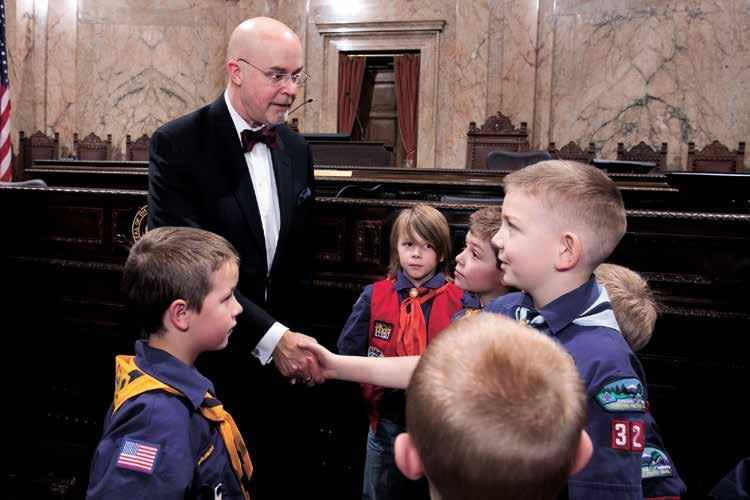
State Rep. Jim Moeller meets with Cub Scout Pack 320 during their visit to the State Capitol in 2013 – Courtesy photo
House Speaker Pro Tempore Jim Moeller looks out over the House Chamber moments before the start of a 30-day special session of the Legislature Wednesday, April 29, 2015, in Olympia – Photo by Elaine Thompson / AP
Anti-LGBTQ+ legislation hitting close to home
In Washington state, two bills are currently awaiting committee hearings. The first, House Bill 1233, sponsored by five Republicans, seeks to prevent Trans inmates in Washington prisons from living in quarters that align with their gender identity.
The second, Senate Bill 5653, is sponsored by Sen. Phil Fortunato, a Republican from District 31 in southeast King County. This bill will not only force teachers and administrators to out Trans kids to their parents but also prevents any discussion of “sexual orientation including gender expression or identity” in kindergarten through third-grade classrooms.
Similar bills are being introduced and working their way through state legislatures across the country. As close as Idaho, bills have also advanced that will make it illegal for people to perform in drag outside of adultonly venues. Idaho House Bill 265 seeks to fine performers deemed “offensive to an average person” up to $10,000 at any venue where persons under 18 may be present.
The onslaught of homophobic legislation has caused a stir among the LGBTQ+ community and allies. Outraged people, from TikTok influencers to Academy Award–winning directors Daniel Scheinert and Daniel Kwan, have expressed their opposition to the array of bills.
Aleksa Manila speaks out
Recently, Seattle-based activist and influencer Aleksa Manila took to social media to amplify her voice.
“Keep your eyes and ears open! Hearts steadfast and minds clear! They’re going after us one by one to weaken our allyships among the oppressed and marginalized!” Manila wrote online. “They’re starting by politicizing gender (drag x trans*) weaponizing it as a distraction; soon it will be against cis women, Black, Indigenous, and POC! It’s not about the children; if it was we would’ve taken care of gun violence immediately.”
servative arguments against drag relies on fear-mongering. Currently, politicians are attempting to characterize it as obscene. Conservatives want to shift the connotation of the word “provocative” from “thoughtprovoking” toward “dangerous.”
“Drag and cabaret, and as with many art expressions, are catalysts for sensitive issues but critical [ones] for discussion,” Manila said to the SGN
“Current legislation that erroneously adds the term ‘adult’ creates a salacious and malicious intent and a distraction from the real issues. It preys upon the general public, who have knee-jerk reactions to controversial terms,” she added.
The language in many anti-LGBTQ+ bills is very intentional. Words such as “adult” or “offensive” evoke hasty judgments. The language of conservative conversations around drag leads many to form opinions on the topic before considering the purpose or history behind the art form. “This is a disservice and insult to the American people’s intellect,” Manila said.
The importance of art Drag, like any other type of performance, is an expression of art. Like any other singer or dancer, each drag performer has their reasons for expressing themselves on stage. For Manila, drag is a way to explore gender identity and expression in a safe and celebratory environment.
“Drag has the power to draw attention, to capture people’s hearts and minds. On the surface, it might seem purely for laughs, but there is an inherent sense of empowerment through its courageous visibility,” she said.
“The purpose of drag is multifold. There is the individual’s motivation and a collective purpose to bring forward the harsh reality of its history of condemnation of gender expression associated with the larger LGBTQ+ civil rights movement and the current role of art as a means of communication to advance education and entertainment.”
This is only the beginning
“This isn’t just about drag queens reading to children — this is about all gender access and equity. This will lead to more sexist and racist policies and laws that will further perpetuate discrimination and make it legal to do so.”
detachment from the issues of red states, but apathy can become dangerous quickly.
“This is a scary time and should give us a warning that this is only going to get worse,” Manila warned. “This is not just about drag artists. We are just the scapegoat. Soon they will go after the LGBTQ+ community at large, and soon enough, all marginalized groups, including Black, Indigenous, and People of Color communities.”
Now threats to LGBTQ+ safety and expression are even looming over Washington.
“LGBTQ+ [people] and allies in our home state should be on the alert,” Manila added. “This is a strategic move, it’s a voting season ahead, and it inflames negative conservative views. This isn’t just about drag queens reading to children — this is about all gender access and equity. This will lead to more sexist and racist policies and laws that will further perpetuate discrimination and make it legal to do so, not just in public, the workplace, schools, and church but in the comfort of our homes or living spaces.”
They just don’t get it
The greatest irony Manila sees in the drag debate is the fact that those who are most fervently against gender expression are those who haven’t even attempted to understand it.
“Unfortunately, the most vocal about specific issues are people who have zero to minimal knowledge or understanding of the same issues they oppose,” she said.
social norms on gender, sexuality, body positivity, and freedom of choice, it scares conservative views,” she said. “It doesn’t require further analyses. This is about elevating womanhood, feminism, and gender fluidity. That scares people who do not uphold these truths.”
Self-care
When it feels like all the hatred in the world is concentrated into one specific group, going about daily life can feel impossible.
Manila is coping by taking everything one day at a time. She finds joy in her community. She is especially thankful to be living in Seattle. “I am grateful that I share a city that is generally safe for LGBTQ+ [people] and POC. I do not take this for granted. But I am constantly aware of my surroundings. I pay attention to where my community convenes — where we live, work, and thrive,” she said.
Manila believes finding community and exercising self-care are the best ways to persevere. “Being a social worker and therapist, I feel lucky to learn about coping skills that I can adopt with my routine. Self-care is absolutely important. Truly being with the community, being part of events, drag shows, and Pride festivals are the ways I feel I am a part of. Thus, not feeling alone.”
For anyone searching for community, resources, or a listening ear, feel free to reach out to Seattle’s Gay City at https:// www.gaycity.org, the Lambert House (for LGBTQ youth) at https://www. lamberthouse.org, or you can text “home” to the national LGBTQ+ crisis line at 741741. DRAG continued from cover
As a drag performer herself, Manila believes that the language surrounding con-
As new laws targeting the LGBTQ+ community continue to pop up in every corner of the United States, Manila believes voters must remain vigilant. In Washington, people often feel a sense of safety and
The basic understanding many conservatives have of drag is what they see on the surface: a celebration of overt femininity, a transgression of gender norms, a positive reaction to sexuality. “Because drag is such a visible form of expression that challenges
Photo by Joshua Huston
Local News
Coach wins court case, will return to Bremerton
The debate over on-field prayers
by Mike Andrew SGN Staff Writer
The Bremerton High School football coach who successfully challenged his school district’s policy on public prayer will get his old coaching job back.
The Bremerton School District announced on March 13 that Joe Kennedy will be rehired as assistant football coach. Kennedy was the plaintiff in a First Amendment freedom-of-religion case decided by the US Supreme Court in 2022.
Kennedy started coaching at Bremerton High School in 2008. Soon after he started his job, he began kneeling in prayer on the 50-yard line at the end of games. Initially he prayed alone, but players and other students began to join him. Eventually he began delivering sermons on the football field.
The school district notified Kennedy that his actions violated district policy against public religious observances on school property. Kennedy claimed that he only prayed after the school-sponsored function — the football game — was over, and in any case that his prayers were constitutionally protected by the First Amendment.
The school district put Kennedy on administrative leave in 2015. Kennedy did not reapply for his coaching job for the 2016 season, and soon after moved to Florida to care for a sick family member.
However, he did indicate that he wanted his old job back, and he sued the Bremerton School District, charging them with violating his First Amendment rights.
In court, the school district argued that it did not prohibit Kennedy from praying but only restrained him from “demonstrative religious activity” that is “readily observable” by students or members of the public. Since Kennedy was acting as a public school official, the district added, his prayers might interfere with the First Amendment rights of players and students who might feel pressure to join him.
Kennedy’s lawyers countered by pointing to on-field prayers by football stars Mo Salah and Tim Tebow.
During questioning by the justices, the high court’s three liberal members tried to portray the school district’s policy as a simple boundary issue.
“This doesn’t seem like a new problem,” said Justice Stephen Breyer. “It just seems like a line-drawing problem about the 50-yard line just after the game, when the school said, ‘Don’t do it on the 50-yardline, do it 10 minutes later.’”
Justice Clarence Thomas, on the other hand, asked about a hypothetical coach who takes a knee during the national anthem in protest of racial injustice. Would the school district consider that action government speech?
“That has to entail looking at the manner, the time, and the place of the speech, and how reasonable observers would see it, whether they would view that as speech as a government employee,” the district’s attorney replied. “And so, in the hypothetical that you just gave, that’s the sort of thing, given that moment during the national anthem in the center of the field and making this public act and public statement, that would be regulable.”
The court found 6-3 in Kennedy’s favor, laying the basis for him to be rehired.
According to the Seattle Times, Kennedy has completed the school district’s HR paperwork, and the district is awaiting his fingerprinting and background check results.
The school board will approve football coach contracts on August 3, and Kennedy will be included in coaching staff communications and begin coaching in midAugust, the district said.
The district also announced last week that it had reached an agreement to settle a claim for Kennedy’s attorney fees for $1,775,000.
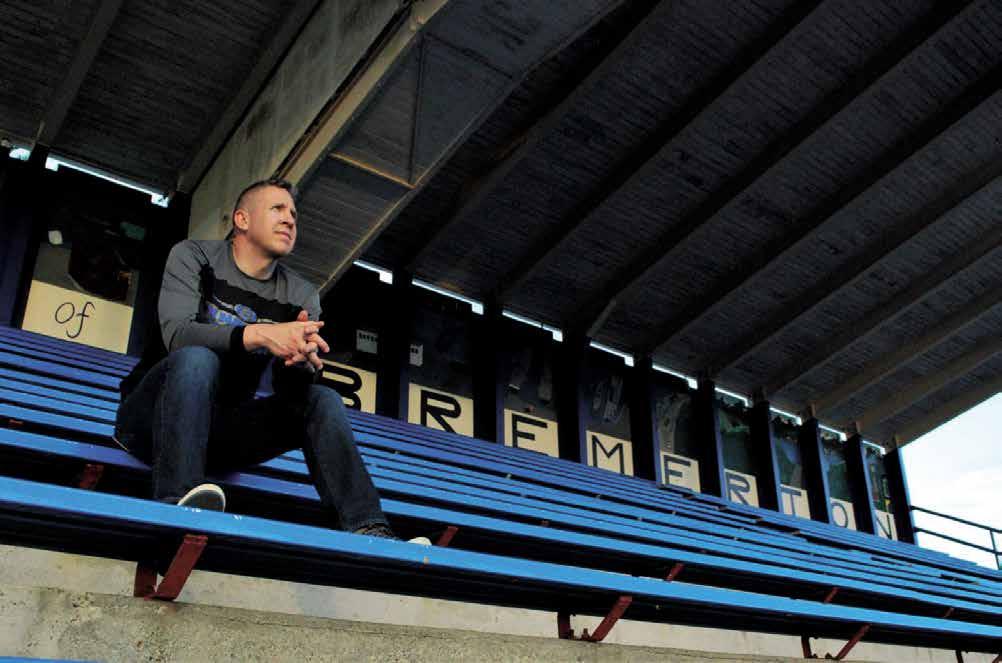
Photos courtesy of The Liberty Institute
LA vibes with bands Wallice and Jawny at Neumos Arts & Entertainment
by Daniel Lindsley SGN Staff Writer
Los Angeles–based indie pop artist Wallice played at the Neumos nightclub on Capitol Hill last Thursday, opening for singer-songwriter Jawny as part of the latter artist’s North American tour. The line for the show went down the block and turned the corner onto Broadway, since the performance was open to adults under 21.
That well describes, in short, the crowd that arrived in time for Wallice’s set, which featured hit tunes like the self-deprecating “Punching Bag” and “Japan,” her latest single and an homage to her Japanese heritage.
What some might call “Los Angeles vibes” were strong that evening. The sunny outfits onstage and in the crowd were of a kind rarely permitted by the frigid winters of the Pacific Northwest. Some guests wore T-shirts, light jackets, and even shorts, though many others were in flannels or fleece. Most looked like they were at least college-age.
At the nightclub’s bar in the loft, the 21-andups gathered at the few tables along the railing to watch the stage below. Half of the people at the VIP table found most of their view blocked by a large speaker array, but the rest of the vantage points were good, and in high demand. Moving from a spot at the front, for either a drink or a bathroom break, meant losing it to another eager patron.
Wallice’s biggest enthusiasts were at the foot of the stage, as one would expect. They were the life of the party, ready to belt out the lyrics of some of the artist’s more popular songs when prompted. It’s no wonder why her songs resonate with the college crowd; their lyrics and tone evoke the woes of dating while young in the digital age (especially the woes of dating cisgender men, it seems).
“Punching Bag” gained wide recognition in 2020 after being featured on Spotify’s official “Lorem” playlist, which shows off fresh artists and has over 900,000 followers. Wallice and her bandmates — all good friends of hers, she has said — have since opened for YouTube sensation Chloe Moriondo, and toured with Oakland-based singer-songwriter Still Woozy as well.
The full crowd had yet to arrive, however; it seemed some guests had opted to show up only for the headliner, so the audience dynamic was relaxed at first. At the end of the set, Wallice took selfies with the phones
of a few people at the front, and accepted the gift of a fabric rose, which she tucked into the back of her shirt as she gathered her stage materials.
The entrance of Jawny marked a seismic shift in the mood of the joint, though at a magnitude familiar to a San Francisco–born musician such as him; it was still indie pop they’d be playing, but with indie funk mixed in, and certainly from a different perspective.
Jawny and his bandmates, bassist Eli Pomonarenko and drummer Donny Electric, were in more casual outfits. By contrast, their lighting setup wasn’t so understated, changing colors and flickering in elaborate patterns to fit the tone of each song.
The dance floor, and the railing in the loft, filled in even more as the band was setting
up. An older demographic joined the crowd below, including a few men with balding heads and boxy, black-framed glasses — a look that said something like “aging techie.”
The headliner’s popularity became especially clear after they started playing. Jawny worked the crowd relentlessly, thanking Seattle for the sellout show at least three times, and pulling the “I can’t hear you” routine even more often than that. And the crowd ate it up each time.
Jawny is perhaps best known for “Honeypie,” a short funk ditty with sexual undertones that blew up on Spotify soon after its release in 2020. Both its tempo and restraint are uncharacteristic of the rest of his songs, like “Trigger of Love,” which is both slower and more overt.
His energy during songs matched his set fairly well, but his bandmates absolutely stole the spotlight with their showmanship and musicianship alike. Donny Electric went wild on his drum set, even while providing backup vocals, and Eli Pomonarenko was practically jumping up and down during some truly impressive bass runs. No matter what was playing, a much larger portion of the crowd were versed in the lyrics than during the opener. They could sing along and follow call-and-response prompts without hesitation, and as the band walked off the stage after the final song, the farewell cheers were so loud that they were actually painful in that enclosed space.
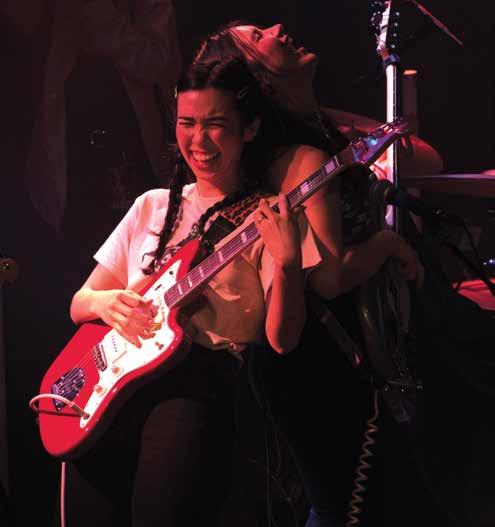
Wallice (l) – Photo by Lauren Vasatka Jawny – Photo by Lauren Vasatka
Photo by Lauren Vasatka
In the closet: Stellar style pieces for spring 2023 Arts & Entertainment
by Mikey Rox Special to the SGN
The purge is upon us. Not the one that results in the loss of limbs and life, but rather the return of annual spring cleaning, the collective load-shedding opportunity to rid closets of outdated and unwanted clothing and accessories. Those free spaces won’t stay unoccupied for long, however. Update your wardrobe — and your attitude — with these easy-breezy style picks for spring.
Orttu Lisbon pants
What would you wear to a boozy, dramatic brunch at the fictional White Lotus resort? Orttu’s casual-but-smart woven Lisbon pants in mint and white stripes are a solid choice for all the rich-prick shenanigans you’re bound to get up to. $189, Orttu.com
Infamous Swim board shorts
Put a conch shell up to your ear in Infamous Swim’s mid-length Iris trunks — featuring blue dots, lines, shapes, and stripes in a printed pattern inspired by the Mediterranean Sea — and you can almost hear Santorini’s sirens’ songs. $40, InfamousSwim.com
Duke dress sneaker
A minimalist take on the classic crispy sneaker, Ace Marks’ Italian leather Duke low-tops — in a light, bright colorway like champagne — are the perfect pairing for dressed-down vacay ’fits with zero danger of looking underdressed. $224, AceMarks.com
Orttu Lisbon pants
Infamous Iris swim trunks Ace Marks Duke in champagne
OMHU: x Waykins watch
You’ll make more than one statement sporting Waykins’ sunny Recapture watch in audacious yellow (and featuring a vegan leather inlay), which, with the help of Danish beach-cleaning org OMHU:, repurposes pollutant sea plastic so compromised marine life can swim another day. $147, Trendhim.co.uk
Lightning bolt blazer
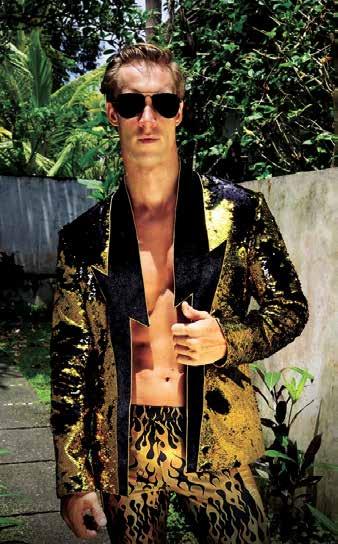
Shazam yourself into serving an all-eyeson-you look in Love Khaos’ shimmery, satin-lined lightning bolt blazer, adorned with reversible gold-and-black sequins that change color when touched and complemented with texture-contrasting velvet lapels, elbow pads, and front-pocket detailing. $633, LoveKhaos.com
Khari ruby sunglasses
Seeing the world through literal rosecolored lenses in the Italian-made, Mazzucchelli acetate Khari ruby oversized sunglasses from British-based Kimeze. They won’t change the outcome but, they might just improve your outlook $305, Kimeze.us
Bario Neal shield band
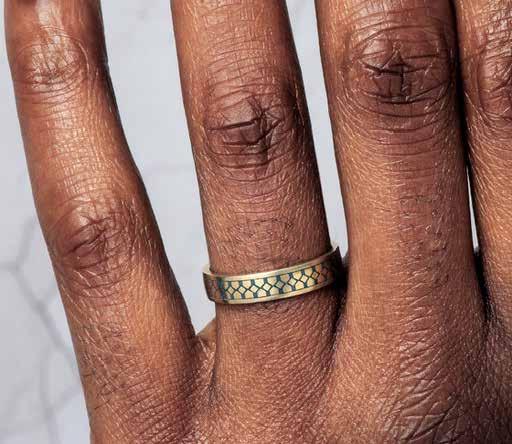
Less is more when it comes to warmweather accessorizing, and Bario Neal’s handmade shield ring with blue enamel relies on centuries-old craftmaking to produce a graphic, masculine band that transitions from poolside cocktails to patio tapas without looking like you tried too hard. $570, Bario-Neal.com
Scorpion brooch
If “I’m the problem, it’s me” were a wearable, it’d be Orttu’s striking scorpion brooch, handmade with gold and silver embroidery thread and silver bugle beads, and officially the least toxic thing about you. $150, Orttu.com
Grounded People kicks
There’s a waitlist for Grounded People’s PETA-approved, vegan Jundiai lightweight high-tops, but registering is a no-brainer: the machine-washable, fair-wage kicks use second-life recycled cotton canvas and laces and come with a five-year warranty; each sale supports ethical causes. $229, GroundedPeople.com
Lambskin bomber jacket
Swap your go-to denim jacket for the supple Blue Barclay lambskin bomber by Jack Victor, ideal for traveling lighter on a getaway weekend, given its perfectly proportioned fit, half-jet side pockets, invisible internal pocket, and sophisticated suede composition. $1,298, JackVictor.com
Mikey Rox is an award-winning journalist and LGBT lifestyle expert whose work has been published in more than a hundred outlets across the world. Connect with Mikey on Instagram @mikeyroxtravels.
Jack Victor Blue Barclay lambskin bomber
Grounded People Jundiai high-tops
Bario Neal Shield band
Orttu Scorpion brooch
Kimeze Khari sunglasses
Love Khaos
Gold Lightning Bolt Blazer
Waykins Recapture watch
Film Make Believe Film Festival makes Seattle debut
by John McDonald SGN Contributing Writer
As its name would suggest, this festival is what you want to make of it.
The inaugural Make Believe Seattle Film Festival comes to the Capitol Hill neighborhood, March 23-26. Intent on celebrating the spirit of imagination, the festival also seeks to expand the definition of “genre” in filmmaking.
“I’m kind of fascinated by that term, because only in the film world does it really mean what it means,” said Festival Director Billy Ray Brewton. “If you are talking about the genre of a book, it’s either going to be a romance, or horror, or a drama, or young adult, but with film you [also] have genres of film — but then you have genre, which in itself is a genre that covers horror, sci-fi, fantasy, martial arts… and everybody has their own definitions of the types of films that qualify for that.”
Whatever you deem them, there’s plenty to choose from. Make Believe Seattle includes 31 programs, seven West Coast premieres, and two world premieres. There are four juried awards that come with a $500 cash prize apiece and three audience choice awards worth $250 each.
Brewton, originally from the tiny town of Pisgah in northeast Alabama, has organized film festivals for the past 16 years and serves as managing director of Three Dollar Bill
Cinema, which puts on the Seattle Queer Film Festival.
With the idea of making the festival inclusive of all income levels, organizers have priced passes and tickets at bargain rates, with a VIP pass topping out at $150.
“We really did try to make our passes and tickets as affordable as possible for year one,” Brewton said.
“We’ve got some amazing events as well as
films… We’ve got folks coming in from all over the country for those events, live podcasts, parties, everything like that,” he added.
Films with Queer themes
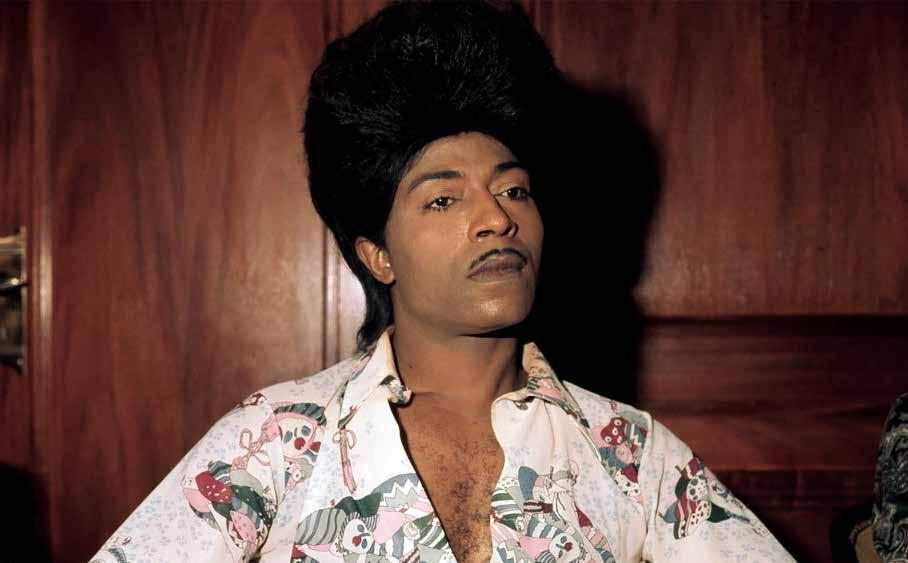
Five films have Queer themes, including a new documentary on music icon Little Richard. Directed by Lisa Cortes, Little Richard: I Am Everything, puts the flamboyant, oft-described “Architect of Rock and Roll” in a new light.
“It really does focus in on Little Richard’s queerness, which I think a lot of people are afraid to talk about and this film is not,” Brewton said.
He added that the film, coming off rave reviews at the Sundance Film Festival in Park City, Utah, is heartwarming and a perfect fit for Make Believe.
“A lot of people have questioned why I’m programming this film in a genre festival,” Brewton said. “It all comes down to my festival [being] about make believe, and when I’m thinking about people who best personified make believe, Little Richard is about as high up as it gets.”
Evening Primrose is another entry featuring a departed celebrity. The 1966 film, starring Anthony Perkins of Psycho fame, is a one-hour musical with songs by the late Stephen Sondheim. Brewton said Evening Primrose is a “magical” early effort by the legendary composer, who had a good working relationship with Perkins. There is lim-
ited space for the Saturday afternoon free screening so RSVPs are required and seating is on a first-come, first-served basis.
Elsewhere, fans of animation have a chance to see the West Coast premiere of Matt Kiel’s Unicorn Boy. The young-adult, coming-ofage story is bound to provide a few laughs, Brewton said, and includes a surprise short film prior to its start.
“It’s hard for genre festivals to find a lot of films that are gonna make an audience laugh, and this is one of those films that definitely fits the bill,” Brewton said.
The Jessica Cabin is a ghostly Gay romcom from Daniel Montgomery; Poundcake, a politically charged tale about a serial killer who only targets straight white men, closes the festival.
Brewton said Poundcake is New York filmmaker Onur Tukel’s “love letter to the Queer community.”
Canadian filmmaker Guy Maddin is set to receive the inaugural Imagination Award on Friday night at the Northwest Film Forum, followed by a screening of his 1992 film Careful
The Make Believe Film Festival is spread out over four venues: The SIFF Egyptian, the Northwest Film Forum, Queer/Bar, and Century Ballroom. For a complete schedule of events, films, and prices, or more information, visit www. makebelieveseattle.com
Little Richard: I Am Everything
Evening Primrose
Unicorn Boy
The Jessica Cabin Poundcake
Ghostface takes a killer bite out of the Big Apple in Scream VI
by Sara Michelle Fetters
Staff Writer
SCREAM VI
Theaters
I was lukewarm on last year’s Scream legacy sequel. While I appreciated all of the fresh faces and agreed it was time to move longtime stars Neve Campbell, Courteney Cox, and David Arquette into supporting roles, the take on the material overseen by directors Matt Bettinelli-Olpin and Tyler Gillett — aka “Radio Silence” — felt like too much of a rehash of similar themes found in 2011’s Scream 4
The film still entertained, and the love and care that went into keeping the late, great Wes Craven’s spirit alive was readily apparent. I just didn’t feel like either Radio Silence or screenwriters James Vanderbilt and Guy Busick had anything new to say, and instead of attempting to move the horror-comedysocial commentary needle, they appeared to be content to play a familiar game, only with a new cast of main characters.
That core creative team returns for Scream VI, and while I still can’t say they shake things up or have too much new to say about the current cultural zeitgeist
(with one major exception), dang is this sixth chapter in the series tremendously entertaining. Radio Silence, Vanderbilt, and Busick have constructed a masterfully ghoulish puzzle box, and while observant members of the audience shouldn’t have too much trouble solving it, that does not make doing so any less fun.
Like Scream 2, the action moves to a collegiate setting. But instead of a small California university bathed in sunshine, Sam Carpenter (Melissa Barrera), her younger sister Tara (Jenna Ortega), and their best friends, fraternal twins Mindy (Jasmin Savoy Brown) and Chad Meeks-Martin (Mason Gooding), have decided to matriculate on the other side of the country, in New York City. Sam has come with the trio to keep an eye on Tara, much to the latter’s consternation. But the Big Apple should be safe, right? In a city this gigantic, it’s not like the foursome should have anything Ghostface-related to worry about.
Wrong. There’s a new Ghostface, and this one is especially brutal. Even more curious, this masked killer has an obsession with all nine of the previous incarnations. Their escapades don’t just catch the eye of Ghostface expert Gale Weathers (Cox), but also capture the attention of the FBI. Agent Kirby
Reed (Hayden Panettiere) — yes, that Kirby Reed, one of the few survivors from Jill Roberts and Charlie Walker’s infamous murder spree over a decade prior — is eager to take charge of the case from NYPD Detective Bailey (Dermot Mulroney).
For reasons not worth going into, Sidney Prescott is not here. As Gale explains to Sam and Tara roughly halfway through, it’s time this all-time great “final girl” is allowed her happy ending. So don’t expect Campbell to make an appearance, not even a cameo, and for those who think Scream can’t be Scream without her, prepare to be disappointed.
Here’s the thing, though. Sidney’s absence is a good thing. Campbell not coming back forced Vanderbilt and Busick to get creative. It also allowed them to spend more time on the core four characters from the last entry: Sam, Tara, Mindy, and Chad. Sure, Gale gets a few scenes (including one spectacular stalk-chase-evade-fight set piece), and Kirby’s return appropriately warrants a decent-sized subplot. But the focus is on the Carpenter sisters and, to a somewhat lesser extent, the Meeks-Martin siblings, and that’s as it should be.
The second time is a charm for Barrera. She does a grand job giving Sam depth. The character’s constant psychological battles as
she deals with the repercussions of her parentage are handled much better this time, as is her determination to protect Tara no matter the cost. Barrera rises to the occasion, showcasing an emotional verisimilitude that was missing from her performance the last time, and Sam is far more interesting and worthy of rooting for because of this.
Ortega is once again outstanding, and Brown and Gooding shine in the moments where Mindy and Chad are given the chance to make an impression. It’s nice to see Kirby back in action, and Panettiere shows she hasn’t lost that energetic spark that helped make the character so memorable back in Scream 4. Mulroney is also good, and while the writing doesn’t always do Detective Bailey a ton of favors, the wily veteran has enough tricks hidden up his sleeve to overcome most of the narrative silliness.
I’m not going to talk about any of the other newcomers. I’m not going to speak about the pre-title opening other than to say it’s one of the better ones, and if I had to rank them, I’d say only the prologues in the original Scream and in Scream 2 are superior.
I will also state that, as clever as the plotting is, I didn’t find it especially difficult to figure out who was doing what when. Ghostface’s identity is obvious in my opinion, and for a series obsessed with breaking convention and toying with the rules, this one does play it a wee too safe during the climactic stretch.
But Radio Silence directs the heck out of the film, topping themselves with each stupendous sequence of suspense, danger, and action. A bit in a neighborhood grocery store is unrelentingly tense, while another scene involving our heroes dangling between apartment complexes on a rickety ladder is magnificently handled. The final showdown in a Ghostface shrine located in a dilapidated movie theater is also well worth the wait. The directors pull out all the bloody stops as the clash with this latest Ghostface concludes.
As far as the meta aspects go, Vanderbilt and Busick do not find a lot to say that hasn’t been said before in the previous installments. The one notable exception concerns how news outlets and social media can transform truth into a lie and make angry zealots believe obvious falsehoods as if they were a scientific certainty. But as shrewdly as this is handled, once the action and the bloodletting take firm control, these aspects are given short shrift, making the payoff less consequentially impactful in the process.
Be that as it may, Ghostface’s assault on the Big Apple is a good one. Scream VI shows there’s still life in this series, and now that a new generation has been given control of the story, I’m curious to see where things go next.
SGN
Scream VI – Photo courtesy of Paramount Pictures
Melissa Barrera, Jenna Ortega, Jasmin Savoy Brown, and Mason Gooding in Scream VI – Photo courtesy of Paramount Pictures
Hauntingly eerie The Park worth visiting
by Sara Michelle Fetters SGN Staff Writer
THE PARK PVOD
An uncontrollable virus has systematically wiped out all adults. Only prepubescent children remain, knowing that once they mature, they will likely die choking on their own blood, as their parents and older siblings did. It’s Lord of the Flies on a global scale, with survivors becoming borderline feral as the line between life and death devolves into something horrifyingly meaningless.
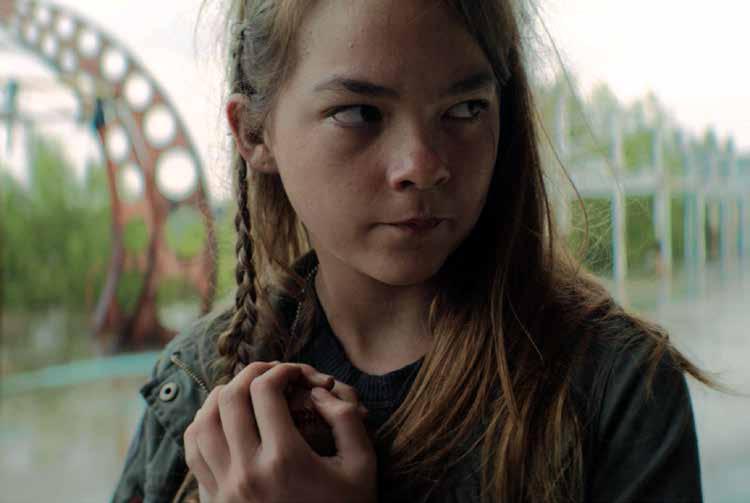
Ines (Chloe Guidry) and Bui (Nhedrick Jabier) are traveling by foot along the coast, searching for a rumored scientist who is supposedly close to finding a cure. They come across a rundown amusement park, its only inhabitant seemingly a lone girl. When Ines goes to investigate, she discovers that Kuan (Carmina Garay) isn’t nearly as helpless as she looked.
Writer-director Shal Ngo’s feature-length dystopian debut The Park asks a lot of its audience. It essentially revolves around three kids, all forced to grow up much too soon, two of whom are part of a brutally senseless killing in the opening minutes. The explanation for humanity’s destruction is kept purposefully vague. It all plays out as something of a violently gruff, stylistically ambient mood piece. Ngo refuses to pull his punches, even though his “heroes” are not even old enough to take driver’s ed.
Much of the first two-thirds revolves around Ines and Kuan. Even though the latter gets the drop on the former, she sees something in this newcomer to the park that makes her life worth sparing. Kuan tries to show Ines that this world doesn’t have to be the hellscape it’s been inexplicably transformed into. She has a crazy idea that the only way to save everyone from the virus is to give them a reason to hope. Kuan wants to make people smile, and she refuses to succumb to despair, even though she’s suffered just as much as every other survivor has, maybe more.
Not quite as well developed is the bond that links Ines to Bui. They have a history that goes back to before society’s downfall,
and they’ve been connected through literal blood, sweat, and tears. But the introduction of Kuan puts a serious crimp in their relationship, and it has Bui questioning if he can still trust Ines to have his back like he’s always had hers.
For a barely 80-minute motion picture, Ngo still packs a ton of themes and ideas into his relatively simple scenario. But he has a painter’s eye for visuals and a sociologist’s determination to dig straight to the heart of the matter. He doesn’t ask the audience to so much forgive Ines for her actions as he assumes they will be able to eventually understand them. Good, bad — the line separating the two has all but vanished. But the yearning for a better tomorrow remains, and if a person can come to understand and believe in kindness and empathy once
again, maybe they can start down a path that leads to redemption.
It’s only the early days of March, but I say right here and now that newcomers Guidry and Garay turn in two of the best kid performances of 2023. They are marvelous, achieving a naturalistic authenticity that’s invigorating. They convey so much by doing so preciously little. Seeing them forge a lasting connection is something special, so much so that even heartbreakingly tragic revelations weren’t enough to make me stop wishing they’d find a way to persevere together into an otherwise uncertain future.
Unfortunately, that third-act revelation is both far too obvious and dealt with in much too heavy-handed a manner to be successful. The way it pushes Bui into the center
of Ines and Kuan’s argument doesn’t work, and I wasn’t happy with how coincidentally the virus raised its terrifyingly ugly visage at around the same moment as well. There’s also the introduction of a new set of characters who, while vaguely referred to earlier on as “blue meanies” (which is admittedly rather clever), seem inelegantly propelled into the drama so a conclusion can be rushed to and not much else.
But I find I don’t particularly care. Ngo’s hauntingly eerie filmmaking style captivated me, the performances by Guidry, Garay, and Jabier were strong, and the entirety of the final ten minutes enraptured my soul in ways I did not see coming. The Park is an unexpected gem that I fully anticipate visiting again before the year is out.
The Park – Photo courtesy of XYZ Films
Chloe Guidry in The Park – Photo courtesy of XYZ Films
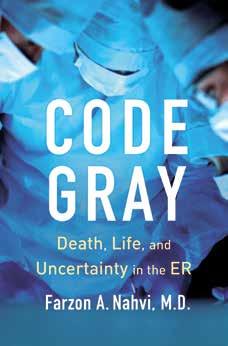
It was only supposed to be a friends-catching-up kind of text thread, but for Farzon A. Nahvi, MD, and his colleagues around the country, the flurry of messages they exchanged during the pandemic became a lifeline. For each, it was good to know that their hospital’s reaction to the COVID-19 pandemic wasn’t the only one lacking.
And yet, Nahvi said, “The most challenging circumstances I faced during the pandemic... had little to do with the virus itself.”
More than a decade ago, Nahvi went to medical school because he “wanted to help people,” which is “a meaningless catch-
phrase” with good intentions, he says. Indeed, he was “surprised at how hard it was to truly help anyone at all.” Sometimes, it made Navhi wonder if a goofy Labrador retriever might be the “doctor” his patients really needed.
Patients, in a way, are surprised, too: treatment for a disease can save a life, but it comes with sometimes-hidden strings attached — and despite all that doctors do, people still die. A patient’s family can rally around a bed and cheer as though they’re in a race, but coaching and bargaining can’t restart a pulse that’s been missing for 20 minutes. And sometimes, getting what you want can be the worst thing of all.
Medicine can sometimes be rather arbitrary. Manuals are written for certain procedures but not for others, which goes doubly when things are not always black and white. In fact, says Navhi, “the code that most often applies in the emergency room, as in life, is code gray.”
So you try to take care of yourself. You
eat right, give up your vices, spend time exercising. And look: you’re going to die someday anyhow. As you’ll see in Code Gray, that’s not at all for a lack of effort.
Beginning with text messages and a story of a 43-year-old New York woman who comes to his ER with no pulse, Nahvi writes about the daily struggles of life, health, and being completely truthful to patients versus doing what’s easiest. There’s frustration in this, of course — and with the medical system in America — but also with decisionmaking that’s never clear and maybe never will be. What Nahvi writes about here may be things your doctor wishes she could say; for sure, these are things every patient and family-member needs to hear.
Medical drama fans will love everything about this book, as will those who enjoy thoughtful meditations on humanity, life, and death. If that’s you, then you’ll find that Code Gray is gold.
Margot Wood brings a Fresh perspective to a Jane Austen classic
by Lindsey Anderson SGN Staff Writer
Margot Wood never thought she’d be a writer. She majored in marketing and established a successful career in publishing at HarperCollins. For ten years, Wood proofread manuscripts that would later become some of the most popular novels in the world. “If you’ve read a YA novel from 2009 to 2015, I probably worked on it in some capacity,” she said.
Making the sausage
Eventually, Wood decided to try her hand at writing.
Even though she had spent a decade working in the industry, she faced unexpected challenges. “I know how the sausage is made. I’ve seen how books come together from the publishing side of things, but I’d never tried to write my book. I wasn’t fully aware of what that process looked like,” Wood explained.
She credits her profession with preparing her to tell her own stories. Unlike many first-time writers, Wood had the unique experience of reading hundreds of successfully published books. Experienced authors often claim the best advice is to read as much as possible. Wood agrees.
“I think that is the best advice any writer should get. Throughout my professional career, I read hundreds, maybe thousands of books. I was constantly adjusting to new books and new material. After a while, it just got in my head that this was something that I wanted to do.”
A letter from the past
Early in her drafting stages, Wood discovered a letter she had written at the end of her first year at college.
“When I finished my freshman year of college at Emerson, I wrote this letter to my little sister, who was still in high school,” she said. “I wrote a list of everything I wished I would have known before I started my freshman year… because I screwed up so many times. I wished someone would have told me about this stuff.
The letter instantly evoked all the messy and embarrassing moments she had encountered at school. “All those things I’d listed to my little sister brought back the memories that taught me those lessons. All of those mistakes I’d made my freshman year came flooding back. Now that I had that distance from my college years, I could see just how
funny that shit I got into was,” she said with a laugh.
She modeled the character of Elliot in her book after herself and wrote many of her own real-life experiences into it. While her college days were fodder for comedic scenes, Wood realized she was still missing a solid plot. “I needed to bring something to tie it all together,” she said.
She struggled to find an original idea and nearly gave up, she said.
“I stalled out for a while. Then I realized, ‘Okay, Margot, you work in publishing. You read all of these books for a living. How many of them are original, and how many of them are just retellings?’”
Leaning on her literary background, Wood did some digging and realized that
many successful YA novels borrow plots from classic literature.
“So many of them are retellings, and I understand why now. It’s nice to take an existing plot structure, turn it on its head, twist it around, and put your spin on it.”
see WOOD page 14
Image courtesy of Simon & Schuster
Margot Wood – Courtesy photo
Books
WOOD
continued from page 13
From Emma to Elliot Wood returned to the writer’s desk and quickly realized that her novel already shared many similarities with one of her all-time favorites. “It was my favorite Jane Austen book, Emma, and I realized that Elliot and Emma were so similar. The cast of characters already lined up with the cast in Emma. What Emma is going through and what she’s trying to do was already what Elliot was going through and trying to do. It fits so perfectly,” she explained.
With a new roadmap to follow, Wood felt even more determined to finish her manuscript. She bought a used annotated edition of Emma from her local bookstore and combed over the text to find ways to incorporate the classic into her modern tale.
In researching Emma, Wood discovered that not everybody loved the story as much as she had. “Emma is a controversial story,” she said. “A lot of people hate her and find her annoying, which is funny, because she is one of the first characters that I related to when I first read the book.”
Staying true to the Jane Austen novel and her own college experience, Wood also made the difficult decision to include a triggering event in Fresh. The story’s climax depicts a sexual assault scene.
“I wanted to include that in the story, because that is a pivotal moment in Emma. It needed to happen with Elliot, because she needed to reach her low point,” Wood explained.
“Sexual assault happens on college campuses far too often. I had my own experience with it. So I used what happened with me as what happened with Elliot. I included that scene because it’s important in Emma. It is Elliot’s turning point in Fresh as well.”
Queer and ADHD representation Elliot’s story was always going to be Queer, according to Wood. With so much of her personal life and coming-of-age journey inspiring the novel, there was no way she could have written a straight protagonist.
“I’m Queer, I’m Bisexual, so that’s just what I know,” Wood explained.
Not only did Wood make sure to write a Bisexual lead, but she rounded out the rest of the novel’s characters with LGBTQ+ representation. “It was important to me to have a Queer cast,” she said.
Writing such a Queer book was essential to reflect the contemporary setting and accurately represent Wood’s college experience. “Not only does it reflect Gen Z, the Queerest generation out there, but I went to Emerson College, where the book is set,” Wood said. “Emerson is one of the Queerest colleges in the country. The unofficial motto… is ‘Gay by May or your money back,’
“If I’m being true and honest to the location that this book is at, that means making it a very Queer-friendly space.”
Fresh not only gives readers a modern college story, but the novel also explores what life with ADHD is like through the eyes of the protagonist.
“I set out to highlight what it’s like to [have] ADHD. I [have] ADHD,” Wood said. “I was diagnosed when I was 11 years old, and it’s been one of the defining factors of my life. It has steered me in all these directions.”
Wood’s diagnosis has been an important part of her life. She wanted to show her readers what it’s like to experience higher education and navigate relationships while dealing with a train of thought that can sometimes run off the rails.
“I wanted to show ADHD from the perspective of the person who has it,” Wood explained. “I include footnotes throughout the book. Those are my way of visually representing what it’s like to be a person with ADHD, when you’re having one train of thought and then having to jump down to the bottom of the page where another train of thought happens.”
Her creative use of different fonts and word placement on the page has been
Not only did Wood make sure to write a Bisexual lead, but she rounded out the rest of the novel’s characters with LGBTQ+ representation. “It was important to me to have a Queer cast.”
praised by readers who share Wood’s experiences with ADHD. Some have written to thank Wood personally for creating a story about a neurodiverse Queer character.
For neurotypical readers, the story can sometimes feel overwhelming, but Wood says that’s the point. “The book is supposed to be chaotic. It’s supposed to be a little overwhelming, because that’s Elliot.”
Now that Fresh is finally on shelves, after
five years of working on the novel, Wood is ready to take a well-deserved break. “I wrote it while I was working full-time. I was burning the candle at both ends. I’m in a period right now where I’m trying to recharge both those ends so I can do it again,” she said with a laugh. While Wood doesn’t have any new literary projects on the horizon, she is working with a screenwriter to hopefully bring
Elliot and all her friends to the
sometime soon. Fresh is available for purchase today. Grab a copy from your local
bookstore or library and read along with the SGN book club today!
TV screen
indie
Image courtesy of Abrams
As a Black man from a Nigerian background, the pain was compounded when I experienced harassment or even cold indifference to my situation due to racism and oppressive systems.
My life sentence for existing in these intersections of my identity suddenly felt like a death sentence.
It took months, and even years, to come to a place where I could finally feel healthy again. Through the kindness of nonprofit organizations and newfound friends, I was slowly but surely placed on the path to recovery. I started a regimen of antiretroviral drugs that brought me from the brink of death back to just HIV-positive, until finally I was able to get the virus under control to the point where it is no longer transmissible.
I was also able to find steady housing, and employment that could keep me fed, housed, and able to afford lifesaving medical help.
To this day, I still feel guilty that I can access a doctor when I need care. I still wonder if I’m “undeserving” of the nice apartment near the park, after knowing what it felt like to make do on others’ couches or take a risk on the streets. To enjoy a sweet bubble tea — a favorite of mine — is to experience a luxury I once thought beyond me.
I know deep inside that I deserve joy, and that many of the things I continue to second-guess for myself — like safe shelter and adequate food — are human rights I deserve simply because I am alive. That is where joy as resistance comes in, and where paying it forward is my reconciliation. I am now working full-time in HIV advocacy, as well as serving as a board member of many local LGBTQ+ and HIV+ advocacy organizations.
I am proud of my journey, but it is one that I am taking because I don’t want others to go through what I went through. The tears I shed in those darkest, loneliest moments are ones I wish for nobody.
To that end, I am disheartened that, in a city filled with such wealth, there are so many struggling to make do, without their basic human rights, such as housing, healthcare, and nutrition. Compounded with the ongoing social stigmas related to HIV status, it becomes even harder for some to seek these services.
As the second annual “HIV Is Not a Crime Day” has come and gone (February 28), I reflect on what this means for a seemingly progressive area such as Seattle. In numerous states across the country, there are overt attacks on people living with HIV and AIDS, including laws that not only further stigmatize people living with the condition but that discourage people from getting testing and seeking resources [https:// www.hivisnotacrime-etaf.org/about].
These laws may not be what we have on the books in cities like Seattle and states like Washington, but much like a lot of our area’s progressive politics, often we see performative gestures taking the place of meaningful action. In short, the absence of criminalized laws does not absolve us from our moral responsibility to do better.
My work and advocacy on HIV and AIDS awareness and resources has continued to inform me of where we need to take more action as a region. Despite our city and greater metropolitan area being home to some of the most ethnically diverse neighborhoods in the nation, our infrastructure for disseminating information about HIV/ AIDS is often lacking when it comes to cultural sensitivity, breaking language barriers, and physically meeting people where they are at. Our healthcare in general, especially for lower-income people — predominantly BIPOC neighborhoods and in immigrant communities — is lacking, and especially so when it comes to health conditions that are already greatly stigmatized.
I ask my siblings in the LGBTQ+ community to join me in advocating for those with similar intersections of identity that
“I ask my siblings in the LGBTQ+ community to join me in advocating for those with similar intersections of identity that are often overlooked by our institutions.”
are often overlooked by our institutions. Talk with your friends and family. Demand that your local policymakers include culturally sensitive HIV information, and that neighborhood clinics prioritize HIV/AIDS treatment.
Just as we are fighting back that it’s “okay to say ‘Gay,’” we must also be willing to shout “HIV/AIDS” and, with that greater presence, demand more direct interventions in our communities. My goal is that in my lifetime, not one more person will have
to experience what I went through to get support and treatment. We are a community that looks after each other; let’s continue to stand with each other, especially when confronting stigma, so that more can stand with pride.
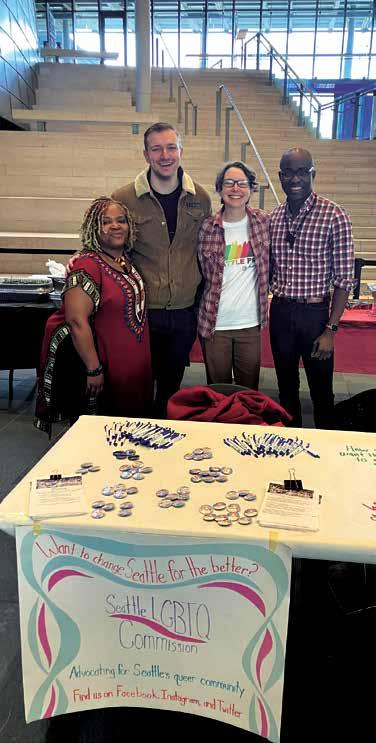
Photos courtesy of Andrew Ashiofu
Do the hustle!
by Jack Hilovsky
SGN Contributing Writer
Last month I wrote about how to survive in Seattle until spring arrives. We’re almost there, after a cold, wet winter with sporadic snow in the city and lots in the mountains. Thus far I’ve only made it cross-country skiing once this winter. But the other night I decided I was ready to venture out and do the hustle.
You may ask what is the hustle? It originated in the early 1970s at Puerto Rican and Black house parties and clubs in the South Bronx prior to the rise of the disco craze. It also subsided with the demise of disco in the last gasps of that wild, wooly decade.
Well, if you read my book RJ, Farrah and Me, you’ll know that I have a youthful affection for disco, stemming back to my best friend teaching me how to partnerdance in the basement of his family’s house at the age of 13.
Flash-forward four decades. In January I read a Seattle Times cover story in the paper’s Pacific NW Magazine about the dance craze that’s back in vogue in New York, San Francisco, and yes, even Seattle: the hustle!
So I had to go to “In the Groove” at the Century Ballroom, which the article said was a “hustle-heavy dance night,” including a lesson. After sharing the article on my social media, a female friend agreed to join me. We marked our calendars for the second Thursday of the month and waited with great anticipation.
When the night arrived, the first thought that came to me was “What does one wear to hustle?” Well, you’re going to sweat, that’s for sure. So I pulled a long-forgotten H & M shirt with an earthy, floral pattern out of the closet, which I paired with blue jeans and boots. After rolling up my sleeves, I was ready to boogie.
I met my friend Tessa at Century Ballroom for the 8 p.m. dance lesson. I wondered if the hustle nowadays would in any way resemble the line dance I learned in my adolescence to the airy rhythms of Van McCoy. At family weddings on my mom’s side, I was in the front of the pack, leading my cousins in the step-turn-clap formation of McCoy’s piccolo-infused dance number with singular lyrics that command do the hustle!
The class teacher, Lucie, patiently led us through the basic steps. The version we learned was a couple’s dance. A dozen of us rotated clockwise in two circles, changing partners — sometimes the same sex, sometimes the opposite sex — one group of leads, another of followers. Happily, I led and found that once I got out of my head and into my body, the moves grew smoother. It all came back to me. “I know this, I got this. Keep the rhythm, baby,” I thought. The class also covered dance etiquette and how to ask someone whether they would like to trip the light fantastic. Lucie said it’s okay to politely decline a request to dance, which was not to be taken personally. We practiced
How can one not smile when lost in the reverie of your youth? For dancing really does make one feel young all over again.
asking, saying yes, and saying no, thanks. I liked the lighthearted way of approaching affirmation and rejection.
Once we completed the lesson, Tessa and I adapted the structure we learned to our own style. I hadn’t known she had competed in ballroom dancing in college — a sweet surprise. Her fluidity on the floor, adapting to my at-first commanding dance style,
delighted me. The music varied between a quick-tempo beat and an R & B crescendo.
A roster of unknown but somewhat-familiar-tome artists dominated the playlist, with a little Michael Jackson thrown in for good measure.
All I know is that as Tessa, with her billowy-sleeved top, and I continued to whirl through the night, the joy factor I experienced as a teenager kicked into high gear.
How can one not smile when lost in the reverie of your youth? For dancing really does make one feel young all over again. That 13- or 14-year-old boy reemerged, as my friend and I explored various dips and twirls I recollected from my teen dance days, perfectly in sync with the rhythms of this current era’s hustle. 1976 became 2023 became 1976 all over again.
Jack Hilovsky is an author, actor, and blogger who has made his home in Seattle since 1986. His first book, RJ, Farrah and Me: A Young Man’s Gay Odyssey from the Inside Out, was published in June 2022. It can be found at Elliott Bay Book Co., Madison Books, Nook & Cranny, and University Bookstore, among other local booksellers.
Photo courtesy of Jack Hilovsy
Wisconsin Republicans save conversion therapy
Legislative maneuver keeps practice in place till 2024
by Mike Andrew SGN Staff Writer
Republicans in Wisconsin’s legislature have saved conversion therapy for another year. In a 61-35 vote on March 14, the Republican-controlled state assembly ensured that a ban on the practice could not take effect.
The state’s Marriage and Family Therapy, Professional Counseling, and Social Work Examining Board barred conversion therapy in December. When the state legislature convened in January, however, its Republicancontrolled rules committee voted to suspend the ban pending future legislation.
Republicans brought a bill to the assembly floor on March 14 that would prohibit the board from enacting any future conversion therapy bans. But legislators knew that Wisconsin’s Democratic governor, Tony Evers, would have vetoed the measure.
Consequently, Republicans instead voted to send the bill back to the Rules Committee, ensuring that the rules committee’s decision to allow conversion therapy will stand until the current legislative session ends in 2024.
Conversion therapy for minors has been
banned in more than a dozen Wisconsin cities. At least 20 states — including Washington state — and the District of Columbia have outlawed conversion therapy for minors, according to the Movement Advancement Project, an LGBTQ rights think tank.
LGBTQ rights advocates have demonstrated that the practice of trying to “convert” LGBTQ people to heterosexuality and traditional gender expectations is harmful, and scientific research shows the practice can increase the risk of suicide and depression.
The idea that same-sex attraction was pathological and could be “cured” was common among psychiatrists until the 1970s, when the pioneering work of sexologists like Alfred Kinsey demonstrated that it was really a normal variation of human sexuality.
Medical professionals were slower to accept the idea that gender-nonconforming people could be healthy and productive, but by the turn of the 21st century, most health professionals have recognized that genderaffirming medical care produces positive results for their patients.
Polling consistently shows that most Americans believe that conversion therapy for minors should be outlawed.
(above) People watch the Rainbow Pride flag raising (below) Wednesday, June 1, 2022 at the Capitol in Madison, Wis. In June 2019, Gov. Tony Evers issued an executive order to raise the pride flag above the state Capitol for the first time in Wisconsin history.
– Photos by Mark Hoffman / Milwaukee Journal-Sentinel via AP
Wisconsin Gov. Tony Evers, left, stands next to 16-year-old Aspen Morris at the Rainbow Pride flag raising Wednesday, June 1, 2022 at the Capitol in Madison, Wis. – Photo by Mark Hoffman / Milwaukee Journal-Sentinel via AP
National/International
National news highlights
by Daniel Lindsley SGN Staff Writer
Filibuster brings Nebraska senate to grinding halt
It has been three weeks since Nebraska state Sen. Machaela Cavanaugh began a filibuster against a set of bills targeting Trans people. One of the measures would effectively ban gender-affirming care for minors, and another would restrict bathroom use and sports team participation.
“If this legislature collectively decides that legislating hate against children is our priority, then I am going to make it painful — painful for everyone,” Cavanaugh declared. “I will burn the session to the ground over this bill.”
Cavanaugh hasn’t just slowed down the passing of the aforementioned bills, she has proposed amendments for every bill that has reached the floor, talking about her favorite Girl Scout cookies, the plot of Dreamworks Studios’ Madagascar, and how the filibuster could finally end.
“I know it’s frustrating,” she said. “It’s frustrating for me. But there is a way to put an end to it — just put a stop to this hateful bill.”
Alternatively, one Democratic senator flipping would be enough to vote the filibuster away, but that hasn’t happened. And as a result of Cavanaugh’s efforts, which persisted through eight-hour debate times and a case of strep throat, not a single bill passed during the first half of this year’s 90-day session. Only 26 bills have advanced from the first required round of debate.
International news highlights
by Daniel Lindsley SGN Staff Writer
Uganda considers harsher penalties for “same-sex conduct”
A new bill introduced in Uganda’s parliament would criminalize “same-sex conduct” even further than it already is in the East African country, lengthening prison sentences and outlawing the “promotion of homosexuality.”
According to Human Rights Watch (HRW), the bill follows up on the 2014 Anti-Homosexuality Act, which was struck down by a court before it could go into effect. Both bills prohibit acts such as touching another person “with the intention of committing the act of homosexuality,” and those found guilty could be sentenced to up to 10 years in prison.
HRW’s Uganda researcher, Oryem Nyeko, said the bill was a blatant violation of human rights on multiple levels.
“One of the most extreme features of this new bill is that it criminalizes people simply for being who they are, as well as further infringing on the right to privacy, and freedoms of expression and association that are already compromised in Uganda,” Nyeko said.
“Ugandan politicians should focus on passing laws that protect vulnerable minorities and affirm fundamental rights and stop targeting LGBT people for political capital.”’
OutNebraska’s executive director, Abbi Swatsworth, said of the news, “We really see it as a heroic effort. It is extremely meaningful when an ally does more than pay lip service to allyship. She really is leading this charge.”
Minnesota lawmakers rush to protect gender-affirming care
On Wednesday this week, as part of an effort to make Minnesota a “Trans refuge state,” Gov. Tim Walz signed an executive order protecting the right of LGBTQ people to receive gender-affirming care. He put pen to paper in a ceremony while
surrounded by community members and other lawmakers.
“We want every Minnesotan to grow up feeling safe, valued, protected, celebrated, and free to exist as their authentic versions of themselves,” Walz said. “Protecting and supporting access to genderaffirming health care is essential to being a welcoming and supportive state.”
“I don’t know what a group of people in Pierre who decide to make life more miserable and dangerous are thinking, but it’s not going to happen in Minnesota,” he went on, referring to South Dakota Gov. Kristi Noem’s recent signing of a
bill banning gender-affirming care for minors.
In the state legislature, a bill that would provide more protections is awaiting a floor vote.
Rep. Leigh Finke, the bill’s author, said that “the lives of Trans and genderexpansive people in this nation are under attack. There is a full-scale movement in this nation against Trans, Nonbinary, Two Spirit, and gender-expansive adults and children that seeks to make our community disappear.”
Indian Supreme Court will hold Gay marriage hearings in April
As a five-judge bench in India’s Supreme Court is preparing to hear final arguments for and against legally recognizing same-sex marriages, interest groups are weighing in on the issue, which is controversial in spite of the progress India has made on LGBT rights.
Prime Minister Narendra Modi’s government said that it opposes the idea. In particular, Solicitor General Tusha Mehta argued to the court: “When the question of granting recognition — legal sanction
to a relationship — is concerned, that is essentially a function of the legislature and for more than one reason.”
“The parliament will have to debate and take a call whether in the view of societal ethos and several other factors which go into lawmaking, whether we would like this institution to be recognized.”
Chief Justice D.Y. Chandrachud disagreed, saying, “We are of the considered view that it would be appropriate that the issues raised are resolved by a bench of five judges of this court.”
In other words, the court thought that it was in fact their job to interpret the country’s laws.
Not long after Chandrachud’s comments, the powerful Hindu nationalist organization Rashtriya Swayamsevak Sangh (RSS) announced that it officially backs the government’s position, though one of its leaders, Mohan Bhagwat, has said in the past that the LGBTQ community “should have their own private and social space, as they are humans and have the right to live as others.”
Mohan Bhagwat, chief of the Hindu nationalist organization Rashtriya Swayamsevak Sangh – Photo by Danish Siddiqui / Reuters
Minnesota Gov. Tim Walz speaks at a signing ceremony – Photo by Steve Karnowski / AP
Award-winning drag performer, activist, and SGN contributor Gaysha Starr tells Ash about her origins in the field, and her work for LGBTQ rights, including marriage equality in the past, and the right to perform drag in the present. https://www.instagram.com/gayshastarr/