
to find sexual orientation discrimination prohibited under Title VII of the Federal Civil Rights Act

ST. LOUIS, Mo. – [On March 14], the National Center for Lesbian Rights (NCLR) and GLBTQ Legal Advocates &
Defenders (GLAD) filed a friend-of-thecourt brief urging the US Court of Appeals see NCLR page 12
Local heroes Aleksa Manila, Lifelong, and Tina Podlodowski to receive top honors
A portion of proceeds to benefit TIME’S UP legal defense fund

by Sarah Toce Special to the SGN
The 6th annual Seattle Women’s Pride will take place on Saturday, June 16, 2018, from 6:00 p.m. to 10:00 p.m. with a brandnew location and swagger. Sole Repair Shop, Capitol Hill’s premiere event space, has teamed up with Seattle Women’s Pride
see SWP page 6
highlighting the lives of LGBTQ Southerners as part of the #LoveYourNeighbor campaign

TUPELO, Miss. – [On March 14], the Human Rights Campaign (HRC) Foundation, the educational arm of the nation’s largest lesbian, gay, bisexual, transgender, and queer (LGBTQ) civil rights organization, released two television advertisements that will be airing for two weeks in the Northeast Mississippi media market, which includes the cities of Tupelo, Columbus, and Starkville. The ads – a part of HRC’s #LoveYourNeighbor campaign – focus on stories of LGBTQ Mississippians and their allies, and discuss acceptance in the South. The #LoveYourNeighbor campaign is a storytelling project focused on sharing the experiences of LGBTQ people and allies across the South, particularly in Alabama,
see HRC page 13
SALEM, OR – The Oregon Supreme Court today [March 15, 2018] affirmed a determination by the Oregon Commission on Judicial Fitness and Disability that Judge Vance D. Day had violated state rules of judicial ethics when he devised a scheme to avoid marrying same-sex couples by instructing court staff to investigate the gender of marriage applicants and represent that he was unavailable if they were of the same sex, among other charges. The Court also upheld the three-year suspension the Commission had levied on Judge Day.
Lambda Legal Senior Attorney Peter Renn and Fair Courts Project Attorney Ethan Rice, who filed a friend-of-the-court brief in support of the Commission to the Oregon Supreme Court, issued the following statements:
“Courts must be open for business to everyone, regardless of one’s sexual orientation. No government employee can refuse to serve a member of the general public based on bias or prejudice, much less a judge entrusted with public office who takes an oath to perform judicial duties fairly and impartially,” Renn said. “Although judges are not required to perform marriages, they must refrain from bias or prejudice when they choose to do so.”
“A judge is a public official, not a priest, and is required to perform the duties of the office without bias or prejudice,” Rice said.
“We applaud the Oregon Supreme Court for reaffirming that responsibility. Judicial ethics rules that include anti-discrimination provisions on the basis of sexual orientation and gender identity are critical to ensuring fairness in the courts, and to maintaining public confidence in the impartiality of courts. The Oregon Supreme Court reasserted the importance of enforcement of these rules in its decision.”
The Oregon Supreme Court’s ruling mirrors that of all disciplinary tribunals across the country to have considered the issue: a judge’s refusal to perform marriages for same-sex couples on equal terms as for different-sex couples violates judicial conduct rules. Lambda Legal’s Fair Courts Project works to preserve judicial independence and improve access to justice for all people. The success of Lambda Legal’s work in the courts depends on the assurance that LGBT individuals and everyone living with HIV will receive fair and impartial treatment.
Read Lambda Legal’s amicus brief here: https://www.lambdalegal.org/in-court/ legal-docs/day_or_20170502_amicus-brief
Read about Lambda Legal’s fair courts work here: https://www.lambdalegal.org/ issues/fair-courts-project
Courtesy of Lambda Legal

TRUVADA for PrEP (pre-exposure prophylaxis) is a prescription medicine that is used together with safer sex practices to help reduce the risk of getting HIV-1 through sex. This use is only for HIV-negative adults who are at high risk of getting HIV-1. To help determine your risk of getting HIV-1, talk openly with your healthcare provider about your sexual health.
Ask your healthcare provider if you have questions about how to prevent getting HIV. Always practice safer sex and use condoms to lower the chance of sexual contact with body fluids. Never reuse or share needles or other items that have body fluids on them.


What is the most important information I should know about TRUVADA for PrEP?
Before taking TRUVADA for PrEP:
® You must be HIV-negative before you start taking TRUVADA for PrEP. You must get tested to make sure that you do not already have HIV-1. Do not take TRUVADA to reduce the risk of getting HIV-1 unless you are confirmed to be HIV-negative.
® Many HIV-1 tests can miss HIV-1 infection in a person who has recently become infected. If you have flu-like symptoms, you could have recently become infected with HIV-1. Tell your healthcare provider if you had a flu-like illness within the last month before starting or at any time while taking TRUVADA for PrEP. Symptoms of new HIV-1 infection include tiredness, fever, joint or muscle aches, headache, sore throat, vomiting, diarrhea, rash, night sweats, and/or enlarged lymph nodes in the neck or groin.
While taking TRUVADA for PrEP:

Who should not take TRUVADA for PrEP?
Do not take TRUVADA for PrEP if you:
® Already have HIV-1 infection or if you do not know your HIV-1 status. If you are HIV-1 positive, you need to take other medicines with TRUVADA to treat HIV-1. TRUVADA by itself is not a complete treatment for HIV-1. If you have HIV-1 and take only TRUVADA, your HIV-1 may become harder to treat over time.
® Also take certain medicines to treat hepatitis B infection.
What are the other possible side effects of TRUVADA for PrEP?

Serious side effects of TRUVADA may also include:
® Kidney problems, including kidney failure. Your healthcare provider may do blood tests to check your kidneys before and during treatment with TRUVADA. If you develop kidney problems, your healthcare provider may tell you to stop taking TRUVADA.

® Too much lactic acid in your blood (lactic acidosis), which is a serious but rare medical emergency that can lead to death. Tell your healthcare provider right away if you get these symptoms: weakness or being more tired than usual, unusual muscle pain, being short of breath or fast breathing, stomach pain with nausea and vomiting, cold or blue hands and feet, feel dizzy or lightheaded, or a fast or abnormal heartbeat.
® Severe liver problems, which in rare cases can lead to death. Tell your healthcare provider right away if you get these symptoms: skin or the white part of your eyes turns yellow, dark “tea-colored” urine, light-colored stools, loss of appetite for several days or longer, nausea, or stomach-area pain.
® You must continue to use safer sex practices. Just taking TRUVADA for PrEP may not keep you from getting HIV-1.
® You must stay HIV-negative to keep taking TRUVADA for PrEP:
® Get tested for HIV-1 at least every 3 months.
® If you think you were exposed to HIV-1, tell your healthcare provider right away.


® To further help reduce your risk of getting HIV-1:
® Know your HIV status and the HIV status of your partners.
® Get tested for other sexually transmitted infections. Other infections make it easier for HIV to infect you.
® Get information and support to help reduce risky sexual behavior, such as having fewer sex partners.
® Do not miss any doses of TRUVADA. Missing doses may increase your risk of getting HIV-1 infection.
® If you do become HIV-1 positive, you need more medicine than TRUVADA alone to treat HIV-1. TRUVADA by itself is not a complete treatment for HIV-1. If you have HIV-1 and take only TRUVADA, your HIV-1 may become harder to treat over time.

TRUVADA can cause serious side effects:


® Bone problems, including bone pain, softening, or thinning, which may lead to fractures. Your healthcare provider may do tests to check your bones.
Common side effects in people taking TRUVADA for PrEP are stomach-area (abdomen) pain, headache, and decreased weight. Tell your healthcare provider if you have any side effects that bother you or do not go away.
What should I tell my healthcare provider before taking TRUVADA for PrEP?
® All your health problems. Be sure to tell your healthcare provider if you have or have had any kidney, bone, or liver problems, including hepatitis.

® Worsening of hepatitis B (HBV) infection. TRUVADA is not approved to treat HBV. If you have HBV and stop taking TRUVADA, your HBV may suddenly get worse. Do not stop taking TRUVADA without first talking to your healthcare provider, as they will need to monitor your health.
® If you are pregnant or plan to become pregnant. It is not known if TRUVADA can harm your unborn baby. If you become pregnant while taking TRUVADA for PrEP, talk to your healthcare provider to decide if you should keep taking TRUVADA.
® If you are breastfeeding (nursing) or plan to breastfeed. Do not breastfeed. If you become HIV-positive, HIV can be passed to the baby in breast milk.

® All the medicines you take, including prescription and overthe-counter medicines, vitamins, and herbal supplements. TRUVADA may interact with other medicines. Keep a list of all your medicines and show it to your healthcare provider and pharmacist when you get a new medicine.

® If you take certain other medicines with TRUVADA, your healthcare provider may need to check you more often or change your dose. These medicines include certain medicines to treat hepatitis C (HCV) infection.
You are encouraged to report negative side effects of prescription drugs to the FDA. Visit www.FDA.gov/medwatch, or call 1-800-FDA-1088.

Please see Important Facts about TRUVADA for PrEP including important warnings on the following page.


































TRUVADA for PrEP™ is a once-daily prescription medicine that can help reduce the risk of getting HIV-1 when taken every day and used together with safer sex practices.
® TRUVADA for PrEP is only for adults who are at high risk of getting HIV through sex.





® You must be HIV-negative before you start taking TRUVADA for PrEP.

Ask your doctor about your risk of getting HIV-1 infection and if TRUVADA for PrEP may be right for you.














Before starting TRUVADA for PrEP:
• You must be HIV-1 negative. You must get tested to make sure that you do not already have HIV-1. Do not take TRUVADA for PrEP to reduce the risk of getting HIV-1 unless you are confirmed to be HIV-1 negative.
• Many HIV-1 tests can miss HIV-1 infection in a person who has recently become infected. Symptoms of new HIV-1 infection include flu-like symptoms, tiredness, fever, joint or muscle aches, headache, sore throat, vomiting, diarrhea, rash, night sweats, and/or enlarged lymph nodes in the neck or groin. Tell your healthcare provider if you have had a flu-like illness within the last month before starting TRUVADA for PrEP.
While taking TRUVADA for PrEP:
• You must continue to use safer sex practices. Just taking TRUVADA for PrEP may not keep you from getting HIV-1.
• You must stay HIV-negative to keep taking TRUVADA for PrEP. Get tested for HIV-1 at least every 3 months while taking TRUVADA for PrEP. Tell your healthcare provider right away if you think you were exposed to HIV-1 or have a flu-like illness while taking TRUVADA for PrEP.
• If you do become HIV-1 positive, you need more medicine than TRUVADA alone to treat HIV-1. If you have HIV-1 and take only TRUVADA, your HIV-1 may become harder to treat over time.
• See the “How To Further Reduce Your Risk” section for more information.
TRUVADA may cause serious side effects, including:
• Worsening of hepatitis B (HBV) infection. TRUVADA is not approved to treat HBV. If you have HBV, your HBV may suddenly get worse if you stop taking TRUVADA. Do not stop taking TRUVADA without first talking to your healthcare provider, as they will need to check your health regularly for several months.
TRUVADA for PrEP is a prescription medicine used together with safer sex practices to help reduce the risk of getting HIV-1 through sex. This use is only for HIV-negative adults who are at high risk of getting HIV-1.
• To help determine your risk of getting HIV-1, talk openly with your healthcare provider about your sexual health.
Do NOT take TRUVADA for PrEP if you:
• Already have HIV-1 infection or if you do not know your HIV-1 status.
• Take certain medicines to treat hepatitis B infection.
• Take 1 tablet once a day, every day, not just when you think you have been exposed to HIV-1.
• Do not miss any doses. Missing doses may increase your risk of getting HIV-1 infection.
• Use TRUVADA for PrEP together with condoms and safer sex practices.
• Get tested for HIV-1 at least every 3 months. You must stay HIV-negative to keep taking TRUVADA for PrEP.
This is only a brief summary of important information about taking TRUVADA for PrEPTM (pre-exposure prophylaxis) to help reduce the risk of getting HIV-1 infection. This does not replace talking to your healthcare provider about your medicine.
TRUVADA can cause serious side effects, including:
• Those in the “Most Important Information About TRUVADA for PrEP” section.
• New or worse kidney problems, including kidney failure.
• Too much lactic acid in your blood (lactic acidosis), which is a serious but rare medical emergency that can lead to death. Tell your healthcare provider right away if you get these symptoms: weakness or being more tired than usual, unusual muscle pain, being short of breath or fast breathing, stomach pain with nausea and vomiting, cold or blue hands and feet, feel dizzy or lightheaded, or a fast or abnormal heartbeat.
• Severe liver problems, which in rare cases can lead to death. Tell your healthcare provider right away if you get these symptoms: skin or the white part of your eyes turns yellow, dark “tea-colored” urine, light-colored stools, loss of appetite for several days or longer, nausea, or stomach-area pain.
• Bone problems.
Common side effects in people taking TRUVADA for PrEP include stomach-area (abdomen) pain, headache, and decreased weight. These are not all the possible side effects of TRUVADA. Tell your healthcare provider right away if you have any new symptoms while taking TRUVADA for PrEP.
Your healthcare provider will need to do tests to monitor your health before and during treatment with TRUVADA for PrEP.
Tell your healthcare provider if you:
• Have or have had any kidney, bone, or liver problems, including hepatitis.
• Have any other medical conditions.
• Are pregnant or plan to become pregnant.
• Are breastfeeding (nursing) or plan to breastfeed. Do not breastfeed. If you become HIV-positive, HIV can pass to the baby in breast milk.
Tell your healthcare provider about all the medicines you take:
• Keep a list that includes all prescription and over-the-counter medicines, vitamins, and herbal supplements, and show it to your healthcare provider and pharmacist.
• Ask your healthcare provider or pharmacist about medicines that should not be taken with TRUVADA for PrEP.
• Know your HIV status and the HIV status of your partners.
• Get tested for other sexually transmitted infections. Other infections make it easier for HIV to infect you.
• Get information and support to help reduce risky sexual behavior, such as having fewer sex partners.
• Do not share needles or personal items that can have blood or body fluids on them.
• This is only a brief summary of important information about TRUVADA for PrEP. Talk to your healthcare provider or pharmacist to learn more, including how to prevent HIV infection.
• Go to start.truvada.com or call 1-800-GILEAD-5
• If you need help paying for your medicine, visit start.truvada.com for program information.




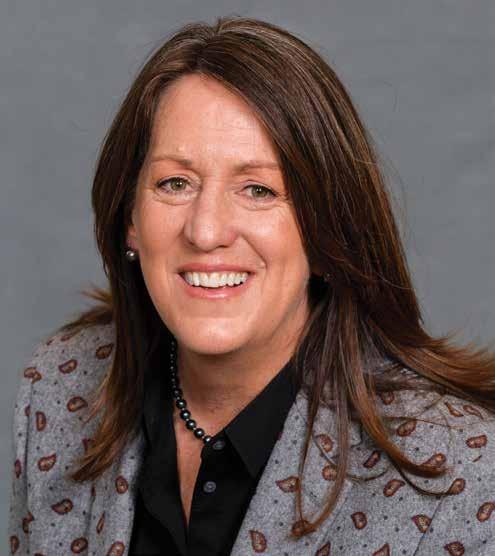
by Sarah Toce Special to the SGN
Newly-elected King County Sheriff Mitzi Johanknecht self-professes she’s never had a calendar as full as the one she’s currently operating. “My schedule is really interesting now,” she tells me as we sit in her office at the King County Courthouse building just north of Pioneer Square. “I’ve never had a calendar look that red before.”
Johanknecht, 58, is seated squarely in the center of the 1,000-person law enforcement agency previously spearheaded by former King County Sheriff John Urquhart, who held the office since 2012. The transition was not an easy one; he still refuses to speak to her and offered no assistance leading up to the change in post. As such, Johanknecht has had to steadily rely on her 33 years’ experience working in the Sheriff’s Office prior to the election in order to fill in the blanks. She most recently served as commander of Precinct 4 in Burien.
“Whether people know it or not, we do a lot of law enforcement in the City of Seattle
because we have both Metro and Sound Transit,” she says. “With that comes a lot of proactive work as it relates to taking care of people in case there’s a domestic or international terrorist threat. It’s actually a lot to think about with the tunnel and everything else we have going on in Seattle. We do a lot of civil process work – such as traditional sheriff’s functions, like evictions.”
The new position is “exciting” for Johanknecht, who ran her campaign on the pillars of transparency and integrity. She says she’s “drinking from the fire hose” as she prepares to navigate the intricacies of the job.
When asked what she hopes to accomplish right off the bat, she says there are so many things, but “it’s about pacing.”
“That’s the first thing to think about,” she says. Her immediate priorities include community outreach in order to connect and work with all communities and cultures “and making sure that they know their Sheriff’s connected to them and that their Sheriff’s office is working for them the best they can.” Another equally impor-
tant priority for Johanknecht is developing a working strategic plan so that decisionmaking comes through filters involving the community as well as government officials. The intention is to help with healing and build a department ready for the future.
Johanknecht says she has a clear goal to meet residents where they are and to incorporate them into the decision-making processes that go along with running their communities. Her expectation is to invite everyone to the table and ask them to participate as best they can, however they can.
“What we have done in the past is go and talk at communities instead of listening,” she says. “I think there’s so much I can learn from those communities that feel disenfranchised or not connected. It’s our responsibility [in this office] to take the first step and to reach out and not ever give up. I just know from my own life that when there’s fear about what law enforcement may do to a particular community that’s based on actual fact and history, that it’s our responsibility to overcome it.”
She says her office will responsibly
handle pressure regarding federal immigration reform.
“It’s a timely question,” she says. “Yesterday, myself and my undersheriff went and met with the ACLU. We’ve had two or three meetings to see where we can align and yesterday’s topic was immigration. Bullet point by bullet point I was able to say we concur. We’re fully in support of their work. Our hands are busy doing what we do as it relates to public safety and community protection. That community that we protect includes everyone. I have never had to worry about somebody’s immigration status to do my work. It’s really important to me that we’re a place where people can come and feel safe reporting crime and in that way we can protect them from harm and do the right thing.”
Johanknecht says law enforcement needs to be re-imagined. “Instead of being reactive so much, we need to – with the community’s help – re-imagine and try to get ahead and think beyond the moment we’re in and be better forward-looking. Planning ahead and being fully agile and ready to adjust. The type of person we hire to be a cop will change over time – certainly since 33 years ago when I started this work.”
On the subject of whether Johanknecht has faced any backlash from the rural areas of King County for being an open lesbian, she says no. “I was totally embraced wherever I went throughout King County – and across the political spectrum.”
When asked what Johanknecht might say if she could talk to her five-year-old self about what she’s doing now, she answers: “I never would have imagined that I’d be in this place, but I think I am right where I am supposed to be. I go back and think about the five-year-old kid who was, at the time, my folks lived in Arbor Heights in a little small house there with all five of their kids, and one year for Christmas I got a pedal tractor. So I think about the kid that was out there in the winter with a scarf on tied under my chin and a plastic Army helmet riding my pedal tractor around.”
Johanknecht currently resides in West Seattle with her wife, Maureen Warren. The pair, set up by friends back in 2001, share a 34-year-old daughter named Sydney.
Courtesy of Unite Seattle Magazine
to create a safe space to celebrate the LGBTQ+ community and its allies and friends.
“Sole Repair Shop has been a vital part of the Capitol Hill community for years, and we are excited to partner with them for Seattle Women’s Pride 2018,” said event founder and promoter Sarah Toce. “Guests can expect two open levels of gathering space with a no-host bar in a vintage/rustic setting across the street from many of our community’s favorite haunts.”
Toce was referring to Capitol Hill’s lesbian hot spot The Wildrose and eateries nearby, like Quinn’s, Spinasse, Terra Plata, Fogón Cocina Mexicana, and others. In fact, the VIP meet-and-greet this year will be held at one of these establishments, giving guests a chance to mix and mingle before the show.
“We’ve always aimed to offer our guests a chance to unite with new friends and reconnect with old ones,” Toce said. “Having a VIP meet-and-greet beforehand this year will offer an opportunity to set the stage for an unforgettable night in the community. And we’ll have some special surprises for our VIP guests!”
The evening has three main portions:
the comedy show, dancing to music played by local DJs, and the awards. Guests should arrive at 6:00 p.m. The event ends promptly at 10:00 p.m. This year there’s even a chance to win a major getaway item: a trip to Puerto Vallarta.
The theme for Seattle Women’s Pride 2018 is “TIME’S UP,” and a portion of proceeds from ticket sales will be donated to the TIME’S UP Legal Defense Fund.
According to the organization’s website, “nearly half of working women in the US say they have experienced harassment in the workplace. White non-Hispanic women are paid 81 cents on the dollar compared to white non-Hispanic men. Asian women are only paid 88 cents on the dollar. Black and Hispanic women are only paid 65 cents and 59 cents on the white male dollar, respectively.”
Comedy Show
Headlining the comedy portion of the evening will be Bravo’s Julie Goldman. It is the second time Goldman has headlined Seattle Women’s Pride, and she is returning by popular demand.
“Our guests have been asking for Julie to return to Seattle for over two years, so we’re thrilled to make this announcement,” Toce said. “Likewise, we hear Julie is fond of our fair city, too! It’s a win-win for all parties.”
Seating will be available on the top and
bottom levels, but they are first-come firstserved. Even so, there’s not a bad spot in the place.
As in prior years, Seattle Women’s Pride 2018 will honor LGBTQ+ members and allies for their tireless advocacy and dedication to civil rights and community commitment. Honorees for this year
include Aleksa Manila (2018 Community Champion Award), Lifelong (Business Excellence Award), and Tina Podlodowski (Luminary Award).
Seattle Women’s Pride 2018 is produced by The Seattle Lesbian. Sponsorship opportunities are available. Please see seattlewomenspride.com for additional details.
Courtesy of Seattle Women’s Pride 2018













BALTIMORE
in alignment with their gender identity is protected by federal and state law. In M.A.B. v. Board of Education of Talbot County, Max Brennan (M.A.B.), a boy
who is transgender, was forced by Talbot County Public Schools policy to use separate restrooms and locker rooms because he is transgender. The ruling is the first decision of its kind in the state of Maryland but joins a long list of decisions confirming that Title IX of the Civil Rights Act, the federal statute prohibiting sex discrimination in educational settings, and the Constitution prohibit public schools from excluding students who are transgender from using the same facilities as their non-transgender peers. The ruling is also the first to hold that transgender people are protected under the Maryland state constitution.
The lawsuit was originally filed by FreeState Justice, and the ACLU and ACLU of Maryland subsequently joined as co-counsel.
“I am extremely happy with the court’s decision, and think it is a great step in the right direction,” said Brennan. “I am hopeful that this case will not only help change policy for the better but help the students who are bound to come after me.”
In his decision, US District Court Judge
George L. Russell III explained, “M.A.B.’s claims come down to a boy asking his school to treat him just like any other boy. This Court finds that Title IX and the Equal Protection Clause provide M.A.B. grounds to do so.”
“We hope this decision is a wake-up call for the Talbot County School Board,” said Jennifer Kent, managing attorney with FreeState Justice. “School systems in Maryland should know the law and should be protecting students who are transgender from discrimination, not singling them out for separate and unequal treatment.”
“Courts across the country have recognized that Title IX and the Constitution prohibit schools from singling out transgender students for different and discriminatory treatment,” said Josh Block, a senior staff attorney at the ACLU LGBT & HIV Project. “We will continue to fight on behalf of Max and other transgender students to ensure that these stigmatizing and harmful policies are a thing of the past.”
Courtesy of the ACLU
Kendell says, “I feel enormous gratitude to have been a part of the NCLR legacy and part of the history of the fight – still ongoing – for justice for all LGBTQ people.”
SAN FRANCISCO – [On March 15], the National Center for Lesbian Rights (NCLR) announced that after more than 22 years, Kate Kendell will be stepping down from her role as executive director at the end of this year. NCLR was the first lesbian-led national legal organization and has been fighting for equality for the full LGBTQ community for more than 40 years. Under Kendell’s leadership, NCLR has been central to the fight for LGBTQ equality, including marriage equality, protections for LGBTQ families and youth, and the ongoing fight to stop Trump’s transgender military ban.
In 2008, NCLR won the California marriage equality case and was later part of the team of attorneys to secure national marriage equality in the US Supreme Court case Obergefell v. Hodges. NCLR’s 2017 U.S. Supreme Court victory in Pavan v. Smith will that ensure states cannot chip away at marriage equality protections for married samesex parents. And together with GLAD, last year NCLR was first to file a federal lawsuit challenging Trump’s transgender military ban in August 2017 and secure a nationwide preliminary injunction stopping the ban from moving forward while the case is heard in court.
During Kendell’s tenure, NCLR’s budget has grown from $500,000 to more than $5 million, the number of staff members has increased by 5x, and NCLR now has both West Coast and East Coast offices in San Francisco and Washington, DC.
Statement from Kate Kendell:
“My time at NCLR has widened my vistas and laid open my heart. I am honored to have held this position and privileged to have experienced the countless moments of joy and awe that have forever changed our lives as LGBTQ
individuals. I’ve been at the center of enormous NCLR victories, four at the US Supreme Court, including the freedom to marry, a fight that seemed impossible to many when I became executive director 22 years ago.
“I feel enormous gratitude to have been a part of the NCLR legacy and part of the history of the fight – still ongoing –for justice for all LGBTQ people.
“And under an administration committed to rolling back our rights, jeopardizing the lives of LGBTQ immigrants, failing to protect our youth, and . . . denying critical access to health care, NCLR has never been more important.
“I am confident that a new generation of NCLR leadership, hand in hand with our dedicated staff, will chart a bold, fierce future for our community.”
Statement from NCLR Legal Director Shannon Minter:
“Working with a leader of such fierce intellect and unfailing compassion has been the greatest privilege of my professional life. I speak for all NCLR’s staff in saying that we are more dedicated than ever to fulfilling Kate’s vision of a world in which no one is left behind.”
Statement from NCLR founder, the Honorable Donna Hitchens:
“Kate Kendell’s charisma, passion, and vision have resulted in NCLR becoming one of the most creative and effective advocacy organizations in this country. Every LGBTQ person has benefitted because of her incredible leadership.”
Statement from Board Co-Chair Lisa Cisneros:
“I fell in love with NCLR nearly 12 years ago. I was an intern, covering the help desk as attorneys drove an incredible docket of cases that ranged from marriage equality to asylum cases. Kate’s passion and energy made her a formidable force for change in and outside of the LGBTQ movement, and we are all better off for it. I am honored to call her a mentor and a friend. As leader of NCLR, she inspires her team to reach new heights and has helped push the move -
ment for LGBTQ equality further than many believed possible.”
Statement from Board Co-Chair Therese Lee:
“Kate brought LGBTQ issues to the forefront of the national conversation at a time when few others had the courage to do so and anti–marriage equality sentiment was sweeping the country. She has cemented her place and NCLR’s place in the history of California and in the nation. I am proud to have worked alongside Kate to nurture this organi -
zation, fight for equality for our most vulnerable community members, and help people realize the transformative power of justice.”
The National Center for Lesbian Rights is a national legal organization committed to advancing the human and civil rights of the lesbian, gay, bisexual, and transgender community through litigation, public policy advocacy, and public education. www. NCLRights.org
Courtesy of the NCLR

by Mike Andrew SGN Staff Writer
At least 125 people in Milwaukee –including high school students – have been infected with HIV, syphilis, or both in the past year, according to a March 13 story in the Milwaukee Journal Sentinel
Three local babies were also born with syphilis last year.
According to the newspaper, there has been no announcement to the general public from the Milwaukee Health Department, although public health officials did notify the Milwaukee Public Schools (MPS), and public health sources did cooperate with the
newspaper in preparing the story.
“This is an epidemic people are not talking about enough, and it leads to people taking unnecessary risks,” said Melissa Ugland, a public health consultant who works with a number of Milwaukee nonprofits that focus on public health.
Fewer than 10% of the 125 people who tested positive for sexually transmitted infections (STIs) are MPS students, but health care experts anticipate that the numbers could increase as more people come forward.
This cluster of STIs was identified because the individuals in it could all be connected, and were in contact with each other during an identifiable 12-month period, Ugland said.
Most of those in the group are men and 45% were HIV positive, Ugland and other health care advocates said.
In a statement, MPS said the Health Department informed the district that the entire city is experiencing an increase in sexually transmitted infections in young people ages 15 to 24.
“Because schools have a significant number of students in the 15-18 age group, we are working with the Milwaukee Health Department, in a collaborative and preven-
tive effort, to share information with young people in middle schools and high schools to keep them healthy and to protect their health,” the statement said.
Public health advocates are labeling the cluster a “sentinel event” because of the number of young people becoming HIV positive and the fact that babies were born with syphilis.
“It’s a really big deal,” Ugland said.
Health officials first became aware of a growing problem with sexually transmitted infections in mid-December, 2017, after several people reported having HIV or syphilis symptoms, sources said.
According to the newspaper report, Bevan Baker, the city’s former health commissioner, met with Milwaukee Mayor Tom Barrett to brief him about the cluster of STIs in December, 2017, and again in early January, 2018, but the city did not make an effort to publicize the data or urge people to get tested and take safer sex precautions.
MPS, however, immediately brought health care professionals in to talk with students. Within 24 hours of learning about the cluster, Ugland said, MPS Superintendent Darienne Driver was on the phone to get people in to talk with students.
by Mike Andrew SGN Staff Writer
A bill to allow faith-based adoption agencies to discriminate against same-sex couples, single people, and non-Christians passed the Oklahoma Senate on March 13.
Called SB 1140, the measure passed by a lopsided 35-to-9 margin and now heads to the House.
The bill would allow child placement agencies to block adoptive parents who do not meet the agencies’ religious or moral standards.
Oklahoma Senate Democrats opposed the bill, but Republicans hold a 39-to-8 majority in the Senate. In the Oklahoma House, the GOP also dominates 73-to-28.
Republican Sen. Greg Treat spon -
continued from cover
for the 8th Circuit to find that sexual orientation discrimination violates Title VII of the 1964 federal Civil Rights Act because it is a form of sex discrimination.
The brief argues that earlier court decisions dating back to the 1970s, which barred lesbian and gay people from bringing employment discrimination claims under Title VII, have led to what the 7th Circuit Court of Appeals called a “confused hodge-podge of cases.” That exclusion has caused lower courts to reach inconsistent results and erected unique barriers to sex discrimination claims by lesbian, gay, and bisexual people that other employees do not face.
The case, titled Horton v. Midwest Geriatric Management, LLC, was brought by Mark Horton, who was offered a job as Vice President of Sales and Market-
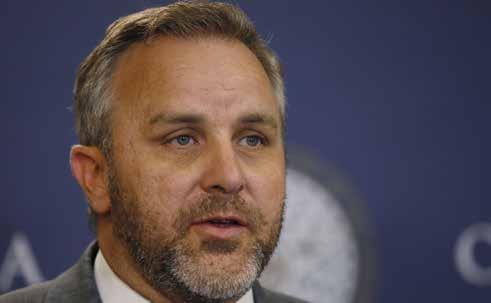
ing, only to have the offer withdrawn after the company learned he had a same-sex partner. A US district court in Missouri dismissed his Title VII claim based on a case from the 1980s, stating that Title VII does not protect lesbian, gay, and bisexual people from discrimination. Horton is represented by the Lambda Legal Defense and Education Fund.
“It’s impossible to discriminate against someone based on their sexual orientation without also discriminating against them based on their sex,” said NCLR Senior Staff Attorney Christopher Stoll. “For too many years, courts have suffered through the artificial and ultimately pointless exercise of trying to determine whether the discrimination and harassment faced by lesbian, gay, and bisexual workers on the job was because of their sexual orientation or because of their sex. That outdated and unworkable approach leads to unfair and inconsistent treatment of workers and unpredictable results for employers. It
should be replaced with a clear rule that is faithful to the clear language of Title VII, which is that sexual orientation discrimination always involves sex discrimination.”
“It’s common sense that Title VII includes protections for lesbian, gay, and bisexual people when it forbids employment discrimination because of sex,” said GLAD Legal Director Gary Buseck. “Title VII has long forbade discrimination based on gender stereotyping, and sexual orientation is the ultimate case of failure to conform to gender stereotypes about the proper roles of men and women. In addition, you simply can’t define a person’s sexual orientation without identifying their sex.
“Within the past year, two federal courts of appeals, the New York-based 2nd Circuit and the Chicago-based 7th Circuit have overruled their previous precedent barring lesbian and gay people who experience workplace discrimination from bringing claims under Title VII. A favorable decision by the 8th Circuit would extend feder-
sored the bill and said it would protect faith-based adoption agencies from potential lawsuits.
LGBT rights advocates said the measure was unnecessary and would keep children from being placed in loving homes. The LGBT rights group Freedom Oklahoma launched a campaign on March 12 to kill the bill, but it was too late.
Similar laws have been passed in at least seven other states, including Alabama, South Dakota, and Texas last year. An almost identical bill was approved last month by the Georgia Senate and is now pending before the Georgia House Judiciary Committee.
A bill with similar language has been introduced in the US Congress.
al sexual orientation nondiscrimination protections to workers in Arkansas, Iowa, Minnesota, Missouri, Nebraska, North Dakota, and South Dakota, joining workers in Illinois, Indiana, Wisconsin, New York, Connecticut, Vermont, and the US Virgin Islands, who already enjoy those protections because of the recent decisions.
The National Center for Lesbian Rights is a national legal organization committed to advancing the human and civil rights of the lesbian, gay, bisexual, and transgender community through litigation, public policy advocacy, and public education. www. NCLRights.org
Through strategic litigation, public policy advocacy, and education, GLBTQ Legal Advocates & Defenders works in New England and nationally to create a just society free of discrimination based on gender identity and expression, HIV status, and sexual orientation.
Courtesy of GLAD
HOUSTON – [On March 15,] Lambda Legal announced the resolution of a lawsuit against the Texas Department of Criminal Justice (TDCJ) on behalf of Passion Star, a black transgender woman who filed a lawsuit alleging prison officials failed to protect her from sexual and physical abuse while incarcerated in male prisons.
“For years, I was raped and beaten in prison, and when I asked for help I was ignored. I was hurt, scared, and thrown in solitary in hopes that I would be forgotten, but today I can be proud that I never gave up. No one should be terrorized in prison and have to experience a nightmare like that,” said Passion Star.
“Passion experienced brutal violence, degradation, and discrimination in prison. She is a transgender woman who was forced to live in terror in a men’s prison, and the officials charged with her care refused to take adequate steps to keep her safe,” said Demoya Gordon, Lambda Legal Transgender Rights Project attorney. “We are pleased with the resolution reached with prison officials. We are hopeful that this sends a strong message to prison officials: sexual assault and violence against LGBT people who are incarcerated will not be swept under the rug.”
In October 2014, Lambda Legal filed a federal lawsuit on behalf of Passion claiming that TDCJ officials acted in deliberate disregard to the real and evident threats she faced, ignoring the state’s own written policies regarding treatment of LGBT people in custody, the documented evidence of gang activity in Texas prisons, and the federal Prison Rape Elimination Act (PREA).
Passion Star was granted parole in December 2016 and released June 2017, 14 years after entering the TDCJ system and
HRC
continued from cover
Arkansas, and Mississippi. The HRC has permanent campaigns in these three states as part of its Project One America campaign. Over the past year, HRC has recorded 70+ videos from LGBTQ people and allies and has released them through Facebook, Twitter, and YouTube. The #LoveYourNeighbor campaign is partially funded with a grant from Toyota, which has a manufacturing plant in Mississippi.
“Through the HRC’s work in the South, we have found that the most effective way
suffering horrific abuse as a transgender woman incarcerated in male prisons.
[On March 15,] Lambda Legal announced that the TDCJ settled this matter with Passion on terms agreeable to all parties. The settlement includes a monetary payment, along with systemic policy changes and training of TDCJ staff to better protect LGBT people still being held in TDCJ facilities from sexual abuse.
Background:
Now 34, as a teenager, Passion pled guilty to aggravated kidnapping after her then-boyfriend refused to return the used car they were test-driving to the dealership, instead driving for several hours with the car salesman in the passenger seat and Passion in the back. Passion was sentenced to 20 years in prison and transferred to the custody of the TDCJ, where she was housed in male facilities.
In the seven male facilities where she was housed, male inmates identified Passion as feminine. She was raped, forced to submit to undesired sexual acts to escape violence, and threatened with sexual assault. She filed dozens of grievances, complaints, and requests to be placed in safekeeping, but instead of taking measures to protect her, TDCJ officials told her to “suck dick,” “fight,” or stop “acting gay” if she did not want to be assaulted. In multiple prisons, Passion was placed in the general population in close proximity to inmates who she had identified as having threatened her, including one occasion in November 2013 where the identified inmate then attacked Passion, calling her a “snitching faggot” and slashed her face eight times with a razor.
Only after Lambda Legal filed a lawsuit and an emergency motion on Passion’s behalf did TDCJ officials finally agree to
to change hearts and minds is simply to share our stories,” said Rob Hill, HRC Mississippi state director. “We’re thrilled to bring the #LoveYourNeighbor campaign to the airwaves in Northeast Mississippi, where this multistate storytelling project began. The HRC is grateful for Toyota’s generosity in helping to fund this project and for the bravery of the LGBTQ Mississippians who have shared their stories with their friends and neighbors. We hope that these stories of LGBTQ people living in the South will reach a broad audience in Northeast Mississippi, many of whom may not have had an opportunity to hear stories like these before.”

place her in safekeeping in March 2015.
Lambda Legal will continue fighting to end mistreatment of LGBT people who are incarcerated across the country.
The case is Passion Star a/k/a Zollicoffer v. Livingston. Information about the case is available at: http://www.lambdalegal.org/in-court/cases/star-v-livingston.
The advertisements feature: Kaleb and Carrie, a transgender man and his wife, who both work at the Blue Springs, Miss., Toyota plant. Several LGBTQ and allied voices from Mississippi, including married same-sex couples and state legislators who identify as allies.
In 2014, the HRC launched Project One America, an initiative geared toward advancing social, institutional, and legal equality in Mississippi, Alabama, and Arkansas. HRC Mississippi continues to work to advance equality for LGBTQ Mississippians who have no state-level protections in housing, the workplace, or

March 14, 2018 – NMAC has opened the eighth cycle of the Youth Initiative program to train future leaders in the fight against the HIV epidemic. The sevenmonth program is open to applicants ages 18-25. Youth living with HIV or on PrEP, LGBTQ [people], youth of color, and young cis & trans women are particularly encouraged to apply. For more information or to apply, visit the NMAC website (http://bit.ly/2tKvBxM). Applications are due by April 10.
The Youth Initiative provides unique leadership and learning opportunities through online webinars, peer-to-peer
networking, and advocacy training. Youth Scholars will also have the opportunity to be paired with a mentor to support their success throughout the program and will be able to attend a special training session at the US Conference on AIDS (USCA) in Orlando, FL, in September.
“NMAC is committed to building the new generation of leaders for the HIV movement,” said Paul Kawata, NMAC’s executive director. “The Youth Initiative identifies and trains 30 young scholars each year to engage in their local communities and work to address the epidemic and advocate for local people living with and impacted by HIV locally. That is how we make lasting and positive change: by engaging on the local level all across the country.”
“Young people are not only the next wave of leaders in the HIV movement but are essential leaders today,” said Marc Meachem, head of external affairs at ViiV Healthcare. “The Youth Initiative helps
young leaders sharpen their tools, learn from one another, and be supported as they take on bold new projects and roles in the fight against HIV. We are proud to support the Youth Initiative for the eighth year as young people continue to push the movement forward.”
“We’ve seen in recent weeks what energized activist youth can accomplish,” said Linda Scruggs, director of NMAC’s Leadership Pipeline program, which operates the Youth Initiative. “The Youth Initiative taps engages up-and-coming leaders in the HIV movement and empowers them to take the reins as long-term leaders begin to step away from the field. We want to ensure that the next generation of HIV leaders has the tools they need to succeed.”
The Youth Initiative is supported by ViiV Healthcare, the Magic Johnson Foundation, and Advocates for Youth. NMAC leads [the] race to urgently
Lambda Legal is a national organization committed to achieving full recognition of the civil rights of lesbians, gay men, bisexuals, transgender people, and those with HIV through impact litigation, education, and public policy work.
Courtesy of Lambda Legal
public accommodations. Through HRC Mississippi, [the HRC is] working toward a future of fairness every day – changing hearts, minds, and laws toward achieving full equality.
The Human Rights Campaign Foundation is the educational arm of America’s largest civil rights organization working to achieve equality for lesbian, gay, bisexual, transgender, and queer people. The HRC envisions a world where LGBTQ people are embraced as full members of society at home, at work, and in every community.
Courtesy of the HRC
fight for health equity and racial justice to end the HIV epidemic in America. Since 1987, NMAC has advanced [its] mission through a variety of programs and services, including: a public policy education program, national and regional training conferences, a treatment and research program, numerous electronic and print materials, and a website: www.nmac.org. NMAC also serves as an association of AIDS service organizations, providing valuable information to community-based organizations, hospitals, clinics, and other groups assisting individuals and families affected by the HIV epidemic.
Courtesy of NMAC