Ganna Walska Lotusland in Montecito, California a stunning botanic garden worth visiting
by Brian Matt Special to the SGN
“Welcome to Ganna Walska Lotusland:
“Madame Ganna Walska, a well-known Polish opera singer and socialite, purchased the Montecito, California estate in 1941 and spent the next 43 years creating Lotusland, which is now recognized as one of the ten best gardens in the world. The spectacular collections of exotic plants throughout the 37-acre property are a very personal expression of Walska’s penchant for the dramatic, the unexpected, and the whimsical. Lotusland is home to several extraordinary plant collections and around each corner there is the unexpected – a surprise of unique garden design and plant species. After her death in 1984, Lotusland became a nonprofit botanic garden and opened to the public in 1993. Our educational programs serve the Santa Barbara community and our innovative horticultural practices are shared with botanic gardens and garden-lovers around the world.”
– Courtesy of Ganna Walska Lotusland
[EDITOR’S NOTE: Last September Brian Matt and MK Scott took a road trip from Seattle to Palm Springs to attend the NLGJA / The Association of LGBTQ Journalists National Convention. On their way home they visited the Ganna Walska Lotusland botanic garden located in Montecito, California east of Santa Barbara.
Following is Brian Matt’s report.]
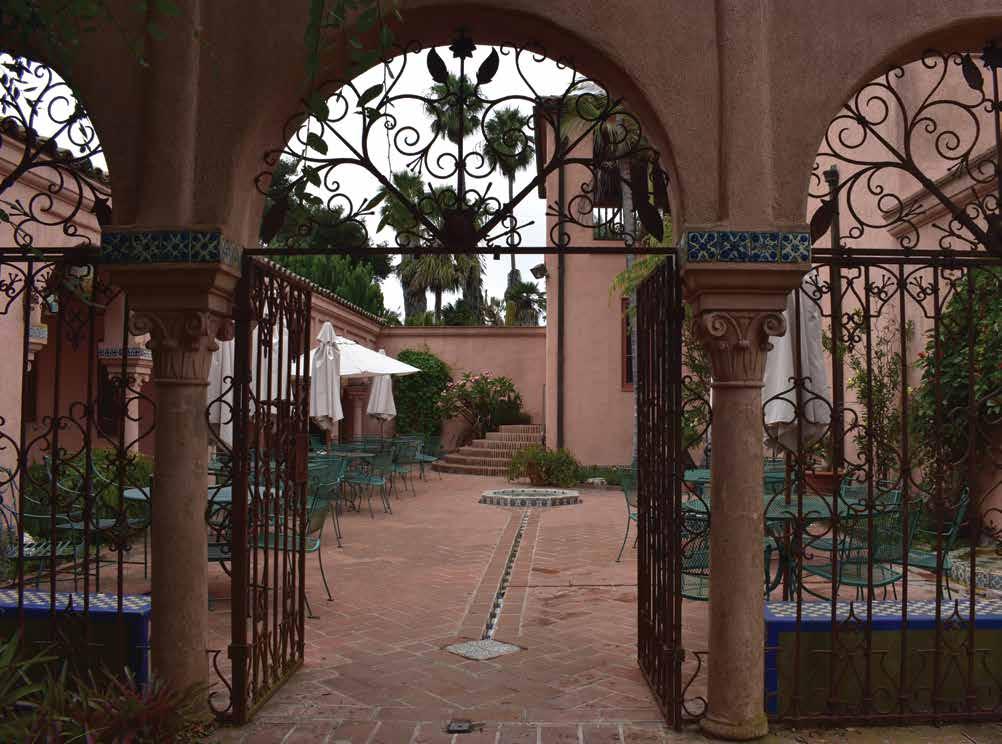
With a combination of Mediterranean, European and Moorish influences, the architecture of Lotusland evinces a visit to Italy or Spain. However, the most inspiring and thrilling part is the extensive gardens.
Having traveled through California several times and having visited other botanical gardens, a comment by a friend of mine allowed me to find out about this amazing corner of Santa Barbara.
Acquired by opera singer Madame Ganna Walska in 1941 as a retreat for Tibetan monks to help her guru explore spirituality in further depth, she originally named her estate “Tibetland.” However, the circumstances of World War II caused the State Department to suspend visas and the monks were never able to get to the retreat. She eventually married her guru, but found that the differences between them did not allow for a convivial marriage. After divorcing, Madame Walska had the 37 acres to herself, and immediately put her creative efforts into creating the worldfamous gardens that are there today.
Lotusland comprises several different compartmented gardens that are still able to synchronize as a whole, in part due to the famous landscape architects that Ganna Walska employed Lockwood de Forest and Ralph Stevens. Much of the garden design was done by Madame Walska herself, especially after 1956.
Ganna Walska developed her own distinctive style of landscaping with a strong predilection for exotic and architectural plants as well as carefully arranged viewpoints. She had exacting standards for landscaping – obtaining materials from hundreds of miles away in some cases to get the feeling or look just right. She also worked with several artists, plant collectors and stonemasons to bring her vision to fruition.
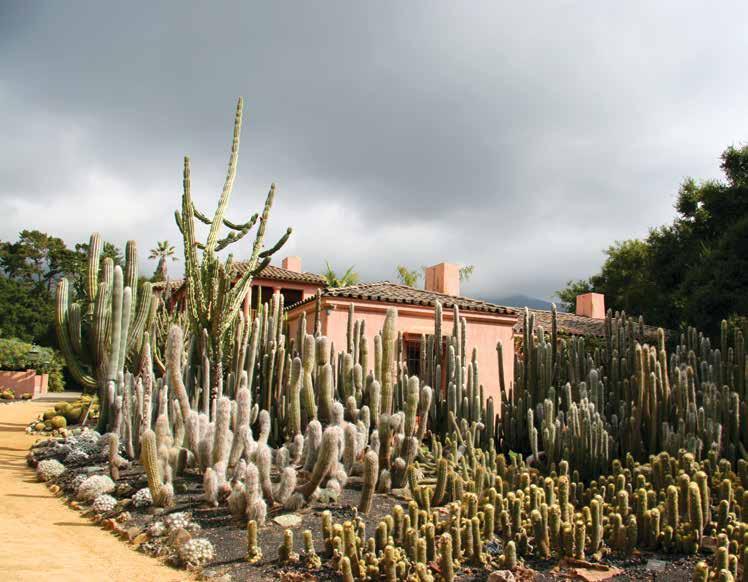
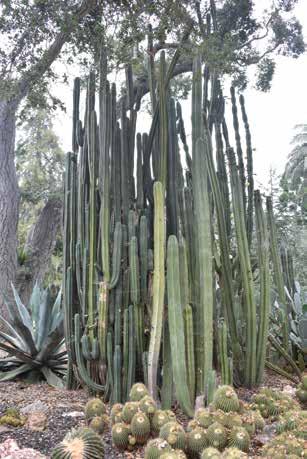
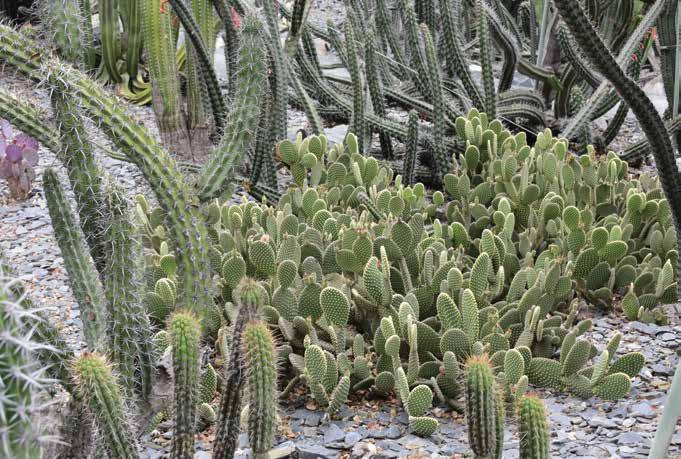
Cacti and Euphorbia Garden at Lotusland – Photo by brewbooks via wikipedia commons
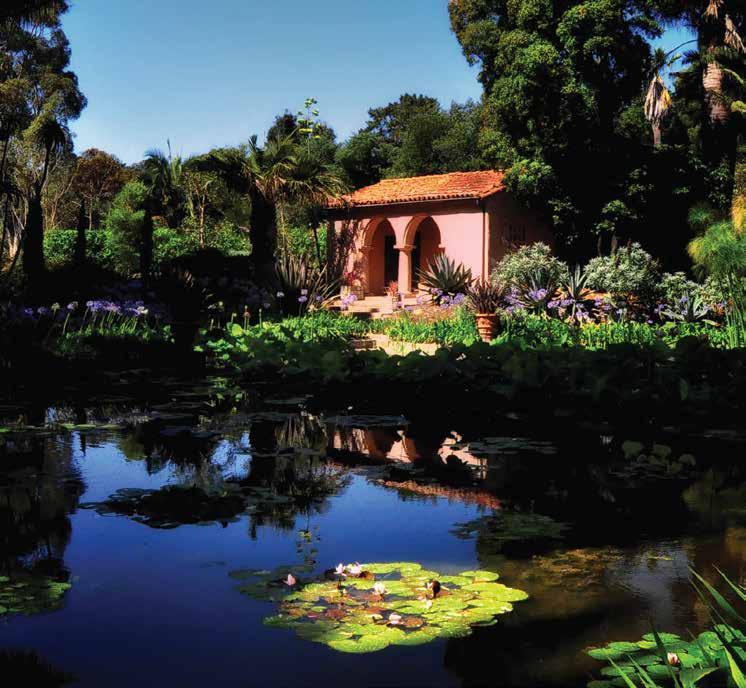
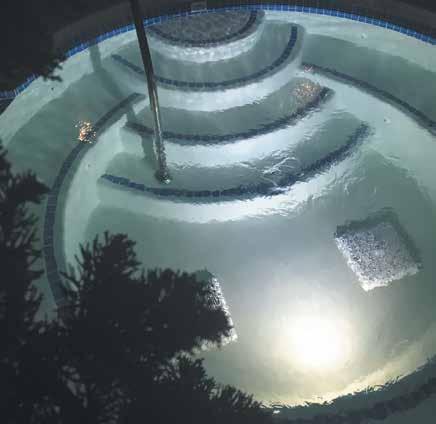
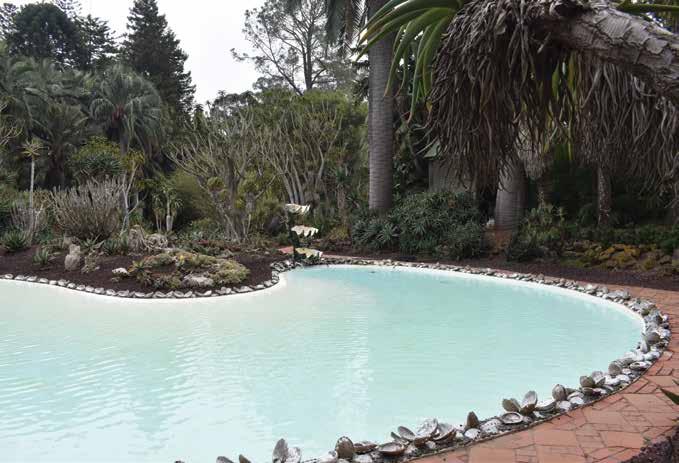
Water Garden at Lotusland – Photo by Rod Waddington via wikipedia commons
World Premiere
The Parting
a new opera by
Tom Cipullo and David Mason
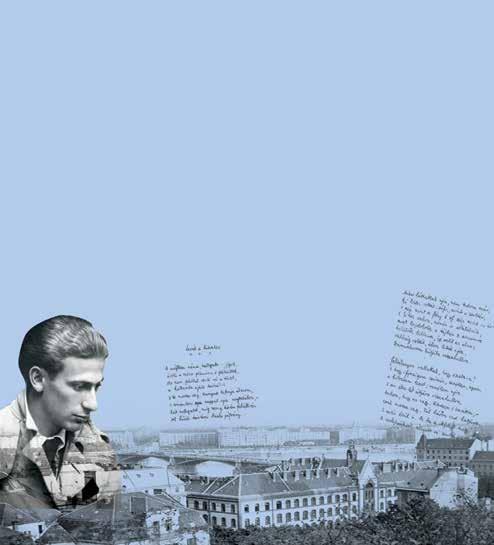
In 1944, the great Hungarian poet Miklós Radnóti and his devoted wife Fanni foresee Miklós’ likely fate in a forced labor camp. Together they treasure the meaning of their lives: “To learn what love is. To live. To make beautiful things. To die.” starring Laura Strickling, Michael Mayes and Catherine Cook
Sunday, May 19, 2019 – 7:30 p.m.
Illsley Ball Nordstrom Recital Hall at Benaroya Hall




SPRING ARTS
“Jeffrey Gibson: Like A Hammer” at Seattle Art Museum through May 12
Major exhibition of acclaimed contemporary artist who draws on diverse influences including abstraction, Indigenous art, queer aesthetics, and pop culture
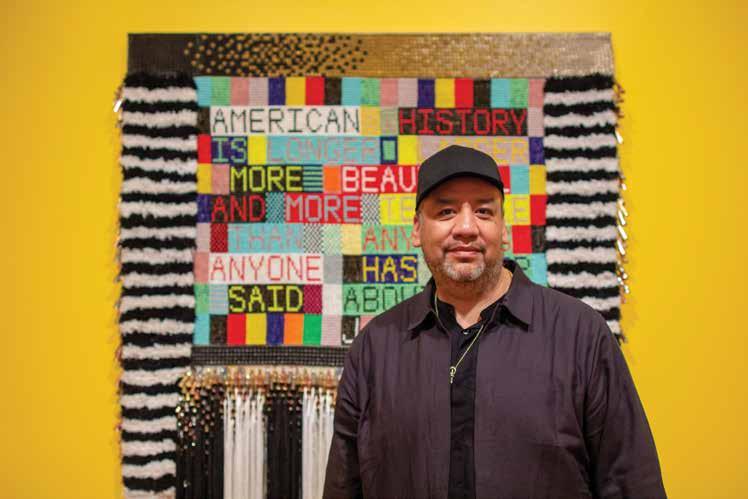
The Seattle Art Museum presents “Jeffrey Gibson: Like a Hammer,” a major survey of works from 2011 to the present that reflects the artist’s deepening exploration of his Indigenous heritage, legacies of abstraction, and popular and alternative cultures. Organized by the Denver Art Museum, the exhibition features over 65 works produced during a pivotal time in Gibson’s career, including abstract geometric paintings on rawhide and canvas, beaded punching bags, sculptures, wall hangings, and video. Reflecting the complexity of modern identity, Gibson’s work envisions a more inclusive future.
A contemporary artist of Cherokee heritage and a citizen of the Mississippi Band of Choctaw Indians, Gibson grew up in the U.S. and urban centers in Europe and South Korea. As a young adult, he was involved in queer club culture and interested in popular music, fashion, and design. These experiences inform his vision of exuberant hybridity, in which glass beads, metal jingles, ribbons, song lyrics, and abstract geometric patterns come together. Gibson’s use of materials and references that resonate in modern and contemporary Western art, as well as Indigenous and ancient cultures, establishes a unique visual vocabulary that gives rise to new possibilities and points of connection.
ABOUT THE EXHIBITION
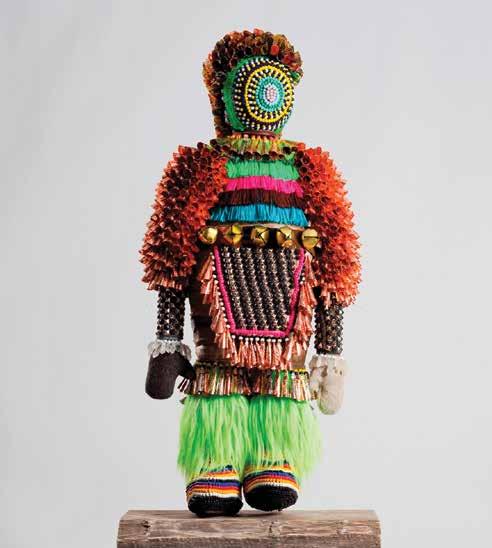
A highlight of the exhibition is 15 punching bags, most of which are from the Everlast series that marked an artistic breakthrough for Gibson. Intricately adorned in beads, fringe, and jingles, and often incorporating text, the punching bags shift gender associations between the masculine and the feminine. They also prompt reflection about the history of violence against Indigenous cultures and signal a call for resilience and perseverance. “Like a Hammer” also features IF I RULED THE WORLD (2018), which was recently acquired by the Seattle Art Museum for its permanent collection.
Language plays an important role in Gibson’s work, with lines from pop songs and other sources adorning vibrant woven and
patterned wall hangings and punching bags. Taken from such diverse sources as James Baldwin, Pete Seeger, Culture Club, and Public Enemy, among others, the phrases take on multiple meanings and speak to resistance, reclamation, and celebration.
“Like a Hammer” features many of Gibson’s abstract geometric paintings on canvas and rawhide, in which he explores pattern, light, and color, prompting the viewer to see abstraction through the lens of Indigeneity. Also on view are midsize and large figurative sculptures. The colorful “club kid” figures are inspired by his experiences in the queer club scenes of South Korea, London, and New York in the 1980s and ’90s and connect to his interest in performance, theatricality, and communal experiences. By contrast, his “ancestor” figures are draped with elaborately ornamented cloaks and topped with clay heads reminiscent of skulls or ancient Mississippian culture effigy heads. While visually fierce, these works are seen by the artist as teachers and culture-bearers.
One gallery is dedicated to the West Coast debut of DON’T MAKE ME OVER, a multimedia installation consisting of cascades of diaphanous rainbow-colored curtains embedded with lyrics from Burt Bacharach’s 1962 song about love and acceptance, made legendary by Dionne Warwick. The curtains encircle an oversized garment adorned with bells and jingles, and a nearby projection plays a video of Gibson wearing the garment, chanting and drumming as he moves within the enclosed curtained space. A series of irregularly shaped diptych paintings on rawhide complete this installation.
At the end of the exhibition is a reading room, where visitors can reflect and read books – including selections for children and young adults – related to the topics explored in Gibson’s work, such as history, politics, culture, and music.
“Jeffrey Gibson’s art is fearless yet playful. His wide-ranging mind transforms myriad influences into provocative work that defies categorization,” says Barbara Brotherton,
Curator of Native American Art. “With Gibson, more is more,” adds Catharina Manchanda, Jon & Mary Shirley Curator of Modern & Contemporary Art. “His work is visually and conceptually exhilarating, full of nuance and complexity. Be prepared for a mind-altering experience.”
RELATED PROGRAMS AND EVENTS
In conjunction with the exhibition, SAM will present a dynamic lineup of programming, including Art Beyond Sight and docent tours, programs for schools and educators, and a series of public programs. The programs will focus on the intersectionality and materiality of Gibson’s artistic practice and connect with regional youth, especially LGBTQ and urban Native youth. Other highlights include a fashion show spotlighting Indigenous designers (Thursday, May 2, 5:30-8pm) and “Legendary Children,” the Seattle Public Library/SAM partner event celebrating QTPOC (queer and trans people of color) artists (Friday, May 10, 8-11pm). For complete information, visit www.seattleartmuseum.org or phone (206) 654-3137.
LOCATION, HOURS & ADMISSION
Seattle Art Museum is located at 1300 First Avenue at 3rd Ave. & Union St. Hours: Closed Monday and Tuesday; Open: Wednesday, 10 am-5 pm; Thursdays, 10 am–9 pm; Friday-Sunday 10 am–5 pm.
Admission (including “Jeffrey Gibson: Like a Hammer”): $24.95 Adult; $22.95 Senior (62+), Military (with ID); $14.95 Student (with ID), Teen (13–17); FREE for children (12 and under); FREE for SAM Members
Free and discounted days: First Thursdays (for everyone): Special exhibition ticket prices are reduced by more than 50% on the first Thursday of the month. Tickets to SAM Collections and Installations are free. First Fridays (for seniors): Same discounts as First Thursdays.
For more information, visit www.seattleartmuseum.org or phone (206) 654-3137.
Courtesy of Seattle Art Museum
Jeffery Gibson in front of American History installation at Seattle Art Museum – Photo by Natali Wiseman
LIKE A HAMMER, 2014, Jeffrey Gibson, Mississippi Band of Choctaw Indians/Cherokee, b. 1972, elk hide, glass beads, artificial sinew, wool blanket, metal studs, steel, found pinewood block, and fur, 56 × 24 × 11 in., Collection of Tracy Richelle High and Roman Johnson, courtesy of Marc Straus Gallery, New York, image courtesy of Jeffrey Gibson Studio and Roberts Projects, Los Angeles, California – Photo by Peter Mauney.















SPRING ARTS
“Prince
from Minneapolis” opens at MoPOP April 6
New exhibition examines the creation of Prince’s image through the lens of photographers and artists he influenced
The Museum of Pop Culture (MoPOP) in partnership with The Weisman Art Museum is excited to announce a new exhibition, “Prince from Minneapolis” opening April 6 and continuing through January 4, 2020.
“Prince from Minneapolis” will feature nearly 50 artifacts, including photography, artwork, instruments, and costumes worn by the Purple One, examining the icon’s image, his influence on other artists and on fans, and highlighting his unique relationship to Minneapolis and Minnesota.
“Prince embodied so many of the themes we like to explore at MoPOP,” said Brooks Peck, MoPOP Curator. “He drew on the work of the greats who came before him, yet created his own, truly original style and sound. He defied convention and broke boundaries, and he continues to inspire musicians as well as artists of all kinds to this day.”
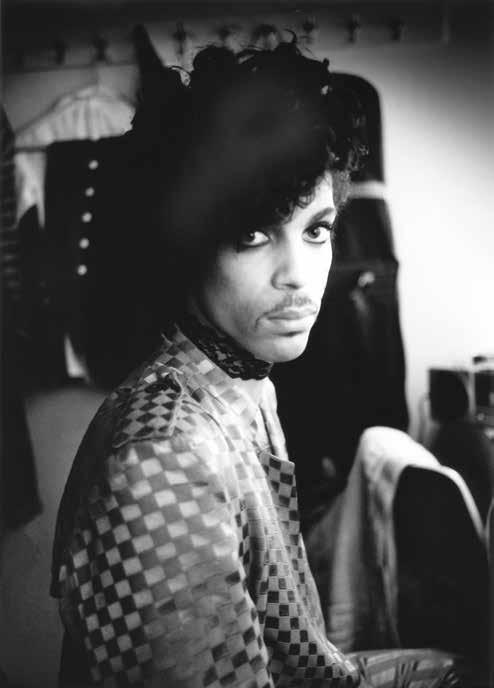
At the start of his career, Prince worked to create a unique and dynamic professional image. He collaborated with photographers in his local community, and several Minneapolis artists participated in the construction and dissemination of what is now his legendary image and identity.
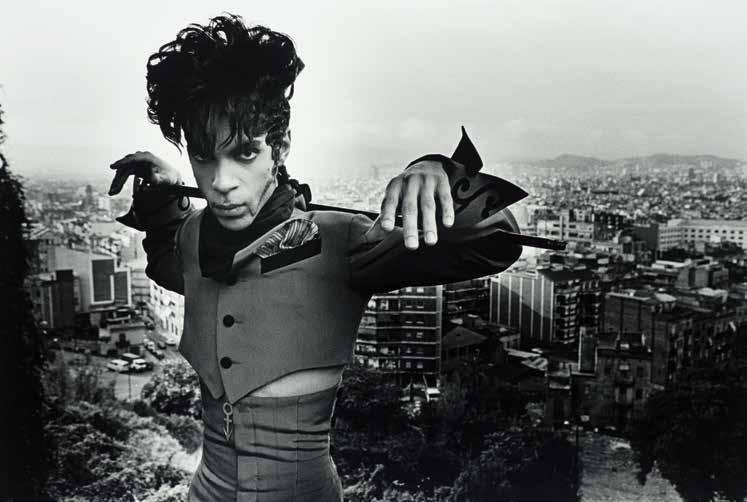
Four Minneapolis photographers – Allen Beaulieu, Nancy Bundt, Terry Gydesen, and Robert Whitman – are showcased in the exhibition, along with Troy Gua, a Seattlebased artist, who uses art doll recreations of the megastar in different settings, and the Mexican American de la Torre brothers, who created memorial spirit figures in glass at Minneapolis’ FOCI glass studio days after Prince’s death.
“WAM is thrilled that ‘Prince from Minneapolis’ will soon be landing and expanding at MoPOP, Seattle. From early photographs of the megastar by Minneapolis
artists to artwork of all kinds – paintings, blown glass, and even a bicycle – inspired by Prince, the exhibition strives to manifest the well known adage that ‘everyone has a Prince story,’” said Diane A. Mullin, Weisman Art Museum Senior Curator. “We look forward to the Seattle chapter.”
Also on view will be a portrait by famed Minnesotan seed artist, Lillian Colton, a painting representing city walls covered with flyers and graffiti by the Turkish painter Burhan C. Doğançay, and a Prince bicycle by independent frame builder Eric Noren of Peacock Groove. The bike won Best in Show and Best Theme Bike at the 2017 North American Handmade Bicycle Show, and was commissioned by and is on loan from Anna Schwinn, great-great-granddaughter of the legendary late nineteenth century bicycle pioneer, Ignaz Schwinn.
From Minneapolis to Seattle, San Diego, and New York City, and from mural painting to seed art, glass, and a custom bicycle, “Prince from Minneapolis” showcases examples of inspiration and broad geographical and cultural reach of the artist known as Prince.
This exhibit has been organized by the Weisman Art Museum.
A special opening night party for the exhibit with special guests, live music, art experiences and gallery access will be held at MoPOP on April 5. MoPOP is located at 325 5th Ave N. The museum is open daily 10am-5pm. For more information and advance tickets, visit MoPOP.org or phone (206) 770-2700.
ABOUT THE MUSEUM OF POP CULTURE (MoPOP)
MoPOP is a leading-edge nonprofit museum in Seattle with a mission to make creative expression a life-changing force by offering experiences that inspire and connect our communities. MoPOP reached multigenerational audiences through our collections, exhibitions, and community engagements, and educational programs, bringing understanding, interpretation, and scholarship to the pop culture of our time. For more information, visit www.MoPOP.org
ABOUT THE WEISMAN ART MUSEUM
Since its origin in 1934, the Weisman Art Museum has been a teaching museum for the University of Minnesota. Today, education remains central to the museum’s mission to create art experiences that spark discovery, critical thinking, and transformation, linking the University and the community.
Courtesy of the MoPOP
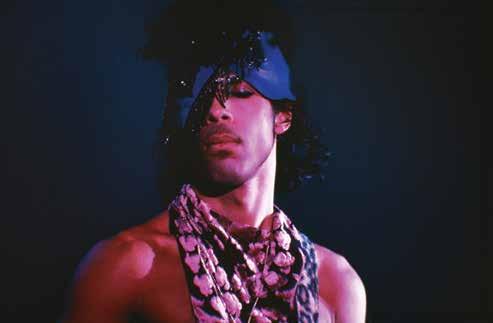
Prince at Maontjuic. Barcelona, Spain, 1993. – Photo by Terry Gydesen
Prince Looking, 1982, digital print. – Photo by Allen Beaulieu Prince’s Birthday Concert at Frist Avenue, 1984. – Photo by Nancy Bundt.

cascadiafilmfest.org
by:

Sponsored
City of Bellingham, Whatcom County, the Mary Redman Foundation, Fat Pie Pizza, Boundary Bay Brewery & People’s Bank
Honored Guest Academy Award Winning Director:
Director of ‘Maya Lin: A Clear, Strong Vision,” Anita,” and the forthcoming “RUTH: Justice Bader Ginsberg In Her Own Words”












SPRING ARTS
CASCADIA International Women’s Film Festival
April 11-14 unveils 2019 selections
Academy Award-winning film director Freida Lee Mock named Honored Guest
BELLINGHAM, WA – Film fans will have a chance to rub shoulders with awardwinning filmmakers from around the world including Academy Award-winning director Freida Lee Mock at this year’s CASCADIA International Women’s Film Festival, April 11-14.
Mock will be this year’s Honored Guest. She is being recognized for her career, her contributions to the film industry and her dedication to promoting women in film on Friday, April 12 and will be celebrated with a reception, “conversation” and a film at the historic Mount Baker Theatre (104 N Commercial St.) in Bellingham. Mock is best known for her films Anita: Speaking Truth to Power, Maya Lin: A Strong, Clear Vision, for which she won the Oscar and Rose Kennedy: A Life to Remember. Her forthcoming film is RUTH: Justice Bader Ginsberg In Her Own Words
Now in its third year, CASCADIA is announcing its official selection of 37 films for its 2019 festival. The event is scheduled Thursday through Sunday, April 11-14, 2019 , at the Pickford Film Center (1318 Bay St.) in Bellingham.
The festival is currently one of only a handful in the nation that exclusively shows films directed by women, says CASCADIA Executive Director Cheryl Crooks. And the limited number of films the festival invites and accepts through its submission process makes it a competitive festival for filmmakers.
“CASCADIA’s mission is to showcase and celebrate exceptional films by women directors and make Bellingham a destination for both lovers of film and filmmakers from around the world,” she says.
To do this, Crooks says CASCADIA targeted its outreach efforts towards those markets where filmmakers are concentrated: New York, Los Angeles and Vancouver, BC, in addition to more nearby film centers of Seattle and Portland. The organization has also partnered with other festivals including this year’s partner: ARC Film Festival, which will show a selection of CASCADIA’s films at their festival in Meinz, Germany in 2020.
“The festival promotes women, supports local and global ideas and creates opportunities for community members, as well as filmmakers, to participate in the collaboration of the art that is film,” Crooks said. “CASCADIA is part of a larger movement that empowers women’s voices to be heard.”
This year’s line-up includes feature-length and short documentaries, narratives and animated films that will take audiences around the globe with issues and questions that will stir thoughtful discussion. Among the short
films selected this year is a film by 2016 CASCADIA director More Raca. Her film, Ajo, which was up for an Oscar nomination this year, follows a young woman who makes a courageous decision to escape an early marriage arranged by her father.
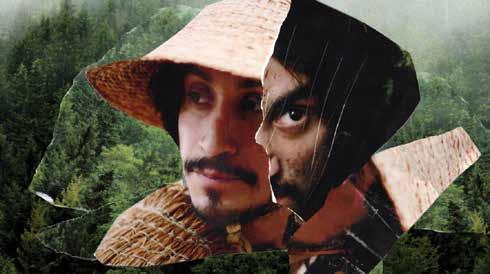
The Festival’s Indigenous Film Program will include the short film OchiSkwaCho directed by Jules Koostachin – a three-time returning CASCADIA director and i band member of Attawapiskat First Nation. OchiSkwaCho is a sacred being, known to many Indigenous people as a spiritual messenger. Her film follows Kokoom, a spiritually ailing and elderly Two-Spirit woman who has to decide whether to stay with her grandchildren or follow the OchiSkwaCho.
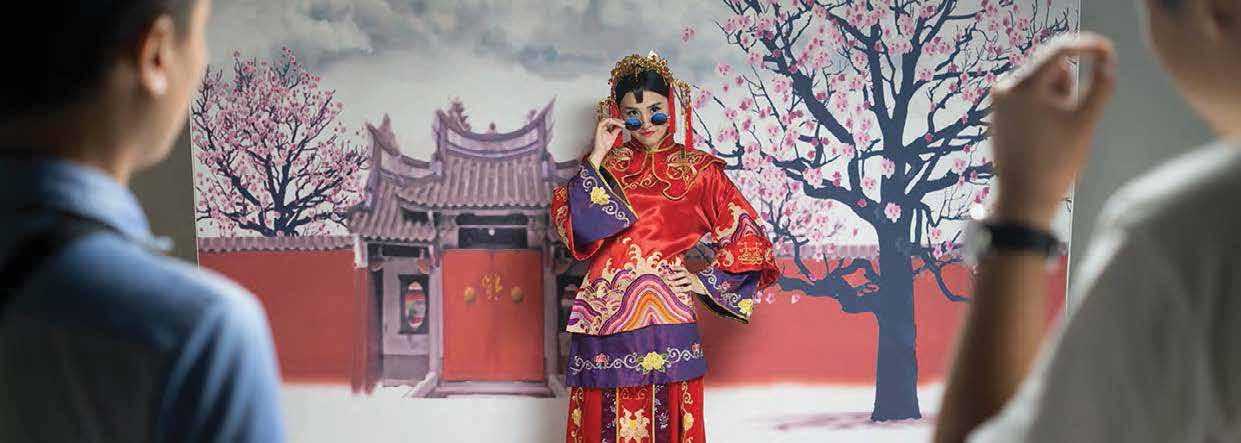
In addition, CASCADIA is partnering with Western Washington University to present “China Love” directed by Australian Olivia Martin-McGuire. The documentary explores China’s new position as a globalised country from its restrictive and highly traditional past all through the window of its booming wedding industry. The film, to be shown on WWU’s campus Friday, April 12 at 10 am, is open to the public as well as students free of charge. A question and answer session with the director via Skype is planned after the screening.
A highlight of this year’s festival will be an evening with Academy Award-winning and four-time Oscar nominated director Freida Lee Mock. Mock played a significant role in retaining the documentary film category in the Academy Awards.
The event is scheduled for Friday, April 12 at 8pm at the Mount Baker Theatre in Bellingham’s downtown Arts District. Tickets for the evening with Mock will be sold through the Mount Baker Theatre at (360) 734-6080 and www.mountbakertheatre.com.
Film tickets will be sold individually through the Pickford Film Center
A complete list of CASCADIA’s 2019 official selections, including updates, appears on the CASCADIA website at www.cascadiafilmfest.org. The complete festival schedule and ticketing information will be available on the website, as well as on the CASCADIA’s Facebook Page, Twitter, and Instagram
ABOUT CASCADIA
CASCADIA International Women’s Film Festival, a non-profit organization dedicated to supporting and showcasing the work of women filmmakers, was formed in Bellingham, Washington, in 2015. CASCADIA will host its third annual independent film festival in Bellingham, April 11-14. The organization also works year-round to provide film production, exhibition and distribution education.

More information about CASCADIA can be found on their website at www.cascadiafilmfest.org
Courtesy of CASCADIA International Women’s Film Festival
China Love – Photo courtesy of CASCADIA
Edge of The Knife – Photo courtesy of CASCADIA
Anita: Speaking Truth To Power – Photo courtesy of CASCADIA
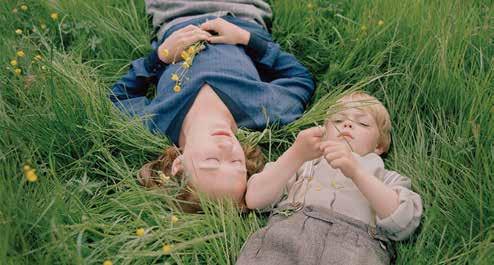
Becoming Astrid – Photo courtesy of CASCADIA
LOTUSLAND
continued from cover
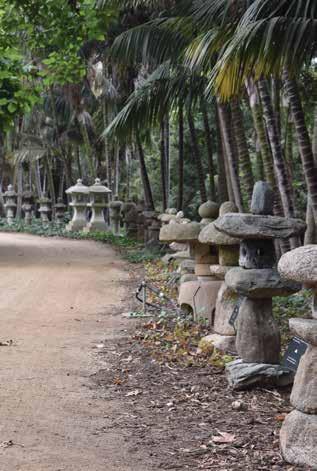
The many themed gardens that encompass Lotusland reflect Ganna Walska’s wide variety of interests in history and exploration. Many of the gardens have stylistic elements. The water garden, filled with a wide variety of water plants, also has a large number of lotus – a tribute to her hunt for spirituality.
The Theatre Garden brought her love of stage – and some memories of life in Europe – to Lotusland. The sculptures were brought from Chateau Galluis in France, which she acquired in 1929. Although she herself never performed there, it was designed as an amphitheater complete with hedge “wings”.
The topiary garden with its giant horticultural clock is a more playful part of Lotusland, having been eagerly filled with topiary by Madame Walska.
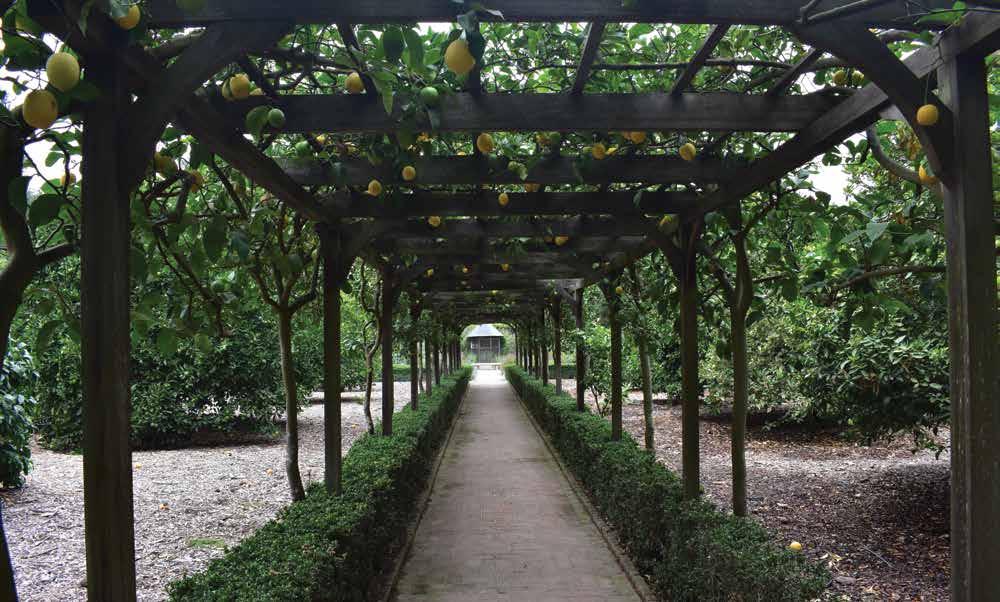
The amazing cactus and cycad gardens are the most memorable parts of Lotusland, along with the lemon arbor.
The cactus garden is organized geographically, while also incorporating
Madame Walska’s eye for the dramatic –juxtaposing 20-foot cacti with an overlook, while preserving the thrill of exploration winding along pathways among them.
The world-class cycad garden is the second largest in the world, and has numerous endangered specimens – Lotusland is as much an “ark” for biological preservation as it is a place of beauty and serenity.
In recent years, Lotusland has improved the microbiome for the wellbeing of the plant collections housed there. Organic fertilizer applications, probiotic fungal treatments and the encouragement of beneficial insects through an insectary have greatly enhanced the vitality and appearance of the various gardens throughout Lotusland.
In a world increasingly busy and hectic, Lotusland is the ideal retreat for the mind and soul, answering to both our need for cultural expansion and scientific exploration.
For more information about Ganna Walska Lotusland visit www.lotusland. org or call (805) 969-9990. Tours are 10am and 1:30pm Wednesday-Saturday between mid-February and mid-November. Admission: $50 adults; $25 3-17; 2 and under free. Reservations are required.
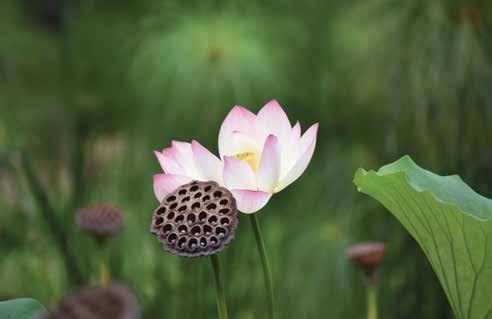
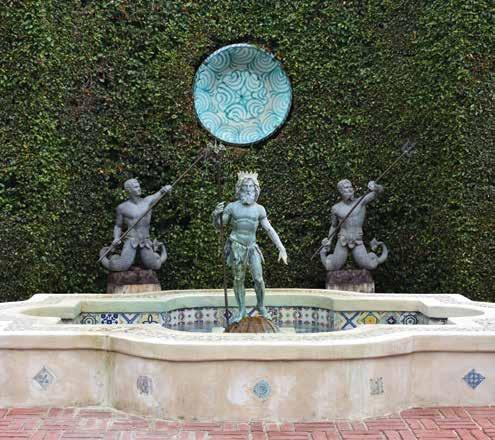
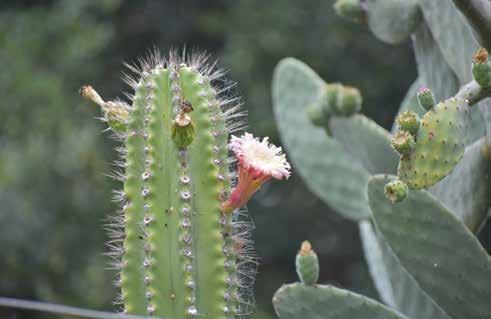
Lotusland – Photos by Brian Matt
PASSES AND PACKAGES ON SALE NOW! FULL LINE UP ANNOUNCED & SINGLE TICKETS ON SALE MAY 2
SPRING ARTS
Celebrating 100 years of influence of
iconic
choreographer Merce Cunningham (1919-2009)
Dance performance and film to celebrate choreographer Merce Cunningham’s centennial at Henry Art Gallery April 11 & 13
As part of the international Merce Cunningham Centennial, and in collaboration with the Merce Cunningham Trust, the dance departments of Cornish College of the Arts and the University of Washington will present the fruits of a two-week immersion in Cunningham’s innovative and influential practices in chance operations. The residency acknowledges his formative training at Cornish, where he met composer John Cage and formed a partnership that has influenced countless artists in various disciplines.
Merce Cunningham Dance Company alumnae Silas Riener and Holley Farmer (also a UW and Cornish alum) and dance students will present an informal performance of works-in-progress generated using Cunningham’s tools of chance procedures and indeterminacy. This new generation of dancers will present their own creative work developed in response to the legendary choreographer’s groundbreaking contributions to the field, revealing the possibilities that emerge through his experiments. This showing culminates Riener and Farmer’s two-week teaching residency in the Cornish and UW dance departments.
In addition, audiences are invited to the Seattle premiere of If the Dancer Dances (2018), a documentary by former MCDC company member Lise Friedman and Maia Wechsler about the re-staging of Cunningham’s iconic RainForest (1968) on the Stephen Petronio Company. With limited distribution, this will be one of only a few chances to see this film on the big screen. Both events are FREE; RSVPs are requested. (See details below.)
“The beauty and tender and amazing thing about dance is that it gets passed from one body and one soul to another.” –Stephen Petronio
IF THE DANCER DANCES
SEATTLE FILM PREMIERE
HENRY ART GALLERY
April 11 @ 7pm – FREE
If a dance is not danced, it vanishes. If the Dancer Dances, a new documentary by former MCDC member Lise Friedman and Maia Wechsler, confronts one of the most urgent issues facing the dance world today: how do we prevent the loss of masterworks to time? The film invites viewers into the intimate world of the dance studio. Stephen Petronio, one of today’s leading dancemakers, is determined to help his dancers breathe new life into Cunningham’s iconic RainForest (1968). With help from former MCDC members, the film tracks Petronio’s dancers as they strive to re-stage this great work, revealing what it takes to keep a
dance – and a legacy – alive. If the Dancer Dances is the first documentary on Cunningham’s work since his passing in 2009.
“By focusing on the difficulties and challenges of this gestation period...this film makes both Cunningham’s and Petronio’s styles remarkably vivid. The leading Petronio dancer Gino Grenek, learning Cunningham’s own role without ever feeling at home in it, emerges with an exceptional nobility (he has such quiet authority that you see why Petronio was right to insist on casting him); and Petronio, so warm in his welcoming of Cunningham outsiders and in his encouragement of his own dancers to embrace alien stimuli, is the other hero of the movie.
“Toogood, a brilliant Cunningham dancer of his final years who joined the Petronio troupe for this season, speaks of Cunningham with memorable emotion; Davalois Fearon goes through a process similar to Grenek’s, finding it hard to find herself in Cunningham. Members of the original RainForest cast...speak vividly; Cunningham alumni involved in the
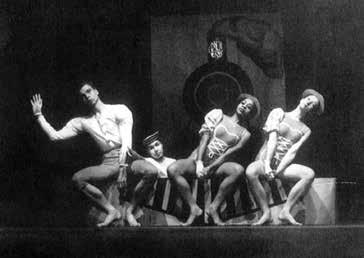
staging – Meg Harper, Andrea Weber (who allows herself to be seen as almost comically over-perfectionist and anxious), and Rashaun Mitchell – are vivid contributors.
“The title of the film comes from a [Cunningham] quotation that appears at the end.
“If the dancer dances, everything is there.” ... By the time it appears, you have been through such an arc of experience that you read these words with a large lump in your throat.” –Alastair MacCaulay, The New York Times
RUNS THE GAMUT HENRY ART GALLERY
April 13 @ 2pm – FREE
The two-week Cornish/UW residency and culminating informal performance looks to the future, with young artists from across creative disciplines experimenting with Cunningham’s formulation of chance operations as a tool for creating art grounded in their own experiences. Students from Cornish and UW’s dance composition courses will collaborate for the first time since the 2004 setting of Trisha Brown’s Floor of the Forest (1970) at the Henry.
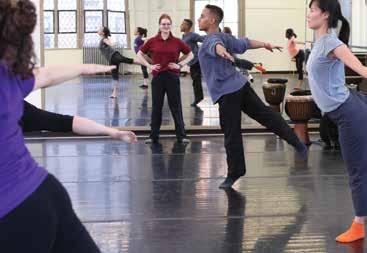
The informal performance will demonstrate how Cunningham’s brilliant processes have the potential for creating surprising and engaging dance works. Traditional residencies usually involve company members setting already-created dance works on students. Unique to this residency is that students will be exploring some of Cunningham’s most innovative and famous dancemaking structures, investigating first-hand his genius in devising methods that generate compelling and unexpected dances in the moment. Far beyond just offering dance technique classes, the residency includes workshops on Cunningham’s legacy in costume design, choreographer/composer collaboration, and interdisciplinary collaboration. Chance operations workshops will also be offered to students in Cornish’s Visual Arts, Interior Architecture, Film, and Performance Production departments.
Both events are free; RSVPs are requested. Both events are presented at the Henry Art Gallery (15th Ave NE & NE 41st St.) For more information and tickets: visit henryart.org or phone (206) 543-2280. Performance ticket link: https://henryart. org/programs/runs-the-gamut-exploringthe-creative-legacy-of-merce-cunninghaminformal-performance & film ticket link: https://henryart.org/programs/screening-ifthe-dancer-dances-seattle-film-premiere
This residency is part of the Cunningham Centennial Community Programs, which are supported by a major grant from the Doris Duke Charitable Foundation. It is also supported by the Bossak Heilbron Foundation and the Floyd and Dolores Jones Endowed Chair in the Arts. For more information about the Centennial, please visit https://www.mercecunningham.org/ activities/centennial/
Courtesy of the UW Department of Dance and the Henry Art Gallery
3 Inventories of Casey Jones, Cornish College of the Arts, c. 1930.
[l to r] Merce Cunningham, Bonnie Bird, Syvilla Fort, Dorothy Herrmann. – Photo courtesy of Bonnie Bird Collection
Holley Farmer teaching at Hunter College. – Photo by Julie Lemberger
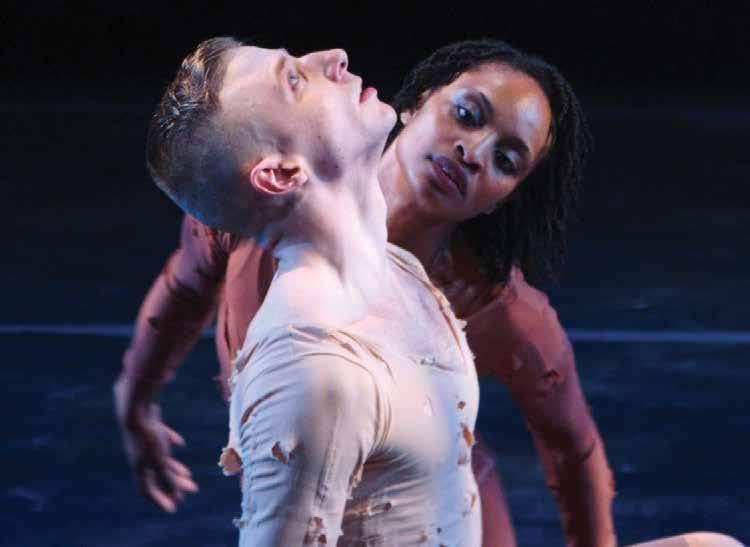
If the Dancer Dances film still – Photo courtesy the artist

SUNDAY, MARCH 24 @ 1pm-5pm
SPRING TRAVEL
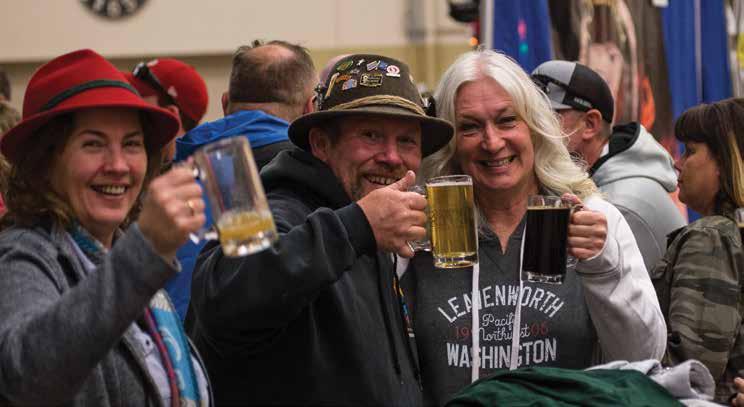
Leavenworth’s Icicle Creek Center for the Arts has officially taken the reins for the 13th Annual Leavenworth Ale Fest to be held at the Leavenworth Festhalle on Saturday, April 13. After an application process, Icicle Creek, a non-profit arts education and performance center in Leavenworth, was officially selected to take over the event from The Leavenworth Nutcracker Museum, which founded the Leavenworth Ale Fest in 2007.
The 13th Annual Leavenworth Ale Fest
featuring over 40 Washington state craft breweries and cideries will be held on Saturday, April 13, from 5:30pm-10:30pm (VIP entrance at 5:30pm and general admission at 6:30pm) at the Leavenworth Festhalle (1001 Front Street, Leavenworth WA). The event will feature live music, beer and cider tastings, and home brewery competition awards in Leavenworth. Tickets: VIP @ $55 (Local VIP for residents living in Chelan County @ $45) and General @ $35 (Local General for residents living in
Chelan County @ $25). Advance tickets are available at leavenworthalefest.com
Icicle Creek has undertaken a full rebranding of the event, launching a new website (https://leavenworthalefest.com) and making a series of updates to the event itself including the following highlights:
• More breweries: The 2019 Leavenworth Ale Fest will feature no fewer than 40 breweries, up from the 24 participating breweries in recent years.
• Single day event: The event will run one day only this year on Saturday, April 13 from 6:30pm to 10:30pm, with VIP tickets allowing early access at 5:30pm.
• Make Ale for the Arts Home Brew Competition: A new competition for home brewers has been added to the event with BJCP-certified judges.
A portion of the event proceeds will continue to be earmarked in support of The Leavenworth Nutcracker Museum, but the primary beneficiary will now be the Icicle Creek Center for the Arts. Founded in 1995 by Harriet Bullitt and the late Wilfred Woods, Icicle Creek is located on a 13-acre campus three miles outside of the City of Leavenworth and provides arts education to more than 6,000 students around NCW each year as well as a full performance season that draws more than 10,000 audience members annually.
“We’re grateful to be assuming responsibility for this festival and will work hard to turn it into an important annual fundraiser in support of the arts and arts education across North Central Washington,” said Icicle Creek Development Director Jamie Howell, who is also serving as the new festival director.
For complete information on the Leavenworth Ale Fest, visit https://leavenworthalefest.com/. For information about visiting Leavenworth and their year round schedule of events and activities, visit https://leavenworth.org/
Courtesy of Leavenworth Chamber of Commerce
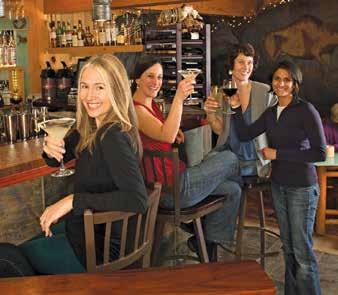
Gathering at the Leavenworth Ale Fest. – Photo provided by Leavenworth Ale Fest













SPRING TRAVEL
Greater Fort Lauderdale a warm and welcoming mecca for LGBTQ visitors & the beaches and canals are great!
by Ed Walsh SGN Contributing Writer
With 16 gay hotels, more than twice as many gay bars and nightclubs, pristine beaches and warm winter weather, it is easy to see why Fort Lauderdale is one of the world’s favorite LGBTQ getaways. Fort Lauderdale showcases the best of all worlds. It has big city nightlife, culture, full service hotels and museums, plus stunning white sandy beaches, expansive public parks and some of the best gay resorts in the world.
Alaska Airlines flies to the Fort Lauderdale-Hollywood International Airport nonstop from Sea-Tac. The trip takes six hours.
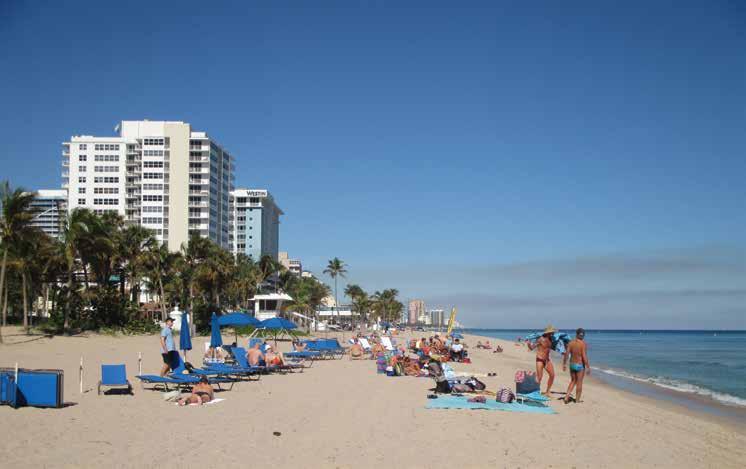
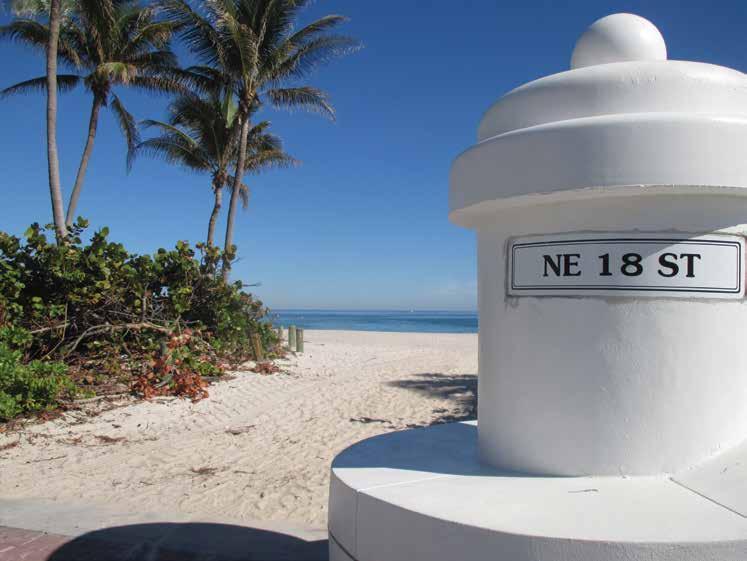
Most of Greater Fort Lauderdale’s resorts are close to the beach. Unlike Miami, Fort Lauderdale doesn’t allow hotels to be built directly on the beach. That allows for great views along the city’s famed A1A highway that lines the edge of the beach. Sections of the beach are named for the street that intersects with it. The unofficial gay beach is Sebastian Beach, where Sebastian Street meets A1A. The 18th Street Beach is very popular with gay locals. It’s bigger and generally not as crowded as Sebastian Beach. Fort Lauderdale is known as the Venice of America because of the city’s huge network of canals, but instead of gondoliers in modest wooden boats, you will see a seemingly endless display of luxury yachts. The mansions that line the canals are where the super rich spend the winter. You can get your best view of the homes through a number of tours of the canals, including the city’s iconic Jungle Queen Riverboats. Water taxis run regularly on the canals and the operators give riders a tour as they drop off at stops along the way. One of the best ways to get the lay of the land is by bicycle. Riverwalk Recreation (http://riverwalkrec.com) offers a number of tours that start in the revitalized Riverwalk district. Most tours include the city’s tony Las Olas Boulevard, known for its high-end restaurants and shops.
The town of Wilton Manors (population 12,682) is just to the northwest of the Fort Lauderdale Beach area and is ranked second, just behind Provincetown, Massachusetts as the country’s gayest town per capita. It is also where almost all of Greater Fort Lauderdale’s LGBT nightlife is located. Wilton Manors is bucking the trend of many other cities with a stable number of gay bars and nightclubs. When one closes, another seems to open. It may be helped by tourists who like to go out and enjoy the warm nights when they travel.
Hunters (https://www.huntersftlauderdale.com) is one of the most popular gay nightspots in South Florida. It’s been going
strong for five years since it first opened, taking over the space where Boom used to be.
Celebrating more than 21 years in business, Georgie’s Alibi and Money Bar (http://www.alibiwiltonmanors.com/) is one of the oldest gay clubs in Wilton Manors and its momentum helped other LGBT businesses get established in the area.
Hunters and Georgie’s are part of a strip mall on Wilton Drive that is now made up of mostly gay businesses including the Java Boys coffee shop and a gay-oriented clothing store, Mix Menswear
Just across the street from the strip mall is where you will find a series of other gay bars including the sports bar, GYM (http://
www.gymsportsbar.com/), which was opened two years ago by the man who owns the bars by the same name in New York and West Hollywood. The Manor Complex http://themanorcomplex.com/) is a popular weekend nightclub across the street and just east of Georgie’s.
Drynk Bar and Lounge (http://www. drynkftl.com/) opened in the fall of 2017 and is already generating a loyal following. It’s conveniently located next to GYM and offers great people watching from the front patio. With the closure of the New Moon a few years ago, there are no longer any lesbian bars in Wilton Manors, but Beach Betty’s bar in Dania Beach, about a half-hour away, has
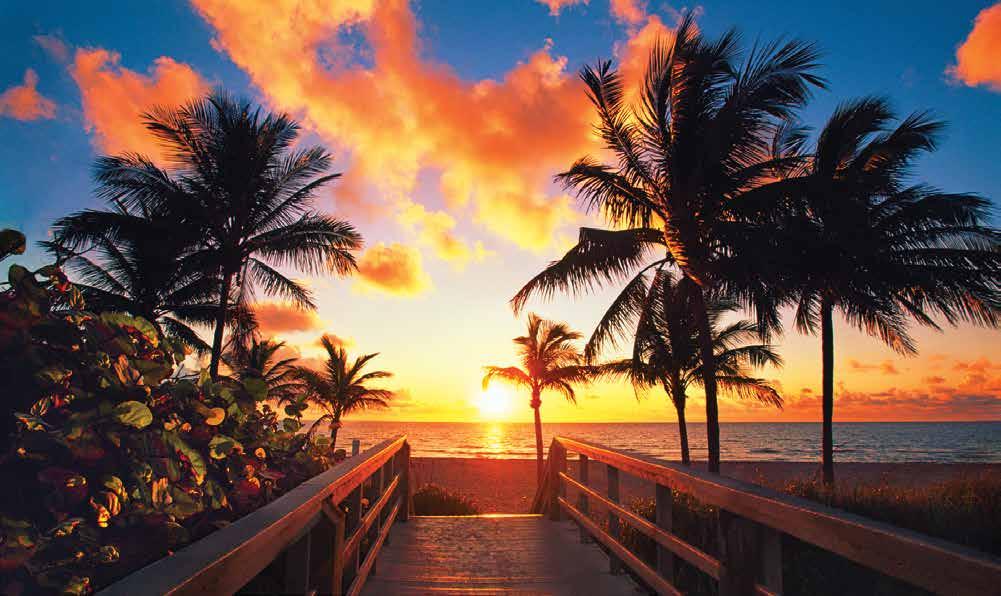
Hollywood Beach Sunrise – Photo by Alan Maltz
Sebastian Beach the gay section of Fort Lauderdale Beach – Photo by Ed Walsh
been going strong as a lesbian hangout for 29 years. The bar, which is part strip mall, also attracts a lot of non-gays who appreciate the bar’s unpretentious divey character.
In addition to gay nightlife, Wilton Drive is where you find some of South Florida’s best restaurants. Marcy Miller and her wife, “Bravo’s Top Chef 2” finalist Josie Smith Malave, opened Bubbles and Pearls (http://bubblesnpearls.com/) last year and it is going strong. Other LGBT favorites include Rosie’s Bar and Grill (http://www. rosiesbng.com/), Galanga Thai Kitchen and Sushi Bar (https://www.galangarestaurant.com/), and Georgie’s Alibi also features an excellent casual patio restaurant known for its burgers.
Wilton Manors hosts a small, but worth seeing, storefront museum dedicated to LGBT history. The Stonewall National Museum and Archives (www.stonewallmuseum.org) on 2157 and 2159 Wilton Drive includes a display cases with artifacts on LGBT history including a display dedicated to the victims of the Orlando Pulse nightclub mass shooting,
The museum is part of the larger Stonewall Library and Archives in Fort Lauderdale (https://www.stonewall-museum. org/) that also contains exhibits as well as an LGBT-focused library. The archives contain more than 30,000 historical artifacts dating back to the early days of the gay rights struggle. It includes magazines and gay papers from all around the US. For a $35 donation, you can borrow books and DVDs from the library’s extensive collection.
The World AIDS Museum (http://www. worldaidsmuseum.org) in Wilton Manors is the only museum in the world dedicated to HIV and AIDS. It includes a series of panels chronicling the progression of the disease from the gay plague of the 1980s to hope and treatments in the late 1990s.
Fort Lauderdale has long courted the gay travel market from back in the days when tourist boards shied away from actively promoting themselves in the LGBT market. And Fort Lauderdale has not forgotten the T in LGBT. Thanks in large part to efforts of former hotelier and Greater Fort Lauderdale Convention and Visitors Bureau’s LGBTQ managing director Richard Gray, the destination has produced videos and print campaigns with transgender men and women showing off the city’s proud heritage of tolerance and acceptance.
For the gay male market, one of Fort Lauderdale’s biggest draws is its wealth of. gay resorts. The gay hotels draw visitors from all around the world who appreciate the camaraderie of staying in a hotel where you can assume everyone is gay, unless you hear otherwise, the opposite of the real world from where most visitors come. Most of the gay resorts are clothing optional and include free breakfast and WiFi. They range from properties that are very cruisy and open for day passes, to others that are more couples oriented.
Fort Lauderdale’s largest gay resort, Worthington Resorts (www.theworthington.com) boasts that it is also the largest gay resort in the world. It is three resorts combined into one with a total of 63 rooms, three swimming pools, two hot tubs and a small, but well-equipped, fitness room.
It is just two blocks from Fort Lauderdale Beach. The gay men’s resort is clothing optional and is a perfect place to meet fellow gay travelers and is a good mix of couple’s and locals. The property is just two blocks from the beach and includes free parking, so you don’t have to pay to park at the beach. A free continental breakfast is served up at the main Worthington resort as well at the Villa Venice section.
The upscale 33-room Grand Hotel and Spa (www.grandresort.net) is next door to the Worthington and includes one of the city’s best spas on the property that is open to guests and non-guests alike. Swimsuits are required for the pool in the front of the property, but the large hot tub and deck in the back are clothing optional. A continental breakfast is included and the property includes a very well equipped fitness room.
It is easy to see why the Grand draws a very loyal clientele.
If your budget allows, the 26-room Pineapple Point Resort (http://www.pineapplepoint.com/) is Fort Lauderdale’s most luxurious resort and some consider it to be the best gay resort in the world. It is ranked #1 of 35 specialty hotels in Fort Lauderdale by TripAdvisor.com. The hotel employs a large staff ensuring that guests in every one of its 27 rooms and suites are very well taken care of. Free snacks and soft drinks are served by the pool and the hotel hosts a free wine and cheese cocktail hour every evening. The expansive property includes a series of buildings surrounded by a lush tropical garden.
For more information, check out Fort Lauderdale’s official travel website at http:// www.sunny.org/lgbt.
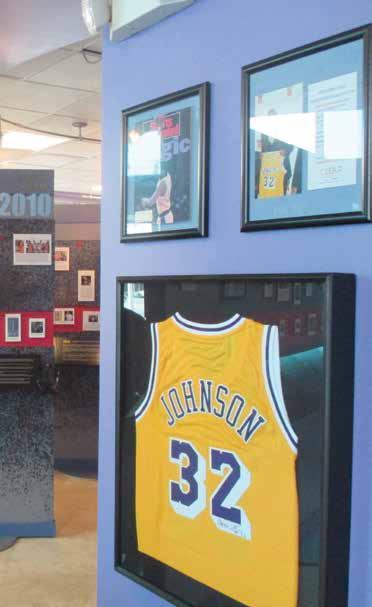
Earvin “Magic” Johnson’s jersey in the World AIDS Museum in Wilton Manors – Photo by Ed Walsh
The 18th Street Beach, popular with gay locals – Photo by Ed Walsh
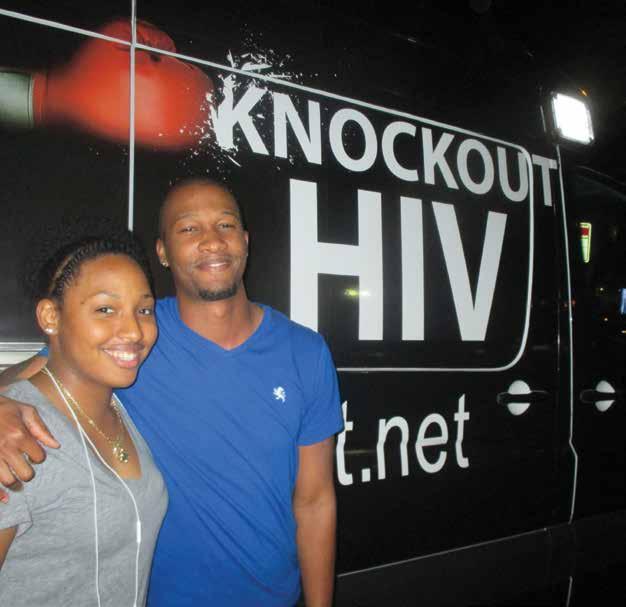
Crystal Echevarria and Eddie Sweet, who administer HIV tests in the AIDS Healthcare Foundation mobile testing van in the parking lot in front of the popular Georgie’s Alibi bar in Wilton Manors – Photo by Ed Walsh




SPRING TRAVEL
The Mile High City is a very friendly town
by Ed Walsh
SGN Contributing Writer
As soon as I entered Denver’s lesbian bar, Blush and Blu, I was made to feel very welcome. Although predominantly gay women, the bar is popular with the trans community and gay men who appreciate the bar’s welcoming vibe.
“I am from Houston, Texas. I love this place; they make you feel at home,“ Sandra Leal said. Echoed my bar-mate on the left, Alexander Hugg, “You become a regular very super early here.”
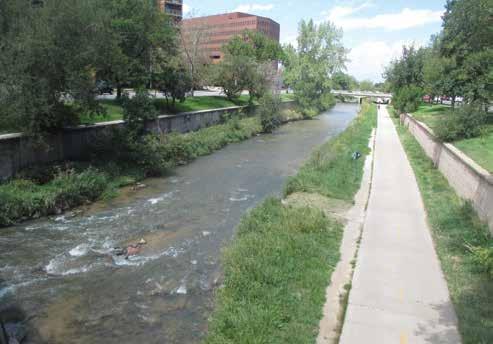
That bar’s reception was very much congruous with the welcome I felt throughout my visit to the Mile High City, which, like San Francisco, experienced an overnight population boom during the gold rush in the mid 1800s. Gold was first discovered along Denver’s South Platte River and Cherry Creek in 1858, about a decade after San Francisco’s gold rush.
Denver has also long been a magnet for LGBTs in the West who want to be in a welcoming big city but don’t want to stray too far from home. The closest big city to Denver is Phoenix, but that is nearly 600 miles away. The city has a population of more than 680,000, with nearly three million in
the Denver Metro area. By comparison, Seattle’s population is slightly larger, but the Seattle Metro area has about a million more people than the Greater Denver area.
Denver attracts people who like to get outside. The city boasts more than 200 parks covering nearly 6,000 acres and over 850 miles of jogging, biking and walking trails. One of the best ways to get the lay of the land is through a walking tour of the city’s historical downtown, where the city began after the gold rush first brought people from all over the world. An excellent and free 2 and ½ hour walking tour begins every day at 10am at the Veteran’s Memorial , across from the Colorado State Capitol Building. (www.denverfreewalkingtours.com). From November to April, the tour is only on Saturdays and Sundays.
While the free walking tour curtails its schedule for the winter, the cooler weather stops few outdoor activities in the city. Most golf courses and outdoor cafes stay open year round. Snow usually melts in a day or two after a storm, quickly clearing bike lanes and walking trails. By the way, it’s not as cold in Denver as you might think. The average high temperature in January is about 45 degrees. It is not uncommon for it to reach 60 degrees in the winter.
The American Association of Retired People (AARP) also offers free walking tours. Check its website for details (http://states.aarp. org/122079-2-sc-co-wp-health/) Through the Geotourist app, you can also take one of AARP’s city tours anytime. That app offers a wonderful 10-stop audio walking tour that chronicles LGBT history in Denver. The app will also direct you to a final stop at AARP’s offices where you can pick up a little gift.
The LGBT audio tour starts near Cheesman Park, which gay men were known to frequent since the early 1900s. The park was the scene of a 1974 “Gay-In” and was the staging ground for the city’s first Pride parade in 1976. It hosted the first AIDS walk in the city in 1987 and has been a focal point for LGBT events ever since. The first stop on the tour is Capitol Hill United Neighbors, which was founded in 1969 at first to focus on issues related to traffic through the neighborhood but later helped organize to overturn a city law that banned unrelated people from living together.
The Capitol Hill neighborhood is one of the city’s most desirable neighborhoods now but was once run down and was known for its cheap housing and often unsafe streets. The adjacent Uptown neighborhood has also become very gay popular.
Denver has a rich African American history that helped shape the city’s earliest days. Escaped slave Barney Ford quickly became one of Colorado’s most successful businessmen in the 1860s. He built the city’s largest hotel at the time and amassed a virtual real estate empire. He was dubbed the “Black Baron of Colorado” and was instrumental in getting the laws of the state changed to allow blacks the right to vote in 1870. That history is not lost in presentday Denver. It’s chronicled in the History Colorado Center (http://www.historycolorado.org/) as well as the Black American West Museum and Heritage Center (http://bawmhc.org/).
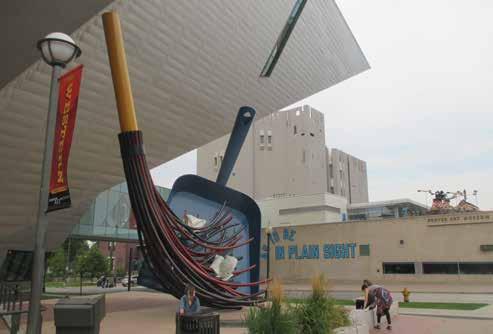
Denver is big on outdoor sculptures and that is most evident downtown in the expansive plaza in front of the city’s art museum. The nearby History Colorado Center is a great primer on the state’s pioneer past and its survival through the Dust Bowl and Great Depression era. Just across the plaza from the art museum is the Counterterrorism Education Learning Lab (CELL) (http://www. thecell.org/). It is a sobering look at the challenges faced in the fight against terrorism and helps educate the public on the myths about terrorism and what everyone can do to be more alert for suspicious activity.
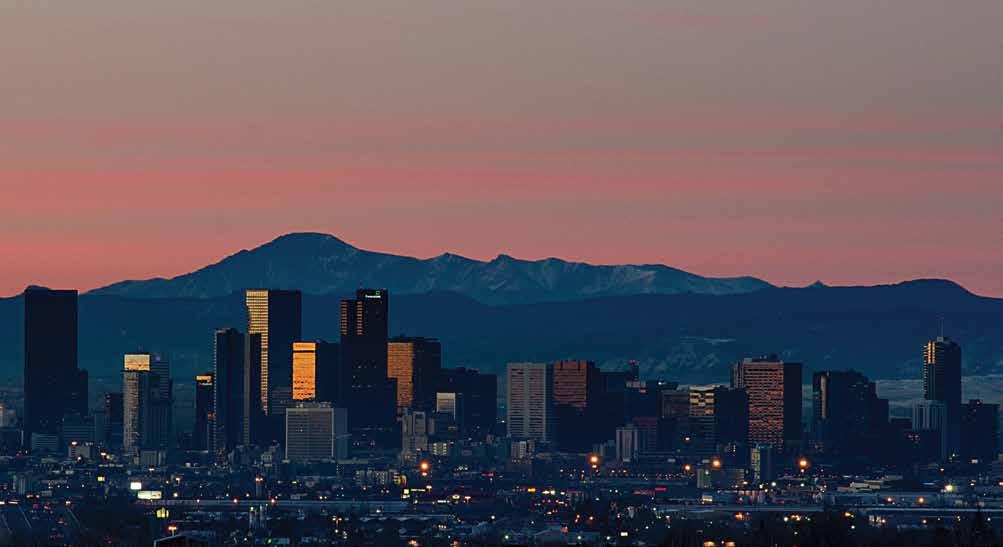
A view of the downtown Denver skyline during sunrise – Photo by Robert Kash via wikipedia commons
Cherry Creek, where gold was first discovered in Denver in 1858 – Photo by Ed Walsh
Dustpan sculpture outside the Denver Art Museum, the woman over the trashcan is a life-sized painting – Photo by Ed Walsh
Denver’s most prominent landmark is the Colorado State Capitol Building (https://www.colorado.gov/capitol), with its signature gold-plated dome. The obligatory selfie is on the 15th step leading to the entrance to the building. The inscription “One Mile Above Sea Level” marks the spot, but in 2003, Students from the Metropolitan State College of Denver discovered the mile-high point was on the 13th step and a brass marker was installed on that step. There is another brass marker on the 18th step after students in 1969 falsely measured that as the mile point. Just remember, the lowest marker is the correct one, but the 15th step is the most photogenic.
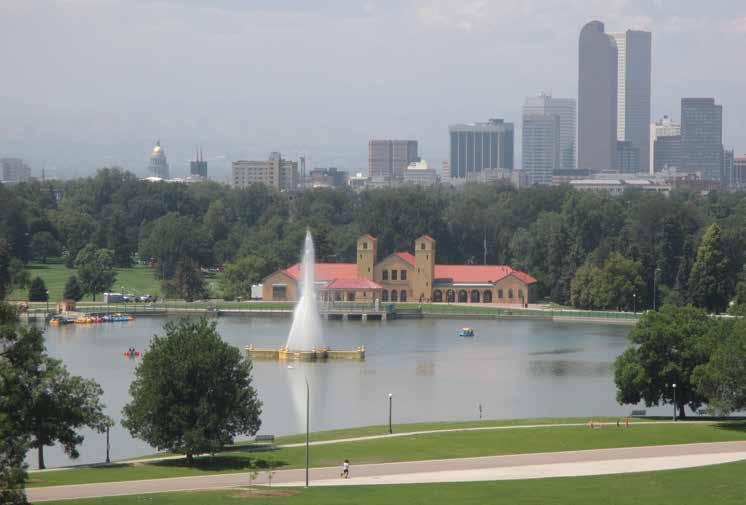
The city’s biggest museum, Denver Museum of Nature and Science (http:// www.dmns.org/), is in the city’s biggest park, City Park, 2.5 miles from the State Capitol building. The museum is on a slight hill overlooking the park and offers the best views of the city skyline. It includes an Imax Theater, planetarium and a space for special exhibitions. City Park is 314 acres, or about 200 acres less than our Discovery Park. The centerpiece of the park is a pond where you can rent paddle boats. It is surrounded by bike paths and walking trails.
The 16th Street Mall is a 1.25 mile pedestrian promenade in the heart of downtown. It is lined with outdoor cafes, restaurants and shops. A free electric bus shuttle runs up and down the mall, so you can shop till you drop without killing your feet.
The Molly Brown House (https://mollybrown.org/) is a good example of one of Capitol Hill’s classic mansions where the elite of the 1800s called home. Margaret “Molly” Brown was immortalized in the 1964 Debbie Reynolds film, The Unsinkable Molly Brown and more than three decades later by Kathy Bates in 1997 Titanic movie. Besides being a Titanic survivor, Brown’s history of philanthropy and social activism is recounted in the public tours that are given of her home. The house was sold after Brown’s death in 1932, during the midst of the Great Depression. A group of citizens in the 1970s were able to save it from being torn down and eventually restored it to the way it looked in its heyday in the late 1800s.
NIGHTLIFE
The country-western themed Charlie’s (http://www.charliesdenver.com/) is one of Denver’s oldest gay bars. It celebrated its 36th anniversary in June. Charlie’s is on 900 E. Colfax Ave. Among its more popular nights are Thursdays, with its 2-4-1 drinks from 7pm on. Fridays are the glow-in-the dark Neon Party. You can get half-priced prices drinks if you go shirtless on Saturdays. Sundays packs ‘em in from 4pm to 8p. for three drinks for one. Just plan to take Uber or Lyft home if you partake.
The X Bar (http://www.xbardenver.com/) is five blocks from Charlie’s on 629 E Colfax and has a modern upscale feel. It includes an expansive outdoor patio that is very popular this time of year.
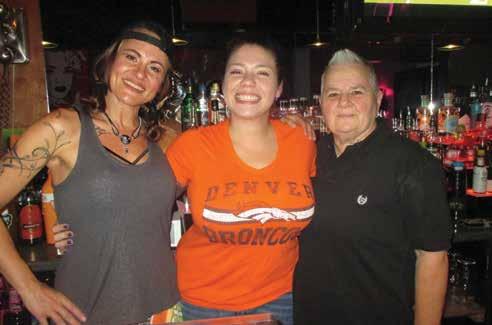
The aforementioned Blush and Blu (http://blushbludenver.com/) is six blocks east of Charlie’s on 1526 E. Colfax. While other lesbian bars are struggling around the country, Blush and Blu is going strong. It operated for over a decade as tHERe Coffee Bar and Lounge until it changed names and ownership in 2012. It includes a space for live performances, including a comedy night and is a place for local talent to see and be seen.
Trade (https://m.facebook.com/Tradedenver/) opened about a year ago on 425 Santa Fe Drive, near the city’s Santa Fe Arts District. It draws a diverse crowd but is popular with the leather and bear community. Thursday is underwear night. You can get the party started early there on Saturdays with bottomless $8 beers from 3:30-7:30 p.m.
Wrangler (http://denverwrangler.com/) on 3090 Downing Street is the city’s bear bar known for its legendary Sunday beer bust, frozen speciality drinks and Saturday night black light underwear party. Wrangler has been drawing a crowd for over 16 years. The attached Hungry Bear Kitchens is a perfect place for a late night snack.
The city’s biggest and oldest LGBT focused nightclub is Tracks (http://www. tracksdenver.com/) , open Thursday, Friday and Saturday nights on 3500 Walnut Street. Thursday nights is is 18+ night. The first Friday of every month at Tracks boasts that it is the largest monthly women’s party with over 1500 lesbians who pack the club’s three rooms. First Fridays has been going strong since 2003. By the way, for lesbian specific events, including First Fridays, check out the Babes Around Denver website. (http://www.babesaroundenver.com/)
The city’s historic Daniels & FIsher Tower in the heart of its 16th Street Mall is host to the Clocktower Cabaret (http:// www.clocktowercabaret.com/) acclaimed for its drag shows and live entertainment.
Denver has a stripper bar, Boyztown on 117 Broadway St, and a couple of gay bathhouses Compound Basix on 145 N. Broadway and the Denver Swim Club on 6923 E. Colfax, known for its indoor and outdoor pools.
ACCOMMODATIONS
Denver has no exclusively gay hotels, but most of the hotels in the downtown and Capitol Hill areas are very gay-popular. If you are not renting a car, it’s a good idea to stay downtown or in Capitol Hill, where you can easily walk to a number of museums, historical buildings and wide variety of restaurants. Denver is popular with visitors year round, so you won’t see a wide swing in hotel prices. But post-Labor Day and the early fall is a good time to visit if you want to avoid the crowds. Kids are back in school and it’s too early for ski season. I had the pleasure of staying at the gay-
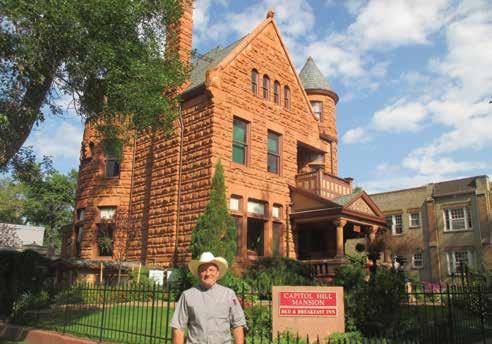
Capitol Hill Mansion Bed and Breakfast (http://www.capitolhillmansion. com/). The historical mansion was built in 1891. It’s current owner, Carl Schmidt, bought it 17 years ago and painstakingly converted the building to an eight-unit inn that deservedly has a reputation for being one of the state’s finest B&B’s. Schmidt lives on the property and gets up every day at 4:30am to cook a unique and ever-changing gourmet breakfast for his guests. He is assisted by his daughter, Bailey. She and her father go out of their way to make everyone feel like family. Guest parking is free. Denver’s tourism office’s official Web site lists a good variety of hotel choices in every budget range. It also has a section dedicated to LGBT visitors: https://www. denver.org/about-denver/lgbt/
GETTING THERE AND AROUND Denver is a painless three-hour flight from Seattle. Frontier, Alaska, Delta and United all offer nonstop flights from SeaTac. At recent check, Frontier was offering round-trip flights for as little as $150. Denver’s airport is the nation’s largest, covering 53 square miles, more than half the size of the entire city of Seattle. It is 26 miles from downtown, but for $10.50, you can take a train right from the terminal to Union Station, in the heart of downtown. You can use that same ticket for a free transfer to any of the city’s connecting bus or light rail streetcar lines.
It’s easy to get around to the city’s major sights without a car. By the way, most hotels in the downtown and Capitol Hill area charge to park and you will have to pay to park at the downtown area venues anyway. One-way transit fares are $3.00 but you can buy a day pass for $6.00. Denver boasts an abundance of bike lanes. Denver’s main bike-sharing service is called B-Cycle (https://denver.bcycle. com/). It costs $9 for a 24-hour pass, but you have to return the bike to a station within 30 minutes. You can rent a bike for the whole day for $35. It has a built-in cable bike lock so you can leave it anywhere and take your time as you tour around. I tried to return the bike to a station within 30 minutes but found it very challenging even with B-Cycle’s app. I still got stuck with $30 in overtime fees over two days of using them. If I had to do it over again, I would have paid the $35 flat fee. That’s about how much it would cost to rent a car, but you will be spared the hassle of parking and Denver’s dedicated bike lanes and the city’s flat terrain make cycling a pleasure in the city. For more information, the city’s official website is www.visitdenver.com
owned
(l-r) Bartender Sherrie Murray, bartender Candace Edington, and co-owner and Edington’s girlfriend S.J. Paye – Photo by Ed Walsh
Denver skyline from the Denver Museum of Nature and Science Ed – Photo by Ed Walsh
Capitol Hill Mansion Bed & Breakfast owner Carl Schmidt – Photo by Ed Walsh


Bellevue Arts Museum to celebrate life of Northwest jeweler Ron Ho in new exhibition opening May 10 SPRING ARTS
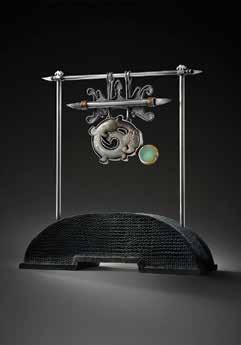
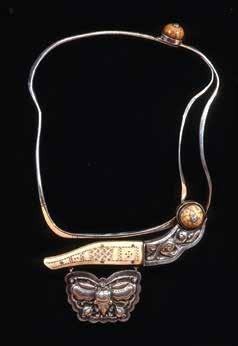
“Ron Ho: A Jeweler’s Tale” will celebrate the life and legacy of renowned Northwest jeweler Ron Ho. When Ho passed away in 2017, he left a treasure trove of his own writings, letters, images, paintings, and objects. The exhibition, which opens at Bellevue Arts Museum (BAM) May 10, collects many of these items, presenting them alongside works from his career and videos that offer a glimpse into Ho’s life and artistic practice. Several of these featured works were created in the last decade of his life following his 2007 retrospective at BAM, including the last piece he worked on prior to his passing.
Building from Ho’s 2007 retrospective at BAM and the recent Northwest Designer Craftsmen Living Treasures documentary film Ron Ho: Becoming Chinese, A Jeweler’s Tale, the exhibition highlights Ho’s creative explorations, the deep influence of his heritage, and his masterful ability to tell a story. Selected works from Ho’s decades-long career, as well as artifacts from his personal collection, will be displayed alongside drawings and notes from his creative process.
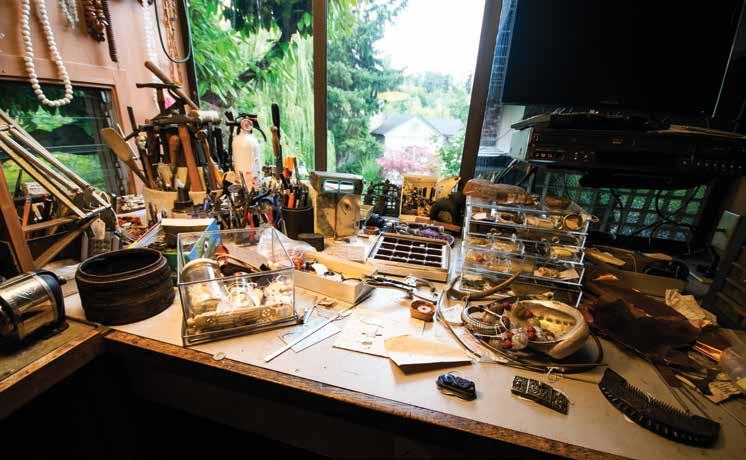
In addition to key works from Ho’s career, the exhibition will include a full reconstruction of his studio. Visitors will be able to see the books that inspired him, his worn tools and jeweler’s bench, the show tunes he listened to while working, and the found art objects from around the world waiting to be used in his next piece.
The exhibition will also include a screening of Ron Ho: Becoming Chinese, A Jeweler’s Tale, allowing visitors to hear Ho tell his own life story as well as commentary from his closest friends and mentors.
“Ron Ho: A Jeweler’s Tale” is co-curated by BAM’s Executive Director & Chief Curator Benedict Heywood and Nancy Loorem Adams, Vice President and Museum Liaison of Northwest Designer Craftsmen, with the support and guidance of Ron Ho’s partner, Peter Olsen. The exhibition is co-presented by Bellevue Arts Museum and Northwest Designer Craftsmen.
The Bellevue Arts Museum is located at 510 Bellevue Way NE, Bellevue WA. The museum is closed Mon-Tues. The museum is open Wed-Sun, 11am-5pm and Free First Friday 11am-8pm. Admission: Adults – $15; Student/Seniors/Military – $12; Teens – $5 (with Teen Tix); Children under age 6 – FREE. For more information, visit https://www.bellevuearts.org/ or call (425) 519-0770.
ABOUT RON HO
Ron Ho (1936-2017) was a jeweler and art educator living in Seattle, WA. Born to traditional Chinese parents, Ho grew up in Hawaii, surrounded by diverse cultures and their unique artistic expressions. His work was influenced and informed by contrasts of American and Chinese culture and by the cultural diversity he encountered living in the Pacific Northwest. By using found objects and materials enriched by cultural associations, his work reflects his search for a cultural sphere from areas as far as China, Thailand, Nepal, and Afghanistan. Ho was the recipient of several distinguished artist and art educator honors. His jewelry is in the collections of numerous private and public collections, including the LA County Museum, Museum of Fine Arts Houston, Tacoma Art Museum, and the King County Arts Commission.
ABOUT BELLEVUE ARTS MUSEUM
Bellevue Arts Museum provides a public forum for the community to contemplate, appreciate, and discuss visual culture. We work with audiences, artists, makers, and designers to understand our shared experience of the world. bellevuearts.org.
Courtesy of Bellevue Arts Museum
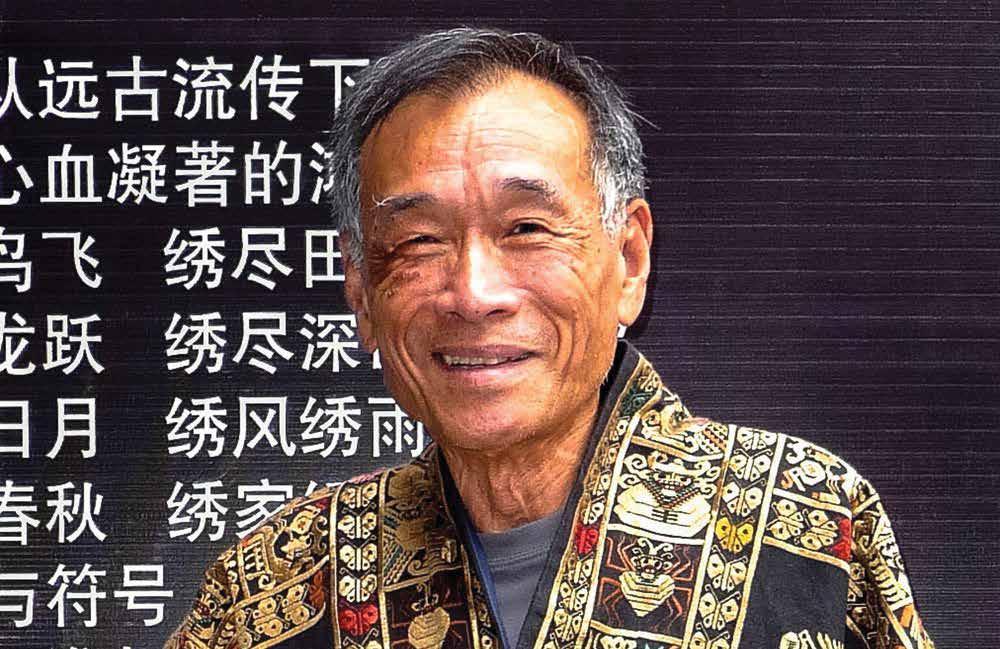
Portrait of Ron Ho – Photo courtesy of Northwest Designer Craftsmen
Ron Ho’s studio – Photo by Emilie Smith
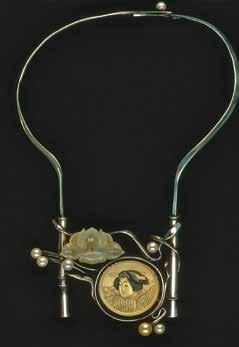
(l-r) Treasure of the Orient II, 1979; Lepidoptera, 1981; Yu Necklace, 2016




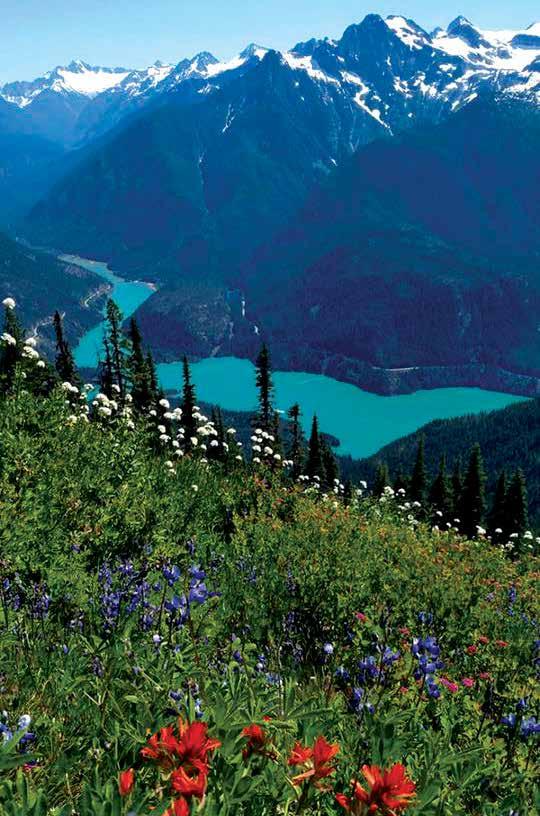
Albers Vista Garden - Bremerton