A FIGHTING STRATEGY FOR WORKING PEOPLE
by
by Benny Loy SGN Contributing Writer

by Lindsey Anderson
John McDonald
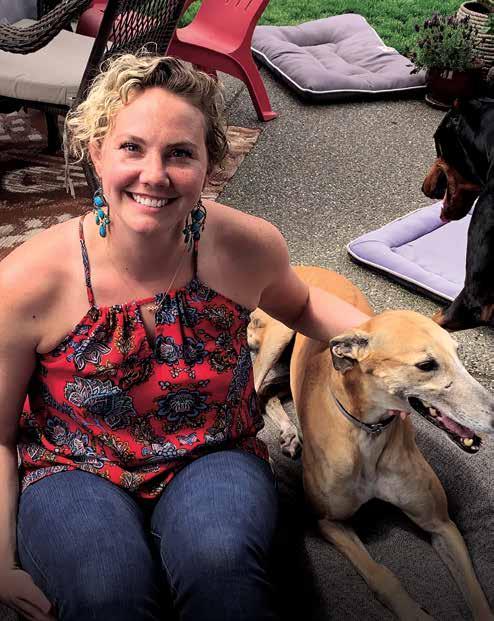
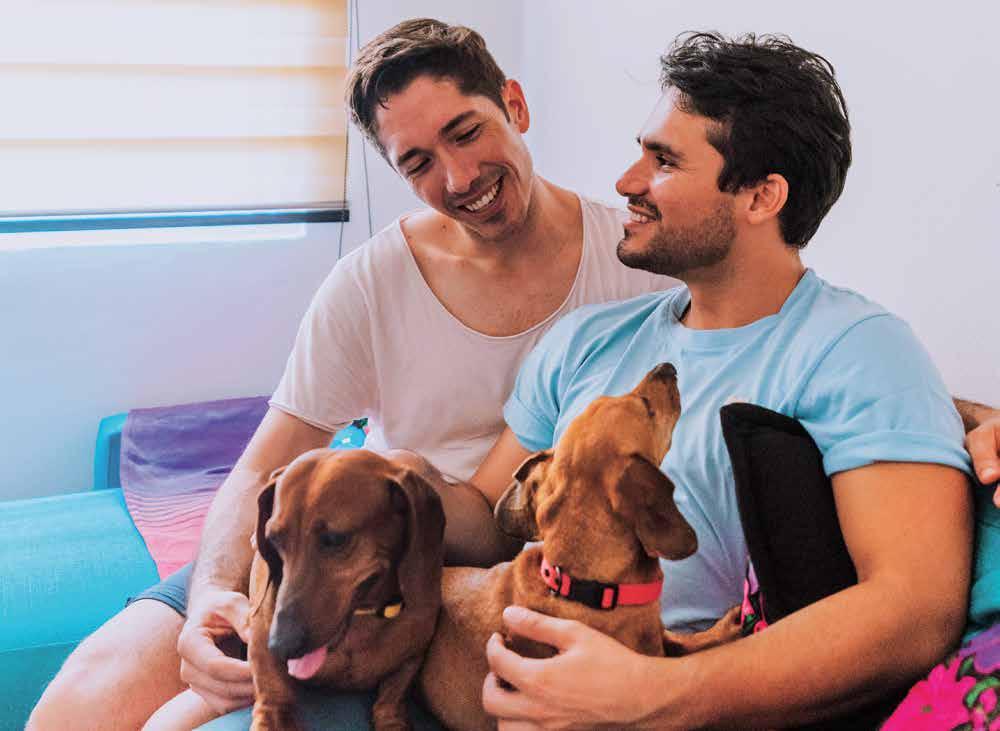
Dr. Stephanie Stoegbauer and Lady – Courtesy photo
Dylan Mulvaney – Courtesy
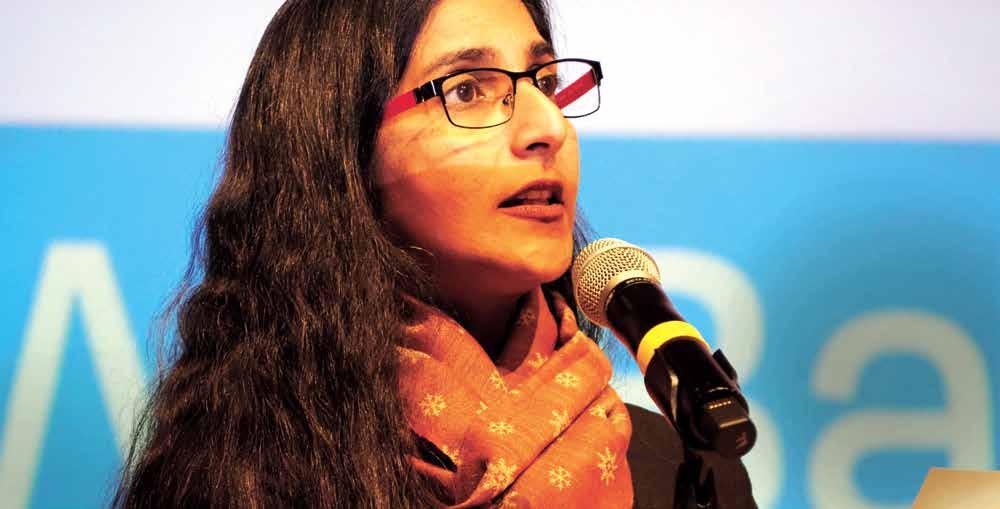
Kshama Sawant – Photo by Lauren Vasatka








by
by Benny Loy SGN Contributing Writer
by Lindsey Anderson
2,000 during the pandemic, she said, leaving no open appointment slots.
ing vets,” Stoegbauer termed it. “We are there as a backup.”
“We literally had such a humongous increase in the pet population between 2020 and 2021 that we didn’t have the capacity to handle it,” said Stoegbauer. “We just didn’t have enough staff or veterinarians to handle the load.”
A 2021-22 survey by the American Pet Products Association showed that 70% of US households (90.5 million) owned a pet, a dramatic increase from 56% when the survey was first conducted in 1988. Observers of this trend cite COVID for the increase, as Americans sought out furry friends to cope with the pandemic’s isolation.
“Obviously, everyone was stuck in their house, and a big house can seem very empty if there [aren’t] things to fill it,” said Sydney Roy, a veterinarian assistant at L & L. “And what better thing to fill it with than a fluffy friend that is there all the time with you?”
However, the consequence of more animals in the house was an increased need for pet care.
“I’m so happy a lot of the adoption facilities were running out of adoptable pets, which is wonderful, but it’s all of that pet health care that came behind it that really started taking a toll on the veterinarian field,” Roy said.
“Helping pets, supporting vets”
Enter L & L Animal Urgent Care, a pet care facility with a purpose: to take the pressure off emergency hospitals and general practices. It’s a burgeoning business designed to treat minor infections and injuries in dogs and cats that are not life threatening.
“Sick but stable patients” was how Stoegbauer described the business model, adding that no preventive care, such as vaccinations, will be available at the hospital.
Stoegbauer said the average vet sees 4,000 patients a year. That number rose by
“I have watched pet owners become absolutely distraught when they couldn’t get in,” Stoegbauer said.
L & L is hoping to ease that pain and has a tagline to go with it: “Helping pets, support-
Stoegbauer describes her role as a relief veterinarian. “Sort of like a substitute teacher,” she said.
A 2007 graduate of the Virginia-Maryland College of Veterinary Medicine, Stoeg-

bauer has worked as a relief veterinarian for the past eight years in more than 30 hospitals in the greater Seattle area. She said the embrace of pet ownership during the pandemic reaffirmed her career choice.
“It’s so fantastic to see. It brought a level of joy to them [new pet owners] that they wouldn’t have had and reinforces how important the love of having an animal in your home is.”
L & L Animal Urgent Care is named after Stoegbauer’s two rescue dogs – Lady, a greyhound and Loki, a Samoyed. The hospital is a total renovation of a 2,400-square-foot former 7-Eleven store in the Houghton neighborhood of Kirkland. When complete, it will house state-of-the-art technology for timely lab results and have anesthesia capabilities. L & L will serve all communities, said Roy, its operations manager, a Bisexual woman.
“We are definitely an LGBTQ-friendly business. We are welcoming with open arms. It doesn’t matter what you look like or what you call yourself. As long as you are kind and respectful, then we will be kind and respectful back.”
Stoegbauer, a married straight woman and mother of three boys, agreed.
“Some of my best clients have been Gay men that I absolutely adore, and they take the best care of their pets, because they are like their babies,” she said.
Stoegbauer said the Houghton area has plentiful housing and housing developments, and a Google campus is just a block from the hospital. L & L will employ six to seven people and partner with local emergency rooms for referrals, she said.
The hospital is scheduled to open March 27. Its hours of operation will be from 8 a.m. to 6 p.m. Monday through Friday.
L & L Animal Urgent Care is at 944 6th St. S., Kirkland, Washington 98033. For more information, go to https://www. landlanimalurgentcare.com.
continued from cover
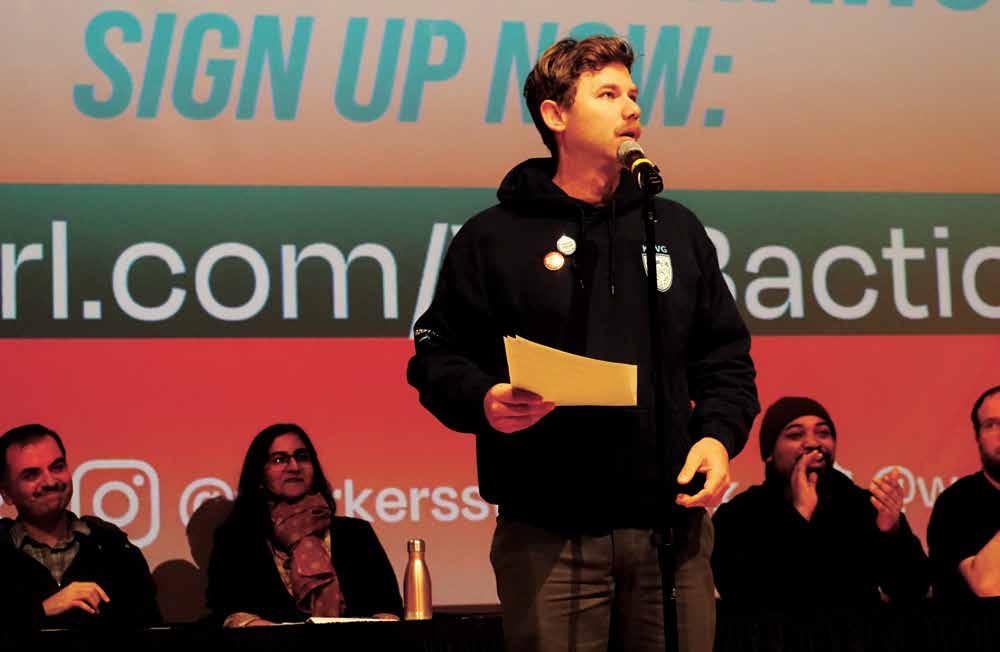
WSB invited eight panelists to speak on various issues facing workers. First up was Nina Wurz, a member of the Carpenters Union and the Peter J. McGuire Group. Wurz spoke out against how “many unions have become institutions of bureaucrats selling us out.” She added, “We are all of one class. That’s what solidarity looks like,” asking that workers not allow differences in political beliefs to stop them from organizing together.
Raghav Kaushik took the mic next to speak on the passing of the historic ordinance against caste discrimination in February. Seattle became the first in the US to add caste to its list of categories protected from discrimination.
Then began the topic of Starbucks workers’ fight for unionization. Conner Brennan spoke about his Evanston, Illinois, store fighting the “uphill battle” of holding
out against the corporation’s union busting. A little over a month ago, his co-workers held a vote on whether they would join Starbucks Workers United. The result was unanimous in favor of joining the union.
On Starbucks’s retaliation against workers seeking unionization, he said, “We have to, first of all, stand [on guard] against retaliation across the entire company and have no illusions …that Starbucks is a so-called progressive company that can be appealed to morally.”
Nick Cruse paced back and forth across the stage with the microphone in hand. The writer, activist, and co-founder of the Revolutionary Blackout Network spoke passionately about solidarity and demanding better from progressive leaders. “We live in a capitalist dictatorship. Don’t believe me? You can predict who’s going to win an election by who has the most money,” Cruse said before eventually handing the mic off to Griffin Ritze, a Northern Kentucky Amazon worker and union leader.
Ritze and others are fighting to establish a union at the Northern Kentucky KCVG Air Hub, the largest such facility in the country. Ritze described the working conditions and how workers feel the company doesn’t care about their safety: “Workers were forced to move freight and operate machinery outside with wind speeds above 40 knots. Hundreds of workers were later forced to evacuate the building.”
He continued, “One co-worker told me that all she could think of was the tornado at an Amazon facility in Illinois in 2021. Six workers dead. These are the stakes for Amazon workers. It’s either our lives or their profits.”
Having traveled from Manchester, England, Mike Forster with Enough Is Enough came to voice his support for WSB, saying, “Listen, over the years, Britain has developed an inferiority complex to America. But now we’re going to lay it clean, with some superiority: I think we have a better women’s football team.”
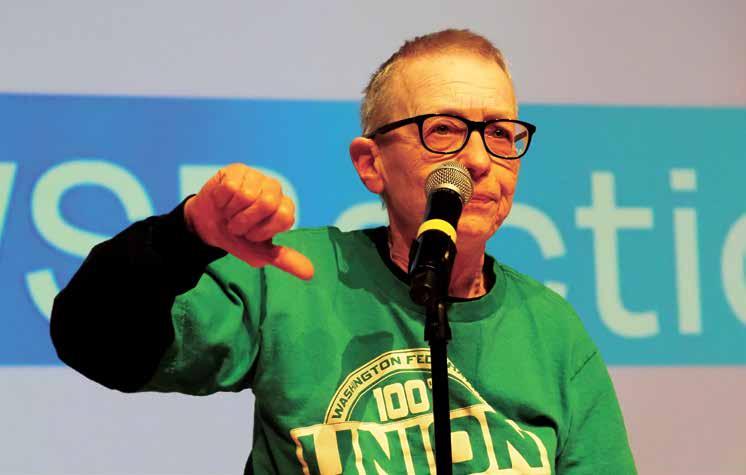
Forster gave the audience a moment to laugh before explaining the state of his country. “We have the worst-performing economy in the advanced capitalist world, with the worst cost-of-living crisis. We’ve had more prime ministers in the last nine months than you have had presidents in 15 years.” Forster told of the growing demand in the UK for a new party, saying that a survey found that 61% of Britons favored the idea.
Paula Lukasek, a University of Washington staff member and the president of Local 1495, then stepped up to the mic to speak about how workers and students are treated at the UW. “We got the City of Seattle to agree to a $15 minimum wage. But you know what? The UW said, ‘Oh, we’re a state agency. Even if we are in the city of Seattle, we’re not paying it.’ So Kshama worked with the students and staff to fight back and force the University to [pay] a $15 minimum wage.”
Lukasek lamented that the university was considering letting certain student housing be demolished and rebuilt into units owned by a private company, even though the UW has a homelessness issue. “They’re proposing to tear down all those units and have a private company come in, rebuild it, and charge double or triple the rents people are paying. So much for fighting homelessness.”
Last but not least, Kshama Sawant spoke. She gave an impassioned speech about our decreasing living standards, rising costs, and environmental damage.
“The horrors of this system is on full display in the working class town of East Palestine, Ohio,” she said, railing against the loosening of train regulations and how “rail workers voted to go on strike for a fair contract. Yet in what can only be described as a sellout on steroids, both parties voted to break the railroad workers’ strike.”
Sawant also said that support for unions was at its highest in modern-day polling and added an appeal. “The capitalist system is owned by the bosses. It is inherently unequal and oppressive, and it is completely unsustainable. But I also want to be clear that you don’t need to agree with me or Socialist Alternative about socialism in order to get involved with WSB. It is not a socialist organization. It is a movement of working people organizing around a fighting strategy to win the things we need.”
by Daniel Lindsley SGN Staff Writer
As promised, the old archway of the convention center got a break this year from the tread of hooves, heels, and armored boots. Emerald City Comic Con (ECCC) finally moved into its new venue, a building dubbed the Summit.
Picture five whole floors of glass, concrete, and steel, with accents of finished wood, and lush outdoor courtyards. Fill the halls and aisles with characters and fans from all over the realms of geekdom, and you’ve got a good picture of what it was like moving through the Summit last week.
One side of the building is almost entirely windows from the second floor up, granting the escalators and stairs soft, natural light during the day, and a view of the city lights otherwise. Next to those stairs, almost flush with the windows, are wood-paneled risers inviting attendees to sit, rest, and take in the world going by.
Before the festivities began, ECCC Marketing Director Fallon Prinzivalli estimated that 75,000 people would be attending — the same number as last year, but all under one roof rather than spread over the previous convention center venue, called the Arch, and surrounding hotels.
Speaking to KING-TV about the new venue, Prinzivalli said, “It is a beautiful building, state of the art. When we did the walk-through, we really felt like they built this building for us.”
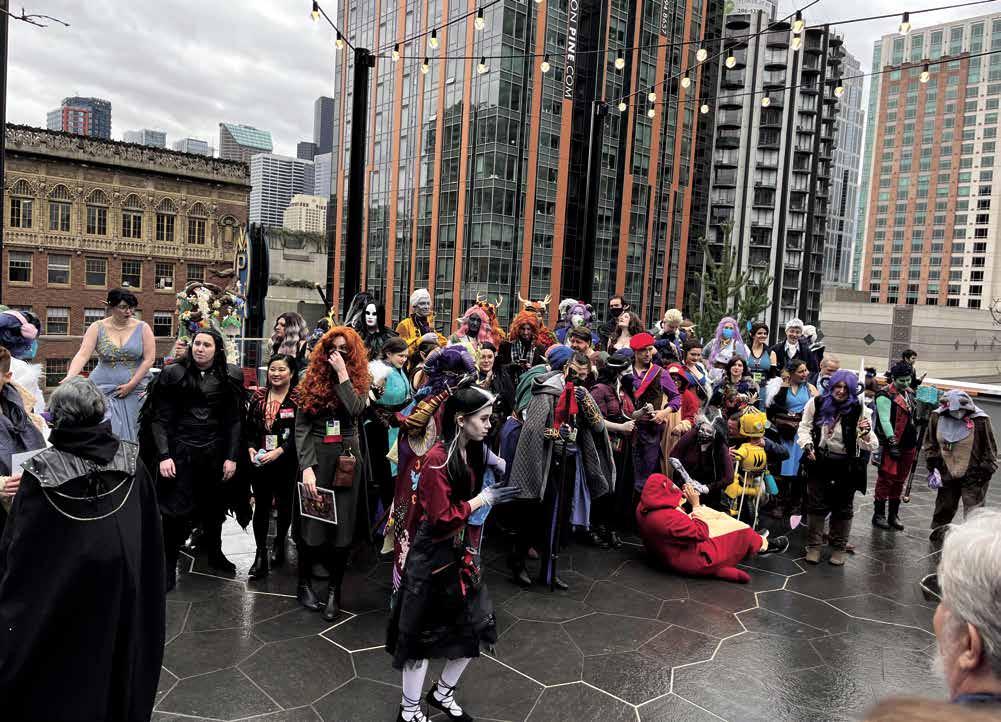
The Summit is so spacious that the international live action roleplaying (LARPing) group Amtgard had ample room for children and adults alike to test their combat prowess safely, in the time-honored tradition of whopping each other silly with foam swords. Battles of harmless fun raged through the weekend.
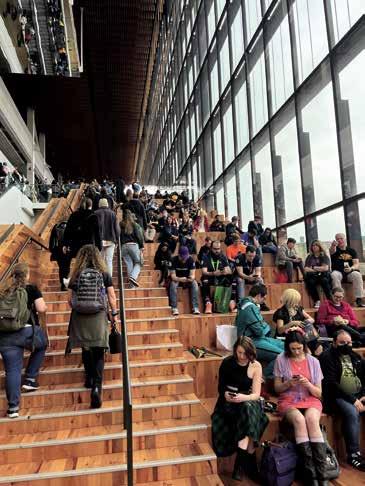
One Amtgard representative, known as Kodiak of Greenwood Keep, said that numbers had waned in LARPing groups during the height of the pandemic. But Kodiak also mentioned that local chapters might be gearing up for a presence at Pride events this year, since the communities have so much overlap. And in an adjacent but decidedly different realm of LARPing involving false fangs,
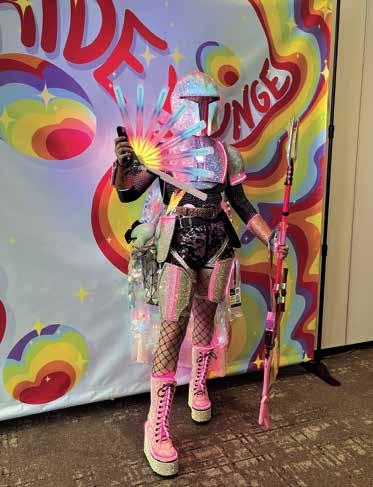
dark clothes, and red contact lenses, Drache Media Films CEO Daphne Reeder — an experienced LARPer in the paranormal World of Darkness setting — said that Seattle itself used to be the center of such events. Navigating the convention was far more straightforward than last year, too, up until Saturday afternoon, when foot-traffic jams were common on the third-floor landing, as well as elsewhere in the building.
Such growing pains should be expected, and it was a minor inconvenience for those unconcerned with social distancing. It was nothing a few well-placed signs and stanchions wouldn’t fix.
It should also be noted that face masks, while officially “recommended,” were not mandatory like they were last year, and most attendees weren’t wearing one.

Packed panels
Some readers might be thinking by now, All right, but how Gay was it? The short answer is: very, as it was last year — but this time, we turned out in force.
In addition to the usual fandom meetups, based around certain intellectual properties or companies, each day there were a few informal networking events for professionals in a dedicated lounge area.
That space brought together authors, librarians, educators, game developers, and often a combination of two or three, to help talent find talent across industry silos. A good portion of those people were part of the LGBTQ community, and had local connections in the artists’ alley and elsewhere.
Interest was higher at panels, too. Whereas last year Lyssa Holm’s “Always Here: LGBTQIA Characters in Comics & Mythology” drew a small crowd and had many empty seats, this time around, some con-goers had to stand in the aisle.
Holm provided the histories of Queer characters, in both comics and Greek mythology, in parallel — like the early hints at the superhero Iceman’s sexuality, and the heteronormative attempts to erase Greek hero Achilles being what she called a “disaster Bisexual.”
Even some not overtly Queer panels, notably “Neurodiversity and Comics” and “Body Positivity in Cosplay,” had a majority-LGBTQ lineup of fans, artists, and pro -
fessionals to share their insights, musings, and stories.
In the former session, there were discussions about working in the comics industry while having ADHD, ASD, dyscalculia, or dyslexia.
Dark Horse artist Phillip Sevy was moderator for four others sessions: with writer and journalist Christie Porter, artist Lauren Walsh, comics marketer Jazzlyn Stone, and writer Jody Houser. They spoke both about their challenges, like meeting deadlines, and their strengths, like being able to work on many projects at once. And they agreed that the COVID-19 pandemic had obstructed many of their coping mechanisms, like working in cafés.
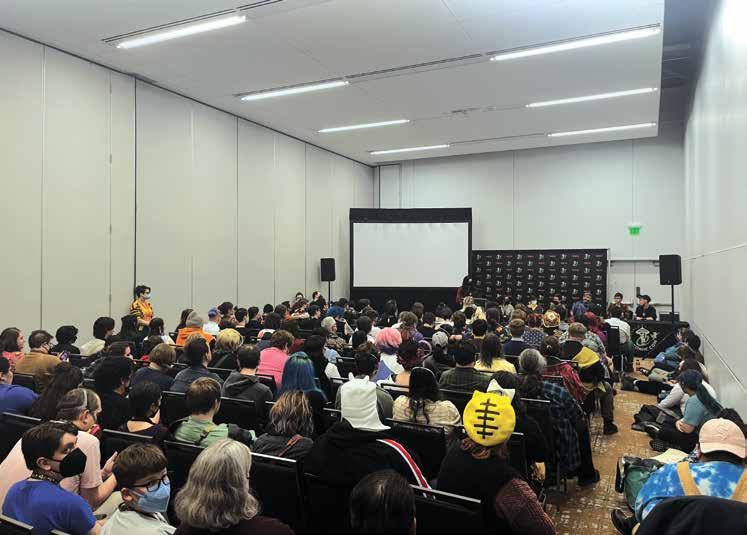
“Queer Imaginings” went over some of the most prominent pieces of Queer media that was released or continued last year, like the film Bros, and the shows The Owl House, The Last of Us, and Our Flag Means Death
Local pop media critic and journalist Matt Baume was on this panel. He said of Everything Everywhere All At Once, “So many pieces of media — expensive, mainstream pieces of media — when they do include Queer people and themes, it is done in a way that can be removed for other audiences.”
Everything, however, “can’t be sanitized,” Baume said. “This is a movie that says, ‘You must take me on these terms, and if you want to un-Queer this, then you can’t have me.’”
Our Flag in particular had an even stronger presence this year than last, with signings and selfies with cast members, and a panel with nonbinary actor Vico Ortiz and comedian Rhys Darby on the main stage.
Two fan panels for the show were held as well, one featuring its fan fiction and another exploring its theme of Queer found family. Even the mention of Taika Waititi’s pirate comedy in other panels aroused some of the loudest cheers.
Others signings included Mark Ruffalo, known for playing Bruce Banner in the Marvel Cinematic Universe; David Hayter, the voice of Snake in the Metal Gear Solid games; David Tennant of Doctor Who fame; Katee Sackhoff, who played an armored badass in Battlestar Galactica long before she did in The Mandalorian; and an array of stars from anime and CW shows, like Riverdale and Arrow
Sunday in particular saw a strong presence of David Lynch’s Twin Peaks, which might surprise some, since it released its third and final season in 2017, 26 years after season 2. Harry Goaz (Andy Brennan), Sherilyn Fenn (Audrey Horne), Ray Wise (Leland Palmer), and Kimmy Robertson (Lucy Moran) took to the main stage in a “Damn Fine Panel.”
ECCC also resumed its official after-parties and late-night activities this year, with a prom for high-energy vibes, and a chill, late-night “Sip & Sketch” drawing session with a mobile bar.
by A.V. Eichenbaum SGN Editor-in-Chief
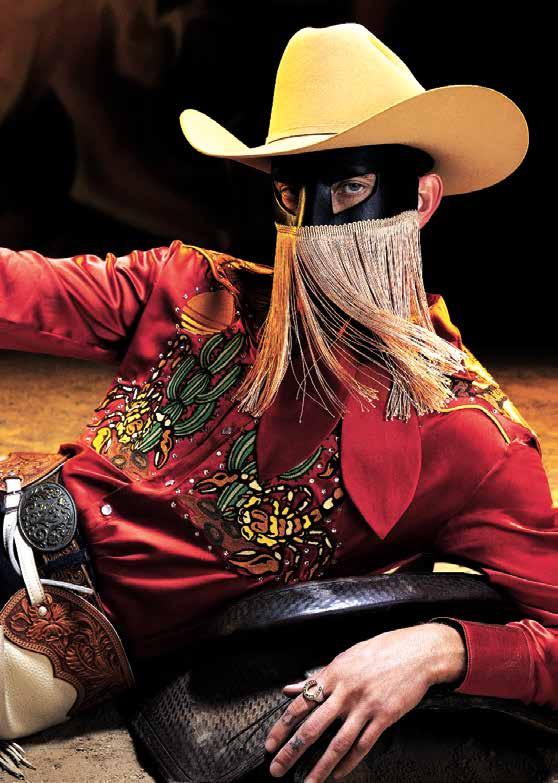
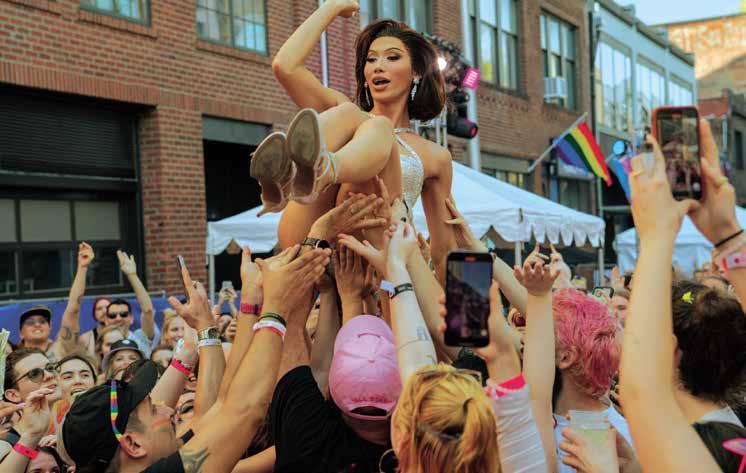
Queer/Pride Festival announced Tuesday, March 7 that big names are heading to the local three-day fest. Headliners include Gay country superstar Orville Peck, nationally renowned Drag icon Trixie Mattel, feminist musical activist Peaches, and Grammynominated musician Pabllo Vittar.
The 21+ music and arts festival is the largest of its kind in the Pacific Northwest, and partygoers can look forward to fresh hyper-local artists, drag performers, and musicians in addition to national sensations. Past headliners include Kim Petras and Iggy Azalea.
QPF is presented by Burgess Hall Nightlife Group, the enterprise run by husbands Joey Burgess and Murf Hall, who regular readers may recognize as the owners of Elliott Bay Book Company, The Cuff Complex, Queer/Bar, and other Capitol Hill hotspots.
“QPF returns this summer bigger and better than ever,” said Burgess in a press release. “We’re lighting up our stages with some of the hottest artists from around the world, and we’ve expanded our overall footprint to include a larger stage, bigger screens, and more food and beverage offerings.”
Other performances to look for at Queer/ Pride include Seattle’s hometown heroine and Queer/Bar stage star Bosco and current Season 15 Drag Race queens Sasha Colby, Luxx Noir London, and Mistress Isabelle Brooks.
Tickets went live March 8 and are available for purchase online. Early Bird admission tickets for all three days are priced at

$150, while VIP three-day passes start at 300. VIP passes include priority entry for all three days, two drink tickets, and access to an air-conditioned private lounge with a private bar and bathrooms. Single day ticket prices have yet to be announced.
QPF 2023 will be happening on Pride weekend, June 23-25, in the heart of Capitol Hill. Savvy festival fiends will be able to hit both Seattle PrideFest and QPF without leaving the neighborhood that Saturday.
For tickets and more information on Queer/Pride Festival, go to www.queerpridefestival.com
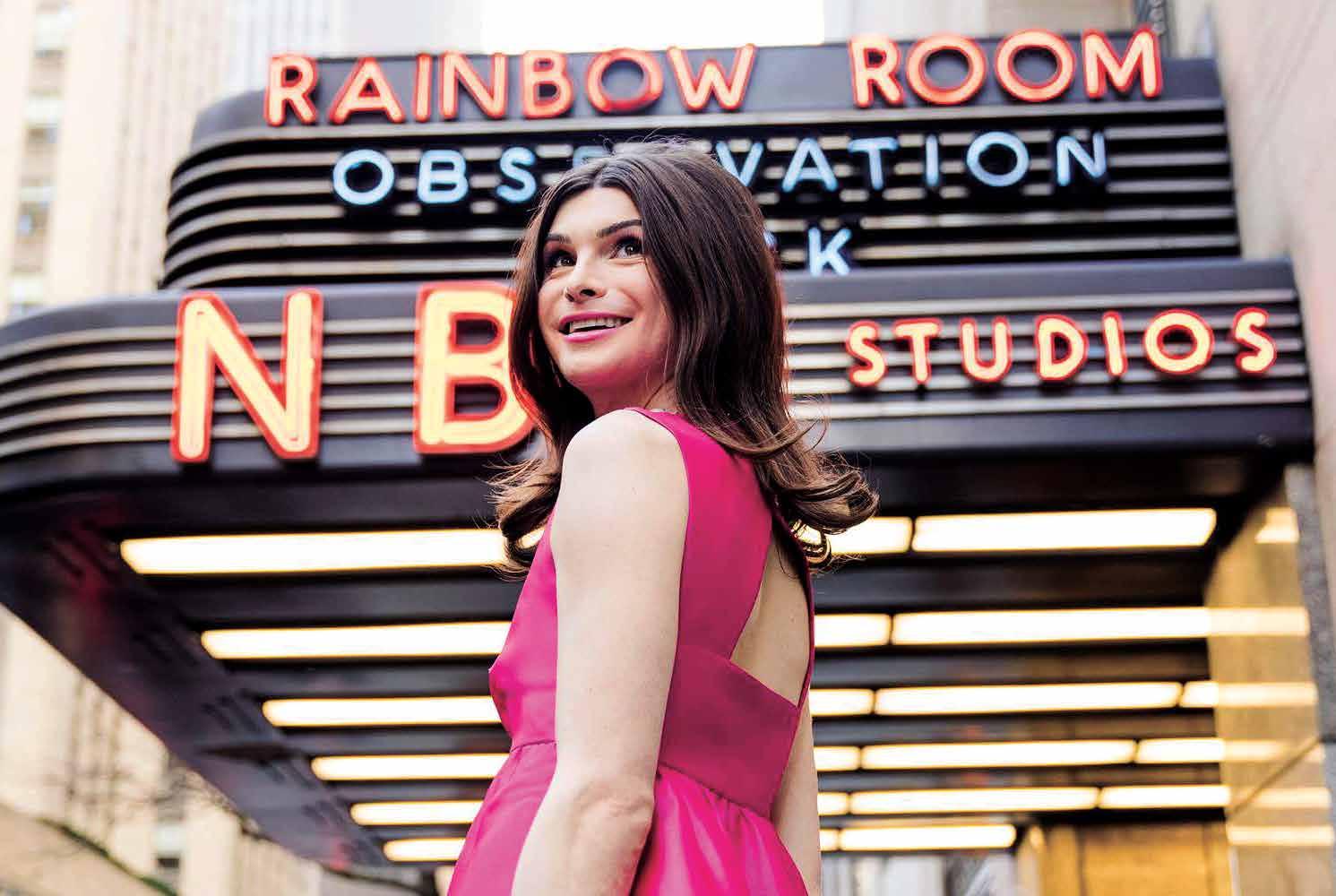
On March 13, 2021, Mulvaney’s journey is set to hit a major milestone: Day 365. In true Mulvaney fashion, the budding starlet has big plans. “I knew I wanted it to be more than just some party. Flash-forward to a team of Broadway producers meeting with me. We came up with this epic, fullon musical event with singing, an orchestra, comedy, and special guests,” she shared via TikTok on February 22.
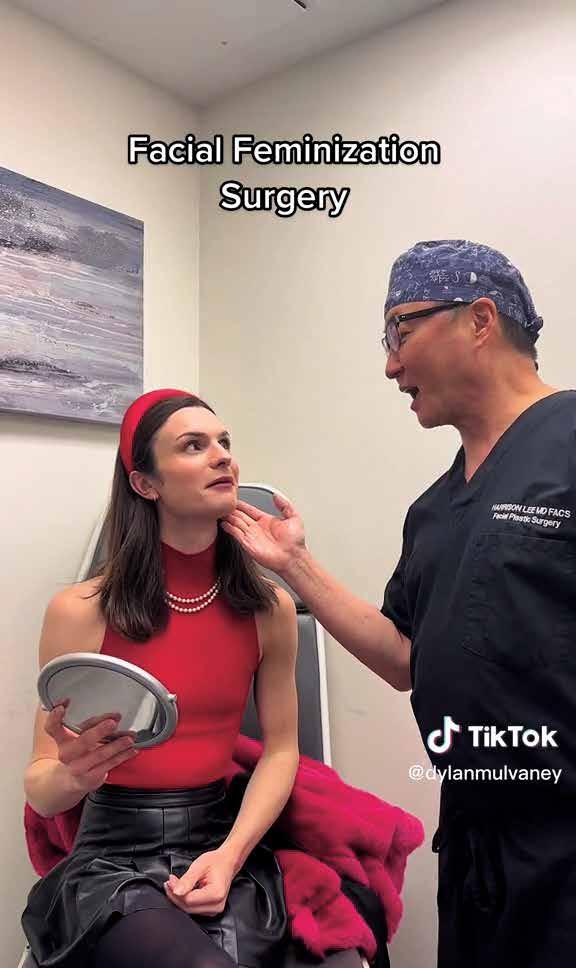
Her fans aren’t surprised she’s celebrating with a Broadway-style show. Earlier this year, the actor-comedian premiered her post-surgery face reveal in an elaborate Aubrey Hepburn–inspired musical number. Mulvaney
Performance is an important part of Mulvaney’s life, and her Day 365 Live! show celebrates that. “A lot of you don’t know this, but I toured in a Broadway musical before I transitioned, and I can’t think of a better way to celebrate 365 days than [it] being the first time I’m on stage as a woman,” she said. (The actor-comedian previously played Elder White in The Book of Mormon.) Day 365 will film at NBC’s Rainbow Room in New York City. Due to the small size of the venue and lingering concerns over COVID, the show will have a limited live audience. Never one to exclude, though, Mulvaney will be live-streaming the show to all timezones at 8 pm Eastern. She asks that fans purchase a ticket for $5.
“The room is so small. It will just be me, some of my loved ones, the cameras, and some Trans people. That’s why we went the live-streaming route,” she explained.
Fighting hatred with joy
The show will celebrate Mulvaney’s transition journey while also sharing Trans joy. Despite the celebratory feeling, Mulvaney acknowledges that it has been a difficult year for Queer and Trans people everywhere.
“It feels a little odd to sit back and celebrate Trans joy when there is so much hurt and hatred in the Trans community right now. While I’ve taken steps forward this year, it feels like society has taken a hundred steps backward,” she admitted.
Mulvaney recognizes that her constant positivity can sometimes feel detached
from the realities many Trans people in America are facing. However, she believes love is her greatest weapon in facing adversity. “If we give up on Trans joy, they will win. So, I’m going to keep doing it,” she said in the emotional video.
While her journey has been a positive and public display of Trans joy, Mulvaney is often the first to point out her privileges. She recognizes that many procedures she has undergone are expensive and unattainable for other Trans people. She also notes that her race plays a part in the acceptance she receives. Now, Mulvaney is using her platform to give back. She is donating 100% of the profits for Day 365 to the Trevor Project’s mission to end LGBTQ+ teen suicide. “I’m just trying to raise as much money as possible, so even if you can’t make it that night, buying a ticket would help,” she said. “You can watch it from anywhere in your timezone, with your family, in your pajamas, and maybe you even get a group of friends together and get dolled up. The possibilities are endless!”
While Mulvaney is preparing for the show with Broadway producers and professionals in New York City, she is staying at the Plaza Hotel, another one of her dreams come true.
While most of the show is under wraps until the big live performance, Mulvaney has revealed that she will be performing renditions of “Running Up That Hill (A Deal with God)” and “Part of Your World.” The show will feature comedy and musical theater, with special guest celebrity appearances by Renee Rapp, Jonathan Van Ness, L. Morgan Lee, Sis, and others.
Mulvaney is also excited to share that all her backup singers and dancers are women and Nonbinary people. “I don’t think I can articulate just how important it felt to have Trans and Nonbinary people and women and Queer humans sitting in a room to make this thing happen that I created in my brain,” she gushed. “I felt weird going into it this morning, because there is so much hatred in this world, but it does feel like it could be a cathartic feeling of giving Trans joy. Maybe this is what we need. I’m just really happy.”
Tickets to Day 365 Live! can be bought at 365daysofgirlhood.com.
Multiverse sensation Everything Everywhere All at Once primed to dominate Oscars

by Sara Michelle Fetters SGN Staff Writer
It’s been a little while since we’ve had a genuine juggernaut dominate at the Academy Awards, where one film was victorious in the majority of the categories in which it was nominated. In fact, the last time this happened was almost two decades ago, in 2004, when Peter Jackson’s The Lord of the Rings: The Return of the King went a perfect 11 for 11, joining Titanic and Ben-Hur as the only motion pictures to go home with that many Oscars.
Even though it has 11 nominations as well, Daniel Kwan and Daniel Scheinert’s Everything Everywhere All at Once cannot ascend to the same heights as those three Best Picture–winning titans. But that’s only because stars Jamie Lee Curtis and Stephanie Hsu are battling it out in the same category, Best Supporting Actress, which makes tying the all-time mark virtually impossible (there’s always the possibility of a tie, but that’s not happening).
Be that as it may, make no mistake: this multiverse melodrama about an immigrant family battling the forces of good and evil and struggling with indifference, parental neglect, lost dreams, romance, and all sorts of additional interpersonal calamities is primed to be the big story during this Sunday’s 95th annual Academy Awards telecast. If the film were to win in all ten categories in which it is nominated, I wouldn’t be even moderately surprised.
Not bad for a strange, wildly original fantasia of martial arts, slapstick comedy, tearful tragedy, hot dog fingers, dildo fisticuffs, and familial reconciliation. The great Michelle Yeoh stars in a role unlike any other she’s had in her legendary 40-year career, and Indiana Jones and the Temple of Doom and The Goonies favorite Ke Huy Quan makes his return to the big screen for the first time in over three decades.
If there is going to be an upset, look to Germany’s searing All Quiet on the Western Front and director Baz Luhrmann’s
Everything Everywhere All at Once – Photo courtesy of A24
raucously untamed Elvis as the likely upstarts, at least as far the big prize is concerned. The former shocked everyone when it took home Best Film along with nine other awards at last month’s BAFTAs.
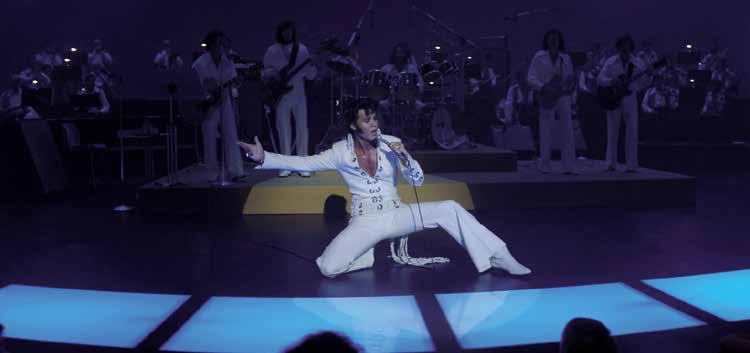
As for the latter, star Austin Butler is all but locked to win Best Actor for his masterful performance as Elvis Presley (although The Whale star Brendan Fraser certainly still has a puncher’s chance to pull off an upset), while history has shown us that Elvis itself is the type of larger-than-life, high-energy musical sensation Academy voters tend to be drawn to.
It also wouldn’t shock anyone if Cate Blanchett were to win her third Oscar — her second for Best Actress — for Tár. But with Yeoh’s recent Screen Actors Guild victory, that’s looking more and more unlikely. Both are deserving, and stranger things have certainly happened, but it’s hard to imagine that Academy voters won’t take the opportunity to award a bona fide international icon for the performance of her career.
There will be plenty of additional drama throughout the night, some of which will have nothing to do with the awards themselves. It’s easy to wonder what might transpire, after last year’s unhinged debacle, where some categories were presented before the live show began, the comedy fell flat, and there was so much peculiar “filler” material that one might have suspected that the producers were attempting to sabotage their own show. And that’s not even mentioning the “slap” seen and heard all around the world in one of the wildest moments in all of Oscar history.
Anyhow, here are my predictions as to who will emerge victorious in every category at this year’s Academy Awards. Just for fun, I’ve also included my personal picks in the top categories as to what I want to win, along with a film or a performance I wish would have been nominated instead. Enjoy!
The 95th annual Academy Awards are on Sunday, March 12 at 5pm on ABC
BEST PICTURE
Nominees:
All Quiet on the Western Front Avatar: The Way of Water
The Banshees of Inisherin
Elvis Everything Everywhere All at Once The Fabelmans Tár
Top Gun: Maverick Triangle of Sadness
Women Talking
Will win:
Everything Everywhere All at Once Should win: The Banshees of Inisherin
Not nominated, should have been: Glass Onion
BEST DIRECTOR
Nominees:
Martin McDonagh (The Banshees of Inisherin)
Daniel Kwan, Daniel Scheinert (Everything Everywhere All at Once)
Steven Spielberg (The Fabelmans)
Todd Field (Tár)
Ruben Östlund (Triangle of Sadness)
Will win:
Daniel Kwan, Daniel Scheinert Should win:
Daniel Kwan, Daniel Scheinert Not nominated, should have been: Charlotte Wells (Aftersun)
BEST ACTOR
Nominees:
Paul Mescal (Aftersun)
Colin Farrell (The Banshees of Inisherin)
Austin Butler (Elvis)
Bill Nighy (Living)
Brendan Fraser (The Whale)
Will win: Austin Butler
Should win: Colin Farrell
Not nominated, should have been: Park Hae-il (Decision to Leave)
BEST ACTRESS
Nominees:
Ana de Armas (Blonde)
Cate Blanchett (Tár)
Michelle Yeoh (Everything Everywhere All at Once)
Michelle Williams (The Fabelmans)
Andrea Riseborough (To Leslie)
Will win: Michelle Yeoh
Should win: Michelle Yeoh
Not nominated, should have been: Regina Hall (Honk for Jesus. Save Your Soul.)
BEST SUPPORTING ACTOR
Nominees: Brendan Gleeson
(The Banshees of Inisherin)
Brian Tyree Henry (Causeway) Barry Keoghan (The Banshees of Inisherin)
Judd Hirsch (The Fabelmans)
Ke Huy Quan
(Everything Everywhere All at Once)
Will win: Ke Huy Quan
Should win: Barry Keoghan
Not nominated, should have been: Harry Melling (The Pale Blue Eye)
BEST SUPPORTING ACTRESS
Nominees:
Angela Bassett
(Black Panther: Wakanda Forever) Hong Chau (The Whale)
Kerry Condon (The Banshees of Inisherin)
Jamie Lee Curtis
(Everything Everywhere All at Once), Stephanie Hsu
(Everything Everywhere All at Once)
Will win: Jamie Lee Curtis
Should win: Kerry Condon
Not nominated, should have been: Janelle Monáe (Glass Onion)
BEST ADAPTED SCREENPLAY
Nominees:
All Quiet on the Western Front
Glass Onion
Living
Top Gun: Maverick
Women Talking
Will win: Women Talking
Should win: Glass Onion
Not nominated, should have been: Bones and All
BEST ORIGINAL SCREENPLAY
Nominees:
The Banshees of Inisherin
Everything Everywhere All at Once
The Fabelmans
Tár
Triangle of Sadness
Will win:
Everything Everywhere All at Once
Should win:
The Banshees of Inisherin
Not nominated, should have been: Bodies Bodies Bodies
BEST ANIMATED FEATURE
Nominees:
Guillermo del Toro’s Pinocchio
Marcel the Shell with Shoes On Puss in Boots: The Last Wish The Sea Beast Turning Red
Will win:
Guillermo del Toro’s Pinocchio Should win: Turning Red
Not nominated, should have been: My Father’s Dragon
BEST DOCUMENTARY FEATURE
Nominees:
All That Breathes
All the Beauty and the Bloodshed Fire of Love
A House Made of Splinters Navalny
Will win: Navalny
Should win: Fire of Love
Not nominated, should have been: Cow
BEST INTERNATIONAL FEATURE
Nominees:
All Quiet on the Western Front Argentina, 1985
Close EO
The Quiet Girl
Will win:
All Quiet on the Western Front Should win:
All Quiet on the Western Front Not nominated, should have been: Decision to Leave
BEST CINEMATOGRAPHY
Nominees:
All Quiet on the Western Front
Bardo: False Chronicle of a Handful of Truths
Elvis Empire of Light Tár
Will win:
Elvis
Should win:
Elvis
Not nominated, should have been:
Top Gun: Maverick
BEST EDITING
Nominees:
The Banshees of Inisherin
Elvis
Everything Everywhere All at Once Tár
Top Gun: Maverick
Will win:
Everything Everywhere All at Once
Should win:
Top Gun: Maverick
Not nominated, should have been:
Nope
BEST PRODUCTION DESIGN
Nominees:
All Quiet on the Western Front
Avatar: The Way of Water
Babylon
Elvis
The Fabelmans
Will win:
Elvis
Should win:
Babylon
Not nominated, should have been: Crimes of the Future
BEST COSTUME DESIGN
Nominees:
Babylon
Black Panther: Wakanda Forever
Elvis
Everything Everywhere All at Once
Mrs. Harris Goes to Paris
Will win:
Black Panther: Wakanda Forever
Should win:
Everything Everywhere All at Once
Not nominated, should have been:
The Woman King
BEST SOUND
Nominees:
All Quiet on the Western Front Avatar: The Way of Water
The Batman
Elvis
Top Gun: Maverick
Will win:
Top Gun: Maverick
Should win:
Top Gun: Maverick
Not nominated, should have been:
Nope
BEST MAKEUP & HAIRSTYLING
Nominees:
All Quiet on the Western Front
The Batman
Black Panther: Wakanda Forever
Elvis
The Whale
Will win:
Elvis
Should win: All Quiet on the Western Front Not nominated, should have been: Terrifier 2
BEST ORIGINAL SCORE
Nominees:
All Quiet on the Western Front
Babylon The Banshees of Inisherin
Everything Everywhere All at Once The Fabelmans
Will win:
Everything Everywhere All at Once
Should win: The Banshees of Inisherin Not nominated, should have been: The Batman
BEST ORIGINAL SONG
Nominees:
“Lift Me Up” (Black Panther: Wakanda Forever)
“This Is a Life” (Everything Everywhere All at Once), “Naatu Naatu” (RRR) “Applause” (Tell It Like a Woman) “Hold My Hand” (Top Gun: Maverick)
Will win: “Naatu Naatu” Should win: “Naatu Naatu” Not nominated, should have been:
“1 True Love” (Turning Red )
BEST VISUAL EFFECTS
Nominees:
All Quiet on the Western Front
Avatar: The Way of Water
The Batman Black Panther: Wakanda Forever
Top Gun: Maverick
Will win: Avatar: The Way of Water Should win: Avatar: The Way of Water Not nominated, should have been: Nope
BEST ANIMATED SHORT
Nominees:
The Boy, the Mole, the Fox and the Horse The Flying Sailor
Ice Merchants
My Year of Dicks
An Ostrich Told Me the World Is Fake and I Think I Believe It
Will win:
The Boy, the Mole, the Fox and the Horse Should win:
An Ostrich Told Me the World Is Fake and I Think I Believe It
BEST DOCUMENTARY SHORT
Nominees:
The Elephant Whisperers
Haulout
How Do You Measure a Year?
The Martha Mitchell Effect Stranger at the Gate
Will win: Stranger at the Gate Should win: The Elephant Whisperers
BEST LIVE ACTION SHORT
Nominees:
An Irish Goodbye Ivalu Night Ride
The Pupils
The Red Suitcase
Will win: The Red Suitcase Should win: An Irish Goodbye
by Sara Michelle Fetters SGN Staff Writer
The 28th annual Seattle Jewish Film Festival (SJFF) kicks off tomorrow night at 7:30 p.m. at AMC Pacific Place 11 with a raucous screening of writer-director Moshe Rosenthal’s effervescent comedic melodrama Karaoke, complete with pre-show truffle popcorn, mocktails, and an on-screen introduction from lead actor Sasson Gabay (The Band’s Visit, Shtisel ). Afterward, festivalgoers are urged to stick around for an in-theater karaoke after-party.
But that’s only one of many festivities planned for this year’s 16-day hybrid (in-person and virtual) event. Theatrical offerings will happen over each weekend of the festival (March 11–12 and March 17–19), while the majority of the virtual options have screening windows running through March 26. There will also be special guests, events, food showcases, and several additional surprises, all of it helping fuel 2023’s theme of “Cinemanna,” a cinematic feast for the eyes.
I sat down with Pamela Lavitt, the director of Arts + Ideas & Festivals for the Stroum Jewish Community Center (SJCC) and longtime SJFF programmer, to chat about this year’s event. Following are the edited transcripts from our wide-ranging conversation:
Sara Michelle Fetters: We haven’t even started diving deep into our conversation, and I can already tell that you’re especially energized for this year’s festival. I can hear the excitement in your voice. Why that is? What is it about this year’s event that has you buzzing?
Pamela Lavitt: Good question. I think why I’m buzzing is that this is the first time in three years that the possibility of really getting people back into the theater seems realistic. This is a real watershed moment, I think, for all of us to invest in seeing films once again in person. Largely on weekends, yes, but by giving people a festival that is cinema for the soul, that is going to create conversations that we haven’t been having, and that’s exciting.
I think I’m also energized by artists

and the way that they continue to produce incredible, independent international cinema that you are not going to find squeaking through on a streaming service.
We’re also offering something to the community that they can’t get, which is a nourishing, fulfilling experience of togetherness. Last year we didn’t believe that that many [festivalgoers] would come back.
I think we kind of held our breath by using smaller theaters. But we still delivered great programming, and even though the vast majority of people participated virtually, it was still a terrific event.
So we’re hopeful that the energy that we’ve put into increasing the number of films from 19 to 28 this year and increasing the opportunities to come into the theater will surpass the comforts of home and help fuel the desire that we have to reconnect with our fellow humans around incredible storytelling and meaningful conversations that you can’t get anywhere else.
SMF: I am impressed by the balance that you are able to achieve between your in-theater options and your virtual selections.
PL: We are privileging in-person [screenings]. We’re giving the full weight of our energy, our guest artists, our food, our razzmatazz… to getting people back into the theater. It’s amazing to be together and
eat a little popcorn and have a little bit of food and listen to music and converse afterwards and meet artists.
But we also know that some other conversations would need to be had virtually. We’re releasing only a small subset of films this year that are virtual only, about eight or nine. This was, this is, important.
But the festival starts on March 11 and to get on board, we’d really love it for everyone to come down to the theater, otherwise you won’t be able to see our opening night film, Karaoke, until March 20. That’s a good 10 days later.
SMF: What was the thought process behind having all of the in-person screenings on the weekend?
PL: We can all study metrics and data and purchase histories and all of that, but the fact is, Jewish film festivals do tend to skew a little bit older. We also think that Saturdays and Sundays are just the best cinematic movie days.
We used to always move to a smaller theater midweek. We were at SIFF Cinema Uptown for many years, and I think those screenings may come back next year. Those nights were reserved for deeper dives into documentary films. We’ve kind of put that more in that virtual space for the time being.
We do hope that by next year everyone will say, I want to come back after work at 6:30 p.m. and go to the cinema on a Monday night. But right now, the feedback from the community was to prioritize the weekends. I know that there’s been a retraction in a lot of festivals, so I think we’re just putting our eggs into one basket [that] people will come back to the theater on a Saturday or a Sunday (or both).
If that’s the case, maybe next year you’re going to come back on a Wednesday or a Thursday, right? Let’s see what works and what audiences are ready for.
SMF: You’ve really put an emphasis on celebrating “Israel at 75” for this year’s festival. Could you tell me more about that?
PL: I don’t want to be naive about planning an Israel milestone at a time when there’s tremendous and important conflicting con-
versations that we need to have about Israel. I would say that the SJCC movement in general celebrates Israel for its culture, its food, etc., all in a nonideological way, but it’s hard to avoid those conversations. Israel is a complex place that has an ever-changing government, and we can really debate what’s happening and what we may be troubled by. I would say that the “Israel at 75” started a year ago, when we knew [the anniversary] was coming up. But the films that we’ve selected are thorns and moles — there’s some difficult stuff. This is not an easy version of celebrating Israel. I don’t think we’ve shied away from anything.
For example, there’s Savoy, a film about a woman, both Arabic-speaking and Hebrew-speaking, who was able to negotiate with her terrorist captors but was later vilified. Her journey was a difficult one.
And The Consultant: there is a lot of debate around this film — and there should be. It’s a story about someone who [was] a political consultant and pollster for some of the more heinous political people in recent history. Yet [he was] leading a double life, and the minute that Massachusetts allowed for gay marriage, [he was] suddenly married and raising two children. It’s a film about how those contradictions live within a person.
I feel like we’re putting Israel at 75 under this type lens, one of celebration but also of analysis. Let’s turn the spotlight on something that we need to discuss. I think in some American Jewish communities, there can be a somewhat naive version of celebrating Israel. I think that Jewish film festivals must look at the warts and the thorns. We need to start those conversations around immigration, queer communities, poor communities, and other issues that challenge Israel as opposed to just simply throwing a party.
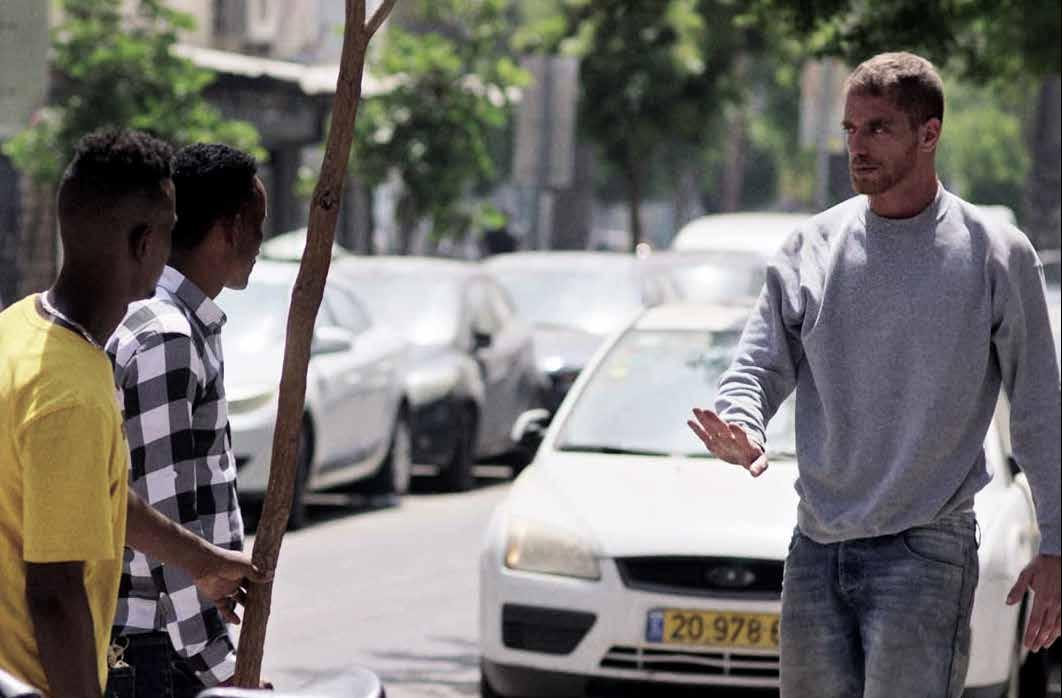
SMF: I love that you bring up The Consultant… Maybe I’m just weird, I don’t know, but I really do think that’s going to make a perfect double feature with your “Gay Gezunt” (LGBT+ spotlight) film Concerned Citizen, even though they are completely different from a subject matter perspective.
PL: Absolutely. I think it was really interesting that Concerned Citizen in many ways is totally in the penumbra and this embrace of being a Queer film, but it’s also a film about gentrification and the pushing of boundaries. Yet it’s so inspiring and uplifting.
But it is an interesting combo. I would say, in general, we’ve shied away from films like The Consultant in the past because maybe they portray images of something that is very politically sort of sensitive right now, in this case the return of Netanyahu into the government of Israel. But I’m proud that we have two Queer films that will leave audiences wanting to have tough conversations. I like that we’re showing varying sides of different coins about Israel.
SMF: And you also remember that as part of those discussions and as a facet of coming together like this, it’s sometimes good to just sit down and sing together. I love that your opening night film is Karaoke, and then after Karaoke, you’re having a karaoke party. In the theater. That’s great.
PL: It’s crazy, right? AMC said that they’d never done it before — they’ve had opera, they’ve had the Met, they’ve done all kinds of stuff, but they’ve never had karaoke on the big screen. I think they’re missing out. We can’t exactly be Rockbox, but how could I not try to make something like this happen? We just hope that it gets pulled off and, if people come and they sign up and they sing some karaoke for an hour, maybe we’ll all head to Rockbox or someplace on Capitol Hill afterward? That’s the goal.
SMF: On a more serious note, at the SJCC, how have things been going for you? These past few years, what’s that been like for you as a programmer and an event planner?
PL: Thank you for asking that. The reality as a programmer is that we’re sort of at this strange inflection point of not really knowing what to do next. Do people want to go back to large global music shows? We’re still kind of baby-stepping. For example, family programming has become huge need. We had 1,200 people show up in one day for three sold-out concerts. 1,200 people! We could barely get sometimes 50–100 people into a really highlevel keynote with a sought-after author. It’s so hard to predict what will engage audiences and what will not. We’re still on our heels, figuring out what do people want semi-post-pandemic. This is one reason why our author series this year is called “Chew on This,” because it involves both chewing on food but also chewing on ideas. We do want to take any opportunity to create meaning in our lives through conversation. Those conversations need to happen in person, if possible, and not necessarily on Zoom. People don’t want to show up for Zoom cooking classes. [laughs]
I would say that we’re incredibly, incredibly thankful for some of the relief funding that came our way from King County 4Culture, the Washington Festivals and Events Commission, and other community organizations. While we definitely had to scale back some, we’re starting to ramp up again on our staffing, and that’s exciting. But we had to scale back both our programming and our staffing for quite some time, and yet we still delivered with events for the whole community.
We’ve never stopped wanting to impact people’s abilities to enter into conversations around building bridges in regards to Jewish and Israeli life in our community. We’re still experimenting. We’re excited to try new things. There are successes and there is some failure, and I think that’s the way it should be.
Creating meaning that moves people in their souls seems more important than 400 butts in a movie theater seat anymore. If a hundred people show up and they’ve had an incredible experience, and they come back multiple times or buy a pass to the festival? That’s the best feeling.
SMF: This brings me back to my first question. Listening to you, as difficult as these years have been, with all of us having to change how we live our lives, it’s almost as if these hardships have reignited your passion for what you do.

“I’m proud that we have two Queer films that will leave audiences wanting to have tough conversations. I like that we’re showing varying sides of different coins about Israel.”
PL: I appreciate that. These are the questions that you have to face: Do you go back to what you knew? Do you learn from the journey? How do you reassess, reevaluate, shift? There are some things that are amazing and continue to be successful. But I do think there is a “throw out the baby with the bathwater” thing that has happened through the pandemic.
It’s all just mostly a matter of time, resources, staffing, and energy at this point. But it feels like there’s a boundless opportunity to reinvent and create new experiences for people. I think that the experiential model seems to be what people are really looking for.
We are in the film, in some ways, the film of our own lives.
Cinema has always been a great place to bring people together, to get them into understanding more about Jewish life,
Jewish identity, or even themselves. It’s a great place to take a journey with your friends and partners, because it’s fun.
But I’m in for the year-round commitment. I’m not just the film festival. I think that an arts programmer strives to deliver experiences. What do I deliver, and what does it tell me about what people want next? I’m in a listening campaign right now, and I think the SJCC is as well. We’re trying a lot of different things to see what our community wants. That’s exciting and energizing. The curation and the connections and the collaborations and the partnerships are always what get me going.
SMF: To close that thread, for everyone here in the Pacific Northwest, what do you hope they take away from this year’s festival? What do you want them to be thinking about, whether they see one film or twenty?
PL: I think that we are in the business of community building in an authentic way. I think what I want people to take away is that we are the most open and welcoming international film festival, that happens to also be Jewish. My goal is to continue to make sure that we celebrate international independent cinema that really represents the best of what’s out there in the world. I want audiences to walk away thinking. I hope they learn something, deep down inside where it counts. But most of all I want them to enjoy themselves. When the lights go down, I want them to light up inside.
The Seattle Jewish Film Festival runs March 11–26, in person and virtually. A list of films and special events, plus ticketing and pass information, is available at https://sjcc.org/programs/arts-ideas/ seattle-jewish-film-festival.
by Terri Schlichenmeyer Special to the SGN
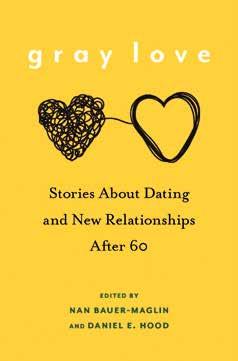
GRAY LOVE: STORIES ABOUT DATING AND NEW RELATIONSHIPS AFTER 60
Edited by NAN BAUER-MAGLIN and DANIEL E. HOOD
© 2023 Rutgers University Press
$24.95
303 pages
You thought you’d be happy alone.
After the divorce, the funeral, or the last break-up, you didn’t think a little “me time” was a bad idea. And it wasn’t.
But love — someone to go to the movies with or dine with or snuggle with — seems more appealing now. You have company, but you are “without intimacy.”
Today, though, as you’ve learned, and as the 42 essays in Gray Love confirm, that’s easier said than done.
You want a partner, someone your age, but you fear becoming a caretaker. Hav-
ing someone around would be nice, but you also like doing your own thing.
Or you don’t want a full-time someone, but it’s still scary to think about “falling off a ladder alone.”
So you go online because, well, people don’t meet like they used to. That’s when you learn about scams the hard way. You learn that dating sites are generally rife with people who lie about their ages, who seem clingy, or who want things you can’t give. They are teeming with “the uncertain, the angry..., the unattractive,” and — let’s be honest — jerks. Unlike real life circa 1973 or even 1993, there’s nobody to vouch for singles online.
On the other hand, tales of love at wayup-there ages are inspirational. Experimenting with the same sex, a different sex, a different race isn’t off the table, but nobody’s asked. Or you did do that, and it was wonderful, and why didn’t you do that before? After all, love is love. You date the wrong people, you date the right people, you’re exhausted and disappointed.
And sometimes, even for awhile, you’re someone’s “’sweetie.’”
According to a study quoted in Gray Love, about 25% of American adults live alone. If you’re one of them and open to a relationship, you need this book.
Just know that this is not a how-to manual. Editors Nan Bauer-Maglin and Daniel E. Hood don’t offer advice in their introduction, and most of their storytellers didn’t Ann-Landers their way into this book. Instead, you’ll read tales of dating and mating gone happily right and very, very wrong, told in ways that will make you laugh, sigh, and know that you’re not alone in your late-life search for love. The mixture here is diverse and wide: if one tale makes you want to swear off dating forever, the next one offers happily ever after.
Be aware that a few of the tales flirt with the explicit, and others might ruffle a feather or two. Still, it could be great to share it with a millennial or older GenZ’er.
by Lindsey Anderson SGN Staff Writer
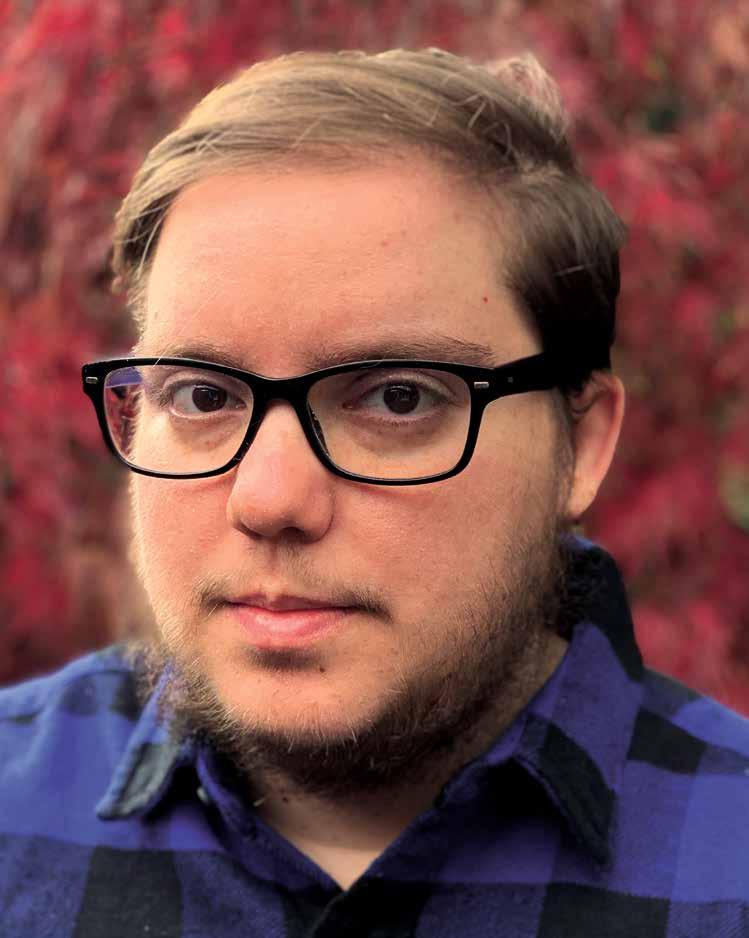
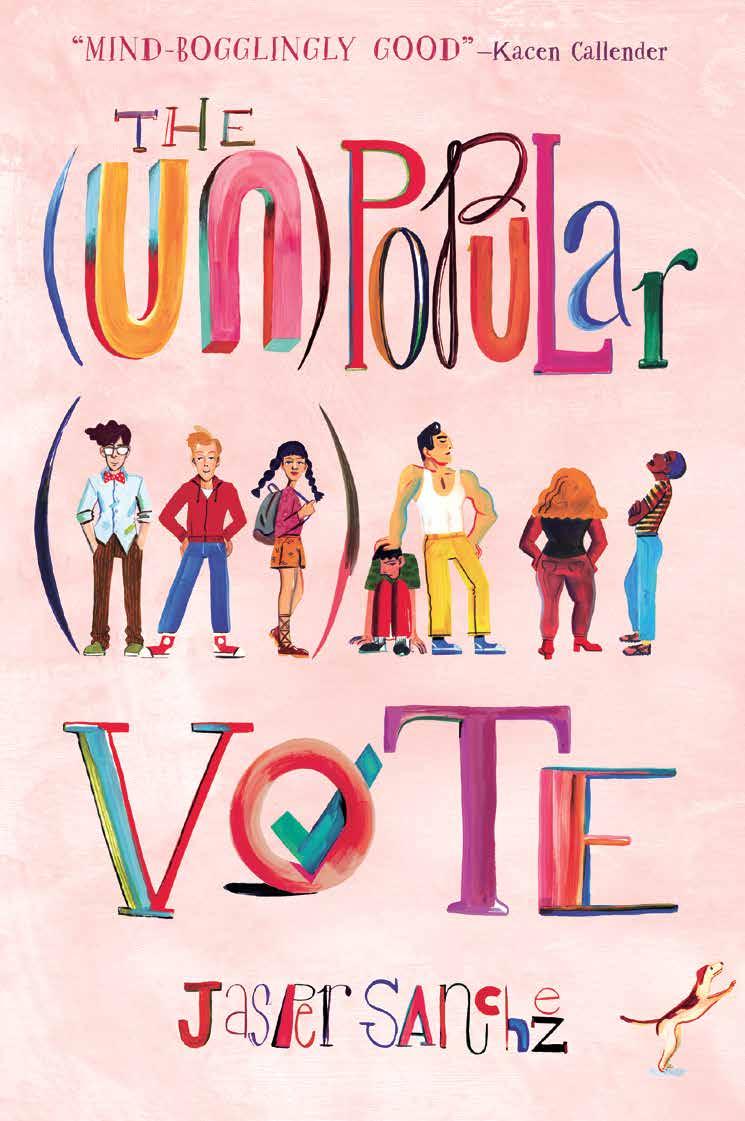
Jasper Sanchez set out to write the next great American novel in 2007. Fourteen years later, it finally hit the shelves. Despite intending to write a great political tragedy, the book Sanchez ultimately sold was instead a Queer YA rom-com about a school election.
The (Un)Popular Vote follows Trans teenager Mark Adams, who, despite getting through most of high school with a cis-passing profile, finally decides to step out of the shadows and run for student body president. However, a school bully spewing hateful rhetoric becomes the front-runner.
“The next great American novel” While the final version of The (Un)Popular Vote has become very popular with Queer teen readers, the story is far from the original draft Sanchez wrote.
“Technically, you could say that I began trying to get published when I was 15,” he recalled. “There’s a long story behind the characters of The (Un)Popular Vote They were the same characters in the first novel I ever wrote, when I was a tiny teenager who thought I knew things about politics, which I now very much disagree with.”
Full of hubris, the younger Sanchez believed in his novel back then, which reflected the American political atmosphere set by then-President George W. Bush. “The first iteration of Mark Adams bears little resemblance to this. For one thing, he was a Republican. For another thing, he was 44 and president of the United States. I started it around my 14th birthday and finished it about a year later. Having just taken eighthgrade US history, I thought I was an expert on American politics.
“Being a certified gifted kid who wrote a book at age [14], I thought I was hot stuff. I thought I’d written the next great American novel. I queried agents, at least one or two, at the time, because I thought this was the best thing ever. That didn’t go anywhere,” he said.
Eventually, he shelved the idea and started working on other projects. He graduated high school and went into an English program. He tried creating new stories but could never forget his original characters, President Mark Adams and VP Ralph. After a while, he came back to Mark. The original novel had been painstakingly straight, but as Sanchez grew into his Queer identity, he realized that maybe Mark wasn’t as straight as he had thought.
“[The original novel was] not explicitly Queer, but if you read some of the scenes between Mark and Ralph, it is pretty Gay,” he said. “As I reread it, it became obvious that the subtext here was Gay. I was shipping them.”
While the novel didn’t work as a conservative political drama, he thought he could alter it to fit what was popular at the time. “It was 2010, so of course I wrote a dystopian, post-apocalyptic deal. It was arguably worse, but it was at least a romance and had a happy ending.”
The sci-fi version of Mark didn’t sell either, but through his rewriting process, Sanchez got to know his characters a lot better. “Through all of these failures, I solidified my ideas of who these characters are,” he said.
Discovering himself
Sanchez was also beginning to know himself better. After graduating high school, he came out and moved to Seattle. Looking to read stories about Queer and Trans people like himself, Sanchez began getting into YA literature.
“I’ve been reading YA since college,” he said. “I didn’t read YA as a teenager, because I was pretentious and thought I’d written a great American novel. I was a snob in high school.
“I’ve been going to YA for Queer representation for a long time. I never tried writing it.”
Shedding some of his previous “gifted kid snobbiness,” he then wrote a fun novel for Mark. “In 2017, I tried to write a contemporary novel in which Mark was running for governor of California. He wanted to become the first millennial governor. And this was the first version where Mark was Trans, and Ralph was Jewish,” Sanchez said.
This reworking was a romance, but it still didn’t feel right.
One day, Sanchez was out getting coffee with one of his friends from high school. They were reflecting on their experiences growing up. Even though nearly all his high school friends came out as adults, they were all closeted as teens. Sanchez and his friend imagined what their lives would have been like if their friend group had been openly Queer back in the day.
“What would high school have been like if we had all been out? It was fun to talk about it. My friend would say, ‘You should write a novel about this.’”
The more he thought about these “what ifs,” the more Sanchez realized this was the story he wanted to write for Mark.
“From there, it was just a process of figuring out how to make them teenagers,” he said. “I de-aged these characters that I know well and plopped them into a place that I know well and wrote a genre that I’d never written before.”
Diving into YA
So in his next iteration, Sanchez decided to make Mark a teen.
“I wrote this book as an experiment, thinking, ‘Okay, I’m going to write a young adult novel. I’ve never written one before, but I’ve read them,’” he said. “It’s one novel I went into without expectations. I wrote this book and I thought, ‘This might be good?’ Which was weird, because I wasn’t expecting it.”
Even though the book exceeded his expectations, Sanchez didn’t feel ready to release it. Years of rejection made him insecure about sharing his work with the rest of the world. Aside from his mother, nobody had read The (Un)Popular Vote
“I was too scared to let other people read it. I didn’t think the book was good enough,” he admitted.
Finally, Sanchez realized he needed to try one more time. “I felt like it was a bit of a make-or-break moment in terms of publishing. I hunkered down. I forced myself to keep working on it.”
He finally sent out the queries he had been sitting on for years. An agent was interested, and within days, he signed.
“Everything happened pretty quickly from there,” Sanchez said. “I did revisions in two days, because I didn’t do anything else. We went on submission two weeks later, and I got an offer.”
“I want Trans kids to read this. It’s a hard book in a lot of ways. There are trigger warnings. I hope there is something comforting in seeing Queer communities and what your people can do in the face of oppression if we work together”
Now Sanchez is genuinely proud of The (Un)Popular Vote. His characters have come a long way. They reflect his life, beliefs, and experiences in ways a 44-yearold Mark Adams never could. Not only does Sanchez connect with the book on a much deeper level, but so do his readers.
“I want Trans kids to read this. It’s a hard book in a lot of ways. There are trigger warnings. I hope there is something comforting in seeing Queer communities and what your people can do in the face of
oppression if we work together,” he said.
The (Un)Popular Vote may not be the next great American novel, but it speaks to modern issues of identity, youth activism, and the rights of Trans people. It is not a political drama, but Sanchez still believes readers can learn something from Mark.
“If people are reading it for politics, I hope they take to heart the critique of various ‘isms’ and phobias even in liberal spaces. I was particularly interested in thinking about liberal suburbs and how
they fail Queer kids. I wrote this in 2017, but it’s more relevant than ever,” he said. The (Un)Popular Vote is a testament to the power of listening to oneself. Once Sanchez embraced himself and his identity, his characters progressed naturally into the versions of themselves they were always meant to be. Sanchez hopes readers can learn from Mark’s journey that radical selfacceptance is the first step to changing the world.
When I woke up last weekend, I looked out the window and saw a single flower blooming in the grass. I jumped for joy! “Springtime, it’s here,” I thought, waking my husband to show him what I had seen. He wasn’t quite as enthusiastic about it as I was.
The next morning, hoping to see my flower thriving in the sunlight, I saw instead that it was frosted over, yet again squashing all hope of warmth and sunshine.
This Sunday, March 12, 2023, many people around the country will “spring forward” their clocks as a part of daylight savings. For those of us in Seattle, this extra hour of daylight in an already dark winter in theory should make a small but mighty difference. With the longest days behind us, this should feel optimistic. But, as my therapist says, “should’ing” is a cognitive distortion and doesn’t mean much.
Like many people who live in cold and dark climates with long winters, I struggle with depression. Day after day of drizzle and gloom makes leaving my house looks less and less appealing. More often than not I find myself unable to get up and face another day of 45 degrees and rain. But even as springtime inches forward with the promise of rising temperatures and cloudless skies, the dread looms. There is nothing that can make me leave my bed.
The gorgeous summers in the Pacific Northwest make the spring months of April, May, and June less appealing in comparison. While they may not be as bad as the true winter months, they are anything but beautiful.
So as another winter comes and goes, I am left facing the question of the months in between. Do I continue my hibernation, letting my social skills fade away like the tan my skin once held? What more can I do to feel better?
Unsurprisingly, I am not the only one struggling with this time of year. In 2020 alone, 21 million people in the US had at least one major depressive episode, representing 8.4% of all adults, according to the National Institute of Mental Health. That is a lot of depressed people.
What would happen if we all came together, challenging the internal parts that beg us to stay in bed? According to a recent study by the International Journal of Social Psychiatry, it would do a lot of fucking good.
The study revealed that an person’s community participation may be helpful in boosting both social functioning and treatment goals, in turn lessening all depression symptoms. Whether it’s work, a social function, or any kind of meaningful activity, science shows that getting out of the house and finding a community of likeminded individuals can make a difference on your overall well-being.
by Isabel Mata SGN Staff Writer
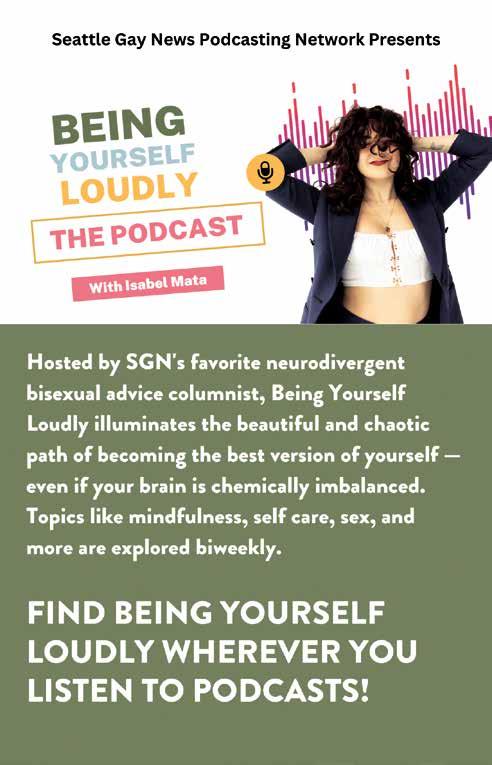
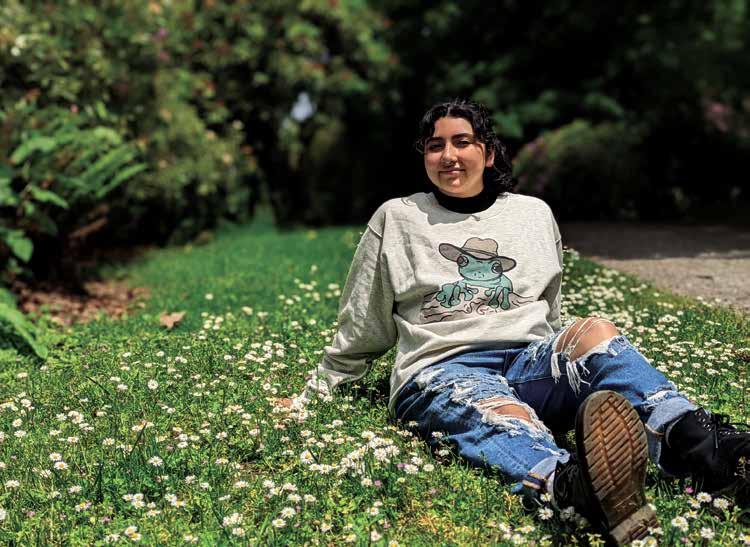
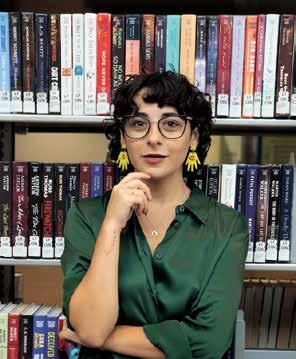
Ask Izzy is a biweekly advice column about relationships, mental health, and sexuality. Written by Isabel Mata — a Seattle-based lifestyle writer, podcast host, and mental health advocate — Ask Izzy offers tangible expert advice so all readers can have stronger relationships, better sex, and healthier mindsets. Looking for some more guidance? Submit your question to info@sgn.org with the subject line: Ask Izzy Submission.

The challenge is that getting a depressed person to actually show up to a social function is a big ask. Luckily, social media and other forms of remote technology make it possible to join a community, wherever you might be.
Scrolling through Facebook recently, I saw a post from a friend of mine about a particularly bad bout of depression they were going through. It was vulnerable and all too relatable. Before I knew what was happening, I typed out a reply and clicked share: “Be gentle with yourself, and celebrate the little things, like getting dressed and brushing your teeth. Whatever it takes,
remember that your needs may look different from someone else’s! I’m with you,” I said.
In a split second, I realized just how much I needed to hear my own words, just as much as I needed to hear theirs. Like many mental and chronic illnesses, depression has the power to make you feel completely alone, like a solar winter that has engulfed your entire being.
But like all scary things, they become a little less scary as soon as you shine a light on them. For those with depression, community is that light. You are not alone.
If you or someone you know is in a crisis, please call or text the 988 Suicide &
Crisis
The
pro -
24-hour, confidential support to anyone in suicidal crisis or emotional distress.
Sources: 1. Nagata S, McCormick B, Brusilovskiy E, Salzer MS. Community participation as a predictor of depressive symptoms among individuals with serious mental illnesses. International Journal of Social Psychiatry. 2022; 68(8):1689–1697. doi:10.1177/00207640211052182
2. Major Depression. (n.d.). National Institute of Mental Health (NIMH). https:// www.nimh.nih.gov/health/statistics/majordepression
by Mike Andrew SGN Staff Writer
Florida Republicans have introduced the latest in their string of anti-Transgender bills: a measure that would allow the state to take custody of minors who are receiving gender-affirming medical care.
SB 254 was submitted on March 3, and allows Florida state officials to take custody of minors who are “at risk” or “being subjected” to gender-affirming care. Under the proposal, the state’s authority would extend even to minors living outside of Florida.
Critics argued the bill was a legislative attempt to erase Trans people.
“I can’t believe I’m writing this,” Carlos Guillermo Smith, a former House lawmaker, and the state’s first Latino LGTBQ representative, wrote on Twitter when the bill was introduced. “This is fascist.”
Alejandra Caraballo, a former staff attorney at the Transgender Legal Defense and Education Fund, said on Twitter that SB 254 would empower anti-Trans family members to seize children from more supportive family members and bring them to Florida under cover of the proposed law.
“This is a green light to transphobic family members to engage in state-sponsored kidnapping,” she wrote.
Backers of the bill defended their legislation as necessary to “protect children.”
“Parents have the right to raise their children as they see fit, and government intervention should be a last resort,” Senate President Kathleen Passidomo said in a disingenuous statement.
“Unfortunately, all too often we are hearing about treatments for gender dysphoria being administered to children, often very young children. That’s just wrong, and we need to step in and make sure it isn’t happening in our state.”
by Daniel Lindsley SGN Staff Writer
Alaska reverses protections against housing discrimination
Alaska’s human rights commission has deleted certain language from its website promising legal protections for LGBT Alaskans against discrimination regarding housing, financing, and most other categories beyond the workplace.
An investigation by the Anchorage Daily News and ProPublica found that the change, which the LGBTQ nonprofit Identity Alaska called “statesponsored discrimination,” was requested by a conservative Christian group during the gubernatorial primaries. The commission has since refused to investigate complaints.
“The real-world consequences of these policies are harms to LGBTQIA+ Alaskans,” said Identity Alaska’s board in a statement.
The commission’s executive director, Robert Corbisier, said that Attorney General Treg Taylor told him to make the change. Gov. Dunleavy declined requests for an interview, but one of his spokespersons said, “The governor’s office was not involved in the Department of Law’s legal advice on LGBTQ+ discrimination cases.”
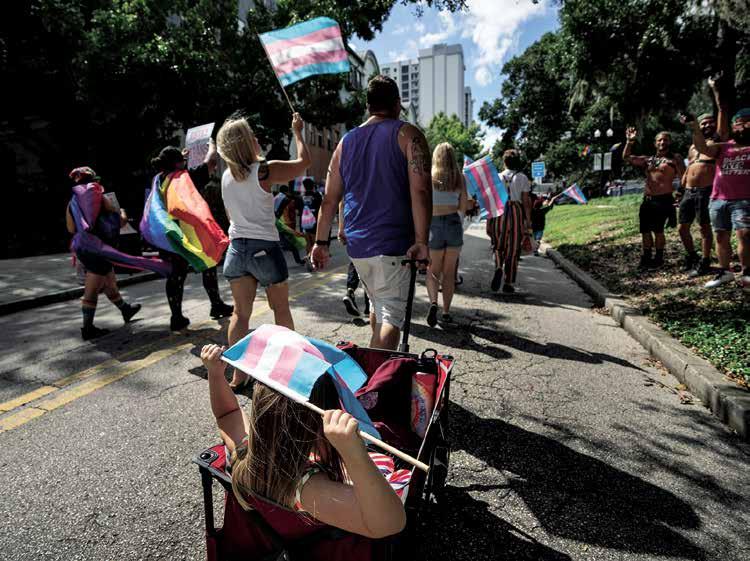
In this legislative session, Florida Republicans have also introduced measures that would:
• restrict restroom access for Trans people,
• bar doctors from providing gender-
affirming medical care like hormone treatments and puberty blockers to minors, and
• ban teaching about sexual orientation and gender identity to grade school students.
Only the last measure has passed and been
signed into law by Florida governor and GOP presidential hopeful Ron DeSantis.
The HRC characterized Florida Republicans’ legislative agenda as a “historically bad” slate of bills that would damage Florida’s Transgender community.
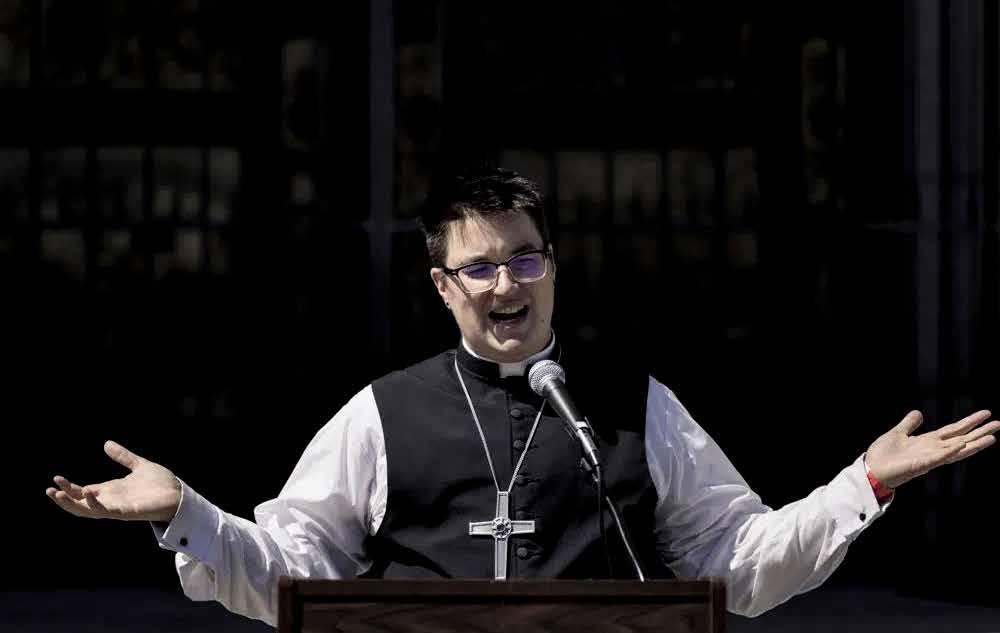
Trans ex-bishop sues
Lutheran Church for bias
Rev. Megan Rohrer, the first openly Trans bishop elected to the Evangelical Lutheran Church in America (ELCA), has filed a lawsuit against the denomination for bias against him, which he says took the form of deliberate misgendering and creating a “hostile work environment.”
Rohrer resigned as bishop of the Sierra Pacific Synod in June, after being accused of bias himself; he fired the pastor of a
majority-Latino, immigrant congregation in Stanton, California, on the Day of Our Lady Guadalupe.
“All my life, I’ve been an ally for racial justice and to people from marginalized groups,” Rohrer said of the accusations of racism against him. He also said that the ELCA retaliated when he reported to synod officials that certain churches were categorizing their employees as contracted workers, to avoid paying them a salary.
“Similarly, when Rohrer separately
revealed the Trans harassment he had been suffering since the beginning of his job,” the lawsuit says, “the Church terminated him, and falsely accused him of ‘weaponizing his own identity as a Trans person to ‘avoid being held accountable.’”
Rohrer seeks monetary damages in the suit.
He now works as a senior communications specialist at a Black nondenominational church in San Francisco.
by Mike Andrew SGN Staff Writer
Three top religious leaders — the Pope, the Archbishop of Canterbury, and the Moderator of the Church of Scotland — joined in a news conference denouncing anti-LGBTQ laws.
The leaders of the Roman Catholic, Anglican, and Presbyterian Christian denominations met with reporters aboard the Pope’s plane on the flight back to Rome from South Sudan. They were in the civil war–ravaged country on what was billed as an “ecumenical pilgrimage” to support a peace process.
Pope Francis, the head of the Anglican Communion, and top Presbyterian minister together denounced the criminalization of homosexuality on Sunday and said Gay people should be welcomed by their churches.
Reporters asked them about Pope Francis’s recent remark that “being homosexual is not a crime.”
Francis referred back to his previous comments and repeated that such laws are “unjust.” He also reiterated that parents should never throw their Gay children out of the house.
“To condemn someone like this is a sin,” he said. “Criminalizing people with homosexual tendencies is an injustice.”
“People with homosexual tendencies are children of God. God loves them. God accompanies them,” he added.
The Archbishop of Canterbury, Justin Welby, recalled that LGBTQ rights were very much on the current agenda of the Church of England, and said he would quote the Pope’s own words when the issue is discussed at the church’s upcoming General Synod.
by Daniel Lindsley SGN Staff Writer
World’s first Trans MP dies
“surrounded by nearest and dearest”
New Zealand’s Georgina Beyer, the world’s first openly Trans member of parliament, died on Monday at the age of 65. Statements about her death make no mention of the cause.
Beyer’s close friend Scotty Kennedy said in a Facebook post, “Georgie was surrounded by her nearest and dearest 24/7 over the past week, she accepted what was happening, was cracking jokes and had a twinkle in her eye, right until the final moment.”
Beyer was a consistent advocate for the rights of LGBTQ people, and throughout her political career, she contributed to the legalization of Gay marriage and the decriminalization of prostitution. She was also an actor, a drag queen, and a former sex worker.
She spoke before Parliament about prostitution reform in 2003: “I support this bill for all the prostitutes I have ever known who have died before the age of 20 because of the inhumanity and hypocrisy of a society that would not ever give them the chance to redeem whatever circumstances made them arrive in that industry.”
“I certainly think that Georgina blazed a trail that has made it much easier for others to follow,” said Prime Minister Chris Hipkins.

“I wish I had spoken as eloquently and clearly as the Pope. I entirely agree with every word he said,” Welby said.
The Rt. Rev. Iain Greenshields, the Presbyterian moderator of the Church of Scotland, who also participated in the pilgrimage and news conference, concurred with his colleagues’ remarks.
“There is nowhere in my reading of the four Gospels where I see Jesus turning anyone away,” he said. “There is nowhere in the four Gospels where I see anything other than Jesus
expressing love to whomever he meets.
“And as Christians, that is the only expression that we can possibly give to any human being, in any circumstance.”
The Roman Catholic Church holds that sex outside of marriage — defined as a church-blessed, lifelong union of a man and a woman — is sinful and that same-sex acts are “intrinsically disordered,” but Pope Francis has placed far more emphasis than his predecessors on acceptance and openness to LGBTQ Catholics.
The Anglican Church — of which the Episcopalian Church in the US is an affiliate — does not conduct same-sex marriages, but Welby recently announced that it would “bless” same-sex couples. Conservative Anglican bishops, many from Africa, said they would no longer follow Welby’s leadership as a result.
The Church of Scotland allows same-sex marriages.
Same-sex relationships are illegal in South Sudan.
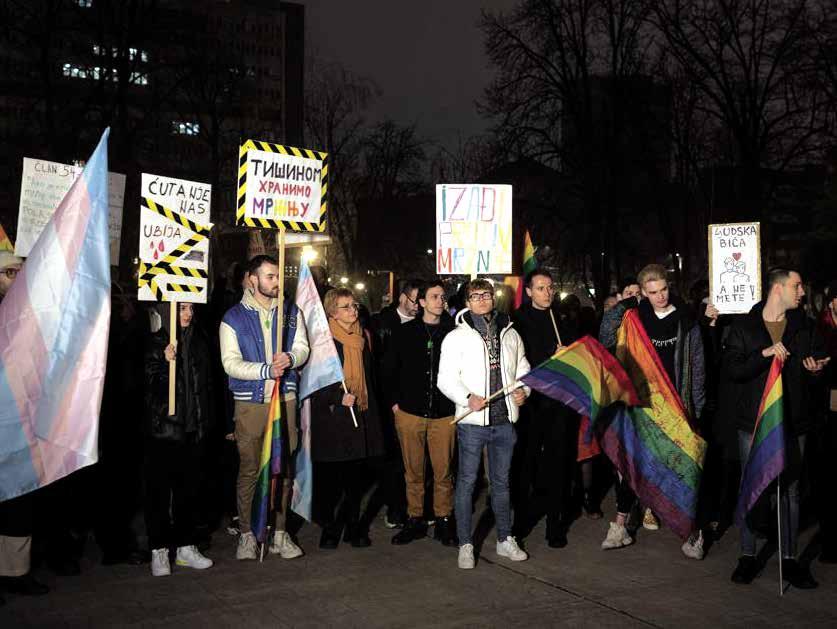
Following a string of violent acts against Queer Serbians, LGBTQ activists gathered in a park in central Belgrade to demand action from the state.
“We will no longer tolerate such attacks that have become frequent,” said activist Aleksander Savic.
Another activist, Ana Petrovic, appreciated the arrests of suspected attackers but wanted thorough investigations.
In one incident, a young man was stabbed, and activists said three other Gay men were attacked last month, with one man being struck with a bottle. Activist groups have reported 68 attacks on Gay people since August.
“We are calling on the institutions to start doing their job,” she said. “Arrests should be just a beginning.”
Riot police were present at the protest event, and no incidents were reported, but Serbia remains a conservative nation with emboldened right-wing extremists. Belgrade also banned last year’s pan-European Pride march over threats from such groups.

What's up, Lindsey Hive! In this episode, Ash waxes philosophical about the pledge of allegiance, Lindsey is recovering from COVID, and the duo discuss national and local politics. And OnlyFans. Seattle City Council District 3 candidate Andrew Ashiofu talks with Ash about his campaign policies, thoughts on policing, housing affordability, and more! https://www.andrewforseattle.com/
NEW EPISODES WEEKLY! FIND RADIO SGN WHEREVER YOU LISTEN TO PODCASTS!