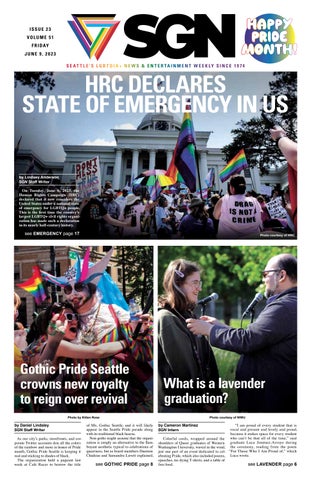
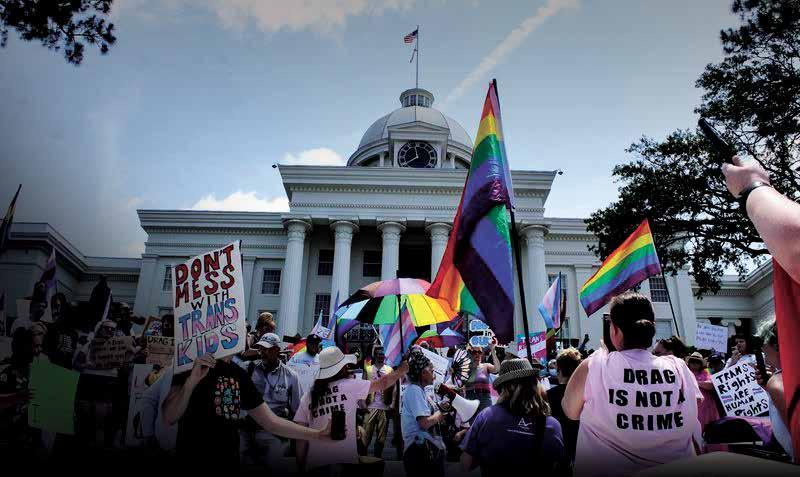
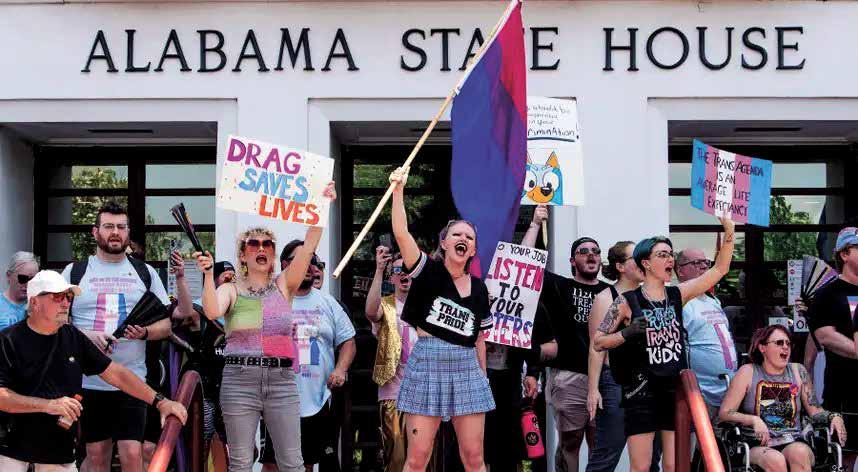
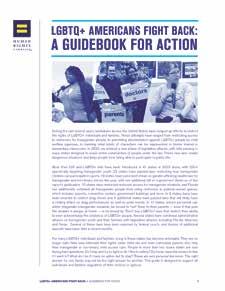
On Tuesday, June 6, 2023, the Human Rights Campaign (HRC) declared that it now considers the United States under a national state of emergency for LGBTQ+ people. This is the first time the country’s largest LGBTQ+ civil rights organization has made such a declaration in its nearly half-century history.
see EMERGENCY page 17
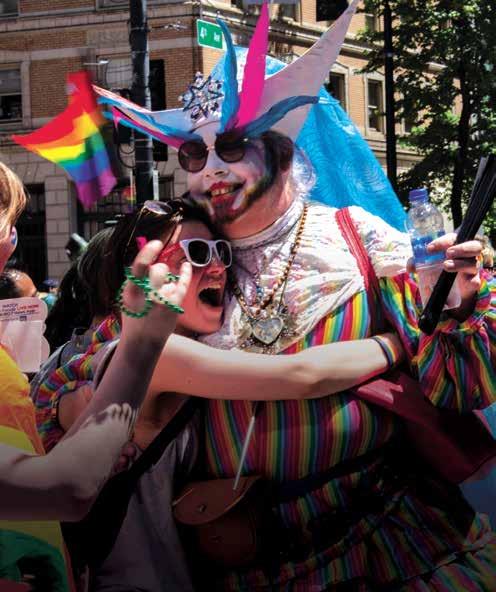
Gothic Pride Seattle crowns new royalty to reign over revival
by Daniel Lindsley SGN Staff Writer
As our city’s parks, storefronts, and corporate Twitter accounts don all the colors of the rainbow and more in honor of Pride month, Gothic Pride Seattle is keeping it real and sticking to shades of black. The organization held a pageant last week at Cafe Racer to bestow the title
of Mx. Gothic Seattle, and it will likely appear in the Seattle Pride parade along with its traditional black hearse.
Non-goths might assume that the organization is simply an alternative to the flamboyant aesthetic typical to celebrations of queerness, but as board members Daemon Chadeau and Samandra Luvett explained,
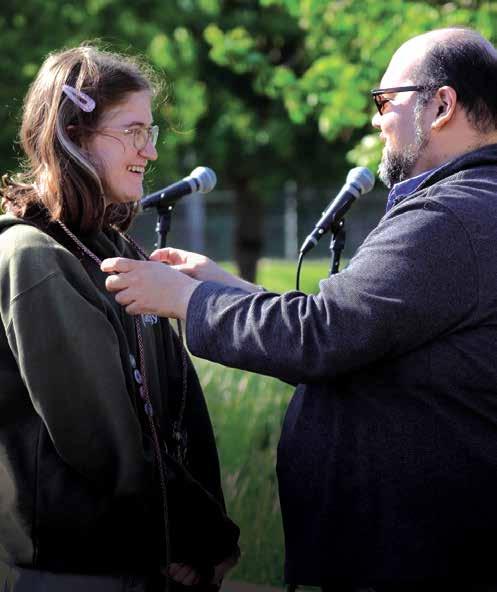
What is a lavender graduation?
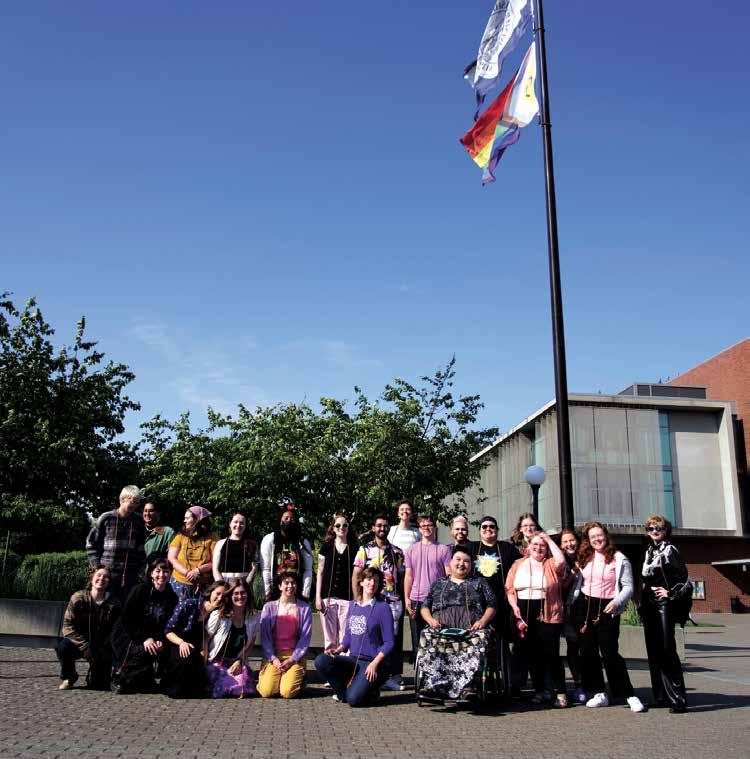
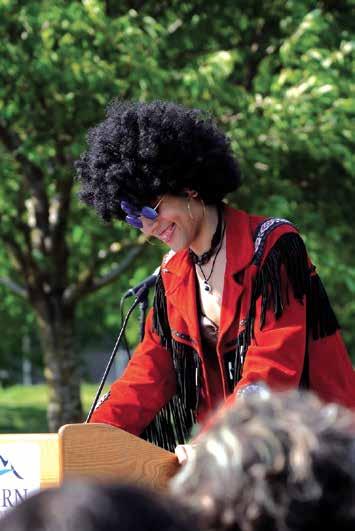
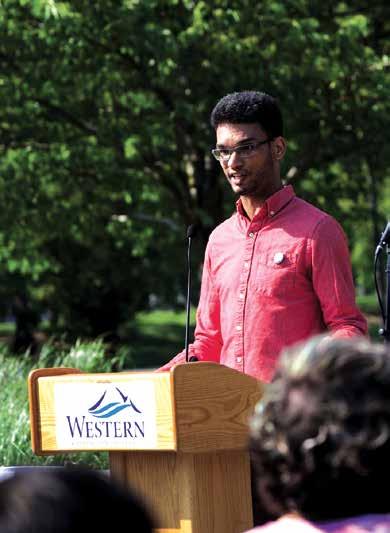
Colorful cords, wrapped around the shoulders of Queer graduates of Western Washington University, waved in the wind, just one part of an event dedicated to celebrating Pride, which also included poems, speeches, tie-dying T-shirts, and a table of free food.
“I am proud of every student that is vocal and present and lovely and proud, because it makes space for every student who can’t be that all of the time,” said graduate Luca Jiménez-Arroyo during the ceremony, reading from the poem “For Those Who I Am Proud of,” which Luca wrote.
see GOTHIC PRIDE page 8 see LAVENDER page 6
by Cameron Martinez SGN Intern
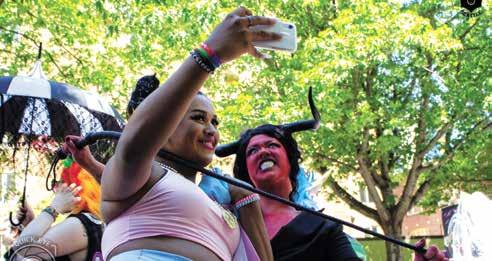
Photo by Kitten Rose
Photo courtesy of WWU
Photo courtesy of HRC
Local News
Seattle kicks off June with Pride in the Park
by Lindsey Anderson SGN Staff Writer
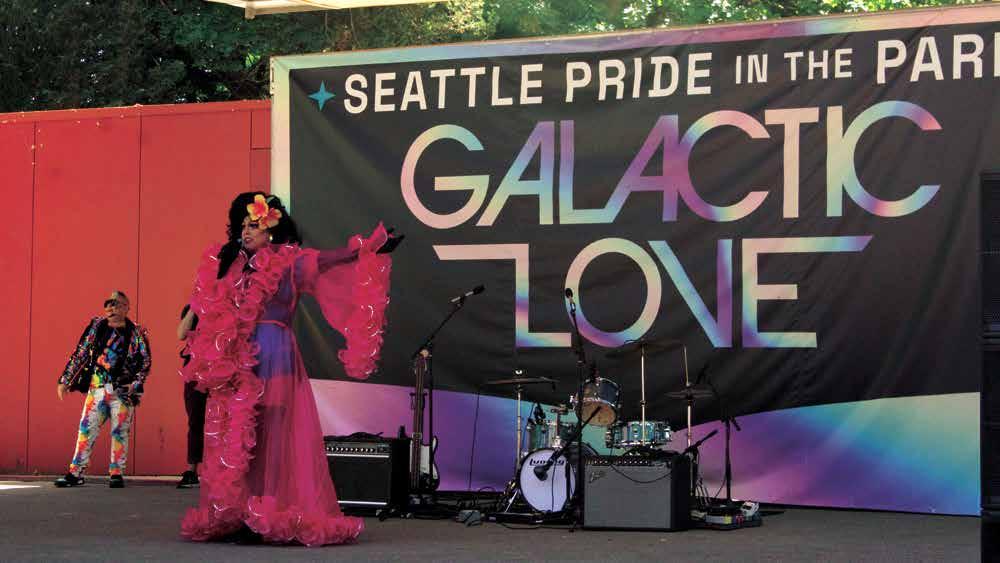
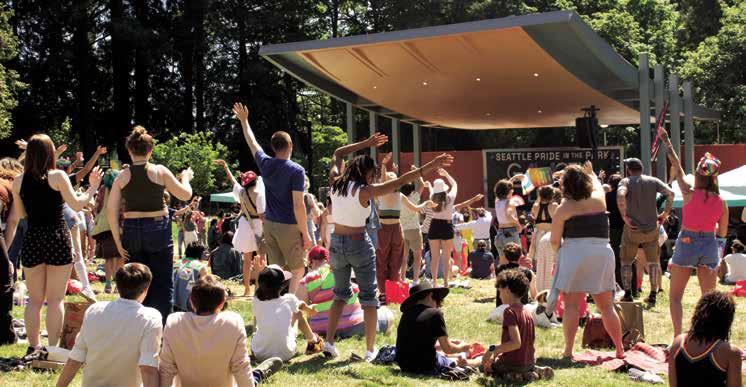
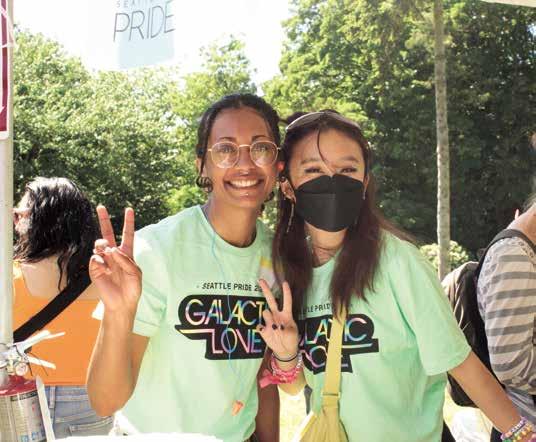
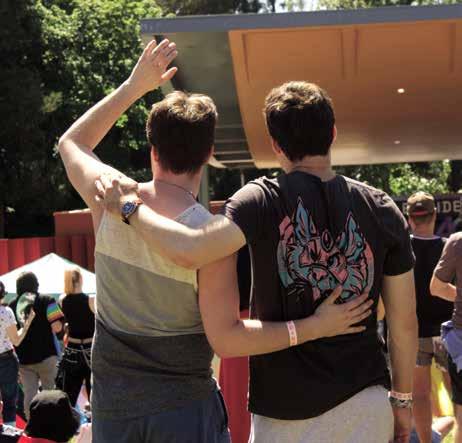
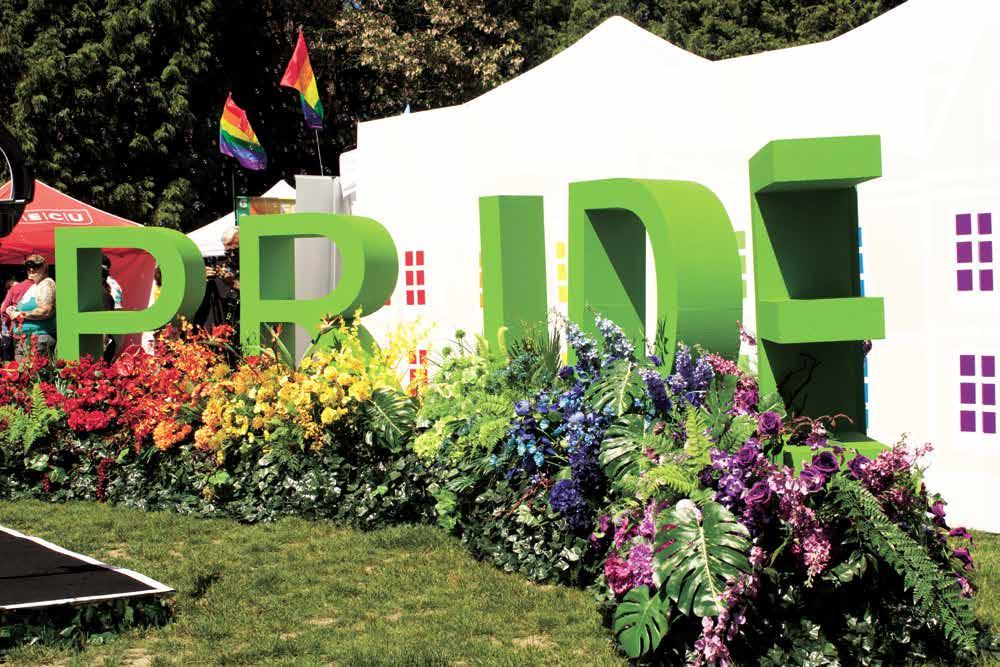
Smiles stretched from the amphitheater to the dahlia garden lawn. Over just a few hours, quiet Volunteer Park transformed into a rainbow utopia full of vendors, festival attendees, and even a few lost tourists, all enjoying the atmosphere of unity.
Pride in the Park outdid itself this year. Taking into account the feedback from patrons and vendors from years past, Seattle Pride planned the biggest such event to date, including providing more accessibility for people previously inhibited from enjoying the full scope of activities. This year, the organization added portable grass ramps for wheelchair users, which allowed them to get closer to the mainstage to watch singers, dancers, drag queens, and even some slam poetry. The stage also included ASL interpreters for every performance.
Pride in the Park also had a special section for people in need of a break from overstimulation. The Neurodivergent Nebula was far enough from the loudspeakers at the mainstage that it provided a nice, shady break for anyone looking to decompress.
Family-friendly
One of the biggest attacks on the LGBTQ+ community in 2023 has been that events, like Pride, are not “family-friendly” and can be inappropriate for children. Seattle Pride proved the haters wrong this year by dedicating spaces specifically to children and families and keeping them a distance from other areas, like the beer garden, which was explicitly for patrons 21 and over.
The Pride in the Park Launch Pad helped kids connect with young adult activists, participate in artistic projects, and learn more about the history of the LGBTQ+ community. “I’m volunteering …at the Launch Pad,” M, a young activist said. “It goes with the theme of ‘Galactic Love.’ I care about Queer youth and being able to create a space for them to do arts and crafts and be themselves.”
Family-friendly events also ran throughout the day and included an interactive drag queen story hour with Cookie Couture.
The welcoming environment made people feel safe expressing themselves. For some parents, like Jen, it was a chance to celebrate and accept their children.
“[Pride means] not being ashamed and living your best life.”
“My son just came out as Gay, and then I got a tattoo last weekend,” she shared. “[Pride means] not being ashamed and living your best life.”
Another parent, Mike, found the event by accident. “We’re in from out of town and stumbled upon it. We love it,” he said. The event was a great way to explore Seattle’s LGBTQ+ community, especially for his daughter. “We’ve just roamed around, enjoying the music. My daughter is a Lesbian, so she’s very excited. This is one of her first events, and we just set her free. She’s 12. I feel like it’s really important to love who you want.”
Supporting small businesses
Another concern Seattle Pride addressed this year was the capitalist takeover that often consumes the month of June. While
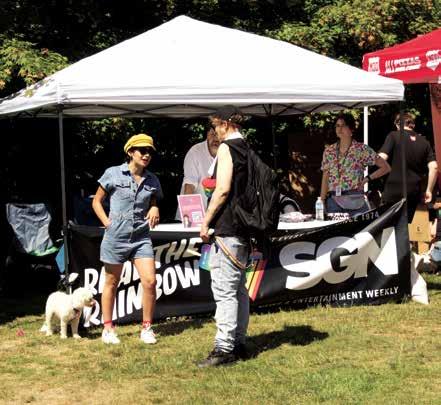
the event still had plenty of corporate sponsors, like MOD Pizza and Red Bull, there was a separate area for local makers to sell their crafts. Prioritizing Queer artists and creators brought more exposure to their small businesses.
These included 3-D-printed lizards, a pop-up LGBTQ+ bookstore, boob-shaped candles, and plenty of Trans prints.
“It’s going so wonderful, everyone’s been so sweet, the weather is amazing, and it’s been an overall wonderful event,” one vendor, who preferred not to be named, said. They came out to Pride in the Park to help their friend sell some of his pieces, an artist who goes by Sam.Doodles on Instagram.
So much food!
Forgetting to bring cash may have been the biggest mistake for anyone who ventured to
Volunteer Park on Saturday. Not only were there intricate art pieces and books and other merchandise for sale, but but there was also a smorgasbord of local food trucks. Lines for vegan hot dogs stretched nearly down the block. Waiting upwards of 30 minutes was worth it for the first bite of some delicious food truck cuisine, however.
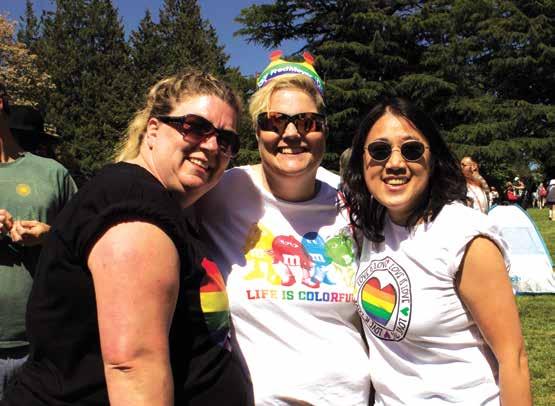
Aside from the fantastic food, amazing art, perfect performances, and wonderful weather, Pride in the Park was a space for Seattle’s Queer community to get together and celebrate what makes it special.
“It’s a fun community. It’s nice to be around other Gay people,” commented one participant who decided to come with their friends.
“We went to school together. We decided to kick off Pride together. We’re all Trans,” they added.
“It’s also really nice to be around so many other Trans people when we’re being persecuted so horribly,” their friend added.
Above all, Pride in the Park was a day of joy for Queer and Trans people in Seattle and the perfect start to Pride month. It was a day to celebrate and look at all the others willing to live boldly and out loud and find inspiration to carry on throughout the year.
Photos by Lindsey Anderson
Photos by Lindsey Anderson
Local News
LAVENDER
continued from cover
“The ones who tuck their clothes in the back of the closet. The ones who hide their texts from their families. The ones who can’t hold anyone’s hand. If you are one of these students, I am especially proud of you. Most of all, I am proud of every person in the Queer community here at Western. I am proud of you for just being you.” Western is not the only school to have an event recognizing Queer graduates. Most four-year colleges and universities in Washington have some version of the ceremony, mostly known as a “lavender graduation,” derived from the importance the color lavender has held for Queer people. A cord or stole typically accompanies the ceremony, but other schools may do something else. For example, at Seattle University, a vote is held to award graduates a special certificate along with their cord.
“I think it’s important to showcase such a big part of my life and my identity in one of the biggest events that will probably happen in my life.”
According to the Human Rights Campaign, “The Lavender Graduation Ceremony was created by Dr. Ronni Sanlo, a Jewish Lesbian who was denied the opportunity to attend the graduations of her biological children because of her sexual orientation. It was through this experience that she came to understand the pain felt by her students. Encouraged by the Dean of Students at the University of Michigan, Dr. Sanlo designed the first Lavender Graduation Ceremony in 1995… [which had] three graduates.”
Why do Queer graduates want recognition?
“[I chose to get a cord because] I think it’s important to have a visual aspect to the community,” Jiménez-Arroyo said. “Because I feel like these last couple of years, especially with the pandemic, more people are being openly Queer or vocal about it. And I think it’s important to see that Queer people also have a place in academia where they can graduate and be supported through that. So, I just wanted to be a part of a legacy.”
“[I chose to get a cord] partially because I think it might piss some of my family members off, and I think that’s funny,” said Western graduate Ash Germino. “And also, because I’ve been out as Queer since high school, either just to my friends or to everybody in my life... And I think it’s important to showcase such a big part of my life and my identity in one of the biggest events that will probably happen in my life.”
Western also has plans to help its Queer students after they graduate.
“So many students, when they graduate, sometimes lose that sense of community,” said JoeHahn, the director of LGBTQ+ Western. “And that can be extra hard for people with marginalized identities ...
“So, when everyone’s received their cords, we’ve also received their email address, so we can keep them informed about what we’re doing, and hopefully bring in [for] more alumni events and things. So they can still feel connected with
each other and other resources, such as our Career Center, which is a lifelong service, [and] they’ll be able to still be informed about any special LGBTQ events and things like that.
“If employers are searching for people who have particular experience within the LGBT community, then they will work with them on that.
“We really want to make sure our grad-
uates are celebrated and that they’re successful as they navigate the next phase in their lives.”
As time goes by, lavender graduations will become more common and known on campuses, but for the time being, they are just one of the many things colleges are doing to support Queer students.
“Being visible is important,” Germino said. “Being present is important if it’s safe to
do so. And even sometimes if it’s not safe, if you can handle it. Because being visible and being Queer [and] out in public is important in general. Either to that one little Queer kid who’s in the closet, who’s just kind of, like, standing to the side and being like, ‘I hope I can be there one day’ — because I used to be that — or to people who are older than you who are looking back at you and being like, ‘Wow, look at how much has changed.’”
Photos courtesy of WWU
Arts & Entertainment
there’s a lot more to both Gothic Pride and the goth subculture in general.
“I like to think of us as a solidarity organization between the goth community and the greater LGBTQIA+ community,” Chadeau said over Zoom. “We use advocacy, social and fundraising events, [and] education to help strengthen and empower our diverse community, just to try to see if we can make these lasting and safe connections and alliances with folks throughout the community, as well as the greater Queer community in general.”
Chadeau emceed the pageant alongside Monsignor of Monsignor’s Confessional. DJ Drew set the mood for the event, and a panel of judges decided the winners based on a series of trials: questions pulled from a hat, with contestants in evening dress; an improvised “dance mysteria” in club dress; and the contestant’s overall contributions to the Queer and goth communities.
Luvett, one of two to win the title of Mx. Gothic Seattle, said that being goth often means finding the beauty in life’s difficult moments.
“A lot of times, when you struggle and you’re at the depths, that’s usually when you break through and you find the light,” Luvett said. “You know, those are your deepest, darkest, grittiest moments.”
Being goth can also mean “finding the beauty in the grotesque, finding that beauty in the morbid, finding beauty in death as part of the cycle of life and that it should be appreciated in that same way as we see life,” Chadeau added.
That makes the goth movement sound very solemn, but “we’re not all mopy folks,” Chadeau said. There’s a good reason the
“In the history of the goth community, we have found our spaces among Queer spaces”
comedy film The Addams Family and its sequel are often cited as a “first flag.”
Chadeau credited the goth community for helping him embrace his own queerness. “It comes down to one word: acceptance,” he said.
More than a phase
By most accounts the punk rock scene had burned itself out as a singular movement by the late 1970s. But it never truly died; it lives on today in its many successors, which, like fragments of a god, crawled from its ashen corpse and became scenes in their own rights.
New wave, pop punk, hardcore punk, and
street punk are just a few, but the goth subculture owes its origins partly to post-punk, whose big names include Siouxsie and the Banshees, Bauhaus, The Cure, and Joy Division.
These bands should be familiar to most Seattleites. The Cure had a show in Climate Pledge Arena just last week, and punk-adjacent indie bands make regular visits to venues like the Southgate Roller Rink.
But what does all this have to do with Gothic Pride? Music has historically been the unifying element of many so-called “alternative” subcultures, and these are often more accepting of marginalized groups like Queer people.
“In the history of the goth community, we have found our spaces among Queer spaces,” Chadeau said. “A lot of the early goth clubs back in the day, most of them were held in Gay bars.”
And whereas many music-oriented subcultures of the same era petered out, goth has continued long enough that there are “second-generation” goths, the children of early adopters.
So in a very literal way, there’s a lineage to this ethos of acceptance, and in Seattle, the bloodline is strong.
“I think a lot of counterculture has focused itself on how they are different rather than how they are all are linked, in my opinion,” Chadeau said. “And because of that, it seems like there’s a lot of fighting between those communities, and a lot of gatekeeping.
“That’s why we as an organization try to be as fostering and welcoming as we can.”
As part of those efforts, Gothic Pride Seattle organizes monthly goth nights, dances, and swap meets in Tacoma and Seattle. Luvette said that many Seattle goth events are returning to pre-pandemic levels of attendance, and interest is rising in smaller places outside the city, like in Spokane.
Often in conjunction with the Sisters of Perpetual Indulgence, the organization fundraises for its “community crypt fund,” which is used to bolster goth-owned businesses that fall on tough times, and pay for resources, such as its open, quarterly consent education workshops with the Consent Academy.
On June 17 from noon to 6 p.m., Gothic Pride will host “Goth Fly a Kite” at Alki Beach, one of its many summer picnics. You can learn more about Gothic Pride Seattle at https://gothicprideseattle.org. Keep up with its future events on Facebook or Instagram @gothicprideseattle. To donate, visit www.patreon.com/GothicPrideSeattle.
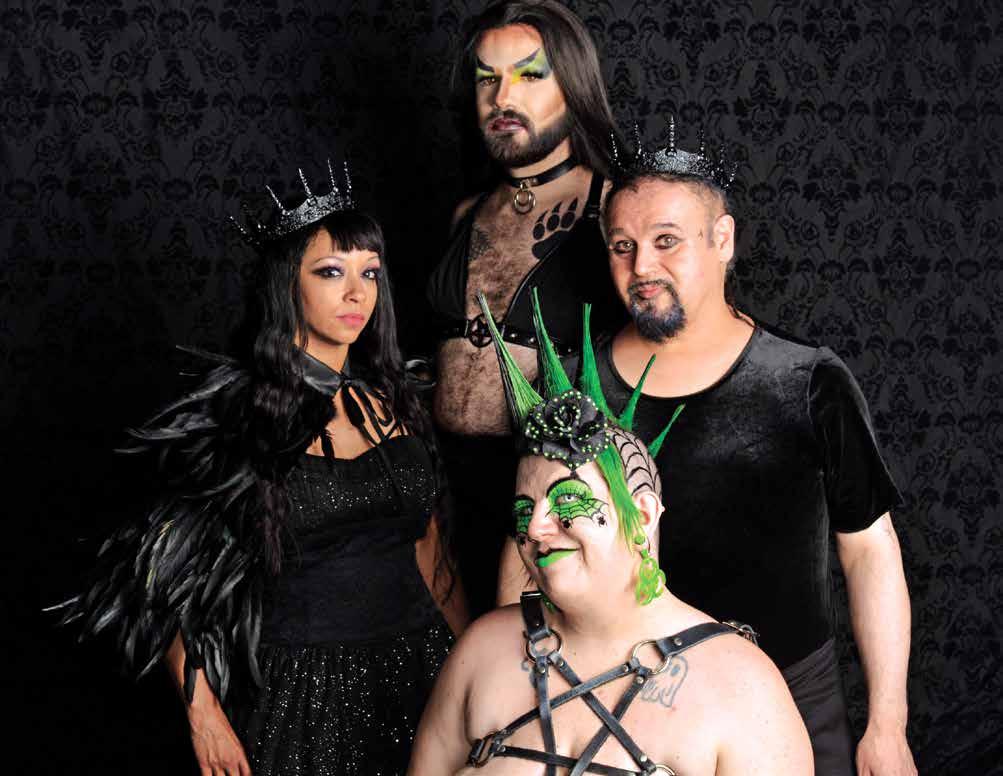
Samandra Luvett and Xavier Lopez crowned Mx. Gothic Seattle with Viscounts Jinx and Nemesis – Photo by Bloodengel Photography
PRIDE
continued from cover
Photo by Kitten Rose
Rise of the Beasts frees Transformers from its robotic shell
by Sara Michelle Fetters SGN Staff Writer
TRANSFORMERS: RISE OF THE BEASTS
Theaters
Former US Army private Noah Diaz (Anthony Ramos) has returned to Brooklyn to help his mother (Luna Lauren Velez) look after his resilient little brother Kris (Dean Scott Vazquez). After striking out on a job interview and needing cash to pay his sibling’s growing medical bills, Noah agrees to boost a one-of-a-kind Porsche that’s been strangely collecting dust for months inside a Manhattan parking garage.
But this expensive sports car is more than meets the eye. It’s not a Porsche; it’s the playful Autobot Mirage (Pete Davidson), who’s been ordered by Optimus Prime (Peter Cullen) to lay low. But things change with the discovery of a mysterious artifact at an Ellis Island archeological museum by research intern Elena Wallace (Dominique Fishback). Now Prime needs all of the Autobots to roll out, including Mirage with his unexpected passenger, Transformer and human alike embarking on an epic adventure upon which the fate of Earth precipitously hangs in the balance.
Set in 1994, Transformers: Rise of the Beasts takes place between the events of 2018’s Bumblebee and 2007’s Transformers. The first half of this latest entry in the long-running series, directed by Steven Caple Jr. (Creed II ), plays more like the former film, with an emphasis on character building as it fleshes out the growing friendship between Noah and Mirage. The next third plays like a goofy Indiana Jones meets Tomb Raider knockoff, with Elena taking center stage as she attempts to decipher an archeological puzzle in the ancient wilds of Peru.
The climactic stretch is where things most resemble the five original films directed by Michael Bay. The Autobots team up with the Maximals, led by the robotic simian Optimus Primal (Ron Perlman), to battle the Terrorcon Scourge (Peter Dinklage) and stop the planet-eating Unicron (Colman Domingo) from consuming the planet. Noah and Elena find themselves at the center of the action, while robots of
varying shapes and sizes duke it out for supremacy in the shadow of a volcanic tower straight out of The Lord of the Rings Bumblebee gave this franchise new life, adding an underlying layer of humanity and heart that all but the first Bay film were sorely lacking, and it looks like Caple learned the right lessons from that success. He gets rid of most of the adolescent immaturity of the initial series and instead accentuates many of the same traditional character beats from that 2018 prequel. Noah and Elena are well-rounded, and while their motivations frequently drift into half-baked melodrama, the emotions driving each human to assist the Autobots and Maximals in their fight are genuine.
The plot is undeniably dumb, but it’s at least not so purposefully convoluted that the screenplay ends up inadvertently amplifying just how unrelentingly inane the whole thing is. This was a problem in
many of the original Transformers pictures, especially the two obnoxious Mark Wahlberg entries, Transformers: Age of Extinction and Transformers: The Last Knight Heck, Caple and company even include a musical callback to 1986’s animated The Transformers: The Movie almost as if they want to hammer home how cartoonish this is, knowing that the inherent sweetness at the center of these bombastic events will mitigate some of the silliness.
Caple is a little less successful in the action department, at least in comparison to some of the central set pieces in Bay’s otherwise bombastically bludgeoning endeavors. But as fluid and surprisingly unchaotic as the final fight between the Autobots, Maximals, and Terrorcon may be, it still doesn’t come close to equaling the eyepopping spectacle of the Quatar sequence in the original Transformers or the Chicago climax of Transformers: Dark of the Moon
Ramos and Fishback do a fine job making the human characters worth caring about, while Davidson, Perlman, and Michelle Yeoh (as the godly avian Maximal Airazor) are strong additions to the Transformers vocal universe. If this film does kick off a new trilogy, having Noah and Elena as the human headliners would be perfectly fine with me.
Will it, though? That’s hard to say. Transformers: Rise of the Beasts is arguably the best film with the word “Transformers” in the title and frees the series from its robotic shell, but that’s not saying a heck of a lot. Much like Bay’s original that kicked this lunacy off almost two decades ago, there is plenty of fun to be had, but it’s fairly ephemeral and not particularly long-lasting. That was enough for audiences back in 2007. Whether it still is is a question only time (and ticket sales) can answer.
Transformers: Rise of the Beasts – Photo courtesy of Paramount Pictures
Dominique Fishback and Anthony Ramos in Transformers: Rise of the Beasts – Photo courtesy of Paramount Pictures
Monsters hide in the darkness of the visually striking Boogeyman
by Sara Michelle Fetters SGN Staff Writer
THE BOOGEYMAN
Theaters
Not long after the death of his wife, psychiatrist Will Harper (Chris Messina) sits face-to-face with a potential new patient. He didn’t have an appointment, but his depressed, grief-stricken demeanor forces Will’s hand. But he immediately secondguesses his decision to hear the stranger’s story. Turns out this man is Lester Billings (David Dastmalchian), suspected of murdering two of his own children after the third — the youngest — died from SIDS earlier in the year.
For those acquainted with Stephen King’s unsettling short story on which the seductively sinister horror yarn The Boogeyman from director Rob Savage (Host, Dashcam)
is based, that brief synopsis should sound familiar. Everything that happens after this moment, however? That’s mostly the work of A Quiet Place and Haunt scribes Scott Beck and Bryan Woods, along with Black Swan writer Mark Heyman. They’ve constructed an unoriginal, if still insidiously clever, supernatural mood piece about a broken family dealing with forces beyond anything they could have imagined, a beast unwittingly allowed to enter their home that intends to feast on the flesh, blood, and souls of Will’s two daughters.
The talented Sophie Thatcher portrays the eldest of the siblings, high school senior Sadie, while a scene-stealing Vivien Lyra Blair plays her afraid-of-the-dark younger sister, Sawyer. Both are excellent, and even when the script wanders into conventional territory — 2016’s Lights Out and 2003’s Darkness Falls trod a similar path — the actors still more than rise to the occasion,
playing off one another wonderfully. The building terror each feels is both similar and unique, which is exactly as it should be considering their age difference.
And what is going on, one may ask? Turns out Lester did not murder his children. Instead, he and his wife Rita (Marin Ireland), in their grief, inadvertently let loose a beast born from trauma that resides in the shadows and feeds on the fear of children. The creature passes to Will’s family, and while his adult sensibilities do not allow him to believe Sawyer when she proclaims there’s a literal monster lurking in her closet, Sadie takes it upon herself to learn the truth.
Savage cut his teeth on low-tech indie efforts, and it’s great to see that the move to a bigger budget hasn’t dulled his renegade sensibilities. His aesthetic is to try and see events through the eyes of the viewer. This leads to long first-person takes in which
either Sadie or Sawyer becomes the audience’s avatar. The sinister events transpiring inside the fluttering outlines of flickering shadows and impenetrable oceans of blackness take on new weight and added meaning, and I could feel for myself the pulsating terror slowly growing inside each sister’s skin.
It helps that director of photography Eli Born (Hellraiser) shoots the heck out of the film, and I loved that his eerie images showcased actual depth. The frame bends to and fro with graceful ferocity, while his use of light from unorthodox or unexpected places is suitably otherworldly. There’s no way any of this works as well as it does without Born’s efforts, the kinetic fluidity of his visuals only augmenting the disquieting spell Savage is attempting to cast.
But the first half of the film is significantly more enthralling than the second, and as strong as the climax may be, there is also something slightly rushed and underwhelming about the resolution. Other than one singularly unsettling surprise when the being is about to fully consume its prey, the actual creature reveal is oddly disappointing. Also, the tension that exists during so much of the film strangely vanishes right when it’s needed the most, and that’s a highly frustrating turn of events.
On the flip side, the actual final scene is a corker, beautifully summing up many of the themes that have been explored while also delivering the final shiver down the spine that thrillers like this practically require if they’re going to send the audience into the lobby satisfied. The acting is also universally excellent, not just Thatcher and Blair. Dastmalchian kills it during his pivotal opening scene, while Messina’s internalized sorrow is undeniably palpable. Ireland is also outstanding, her quietly understated resilience concealing a ragefueled vengeance that hits like a sledgehammer once it’s been revealed.
I can’t say I did not want more from The Boogeyman, because I obviously did. But with performances and visuals this dynamic, and with a beauty of an opening act, there’s much to enjoy about Savage’s first foray into major Hollywood studio–financed thrills and chills. There’s good, often scary stuff hiding in the film’s darkness, all of which helps make this summertime horror offering more treat than trick.
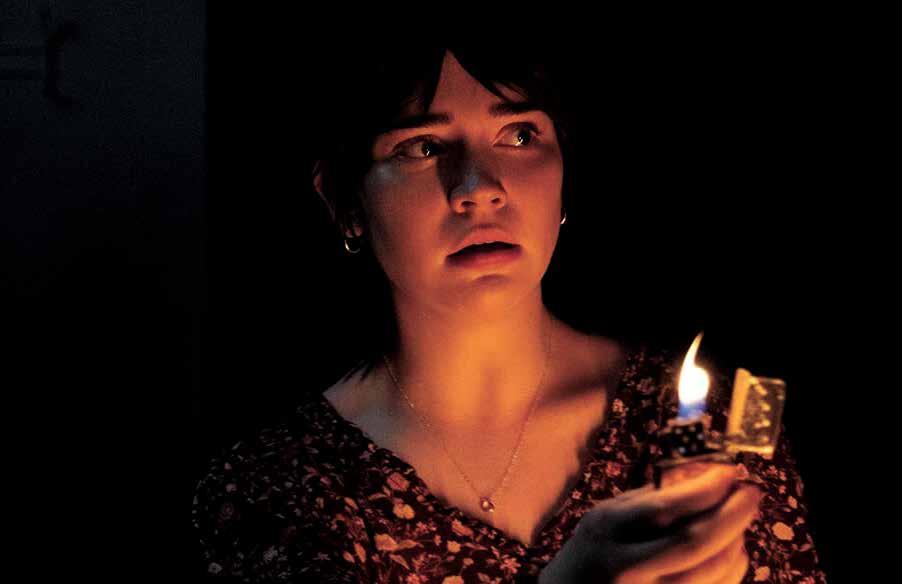
Sophie Thatcher and Vivien Lyra Blair in The Boogeyman – Photo by 20th Century Studios
Sophie Thatcher in The Boogeyman – Photo by 20th Century Studios
Books
Corey Allen writes about a life in service
by Lindsey Anderson SGN Staff Writer
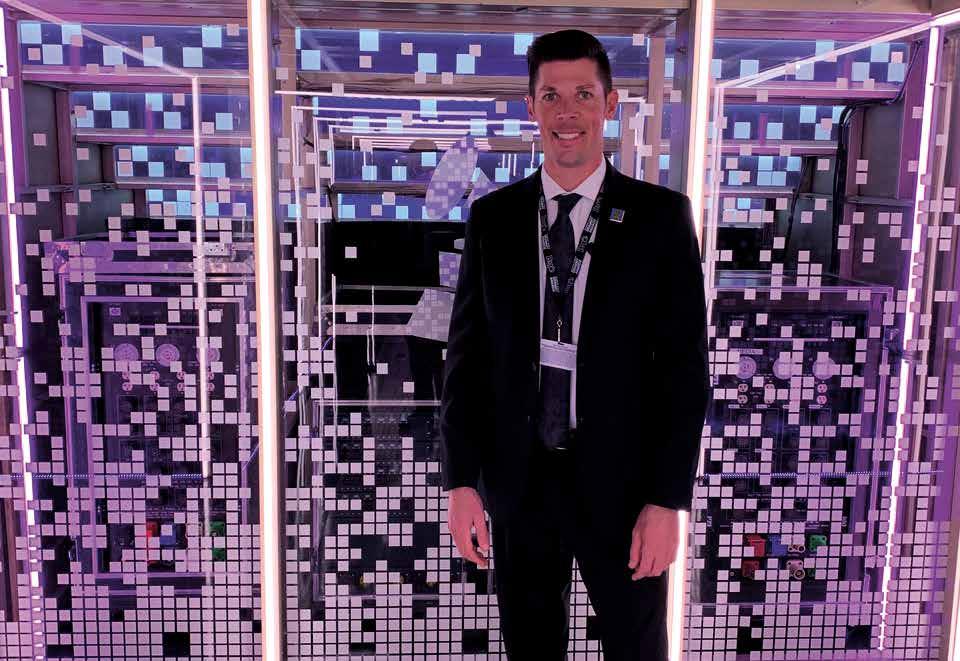
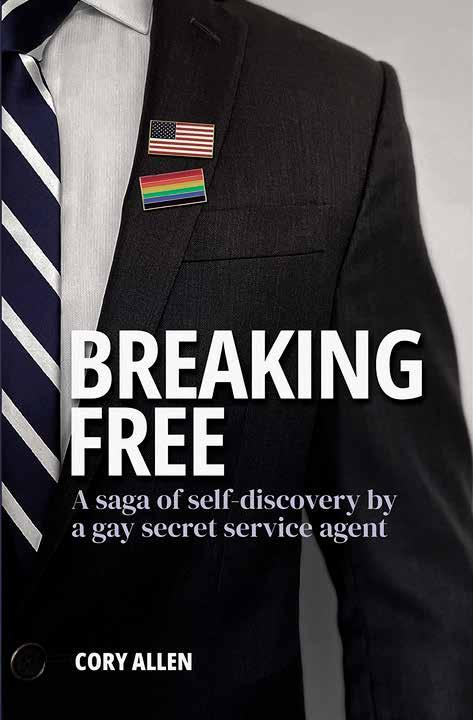
After spending ten years in the Secret Service, the last thing Cory Allen thought he’d do was write a book. “I had no experience [writing],” he recalled.
Although Allen lacked that kind of professional history, he was well known for crafting thoughtful and poignant Facebook posts. Then, following a low point in his personal life, he explored reflective journaling more seriously.
“I wrote a Facebook post about what I was doing and what I was suffering through, despite all outward appearances,” he said. “I was living this amazing, lavish life, traveling the world surrounded by A-list people and worldly, powerful individuals. But on the inside, I was hurting a lot. I put it all out there. I received amazing feedback and support from friends.”
Around the same time, he was also working with one of the most powerful women in the world and seeing just how impactful honest storytelling could be. “Coming off the heels of Michelle Obama’s Becoming book tour, I was with her traveling the world. I saw the power of what she was doing. People connecting and relating,” he remembered.
“I am not comparing myself to Michelle Obama in any way, shape, or form, but to see how cathartic it was for her, and to hear the stories and be present while all of that was going on was pretty impactful.”
Following that, Allen settled down in California. It was a lonely period but rich in reflective opportunities. “I lived in Fresno, California, for about six months,” he said. “I didn’t know anybody. It was just me and my dog. I thought this was a great opportunity to sit down and get it out of my mind and onto paper. It just began in my phone as a note, things I would like to explore, whether it was divorce, relationships, or moving. [Writing] just became the vehicle for that.”
Reflection
Allen realized that he had lost himself in his career. “I was married to my job, my career, and the beast that is Washington DC,” he said. “I had been on the go for 10–15 years, a very critical point in my life, and I had not allowed myself time to stop and think and process everything that had occurred in that long period.”
Writing gave him the time and space to reflect on his decade of service and how his dedication to his career had contributed to his identity, his divorce, and his perception of the world. Though he had hit a breaking point before starting his memoir, he was finally able to begin the process of healing through the written word.
“It was cathartic for me to write. It’s healing,” he said. “When I set out to do it, that was my original intent. My ten years in the Secret Service went by in a blur, and I was like, ‘How do I try to capture some of this but also process stuff I hadn’t done?’ So, I wrote it for myself first.”
What started as a reflection on his career quickly evolved into an examination of his whole life, from childhood trauma to young adult struggles with his sexuality.
“That exposed a lot of vulnerabilities in me,” he recalled. “There was a lot of introspection, but that was the only way I knew how to handle it and be true without sugarcoating it. It was just about trying to accept the mistakes I’ve made and learn from them and hoping that somebody else could relate and take some things from that.”
Reflecting on his life and career also led Allen to question how much his sexuality had influenced his choices in life. “I grew up in a conservative area, closeted and ashamed. I was fearful of discrimination throughout my career. [I had] to examine whether I went into law enforcement, military, and policing because I was Queer and trying to present this macho, masculine surface. That’s not uncommon,” he said.
Photo courtesy of Corey Allen
A career risk
Allen had reservations about releasing his memoir, as it was an in-depth look at his sexuality, career, and past mistakes. One of his biggest fears was that the book could negatively impact his career.
“I was fearful of my employer finding out, headquarters finding out, and then there being repercussions that this federal agent — now supervisor — wrote this and exposed all these details of [his] relationships and sexual encounters,” he admitted. “It’s still very prevalent, but I’m a work in progress. I will push through and accept that it’s not a shame. There’s nothing wrong with that. I’m still a work in progress.”
Allen doesn’t sugarcoat anything in his book, including his sexual history. “I candidly talked about being in an open marriage, hook-ups, and Gay cruises. So much of that was unknown to me, growing up in a conservative, Republican area,” he said.
While writing something so vulnerable was difficult, he did so in hopes that his stories might help others like him. “I didn’t have access to this stuff that would have helped me develop quicker and be my true self. So, it was great to put it all out there and for people to realize it and relate.”
Next steps
Since finishing his book, life changes have happened for Allen, including finding a therapist. Now he’s engaged, working on new habits, and thinking more seriously about the future. One of the plans he hopes his future entails is writing a second book.
“There will be a follow-on, because I stopped at the pandemic. There’s been so much more that Johnny, my fiancé, and I are going through now,” he said. “We’re in surrogacy, and there is a lack of material out there regarding surrogacy journeys and what that’s really like and providing that same candid, honest approach.”
Once he finishes the surrogacy process, he hopes to write another memoir about his journey to parenthood and the unique struggles
LGBTQ+ couples face when starting “nontraditional” families. He hopes his work helps others in the community feel connected and understand that vulnerability makes life rich. “You can be your true self,” he said. “You can be authentic and
succeed and not be ashamed. That’s one of the biggest things we have to overcome, as the LGBTQ+ community, that shame, because we don’t fit the mold of societal expectations on us. You can be yourself. You can love yourself, and that’s an everyday thing.”
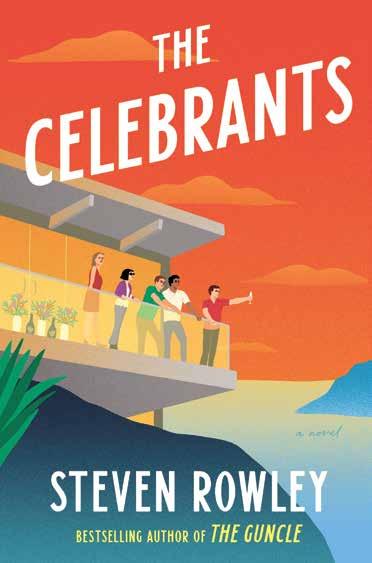
Jordan Vargas felt like a time-traveler. It had been almost three decades since he, Naomi, Alec, Marielle, Craig, and Jordy were thrown together by a student-transfer algorithm, which turned out to be a lucky accident. More than 25 years since they’d lived together in the same dorm. Over half a lifetime ago since Marielle found Alec on the dorm’s common-room floor, dead of an overdose that marked the lives of his best friends. Time flies. So much had happened since then.
Just before graduation, Jordy and Jordan had realized their attraction to one another. After trying a long-distance relationship, they came out to their friends, moved in together, got married, and “the Jordans” were now business partners.
All her life, Naomi had struggled with her straight-laced, unaffectionate parents and their expectations. As the only heir to their business and a high-level national record executive, she never wanted for money. Love? Well, that was another thing.
Never one to buck the rules or ignore instructions, nerdy Craig’s upright adherence to detail got him the nickname “Nana,” a lot of teasing, and a months-long stint in prison for fraud.
And sweet Marielle was a caretaker type who gave and gave of herself until there was nothing left and she needed her friends.
Sooner or later, they all did: years ago, stunned by Alec’s death, the Jordans, Marielle, Naomi, and Craig made a pact that each could ask for a “funeral” for themselves, just once, to reaffirm their lives. Naomi had hers. Marielle had hers. Craig had his.
And now it was Jordan’s turn, before it was too late...
It seems unfair, in a way, that your life isn’t celebrated until it’s over. What would people say about you when you’re gone — and why don’t we say those things now? The Celebrants tips that question on its side and leaves an answer hanging. Though it sometimes lags a bit, and
and
and
though the plot can occasionally dip into silliness, this book is a good mix: a little
The Big Chill, a little St. Elmo’s Fire, the kind of buddy book you want for the summer. The timeline is perfectly crafted, and author Steven Rowley packs a lot of characters in it while still leaving the tale uncomplicated, which makes it one of those easy stopping-and-starting tomes you know you
often need on a busy vacation. Still, bookmarks are optional; reading it all at once on a happy staycation isn’t inadvisable. Try to predict the ending of this book and you’ll be somewhat wrong. Instead, just relax, let yourself imagine what-if-when, and enjoy The Celebrants. You’ll say nice things about it.
For
read an honest depiction of sexuality, masculinity,
vulnerability, Breaking Free is an excellent pick. Allen’s memoir is raw, poignant,
to the point — a perfect read for summer.
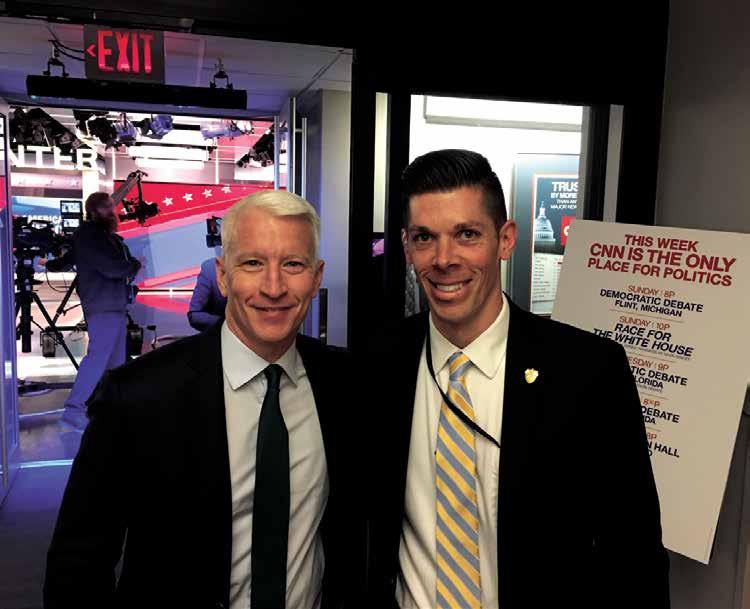
The author with Anderson Cooper – Photo courtesy of Corey Allen
Image courtesy of Putnam
Steven Rowley – Photo by Byron Lane
Op-Ed
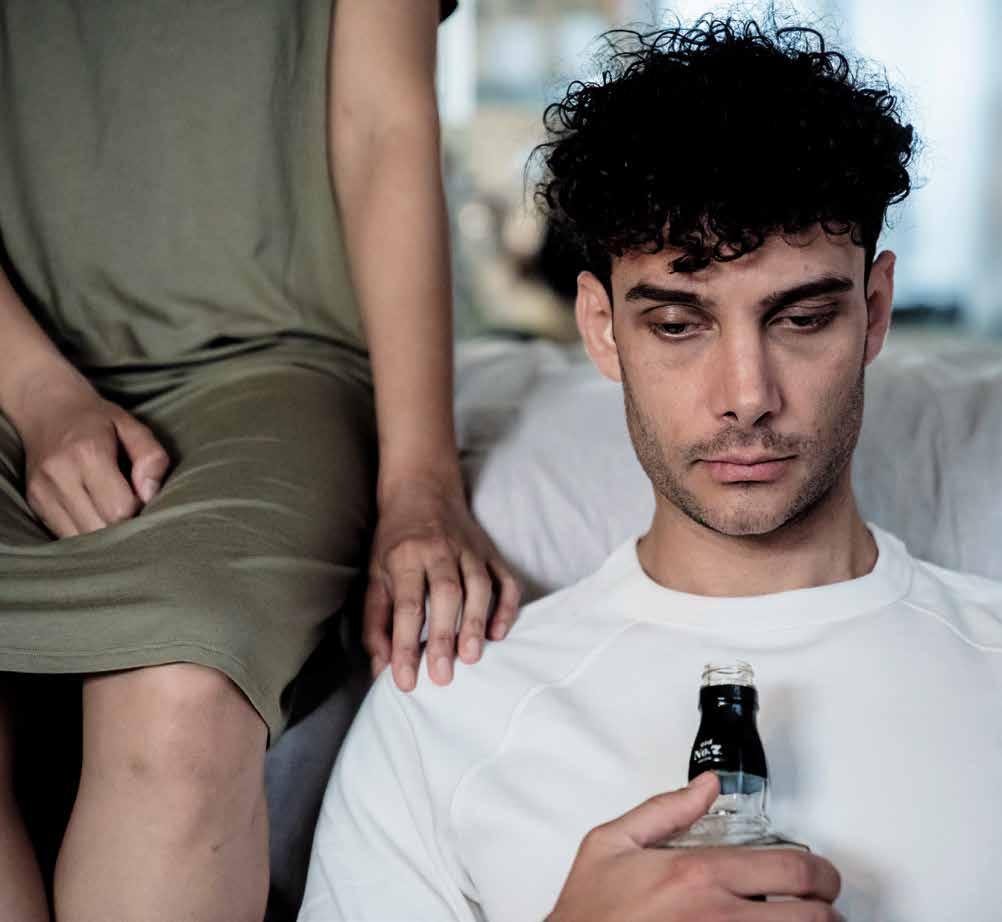
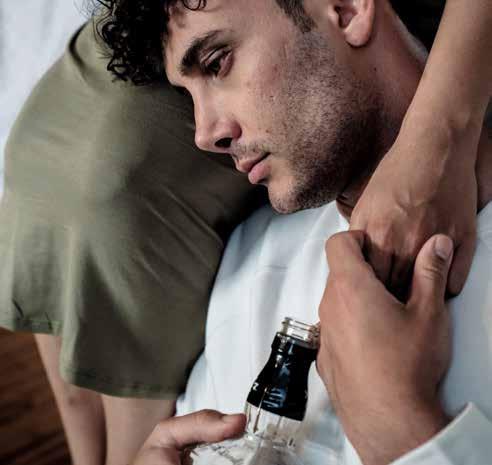
How to convince an addict to get help
Photos by Timur Weber / Pexels
by Stan Popovich Special to the SGN
There are many reasons why people who use drugs and alcohol do not get the help they need to overcome their addictions and other issues. Some family members who see the people they love struggle may also have a difficult time in getting them assistance.
As a result, here are suggestions on how to convince a person struggling with drugs and alcohol to get help.
1. Conduct a family intervention: The most popular way to get someone the help they need is when family members and an interventionist get together with the person to tell them how much they love them and that they need to get some assistance. Hopefully the person who’s having a hard time is convinced to get the treatment they need.
2. Get an addiction expert to talk to the person: Another way to convince the person who is struggling to get help is to get an expert on drugs and alcohol to have a oneon-one talk with them. This person should explain what will happen if they do nothing. This may help convince them get some guidance.
3. Use the services of a former addict: Get somebody who used to battle addiction
to talk to your friend who needs assistance. A person who has used drugs or alcohol could use their past experiences to try to reason with the addict and use their insights to convince them to seek treatment.
4. Find out why the person won’t get help: It might take a few tries, but ask your friend to list the main reasons why they will not get assistance. Fear and frustration are huge factors for not getting help.
5. Address these reasons: Once you get the reasons why your friend won’t go to rehab, the next step is to find ways to address those fears and concerns, which may convince them to take some action that will get their life back on track.
6. Talk to the person instead of talking at them: Nobody wants to be lectured or yelled at. The person who is suffering is scared, and they need help overcoming their fears and resistance to getting help. Treat others the way you would want to be treated if the roles were reversed.
Many people think that they can overcome their mental health problems on their own. This is a mistake. Fear and anxiety can be difficult to manage by oneself, and more than likely, your friend will need some counseling. Hopefully they will admit they have a problem and seek treatment to start the recovery process.
National News
Official guidelines
Alongside the declaration, the HRC also released a free online guidebook that includes emergency and health resources, summaries of state laws, and resources for LGBTQ+ travelers and those living in “hostile states,” including those looking to relocate. The guidebook also provides information on how to get involved with advocacy, file civil rights–violation complaints, and talk with anti-LGBTQ+ family and friends.
“LGBTQ+ Americans are living in a state of emergency. The multiplying threats facing millions in our community are not just perceived — they are real, tangible, and dangerous,” HRC President Kelly Robinson said in an additional statement.
“In many cases, they are resulting in violence against LGBTQ+ people, forcing families to uproot their lives and flee their homes in search of safer states, and triggering a tidal wave of increased homophobia and transphobia that puts the safety of each and every one of us at risk.”
Over 1,000 anti-LGBTQ+ bills in state legislatures
In its guidebook, the organization breaks down the reasoning behind its declaration. One of the main reasons backing the national emergency is the increase in proposed and passed legislation in 2023.
Since January, 41 states have seen 525 anti-LGBTQ+ bills introduced, with 220 of them specifically targeting Transgender people. As of June 5, more than 76 bills have passed into law.
The HRC found that all 525 bills fit into ten anti-LGBTQ+ categories: anti-Trans bathroom laws, forced outing, Religious Freedom Restoration Acts, anti-drag laws, Don’t Say Gay, anti-Trans sports bans, gender-affirming care bans, LGBTQ+ erasure, prohibition of pronoun use, and other discriminatory bills.
The most commonly passed laws are those that affect Transgender youth. The HRC found that gender-affirming care bans have passed in 20 states. This legislation impacts 30.9% of all Transgender youth (aged 13–17).
Laws against Transgender athletes’ participation in sports that align with their gender were passed in 21 states. An estimated 90,100 Transgender youth live in areas where laws dictate which sports teams they can play on.
Online
The Human Rights Campaign warns against travel to Missouri, Florida, and Texas. It also notes that as lawmakers introduce anti-LGBTQ+ bills, there is a persistent rise in mental health issues in Queer and Trans people, especially children.
Reaching beyond youth
The HRC also noted a trend in anti-Trans laws slowly expanding beyond children. Florida’s Don’t Say Gay law, which first prohibited conversations around gender and sexuality in K-3 classrooms, now reaches up to 12th grade. The state has also passed new bans blocking critical race and gender studies courses at collegiate levels. Anti-Trans laws about athletics are starting to also creep up to the college level.
New laws regarding healthcare coverage are now blocking Trans adults from receiving gender-affirming care in some states as well. “In some states, care has been banned not only for youth but adults as well, especially through bans on public funds going to provide this best practice healthcare,” the HRC statement said.
Minority views
The HRC emphasized in its statement that despite the record-breaking number of antiLGBTQ+ laws in the United States, most Americans favor antidiscriminatory protections for the Queer and Trans community.
“These laws are fueled by an antiLGBTQ+ Republican establishment — and coordinated, well-funded extremist groups
“LGBTQ+ Americans are living in a state of emergency. The multiplying threats facing millions in our community are not just perceived — they are real, tangible, and dangerous.”
like the Alliance Defending Freedom, the Heritage Foundation, and the Family Policy Alliance — insistent on trying to control our families and lives,” Robinson said.
The organization found that it’s not a coincidence that the language in so many of the anti-LGBTQ+ bills introduced to state legislators sounds eerily similar. “Many individual bills rely on copy-and-pasted language from model legislation proposed by a national coalition of groups,” Robinson explained.
Five key lobbyist groups have been essential in passing anti-LGBTQ+ laws. The American College of Pediatricians, the American Principles Project, Gays Against Groomers, the Independent Women’s Forum, and Moms for Liberty have all repeatedly traveled from state to state to sign petitions and speak in favor of these laws.
“These organizations use junk science and fear-mongering attacks against LGBTQ+ to peddle their policies and try to justify discrimination in the name of religious belief,” Robinson said.
Legislators have been using the loud voices of these minority opinions to repeatedly echo the same complaints, creating the mirage that their concerns represent the majority of the American people.
Antidemocratic means
Due to gerrymandering, some districts have become more conservative. Therefore, the most successful candidates are those who can appeal to the more extreme Republicans in their district. “Because legislative districts have been drawn so unfairly, too many state legislators are not held accountable to their entire district in a general election. Instead, the most competitive elections these legislators face is in their primary election,” Robinson continued.
Conservative legislators have also passed anti-Trans laws by successfully blocking and censoring colleagues who attempt to speak out against them. The HRC cites the removal
of state Rep Zoey Zephyr in Montana and Rep. Maurie Turner in Oklahoma, and the expulsion of Tennessee state Reps. Justin Jones and Justin Pearson as examples of this.
It also notes the removal of peaceful demonstrators in Texas, Oklahoma, Nebraska, and Montana as an undemocratic form of repression.
Pulling strategies from the past
Anti-LGBTQ+ advocates have started leaning into a classic strategy reminiscent of the anti-Gay “Save Our Children” campaign made famous by Anita Bryant in the 1970s. The modern method sexualizes sexualities.
“They have so sexualized LGBTQ+ identity that they argue that even acknowledging that LGBTQ+ people exist — much less showing any affirmation of LGBTQ+ identity — is inherently inappropriate and corrupting for children,” Robinson said.
Conservatives are also doubling down on “religious freedom” as a fundamental right and excuse for establishments and professionals to discriminate against LGBTQ+ people. Politicians use religious freedom to defend laws in states like Florida, which now give doctors and insurance agencies the right to deny care to Transgender patients if they do not morally agree with their “lifestyles.”
The HRC notes that though religious freedom is used to discriminate against Queer and Trans people, it is not legal to discriminate against divorced or pregnant people, or those with opposing religious beliefs.
“There is an imminent threat to the health and safety of millions of LGBTQ+ people and families, who are living every day in uncertainty and fear,” Robinson concluded.
“Our number one priority will always be ensuring that LGBTQ+ people are safe and have the tools they need to defend and protect themselves against acts of hostility, discrimination, and — in the most extreme cases — violence.”
guidebook – Image courtesy of HRC
Photo courtesy of HRC
National/International News
National news highlights
by Daniel Lindsley SGN Staff Writer
Brawls in Glendale over schools’ Pride month
Fights broke out between protestors on Tuesday this week, over whether the Glendale (California) Unified School District should officially recognize June as Pride Month or not.
Police officers separated the two opposing protest groups, and said they arrested two participants on suspicion of obstructing officers and one person for unlawful use of pepper spray. There were no injuries reported.
Meanwhile, in the district headquarters’ meeting room, Pride supporters argued that Queer youth needed to feel safe and included. Pride opponents argued from a parental authority angle, saying that schools recognizing Pride Month means pushing unnecessary or harmful views on gender.
The district stated that “intentional and harmful disinformation has been circulating about what is being taught.”
Earlier that day, the board of the Los Angeles Unified School District voted unanimously to both recognize Pride Month and encourage other school districts to include lessons on the LGBTQ+ community as part of a “commitment to creating a safe, welcoming, and inclusive learning environment for all LGBTQ+ students, families, and staff members.”
Biden initiatives to counter threats to community
On Thursday this week, as part of Pride Month celebrations, President Joe Biden
announced new LGBTQ+ initiatives that would provide resources to counter mental illness, homelessness, book bans, and other threats to the community.
Biden said that the Departments of Homeland Security, Justice, and Health and Human Services would all be involved, partnering with LGBTQ+ community organizations. Book bans will be addressed by the Department of Educa-
International news highlights
by A.V. Eichenbaum SGN Editor-in-Chief
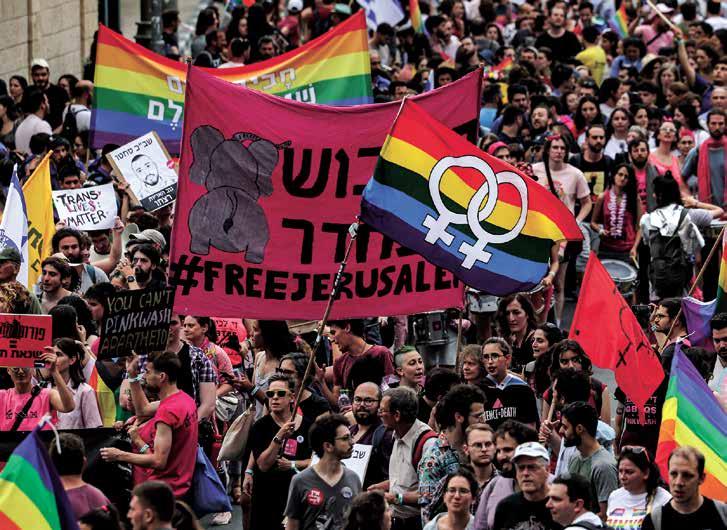
Thousands march in Jerusalem Pride parade
Thousands of people marched in Jerusalem’s Pride parade on Thursday, June 1. The march was the conservative city’s first under Israel’s current nationalist, farright government. Prime Minister Netanyahu was openly jeered during the march, according to the Associated Press, though he has promised to protect LGBT+ rights.
Netanyahu’s government contains members of ultra-Orthodox, theocratic parties that openly oppose homosexuality, like the nation’s minister of finance, Bezalel Smotrich, who was quoted in January as saying, “I might be a far-right person, a homophobe, racist, fascist, but my word is my bond.”
Many in the parade also protested Netanyahu’s judicial overhaul plan, and opposition leader Yair Lapid made a speech during the march.
“There isn’t one struggle in Israel for democracy, and another one for LGBTQ+ rights,” said Lapid. “It’s the same struggle against the same enemies in the name of the same values.”
Japanese district court upholds ban on same-sex marriage
The Fukuoka District Court upheld Japan’s ban on same-sex unions on June 8, only one week after the Nagoya District Court abolished the ban and declared it unconstitutional.
The latest decision is one of five rulings on same-sex unions in Japan over the past two years. The only court so far to rule that the ban was in line with Japan’s constitution was the Osaka District Court in June of 2022.
tion’s civil rights office, which will appoint a new coordinator for that purpose.
Karine Jean-Pierre said that both Biden and Vice President Kamala Harris are strong supporters of the LGBTQ+ community, which should know that Biden “has their back” and “will continue to fight for them.”
Jean-Pierre is the first openly Gay White House press secretary.
The Human Rights Campaign had hoped for a swift government response after declaring a state of emergency for LGBTQ+ people in the United States, said campaign president Kelley Robinson. “This is a full-out crisis for our communities that demands a concerted response,” she said. “I think this is a kind of a national call to action and a call to arms to stand up and fight back.”
The Fukuoka ruling is similar to the decision of the Tokyo District Court in November 2022, which upheld the ban but said a lack of legal protection for same-sex partners is a violation of human rights. The Fukuoka court cited a clause in the Japanese constitution that says family matters
are based on individual dignity.
Despite the ban’s continuation, activists remain hopeful. Masahiro, an activist and plaintiff in the case, spoke to a press conference, calling the ruling “a step forward.”
“Four of the five rulings have either found [banning] same-sex marriage is
unconstitutional or is at odds with part of the constitution,” he said.
According to Reuters, opinion polls show that roughly 70% of the Japanese public supports same-sex unions.
Conservative groups behind police in Glendale, California – Photo by Keith Birmingham / The Orange County Register via AP
Marchers at the Jerusalem Pride Parade on June 1, 2023 – Photo by Ahmad Gharabli / AFP