BY WILL ROSS SPECIAL TO THE SGN
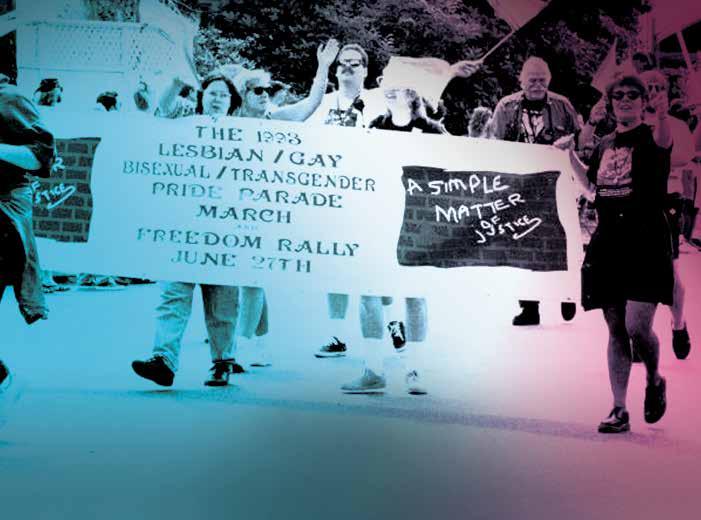
The year 1991 had been a turbulent one for Seattle’s Lesbian and Gay community. AIDS deaths were soaring, anti-Gay violence on Capitol Hill had reached epidemic levels, and Lesbian and Gay military personnel were being dishonorably discharged. The new year was looking even less promising, what with the Capitol Hill police riot in January and the emergence of Oregon Citizens Alliance with its promise of anti-Gay citizens’ initiatives in the months and years to come.
These factors may have created a feeling that the community was under siege, but it also gave birth to a new form of activism, a Queer revolution. It was unapologetic, unabashed, and in your face. Demanding unconditional acceptance as Queer people replaced a strategy of waiting for acceptance by appearing respectable.
A younger generation galvanized by ACT UP and Queer Nation, more racially diverse and proud to defy gender expectations and boundaries, was driving this new activism. The revolution created the dynamics of a community both under fire and on fire. It was a clarion call for marginalized Queer people to come out of the shadows, a call heard by Seattle’s Transgender community.
Demanding inclusivity
After Stonewall, that community was still not considered part of the “Gay” rights movement. But in January 1992, the Seattle delegation to the 1993 March on Washington attempted to change this. Driven by Seattle Bisexual and Transgender activists, the delegation proposed that “the Lesbian and Gay March on Washington” (MOW) include the words “Bisexual” and “Transgender.” MOW was only willing to include the term “Bi” as a sanitized version of “Bisexual.”
In response to the vote, the Transgender Caucus issued a written statement that read in part: “Arguments which demand that transsexuals, transvestites, cross dressers and transgenderal people stay in the closet so that lesbians, gay men and bisexuals can cling to imagined respectability are denying the roots of our common history.”[1] Despite the loss, the caucus declared vic-
tory since they succeeded at putting Transgender rights and liberation at the center of the Lesbian, Gay, and Bisexual movement.
A driving force behind the Transgender Caucus was Princess LaRouge. Having failed to persuade MOW organizers to include “Transgender,” she and Bisexual activist ben e. factory set their sights on the Seattle Pride events organized by the Freedom Day Committee (FDC). The attire Princess LaRouge wore that Sunday evening in February 1992 was reflective of her rural Southern roots. She was tall and lean, with long, blond flowing hair. Her face hinted at the hardship and struggles she had endured, having been born and raised in North Carolina in the shadow of military bases during WWII. This was her first FDC meeting, and she and ben had come to make a request. Her voice was soft, but her presentation was powerful.
Out of the shadows
She was not the only Transgender person FDC members knew, but she was perhaps the first to lay bare in raw terms how her community was living in the shadows, often unseen and unheard by the Lesbian and Gay community. For too long, her Trans sisters and brothers lived in isolation, not feeling they were part of the larger Lesbian and Gay community, even though so many of their struggles were the same: familial rejection, discrimination, societal demonization. She described how she had been marginalized and how that oppression ravaged her life and those of her friends. They were, as she said, brothers and sisters fighting for the same causes of equality and dignity. She hoped if her request was granted that the LGBT communities would see themselves as a rainbow coalition supporting each other. She asked FDC to add “Bisexual” and “Transgender” to the title of the Pride March.
Determined that the FDC would not make the same mistake as MOW, LaRouge invited her friends to the next FDC meetings. They described growing up not knowing anyone like themselves and not even being able to give their identity a name. People talked about their experiences traveling to Europe for gender-affirming
surgery. They shared the overwhelming euphoria of waking up knowing they were now who they were meant to be, only to return to Seattle to face discrimination. If the Lesbian and Gay community were to embrace the Transgender community, it would help them feel like they were not fighting their battles alone. It would ease their isolation.
When FDC members walked down Broadway and saw the animosity directed towards Trans women, they witnessed firsthand the daily indignation that Transgender people were forced to endure. The attempts to shame were a gut punch to FDC members and left an indelible impression. For the FDC, these stories and experiences breathed life into the word “Transgender,” revealing a shared humanity and moral imperative to end the invisibility and silence of that community. There would be no turning back.
On Sunday March 1, 1992, after weeks of reflection, the FDC voted for “The 1992 Lesbian/Gay/Bisexual/Transgender March/ Parade and Freedom Rally in Seattle” as the official title for the Pride event, with only one person voting for a different name.
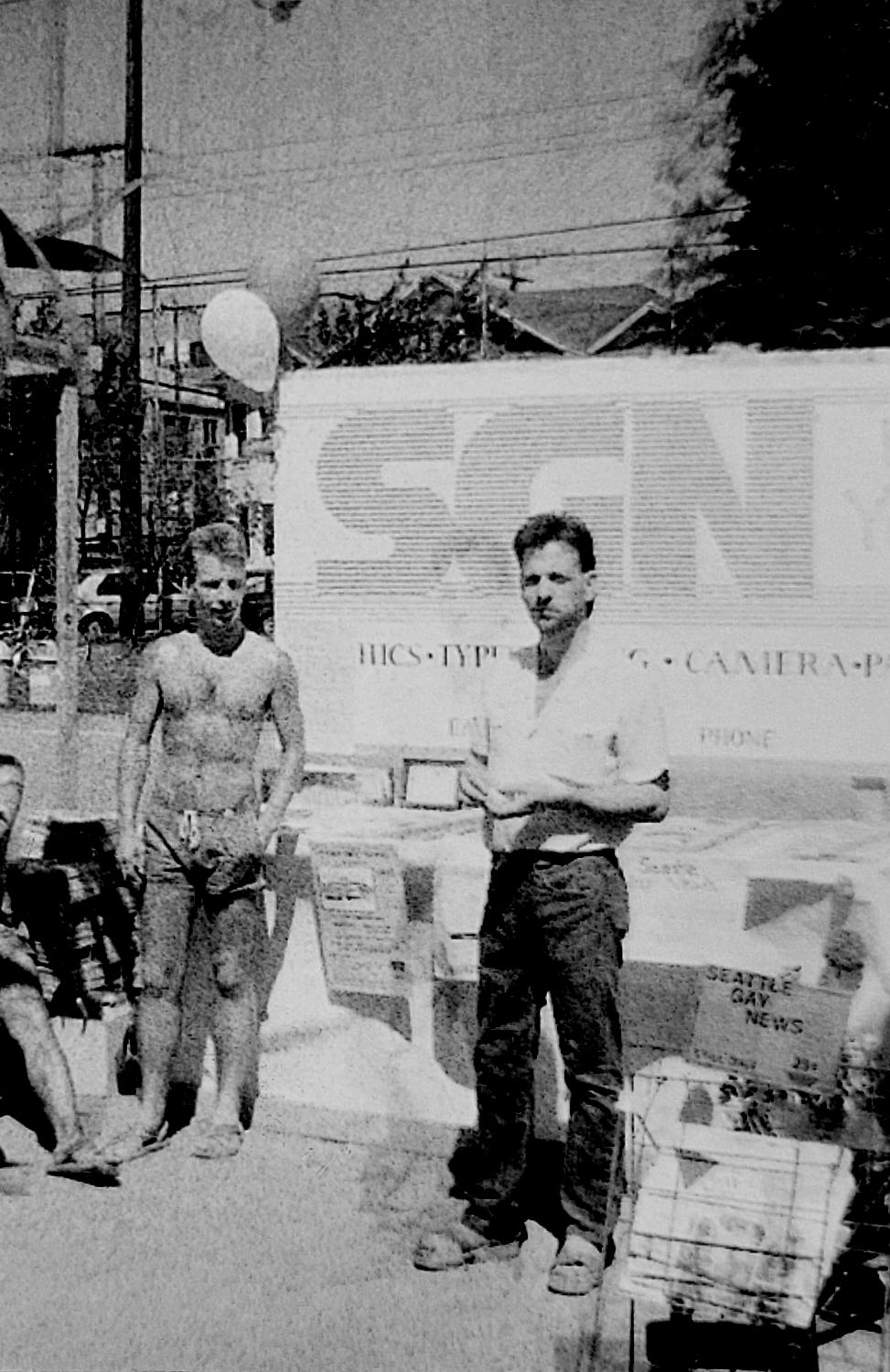
Members knew this was a historic moment and took immense pride in the fact that Seattle did it first. George Bakan, the owner of Seattle Gay News and an FDC founding member, called the name change “the new Stonewall.”
Perhaps it was wishful thinking or maybe naiveté, but the FDC members believed the vote would be uncontroversial. The weeks that followed would prove nothing could have been further from the truth.
The reaction to the name change was swift and vitriolic. While some people objected to the length of the name, most objections reflected the erasure of Transgender people from the history of the Stonewall Riots, a lack of awareness of Transgender people, lingering resentment of the inclusion of “Lesbian” in the title; transphobia, and internalized homophobia. At the heart of these objections were the dynamics of Gay white male privilege that had dominated the “Gay” rights movement after Stonewall.
This was something the Transgender Caucus mentioned in its statement. The movement was based on the belief that equal rights could be obtained if the community was perceived as “being respectable, just like everyone else” — meaning “straight-acting,” middle class, attractive, educated, and white. Transgender people, and many others, were perceived as a hindrance to achieving “Gay” rights.
This dynamic was manifested during Lambda Legal’s efforts to stop the military from purging Lesbian and Gay personnel. Although Tacoma resident Sgt. Perry Watkins was the only openly Gay person discharged from the US Army with full honors after a lengthy court battle, Lambda Legal shunned him, describing his experience as a drag artist in the Army and admissions of sexual encounters with other male service members as a “public relations problem.”[2] Sgt. Watkins was certain Lambda Legal shunned him because he was Black. FDC members were bombarded with complaints. For weeks, the Seattle Gay News published letters from community members expressing their opinions about the name. Most were in opposition. One was particularly offensive, because it, like many others, erased Transgender people from the history of Stonewall and was dismissive of the discrimination unique to the Transgender community. It read: “I would like to remind the Freedom Day Committee that this annual event is and always has been the commemmoration [sic] of the Stonewall riots in 1969. An event that is regarded as the beginning of the modernday Gay rights movement. A movement that has always been inclusive in that every piece of legislation passed since 1969 has used the blanket term sexual orientation to define those to be protected… I would also urge the representatives of the Bisexual and transsexual organizations who proposed the change of name to take another look at the Gay and Lesbian rights movement. A movement that has included them with or without their participation for the past 20-odd years”.[3]
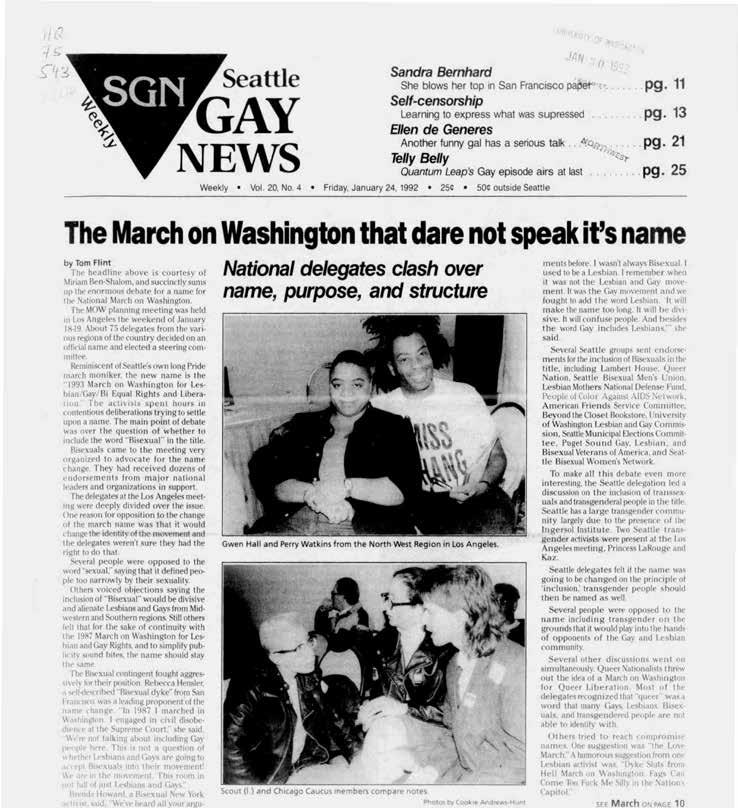
Princess LaRouge’s response held nothing back: “For most of the years following the Stonewall Rebellion, the majority of Lesbians and Gays demanded that transgender people not be seen so Lesbians and Gays could look respectable… The Lesbians, Gays and Bisexuals should be wary of cutting off the roots of the pride heritage tree.”[4] The community was now on a collision course.
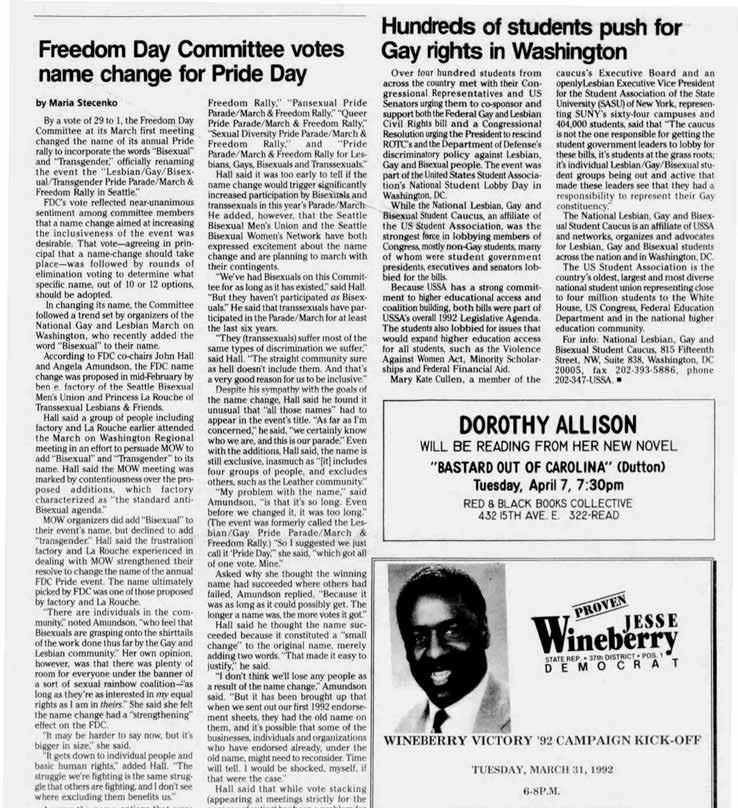
Within a week, opponents circulated a petition with 1,000 signatures requesting the FDC host a community forum and reverse the decision. They hinted that several bar owners discussed organizing an alternative Pride event and prohibiting the FDC from selling Pride buttons and T-shirts in their establishments. The FDC took this as a veiled threat.
FDC members never discussed changing course, however. The petition had only strengthened their resolve. Behind closed doors, the threats angered them. Noting that the signatories only represented one demographic group, members began soliciting support from Queer, Lesbian, Black, Indigenous, and people of color organizations, and immediately engaged in direct dialogue with people who had signed the petition — only to discover many of them had not fully understood the issue.
Behind the scenes, George Bakan worked tirelessly to garner community support. He recruited then State Rep. Cal Anderson to moderate the first community forum, convinced Hamburger Mary’s at the Broadway Market to host both community forums, and ensured that his newspaper gave the Transgender community a voice. Princess LaRouge and her Trans sisters and allies continued to write letters to the SGN and mobilized the Transgender community to speak publicly about their experiences.
On Tuesday, April 21, 1992, 90 people attended the first forum and over 30 people spoke. The SGN described it as a night of grand speeches. FDC members Gwen Hall and Bill Ross presented the committee’s rationale for the new name. They spoke about how oppression exists when people are unseen and unheard and that none of us can be free if one of us remains bound. Quoting Hall: “The price of our freedom is a willingness to grow beyond our comfort zone. We must rise to the occasion, and we take a step in that direction tonight.”[5]
One Transgender woman echoed the need for visibility: “We want to be visible.
“We want to be visible. We, the Transgendered community, have been stripped of our identity by many people.”
We, the Transgendered community, have been stripped of our identity by many people.”[6]
For the most part, those opposing were respectful. Howard Martin, who had presented the petition to the FDC, resigned himself to the new name but hoped for a simpler one in the future. His gracious concession helped lower the temperature. He would later serve as the event’s emcee in 1994.
As the evening went on, more people rose to support the inclusion of “Transgender” and “Bisexual.” One speaker chose not to be respectful, though, accusing the FDC of political correctness and personally maligning Princess LaRouge. He told her to have her own parade, since she had only been involved with the community for two years and asked her where she had been all those years when others had fought against oppression.
Princess LaRouge rose to speak and gave a poignant narrative of her life, describing how years of oppression ravaged her being.
A hush fell over the room as she described years of abuse, never being hugged, being the victim of multiple stabbings, getting shot at, her descent into alcoholism and homelessness, and jumping on freight cars from Florida to Tacoma to escape and find a better life. She spoke about how she eventually came to Seattle and found the love and support that helped her heal and recover and, more importantly, how she found her voice. She concluded with these words:
“When I was a child, my family always told me to shut up, and if I didn’t, they would give me a reason to shut up. I’m talking now. I’m tired of being told to shut up. I’m here. I’m Queer. And I’m a Lesbian.”[7] No one dared ask her again, “Where have you been?”
Community forum 2
Under the banner “Fighting Transgender Oppression,” the FDC and the Transgender community hosted a community forum the following week. It had the feel of a Queer revival, highly emotionally charged, with people giving testimonies, bearing witness to their individual truths, and finding power and strength in their collective experiences. It was an evening of affirmation. The moderator, Kaz, lamented how inad-
equate our words are for gender identity for someone like himself who identified as a female-to-male transvestite. Jason Crowell, Ingersoll Gender Center board president, described Transgender history as stolen history, because the role the Trans community played in igniting the Stonewall Riots was being erased. They spoke about years of isolation and shame giving way to experiencing the wonderful gift of being Transgender, about feeling beautiful and no longer treated as “freaks.” They were proud, authentic, and excited to be included at Pride.
By the end of the evening, one thing was certain: this was a community that would be silent and invisible no more. But the FDC still had more work to do.
Bar runs were a long-standing tradition of the FDC. In the weeks leading to the Pride March, FDC volunteers would go to Gay and Lesbian bars on Capitol Hill every Friday and Saturday evening selling buttons and T-shirts bearing the logo of that year’s Pride event. That year, the FDC utilized the runs to engage people in face-toface dialogue regarding the inclusion of the Bisexual and Transgender communities.
As they interacted with bar patrons, FDC members were greeted with a mixture of hostility and indifference. For those willing to listen, volunteers explained how “Transgender” was added to the title because we cannot end oppression until we are willing to call the oppressed by their name. To others, the volunteers suggested people continue to refer to the event as “Pride,” as had always been the practice.
Every evening drained the volunteers. As the weeks went by, the level of hostility seemed to lessen, however. Perhaps the one-on-one outreach to thousands of people had worked.
Afterthoughts
Pride Day on Sunday, June 27, 1992, was hot, sunny, and beautiful. The event shattered Seattle Pride attendance records for both participants and spectators. The streets and sidewalks of Broadway were overflowing with that indescribable energy unique to Pride.
When the parade emcee announced the
FDC over the loudspeakers, the crowd erupted in cheers. It was as if the bitterness and contention of the prior months had never existed. As the FDC fundraising chair, I was both exhausted and energized that day after months of difficult bar runs and community dialogue advocating for the inclusion of our Trans sisters and brothers.
It would be three years until another city followed our example.
I will always be proud of what we accomplished. Many people who made that day possible are no longer with us; others have moved away. I am grateful to have known each of them.
As for Princess LaRouge, she is now living off the grid. We hope to speak soon. Until we do, I will remember the lessons she taught me that winter and spring in 1992 and the endless possibilities of one indomitable human spirit to change our world. I write this (our) story with the hope that her contribution and the contributions of all those involved are never forgotten.
[1] Statement from the Transgender Caucus of the March on Washington, January 24, 1992
[2] Devon Carbado, “Black Rights, Gay Rights, Civil Rights: The Deployment of Race/Sexual Orientation Analogies in the Debates about the ‘Don’t Ask, Don’t Tell’ Policy,” in Devon Carbado, ed., Black Men on Race, Gender, and Sexuality: A Critical Reader (New York University Press, 1999), available online, accessed May 14, 2013.
[3] Seattle Gay News (SGN ), April 3, 1992, 4.
[4] SGN, April 10, 1992, 4.
[5] SGN, April 24, 1992, 1.
[6] SGN, April 24, 1992, 2.
[7] SGN, April 24, 1992, 3.
Will (Bill) Ross is an attorney with a nonprofit in Seattle. He was part of Queer Nation in the early 1990s and also served as the fundraising dhair for the Freedom Day Committee in 1992 and was the FDC co-chair in 1993 and 1997. He would later serve on the Seattle Commission for Sexual Minorities and as the Hands Off Washington Seattle Coalition co-chair. He currently works with nonprofits and faith communities to improve their antiracism initiatives and also serves on a coalition of legal service providers dedicated to improving access to justice for all Washington residents.
Reprinted with permission from Front Porch (Seattle Dept. of Neighborhoods), June 21, 2023.
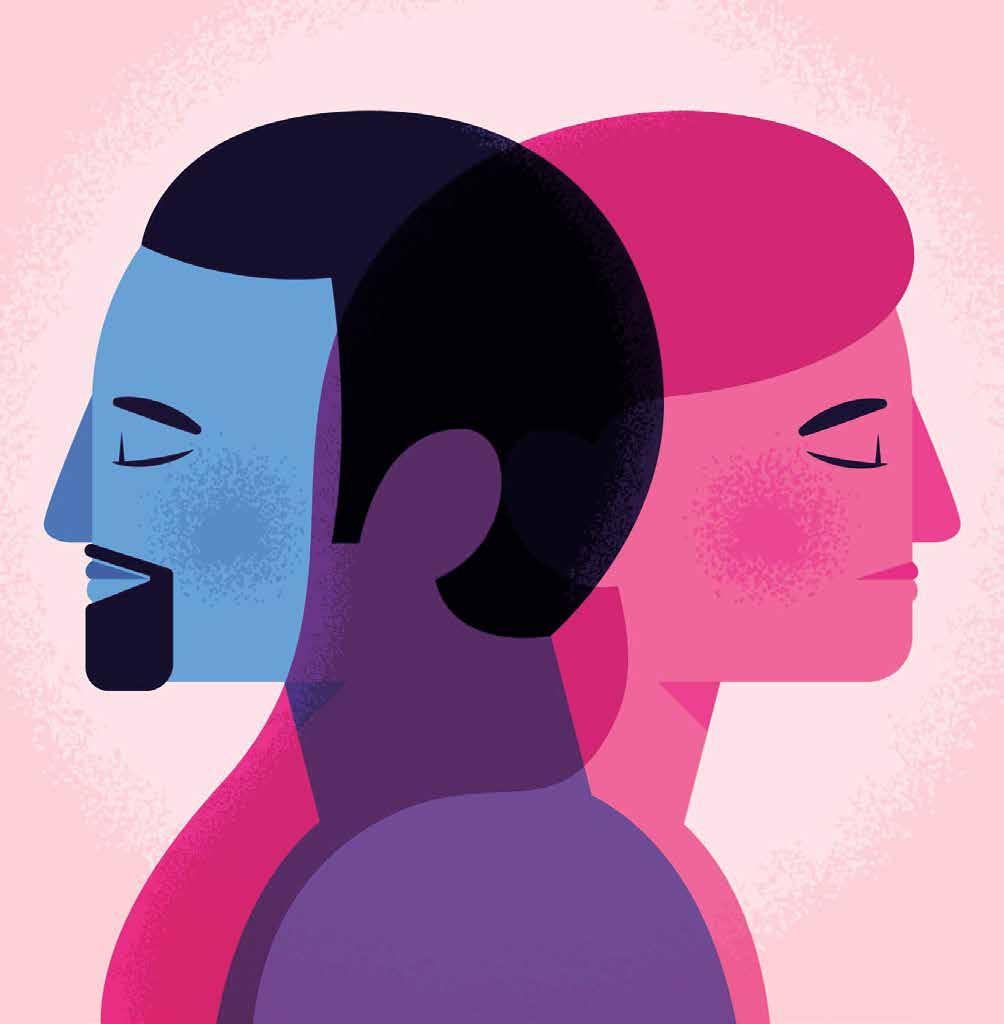
My cisgender friend Stacey married quickly: her husband was the man of her dreams, and she was ready to leap into the next phase of her life. So after just nine months of dating, they had a private courthouse wedding and tied the knot, fulfilling her dream of no longer being Ms. Kim and becoming Mrs. Kendall instead.
Three years later, she exited the marriage after tumultuous disagreements over finances, family, and future.
“Please don’t call me by that name anymore — it reminds me too much of a life that wasn’t meant to be mine,” she requested. And overnight, “Mrs. Kendall” became “Ms. Kim” again. Email addresses were updated, contacts changed, legal documents reprocessed. Friends and family deftly forgot her married name and returned to her original family name. No questions asked, no fumbles. It was easy for them to make the switch, knowing the pain caused by her marriage.
Why then, is it so much harder for friends and family to remember my chosen name and pronouns?
For those unaware, “deadnaming” means referring to a Trans or Nonbinary person with the name they used prior to transition. Using the chosen name and pronouns (gendered words used to describe someone in the third person) of those in the genderqueer community is, in my experience, an act of fundamental respect and dignity.
When I came out as Transgender in 2020,
BY JUNO MEN SPECIAL TO THE SGN
“And with the joy of coming out and coming into my real self, the shadow began lifting in favor of sunnier days. But nearly four years later, a handful of my family and friends still sporadically misgender me. And I’m getting tired.”
it was on the heels of several years of therapy and a lifetime of figuring out how to channel my fear into a moment of conviction. And that moment has made all the difference in my life. My coming out was met with an overwhelmingly positive reception from friends and family.
“We still love and support him,” many would say.
“Her,” I’d gently correct them.
In the shadow of my fear of unilateral rejection, I was content with whatever support was offered and unbothered by the frequent deadnaming and misgendering. I know how rare this type of acceptance can be in any genre of Queer and was — as I still am — exceptionally grateful to have this.
And with the joy of coming out and coming into my real self, the shadow began lifting in favor of sunnier days. But nearly four years later, a handful of my family and friends still sporadically misgender me.
And I’m getting tired.
Being in the closet was hard. Years were spent secretly processing gender dysphoria, feeling fraudulent in interpersonal relationships, navigating inherently transphobic legal and medical systems, contemplating housing and financial stability, researching Trans employment rates, discreetly coming out to family and friends, and incessantly feeling “off” about the person I saw in mirrors and photos. It was a decades-long journey to this side of being out and proud, and
I’m so happy to be here now. [takes a deep Queer breath]
But getting misgendered, especially by friends and family, is an abrupt reminder of the hardest parts of that journey: a dysphoric flash of anxiety, fear, and rejection.
“I’m sorry, I was just talking so quickly that your old name slipped out by accident.”
“I love you, but it’s just going to take time.”
“It’s difficult for me, because I’m older.”
“You know I didn’t mean it. You just have to understand how hard this is for me.” I do, sincerely. And I know it’s not for lack of love. But when you misgender me, especially after years of my gently correcting you, it makes spending time together harder: it’s difficult to be at ease with someone whom I’m in perpetual fear will say something deeply hurtful in the most casual of manners. And what may be a “casual slip-up” on your end could be the emotional low point of my day, tossing me into a quiet interrogation of my own gender presentation or bringing into question whether you’ve really accepted me for the woman I am and always have been. Being misgendered feels like unexpectedly finding a shard of glass in my ear, a pain that I rarely saw my friend Stacey subjected to. And while I haven’t left a marriage, I’ve left behind my own image of a man, one whose life was never meant to be mine. I hope you can too.
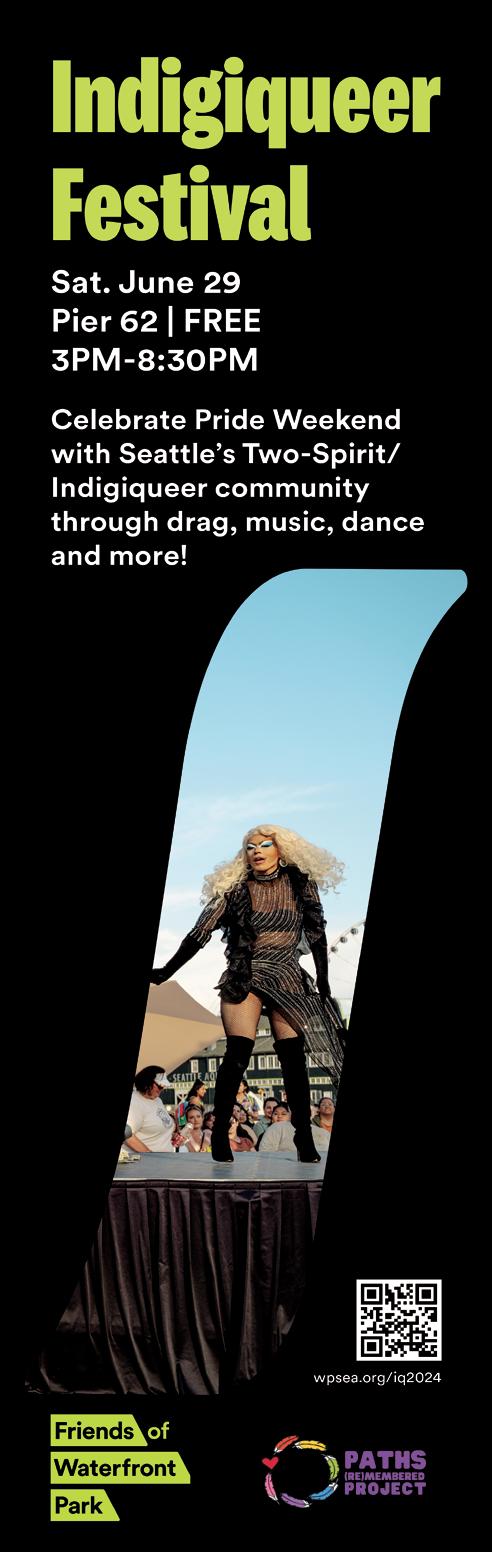
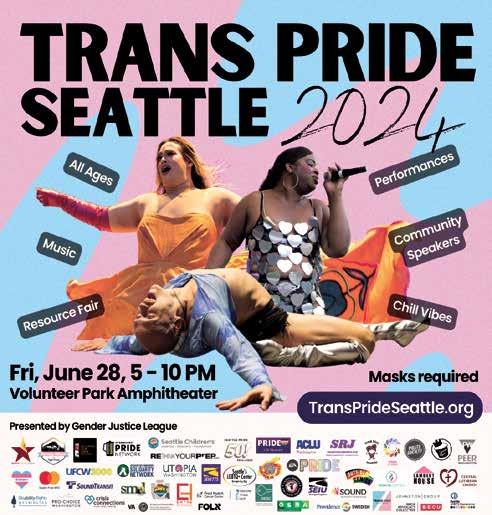
Friday, June 28, 2024, 5–10 p.m.
Volunteer Park Amphitheater
From https://transprideseattle.org:
Now in our 11th year, Trans Pride Seattle continues to honor and carry the torch of our Transcestors who originated Pride as a means of both resistance and cultural communion.
Enjoy our stage show of all-Trans talent, featuring live music, drag performances, and community speakers on community issues; our tabling fair of 100+ Trans-led organizations, community groups, small businesses, and services used by our communities; and a beautiful evening in the park among community.
In a year of mounting antagonism and violence against us — including nearly 600 proposed anti-Trans bills across the nation — spaces like Trans Pride Seattle are more important than ever. Thank you for joining us for this important celebration of Trans life, legacy, and community.
Masks are required
Respecting others’ bodily autonomy — including the desire not to be exposed to virus/ illness — is a basic agreement we expect everyone at Trans Pride Seattle to honor. We recognize there will always be some risk to gathering, and we aim to reduce potential harm as much as possible with the following agreements that we expect all attendees to honor:
Trans Pride Seattle is a mask-required event (KN95/N95+ or equivalent). This means that we ask all attendees — including tablers, sponsors, volunteers, and organizers — to consistently stay masked while
not actively eating/drinking in the designated eating/drinking area(s).
All attendees are asked to test before attending and to stay home if they test positive or are experiencing symptoms. We will have a limited supply of rapid tests available
for attendees with limited access to them.
We also recognize the limitations of rapid testing and encourage participants to get PCR tests beforehand if possible. We will have masks available for those with limited access to KN95/N95+ masks,
and volunteers will be making the rounds to remind people of this policy and hand out masks.
If you have to stay home, don’t worry — the event will be livestreamed on our YouTube channel (https://www.youtube.com/@ genderjusticeleague3354/streams), where it can be enjoyed in real time and beyond.
About Trans Pride Seattle
Started in 2013, Trans Pride Seattle is an annual event organized by Gender Justice League in collaboration with hundreds of local organizers, volunteers, and groups who support the Seattle-area TwoSpirit, Trans & Gender Diverse (2STGD) community.
We aim to increase the strength of the 2STGD community and our allies — both within and beyond Seattle — through increased visibility, connection, love, and the celebration of our lives!
Trans Pride Seattle is open to everyone who believes that 2STGD people deserve to live our lives free from violence, discrimination, stigmatization, poverty, hatred, rejection, medical abuse and neglect, and mental pathologization. We encourage the participation of groups, organizations, and individuals in the 2STGD community, as well as those offering services directly to our community.
Trans Pride Seattle seeks to show our numbers, share our ideas, and call for an end to the structural and interpersonal violence that our communities face. We aim to increase the visibility and acceptance of Seattle’s vibrant Trans communities by empowering and mobilizing allies, engaging the wider community on Trans issues, and celebrating our rich diversity, strength, and beauty.
BY RENEE RAKETTY SGN EDITOR
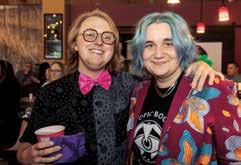
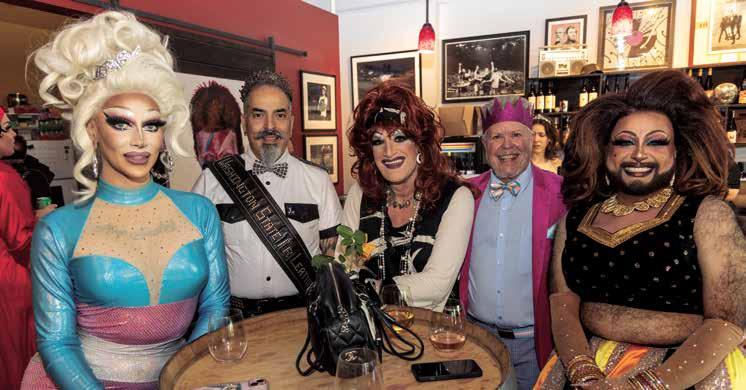
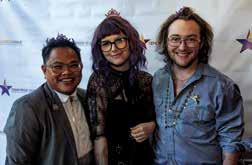
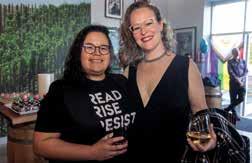
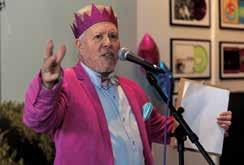
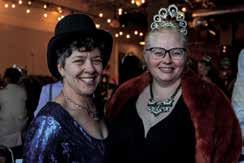
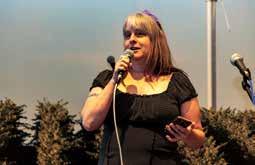
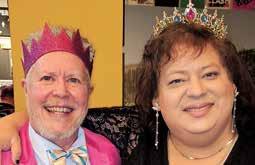
The “Ties & Tiaras” fundraiser on Sunday, May 19, proved to be an enchanting soirée of elegance and advocacy. Against a backdrop of fine wines, craft beers, mouthwatering desserts, and dazzling entertainment, substantial amounts were raised for Trans Pride Seattle this year.
Mac Scotty McGregor produced the glamorous evening featuring dashing ties, dazzling tiaras, and other fine attire. Sleight of Hand Winery in SoDo hosted the event, which brought together members of the Transgender community, allies, and advocates alike. In addition to a silent auction, there was an abundance of dancing, singing, and mingling. Elayne Wylie was on hand to share the success story of Trans Pride, which is believed to be among the largest such events in the US.
The SGN was also there to capture snapshots of this fabulous night of empowerment and Trans joy!

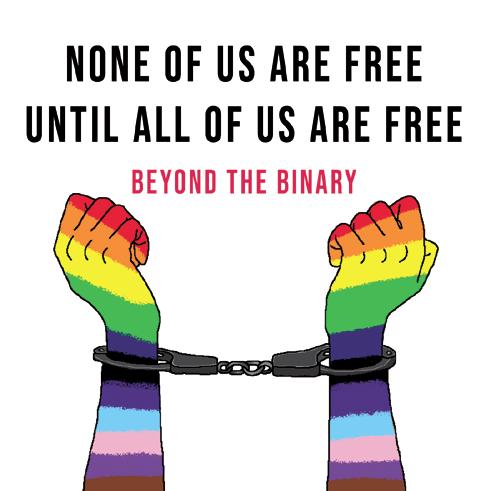
Visibility within the Trans and genderdiverse (TGD) community is a multifaceted concept. On one hand, it can be empowering, fostering representation and advocacy. On the other hand, it can also expose people to more discrimination and violence, and the risk of being tokenized or misunderstood. This dichotomy underscores the complex relationship between visibility and safety.
Parallel to Gay and Lesbian history
The Trans and gender-diverse community today occupies a space in society that bears some parallels to where Gays and Lesbians stood in terms of visibility several decades ago. While significant strides have been made in recent years toward increased recognition and acceptance of gender diversity, many challenges and disparities persist.
Similar to the historical struggles of the Gay and Lesbian community, Trans and gender-diverse people have been marginalized and subjected to discrimination, violence, and stigma. However, there has been a notable shift in recent years in the direction of greater visibility and advocacy for those groups.
One key aspect of this increased visibility is the growing representation of Trans and gender-diverse people in media, politics, and popular culture. From television shows and films featuring Transgender characters to high-profile celebrities coming out as Transgender or Nonbinary, there has been a marked increase in gender diversity in mainstream spaces. It is no longer the case that Transgender actors play only the roles of victims or those suffering from severe mental health issues; instead, they now play roles of regular people dealing with everyday problems.
Empowerment through visibility
Visibility is a powerful tool for advocacy and representation in the Trans and genderdiverse community. Increased visibility can lead to greater societal acceptance, understanding, and support for gender
BY MAC SCOTTY MCGREGOR SGN CONTRIBUTING WRITER
diversity. When Trans and gender-diverse people see themselves reflected in media, politics, and other aspects of society, it validates their identities and experiences.
Moreover, visibility can provide a platform for activism and community-building. Trans activists and advocates often leverage their visibility to raise awareness about important issues, such as healthcare disparities, discrimination, and violence. They challenge harmful stereotypes and promote social change by speaking out and sharing their stories.
Visibility also plays a crucial role in fostering a sense of belonging and solidarity within the Trans and gender-diverse community. Seeing others who share our experiences and identities can reduce feelings of isolation and create opportunities for connection and support. This sense of community can be incredibly empowering for those facing rejection or discrimination from their families or broader society.
The risks of visibility
Despite its potential benefits, visibility also comes with significant risks. Transgender and gender-diverse people are disproportionately targeted for discrimination, harassment, and violence. Increased visibility can make them more vulnerable to these threats, as they may become targets for those who oppose gender diversity. Moreover, visibility does not always translate to acceptance or understanding. In many cases, Trans and genderdiverse people are objectified, fetishized, or tokenized, reducing their identities to mere spectacles for public consumption. This type of visibility can dehumanize and erode their autonomy and agency.
Visibility can also exacerbate existing inequalities in the Trans and gender-diverse community. Those who conform to traditional gender norms or are perceived as more “passable” may receive greater visibility and acceptance. In contrast, those who do not may face heightened discrimination and marginalization. This disparity highlights
the intersecting dynamics of gender identity, race, class, and other factors that shape people’s experiences of visibility.
Navigating the dichotomy
Navigating this dichotomy requires a nuanced approach that balances empowerment with safety and well-being. While visibility can be a powerful tool for advocacy and representation, it is essential to prioritize people’s safety and autonomy.
Doing so includes creating spaces and platforms that center the voices and experiences of Trans and gender-diverse people while also taking steps to mitigate the risks associated with visibility. This may involve implementing policies to address discrimination and violence, providing resources for safety and support, and challenging harmful stereotypes and narratives.
Additionally, allies and accomplices are crucial in supporting the visibility and empowerment of the Trans and genderdiverse community. By amplifying marginalized voices, advocating for inclusive policies and practices, and actively challenging discrimination and violence, allies can help create a more equitable and affirming society for all gender identities.
On the other hand, Trans and genderdiverse people have become increasingly vocal and organized in advocating for their rights and challenging discriminatory practices. Trans activists and organizations have been at the forefront of campaigns for gender-affirming healthcare, legal recognition of their gender identity, and protections against discrimination in employment, housing, and public accommodations.
Challenges and progress
However, despite these developments, they continue to face significant challenges, including high rates of violence, discrimination, and barriers to accessing healthcare and other essential services. Transgender and gender-nonconforming people, especially those from marginalized communities, such as people of color, low-income people, those
that are otherly abled, and those living in rural areas, often face compounded forms of discrimination and marginalization.
Additionally, increased visibility has also brought about backlash and resistance from conservatives and anti-LGBTQ+ forces. Efforts to roll back Transgender rights, particularly in areas such as access to healthcare and public spaces and participation in sports, have intensified in recent years, highlighting the ongoing struggle for equality and acceptance.
Just as the Gay rights movement paved the way for greater acceptance and recognition of Queer identities, the advocacy and visibility efforts of the Trans and genderdiverse community are driving progress toward a more inclusive and affirming society for all gender identities.
However, it is essential to recognize that the fight for Transgender rights is far from over, and there is still much work to be done to address the systemic inequalities and injustices faced by Trans and genderdiverse people. By raising awareness, challenging discrimination, and advocating for policy changes, we can work for a future where all gender identities are valued, respected, and celebrated.
The current political landscape
The visibility of the Trans and genderdiverse community in the United States exists within a complex landscape shaped by a patchwork of laws, policies, and social attitudes. While there has been progress in the direction of greater recognition and acceptance of gender diversity in some parts of the country, others have seen a troubling trend of increased discrimination and hostility toward LGBTQ+ people, especially those who are Transgender and gender-nonconforming. The divergent approaches taken by different states highlight the complex and often contentious nature of LGBTQ+ rights in the United States.
In recent years, several states have imple-




BY LAURA JOHNSON SGN CONTRIBUTING WRITER
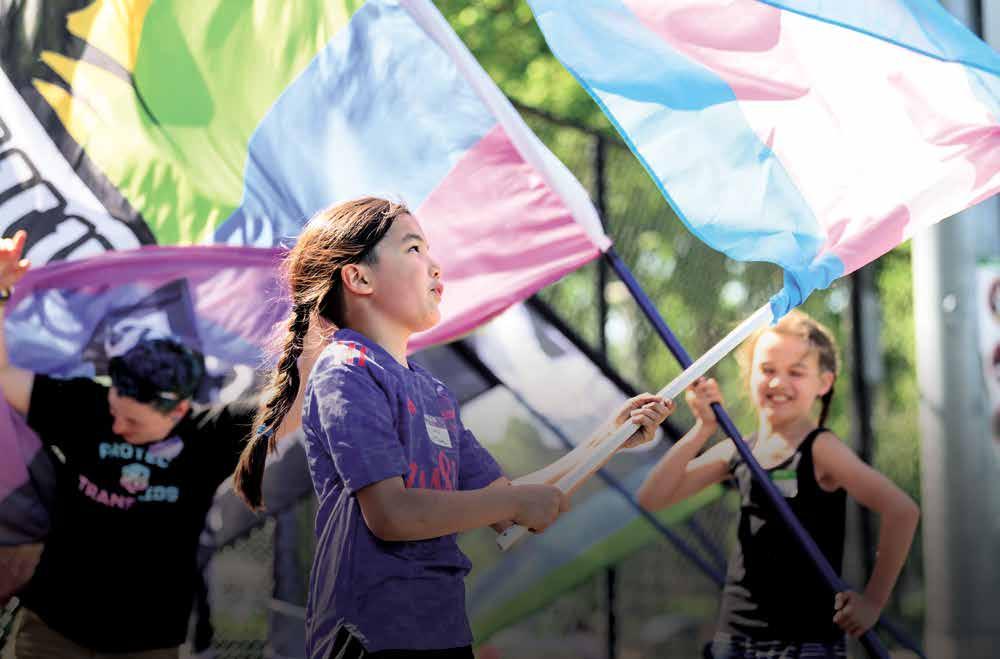
Kids exploring their gender identity are faced with many questions from their parents and caregivers: Are they too young to make this decision? Will they change their mind? Is the internet or friends at school influencing them to think this way?
According to Aidan Key, these are all legitimate concerns. “They can’t really visualize a future for their child,” he said.
But parents should support their kids to also ask questions and explore.
So Key founded a nonprofit organization called Trans Families, based in Seattle, which builds community among families of Trans and Nonbinary youth, by offering information on gender-specific scholarships, tools to incorporate gender-affirming curriculums, summer camps, and an assortment of support groups for both parents and children. Seattle’s Children Hospital now directs parents to Trans Families, and organizations — including the Seattle Sounders soccer team — host fundraising events.
In the beginning
Key recalled that he had a tough time visualizing his own future as an adult when he transitioned over 20 years prior. Contemplating his time in Seattle’s Lesbian scene, while gesturing to his salt-and-pepper beard, he said, “I was scared of losing friends, family, and community. [Parents are also] afraid of losing friends, family, and community. And meanwhile, their kid just wants to be a kid.”
When Key organized a conference called Gender Odyssey in the early 2000s, he talked with parents who were fierce advocates for their Trans and Nonbinary teenagers. But he quickly realized that many cis straight parents were navigating their children’s issues and making major decisions without any resources to guide them.
So in 2008, Trans Families began, with two families who met with Key in Seattle for a support group session. The group quickly snowballed, with more and more families attending. Key enlisted the help of facilitators to lead multiple groups at the same time, and began conducting video calls.
The online support groups allowed people with similar situations and experiences to join together. Key and his team focused on how to accommodate families in different time zones — even some abroad — and how to maintain the in-person connection that many community spaces required.

Parents as allies
He said different regulations in certain areas of the country can also be challenging. “Washington state has some of the strongest protections compared to many other states for Trans and Nonbinary youth, so how do we support families who do not have those protections or have regressive laws going into place?” In areas where it’s unsafe for their kids to be themselves in public, Key said that some parents can only create a gender-inclusive space at home.
A dad-specific group is attended only by dads and a few grandpops. Chuckling, Key was quick to point out the ironic nature of creating a gender-specific group for a gender-inclusive organization but said he believed in the importance of creating a safe space for dads.
“They can open up a little more,” he added. “We’re all humans, and we have a range of human emotions, and society allows for certain emotional expressions more so for women than for men in certain areas and vice versa. So, the dads group, sometimes they need to express some anger, some frustration, some disappointment, and they need to be able to do it without feeling judged.”
The conversations Key engaged in with parents were rudimentary in the beginning, when the parent session was in one room and the youth session was in another. Moms and dads were learning terminology that their child was actively living and already familiar with. Parent group leaders worked on catching up with their children so they could support their transition and celebrate their identities.
Each age group comes with its own challenges. The tumultuous parent-teen dynamic is sometimes amplified by misun-
derstandings surrounding gender identity, such as pronouns.
“In the same way I want the parents to understand the experience of their children, we want those children to understand that their parents aren’t unsupportive. They’re just taking longer than what [the child] might like,” Key said.
He also reminds the kids not to shut down too quickly: “If they’re sitting in another room or on a Zoom link, they are working toward that support.” He encourages teens to focus on when their parents get it right.
Trans and Nonbinary youth who experience negative remarks or bullying connected to their gender identity are three times more likely to skip school, score lower GPAs, and experience higher levels of depression than their cisgender counterparts, according to the 2019 National School Climate Survey. Easier access to
medical, educational, and administrative resources can be instrumental to their safety and well-being.
As he watched Trans Families grow, Key has also witnessed immense personal growth in each parent. When one child changed their name, their parent realized they never liked their own name and had the power to change it as well. Other parents have gained the courage to switch careers or even come out as Trans or a different sexual orientation.
Key emphasized that the parents of Trans and Nonbinary youth are actively part of the community and on the front lines defending their child. “These parents are just as much as part of my trans community as they are allies on the sidelines,” he said.
Find out more at https://transfamilies. org.
BY HANNAH SAUNDERS SGN CONTRIBUTING WRITER
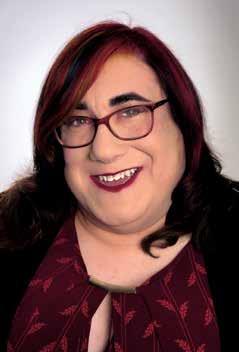
To ensure that Washington remains a safe place for LGBTQ+ people, Janet Melman is running for the 42nd Legislative District, which encompasses Bellingham — where she lives and which she describes as Queer friendly — and Ferndale. If elected, Melman would become the first Transgender person to serve in the state legislature.
“Our rights are only as guaranteed as our lawmakers can protect them for us, and that’s why a Trans voice needs to be in Olympia,” Melman told the SGN
One of the primary reasons she entered the race was because of the passage of Initiative 2081, which has the potential to out Queer youth to their parents and guardians.
“A sitting senator told me last year that they believed that Trans people aren’t working hard enough to be accepted,” Melman said. “If that’s the attitude in Olympia, how can we expect them to defend our rights?” Melman said if legislators who claim to be LGBTQ+ allies think like this, there needs to be someone at the table who knows the truth, and the lived experiences of Trans people — both good and bad, adding that those wishing to roll back the rights of LGBTQ+ people affect all Washingto-
“It’s
nians, not just those who identify as Trans.
Although she has a degree in biosciences, Melman has spent years as a healthcare and LGBTQ+ rights advocate, which has led her to cultivate relationships with lawmakers in Olympia and Washington, DC. She
believes if she can advocate for herself as a woman who is Transgender, then she can do so for others.
Uphill battle
In early 2022, Melman realized she was Trans, she said.
“It took me until December of that year to basically come out fully and start living my life daily as my true self,” she said. “One of the things that gave me a lot of insight is that there was no one helping me figure out how to get healthcare, what I need.”
Now with the increased knowledge of navigating different aspects of the state’s healthcare system, Melman hopes to pay it forward.
“My passion is to literally take my knowledge and share it with other people so that they don’t have the fear and anxieties I had by doing everything myself,” she said. Her biggest challenge with her campaign so far has been outreach and letting community members know what’s at stake in this election.
“I don’t think this is an issue of apathy. I think this is an issue where people just don’t get that word. They don’t hear about it, so they think it’s just another election cycle, and there’s more to it than that,” Melman said.
Melman’s opponents in the 42nd Legislative District include the incumbent Democrat, Alicia Rule, and Republican Raymond Pelletti. Melman said she feels like she is being shut out of the race, however. During a recent endorsement call, where she and Rule were trying to earn endorsements from a local group, an question shook her.
“The first person asked a question, and it was supposed to be for both candidates, and the question was: ‘We worked very hard to flip this district for Democrats. Why do you want to ruin it for us?’ Which, of course, was not a question that was directed at both candidates, but once they said it, I was cooked,” Melman said. “I was sabotaged in that call, and I knew that if I was not going to get local support, I was going to be forced to run as an outsider.”
Although frustrated, Melman is fighting the uphill battle. She believes that constituents are more inclined to vote based on their beliefs. She also thinks that when voters are told that someone [else] is your party’s only candidate and if you don’t vote for them, you get what you get, then it isn’t democratic.
To learn more about Melman’s campaign, visit https://www. janetfordistrict42.com.
BY LINDSEY ANDERSON SGN STAFF WRITER
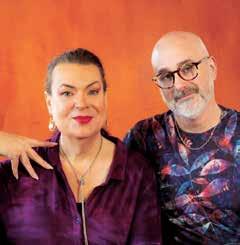
Shannon and Jason have the magic touch — they can make something out of nothing! The two Seattle-based makers share a passion for crafting, which they have been doing their whole lives. “Both of us come from crafting families,” Jason said.
“We were raised by makers, people who make things for a purpose,” Shannon explained “and that crosses into what we do. Everything is made with a purpose. We were raised by people who came from the Depression — makers. That’s where our background came from, so when it comes time to express ourselves, this is how we do it. We create using whatever the heck is in front of us.”
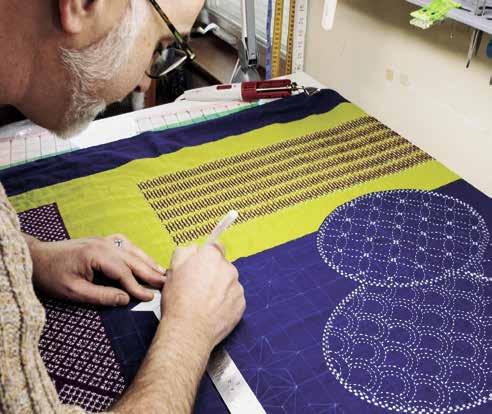
For Shannon and Jason, making includes a wide variety of crafts, from quilting to crocheting to sashiko (decorative reinforcement stitching) and everything in between. “The world has changed, and people are multicrafters. They just want to do things for the sake of doing it,” Shannon said. “People ask what our business is, but it is everything: graphic design, photography, cooking.”
After falling in love 30 years ago on the dancefloor of the Timberline, a oncebeloved Gay bar where the current Cornish College for the Arts’ Raisbeck Hall is located, Shannon and Jason decided to come together in a crafting partnership and started their business. Now, they teach classes, give tutorials, commission art, and write crafting books.
Shannon and Jason have different talents and skill sets, but their business works because they know what they are good at and have passion for their work. Jason typically handles the photography while Shannon does the tactile work. “Shannon always has to have her hands moving,” Jason said.
“I have to do something, or I am maddeningly bored,” Shannon added. “I’m always working on something. Embrace the creative chaos, that’s our thing. It’s our idea that there’s so much stuff going on, and we have the choice of fighting that chaos or embracing it and creating with it.”
Together, Shannon and Jason are changing the way people see crafting. For them, the magic is in the process of transformation. There is freedom in crafting without expectations. Sometimes, new crafters will get caught up in the functionality of what they make, but the secret Jason and Shannon have found is that things don’t have to be useful to have a purpose.
“I have no purpose for this except I like how the colors look,” Shannon said as she held up a square of different fabrics sewn together. What was once just scraps is now a gorgeous piece of art.
“Our last book was about Japanese embroidery — you’re counting threads and making designs by weaving fabric — and these are small things, and it’s like, ‘What do I do with that now?’” Jason continued. “You look at it. You enjoy it. It’s art. It’s something to be enjoyed, looked at, and sometimes touched and felt. Sometimes, the creation is the destination.”
Embracing the chaos helps Shannon and Jason find balance, not only in their business but in their personal lives. They add crafts to their repertoire slowly, trying not to take on more than they can chew. “There is a constant flow. We go where the current is taking us,” Jason said. “After a while, you can only fight so hard against that
current, and eventually, you have to let go and see what’s around the bend.”
“The balance is seeing it’s all one thing,” Shannon added. “It is a magical thing, to plant a seed and see food come off it. You do the thing that’s there. It’s all a part of the same energy and the same chaos.”
While so many Americans live in the “profit over passion” mindset, Shannon and Jason have found a way to make both work. “You can be creative and get paid for it. This is how Mama pays the mortgage,” Shannon said with a laugh. “We don’t have to like that we live in a capitalist society, but we still exist in it, and I still have to pay my mortgage and keep the lights on. There’s the balance between being a socially conscious creator and also taking care of us and our community.”
Shannon has advice for anyone hesitant to take the leap and pursue their creative
passions as a career: “Just do it. Stop thinking about it and just do it. Stop planning to live your life, and just live your life.”
Embracing the chaos not only helps Shannon and Jason uphold a successful business and follow their passions, but it is also their philosophy for their relationship. “We have been through all the changes. We’re growing together as two people,” Jason said. From shifting business models to changing economies to the personal growth that comes with transitioning, Shannon and Jason have stuck together through it all.
“Working together and being a couple — it’s all the same thing,” Jason said. “I couldn’t do what I do without her assistance. We have our own spaces, but we’re still constantly talking to each other, like a play that never ends. It’s seamless between the two of us.”





BY AMANDA SULLENDER

In recent years, debate has gripped society regarding whether it is fair to allow Transgender women to participate in women’s sports. One University of Washington professor believes an answer to the debate cannot be found in science or simple biology.
According to Dr. Bradley Anawalt, the science of whether Transgender women have an advantage in sports remains up in the air. But even if studies showed crystalclear results, both sides of the debate would still have points to make over what kind of society we all want.
“There can be no scientific answer to what is fair. There is never going to be a perfect answer, and there is always going to be some level of controversy,” he said.
Anawalt is an endocrinologist and professor of medicine at the University of Washington School of Medicine. He is a member of the NCAA Committee on Competitive Safeguards and Medical Aspects of Sports and a consultant to the US Anti-Doping Agency Therapeutic Use Committee.
Testosterone in the body and the longterm effects of a testosterone-based puberty are the primary drivers of men’s athletic advantage in most sports, Anawalt said. But the degree by which a Trans woman’s medical transition can counteract that advantage is still an open question.
“The question is how long does it take for differences in strength and power to disappear,” he said. “There are a limited number of studies, and much remains unknown.”
Dr. Kellan Baker, who leads a national organization providing health care to the LGBTQ+ community, disagreed in part. A testosterone-based puberty does not automatically make a better athlete than someone who went through an estrogen-based puberty, he said.
“The factors that influence athletic performance are incredibly varied and incredibly widely distributed. Just because some forms of athletic ability are correlated with gender — like men on average being taller than women — does not mean any one specific athlete has any particular advantage in any given sport.
“Not all men are better than all women. Not all boys are better at all sports than all girls. There is no way to point to a particular hormone or a particular experience of puberty and say this gives you unambiguous dominance in this sport. It simply doesn’t work like that.”
What is gender-affirming care?
While not all Transgender people need medical interventions as part of their gen-
“There is no way to point to a particular hormone or a particular experience of puberty and say this gives you unambiguous dominance in this sport. It simply doesn’t work like that.”
der transition, many Trans women seek to suppress the testosterone in their body and replace it with estrogen. Among other effects, a Transgender woman undergoing this treatment will experience breast growth, softening of skin, redistribution of fat across the body to the hips and breasts, and a decrease of testicular volume.
A big impact of feminizing hormone replacement therapy is a decrease in muscle mass and strength in the body, which are main drivers of athletic performance. Over time, estrogen therapy will bring a Transgender woman’s hormones in balance with that of a woman who is cisgender — a term for those who are not Transgender. What remains unclear is to what degree athletic advantage remains after someone has gone through this process.
Citing a 2021 metastudy analyzing 24 studies on this subject, Anawalt said current research suggests it takes anywhere from one year to three years on feminizing hormones for muscle mass to become similar to cisgender female levels.
Other effects of a testosterone-based puberty cannot be changed. Hormone replacement therapy may affect athletic performance depending on the sport.
These physical characteristics are more likely to change if hormone replacement therapy begins before the end of puberty. Anawalt also noted [that an] advantage all but disappears if the testosterone-based puberty is prevented in the first place.
“We presume if puberty blockers prevent pubertal body changes, most if not all of the advantage would be removed,” he said.
Typically at 12 years old or at the onset of puberty, puberty suppressants can be considered. These blockers are fully reversible and pause puberty development to give the Transgender youth more time and maturity to make a more permanent decision.
Puberty blockers also are used frequently for children whose puberty begins too early.
Transgender inclusion in sports leagues
Rules around Transgender people’s participation in athletic competition vary widely between sports and the level at which the games are played.
Elite-level sports typically require hormone replacement therapy for some period of time before a Transgender athlete is allowed to compete.
Previous guidance at the International Olympic Committee required transfeminine competitors to have their testosterone suppressed below a certain threshold for a year prior to and during competition. In 2021, the IOC released a less restrictive framework allowing international federations to create their own criteria.
Other sports are going in the opposite direction. In 2022, swimming’s governing world body FINA banned Transgender women from competing if beginning their transition after the age of 12.
The focus on Transgender individuals in sports even has spread to competition not based on athletic ability. Earlier this year FIDE, the world chess governing body, banned Transgender women from competing in official women’s chess tournaments pending further investigation of the body.
What about in Washington?
Rules also vary at the high school and junior high levels. Some states, like Idaho, have attempted to ban Transgender participation in school sports. Others, like Washington, allow Transgender athletes to compete regardless of their testosterone levels or pubertal development.
“All students have the opportunity to participate in WIAA athletics and/or activities
in a manner that is consistent with their gender identity,” reads the 2023-24 Washington Interscholastic Activities Association handbook.
In the WIAA’s Gender Diverse Youth Sport Inclusivity Toolkit, the organization says the inclusion of transfeminine athletes “has not been shown to diminish opportunities for others.”
“As we celebrate the exceptional athleticism of any female athlete as they dominate and add to their sport, so too can we embrace the talents that any trans female athlete might bring. The cultivation and celebration of the athleticism of all athletes, including trans athletes, is a valuable part of any team’s culture,” reads the toolkit meant to guide educators and school coaches.
The toolkit also states that while some Transgender athletes may have an athletic advantage over their peers, advantages in athletics because of physical characteristics are inherent to physical sports.
“The athleticism of any female athlete, as we know, can vary widely from that of other peers. Height, musculature, build, and weight are a few variables that impact performance,” it reads. “Additional factors that contribute to a potential advantage include access to skills-building opportunities at earlier ages, access to facilities and coaching, greater funding for programs and teams in certain privileged communities, chronological age, birth order, and more. For these, and other reasons, some athletes have advantages and opportunities over others.”
Baker agreed with the policy — stating athletic competition at that age should be focused on “life lessons like teamwork, leadership, and sportsmanship” rather than the career opportunities sports can provide.
In contrast, Anawalt said there are just concerns over fairness, even at the amateur level.
“This question of fairness is still important in a high school or junior high context, because competitive sports are an entry to fame and fortune — even at that level. If you have one person that does well, they may get scholarships, they may get into a certain school when someone else does not,” Anawalt said.
Reprinted with permission from https:// www.spokesman.com/stories/2024/ jun/02/science-alone-cant-solve-fairnessdebate-on-transg.






BY HANNAH SAUNDERS SGN CONTRIBUTING WRITER
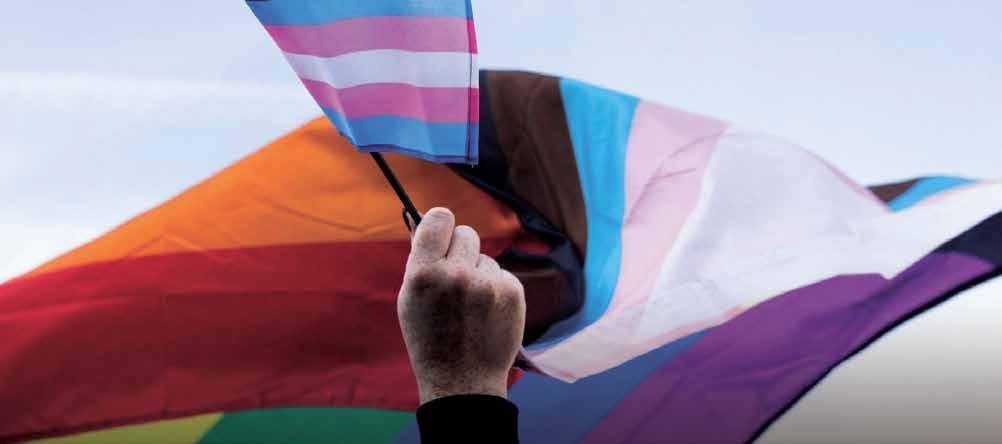
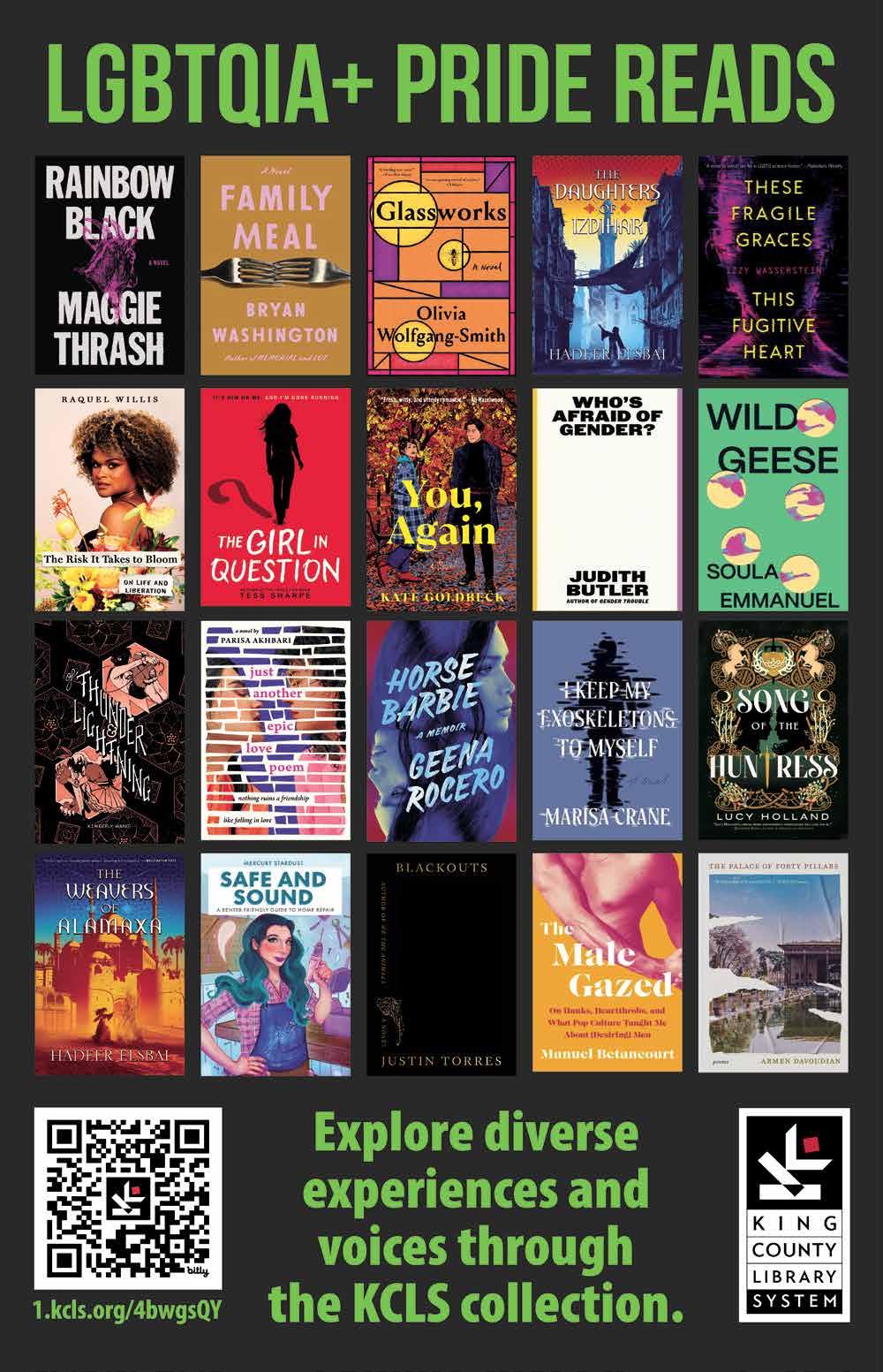
Although we are faced with anti-Transgender and anti-Queer legislation sweeping the nation — including in Washington — in celebration of Pride Month, the SGN has developed a list of organizations that work with the Transgender and gender-diverse communities.
Transgender and gender-nonconforming people lead Ingersoll Gender Center, which provides peer-led support groups, assistance with navigating resources, and community organizing and education. The organization hosts weekly peer support groups for Trans and gender-nonconforming people and their friends, families, and allies. The website lists providers that offer gender-affirming healthcare. 911 E. Pike St. #221, (206) 849-7859.
Lavender Rights Project focuses on gender-diverse and Intersex communities of color, providing legal and social services to target oppressive systems that disproportionately impact these communities, including higher rates of poverty, genderbased violence, and housing inequities. The legal services are free for Black and Indigenous people and consist of expungements, direct representation, and consultations. 911 E. Pike St. #314, (206) 639-7955.
Creator of the sacred Trans space at Trans Pride Seattle, Gender Justice League fights for the human rights of Two-Spirit, Trans, and gender-diverse people by advocating and connecting them directly to services. Some of its services relate to
CONTINUED FROM PAGE 10
mented laws and policies that are more restrictive. Additionally, some have introduced legislation that seeks to limit or outright ban gender-affirming medical treatments for minors. These laws not only undermine the rights and dignity of Transgender and gender-diverse people but also contribute to a climate of fear and uncertainty in the community. They send a message that Transgender and gender-nonconforming people do not deserve equal rights and protections under the law, which can have profound adverse effects on their mental health, wellbeing, and sense of belonging.
Conversely, other states have taken steps to offer legal protections and affirm the rights of Transgender and gender-nonconforming people, enacting laws that prohibit discrimination based on gender identity and sexual orientation in areas such as employment, housing, and public accommodation. Some states have implemented policies to ensure access to gender-affirming healthcare and support services for Transgender people.
A personal story
A personal story about how this patchwork of state laws plays out in a Trans person’s life: I live in Washington state, yet I have family living in Florida. My father had his 80th birthday last fall, and my wife
gender-affirming healthcare, housing and shelter, mental healthcare, and gender and name documentation processes, as well as educating local business leaders about the shocking disparities of unemployment and poverty in the communities it serves. info@ genderjusticeleague.org or call or text (206) 538-0423.
GLSEN Washington believes that all students deserve a safe and affirming school environment so that they can comfortably learn, grow, and thrive. GLSEN increases inclusiveness in Washington schools through training and giving resources to students, educators, and community partners. It also collaborates with school districts in creating inclusive policies. Email GLSEN at mail@glsenwa.org.
Seattle’s LGBTQ+ Center, formerly known as Gay City, is the leading HIV/STI tester in King County and provides free tests for HIV, syphilis, hepatitis C, chlamydia, and gonorrhea. Referrals to medical professionals for continued care are also made. In partnership with Capitol Hill’s Kelley-Ross Pharmacy, the center offers gender-affirming hormone therapy for those 18+, including estrogen oral patches and injectables, and testosterone cream, gel, or injectables. It also writes letters of support for gender-affirming surgery and has a mutual aid closet and pantry filled with food, hygiene products, and clothing. 400 E. Pine St. #100, (206) 860-6969.
Serving thousands of Trans and Queer
and I wanted to be there for his big birthday. Due to the extreme laws that have recently been implemented in Florida, I, as a very out Trans educator and activist, could easily be targeted there.
For instance, if I get pulled over for a minor traffic violation there, my legal Washington state driver’s license — with my legal name changed and gender marker — is considered fraudulent in that state, since it does not match my birth certificate, which was issued in Florida, and I could be arrested.
God forbid if something happened and I needed medical care: it would depend on the hospital and the staff that I would randomly get assigned. It is very stressful to feel restricted in one’s own country such that we don’t feel safe to travel state to state.
This patchwork of laws and policies creates significant challenges for Transgender and gender-diverse people, particularly those in states with more restrictive policies, resulting in disparities in access to healthcare, legal protections, and support services, exacerbating existing inequalities and marginalization.
Furthermore, the varying legal landscape can also impact the visibility of the Trans and gender-diverse community on a national level. While progress may be made in some parts of the country, setbacks in others can hinder efforts to advance LGBTQ+ rights on a broader scale and perpetuate misconceptions and stereotypes about gender diversity.
survivors of interpersonal partner violence and domestic violence, sexual assault, hate violence, stalking, and harassment, Northwest Network does it all through advocacybased counseling and education, the former of which creates a supportive space for survivors and helps to decrease feelings of isolation, understand the patterns of abuse, grow self-esteem, and begin to heal from trauma. The group refers survivors to housing, food banks, mental health support, and LGBTQ+ social support groups. info@ nwnetwork.org or (206)568-7777.
Tacoma-based Diversity Alliance of the Puget Sound (DAPS) is a nonprofit that supports 18+ Trans and gender-diverse people via support groups, advocacy, and financial aid, serving all of Washington. For those who are unable to afford or access hormone-replacement therapy, DAPS offers a two-month supply kit that includes needles, syringes, alcohol swabs, sharps shuttles, and a link to the closest needle disposal site. The org collaborates with policymakers and local organizations to address policies that directly harm Trans and gender-diverse people, including those who are incarcerated. Its online and in-person support and social groups are a private Discord channel with resources and event listings; there is also a “Tea for T” meet-up every Friday at Crescent Moon Gifts in Tacoma. info@ diversityallianceofthepugetsound.org.
QLAW Foundation of Washington pro-
In this complex and often polarized environment, it is essential for advocates, allies, and policymakers to continue working toward greater understanding, acceptance, and legal protections for Transgender and gender-diverse people across the United States. By challenging discriminatory laws, promoting inclusivity, and amplifying the voices of marginalized communities, we can strive for a more just and equitable society for all.
Ways that allies can help Educate yourself: Learn about gender diversity, the issues faced by the TGD community, and the appropriate language to use. Understanding terms, pronouns, and the spectrum of gender identities is crucial. Use inclusive language: Always use a person’s chosen name and pronouns. Correct others if they use the wrong terms, and educate them on the importance of respectful language.
Platform TGD voices: Use your platform to amplify the voices and stories of TGD people. Share their work, promote their businesses, and highlight their achievements.
Support TGD media: Consume and promote media created by and for the TGD community. This includes books, films, podcasts, and art that authentically represent TGD experiences.
Speak out against discrimination: Challenge transphobic remarks, jokes, or actions in all spaces — whether at work, at
vides legal assistance, such as free consultations with one of its volunteer attorneys to better understand legal issues, suggesting potential next steps, and assisting people with completing legal forms. https://www. qlawfoundation.org/contact-us.
Queer Youth Services, within Northwest Youth Services, supports Queer youth, their loved ones, and community providers. Its Trans Fashion Treasury has free, gender-affirming clothes, and the group offers gender-affirming care training, case consultations, and self-advocacy coaching. Contact the resource navigator, Sara Glebe, at sarag@nwys.org.
In addition to answering questions that organizations, institutions, and people have about gender identity, Northwest Washington Gender Alliance hosts weekly online support meetings on Wednesday evenings. The group is committed to assisting those experiencing challenges related to gender identity and expression, whether it be in someone’s own life or their loved one’s. info@nwwga.org.
Trans Families is a nonprofit that’s supported Trans people and their families since 2008. Its youth groups are led by Trans adults and mentors, and are broken down by age category: older elementary school students, middle schoolers, and high schoolers to young adults. These include age-appropriate conversations about life happenings. Trans Families also hosts scheduled game nights on Discord for youth. info@transfamilies.org.
home, or in public. Use your voice to promote inclusivity.
Support Trans rights legislation: Advocate for policies that protect the rights of TGD people, such as antidiscrimination laws, healthcare access, and gender recognition laws. Contact your representatives, participate in campaigns, and vote for inclusive policies.
Create safe spaces: Ensure that your home, workplace, and community spaces are safe and welcoming for TGD people, which can include gender-neutral bathrooms, inclusive dress codes, and zero-tolerance policies for harassment.
Visible support: Show your support through visible symbols, such as wearing Pride pins, displaying inclusive signage, or using social media to amplify TGD voices and issues.
Listen and validate: Offer a nonjudgmental ear to TGD people. Listening to their experiences and validating their feelings can be incredibly supportive.
Financial support: Donate to TGD organizations, fundraisers, or those in need. Many TGD people face financial barriers to accessing healthcare, legal services, and other necessities.
Attend events: Participate in TGD events such as Pride marches, rallies, and educational workshops. Your presence shows solidarity and helps amplify the voices of TGD people.