BY DANIEL LINDSLEY SGN CONTRIBUTING WRITER
It was on a sunny afternoon in late April that I encountered Black & Pink (BAP), in the form of a binder of letter-writing guidelines, on a table at an anarchist ’zine event. A few cards were laid out beside the binder, scrawled with short messages of support.
Matching up pen pals in different countries isn’t unheard of among charities; it serves to build a more personal relationship between donors and those in need. But the cards at that table were headed for a place in some ways more distant than anywhere across the ocean: a prison in Washington state.
Anyone who has had a friend or relative in the prison system likely knows what it’s like trying to get in touch. Phone calls are time limited, and what emails are available require the purchase of “digital stamps,” to say nothing of in-person visits. It’s inconvenient and often frustrating, but for those on the inside, it’s a source of constant isolation from needed support.
A local BAP rep was outside the gallery, sitting in a folding chair with a signup sheet. We spoke briefly at the time, but over this Juneteenth weekend, I gave them a call to learn more.
“Black & Pink is about addressing the violence of prisons in our society,” Scout said, “with a focus on how it affects Queer and Trans people, and people living with HIV/AIDS.” Scout asked to include their first name only, and uses “they” pronouns.
Methods and activities differ depending on the chapter, but they all share a few things in common: they match people on the inside with pen pals on the outside, and they collectively produce a newsletter that includes art, writing, and other inmate perspectives.
In 2015, BAP used its newsletter to field responses for “Coming Out of Concrete Closets,” one of the largest and most sweeping surveys of Queer and Trans inmates to date, and it should be news to no one that LGBTQ+ inmates have it particularly bad.
Among other things, the survey found that a majority of Queer, Trans, and HIV-positive inmates were arrested as minors, most before they completed high school, and most of their sentences were much longer on average than the general population’s. They were also overrepresented in high-security prisons.
Overall, Scout said, BAP intends to “connect Queer and Trans people with networks of support and community,” which is precisely what prisons take away.
Connections on the outside can grant access to material resources, like hygiene products, books, and after release, genderaffirming clothes and housing. But Scout emphasized that BAP doesn’t use the standard “top-down” charity model, in which distant patrons get a tote bag and a sense of accomplishment for sending food or money. The strength of BAP’s pen pal program lies in forming lasting and “unexpected friendships,” as Scout put it.
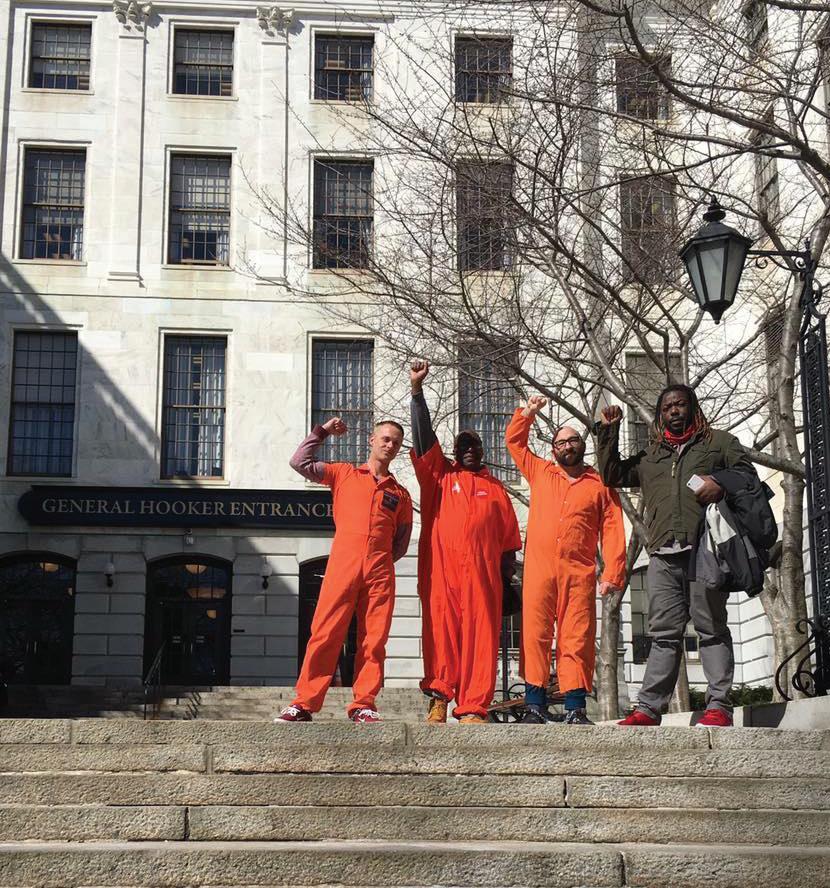
“It’s like a politicized version of a Queer relationship,” Scout said. “That’s how a lot of Queer relationships start, in an unexpected way.”
BAP’s “solidarity model” also means they listen to inmates about their needs, and let those needs inform their responses. The guidelines I mentioned earlier, established soon after Scout joined the organization in 2018, are a part of that goal. They make it clear to participants that signing up is a commitment.
“We’d match people with someone, and they’d never follow up,” Scout said, which
was disappointing for the inmates involved, and a waste of everyone’s time. The guidelines also stress the importance of people on the outside setting realistic expectations, and not overpromising just to underdeliver.
Another key advantage of the pen pal program is its boost to public awareness of prison conditions, so participants can take informed political action for reform.
Although not all the matches work out, feedback about the program so far has been positive. Pen pals attending BAP meetings have expressed their appreciation and shared their experiences.
Recently, of course, the pandemic has made meetings like that — and keeping up with communication in general — far more difficult. But the organization has persisted, keeping around 75 pen pal pairs connected monthly, by Scout’s ballpark estimate. That’s 75 more people with a lifeline to the outside world, and there are plenty more in need.
To learn more about Seattle’s chapter of Black & Pink, visit https://www. blackandpink.org/chapters/seattle/, or find its table at this year’s Trans Pride Seattle on September 2.

BY LINDSEY ANDERSON SGN CONTRIBUTING WRITER
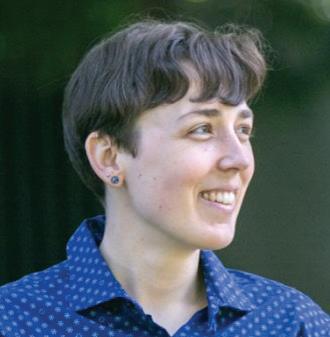
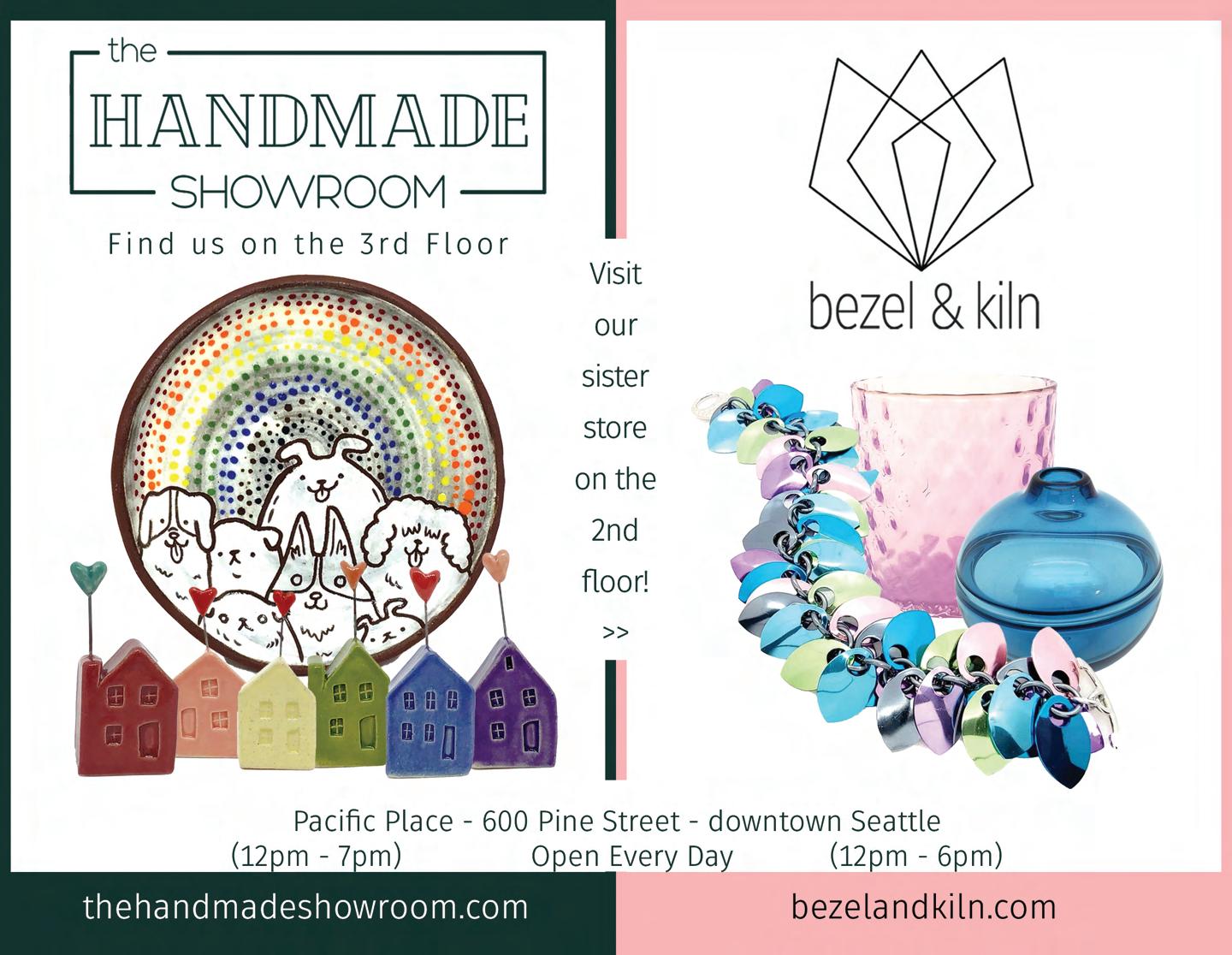
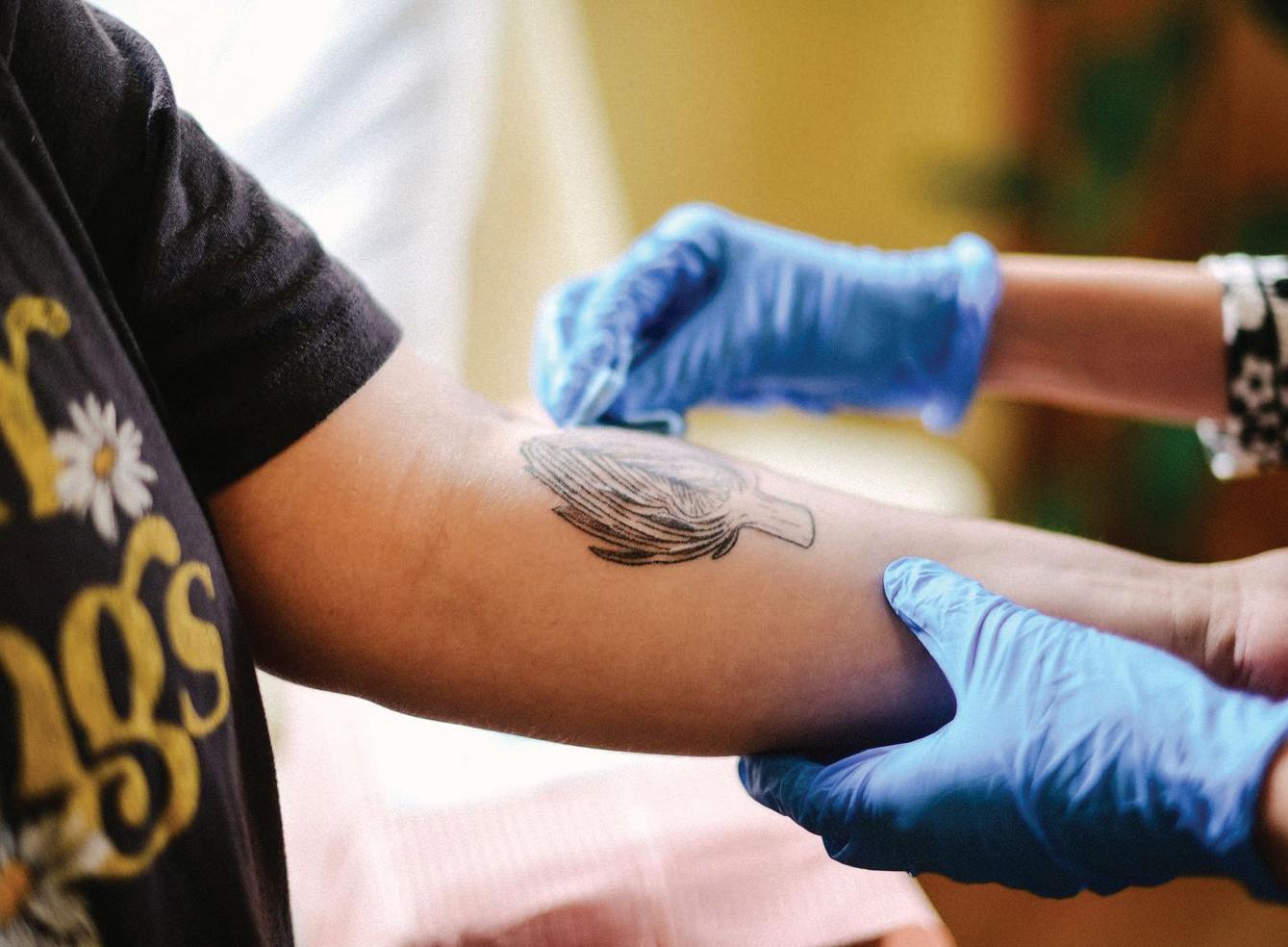
Tattoos have become as much a staple of Pacific Northwest culture as coffee and hiking, and nobody knows that better than PNW transplant Megan Burns, a self-taught tattoo artist who specializes in stick-and-poke designs. They have been tattooing in Seattle for a year, and are looking forward to starting a full-time position at their studio, To the West, in Ballard.
For Burns, tattooing started as a COVID hobby but quickly became a way of life. “I did my first tattoo on myself in November 2019. I slowly started building from there,” they said. “During COVID, my best friend got into stick-and-poke. They live on the other side of the country. For my birthday, they sent me a mini kit made out of the supplies they had gathered.”
The first tattoo they did was on themself, as a way to reclaim parts of their body they felt detached from. “I did my first tattoo about six months into my sobriety from alcohol,” they said. “I was looking at my knees, and they were super scarred from falling
when I used to drink. So, I decided I wanted to change that part about myself that made me feel insecure. So I tattooed a little heart under my knee where I had scars before, and then I felt a lot of power around that, because I had reclaimed that part of my body.
“Then it was just off to the races from there.”
A fresh start
Tattoos have given Burns a renewed sense of self-determination and a fresh start. “The words that come to me first when I think about tattooing is autonomy, ownership, and self-empowerment,” they said. “As a tattoo receiver, every time I’ve gotten a new piece of artwork, I’ve felt more like myself.
“So, being somebody who can provide that service to others by helping bring them closer to their most authentic self through body art, body autonomy, and self-expression — that’s just so exciting to me. It’s just a very powerful art form.”
Burns began to get into tattoos after moving to the Pacific Northwest from Charlottesville, North Carolina, in 2017. “I moved to get out of the South,” they said. “I had been living in North Carolina my whole life. I’d gone to middle, high school, college, everything there, and I felt like my growth opportunity had hit a wall.”
They discovered their love for the Pacific Northwest in an unlikely place. “I wanted something new, and I had been honestly watching the show Portlandia. It [made] the Pacific Northwest look funny, but also I was laughing at myself, like I saw myself reflected [in] this like Pacific Northwest culture,” Burns said with a laugh.
Seattle wasn’t their first choice when looking to leap across the country. “I looked at Portland, but it didn’t catch. It wasn’t as good as I was expecting. And then I looked at Seattle, and I was like, that’s the city I’m interested in. I was going to come out here sight unseen, but my mom was like, ‘Let’s take a trip,’ and so that’s where I
got to see the first Seattle Gay News on that trip, and a few months later, I was on the road with my dad, just hauling all my stuff and my dog out here,” they said.
Seeing the way LGBTQ+ culture is celebrated in Seattle inspired Burns to plant roots in an environment they knew they could grow in.
“I love the encouragement within the [LGBTQ] community for people to keep exploring themselves. The idea of what queerness is here is so much vaster than what it was in the South. There’s just this encouragement to become your most authentic Queer self — through tattooing, getting haircuts, style, and fashion. I’m constantly inspired by other Queer people walking around the city and just getting to see people be Queer — proudly, visibly Queer — and just getting to make eye contact with each other and nod. It’s such a good encouraging feeling to continue to find your most authentic self,” they said. see TATTOO page 15
continued from page 10
Planting roots in Seattle not only meant exploring queerness and community but also exploring the beauty of the region. “I love the outdoors. I think it’s just a gorgeous place right now. I mean, all the time it’s a gorgeous area to be in, and honestly, I am loving this late-spring rain, because it’s just making the forests so happy right now,” they gushed.
“I love the general vibe out here. Everybody’s doing their thing, making community, going outside, drinking coffee, smoking pot… I love the energy out here.”
Some places Burns has fallen in love with around Seattle are Discovery and Carkeek Parks. “I love that it’s like you’re in the city, but you don’t feel like you’re in the city at all,” they said. “You get complete access to nature, but still in the city.
“I also love being on the water. I love going out on my paddleboard on Lake Union, especially at this time of year, and getting to see the city and see the mountains and the sky. It’s just so much fun.”
Tattoos and queerness
It was Burns’ love for the beauty of the Pacific Northwest that got them back into tattoos after moving out west. Before moving to Seattle, they got their first tattoo on their ribcage and said the experience was not sublime.
“I did not have the best experience under the artist’s hands, and it kind of put me in a weird mindset about tattoos for about six or seven years,” they admitted.
“Then I moved here to Seattle, and I got my second tattoo,” they said. “It was Mt. Rainier for Seattle and dogwood flowers, which are the state flower of North Carolina.”
They decided to take the plunge and try tattoos again. They found an artist out of Fremont, Christina Wolf, and sent their design to her. “I loved her style, and I sent her a sketch and went in. She ended up being nine months’ pregnant at the time and had amazing customer care and communication throughout the whole thing. I was so excited to be in this very safe-feeling environment,
and it was sort of like this divine femininity, being tattooed by a pregnant person like that was super cool, and so that helped reclaim the idea of getting tattoos for me.”
After their positive experience with their second tattoo, Burns decided to try the art on their own. They quickly realized that tattooing could be an effective way to reclaim parts of their body that made them feel dysphoric.
“Personally, getting tattoos has been very affirming to my nonbinary gender. I’ve been able to take ownership of my body in ways that maybe I didn’t feel like I had before tattooing them,” Burns said.
“I have gender-expansive clients that have said similar things, that getting tattoos has made them feel more like themselves, made them feel more masculine, more feminine.
I’ve been able to commemorate Trans milestones with people, myself included, through tattooing, and that’s very exciting and affirming for me and the client. I think queerness and tattooing, the communities are very involved with each other.”
“When my body was less tattooed, I felt very feminine,” they continued. “By putting artwork on it of some very neutral imagery and some very masculine imagery, it’s helped neutralize my body in ways I didn’t anticipate. Having more texture to my body and gruff to it has helped make me feel more neutral in it.”
To Burns, queerness, like tattoos, is about authenticity and displaying your true self. They see the two communities often overlapping because of shared sentiments.
“I think Queer means being authentic. It means being the person you are without being ashamed of it,” they said.
“I feel like queer comes in with a radical feel to it, like there’s the Gay community and then there’s the Queer community, and the Queer community feels a lot more radical. Choosing your way of living life, whether that means loving who you love, how you express yourself, how you form relationships, you’re doing it for yourself and the people that are in your sphere. Not just like what you’ve been told to do or expected to do in society. It’s just like building your way of being a Queer person.”
So if queerness and tattoos are about
choosing to present yourself to the world in your way and taking ownership over your life, then Burns’ journey of tattooing is intertwined with their Queer journey, both of which helped them learn to let go of some of society’s expectations.
Radical body autonomy
“When it came to me starting to get tattoos myself, one thing that I kept in mind was that we’re going to go through this world, and we’re going to get marks on our bodies that we never asked for. That’s going to be from the sun, that’s going to be from accidents, that’s going to be from surgeries,” Burns said.
“We’re going to collect changes on our body and marks on our body… Why not have a little bit of ownership in those? Why not choose to have certain marks on your body? That’s one way that I felt more comfortable and more powerful in getting tattoos, because our bodies change constantly. We’re so lucky if we get to see our tattoos age with us, so why not just embrace it if it’s something that you feel is right for you?”
Queerness and tattoos also align themselves in a counterculture — one that has become more accepted and mainstream in areas of the Pacific Northwest like Seattle and Portland. “I think we go through this world, and we have all these expectations, and tattoos are now… a bit more mainstream, but still they’re counterculture. You’re wearing this artwork on your body, on your skin,” Burns said.
They also acknowledged that tattoos are not for everybody. But for anyone on the fence about getting their first tattoo, Burns said, “Definitely do it for you. Whatever it is that you’re wanting to do to get a tattoo, make sure you’re doing it 100% for yourself and not letting the influences of other people go into it.”
“And, while getting a tattoo is a big deal, it’s also not a big deal,” they added. Over the years, Burns’ tattoos have become less meaningful and more fun. “I had some meaning for the first tattoos, and then I slowly went downhill with meaning. Now they don’t have to have meaning to me,” they said.
“The first tattoo I gave myself was that little heart, and then I gave myself a carabiner, because I was, at the time, a woman
who liked women, and so it was like …a Queer flagging tattoo,” they said.
“Then I gave myself a paddle for paddleboarding, because when I was in North Carolina, I was really into white water rafting,” they continued. “During the white water rafting triaging sessions [that] you have to do before each tour down the river, they would tell you that you have to be an active participant in your rescue, because you need to be doing your work for other people to be able to help you. I was like oh, that’s like my new life motto for having agency over yourself. So I gave myself a paddle for that sort of meaning.
“Then a pigeon, because I like pigeons, and a tattoo from my favorite album. Then I started trading more recently and getting more pieces from some of my friends’ artwork and their style. So, I got a butterfly from my studio mate Sierra, and I have a horseshoe from another Queer tattoo artist I met down in LA. I have a big tiger on my tummy. I’ve got about 20 now. It’s fun.”
Tattooing full-time
Burns will be tattooing full-time starting in August. While they are willing to tattoo just about anything, some of their favorite designs are pet portraits and flowers. They also love to do custom designs. “I like doing custom tattoos, because it’s giving me prompts of new things to draw that I might not have drawn on my own,” they said.
The only thing Burns will not tattoo is culturally significant designs. “I’m a white tattoo artist, and I’m not going to be tattooing somebody else’s culture. That’s not for me to do. There are plenty of talented artists in Seattle and beyond, [so] there’s always the right artist for the right tattoo, and sometimes I’m not the right artist for that tattoo. If it’s not my culture, it’s not my place to tattoo it or to profit off it, or appropriate it in any way,” they said.
If you are thinking of starting your tattoo journey, looking for a way to express your authenticity, or hoping to commemorate a beloved pet in permanent ink, take a hike down to To the West, where Burns will be celebrating their love of the PNW, one tattoo at a time.
BY LINDSEY ANDERSON SGN CONTRIBUTING WRITER
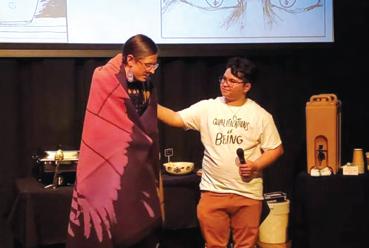
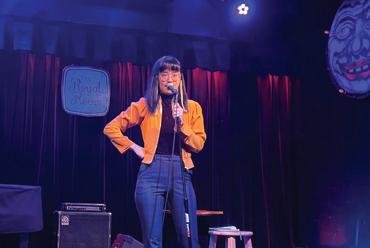
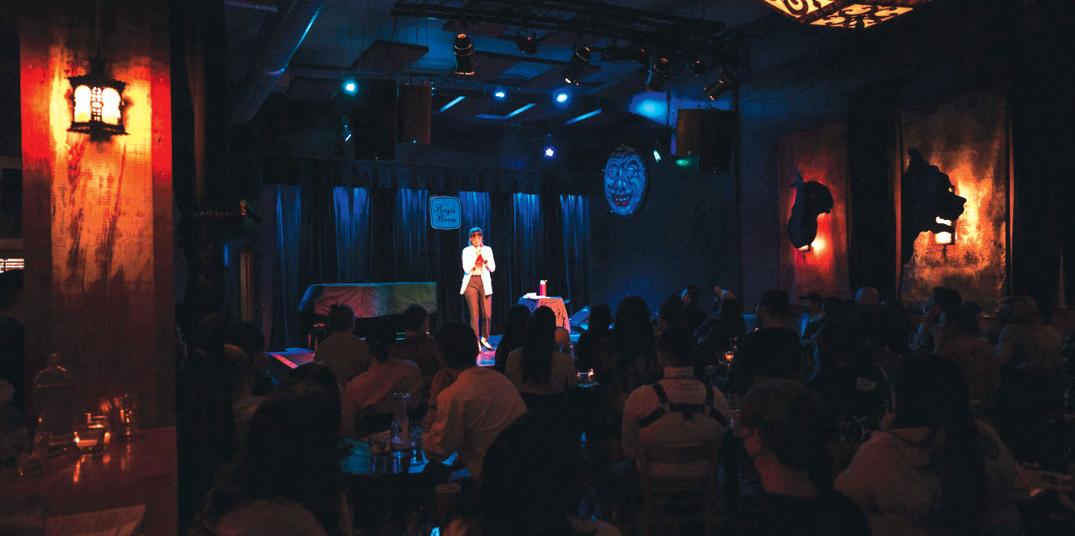
An enthusiastic crowd gathered at the Royal Room on Tuesday night, June 14, to enjoy another installment of Nam Nam Production’s all-Asian comedy showcase Model Minority. This show was extra special, as it was the Pride edition, featuring only the best LGBTQ+ Asian comedians in Seattle.
The highly anticipated show sold out almost a week earlier. Ticket prices ranged from $20 for Queer BIPOC people, $30 for white LGBTQ+ people, $40 for allies, and $50 for white men dating Asian women. The Royal Room was packed tightly, with people grabbing seats anywhere they could.
“It’s nice to know that there were real professional musicians here last night, and today I’m up here telling butt jokes,” noted comedian Joe Yan when he took to the stage.
Despite Yan’s underselling his talents, all the performers of the night were incredible. The jokes were delivered with perfect timing and included many nods to both LGBTQ+ and Asian American culture that members of the audience picked up on.
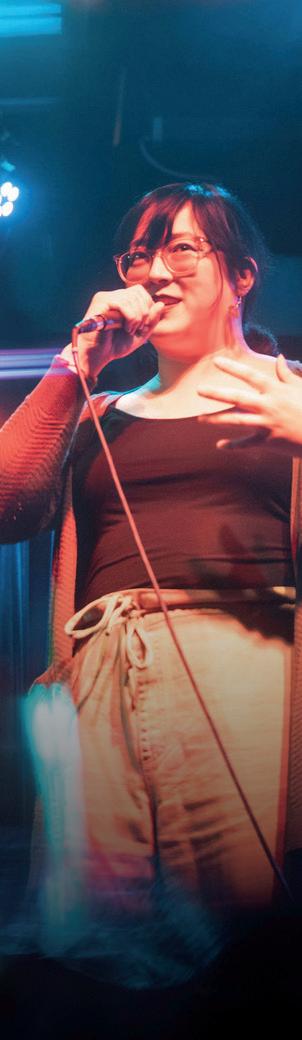
The show started with a well-polished set from host Juno Men, who shared hilarious and heartfelt stories about her experiences coming out as Trans to her mother and grandmother. The crowd was in awe of Men’s comedic story-telling ability and held on to every word. By the time she finished, everyone was warmed up and ready to laugh at the night’s featured performers.
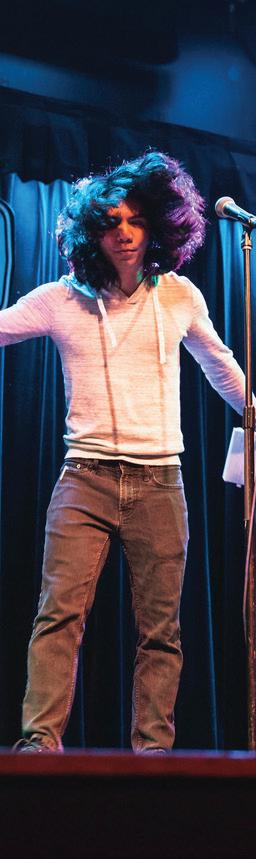
Next to the stage was Yan, a newcomer to Seattle’s comedy scene. His observational humor was so witty and dry that audience members scrambled to chug their drinks, only to hold back spit takes moments later when Yan delivered his wry punchlines. His jokes about the specific pitfalls of dating as a short man in Seattle resonated with some members of the crowd, who let out guttural laughs.
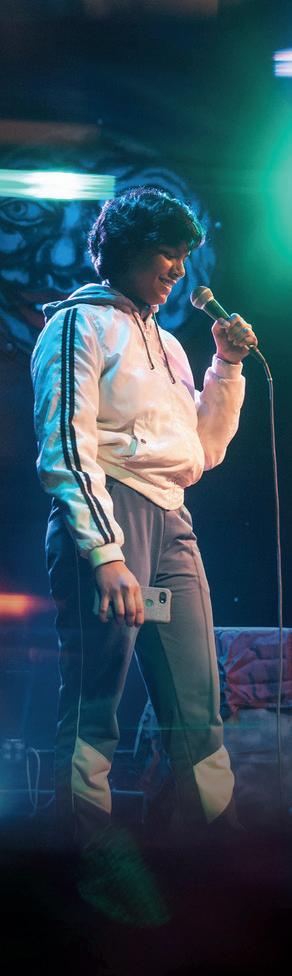
Budding comedy star Rohini, who said she “stumbled onto comedy while processing COVID,” came next. Back on the scene with fresh material and observations about world geography, Rohini had fans both laughing and thinking with her smart humor. Her patient and confident delivery punctuated everything she said with hilarious honesty. Rohini also showed off her physical comedy skills, delighting the crowd with a demonstration of how her asshole aided in her generational healing.
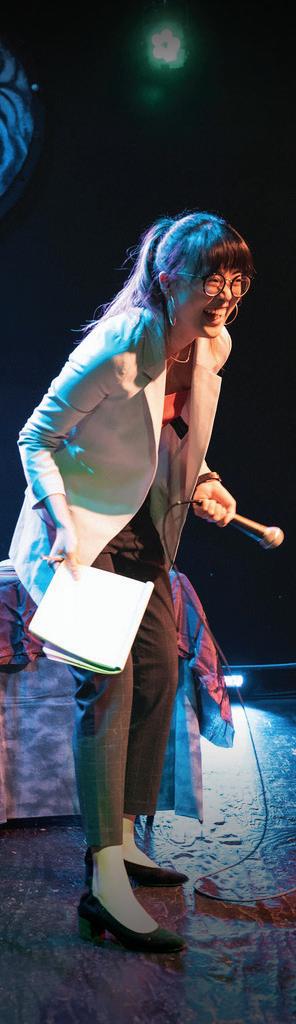
The final comedian of the night was the producer and headliner Stephanie Nam, who had prepared pages of new material for the special show. Before starting her set, Nam thanked the audience for making Model Minority: Pride Edition possible. She said she set out to create the show as a safe space for underrepresented people in the comedy
scene and was proud to have found friendship and community along the way.
Nam’s set resonated with the audience in ways few comedians ever do. Members of the crowd were laughing and nudging friends, as if each of Nam’s bits was an inside joke between them. She began by doing an “Asian name roll-call,” sparking chuckles and recognition from those in attendance whose names she had predicted. Nam also took breaks during her set to bring in her alter ego: Stevie. Unlike Nam, who delivered her jokes with an awkward charm, Stevie held the mic as if they owned it, and serenaded the audience with their raspy renditions of original music, including an ode to Adderall and “Cry Me a River” spoof: “Squirt Me a River.” The audience was mesmerized by Stevie, hooting and applauding each song break.
Nam returned to the stage to finish her set with some classic dad jokes and her wellknown Dan jokes. She discussed the plague of white men dating Asian women and even performed a faux maid-of-honor speech she was preparing for her sister’s wedding to a white dude. The fans loved it.
As the night wrapped up, audience members scurried to the back of the room to buy Nam exclusive merch and gain a glimpse of the show stars. Laughter echoed out into the cold Seattle night from inside the Royal Room, even after the show closed.
Not only did Model Minority: Pride Edition give Seattle’s Queer Asian community an environment to laugh in and at the world, but it also provided a space to feel safe and seen, and to get to know each other.