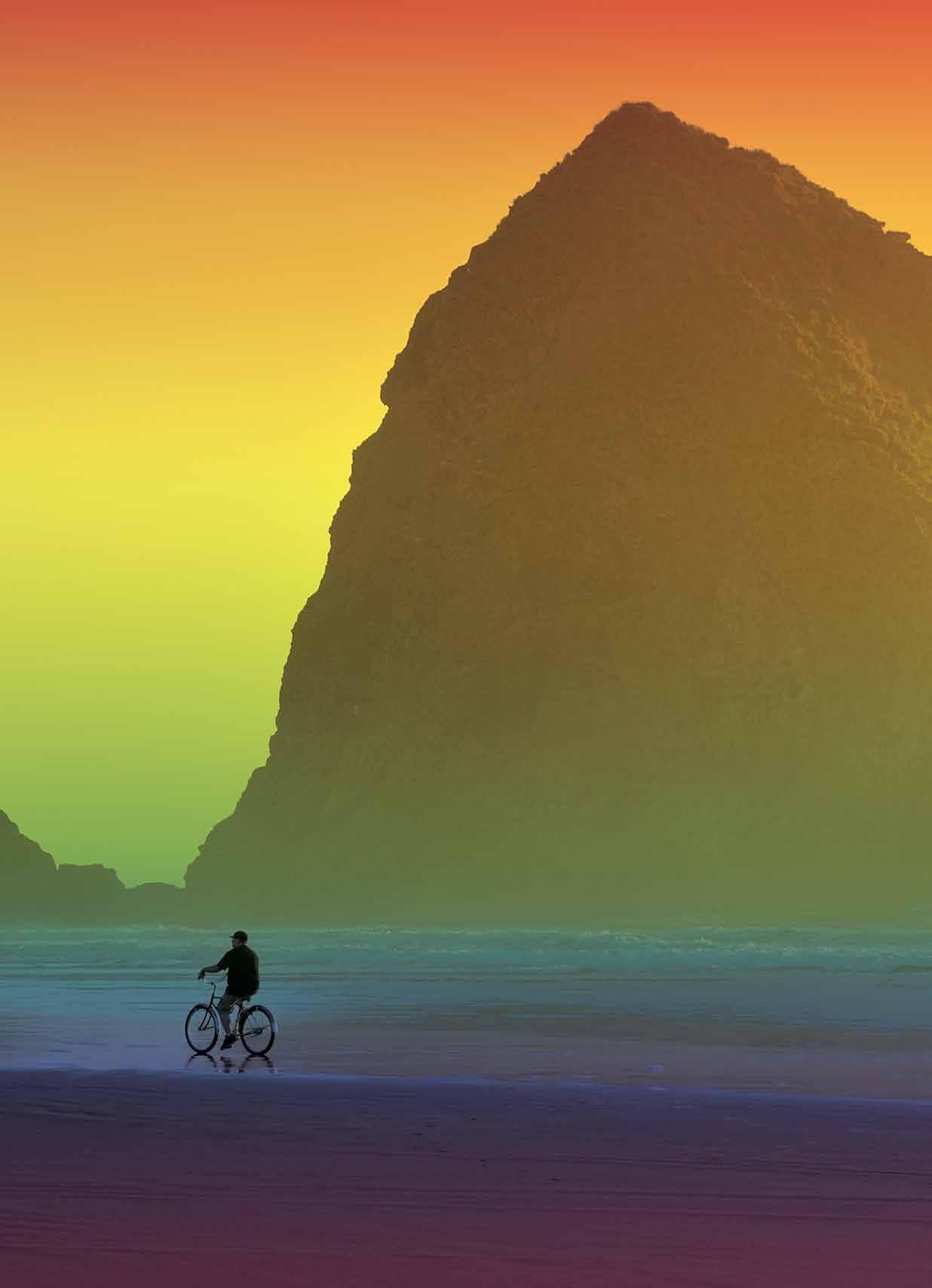
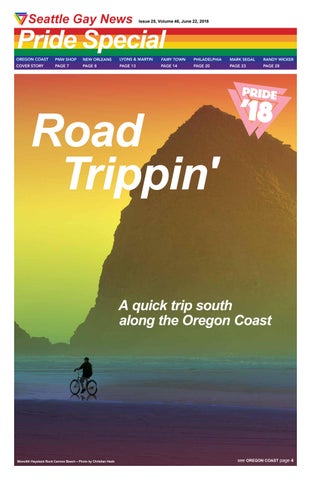
Monolith Haystack Rock Cannon Beach – Photo by Christian Heeb
continued from cover
by Jessica Price SGN A&E Writer
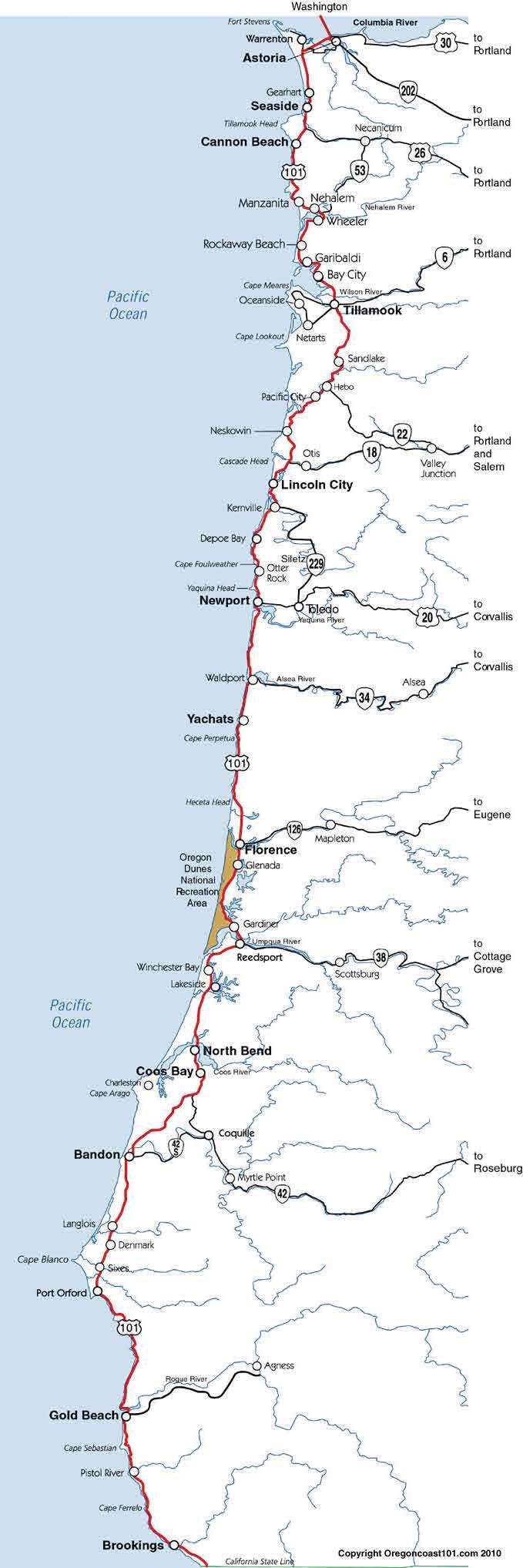
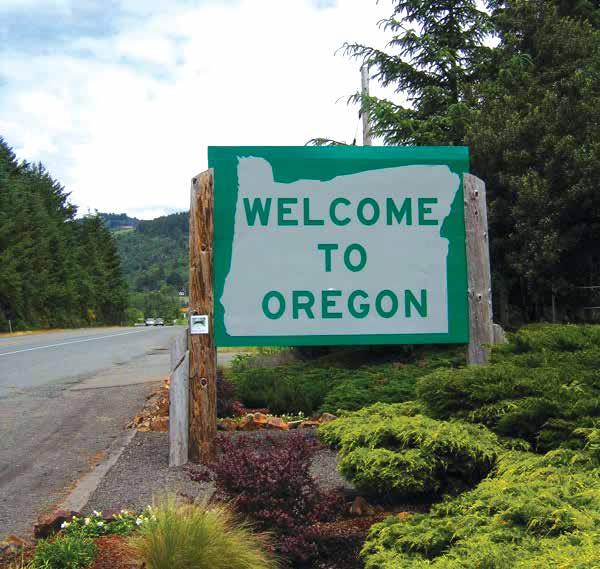
Living in Seattle comes with numerous perks, not the least of which is our proximity to the great state of Oregon and 363 winding miles of beautiful coastline just begging to be explored. Setting out on the Pacific Coast Scenic Byway (aka U.S. Highway 101) is the only way to go when hitting the road for a summer or autumn coastal excursion. Majestic forests, dramatically hued trees, and misty winding roads make for a memorable escape from the demands of city life.
Though it will take a bit longer than the average drive (depending on how far you want to go…Astoria? Cannon Beach? All the way to Coos Bay?), tantalizing glimpses of dramatic scenery running parallel to the coast far outweigh the long, featureless stretch of I-5 we’ve all traveled a hundred times or more to get to Portland and points beyond. If you’re short on time or just taking a long weekend, traveling south as far as Oceanside and Netarts makes for a comfortably paced trip with plenty to see and do along the way.
ASTORIA AND SEASIDE
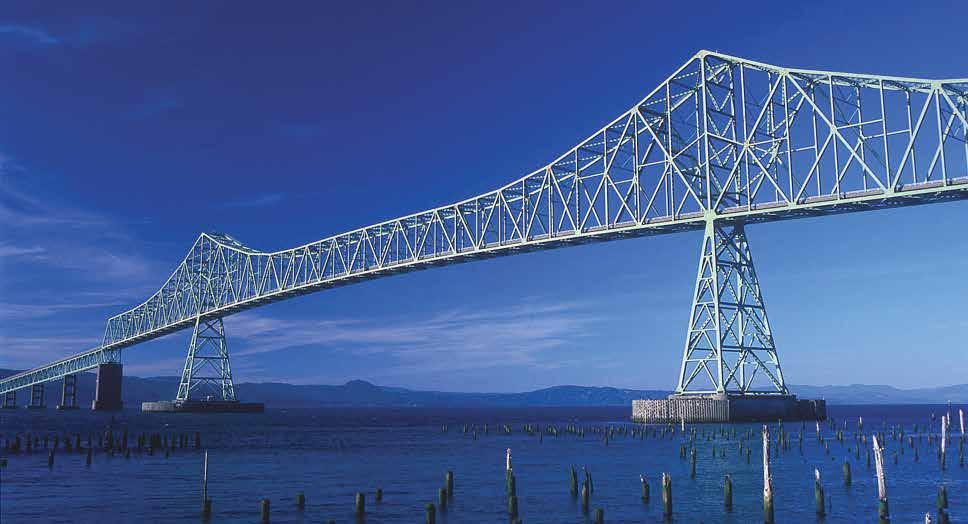
Astoria – known by many for quaint Victorian-era homes perched atop steep peaks featured in films such as The Goonies, The Black Stallion, and Free Willy – is an active seaport with a thriving art scene and a crop of unique bars and restaurants popping up throughout the Downtown Historic District. Astoria is the oldest American settlement west of the Rocky Mountains, and manages to retain its historic feel with very subtle modern improvements. A unique, old-fashioned small town that hasn’t yet been rebranded, kitsch-ified and repackaged within an inch of its life the way so many other small towns have, it’s a lovely place to stop in for a visit as it hasn’t become a tourist trap the way so many other historic small towns have. Stop off at the Astoria Coffeehouse & Bistro (243 11th Street, Astoria) to enjoy delicious pastries, Caffé Vita coffee, and lunch fare. In the evening the focus turns to regional and international cuisine and on the weekends Sunday brunch is served. It’s a local favorite and a funky place to stay a while, admiring the offbeat décor and chatting with the friendly staff. While in Astoria, feel the burn by climbing the 164–spiral step Astoria Column, and you’ll be rewarded with panoramic views of the city and the Columbia River.
Seaside lies 16 miles south of Astoria, and the beach’s 1.5 mile promenade is well worth a stop to stretch your legs. The town boasts many firsts: it was Oregon’s very first oceanside resort and also is home to the oldest aquarium on the West Coast, Seaside Aquarium. Continuing south, Tillamook Lighthouse is the first of 11 beacons along the Oregon Coast, nestled at the edge of Ecola State Park. The views from the cliffs here are spectacular, and during March and December tourists may spot migrating whales.
CANNON BEACH
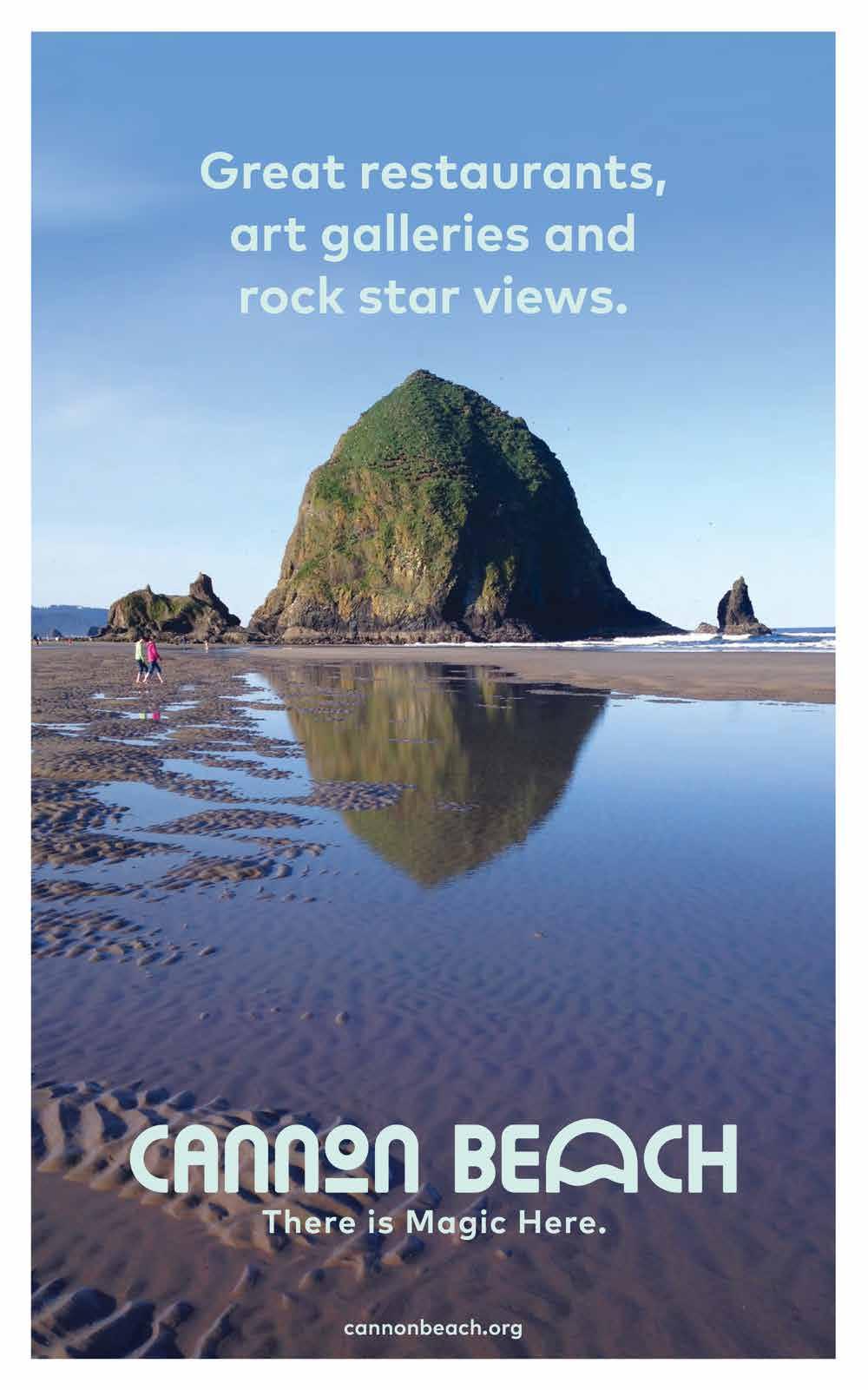
For an abbreviated road trip, Cannon Beach is a perfect destination to spend a night or two while exploring more Oregon adventures by day. The town is nestled along a rugged expanse of coastline dramatically punctuated by Haystack Rock. The hauntingly beautiful landmark is a 235-foot “sea stack,” or column of rock formed over time by wind and water eroding sedimentary or volcanic rock formations. It’s one of the most commonly photographed sights of the area (even popping up unexpectedly in the inner sleeve of Lana Del Rey’s Ultraviolence album).
Cannon Beach itself is a picturesque town with a uniformly decorated main street lined with bustling shops and galleries. The work of local artists and jewelry makers are readily available, as well as no shortage of antiques and handmade furniture. Foodies will rejoice in Cannon Beach’s thriving culinary culture, including local standouts Newman’s at 988 (988 Hemlock St.) and Sweet Basil’s Café (271 N. Hemlock St.). Like many local restaurants, Newman’s at 988 specializes in seafood with a European flair, while Sweet Basil’s open kitchen and cozy dining room serve up natural and organic cuisine with a variety of interesting options for vegetarians (the vegetarian pot pie is a must when available). Bruce’s Candy Kitchen is just up the street (256 N. Hemlock St.), a treasure trove of every kind of sweet you could possibly imagine. The options are staggering. Family-owned and operated since 1963, they’re best known for chocolates, salt water taffy, and hands down the best sour star gummy candies on earth. EVOO Cannon Beach Cooking School is another foodie highlight in the area, down at the other end of the street (188 S. Hemlock St.), and Cannon Beach Hardware and Public House (1235 S. Hemlock St.) (Screw & Brew is their clever tagline) is a quirky place to shop for (what else?) tools and then enjoy a burger and local microbrew, or take in a game on the big screen.
Living in Seattle comes with numerous perks, not the least of which is our proximity to the great state of Oregon and 363 winding miles of beautiful coastline just begging to be explored.
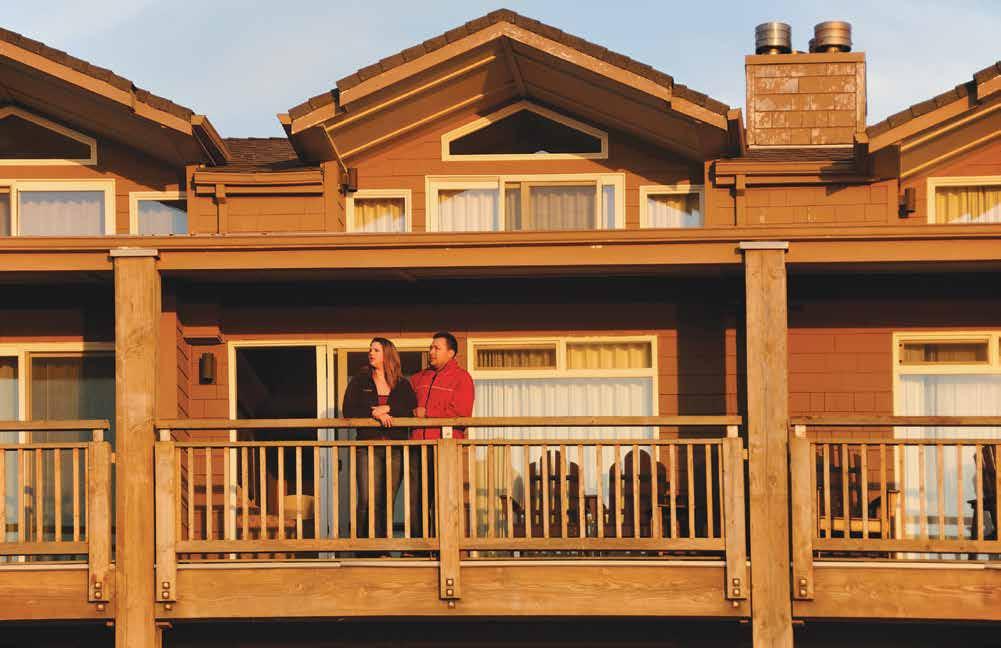
STEPHANIE INN
By night, Cannon Beach is best enjoyed from the vantage point of an elegant, sublimely appointed room at The Stephanie Inn (2740 S. Pacific St.). Opened in 1993, the oceanfront suites feature unparalleled views of the beach and Haystack Rock and the inn has been honored in Conde Nast Traveler’s “Gold List” and Travel + Leisure’s “World’s Best Hotels” list. It’s no wonder, as The Stephanie Inn packs hefty amenities, guest perks, and understated service into their pricey room rates (in summer, expect rates of $500+ for a luxurious stay, in fall rates drop to around $400, in November-December cozy up by the fire with rates at a low of $289). Children under 12 are not permitted, and built into the price are adults-only amenities such as a daily complimentary afternoon “wine
gathering,” nightcaps and board games in the library, and an incredible array of options at the completely free-of-charge, locally sourced “Chef’s Breakfast Buffet” each morning in the Stephanie’s elegant dining room. You won’t need to spend much with all the inclusive treats showered on guests. Fine foods and wines are savored at the Stephanie, where you can also sign up for cooking demonstrations, tastings, or make a reservation at the award-winning Stephanie Inn Dining Room.
Each room features its own fireplace and Jacuzzi tub, and, if you’re feeling outdoorsy, your own “fire butler” will assist with setting up a bonfire, lounge chairs, and ingredients for s’mores on the beach. On-site massage rooms and special packages for holiday getaways rotate year-round (check online for deals such as four consec-
utive nights, including Thanksgiving Day dinner, plus other holiday perks throughout December). The Stephanie Inn’s oceanfacing rooms also include individual patios where you can relax and listen to the crashing waves. It’s a dreamy escape from city life, and not uncommon to hear fellow guests talk about how they’ve been returning to The Stephanie Inn year after year since their first visit.
For recreation outside of Cannon Beach, a quick drive south will take you through the adorable beachside towns of Manzanita, Nehalem, Rockaway Beach, Garibaldi, and Bay City. Just beyond Tillamook (home to not one, but two, cheese factories: Tillamook as well as Blue Heron), a stop at the second lighthouse on the Oregon Coast – Cape Meares Lighthouse – offers
a breathtaking view of crashing waves, jagged coast, and annual whale watching. It’s a very short lighthouse – not much climbing is involved – and admittance is free. The scenic viewpoint also boasts that it is the sight of Oregon’s largest Sitka Spruce and the unique and sprawling “Octopus Tree.” From phenomenal coastline to foodie destinations, towering forests to oceanic adventures, the northernmost towns along the Oregon Coast will serve only as a starting point for many years of happy returns.
This article was originally published in the Seattle Gay News, Holiday special section, November 21, 2014. Where relevant, information has been updated to June 22, 2018





by Ryan Murray
City Living Seattle
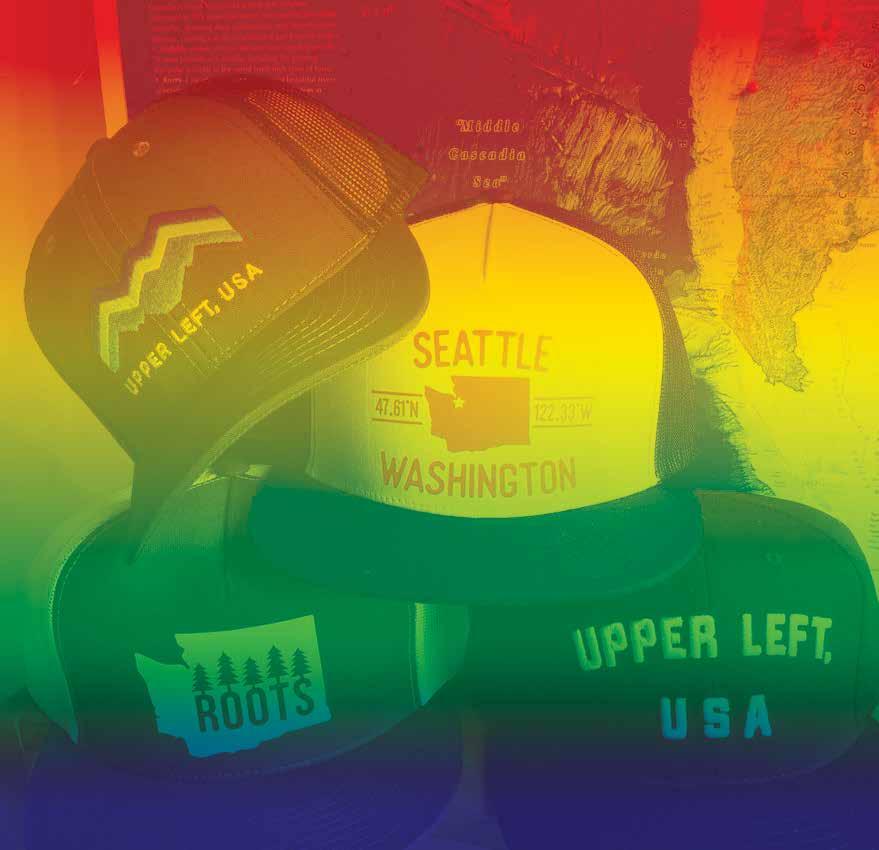
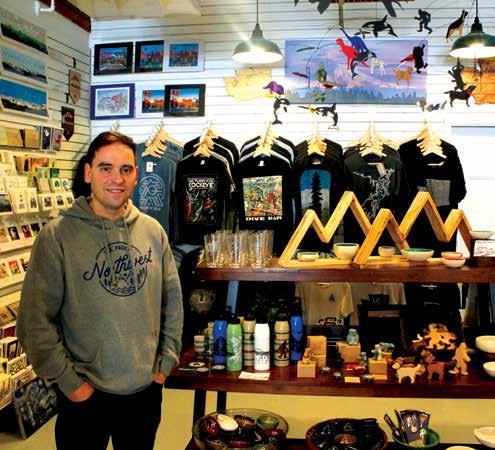
For 40 years, the Evans family has been selling high-quality, locally-produced goods at their Tacoma store, the Pacific Northwest Shop.
Last October, Matt Evans – son of longtime owners Bill and Ann – set up shop in Wallingford, offering the same wellsourced art, snacks and apparel.
“I feel like Seattle doesn’t have a shop quite like this,” Evans said. “You have touristy shops, but you don’t really have a store where you can buy great gifts made locally for friends and family.”
Evans was raised in Tacoma, in the back of his dad’s shop. The office there will always be “Dad’s office,” he said. Both Bill and Ann are still alive and well, and remain passionate about their business.
When Evans and his husband moved to Seattle, they looked at the U-District, Capitol Hill, Ravenna and even Burien. Ultimately, Wallingford proved too tempting to pass up.
“People said “Why don’t you just go to [Pike Place] Market?” And I had to tell them we wanted to be different from those stores,” he said.
Products in the store are mainly from Washington, but Oregon, British Columbia
and Idaho all have a significant presence on the shelves.
One of the most popular items are a series of nautical/pop-culture T-shirts by local artist Ray Troll.
Additionally, Evans said that while there are high-end works of art like from local Glass Eye Studio, most products aren’t going to break the bank. The average sale is less than $50 and the average item far lower.
“We have long-term relationships with suppliers, so we’re getting the same quality goods as in Tacoma,” Evans said. “My parents opened lots of different businesses, including a cafe, so they passed along a lot of that knowledge.”
While only a quarter of the size of his parents’ store in Tacoma, the curated products along Wallingford Avenue present a decent display of what the Pacific Northwest has to offer.
The Pacific Northwest Shop is located at 4411 Wallingford Ave N. www.pacificnorthwestshop.com
This article first appeared in City Living Seattle in the mid-December 2017 edition. Reprinted with permission.
\by Ed Walsh SGN Contributing Writer
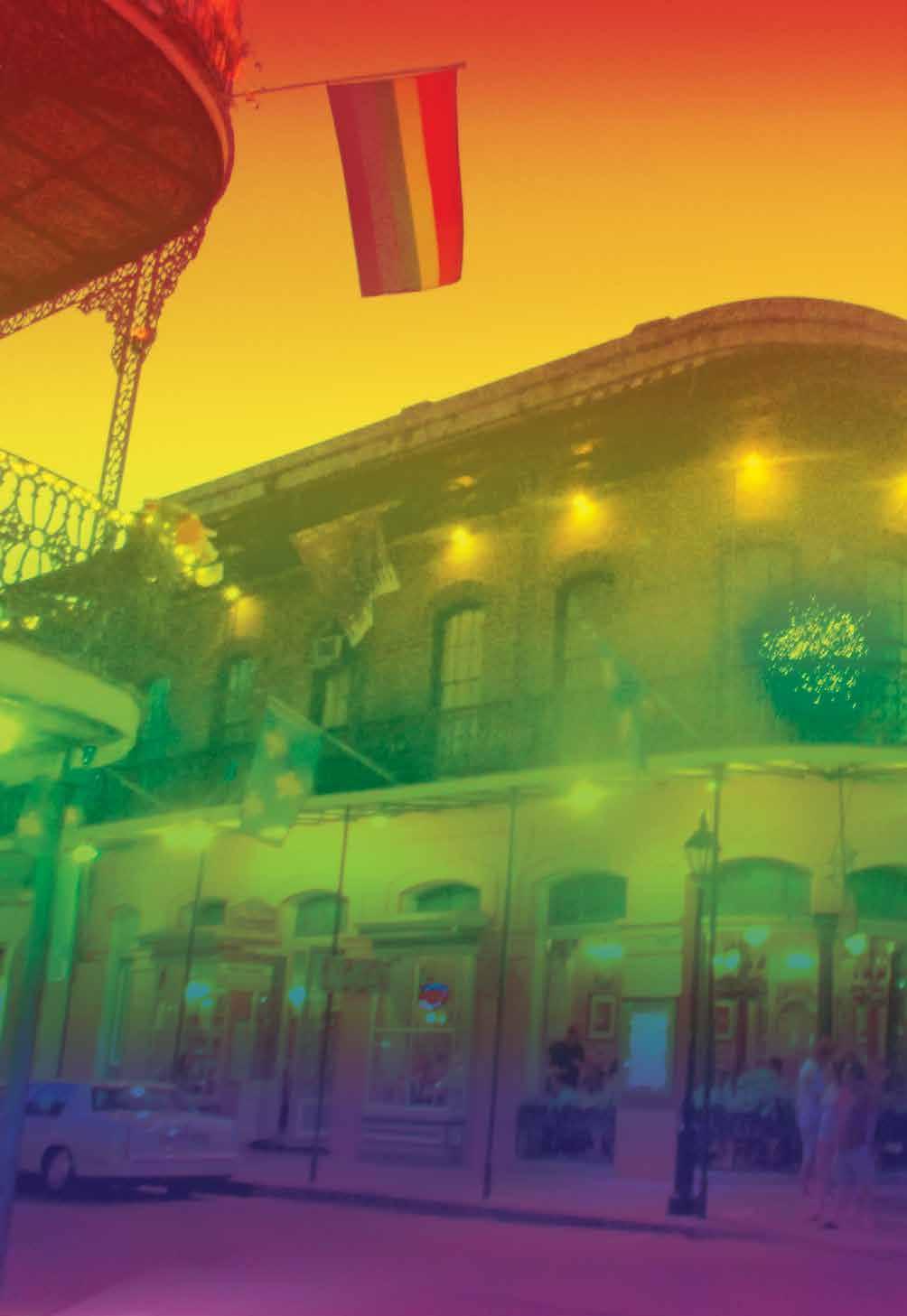
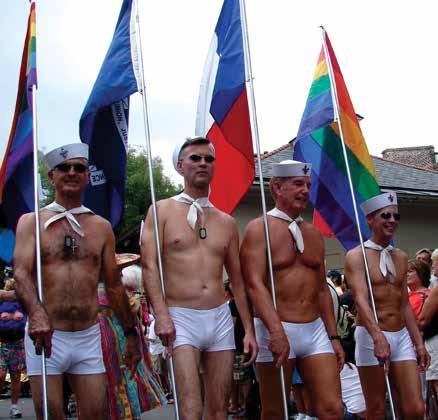
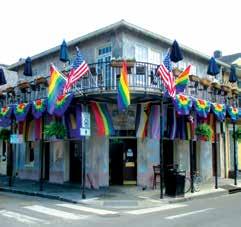
New Orleans got a couple of weeks jump on us, celebrating Pride on the second weekend of June. Thousands turned out for the parade on June 9 that skipped Bourbon Street for the first time this year. That was because the safety bollards that were installed on the street last year didn’t allow enough room for the wide floats to pass. The city got into the spirit days before Pride installing rainbow flags as far as the eye could see in the center of North Rampart Street, which was part of the parade route on the northern boundary of the city’s famed French Quarter.
But if you missed New Orleans Pride, fear not, the Big Easy’s biggest gay weekend is Southern Decadence, celebrated over Labor Day weekend. The party begins on Thursday, August 30, and ends on Monday, September 3. Bars all around town get into the act, hosting virtually non-stop parties.
For more on Decadence, visit http://www. southerndecadence.com/. It will be updated later this summer. Another site, www.southerndecadence.net, is sponsored by the Bourbon Pub and mostly focuses on Decadence events held in and around the bar. The highlight of Southern Decadence is a block party on Bourbon and St. Ann Streets between the Bourbon Pub/Parade and Oz bars.
The French Quarter
Southern Decadence parties and yearround LGBT nightlife is mostly in the French Quarter, where the city was founded 300 years ago. The early settlers wisely chose that area because it was high ground on the banks of the river, about 100 miles upstream from the mouth of the Mississippi River. The neighborhood never flooded in the aftermath of Hurricane Katrina in 2005.
LGBTs have long been a part of the city’s fabric going back to the early days when New Orleans was only the French Quarter. Despite being founded by the French, the neighborhood was influenced more by the Spanish who rebuilt the city following the devastating fires in 1788 and 1794.
In the early 1850s a reputed gay man, Gaston de Pontalba, designed the first ornate cast-iron railing on the upper floors of buildings that is synonymous now with New Orleans. The brick Pontalba buildings, which were built by his family, still stand on each side of the city’s famed Jackson Square. Starting around 1910, gay men William Ratcliffe Irby and Lyle Saxon spearheaded a campaign to preserve the architecture that was in danger of being torn down to make way for newer buildings.
“You would not have the French Quarter here had it not been for a couple of gay men,” said local historian and author Frank Perez, who runs an LGBT-focused tour of the French Quarter.
New Orleans Walking Tours
Perez’s tour should be on the must-do list
of every LGBT visitor to the city. His walking tour of the French Quarter covers the forgotten and sometimes sad history of LGBT New Orleans. One of his first stops is the site of a 1958 murder of a gay man, Fernando Rios, whose murderers were acquitted by claiming the gay panic defense. Another of many stops along Perez’s tour is 1014 Dumaine Street, the house where gay author Tennessee Williams wrote A Streetcar Named Desire in 1947. The title is from a streetcar line named Desire, which stopped running in 1948, just after his play was first published. Perez’s tour is $30 and can be arranged by calling him at (504) 568-0717 or search for Gay New Orleans Walking Tour on Facebook. It was the best $30 I spent.
This year marks the 45th anniversary of the Upstairs Lounge fire, which took the lives of 32 people in the French Quarter and had been the worst mass murder of LGBT people until the Pulse Nightclub shooting that took the lives of 49 people in 2016. The Upstairs Lounge arsonist was believed to be a disgruntled patron who had been thrown out of the bar earlier that evening. Rodger Nunez was questioned by police but never charged. He committed suicide a year after the fire. A sidewalk memorial plaque marks the spot in front of the building on 141 Charters Street.
The oldest LGBT bookstore in the South, Faubourg Marigny Art & Books, can be found on 600 Frenchmen Street in the Marigny neighborhood, just north of the French Quarter. The bookstore first
opened in 1977. While most other LGBT bookstores in the country have closed, the store’s current owner, Otis Fennell, has kept this quirky neighborhood institution going to the appreciation of many.
The most popular walking tours of New Orleans are the ghost tours. One of the best is the Killers and Thrillers tour (ghostcitytours.com). It covers some of the real history of New Orleans but doesn’t overload with wildly embellished ghost stories. The ghost walks usually start just after dark and the competing walking tours cover much of the same territory, including the LaLaurie Mansion on 1140 Royal Street where a woman was run out of town for allegedly torturing slaves. The building was once owned by actor Nicholas Cage, who lost the property because of financial troubles.
Sightseeing
One of the best ways to see the highlights of New Orleans without getting lost is the Hop On Hop Off Bus (http://www. citysightseeingneworleans.com). It runs every half hour and takes you around to the top attractions of the city while tour guides point out sights along the way I took the bus tour with three different guides. The tour goes in a circle so I repeated some of the routes, but each of the three guides gave different bits of information so I learned something even as we covered the same ground. You can add on walking tours of
see NEW ORLEANS page 10
continued from page 9
the French Quarter and the Garden District for an extra price. Both walking tours are free with a three-day ticket.
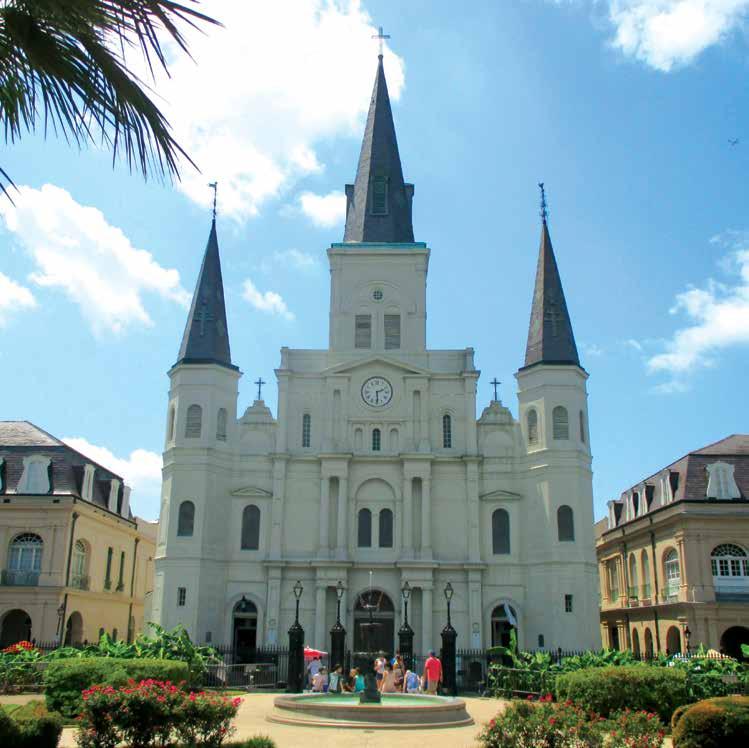
The symbol of New Orleans is the St. Louis Cathedral in Jackson Square. A statue of Andrew Jackson on a horse is directly in front of that and across the street is a newly remodeled plaza with a sweeping view of the Mississippi River and the iconic bridge over the river. New Orleans is called the Crescent City because the river curves like the shape of a crescent moon with the city in the middle of that crescent. The city was founded at that point in part because it was more defensible because boats could be seen easily from either direction.
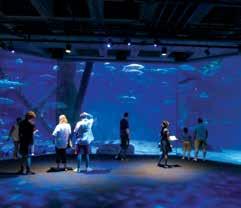
The Audubon Aquarium of the Americas (https://audubonnatureinstitute.org/ aquarium) is one of the nation’s best aquariums. It is on the banks of the Mississippi just steps from Jackson Square. Highlights include a huge shark tank and a rainforest. Its Entergy Giant Screen Theater shows some spectacular science and nature films. Be sure to also check out the Audubon Butterfly Garden and Insectarium, on the first floor of the Customs House on Canal Street about a five minute walk from the aquarium. It is an entertaining look at the beauty of butterflies and their importance to the ecosystem as well as the importance and danger from many other insects.
One attraction not to be missed is the National World War II Museum (www. nationalww2museum.org). The huge complex is made up of a handful of buildings that makes the history of that dark era come alive through technology including holograms and archival footage. The museum takes visitors through the events that led to the war through its conclusion with the surrender of Germany and Japan. You should allow at
least four hours to do the museum justice. But if you only have time to see one thing in the museum, see the “Beyond All Boundaries” program narrated by Tom Hanks. The four-dimensional show takes the audience on a 30-minute journey through the war and peace. At one point simulated snow falls from the sky, at another a concentration camp watchtower light pans the audience. In part of the presentation, the front of a plane is lowered from the ceiling and it blends in with the film. The museum deservedly ranks near the top of some lists of best museums in the world.
The world-famous Bourbon Street becomes a pedestrian-only street at night. Bars are allowed to operate 24/7 in the city and you are allowed to carry drinks in the street as long as they are carried in anything other that glass cups or bottles. Understandably, glass bottles and drunks on the street are not good combinations. The biggest concentration of gay nightlife in New Orleans is around Bourbon Street at St. Ann Street, that is just at the point where the pedestrian-only section of Bourbon Street ends and the street opens to traffic. Oz is on one side of the corner and the Bourbon Pub/Parade is right across the street. New Orleans’ oldest gay bar and one of the country’s oldest gay bars is Cafe Lafitte in Exile. It is just a block away on Bourbon Street. There are no longer any lesbian bars in New Orleans but Oz has a women’s night every Thursday at 9pm. Check out the Girls Spot website for New Orleans women-focused events (www. grrlspot.com) Several other gay bars are located in the neighboring New Orleans neighborhood of Marigny. The popular Phoenix bar is just steps from Frenchmen Street, which is a lively nightspot location that is like Bourbon Street for locals and tourists who want to escape the craziness
and ’80s music.
A good up-to-date gay guide can be found in the Flame magazine. It includes handy maps. You can pick up a copy when you get in town or download one at http:// flame-mag.com/
The city’s longtime gay newspaper, Ambush, is a great source of information on everything LGBT in New Orleans. It has a great listing of bars but without the maps: http://www.ambushmag.com/
Accommodations
New Orleans is one of the most walkable cities in the world. If you are looking for a hotel, the best locations are the French Quarter or the adjacent downtown or Warehouse District. On a trip earlier this month, I had the pleasure of staying at the 162-room Cambria Hotel (www.cambrianeworleans.com) in the Warehouse District. It has been open less than a year but was perfectly designed with an industrial chic motif. The seven-storey building is brand new but was built to look like one of the several repurposed warehouses in this trendy neighborhood, just steps from the French Quarter. It offers a perfect combination of art and old world touches with the most modern conveniences.
If you prefer to stay in a smaller Bed and Breakfast type hotel, check out the gayowned HH Whitney House (http://hhwhitneyhouse.com/), the Antebellum Guest House (www.antebellumguesthouse.com) or The Burgundy (http://theburgundy. com) . Don’t look for an Airbnb or the gay homesharing site Misterb&b in the French Quarter. The city banned short-term rentals in the neighborhood.
Food
New Orleans, of course, is known for its food including gumbo, the overstuffed Po-Boy sandwiches, Crawfish Etouffee, and for dessert, beignets. In the heart of
the French Quarter, the Court of Two Sisters (http://www.courtoftwosisters.com/) offers a good buffet sampling of some of New Orleans favorites served in a beautiful outdoor courtyard complete with a jazz band. The brunch costs $31.99. But if the food is more important that the atmosphere, Harrah’s New Orleans (https://www.caesars.com/harrahs-new-orleans) also has an excellent buffet at half the price with a much larger food selection. Breakfast and lunch there are $15.99 or $14.99 if you are a Harrah’s rewards member. You can sign up for a membership in the casino.
If you want to try a hometown favorite, PoBoy sandwich, check out Parkway Bakery and Tavern (http://parkwaypoorboys.com/). It’s a couple of miles outside the French Quarter and where the locals go for authentic and inexpensive New Orleans cuisine.
Cajun Seafood (1479 N Claiborne Ave) is another local favorite, about a mile outside the French Quarter. It’s famous for crawfish. It’s off the beaten path and unknown to most tourists, but the locals return time and time again.
Cafe Du Monde, with its flagship store in Jackson Square is always jammed with tourists and is a very popular spot for New Orleans’ version of doughnuts, beignets, but you can find them all over the French Quarter.
Alaska Airlines flies nonstop from SeaTac to New Orleans in a little over 4.5 hours. Taxi fare from the New Orleans airport to the French Quarter is $36. Uber and Lyft are about the same. Airport shuttle vans are $24 one way. A couple of public transit buses, the E2 and 202 run to downtown for only $2. A rental car is more trouble than it’s worth. Parking can be a challenge in the tourist areas of New Orleans.
The city’s official travel website is https://gonola.com/. Scroll down for the LGBT section.


by Alex Madison Bay Area Reporter
In a time when President Donald Trump has directed a ban on transgender individuals from serving in the military, his administration has rescinded protections for trans students in public schools and the advancement of LGBTQ national historic landmarks are in question, the stories of those who fought for equal rights in an earlier era seem to be more important than ever before.
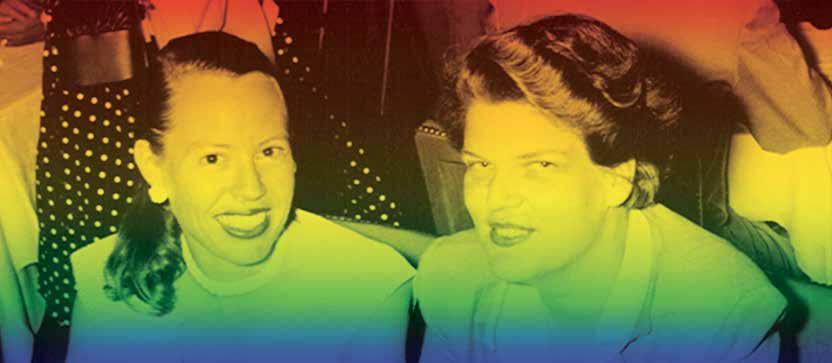
One such story is that of Phyllis Lyon and Del Martin, who ushered in the modern lesbian movement and made history by becoming the first same-sex couple married in San Francisco – twice. Their accomplishments as activists and the love they shared have become a symbol of perseverance, strength and hope for the LGBTQ community.
“If you got stuff you want to change, you have to get out and work on it,” said 93-yearold Lyon. “You can’t just sit around and say, ‘I wish this or that was different.’ You have to fight for it.”
Lyon is still a beacon of strength, wit and charm as she reminisced about her younger years. Although Martin died in 2008 at age 87, Lyon still lives in the couple’s one-bedroom home nestled in the hills of Noe Valley, which they shared for more than 50 years.
“I can’t be out galloping around like I used to, getting stuff done,” said Lyon as she sat in her living room during a recent interview with the Bay Area Reporter. Decades ago, the room served as a gathering place for lesbians during a time of social conformity, when the lesbian community only had a handful of bars in the Castro district in which to meet and socialize.
“Oh, gosh, we used to have dance parties here all the time,” Lyon recalled, smiling.
Although Lyon said she has not considered submitting her home to become a national or local landmark after she passes, one step inside the cozy abode reveals the couple’s history-making life, seen through countless pictures, knickknacks and newspaper clippings.
Kendra Mon, Martin’s only child from her first marriage, remembers spending summers at the couple’s home when she was a student at UC Berkeley. Over the years, Mon has come to understand the important role her mother and Lyon played in the lesbian community, something she didn’t quite grasp as a young adult.
“Lesbians would call the house from all over the world,” said Mon, a retired mother of two who lives in Petaluma, Calif. “A lot of their friends were scared at that time. Mom gave them a place where they could feel safe.”
Wedding bells
When former San Francisco Mayor Gavin Newsom ordered city officials to
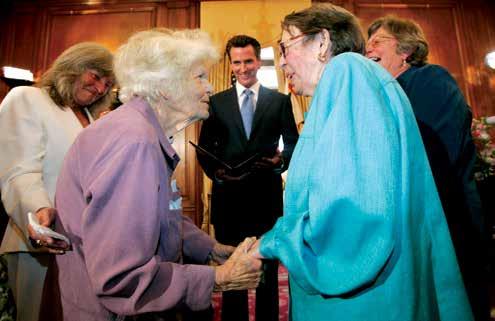
issue marriage licenses to same-sex couples in February 2004, the “Winter of Love” was unleashed, as images of happy gay and lesbian couples lined up outside City Hall were beamed into living rooms across the country, and around the world. But that day, Feb. 12, started off with a quieter ceremony inside a City Hall office, where Newsom married Lyon and Martin, as LGBT community leaders and others looked on.
Ultimately, the California Supreme Court ruled several months later that those 2004 marriages were invalid because Newsom had exceeded his authority. Lyon and Martin – and the thousands of others –would have to wait four more years, when
Although their first marriage was ended after 181 days, it didn’t stop the couple from continuing their fight. Martin and Lyon exchanged vows again on June 16, 2008.
Martin died Aug. 27, just 74 days after again making history.
The matching pink and blue suits the couple wore are now in the permanent collection in the archives of the GLBT Historical Society.
A longtime friend of both women, Kate Kendell, executive director of the National Center for Lesbian Rights, personally asked Lyon and Martin to be the first same-sex couple to wed in 2004.
“I called the house and Phyllis answered
the same court in May 2008 overturned Proposition 22, a same-sex marriage ban, and said that denying marriage rights to same-sex couples violated the state Constitution. Wedding bells began ringing in the Golden State in June.
(The same-sex nuptials were halted in November of that year, after state voters passed the Proposition 8 marriage ban. After years of legal wrangling, the U.S. Supreme Court in June 2013 tossed out Prop 8 on a technicality and same-sex marriages resumed in California.)
Martin and Lyon were the first samesex couple to be married in the city in 2004 and 2008. Framed, yellowed San Francisco Chronicle articles of the couple’s historic weddings grace the walls of Lyon’s welllit living room. The headlines read, “Wedding Bells to Ring in a New Era” and “The Wait is Over.”
“We got it started for everybody else,” Lyon said of her 2004 wedding. “We didn’t get married just for us. We knew it was important to a lot of other people.”
the phone. I told her I needed them to do one more thing for the movement,” Kendell said, recalling it to be a humorous conversation, after Lyon put her on hold to ask Martin. They said yes a few minutes later.
Kendell attended both marriage ceremonies, an emotional experience for her.
“I burst into tears, as did other staffers,” she said. “You knew you were a part of something historically very important standing there.”
For someone who grew up in a time where lesbianism was seen as “immoral, sick and illegal,” Lyon said she never believed she would live long enough to marry her “sweety-puss” and the love of her life, as she called Martin, let alone see same-sex marriage legalized nationally. But sure enough, in a landmark decision on June 26, 2015, the U.S. Supreme Court ruled that same-sex couples could marry in all 50 states.
“I think we’ve made tremendous progress,” said Lyon, laughing about how she is still amazed that people don’t fall over dead when she tells them she is a lesbian. The
incredible accomplishments of Lyon and Martin no doubt played a role in the progress of the LGBTQ community in San Francisco and beyond. When Martin died, then-House Speaker Nancy Pelosi (D-San Francisco) famously said, “We would never have marriage equality in California if it weren’t for Del and Phyllis.”
Earlier days
Martin began working as an activist after receiving her degree in journalism from UC Berkeley. While working at a newspaper in Seattle, Martin met Lyon in 1950 and the two began working on behalf of lesbians in their community, health-care access, advocacy on behalf of battered women and issues facing elderly Americans.
Together more than 50 years, the couple founded the Daughters of Bilitis in 1955, the first social and political organization for lesbians in the United States. In 1956, they started a newsletter called The Ladder, which grew into a publication about lesbian politics and culture and became a lifeline for hundreds of women isolated and silenced by the restrictions of the era.
Martin also became an activist for the feminist movement in 1963 when she was the first out lesbian to serve on the board of directors of the National Organization for Women. The women were pioneers, tireless activists and together a symbol of what it means to fight for equality and love in the LGBTQ community.
Their many contributions over the past five decades are credited with shaping the modern LGBT movement.
In 2005, Lyon and Martin were inducted into the National Lesbian and Gay Journalists Association’s LGBT Journalists Hall of Fame.
“No, we are not back in the 1950s, but we are facing some of the most threatening and dangerous times, certainly in my lifetime,” Kendell said of the Trump administration’s lack of support of the LGBTQ community. “Phyllis and Del are examples of how you live during difficult times. I look to them as an inspiration, a north star of how you show up, you fight and be present.”
Lyon plans to donate some of the items in her home to the Smithsonian Institute after she is gone, but, as Kendell said, the memory and legacy of Martin and Lyon live on through their writings, perseverance and love for one another.
Alex Madison is a freelance reporter for the Bay Area Reporter
Courtesy of Philadelphia Gay News
by Joey Amato
SGN Contributing Writer
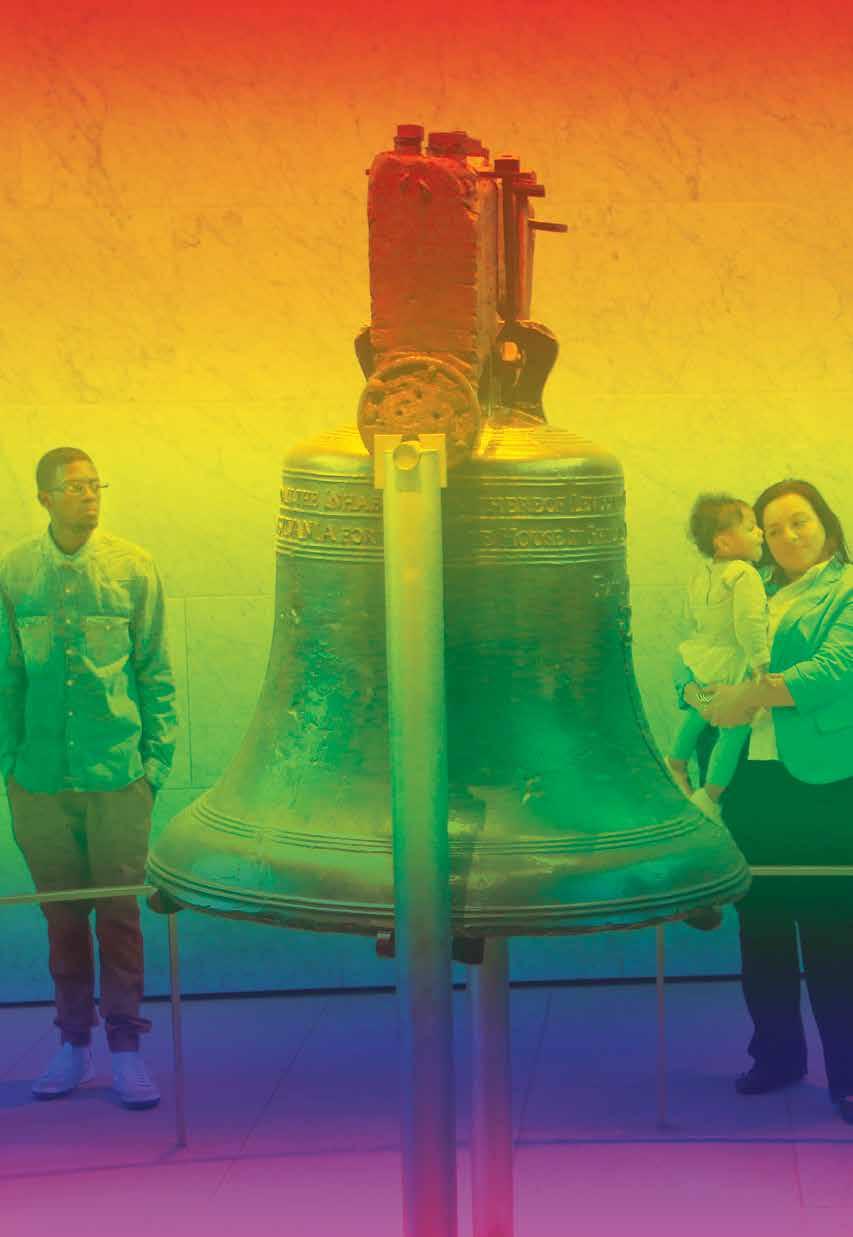
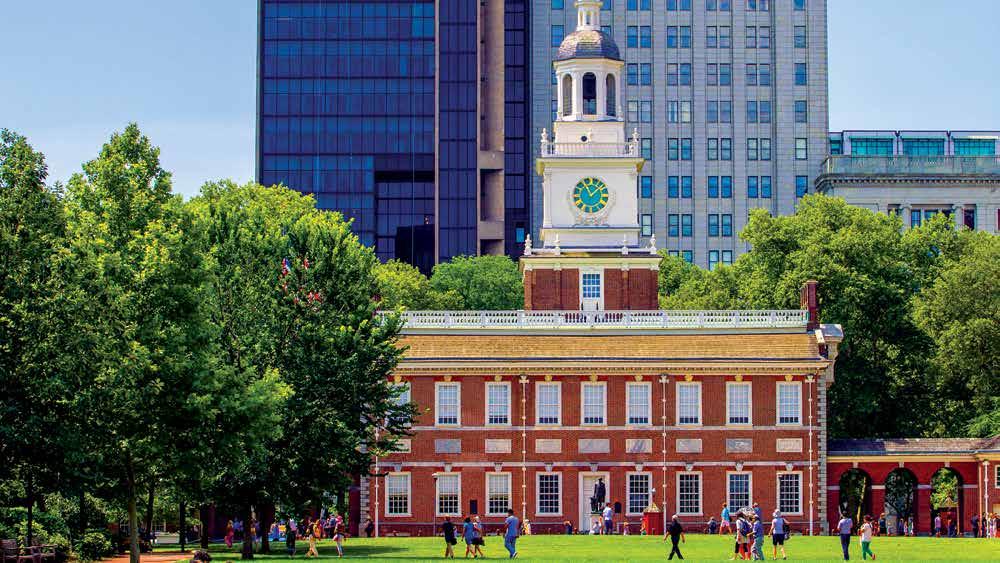
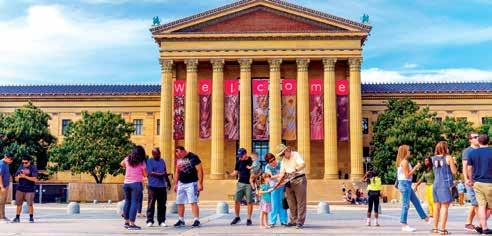
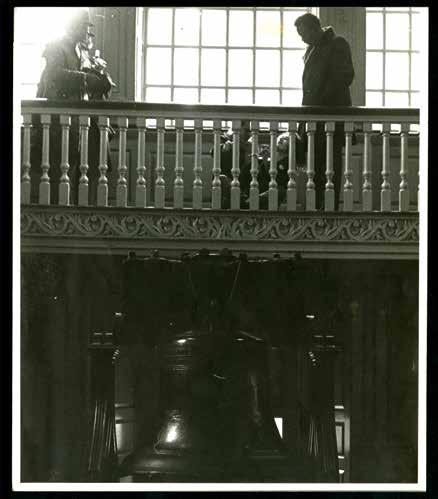
The first time I visited Philadelphia was for last year’s NLGJA [The Association of LGBTQ Journalists] conference and to be perfectly honest, I really didn’t think much of the city. The main reason for that was mostly because I was stuck in a hotel conference room most of my stay. Apart from brief visits to the Liberty Bell, Independence Hall and The Rocky Steps, aka, the Philadelphia Art Museum, I really didn’t have the opportunity to explore the city.
Fast forward almost 1 year later and I found myself in the City of Brotherly Love once again. This time was for pleasure, not work, so I knew my experience would be drastically different than my last. And I was right!
I stayed at the Cambria Hotel & Suites, which is located pretty much in the heart of the city. What I like most about the city is its walkability. The property is brand new, and the amenities are very nice. Most rooms offer great views of the city, but its biggest asset is the location.
I began my stay in Philly with a trip to the Liberty One Observation Deck. Not only is it atop one of the city’s most iconic buildings, but it will also give you the chance to get yourself oriented and familiar with the city. I always like to view a city from an observation tower when I first arrive as it tends to help me navigate easier.
I recommend visiting Maison 208 for dinner. The gorgeous, two-floor restaurant from Top Chef contestant Sylva Senat stands out in Midtown Village’s dining scene – and not just because of its spacious design and retractable roof, the only one in the city. Maison’s New American menu offers cleverly chic updates on American dishes. The cocktail list includes delicious concoctions such as the “Black Rose,”
made with vermouth-and-blackberry and dressed with rosemary.
After dinner, head to the Gayborhood Yes, that’s the actual name of Philadelphia’s gay neighborhood. There are dozens of gay nightlife venues in this part of town so it’s almost impossible to visit them all. Usually I like to highlight a few venues that I enjoyed, but the Gayborhood really offers so many nightlife options that it’s hard to focus on just one or two. There really is something for everyone.
If you aren’t hungover the following morning, I suggest waking up early, grabbing a nice breakfast at the hotel’s restaurant Social Circle and then walking up Benjamin Franklin Parkway to the Philadelphia Art Museum and the famed Rocky Steps. You will see dozens of folks reenacting the Rocky scene, so don’t be embarrassed if you want to run up the stairs as well. The top of the stairs also offers a great view of the city.
The Philadelphia Museum of Art is the third-largest art museum in the country and houses an extraordinary collection that spans 2,000 years of artistic achievement. A one-acre garden features an ever-changing selection of sculpture. During my visit, the museum was exhibiting “Keith Smith at Home,” the first major monographic exhibition in 50 years of the work of Keith Smith, an American bookmaker, photographer and craft-centered artist. Smith’s highly personal pieces deal with his home, coming out and change. The museum library’s accompanying exhibition explores Smith’s bookmaking process.
Along the way, swing by the Rodin Museum, home to the largest Rodin collection outside of Paris. Masterpieces include The Thinker, Eternal Springtime and The Gates of Hell, plus beautiful formal gardens.
For a unique cultural experience, head to Shofuso Japanese House and Garden,
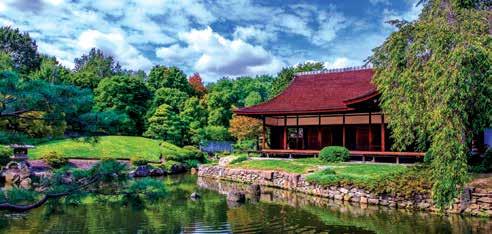
site of the continent’s first Japanese garden.
Created for the 1876 Centennial Exhibition, Shofuso includes a traditional 17th-century-style house – a 1953 postwar gift from Japan to the U.S. – and a stunning, 1.2-acre Japanese pond and garden by landscape designer Tansai Sano. We had the opportunity to feed the beautiful koi and explore the house and tea room.
After a long day of sightseeing, head to Serpico. We had the opportunity to dine with Scott Conant, LGBTQ editor at Comcast. It was love at first bite. Scott told us some wonderful facts about the city’s LGBTQ culture and even invited us to a private dance party, but I wasn’t feeling that well, so decided to call it a night. We still had another jam-packed day ahead of us.
The next day, after breakfast, we left for The Institute of Contemporary Art (ICA). Open to the public free of charge, the ICA has been instrumental in showcasing the work of emerging and underrecognized artists for more than 50 years. The ICA led the way with the first-ever museum shows of Andy Warhol, Agnes Martin, Robert Indiana and other influential artists. “Tag: Proposals on Queer Play and the Ways Forward,” on display during my visit, explores how the expanding influence of digital and online technologies, fandom subcultures and artistic discourse has created new possibilities for queer identification, changing how personal roles and forms of expressions are defined in contemporary society. I wasn’t a huge fan of this exhibition. Although I am a huge fan of fine art, this particular exhibit was a bit too abstract for my taste.
It’s always 5 o’clock somewhere, so we decided to head to Philadelphia Distilling, which is housed in an old, 15,000 squarefoot Fishtown factory. Philly’s first postProhibition distillery uses hand-hammered copper stills and Hall-Woodford wooden
fermentation vessels to create batches of Bluecoat American Dry Gin, Blue Coat Barrel Finished Gin, Vieux Carré Absinthe, Penn 1681 Vodka and THE BAY Seasoned Vodka. The distillery offers a full bar and restaurant with an outdoor patio and a tasting room. I really enjoyed most every spirit we sampled. The absinthe however carries quite a punch.
If you’re in town on a Sunday, go to Bud & Marilyn’s for brunch. Located in the heart of the Gayborhood, Bud & Marilyn’s is a retro-inspired restaurant-bar owned and operated by business and life partners chef Marcie Turney and Valerie Safran. Inspired by Turney’s restaurateur grandparents, the restaurant serves new takes on American classics like meatloaf, wedge salad and chop suey, paired with cocktails like the Blinker, a whiskey sour made with rye, and Marilyn’s O-F, a brandy old-fashioned.
It is safe to say this visit to Philadelphia was extremely different from my first experience. I really felt like I had a chance to explore the city and get a feel for some of its neighborhoods. I enjoyed it so much that I am eager to visit again in the near future.
[EDITOR’S NOTE: Comprehensive visitor information about Philadelphia is available online at Visit Philadelphia (www.visitphilly.com/) the city’s official visitor and tourism site or by calling 1-800537-7676. For LGBTQ specific information, see www.visitphilly.com/lgbt. Information about the William Way LGBT Community Center can be found at www. waygay.org or phone (215) 732-2220. Philly Curbed lists nine landmark LGBTQ sites to visit in Philadelphia – https://philly.curbed. com/maps/Philadelphia-gay-pride-lgbtqhistoric-sites. Philadelphia’s LGBTQ newspaper is the Philadelphia Gay News (www. epgn.com/).]
by Mark Segal
Philadelphia Gay News
Just saying that I am humbled is not enough: It is an honor of a lifetime.
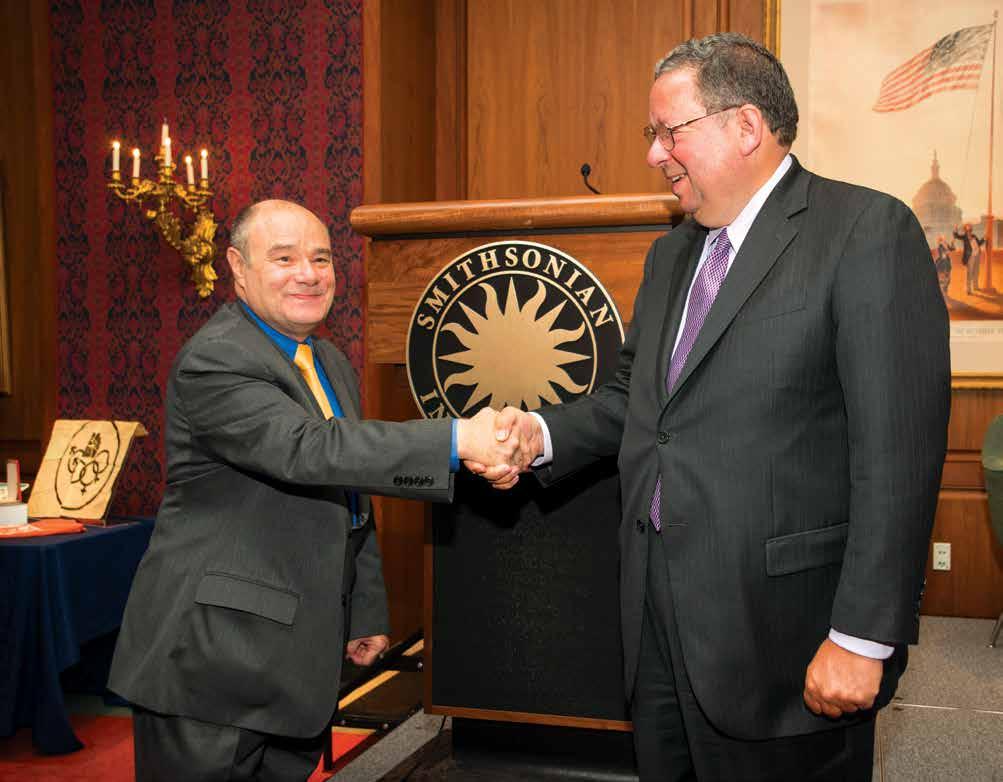
By the title of this column, I’m not talking about my age, but something that I’m still processing. There have been many honors over the last few years, but this is something that happens to few Americans, and I never expected it to happen to me. My personal papers of the last 50 years will soon be alongside people like Benjamin Franklin, George Washington, LGBT pioneer Frank Kameny and even Judy Garland’s ruby-red slippers. It seems strange to say, but I’ve been asked by the Smithsonian for my papers and memorabilia and they are now part of our American history at The Smithsonian Institution in Washington D.C.
As you read this [May 17, 2018], my family and some friends will be in the Presidential Reception Suite in the Smithsonian’s National Museum of American in Washington D.C. doing what is called a signing ceremony. That’s when I officially sign over my personal papers and personal memories of the last 50 years, including items from Stonewall, that first Gay Pride March, the Gay Liberation Front, LGBT media, gay youth, senior-housing materials and more. This project has been going on for almost two years now, and my friends at the Smithsonian tell me that they now have 16 squarecubic feet of my life … how strange to put one’s life into square-cubic feet.
During my book tour over the last three years, when I was introduced, many would call me historic, something that seemed to me a little out of place, so when the Smithsonian called, it began a process of me attempting to understand what I had accomplished and the barriers that were placed in the way.
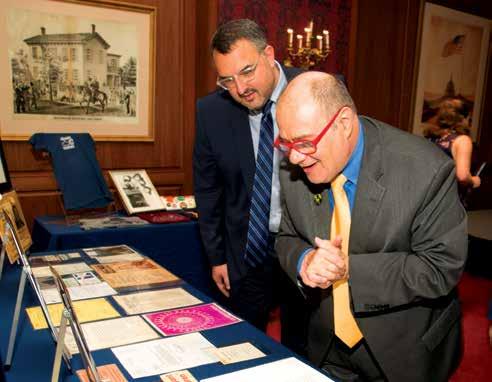
First came the search around the office and home to see what I actually had for the collection. That uncovered pictures, papers
and items long-forgotten. Each time the curators at the Smithsonian would smile, and try over and over to explain my place in history, something that I still have trouble contemplating. At one point while I was contemplating this out loud, one of them actually said something like, “You are history and we’re the experts on American history.”
Why the collection was so valuable to LGBT history, I didn’t understand. Most people associate me as a leader in LGBT
media and a writer. But that is only a small part of the collection. It also made me realize what the Smithsonian had already understood: While most of my contemporaries had one or two points of our struggle, my involvement in so many of the issues we’ve faced over the last 50 years makes it one of the most complete LGBT history collections. It follows my path from Stonewall to working with Obama’s White House to current battles. And hopefully this collection will give our young leaders the opportunity not only to witness the history, but more importantly, to witness how we took a community that wasn’t a community, built it and struggled to obtain what we have today. A bail receipt from my first arrest in 1970 is a part of the collection, as are three items from the very first Gay Pride March. (We weren’t a parade at that time.)
Writing my memoir, And Then I Danced: Traveling the Road to LGBT Equality, gave me a sense of the history I witnessed or created, but when three individuals from the Smithsonian showed up at my front door and explained that America’s history museum wanted my papers, I realized that we fought for pride, for equal rights, for our place in the military and our right to marry the person we love. I am humbled and honored to know the Smithsonian National Museum of American History will preserve and tell our struggle for generations to come.
Courtesy of Philadelphia Gay News
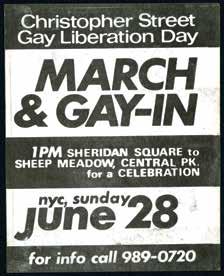
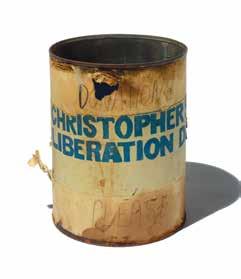
Segal helped organize the first NYC gay pride march titled “Christopher Street Gay Liberation Day” on June 28, 1970. The march and “gay-in” took place from lower Manhattan to Midtown and was
as a direct response to the Stonewall raid and uprising that began exactly one
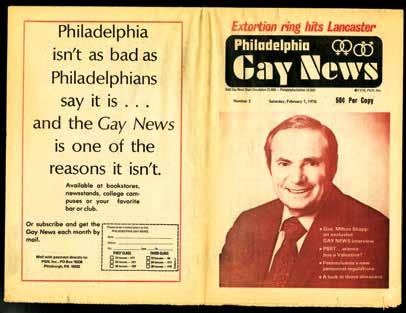
Philadelphia Gay News, No. 2: Segal is the founding publisher of the Philadelphia Gay News (PGN), which is the area’s largest and oldest publication targeted to the LGBTQ community. This print edition is from February 7, 1976 and is the second publication from PGN. It features an interview with former Governor Milton Shapp (D-PA), who served from 1971-79.
continued from page 23
The Smithsonian’s National Museum of American History recently received a donation from Mark Segal – publisher, activist, journalist, civil rights pioneer and national LGBTQ leader – documenting his almost 50-year career in LGBTQ activism from Stonewall to today.
During a ceremony held at the museum on the morning May 17, 2018, Segal donated personal papers – approximately 16 cubic feet of important and rare journals, flyers, posters, letters and materials that chronicle political developments that cover the 1970s to the present.
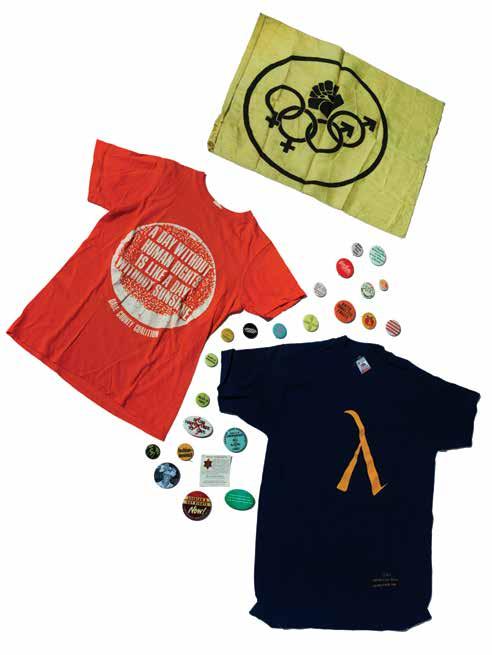
In addition to his papers, Segal donated artifacts from his personal collection, including the first state-issued Gay Pride Proclamation (1975), buttons and T-shirts. Segal also gave a donation can that he used during the 1970 Christopher Street Gay Liberation Day march (recognized as America’s first gay pride celebration) and a flyer for the march, as well as his personal marshal’s badge.
“Few people have been as fearless, creative and relentless in their activism for LGBTQ rights as Mark Segal,” said Katherine Ott, curator at the museum. “The materials he is donating are an insider’s guide to most of the big issues of the past 50 years.”
“We fought for pride, for equal rights, our place in the military and our right to marry the person we love,” Segal said. “I am humbled and honored to know the National Museum of American History will preserve and tell our struggle for generations to come.”
In June 1969, a teenaged Segal travelled from his home in Philadelphia to New York City, and within weeks found himself in the middle of the Stonewall raid and uprising. Following that experience, he devoted his life to activism and helped organize the first New York Pride March in 1970. He helped found or participated in a number of emerging activist groups, including the Gay Activists Alliance, Gay Liberation Front, Action Group, Gay Youth and the Gay Raiders. Segal realized the power of
media, and to protest the lack of LGBT television coverage, he interrupted numerous live broadcasts, including leaping in front of Walter Cronkite on the “CBS Evening News” with a sign that said “Gays Protest CBS Prejudice.” Later, reports document that he and Cronkite became friends.
Segal is the founding publisher of the Philadelphia Gay News (1976) and that same year, he was elected president of the National Gay Media Association. In 2004, he was chosen to be president of the National Gay Newspaper Guild. He was appointed to the Comcast Cable and NBCUniversal Joint Diversity Board as a member at large in 2011. In 2013, he was inducted into the National Lesbian & Gay Journalist Association’s (NLGJA) Hall of Fame. His memoir And Then I Danced: Traveling the Road to LGBT Equality (2015) took top prize for “excellence in book writing” at the 2016 NLGJA awards.
Materials from the National Museum of American History’s LGBTQ collections date back to the 19th century. The archival collections are rich in ephemera, oral histories, photographs, posters and entertainment publicity materials. The museum has mounted a number of LGBTQ history displays over the years, including two marking the 25th and 40th anniversaries of the 1969 Stonewall riots in New York City and a showcase exhibit on the 30th anniversary of the emergence of the HIV and AIDS epidemic.
Through incomparable collections, rigorous research and dynamic public outreach, the National Museum of American History explores the infinite richness and complexity of American history. It helps people understand the past in order to make sense of the present and shape a more humane future. The museum is located on Constitution Avenue NW, between 12th and 14th Streets, and is open daily from 10am to 5:30pm (closed Dec. 25). Admission is free. For more information, visit http://americanhistory.si.edu. For Smithsonian information, the public may call (202) 633-1000.
Courtesy of the Smithsonian National Museum of American History
“Few people have been as fearless, creative and relentless in their activism for LGBTQ rights as Mark Segal”
-
Katherine Ott, Curator, Smithsonian’s National Museum of History

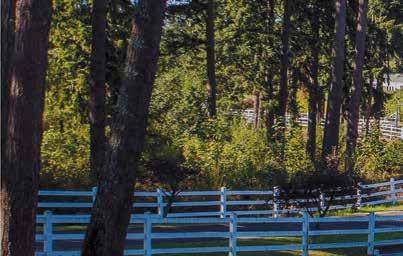


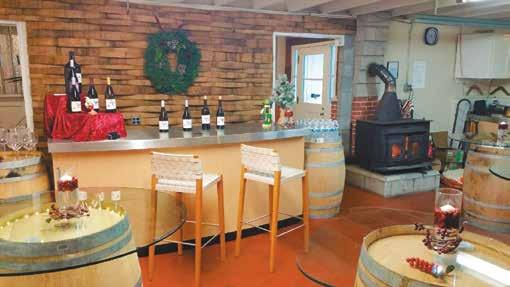
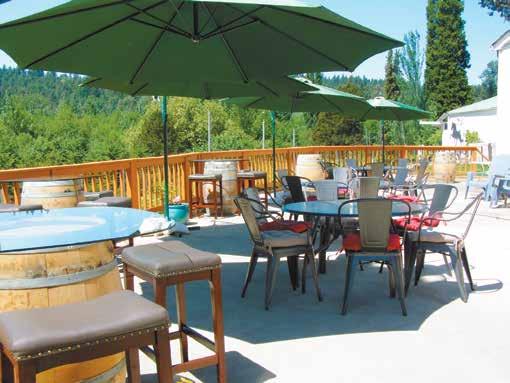
OPEN Friday 11am-6pm • Saturday 11am-6pm • Sunday 11am-5pm dsvarcs@abbewines.com • 206-679-4151 • 530 South 373rd St., Federal Way, WA 98003 ABBEWINES.COM Our delectable wines await you! Federal Way’s 1st Winery!
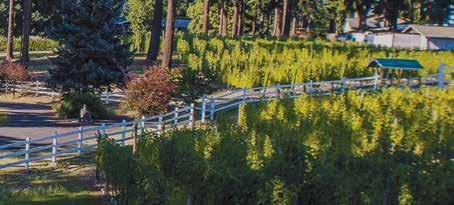
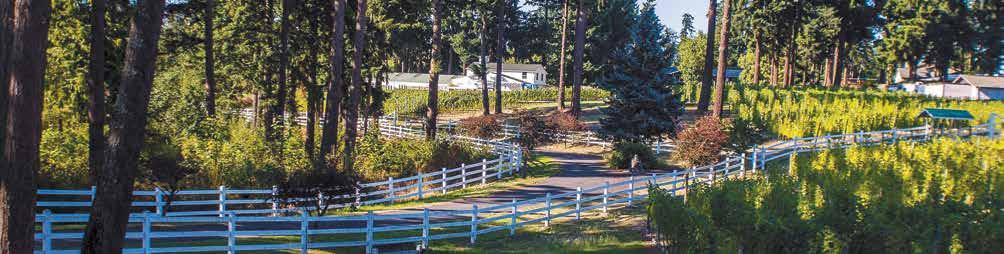
Tasting Room Now Open — Including Memorial Day 11am-5pm (appetizers available)

by Jeremy Rodriguez Philadelphia Gay News
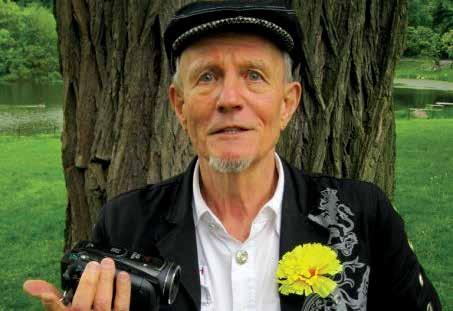
Randy Wicker may not be a familiar name to those familiar with LGBT history – but the 79-year-old made his mark in the movement, beginning in the 1960s.
Many assume the first organized protest for gay rights occurred on April 17, 1965, in front of the White House, where demonstrators, including Frank Kameny, protested the firing of gay and lesbian civil servants.
However, seven months earlier, Wicker organized his own gay-rights demonstration. On Sept. 19, 1964, Wicker and nine other members of the Sexual Freedom League picketed in front of the U.S. Army Induction Center to protest the confidentiality violation of gay men’s draft records. Wicker is also believed to have been the first openly gay person to appear on East Coast television without a fake name or disguise earlier that same year.
PGN sat down with Wicker to discuss these historic firsts, his time as the roommate of trans activist Marsha P. Johnson, his thoughts on President Donald Trump and his advice on how the community can move forward.
PGN: Your family asked you to change your name from Charles Gervin Hayden, Jr. after you told them about your involvement in the 1960s gay-rights movement. How did you feel when they requested that of you?
RW: My father was very supportive. When he found out I was gay, he wanted me to be the best-adjusted gay person I could be because he wouldn’t always be there to support me. His name was “Senior” and in those days, he worked for the same corporation for about 27 years. So he just said to me, “I don’t think you’ll get far with this. Just do me one favor, will you?” I said, “What’s that?” And he said, “Don’t involve my good name.” So I assumed the name Randolfe Wicker as a pseudonym very early in the movement because I had to respect my father’s wishes. I didn’t want to cause him any problems.
PGN: How did you choose your new name?
RW: I saw a movie with Randolph Scott and I thought it was very elegant. He got off a yacht and stood on a pier. I remember Donald Webster Cory, who had published The Homosexual in America, had to choose a middle name because they were afraid there would be a Donald Cory somewhere that would sue so I thought I’d spell “Randolph” a different way. It seemed to me that it could easily be spelled “R-a-n-d-o-l-f-e.” So I chose the unique spelling of the name.
PGN: In 1962, New York’s WBAI Radio broadcast a radio program called “The Homosexual In America,” on which psychiatrists talked about homosexuality as a disease. You marched in and confronted the station’s public-affairs director. What
led you to doing that, and what transpired from that encounter?
RW: They [previously aired] these panels where psychiatrists were talking about homosexuality as a disease and how they treated it. I went up and told them this problem is illegitimate because homosexuals were the real authority on homosexuality. So the gentleman told me, “Get together a panel and I’ll come and interview them.” So I got together a panel and he did the interview and a week before it was broadcast, Jack O’Brian, who was a right-wing columnist for the [New York] Journal American, said that WBAI had announced this program because they thought homosexuals had a right to be heard and the sixman panel would discuss “the ease of living the gay life.” So I took this little attack in the Journal American a week before the
minor, especially if she let him know that she knew he was gay, knew that he would not do anything nefarious.
PGN: What kind of reactions did you receive after that TV appearance?
RW: Generally very good. When I opened my [Art Deco] store in 1974, I’d say for a period of maybe 10 years, there would be several people who would come through that door every week and they always said the same thing. They said, “You changed my life.” People don’t realize that, in those days, you thought you were the only one. Then, they saw me on “The Les Crane Show” and it made them realize there were others like themselves.
PGN: Later that year, you also organized a protest at the New York City U.S. Army Induction Center. What led you to doing that?
broadcast and made the rounds to Newsweek, Variety, the New York Times and told them about this show. When the program was finally broadcast, it was written up by the New York Times. It was a news story. It was reviewed by Jack Gould from the Times. It got a full-page in Newsweek It made Variety. It was the most-publicized broadcast that the network ever did.
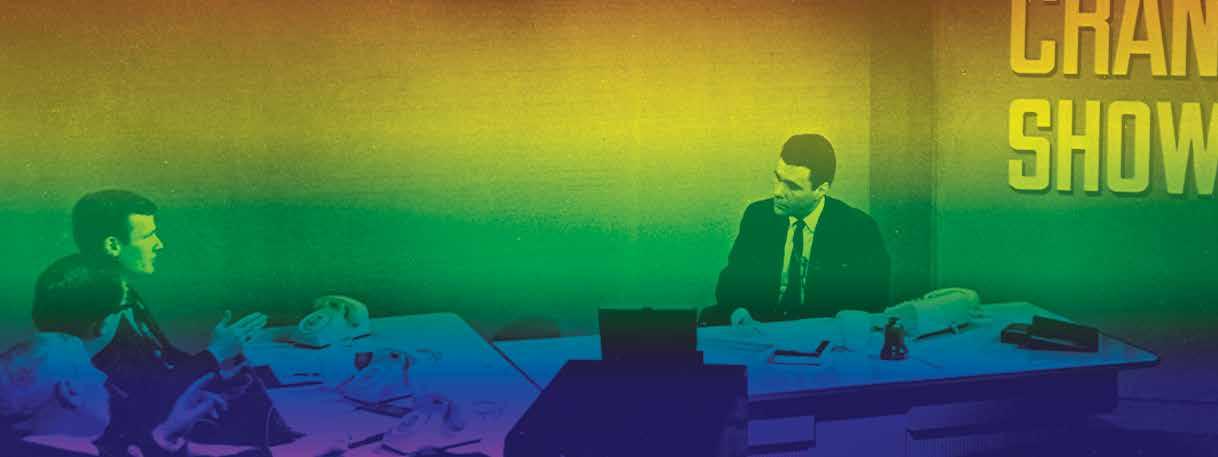
PGN: You appeared on “The Les Crane Show” and answered questions about homosexuality, where you were believed to be the first gay person to appear openly on East Coast TV without a disguise or a fake name.
RW: They contacted me and “Les Crane” was the cutting-edge new show, and homosexuality was one of the taboo topics. I had to answer call-in questions and some of them were pretty direct. I had one woman call in and say she had a cousin or an uncle who she knew was gay. She worried about him being in contact with her children. I told her I thought the chances of any problems like that would be very
RW: There were two things. First, if you were in the Army and they found out, you would get a dishonorable discharge and that’s something that would follow you all your life. I actually found out that being 4F was a problem because you have to have a problem while you’re a 4F so I came up with the idea that I had a childhood history of epilepsy. Then when I decided to become a substitute teacher in New York City, [I learned] that to become a teacher, you had to sign a release – supposedly, your draft records are private – but to get a teaching license, you would have to sign a release to enable them to look into your records and see why you’re 4F. This was the ’60s and that eliminated my chance to use my degree effectively. Sometimes, they’ll tell you that whatever you say is confidential. It’s not necessarily so.
PGN: You were once roommates with Marsha P. Johnson. What are some memories you look back on with her?
RW: She was the greatest thing that happened to me in my life. She always
made us laugh. Whenever I would invite anyone to my house, they would fall in love with Marsha. I think it’s just amazing that people fall in love with her through [the documentary I helped finance], “Pay It No Mind – The Life and Times of Marsha P. Johnson.” We have a Marsha P. Johnson fan page on Facebook and that page has its own life. The more people hear about Marsha, the more people look [up to her].
PGN: What are your thoughts on the current political climate?
RW: Donald Trump scares me to death but I think what he has really done is he’s caused the younger generation to become interested in civics and politics. With his really hateful policies, he has made young people that never vote realize how the government works. I think we have a great civics lesson with Donald Trump. Hopefully, it will reinvigorate our society and get young people involved. This reminds me of the Vietnam War. People were being involuntarily drafted in the Army and, all of a sudden, people were really concerned about what’s happening overseas. Today we have problems with immigration – all the Dreamers and all of these people that really are Americans but aren’t recognized as such.
PGN: What do you think the LGBT community can learn from your activism?
RW: I really do feel [the people in Washington, DC] are mainly a bunch of overpaid, mealy-mouthed bureaucrat lobbyists but I stand in awe of what these mealy-mouthed bureaucrat lobbyists have accomplished. I never dreamed I would ever live to see gay marriage. That was so far off our radar. I never thought I would live to see the things we’re seeing now but, then again, I’m also scared because it seems to me we have two worlds, and one world is going backwards. That’s the world of the Middle East where they are hanging gay people or cutting off their heads, or throwing them off buildings in places like India [Iran] or even Egypt where they just arrested people for waving a gay flag at a concert. It seems like the fight is not over. We’re never going to be safe as a people until we’re safe everywhere.
PGN: What do you think is the best way for the LGBT community to move forward?
RW: Focus on liberating women and saving our brothers and sisters overseas. We have to eliminate ignorance through education. These things are like diseases. We need to eliminate homophobia the way they try to eliminate polio. I want homophobia to go the way of smallpox and never return.
Visit Randy Wicker’s recent work on Youtube via YouTube.com/RandolfeWicker.
Jeremy Rodriguez is a staff writer at Philadelphia Gay News