
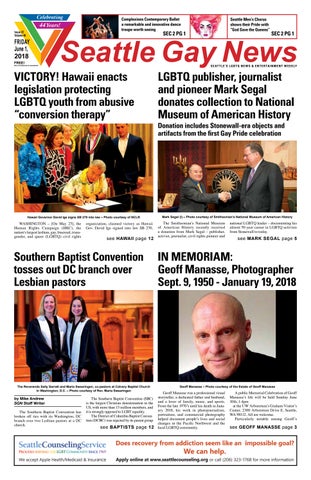
LGBTQ publisher, journalist and pioneer Mark Segal donates collection to National Museum of American History

WASHINGTON – [On May 25], the Human Rights Campaign (HRC), the nation’s largest lesbian, gay, bisexual, transgender, and queer (LGBTQ) civil rights organization, claimed victory
Gov.
by Mike Andrew SGN Staff Writer
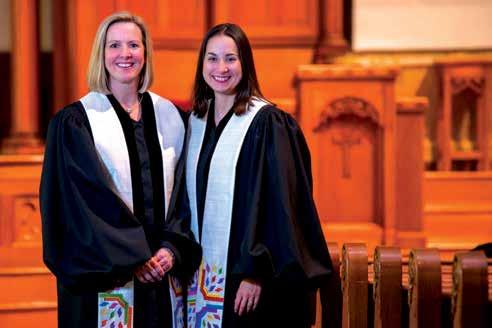
The Southern Baptist Convention has broken off ties with its Washington, DC branch over two Lesbian pastors at a DC church.
The Southern Baptist Convention (SBC) is the largest Christian denomination in the US, with more than 15 million members, and it is strongly opposed to LGBT equality. The District of Columbia Baptist Convention (DCBC) was rejected by its parent group
BAPTISTS page 12
Donation includes Stonewall-era objects and artifacts from the first Gay Pride celebration
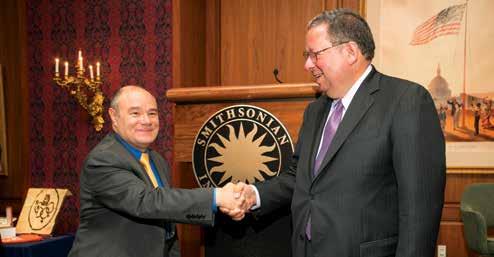
The Smithsonian’s National Museum of American History recently received a donation from Mark Segal – publisher, activist, journalist, civil rights pioneer and
national LGBTQ leader – documenting his almost 50-year career in LGBTQ activism from Stonewall to today.
see MARK SEGAL page 5
Sept. 9, 1950 - January 19, 2018
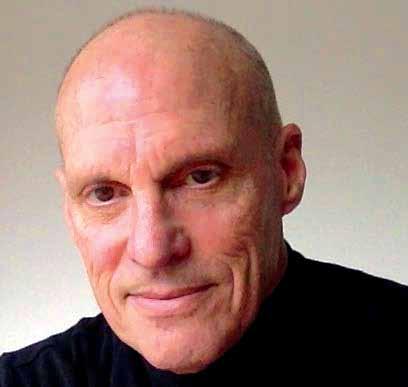
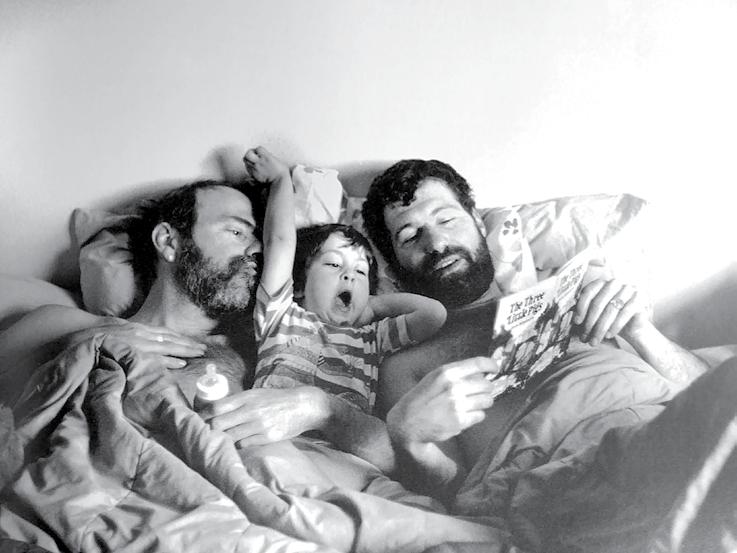
Geoff Manasse was a professional visual storyteller, a dedicated father and husband, and a lover of family, music, and sports. From the late 1970’s until his death in January 2018, his work in photojournalism, portraiture, and commercial photography helped document people’s lives and social changes in the Pacific Northwest and the local LGBTQ community.
A public Memorial Celebration of Geoff Manasse’s life will be held Sunday June 10th, 1-4pm at the UW Arboretum’s Graham Visitor’s Center, 2300 Arboretum Drive E, Seattle, WA 98112. All are welcome.
Particularly notable among Geoff’s
see GEOFF MANASSE page 3




by Mike Andrew SGN Staff Writer
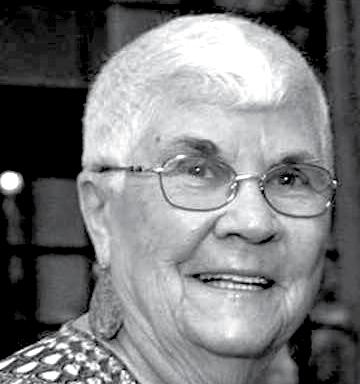
Lesbian activist Connie Kurtz died on May 27. She was 83.
Kurtz is survived by Ruth Berman, her “wife, her love, her spouse, her co-conspirator,” as the Windy City Times described her.
Berman and Kurtz, known affectionately to all who knew them as “Ruthie and Connie,” devoted decades to activism on behalf of LGBT rights. They were the subject of an award-winning documentary in 2002 entitled Ruthie and Connie: Every Room in the House
Berman and Kurtz are perhaps best known for their work on the LGBT Elder Americans Act, first introduced in 2015. The proposed legislation amends the federal Older Americans Act to define LGBT elders as a vulnerable population, authorizing the government to collect data on LGBT seniors and include them in federal senior programs.
The couple won rights for all New York City employees in 1994 after successfully suing the New York City Board of Education for domestic partner benefits.
They also created a number of LGBT rights organizations, including PFLAG
branches in New York and Florida, and NOW’s Lesbian Rights Task Force.
Described by the Miami Herald as America’s “best-known senior lesbian couple,” Kurtz and Berman received the SAGE Pioneer Award in 2016.
“Connie and her soulmate Ruth have been iconic leaders of our community for decades, which is why the federal legislation SAGE has introduced in Congress on behalf of LGBT elders is named after them,” said SAGE CEO Michael Adams.
“Words can’t explain how sad we are

that Connie has passed. We send our love and condolences to Ruth. And we celebrate and honor Connie’s fierce and passionate legacy, which has made the world a better place for so many of us.”
Kurtz was born July 19, 1936, in Brooklyn. Later she married a man, and in 1970 moved with her husband and two children to Israel, where she lived for four years. When she returned to the United States, she reconnected with her longtime friend Ruth Berman. They fell in love, divorced their respective husbands, and became a couple. They married in New York on July 26, 2011, two days after the state legalized same-sex marriage.
“Connie and I have been through it all, and she has remained my fulfilled love,” said Berman.
Meredith Ockman, board member of the Palm Beach County Human Rights Council, and longtime friend of the couple, said, “Aside from the fact that they are pioneers, the fact is that this is a classic love story that transcended the prejudices and idiosyncrasies of their own time to be able to move us forward – something no one else could do.
“Every success we have had in the community rests on the shoulders of these women. They have affected everyone in life, whether they knew it or not.”
many accomplishments was a 1995 book of photographs and interviews of 24 gay and lesbian families titled Making Love Visible: In Celebration of Gay and Lesbian Families, with text by collaborator Jean Swallow. The 1980’s and 90’s were a time when gay and lesbian parents had no right to marry, and had legal limits on their ability to adopt children or even maintain relations or visitation with their own biological children. The book won a 1995 National Lambda Literary award and was so ahead of its time and controversial, it was banned from several local school libraries.
As a freelance photographer & photojournalist, Geoff took on a variety of editorial clients including Seattle Times, Bellevue Journal-American, National Geographic, Time, Newsweek, Newsday, the New York Times, and USA Today. He was a key photographer of the eruption of Mt. St Helens and its aftermath. His photos also documented the impact of the AIDS crisis in Seattle throughout the 1980s and 1990s.
In his spare time, Geoff played tuba for the LGBTQ Rainbow City Band, as well as the Brass Connection, a semi-pro brass quintet. He also was an avid soccer player, playing on many gay and mixed soccer teams in Seattle from the 1980’s on.
After his retirement, Geoff lived for three years in Ho Chi Minh City, Vietnam, with his husband, Bao Le, where he used his skills as a photographer, videographer and website developer to support the growth of CARMAH, a non-profit organization promoting the health and quality of life of gay and bisexual men in Vietnam. The couple also adopted two teenage sons, Kai Le Manasse and Kenneth Le Do Manasse, who eventually became American citizens. Geoff and his family returned to Seattle in 2016.
Echoing comments he had made two decades earlier in his book, Making Love Visible, Geoff often told friends how being a father and having a family was the happiest time in his life.
Geoff collapsed suddenly and unexpectedly on the field during a soccer match in Seattle and died shortly thereafter on January 19, 2018. He is survived by his husband Bao Le, sons Kai Le and Kenneth Le Do, and his sister Robin.
by Mark Segal
Philadelphia Gay News
Just saying that I am humbled is not enough: It is an honor of a lifetime.
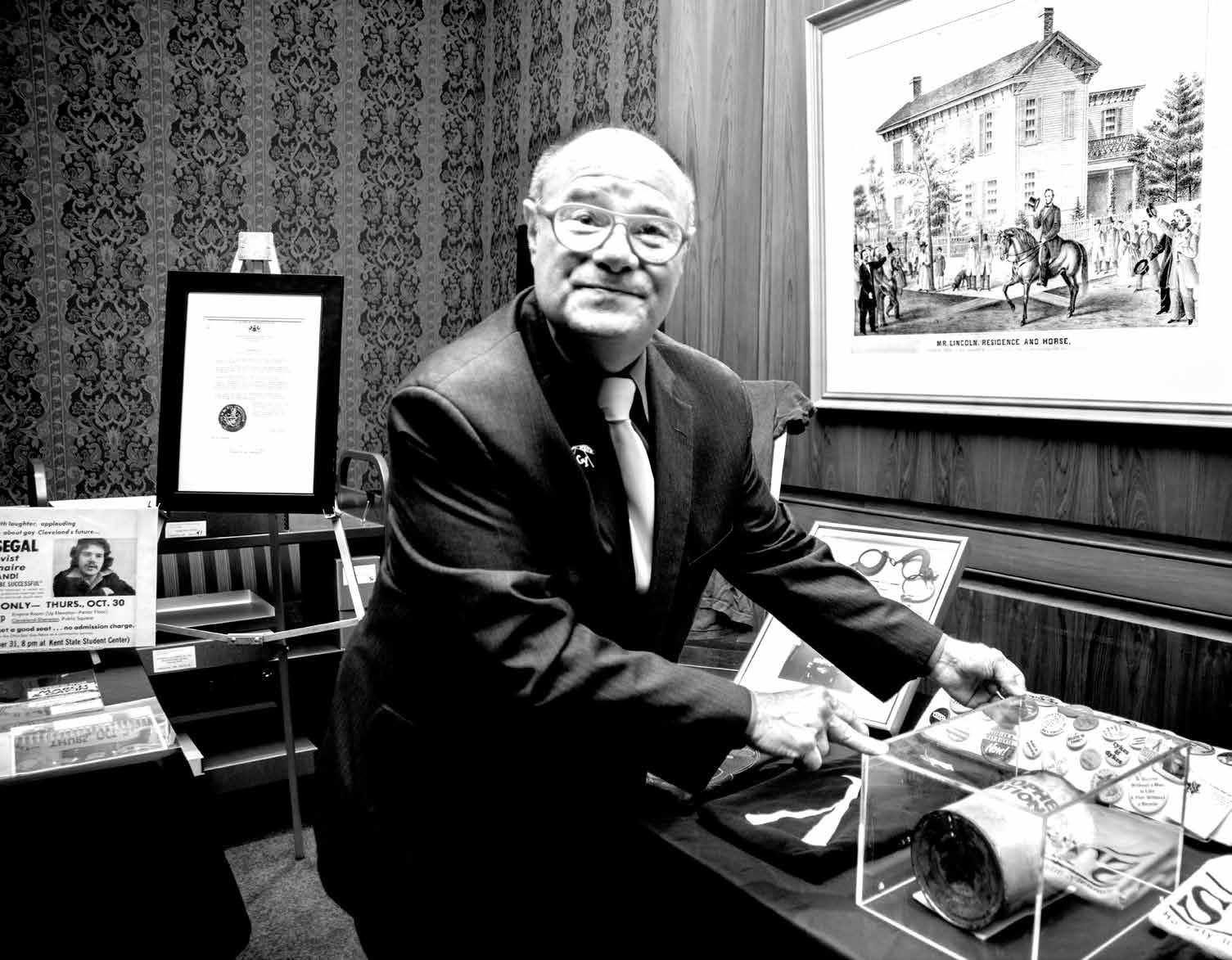
By the title of this column, I’m not talking about my age, but something that I’m still processing. There have been many honors over the last few years, but this is something that happens to few Americans, and I never expected it to happen to me. My personal papers of the last 50 years will soon be alongside people like Benjamin Franklin, George Washington, LGBT pioneer Frank Kameny and even Judy Garland’s ruby-red slippers. It seems strange to say, but I’ve been asked by the Smithsonian for my papers and memorabilia and they are now part of our American history at The Smithsonian Institution in Washington D.C.
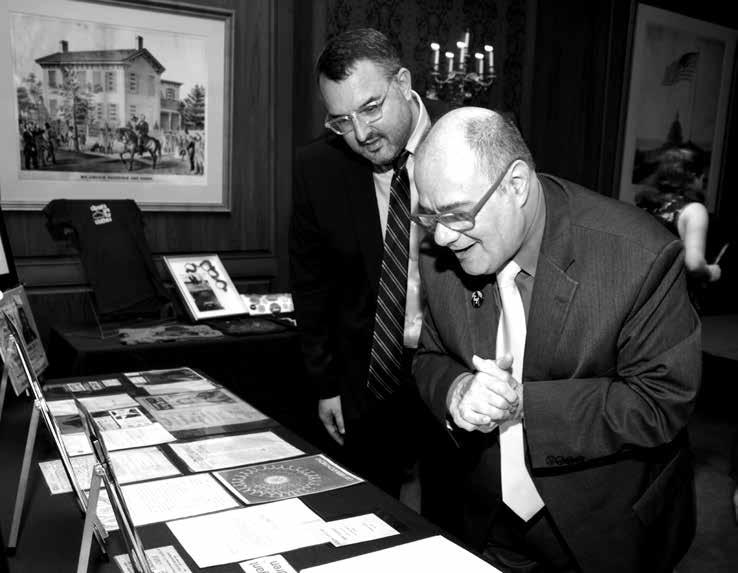
As you read this [May 17, 2018], my family and some friends will be in the Presidential Reception Suite in the Smithsonian’s National Museum of American in Washington D.C. doing what is called a signing ceremony. That’s when I officially sign over my personal papers and personal memories of the last 50 years, including items from Stonewall, that first Gay Pride March, the Gay Liberation Front, LGBT media, gay youth, senior-housing materials and more. This project has been going on for almost two years now, and my friends at the Smithsonian tell me that they now have 16 squarecubic feet of my life … how strange to put one’s life into square-cubic feet.
During my book tour over the last three years, when I was introduced, many would call me historic, something that seemed to me a little out of place, so when the Smithsonian called, it began a process of me attempting to understand what I had accomplished and the barriers that were placed in the way.
First came the search around the office and home to see what I actually had for the collection. That uncovered pictures, papers
and items long-forgotten. Each time the curators at the Smithsonian would smile, and try over and over to explain my place in history, something that I still have trouble contemplating. At one point while I was contemplating this out loud, one of them actually said something like, “You are history and we’re the experts on American history.”
Why the collection was so valuable to LGBT history, I didn’t understand. Most people associate me as a leader in LGBT
media and a writer. But that is only a small part of the collection. It also made me realize what the Smithsonian had already understood: While most of my contemporaries had one or two points of our struggle, my involvement in so many of the issues we’ve faced over the last 50 years makes it one of the most complete LGBT history collections. It follows my path from Stonewall to working with Obama’s White House to current battles. And hopefully this collection will give our young leaders the opportunity not only to witness the history, but more importantly, to witness how we took a community that wasn’t a community, built it and struggled to obtain what we have today. A bail receipt from my first arrest in 1970 is a part of the collection, as are three items from the very first Gay Pride March. (We weren’t a parade at that time.)
Writing my memoir, And Then I Danced: Traveling the Road to LGBT Equality, gave me a sense of the history I witnessed or created, but when three individuals from the Smithsonian showed up at my front door and explained that America’s history museum wanted my papers, I realized that we fought for pride, for equal rights, for our place in the military and our right to marry the person we love. I am humbled and honored to know the Smithsonian National Museum of American History will preserve and tell our struggle for generations to come.
Courtesy of the Philadelphia Gay News
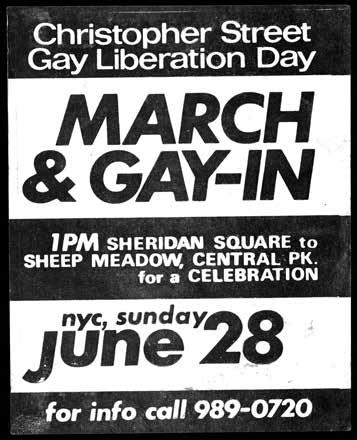
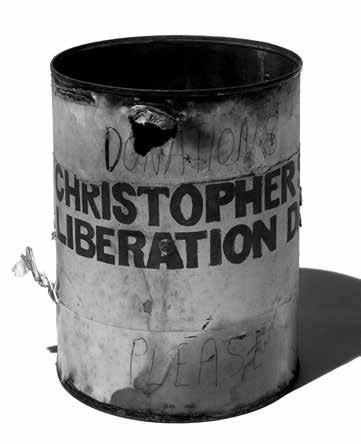
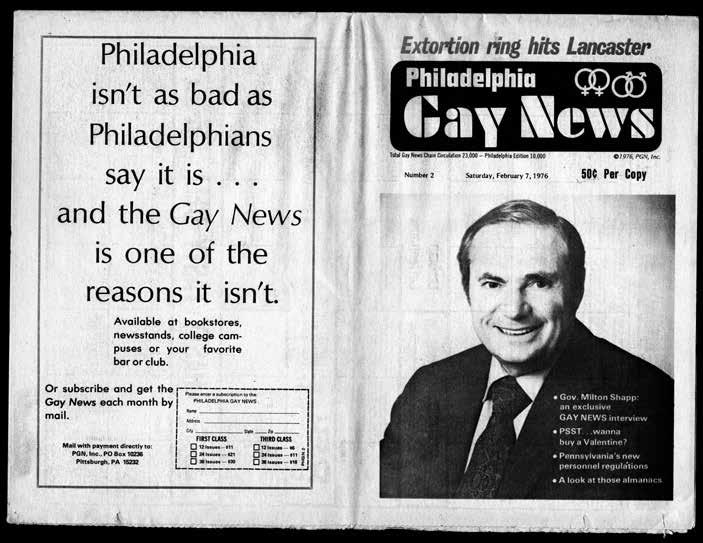
Philadelphia Gay News, No. 2: Segal is the founding publisher of the Philadelphia Gay News (PGN), which is the area’s largest and oldest publication targeted to the LGBTQ community. This print edition is from February 7, 1976 and is the second publication from PGN. It features an interview with former Governor Milton Shapp (D-PA), who served from 1971-79.
of Walter Cronkite on the “CBS Evening News” with a sign that said “Gays Protest CBS Prejudice.” Later, reports document that he and Cronkite became friends.
“Few people have been as fearless, creative and relentless in their activism for LGBTQ rights as Mark Segal”
-
Katherine Ott, Curator, Smithsonian’s National Museum of History
During a ceremony held at the museum on the morning of May 17, 2018, Segal donated personal papers – approximately 16 cubic feet of important and rare journals, flyers, posters, letters and materials that chronicle political developments that cover the 1970s to the present.
In addition to his papers, Segal donated artifacts from his personal collection, including the first state-issued Gay Pride Proclamation (1975), buttons and T-shirts. Segal also gave a donation can that he used during the 1970 Christopher Street Gay Liberation Day march (recognized as America’s first gay pride celebration) and a flyer for the march, as well as his personal marshal’s badge.
“Few people have been as fearless, creative and relentless in their activism for LGBTQ rights as Mark Segal,” said Katherine Ott, curator at the museum. “The materials he is donating are an insider’s guide to most of the big issues of the past 50 years.”
“We fought for pride, for equal rights, our place in the military and our right to marry the person we love,” Segal said. “I am humbled and honored to know the National Museum of American History will preserve and tell our struggle for generations to come.”
In June 1969, a teenaged Segal travelled from his home in Philadelphia to New York City, and within weeks found himself in the middle of the Stonewall raid and uprising. Following that experience, he devoted his life to activism and helped organize the first New York Pride March in 1970. He helped found or participated in a number of emerging activist groups, including the Gay Activists Alliance, Gay Liberation Front, Action Group, Gay Youth and the Gay Raiders. Segal realized the power of media, and to protest the lack of LGBT television coverage, he interrupted numerous live broadcasts, including leaping in front
Segal is the founding publisher of the Philadelphia Gay News (1976) and that same year, he was elected president of the National Gay Media Association. In 2004, he was chosen to be president of the National Gay Newspaper Guild. He was appointed to the Comcast Cable and NBCUniversal Joint Diversity Board as a member at large in 2011. In 2013, he was inducted into the National Lesbian & Gay Journalist Association’s (NLGJA) Hall of Fame. His memoir And Then I Danced: Traveling the Road to LGBT Equality (2015) took top prize for “excellence in book writing” at the 2016 NLGJA awards.
Materials from the National Museum of American History’s LGBTQ collections date back to the 19th century. The archival collections are rich in ephemera, oral histories, photographs, posters and entertainment publicity materials. The museum has mounted a number of LGBTQ history displays over the years, including two marking the 25th and 40th anniversaries of the 1969 Stonewall riots in New York City and a showcase exhibit on the 30th anniversary of the emergence of the HIV and AIDS epidemic.
Through incomparable collections, rigorous research and dynamic public outreach, the National Museum of American History explores the infinite richness and complexity of American history. It helps people understand the past in order to make sense of the present and shape a more humane future. The museum is located on Constitution Avenue NW, between 12th and 14th Streets, and is open daily from 10am to 5:30pm (closed Dec. 25). Admission is free. For more information, visit http://americanhistory.si.edu. For Smithsonian information, the public may call (202) 633-1000.


“No
by MK Scott SGN Contributing Writer
Amazon’s annual shareholders meeting was held this past Wednesday (May 30th) at the Fremont Studios with about 150 people inside and another 75 or so protesting outside.
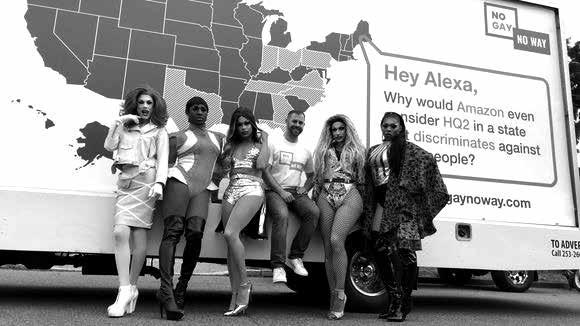
A line up of drag queens posed and strutted in support of “No Gay, No Way,” a campaign urging Amazon to place its second headquarters only in a state with strong gay rights laws, which would exclude the states of Florida, Georgia, Indiana, North Carolina, Ohio, Pennsylvania, Tennessee, Texas and Virginia.
The day before the shareholders meeting I attended a 60-minute forum and discussion held at the Northwest Film Forum on “How Amazon HQ2 Started a National Conversation.”
The event was hosted by Conor Gaughan, founder of Collective Conscience, a social impact media firm. Joining him were Mara Keisling, Founder and Executive Director of National Center for Transgender Equality, and Dr. Laura Durso from the Center for American Progress.
One of the main topics raised in the discussion was whether just because Dallas or Miami are Gay-friendly cities, should they be considered, because the states they are located in have zero LGBT protections. It was painfully obvious that North Carolina and Indiana would be the last place Amazon would choose.
“For us the system is more set for those who have protection than those who do not,” Gaughan explained. “I think we highlight those, all those kind of things, because they’ve had examples in the public the last couple of years that stand out, of new laws that they’re passing, that are highly recog-
nized cases of discrimination, making it into the national dialogue.”
Gaughan then added “So we’re here to try to continue to elevate the conversation around observation protections, to try to continue to pressure Amazon, gently, as a good friend does. You know, our goal is to make a company that’s been really good on these issues not make a bad decision, and actually take it a step even further and become great. So that’s kind of our opening comment.”
Laruso elaborated, “But they already think it’s legal to do that. And the fact is, is that it’s not; and we’re working day and day on it. And so having this kind of conversation is not only important, because we’re trying to shape the way Corporate America engages on social justice issues, but also because we have a lot of work to do to pass the laws. And these are the best conversations that can help make that a reality.”
Dear SGN,
We’re writing today with some bittersweet news from Ingersoll. Today is our Program Manager, Ebo Barton’s last day at Ingersoll. Ebo has been such a driving force at Ingersoll over the last few months in moving our work forward to better serve our communities. We’re sad to see them go but we are excited to see what’s next for them as they step away to focus on new artistic endeavors.
“It was an honor to work within Trans community and for Trans community,” Ebo Barton said. “Making a decision to step away from such important and necessary work was not an easy one, but I have full faith in the leadership of the Ingersoll team to continue to empower and support our community members. This team is driven by and works with love for our people, our culture and our humanity and I am both proud and humbled by them and the work they do.”
When Gaughan asked the question, “What are your takes on the future of corporate social responsibility? What do we see coming out of this? Where do we go from here? Both within the LGBTQ states, but then more broadly, the progressive and general space?”
Laruso responded, “Fair question. I think we’ve learned a couple of things from the sides in these different states, from, you know, the conversation that we’re having with big corporations now. You know, one thing I think is that, you know, you like, companies are like a tool, like having that conversation is a means of putting some visibility on the issues with the LBGT people and actively engaging partners and making change.
Keisling agreed. “I think everything Dr. Laruso just said; but I’m really hopeful that corporations are starting to understand the influence they can have, and the
We remain committed to making sure the vital work Ebo was leading remains resourced and staffed. We will share more information in the coming days about our future staffing plans but for now we hope that you can join us in thanking Ebo for everything they’ve brought to our communities as a staff member here at Ingersoll. We’ll miss having them around in the office, but we are so proud to be in community with them and can’t wait to see what’s next for them.
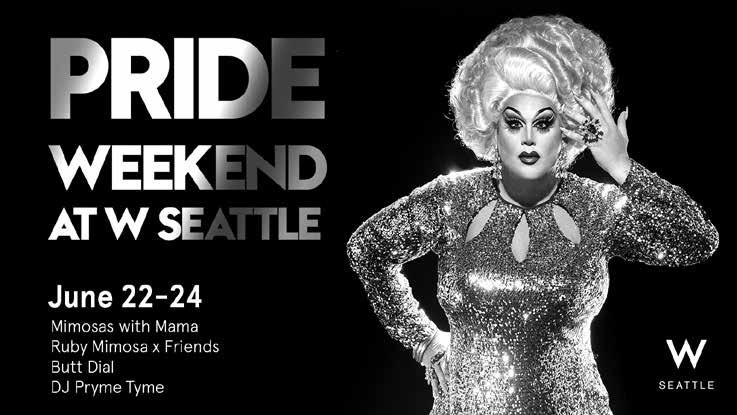
your Pride
LGBTQ+ community, and turn it up with three days of bold events and vibrant parties.
Start your Pride weekend at W Seattle, located in the heart of the city and just
minutes from the Seattle Pride Parade (https://www.seattlepride.org/), Seattle PrideFest festivities (https://www.seattlepridefest.org/) and the bars on Capitol Hill. Whether you choose to stay the night or just stop in, we welcome you to revel in our Seattle Pride weekend events that
include electric entertainment and drag brunch debauchery.
W Seattle is located at 1112 4th Avenue. (206) 264-6000.
W Seattle is proud to be the official hotel sponsor of Seattle PrideFest.
LIVING ROOM LIVE
Friday, June 22 | 6pm-8pm No Cover Charge
Happy Hour: 3pm-8pm
Living Room Live meets Pride with a vibrant set by Butt Dial. A garage rock trio welded to a paint-stripping horn line, Butt Dial filters originals and covers through an insistently distorted surf-funk sound bolstered by a battle chest of brass and coated in a sultry syrup of powerful croons, hollers and stage energy bordering on the Vaudevillian.
RUBY MIMOSA X FRIENDS
Saturday, June 23 | 9:30pm-11:30pm
No Cover Charge
Happy Hour: 3pm-8pm
positive impact they can have on their own bottom line.
“I’m not a big bottom line kind of person. I wish that’s not, hadn’t been what companies had become, largely, but I think they’re starting to understand that that is true.
“And then, you know, we’ve been having some really amazing relationships with corporations that are doing some incredible social justice [work]. LUSH Cosmetics now has a dramatic impact in a whole range of issues, including trans rights, but also including animal testing and the environment, and getting plastic out of the ocean, and ending trophy hunting.
“Things that they’re finding their employees love so much about their company; the company is willing to stand up and fight for things that they all believe in. And I think we’re going to see more companies.”
Keisling added, “Can I just say that, you know, Amazon itself, in the marriage equality fight in Washington state – Jeff Bezos really, really stepped up personally and organizationally in ways that they understood the importance of it. They understood the importance of it to their staff.”
Gaughan added, “I mean that’s the bottom line of this conversation for corporate responsibility; that these actions matter, and we hope companies like Amazon and research in any major corporation looking at investment decisions is to support LGBTQ protections and social justice.”
For more information on “No Gay No Way,” visit nogaynoway.com/
MK Scott is a Seattle-based blogger. Check out his blogs at outview.online and uniteseattlemag.com.
If you have any questions about our future staff plans, please don’t hesitate to reach out to our Executive Director, Karter, via email at karter@ingersollgendercenter.org.
In solidarity, Your friends at Ingersoll Gender Center
Go glam with burlesque go-go dancers moving to the beat of DJ Prime Tyme. World-renowned showgirls and burlesque performers, Ruby Mimosa, J Von Stratton and Mae Zing, will dazzle, surprise and entertain as you soak it in and live it up while sippin’ on perfectly crafted Pride cocktails and groove to the beat.
MIMOSAS WITH MAMA
Sunday, June 24 | 8am-2pm
Mama Tits: 9am-11am
Join Seattle’s Skyscraper Hostess, the one and only Mama Tits, for a special Pride Weekend Drag Brunch, just steps from the parade. Retox with crafted Pride cocktails and a fab brunch buffet, all while you enjoy Mama Tits’ live Cabaret-style performance from 9am-11am. DJ Pryme Tyme keeps the beat going until 2pm.
Reservations: https://www.opentable. com/restaurant/profile/0328/reserve?restre f=0328&datetime=2018-06-24T09:00
Courtesy of W Seattle







Four-day free health clinic to occur one month earlier in 2018, Sept. 20-23
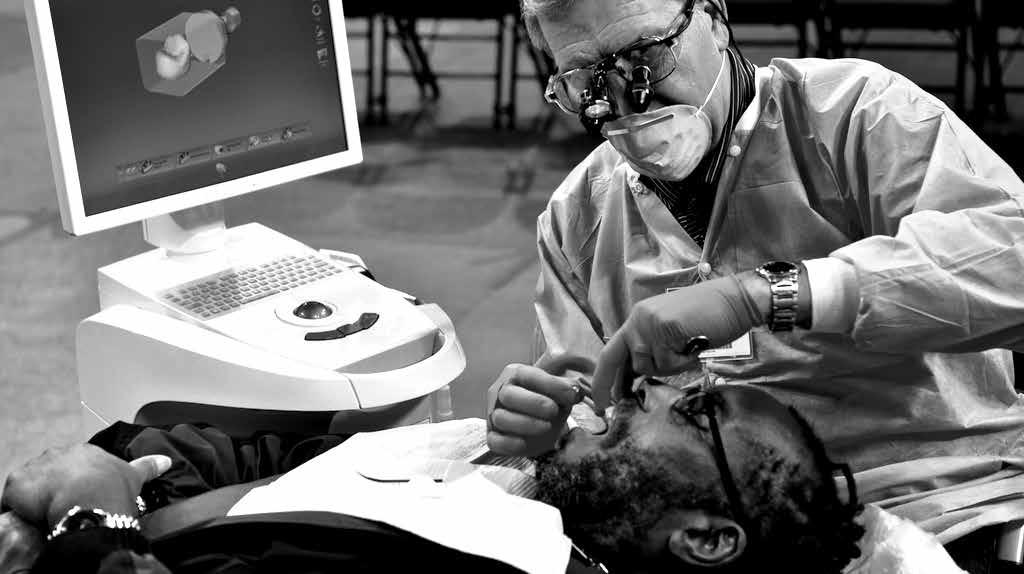
Seattle/King County Clinic celebrates its fifth year in Key Arena at Seattle Center, Sept. 20–23. Organizers have ambitious goals of recruiting 1,000 volunteers per day to provide over $3.5 million in free dental, vision, and medical services to people in need.
Seattle/King County Clinic is the largest event of its kind in the state of Washington. Produced in partnership with Kaiser Permanente, the City of Seattle, Philips Healthcare, Public Health – Seattle & King County, and more than 100 health care organizations, civic agencies, nonprofits, and private businesses, the Clinic brings together thousands of volunteers and the organizing and event expertise of Seattle Center to address acute health issues among vulnerable and underserved populations.
“At a time when so many in our region struggle to meet basic needs, Seattle/King County Clinic is a beacon of caring and generosity,” said Christine Lindquist, executive director of the Washington Healthcare Access Alliance. “Seattle/King County Clinic provides immediate dental, vision, and medical care, and connects patients to resources beyond the clinic walls. It also demonstrates the good we can accomplish when we work together as diverse partners to serve others and effect change.”
The Clinic needs health care professionals and general support volunteers to fill a broad range of functions and shifts. It also seeks volunteers for the days before and after the four-day event to help with preparation and wrap-up. Volunteers must be at least 18 years of age. Individuals may register at seattlecenter.org/volunteers.
Since the inception of Seattle/King County Clinic in 2014, more than 13,800 volunteers have participated. Clinic outcomes speak to the accomplishments of this immense effort in responding to a profound need in our community for accessible and affordable health care. Seattle/ King County Clinic includes over 100 dental operatories, 58 medical treatment rooms, and 10 vision lanes. Patients can receive a variety of services, ranging from dental fillings and extractions, eye examinations, physicals, behavioral health care, and social work to prescription eyeglasses, immunizations, laboratory tests, mammograms, ultrasounds, and X-rays.
In its first four years, the Clinic provided $14 million in direct services to 16,300 patients who came from 262 unique zip codes and spoke 51 primary languages. Clinic patients are parents, children, elders, veterans, immigrants, refugees, people
living homeless, and, in large part, wage earners who struggle with the high cost of living. As one volunteer stated, “I was truly surprised to see that people seeking services were just like me, my family, my co-workers and neighbors. That was the biggest realization for me: folks who desperately need these services aren’t ‘them,’ they’re us.”
Producing an event of this magnitude represents the serious dedication of a caring community to address health care issues at the local level, to make a difference for the most vulnerable among us, and to raise awareness about who is left out of the current health care system.
Find out more about Seattle/King County Clinic by visiting seattlecenter.org/ skcclinic or by calling 206-684-7200.
About Clinic Partners
These are just some of the organizations that collaborate to produce Seattle/ King County Clinic and contribute needed resources and expertise: 141 Eyewear, 3M ESPE, AEG Facilities, All Home King County, America’s Dentists Care Foundation, Arcora Foundation, Auston James Photography, the Ballmer Group Philanthropy, Bellevue Dentistry, Benco Dental, the Bill & Melinda Gates Foundation, Burkhart
Dental Supply, Ceres Roasting Company, the City of Seattle, Dave’s Killer Bread, DCG ONE, Dentsply Sirona, Dunn Lumber Co., Einstein Bros. Bagels, Essilor Vision Foundation, European Vine Selections, Field Roast, Franz Bakery, Greek Gods Yogurt, Group Health Foundation, Heidelberg Engineering Inc., Henry Schein Inc., the Hepatitis Education Project, HOPE Animal-Assisted Crisis Response, InDemand Interpreting, Ivoclar Vivadent Inc., Jorgenson-Peninsula Optical Supply, Kaiser Permanente, KIND, King County 2-1-1, the King County Nurses Association, KLS Martin LP, Lagunitas Brewing Company, Laney Dental, Le Panier, Levy Restaurants, Macrina Bakery, the Mary Mahoney Professional Nurses Organization, Medical Teams International, Mediterranean Inn, Microsoft, Mid-Gulf Instruments, Moccasin Lake Foundation, Navos, the Norcliffe Foundation, the Oak View Group, Optometric Physicians of Washington, Pacific Office Automation, Pagliacci Pizza, Patterson Dental, the Patterson Foundation, PCC Community Markets, Philips Healthcare, the Physical Therapy Association of Washington, Project Access Northwest, Providence St. Joseph Health, Public Health - Seattle & King County, the Puyallup Tribe of Indians, Q3 Assets | Lite Tite, Ripe Catering, Seattle Animal Shelter, Seattle Cancer Care Alliance,
Seattle Center, the Seattle Center Foundation, the Seattle Department of Neighborhoods, the Seattle Fire Department, the Seattle Housing Authority, Seattle Information Technology, the Seattle-King County Dental Society, the Seattle Office of Immigrant & Refugee Affairs, the Seattle Police Department, the Seattle Public Library, Septodont, Shofu Dental Corporation, the Space Needle, SPARK, Swedish Medical Center, Sysco Corporation, TheraTek USA, Ultradent Products Inc., UW Medicine, the UW School of Dentistry, the UW School of Public Health, Valley Cities, Virginia Mason, VOSH Northwest, the Washington Academy of Eye Physicians and Surgeons, the Washington Academy of General Dentistry, the Washington Association of Naturopathic Physicians, the Washington Dental Hygienists’ Association, the Washington Healthcare Access Alliance, the Washington State Chiropractic Association, the Washington State Dental Association, the Washington State Dental Laboratory Association, the Washington State Department of Health, the Washington State Nurses Association, the Washington State Society of Oral and Maxillofacial Surgeons, Welch Allyn, and Wells Fargo.
Courtesy of the City of Seattle
WASHINGTON – The Human Rights Campaign (HRC), the nation’s largest lesbian, gay, bisexual, transgender, and queer (LGBTQ) civil rights organization, called on US Immigration and Customs Enforcement (ICE) to conduct a thorough investigation into the death of Roxsana Hernandez, a transgender woman who died while in the custody of ICE. Hernandez recently petitioned for asylum after traveling as part of a caravan of migrants fleeing violence in Central America.
“We are deeply saddened and troubled by the passing of Roxsana Hernandez, and we call on ICE to conduct a thorough investigation into her death,” said HRC President Chad Griffin. “LGBTQ migrants, espe -
cially transgender women, face higher rates of abuse in immigration detention facilities. Hernandez’s death raises serious questions regarding the treatment she received while in ICE custody, and we expect ICE to provide answers to those questions. As the HRC mourns the loss of Roxsana Hernandez, we continue to stand in solidarity with those seeking asylum from violence and prosecution in their home countries.”
Recent reports regarding a caravan of migrants traveling to the southern border from Central America confirmed that LGBTQ people, including transgender women, were among those seeking to claim asylum in the United States. Violence associated with gangs and drug traffick-
ing has made El Salvador, Honduras, and Guatemala some of the world’s most violent countries. Advocates have said that being LGBTQ substantially increases vulnerability to violence, with transgender individuals facing the highest risk. Neither El Salvador, Honduras, nor Guatemala have laws protecting people from violence or discrimination on the basis of their sexual orientation or gender identity.
In response to reports of the caravan of migrants, the Trump-Pence administration purposely limited the daily number of migrants who were allowed to present themselves to immigration officials at the US border, delaying asylum claims. Hernandez asked for asylum at the San
Ysidro port of entry but was assigned for expedited removal without the opportunity to present her case to an immigration judge.
The Human Rights Campaign is America’s largest civil rights organization working to achieve equality for lesbian, gay, bisexual, transgender, and queer people. The HRC envisions a world where LGBTQ people are embraced as full members of society at home, at work, and in every community.
Courtesy of the HRC
HONOLULU – Hawaii Gov. David Ige signed a bill sponsored by Hawaii Sen. Stanley Chang into law [on May 25] that will protect Hawaii youth from the practice of conversion therapy by health professionals.
Conversion therapy, sometimes called “ex-gay therapy,” attempts to change an individual’s sexual orientation and/or gender identity and has been discredited by every major medical and mental health organization as an ineffective and harmful practice. The practice of conversion therapy by licensed professionals against minors has now been prohibited by 12 states and the District of Columbia, and there is a growing movement across the country to end conversion therapy nationally.
“There are currently more than 700,000 survivors nationally, and an estimated 77,000 teenagers across the country will be subjected to conversion therapy over the next five years,” said the National Center for Lesbian Rights (NCLR) Born Perfect strategist Mathew Shurka. “As a survivor, I know how harmful conversion therapy can be, and I could not be happier that Hawaii has taken this important step to protect the health and safety of its LGBTQ youth from this terrible practice.”
Testimony
During Hawaii’s legislative hearings on this issue, a number of conversion therapy survivors and Hawaii youth spoke out in favor the legislation and against conversion therapy.
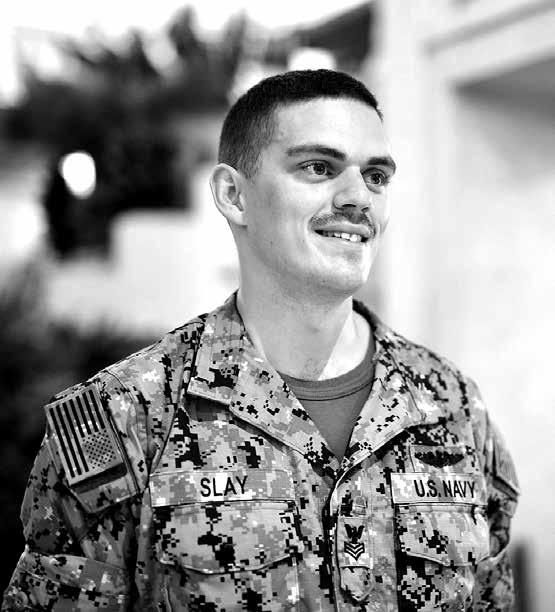
Twenty-four year-old Dillard Slay was 13 years old when his grandparents sent him to a conversion therapy camp in northern Georgia. He was being treated for “effeminate behavior.” Slay’s search for safety, stability, and job opportunity led him to enlist in the military, and today he is living in Hawaii and working as a US Navy nuclear reactor operator.
continued from cover
legislation protecting LGBTQ youth from the dangerous and debunked practice of so-called “conversion therapy.”
With Gov. Ige’s signature, Hawaii joins the growing number of states and municipalities adopting critical protections for LGBTQ youth. Just this year, Washington and Maryland have also enacted these protections, and lawmakers in New Hampshire recently passed similar legislation, which currently awaits the governor’s signature.
“So-called ‘conversion therapy’ is a dangerous and inhumane form of child abuse that has no basis in science and is uniformly rejected by every major mental health and child welfare organization,”
after it declined to take action against Calvary Baptist Church in DC. The church hired a Lesbian couple, Sally Sarratt and Maria Swearingen, as co-pastors in 2017.
D. August Boto, the denomination’s Executive Committee president, confirmed that, “the formal relationship between the SBC and the DCBC has come to an end.” As part of the breakup, Boto moved to take control of Baptist charitable assests.
“I will soon send another letter to each of eight churches we know of in DC that are supporting SBC work through financial gifts directed through the DCBC,” Boto said.
“The letters will inform each group that the formal relationship between the SBC
Seventeen year-old Andrea Kirk shared stories about a number of her friends being threatened with conversion therapy after coming out to their families. Kirk stated that she wants to protect herself and her peers from ever being subjected to conversion therapy. She is a junior at Myron B. Thompson Academy in Hawaii, identifies as queer-lesbian, is in a band, and is passionate about equal rights and criminal justice.
Eighteen year-old William Fritts is a recent graduate from Assets High School. Fritts engages in local LGBTQ activism work and has spoken to faculty at four local schools about LGBTQ bullying.
said HRC President Chad Griffin. “We thank the many advocates, allies, parents, and survivors who spoke out against this abusive practice and urged their elected officials to adopt these crucial protections. We also thank Gov. Ige and the Hawaii State Legislature for enacting this legislation to protect the state’s LGBTQ youth.”
There is no credible evidence that conversion therapy can change a person’s sexual orientation or gender identity or expression. To the contrary, research has clearly shown that these practices pose devastating health risks for LGBTQ young people, such as depression, decreased selfesteem, substance abuse, homelessness, and even suicidal behavior. The harmful practice is condemned by every major medical and mental health organization, including the American Psychiatric Association, Ameri-
and the DCBC has come to an end and that… the SBC no longer recognizes the District of Columbia Baptist Convention as a Baptist body authorized to receive and disburse Cooperative Program and other SBC contributions.”
“[We have] expressed deep regret over the need to take this action, but felt compelled to affirm biblical truth over organizational relationships,” Boto added.
Boto claimed the SBC would “consider resuming its relationship with the DCBC in the future” should its leaders decide to follow the SBC’s demands and take action against the Calvary church.
Boto only recently took command of the Baptist group. Its previous president, Frank S. Page, resigned his post on May 28, after admitting to an “inappropriate relationship” with a staffer.
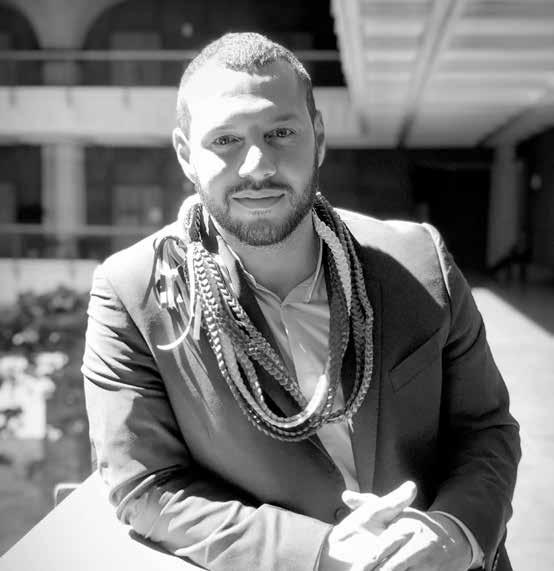
Twenty-nine year-old Mathew Shurka was 16 years old when he began conversion therapy in New York City. He was subjected to conversion therapy for five years across four states: New York, New Jersey, California, and Virginia. Shurka now lives in New York City and works as an advocate to protect other LGBTQ youth from conversion as the NCLR’s Born Perfect strategist. Shurka was the only survivor to testify at these hearings who lives on the mainland rather than in the state of Hawaii.
Today’s bill signing was the result of targeted grassroots advocacy efforts by the NCLR, local advocacy group the LGBT Caucus of the Democratic Party of Hawai‘i, and the Human Rights Campaign (HRC). The NCLR has been standing up on behalf of survivors of conversion therapy.
can Psychological Association, and American Medical Association.
Connecticut, California, Nevada, New Jersey, the District of Columbia, Oregon, Illinois, Vermont, New York, New Mexico, Rhode Island, Washington, Maryland, and now Hawaii all have laws or regulations protecting youth from this abusive practice. A growing number of municipalities have also enacted similar protections, including cities and counties in Ohio, Pennsylvania, Washington, Florida, New York, Arizona, and Wisconsin.
According to a recent report by the Williams Institute at UCLA School of Law, an estimated 20,000 LGBTQ minors in states without protections will be subjected to conversion therapy by a licensed healthcare professional if state officials fail to act.
The HRC has partnered with the
Boto became a member of the Southern Baptist Executive Committee in the 1990s. He was selected as its vice president for convention policy/staff counsel in 1998. In 2007, he was named executive vice president and general counsel of the Executive Committee.
The Southern Baptist Convention was organized in 1845 by Baptists who supported slavery in the southern US. Northern Baptists were not only anti-slavery but wanted to exclude pro-slavery members from being missionaries on the grounds that they were morally disqualified from preaching the Gospel.
After the Civil War, many newly freed African-Americans set up independent black congregations, regional associations, and state and national conventions, such as the National Baptist Convention, which
The National Center for Lesbian Rights is a national legal organization committed to advancing the human and civil rights of the lesbian, gay, bisexual, and transgender community through litigation, public policy advocacy, and public education. www.NCLRights.org
Courtesy of the NCLR
National Center for Lesbian Rights (NCLR) and state equality groups across the nation to pass state legislation ending conversion therapy. More information on the lies and dangers of efforts to change sexual orientation or gender identity can be found [at https://www.hrc.org/resources/ just-as-they-are].
The Human Rights Campaign is America’s largest civil rights organization working to achieve equality for lesbian, gay, bisexual, transgender, and queer people. HRC envisions a world where LGBTQ people are embraced as full members of society at home, at work, and in every community.
Courtesy of the HRC
became the second-largest Baptist convention by the end of the 19th century.
Others joined new African-American denominations, chiefly the African Methodist Episcopal Church, which was established in the early 19th century as the first independent black denomination in the United States.
There are several Southern Baptist churches in Seattle, but Seattle First Baptist and University Baptist churches are affiliated with the American Baptist Church, which allows each congregation to determine their own position on same-sex marriages.
ALEXANDRIA, Va. – [On May 30],
Lambda Legal and OutServe-SLDN filed a lawsuit on behalf of a sergeant in the DC Army National Guard who was denied the opportunity to serve as an officer and faces possible discharge from the United States armed services because he is living with HIV. The lawsuit challenges the Pentagon’s current policies preventing enlistment, deployment, or commissioning as an officer if a person is living with HIV, and it likely would affect implementation of the new “Deploy or Get Out” policy unveiled by the Trump administration in February.
Lambda Legal and OutServe-SLDN filed the lawsuit in the US District Court for the Eastern District of Virginia on behalf of Sgt. Nick Harrison, a veteran of two overseas combat zones who was denied a position in the Judge Advocate General (JAG) Corps because current Pentagon policy considers service members living with HIV nondeployable and will not allow them to enlist or to be appointed as officers.
“After serving in Afghanistan and Kuwait, I knew I wanted to become an officer in the US Army and a leader for all of the great men and women in our armed forces,” Harrison said. “I spent years acquiring the training and skills to serve my country as a lawyer. This should be a no-brainer. It’s frustrating to be turned away by the country I have served since I was 23 years old, especially because my HIV has no effect on my service. It was an honor to be chosen to join the JAG Corps for the DC National Guard, and I look
forward to my first day on the job.”
OutServe-SLDN is also an organizational plaintiff in this case to advance the interests of its members who are living with HIV and serving in the military. In a companion lawsuit entitled Voe v. Mattis, Lambda Legal and OutServe-SLDN are representing an anonymous service member living with HIV who the Air Force refused to commission as an officer after he graduated from the Air Force Academy, despite recommendations from medical personnel to do so.
“Nick’s situation is the perfect example of just how archaic and harmful the military policies regarding people living with HIV really are,” said Scott Schoettes, counsel and HIV Project Director at Lambda Legal. “These oppressive restrictions are based on antiquated science that reinforces stigma and denies perfectly qualified service members the full ability to serve their country. The Pentagon needs to catch up with the 21st century. Recruitment, retention, deployment, and commissioning should be based on a candidate’s qualifications to serve, not unfounded fears about HIV. The US Department of Defense [DoD] is one of the largest employers in the world, and like other employers, is not allowed to discriminate against people living with HIV for no good reason.”
HIV, like migraines or thyroid disorders, is a condition managed through drug protocols that even the US Department of Veterans Affairs describes as readily available, simple, and easy to tolerate, and that
allow people living with HIV to live long and healthy lives. Furthermore, the US Centers for Disease Control and Prevention, in a letter released last September, noted that with proper treatment, a person living with HIV could suppress their viral load to undetectable levels, which results in effectively no risk of transmitting the disease. Nevertheless, despite current science and medical advancements, most service members living with HIV remain classified as nondeployable under military policies developed in the 1990s.
“Living with HIV today is much different than it was 25 years ago. Today, with appropriate treatment, there is no reason a person living with HIV shouldn’t be able to serve in any capacity in the military,” said Carlos del Rio, MD, professor of global health and medicine at Emory University and co-director of the Emory Center for AIDS Research.
“Nick has every quality Americans want in a member of our armed services: dedication, intelligence, and a burning desire to serve his country,” said Peter Perkowski, legal director of OutServeSLDN. “The military has spent thousands of dollars training Nick to be a soldier, a lawyer, and a leader – now they are turning their backs on him. The Air Force likewise spent tens of thousands educating Voe at one of the premier military academies in the country, yet then sent him packing. What happened to them could happen to any service member with HIV, especially given the DoD’s recent ‘Deploy or Get Out’
policy. It is time for the DoD to come out of the dark ages, update its HIV policies, and revise its thinking on the deploy-or-get-out mentality.”
The “Deploy or Get Out” policy was announced on February 14, 2018, and directs the Pentagon to identify service members who cannot be deployed to military posts outside of the United States for more than 12 consecutive months and to separate them from military service. Because current US military policy identifies service members living with HIV as nondeployable, they could face immediate discharge under this new policy.
The cases are entitled Harrison v. Mattis and Voe v. Mattis. Joining Lambda Legal and OutServe-SLDN on the legal team are attorneys from Winston & Strawn LLP, serving as pro bono counsel. Read the briefs here: https://www.lambdalegal.org/in-court/legal-docs/harrison_va_20180530_complaint and https:// www.lambdalegal.org/in-court/legal-docs/ voe_dc_201805030-complaint.
Lambda Legal is a national organization committed to achieving full recognition of the civil rights of lesbians, gay men, bisexuals, transgender people, and everyone living with HIV through impact litigation, education, and public policy work.
Courtesy of Lambda Legal
GENEVA – The Center for Reproductive Rights celebrates [the May 26] referendum result in favour of repeal of the Irish constitutional prohibition on abortion as a deeply historic moment for women’s reproductive health and rights in Ireland and globally.
The Irish people voted by a resounding majority to remove the constitutional prohibition and enable Irish lawmakers to legislate on abortion and bring about longawaited reforms.
As a result of the referendum, Irish lawmakers can now reform Irish legislation on abortion and bring it into line with that of most other European countries. The result will also enable Ireland’s compliance with the rulings of the United Nations Human Rights Committee in the groundbreaking Mellet v. Ireland (2016) and Whelan v. Ireland (2017) cases, brought by the Center for Reproductive Rights on behalf of Amanda Mellet and Siobhán Whelan.
Said Leah Hoctor, Regional Director for Europe at the Center for Reproductive Rights:
“Today’s result marks an immensely historic moment for the women of Ireland. Irish laws on abortion have been among the most restrictive in the world and wholly out of step with legislation in almost every other European country. Now the Irish people have affirmed that women must be able to access safe abortion care in their home jurisdiction under the care of their own health professionals.
“The referendum result is also a landmark milestone in the global trajectory towards respect for women’s reproductive rights and the eradication of restrictive laws

on abortion that harm women’s health and violate their human rights.
“Through their compassionate vote in favour of women’s access to reproductive health care, the Irish people have provided women across the world with cause for inspiration and hope.
“The immense impact of this result will reverberate globally for years to come. Women living in countries with highly restrictive abortion laws can today draw renewed comfort and encouragement that law reform is possible and that significant change to safeguard women’s health and rights can be achieved.
“In its response to the Human Rights Committee in follow-up to the Mellet and Whelan decisions, the Irish government repeatedly outlined that constitutional change was a necessary first step in order to enable legislative change. Today’s refer-
endum result has cleared the way for meaningful law reform.”
The 8th Amendment of the Irish Constitution was introduced into the Irish Constitution in 1983. It prohibited abortion in Ireland in all circumstances except where a woman’s life was at “real and substantial risk.” As a result, Irish laws on abortion have been among the most restrictive in the world and wholly out of step with legislation in almost every other European country.
In 2013 and 2014, respectively, the Center for Reproductive Rights filed cases on behalf of two women in Ireland, Amanda Mellet and Siobhán Whelan, before the United Nations Human Rights Committee, claiming that as a result of Ireland’s prohibition on abortion, both women were subjected to multiple violations of their rights under the International
Covenant on Civil and Political Rights, a binding international treaty ratified by Ireland.
In its decisions on both cases, the Human Rights Committee held that Ireland had subjected each woman to cruel and inhuman treatment as a result of its legal prohibition on abortion and had violated their rights to privacy and equality before the law. In both decisions, the Committee ruled that Ireland was obliged to provide each woman with compensation and psychological support services and to reform its law on abortion.
Following the decisions, the Irish government paid compensation to both Ms. Mellet and Ms. Whelan and agreed to cover the costs of any psychological support or counselling services they might access. This was the first time that the Irish state provided compensation to women who had travelled for abortion care that was illegal in Ireland.
The Committee’s rulings represented the first unequivocal condemnation by an international legal authority, in response to an individual complaint, of Ireland’s prohibition and criminalization of abortion. They were cited in the report of the Joint Oireachtas Committee on the 8th Amendment as one of three critical reasons why constitutional reform on abortion was necessary.
Courtesy of the Center for Reproductive Rights